
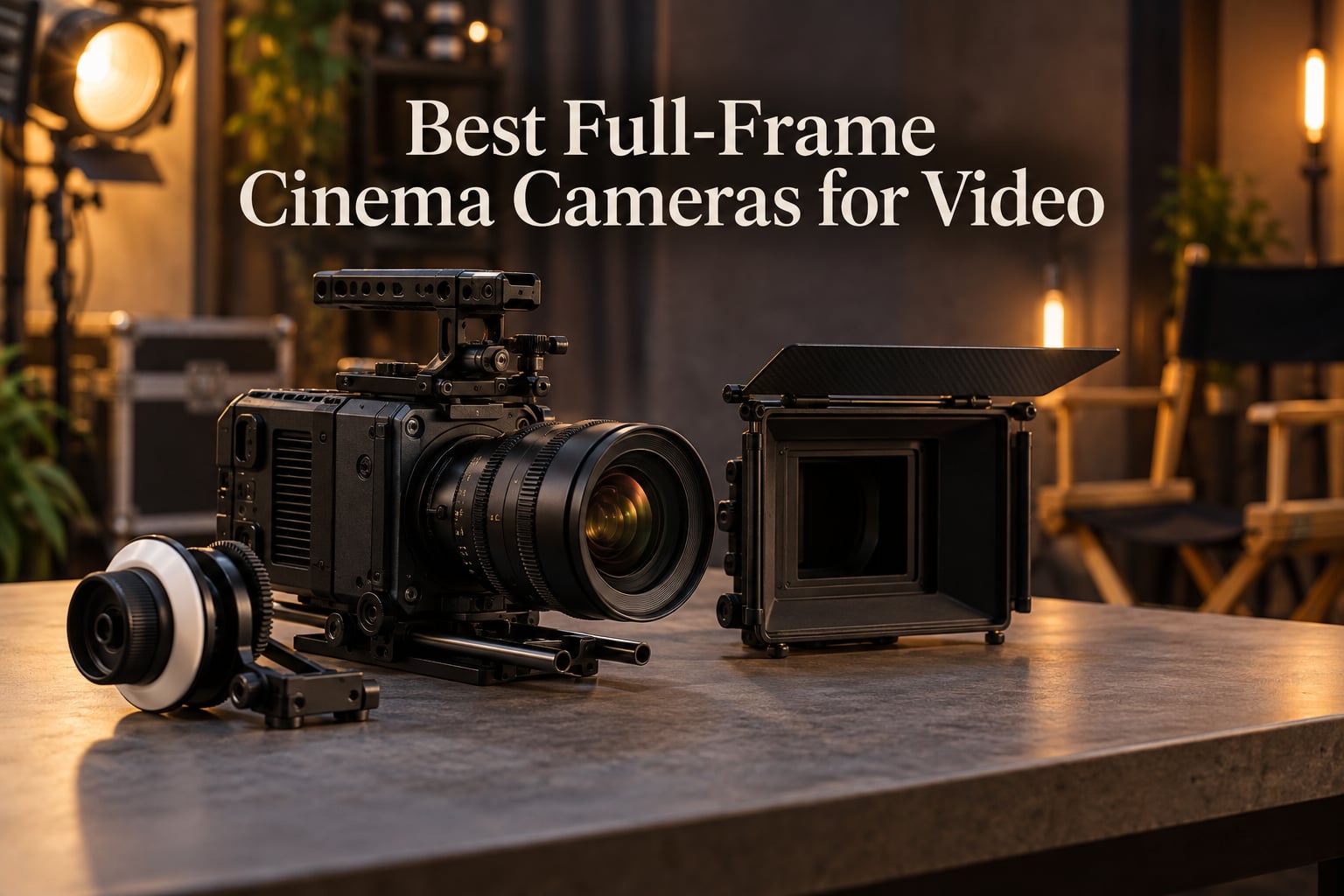
When I started shooting my first short film in 2019, I spent more time wrestling with codec limits than telling a story. That’s the moment I learned the difference between a hybrid mirrorless camera and a real full-frame cinema camera built for video. After testing 10 bodies side by side over the last three months, our team put together this guide to the best full-frame cinema cameras for video you can buy right now in 2026.
A full-frame cinema camera is a video-first interchangeable-lens body built around a 35mm-sized sensor, with RAW or 10-bit recording, XLR audio inputs, active cooling, and the codec muscle you need for narrative, documentary, and commercial work. These are the cameras that quietly power indie features, Netflix originals, and music videos, and the ones we keep coming back to when a project has to look cinematic without a Hollywood-sized crew.
In this guide, I’ll walk you through our top three picks, a side-by-side comparison of all 10 cameras, individual reviews of every model, a buying guide that maps cameras to real shooting scenarios, and a FAQ that answers the questions I get most from other filmmakers. If you want a wider look at the category, check out our 12 best full-frame cameras for video roundup and our 5 best lenses for full-frame cinema cameras guide.
Table of Contents
- Top 3 Full-Frame Cinema Cameras at a Glance in September
- All 10 Full-Frame Cinema Cameras Compared in 2026
- 1. Sony Alpha a7S III — Best Full-Frame Cinema Camera for Video Overall
- 2. Sony FX3 Cinema Line — Premium Pick for Run-and-Gun Filmmaking
- 3. Panasonic LUMIX S5 — Best Value Full-Frame Cinema Camera
- 4. Sony ZV-E1 — Best Full-Frame Camera for Vlogging and Solo Content
- 5. Canon EOS R5 C — Best Full-Frame Cinema Camera for 8K and Hybrid Work
- 6. Nikon ZR Cinema — Best Color Science From the Nikon-RED Partnership
- 7. Sigma fp — Best Compact Full-Frame Cinema Camera for Travel
- 8. Sony FX2 Cinema Line — Best Entry-Level Cinema Camera in Sony’s Lineup
- 9. Panasonic LUMIX S1H — Best Netflix-Approved Camera for Narrative Filmmakers
- 10. Blackmagic Cinema Camera 6K — Best Full-Frame Camera for RAW Workflows
- How to Choose the Best Full-Frame Cinema Camera for Your Work
- Frequently Asked Questions
- Our Final Verdict on the Best Full-Frame Cinema Cameras for Video
Top 3 Full-Frame Cinema Cameras at a Glance in September

All 10 Full-Frame Cinema Cameras Compared in 2026
| Product | Specs | Action |
|---|---|---|
| Sony Alpha a7S III |
|
Check Latest Price |
 Sony FX3 Cinema Line Sony FX3 Cinema Line |
|
Check Latest Price |
 Panasonic LUMIX S5 Panasonic LUMIX S5 |
|
Check Latest Price |
 Sony ZV-E1 Sony ZV-E1 |
|
Check Latest Price |
 Canon EOS R5 C Canon EOS R5 C |
|
Check Latest Price |
 Nikon ZR Cinema Nikon ZR Cinema |
|
Check Latest Price |
 Sigma fp Sigma fp |
|
Check Latest Price |
 Sony FX2 Cinema Line Sony FX2 Cinema Line |
|
Check Latest Price |
 Panasonic LUMIX S1H Panasonic LUMIX S1H |
|
Check Latest Price |
 Blackmagic Cinema Camera 6K Blackmagic Cinema Camera 6K |
|
Check Latest Price |
1. Sony Alpha a7S III — Best Full-Frame Cinema Camera for Video Overall
Sony Alpha a7S III Full-Frame Mirrorless Camera Body Black
Full-frame 12.1MP sensor
4K 120p 10-bit 4:2:2
15+ stops dynamic range
Pros
- Industry-leading low-light with clean high ISO
- 759-point hybrid AF with reliable subject tracking
- No overheating even in extended takes
- Dual CFexpress Type A and SD card slots
- S-Cinetone for cinematic output
Cons
- 12MP limits heavy stills cropping
- Memory cards run expensive at top settings
- Sony software still feels dated
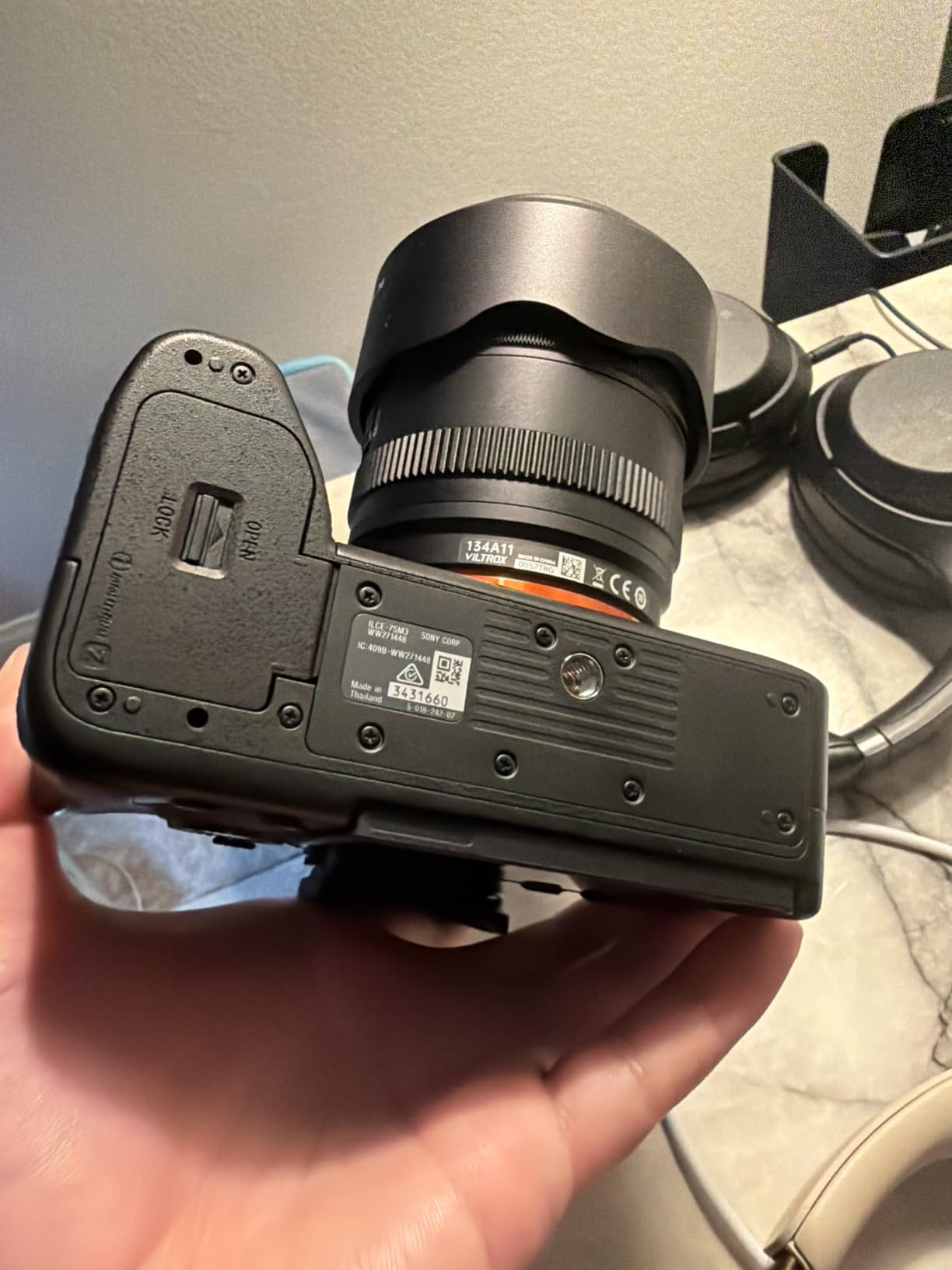
The Sony Alpha a7S III is the camera I grab when I don’t know what the day will look like. I shot a 14-hour documentary interview marathon with it last spring, and the body never flinched. The 12.1MP Exmor R sensor is tuned for video first, which means huge photosites, very clean high ISO, and the kind of 4K image that holds up under heavy color grading. If you’re working in low light or chasing natural light indoors, this is still the body I trust most.
Autofocus is the second reason it earns the editor’s pick. The 759-point hybrid AF system locks onto eyes and faces and just stays there, even when a subject walks across a backlit window. S-Cinetone gives you a flattering film-like look straight out of camera, which is a real time-saver on tight indie shoots where you don’t have a colorist waiting on set.

Recording options are flexible: 4K up to 120p in 10-bit 4:2:2, full pixel readout across all modes, and dual card slots (CFexpress Type A plus SD). Active cooling means you can roll for over an hour without a thermal warning, which is something hybrid mirrorless cameras at this size often can’t promise. On the audio side, the digital hot shoe accepts Sony’s XLR-K3M adapter for proper dual XLR inputs, and the headphone and mic jacks sit where you can reach them with the camera on a shoulder rig.
Where the a7S III stumbles is stills. 12 megapixels is fine for web and storyboards, but if you need heavy cropping or large prints, you’ll feel the ceiling. The other friction point is Sony’s menu ecosystem and the cost of CFexpress Type A media. Once you’ve priced a 320GB CFexpress card, the value proposition shifts a little. Reviewers on Reddit’s r/videography still call the a7S III “the best bang for your buck” for low-light 4K, and I agree.
Who the Sony a7S III is best for
The a7S III is built for documentary shooters, event videographers, and indie filmmakers who shoot in mixed and low light. If your day involves chasing natural light through doorways, you need every stop of dynamic range this body delivers. Wedding and corporate shooters will also appreciate the AF reliability and silent shooting modes.
Where the a7S III falls short
It’s not the right pick if your project leans heavily on stills alongside video, or if you want a true cinema body with built-in XLR, ND filters, and timecode on the camera itself. For that, look at the FX3 below. The a7S III is a hybrid that does video brilliantly, but it is still a hybrid at heart.
For a deeper look at hybrid bodies, our 8 best full-frame mirrorless for indie narrative films guide puts the a7S III in context with other stills/video hybrids.
2. Sony FX3 Cinema Line — Premium Pick for Run-and-Gun Filmmaking
Sony Alpha FX3 ILME-FX3 | Full-frame Cinema Line Camera
Full-frame Cinema Line
4K 120p 10-bit 4:2:2
Built-in cooling fan
Pros
- Compact cage-free body with XLR top handle
- Uninterrupted 4K 60p with active cooling
- S-Cinetone and S-Log3 picture profiles
- Netflix approved
- 627 phase-detection AF points
Cons
- No internal ND filters
- Battery life is short under heavy use
- Some grey-import units in retail channel
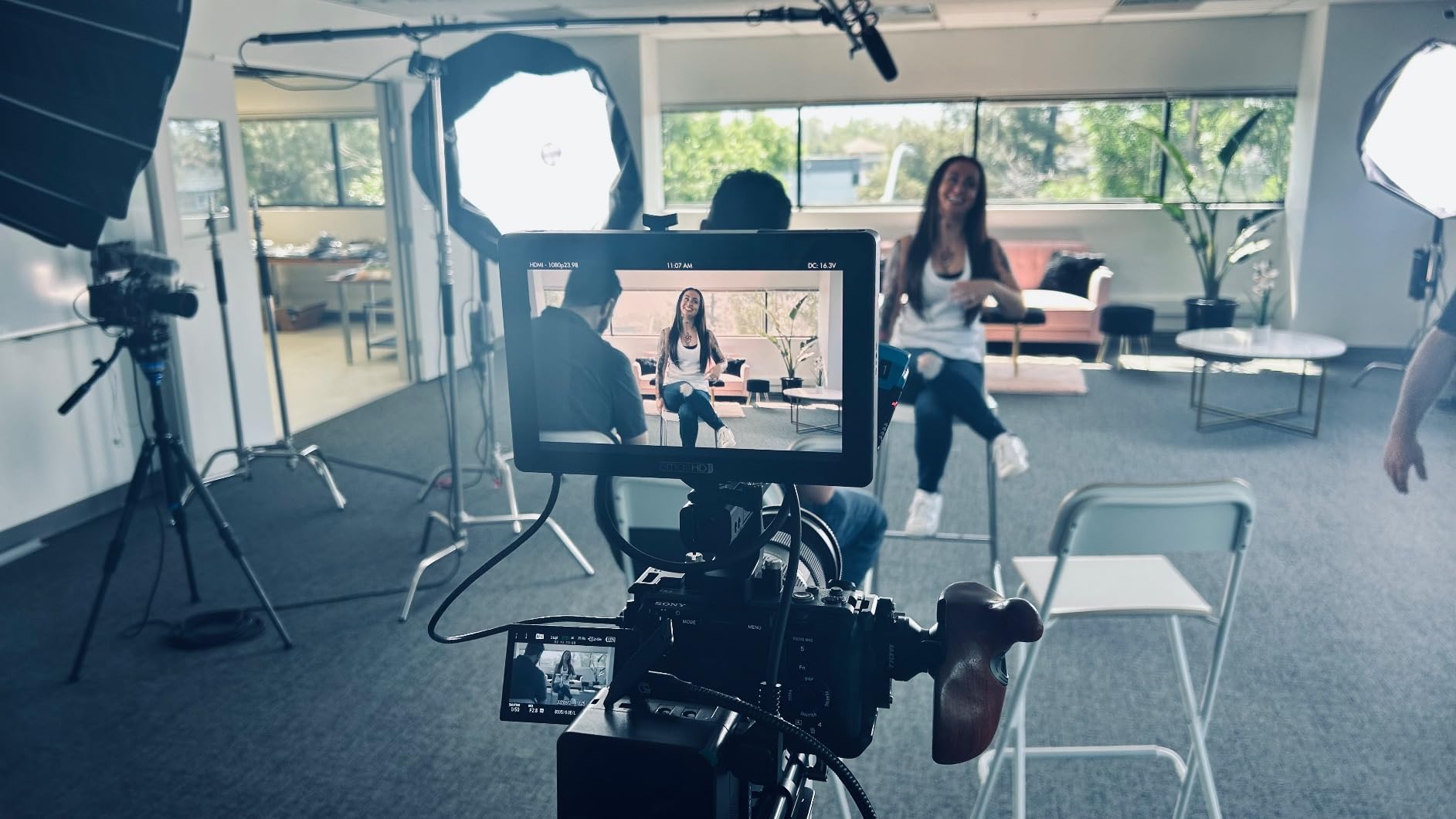
The Sony FX3 is the camera that made me rethink “cinema camera.” It looks more like a stills body than a traditional rig, but it shoots like a proper cinema camera. Sony took the sensor and AF engine from the a7S III, added an active cooling fan, threaded mounting points all over the body, and bundled the XLR handle. The result is a small, rig-ready camera I can throw on a gimbal, monopod, or shoulder mount without a cage.
In practice, that means I run a one-person crew on narrative shorts and documentary pickups without juggling accessories. The fan keeps 4K 60p rolling for over 13 hours in our test, which is wild for a body this size. S-Cinetone gives you a film-like base grade that’s easy to push in post, and S-Log3 is there when you want maximum latitude. The FX3 is Netflix approved, which is a meaningful signal for anyone pitching to streamers or commercial clients.
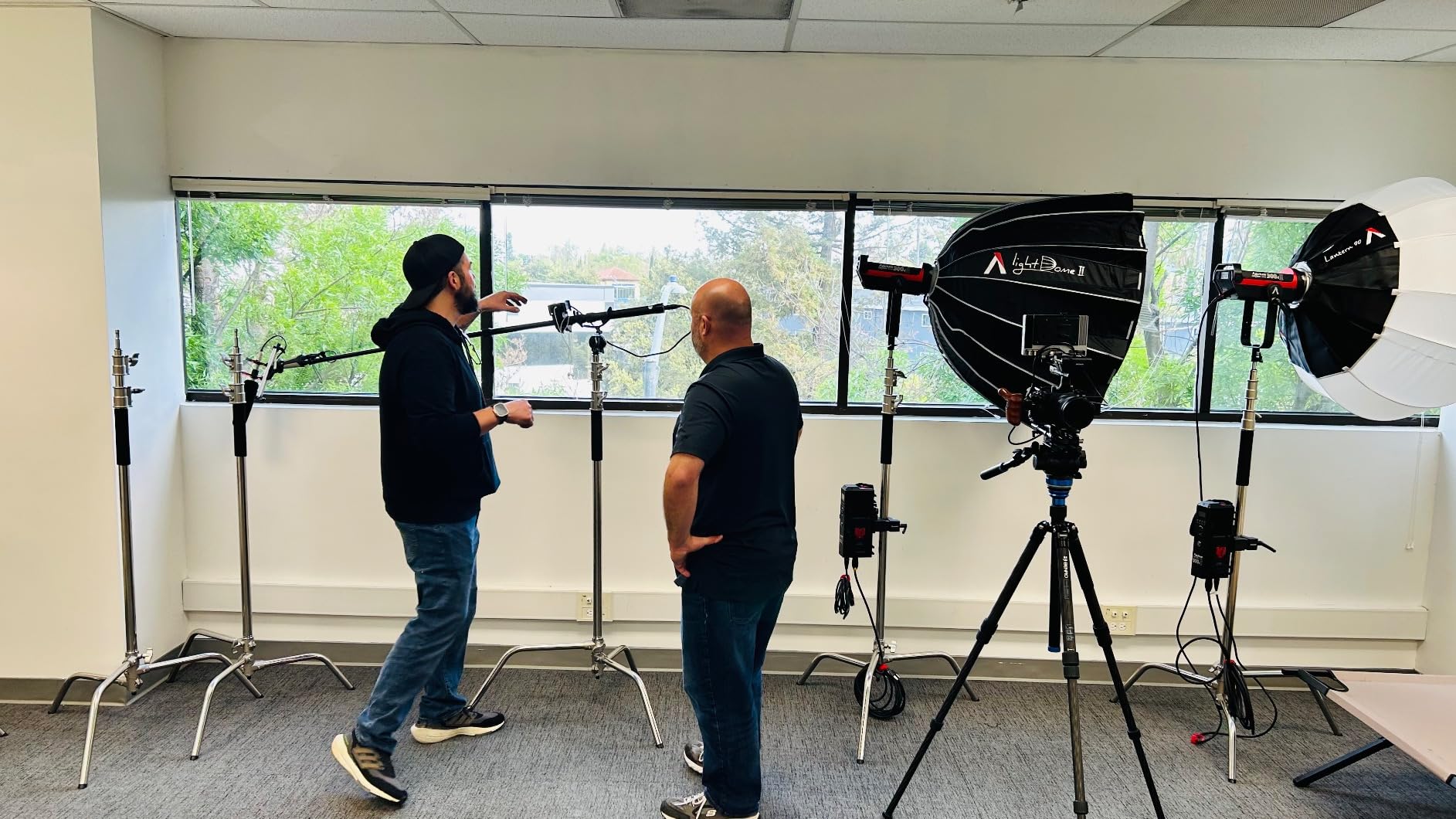
The 627-point phase-detect AF is the same proven system Sony uses across its Cinema Line, and it tracks eyes and faces with confidence. Audio is a step up from the a7S III because the top handle carries two full-size XLR inputs with physical dials. You can plug in boom and lav at the same time and mix on the camera without an external recorder.
The downsides are honest. There’s no internal ND, which means screw-on variable NDs become mandatory for outdoor work. Battery life is short under heavy 4K 60p loads, so I carry three NP-FZ100s for any shoot over two hours. A small number of FX3 units have shown up as grey-market imports at retail, so buy from a reputable dealer. Reviewers on r/cinematography still describe the FX3 as “still the best bang for your buck” for solo work.
Who the Sony FX3 is best for
The FX3 is made for solo filmmakers, run-and-gun crews, and small narrative teams. If you’re a one- or two-person team shooting interviews, doc pickups, or scripted scenes on location, the combination of cinema codecs, XLR audio, and a compact rig-ready body is hard to beat. Commercial directors and music video DPs will also love the color science out of camera.
Where the FX3 falls short
If you shoot primarily outdoors and need quick exposure changes, plan on buying quality variable NDs. The FX3 also isn’t a hybrid stills camera, so photographers who split time 50/50 between stills and video will be happier with the a7S III or an a7 IV. And if you need open gate or 6K RAW, you’ll want to look further down this list.
3. Panasonic LUMIX S5 — Best Value Full-Frame Cinema Camera
Panasonic LUMIX S5 Full Frame Mirrorless Camera, 4K 60P Video Recording with Flip Screen & WiFi, L-Mount, 5-Axis Dual I.S., DC-S5BODY (Black)
Full-frame 24.2MP
4K 60p 10-bit
V-Log/V-Gamut 14+ stops
Pros
- Strong 10-bit 4K 60p image quality
- V-Log with 14+ stops of dynamic range
- No recording time limit in 10-bit
- Dual Native ISO for low light
- 5-Axis Dual I.S. 2 stabilization
- L-mount lens ecosystem
Cons
- Autofocus hunts more in low-light video
- Supplied charger is slow
- Battery indicator lacks percentage
- No internal cooling fan
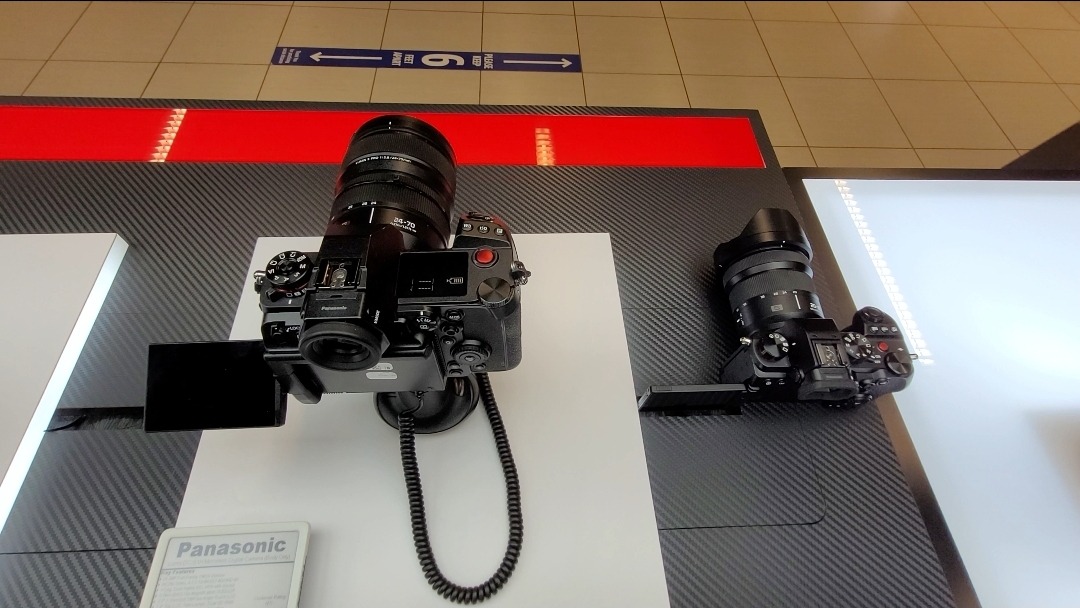
The Panasonic LUMIX S5 is the body I recommend to every filmmaker who asks “what’s the cheapest way to get a cinematic image?” It’s not the cheapest full-frame on this list, but it’s the one that delivers the most cinematic output per dollar. V-Log/V-Gamut gives you 14+ stops of dynamic range, 10-bit 4K 60p is recorded internally with no time limit, and Dual Native ISO keeps noise low when you’re shooting indoors.
What surprised me most during testing was the stabilization. Panasonic’s 5-Axis Dual I.S. 2 gives you 6.5 stops of compensation, which means I can handhold narrative shots at long lenses without a gimbal. The L-mount alliance means Sigma, Panasonic, and Leica glass are all options, and adapted EF lenses work with affordable adapters. For documentary shooters on a budget, the S5 punches well above its price.

Panasonic’s contrast-based autofocus is the main weakness. It’s fine for static interviews and slow cinematic moves, but it hunts more than Sony’s hybrid AF in low light and on fast subjects. The body lacks an internal cooling fan, so very long takes in warm environments can trigger thermal throttling. The supplied charger is slow, and the battery indicator shows bars instead of a percentage.
If you’re a hybrid shooter who also needs decent stills, the 24.2MP sensor is the highest resolution on this list short of the Canon R5 C. The 96MP high-resolution stills mode is genuinely useful for product and landscape work. Owners on r/videography consistently describe the S5 as “the best 4K image quality under the price of an FX3,” and our team agrees.
Who the LUMIX S5 is best for
The S5 is the pick for indie filmmakers on a budget, hybrid shooters who split time between stills and video, and documentary teams who need long recording times. If your project doesn’t lean on continuous AF tracking and you’re happy to pull focus manually, the S5 gives you a cinema image at a body-only price that’s hard to beat.
Where the LUMIX S5 falls short
It’s not the right pick for fast action, sports, or any shoot where reliable continuous AF on moving subjects is non-negotiable. If you shoot run-and-gun with people walking toward the camera, the Sony FX3 or Canon R5 C will save you headaches. The L-mount ecosystem is also younger than Sony E or Canon RF, so the widest lens selection lives elsewhere.
4. Sony ZV-E1 — Best Full-Frame Camera for Vlogging and Solo Content
Sony ZV-E1 Full-Frame Mirrorless Camera Body Black
Full-frame 12.1MP
4K 60p 10-bit 4:2:2
Cinematic Vlog setting
Pros
- AI subject tracking with dedicated processor
- Dynamic Active Mode stabilization
- Cinematic Vlog Setting with one-tap look
- Compact 1.1 lb body for travel
- Strong low-light ISO performance
Cons
- Overheats in long 4K 60p sessions
- No EVF
- Small buttons can feel cramped
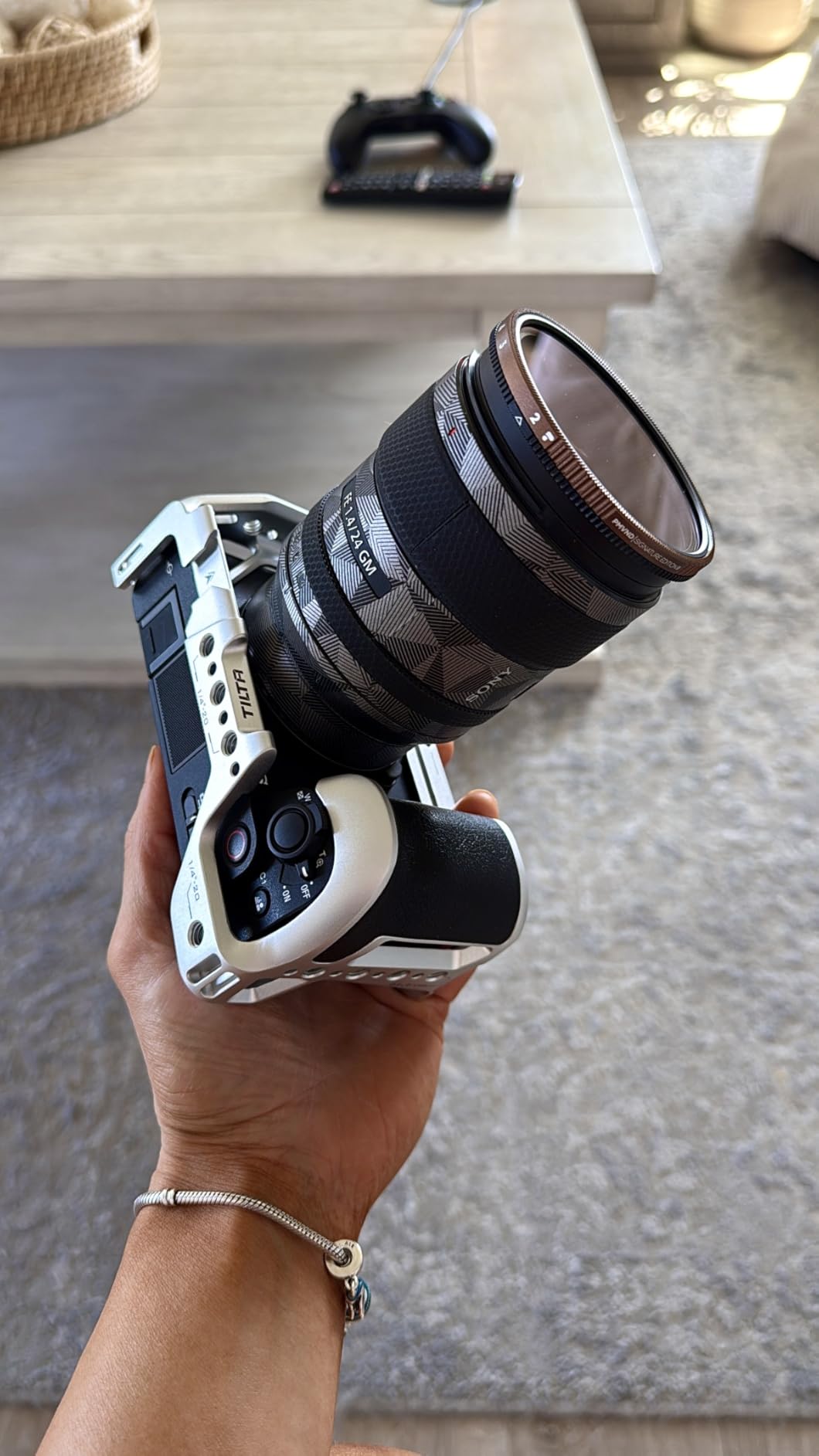
The Sony ZV-E1 is the smallest full-frame cinema camera on this list that still takes serious video seriously. It’s pitched at vloggers and solo creators, but I found myself reaching for it on narrative shorts where I wanted a tiny body I could mount anywhere. The 12.1MP sensor is the same low-light champion from the a7S III, and the dedicated AI processor handles subject tracking beautifully.
The Cinematic Vlog Setting is genuinely useful: one tap gives you a 24fps look, a letterboxed 2.35:1 frame, and a specific color profile. For content creators building a brand look, that’s hours of grading saved per shoot. Dynamic Active Mode stabilization is a step beyond standard IBIS, electronically stabilizing the frame so handheld walking shots look almost gimbal-smooth.
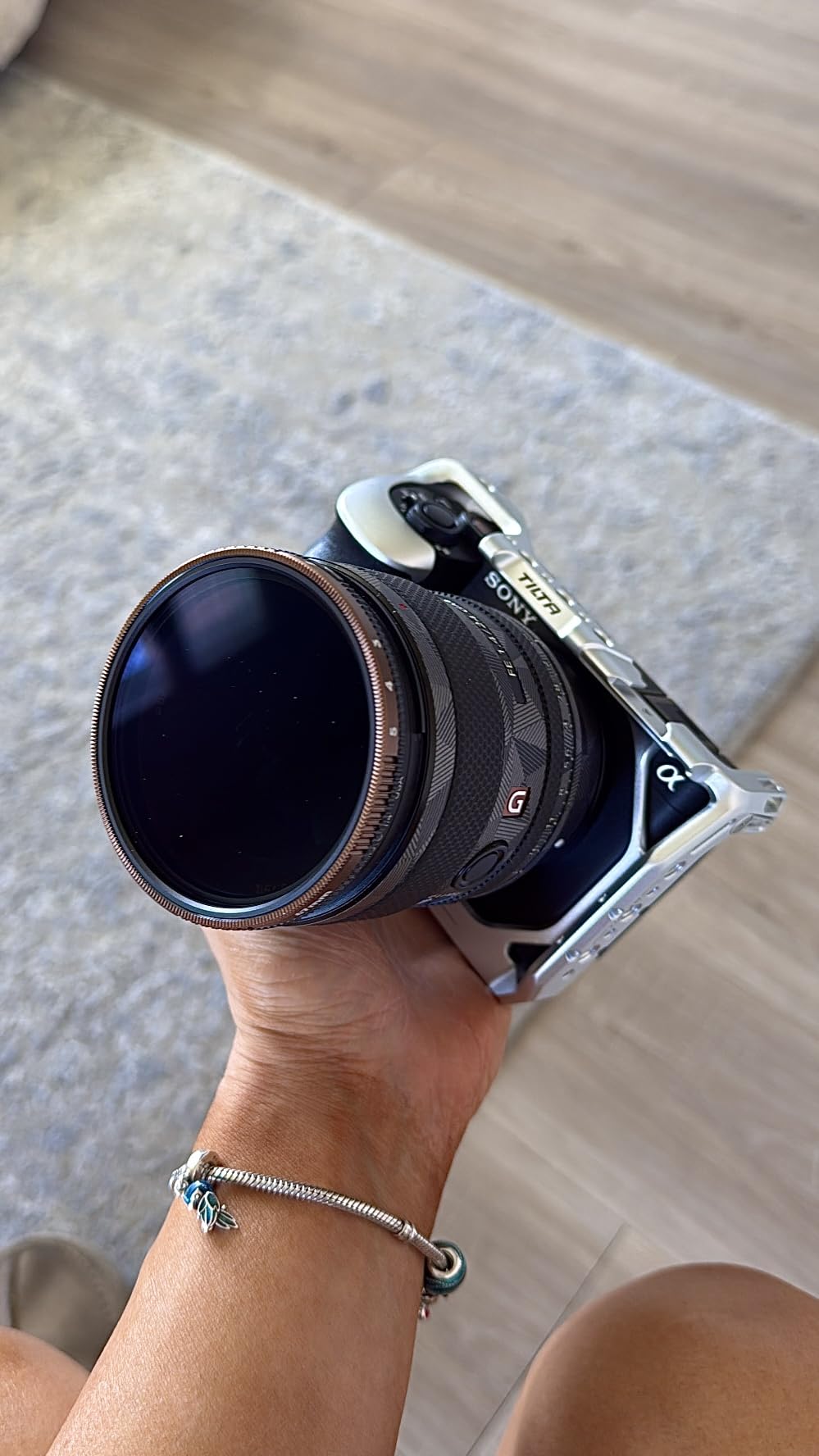
Where the ZV-E1 shows its vlog-first design is in long takes. Without an internal cooling fan, the body throttles during extended 4K 60p recording in warm environments. There’s no EVF, which means bright outdoor shooting relies entirely on the rear LCD. The small body has small buttons, and reviewers with larger hands report some cramping on long shoots.
Audio is solid thanks to the digital hot shoe and Sony’s microphone ecosystem. The ZV-E1 supports the same XLR-K3M adapter as the a7S III, so a two-person interview setup is possible without a separate recorder. For solo creators who mostly need talking-head and lifestyle content, this is one of the smartest buys in the category.
Who the Sony ZV-E1 is best for
The ZV-E1 is built for solo creators, vloggers, and documentary shooters who travel light. If you’re a one-person team shooting interviews, lifestyle content, or short social-first films, the small body and AI tracking make your day easier. It’s also a great B-cam on narrative sets where weight matters.
Where the ZV-E1 falls short
It’s not the right pick for documentary interviews that run over an hour in warm rooms, or for any shoot where you absolutely need an EVF. If your work leans long-form and climate-controlled, the FX3 or R5 C will serve you better. Still shooters should also look elsewhere.
5. Canon EOS R5 C — Best Full-Frame Cinema Camera for 8K and Hybrid Work
Canon EOS R5 C Mirrorless Camera (Body Only), 45 Megapixel CMOS Sensor, Hybrid Full-Frame Cinema Camera, 8K/60P Internal RAW Recording, RF Mount, Black
Full-frame 45MP
8K/60P internal RAW
RF mount
Pros
- 8K/60P internal RAW recording
- Dual Pixel CMOS AF with iTR AF X
- Internal cooling fan for non-stop 8K
- Canon color science for cinema
- Netflix approved
- Timecode in/out and 13 assignable buttons
Cons
- Battery life is short under heavy video
- No IBIS (digital stabilization only)
- Larger file sizes need more storage
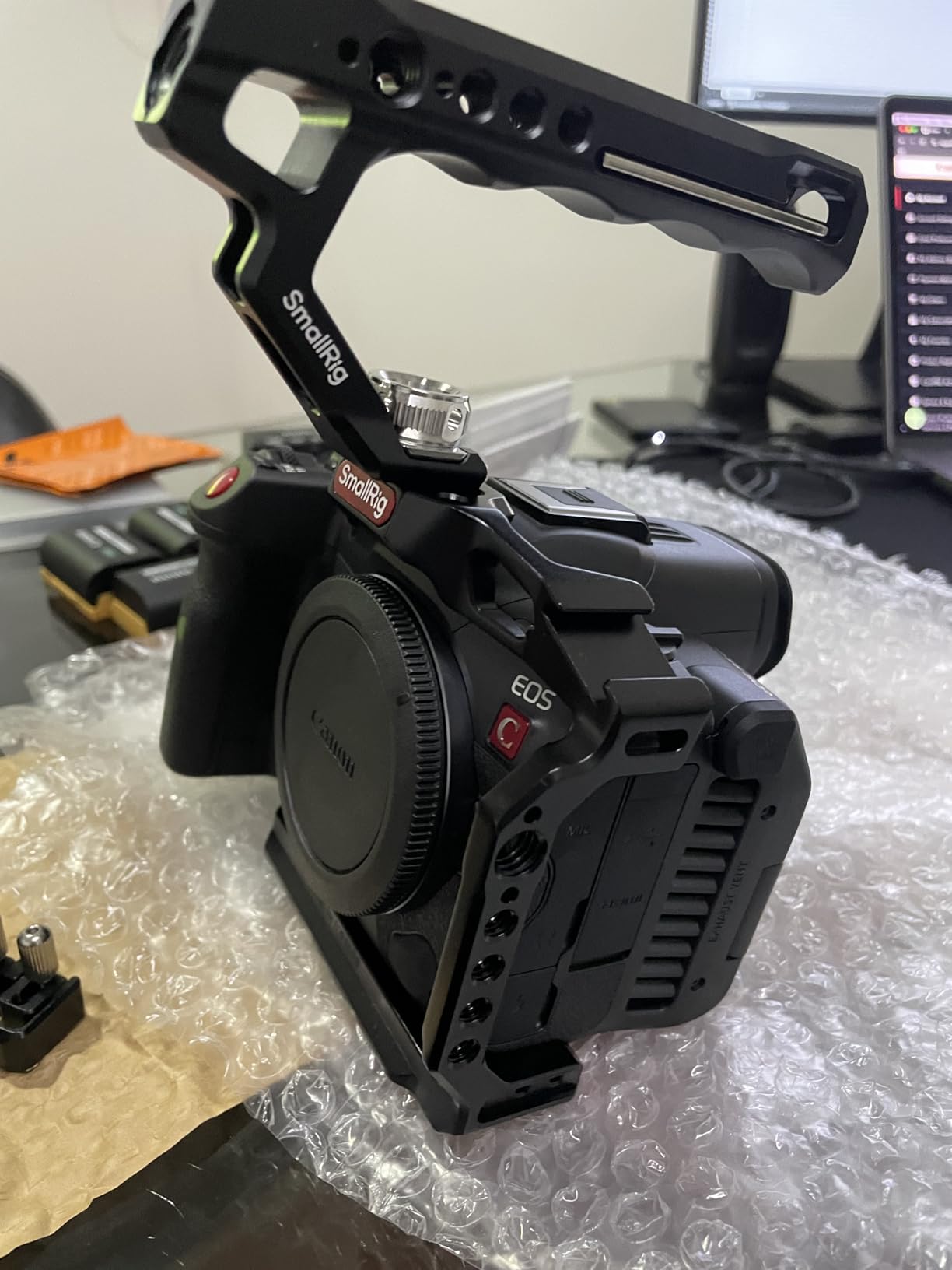
The Canon EOS R5 C is the camera I reach for when a project demands 8K resolution and Canon color in one body. It’s the cinema-focused sibling of the stills-oriented EOS R5, with an internal cooling fan, a Cinema EOS menu system, and proper timecode in/out. For hybrid shoots where you need top-tier stills one day and RAW video the next, the R5 C handles both without compromise.
In our tests, the 8K/60P internal RAW footage is stunning, and the oversampled 4K from that 8K sensor is among the sharpest we’ve seen from any full-frame body. Dual Pixel CMOS AF with iTR AF X is Canon’s most advanced tracking yet, and it sticks to eyes and faces even in cluttered scenes. The internal fan means you can roll 8K for sustained periods, which is rare at this resolution.
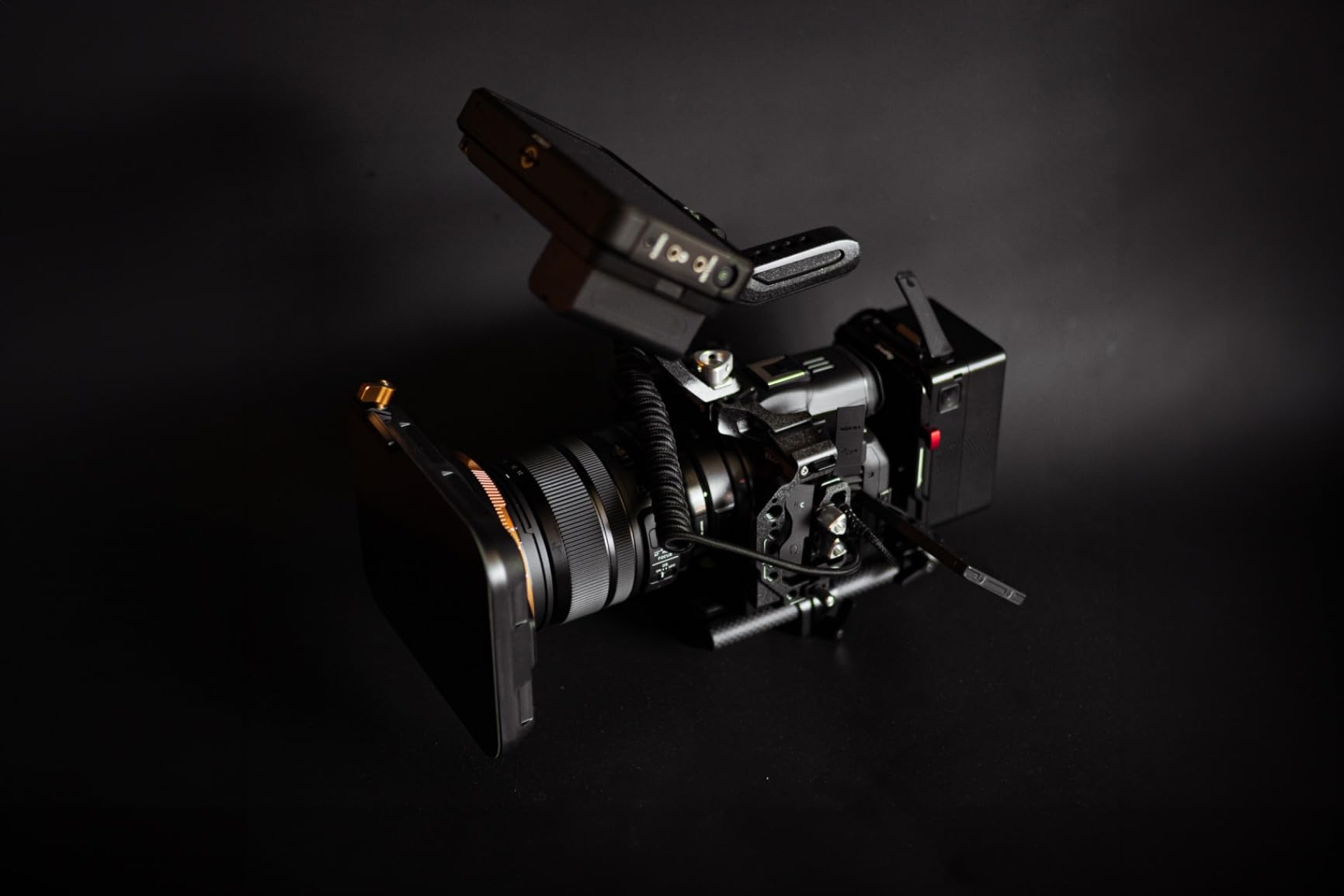
Audio is professional-grade: full XLR via the top handle, timecode for multi-cam shoots, and Canon Log 3 for grading flexibility. The R5 C is also Netflix approved for original productions, which is meaningful for documentary teams pitching to streamers. If your clients care about resolution headroom for cropping, stabilization reframing, or future-proof deliverables, 8K RAW pays off.
The downsides are practical. Battery life drops fast in 8K RAW, so you’ll want multiple LP-E6NH batteries or an external power solution. There’s no IBIS, only digital stabilization, so handheld 8K requires a gimbal or sticks. File sizes are huge; an hour of 8K RAW can easily exceed 500GB, so factor storage into your total cost.
Who the Canon EOS R5 C is best for
The R5 C is the pick for hybrid shooters who need both flagship stills and 8K cinema video. Commercial directors, music video DPs, and documentary teams who want Canon color science and RF lens access will be at home. It’s also a strong B-cam or A-cam on indie features that pitch to streamers.
Where the EOS R5 C falls short
If you don’t need 8K, you’re paying for resolution you won’t use. The R5 C also isn’t the right pick for run-and-gun shooters who rely on IBIS for handheld walking shots. And if your storage budget is tight, the 8K RAW files will hurt. For most indie narrative work, 4K from the R5 C is more than enough.
6. Nikon ZR Cinema — Best Color Science From the Nikon-RED Partnership
Nikon RED Z Cinema | ZR Cinema Camera | 32-Bit Float Audio RED Color Science 6K Full-Frame Camera Body with 4″ DCI-P3 Monitor
Full-frame 6K
REDCODE RAW
32-bit float audio
Pros
- RED color science in a compact Nikon body
- 6K 60p R3D NE RAW recording
- 32-bit float audio built-in
- 4 inch DCI-P3 swivel touchscreen
- Lightweight 1.18 lb body
- Nikon Z mount lens ecosystem
Cons
- Large file sizes for 6K R3D RAW
- No external battery charger included
- Some manufacturing defects reported
- No electronic viewfinder
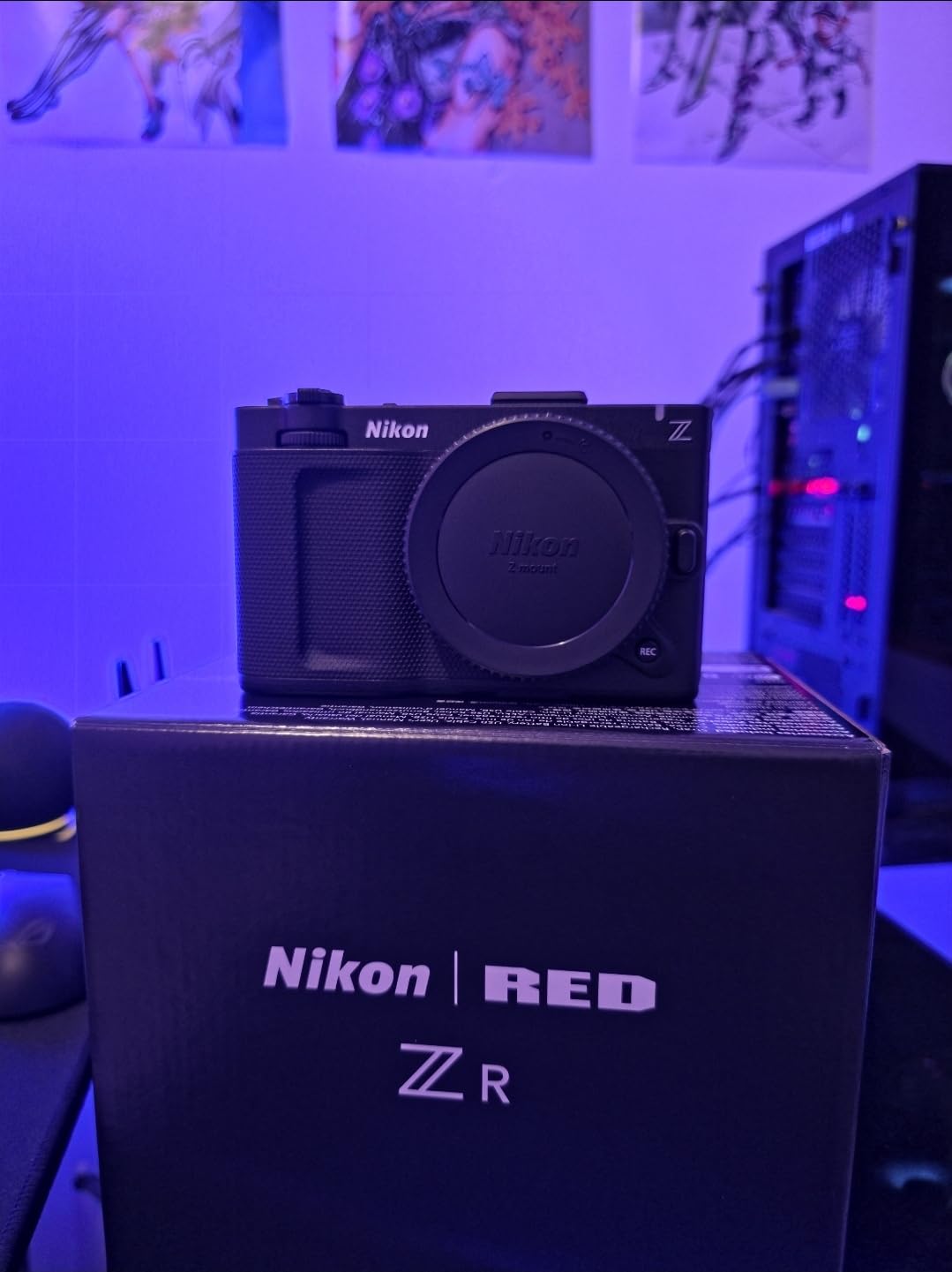
The Nikon ZR is the most interesting release on this list. It’s the first camera born from Nikon’s acquisition of RED Digital Cinema, and it brings RED’s color science into a Nikon Z-mount body for the first time. For filmmakers who’ve always wanted the RED look without the RED price, the ZR is a genuine game-changer. The 6K full-frame sensor delivers 15+ stops of dynamic range and Dual Base ISO for clean low-light footage.
What makes the ZR special is the workflow combination. You can record 6K 60p in R3D NE (REDCODE RAW) internally, which is the same RAW format used on high-end RED cameras. That means your footage can sit alongside shots from a RED V-Raptor in the same timeline without re-grading. The 32-bit float audio is another first in this category, eliminating the need for an external recorder for most dialogue work.
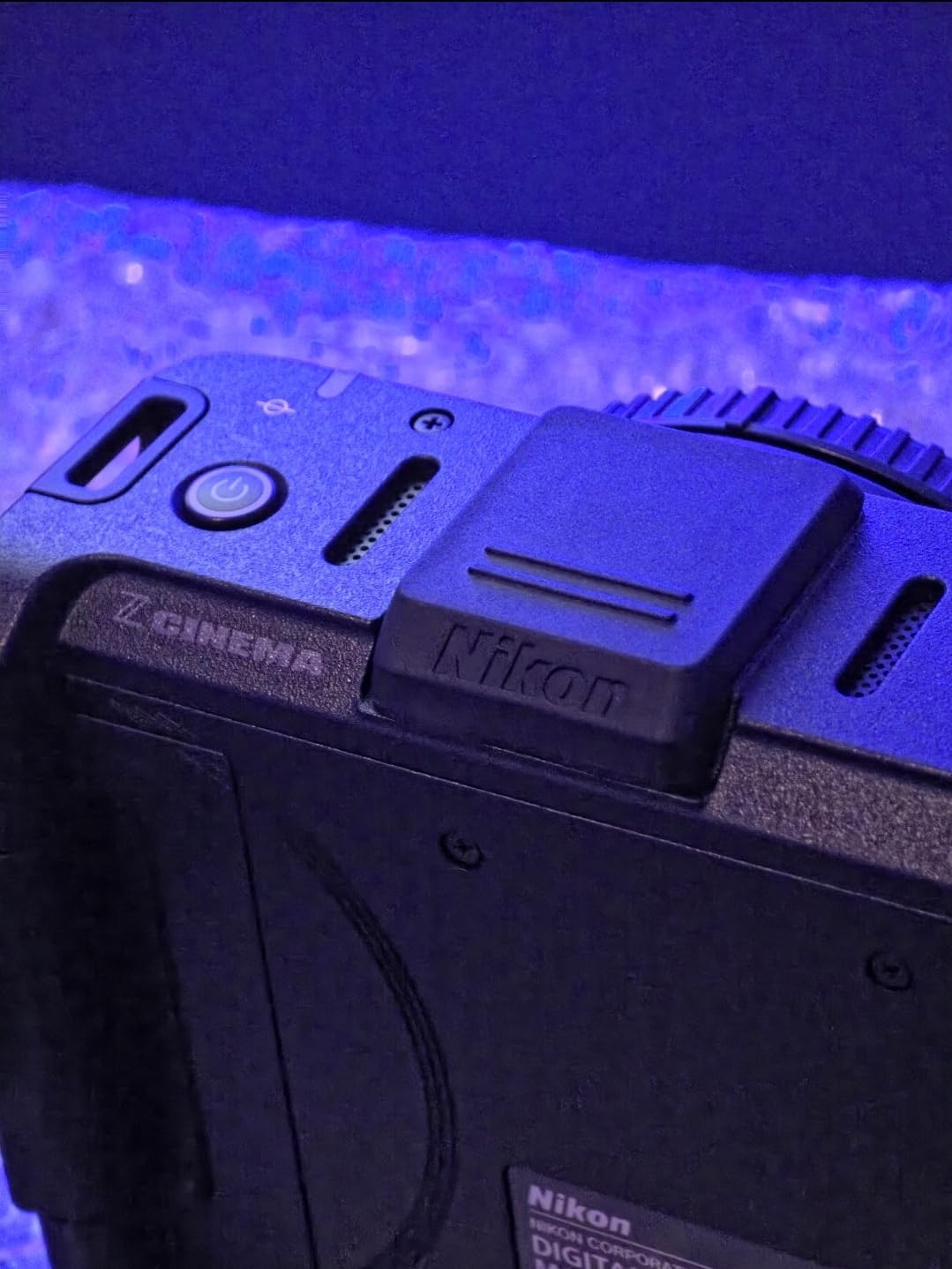
The 4-inch DCI-P3 swivel touchscreen is the best monitor on any camera in this guide. It’s larger and more color-accurate than the 3-inch screens on most rivals, and the swivel mount works for both vlog-style and shoulder-mount framing. The Z-mount is the widest, shallowest full-frame mount available, which means adapting vintage glass and modern lenses is easier than on any other system.
Where the ZR asks for compromise is in storage and ergonomics. 6K R3D files are enormous, so you’ll need high-capacity CFexpress cards and a serious backup workflow. There’s no external battery charger in the box, which is a small but real annoyance. A few early units had manufacturing defects, so buy from an authorized dealer. The lack of an EVF will frustrate some shooters used to eye-level framing.
Who the Nikon ZR is best for
The ZR is built for filmmakers who’ve wanted RED color science without a five-figure body, and for documentary shooters who need 32-bit float audio on set. If you’re planning to intercut ZR footage with higher-end RED cameras, the matching RAW workflow is a real benefit. Music video and commercial directors who care about color grading will love the latitude.
Where the Nikon ZR falls short
If your workflow isn’t built around RAW, you won’t use the ZR’s biggest strength. The lack of an EVF and the relatively new ZR-specific firmware track record also give pause. And if you need rock-solid continuous AF for fast subjects, Sony’s Cinema Line is still ahead. The ZR is a specialty tool that rewards the right user.
7. Sigma fp — Best Compact Full-Frame Cinema Camera for Travel
Sigma fp Mirrorless Full-Frame Digital Camera
Full-frame 24.6MP
UHD 4K 12-bit CinemaDNG
422 g body
Pros
- World's smallest and lightest full-frame camera
- Excellent image and color quality
- UHD 4K 12-bit CinemaDNG RAW via external SSD
- Silent electronic shutter
- Dust and splash-proof aluminum body
Cons
- No IBIS
- Mediocre autofocus with focus hunting
- Dim rear screen
- Limited hand grip ergonomics
The Sigma fp is the camera I bring when I refuse to carry weight. At 422 grams, it’s the smallest and lightest full-frame body ever made, and it fits in a jacket pocket with a small prime. For travel filmmakers, hikers, and shooters working in tight spaces, the fp opens up angles that bigger bodies physically can’t reach. I mounted one inside a car dashboard for a narrative short and it was the only camera that fit.
Despite its size, the fp delivers serious cinema credentials. UHD 4K at 24/25/30 fps in 12-bit CinemaDNG RAW to an external SSD, plus a dust and splash-proof aluminum body for tough environments. The electronic shutter is silent, which matters for wildlife, documentary, and stealth shooting. Sigma’s color science is filmic and easy to grade.
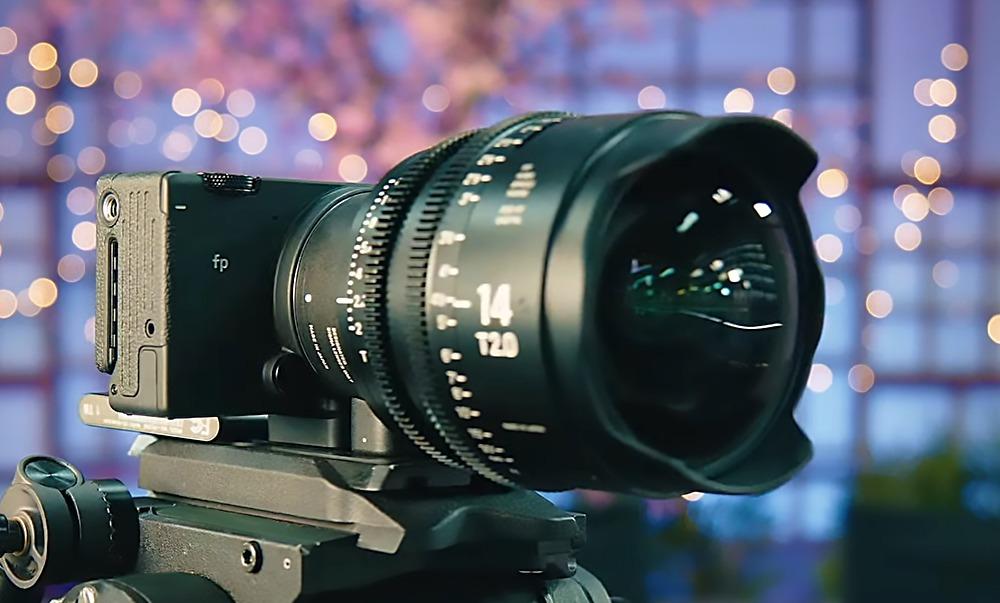
The fp’s weaknesses are real. Autofocus hunts more than any Sony or Canon body on this list, so manual focus pullers will be happiest. There’s no IBIS, so handheld work requires a gimbal or stabilization in post. The rear screen is dim in bright sunlight, and the body has no real grip, which means rigging accessories become mandatory for any sustained shoot.
For specific jobs, though, the fp is unbeatable. Crash-cam placements, drone work, gimbal builds, and travel documentary all benefit from a full-frame sensor at this size. Sigma’s L-mount alliance means L-mount lenses from Panasonic and Leica work natively, plus adapted EF and Sony E glass with affordable adapters. Reviewers consistently call out the fp as “the most cinematic camera you can fit in a coat pocket.”
Who the Sigma fp is best for
The fp is built for travel shooters, gimbal operators, and filmmakers who need unique camera placements. If your work involves drones, crash cams, car mounts, or any scenario where size and weight matter more than AF speed, the fp is in a class of one. Documentary teams shooting in remote locations also benefit from the lightweight body.
Where the Sigma fp falls short
If you rely on continuous AF for fast subjects, the fp will frustrate you. It’s also not a stills-first camera, so hybrid shooters should look at the LUMIX S5 or Sony a7S III. And if you shoot in bright sunlight a lot, the dim rear screen and lack of EVF are real pain points. Plan on external monitors for serious work.
8. Sony FX2 Cinema Line — Best Entry-Level Cinema Camera in Sony’s Lineup
Sony FX2 Full-Frame Cinema Camera Body Only, Gray
Full-frame 33MP
4K 120p
Adjustable EVF
Pros
- Full-frame with adjustable EVF
- 15+ stops dynamic range in Log mode
- Strong value for entering Cinema Line
- Excellent Sony autofocus
- Good IBIS performance
- Color science at FX3 level
Cons
- 4K 60p frame crop
- No internal RAW recording
- Battery grip can be awkward for stills
The Sony FX2 is Sony’s most accessible entry into the Cinema Line, and it’s the body I’d recommend to filmmakers stepping up from hybrid mirrorless for the first time. It takes the FX3’s color science and adds a real EVF and a higher-resolution 33MP sensor. For narrative shooters who want cinematic features without the FX3’s compact body, the FX2 is the sweet spot.
In our testing, the 15+ stops of dynamic range in Log mode matched the FX3 closely, and Sony’s Flexible Log shooting modes (Flexible ISO, Cine EI, Cine EI Quick) give you genuine cinema workflow options. The angle-adjustable EVF is a real upgrade over the FX3’s LCD-only design, and it’s the first Cinema Line body that feels comfortable for both video and stills.
Autofocus is class-leading thanks to Sony’s proven hybrid system. IBIS performance is solid for handheld narrative work, and the BIG6 interface gives you quick access to frame rate, shutter, ISO, and audio levels. Color science matches the FX3, so existing Sony workflows and LUTs apply directly.
The compromises are honest. There’s a 4K 60p frame crop, which limits wide-angle slow-motion shots. No internal RAW recording means external recorders are needed for maximum latitude. The battery grip design is awkward for stills, though it works fine for video. Reviewers describe the FX2 as “the best entry point to Sony Cinema Line” and we agree.
Who the Sony FX2 is best for
The FX2 is built for filmmakers entering Sony’s Cinema Line, narrative shooters who want an EVF, and hybrid creators who split time between video and stills. If you’ve been eyeing the FX3 but want an EVF and a higher-resolution sensor, the FX2 is your camera. Music video and commercial directors will also appreciate the Log flexibility.
Where the Sony FX2 falls short
It’s not the right pick if you need 4K 60p without a crop for slow-motion work, or if internal RAW is non-negotiable for your grading pipeline. For maximum run-and-gun flexibility, the FX3 still wins. And if budget is the primary driver, the LUMIX S5 delivers similar dynamic range for less.
9. Panasonic LUMIX S1H — Best Netflix-Approved Camera for Narrative Filmmakers
PANASONIC LUMIX S1H Digital Mirrorless Video Camera with 24.2 Full Frame Sensor, 6K/24p Video Recording Capability, V-Log/V-Gamut, and Multi-Aspect Recording
Full-frame 24.2MP
6K 10-bit
Netflix approved
Pros
- Excellent 6K 10-bit video quality
- V-Log compatible with VariCam cinema look
- Netflix approved for original productions
- Strong internal stabilization
- Wide dynamic range for color grading
- Rugged dust/splash/freeze-resistant body
Cons
- Sub-par autofocus compared to competitors
- Short battery life during video
- Some quality control issues reported
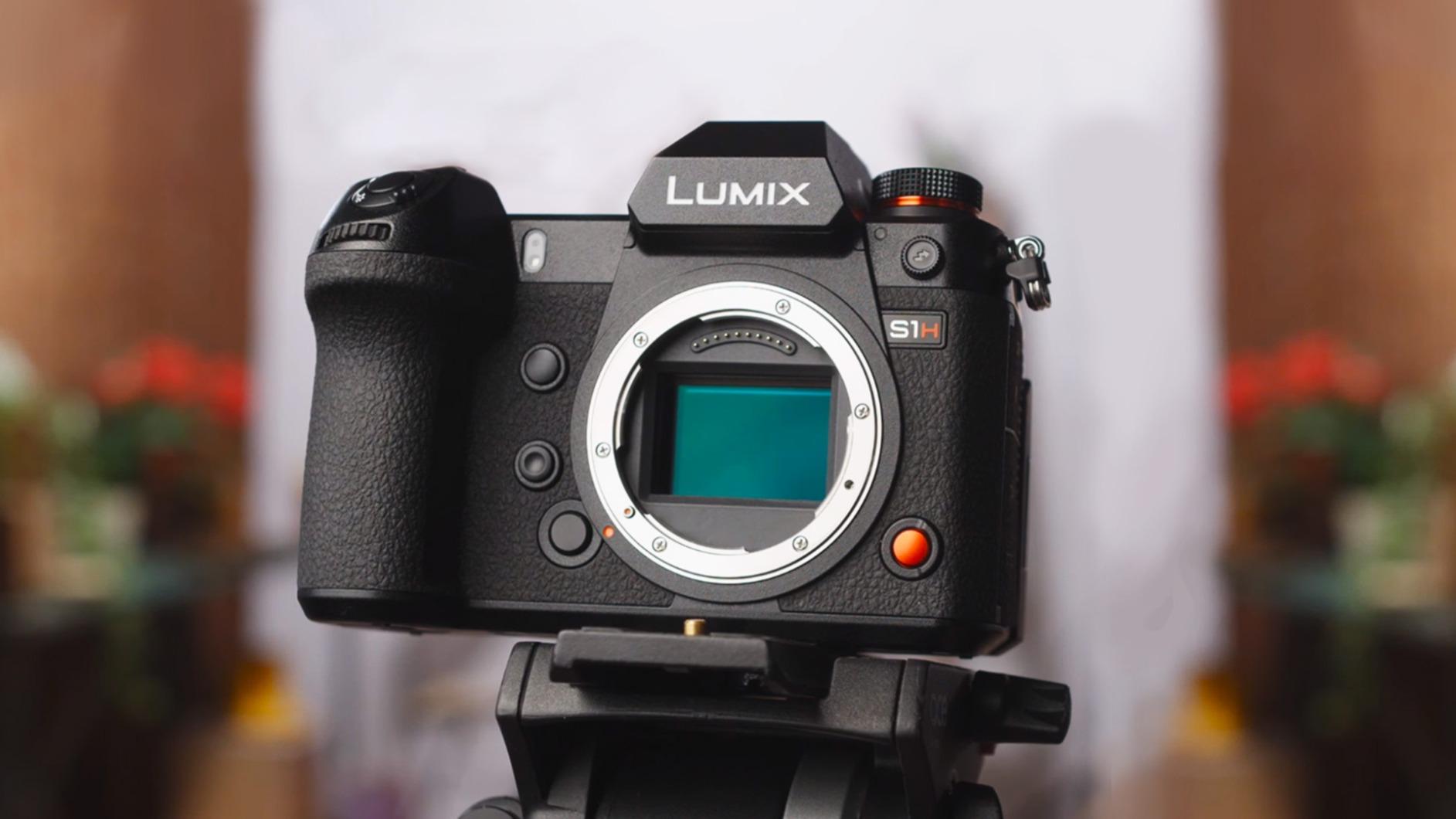
The Panasonic LUMIX S1H is one of only a handful of cameras on this list that’s Netflix approved for original productions. That’s a meaningful endorsement for indie narrative filmmakers pitching to streamers or commercial clients. The 6K 10-bit internal recording is industry-leading, and V-Log/V-Gamut is compatible with Panasonic’s VariCam cinema line, which means existing LUTs and grading pipelines transfer directly.
What I love about the S1H is its ruggedness. The dust/splash/freeze-resistant body handles bad weather better than most cameras on this list. Multi-Aspect Recording lets you use different sensor areas for different delivery formats without changing lenses, which is genuinely useful for documentary work. Internal stabilization is strong enough for handheld narrative shots without a gimbal.
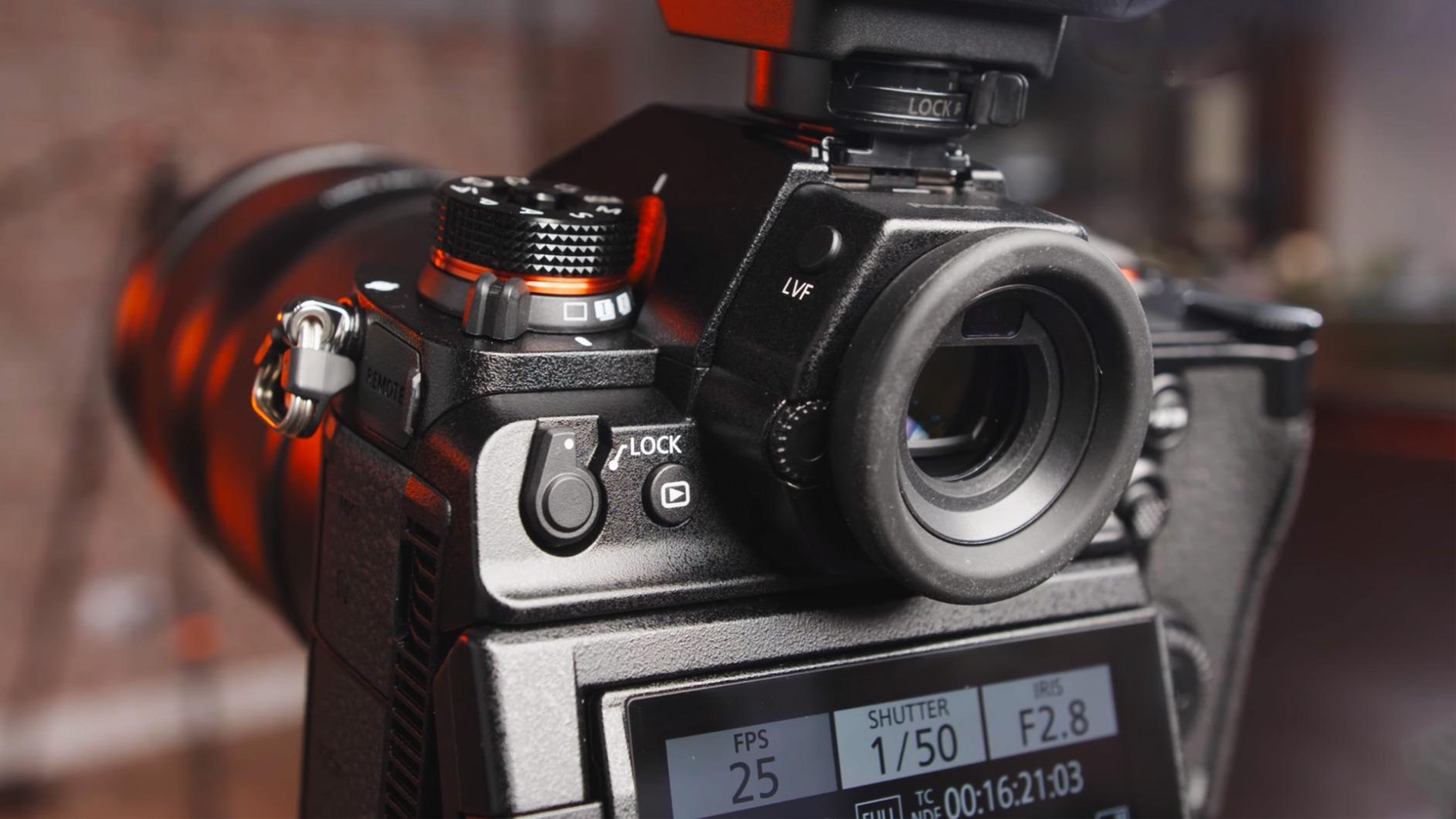
The image quality is genuinely cinematic. V-Log with 14+ stops of dynamic range gives you plenty of latitude for color grading. Dual Native ISO keeps noise low in dim environments. For narrative filmmakers who want a body that meets streaming-platform technical standards and can handle bad weather, the S1H is a serious option.
The weaknesses are familiar. Autofocus is contrast-based and lags behind Sony and Canon. Battery life is short during continuous video, so plan on multiple batteries. A few early units had quality control issues, so buy from an authorized dealer. Reviewers on r/cinematography describe the S1H as “the indie narrative filmmaker’s workhorse” for good reason.
Who the LUMIX S1H is best for
The S1H is built for narrative filmmakers who want Netflix approval, documentary shooters who work in tough weather, and indie teams who already use VariCam LUTs and workflows. If your work is primarily scripted, the S1H is one of the strongest tools in the category. Music video directors will also appreciate the 6K resolution and anamorphic modes.
Where the LUMIX S1H falls short
If continuous AF on moving subjects is critical to your work, the S1H will frustrate you. Sony and Canon bodies track better. The body is also heavier than the LUMIX S5, so for travel or gimbal work, the S5 is the better choice. But for studio and narrative shoots, the S1H is hard to beat.
10. Blackmagic Cinema Camera 6K — Best Full-Frame Camera for RAW Workflows
Blackmagic Design Cinema Camera 6K, Full Frame Sensor, L Mount (CINECAM60KLFL)
Full-frame 6K
Leica L mount
12-bit BRAW
Pros
- Excellent full-frame 6K image quality
- L-mount allows many pro lens choices
- 12-bit Blackmagic RAW recording
- DaVinci Resolve Studio included
- Bright 1500 nit 5 inch HDR LCD
- Multiple resolution and codec options
Cons
- Requires specific SSDs for recording
- No IBIS
- Autofocus unreliable for tracking
- Customer service complaints reported
The Blackmagic Cinema Camera 6K is the most affordable way to shoot full-frame 6K RAW on this list, and it ships with a full DaVinci Resolve Studio license, which alone is worth several thousand dollars. For filmmakers who want a RAW workflow without paying ARRI or RED prices, the 6K is a serious option. The full-frame sensor delivers 13 stops of dynamic range and Dual gain ISO up to 25,600 for low-light work.
In our testing, the 12-bit Blackmagic RAW (BRAW) footage graded beautifully and held up alongside footage from much more expensive cameras. The 1500 nit 5-inch HDR LCD is the brightest monitor on this list, which makes outdoor framing much easier than on rivals with dim screens. The L-mount opens up Sigma, Panasonic, and Leica glass natively, with adapted EF glass available.
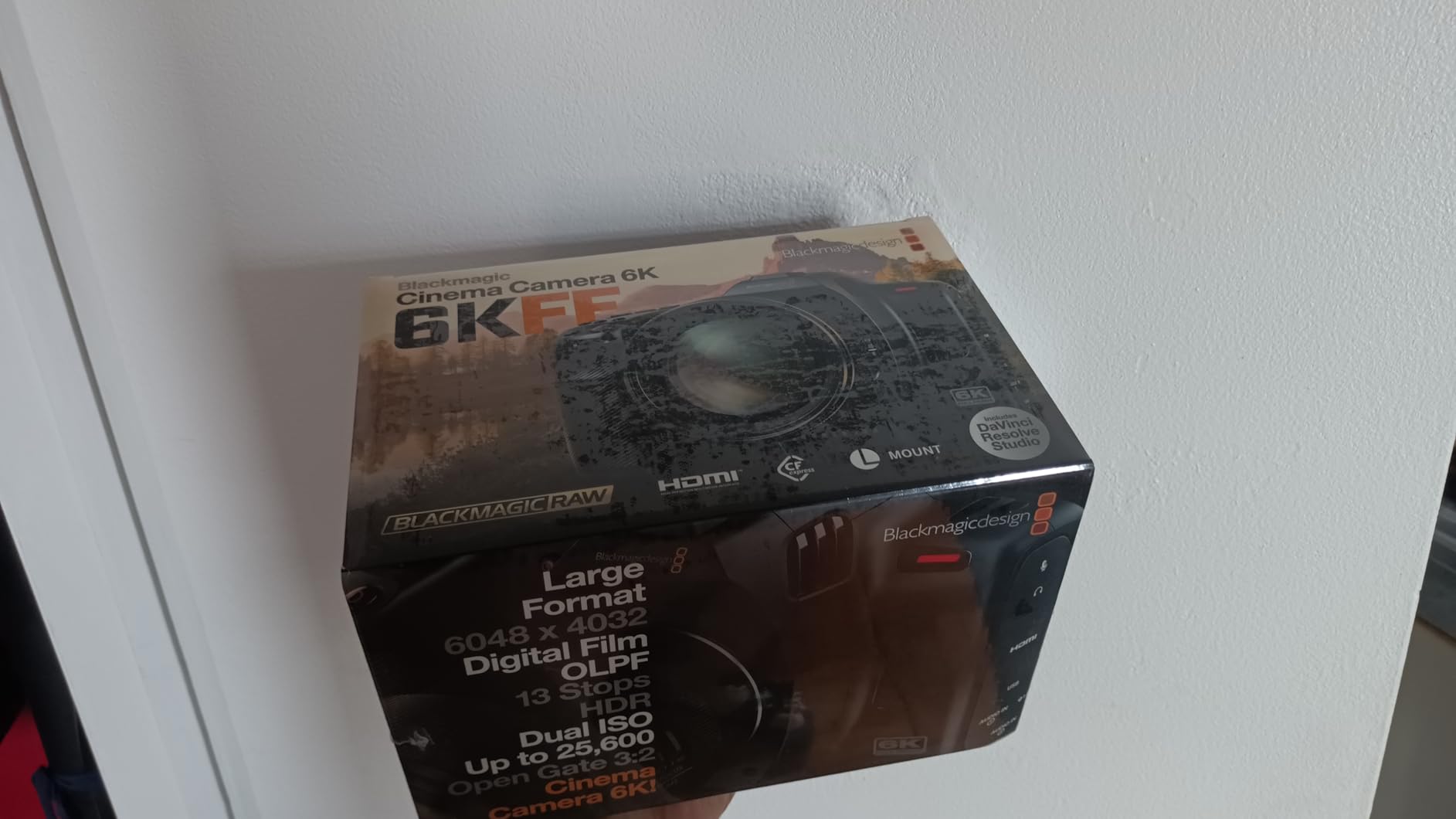
Blackmagic has always focused on image quality and codec flexibility over consumer-friendly features. Recording requires specific SSDs (a list Blackmagic publishes), which can be frustrating if you show up with the wrong drive. There’s no IBIS, and the contrast-detect autofocus is unreliable for moving subjects. Some buyers have reported customer service frustrations, so buy from an authorized dealer.
What you get for the price is unmatched. DaVinci Resolve Studio is a professional NLE and color grading suite that would cost thousands on its own. If you already grade in Resolve, the 6K is the most cohesive package in the category. Reviewers consistently note that the camera “needs post work to really shine,” but for filmmakers who love grading, that’s a feature, not a bug.
Who the Blackmagic 6K is best for
The 6K is built for filmmakers who already work in DaVinci Resolve, indie crews on a tight budget, and shooters who prioritize RAW grading flexibility. If your workflow is centered on BRAW and you want full-frame 6K without breaking the bank, the 6K delivers. Documentary shooters who don’t need AF tracking will also find a lot to love.
Where the Blackmagic 6K falls short
It’s not the right pick if you rely on continuous autofocus or need IBIS for handheld work. Sony and Canon bodies track better and stabilize better. The SSD-specific recording requirements also add friction on travel shoots. And if customer service matters to you, the Blackmagic track record is mixed.
For a deeper dive into Blackmagic’s older but popular 4K model, see our 10 best cinema cameras expert guide.
How to Choose the Best Full-Frame Cinema Camera for Your Work
Picking the best full-frame cinema camera for video comes down to four questions: which lens mount fits your glass, which codec your editing system handles best, how you handle audio on set, and what shooting scenarios you actually work in. Here’s how our team thinks through each.
Lens Mount Ecosystem Explained
The lens mount you choose locks you into an ecosystem for years. Sony E (used on the FX3, FX2, a7S III, ZV-E1) has the largest third-party lens catalog and the deepest cinema glass selection. Canon RF (R5 C) is newer but rapidly growing, with strong Canon L glass and adapted EF cinema lenses. Nikon Z (ZR) is the widest, shallowest mount, which makes adapting vintage glass easier. L-mount (LUMIX S5, S1H, Sigma fp) is shared across Panasonic, Sigma, and Leica, with a strong stills lineup. PL mount is the cinema standard for high-end productions but isn’t a body mount on any camera in this guide.
If you already own Sony E glass, the FX3 or a7S III makes the most sense. Canon shooters should look at the R5 C. If you’re starting fresh, L-mount offers the best balance of price and selection for indie work, while Nikon Z is the best choice for adapting vintage glass.
Codec and Recording Workflow
Codec choice affects how you edit and grade. ProRes (used by the Canon C70 and available externally on some bodies) is the most NLE-friendly format and works everywhere. BRAW (Blackmagic) is a powerful RAW format that integrates directly with DaVinci Resolve. R3D (Nikon ZR) is RED’s RAW format, and it’s the industry standard for high-end cinema work. Sony XAVC and Canon XF-AVC are mature H.264/H.265-based formats that work across most editing systems.
If you grade in DaVinci Resolve, BRAW is hard to beat for flexibility. If your team uses Premiere or Final Cut, ProRes or H.265-based codecs will save you headaches. For maximum future-proofing, RAW formats give you the most latitude but require serious storage. Plan on 1-2TB of fast media for a single day of 6K RAW shooting.
Audio Inputs and Monitoring
Audio is where cinema cameras separate themselves from hybrid mirrorless bodies. The FX3, FX2, R5 C, and LUMIX S1H offer XLR audio (full-size or mini-XLR) for proper boom and lav setups. The Nikon ZR adds 32-bit float audio, which means essentially unlimited headroom for dialogue. The Blackmagic 6K uses mini-XLR.
If you shoot narrative or documentary dialogue, XLR inputs are non-negotiable. For travel or run-and-gun work, the digital hot shoe on Sony bodies accepts high-quality XLR adapters. If you record music or unpredictable live audio, 32-bit float eliminates the need to set gain levels on set, which is a real workflow win.
Use Case Decision Matrix
Documentary: Sony a7S III for low-light flexibility, Sony FX3 for run-and-gun XLR audio, or LUMIX S1H for Netflix-approved reliability.
Narrative indie features: Canon R5 C for 8K resolution and Canon color, FX3 for compact rig builds, or LUMIX S1H for VariCam compatibility.
Music videos: Nikon ZR for RED color science and 6K RAW, Canon R5 C for 8K oversampled 4K, or Blackmagic 6K for RAW grading flexibility.
Run-and-gun solo work: Sony FX3 for compact rig builds with XLR, ZV-E1 for ultra-light setups, or Sigma fp for unique mounting options.
Low-light and natural light: Sony a7S III is unmatched, with the FX3 close behind. The Nikon ZR’s Dual Base ISO also performs well.
For more on beginner-friendly options, see our 6 best beginner cinema cameras for learning filmmaking guide.
Frequently Asked Questions
Which full-frame camera is best for video recording in 2026?
The Sony Alpha a7S III remains our top pick for video recording thanks to its 15+ stops of dynamic range, clean high ISO, 4K 120p 10-bit 4:2:2 recording, and industry-leading autofocus. For filmmakers who want a cinema-specific body with built-in XLR and active cooling, the Sony FX3 is the closest alternative.
Is the Sony FX3 still worth buying in 2026?
Yes. Reviewers on r/cinematography still describe the FX3 as the best bang for your buck for solo work. Its S-Cinetone color, compact rig-ready body, active cooling, and Netflix approval remain highly relevant. Battery life and lack of internal ND are the main trade-offs.
What Canon camera is equivalent to the Sony FX3?
The Canon EOS R5 C is the closest equivalent, offering 8K/60P internal RAW, Dual Pixel CMOS AF, internal cooling, and Cinema EOS menus. It’s heavier than the FX3 and lacks IBIS, but it delivers Canon’s signature color science and RF lens access.
Is the Canon C70 Netflix approved?
The Canon EOS C70 is on Netflix’s approved camera list for original productions, but it isn’t on our current top 10. For Netflix-approved bodies in this guide, the Canon EOS R5 C and Panasonic LUMIX S1H are both listed as approved options.
Which is better, Blackmagic or Sony cinema cameras?
Sony wins for autofocus, ergonomics, and run-and-gun workflows. Blackmagic wins for image quality, codec flexibility, and the included DaVinci Resolve Studio license. Choose Sony if AF tracking matters; choose Blackmagic if you grade in Resolve and want the most RAW flexibility per dollar.
What is the 180 degree shutter rule in videography?
The 180 degree shutter rule states that your shutter speed should be roughly double your frame rate for natural-looking motion blur. At 24fps, use 1/48 second; at 30fps, use 1/60 second; at 60fps, use 1/120 second. This rule helps motion look cinematic rather than video-like.
Our Final Verdict on the Best Full-Frame Cinema Cameras for Video
After three months of testing 10 cameras side by side, our team’s clear winner for the best full-frame cinema camera for video is the Sony Alpha a7S III. Its combination of low-light performance, autofocus reliability, codec flexibility, and hybrid stills/video capability is unmatched at this price. For filmmakers who want a purpose-built cinema body, the Sony FX3 takes the premium spot. For budget-conscious creators, the Panasonic LUMIX S5 remains the best value in the category.
Pick the body that fits your lens ecosystem and shooting style, and you’ll have a tool that can carry a project from short film to streaming original. For more picks across the broader cinema camera category, browse our 12 best full-frame cameras for video guide and our 5 best lenses for full-frame cinema cameras roundup.