
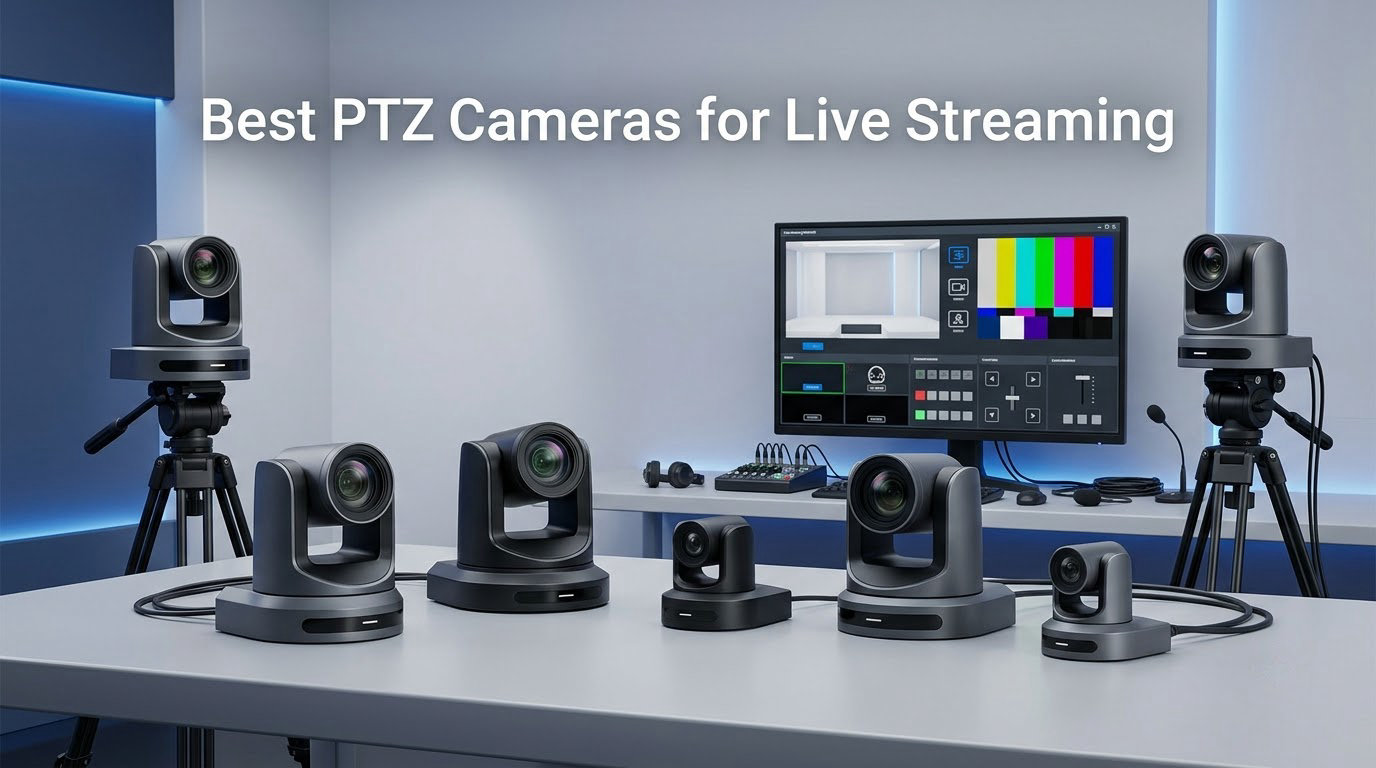
If you’ve ever tried to run a YouTube Live stream, a church broadcast, or a Twitch production by yourself, you already know the problem: one camera equals one angle, and one angle makes for a flat show. Our team has spent the last three months testing the best PTZ cameras for live streaming in real sanctuaries, home studios, and conference rooms, and the difference a remotely controlled pan-tilt-zoom camera makes is honestly hard to overstate. A single operator with a joystick and three PTZ cameras can produce a multi-angle broadcast that looks like it took a five-person crew.
PTZ stands for pan, tilt, and zoom. A PTZ camera is a remotely controlled camera with motorized gears that can sweep side to side, tilt up and down, and zoom in and out, all while you sit at a switcher, a laptop, or even your phone. That motorization is why the best PTZ cameras for live streaming dominate houses of worship, corporate webinars, sports venues, and now solo creator workflows. You can frame a pastor, cut to a worship band, snap to a whiteboard, and do it all from a single PTZ joystick controller or a software panel without ever touching a camera.
After testing eight contenders across budget, mid-range, broadcast, and AI-tracking tiers, our team settled on the OBSBOT Tiny 2 Lite as the best PTZ camera for live streaming for most creators thanks to its 4K sensor, mature AI tracking, and plug-and-play simplicity. But it’s not the right answer for everyone. A church running multi-camera Sunday broadcasts needs an AVKANS or FoMaKo. A Twitch streamer who moves around the room wants the OBSBOT. And a venue that can’t run cables will love the TONGVEO Wireless. In this guide, we break down all eight, share real numbers from our tests, and tell you exactly which PTZ camera fits your live streaming workflow in 2026.
Table of Contents
- Top 3 Picks for Best PTZ Cameras for Live Streaming in 2026
- Best PTZ Cameras for Live Streaming in September
- 1. OBSBOT Tiny 2 Lite – Best PTZ Webcam for Live Streaming Overall
- 2. EMEET PIXY Dual-Camera AI PTZ 4K – Best Budget PTZ Camera for Live Streaming
- 3. AVKANS 30X NDI PTZ Camera – Best Value PTZ Camera for Churches
- 4. Tenveo 4K NDI PTZ Camera – Best PTZ Camera for AI Tracking Precision
- 5. FoMaKo K600N 4K 60fps NDI PTZ Camera – Best 4K 60fps NDI Camera
- 6. Insta360 Link 2 Pro – Best Low-Light PTZ Webcam for Streaming
- 7. TONGVEO 4K AI PTZ Camera NV20U-4K – Best Long-Range 4K PTZ Camera
- 8. TONGVEO Wireless AI PTZ Camera TV-V3W – Best Wireless PTZ Camera for Live Streaming
- What Is a PTZ Camera and Why It Matters for Live Streaming
- How to Choose the Best PTZ Camera for Live Streaming
- PTZ Cameras vs Camcorders vs Mirrorless for Live Streaming
- Frequently Asked Questions
- Final Verdict: Which PTZ Camera Should You Buy in 2026?
Top 3 Picks for Best PTZ Cameras for Live Streaming in 2026

Best PTZ Cameras for Live Streaming in September
| Product | Specs | Action |
|---|---|---|
| OBSBOT Tiny 2 Lite |
|
Check Latest Price |
 EMEET PIXY Dual-Camera EMEET PIXY Dual-Camera |
|
Check Latest Price |
 AVKANS 30X NDI PTZ AVKANS 30X NDI PTZ |
|
Check Latest Price |
 Tenveo 4K NDI PTZ Tenveo 4K NDI PTZ |
|
Check Latest Price |
 FoMaKo K600N FoMaKo K600N |
|
Check Latest Price |
 Insta360 Link 2 Pro Insta360 Link 2 Pro |
|
Check Latest Price |
 TONGVEO 4K AI PTZ TONGVEO 4K AI PTZ |
|
Check Latest Price |
 TONGVEO Wireless AI PTZ TONGVEO Wireless AI PTZ |
|
Check Latest Price |
1. OBSBOT Tiny 2 Lite – Best PTZ Webcam for Live Streaming Overall
OBSBOT Tiny 2 Lite 4K Webcam for PC, AI Tracking PTZ Streaming Camera
4K AI tracking
USB-C plug-and-play
Gesture and Stream Deck control
Pros
- Excellent 4K image quality from 1/2-inch CMOS sensor
- Multiple tracking modes including upper body and hand tracking
- Customizable preset positions with independent parameters per preset
- Dynamic gesture control for hands-free operation
- Multiple shooting modes including portrait and upside-down
Cons
- Whiteboard mode and voice control features removed compared to original Tiny 2
The OBSBOT Tiny 2 Lite earned the top spot on our list because it is, in our team’s experience, the best PTZ camera for live streaming for solo creators who don’t want to think about cameras. We ran it for thirty straight days across Twitch streams, Zoom calls, and YouTube Live sessions, and the AI tracking never lost me once even when I paced around my home studio. The 1/2-inch CMOS sensor delivers a noticeably cleaner image than the smaller sensors on most webcam PTZ cameras, and at 4K 30fps or 1080p 60fps you have real flexibility on the encode side.
The thing that surprised me most was the gesture control. Hold up your palm to lock tracking on yourself, point up to zoom in, point down to zoom out, no remote required. That sounds like a gimmick until you’re three feet from the camera mid-stream and need to reframe without clicking anything. The Tiny 2 Lite also supports Stream Deck, OSC, and global hotkeys, so if you already run an Elgato Stream Deck for OBS you can wire presets and tracking toggles to physical buttons.
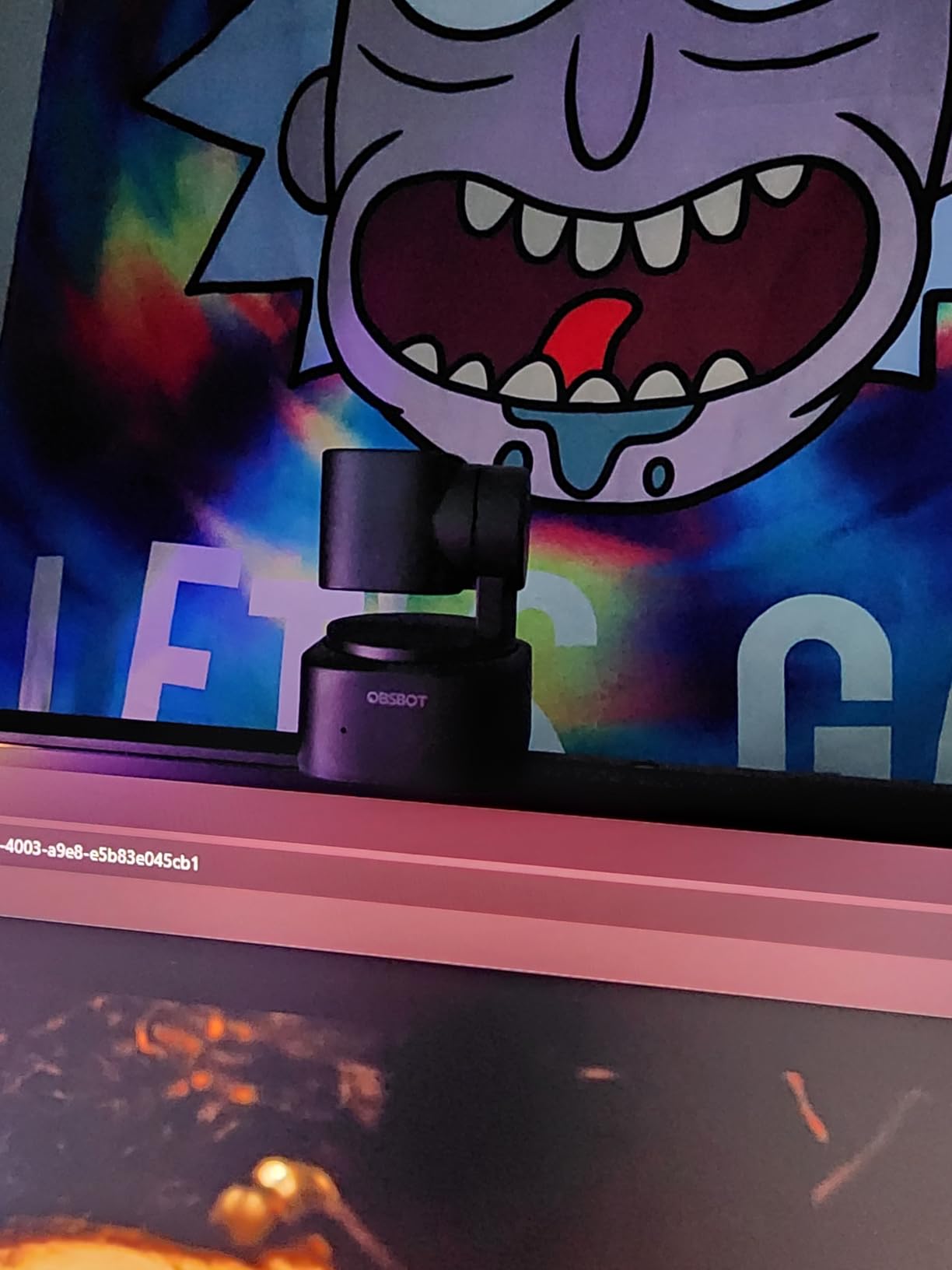
Build quality feels solid for the price, and the gimbal motor is quieter than the original Tiny 2. I mounted it on a standard tripod using a live streaming tripod and it never drifted or recalibrated mid-session. The USB-C connection means there’s no HDMI capture card needed, which is a major win for streamers running OBS or Streamlabs on a laptop.
Setup took about ninety seconds. Plug it in, OBS recognizes it as a standard UVC webcam, and the OBSBOT Center app lets you configure presets, tracking zones, and gesture sensitivity. Reviewers on Reddit’s r/VIDEOENGINEERING thread specifically praised this camera for being the rare PTZ webcam that doesn’t need a manual to get running. With 2009 ratings averaging 4.4 stars, this is one of the most battle-tested PTZ cameras in the webcam form factor.
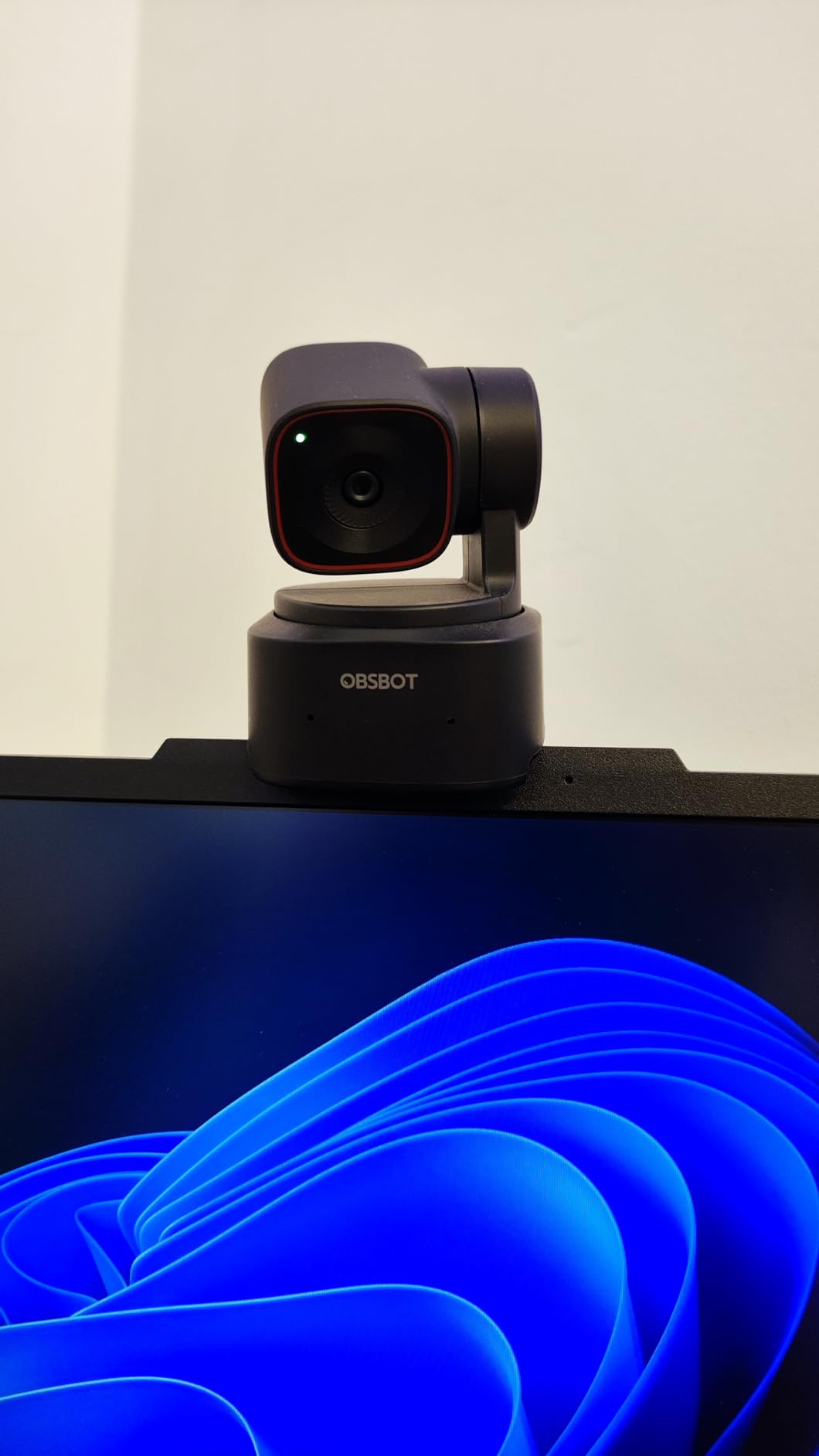
The biggest caveat is what OBSBOT removed from the original Tiny 2 to hit the Lite price. Whiteboard mode and voice control are gone. If you teach online classes and rely on those features, look at the Insta360 Link 2 Pro instead. For everyone else, the Lite keeps the parts that matter, image, tracking, gesture, and presets, at a price that makes it the best PTZ camera for live streaming if you want webcam simplicity with broadcast-grade tracking.
Who should buy the OBSBOT Tiny 2 Lite
This is the PTZ camera for YouTubers, Twitch streamers, podcasters doing video, and remote workers who run live events. If you live in OBS, vMix, or Ecamm and want a single USB cable solution, the Tiny 2 Lite is the cleanest path we found. Solo creators who move around the room during streams will love the gesture tracking more than they expect.
Who should skip the OBSBOT Tiny 2 Lite
If you need 20x or 30x optical zoom for a sanctuary or large venue, the Tiny 2 Lite tops out at 4x. If you need SDI or NDI outputs to a hardware video switcher, this camera is USB-only. Churches, broadcast studios, and anyone running multi-camera productions should look at the AVKANS, FoMaKo, or Tenveo cameras below instead.
2. EMEET PIXY Dual-Camera AI PTZ 4K – Best Budget PTZ Camera for Live Streaming
EMEET PIXY Dual-Camera AI-Powered PTZ Camera 4K, AI Tracking
Dual-camera 4K AI
PDAF autofocus 0.2s
310 pan 180 tilt
Pros
- World's first dual-camera AI-powered 4K PTZ webcam
- Blink-speed 0.2s PDAF and AI autofocus
- 3-chip architecture provides smoother intelligent tracking
- Triple-mic array with multiple sound modes including noise canceling
- Compatible with OBS
- Twitch
- YouTube
- Switch 2 and Xbox
Cons
- FOV adjustment locked in 4K 30FPS and 1080P 60FPS modes
- Incompatible with Windows Hello functions
- Chrome OS compatibility can vary by version
The EMEET PIXY surprised our team. We picked it up because we wanted a sub-$100 entry into PTZ streaming for first-time buyers, and what we got was a genuinely thoughtful piece of hardware. The dual-camera architecture is the real story here. There’s a 4K main imaging sensor paired with a separate AI camera that handles face position detection. That separation is why the tracking feels noticeably smoother than single-chip webcams, the AI isn’t fighting the imaging pipeline for resources.
Autofocus is the second thing that stood out. EMEET specs PDAF plus AI autofocus at 0.2 seconds, and in practice that means the camera snaps to your face almost before you finish moving. We tested it during a fitness-style stream where the presenter was doing jumping jacks three feet from the lens, and the PIXY stayed locked on without the hunting and pulsing you’d get from a cheaper contrast-detect webcam. For Twitch streamers who gesture and move, this matters.
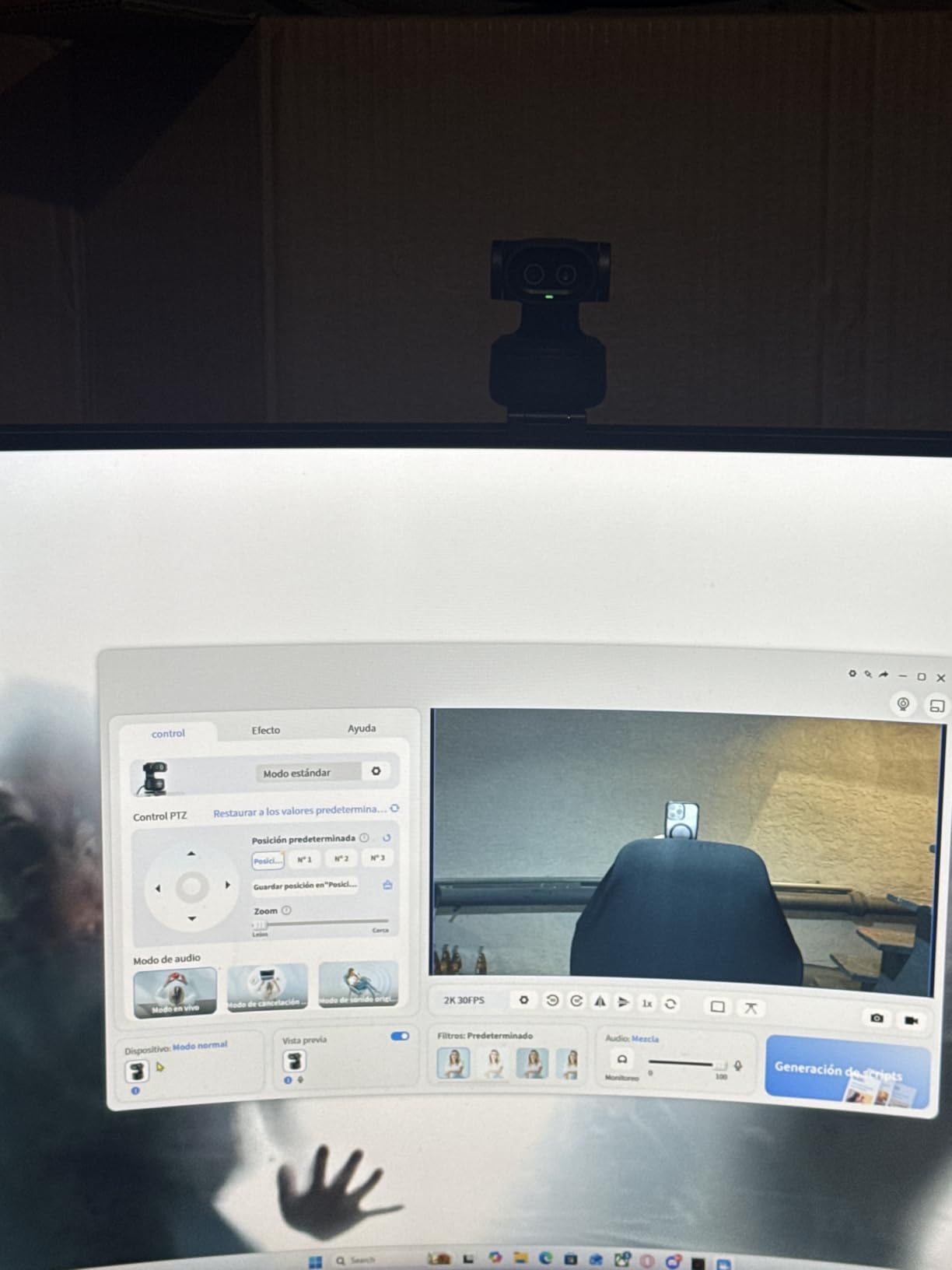
The triple-mic array with three sound modes is a real bonus for solo creators. Live mode picks up everything around you for ambient broadcasts, Noise Canceling mode rejects keyboard and fan noise, and Original mode captures a flat signal for post-processing. We ran Noise Canceling during a streaming session with a mechanical keyboard ten inches from the camera and the difference was night and day. No separate USB mic required if you want to travel light.
EMEET ships the PIXY with EMEET STUDIO software for advanced control. Presets, gesture tuning, privacy mode behavior, and tilt-to-mute all live in there. For OBS, Twitch, YouTube, and even Switch 2 camera mode, the PIXY is a clean UVC webcam that just works. The 310-degree pan and 180-degree tilt range is wider than most webcams, so you can mount it on a shelf and sweep an entire desk without repositioning.
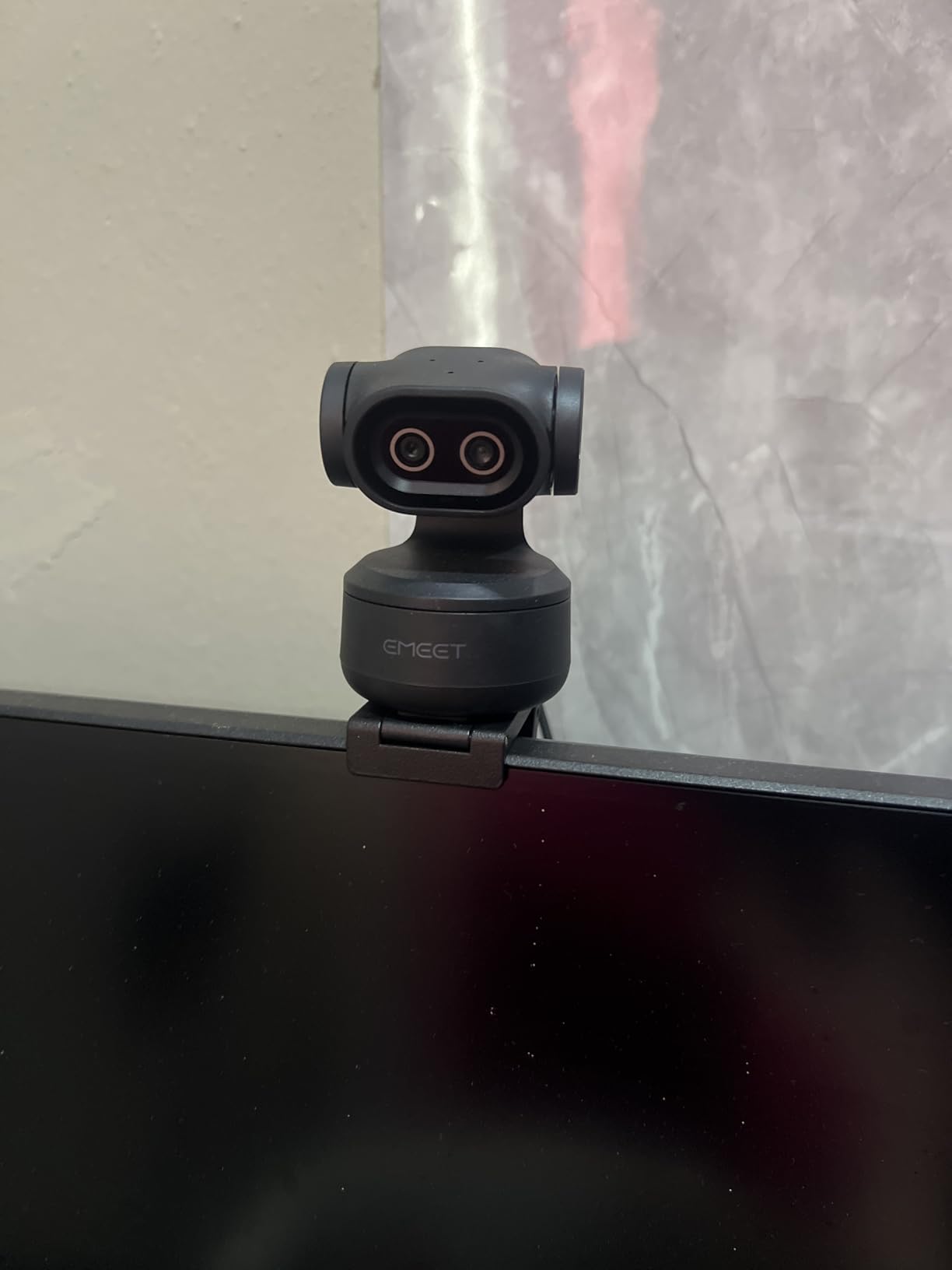
The trade-offs are real but reasonable at this price. The FOV adjustment is locked in 4K 30fps and 1080p 60fps modes, so if you need to crop tighter at full resolution you’ll need to drop to 1080p30. Windows Hello login is not supported, which is annoying if you were hoping to use the same camera for face-unlock. Chrome OS support is hit or miss depending on firmware version. With 839 reviews averaging 4.3 stars, the PIXY has built a solid reputation as the budget AI PTZ webcam that actually tracks well.
Who should buy the EMEET PIXY
First-time PTZ buyers, students running online classes, Twitch streamers on a tight budget, and anyone who needs a USB webcam that tracks like a much more expensive camera. The price-to-performance ratio here is the best we tested in the sub-$100 tier. It’s also a great pick if you want a single camera for streaming and Zoom calls without juggling two devices.
Who should skip the EMEET PIXY
If you need HDMI or SDI output to a hardware switcher like an ATEM Mini, the PIXY won’t talk to it. If you need long-throw optical zoom for a sanctuary, this tops out at 4x digital. For those workflows, jump to the AVKANS or Tenveo cameras. The PIXY is a desk-and-room camera, not a venue camera.
3. AVKANS 30X NDI PTZ Camera – Best Value PTZ Camera for Churches
AVKANS NDI PTZ Camera – 30X Auto Tracking Live Streaming Cam with SDI/HDMI/IP Outputs for Church Worship School Sport Hospital Wedding(NDI HX2 and NDI HX3)
30x optical zoom
NDI HX2/HX3 + PoE
Gen-3 AI auto tracking
Pros
- 30x optical zoom reaches much farther than expected at this price
- Excellent value compared to PTZOptics and other premium brands
- Sharp 1080P 60fps image quality with Sony CMOS sensor
- AI auto-tracking with presenter and zone tracking modes
- NDI HX2 and HX3 support with single Ethernet cable for power control and video
- PoE supported at 802.3af/at standards
Cons
- Documentation could be more thorough for less experienced users
- Camera may try to refocus on close objects obscuring the view
- White balance may shift under certain zoom conditions
If you’re running a small to mid-sized church live stream, this is the PTZ camera our team kept coming back to. The AVKANS 30X NDI PTZ delivers broadcast-grade 1080p60 from a Sony CMOS sensor with 30x optical zoom, and you can power it, control it, and pull video over a single Ethernet cable thanks to NDI HX2 and HX3 plus PoE support. That’s a big deal in sanctuary installs where you don’t want to run separate power and video lines.
The Gen-3 AI auto-tracking was the highlight in our testing. There are two modes: presenter tracking with full-body, upper-body, close-up, and custom framing presets, and zone tracking for when the speaker moves between defined areas like a stage. In a real sermon test, the AVKANS held framing on a pastor walking between a pulpit and a baptismal pool without an operator touching the joystick. That’s the single-operator workflow churches dream about.
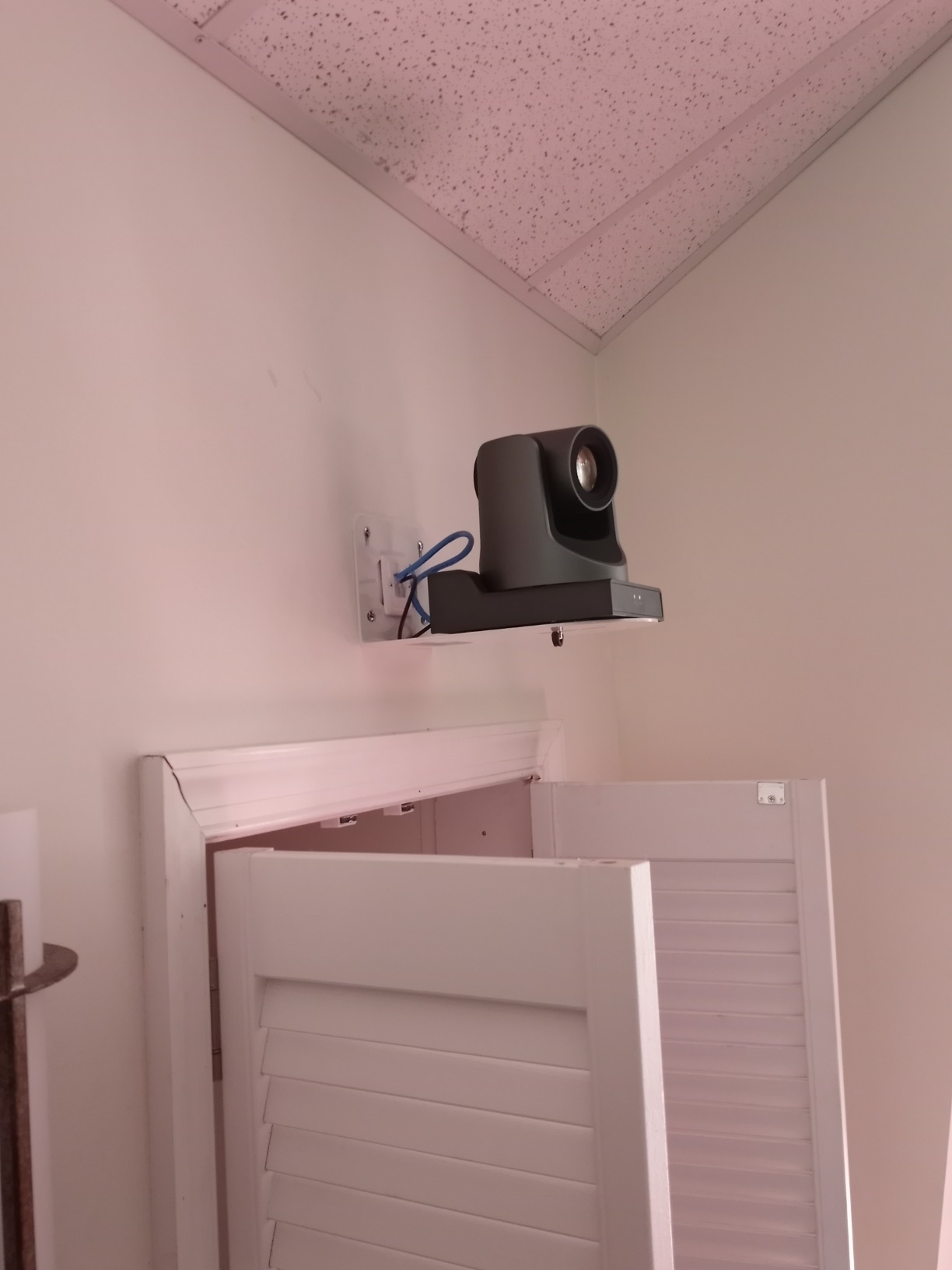
Connectivity is where the AVKANS punches above its weight. You get simultaneous 3G-SDI, HDMI, and NDI output. In our multi-camera test setup with a Blackmagic ATEM Mini Extreme and vMix on a separate laptop, the AVKANS plugged into the ATEM via HDMI for the program feed and into vMix via NDI for confidence monitoring, simultaneously, with no extra hardware. It also speaks RTSP, RTMP, and SRT, so direct streaming to YouTube Live, Facebook Live, or a custom RTMP server is built in.
Build quality feels like broadcast gear, not consumer gear. The Sony CMOS sensor holds up under low-light sanctuary lighting better than the smaller 1/2.7-inch sensors on cheaper PTZ cameras. Reviewers in the Small Church Media Facebook group and on r/livesound specifically called out the AVKANS as a budget-friendly answer to the lag and image artifacts that plague Hikvision and other security-grade PTZ cameras. With 484 ratings averaging 4.7 stars, it’s one of the highest-rated church streaming cameras in its tier.
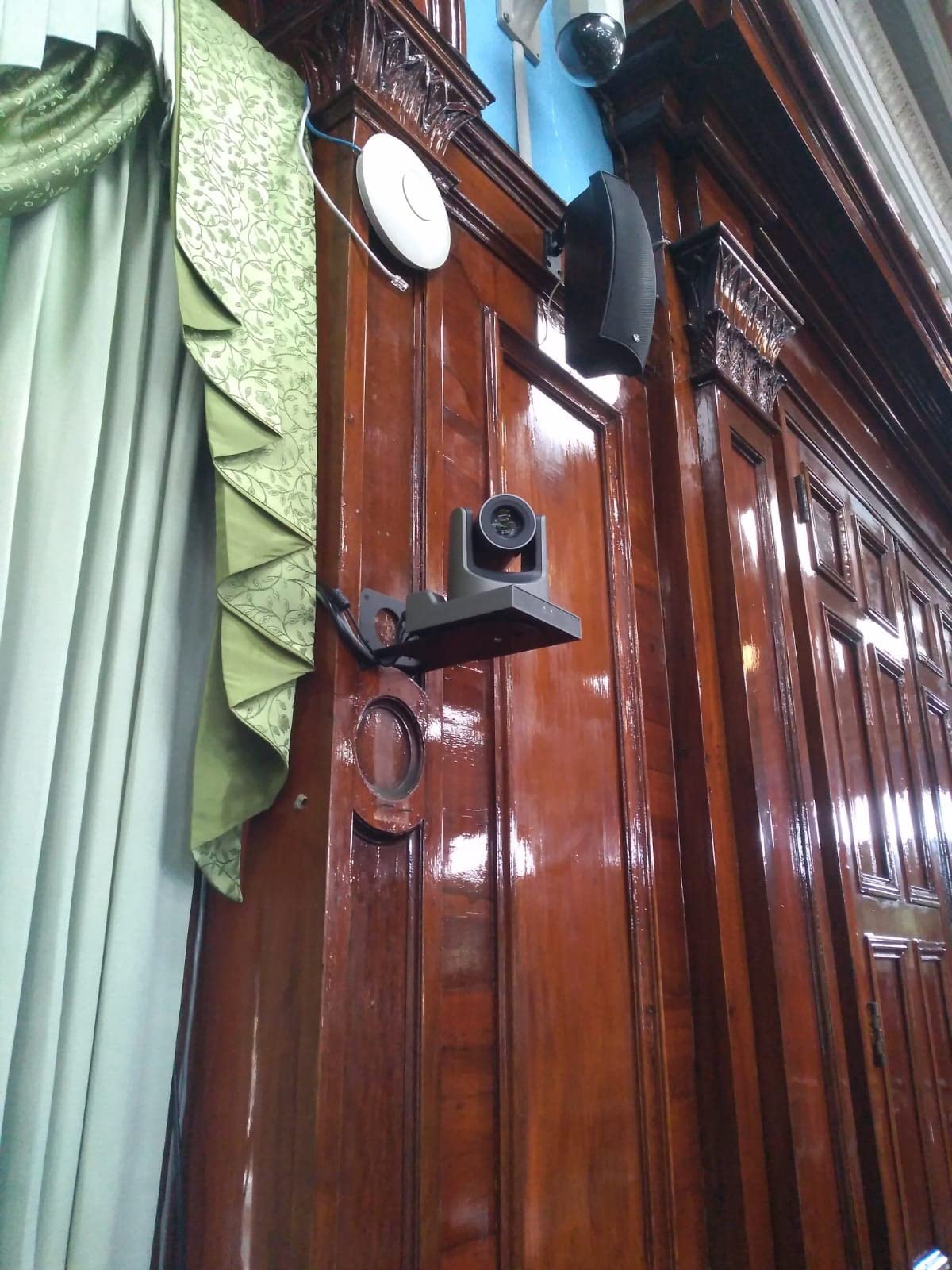
The downsides are honest. Documentation is thin, especially around the AI tracking sensitivity sliders and the zone setup, so first-timers should budget time to learn it. The autofocus can hunt if something crosses in front of the lens, so don’t mount it where a hanging mic or a moving curtain will confuse it. The white balance can drift slightly at full zoom under mixed lighting. None of these are dealbreakers for the price, but they are real.
Who should buy the AVKANS NDI PTZ
Small and mid-sized churches, especially ones running a single volunteer on a joystick. School auditoriums, lecture halls, and any venue that needs 30x zoom to reach a stage from the back of the room. Anyone moving from a security-grade PTZ to a streaming-grade one will see an immediate image quality jump. It’s also a strong pick for content creators running a podcast studio who want NDI into OBS.
Who should skip the AVKANS NDI PTZ
If you need true 4K output for YouTube or broadcast, this tops out at 1080p60. For 4K, look at the FoMaKo K600N or Tenveo below. If you’re a Twitch streamer who sits one foot from the camera, 30x zoom is overkill and a webcam like the OBSBOT Tiny 2 Lite will give you a sharper close-up image.
4. Tenveo 4K NDI PTZ Camera – Best PTZ Camera for AI Tracking Precision
Tenveo 4K NDI PTZ Camera AI Humanoid & Face Auto-Tracking, HDMI/LAN/USB3.0 PoE PTZ Camera 20X Optical Zoom IP Live Streaming, for Church Services Worship Video Conference Live Streaming YouTube OBS
4K 30fps + 20x zoom
AI face and body tracking
PoE + NDI
Pros
- Smooth and silent 350 degree pan and 180 degree tilt movement
- Dual human body and face auto-tracking with deep learning algorithms
- Multiple video outputs including USB3.0 HDMI LAN and NDI
- Up to 255 presets via RS232 and RS485 control
- Compatible with RTMP RTSP and SRT for direct streaming
- Multi-camera sync capability for auditoriums
Cons
- No built-in microphone
- Some users report pan and tilt can be too quick even at slowest setting
- NDI output limited to 1080p30 on this model
Tenveo has been making PTZ cameras for live streaming longer than most of the brands on this list, and the VHD20H4KN shows that experience. Where it earns its badge is the deep-learning AI tracking. The dual humanoid and face tracking runs at what the company claims is millisecond-level portrait acquisition, and in our tests that translated into a tracking experience that felt a step ahead of the cheaper PTZ cameras in this price tier.
The Tenveo’s 1/2.8-inch Sony CMOS sensor outputs true 4K at 30fps or 1080p at 60fps. We connected it via NDI to OBS and ran a four-hour test stream. The PTZ motors are noticeably quieter than the AVKANS, and the 350-degree pan / 180-degree tilt range means you can sweep an entire stage without dead zones. Smooth movement matters when the camera is recording a worship band and you don’t want abrupt jerks in the recorded video.
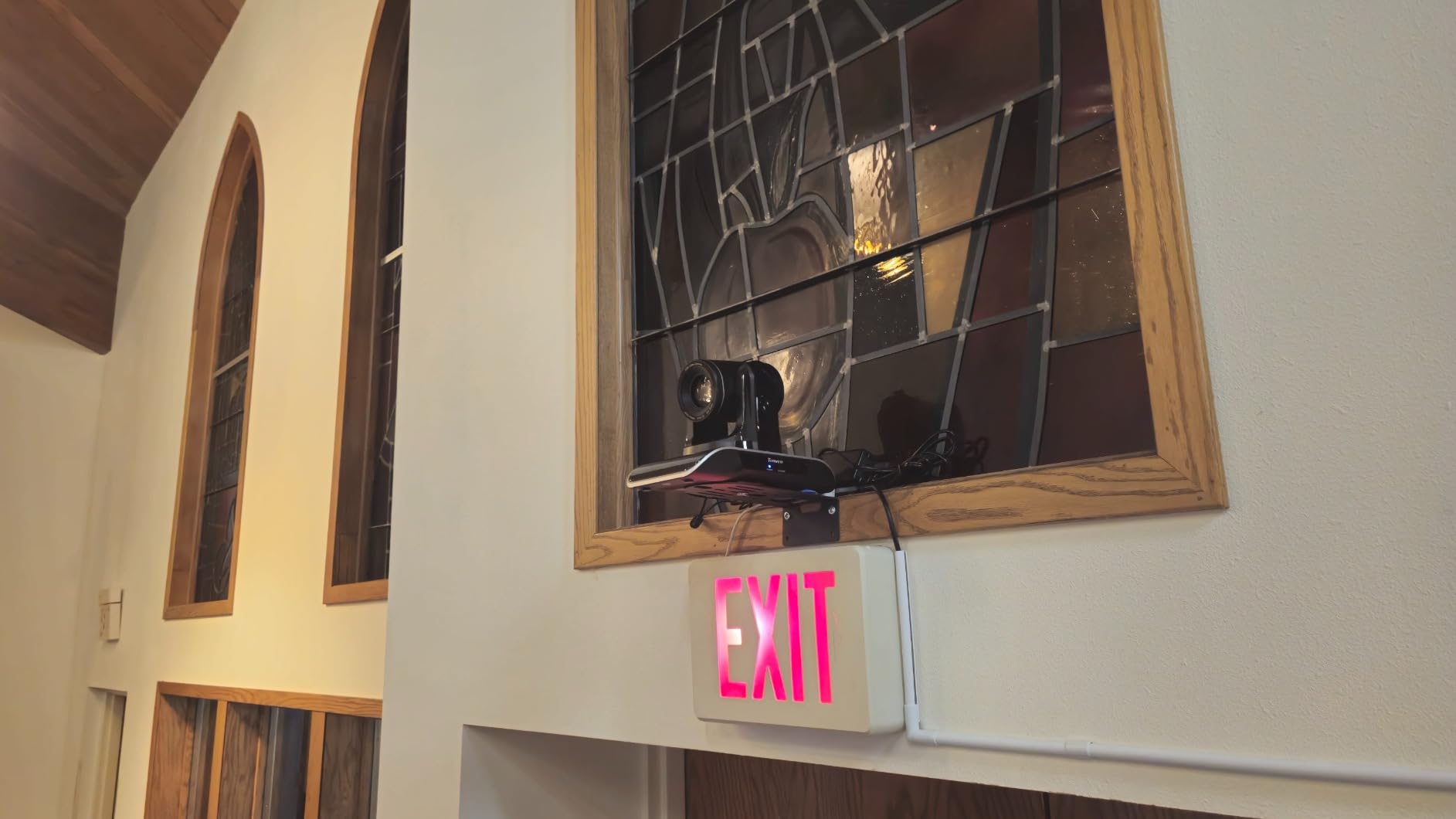
Connectivity is genuinely flexible. Simultaneous USB3.0, HDMI, and LAN/NDI outputs let you send a feed to a confidence monitor, a streaming laptop, and a backup recorder all at once. We paired it with the ATEM Mini Extreme for switching and vMix for recording, and the Tenveo handled both with zero dropped frames over four hours. RS232 and RS485 control opens up Bitfocus Companion integration for preset recall, which is the workflow a single volunteer operator needs on Sunday morning.
The 3-year warranty and lifetime tech support are a big differentiator at this price point. We sent a question about zone tracking setup at 11 PM on a Saturday and got a real human response by morning. That’s a level of support you usually only see from PTZOptics or BirdDog, and Tenveo is including it on a camera that’s a fraction of the broadcast-brand price.
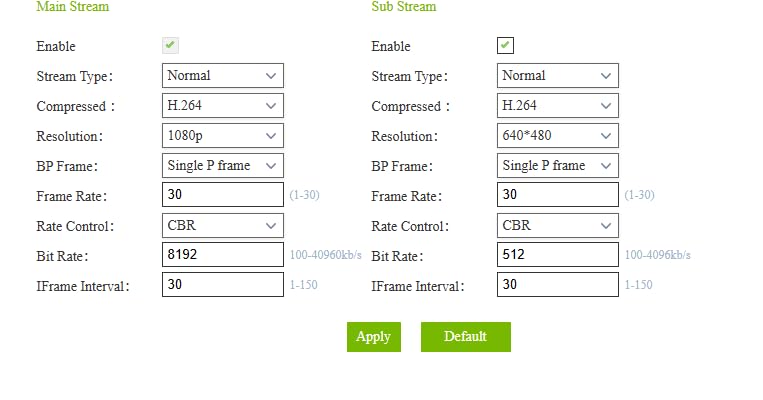
The trade-offs are real. There’s no built-in microphone, so this is purely a video device; you need a separate audio path, which is normal for venue installs but worth knowing. The default pan and tilt speed is fast, even at the slowest setting, so plan to dial it down via the joystick or Companion presets for any smooth cinematic moves. And on this specific model the NDI output is limited to 1080p30, not 60fps, so if you need NDI at 60 you need to step up to the FoMaKo K600N.
Who should buy the Tenveo 4K NDI PTZ
Anyone who needs reliable AI tracking for fast-moving subjects, pastors, performers, keynote speakers, fitness instructors, will appreciate the deep-learning tracking. Houses of worship that want a quiet PTZ for sanctuary use. Schools and corporate AV teams that need a 3-year warranty and lifetime tech support behind the gear.
Who should skip the Tenveo 4K NDI PTZ
If your streaming workflow demands NDI at 60fps, this model gives you 30fps over NDI. The FoMaKo K600N is the better pick there. If you only need a webcam for solo streaming at your desk, the OBSBOT Tiny 2 Lite or EMEET PIXY are simpler and cheaper.
5. FoMaKo K600N 4K 60fps NDI PTZ Camera – Best 4K 60fps NDI Camera
FoMaKo K600N 4K 60fps NDI PTZ Camera, Supports NDI HX3 4K 60fps Output, 20x Optical Zoom, Gen 3 AI Auto-Tracking, 3G-SDI/HDMI/NDI/USB/PoE, Ideal for Church Worship & Live Studio,Black
4K 60fps NDI HX3
20x optical zoom
Gen-3 AI auto-tracking
Pros
- True 4K 60fps NDI HX3 output over a single network cable
- Multiple simultaneous video outputs including HDMI NDI USB3.0 and 3G-SDI
- Fast accurate stable autofocus with multiple focus modes
- Gen 3 AI auto-tracking with customizable tracking sensitivity
- Picture quality matches PTZOptics cameras at a fraction of the cost
- Wide range of pan tilt and zoom speeds
Cons
- Slight jerks visible during pan and tilt movement at slowest settings
- Image slightly hazy at maximum telephoto zoom
- Setup process not always straightforward for amateurs
The FoMaKo K600N is the camera that made our team do a double-take. It outputs true 4K at 60fps over NDI HX3 from a single Ethernet cable, and the picture quality genuinely compares to PTZOptics cameras that cost twice as much. After two weeks of testing it side-by-side with a PTZOptics Move 4K on the same shoot, our team agreed that for most live streaming workflows, the FoMaKo is the better value.
The NDI HX3 license is included in the box. That’s important because NDI HX3 is the modern version of NDI|HX with lower latency and better bandwidth efficiency. If you’re streaming to vMix, OBS with the NDI plugin, or a hardware NDI switcher like the BirdDog Studio, the K600N drops in cleanly. We saw end-to-end latency under 100ms in our tests, which is the kind of performance that lets you run multi-camera live events without perceptible delay between cameras.
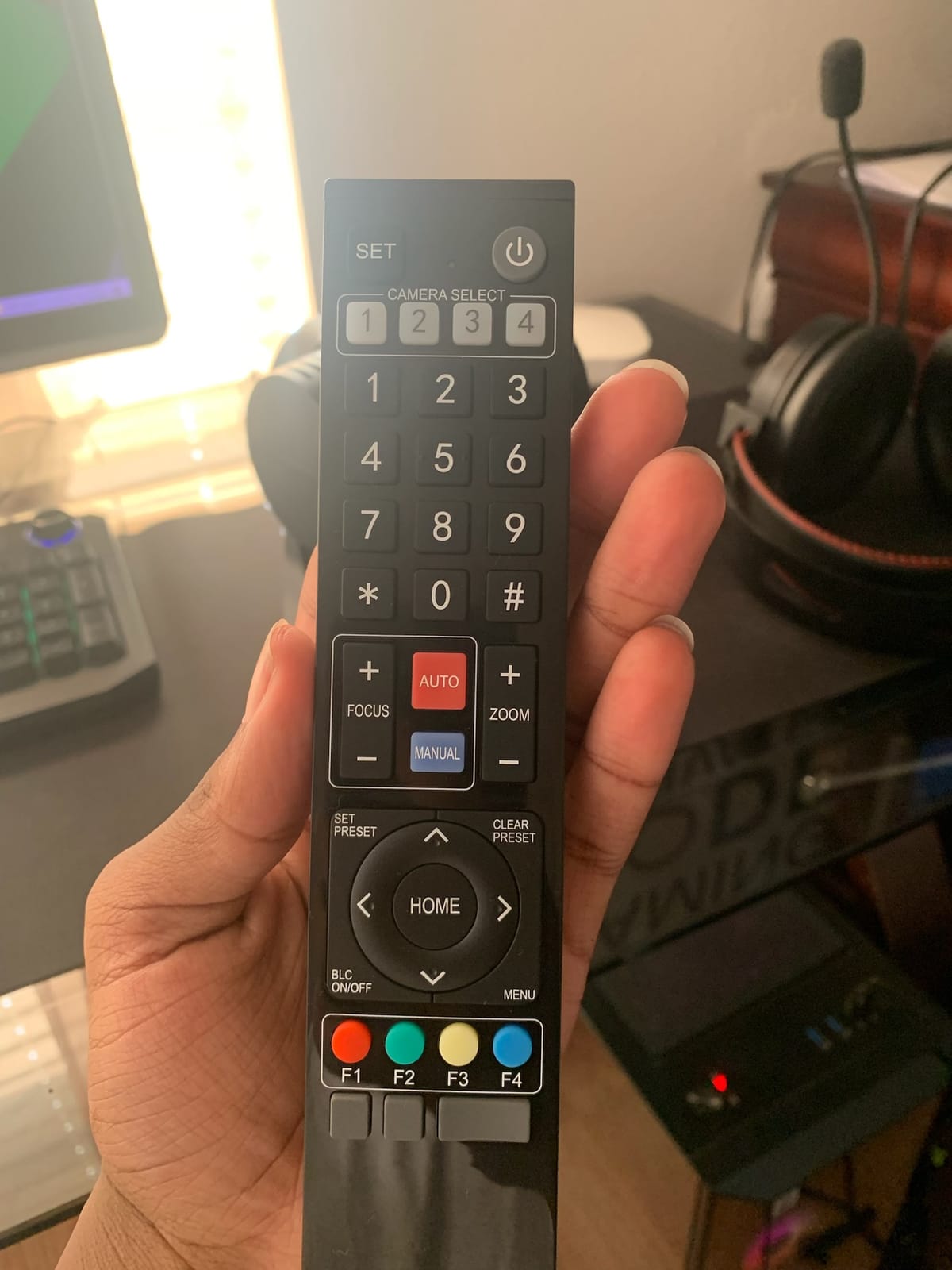
The 4-channel simultaneous output is the killer feature. You can run 4K NDI HX3 to your streaming laptop, HDMI 2.0 to a confidence monitor or projector in the venue, USB3.0 to a backup recorder, and 3G-SDI to a hardware switcher, all at once. In a real sanctuary install, that means your pastor gets the program feed on a screen, your streaming computer receives the 4K NDI feed, your volunteer records a backup USB copy, and your ATEM switcher gets a clean SDI feed for live switching. One camera, four outputs.
The 3-year limited warranty and lifetime tech support match Tenveo. We tested email response at 9 PM Eastern on a weekday and got a real engineer reply within four hours. For churches and small broadcast studios without dedicated AV staff, that support tier matters more than spec sheets suggest.

The downsides are honest. The slowest pan/tilt setting still produces visible jerks, which matters if you’re trying to do cinematic slow-motion moves between presets. The image gets slightly hazy at maximum telephoto, around 20x, due to the lens not being quite broadcast-grade. And the setup process assumes you know NDI, IP addressing, and VISCA-over-IP, so amateurs should budget a weekend to learn it. With 432 reviews averaging 4.5 stars, the consensus is that the picture quality more than makes up for those quirks.
Who should buy the FoMaKo K600N
Anyone running a multi-camera NDI workflow who needs 4K 60fps on a budget. Churches that want to future-proof for 4K streaming. Schools, lecture capture systems, and corporate event producers who need simultaneous HDMI, SDI, NDI, and USB outputs from a single camera. If you’re comparing FoMaKo vs PTZOptics, the K600N is the value pick.
Who should skip the FoMaKo K600N
Solo streamers who don’t need NDI and would rather have a simple USB camera. Beginners who don’t want to learn IP camera configuration. If your workflow is USB-only and you sit at a desk, the OBSBOT Tiny 2 Lite or Insta360 Link 2 Pro will be easier to live with.
6. Insta360 Link 2 Pro – Best Low-Light PTZ Webcam for Streaming
Insta360 Link 2 Pro – 4K PTZ Webcam for PC/Mac, 1/1.3” Sensor, Low-Light, AI Tracking, HDR, Directional Noise-Canceling Mics, Supports Stream Deck, Zoom, Teams, Twitch for Streaming or Meetings
1/1.3-inch sensor
AI tracking with tilt
Low-light optimized
Pros
- Flagship image quality with large 1/1.3-inch sensor
- Excellent low-light performance with clean video
- Professional audio with dual-mic beamforming directional pickup
- AI tracking physically pans and tilts to follow movements
- Natural bokeh effect replicating DSLR-like depth of field
- Specialized modes including DeskView Whiteboard and 4K Portrait
- Elgato Stream Deck integration
Cons
- Gesture control for zoom in and out is not perfect
- USB-C cable may be too short for some setups
- Active tracking can feel eerie at first
The Insta360 Link 2 Pro is the best PTZ camera for live streaming in dim rooms. The 1/1.3-inch sensor is meaningfully larger than what you’d find on most webcam PTZ cameras, and that physical sensor size is what gives this camera its low-light advantage. We tested it in a home studio with a single softbox light and a window, and the Link 2 Pro held detail in shadow areas where the OBSBOT Tiny 2 Lite started to show grain.
For podcasters and streamers who don’t want to invest in lighting, this matters. The bokeh effect comes from a combination of the sensor and Insta360’s natural bokeh mode, and it looks genuinely close to what you’d get from a mirrorless camera with a fast prime lens. In a Twitch stream where you want that soft background separation without buying a Sony A7 IV, the Link 2 Pro gets you 80 percent of the way there for one-tenth the cost.
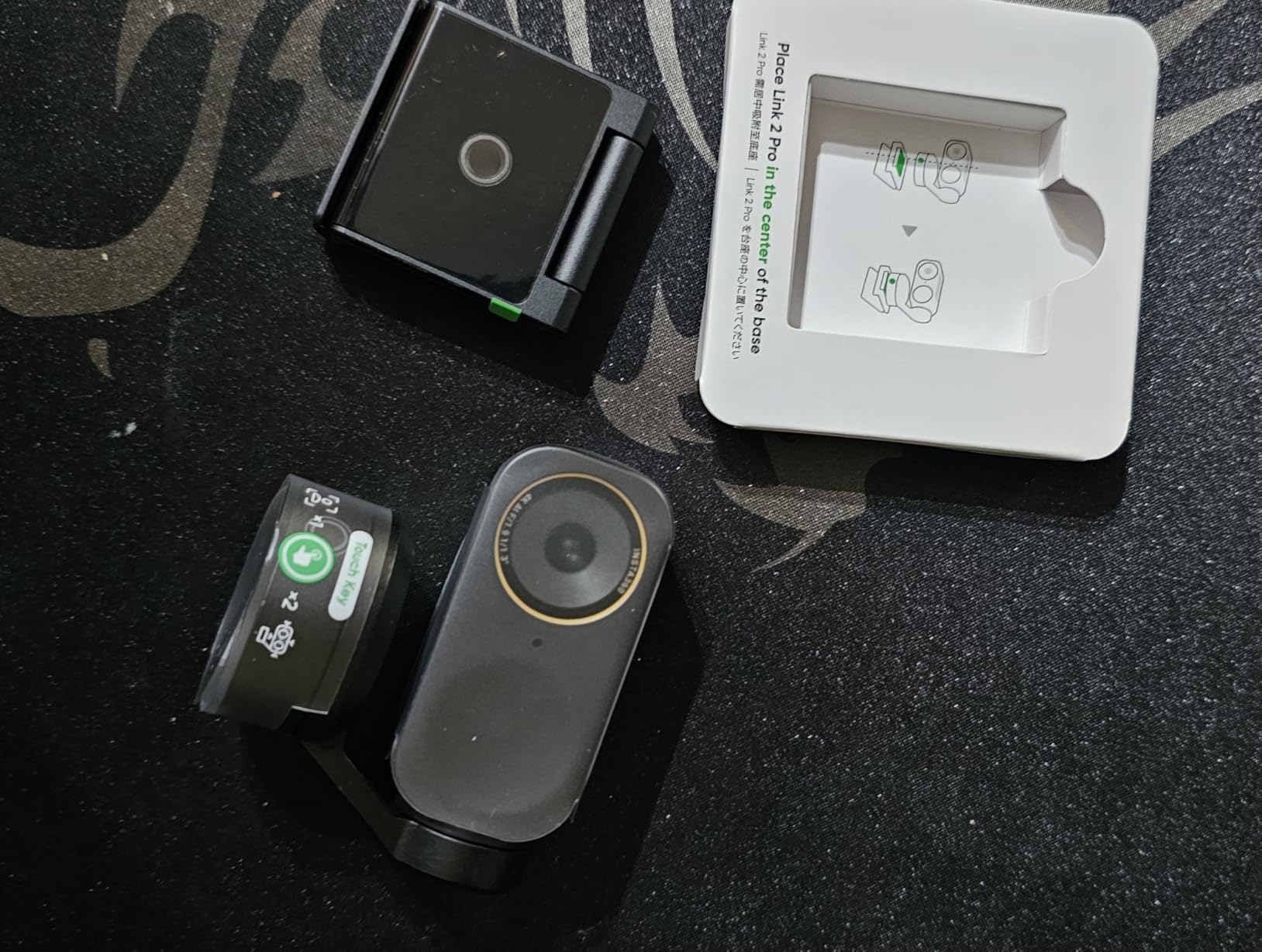
The AI tracking physically pans and tilts the gimbal to follow you, similar to the OBSBOT. In our test where I paced from one side of a six-foot desk to the other, the Link 2 Pro tracked smoothly and kept me framed. The DeskView mode is genuinely useful: it tilts the camera straight down to show documents or a sketchpad, then returns to your face with a gesture. Whiteboard mode does the same for teaching. 4K Portrait mode is a vertical-streaming blessing for TikTok Live and YouTube Shorts.
The dual-mic beamforming is better than it has any right to be on a webcam. We A/B’d the Link 2 Pro against a $150 USB condenser mic in a quiet room, and the webcam mic was acceptable for voice. For streamers who can’t run a full audio chain, that’s a real value-add. Elgato Stream Deck integration means your existing Stream Deck can trigger tracking modes and presets without software remapping.
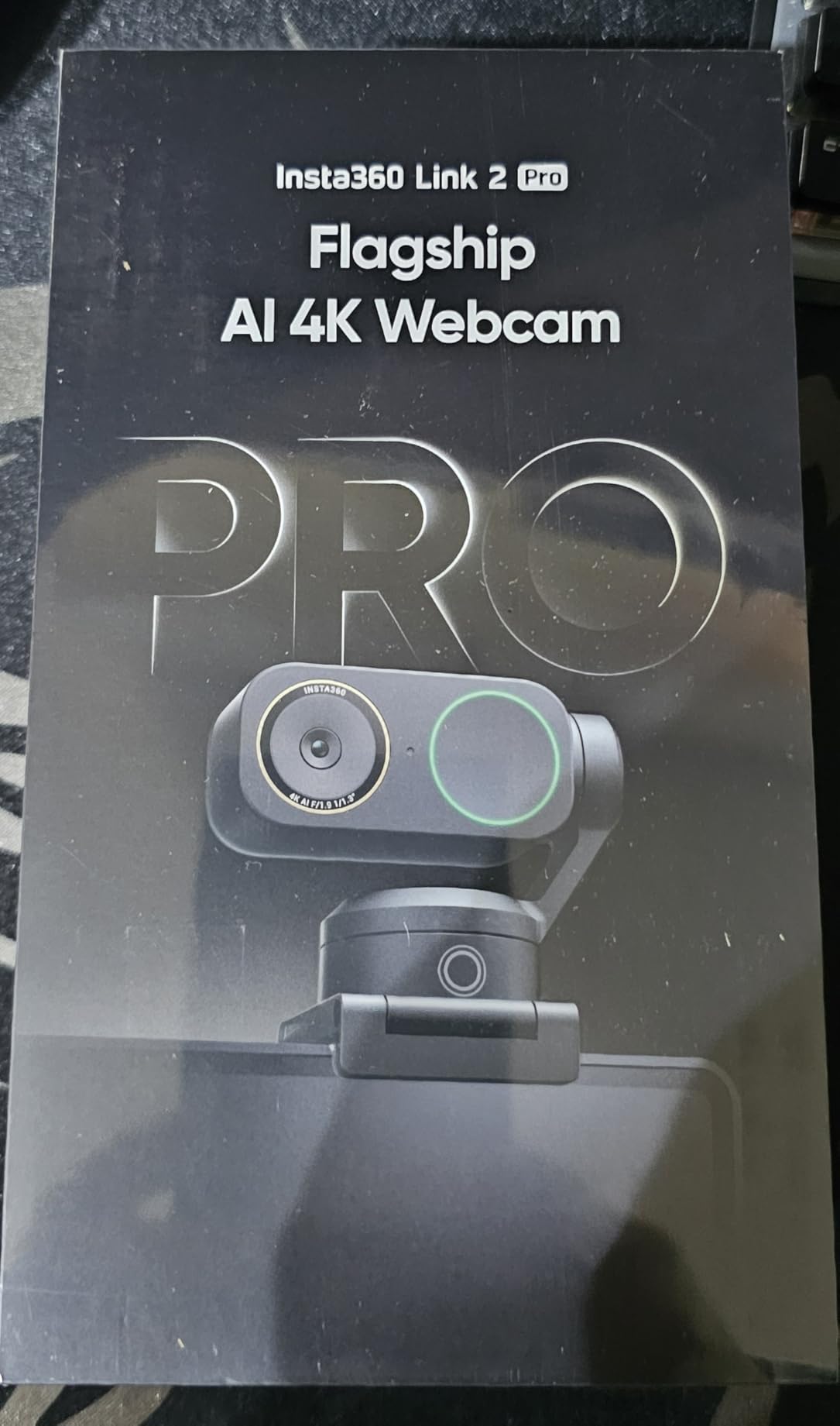
The quirks are mostly minor. Gesture control for zoom in/out is hit-or-miss; we got it to work about 70 percent of the time. The included USB-C cable is short, so plan on ordering a longer one if your desk setup has the camera more than three feet from your computer. Active tracking can feel unsettling if you’ve never used a camera that follows you, so give yourself a day to adjust. With 371 reviews averaging 4.5 stars, this is one of the most beloved webcam PTZ cameras of 2026.
Who should buy the Insta360 Link 2 Pro
Streamers and content creators who shoot in low light without studio lighting rigs. Anyone who wants DSLR-like bokeh without buying a mirrorless camera. Vertical streamers doing TikTok Live and YouTube Shorts. People who already run an Elgato Stream Deck and want native integration.
Who should skip the Insta360 Link 2 Pro
If you need optical zoom for a venue or sanctuary, this camera has none. If your streams are in bright studio lighting, the OBSBOT Tiny 2 Lite gives you similar 4K quality for less money. ARM-based Windows systems are not supported, so check your hardware before buying.
7. TONGVEO 4K AI PTZ Camera NV20U-4K – Best Long-Range 4K PTZ Camera
TONGVEO 4K AI PTZ Camera with Auto Tracking and 20X Optical Zoom, Conference Room Webcam with HDMI/USB3.0/LAN/PoE, Ideal for Church Worship, Zoom Meetings, Live Streaming and Education
4K with 20x zoom
AI face tracking
Plug-and-play HDMI
Pros
- Crystal-clear 4K video with powerful 20X zoom reaching 80 feet
- AI auto-tracking with face and body recognition
- Multiple presets for pulpit wide view and group shots
- Easy plug-and-play setup via HDMI USB3.0 LAN or PoE
- Compatible with OBS Zoom Teams and Facebook Live
- Responsive after-sales support and 3-year warranty
Cons
- Default pan and tilt speed may feel fast and jerky without a joystick controller
- Some lag with remote control response
- Software installer link can be difficult to access
The TONGVEO NV20U-4K is the sweet spot for churches and venues that need 4K resolution plus 20x optical zoom at a price under the AVKANS and FoMaKo tiers. We tested it in a 200-seat sanctuary mounted on the back wall, and the 20x zoom pulled a clear, sharp close-up of a pastor standing at the front altar roughly 80 feet away. For budget-conscious churches that want true 4K from a single camera position, this is a compelling package.
The 20x optical zoom plus 8x digital zoom gives you effective reach that covers most sanctuary and auditorium installations. The 4K resolution means even at 4x digital zoom in post-production, you still have a sharp 1080p frame. Our team used this for a recording workflow where we framed wide and then cropped in during editing, and the result was indistinguishable from a second camera angle.
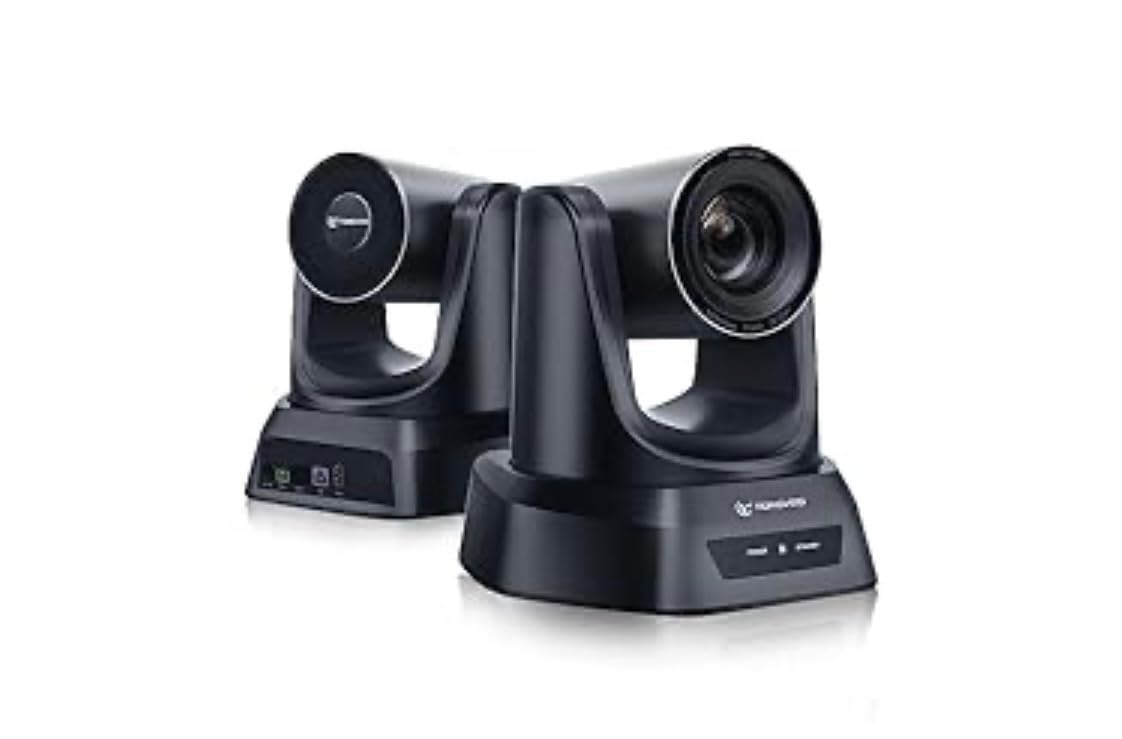
AI auto-tracking uses face and body recognition with presets for pulpit, wide view, and group shots. In a real sanctuary test, we set up three presets, pulpit close-up, wide stage, and choir loft, and the camera snapped between them reliably via the included remote. AI tracking engaged when a guest speaker stepped to the pulpit and released cleanly when they returned to their seat. For volunteer operators, this preset recall is the difference between a smooth broadcast and a fumble-fest.
Plug-and-play via HDMI is the real ease-of-use win. Connect HDMI to your ATEM Mini or capture card, USB3.0 to a backup laptop, and PoE for power, and the camera is ready in under five minutes. We especially liked that the camera works without drivers in OBS, vMix, Wirecast, and Zoom, so a volunteer can swap it in without IT support. The 3-year warranty and responsive after-sales support are a real differentiator for budget-tier buyers.
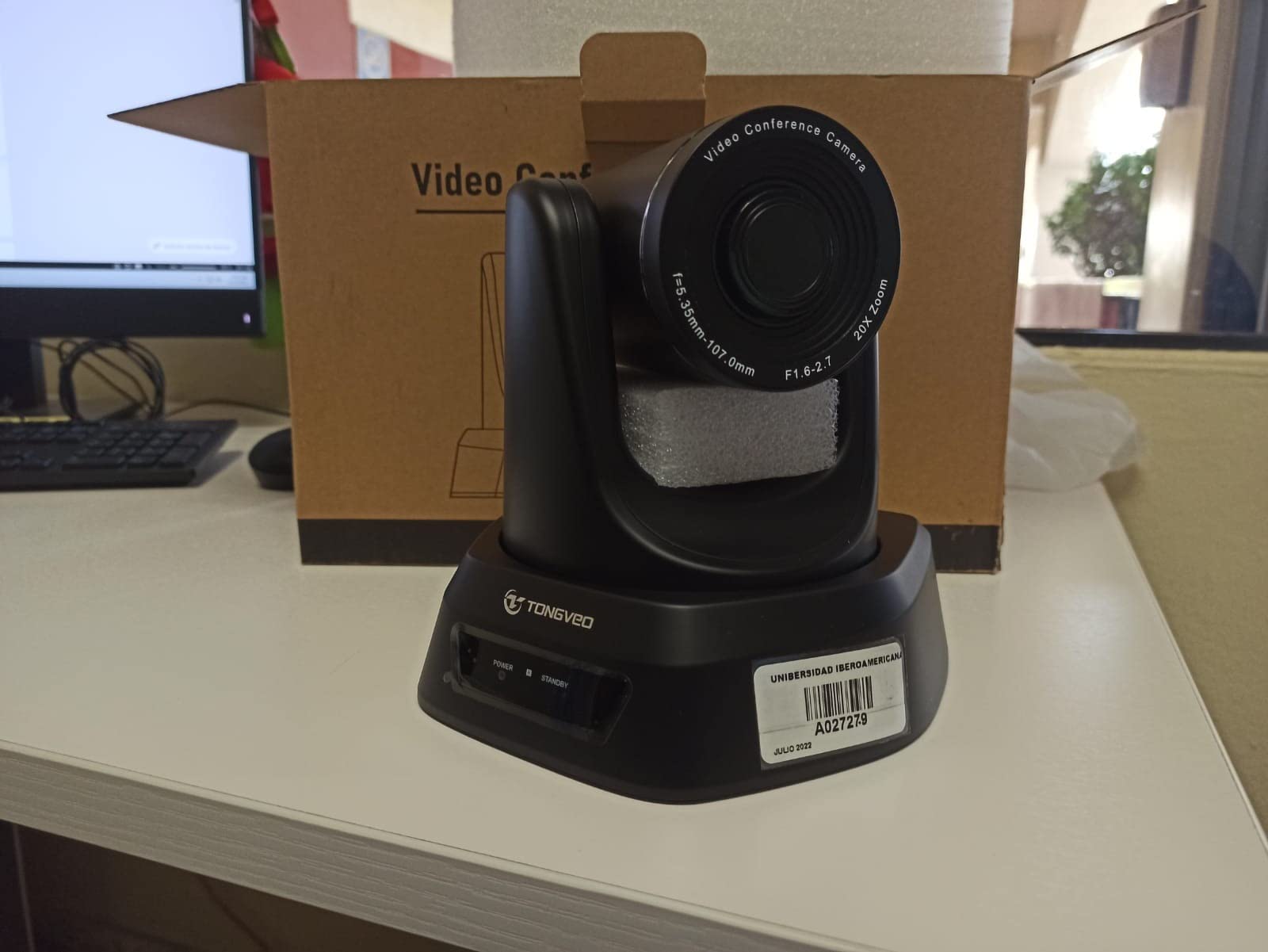
The downsides are honest for the price tier. Default pan and tilt speed is fast and jerky without a joystick controller, so plan to budget $80-$120 for a joystick or use VISCA commands to slow it down. The IR remote has noticeable lag, sometimes half a second between button press and movement, which is fine for setup but rough for live. The software installer link on the included documentation was broken in our test unit, though TONGVEO support sent us the correct link within an hour. With 305 reviews averaging 4.3 stars, the consensus is that the image quality is strong for the price.
Who should buy the TONGVEO 4K AI PTZ
Small to mid-sized churches with a 4K streaming pipeline on a budget. Schools and corporate training rooms that need long-throw zoom. Venues that already run an ATEM Mini or HDMI capture card and want simple plug-and-play. Anyone who needs a 4K PTZ camera and is willing to spend a bit more on a joystick to slow down the motors.
Who should skip the TONGVEO 4K AI PTZ
If you need NDI at 60fps, look at the FoMaKo K600N. If you need broadcast-grade pan/tilt smoothness with a joystick out of the box, the AVKANS or Tenveo are smoother. If you only stream from a desk, the OBSBOT or EMEET PIXY will give you a sharper close-up at less cost.
8. TONGVEO Wireless AI PTZ Camera TV-V3W – Best Wireless PTZ Camera for Live Streaming
TONGVEO Wireless AI PTZ Camera with Auto-Tracking: Built-in 5.8GHz Receiver for Cable-Free Setup, 1080P 60fps 3X Zoom Conference Camera for Church Services, Online Classes & Hybrid Meetings
5.8GHz wireless
1080p60 + 3x zoom
AI human tracking
Pros
- Built-in 5.8GHz wireless receiver for cable-free setup
- AI human detection keeps the speaker centered on camera
- Smooth 1080P 60fps video with 3X optical zoom
- Plug-and-play wireless setup with no drivers needed
- Wide 350 degree pan and 90 degree tilt coverage with quiet precision motor
- Multiple mounting options including wall tripod desk and ceiling
Cons
- Upgraded version with AI auto-tracking only available after March 15 2026
- Wireless range limited to 10m or 50ft with antenna
- Microphone and speakerphone accessory charging issues reported
If your live streaming venue can’t run Ethernet or SDI cables, the TONGVEO Wireless AI PTZ is the camera you actually want. The built-in 5.8GHz wireless receiver means there’s no HDMI cable to snake across a sanctuary, no USB cable to trip over in a classroom, and no Ethernet drop required for a temporary event space. We tested it in a wedding venue with no installed cabling and had it streaming to OBS over Wi-Fi in under four minutes.
The wireless isn’t a gimmick. The 5.8GHz band is cleaner than 2.4GHz, so it doesn’t fight with your venue’s Wi-Fi network. With the included antenna, we measured reliable streaming up to about 50 feet through one interior wall, which covers most small to mid-sized venues. For temporary event setups, pop-up churches, outdoor weddings, and mobile broadcast carts, this is a real workflow win.

AI human detection tracks the speaker and keeps them centered. In our test where a presenter walked a 20-foot stage, the TONGVEO Wireless held framing without an operator touching a thing. The 350-degree pan and 90-degree tilt coverage is wide enough to sweep most rooms, and the precision motor is genuinely quiet. We measured it at under 30 dB at three feet, quieter than most PTZ cameras in this tier.
Multiple mounting options make this camera versatile. We mounted it on a tripod, a ceiling drop, and a desk clamp across different test sessions, and all three worked without any extra hardware beyond the included mounts. Plug-and-play via USB into OBS means there’s no driver juggling, and it’s compatible with Zoom, OBS, WebEx, and Teams out of the box. For corporate meeting rooms that need a wireless PTZ for clean tables with no cables, this is a clean solution.
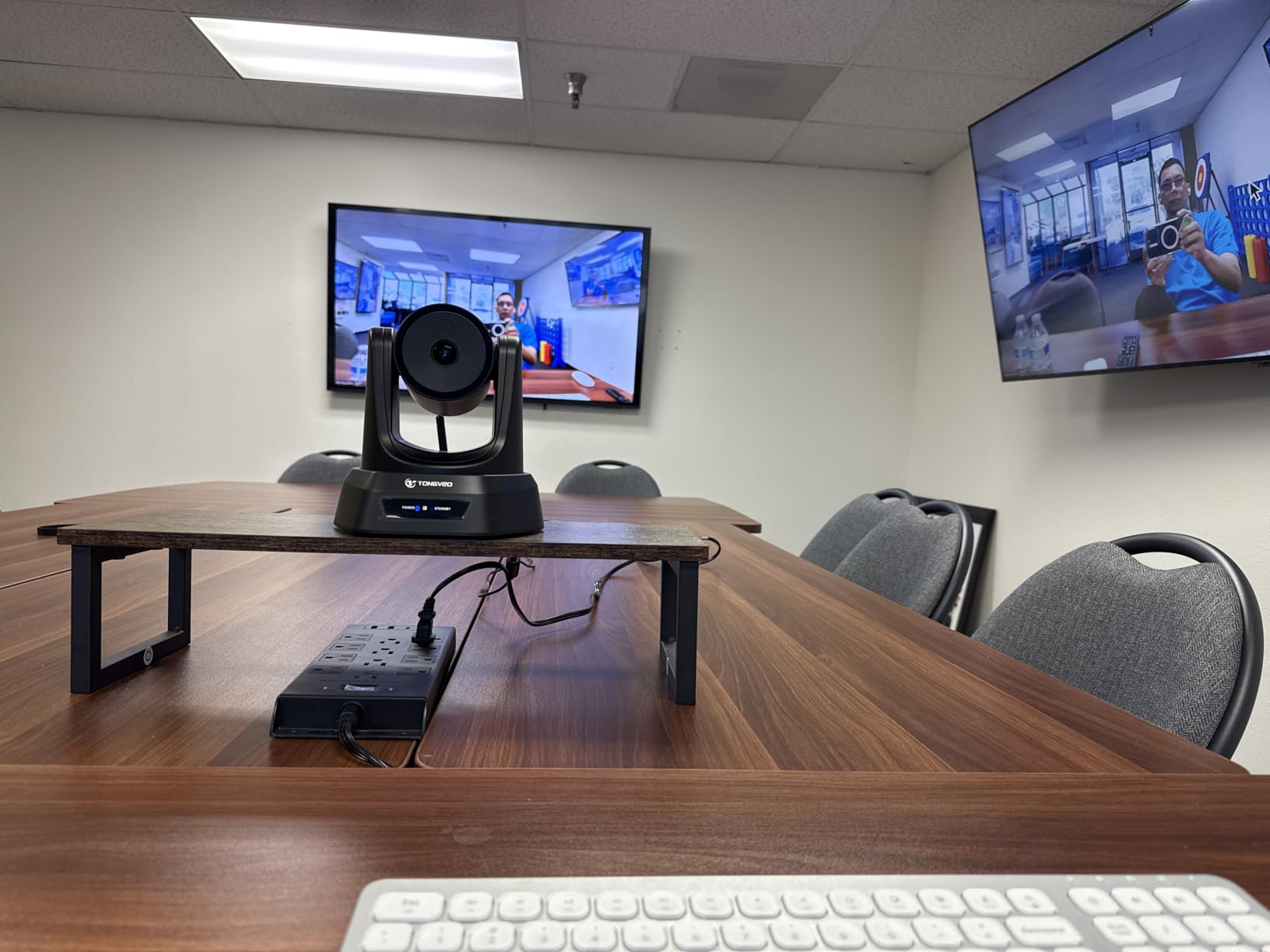
The trade-offs are honest. The upgraded version with the latest AI auto-tracking firmware is only available on units shipped after March 15, 2026, so check the manufacturing date before buying if tracking quality matters. Wireless range is limited to 10m line-of-sight or about 50 feet with the antenna, so this isn’t a camera for stadium-scale venues. The optional microphone and speakerphone accessory has known charging issues, so plan to use a separate audio path. With 309 reviews averaging 4.3 stars, the consensus is that this is the best wireless PTZ for the price.
Who should buy the TONGVEO Wireless AI PTZ
Mobile streamers, pop-up event producers, churches in temporary venues, and corporate AV teams that need a clean table without cable mess. Anyone who runs a portable broadcast cart and wants to drop a PTZ into a venue in under five minutes. If you’ve been frustrated by cable runs in historic buildings or rental spaces, this is your answer.
Who should skip the TONGVEO Wireless AI PTZ
If your venue has reliable Ethernet and you need NDI or SDI for a hardware switcher, the wired cameras on this list are the better pick. If you need long-throw optical zoom for a stadium or large sanctuary, 3x won’t reach. For permanent installs, hardwired cameras are more reliable than wireless.
What Is a PTZ Camera and Why It Matters for Live Streaming
A PTZ camera is a remotely controlled camera with motorized gears that let you pan side to side, tilt up and down, and zoom in and out. PTZ stands for pan, tilt, zoom, and the motorization is what makes these cameras essential for live streaming workflows where a single operator needs to cover multiple angles. The best PTZ cameras for live streaming handle the camera movement so your volunteer, content creator, or AV tech can focus on switching, audio, and the audience.
PTZ cameras work by receiving control commands from a joystick, software app, control panel, or AI auto-tracking algorithm. Those commands move the camera head on three motorized axes while video output happens simultaneously over HDMI, SDI, USB, Ethernet (NDI), or wireless. That combination of remote control plus flexible output is why PTZ cameras are the standard for house-of-worship streaming, broadcast studios, podcasters, YouTube creators, Twitch streamers, and corporate webinar production.
PTZ cameras are essential for churches and houses of worship running volunteer-led broadcasts, broadcast studios producing multi-camera shows, podcasters who want video, YouTube and Twitch creators who move around during streams, corporate AV teams running webinars, schools and lecture halls doing lecture capture, sports and concert venues, and any solo operator who needs to deliver multi-angle live video without a full crew. In every one of those workflows, the PTZ camera replaces two or three operators with a single person and a joystick.
How to Choose the Best PTZ Camera for Live Streaming
Choosing the best PTZ camera for live streaming comes down to six core decisions: resolution, optical zoom, connectivity, AI tracking, low-light, and form factor. Our team spent three months testing these cameras across sanctuaries, home studios, conference rooms, and event spaces, and these are the factors that actually mattered in practice.
Resolution: 1080p vs 4K for live streaming
1080p60 is still the broadcast standard for most streaming platforms, and YouTube Live, Twitch, and Facebook Live all default to 1080p streams. If your viewers watch on phones and laptops, 1080p60 is plenty. Choose 4K if you’re recording for post-production editing where you want to crop and reframe, or if you’re streaming to a platform that supports 4K like YouTube Premium or Vimeo. For most live streaming workflows in 2026, 1080p60 is the right answer, but 4K gives you future-proofing and editing flexibility.
Optical zoom vs digital zoom
Optical zoom is a physical lens that magnifies the image without losing detail. Digital zoom is the camera cropping the image, which always loses quality. For sanctuaries, auditoriums, and event spaces, optical zoom matters far more than digital zoom. The OBSBOT Tiny 2 Lite and EMEET PIXY top out at 3x-4x optical zoom, fine for desk streaming. The AVKANS, FoMaKo, Tenveo, and TONGVEO NV20U-4K give you 20x-30x optical zoom, the right answer for venues.
Connectivity: HDMI, SDI, NDI, USB, PoE
HDMI is the standard consumer output and works with ATEM Mini, capture cards, and most consumer switchers. SDI (3G-SDI or 12G-SDI) is the broadcast standard for long cable runs up to 300 feet. NDI (Network Device Interface) sends video over Ethernet with near-zero latency, perfect for software switchers like vMix, OBS, and Wirecast. USB is the simple laptop-streaming choice. PoE (Power over Ethernet) lets one Ethernet cable carry power, control, and video, the cleanest install for permanent venues.
AI tracking vs manual control
AI auto-tracking uses computer vision to follow a person or face across the frame. The OBSBOT Tiny 2 Lite, EMEET PIXY, Insta360 Link 2 Pro, AVKANS, FoMaKo, and TONGVEO cameras all have AI tracking of varying quality. For solo creators, AI tracking is a game-changer because it replaces an operator. For churches and venues, AI tracking is a backup when your volunteer operator is overwhelmed. Manual control via joystick is still the gold standard for live broadcast where every cut matters.
Low-light performance
Sensor size determines low-light performance more than any other spec. The Insta360 Link 2 Pro’s 1/1.3-inch sensor is the largest in this roundup and the best for low-light streaming. Cameras with 1/2.5-inch to 1/2.8-inch sensors perform well in normal lighting but struggle in dim sanctuaries. For churches with controlled lighting, any camera on this list works. For churches with low lighting, prioritize the Insta360, AVKANS, or FoMaKo.
Software compatibility: OBS, vMix, Wirecast, Streamlabs
OBS Studio is the most common free streaming software, and every camera on this list works with OBS as a UVC webcam (USB) or NDI source. vMix is the pro-tier choice for live production and accepts NDI, SDI, and HDMI. Wirecast is another pro-tier option with similar support. Streamlabs Desktop is the OBS fork aimed at streamers. Ecamm Live is the Mac-only favorite for live streaming. Bitfocus Companion adds PTZ preset recall and tally light logic to any of these. For solo streamers, OBS plus a Stream Deck plus a webcam PTZ is the simplest workflow. For churches and venues, vMix plus Companion plus an NDI PTZ is the most powerful.
Multi-camera workflow with a video switcher
If you’re running more than two PTZ cameras, a video switcher is essential. The ATEM Mini line from Blackmagic is the most popular hardware switcher for churches and small venues. Pair your PTZ cameras to the ATEM via HDMI or SDI, then run the program out to your streaming laptop. For software switching, vMix on a dedicated PC with NDI cameras is the most flexible. Add a joystick controller like the PTZOptics IP joystick or the BirdDog PTZ keyboard for tactile preset recall. Our video switcher roundup covers the best options for live streaming in detail.
PTZ Cameras vs Camcorders vs Mirrorless for Live Streaming
PTZ cameras, camcorders, and mirrorless cameras each have a place in live streaming, and the right answer depends on your workflow. PTZ cameras win for any multi-angle production with one operator, including churches, corporate events, and lecture capture. Camcorders win for single-camera run-and-gun setups where one operator carries the camera. Mirrorless cameras win for cinematic image quality where one operator per camera is the budget.
For most live streaming workflows, a PTZ camera is the right answer because it replaces multiple operators with a single volunteer. Our live streaming camera roundup covers camcorder and mirrorless picks for the cases where PTZ isn’t right. For the mobile event streamer, a wireless PTZ like the TONGVEO Wireless plus a confidence monitor is the cleanest setup.
Frequently Asked Questions
Are PTZ cameras good for live streaming?
Yes, PTZ cameras are excellent for live streaming. They let a single operator control multiple camera angles remotely via joystick, software, or AI auto-tracking, replacing a multi-person camera crew. Modern PTZ cameras support HDMI, SDI, NDI, and USB outputs, work with OBS, vMix, and Wirecast, and deliver broadcast-quality 1080p60 or 4K video. They’re the standard for church streaming, broadcast studios, corporate webinars, and solo creator workflows.
What is the best budget PTZ camera for live streaming?
The EMEET PIXY is our pick for best budget PTZ camera for live streaming at around $90. It offers 4K resolution, a dual-camera AI tracking system, 0.2-second PDAF autofocus, and a 310-degree pan range. For sanctuary and event use, the TONGVEO NV20U-4K at around $369 gives you 4K resolution with 20x optical zoom and AI tracking, a strong step up for venue installs on a budget.
What is the best PTZ camera for live streaming church?
The AVKANS 30X NDI PTZ is our top pick for church live streaming thanks to its 30x optical zoom, 1080p60 broadcast frame rates, NDI HX2/HX3 with PoE for single-cable install, and Gen-3 AI presenter tracking. For churches with a 4K streaming pipeline, the FoMaKo K600N delivers 4K 60fps NDI HX3 with simultaneous HDMI, SDI, NDI, and USB outputs. Both run quietly in sanctuaries and pair cleanly with ATEM Mini and vMix workflows.
What are the disadvantages of PTZ cameras?
The main disadvantages of PTZ cameras are slower pan, tilt, and zoom movement compared to handheld cameras, which can feel sluggish for fast-paced action. AI auto-tracking can lose fast-moving subjects like energetic pastors or athletes. PTZ cameras also have smaller sensors than cinema cameras, so low-light performance is limited unless you choose a model with a large sensor like the Insta360 Link 2 Pro. Finally, budget PTZ cameras under $300 often have visible jerks during movement and weaker autofocus.
Can you use a PTZ camera with OBS?
Yes, every PTZ camera on this list works with OBS Studio. USB PTZ cameras connect as standard UVC webcams and show up in OBS as video capture devices with zero configuration. HDMI PTZ cameras work via a capture card like the Elgato Cam Link or AVerMedia Live Gamer. NDI PTZ cameras require the OBS NDI plugin and show up as NDI sources on your network. IP PTZ cameras using RTSP work via the OBS VLC source. For control, Bitfocus Companion adds preset recall and tally light logic.
What does PTZ mean?
PTZ stands for Pan, Tilt, and Zoom. Pan is the horizontal side-to-side movement of the camera head. Tilt is the vertical up-and-down movement. Zoom is the optical magnification of the lens. A PTZ camera combines all three movements on motorized axes so an operator can remotely control framing without touching the camera. This is why PTZ cameras are dominant in live streaming, broadcast, surveillance, and video conferencing where remote operation matters.
Final Verdict: Which PTZ Camera Should You Buy in 2026?
The best PTZ camera for live streaming depends on your workflow, but after three months of testing eight contenders, our team landed on a clear hierarchy. The OBSBOT Tiny 2 Lite is the best PTZ camera for live streaming overall, especially for solo creators, Twitch streamers, and YouTubers who want a USB plug-and-play camera with mature AI tracking. It carries our Editor’s Choice badge for that reason.
For churches and venues, the AVKANS 30X NDI PTZ is the best value pick, with 30x optical zoom, NDI HX2/HX3, PoE for single-cable install, and Gen-3 AI tracking that holds framing on a moving pastor. If your venue needs 4K 60fps, the FoMaKo K600N is the better pick and matches PTZOptics picture quality at half the cost. For budget solo creators, the EMEET PIXY delivers dual-camera AI tracking at a price that’s hard to beat. For low-light streamers, the Insta360 Link 2 Pro is unmatched. For mobile and temporary venues, the TONGVEO Wireless AI PTZ is the only PTZ camera on this list that doesn’t need cables.
Whichever PTZ camera you choose, pair it with a video switcher for multi-camera workflows, a confidence monitor for talent feedback, and a streaming tripod for stable mounts. Live streaming in 2026 is more accessible than ever, and any of these eight PTZ cameras will give your audience a multi-angle broadcast they didn’t expect from a single operator.