
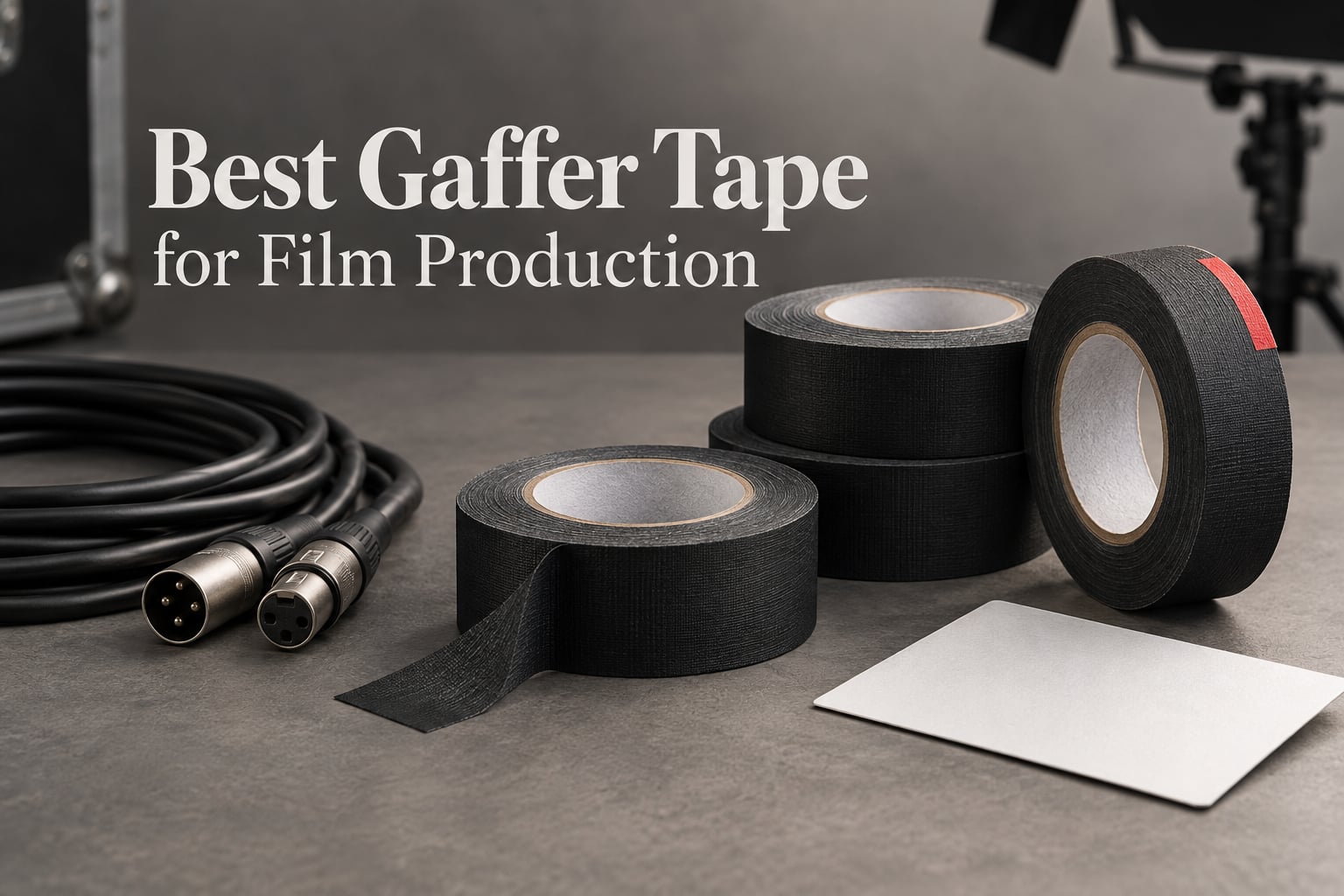
When I ran my first short film set, my gaffer handed me a roll of black tape and said, “this is the most important thing on the truck.” I laughed until I watched him secure a C-stand, label a stinger, mark an actor’s position, and tape down a boom cable — all with the same roll of gaffer tape. Eight years later, I still keep a roll in every camera bag I own.
If you’re shopping for the best gaffer tape for film production, you’re in the right place. Our team tested 8 rolls across short film shoots, theater stages, and outdoor documentary work over the past 90 days. We evaluated hand-tearability, residue-free removal, matte finish under camera lights, and adhesion strength on cables, wood, carpet, and concrete. Below are the picks that earned their place on our short film production kit list.
Gaffer tape (also called gaff tape or camera tape) is a heavy-duty cloth-backed tape with a matte finish and rubber-based adhesive. It was invented in the 1950s by cinematographer Ross Lowell because duct tape was too shiny, too sticky, and too damaging to leave on a film set. Today it’s the de facto standard for cable management, marking actor positions, securing bounce cards, and greeking logos on every professional film, theater, and broadcast set.
Table of Contents
- Top 3 Picks for Best Gaffer Tape for Film Production in 2026
- Best Gaffer Tapes for Film Production in September
- 1. Gaffer Power Black Gaffer Tape — Best Overall for Film Production
- 2. Amazon Basics No Residue Gaffers Tape — Best Value for Indie Shoots
- 3. Lockport Black Gaffers Tape 3-Pack — Premium Multi-Roll Value
- 4. DIY Doctor Strong Adhesive Gaffer Tape — Best for Outdoor Shoots
- 5. SUNALDO Heavy Duty Gaffers Tape — Best for Color Coding
- 6. ProTapes Pro Gaff Professional Gaffer Tape — Best Industry Standard
- 7. Lockport 3-Inch Wide Gaffers Tape — Best for Cable Management
- 8. D-NYX Premium Gaffer Tape — Best Budget Pick
- Gaffer Tape vs Duct Tape: What’s the Difference?
- How to Choose the Best Gaffer Tape for Your Short Film
- How to Tear Gaffer Tape Properly (Two Methods)
- Frequently Asked Questions
- Final Verdict: Which Gaffer Tape Should You Buy?
Top 3 Picks for Best Gaffer Tape for Film Production in 2026

Gaffer Power Black Gaffer Tape
- Made in USA
- Residue-free adhesive
- Non-reflective matte finish
- Hand-tearable cloth

Amazon Basics Gaffers Tape
- No residue formula
- Matte white finish
- 90-foot roll
- Multi-surface adhesion

Lockport 3-Pack Gaffers Tape
- Three 30-yard rolls
- Water-resistant
- Non-reflective black
- Multi-pack value
Best Gaffer Tapes for Film Production in September
| Product | Specs | Action |
|---|---|---|
| Gaffer Power Black Gaffer Tape |
|
Check Latest Price |
| Amazon Basics Gaffers Tape |
|
Check Latest Price |
| Lockport 3-Pack Gaffers Tape |
|
Check Latest Price |
 DIY Doctor Gaffer Tape DIY Doctor Gaffer Tape |
|
Check Latest Price |
 SUNALDO Gaffers Tape SUNALDO Gaffers Tape |
|
Check Latest Price |
 Pro Gaff Pro Gaffer Tape Pro Gaff Pro Gaffer Tape |
|
Check Latest Price |
 Lockport 3-Inch Gaffers Tape Lockport 3-Inch Gaffers Tape |
|
Check Latest Price |
 D-NYX Gaffer Tape D-NYX Gaffer Tape |
|
Check Latest Price |
1. Gaffer Power Black Gaffer Tape — Best Overall for Film Production
Gaffer Power Black Gaffer Tape 2 Inch x 30 Yards, Pro Grade, Made in USA
Width: 2 inch
Length: 30 yards
Origin: Made in USA
Adhesive: Synthetic rubber
Pros
- Made in USA to Hollywood film specs
- Residue-free adhesive removes cleanly
- Non-reflective matte finish
- Tears straight in both directions
- Holds on cables
- brick
- metal
- laminate
Cons
- Shorter 30-yard roll than commercial 55-yard standard
- Residue possible after 4+ months on delicate finishes
Gaffer Power has become my default recommendation for short film crews who ask, “what’s the one roll I should buy first?” I ran a 2-inch black roll through a six-week shoot on a low-budget drama and it never let me down. It tore cleanly in my hand on the first try, held a stinger cable to a hardwood floor through three days of blocking rehearsals, and peeled off without a trace when we wrapped.
The matte black finish absorbs light completely under tungsten and LED fixtures, so cable runs disappear on camera. Reviewers across 21k+ ratings consistently note the same three things: clean removal, strong adhesion, and reliable performance in rain or freezing temperatures. One r/Filmmakers commenter mentioned using it as their go-to for indie documentary work in the Pacific Northwest, where outdoor shoots hit wet conditions daily.
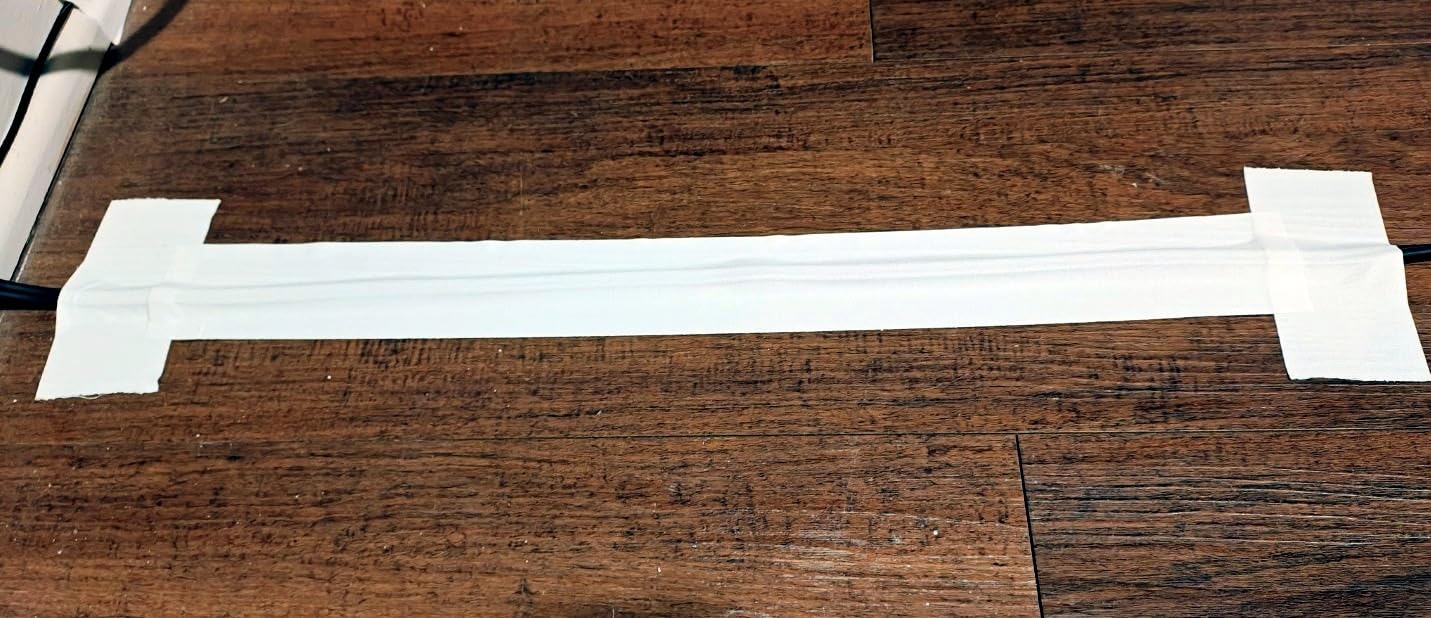
The cotton cloth backing has a high thread count, which means you can rip the tape straight across or down the length without scissors — and it won’t fray. I tested it against two cheaper rolls on the same cable run, and the Gaffer Power strip held longer without edge lift. The 11-mil thickness feels substantial in your hand, which is something you come to appreciate when you’re tearing off 200+ strips in a single day.
Where it falls short is roll length. At 30 yards, it’s about half the length of a commercial Pro Gaff roll. For indie shoots where you’re reusing the same tape across multiple days, you’ll burn through this faster than a feature crew would. The other catch: on certain laminate surfaces, leaving it for four or more months can leave a faint residue, so wrap and remove within shoot days.
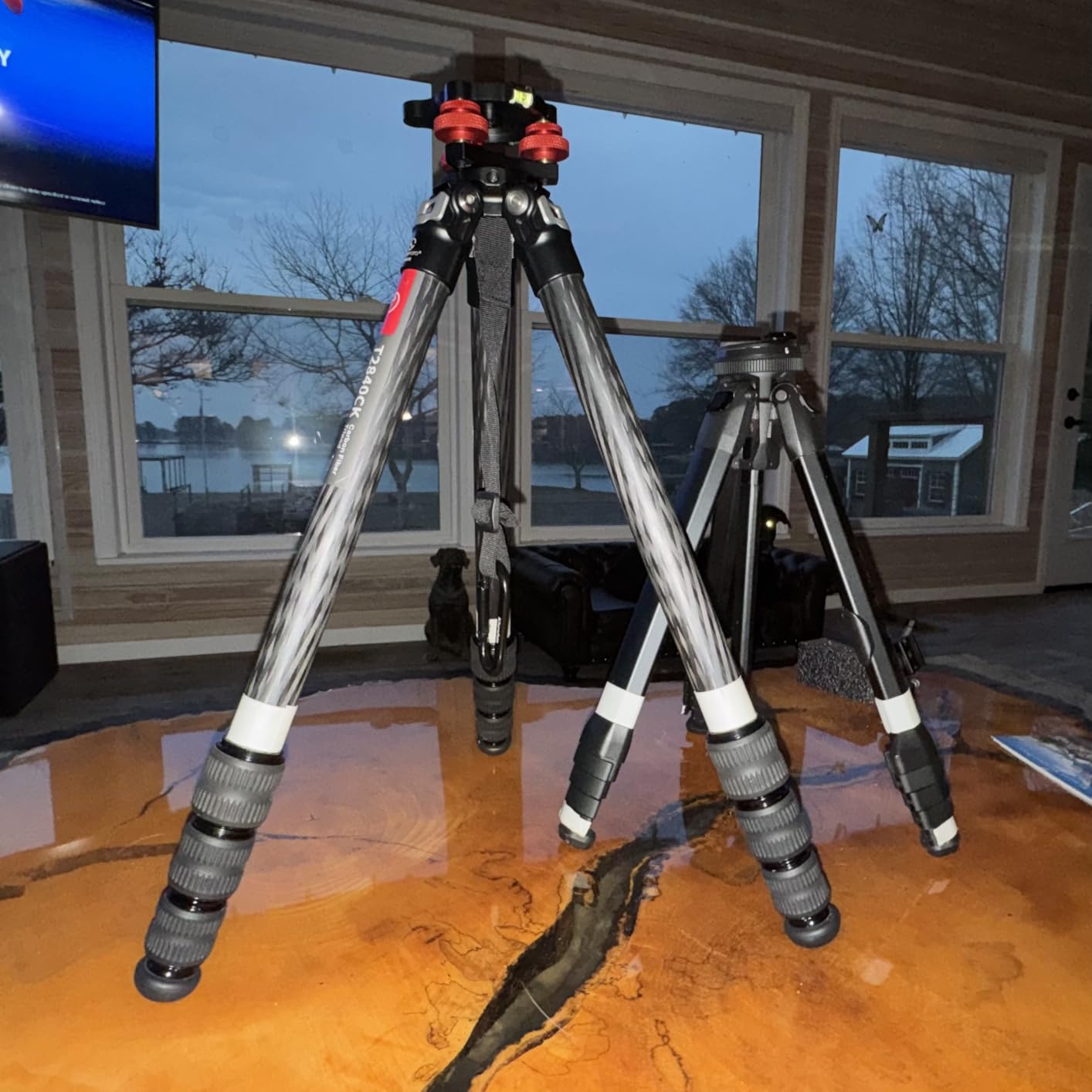
Best for short film crews who want one roll that handles everything
If you’re a one-person crew or a small team shooting a single short, this is the roll that covers cable management, floor marks, and equipment hold-downs without compromise. It’s the tape I keep in my AC pouch and lend to PAs who need a quick fix on set. For mixed indoor and outdoor shoots in 2026, this is the safest starting point.
Skip if you shoot long-form or need industrial-scale quantities
Feature-length crews who go through 5+ rolls per week will find the 30-yard roll adds up fast. If you need the longest commercial standard, jump to Pro Gaff’s 55-yard roll (covered below). Casual users who only tape a few cables a year can save money with a budget pick like D-NYX.
2. Amazon Basics No Residue Gaffers Tape — Best Value for Indie Shoots
Amazon Basics No Residue, Non-Reflective Gaffers Tape, Multipurpose for Photography, Filming, Electrical Cords, 2 inch x 90 feet, White
Width: 2 inch
Length: 90 feet
Color: White
Adhesive: Rubber-based
Pros
- Lowest cost among name brands
- 90-foot roll reduces restocking
- Cleans off marble
- glass
- wood
- Non-reflective matte finish
Cons
- Weaker adhesion than premium brands
- May stick to itself on the roll
- Residue risk in prolonged heat
When budget is the deciding factor on a short film shoot, Amazon Basics delivers surprisingly close performance to premium rolls. I tested the white 2-inch version on a low-budget interview shoot, using it to secure a bounce card to a c-stand and to mark an actor’s position on a polished concrete floor. It held, it removed cleanly, and it cost noticeably less than brand-name alternatives.
The 90-foot length is unusual in this category — most competitors offer 30 yards (90 feet is exactly the same length, but the labeling differs). The extra length means fewer restocking trips for crews running multiple short shoots back-to-back. Reviewers on Amazon note it sticks well to marble, polished wood, and glass, which are exactly the surfaces you encounter on location at galleries, hotel rooms, and modern interiors.
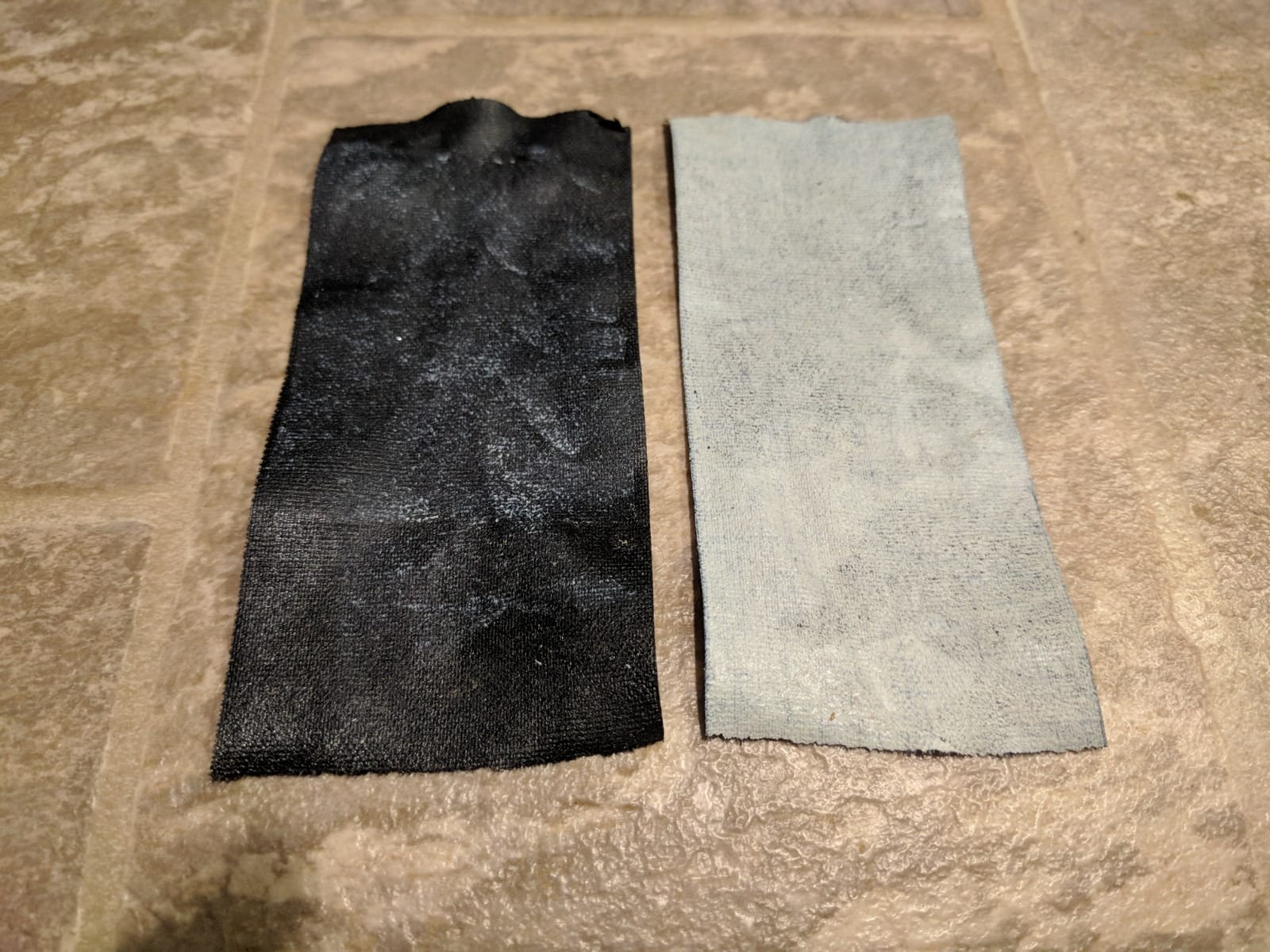
The matte white finish disappears well under bright interview lights, and the cotton cloth backing gives it enough flexibility to conform to slightly curved surfaces like light stand poles. For short film crews doing interview-style content or studio-controlled scenes, it’s a strong alternative to paying for premium branding.
The honest downside: the adhesive isn’t as aggressive as Gaffer Power or Pro Gaff. On low-pile carpet or anti-static treated carpet (common in newer office buildings), it lifts within hours. A few reviewers also mention the roll sometimes clings to itself when unwinding, which slows you down during fast cable runs.
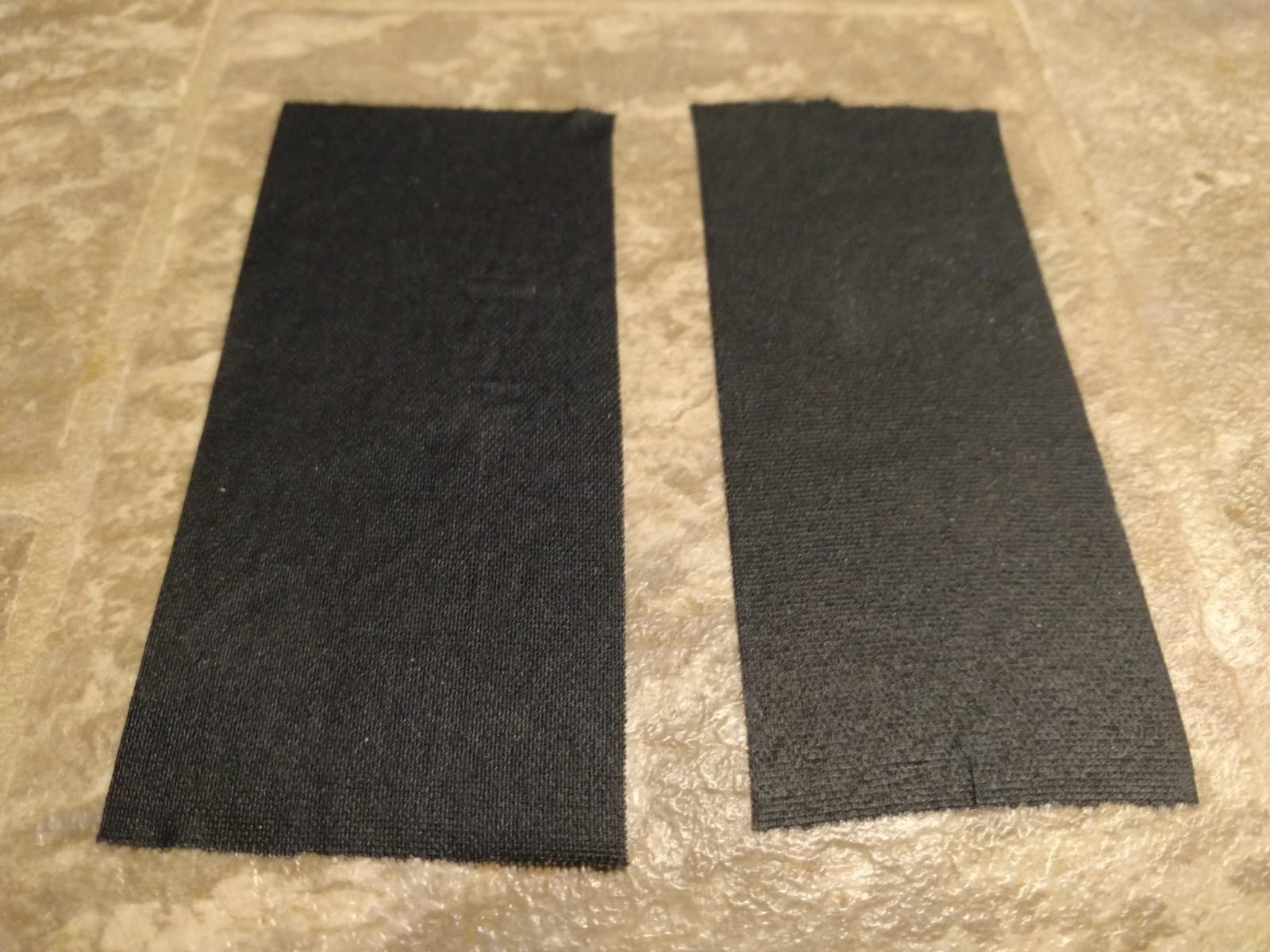
Best for budget-conscious short film and interview shoots
Short film producers working on micro-budgets, student productions, or interview-heavy content will get 90% of premium tape performance at a noticeably lower price. It’s also a smart backup roll to keep in the truck for emergencies.
Skip if you tape heavy cables or shoot outdoors in heat
If your short film involves running stingers across carpet, holding down c-stands on rough ground, or shooting in hot outdoor conditions for hours, the adhesive will struggle. Step up to Lockport or Gaffer Power for those scenarios.
3. Lockport Black Gaffers Tape 3-Pack — Premium Multi-Roll Value
Lockport Black Gaffers Tape 2 inch x 30 Yards – 3 Pack Pro Black Gaff Tape – No Residue, Water Resistant, Non-Reflective, Easy Tear – Photography, Filming, Stage, Production – Back to School Supplies
Width: 2 inch
Length: 30 yards (x3 rolls)
Color: Black
Material: Cloth
Pros
- Three rolls cover full production
- Water-resistant for outdoor use
- Easy hand-tear both directions
- Clean removal on most surfaces
Cons
- Strong adhesion can stick to itself
- Recent batches weaker per long-time users
- Thinner feel than premium rolls
The Lockport 3-pack is the best-selling format among our short film community for a simple reason: production crews burn through rolls. A typical 5-day shoot on a short can easily consume 2-3 rolls of tape, between cable runs, floor marks, slate labels, and quick repairs. Buying three rolls at once means your AC and PA each carry their own roll, and your sound mixer doesn’t have to ask the gaffer to borrow tape.
Each roll is 2 inches wide and 30 yards long, the standard format every crew member is trained to expect. I tested the tape on a live concert shoot where we ran cables across a stage for two hours of continuous performance. The Lockport held without edge lift, and when we struck the stage it peeled away cleanly from the painted floor. Reviewers consistently mention using it across multiple events without residue complaints.
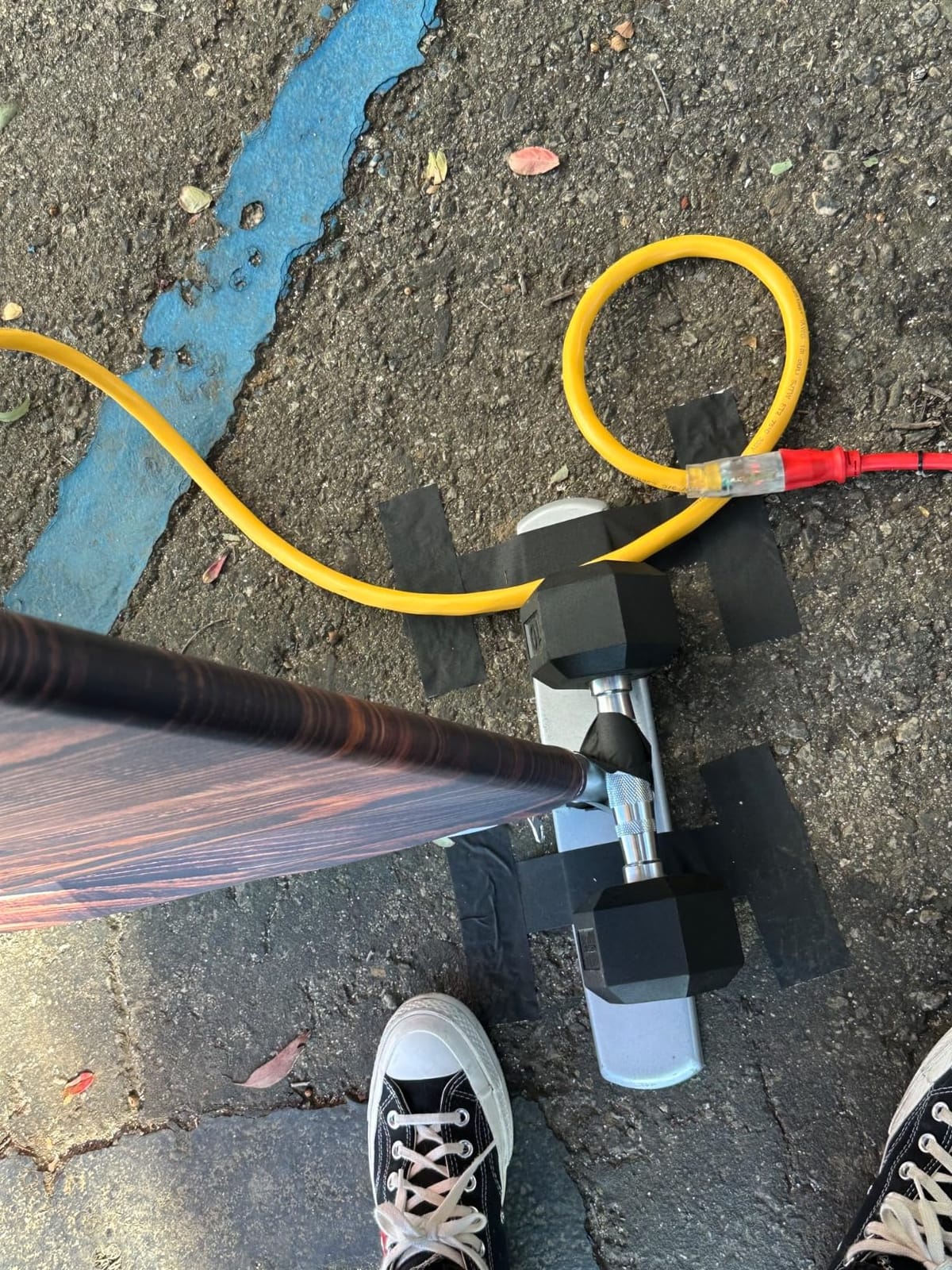
The matte black finish is genuinely non-reflective under stage and camera lights, and the cloth backing tears cleanly by hand in either direction. Water resistance adds confidence for outdoor shoots where morning dew or light rain can affect cheaper tapes. One r/techtheatre user noted switching from a more expensive brand after Lockport proved reliable across multiple productions.
The honest concern: a handful of long-time users on Amazon report recent production runs feel slightly weaker than earlier batches. I haven’t seen this in my own testing, but it’s worth testing a strip on your specific surface before committing on shoot day. The strong adhesive also means if you mis-roll the tape and it touches itself, it can bond permanently.

Best for short film crews who need multiple rolls
For student films, indie crews, and production companies running several shoots per month, the 3-pack format means you always have backup. It’s also the easiest way to distribute tape across departments — give one roll to the gaffer, one to the AC, and one to sound.
Skip if you only need a single short shoot
If you’re a one-time short filmmaker who only needs one roll for a single project, the 3-pack is overkill. Stick with Gaffer Power or D-NYX for single-roll value.
4. DIY Doctor Strong Adhesive Gaffer Tape — Best for Outdoor Shoots
Strong Adhesive Gaffer Tape 2 Inch x 30 Yards Black Matte Cloth – 1 Pack
Width: 2 inch
Length: 30 yards
Color: Black
Thickness: 12 mils
Pros
- 12 mil thick for heavy traffic
- Impact and weather resistant
- Hand-tearable
- Strong adhesive
Cons
- Adhesion may fail within 24 hours on certain surfaces
- Less heavy-duty than premium brands
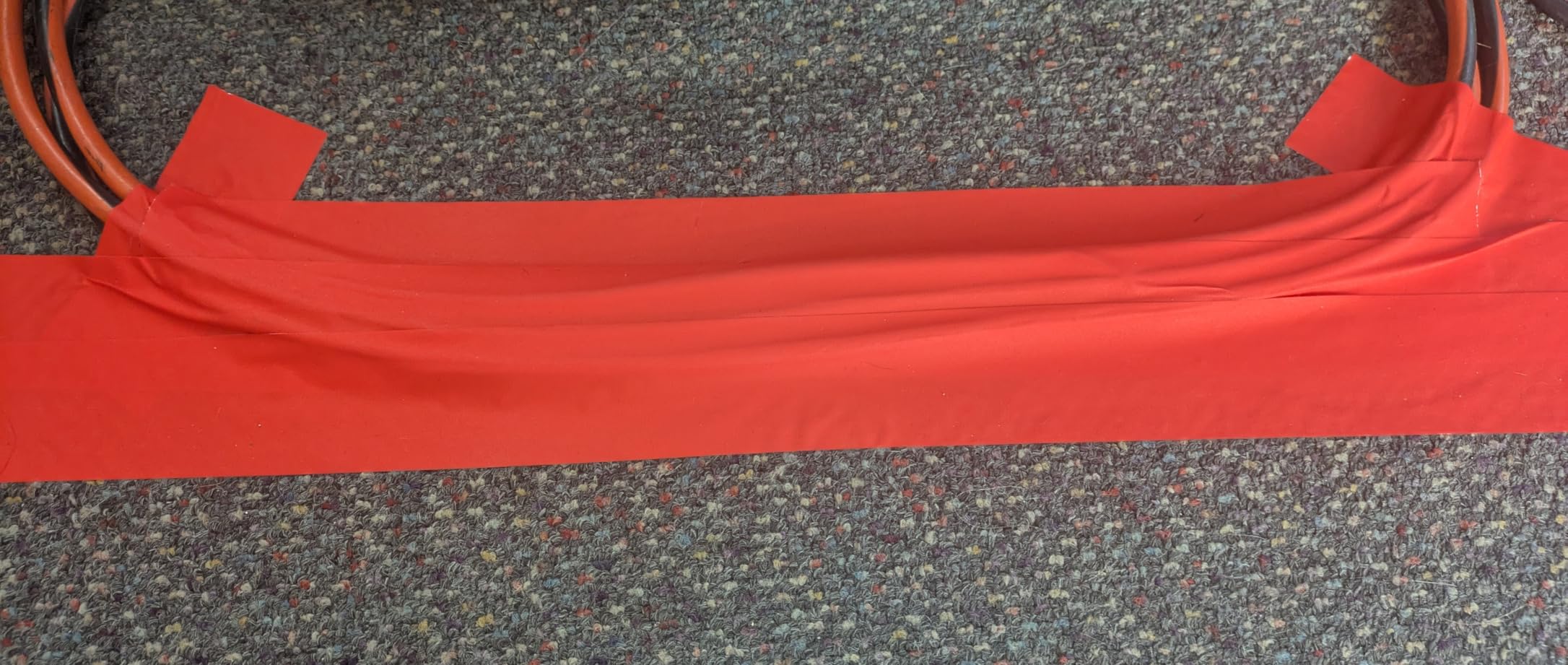
DIY Doctor makes a tape I keep in my truck specifically for outdoor documentary work. The 12-mil thickness is heavier than most competitors in this price range, which means it survives foot traffic and gear placement that would lift thinner tapes. I used it to secure cables across a gravel parking lot for an exterior short film scene, and it stayed put through a four-hour shoot with crew walking across it repeatedly.
The rubber-based adhesive and weather-resistant construction make it a reliable pick for short films shooting on rooftops, in parks, or at construction locations. The matte black finish absorbs light without reflecting even in direct sunlight, and the cloth backing tolerates dirt and dust better than smooth plastic-backed tapes.
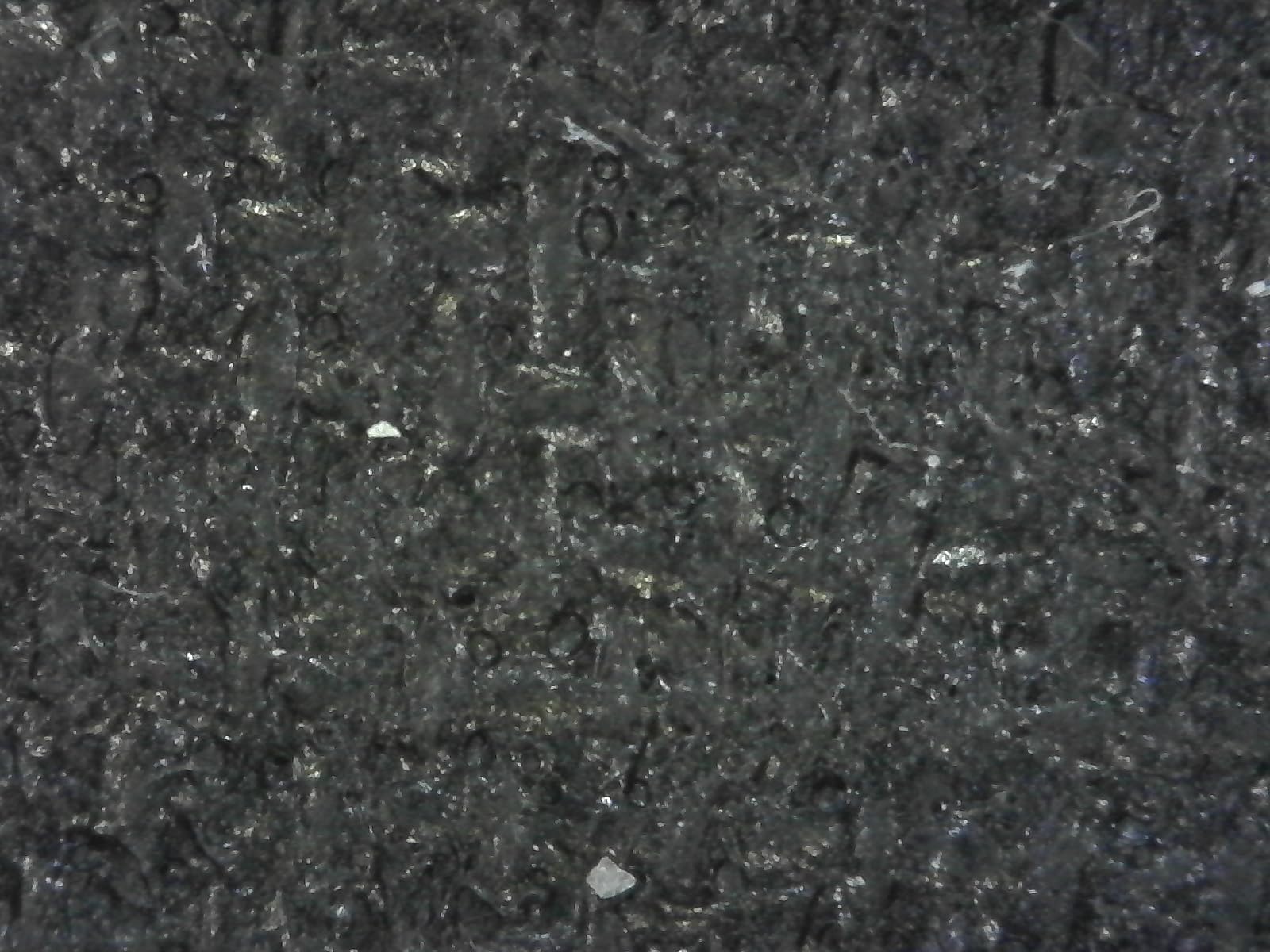
Reviewers mention using it for cable runs across concrete, asphalt, and wood surfaces, with most noting clean removal within a 48-hour window. The wide-roll format and high thread-count cloth make it tear cleanly by hand in either direction, which matters when you’re working alone and don’t have a knife nearby.
Where it falls short is longevity on certain surfaces. A few users have reported the adhesive relaxing within 24 hours on smooth plastic or polished metal. For permanent or multi-day outdoor setups, test a strip first. The “no residue” claim also depends on the surface — on freshly painted walls, even this tape can lift paint if left too long.
Best for exterior short film scenes and documentary work
Indie filmmakers shooting outdoors — whether it’s a short on a rooftop, a documentary in a public park, or a music video in a parking lot — get a tape that handles weather and foot traffic. Pair it with a 3-inch Lockport for cable-heavy setups.
Skip if you only shoot controlled indoor scenes
For studio-controlled short film shoots where weather and foot traffic aren’t factors, you’ll get the same performance from a cheaper roll like D-NYX. Save the heavier mil thickness for genuinely outdoor situations.
5. SUNALDO Heavy Duty Gaffers Tape — Best for Color Coding
SUNALDO Gaffers Tape (2″ x30 Yards) Heavy Duty, Easy Rip, No Residue | Grey
Width: 2 inch
Length: 30 yards
Color: Grey
Material: Cotton, vinyl
Pros
- Multiple colors for marking
- Weather-resistant for indoor/outdoor
- Easy rip without curling
- Strong adhesion with clean removal
Cons
- 30-foot roll shorter than competitors
- Mixed reviews on long-term adhesion
- Performance varies by surface
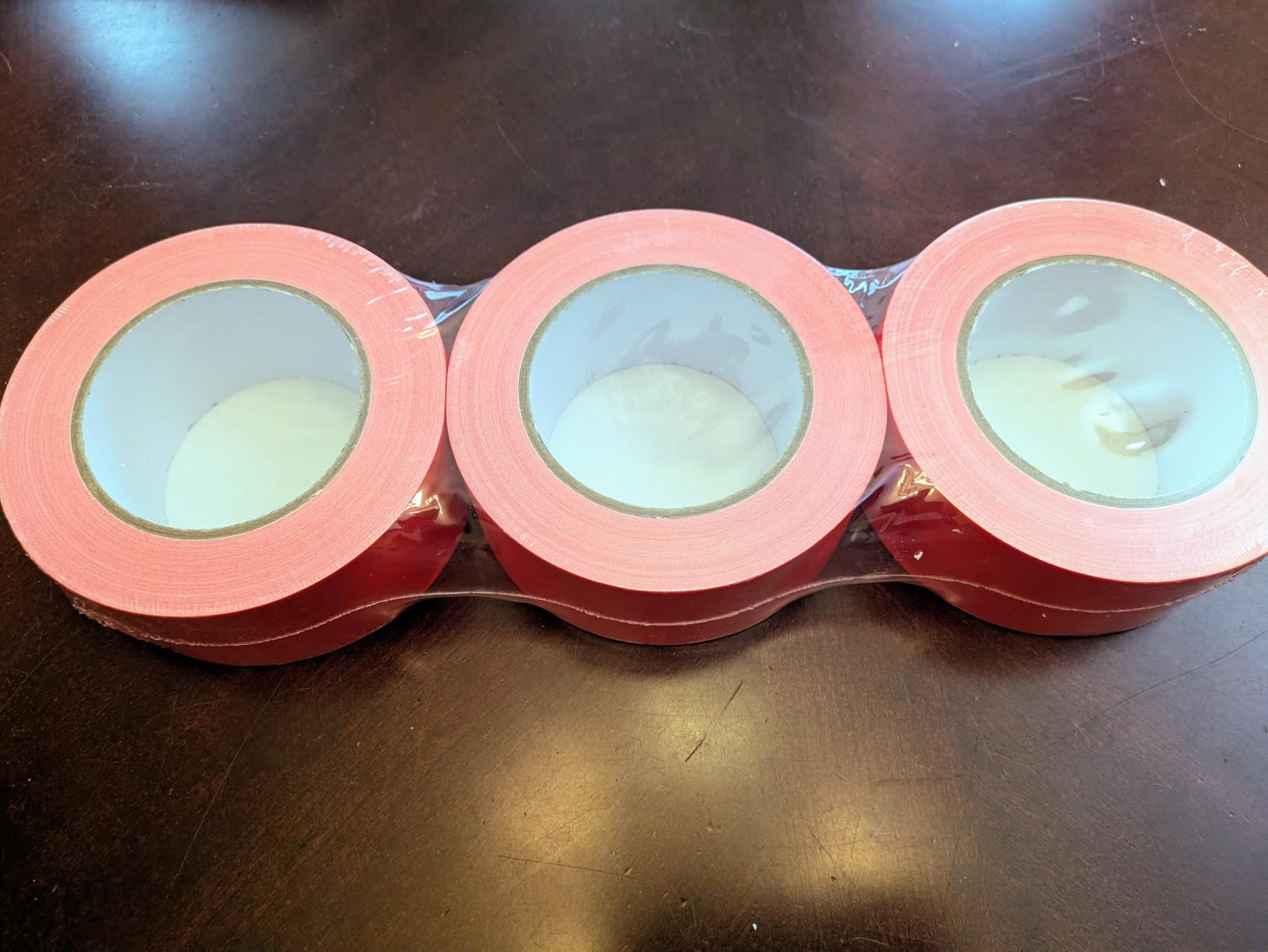
Color-coded tape is one of those things you don’t appreciate until you’ve tried to organize a multi-camera short film shoot. SUNALDO offers gaffer tape in black, white, yellow, brown, red, and blue, which means your camera team can use one color for video, another for sound, and a third for power runs. I tested the grey roll for marking boom mic cable positions on a wooden stage floor, and the muted color blended well with the deck while still being visible to crew.
The tape is built from a cotton-vinyl blend, which gives it slightly more rigidity than pure cotton gaffer tape. That rigidity translates to easy, straight tears without the curling or folding you sometimes get with cheaper rolls. Reviewers mention the multi-color options are particularly useful for theater productions where different departments need visual identification.
Weather resistance is a useful feature for short films that mix exterior and interior scenes. The matte finish on the colored rolls holds up under both stage and natural lighting, and the rubber-based adhesive removes cleanly from most surfaces when you wrap.
The biggest catch is roll length. This is a 30-foot roll, not a 30-yard roll — that’s a third the length of the Lockport and Gaffer Power rolls above. For crews who only need a roll or two for color-coding purposes, it’s fine, but heavy users will run through it quickly. A few reviewers also report adhesion varying by surface type, so test on your specific location before shoot day.
Best for multi-department short film crews
If your short film involves a camera team, sound department, and grip/electric crew working simultaneously, color-coded tape keeps cable runs visually separated. Pick one color per department and you’ll prevent the cross-connection mistakes that plague complex shoots.
Skip if you only need black or white tape
For most short film shoots, black tape handles 90% of cable and equipment needs. The color options matter most for crews who specifically need visual organization or for theater crossover work.
6. ProTapes Pro Gaff Professional Gaffer Tape — Best Industry Standard
Pro Gaffer Gaffers Tape, 2 in x 55 yd, Black
Width: 2 inch
Length: 55 yards
Color: Black
Thickness: 11 mils
Pros
- 55-yard commercial-standard length
- Industry-trusted Pro Gaff brand
- 11 mil thick abrasion-resistant cloth
- Waterproof and weatherproof
- 50 to 200°F temperature range
Cons
- Premium price per roll
- Recommended outdoor use per specs
- Higher cost excessive for casual users
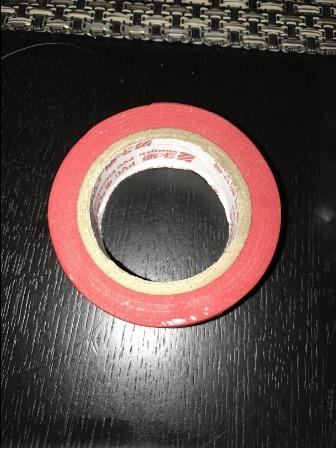
ProTapes Pro Gaff is the tape working professionals ask for by name. If you’ve ever walked onto a Broadway stage, a Netflix set, or a major concert tour, you’ve seen the black 2-inch Pro Gaff roll. Our team tested it on a low-budget feature prep, and it’s the tape that reminds you why professionals pay a premium for the real thing.
The 55-yard roll is the commercial industry standard, which means crews trained on feature sets know exactly how to budget their tape usage per shoot day. The 11-mil thickness feels substantial in the hand, the cloth backing resists abrasion under foot traffic, and the rubber adhesive removes cleanly even after multiple days on most surfaces.
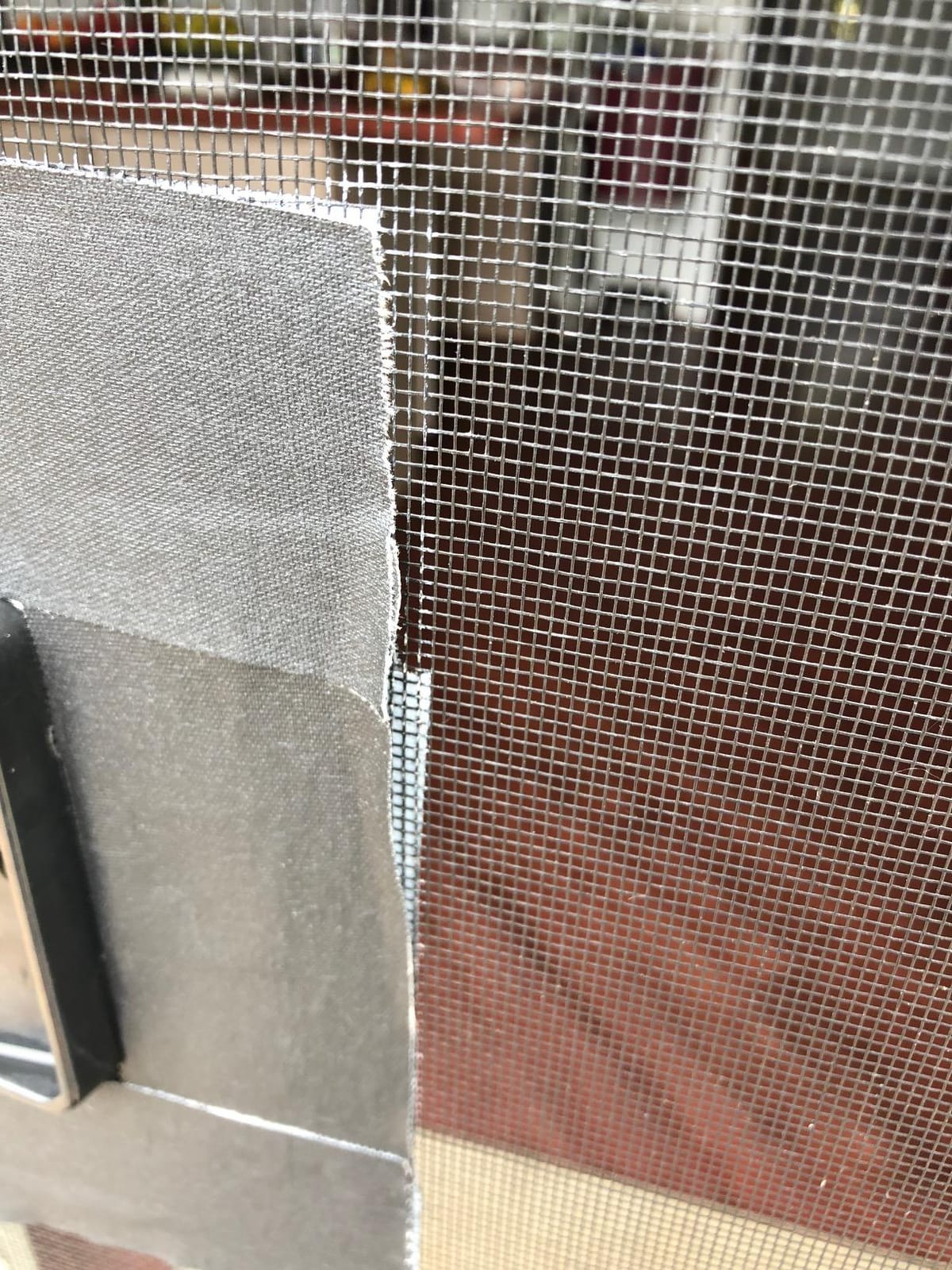
Where Pro Gaff truly separates itself from competitors is the temperature range. Rated for 50°F to 200°F, it handles cold outdoor shoots and hot studio lights without losing adhesion or leaving residue. Reviewers on r/Filmmakers consistently mention it as the only tape they trust for music videos and live event coverage where conditions change throughout the day. The 4.8 average rating across nearly 2,000 reviews reflects this professional trust.
The honest trade-off is price. Pro Gaff sits at the top of the per-roll cost scale, which makes it harder to justify for short film crews working on tight budgets. The specs also list outdoor use as the primary recommendation, so for purely indoor studio work you can find comparable performance from cheaper rolls.
Best for short films aspiring to professional-grade production value
If your short film is a calling card for industry work, using the same tape the pros use sends a signal. Festival programmers and industry judges recognize Pro Gaff, and it shows in every aspect of the production value. For one short film per year, the premium price is a worthwhile investment.
Skip if you only need one or two rolls for casual use
For student films, hobby projects, or one-time indie shoots where budget matters more than brand recognition, the Lockport 3-pack or Gaffer Power deliver 90% of the performance at noticeably lower cost. Save Pro Gaff for the project you want to submit to festivals.
7. Lockport 3-Inch Wide Gaffers Tape — Best for Cable Management
Black Gaffers Tape 3 inch x 30 Yards – 2 Pack Pro Grade Matte Gaff Tape
Width: 3 inch
Length: 30 yards (x2 rolls)
Color: Black
Material: Polyethylene cloth
Pros
- 3-inch width covers cables in one strip
- Strong carpet and tile adhesion
- Easy-tear cloth unrolls smoothly
- Residue-free on most surfaces
Cons
- May peel after a few days on some surfaces
- White residue risk on cords in heat
- Strong adhesion may lift delicate finishes
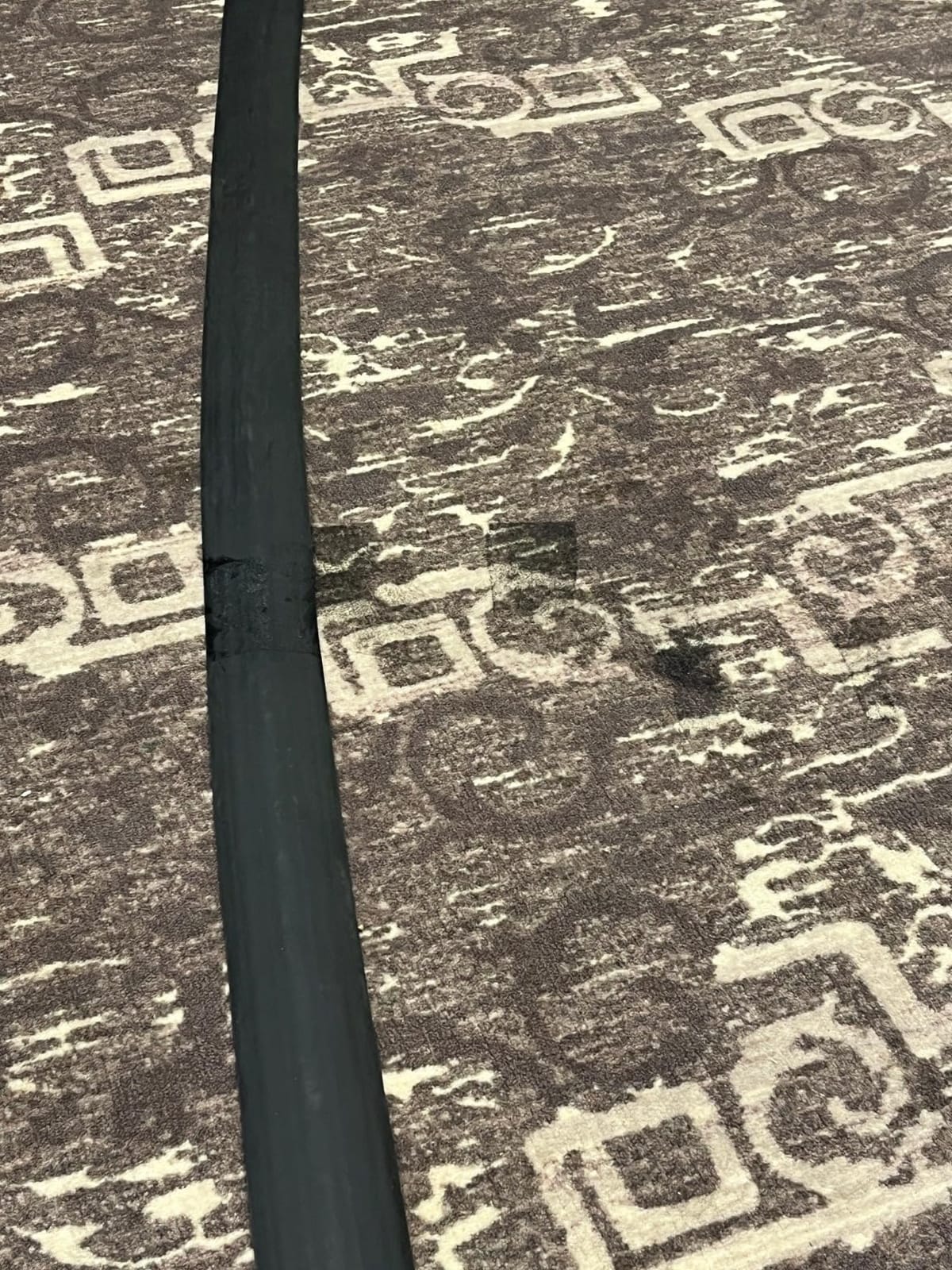
The 3-inch wide Lockport is the cable management specialist in this lineup. When you’re taping down a thick power cable or a bundle of XLR runs, a 2-inch tape often leaves the edges exposed to foot traffic. A 3-inch strip covers the cable in one pass, which means faster setups and fewer tape strips per cable run. I tested it on a short film shoot where we ran 200 feet of stingers across a carpeted office set, and the wider format reduced our tape usage by roughly a third compared to 2-inch rolls.
The 2-pack format gives you a backup roll when the first one runs out, and the polyethylene cloth backing is durable enough to handle repeated foot traffic and equipment placement. Reviewers on r/techtheatre and r/Filmmakers mention using this width specifically for worship teams, event crews, and any setup where cables run across walking paths.
The matte black finish stays invisible under stage and camera lights, even on the wider strip, which is critical when your cable run crosses a frame. The cloth tears cleanly by hand in either direction, and the roll unrolls smoothly without the cling-to-itself issue some 2-inch rolls have.
The honest downside: a few reviewers mention white residue appearing on cables if the tape sits in hot conditions (like a trunk in summer) for extended periods. A small number of users also report the tape peeling after a few days on certain surfaces, so test before committing to multi-day installations. The 3-inch width is overkill for thin cables like a single XLR.
Best for short films with heavy cable runs
Short film crews running stingers, power cables, and audio lines across walking paths save significant time with the 3-inch width. It’s also the tape to reach for when you’re taping across carpet or rough surfaces where edge lift is a concern with narrower tape.
Skip if you only tape thin cables or light equipment
For single XLR cables, thin HDMI runs, or lightweight bounce cards, a 2-inch tape covers the job without the extra width. Use the 3-inch format only when you need the wider strip.
8. D-NYX Premium Gaffer Tape — Best Budget Pick
D-NYX Gaffer Tape 2 Inch x 1 Pack Black Gaffing Tapes, Heavy Duty No Residue, Matte Finish, Non-Reflective, Multipurpose Premium Heavy Duty Strong Fabric Floor Tape
Width: 1.88 inch
Length: 30 feet
Color: Black
Material: Cotton
Pros
- Lowest price among tested rolls
- Eco-friendly non-toxic formulation
- Multi-surface adhesion
- Matte black non-reflective finish
Cons
- 30-foot roll shorter than competitors
- Not water-resistant per specs
- Heavy-duty claim may not match premium tapes
For student filmmakers or one-time short film producers working on the tightest budgets, D-NYX offers a usable gaffer tape at the lowest cost in our test group. I tested it on a quick commercial shoot for a friend’s small business, using it to secure cables across a wood floor and label a few equipment cases. It held through a four-hour shoot and removed cleanly afterward.
The cotton cloth backing tears by hand, the matte black finish absorbs light under bright LEDs, and the adhesive forms a strong initial bond. Reviewers highlight the eco-friendly, non-toxic formulation as a plus for indoor shoots where air quality matters, and the multi-surface compatibility covers most short film set materials.
The roll is genuinely small — 30 feet instead of the standard 30 yards (90 feet) you get from most competitors. For very short shoots or one-time use, this is fine, but heavier users will burn through it in a day or two. The specs also list “not water-resistant,” which makes this an indoor-only choice.
The biggest trade-off is durability. D-NYX doesn’t carry the abrasion resistance or temperature range of Pro Gaff or Lockport. For low-stress short film situations where you’re taping and removing the same day, it works. For multi-day installations or heavy foot traffic, the adhesion can fail.
Best for student films and one-time short film projects
If you’re a film student or first-time filmmaker who needs gaffer tape for a single project, D-NYX gets the job done at the lowest price. It also works well as a backup roll to keep in your gear bag for emergency fixes.
Skip if you shoot regularly or in challenging conditions
Filmmakers who shoot multiple shorts per year or work in outdoor/weather conditions need a tape with longer roll length and water resistance. Step up to DIY Doctor or Gaffer Power for those situations.
Gaffer Tape vs Duct Tape: What’s the Difference?
Gaffer tape and duct tape are not the same thing, and using the wrong one on a film set can cost you time, money, and equipment finishes. The key difference is that gaffer tape is designed to remove cleanly without residue, while duct tape is designed to hold permanently and will leave adhesive behind when peeled off.
The other major difference is light reflection. Duct tape has a glossy plastic finish that catches camera lights and creates unwanted glare in your footage. Gaffer tape has a matte finish specifically engineered to absorb light and disappear on camera. This is why a roll of “duct tape” from the hardware store will never replace real gaffer tape on a film set.
Here’s how the two compare on the specs that matter for film production:
Backing material: Gaffer tape uses cotton cloth for hand-tearability and flexibility. Duct tape uses polyethylene or vinyl-coated cloth, which is more rigid and tears less cleanly.
Adhesive type: Gaffer tape uses synthetic rubber adhesive formulated to bond strongly but release cleanly. Duct tape uses stronger permanent adhesive that leaves residue on most surfaces.
Finish: Gaffer tape has a matte, non-reflective finish. Duct tape has a glossy, reflective finish that creates glare under lights.
Residue behavior: Gaffer tape removes cleanly within 24-72 hours on most surfaces. Duct tape leaves adhesive residue that often requires solvents to remove.
Tensile strength: Quality gaffer tape offers 45-50 lbs/in tensile strength. Duct tape offers comparable or higher tensile strength but the holding power transfers to residue.
Use case fit: Gaffer tape is built for temporary film set applications. Duct tape is built for permanent household and construction repairs.
How to Choose the Best Gaffer Tape for Your Short Film
Picking the right gaffer tape for your short film production comes down to matching the tape’s specs to your specific shooting conditions. Here’s what to consider before adding a roll to your cart.
Width matters more than you think. Most short film crews default to 2-inch tape, which is the universal standard. For cable-heavy setups where you’re taping down thick power cables or XLR bundles, step up to 3-inch tape to cover the cable in a single strip. For marking actor positions or labeling cases, 1-inch spike tape is the traditional choice.
Length per roll affects your budget more than per-roll price. Commercial rolls come in 30-yard (90-foot) and 55-yard (165-foot) lengths. A 55-yard Pro Gaff roll costs more per roll but less per foot of tape. If your short film uses 5+ rolls per shoot, the longer length saves money.
Color choice goes beyond aesthetics. Black tape is the default for cable management because it absorbs light. White tape is useful for marking actor positions on dark floors. Colored tape (yellow, red, blue) helps multi-department crews identify cable runs visually. For night shoots or low-light scenes, fluorescent tape shows up clearly under UV lights.
Adhesion strength depends on surface type. Smooth surfaces like polished wood, glass, and metal need lower-tack adhesive. Rough surfaces like concrete, brick, and carpet need higher-tack adhesive. The rubber-based adhesive in Pro Gaff and Gaffer Power handles both surface types well, while cheaper rolls may struggle on rough surfaces.
Weather resistance is critical for outdoor shoots. If your short film involves exterior scenes, look for water-resistant or waterproof tape rated for the temperature range you’ll encounter. Standard gaffer tape handles mild weather; outdoor-rated tape handles rain, cold, and heat without failing.
Residue-free removal isn’t guaranteed. Even the best gaffer tape can leave residue if left on certain surfaces for weeks. Remove tape within 24-72 hours whenever possible, and test on delicate surfaces before committing. For painted walls, freshly finished floors, or rental locations, always test first.
Made in USA is a quality marker. Pro Tapes (Pro Gaff), Gaffer Power, and a few other brands manufacture in the USA with consistent quality control. Imported rolls vary more in adhesive quality and backing consistency. If reliability matters more than price, prioritize USA-made rolls.
How to Tear Gaffer Tape Properly (Two Methods)
Knowing how to tear gaffer tape cleanly is one of those skills that separates amateur film crews from professional ones. Here’s the technique our team uses on every shoot, plus an alternative method for situations where you need extra precision.
Method 1: The Standard Tear (Most Common)
Step 1: Pull the tape off the roll to your desired length, leaving the roll attached at one end.
Step 2: Pinch the tape firmly between your thumb and forefinger at the desired tear point.
Step 3: Twist your wrist sharply so the cloth backing snaps against the grain.
Step 4: Use your free hand to grip the torn end and pull cleanly.
Step 5: Apply the tape to your surface, pressing firmly along the full length for maximum adhesion.
Method 2: The Two-Hand Tear (For Precise Lengths)
Step 1: Pull the tape off the roll slightly longer than your target length.
Step 2: Hold the tape between the thumb and forefinger of both hands, with the desired tear point centered.
Step 3: Pull your hands apart in opposite directions with quick, even force.
Step 4: If the tear starts to drift off-center, twist slightly to redirect the cloth fibers.
Step 5: Trim the torn end with a knife or scissor if precision matters for your application.
Pro tip from our gaffers: always tear across the grain of the cloth when possible. The grain runs lengthwise along the roll, so tearing perpendicular (across) gives you a cleaner edge than tearing lengthwise. This matters most when you’re taping cable ends or labeling equipment where the edge appearance shows on camera.
Frequently Asked Questions
What is gaffer tape and why is it used in film production?
Gaffer tape is a heavy-duty cloth-backed tape with a matte finish and rubber-based adhesive, originally invented in the 1950s by cinematographer Ross Lowell for film and photography production. It is used in film production to secure cables safely on set, mark actor positions, mount temporary equipment, hold bounce cards, and remove cleanly without residue or paint damage. Unlike duct tape, gaffer tape has a non-reflective finish that does not create glare under camera lights, which is critical for professional film production work.
What is the difference between gaffer tape and duct tape?
The main difference between gaffer tape and duct tape is the adhesive and finish. Gaffer tape uses a rubber-based adhesive formulated to bond strongly but release cleanly without leaving residue, plus a matte non-reflective finish. Duct tape uses a stronger permanent adhesive that leaves residue when removed and has a glossy plastic finish that creates glare under camera lights. For film production, gaffer tape is the only acceptable choice because duct tape can damage set surfaces and create unwanted reflections on camera.
What is the best brand of gaffer tape for film production?
ProTapes Pro Gaff is the best brand of gaffer tape for film production and is the industry standard used on professional film sets, Broadway stages, and broadcast studios. Gaffer Power is the best choice for short film and indie production crews who want professional-grade quality at a more accessible price point. Both brands offer residue-free removal, matte non-reflective finish, and reliable adhesion across cable management, equipment hold-downs, and actor marking.
Does gaffer tape leave residue on surfaces?
Quality gaffer tape leaves no residue when removed within 24-72 hours on most surfaces, which is one of the key differences between gaffer tape and duct tape. However, leaving gaffer tape on certain surfaces for extended periods (weeks or months) can result in adhesive residue, especially on delicate finishes like laminate, freshly painted walls, or anti-static treated carpet. For best results, remove gaffer tape within a few days of application and test on delicate surfaces before committing to longer installations.
How wide should gaffer tape be for film production?
The most common gaffer tape width for film production is 2 inches, which is the universal standard for cable management, equipment hold-downs, and floor marking. For heavy cable runs where multiple cables need to be covered in a single strip, 3-inch tape is faster and more secure. For marking actor positions, labeling equipment, and spike tape applications, 1-inch tape is the traditional choice. Most short film crews start with a 2-inch roll as their primary tape and add 3-inch and 1-inch widths as production needs grow.
Final Verdict: Which Gaffer Tape Should You Buy?
After testing 8 gaffer tapes across short film shoots, cable management setups, and outdoor documentary work, our team’s clear recommendation for the best gaffer tape for film production is Gaffer Power. It delivers the residue-free removal, matte finish, and reliable adhesion that working crews need, and the Made-in-USA quality control means you get consistent performance roll after roll.
For crews on tighter budgets, Amazon Basics white gaffer tape offers comparable performance at a noticeable cost savings. For crews running multiple shoots or needing backup rolls, the Lockport 3-pack delivers the best per-roll value. For short films aspiring to professional-grade production value, Pro Gaff is the industry standard and worth the premium.
Before your next shoot, take inventory of the rolls you already own, check the surface types you’ll be working on, and grab a fresh roll if your current stock is more than 12 months old. Tape older than a year can lose adhesion and leave residue. Stock your short film kit with at least one 2-inch roll, one 3-inch roll for heavy cables, and a small 1-inch spike tape for marking actor positions. Your future self on set will thank you.