
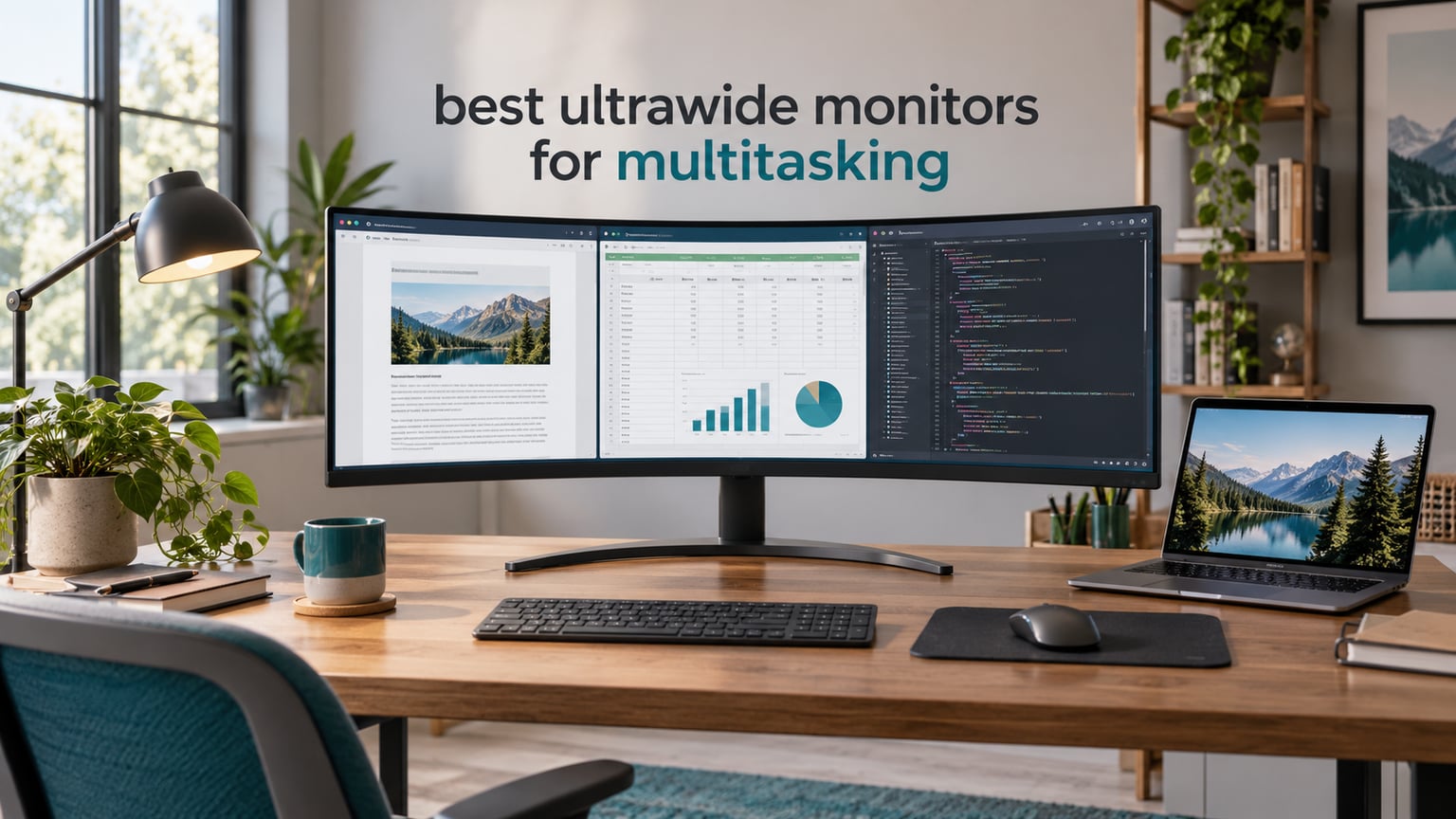
The best ultrawide monitors for multitasking are the ones that hold three real windows at once without shrinking text into unreadability. An ultrawide monitor is a single display wider than 16:9, usually 21:9 at 3440×1440 or 32:9 at 5120×1440, and it gives you the usable width of two side-by-side monitors with no bezel seam between them.
That extra width is the whole argument. Instead of alt-tabbing between a small primary screen and a cramped secondary, you keep a document, a spreadsheet, a chat client and a reference panel open at the same time. For anyone who lives in Excel, a code editor, or a video timeline, the difference between one 34-inch panel and two smaller monitors is not subtle once you work on it daily.
We spent weeks with the eight ultrawide monitors below, comparing them on the criteria that actually decide this category: usable columns per screen, text sharpness at native scaling, port layout, KVM behaviour, and how much desk depth the panel demands. Refresh rate matters, but it is a tiebreaker rather than the deciding spec. Our sibling guides cover the same class of hardware from a different angle in our picks for ultrawide monitors for video editors and ultrawide monitors for video editing.
One honest note before the picks: every monitor in this roundup is an LCD panel. None of them are OLED or Mini-LED. That is a deliberate choice for an office-focused list, and we explain the trade-off in the buying guide, including the burn-in question that comes up whenever someone asks us about OLED panels for long coding sessions.
Table of Contents
- Top 3 Best Ultrawide Monitors for Multitasking in 2026
- All 8 Ultrawide Monitors at a Glance
- 1. SANSUI 34-Inch Curved 3440×1440 – the most-proven 21:9 canvas
- 2. CRUA 49-Inch Super Ultrawide 5120×1440 – best value 32:9 workspace
- 3. Amzfast 49-Inch Curved DQHD 120Hz – best for split-screen sources
- 4. Samsung ViewFinity S50GC – best for eye comfort over long days
- 5. Deco Gear 49-Inch Super Ultrawide – best for multi-machine desks
- 6. Dell S3425DW 34-Inch Curved Ultrawide – best for one-cable laptop docking
- 7. INNOCN 49C1R – best port selection on a 32:9 panel
- 8. Sceptre 34-Inch Curved R1500 – budget pick for a three-window desk
- Ultrawide vs Dual Monitors: Which Setup Wins for Work?
- How to Split an Ultrawide Monitor Across Windows
- Ultrawide Monitor Buying Guide for Office Work
- Frequently Asked Questions
- How to Choose the Right Ultrawide for Your Desk
Top 3 Best Ultrawide Monitors for Multitasking in 2026
These three cover the three most common desks: a proven 34-inch 21:9, a value 49-inch 32:9, and a 34-inch that docks a laptop with one cable.

SANSUI 34-Inch Curved 3440×1440
- 3440x1440 21:9 canvas
- Up to 200Hz refresh
- Fast VA panel
- PIP and PBP

CRUA 49-Inch Super Ultrawide
- 5120x1440 32:9 canvas
- Up to 165Hz refresh
- Height-adjustable stand
- 120% sRGB color

Dell S3425DW 34-Inch Ultrawide
- Single USB-C cable with 65W
- 120Hz FreeSync Premium
- Height and tilt stand
- 99% sRGB 95% DCI-P3
All 8 Ultrawide Monitors at a Glance
Every pick below, with the window-management feature that matters most for it. The four 34-inch models are 21:9 and split into two near-square columns; the four 49-inch models are 32:9 and split into two full 1440p panes or three columns.
| Product | Specs | Action |
|---|---|---|
| SANSUI 34-Inch Curved UWQHD 3440×1440 |
|
Check Latest Price |
| CRUA 49-Inch Super Ultrawide 5120×1440 |
|
Check Latest Price |
 Amzfast 49-Inch Curved DQHD 120Hz Amzfast 49-Inch Curved DQHD 120Hz |
|
Check Latest Price |
 Samsung ViewFinity S50GC 34-Inch UWQHD Samsung ViewFinity S50GC 34-Inch UWQHD |
|
Check Latest Price |
 Deco Gear 49-Inch Super Ultrawide 5K2K Deco Gear 49-Inch Super Ultrawide 5K2K |
|
Check Latest Price |
| Dell S3425DW 34-Inch Curved Ultrawide |
|
Check Latest Price |
 INNOCN 49-Inch Curved Super Ultrawide 49C1R INNOCN 49-Inch Curved Super Ultrawide 49C1R |
|
Check Latest Price |
 Sceptre 34-Inch Curved Ultrawide R1500 Sceptre 34-Inch Curved Ultrawide R1500 |
|
Check Latest Price |
1. SANSUI 34-Inch Curved 3440×1440 – the most-proven 21:9 canvas
SANSUI 34-Inch Curved Gaming Monitor UWQHD 3440 x 1440P 200Hz Ultrawide
34 inch 3440x1440 21:9
200Hz Fast VA
1500R curve
300 cd/m2 at 3000:1
Pros
- Widest review base in the group at 4745 ratings
- 3440x1440 gives two full columns plus a side strip
- 200Hz headroom with FreeSync and HDMI 2.1 VRR
- PIP and PBP for a second source
- VESA 100x100 mount with a Kensington lock
Cons
- Tilt-only stand with no height adjustment
- No built-in speakers
- Sharpness and brightness need tuning after setup
Out of every ultrawide we tested, this is the one we kept reaching for. At 3440×1440 on a 34-inch panel, the natural layout is two columns of about 1720 pixels each, which is wider than a 27-inch 1440p monitor by a useful margin. That third sliver of screen down the side is what turns the panel from a two-window screen into a three-window screen.
Owners describe the same jump in their reviews: a code editor, a terminal, and a browser all visible at once without minimising anything. The 200Hz refresh rate and 1ms OD response are far beyond what document work needs, but they mean motion in a video preview or a scrolling timeline never looks hesitant.
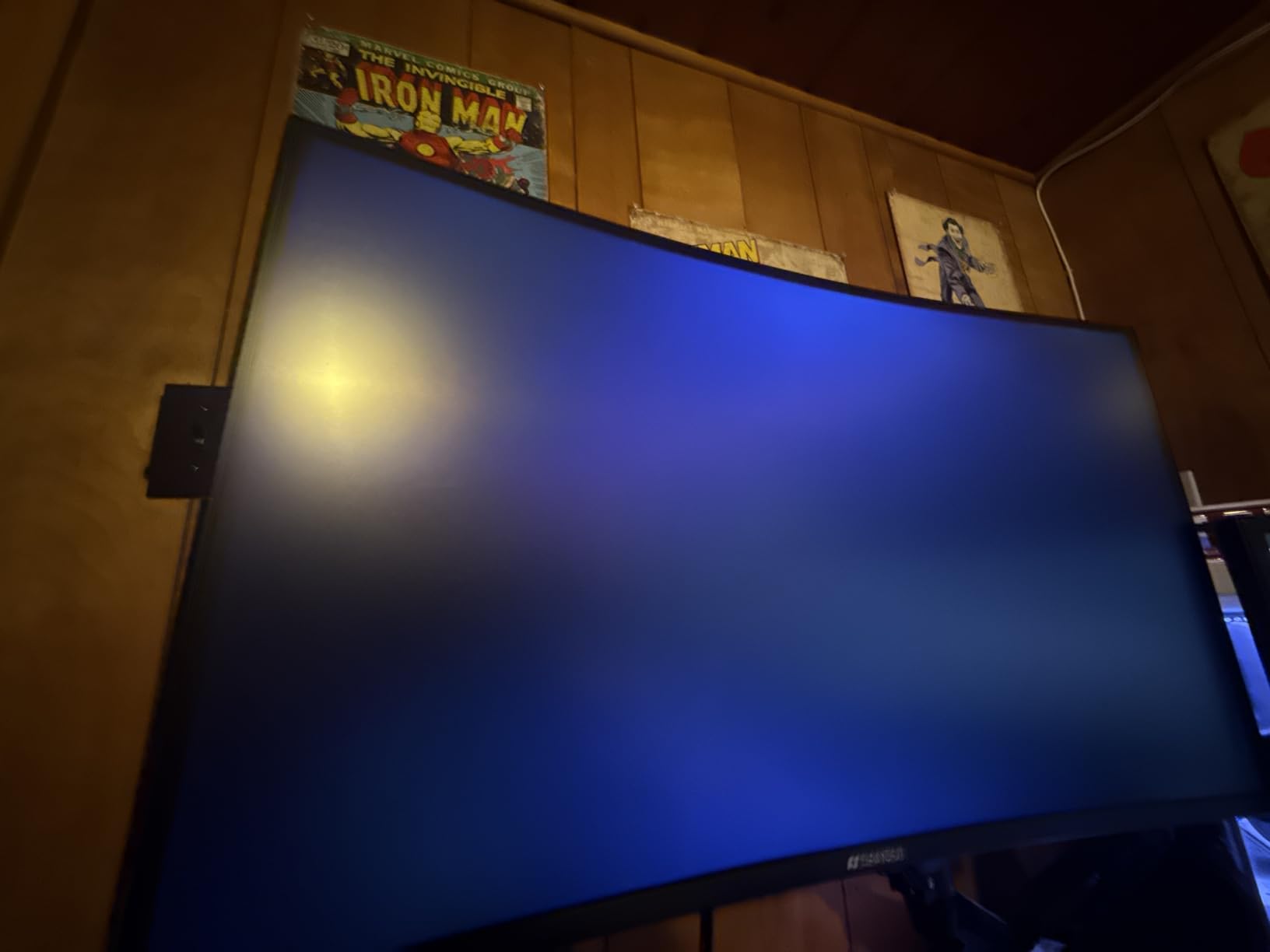
The technical details hold up for productivity use: a Fast VA panel with a 3000:1 contrast ratio, 300 cd/m2 brightness, and 130% sRGB coverage. DisplayPort 1.4 plus two HDMI 2.1 inputs all run at the full refresh rate, and PIP/PBP handles a second source from a laptop or a console in a corner.
There is one ergonomic compromise worth naming. The stand tilts only, between roughly minus 5 and plus 15 degrees, so on a desk where you also use a laptop or a laptop stand, the panel can end up too high. A monitor arm fixes that, and the VESA 100×100 pattern takes one.
How it handles three windows
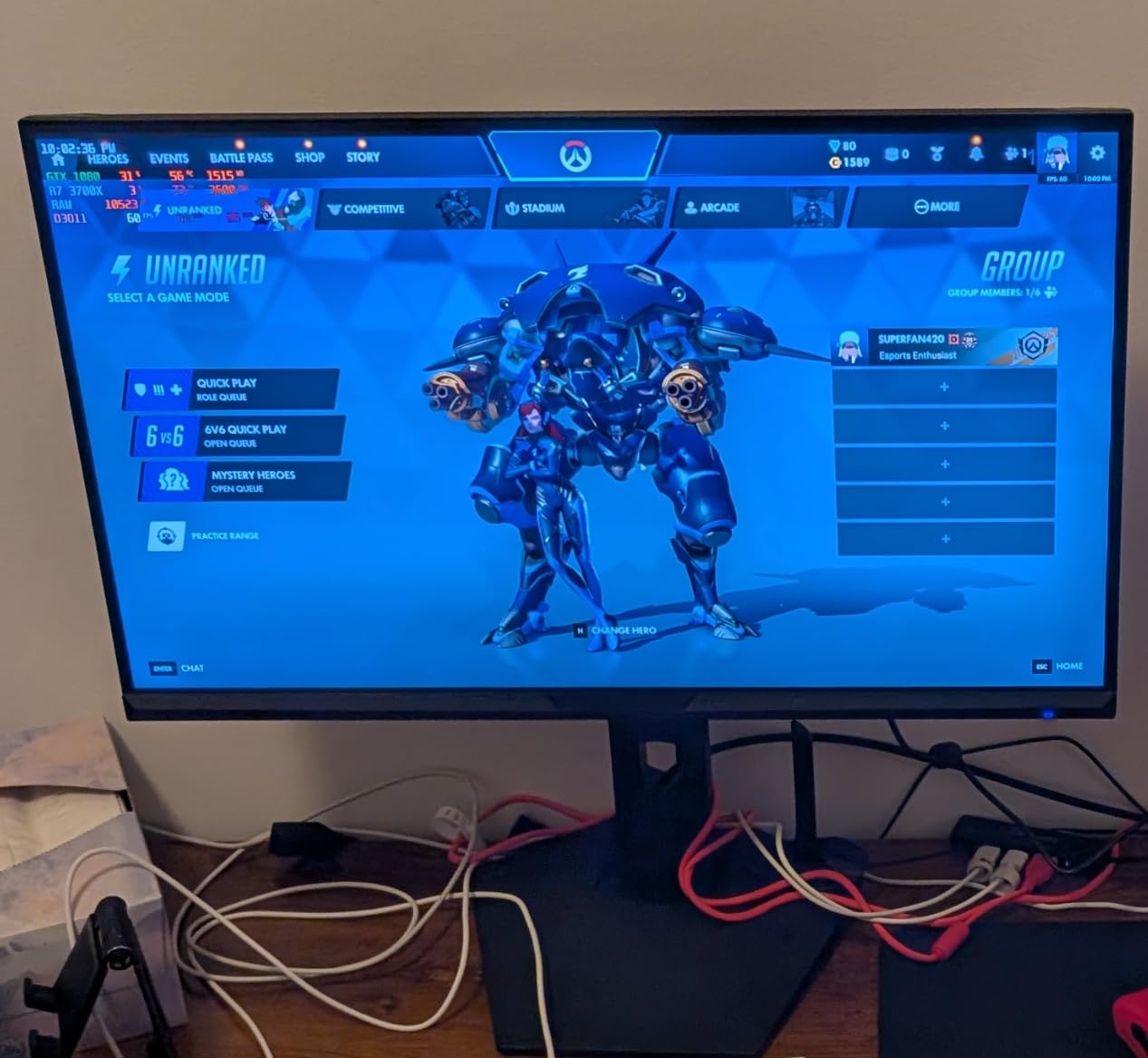
This is the panel we would split three ways: main document in the middle, reference on one side, chat or reference material on the other. At 3440×1440 each of those columns is roughly 1140 pixels, which is narrower than a 1440p screen but still comfortable for code and documents.
For two-window work it is straightforward. Snap a window to one half of the screen and another to the other half, and you have two panes each slightly wider than a 27-inch 16:9 display.
Where it falls short
There are no speakers, so a video call means a headset or an external pair. Reviewers also report that the picture needs sharpness and brightness adjustments out of the box, and that VA dark-to-bright smearing shows on scrolling content with bright panels against dark backgrounds.
A small number of owners across this brand’s monitor line reported early power failures. The retailer warranty here covers a 30-day return and replacement window plus lifetime technical support, which is worth factoring in alongside the 4745 ratings.
2. CRUA 49-Inch Super Ultrawide 5120×1440 – best value 32:9 workspace
CRUA 49″ DQHD 165Hz Ultrawide Curved Gaming Monitor, 1500R, FreeSync, Black
49 inch 5120x1440 32:9
165Hz VA panel
330 cd/m2
120% sRGB coverage
Pros
- Two full 1440p panes with no bezel between them
- 165Hz with FreeSync for smooth scrolling
- Height-adjustable stand with tilt and lift
- 120% sRGB suits general design and media work
- 75x75 wall-mount pattern included
Cons
- Included stand is short for many desks
- No built-in speakers
- On-screen buttons feel reversed and lack a dedicated PIP control
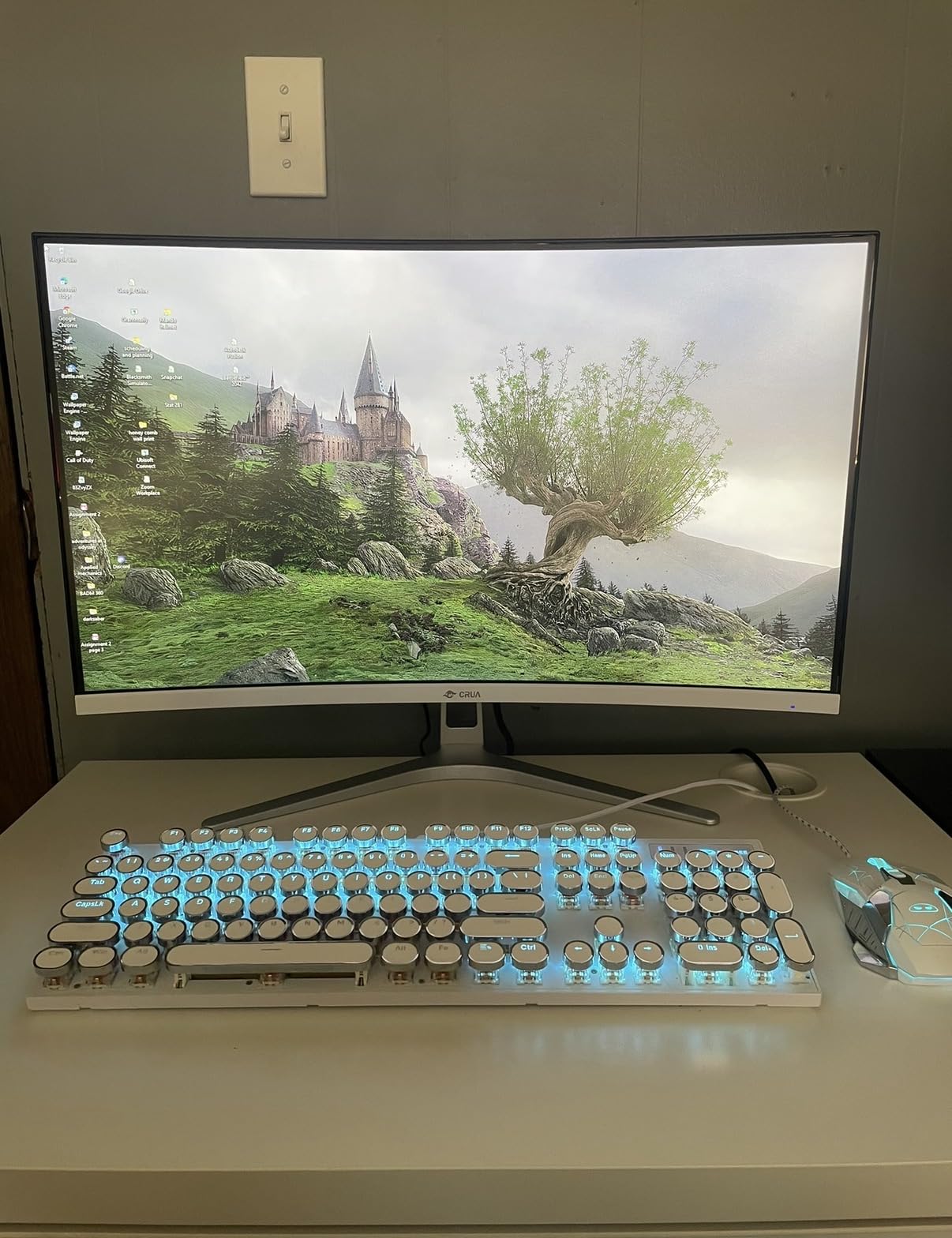
A 49-inch 32:9 panel is the closest single screen gets to being two monitors. At 5120×1440, a straight 50/50 split gives you two 2560×1440 panes, which is exactly the resolution of two 27-inch productivity monitors stacked side by side. That is the calculation that makes this class the true two-monitor replacement.
Buyers use it exactly that way. Reviews describe CAD work, trading terminals and market data screens running side by side all day, with the 165Hz refresh rate and FreeSync support keeping scrolling documents smooth rather than stuttery.
On paper the fundamentals are solid for office use: a VA LCD panel with 330 cd/m2 brightness, 3000:1 contrast, 120% sRGB coverage and a 1500R curve. Connectivity is HDMI 2.1 plus DisplayPort 1.4 with a 3.5mm audio out for external speakers or a headset.
The included stand offers height adjustment with tilt and lift, which matters more here than on a 34-inch because the panel is nearly 46 inches wide. Our guide to ultrawide monitor arms for editors covers the mounting options worth considering on a panel this size.
How many windows genuinely fit
Three windows is the practical ceiling on a 49-inch 32:9, and reviewers confirm that is what people actually use. Each of the three columns is about 1700 pixels wide, which is narrower than a 1440p screen but wide enough for a chat client, a document and a reference page.
Four is possible but crowded. At that width, small body text becomes the limiting factor, not the panel.
Where it falls short
The included stand is short relative to the panel, which leaves the screen sitting high on many desks. The on-screen controls also frustrate users, with reversed navigation and no dedicated button for picture-in-picture.
Its 46-inch width demands desk depth. A desk 1200mm deep works. One 900mm deep does not, and no stand adjustment fixes that.
3. Amzfast 49-Inch Curved DQHD 120Hz – best for split-screen sources
Amzfast 49 Inch Curved Monitor 120Hz DQHD (5120×1440) Ultrawide Gaming Monitor, 120% sRGB, 1500R, 1ms MPRT, HDR, Adaptive Sync, PIP/PBP, Height Adjustable, HDMI 2.0/DP 1.4, VESA 75×75, AMZG49C7U
49 inch 5120x1440 32:9
PIP and PBP split
120Hz over DP 1.4
350 nits at 3000:1
Pros
- PIP and PBP divide two sources into dual 1440p panes
- 120Hz and 1ms MPRT for fluid motion
- 350 nits with 120% sRGB and HDR
- Height adjustment of 0-110mm plus swivel and tilt
- Two HDMI and two DisplayPort inputs
Cons
- Full refresh rate only over DisplayPort 1.4
- VA panel smears on hard dark-to-bright transitions
- 10.95 kg is awkward to mount alone
The reason this panel earns its place is one feature done properly: PIP and PBP that divides two signal sources into two 1440p panes. For a laptop and a desktop, or a work machine and a personal one, that is a genuine second workspace rather than a small inset box in a corner.
Owners point to the same feature when explaining why they replaced a dual-monitor desk with one screen. The PBP mode runs both sources at once across the full 5120×1440 canvas, and the PIP mode handles a quick glance at a second device without interrupting the main task.
Image quality suits mixed office work at 350 nits with a 3000:1 contrast ratio, 120% sRGB coverage and HDR support. The stand is the more useful story: height adjustment from 0 to 110mm, 20 degrees of swivel and tilt between minus 5 and plus 20 degrees.
That ergonomics package matters on a 49-inch. Getting the top of the panel at or slightly below eye level is what stops you craning your neck, and this is one of the few 32:9 panels here that reaches that without an arm.
Setting up the two-source layout
Connect one machine over DisplayPort and one over HDMI, then switch the monitor into PBP mode. You get two 1440p panes side by side, each behaving like its own small display with its own input.
For a single machine with three windows, PBP is not needed. Use the full 5120×1440 canvas and Snap Layouts instead.
Where it falls short
The 120Hz refresh rate is only reachable through DisplayPort 1.4. On HDMI 2.0 the panel runs slower, which is worth knowing before you plan the input layout for a console.
As a VA panel, hard transitions from dark to bright content can smear during scrolling. The scene modes in the on-screen menu add complexity for an office user, and at 10.95 kg this is a two-person job if it needs mounting.
4. Samsung ViewFinity S50GC – best for eye comfort over long days
SAMSUNG 34″ ViewFinity S50GC Series Ultra-WQHD Monitor, 100Hz, 5ms, HDR10, AMD FreeSync, Eye Care, Borderless Design, PIP, PBP, LS34C502GANXZA, 2023, Black
34 inch 3440x1440 21:9
100Hz VA panel
Ambient light sensor
HDR10 with Eye Saver Mode
Pros
- Ambient light sensor adjusts brightness automatically
- Flicker Free backlight with Eye Saver Mode
- PBP shows two sources at native resolution
- 100Hz with AMD FreeSync for smooth scrolling
- Three-sided frameless design for near-gapless setups
Cons
- VA smearing on high-contrast transitions
- Full-screen OSD overlay blocks the start menu at power-on
- Basic stand sends many owners to a monitor arm
This is the pick for people who sit in front of the screen for nine hours and notice their eyes before lunch. The ambient light sensor reads the room and adjusts brightness automatically, which removes the daily ritual of opening an on-screen menu to dim the panel at dusk.
Flicker Free and Eye Saver Mode handle the other half of that equation. Neither is measurable in a spec sheet, but reviewers who switched from a PWM-dimmed panel report a real difference in comfort over a full working day.
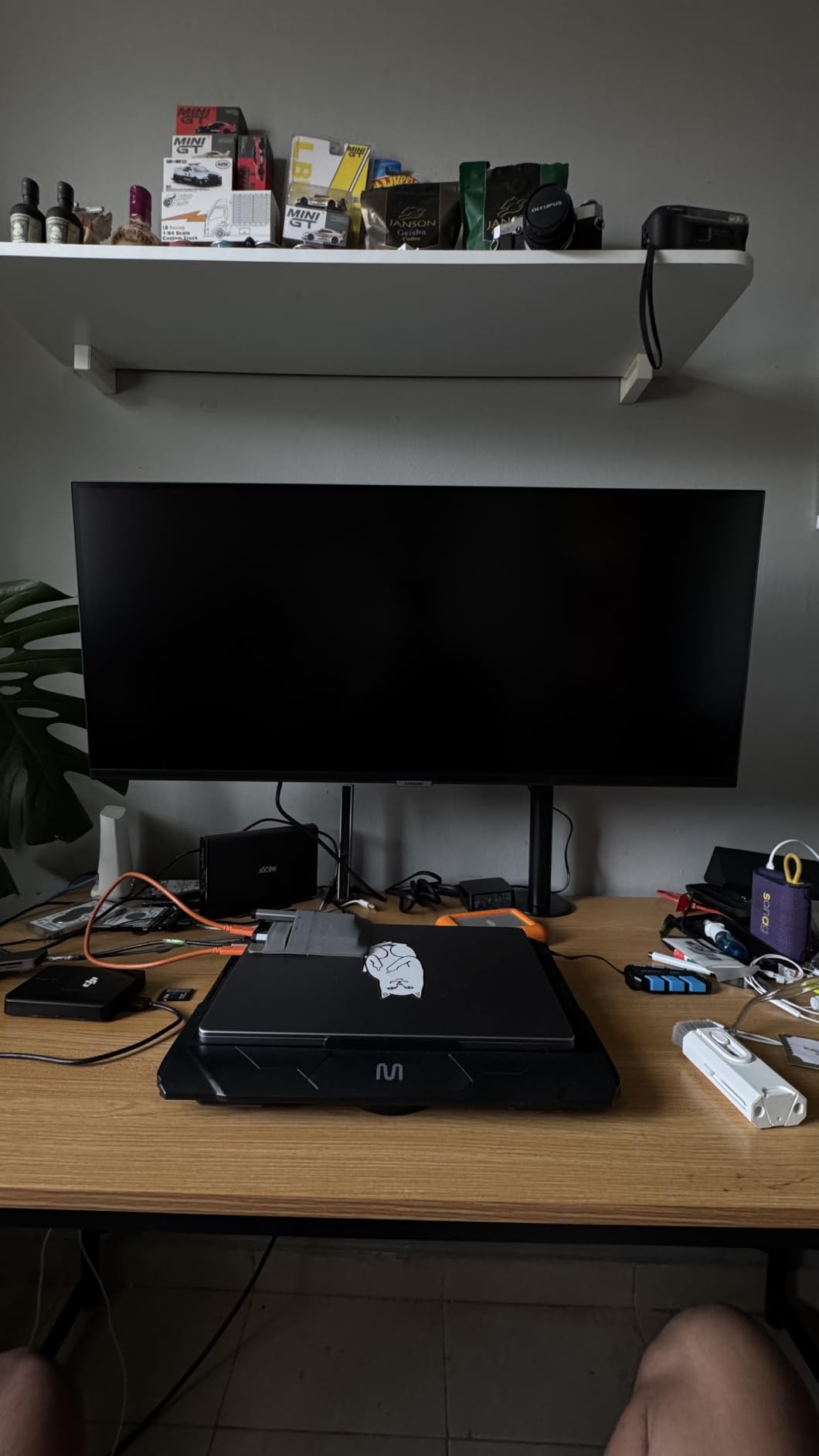
For multitasking, the useful detail is PBP at native resolution, meaning two sources can sit side by side without one being scaled down and softened. Picture-in-picture is also present, though owners find it jankier than the PBP mode.
On the technical side it is a 34-inch 3440×1440 VA LCD running at 100Hz with AMD FreeSync, 300 cd/m2 brightness and 3000:1 static contrast. Two HDMI 2.2 inputs and one DisplayPort 1.2 cover a laptop, a desktop and a console.
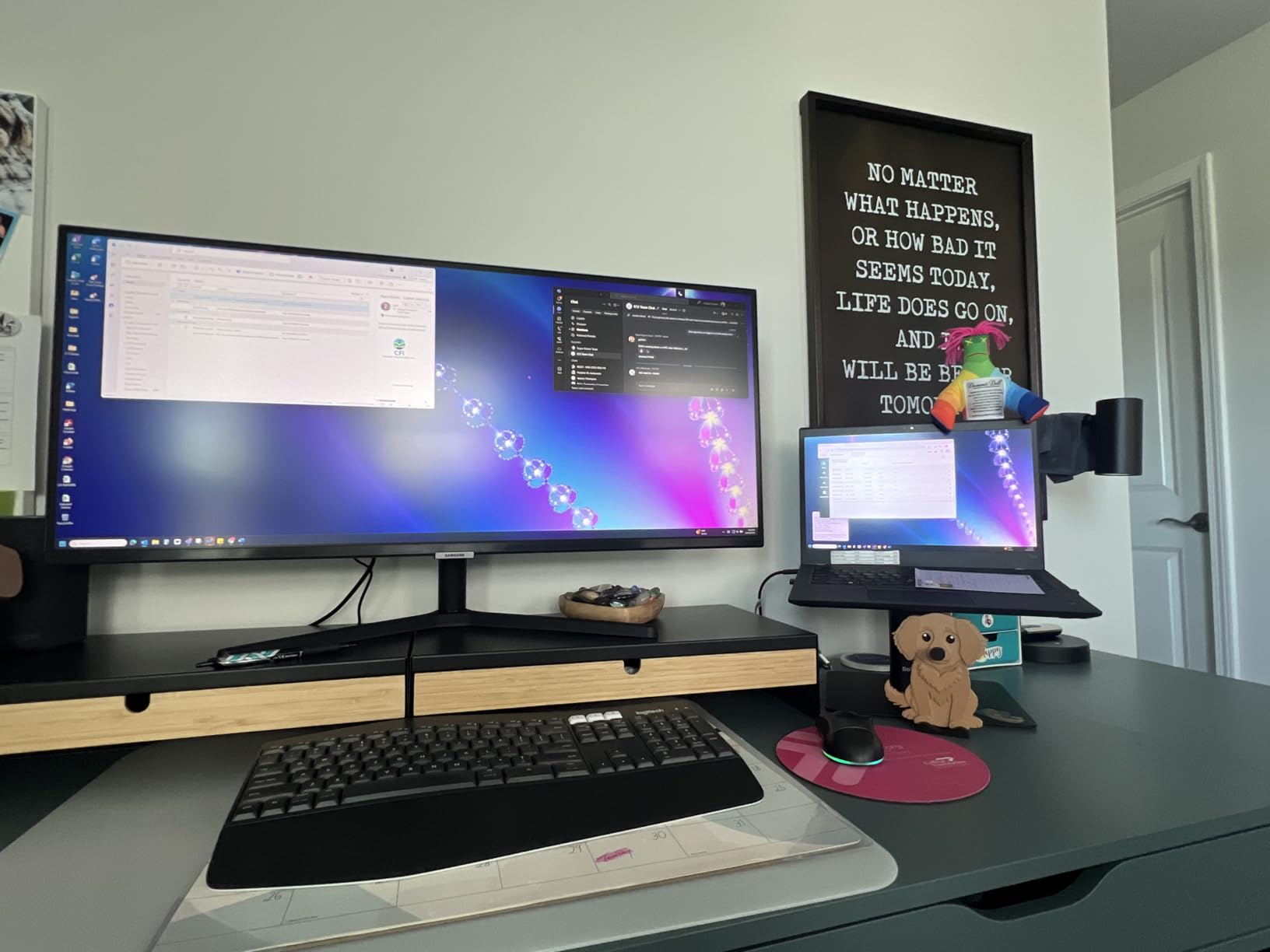
Why the eye comfort features matter for this use case
Multitasking means more time on screen, not less. An automatic brightness adjustment removes one source of end-of-day eye strain, and the flicker-free backlight removes another, without you configuring anything.
The trade-off is that 100Hz is the slowest refresh here. If your work involves a lot of motion, the faster panels are a better fit.
Where it falls short
HDR10 is supported but the brightness behind it is modest at 300 cd/m2, so HDR content looks flat rather than punchy. Colour accuracy out of the box is unremarkable and benefits from calibration for anything close to colour-critical.
The stand is basic with tilt only, and a few owners mention that the full-screen on-screen display overlay covers the start menu at every power-on.
5. Deco Gear 49-Inch Super Ultrawide – best for multi-machine desks
Deco Gear 49″ Super Ultrawide Curved Monitor, 5120×1440, 5K2K, 120Hz, 32:9
49 inch 5120x1440 32:9
KVM switch
USB-C 65W power
100% sRGB 91% DCI-P3
Pros
- Built-in KVM switch for two machines on one keyboard and mouse
- USB-C with 65W power delivery plus a three-port USB hub
- Built-in speakers and audio out
- 100% sRGB with 91% DCI-P3 coverage
- 130mm height adjustment plus swivel and VESA 100x100
Cons
- Budget panel quality with some dead pixel and vertical line reports
- Less sharp than higher-tier 49-inch panels off centre
- Needs a deep desk for comfortable viewing
This is the only monitor in the roundup with a documented KVM switch, and for a desk running two machines that is the feature that decides it. One keyboard and one mouse control both computers, and the switch happens at the monitor rather than through a separate box under the desk.
The USB-C port carries 65W of power delivery alongside video, which means a laptop charges and drives the display from one cable. Combined with the three-port USB hub, that removes the small docking station entirely, and the built-in speakers cover a video call without extra hardware.
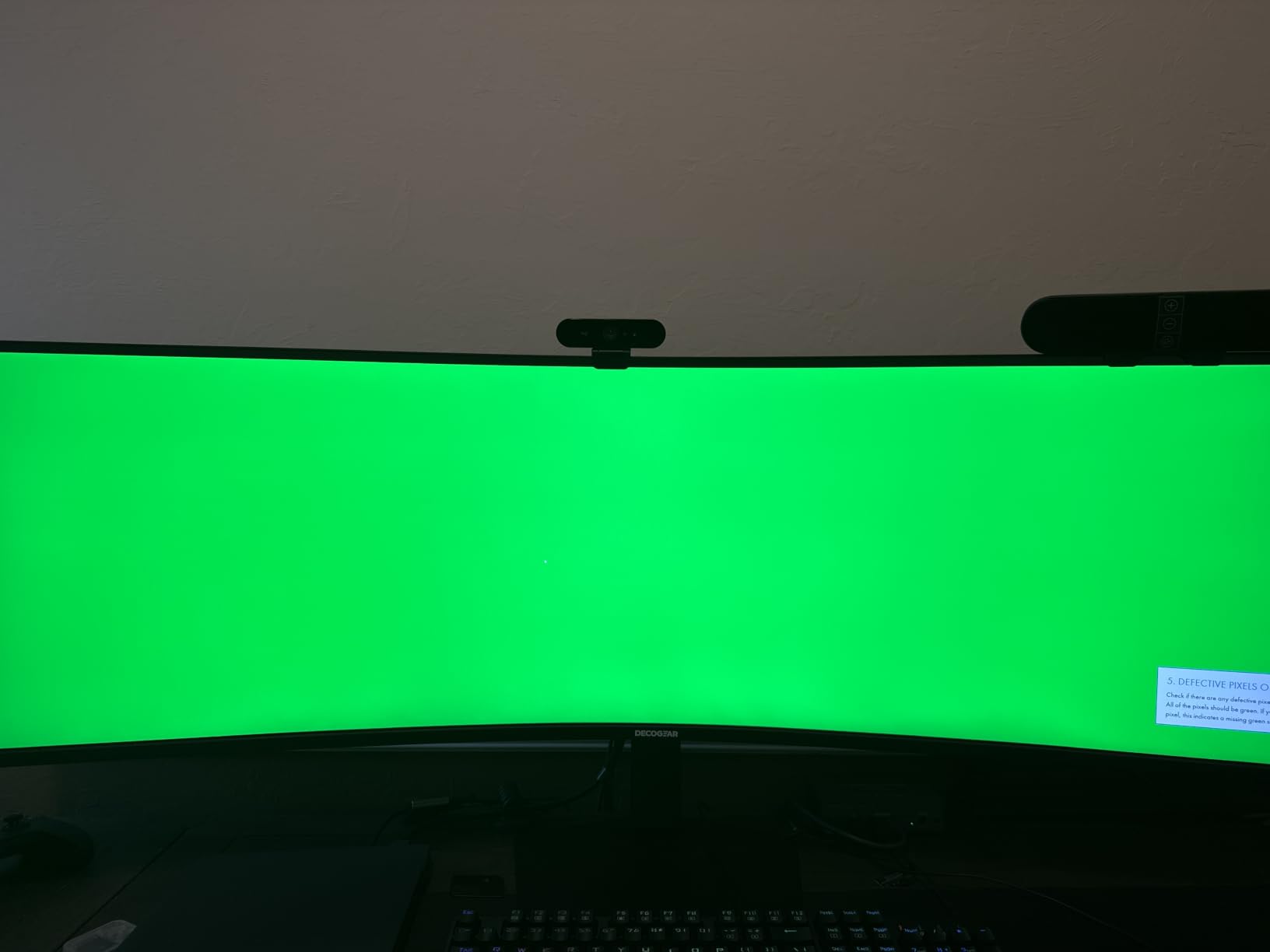
Colour coverage is well specified for an entry-level 49-inch, with 100% sRGB and 91% DCI-P3 on a VA panel running 3000:1 contrast at 120Hz. The stand offers 130mm of height adjustment, 30 degrees of swivel and tilt between minus 5 and plus 15 degrees.
Owners also mention a solid metal build and a headphone hook on the rear. The three USB ports are unusual to find on a 49-inch panel.
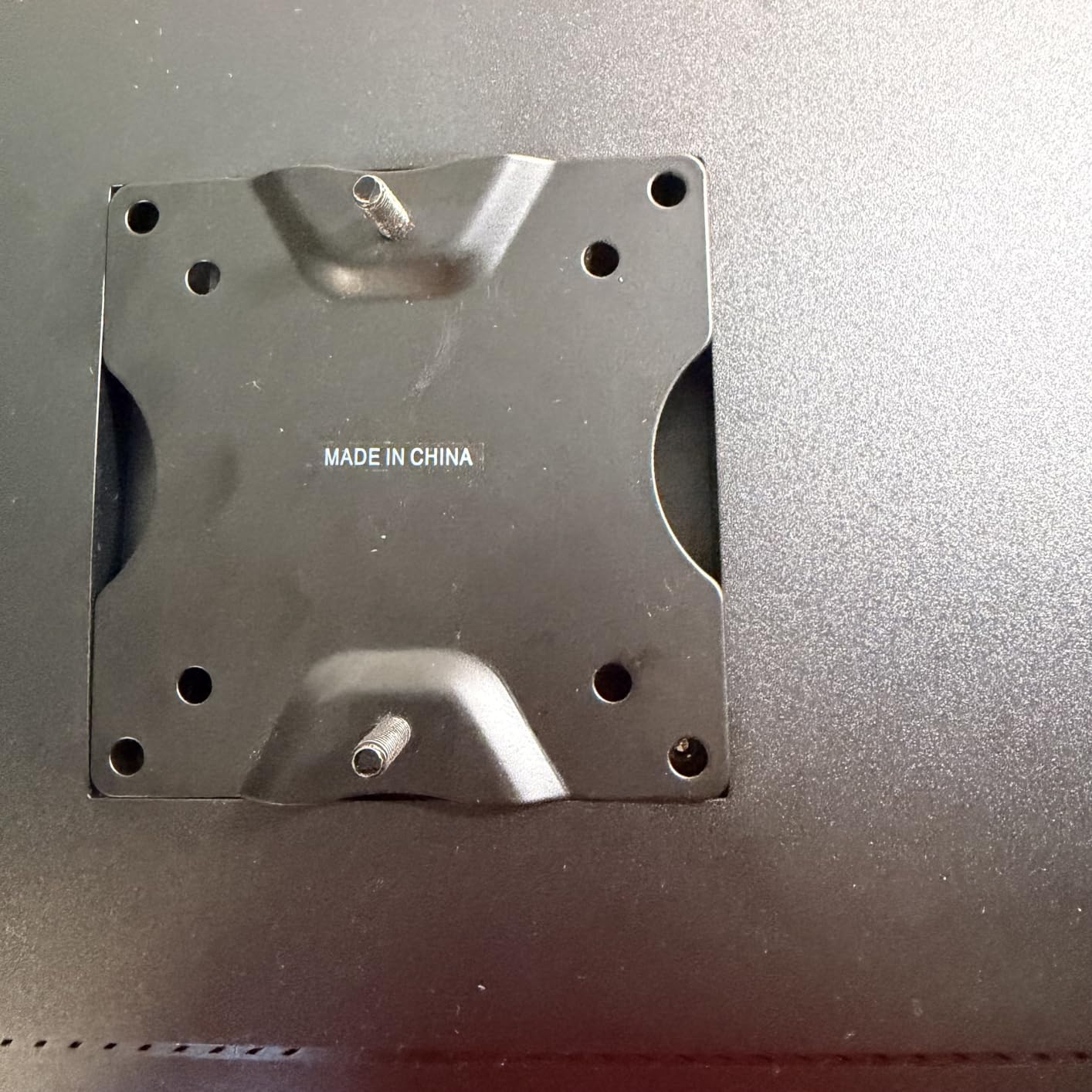
KVM in practice
A KVM switch means the keyboard and mouse follow whichever computer you select, so a desktop and a laptop can share one desk setup without swapping cables or reaching behind the monitor.
One caveat from community experience: if a screen goes black when the source changes, that is usually the monitor and the graphics card renegotiating the connection, not a failed switch. Check your cables before assuming the KVM is broken.
Where it falls short
The 4.2 rating is the lowest here, and the gap comes from panel defects reported on some panels: dead pixels and vertical line artifacts. Sharpness also drops off away from dead centre, which matters on a panel this wide.
It is not a monitor for colour-critical work, and the glossy finish picks up reflections in a bright room.
6. Dell S3425DW 34-Inch Curved Ultrawide – best for one-cable laptop docking
Dell 34 Monitor S3425DW, WQHD VA, 120Hz, FreeSync Premium, Eye Comfort
34 inch 3440x1440 21:9
One USB-C cable at 65W
120Hz FreeSync Premium
300 cd/m2 at 3000:1
Pros
- Single USB-C cable powers and drives a laptop
- Height and tilt adjustable stand at this screen size
- 99% sRGB and 95% DCI-P3 with 3000:1 contrast
- Built-in speakers and four USB ports
- ComfortView Plus cuts blue light output for long days
Cons
- No DisplayPort input
- which limits some multi-monitor chains
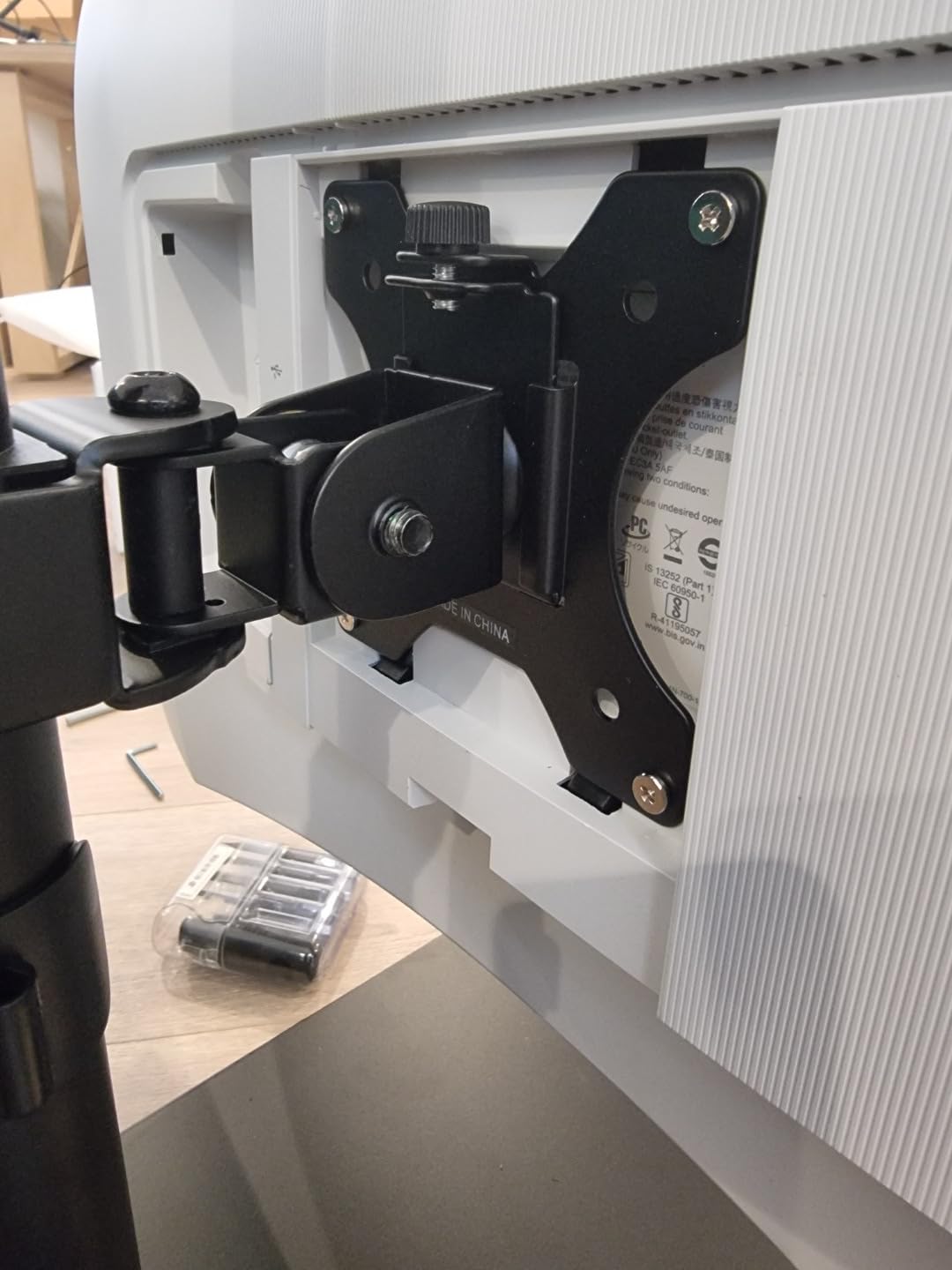
- Sunken VESA recess makes bracket fitting awkward
- Speakers distort on voice
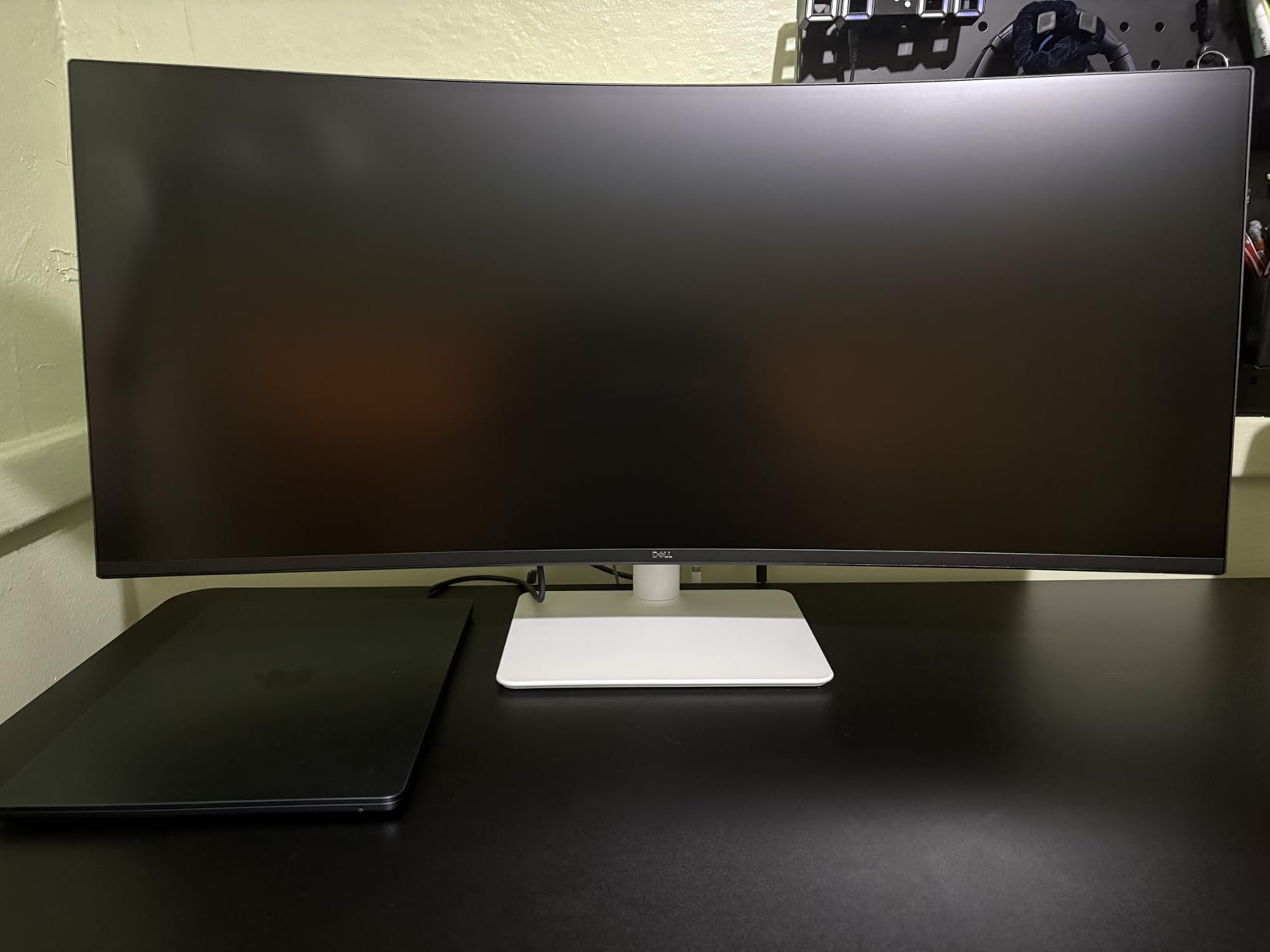
The simplest productivity story in this roundup: one USB-C cable from the laptop, and it charges, sends video, and carries the USB peripherals. Owners describe it as replacing a small dock entirely, which is the strongest financial argument for an ultrawide over a two-monitor setup.
It is also one of the few 34-inch panels here with a stand that actually adjusts. Height and tilt both move, which on a 34-inch panel is the difference between a correct eye line and a sore neck after a few weeks.
Colour figures are strong for this panel at 99% sRGB and 95% DCI-P3, backed by a VA panel with 3000:1 contrast and 120Hz FreeSync Premium at 0.03ms response. That combination suits photo comparison and general media review as well as documents.
The 3440×1440 canvas handles spreadsheets, digital audio timelines and video editing sequences well, and buyers who moved up from a smaller ultrawide describe the extra width as the reason their multi-tab work got faster.
How to set it up with a laptop
Connect the USB-C cable, set the display to its native 3440×1440, and turn on 120Hz over that input. Keyboard, mouse and any external drive run through the four USB ports on the back.
One display, one cable, no dock. If you ever need a second screen, note there is no DisplayPort input, so you would use HDMI for the laptop and daisy-chain differently.
Where it falls short
The port selection is limited compared with Dell’s higher-end hub monitors. The VESA mount recess is sunken, which makes fitting a bracket awkward, and the built-in speakers distort on voice, so they suit a video call rather than music.
It weighs 20.7 pounds, which is worth factoring in if you plan to move it between desks or mount it yourself.
7. INNOCN 49C1R – best port selection on a 32:9 panel
INNOCN 49″ Curved Monitor Ultrawide Gaming 5K2K 120Hz 32:9 QHD 5120 x 1440P Computer Monitor, R1800, 99% sRGB, HDR400, USB Type C, DisplayPort, HDMI, Built-in Speakers, Height/Tilt Adjustable – 49C1R
49 inch 5120x1440 32:9
USB-C 65W plus USB hub and RJ45
400 nits HDR 400
1800R curve
Pros
- 400 nit brightness with HDR 400 for a bright room
- USB-C 65W plus two USB-A a USB-B and an RJ45 port
- Native 5120x1440 over USB-C for Mac mini and MacBook
- 1800R curve is gentle enough for long timeline edits
- PIP and PBP for two sources
Cons
- Integrated speakers sound poor
- Some panels develop vertical lines or flicker after a few months
- Colour needs adjustment out of the box for professional work
The port layout is the story. Two USB-A ports, a USB-B upstream port and an RJ45 Ethernet jack alongside USB-C with 65W power delivery, DisplayPort 1.4 and HDMI 2.1. Very few 49-inch panels give you a wired network drop and a full hub at the same time.
Owners running trading and programming setups use the wired connection to drop a laptop onto the network with a single cable, and report native 5120×1440 output over USB-C with a Mac mini or MacBook.

At 400 nits, this panel is bright enough to stay readable in daylight near a window, and the HDR 400 certification is backed by real output rather than a label. The 1800R curve is the gentlest here, which some editors prefer when a timeline sits in the centre of the screen.
Long-term owners report the panel still working well after a year or more, and the tool-free stand assembly means setup takes minutes rather than an evening.
Three windows on a 32:9 panel
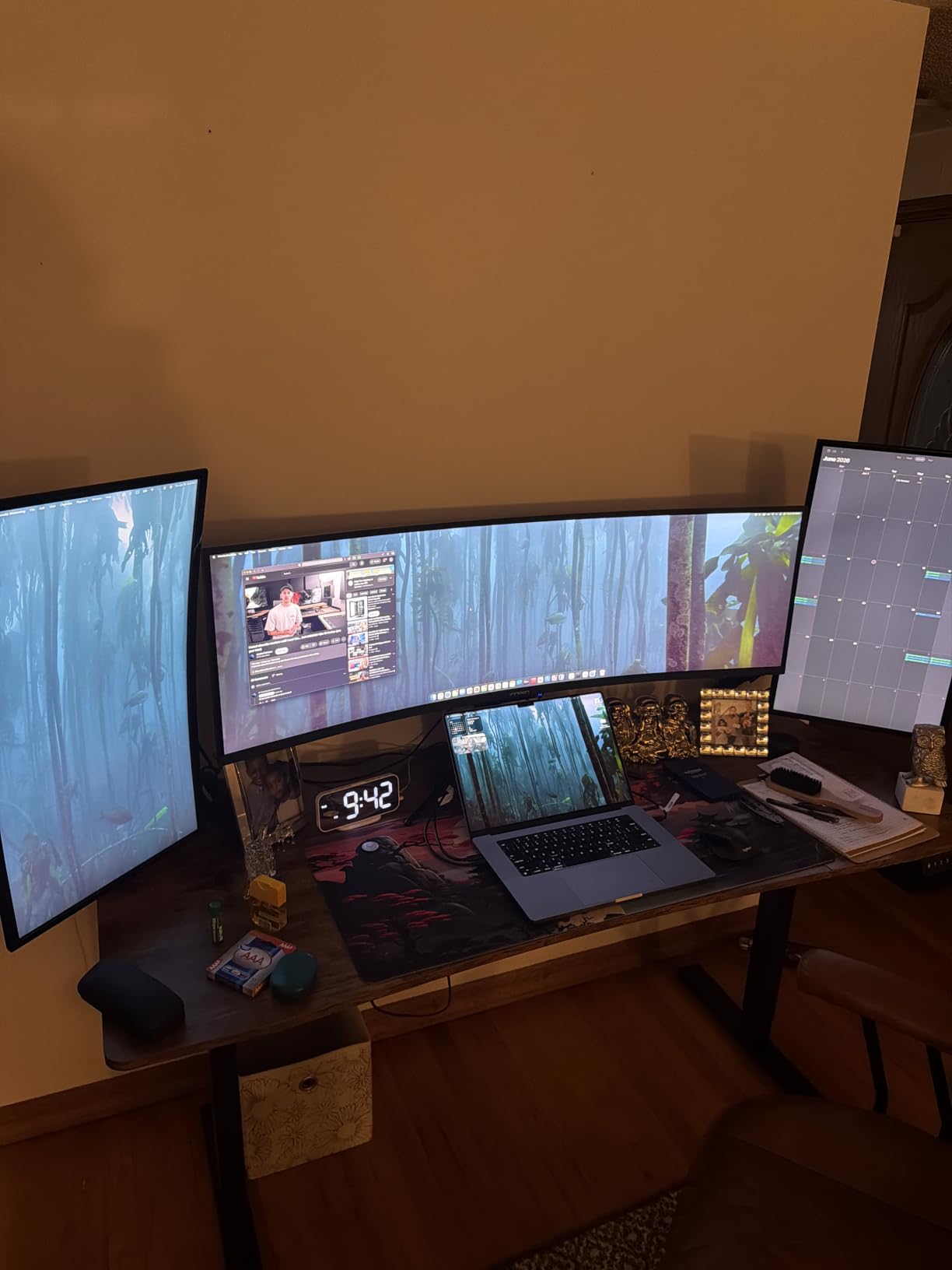
Community owners maximising this panel describe clean three-window layouts as the arrangement they actually use. Three columns of roughly 1700 pixels each is enough for a chat client, a code editor and a browser, and the extra brightness helps in a room that is not fully dimmed.
For two-window work, the 50/50 split gives two full 1440p panes, and PIP/PBP handles a second machine.
Where it falls short
Negative reviews concentrate on early panel defects: vertical lines and flicker appearing after a few months. The built-in speakers are poor, and colour needs adjustment from the defaults before any professional work. Panels this size also need a firm desk; the stand alone is not enough for some desks.
Clarity also drops off when you are not looking straight at it, and on a 49-inch that off-centre viewing is hard to avoid.
8. Sceptre 34-Inch Curved R1500 – budget pick for a three-window desk
Sceptre 34-Inch Curved Ultrawide WQHD Monitor, 3440 x 1440, R1500, Up to 180Hz/165Hz, DisplayPort x2, 100% sRGB, 1ms, Built-in Speakers, Black (C345B-QUT168 Series)
34 inch 3440x1440 21:9
Up to 180Hz with 1ms MPRT
400 cd/m2
FreeSync Premium
Pros
- 3440x1440 canvas at the entry level of this roundup
- Refresh rate headroom well beyond what office work needs
- Downward-facing ports and an easy-reach OSD joystick
- VESA mount and a base screwdriver in the box
- Backcover LED lighting
Cons
- No DisplayPort cable included and HDMI tops out near 100Hz
- HDR mode looks poor under Windows 11
- Isolated reports of panels failing within months
The entry-level way into this roundup, and the specification sheet is better than the price suggests. A 34-inch 3440×1440 panel at up to 180Hz with 1ms MPRT and FreeSync Premium is more than document and spreadsheet work requires, which means you are buying headroom you may never use.
Owners consistently describe sharp image quality, accurate colour at 99% sRGB, and a strong ratio between what you get and what you pay. One reviewer highlights the support team replacing a faulty panel with a working unit within a week.
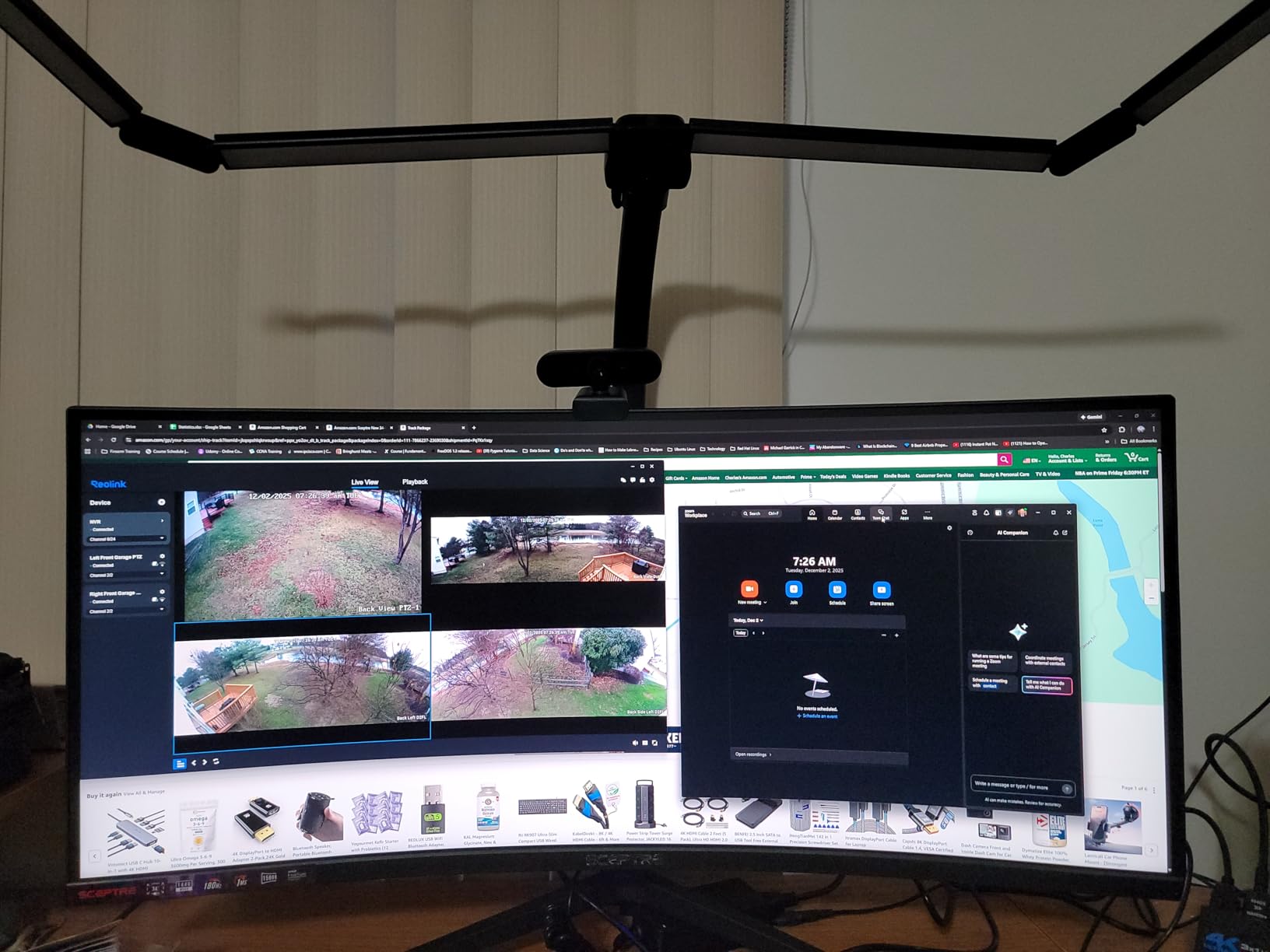
Small practical touches add up here: downward-facing ports for tidier cable routing, an on-screen joystick that is easy to reach, and a matte finish. The box also includes a VESA mount and a base screwdriver, which is unusual at this end of the range.
Brightness is rated at 400 cd/m2 and contrast runs from 1000:1 to 3000:1 depending on mode. PBP and PIP both work for a second source, and the backcover carries LED lighting behind the panel.
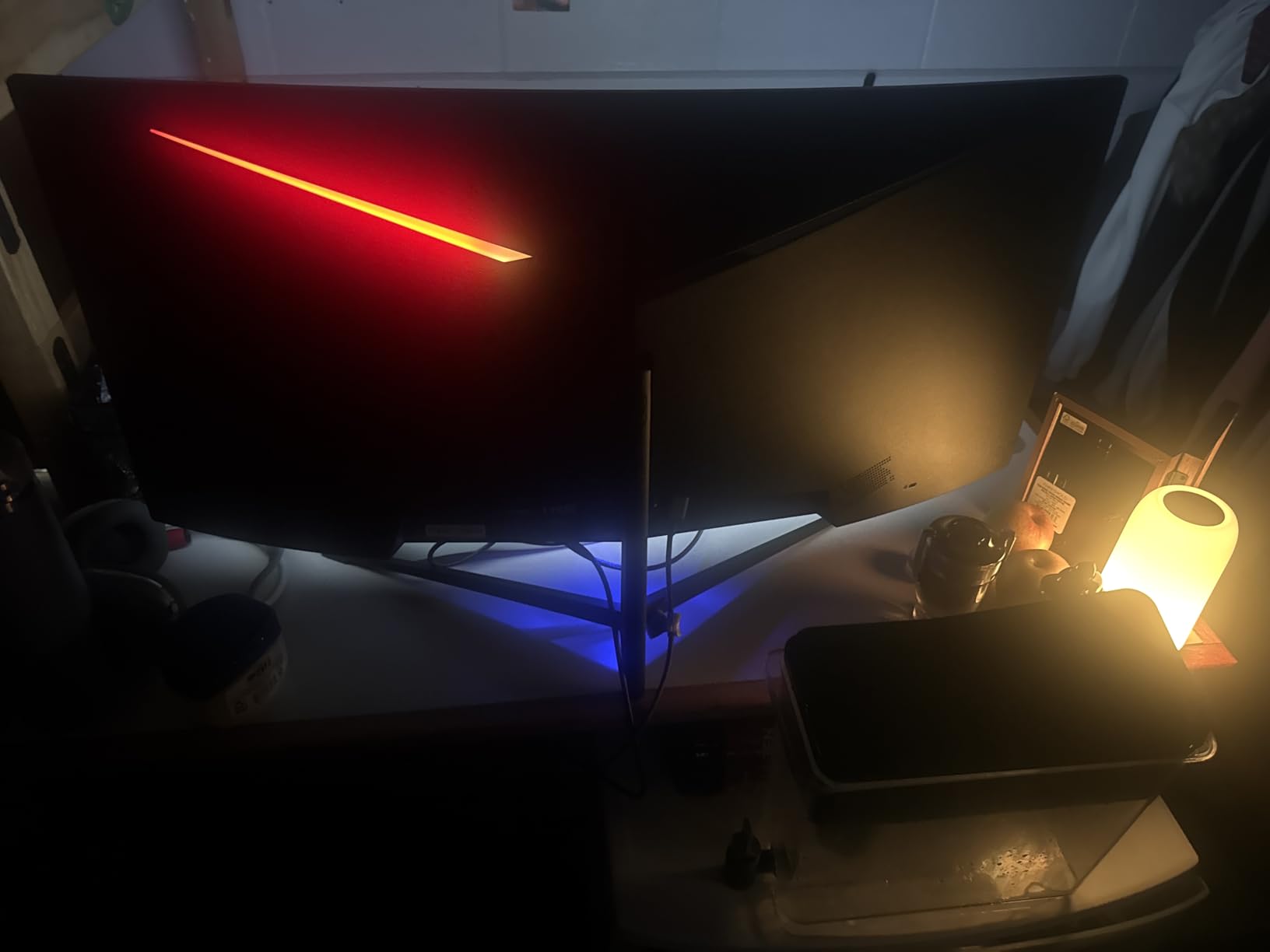
What you get for the entry budget
The 3440×1440 canvas is the reason to buy this rather than a 27-inch monitor. Two near-square columns plus a side strip is a genuine three-window layout, and at this tier nothing else in the roundup gives you that width.
For spreadsheet work, browsing and writing, that is the whole requirement met.
Where it falls short
No DisplayPort cable is included, and the HDMI input tops out around 100Hz, so you need to buy a cable to reach the headline refresh rate. The HDR mode looks poor under Windows 11.
Switching between HDMI inputs through the on-screen menu is not smooth, and a small number of units have failed within months. The built-in speakers are adequate and nothing more.
Ultrawide vs Dual Monitors: Which Setup Wins for Work?
For pure productivity, an ultrawide wins on desk cleanliness. One panel means one power socket, one video cable, one monitor arm and no gap in the middle of your work. Two 27-inch monitors give you the same pixel count in many cases, spread across two stands and two power outlets.
Two monitors win on independent positioning. You can angle each screen toward you, mount one higher than the other, keep a reference document on the secondary display at a different brightness, and watch a video call on one screen while your main work stays untouched on the other. An ultrawide cannot do that.
The bezel is the quiet problem with two monitors. A window snapped across the gap hides content behind the frame, and any dialog that opens on the wrong display pulls focus away from what you were doing. On a single ultrawide, no window ever crosses a seam.
Community opinion is genuinely split here, and it is worth saying so. Plenty of owners who moved to an ultrawide for width went back to two screens because the native snapping on a very wide display did not match how they worked. Others report that the built-in manufacturer snapping software on their ultrawide was poor enough that dual screens felt easier. Test the layout you actually use before committing.
The compromise most people land on: one ultrawide as the primary work surface, and treat any second display as optional rather than a requirement. If you need a second machine visible at the same time, pick a panel with PIP or PBP rather than buying another monitor.
How to Split an Ultrawide Monitor Across Windows
Yes, you can split an ultrawide into two screens. Press Win+Z to open Windows Snap Layouts, and a 21:9 panel offers two near-square halves while a 32:9 panel offers two full 1440p quadrants side by side. Most models also add manufacturer tiling software, and PIP gives you a true second desktop from a separate input.
Windows Snap Layouts
Snap Layouts is built into Windows 10 and Windows 11 and works on any ultrawide. Hover the maximise button in the top right of a window, or press Win+Z, and a set of layout options appears. On a 21:9 panel you get two halves and a thirds arrangement; on a 32:9 panel you also get the option of two wide columns plus a small strip.
The thirds arrangement on a 32:9 panel is the one people use most. Three columns of about 1700 pixels each is wide enough for a code editor, a terminal and a browser at the same time, which is the layout most owners describe as their daily arrangement.
Dell Display Manager and HP Display Center
Manufacturer utilities give you more control than Snap Layouts. Dell Display Manager lets you build custom partitions and push a single image across the whole panel in a set ratio, and it can manage several Dell screens together. HP Display Center does the equivalent job on HP hardware, with predefined tiling zones and input switching in the same tool.
These are worth installing whichever brand you buy, because Snap Layouts snaps to fixed zones while these tools let you define your own.
macOS Stage Manager and third-party tiling
macOS Stage Manager keeps recent apps along one edge of an ultrawide and leaves the rest of the screen for your current window. It is less granular than Snap Layouts but it works well if your multitasking is switching between apps rather than running three permanently.
Power users on Windows and Linux often use a third-party tiling utility instead, or a dedicated tiling window manager on Linux. One honest warning from developer communities: a tiling window manager with workspace bindings can stop you using an ultrawide altogether, because each display change rebinds your workspaces. Check your workflow before committing.
Ultrawide Monitor Buying Guide for Office Work
21:9 vs 32:9: which ratio to buy
Buy 21:9 at 34 inches unless you have a specific reason not to. It gives you two columns at about 1720 pixels each, which is wider than a 16:9 monitor without demanding a 46-inch-wide panel or a deep desk.
Buy 32:9 at 49 inches when you regularly run three windows, work with two machines at once, or want an exact stand-in for two 27-inch 1440p monitors. The 50/50 split gives two full 2560×1440 panes with no bezel between them, which is the whole point of the class.
Resolution and what 3440×1440 actually is
3440×1440 is UWQHD, Ultra Wide QHD. It is not 2K and it is not 4K, and the marketing labels vary. The pixel count is 4.95 million, close to a 1440p monitor but with 1000 more pixels of width, which is the entire benefit.
3440 divided by 1440 is 2.39 to 1, which is the ratio marketed as 21:9. Meanwhile 5120×1440 is 3.55 to 1, sold as 32:9. If you see 2560×1080, that is an older and much less dense 21:9 panel; avoid it for office work, because text at native scaling is uncomfortably large and pixel density is poor.
Text legibility and scaling
This is the most common complaint about any ultrawide, and it is a scaling question rather than a screen quality question. A 34-inch 3440×1440 panel shows Windows at roughly 100 to 125 percent scaling. A 49-inch 5120×1440 panel usually needs 125 percent, and text renders smaller at native scale.
If text feels small on a 49-inch, raise the scaling rather than blaming the panel. The complaint from owners that high-resolution ultrawides make fine print hard to read is really a complaint about running at native scale and not adjusting.
One more variable: gloss. Two 49-inch panels here use a glossy finish, which adds reflections that make small text harder to read in a bright room. Matte finishes are the safer choice for a desk near a window.
KVM, PIP and PBP
A KVM switch shares one keyboard and mouse between two computers and moves control with the selected input. It matters if you run a laptop and a desktop on the same desk, and only one of the eight monitors here has one documented.
Picture-in-picture puts a second source in a small corner. Picture-by-picture gives two sources equal space at full panel resolution, which on a 49-inch means two genuine 1440p workspaces. If you plan to run two machines at once, PBP is the feature to check before buying, not PIP.
USB-C docking and the one-cable argument
A USB-C port with 65W or 90W of power delivery can carry video and charge a laptop on one cable. On a 34-inch panel that replaces a small dock entirely, which is the clearest money argument for an ultrawide over two monitors: you are removing hardware, not just adding a bigger screen.
Check the wattage. Several monitors here carry 65W, which charges most thin laptops but not a workstation-class machine under load. If your laptop draws more, you still need a separate charger.
Panel technology and OLED burn-in for office use
Every panel in this roundup is an LCD rather than an OLED, and for office work that is a defensible choice. The VA-type panels used here give deeper contrast than a standard IPS panel, and several of them use a matte finish that does not pick up reflections.
The alternative is OLED or QD-OLED, which delivers perfect blacks and far better colour. The reason none appear here is specific to the multitasking use case: a market ticker, a terminal or a spreadsheet toolbar is exactly the static content that causes uneven wear over years, so burn-in coverage is the question to ask before buying one for an always-on desk.
If you want OLED for its colour and contrast, check the burn-in warranty length and look for a presence sensor that dims the panel when you leave your desk. For a programmer running static code all day, the panel type is worth thinking about before the refresh rate.
Our picks for monitors for colour grading cover the panel types that matter when accuracy outranks response time.
Desk depth and viewing distance
The desk is the most common practical problem with large ultrawides, and it is not solved by any setting. Get a tape measure before you buy a 49-inch panel.
A 34-inch panel needs a desk roughly 60cm deep and about 70cm of viewing distance. A 38-inch needs 70cm of depth. A 49-inch needs a desk at least 80cm deep and a viewing distance of 90 to 100cm, which means pushing your chair back or raising the screen and looking slightly down.
If your desk is under 80cm deep, a 49-inch will force constant head-turning. Sit at it in a shop first if you can.
Curvature
Curvature is measured as an R number, and the lower the number the more curved the panel. The panels here sit at 1500R or 1800R, which is gentle enough for office work because the curve is not strong enough to distort a straight line in a spreadsheet.
A 1000R curve is aggressive and pulls the edges noticeably toward you. For long document sessions, 1800R or higher is the more comfortable choice.
Frequently Asked Questions
Can I split my ultrawide into two screens?
Yes. Press Win+Z in Windows to open Snap Layouts, and a 21:9 panel splits into two near-square halves while a 32:9 panel splits into two full 1440p panes. For a second computer, use PIP or PBP, which many models support. Manufacturer tools such as Dell Display Manager and HP Display Center give you custom partition sizes.
What resolution should I use for an ultrawide monitor?
For a 34-inch panel, 3440×1440 at 100 to 125 percent scaling. For a 49-inch 32:9 panel, 5120×1440 at 125 percent. Avoid 2560×1080, which is too sparse for office work. Always set the operating system to the panel’s native resolution before adjusting text size in applications.
Is 3440×1440 considered 2K or 4K?
Neither. 3440×1440 is called UWQHD or Ultra Wide QHD. It has about 4.95 million pixels, similar to a 1440p monitor but with 1000 extra pixels of width. Because 1440 divides into 1440 by 1440 twice, the result is marketed as a 21:9 ratio rather than a resolution tier.
Is a 49 inch monitor good for productivity?
A 49-inch 32:9 monitor gives the most window real estate of any single panel, and a 50/50 split gives two full 2560×1440 workspaces. The trade-offs are that text renders smaller at native scale, the panel needs about 90cm of viewing distance, and it needs a desk at least 80cm deep.
What is the best software for splitting my monitor?
Windows Snap Layouts via Win+Z is the best starting point and works on any ultrawide. Dell Display Manager and HP Display Center add custom partitions and input switching for those brands. On macOS, Stage Manager handles app switching. Windows tiling utilities give the most control if you want keyboard-driven layouts.
What type of monitor is best for productivity?
An IPS or VA-type LCD between 34 and 40 inches with USB-C power delivery, and a KVM if you run two machines. These panels stay stable with static content such as spreadsheets and terminals. OLED panels give better colour and contrast but carry no burn-in warranty, which matters for always-on office screens.
How to Choose the Right Ultrawide for Your Desk
If you run three windows and want the most proven option, take the SANSUI 34-inch. If you want a true two-monitor replacement and your desk is deep enough, the CRUA 49-inch gives you two 1440p panes at the value tier of that class.
If your desk is under 80cm deep, stay at 34 inches. If you dock a laptop every day, the Dell S3425DW handles it on one cable. If you run two machines, the Deco Gear 49-inch has the KVM switch the others lack.
Whatever you choose, set Windows to the native resolution first, then raise the scaling until text is comfortable before you change anything else. That one step fixes most of the ultrawide complaints people bring to us.