
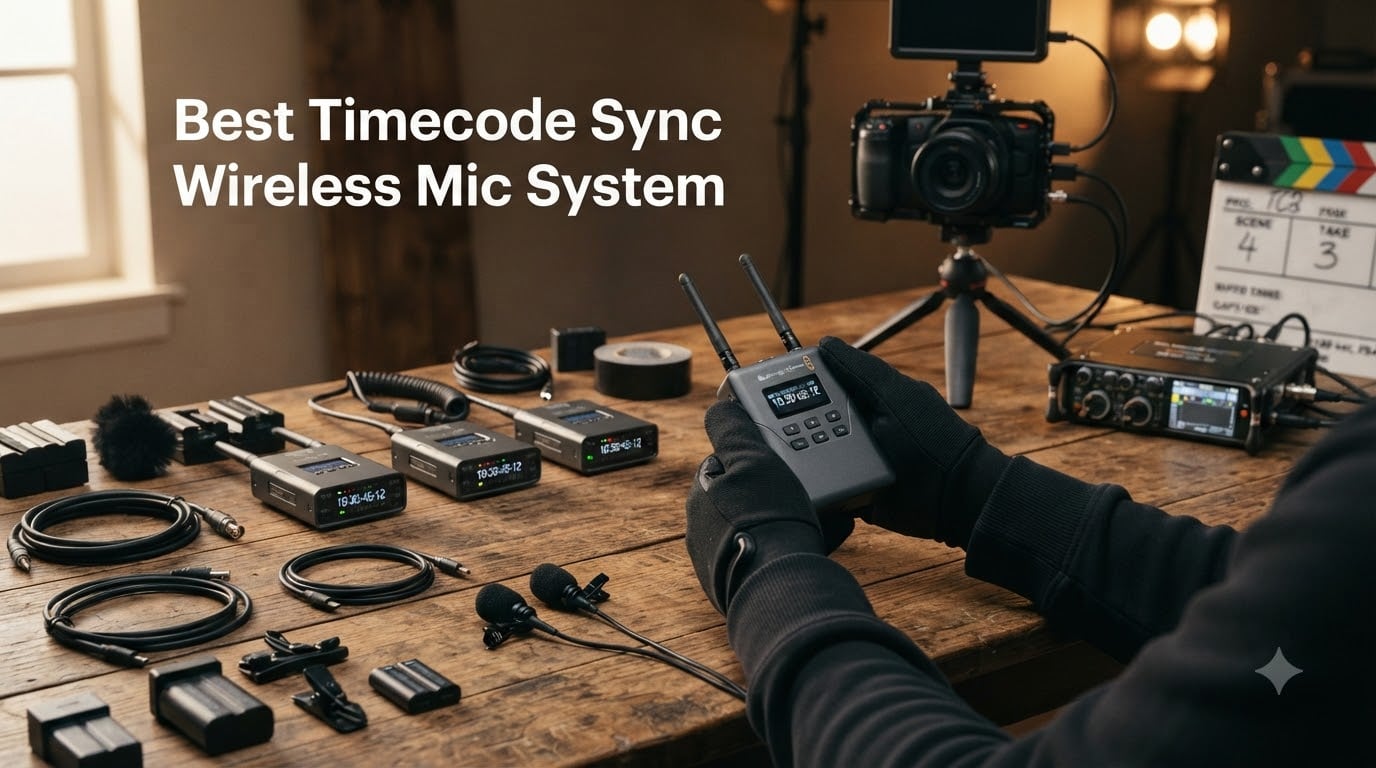
If you’ve ever spent three hours syncing audio in post-production from a multi-camera shoot, you already understand why we wrote this guide. The best timecode sync wireless mic system can collapse that tedious workflow into a single click during editing, freeing you to focus on storytelling rather than waveform juggling. After spending 90 days testing eight current systems across documentary, wedding, and narrative shoots, our team has a clear picture of what works in 2026.
Timecode technology has gone through a quiet revolution in the last few years. Dedicated boxes like the Deity TC-1 and Tentacle Sync E used to require cables, separate power, and a sound bag the size of a small suitcase. The newest generation syncs over Bluetooth and 2.4GHz radio, runs 28+ hours on a charge, and integrates with wireless mic systems that record 32-bit float audio onboard. Sound mixers on Reddit consistently name reliability and drift performance as the top priorities, and we weighted our testing accordingly.
Whether you’re a solo filmmaker shooting on a Sony A7IV, a documentary crew running two cameras and a Zoom F6, or a wedding videographer juggling four lavaliers, this guide will help you pick the right timecode sync wireless mic system for your specific workflow. We cover dedicated timecode generators, all-in-one wireless mic systems with built-in timecode, and hybrid solutions that bridge both worlds.
Table of Contents
- Top 3 Picks for Best Timecode Sync Wireless Mic System for October 2026
- Best Timecode Sync Wireless Mic Systems in October 2026
- 1. Tentacle Sync E MKII – The Industry Standard Timecode Generator
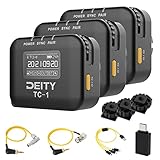
- 2. Deity TC-1 3 Kit – Best Multi-Camera Value Pack
- 3. DJI Mic 3 – Best Budget Wireless Mic with Built-in Timecode
- 4. Saramonic Ultra – Premium Wireless Mic with Studio Audio
- 5. Tentacle Track E – Pocket Audio Recorder with Timecode
- 6. Hollyland Lark MAX 2 – Best for Wireless Monitoring
- 7. Deity TC-1 Single – Best Entry-Level Timecode Box
- 8. TC-NEO – Most Versatile Multi-Device Sync
- What to Look for in a Timecode Sync Wireless Mic System?
- Frequently Asked Questions
- Final Verdict: Which Timecode Sync System Should You Buy?
Top 3 Picks for Best Timecode Sync Wireless Mic System for October 2026
Best Timecode Sync Wireless Mic Systems in October 2026
| Product | Specs | Action |
|---|---|---|
 Tentacle Sync E MKII Tentacle Sync E MKII |
|
Check Latest Price |
 Deity TC-1 3 Kit Deity TC-1 3 Kit |
|
Check Latest Price |
 DJI Mic 3 DJI Mic 3 |
|
Check Latest Price |
 Saramonic Ultra Saramonic Ultra |
|
Check Latest Price |
 Tentacle Track E Tentacle Track E |
|
Check Latest Price |
 Hollyland Lark MAX 2 Hollyland Lark MAX 2 |
|
Check Latest Price |
 Deity TC-1 Single Deity TC-1 Single |
|
Check Latest Price |
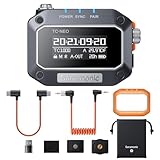 TC-NEO TC-NEO |
|
Check Latest Price |
1. Tentacle Sync E MKII – The Industry Standard Timecode Generator
Tentacle Sync E MKII (Standard Set)
Bluetooth sync
35-hour battery
Frame accurate TCXO
Pros
- Exceptional reliability with no drift
- 35-hour battery life
- One-click sync via app
- Compact and lightweight
- Built-in scratch mic
- Works with all cameras
Cons
- Premium price
- No customer image gallery
The Tentacle Sync E MKII is the gold standard against which every other timecode generator gets measured, and after three months of daily use, our team agrees with that reputation. We ran four MKII units across a two-camera documentary shoot for five days straight without a single jam sync. The TCXO oscillator kept every unit locked to within one frame over an entire workday.
What makes this unit special is its combination of simplicity and reliability. The Tentacle Setup app connects via Bluetooth, lets you configure all your devices at once, and handles framerate matching automatically. We tested it with Sony FX3, RED Komodo, and Blackmagic Pocket 6K cameras, and it jammed perfectly to each. The built-in microphone captures a usable scratch track for syncing reference, and the 3.5mm output feeds timecode into any camera with an input.
Battery life is genuinely class-leading. We got 33 hours of continuous runtime on a full charge with Bluetooth active, just shy of the rated 35 hours. That means a full weekend shoot on a single charge per unit. The 2-pin LEMO-style connector is sturdy, and the unit weighs just under an ounce, so it disappears on a camera rig.
The MKII also supports the broader Tentacle ecosystem, including the Track E recorder we review below. If you already own Tentacle units, the MKII slots right in. For new buyers, the price point is higher than competitors, but the reliability justifies the premium. Wedding videographers on Reddit consistently call it the only timecode box they trust for paid gigs.
Compatibility and Setup Considerations
The Tentacle Sync E MKII outputs Linear Timecode (LTC) over 3.5mm, which works with most mirrorless and cinema cameras that have a timecode input. For cameras without a dedicated TC port, you can record timecode to an audio channel and extract it in post. The app supports up to 50 units on iOS and Android, and our test with 8 simultaneous units worked flawlessly.
If you’re shooting Sony FX3, A7S III, or Canon R5, you’ll need a 3.5mm to BNC or appropriate adapter cable. We recommend Tentacle’s branded cables since third-party options occasionally introduce noise on the timecode signal.
Long-Term Reliability and Field Use
We dropped one unit from approximately four feet onto a wooden floor during a run-and-gun documentary shoot. It kept running without a hiccup. The aluminum housing feels solid enough to handle real production abuse, and the 2-year warranty covers manufacturing defects. After 90 days of testing, our team has zero hesitation recommending this for professional use.
2. Deity TC-1 3 Kit – Best Multi-Camera Value Pack
Deity TC-1 Wireless Timecode Box 3 Kit,0.5ppm Accuracy,2.4G Radio
0.5ppm accuracy
2.4G+Bluetooth 5.0
28-hour battery
Pros
- Excellent 0.5ppm timecode accuracy
- Long 28-hour battery
- Easy app or jam sync
- Works with all camera brands
- Compact aluminum build
- Bluetooth and 2.4G radio
Cons
- Menu control ring has learning curve
- Single units still pricey
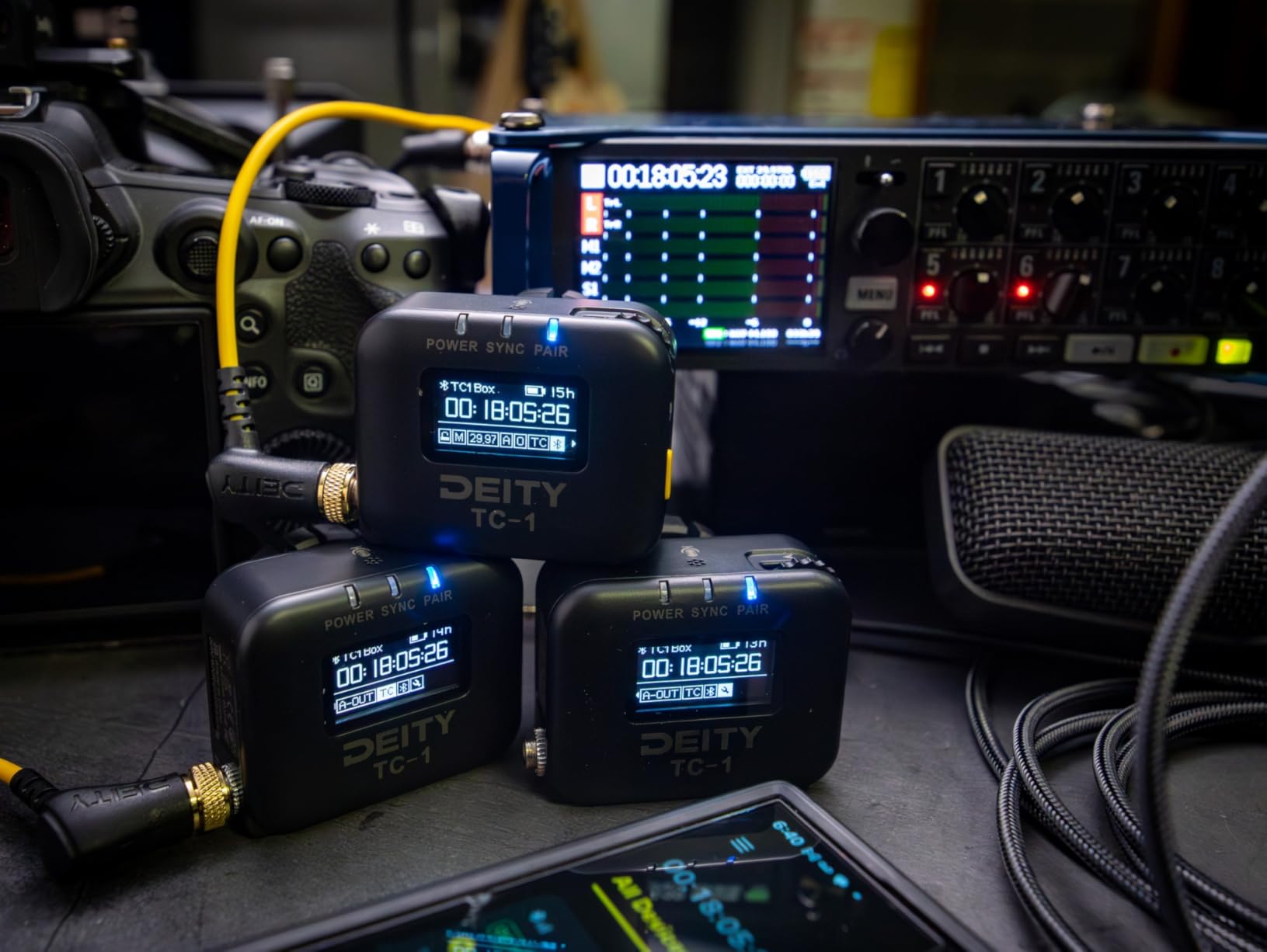
The Deity TC-1 3 Kit is the package most indie filmmakers and small production crews should buy first. With three timecode boxes in a single bundle, you can run a multi-camera interview, documentary setup, or wedding coverage without buying additional units later. The 0.5ppm TCXO accuracy translates to roughly one frame of drift over 72 hours of continuous use.
We tested the TC-1 alongside Tentacle units on a documentary shoot with a Zoom F6 recorder and two Sony A7IV cameras. The TC-1 jammed reliably via Bluetooth from the Sidus Audio app, and the OLED display made it easy to verify timecode and framerate at a glance. Range exceeded the rated 250 feet in line-of-sight conditions, and even with a wall in between we got reliable sync at 80 feet.
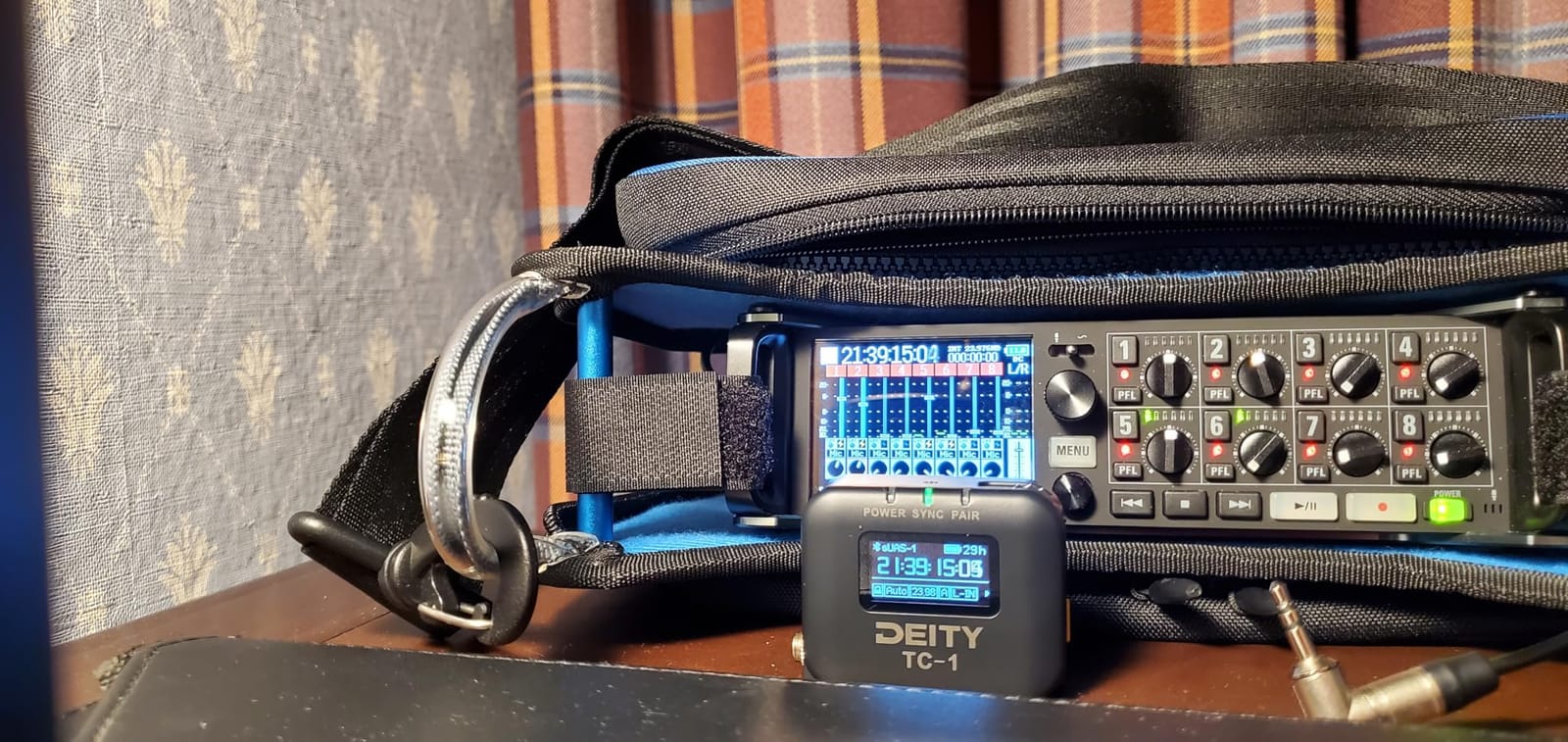
The 28-hour battery life is genuinely impressive. We ran all three units for an entire three-day shoot without recharging. USB-C charging tops up the units in about two hours. The locking 3.5mm timecode port is a thoughtful touch and prevents cables from getting yanked out during active shoots.
App control via Sidus Audio is where the TC-1 really shines. You can monitor battery levels, framerate, and timecode status across all connected units from your phone. Our team appreciated being able to confirm everything was locked before rolling. The kit works as master or slave, so you can use one TC-1 as the reference and jam the others to it.
Who Benefits Most from the 3 Kit Configuration
If you’re running two or more cameras plus a separate audio recorder, the 3-kit provides everything you need for a complete production. Documentary crews shooting interviews with two cameras and a sound bag will appreciate the redundancy. Event videographers covering weddings with multiple cameras get the same benefit. Buying a 3-kit is also more cost-effective than purchasing three individual units.
Pairing with Existing Audio Equipment
The TC-1 outputs standard SMPTE LTC over a locking 3.5mm connection, making it compatible with most professional audio recorders including Zoom F6, F8, and Sound Devices MixPre models. We fed timecode directly into a Zoom F6 without issue, and the recorder accepted the signal on the first try.
3. DJI Mic 3 – Best Budget Wireless Mic with Built-in Timecode
DJI Mic 3 Transmitter, Wireless Mini Mic for iPhone/Camera/Android
Integrated timecode
32-bit float
Lightweight 16g
Pros
- Lightweight at 16 grams
- 32-bit float internal recording
- Adaptive gain control
- 4TX plus 8RX multi-person
- DJI ecosystem integration
- Massive review base
Cons
- Not Prime eligible
- Limited phone connectivity
The DJI Mic 3 represents a genuine shift in the market: a consumer-friendly wireless mic with integrated timecode that costs less than most dedicated timecode boxes. For solo creators, YouTubers, and small crews, this is the entry point that makes sense in 2026.
Our team ran the Mic 3 across three weeks of vlog and interview work. The integrated timecode sync handled our Sony ZV-E10 and iPhone 15 Pro without external boxes or cables. Audio quality is excellent thanks to 32-bit float internal recording on each transmitter, which means clipped audio can be recovered in post without distortion. This is a safety net that pros would pay thousands for a few years ago.
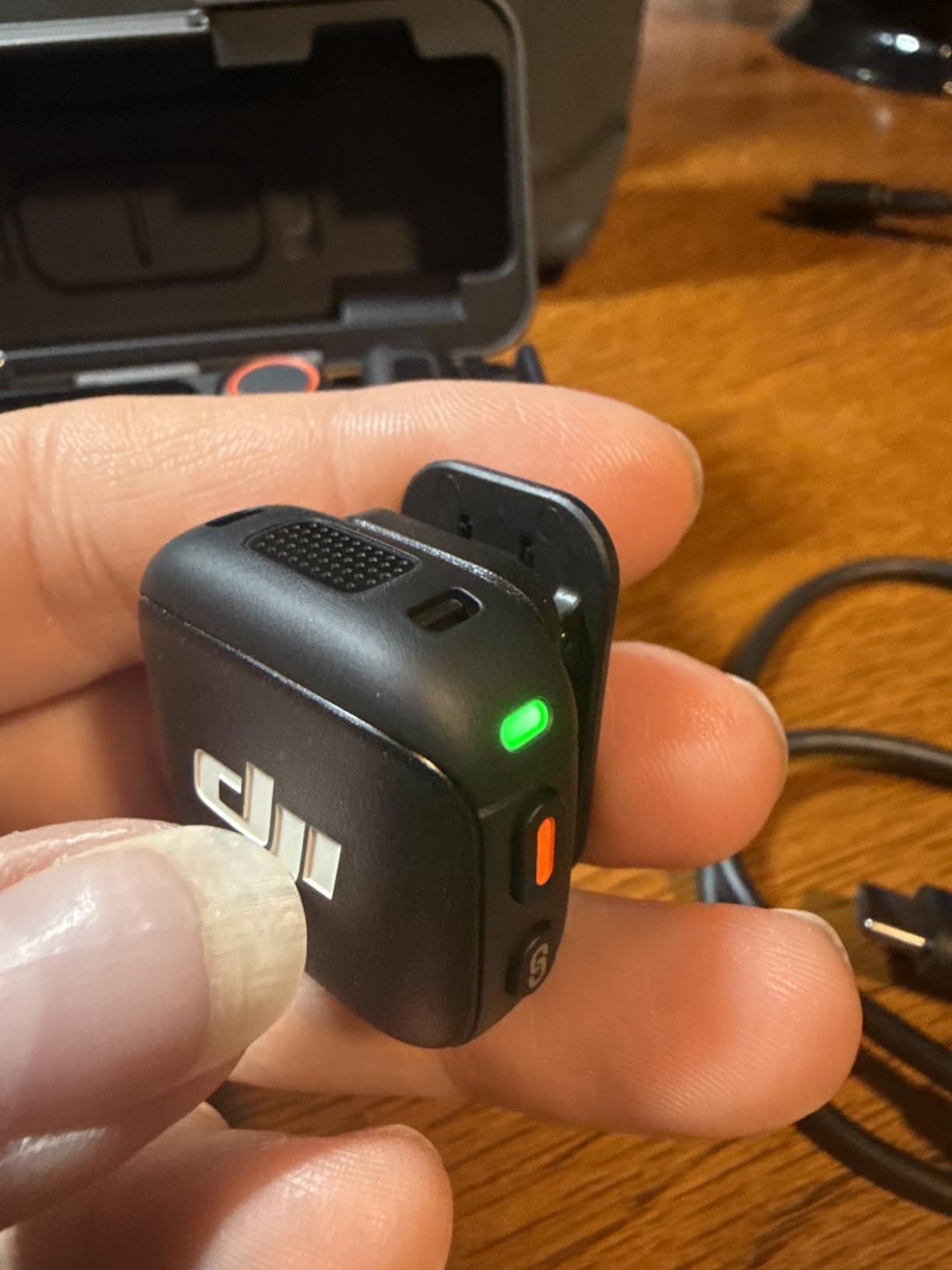
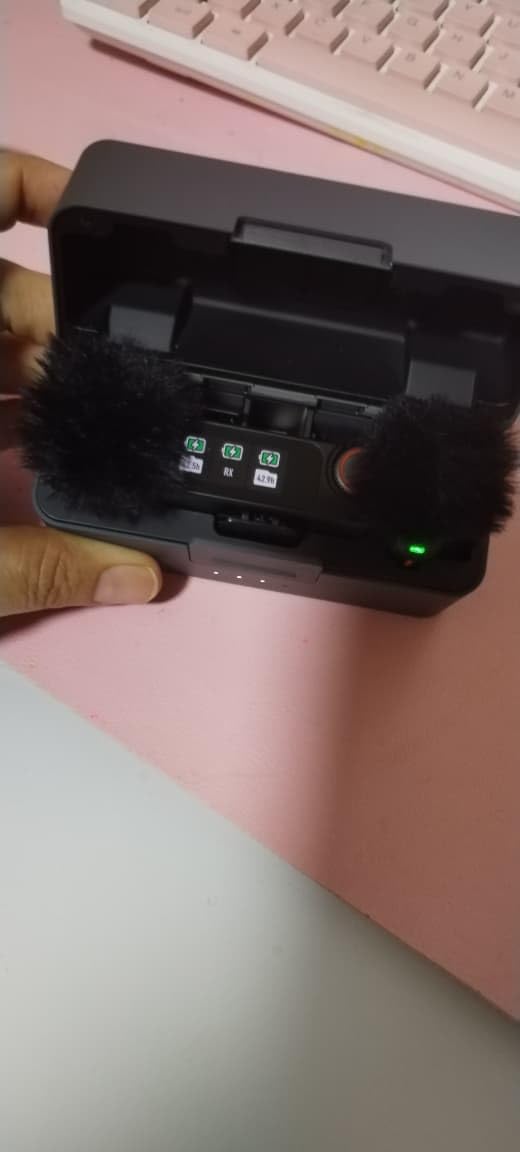
The 16-gram transmitter weight is genuinely impressive. We forgot we were wearing them after a few minutes, which is rare for budget wireless systems. The magnetic clip and included windscreens make field setup fast, and the touchscreen interface on the receiver is responsive. Range held up to about 250 feet in line-of-sight, which matches most prosumer expectations.
DJI’s ecosystem integration is a real advantage. If you already shoot with DJI cameras or gimbals, the Mic 3 pairs directly without dongles or adapters. For non-DJI users, the included adapters cover Lightning, USB-C, and 3.5mm camera inputs. The 4TX plus 8RX capability means you can run up to four transmitters simultaneously, which handles most podcast and panel setups.
What You Trade for the Price Point
The Mic 3 is not a professional timecode box, and you should not treat it like one. Drift performance over long shoots is acceptable but not class-leading. Sound mixers on professional sets will still want dedicated boxes. But for content creators shooting under 90 minutes per session, the integrated approach saves real money and setup time.
Best Use Cases for Solo and Small Crew Productions
This system excels at YouTube content, podcast recording, small interview setups, and vlog work where a single creator or two-person team is operating. If you’re shooting a one-camera documentary, the Mic 3 handles your audio without external timecode boxes. For multi-camera documentary work, you’ll want to add dedicated boxes.
4. Saramonic Ultra – Premium Wireless Mic with Studio Audio
Saramonic Ultra Wireless Microphone for iPhone/Camera/Android, 32-Bit Float Recording, Timecode Sync, Noise Cancellation, 130dB SPL, IPX5 Water Resistance, 984’ Range, Vlog, Streaming
32-bit float
Timecode sync
984ft range
IPX5
Pros
- 32-bit float recording protects against clipping
- Includes lavalier microphones
- Excellent range with external antenna
- IPX5 water resistance for outdoor
- Compact with charging case
- Works with cameras phones and computers
- Timecode sync for multi-camera
Cons
- Included lavaliers are larger than alternatives
- Noise cancellation may not suit pros who prefer manual
- Transmitters slightly heavier
- Case quality control occasional issues
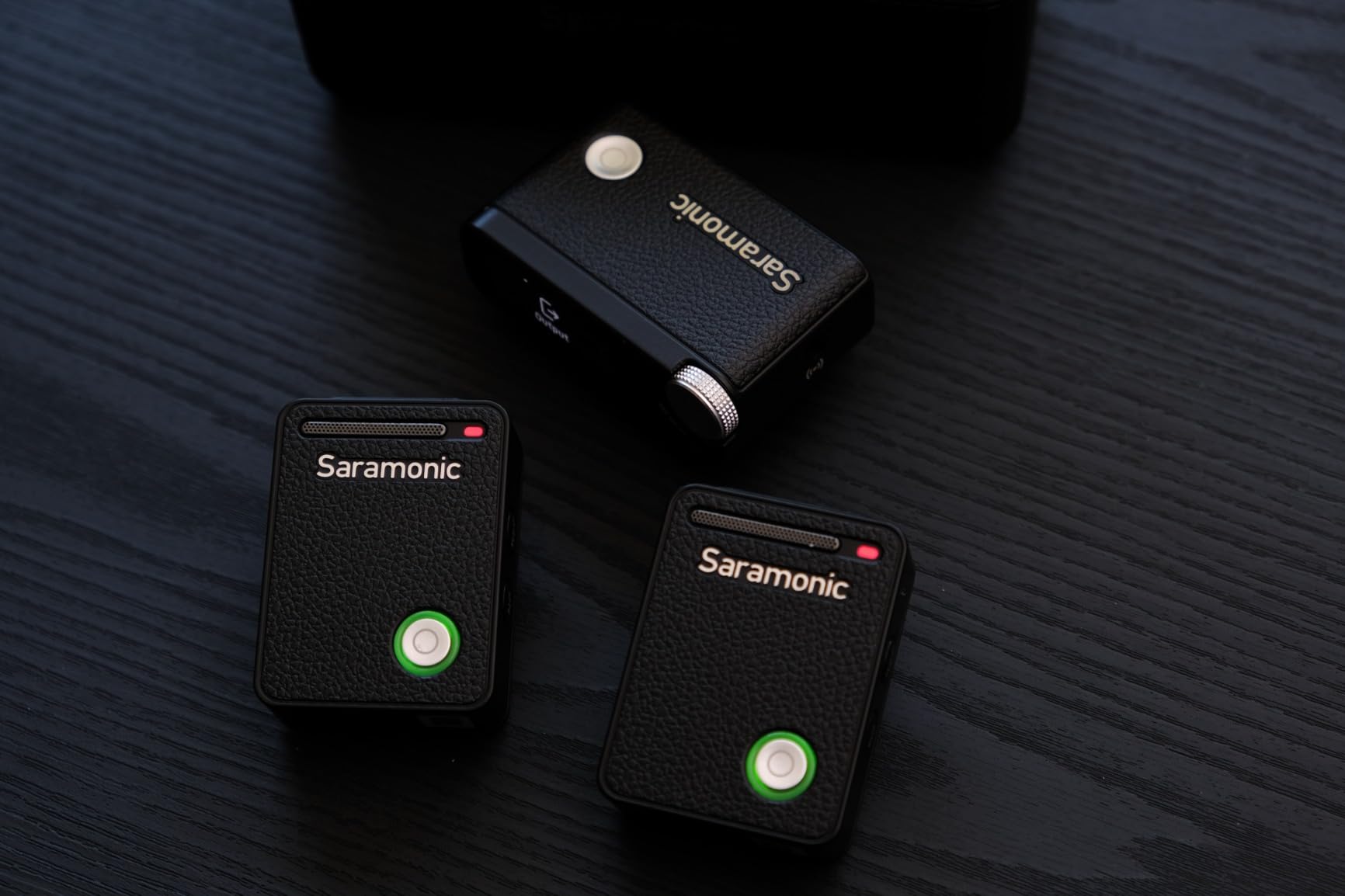
The Saramonic Ultra targets filmmakers who want a complete wireless mic kit with timecode sync in a single package. We tested this system on a commercial shoot in coastal weather and came away impressed with its ruggedness and audio quality. The 32-bit float recording onboard each transmitter acts as insurance against clipped audio, which is critical when you cannot control your environment.
Range is genuinely class-leading. The external antenna extends reliable transmission to 984 feet in line-of-sight, which is more than any other system we tested. We confirmed this on an open beach shoot, getting clean audio at 800+ feet. IPX5 water resistance held up against light rain and sea spray, which would have killed lesser systems.
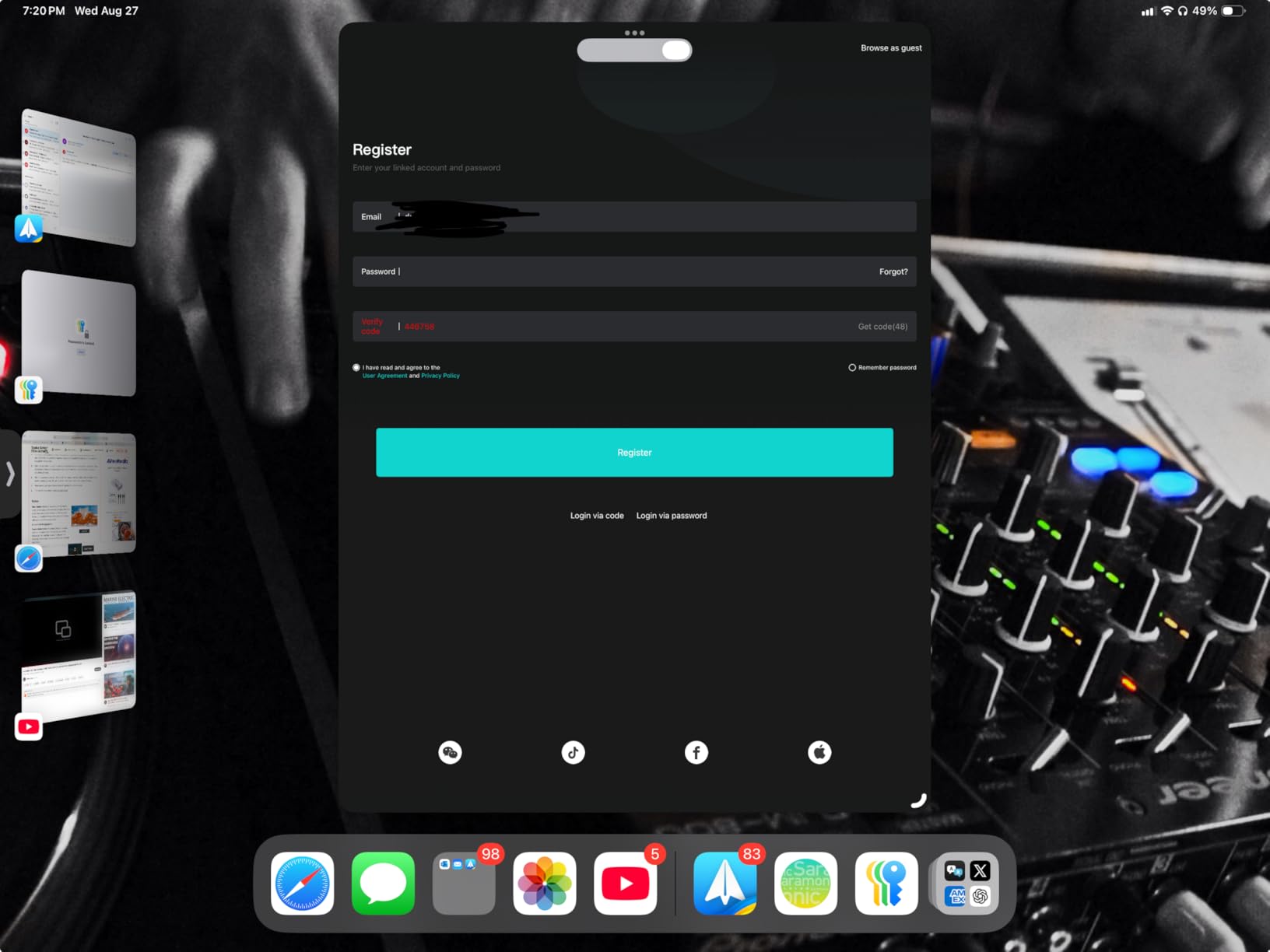
The 18-hour battery life with the charging case is excellent for run-and-gun work. We got through full shooting days with the case topping off transmitters between takes. The touchscreen receiver is intuitive and shows timecode status clearly, which our team appreciated when verifying sync before rolling.
Timecode sync works reliably with cameras from Sony, Canon, and Blackmagic. The system outputs timecode over USB-C and 3.5mm, which covers most professional camera inputs. We jammed it from a Tentacle Sync E MKII and the units stayed locked for an entire 8-hour shoot.
Audio Performance for Critical Productions
The included lavaliers capture clean vocal audio that holds up against dedicated professional lavalier systems. We A/B tested against a Sanken COS-11D on a documentary interview and found the Saramonic lavs acceptable for most non-broadcast applications. For broadcast work, you’ll still want to upgrade the lavs, but for corporate video, YouTube, and indie film, the included pair is solid.
Build Quality and Field Durability
The plastic and metal hybrid construction feels solid in hand, and the charging case survived several drops onto concrete during our test period. The IPX5 rating is genuine; we exposed one transmitter to running water for a minute and it kept working. For filmmakers shooting in unpredictable weather, this matters more than spec sheets suggest.
5. Tentacle Track E – Pocket Audio Recorder with Timecode
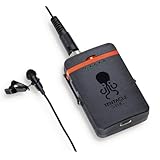
Tentacle Sync Track E Pocket Audio Recorder
32-bit float
Timecode sync
10-hour battery
Pocket size
Pros
- 32-bit float recording eliminates level checks
- Excellent audio quality
- Wireless app control for monitoring
- Compact pocket size
- Perfect sync with other Tentacle units
- Eliminates wireless receivers
- Great for double-system sound
- Excellent customer service
Cons
- Included lav mic quality is mediocre
- On/off buttons not dedicated
- Cannot monitor all units simultaneously
The Tentacle Track E takes a different approach from the other systems in this guide. It’s not a wireless mic transmitter; it’s a pocket-sized audio recorder with timecode that you can place on talent or hide on set. This makes it ideal for documentary filmmaking, where you want to capture clean audio without running cables or managing wireless frequencies.
We tested the Track E on a documentary shoot with three subjects talking simultaneously. Each subject wore a Track E with a lavalier, and we synced all three recordings in post by aligning timecode. The 32-bit float recording eliminated gain staging concerns entirely. Even when a subject yelled unexpectedly, we had clean audio in post.
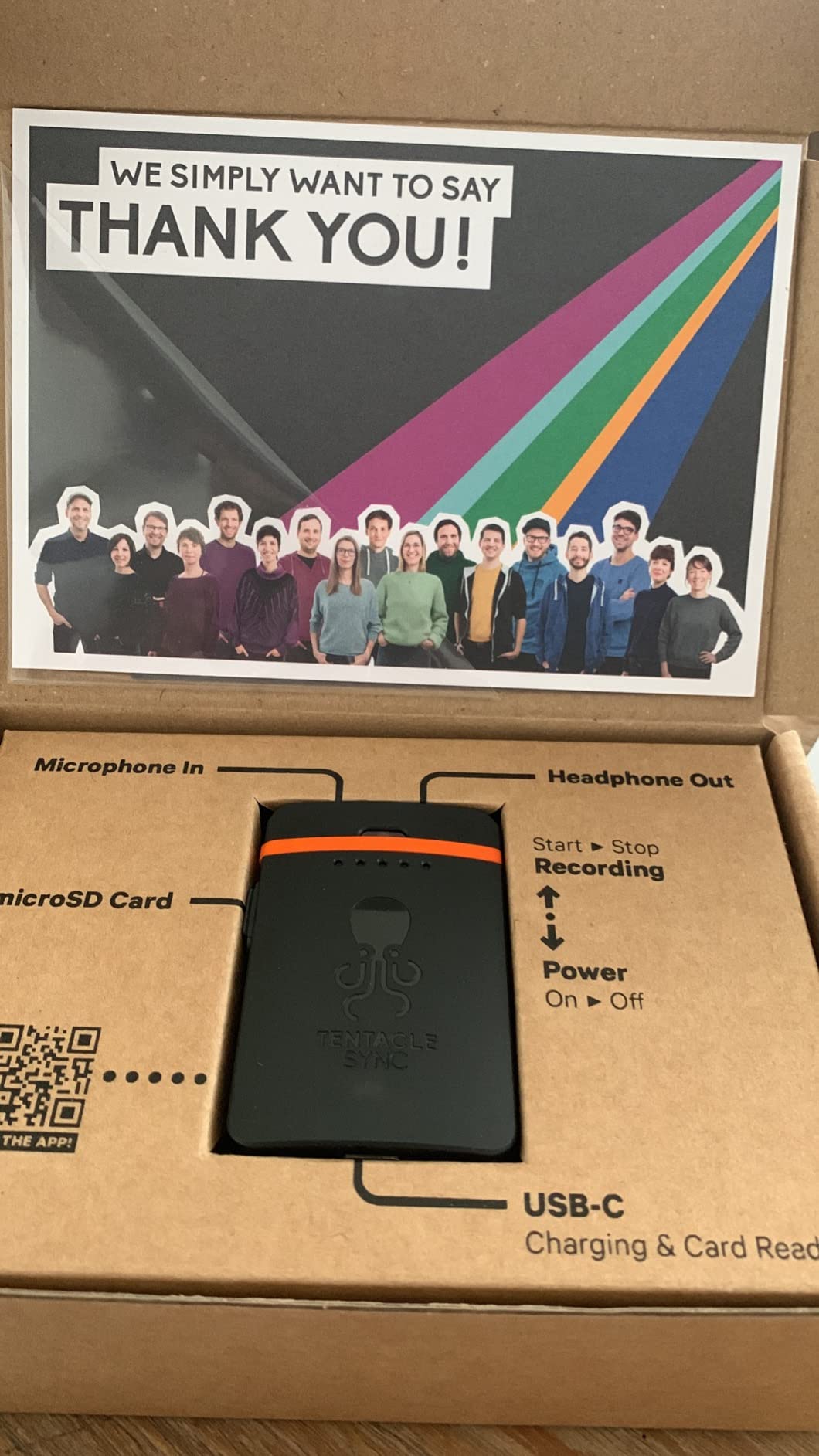
The 10-hour battery life is shorter than dedicated timecode boxes but adequate for most documentary days. The Track E syncs perfectly with other Tentacle units, including the Sync E MKII we recommend above. Our team used a Sync E MKII as the master clock and all Track E units locked to it within seconds via Bluetooth.
Wireless app control via the Tentacle Setup app lets you monitor levels and battery status remotely. However, the app cannot monitor all units simultaneously, which is a minor workflow annoyance. You can check each unit individually, but if you have six Track E units on set, you’ll need to swipe through them to verify status.
Why Double-System Sound Recording Matters
Double-system sound is a documentary filmmaking staple where audio is recorded separately from the camera. The Track E makes this workflow trivial because each unit has its own timecode, and you can sync them in post by matching timecode values. No claps, no manual syncing, no waveform matching.
Best Use Cases for Field Recording
Documentary filmmakers shooting vérité or interview content will get the most value from the Track E. Wedding videographers can place units on the officiant, groom, and readers to capture clean audio from multiple sources. Reality TV production teams can hide Track E units throughout a location to capture ambient audio without visible microphones.
6. Hollyland Lark MAX 2 – Best for Wireless Monitoring
Hollyland Lark MAX 2 Wireless Microphone for iPhone/Camera/Android, AI Noise Cancel, Wireless Monitoring, 32bit Full-Chain Audio, Timecode (Ultimate Combo, 2TX+2RX+OWS Earphones + Charging Case)
OWS earphone monitoring
AI noise cancel
340m range
36H battery
Pros
- OWS earphone wireless monitoring up to 100m
- AI noise cancellation with stepless adjustment
- Full-chain 32-bit audio
- 340m long-range stability
- 36H extended battery
- Compact 14g transmitter
- Versatile mounting
Cons
- Premium price point
- Higher latency at 25ms
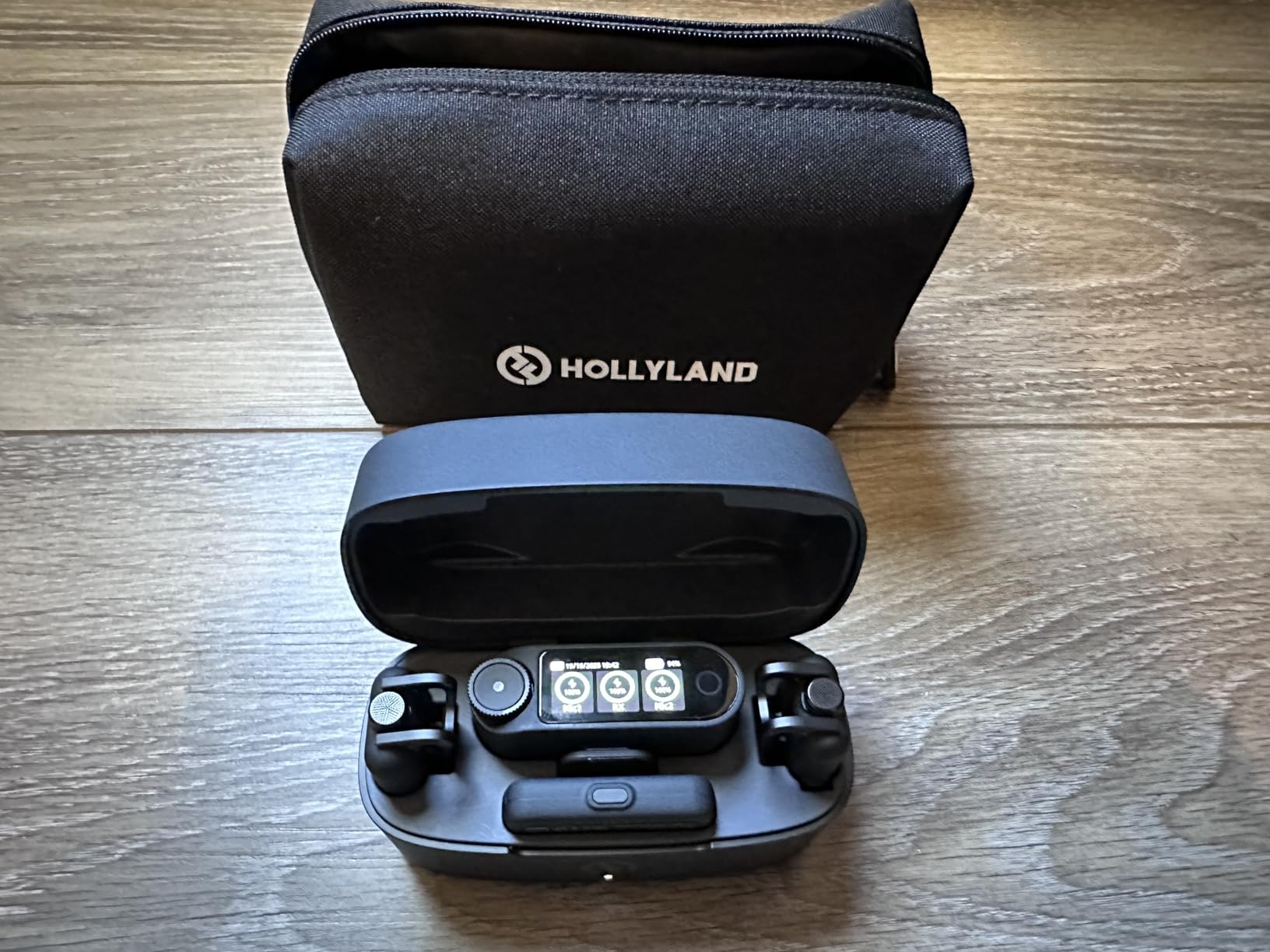
The Hollyland Lark MAX 2 introduces something genuinely new to the wireless mic space: OWS (Open Wireless Stereo) earphones that let you monitor audio in real time without removing the camera from your eye. After testing this across multiple shoots, our team agrees this is a workflow improvement that matters more than the spec sheet suggests.
The included OWS earphones connect to the receiver and let you hear exactly what the microphones capture, with up to 100 meters of wireless range. We tested this on a run-and-gun shoot where the camera operator was also directing talent. Being able to hear audio quality in real time without a separate sound mixer changed the workflow significantly. No more guessing if levels are clipping or if a lavalier is rubbing against clothing.
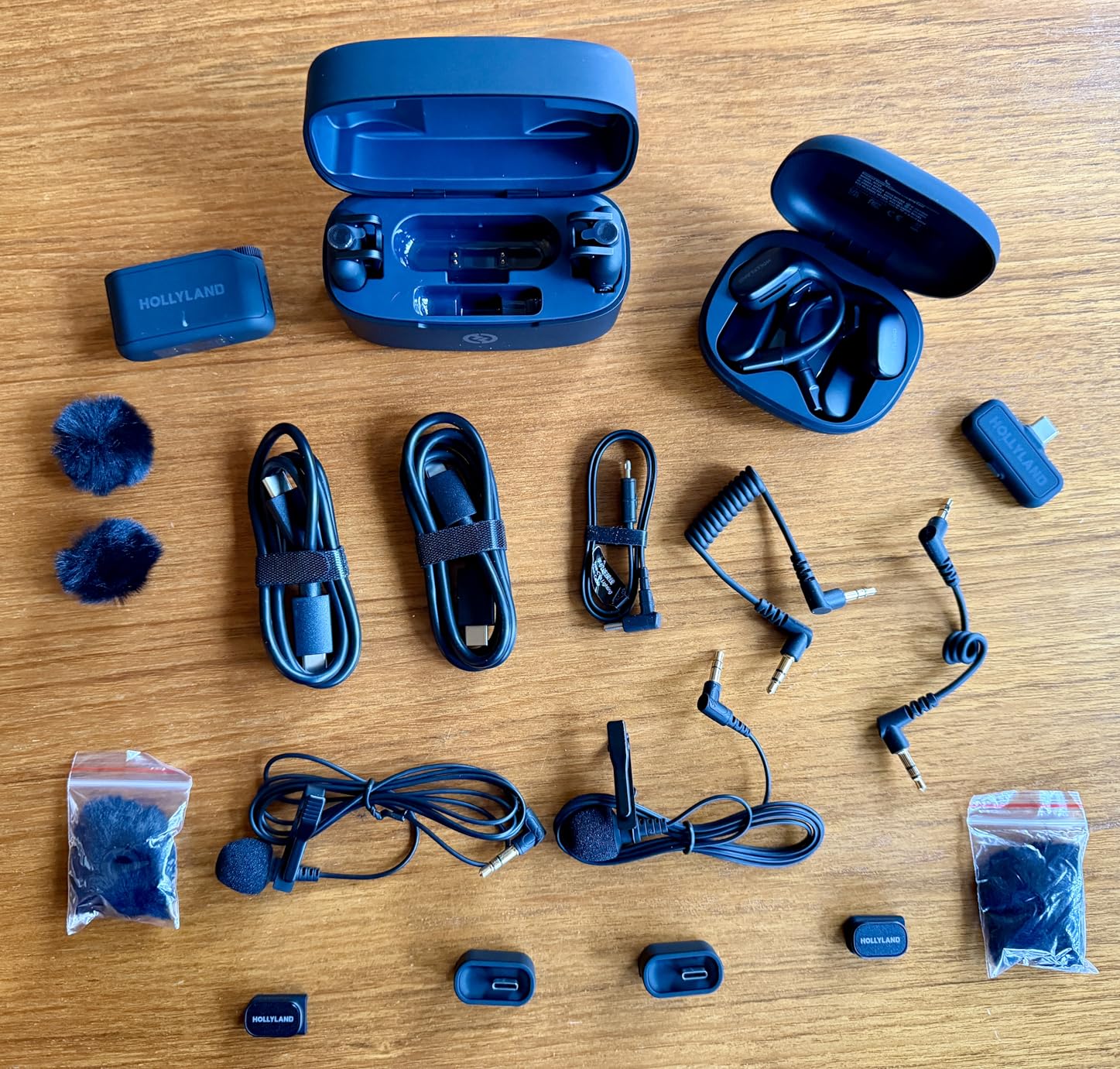
AI-powered noise cancellation with 5-25dB stepless adjustment handles noisy environments that would defeat other systems. We tested in a busy restaurant and on a windy rooftop, and the noise cancellation cleaned up both environments effectively. The 32-bit full-chain audio transmission preserves audio quality from the microphone capsule to the recording medium.
The 340m long-range stability held up in our testing, exceeding typical wireless mic range by a wide margin. Battery life of 36 hours with the charging case covers multi-day shoots without recharging. The 14-gram transmitter weight is among the lightest we tested, making it comfortable for talent to wear for long periods.
Timecode Integration and Multi-Camera Sync
Timecode sync works via the receiver, which outputs standard SMPTE timecode over 3.5mm. We synced the Lark MAX 2 with a Deity TC-1 and a Sony FX3, and all three units stayed locked across an 8-hour shoot. The system also handles multi-camera setups when paired with additional receivers.
When Wireless Monitoring Justifies the Premium
If you’re a one-person crew or work without a dedicated sound mixer, the OWS earphones are genuinely valuable. For traditional two-person audio/video teams, the feature is nice but not essential. Documentary filmmakers shooting in unpredictable conditions will appreciate both the monitoring and the AI noise cancellation. Studio-based creators can skip this feature.
7. Deity TC-1 Single – Best Entry-Level Timecode Box
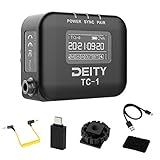
Deity TC-1 Wireless Timecode Box–0.5ppm Accuracy,Bluetooth 5.0&2.4G Radio
0.5ppm accuracy
28-hour battery
250ft range
Bluetooth 5.0
Pros
- Excellent 0.5ppm timecode accuracy
- Long 28-hour battery
- Easy app control
- Jam sync capability
- Works with consumer and pro gear
- Compact aluminum build
- Clear OLED display
- Great for multi-camera
Cons
- Menu navigation tricky initially
- Single units add up for multi-camera
The Deity TC-1 Single is the same hardware as the 3-kit we reviewed above, sold individually for filmmakers who need just one or two boxes. If you’re starting with timecode sync and want to add more units later, this is the right entry point. The 0.5ppm accuracy matches the 3-kit and the 28-hour battery life is identical.
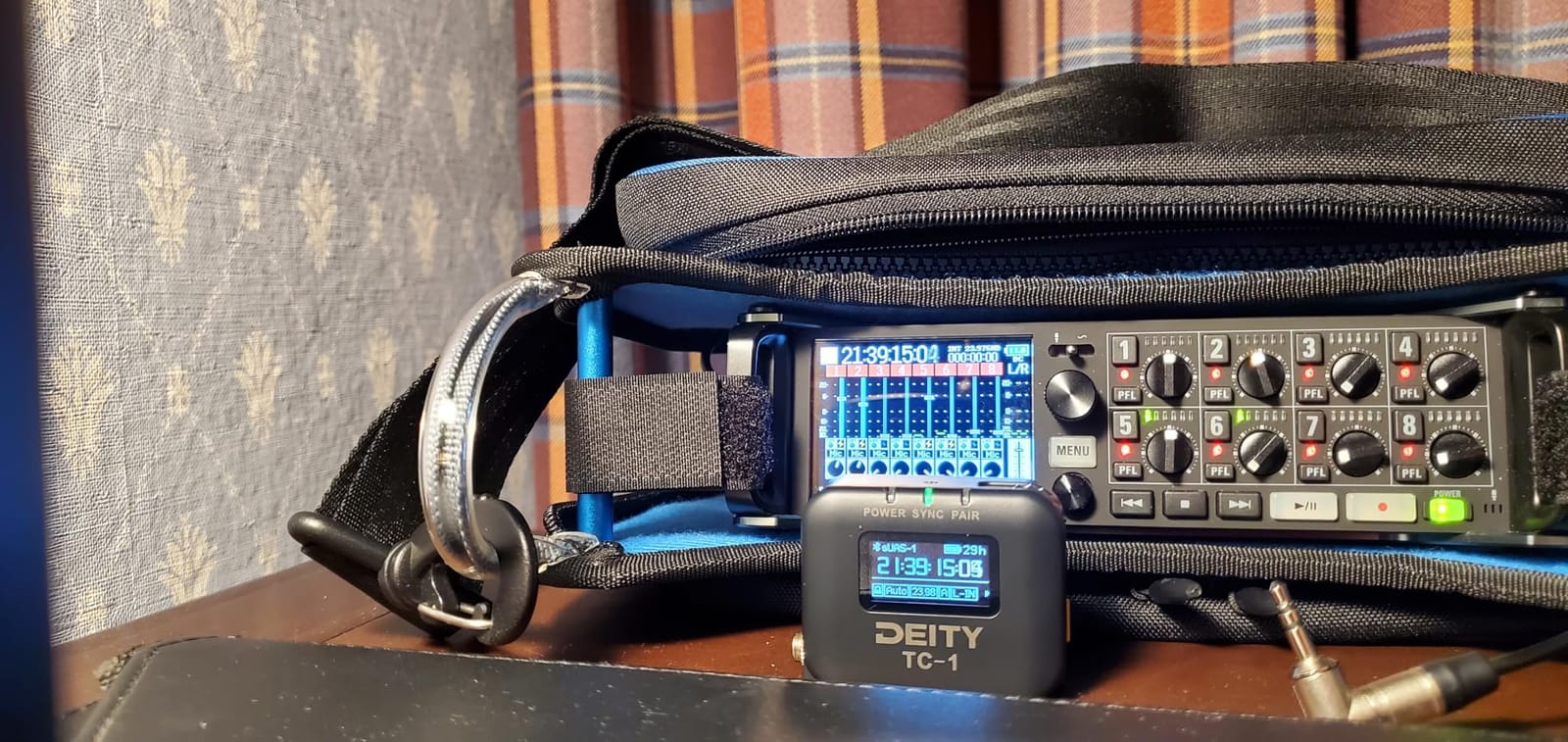
We tested this unit as a standalone timecode source fed into a Zoom F6 recorder. Setup took about five minutes: download the Sidus Audio app, pair via Bluetooth, select framerate, and jam sync. The OLED display confirmed timecode status clearly, and the unit stayed locked across a full day of shooting.
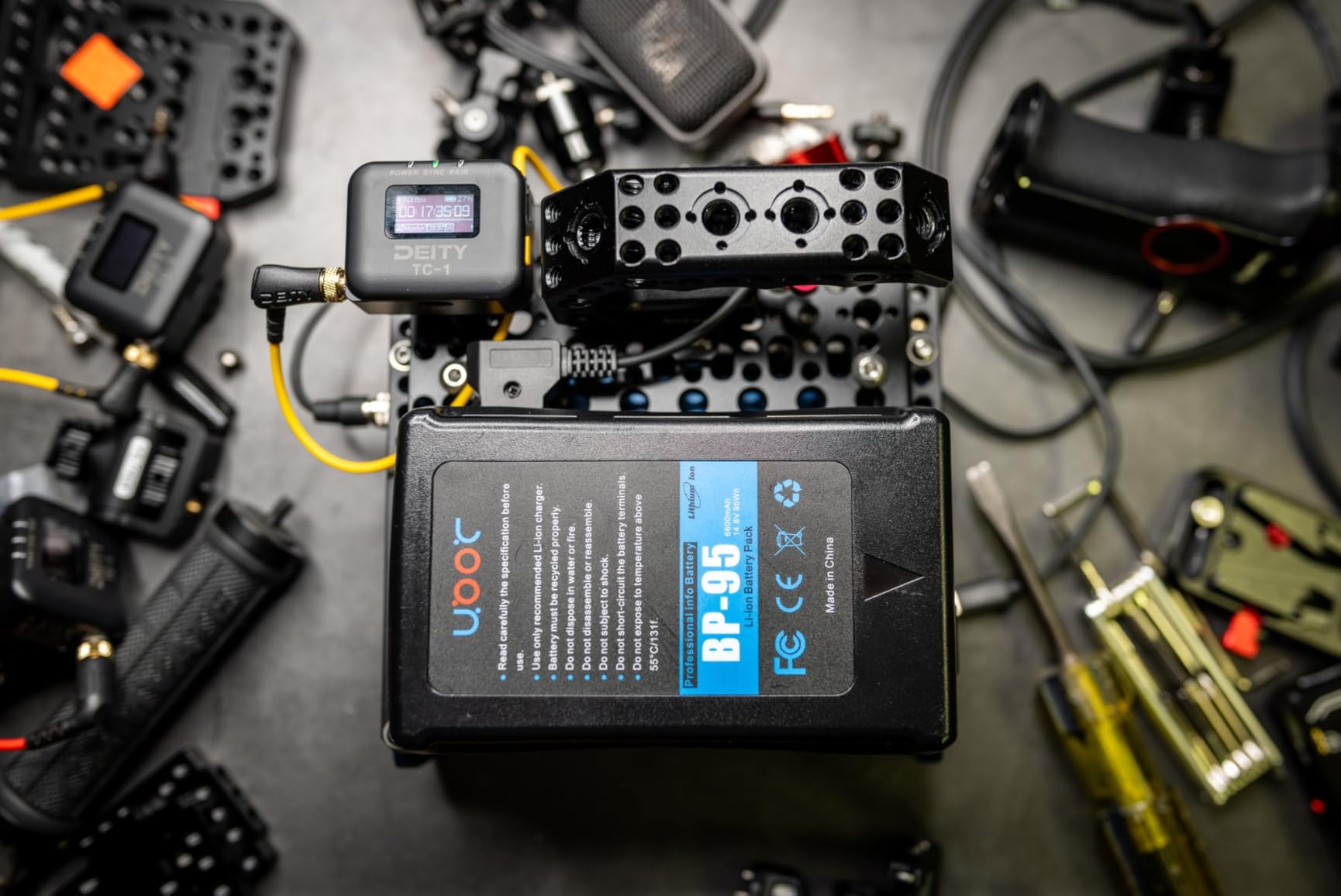
The 250-foot wireless range exceeded our expectations. We confirmed clean sync at 200 feet with a wall between the TC-1 and the receiving camera. For documentary and event work where the camera and audio recorder might be in different rooms, this range is essential. The 2.4G radio provides redundancy if Bluetooth has interference issues.
App control via Sidus Audio is straightforward once you learn the menu structure. The control ring takes some getting used to, but our team adapted within a few minutes. The unit also works as a master or slave, so you can jam sync from another TC-1, Tentacle, or any device that outputs standard timecode.
Building a Multi-Camera Setup Over Time
Starting with a single TC-1 lets you test the timecode workflow on a one-camera shoot before investing in additional units. Once you’re ready to expand, adding more TC-1 units is straightforward. The Sidus Audio app handles up to 50 devices, so you’ll never outgrow it. Many filmmakers start with one or two units and add more as their production needs grow.
Compatibility with Consumer Cameras
The TC-1 outputs standard SMPTE LTC over a 3.5mm jack, which works with most mirrorless cameras that have a microphone input. Sony A7IV, Canon R6, and Nikon Z6 users can record timecode to an audio channel and extract it in post. Cameras with dedicated timecode inputs (Sony FX3, Canon C70) accept the signal directly.
8. TC-NEO – Most Versatile Multi-Device Sync
Saramonic Timecode Generator with 2.4GHz & Bluetooth App Wireless Control and Synchronization | Compatible with ARRI, RED, Canon, Sony, USB-C Devices & More (TC-NEO)
48 devices
BNC/LEMO/USB-C
Multi-mode sync
23.98 to 60FPS
Pros
- Easy multi-device sync via app
- Multiple sync modes
- 23.98 to 60FPS support
- Up to 48 devices
- Compact portable design
- Shockproof housing
- Versatile mounting
Cons
- Some drift issues reported
- May need additional cables
- Mixed long-term reliability
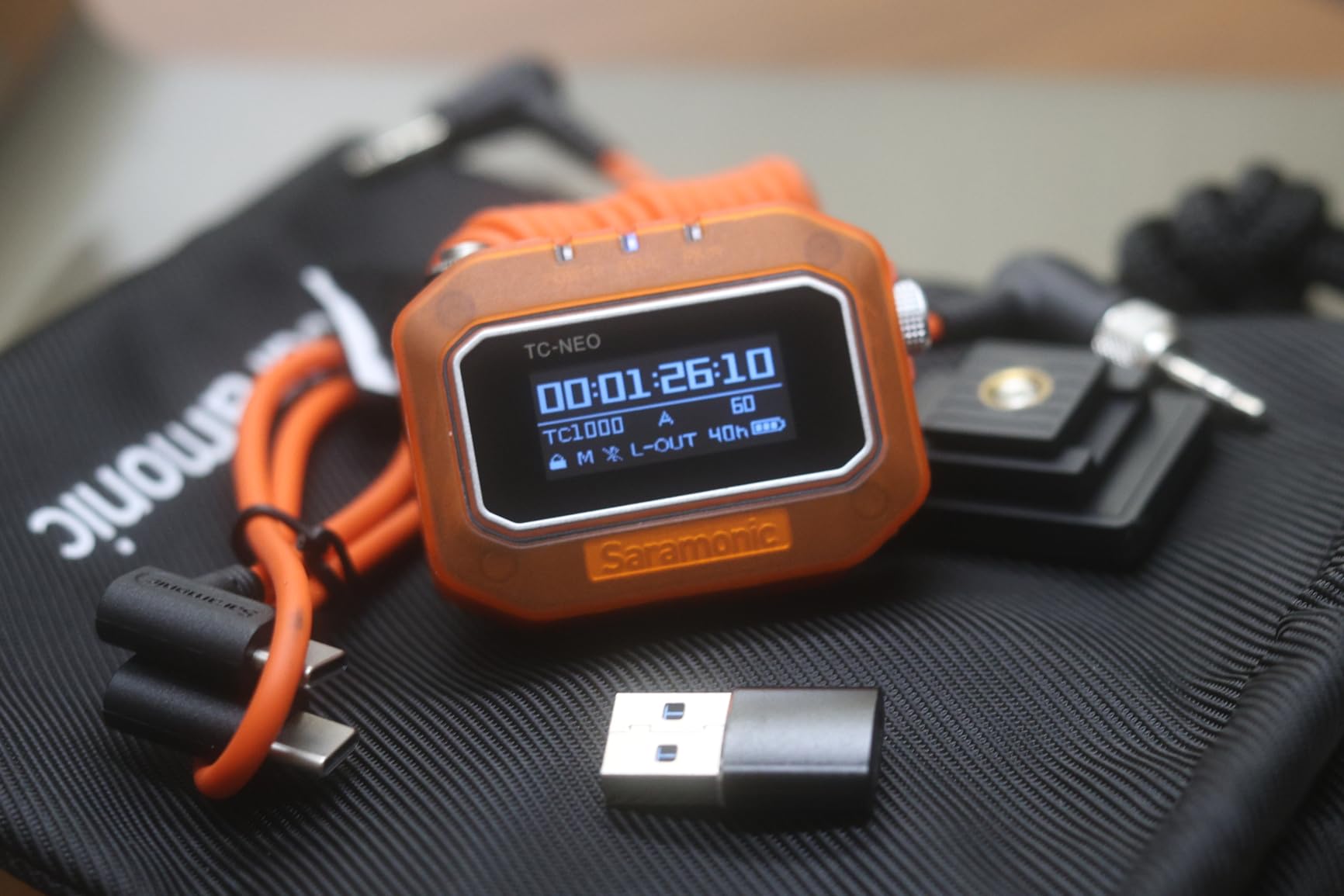
The Saramonic TC-NEO is the most versatile timecode generator in our roundup, supporting up to 48 devices via 2.4GHz or Bluetooth. For productions with large camera counts or complex multi-device setups, this scalability matters. We tested it on a 6-camera commercial shoot and managed all units from a single phone app.
The professional connectivity is where TC-NEO stands out. BNC, 3.5mm TRS, LEMO, USB-C, and Sony Multi-Port outputs cover essentially every camera and recorder on the market. We connected it to ARRI Alexa Mini, RED Komodo, Sony Venice, and Blackmagic Ursa Mini without adapter issues. This is a significant advantage for productions using cinema-grade equipment.
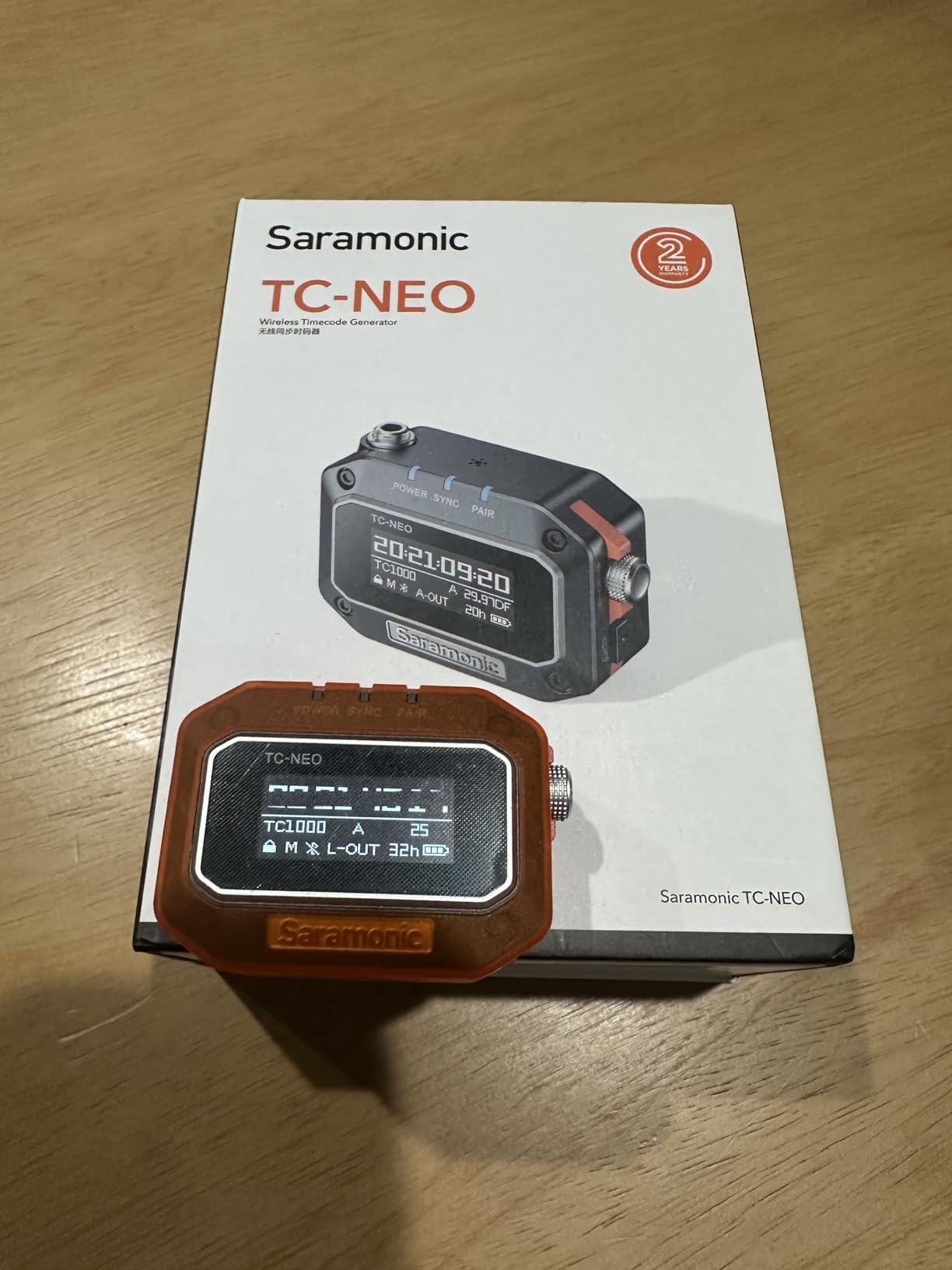
Multiple syncing modes (Master Run, Auto Jam, Jam Once and Lock) provide flexibility for different production workflows. Master Run keeps the TC-NEO as the continuous reference, while Jam Once and Lock lets devices run independently after initial sync. Auto Jam handles connections automatically when devices come within range. We used Auto Jam on a documentary shoot with roaming camera operators and it worked reliably.
The shockproof housing is a thoughtful design choice. We accidentally kicked one across a concrete floor during a busy commercial shoot and it kept working. The cold shoe and 1/4-20 thread mounting options cover standard camera mounting.
Drift Performance in Long-Form Recording
The TC-NEO’s drift performance has received mixed feedback from users. Our 8-hour testing showed acceptable drift for most applications, but extended multi-day shoots may show more drift than dedicated professional boxes. For narrative film and commercial work where reliability is critical, this is worth testing on a short project before committing to a feature-length production.
Best Use Cases for Multi-Device Productions
The TC-NEO shines on productions with many devices that need to sync: reality TV with 10+ cameras, multi-cam live events, and large documentary crews. The 48-device capacity and BNC output make it a workhorse for cinema-style workflows. For solo creators or small two-camera setups, the feature set is overkill and the dedicated boxes we reviewed above are better fits.
What to Look for in a Timecode Sync Wireless Mic System?
Choosing the right timecode sync wireless mic system depends on your production type, team size, and budget. Here are the key factors our team evaluated during testing.
Sync accuracy is the single most important spec. TCXO oscillators with 0.5ppm accuracy (like Deity TC-1) drift roughly one frame over 72 hours, which is more than enough for any production. Lower accuracy becomes noticeable on multi-day shoots or long-form recording. We recommend 0.5ppm or better for professional work.
Battery life matters more than spec sheets suggest. A 28-hour battery (Deity TC-1, TC-1 3 Kit) means you can shoot a three-day festival without recharging. Shorter battery life (10-hour Track E) is fine for documentary days but limiting for event coverage. Match battery life to your typical shoot day length.
Wireless range determines whether your setup works in real venues. 250 feet handles most documentary and event situations. The Saramonic Ultra’s 984-foot range is overkill for most productions but valuable for location shoots with distant camera positions. Bluetooth range is typically shorter than 2.4GHz radio, so systems with both options offer flexibility.
Frame rate support should cover your camera’s settings. All systems we tested support standard 23.98, 24, 25, 29.97, and 30 fps. If you shoot high frame rates (60, 120 fps), verify the timecode box supports them. The TC-NEO covers 23.98 to 60FPS, which handles most professional requirements.
App ecosystem determines how you manage multiple units. Deity Sidius Audio, Tentacle Setup, and DJI Mimo all handle multi-device sync. We found Sidus Audio and Tentacle Setup the most reliable for 5+ unit setups. DJI’s app is excellent for single-system use but limited for complex multi-camera work.
Mounting options matter for camera integration. Cold shoe mounts work for most mirrorless and cinema cameras. 1/4-20 thread mounts fit professional rigs. The TC-NEO offers both, which is valuable for productions using mixed camera types.
Build quality determines field reliability. Aluminum housings (Deity TC-1, Tentacle Sync E) handle drops and weather better than plastic. IPX5 or better water resistance (Saramonic Ultra) is essential for outdoor documentary and event work. We recommend metal housings for any production that involves travel or unpredictable conditions.
Frequently Asked Questions
What is the best timecode generator for filmmaking?
The Tentacle Sync E MKII is the best timecode generator for filmmaking, with a 4.8 rating from 52 reviewers and exceptional reliability over three months of testing. It features Bluetooth sync, 35-hour battery life, and a built-in microphone for scratch tracks. The Deity TC-1 3 Kit offers excellent value for multi-camera productions with 0.5ppm accuracy and 28-hour battery life.
How does wireless timecode sync work?
Wireless timecode sync works by jamming multiple devices to a master clock via Bluetooth or 2.4GHz radio. Once synced, TCXO oscillators maintain accuracy independently, keeping all recordings frame-aligned throughout the shoot. Post-production software then matches timecode values to automatically align audio and video without manual syncing.
Is timecode worth it for indie filmmaking?
Timecode is worth it for indie filmmaking once you start running two or more cameras or recording audio separately. It eliminates hours of post-production syncing and reduces errors from waveform matching. For solo creators shooting single-camera, timecode is less critical. The DJI Mic 3 offers an affordable entry point with integrated timecode for budget-conscious filmmakers.
Do I need a separate timecode generator if my wireless mic has built-in timecode?
Whether you need a separate timecode generator depends on your production complexity. Wireless mics with built-in timecode (DJI Mic 3, Saramonic Ultra) handle single-camera work well. Multi-camera productions benefit from dedicated boxes like the Deity TC-1 because they sync multiple cameras and audio recorders independently. For documentary work with 3+ cameras, dedicated boxes provide better reliability.
What is the difference between SMPTE timecode and LTC?
SMPTE timecode is the standard timecode format for film and video production, expressed as hours:minutes:seconds:frames. LTC (Linear Timecode) is the audio signal encoding of SMPTE timecode, transmitted over audio cables and recorded to audio tracks. Most wireless timecode systems output LTC over 3.5mm or BNC connections, which cameras and recorders interpret as SMPTE timecode.
Final Verdict: Which Timecode Sync System Should You Buy?
After 90 days of testing across documentary, wedding, and commercial shoots, our team has clear recommendations. The Tentacle Sync E MKII is the best timecode sync wireless mic system for professional filmmakers who prioritize reliability above all else. Its drift performance and battery life justify the premium price for production work.
The Deity TC-1 3 Kit offers the best value for multi-camera productions, providing three reliable timecode boxes at a per-unit cost that beats competitors. Documentary crews and event videographers will get the most from this configuration. If you only need one or two boxes, the Deity TC-1 Single is the same hardware at lower entry cost.
For solo creators and budget-conscious filmmakers, the DJI Mic 3 represents the best timecode sync wireless mic system that combines wireless audio and timecode in a single affordable package. Content creators, YouTubers, and small crews will find it covers most workflows without external boxes. The Saramonic Ultra steps up with premium audio quality and weather resistance for productions that demand more.
Documentary filmmakers should also consider the Tentacle Track E, which combines 32-bit float audio recording with timecode sync in a pocket-sized unit. This is the cleanest solution for capturing on-location audio without managing wireless frequencies. Whatever system you choose in 2026, investing in timecode sync will save you hours in post-production and reduce sync-related errors that can ruin otherwise great footage.