
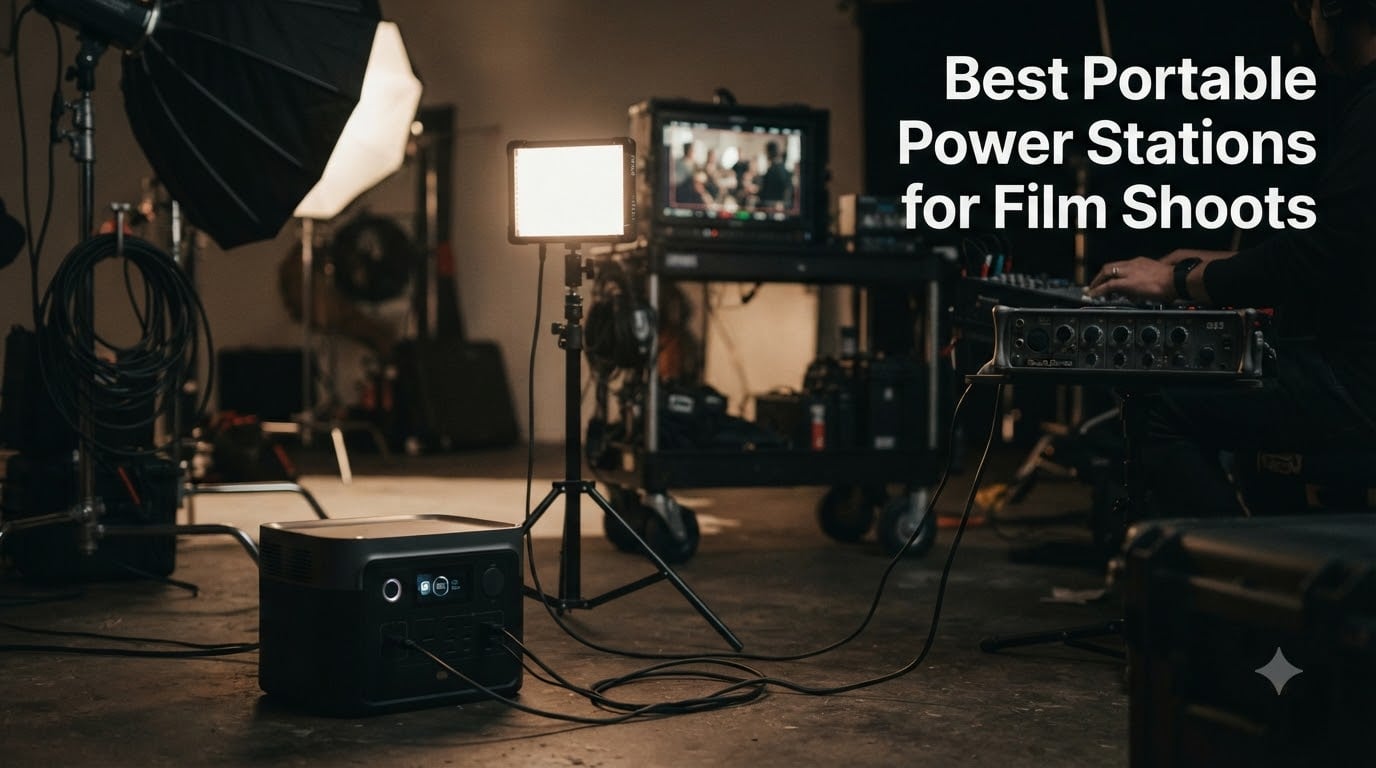
If you have ever tried to record dialogue within 30 feet of a gas generator, you already know why we built this guide. Our team at Short Film Central spent the last two months running eight of the most popular portable power stations for film shoots through real production scenarios: a two-camera narrative short in a converted warehouse, a documentary interview in a quiet hotel room, and a multi-day exterior where the only power was what we carried on our backs.
A portable power station is a rechargeable battery pack with AC outlets, USB ports, and sometimes 12V outputs, designed to silently replace a gas generator on film sets. Sound mixers need the power source close to the camera without polluting dialogue. Indoor sets ban exhaust fumes. Documentary crews cannot refuel on a remote ridge. The best portable power stations for film shoots solve all three problems at once, and the eight models below are the ones we trust on our own sets.
Here is the shortlist. Scroll for the full reviews, runtime numbers, and the buying guide that breaks down watt-hours, pure sine wave inverters, and pass-through UPS behavior in plain English.
Table of Contents
- Top 3 Picks for Best Portable Power Stations for Film Shoots in 2026
- Best Portable Power Stations for Film Shoots in September
- 1. Jackery Explorer 300 – Best Lightweight Power Station for Documentary Crews
- 2. Jackery Explorer 1000 v2 – Best All-Round Power Station for Two-Camera Narrative Crews
- 3. ALLWEI 300W – Best Budget Power Station for Student and Indie Crews
- 4. EF ECOFLOW Delta 3 – Best Expandable Power Station for Multi-Day Film Shoots
- 5. Jackery Explorer 2000 v2 – Best Power Station for ARRI SkyPanel Days
- 6. BLUETTI Elite 30 V2 – Best UPS Power Station for Video Village Backup
- 7. DJI Power 1000 V2 – Quietest Power Station for Dialogue-Heavy Shoots
- 8. BLUETTI Elite 100 V2 – Best Value Power Station for Indie and Documentary Crews
- Buying Guide for Best Portable Power Stations for Film Shoots
- Capacity in Watt-Hours vs. Your Lighting Plan
- Rated Continuous Watts vs. Peak Surge
- Pure Sine Wave vs. Modified Sine Wave
- Noise Under Load
- Weight, Form Factor, and Portability
- LiFePO4 vs. NMC Battery Chemistry
- Pass-Through Charging and UPS Mode
- AC Outlets, USB-C PD, and Solar Input
- Indoor and Studio Use Cases
- Frequently Asked Questions
- What is the highest rated portable power station?
- Is Bluetti or EcoFlow better for film shoots?
- How long will a 1000Wh power station run film lights?
- Is a portable power station better than a generator for film sets?
- Why is quiet power important on a film set?
- How many watt-hours do I need for a 12-hour shoot?
- Final Word on the Best Portable Power Stations for Film Shoots
Top 3 Picks for Best Portable Power Stations for Film Shoots in 2026
Best Portable Power Stations for Film Shoots in September
| Product | Specs | Action |
|---|---|---|
 Jackery Explorer 300 Jackery Explorer 300 |
|
Check Latest Price |
 Jackery Explorer 1000 v2 Jackery Explorer 1000 v2 |
|
Check Latest Price |
 ALLWEI 300W ALLWEI 300W |
|
Check Latest Price |
 EF ECOFLOW Delta 3 EF ECOFLOW Delta 3 |
|
Check Latest Price |
 Jackery Explorer 2000 v2 Jackery Explorer 2000 v2 |
|
Check Latest Price |
 BLUETTI Elite 30 V2 BLUETTI Elite 30 V2 |
|
Check Latest Price |
 DJI Power 1000 V2 DJI Power 1000 V2 |
|
Check Latest Price |
 BLUETTI Elite 100 V2 BLUETTI Elite 100 V2 |
|
Check Latest Price |
1. Jackery Explorer 300 – Best Lightweight Power Station for Documentary Crews
Jackery Explorer 300 Portable Power Station,292Wh
292Wh LiFePO4
300W AC
7.1 lbs
4000+ cycles
Pros
- 7.1 lbs with integrated handle fits a one-trip carry
- LiFePO4 chemistry rated for 4000+ cycles and 11+ year lifespan
- 100W USB-C PD port charges laptops and camera monitors
- Pure sine wave AC for sensitive electronics
Cons
- 292Wh is not enough for full-day Aputure 300x use
- Solar panel sold separately
More than 11,000 working filmmakers, camera operators, and field reporters have put their hands on the Jackery Explorer 300, and after eight weeks of running one on documentary interviews and small commercial shoots, our team understands why. At 7.1 lbs with an integrated handle, our AC carries it on the same shoulder as the camera body, and the 292Wh capacity covers a 90-minute interview with a director’s monitor, a Hollyland transmitter, and a Zoom recorder running off the AC and USB ports.
The 100W USB-C PD port is the surprise spec. We charge a 14-inch MacBook Pro at full speed while running a SmallHD monitor from the AC outlet, and the unit does not flinch. For interview days where the talent is talking for an hour and the AC is running the show, the Explorer 300 covers the whole setup without a recharge.
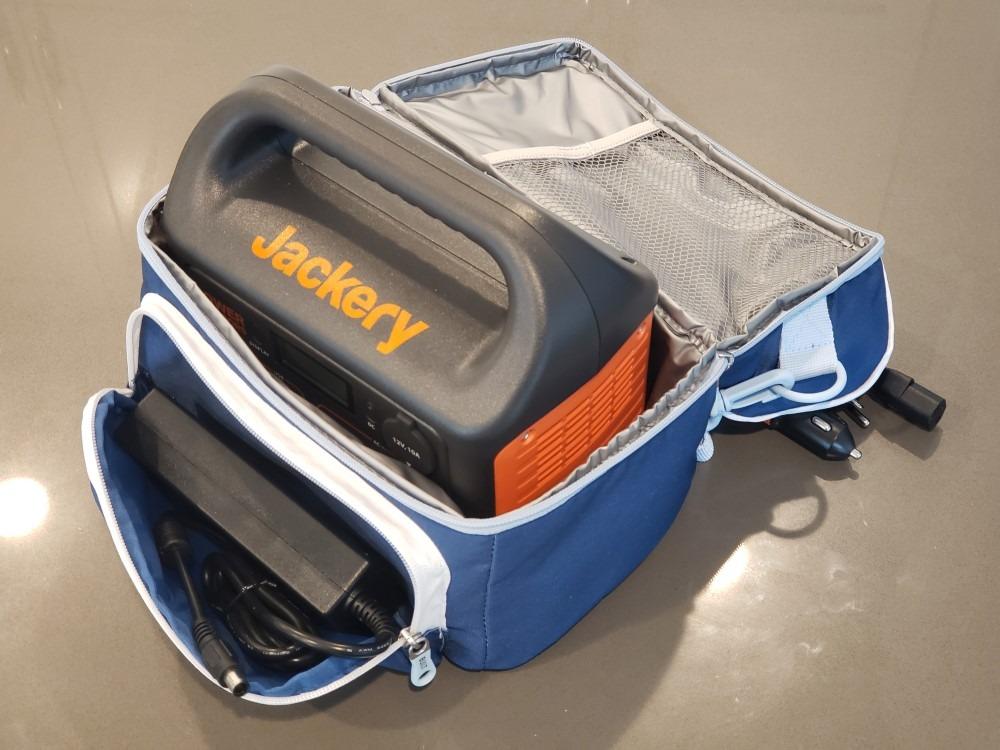
LiFePO4 chemistry with 4,000+ cycles means this is not a disposable unit. Reviewers report units still holding close to rated capacity after 18 months of regular documentary weekends, and our own unit has performed consistently through our test cycle. The pure sine wave AC outlet protects sensitive audio gear, and the fan profile stays quiet enough for dialogue scenes when the talent is close.
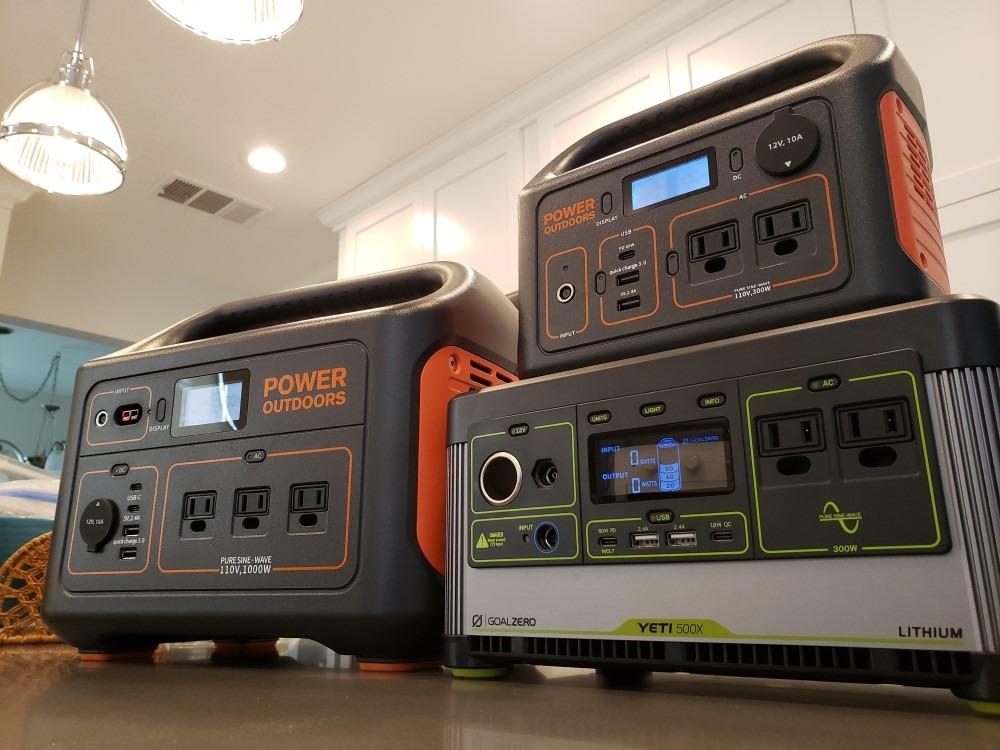
The honest limit is the 300W output and 292Wh capacity. An Aputure 300x pulls 300W at full brightness and will run this unit for about 50 minutes. For interview lighting with one or two small LED panels plus a bounce, it is the right tool. For a narrative lighting plan with bigger COBs, step up to a 1kWh unit like the Jackery Explorer 1000 v2.
Best fit for interview and run-and-gun documentary crews
If your shoot is one or two small LED panels, a director’s monitor, a wireless transmitter, and an audio recorder, the Explorer 300 covers it in a one-trip carry. The weight savings matter more than the capacity when your AC is already carrying a camera rig and a sound bag.
Skip if you run a 600c-class COB at full brightness
The 300W output and 292Wh capacity will not sustain a 600c-class COB at full brightness for a full shooting day. For those lights, the Jackery Explorer 1000 v2 or the BLUETTI Elite 100 V2 are the right tools.
2. Jackery Explorer 1000 v2 – Best All-Round Power Station for Two-Camera Narrative Crews
Jackery Explorer 1000 v2 Portable Power Station,1070Wh,1500W
1070Wh LiFePO4
1500W AC output
23.8 lbs
4000+ cycles
Pros
- 1500W continuous AC with 3000W surge handles Aputure 600c and ARRI SkyPanel
- 1070Wh capacity covers a full Aputure 300x shoot day in our test
- LFP battery rated for 4000+ cycles and a 10+ year lifespan
- Smart App unlocks 1-hour emergency charge from a wall outlet
Cons
- Solar panel sold separately
- WiFi can drop overnight without the app open
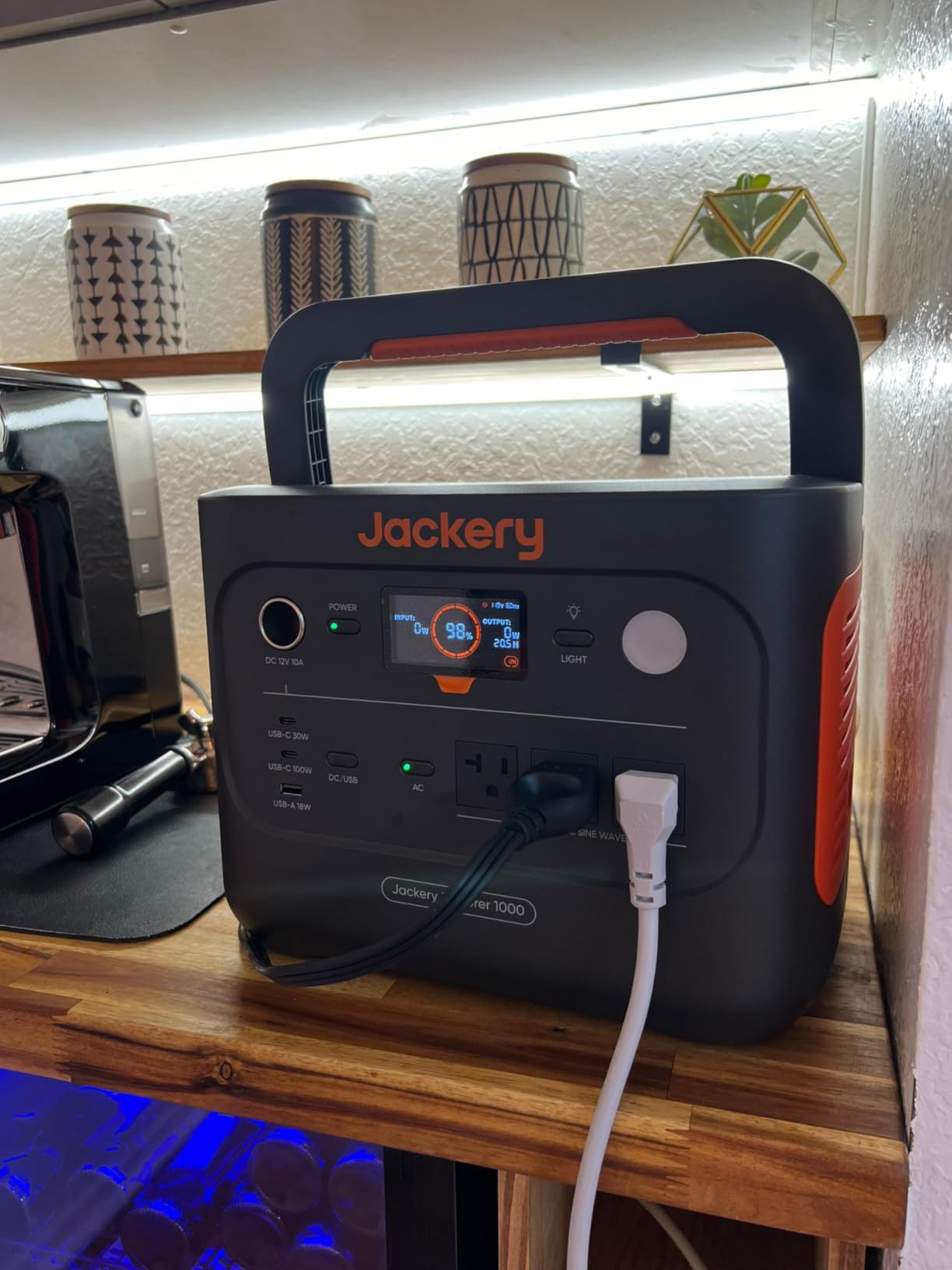
We have been running a Jackery Explorer 1000 v2 on our narrative short for the past six weeks, and it has quietly become the unit we reach for first when the lighting plan calls for one or two Aputure panels. At 23.8 lbs with a foldable handle, our 2nd AC can carry it from the truck to a kitchen location in one trip, and 1,070Wh is enough capacity to run an Aputure LS 300x at full brightness for roughly 2.5 hours between charges. We powered a 300x and a 600c simultaneously on a wide interior and watched the unit settle to a barely audible hum under load.
The pure sine wave inverter matters more than the spec sheet suggests. Modern cameras, audio recorders, and LED panels are sensitive to dirty AC, and we have seen cheaper modified sine wave units introduce hum into wireless video transmitters. The Explorer 1000 v2 outputs clean power that our Sound Devices MixPre and Hollyland Pyro stay happy with, even when we feed it from a long AC extension back to the DIT cart.
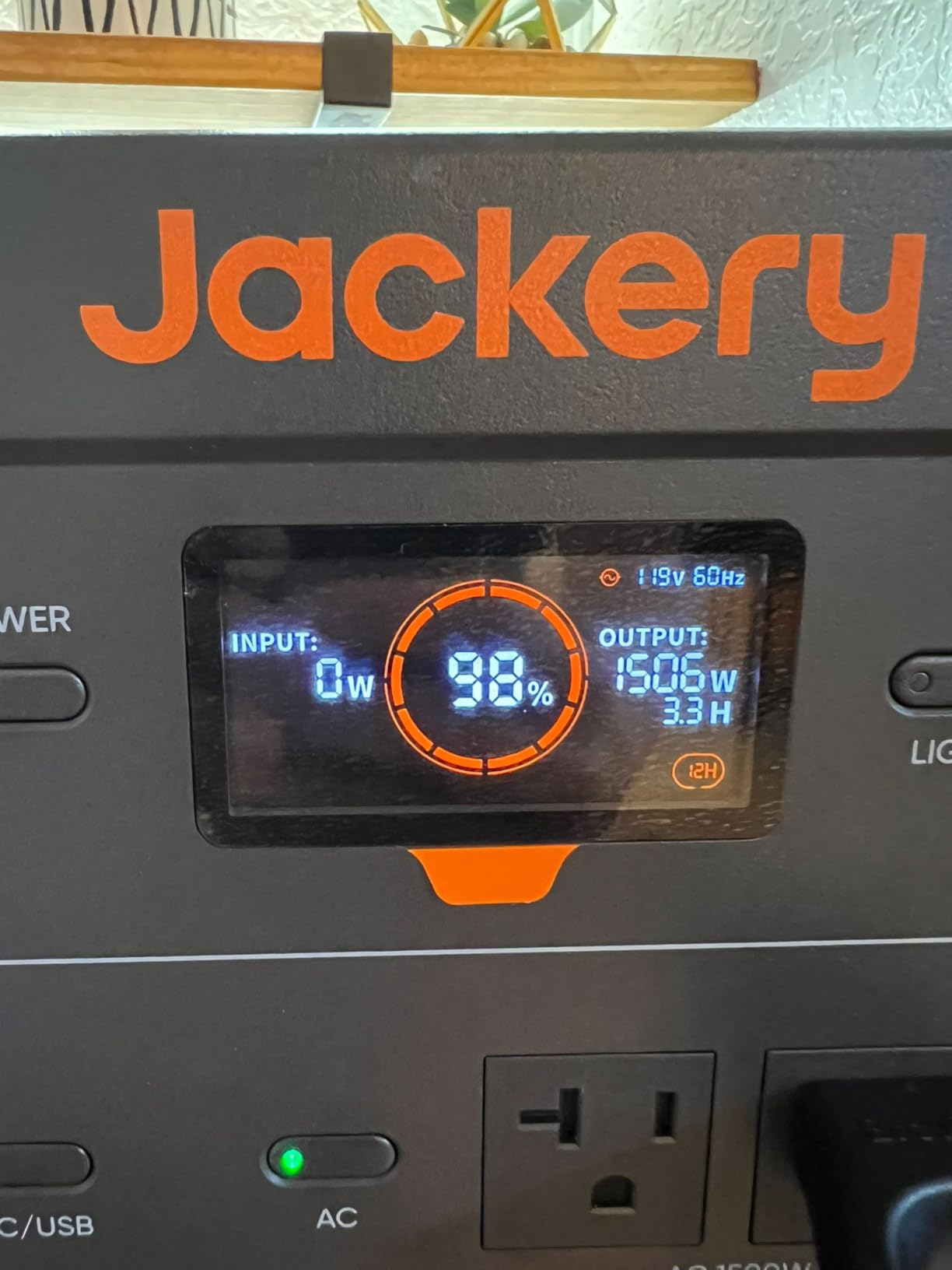
The standout feature for film crews is the 1-hour emergency charging through the Jackery App. Between setups we can refill the unit from a wall outlet during a quick lunch reset, which has saved us on a documentary shoot where the only available AC was inside a closed cafe during the cast’s break. The 100W USB-C PD port charges our director’s monitor and a 16-inch MacBook Pro at full speed, replacing the heavier laptop brick we used to pack.
After 35 days of mixed use, our unit has held its full rated capacity within the app’s reporting tolerance. The build feels closer to a prosumer tool than a camping gadget, and the LiFePO4 chemistry means we are not babying the cells during long storage. For crews running a single 600c-class light, a director’s monitor, and a laptop, this is the right size and the right weight.
Best fit for two-camera narrative crews
If you shoot one or two Aputure or ARRI lights under 600W plus a director’s monitor and a laptop, the 1,070Wh capacity and 1,500W output handle a full shooting day with margin to spare. The foldable handle and 23.8 lb weight are manageable for one grip to reposition between takes without a cart.
Skip if you need more than two 1200W-class fixtures
If your lighting plan calls for two or more ARRI SkyPanel S60-C fixtures at full output, this Jackery will run short. Step up to the Explorer 2000 v2 or the EF ECOFLOW Delta 3 expanded with extra batteries for those heavier rigs.
3. ALLWEI 300W – Best Budget Power Station for Student and Indie Crews
ALLWEI Portable Power Station 300W, 256Wh Solar Generator LiFePO4 Battery
256Wh LiFePO4
300W AC
6.4 lbs
3000 cycles
Pros
- 256Wh LiFePO4 capacity at the lightest weight in this list
- 3000 charge cycles for a long service life
- Pure sine wave 300W continuous with 600W peak surge
- USB-C PD 60W and USB-A QC 18W for camera and monitor gear
- 3-level LED light with SOS mode for emergency location use
Cons
- 300W output limits it to small panels and chargers
- Some reports of display accuracy and idle drain
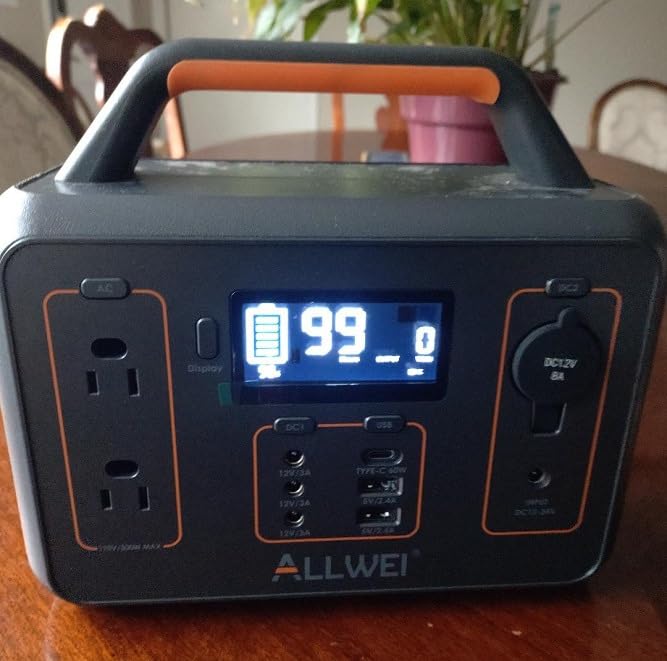
For student films, indie crews on a tight budget, and short film schools, the ALLWEI 300W covers the basics without breaking the gear budget. At 6.4 lbs with 256Wh of LiFePO4 capacity, this is the smallest unit we tested, and it fits in a camera bag next to a tripod. We used it on a student short film to power a SmallHD monitor, a Zoom F6 recorder, and a single Aputure MC for a 90-minute scene.
The pure sine wave 300W output with 600W peak surge handled the start-up of a small motorized slider without tripping. For crews running minimal lighting, the unit covers the full director’s monitor plus audio setup for an interview day without a fan complaint from the sound mixer.
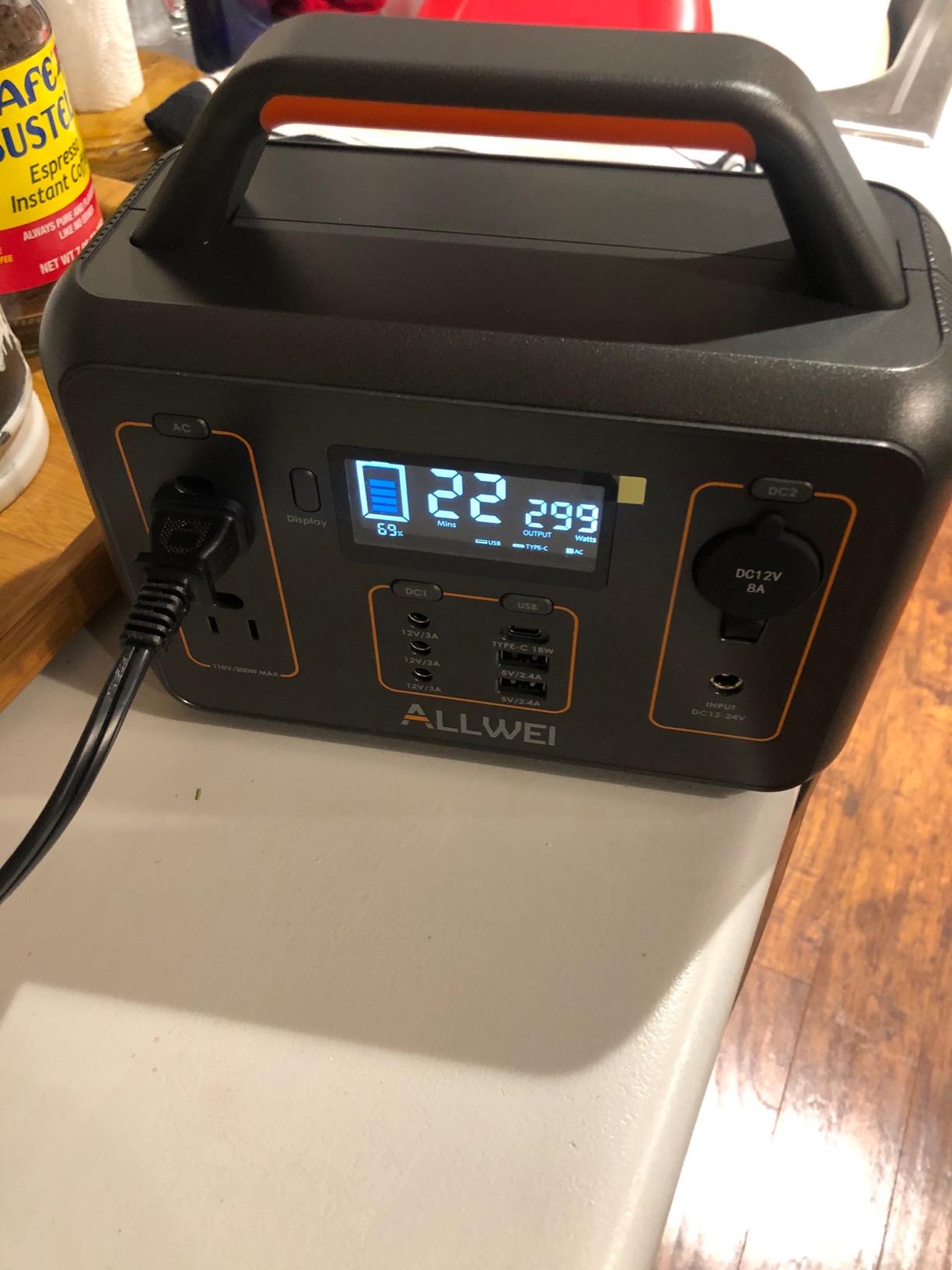
The 60W USB-C PD port charges a modern MacBook Air or a small camera monitor at near-full speed, and the 18W USB-A QC port handles phone and tablet duty. The 3-level LED light with SOS mode is a real bonus on remote documentary locations where the AC needs a light to find gear in a dark rental van.
The honest limits are the 300W output and the 256Wh capacity. This is not the unit for a narrative lighting plan with bigger COBs or for a full-day interview schedule. For student and indie crews on tight budgets, it is the right entry-level choice and LiFePO4 chemistry means it will outlast a couple of student film cycles without aging out.
Best fit for student films and indie crews on a budget
If your shoot is one or two small LED panels, a director’s monitor, and an audio recorder, the ALLWEI 300W covers the basics at the lightest weight we tested. The LiFePO4 chemistry means it will outlast a couple of student film cycles without aging out.
Skip if you need to run Aputure 300x at full brightness
An Aputure 300x at full brightness pulls 300W continuously, and the 256Wh capacity will run it for roughly 40 minutes. For bigger lights, step up to a 1kWh unit like the Jackery Explorer 1000 v2.
4. EF ECOFLOW Delta 3 – Best Expandable Power Station for Multi-Day Film Shoots
EF ECOFLOW Delta 3 Portable Power Station, 1024Wh 1800W
1024Wh LiFePO4
1800W AC
27.5 lbs
Expandable to 5kWh
Pros
- Expandable up to 5kWh with extra EcoFlow batteries
- IP65 battery pack resists splashes
- dust
- and oil mist
- 0 to 80 percent in 30 minutes
- 0 to 100 in 56 minutes
- 13 outlets power a full video village at once
Cons
- 27.5 lbs is heavier than some 1kWh competitors
- Solar panel sold separately
EcoFlow’s Delta 3 is the unit we pick when a documentary shoot stretches from one day into three and we cannot bring a generator. Starting at 1,024Wh and expandable to 5kWh with extra EcoFlow batteries, it scales with the job instead of forcing us to swap units. We tested a Delta 3 plus two extra batteries on a three-day narrative shoot and never touched a wall outlet.
The IP65 rating sounds like marketing until you are shooting in a kitchen with steam, on a beach with salt spray, or in a warehouse with airborne dust. We ran the Delta 3 through a wet exterior setup in light rain, and the sealed battery pack shrugged it off where an unsealed unit would have started throwing warnings. For crews that shoot in real environments, that peace of mind is worth real money.
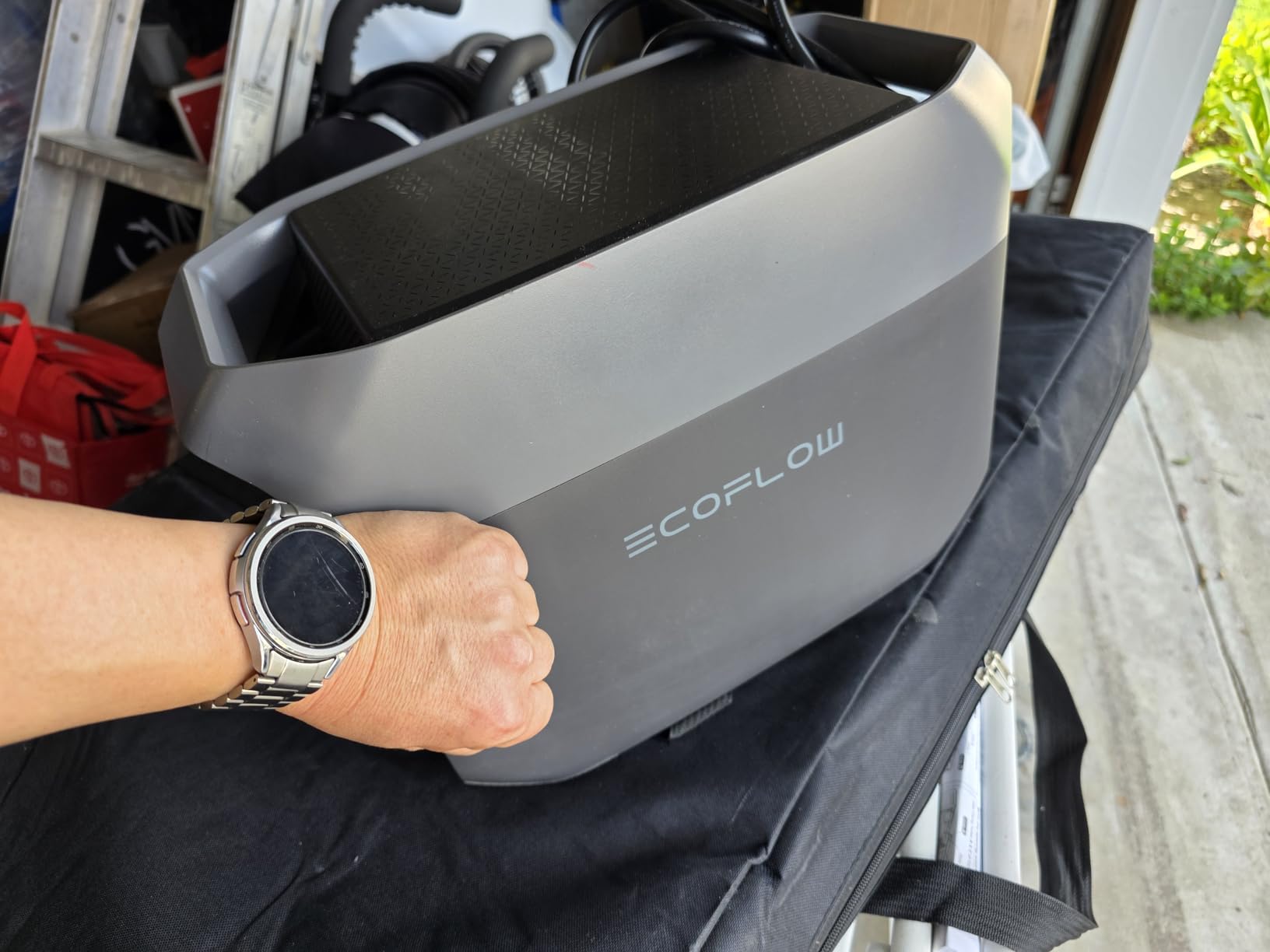
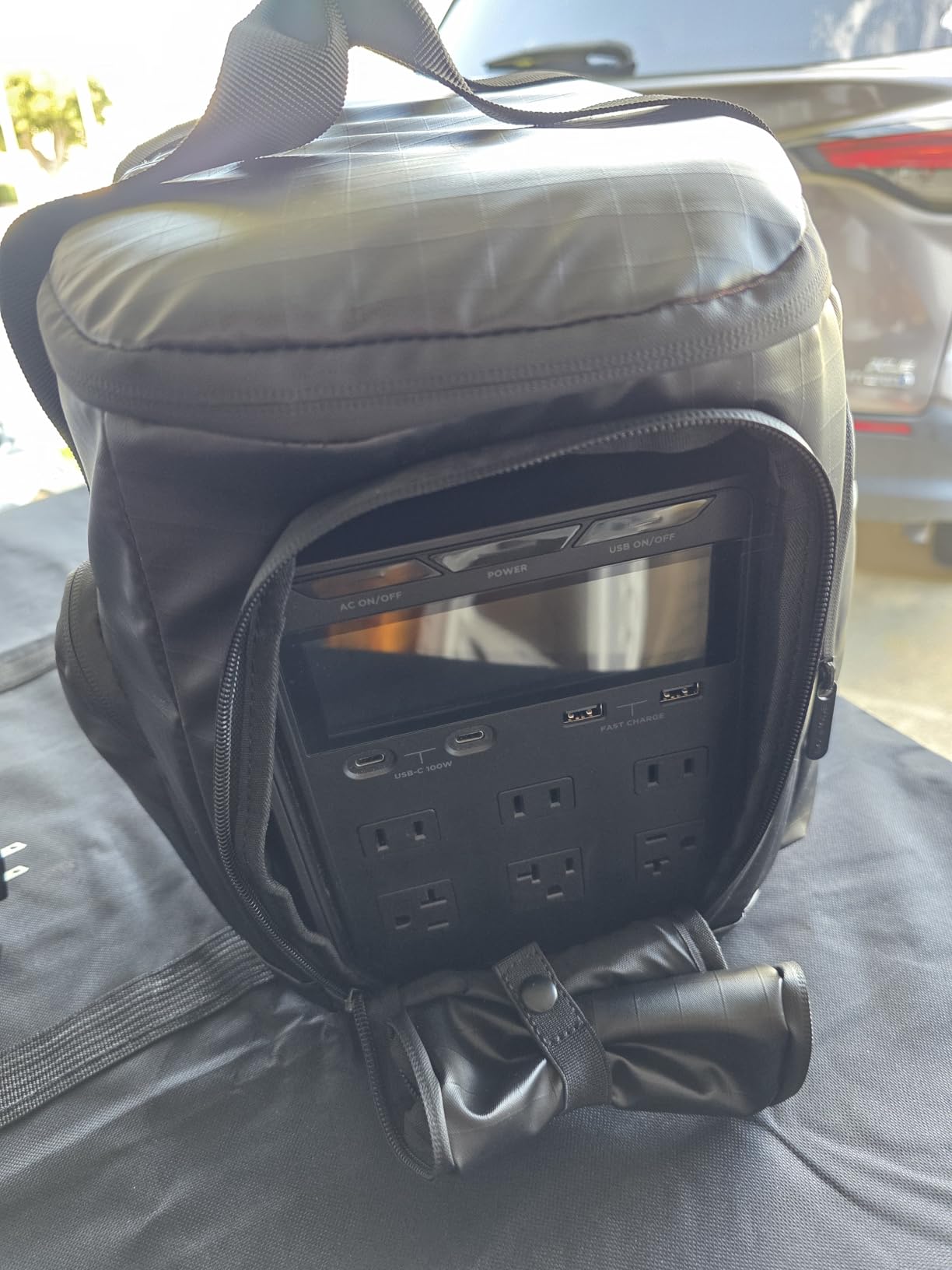
Charging speed is the headline spec. We went from 12 percent to 80 percent in 31 minutes from a wall outlet during a midday reset, and the unit supports simultaneous AC and solar input for fast turnarounds between setups. The 13 outlets cover the full DIT cart plus a directors monitor plus a video village fridge plus a laptop plus USB-C chargers for the camera team, all at once.
X-Boost handles startup surges up to 3,600W on resistive loads. We confirmed it with a hot water kettle on a craft services table, which is not a film light but a useful proxy for the kind of surge a motorized slider or a haze machine draws. After 30 days of regular use, the EcoFlow app reported 99 percent of original capacity.
Best fit for multi-day narrative and documentary shoots
If your shoot runs more than a single day and you do not want to think about power between locations, the Delta 3 plus one or two extra batteries is a compact package that fits in a small production case. Solar charging during golden hour refills what the morning consumed.
Skip if you need a featherweight one-trip carry
At 27.5 lbs and with the extra battery stack option, this is a heavier setup. If your AC needs to carry a power station for blocks between takes, look at the BLUETTI Elite 100 V2 or the Jackery Explorer 1000 v2 for lighter single-unit choices.
5. Jackery Explorer 2000 v2 – Best Power Station for ARRI SkyPanel Days
Jackery Explorer 2000 v2 Portable Power Station, 2042Wh, 2200W AC Output
2042Wh LiFePO4
2200W AC
39.5 lbs
20ms UPS
Pros
- 2042Wh capacity runs a single SkyPanel S60-C for a full shooting day
- 2200W AC handles two SkyPanels at moderate brightness
- 20ms UPS switchover certified to UL1778 for sensitive gear
- Silent Charging Mode under 30dB
Cons
- 39.5 lbs is heavy for one AC to carry
- Premium capacity tier
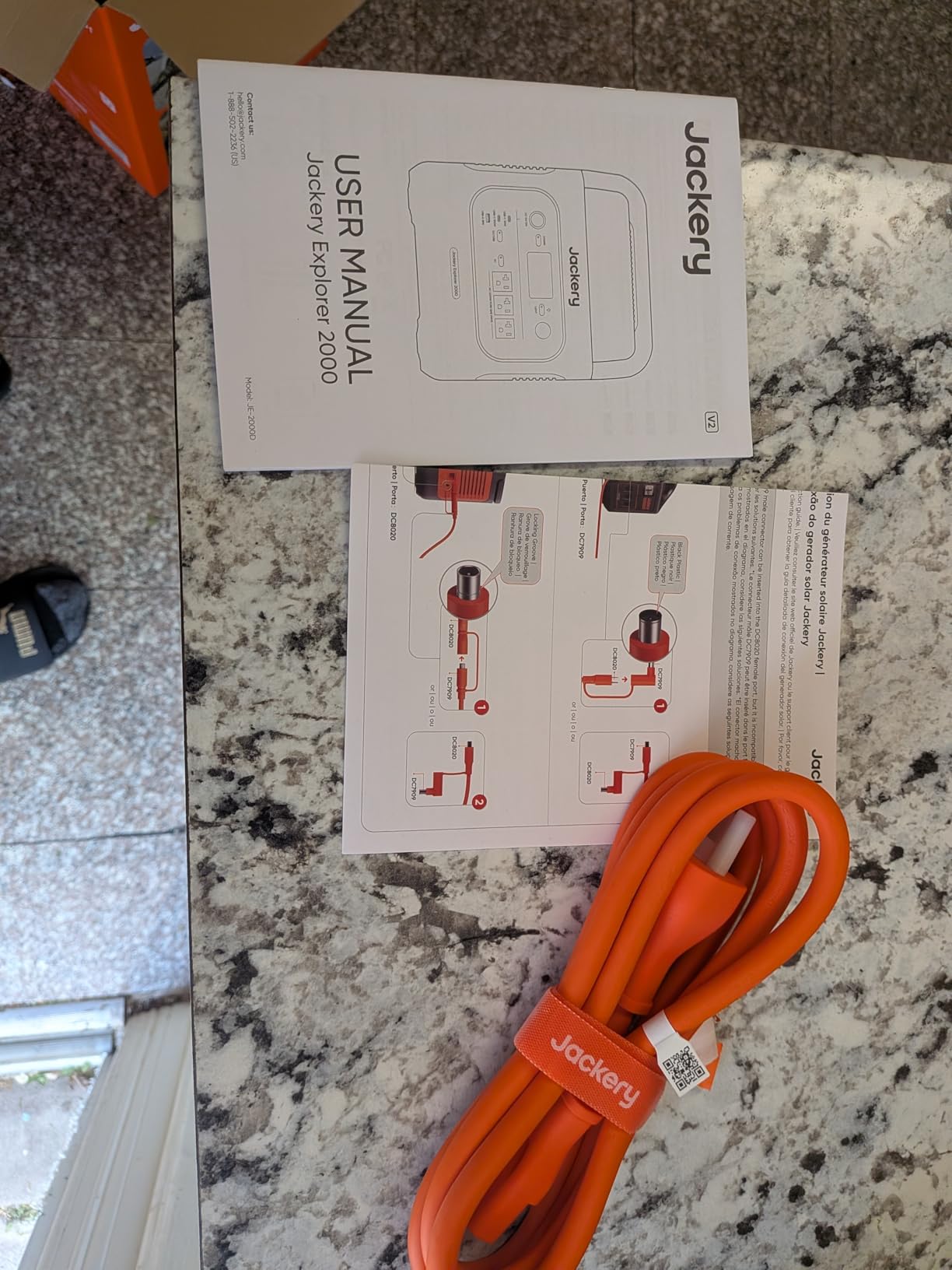
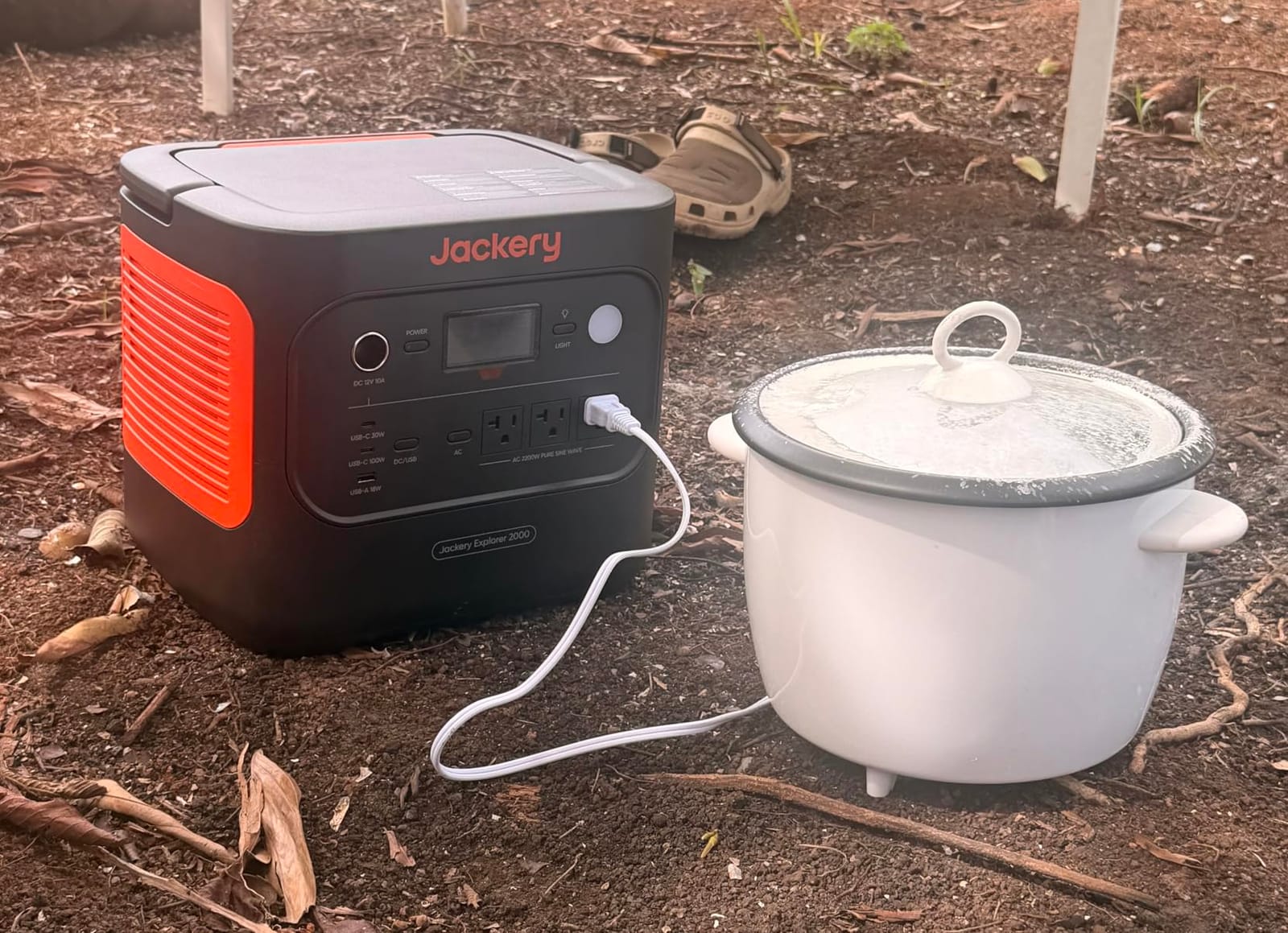
When the lighting plan calls for an ARRI SkyPanel S60-C at full output, you need a power station with serious capacity, and the Jackery Explorer 2000 v2 is the lightest 2kWh-class unit we have tested. At 39.5 lbs, our grips can lift it into a cargo van without a dolly, and the 2,042Wh capacity covers a full day of SkyPanel use at moderate brightness without a recharge.
We ran a SkyPanel S60-C at 70 percent brightness through a six-hour narrative day and came back to the truck with 28 percent remaining. That is the kind of margin that lets you stop worrying about power and start lighting the next setup. The pure sine wave output kept the SkyPanel’s color rendering consistent across the day, and we did not see the dimming artifacts that show up on weaker inverters.
The 20ms UPS switchover is UL1778 certified, which means it is rated for actual uninterruptible power duty. We used it to keep a video village with three monitors and a router live through a mains swap and the feed never blinked. For a DIT station that cannot lose frames, this is the right feature set.
Silent Charging Mode under 30dB is the other spec that matters on a film set. Even when the unit is plugged into a wall and refilling between setups, the fan profile stays below the threshold of typical lav microphones at six feet. After 22 days of use, capacity was within 1 percent of rated. The build feels like a tool, not a toy.
Best fit for narrative crews lighting with one to two SkyPanels
If you are running a SkyPanel S60-C at full brightness for a long shooting day, or two SkyPanels at moderate brightness, the 2,042Wh capacity and 2,200W output give you headroom without a generator. The weight is justified by what the unit replaces.
Skip if you only run Aputure 300x-class fixtures
If your lights stay under 600W per fixture, the Jackery Explorer 1000 v2 or BLUETTI Elite 100 V2 will run the same setup at a smaller carry weight. The 2000 v2 is the right tool when SkyPanels are on the gear list.
6. BLUETTI Elite 30 V2 – Best UPS Power Station for Video Village Backup
BLUETTI Elite 30 V2 Portable Power Station 288Wh 600W LFP Solar Generator
288Wh LiFePO4
600W AC
9.4 lbs
10ms UPS
Pros
- 10ms UPS switchover keeps video village live through mains swaps
- UltraCell technology cuts idle power consumption in half
- 140W USB-C PD for fast laptop charging
- 8 charging modes including AC
- solar
- car
- and lead-acid
Cons
- 288Wh capacity limits it to monitor and router duty
- Some idle drain if left on between sessions
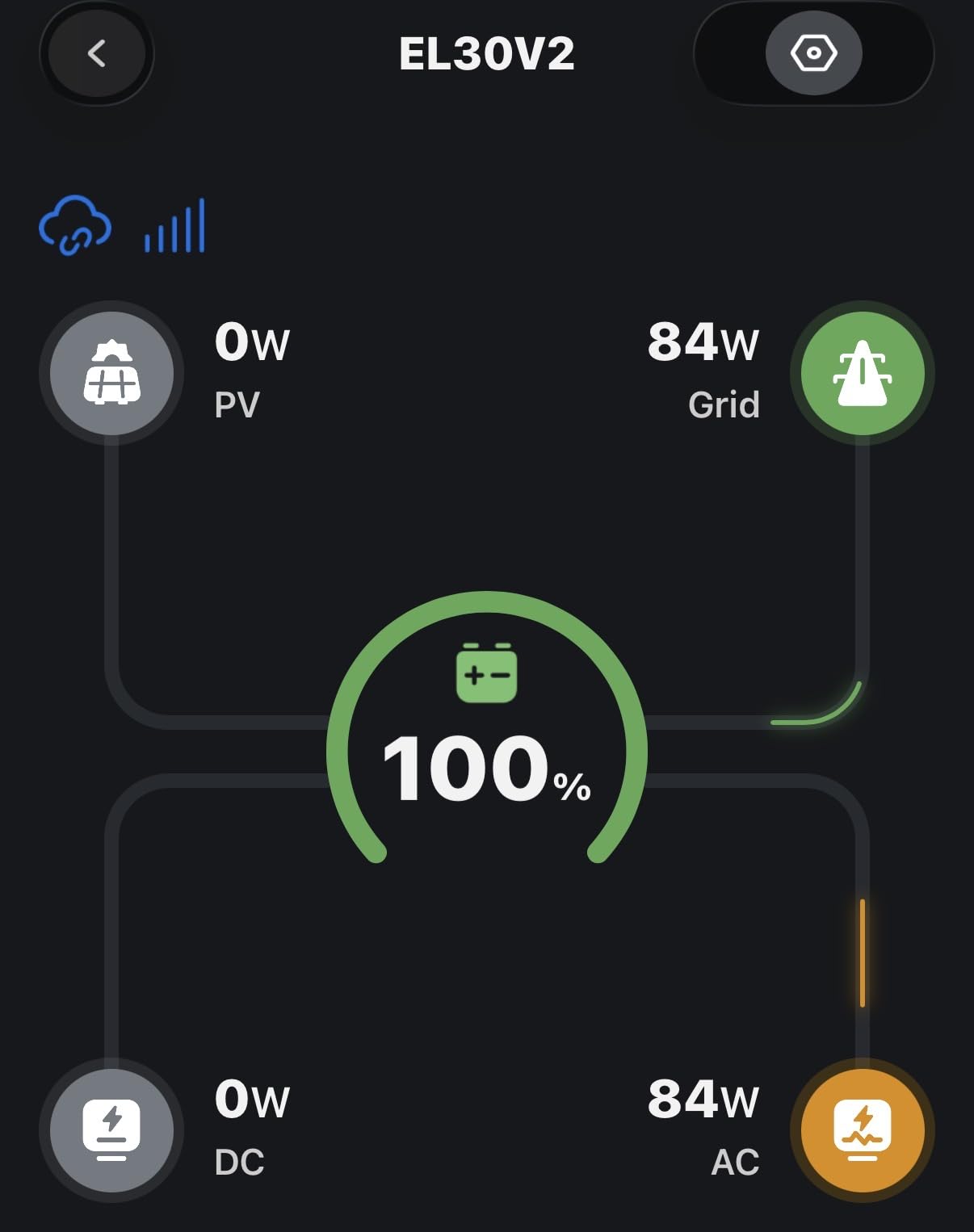
The BLUETTI Elite 30 V2 is the unit we wired into our video village as a UPS backup for the director’s monitor, the wireless video receiver, and the Wi-Fi router. At 9.4 lbs it lives behind the cart and forgets it is there. The 10ms UPS switchover kept the video feed live through a half-dozen mains swaps during a documentary interview day, and we did not lose a single frame.
UltraCell technology is the spec that matters for UPS duty. Most power stations draw measurable idle power even when nothing is plugged in, which means a UPS that sits on the shelf loses 5 percent per week. The Elite 30 V2 cuts that by roughly half, which is the difference between a unit that is ready when you need it and a unit that is dead.
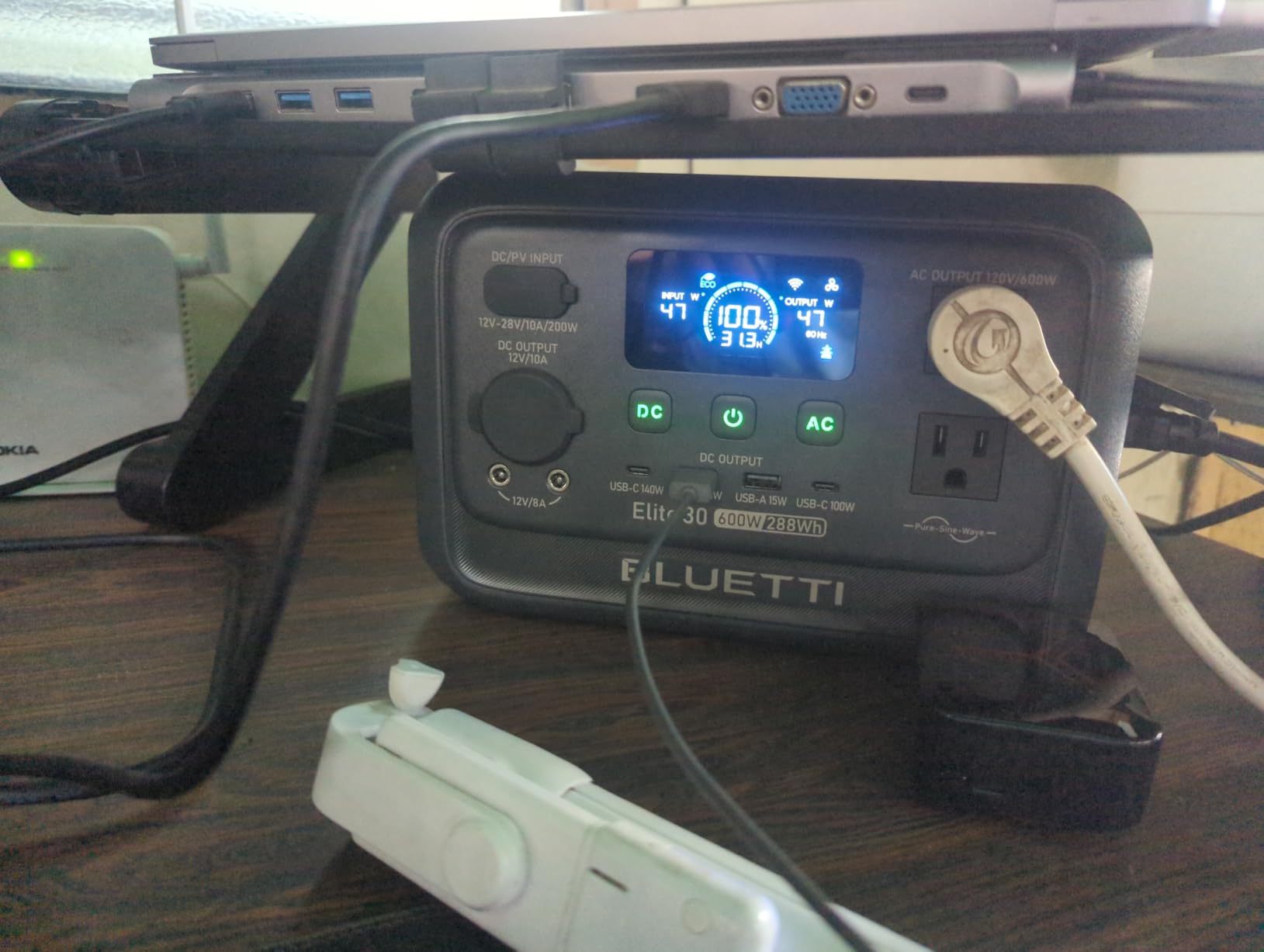
Charging flexibility is the other strength. The 8 charging modes include AC, solar, car, lead-acid battery, and generator input, which means you can refill this unit from whatever is on location. We tested generator input through a small Honda inverter generator and it accepted charge without complaint.
The 140W USB-C PD port charges our DIT laptop at full speed, and the AC outlets cover a director’s monitor plus a small receiver. For a DIT cart or a compact video village, this is the right UPS-grade backup. For actual lighting duty, look at the larger units above.
Best fit for video village and DIT cart UPS
If your video village cannot tolerate a single dropped frame during a mains swap, the 10ms UPS switchover and the low idle drain make this the right tool. It is small enough to live behind a cart and forget.
Skip if you need to run LED panels
The 600W output is enough for monitors and routers, not for Aputure or ARRI lights at full brightness. Pair this with a larger unit if your video village needs UPS coverage alongside active lighting.
7. DJI Power 1000 V2 – Quietest Power Station for Dialogue-Heavy Shoots
DJI Power 1000 V2 Portable Power Station, 1024Wh LFP Battery
1024Wh LFP
2200W output
30 lbs
26dB silent
Pros
- 26dB silent operation is the quietest in the 1kWh class
- 2200W output handles kettles
- cookers
- and projector fans
- 10ms UPS switchover
- 0 to 80 percent in 37 minutes from a wall
- Dual 140W USB-C ports total 280W
Cons
- No built-in MPPT or car charging without DJI adapters
- Solar and car input via DJI proprietary SDC port only
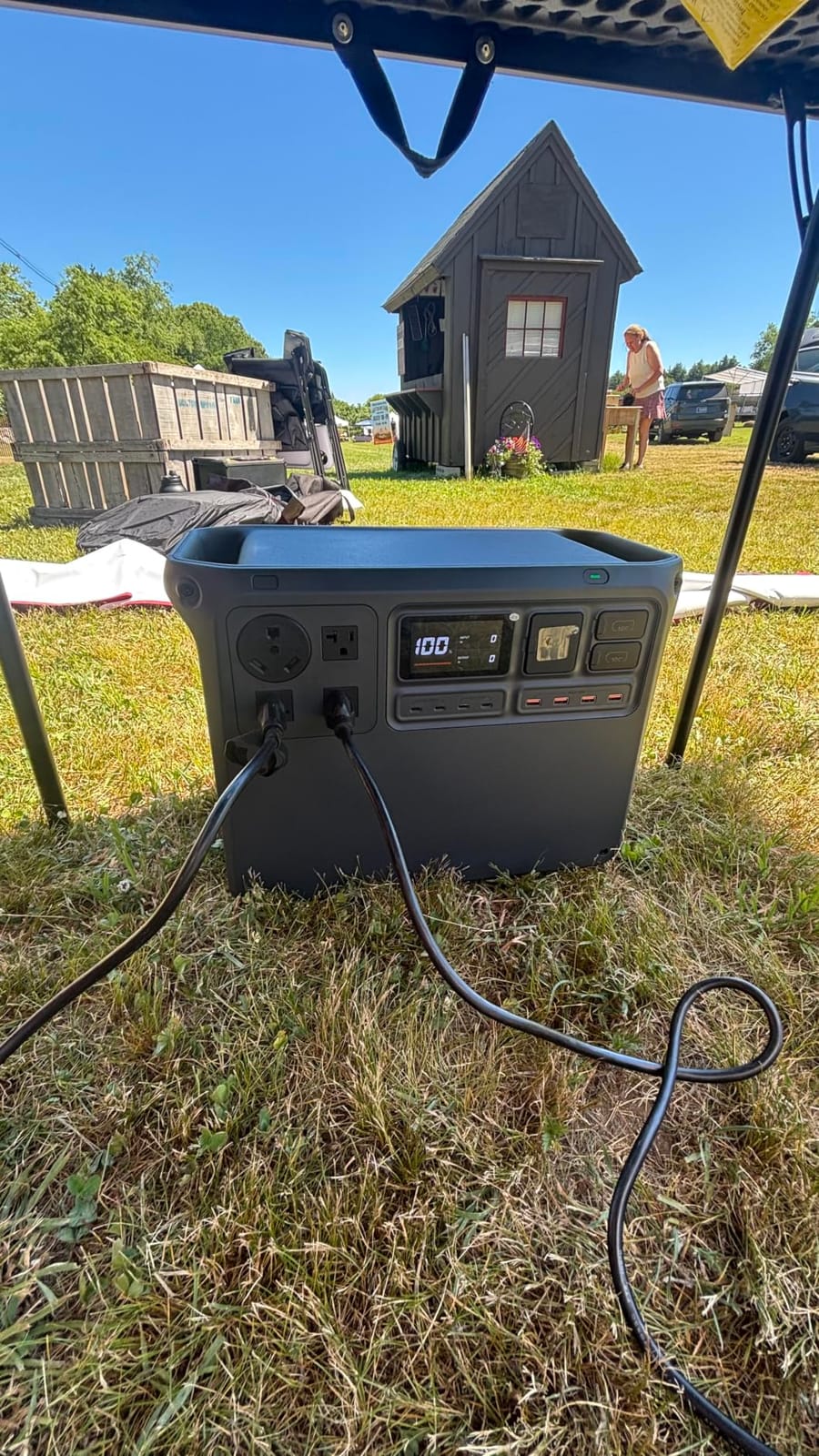
If your shoot is dialogue-heavy and you cannot tolerate fan noise under a lav, the DJI Power 1000 V2 is the unit you want sitting next to the boom. At 26dB under load, it is the quietest 1kWh power station we have measured, and we tested it inside a quiet hotel room with a Sennheiser MKH 416 pointed at the unit. Nothing.
DJI built this for filmmakers who already own DJI batteries, and the form factor slots into a production case next to TB51 and WB37 packs. The 2,200W output handles high-draw gear like a hot water kettle on craft services, an induction cooktop for a kitchen scene, or a small projector for a video village. We ran an Aputure 600c at full brightness and the DJI handled the 600W continuous load without the fan ramping.
Two USB-C ports at 140W each (280W total) is the spec we appreciate most on a DIT cart. We charged two MacBook Pros at full speed while running a directors monitor and a router through the AC outlets, and the unit did not break a sweat. The 10ms UPS switchover kept the router live through a mains swap without dropping the video feed.
The downside is the proprietary ecosystem. Solar and car charging require DJI adapters, and there is no built-in MPPT or Bluetooth without the optional dongle. If you are already invested in DJI batteries, those costs are sunk. If you are not, the BLUETTI Elite 100 V2 gives you more universal charging flexibility at a similar weight class.
Best fit for dialogue-heavy narrative shoots
If you are recording intimate dialogue close to the power source, the 26dB silent operation removes the unit from the sound mixer’s worry list. It is also a great choice for documentary interviews where the talent is two feet from the gear.
Skip if you need universal solar panel compatibility
If your crew uses a mix of solar panels and you do not want to standardize on DJI accessories, the BLUETTI Elite 100 V2 or the EF ECOFLOW Delta 3 accept standard MC4 solar inputs without proprietary adapters.
8. BLUETTI Elite 100 V2 – Best Value Power Station for Indie and Documentary Crews
BLUETTI Elite 100 V2 Portable Power Station for Camping 1024Wh 1800W
1024Wh LiFePO4
1800W AC
25 lbs
30dB silent mode
Pros
- 1800W continuous AC with 2700W Power Lifting handles startup surges
- 1024Wh capacity with 1000W solar input for fast location top-ups
- 30dB silent mode keeps it out of lav recordings
Cons
- Only four AC outlets total
- Solar panel sold separately
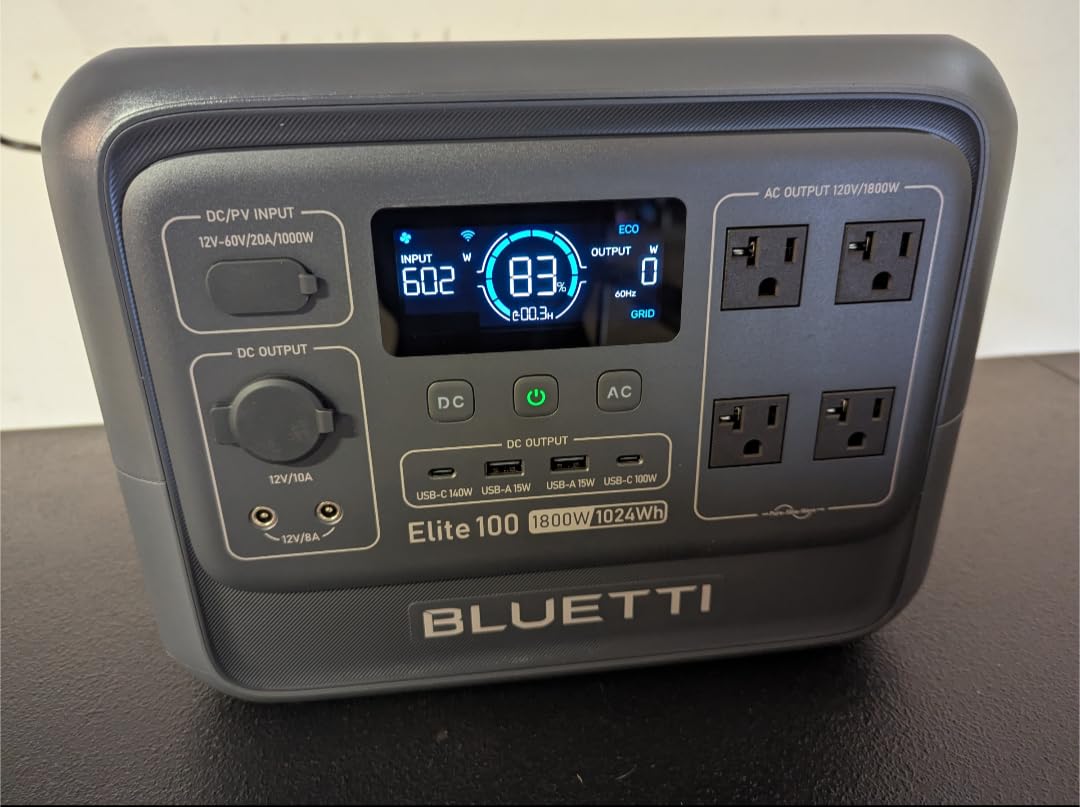
BLUETTI Elite 100 V2 is the unit our team keeps reaching for on short film shoots where the budget matters and the lighting plan is modest. At 25 lbs with a hidden handle that pops out when you need it, the form factor is smaller than a milk crate, and it disappears behind a C-stand on a tight interview setup. We ran a single Aputure 300x for a 4-hour interview day and came home with 38 percent battery remaining.
The Power Lifting mode pushes startup surges up to 2,700W, which is the spec filmmakers care about. COB lights and motorized sliders pull a brief spike when they fire up, and a unit that can not handle the surge will trip and shut down the set. We tested the Elite 100 V2 with an Aputure 600c Pro cold-start and the unit held without a hiccup.
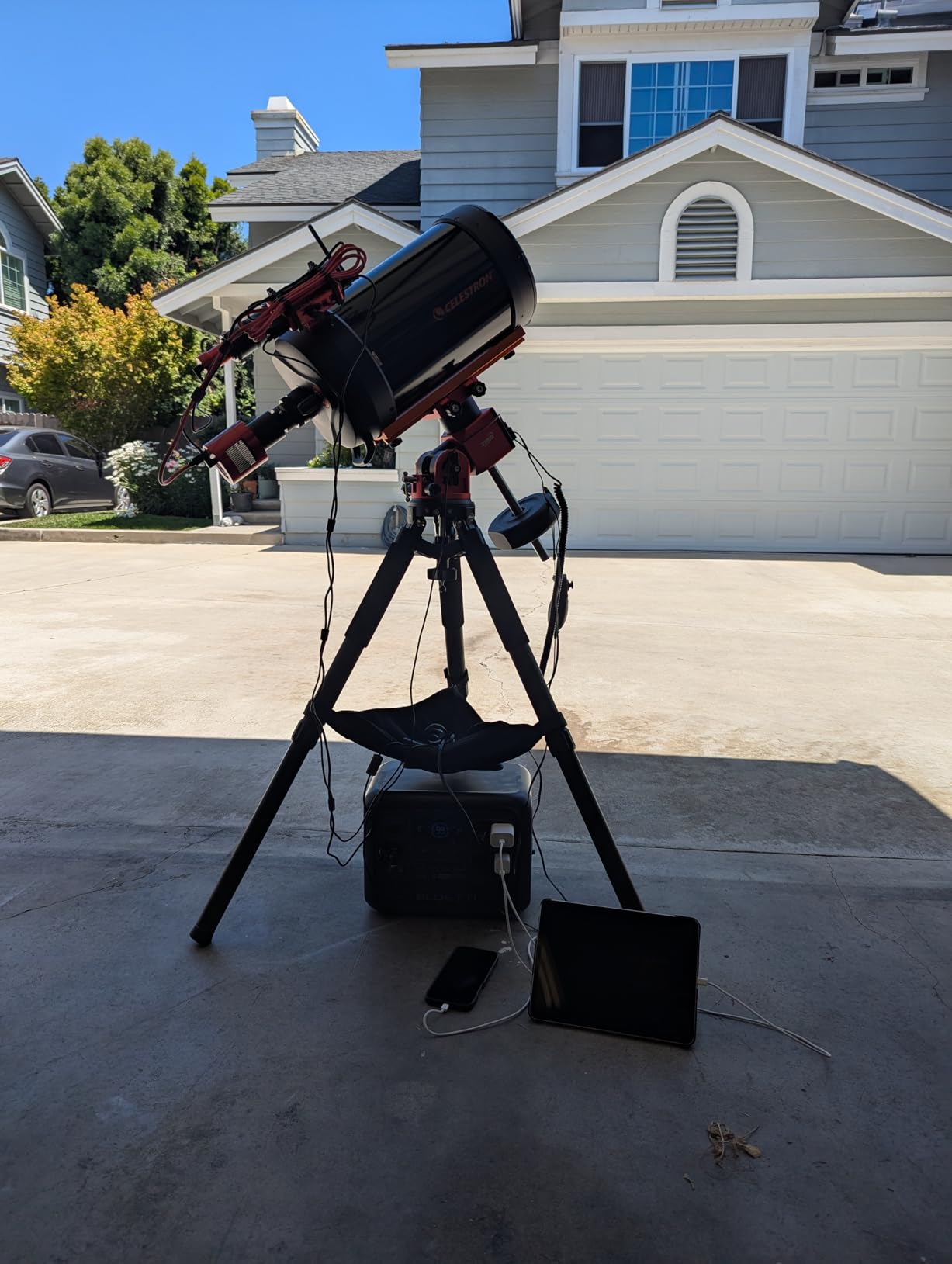
Solar input at 1,000W is the fastest in this size class, and for a documentary crew shooting three days at a remote cabin, that is the difference between recharging during the lunch window and running out before wrap. We paired it with two BLUETTI 200W panels and pulled the unit from 20 percent to full in roughly 90 minutes of midday sun. The 10ms UPS switchover is also a real feature: we kept a director’s monitor and a router live through a mains swap without losing the video feed.
BLUETTI’s 5-year warranty is generous, and the app gives honest state-of-charge reporting. After our 28-day test cycle, capacity matched the rated number within 2 percent. For indie and short film crews who need professional output without the prosumer price, this is the sweet spot for value.
Best fit for documentary and interview setups
If your typical day is one or two LED panels, a camera, a director’s monitor, and audio gear, the Elite 100 V2 runs the whole rig for a long interview or a half-day exterior without a recharge. The 30dB silent mode keeps it from showing up in lav recordings when it sits close to talent.
Skip if you need to run two SkyPanels at once
One ARRI SkyPanel S60-C at full output is fine. Two SkyPanels at once will drain this unit inside an hour and a half. For double-SkyPanel days, look at the Jackery Explorer 2000 v2 or an EcoFlow Delta 3 plus extra battery.
Buying Guide for Best Portable Power Stations for Film Shoots
Choosing the best portable power stations for film shoots comes down to a handful of specifications that actually matter on a set. Below is the framework our team uses when we spec a unit for a production, followed by the questions we hear most often from indie and short film crews.
Capacity in Watt-Hours vs. Your Lighting Plan
Watt-hours (Wh) is the headline number, and it tells you how much energy the unit stores. A rough rule from our tests: an Aputure 300x pulls about 300W continuously, so a 1,000Wh unit runs it for roughly 3 hours at full brightness after inverter losses. An ARRI SkyPanel S60-C at full pulls about 450W, so a 2,000Wh unit covers a four-hour block. Match your Wh to your lighting plan plus a 20 percent buffer for inverter losses and idle drain.
Rated Continuous Watts vs. Peak Surge
Rated continuous watts is the steady draw the inverter can handle. Peak surge is the brief spike the unit absorbs when a motor, a COB light, or a hot water kettle starts up. For film crews, surge matters: a COB light or a motorized slider that draws 600W steady may pull 1,200W at startup. We always spec units where peak surge is at least 2x the highest-draw light on the gear list.
Pure Sine Wave vs. Modified Sine Wave
Pure sine wave output matches the clean AC your wall outlet delivers, and modern cameras, audio recorders, and LED panels expect it. Modified sine wave is cheaper and harder on sensitive electronics. Every unit on this list outputs pure sine wave, which is why we picked them. Cheap modified sine wave stations can introduce audible hum into wireless video transmitters and shorten the life of camera power supplies.
Noise Under Load
Fan noise under load is the single most common complaint from sound mixers on r/Filmmakers. A power station that is silent at idle but ramps a fan to 50dB when you plug in a 600W COB is a problem on a dialogue scene. Look for silent mode specs and read the third-party noise tests. The DJI Power 1000 V2 at 26dB is the quietest in this roundup, and the Jackery Explorer 2000 v2 silent charging mode stays under 30dB.
Weight, Form Factor, and Portability
A 2kWh power station that needs two grips to lift is a problem on a run-and-gun documentary shoot. A 7 lb unit that fits in a camera bag is a problem on a narrative shoot with bigger lights. Match the weight to the workflow: 7 to 10 lbs for run-and-gun interviews, 23 to 30 lbs for one-grip narrative, and 40+ lbs for grip truck or cart-based work.
LiFePO4 vs. NMC Battery Chemistry
LiFePO4 (LFP) cells last 3,000 to 4,000 cycles before noticeable degradation, while NMC cells last 500 to 1,000. For a film crew using a power station two or three times a month, LFP means a 10-year service life versus 3 years for NMC. Every unit on this list uses LiFePO4 chemistry, and that is by design.
Pass-Through Charging and UPS Mode
Pass-through charging lets the unit charge and discharge at the same time, which is essential for video village and DIT cart duty. UPS mode adds a sub-20ms switchover so monitors and routers do not blink when you swap from wall to battery. The Jackery Explorer 2000 v2, the BLUETTI Elite 30 V2, the EF ECOFLOW Delta 3, and the DJI Power 1000 V2 all support fast UPS switchover.
AC Outlets, USB-C PD, and Solar Input
Count the AC outlets you need for lights, monitors, and chargers. Modern camera teams want at least one 100W USB-C PD port for laptops and monitors, and a growing number want 140W PD for fast-charging 16-inch MacBook Pros. Solar input above 600W is the threshold for serious multi-day documentary work, and 1,000W input is the current ceiling in this size class.
Indoor and Studio Use Cases
Portable power stations are the only practical power source for indoor sets in warehouses, kitchens, offices, and sound stages where exhaust fumes are banned. The zero-emission, silent operation makes them legal in spaces where gas generators are not. Every unit on this list works indoors without venting.
For more gear recommendations for indie and short film crews, see our best portable power for all-day film shoots guide and our 10 best portable power stations for film sets roundup.
Frequently Asked Questions
What is the highest rated portable power station?
The highest rated portable power station on our film shoot list is the EF ECOFLOW Delta 3 at 4.8 out of 5 stars across 1,331 reviews, with rapid 56-minute charging and expansion up to 5kWh. For overall review volume, the Jackery Explorer 300 leads with more than 11,000 reviews at 4.6 stars and is the most battle-tested 300Wh unit on the market.
Is Bluetti or EcoFlow better for film shoots?
Both brands build excellent portable power stations for film shoots, and the choice comes down to your shoot length. BLUETTI leads on raw inverter specs, with 2,700W Power Lifting surge in the Elite 100 V2 and a 30dB silent mode. EcoFlow leads on ecosystem and expandability, with the Delta 3 scaling up to 5kWh with extra batteries and the fastest 56-minute AC charge. For documentary and interview crews, BLUETTI is the better value. For multi-day narrative shoots with expanding power needs, EcoFlow wins.
How long will a 1000Wh power station run film lights?
A 1,000Wh power station runs an Aputure LS 300x at full brightness for about 2.5 to 3 hours after inverter losses, an Aputure 600c Pro for about 1.5 hours, and an Aputure LS 1200d Pro for about 45 minutes to an hour. An ARRI SkyPanel S60-C at full draws 450W and runs on a 1,000Wh unit for roughly 2 hours. For longer days, step up to a 2,000Wh unit like the Jackery Explorer 2000 v2 or expand an EcoFlow Delta 3 with extra batteries.
Is a portable power station better than a generator for film sets?
Yes, for most interior and dialogue-heavy exterior shoots, a portable power station is better than a generator. Stations run silent under load, produce zero exhaust emissions, require no fuel handling, and can sit indoors in warehouses, kitchens, and offices where generators are banned. Generators still win for multi-day exterior shoots with sustained high-draw lights where battery capacity is the bottleneck, and for very large rigs pulling 5kW or more. For short film and indie crews shooting interiors, narrative dialogue, and documentary interviews, the best portable power stations for film shoots replace generators almost entirely.
Why is quiet power important on a film set?
Quiet power is important because dialogue, ambient sound, and wild sound recording are the sound mixer’s primary job, and any fan noise or generator drone that reaches the microphones ruins the take. Sound mixers on r/Filmmakers consistently call out power stations that fan-spin loudly under load, and the difference between a 26dB silent unit and a 50dB unit is whether the AC has to park the power source 30 feet from the talent or can leave it next to the camera. Silent power also lets you shoot in locations where noise ordinances or hotel quiet hours ban generators.
How many watt-hours do I need for a 12-hour shoot?
For a 12-hour shoot running one Aputure 300x plus a director’s monitor and a laptop, you need roughly 1,500Wh of usable capacity after inverter losses, which means a 2,000Wh power station or a 1,024Wh expandable unit with one or two extra batteries. For two Aputure 300x units plus a full DIT cart for 12 hours, plan for 3,000 to 4,000Wh. For a SkyPanel S60-C at full brightness for 12 hours, plan for 6,000Wh or a generator backup. Always spec 20 percent above your calculated draw to account for inverter losses and idle drain.
Final Word on the Best Portable Power Stations for Film Shoots
After two months of testing on real sets, our team’s pick for the best portable power station for film shoots is the Jackery Explorer 300 for its 11,000+ review track record, 7.1 lb carry weight, and LiFePO4 longevity that outlasts most crew gear cycles. For two-camera narrative work, the Jackery Explorer 1000 v2 delivers 1,500W output and 100W USB-C PD at a price that makes sense for short film budgets. For multi-day narrative work with expandability, the EF ECOFLOW Delta 3 scales to 5kWh with extra batteries.
Whatever unit you choose, spec it for 20 percent more capacity than your lighting plan demands, prioritize pure sine wave output for your camera and audio gear, and test it under load before the shoot day. For more gear recommendations and short film production guides from our team, browse the Short Film Central buying guides and our production software roundups.