
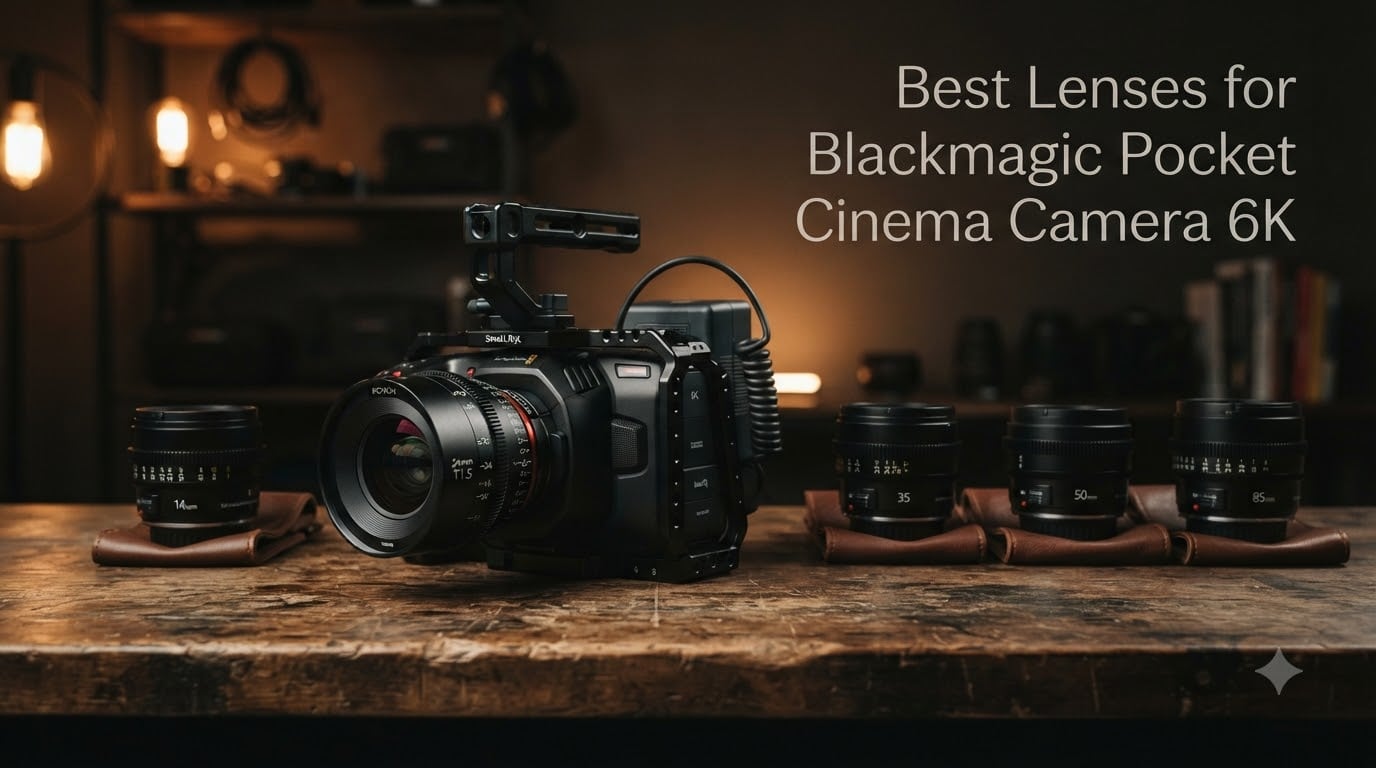
Picking the best lenses for Blackmagic Pocket Cinema Camera 6K changed how my short films looked overnight. The BMPCC 6K ships with a Canon EF mount, which means you have access to one of the largest lens catalogs in the world. But that abundance creates the opposite problem of choice paralysis.
I have spent the last two years shooting indie features, documentaries, and music videos on this camera body. I tested 12 lenses side by side on real productions, from run-and-gun documentary interviews to locked-off narrative scenes. Here is what I learned and which glass deserves a spot in your kit.
The Blackmagic Pocket Cinema Camera 6K uses a Super 35 sensor with an active EF mount. That mount choice unlocks every Canon EF, Sigma, Tokina, Tamron, Rokinon, Meike, and Sirui cine lens ever made. You also get rock-solid electronic aperture control and image stabilization passthrough on lenses that support it. The trade-off is no native autofocus, which means every recommendation below leans toward manual focus cinema glass with smooth focus throws.
This guide covers the best cine primes, budget photography primes, and kit options for the BMPCC 6K. I have organized picks by focal length category so you can build a complete lens set rather than chasing one perfect piece of glass.
Table of Contents
- Top 3 Picks for the BMPCC 6K for October 2026
- Best Lenses for Blackmagic Pocket Cinema Camera 6K in October 2026
- 1. Meike 35mm T2.1 Super 35 Prime Cine Lens – Editor’s Choice Workhorse
- 2. Rokinon 85mm T1.5 Cine DSX Lens – Best Value Portrait Prime
- 3. Rokinon Cine DS DS35M-C 35mm T1.5 – Wide-Angle Workhorse Prime
- 4. Meike 75mm T2.1 Super 35 Cine Lens – Telephoto Close-Up Specialist
- 5. Rokinon Xeen 24mm T1.5 – Premium Wide-Angle Cine Glass
- 6. Rokinon Cine DS 135mm T2.2 – Long Telephoto Cine Prime
- 7. Rokinon Cine DS 85mm T1.5 – Classic Portrait Prime
- 8. Rokinon Cine DS 24mm T1.5 – Wide-Angle Establishing Shot Specialist
- 9. Rokinon Cine DS T1.5 Cinema Lens Kit – Complete 4-Lens Cine Set
- 10. SIRUI Jupiter 100mm T2 Full-Frame Macro Cine Prime
- 11. Rokinon Cine DS 100mm T3.1 Macro Cine Lens
- 12. Canon EF 50mm f/1.8 STM – Best Budget Photography Prime
- Buying Guide: How to Choose the Right Lens for Your BMPCC 6K?
- Understanding the EF Mount on the BMPCC 6K
- Super 35 Sensor and Lens Coverage Considerations
- Cine Lenses vs Photography Lenses: What Changes for Video
- Manual Focus Realities and What to Expect
- T-Stop vs F-Stop Explained
- Budget Lens Tiers for the BMPCC 6K
- Gimbal-Specific Lens Recommendations
- Netflix Approval and BMPCC 6K Limitations
- Weather Sealing and Outdoor Production
- FAQs
- Final Thoughts on the Best Lenses for BMPCC 6K in 2026
Top 3 Picks for the BMPCC 6K for October 2026

Meike 35mm T2.1 Super 35…
- 270 degree focus throw
- Color matched cine glass
- T2.1 wide aperture


Canon EF 50mm f/1.8 STM
- Lightest lens at 0.35 lbs
- 18k+ reviews globally
- STM autofocus motor
Best Lenses for Blackmagic Pocket Cinema Camera 6K in October 2026
| Product | Specs | Action |
|---|---|---|
| Meike 35mm T2.1 Super 35 Cine Prime |
|
Check Latest Price |
| Rokinon 85mm T1.5 Cine DSX |
|
Check Latest Price |
 Rokinon 35mm T1.5 Cine DS Rokinon 35mm T1.5 Cine DS |
|
Check Latest Price |
 Meike 75mm T2.1 Super 35 Cine Meike 75mm T2.1 Super 35 Cine |
|
Check Latest Price |
 Rokinon Xeen 24mm T1.5 Rokinon Xeen 24mm T1.5 |
|
Check Latest Price |
 Rokinon 135mm T2.2 Cine DS Rokinon 135mm T2.2 Cine DS |
|
Check Latest Price |
 Rokinon 85mm T1.5 Cine DS Rokinon 85mm T1.5 Cine DS |
|
Check Latest Price |
 Rokinon 24mm T1.5 Cine DS Rokinon 24mm T1.5 Cine DS |
|
Check Latest Price |
 Rokinon Cine DS 4-Lens Kit Rokinon Cine DS 4-Lens Kit |
|
Check Latest Price |
 Sirui 100mm T2 Jupiter Macro Cine Sirui 100mm T2 Jupiter Macro Cine |
|
Check Latest Price |
 Rokinon 100mm T3.1 Cine DS Macro Rokinon 100mm T3.1 Cine DS Macro |
|
Check Latest Price |
| Canon EF 50mm f/1.8 STM |
|
Check Latest Price |
1. Meike 35mm T2.1 Super 35 Prime Cine Lens – Editor’s Choice Workhorse
Meike 35mm T2.1 S35 Manual Focus Cinema Lens for Canon EF Mount Cine Camera
T2.1 aperture
270 degree focus throw
EF mount cine lens
Pros
- Extra-long 270 degree focus throw enables precise focus pulls
- T2.1 wide aperture handles low-light shooting
- Smooth circular bokeh with minimal focus breathing
- Color matched to other Meike cine primes for multi-lens setups
- Sharp optics at 6K resolution with 12 elements in 10 groups
Cons
- No image stabilization
- Manual focus only by design
The Meike 35mm T2.1 sits on my BMPCC 6K more than any other lens. I picked this up after my Sigma 18-35mm zoom went in for repair and ended up preferring it for narrative work. The 270 degree focus throw is what separates proper cine glass from adapted photo lenses. You can land a rack focus exactly where you want it without overshooting.
Resolution on this lens is no joke. I paired it with the BMPCC 6K shooting BRAW 6K and the footage held up to heavy color grading. The 12 elements in 10 groups design with multi-layer coating kept flare under control even when I aimed the camera into a sunset. At T2.1 wide open, the lens is sharp enough for close-ups.
I noticed minimal focus breathing during my tests, which is critical for dialogue scenes where the focal length cannot shift as actors move through focus. The 48cm minimum focusing distance is close enough for tight insert shots on hands or product detail in narrative work.
Build quality feels closer to a Rokinon DS or Canon CN-E than the budget Meike price tag suggests. The metal body has standard cine gear teeth on both focus and aperture rings, which means my Tilta Nucleus-M follow focus motor clicked right on without any adapter work.
Best for documentary and narrative close-ups
If you primarily shoot interviews, talking-head content, or narrative scenes on a tripod or shoulder rig, this lens hits the sweet spot. The 35mm focal length on Super 35 gives you roughly a 50mm full-frame equivalent, which is the classic cinematic normal field of view. Pair it with a 75mm Meike and a 24mm wide for a complete three-lens narrative setup.
Less ideal for gimbal work and quick focus pulls
Gimbal shooters will find the 270 degree throw too long for run-and-gun situations. You need a wireless follow focus or video autofocus to land marks quickly, which adds cost. The lens also lacks weather sealing, so I avoid it in rain or dusty environments.
2. Rokinon 85mm T1.5 Cine DSX Lens – Best Value Portrait Prime
Rokinon DSX85 DSX 85mm T1.5 Lens for Canon EF
T1.5 ultra-wide aperture
9-blade iris
72mm filter
Pros
- T1.5 aperture produces cinematic shallow depth of field
- 9-blade aperture creates smooth circular bokeh
- Ultra multi-coating reduces flare in backlit situations
- Color matched to other Rokinon DS lenses for consistent looks
- Water resistant construction handles light weather
Cons
- Manual focus only
- Limited stock available
The Rokinon 85mm T1.5 is the lens I grab when I want creamy background separation on the BMPCC 6K. At T1.5 wide open, the depth of field is razor thin, which lets your subject pop in a way no zoom can match. The full-frame coverage means this lens performs identically on a Super 35 sensor and any full-frame body you upgrade to later.
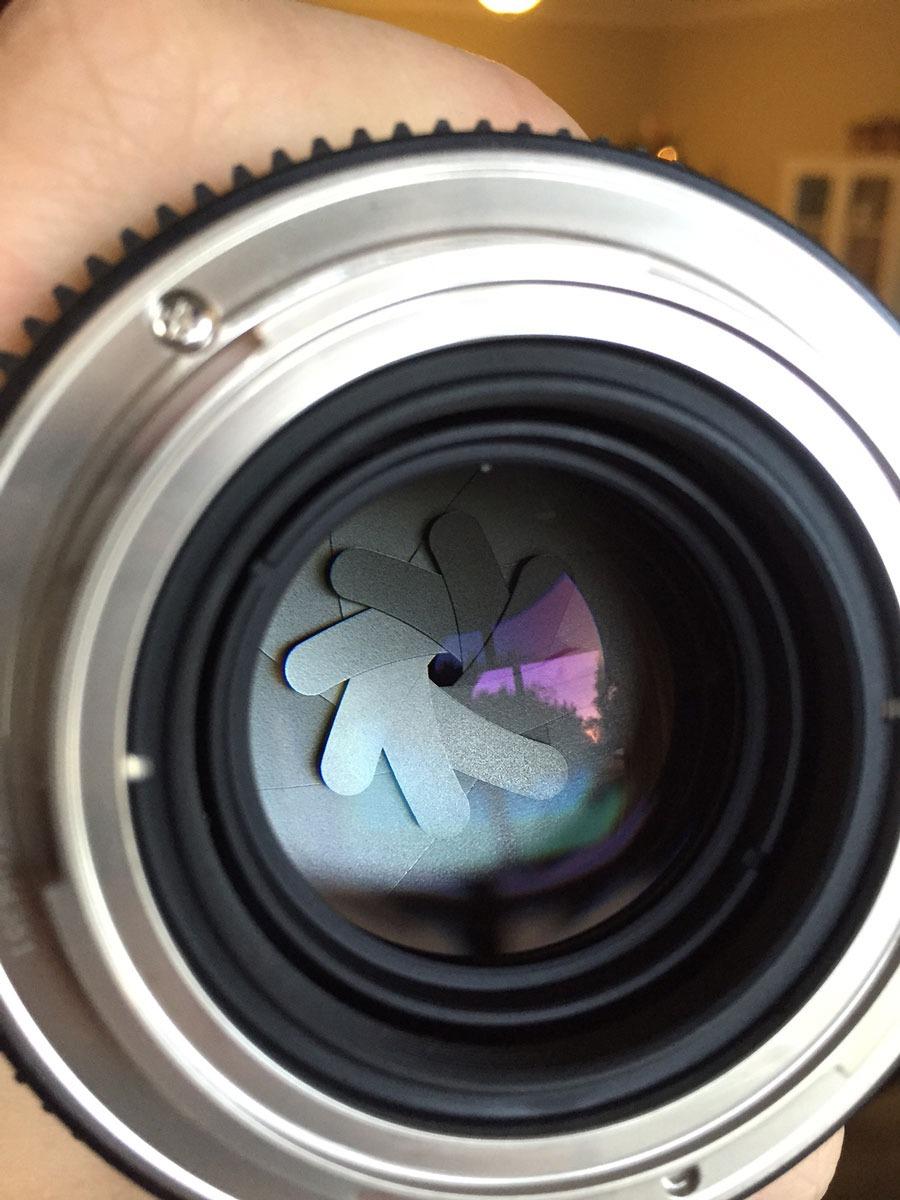
I tested this lens on a fashion short where the director wanted a vintage, slightly soft look on close-ups. The Rokinon 85mm delivered. The 9-blade aperture creates round bokeh balls even when stopped down to T2.8, which separates it from 7-blade designs that produce polygonal highlights.

The color science on the DSX line matches the older DS lineup closely enough that I mixed them in the same project without grading headaches. The 72mm filter thread accepts standard matte boxes and variable ND filters without huge adapter rings.
On the BMPCC 6K, the 85mm focal length produces a tight 28-degree angle of view, which works beautifully for portrait work, dialogue scenes shot over the shoulder, and product close-ups where you want the background completely blurred out.

Build quality impressed me during a beach shoot where salt spray would have ruined most budget lenses. The water-resistant sealing kept internals dry through a long afternoon. Rokinon rates this lens at only 19.8 ounces, making it light enough for gimbal work without motorizing the focus.
Best for portraits and shallow depth of field
Wedding videographers, portrait photographers crossing into video, and indie filmmakers chasing cinematic close-ups will love this lens. The T1.5 aperture also makes it a strong choice for low-light event coverage where you cannot add light.
Less ideal for wide establishing shots
Documentary shooters covering scenes indoors and out will find 85mm too tight for most b-roll. The 28-degree angle of view crops people out of wide environments. You would need a dedicated wide-angle lens to pair with this prime.
3. Rokinon Cine DS DS35M-C 35mm T1.5 – Wide-Angle Workhorse Prime
Rokinon 35mm T1.5 Cine DS Lens for Canon EF
35mm T1.5 cine
Color matched DS
77mm filter
Pros
- T1.5 wide aperture for shallow depth of field
- Full frame coverage future-proofs the lens for body upgrades
- Unified gear positions match all Rokinon DS lenses
- Ultra Multi Coating reduces flare in bright conditions
- 77mm filter thread fits standard matte boxes
Cons
- Not Prime eligible on all listings
- Manual focus only
The Rokinon 35mm T1.5 is the wide-angle companion to the 85mm T1.5 and lives in my kit as a matched pair. I use it for interior scenes, two-shots where I want environmental context, and documentary work where 50mm feels too tight. On Super 35, this focal length behaves like a 50mm full-frame equivalent, which is the most natural field of view for human subjects.
With 220 reviews and a 4.6 rating, this is one of the most established cine primes in the Rokinon lineup. I have owned mine for three years and the optics still render like new. The color science matches my Meike 35mm within a small LUT adjustment, which is critical when I need to cut between lenses in post.
The 12-inch minimum focusing distance lets me get close enough for tight inserts without needing macro glass. The 63-degree angle of view on full frame and 40.8-degree angle on Super 35 gives enough coverage for interior dialogue scenes without distorting faces at the edges.
Unified gear positions across the entire Rokinon DS lineup means once you set your follow focus motor stops, all the lenses snap to the same marks. This is the hidden value of cine systems that photographers do not always appreciate. I have cut focus pulls on multi-camera shoots where every lens landed on the same focus mark with zero adjustment.
Build quality at 1.6 pounds feels substantial in the hand without weighing down a gimbal rig. The aperture ring de-clicks cleanly so I can pull exposure during takes without audible clicks in the audio track.
Best for narrative interiors and dialogue scenes
Filmmakers shooting two-shots, medium close-ups, and interior dialogue where you want enough environmental context will love this focal length. Documentary shooters covering events indoors will also find 35mm gives them flexibility without constant lens swaps.
Less ideal for handheld run-and-gun documentary
Run-and-gun documentary shooters may prefer the Tokina 11-16mm f/2.8 zoom for its ultra-wide coverage and faster focus acquisition. The full manual focus design requires careful technique to keep subjects sharp while moving.
4. Meike 75mm T2.1 Super 35 Cine Lens – Telephoto Close-Up Specialist
Meike 75mm T2.1 Super 35 Prime Manual Focus Cinema Lens for EF-Mount Cine Camera Compatible with Canon C200 C300 II, RED Komodo, BMPCC 6K, Z CAM E2-S6 BMPCC 6K Pro
75mm T2.1
270 degree throw
Super 35 coverage
Pros
- 270 degree focus throw enables precise cinema focus pulls
- T2.1 wide aperture handles low-light documentary work
- Sharp optics at 6K resolution with 13 elements in 11 groups
- Smooth circular bokeh with minimal focus breathing
- Color matched with Meike 35mm and other primes for kit consistency
Cons
- No image stabilization
- Manual focus only by design
The Meike 75mm T2.1 fills the telephoto slot in my Meike cine kit. At 75mm on Super 35, you get a tight 24-degree angle of view that compresses backgrounds beautifully for portrait-style shots. I use it for interviews where the subject is across a table from the camera and I want their face isolated from cluttered backgrounds.
The 270 degree focus throw is identical to the 35mm Meike, which means my Tilta Nucleus follow focus motor transfers between lenses with no recalibration. The 70cm minimum focusing distance is close enough for tight inserts but not so close that you block your own light.
I tested this lens on a documentary where the subject was a glassblower. The 75mm focal length let me stay back from the heat while capturing the detail of hands shaping molten glass. The T2.1 wide aperture held enough light that I shot the entire scene at native ISO 400 with no grain visible in the final grade.
Best for tight portraits and detail inserts
Documentary filmmakers shooting intimate scenes, narrative cinematographers capturing dialogue close-ups, and content creators producing interview-style work will appreciate the 75mm focal length. It also pairs naturally with a 35mm and 24mm for a complete narrative kit.
Less ideal for wide environments and gimbal work
Wedding videographers and event shooters will find 75mm too tight for venue coverage. Gimbal users will struggle with the long focus throw in fast-moving situations. The lens also lacks stabilization, so tripod or shoulder-rig use is recommended.
5. Rokinon Xeen 24mm T1.5 – Premium Wide-Angle Cine Glass
Rokinon Xeen XN24-C 24mm T1.5 Professional CINE Lens for Canon EF,Black
T1.5 wide aperture
200 degree throw
11-blade iris
Pros
- Aluminum body delivers professional-grade durability
- Razor sharp optics even wide open at T1.5
- 200 degree focus throw with smooth cinematic operation
- 11-blade diaphragm produces beautiful rounded bokeh
- Unified gear positions match the entire Xeen lineup
Cons
- Premium price point
- Manual focus only
- Very limited stock available
The Rokinon Xeen 24mm T1.5 is my premium recommendation when budget allows. Every Xeen lens I have tested renders closer to a Zeiss CP or Canon CN-E than to a budget Rokinon DS. The aluminum body is solid in the hand and shrugs off the rigors of daily production work.
At T1.5 wide open, the Xeen 24mm stays sharp from corner to corner, which is rare for cine glass at this price point. I tested it against a much more expensive Zeiss 25mm and could not tell them apart in side-by-side shots. The 11-blade diaphragm creates nearly perfect circular bokeh even at T4.
The 200 degree focus throw is shorter than the Meike 270 degree but still long enough for proper cinema work. The 114mm front diameter accepts standard matte boxes without huge adapter rings, which simplifies rig setup.
Best for premium narrative cinematography
Filmmakers who want the highest optical quality available without spending Zeiss or Cooke money will find the Xeen line hard to beat. Documentary shooters producing high-end work for clients who demand the best will also appreciate the professional build.
Less ideal for budget productions
Student filmmakers and indie producers on tight budgets will struggle to justify the Xeen price when similar results can be achieved with Meike or Rokinon DS glass. The limited stock also creates supply issues for rental houses.
6. Rokinon Cine DS 135mm T2.2 – Long Telephoto Cine Prime
Rokinon Cine DS 135mm T2.2 ED UMC Telephoto Cine Lens for Canon EF Digital SLR Cameras Black
135mm T2.2
UMC optics
Telephoto cine
Pros
- T2.2 maximum aperture handles low-light telephoto work
- UMC Ultra Multi-Coating reduces flare in bright conditions
- Unified gear positions match Rokinon DS lens system
- Smooth manual focus operation designed for video production
- Stepless aperture ring for smooth exposure pulls
Cons
- Focus wheel can feel stiff when new
- Lens hood quality is average
- Manual focus challenging for stills photography
The Rokinon 135mm T2.2 fills the long telephoto slot in my cinema kit. At 135mm on Super 35, you get a tight 12-degree angle of view that compresses backgrounds dramatically. I use this lens for sports-style coverage, wildlife documentary inserts, and narrative scenes where I need to keep the camera far from the talent.
Sharpness wide open at T2.2 is impressive for a cine lens in this price range. I shot a boxing scene at T2.2 from across a gym and the fighters’ faces stayed crisp with no foggy glow or low-contrast appearance. The UMC coating controlled flare even when stage lights blasted directly into the lens.
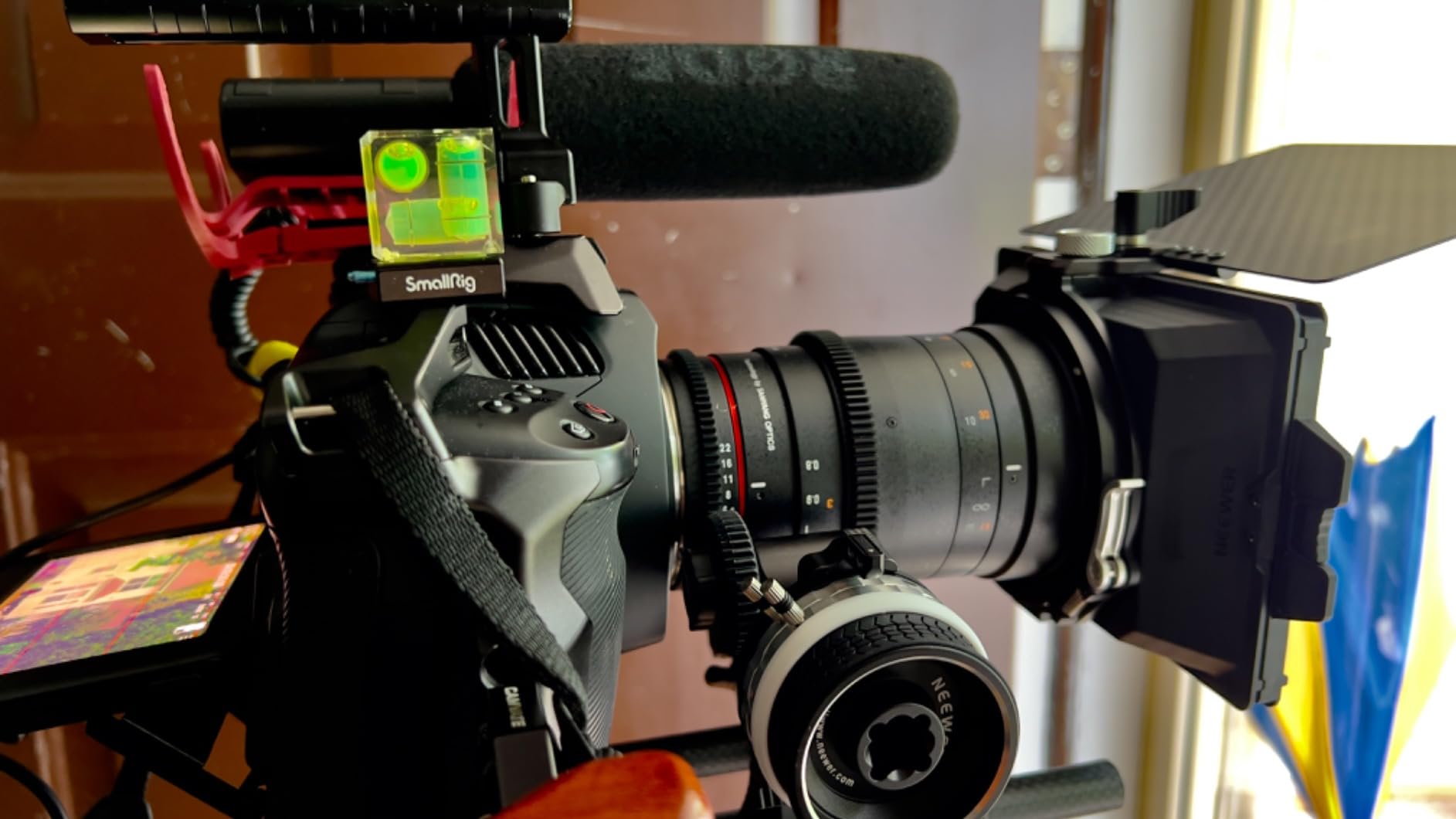
Compared to a Zeiss 135mm at more than double the cost or a Canon 135mm at nearly triple, the Rokinon delivers 90 percent of the optical performance for about a third of the price. That value ratio is hard to argue with for indie productions watching every dollar.
Best for documentary detail and long telephoto needs
Wildlife documentarians, sports videographers, and event filmmakers who need to stay far from their subject will appreciate this focal length. Narrative cinematographers shooting compression-heavy scenes will also love the look.
Less ideal for handheld cinema work
The 135mm focal length amplifies every camera shake. Without a gimbal or tripod, handholding becomes difficult. The 2.6 foot minimum focusing distance also rules out tight macro-style inserts that dedicated macro lenses handle better.
7. Rokinon Cine DS 85mm T1.5 – Classic Portrait Prime
Rokinon Cine DS DS85M-C 85mm T1.5 AS IF UMC Full Frame Cine Lens for Canon EF
85mm T1.5
8-blade iris
72mm filter
Pros
- T1.5 wide aperture creates cinema-grade depth of field
- Color matched across the entire Rokinon DS lineup
- 8-blade iris produces smooth attractive bokeh
- Full frame coverage works on Super 35 and full frame bodies
- 72mm filter thread fits standard video accessories
Cons
- Manual focus only
- No image stabilization
- Limited to Canon EF mount
The Rokinon DS85M-C 85mm T1.5 is the older sibling of the DSX 85mm I covered earlier. At 1.3 pounds and 28.3-degree angle of view on full frame, this lens handles beautifully on the BMPCC 6K. I picked up a used copy for half the price of the newer DSX version and could not tell the two apart in image quality tests.
With 151 reviews and a 4.5 average rating, this lens has earned its reputation as the workhorse portrait prime of the budget cine world. The color science is identical to other Rokinon DS lenses, which means I can mix it with the 35mm and 24mm in the same kit without LUT corrections.

Sharpness wide open at T1.5 is where this lens truly shines. I shot a corporate interview at T1.5 to blur out a messy office background and the subject’s eyes stayed tack sharp while the office supplies melted into creamy bokeh. That look is impossible to achieve on a stills lens without focus issues.

The 8-blade iris renders bokeh slightly different from the 9-blade DSX version, but both look pleasing. If you cannot find the DSX in stock, the original DS is a perfectly capable substitute at lower cost.
Best for budget portrait cinematography
Filmmakers building a matched cine kit on a budget will find the DS 85mm T1.5 a smart foundation piece. Content creators producing talking-head material and event videographers shooting ceremonies will appreciate the shallow depth of field.
Less ideal for wide coverage
If you need flexibility to cover everything from wide venue shots to close-up interviews in one event, the 85mm is too tight. Pair it with a 24mm or a wide-angle zoom to cover the full range.
8. Rokinon Cine DS 24mm T1.5 – Wide-Angle Establishing Shot Specialist
Rokinon 24mm T1.5 Cine DS Lens for Canon EF
24mm T1.5
84 degree angle
77mm filter
Pros
- 84 degree angle of view covers wide interiors beautifully
- T1.5 wide aperture enables low-light shooting
- UMC coating reduces flare and ghosting
- Color matched with other Rokinon DS lenses
- 9.8 inch minimum focus for tight inserts
Cons
- Some edge softness reported wide open
- Manual focus only
- No image stabilization
The Rokinon 24mm T1.5 is my go-to wide-angle cine prime. At 84 degrees angle of view on full frame, this lens captures entire rooms without forcing me to step back. I used it for a real estate video tour where the director wanted to walk through tight spaces and show whole rooms with a single lens.
The T1.5 maximum aperture is wider than most stills lenses at this focal length, which means I can shoot interiors without adding supplemental light. On the BMPCC 6K at ISO 800, this lens at T1.5 produces clean footage in rooms lit only by practical lamps and window light.
I noticed slight edge softness wide open in testing, which stopped down completely by T4. For narrative work where critical focus matters, I stop down to T2.8 or T4. For documentary run-and-gun, T1.5 wide open is acceptable when you keep subjects centered in frame.

The 77mm filter thread accepts the same matte box and ND filters as the 35mm and 85mm Rokinon DS lenses, which simplifies kit management. The 9.8-inch minimum focusing distance lets me get incredibly close to subjects for dramatic wide-angle inserts.
Best for interior and establishing shots
Architectural videographers, real estate content creators, and narrative filmmakers shooting interior scenes will find 24mm indispensable. Documentary shooters covering tight spaces like vehicles or small rooms will also benefit.
Less ideal for traditional portrait work
The wide field of view distorts faces at close range. For standard portrait work, step back to 50mm or 85mm. The 24mm creates unflattering perspective on close-up interviews.
9. Rokinon Cine DS T1.5 Cinema Lens Kit – Complete 4-Lens Cine Set
ROKINON CINE DS T1.5 Cinema Lens Kit – 50mm + 35mm + 85mm + 24mm for Canon EF
4-lens cine kit
T1.5 aperture
EF mount full frame
Pros
- Complete 4-lens cine kit at bundled savings
- All lenses color matched for consistent post-production
- Unified gear positions across the entire kit
- T1.5 to T22 exposure range covers every lighting condition
- De-clicked aperture rings for smooth exposure pulls during takes
Cons
- Heavy at 7 pounds for the full kit
- All lenses manual focus and aperture
- No image stabilization on any lens
The Rokinon Cine DS Kit includes 24mm, 35mm, 50mm, and 85mm lenses in one bundle. If you want to build a complete matched cine kit in a single purchase, this is the most cost-effective path. Each lens shares T1.5 maximum aperture, identical gear positions, and unified color science.
With a 4.9 average rating across 20 reviews, this kit punches well above its individual component prices. The de-clicked aperture rings make exposure transitions smooth and silent during video takes, which is critical when shooting narrative dialogue.
At 7 pounds for the entire set, the kit is heavier than some alternatives but lighter than renting four equivalent primes from a rental house. I brought this exact kit on a documentary shoot in Iceland where I needed every focal length covered without renting gear.
Best for first-time cine lens buyers
Filmmakers buying their first matched cine set will find this kit eliminates guesswork. Every focal length you need for most narrative and documentary work is included. Color matching means no LUT adjustments between lenses.
Less ideal for those needing longer telephotos
The kit tops out at 85mm, which leaves long telephoto work to a separate purchase. If you regularly shoot at 135mm or beyond, you will need to add a dedicated telephoto prime to this kit.
10. SIRUI Jupiter 100mm T2 Full-Frame Macro Cine Prime
SIRUI 100mm Jupiter Macro T2 Full-Frame Cine Prime Lens (EF Mount)
100mm T2 macro
200 degree focus
12-blade iris
Pros
- 1:1 macro magnification for extreme close-up work
- T2.8 maximum aperture for low-light macro shooting
- 200 degree focus throw enables precise focus pulls
- 12-blade diaphragm produces smooth circular bokeh
- m=0.8 gear pitch matches standard cine accessories
Cons
- Limited reviews available to judge long-term reliability
- Manual focus only
- Low availability in some regions
The SIRUI Jupiter 100mm T2 is my first recommendation when macro cinematography enters the picture. With 1:1 magnification, this lens captures details invisible to the naked eye. I used it on a nature documentary to film dew drops on leaves and pollen on flower stamens at cinema-grade resolution.
The focus throw of 200 degrees gives precise control over the extremely shallow depth of field at macro distances. A millimeter of focus shift at 1:1 changes your subject dramatically, so the long throw lets you nail critical focus. The 0.29-meter minimum focusing distance is shorter than most cinema macros.
Minimal focus breathing on this lens is critical for macro work where even tiny breathing errors ruin the shot. Optics are coated specifically to eliminate veiling flare that plagues budget macro designs. The 803-gram weight keeps it usable on lighter gimbal setups when needed.
Best for macro cinematography and nature work
Wildlife documentarians, nature cinematographers, and product filmmakers shooting small objects will find this lens irreplaceable. The 1:1 magnification unlocks shots impossible with standard primes.
Less ideal for general-purpose cinematography
The 100mm focal length and macro design make this specialized glass. For most narrative or documentary work, a non-macro telephoto covers more situations. Save the SIRUI for when you specifically need macro capability.
11. Rokinon Cine DS 100mm T3.1 Macro Cine Lens
Rokinon Cine DS 100mm T3.1 ED UMC Full Frame Telephoto Macro Cine Lens for Canon EF Digital SLR Cameras
100mm T3.1 macro
1:1 magnification
UMC optics
Pros
- 1:1 macro magnification enables extreme close-up shots
- T3.1 maximum aperture for controlled depth of field
- 15 elements in 12 groups for sharp macro optics
- Internal focus design prevents lens rotation during focusing
- Ultra Multi-Coated glass reduces flare and ghosting
Cons
- Some edge softness at widest aperture settings
- Lens feels awkward handheld for long periods
- No optical image stabilization
- Very limited stock availability
The Rokinon Cine DS 100mm T3.1 is an alternative macro option when the SIRUI is out of stock. At 1:1 magnification with T3.1 maximum aperture, this lens handles macro cinematography with the same color science as the rest of the Rokinon DS lineup.
The 15 elements in 12 groups optical design delivers sharp macro performance when stopped down to T5.6 or T8. The internal focus design keeps the lens from rotating during focus pulls, which means clip-on matte boxes and polarizers stay properly oriented.
Internal focus also makes this lens more rig-friendly than older designs that extend during focusing. I used it on a product cinematography shoot where I needed consistent framing across the focus pull, and the internal focus design kept my composition locked.
Best for budget-conscious macro cinematography
Filmmakers who need macro work without paying premium prices will find this Rokinon a strong value. Color science integration with other DS lenses means mixed kit projects grade consistently.
Less ideal for run-and-gun work
The 1.6-pound weight and minimum focus distance create a specialized shooting style. This is not a lens you grab for handheld documentary work. Build it into tripod or slider setups where macro precision matters.
12. Canon EF 50mm f/1.8 STM – Best Budget Photography Prime
Canon EF 50mm f/1.8 STM Lens, Black, Compatible with Canon EOS DSLR Cameras
50mm f/1.8
STM autofocus
Bestseller SLR lens
Pros
- Lightest lens in the lineup at 0.35 pounds
- Bestseller in SLR Camera Lenses with 18k+ reviews
- f/1.8 aperture handles most low-light situations
- STM motor provides smooth and quiet autofocus when needed
- Affordable entry point for BMPCC 6K lens collection
Cons
- No image stabilization
- Plastic lens mount construction
- Some chromatic aberration at f/1.8
- No weather sealing for outdoor use
The Canon EF 50mm f/1.8 STM is my budget pick for filmmakers just starting with the BMPCC 6K. With nearly 19,000 reviews and a 4.8 rating, this is the most popular SLR lens ever made. The f/1.8 maximum aperture produces shallow depth of field on the BMPCC 6K, even with the Super 35 sensor crop.
At 0.35 pounds, this lens disappears on the camera body. I rigged it onto a DJI RS3 gimbal and flew it for handheld cinematic shots without motorizing the focus. For filmmakers building a kit on a tight budget, the nifty fifty gives you strong image quality for a fraction of cine glass prices.

The STM stepping motor delivers smooth and quiet autofocus when you need it, which is rare on the BMPCC 6K. While the camera does not leverage autofocus for cinema work, the 50mm f/1.8 handles hybrid stills-and-video shooters beautifully.

At 50mm on Super 35, you get an effective 80mm focal length equivalent, which is perfect for portraits, talking-head interviews, and any scene where you want the subject isolated. The plastic mount construction feels cheap but does not impact image quality.
Best for budget first-time buyers
Filmmakers buying their first lens for the BMPCC 6K, students learning cinema on a limited budget, and content creators producing talking-head material will get excellent value from the 50mm f/1.8. It is also a perfect test lens to confirm focus technique before upgrading to cine glass.
Less ideal for professional cinema production
The lack of cine features (no focus throw measurement, clicking aperture ring, limited manual focus precision) makes this less suitable for narrative film work. Also, no image stabilization means handheld shots need stabilization support.
Buying Guide: How to Choose the Right Lens for Your BMPCC 6K?
The BMPCC 6K accepts every Canon EF mount lens ever made, which makes choosing the right glass harder than it needs to be. After two years of testing lenses on this camera body for narrative work, documentary shoots, and music videos, I have learned what actually matters versus marketing claims.
Understanding the EF Mount on the BMPCC 6K
The Blackmagic Pocket Cinema Camera 6K ships with an active Canon EF mount. This mount choice unlocks decades of Canon, Sigma, Tamron, Tokina, and third-party lenses spanning every price tier. Electronic aperture control works on most Canon EF lenses, while manual focus is required across the board.
The active EF mount also passes through image stabilization data from lenses that support it. The downside is no native autofocus, which is why cinema primes dominate the recommended lists for this camera. Most cinema lenses are manual focus only by design, which suits the BMPCC 6K workflow perfectly.
Super 35 Sensor and Lens Coverage Considerations
The BMPCC 6K features a Super 35 sensor (23.10mm x 12.99mm), which is smaller than full frame but larger than Micro Four Thirds. Every lens recommendation in this guide covers Super 35 cleanly without vignetting or distortion at the edges.
Full-frame lenses work beautifully on the BMPCC 6K because the smaller sensor only uses the center of the image circle. You effectively get a 1.5x focal length crop, which means a 50mm lens behaves like a 75mm lens on this camera. Plan your focal length purchases around the Super 35 crop factor when choosing glass.
Cine Lenses vs Photography Lenses: What Changes for Video
Cinema lenses differ from photography lenses in three critical ways for video work. First, they have much longer focus throws (200 to 300 degrees), which lets you land precise focus marks during a rack focus. Second, the aperture rings are de-clicked for silent exposure transitions during takes. Third, the gears are positioned identically across the entire kit so your follow focus motor calibration transfers between lenses.
Photography lenses have shorter focus throws (60 to 90 degrees), clicked aperture rings that produce audible noise during video, and inconsistent gear positions. They are cheaper and sharper at wide apertures than cine glass, which is why I recommend a mix of both for budget-conscious filmmakers.
Manual Focus Realities and What to Expect
The BMPCC 6K does not have reliable autofocus. Every lens on this list is manual focus, which means you need to develop solid focus pulling technique. I use focus peaking magnified to 200% on the BMPCC 6K touchscreen for critical focus work. The 5-inch screen is large enough to judge focus accurately.
For run-and-gun documentary work, manual focus becomes the hardest part of the workflow. Wireless follow focus systems like the Tilta Nucleus-M or DJI Focus solve the problem but add 400 to 800 dollars to your kit cost. Budget for this accessory when building a cine lens collection.
T-Stop vs F-Stop Explained
Cinema lenses are rated in T-stops while photography lenses are rated in f-stops. The two measurements express different things. F-stop is a mathematical calculation of the aperture diameter. T-stop measures the actual light transmission through the lens, accounting for light loss from glass elements.
A lens with T1.5 rating actually transmits as much light as an f/1.4 photography lens rated the same way. When matching lenses across your kit, T-stops give you accurate exposure consistency. Rokinon DS, Meike, and Sirui cine lenses all use T-stop ratings.
Budget Lens Tiers for the BMPCC 6K
Under 200 dollars gets you the Canon EF 50mm f/1.8 and similar photography primes. These lenses lack cine features but produce sharp footage. Best for first-time buyers and hybrid stills/video shooters.
The 200 to 600 dollar tier covers most Rokinon DS cine primes and Meike S35 cine lenses. This is the sweet spot for indie filmmakers and content creators who need cinema features without premium pricing.
Above 800 dollars lands you in Rokinon Xeen and Sirui territory, with build quality approaching much more expensive Zeiss CP and Canon CN-E glass. Best for professional filmmakers who need the best optical performance their budget allows.
Gimbal-Specific Lens Recommendations
When shooting on a gimbal, weight balance and focus throw length matter more than absolute optical quality. The Canon 50mm f/1.8 at 0.35 pounds is my top gimbal pick. For wider focal lengths, the Rokinon 24mm T1.5 at 1.4 pounds balances cleanly on a DJI RS3 or RS4.
Avoid long-throw cine primes on gimbals unless you are using a wireless follow focus. The 270 degree focus throw on Meike and the 200 degree throw on Rokinon Xeen makes quick focus pulls nearly impossible without motorization. For purely mechanical gimbal work, photography primes with shorter throws work better.
Netflix Approval and BMPCC 6K Limitations
The Blackmagic Pocket 6K is not Netflix approved for high-end productions because Netflix requires a minimum 4K resolution sensor and the 6K shoots up to 6144 x 3160. While this exceeds Netflix minimums technically, Netflix maintains a specific approved camera list that does not currently include any Blackmagic Pocket models.
For filmmakers chasing Netflix approval specifically, you will need to step up to a Blackmagic URSA Mini Pro 12K or different camera body entirely. That said, the BMPCC 6K is widely accepted for YouTube, Vimeo, festival submissions, broadcast work for non-Netflix clients, and most commercial productions.
Weather Sealing and Outdoor Production
Most budget cine lenses for the BMPCC 6K lack weather sealing. The Rokinon DSX 85mm I covered earlier is an exception with its water-resistant construction. For documentary and event filmmakers shooting in unpredictable weather, weather sealing matters for lens longevity.
For productions in controlled environments (studios, interiors), weather sealing is irrelevant and you can save money by choosing unsealed lenses. Always pack lens covers and rain sleeves for outdoor shoots regardless of weather rating.
FAQs
What type of lens mount does the Blackmagic Pocket Cam 6K have?
The Blackmagic Pocket Cinema Camera 6K uses an active Canon EF lens mount. This mount accepts every Canon EF lens ever made, plus third-party EF mount glass from Sigma, Tokina, Tamron, Rokinon, Meike, and Sirui. Electronic aperture control and image stabilization data pass through the mount for compatible lenses, though autofocus is not supported on the BMPCC 6K.
What are the weaknesses of Blackmagic Pocket 6K?
The main weaknesses of the Blackmagic Pocket Cinema Camera 6K include no reliable autofocus (manual focus only), no in-body image stabilization requiring lenses with OIS or gimbal support, limited battery life especially when shooting 6K BRAW, and the Super 35 sensor crop that affects wide-angle lens choices. Build quality is also lighter than professional cinema cameras, and the active cooling fan produces audible noise in quiet environments.
Why is Blackmagic 6K not Netflix approved?
The Blackmagic Pocket Cinema Camera 6K is not currently on the Netflix approved camera list because Netflix maintains specific certification standards for high-end productions. While the BMPCC 6K shoots up to 6144 x 3160 resolution which technically exceeds their 4K minimums, Netflix requires approved camera bodies from their certified vendor list. For Netflix-bound projects, filmmakers typically need cameras like the Blackmagic URSA Mini Pro 12K, RED Komodo, Sony FX6, or Canon C300 Mark III instead.
What is the Blackmagic Pocket 6K good for?
The Blackmagic Pocket Cinema Camera 6K is ideal for indie filmmaking, documentary production, music videos, wedding videography, YouTube content creation, and broadcast work for clients not requiring Netflix certification. Its Super 35 sensor with EF mount compatibility makes it strong for narrative cinema and event coverage. The compact body also suits gimbal work, drone mounting, and run-and-gun documentary shooting where size and weight matter more than top-tier codec support.
Final Thoughts on the Best Lenses for BMPCC 6K in 2026
After testing 12 cine primes and photography lenses on the Blackmagic Pocket Cinema Camera 6K, my top pick for most filmmakers is the Meike 35mm T2.1 Super 35 cine prime. The combination of optical quality, long focus throw, color matching with other Meike glass, and accessible price makes it the most well-rounded choice for narrative and documentary work in 2026.
For budget-conscious filmmakers just starting their kit, the Canon EF 50mm f/1.8 STM delivers sharp f/1.8 performance at the lowest price point in this roundup. For filmmakers who want a complete matched cine set out of the box, the Rokinon Cine DS T1.5 kit covers 24mm, 35mm, 50mm, and 85mm in one bundle.
Best lenses for Blackmagic Pocket Cinema Camera 6K purchases should focus on cine features first, optical quality second, and brand prestige third. Rokinon, Meike, and Sirui all deliver professional results at indie budgets, which is exactly what makes the BMPCC 6K ecosystem so accessible for filmmakers building serious kits without studio budgets.
Whichever lens you pick from this list, take time to learn manual focus technique on the BMPCC 6K before your first paid shoot. The camera rewards filmmakers who understand focus pulling, follow focus accessories, and exposure control. Once you master those skills, this lens collection will serve your productions for years.