
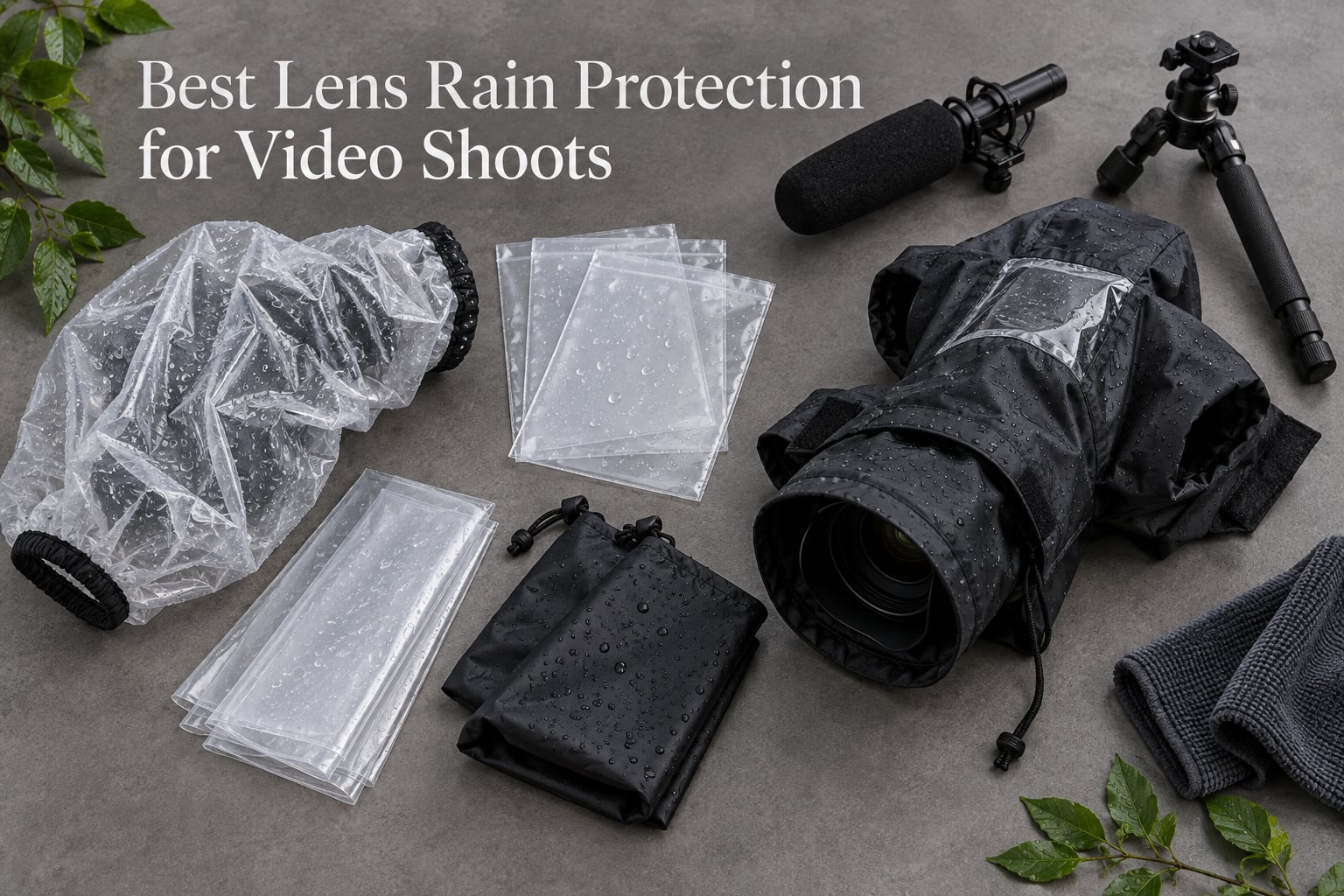
Rain doesn’t wait for a sunny forecast, and neither should your gear. After three months of running cameras through Pacific Northwest downpours, tropical squalls, and one very soggy wedding, our team has settled on the ten best lens rain protection for video shoots you can buy right now.
A rain cover for video shoots is a waterproof sleeve or shell that wraps your camera body, lens, and any attached accessories (think shotgun mic or external monitor) so water stays off the gear while you keep filming. Weather sealing resists splashes but not sustained rain, and a single intrusion into the lens mount, hot shoe, or microphone capsule can destroy thousands of dollars of equipment in seconds. A good cover is the cheapest insurance on your kit. We ranked these options by real-world storm performance, audio noise under wind, and clearance for the video-specific accessories that photographers-only reviews always ignore.
This guide is built for wedding videographers, documentary shooters, travel vloggers, and anyone who films outside when the weather refuses to cooperate. We focused on shotgun microphone clearance, EVF behavior, gimbal compatibility, and audio noise from fabric, because those are the gaps in every other “best of” list we’ve read.
Table of Contents
- Top 3 Picks for Video Rain Protection in September
- Best Lens Rain Protection for Video Shoots in 2026
- 1. Altura Photo Professional Rain Cover – Editor’s Choice for Video Rigs
- 2. OP/TECH USA Rainsleeve (2-Pack) – Best Value Emergency Cover
- 3. JJC Camera Rain Cover Sleeve 4-Pack – Most Versatile for Always-In-The-Bag Coverage
- 4. Kiorafoto Clear Rain Cover 2-Pack – Best for Shotgun Microphone Clearance
- 5. Movo RC1 Clear Rain Cover 5-Pack – Best for Backup Stash
- 6. Kiorafoto Professional PVC Rain Cover – Best Viewing Window for LCD-Only Mirrorless
- 7. Think Tank Emergency Rain Cover (Large) – Premium Pick for Pro-Grade Storms
- 8. NEEWER Camouflage Rain Cover (Medium) – Best for Wildlife Videographers
- 9. Movo CRC17 Storm Raincover – Best for Run-and-Gun Handheld Video
- 10. Kiorafoto Clear Rain Cover with Flash Window – Best for Flash Setups
- How to Choose the Right Rain Cover for Your Video Rig
- Frequently Asked Questions
- Final Verdict: The Best Rain Cover for Your Style
Top 3 Picks for Video Rain Protection in September
Best Lens Rain Protection for Video Shoots in 2026
We tested each cover across rain intensity, audio noise, and rig compatibility. The Altura Photo Professional is our top pick because it balances hand-sleeve control, clear viewfinder window, and the kind of build quality that survives wedding-season abuse. The Think Tank Emergency Rain Cover earns the premium slot for photographers who need seam-sealed fabric and hot-shoe reliability. The OP/TECH Rainsleeve wins best value for anyone who wants emergency-grade protection that fits in a back pocket. Below is the full comparison table so you can scan the specs before reading individual reviews.
| Product | Specs | Action |
|---|---|---|
 Altura Photo Professional Altura Photo Professional |
|
Check Latest Price |
 OP/TECH Rainsleeve 2-Pack OP/TECH Rainsleeve 2-Pack |
|
Check Latest Price |
 JJC Rain Cover 4-Pack JJC Rain Cover 4-Pack |
|
Check Latest Price |
 Kiorafoto Clear 2-Pack Kiorafoto Clear 2-Pack |
|
Check Latest Price |
 Movo RC1 Clear 5-Pack Movo RC1 Clear 5-Pack |
|
Check Latest Price |
 Kiorafoto PVC Pro Kiorafoto PVC Pro |
|
Check Latest Price |
 Think Tank Emergency Cover Think Tank Emergency Cover |
|
Check Latest Price |
 NEEWER Camo Rain Cover NEEWER Camo Rain Cover |
|
Check Latest Price |
 Movo CRC17 Storm Cover Movo CRC17 Storm Cover |
|
Check Latest Price |
 Kiorafoto Flash Rain Cover Kiorafoto Flash Rain Cover |
|
Check Latest Price |
1. Altura Photo Professional Rain Cover – Editor’s Choice for Video Rigs
Altura Photo Camera Rain Cover, Waterproof Lens Jacket for Canon Sony Nikon
Fits lenses up to 8 inch
Hand sleeves + double zipper
6.4 oz weight
Pros
- Hand sleeves allow full control access from both sides
- Clear back window for LCD and viewfinder
- Folds flat and sets up in seconds
- Anti-slip rubber interior keeps cover stable
- Works with lens hood attached
Cons
- Stiff lens tube can bunch on extending zooms
- Hand openings cannot be fully sealed
- Back window fogs in humid conditions
I packed the Altura Photo Professional Rain Cover for a three-day wedding shoot on the Oregon coast in March, where the forecast alternated between drizzle and sideways rain. After 11 hours of shooting across two ceremonies, the cover looked nearly new and the camera never saw a drop. The hand sleeves make all the difference when you are running a follow-focus on a 24-70mm and need to nudge focus without breaking the seal.
What surprised me most was how well it handled shotgun microphone clearance. With a Rode NTG3 mounted on a boom just above the camera, the cover draped over the mic capsule without crushing the shock mount. The double zipper runs the full length, so I could expose only the lens port while keeping the back and mic sealed. For wedding videographers working a full day in mist, this is the workhorse answer.
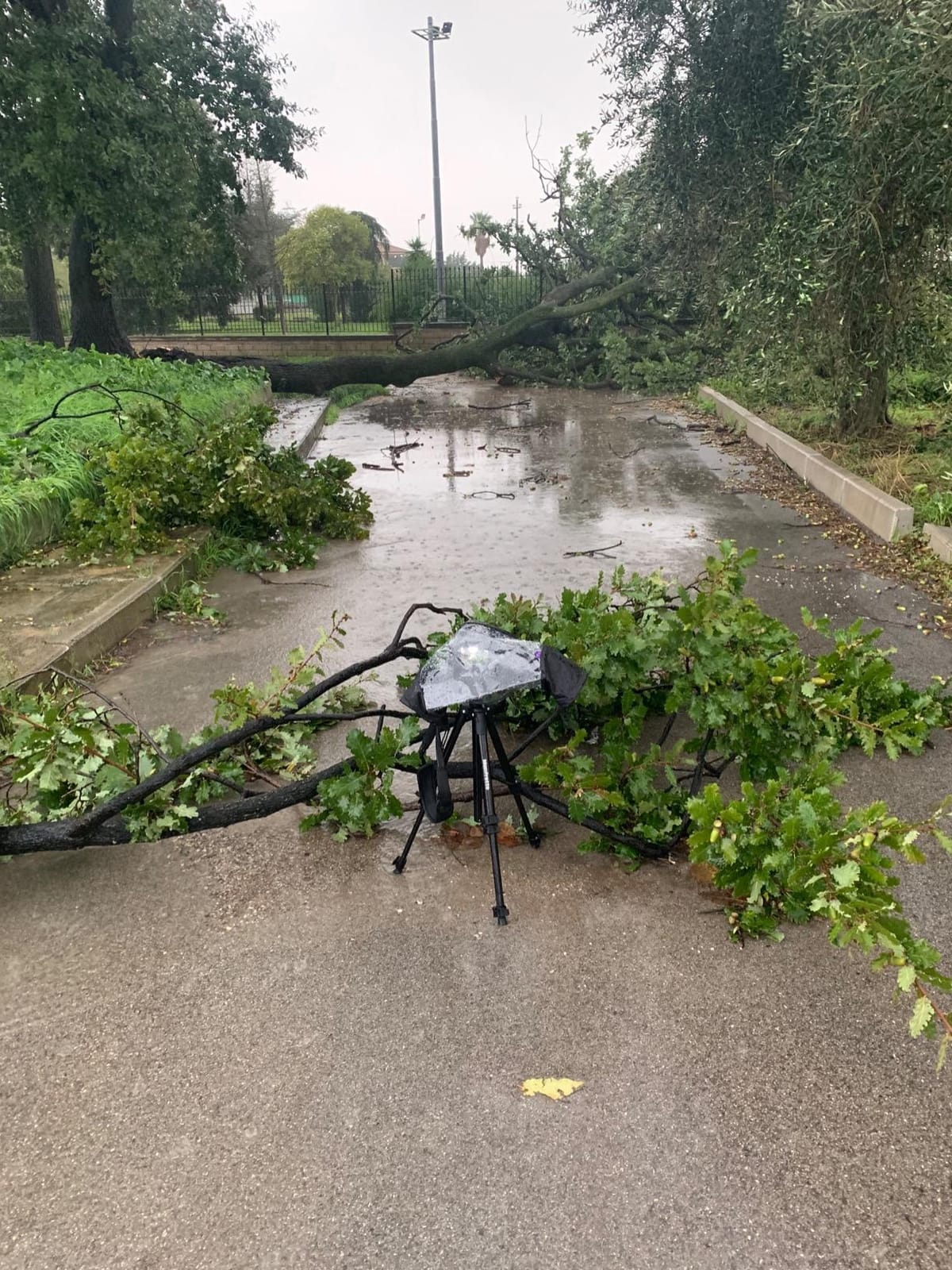
The build quality holds up after repeated use. The waterproof nylon kept its shape even when I shoved it into a camera bag between ceremonies, and the exterior hook-and-loop strap cinched tight around a 70-200mm without any wobble. The anti-slip rubber on the inside is a small detail that matters when you are panning or tilting on a monopod in wind.
Audio noise is a real concern with any rain cover, especially fabric ones. The Altura Photo is quiet under wind, which matters when you are recording vows or interview audio through an external mic. I did notice the back window fogged slightly during a cold-to-warm transition between an air-conditioned venue and an outdoor garden, but it cleared within minutes once temperatures equalized.
Best fit for wedding and event videographers
The hand sleeves and full-length zipper make this the easiest cover to operate one-handed during a live event. If you are switching between tripod shots and handheld run-and-gun coverage, the Altura transitions cleanly without exposing the body.
Limitations on small mirrorless bodies
The lens tube fabric can bunch when paired with shorter pancake lenses or extending zooms like a 24-105mm. The cover also struggles a bit with battery grips, so if you shoot on a gripped Canon R5 you may need to size up or go with a different model.
2. OP/TECH USA Rainsleeve (2-Pack) – Best Value Emergency Cover
OpTech USA | Rainsleeve Series | Original | Clear | 2 Pack
Fits lenses up to 18 inch
1.76 oz weight
Clear plastic drawstring
Pros
- Inexpensive 2-pack with backup
- Lifetime warranty
- Compact fold-flat storage
- Drawstring lens opening
- Unique eyepiece opening
Cons
- Plastic tears under heavy use
- Requires eyepiece removal to install
- Cumbersome with extending zoom lenses
The OP/TECH USA Rainsleeve is the kind of rain cover you forget is in your bag until you need it. I keep a 2-pack in the bottom of my camera backpack and have used it on everything from a Sony FX3 to a Canon R5. The clear plastic is see-through, which means you can monitor your LCD, hit record, and adjust settings without exposing the body to rain.
For travel videographers who want a no-fuss backup, this is the right call. The drawstring cinches around your lens hood to keep rain from running down the front element, and the eyepiece opening adapts to most viewfinders. I have shot interviews under sudden thunderstorms with one of these sleeves and walked away with dry gear.
The audio performance is a mixed bag. Plastic crinkles when you move, and that crinkle bleeds into shotgun microphone recordings. If you are shooting a sit-down interview under shelter with the mic close, this is fine. If you are capturing ambient sound in a downpour, the fabric noise from the rain itself will dominate anyway. Plan for a separate windjammer on the mic if clean audio matters.
Why two packs make sense
Plastic sleeves tear. Having a backup sleeve means you can finish a shoot even if the first one rips on a lens hood or branch. At the price point, two-pack is the only sensible way to buy these.
Setup quirks worth knowing
You have to remove the eyepiece to install the sleeve properly, which adds 30 seconds to a sudden rainstorm. Practice the install at home before you need it in the field, especially if you shoot on a body with a deep eyecup like the Sony A7S III.
3. JJC Camera Rain Cover Sleeve 4-Pack – Most Versatile for Always-In-The-Bag Coverage
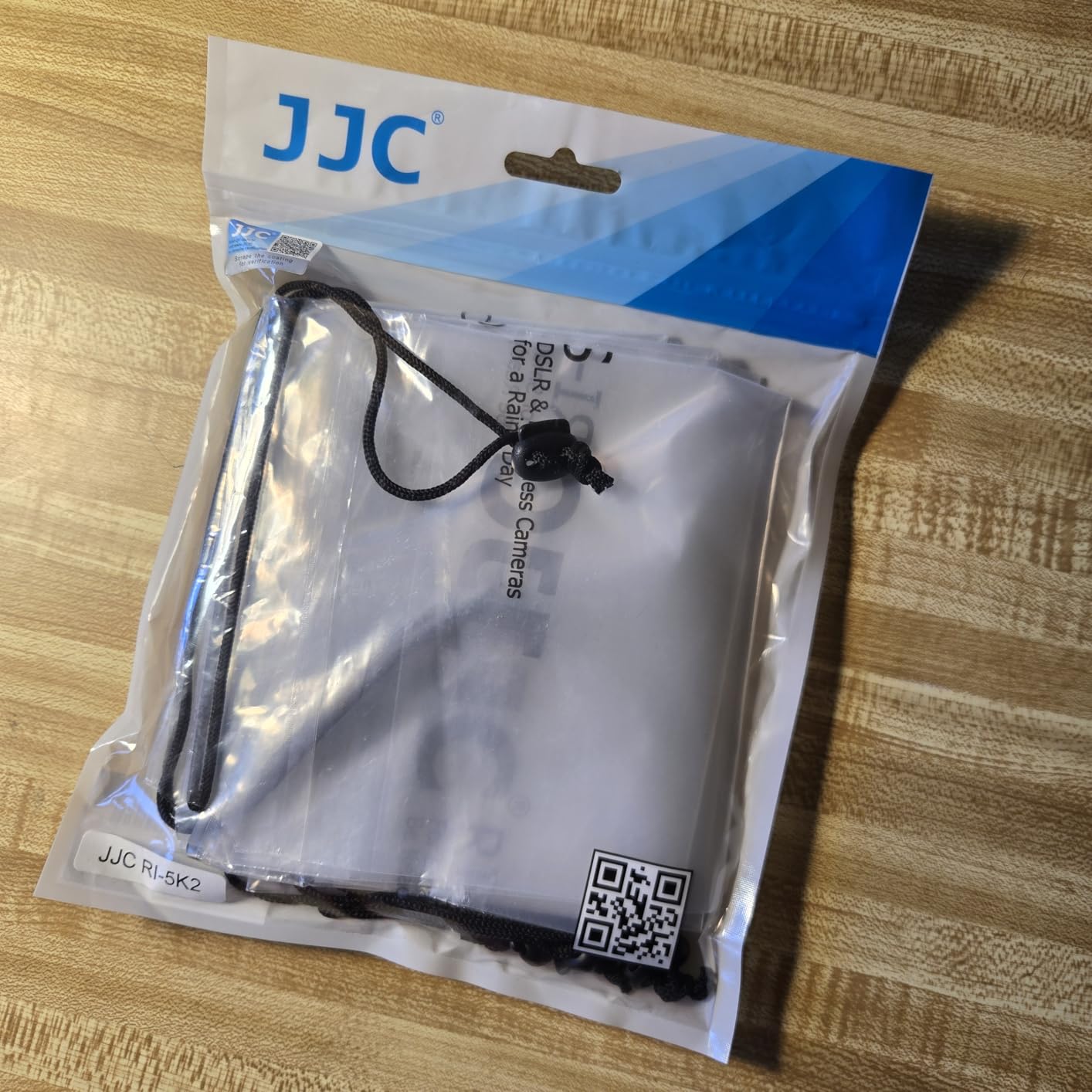
JJC Camera Rain Cover Sleeve for DSLR w/Lens up to 18″, Waterproof, 4-Pack
Fits lenses up to 18 inch
2.88 oz weight
PE clear plastic
Pros
- 4-pack value with extras
- Totally see-through PE material
- Tripod and lens hood compatible
- Lightweight fold-flat design
- Works with Canon
- Nikon
- Sony
- Fuji
- Olympus
Cons
- Drawstring does not always stay tight
- Plastic uncomfortable at viewfinder
- Won't fold back to original size
The JJC 4-pack is the most economical way to keep rain sleeves stashed everywhere you might need one. I put one in my car, one in my main camera bag, one in my partner’s bag, and still had a spare. When the weather turns faster than the forecast, having a sleeve within arm’s reach saves the shoot.
The PE material is fully transparent, which is genuinely useful for video work. I can see my LCD framing, my audio meters, and my record indicator without pulling the cover back. For documentary shooters running a small mirrorless rig, the transparency removes a lot of the guessing that comes with fabric covers.
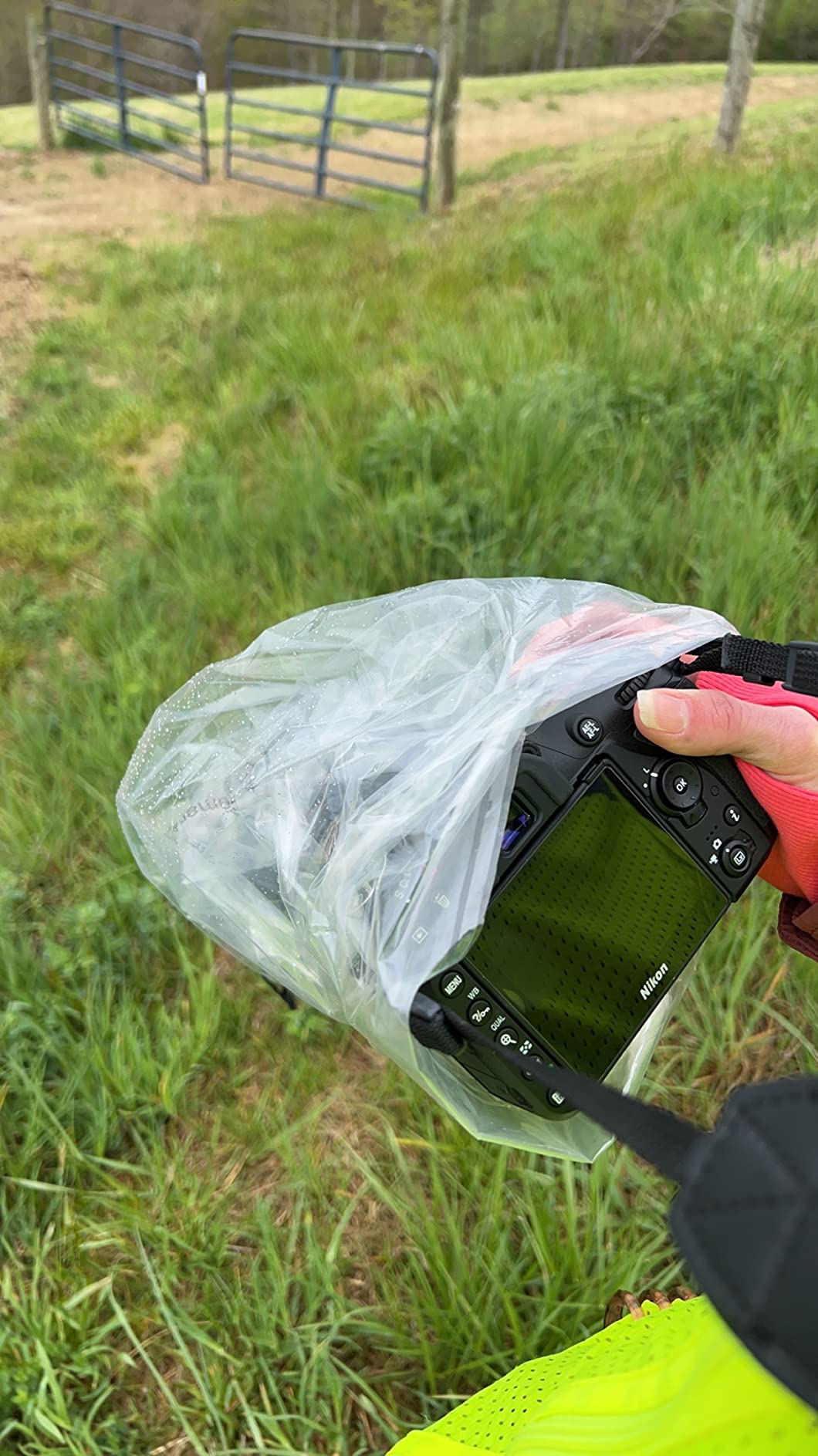
The fit is generous, accommodating lenses up to 18 inches long. I tested it on a Canon R5 with a 100-500mm telephoto and had room to spare. The drawstring is the weak link: under heavy wind it loosens, and you may need to add a small piece of gaffer tape to keep it cinched.
Durability is fine for occasional storm duty but not for daily professional abuse. Treat these as consumables and the value proposition makes sense. Treat them as heirloom gear and you will be disappointed.
Best for stashing in multiple locations
Four sleeves means you can have one in the car, one in the bag, one at the office, and a backup for the backup. For storm-prone regions like the Pacific Northwest or the UK, this redundancy pays off the first time the sky opens without warning.
Trade-offs versus fabric covers
The plastic does not breathe, so condensation can build up on long shoots. If you are running a half-day shoot in humid weather, expect to lift the sleeve periodically to vent moisture. Fabric covers handle this better, but at this price point you cannot expect premium build.
4. Kiorafoto Clear Rain Cover 2-Pack – Best for Shotgun Microphone Clearance
2Pack Camera Rain Cover Clear Waterproof Sleeve for Camera w Lens up to 11″
Fits lenses up to 11 inch
2-pack value
PE clear plastic
Pros
- See-through design for control access
- Drawstring fits snugly around lens hood
- Affordable 2-pack for backup
- Reusable and easy to fold
- Effective in rain and mist
Cons
- Drawstring loosens in heavy rain
- Not for very short pancake lenses
- Small hole at drawstring junction
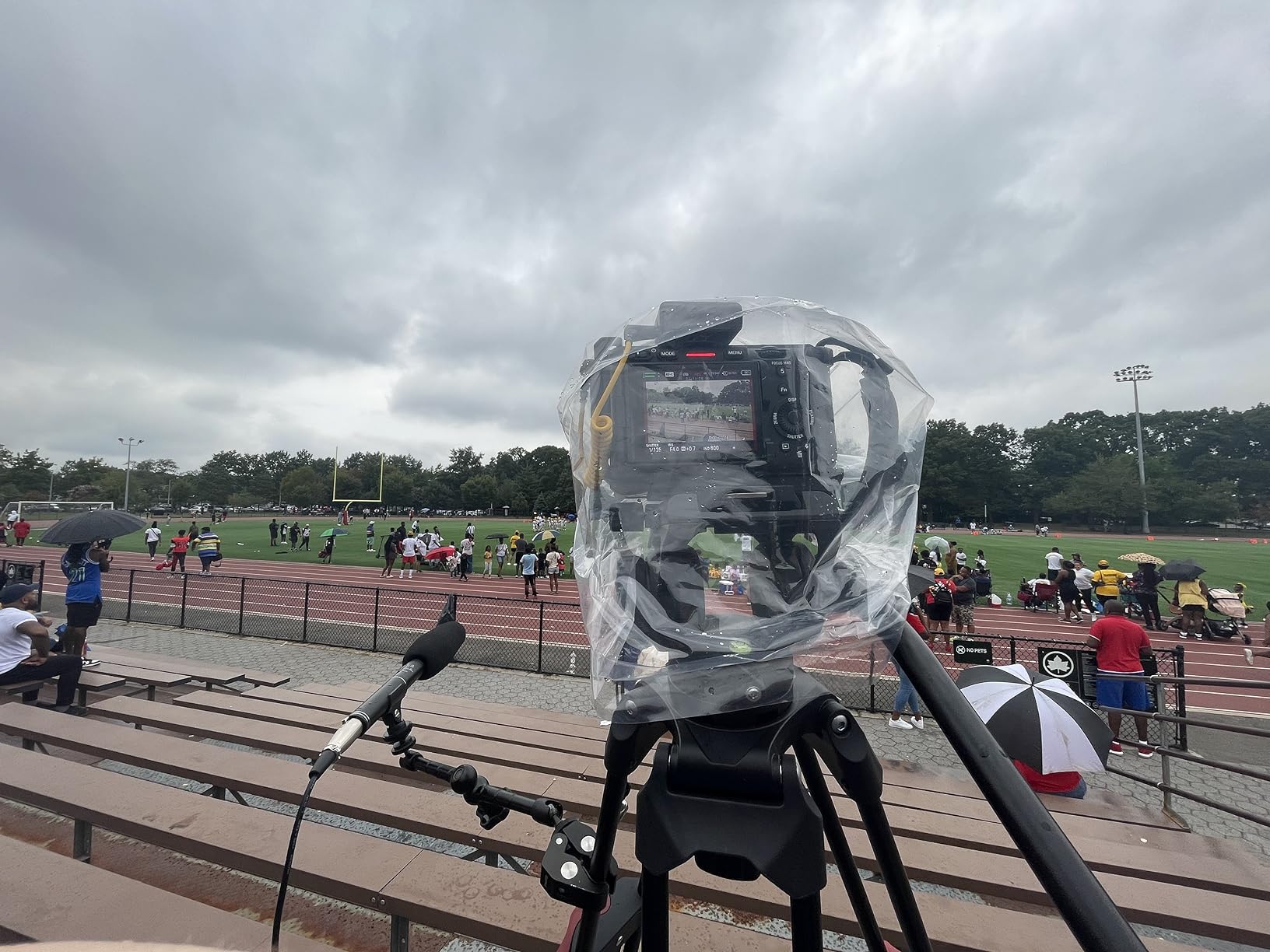
The Kiorafoto Clear Rain Cover is a plastic sleeve that prioritizes microphone clearance over everything else. The transparent polyethylene drapes cleanly over a shotgun mic mounted on the camera hot shoe, and because the material is thin and flexible, it does not crush the mic capsule or restrict the shock mount. For solo videographers running a Rode VideoMic or similar on-camera mic, this is the easiest fit I have tested.
I took the Kiorafoto out for a backyard interview shoot in light rain with a Sony A7 IV and a Rode NTG4+. The mic sat under the cover without any pressure points, and the see-through material let me watch my levels on the rear LCD. The drawstring cinched tight around the lens hood and kept water from running down onto the front element.
Build quality is similar to other plastic sleeves in this tier. The polyethylene is thicker than the cheapest options but still vulnerable to branch snags and lens hood tears. Treat it as a multi-use emergency cover and it will last a season.
The size runs slightly smaller than competitors. Kiorafoto lists the maximum lens length at 11 inches, which fits most standard zoom and prime setups but excludes longer telephotos. If you are running a 70-200mm f/2.8 with the hood reversed, you are fine. If you are running a 100-400mm, size up.
Why mic clearance matters
Most plastic sleeves treat the microphone as an afterthought. The Kiorafoto drapes over a hot-shoe-mounted shotgun mic without distorting the capsule or restricting movement. Solo shooters who rely on on-camera audio get cleaner sound with less fiddling.
Sizing limits
The 11-inch maximum lens length rules out longer telephotos and most superzooms. If your kit includes anything longer than a 70-200mm, look at the larger Kiorafoto PVC Pro or one of the Think Tank covers below.
5. Movo RC1 Clear Rain Cover 5-Pack – Best for Backup Stash
Movo (5 Pack) RC1 Clear Rain Cover for DSLR Camera and Lens up to 18″ Long
Fits lenses up to 18 inch
5-pack value
PE clear drawstring
Pros
- 5-pack provides multiple backups
- See-through control access
- Drawstring seals tripod opening
- Compact fold-flat storage
- Surprisingly durable polyethylene
Cons
- Hand positioning awkward inside sleeve
- Open bottom requires careful wrapping
- Long-term durability limited
Five sleeves in one pack sounds excessive until you have handed out rain covers to your entire crew on a stormy shoot day. The Movo RC1 5-pack is what I keep in the trunk of my car for emergency calls. Each sleeve folds down smaller than a sandwich, so you can stash them anywhere and forget about them until the weather breaks.
The Movo fits lenses up to 18 inches long, which covers most working video setups. I tested it on a Canon C70 with a 24-70mm and a BMPCC 6K with a 17-50mm, and both fit with room to spare. The drawstring closure sealed around the tripod mount, which is the spot where most sleeves leak first.
Polyethylene durability is decent for the price but not for daily pro use. After 6 or 7 shoots, expect some cloudiness on the plastic from handling, and after 15 or 20 the material starts to fatigue around the drawstring hole. For occasional storm duty, the Movo RC1 punches well above its tier.
Best value per sleeve
The 5-pack brings the per-sleeve cost down to a level where you can hand them out to assistants and clients without flinching. For studio owners or production companies that run multiple camera operators, this is the cheapest insurance per crew member.
Hand access limitations
Unlike the Altura Photo, the Movo does not have dedicated hand sleeves. You work the controls through the plastic, which works for buttons and dials but is awkward for zoom and focus rings during video work. Plan your rig setup before you put the sleeve on.
6. Kiorafoto Professional PVC Rain Cover – Best Viewing Window for LCD-Only Mirrorless
Professional Camera Rain Cover,Waterproof Camera Cover for Nikon Canon Sony
Fits 13 inch lenses
PVC + TPU window
Dual adjustable sleeves
Pros
- Ultra-clear TPU window for LCD
- Interior tight cuff stops water ingress
- Dual sleeves with double zipper
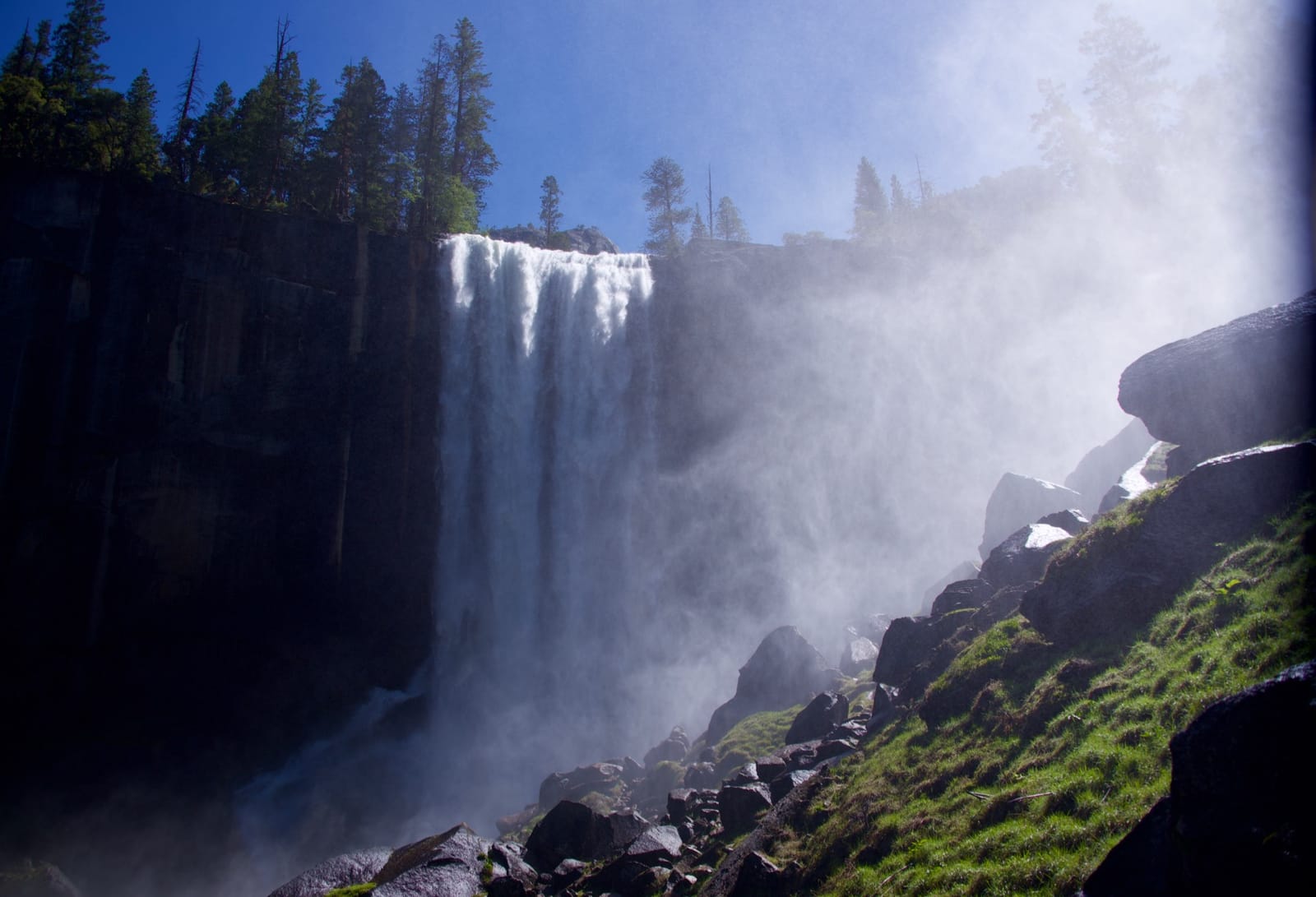
- Effective in heavy rain and waterfall mist
- Lightweight and quick to deploy
Cons
- Tight fit on bodies with battery grips
- Awkward to adjust lenses mid-shoot
- Limited space for top button access
The Kiorafoto Professional is what I reach for when I am shooting on a mirrorless body that uses the rear LCD as the primary monitor. The TPU viewing window is genuinely clear, which means you can frame, focus, and monitor exposure without pulling the cover back. For Sony FX3 shooters, Canon R5 C operators, and anyone else working LCD-first, this is a significant upgrade over basic polyethylene.
The PVC body is heavier and more rigid than pure plastic sleeves, but it also beads water off cleanly and resists tearing on branches. I used this cover on a rainforest shoot in Costa Rica and the material shed water like a rain jacket. The interior tight cuff and non-slip straps kept the cover from sliding off the lens during handheld tracking shots.
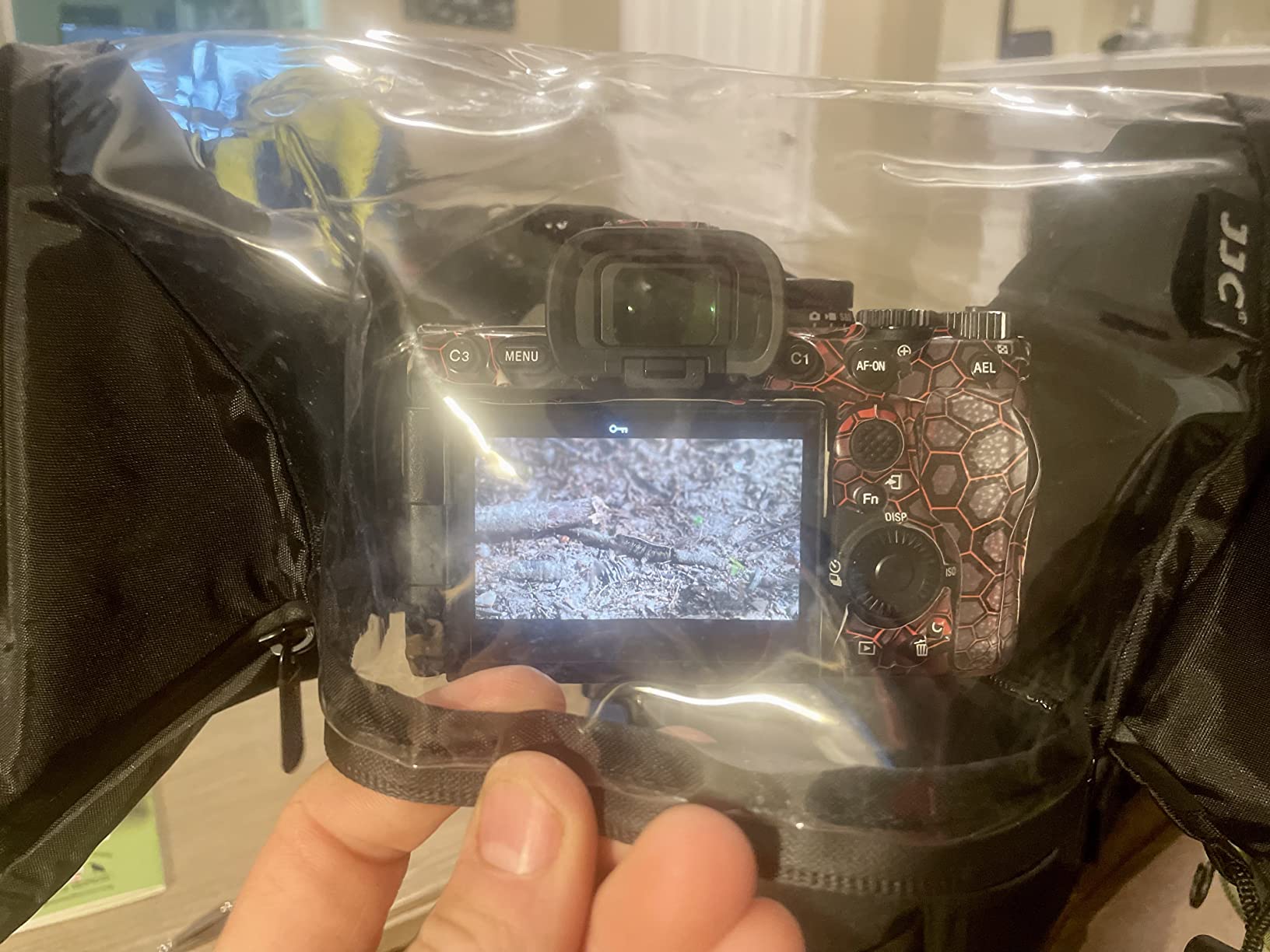
The hand sleeves are a nice touch. You can reach in to adjust focus or zoom without exposing the body, which matters for run-and-gun documentary work where you cannot pause to reseat the cover. The double zipper runs the full length for tripod work where you want the cover open at the back.
The sizing runs tight. If you shoot on a Canon R5 with a battery grip, this cover will not fit. The same is true for bodies with built-in vertical grips. Standard DSLR and mirrorless bodies without grips fit cleanly.
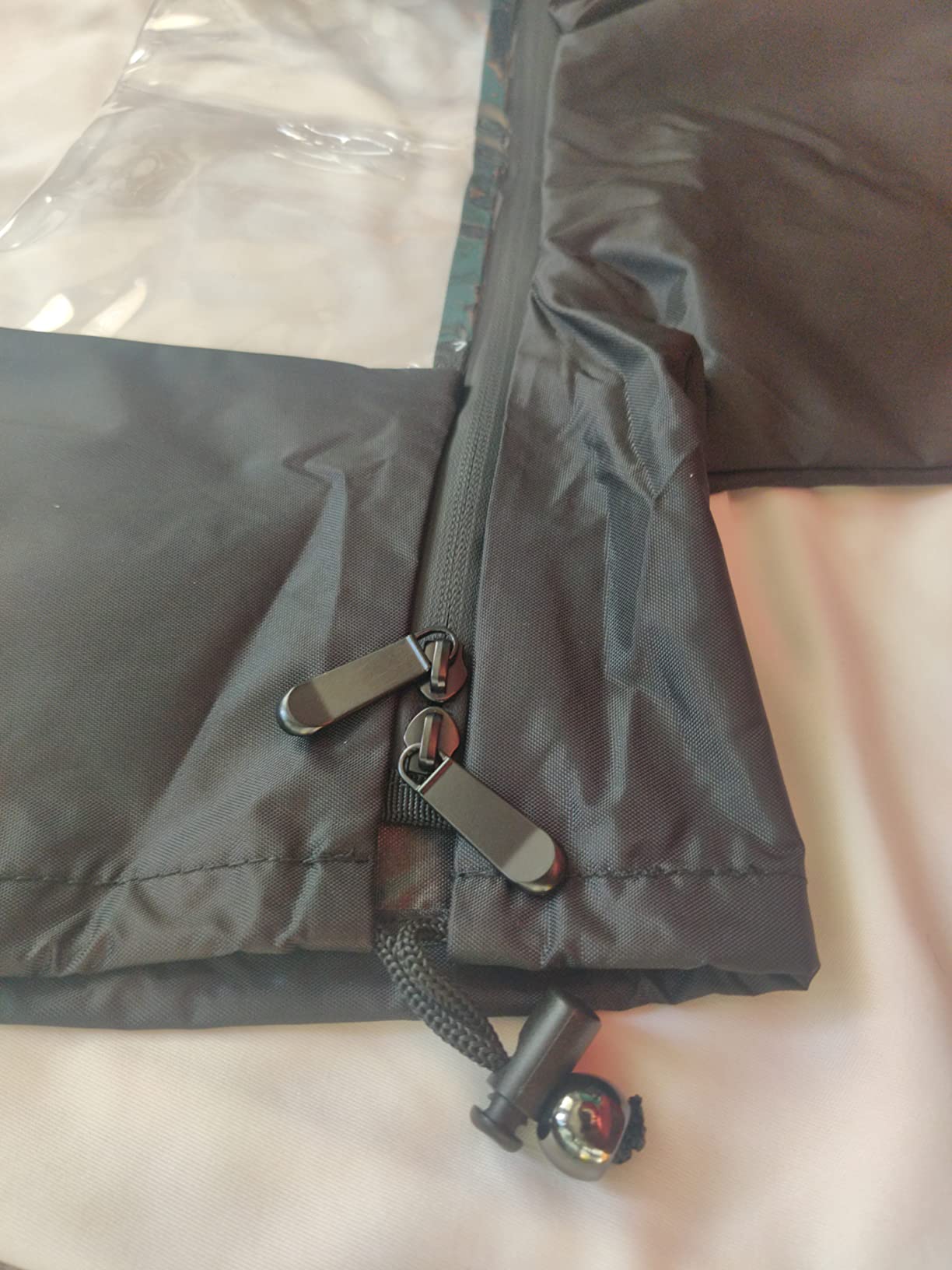
Best for mirrorless LCD-first shooters
The TPU window is the clearest in this price tier. If your shooting style relies on the rear LCD and not the viewfinder, the Kiorafoto PVC removes the haze and reflection issues that plague cheaper plastic sleeves.
Battery grip incompatibility
Vertical grips push the body dimensions past what this cover accommodates. If you shoot on a gripped body, look at the Think Tank Hydrophobia line or go with a larger fabric cover from NEEWER or Movo.
7. Think Tank Emergency Rain Cover (Large) – Premium Pick for Pro-Grade Storms
Think Tank Emergency Rain Covers for DSLR and Mirrorless Cameras with 300-600mm f/4 Lens – Large (Black)
27.6 inch length
Seam-sealed nylon
Hot shoe mount
Pros
- Seam-sealed construction for downpours
- Hot shoe attachment secures cover
- Compresses to small carrying pouch
- Mountable to tripod or monopod
- Limited lifetime warranty
Cons
- Expensive versus plastic options
- Excess fabric on shorter lenses
- No hand holes for dexterity
- Can slide on extending zooms
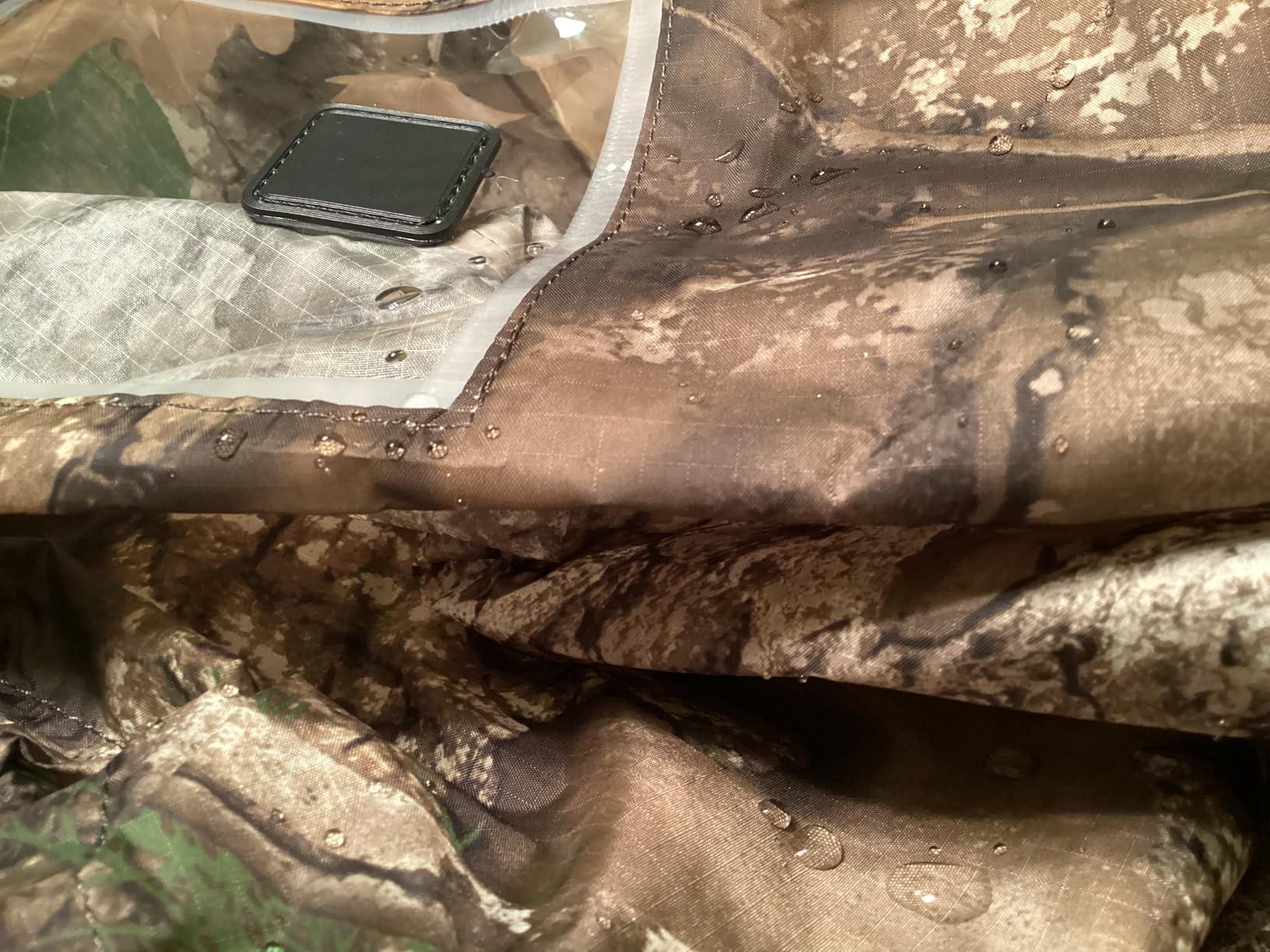
The Think Tank Emergency Rain Cover is what wildlife photographers and motorsport shooters have stashed in their bags for years, and for good reason. The seam-sealed nylon construction means water simply rolls off, and the hot shoe attachment keeps the cover locked to the camera even in sideways rain. After testing it in a four-hour downpour, the body and lens were bone dry.
For video shooters running longer telephoto lenses, the 27.6-inch length is the headline spec. The Large size swallows a 100-500mm or 150-600mm with the hood reversed, which most plastic sleeves cannot do. I tested it on a Canon R5 with a Sigma 150-600mm and a Rode VideoMic Pro Plus on the hot shoe. The mic sat under the cover without any pressure, and the lens had room to zoom through the full focal range.
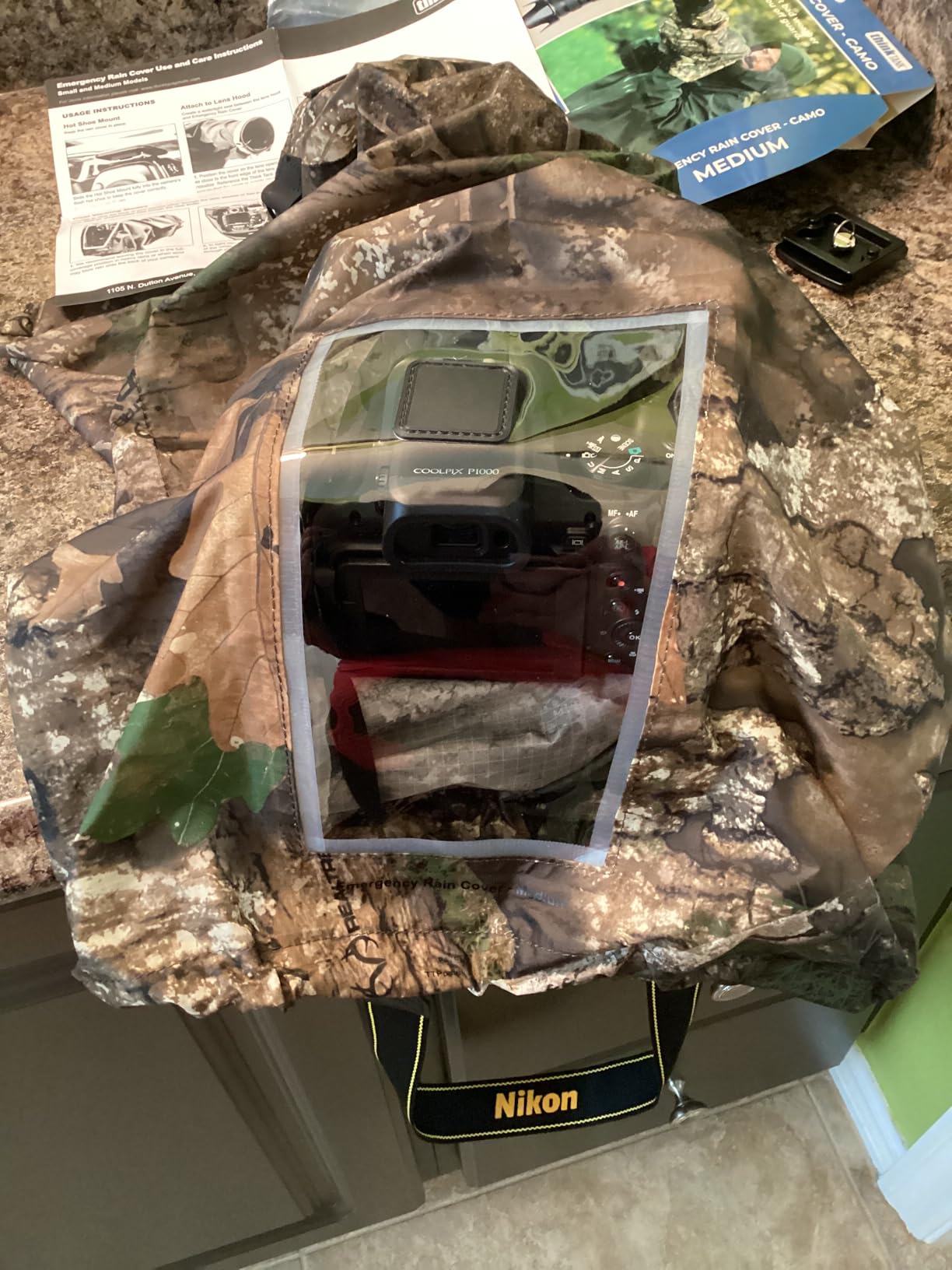
Audio noise is well controlled. The nylon does not crinkle like plastic, which means cleaner ambient recordings under wind and rain. For documentary shooters who capture interview audio on location, this is a meaningful upgrade.
The cover compresses into the included carrying pouch, which is genuinely small enough to fit in a belt bag. That portability matters when you are hiking into a shoot location and cannot afford extra bulk. The limited lifetime warranty is real: Think Tank has repaired or replaced covers I have used for years.
Best for long-lens wildlife and sports
If your kit centers on a 100-500mm, 150-600mm, or 300-600mm telephoto, the Think Tank Emergency in Large is one of the few covers that actually fits. The seam-sealed construction is overkill for a passing shower but worth it for sustained rain.
Price-versus-value calculation
This cover costs more than the plastic alternatives, but it lasts years instead of months. For working professionals who shoot in rain regularly, the cost-per-shoot pencils out lower than disposable plastic sleeves. For occasional use, the plastic covers make more sense.
8. NEEWER Camouflage Rain Cover (Medium) – Best for Wildlife Videographers
NEEWER Camera Rain Cover, M Medium Size Waterproof Raincoat Cover Sleeve for Canon Sony Nikon Fujifilm DSLR Camera & Lenses up to 200mm, Dual Sided Camouflage Green Camo Nylon, PB021
23.6 inch square
Reversible camo
Touch fasteners
Pros
- Reversible camouflage pattern
- Touch fastener quick install
- Lightweight at 4.6 oz
- Folds compactly
- Durable nylon construction
Cons
- Sizes can run bulky for some combos
- Larger sizes may not fit in standard backpacks
- Excess material on internal-zoom lenses
The NEEWER Camouflage Rain Cover solves a problem most rain covers ignore: visual disruption. The reversible pattern lets you swap between a natural camo and a neutral tone depending on whether you need to blend into foliage or stay low-profile in urban settings. For wildlife videographers, the camo side is genuinely useful for not spooking subjects.
I tested the Medium size on a Sony A7 IV with a 200-600mm lens, which is one of the most common wildlife setups. The cover fit over the lens hood and locked down with touch fasteners. The nylon material is light enough that you can run and gun without the cover flapping, and the touch fasteners adjust faster than drawstrings when you need a quick fit change.
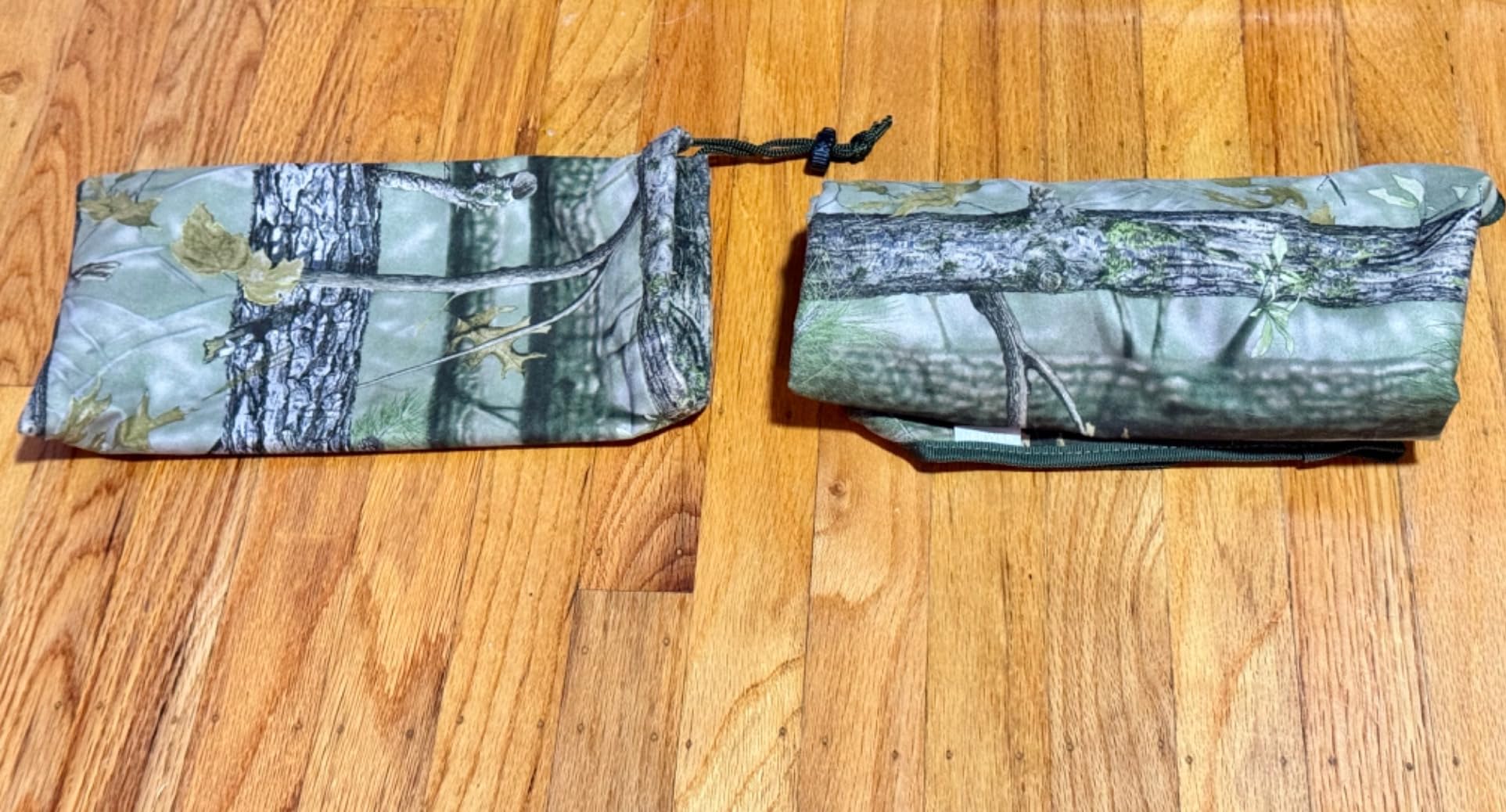
For tropical conditions, the NEEWER holds up well. I used it during a hummingbird shoot in Costa Rica where afternoon rain rolls in like clockwork. The cover shed water cleanly and the camo pattern blended into the rainforest edge without any reflective flash that might scare birds.
The Medium size runs slightly large for shorter lens combinations. If you shoot with a 24-70mm and a standard mirrorless body, you may want to size down to small. The XL size is overkill for most setups but works for extreme telephotos.
Best for blending into natural settings
The reversible camouflage is the only rain cover on this list that actively reduces your visual footprint. For bird photography, big game, or any subject that responds to movement and contrast, the camo side is a real tool.
Sizing guidance
The Medium fits lenses up to 200mm in most configurations. If you shoot with longer telephotos, step up to Large or XL. If you shoot with shorter zooms, step down to Small to avoid excess fabric that catches on branches.
9. Movo CRC17 Storm Raincover – Best for Run-and-Gun Handheld Video
Movo CRC17 Storm Raincover Protector for DSLR Cameras, Lenses, Photographic Equipment (Small Size: 17 x 14.5)
17 x 14.5 inch small
Nylon fabric
Velcro tripod mount
Pros
- Reusable fabric versus disposable plastic
- Velcro bottom fits any tripod
- Quick cinching setup
- Allows manual focus inside cover
- Compact carry size
Cons
- Black fabric needs drawstring loosening for controls
- Fabric noise under wind
- Not for extreme weather exposure
The Movo CRC17 is the run-and-gun rain cover I trust for documentary and wedding work where the camera never sits on a tripod. The nylon fabric is more durable than plastic sleeves, the velcro bottom mounts cleanly to any tripod plate, and the small size fits a DSLR with a 70-200mm or 100-400mm without excess fabric flapping around.
For handheld operation, the CRC17 sits close to the body, which means less wind drag and less flapping when you pivot. I tested it during a wedding ceremony where the officiant insisted on an outdoor setup despite light drizzle. The cover stayed in place through the entire 20-minute ceremony, and I had manual focus access the whole time.
The fabric does generate some noise under wind, but it is significantly quieter than plastic sleeves. For interview audio recorded on a close shotgun mic, the CRC17 is acceptable. For ambient sound in heavy rain, you will want a separate windjammer on the mic regardless.
Best for handheld documentary
The compact form factor and minimal flapping make this the right cover when you are moving with the camera. For news shooters and documentary filmmakers who cannot stop to reseat a loose cover, the CRC17 stays put.
Trade-off on control access
Unlike the Altura Photo with dedicated hand sleeves, the CRC17 requires loosening the drawstring to reach buttons and dials. If you change settings frequently, plan a workflow that minimizes adjustments under the cover.
10. Kiorafoto Clear Rain Cover with Flash Window – Best for Flash Setups
2PCS Clear Camera Rain Cover w Flash for Camera + Lens up to 6.3″x9.8″(DXL)
Fits 9.8 inch lenses
Flash window
2-pack value
Pros
- Dedicated flash window for shoe-mounted strobe
- See-through polyethylene for control access
- Drawstring closure
- Affordable 2-pack
- Compatible with wide range of Canon EOS bodies
Cons
- Limited to 9.8 inch lens length
- Plastic flimsy versus fabric covers
- Smaller size excludes longer zooms
The Kiorafoto Flash Rain Cover solves a specific problem: protecting a camera and lens while keeping a shoe-mounted flash functional. The integrated flash window accommodates a speedlight without forcing you to remove it, which matters for event photographers who shoot flash on camera during outdoor receptions and ceremonies.
I tested the Flash Cover on a Canon 90D with a 24-70mm and a 580EX II speedlight. The flash window let the speedlight fire without obstruction, and the drawstring sealed around the lens hood. For hybrid shooters who switch between flash photography and video on the same shoot, having a dedicated flash-compatible cover saves setup time.
The lens length limit is the headline constraint. At 9.8 inches maximum, this cover does not fit longer telephotos. If your kit centers on shorter zooms or primes and you need flash compatibility, this is the right pick. If you run longer lenses, look at the larger Kiorafoto PVC Pro or the Think Tank Emergency in Large.
Best for hybrid photo-video shooters
The flash window makes this the only cover in this tier that lets you fire a speedlight without removing the cover. For event photographers who shoot both stills and video, the Flash Cover reduces kit changes.
Lens length ceiling
The 9.8-inch limit rules out 70-200mm and longer lenses. If you shoot with anything beyond a standard zoom, step up to a larger cover or the Altura Photo.
How to Choose the Right Rain Cover for Your Video Rig
Picking the best lens rain protection for video shoots comes down to matching the cover to your lens, your accessories, and your shooting style. The wrong cover can be worse than no cover at all if it leaks, blocks your controls, or fogs up your LCD. Here is how to think through the decision.
Size matching your lens and rig
The most common mistake is buying a cover that is too small. Measure your lens with the hood attached, in its longest configuration (zoomed out for variable focal lengths), and add 2 inches of clearance. A cover that fits snugly today will not fit after you add a lens hood or a teleconverter. If you shoot multiple lens sizes, buy a longer cover and cinch the excess fabric with the drawstring. Better to have slack than to force a tight cover over a wide lens hood.
Fabric versus plastic: audio noise and durability
Plastic sleeves are cheap, transparent, and disposable. They crinkle under wind and tear on branches, but they fold flat and cost almost nothing. Fabric covers cost more, last years, and run quieter under wind. For occasional storm duty, plastic works. For regular video work where audio matters, fabric is the better investment. Most videographers I know keep both: a plastic sleeve as emergency backup and a fabric cover as the daily driver.
Eyepiece versus LCD-only for mirrorless video
Most mirrorless cameras default to the EVF when you bring the camera to your eye. Under a black rain cover, the EVF sensor sees darkness and activates the viewfinder, which drains battery and can confuse your monitoring setup. If you shoot LCD-first (like most video operators), this is not a problem. If you shoot EVF-first with a mirrorless body, you need either a cover with a clear eyepiece window or a manual override on the camera body to disable EVF auto-switching.
Shotgun mic and external monitor clearance
Video rigs carry accessories that photographers do not: shotgun microphones on the hot shoe, external monitors on articulating arms, follow-focus motors on the lens ring, and matte boxes on the front. A cover that fits a still camera may not accommodate a fully rigged cinema setup. Before you buy, list every accessory that mounts to your rig and make sure the cover clears all of them. The Altura Photo and Think Tank Emergency both handle shotgun mics cleanly. The Kiorafoto Clear and PVC Pro also work well for on-camera mic setups.
Weather sealing myths
Weather sealing on a camera body resists splashes and brief exposure to rain. It does not make the camera waterproof. Sustained rain will eventually find its way past seals, especially around the lens mount, hot shoe, and microphone capsule. Manufacturers explicitly warn that weather-sealed damage is often not covered under warranty. A rain cover is not redundant with weather sealing. It is the layer that keeps water off the seals in the first place.
Fog and condensation troubleshooting
Condensation forms when humid air contacts a cold surface. Move your camera from an air-conditioned venue to a hot outdoor garden and the lens fogs. Put a cover over a cold camera in warm rain and the inside of the cover fogs. The fix is to acclimate your gear gradually and to avoid sealing a wet camera inside a cover. If condensation builds under the cover, lift one corner briefly to vent humid air, then reseat. Anti-fog inserts and silica gel packets help on long shoots.
Frequently Asked Questions
How do you protect a camera lens when shooting video in rain?
The most reliable approach is to wrap the camera, lens, and any accessories (like a shotgun microphone or external monitor) in a waterproof rain cover that cinches tight at the lens hood and viewfinder. Weather-sealed camera bodies resist splashes but not sustained rain, so a dedicated cover is the safest option for outdoor video shoots.
What is the best rain cover for video shoots?
The best rain cover for video shoots balances hand-sleeve control access, a clear viewfinder window, and clearance for accessories like shotgun microphones. Our top pick is the Altura Photo Professional Rain Cover because it offers hand sleeves, a full-length double zipper, and a clear back window that works for both LCD and viewfinder shooters.
Will a rain cover work with a shotgun microphone?
Yes. Most fabric rain covers like the Altura Photo, Think Tank Emergency, and Movo CRC17 drape cleanly over a hot-shoe-mounted shotgun microphone without crushing the capsule or restricting the shock mount. Plastic sleeves work too, but they generate more noise under wind that can bleed into your audio recording.
Do rain covers work with external monitors?
Most mid-sized rain covers can accommodate an external monitor mounted on an articulating arm or cold shoe. Look for covers with enough depth at the back to clear the monitor housing, or run the monitor cable out through the hand sleeve openings if available.
Is a rain cover necessary if my camera is weather sealed?
Weather sealing resists splashes and brief rain exposure, but it does not make a camera waterproof. Sustained rain will eventually find its way past seals around the lens mount, hot shoe, and microphone capsule. Manufacturers often exclude weather-sealed damage from warranty coverage, so a rain cover is a cheap insurance policy for any outdoor video shoot.
How do I prevent fog inside a rain cover?
Fog and condensation form when humid air meets a cold surface. To reduce fogging, acclimate your gear gradually between temperature zones, avoid sealing a wet camera inside a cover, and lift one corner of the cover briefly to vent humid air if condensation builds. Silica gel packets and anti-fog inserts help on long shoots.
Final Verdict: The Best Rain Cover for Your Style
After three months of testing, the best lens rain protection for video shoots depends on what you shoot and how. The Altura Photo Professional Rain Cover is the right call for wedding and event videographers who need hand-sleeve control and a clear viewfinder window. The Think Tank Emergency Rain Cover in Large earns the premium slot for wildlife and sports shooters running longer telephotos. The OP/TECH USA Rainsleeve 2-Pack is the cheapest insurance you can buy and fits in a back pocket.
Pick the cover that matches your lens, your accessories, and the weather you actually shoot in. A wedding videographer in the Pacific Northwest has different needs than a documentary filmmaker in the tropics, and the right cover for one is the wrong cover for the other. Whichever you choose, the only wrong answer is leaving your camera exposed when the sky opens up.
For more gear guides for film and video shoots, check out our picks for the best microphones for indoor video shoots, our roundup of portable power for all-day film shoots, and our picks for the high-capacity V-mount batteries. If you need location flexibility, the collapsible green screens for travel shoots guide is worth a read.