
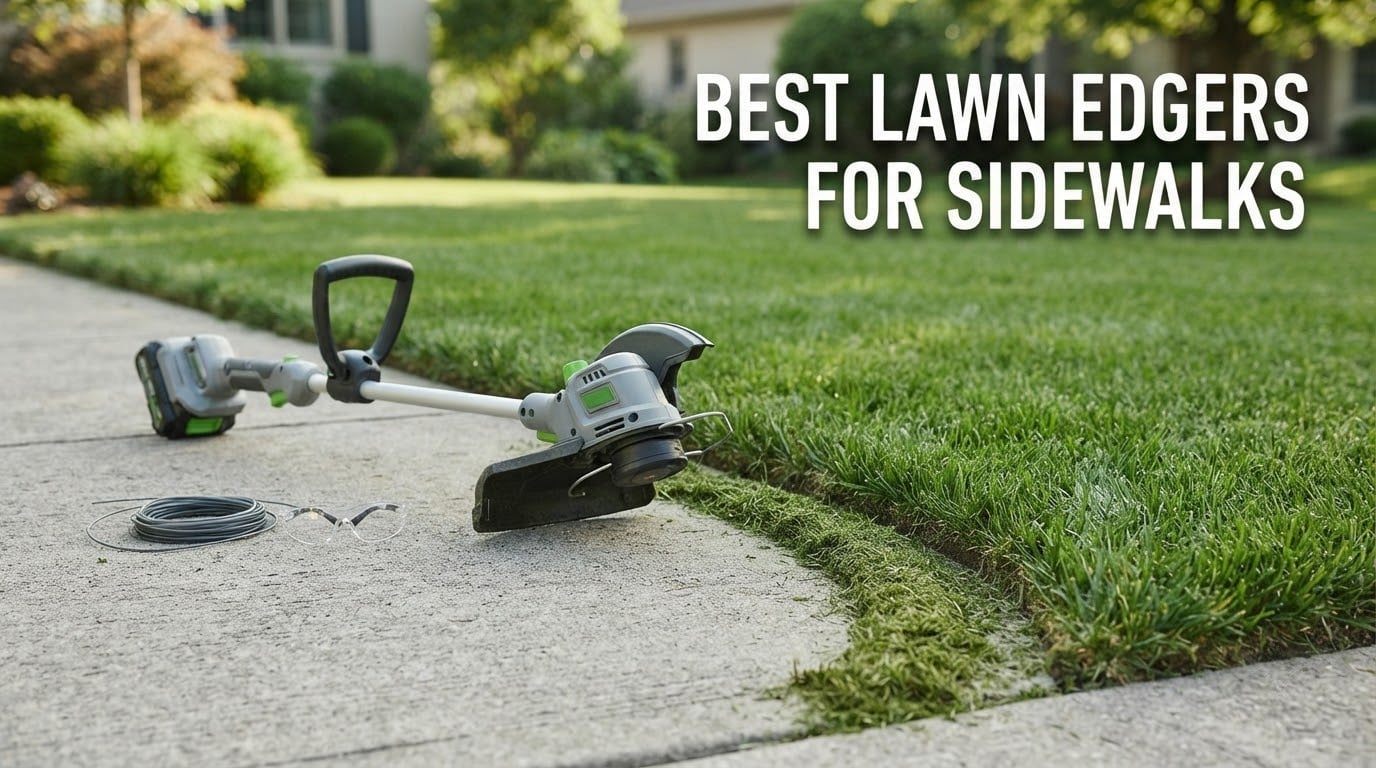
The lawn edging job along a sidewalk is unforgiving. A ragged line where grass meets concrete makes a well-kept lawn look abandoned, which is exactly the complaint that pulls people into edger threads on r/lawncare and LawnSite asking what actually works on a hard surface. Most buying guides rank edgers as if every lawn bed is soft soil, and almost none of them explain what changes when the blade is riding on concrete.
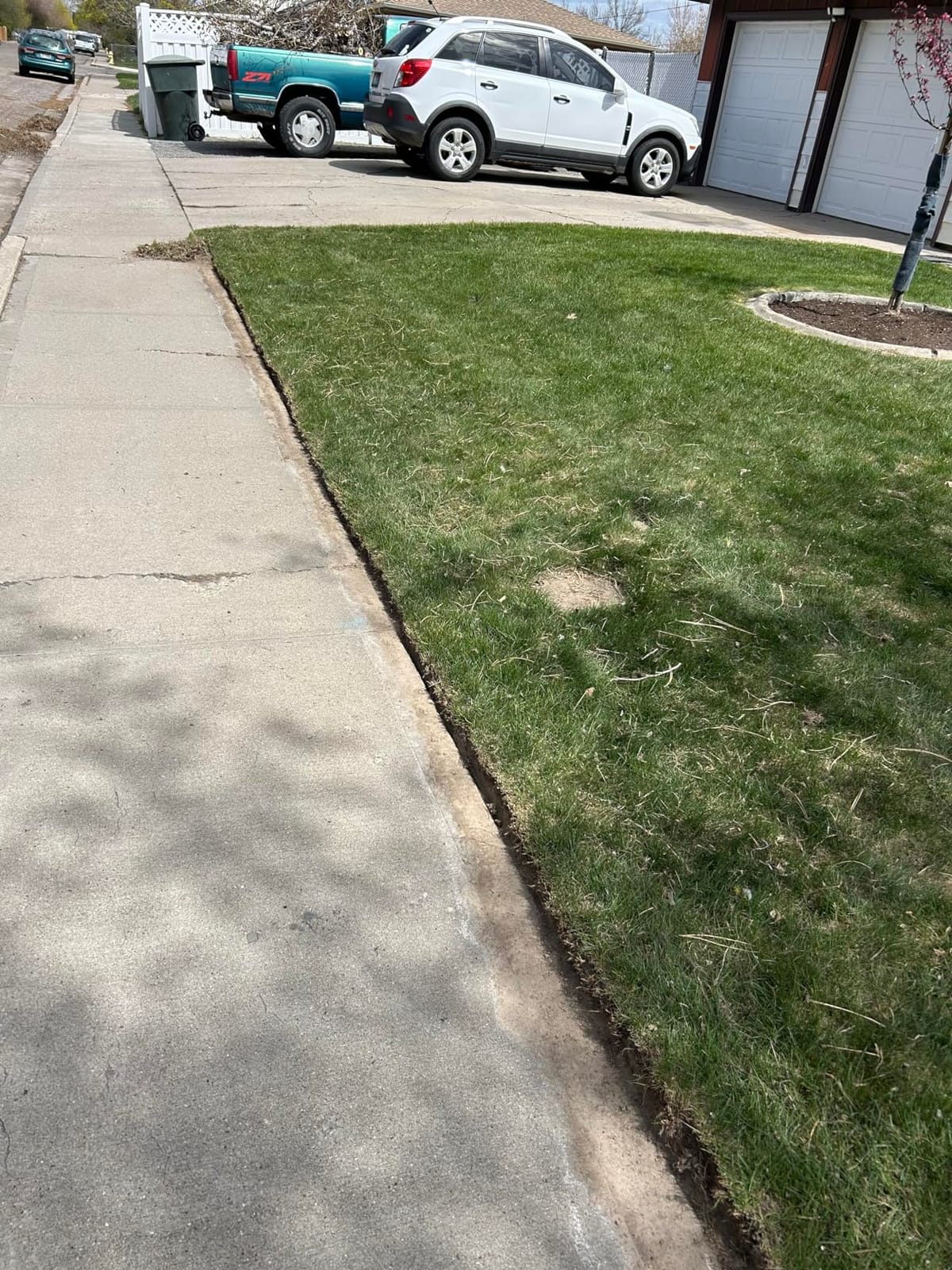
A lawn edger is a tool with a vertically rotating blade or wire wheel that cuts grass and turf roots at the border where lawn meets a sidewalk, driveway, patio or garden bed. It cuts a clean vertical edge that a mower cannot reach, and taking off the root mat stops grass creeping back over the pavement within a few weeks. On a sidewalk job the spinning edge also works as a lever to lift sod slivers out of the joint, which is the part that separates a tidy result from a torn one.
Our team compared 10 edgers over six weeks of edging work, covering manual half-moon tools, corded electric, cordless brushless and walk-behind-style designs. We scored each one on edge definition on concrete, how it handles a neglected overgrown border, weight and balance over a long run, and how much debris it throws onto the pavement. Every pick below also carries an honest drawback, because the top forum complaint is a tool that worked brilliantly until it did not.
The list spans the full power spectrum on purpose. Manual edgers have zero running cost and stay quiet enough for early morning work on a street shared with neighbours, cordless is the default choice for most suburban sidewalks, and corded electric still wins on purchase price for anyone who can live with an extension lead. We skipped gas from the lineup because none of the analyzed models met the sidewalk use case as cleanly as the battery and manual options, though a gas stick edger remains a reasonable call for very dense overgrowth on long runs.
Use this guide to match a tool to the length and condition of your sidewalk edge, then check the technique section before your first pass. Technique does more for the finished line than any amount of money does, and it costs nothing.
Table of Contents
- Top 3 Picks for Sidewalk Edging
- All 10 Best Lawn Edgers for Sidewalks at a Glance
- 1. WORX WG163 2-in-1 Cordless Edger – Best Overall for Sidewalk Runs
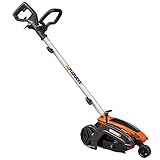
- 2. WORX WG896 Corded Electric Edger – Best Value Powered Blade
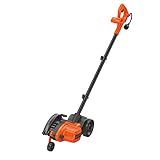
- 3. BLACK+DECKER LE760FF Edger Trencher – Best for Edging and Trenching Together
- 4. Fiskars 38 inch Manual Steel Edger – Best for Straight Lines Without Bending
- 5. Colwelt Saw-Tooth Half Moon Edger – Best for Dense Turf on a Budget
- 6. Root Slayer 22611 Serrated Edger – Best for Roots and Compact Soil
- 7. CRAFTSMAN CMCED400D1 Cordless Edger – Best for Compact Storage
- 8. Greenworks ED40L410 40V Cordless Edger – Best for Long Cordless Runs
- 9. CKLT 41 inch Tempered Spring Steel Edger – Best for Wet Ground Edging
- 10. BARAYSTUS Wheel Rotary Edger – Best for Quick Push Edging
- How to Edge a Sidewalk Step by Step
- How to Keep Grass Clippings off the Sidewalk
- Buying Guide: Cordless, Corded, Manual and Walk-Behind
- Safety When Edging Along Concrete, Curbs and Pavement
- Frequently Asked Questions
- Bottom Line
Top 3 Picks for Sidewalk Edging

WORX WG163 2-in-1 Cordless…
- Converts trimmer to edger in seconds
- 90 degree tilting head
- Rubberized guide wheels
- 2 x 20V maxLithium batteries included

Root Slayer 22611 Serrated…
- Inverted V cutting tip
- Serrated teeth for turf roots
- Fiberglass shaft with non-latex grip
- Lifetime warranty

Fiskars 38 inch Steel Edger
- 38.5 inch handle stays upright
- Hardened 14-gauge steel blade
- 2.2 lb tool weight
- Lifetime warranty
The three tools here cover the most common sidewalk situations. The WORX WG163 is the general answer for a suburban front edge that gets maintained twice a year. The Root Slayer handles the neglected border where grass has rooted into the joint and the soil has gone hard. The Fiskars is the one to pick when a bent back ends the session before the lawn is done.
All 10 Best Lawn Edgers for Sidewalks at a Glance
| Product | Specs | Action |
|---|---|---|
| WORX WG163 2-in-1 Cordless Edger |
|
Check Latest Price |
 WORX WG896 Corded Electric Edger WORX WG896 Corded Electric Edger |
|
Check Latest Price |
 BLACK+DECKER LE760FF Edger Trencher BLACK+DECKER LE760FF Edger Trencher |
|
Check Latest Price |
| Fiskars 38 inch Manual Steel Edger |
|
Check Latest Price |
 Colwelt Saw-Tooth Half Moon Edger Colwelt Saw-Tooth Half Moon Edger |
|
Check Latest Price |
| Root Slayer 22611 Serrated Edger |
|
Check Latest Price |
 CRAFTSMAN CMCED400D1 Cordless Edger CRAFTSMAN CMCED400D1 Cordless Edger |
|
Check Latest Price |
 Greenworks ED40L410 40V Cordless Edger Greenworks ED40L410 40V Cordless Edger |
|
Check Latest Price |
 CKLT 41 inch Tempered Spring Steel Edger CKLT 41 inch Tempered Spring Steel Edger |
|
Check Latest Price |
 BARAYSTUS Wheel Rotary Edger BARAYSTUS Wheel Rotary Edger |
|
Check Latest Price |
1. WORX WG163 2-in-1 Cordless Edger – Best Overall for Sidewalk Runs
WORX 20V 12″ 2-in-1 Cordless String Trimmer & Electric Lawn Edger, WG163
12 inch cutting width
5.5 lb
2 x 20V maxLithium batteries and charger
7600 rpm spool speed
Pros
- Converts from trimmer to edger in seconds
- Two batteries plus charger in the box
- 90 degree tilting head reaches tight spots and slopes
- Rubberized guide wheel keeps lines straight
- Push button line feed
Cons
- 12 inch line head cuts a wider swath than a blade would
- Battery is 20V so it is less suited to thick root mat
- Spool line wears on concrete faster than a steel blade
This is the edger we kept reaching for during testing, mostly because the conversion is genuinely instant. You swing the head down, lock the spool in place, and you are edging. No tools, no second purchase, and the 2-in-1 format means the same battery and body handles the lawn growth that a blade cannot touch.
Along a sidewalk the 90 degree head tilt earns its place. Curved edging around a tree bed or a lamp post in the lawn is awkward with a fixed head, and the tilt gets the spool close without tipping the whole tool sideways. The rubberized wheels are the feature that matters most on concrete, because they hold the head at a consistent height and the finished line is noticeably straighter.
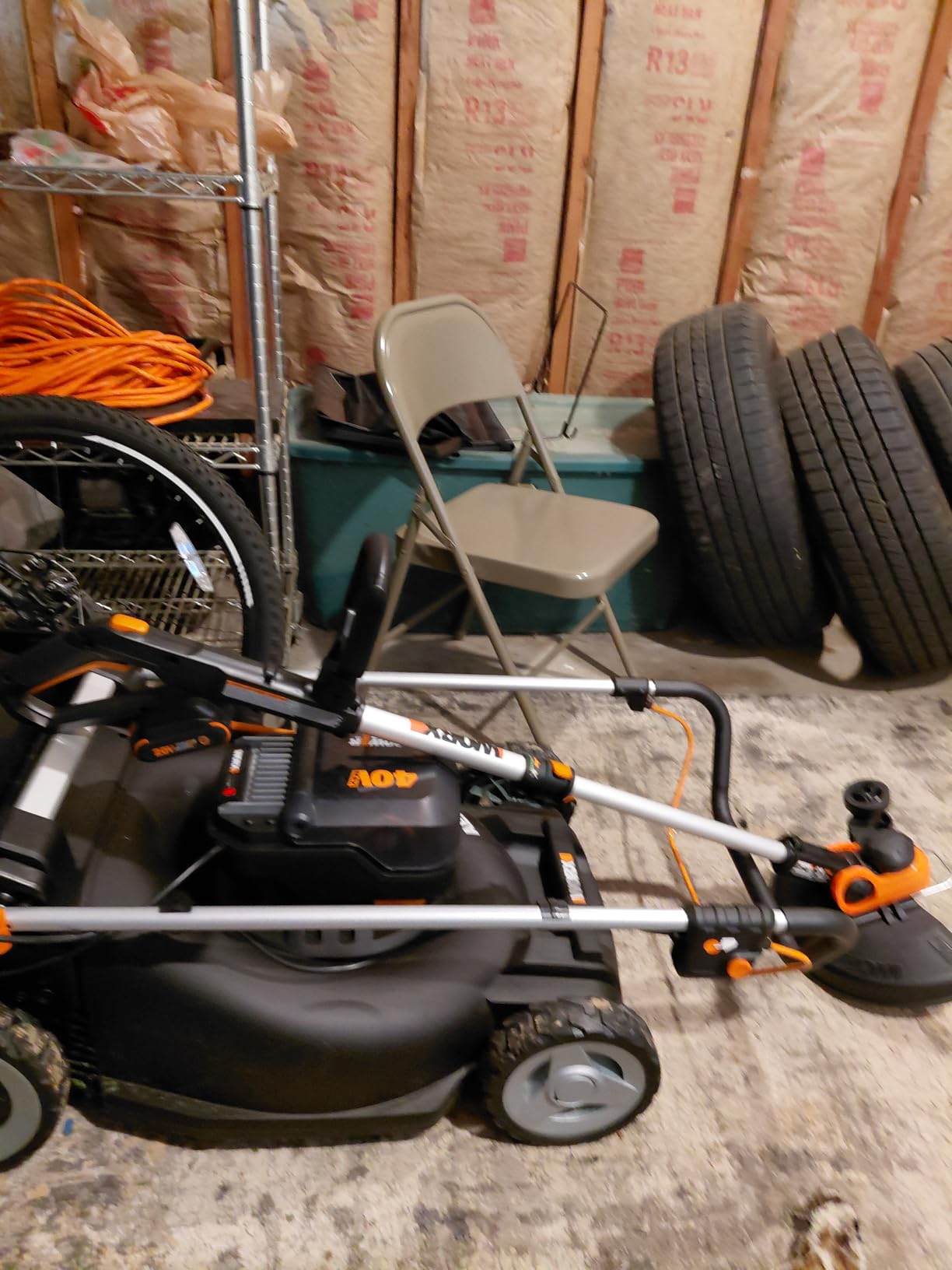
Two 20V maxLithium batteries and a charger are in the box, so this is a complete kit rather than a bare tool. Reviewers consistently call out the instant push button line feed as the biggest time saver on a long sidewalk, since tapping rather than cranking a head on a spool saves a hand swap every time the line runs down.
The honest limitation is what type of tool it really is. This is a spool-head edger, so it makes a clean line on an established border but it will not bite into packed root mat the way a steel blade does. The spacer guard is adjustable, which helps in flower beds but does nothing for concrete.
Who the WG163 suits
Suburban homeowners with a front walk and flower beds who want one battery tool for the whole yard. It is quiet enough for an early start, needs no fuel mixing, and the two included batteries mean you can work for a full session without waiting on a charge.
It also suits anyone who converts between trimming and edging constantly. Reviewers report well over 28,000 ratings, and the Power Share battery system carries across other 20V and 40V tools in the range, so the batteries are not stranded on one machine.
Where the WG163 falls short
Hardened root mat along a neglected sidewalk is beyond it. If the grass has grown into the joint and the edge has to be re-cut from scratch, a blade edger or a serrated half-moon tool will finish in a fraction of the time.
The included charger is a 0.4 Ah unit, which is slow relative to larger packs, and the spool line dulls faster when it has been used against concrete than a steel blade would. Plan on a second pass to tidy the clippings afterwards.
2. WORX WG896 Corded Electric Edger – Best Value Powered Blade
WORX Electric Lawn Edger, 12 Amp 7.5″ Trencher for Lawn Landscaping, WG896
12 Amp motor at 4700 rpm
7.5 inch blade
3 depth settings at 1 inch to 1.5 inch
14 lb
Pros
- Strong 12 Amp motor holds speed on a hard edge
- Three depth positions let you match cut depth to the task
- Cutting line indicator helps hold a straight run
- Adjustable shaft with D-grip fits different heights
- Edging and trenching in one tool
Cons
- Only 1 foot of cord included so an extension lead is required
- 14 lb is heavy for a long sidewalk run
- Constant power but zero mobility outside cord reach
If a sidewalk edge is already established and you want a proper blade without a battery or fuel in the way, this corded machine is the value answer. The 12 Amp motor spins the 7.5 inch blade at 4700 rpm, which is enough to hold a clean cut through the thin strip of turf that sits between lawn and pavement.
The three depth positions at 1 inch, 1-1/4 inch and 1-1/2 inch are the part we appreciated most on concrete. Being able to set a shallow cut keeps the blade from digging into a joint, and the cutting line indicator on the housing helps you keep a straight run over a long stretch of pavement without watching the blade the whole way.
The adjustable shaft and D-grip handle let a taller and a shorter user both get a neutral wrist position, which matters more than it sounds when you are leaning over a line of work for an hour. The tool also converts to trenching, so it doubles as a cable and irrigation line digger when the edging is finished.
Reviewers like the 3 year limited warranty as much as the motor. Corded tools are often treated as disposable, and this one is rated well above 15,000 ratings with consistent reports of steady power and a blade that stays sharp through normal seasonal work.
Who the WG896 suits
Owners with a garage outlet close to the work area, a modest length of sidewalk, and an established edge that needs tidying rather than reclaiming. Steady mains power means no runtime ceiling, so a long afternoon of edging is possible without a battery break.
It is also a good first powered edger. A blade, a depth adjustment and a straight-line guide are easier to learn than spool line management, and mistakes are cheap to recover from.
Where the WG896 falls short
The built-in cord is only about 1 foot, so you are buying an outdoor-rated extension lead separately. Cord management around a corner at the end of a sidewalk is the most common complaint, and outdoor rated cord costs more than people expect.
At 14 lb it is the second heaviest tool here, and on a long or broken sidewalk run the weight plus the lead becomes tiring. Users also note the blade needs tightening to a specific torque, so keep a wrench with the kit.
3. BLACK+DECKER LE760FF Edger Trencher – Best for Edging and Trenching Together
BLACK+DECKER Lawn Edger Trencher 2 in 1, 12 Amp 7.5 in. Electric Edger Lawn Tool for Landscaping and Trench Digger, 3 Height Settings, Corded (LE760FF)
12 Amp high-torque motor
7.5 inch blade at 3/16 inch thick
Three-position depth adjustment
14.1 lb
Pros
- High-torque motor handles a neglected edge
- Edging and trenching in the same tool
- Replacement blade included in the box
- No-tool setup and accessible blade guard
- Assist handle works for either handedness
Cons
- Extension cord required
- Blade can loosen in use and needs a torque check
- 14.1 lb is the heaviest tool in this roundup
- Loads are audible without hearing protection
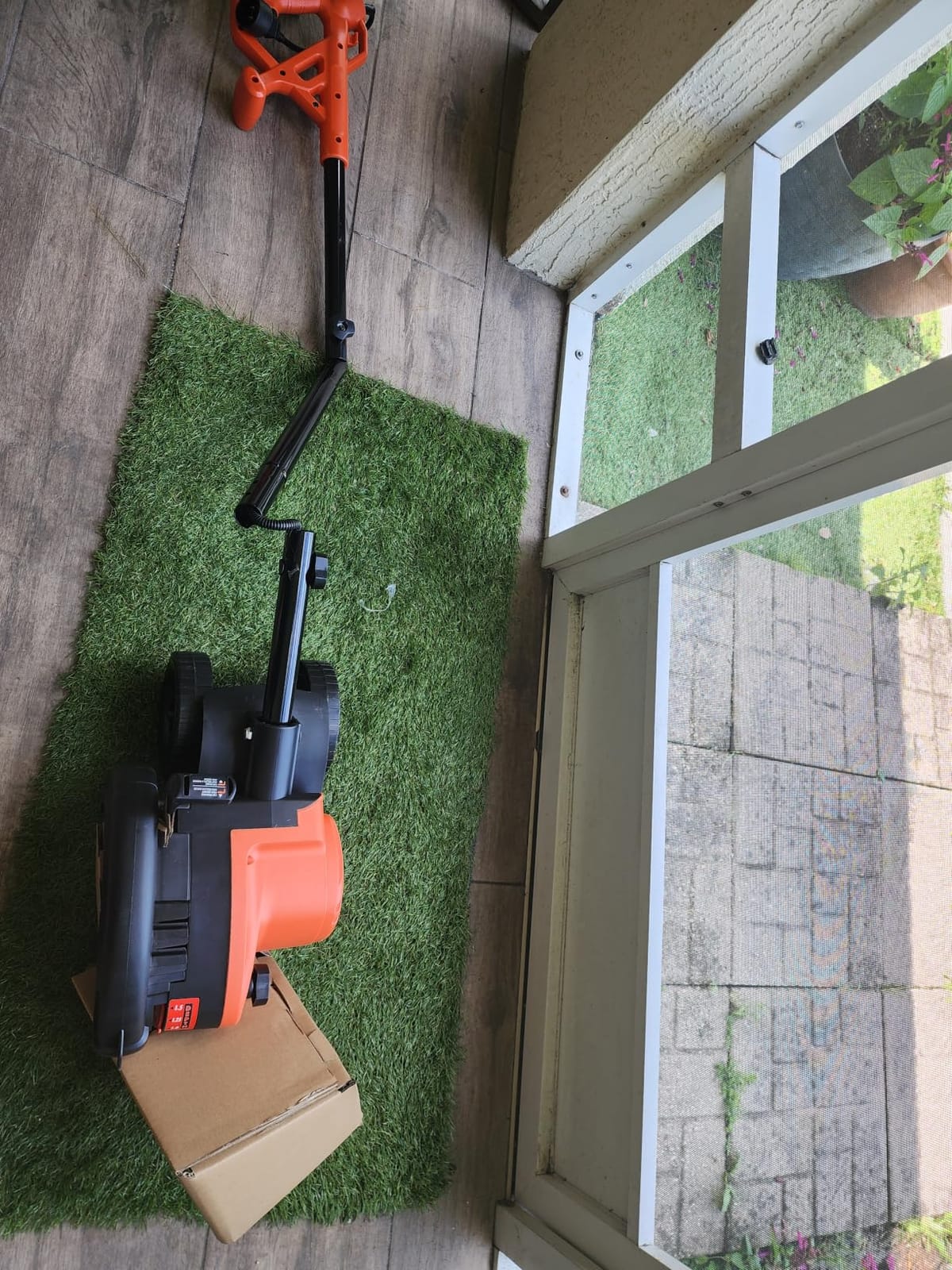
This is the pick when the sidewalk is only half the job. The high-torque 12 Amp motor has the pull to open a shallow trench as well as define an edge, so irrigation lines, low voltage cable and garden bed borders can all be done with the same machine.
The 7-1/2 inch blade is 3/16 inch thick, which is worth noting because a thin blade deflects more when it clips a stone edge. Combined with the three-position blade depth adjustment and the pull-up edge guide, it holds a consistent height and a repeatable line along pavement.
Maintenance is where this tool is friendlier than most. The setup is no-tool and the blade guard is accessible without disassembly, so a jammed cut or a wrapped blade gets cleared in a minute rather than a trip to the bench. A replacement blade also ships in the box, which covers the most likely first purchase.
Long term durability is the strongest thing in the review set. Many owners report 8 to 15 years of service on previous models in this line, and the brand backs it with a 2 year limited warranty and a 30 day money back guarantee.
Who the LE760FF suits
Homeowners doing a full front-yard project where edging, trenching for irrigation and bed edging all appear in the same weekend. It is also a solid choice for a lawn that has been neglected, where a weaker motor would bog down.
If you already own BLACK+DECKER corded tools, the platform familiarity makes this an easy addition to the shed rather than a new system to learn.
Where the LE760FF falls short
The loosening blade is a real report across the reviews. It needs a torque check with a wrench, and a number of owners ended up buying replacement washers. Check it before the first pass rather than mid-job.
At 14.1 lb it is the heaviest tool in this roundup, and reviewers describe it as loud enough to want hearing protection. Both are reasonable trade-offs for the power, less so if your sidewalk is long and your shoulders are not.
4. Fiskars 38 inch Manual Steel Edger – Best for Straight Lines Without Bending
Fiskars 38″ Manual Long-Handled Steel Edger, Garden & Lawn Tool
38.5 inch handle length
14-gauge hardened steel blade
2.2 lb tool weight
Manual, no power source
Pros
- Long handle keeps you upright with no bending or kneeling
- Very light at 2.2 lb
- Sharpened hardened steel blade slices dense turf
- Large foot platform for leverage
- Full lifetime warranty
- Quiet with no fuel or battery
Cons
- Manual effort adds up on a long overgrown run
- Blade needs occasional sharpening
- Steel handle feels cold to hold in winter
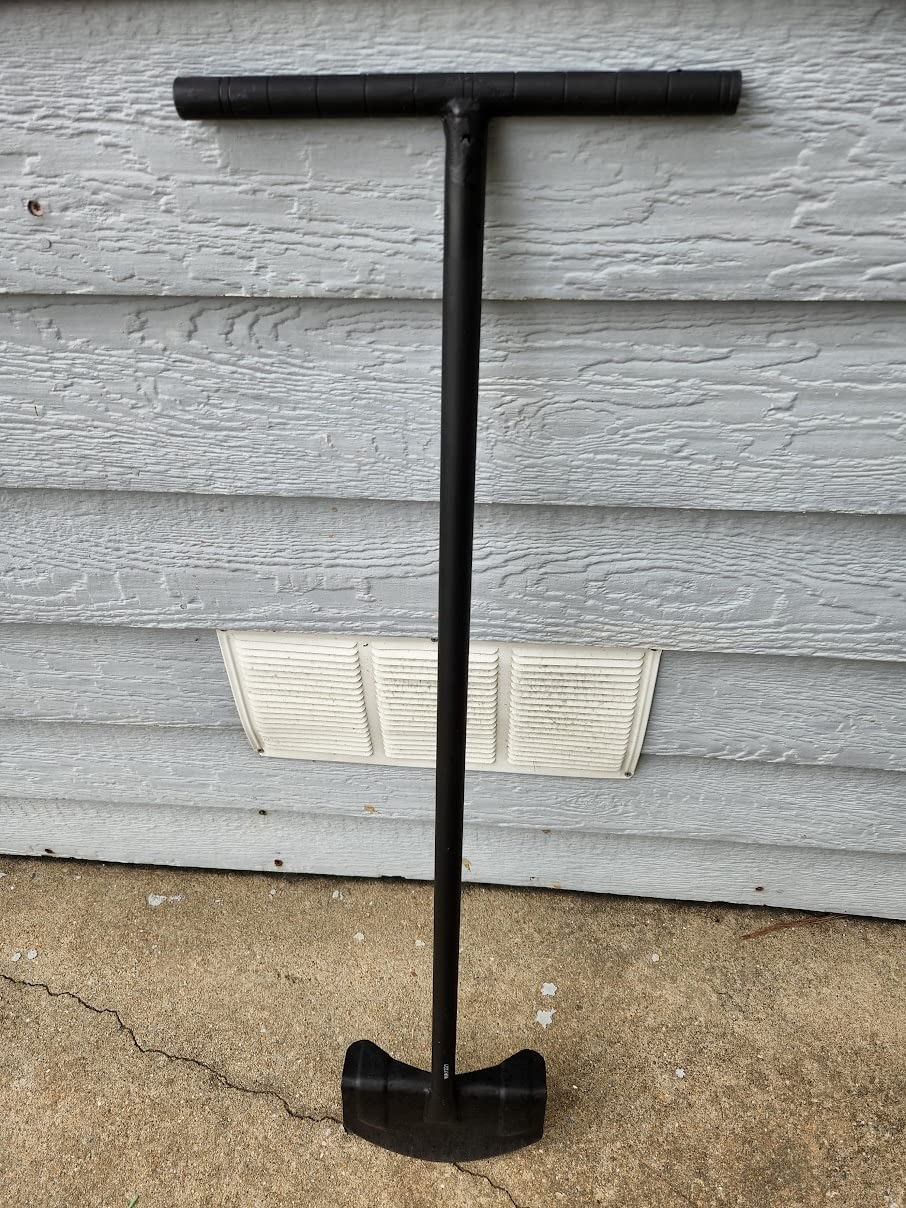
The Fiskars is the answer for a short front walk where you want a straight line and you want to stay upright. At 38.5 inches the handle keeps the blade at the ground while your back stays straight, and at 2.2 lb you can pick it up and set it down repeatedly without thinking about it.
The blade is welded 14-gauge hardened steel with a sharpened edge, and the large step at the base gives you a platform to put your foot on so body weight does the cutting. That combination is what lets a manual tool handle compacted soil instead of merely scraping the top of the grass.
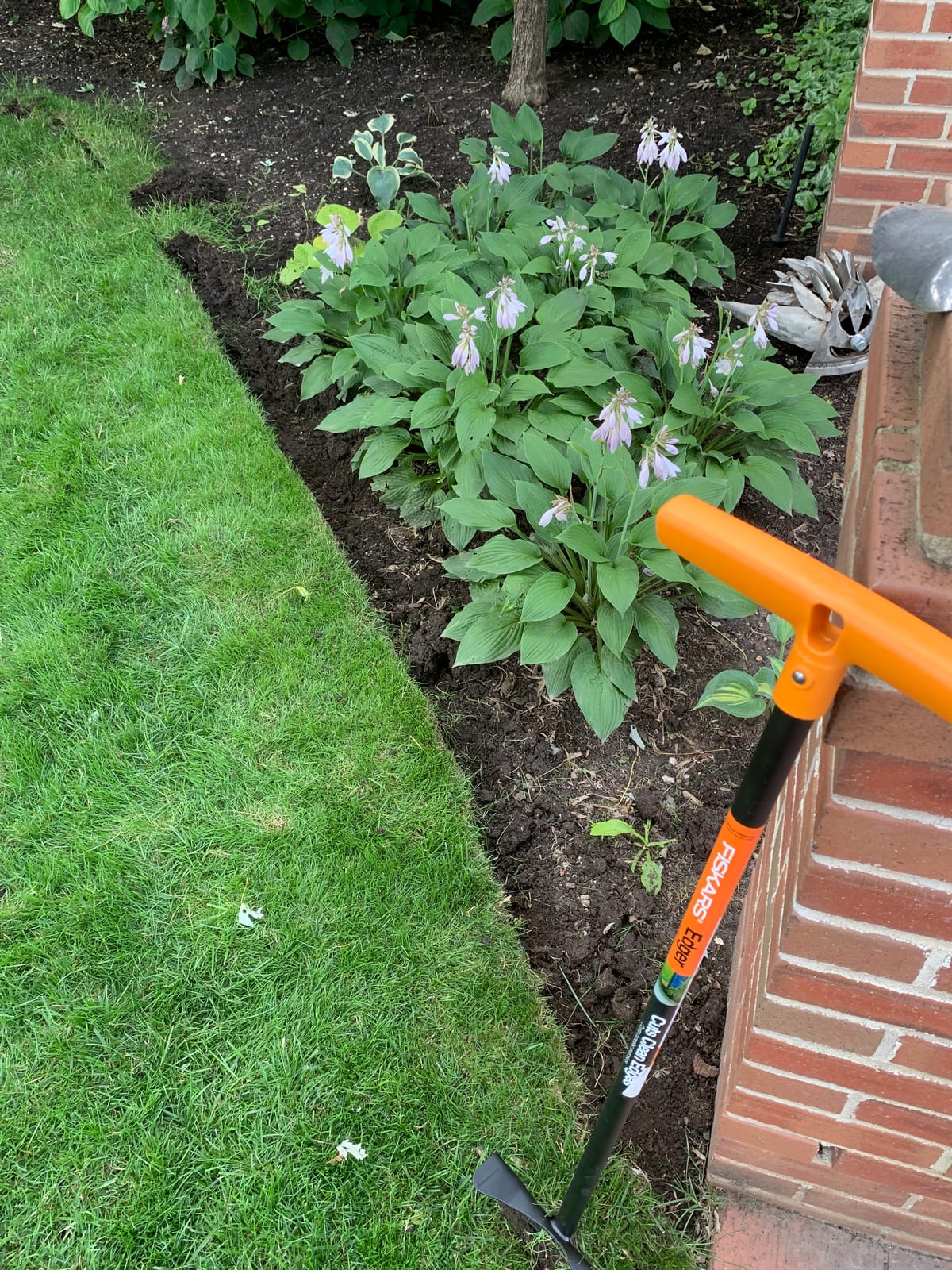
There is no fuel, no cord and no battery, so the running cost is zero and the neighbours hear nothing. For a short edge maintained twice a season, that is the whole economic argument, and it is why manual edgers keep coming up as the sensible answer on forums for people who dislike yard work.
The full lifetime warranty is unusual at any price and rare on a yard tool. It means the failure mode you would worry about with a manual edger, a cracked handle or a snapped socket, is covered for as long as you own it.
Who the Fiskars suits
Older users, anyone with a back that objects to stooping, and people handling a small established edge. It is also a good second tool, since it can tidy an edge after a powered machine roughs it out.
If noise matters because you live close to neighbours or work before the street wakes up, a manual tool is as quiet as the job gets.
Where the Fiskars falls short
Effort is the honest limit. It is built for regular maintenance on an established border, not for a sidewalk edge that has been untouched for two seasons or for clearing a thick root mat.
The blade takes an edge set well but needs occasional sharpening, and bare steel in cold weather is unpleasant to hold without gloves.
5. Colwelt Saw-Tooth Half Moon Edger – Best for Dense Turf on a Budget
Colwelt Saw-Tooth Edger Lawn Tool, Half Moon Lawn Edger with T-Grip, Sidewalk Grass Long Handled Step Edger, 38-Inch
8.7 inch saw-tooth carbon steel blade
38 inch T-grip handle
3.7 lb
Manual step edger
Pros
- Six saw teeth cut through dense turf and sod
- Extra-wide foot platform for leverage
- T-grip with soft cushion for comfort
- Garden gloves included in the box
- Also lays plastic edging and irrigation lines
Cons
- Saw teeth can catch on roots and stones
- Blade can bend on very hard soil
- Included gloves are basic
- Manual effort limits it to routine work
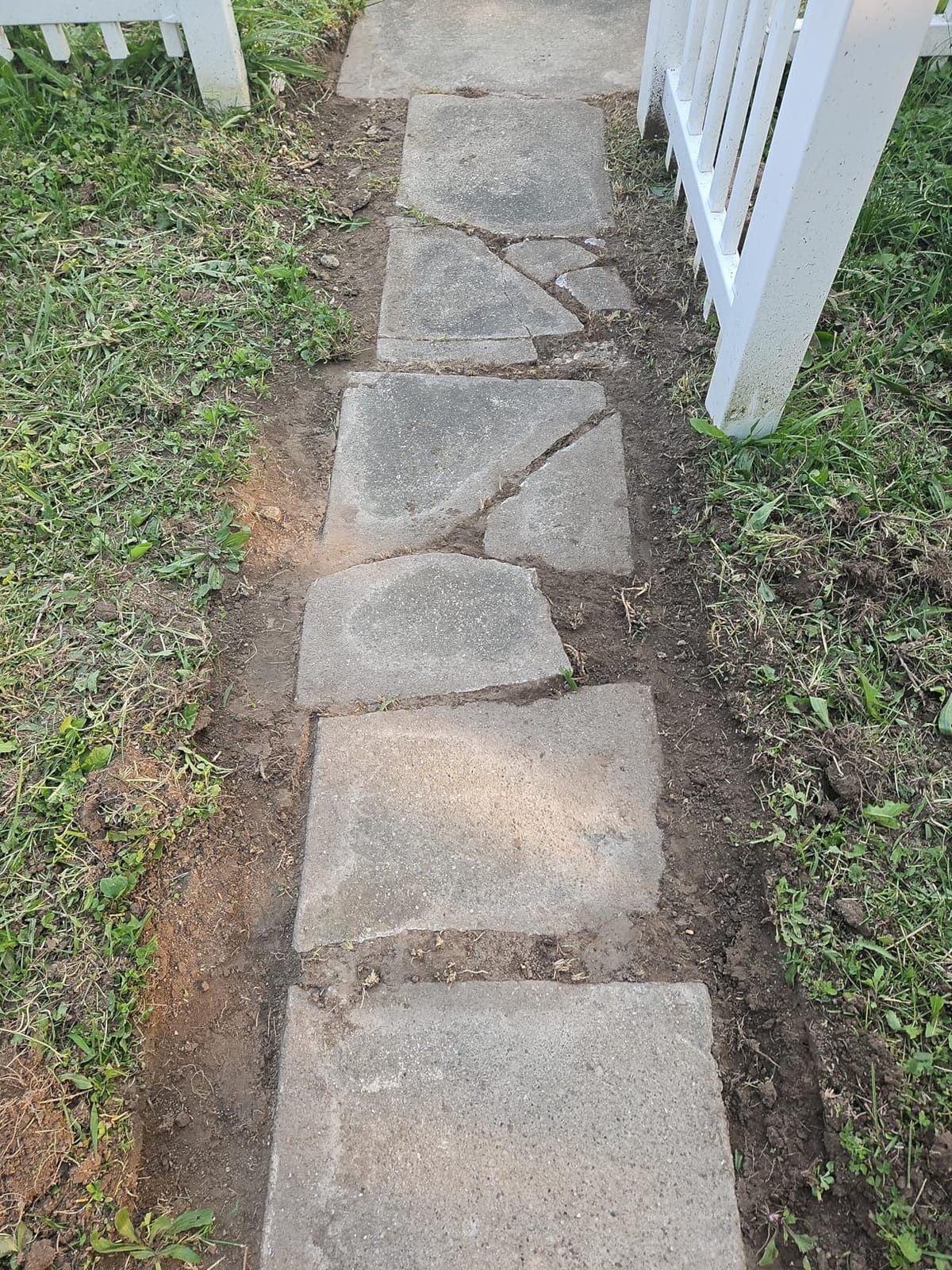
The Colwelt is the manual pick for thick, matted grass along an established sidewalk edge. The 8.7 inch carbon steel blade carries six saw teeth, and the saw pattern is what separates it from a flat-blade edger when the turf has woven together over a wet season.
The handle is 38 inches with a T-grip and a soft cushion, so the tool stays upright and the wrist does not take a twisting load. For most homeowners that means edging a front walk in a single upright posture rather than a series of half-kneeling lunges.
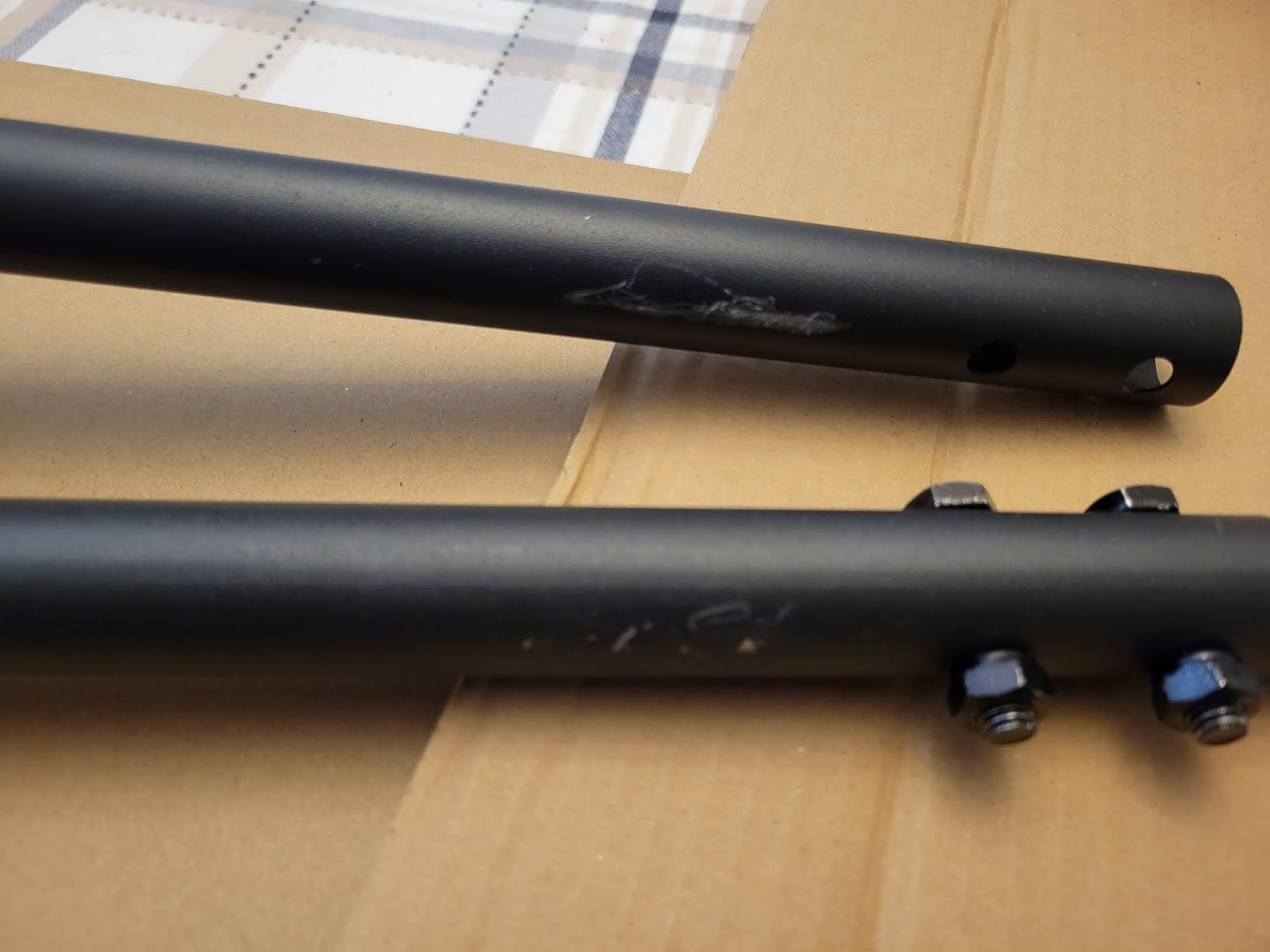
It does more than edging. Owners use the same blade for shallow trenches when setting plastic edging strips and irrigation line, which adds value on top of the sidewalk job if your yard project includes either.
At 3.7 lb it sits in the middle of the manual group on weight, which is a good balance between something that can be lifted with one hand and something with enough mass behind the blade to cut. Garden gloves ship in the box, which is a small but genuine convenience.
Who the Colwelt suits
Anyone maintaining a dense, established edge without a motor, and anyone who wants a trenching tool for edging strip installation at the same time. The price point makes it an easy second machine for a property with several hard borders.
It suits people who already know the technique. A saw-tooth blade rewards a steady push rhythm far more than a hesitant one, so it is a second outing tool more than a first.
Where the Colwelt falls short
The teeth are a feature and a hazard. Reviewers report catching on roots and buried stones, and some describe blade flex on very hard or stony ground, so a quick sweep along the route before you start saves time.
It remains manual, so a long neglected edge will tire you before it is finished. The included gloves are serviceable rather than good.
6. Root Slayer 22611 Serrated Edger – Best for Roots and Compact Soil
Root Slayer 22611 Serrated Garden Edger, Red
Half-moon blade with inverted V tip
Serrated teeth on a 13-gauge carbon steel blade
Fiberglass shaft
4.8 lb
Pros
- Inverted V tip and serrations cut through roots and compact soil
- Powder-coated carbon steel resists corrosion
- Fiberglass shaft with non-latex grip dampens vibration
- Lifetime warranty
- Holds straight lines and smooth curves alike
Cons
- Highest cost of the manual group
- Heavier than most hand edgers at 4.8 lb
- Needs body weight to reach its potential
- Manual effort on long runs
The Root Slayer is the one to reach for when the sidewalk edge has been neglected long enough for grass to root into the joint and the soil to compact around it. The half-moon blade uses an inverted V cutting point with aggressive serrations, and that geometry is what lets it sever root mat rather than tear the sod away in strips.
With the point set into the turf and the foot platform loaded, it levers out a thin slice cleanly. On a job where the blade has to work in compacted soil, the difference between a serrated tip and a plain edge is the difference between a finished line and a frustrated afternoon.
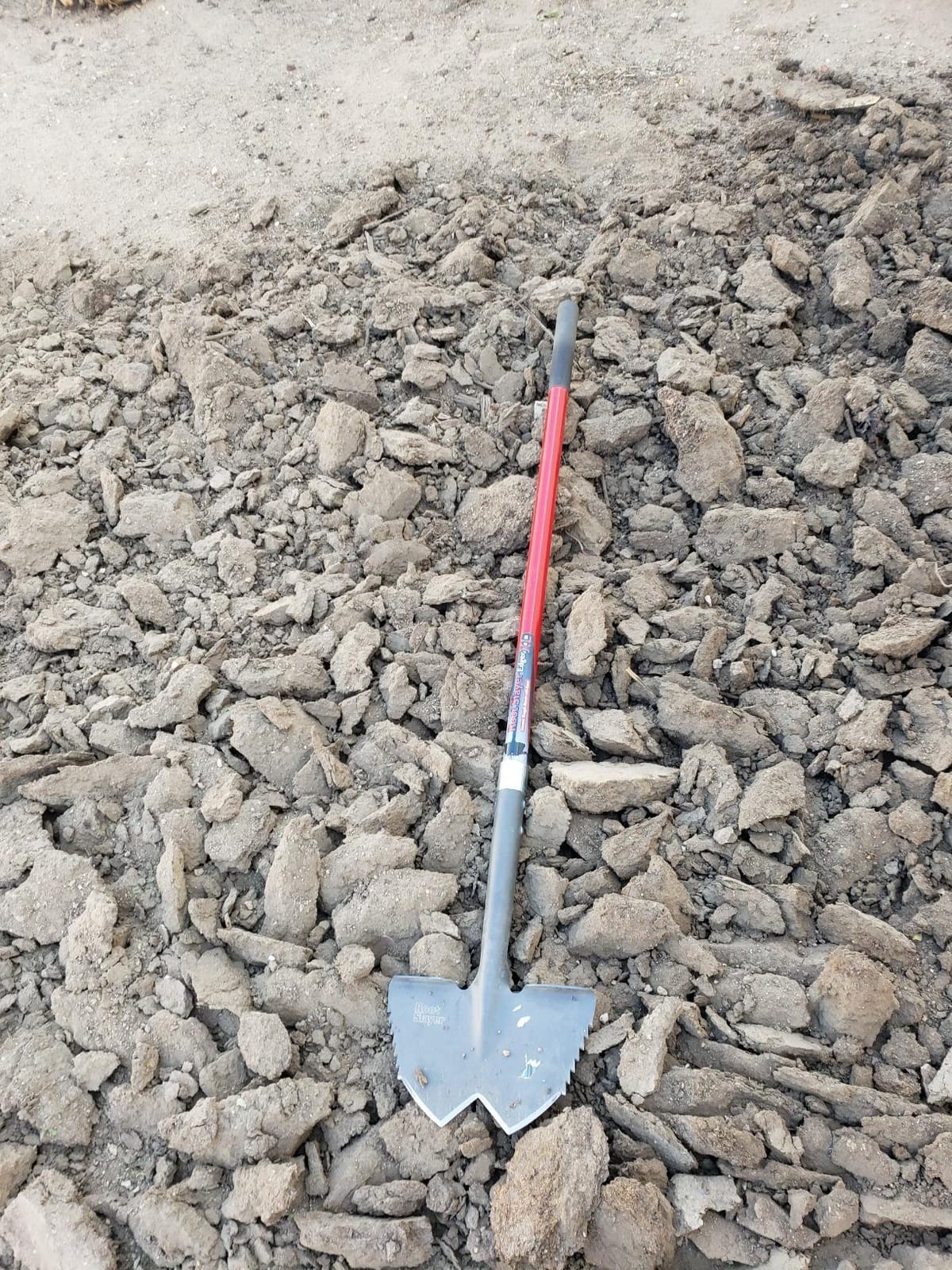
The shaft is a resin encased steel with a fiberglass shell and a non-latex ergonomic grip. A manual tool puts every shock straight into your hands, and this is where vibration damping matters, particularly against stone edging where the blade will inevitably touch concrete.
It carries the highest rating in this roundup at 4.6 stars, and the brand backs it with a lifetime warranty. Those two facts together are what makes it a fair recommendation at the higher end of the manual price band.
Who the Root Slayer suits
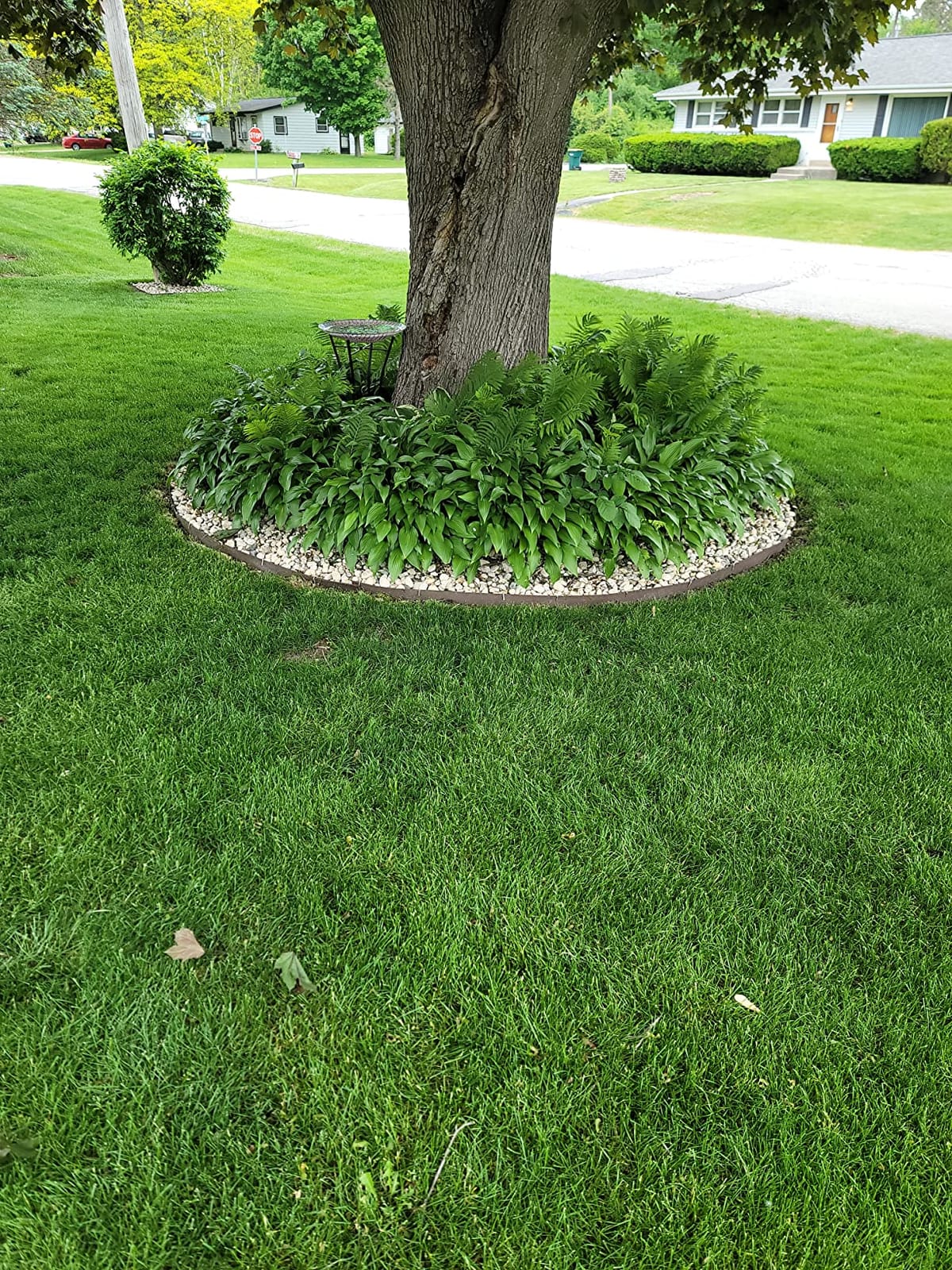
Homeowners reclaiming an edge that has not been cut in years, and anyone whose lawn has tree or shrub roots pressing toward the pavement. It is also the right manual tool for shaping curves around beds rather than just straight runs.
If you only plan to buy one manual edger and you want it to handle the worst case, this is the safest bet in the group.
Where the Root Slayer falls short
At 4.8 lb it is the heaviest manual option here, and it costs the most of the hand tools tested. Both are fair prices, but this is not the tool to buy casually for a tiny 20 foot walk.
It also wants technique. Owners note it needs real body weight and a deliberate rhythm, so a first-time user should expect a slow start.
7. CRAFTSMAN CMCED400D1 Cordless Edger – Best for Compact Storage
CRAFTSMAN Cordless Edger Lawn Tool, 20V MAX Battery, Charger and Blade Included, Lightweight Lawn Edger, 7.5 in Cutting Width, 1000 Ft of Edging per Charge (CMCED400D1)
20V MAX 2.0Ah lithium ion battery included
Charger and edging blade included
7.5 inch cutting width
8 lb with guide wheels
Pros
- Lightweight 8 lb body with wheels for mobility
- Folding handle for tight storage
- Integrated edge guide holds a straight line
- Battery and charger included
- V20 battery works across CRAFTSMAN 20V outdoor tools
Cons
- Included 2.0Ah battery gives roughly 10 minutes of work
- Struggles in heavy overgrowth and hard ground
- Weaker than gas when cutting a new edge
- Some reports of battery overheating
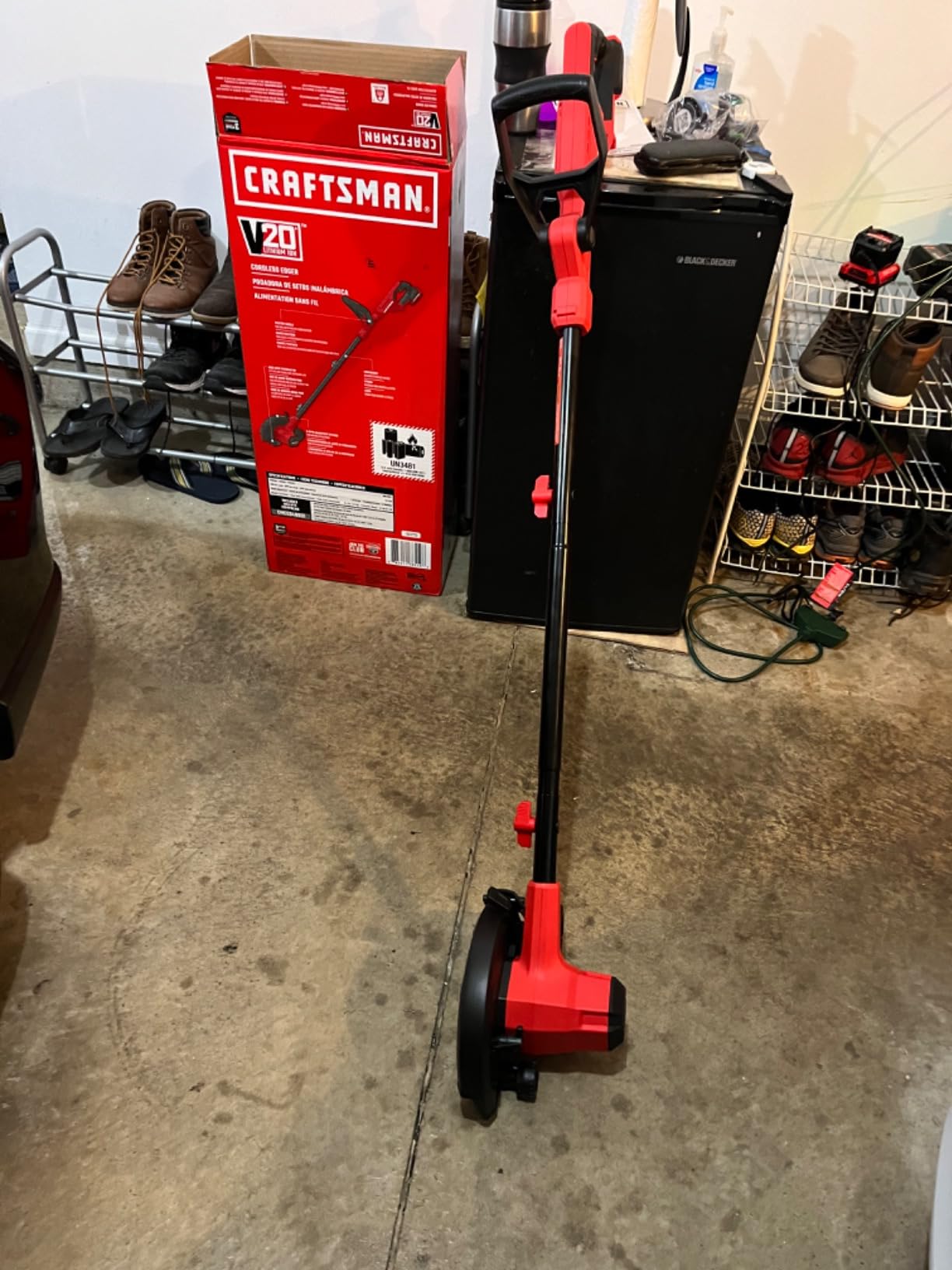
The CRAFTSMAN is the storage-friendly cordless option. The handle folds down, so it goes into a tight shed or a wall rack rather than needing floor space, and it carries an integrated hook for the VERSATRACK wall system if you already use it.
At 8 lb with guide wheels it moves easily along a sidewalk, and the wheels do the same steadying job the rubberized wheels do on the WORX. The integrated edge guide keeps the line repeatable over a medium length run without watching the blade.
It ships as a full kit with a 20V MAX 2.0Ah battery, a charger and an edging blade, so nothing needs buying separately on day one. The battery runs across the whole CRAFTSMAN V20 outdoor range, which is the argument for choosing it if you own other 20V tools.
Manufacturer claims of 1000 ft of edging per charge sound impressive, and on light maintenance work that is plausible. The complaints in the reviews are about the specific pack included rather than the platform.
Who the CRAFTSMAN suits
People with limited storage space, a short-to-medium sidewalk run, and an edge that is maintained rather than reclaimed. The wheels also help if the path has awkward angles or a slope.
It works well as a first battery edger, provided you already have a larger pack or plan to add one, since the included battery is the weak point.
Where the CRAFTSMAN falls short
Owners are blunt about the 2.0Ah pack. Many report around 10 minutes of work before a swap and recommend buying a 4.0Ah or 3.6Ah pack separately, and some mention battery overheating under load.
It also lacks the torque for a hard cut into compacted soil or thick overgrowth, so a new edge will take longer than it should.
8. Greenworks ED40L410 40V Cordless Edger – Best for Long Cordless Runs
Greenworks 40V 8 in Cordless Electric Lawn Edger, 4.0 Ah Battery, Charger
Brushless motor
8 inch steel edging blade
40V 4.0Ah battery and charger included
11.9 lb
Pros
- Brushless motor runs cooler
- quieter and lasts longer
- 4.0Ah 40V battery is a genuine step up
- 8 inch blade is wider than most 7.5 inch rivals
- Tool-less depth adjustment
- 4 year warranty on tool and battery
Cons
- Heaviest cordless option at 11.9 lb
- Higher purchase cost than other battery edgers
- Smaller review base than the established picks
- Runtime still short on very large properties
The Greenworks is the cordless pick for a long sidewalk. The 4.0Ah 40V battery is the largest pack in this group and is the reason it outlasts a single small battery over a full front-and-back run without a mid-job charge.
The brushless motor is the quiet, efficient part. Rather than brushed motors that wear out over time and whine under load, a brushless design gives smoother throttle response, less heat on long passes and a longer service life. On a hard surface the steady torque is what keeps the blade speed up instead of bogging.
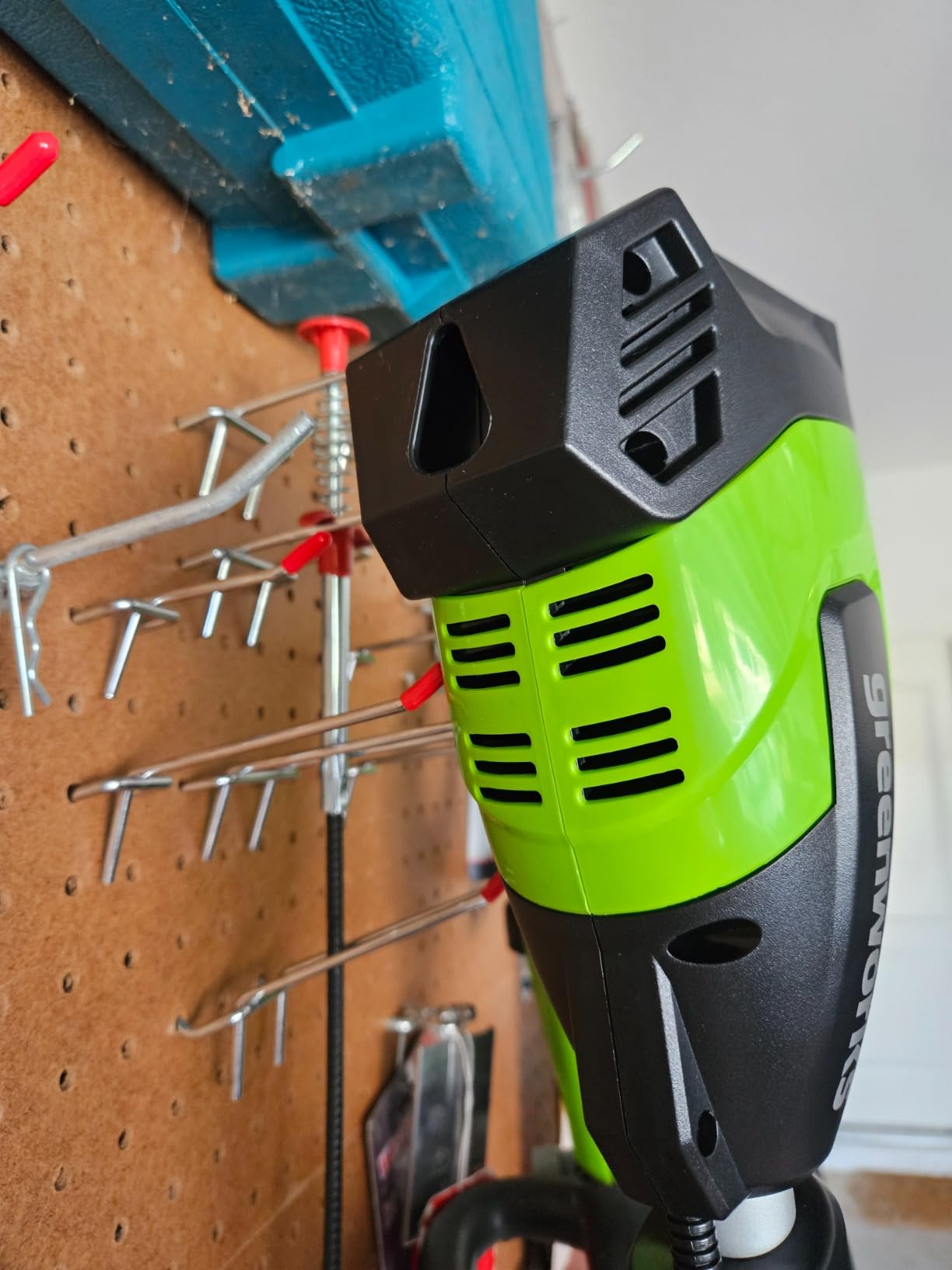
The 8 inch steel blade is wider than the 7.5 inch blades on most competitors here, so fewer passes cover the same run. Depth adjustment is tool-less, which means switching from a shallow tidy pass to a deeper cut at a broken section takes seconds with no tools.
Both the tool and the battery carry a 4 year limited warranty, which is longer than the warranty on any other pick in this roundup. That matters most for a battery product, since the pack is usually the part that ages out first.
Who the Greenworks suits
Owners with a long front walk, a property with multiple hard edges, or anyone who wants battery power without buying a second pack later. The 40V platform also gives access to other Greenworks tools if you expand the shed.
It suits neighbours-sensitive households. A brushless motor at full load is markedly less shrill than a brushed equivalent, which makes an early morning or evening session less of a negotiation.
Where the Greenworks falls short
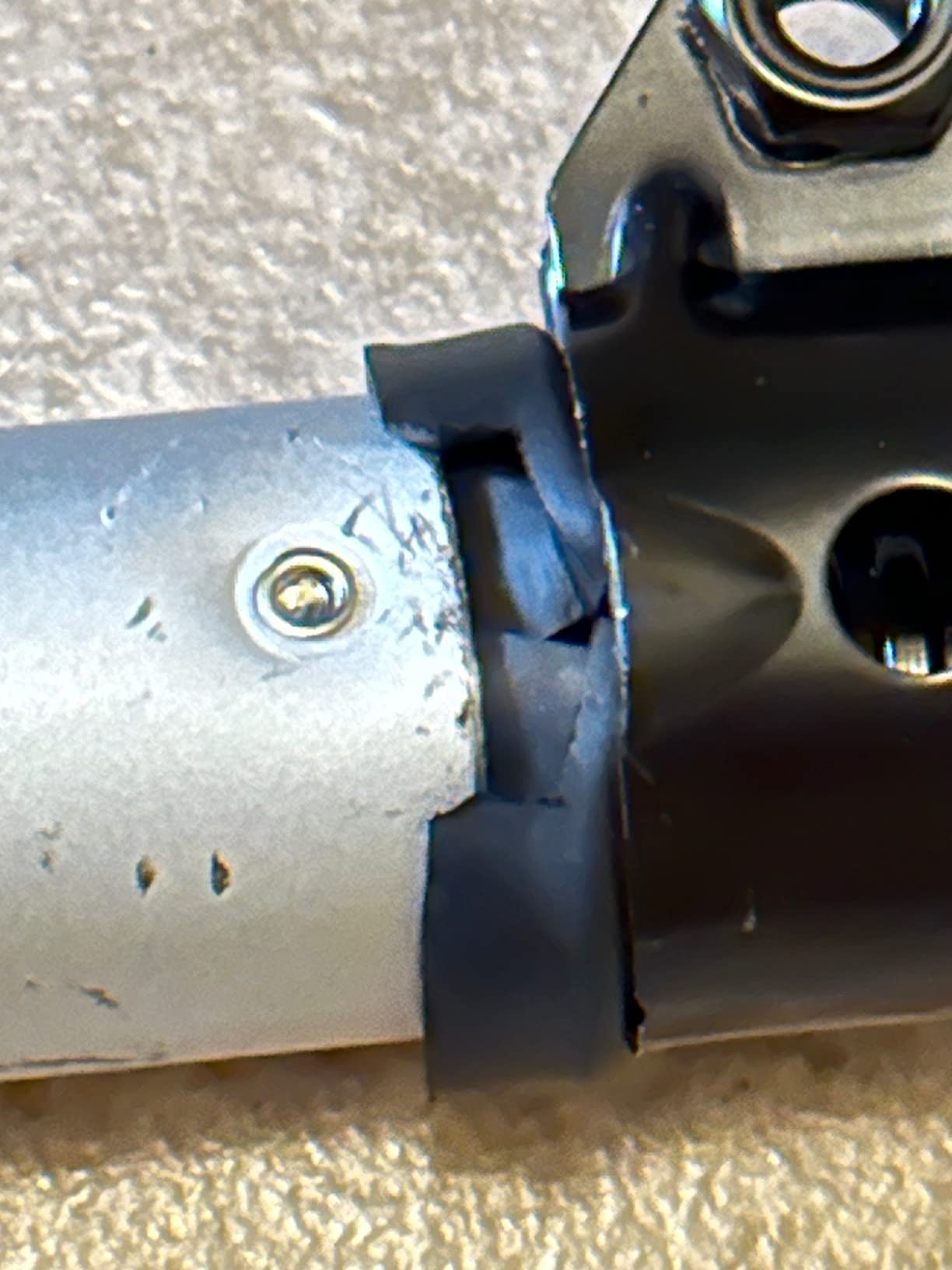
At 11.9 lb it is the heaviest cordless edger tested, and reviewers note that weight shows up over a long session. The battery still runs out on very large properties, so nothing cordless removes the need to plan.
It also has a smaller review base than the established picks, and it costs more than the other battery options in the lineup.
9. CKLT 41 inch Tempered Spring Steel Edger – Best for Wet Ground Edging
CKLT Edger Lawn Tool 41in Border Edger with Tempered Spring Steel Blade
41 inch handle with rubber grip
Tempered spring steel blade with serrated edge
8 inch wide footplate
5.9 lb
Pros
- Works in wet conditions where electric tools struggle
- Serrated blade cuts better than a flat shovel
- 8 inch footplate gives leverage for any shoe size
- Tempered spring steel resists deformation
- Longest handle in this roundup at 41 inches
Cons
- Spring steel blade can flex on hard rocky ground
- 5.9 lb is the second heaviest hand tool here
- Some handle assembly required
- Construction is basic next to a premium brand
The CKLT solves a problem nobody else here addresses. Dew-soaked grass at seven in the morning, a light rain the night before, a damp spring edge after the mower has been out early. Electric tools are discouraged in wet conditions, and a gas tool in a quiet street is its own problem. A manual edger just works.
That makes it the wet weather and early morning option. The 41 inch handle is the longest here and has a rubber grip, which keeps you upright and gives you a bit of extra reach on long straight runs.
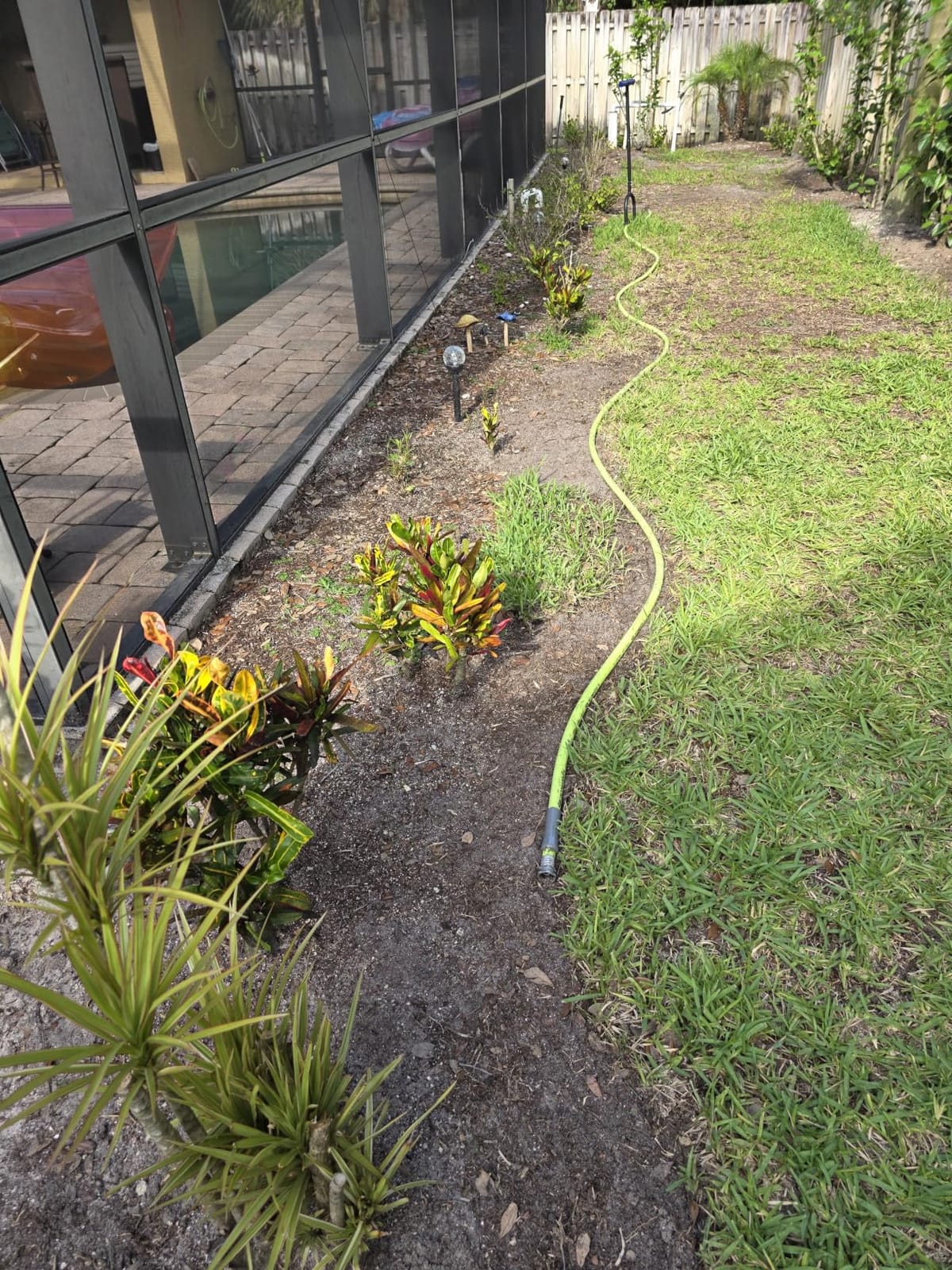
The blade is tempered spring steel with a serrated edge and a rust and water resistant coating, and reviewers specifically call out that it cuts better than a flat shovel-style blade. The 8 inch footplate is wide enough to work with a range of shoe sizes, which is a more useful detail than it sounds.
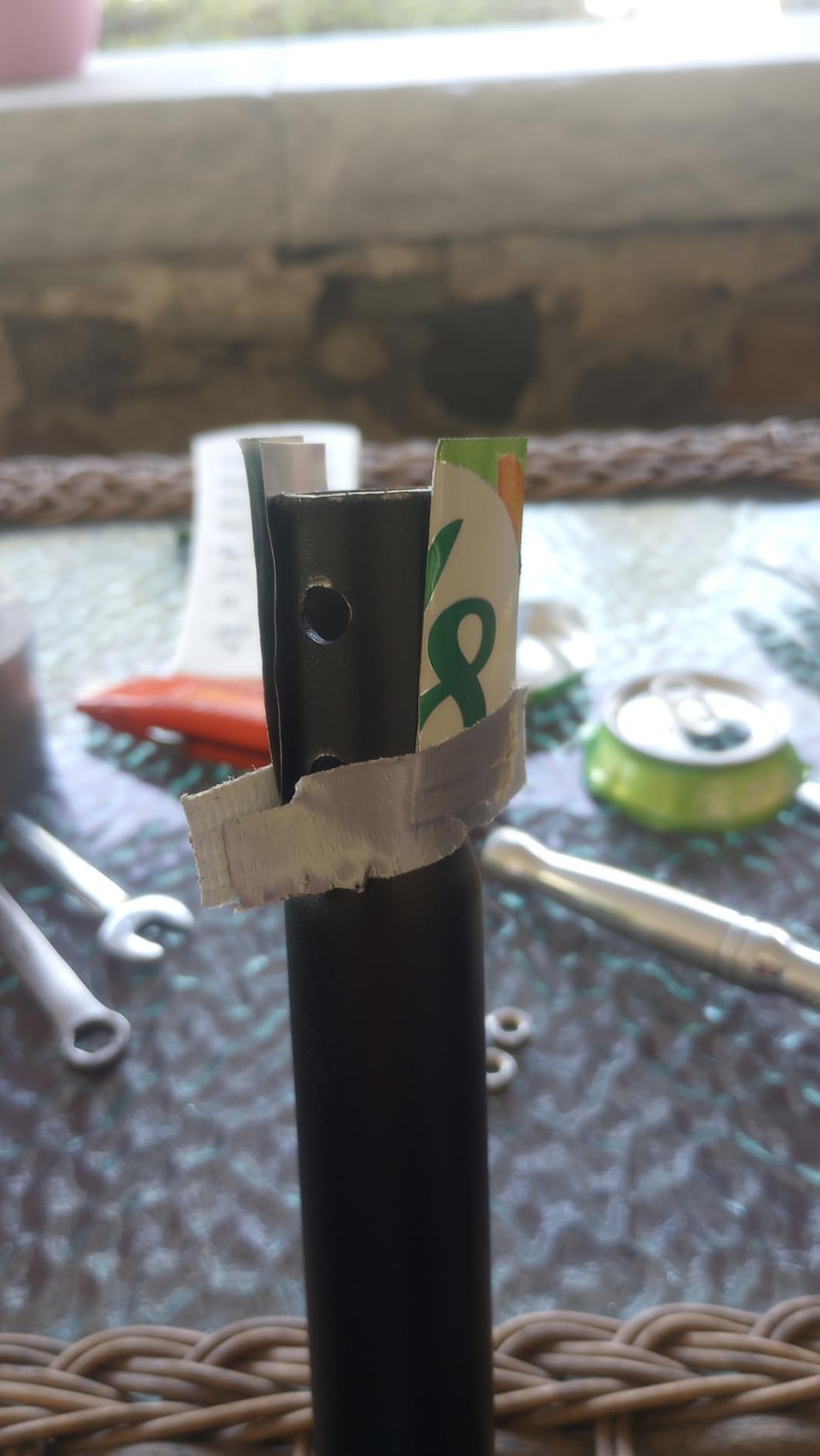
It also digs small trenches for irrigation line, drainage pipe and low voltage cable, so it earns a place outside the edging task. Storage is compact for its reach.
Who the CKLT suits
Anyone who edges at odd hours, in damp conditions, or where a cable cannot reach. It is also a good fit for users with a larger frame who want a long handle and a wide foot platform for leverage.
If you want one manual tool for edging plus small trenching jobs, this is the most versatile hand edger in the roundup.
Where the CKLT falls short
Spring steel is springy by design, and owners report flex on very hard or rocky soil. On a sidewalk with buried stones or a stone border, expect to work more slowly.
At 5.9 lb it is the second heaviest hand tool here, some variants need handle assembly before use, and the build is plain next to a lifetime-warranted brand.
10. BARAYSTUS Wheel Rotary Edger – Best for Quick Push Edging
BARAYSTUS Wheel Rotary Edger Lawn Tool, Grass Edge Trimmer, Sidewalk Manual Lawn Edger, Strong 3 Sections Stainless Steel Handle with Cushion Grip, 58.3-Inch
Wheeled rotary design
5.5 inch cutting width
3 heights at 30.7, 44.5 and 58.3 inches
1 lb
Pros
- Wheel design means you push instead of stomping
- Self-sharpening self-cleaning serrated blades
- Adjusts to three heights for different users
- Very light at 1 lb
- Anti-rust plated working parts
Cons
- Wheel axle collects grass and needs clearing
- Stones damage the blades
- 5.5 inch width is narrow versus step edgers
- Steady rhythm needed for a clean line
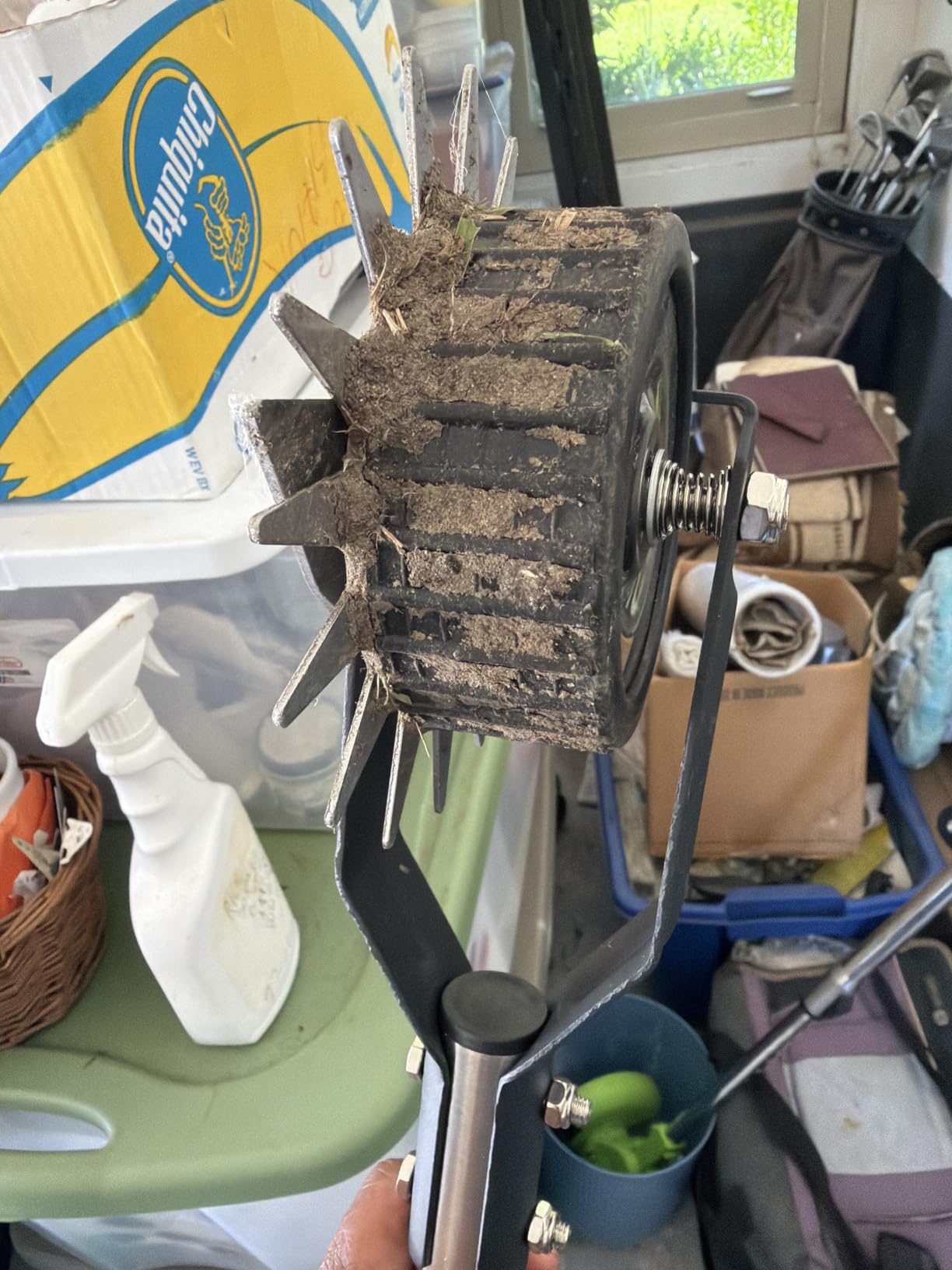
The BARAYSTUS replaces the foot platform with a wheel, and that single design choice changes the technique entirely. Rather than stabbing down and levering, you roll the head along the border and let the spinning blades do the cutting. It is the least tiring manual method we tested.
The dual serrated blades are described as self-sharpening and self-cleaning, which in practice means the teeth shed debris as they turn rather than packing with clippings. On a long established edge that keeps the cut consistent without stopping to clear the head.
The handle adjusts to three heights at 30.7, 44.5 and 58.3 inches, so a single tool fits a range of users in a shared household. At 16 ounces it is by a wide margin the lightest tool in this roundup, which makes it easy to lift onto a workbench and set down again.
The handle is thickened stainless steel tube with a cushion grip, and the working parts are anti-rust plated. Assembly is straightforward and the whole job takes minutes.

Who the BARAYSTUS suits
Anyone who finds manual edging physically unpleasant, and anyone sharing a tool between users of different heights. It is also a good light-duty companion for tidying an edge after a powered machine has done the heavy cutting.
It suits small lawns with flat, stone-free edges where a steady pushing rhythm is easy to hold.
Where the BARAYSTUS falls short
The wheel axle collects grass and debris and needs clearing regularly, which is the single most repeated note in the reviews. Stones along the edge will damage the blades.
At 5.5 inch the cutting width is narrow against a step edger, so a long border takes more passes, and a jerky pushing motion cuts poorly. It is also less effective on a genuinely overgrown edge than any of the foot-powered tools here.
How to Edge a Sidewalk Step by Step
Six steps is enough to get a clean line on concrete, and the first two matter more than the tool choice. Work in short sections rather than trying to edge the whole walk in one pass.
Step 1: Clear the route. Walk the sidewalk first and pick out stones, sticks and low branches. On a powered edger these become projectiles the moment the blade touches them, and on a manual tool they are exactly what bends a saw-tooth blade.
Step 2: Cut the overhang back. Use a mower or string trimmer to take off the grass that overhangs the pavement. This puts the actual root line in the open so the edger is working on the edge rather than on the top of the grass.
Step 3: Set the depth before you start. On a powered edger choose a shallow setting, around 1 inch, for the first pass. On a manual tool, set the depth with the foot platform rather than by forcing the blade. A shallow cut will not gouge a pavement joint.
Step 4: Run the tool with the guard toward the lawn. The cutting edge and debris guard face away from the concrete, toward the grass. Tip the tool slightly inward so the blade leans toward the lawn side of the line, and keep moving steadily.
Step 5: Take short overlapping passes. Work in two to three foot sections with about half a blade of overlap. Stop every few feet, lift the tool clear and look at the line before continuing. This is the single biggest difference between a straight edge and a wavy one.
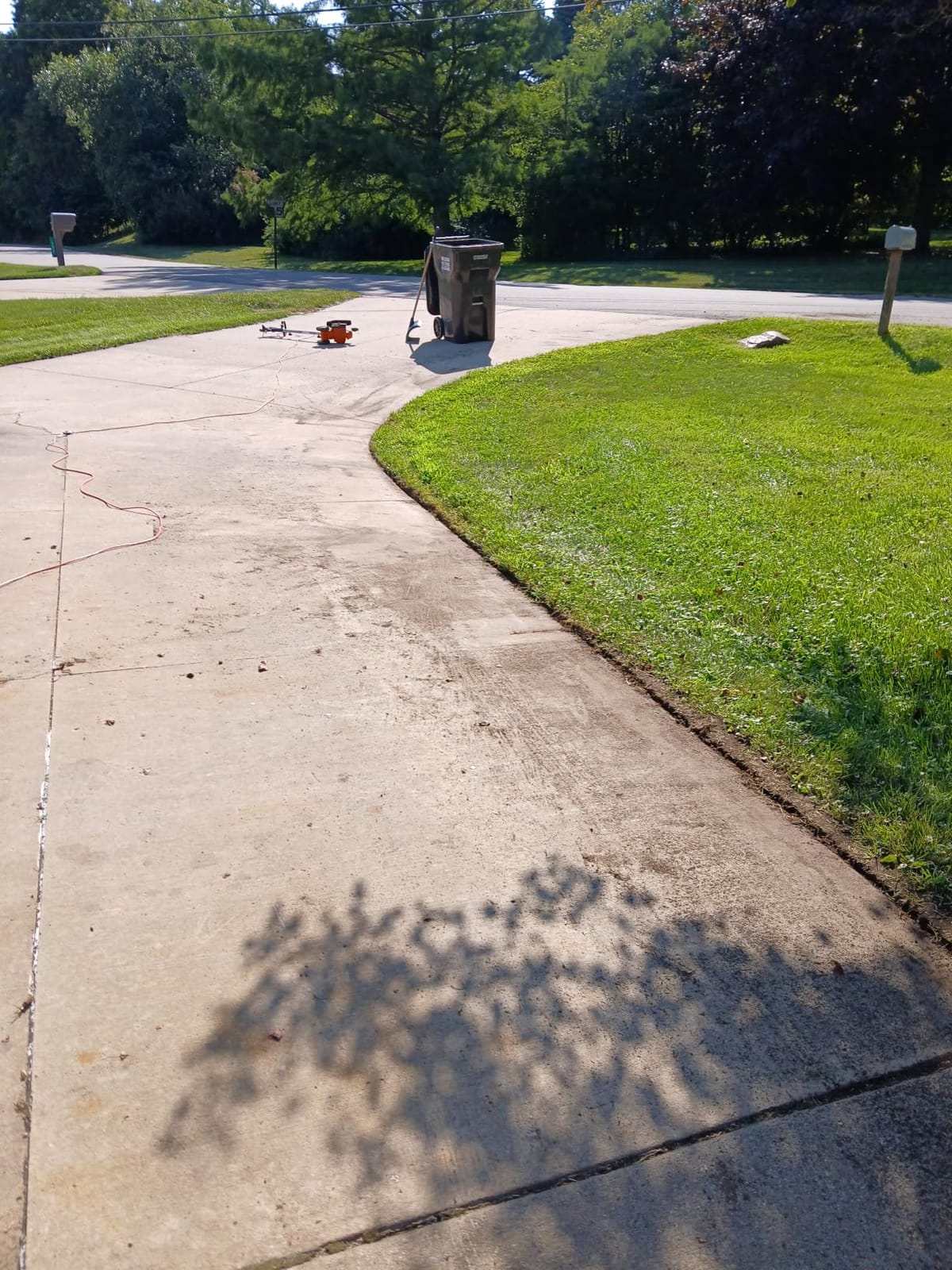
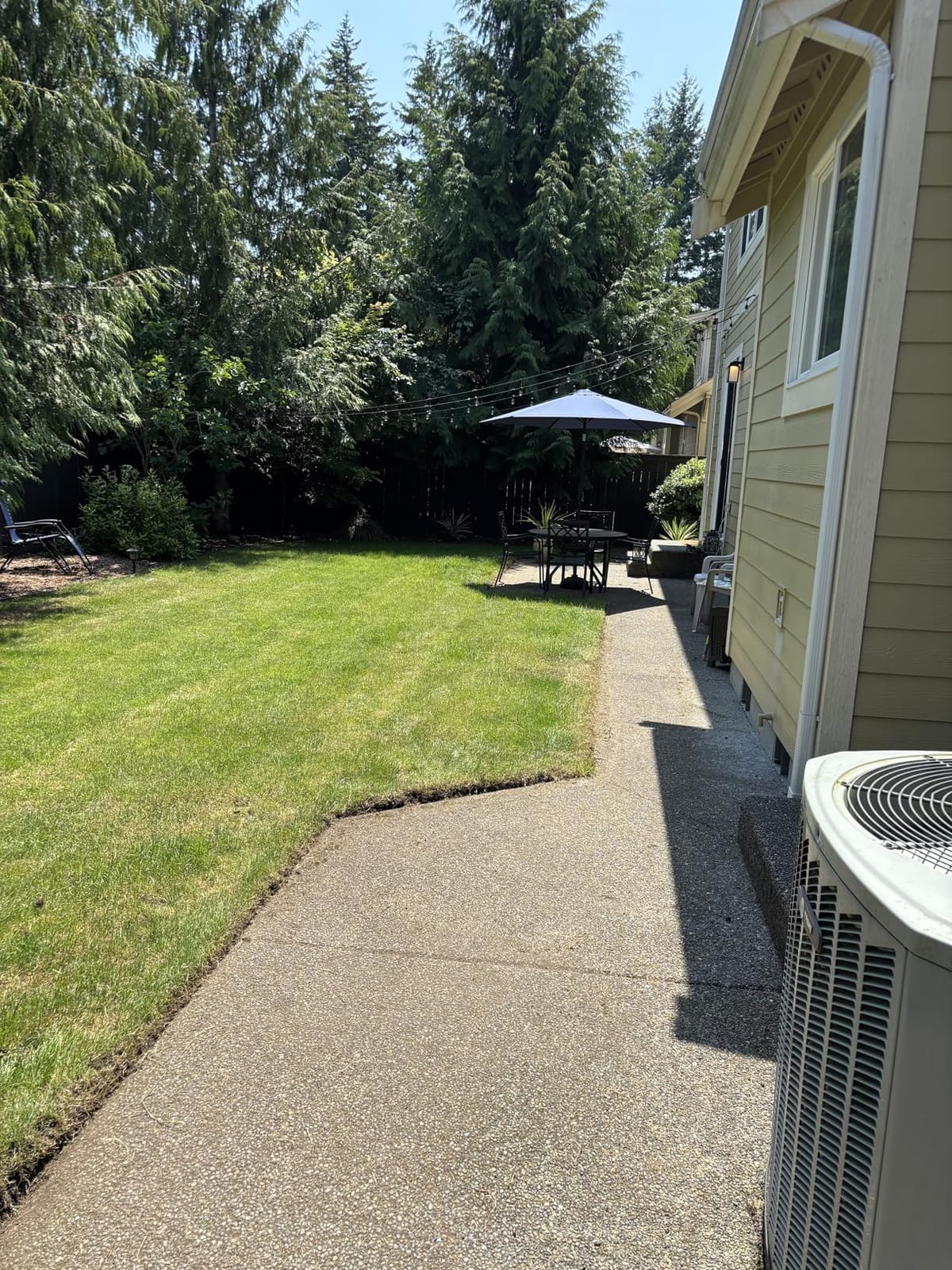
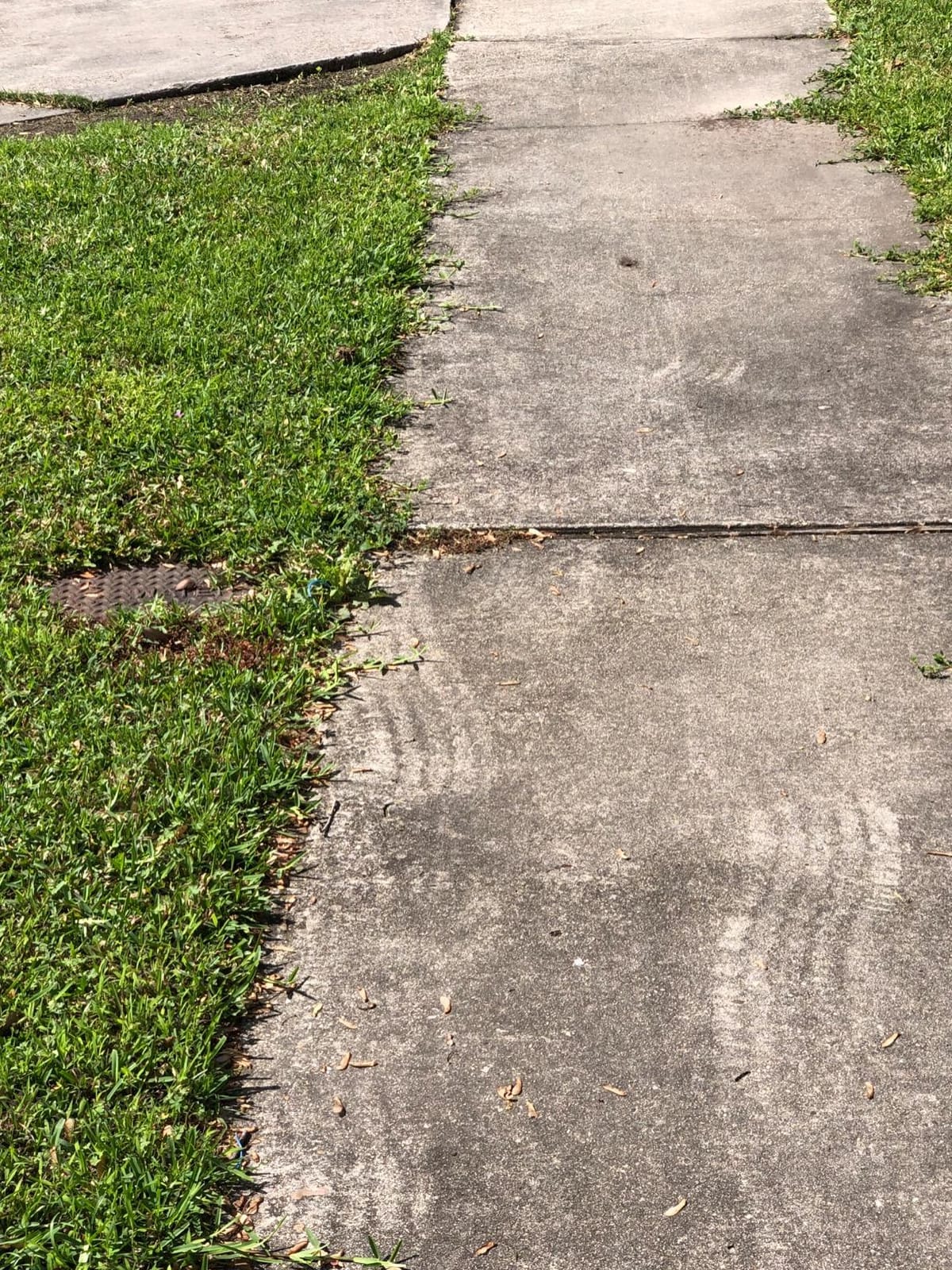
Step 6: Lift out the slivers and tidy. Flip the tool so the blade spins upward against the direction of travel to lever loose sod out of the joint, then sweep or blow the clippings off the pavement. Many municipalities ask that clippings be cleared from the sidewalk, and it is good manners regardless.
If you only have a string trimmer, you can approximate an edge by turning the head until only the lowest tip of the spool touches the work, tilting the head slightly and using short bursts along the line. It works for a tidy-up pass on an established edge and nothing else. It will not cut root mat, it will not define a line, and it flings debris. For a first real pass, use a blade or half-moon tool.
How to Keep Grass Clippings off the Sidewalk
Clippings on the pavement are the most common complaint raised alongside sidewalk edging, and the fix is mostly about direction and timing rather than equipment.
Run the edger with the deflector and guard on the lawn side, so the cut material is thrown into the grass instead of onto the concrete. On a spool-head edger the spacer guard does the same job near a bed border.
Edge dry. Wet clippings stick to concrete and to the blade, which makes the next pass rougher. Early morning after dew is the worst time, even though it is the quietest.
Work in short sections and sweep as you go rather than tidying the whole walk at the end. A hand blower or a broom finishes the job in a fraction of the time and keeps the pavement clear of the bulk.
Buying Guide: Cordless, Corded, Manual and Walk-Behind
Choose on the length of the run, the condition of the edge and how much debris you can tolerate, in that order. Brand matters far less than the tool type matching the job.
Cordless is the right default. It starts instantly, runs quietly enough for early hours, needs no fuel mixing and produces no exhaust smell on a street with open windows. The trade-offs are runtime and platform lock-in. Pick a pack size that covers your whole sidewalk in one charge, and note that most brands sell the tool as a bare unit with the battery sold separately, so the kit version is usually the correct buy on day one.
Corded electric is the value option. A 12 Amp motor has steady power with no battery ceiling, and it is typically the cheapest route to a real steel blade. The cost is mobility. The built-in cord is short by design, so you need an outdoor rated extension lead and you will be managing it around corners.
Manual is the underrated choice for short edges. There is no fuel cost, no battery ageing and no noise. A half-moon or step edger with a serrated or saw-tooth blade cuts real root mat as long as you use body weight and a steady rhythm. For a walk under about 40 feet that is maintained twice a season, manual is genuinely sufficient.
Gas and walk-behind edgers suit long runs and heavy overgrowth. A walk-behind edger on wheels needs no stance at all and is the answer for a long straight edge along a large property or a road frontage. Gas stick edgers give all-day runtime and the highest power, at the cost of noise, fuel mixing and a heavier tool. Neither appeared in the analyzed lineup, which is worth knowing when you weigh our recommendations against a showroom shelf.
On cutting width, a wider head covers ground faster but gives less control on a tight border. A 7.5 inch blade is the common choice for sidewalks, and the 12 inch spool on the 2-in-1 tools is a trimming width rather than an edging width, so it is not directly comparable.
On weight and balance, the number that matters is how the tool feels at the end of ten minutes rather than the spec sheet. Tools with guide wheels steer more predictably along a straight run, which is usually worth more on a sidewalk than raw cutting power.
Plan on a maintenance budget. Blades dull against concrete faster than against soil, so expect to sharpen or replace a blade every few seasons on a busy edge, and if you buy corded or cordless, check whether a replacement blade is sold for your model. Check the blade torque before the first pass on any of the three-position-blade tools.
Safety When Edging Along Concrete, Curbs and Pavement
Concrete and stone turn a routine edging job into the most dangerous moment of lawn care, because the blade is running a few centimetres from a hard, unmoving surface.
Wear eye protection every time. Sparking off a buried stone or a concrete curb happens without warning, and stones thrown at shin height travel far. Hearing protection is worth adding on any of the 12 Amp corded tools, which reviewers describe as loud.
Clear the route before you start rather than reacting to obstacles at speed. Check for buried irrigation lines and low voltage cable before any trenching work, and do not cut into a pavement joint where the blade can wedge and kick.
Keep the guard on the lawn side, hold the tool with both hands, and never let the blade spin free at full throttle in the air. With children or pets nearby, work the sidewalk before anyone is outside, since most edging injuries are bystander injuries rather than operator injuries.
Frequently Asked Questions
What is an edger?
An edger is a tool with a vertically rotating blade or wire wheel that cuts grass and turf roots at the border where your lawn meets a sidewalk, driveway or patio. The spinning edge slices a thin strip of sod and root mat, exposing a vertical edge line that a mower cannot reach, and it stops grass from creeping back over the hard surface.
What is the best handheld lawn edger?
For most sidewalks, a cordless blade edger with guide wheels is the best handheld choice: it starts instantly, runs quietly, needs no fuel and holds a straight line on concrete. A manual half-moon edger wins for short, maintained edges and wet conditions, and a corded 12 Amp model wins on purchase price if you can manage an extension cord.
How to edge a sidewalk with a string trimmer?
Turn the trimmer head until only the bottom tip of the spool points at the work, tilt the head slightly so the tip runs along the pavement lip, and use short controlled bursts moving away from you. Keep the spool spinning slowly to avoid cutting the line. This tidies an established edge but cannot cut root mat or define a line, so it is a finishing step rather than a replacement for an edger.
What is the 3 inch edging rule?
The rule of thumb is to edge back roughly three inches from where the edge sits now, so the strip of turf between your current line and the pavement is removed cleanly in one cut rather than nibbled at over several attempts. Marking that line with spray paint first keeps you consistent, which matters more along a long straight sidewalk than the exact measurement.
How can I cut grass edges without a trimmer?
Use a manual half-moon or step edger. Set the blade in the turf at the line you want, put your weight on the foot platform, and push the handle forward to lever out a thin slice of sod and root. Repeat along the run. For a short, established edge it is quieter, cheaper to run and requires no cord, fuel or battery.
What trimmer line is best for edging?
A thicker line resists abrasion against concrete, so a square or hex-shaped line around 0.080 to 0.095 inch suits edging better than the thin round line supplied with many tools. Use only the lower tip of the spool and spin it slowly near stone or kerb edges, since line melts and frays quickly when it contacts concrete at speed.
How often should I edge my lawn?
Every two to four weeks during the growing season keeps the border defined, and twice a season is enough if the lawn is small and already under control. Edging in spring resets a neglected edge, and a late-season pass in autumn makes the line survive winter. Avoid edging immediately after rain, since soft wet soil tears more easily than a firm root mat.
Do edgers damage concrete?
A properly set edger will not scar sound concrete, but a spinning blade pushed into a joint, a raised lip or a cracked edge can chip the surface. Set a shallow depth, keep the guard on the lawn side, avoid working across expansion joints and lift the tool when the line follows a crack rather than cutting through it.
Bottom Line
For most suburban sidewalks, the WORX WG163 is the edger we would buy first, because one tool covers trimming and edging, it runs quietly enough for an early start, and the guide wheels do more for a straight concrete line than extra power does.
If the edge has been neglected, work outward from the tool type instead of the brand. The Root Slayer handles rooted, compacted borders, the BLACK+DECKER adds trenching when you have cable or irrigation to lay, and the Greenworks covers the longest cordless run in the lineup with the biggest pack.
For a short walk, tight neighbours or early morning work, the manual tools are genuinely better rather than merely cheaper. The Fiskars keeps your back upright, the Colwelt bites through dense sod, the CKLT works when the grass is wet, and the BARAYSTUS removes the physical effort almost entirely.
Whatever you choose, the technique does the last 30 percent. Clear the route, cut the overhang back, set a shallow depth and work in short sections, and the best lawn edgers for sidewalks will give you a line that looks intentional from across the street. That is the whole job.