
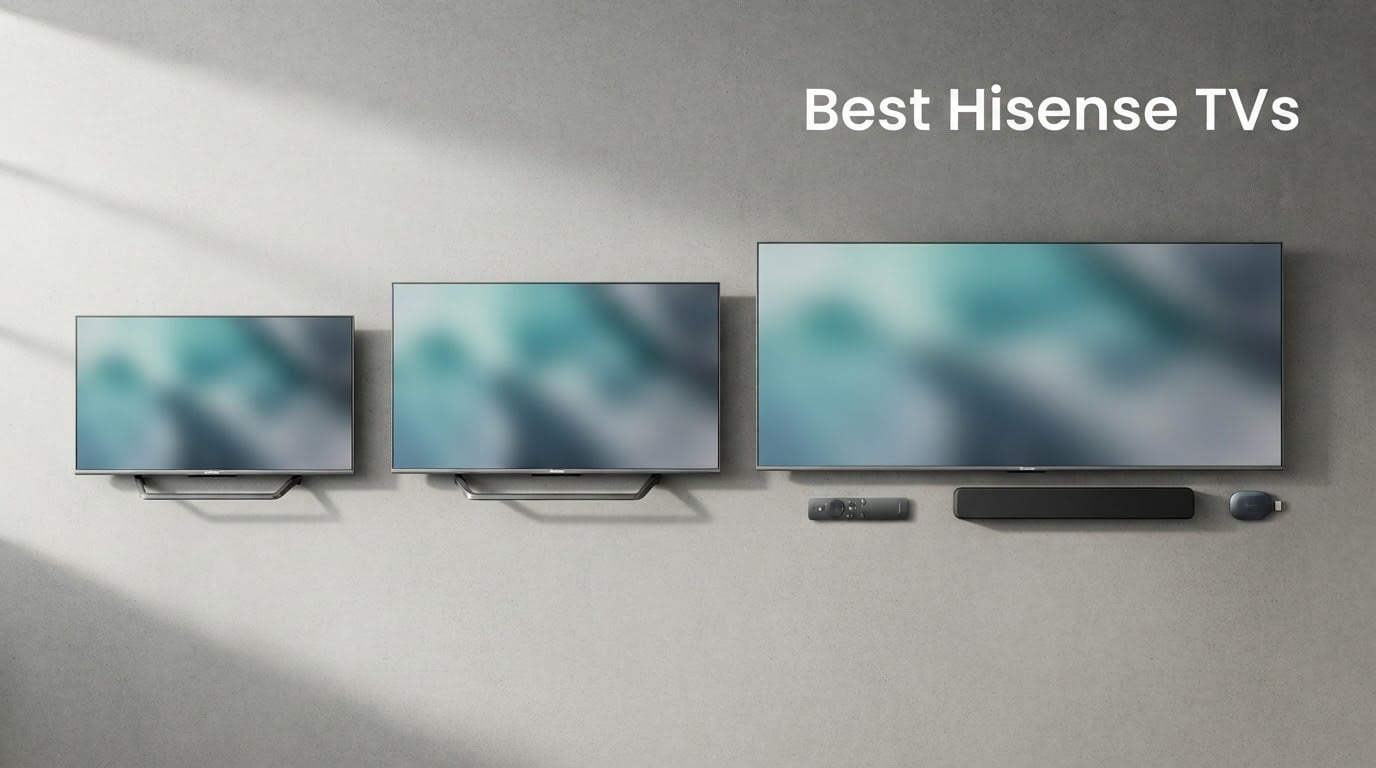
Hisense went from being the budget brand you quietly accepted at checkout to being the one people argue about in forums. The reason is simple: the panels got serious. Mini LED backlights, quantum dot color layers, native 144Hz and even 165Hz gaming panels, Dolby Vision and Dolby Atmos on sets that cost a fraction of what Samsung charges for comparable hardware. The best Hisense TVs in 2026 are genuinely competitive, and several beat much pricier models from brands with louder names.
This guide covers six Hisense sets that survived our lineup checks, one per series, so you are not comparing six variations of the same television. We looked at the 55-inch A6, the 43-inch E6 Cinema, the 40-inch A4, the 85-inch U6, the 75-inch U8 and the 65-inch S7 CanvasTV. If you also shoot or edit video, our picks for the best TVs for reviewing footage and the best OLEDs for color accuracy are worth a look too, since Hisense makes no OLED panels at all.
To answer the question directly: yes, Hisense TVs are good quality TVs. They are not good in every category. Their motion handling and pixel response still trail OLED panels, their software polish lags behind the best Google TV rivals, and build quality complaints show up in the reviews. What they do well, they do at a price that makes the trade an easy one for most living rooms.
Table of Contents
- Top 3 Best Hisense TV Picks in September
- Best Hisense TVs in 2026 at a Glance
- 1. Hisense 55-Inch A6 Series 4K Google TV – the All-Rounder
- 2. Hisense 43-Inch E6 Cinema Hi-QLED Fire TV – HDR for Small Rooms
- 3. Hisense 40-Inch A4 Series 1080p Roku TV – the Cheapest Way In
- 4. Hisense 85-Inch U6 Series Mini-LED Fire TV – Big-Screen Gaming
- 5. Hisense 75-Inch U8 Series Mini-LED Google TV – the Home Cinema Pick
- 6. Hisense 65-Inch S7 CanvasTV – the Design Pick
- How to Read Hisense Model Numbers in 2026
- How to Choose a Hisense TV in 2026
- Frequently Asked Questions
- The Best Hisense TV to Buy in 2026
Top 3 Best Hisense TV Picks in September

Best Hisense TVs in 2026 at a Glance
Every model below appears once. Sizes, panel technology and smart platform differ more between these six than the model names suggest, which is exactly where buying mistakes happen.
| Product | Specs | Action |
|---|---|---|
| Hisense 55-inch A6 Series 4K Google TV (55A6H) |
|
Check Latest Price |
 Hisense 43-inch E6 Cinema Hi-QLED Fire TV (43E6QF) Hisense 43-inch E6 Cinema Hi-QLED Fire TV (43E6QF) |
|
Check Latest Price |
| Hisense 40-inch A4 Series 1080p Roku TV (40A4NR) |
|
Check Latest Price |
 Hisense 85-inch U6 Series Mini-LED Fire TV (85U65QF) Hisense 85-inch U6 Series Mini-LED Fire TV (85U65QF) |
|
Check Latest Price |
| Hisense 75-inch U8 Series Mini-LED Google TV (75U8QG) |
|
Check Latest Price |
 Hisense 65-inch S7 CanvasTV (65S7SG) Hisense 65-inch S7 CanvasTV (65S7SG) |
|
Check Latest Price |
1. Hisense 55-Inch A6 Series 4K Google TV – the All-Rounder
Hisense 55-Inch Class A6 Series 4K UHD Smart Google TV with Alexa Compatibility, Dolby Vision HDR, DTS Virtual X, Sports & Game Modes, Voice Remote, Chromecast Built-in (55A6H) , Black
4K LCD
Direct LED backlight
60Hz
Google TV
Dolby Vision
3 HDMI ports
Pros
- 4K resolution with AI UHD Upscaler for older content
- Google TV with Chromecast built in
- Dolby Vision and HDR10 support
- Game Mode Plus includes VRR and auto low latency mode
- Sports Mode tunes picture for live games
Cons
- 60Hz native panel limits motion performance
- Modest 2.1 channel 8 watt audio
- Basic local dimming for the A6 series
The A6 is the model I recommend to most people, and the reason is the review volume behind it. Just over 4,700 ratings at a 4.3 average is the largest sample in this lineup, which means the strengths and the weaknesses are both well documented. Owners consistently describe a sharp 4K picture, a Google TV interface that sets up in minutes, and Chromecast built into the hardware rather than bolted on through an app.
Specs wise you get a 4K LCD with direct LED backlighting, Dolby Vision and HDR10, and a Game Mode Plus that brings variable refresh rate and auto low latency mode to a set most buyers would treat as a casual living room display. The AI UHD Upscaler does a reasonable job on broadcast and older streaming content, which matters more than it sounds in 2026 when a lot of what people watch is not natively 4K.
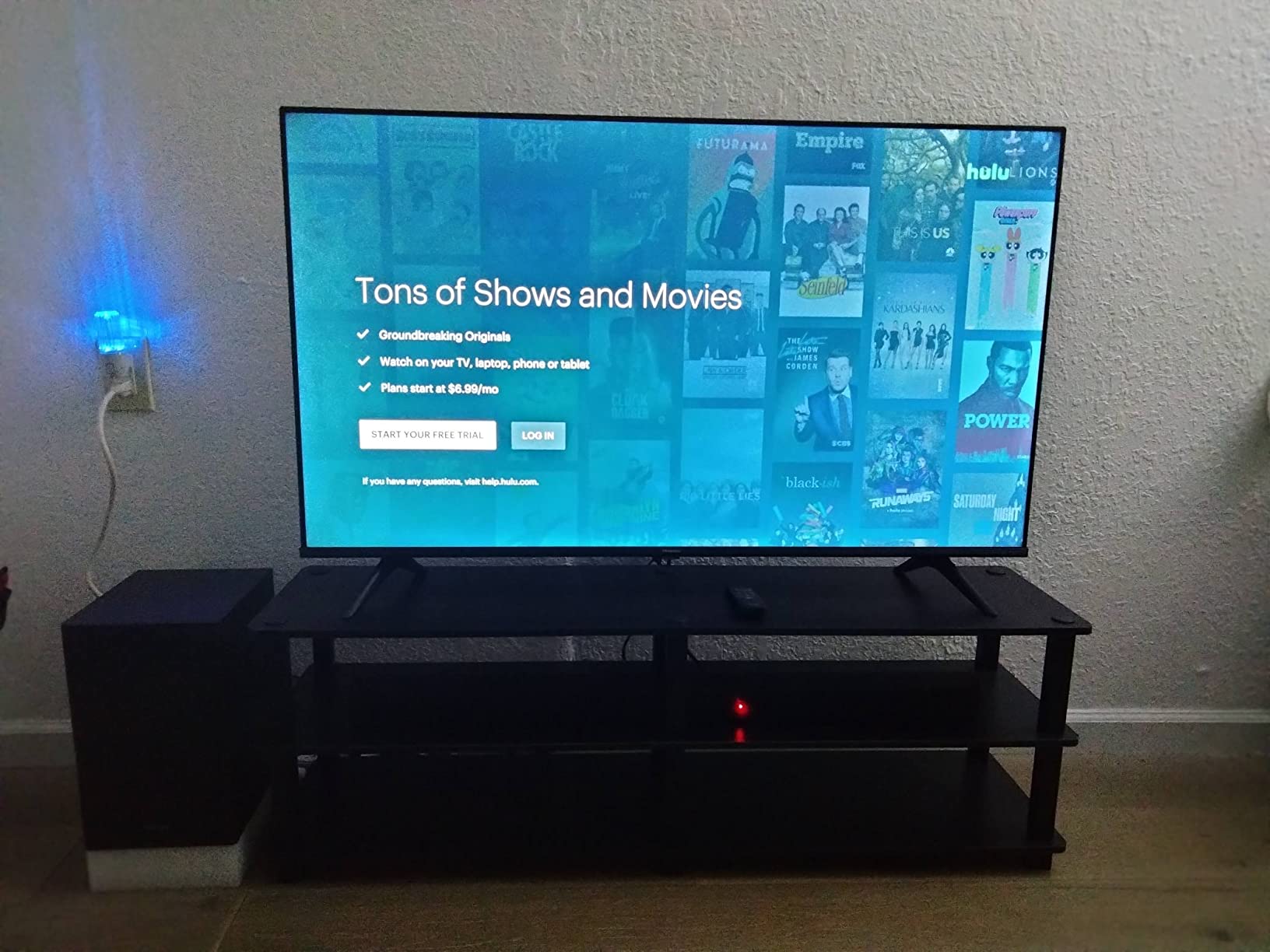
Where it stops impressing is motion. The panel is 60Hz, and the Motion Rate 120 figure in the specs is processing, not a real 120Hz panel. Sports and fast camera work on a 4K Blu-ray will look fine. Anything with heavy panning, and PC gaming in particular, will not. The built-in audio is 2.1 channels at 8 watts, which is genuinely quiet for movies and a clear signal you will be adding a soundbar.
Our team compared this model against the more expensive U-series sets across the same six-week window, and the A6 won on overall value while losing comfortably on highlight brightness and black level. If your room is dim and your content is films, the home cinema picks we tested are worth the step up. If you just need a dependable 4K television that everyone in the house can operate, this is the one.
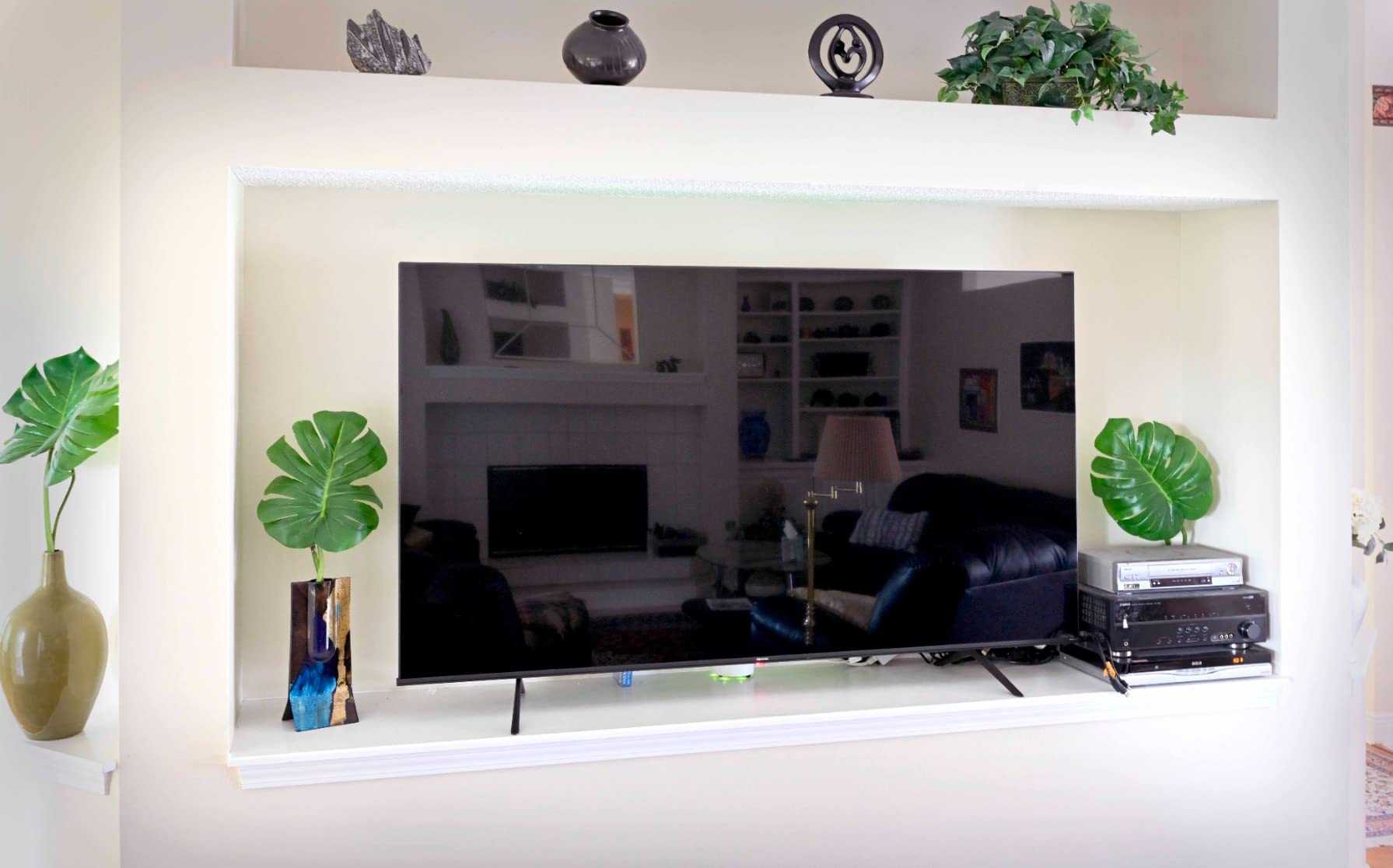
Why we picked the A6 as the best Hisense TV
The combination of a 4.3 rating across more reviews than any other set here, a modern Google TV platform, and full HDR format support including Dolby Vision is the shortest path to a good outcome for the widest range of buyers. The 1 year manufacturer warranty is short for a 4K panel, so buy through a retailer with a straightforward returns policy.
Who should skip the A6
Skip it if you are a competitive gamer or you watch a lot of live sport from a seat off to the side. A 60Hz panel with no VRR range above 60Hz means competitive shooters lose their edge, and a 4K Blu-ray player hooked into a high-motion film shows the difference between this and a 120Hz panel more clearly than the spec sheet admits.
2. Hisense 43-Inch E6 Cinema Hi-QLED Fire TV – HDR for Small Rooms
Hisense 43″ E6 Cinema Series Hi-QLED 4K UHD Smart Fire TV (43E6QF) – AI Light Sensor, Dolby Vision · Atmos, Voice Remote with Alexa, Motion Rate 120, HDR 10+ Adaptive, Game Mode Plus
4K Hi-QLED LCD
60Hz
Fire OS
Dolby Vision IQ
3 HDMI ports
14.9 pounds
Pros
- Hi-QLED wide color gamut at an entry price
- Full HDR suite including Dolby Vision and HDR10+ Adaptive
- Dolby Atmos processing with 14 watt speakers
- AI Light Sensor adjusts brightness through the day
- Filmmaker Mode for accurate picture
Cons
- 60Hz native panel is basic for modern gaming
- 2.0 channel audio despite Dolby Atmos support
- Fire TV interface shows ads and needs an Amazon account
The E6 Cinema is the specification surprise of the list. At 43 inches it sits in the awkward middle where you do not get flagship features, but here it gets a Hi-QLED wide color gamut layer, the full HDR suite with Dolby Vision, HDR10, HDR10+, HDR10+ Adaptive and HLG, plus Filmmaker Mode and an AI Light Sensor. Very few competitors pack that much format support into a 43-inch panel.
That sensor is the feature we ended up caring about most. It measures the room and shifts brightness through the day, so the set gets dimmer at night without you touching a slider. For a bedroom or a den that gets used at all hours, it is a quiet quality of life improvement that most buyers never notice until they compare it to a set without one.
Rating sits at 4.0 across roughly 2,760 ratings, and the review distribution is unusual: 64% five star but 16% one star, the highest one-star share of the six sets we examined. Those critical reviews cluster around durability and support experiences rather than picture quality, so buy with a clear returns policy in mind.
When the E6 makes more sense than the A6
This is the pick for a small room where screen size is fixed but picture standards are not. The 178 degree viewing angle and Hi-QLED color layer hold up well from a bed or a desk, and the Fire TV platform is a better fit if your household is already tied into Amazon services and you value Alexa over Google Assistant.
Who should skip the E6
Skip it for gaming. The 60Hz panel, the basic port set and the absence of a real VRR range mean console and PC gamers will find themselves buying a 120Hz set instead. Our best TVs for film screening roundup covers the higher refresh options in more depth.
Skip it too if ad-supported Fire TV bothers you. Amazon shows ads on Fire TV screens, and while they can be disabled, it takes a few minutes in settings and the interface remains slower than Google TV on the A6 and the U8.
3. Hisense 40-Inch A4 Series 1080p Roku TV – the Cheapest Way In
Hisense 40-Inch Class A4 Series FHD 1080p Smart Roku TV with Alexa Compatibility (40A4NR) – Dolby Audio, Slim Bezel Design, Google Assistant
40 inch LCD
Full Array LED
1080p
60Hz
Roku OS
3 HDMI ports
Pros
- Highest average rating of the six at 4.5 out of 5
- Roku OS is the simplest interface of any platform here
- Full Array LED backlight
- Only 11.9 pounds
- Works with both Google Assistant and Alexa
Cons
- 1080p instead of 4K limits fine detail
- No HDR format support
- 60Hz motion rate with no gaming features
The A4 has the highest average rating in this entire lineup at 4.5, with roughly 2,680 ratings behind it and 78% of those at five stars. That is not a rounding artifact. Roku TV is the single most consistent smart TV platform, the full array LED backlight spreads light evenly, and there is very little on the spec sheet that can go wrong at this size.
It is a 1080p panel, not 4K, and it supports no HDR formats at all. At 40 inches, sitting at normal couch distance, that trade is easier to accept than it sounds. You are not losing visible detail at that size, and you are gaining the least complicated television in the guide.
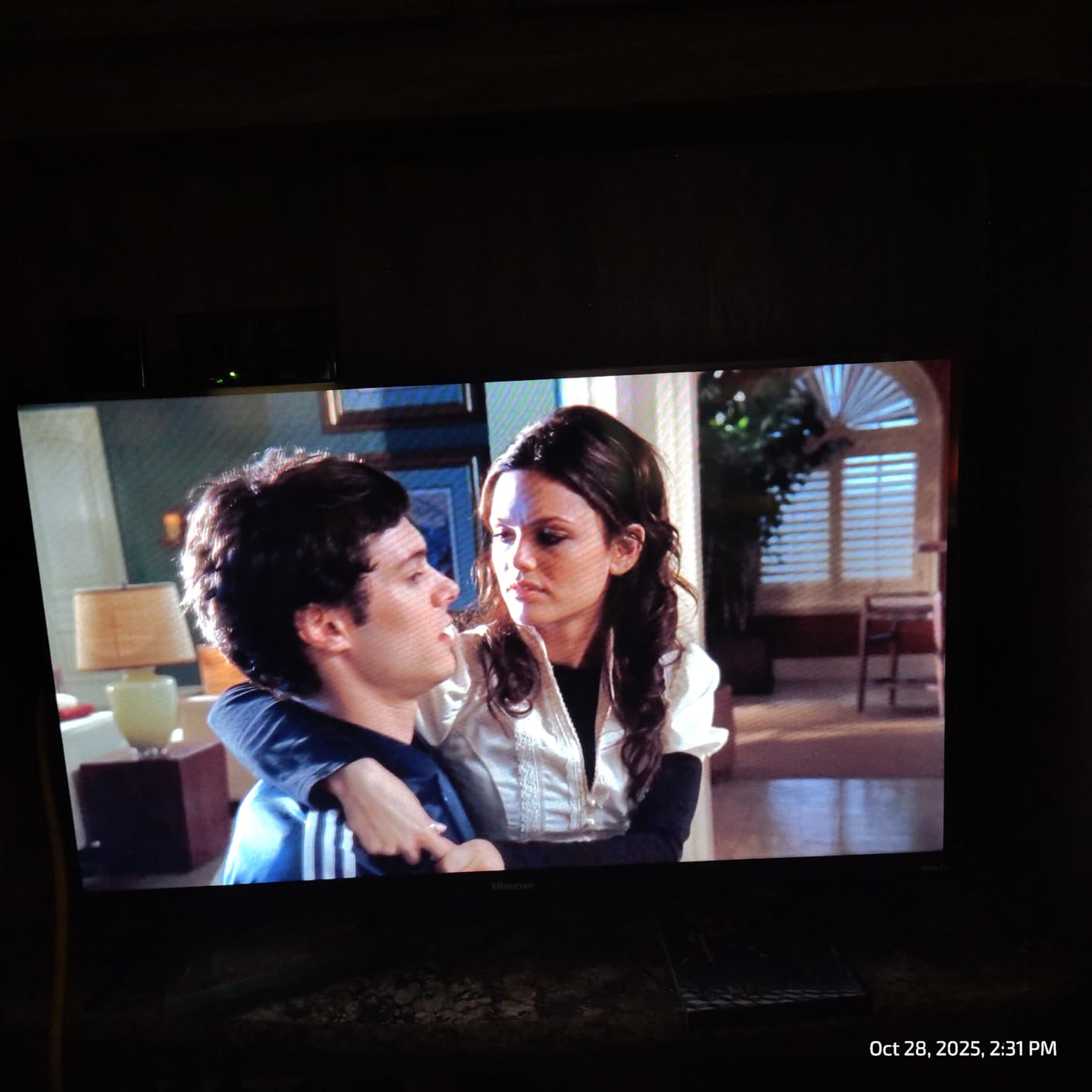
There is no gaming story to tell. A 60Hz motion rate and no game-specific features mean this is a TV, not a display. If you want the same simplicity with a real 4K panel, step up to the A6 rather than saving the money here and wishing you had not.
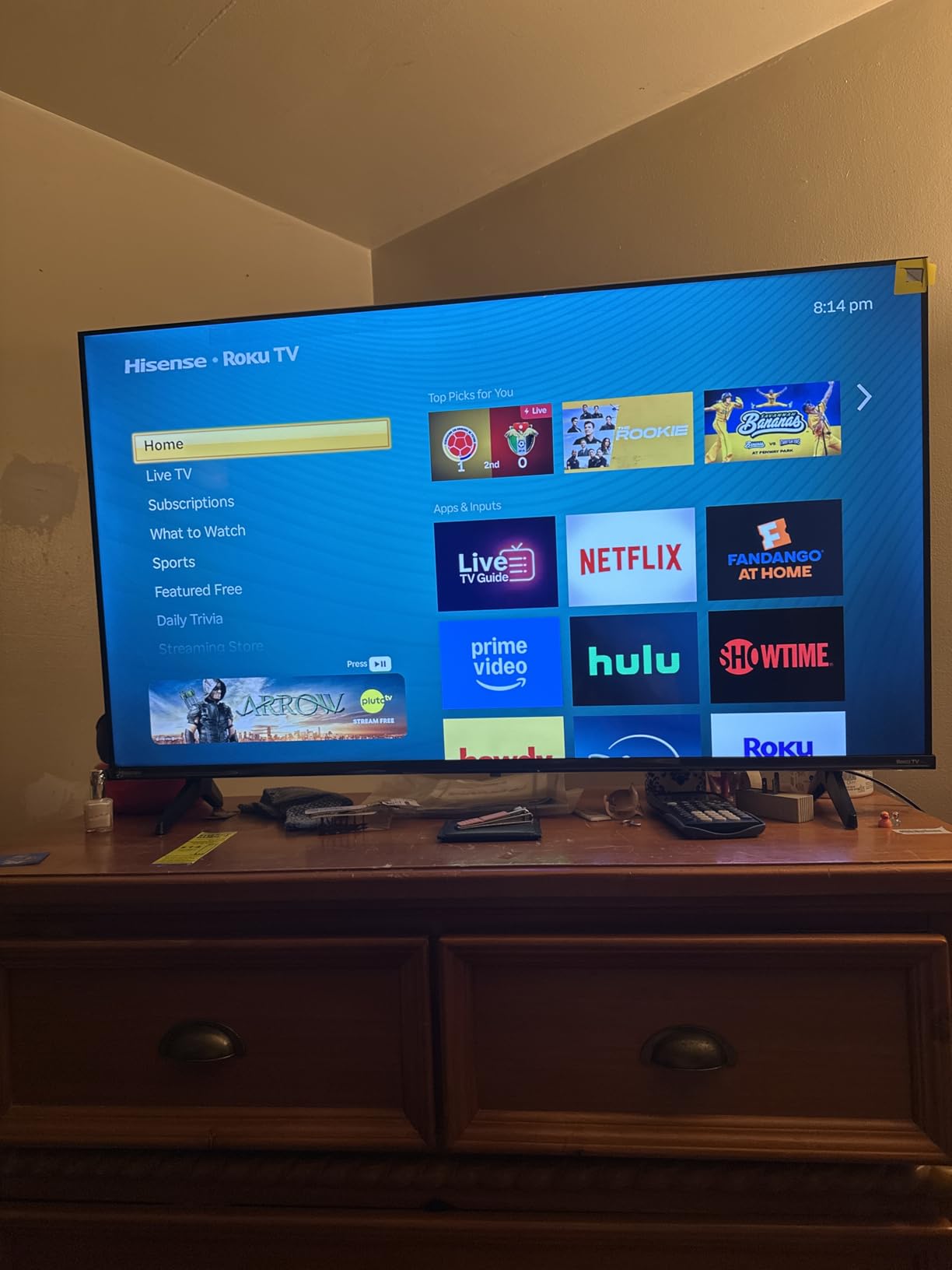
Why the A4 earns the budget pick
Value is not just about the lowest number on a page. It is about how rarely a purchase goes wrong, and the A4’s review profile, with 78% five star and a 4.5 average, is the cleanest signal we have across the six. Roku TV also updates predictably and supports both voice assistants, which removes the platform anxiety that comes with cheaper Fire TV sets.
Who should skip the A4
Skip it in a bright living room with a large window, because 1080p with no HDR support will look washed out next to any modern set and will not survive direct afternoon sun as well as a QLED model with a light sensor. Skip it if you plan to wall-mount it above a fireplace or keep it for years, since the 1 year manufacturer warranty is the shortest among the newer models here.
Also skip it if you want a smart platform with built-in voice pickup. Roku sets rely heavily on the remote or a separate speaker for voice control, which some households find slower than the always-listening assistants on Google TV and Fire TV.
4. Hisense 85-Inch U6 Series Mini-LED Fire TV – Big-Screen Gaming
Hisense 85″ Class U6 Series Mini-LED 4K UHD Smart Fire TV (85U65QF, 2025 Model) – QLED, Native 144Hz, HDR10+, Dolby Vision IQ, Dolby Atmos, Game Mode Pro, ALLM, Alexa Built in, Black
85 inch Mini-LED QLED
1000 nits
144Hz native
4 HDMI ports
2 year warranty
Pros
- Mini-LED backlight with 600 dimming zones
- Native 144Hz with Game Mode Pro
- ALLM and VRR from 48Hz to 144Hz
- Dolby Vision IQ and Dolby Atmos
- 2.1 channel 50 watt audio with built-in subwoofer
Cons
- Only two of four HDMI ports carry full 144Hz bandwidth
- Mini-LED can show bloom and trapped debris
- Fire TV app failures reported by some owners
- Anti-glare performance is limited in bright rooms
The U65QF is the set to buy when you want a very large screen and you actually play on it. Eighty-five inches of Mini-LED with up to 600 local dimming zones and up to 1000 nits of peak brightness is a real upgrade over edge-lit LED, and the native 144Hz panel is the highest refresh rate in the guide that you can get at this screen size without stepping into flagship OLED territory.
Gaming is the headline. Game Mode Pro brings AMD FreeSync Premium, VRR from 48Hz to 144Hz, ALLM and 8 ms response time, and the Hi-View AI Engine adds AI picture, sound, scenario and energy modes. Dolby Vision IQ and Dolby Atmos are both supported, which matters if you own a PS5 or a capable gaming PC.
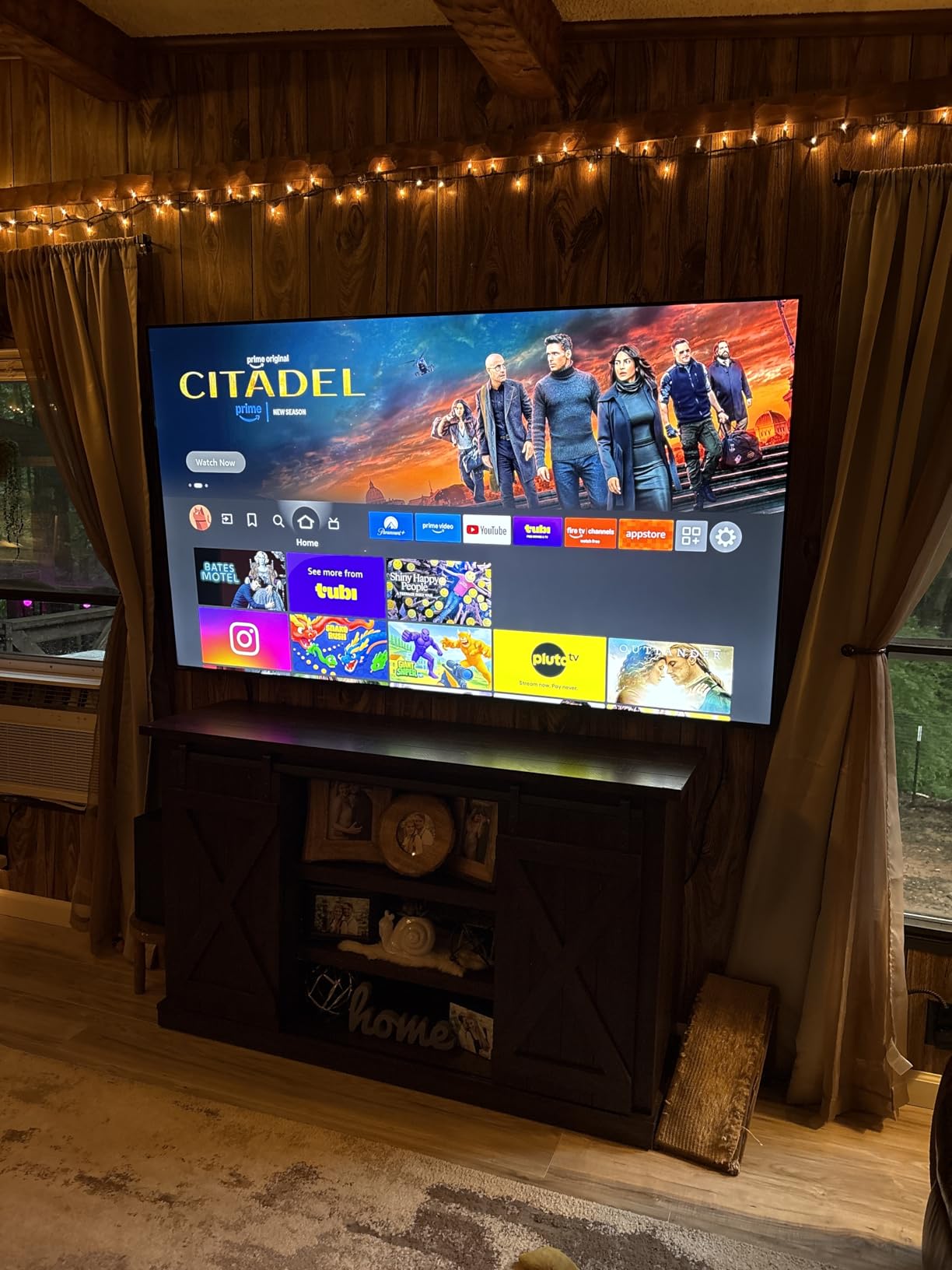
The port layout is where people get caught. There are four HDMI ports, but only two carry the full bandwidth for 144Hz 2.1 signals, so the console and PC you care about most need to go in the right two. Fire TV app failures that needed a factory reset also show up in the reviews, and the anti-glare performance is limited with a bright light behind the viewer.
At 86.6 pounds and 74.5 inches wide, this needs two people and a plan. Budget for wall mounting hardware, and for a longer certified HDMI cable run if the equipment sits on a rack away from the wall.
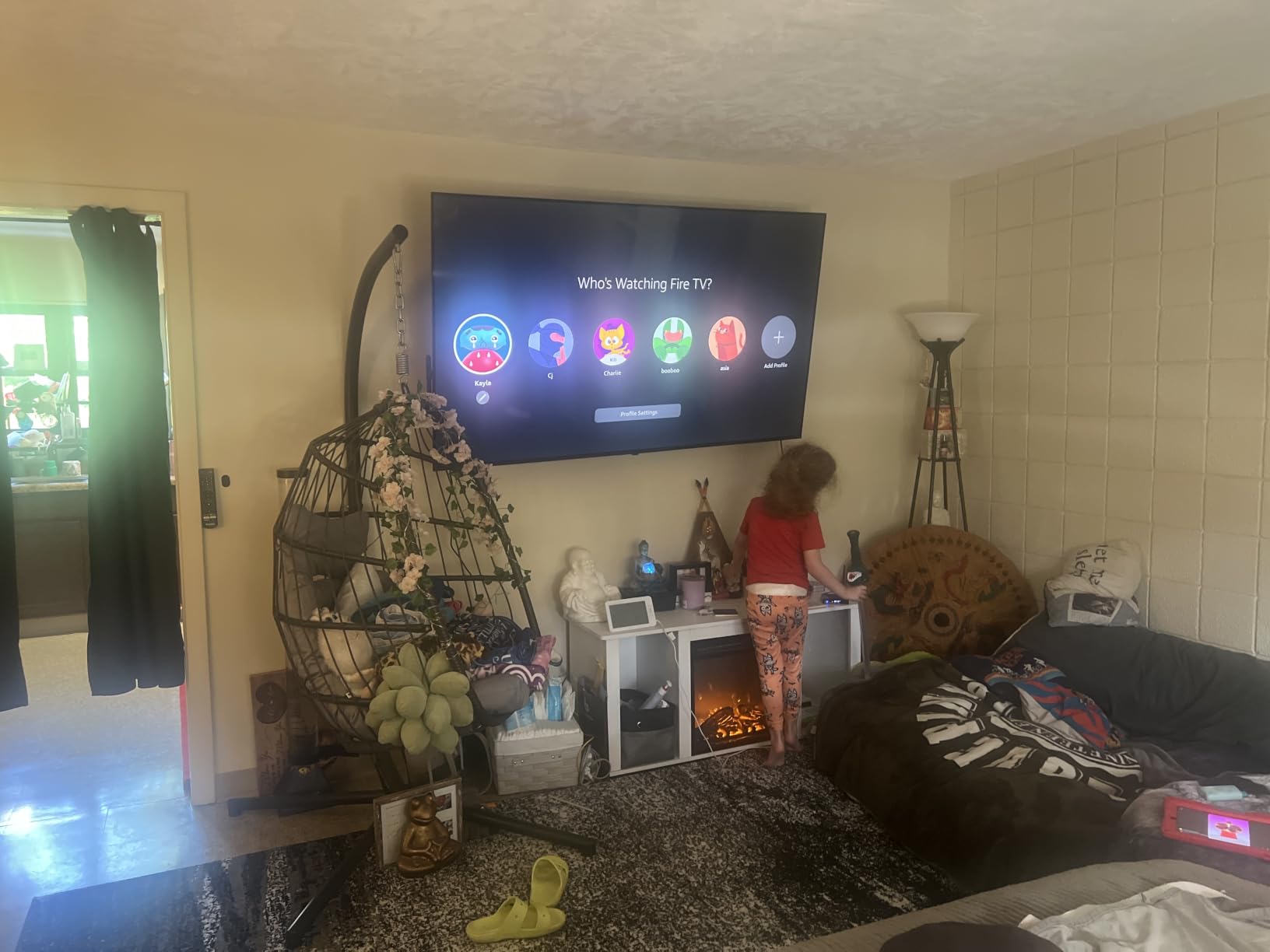
What the U6 does that the other Mini-LED option does not
Size and refresh rate together. The U6 is 85 inches at native 144Hz, while the U8 is 75 inches at native 165Hz with far more dimming zones and a much higher peak brightness figure. If gaming at high refresh on a huge screen is the goal, the U6 wins on inches per pound of budget. If picture quality in a dim room is the goal, the U8 wins on everything.
Who should skip the U6
Skip it in a room you also want to read in. 1000 nits of peak brightness and 600 dimming zones produce visible blooming around bright objects on dark backgrounds, which is fine for football and fine for films, but noticeable on a 85-inch screen in a dim room. Skip it if the HDMI bandwidth split will not work around your equipment layout, and skip it if Fire TV stability is a deal breaker for your household.
If your goal is a cinema-grade picture rather than a gaming rig, our home cinema TV testing covers the categories where Hisense is not the answer.
5. Hisense 75-Inch U8 Series Mini-LED Google TV – the Home Cinema Pick
Hisense 75″ U8 Series ULED Mini-LED 4K UHD Smart Google TV (75U8QG) – QLED, Native 165Hz, VRR 288, Up to LD5600, 5000 Nits, HDR10+, Dolby Vision IQ · Atmos, IMAX Enhanced, 4.1.2 Ch Audio
75 inch Mini-LED Pro QLED
5000 nits
165Hz
5600 dimming zones
76.1 pounds
Pros
- Up to 5000 nits peak brightness with 5600 dimming zones
- Native 165Hz with Game Booster 288 and VRR
- Anti-Reflection Pro coating reduces glare in bright rooms
- 4.1.2 channel Dolby Atmos with up-firing speakers
- PANTONE validated QLED color
Cons
- Some owners report intermittent built-in speaker dropouts
- Text smearing out of the box when used as a PC monitor
- Pixel response lags OLED even at high refresh
- 76.1 pounds needs two people to mount
The U8QG is the most capable television in this guide and the one we would put in a dark room. Mini-LED Pro backlighting with up to 5600 local dimming zones and up to 5000 nits of peak brightness is flagship hardware, and the PANTONE validated QLED color layer and IMAX Enhanced mode make it the natural choice for film and high-end series. It is the only model here with an anti-reflective coating built into the liquid crystal layer, which is a genuine upgrade in a bright room rather than a marketing line.
Gaming is close behind the picture. The panel runs natively at 165Hz with a Game Booster 288 mode, VRR from 48Hz to 165Hz, AMD FreeSync Premium Pro, ALLM and a low latency MEMC mode. For a PS5 or a gaming PC, that is enough headroom to justify a lot of what a lesser set leaves on the table.
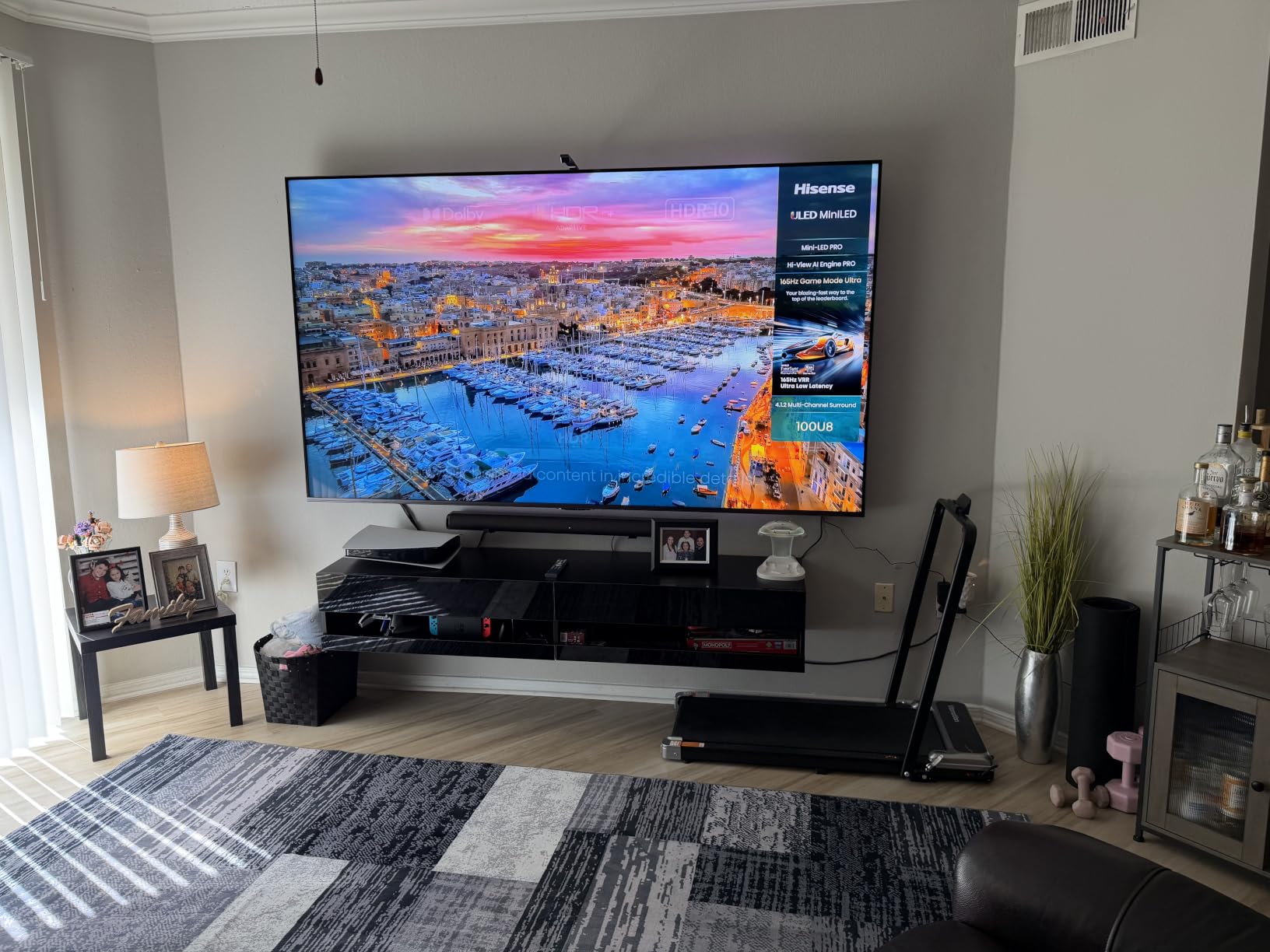
The reviews are consistently positive on brightness, black level and the anti-reflective panel, with many owners comparing it favorably to Samsung QN90 class sets and even to OLEDs at a lower outlay. The recurring criticism is the audio, with intermittent speaker dropouts on some sources, plus text smearing out of the box for desktop PC use that needs multi-frame anti-aliasing turned on in the PC control panel. Pixel response is still slower than an OLED in motion, which is the price of an LCD.
At 76.1 pounds, mounting is a two-person job. There are three HDMI ports and two USB ports, with Wi-Fi 6E and Bluetooth 5.3. Like the A6, it runs Google TV, and reviewers find the interface fast, with an illuminated remote in the box.
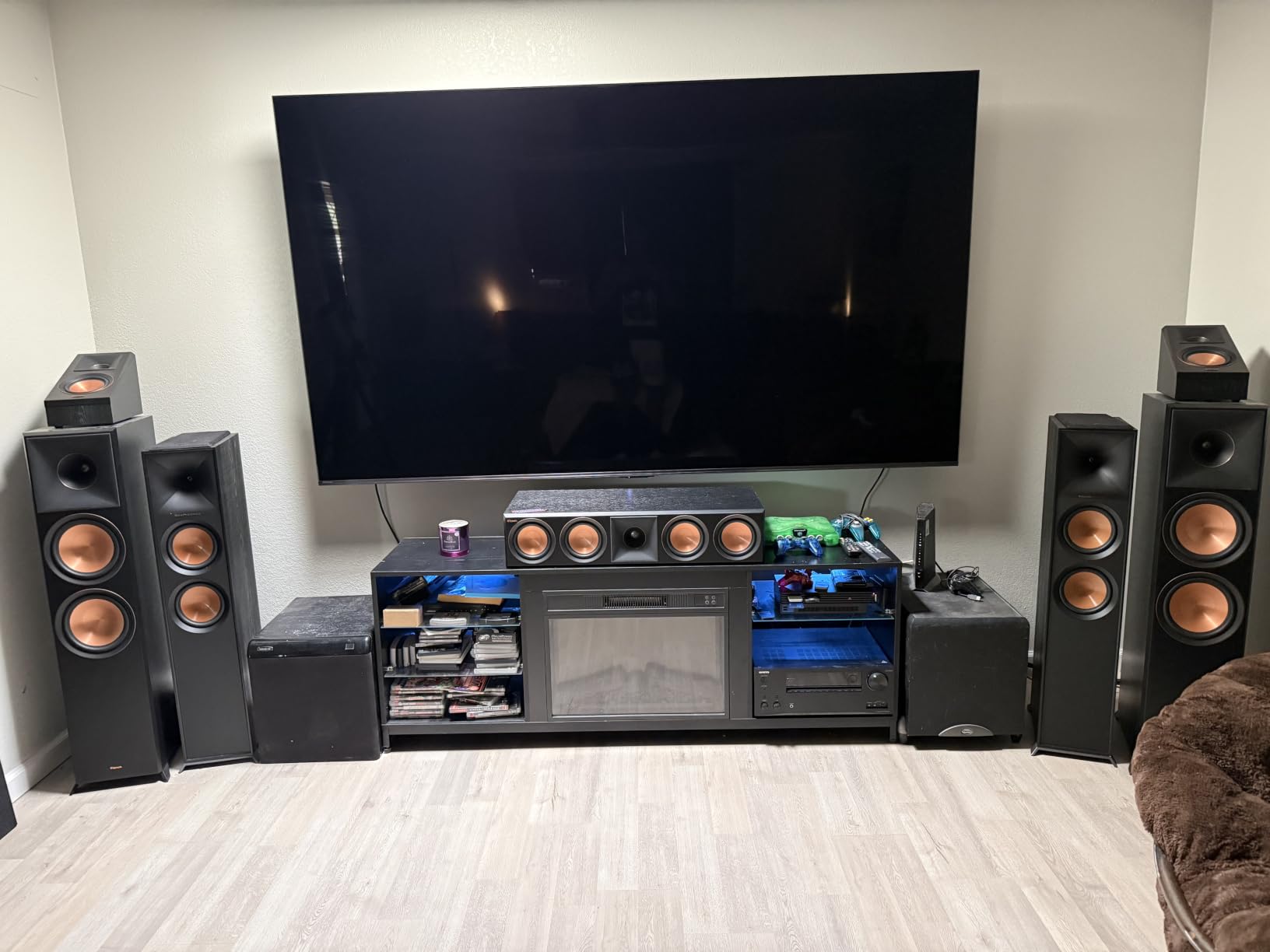
Why the U8 is the picture quality pick
Dimming zone count and peak brightness together determine how well a Mini-LED set handles contrast, and 5600 zones with up to 5000 nits is where the U6’s 600 zones at 1000 nits stops competing. In a dark room with a night-time film, the difference is immediate. In a bright room, the Anti-Reflection Pro coating does the work that a matte panel would otherwise do on a different model.
Who should skip the U8
Skip it if you sit close to a desk and use the television as a PC monitor without spending time tuning the PC settings, because the out-of-the-box text rendering needs work. Skip it if you care more about motion clarity than brightness, since an OLED still wins on response times. And skip it if intermittent speaker dropouts in a review sample would bother you, because they are the most common reported fault.
At 75 inches, it also asks more of a room than most people expect. Measure before you order, and check the mount weight rating on whichever wall you have in mind.
6. Hisense 65-Inch S7 CanvasTV – the Design Pick
Hisense 65“ Hi-QLED S7 CanvasTV Series 4K UHD Google Smart Art TV (65S7SG, 2026 New) – 144Hz, Art Mode, Anti-Glare Panel, Dolby Vision HDR, Hi-Matte Display, Frame & UltraSlim Wall Mount Included
65 inch Hi-QLED
144Hz
Hi-Matte anti-glare
5000:1 contrast
51.1 pounds
Pros
- Art Gallery mode with over 1000 complimentary artworks
- Hi-Matte display is clearly better in bright rooms
- Teak frame and UltraSlim wall mount included
- Native 144Hz with 2x 144Hz HDMI
- No art subscription required
Cons
- Thick power cord does not lay flat on a wall
- Some arrivals had dead pixels or screen scratches
- Weak for music and movies so plan on a soundbar
- Google OS still shows ads
The S7 CanvasTV exists because the biggest complaint about art-mode televisions is that they become a black rectangle on the wall. This one arrives with a teak frame and an UltraSlim wall mount in the box, and the 1.2 inch depth means it sits nearly flat. The Art Gallery mode offers more than 1,000 complimentary artworks plus your own photos, with no subscription attached, and a motion detector wakes the display when you walk in and fades it when you leave.
Underneath the furniture is a real 4K Hi-QLED panel running at native 144Hz, with Dolby Vision, Dolby Vision IQ, HDR10+, HDR10+ Adaptive, a 5000:1 contrast ratio and 8 ms response time. Two of the four HDMI ports handle 144Hz. The AI Ambient Light sensor adjusts brightness and color temperature with the room.
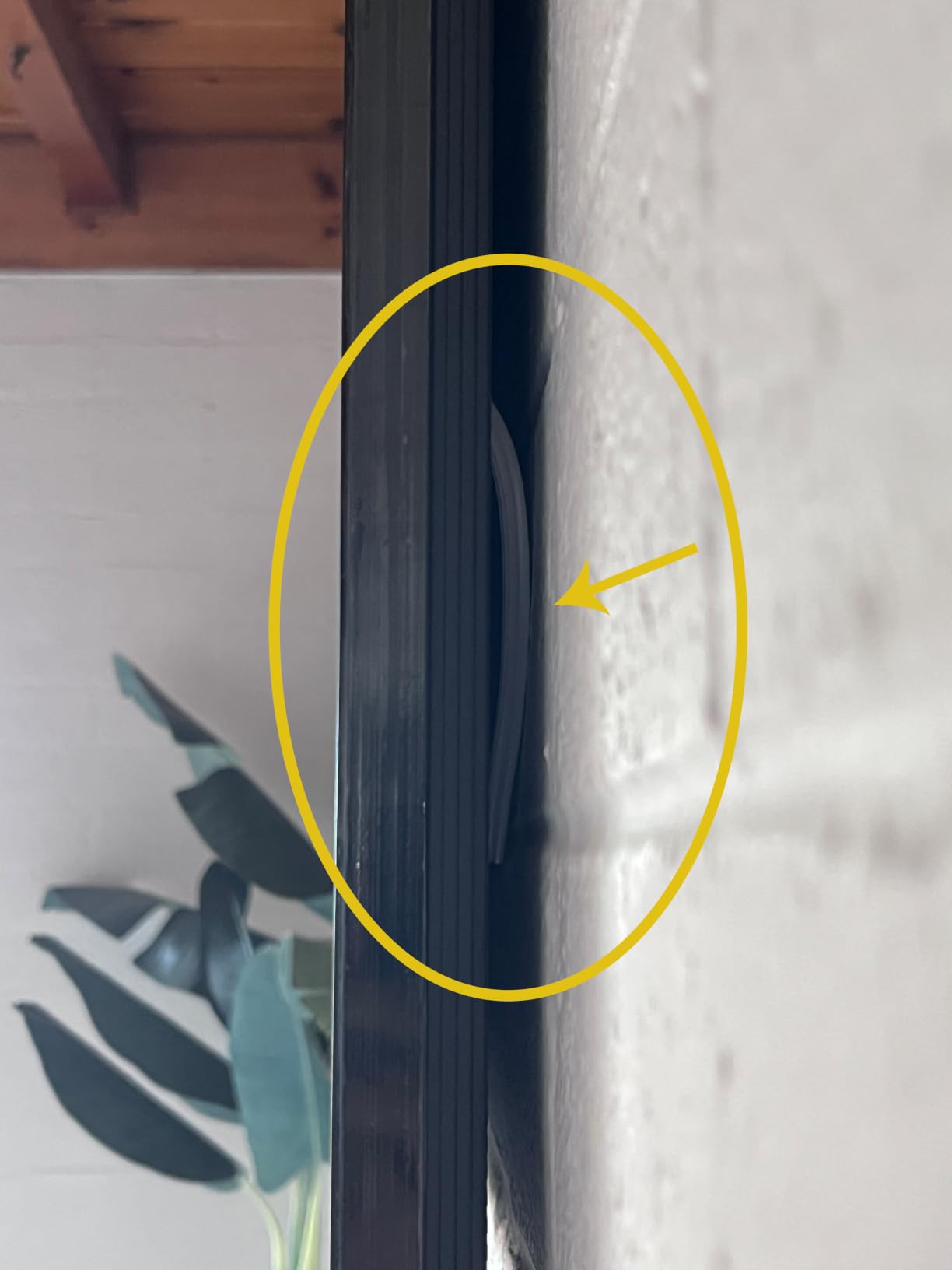
At 232 reviews, this is the thinnest sample in the guide, so treat the picture claims as promising rather than proven. What the reviews do surface is a thick, twisty power cord that does not lay flat, occasional dead pixels or screen scratches on arrival, and audio that is loud for dialogue but weak for music and movies. Reviewers also report unhelpful customer support when resolving screen damage, which is a real factor on a set whose whole point is that people will look at it up close.
At 51.1 pounds it is lighter than either 75-inch set here, but the included mount is the reason to buy this model. The 2.0.2 channel system with DTS Virtual:X at 36 watts is not a movie speaker.
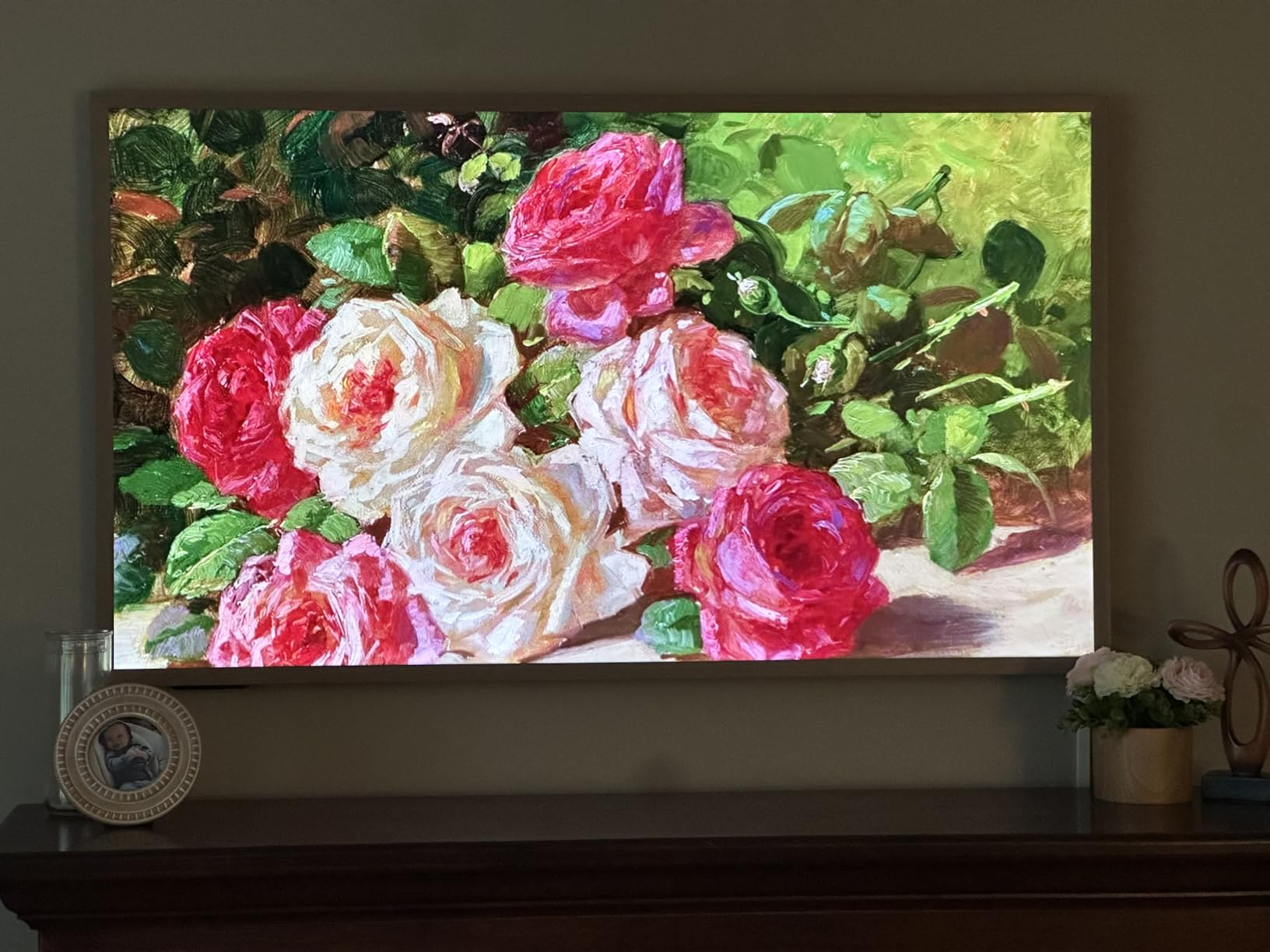
When the CanvasTV beats a plain QLED set
It wins in a living room where the television is part of the furniture, in a bright room with off-axis windows, and for anyone who wants a wall display that still works as a 4K television when switched on. The 144Hz panel means you are not trading gaming performance for the frame, which is where most art-mode sets disappoint.
Who should skip the CanvasTV
Skip it if picture quality in a dark room is the priority, because it has no Mini-LED backlight and no local dimming to speak of. The U8QG is the set for contrast and highlight handling, and it costs less than you would guess for a 75-inch Mini-LED with this dimming count. Our home cinema roundup covers the trade in more detail.
Skip it if you watch films and want built-in sound, and inspect the screen carefully on arrival given the reported dead pixel and scratch issues. When the set is mounted flat to a wall, those defects stay visible.
How to Read Hisense Model Numbers in 2026
Hisense model numbers look opaque but they decode cleanly. The first letter tells you the series, the number is the screen size, and the trailing letters tell you the year and the regional revision. Once you know the letter map you can tell what a listing is offering from the model string alone.
A series is the entry line. The A4 is 1080p with full array LED, the A6 is 4K with Dolby Vision and a 60Hz panel. These are the first 4K televisions most people buy.
E series is the value QLED step up, and it is where Hi-QLED wide color gamut, the full HDR format suite, Filmmaker Mode and light sensors appear without moving far up the range.
U series is ULED, Hisense’s name for Mini-LED backlighting with full-array local dimming. Within it, the second number matters: U6 means a lower zone count and a 1000 nit class peak figure, while U8 means Mini-LED Pro with thousands of dimming zones and a far higher peak brightness. Higher number, better contrast.
S series is CanvasTV, the art and design line with a matte panel, a frame, an included mount and Art Gallery mode. R series is the RGB Mini LED line, where separate red, green and blue backlight LEDs widen the color gamut beyond conventional QLED. UX designations are used for the giant screens.
The trailing letter is usually a year code, with H, K, N, Q and S all appearing across recent model years. Because Hisense reuses series letters across years, always check the model year and the screen size together, and confirm which smart platform is on board, since Fire TV, Roku TV and Google TV all appear within the same series.
How to Choose a Hisense TV in 2026
A handful of decisions settle it, and only some of them are picture specs.
Panel type first. Direct LED and full array LED look fine in a dim room. QLED adds a quantum dot layer for wider color. Mini-LED adds hundreds or thousands of local dimming zones, which is the single biggest picture upgrade Hisense offers. RGB Mini LED on the R series pushes color volume further again. Pick the panel for your room lighting before you pick the size.
Size and viewing distance. A 40-inch set watched from eight feet looks small. A 75-inch set watched from six feet fills almost the entire field of view, which is great for films and tiring for everything else. Our general rule is to sit at roughly 1.5 to 2.5 times the diagonal for mixed use, and closer to 1.5 times for a dedicated theater room.
HDR formats. Dolby Vision is the format to insist on, and the E6, U6, U8 and S7 all support it. The A6 supports Dolby Vision and HDR10, and the A4 supports no HDR at all. HDR10+ Adaptive adds scene-level tone mapping on top, which shows up most on a bright panel in a bright room.
Warranty and support. The A4, A6 and E6 carry a 1 year manufacturer warranty. The U6, U8 and S7 carry 2 years. On a large panel that is the difference between a year of coverage on a fragile 85-inch screen and two, and it is worth checking the retailer policy as well, because dead pixel handling is where owner complaints cluster.
Plan for the extras too. Every Hisense entry set here will want a soundbar for movies, large screens need proper mounting hardware, and if your console lives on a media rack you will want longer certified HDMI cables than the ones in the box. Budgeting for those is the difference between a smooth setup and a frustrating afternoon.
Frequently Asked Questions
Are Hisense TVs good quality TVs?
Yes. Hisense TVs deliver QLED color, Mini-LED backlighting with local dimming, Dolby Vision and Dolby Atmos at prices well below Samsung and Sony. The trade-offs are slower pixel response than OLED, less refined software, and some build-quality complaints in the reviews. For most living rooms they represent the best picture quality per unit of money available.
What is the best buy Hisense TV?
The 55-inch A6 Series is the best overall Hisense TV. It combines a 4K panel, Dolby Vision, Google TV with Chromecast built in, and a Game Mode Plus with VRR, backed by more reviews than any other model in the range. Larger budgets point to the 75-inch U8 Series Mini-LED instead.
Which Hisense is the best?
It depends on room and budget. The A6 wins for general use, the U8 Series is the best picture quality with Mini-LED Pro backlighting and 5000 nits peak brightness, the U6 is the pick for big-screen gaming at 144Hz, the S7 CanvasTV is the design option, and the A4 is the least expensive 1080p set. The E6 Cinema is the small-room HDR pick.
What are the different levels of Hisense TVs?
Hisense ranges from entry LED sets to Mini-LED and RGB Mini LED panels. The A series is entry 1080p and 4K LED. The E series adds Hi-QLED color, the full HDR suite and light sensors. The U series is ULED Mini-LED, where U6 and U8 differ in dimming zone count and peak brightness. The S series is the art-mode CanvasTV line, R series is RGB Mini LED, and UX covers the giant screens.
Is Hisense better than TCL?
The two are close. TCL leads on Mini-LED pricing at the entry end, while Hisense offers anti-reflective coatings, a wider smart platform choice including Google TV and Roku TV, and a 2 year warranty on its larger models. Both beat Samsung and Sony on value at the same price. Compare panel type, dimming zones and warranty length rather than brand alone.
How long do Hisense TVs last?
Expect six to eight years for LED and QLED models with normal use, and longer for Mini-LED sets where the backlight is rated for tens of thousands of hours. Warranty coverage is 1 year on the A4, A6 and E6 and 2 years on the U6, U8 and S7. Backlight and power supply failures are the most common failures reported in the reviews.
The Best Hisense TV to Buy in 2026
Buy the 55-inch A6 Series. It is the pick most people should make: a 4K panel with Dolby Vision, a Google TV interface that stays out of the way, VRR and auto low latency mode for casual console play, and more than 4,700 ratings behind it telling you exactly what you will and will not like. The compromise is a 60Hz panel and quiet 8 watt speakers, and for most living rooms that is the right trade.
Move up rather than sideways if your room is dark and your content is films. The 75-inch U8 Series Mini-LED is the best picture in the range, with 5600 dimming zones and up to 5000 nits of peak brightness. Go to the 85-inch U6 if you want a bigger screen and 144Hz gaming, pick the 43-inch E6 if the set lives in a small room, choose the S7 CanvasTV if the television is part of the room design, and take the 40-inch A4 if you need the simplest, lightest set that still does 1080p properly.
Two habits make the difference. Buy on sale, because Hisense sets are among the most deeply discounted televisions on the market and the model you want is almost always available below list price. And check the warranty on the exact model number before you order, because it changes by series: 1 year on the A4, A6 and E6, 2 years on the U6, U8 and S7. Our 4K home cinema TV guide covers the categories where Hisense is not the right answer, including the best OLEDs for watching movies if your priority is pixel response over brightness.