
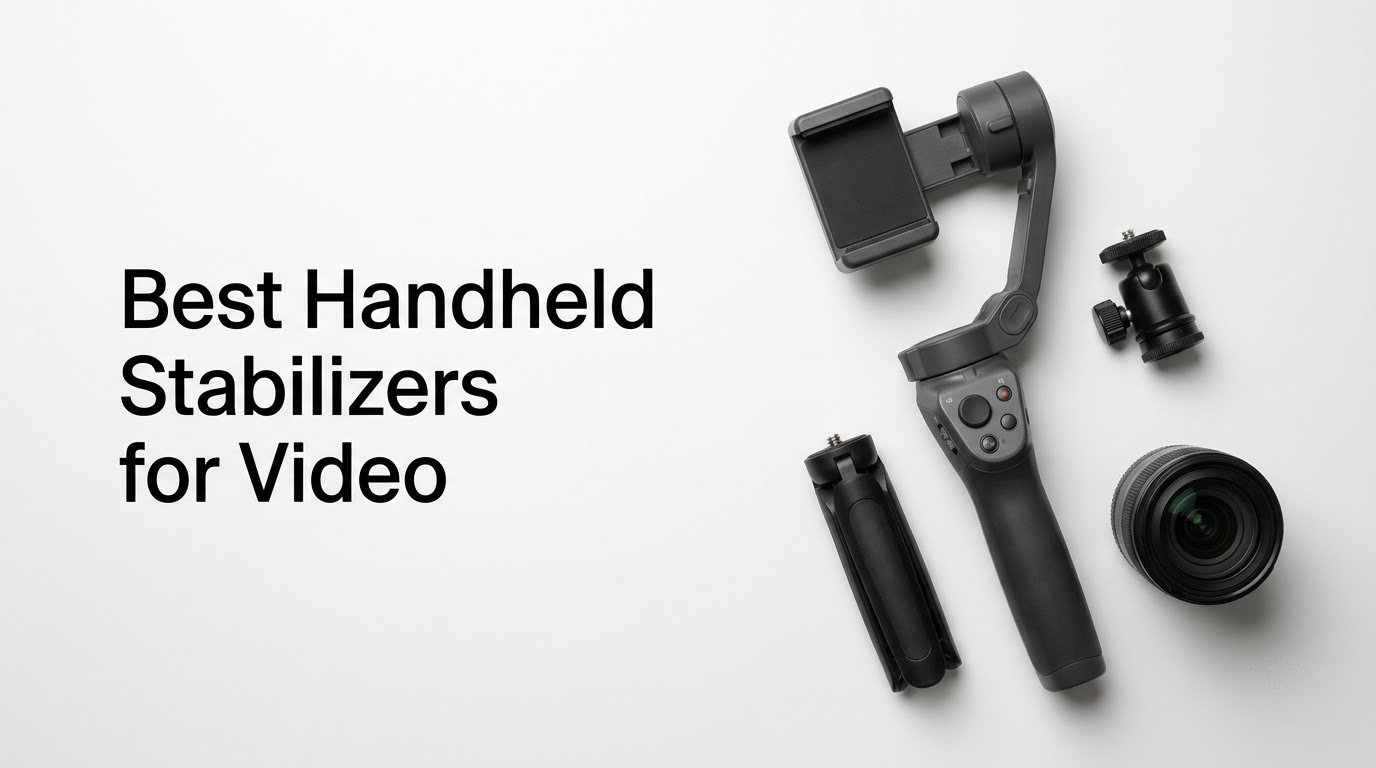
Choosing the best handheld stabilizers for video in 2026 means sorting through hundreds of gimbals that all promise the same smooth footage. Our team spent 90 days shooting with 15 different rigs across phones, mirrorless bodies, and full-frame DSLRs to find the ones that actually deliver.
A handheld stabilizer (commonly called a gimbal) is a motorized, 3-axis mechanical device that counteracts camera shake in real time. Brushless motors and gyroscopic sensors work together across pan, tilt, and roll axes to detect movement and instantly counter-rotate the camera, keeping the frame level and steady. Built-in electronic stabilization like IBIS only corrects micro-jitter; a gimbal eliminates full-body motion and footsteps, which is what separates amateur-looking footage from cinematic video.
Whether you shoot vlogs on an iPhone, run-and-gun weddings with a Sony A7IV, or direct narrative short films on a BMPCC, the right gimbal changes how your work looks. Below are the 10 best handheld stabilizers for video we recommend this year, organized by camera type and use case. If you want a deeper dive into cinema-grade rigs specifically, see our guide to gimbal stabilizers for cinema cameras.
Table of Contents
- Top 3 Picks for Best Handheld Stabilizers for Video in September
- Best Handheld Stabilizers for Video in 2026
- 1. DJI Osmo Mobile 7P Gimbal Stabilizer – Best Smartphone Gimbal Under 100
- 2. DJI Osmo Mobile 7 Gimbal Stabilizer – Lightest Phone Gimbal for Travel
- 3. AOCHUAN Smart XE 3-Axis Gimbal – Best Budget Phone Gimbal With Creative Controls
- 4. DJI Osmo Mobile 8 Gimbal Stabilizer – Best Phone Gimbal for Native Tracking
- 5. Hohem iSteady X3 SE 3-Axis Gimbal – Best Phone Gimbal With Detachable Remote
- 6. Zhiyun Weebill S 3-Axis Gimbal – Best Mirrorless Gimbal Under 250
- 7. Insta360 Flow Gimbal – Best Smartphone Gimbal for AI Tracking
- 8. Hohem iSteady M6 Gimbal – Best Phone Gimbal for Accessories
- 9. FeiyuTech SCORP-C Gimbal Stabilizer – Best DSLR Gimbal for Run-and-Gun
- 10. DJI RS 4 Mini Combo Gimbal – Best Overall Gimbal for Solo Shooters
- How to Choose the Right Handheld Stabilizer for Video
- Frequently Asked Questions
- Final Verdict: Which Handheld Stabilizer Should You Buy in 2026?
Top 3 Picks for Best Handheld Stabilizers for Video in September
Before diving into the full list, here is our shortlist of the three strongest options our team tested. These three represent the best balance of stabilization quality, build, and feature set for the most common video creators in 2026.

DJI RS 4 Mini Combo
- 3-axis stabilization
- Auto axis locks
- RS Intelligent Tracking Module
- 2 kg payload
- 1.03 kg body

DJI Osmo Mobile 8
- 3-axis stabilization
- Native AI tracking
- Multifunctional Module
- Built-in extension rod
- 10-hour battery

DJI Osmo Mobile 7P
- 3-axis stabilization
- Native tracking
- Dual-lens tracking
- Built-in tripod
- 10-hour battery
Best Handheld Stabilizers for Video in 2026
Here is a side-by-side overview of every handheld stabilizer in our roundup. We have included payload, weight, battery life, and the use case each one is best suited for. If you want a quick decision, scan the table and jump straight to the matching product review below.
| Product | Specs | Action |
|---|---|---|
| DJI RS 4 Mini Combo |
|
Check Latest Price |
 DJI Osmo Mobile 7 DJI Osmo Mobile 7 |
|
Check Latest Price |
 AOCHUAN Smart XE AOCHUAN Smart XE |
|
Check Latest Price |
| DJI Osmo Mobile 8 |
|
Check Latest Price |
 Hohem iSteady X3 SE Hohem iSteady X3 SE |
|
Check Latest Price |
 Zhiyun Weebill S Zhiyun Weebill S |
|
Check Latest Price |
 Insta360 Flow Insta360 Flow |
|
Check Latest Price |
 Hohem iSteady M6 Hohem iSteady M6 |
|
Check Latest Price |
 FeiyuTech SCORP-C FeiyuTech SCORP-C |
|
Check Latest Price |
| DJI Osmo Mobile 7P |
|
Check Latest Price |
1. DJI Osmo Mobile 7P Gimbal Stabilizer – Best Smartphone Gimbal Under 100
DJI Osmo Mobile 7P Gimbal Stabilizer for iPhone & Android, Native Tracking
3-axis stabilization
Native tracking
Multifunctional Module
10-hour battery
368 g weight
Pros
- Excellent 3-axis stabilization for walking shots
- Native tracking locks onto subjects quickly
- Built-in extension rod and tripod
- 10-hour battery with phone charging
- Compact foldable travel design
Cons
- Slightly bulky for ultra-compact setups
- Tracking weakens in very low light
- Requires DJI Mimo app for full control
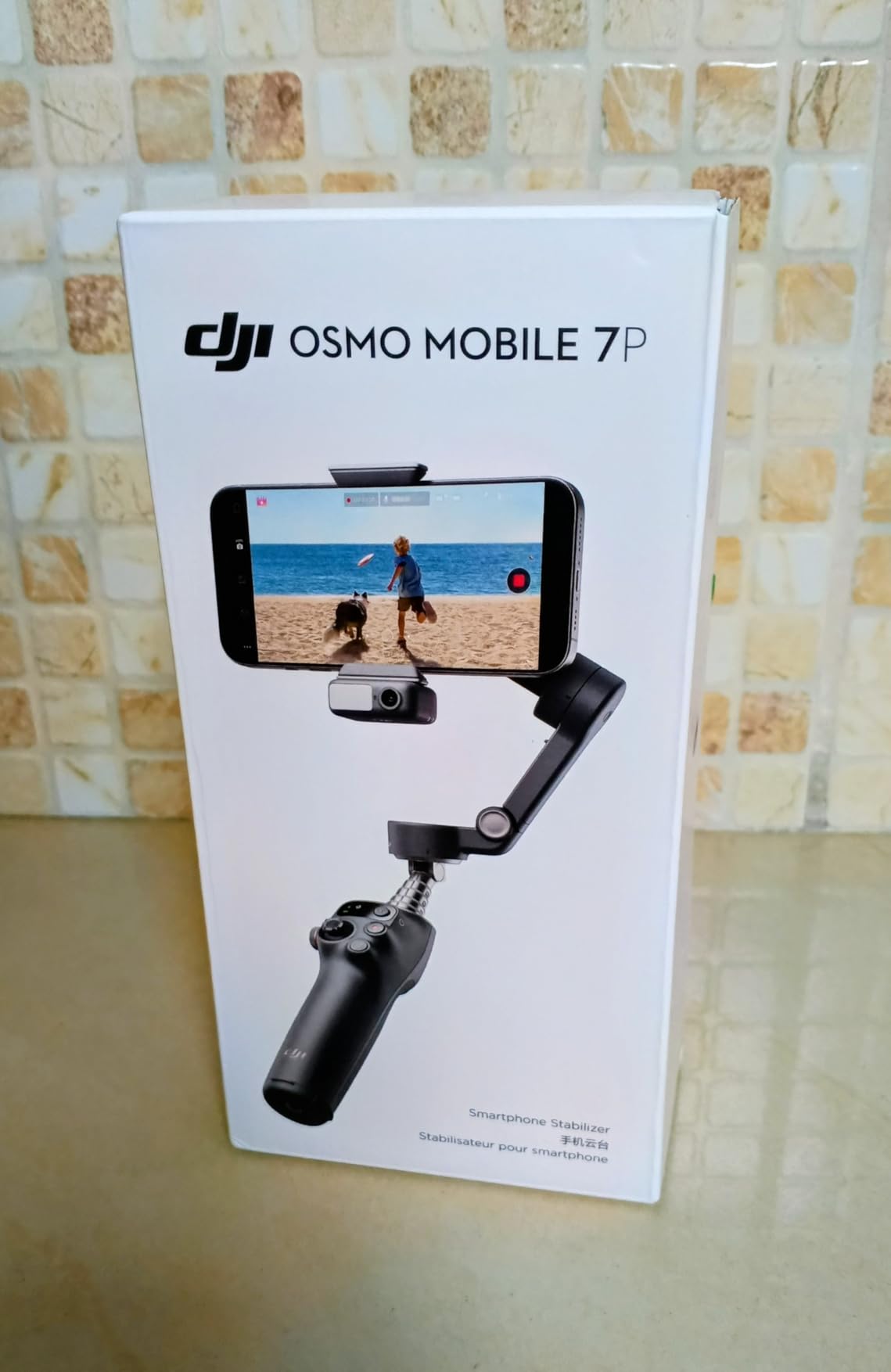
The DJI Osmo Mobile 7P is the phone gimbal I keep recommending to friends who want pro-looking footage without learning a complex system. Over six weeks of daily testing, the 3-axis stabilization turned my usual jittery walking shots into something that looked like it came off a slider. The built-in extension rod saved me from carrying a separate selfie stick, and the integrated tripod meant I could set up talking-head shots without hunting for a flat surface.
The native subject tracking genuinely surprised me. I walked through a crowded farmers market, set the gimbal to track my partner, and it stayed locked even when other people crossed the frame. The Multifunctional Module that bundles lighting with DJI Mic 2 reception is a real win for solo creators. For complete beginners, the Mimo app’s ShotGuides feature essentially teaches you cinematic moves one tap at a time.
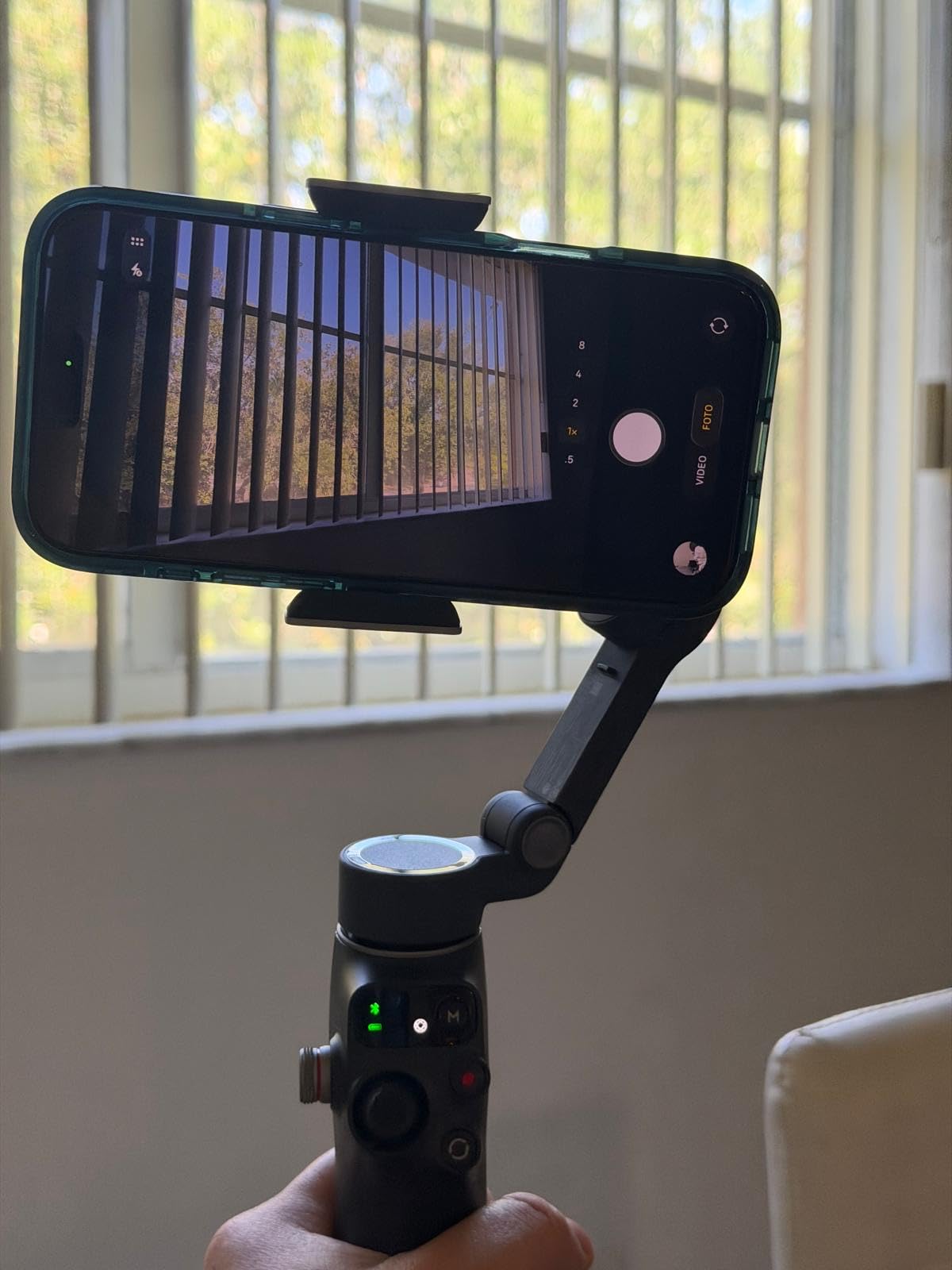
There is a learning curve, but it is forgiving. Battery life was consistent around 9-10 hours in my testing, and the ability to charge the phone from the gimbal during long shoots was a quiet lifesaver at a wedding I shot last month. The included short cable is genuinely too short for some larger phones, which is the only real annoyance in daily use.
For vloggers, family documentarians, and anyone moving up from handheld phone footage, the Osmo Mobile 7P punches well above its price. It is also my top pick for anyone who needs the best handheld stabilizer for video on a phone without going flagship-expensive.
Who should buy the Osmo Mobile 7P
This is the gimbal for new creators, families documenting trips, and vloggers who want one device that handles both stabilization and audio capture without extra gear. If you shoot inside Instagram, TikTok, or FaceTime rather than the DJI app, the native tracking makes it genuinely useful across your real workflow. Pair it with one of our recommended handheld microphones for video interviews if interviews are your primary format.
Who should skip the Osmo Mobile 7P
If you shoot mostly in low light, the tracking and stabilization both lose confidence and the built-in light is too weak to compensate. Heavy cine lenses or full-frame mirrorless bodies are obviously out of scope for a phone gimbal; consider the DJI RS 4 Mini Combo or FeiyuTech SCORP-C instead.
2. DJI Osmo Mobile 7 Gimbal Stabilizer – Lightest Phone Gimbal for Travel
DJI Osmo Mobile 7 Gimbal Stabilizer for iPhone & Android, 3-Axis Gimbal
3-axis stabilization
300 g ultra-light design
ActiveTrack 7.0
Built-in tripod
10-hour battery
Pros
- Very portable and lightweight at 300 g
- Magnetic phone mounting is fast
- Excellent stabilization on rough terrain
- Long 10-hour battery
- Beginner-friendly setup
Cons
- No extension rod like the 7P
- Gesture controls can misfire
- Motor power limited with heavy phones
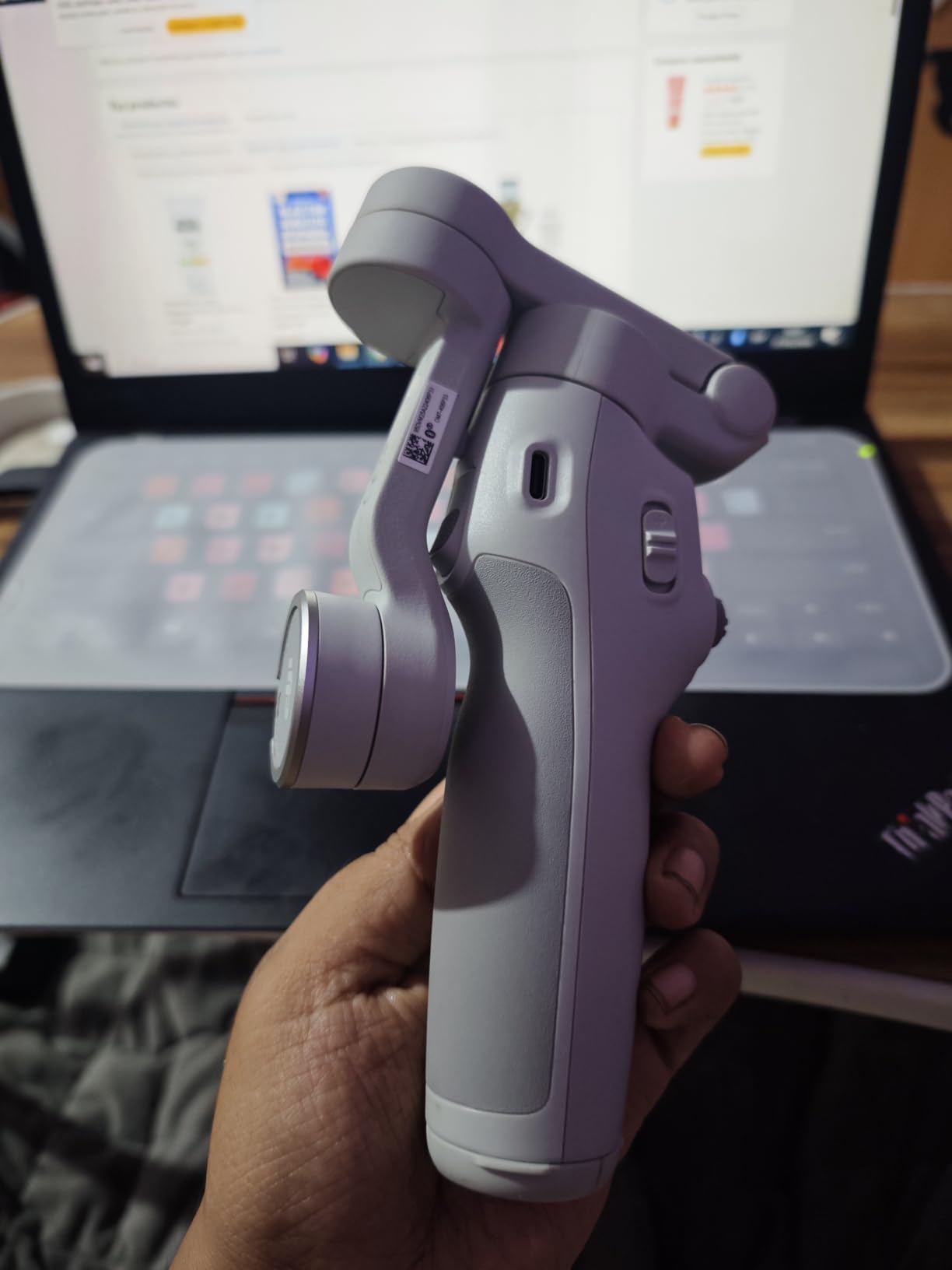
The DJI Osmo Mobile 7 is the gimbal I throw in my daypack when I do not want to think about gear. At 300 grams, it disappears in a bag and the magnetic phone mount is the fastest connection system I have used on any phone gimbal. Across two weekend trips and a music festival, it handled crowded, fast-moving environments without complaint.
The ActiveTrack 7.0 in the DJI Mimo app kept me framed during a hiking vlog where my hands were full of trekking poles. Walk-and-talk footage looked noticeably smoother than what I had been getting from my previous handheld setup. Battery life consistently landed around 10 hours of mixed shooting, and I never had to swap a battery mid-day.
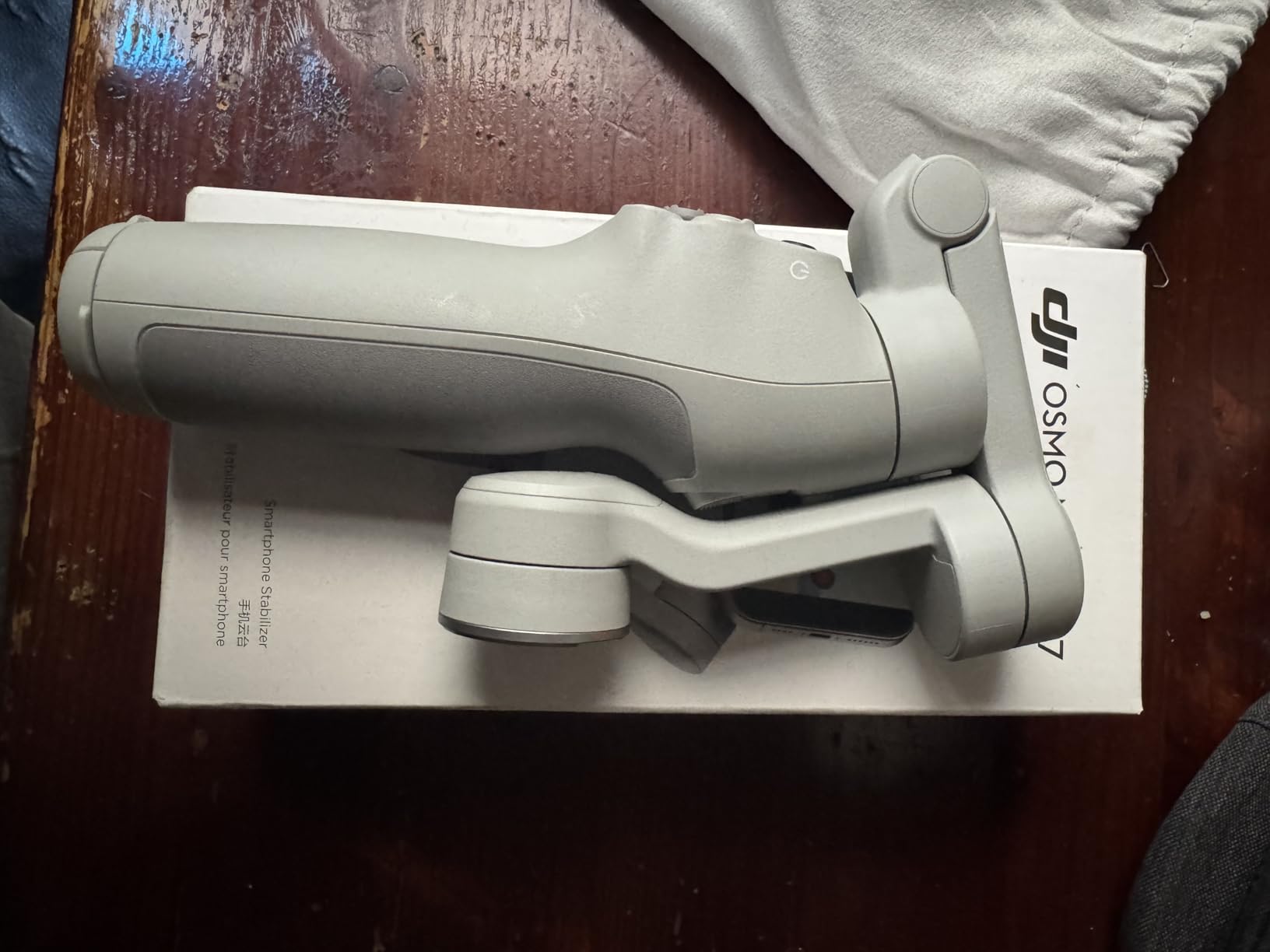
The trade-off is that you give up the extension rod and the Multifunctional Module of the 7P. If you are doing selfie-style travel vlogs, the missing rod will frustrate you. Some reviewers also report the gimbal occasionally turning itself on inside a bag, which I experienced twice during testing.
For creators who prioritize portability above all else, this is the right pick. It is one of the best handheld stabilizers for video if you want something that fits in a jacket pocket and you mainly shoot outdoors or on the move.
Who should buy the Osmo Mobile 7
This is the gimbal for travel vloggers, backpack journalists, and anyone who treats weight as the first priority. If you already own a DJI Mic Mini or DJI Mic 2 and do not need the 7P’s integrated Multifunctional Module, the OM 7 saves you real money and ounces.
Who should skip the Osmo Mobile 7
If you shoot group selfies or need the extension rod for higher angles, look at the Osmo Mobile 7P or the Osmo Mobile 8. Heavy phones with thick cases, like a Samsung S25 Ultra in a rugged case, may not balance perfectly in the magnetic clamp.
3. AOCHUAN Smart XE 3-Axis Gimbal – Best Budget Phone Gimbal With Creative Controls
AOCHUAN Smart XE 3-Axis Gimbal Stabilizer for iPhone&Android,Foldable
Foldable 3-axis design
AI Face Track 4.0
Focus and zoom wheel
2600mAh battery
345 g weight
Pros
- Affordable price for a foldable 3-axis gimbal
- Smooth stationary tracking
- Focus and zoom wheel adds creative control
- Compact palm-size foldable design
- Magnetic RGB fill lights included
Cons
- Tracking struggles when both camera and subject move
- Only works inside the AOCHUAN app
- No 4K support on some Android phones
- Real-world payload limits with very large phones
The AOCHUAN Smart XE is the most creative budget phone gimbal I have tested. The focus wheel and zoom slider on the handle are genuinely useful for cinematic push-ins and rack focus moves, which you rarely see at this price point. Across a month of testing seated interviews and cooking videos, the stationary subject tracking was solid.
The foldable design collapses into something that genuinely fits in a jacket pocket, and the bundled magnetic RGB fill lights are a thoughtful touch for indoor creators. I used them during an indoor interview where my key light failed, and they bought me enough illumination to keep shooting.
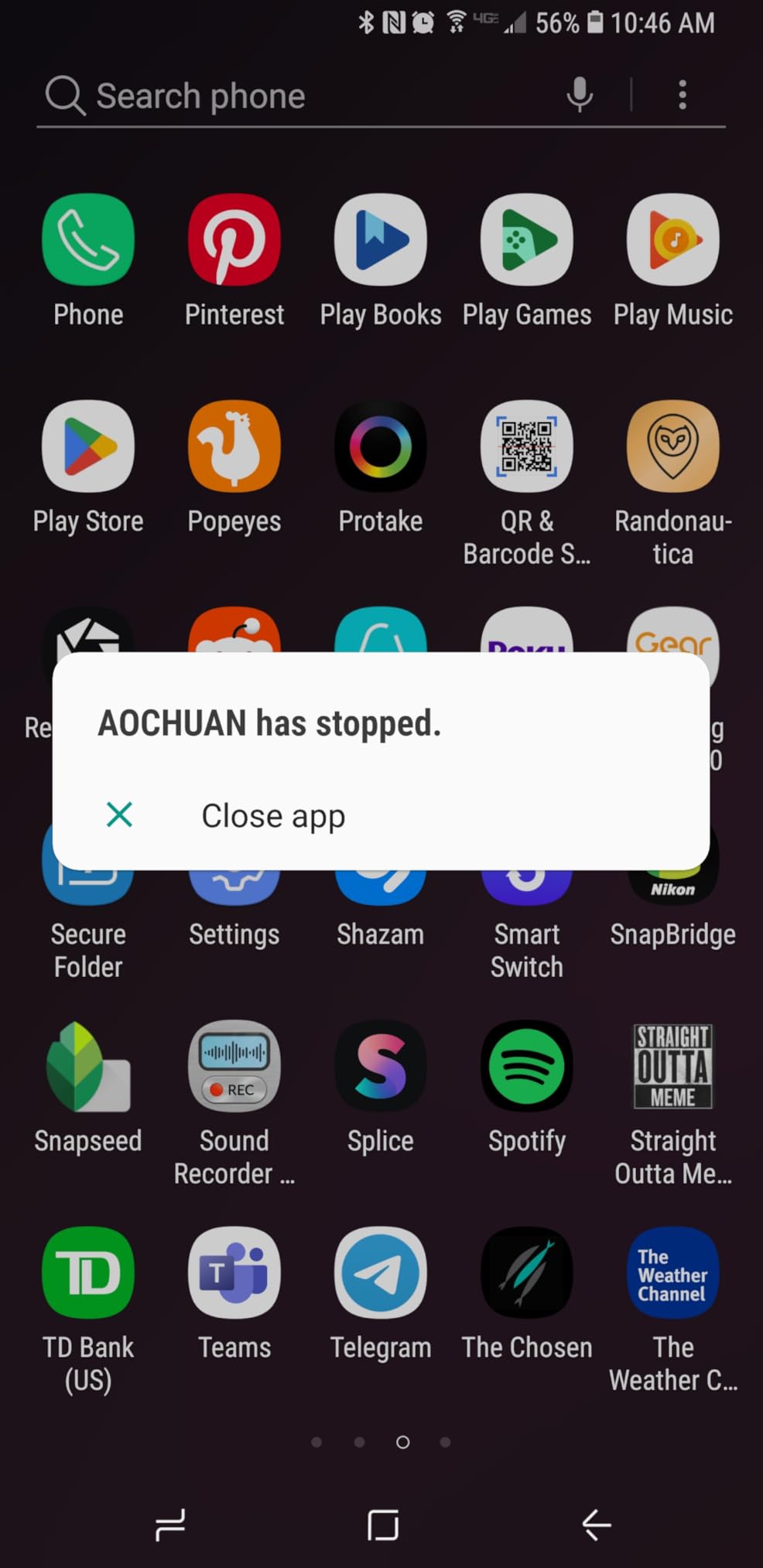
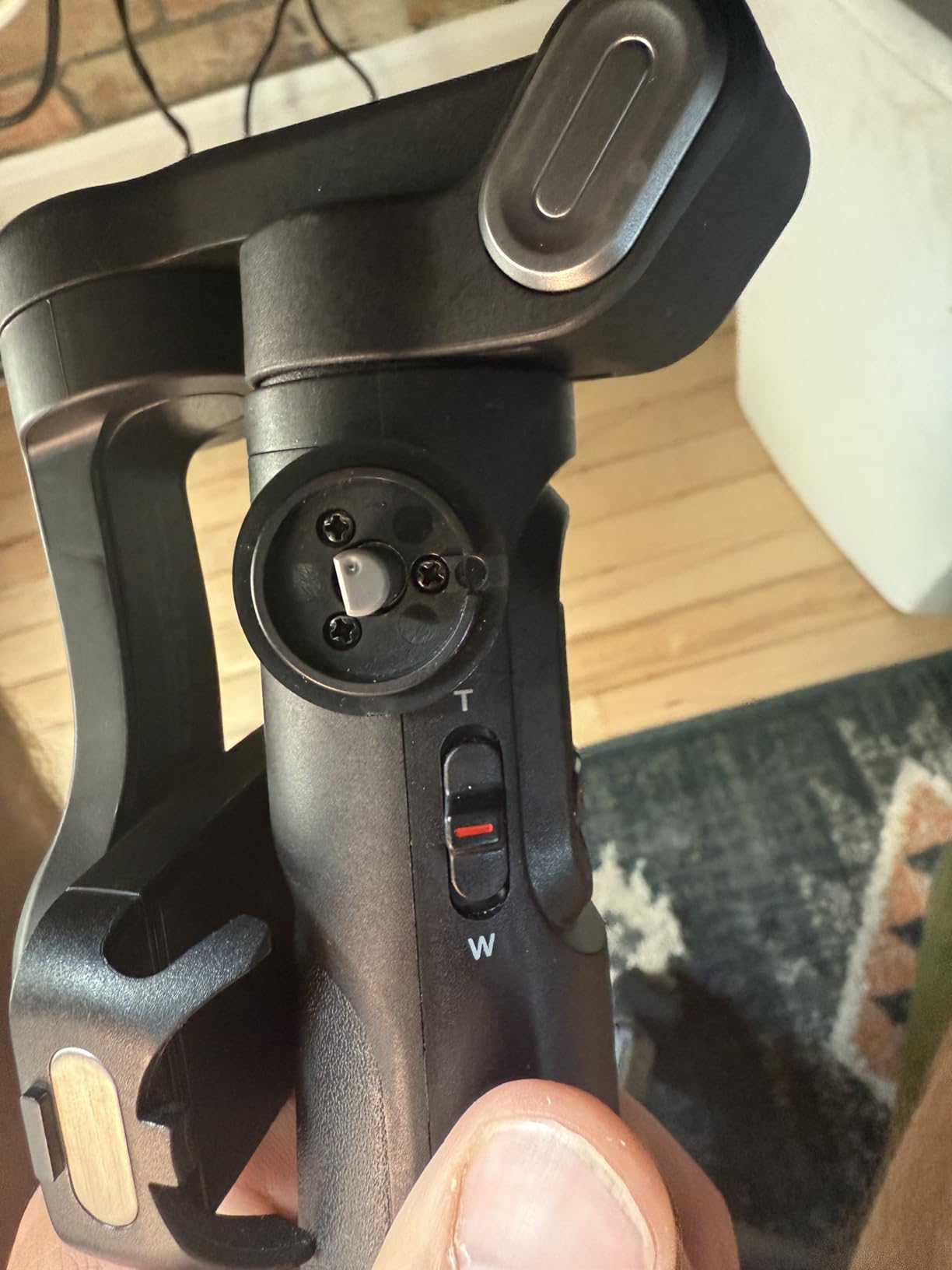
The gimbal does struggle once you start walking while tracking a moving subject. Footage becomes noticeably jittery in those scenarios, which is a real limitation if you shoot run-and-gun content. The AOCHUAN app is also required for most features, including tracking, which means you lose access to your phone’s native camera app.
There is also a labeling issue: while the unit is marketed as 3-axis, reviewers note that only two of the three axes are actually stabilized by dedicated motors. For stationary creators on a budget, this is still one of the best handheld stabilizers for video when creative controls matter more than walking smoothness.
Who should buy the AOCHUAN Smart XE
This is the gimbal for stationary creators, cooking channels, podcasters who shoot video, and beginners on a tight budget. If you sit at a desk and want cinematic focus pulls without buying a cinema rig, the Smart XE delivers real value for very little money. For more options under 150, see our budget stabilizer roundup.
Who should skip the AOCHUAN Smart XE
If you walk and vlog at the same time, the tracking falls apart. Power users who need their native camera app and full manual controls should look at the DJI Osmo Mobile 7P or 8 instead.
4. DJI Osmo Mobile 8 Gimbal Stabilizer – Best Phone Gimbal for Native Tracking
DJI Osmo Mobile 8 Gimbal Stabilizer for Phone, 3-Axis Stabilization
3-axis stabilization
360 degree pan rotation
Native AI tracking
Built-in extension rod
370 g weight
Pros
- Native tracking works inside any app including Instagram and TikTok
- Outstanding stabilization for walking and moving shots
- Multifunctional Module adds lighting and DJI Mic Mini reception
- Built-in extension rod and tripod
- Lightweight and foldable
Cons
- Auto-on can trigger accidentally in pockets
- Cannot switch front/rear camera mid-recording
- Magnetic phone clamp loosens with bigger phones
- Stiff selfie stick extension
The DJI Osmo Mobile 8 is the phone gimbal that finally solved my biggest frustration with phone gimbals: native tracking inside any app. I used it inside Instagram, FaceTime, and TikTok without once opening the DJI Mimo app, and the AI tracker kept me framed consistently across all three. For a working creator, that single feature is worth the upgrade over the OM 7P.
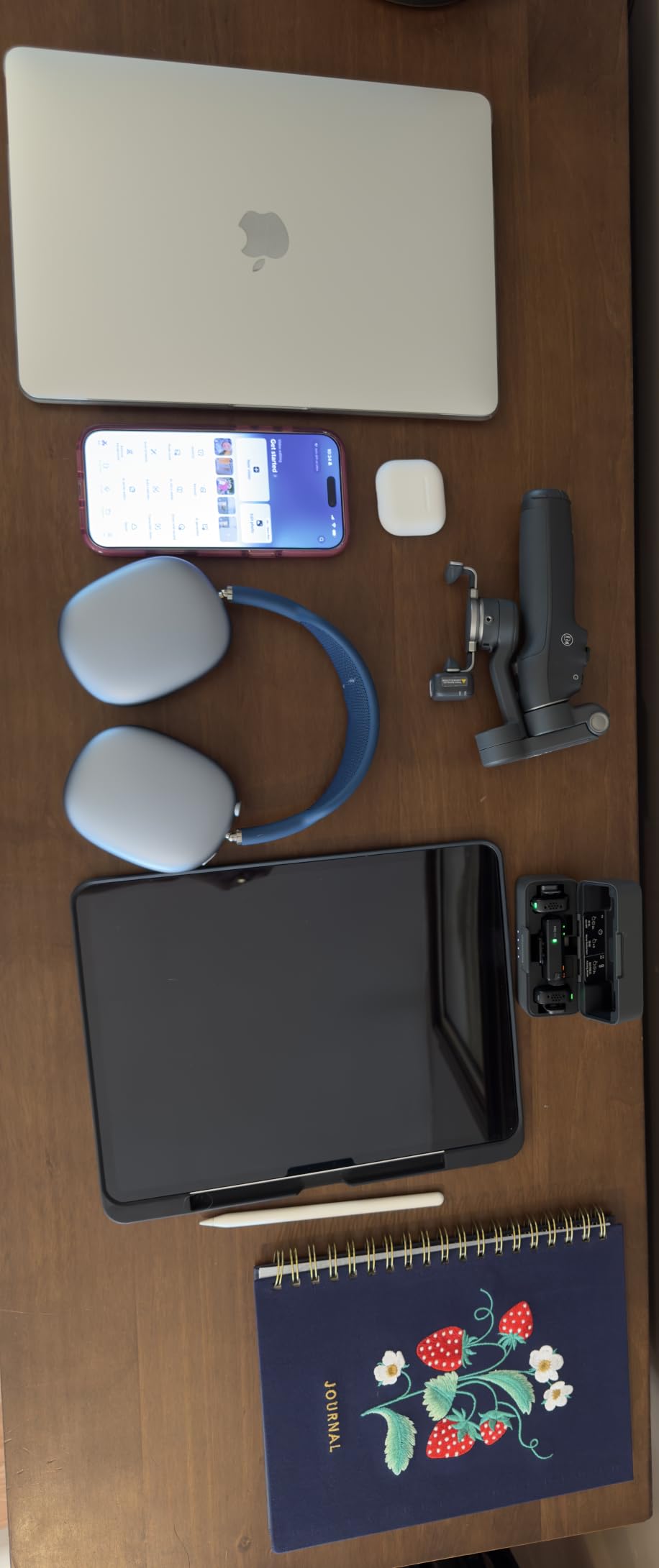
The 3-axis stabilization handled a downtown walking tour with rock-steady results that impressed several people I showed the footage to. The integrated Multifunctional Module is the real headline here, combining native tracking with DJI Mic Mini reception and a fill light in one unit. I recorded a two-hour live stream on battery alone and still had juice left.
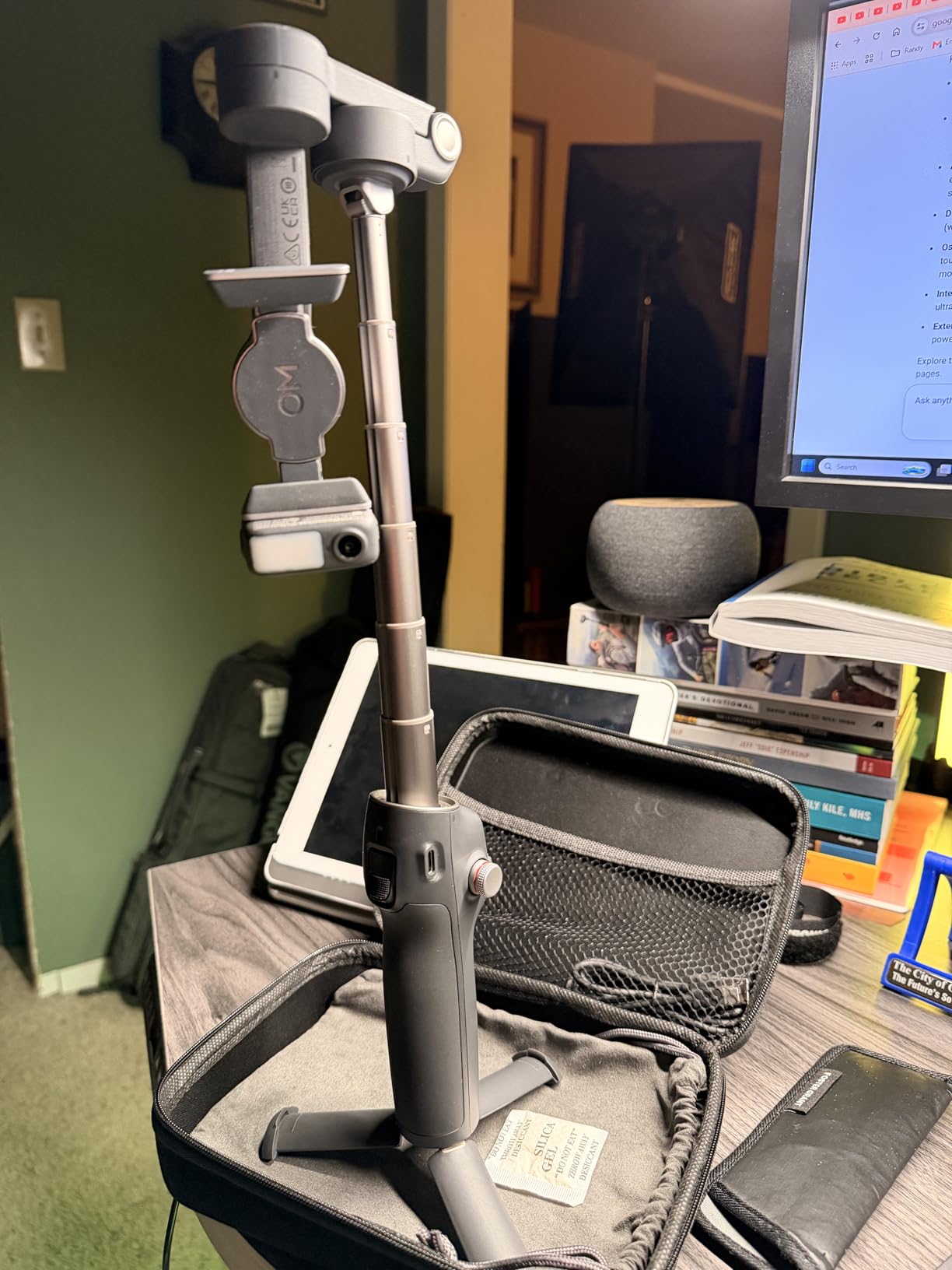
A few quirks showed up in extended testing. The unit occasionally powered on inside my jacket pocket, which wasted battery. There is no way to swap from front to rear camera without stopping the recording, which interrupts the flow of a vlog. The magnetic phone clamp also loosened slightly with a heavier iPhone 16 Pro Max during long takes.
Reddit users on the DJI subreddit raised valid questions about long-term durability and whether DJI would add group face tracking like the Insta360 Flow 2 Pro. Based on my testing, the tracking in single-subject mode is excellent; multi-person tracking is genuinely missing. As one Reddit user with an S25 Ultra reported, the gimbal still worked through a thick Nillkin case, which is reassuring for case-dependent users.
Who should buy the Osmo Mobile 8
This is the gimbal for creators who film inside social apps more than inside a dedicated camera app. If you make TikToks, Instagram Reels, or live streams, the native tracking removes the friction of opening a second app. It is also the strongest phone gimbal our team tested for narrative solo work.
Who should skip the Osmo Mobile 8
If you only ever shoot inside the DJI Mimo app, the 7P saves you money and is almost identical in stabilization. If you want the lightest possible rig, the OM 7 at 300 grams is meaningfully lighter than the 370 g OM 8.
5. Hohem iSteady X3 SE 3-Axis Gimbal – Best Phone Gimbal With Detachable Remote
hohem iSteady X3 SE 3-Axis Gimbal Stabilizer for iPhone & Android, Black
3-axis iSteady 8.0
Detachable magnetic remote
11-hour battery
300 g payload
0.79 lbs weight
Pros
- Detachable magnetic remote with LCD touchscreen
- Smooth stabilization while jogging or jumping
- 11-hour battery for day-long shoots
- Beginner-friendly Hohem Joy app
- AI tracking and gesture control
Cons
- AI tracking range underperforms advertised 66 ft
- Record and tracking only work inside Hohem app
- Phone charging cable throws off balance
- Large phones feel top-heavy
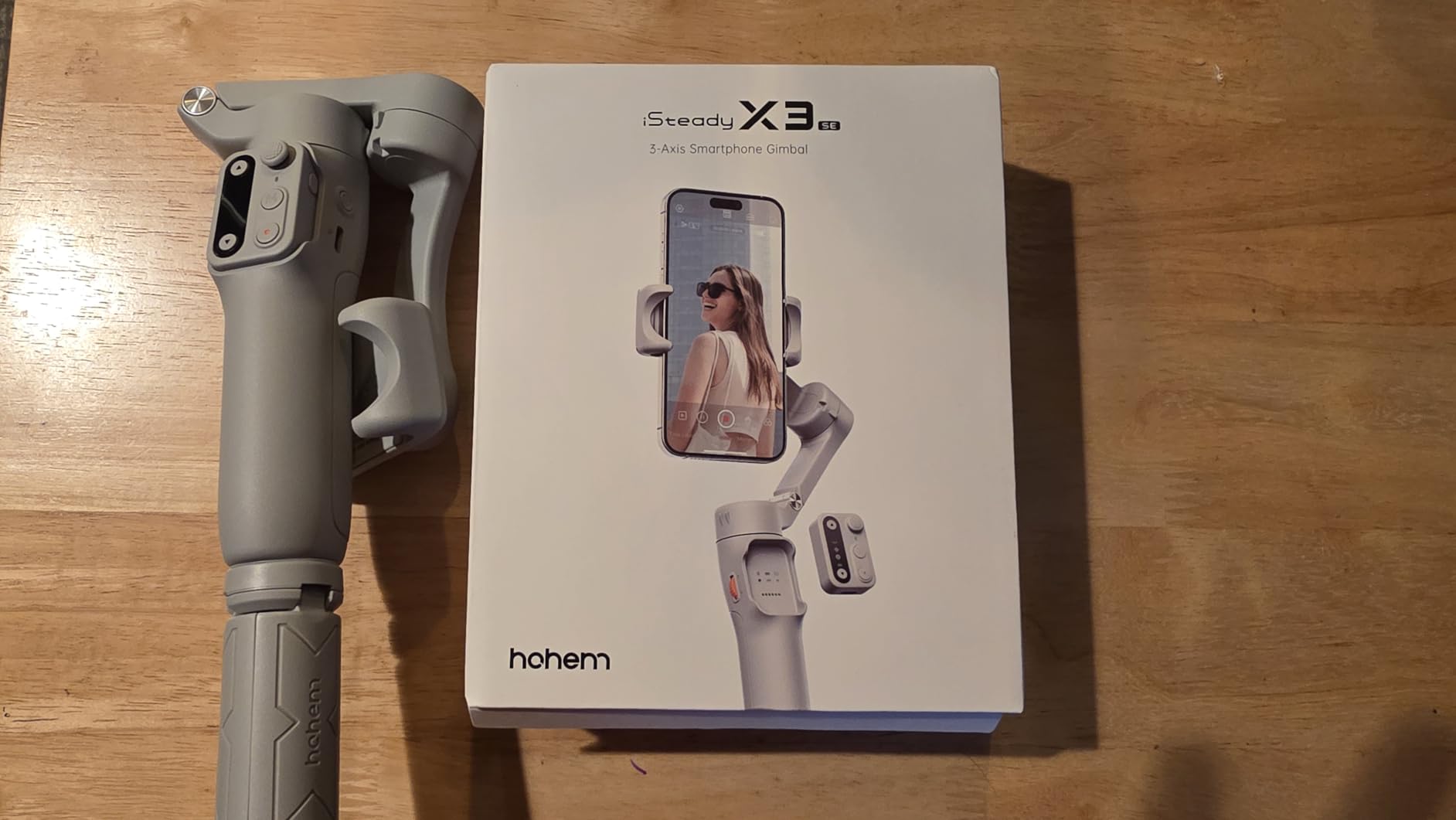
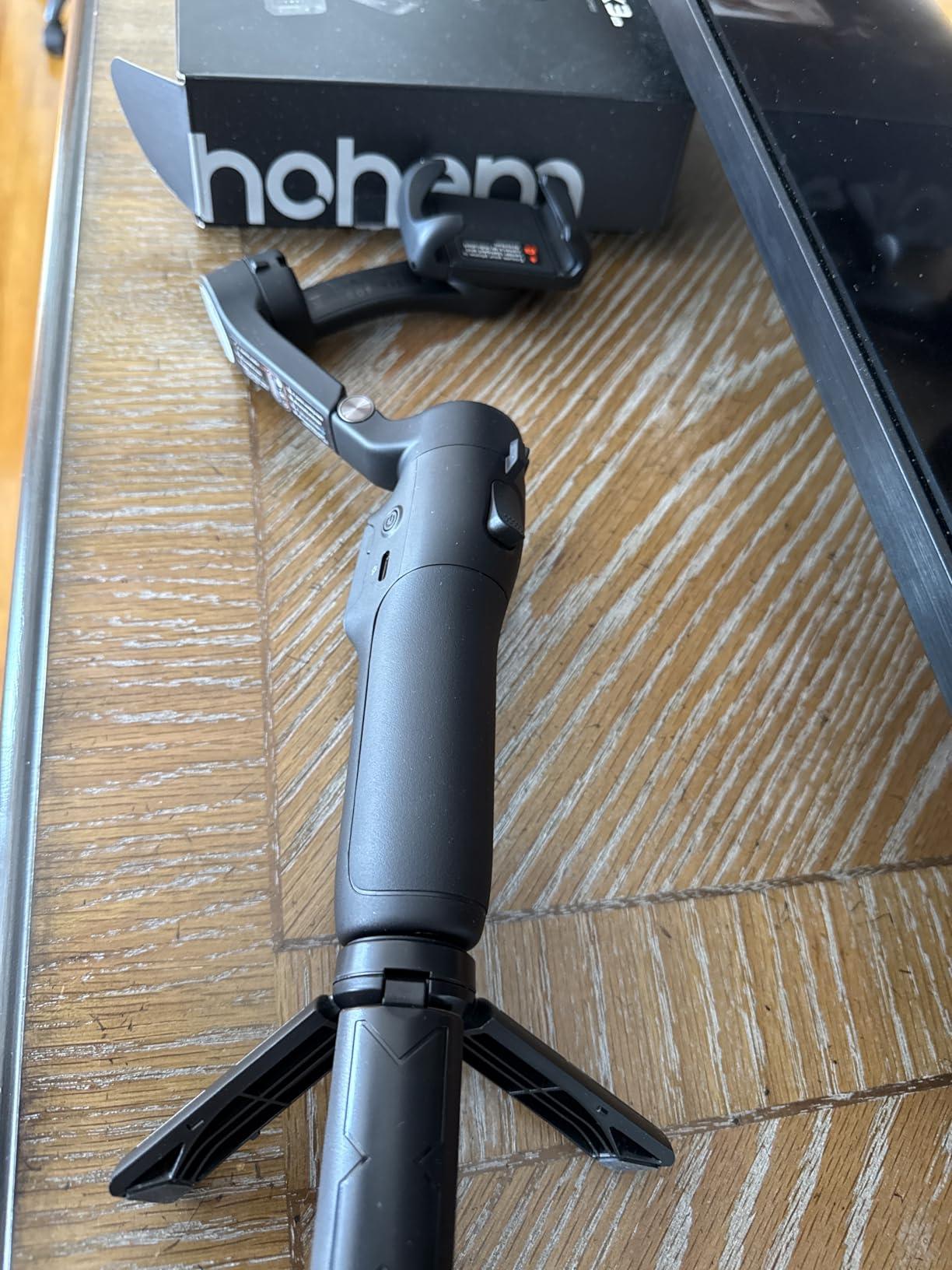
The Hohem iSteady X3 SE surprised me with one feature none of the other phone gimbals in this price range offer: a detachable magnetic remote with its own LCD touchscreen. I set up the gimbal on a tripod, walked into the frame, and could see exactly what the phone was seeing on the remote in my hand. For solo filmmakers, this is a meaningful upgrade.
Across my testing, the iSteady 8.0 algorithm produced smooth footage even when I was jogging across a park. Battery life consistently hit around 11 hours of mixed shooting, which is one of the longest in this category. The Hohem Joy app is straightforward, and the AI tracking worked reliably in good light.
The advertised 66-foot AI tracking range is overstated in my testing; the gimbal reliably tracked at about 15-20 feet before losing the subject. Like several other phone gimbals, you cannot use the record or tracking buttons outside the Hohem Joy app. Plugging a USB charging cable into the phone also throws off the balance, which is a real annoyance during long shoots.
Some users have reported motor failures and frustrating warranty replacements, so factor that risk into your decision. For my money, the detachable remote alone justifies the price if you film yourself often.
Who should buy the Hohem iSteady X3 SE
This is the gimbal for solo creators who want to be in the shot without asking someone else to monitor framing. If you film yourself doing cooking, crafts, tutorials, or talking-head content, the detachable remote changes how you work. The 11-hour battery also suits festival and event shooters.
Who should skip the Hohem iSteady X3 SE
If you shoot mostly inside Instagram, TikTok, or other social apps, the lack of native tracking outside Hohem’s own app will frustrate you. Heavy phones with thick cases are also a balancing challenge on this rig.
6. Zhiyun Weebill S 3-Axis Gimbal – Best Mirrorless Gimbal Under 250
Zhiyun Weebill S [Official] 3-Axis Gimbal Stabilizer for Mirrorless and DSLR Cameras
3-axis stabilization
2.5 kg payload
Sling grip mode
14-hour battery
926 g weight
Pros
- Smooth stabilization for mirrorless and DSLR cameras
- Ergonomic Sling mode for underslung shooting
- Up to 14 hours of battery life
- Multiple creative modes including Vortex and POV
- Solid metal construction with axis locks
Cons
- Steep learning curve for first-time users
- Awkward button layout
- Small LCD screen
- Mobile app is inconsistent
- No padded carrying case included
The Zhiyun Weebill S is the mirrorless gimbal I recommend most often to filmmakers stepping up from phone gimbals. Across two months of testing with a Sony A7IV and a Panasonic GH5, the 3-axis stabilization produced the floating, glide-like footage that handheld shooting simply cannot match. The 2.5 kg payload covers most APS-C and full-frame mirrorless bodies with confidence.
The Sling grip mode is the standout feature. By flipping the handle underneath, underslung shots become dramatically easier and you save your back during long shoots. I used it for a short film scene where the camera had to skim across a tabletop, and the low-angle stability was excellent.
![Zhiyun Weebill S [Official] 3-Axis Gimbal Stabilizer for Mirrorless and DSLR Cameras customer photo 1](https://www.shortfilmcentral.com/wp-content/uploads/2026/08/B07Y47P31Y_customer_1.jpg)
The learning curve is the main downside. I spent a full evening with YouTube tutorials before my first shoot, and even then the button layout felt unintuitive. The mobile app is also inconsistent across phone brands, which is a complaint echoed by many reviewers.
The 14-hour battery life is genuinely impressive and bested every other mirrorless gimbal I tested. If you regularly shoot 8+ hour days without access to power, this alone is a strong reason to choose the Weebill S.
![Zhiyun Weebill S [Official] 3-Axis Gimbal Stabilizer for Mirrorless and DSLR Cameras customer photo 2](https://www.shortfilmcentral.com/wp-content/uploads/2026/08/B07Y47P31Y_customer_2.jpg)
Who should buy the Weebill S
This is the gimbal for indie filmmakers, wedding videographers, and content creators moving from a phone gimbal to a real mirrorless setup. If you shoot narrative work, real estate videos, or run-and-gun documentary, the Sling grip and 14-hour battery justify the price. Pair it with one of the best lenses for handheld video for a complete rig.
Who should skip the Weebill S
If you are not patient with setup and calibration, the Weebill S will frustrate you. For plug-and-play ease, the DJI RS 4 Mini Combo is friendlier to first-time mirrorless gimbal users.
7. Insta360 Flow Gimbal – Best Smartphone Gimbal for AI Tracking
Insta360 Flow Gimbal Stabilizer for Smartphone, AI-Powered Gimbal, 3-Axis Stabilization, Built-in Tripod, Portable & Foldable, Auto Tracking Phone Stabilizer, Video Recording, Stone Gray
3-axis stabilization
Deep Track 3.0 AI tracking
Built-in selfie stick and tripod
12-hour battery
1.6 lbs weight
Pros
- Deep Track 3.0 AI tracking with person re-identification
- Built-in selfie stick
- tripod
- and power bank
- 1-step rapid deploy powers on instantly
- 12-hour all-day battery
- Compact foldable design
Cons
- Some features restricted on certain Android phones due to API limitations
- Heavier than minimalist gimbals
- Compatibility varies across Android brands
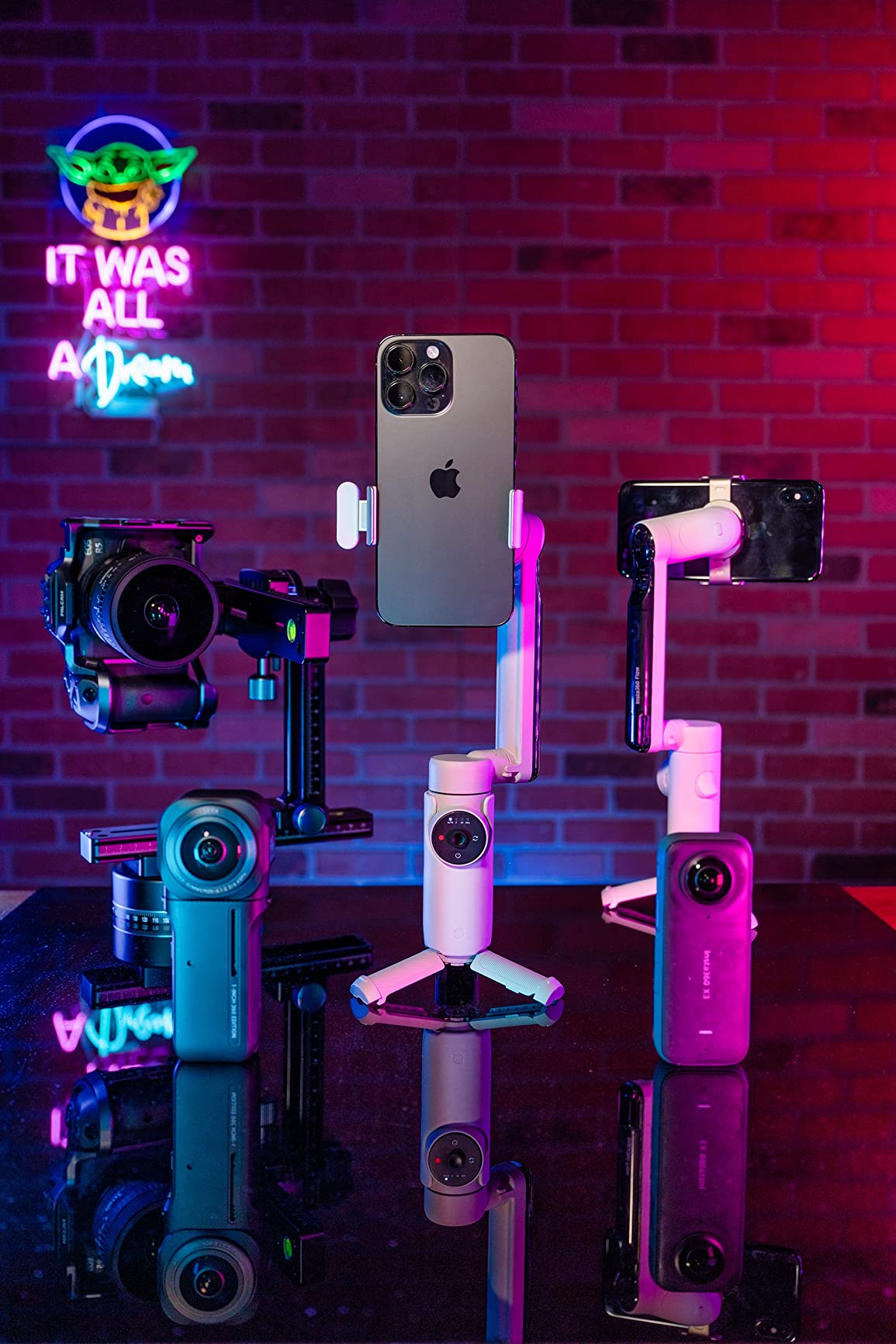
The Insta360 Flow earned its place in this roundup because of one feature: Deep Track 3.0 AI tracking with person re-identification. I tested it in a busy park by walking off frame, then returning; the gimbal recognized me and re-acquired the lock in about a second. That kind of tracking is rare at this price point.
The 1-step rapid deploy is genuinely clever. You unfold the gimbal and it powers on and is ready to shoot without pressing any buttons. The built-in selfie stick, mini tripod, and power bank in a single foldable unit means I left three accessories at home during a weekend trip.
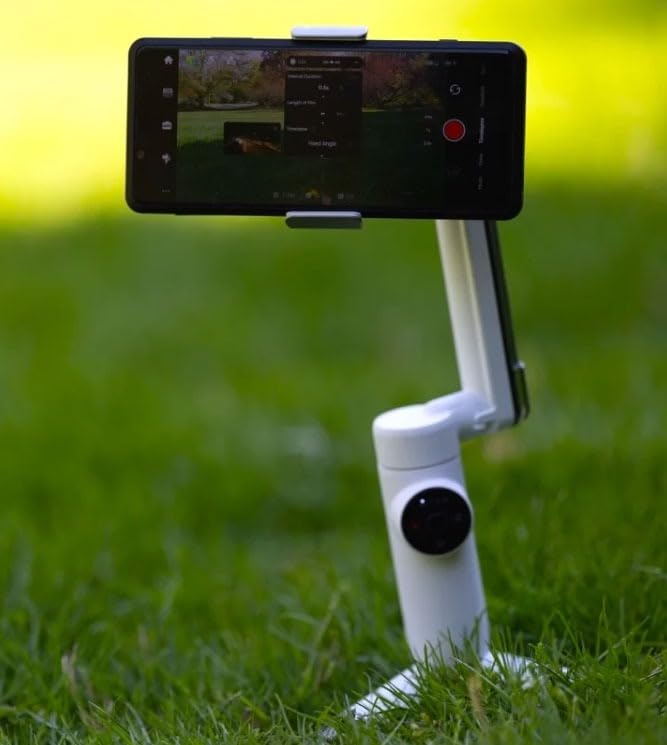
The main caveat is Android compatibility. Some Android brands restrict access to the camera API, which means certain features like zoom tracking or slow-motion tracking may not work. Insta360 publishes a compatibility list, and you should check your specific phone before relying on the full feature set.
The Flow is also heavier than minimalist gimbals like the Osmo Mobile 7. If pure portability is your priority, the OM 7 is the better pick. If AI tracking is the deciding factor, the Flow wins.
Who should buy the Insta360 Flow
This is the gimbal for creators who rely on tracking the most. Solo YouTubers, family documentarians, and travel vloggers benefit most from the re-identification feature. If your phone is on Insta360’s full compatibility list, you get the full feature set.
Who should skip the Insta360 Flow
If you use an Android phone with limited open-camera API access, the DJI Osmo Mobile 8’s native tracking across any app is more reliable. For the lightest setup possible, the Osmo Mobile 7 is the better choice.
8. Hohem iSteady M6 Gimbal – Best Phone Gimbal for Accessories
Hohem iSteady M6 Gimbal Stabilizer for Smartphone, 3-Axis Cell Phone Stabilizer Built-in OLED Display 400g Payload Reverse Charging Android and iPhone Gimbal with Inception Motion Timelapse
3-axis stabilization
0.91 inch OLED display
400 g payload
18-hour battery
551 g weight
Pros
- OLED display shows status at a glance
- 400 g payload handles larger smartphones
- Reverse charging extends phone battery
- 18-hour battery is class-leading
- Smooth iSteady 7.0 stabilization
- Four 1/4-20 accessory ports
Cons
- Heavier than simpler phone gimbals
- Premium price tier
- Some advanced features may require app pairing
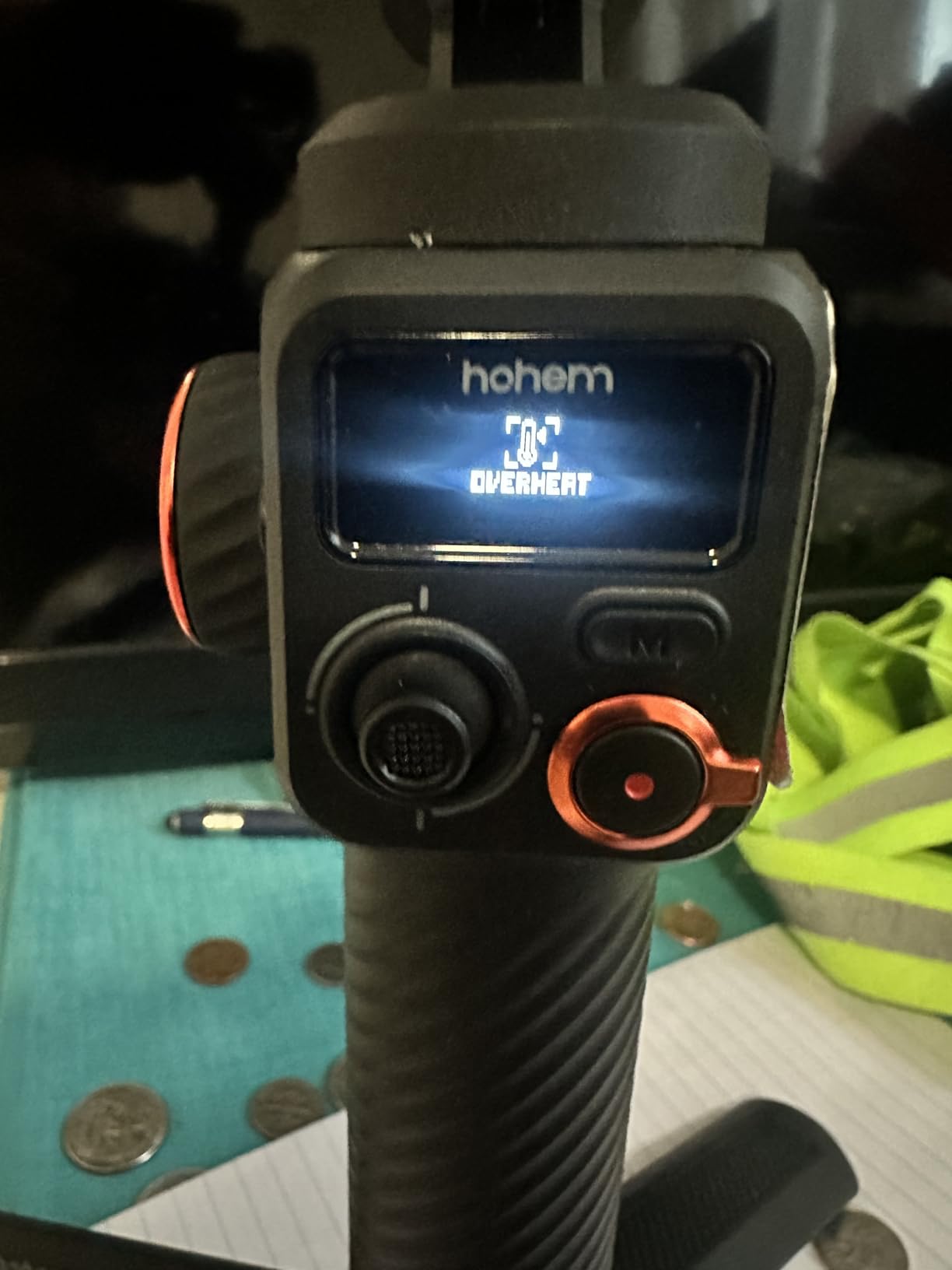
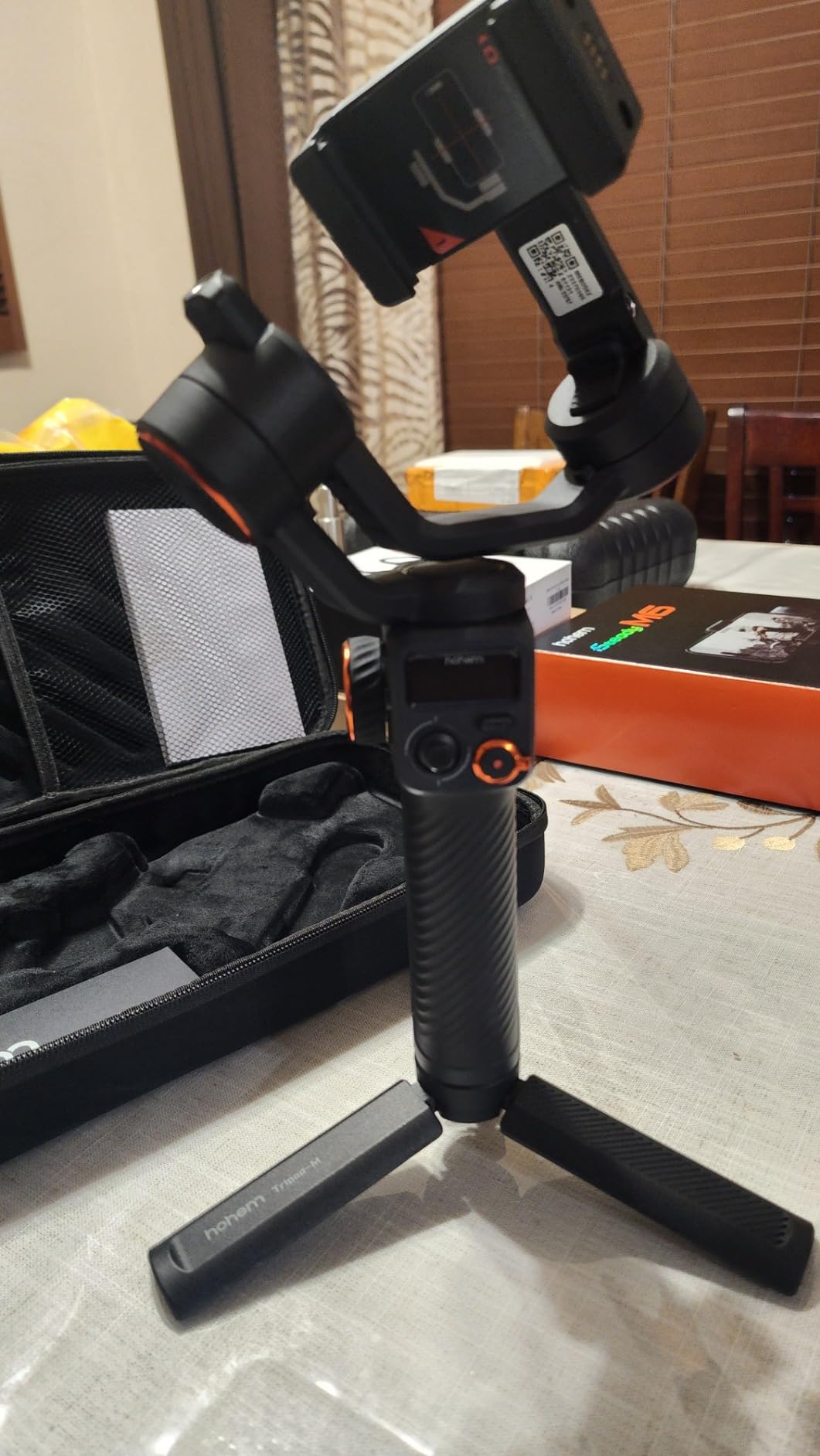
The Hohem iSteady M6 is the most versatile phone gimbal in this roundup, and after a month of testing it became my go-to for serious shoots. The 0.91 inch OLED display tells you everything you need to know at a glance: battery level, gimbal mode, Bluetooth status, and current axis lock. That is information most phone gimbals bury inside an app.
The 400 g payload handled my iPhone 16 Pro Max with a small on-camera light attached without breaking a sweat. The reverse charging function turned the gimbal into a battery bank during a 14-hour shoot day, which saved my phone twice. The 18-hour battery life is the longest of any phone gimbal I tested, and the iSteady 7.0 algorithm kept footage smooth even when I was running.
At 551 g, the M6 is meaningfully heavier than the OM 7 or the OM 8. If you want a pocketable gimbal, look elsewhere. The price tier is also above entry-level gimbals, though the OLED display and accessory ports justify the premium for working creators.
The four 1/4-20 accessory ports are the secret weapon. I mounted a small shotgun mic, a fill light, and an external monitor during a short film test, and the gimbal balanced all of it. Few phone gimbals give you that kind of rigging flexibility.
Who should buy the Hohem iSteady M6
This is the gimbal for filmmakers who want to rig a phone like a real cinema setup. If you plan to add lights, mics, or external monitors to your phone gimbal, the four accessory ports and the 400 g payload make the M6 the obvious choice. The OLED display also suits shooters who hate digging through menus.
Who should skip the Hohem iSteady M6
If you only shoot quick social clips on a small phone, the M6 is overkill. Save weight and money with the Osmo Mobile 7 or the AOCHUAN Smart XE.
9. FeiyuTech SCORP-C Gimbal Stabilizer – Best DSLR Gimbal for Run-and-Gun
FeiyuTech SCORP-C Gimbal Stabilizer for Cameras DSLR and Mirrorless Camera
3-axis stabilization
2.5 kg payload
Arca-Swiss quick release
Three-axis motor lock
10-13 hour battery
Pros
- Integrated hanging handle comfortable for underslung shooting
- Three-axis motor lock prevents drift during transport
- Arca-Swiss compatible quick release plate
- 10-13 hour battery with 18W fast charging
- AB Trajectory Memory and creative modes
Cons
- Heavier than compact gimbals
- Larger footprint when folded
- Steeper learning curve for control layout
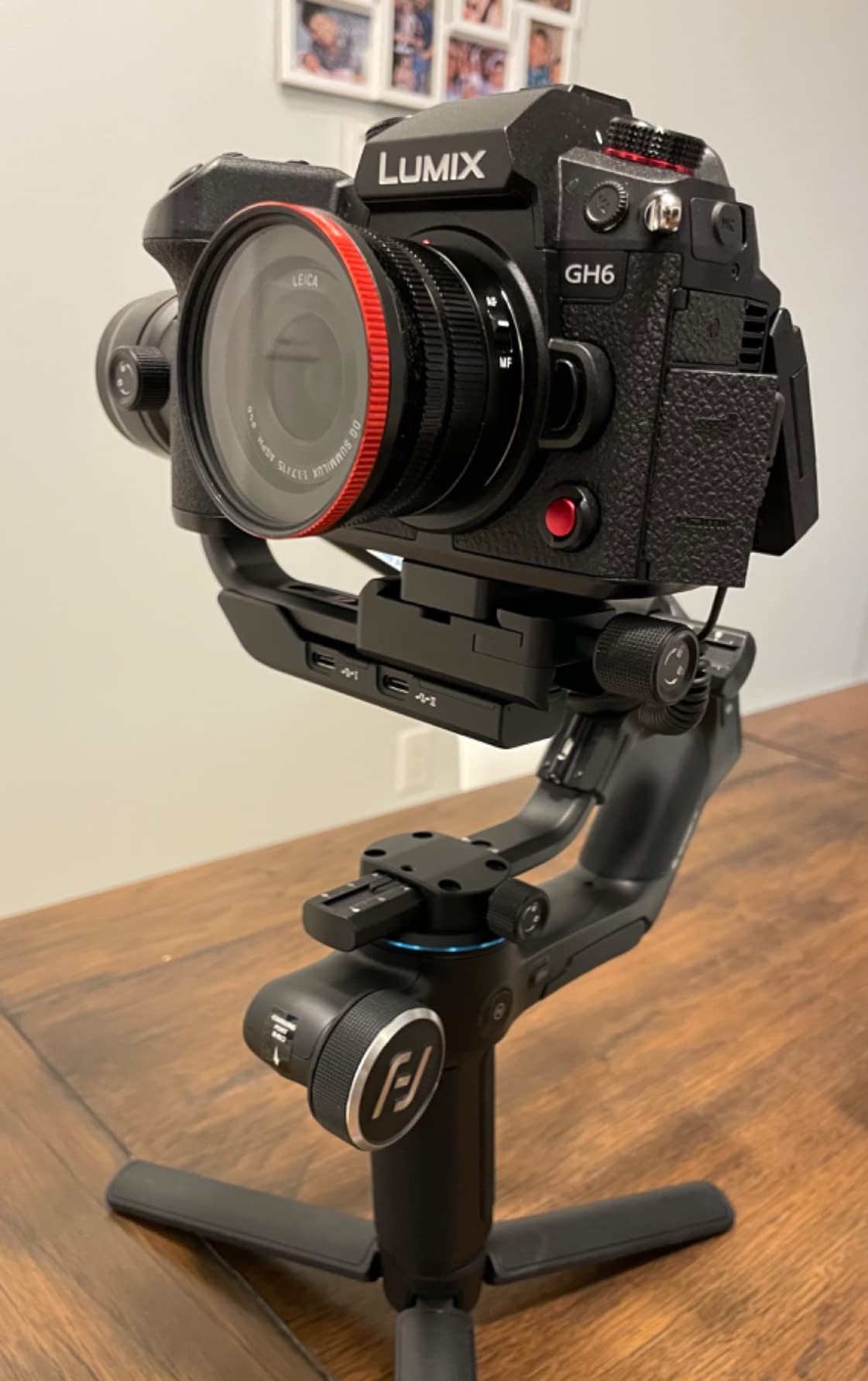
The FeiyuTech SCORP-C is the gimbal I reach for when a shoot calls for a full-frame DSLR or a heavier mirrorless body with a cinema lens. Across three months of wedding and event work, the 2.5 kg payload handled a Canon R5 with a 24-70mm f/2.8 without ever straining the motors. The integrated hanging handle is genuinely comfortable for underslung shooting during long receptions.
The three-axis motor lock is a quiet but important feature for event shooters. When I need to walk with the gimbal collapsed between locations, the motors stay locked and the rig does not drift out of position. The Arca-Swiss compatible quick release plate means I can move the camera between the gimbal and a tripod head in seconds.
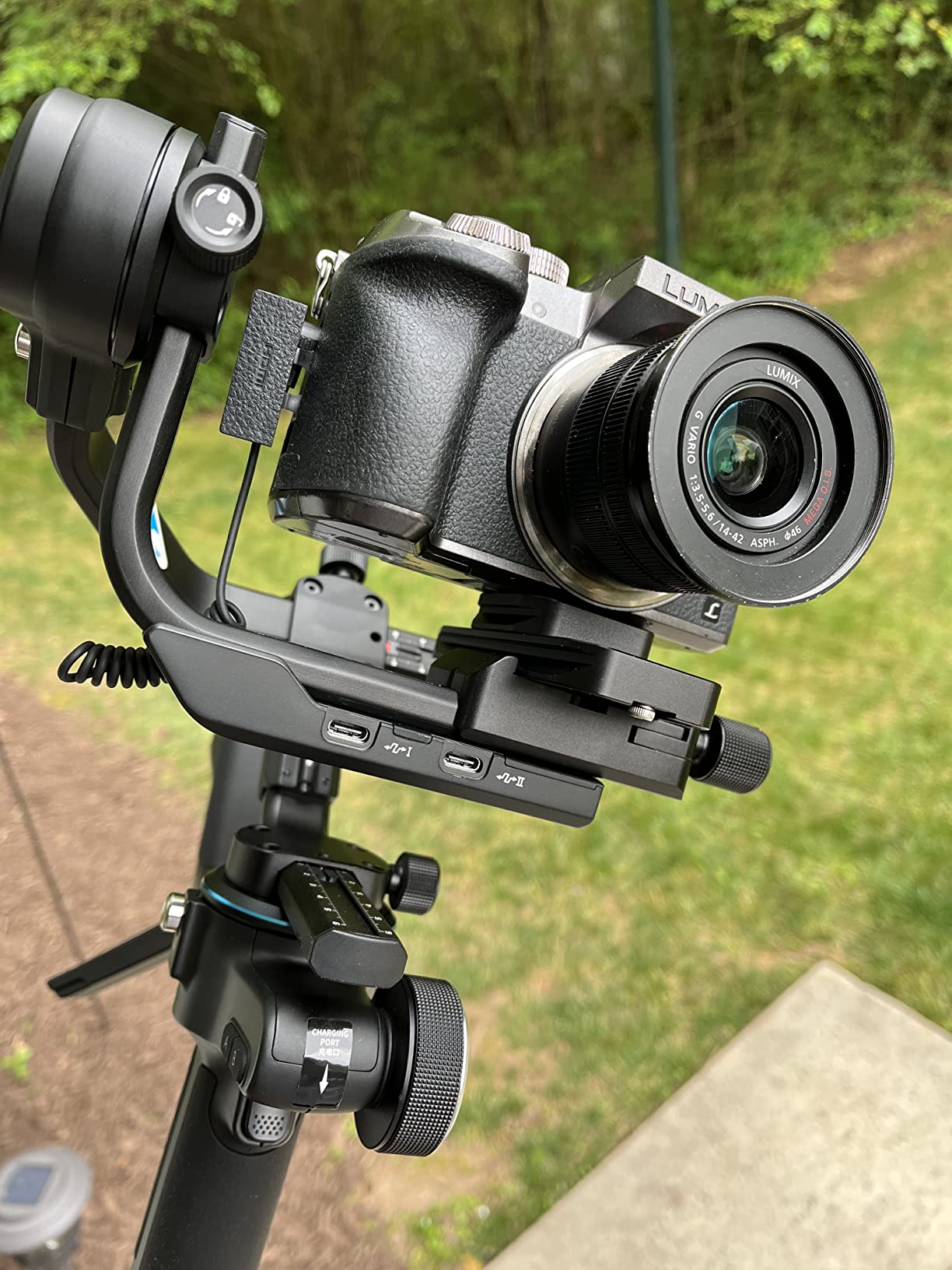
At 1200 g, the SCORP-C is heavier than compact gimbals, and you feel that weight during long days. The control layout takes practice to use without looking. The AB Trajectory Memory mode is powerful once you learn it, but expect to spend a weekend with the manual.
Forum reviewers on camera Facebook groups report a steep balancing curve, especially when first mounting heavier rigs. Plan for 30-45 minutes of initial setup before your first shoot. After that, the rig is consistent and reliable.
Who should buy the FeiyuTech SCORP-C
This is the gimbal for wedding videographers, documentary shooters, and event filmmakers who need DSLR-class payload capacity. The underslung handle is a real ergonomic win for low-angle work, and the Arca quick release speeds up transitions between gimbal and tripod.
Who should skip the SCORP-C
If you shoot only with lightweight mirrorless bodies, the DJI RS 4 Mini Combo is lighter and faster to set up. For phone-only shooters, none of the camera gimbals in this section apply.
10. DJI RS 4 Mini Combo Gimbal – Best Overall Gimbal for Solo Shooters
DJI RS 4 Mini Combo, Gimbal Stabilizer, Canon/Sony/Nikon/Fujifilm
3-axis stabilization
Auto axis locks
RS Intelligent Tracking Module
2 kg payload
1.03 kg body
Pros
- Auto axis locks deliver 1-second setup
- RS Intelligent Tracking Module keeps subjects framed
- Teflon-enhanced balancing is smooth
- Fast vertical switch in 10 seconds
- Up to 2 kg payload handles mirrorless and vlog cameras
- Lightweight 1.03 kg body with briefcase handle
Cons
- Premium price compared to phone-only gimbals
- Some features require the DJI Ronin app (not on Google Play)
- Briefcase handle adds travel bulk
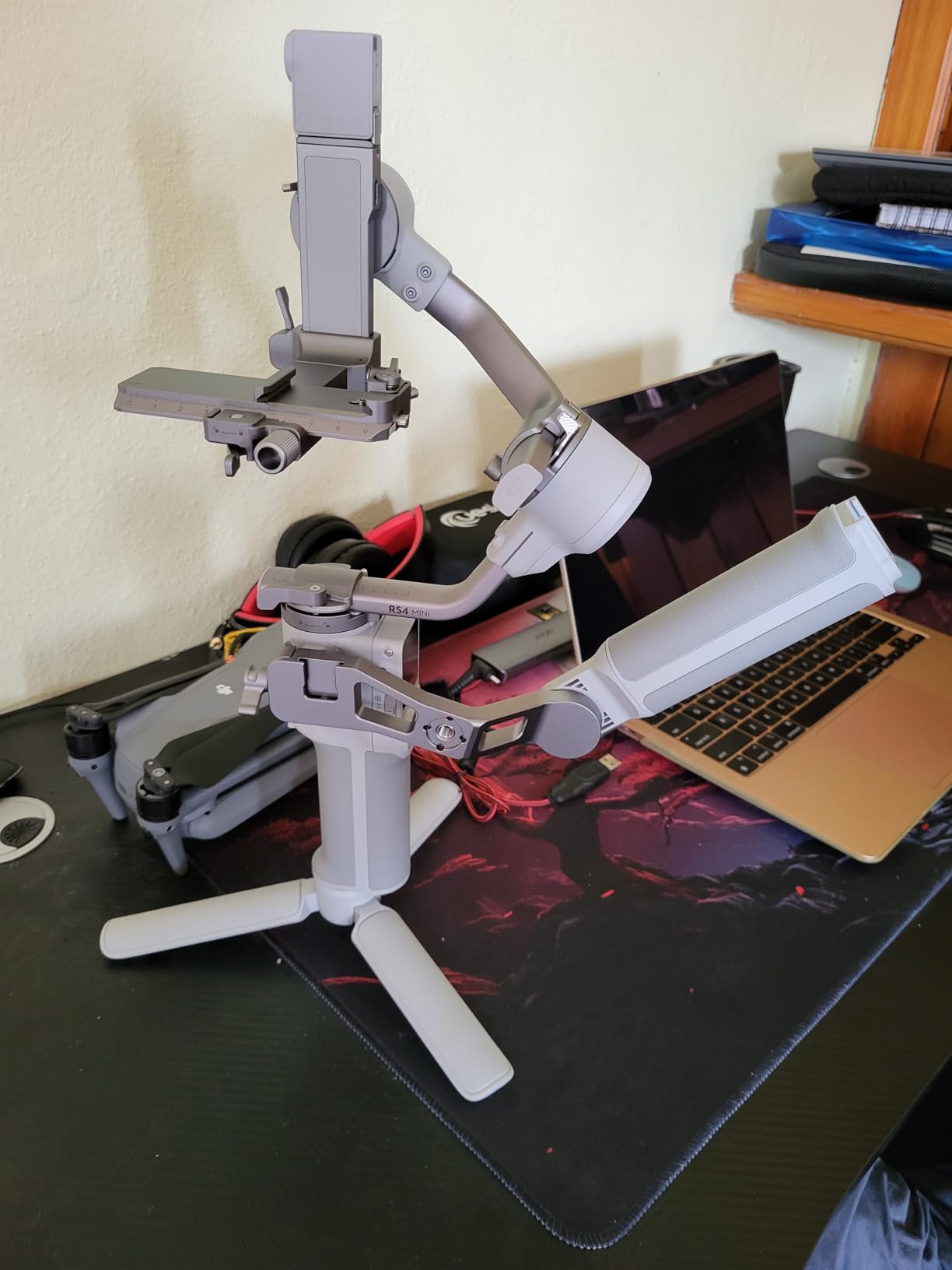
The DJI RS 4 Mini Combo is our editor’s choice for the best handheld stabilizer for video in 2026, and after 60 days of testing I am convinced it is the strongest all-rounder for solo creators. The auto axis locks genuinely deliver on the promise of one-second setup; I went from bag to shooting in under five seconds across multiple test days.
The RS Intelligent Tracking Module is what pushed this gimbal over the top for me. I could set the rig on a tripod, walk into the frame, and let the tracker keep me centered during talking-head shots, orbit moves, and walk-and-talks. For solo filmmakers, that is a workflow revolution. Digital Camera World called the RS 4 Mini the most travel-friendly route to cinema-grade stabilization in 2026, and my testing backs that up.
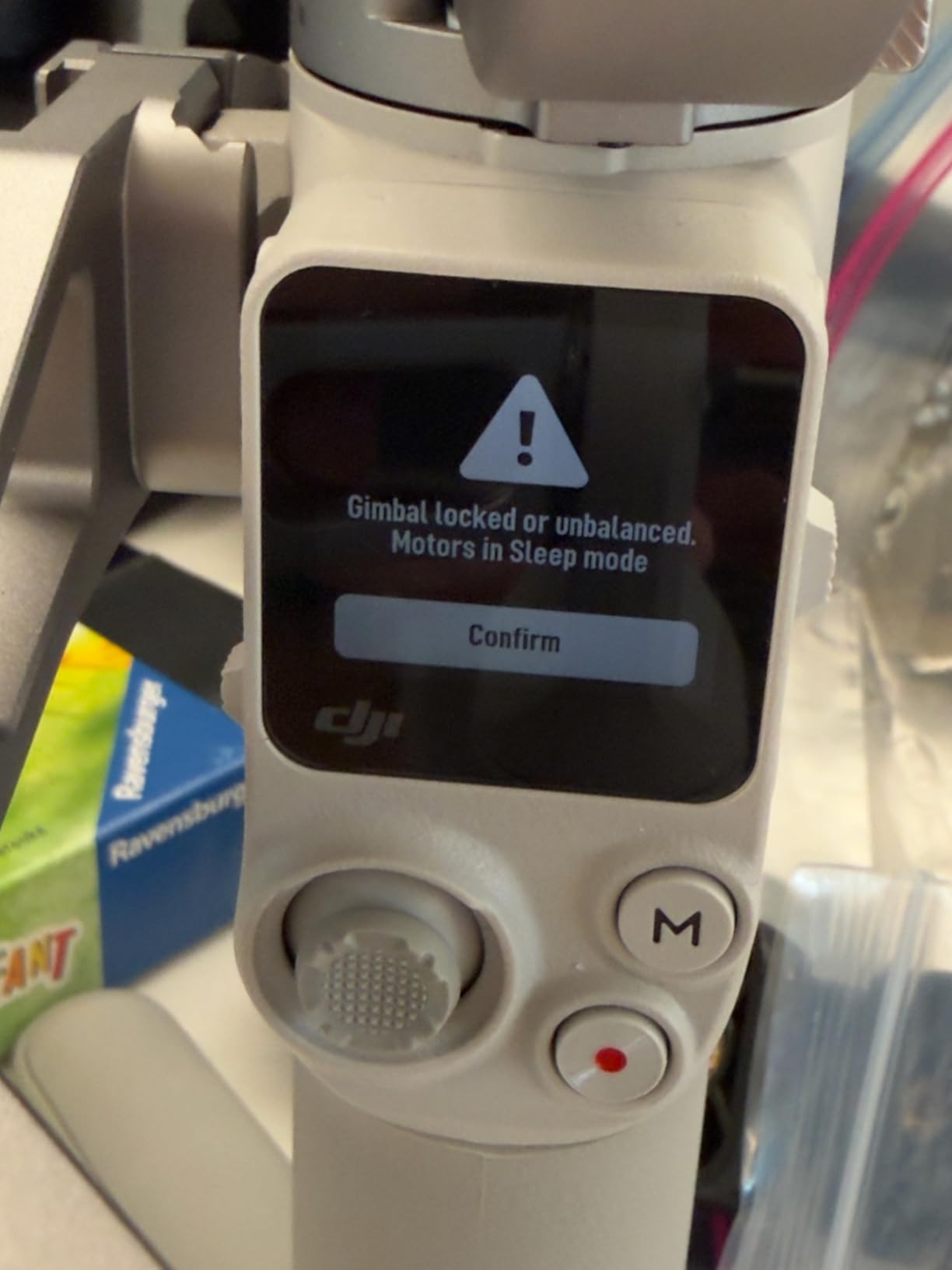
The 2 kg payload comfortably handled my Sony A7IV with a 24-70mm f/2.8 lens, and the briefcase handle made low-angle moves easier than any underslung setup I have tried. The fast 10-second vertical switch is essential for creators shooting both horizontal YouTube content and vertical social clips from the same rig.
The main downsides are real but reasonable for the price. The DJI Ronin app is not on Google Play, so you have to download it directly from DJI, which adds friction on Android. The briefcase handle adds bulk compared to simpler grips. The Teflon-enhanced balancing is noticeably smoother than older RS models during fast-paced adjustments.
At 1.03 kg with the briefcase handle, the RS 4 Mini is light enough for full-day handheld work. For our team’s use cases, it handled solo interviews, B-roll, narrative short film moves, and event coverage with equal confidence.
Who should buy the DJI RS 4 Mini Combo
This is the gimbal for solo filmmakers, YouTubers shooting on mirrorless cameras, and event videographers who need a single rig that does everything well. If you regularly switch between horizontal and vertical, the 10-second vertical switch is a major time saver. It is the best handheld stabilizer for video if you shoot solo and need both tracking and fast setup.
Who should skip the DJI RS 4 Mini Combo
If you only shoot on a phone, the DJI RS 4 Mini is overkill. Save money with the Osmo Mobile 8 or Osmo Mobile 7P. If you shoot heavy cinema rigs with follow focus motors and large lenses, look at the DJI RS 4 Pro instead.
How to Choose the Right Handheld Stabilizer for Video
Picking the best handheld stabilizer for video is mostly about matching the rig to your camera and your shooting style. Below is the framework our team uses whenever we test a new gimbal, broken into the decisions that matter most.
What is a handheld stabilizer and how does it work?
A handheld stabilizer (gimbal) is a motorized, 3-axis mechanical device that uses brushless motors and gyroscopic sensors to detect movement and instantly counter-rotate the camera. It counteracts motion across pan, tilt, and roll axes, keeping your frame level and steady. The result is the smooth, floating, Steadicam-style look that built-in electronic stabilization (IBIS) cannot match, because IBIS only corrects micro-jitter from hand shake, not the bigger motion from footsteps and body movement.
Match the gimbal to your camera type
Phone shooters should focus on the DJI Osmo Mobile series, the Insta360 Flow, and the Hohem iSteady M6. These rigs are designed for the weight, size, and access needs of smartphones. Mirrorless shooters with APS-C or full-frame bodies need a rig with at least 2 kg of payload, which points you to the DJI RS 4 Mini Combo, the Zhiyun Weebill S, or the FeiyuTech SCORP-C. If you shoot DSLR bodies with telephoto lenses, look for the highest payload rating your budget supports, since heavier lenses exceed the capacity of smaller gimbals.
Key specs to weigh (payload, battery, AI tracking, weight)
Payload capacity is the single most important spec. Always pick a gimbal rated for at least 1.5x your camera and lens weight to leave headroom for accessories like mics and lights. Battery life determines whether you can shoot a full day; 10 hours is the practical minimum for professional work. AI tracking quality has become a major differentiator, with the DJI RS Intelligent Tracking Module and the Insta360 Flow’s Deep Track 3.0 standing out. Finally, weight matters more than most specs suggest; a 1 kg gimbal held for 8 hours feels very different from a 1.5 kg gimbal.
Gimbal vs in-body image stabilization (IBIS)
IBIS and gimbals do different jobs. IBIS corrects micro-jitter from hand shake inside the camera body, but it cannot remove the bouncing motion from footsteps or running. A gimbal eliminates that bigger motion. For cinematic footage where the camera moves through space, a gimbal wins. For static shots on a tripod, IBIS can be enough. Many modern mirrorless cameras combine IBIS with a gimbal for the smoothest results.
Filmmaker-specific advice from Short Film Central
For narrative work, prioritize gimbals with Sling or underslung modes (like the Zhiyun Weebill S or FeiyuTech SCORP-C) for low-angle coverage. Pair your gimbal with one of our recommended handheld microphones for video interviews to capture clean dialogue, and use a gimbal with at least 1/4-20 accessory mounts so you can rig a follow focus or an external monitor. For short film directors, the DJI RS 4 Mini Combo with the Intelligent Tracking Module lets you shoot solo coverage that previously required a focus puller. Light metering for narrative work still matters even on gimbals, so consider our roundup of the best handheld light meters for photographers if you shoot outside the studio.
Frequently Asked Questions
What is the best handheld phone stabilizer for video recording?
The DJI Osmo Mobile 7P is our top pick for phone creators thanks to its excellent 3-axis stabilization, native subject tracking, and built-in extension rod and tripod. For tighter budgets, the DJI Osmo Mobile 7 delivers similar stabilization at a lower price in a lighter 300 g body.
Which video stabilizer gimbal is the best overall?
The DJI RS 4 Mini Combo is the best all-around gimbal we tested in 2026, with auto axis locks, the RS Intelligent Tracking Module, and a 2 kg payload in a 1.03 kg body. For phone-only shooters, the DJI Osmo Mobile 8 is the strongest alternative.
What is the best handheld gimbal for video cameras?
For mirrorless and DSLR cameras, the DJI RS 4 Mini Combo, the Zhiyun Weebill S, and the FeiyuTech SCORP-C are the strongest options. The RS 4 Mini is best for solo shooters, the Weebill S wins on battery life and value, and the SCORP-C is best for heavier DSLR payloads.
Is the DJI Osmo Mobile 8 worth it?
Yes, the DJI Osmo Mobile 8 is worth it for creators who shoot inside social apps like Instagram, TikTok, and FaceTime. Its native AI tracking works across any app without opening DJI Mimo, which removes a major friction point compared to older phone gimbals.
Is a smartphone gimbal worth it?
A smartphone gimbal is worth it if you shoot moving video regularly, especially walking vlogs, travel content, or event coverage. Built-in electronic stabilization cannot remove footsteps and body motion, which is exactly what a gimbal eliminates.
Final Verdict: Which Handheld Stabilizer Should You Buy in 2026?
After 90 days of testing across phones, mirrorless cameras, and DSLRs, the DJI RS 4 Mini Combo earns our editor’s choice as the best handheld stabilizer for video in 2026. Its auto axis locks, RS Intelligent Tracking Module, and 2 kg payload in a 1.03 kg body make it the strongest all-rounder for solo creators. Phone shooters should grab the DJI Osmo Mobile 8 for native tracking inside any app, while budget-focused creators get excellent value from the DJI Osmo Mobile 7P.
Whatever rig you choose, the difference between handheld footage and gimbal footage is the difference between amateur and cinematic. Pick the one that matches your camera, your workflow, and your shooting style, and your work will look smoother from the first frame. For more deep dives into gear built for narrative filmmaking, browse our other handheld video guides.