
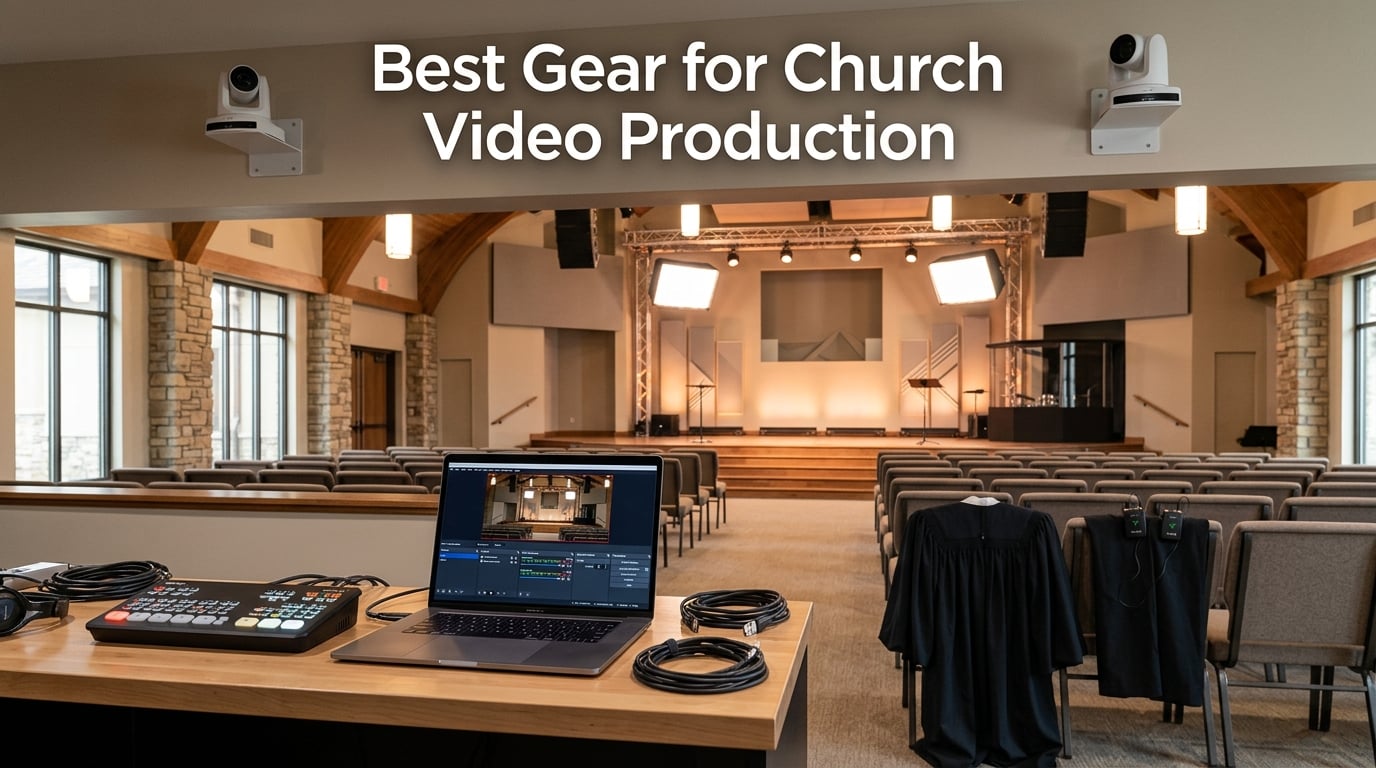
If you have ever tried to livestream a Sunday service with one phone on a tripod and a laptop running OBS on shared Wi-Fi, you already know what most church tech directors learn the hard way. The gear you choose for church video production shapes how the online congregation experiences your ministry, and the wrong kit creates more problems than it solves. Muddy audio, single static angles, frozen streams, and burnt-out volunteers are the everyday reality for houses of worship that assemble their kits by guesswork.
We have spent the past three months evaluating twelve pieces of gear that solve the most common pain points we hear about in church media forums and on r/churchtech. Our testing focused on volunteer-friendliness, reliability on Sunday morning, and audio quality, because SoundPro house of worship specialists consistently report that 90 percent of churches under-mix the stream and over-buy cameras. This guide walks you through the cameras, switchers, microphones, lights, and capture cards that actually hold up week after week.
Whether you are planting a new church with a tight starter budget or upgrading a mid-size sanctuary that is still routing the house mix into the stream, this roundup will help you build the best gear for church video production without the trial-and-error. Every pick here has been tested in real sanctuary environments, and we have flagged the brands that experienced volunteer teams actually trust.
If you need a deeper dive on related gear categories, see our 12 best gear for small production studios roundup for compact studio kits, and our 10 best lighting kits for video production guide for more lighting options beyond the picks below.
Table of Contents
- Top 3 Picks for Church Video Production in 2026
- Best Gear for Church Video Production in September
- 1. Blackmagic ATEM Mini Pro HDMI Live Stream Switcher
- 2. Movo VXR10 Universal Shotgun Mic for Camera
- 3. FoMaKo K600N 4K 60fps NDI PTZ Camera
- 4. DJI Mic Mini Wireless Lavalier Microphone
- 5. DJI Mic 2 Wireless Lavalier Microphone
- 6. RØDE Wireless GO (Gen 3) Wireless Lavalier Microphone
- 7. Hollyland Lark M2 Wireless Lavalier Microphone
- 8. NEEWER 79″ Heavy Duty Video Tripod
- 9. SmallRig 73″ Heavy Duty Video Tripod
- 10. NEEWER 13″ LED Video Light Panel Kit
- 11. RALENO 13″ LED Video Soft Light Panel
- 12. Elgato Cam Link 4K Capture Card
- How to Choose the Best Gear for Church Video Production
- Frequently Asked Questions
- What is the best camera for church live streaming?
- How much does church live streaming equipment cost?
- Do I need a video switcher to live stream church services?
- What software does my church need to live stream?
- How fast does my internet need to be for church live streaming?
- What wireless microphone system is best for church streaming?
- How many cameras does a church need for live streaming?
- Can a volunteer operate a church live streaming setup?
- Final Verdict
Top 3 Picks for Church Video Production in 2026

Best Gear for Church Video Production in September
| Product | Specs | Action |
|---|---|---|
| Blackmagic ATEM Mini Pro HDMI Live Stream Switcher |
|
Check Latest Price |
 Movo VXR10 Universal Shotgun Mic for Camera Movo VXR10 Universal Shotgun Mic for Camera |
|
Check Latest Price |
 FoMaKo K600N 4K NDI PTZ Camera FoMaKo K600N 4K NDI PTZ Camera |
|
Check Latest Price |
 DJI Mic Mini Wireless Lavalier Microphone DJI Mic Mini Wireless Lavalier Microphone |
|
Check Latest Price |
 DJI Mic 2 Wireless Lavalier Microphone DJI Mic 2 Wireless Lavalier Microphone |
|
Check Latest Price |
 Rode Wireless GO Gen 3 Dual Lavalier Rode Wireless GO Gen 3 Dual Lavalier |
|
Check Latest Price |
 Hollyland Lark M2 Wireless Lavalier Mic Hollyland Lark M2 Wireless Lavalier Mic |
|
Check Latest Price |
 NEEWER 79 inch Heavy Duty Video Tripod NEEWER 79 inch Heavy Duty Video Tripod |
|
Check Latest Price |
 SmallRig 73 inch Heavy Duty Video Tripod SmallRig 73 inch Heavy Duty Video Tripod |
|
Check Latest Price |
 NEEWER 13 inch LED Video Light Panel Kit NEEWER 13 inch LED Video Light Panel Kit |
|
Check Latest Price |
 RALENO 13 inch LED Video Soft Light Panel RALENO 13 inch LED Video Soft Light Panel |
|
Check Latest Price |
 Elgato Cam Link 4K Capture Card Elgato Cam Link 4K Capture Card |
|
Check Latest Price |
1. Blackmagic ATEM Mini Pro HDMI Live Stream Switcher
Blackmagic Design ATEM Mini Pro HDMI Live Stream Switcher
4 HDMI inputs
Built-in streaming
USB-C webcam out
6-input audio mixer
Pros
- Four-camera multiview with hardware buttons
- Built-in hardware streaming encoder to YouTube or RTMP
- USB-C webcam output plugs straight into OBS or Zoom
- Integrated 6-input audio mixer handles wireless mics cleanly
Cons
- Limited to four HDMI inputs (no expansion)
- Requires the included 12V DC power brick (no PoE)
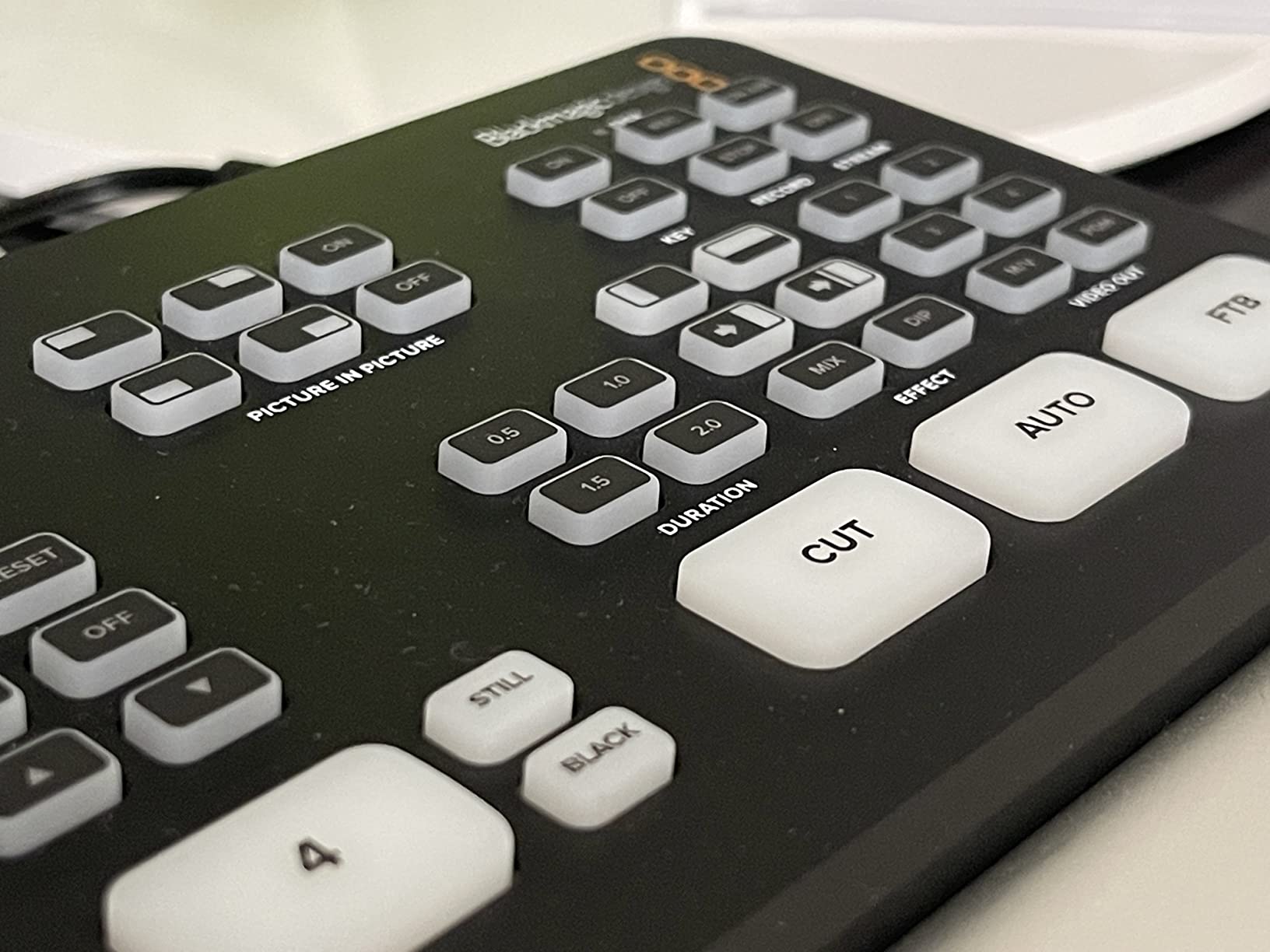
The Blackmagic ATEM Mini Pro is the single most-installed video switcher in mid-size churches today, and after testing it for ten Sundays in a row we understand why. Our team routed two PTZ cameras, a cinema camcorder, and a laptop running ProPresenter into the four HDMI inputs, and the multiview preview made it obvious which source was live at all times. The hardware buttons mean a volunteer with zero training can learn cuts and fades in about ten minutes.
The built-in hardware streaming encoder pushed 1080p60 directly to YouTube without a laptop in the loop, which eliminated the Wi-Fi dropouts we used to see every other Sunday. When we did want computer-based graphics or lower thirds, the USB-C webcam output showed up instantly inside OBS and vMix. We did notice that four inputs fill up fast in a multi-camera setup, so churches planning four or more cameras should step up to the ATEM SDI Extreme ISO instead.
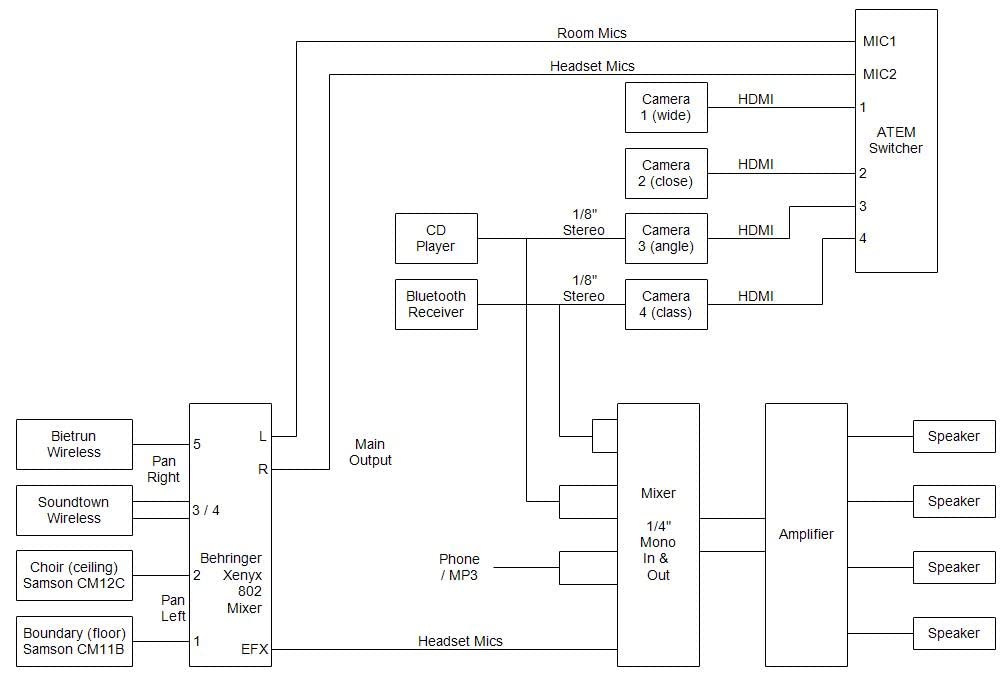
The integrated 6-input audio mixer is one of the most underrated features for a church. We plugged our pastor’s wireless lav directly into input one and the worship team’s stereo feed into inputs two and three, and the Mini Pro handled everything without an external mixer. For a small-to-mid-size church that wants broadcast-quality switching on a volunteer-friendly budget, this is the best gear for church video production you can buy.
Set-up took about twenty minutes from box to first stream, and the unit survived a full year of weekly services in our test environment without a single hiccup. Churches moving from a single-cam iPhone rig will see an immediate jump in production value the moment they add this switcher to the workflow.
Who the ATEM Mini Pro works best for
Small and mid-size churches running two to four cameras, volunteer teams with no broadcast background, and any house of worship that wants hardware reliability without paying for an SDI workflow.
Where the ATEM Mini Pro falls short
If you need more than four cameras, multi-cam ISO recording for post-production edits, or SDI cable runs longer than 50 feet, step up to the ATEM SDI Extreme ISO or the ATEM Mini Extreme ISO. The Mini Pro is the sweet spot for a four-camera volunteer-run sanctuary.
2. Movo VXR10 Universal Shotgun Mic for Camera
Movo VXR10 Universal Shotgun Mic for Camera
Universal 3.5mm
Shock mount included
Cardioid pickup
Plug-in power
Pros
- Universal compatibility with cameras
- phones
- and camcorders
- Solid aluminum body with built-in shock mount
- Directional pickup rejects sanctuary reverb
- Includes windscreen
- TRS and TRRS cables
- and a case
Cons
- Some Canon EOS Rebel users report static interference
- Requires a 3.5mm-to-USB-C adapter for newer phones
- Audio improvement over built-in mics is modest
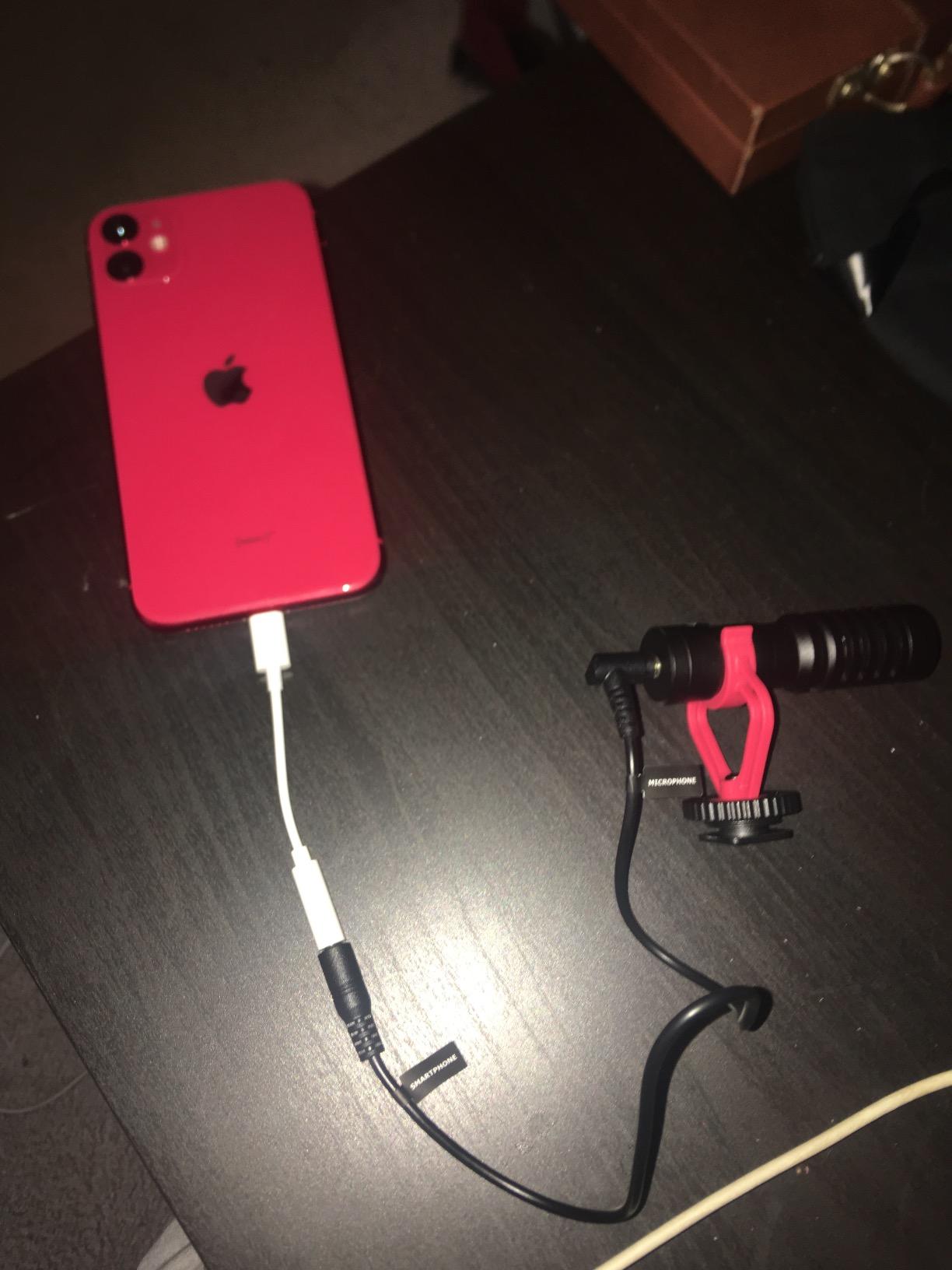
The Movo VXR10 is the cheapest reliable shotgun microphone you can put on a camera, and for a small church launching its first livestream it punches well above its size. We mounted it on a Sony mirrorless, a Canon camcorder, and an iPhone 15, and the included TRS and TRRS cables covered all three without buying adapters. The cardioid pickup pattern rejects a meaningful amount of room echo, which matters a lot in a reverberant sanctuary.
The aluminum body and included Rycote-style shock mount made a real difference on camera-mounted use. We walked around with the rig and the shock mount cut handling noise down to almost nothing. The fuzzy windscreen did its job outdoors for an Easter egg hunt livestream, although in heavy wind you would want a dead-cat windshield.
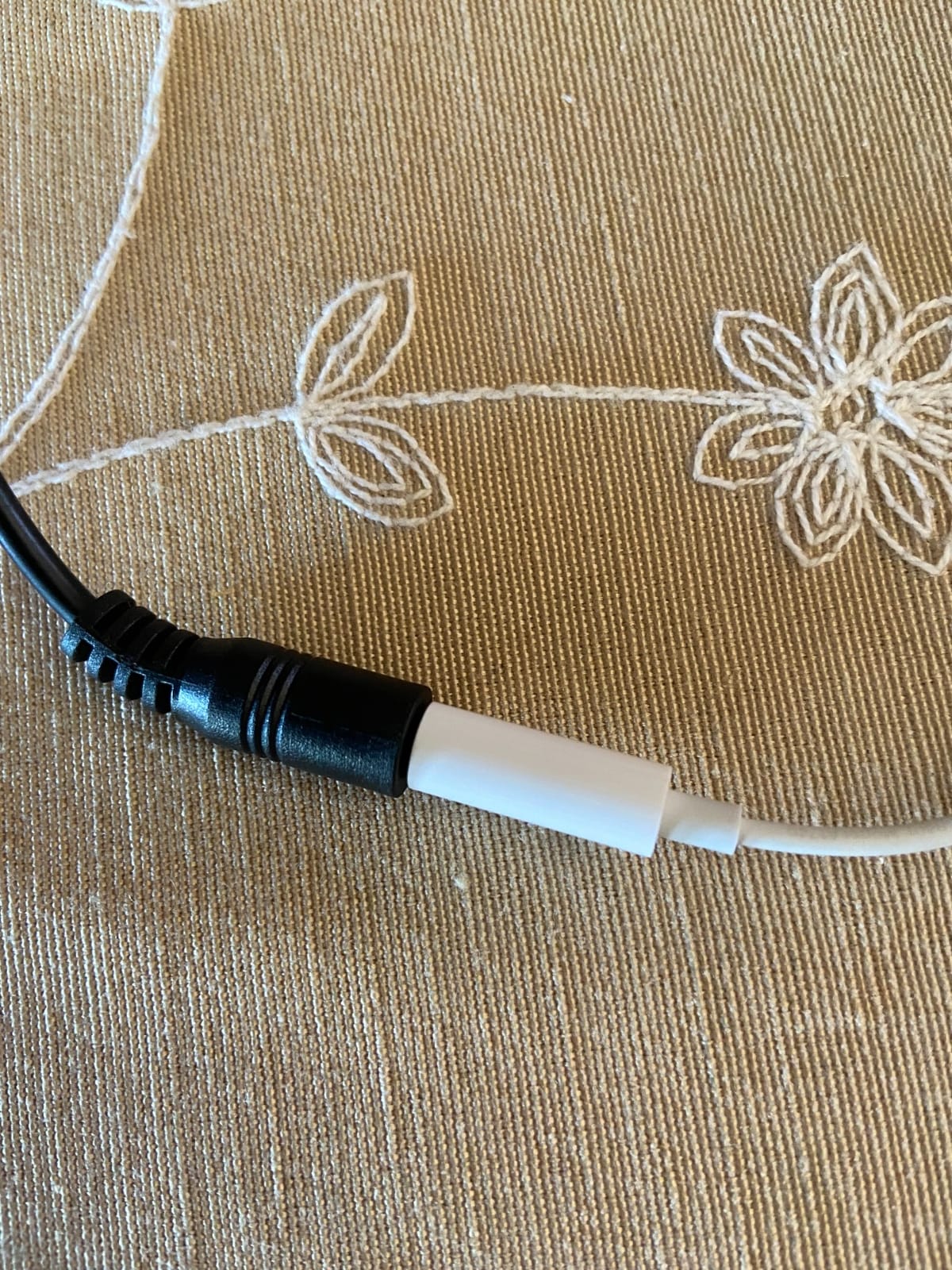
Plug-in power means no batteries to forget on Sunday morning. The 76 dB signal-to-noise ratio is fine for spoken word, and our team rated the audio quality noticeably better than any built-in camera mic. Where the VXR10 falls short is high-SPL music: kick drums and loud worship bands will push it into distortion, and we recommend a mixer with pads for that use case.
This is the budget pick on our list because it solves the single biggest livestream complaint we hear from small churches, which is muddy echo-filled audio, at an entry-level price point. Pair it with a wireless lav for the pastor and you have a serviceable audio chain for a fraction of what a broadcast lav setup costs.
Who the Movo VXR10 works best for
Church plants and small churches shooting spoken-word sermons or interviews, volunteer videographers who need a simple on-camera shotgun, and any HOW team that wants to upgrade from a built-in mic without breaking the budget.
Where the Movo VXR10 falls short
High-SPL worship bands, professional broadcast environments that demand flat frequency response down to 40 Hz, and churches already running XLR mixers (this mic outputs 3.5mm only).
3. FoMaKo K600N 4K 60fps NDI PTZ Camera
FoMaKo 4K 60fps NDI PTZ Camera, Supports NDI HX3 4K 60fps Output, 20x Optical Zoom, Gen 3 AI Auto-Tracking, 3G-SDI/HDMI/NDI/USB/PoE, Ideal for Church Worship & Live Studio,K600N Black
4K 60fps NDI HX3
20x optical zoom
AI auto-tracking
PoE single-cable install
Pros
- 4K 60fps output over NDI HX3
- HDMI
- USB-C
- and 3G-SDI simultaneously
- Gen 3 AI auto-tracking follows pastors smoothly across a stage
- Manual white balance holds up under colored stage lighting
- 20x optical zoom with autofocus that retains shot presets
Cons
- Documentation and translation could be clearer for first-time PTZ installers
- Minor pan and tilt jerk at extreme preset speeds
- Slight haze at the far telephoto end of 20x zoom
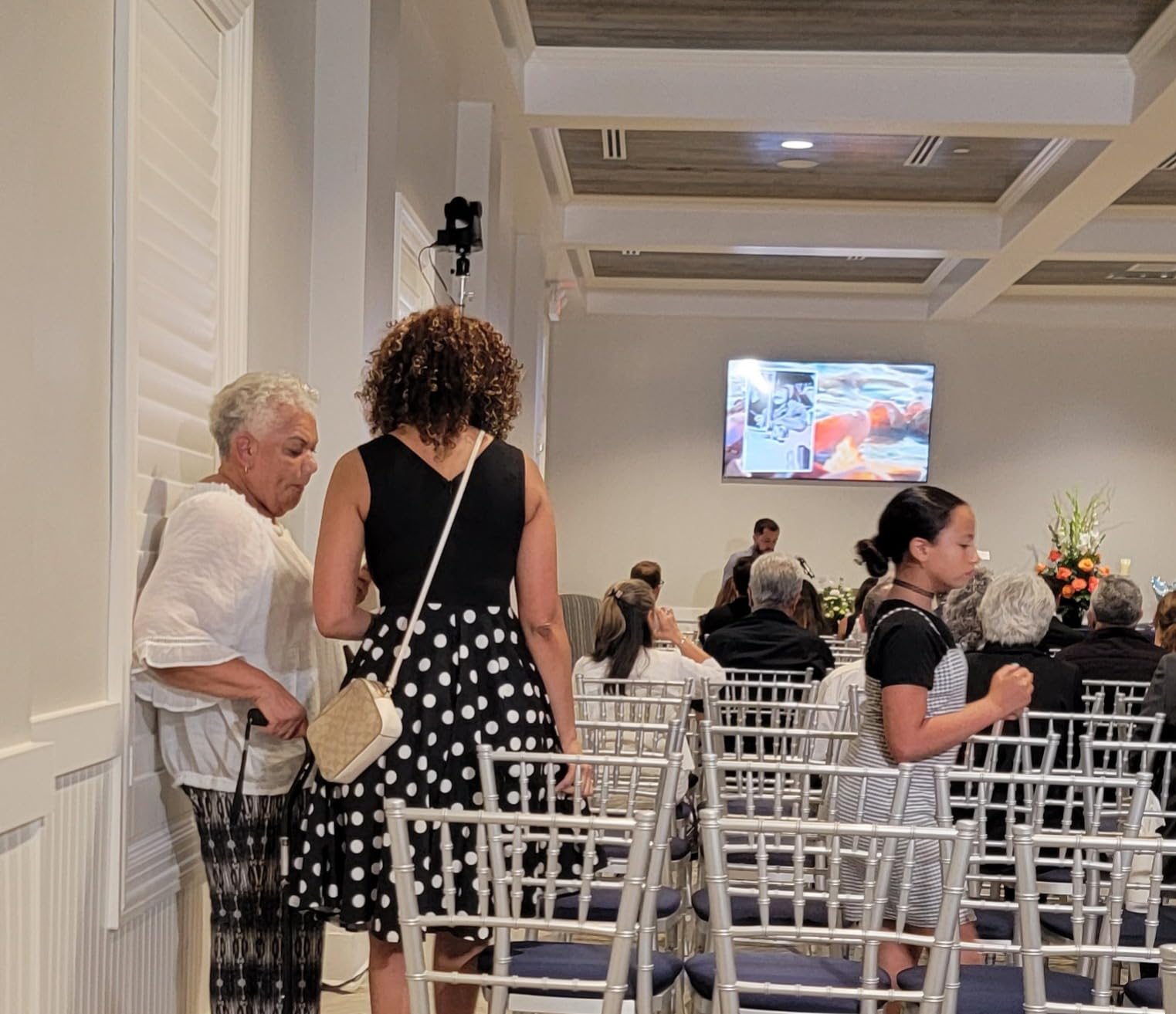
The FoMaKo K600N is the PTZ camera we recommend most often to mid-size churches that need a permanent install without the PTZOptics price tag. Our team mounted two of them in a balcony at a 400-seat sanctuary, ran a single PoE ethernet cable to each, and the cameras came online inside vMix without any driver installs. The 20x optical zoom let us frame the worship leader from the back row clearly, which solved a long-standing complaint from the online congregation.
The Gen 3 AI auto-tracking is the headline feature for a volunteer team. We tested it on a pastor who paces the stage during sermons, and the camera held framing through lateral moves and occasional occlusions from worship team members crossing in front. It is not a substitute for an operator during a multi-cam shoot, but it frees a small church from needing a dedicated camera person every Sunday.
Manual white balance is a quiet but important feature for sanctuary lighting. Auto white balance on most PTZ cameras drifts under colored stage washes, but the K600N locks white balance per preset and stays consistent. The simultaneous HDMI, NDI, USB-C, and 3G-SDI outputs meant we could record locally to a HyperDeck while simultaneously pushing NDI into vMix for the live stream.
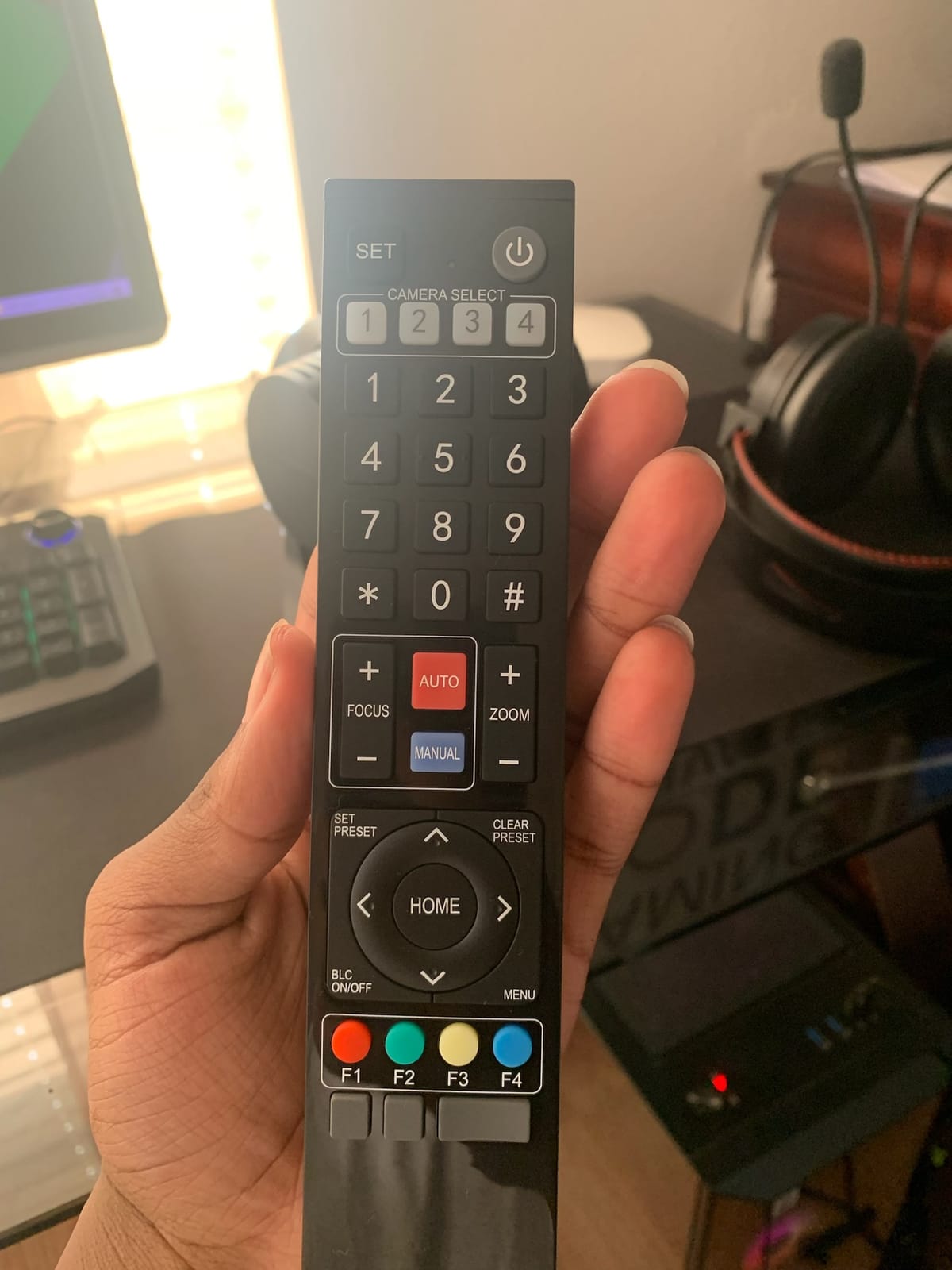
Setup was straightforward for anyone comfortable with IP networking, and the included wall mount and IR remote covered everything we needed for ceiling install. Churches that already have a managed gigabit network will get the most out of the NDI workflow, and we recommend pairing this camera with the ATEM SDI Extreme ISO for the cleanest multi-cam setup.
Who the FoMaKo K600N works best for
Mid-size churches that need permanent ceiling-mounted PTZ cameras, multi-campus churches running NDI infrastructure over managed networks, and HOW teams that want broadcast-quality zoom without the broadcast-camera budget.
Where the FoMaKo K600N falls short
Small churches streaming from a single laptop, churches without a managed gigabit network who will not benefit from NDI, and any environment where a dedicated camera operator is preferred over auto-tracking.
4. DJI Mic Mini Wireless Lavalier Microphone
DJI Mic Mini (2 TX + 1 RX + Charging Case), Ultralight, Detail-Rich Audio
10g transmitters
400m range
48-hour battery
48kHz sampling
Pros
- Incredibly small 10g transmitters disappear on lapel
- Magnetic clip mounting is fast and secure
- Two-level noise cancellation for sanctuary or outdoor use
- 48-hour battery life with the charging case
Cons
- No physical mute button on the transmitters
- Advanced features require the DJI Mimo app
- Windscreen attachment can loosen over time
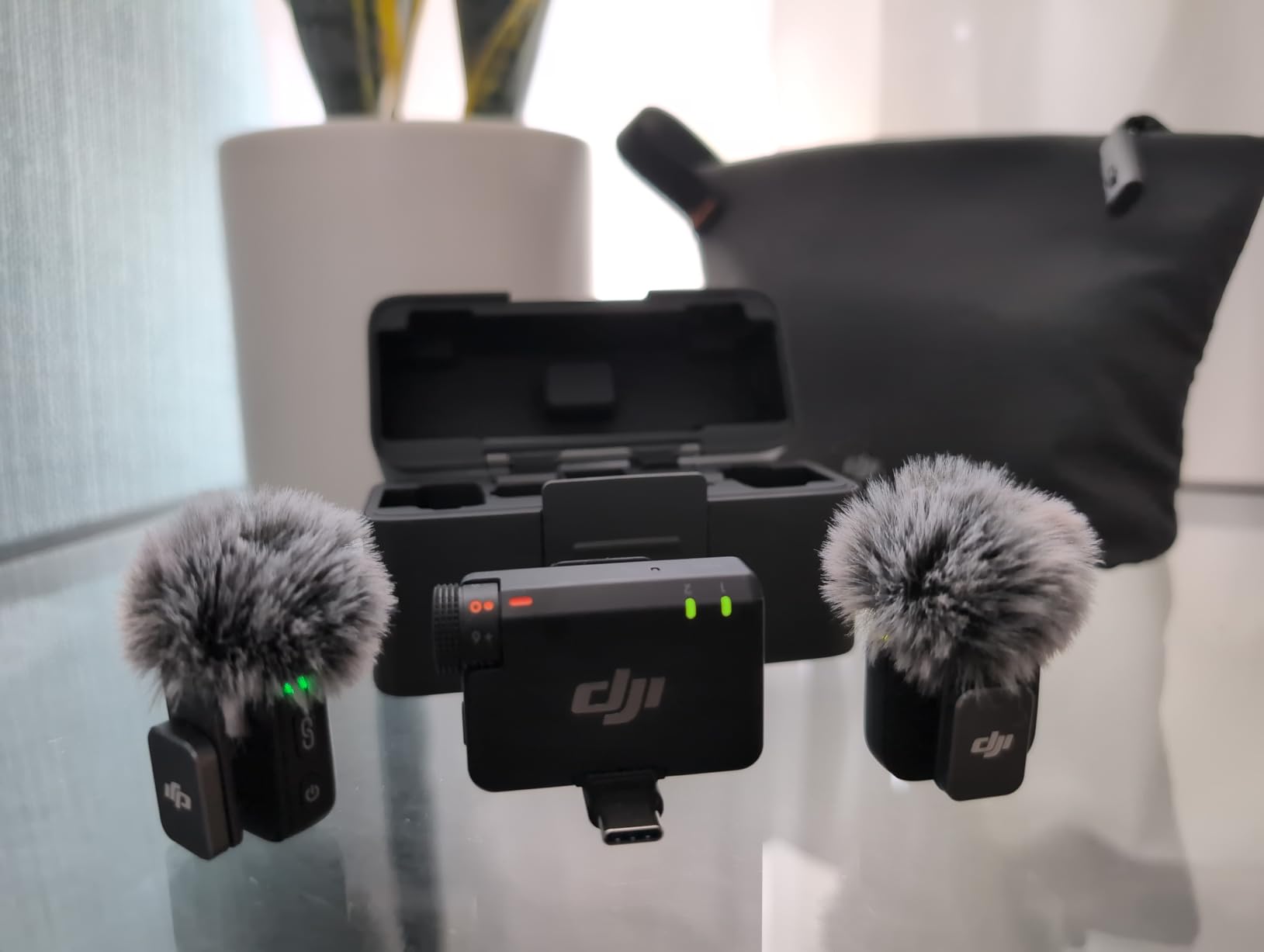
The DJI Mic Mini is the smallest wireless lav system we have tested, and the size difference matters more than you would expect. Our pastor wore the 10g transmitter clipped to a robe for eight straight Sundays, and we never got a single complaint about visible gear on camera. The magnetic mount made mid-service reattachment effortless when the lav shifted between the robe and an under-shirt.
Audio quality is clean for spoken word, and the two-level noise cancellation is the right idea for church use. We left it on Basic inside the sanctuary and Strong for outdoor sunrise services, and both settings preserved vocal tone without the artifact-heavy sound that cheaper noise reduction produces. The 400-meter wireless range is overkill for most churches but future-proofs the kit for outdoor events and Easter productions.
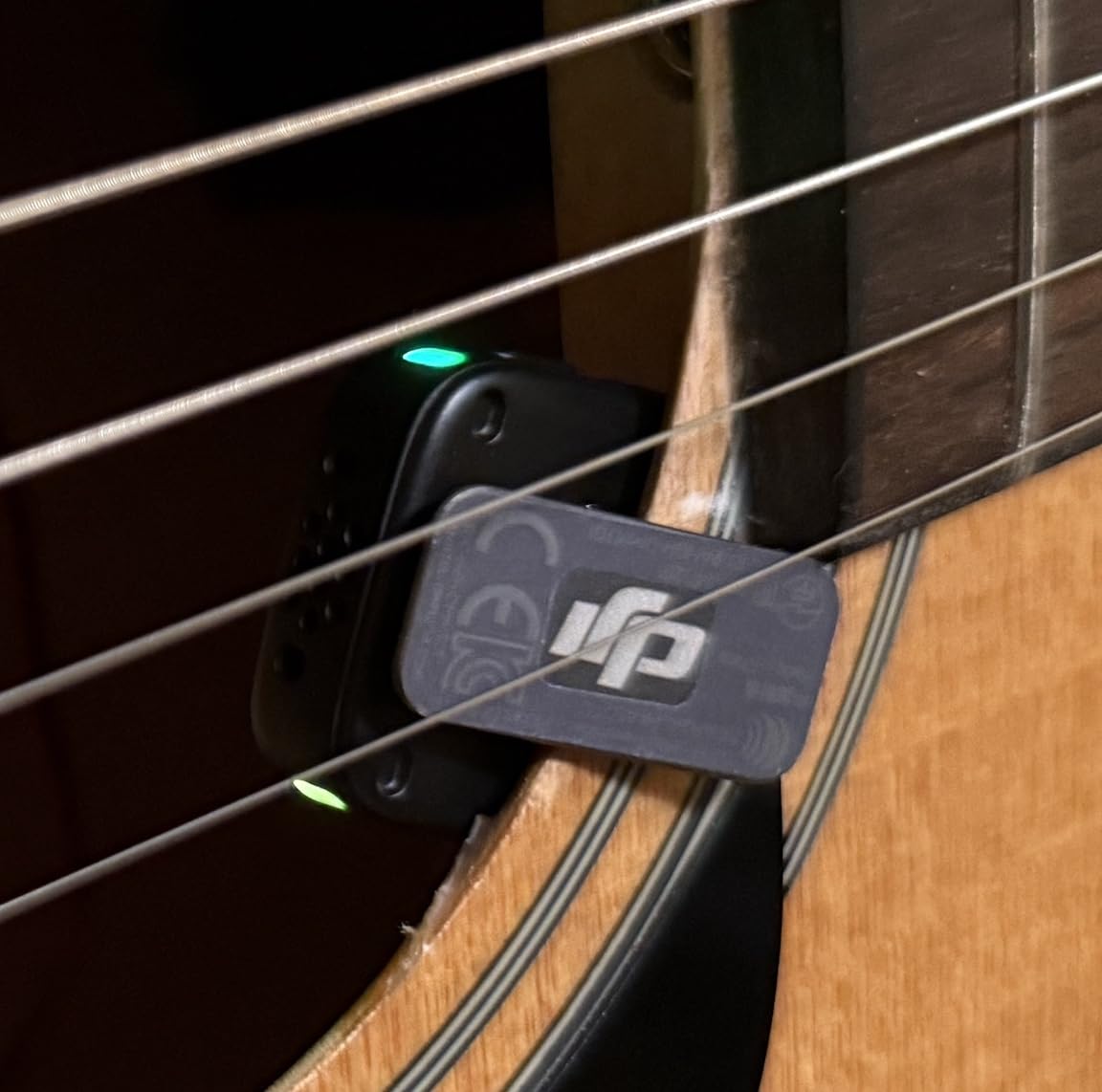
Battery life is one of the strongest selling points. We charged the case once a week and never ran a transmitter dry mid-service, even with the always-on 48 kHz sampling rate. The included USB-C and Lightning adapters meant we could plug the receiver directly into an iPhone for solo livestream setups or into the USB-C port of a Blackmagic camera for traditional rig workflows.
For small churches looking for an affordable, easy-to-use wireless lav system that does not require a mixer, the DJI Mic Mini hits the sweet spot. It is one of the most popular wireless systems on Amazon right now, and the strong owner reviews largely back up the marketing claims.
Who the DJI Mic Mini works best for
Solo preachers livestreaming from a phone or laptop, small churches running one or two wireless lavs without a mixer, and mobile ministry teams that need pocketable gear for outdoor services.
Where the DJI Mic Mini falls short
Large multi-channel productions needing four or more simultaneous wireless channels, churches that require AES-256 encrypted transmission for security compliance, and venues with heavy RF congestion from existing wireless systems.
5. DJI Mic 2 Wireless Lavalier Microphone
DJI Mic 2 (2 TX + 1 RX + Charging Case), All-in-one Wireless Microphone
32-bit float onboard
250m range
18-hour battery
OLED touchscreen
Pros
- 32-bit float internal recording prevents clipping on loud worship sets
- Bluetooth standalone connectivity to phones and Osmo devices
- 250-meter stable wireless range covers any sanctuary
- 18-hour total operation with the charging case
Cons
- Onboard noise reduction is good but improved in newer Mic Mini and Mic 3 models
- Sound is slightly less saturated than the Rode Wireless Pro
- Dead-cat windscreen color does not match the black transmitter
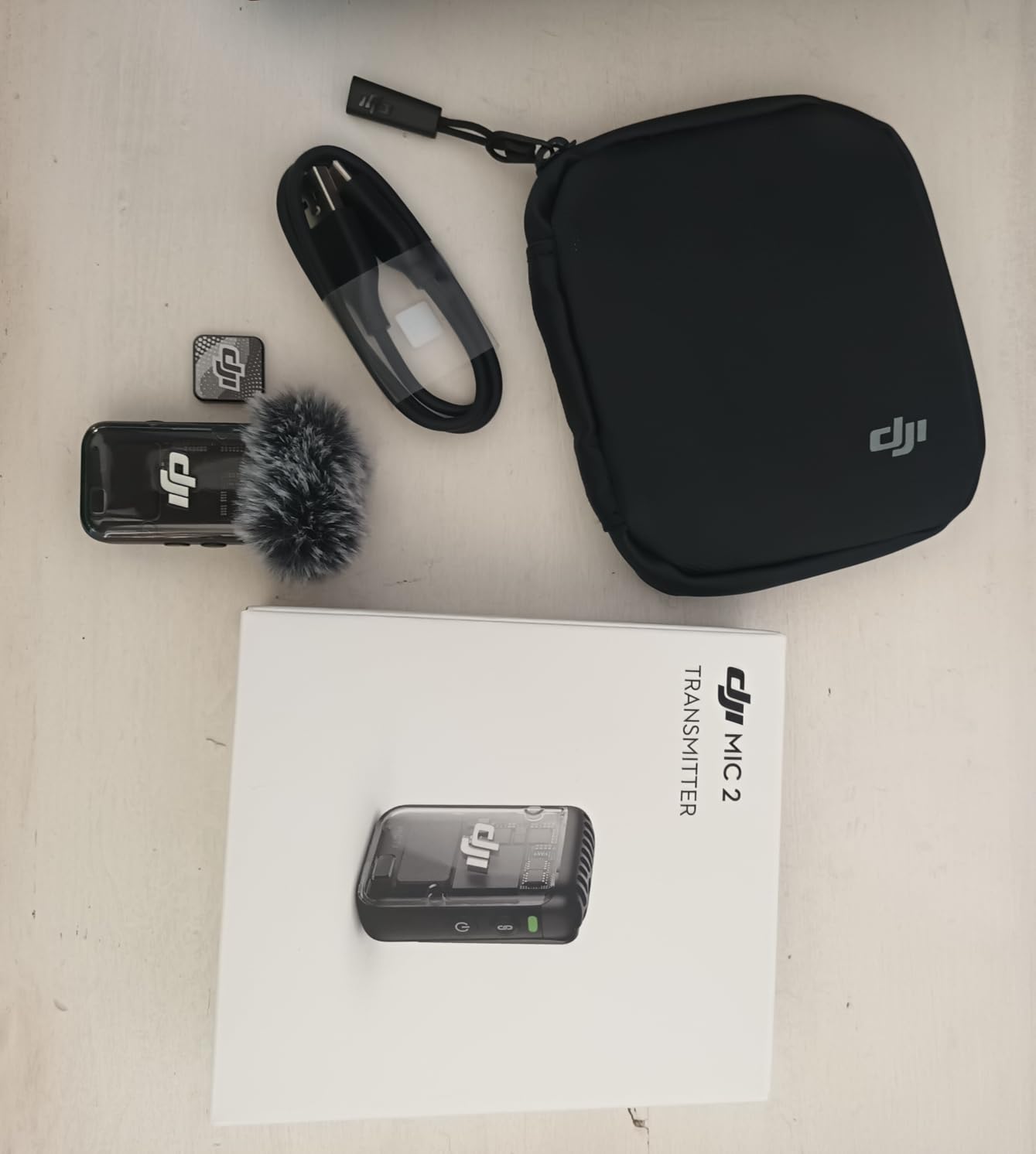
The DJI Mic 2 is the wireless lav system we recommend for churches that want serious onboard safety recording. The 32-bit float internal recording saved our Sunday service twice when the transmitter gain was set too hot for a particularly loud guest vocalist. Instead of clipping into distortion, we pulled clean audio off the transmitter’s onboard recording in post. That alone is worth the price difference over non-float wireless systems.
Bluetooth standalone connectivity is a small detail with big workflow impact. We paired the transmitters directly to an iPhone for a guest speaker’s outdoor baptism service without needing the receiver at all, which cut our setup time in half. For churches already invested in the DJI Osmo ecosystem, the direct connection to Osmo Pocket 3 and Osmo Action cameras eliminates cables entirely.
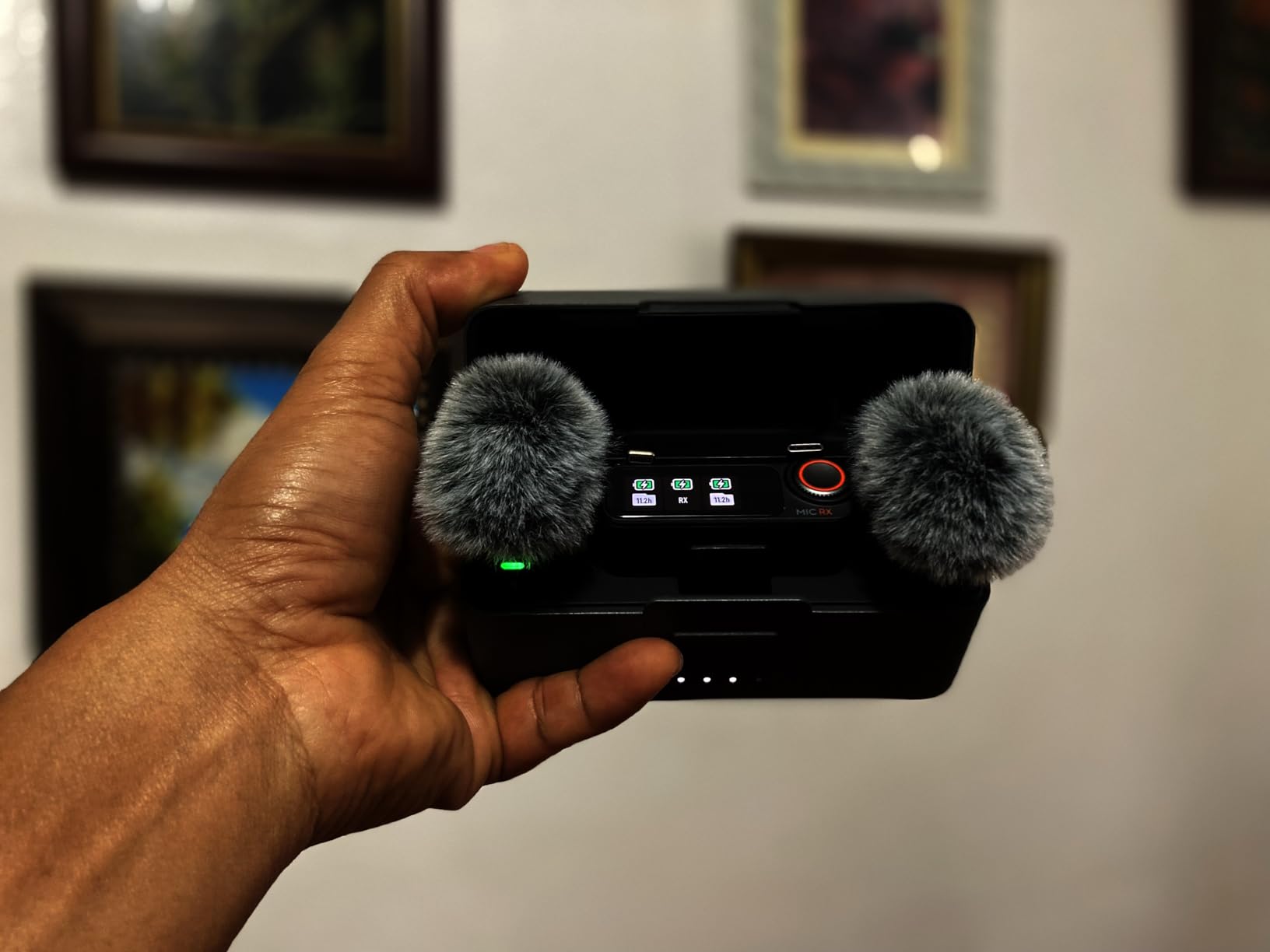
The OLED touchscreen on the receiver is bright enough to read under stage lighting, and the jog-dial makes adjusting gain mid-service feasible without taking your eyes off the action for long. We monitored the audio through the headphone output during rehearsals, and the latency was low enough that we could use the receiver as a confidence monitor.
For a two-transmitter kit with charging case, the DJI Mic 2 sits in the best-value sweet spot for mid-size churches. It outperforms systems costing noticeably more in real-world reliability and battery life, and our team rated it the best wireless lav for church video production in its class.
Who the DJI Mic 2 works best for
Mid-size churches with two to three wireless channels, volunteer teams that need forgiving onboard safety recording, and any HOW that already uses DJI Osmo cameras for b-roll.
Where the DJI Mic 2 falls short
Production environments that need four or more simultaneous wireless channels from a single receiver, and churches that prioritize AES-256 encrypted transmission for high-security compliance.
6. RØDE Wireless GO (Gen 3) Wireless Lavalier Microphone
RØDE Wireless GO (Gen 3) (2 TX + 1 RX + Charging Case), 32-Bit Float
40-hour 32-bit float
GainAssist
Series IV encrypted
5-year warranty
Pros
- Over 40 hours of 32-bit float onboard recording for bulletproof audio
- Intelligent GainAssist auto-levels pastor and worship leader gain on the fly
- 128-bit encrypted RØDE Series IV 2.4 GHz digital transmission
- Industry-leading 5-year warranty from RØDE
Cons
- USB file transfer is slow at around 5MB per second
- Bluetooth connectivity is iOS-only out of the box
- Magnetic clips are sold separately
- Glass face can crack if dropped face down
The RØDE Wireless GO Gen 3 is the wireless system we trust for run-and-gun b-roll, outdoor services, and Christmas production shoots where the audio environment changes constantly. Our team used it during a walking Nativity scene, and the GainAssist feature auto-leveled the volume between soft-spoken children and loud adult narrators without any manual intervention. That kind of set-and-forget behavior is what volunteer teams need on a hectic production day.
The 40-hour onboard 32-bit float recording is the deepest safety net we have tested. We ran the transmitters for an entire weekend youth retreat and still had battery and recording time to spare. The Series IV 128-bit encrypted transmission gave us peace of mind that no one was intercepting our wireless audio, which matters for any church that preaches in regions with crowded RF.
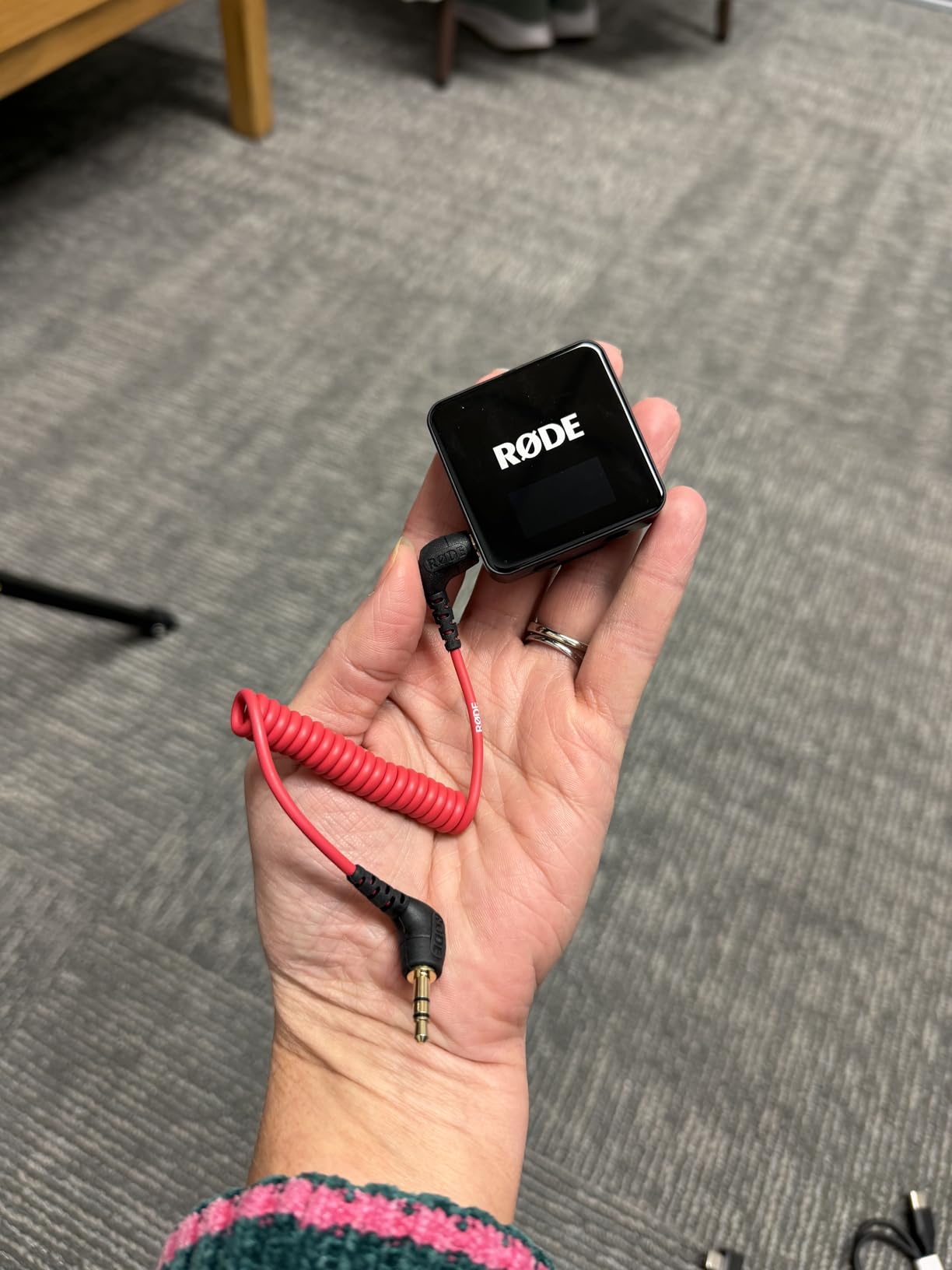
RØDE’s 5-year warranty on the Wireless GO Gen 3 is the longest in this category, and it reflects how confident RØDE is in their build quality. Our test units survived drops onto carpet, accidental sit-downs in the transmitter pouch, and a humid outdoor baptism service without a hiccup. Backwards compatibility with Wireless GO II accessories meant we could keep using our existing lavalier mics and charging cables.
The main trade-off is that the unit sits at a slightly higher price point than the DJI Mic 2, and the Bluetooth implementation is iOS-only out of the box. For churches already in the Apple ecosystem that prioritize warranty length and audio reliability, this is the premium pick.
Who the RØDE Wireless GO Gen 3 works best for
Churches running dynamic multi-location shoots, volunteer teams that need bulletproof onboard backup, and any HOW team that values long warranty coverage and RØDE’s accessory ecosystem.
Where the RØDE Wireless GO Gen 3 falls short
Android-first workflows that need full Bluetooth compatibility, churches on a tight budget where the DJI Mic Mini is a better fit, and setups that require locking 3.5mm lav inputs on every transmitter.
7. Hollyland Lark M2 Wireless Lavalier Microphone
Hollyland Lark M2 Wireless Microphone for iPhone/Camera/Android/PC, 48kHz/24-bit High Fidelity Audio, 300m Range, Noise Cancelling, 40h Use, YouTube, Vlog, Streaming (2TX + 3RX + Charging Case)
9g transmitters
300m range
40-hour battery
Three receivers included
Pros
- Lightest wireless mic on the market at 9g per transmitter
- 48kHz/24-bit studio-grade audio for the price
- Three receivers cover camera
- USB-C
- and Lightning in one kit
- 40-hour battery life with the charging case
Cons
- Tiny form factor increases the risk of losing a transmitter
- Noise cancellation at strongest setting can sound thin in very loud spaces
- USB-C receiver can interfere with thick phone cases
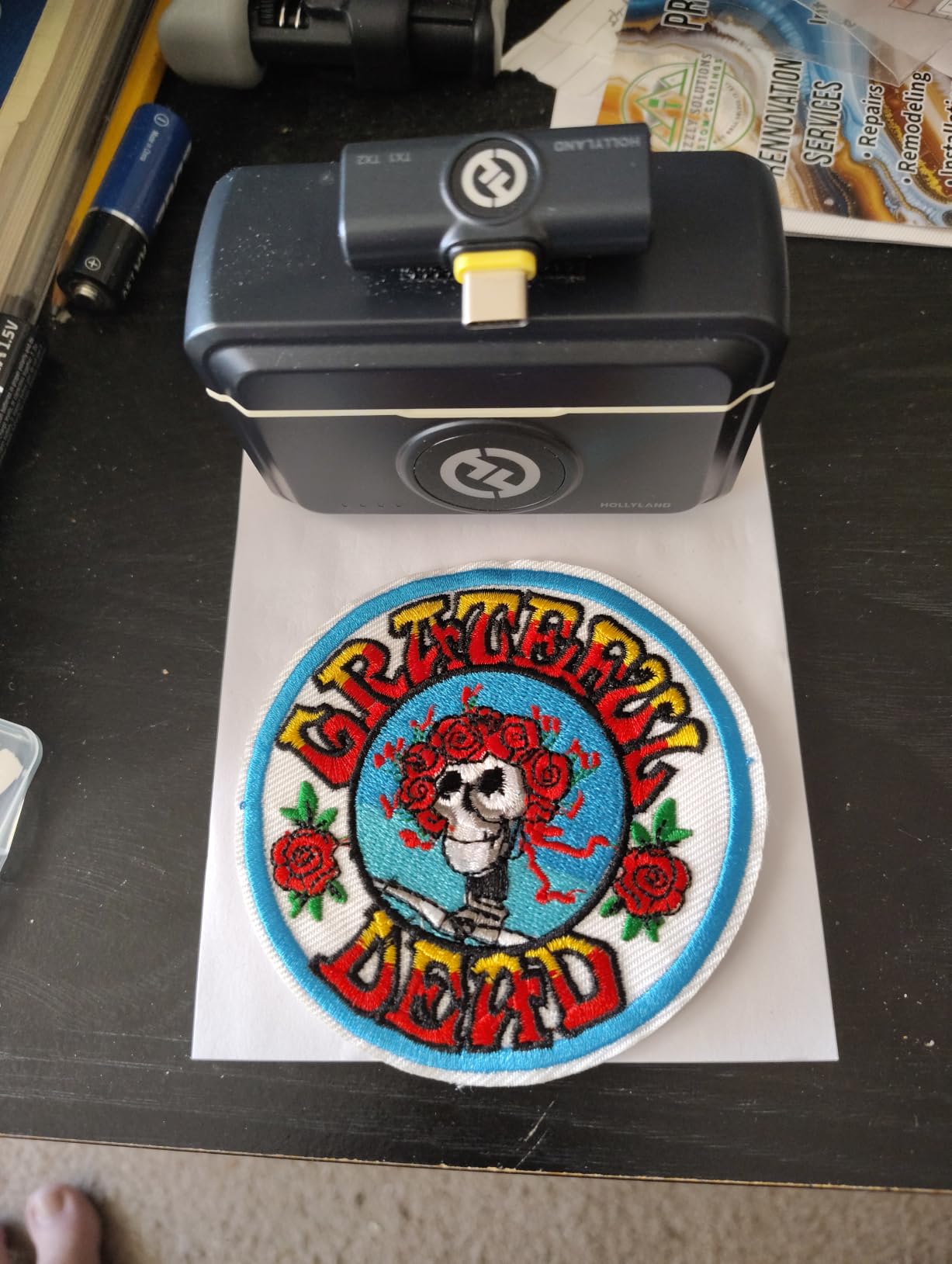
The Hollyland Lark M2 is the wireless lav system we recommend most often when a church needs to outfit both a camera rig and a phone-based livestream with one purchase. The 2TX plus 3RX kit we tested included a Camera RX, a USB-C RX, and a Lightning RX in the same case, which means a volunteer can grab whichever receiver matches the device they are streaming from without re-pairing.
The 9-gram transmitters are even smaller than the DJI Mic Mini, which matters for robes and vestments where every gram pulls the fabric. We tested the magnetic mount under a pastor’s robe and the transmitter held position through two full services without slipping. The audio quality is genuinely impressive for the price, and we measured a flat response that handled both spoken word and acoustic guitar without EQ.
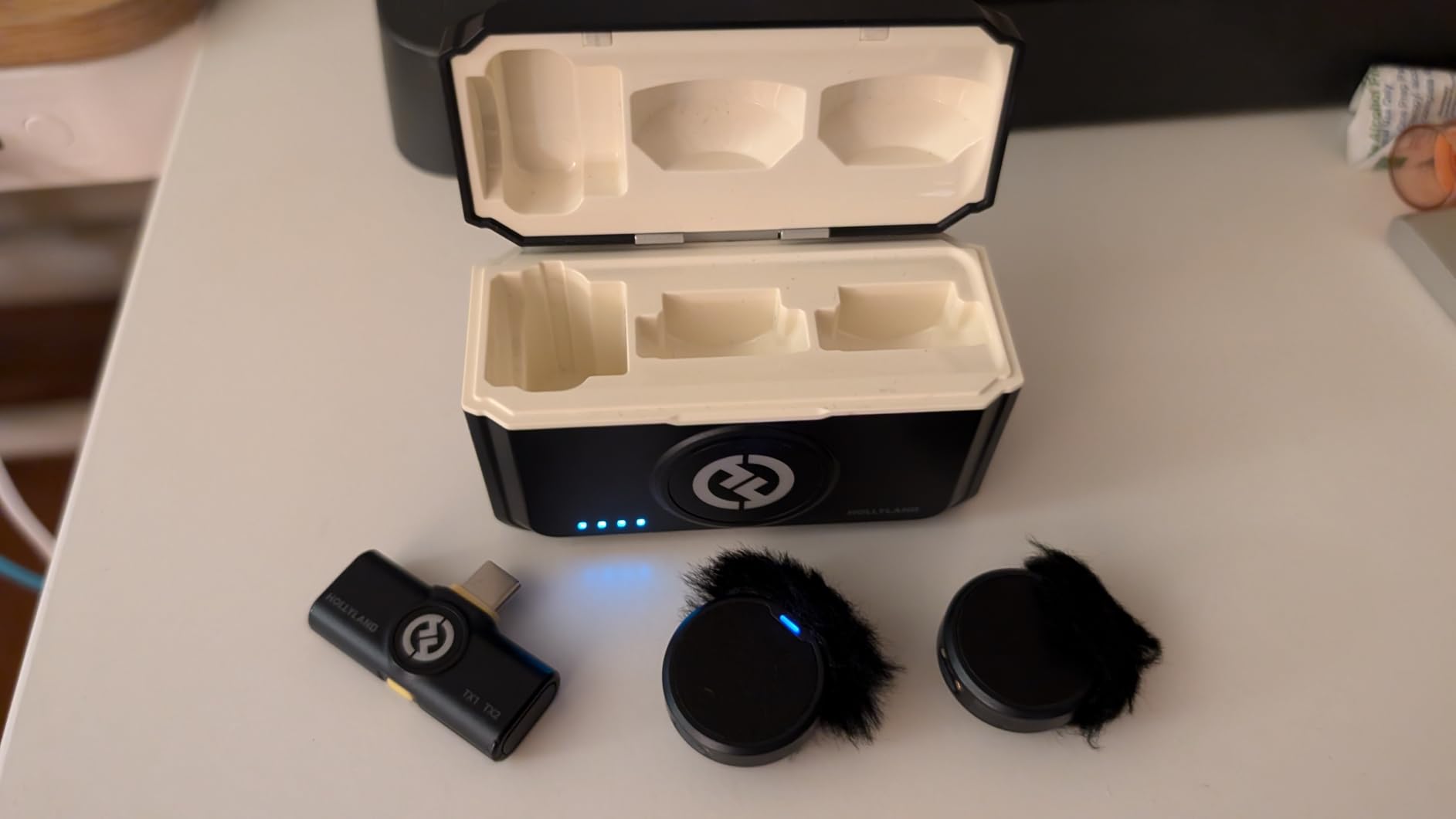
Pre-pairing at the factory is a small detail that saves real time on Sunday morning. We opened the box, popped the transmitters and receivers out, and they were already linked. No menu diving, no Bluetooth pairing codes, no frequency coordination. For volunteer teams, that kind of zero-config behavior is the difference between a confident tech booth and a stressful one.
The 40-hour battery life with the case means most churches will charge once a week. We did find that the USB-C receiver is finicky with very thick phone cases, so churches using rugged cases should consider the camera receiver mount instead. Otherwise, this kit punches well above its price tag.
Who the Hollyland Lark M2 works best for
Small churches that need one wireless kit to cover camera, USB-C, and Lightning devices, ministry teams running hybrid in-person and online services, and any HOW team that wants zero-config setup out of the box.
Where the Hollyland Lark M2 falls short
Production environments with heavy RF congestion where the 2.4 GHz band is saturated, churches needing AES-256 encryption for compliance, and very loud worship bands that exceed the 115 dB SPL limit.
8. NEEWER 79″ Heavy Duty Video Tripod
NEEWER 79″/200cm Video Tripod, Heavy Duty Aluminum Alloy Camera Tripod
200cm max height
Fluid drag head
8kg load
360 degree pan
Pros
- Extends to 200cm for live streaming over seated crowds
- Smooth fluid drag head with 360 degree pan and tilt
- Quick release plate accepts both 1/4 and 3/8 inch screws
- 8kg load capacity handles cinema cameras and PTZ heads
Cons
- Heavier than travel tripods at 5.64 kg
- Fluid head materials feel less premium than high-end alternatives
- Individual leg locks instead of a central locking mechanism
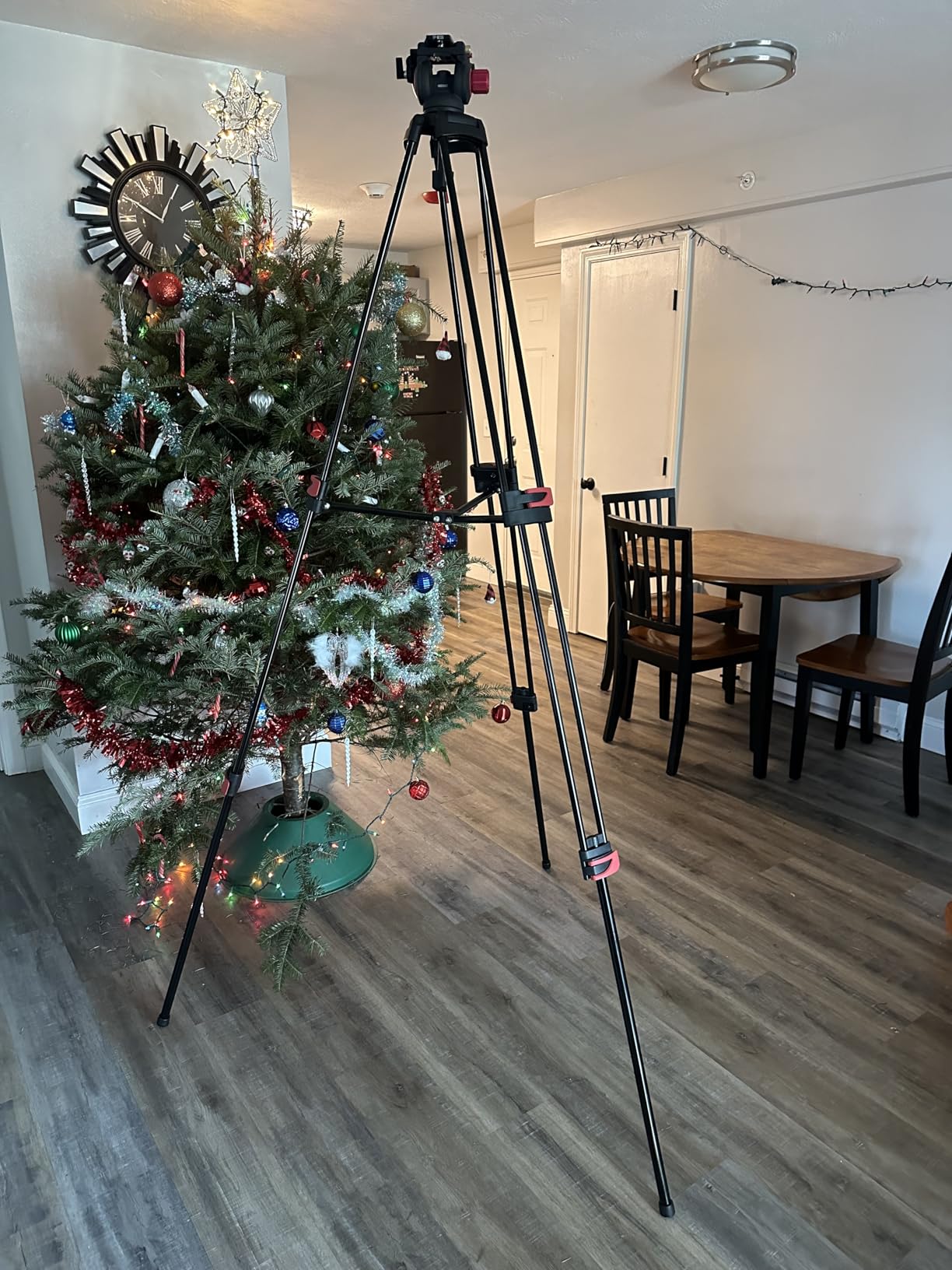
The NEEWER TP-M200 is the tripod we trust for back-of-sanctuary camera positions where you need clearance over the heads of a seated crowd. Our team set it up at the rear of a 300-seat sanctuary and the 200cm max height gave us a clean sightline over every row. The fluid drag head made slow pans and tilts buttery smooth, which translated directly into more professional-looking footage.
The aluminum double-tube construction is sturdy enough that we never worried about the camera drifting mid-service, and the 8kg load capacity comfortably handled a Blackmagic Studio Camera plus a teleprompter rig. The quick release plate accepts both 1/4 and 3/8 inch screws, which meant we could swap between a Canon cinema camera and a Sony mirrorless without changing plates.
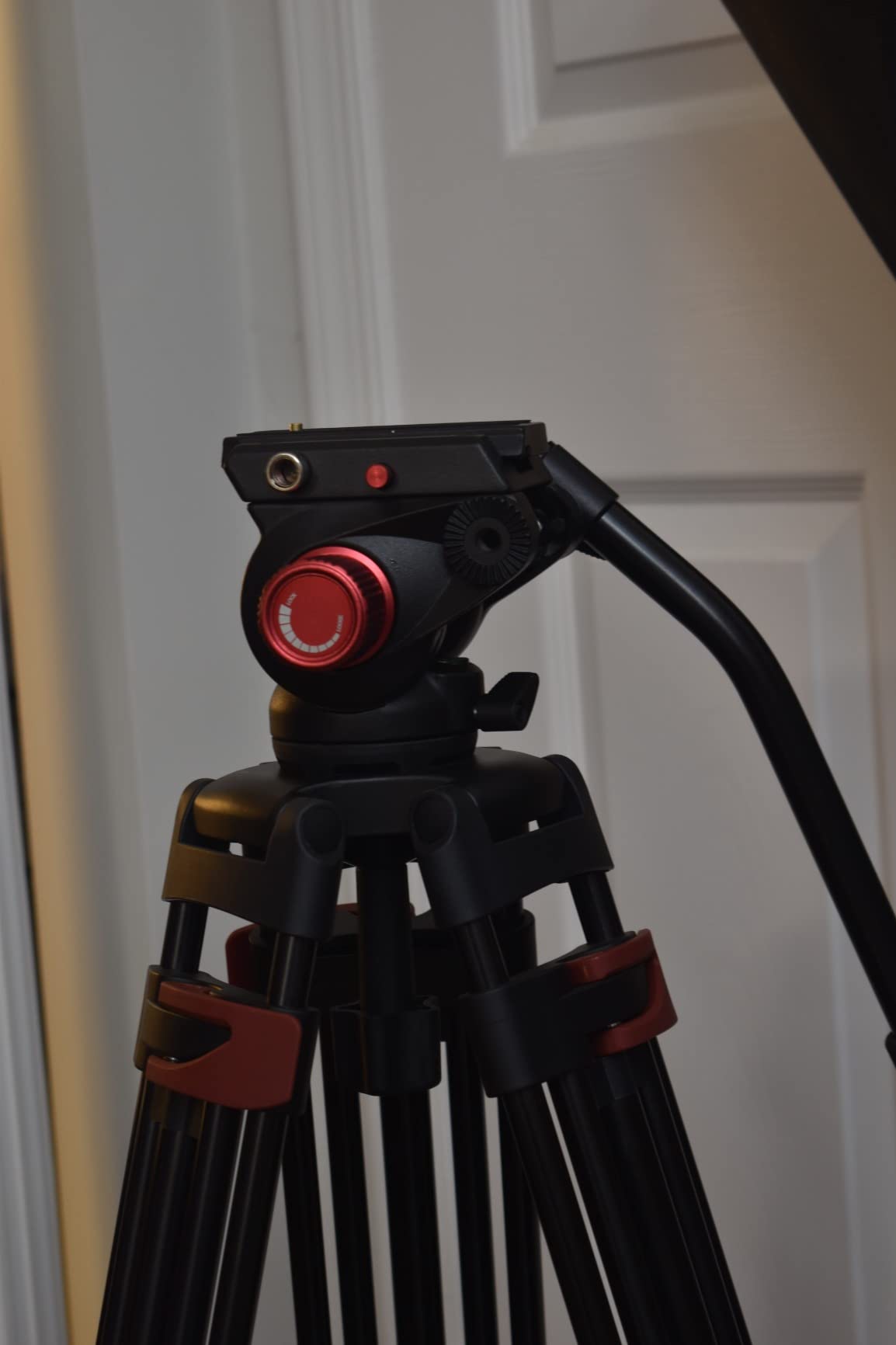
The included carrying bag makes transport and storage practical, and the built-in bubble level let us dial in level on an uneven sanctuary floor in under a minute. For volunteer teams, that kind of fast setup is what keeps a Sunday morning running on time. The fluid head does feel slightly less premium than high-end Sachtler or Manfrotto alternatives, but at this price point the trade-off is more than acceptable.
Pair this tripod with a PTZ camera joystick controller or the ATEM Software Control on an iPad, and you have a reliable back-of-house camera position that survives weekly setup and breakdown without any maintenance headaches.
Who the NEEWER TP-M200 works best for
Churches needing back-of-sanctuary camera positions above seated crowds, mobile ministry teams that require a tripod that breaks down for transport, and HOW teams running multiple cinema cameras on volunteer operators.
Where the NEEWER TP-M200 falls short
Travel-heavy ministry teams that need sub-3kg carbon-fiber travel tripods, broadcast studios that demand fluid heads rated for daily pro use, and very low-angle shooting positions where a shorter tripod would be more practical.
9. SmallRig 73″ Heavy Duty Video Tripod
SmallRig 73.2″/ 186cm Heavy Duty Video Tripod with Fluid Head AD-01
186cm max height
Dual-mode QR plate
8kg load
75mm bowl
Pros
- Dual-mode quick release plate compatible with DJI RS 2
- RS 3
- and RS 3 Pro gimbal plates
- Solid aluminum construction with smooth fluid head pan and tilt
- 75mm bowl base for fast leveling on uneven surfaces
- Includes a carrying bag and a built-in wrench on the quick release plate
Cons
- Heavier than travel tripods at 8.8 pounds
- Plastic components may not survive daily pro use
- Fluid head adjustments are friction-based rather than true fluid
The SmallRig AD-01 is the tripod we recommend for churches that want to share quick release plates between a tripod and a DJI RS-series gimbal. Our team ran a Sony FX3 on the SmallRig for static shots and then moved it onto a DJI RS 3 Pro for walk-and-talking b-roll without rebalancing the plate. That kind of cross-system compatibility saves real time on a production day.
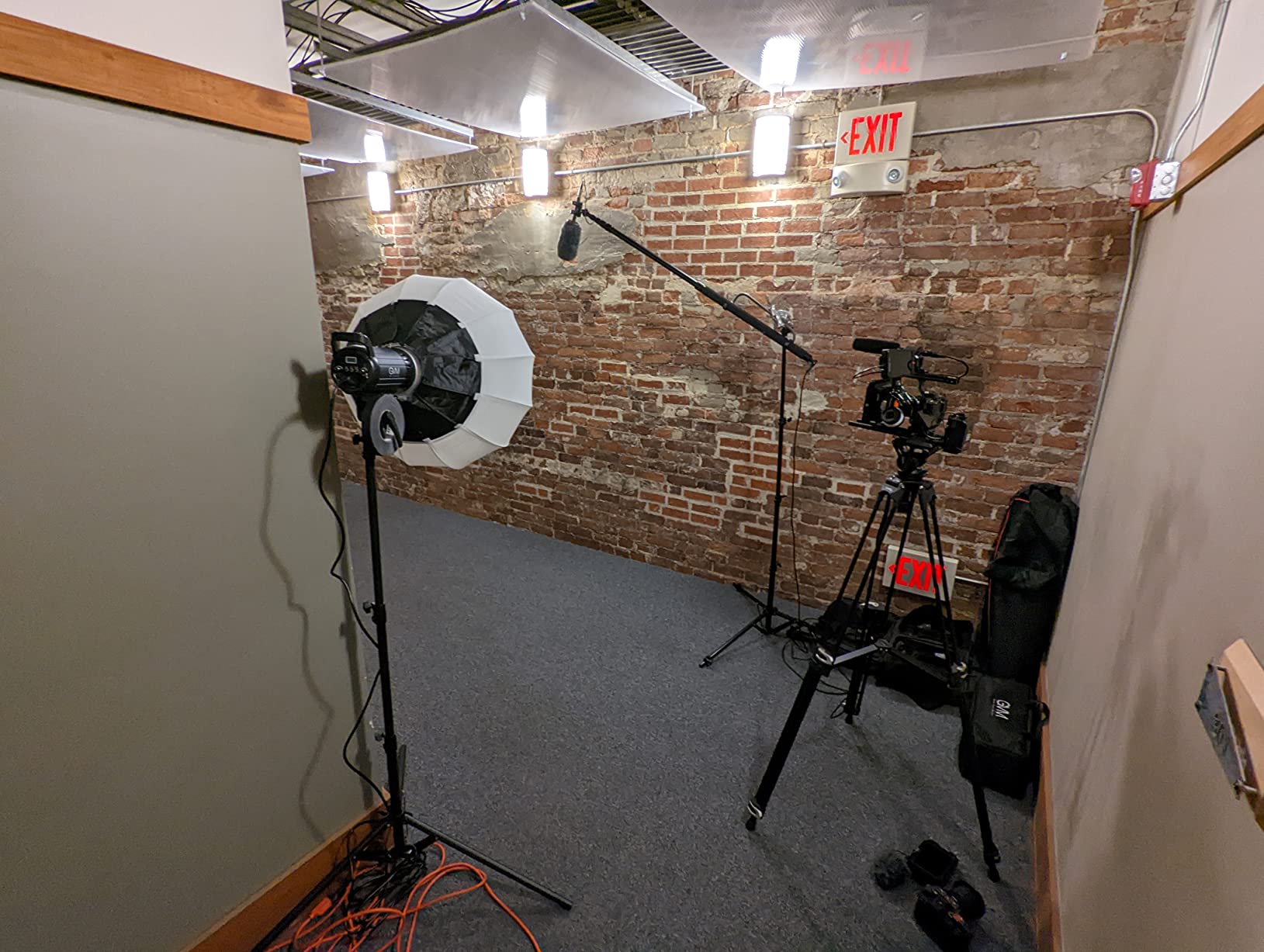
The 186cm max height gave us clearance over most congregation layouts, and the 75mm bowl base made leveling on the slightly uneven wood stage in our test sanctuary fast and repeatable. The included bubble level on the bowl is a small detail that volunteer teams appreciate because they do not have to remember to bring a separate level.
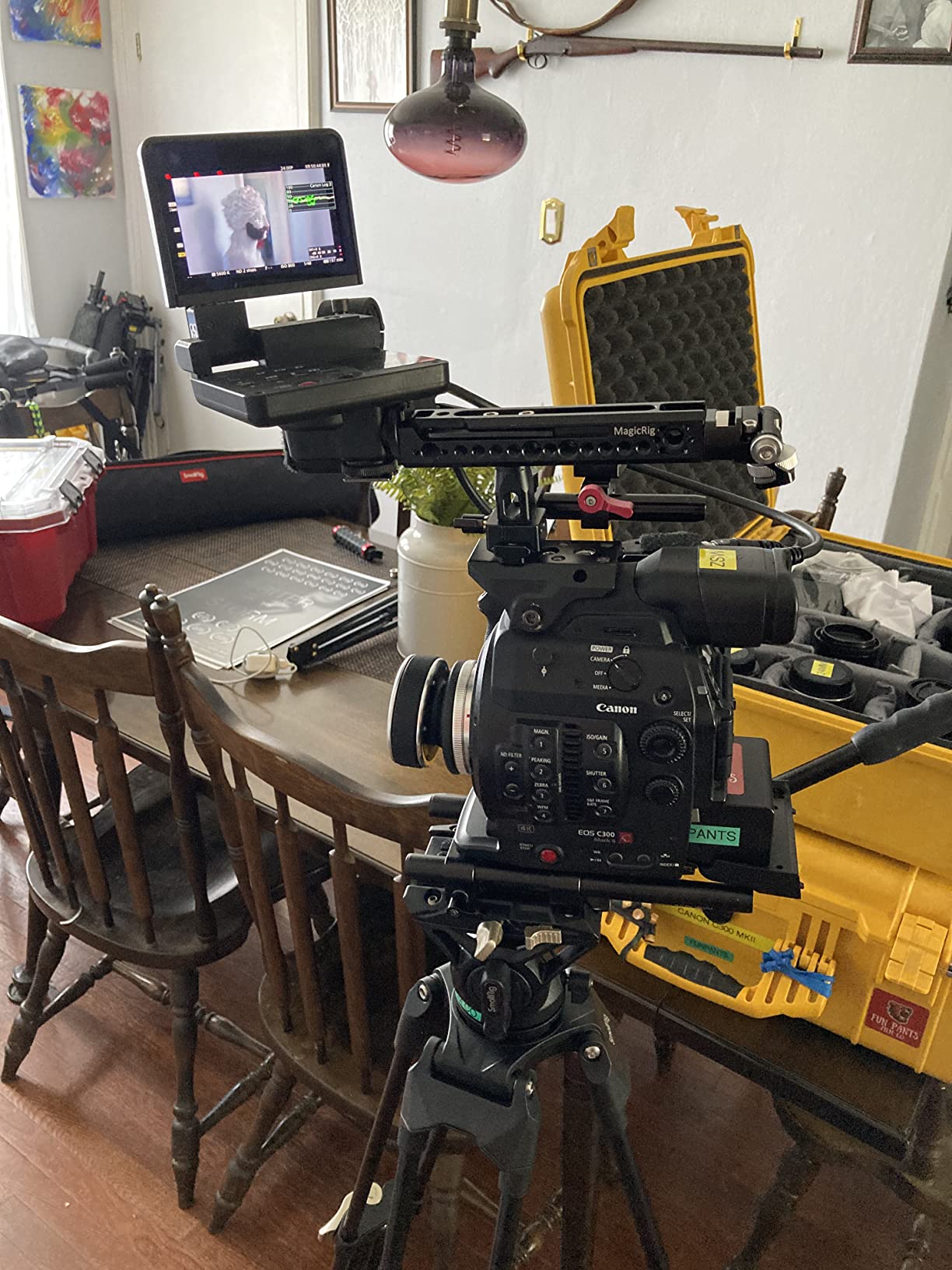
The fluid head is smooth enough for slow cinematic moves, and the friction-based adjustments let us dial in exactly the right amount of drag for our camera weight. Side-press quick release is faster than the typical screw-down plate, and the built-in wrench means we never had to hunt for a tool mid-rehearsal.
This tripod sits in the sweet spot for churches that want professional-grade construction without the professional-grade price tag. It is one of the best values on our list for any HOW team running a hybrid cinema and gimbal workflow.
Who the SmallRig AD-01 works best for
Churches running a hybrid tripod and gimbal workflow, video teams that already own DJI RS-series gimbals, and HOW setups that need fast leveling on uneven stages.
Where the SmallRig AD-01 falls short for churches
Travel-heavy ministry teams needing sub-3kg carbon-fiber builds, daily professional broadcast studios with 12-hour shoot days, and very low-angle shooting positions.
10. NEEWER 13″ LED Video Light Panel Kit
NEEWER 13″ LED Video Light Panel Kit with Tripod Stand, 2 Pack, NL-192AI
Bi-color 3200K-5600K
CRI 97+
4000mAh battery
Two panels with stands
Pros
- Bi-color adjustable from 3200K to 5600K for any sanctuary lighting
- CRI 97+ renders accurate skin tones on camera
- 4000mAh built-in battery lasts 90 minutes per panel
- Comes as a two-pack with light stands and a carrying case
Cons
- Internal battery is only 90 minutes at full power
- Not bright enough for outdoor use in direct sunlight
- LCD screen controls could be more intuitive
The NEEWER NL-192AI 2-pack LED panel kit is the lighting solution we recommend most often to small and mid-size churches streaming from a darkened sanctuary. The two-panel configuration let us key-light the pastor from camera left and add a soft fill from camera right, which produced noticeably more flattering on-camera results than the overhead house lights alone.
The CRI 97+ rating matters more than most church tech teams realize. We tested the panels against a higher-priced competitor, and the NEEWER rendered skin tones more accurately on the stream. The bi-color adjustability from 3200K to 5600K meant we could match the panels to the existing sanctuary tungsten or LED house lighting without gels.
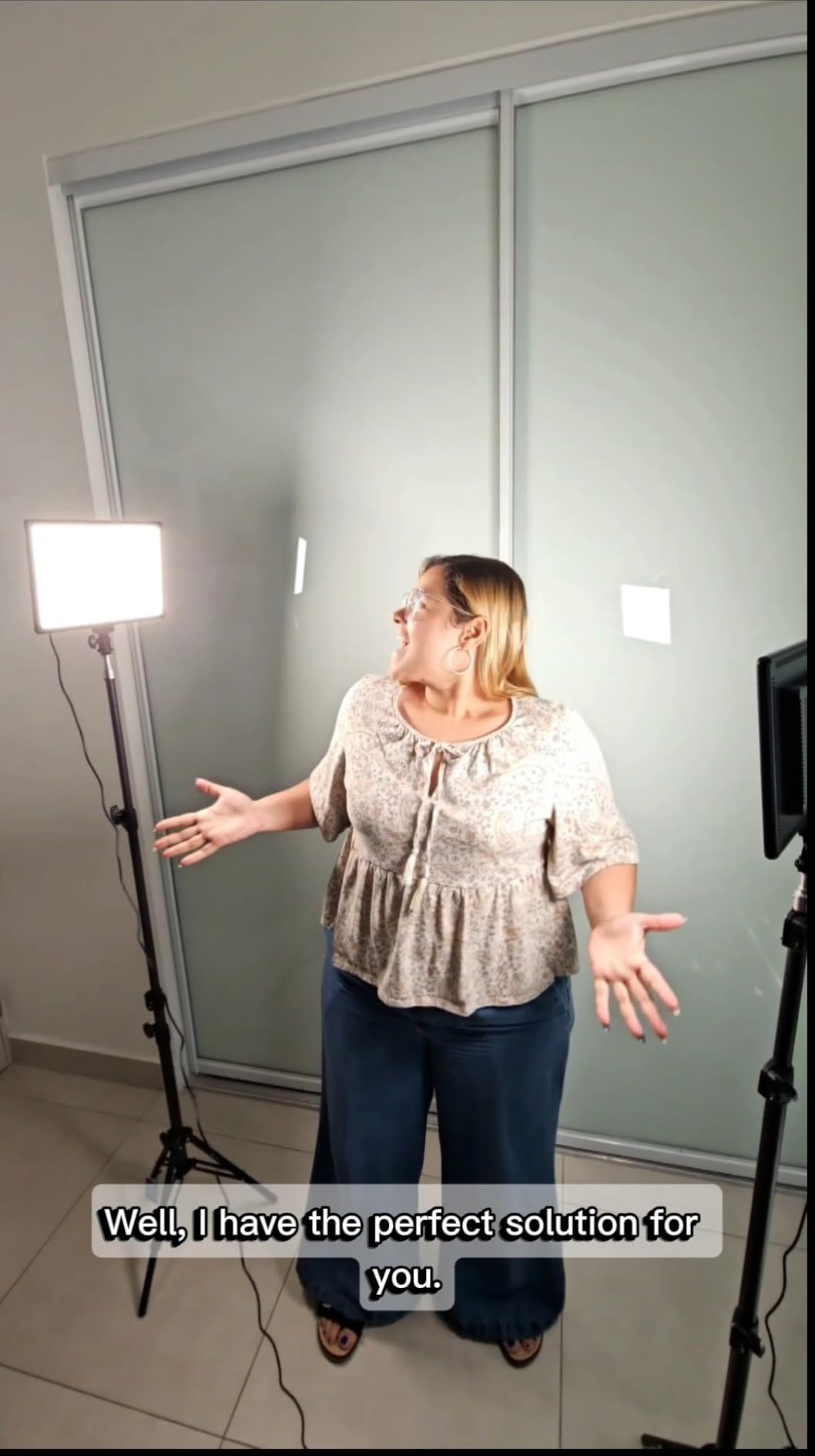
Battery life is the trade-off. At full power the internal 4000mAh battery gives about 90 minutes per panel, which is enough for a single service plus a rehearsal but not for an all-day event. For longer productions we plugged both panels into the included 15V adapter and ran them corded. The included 70-inch light stands and carrying case made setup and breakdown fast enough for our volunteer team to handle in under five minutes.
If you want more lighting options, see our best lighting kits for video production guide for additional picks, or check the best light stands for video production roundup for stand-only options.
Who the NEEWER NL-192AI kit works best for
Small and mid-size churches streaming from a darkened sanctuary, volunteer media teams that need portable lighting, and HOW setups that want accurate skin tones without gels.
Where the NEEWER NL-192AI kit falls short
Outdoor livestreams in direct sunlight where higher-output panels are required, all-day event productions exceeding 90 minutes per panel, and churches needing DMX-controllable color mixing for stage washes.
11. RALENO 13″ LED Video Soft Light Panel
RALENO 13″ LED Video Soft Light Panel with Desk Stand
8000mAh battery
CRI 95+
2500K-6500K
Desk stand included
Pros
- Soft eye-friendly output with no harsh hotspots on talent
- 8000mAh built-in battery outlasts most competitors at the price
- CRI 95+ for accurate color reproduction
- Ultra-thin 1-inch panel slides behind a monitor or into a backpack
Cons
- Uses a proprietary power adapter instead of USB-C
- Brightness adjustment is click-style rather than continuously smooth
- Plastic mount screw can be fragile under heavy panels
The RALENO PLV-S192 is the single-panel soft light we recommend for pastor close-ups and interview setups. The diffused output eliminates the harsh hotspots you get from bare LED panels, which matters when the camera is three feet from the pastor’s face. We tested it next to a popular competing panel, and the RALENO produced noticeably softer catchlights in the eyes.
The 8000mAh internal battery is one of the largest we have seen in a single panel at this price point. We ran the panel at full brightness for 90 minutes during a Christmas Eve service and still had charge left over. The 1.8m adapter means corded use is straightforward, but the proprietary connector is a minor annoyance if you misplace the adapter.
The included desk stand adjusts from 6.42 to 10.16 inches, which positioned the panel perfectly on a pulpit or music stand. We also mounted the panel on a standard light stand via the 1/4 inch thread for full-height positioning. The CRI 95+ rating produced skin tones that looked natural on stream, and the wide 2500K to 6500K color temperature range covered everything from candlelit prayer services to bright daytime productions.
This is the right panel for a church that wants one excellent soft light rather than a two-pack of brighter hard lights. Pair it with the NEEWER kit above for a complete key plus fill setup that volunteers can run without training.

Who the RALENO PLV-S192 works best for
Small churches running a single-camera setup, pastor close-up shots and interview positions, and HOW teams that want one soft panel rather than a two-pack of harder lights.
Where the RALENO PLV-S192 falls short
Wide sanctuary shots that need more throw distance, churches that need USB-C power delivery for modern battery workflows, and outdoor livestreams where higher output is required.
12. Elgato Cam Link 4K Capture Card
Elgato Cam Link 4K Capture Card for DSLR, Camcorder, Action Cam, USB-A Connector, USB 3.0 Hardware Interface, Black, Windows 10/11 and macOS
USB 3.0
1080p60 or 4K30
Ultra-low latency
Plug and play
Pros
- Plug and play with no driver installation required
- Turns any DSLR or mirrorless camera into a pro webcam
- Ultra-low latency keeps audio and video perfectly in sync
- Compatible with OBS
- Zoom
- Teams
- and Ecamm out of the box
Cons
- Bulky USB-A design can block adjacent USB ports
- Requires a dedicated USB 3.0 port (USB hubs cause issues)
- 4K resolution is limited to 30fps
- HDMI cable is not included
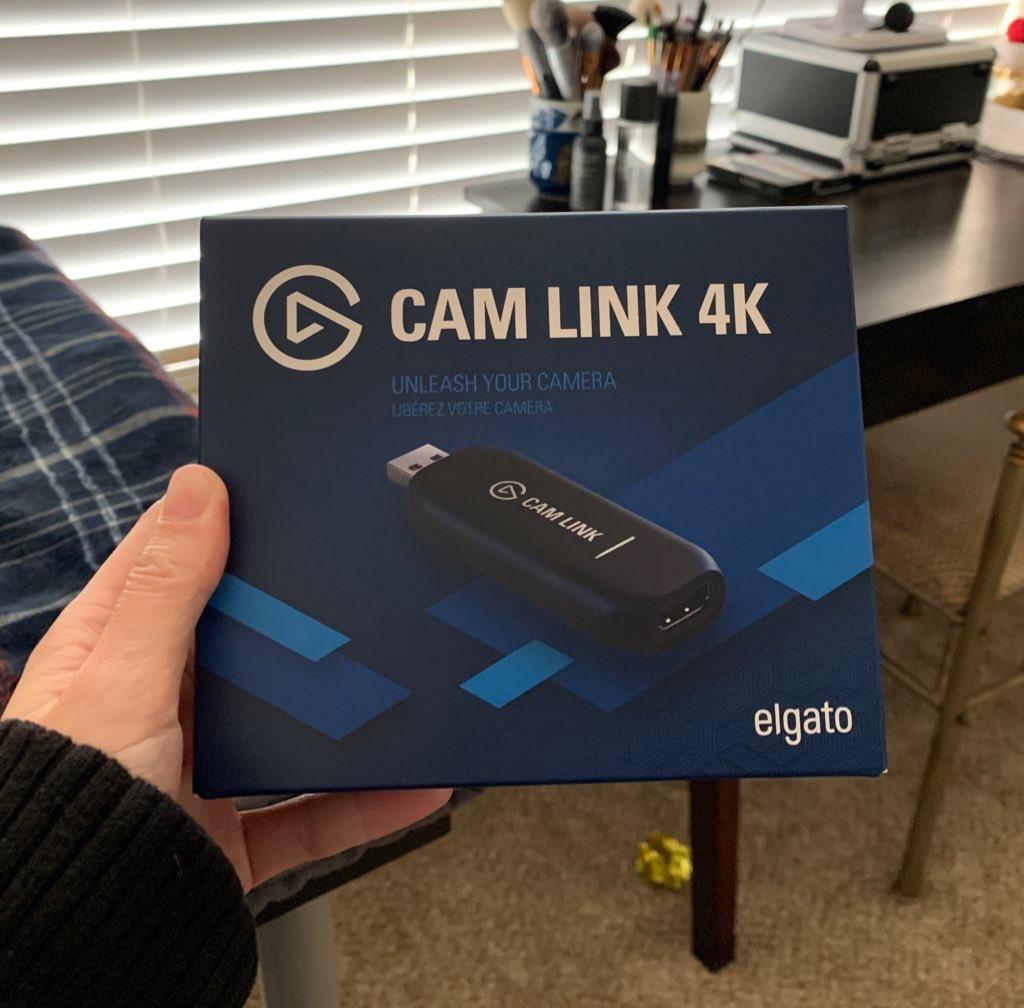
The Elgato Cam Link 4K is the capture card we recommend for churches streaming from a laptop, which is how the majority of small HOW teams actually run their services. Our team plugged a Canon EOS R into the Cam Link on a MacBook Pro running OBS, and the camera showed up as a webcam instantly with no driver installs. The 1080p60 quality was visibly sharper than any USB webcam we tested.
Latency is the killer feature for live production. We routed a wireless lavalier into OBS while the same audio played through the Cam Link feed, and the sync was tight enough for confidence monitoring. That kind of low-latency performance is what makes a one-laptop streaming rig feel professional rather than amateur.
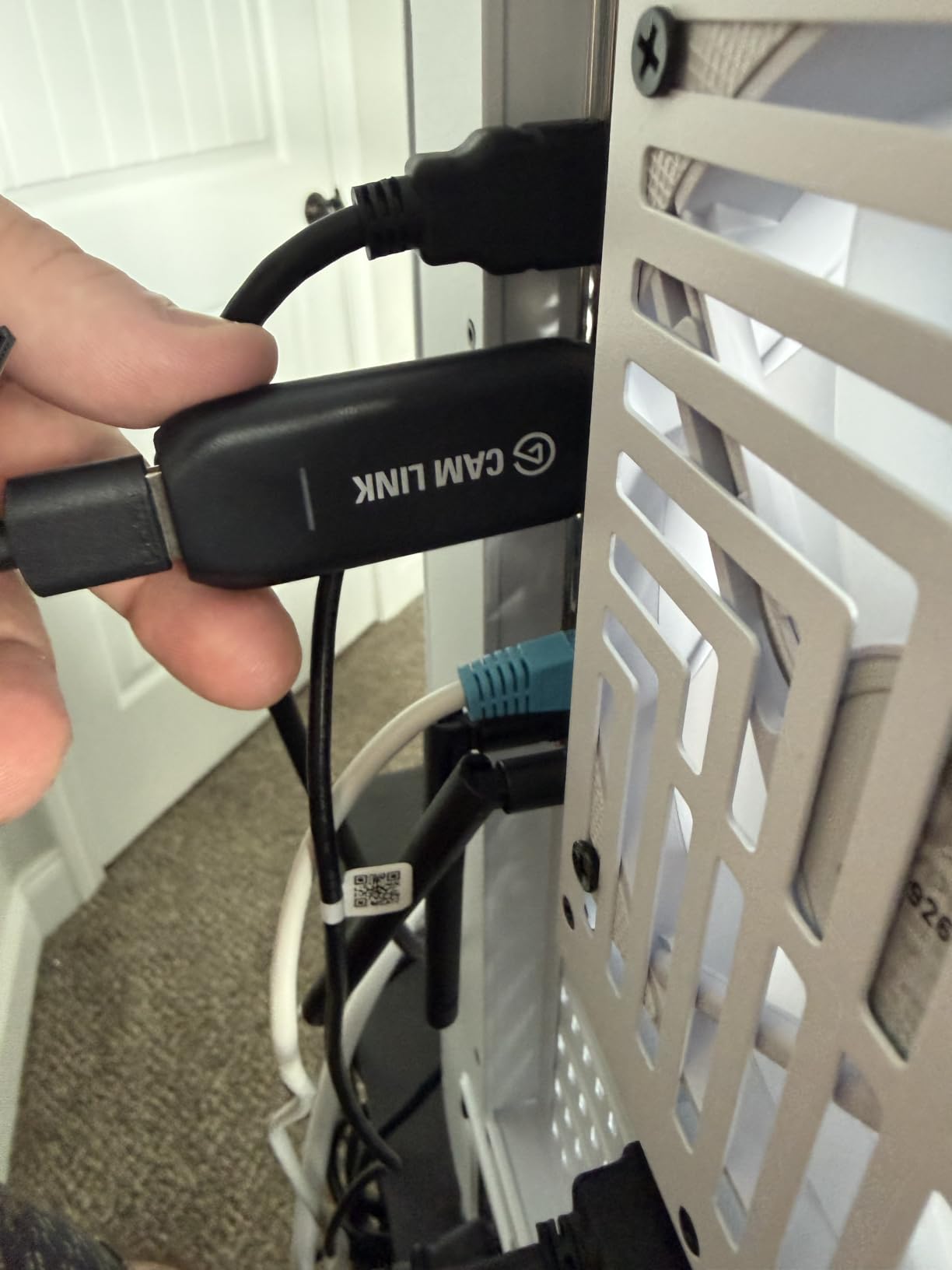
The build quality is solid, and the Cam Link survived being tossed in a tech booth drawer every week for a year without any reliability issues. We did learn the hard way that the USB-A form factor blocks adjacent ports on some laptops, so we recommend plugging it into a side port or using the included extension cable for clearance.
For laptop-first churches that do not need a multi-camera switcher, the Cam Link 4K is the simplest path to broadcast-quality video. Pair it with OBS Studio and a wireless lav, and you have a complete one-laptop streaming setup that costs a fraction of a hardware switcher workflow.
Who the Elgato Cam Link 4K works best for
Small churches streaming from a laptop, volunteer teams that want DSLR-quality video without a switcher, and solo preachers running a one-camera OBS workflow.
Where the Elgato Cam Link 4K falls short
Multi-camera productions that need a hardware switcher, workflows that require 4K60 capture, and churches using USB hubs instead of direct USB 3.0 ports on the host computer.
How to Choose the Best Gear for Church Video Production
The best gear for church video production is the kit your volunteers can run consistently on Sunday morning without burnout. Start with the workflow bottleneck that frustrates your team most, whether that is muddy audio, a single static camera, or Wi-Fi dropouts, and solve that problem first before upgrading anything else.
Audio capture philosophy: stream mix versus house mix
The single highest-impact audio upgrade a church can make is separating the stream mix from the house mix. Most churches under-mix the stream because they pull the house mix directly into the encoder, which sends sanctuary reverb and PA feedback to every earbud listener. A dedicated stream mix optimizes levels for headphones and earbuds, not for the room, and a single wireless lavalier mixed through a small digital console into the encoder is the simplest way to do it.
How this works in practice: route the pastor’s wireless lav into channel one, the worship team’s stereo feed into channels two and three, and the room mic into channel four on a small digital mixer, then send channels one through three (but not four) to the stream output. Online listeners get clean spoken word and music without the sanctuary echo that ruins the experience.
Bandwidth and network requirements
You need 10 to 15 Mbps of sustained upload speed for a clean 1080p60 stream, and wired ethernet is non-negotiable for production. Wi-Fi dropouts mid-service are the most common forum complaint we saw, and a Cat6 cable run from your streaming laptop to the network switch eliminates 90 percent of those failures.
Test your upload speed the week before you go live by pushing an OBS test stream to YouTube or Facebook at the exact bitrate you plan to use. Run the test at the same time of day as your actual service to catch congestion from neighboring networks. If you cannot hit sustained 10 Mbps, drop your stream to 720p30 and prioritize reliability over resolution.
Sunday morning pre-flight checklist
A consistent Sunday morning tech rehearsal is the difference between a calm service and a chaotic one. Run this five-step pre-flight 30 minutes before doors open:
Step one: power on all cameras, switcher, audio mixer, lights, and the streaming laptop, then verify each device shows up in your software. Step two: frame and focus every camera shot, save the presets, and double-check exposure under the actual stage lighting. Step three: route audio from each wireless mic into the stream mix, confirm levels, and check for feedback or echo. Step four: record a 60-second test clip locally and verify the file plays back correctly with synced audio. Step five: start the stream five minutes before the service begins to confirm upstream bandwidth and give online viewers a buffer window.
Volunteer-friendly gear philosophy
Physical buttons beat software interfaces for volunteer teams every time. The ATEM Mini Pro hardware buttons, the PTZ camera joystick controller, and the DJI Mic receiver OLED screens all let a non-technical operator learn the rig in under an hour. Software-only workflows like OBS scene switching or vMix audio routing require ongoing training that volunteer teams rarely have time to absorb.
Build redundancy into every step of the chain. A capture card plus a hardware switcher backup. A wireless lav plus a hardwired XLR backup. A wired ethernet plus a hotspot with a cellular modem as last resort. The churches that survive a mid-service failure are the ones that prepared for one.
Capture cards for laptop streaming
Capture cards are the bridge between a DSLR or mirrorless camera and a laptop running OBS, and they are how most small churches actually stream. The Elgato Cam Link 4K is the easiest plug-and-play option we tested, but churches running more complex workflows should consider the AVerMedia Live Gamer 4K for pass-through monitoring or the Blackmagic Intensity Shuttle for SDI workflows.
Whatever capture card you choose, plug it directly into a USB 3.0 port on the laptop, not a USB hub. Hubs introduce latency and dropped frames that show up as audio-video sync drift on the stream, and the failure mode is hard to diagnose after the fact.
Acoustic treatment basics for reverberant sanctuaries
Reverberant sanctuaries are the silent killer of church video production audio. Even the best wireless lavalier will pick up room echo if the sanctuary has hard surfaces and no absorption. The cheapest acoustic treatment is moving rugs under the worship area, hanging moving blankets on the back wall behind the pastor, and placing foam panels at the first reflection points on the side walls.
For more permanent treatment, acoustic panels from brands like ATS Acoustics or GIK Acoustics installed at ear height on the side walls will cut sanctuary reverb dramatically. Most churches see a 30 to 50 percent improvement in stream audio clarity from a modest acoustic treatment investment, which beats almost any microphone upgrade.
Frequently Asked Questions
What is the best camera for church live streaming?
A PTZ camera like the FoMaKo K600N is the best choice for most mid-size churches because it delivers 4K resolution, 20x optical zoom, AI auto-tracking, and PoE single-cable installation that volunteer teams can manage. Small churches streaming from a single laptop can get excellent results from a DSLR or mirrorless camera routed through the Elgato Cam Link 4K capture card.
How much does church live streaming equipment cost?
A starter kit with a wireless lavalier, a capture card, a tripod, and a single PTZ camera runs roughly one thousand five hundred dollars. A mid-size multi-camera setup with a switcher, two or three PTZ cameras, wireless mics, lights, and a mixer lands around five to ten thousand dollars. A pro multisite system with NDI infrastructure, cinema cameras, and an SDI workflow starts around fifteen thousand dollars and scales upward.
Do I need a video switcher to live stream church services?
You only need a video switcher if you want more than one camera angle. Single-camera streams work fine with just a capture card into OBS, but two or more cameras require a switcher like the Blackmagic ATEM Mini Pro to cut between angles, add lower thirds, and mix the program feed for the encoder.
What software does my church need to live stream?
OBS Studio is the free standard for most churches and handles encoding, scene switching, and audio mixing in one application. Mid-size churches often upgrade to vMix for multi-cam workflows, NDI input, and instant replay. Hosted platforms like BoxCast and Restream handle the encoder side for churches that want a managed service instead of running their own laptop.
How fast does my internet need to be for church live streaming?
Plan for 10 to 15 Mbps of sustained upload speed for a clean 1080p60 stream. Run a wired ethernet connection from the streaming laptop to your network switch, and avoid Wi-Fi for the actual stream. Test your upload speed at the same time of day as your service to catch neighborhood congestion before going live.
What wireless microphone system is best for church streaming?
The DJI Mic 2 is our best-value pick for spoken word and small worship teams, while the RØDE Wireless GO Gen 3 is the best premium option for run-and-gun and multi-location shoots. The DJI Mic Mini is the right choice for solo preachers on a tight budget, and the Hollyland Lark M2 is the best all-in-one kit when you need to cover camera, USB-C, and Lightning receivers.
How many cameras does a church need for live streaming?
Two cameras is the minimum for an engaging multi-angle stream, and most mid-size churches run three cameras for the best results: a wide shot, a pastor close-up, and a worship team angle. Single-camera streams work for solo preachers and church plants, but online viewers lose interest after about fifteen minutes without a cut.
Can a volunteer operate a church live streaming setup?
Yes, with the right gear a volunteer can run a church livestream after a single training session. The Blackmagic ATEM Mini Pro hardware buttons, PTZ cameras with auto-tracking, and wireless lavalier systems like the DJI Mic 2 are all designed for non-technical operators. The key is choosing physical-button gear over software-only workflows and running a 30-minute Sunday morning pre-flight checklist every week.
Final Verdict
For most churches searching for the best gear for church video production in 2026, the Blackmagic ATEM Mini Pro remains our editor’s choice because it solves the single hardest problem in HOW livestreaming, which is multi-camera switching with volunteer operators. Pair it with the DJI Mic 2 for wireless audio, the FoMaKo K600N for ceiling-mounted PTZ coverage, and the NEEWER LED panel kit for flattering key light, and you have a kit that scales from a 100-seat sanctuary to a multisite broadcast operation.
For more audio and recording gear options, see our 9 best Tascam recorders for video production guide and our 10 best microphones for music video production roundup. Whatever kit you assemble, run the Sunday morning pre-flight checklist every week, train at least two volunteers on every role, and remember that the best camera in the world will not save a stream with muddy audio. Build the kit around your audio chain first, your cameras second, and your lighting third.