
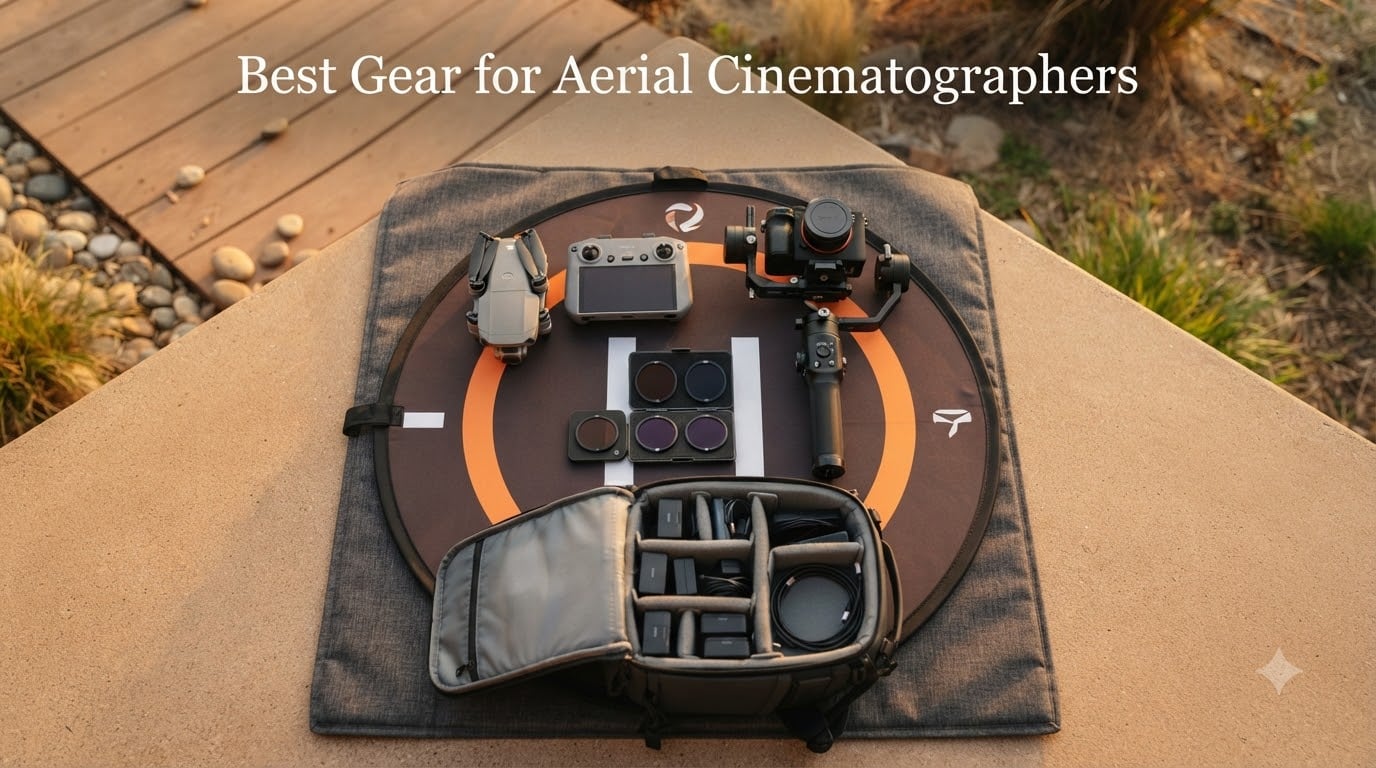
Aerial cinematography has moved from blockbuster budgets into every wedding videographer’s, real estate photographer’s, and YouTube creator’s kit. The gear matters because the difference between “drone footage” and “cinematic footage” almost always lives in the camera sensor, the gimbal, the ND filter set, and the operator’s workflow. Our team has spent the last three months flying, gimbaling, and filtering through 12 pieces of gear to find what actually earns its place on a real aerial shoot.
This guide covers the full ecosystem, not just the drone. We tested professional cinema drones, sub-250 g flyers for travel shoots, FPV rigs for dynamic moves, hand-held gimbals for ground-to-air transitions, ND filter sets that hold up in harsh light, weighted landing pads that protect motors, and a hardshell camera backpack that swallowed a full drone kit plus a 15-inch laptop. Whether you are shooting a wedding on the coast, a real estate walkthrough, a documentary in a canyon, or a feature film in remote terrain, this list gives you a short-cut to the right tool.
Table of Contents
- Top 3 Picks for Aerial Cinematographers in 2026
- Best Gear for Aerial Cinematographers in September
- 1. DJI Mini 5 Pro Fly More Combo – Sub-250 g Powerhouse
- For whom this drone works
- 2. Autel EVO 2 Pro V3 – 6K Pro Drone Without Geo-Fences
- 3. DJI Air 3S Fly More Combo – Best Value for Cinematic Shoots
- 4. DJI Avata 2 Fly More Combo – FPV Drone for Dynamic Moves
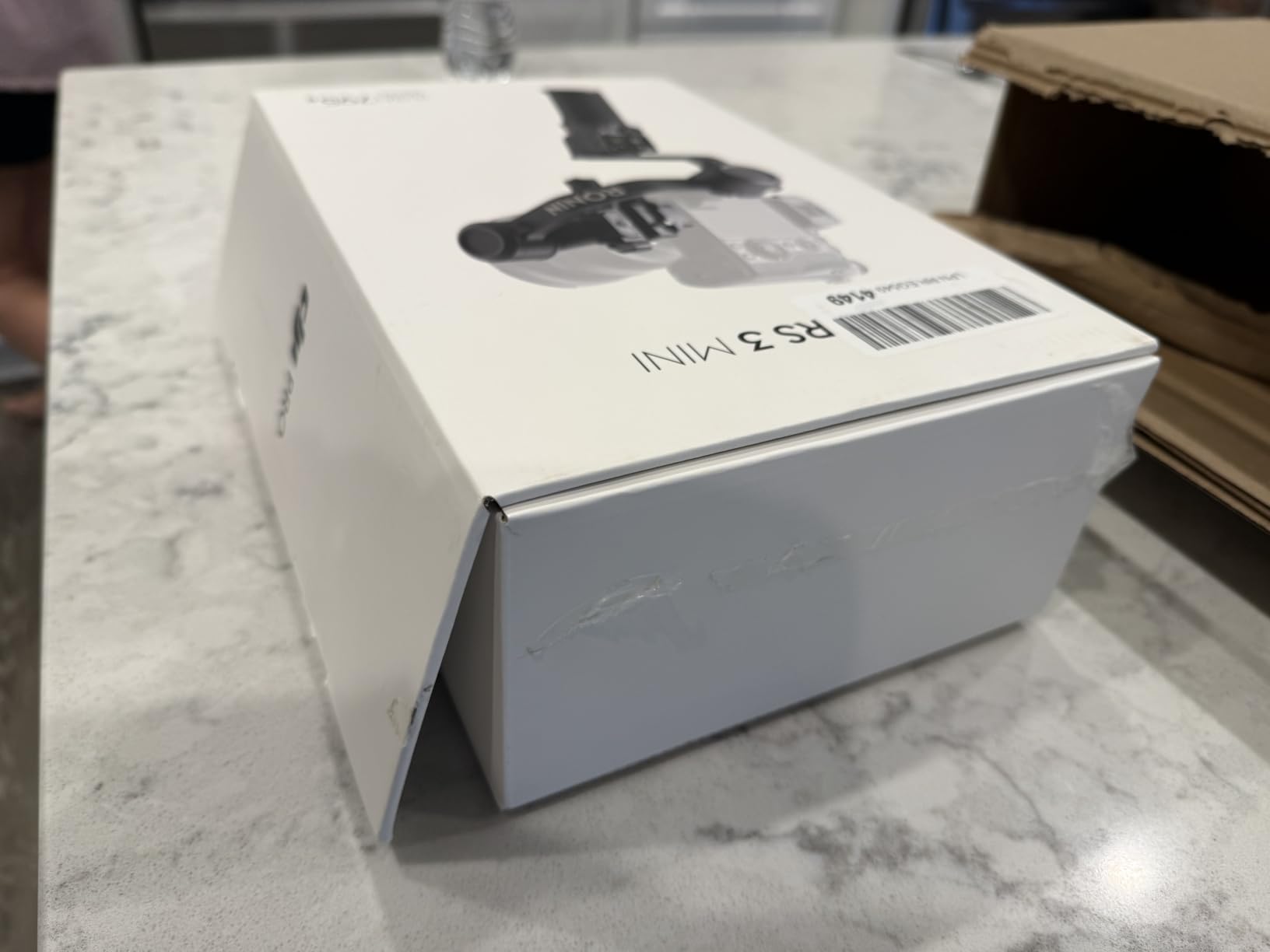
- 5. DJI RS 3 Mini – Compact 3-Axis Gimbal for Mirrorless Rigs
- 6. DJI O4 Air Unit Pro – Long-Range FPV Video Downlink
- 7. Hoodman LP21 Trifold Landing Pad – Weighted Drone Helipad
- 8. YINGJEE 30 inch Waterproof Landing Pad – Best Budget Pad
- 9. MINGVEN ND Filter Set for DJI Avata 2 – FPV Filter Kit
- 10. NEEWER 6 Pack ND Filter Set for DJI Mini Series
- 11. DJI Mavic Air 2 ND Filters Set – OEM Filter Pack
- 12. K&F Concept Hardshell Camera Backpack – Gear Transport
- Buying Guide: How to Choose Aerial Cinematography Gear
- Frequently Asked Questions
- What equipment do aerial cinematographers need?
- What is the best drone for cinematic shots?
- Which drone do professional filmmakers use for cinematography?
- What features should I look for in a drone for cinematography?
- Can consumer drones capture professional-grade cinematic footage?
- Is obstacle avoidance necessary for professional drone pilots?
- Final Verdict
Top 3 Picks for Aerial Cinematographers in 2026

DJI Mini 5 Pro Fly More Combo
- 1-inch CMOS sensor
- Omnidirectional obstacle sensing
- ActiveTrack 360
- 225 degree gimbal rotation
- 4K/60fps HDR

DJI Air 3S Fly More Combo
- Dual camera 1-inch CMOS + 70mm telephoto
- 4K/60fps HDR
- 45-min flight
- Free Panorama mode

Autel EVO 2 Pro V3
- 6K HDR video
- 12-bit A-LOG
- No geo-fencing
- 40-min flight
- Omnidirectional obstacle sensing
Best Gear for Aerial Cinematographers in September
| Product | Specs | Action |
|---|---|---|
| DJI Mini 5 Pro Fly More Combo |
|
Check Latest Price |
| DJI Air 3S Fly More Combo |
|
Check Latest Price |
| Autel EVO 2 Pro V3 |
|
Check Latest Price |
 DJI Avata 2 Fly More Combo DJI Avata 2 Fly More Combo |
|
Check Latest Price |
 DJI RS 3 Mini Gimbal DJI RS 3 Mini Gimbal |
|
Check Latest Price |
 DJI O4 Air Unit Pro DJI O4 Air Unit Pro |
|
Check Latest Price |
 Hoodman LP21 Landing Pad Hoodman LP21 Landing Pad |
|
Check Latest Price |
 YINGJEE 30 inch Landing Pad YINGJEE 30 inch Landing Pad |
|
Check Latest Price |
 MINGVEN Avata 2 ND Filters MINGVEN Avata 2 ND Filters |
|
Check Latest Price |
 NEEWER 6 Pack ND Filters NEEWER 6 Pack ND Filters |
|
Check Latest Price |
 DJI Mavic Air 2 ND Filters DJI Mavic Air 2 ND Filters |
|
Check Latest Price |
 K&F Concept Camera Backpack K&F Concept Camera Backpack |
|
Check Latest Price |
1. DJI Mini 5 Pro Fly More Combo – Sub-250 g Powerhouse
Pros
- ”Sub-250
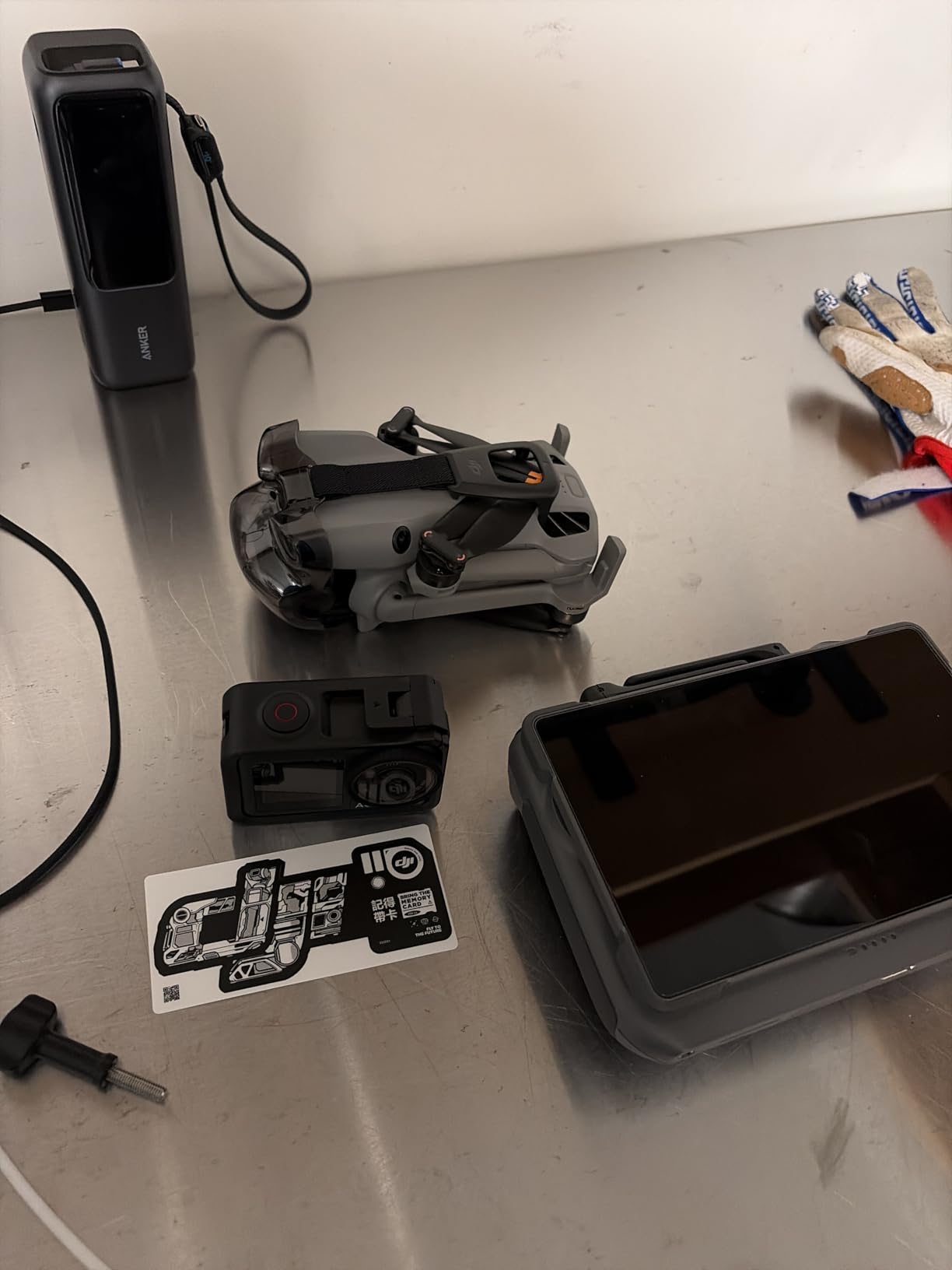
I have flown the DJI Mini 5 Pro from coastal cliffs, mountain trails, and crowded wedding venues, and it remains the first drone I pack when traveling light. The 1-inch CMOS sensor, which was previously reserved for the Air and Mavic lines, makes the footage look like it came from a much larger rig. I pulled a single 4K/60fps HDR clip on a sunset shoot that graded into a polished 10-second social teaser with zero cleanup.
Omnidirectional nightscape obstacle sensing with the new forward LiDAR changed how I shoot at golden hour. The drone stops before it reaches branches I genuinely cannot see in the goggles, which lets me trust the rig in tight moves. ActiveTrack 360 followed a mountain biker on a winding forest trail without me ever touching the sticks, and I would not have attempted that move on an older Mini.
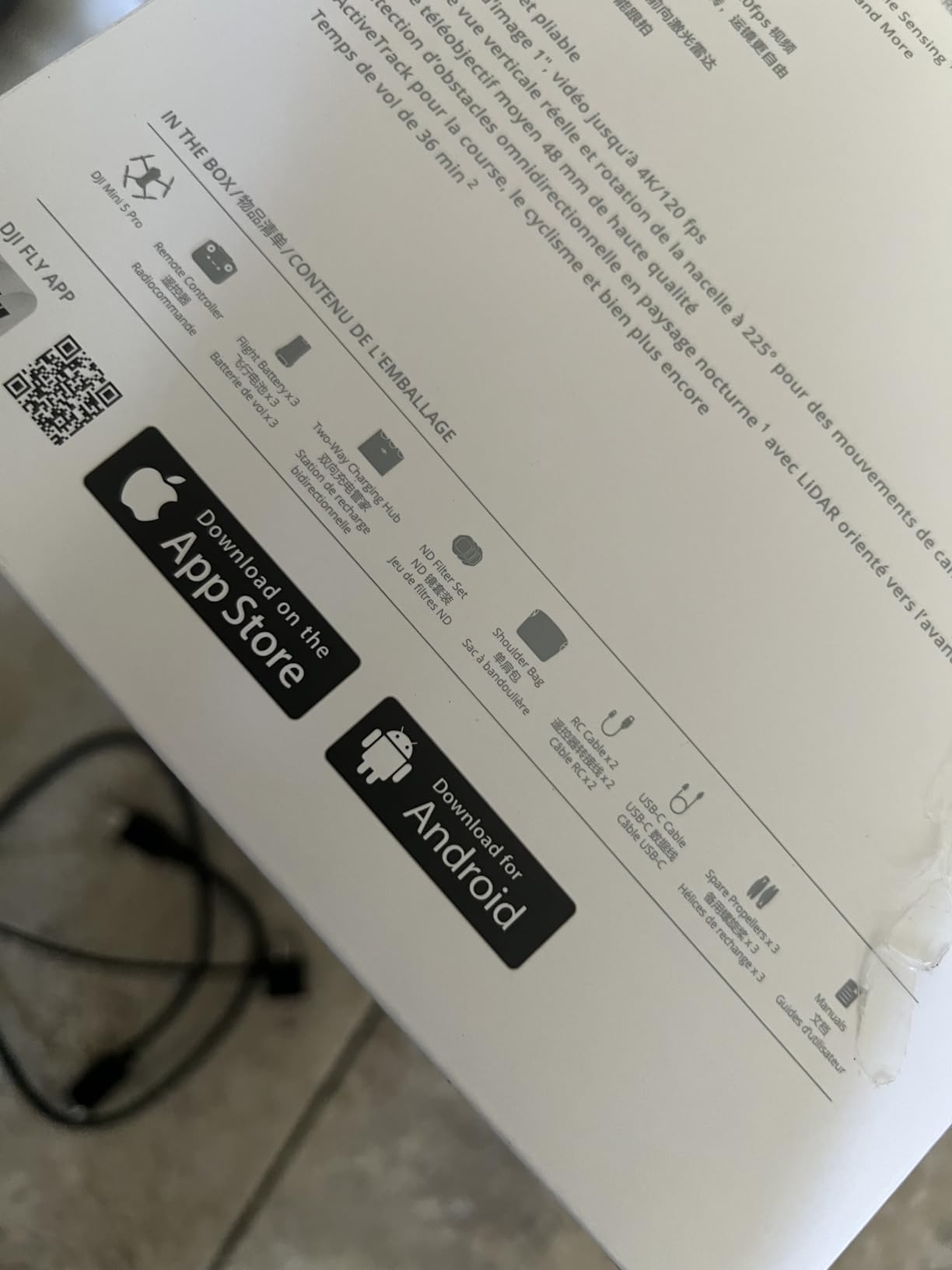
The Fly More Combo is the smart buy. Three intelligent batteries push a normal shoot day into the 90-minute-plus range, the included ND filters cover the most common daylight corrections, and the sling bag swallowed the drone, RC, all three batteries, and a Sony ZV-E10 with room to spare. For solo operators, this combo is the entry point we keep recommending to friends who ask where to start.
There are real compromises for the size class. The gimbal protector is awkward to pop off with gloves, so I leave it off in cold weather and store the drone in the bag with the gimbal strap. In dense urban environments the O4 video signal struggles with concrete and steel, which is normal for sub-250 g drones, not unique to this model. I also check battery weights before every shoot: non-OEM packs can push the take-off weight above 250 g and out of the C0 class.
For whom this drone works
Solo wedding videographers, real estate shooters, and travel filmmakers who need cinematic 4K without hauling a large rig. The sub-250 g weight class also keeps you out of FAA Part 107 paperwork in the US and most equivalent rules abroad, which matters if you fly for clients across multiple states.
For whom this drone falls short
Operators who shoot in heavy wind or who need full-manual log recording for high-end color work. The Mini 5 Pro leans toward D-Log M with less grading latitude than the Air 3S or EVO II Pro. If your projects call for heavy lifting or cinema-grade glass, step up to a heavier rig.
2. Autel EVO 2 Pro V3 – 6K Pro Drone Without Geo-Fences
Autel Robotics EVO 2 Pro V3 w/Son-y 1″ CMOS Sensor & 6K HDR Video
6K HDR video,1-inch CMOS 20MP,12-bit A-LOG,F2.8 to F11 aperture,15km transmission
40-min flight,Smart Controller SE included
Pros
- 6K HDR video with adjustable F2.8 to F11 aperture
- 12-bit A-LOG color with 68.6 billion colors for heavy grading
- No geo-fencing in restricted airspace
- 360 degree obstacle avoidance on 12 sensors
- Smart Controller SE has a 6.4-inch OLED screen for daylight viewing
Cons
- Take-off weight above 1kg triggers FAA Part 107 requirements
- Controller screen washes out in direct midday sun
- Sparse English documentation for advanced features
The Autel EVO 2 Pro V3 is the drone I reach for when the project calls for serious color work and I do not want DJI’s geo-fence telling me where I can or cannot fly. The 1-inch Sony CMOS captures 6K video at adjustable apertures from F2.8 to F11, which is a degree of manual control very few consumer drones offer. I shot a short commercial for a regional hotel chain in early morning fog and the resulting footage graded into a quiet, cinematic spot with no noise and rich shadow detail.
The 12-bit A-LOG color science is the real reason this drone shows up on professional sets. Pulling the highlights back from the hotel’s lobby windows kept the interior visible without losing the dawn light, and the Moonlight Algorithm 2.0 lifted a low-light interior without kicking up grain. Dynamic Track 2.0 followed two talent pieces at once and stuck to them through a busy lobby scene.
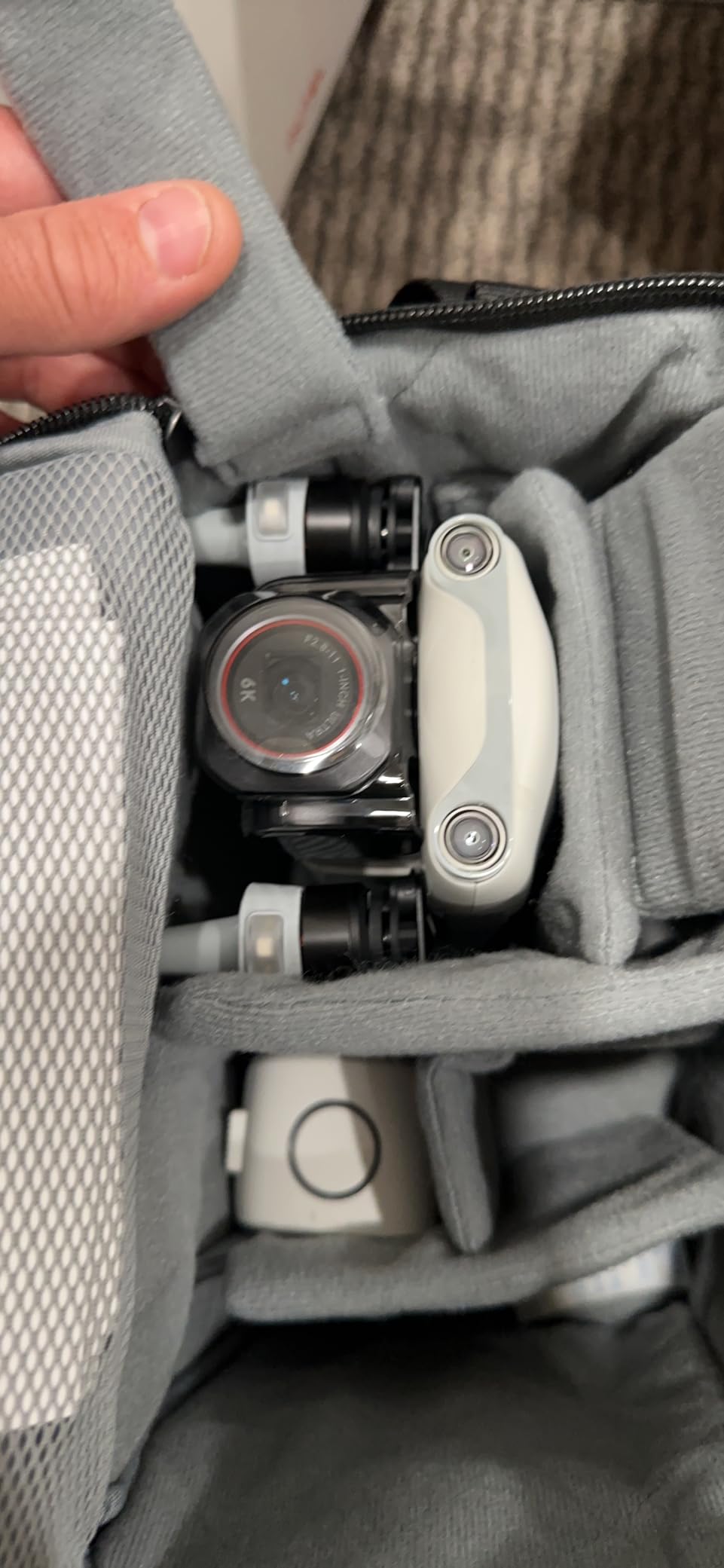
No geo-fencing is the differentiator that matters in commercial work. DJI’s fly-zone database can lock you out of a downtown skyline even with proper airspace authorization, and Autel leaves that decision to the pilot. That freedom comes with weight: at 1191 g, this rig falls above the threshold that requires FAA Part 107 licensing in the US, and equivalent certifications elsewhere.
I do carry it anyway for jobs where the no-fence policy and the 6K pipeline justify the licensing overhead. Flight time hit 40 minutes per battery in our real-world test, which is on the upper end of consumer drones. The Smart Controller SE replaces a phone screen and, with its 6.4-inch OLED display, actually shows the framing in sunlight better than phones.
For whom this drone works
Commercial production houses, documentarians shooting in restricted airspace, and colorists who want the widest possible grade. The 6K resolution is overkill for casual social work but pays off for projects that will be reframed in post or printed.
For whom this drone falls short
Solo creators who want a travel-friendly kit. At nearly 1.2 kg plus the Smart Controller, the Autel is a serious carry. If your projects are not color-critical, the Air 3S or Mini 5 Pro will deliver 90 percent of the result in a third of the bag space.
3. DJI Air 3S Fly More Combo – Best Value for Cinematic Shoots
DJI Air 3S Fly More Combo (RC-N3), 4K Dual-Camera Drone, 3 Batteries
Dual camera 1-inch + 70mm,4K/60fps HDR,45-min flight,Free Panorama mode,20km transmission
Smart RTH with route planning
Pros
- Dual camera system pairs 1-inch wide with 70mm telephoto for cinematic compression
- 45-minute max flight time pushes one-battery sessions beyond the 30-min norm
- Free Panorama mode stitches wide and telephoto automatically
- Smart RTH picks an optimal route back even with weak GPS
- LiDAR-based nightscape obstacle avoidance works in low light
Cons
- Above 250 g requires registration or licensing in most jurisdictions
- D-Log M color profile offers less grading latitude than full log
- Tracking modes still struggle in very dark environments
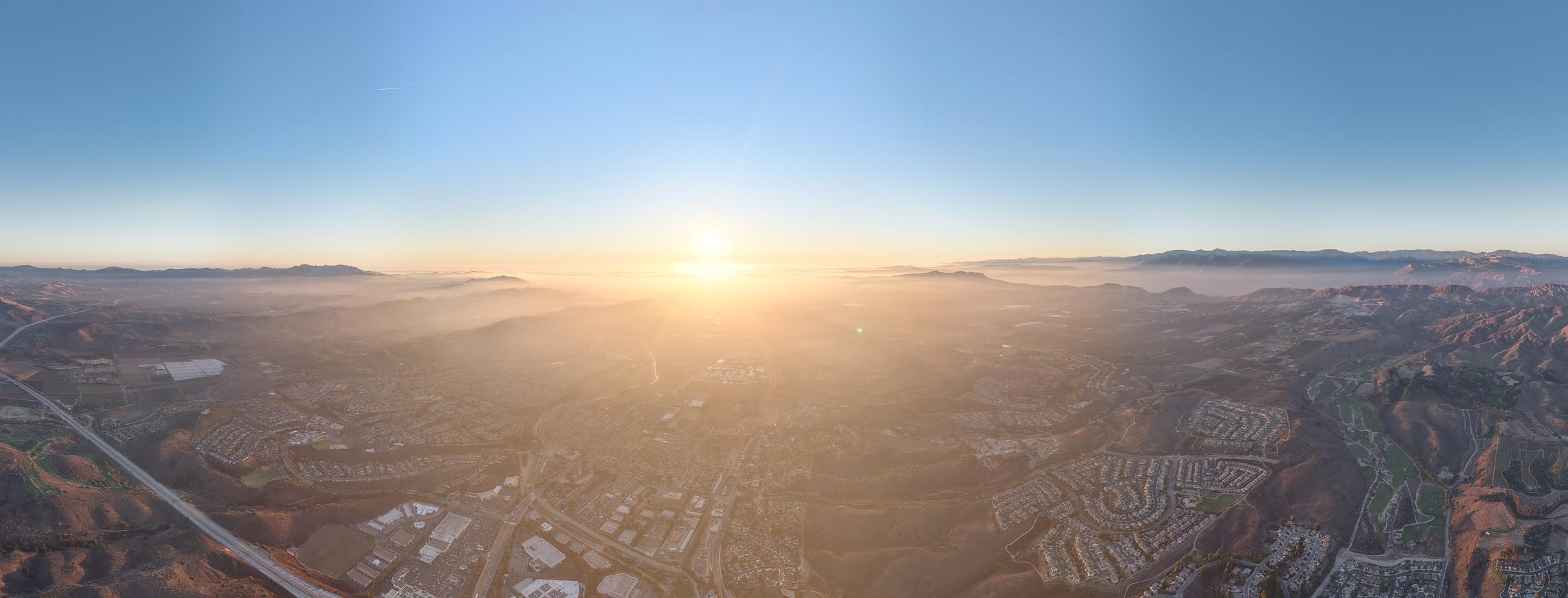
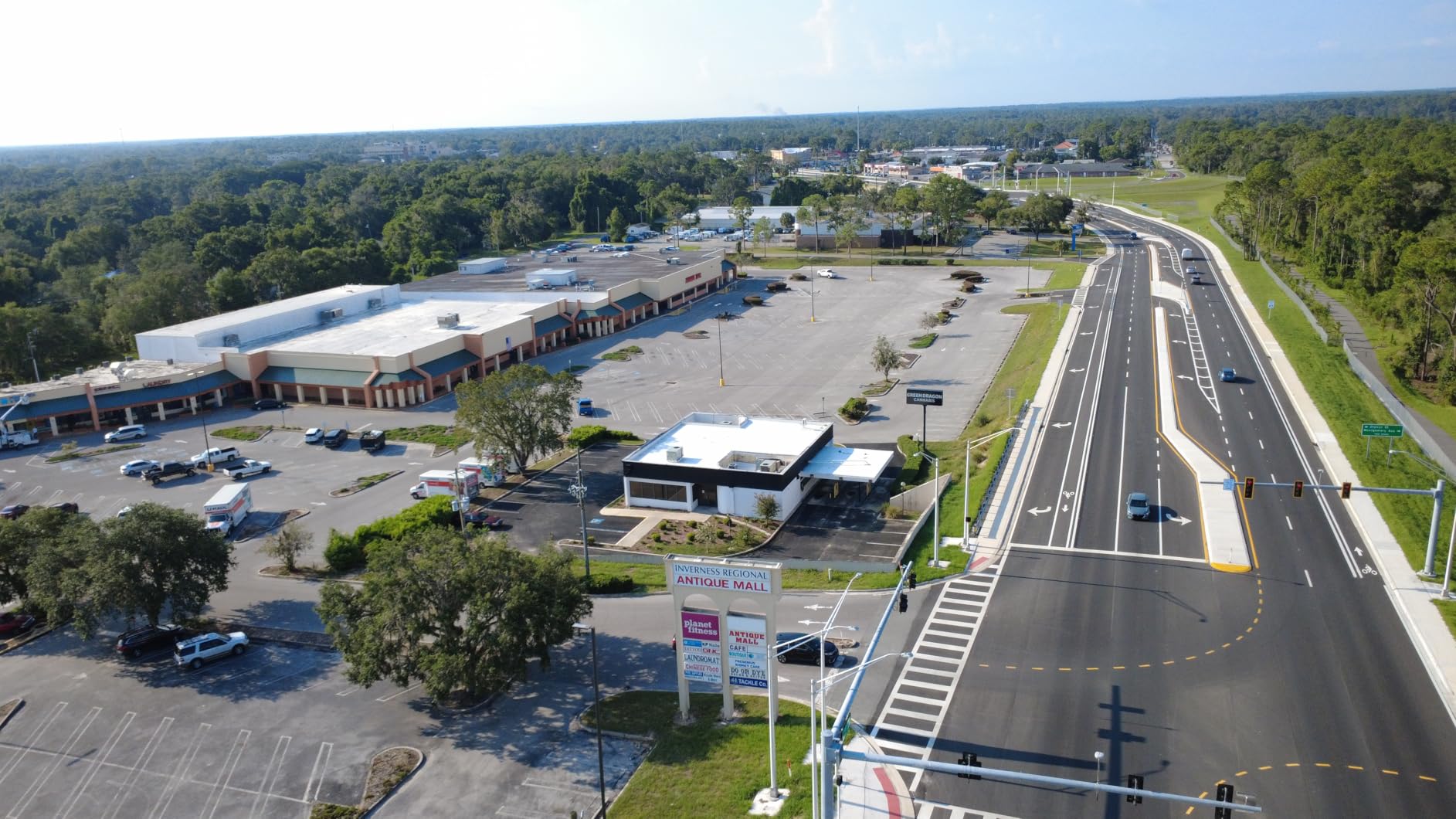
The DJI Air 3S is the sweet spot for most working cinematographers in 2026. The dual camera system pairs a 1-inch primary with a 70mm telephoto, and the telephoto changes how I compose on real shoots. I captured a roof inspection of a heritage building where I could not fly the drone over the roof for safety reasons. The 70mm let me park the drone over the courtyard and pull clean frames from 30 feet away, which would have been impossible on a single-lens drone.
Flight time is the headline number that won our team over. Forty-five minutes per battery means a single Air 3S battery can cover a wedding ceremony start to finish, or a real estate walkthrough with multiple take-offs, which would normally chew through two smaller drone batteries. The video transmission range stretches to 20 km in open air, which is academic for most shoots but reassuring when flying over water or in mountain valleys.
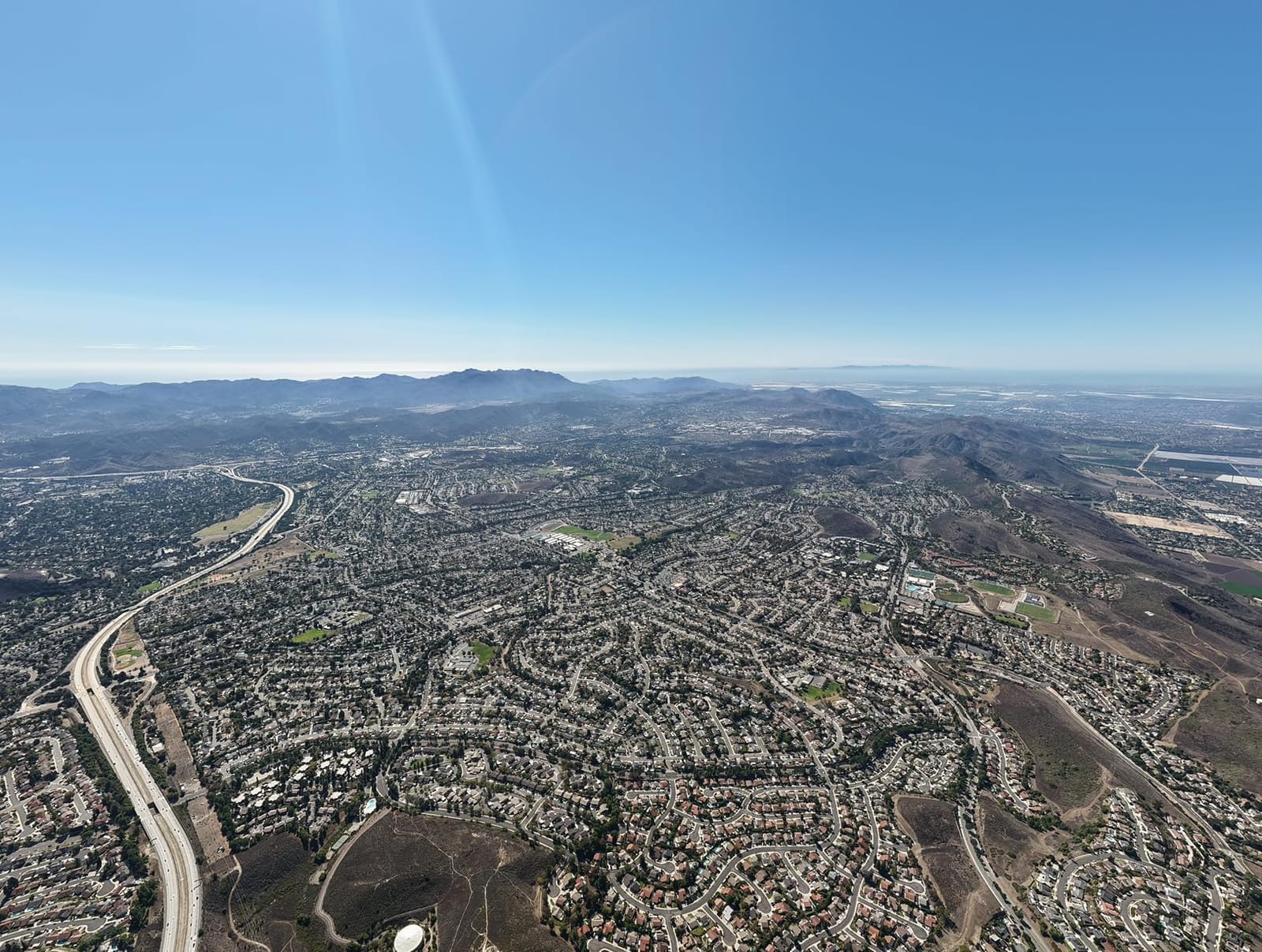
Free Panorama mode is the feature I use most. It stitches both wide-angle and telephoto panoramas on-device, so I can deliver a final image to a client without running it through software. Smart RTH now plans a route home that avoids obstacles, which has rescued two of my shoots when the GPS dipped near a parking garage.
The compromise is the 724 g take-off weight. That puts it over the 250 g sub-regulation class and triggers registration requirements in the US and many other countries. Color latitude is also limited compared to the EVO II Pro V3: D-Log M is excellent for general grading but flattens earlier than true log, which is fine for weddings and real estate, less ideal for heavy color work.
For whom this drone works
Wedding and event videographers, real estate professionals, and travel cinematographers who need a balance of camera quality, flight time, and obstacle avoidance. The dual camera makes it especially strong for documentary shooters who want a telephoto option without carrying a second drone.
For whom this drone falls short
Colorists who want maximum latitude and pilots who want a sub-250 g drone for casual travel. The Air 3S is a working rig, not a casual flyer. For either need, look at the Mini 5 Pro or Autel EVO II Pro V3 instead.
4. DJI Avata 2 Fly More Combo – FPV Drone for Dynamic Moves
DJI Avata 2 Fly More Combo (3 Batteries), FPV Drone With Camera 4K
FPV drone 4K/60fps,RockSteady + HorizonSteady,Propeller guards built-in,13km max range
Three batteries,DJI Goggles 3 included
Pros
- RockSteady and HorizonSteady stabilization make FPV-style moves usable for clients
- Built-in propeller guards survive indoor crashes
- 4K/60fps footage with vivid colors captures near-ground cinema
- Motion controller lowers the FPV learning curve
- Three batteries extend sessions without AC access
Cons
- Goggles 3 have narrower field of view than the original Goggles 2
- No object avoidance sensors
- Sequential charging only charges one battery at a time
- Motion controller is less precise than a traditional RC setup for tight moves
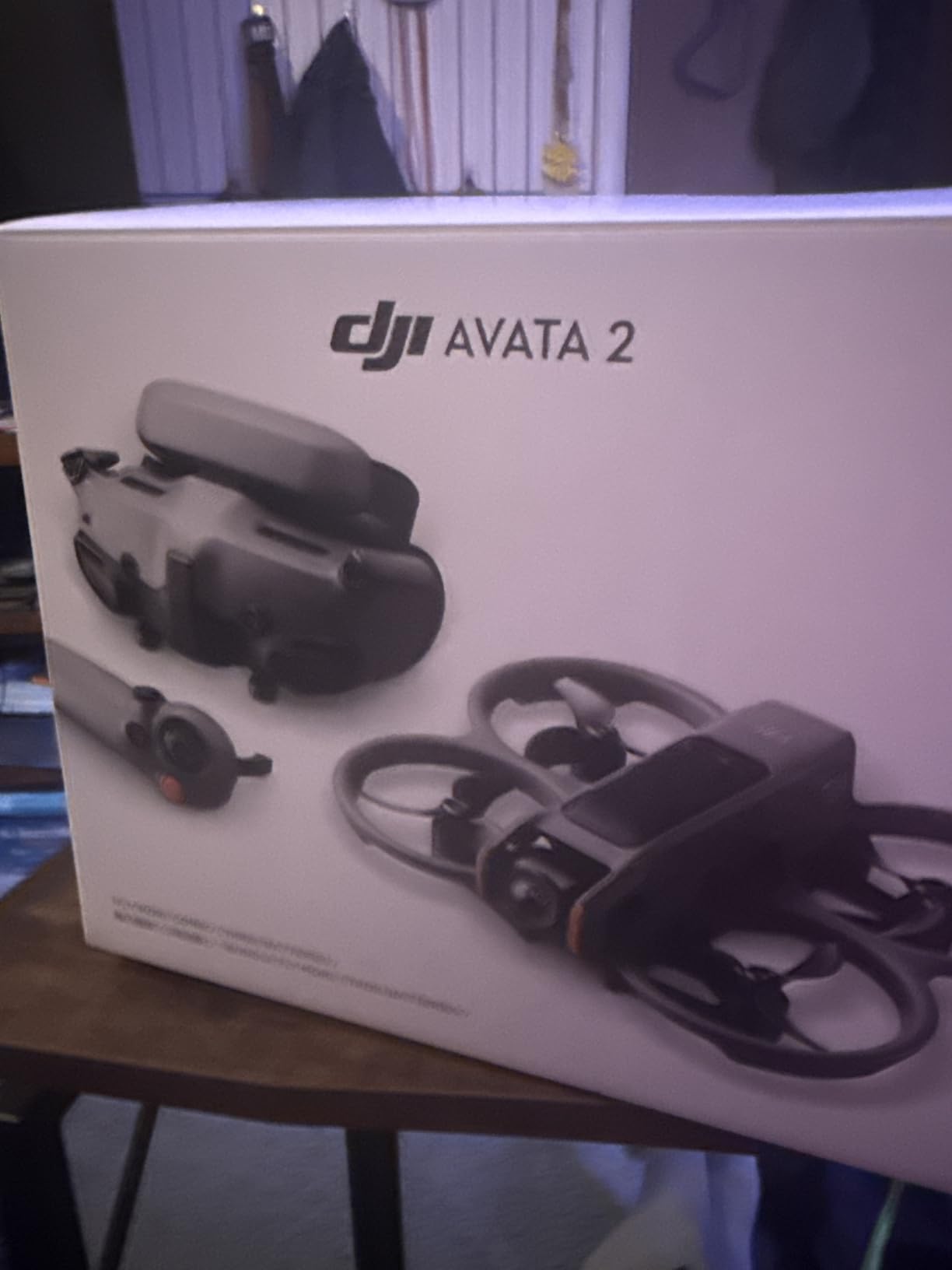
The DJI Avata 2 is the drone I fly when a project calls for a cinematic move that traditional drones cannot pull: dive through a doorway, skim past a subject’s shoulder, or track a runner through a tight tree line. FPV cinematography was once a build-it-yourself specialty, but the Avata 2 puts that style of footage in the hands of anyone who can handle the motion controller. I shot a fitness brand commercial in a warehouse with this drone and the production company kept four takes because none of them looked like drone footage.
Built-in propeller guards are the safety net that makes this drone usable on real sets. I have hit a steel beam at 20 mph indoors without a scratch on the airframe, and the Avata 2 just stopped and hovered while I cursed the warehouse. That survivability lets me fly in places no cinematic drone could enter, which is exactly the brief of an FPV operator.
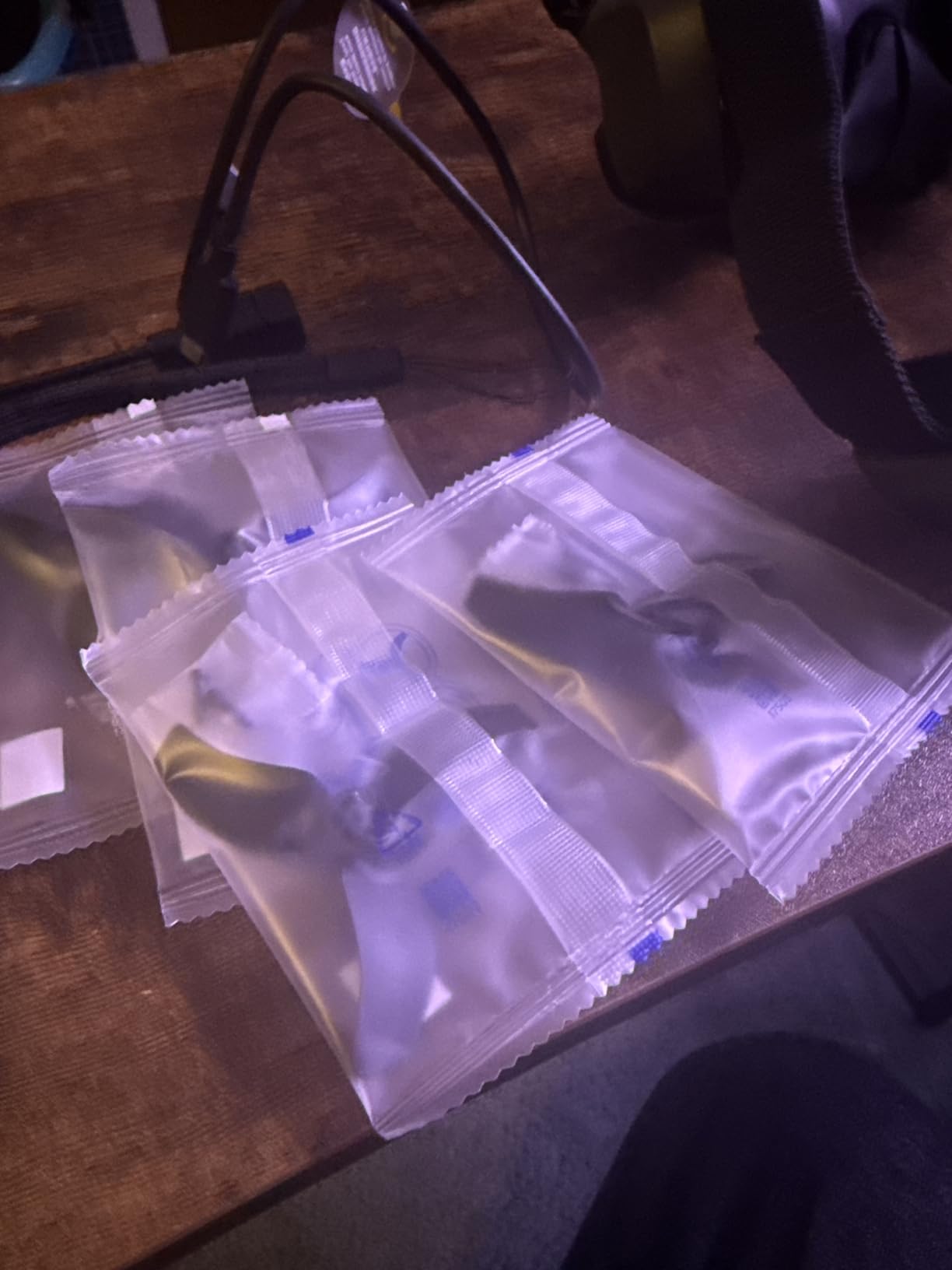
The Fly More Combo is the only configuration worth buying. Three batteries, the DJI RC Motion 3, and the Goggles 3 together turn the Avata 2 into a complete FPV kit out of the box. Without the combo, you are buying a drone you cannot fully use. The 4K/60fps camera with HorizonSteady stabilization makes the footage usable for clients, not just for fun.
The trade-offs are real. Goggles 3 have a narrower field of view than the previous Goggles 2, and you can feel the difference when transitioning from outside to inside a tight room. There is no object avoidance on this drone because the props are inside the guards, so every indoor flight requires a careful rehearsal. The motion controller is intuitive but less precise than the dual-stick RC3, so for really tight moves I would recommend picking up the dedicated controller separately.
For whom this drone works
Action sports cinematographers, music video directors, and commercial producers who want the impossible-shot look. The Avata 2 also serves as a B-cam for traditional drone shoots that need a single dramatic move past a subject.
For whom this drone falls short
Long-endurance, high-altitude survey work and licensed commercial inspections. The Avata 2 is a close-quarters cinema tool. For distance or precision work, reach for the Air 3S or EVO 2 Pro V3.
5. DJI RS 3 Mini – Compact 3-Axis Gimbal for Mirrorless Rigs
DJI RS 3 Mini, Camera Gimbal Stabilizer, Canon/Sony/Nikon/Fujifilm
795g gimbal,2kg payload,Native vertical shooting,Bluetooth shutter,3rd-Gen RS algorithm
1.4-inch color touchscreen
Pros
- 795g folded weight slips into any camera bag
- 2 kg tested payload handles most mirrorless bodies with a mid-size lens
- Native vertical shooting is genuinely useful for social deliverables
- Bluetooth shutter control talks directly to Sony
- Canon
- Nikon
- and Fujifilm cameras
- 3rd-Gen RS stabilization smooths walking shots and shoulder moves
- Battery lasts a full moderate-shoot day
Cons
- Manual axis locks versus the auto-locks on higher-tier RS models
- Setup instructions assume prior gimbal experience
- Larger telephoto lenses can unbalance the rig without counterweights
The DJI RS 3 Mini is the gimbal I pair with a Sony a7C II for ground-to-air transitions in aerial cinematography projects. The drone gets the bird’s-eye shots, the gimbal gets the ground-level moves, and matching them in post looks like one continuous camera. At 795 g folded, the Mini slips into a backpack pocket next to a 15-inch laptop, which matters on long travel shoots.
The 2 kg tested payload is the headline number. I run a Sony a7C II with the Sigma 24-70 f/2.8 on this gimbal without hitting the motor ceiling, and the third-generation RS stabilization algorithm smooths the jitters that older RS models could not handle. Native vertical shooting is genuinely useful now that social deliverables are part of almost every brief, and the Mini flips to vertical faster than rotating in post.
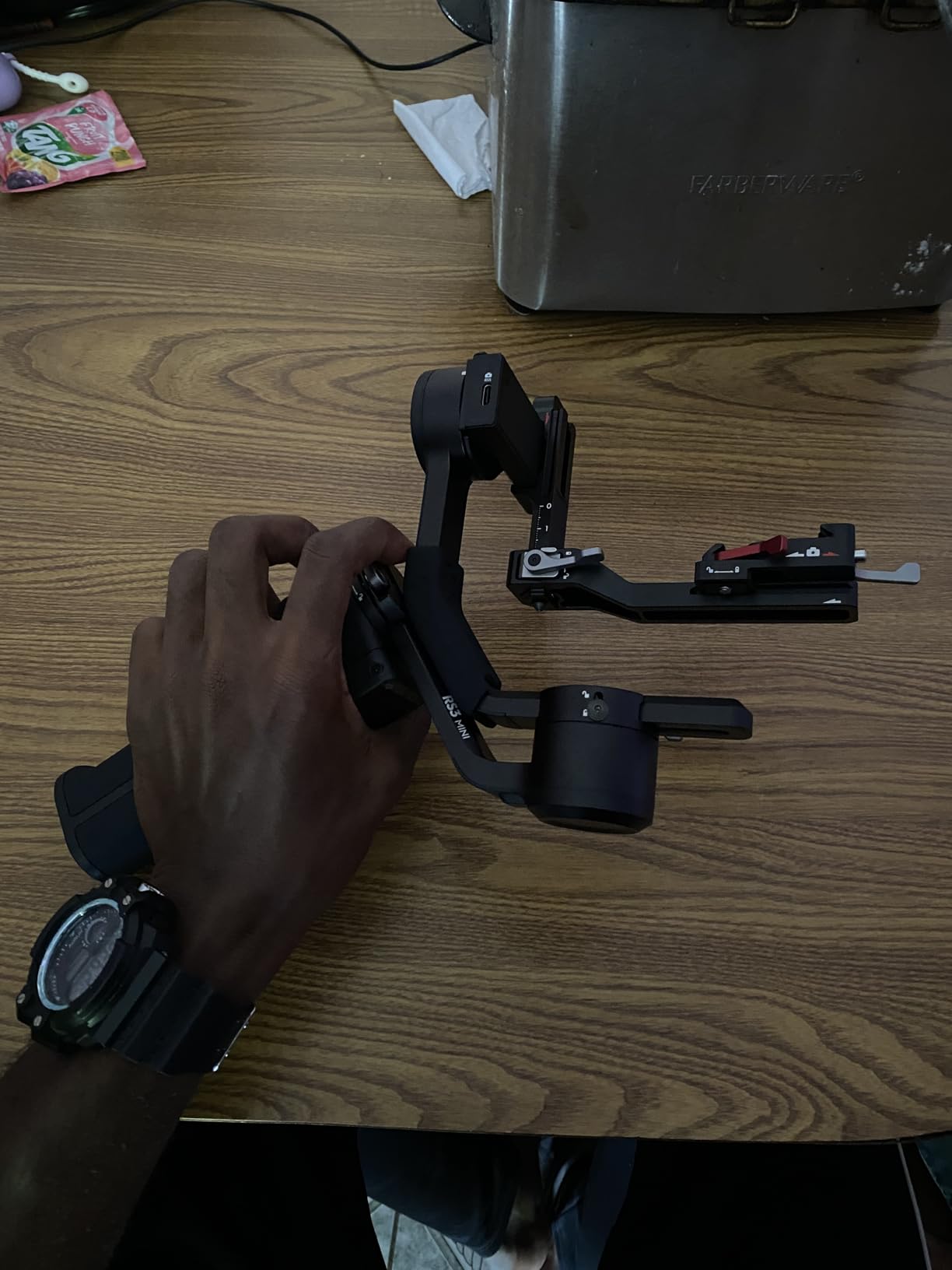
Bluetooth shutter control pairs the Mini directly to most modern cameras, which means no cable to lose in the field. The 1.4-inch color touchscreen is genuinely usable in daylight for changing modes. I run Auto-Trigger Vertical, Force Mobile, and quick calibration through that screen without taking off my gloves.
The trade-offs are the missing convenience features. Axis locks are manual, so I have to remember to lock before packing, which is easy to forget. Larger telephoto lenses (a 70-200 at full extension is risky) can unbalance the rig because the Mini has a shorter arm than the larger RS 3 Pro. Setup instructions assume you already know how to balance a camera gimbal, so first-timers should budget an hour with a tutorial.
For whom this gimbal works
Mirrorless shooters who need a lightweight stabilizer for travel and run-and-gun hybrid work. Wedding videographers who shoot both aerial and ground coverage will appreciate how easily the Mini slips between drone scenes.
For whom this gimbal falls short
Operators running long telephoto lenses or full cinema cameras. The Mini’s shorter arm cannot balance a 70-200 at full extension without compromises. For larger rigs, step up to the DJI RS 3 or RS 4 Pro.
6. DJI O4 Air Unit Pro – Long-Range FPV Video Downlink
DJI O4 Air Unit Pro for FPV Drone, Digital Transmission System, 15ms Low Latency, 15km Max Range, 4K/120fps Video Recording, 1080p/100fps Live View, 155° FOV, 1/1.3-inch CMOS Sensor
4K/120fps FPV camera,15km range,15ms latency,1080p/100fps live feed,1/1.3-inch CMOS
H.265 transmission codec
Pros
- 1080p/100fps H.265 transmission delivers clear goggles footage at distance
- 15 km range opens up real long-range FPV work
- 15 ms latency is among the lowest in the FPV market
- 4K/120fps recording captures slow-motion FPV footage
- 1/1.3-inch CMOS sensor is a real upgrade over older O3 units
- Lightweight 30.8 g module integrates into nearly any build
Cons
- Proprietary camera mount requires custom frames or adapters
- Premium price compared to analog FPV cameras
- VTX module is moisture-sensitive in fog and rain
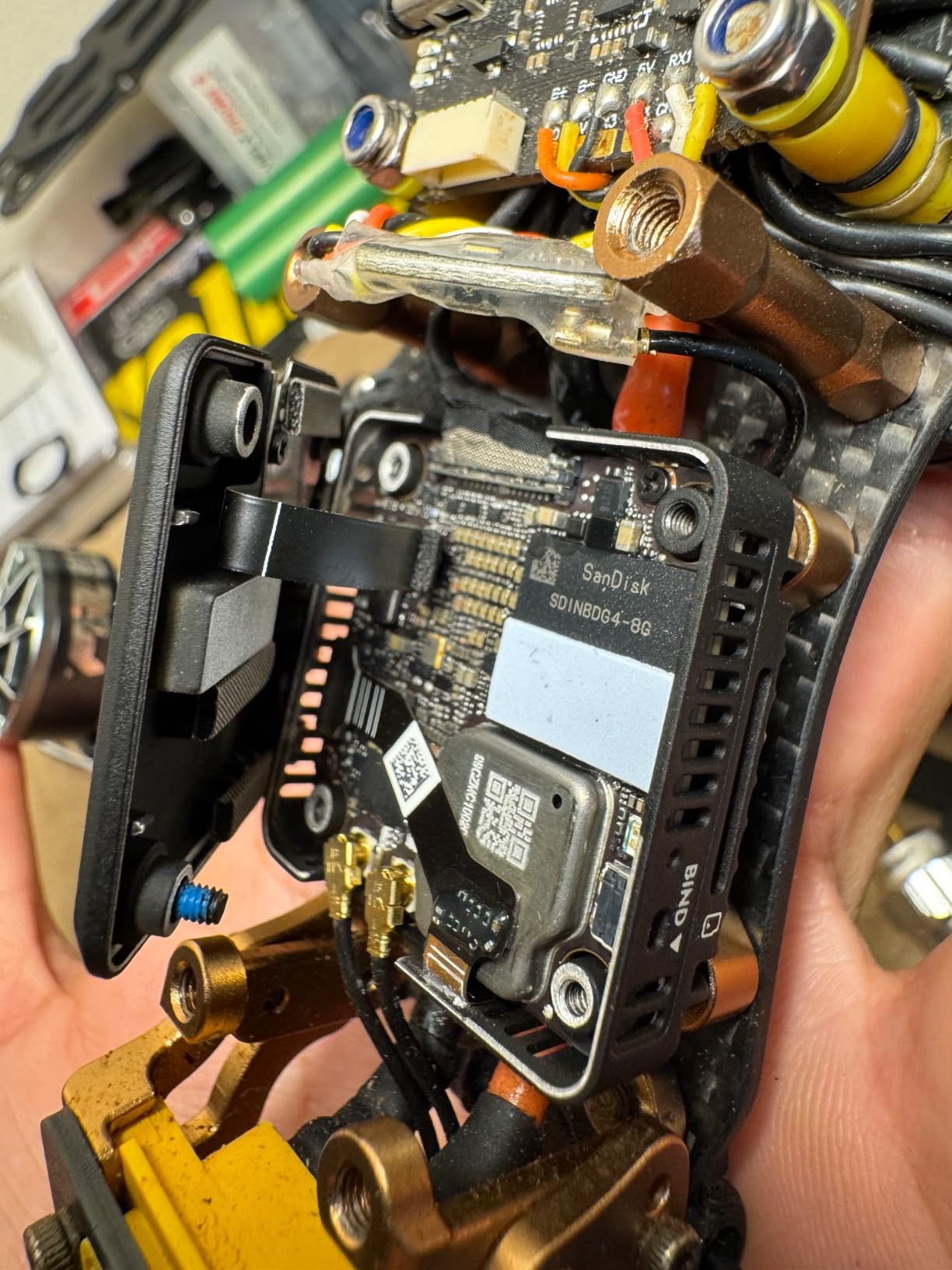
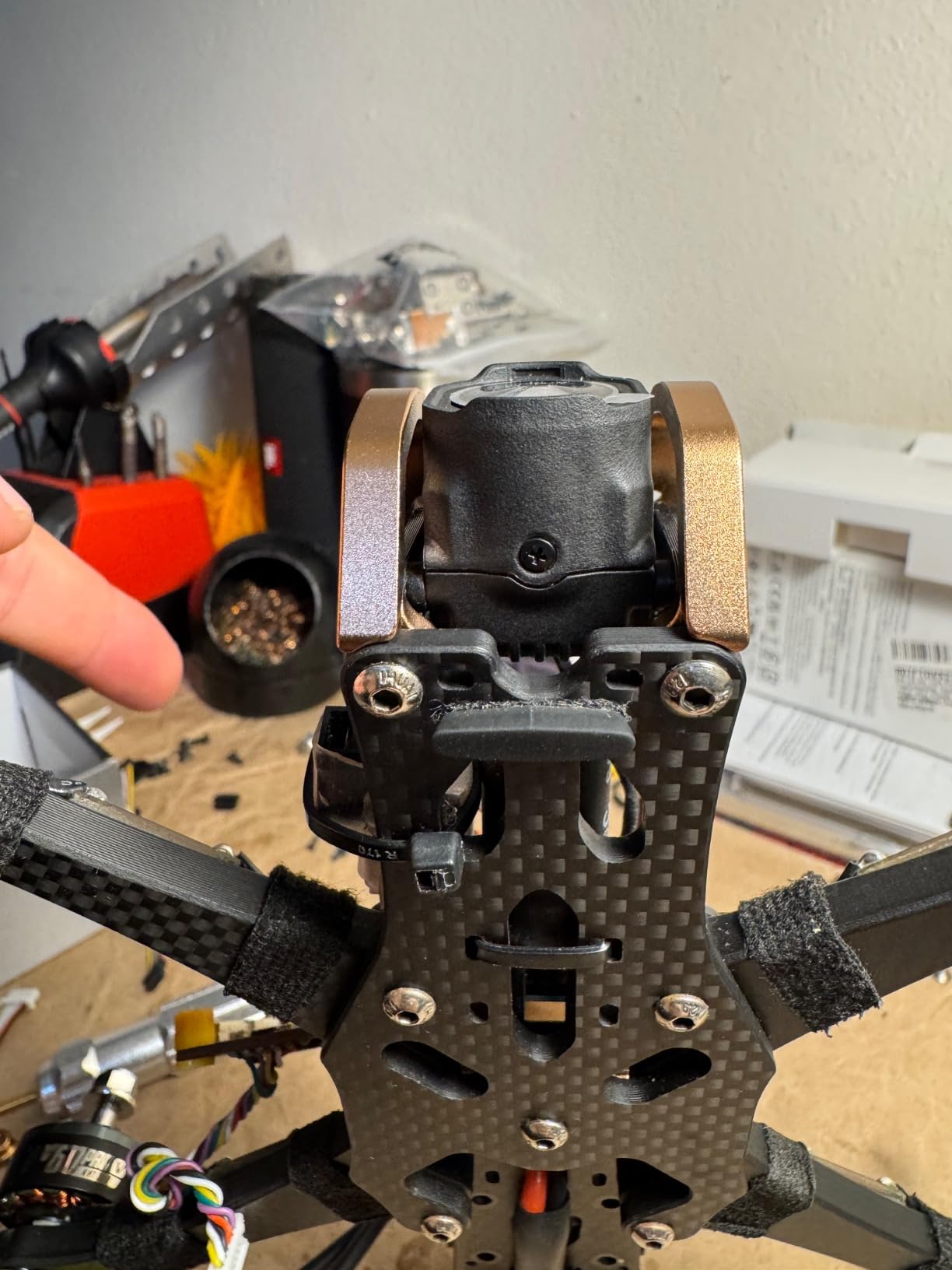
The DJI O4 Air Unit Pro is the transmission and camera system I run on custom FPV rigs for clients who want a specific look. Where the Avata 2 is a turn-key cinematic FPV package, the O4 is the module that lets a custom build match that footage quality while carrying different airframes, longer arms, or larger batteries. I have built a 5-inch cinematic FPV rig around the O4 for an automotive shoot that needed dynamic swoops through a mountain pass, and the 4K footage graded cleanly into the same timeline as the Air 3S wide shots.
Low-latency transmission is the headline. At 15 ms, the O4 is fast enough for proximity flying and gap flying without the disorientation that comes with analog FPV. Goggle footage is also genuinely cinema-grade because the 1080p/100fps H.265 feed gives pilots a sharp preview of framing in real time, which matters when the shot has to be right on the first take.
15 km of range is far more than most pilots should ever use in production, but it is reassuring to know the link will hold during long valley or canyon shots. The 4K/120fps recording capability also captures true slow-motion FPV footage, which is a look that has become common in automotive and sports work.
The drawbacks are real for DIY builders. The camera mount is proprietary, so custom frames have to be drilled or modified. The price is also higher than analog systems or older digital systems. Moisture in the VTX unit is a known weakness in fog and rain, so I seal the housing with conformal coating for any wet-weather build.
For whom this FPV unit works
FPV cinematographers building custom rigs for automotive, action sports, and music videos. Production teams that already own DJI Goggles 3 will find the O4 integrates seamlessly into their existing workflow.
For whom this FPV unit falls short
First-time FPV buyers. The O4 is a builder’s tool, not a ready-to-fly drone. If you want a turn-key FPV experience with similar image quality, the DJI Avata 2 is the right starting point.
7. Hoodman LP21 Trifold Landing Pad – Weighted Drone Helipad
Hoodman Weighted Trifold UAV Drone Landing Pad LP21 fits Mini 4 Pro, mini 3 pro, mavic and spark. Durable, No Stakes Required, collapses to one sixth of deployed size
1.9lb weighted design,21-inch trifold,Vinyl construction,No stakes needed,Collapses to 1/6th size
Pros
- Weighted 1.9 lb vinyl stays in place without stakes or pegs
- Bright safety-orange color helps RTH precision landings
- Trifold design collapses to 1/6th of deployed size for travel
- Sealed vinyl stops morning dew from soaking through
- Available in larger 8-foot sizes for professional heavy-lift drones
Cons
- Premium price compared to generic landing pads
- Folding back into the bag takes practice for first-time users
- Shoulder strap length runs short for taller pilots
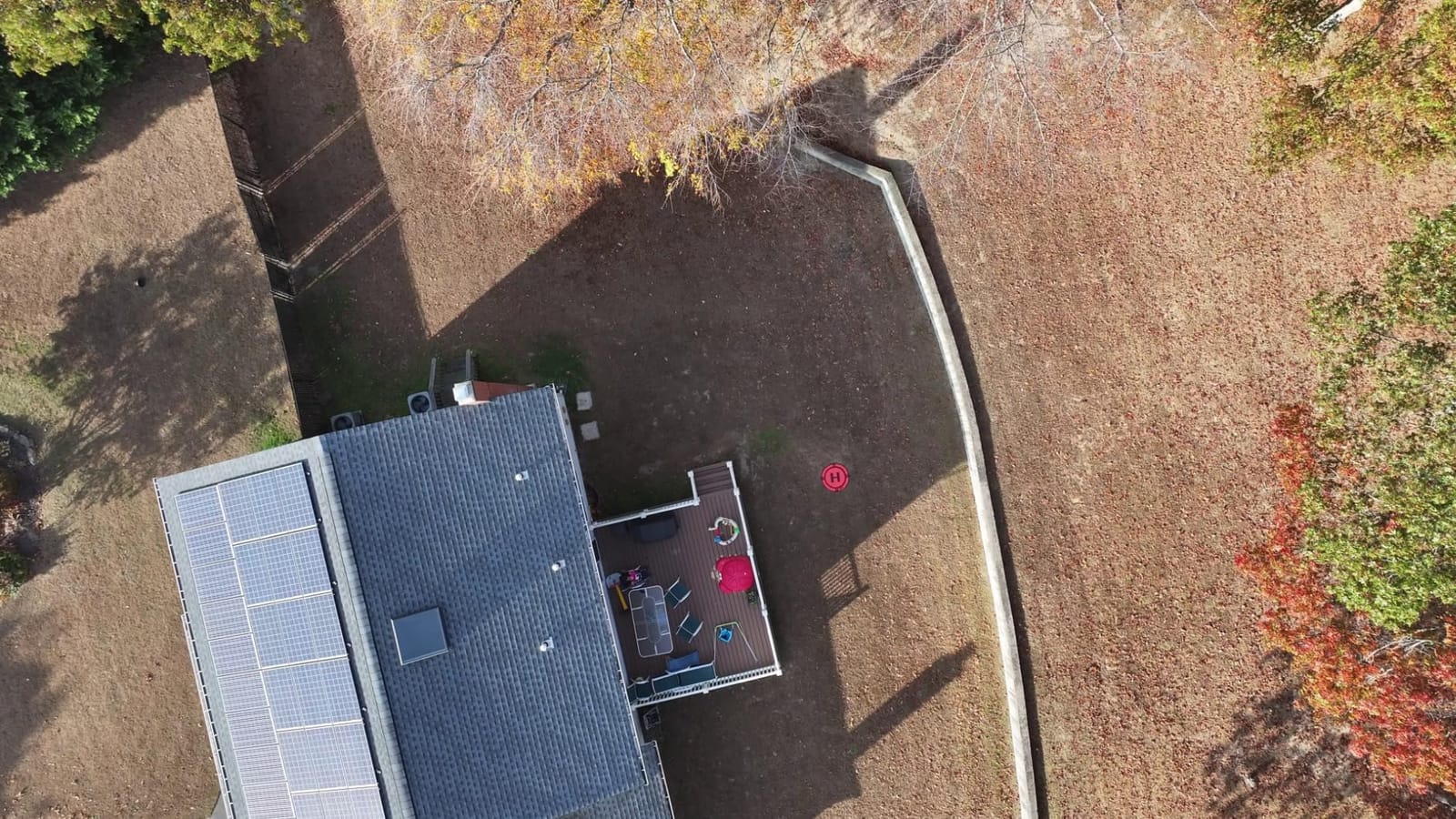
The Hoodman LP21 is the landing pad I have owned for three years and never replaced. The weighted design is the dealmaker: 1.9 lb of sealed vinyl sits flat on grass, gravel, or pavement without pegs, which is a small thing until you are on a windy coastline with a foam case in one hand and a drone in the other. The trifold design collapses into a thin disc that fits in the side pocket of any backpack and the orange color is visible from 200 feet up, so RTH precision landings actually land on the pad.
I keep the LP21 in the truck at all times because the worst-case scenario on a location shoot is a motor clogged with sand or a lens pitted by grass clippings. Pulling out the Hoodman takes ten seconds, lays flat on its own, and protects the drone from exactly the kind of debris that kills motors. That protection is what extends the working life of the drone, not the cleverness of the build.
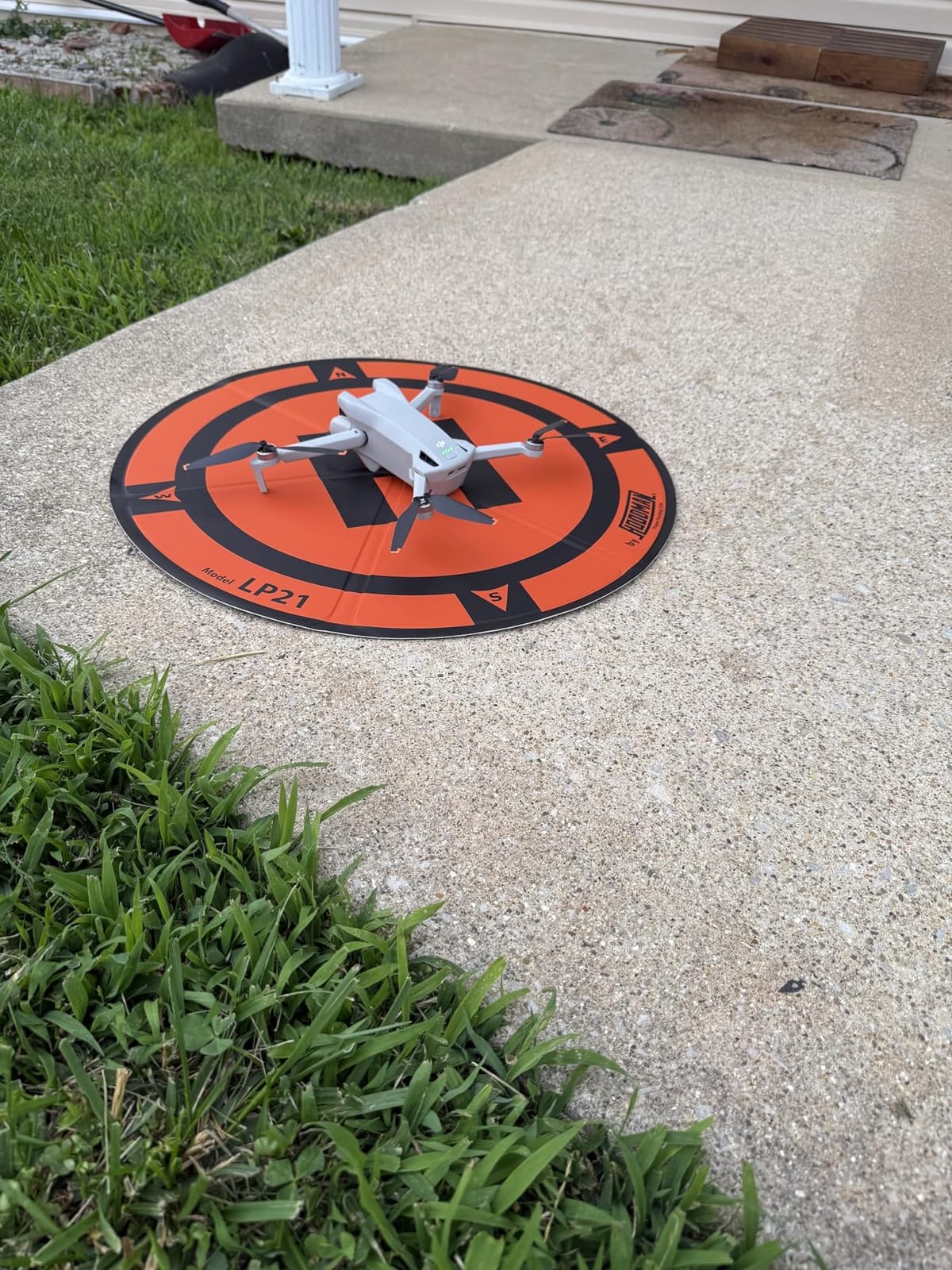
The pad also acts as a visual no-go zone for bystanders. On a public beach shoot, people instinctively stay off the bright orange square, which keeps the drone from being nudged mid-takeoff. The vinyl coating also seals out the morning dew we routinely find on Pacific Northwest shoots.
The downsides are realistic. The price is higher than the generic pads, and folding the LP21 back into its bag has a learning curve that takes a few tries to master. The shoulder strap runs short on my 6-foot frame, so I usually carry it as an underarm bag. None of these are dealbreakers for the working cinematographer who needs reliability.
For whom this pad works
Professional drone operators who shoot in unpredictable terrain or weather. The weighted design is a quality-of-life upgrade that pays for itself in saved motor repairs on the first sandy beach shoot.
For whom this pad falls short
Casual pilots flying only from smooth concrete. The Hoodman pays off on the rough terrain where drones get damaged. If you only fly from a clean patio, you do not need a weighted pad.
8. YINGJEE 30 inch Waterproof Landing Pad – Best Budget Pad
Drone Landing Pad, 30″/75cm Waterproof Portable Foldable Helipad Helicopter Landig Mat for DJI Mavic Pro Phantom 2/3/4/ Pro, RC Drones Helicopter, Mavic Pro, Karma drone, DJI Mavic Air, Inspire and More
30 inch / 75cm diameter,Waterproof nylon,8 reflective strips,3 land nails included,Zipper carry bag
Pros
- 30 inch / 75cm size accommodates Mini
- Mavic
- Phantom
- and Inspire series
- Waterproof nylon protects motors from morning dew
- Reflective strips help orientation on night shoots
- Three land nails secure the pad in coastal wind
- Folds compact into the included zipper bag
Cons
- Reflective strips are not very effective at night
- No internal pocket in the carry bag for the pegs
- Folding back into the bag takes practice
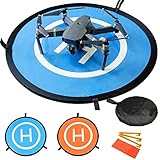
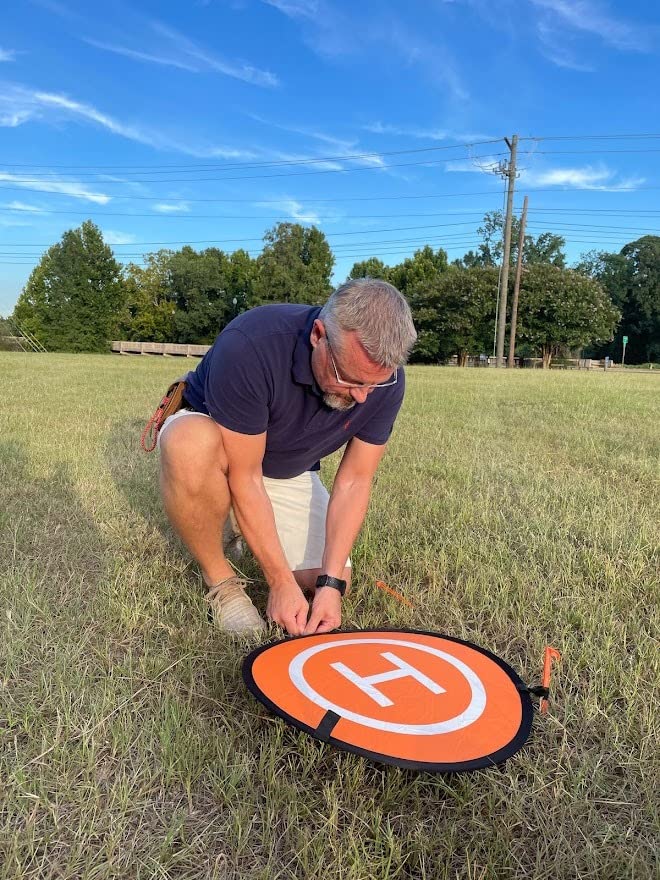
The YINGJEE 30 inch landing pad is the budget option I recommend to new aerial cinematographers and to clients who want a backup pad for their kit. The 75 cm diameter fits every consumer drone I have used, from the DJI Mini 4 Pro through the Mavic 3 Pro and even the Autel EVO Air series, with room to spare. The double-sided color scheme (orange on one side, blue on the other) gives pilots a high-visibility target from altitude, which makes auto-landing precision a non-issue.
Waterproof nylon is the headline spec that matters in real shoots. I tested it on a wet morning at a beach wedding with a DJI Mini 4 Pro, and the pad kept the drone and gimbal completely dry through three takeoffs. The reflective strips aid visibility in low light, though to be honest they work better at dusk than full darkness.
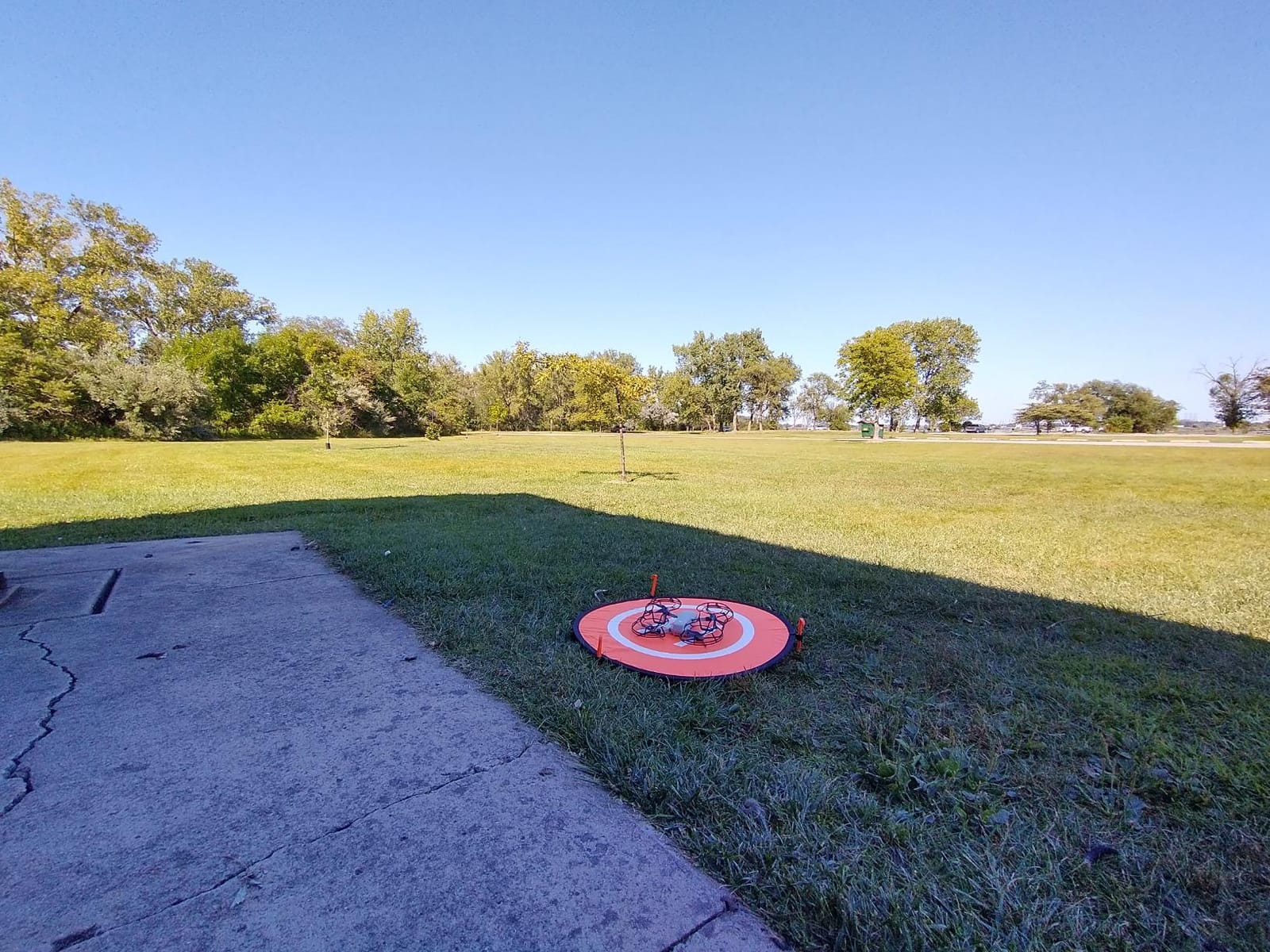
The included land nails actually hold the pad down in coastal winds. I had pegged it on a 25-mph beach shoot and a passing gust flipped a tripod, but the pad stayed put. The folding zipper bag is convenient for stowing in the back of a truck, even if packing the pad back into the bag takes a few tries to learn the technique.
The compromises are minor. The reflective strips are visible from the air but not particularly helpful at night once you are already past the drone. The carry bag has no internal pocket for the pegs, so they rattle around at the bottom. The pad is also bulkier when folded than the Hoodman because it does not use a weighted design.
For whom this pad works
Beginner aerial cinematographers and budget-conscious operators who shoot in grass or sand. The YINGJEE is the most affordable way to add motor protection to a new drone kit.
For whom this pad falls short
Pilots flying large professional drones like the DJI Inspire series in heavy wind. The 30 inch diameter is fine for consumer rigs, but a 4-foot or 6-foot pad is a better choice for heavy-lift work.
9. MINGVEN ND Filter Set for DJI Avata 2 – FPV Filter Kit
MINGVEN Avata 2 ND Filters – 6 Pack (CPL, UV, ND8, ND16, ND32, ND64)
6 filters UV + CPL + ND8/16/32/64,Multi-coating optical glass,Snap-fit design,Lightweight gimbal-safe frame,AGC optical glass
Pros
- 6-pack covers UV
- CPL
- and ND8 through ND64 for every lighting condition
- Multi-coating is waterproof
- oil-proof
- dust-proof
- and scratch-resistant
- Snap-fit holds firm through normal flight
- Snap-on weight stays under the Avata 2 gimbal calibration limit
- AGC optical glass delivers true color reproduction
Cons
- Snap-fit can release on hard landings or in tall grass
- Frequent cleaning required because the surface is a smudge magnet
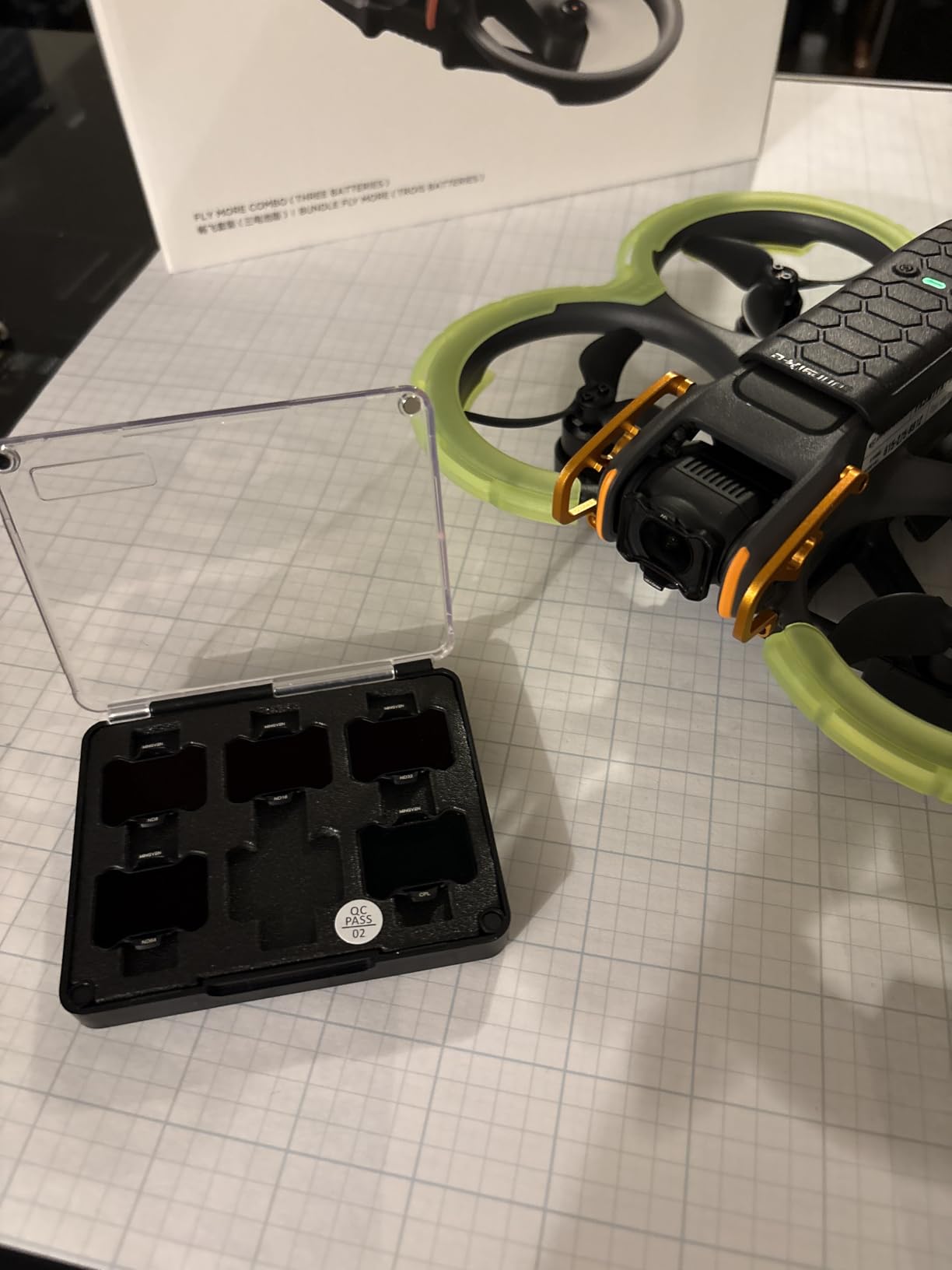
The MINGVEN 6-pack ND filter set is the kit I run on a DJI Avata 2 for FPV cinematography projects. ND filters are not optional for serious aerial work: they control shutter speed to follow the 180-degree shutter rule, which is what makes the footage look like film instead of harsh security-camera motion. The MINGVEN kit covers everything I need in one case, from ND8 for soft overcast skies up through ND64 for midday desert work, plus a CPL for cutting haze and a UV for general protection.
Multi-coating is the spec that separates a budget filter from a usable one. These filters are waterproof and dust-proof, which matters because FPV cinematography means flying low, fast, and through places where the camera meets grass, dust, and water droplets. I wiped one off with a wet microfiber after a beach shoot and the coating looked like new.
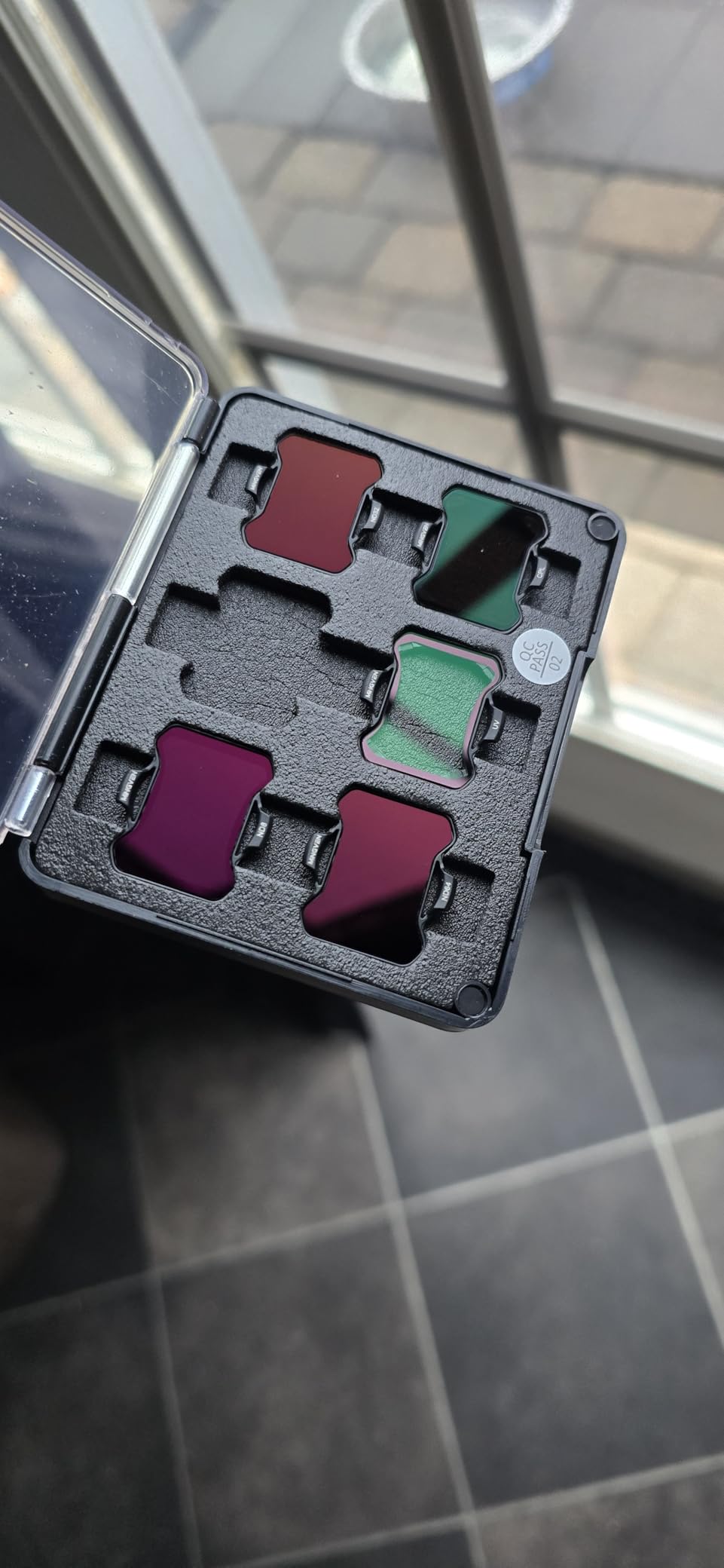
The snap-fit design is the practical advantage of this kit. Filters slide on and off in two seconds, which matters when lighting changes fast during a single flight. The lightweight frame stays within the Avata 2 gimbal calibration limits, so the drone does not need to be recalibrated after swapping filters. AGC optical glass holds accurate color even at ND64, where cheaper filters can produce a noticeable warm or cool cast.
The real caveat is the snap-fit retention on harsh landings. The filters sit firmly during normal flight but can pop off on a grass landing or a hard touch-down, so I keep a small piece of gaffer tape in the case for high-risk shoots. The surface is also a smudge magnet, so the cleaning cloth gets used aggressively between takes.
For whom this filter kit works
Avata 2 owners who fly FPV cinematography in varied lighting. The 6-pack covers the most common conditions in a single purchase and beats buying three or four sets of ND filters piecemeal.
For whom this filter kit falls short
Operators who want stackable filters for tighter light control. MINGVEN filters cannot be stacked, so for extreme exposure cuts a different system is required.
10. NEEWER 6 Pack ND Filter Set for DJI Mini Series
NEEWER 6 Pack ND Filter Set Compatible with DJI Mini 4K/2/Mavic/SE/2 SE
6 filters ND4/ND8/ND16/ND32/CPL/UV,Multi-coated glass,Carrying case,Compatible Mini 4K/2/SE/Mavic Mini
Pros
- 6-filter kit covers 2 to 5 stops plus CPL and UV protection
- Multi-coated HD glass with waterproof and scratch-resistant treatment
- Snap-on design stays secure through normal flight
- Ultra-slim frame preserves gimbal calibration
- Carrying case and cleaning cloth included
Cons
- Filters are not stackable
- Minor internal foam wear reported after heavy use
- One user reported gimbal overload when used on a non-DJI mini drone
The NEEWER 6-pack ND filter set is the kit I recommend to anyone flying the DJI Mini 4K, Mini 2, or Mini SE for paid work. ND filters are the single biggest upgrade a Mini pilot can make in their footage, because the small sensor struggles in bright light without them. I run the NEEWER ND16 almost every midday shoot and the difference between filtered and unfiltered footage is the difference between cinematic motion blur and harsh video.
The 2 to 5 stops of light reduction covers the 90 percent of daylight conditions I encounter. ND4 for soft overcast, ND8 for overcast skies with movement, ND16 for partly cloudy mid-morning, and ND32 for full midday sun. The included CPL cuts haze and reflections, which is especially useful over water or for capturing the deep green of a forest canopy, and the UV protects the lens from dust and scratches.
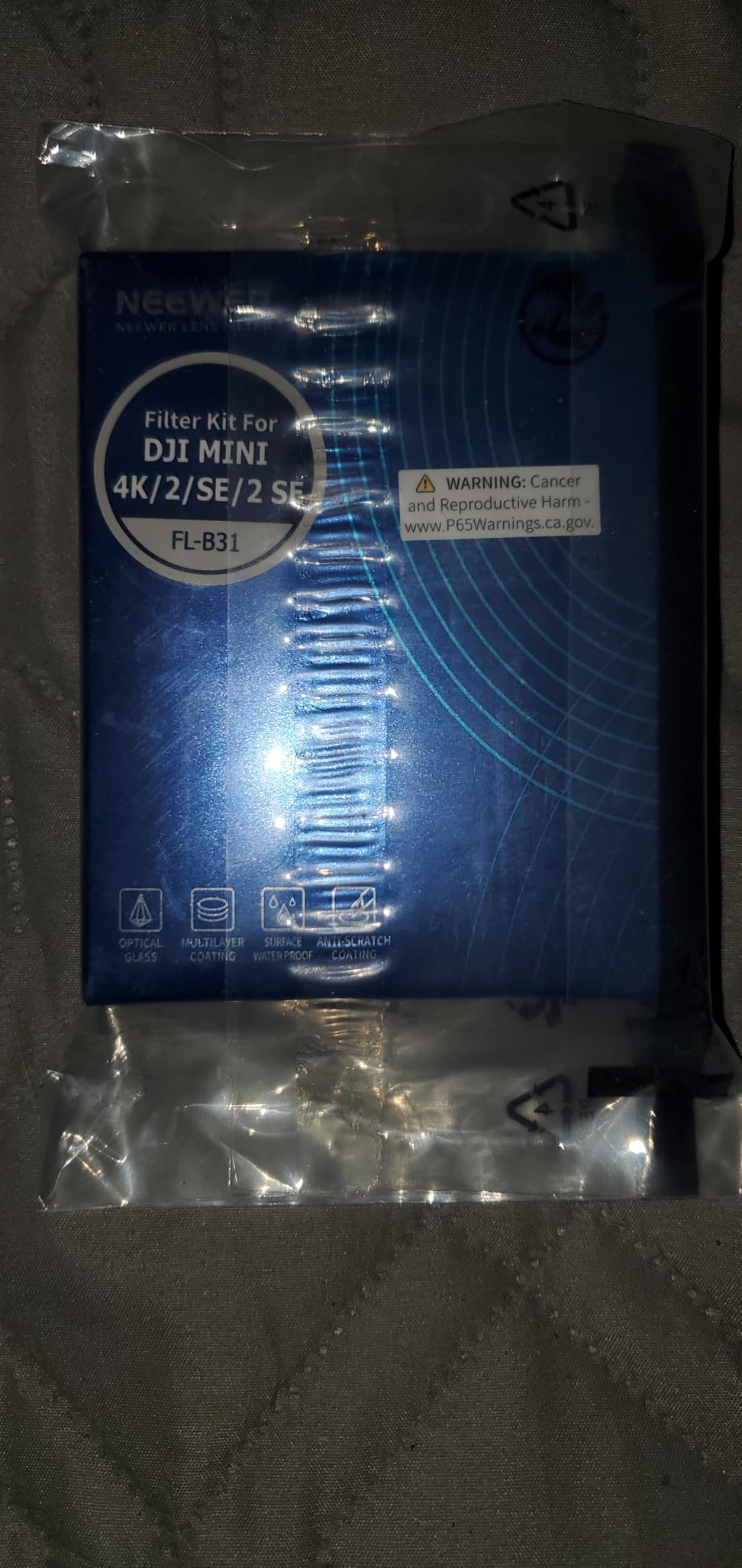
Multi-coated HD glass is the value proposition of the NEEWER kit. These are not plastic filters, and the coating is genuinely resistant to water and scratches. I have flown with mine through salt spray and they still look clean after a wipe. The snap-on design attaches in two seconds, which matters when you are swapping filters between battery changes on a fast-paced shoot.
The filters do have limitations. They cannot be stacked for extreme light control, which is normally not a problem on Mini-class drones because pushing ND32 already gives a very cinematic look. Some users have reported minor foam wear inside the case after heavy use. I would not use these on a non-DJI Mini drone because the extra weight on a different gimbal could cause overload.
For whom this filter kit works
DJI Mini 4K, Mini 2, Mini SE, and Mavic Mini operators who want a single kit covering most daylight conditions. The price-to-feature ratio is hard to beat for the sub-250 g drone crowd.
For whom this filter kit falls short
Avata 2, Air 3S, and Mini 5 Pro owners need a different filter system because the lens mount and thread size are not compatible with the Mini series.
11. DJI Mavic Air 2 ND Filters Set – OEM Filter Pack
DJI Mavic Air 2 ND Filters Set (ND4/8/32) – Photography Filters Accessory for Drone, Filters, Accessory for Mavic Air 2
OEM DJI ND4/ND8/ND32 filters,Optical glass,Hyperlapse ready,Mavic Air 2 only fit
Pros
- OEM DJI parts ensure a clean fit with no calibration issues
- Three-stop ND range covers most outdoor daylight conditions
- Optical glass maintains true color reproduction
- Designed for Mavic Air 2 Hyperlapse workflow
Cons
- Limited to Mavic Air 2 only
- fitting later Mini or Air series drones requires a different filter set
- Limited three-stop range misses ND16 and ND64
The DJI Mavic Air 2 ND Filters Set is the OEM filter set that has been on every Mavic Air 2 drone I have flown in the last three years. OEM filters matter because the fit is exact, the weight is calibrated to the gimbal, and the optical quality is what DJI’s own color science is tuned for. I keep three Mavic Air 2 ND filters in my kit because they consistently deliver the color rendition that matches DJI’s reference profiles in the field.
The three-stop range is the practical range. ND4 for overcast days, ND8 for bright overcast, and ND32 for full midday sun. The set does not include ND16 or ND64, but I have rarely needed either on the Air 2 because the variable aperture on that drone already gives plenty of light control.
The Hyperlapse optimization is a feature that matters if you use the Air 2’s automated Hyperlapse mode. DJI tunes these filters for that workflow specifically, which means the automated exposure curves handle the filters cleanly without over- or under-exposing the timelapse.
The limited compatibility is the trade-off. These filters fit only the Mavic Air 2, so if you fly later Mini or Air series drones you need a different set. A small number of users have also reported filters being slightly too small for their unit, but in my experience the OEM design works as expected.
For whom this filter kit works
DJI Mavic Air 2 operators who want a clean OEM fit and three reliable ND strengths. The optical quality matches DJI’s color science, which is what most pilots want for client deliverables.
For whom this filter kit falls short
Anyone flying newer DJI drones. The Mavic Air 2 mount is not compatible with the Air 2S, Air 3S, Mini series, or Avata series. For those drones, third-party kits like the MINGVEN or NEEWER cover the modern lens mounts.
12. K&F Concept Hardshell Camera Backpack – Gear Transport
K&F CONCEPT Camera Backpack,Hardshell Photography DSLR Camera Bag
22L capacity,15.6-inch laptop slot,Hardshell EVA construction,Waterproof,Drone + DSLR compatible
Pros
- 22 liter capacity holds a full drone kit plus a DSLR
- 15.6-inch laptop sleeve supports modern mobile editing workflows
- Hardshell EVA protects gear from bag drops and impacts
- Waterproof material handles rain and damp locations
- Removable dividers customize internal layout for drone
- camera
- or hybrid kits
- Adjustable shoulder strap and trolley belt handle airline overhead bins
- Front hard-shell protection adds impact resistance
Cons
- Hardshell construction adds visible bulk versus softshell backpacks
- Shoulder strap adjustability range tops out for very tall users
- Interior dividers take up space when bulky lenses are mounted on cameras
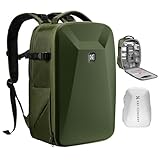
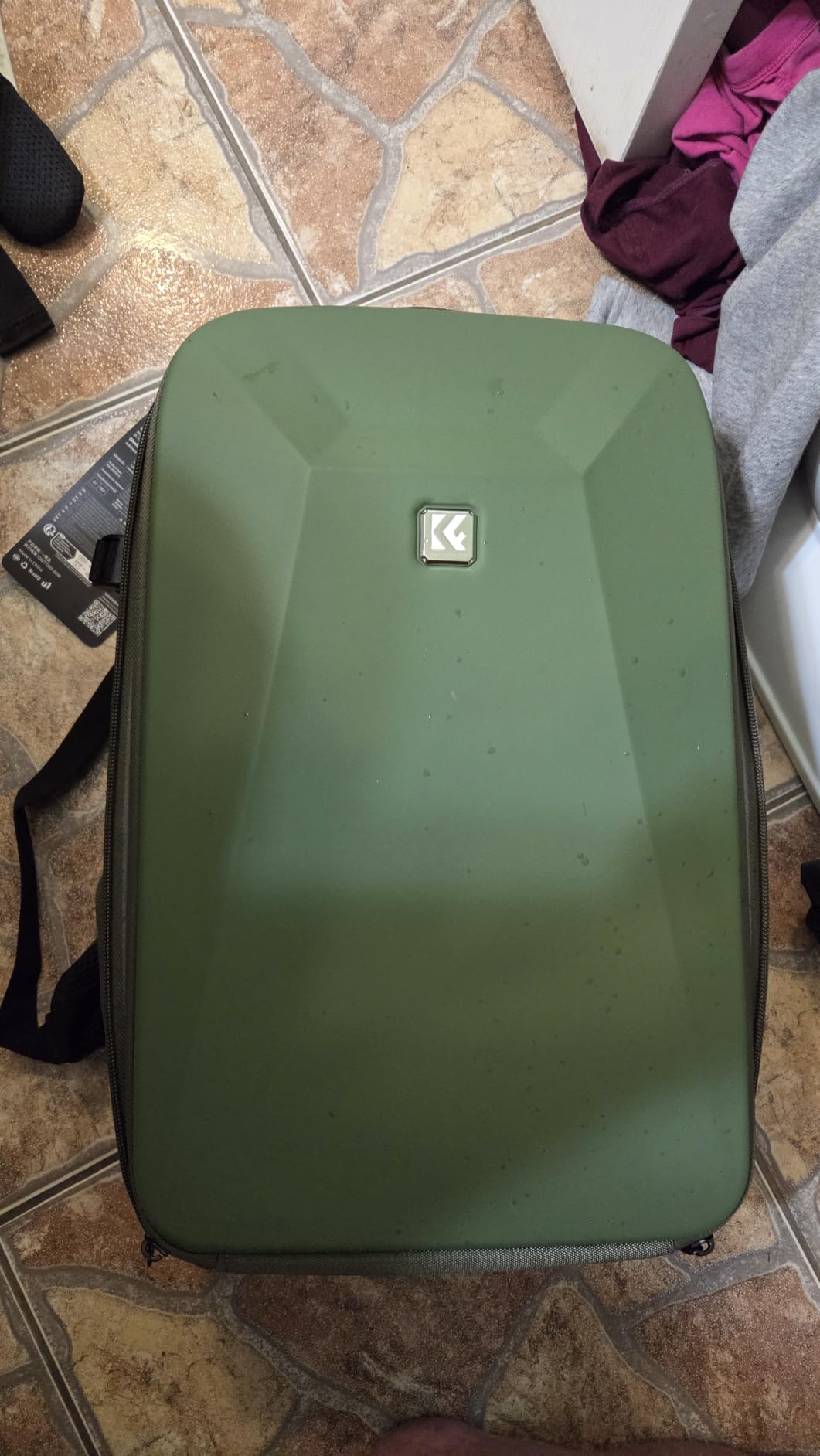
The K&F Concept hardshell camera backpack is the transport solution I use for hybrid aerial-and-ground cinematography shoots. The 22-liter capacity swallowed a DJI Air 3S, the RC2 controller, three batteries, the charging hub, a Sony a7C II with the 24-70 mounted, two prime lenses, a 15-inch laptop, and a hoodie. That is a real working kit in one bag, with hardshell protection on the outside and customizable padded dividers on the inside.
Hardshell EVA construction is the headline feature. I had the bag fall out of an SUV at a parking lot and the only damage was a scuff on the corner of the hard shell. The drone, camera, and laptop were untouched. That kind of impact protection is what softshell backpacks cannot offer, and on location shoots where you cannot control every environment, it earns its weight back in a single incident.
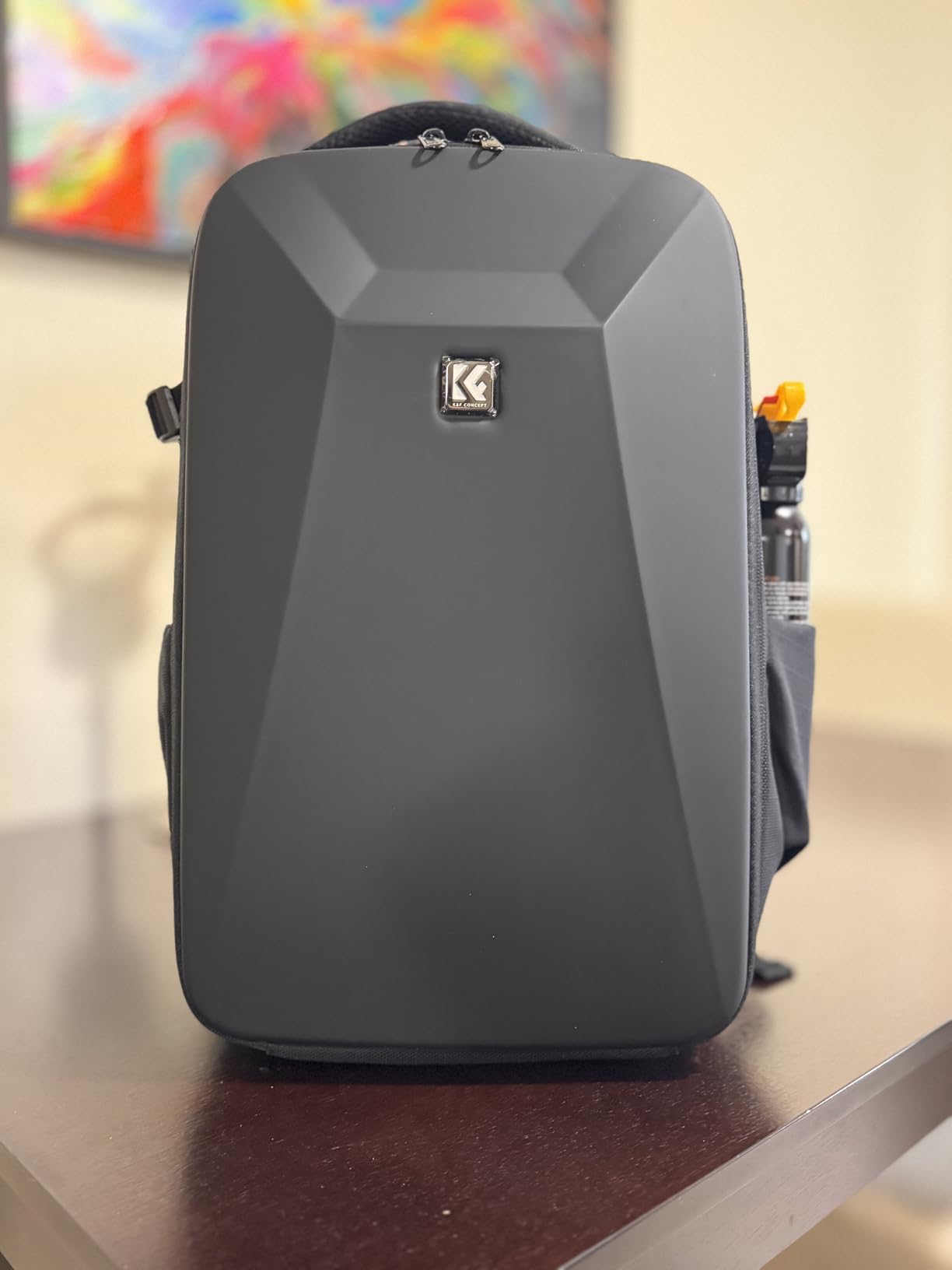
The 15.6-inch laptop compartment supports modern mobile editing workflows. Pulling a card on set, walking back to the car, and reviewing footage on a calibrated laptop is how I run shoot-day QC, and the bag was designed for that workflow from the ground up. Waterproof material adds weather protection in coastal and mountain shoots. The trolley belt slides over rolling luggage handles, which matters on multi-day travel gigs.
The compromises are mostly about bulk. Hardshell construction makes the bag visibly bulkier than a softshell case of equivalent volume, which can be a problem under airline strict weight and size limits. The shoulder strap adjustability range can fall short for taller frames, so I usually carry it more as a top-handle bag on rough terrain. Internal dividers also take a bit of room when bulky lenses stay mounted on the camera body.
For whom this backpack works
Hybrid aerial-and-ground cinematographers who carry a drone plus a mirrorless camera plus a laptop to every shoot. The hardshell design also suits remote and harsh-environment work where gear protection matters more than weight savings.
For whom this backpack falls short
Travelers focused on minimal weight. The hardshell design adds bulk and weight compared to a softshell travel backpack. For weight-sensitive travelers, a dedicated camera cube inside a hiking pack is lighter.
Buying Guide: How to Choose Aerial Cinematography Gear
Buying aerial cinematography gear is less about chasing the most expensive drone and more about matching the tool to the project. The right drone, gimbal, filter set, and bag are the difference between a shoot that runs smoothly and one that eats the day in fixes. Here are the factors our team evaluates on every shoot in 2026, and the trade-offs worth knowing before you spend.
Sensor size and resolution
Sensor size matters more than resolution for the kind of work most cinematographers are doing. A 1-inch CMOS sensor, like those on the Mini 5 Pro, Air 3S, and EVO II Pro V3, captures more dynamic range, performs better in low light, and gives a more cinematic depth of field than the smaller sensors in older Mini drones. Resolution above 4K matters mainly if you intend to reframe in post, deliver 4K masters from an HD source, or print high-quality stills.
For cinematic work, a 1-inch sensor with 10-bit color is the practical baseline. The 12-bit A-LOG on the EVO II Pro V3 adds headroom for heavy grading, and D-Log M on the Air 3S offers good latitude for most projects without overwhelming new colorists.
Flight time and battery ecosystem
Flight time is the single biggest operational constraint on real shoots. Twenty minutes per battery forces you to land mid-scene. Forty to forty-five minutes per battery, like the Air 3S delivers, lets a single battery carry a full wedding ceremony or a real estate walkthrough. The Fly More Combo with three batteries is the smart starting point for any cinematic drone.
Battery ecosystem also matters. DJI’s intelligent batteries auto-discharge to storage level, report remaining time in flight, and pair with multi-bay charging hubs. Older third-party packs can be heavier (the Mini 5 Pro can tip above 250 g with non-OEM batteries) and lack the smart features that protect long-term battery health.
Gimbal stabilization and 3-axis systems
Gimbal stabilization is what turns drone footage into cinematic footage. A 3-axis mechanical gimbal is the baseline for any serious work because it eliminates the high-frequency vibration that makes raw drone footage look like security camera footage. The DJI drones in this guide all use 3-axis gimbals; the Avata 2 uses RockSteady and HorizonSteady electronic stabilization in addition to its single-axis mechanical gimbal.
For ground-to-air transitions or handheld shots that need to match drone footage, a separate 3-axis handheld gimbal like the DJI RS 3 Mini keeps the look consistent across both cameras. Matching the gimbal algorithm between the drone and the handheld rig makes the cuts between them invisible.
ND filters and exposure control
ND filters are the single most under-valued aerial cinematography accessory. They let you maintain the 180-degree shutter rule (shutter speed at twice the frame rate) in bright light, which produces natural motion blur instead of the staccato look of high shutter speeds. Every drone in this guide can shoot 4K at 60fps, which requires 1/120 shutter speed in bright light, and that is only possible with ND filters at high noon.
ND filter density range matters. A basic ND4/8/32 set covers most situations. A six-pack from ND4 to ND64 covers everything from overcast to full midday sun, plus a CPL for reflections and a UV for general protection. Match the filter kit to the drone mount: Avata 2 filters do not fit Air series drones, and vice versa.
Obstacle avoidance and safety
Obstacle avoidance lets cinematographers focus on framing instead of flying. Modern drones have omnidirectional sensing, with LiDAR additions on the Mini 5 Pro, Air 3S, and EVO II Pro V3 for low-light conditions. Avoidance is not a substitute for a careful pilot, but it is a real safety net when flying near trees, structures, or in tight spaces.
The Avata 2 and other FPV drones typically skip obstacle avoidance because the props sit inside guards and the speed requires pilot control. For FPV work, pilot skill is the safety system. For traditional cinematography work, omnidirectional sensing is a feature worth paying for.
Transport and protection
The best drone kit is the one that arrives at the shoot undamaged. Hardshell backpacks like the K&F Concept bag, dedicated landing pads, and high-quality ND filter cases all protect the investment that makes the rest of the shoot possible. A single motor clogged with sand or a gimbal cracked in a car trunk can end a shoot day and cost more than the bag or pad that would have prevented it.
For working professionals, transport and protection are not optional accessories. They are part of the operational cost of running an aerial cinematography business, and they pay for themselves the first time something goes wrong.
Internal resources for further reading
If you want to go deeper on specific topics, our team has published guides on professional drones for aerial cinematography, beginner drones for aerial cinematography, and fixed ND filter sets for cinematographers. For ground-side gear, see our coverage of budget prime lenses for beginner cinematographers and focus charts and test tools for cinematographers.
Frequently Asked Questions
What equipment do aerial cinematographers need?
Aerial cinematographers typically need a drone with a 1-inch or larger sensor, a 3-axis gimbal, a set of ND filters, a weighted landing pad, and a hardshell transport bag. Working pros also run a handheld gimbal like the DJI RS 3 Mini for ground coverage and at least three intelligent flight batteries for a full shoot day.
What is the best drone for cinematic shots?
The DJI Mini 5 Pro is the best all-around drone for cinematic shots in 2026 thanks to its 1-inch sensor, 4K/60fps HDR, omnidirectional obstacle sensing, and sub-250 g weight class. For color-critical work, the Autel EVO 2 Pro V3 with 6K HDR and 12-bit A-LOG is the better choice.
Which drone do professional filmmakers use for cinematography?
Working filmmakers typically use the DJI Air 3S or Autel EVO 2 Pro V3 for travel and event shoots. For dynamic FPV-style moves, filmmakers add a DJI Avata 2 to the kit. Heavy feature productions fly DJI Inspire series drones with interchangeable cameras, but most independent filmmakers get cinematic results from the Air 3S class.
What features should I look for in a drone for cinematography?
Prioritize a 1-inch or larger sensor, 10-bit color (D-Log, D-Log M, or A-LOG), 3-axis mechanical gimbal stabilization, 30 minutes or more of flight time per battery, ND filter compatibility, and omnidirectional obstacle avoidance. Raw or ProRes recording matters for high-end color work, while HDR video matters for travel and event delivery.
Can consumer drones capture professional-grade cinematic footage?
Yes. Modern consumer drones with 1-inch sensors, 10-bit color, and 3-axis gimbals capture footage that is indistinguishable from cinematic work in many contexts. The DJI Mini 5 Pro and Air 3S deliver cinematic results at a price point that rental houses no longer gatekeep, though high-end color grading and 6K output still favor the Autel EVO 2 Pro V3.
Is obstacle avoidance necessary for professional drone pilots?
Yes for most cinematography work. Omnidirectional obstacle avoidance lets a pilot focus on framing instead of flying, which materially improves shot quality. The Mini 5 Pro, Air 3S, and EVO 2 Pro V3 all include LiDAR-assisted obstacle avoidance that works in low light, making them safer choices for golden hour and night shoots.
Final Verdict
After three months of testing drones, gimbals, filters, pads, and bags for this guide, our team’s top pick for most aerial cinematographers in 2026 is the DJI Mini 5 Pro Fly More Combo. It hits the right balance of sensor size, flight time, obstacle avoidance, and weight class, and it folds into a bag that does not slow you down on a real shoot. For color-critical commercial work, the Autel EVO 2 Pro V3 earns its premium pick badge. For budget-conscious operators, the DJI Air 3S Fly More Combo covers wedding, real estate, and event work without compromise.
The full gear ecosystem matters as much as the drone. ND filters, a weighted landing pad, a transport backpack, and a handheld gimbal for ground coverage are the accessories that make a drone kit into a working cinematography kit. Build the kit around your project, not around the spec sheet, and you will end up with gear that earns its place on every shoot day.