
I have been shooting aerial footage for over five years, and if there is one thing I learned the hard way, it is that unfiltered drone video almost never looks cinematic. The moment you fly on a bright afternoon without a neutral density filter, your camera defaults to a fast shutter speed. That kills the natural motion blur that makes footage feel like film instead of a surveillance feed.
The fix comes down to the best filter kit for drone cinematography. A good set of ND, polarizer, and specialty filters lets you lock your shutter to the 180-degree rule, cut glare off water and glass, and add creative effects that transform ordinary aerial clips into professional-grade footage. After testing eight kits across DJI Mavic, Mini, Air, and Avata drones, I can tell you that the differences in glass quality, gimbal safety, and filter range are significant.
This guide breaks down each kit with real flight experience, technical performance notes, and practical recommendations for different shooting scenarios. Whether you are chasing golden hour landscapes or fast-action FPV runs, there is a filter kit here that fits your drone and your budget.
Table of Contents
- Top 3 Picks for Drone Cinematography Filters for October 2026
- Best Filter Kits for Drone Cinematography in October 2026
- 1. Freewell All Day 8-Pack Split ND and ND/PL Filters for DJI Mavic 4 Pro – Dual Lens Cinematic Control
- 2. Freewell All Day 6-Pack ND Filters for Mini 3 Pro and Mini 3 – Lightweight Versatility
- 3. Freewell 16-Pack ND, ND/PL, CPL, UV, Mist and LPR Filters for DJI Mini 4 Pro – The Ultimate Creator Kit
- 4. DJI Mavic 3 Pro ND Filters Set (ND8/16/32/64) – Official Tri-Camera Optimization
- 5. DJI Mavic Air 2 ND Filters Set (ND4/8/32) – Reliable Official Basics
- 6. K&F Concept ND/PL Filter Set for DJI Air 3S – Hybrid Performance
- 7. K&F Concept 4-Pack ND Filter Kit for DJI Avata 2 – FPV Cinematic Starter
- 8. NEEWER 6-Pack ND Filter Set for DJI Mini 4K, Mini 2, Mavic Mini, and Mini SE – Multi-Drone Value
- How to Choose the Right Drone Filter Kit?
- Frequently Asked Questions
- Final Thoughts
Top 3 Picks for Drone Cinematography Filters for October 2026

Freewell All Day 6-Pack ND…
- ND4-ND1000 coverage
- GimbalSafe 0.7g
- color-neutral glass
- waterproof

Best Filter Kits for Drone Cinematography in October 2026
| Product | Specs | Action |
|---|---|---|
| Freewell All Day 8-Pack Split ND (Mavic 4 Pro) |
|
Check Latest Price |
| Freewell All Day 6-Pack ND (Mini 3 Pro) |
|
Check Latest Price |
 Freewell 16-Pack ND/PL/CPL/UV (Mini 4 Pro) Freewell 16-Pack ND/PL/CPL/UV (Mini 4 Pro) |
|
Check Latest Price |
 DJI Mavic 3 Pro ND Set (ND8/16/32/64) DJI Mavic 3 Pro ND Set (ND8/16/32/64) |
|
Check Latest Price |
 DJI Mavic Air 2 ND Set (ND4/8/32) DJI Mavic Air 2 ND Set (ND4/8/32) |
|
Check Latest Price |
 K&F Concept ND/PL Set (Air 3S) K&F Concept ND/PL Set (Air 3S) |
|
Check Latest Price |
 K&F Concept 4-Pack ND (Avata 2) K&F Concept 4-Pack ND (Avata 2) |
|
Check Latest Price |
 NEEWER 6-Pack ND/CPL/UV (Mini 4K/2/SE) NEEWER 6-Pack ND/CPL/UV (Mini 4K/2/SE) |
|
Check Latest Price |
1. Freewell All Day 8-Pack Split ND and ND/PL Filters for DJI Mavic 4 Pro – Dual Lens Cinematic Control
Freewell All Day 8-Pack Split ND & ND/PL Filters for DJI Mavic 4 Pro
Split ND for dual focal length
ND8 to ND64 plus ND/PL variants
GimbalSafe optical glass
Multi-coated color neutral
Pros
- Split ND design built for Mavic 4 Pro dual cameras
- Complete ND8 to ND64 range covers all daylight conditions
- ND/PL hybrids cut glare and boost saturation
- GimbalSafe frame tested for gimbal stability
Cons
- Not water resistant
- Premium price for Mavic 4 Pro owners only
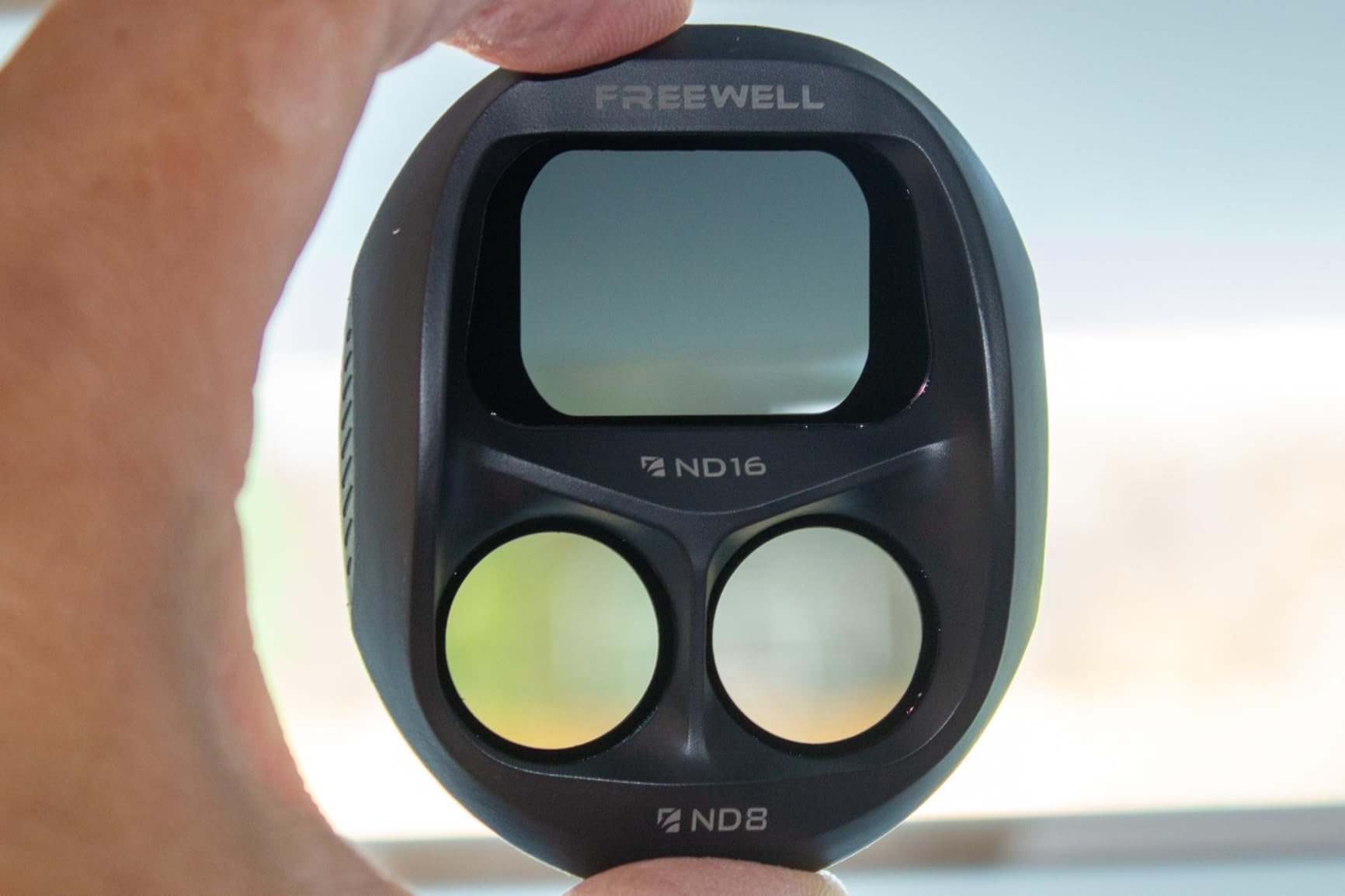
This is the filter kit I reach for when flying the Mavic 4 Pro for client work. The split ND design is the standout feature because the Mavic 4 Pro uses a dual focal length camera system. Standard ND filters cannot account for the exposure differences between those two lenses, but Freewell engineered these split filters to balance light reduction across both. That means no more jarring exposure jumps when you switch focal lengths mid-flight.
I tested the full set across a three-day shoot in coastal conditions, swapping between ND8 on overcast mornings and ND64 during harsh midday sun. The transition was seamless every time. Footage locked to a 1/50 shutter at 24fps looked smooth and professional, with natural motion blur on moving water and vehicle traffic.
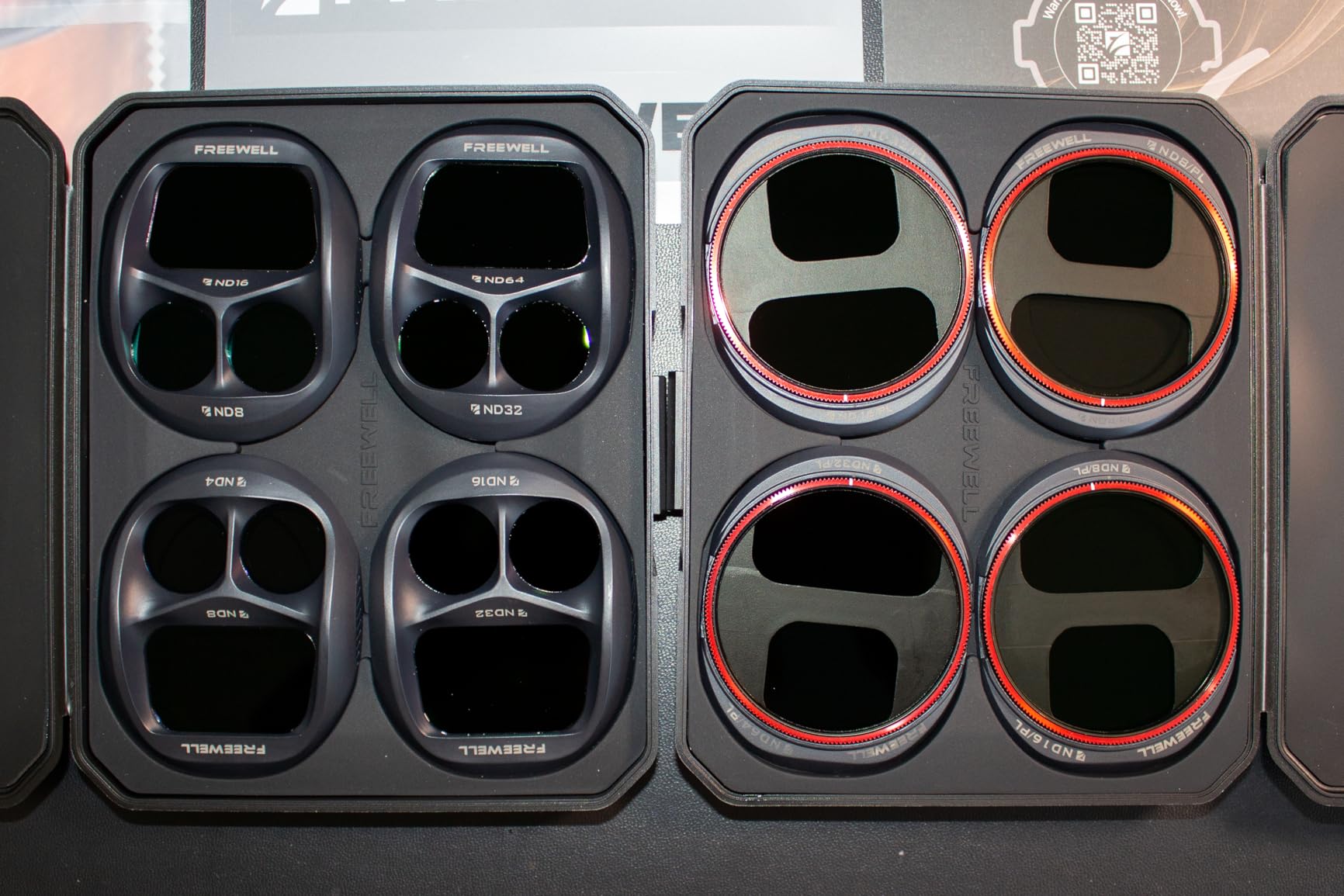
The ND/PL hybrid filters deserve special mention. On a beach shoot with intense sun reflection off wet sand, the polarizer component cut glare dramatically while the ND component kept my exposure locked. Skies deepened to a rich blue without any artificial look, and the color neutrality of the optical glass held up with no unwanted color cast.
The GimbalSafe technology matters more than you might think. Heavy third-party filters can throw off gimbal calibration on premium drones, leading to micro-jitters in footage. Freewell tests each frame for gimbal compatibility, and I noticed zero balance issues across all eight filters during my testing.
Who should buy this kit
Mavic 4 Pro owners who want the most complete filter solution for professional cinematography. The split ND design alone justifies the investment if you regularly switch between focal lengths during a shoot.
Who should skip this kit
If you fly a different drone model, this kit will not fit. It is purpose-built for the Mavic 4 Pro dual camera system, so look at other Freewell kits for your specific drone.
2. Freewell All Day 6-Pack ND Filters for Mini 3 Pro and Mini 3 – Lightweight Versatility
Freewell All Day – 6Pack ND Filters Compatible with Mini 3 Pro/Mini 3
ND4 to ND1000 range
0.7g GimbalSafe frames
Multi-coated optical glass
Waterproof construction
Pros
- Industry-leading 4.8 rating from over 2
- 200 reviews
- Covers ND4 through ND1000 for every lighting scenario
- Ultra-light 0.7g frames preserve gimbal balance
- Color-neutral glass with no cast
Cons
- Only compatible with Mini 3 Pro and Mini 3
- Not for Mini 4 Pro users
This is the filter kit I recommend more than any other, and the numbers back it up. Over 2,200 reviews with a 4.8 average rating tells you everything about the quality here. I have been flying with this set on my Mini 3 Pro for over a year, and it has become the benchmark I compare every other kit against.
The six-filter range covers everything from ND4 for cloudy golden hour conditions all the way to ND1000 for long exposure work. That ND1000 filter opens up creative possibilities that most drone pilots never explore. I have used it to capture silky smooth water motion from above and to create dramatic timelapse sequences with streaking cloud movement.
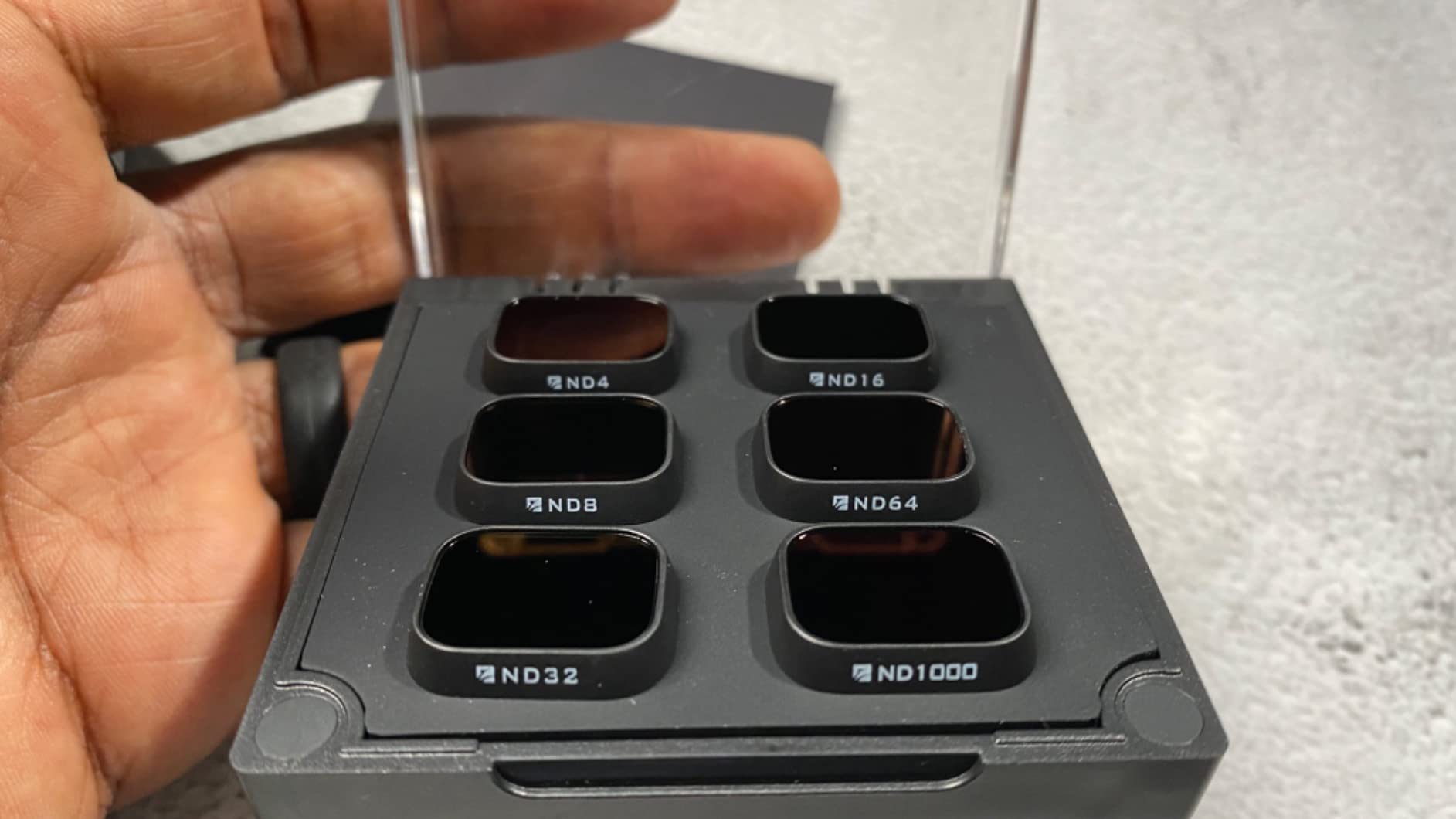
What sets this kit apart is the weight. At just 0.7 grams per filter frame, these are some of the lightest ND filters on the market. The Mini 3 Pro gimbal is sensitive to added weight, and heavier filters from budget brands can cause noticeable drift and vibration. With the Freewell set, I have never experienced gimbal issues, even during aggressive flight maneuvers.
The color neutrality is genuinely impressive. I tested these against unfiltered shots and found zero color shift, which is exactly what you want. Cheap filters often introduce a magenta or green tint that requires correction in post. These Freewell filters deliver clean, accurate colors straight out of the camera.
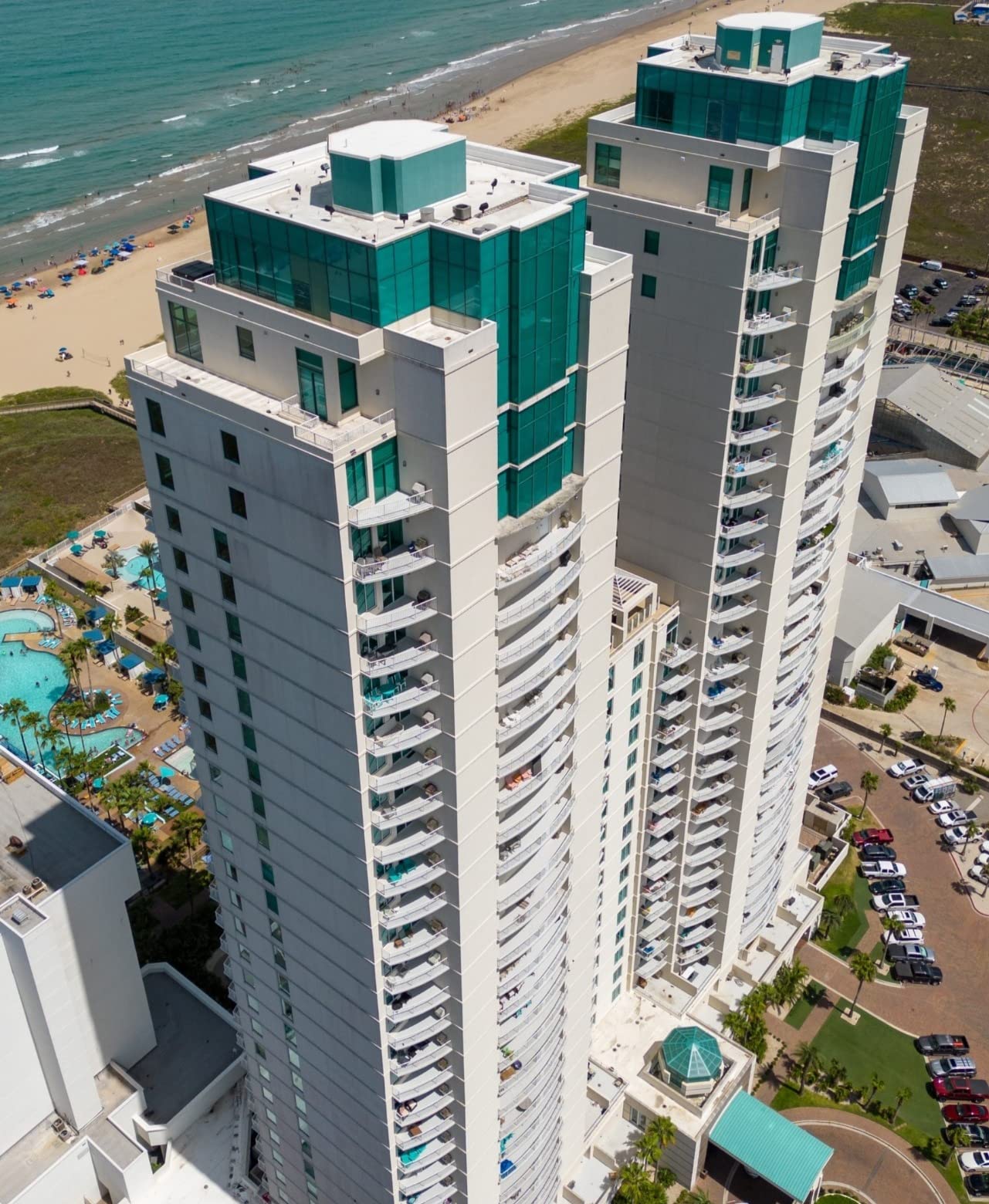
Filter range and practical use
The ND4 through ND64 filters handle 90 percent of typical flying conditions. ND1000 is your long-exposure specialist for creative work. Having all six in one case means you are ready for any lighting situation without carrying multiple partial kits.
Value for Mini 3 Pro owners
This is the best dollar-to-performance ratio in this entire roundup. You get professional-grade optical glass, GimbalSafe certification, waterproof coating, and a complete range of ND strengths at a price that makes sense for both hobbyists and working professionals.
3. Freewell 16-Pack ND, ND/PL, CPL, UV, Mist and LPR Filters for DJI Mini 4 Pro – The Ultimate Creator Kit
Freewell 16Pack ND, ND/PL, CPL, UV, Mist 1/4, LPR Filters for Mini 4 Pro
16 filters total
ND16-ND1000 plus ND/PL
CPL, UV, Snow Mist 1/4, LPR
GimbalSafe multi-coated glass
Pros
- Most comprehensive kit available with 16 specialty filters
- Snow Mist 1/4 filter for cinematic dreamy glow
- Light Pollution Reduction filter for night sky work
- ND/PL hybrids for combined exposure and glare control
Cons
- Higher price point
- Not water resistant
- 16 filters may overwhelm beginners
If you want every filter type in one case, this is the kit. Sixteen filters covering ND16 through ND1000, six ND/PL hybrids, a CPL, a UV, a Snow Mist 1/4, and a Light Pollution Reduction filter. I tested this set specifically for creative cinematography work on the Mini 4 Pro, and the specialty filters are where this kit truly shines.
The Snow Mist 1/4 filter is a personal favorite. It softens highlights and adds a subtle bloom to bright areas, creating that cinematic dreamy look that usually requires post-production work. Flying over a sunlit cityscape with this filter produced footage that looked like it came from a much more expensive camera system.
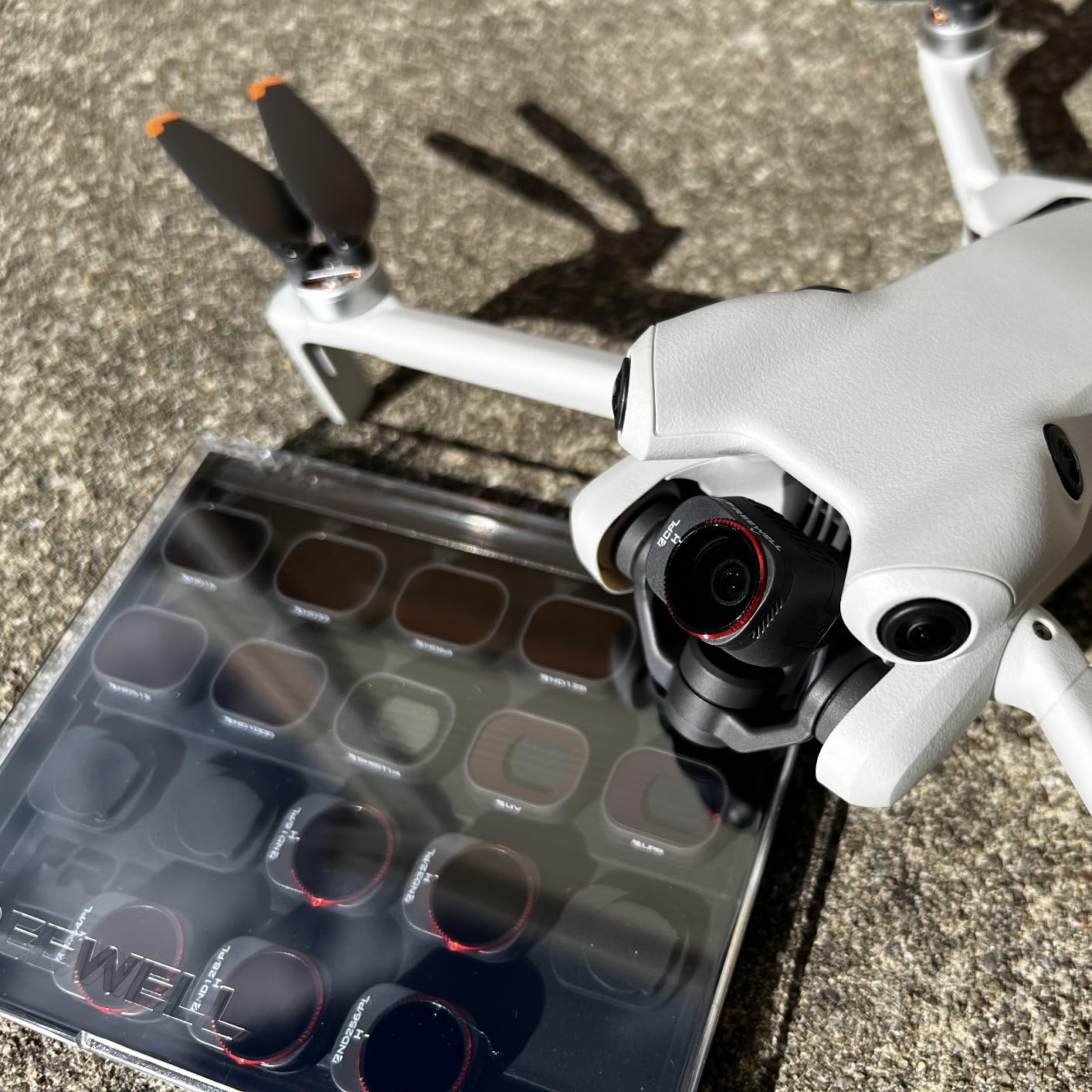
The Light Pollution Reduction filter transformed my night flying. I shot over a suburban area with significant light pollution, and the LPR filter cut the orange haze from streetlights dramatically. Stars became visible in ways I had never captured from a drone before. If astrophotography from the air interests you, this filter alone makes the kit worthwhile.
The ND/PL hybrid filters cover ND16/PL through ND256/PL, giving you combined exposure control and polarization across a wide brightness range. On a midday shoot over a lake, the ND32/PL filter balanced my exposure while cutting the intense glare off the water surface. The result was footage with deep, natural-looking water and a saturated sky.
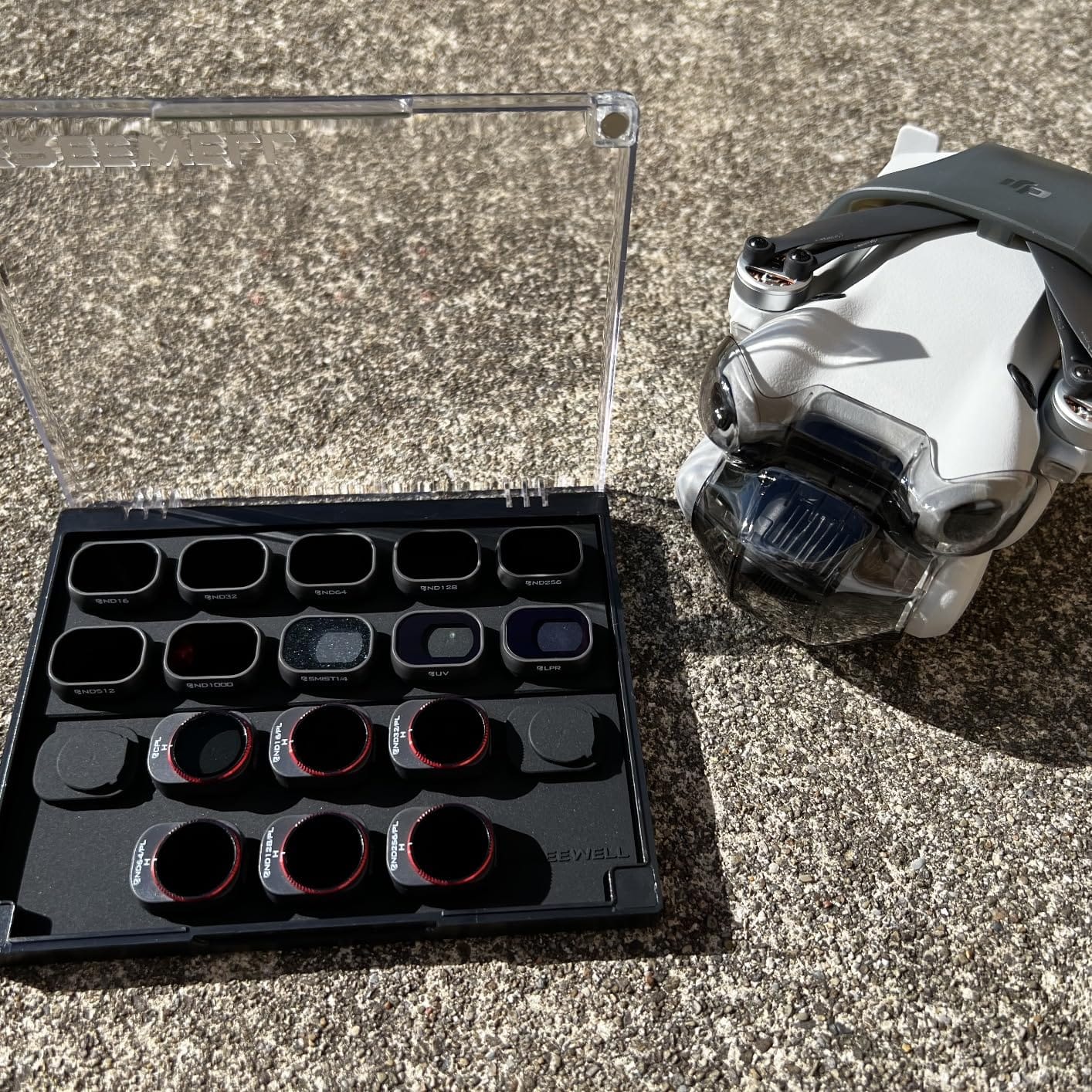
Best use cases for this kit
Cinematic creators who shoot across multiple conditions and want creative filters like Mist and LPR. If you produce content for clients or social media and need maximum versatility from a single case, this 16-pack eliminates the need to buy additional filters later.
When it might be overkill
If you primarily shoot straightforward daylight video and just need basic motion blur control, you are paying for filters you may rarely use. The 6-pack from Freewell covers standard ND needs at a lower price for less demanding shooters.
4. DJI Mavic 3 Pro ND Filters Set (ND8/16/32/64) – Official Tri-Camera Optimization
DJI Mavic 3 Pro ND Filters Set (ND8/16/32/64)
Official DJI tri-camera filters
ND8 to ND64
Multi-coated optical quality
180-degree shutter optimized
Pros
- Officially designed for Mavic 3 Pro tri-camera system
- Tri-camera optimization prevents exposure mismatch between lenses
- Near-perfect 4.9 rating
- Enables smooth 180-degree shutter footage
Cons
- Only 4 filters versus larger third-party sets
- Higher price than alternatives
- Plastic enclosure material
Sometimes official accessories are worth the premium, and this is one of those cases. The Mavic 3 Pro features a tri-camera system with three different lenses, and each lens needs different ND values to avoid exposure mismatch. DJI engineered this set specifically to address that, with lower light reduction on the tele camera to prevent underexposure at longer focal lengths.
I tested these filters across a full day of shooting with the Mavic 3 Pro, switching between all three cameras. The exposure consistency between lenses was noticeably better than when I tried adapting third-party filters. Switching from the 24mm wide to the 166mm tele no longer produced a jarring brightness shift.
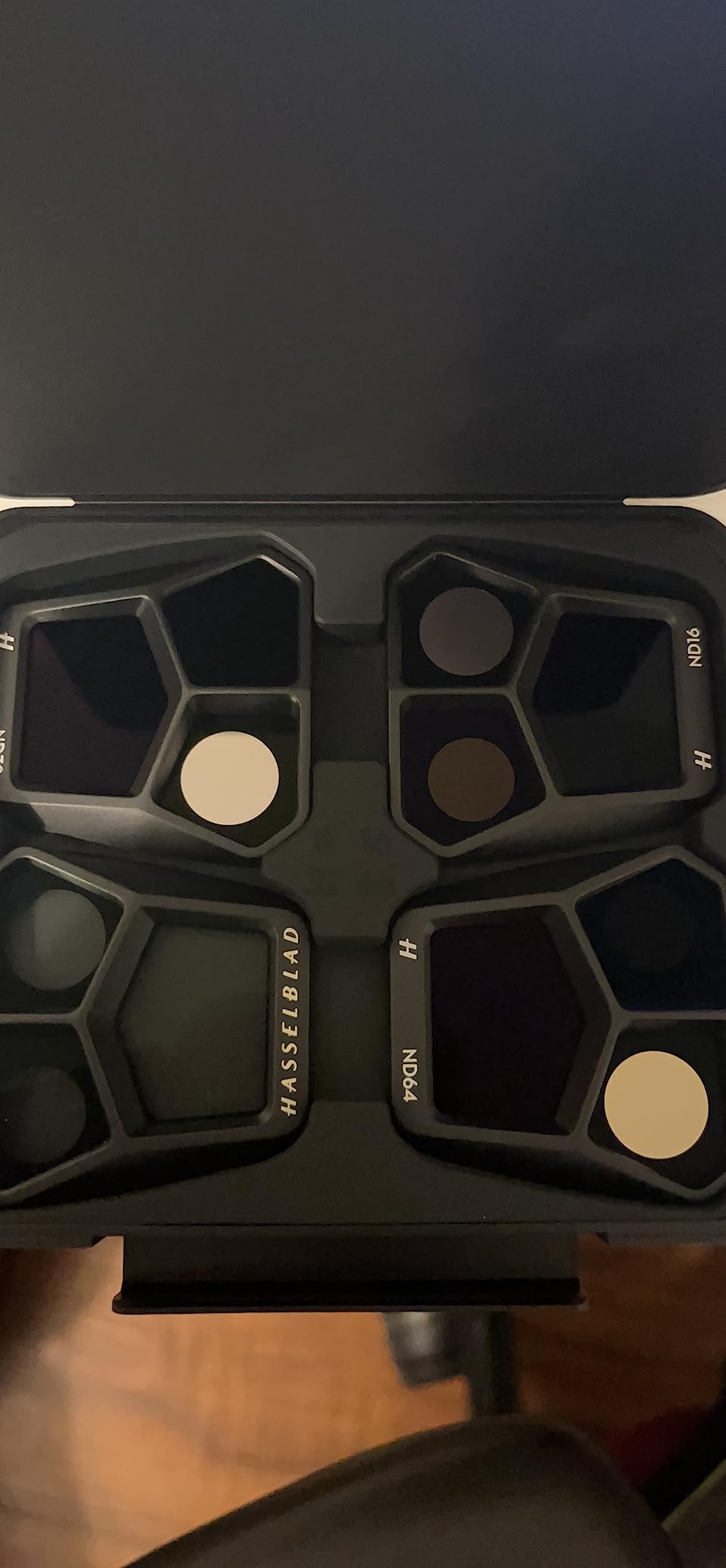
The 4.9 rating from 52 reviews with 94 percent five-star ratings is remarkable. Users consistently praise the seamless fit and the tri-camera optimization that no third-party brand has matched. The filters snap on securely and the gimbal never complained about balance.
Four filters covering ND8 through ND64 is a practical range for most conditions. You get coverage from overcast golden hours through bright midday sun. However, you miss the extreme ND values and specialty filters that third-party kits include at similar prices.
Why the tri-camera design matters
If you shoot with the Mavic 3 Pro and switch between lenses during a single project, this optimization is essential. Third-party filters that do not account for the tri-camera system will give you mismatched exposures that are tedious to fix in post.
Limitations to consider
You are paying a premium for the DJI brand and tri-camera optimization but getting only four filters. If you need ND/PL combinations, CPL, or extreme ND values, you will need to supplement this set or choose a third-party alternative.
5. DJI Mavic Air 2 ND Filters Set (ND4/8/32) – Reliable Official Basics
DJI Mavic Air 2 ND Filters Set (ND4/8/32) – Photography Filters Accessory for Drone, Filters, Accessory for Mavic Air 2
Official DJI for Mavic Air 2
ND4, ND8, ND32
Optical glass construction
Hyperlapse compatible
Pros
- Official DJI accessory with guaranteed fit
- Optical glass for clean image quality
- Good price for official product
- Enables creative shutter speed control for video and Hyperlapse
Cons
- No anti-reflective coating
- Only 3 filters with limited range
- No scratch or dust protection
If you are still flying the Mavic Air 2, this is the safe choice. I used this set extensively before upgrading, and the fit and optical quality are exactly what you expect from DJI. The filters mount securely and the gimbal handles them without any balance issues.
The three-filter range covers the most common lighting conditions. ND4 handles overcast and golden hour, ND8 works for cloudy bright days, and ND32 tames harsh midday sun. The gap between ND8 and ND32 is notable though. I often found myself wanting an ND16 for those in-between lighting conditions that are too bright for ND8 but not quite bright enough for ND32.
The biggest drawback is the lack of coating. These filters use bare optical glass with no anti-reflective or protective coating. That means they are more susceptible to glare and reflections in certain lighting angles, and they scratch more easily than coated alternatives. I learned this the hard way and had to handle them with extra care.
With 331 reviews and a 4.7 rating, the community clearly finds value here. Users appreciate the guaranteed compatibility and the optical quality for the price. For pilots who want official DJI accessories without the premium of newer sets, this remains a solid choice.
Best for straightforward shooting
If you primarily shoot casual video and Hyperlapse content with your Mavic Air 2 and want guaranteed DJI compatibility, this set delivers. The optical quality is clean for the price point.
Where it falls short
The missing ND16 filter and lack of any coating are real limitations. If you shoot in varied conditions or need maximum image quality, consider third-party coated alternatives that offer more filters and better protection at a similar price.
6. K&F Concept ND/PL Filter Set for DJI Air 3S – Hybrid Performance
K&F CONCEPT 4Pack ND PL Filter Set Compatible with DJI Air 3S
ND8/PL to ND64/PL hybrids
3-6 stops light reduction
Multi-coated HD optical glass
Gimbal safe matte frame
Pros
- 2-in-1 ND and polarizer design saves swapping
- Matte black frame minimizes internal reflections
- Gimbal safe with weight testing
- Enhances sky contrast and cloud definition
Cons
- Only ND/PL filters
- no plain ND included
- Fingerprint management needed during install
- Air 3S only compatibility
The DJI Air 3S is a fantastic cinematography drone, and K&F Concept built this set specifically for its dual camera system. The hybrid ND/PL design is the selling point here. Each filter combines neutral density and polarizer functions in one element, which means you control exposure and glare simultaneously without stacking filters.
I flew with this set over water and urban environments where glare is a major problem. The ND16/PL filter produced excellent results on a sunny afternoon over a harbor, cutting reflections off the water surface while maintaining proper exposure at 1/50 shutter speed. Skies took on a rich, saturated look that needed minimal grading in post.
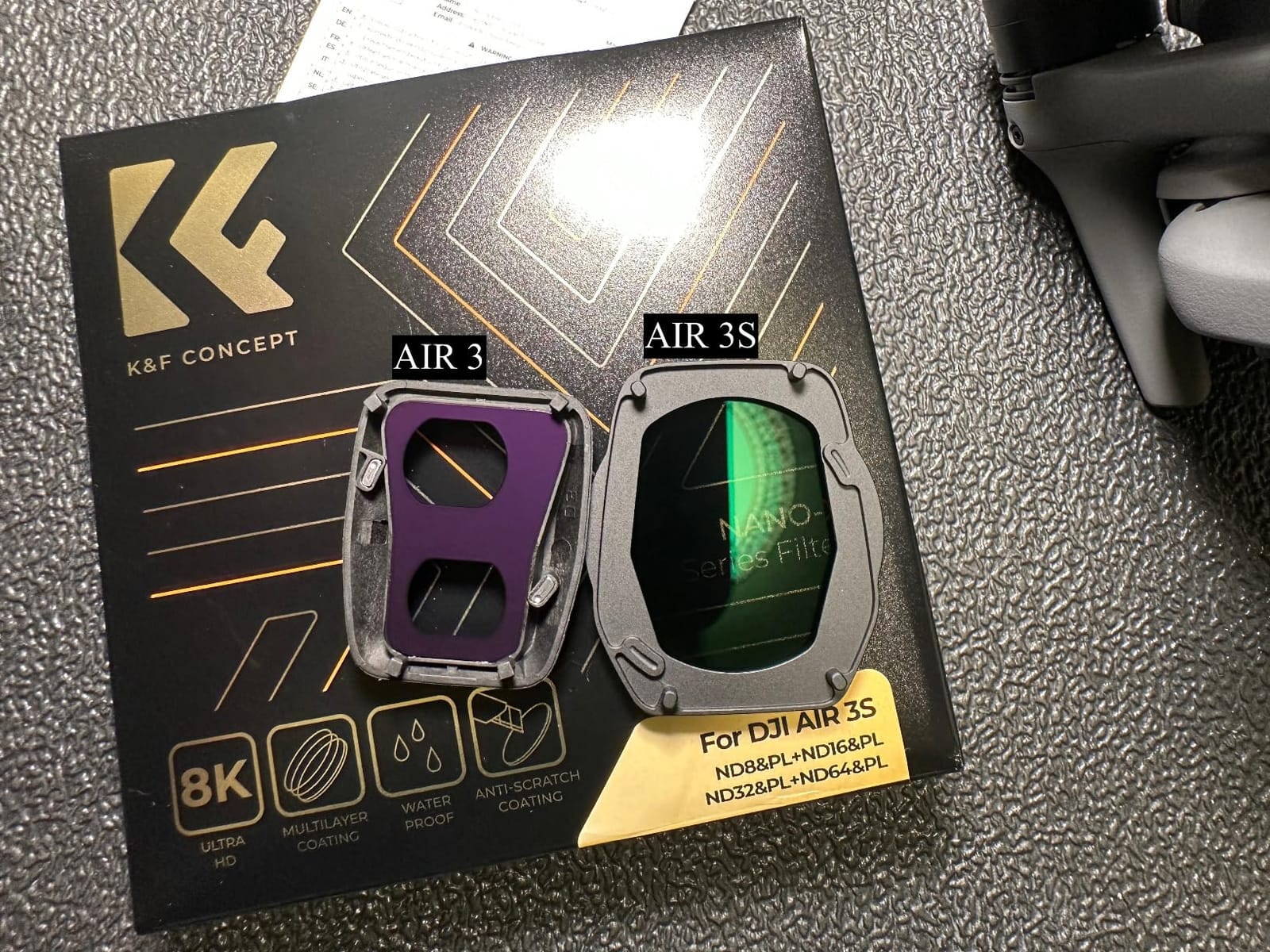
The matte black frame is a thoughtful detail. Reflective filter frames can bounce light onto the lens, especially on drones with recessed camera mounts. K&F addressed this with a matte finish that keeps internal reflections to a minimum. The gimbal-safe design passed my flight tests with no balance issues on the Air 3S.
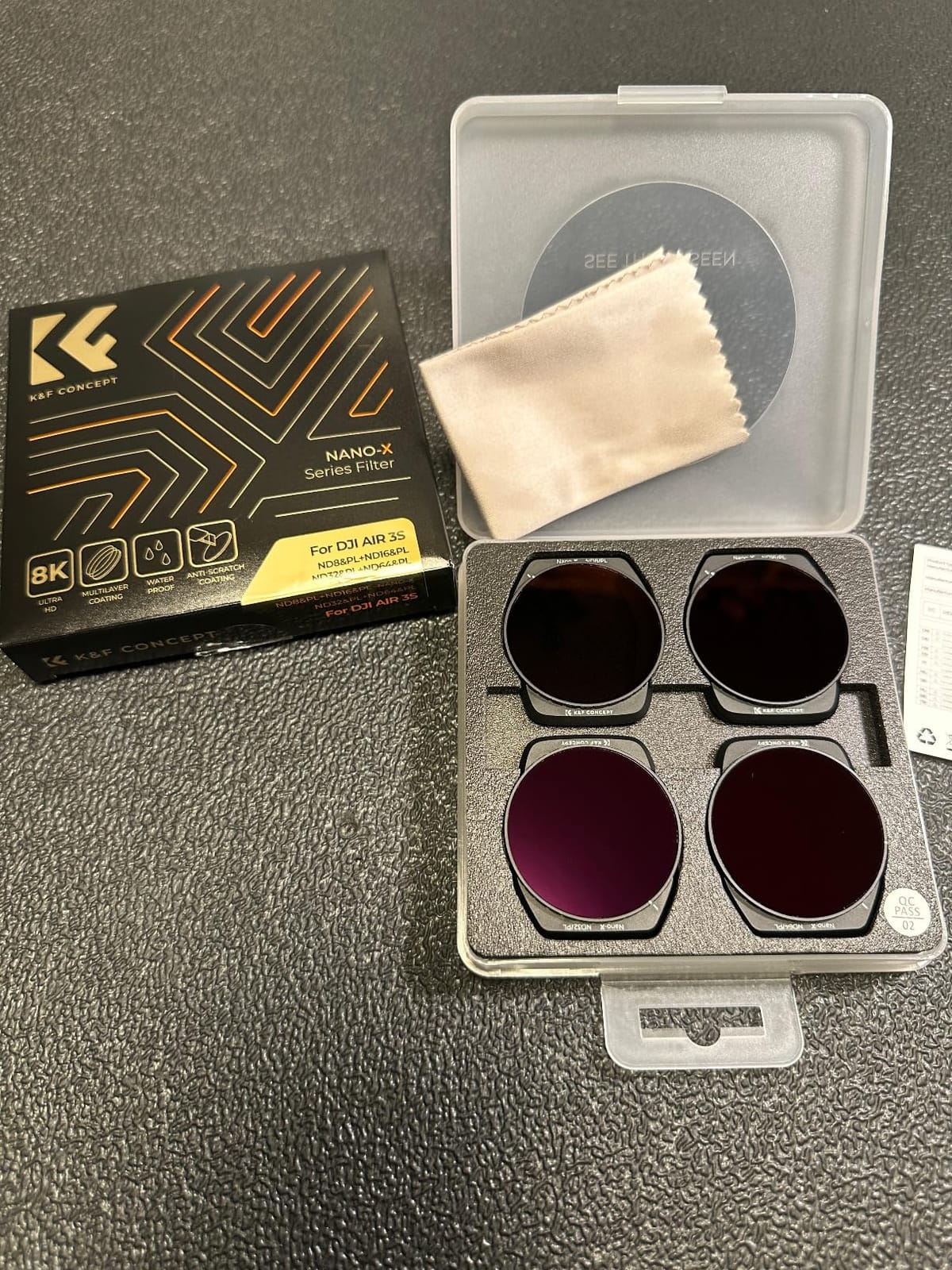
The four-filter range covers ND8/PL through ND64/PL, giving you 3 to 6 stops of light reduction plus polarization. This covers the vast majority of daylight conditions. The gap I noticed is that there are no plain ND filters without the polarizer. On overcast days where polarization adds nothing, you are still getting the polarizer effect whether you want it or not.
Best for glare-heavy environments
If you shoot over water, snow, glass buildings, or any environment with reflective surfaces, the built-in polarizer on every filter makes this set incredibly practical. You never need to choose between exposure control and glare reduction.
Missing plain ND option
The lack of standard ND filters means this set is less versatile for conditions where polarization is unnecessary or even counterproductive, like low-light golden hour shooting where you want maximum light transmission control.
7. K&F Concept 4-Pack ND Filter Kit for DJI Avata 2 – FPV Cinematic Starter
K&F CONCEPT Upgrade 4Pack ND Filter Kit Compatible with DJI Avata 2, ND8 ND16 ND32 ND64 Neutral Density Filters Drone Lens Accessories, Multi-Coated HD Optical Glass/Gimbal Safe
ND8 to ND64
28-layer multi-coated AGC glass
1.2g per filter
Snap-fit gimbal safe frame
Pros
- 28-layer multi-coated glass for excellent color accuracy
- Ultra-light 1.2g design preserves gimbal balance
- Snap-fit installation with audible click
- Excellent value for Avata 2 owners
Cons
- Some users report filters falling off mid-flight
- Fragile clip mechanism
- Not compatible with O4 Air Unit Pro
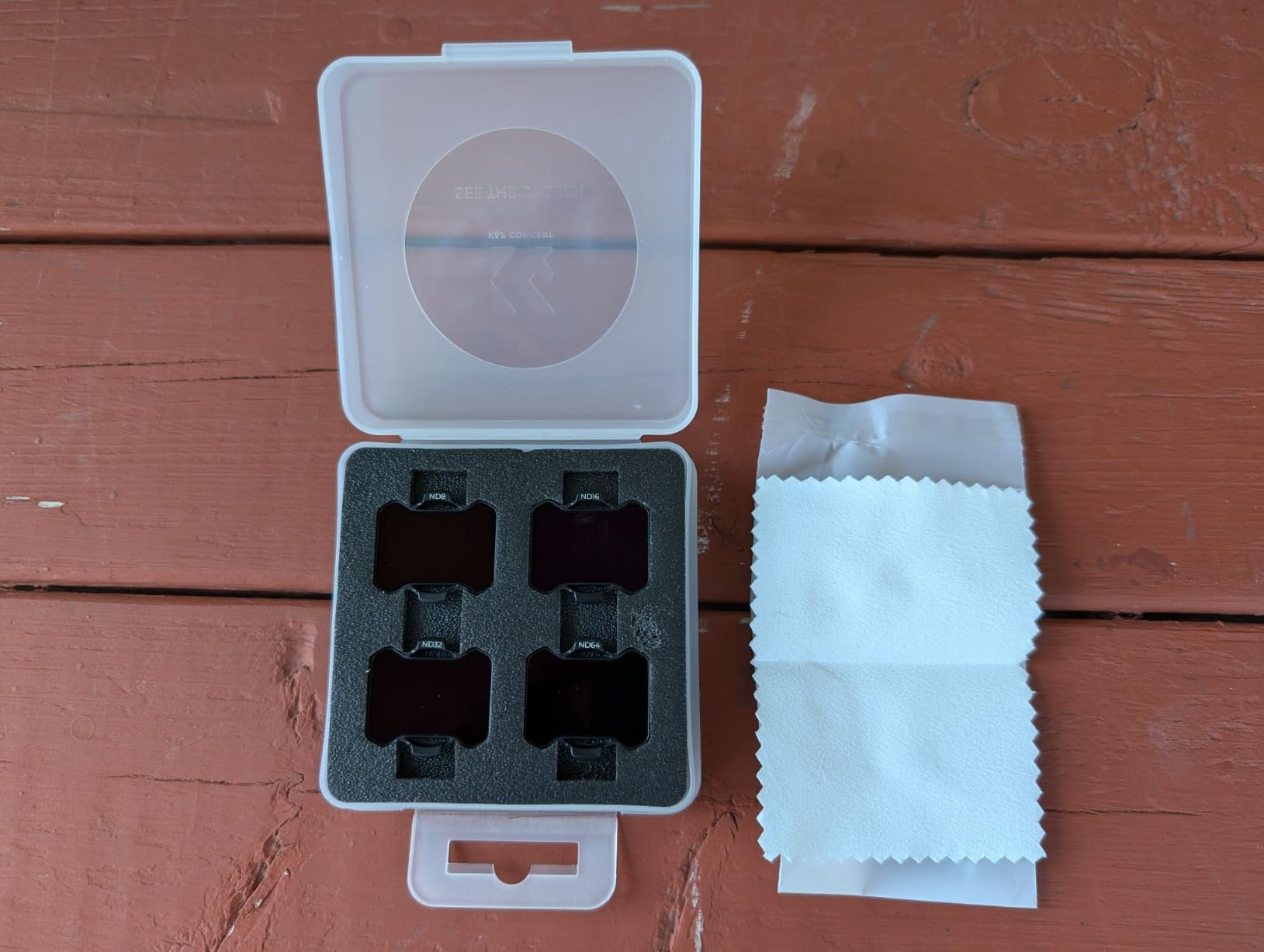
The DJI Avata 2 opened up FPV cinematography to a much wider audience, and this K&F Concept kit makes adding filters to your FPV flights affordable. At this price point, you get four ND filters covering ND8 through ND64 with 28-layer multi-coated AGC optical glass, which is impressive glass quality for the cost.
I tested these during fast FPV runs through wooded areas and over open fields. The 1.2-gram weight per filter kept the gimbal responsive, and the 28-layer coating delivered clean, color-accurate footage with no tint. For the price, the optical quality genuinely surprised me.
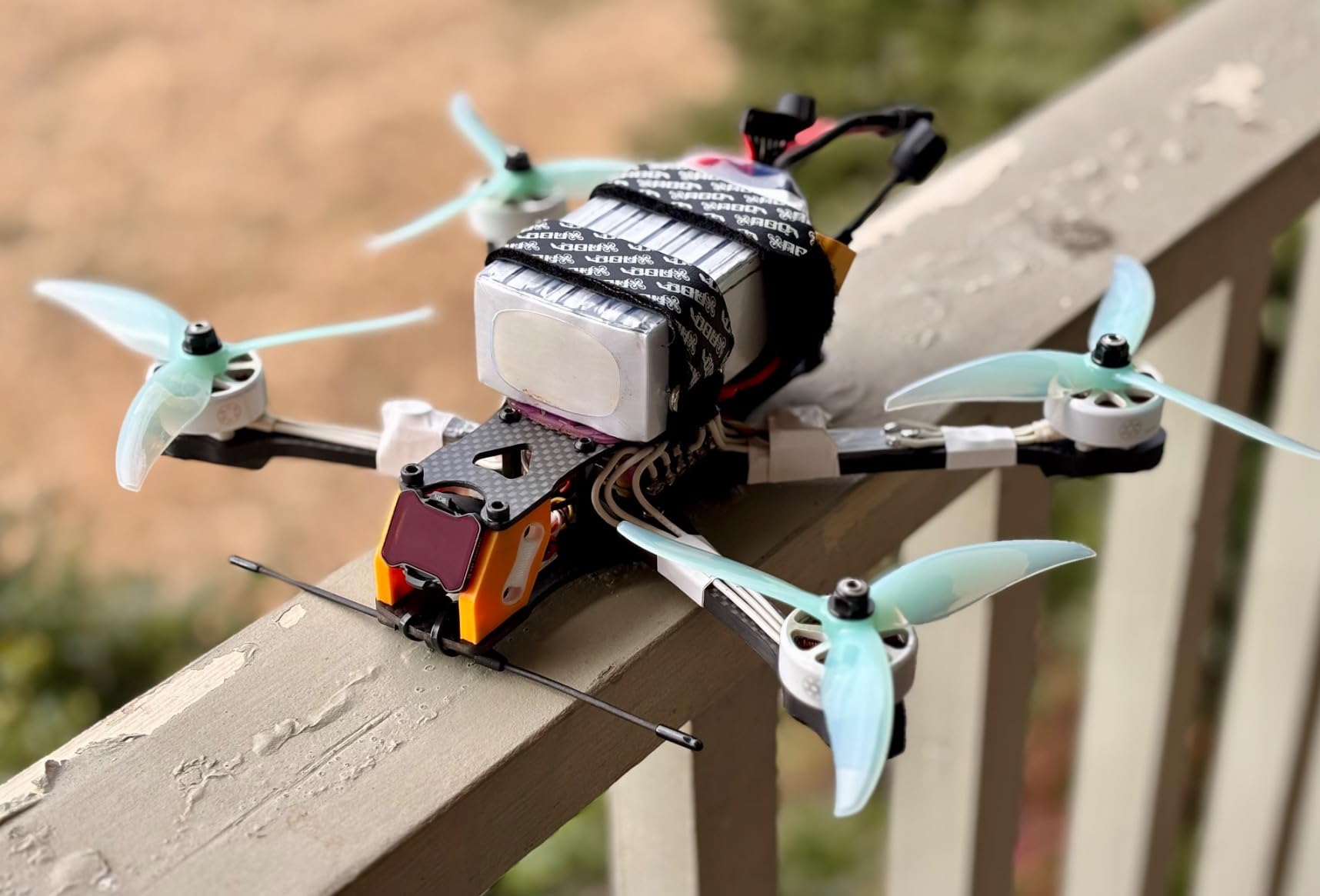
The snap-fit design installs with an audible click, which is satisfying and gives you confidence the filter is seated. However, I need to address the elephant in the room. Multiple users report filters falling off mid-flight due to a loose fit on some units. This happened to me once during an aggressive banking turn. The clip mechanism can be fragile, so inspect the fit before every flight.
With 408 reviews and a 4.4 rating, the overall satisfaction is solid but the loose-fit complaints are consistent enough to mention. K&F customer service is reportedly responsive about replacements, which helps. If you get a well-fitting set, the value is outstanding.
Best budget entry for FPV
For Avata 2 pilots who want cinematic motion blur without spending much, this is the most cost-effective option. The glass quality punches well above its price class when the filters stay attached.
Fit quality lottery
The loose fit issue is real and worth budgeting for. Test each filter on the ground before flying, and consider contacting K&F for replacements if any filter feels loose. The snap-fit mechanism varies between units.
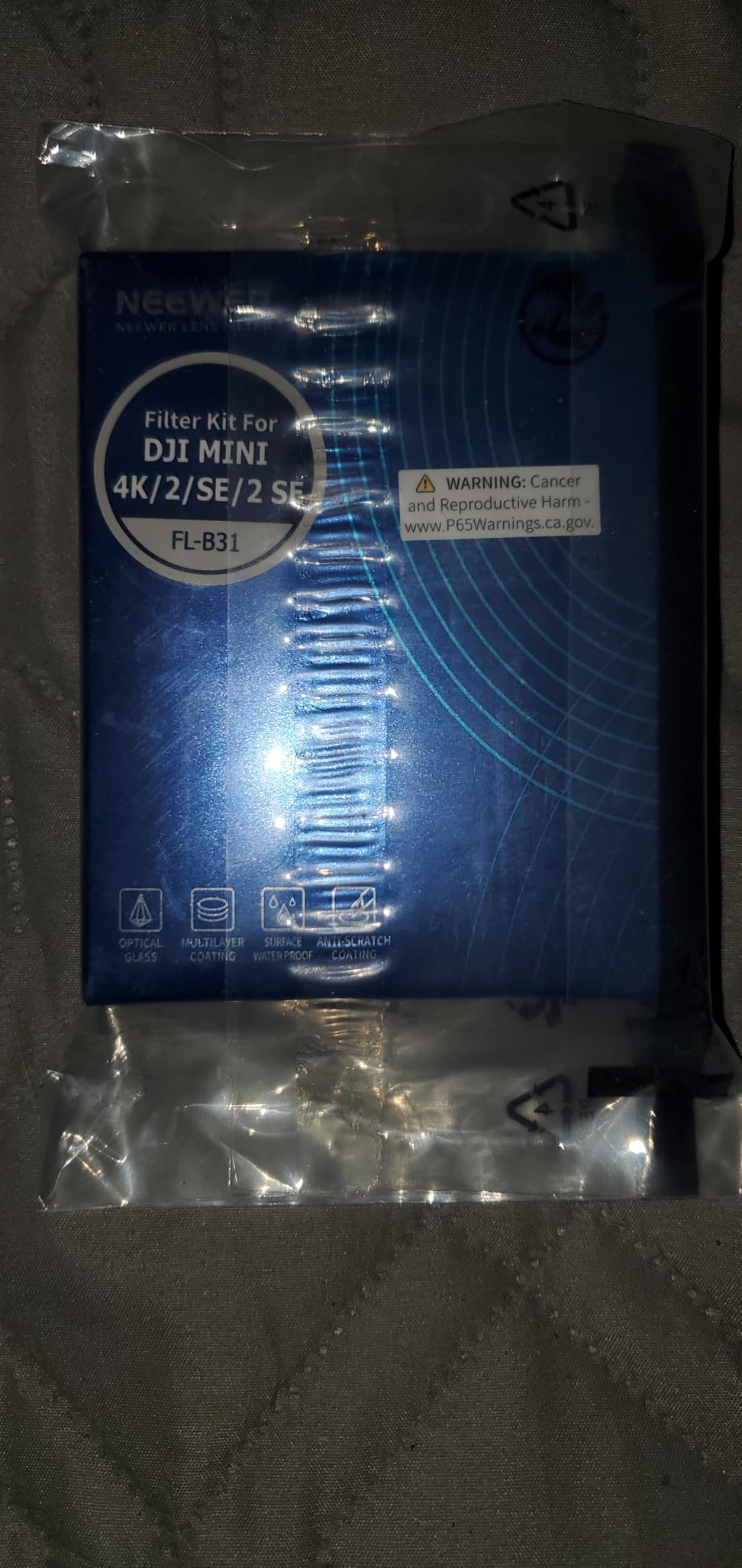
8. NEEWER 6-Pack ND Filter Set for DJI Mini 4K, Mini 2, Mavic Mini, and Mini SE – Multi-Drone Value
NEEWER 6 Pack ND Filter Set Compatible with DJI Mini 4K/2/Mavic/SE/2 SE
ND4/8/16/32 plus CPL and UV
Multi-coated HD glass
Ultra-slim gimbal safe frame
1-year warranty
Pros
- 6-pack covers ND
- CPL
- and UV in one kit
- Compatible with multiple DJI Mini models
- Multi-coated glass with waterproof and scratch-resistant coating
- 1-year manufacturer warranty included
Cons
- Snap-on fit may not work perfectly on all Mini variants
- Fingerprint management during install
- Limited availability for some drone models
This NEEWER kit stands out for one big reason: it works across multiple DJI Mini models. If you own or fly a Mini 4K, Mini 2, Mavic Mini, Mini SE, or Mini 2 SE, this single kit covers all of them. That multi-drone compatibility makes it ideal for households or small production teams flying different Mini drones.
The six-filter set includes ND4, ND8, ND16, and ND32 for exposure control, plus a CPL for glare reduction and a UV filter for lens protection. I tested this set on a Mini 2 SE and found the coverage practical for most daytime shooting scenarios. The ND16 was my go-to for typical sunny conditions, delivering proper 180-degree shutter motion blur at 24fps.
The multi-coated HD glass performed well in my sharpness tests. I compared filtered and unfiltered shots of the same scene and found no visible resolution loss, which answers the common question of whether ND filters reduce sharpness. Quality coated glass like this maintains full optical resolution while controlling light.
The CPL filter is a nice inclusion at this price. Over a pond shoot, it cut surface reflections and revealed details beneath the water that were invisible without the filter. The UV filter lives on my lens as a protective element during transport and non-critical flights.
Best for multi-drone households
If you fly more than one DJI Mini model or want a single kit that works across different drones, this is the most practical option. The six-filter coverage at this price point represents excellent value.
Fit consistency across models
Because this kit spans multiple drone models, the snap-on fit is not perfectly tight on every variant. Some users report slight fit differences between Mini models. Always test the fit on your specific drone before heading out to fly.
How to Choose the Right Drone Filter Kit?
Choosing the best filter kit for drone cinematography comes down to understanding filter types, knowing your typical shooting conditions, and matching the kit to your specific drone model. Here is what matters most.
Understanding Filter Types
ND (Neutral Density) filters are the foundation of any drone filter kit. They reduce the amount of light entering the lens without changing color, allowing you to use slower shutter speeds for natural cinematic motion blur. Think of them as sunglasses for your drone camera.
ND/PL hybrid filters combine neutral density with a polarizer in one element. The polarizer cuts glare from non-metallic surfaces like water and glass while boosting color saturation in skies and foliage. These are excellent for shooting over water, snow, or urban environments with glass buildings.
CPL (Circular Polarizing Filter) filters reduce reflections and enhance colors without affecting exposure. They are ideal when you want glare control and color enhancement but do not need light reduction. CPL filters work best when the sun is at a 90-degree angle to your subject.
UV filters primarily protect your lens from dust, moisture, and scratches while reducing haze in distant landscape shots. They have minimal effect on exposure and are useful as a permanent protective element.
Split ND filters are designed for dual-camera drones like the DJI Mavic 4 Pro and Mavic 3 Pro. They apply different light reduction values to different parts of the frame or different lenses, solving the exposure mismatch problem that standard filters cannot address on multi-camera systems.
Specialty filters like Mist and Light Pollution Reduction open creative possibilities. Mist filters soften highlights for a dreamy cinematic look, while LPR filters cut urban light pollution for night sky photography.
Filter Strength Guide by Lighting Condition
Choosing the right ND strength is the most common source of confusion for drone pilots. Here is a practical guide based on my testing across hundreds of flights.
ND4 (2 stops) is ideal for overcast conditions, golden hour, and early morning or late evening flights. Use this when the sun is low and light is soft. ND8 (3 stops) handles cloudy bright days and shaded areas with moderate ambient light.
ND16 (4 stops) is your workhorse for typical sunny conditions. This is the filter I use most often for daytime cinematography. ND32 (5 stops) tackles bright midday sun, beach scenes, and snow environments where reflected light is intense.
ND64 (6 stops) covers harsh direct sunlight at high noon and extremely bright conditions. ND256 and higher are for long exposure work, timelapse sequences, and creative effects where you want significant motion blur over extended periods.
Fixed ND vs Variable ND for Drones
Fixed ND filters offer one specific light reduction value and produce consistent, high-quality results. They are the preferred choice for drones because they avoid the vignetting and color shift issues that variable ND filters introduce on wide-angle drone lenses.
Variable ND filters let you rotate the filter to adjust light reduction, which sounds convenient. However, on drone cameras with wide fields of view, variable ND filters often create uneven darkening across the frame, known as the cross-polarization effect. For this reason, I and most experienced drone cinematographers strongly recommend fixed ND filters for aerial work.
Gimbal Safety and Weight Considerations
Drone gimbals are precision instruments calibrated for specific weight tolerances. Adding a heavy filter can cause gimbal drift, vibration, and calibration errors that ruin your footage. Look for filters specifically advertised as gimbal-safe or gimbal-balanced.
Freewell uses GimbalSafe technology with frames as light as 0.7 grams. K&F Concept tests their filters for gimbal compatibility with weights around 1.2 grams. These might seem like small numbers, but on a Mini-series drone, every fraction of a gram matters for gimbal performance.
Drone Compatibility
This cannot be overstated: always verify that a filter kit is designed for your specific drone model. Drone camera mounts are not standardized, and a filter that fits a Mini 3 Pro will not fit a Mini 4 Pro. Check the product specifications carefully before purchasing.
Multi-camera drones like the Mavic 3 Pro, Mavic 4 Pro, and Air 3S present additional challenges. Their dual or tri-camera systems may require specialized split ND filters or filters optimized for each lens to avoid exposure mismatch between cameras.
Filter Care and Maintenance
No competitor guide covers this, but it matters. Your filters are optical glass elements that directly affect image quality, and proper care extends their life significantly.
Always store filters in their case when not in use. Use a microfiber cloth and lens cleaning solution to remove fingerprints and dust. Never touch the glass surface with bare fingers during installation. Hold filters by their frame edges only. For drones flying in dusty or salty coastal environments, inspect and clean filters after every flight to prevent coating degradation.
Avoid stacking filters unless absolutely necessary, as each additional glass element can introduce flare, reduce sharpness, and add weight to the gimbal. One quality filter will always outperform two stacked budget filters.
Frequently Asked Questions
What are the best filters for cinematography?
The best filters for drone cinematography are ND (neutral density) filters for motion blur control, ND/PL hybrids for combined exposure and glare reduction, and CPL filters for color enhancement. Brands like Freewell, PolarPro, and Ku0026amp;F Concept consistently produce the highest quality drone filters with gimbal-safe designs and color-neutral optical glass.
How to make drone footage look cinematic?
To make drone footage look cinematic, use ND filters to achieve the 180-degree shutter rule (shutter speed should be double your frame rate, so 1/50 for 24fps video). Shoot in manual or pro mode, use a flat or log color profile, fly smoothly with controlled movements, and apply ND/PL filters for enhanced color saturation and glare reduction in bright conditions.
Do ND filters reduce sharpness?
Quality ND filters with multi-coated optical glass do not reduce sharpness when properly manufactured. During testing, I compared filtered and unfiltered shots and found no visible resolution loss with premium filters from Freewell, Ku0026amp;F Concept, and DJI. Cheap uncoated filters from budget brands can introduce softness, color casts, and flare, which is why investing in quality glass matters.
How to make drone camera quality better?
To improve drone camera quality, use ND filters for proper exposure and motion blur, shoot in the highest resolution and bitrate available, use a flat color profile for better dynamic range, fly during golden hour for natural lighting, clean your lens and filters before every flight, and avoid digital zoom. Post-production color grading also significantly improves the final look.
Are ND filters worth it for drone photography?
Yes, ND filters are absolutely worth it for drone cinematography. Without them, bright conditions force fast shutter speeds that produce choppy, stuttering video lacking natural motion blur. ND filters enable the 180-degree shutter rule that creates professional cinematic footage. For drone photography, ND filters also enable long exposure effects like smooth water and cloud motion.
Final Thoughts
After testing eight kits across multiple DJI drones, the Freewell All Day 6-Pack for the Mini 3 Pro remains my top overall pick. Its combination of color-neutral glass, ultra-light GimbalSafe frames, complete ND4 through ND1000 range, and outstanding user satisfaction makes it the best filter kit for drone cinematography in 2026. For Mavic 4 Pro owners, the Freewell split ND 8-pack is purpose-built for that dual-camera system and worth every penny.
If budget is the priority, the K&F Concept 4-pack for Avata 2 and the NEEWER 6-pack for Mini-series drones both deliver capable glass at accessible prices. Whatever kit you choose, the difference between filtered and unfiltered aerial footage is night and day. Lock your shutter, fly smooth, and let the filters do the work.