
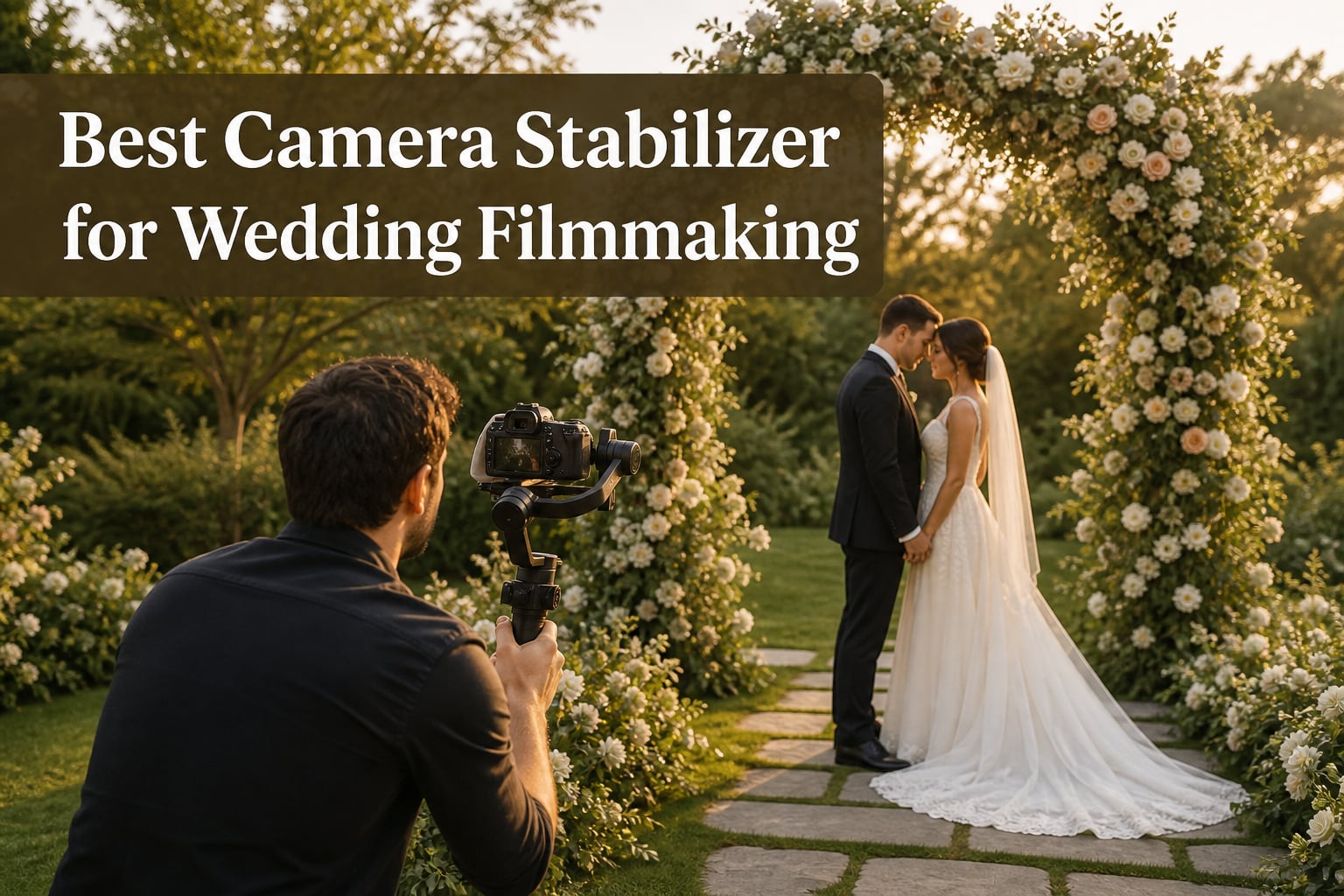
Shaky footage during a first dance or a wobbly walk-down-the-aisle shot can ruin hours of hard work. That is exactly why finding the best camera stabilizer for wedding filmmaking is one of the most important gear decisions a videographer will make. The right stabilizer turns rushed, chaotic wedding day moments into smooth, cinematic footage that couples will treasure forever.
Our team has spent years shooting weddings and testing camera gimbals across ceremonies, receptions, and portrait sessions. We know firsthand how a stabilizer performs during a 10-hour wedding day, from the pressure of getting-ready shots to the exhaustion of dancing reception coverage. Weight matters, battery life matters, and setup speed can make or break a key moment.
In this guide, we compare 12 camera stabilizers suited for wedding videography, covering motorized gimbals and handheld options from DJI, Zhiyun, FeiyuTech, and Hohem. Whether you shoot with a compact mirrorless camera or a full cinema rig, we break down which stabilizer fits your wedding workflow, budget, and camera setup. Every product here has been evaluated for real wedding day conditions, not just spec sheets.
Table of Contents
- Top 3 Picks for Wedding Filmmaking for October 2026
- Best Camera Stabilizers for Wedding Filmmaking in October 2026
- 1. DJI RS 4 Pro – Pro Cinema Gimbal with LiDAR Focus
- 2. DJI RS 4 – Best Overall Mirrorless Gimbal for Weddings
- 3. DJI RS 5 Combo – Intelligent Tracking and Quick Setup
- 4. DJI RS 3 Combo – Proven and Reliable Workhorse
- 5. DJI RS 4 Mini Combo – Lightweight Champion for Solo Shooters
- 6. Zhiyun Weebill S – Battery Life Champion for Long Wedding Days
- 7. ZHIYUN CINEPEER Weebill 3E – Ultra-Light with Native Vertical
- 8. Zhiyun Crane 4 Combo – Built-in Fill Light for Wedding Lighting
- 9. FeiyuTech SCORP-C – Best Budget Gimbal for Wedding Filmmakers
- 10. FeiyuTech SCORP 3 – AI Tracking and Heavy Payload Support
- 11. FeiyuTech SCORP 2 – Mid-Range Gimbal with AI Sensor
- 12. Hohem iSteady MT3 Pro – Multi-Device Versatility with RGB Light
- How to Choose a Camera Stabilizer for Wedding Filmmaking?
- Frequently Asked Questions
- Final Thoughts on the Best Camera Stabilizer for Wedding Filmmaking
Top 3 Picks for Wedding Filmmaking for October 2026
These three picks cover the sweet spots for most wedding filmmakers. The DJI RS 4 handles the widest range of mirrorless camera setups with its excellent balancing and native vertical shooting. The RS 4 Mini Combo is our value pick for solo shooters who want DJI reliability at a lower weight. And the FeiyuTech SCORP-C delivers solid stabilization at the most affordable price point in this lineup.
Best Camera Stabilizers for Wedding Filmmaking in October 2026
Below is our full comparison table of all 12 stabilizers we reviewed for this guide. We have organized them by brand and capability so you can quickly compare payload, key features, and ratings before diving into the detailed reviews.
| Product | Specs | Action |
|---|---|---|
 DJI RS 4 Pro Gimbal DJI RS 4 Pro Gimbal |
|
Check Latest Price |
 DJI RS 4 Gimbal DJI RS 4 Gimbal |
|
Check Latest Price |
 DJI RS 5 Combo Gimbal DJI RS 5 Combo Gimbal |
|
Check Latest Price |
 DJI RS 3 Combo Gimbal DJI RS 3 Combo Gimbal |
|
Check Latest Price |
 DJI RS 4 Mini Combo DJI RS 4 Mini Combo |
|
Check Latest Price |
 Zhiyun Weebill S Gimbal Zhiyun Weebill S Gimbal |
|
Check Latest Price |
 ZHIYUN CINEPEER Weebill 3E ZHIYUN CINEPEER Weebill 3E |
|
Check Latest Price |
 Zhiyun Crane 4 Combo Zhiyun Crane 4 Combo |
|
Check Latest Price |
 FeiyuTech SCORP-C Gimbal FeiyuTech SCORP-C Gimbal |
|
Check Latest Price |
 FeiyuTech SCORP 3 Gimbal FeiyuTech SCORP 3 Gimbal |
|
Check Latest Price |
 FeiyuTech SCORP 2 Gimbal FeiyuTech SCORP 2 Gimbal |
|
Check Latest Price |
 Hohem iSteady MT3 Pro Gimbal Hohem iSteady MT3 Pro Gimbal |
|
Check Latest Price |
1. DJI RS 4 Pro – Pro Cinema Gimbal with LiDAR Focus
DJI RS 4 Pro, Gimbal Stabilizer for DSLR & Cinema Cameras
4.5kg Payload
29hr Battery
LiDAR Focus
Native Vertical
Carbon Fiber Arms
Pros
- Excellent payload capacity for cinema cameras
- LiDAR autofocus is accurate and intelligent
- Native vertical shooting is effortless
- Long battery runtime up to 29 hours
- Carbon fiber axis arms provide durability
Cons
- App removed from Google Play due to compatibility issues
- High price point
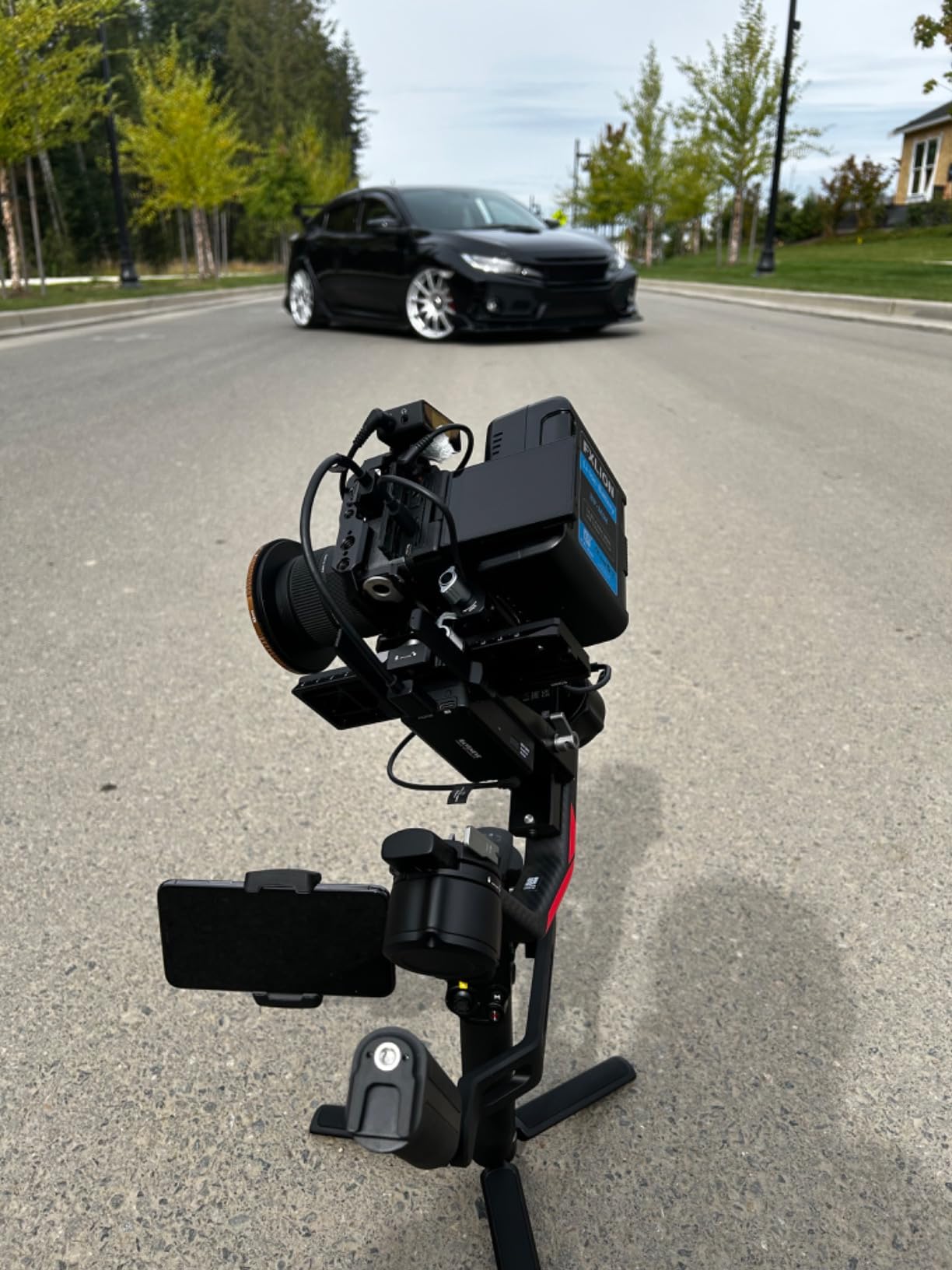
I have used the DJI RS 4 Pro on several weddings where I was running a Sony FX3 with a cinema lens, and the 4.5kg payload handled the full setup without breaking a sweat. The carbon fiber axis arms keep the gimbal light for its class, which matters when you are holding it overhead during a grand exit at the end of a long night.
The LiDAR focusing system is where this gimbal separates itself from everything else on this list. With 76,800 ranging points within 20 meters, it gives solo wedding shooters an autofocus experience that feels like having a focus puller on your team. During ceremony coverage where you cannot get close to the couple, this feature is a genuine advantage.
The second-generation native vertical shooting is also worth highlighting. Wedding content creators increasingly need both horizontal wedding films and vertical social media clips from the same day. The RS 4 Pro lets you switch orientations by releasing the horizontal plate and securing it vertically, no extra accessories required.
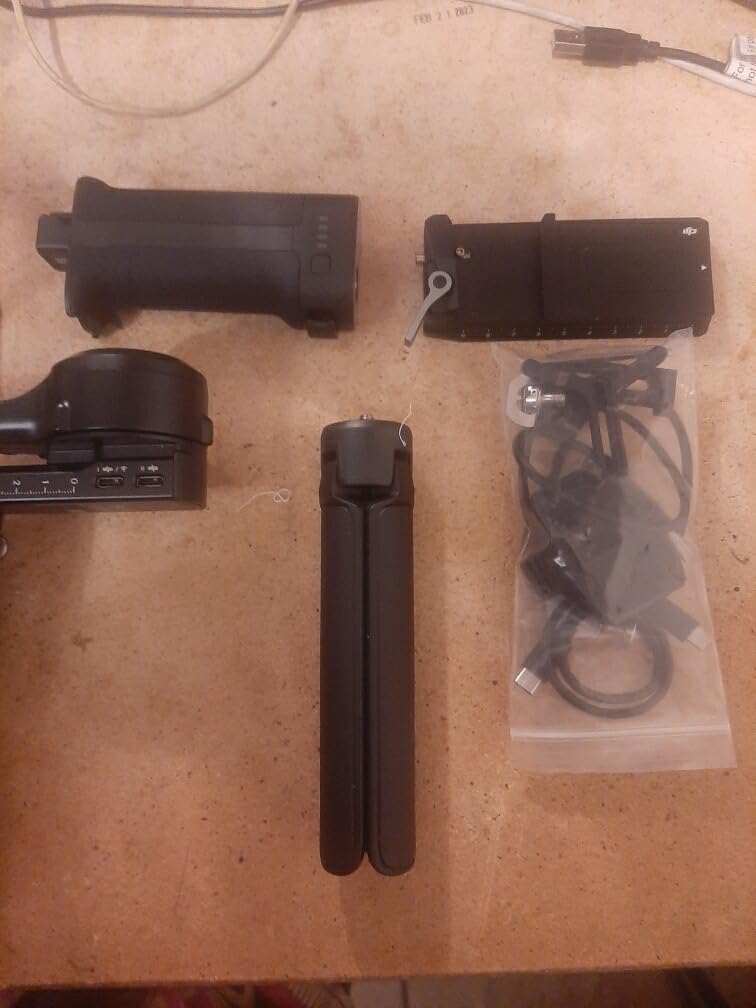
Battery life is rated at 29 hours with the optional BG70 high-capacity grip, which means you can shoot an entire wedding day and still have power left for the next event. Even with the standard BG30 grip included in the box, you get solid runtime for a full day of ceremony and reception coverage.
For Whom It Is Best Suited
The RS 4 Pro is built for established wedding cinematographers running heavier camera and lens combinations, such as a Sony FX3 with a Sigma 24-70mm f/2.8 or a Canon R5 C with cinema glass. If your rig pushes past 3kg, this is one of the few gimbals in this guide that handles it comfortably.
It is also ideal for solo shooters who want the LiDAR focus system to handle pull-focus duties during dynamic ceremony and reception moments without a second operator.
For Whom It May Not Be Ideal
If you primarily shoot with a lightweight mirrorless camera and a small prime lens, the RS 4 Pro is overkill both in terms of payload capacity and investment. The extra weight and size compared to the RS 4 or RS 4 Mini will add fatigue over a long wedding day without delivering meaningful benefits for your lighter rig.
Newer wedding filmmakers on a tighter budget may also find the price point hard to justify when the standard RS 4 covers most mirrorless setups at roughly half the cost.
2. DJI RS 4 – Best Overall Mirrorless Gimbal for Weddings
DJI RS 4, Gimbal Stabilizer for Camera, Canon/Sony/Nikon/Fujifilm
3kg Payload
Teflon Axis Arms
Native Vertical
12hr Battery
RSA Port
Pros
- Teflon-coated axis arms provide smooth balancing
- Extended tilt axis for more balancing space
- Easy vertical shooting conversion
- RSA port for expandable ecosystem
- Great value for the features offered
Cons
- App removed from Google Play
- Battery grip sold separately
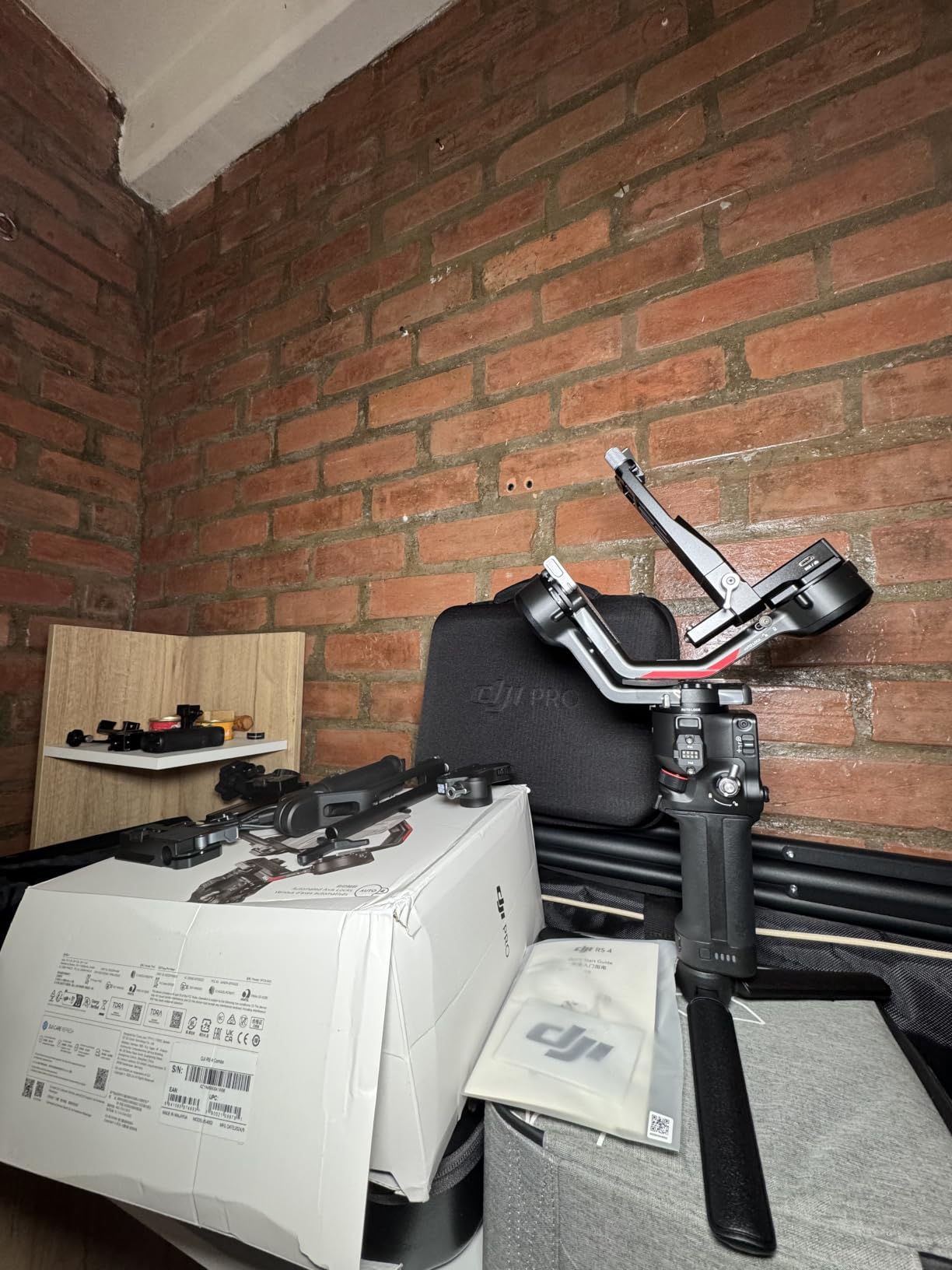
The DJI RS 4 is the gimbal I recommend more than any other to wedding filmmakers, and for good reason. It hits the perfect balance of payload, weight, features, and price for the vast majority of mirrorless camera setups used in wedding videography today. At 1.55kg with a 3kg payload, it handles a Sony A7S III or Canon R6 with a standard zoom lens without struggling.
What makes the RS 4 stand out for wedding work is the Teflon-coated axis arms. Balancing a gimbal is the part that eats time on a wedding morning when you are already rushing between getting-ready coverage and ceremony setup. The reduced friction from the Teflon coating means I can get a camera balanced and locked in noticeably faster than with previous generation gimbals.
The native vertical shooting is a feature that has become essential for modern wedding filmmakers. Couples increasingly want Instagram Reels and TikTok clips alongside their traditional wedding film, and the RS 4 lets you release the horizontal plate and lock it vertically in seconds. No extra accessories, no tools, no wasted time.
The joystick mode switch is another thoughtful addition. You can toggle between PF, PTF, and FPV modes quickly, and even assign the joystick to control lens zoom instead of gimbal movement. During reception coverage where you are shooting alone, this kind of flexibility keeps you adaptable without fumbling through menus.
For Whom It Is Best Suited
The RS 4 is the sweet spot for working wedding videographers using mainstream mirrorless cameras like the Sony A7 IV, Canon R6 Mark II, Panasonic S5 II, or Nikon Z6 II with lenses up to a 24-70mm f/2.8. It covers the gear setup that probably 80 percent of wedding filmmakers actually use on a daily basis.
It is also the best camera stabilizer for wedding filmmaking if you want professional features without paying for cinema-grade payload capacity you do not need.
For Whom It May Not Be Ideal
Shooters running heavy cinema cameras or large battery grip setups that push past 3kg will need to step up to the RS 4 Pro. The RS 4 can technically handle slightly heavier rigs, but you will feel the motors working harder, and balance becomes more finicky.
If you are on a strict beginner budget and just starting out in wedding videography, the RS 4 may represent more investment than you need at this stage. A lighter option like the RS 4 Mini or a budget FeiyuTech gimbal could serve you well until you outgrow it.
3. DJI RS 5 Combo – Intelligent Tracking and Quick Setup
DJI RS 5 Combo, Gimbal Stabilizer for Camera, Canon/Sony/Nikon/Fujifilm
Intelligent Tracking
Auto Axis Locks
Fine-Tuning Knobs
Z-Axis Indicator
14hr Battery
Pros
- Enhanced intelligent tracking works well
- Electronic briefcase handle for low-angle shots
- Fine-tuning knobs for precise balancing
- Automated axis locks for quick setup
- Z-axis indicator helps with steadier footage
Cons
- Not Prime eligible
- App removed from Google Play
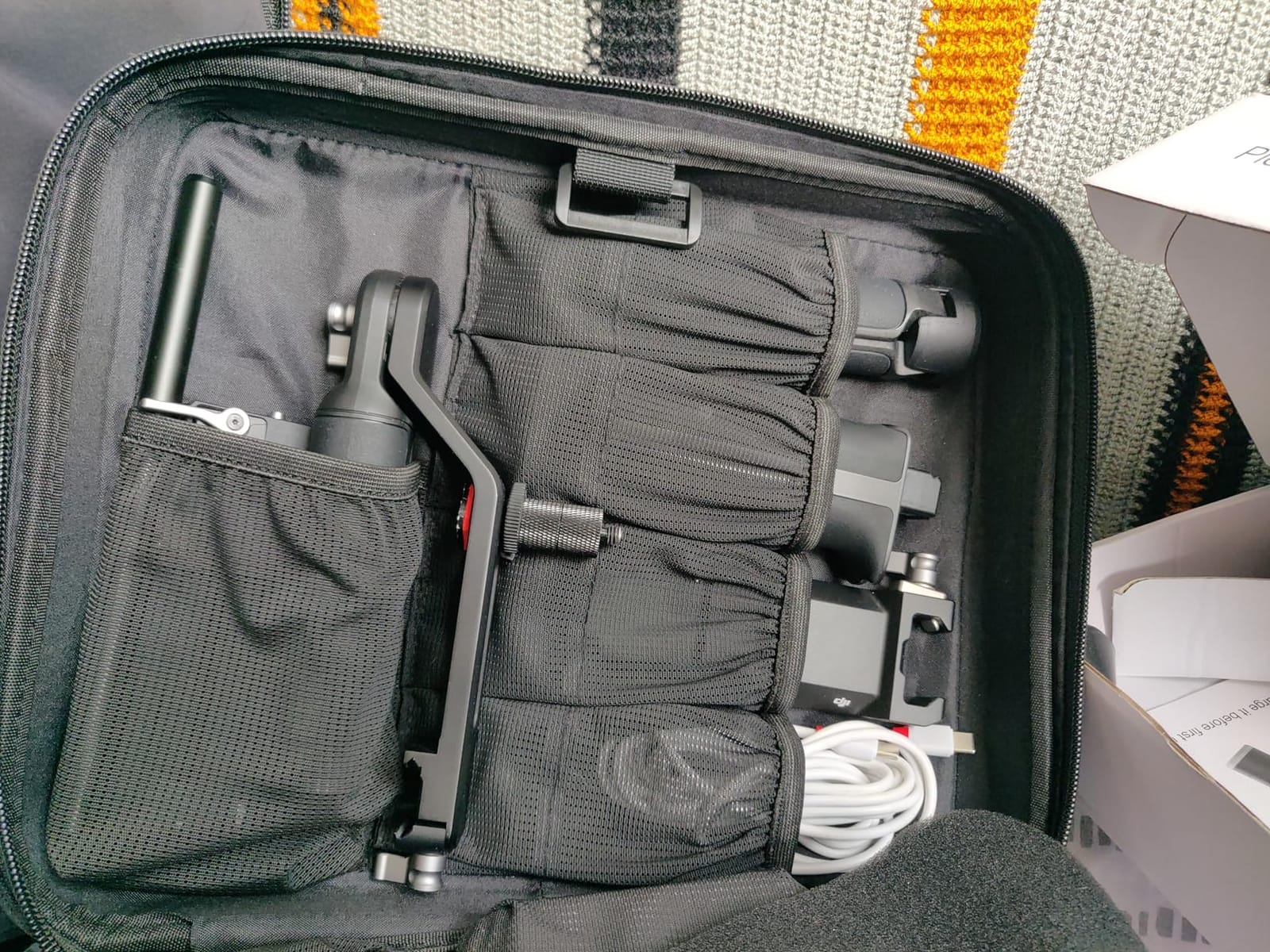
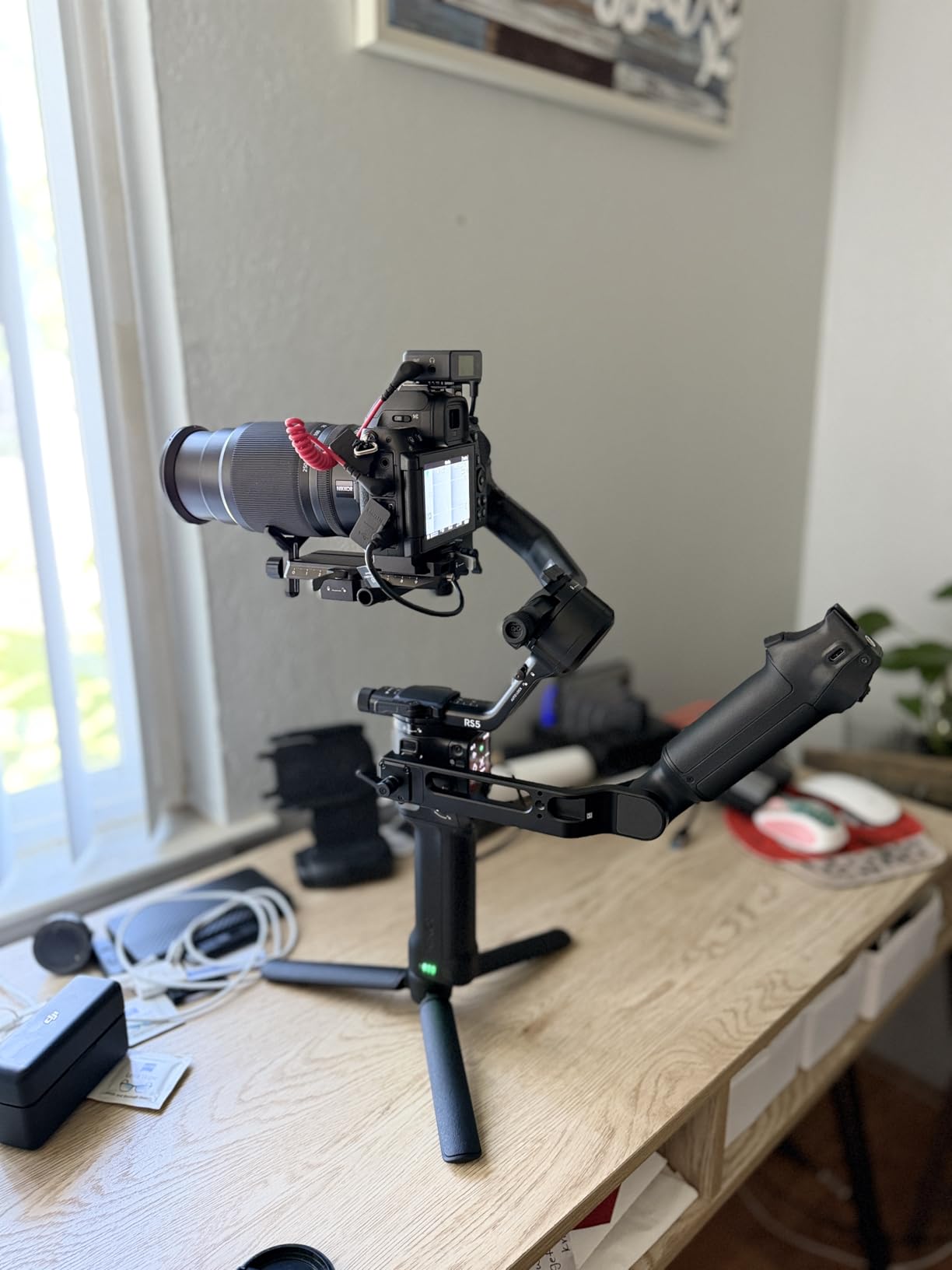
The DJI RS 5 Combo is the newest flagship in the RS lineup, and our team has been impressed by the focus on workflow speed. The second-generation automated axis locks mean you can go from packed away to ready-to-shoot in seconds. On a wedding day where moments happen fast, this feature alone saves real time between locations.
The enhanced intelligent tracking module is the standout feature for solo wedding shooters. You can frame and track any subject, whether it is the couple during their first dance or a flower girl walking down the aisle, directly from the gimbal touchscreen. No phone app connection required, which removes a common point of failure on busy shoot days.
The Z-axis indicator is a small feature that delivers big results. It gives you real-time visual feedback on your vertical movement, helping you smooth out footsteps during walking shots. I noticed an improvement in my tracking shots along garden paths and reception venues after just one wedding of paying attention to this indicator.
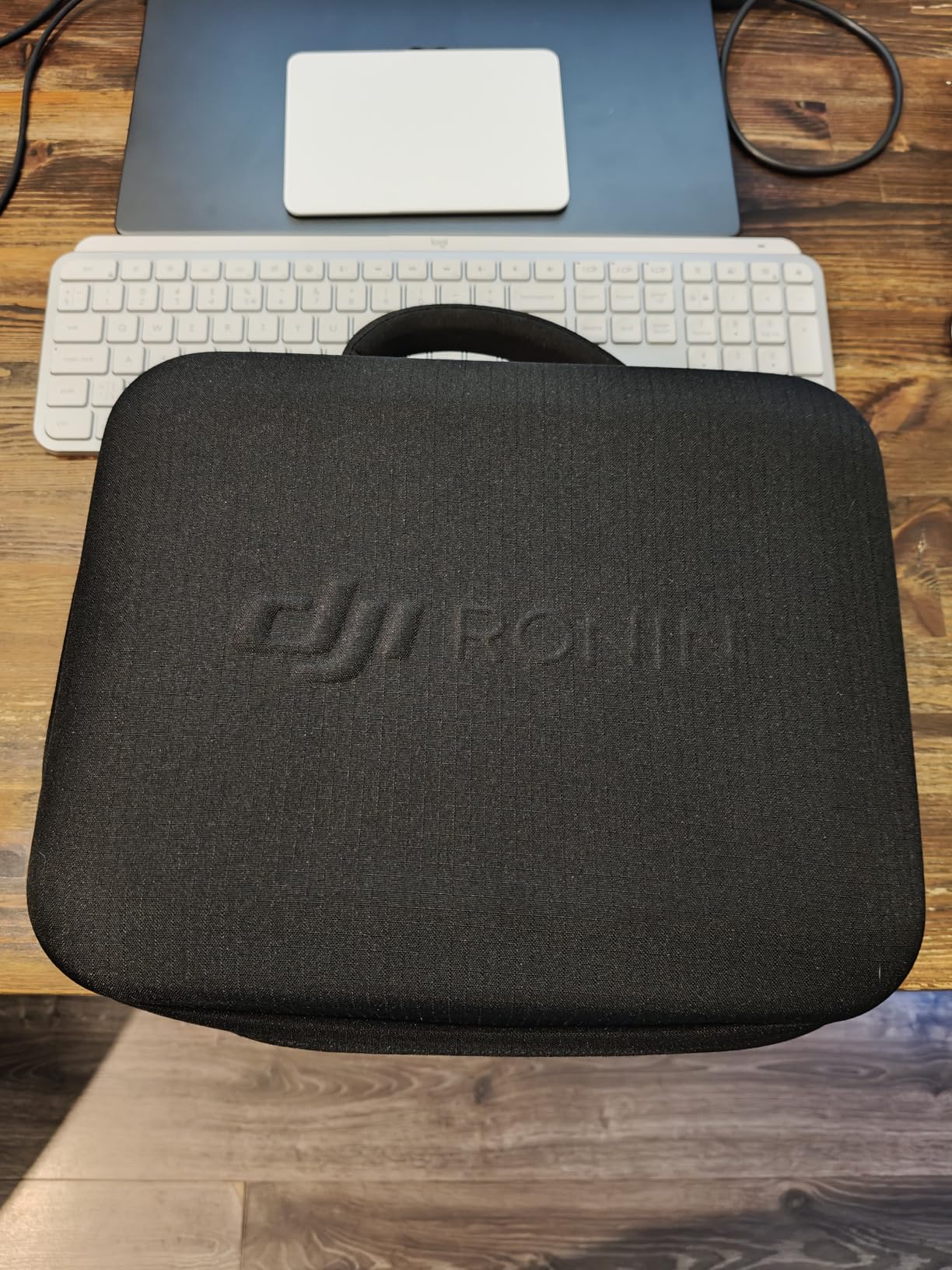
The fine-tuning knobs on each axis arm are a welcome addition for precise balancing. Combined with Teflon interlayers, they make it easy to dial in a perfect balance even when you change lenses between ceremony and reception coverage. The electronic briefcase handle included with the Combo makes low-angle reception dance shots comfortable and intuitive.
For Whom It Is Best Suited
The RS 5 Combo is ideal for experienced wedding filmmakers who want the latest tracking technology and fastest setup workflow. If you frequently shoot solo and rely on subject tracking for dynamic ceremony and reception shots, the intelligent tracking module justifies the investment on its own.
It is also well-suited for shooters who value the quick-deploy axis locks and fine-tuning knobs for fast-paced wedding day environments.
For Whom It May Not Be Ideal
The RS 5 sits at a higher price point than the RS 4 without a massive payload advantage, so wedding filmmakers on a budget will get more value from the RS 4. The intelligent tracking and Z-axis indicator are genuinely useful features, but they may not be essential for everyone.
It is also not Prime eligible at the time of this review, which means slower shipping if you need a gimbal quickly before a wedding season begins.
4. DJI RS 3 Combo – Proven and Reliable Workhorse
DJI RS 3 Combo, 3-Axis Gimbal Stabilizer for DSLR and Mirrorless Camera for Canon/Sony/Panasonic/Nikon/Fujifilm, 3 kg (6.6 lbs) Payload, Automated Axis Locks, 1.8″ OLED Touchscreen, Camera Gimbal
3kg Payload
Auto Axis Locks
Bluetooth Shutter
OLED Touchscreen
12hr Battery
Pros
- Automated axis locks save time
- Excellent stabilization algorithm
- Bluetooth shutter control works seamlessly
- OLED touchscreen is intuitive
- Good payload-to-weight ratio
Cons
- Stock running low
- Limited availability
The DJI RS 3 Combo has been a workhorse for wedding videographers for years, and it remains a reliable choice in 2026. While newer models have arrived, the RS 3 still delivers the core features that matter most on a wedding day, including a 3kg payload, automated axis locks, and the third-generation RS stabilization algorithm.
I have shot dozens of weddings with the RS 3 and the Bluetooth shutter control is one feature I miss on other gimbals. Wireless shutter control eliminates the need for a control cable, which means one less thing to tangle or fail during a fast-moving ceremony. You can start and stop recording without touching the camera.
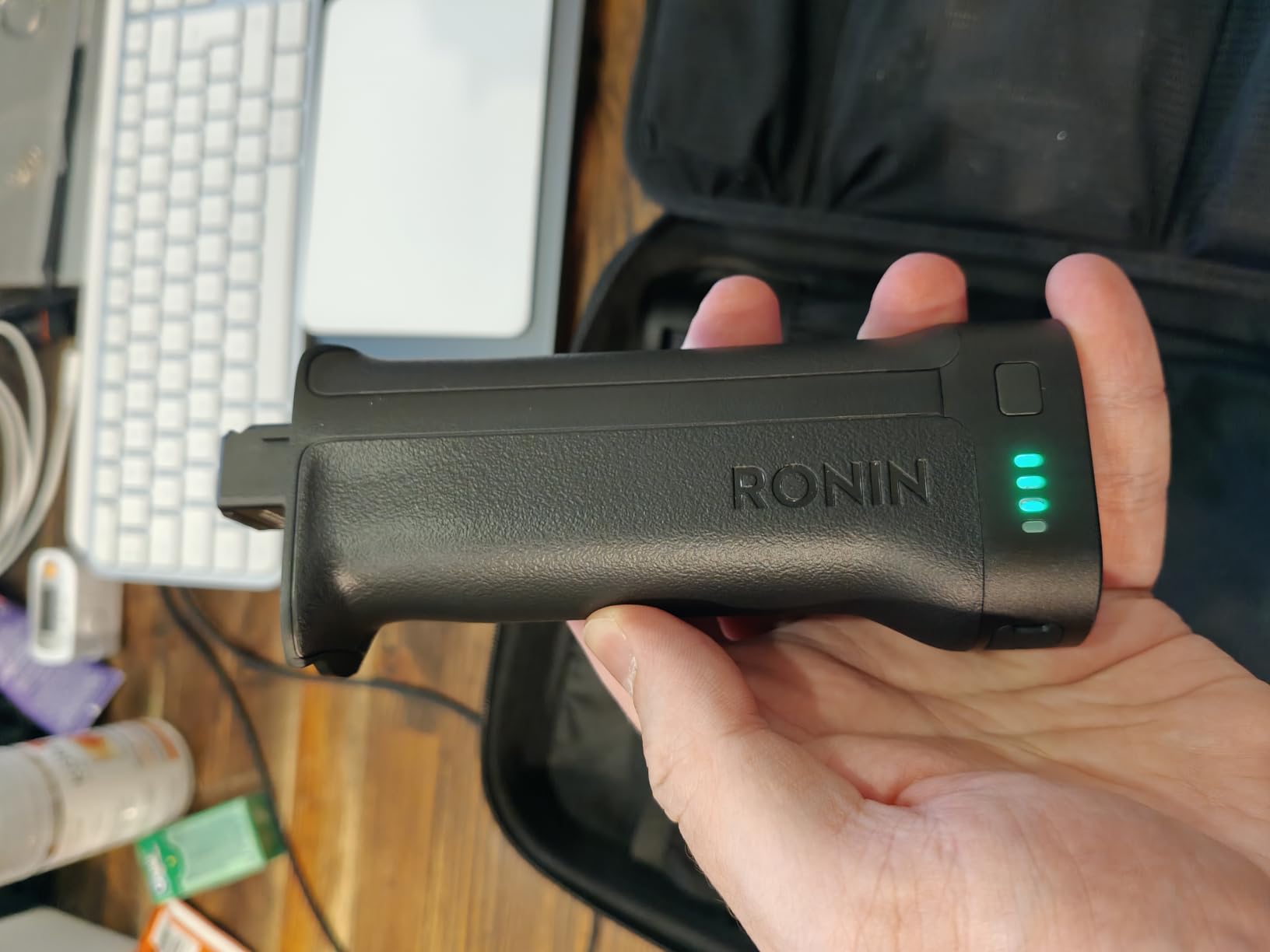
The automated axis locks on the RS 3 were genuinely game-changing when they launched. Press the power button once to lock all three axes for storage, press again to unlock for shooting. This makes transitioning between locations at a wedding venue much faster, especially when you are moving from indoor ceremony to outdoor portraits.
The 1.8-inch OLED touchscreen is bright and intuitive, even outdoors in sunlight during garden wedding ceremonies. The third-generation stabilization algorithm improved anti-shake performance by 20 percent over the previous generation, which is noticeable during fast walking shots and reception coverage where you are moving through crowds.
For Whom It Is Best Suited
The RS 3 Combo is perfect for wedding filmmakers who want DJI reliability and features at a slightly lower price than the newest models. If you do not need native vertical shooting or LiDAR focus, the RS 3 still delivers excellent stabilization for standard wedding film coverage with mirrorless cameras up to 3kg.
It is also a smart choice for second shooters or backup gimbal setups where proven reliability matters more than having the latest features.
For Whom It May Not Be Ideal
Availability is the biggest concern with the RS 3 right now. Stock is running low on Amazon, and the RS 4 has largely replaced it in DJI lineup. If you can find it, great, but you may want to consider the RS 4 for similar pricing and newer features.
It also lacks native vertical shooting, which is increasingly important for wedding filmmakers creating social media content alongside traditional wedding films.
5. DJI RS 4 Mini Combo – Lightweight Champion for Solo Shooters
DJI RS 4 Mini Combo, Gimbal Stabilizer, Canon/Sony/Nikon/Fujifilm
2kg Payload
1-Second Setup
Intelligent Tracking
10s Vertical Switch
1.03kg Weight
Pros
- Auto axis locks for 1-second setup
- Intelligent tracking module included
- Fast 10-second vertical switch
- Responsive follow mode
- Lightweight at 1.03 kg
- Compatible with both cameras and smartphones
Cons
- Lower payload capacity of 2kg
- Smaller screen size at 1.4 inches
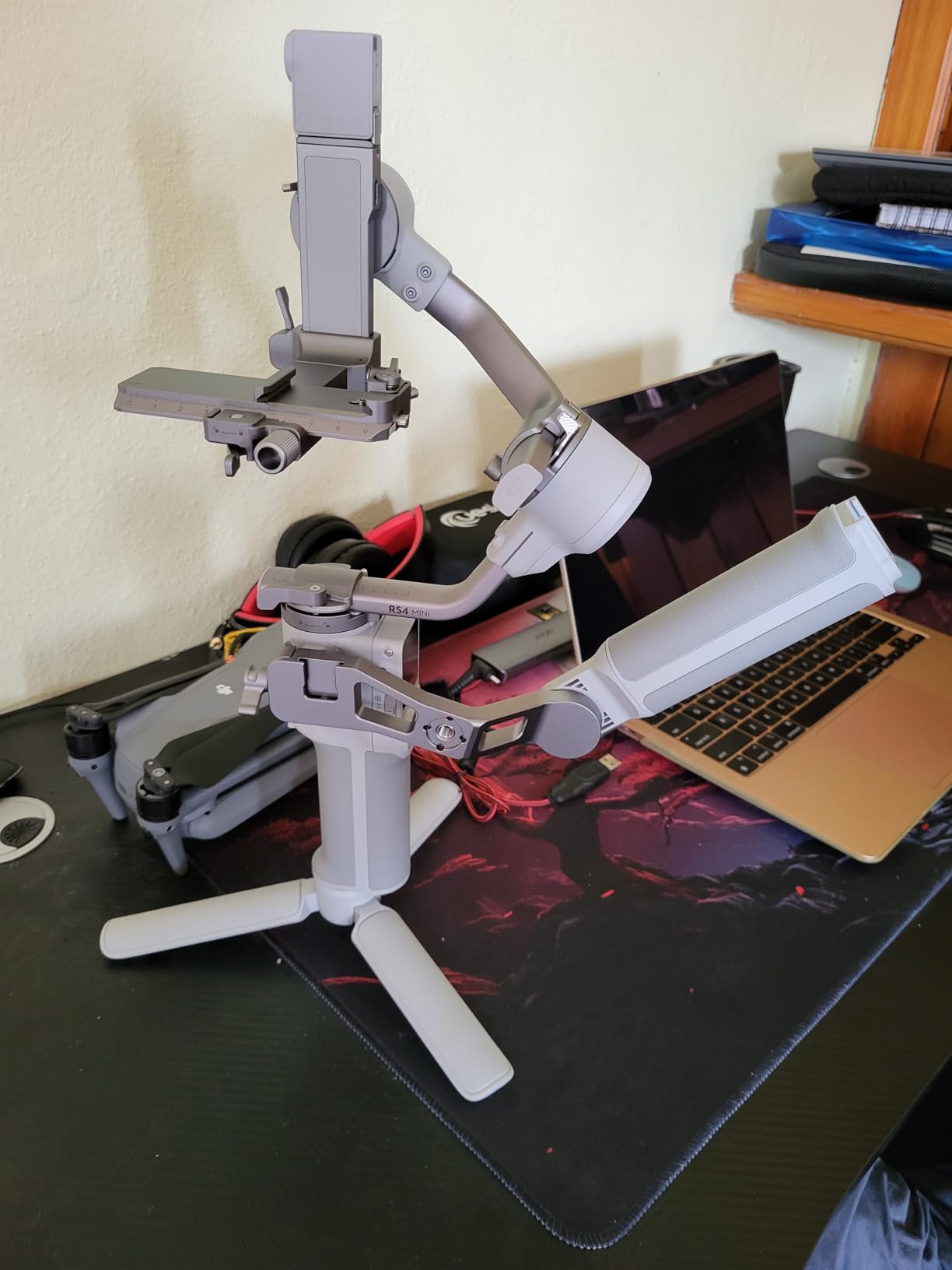
The DJI RS 4 Mini Combo has become my go-to recommendation for solo wedding filmmakers shooting with lightweight mirrorless cameras or even smartphones. At just 1.03kg, it is the lightest gimbal in this lineup, and that weight difference is immediately noticeable at hour eight of a wedding day when your arms are screaming.
The auto axis locks give you a one-second setup time, which is not a marketing exaggeration. On wedding mornings when you are juggling getting-ready coverage, detail shots, and audio setup simultaneously, having a gimbal that deploys almost instantly is a real workflow advantage. The Combo version also includes the intelligent tracking module and a briefcase handle.
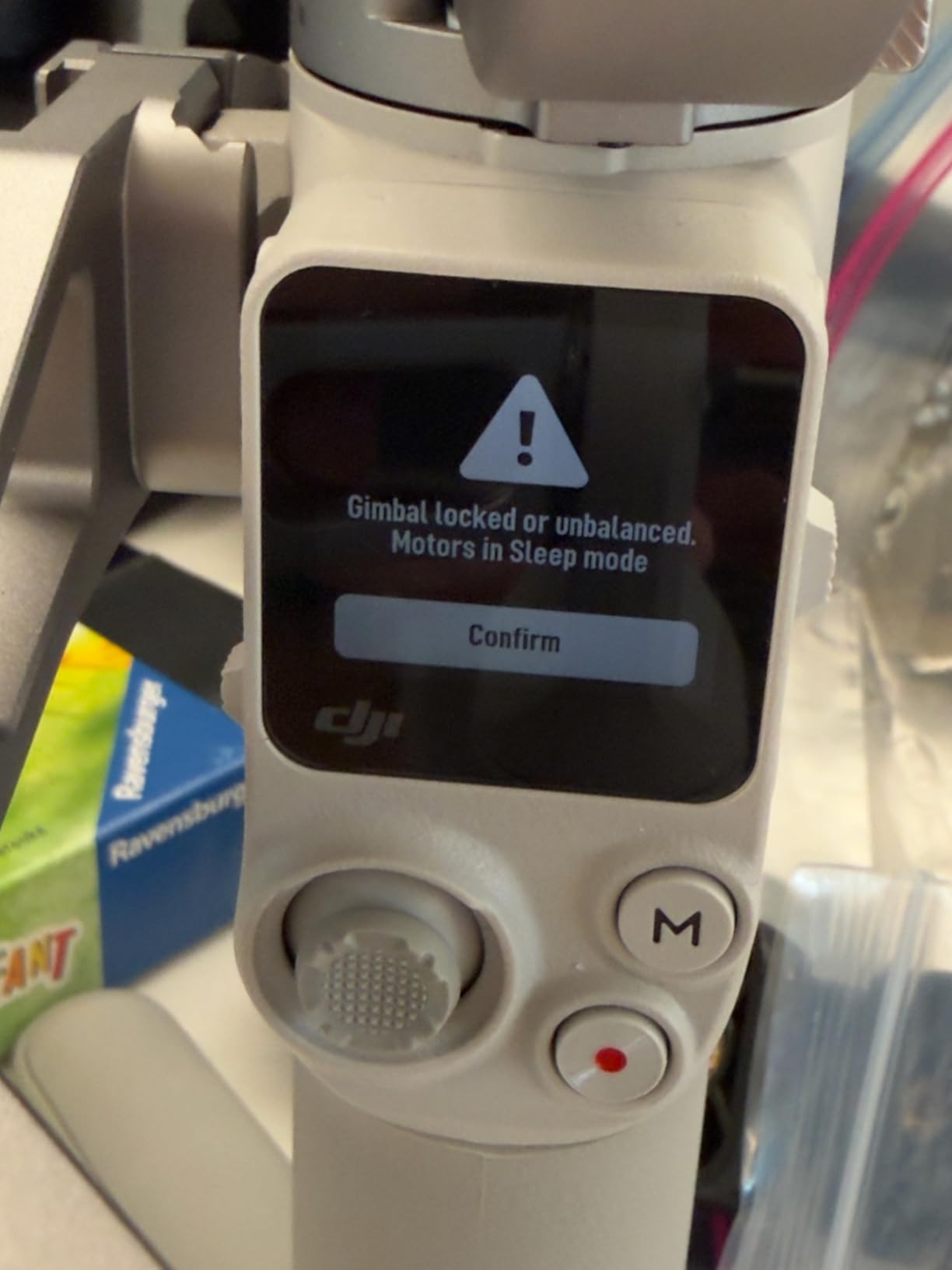
The ten-second vertical switch is a standout feature for wedding content creators. Pop the horizontal plate, secure it vertically, and you are ready for Instagram Reels and TikTok content. During cocktail hour when you want to grab some vertical clips between horizontal film coverage, this speed keeps you efficient without missing key moments.
The responsive follow mode makes the gimbal react instantly to hand movements, which is essential during reception coverage where the energy is high and you need to move dynamically. The 2kg payload handles cameras like the Sony A7C II, Canon R50, or Panasonic GX85 with compact lenses, plus it works with smartphones for content creation.
For Whom It Is Best Suited
The RS 4 Mini Combo is ideal for solo wedding filmmakers, content creators, and second shooters who use compact mirrorless cameras or vlog-style cameras. If your camera and lens combination stays under 2kg, this gimbal gives you DJI quality and features at a weight that prevents fatigue on long wedding days.
It is also the best camera stabilizer for wedding filmmaking if you need to produce both traditional wedding films and vertical social media content from the same event.
For Whom It May Not Be Ideal
The 2kg payload is a hard limitation. If you shoot with a full-frame camera and a 24-70mm f/2.8 lens, you will likely exceed the payload capacity and experience balancing issues and motor strain. This gimbal is designed for lighter setups, and pushing past its limits will lead to frustration.
The 1.4-inch screen is also smaller than the 1.8-inch displays on the full-size RS models, which can make menu navigation more fiddly during fast-paced wedding moments.
6. Zhiyun Weebill S – Battery Life Champion for Long Wedding Days
Zhiyun Weebill S [Official] 3-Axis Gimbal Stabilizer for Mirrorless and DSLR Cameras
2.5kg Payload
14hr Battery
Sling Mode
926g Weight
TransMount Compatible
Pros
- Excellent stabilization for mirrorless and DSLR cameras
- 14-hour battery life is industry-leading
- Compact and portable folded design
- Sling mode reduces fatigue for long shoots
- Strong motor performance for payload capacity
Cons
- Maximum payload of 2.5kg may limit heavy lens combinations
- Control cables sold separately
- May require balancing adjustments for heavy 70-200mm f/2.8 lenses
The Zhiyun Weebill S has earned its place as one of the most popular wedding videography gimbals among working professionals, with over 1,600 customer reviews backing its reputation. At just 926 grams, it is remarkably light, yet it delivers a 2.5kg payload that handles most mirrorless camera setups used in wedding filmmaking.
The standout feature for wedding work is the 14-hour battery life. On wedding days that stretch from morning getting-ready coverage through late-night reception dancing, having a gimbal that lasts the entire day on a single charge eliminates the stress of midday battery swaps. The forum insights we reviewed consistently flagged battery life as a top concern, and the Weebill S delivers here.
![Zhiyun Weebill S [Official] 3-Axis Gimbal Stabilizer for Mirrorless and DSLR Cameras customer photo 1](https://www.shortfilmcentral.com/wp-content/uploads/2026/08/B07Y47P31Y_customer_1.jpg)
The sling mode ergonomic design is genuinely comfortable for extended underslung shooting. Wedding filmmakers know that low-angle shots during first dances and reception coverage are some of the most cinematic moments of the day. The Weebill S sling grip lets you hold the gimbal in underslung position for extended periods without the wrist fatigue that traditional handle designs cause.
The TransMount Image Transmission Module compatibility adds wireless video monitoring, which is useful when you need to frame shots remotely or let a second shooter monitor your gimbal footage. The 1080p 30fps transmission at 100 meters gives you flexibility across large wedding venues.
![Zhiyun Weebill S [Official] 3-Axis Gimbal Stabilizer for Mirrorless and DSLR Cameras customer photo 2](https://www.shortfilmcentral.com/wp-content/uploads/2026/08/B07Y47P31Y_customer_2.jpg)
For Whom It Is Best Suited
The Weebill S is perfect for wedding filmmakers who prioritize long battery life and lightweight handling for full-day coverage. If you shoot with a Sony A7 series, Panasonic GH5 or S5, or Canon R series camera with standard zoom or prime lenses, the 2.5kg payload covers your needs comfortably.
It is also ideal for shooters who value the sling grip design for underslung reception shots and low-angle ceremony coverage.
For Whom It May Not Be Ideal
If you frequently use heavy 70-200mm f/2.8 lenses for ceremony coverage, the Weebill S may require frequent balancing adjustments and could feel strained at the top of its payload range. The 2.5kg limit is real, and pushing it with heavy glass leads to frustration.
Control cables for camera integration are sold separately, which adds to the total cost if you want wireless start and stop recording functionality during wedding coverage.
7. ZHIYUN CINEPEER Weebill 3E – Ultra-Light with Native Vertical
ZHIYUN CINEPEER WEEBILL 3E 3-Axis Gimbal Stabilizer for Camera,Up to 6.6lbs
3kg Payload
Native Vertical
16hr Battery
1.05kg Weight
Sling Mode 2.5
Pros
- Game-changing lightweight and compact design
- Excellent stabilization for mirrorless cameras
- Easy vertical and horizontal switching in under 30 seconds
- Powerful and silent motors handling up to 3kg
- Great value for the price compared to DJI alternatives
Cons
- Non-touchscreen display can be confusing to navigate
- Built-in battery not removable
- Joystick may be too far for users with small hands
- Vertical mode can be fiddly to switch back from
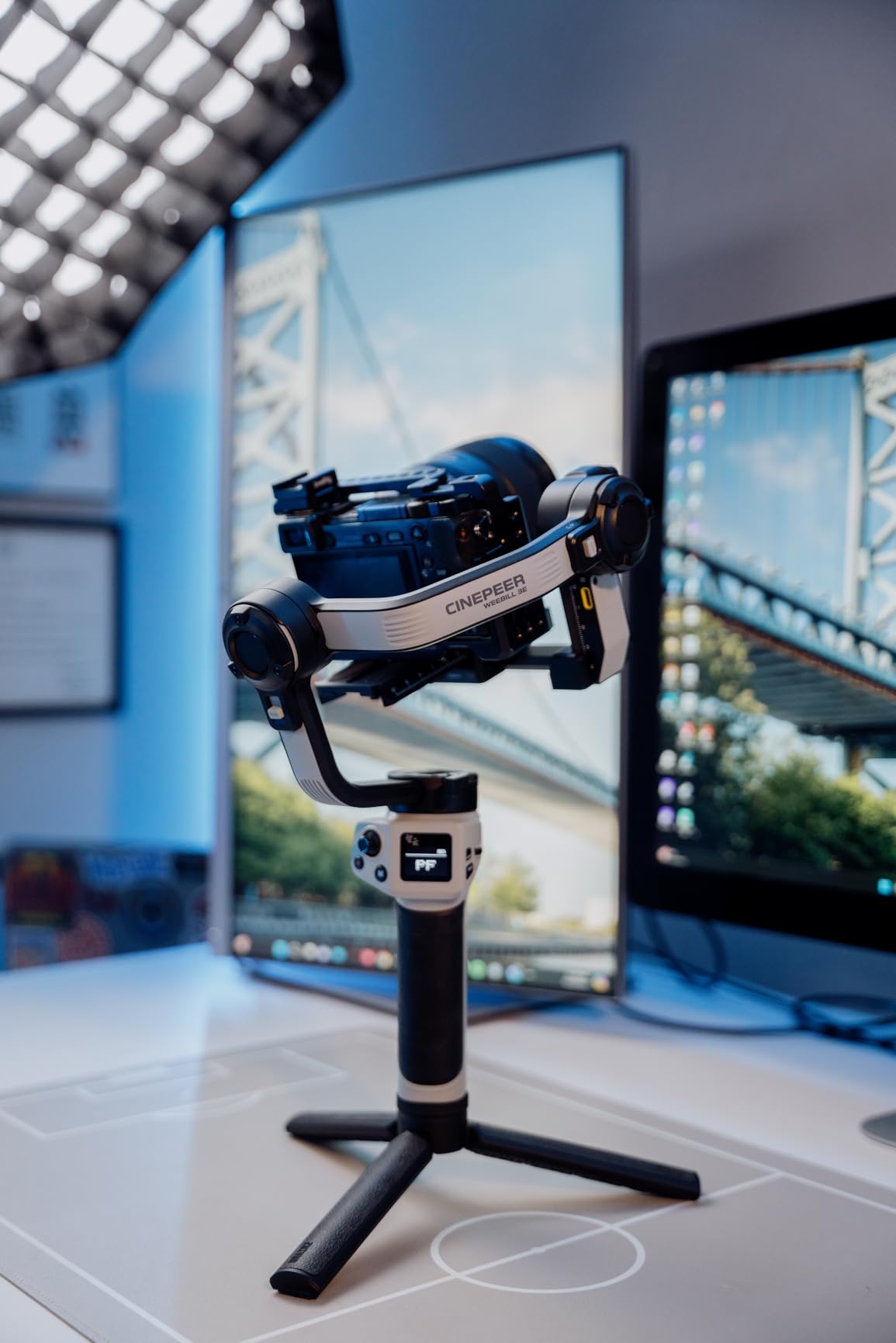
The ZHIYUN CINEPEER Weebill 3E impressed our team with its combination of light weight, strong payload, and value. At 1.05kg with a 3kg payload capacity, it matches or beats DJI gimbals at a similar weight class while coming in at a more accessible price point. For wedding filmmakers watching their budget, this is a compelling option.
The native vertical shooting is one of the best implementations we have used. The quick-mount system lets you switch between horizontal and vertical in under 30 seconds without disassembling the gimbal. During wedding days where you need to capture both traditional film footage and vertical social media content, this speed and simplicity matter.
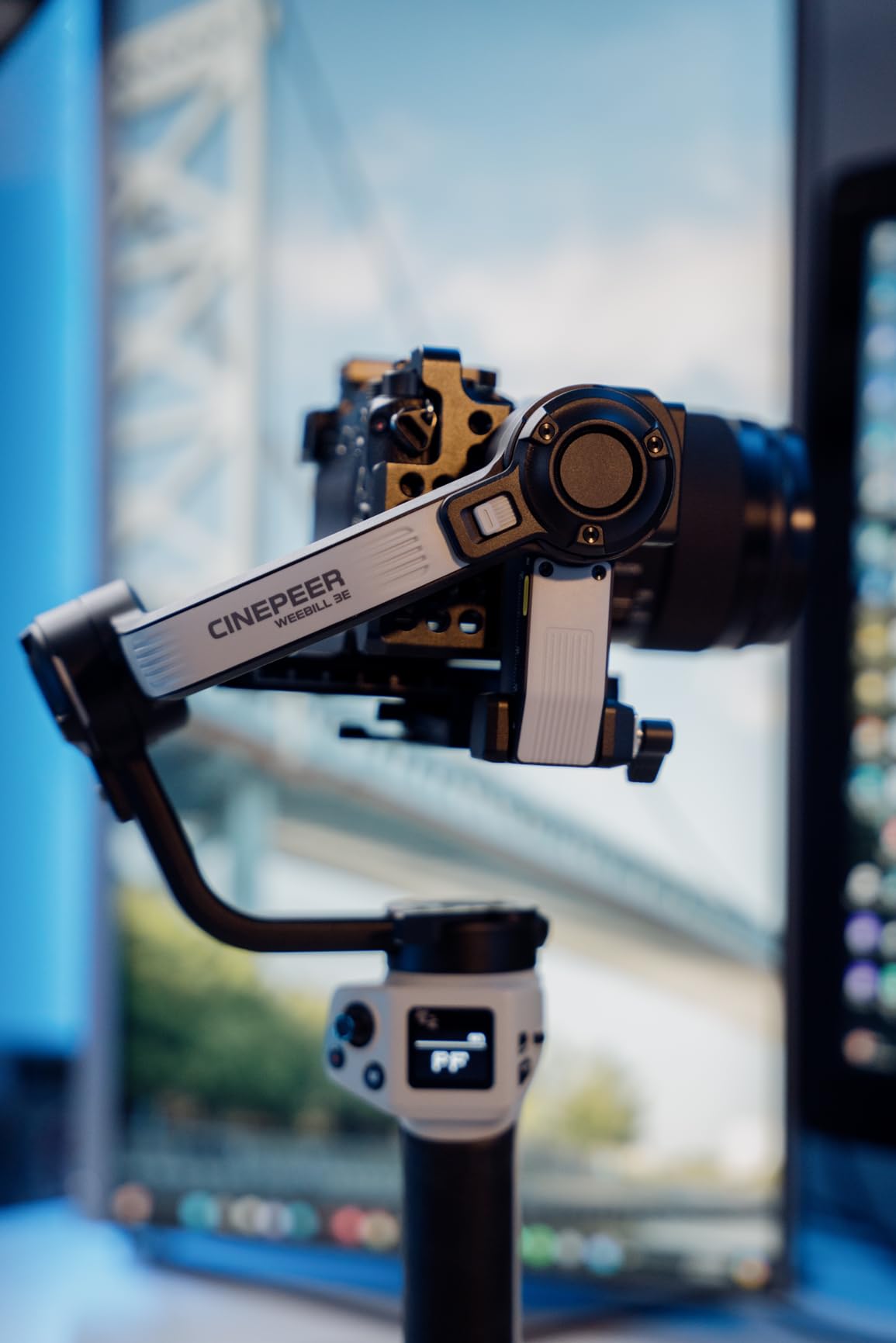
The 2.5 sling mode with extendable sling handle and wrist rest reduces fatigue by 50 percent compared to standard grip positions, according to Zhiyun. In practice, our team found it significantly more comfortable during long reception shoots than previous Weebill generations. The 16-hour battery life easily covers a full wedding day and then some.
The 2600mAh built-in battery charges via 14W fast charging in about 2 hours and 46 minutes, which means you can top up between ceremony and reception if needed. Bluetooth shutter control pairs wirelessly with compatible cameras for one-button recording control during fast-moving wedding moments.
For Whom It Is Best Suited
The Weebill 3E is ideal for wedding filmmakers shooting with mirrorless cameras like the Sony FX30, Panasonic GH5, or Fujifilm X-T3 and X-H2s. The compact A4-sized design makes it easy to pack for destination weddings, and the lightweight build reduces fatigue during marathon wedding days.
It is also one of the best values in this guide, offering pro-level features at a price that undercuts comparable DJI models significantly.
For Whom It May Not Be Ideal
The non-touchscreen display can be frustrating to navigate, especially for users coming from DJI gimbals with intuitive OLED touchscreens. Menu diving with buttons during a fast-paced wedding moment is not ideal when you need to switch modes quickly.
The built-in battery is not removable, which means you cannot carry a spare battery to swap in during a long wedding day. If the battery runs out, you are stuck charging the entire gimbal before you can resume shooting.
8. Zhiyun Crane 4 Combo – Built-in Fill Light for Wedding Lighting
ZHIYUN Crane 4 Combo, 3-Axis Gimbal Stabilizer for Camera
Built-in 10W Fill Light
2kg Payload
1.22 inch Color Touchscreen
Sling Grip
PD Fast Charge
Pros
- Built-in fill light provides pro LED lighting on the go
- Easy horizontal to vertical mode switching
- Strong motors handle full-frame and cinema cameras
- Comfortable sling grip with adjustable wrist rest
- Color touchscreen for easy adjustments
Cons
- Higher price point
- Heavier at 2000g
- Some users report complexity in initial setup
The Zhiyun Crane 4 Combo stands out immediately because of its built-in 10W fill light with 3200 Lux maximum illuminance. For wedding filmmakers who shoot in challenging reception lighting, having a fill light integrated directly into the gimbal eliminates the need for a separate on-camera light. The CRI 95+ rating and 2700K to 5500K color temperature range give you professional-quality light.
I have shot receptions where the DJ lighting was so dark that even a fast lens struggled, and a fill light would have saved the footage. The Crane 4 Combo solves this problem elegantly, giving you a controllable light source that moves with your gimbal for smooth, consistent illumination during first dances and reception coverage.
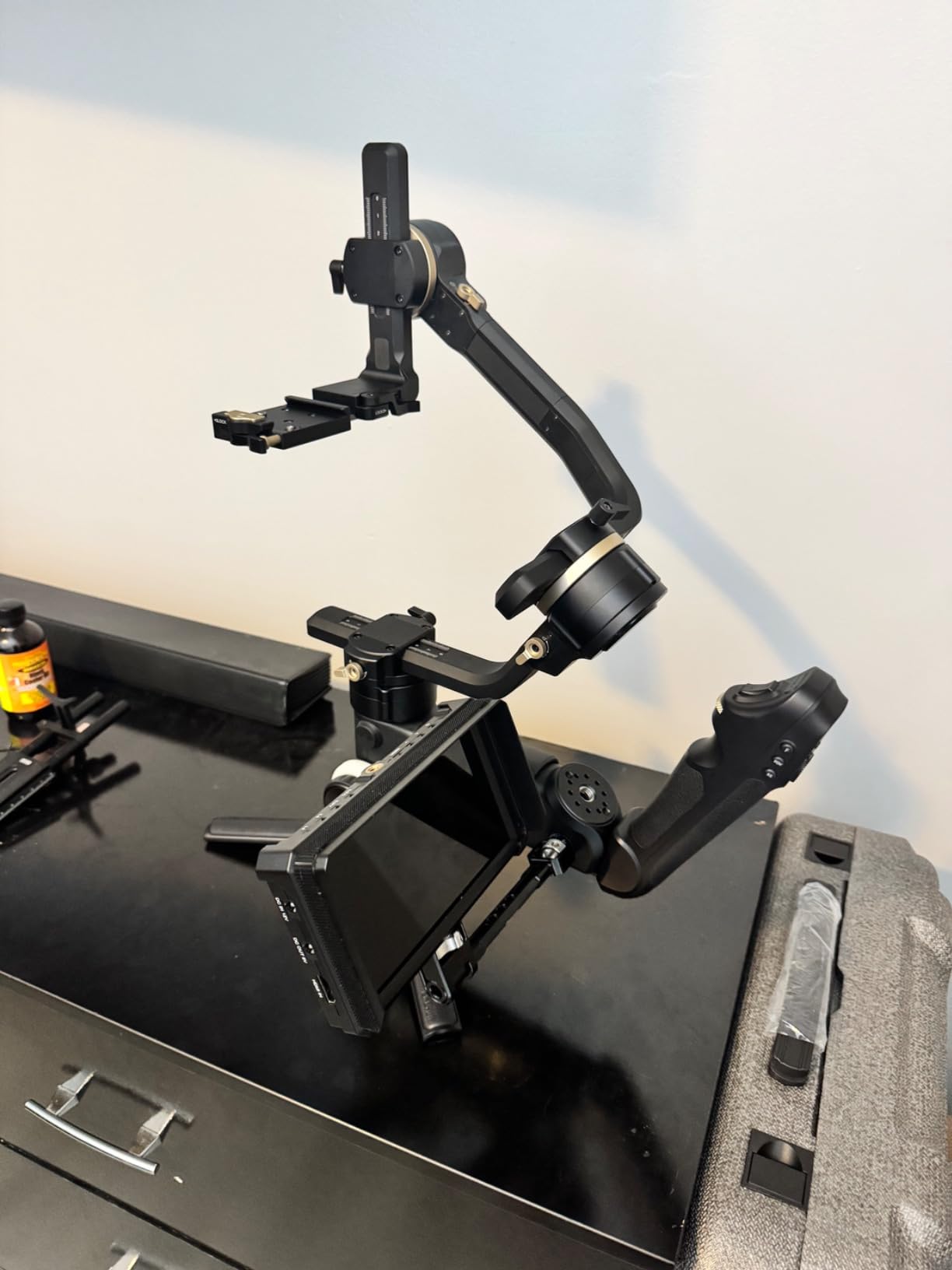
The 1.22-inch color touchscreen is crisp and responsive, making it easy to adjust settings, switch shooting modes, and configure motion timelapses. The quick-release module enables fast switching between landscape and portrait modes, which is essential for wedding filmmakers producing both horizontal films and vertical social content.
The adjustable sling grip with wrist rest is one of the most comfortable designs we have tested. During extended reception coverage where you are shooting continuously for hours, the wrist support makes a real difference in reducing fatigue. The PD fast charge support means you can quickly top up between wedding day segments.
For Whom It Is Best Suited
The Crane 4 Combo is ideal for wedding filmmakers who frequently shoot in dark reception venues and need integrated lighting. If you work solo and want to eliminate the complexity of a separate fill light setup, this gimbal consolidates your gear into one tool.
It is also well-suited for shooters using full-frame DSLR cameras or compact cinema cameras like the BMPCC 6K, thanks to the strong motors and broad compatibility.
For Whom It May Not Be Ideal
At 2,000 grams, the Crane 4 Combo is one of the heavier gimbals in this guide. If weight and fatigue are your primary concerns, the Weebill 3E or RS 4 Mini are much lighter options that will serve you better over a long wedding day.
The initial setup can be complex, and some users report a steeper learning curve compared to DJI gimbals. If you want a plug-and-play experience, this may not be the best choice.
9. FeiyuTech SCORP-C – Best Budget Gimbal for Wedding Filmmakers
FeiyuTech SCORP-C Gimbal Stabilizer for Cameras DSLR and Mirrorless Camera
2.5kg Payload
10-13hr Battery
Arca Quick Release
Motor Locks
5-Way COG Adjustment
Pros
- Excellent value with broad camera compatibility
- 10-13 hour battery life is impressive
- Arca-Swiss quick release plate for fast mounting
- Comfortable handle design for extended shoots
- Three-axis motor locks simplify setup
Cons
- Some cameras may require additional shutter cables
- Not water resistant
- Complex features may have learning curve for beginners
The FeiyuTech SCORP-C delivers the most bang for your buck in this entire guide. At its price point, you get a 3-axis gimbal with a 2.5kg payload, 10 to 13 hours of battery life, and a feature set that rivals gimbals costing significantly more. For wedding filmmakers just starting out or working within a tight budget, this is where I point them first.
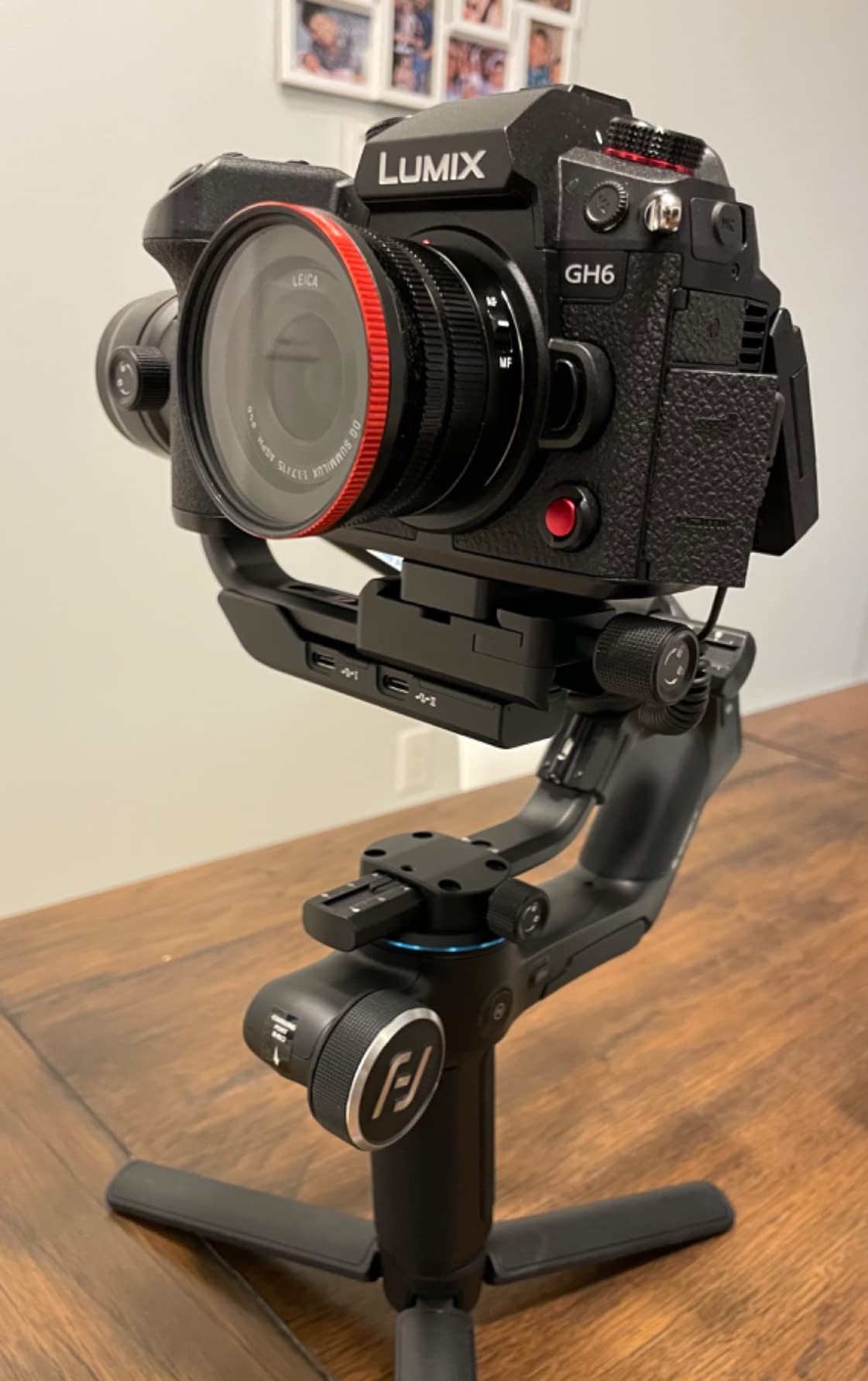
The integrated hanging handle design is unique and genuinely useful for wedding work. It allows complete lens control from any shooting angle, which is essential when you are moving between underslung reception shots and standard grip ceremony coverage. The tilted handle with beveled edges feels comfortable during extended handheld operation.
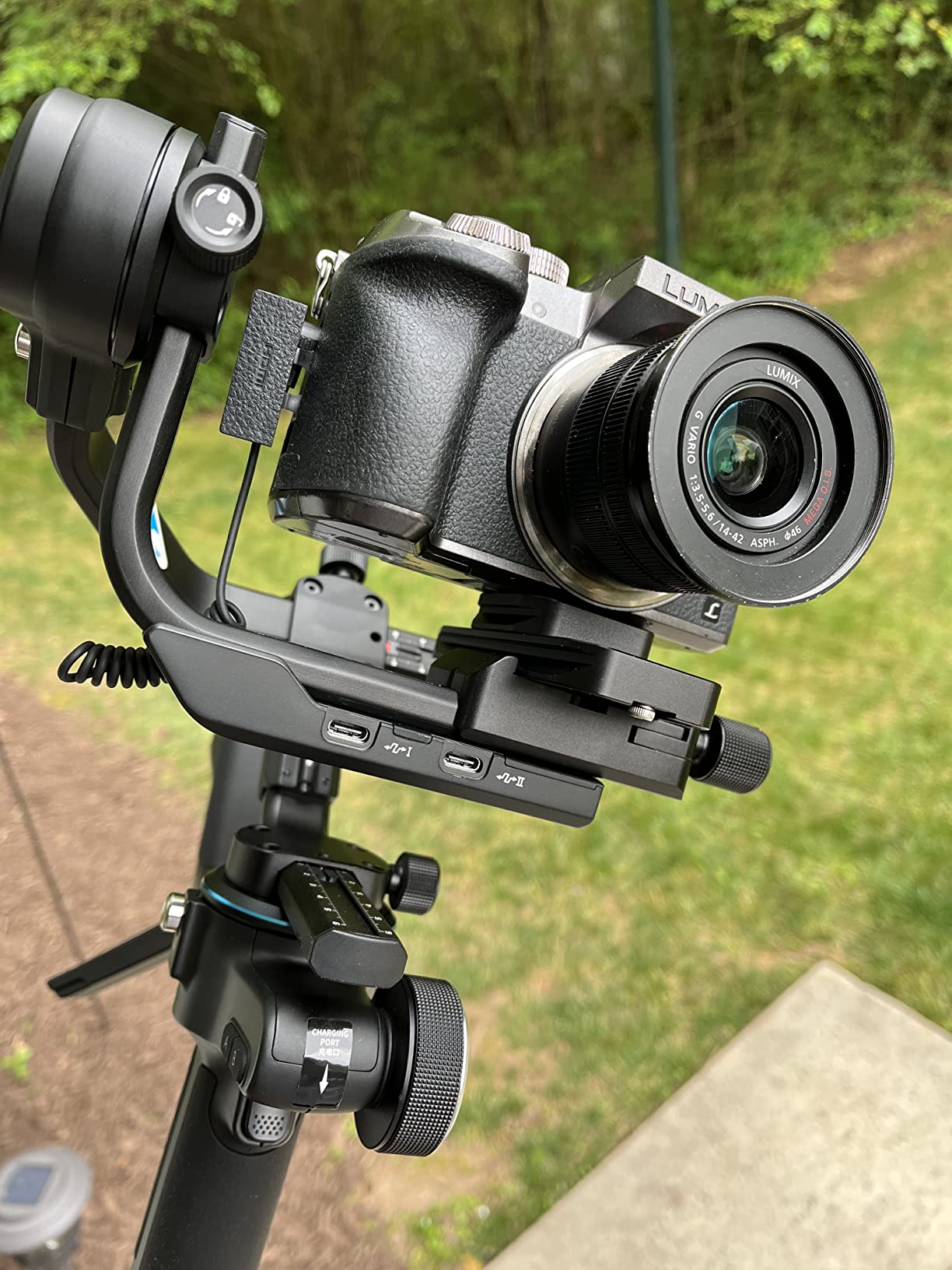
The three-axis motor lock prevents unwanted movement during setup, which speeds up balancing significantly. On wedding mornings when every minute counts, this feature lets you get balanced and shooting faster. The five-way center of gravity adjustment with memory slider is a nice touch that lets you save your balance settings for a known camera and lens combination.
The AB Trajectory Memory function enables automated movement patterns, which is useful for detail shots of the wedding rings, invitation suites, and decor. Set the movement once, and the gimbal repeats it perfectly. The 2500mAh battery delivers 10 to 13 hours of runtime with 18W fast charging, which covers a full wedding day on a single charge.
For Whom It Is Best Suited
The SCORP-C is perfect for wedding filmmakers on a budget who still want professional features and solid build quality. It handles mainstream mirrorless and DSLR cameras from Sony, Canon, Nikon, Panasonic, and Fujifilm with standard zoom and prime lenses up to 2.5kg total payload.
It is also an excellent choice for filmmakers who are transitioning from handheld to gimbal work and want an affordable entry point without sacrificing too many features.
For Whom It May Not Be Ideal
The SCORP-C does not have native vertical shooting, which is a limitation for wedding content creators who need to produce social media clips alongside traditional wedding films. You would need a separate solution for vertical content.
Beginners may find the feature set and settings menu overwhelming at first. There is a learning curve to getting the most out of this gimbal, and the documentation could be clearer for new users.
10. FeiyuTech SCORP 3 – AI Tracking and Heavy Payload Support
FeiyuTech SCORP 3 Camera Gimbal Stabilizer with Built-in AI Tracking
3.5kg Payload
Built-in AI Tracking
Detachable Remote Handle
OLED Display
Vertical Shooting
Pros
- Excellent payload capacity for full-frame DSLRs and large lens setups
- Built-in AI tracking works without external apps or accessories
- Detachable remote handle enables creative low-angle shots
- OLED display and arm-mounted status screen for easy monitoring
- Solid build quality for the price
Cons
- Not Prime eligible
- Only 38 reviews as a newer product
- 1080p max video capture resolution
- Some assembly required for detachable handle
The FeiyuTech SCORP 3 is a serious contender for wedding filmmakers who need a heavy payload gimbal with built-in AI tracking. With a 3.5kg payload, it is a 40 percent upgrade over the SCORP 2, making it one of the strongest gimbals in this guide for handling full-frame DSLRs with large lens combinations. If your ceremony coverage relies on a 70-200mm f/2.8, this gimbal handles it.
The built-in AI Tracking 4.0 is the headline feature, and it works without any external apps or accessories. It tracks subjects up to 59 feet away with a 15 percent wider tracking field than previous generations. For solo wedding shooters who cannot always have a second operator, the ability to track the couple during their first dance or ceremony procession autonomously is a significant advantage.
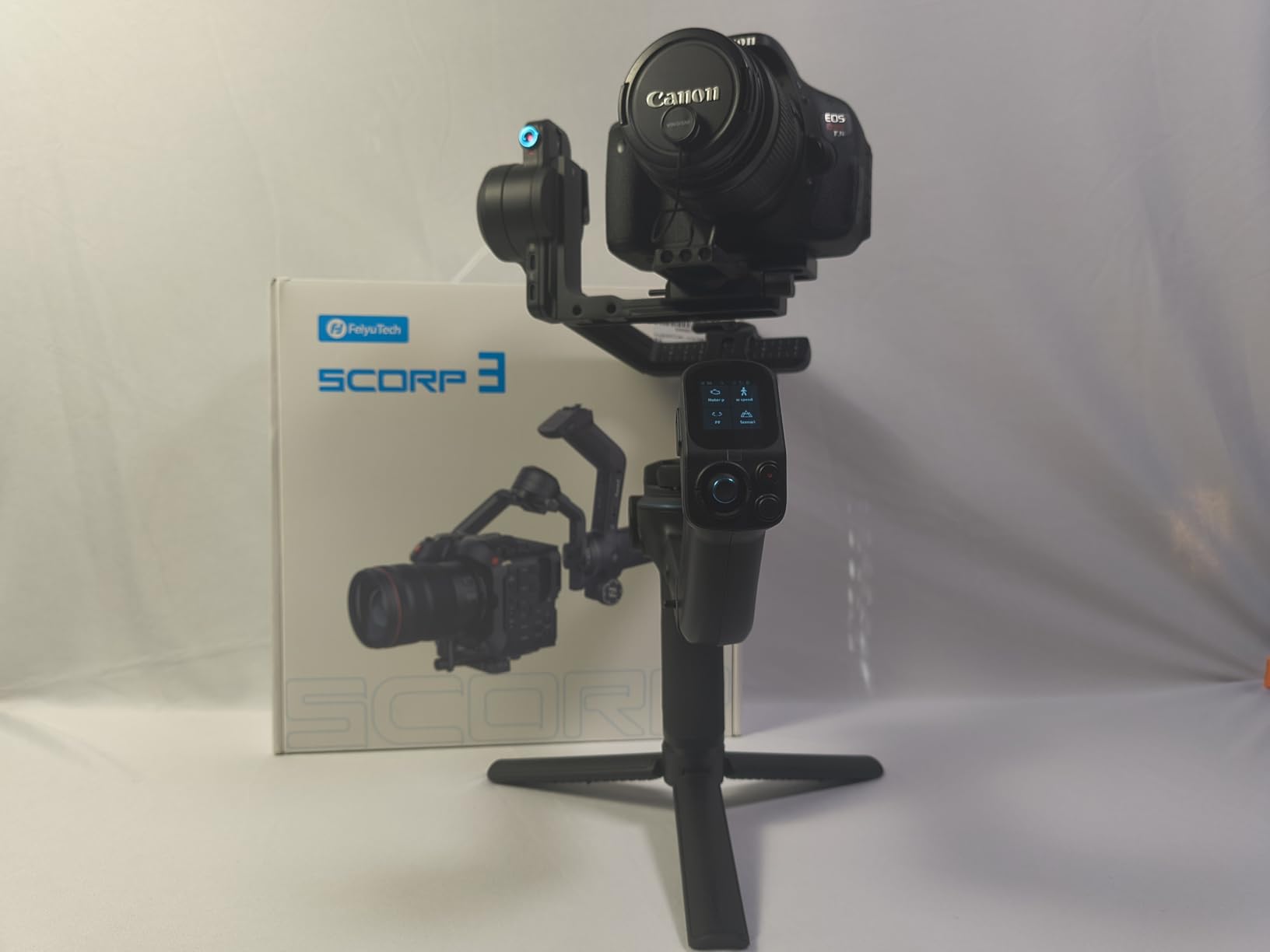
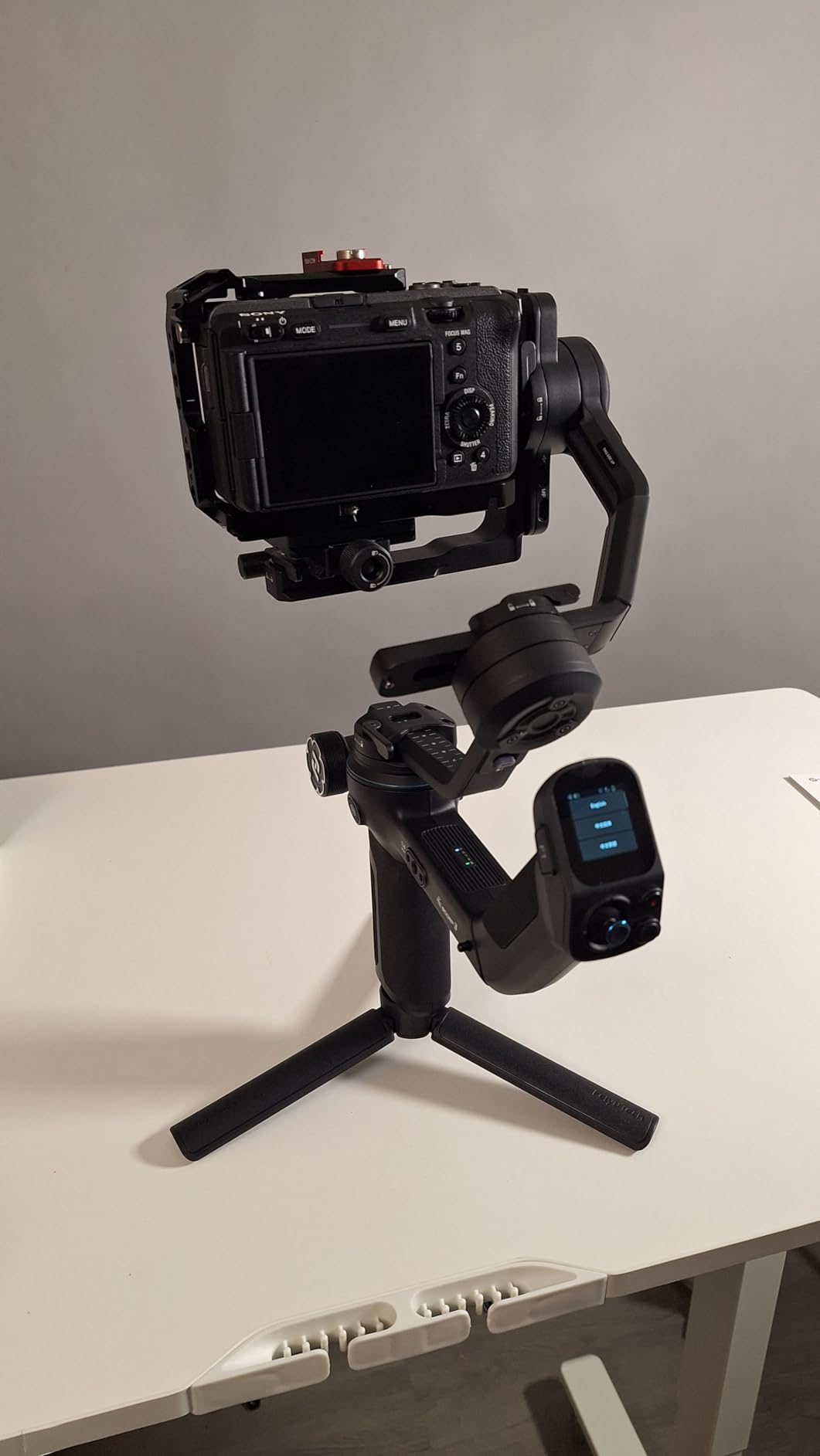
The detachable underslung handle with a 39-foot wireless range is a genuinely creative tool. During reception coverage, you can detach the handle and use it as a wireless remote while the gimbal is mounted on a tripod or held in underslung position. This opens up shot possibilities that traditional fixed-handle gimbals cannot match.
The 1.3-inch OLED touch display provides clear monitoring of settings and status, and the arm-mounted smart status display is bright enough for outdoor visibility during garden wedding ceremonies. The dual-layer ARCA-compatible quick release system ensures your camera mounts securely every time.
For Whom It Is Best Suited
The SCORP 3 is ideal for wedding filmmakers running heavy camera and lens combinations that exceed the 2.5kg to 3kg limits of smaller gimbals. Full-frame DSLRs with battery grips and large zoom lenses are well within its 3.5kg capacity.
It is also the best camera stabilizer for wedding filmmaking if you want autonomous subject tracking without relying on a phone app, which can be unreliable during fast-paced wedding moments.
For Whom It May Not Be Ideal
As a newer product with only 38 reviews at the time of this writing, there is less long-term reliability data compared to more established models. Wedding filmmakers who depend on their gear for income may prefer the proven track record of DJI or older Zhiyun models.
It is not Prime eligible, which means slower delivery and potentially more complicated returns if you encounter issues before a wedding shoot.
11. FeiyuTech SCORP 2 – Mid-Range Gimbal with AI Sensor
FeiyuTech SCORP 2 Gimbal Stabilizer for DSLR and Mirrorless Camera, Integrated Al Tracking Sensor, 3-Axis Camera Stabilizer for Sony Canon Panasonic Nikon, 2.5kg Payload Touch Screen Vertical Shooting
2.5kg Payload
AI Tracking Sensor
1.3 inch Touchscreen
Vertical Shooting
Bluetooth Control
Pros
- AI tracking works well for subject following
- Quick vertical and horizontal switching
- Good build quality and stabilization
- Touchscreen interface is useful
- Bluetooth connectivity convenient
- Good value for the price
Cons
- Some users report balance adjustment complexity
- Learning curve for new users
- Limited payload for heavier setups
The FeiyuTech SCORP 2 sits in a comfortable middle ground between the budget SCORP-C and the heavy-duty SCORP 3. It features an integrated AI tracking sensor that enables intelligent subject tracking without additional accessories, activated by a simple gesture control. For wedding filmmakers who want AI tracking without the higher price of the SCORP 3, this is a smart choice.
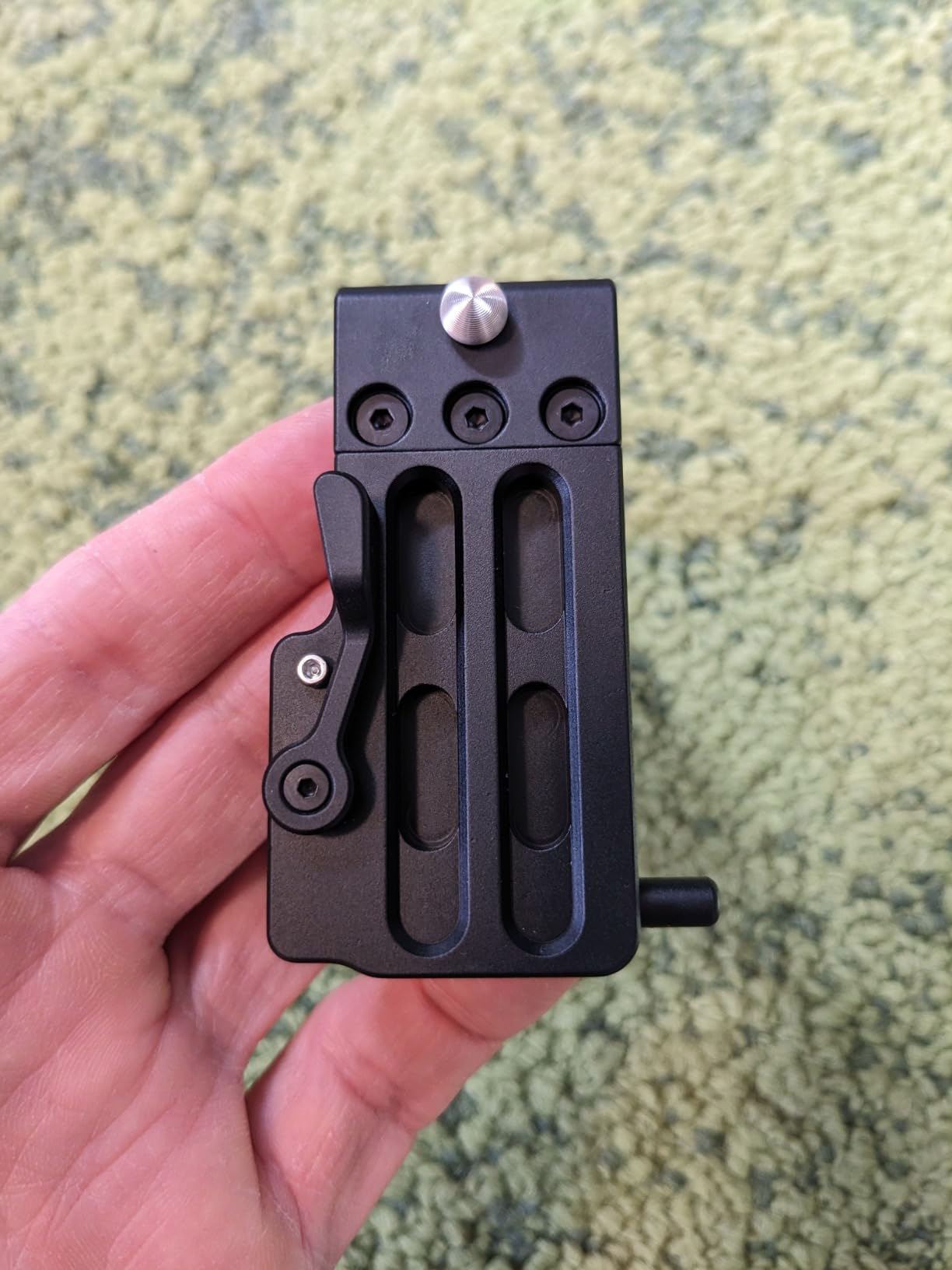
The instant vertical filming setup uses quick-installation L-shaped mounting plates with an anti-off quick-release slider. This means you can switch to vertical shooting without extra accessories, which is increasingly important for wedding content creators producing social media clips alongside traditional films.
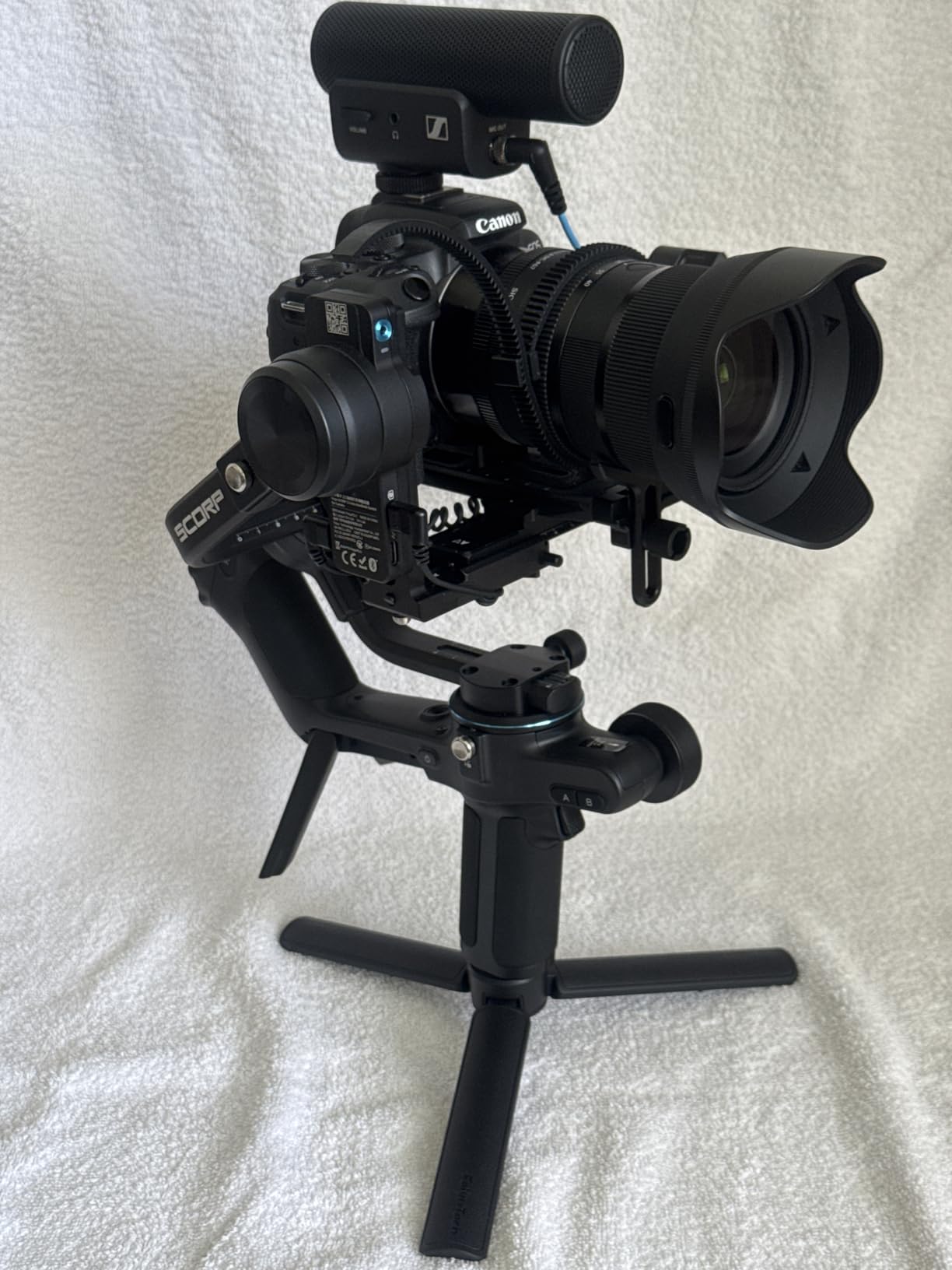
The 1.3-inch touchscreen displays filming status clearly and includes a multifunctional control knob for precise axis rotation or electronic zoom control. During wedding coverage, being able to control zoom electronically from the gimbal handle is useful for framing adjustments without reaching for the camera.
The SCORP 2 connects via Bluetooth or control cable, and a light shutter press triggers focus for easy camera control. The Feiyu SCORP app provides additional professional settings including parameter adjustment and somatosensory remote control via your phone gravity sensor for creative shot angles.
For Whom It Is Best Suited
The SCORP 2 is ideal for wedding filmmakers who want AI tracking and vertical shooting at a mid-range price point. It suits mirrorless camera setups from Sony, Canon, Panasonic, and Nikon up to 2.5kg total payload, covering most standard wedding videography configurations.
It is also a good upgrade path from the budget SCORP-C if you want the AI tracking sensor and touchscreen interface without stepping up to the SCORP 3 price.
For Whom It May Not Be Ideal
Some users report that balance adjustment can be complex, particularly when switching between different camera and lens combinations. If you change lenses frequently during a wedding day, you may spend more time rebalancing than with DJI gimbals that have Teflon-coated axis arms.
There is a learning curve for new users, and the 2.5kg payload may be limiting for filmmakers who occasionally use heavier glass for ceremony coverage.
12. Hohem iSteady MT3 Pro – Multi-Device Versatility with RGB Light
Hohem iSteady MT3 Pro 3-Axis Gimbal Stabilizer for Camera, AI Tracker with CCT/RGB Light, for Mirrorless/Pocket/Action Camera/Smartphone, Detachable Touchscreen Control, for Canon/Nikon/Sony/Fujifilm
2.5kg Payload
20hr Battery
AI Tracker with RGB Light
Detachable Touchscreen
Multi-Device Compatible
Pros
- Excellent stabilization with iSteady 10.0 tech
- AI tracking works reliably without apps
- Detachable touchscreen is convenient
- Built-in CCT and RGB fill light very useful
- Long 20-hour battery life
- Versatile compatibility with multiple camera types
- Arca-Swiss quick release system is professional
Cons
- Some users report jittery pan axis with heavier cameras
- Build quality less premium than higher-end gimbals
- Learning curve for beginners
- Weight may cause fatigue during long shoots
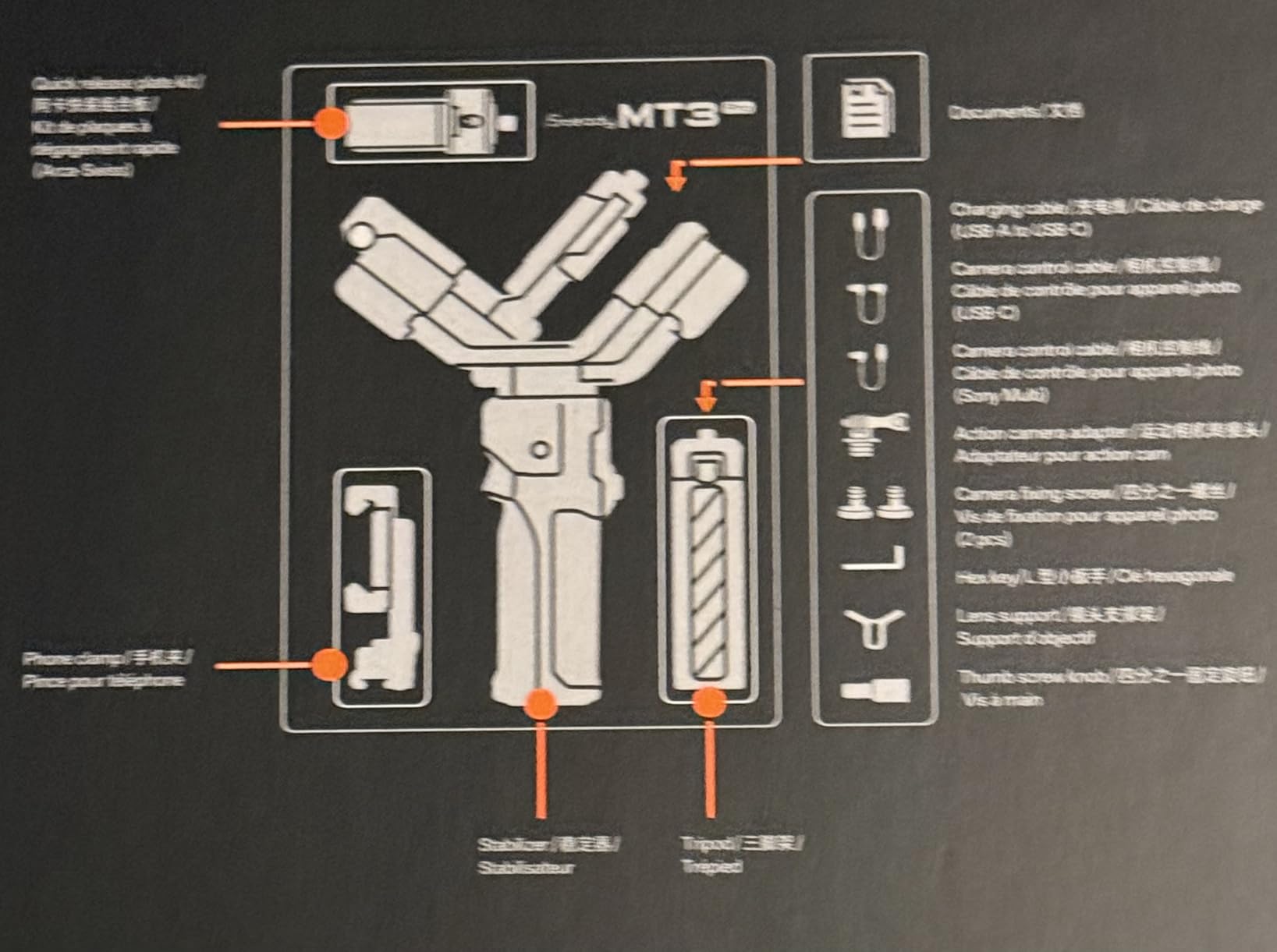
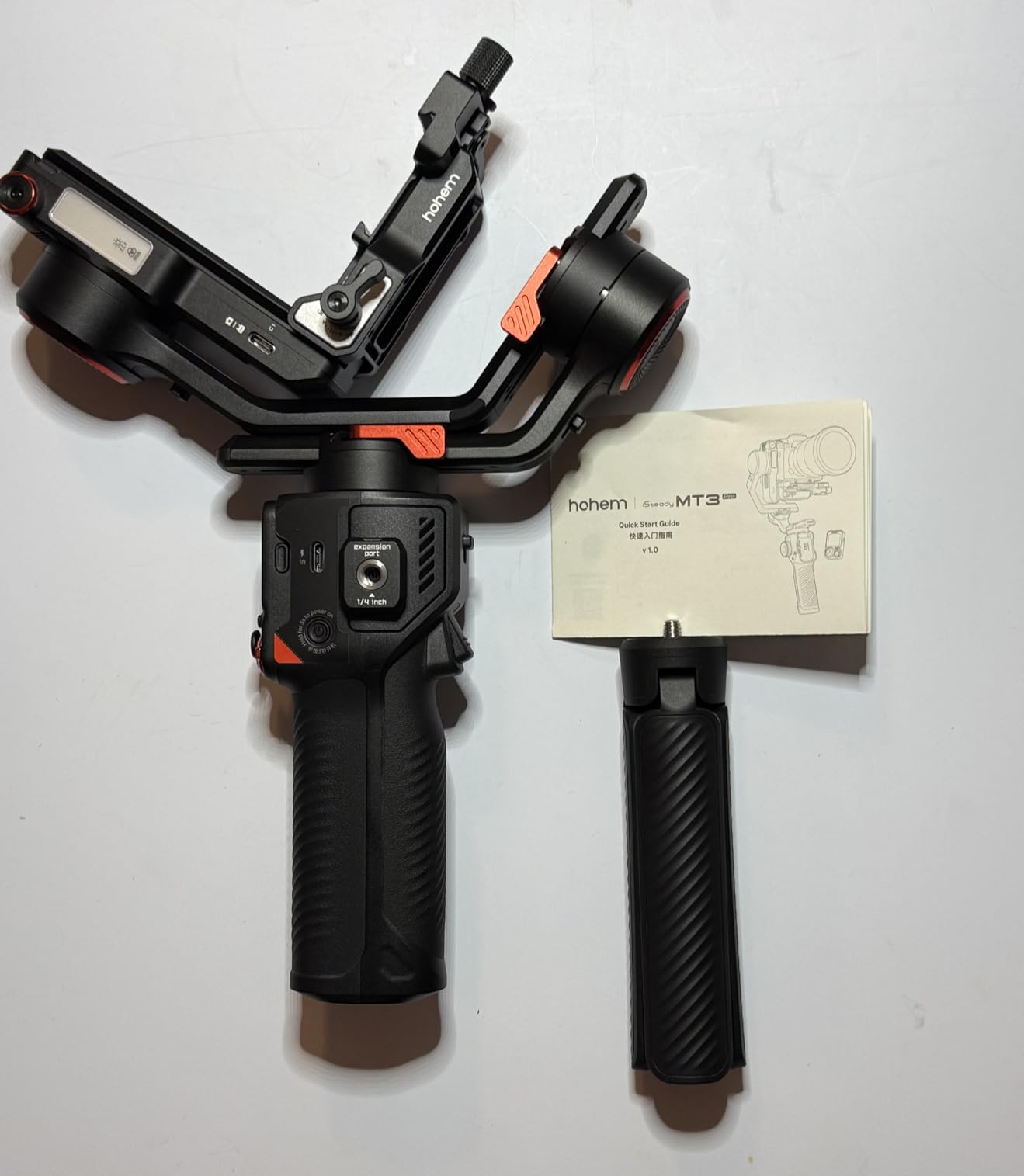
The Hohem iSteady MT3 Pro is the most versatile gimbal in this guide when it comes to device compatibility. It supports smartphones, compact cameras, action cameras, and full-frame mirrorless cameras with up to a 2.5kg payload. For wedding filmmakers who also shoot behind-the-scenes phone content or use action cameras for creative angles, having one gimbal that handles everything is a significant advantage.
The independent AI tracker with adjustable RGB fill light is a standout feature. The reversible AI tracking module is controlled with simple gestures and keeps focus on your subject without requiring an app or Bluetooth connection. The adjustable CCT and RGB fill light is genuinely useful for low-light wedding environments like dimly lit ceremonies and mood-lit receptions.
The iSteady 10.0 stabilization technology delivers a 40 percent improvement over the previous MT2 generation. In practice, this translates to smooth footage even when moving quickly through crowded reception spaces. The gimbal supports infinite Inception mode, motion-lapse, sports mode, time-lapse, and slow-motion, giving wedding filmmakers creative options.
The 20-hour battery life is exceptional and can also serve as a power bank to charge your camera or phone during a long wedding day. The detachable touchscreen controller gives you flexible operation options, and the Arca-Swiss quick release system is a professional touch that speeds up camera mounting and removal.
For Whom It Is Best Suited
The iSteady MT3 Pro is ideal for versatile wedding filmmakers who use multiple camera types across a wedding day. If you shoot with a mirrorless camera for the main film but also want gimbal-stabilized phone footage for social media, this is the only gimbal in this guide that handles both seamlessly.
The 20-hour battery life and power bank feature make it a great choice for wedding filmmakers who shoot long, multi-location events without reliable access to power outlets.
For Whom It May Not Be Ideal
Some users report jittery pan axis performance with heavier camera setups near the 2.5kg payload limit. If you consistently use full-frame cameras with large lenses, a gimbal with a higher payload margin like the SCORP 3 or RS 4 Pro will perform more reliably.
The build quality is less premium than DJI or higher-end Zhiyun models, and there is a learning curve for beginners navigating the feature set. Long-time gimbal users may also find the connection cables can tug on the gimbal during dynamic movement.
How to Choose a Camera Stabilizer for Wedding Filmmaking?
Choosing the right camera stabilizer for wedding videography comes down to a few key factors that directly impact your performance on the wedding day. Here is what our team considers when recommending a gimbal to wedding filmmakers.
Match Payload to Your Heaviest Wedding Setup
The most critical specification is payload capacity. You need to account for your camera body, heaviest lens, any battery grip, filters, and accessories. A Sony A7S III with a 24-70mm f/2.8 lens weighs approximately 1.7kg, which is within range of most gimbals in this guide. But add a cinema lens, matte box, or follow focus motor, and you quickly exceed the 2kg to 2.5kg range.
Always buy a gimbal with at least a 20 percent payload margin above your heaviest setup. Motors working near their limit produce micro-jitters in footage and drain battery faster, both of which are unacceptable for professional wedding work.
Factor In Weight and Fatigue
Forum discussions among wedding videographers consistently highlight fatigue as a top concern. An 8 to 10 hour wedding day means holding your gimbal for extended periods, often one-handed while operating the camera with the other. The difference between a 926g Zhiyun Weebill S and a 2kg Zhiyun Crane 4 is enormous over the course of a full day.
Consider the sling grip design and underslung shooting comfort. Gimbals with ergonomic sling grips, like the Weebill S, Weebill 3E, and Crane 4 Combo, distribute weight more naturally and reduce wrist strain during low-angle reception shots.
Prioritize Battery Life for Full-Day Coverage
Wedding days are long and unpredictable. You need a gimbal that can run from morning getting-ready coverage through late-night reception dancing without requiring a mid-day battery swap. The Hohem iSteady MT3 Pro leads the pack with 20 hours, followed by the DJI RS 4 Pro at up to 29 hours with the optional battery grip, and the Zhiyun Weebill 3E at 16 hours.
Look for gimbals with removable batteries or fast charging capabilities. The FeiyuTech SCORP-C offers 18W fast charging that can add significant runtime in a short charge window, which is useful during the break between ceremony and reception.
Consider Setup Speed for Capturing Moments
Wedding moments happen fast and without warning. A gimbal that takes five minutes to balance and configure is a liability when the couple suddenly decides to do a sparkler exit or an unplanned first look. The DJI RS 4 Mini Combo leads with a one-second setup thanks to auto axis locks, and most DJI RS series gimbals feature automated axis locks for fast deployment.
Teflon-coated axis arms, like those on the DJI RS 4, reduce friction and make manual balancing faster and more precise. Every second saved on setup is a second gained for capturing moments that only happen once.
Motorized Gimbal vs Handheld Stabilizer for Weddings
The debate between motorized gimbals and purely mechanical handheld stabilizers is active in wedding videography forums. Motorized gimbals provide superior stabilization, especially for walking and tracking shots, and offer advanced features like subject tracking and automated movement patterns. They are the standard choice for professional wedding filmmaking in 2026.
However, many experienced wedding filmmakers use both approaches. As one videographer noted in a forum discussion, handheld footage gives the film its heart while gimbal shots give it its style. Using both creates a more dynamic, emotionally engaging wedding film. Motorized gimbals are better for smooth tracking shots, ceremony processionals, and reception dancing, while handheld adds intimacy and energy to getting-ready and emotional moments.
Budget and Value Considerations
Camera stabilizers for wedding filmmaking range from under $200 to over $800. The FeiyuTech SCORP-C and Zhiyun Weebill 3E deliver excellent value in the sub-$250 range, covering most mirrorless camera setups with professional features. The DJI RS 4 represents the mid-range sweet spot at roughly $470, offering the best balance of features and value for most working wedding videographers.
For established professionals running cinema cameras, the DJI RS 4 Pro and its LiDAR focus system justify the higher investment. Consider your camera setup, shooting frequency, and revenue when deciding how much to invest. A gimbal is a tool that directly impacts your final product quality and your physical endurance on long wedding days.
Frequently Asked Questions
What is the best gimbal for wedding content creators?
The DJI RS 4 is the best overall gimbal for wedding content creators, offering a 3kg payload, native vertical shooting for social media, Teflon-coated axis arms for fast balancing, and a 12-hour battery life. For budget-conscious creators, the DJI RS 4 Mini Combo and FeiyuTech SCORP-C deliver excellent value with essential wedding filmmaking features.
What is the best camera stabilizer for video recording?
The best camera stabilizer for video recording depends on your camera weight and shooting style. For most wedding videographers using mirrorless cameras, the DJI RS 4 offers the best combination of payload, stabilization quality, and workflow features. For heavier cinema camera setups, the DJI RS 4 Pro with its 4.5kg payload and LiDAR focus system is the top choice.
Which is better, a gimbal or a stabilizer?
A motorized gimbal is better than a traditional handheld stabilizer for most wedding videography applications. Gimbals provide superior three-axis stabilization, subject tracking, and motorized correction that mechanical stabilizers cannot match. However, many wedding filmmakers use both approaches, combining smooth gimbal tracking shots with handheld footage for a more dynamic, emotionally engaging wedding film.
What is the best gimbal for filmmaking?
For professional filmmaking including wedding cinematography, the DJI RS 4 Pro is the top choice with its 4.5kg payload, LiDAR autofocus system, 29-hour battery life, and dual focus and zoom motor control. The DJI RS 4 is the best option for filmmakers using standard mirrorless setups, while the Zhiyun Crane 4 Combo offers unique advantages with its built-in fill light for low-light filming.
Is a gimbal necessary for wedding videography?
A gimbal is not strictly necessary for wedding videography, but it significantly improves the quality and professionalism of your footage. Wedding videographers who want smooth, cinematic tracking shots during ceremony processionals, first dances, and venue walkthroughs benefit enormously from gimbal stabilization. Many professionals use a combination of gimbal footage for style and handheld footage for intimacy and emotion.
Final Thoughts on the Best Camera Stabilizer for Wedding Filmmaking
Finding the best camera stabilizer for wedding filmmaking comes down to matching the gimbal to your camera setup, shooting style, and budget. For most working wedding videographers, the DJI RS 4 hits the sweet spot with its 3kg payload, native vertical shooting, and Teflon-coated axis arms. It is the gimbal we recommend first and the one that covers the widest range of wedding filmmaking needs.
For solo shooters and content creators, the DJI RS 4 Mini Combo delivers DJI quality and features in a lightweight, affordable package. Budget-conscious filmmakers should look at the FeiyuTech SCORP-C or Zhiyun Weebill 3E, both of which offer professional stabilization at accessible prices. And for established cinematographers running cinema rigs, the DJI RS 4 Pro with LiDAR focus is the clear upgrade path.
Whatever you choose, remember that the best gimbal is the one you can comfortably carry for ten hours, balance in under two minutes, and rely on when the first dance starts. Invest in the tool that fits your real wedding day workflow, and your footage will speak for itself.