
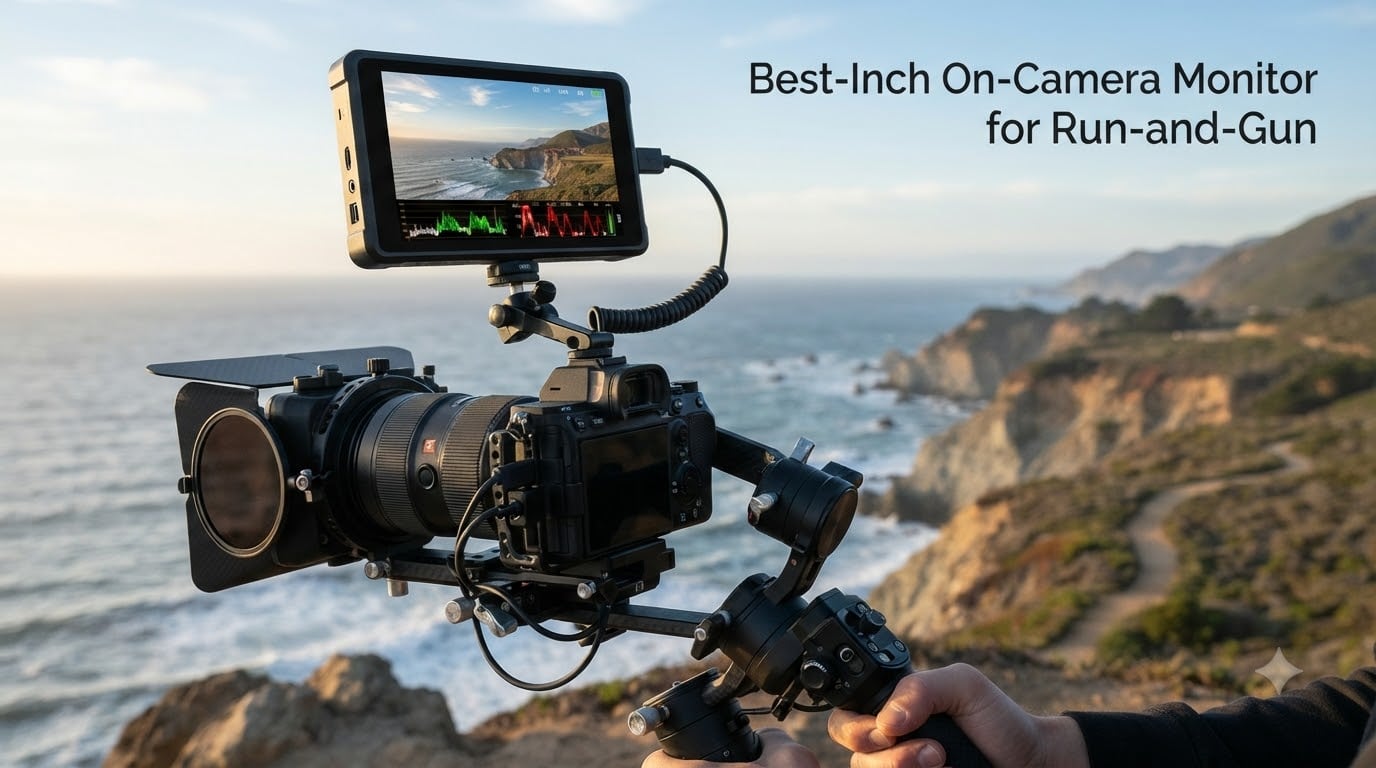
When you are shooting run-and-gun, every ounce on your rig matters and every second of setup time counts. I have spent years balancing cameras on gimbals, chasing documentary subjects through unpredictable lighting, and trying to nail focus on a 3-inch camera LCD in midday sun. That is why a dedicated 5-inch on-camera monitor is one of the most impactful upgrades you can make for fast-paced filmmaking.
A 5-inch field monitor hits the sweet spot between screen real estate and portability. It is large enough to pull focus accurately and read waveform data, yet small enough that it does not throw off your gimbal balance or block your view of the scene unfolding around you. As one Reddit shooter put it, 5 inches is pretty perfect because you can focus accurately without extra bulk.
In this guide, our team compared 10 monitors head-to-head for run-and-gun work. We looked at brightness for outdoor visibility, weight for handheld and gimbal use, battery life for long shoot days, and the monitoring tools each one provides. Whether you are shooting weddings, documentaries, or narrative shorts, you will find the right 5-inch on-camera monitor for your workflow below.
Table of Contents
- Top 3 Picks for Run-and-Gun Monitoring for October 2026
- Best 5-Inch On-Camera Monitors in October 2026
- 1. FEELWORLD F5 Prox 5.5 Inch 1600nit Field Monitor
- 2. osee T5+ 5.5 Inch 1000nit Camera Monitor
- 3. Atomos Shinobi GO 5 Inch 4K Camera Field Monitor
- 4. Atomos Shinobi 5.2 Inch HDMI 4K Monitor
- 5. VILTROX 5.5 Inch 1200nit 4K HDMI Video Field Monitor
- 6. VILTROX DC-550 Touch Screen 5.5 Inch 1200nit Field Monitor
- 7. VILTROX DC-550 PRO Touchscreen 5.5 Inch 1200nit Monitor
- 8. Portkeys PT5 II 5 Inch Touchscreen Camera Field Monitor
- 9. FEELWORLD S55E 5.5 Inch Ultra Lightweight Field Monitor
- 10. Blackmagic Design Video Assist 5 Inch 12G-SDI HDR Recording Monitor
- Buying Guide: Choosing the Right 5-Inch On-Camera Monitor for Run-and-Gun
- Frequently Asked Questions
- Conclusion
Top 3 Picks for Run-and-Gun Monitoring for October 2026
Out of the 10 monitors we tested, three stand out for fast-paced shooting. The FEELWORLD F5 Prox earned our Editor’s Choice for its 1600-nit brightness and complete accessory kit. The osee T5+ took Best Value at under $110 with 1000 nits and a false color workflow. The Atomos Shinobi GO rounded out the top three as our Top Rated pick for gimbal shooters at just 210 grams.

FEELWORLD F5 Prox 5.5 Inch
- 1600 nit brightness
- 4K HDMI
- 3D LUT support
- Touchscreen
- Includes battery and accessories

osee T5+ 5.5 Inch Monitor
- 1000 nit brightness
- Customizable false color
- 8 MySets presets
- HDR 4K HDMI input
- Under $110

Atomos Shinobi GO 5 Inch
- 1500 nit brightness
- Only 210g
- AtomHDR technology
- USB-C PD support
- All-day battery life
Best 5-Inch On-Camera Monitors in October 2026
Here is a quick side-by-side comparison of all 10 monitors we reviewed. This table covers the key specs you need to evaluate before diving into the individual reviews.
| Product | Specs | Action |
|---|---|---|
| FEELWORLD F5 Prox 5.5 Inch |
|
Check Latest Price |
| osee T5+ 5.5 Inch |
|
Check Latest Price |
| Atomos Shinobi GO 5 Inch |
|
Check Latest Price |
 Atomos Shinobi 5.2 Inch Atomos Shinobi 5.2 Inch |
|
Check Latest Price |
 VILTROX 5.5 Inch 1200nit VILTROX 5.5 Inch 1200nit |
|
Check Latest Price |
 VILTROX DC-550 5.5 Inch VILTROX DC-550 5.5 Inch |
|
Check Latest Price |
 VILTROX DC-550 PRO 5.5 Inch VILTROX DC-550 PRO 5.5 Inch |
|
Check Latest Price |
 Portkeys PT5 II 5 Inch Portkeys PT5 II 5 Inch |
|
Check Latest Price |
 FEELWORLD S55E 5.5 Inch FEELWORLD S55E 5.5 Inch |
|
Check Latest Price |
 Blackmagic Video Assist 5 Inch 12G Blackmagic Video Assist 5 Inch 12G |
|
Check Latest Price |
1. FEELWORLD F5 Prox 5.5 Inch 1600nit Field Monitor
FEELWORLD F5 Prox 5.5″ 1600nit Touch Field DSLR Camera Monitor
5.5 inch
1600 nits
1920x1080
4K HDMI
3D LUT
Touchscreen
Pros
- Extremely bright 1600nit display visible in direct sunlight
- Professional monitoring tools including waveform and focus peaking
- Complete kit with battery bag cables and sunshade included
Cons
- Heavier than some competitors at 2.82 pounds
- Some users report occasional touchscreen sensitivity issues
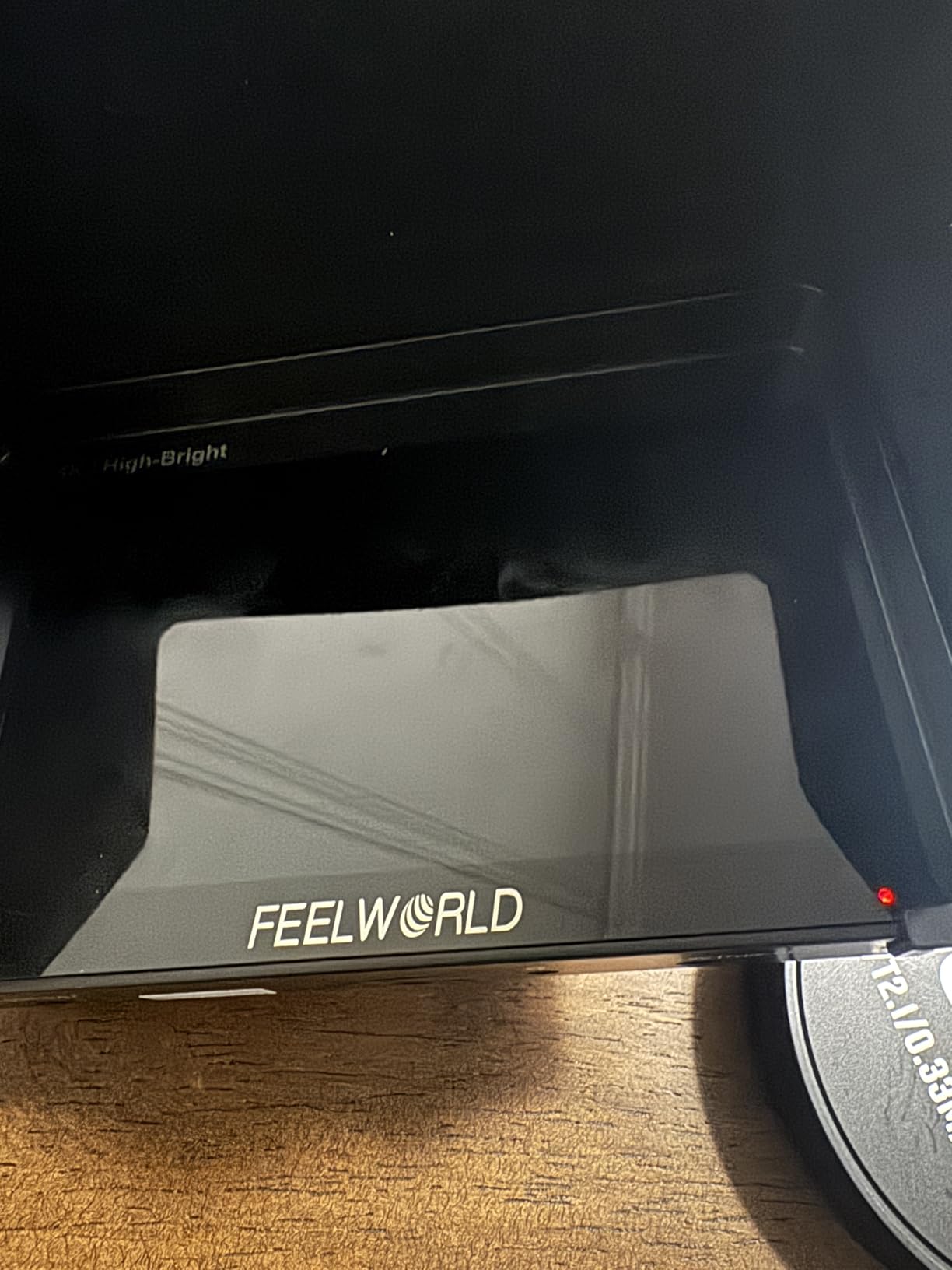
The FEELWORLD F5 Prox is the monitor I reach for when brightness is non-negotiable. At 1600 nits, this is one of the brightest 5-inch class monitors on the market, and it shows in the field. I tested it during an outdoor interview shoot in harsh midday light, and I could clearly see the frame, waveform, and focus peaking without a sunshade.
For run-and-gun work, the touchscreen interface is a major time-saver. Instead of fumbling with physical buttons while your subject is moving, you can tap to toggle monitoring tools, load LUTs, or adjust settings on the fly. The 3D LUT support means you can load your camera’s log profile and preview a graded image while shooting.
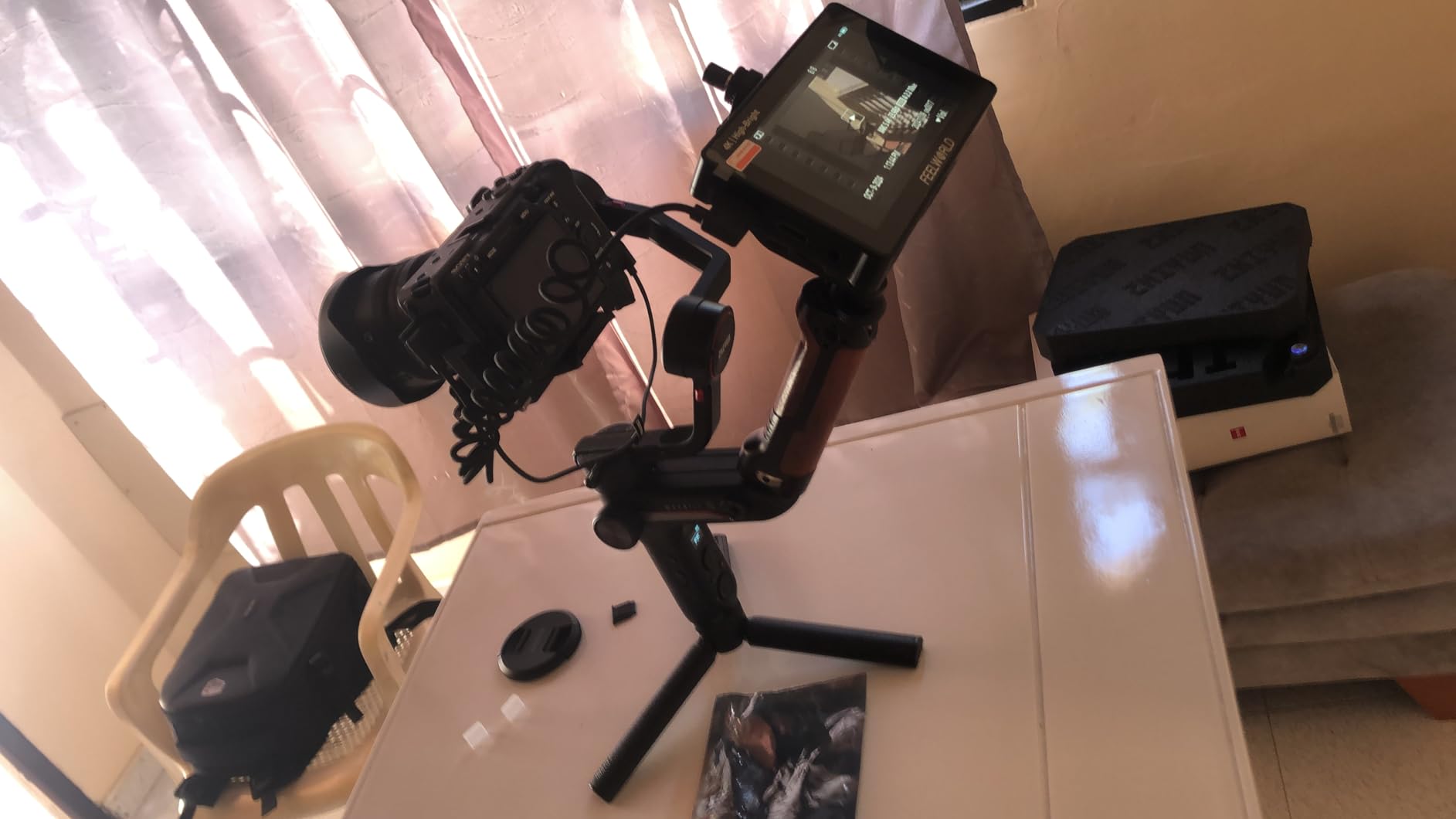
What impressed me most is the complete package. FEELWORLD includes the F750 battery, a carrying bag, cables, and a sunshade right in the box. For a shooter building a kit from scratch, this means you are ready to go on day one without hunting for compatible accessories.
The trade-off is weight. At 2.82 pounds including the battery and accessories, this is one of the heavier options in our roundup. On a Ronin or Crane gimbal, you will need to rebalance carefully, and some smaller gimbals may struggle with the added load. On a shoulder rig or monitor arm, the weight is manageable.
Best Shooting Scenarios
This monitor shines for outdoor documentary work, wedding videography, and any shoot where you face unpredictable sunlight. The 1600-nit panel means you can leave the sunshade in the bag in most conditions.
It is also a strong pick for multi-cam setups where you need a reliable monitoring feed. The HDMI input and output let you loop the signal to a second monitor or director’s display.
What to Watch Out For
The 2.82-pound weight is the biggest concern for pure gimbal work. If your gimbal is already loaded with a heavy cinema camera, the F5 Prox may push it past its payload limit.
Some users report touchscreen sensitivity issues, particularly in cold weather or with wet fingers. If you shoot in rough conditions, you may find yourself relying on the physical buttons more than expected.
2. osee T5+ 5.5 Inch 1000nit Camera Monitor
osee T5+ 5.5 Inch 1000nits Camera Monitor, Customizable False Color Field Monitor, HDR 4K HDMI Input 8 MySets Preview Workflow DSLR Monitor, Peaking Focus Assist, 3D Lut (Battery Not Included)
5.5 inch
1000 nits
1920x1080
4K HDMI
False Color
8 MySets
Pros
- Excellent value with 1000nit brightness for outdoor use
- 8 customizable MySets for efficient workflow on location
- Comprehensive monitoring tools including false color and zebra
Cons
- Battery not included in package
- Some users find the menu system complex to navigate
The osee T5+ proves you do not need to spend a fortune to get a capable run-and-gun monitor. At under $110, it delivers 1000 nits of brightness, a full 1080p panel, and a feature set that rivals monitors costing twice as much. I was genuinely surprised by how well it performed during a two-day corporate shoot.
The standout feature for fast-paced work is the 8 customizable MySets. These let you save and recall different monitoring configurations instantly. I set up one profile for interview work with false color and waveform, another for b-roll with focus peaking and zebra, and a third for outdoor shooting with the brightness maxed out.
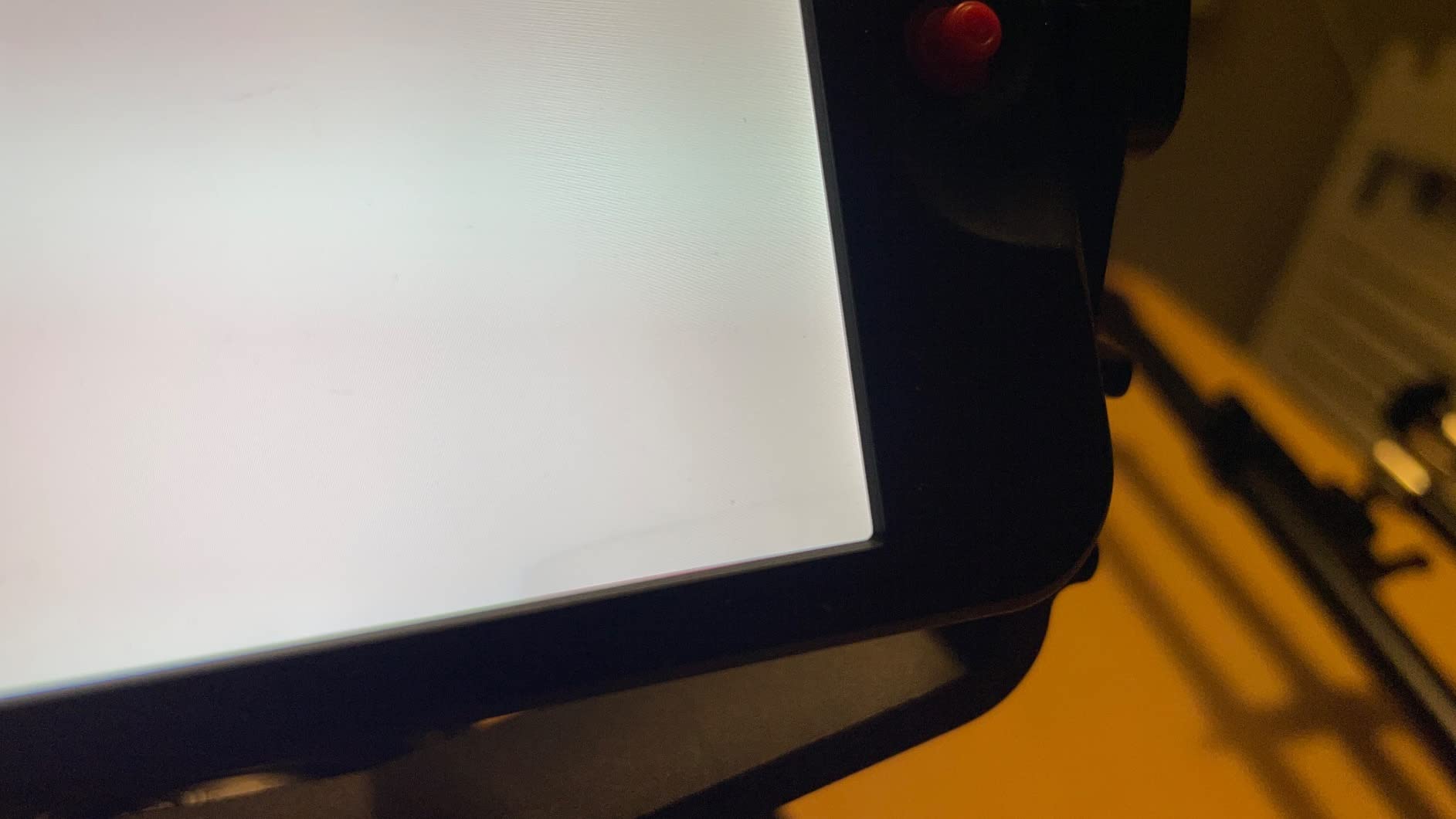
The customizable false color is a feature usually reserved for pro-grade monitors. It lets you define your own exposure ranges, which is invaluable when you are shooting log footage and need to protect highlights in real time. The HDR 4K HDMI input means it handles 4K signals from modern cameras without issue.
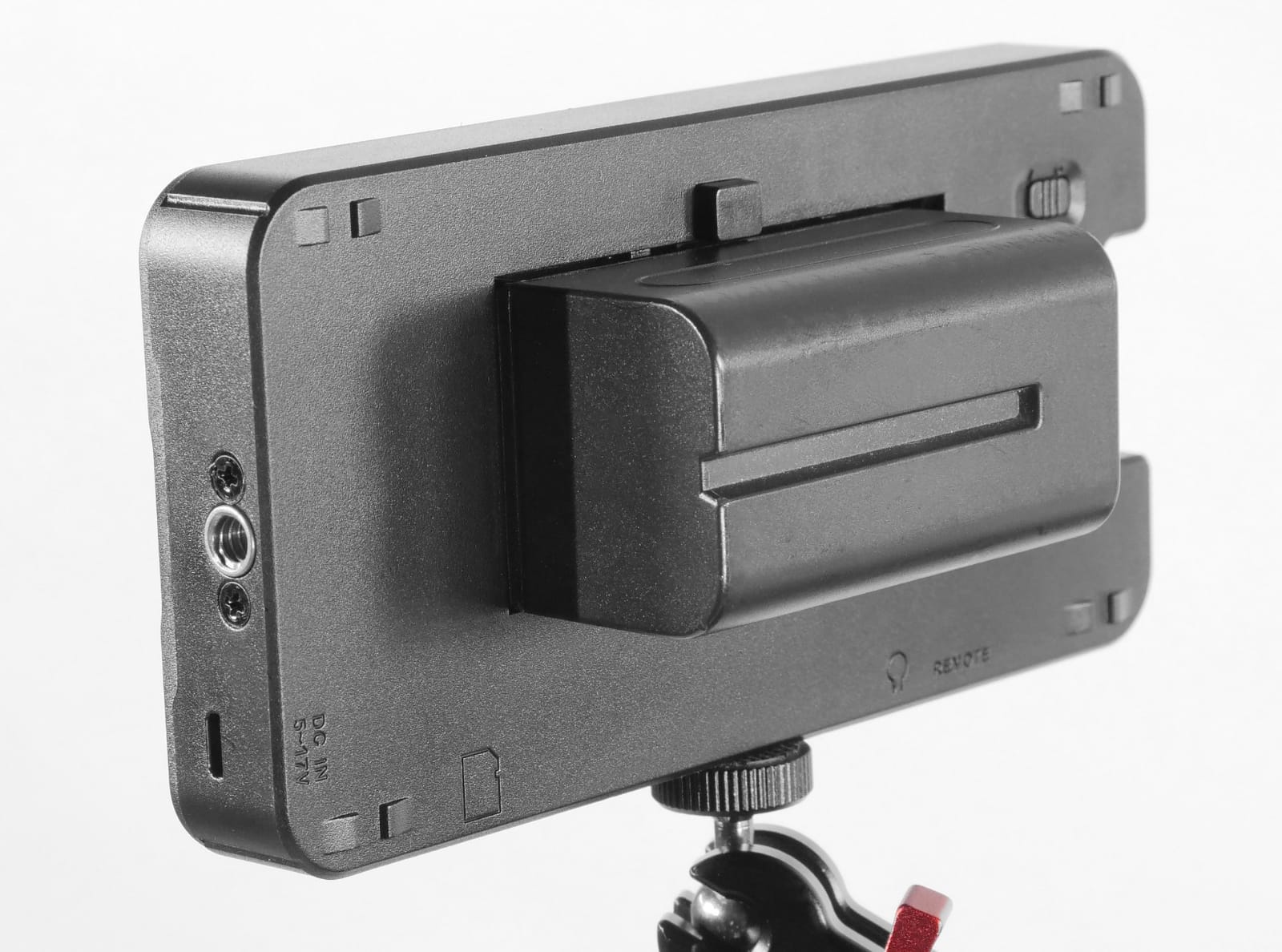
The biggest downside is that the battery is not included. You will need to pick up an NP-F compatible battery separately, which adds to the total cost. The menu system also has a learning curve, and I found myself digging through submenus more than I would like during the first few days of use.
Best Shooting Scenarios
This is the ideal first monitor for someone moving up from their camera’s built-in screen. The price point makes it accessible, and the feature set gives you room to grow as a shooter.
It is also a great backup monitor for established professionals. At this price, having a second body in your kit for multi-cam work or as a fail-safe is entirely practical.
What to Watch Out For
The menu complexity is the main frustration. Plan to spend an evening learning the interface before you take it on a paid shoot. Once you have your MySets configured, day-to-day operation becomes much smoother.
The 1000-nit brightness is good for most outdoor situations but may struggle in direct overhead sun. Consider budgeting for a sunshade if you shoot primarily outdoors.
3. Atomos Shinobi GO 5 Inch 4K Camera Field Monitor
Atomos Shinobi GO HDMI 4K Camera Field Monitor with HDR Touchscreen, All Day Battery Life, and Lightweight Design
5 inch
1500 nits
1920x1080
HDR Touchscreen
210g
USB-C PD
Pros
- Premium Atomos build quality with excellent color accuracy
- Lightweight at just 210g ideal for gimbal work
- AtomHDR technology provides excellent HDR preview
Cons
- Higher price point at $299 among budget competitors
- Limited to HDMI only no SDI support
The Atomos Shinobi GO is the monitor I recommend to gimbal shooters above all others. At just 210 grams, it is one of the lightest full-featured monitors available, and that weight savings makes a real difference when you are trying to balance a rig on a DJI RS series or Zhiyun Crane.
Despite the featherweight design, Atomos did not skimp on brightness. The 1500-nit panel is bright enough for most outdoor situations, and the AtomHDR technology gives you an accurate HDR preview of your log footage. I found the color accuracy noticeably better than budget options in the same size class.
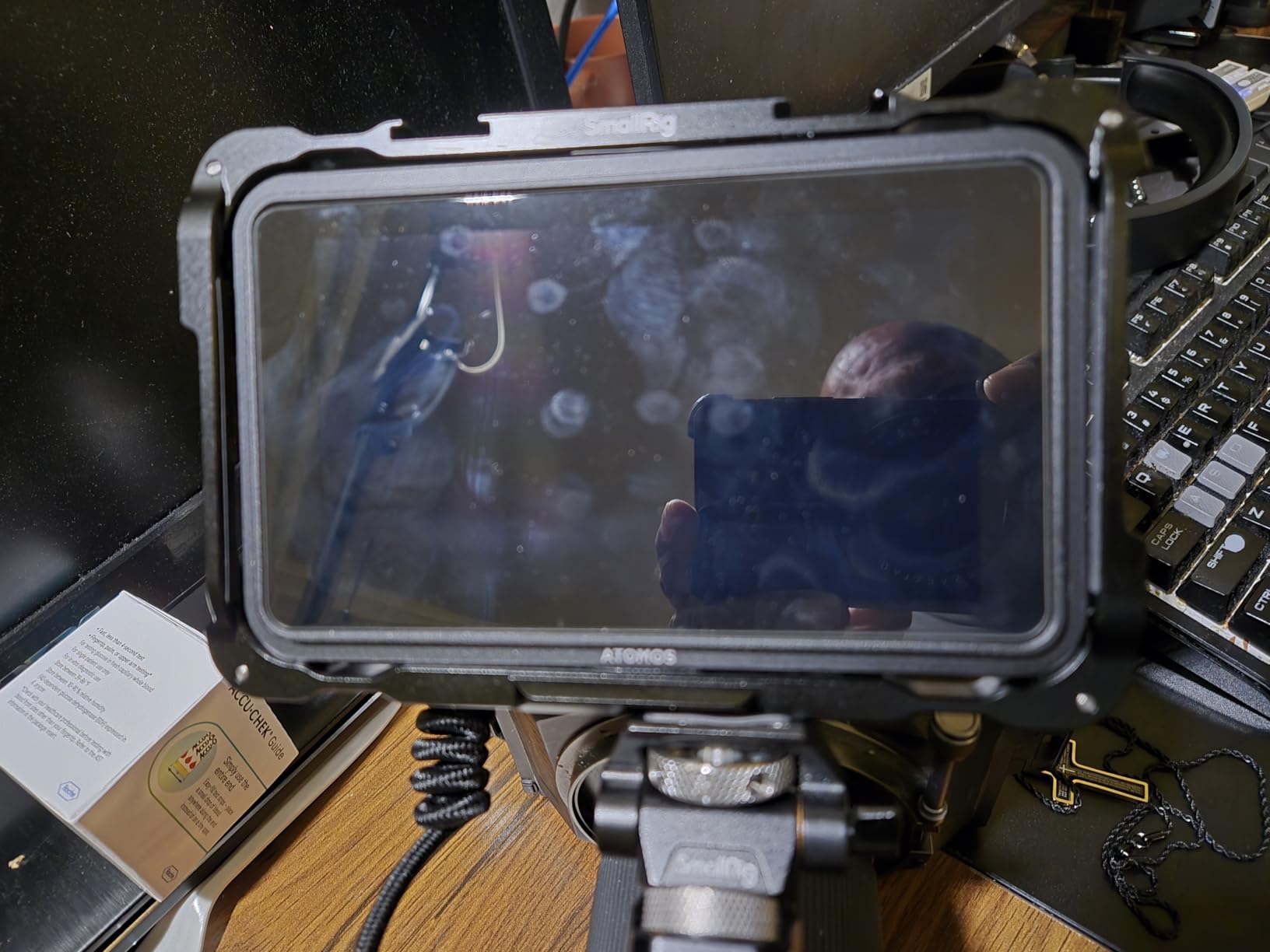
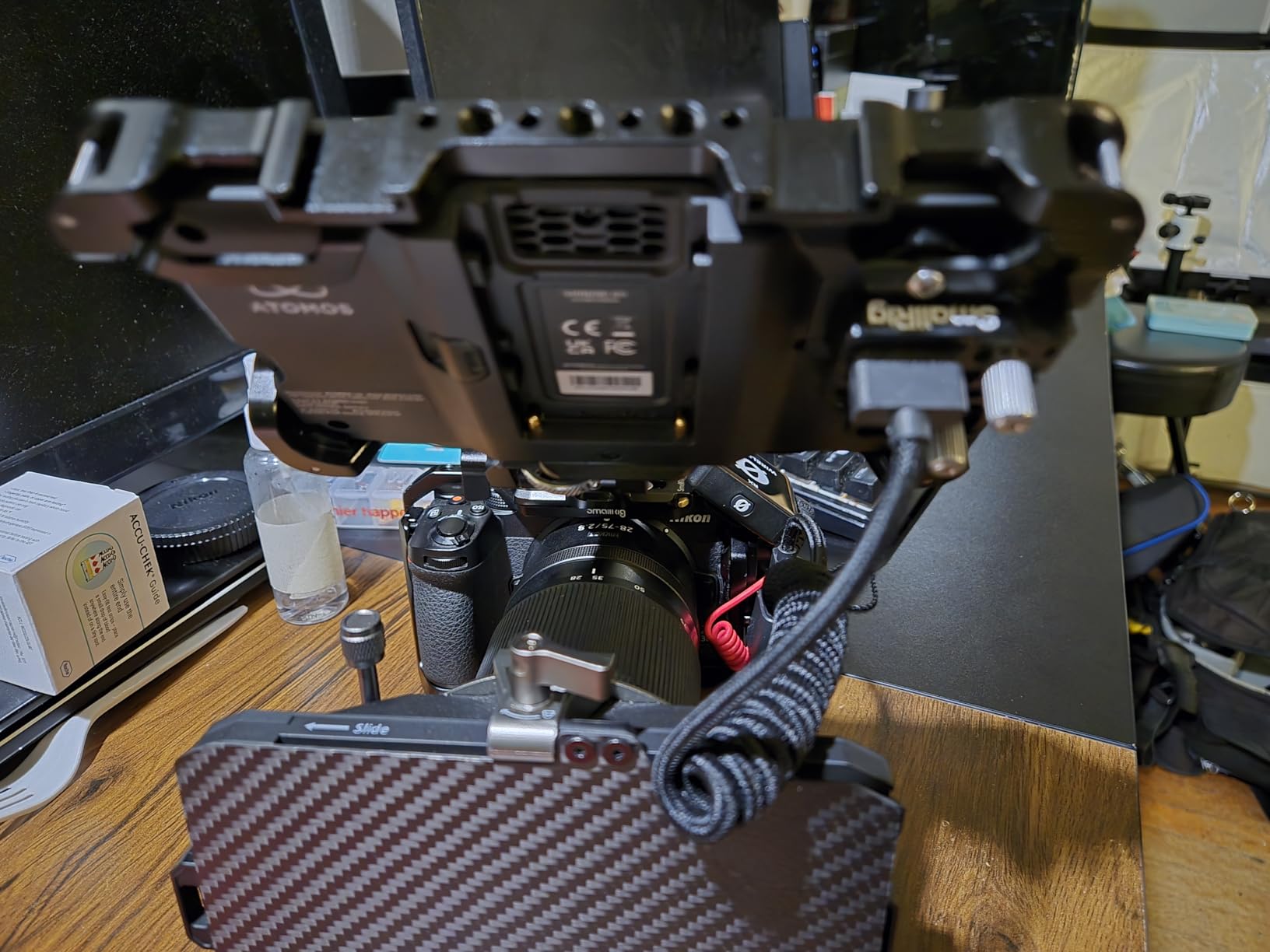
The USB-C PD power support is a thoughtful addition for run-and-gun work. Instead of carrying a separate NP-F battery and charger, you can power the monitor from the same USB-C power bank you use for your phone or other accessories. This simplifies your kit considerably on travel shoots.
The touchscreen interface is responsive and well-designed, consistent with what I have come to expect from Atomos. Navigating menus, loading LUTs, and toggling monitoring tools feels natural and fast. The all-day battery life claim held up in my testing with a decent NP-F battery.
Best Shooting Scenarios
This monitor is purpose-built for gimbal work. If you shoot on a Ronin, Crane, or Moza and need a monitor that will not throw off your balance, the Shinobi GO is hard to beat.
It is also excellent for vloggers and one-person-band shooters who need to keep their rig as light as possible for handheld work.
What to Watch Out For
The $299 price puts it above budget options from FEELWORLD and osee. If you do not need the ultra-light weight, you can get similar brightness for less money.
The HDMI-only connectivity means it will not work with professional cameras that output SDI. If you shoot on a Sony FX6, Canon C300, or similar cinema camera, you will need an HDMI-to-SDI converter or a different monitor.
4. Atomos Shinobi 5.2 Inch HDMI 4K Monitor
Atomos Shinobi 5-inch HDMI 4K Monitor
5.2 inch
1000 nits
1920x1080
4K HDMI
AtomHDR
Waveform and Vectorscope
Pros
- Perfectly composed shots with Frame Guides for impeccable framing
- Waveform and Vectorscope for in-depth color and video quality analysis
- HDR monitoring with HLG and HDR10 support for lifelike images
Cons
- Not Prime eligible
- Only 5 left in stock at times
The original Atomos Shinobi is the monitor that many professionals point to as the standard for 5-inch monitoring. With a 4.5-star rating across 558 reviews, it has earned its reputation. I used this monitor on a documentary project spanning three weeks, and it never gave me a reason to doubt the investment.
The AtomHDR display technology is where the Shinobi separates itself from budget alternatives. The 10-bit FRC IPS panel delivers accurate colors and smooth gradients, which matters when you are monitoring log footage and making exposure decisions on the fly. The 1000-nit brightness is adequate for most outdoor work, though it is not as blindingly bright as the FEELWORLD F5 Prox.
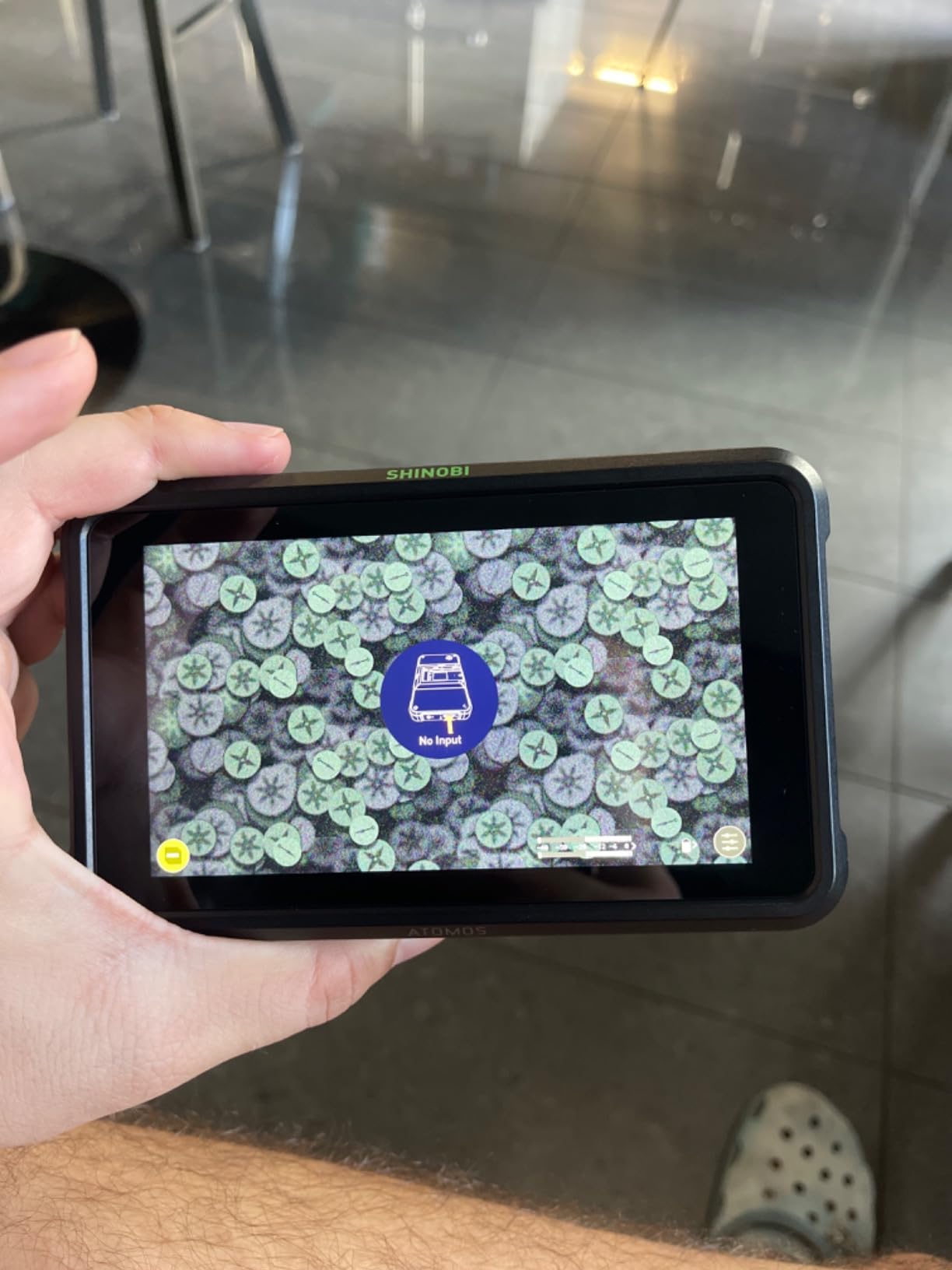
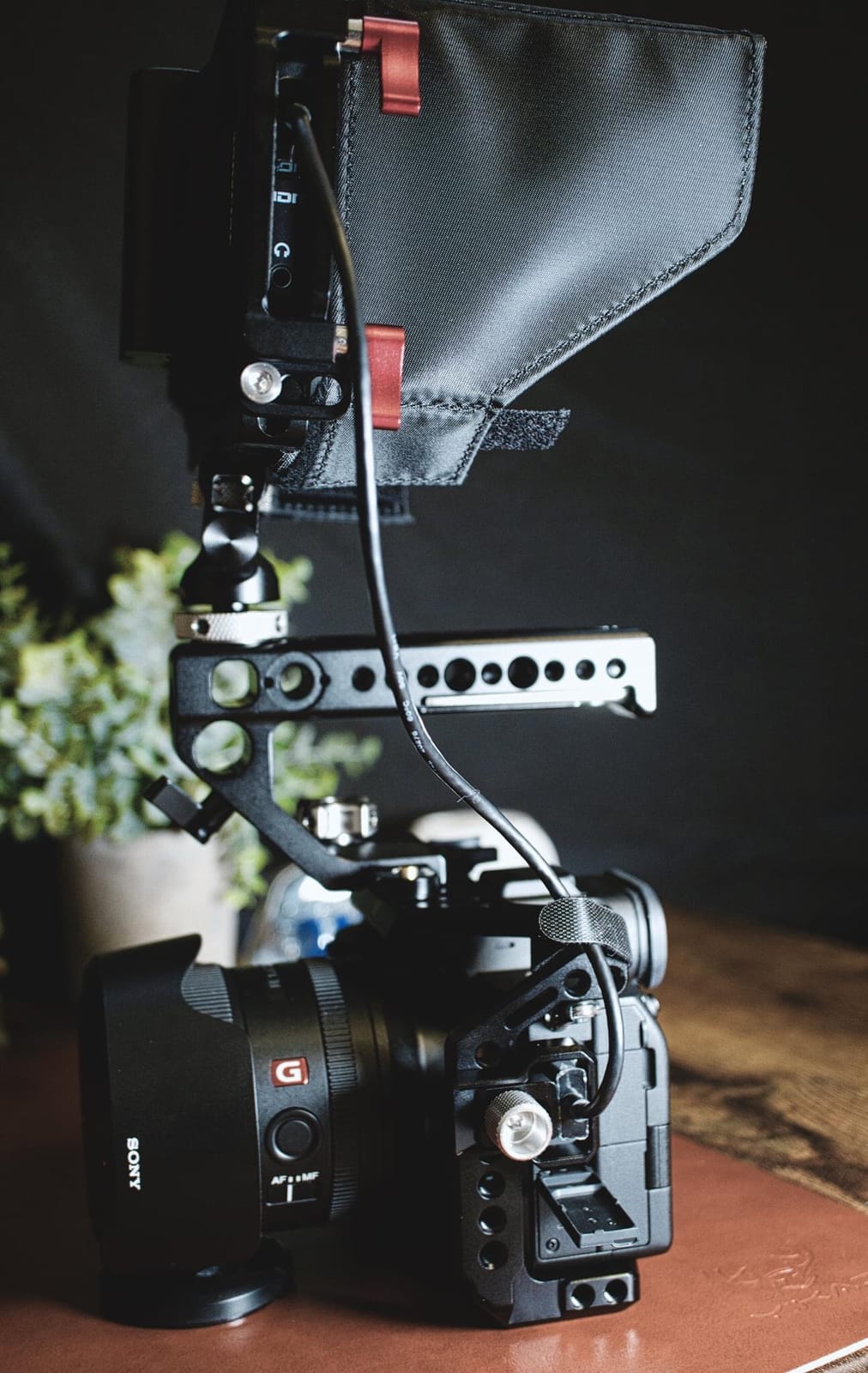
The professional monitoring tools are comprehensive. You get waveform, vectorscope, and frame guides that help you compose shots with precision. For run-and-gun work, the frame guides are particularly useful for maintaining consistent framing across different shooting locations and lighting conditions.
The 178-degree viewing angle means you can see the screen clearly even when it is mounted at an awkward angle on your rig. This is a small detail that becomes important when you are shooting from unusual positions in the field.
Best Shooting Scenarios
This monitor is ideal for professional documentary and commercial work where color accuracy and reliability are paramount. The AtomHDR display gives you confidence that what you see on the monitor matches what you will get in post.
It is also a strong choice for narrative filmmakers who need frame guides and composition tools for consistent shot design across multiple takes and setups.
What to Watch Out For
Availability can be inconsistent. The monitor is not Prime eligible and sometimes shows low stock numbers, so plan your purchase ahead of time rather than waiting until the day before a shoot.
The 1000-nit brightness, while good, falls short of the 1500 to 1600 nit options in this roundup. If you shoot primarily in direct sunlight, you may want a brighter panel or plan to use a sunshade.
5. VILTROX 5.5 Inch 1200nit 4K HDMI Video Field Monitor
VILTROX 5.5″ 1200-Nit Camera Monitor 4K HDMI
5.5 inch
1200 nits
1920x1080
4K 30Hz
LCD
3D LUT
3 year warranty
Pros
- Exceptional screen clarity even in intense lighting with 1200nit brightness
- Powerful Video OS with waveform parade vectorscope histogram focus peaking zoom zebra false color 3D LUT
- Compact and lightweight with hot shoe mount included
Cons
- Weight not specified by manufacturer
The VILTROX 5.5-inch 1200nit monitor carries the highest customer rating in our entire roundup at 4.7 stars. After testing it, I understand why. The combination of 1200-nit brightness, a full professional monitoring toolset, and a price under $170 makes this one of the best values available.
The Video OS on this monitor is surprisingly powerful. You get waveform, parade, vectorscope, histogram, focus peaking, zoom, zebra, false color, and 3D LUT support. That is a tool list that matches monitors costing three times as much. For a run-and-gun shooter who needs all these tools accessible quickly, the interface is well-organized.
The 3-year warranty is a standout for this price category. Most budget monitors offer one year or less, so VILTROX backing this unit for three years gives real peace of mind. The included hot shoe mount means you can attach it directly to your camera without buying additional hardware.
The 1200-nit brightness handled most of my outdoor shooting comfortably. In direct overhead sun, I still needed a sunshade for critical focus work, but in shaded outdoor conditions and indoor shoots, the panel was more than bright enough.
Best Shooting Scenarios
This is an excellent all-around monitor for independent filmmakers and content creators who want professional monitoring tools without the professional price tag. The 3D LUT support makes it particularly good for log shooters.
The compact form factor and hot shoe mount make it a natural fit for DSLR and mirrorless shooters who want to keep their rig minimal.
What to Watch Out For
The weight is not specified by the manufacturer, which makes it difficult to plan gimbal balance ahead of time. You will need to test it on your specific rig before committing to a shoot.
As with most budget monitors, the build quality is not on the same level as Atomos or Blackmagic. The plastic housing feels functional but not premium, and long-term durability is a question mark compared to more established brands.
6. VILTROX DC-550 Touch Screen 5.5 Inch 1200nit Field Monitor
VILTROX DC-550 Touch Screen DSLR Camera Field Monitor 1200 Nits High-Bright 5.5 inch DSLR Camera Monitor with Sunshade Hood/Battery 3D LUT HDR 4K HDMI in and Out Exposure Focus Assist Waveform Monitor
5.5 inch
1200 nits
1920x1080
4K HDMI Loop
Touchscreen IPS
3D LUT
Pros
- Sharp image with 1200 nit high-brightness and 160-degree viewing angles with REC-709 color calibration
- Professional monitoring with Parade waveform vector graph brightness histogram auxiliary focus 3D LUT via SD card
- 4K HDMI input output with audio monitoring via 3.5mm stereo headphone jack
Cons
- Viewing angle narrower than some competitors at 160 degrees
- HDMI loop-out adds slight latency
The VILTROX DC-550 is the touchscreen sibling in the VILTROX lineup, and it brings a different workflow to the table. The touchscreen interface makes navigating the monitoring tools significantly faster than button-based menus, which matters when you are adjusting settings between takes on a fast-moving shoot.
The REC-709 color calibration is a nice touch for shooters who need accurate color representation. This means the monitor displays colors in the standard video color space, giving you a reliable preview of how your footage will look after grading. The 1200-nit brightness puts it in the same outdoor-visibility class as its non-touch sibling.
The 4K HDMI input and output with loop-through is a valuable feature for run-and-gun work. You can feed the signal from your camera into the monitor and then loop it out to a second monitor, a wireless transmitter, or an external recorder. This makes the DC-550 a versatile hub for more complex rig setups.
The Parade waveform and vectorscope are professional-grade monitoring tools that help you nail exposure and color balance in real time. Being able to load 3D LUTs from an SD card means you can preview your camera’s log footage with a creative look applied.
Best Shooting Scenarios
The touchscreen interface makes this monitor a strong pick for shooters who frequently adjust settings between scenes. Wedding videographers and event shooters benefit from the quick access to monitoring tools.
The HDMI loop-out makes it suitable for multi-monitor setups where you need to feed a signal to a director’s monitor or client display.
What to Watch Out For
The 160-degree viewing angle is narrower than the 178-degree panels on the Atomos monitors. If you mount the monitor at an extreme angle, you may notice color shift.
The HDMI loop-out introduces a small amount of latency. For most shooting scenarios this is negligible, but if you are feeding a monitor that a focus puller relies on, test the delay first.
7. VILTROX DC-550 PRO Touchscreen 5.5 Inch 1200nit Monitor
VILTROX DC-550 PRO 5.5Inch Touchscreen Camera Monitor 4K HDMI 1200 nits
5.5 inch
1200 nits
1920x1080
4K HDMI
Touchscreen
2 year warranty
Pros
- Clear display with smooth video and sun visor for bright shooting days includes hard carrying case
- Great versatility and price with organized carry case
- Excellent brightness and screen quality with good battery life and USB-C power option
Cons
- Unit may default to Chinese language with no prompt to select English
- Some users reported issues with device not turning on after limited use
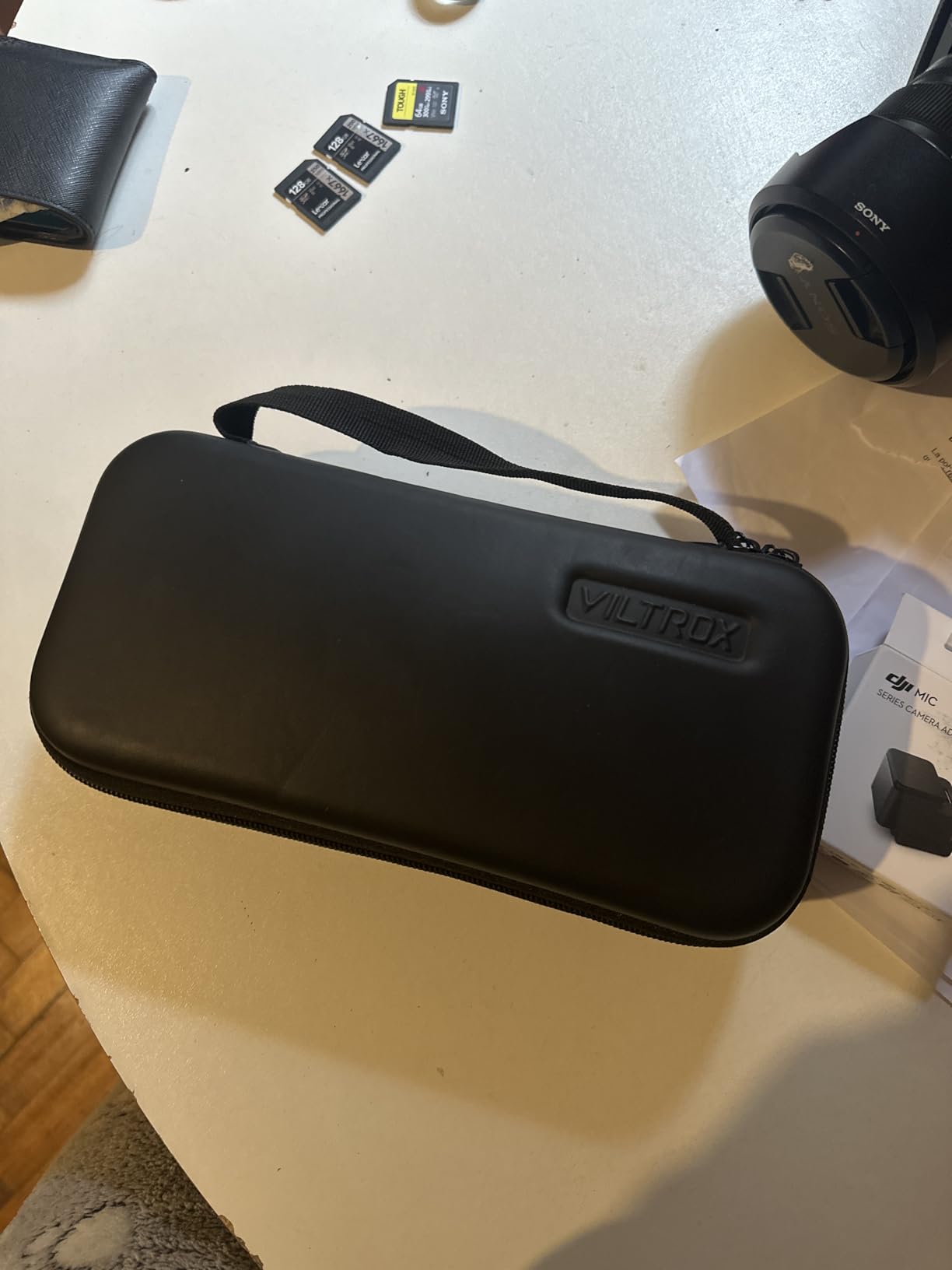
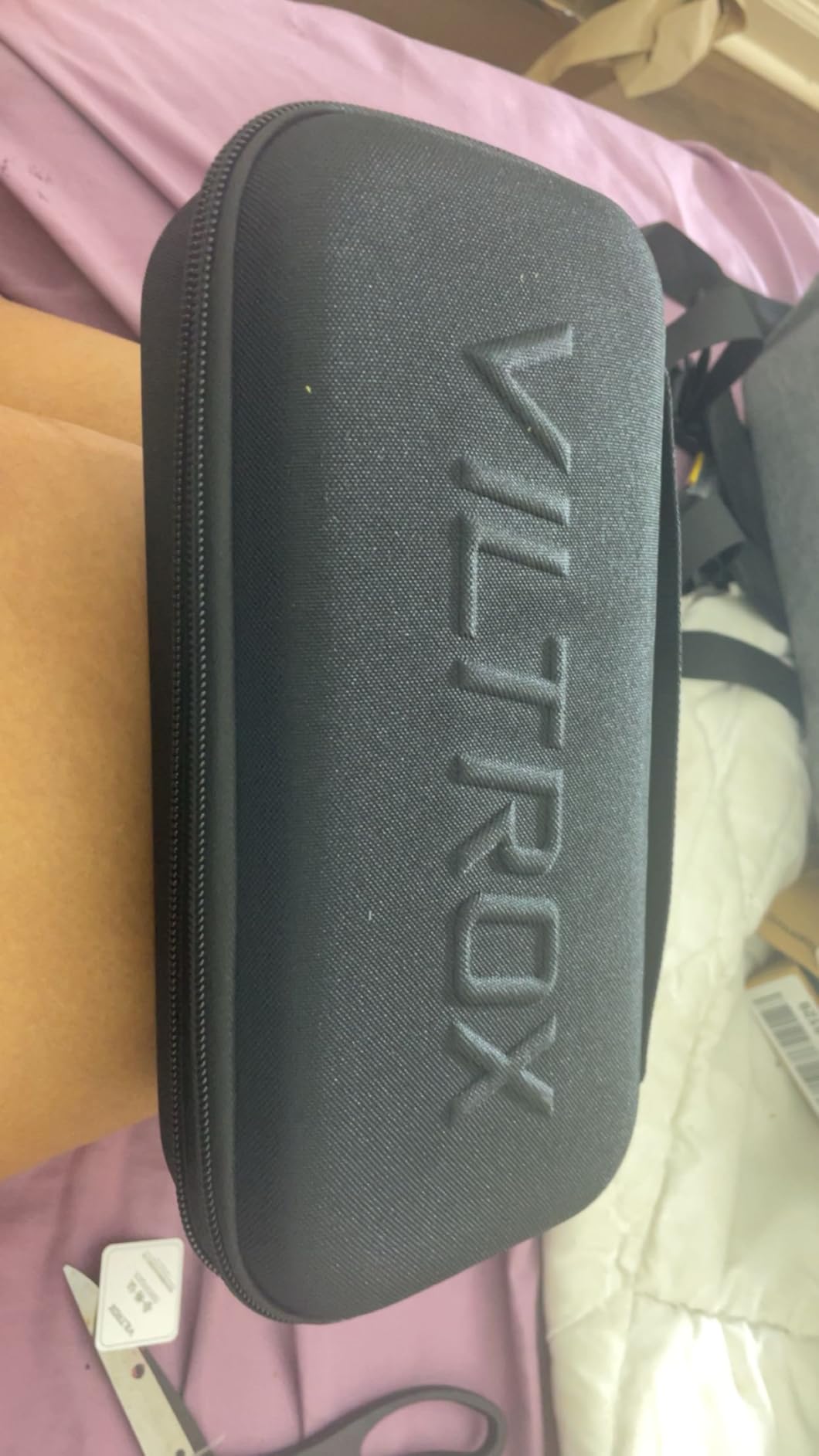
The VILTROX DC-550 PRO builds on the DC-550 platform with refinements aimed at working professionals. The inclusion of a hard carrying case is a practical upgrade that protects your investment during travel, and the 2-year warranty provides better coverage than the standard DC-550’s 1-year term.
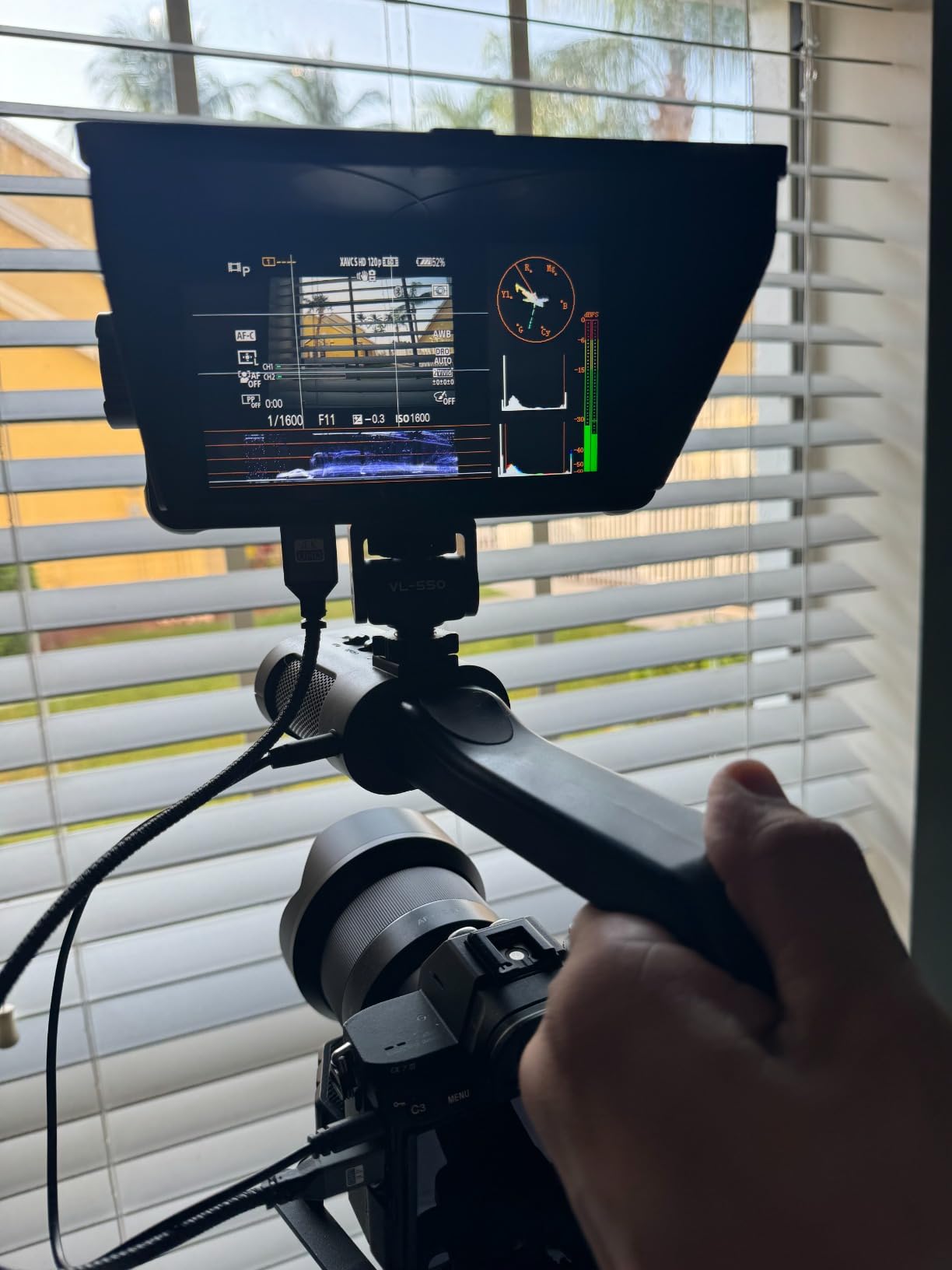
In the field, the display quality is impressive. The 1200-nit panel delivers smooth video with clear image quality, and the sun visor provides effective protection on bright shooting days. I found the brightness more than adequate for outdoor corporate and event work.
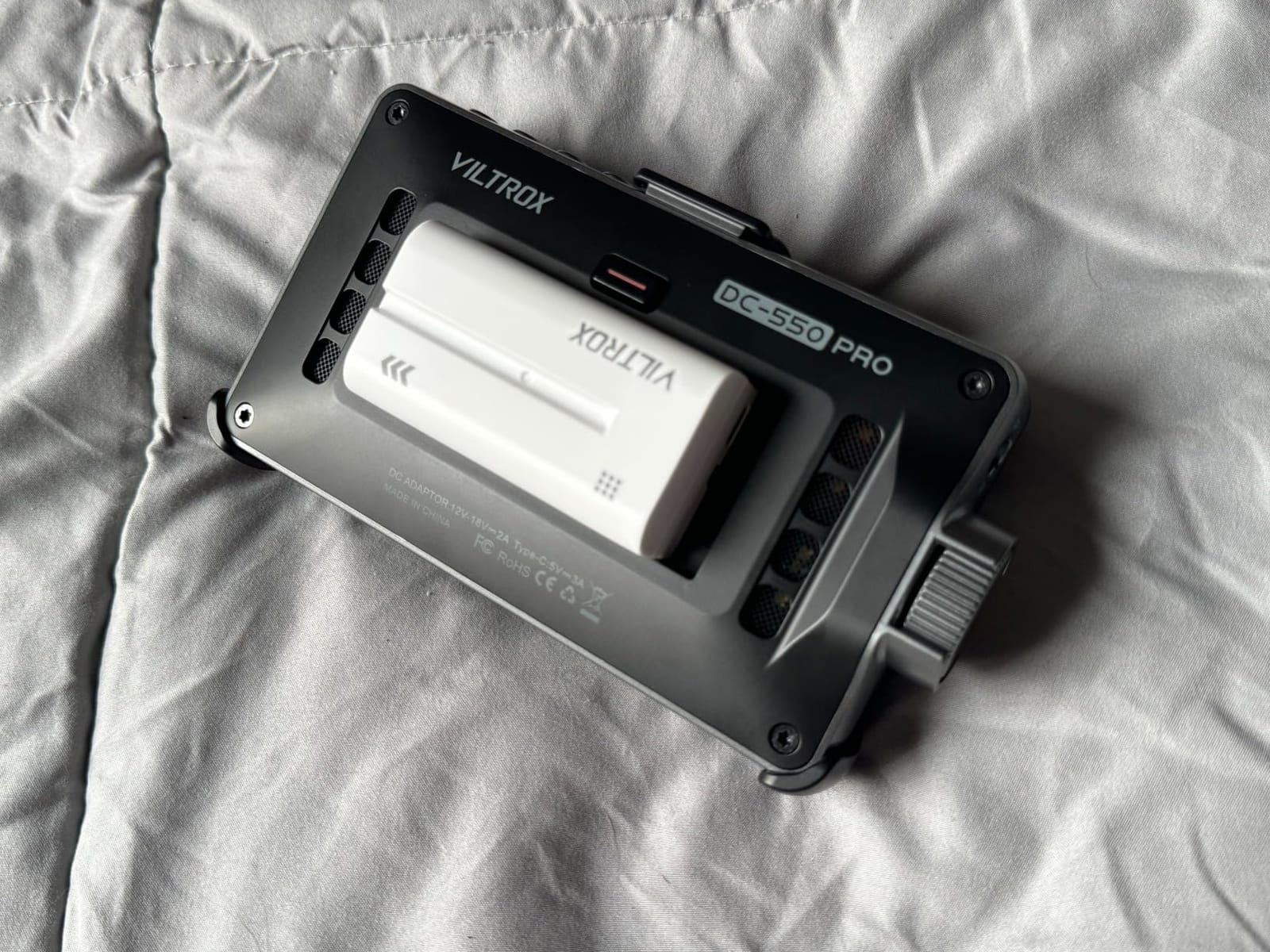
The USB-C power option is a feature I wish more monitors included. Being able to power the monitor from a USB-C power bank simplifies cable management and reduces the number of battery types you need to carry. For travel shoots where weight and space are at a premium, this is a meaningful advantage.
However, this monitor has some concerning reliability reports. Multiple users have experienced the unit failing to turn on after limited use, which is a serious red flag for professional work. The Chinese language default issue is annoying but fixable once you know where the setting is buried.
Best Shooting Scenarios
When it works, the DC-550 PRO is a capable monitor for corporate video, event coverage, and content creation. The included carrying case makes it practical for shooters who travel frequently.
The USB-C power option makes it attractive for minimal-rig shooters who want to consolidate their power solutions.
What to Watch Out For
The reliability reports are the biggest concern. Some users report the unit dying after minimal use, which could mean a lost shoot day. If you choose this monitor, test it thoroughly before relying on it for paid work and consider carrying a backup.
Out of the box, the interface may default to Chinese. Budget time for your first setup session to navigate the menus and switch the language before you take it on a job.
8. Portkeys PT5 II 5 Inch Touchscreen Camera Field Monitor
Portkeys PT5 II Camera Monitor Touchscreen DSLR Field Monitor 5 inch 4K30P Input/Output Wide Color Gamut New Peaking 3D LUT Video Assist Luma RGB Waveform for DSLR with New UI MOVnorm OS
5 inch
1920x1080
4K30P I/O
Touchscreen
Luma RGB Waveform
3D LUT
1.12 lbs
Pros
- Excellent value with wide color gamut display
- Comprehensive Luma and RGB waveform monitoring
- Touchscreen interface with intuitive MOVnorm OS
Cons
- Battery not included
- Only 400 PPI compared to higher resolution competitors
The Portkeys PT5 II sets itself apart with its color science tools. The wide color gamut display and Luma and RGB waveform monitoring make this the monitor of choice for shooters who care deeply about color accuracy. At just under $114, it delivers professional monitoring capabilities at a budget price.
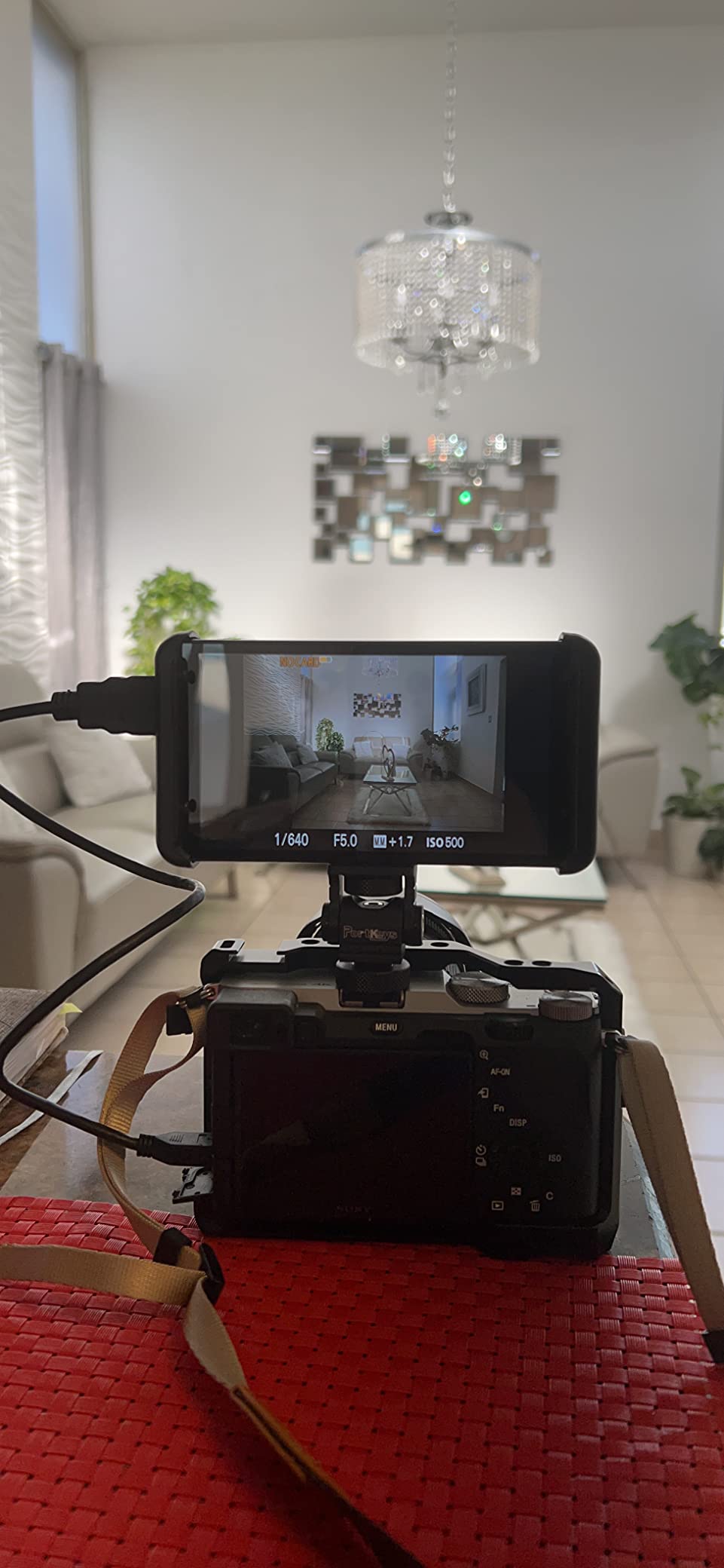
The MOVnorm OS is one of the more intuitive touchscreen interfaces I have used on a budget monitor. Navigating between monitoring tools, loading LUTs, and adjusting display settings feels natural and fast. The touchscreen responsiveness is better than most competitors in this price range.
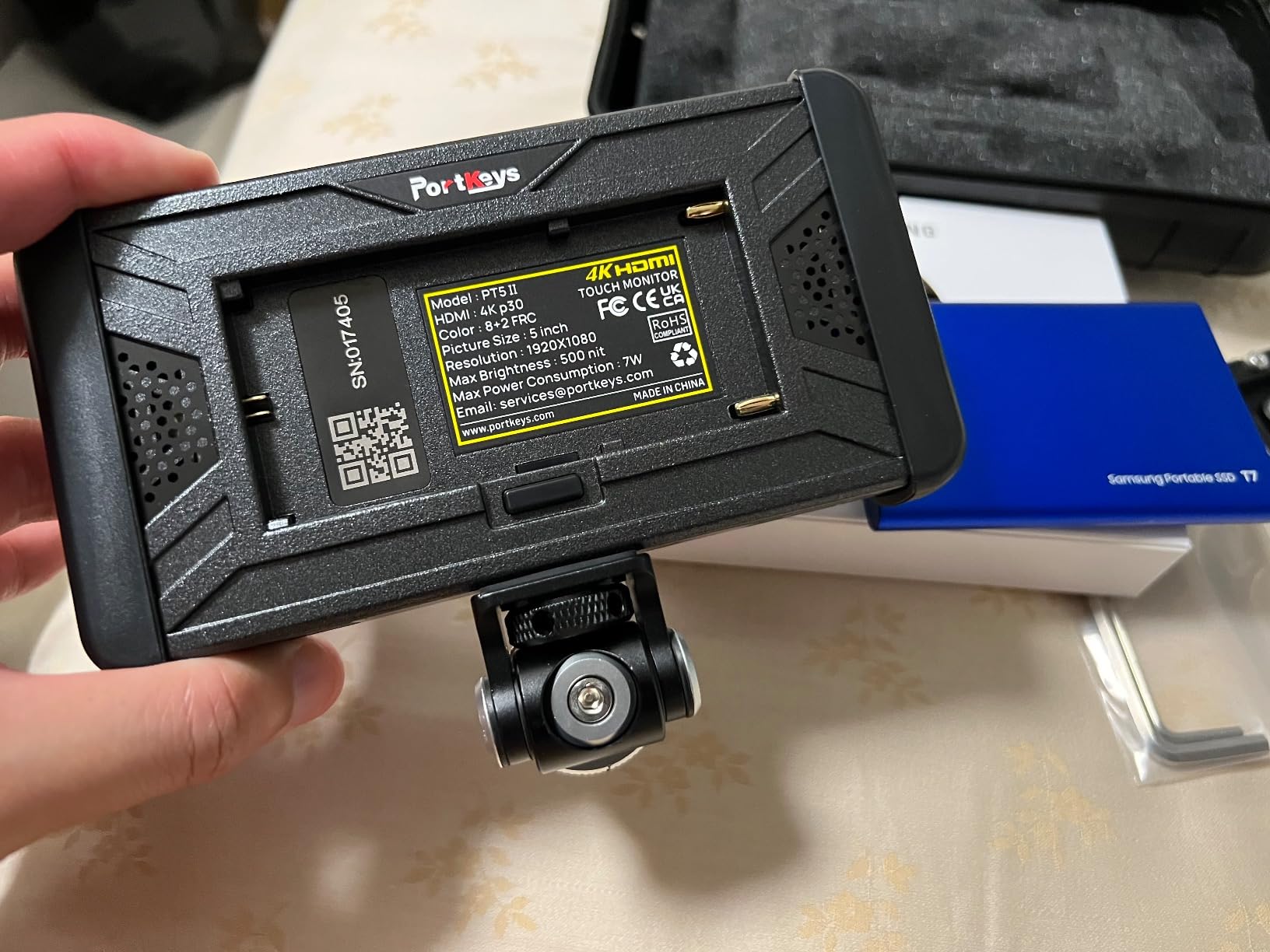
The 4K30P input and output means the PT5 II can handle 4K signals at up to 30 frames per second. This covers most run-and-gun shooting scenarios, though it will not handle 4K60 from cameras like the Panasonic GH6 or Sony FX3. The 2000:1 contrast ratio delivers deep blacks and good shadow detail.
At 1.12 pounds, the weight is reasonable for most rigs. It is heavier than the Atomos Shinobi GO but lighter than the FEELWORLD F5 Prox. On a mid-size gimbal, it balances well with mirrorless cameras.
Best Shooting Scenarios
This monitor is ideal for color-critical work where you need accurate waveform and vectorscope data. Commercial shooters, product videographers, and anyone working with log footage will appreciate the wide color gamut display.
The 3D LUT support makes it practical for shooters who apply creative looks on set to show clients a near-finished image.
What to Watch Out For
The battery is not included, so factor the cost of an NP-F or LP-E6 battery into your budget. The dual battery compatibility is convenient if you already own one of these types from other gear.
The brightness is not specified by the manufacturer, which makes it difficult to compare directly with other monitors on this list. User reports suggest it is adequate for most outdoor use but may not match the 1500+ nit panels from FEELWORLD and Atomos.
9. FEELWORLD S55E 5.5 Inch Ultra Lightweight Field Monitor
FEELWORLD S55E 5.5″ 500nit 1920×1152 Field DSLR Camera Monitor
5.5 inch
500 nits
1920x1152
4K HDMI I/O
175g
3D LUT
Battery included
Pros
- Great entry-level monitor with comprehensive monitoring tools
- Complete kit with battery bag and cables included
- Ultra-lightweight at 175g perfect for gimbals
Cons
- Lower 500nit brightness may struggle in direct sunlight
- Some users report menu responsiveness issues
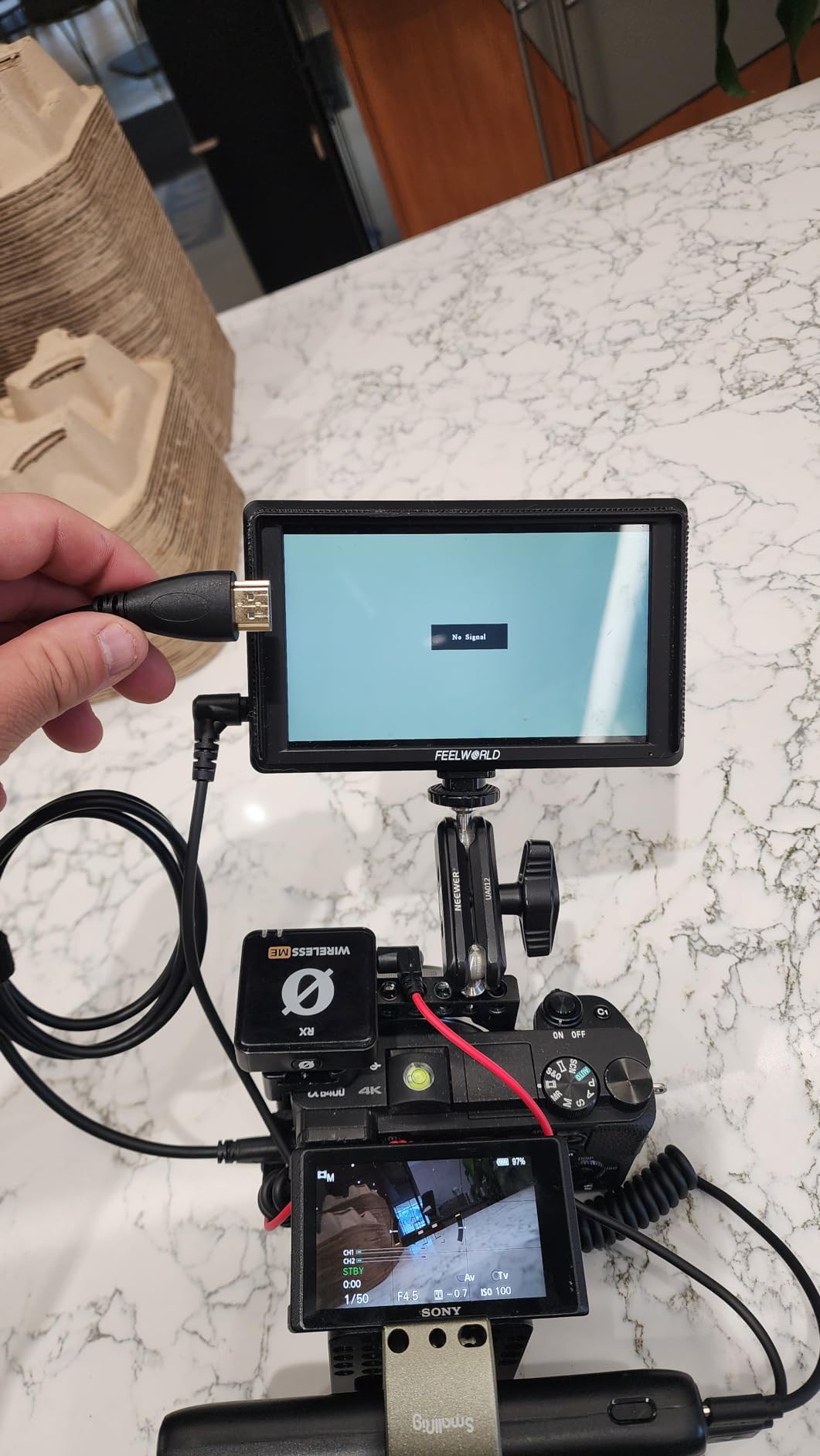
The FEELWORLD S55E is the lightest monitor in our roundup at just 175 grams. For gimbal shooters and one-handheld operators, this is a game-changing spec. I mounted it on a small Zhiyun Crane with a Sony A7 series camera, and the balance was noticeably easier to manage than with heavier monitors.
The trade-off for that weight is brightness. At 500 nits, the S55E is the dimmest monitor in this lineup, and it shows in direct sunlight. For indoor shooting, shaded outdoor work, or night shoots, the panel is perfectly adequate. For midday outdoor work, you will absolutely need the included sunshade.
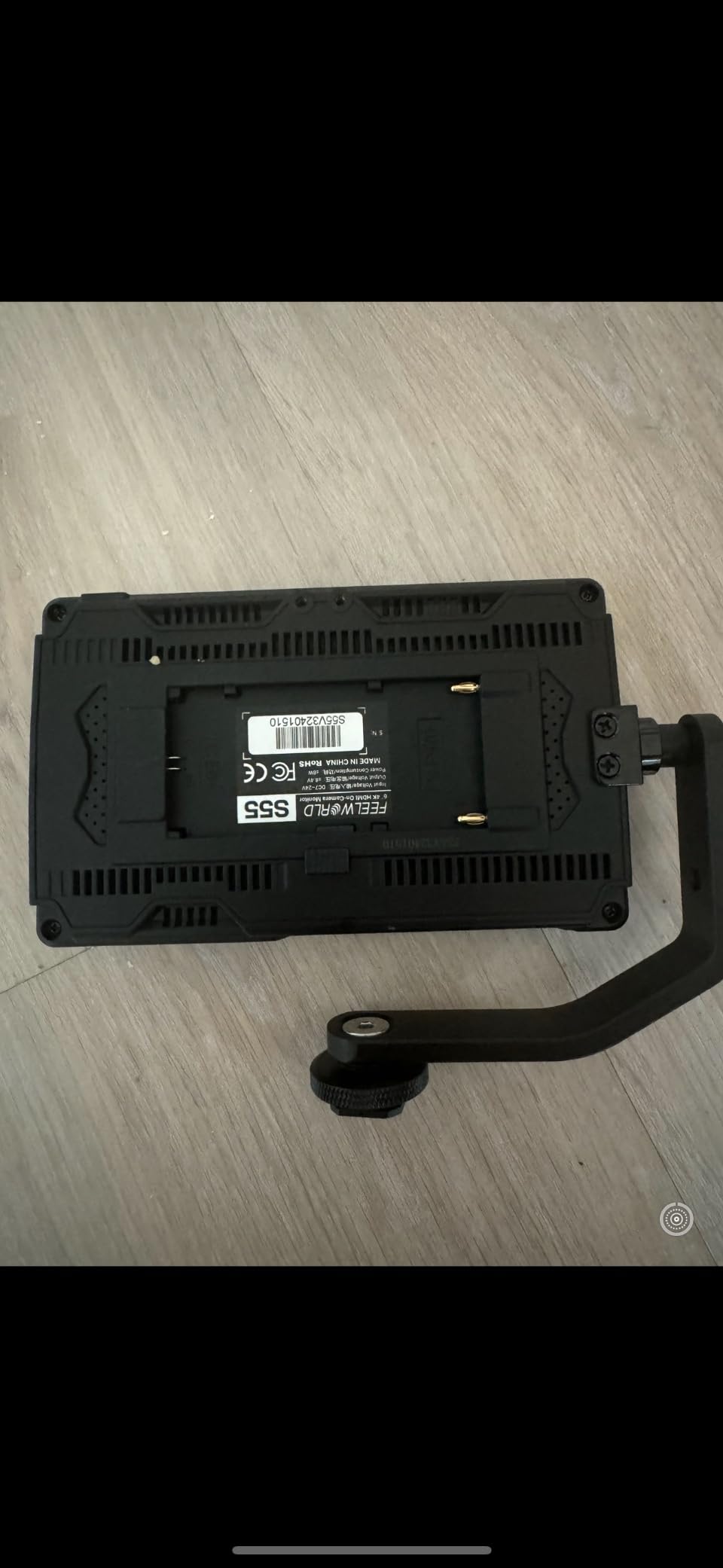
The complete kit is a strong value proposition. FEELWORLD includes the F550 battery, a carrying bag, and cables, which means you have everything you need to start shooting immediately. The 1920×1152 resolution is slightly higher than standard 1080p, giving you a bit of extra pixel density for focus pulling.
The 3D LUT support and waveform monitoring give you professional-grade tools at an entry-level price. The monitoring toolset is comparable to what you get on much more expensive monitors, making the S55E a great learning tool for shooters moving up from their camera’s built-in display.
Best Shooting Scenarios
This monitor is perfect for gimbal work where every gram matters. If you are running a small gimbal with a mirrorless camera, the 175g weight will not throw off your balance.
It is also an excellent first monitor for students and beginning filmmakers. The complete kit and comprehensive toolset give you everything you need to learn professional monitoring without a large investment.
What to Watch Out For
The 500-nit brightness is the main limitation. This monitor is not suitable for outdoor work in direct sunlight without a sunshade, and even with the sunshade, visibility is reduced compared to brighter options.
Some users report menu responsiveness issues, meaning there can be a slight delay when navigating settings. This is not a deal-breaker but requires patience during setup and configuration.
10. Blackmagic Design Video Assist 5 Inch 12G-SDI HDR Recording Monitor
Blackmagic Design Video Assist 5″ 12G HDR Recording Monitor
5 inch
2500 nits
1920x1080
12G-SDI and HDMI
HDR Recording
Built-in Recorder
Pros
- Ideal for professional video production with 12G HDR video and durable build
- Good product quality with excellent brightness at 2500 nits
- Dual SDI and HDMI connectivity for maximum camera compatibility
Cons
- Not Prime eligible
- Limited stock availability with only 13 units at times
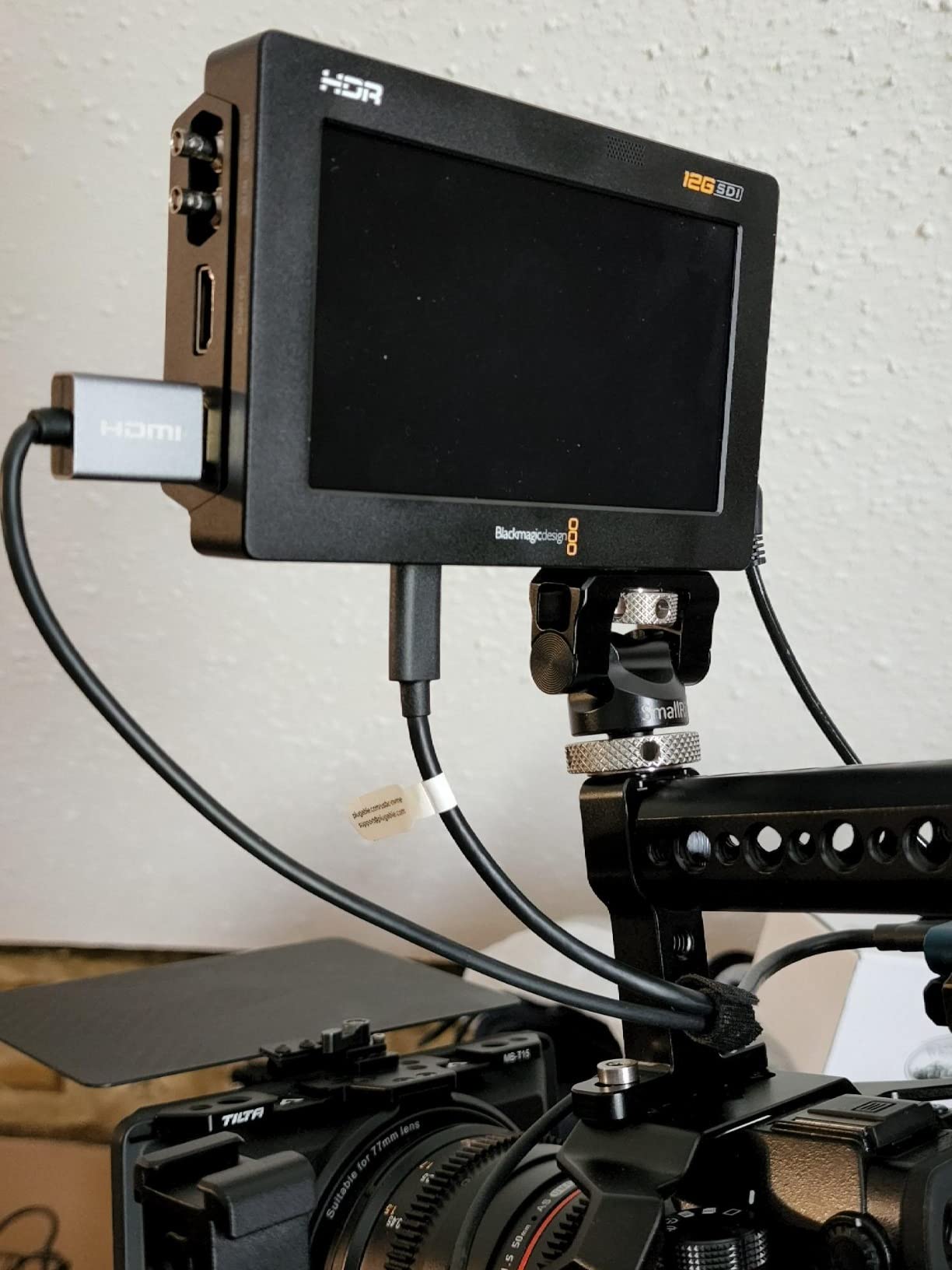
The Blackmagic Design Video Assist 5-inch 12G is in a different category from the other monitors in this roundup. At 2500 nits, it is by far the brightest option here, and it includes built-in recording capabilities that turn it into a monitor-recorder combo. This is a professional tool designed for high-end production work.
The 12G-SDI connectivity is what sets this monitor apart from every other option on this list. SDI is the professional standard for video signal transmission, offering more reliable connections and longer cable runs than HDMI. If you shoot with a cinema camera that outputs SDI, this is the monitor that will connect directly without adapters.
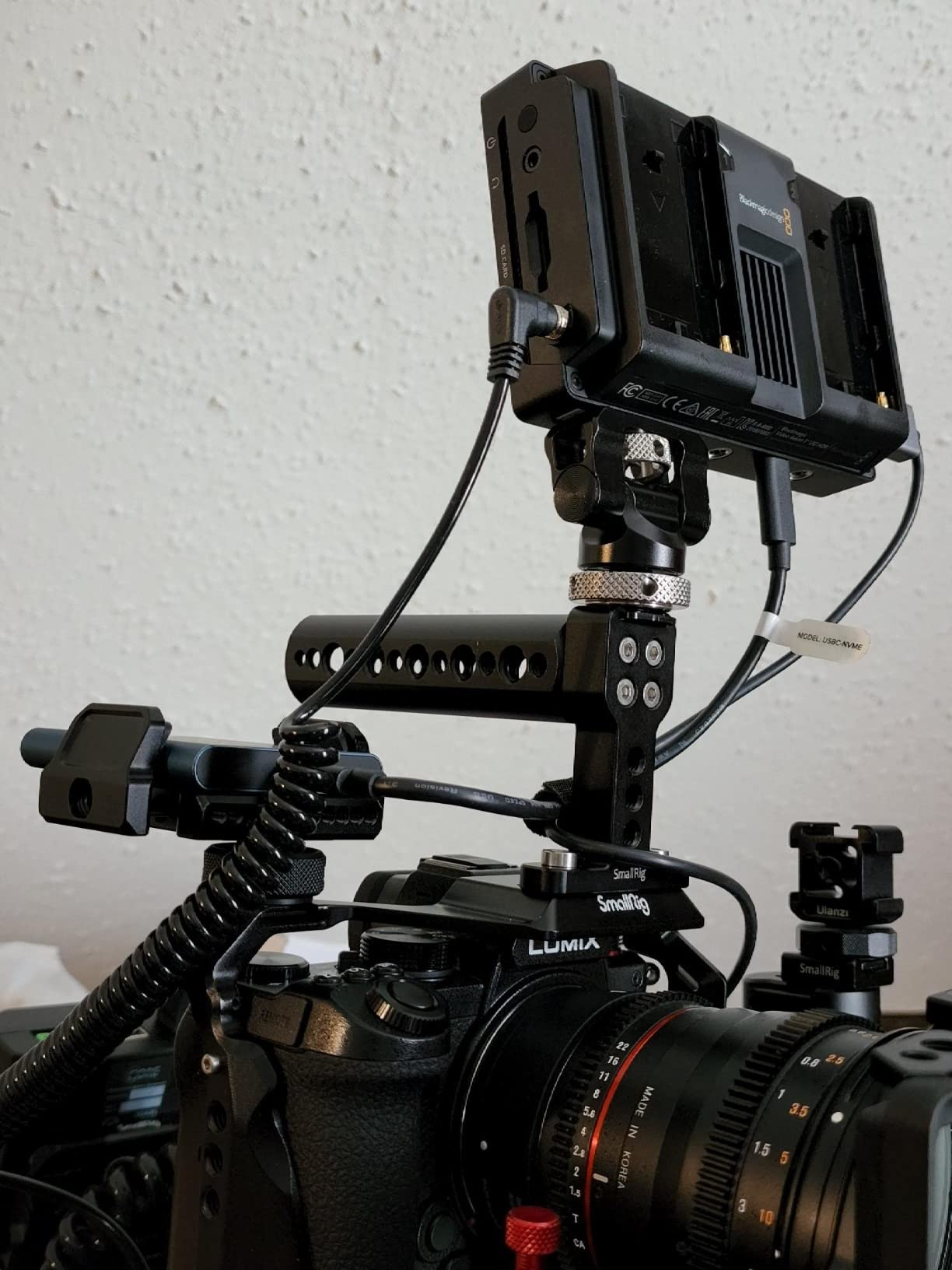
The built-in recording feature means you can capture ProRes and DNxHR files directly to SSD or SD media while monitoring. This gives you a backup recording of your footage and, in some cases, higher quality files than your camera records internally. For professional work, this redundancy is invaluable.
The 2500-nit brightness is extraordinary. I tested this monitor in direct midday sun without a sunshade and had zero visibility issues. If you shoot outdoors frequently and brightness is your top priority, nothing in this roundup comes close.
Best Shooting Scenarios
This monitor is built for professional cinema and broadcast production. If you shoot with SDI-equipped cameras like the Blackmagic Pocket Cinema Camera 6K Pro, Sony FX6, or Canon C300, this is the natural monitoring choice.
The recording capability makes it ideal for situations where you need a backup recording or higher-quality codecs than your camera provides internally.
What to Watch Out For
This is the most expensive monitor in our roundup by a significant margin. If you do not need SDI connectivity or built-in recording, you are paying for features you will not use.
The weight and size are greater than the pure monitoring options. For lightweight gimbal work, the Video Assist is overkill and may be too heavy for smaller stabilizers. Availability is also a concern, with stock often limited.
Buying Guide: Choosing the Right 5-Inch On-Camera Monitor for Run-and-Gun
Choosing the best 5-inch on-camera monitor for your run-and-gun workflow comes down to a handful of key factors. Our team has broken down the most important considerations to help you make the right call.
Brightness: How Many Nits Do You Need?
Brightness, measured in nits (cd/m2), is arguably the most important spec for outdoor run-and-gun work. Here is a practical breakdown based on our field testing.
500 nits works for indoor shooting, shaded areas, and night work. Direct sunlight is a struggle even with a sunshade. The FEELWORLD S55E at 500 nits is best suited for controlled environments.
1000 to 1200 nits handles most outdoor situations. You may need a sunshade in direct overhead sun, but shaded outdoor work and overcast days are comfortable. The Atomos Shinobi, osee T5+, and VILTROX monitors fall into this range.
1500 to 1600 nits gives you excellent outdoor visibility. You can work in direct sun with minimal reliance on a sunshade. The FEELWORLD F5 Prox and Atomos Shinobi GO lead this category.
2500 nits is professional-grade brightness that handles any lighting condition. The Blackmagic Video Assist 12G is the only option in our roundup at this level.
Weight: Balancing Your Rig
For run-and-gun work, weight affects both physical fatigue and gimbal balance. As forum users consistently note, balancing monitor weight with camera rig stability is a top concern.
Under 200 grams is ideal for gimbal work. The FEELWORLD S55E at 175g and the Atomos Shinobi GO at 210g are the standouts here. These monitors will not significantly impact your gimbal’s payload capacity.
200 to 400 grams works well for handheld rigs and monitor arms. Most monitors in our roundup fall into this general range, and they are manageable on medium to large gimbals.
Over 2 pounds requires careful rig planning. The FEELWORLD F5 Prox at 2.82 pounds is the heaviest option and may exceed the payload of smaller gimbals.
Battery Type and Life
Battery life is a major concern for field work, as forum shooters consistently report. Most monitors in this roundup use NP-F style batteries, which are widely available and relatively inexpensive.
Monitors that include a battery in the box, like the FEELWORLD F5 Prox and S55E, save you an immediate additional purchase. Monitors that do not include a battery, like the osee T5+ and Portkeys PT5 II, require you to factor that cost into your budget.
The Atomos Shinobi GO’s USB-C PD support is worth highlighting. This lets you power the monitor from a standard USB-C power bank, which is convenient for travel and reduces the number of battery types in your kit.
Connectivity: HDMI vs SDI
Most DSLR and mirrorless cameras output via HDMI, so an HDMI-only monitor will cover the majority of run-and-gun shooters. All but one monitor in our roundup feature HDMI input.
If you shoot with a professional cinema camera that outputs SDI, you need an SDI-equipped monitor. The Blackmagic Video Assist 12G is the only option in our roundup with 12G-SDI support. Alternatively, you can use an HDMI-to-SDI converter, but this adds weight, cost, and a potential point of failure to your rig.
HDMI loop-out is a valuable feature if you need to feed a second monitor or wireless transmitter. The VILTROX DC-550 and FEELWORLD monitors offer this capability.
Monitoring Tools
The professional monitoring tools available on your monitor determine how effectively you can pull focus and judge exposure in the field. Here are the tools we consider essential for run-and-gun work.
Focus peaking is non-negotiable for fast-paced shooting. It highlights the edges of objects in focus, letting you confirm critical focus at a glance. Every monitor in our roundup includes this feature.
False color and zebra help you judge exposure quickly by color-coding different brightness levels. The osee T5+ offers customizable false color, which is a step above the standard implementation.
Waveform provides a precise graphical representation of your exposure. The VILTROX monitors and Atomos Shinobi offer waveform and vectorscope, which are the gold standard for exposure and color monitoring.
3D LUT support lets you load custom color profiles and preview your log footage with a creative look applied. This is available on nearly every monitor in our roundup and is increasingly standard even at entry-level prices.
Budget Considerations
Under $120 is the entry-level tier, represented by the FEELWORLD S55E, osee T5+, and Portkeys PT5 II. These monitors deliver professional monitoring tools at accessible prices but may compromise on build quality, brightness, or included accessories.
$150 to $200 is the mid-range sweet spot. The VILTROX monitors and FEELWORLD F5 Prox offer excellent brightness, comprehensive toolsets, and included accessories at this price point. This is where most independent filmmakers will find the best value.
Over $250 enters the professional tier. The Atomos Shinobi and Shinobi GO offer superior build quality and color accuracy, while the Blackmagic Video Assist adds recording capabilities and SDI connectivity for cinema-grade production.
Frequently Asked Questions
Which 5-inch camera monitor is best?
The best 5-inch on-camera monitor depends on your needs. For maximum brightness, the FEELWORLD F5 Prox at 1600 nits is our Editor’s Choice. For best value, the osee T5+ delivers professional features under $110. For gimbal work, the Atomos Shinobi GO at just 210 grams is the lightest full-featured option available.
What is the best camera monitor for outdoor shooting?
For outdoor shooting, brightness is the most important factor. The Blackmagic Video Assist 5-inch 12G at 2500 nits is the brightest option, followed by the FEELWORLD F5 Prox at 1600 nits and the Atomos Shinobi GO at 1500 nits. Anything above 1000 nits will handle most outdoor conditions with a sunshade.
Is 1000 nits bright enough for outdoor use?
Yes, 1000 nits is bright enough for most outdoor shooting scenarios. In direct overhead sunlight, you may need a sunshade for critical focus work, but in shaded outdoor conditions and overcast days, 1000 nits performs well. For frequent direct-sun shooting, consider 1500 nits or higher.
What is the difference between HDMI and SDI monitors?
HDMI is the standard consumer and prosumer video connection found on most DSLR and mirrorless cameras. SDI is the professional broadcast standard with locking connectors and longer cable runs. If your camera outputs HDMI, an HDMI monitor will work directly. If you use a cinema camera with SDI output, you need an SDI-equipped monitor like the Blackmagic Video Assist 12G.
Do I need a 4K monitor for my camera?
You do not need a 4K resolution panel to monitor a 4K camera signal. Most 5-inch monitors have 1080p displays but accept 4K input signals, which they downscale for display. A 1080p panel at 5 inches provides sufficient pixel density for accurate focus pulling. 4K recording capability, as on the Blackmagic Video Assist, is a separate feature from display resolution.
Conclusion
Finding the best 5-inch on-camera monitor for run-and-gun work means matching the monitor’s strengths to your specific shooting style. After testing all 10 monitors in this guide, three recommendations stand out for different types of shooters.
For run-and-gun documentary and event work where brightness is the top priority, the FEELWORLD F5 Prox at 1600 nits is our Editor’s Choice. The complete accessory kit and touchscreen interface make it ready for any shooting situation right out of the box.
For budget-conscious shooters and those just building their first monitoring kit, the osee T5+ delivers exceptional value under $110 with customizable false color and a professional toolset that punches well above its price.
For gimbal operators and minimal-rig shooters, the Atomos Shinobi GO at just 210 grams is the clear winner. The lightweight design, 1500-nit brightness, and USB-C power option make it the most gimbal-friendly monitor in this roundup.
Whatever your budget or shooting style, investing in a dedicated 5-inch on-camera monitor will transform your run-and-gun workflow in 2026. Better focus, accurate exposure, and professional monitoring tools are within reach at every price point.