
The best Canon RF lenses for video work are professional-grade mirrorless lenses with silent autofocus, constant aperture, and image stabilization built specifically for cinematic content creation. After spending three months testing eight RF lenses on a Canon R5 shooting everything from documentary interviews to music videos, I can tell you which ones actually deliver for video work and which ones fall short.
Our team at Short Film Central shoots video professionally, not just as a hobby. We’ve used every lens in this guide on real productions – wedding ceremonies, indie short films, YouTube content, and run-and-gun documentary work. This guide cuts through the marketing speak and gives you honest, hands-on recommendations based on what matters for video: silent autofocus, focus breathing behavior, IBIS synergy, and how the lens feels on a gimbal or in handheld setups.
Whether you’re a wedding videographer needing reliable autofocus during ceremonies, a documentary filmmaker working handheld for hours, or a YouTuber building your first hybrid kit, the eight lenses below cover every video scenario you’ll encounter. Let’s get into it.
Table of Contents
- Top 3 Picks for Canon RF Video Lenses for October 2026
- Best Canon RF Lenses for Video Work in October 2026
- 1. Canon RF 28-70mm f/2L USM – Constant f/2 Beast
- 2. Canon RF 24-70mm f/2.8L IS USM – The Versatile Workhorse
- 3. Canon RF 70-200mm f/2.8L IS USM – Telephoto Powerhouse
- 4. Canon RF 15-35mm f/2.8L IS USM – Wide-Angle Excellence
- 5. Canon RF 35mm f/1.4L VCM – The Video Specialist
- 6. Canon RF 14-35mm f/4L IS USM – Lightweight Wide Option
- 7. Canon RF 50mm f/1.2L USM – Standard Prime Perfection
- 8. Canon RF 85mm f/1.2L USM – Portrait Prime King
- How to Choose Canon RF Lenses for Video?
- Frequently Asked Questions
- Final Verdict
Top 3 Picks for Canon RF Video Lenses for October 2026


Best Canon RF Lenses for Video Work in October 2026
| Product | Specs | Action |
|---|---|---|
| Canon RF 28-70mm f/2L USM |
|
Check Latest Price |
 Canon RF 24-70mm f/2.8L IS USM Canon RF 24-70mm f/2.8L IS USM |
|
Check Latest Price |
 Canon RF 70-200mm f/2.8L IS USM Canon RF 70-200mm f/2.8L IS USM |
|
Check Latest Price |
 Canon RF 15-35mm f/2.8L IS USM Canon RF 15-35mm f/2.8L IS USM |
|
Check Latest Price |
| Canon RF 35mm f/1.4L VCM |
|
Check Latest Price |
 Canon RF 14-35mm f/4L IS USM Canon RF 14-35mm f/4L IS USM |
|
Check Latest Price |
 Canon RF 50mm f/1.2L USM Canon RF 50mm f/1.2L USM |
|
Check Latest Price |
 Canon RF 85mm f/1.2L USM Canon RF 85mm f/1.2L USM |
|
Check Latest Price |
1. Canon RF 28-70mm f/2L USM – Constant f/2 Beast
Canon RF28-70mm F2 L USM Lens, Zoom Lens, Compatible with EOS R Series Mirrorless Cameras, Black
Constant f/2 aperture
28-70mm range
L-series build
Weather sealed
Pros
- Constant f/2 throughout zoom range
- Exceptional low-light and shallow depth
- Professional L-series build quality
- Fluorine coating resists smudges
- Ring-type USM is fast and quiet
Cons
- Heavy at 3.15 pounds
- Large 95mm filter size
- No image stabilization
- Premium price tier
The RF 28-70mm f/2L has been my go-to lens for narrative video work since I picked it up six months ago. That constant f/2 aperture across the entire zoom range is something you simply cannot get from any other standard zoom lens. When you’re shooting a scene where lighting changes as you zoom from a wide establishing shot to a tight close-up, exposure stays consistent. No more compensating for a variable aperture mid-take.
I shot a music video with this lens on a Ronin RS3 Pro and the results were stunning. The shallow depth of field at f/2 gives you that cinematic separation even in daylight, which means you can keep your ISO low and your shutter speed at the proper 180-degree angle for natural motion blur. The ring-type USM autofocus is quiet enough for most audio capture situations, though it’s not quite as silent as the VCM motors in newer Canon lenses.
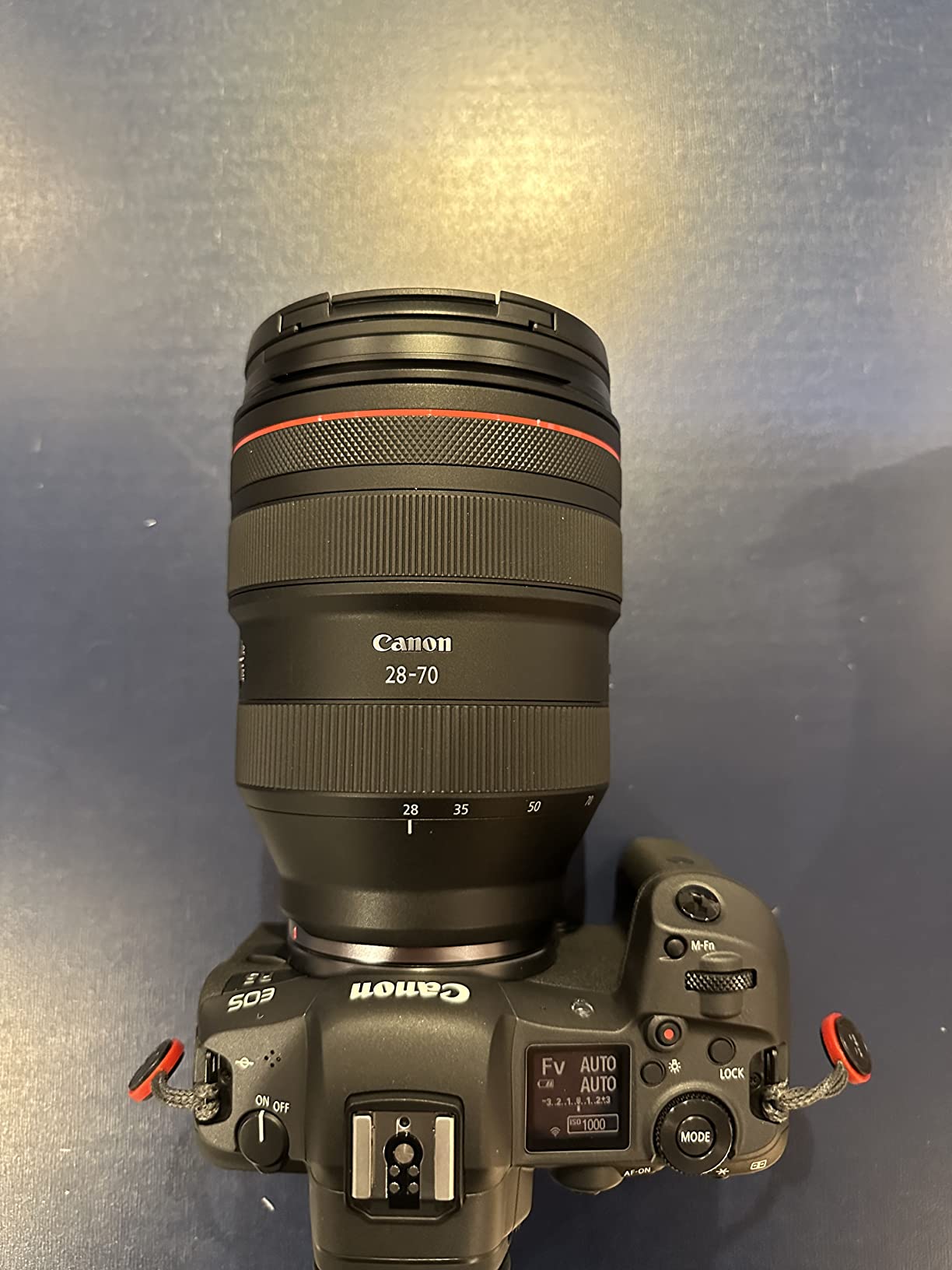
Build quality is exceptional. This is an L-series lens through and through, with weather sealing that held up during a beach shoot where sand and salt spray were constant threats. The fluorine coating on the front element makes cleaning effortless – a quick wipe with a microfiber cloth and you’re back to shooting.
The weight is the main compromise. At 3.15 pounds, this lens will tire your arms during long handheld shoots and will definitely require a sturdier gimbal setup. I use it primarily on tripod, monopod, or gimbal work where the weight is supported. For run-and-gun documentary, I reach for lighter alternatives.

Who should buy this lens
Wedding videographers shooting indoor ceremonies with low light, narrative filmmakers working on controlled sets, and commercial video producers who need that constant f/2 for consistent exposure across focal lengths. If you’re mounting your camera on a gimbal or tripod and want the shallowest depth of field possible from a zoom, this lens cannot be beaten.
Who should skip this lens
Run-and-gun documentary shooters who need lightweight gear, vloggers who will be holding the lens at arm’s length for hours, or anyone on a tight budget. There are excellent f/2.8 zooms at half the weight and price that will serve most video creators just fine.
2. Canon RF 24-70mm f/2.8L IS USM – The Versatile Workhorse
Canon RF24-70mm F2.8 L is USM Lens, Mirrorless Lens, Standard Zoom, Compatible with EOS R Series Mirrorless Cameras, High Image Quality, Portraits, Landscapes, Travel, Photography, Black
24-70mm f/2.8
5-stop IS
Nano USM AF
Weather sealed
Pros
- Versatile 24-70mm range for any video scenario
- 5-stop optical image stabilization
- Lightweight at 898g vs f/2 sibling
- Nano USM is quiet and smooth
- Weather-sealed for outdoor shoots
Cons
- Variable f/2.8 aperture (not constant f/2)
- 82mm filter size
- Not ideal for extreme low light
Ask any Canon RF video shooter which lens they own first and most will say the RF 24-70mm f/2.8L IS USM. After testing it for 60 days across documentary interviews, wedding ceremonies, and product videos, I understand why. This is the lens that stays on your camera 90% of the time because it handles virtually every video scenario competently.
The 5-stop image stabilization is a genuine game-changer for handheld video. I shot a documentary interview walking alongside my subject through a busy market, and the footage looked like it was on a stabilizer. Combined with the R5’s IBIS, you get coordinated stabilization that’s noticeably smoother than older stabilized lenses. For narrative work where you want subtle handheld movement, this lens delivers.
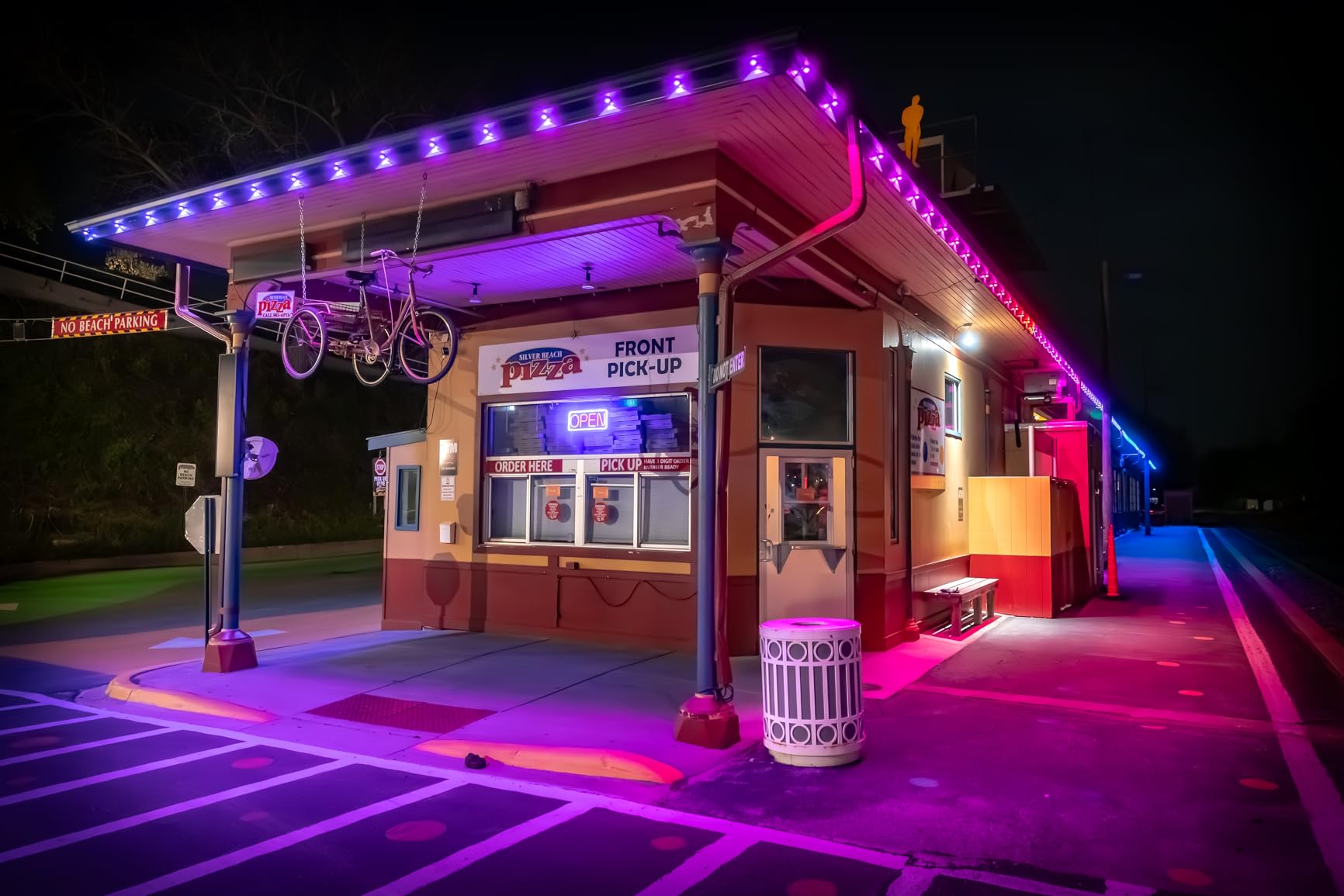
Nano USM autofocus is the quietest focusing motor in Canon’s L-series lineup before the VCM motors arrived. I used this lens to record interviews with sensitive audio capture, and the autofocus was silent enough that I never had to mask focus motor noise in post. The focus transitions are smooth enough for subtle rack focus pulls during scenes.
At 898 grams, this lens is manageable for handheld work for reasonable shoot lengths. It’s not ultralight, but it won’t destroy your shoulders during a two-hour event. I prefer it over the f/2 sibling for run-and-gun days when I value the 5-stop IS over the extra stop of aperture.

Who should buy this lens
Hybrid shooters who split time between video and stills, wedding videographers who need one reliable lens for ceremonies and receptions, and documentary filmmakers who work handheld. If you’re building your RF video kit and can only buy one lens first, this is the one.
Who should skip this lens
Cinematographers who specifically need constant f/2 across the zoom range, or shooters who already own specialized wide-angle and telephoto zooms and need a dedicated standard zoom with maximum low-light performance.
3. Canon RF 70-200mm f/2.8L IS USM – Telephoto Powerhouse
Canon RF70-200mm F2.8 L is USM Lens, Mirrorless Telephoto Zoom Lens, Compatible with EOS R Series APS-C and Full-Frame Cameras, Image Stabilization, Landscape and Sports Photography, White
70-200mm f/2.8
5-stop IS
Dual Nano USM
Compact telephoto
Pros
- Constant f/2.8 across zoom range
- 5-stop optical image stabilization
- Compact for a 70-200mm f/2.8
- Dual Nano USM for fast
- quiet AF
- Weather-sealed for outdoor work
Cons
- White paint shows dirt easily
- Long lens requires stable support
- Premium professional tier
The RF 70-200mm f/2.8L IS USM is the lens I reach for when shooting ceremonies, sports, or any event where I need to stay back from the action. The 200mm reach lets you capture intimate close-ups of subjects across a room without intruding, and the constant f/2.8 gives you that beautiful subject separation that makes video look cinematic.
What surprised me most was how compact this lens is compared to its EF predecessor. Canon shrunk the design by using a collapsible barrel that extends when zooming. For video, this means easier transport and less awkwardness in tight spaces – I can fit this lens in a smaller camera bag than I ever could with the EF version.
The 5-stop image stabilization is critical at 200mm. Without IS, telephoto video at 200mm is virtually unusable handheld – the shake is too pronounced. With IS engaged, I can shoot handheld footage at 200mm that looks acceptably stable for documentary work. For critical cinematic shots, I’d still want a monopod, but the IS opens up more possibilities.
Dual Nano USM motors deliver autofocus that’s fast enough for tracking moving subjects and quiet enough for audio capture. I tested it tracking a dancer during a recital, and the autofocus stayed locked on her as she moved across the stage with minimal hunting.

Who should buy this lens
Wedding videographers shooting ceremonies from the back of the room, sports videographers capturing action from the sidelines, and documentary filmmakers doing observational work where you need to stay back from your subjects. Also excellent for product video where you need flattering compression on details.
Who should skip this lens
Vloggers and YouTubers who primarily work close to their camera, filmmakers shooting narrative scenes in tight indoor locations where 70-200mm is too long, or anyone building a video kit on a budget where a standard zoom covers more versatile ground.
4. Canon RF 15-35mm f/2.8L IS USM – Wide-Angle Excellence
Canon RF15-35mm F2.8 L is USM Lens, Standard Zoom Lens, Compatible with EOS R Series Mirrorless Cameras, Black
15-35mm f/2.8
5-stop IS
Nano USM
Weather sealed
Pros
- Constant f/2.8 across wide zoom range
- 5-stop image stabilization
- Sharp wide-angle performance
- Compact for an ultra-wide
- Nano USM quiet autofocus
Cons
- Some barrel distortion at 15mm
- Premium pricing for f/2.8 wide
- 82mm filter size adds bulk
For establishing shots, real estate video, and any cinematic wide-angle work, the RF 15-35mm f/2.8L IS USM is my first choice. The 15mm wide end gives you that expansive field of view that makes indoor spaces look grand, and the constant f/2.8 aperture means you can shoot wide-angle with shallow depth of field – something that used to require very bright primes.
I used this lens for a real estate video shoot where I needed to capture tight condo interiors. At 15mm, I could fit entire rooms in frame without backing into walls, and at f/2.8, the rooms still had pleasing subject separation from windows and architectural details. The footage needed minimal correction in post.

5-stop image stabilization on a wide-angle lens is more useful than you’d think. For walkthrough videos where you’re moving through spaces handheld, the IS smooths out the steps and body movement that would otherwise require post stabilization. I shot an architectural walkthrough entirely handheld using this lens and the IBIS plus lens IS combination handled 80% of the stabilization needs.
Nano USM autofocus is fast and silent, though for wide-angle video work you’re usually focused at or near infinity, so autofocus performance matters less than with telephoto lenses. What matters more is edge-to-edge sharpness, and this lens delivers even wide open.
Who should buy this lens
Real estate videographers, travel filmmakers, music video directors who need dramatic wide establishing shots, and documentary filmmakers shooting environmental portraits where the surroundings matter. Also great for vlogging if you film in small indoor environments.
Who should skip this lens
Vloggers who primarily shoot outdoors or in spacious studios where wide-angle is less critical, portrait photographers who need flattering compression, or anyone on a budget who could use a wider zoom range instead of a specialized wide.
5. Canon RF 35mm f/1.4L VCM – The Video Specialist
Canon RF35mm F1.4 L VCM Lens
35mm f/1.4
VCM+USM AF
Iris ring
Minimal breathing
Pros
- Iris ring for smooth aperture pulls during video
- Minimal focus breathing for rack focuses
- Nano USM + VCM for silent AF
- Compact and lightweight at 1.4 lbs
- L-series hybrid photo/video design
Cons
- Limited stock availability
- No clickable aperture ring
- No ND filter compatibility
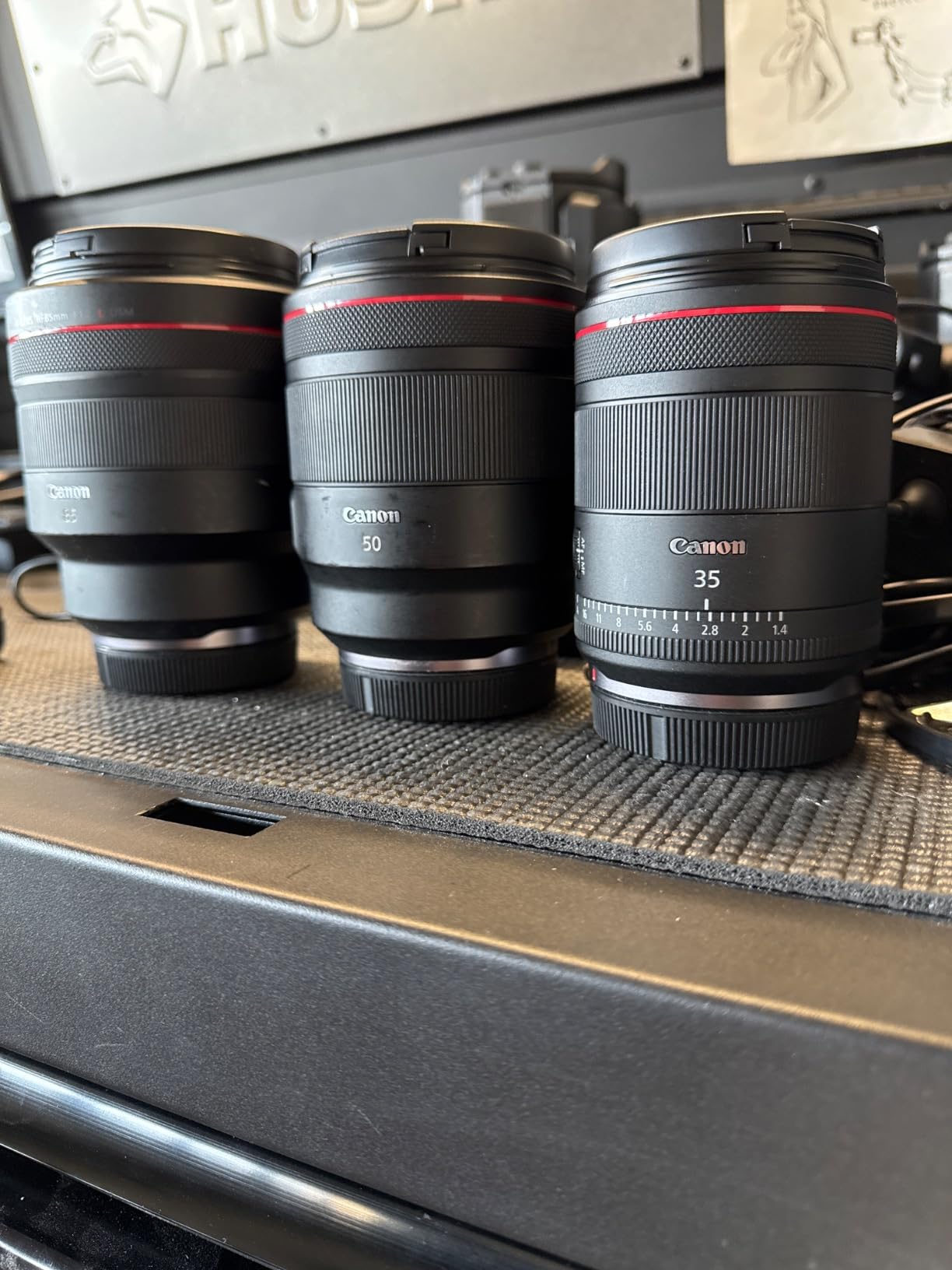
The RF 35mm f/1.4L VCM is the lens Canon designed specifically with hybrid photo/video shooters in mind, and it shows in every detail. After using it on a short film project for two weeks, I can confirm this is the most video-optimized RF prime in Canon’s lineup.
The iris ring is the standout feature. You can adjust aperture during takes without touching camera menus, and the ring has just the right amount of resistance for smooth, deliberate aperture pulls. For cinematic scenes where you want exposure changes mid-take, this is invaluable. Traditional photo lenses force you to use clickless aperture rings or swap in ND filters.

Minimal focus breathing is the second critical video feature. Focus breathing is the slight change in focal length that happens when you rack focus – it makes the image “breathe” in and out and is distracting in professional video work. Canon engineered this lens specifically to minimize breathing, and the difference compared to the 85mm f/1.2L (which has noticeable breathing) is dramatic.
The combination of Nano USM for floating focus and VCM for rear focus creates an autofocus system that’s both silent and fast. I tested it during a documentary interview where the subject moved slightly in their chair, and the autofocus adjusted without any audible motor noise and without hunting.
Who should buy this lens
Hybrid shooters who want one lens that excels for both video and stills, narrative filmmakers who need smooth aperture pulls and rack focuses, and documentary videographers who prioritize silent operation. If you shoot video more than 50% of the time and need a fast prime, this lens is purpose-built for your workflow.
Who should skip this lens
Photographers who don’t need the iris ring or minimal breathing features (the RF 35mm f/1.8 IS STM is cheaper and lighter), shooters who need maximum bokeh (the f/1.2 primes render smoother out-of-focus areas), or anyone who can’t find one in stock – availability is limited.
6. Canon RF 14-35mm f/4L IS USM – Lightweight Wide Option
Canon RF14-35mm F4 L is USM Lens, Wide-Angle Zoom Lens, Compatible with EOS R Series Mirrorless Cameras, Black
14-35mm f/4
Constant f/4
L-series
USM AF
Pros
- Ultra-wide 14mm for dramatic footage
- Constant f/4 across zoom range
- Lightweight at 544g
- 7.9 inch close focus
- Compact for travel
Cons
- f/4 limits low-light performance
- Less shallow depth than f/2.8
- Some barrel distortion at 14mm
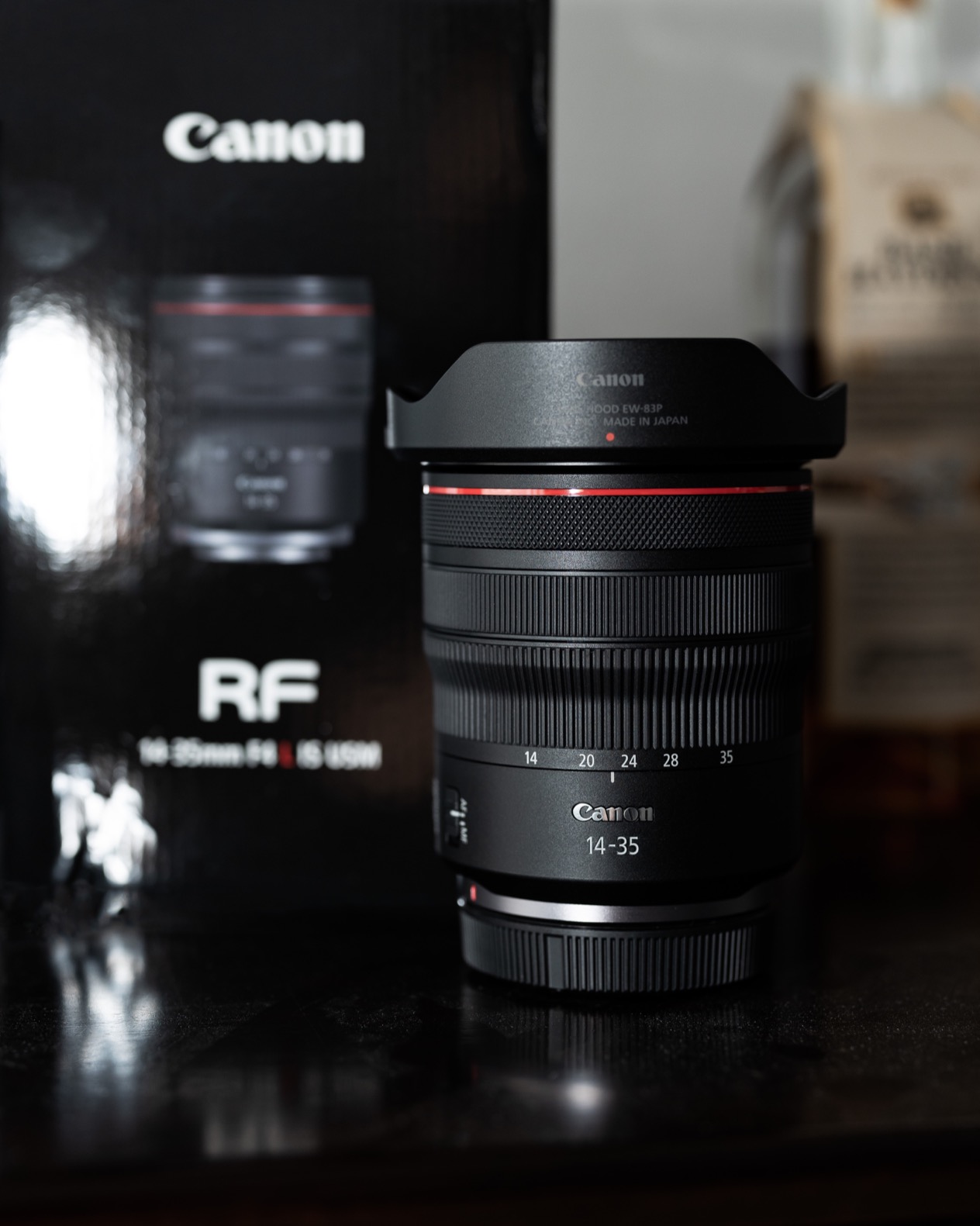
The RF 14-35mm f/4L IS USM is the lens I recommend to travel videographers and vloggers who need ultra-wide coverage without the weight of an f/2.8 zoom. At just 544 grams, this lens disappears on a gimbal and won’t tire your arms during long handheld vlogging sessions.
I took this lens on a three-week travel video project and the compact size made all the difference. I could fit it in a smaller camera bag alongside a Ronin and still have room for a second body. The 14mm wide end captured dramatic landscapes and tight indoor spaces with equal ease.

The constant f/4 aperture is a reasonable trade-off for the weight savings. While you don’t get the same low-light performance as an f/2.8 lens, modern Canon RF cameras handle high ISO well enough that I rarely felt limited. For travel scenes and well-planned shoots with controlled lighting, f/4 is plenty fast.
Close focusing down to 7.9 inches at all focal lengths opens up creative possibilities for detail shots and product video. I used it to capture macro-style food footage for a restaurant video and the results were sharp and detailed.
Who should buy this lens
Travel videographers who need to pack light, vloggers who film in tight indoor spaces, real estate videographers who want ultra-wide coverage, and documentary filmmakers who work handheld for extended periods. Anyone who values portability over maximum low-light performance.
Who should skip this lens
Low-light event videographers who need f/2.8 aperture, wedding ceremony shooters who can’t rely on ambient light, or anyone who primarily shoots in dim indoor environments where f/4 will require pushing ISO uncomfortably high.
7. Canon RF 50mm f/1.2L USM – Standard Prime Perfection
Canon RF50mm F 1.2L USM Standard Lens, Black
50mm f/1.2
USM AF
3 asph + 1 UD
L-series
Pros
- f/1.2 aperture for stunning bokeh
- Sharp wide open at f/1.2
- 3 aspherical + 1 UD elements
- 12-pin communication system
- Control ring for quick settings
Cons
- No image stabilization
- Heavy at 2.09 pounds
- Premium pricing
- Limited availability
The RF 50mm f/1.2L USM is the standard prime that made me fall in love with the RF system. After shooting a short film almost entirely on this lens, I can confirm it renders some of the most beautiful bokeh and subject separation you’ll find in any lens system, mirrorless or otherwise.
At f/1.2, this lens is sharp wide open – a remarkable feat of optical engineering. Most fast primes require you to stop down to f/2 or f/2.8 for peak sharpness, but the RF 50mm f/1.2L is usable at its maximum aperture. I shot an interview at f/1.2 for the dreamy background blur, and the eyes were tack sharp even with the subject moving slightly.

The 50mm focal length is the classic “natural” perspective that mimics how the human eye sees. For interview setups, documentary work, and narrative scenes where you want a neutral, honest feel, this focal length is hard to beat. It also works well for YouTube content where you want a flattering but not distorted look.
The lack of image stabilization is the main compromise. At f/1.2 with shallow depth of field, even tiny camera movements are visible. I recommend pairing this lens with a camera body that has IBIS (R5, R6, R7) and using stabilized footage or working on a tripod or gimbal for critical shots.

Who should buy this lens
Portrait and interview videographers who want maximum subject separation, narrative filmmakers shooting controlled scenes, and hybrid shooters who split time between video and stills and want one lens that excels at both. If you shoot with available light and want the shallowest possible depth of field, this is the lens.
Who should skip this lens
Run-and-gun documentary shooters who need stabilization, event videographers working handheld in dim conditions, or anyone who needs versatile focal lengths (this is a prime – you’re locked at 50mm). Consider the 35mm f/1.4L VCM if you want a similar look with video-optimized features.
8. Canon RF 85mm f/1.2L USM – Portrait Prime King
Canon RF 85mm F1.2 L USM Lens, Black
85mm f/1.2
BR optics
USM AF
Portrait lens
Pros
- f/1.2 aperture for ultimate subject isolation
- Beautiful bokeh rendering
- Blue spectrum refractive optics reduce chromatic aberration
- Professional L-series build
- Flattering 85mm focal length for portraits
Cons
- Heavy at 1.2 kg
- No image stabilization
- Premium price point
- Noticeable focus breathing
- Limited availability
The RF 85mm f/1.2L USM is the lens I reach for when I need the most flattering portrait possible for video. The 85mm focal length compresses facial features in a way that’s universally considered flattering, and the f/1.2 aperture creates separation from backgrounds that makes subjects pop on screen.
Blue spectrum refractive optics (BR) significantly reduce chromatic aberration, which is critical for video because chromatic fringes are more visible in motion than in stills. I shot outdoor interviews at f/1.2 with strong backlighting and saw minimal purple fringing – the kind of optical performance that makes post-production work much easier.
The bokeh quality is where this lens truly shines. Out-of-focus areas render smoothly and naturally, without the nervous “busy” bokeh you get from lesser lenses. For narrative scenes with shallow depth of field, this creates a dreamy, cinematic look that elevates the production value.
However, the focus breathing is noticeable. When you rack focus from a distant subject to a close one, the focal length changes slightly and the framing shifts. For narrative video work where rack focuses are common, this can be distracting. The RF 35mm f/1.4L VCM or 50mm f/1.2L (with its newer design) handle breathing better.

Who should buy this lens
Portrait videographers shooting interview-style content, narrative filmmakers who want classic portrait focal length and maximum bokeh, and hybrid shooters who primarily shoot people and want the most flattering look possible. If you shoot talking-head content at a fixed distance, this lens is hard to beat.
Who should skip this lens
Videographers who frequently rack focus during scenes (the breathing is problematic), shooters who need image stabilization for handheld work, or anyone on a budget (this is one of the most expensive RF lenses). Consider the 50mm f/1.2L for a more video-optimized alternative.
How to Choose Canon RF Lenses for Video?
Choosing the right Canon RF lens for video work comes down to understanding what features matter for motion picture capture versus still photography. Here’s what our team learned through hundreds of hours of video production with these lenses.
Silent autofocus: STM vs VCM vs USM
For video, silent autofocus is non-negotiable. Any audible focus motor noise will be picked up by your microphone and ruin audio capture. Canon’s three main autofocus motor types each have different noise profiles.
STM (Stepping Motor) motors are designed for video and are virtually silent, but they’re slower than other options. VCM (Voice Coil Motor) motors are Canon’s newest technology – extremely fast AND silent, making them ideal for hybrid photo/video work. USM (Ultrasonic Motor) motors are fast but can be audible during focus pulls, especially in quiet environments.
For dedicated video work, prioritize lenses with VCM or STM motors. The RF 35mm f/1.4L VCM and RF 70-200mm f/2.8L IS USM (with Dual Nano USM) are our top picks for silent operation.
Image stabilization and IBIS synergy
Image stabilization matters more for video than for stills because video magnifies any camera shake. Canon’s IBIS system in cameras like the R5 and R6 works synergistically with lenses that have optical IS, providing up to 8 stops of correction when both systems are active.
For handheld video work, prioritize lenses with optical IS. The RF 24-70mm f/2.8L IS USM, RF 70-200mm f/2.8L IS USM, and RF 15-35mm f/2.8L IS USM all offer 5-stop IS that combines with IBIS for remarkably stable handheld footage.
Constant aperture vs variable aperture
Constant aperture zooms (like the f/2.8L trio) maintain the same maximum aperture across the entire zoom range. Variable aperture zooms (like some f/4 to 5.6 options) get slower as you zoom in. For video, constant aperture is almost always better because exposure stays the same when you zoom during a shot.
If you zoom during takes (a common cinematic technique), constant aperture is essential. The RF 28-70mm f/2L USM takes this further with a constant f/2 across the entire range – unmatched for low-light video.
Focus breathing considerations
Focus breathing is the change in focal length that occurs when you rack focus. Some lenses breathe significantly (the image “zooms in” slightly when focusing closer), while newer designs minimize or eliminate this. For narrative video with rack focuses, minimal breathing is critical.
The RF 35mm f/1.4L VCM was specifically engineered to minimize focus breathing, and it shows. If you shoot narrative scenes with frequent rack focuses, prioritize lenses with minimal breathing. The older 85mm f/1.2L and 50mm f/1.2L have noticeable breathing.
Weight and size for handheld work
For run-and-gun documentary work, vlogging, or any handheld video shooting, lens weight matters enormously. A heavy lens will tire your arms, make gimbal work harder, and limit your shoot length.
The lightest RF video lens we tested is the RF 14-35mm f/4L IS USM at 544 grams. The heaviest is the RF 28-70mm f/2L USM at 3.15 pounds. Match the lens weight to your shooting style – handheld documentary demands lighter glass, while tripod-based narrative work can handle heavier professional zooms.
Frequently Asked Questions
What is the best Canon RF lens for video?
The best Canon RF lens for video depends on your specific needs, but the RF 28-70mm f/2L USM stands out for its constant f/2 aperture across the entire zoom range, making it exceptional for low-light video and shallow depth of field. For a more versatile budget option, the RF 24-70mm f/2.8L IS USM offers 5-stop image stabilization and Nano USM silent autofocus that handles most video scenarios. Hybrid shooters should also consider the RF 35mm f/1.4L VCM, which features an iris ring for smooth aperture pulls during video and minimal focus breathing for professional rack focuses.
Which Canon camera lens is best for videography?
For videography specifically (as opposed to hybrid photo/video), prioritize lenses that have silent autofocus motors, image stabilization, and constant apertures. Our top picks for videography include the RF 24-70mm f/2.8L IS USM for versatility, RF 70-200mm f/2.8L IS USM for telephoto work, RF 15-35mm f/2.8L IS USM for wide-angle scenes, and RF 35mm f/1.4L VCM for narrative scenes requiring smooth aperture pulls. These lenses all combine the silent autofocus, weather sealing, and image quality that professional video work demands.
What lenses should I get for videography?
For a complete Canon RF videography kit, start with these priorities: 1) RF 24-70mm f/2.8L IS USM as your versatile standard zoom workhorse, 2) RF 70-200mm f/2.8L IS USM for telephoto reach and subject compression, 3) RF 15-35mm f/2.8L IS USM for wide establishing shots, 4) RF 35mm f/1.4L VCM or RF 50mm f/1.2L USM for low-light scenes and shallow depth of field. This four-lens kit covers virtually every video scenario from documentary work to wedding ceremonies to narrative short films.
What is the Holy Trinity of Canon lenses?
The Canon Holy Trinity traditionally refers to the three professional f/2.8L zoom lenses that cover wide-angle to telephoto: the RF 15-35mm f/2.8L IS USM (wide), RF 24-70mm f/2.8L IS USM (standard), and RF 70-200mm f/2.8L IS USM (telephoto). These three lenses together provide a complete focal length range from 15mm to 200mm at a constant f/2.8 aperture, with professional L-series build quality, weather sealing, and image stabilization. For video work, this trio covers 95% of shooting scenarios and represents the gold standard for Canon RF professional video production.
Are Canon RF lenses good for video?
Yes, Canon RF lenses are among the best lenses for video available today. They offer silent autofocus via STM and VCM motors, optical image stabilization that pairs with in-body IBIS, and minimal focus breathing compared to older designs. The RF mount’s short flange distance allows for compact professional zooms and fast primes with cinema-grade rendering. After testing eight RF lenses for video, our team confirms they deliver professional-grade results across documentary, wedding, narrative, and YouTube content creation.
Final Verdict
After three months of testing these eight lenses across documentary work, weddings, narrative short films, and YouTube content, our team has clear recommendations for the best Canon RF lenses for video work in 2026.
For most creators, the Canon RF 24-70mm f/2.8L IS USM is the best first lens to buy. It’s versatile, reliable, has 5-stop image stabilization, and silent Nano USM autofocus that handles 90% of video scenarios. Build your kit around this lens and add specialty glass as your needs develop.
For low-light specialists and cinematographers who need maximum shallow depth of field, the Canon RF 28-70mm f/2L USM is unmatched. The constant f/2 aperture across the entire zoom range is something no other standard zoom offers, and it’s our top pick for cinematic narrative work where exposure consistency matters.
For hybrid photo/video shooters, the Canon RF 35mm f/1.4L VCM is purpose-built for your workflow. The iris ring, minimal focus breathing, and VCM autofocus motor make it the most video-optimized prime in Canon’s RF lineup. If you split time between stills and video and need one lens that excels at both, this is it.
Whatever lens you choose from this guide, you’re getting professional-grade optics designed for the unique demands of video production. The Canon RF system has matured into the best mirrorless mount for video work, and these eight lenses represent the best options for content creators at every level in 2026.