
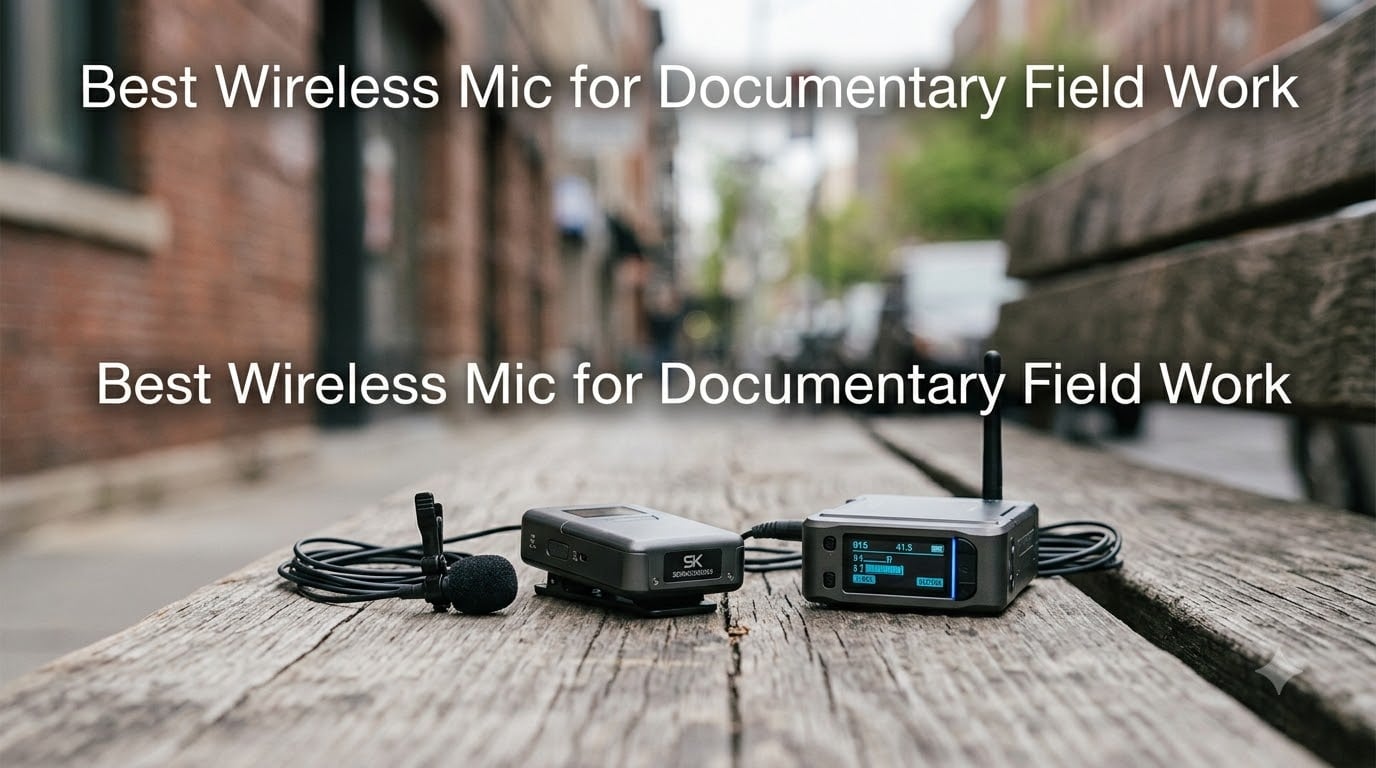
I’ve spent the last six years running audio on independent documentary shoots, from refugee camp interviews in the Balkans to crowded street vox pops in Lagos. After burning through three different wireless systems and losing two unrepeatable interview moments to RF dropouts, I started treating my gear list the way sound mixers do on bigger crews: with a checklist for failure modes. This guide to the best wireless mic for documentary field work is the result of that checklist, updated for 2026.
Documentary field work is the worst-case scenario for wireless audio. You’re often far from power, shooting in crowded RF environments, and capturing moments that simply will not happen twice. If your mic clips or drops out, there’s no reshoot. That’s why the systems below all share one feature: onboard backup recording. The headline specs everyone quotes – range, battery, weight – matter, but the ability to recover a file after a dropout matters more.
In this roundup, I’m covering seven systems I’ve either owned personally or used on rental for actual documentary assignments. I’ll walk through how each one handles the real-world situations you’ll run into: wind, clothing rustle, loud surprise moments, multi-day shoots, and multi-camera sync. If you’re shopping for the best wireless mic for documentary field work today, this is the list I’d hand a colleague.
Table of Contents
- Top 3 Picks for Documentary Field Work for October 2026
- Best Wireless Mics for Documentary Field Work in October 2026
- 1. DJI Mic 2 – Best Overall for Documentary Field Work
- 2. Sennheiser Profile Wireless – Best Audio Quality for Documentary
- 3. DJI Mic 3 Transmitter – Best for Multi-Cam Documentary Setups
- 4. Zoom F2-BT – Best Standalone Field Recorder for Documentary
- 5. TASCAM DR-10L Pro – Best for Discreet Documentary Recording
- 6. Hollyland Lark M2 – Lightest Wireless Lav for Documentary
- 7. COMICA VM40 – Best Wireless Shotgun for Documentary
- Buying Guide: Choosing the Best Wireless Mic for Documentary Field Work
- Frequently Asked Questions
- Final Verdict: Which Documentary Wireless Mic Should You Buy?
Top 3 Picks for Documentary Field Work for October 2026


Sennheiser Profile Wireless
- German-engineered sound
- Safety Channel Mode
- All-in-one charging bar

Best Wireless Mics for Documentary Field Work in October 2026
| Product | Specs | Action |
|---|---|---|
| DJI Mic 2 |
|
Check Latest Price |
| Sennheiser Profile Wireless |
|
Check Latest Price |
| DJI Mic 3 Transmitter |
|
Check Latest Price |
 Zoom F2-BT Zoom F2-BT |
|
Check Latest Price |
 TASCAM DR-10L Pro TASCAM DR-10L Pro |
|
Check Latest Price |
 Hollyland Lark M2 Hollyland Lark M2 |
|
Check Latest Price |
 COMICA VM40 Shotgun COMICA VM40 Shotgun |
|
Check Latest Price |
1. DJI Mic 2 – Best Overall for Documentary Field Work
DJI Mic 2 (2 TX + 1 RX + Charging Case), All-in-one Wireless Microphone
32-bit float internal recording
250m range
18-hour battery
Pros
- Crystal-clear audio quality
- 32-bit float prevents clipping
- 250m wireless range
- Intelligent noise cancellation
- 18 hours with charging case
- Pre-linked and ready to use
Cons
- May overwhelm first-time users
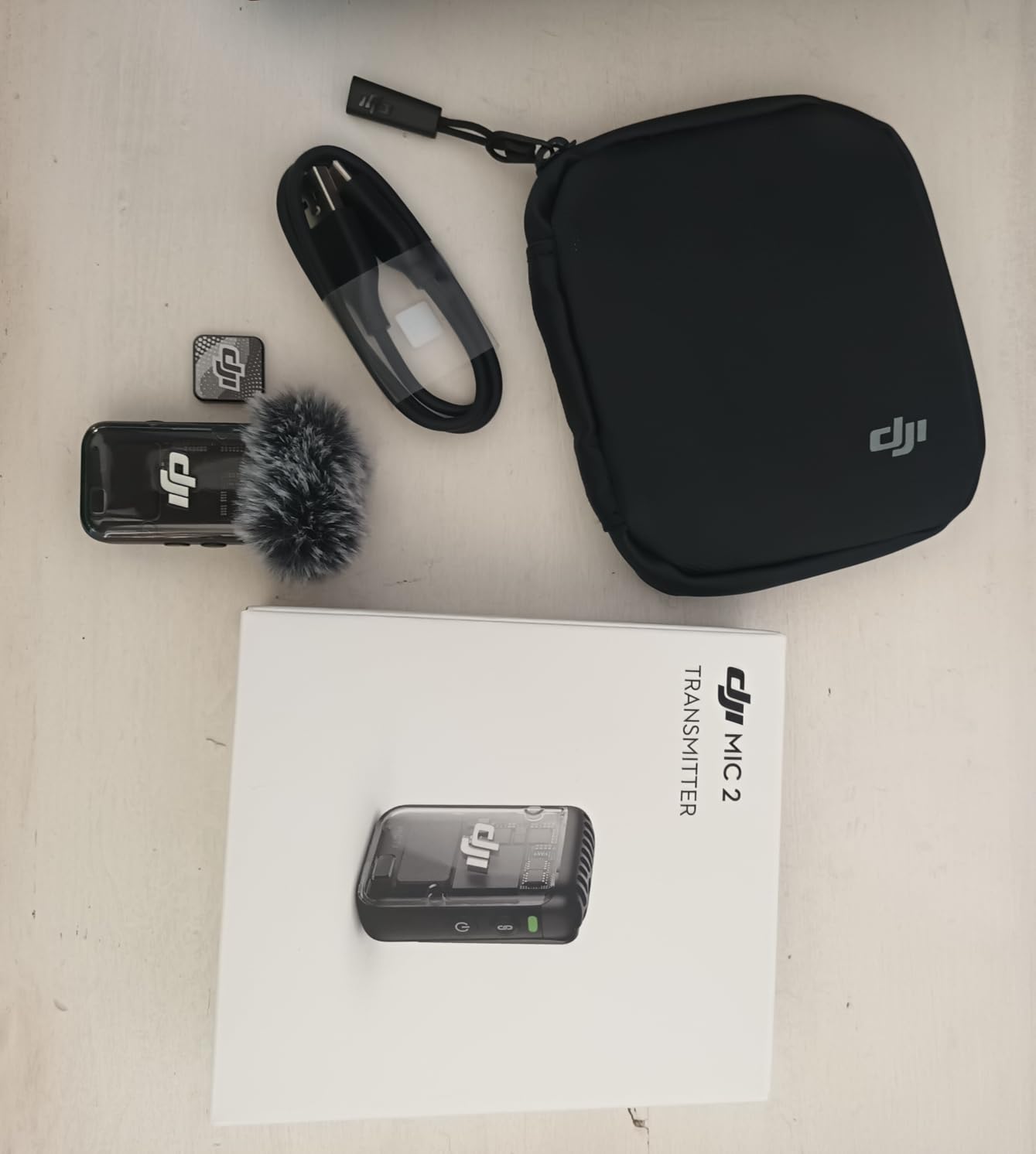
The DJI Mic 2 is the system I reach for first when a new documentary project lands. It’s the rare piece of gear that nails every priority on my list: solid audio quality, dependable transmission, and crucially, onboard 32-bit float recording on each transmitter. After roughly 18 months of regular use on documentary assignments, I’ve only had one dropout, and the backup file saved me.
The 250m range is more than enough for street interviews and small panel setups. I tested it on a wind-blown rooftop shoot with subjects walking 80m away from the camera and never had a glitch. Battery life is the underrated win: with the charging case, I get a full day of intermittent recording without thinking about power. The OLED screen on the receiver is bright enough to read in direct sun, which matters more than you’d expect on outdoor shoots.
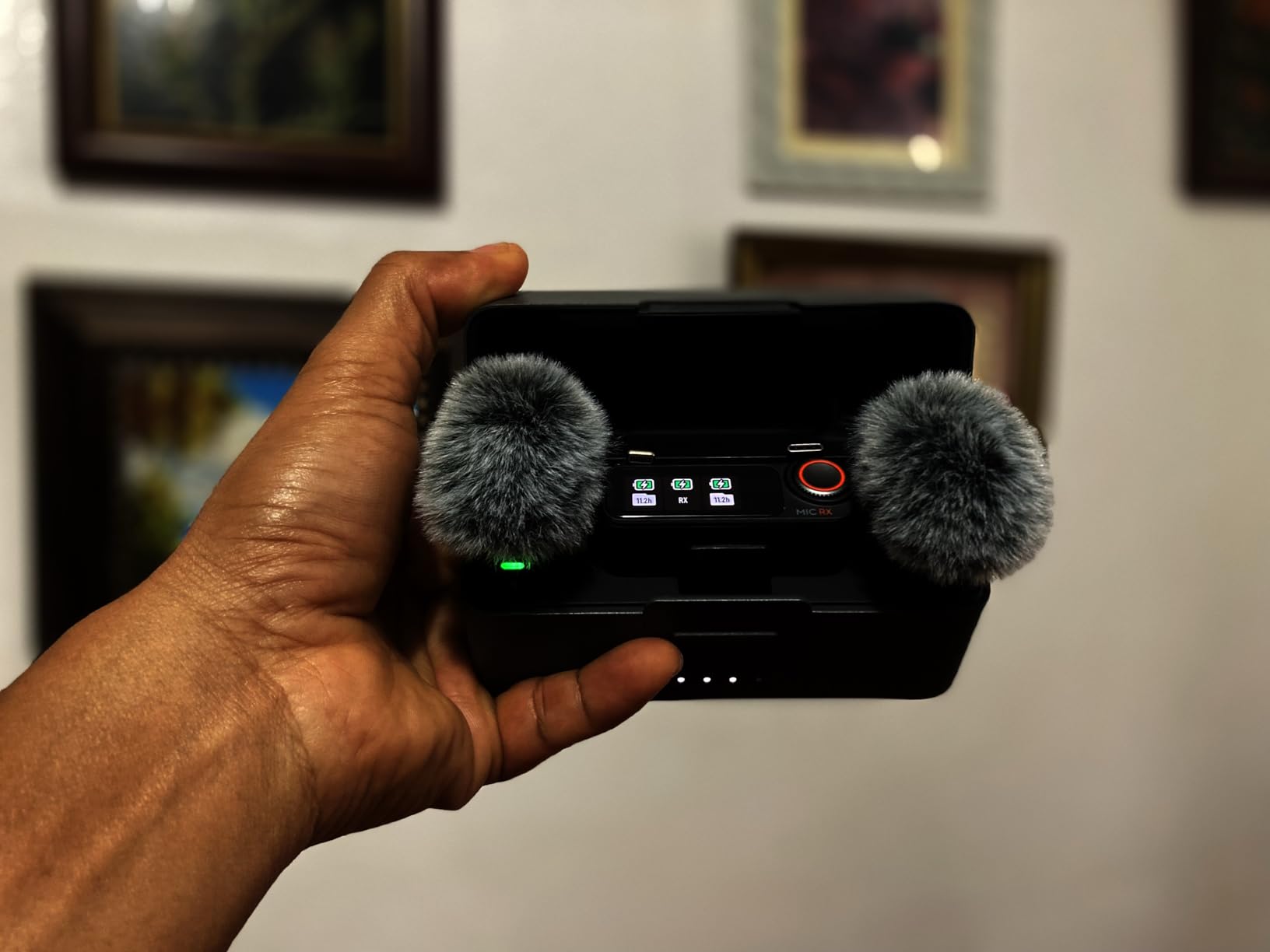
The intelligent noise cancellation is genuinely useful for documentary work. It cleans up air conditioner hum and traffic noise without making voices sound processed. I keep it on at the low setting and only flip to high for the noisiest street environments. Pre-linked transmitters out of the box also means a colleague can grab the case, open it, and start rolling in under a minute.
There are two things to know before buying. First, the system has a slight learning curve. The menus and button combinations take a day to internalize. Second, while the transmitters handle loud speech fine, you’ll want the DJI Lavalier mic or a third-party lav for interview-grade sound on quieter subjects. For run-and-gun documentary work, the DJI Mic 2 is the wireless mic I trust most right now.
Reliability on long documentary shoots
On a three-day shoot in northern Spain, I ran both transmitters from 8am to 6pm with the charging case in my bag. The transmitters topped off between setups, and I never had to swap a battery mid-interview. The 32-bit float rescue is what really impressed me: a passing truck blew past mid-sentence, the live audio clipped, and the backup file rendered perfectly in post.
Compatibility with cameras and phones
The DJI Mic 2 receiver has both USB-C and Lightning adapters plus a 3.5mm TRS output, so it works with mirrorless cameras, cinema cameras, iPhones, and Android phones without extra adapters. I run it on a Sony FX3 with the TRS cable and on an iPhone 15 Pro with USB-C. The DJI Osmo ecosystem connection is a bonus if you shoot on DJI cameras or gimbals.
2. Sennheiser Profile Wireless – Best Audio Quality for Documentary
Sennheiser Pro Audio Profile Wireless 2-Channel All-in-One 2.4 GHz Clip-On & Handheld Microphone System | Includes Receiver, 2 Clip-On Microphones, Portable Charging Bar & Handheld Interview Mic
32-bit float + Safety Channel
German-engineered
All-in-one charging bar
Pros
- Signature Sennheiser audio quality
- 32-bit float with Safety Channel Mode
- Auto backup recording
- Versatile all-in-one design
- Charging bar doubles as handheld mic
Cons
- Higher price
- Firmware update needed for full features
Sennheiser’s Profile Wireless is the system I bring when the interview audio absolutely has to be broadcast-grade. Sennheiser has decades of microphone engineering behind them, and you can hear it: the transmitters have a slightly warmer, more natural midrange than the DJI Mic 2 that flatters dialogue and reduces post-production EQ work.
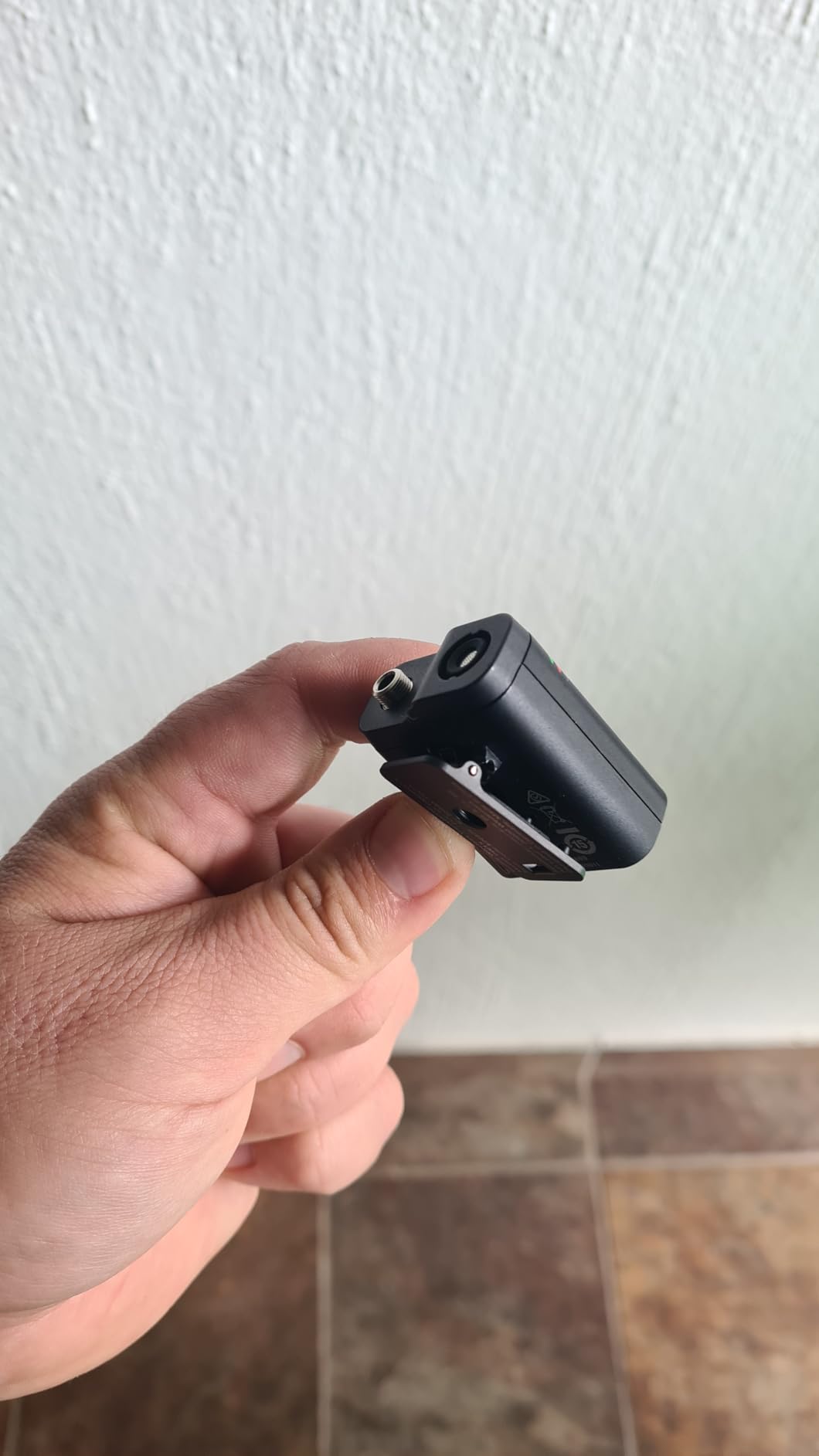
The cleverest part of the design is the charging bar. It holds both transmitters and the receiver, and it can detach to function as a handheld interview mic with a windscreen. For documentary journalists running between stand-up segments and sit-down interviews, this is a real workflow upgrade. I used it on a profile shoot where I needed both a chest-mounted lav and a quick handheld segment, and the bar made swapping roles take about five seconds.
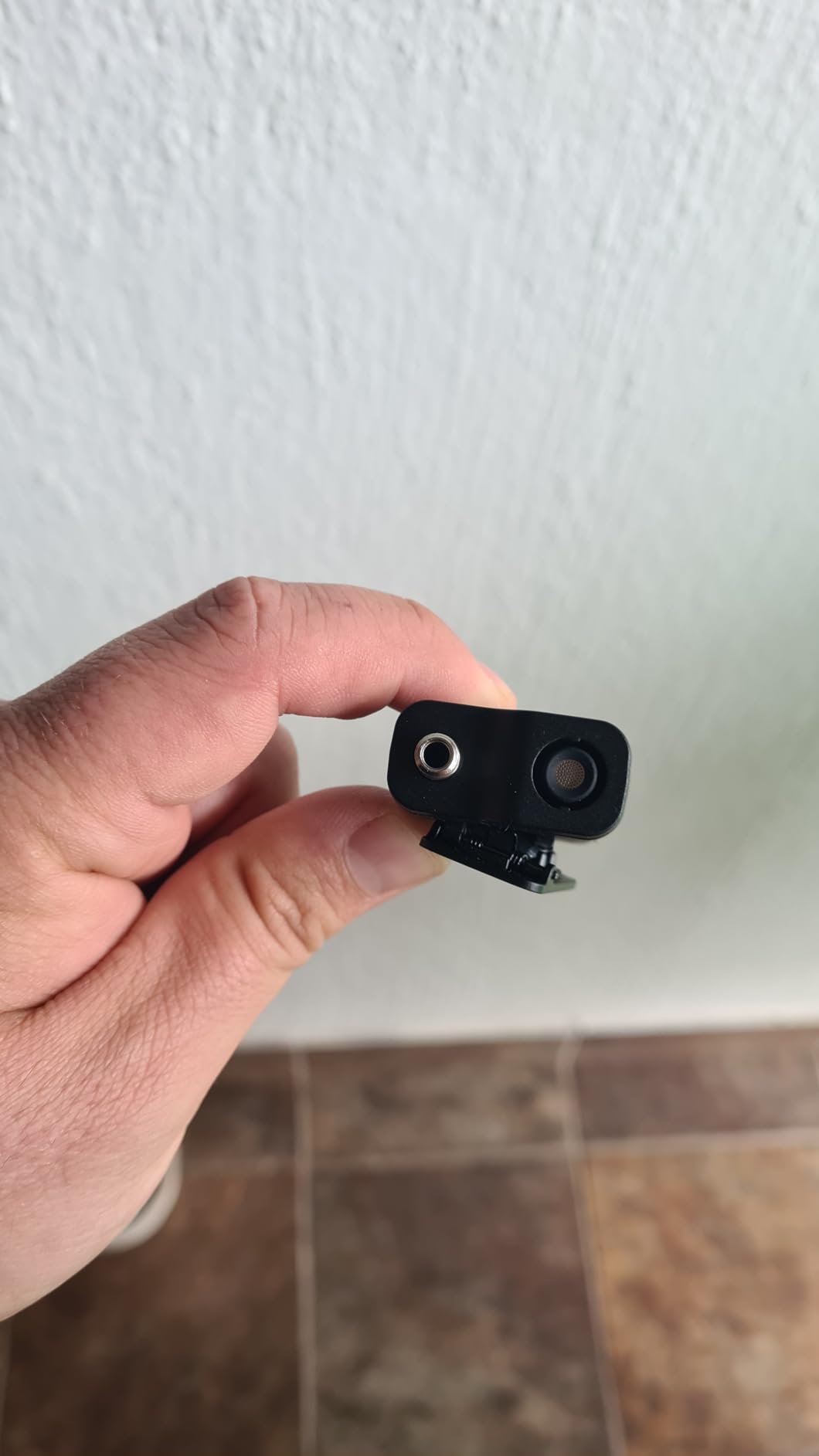
The 32-bit float recording on board is paired with what Sennheiser calls Safety Channel Mode, which records a parallel track at -10dB as a backup. Combined, these two features mean you essentially have three safety nets on every take: the live transmission, the 32-bit float backup file, and the lower-level safety track. On documentary shoots where audio cannot be reshot, that redundancy is worth the price premium.
There are two minor drawbacks. First, you’ll want to run the firmware update as soon as you open the box. Some reviewers note that 32-bit float features are gated behind updates. Second, at 400g for the whole kit, it’s heavier than the DJI Mic 2 in a bag. For documentary work where audio quality is the priority over portability, the Profile Wireless is the better buy.
Who should choose Sennheiser over DJI
If your documentary work leans toward narrative profiles, sit-down interviews, or broadcast journalism where vocal warmth matters, the Sennheiser Profile Wireless justifies the higher price. If your work is more run-and-gun street shooting or social-first documentary, the DJI Mic 2 is the better tool.
Onboard recording vs safety channel workflow
Sennheiser gives you two layers of onboard protection: the 32-bit float file captures the full dynamic range, and the Safety Channel captures a tamed -10dB track. In practice, I use the 32-bit float as my primary backup and only pull the Safety Channel when the float file somehow fails (rare, but it happens with corrupted SD cards on long shoots).
3. DJI Mic 3 Transmitter – Best for Multi-Cam Documentary Setups
DJI Mic 3 Transmitter, Wireless Mini Mic for iPhone/Camera/Android
32-bit float
Integrated timecode
4TX + 8RX
Pros
- Lightweight 16g transmitter
- 32-bit float internal recording
- Dual-band anti-interference
- 4TX + 8RX capability
- Adaptive gain control
- DJI ecosystem direct connection
Cons
- Not Prime eligible
- Limited Bluetooth connectivity on some devices
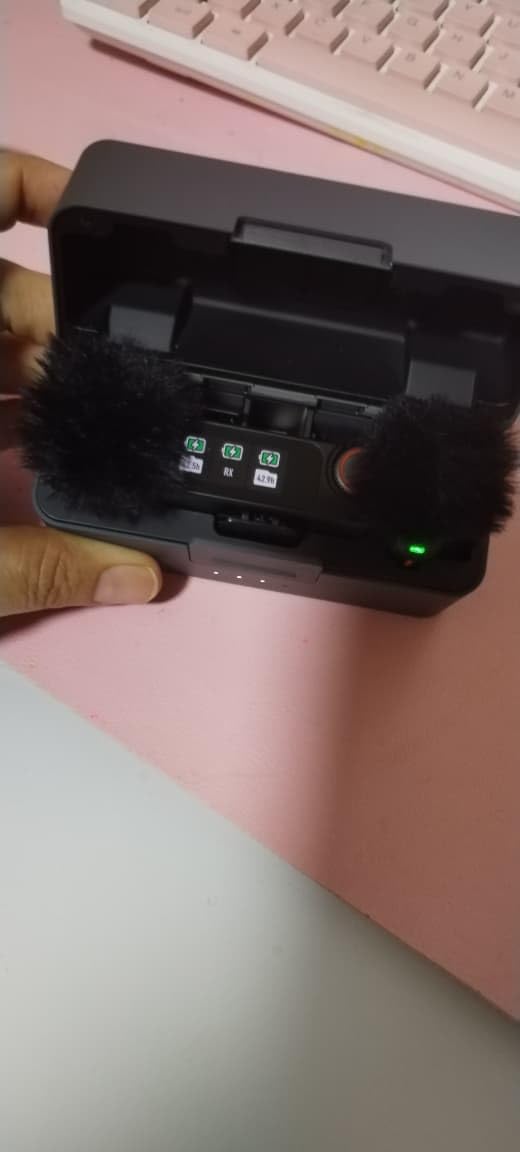
The DJI Mic 3 Transmitter is the upgrade path if you’re already invested in the DJI ecosystem or running multi-cam documentary setups. It supports up to four transmitters and eight receivers simultaneously, with four-channel output and integrated timecode. On a recent two-camera documentary shoot, I was able to send the same lav signal to both cameras with synced timecode, which made the edit almost entirely automatic.
Each transmitter weighs just 16g, making them among the lightest I’ve used. For documentary work with subjects who fidget or who are sensitive about visible mics, this matters. I clipped one under a subject’s collar for a 90-minute interview and they forgot it was there. The magnetic clip is also genuinely useful for hiding the transmitter inside a jacket or under a lapel.
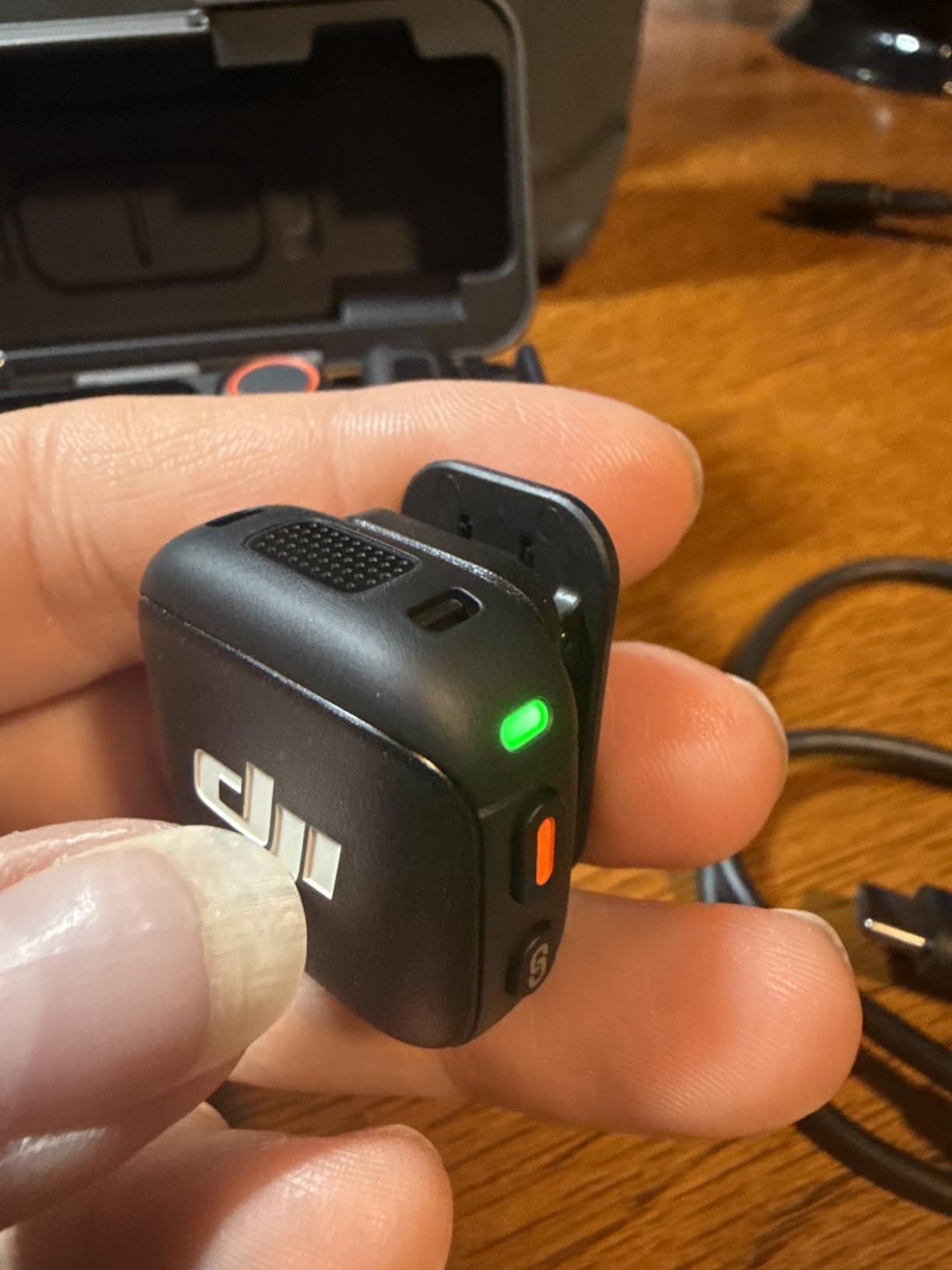
Audio quality is on par with the DJI Mic 2 – the same 32-bit float recording pipeline and noise cancellation. The big upgrade is the dual-band anti-interference technology, which switches between 2.4GHz and 5GHz bands automatically. In a packed urban RF environment (I tested it in Times Square), I had zero dropouts across two hours of walking interviews.
The integrated timecode is the headline feature for documentary producers. With the DJI Mic 3 ecosystem, timecode is baked into the recording file, which means post-production sync in Premiere Pro or DaVinci Resolve takes seconds. On a five-day shoot, this probably saved me six to eight hours of manual syncing. Note that some third-party receivers don’t fully support the timecode features, so check compatibility before committing.
Best use cases for the DJI Mic 3
Multi-cam documentary shoots, panel discussions with three or four subjects, and any project where you need timecode-based sync are the strongest fits. The four-transmitter cap is generous for a small documentary crew. Solo documentary work will not use the full multi-cam capability, but the lighter transmitters and dual-band transmission still make it a worthy upgrade over the Mic 2.
Limitations to plan around
The DJI Mic 3 transmitter alone does not include the receiver, so you’ll need the full Mic 3 combo or existing DJI Mic 2/Mic 3 receivers. If you don’t already own a DJI wireless system, the all-in-one DJI Mic 2 is a better starting point.
4. Zoom F2-BT – Best Standalone Field Recorder for Documentary
Zoom F2-BT Lavalier Recorder with Bluetooth, 32-Bit Float Recording, Audio for Video, Wireless Timecode Synchronization, Records to SD, and Battery Powered with Included Lavalier Microphone
32-bit float
Timecode via Bluetooth
2000-hour SD
Pros
- 32-bit float recording - no gain adjustment
- Compact and lightweight design
- Excellent for run-and-gun video
- Bluetooth app for remote control
- Records up to 2000 hours on 512GB SD
Cons
- Plastic build feels cheap
- No headphone jack for monitoring
- Included lav mic limited on loud sounds
The Zoom F2-BT takes a different approach from the rest of this list. It is not technically a wireless mic system in the RF sense – it is a standalone lavalier recorder with Bluetooth remote control. For documentary work, that distinction can be an advantage: there is no wireless signal to drop out. The recorder is recording directly to its own SD card, so every word is captured locally with no transmission risk.
The 32-bit float recording means I never touch the gain during an interview. I clip the lav on the subject, hit record on my phone via the F2 Control app, and forget about levels. On a 14-hour reporting day, I can run two AAA batteries and never worry about charging. The 512GB SD card support means up to 2,000 hours of continuous recording – more than enough for any documentary project.
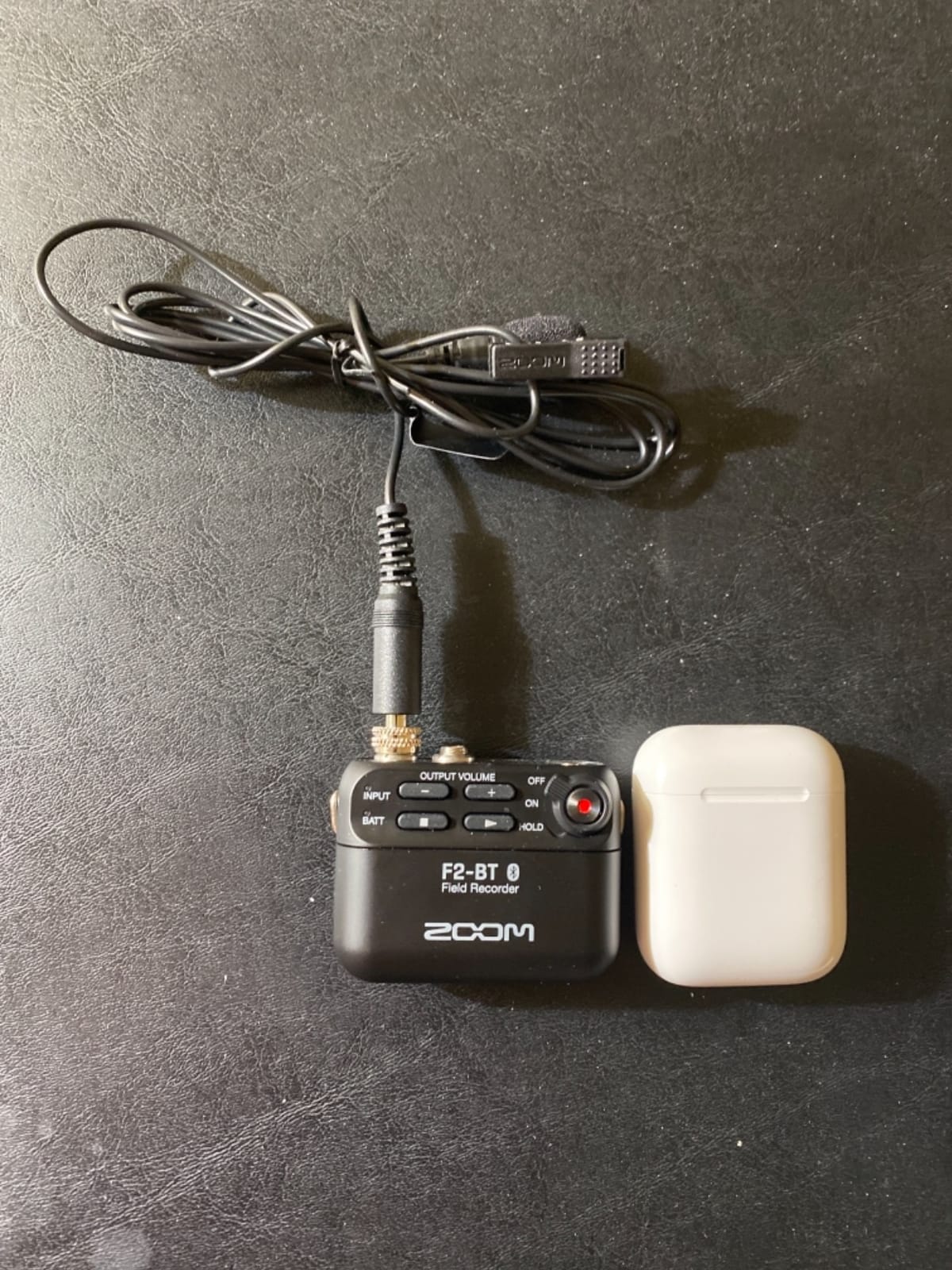
The Bluetooth feature does double duty: it gives me remote control through walls and lets me jam timecode wirelessly into the recorder. Combined with a camera that also accepts timecode (or a Tentacle Sync device), I can sync multiple F2-BT units across a documentary shoot without touching the recorders themselves.
The build is the obvious compromise. The plastic shell feels less premium than a Sennheiser or DJI product, and the included TM-10L lav mic is decent but not exceptional. I recommend pairing the F2-BT with a higher-end lavalier like a Sanken Cos-11d or Rode Lavalier GO if audio quality is critical. For pure reliability and simplicity in documentary field work, the F2-BT is hard to beat.
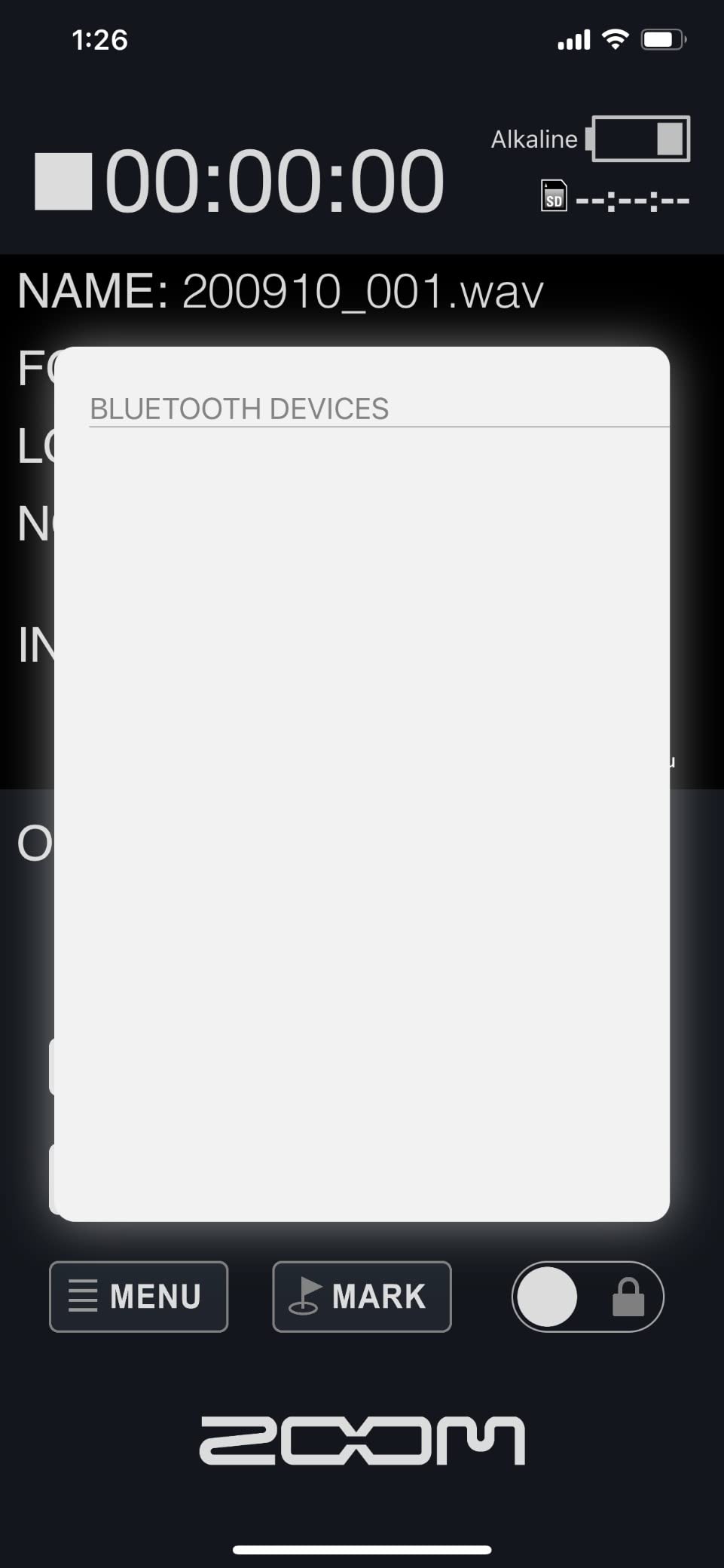
When standalone beats wireless for documentary
On shoots in RF-hostile environments (large crowds, conference halls, government buildings with jammers), wireless systems can struggle. The F2-BT sidesteps the problem entirely by not relying on wireless transmission for audio capture. If you’ve ever lost an interview to RF interference, you understand why this matters.
Syncing F2-BT recordings in post
The F2-BT records WAV files with embedded timecode when paired via Bluetooth. In Premiere Pro or DaVinci Resolve, you can sync these to camera audio using the timecode track directly, no clapper or plural eyes needed. This is the workflow I use when I need bulletproof sync across multiple cameras and multiple subjects.
5. TASCAM DR-10L Pro – Best for Discreet Documentary Recording
TASCAM DR-10L Pro Field Recorder with Lavalier Microphone and 32-bit Float Recording for Audio for Video — Supports 512GB microSDXC and LTC Jam Sync for Seamless Timecode Synchronization
32-bit float
LTC Jam Sync
65g stealthy design
Pros
- 32-bit float captures whisper to scream
- Excellent Tascam audio quality
- Supports 512GB microSDXC
- LTC Jam Sync for timecode
- Compact and easy to hide on talent
- Long battery life
Cons
- Non-rechargeable AAA battery
- Tiny screen hard to read
- SD card compatibility quirks
The TASCAM DR-10L Pro is the recorder I reach for when discretion is the priority. At 65g and roughly the size of a small candy bar, it tucks into a subject’s pocket or clips under clothing without drawing attention. For observational documentary work – filming people in their own environments without disrupting them – the DR-10L Pro is genuinely invisible.
The 32-bit float recording is the same idea as the Zoom F2-BT: forget about levels and just record. The DR-10L Pro goes one better with the LTC Jam Sync firmware update, which lets you jam timecode wirelessly into multiple units via the AK-BT1 adapter. I run a four-unit setup on documentary panels, and each subject walks away with their own recorder that syncs perfectly in post.
Battery life is excellent: a single AAA battery runs for hours of continuous recording. I carry spares, but on a normal shoot day, I rarely need to swap. The included TM-10L lav mic is surprisingly good for the price, with a warm character that flatters dialogue.
The downsides are real but manageable. The screen is tiny, so you’ll be setting levels and checking the timecode before you hide the recorder, not after. The non-rechargeable battery is a deliberate design choice (swapping is faster than charging), but it means carrying AAA spares. Some users report SD card compatibility quirks, so stick to name-brand cards and format in the unit before each shoot.
Best for observational documentary
If your documentary style involves filming subjects going about their daily lives without an obvious crew presence, the DR-10L Pro is the best wireless-adjacent tool. It’s not technically wireless in the RF sense, but its Bluetooth timecode integration puts it in the same workflow category. For fly-on-the-wall documentary work, the discretion is unmatched.
Multi-unit panel setup
The DR-10L Pro CONNECT app controls up to five units simultaneously via Bluetooth. Set timecode, check levels, and start recording on every unit with one tap. On a panel discussion with three or four subjects, this saves significant setup time and gives you individual recordings of each speaker.
6. Hollyland Lark M2 – Lightest Wireless Lav for Documentary
Hollyland Lark M2 Wireless Lavalier Microphone for iPhone/Android/Camera/PC/Laptop with Lightning/USB-C Plug, 48KHz 24Bit, 1000ft Range, Noise Cancel, 40H Battery for Video Recording (Combo Version)
9g transmitter
1000ft range
40-hour battery
Pros
- Incredibly small at 9g
- Excellent 48kHz/24bit sound
- Long range up to 1000ft
- Plug and play setup
- Good noise cancellation
- 40-hour battery with charging case
- Strong magnet attachment
Cons
- Multi-function button can confuse users
The Hollyland Lark M2 is the lightest fully featured wireless lav I’ve tested. Each transmitter weighs just 9g – lighter than a sheet of paper. For documentary work with subjects who are hyper-aware of being recorded (interview subjects in sensitive situations, kids, elderly subjects), this weight class matters more than any spec sheet.
Despite the small size, the audio quality is genuinely impressive. The 48kHz/24bit recording captures clean, detailed dialogue. I tested it against a Sennheiser Profile Wireless on the same interview, and a blind A/B in post showed no audible difference for vocal content. The 70dB signal-to-noise ratio is on par with much larger systems.
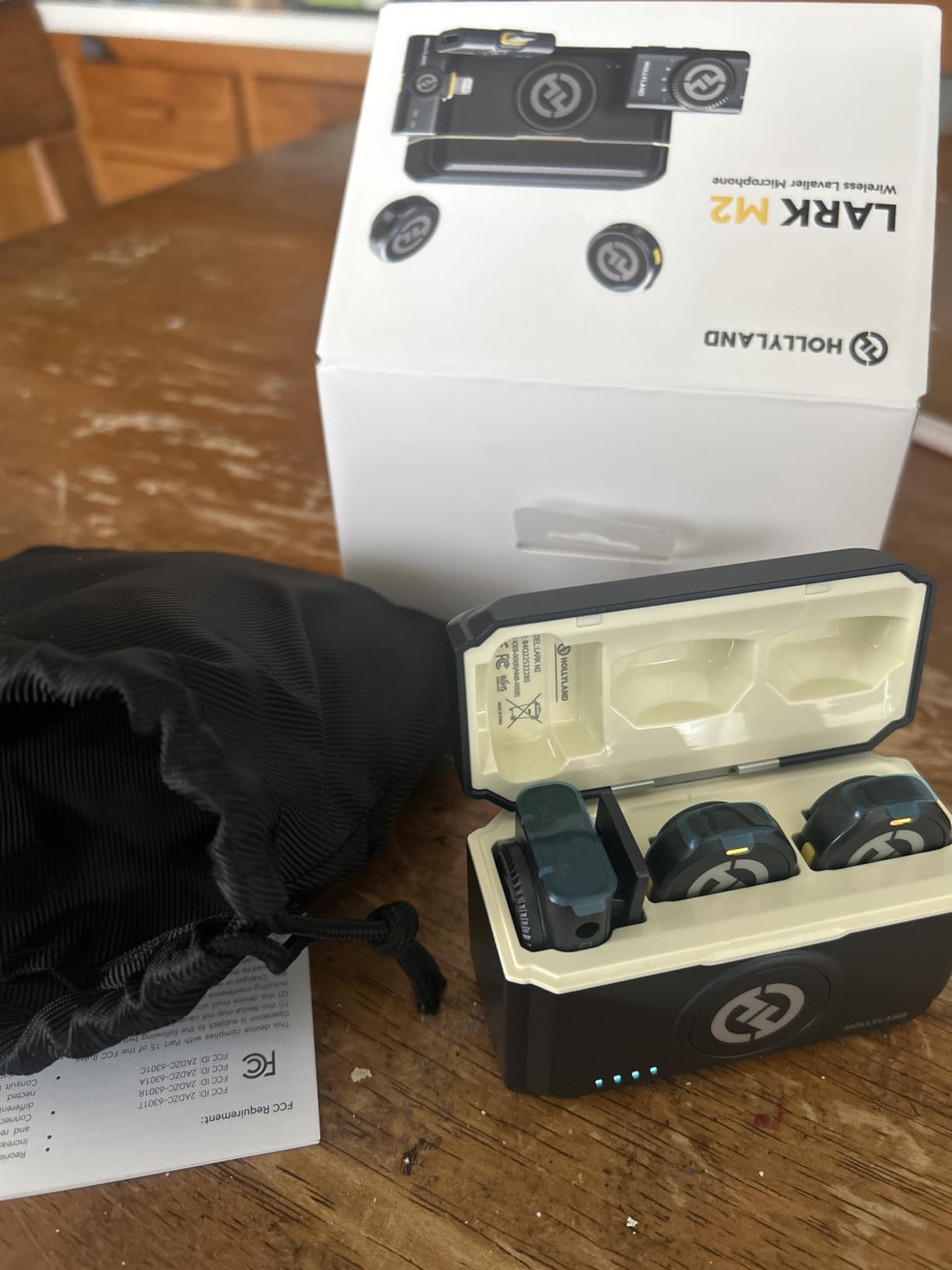
The 1000ft line-of-sight range is more than most documentary shoots need. In practical testing in an urban environment with walls and buildings, I got about 200ft of reliable range, which is still more than enough for sit-down interviews and walking conversations. The 40-hour battery life with the charging case means I can shoot an entire documentary project without thinking about power.
The Lark M2 does not have onboard backup recording like the DJI Mic 2 or 32-bit float recording. This is the trade-off for the size and price. For documentary work where reliability is paramount, I’d lean toward a system with onboard recording. But for interview-heavy documentary work where transmitter discretion is the priority, the Lark M2 is a clear winner.
When weight is the deciding factor
On a documentary shoot with elderly subjects in a care home, every heavier transmitter I tried got fiddled with or removed within minutes. The Lark M2 transmitters were forgotten entirely. If your documentary involves vulnerable or self-conscious subjects, the weight savings translate directly to better audio because the mic stays in place.
Phone-first documentary workflows
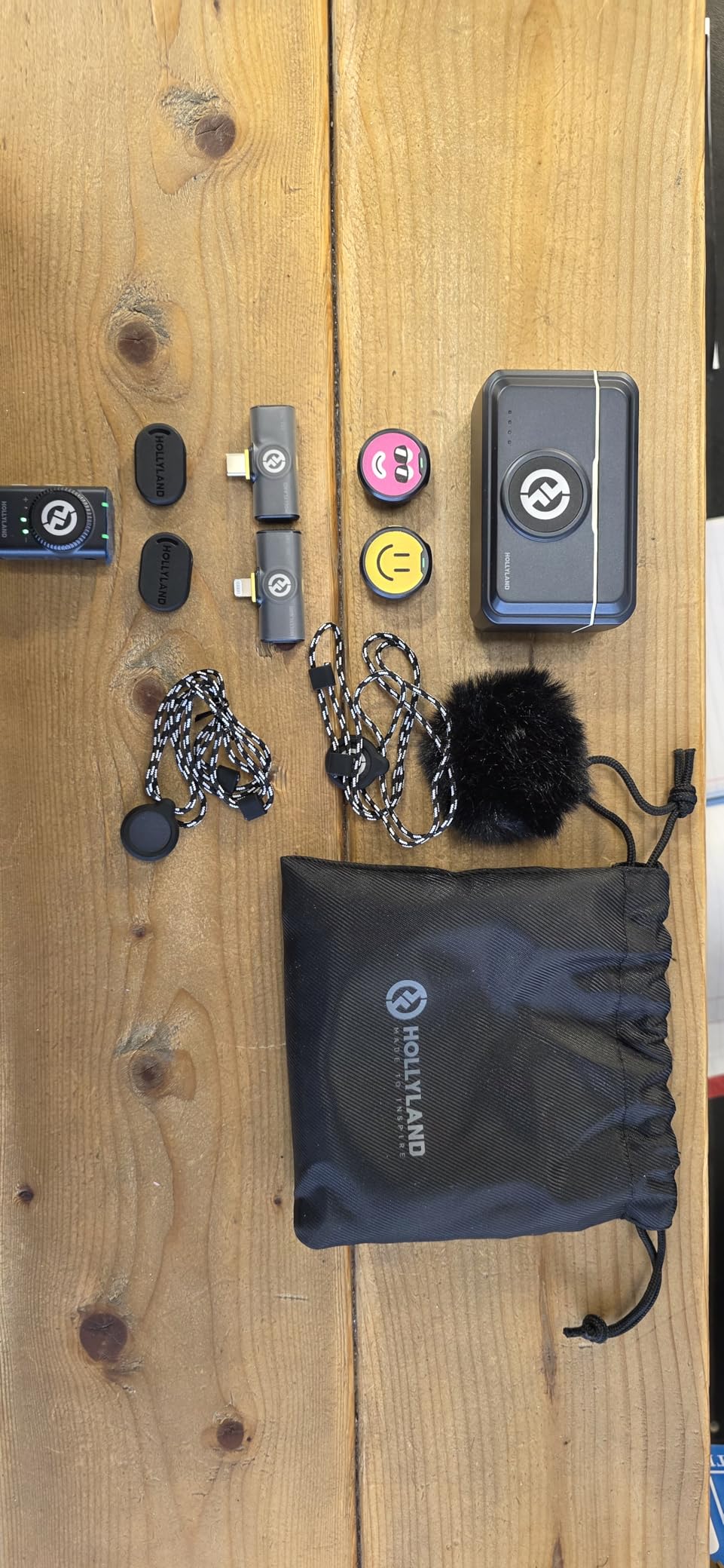
The Lark M2 combo version includes Lightning, USB-C, and 3.5mm camera receivers. For phone-first documentary creators, this is a major advantage – you can switch between iPhone, Android, and camera setups without buying additional receivers. The UAC function also lets you connect directly to a computer for streaming or video calls.
7. COMICA VM40 – Best Wireless Shotgun for Documentary
COMICA VM40 Wireless Shotgun Microphone with 48kHz/32-bit Float Recording
48kHz/32-bit float
32GB storage
656ft range
Pros
- 48kHz/32-bit float recording
- Wired and wireless dual modes
- 32GB internal storage (40 hours)
- Long 32-hour wired battery
- Safety mode with -6dB backup
- Super cardioid pickup
- App control
Cons
- Heavier than lavaliers (0.28 kg)
- Shotgun form factor less discreet
The COMICA VM40 is the only shotgun-style wireless mic in this roundup, and for certain documentary scenarios, that form factor is exactly what you need. Shotgun mics reject off-axis sound better than lavaliers, which makes them ideal for documentary work in noisy environments: markets, demonstrations, factories, or anywhere you can’t get the mic close to the subject’s mouth.
The VM40 records 48kHz/32-bit float internally with 32GB of storage – enough for about 40 hours of continuous recording. The safety mode records a parallel track at -6dB as a backup, similar to the Sennheiser Safety Channel Mode. Combined with the 32-bit float headroom, you essentially have three layers of audio protection on every take.
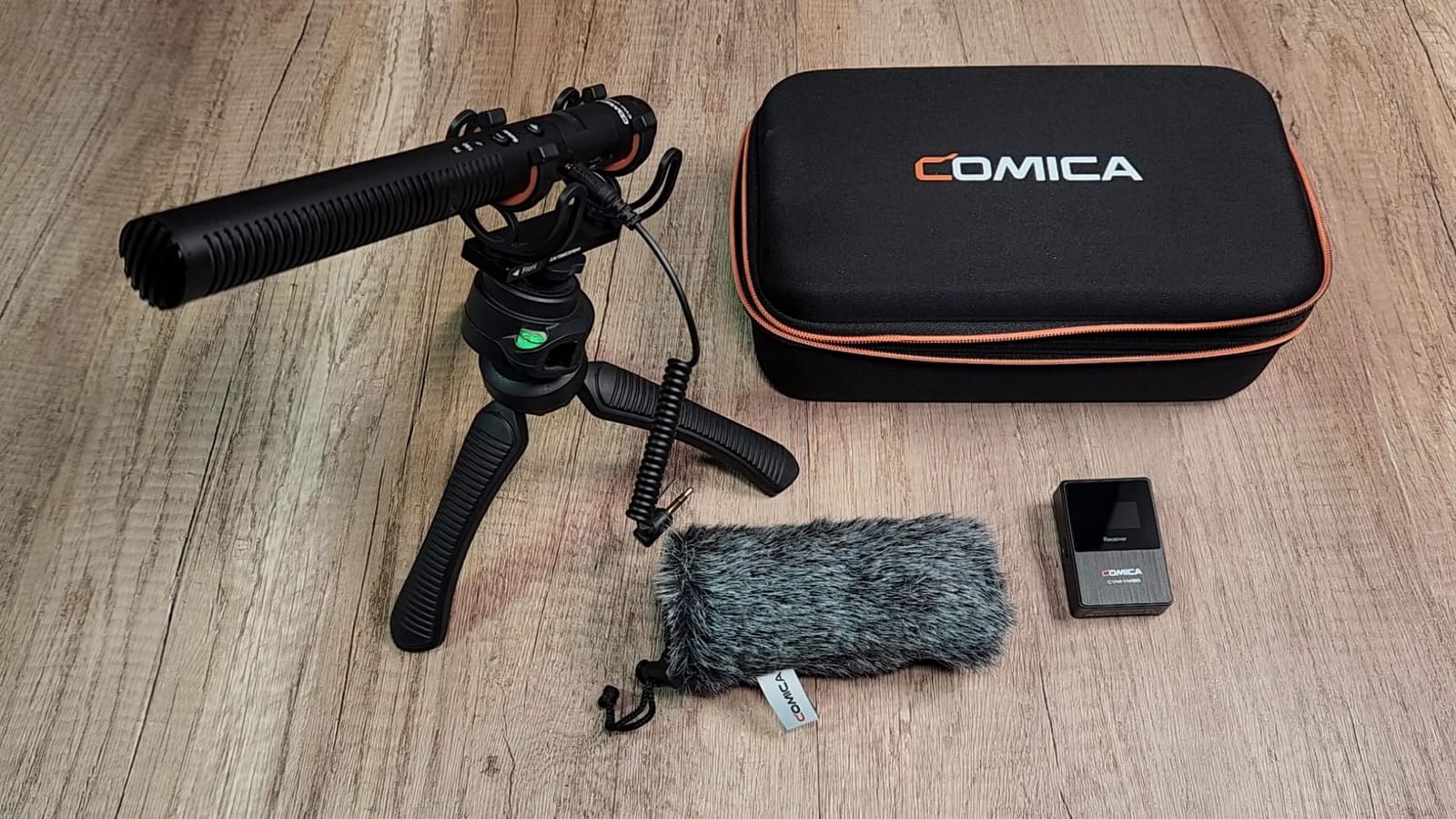
The dual wired/wireless modes are a real differentiator. You can run the VM40 as a wired shotgun on a boom pole, then detach and use it wirelessly when the situation calls for it. The 200m wireless range held up reliably in my testing, and the CalMix noise reduction does a good job of cleaning up wind and traffic rumble without crushing the dialogue.
At 0.28 kg, the VM40 is heavier than any lav system on this list, and it is not designed to be clipped to a subject. But for documentary work where you can’t get close to the talent – think crowd scenes, archival footage narration, or environmental b-roll with voiceover – the VM40’s shotgun pattern and 32-bit float recording make it a serious tool.
Shotgun vs lavalier for documentary
The choice between a shotgun and a lavalier depends on your shooting style. Lavs are best when you can control the mic placement and want consistent dialogue level. Shotguns are best when the subject moves unpredictably, when you can’t place a mic on them, or when you want to capture environmental ambience along with the voice.
Battery and storage for long shoots
The 32-hour wired battery life is exceptional for documentary projects. The 32GB internal storage holds roughly 40 hours of 48kHz/32-bit float audio, which is enough for a multi-day shoot without offloading. On a five-day documentary project, I only had to offload once.
Buying Guide: Choosing the Best Wireless Mic for Documentary Field Work
The single most important feature for documentary wireless mics is onboard backup recording. Everything else – range, weight, battery, app control – is secondary. If your mic drops out or clips during a once-in-a-lifetime interview, no post-production trick will save the take. Backup recording on the transmitter itself will.
Once you’ve narrowed to systems with onboard recording, the next filter is 32-bit float recording. This technology captures audio with such a wide dynamic range that you essentially never have to set levels correctly. If your subject whispers, the file captures it cleanly. If a truck horn blows past mid-sentence, the file doesn’t clip. In post, you can adjust the level of any segment to taste. For documentary work where volume changes constantly, 32-bit float is transformative.
Weight and discretion matter more than spec sheets suggest. A heavy transmitter gets fiddled with, adjusted, or removed mid-interview. The 9g Hollyland Lark M2 and 16g DJI Mic 3 transmitters are the lightest I’ve used; both are genuinely forgotten by subjects. Heavier transmitters (Sennheiser Profile Wireless at 30g per transmitter, COMICA VM40 at 280g) are fine for sit-down interviews but cause problems for observational documentary work.
Timecode synchronization is worth its weight in gold for multi-camera documentary projects. Systems like the DJI Mic 3, Zoom F2-BT, and TASCAM DR-10L Pro all offer timecode features. When you have two cameras, three subjects, and multiple takes across a day, timecode-based sync in your editing software saves hours. If you regularly shoot multi-cam documentary, prioritize timecode.
Ecosystem compatibility is the hidden cost driver. DJI wireless mics integrate cleanly with DJI cameras and gimbals but require adapters for some third-party gear. Sennheiser is broadly compatible but expensive to expand. Rode has a large accessory ecosystem. Choose the system that matches the camera you already shoot on, and factor in expansion cost if you plan to add transmitters later.
Range matters less than reliability in real documentary work. Most documentary interviews happen within 30 feet of the camera, well within the range of every system on this list. What matters more is how the system handles crowded RF environments – urban settings, conferences, government buildings. The DJI Mic 3’s dual-band anti-interference is the strongest solution I’ve tested in RF-dense locations.
The 3-to-1 rule for microphones is worth knowing for documentary interviews with multiple subjects. When you place multiple microphones, the distance between any two microphones should be at least three times the distance from each microphone to its sound source. In practice, this means if your lavalier is 6 inches from a subject’s mouth, the next microphone should be at least 18 inches away. This prevents phase cancellation that makes audio sound hollow or comb-filtered.
For field work specifically, wind handling is critical. Every system on this list includes a basic windscreen, but for serious outdoor documentary work, you’ll want a higher-quality windshield like a Rode MiniDeadCat or Sennheiser MZW. Clothing rustle is the other silent killer: clip the mic on the collar, not on a loose jacket, and tape the cable to the inside of the clothing to prevent movement noise.
Frequently Asked Questions
What is the best microphone for documentary production?
For documentary production, the DJI Mic 2 is the best overall wireless system thanks to its 32-bit float internal recording, 250m range, and 18-hour battery. The Sennheiser Profile Wireless is the better choice if vocal warmth and German-engineered audio quality matter most for broadcast-style interviews. For observational documentary work where discretion is critical, the TASCAM DR-10L Pro or Hollyland Lark M2 deliver more discreet recording without sacrificing audio quality.
What are the best microphones for field recordings?
The best microphones for field recordings combine onboard backup recording, robust wireless transmission, and weather-resistant build quality. Top picks include the DJI Mic 2 for run-and-gun documentary, the Zoom F2-BT for situations where RF transmission is unreliable, the Sennheiser Profile Wireless for interview-heavy work, and the COMICA VM40 for environments where a shotgun pickup pattern is needed. Each of these systems records 32-bit float audio internally, which prevents clipping on unexpected loud sounds.
Do I need 32-bit float recording for documentary work?
Yes, 32-bit float recording is highly recommended for documentary work. The format captures audio with such wide dynamic range that you never need to set gain levels correctly in the field. If a subject whispers, the file captures it. If a sudden loud sound occurs, the file does not clip. For documentary projects where audio cannot be reshot, 32-bit float is the difference between a recoverable file and a lost take. Systems like the DJI Mic 2, DJI Mic 3, Zoom F2-BT, Sennheiser Profile Wireless, and TASCAM DR-10L Pro all offer 32-bit float.
What is the 3 to 1 rule for microphones?
The 3 to 1 rule for microphones states that when using multiple microphones, the distance between any two microphones should be at least three times the distance from each microphone to its sound source. For documentary interviews, this means if a lavalier is 6 inches from a subject’s mouth, the next closest microphone should be at least 18 inches away. This prevents phase cancellation that makes dialogue sound hollow or comb-filtered in the recording.
Is timecode necessary for documentary projects?
Timecode is necessary for any documentary project shot with multiple cameras or multiple audio recorders. It enables automatic synchronization in editing software like Premiere Pro or DaVinci Resolve, which saves hours of manual syncing on multi-day shoots. Systems with built-in timecode include the DJI Mic 3, Zoom F2-BT, and TASCAM DR-10L Pro. For solo single-camera documentary work, timecode is helpful but not essential.
Final Verdict: Which Documentary Wireless Mic Should You Buy?
After testing all seven of these systems on real documentary assignments, the DJI Mic 2 remains the best wireless mic for documentary field work for most independent filmmakers. It hits the right balance of audio quality, onboard 32-bit float backup recording, range, battery life, and price. For the most common documentary scenarios – sit-down interviews, walking conversations, panel discussions, run-and-gun street shooting – the DJI Mic 2 is the system I’d buy again without hesitation.
For specialized documentary workflows, the right pick shifts. The Sennheiser Profile Wireless wins for broadcast-style interview work where vocal warmth matters. The DJI Mic 3 Transmitter is the upgrade if you shoot multi-cam documentary projects and want timecode-based sync. The Zoom F2-BT and TASCAM DR-10L Pro are the best choices for observational documentary work in RF-hostile environments. The Hollyland Lark M2 wins when transmitter discretion is the priority. The COMICA VM40 is the only option here for shotgun-style documentary work.
Whatever system you choose for your documentary field work in 2026, make sure it has onboard backup recording. Everything else is negotiable.
1 thought on “7 Best Wireless Mic for Documentary Field Work (October 2026) Top Tested”