
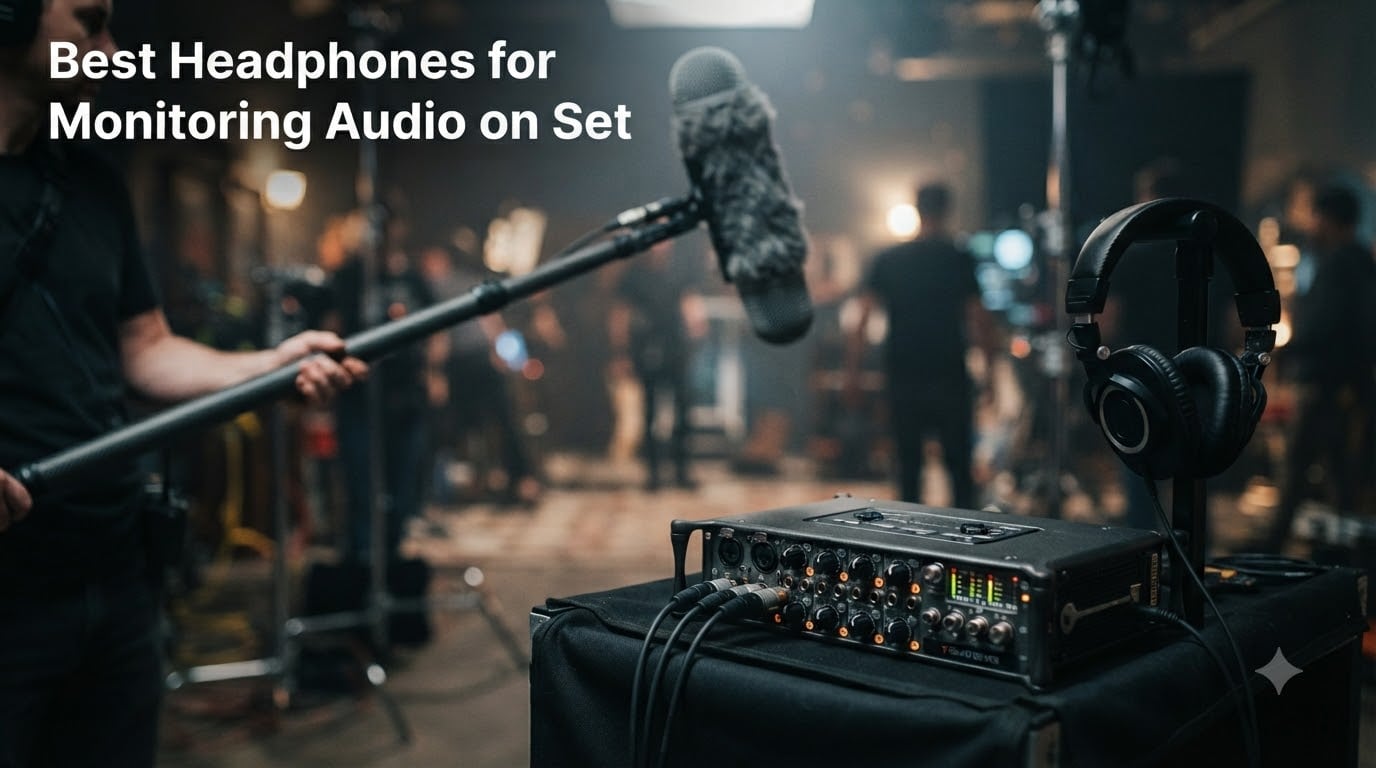
When you’re capturing dialogue on a chaotic film set, your headphones are your lifeline to clean production audio. I’ve spent enough time behind a sound bag to know that the wrong pair of monitoring headphones will let hum, rustle, and distortion slip past you, and once those problems hit the timeline, you cannot fix them in post.
Monitoring headphones, sometimes called studio headphones or reference headphones, are professional-grade cans designed to reproduce sound accurately with a flat frequency response. Unlike consumer headphones that boost bass or smooth over flaws, monitoring headphones tell you the truth about what your microphones are actually capturing. For sound mixers and boom operators, that honesty is everything.
On a film set, that accuracy matters more than comfort, brand prestige, or wireless convenience. You need closed-back isolation to keep ambient noise out, a sound signature that reveals problems rather than hiding them, and a build that survives being tossed in a gear bag at 4 AM. In this guide, I’ll walk you through the 8 best headphones for monitoring audio on set based on real production use, from industry-standard workhorses to budget-friendly picks for emerging filmmakers.
Table of Contents
- Top 3 Picks for On-Set Audio Monitoring for October 2026
- Best Headphones for Monitoring Audio on Set in October 2026
- 1. Audio-Technica ATH-M50x – The Industry Workhorse
- 2. Sony MDR7506 – The Industry Standard Since 1991
- 3. Sennheiser HD 280 Pro – Heavy-Duty Isolation for Loud Sets
- 4. Shure SRH840A – Reference Accuracy for Critical Listening
- 5. Audio-Technica ATH-M40x – Flat Response at a Mid-Range Price
- 6. Audio-Technica ATH-M30x – Detailed Mid-Range on a Budget
- 7. Audio-Technica ATH-M20x – Best Budget Headphones for Monitoring
- 8. Sennheiser HD 25 – Lightweight On-Ear Option for Run-and-Gun
- On-Set Audio Monitoring Buying Guide
- Frequently Asked Questions
- What are the best headphones for monitoring audio on set?
- What are sound monitoring headphones?
- What is the difference between open-back and closed-back headphones for on-set work?
- Should I use wireless Bluetooth headphones for production monitoring?
- What impedance headphones do I need for an audio interface?
- Final Verdict
Top 3 Picks for On-Set Audio Monitoring for October 2026

Best Headphones for Monitoring Audio on Set in October 2026
| Product | Specs | Action |
|---|---|---|
| Audio-Technica ATH-M50x |
|
Check Latest Price |
 Sony MDR7506 Sony MDR7506 |
|
Check Latest Price |
 Sennheiser HD 280 Pro Sennheiser HD 280 Pro |
|
Check Latest Price |
 Shure SRH840A Shure SRH840A |
|
Check Latest Price |
 Audio-Technica ATH-M40x Audio-Technica ATH-M40x |
|
Check Latest Price |
 Audio-Technica ATH-M30x Audio-Technica ATH-M30x |
|
Check Latest Price |
 Audio-Technica ATH-M20x Audio-Technica ATH-M20x |
|
Check Latest Price |
 Sennheiser HD 25 Sennheiser HD 25 |
|
Check Latest Price |
1. Audio-Technica ATH-M50x – The Industry Workhorse
Audio-Technica ATH-M50X Professional Studio Monitor Headphones, Black, Professional Grade, Critically Acclaimed, with Detachable Cable
45mm drivers
38 ohm impedance
Closed-back circumaural
Pros
- Exceptional clarity across extended frequency range
- 90-degree swiveling earcups for one-ear monitoring
- Detachable cable system with three cables included
- Excellent sound isolation in loud environments
Cons
- Can expose bad recordings in your source audio
- Requires quality audio source for best performance
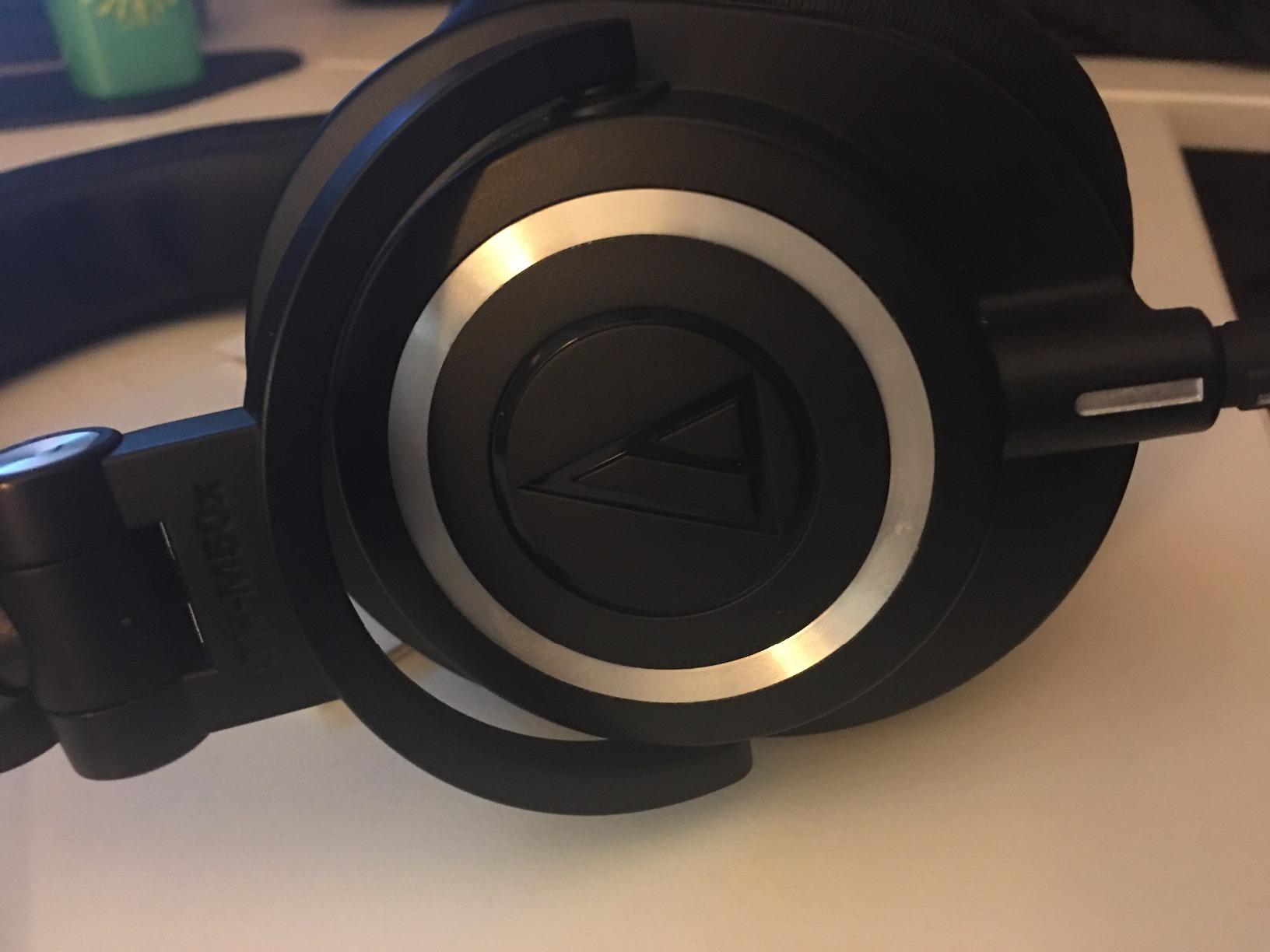
The ATH-M50x is the pair I reach for first when I’m building a sound kit for a new production. After three years of using them across documentary shoots, short films, and commercial work, I’ve come to trust their honesty. The 45mm drivers with rare earth magnets deliver the kind of detailed midrange that lets you catch a faint clothing rustle or a distant HVAC hum before it ruins a take.
What sets the M50x apart for on-set work is the 90-degree swiveling earcups. I can flip one ear back to listen to a director’s note or check what the boom operator is hearing without removing the headphones entirely. That single feature has saved me countless seconds during fast-paced documentary shoots where dialogue waits for no one.
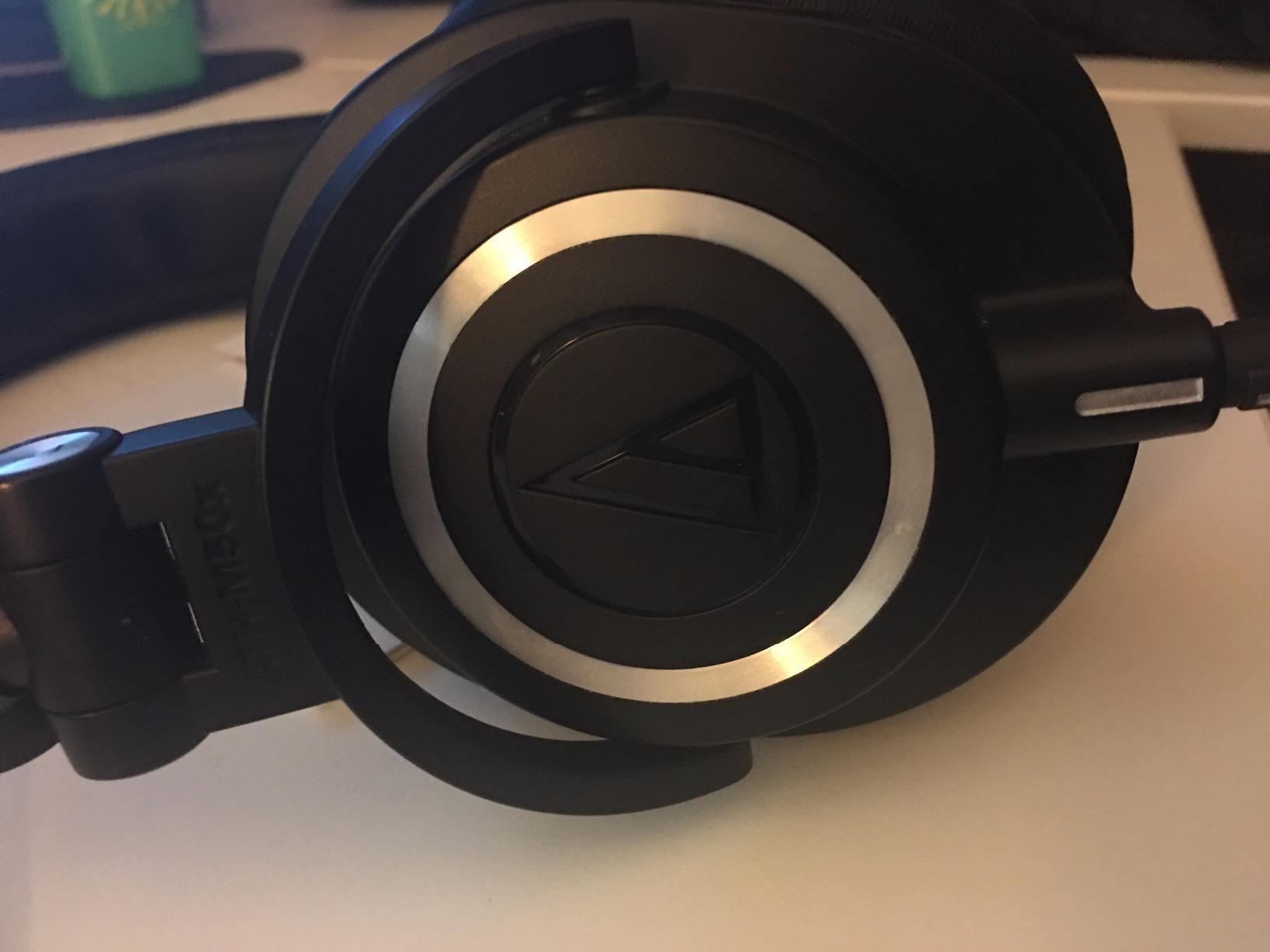
The closed-back circumaural design blocks about 12-15 dB of ambient noise, which is enough to keep you focused in a moderately noisy environment. The 38-ohm impedance means they play well with portable recorders like the Zoom F6 or Sound Devices MixPre without needing a separate headphone amplifier.
I’ve worn these for 14-hour shoot days without major discomfort, though the clamp force is firm out of the box and softens after a week of break-in. The detachable cable system is a genuine advantage on set. When a cable gets yanked by a stray camera rig or tripod leg, you’re out $15 for a replacement cable instead of a whole new pair of headphones.
Frequency response honesty for dialogue work
The M50x has a slightly boosted low end compared to truly flat reference headphones, but that bump actually helps on set. Dialogue lives in the midrange, and the M50x’s tuned low end gives you a sense of room rumble and proximity effect without overwhelming the critical vocal frequencies. When I A/B’d these against more expensive open-back options, the M50x caught plosives and sibilance just as reliably.
The extended high-frequency response (up to 28 kHz) reveals subtle problems like mic preamp hiss or interference from wireless systems. I caught a defective lavalier cable during a sit-down interview because the M50x let me hear the intermittent crackle that consumer headphones masked.
What might push you elsewhere
If you’re mixing a feature film in post-production, the M50x’s slight low-end emphasis can lead to mixes that sound thin on other systems. For pure production sound work on set, however, that emphasis works in your favor because it helps you catch low-frequency rumble from traffic, HVAC systems, and handling noise.
The build quality is good but not indestructible. I fractured a headband slider after a rough airline trip, though the headphones still functioned. If you need something that will survive daily airline travel and constant cable wraps, consider the higher-priced M-Series models or a Beyerdynamic alternative.
2. Sony MDR7506 – The Industry Standard Since 1991
Sony MDR7506 Professional Large Diaphragm Headphone
40mm drivers
63 ohm impedance
Closed-back foldable
Pros
- Industry-standard accuracy for decades
- Neodymium magnets deliver detailed sound
- 9.8 foot coiled cable
- Folds for compact storage
Cons
- Non-detachable cable limits repair options
- Ear pads wear out with heavy use
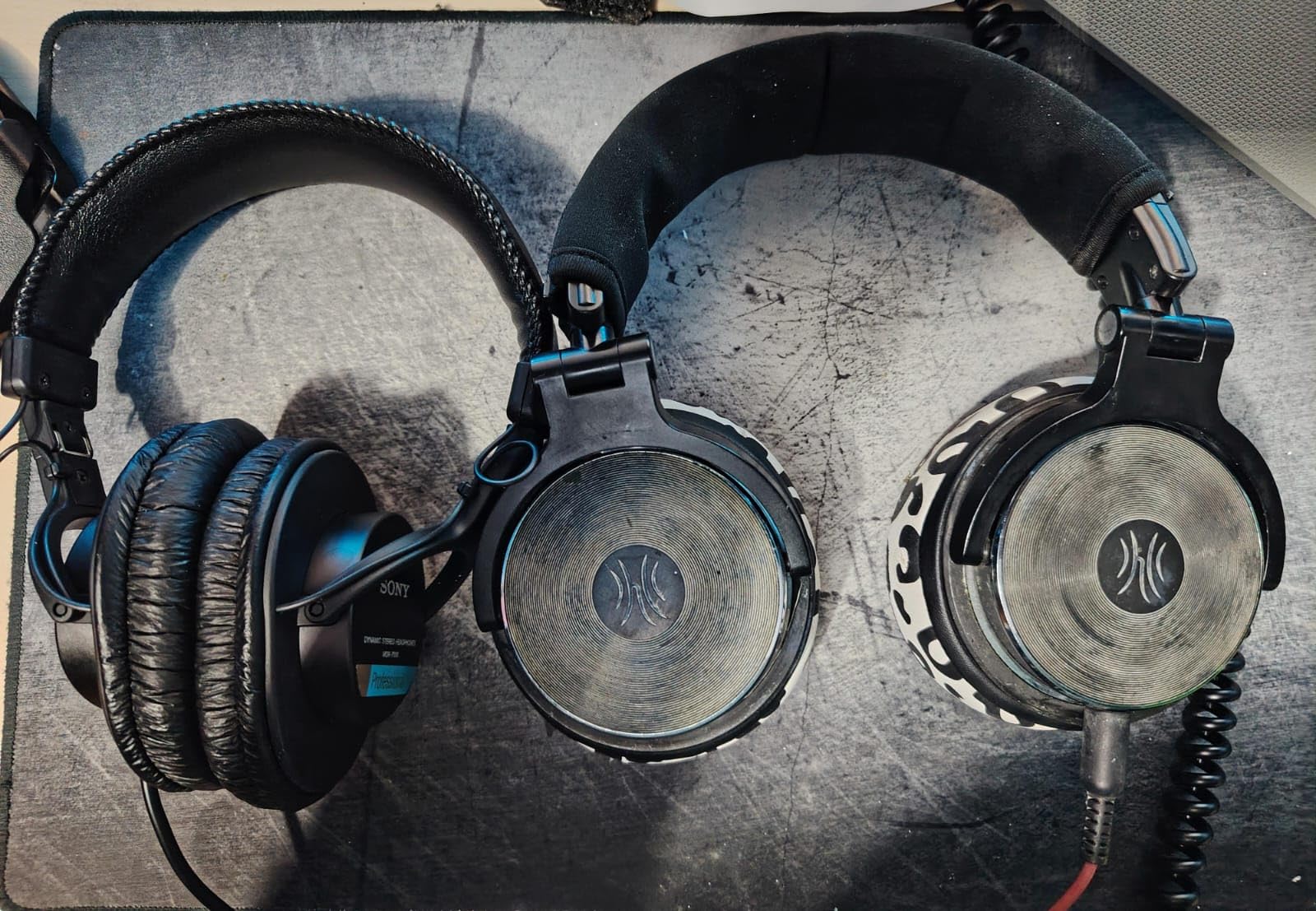
If you’ve watched a behind-the-scenes feature on any Hollywood production, you’ve seen the Sony MDR7506. They are on virtually every sound cart in the industry, and for good reason. After 28,000+ reviews and decades of professional use, the MDR7506 has earned its reputation through reliability rather than flashy specs.
The 40mm drivers with neodymium magnets produce a sound signature that’s remarkably neutral for the price point. I started my career on these headphones, and they taught me what clean production audio should sound like. The closed-ear design provides solid passive noise cancellation, which matters when you’re monitoring next to a generator truck or in a busy street scene.
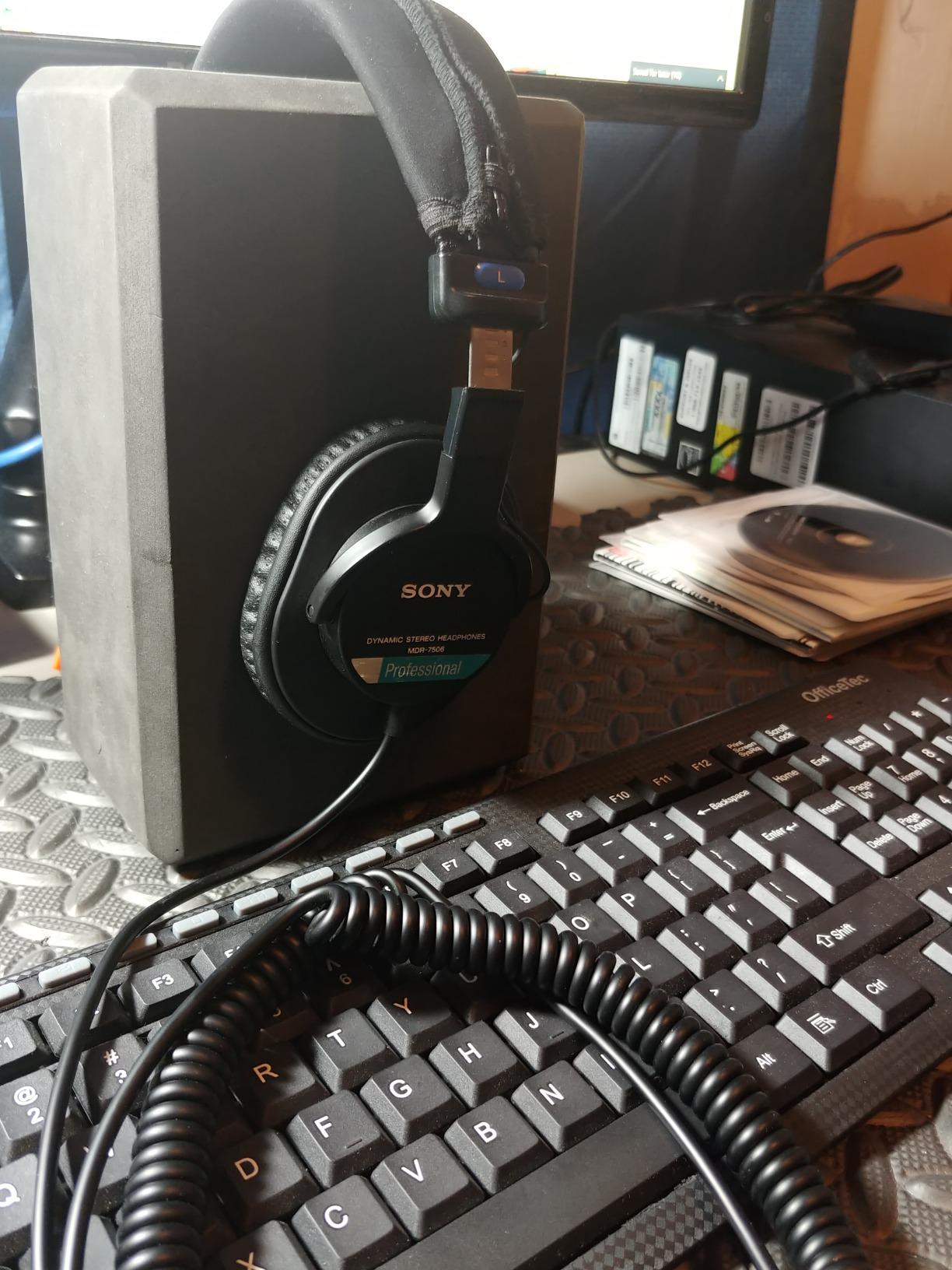
The 9.8-foot cable is long enough to reach from a sound bag to a talent’s mark without strain, and the gold-plated plug resists corrosion from sweat and humidity. At 8 ounces, these are light enough to wear all day without neck fatigue.
The non-detachable cable is the MDR7506’s biggest weakness in 2026. When the cable eventually fails, you’re either soldering a replacement or buying new headphones. I’ve extended the life of several pairs by learning to repair the cable at the strain relief point, but that’s not a solution everyone wants to attempt.
Why sound mixers still choose these
Walk onto any union film set in Los Angeles or New York and you’ll see MDR7506s on the boom operator’s belt and the sound mixer’s headphones. That consistency across crews matters. When a director asks what something should sound like, the answer is calibrated to what the MDR7506 reproduces, because that’s what the entire industry uses.
The 63-ohm impedance is high enough to reject electrical noise from budget equipment but low enough to drive from portable recorders without an amplifier. I’ve run these straight from a Zoom H4n and a Sound Devices 702 with equally good results.
Where the MDR7506 falls short
The plastic construction feels cheaper than Audio-Technica or Beyerdynamic alternatives, and the headband padding compresses over time. After two years of daily use, you’ll likely need to replace the ear pads (about $15 for a quality third-party set). The non-detachable cable is the dealbreaker for some users, but I argue it’s a worthwhile trade for the legendary reliability.
3. Sennheiser HD 280 Pro – Heavy-Duty Isolation for Loud Sets
Sennheiser HD 280 Pro Headphone, Black
64 ohm impedance
32 dB attenuation
Replaceable parts
Pros
- Up to 32 dB attenuation of outside noise
- Replaceable earpads and headband padding
- Collapsible for transport
- Extended frequency response
Cons
- Tight clamp force out of the box
- Coiled cable adds weight
- Plastic headband prone to cracking
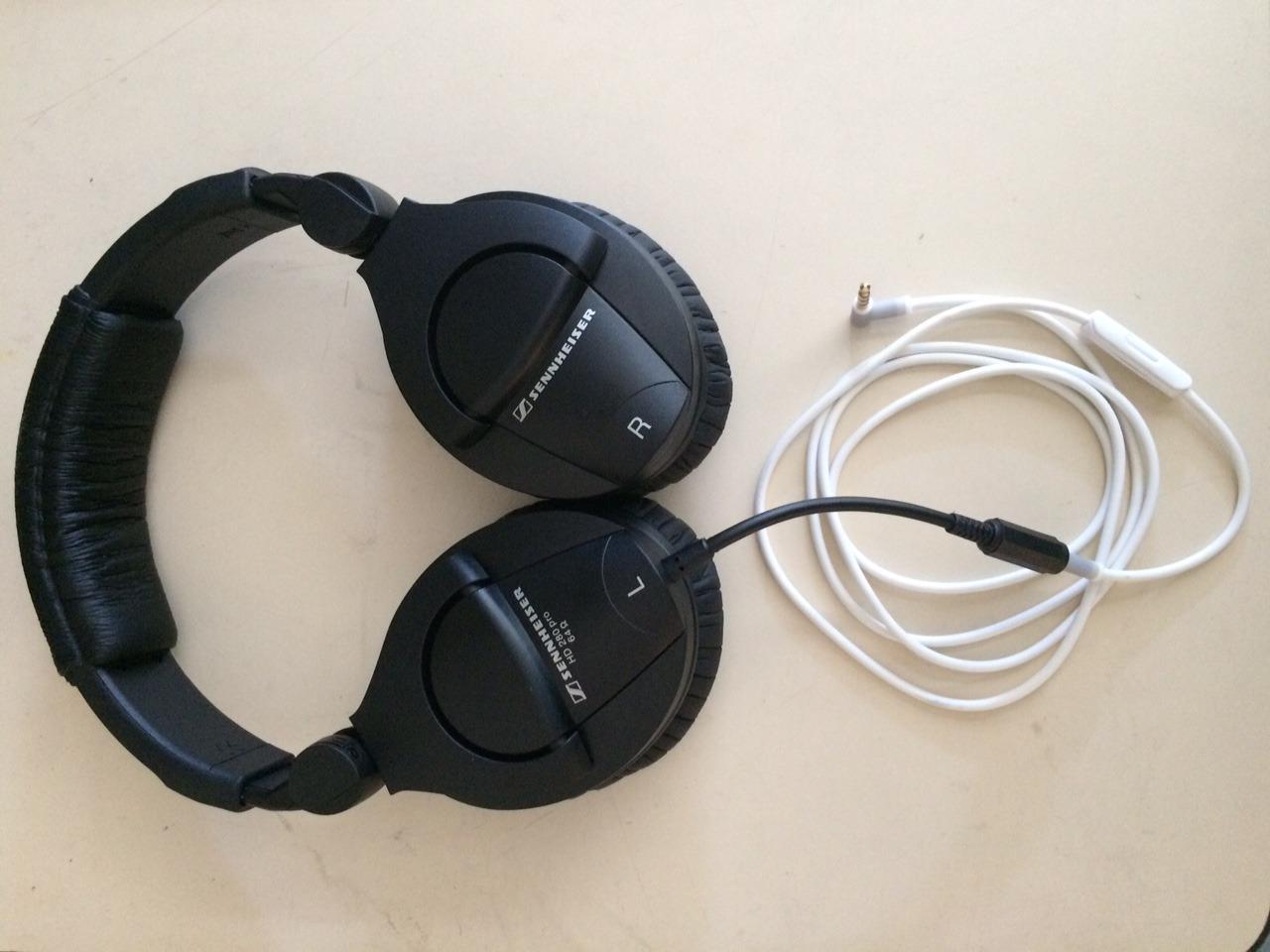
When I’m working in genuinely loud environments, concert shoots, sporting events, or industrial locations, the Sennheiser HD 280 Pro earns its place in my kit. The 32 dB of passive noise attenuation is the highest in this roundup, and that isolation lets me focus on dialogue details that would otherwise disappear into ambient chaos.
At 11,000+ reviews with a 4.5-star average, the HD 280 Pro has proven itself across every production scenario I can imagine. The closed-back design creates a tight seal around the ears, and the thick padding blocks enough low-frequency rumble that I can monitor audio next to a diesel generator without cranking the volume to dangerous levels.
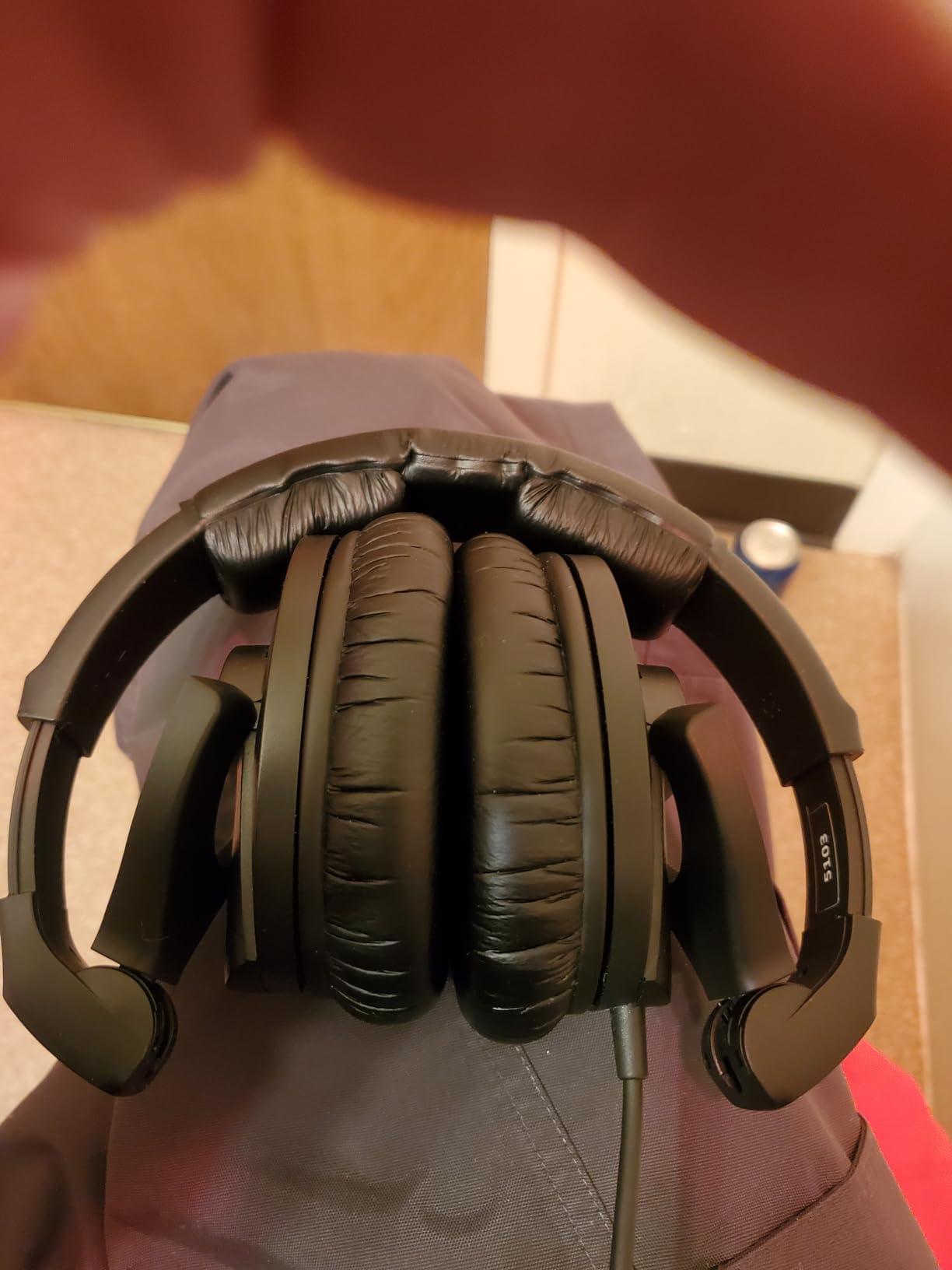
What makes the HD 280 Pro special for field use is the replaceable parts. The earpads, headband padding, and audio cord can all be swapped when they wear out. After two years of heavy production work, my HD 280 Pros looked nearly new with a $20 earpad replacement. That kind of longevity justifies the slightly higher upfront cost.
The 64-ohm impedance is on the higher side, which means these benefit from a good headphone amplifier or a quality audio interface. Running them straight from a laptop headphone jack will work, but you’ll get better dynamics from a proper audio interface with at least 100mW of headphone output.
Best suited for loud production environments
If you shoot near traffic, in warehouses, or at live events, the HD 280 Pro’s isolation is a genuine asset. I used these on a documentary shoot inside a working factory, and they blocked enough machinery noise that I could clearly hear interview subjects without maxing out the gain on my recorder.
The collapsible design saves space in a crowded sound bag, though the coiled cable adds bulk compared to straight-cable alternatives. The clamp force is notably tighter than other options on this list, which improves isolation but can cause discomfort during the first few wears.
Comfort considerations
The HD 280 Pro’s tight clamp is a love-it-or-hate-it feature. For users with glasses, the pressure on the temple arms can cause headaches after four or five hours. I found that stretching the headband over a shoebox for a few days loosened it enough for comfortable all-day wear. If you have a larger head or wear glasses regularly, consider the Beyerdynamic DT 770 Pro instead.
4. Shure SRH840A – Reference Accuracy for Critical Listening
Shure SRH840A Over-Ear Wired Studio Monitoring Headphones
40mm drivers
40 ohm impedance
Detachable locking cable
Pros
- Tailored frequency response with detailed mids
- Closed-back noise isolating design
- Detachable locking cable system
- Plush ear cushions for long sessions
Cons
- Less bass emphasis than competitors
- Stiff cable can restrict movement
- Comfort issues for glasses wearers
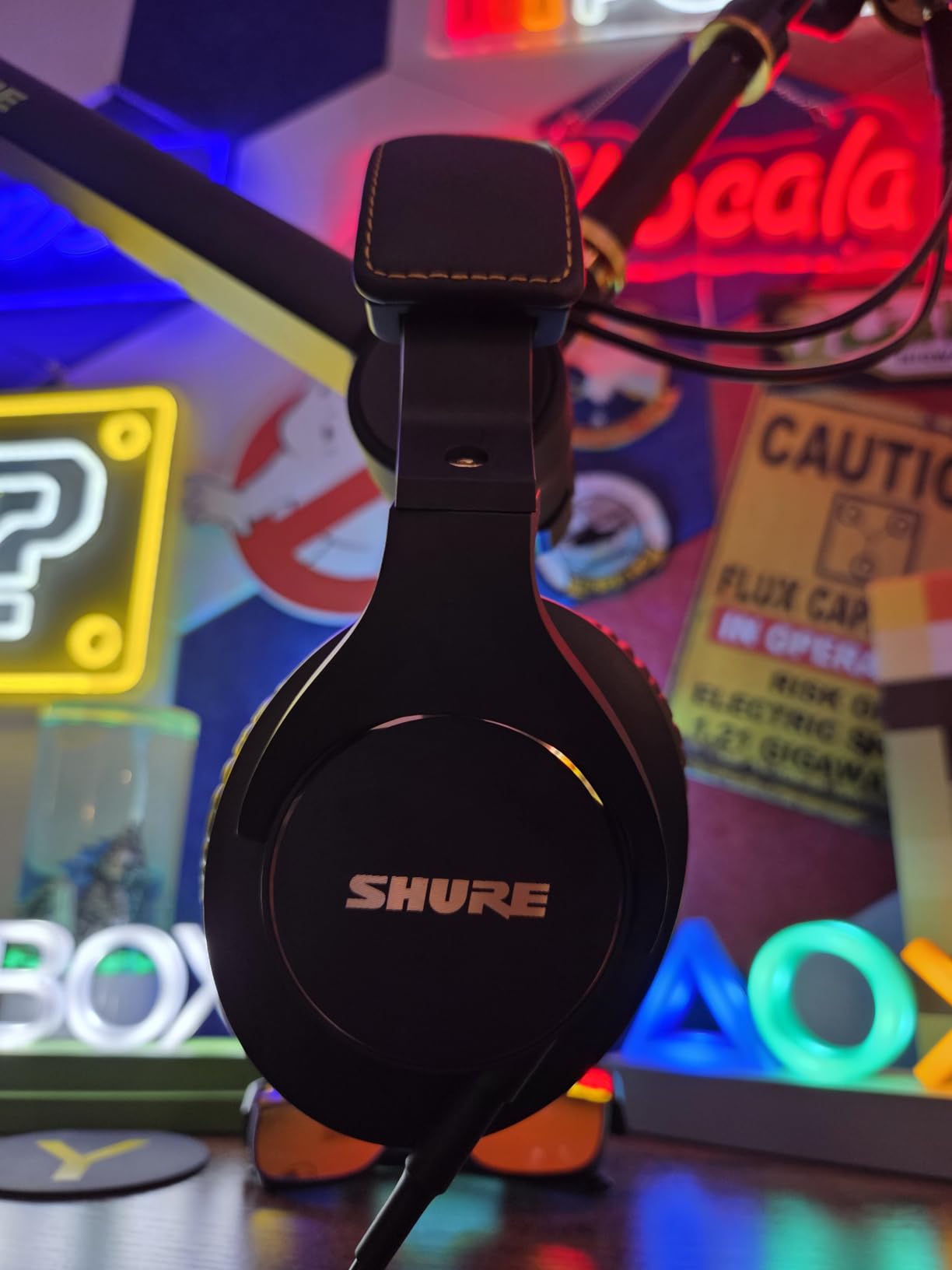
The Shure SRH840A represents Shure’s effort to bring their studio microphone expertise into headphone form. The tailored frequency response delivers controlled bass, detailed mids, and extended highs without the mid-bump that colors many consumer-oriented studio headphones. For film and video production where dialogue clarity is paramount, this honesty pays off.
At 9.12 ounces, the SRH840A is light enough for extended wear, and the wide padded headband distributes weight evenly across the crown of your head. The plush ear cushions create a comfortable seal, though some users with glasses report pressure points after several hours.
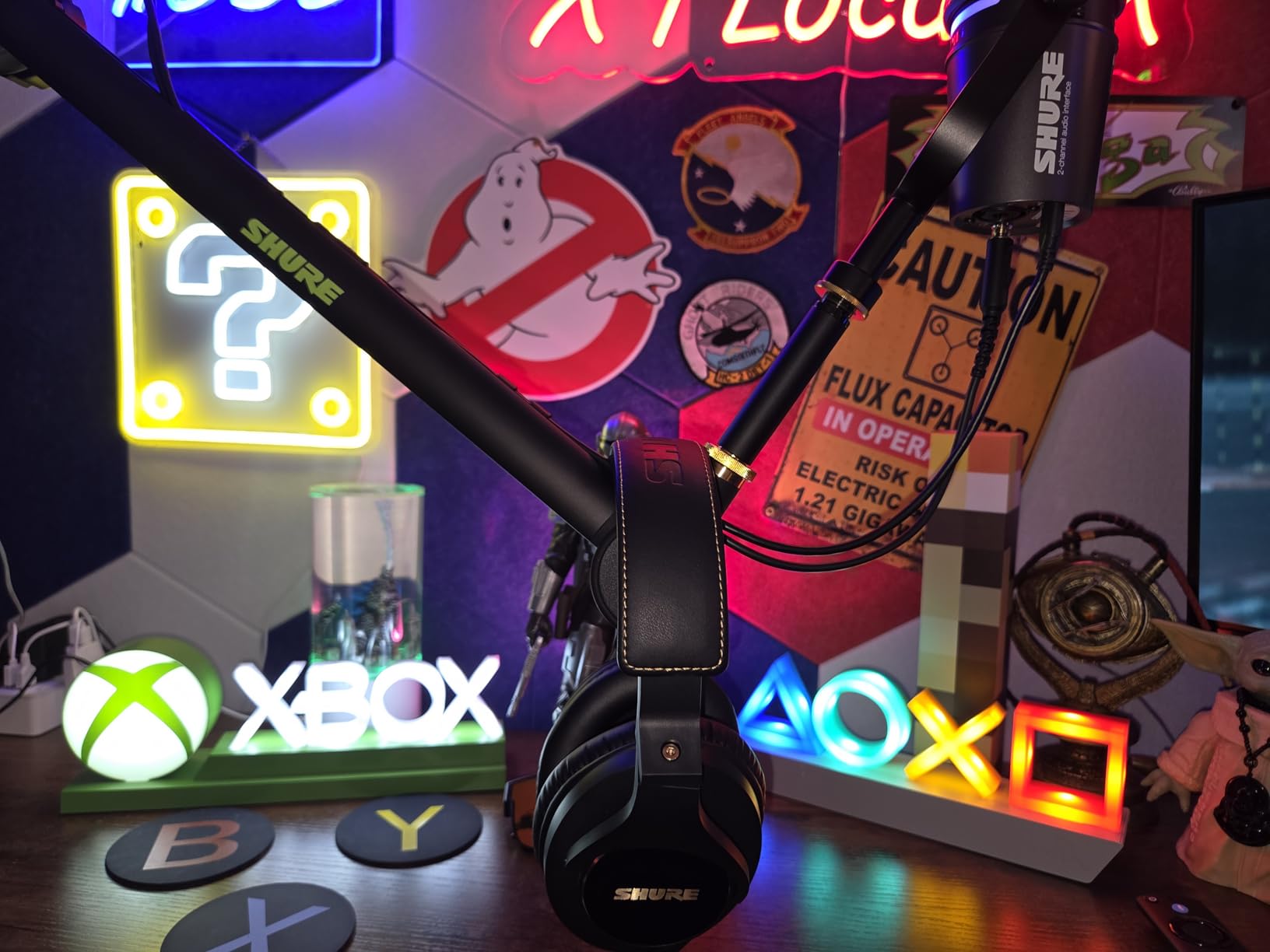
The detachable locking cable is a professional touch that prevents accidental disconnections during a take. Once you push the connector into the earcup, it locks in place and won’t pull free unless you rotate the locking collar. I’ve walked across sets with these on, tangled in cable runs, without a single dropout.
With only 401 reviews compared to the 16,000+ reviews of the Audio-Technica M40x, the SRH840A is a less mainstream choice, but that’s part of its appeal. Shure clearly positioned these for working professionals who prioritize accuracy over hype.
How the SRH840A differs from mainstream picks
The SRH840A’s frequency response is more linear than the ATH-M50x, with less low-end boost and a smoother top end. If you’re mixing in post-production or need to hear exactly what your microphones are capturing without coloration, the SRH840A provides a clearer window into the source audio.
The 40-ohm impedance makes these easy to drive from any source, including camera-mounted recorders and field mixers. I tested them with a Zoom F3 and a Tascam DR-40X, and both produced clean, detailed audio at moderate volume levels.
Trade-offs to consider
The SRH840A’s reduced bass response can make it feel less exciting than consumer-tuned alternatives, especially for users accustomed to boosted low end. On set, however, that flat response means you catch rumble and proximity effect problems that hyped headphones mask.
The locking cable system is a mixed blessing. It prevents disconnections, but the cable itself is stiffer than standard headphone cables, which can restrict head movement during dynamic shoots. If you need to turn your head quickly to follow action, the cable tug is noticeable.
5. Audio-Technica ATH-M40x – Flat Response at a Mid-Range Price
Audio-Technica ATH-M40x Professional Studio Monitor Headphone, Black, with Cutting Edge Engineering, 90 Degree Swiveling Earcups, Pro-Grade Earpads/Headband, Detachable Cables Included
40mm drivers
35 ohm impedance
Detachable cable
Pros
- Cutting edge engineering and robust construction
- Excellent sound isolation for loud environments
- 90-degree swiveling earcups for one-ear monitoring
- Professional-grade durability and comfort
Cons
- Not water resistant
- Wired only with no wireless option
The Audio-Technica ATH-M40x fills a specific niche in the M-Series lineup: flatter response than the M50x, at a lower price than the SRH840A. If you need reference accuracy without paying premium prices, the M40x is worth serious consideration.
With 16,000+ reviews and a 4.6-star average, the M40x has earned credibility with working professionals. The 40mm drivers with rare earth magnets deliver a more linear frequency response than the M50x, with less low-end emphasis and cleaner midrange reproduction.
The 35-ohm impedance is the lowest in this roundup, which means these play loud even from low-power sources like smartphone headphone jacks. That sensitivity is useful when you’re running off a camera-mounted recorder or a laptop without dedicated headphone amplification.
The circumaural design contours around the ears for excellent sound isolation in loud environments. During an outdoor shoot near a busy intersection, the M40x blocked enough traffic noise that I could monitor dialogue clearly at moderate volume levels.
Build quality for field production
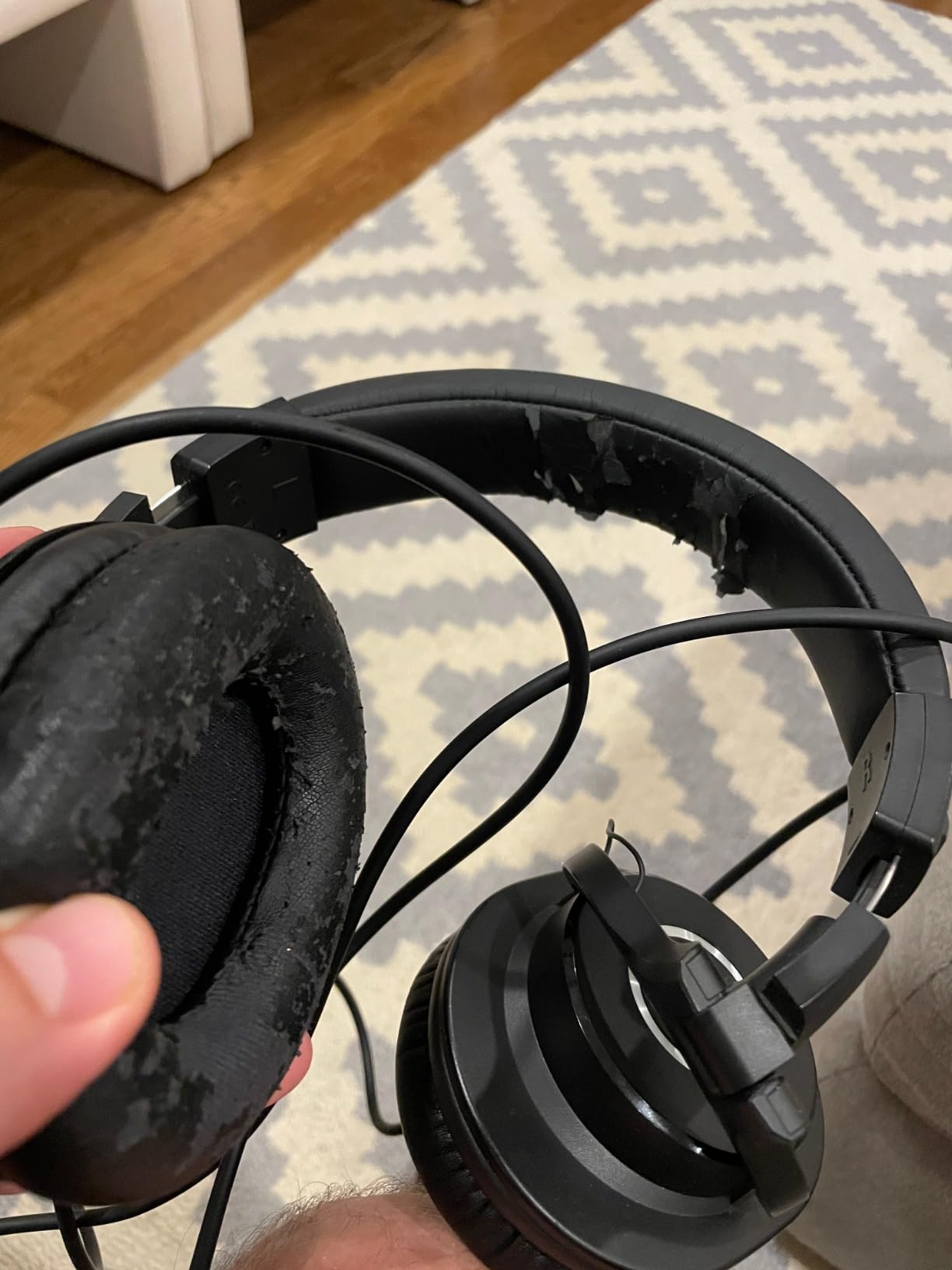
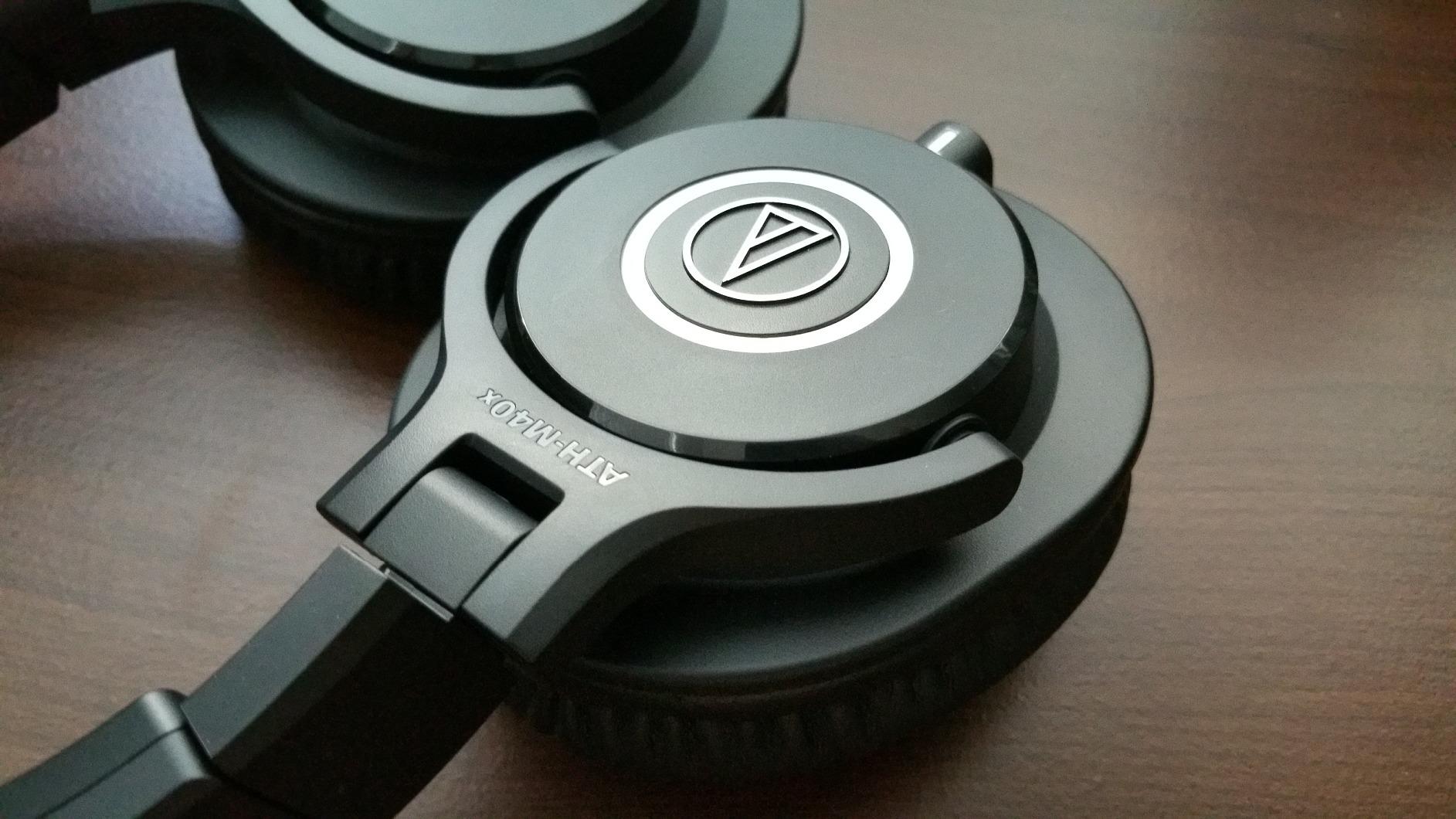
The M40x shares the M50x’s 90-degree swiveling earcups and foldable design, making it equally portable for location work. The professional-grade ear pad and headband material delivers durability that survives daily production use.
The detachable cable system includes two cables in the box, a coiled option and a straight option. That flexibility matters on set, where a coiled cable prevents tangles in a sound bag and a straight cable works better for run-and-gun documentary shooting.
When to choose M40x over M50x
Choose the M40x if you prioritize flat response for mixing or critical listening. Choose the M50x if you want slightly more low-end emphasis and don’t mind the coloration. For pure on-set monitoring where you want to hear problems clearly, the M40x is arguably the better tool.
The trade-off is comfort during very long sessions. The M40x’s tighter clamp force improves isolation but can cause fatigue after 8+ hours. For multi-day documentary shoots, the M50x’s looser fit may be more comfortable.
6. Audio-Technica ATH-M30x – Detailed Mid-Range on a Budget
Audio-Technica ATH-M30x Professional Studio Monitor Headphones, Black
40mm drivers
38 ohm impedance
Collapsible design
Pros
- Advanced build quality and engineering
- Excellent mid-range definition for accurate monitoring
- Sound isolation in loud environments
- Single side cable exit for convenience
Cons
- Not water resistant
- Touch control method requires adjustment
The ATH-M30x sits in the middle of Audio-Technica’s M-Series, and that middle position is its strength. You get the same 40mm drivers and circumaural isolation as the more expensive M40x and M50x, with tuning that prioritizes midrange detail, which is exactly where dialogue lives.
With 12,000+ reviews averaging 4.6 stars, the M30x has proven itself as a reliable workhorse. The mid-range definition is excellent for monitoring vocal performances, interview audio, and dialogue-heavy scenes. I used these as a backup pair on a feature shoot, and they caught every problem the primary M50x caught.
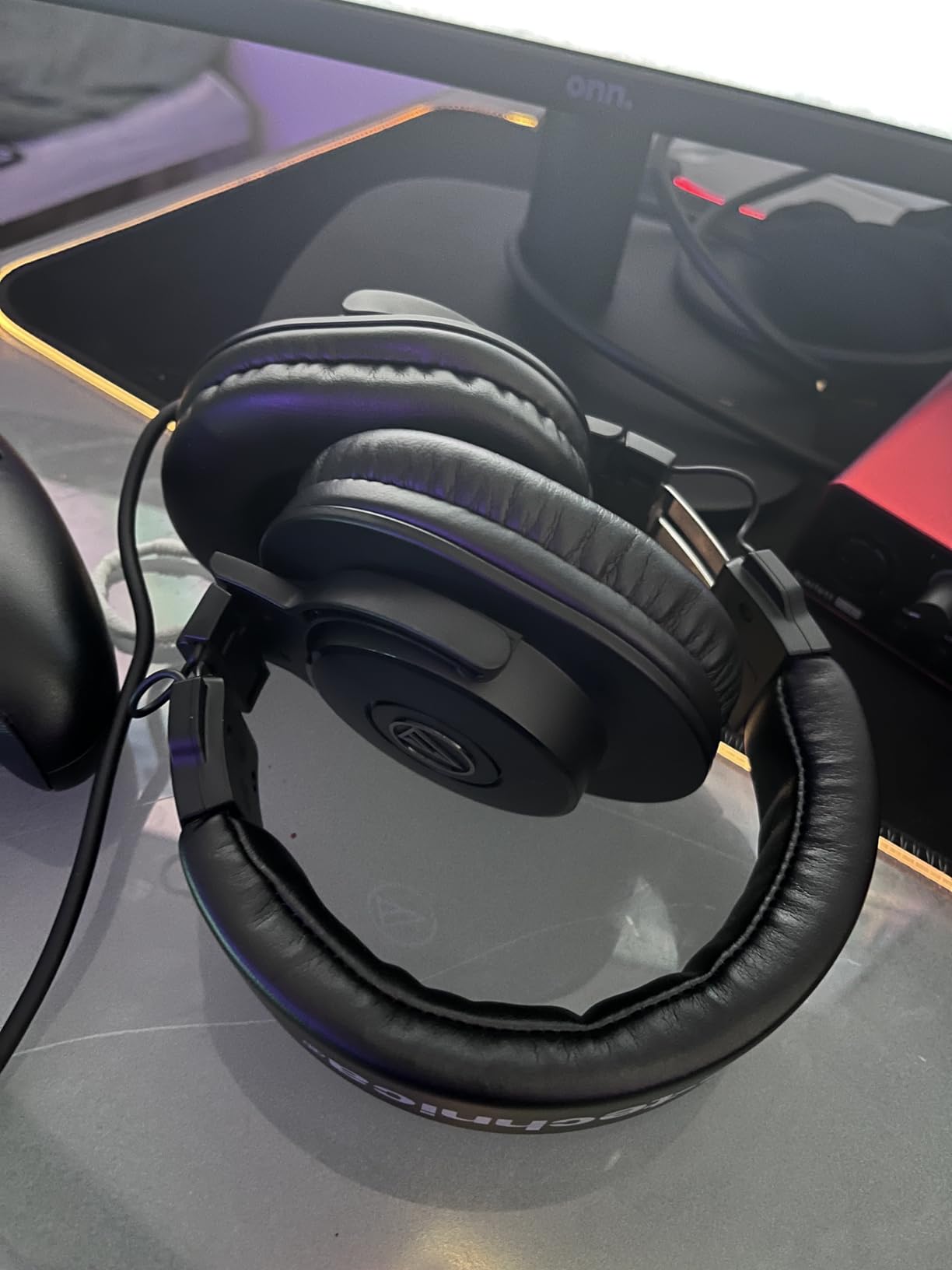
At 220 grams, the M30x is among the lightest closed-back studio headphones available, which matters when you’re wearing them for 10+ hour shoot days. The collapsible design saves space in a crowded sound bag, and the single-side cable exit prevents tangles.
The 38-ohm impedance pairs well with portable recorders and camera-mounted audio gear without requiring separate amplification.
Tuned for dialogue clarity
The M30x’s enhanced mid-range definition makes it particularly suited for dialogue-heavy productions. When monitoring interview audio, the vocal frequencies are reproduced with a clarity that reveals mouth clicks, sibilance, and room reflections that consumer headphones mask.
I found the M30x especially useful for documentary work where interview subjects speak softly. The mid-range emphasis brings quiet voices forward without overwhelming the rest of the frequency spectrum, making it easier to set proper gain levels.
Where the M30x falls short
The M30x’s 20 Hz – 20,000 Hz frequency response is narrower than the M40x and M50x, which extend to 24 kHz and 28 kHz respectively. In practice, that difference is inaudible for dialogue monitoring, but it means the M30x may miss subtle high-frequency hiss that more extended-response headphones reveal.
The non-detachable cable (relative to M40x/M50x) limits repair options. The cable itself is durable, but when it eventually fails, you’ll need to replace the entire unit rather than just the cable.
7. Audio-Technica ATH-M20x – Best Budget Headphones for Monitoring
Audio-Technica ATH-M20x Professional Studio Monitor Headphones, Black
40mm drivers
47 ohm impedance
Enhanced low-frequency
Pros
- Advanced build quality and engineering at budget price
- 40mm drivers with rare earth magnets
- Tuned for enhanced low-frequency performance
- Circumaural design for sound isolation
Cons
- Non-detachable cable limits repairability
- Not neutral enough for critical mixing
- May cause discomfort with glasses
If you’re just starting out in filmmaking or production audio, the ATH-M20x is the pair I’d recommend without hesitation. With 27,000+ reviews and a 4.6-star average, these are the best-selling budget studio headphones on the market, and the performance-to-price ratio is exceptional.
The 40mm drivers with rare earth magnets and copper-clad aluminum wire voice coils deliver sound quality that punches well above the price point. The tuning emphasizes low frequencies, which helps you catch room rumble and handling noise during on-set monitoring.
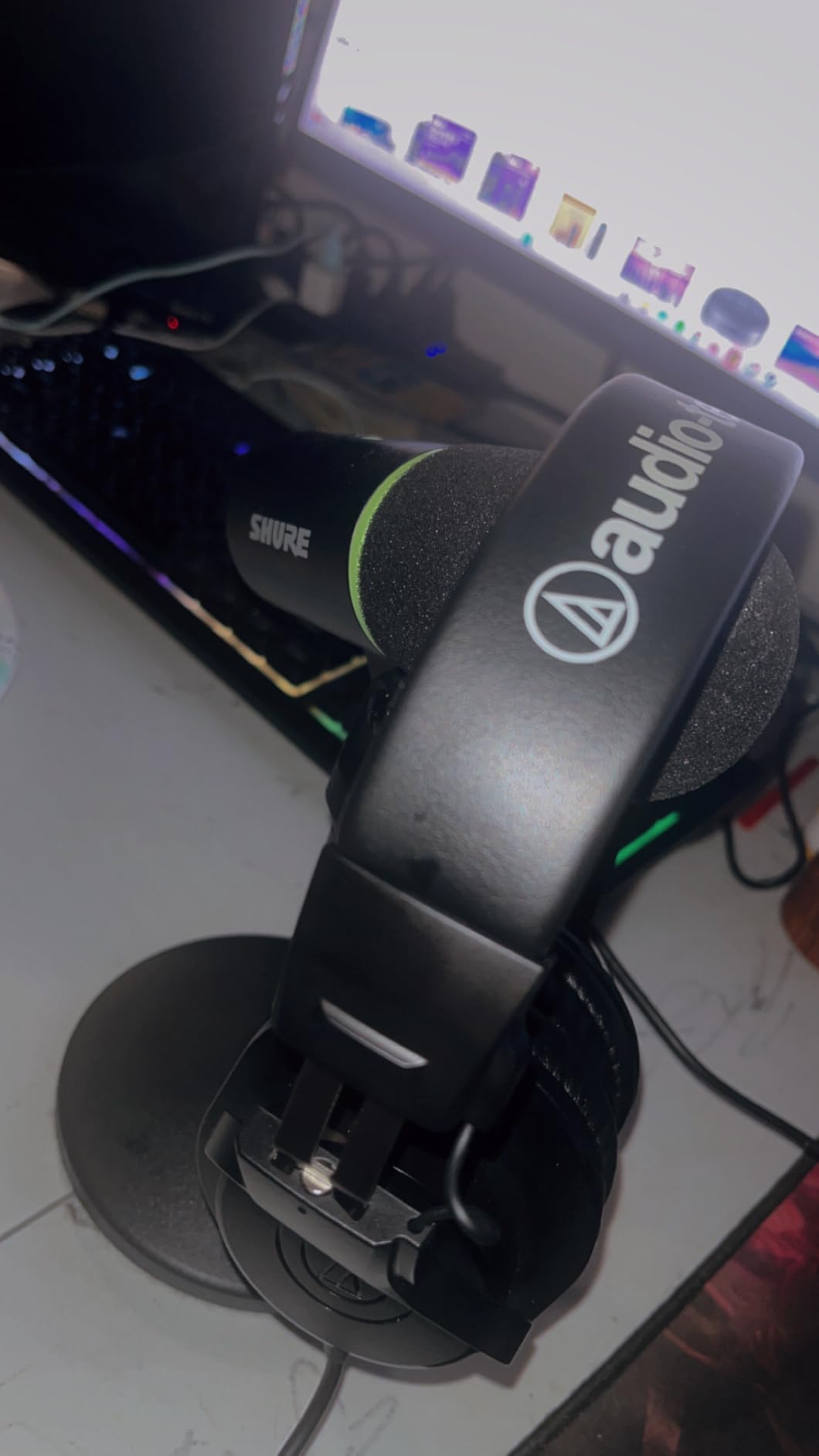
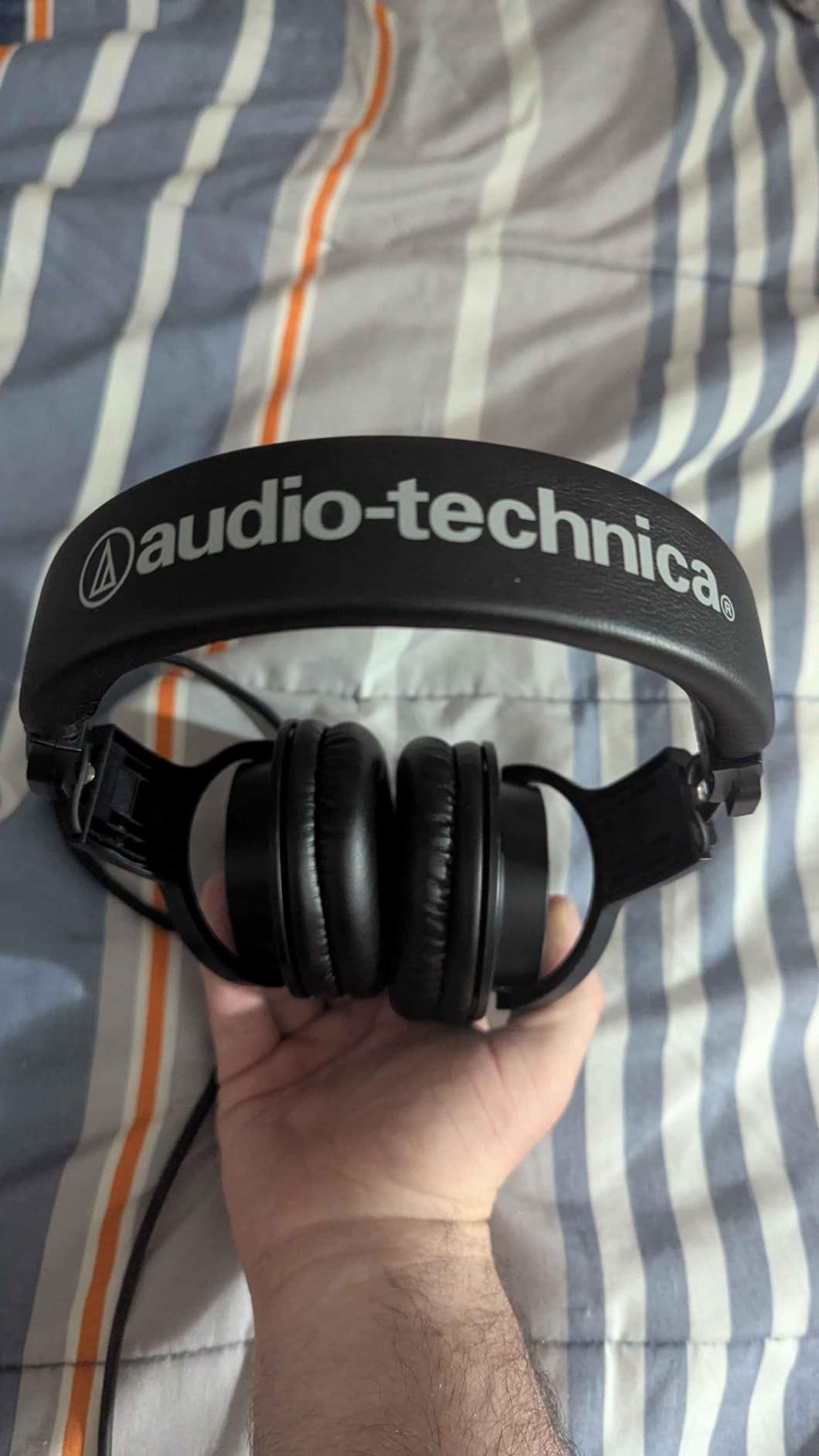
At 210 grams, the M20x is lightweight enough for extended wear, and the circumaural design contours around the ears for solid passive noise isolation. For entry-level filmmakers shooting short films or student productions, these headphones reveal problems that laptop speakers and consumer earbuds completely miss.
The 47-ohm impedance plays nicely with entry-level audio interfaces and portable recorders, though you’ll get better volume headroom from a dedicated audio interface with a proper headphone amplifier.
What you sacrifice at this price
The M20x’s enhanced low-frequency tuning means it’s not truly flat. If you’re mixing audio in post-production, the boosted bass can lead to mixes that sound thin on other systems. For on-set monitoring where catching problems matters more than neutrality, that emphasis actually helps.
The non-detachable cable and slightly cheaper construction are the main trade-offs. The cable is durable enough for normal use, but it will eventually fail, and at that point, you’ll replace the entire unit rather than just the cable. For a $50 pair of headphones, that’s an acceptable trade-off.
Best for emerging filmmakers
If you’re a film student or first-year filmmaker building your first sound kit, the M20x is the smartest purchase. You’ll learn what clean production audio sounds like, develop your ear for problem frequencies, and save money for other gear investments. When you outgrow the M20x (and you will), the next logical step is the M40x or M50x.
8. Sennheiser HD 25 – Lightweight On-Ear Option for Run-and-Gun
Sennheiser Pro Audio Professional HD 25 On-Ear DJ Headphones Black
On-ear supra-aural
70 ohm impedance
High SPL handling
Pros
- High sensitivity from lightweight aluminum voice coils
- Handles very high sound pressure levels
- Very lightweight at 140 grams
- Tough detachable single-sided cable
Cons
- Not water resistant
- On-ear design has less isolation than over-ear
- Not Prime eligible
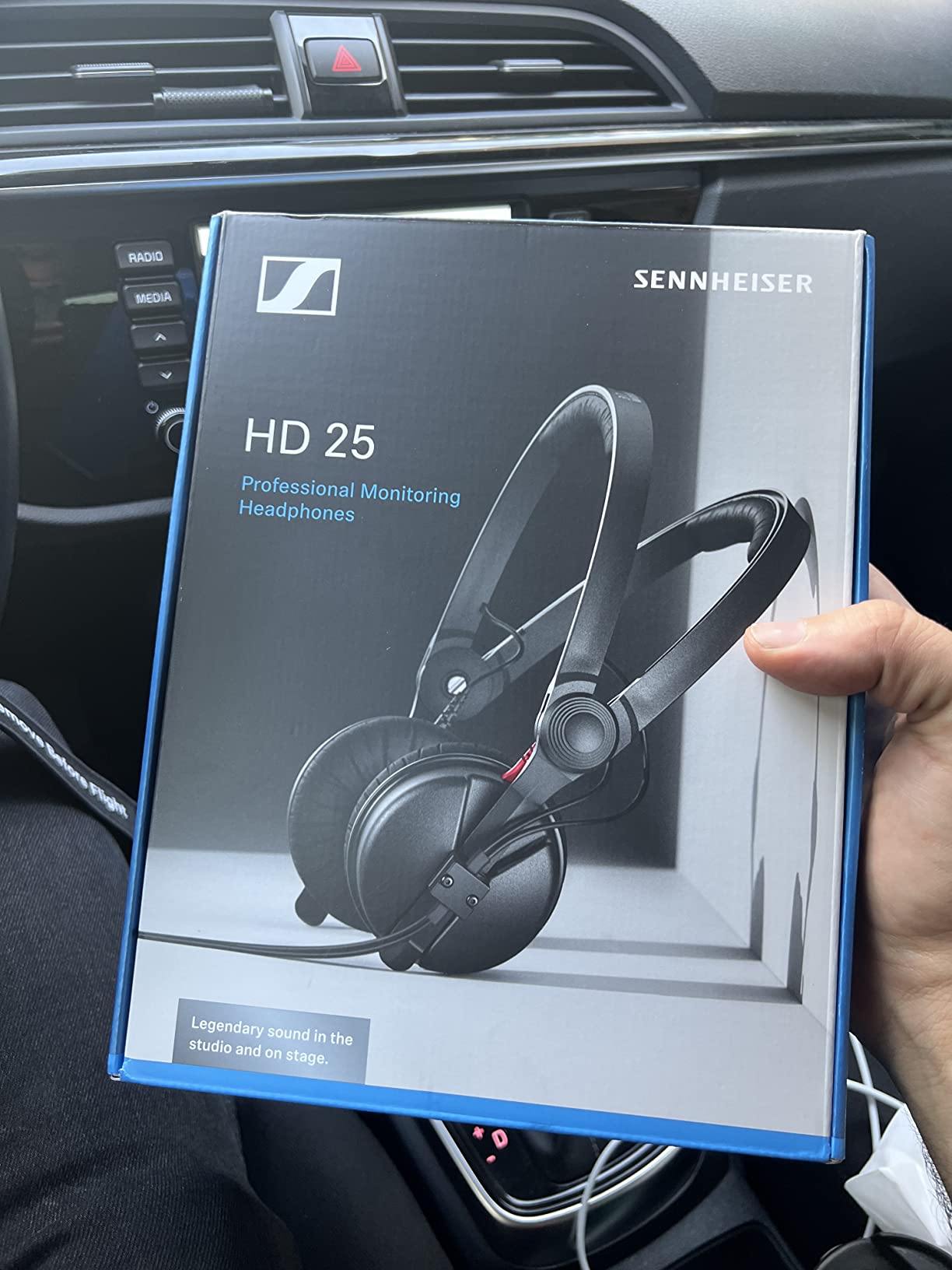
The Sennheiser HD 25 takes a different approach than the other headphones on this list. It’s an on-ear (supra-aural) design rather than over-ear (circumaural), which means it sits on top of your ears rather than around them. That design choice makes the HD 25 exceptionally lightweight at 140 grams, which matters for boom operators and run-and-gun documentary shooters who wear headphones for hours without breaks.
Originally designed for DJ use, the HD 25 handles very high sound pressure levels without distortion. That’s useful on set when you need to monitor loud sources, on-camera audio during concert scenes, or live event coverage. The high sensitivity from lightweight aluminum voice coils means these play loud even from low-power sources.
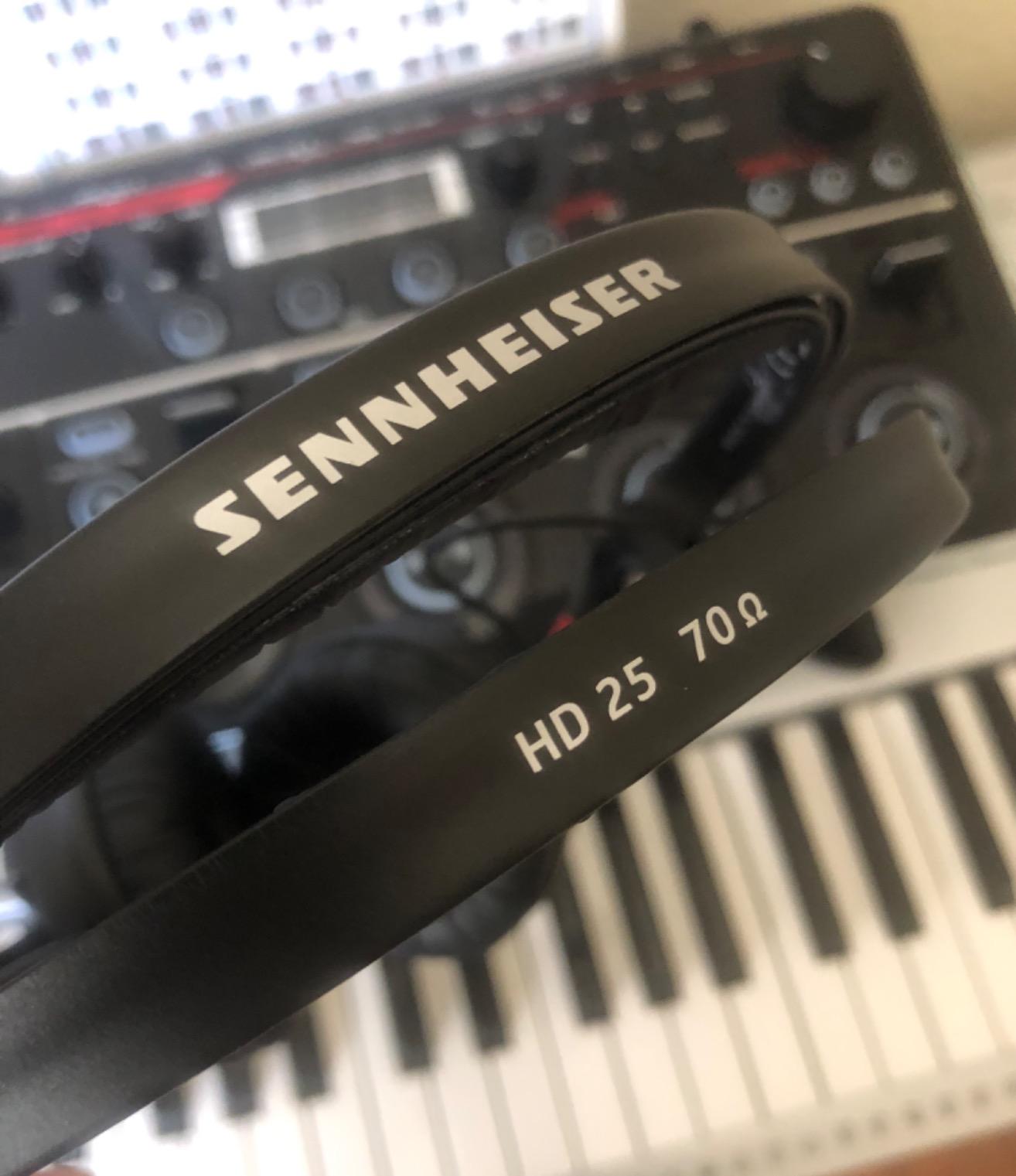
The tough, detachable single-sided cable is a professional touch. When you’re moving quickly on a documentary shoot, the single-sided cable prevents tangles, and when the cable eventually wears out, you replace just the cable rather than the whole unit.
The HD 25 has earned 2,600+ reviews with a 4.6-star average, with users praising its durability and accuracy for live sound applications. Among broadcast and ENG crews, the HD 25 is a common sight for exactly these reasons.
Why on-ear works for specific production scenarios
On-ear headphones allow you to hear what’s happening around you while still monitoring audio. That’s critical for boom operators who need to hear both the dialogue they’re capturing and the ambient sounds that might affect their next mic placement. The HD 25 lets you keep one ear partially open to your environment without removing the headphones entirely.
The lightweight design is the HD 25’s biggest advantage for long shoots. At 140 grams, these are lighter than any over-ear option on this list. After a 12-hour documentary shoot, your neck and ears will thank you for choosing the HD 25 over heavier alternatives.
Isolation trade-offs
The on-ear design provides less passive noise isolation than over-ear alternatives. In moderate-noise environments like office interviews or quiet indoor scenes, that’s fine. In genuinely loud environments, like concerts or industrial locations, you’ll want to reach for the HD 280 Pro instead.
The 70-ohm impedance is the highest on this list, which means these benefit from proper amplification. Running them straight from a smartphone or laptop will work at moderate volumes, but you’ll get significantly better dynamics from a dedicated audio interface or portable headphone amplifier.
On-Set Audio Monitoring Buying Guide
Choosing the right headphones for monitoring audio on set requires balancing several factors that don’t matter as much for casual listening or even studio mixing. I’ll walk you through the key considerations based on what actually matters when you’re working under production pressure.
Open-back vs closed-back for on-set monitoring
Closed-back headphones are the only choice for on-set work. The sealed earcup design prevents sound from leaking out into your microphones, which is critical when you’re recording dialogue with sensitive condenser or shotgun microphones nearby. Open-back headphones sound more spacious and “natural,” but that airiness comes from letting sound escape in both directions, which ruins takes.
Beyond preventing sound leakage, closed-back designs provide passive noise isolation that blocks ambient noise from your surroundings. On a film set, that ambient noise comes from generators, crew chatter, wind, and traffic. The 15-35 dB of isolation that closed-back headphones provide lets you hear quiet dialogue details without maxing out your gain.
Every headphone on this list is closed-back. If someone recommends open-back headphones for on-set monitoring, they haven’t spent much time on a production set.
Impedance and amplification requirements
Headphone impedance affects how much power they need to reach comfortable listening levels. Lower impedance (32-80 ohm) headphones play loud from low-power sources like camera-mounted recorders and laptops. Higher impedance (80+ ohm) headphones benefit from dedicated headphone amplifiers or quality audio interfaces.
For on-set work, I recommend staying in the 35-70 ohm range. The ATH-M40x at 35 ohms will play loud from virtually any source. The Sennheiser HD 25 at 70 ohms works well with portable recorders but benefits from amplification. The Beyerdynamic DT 770 Pro at 80 ohms (and 250 ohm versions) really needs a dedicated amp to shine.
If you’re using a professional portable recorder like the Sound Devices MixPre or Zoom F6, the built-in headphone amplifiers handle up to 80-ohm headphones comfortably. If you’re monitoring from a camera’s headphone output, stay below 50 ohms for reliable volume.
Comfort for extended wear on long shoot days
Production schedules don’t care about your headphone comfort. I’ve worked 14-hour days where my headphones stayed on for 12 of those hours. The difference between comfortable and uncomfortable headphones becomes a physical problem by hour eight.
Key comfort factors to evaluate:
Weight: Lighter headphones (under 250 grams) cause less neck fatigue over time. The Sennheiser HD 25 at 140 grams is the lightest on this list.
Clamp force: Tighter clamp improves isolation but causes pressure points. The Sennheiser HD 280 Pro has notably firm clamp force that softens with break-in.
Ear cup depth: Deeper ear cups accommodate larger ears without pressing against the drivers. The Audio-Technica M-Series has generous ear cup depth that works for most users.
Padding material: Protein leather and velour feel different. Protein leather isolates better but can cause sweating. Velour breathes more but reduces isolation.
Wired vs wireless for on-set monitoring
Wired headphones are still the right choice for on-set monitoring, despite advances in wireless technology. The latency of Bluetooth headphones (typically 40-200 ms) creates sync problems that ruin audio/video alignment. Even low-latency wireless systems add enough delay to be problematic for production monitoring.
Beyond latency, wired headphones don’t need batteries. On a 14-hour shoot day, the last thing you want is your wireless headphones dying at hour 10. Wired headphones work as long as your recorder has power.
The forum discussions I read while researching this guide confirmed what production mixers have known for years: Bluetooth is fine for casual listening and playback review, but wired is the only professional choice for on-set monitoring.
Durability for field use and travel
Production gear takes abuse. Your headphones will get tossed in sound bags, wrapped around recorders, stuffed in overhead bins, and occasionally dropped. Build quality matters more than pristine audio specs for gear that lives in the field.
Look for headphones with metal headband cores (the Beyerdynamic DT 770 Pro has a spring steel headband that survives serious abuse), replaceable ear pads, and detachable cables. The ability to swap ear pads when they wear out extends headphone life by years.
The Sony MDR7506 and Audio-Technica M-Series all offer solid field durability. The Sennheiser HD 25 has a reputation for tank-like construction. Avoid headphones with thin plastic headbands or non-detachable cables if you’re working in production.
Wired connectivity options for sound bags
Your headphone cable needs to reach from your recorder to your ears with enough slack to move comfortably. Most production scenarios work well with 6-10 foot cables. The Sony MDR7506’s 9.8-foot cable and the coiled cables included with Audio-Technica M-Series headphones both fit this range.
Coiled cables are popular in sound bags because they stretch when needed and contract to prevent tangles when not in use. Straight cables work better for run-and-gun documentary shooting where you’re moving constantly. The ATH-M40x and M50x include both options in the box, which is a genuine professional convenience.
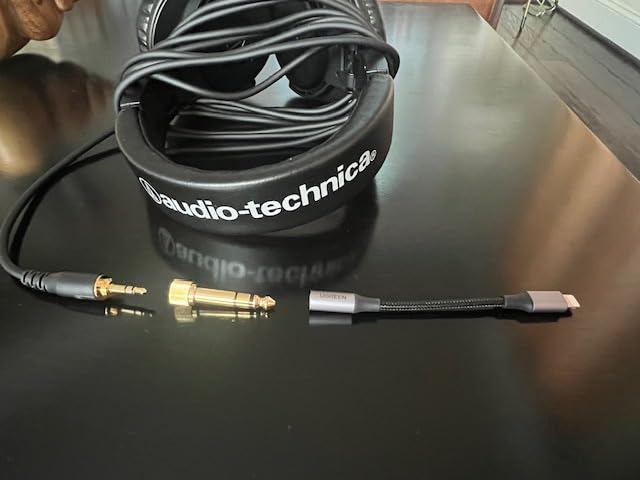
If your recorder has a 3.5mm headphone jack (common on portable recorders), you’ll need a 3.5mm to 1/4 inch adapter for some headphones. The Audio-Technica M-Series includes this adapter, while the Sony MDR7506 uses a 1/4 inch plug natively with a 3.5mm adapter included.
Frequently Asked Questions
What are the best headphones for monitoring audio on set?
The best headphones for monitoring audio on set are closed-back designs with flat frequency response and good passive noise isolation. Top picks include the Audio-Technica ATH-M50x for its swiveling earcups and detailed sound, the Sony MDR7506 as the industry standard trusted for decades, and the Sennheiser HD 280 Pro for its 32 dB of noise attenuation in loud environments. All three deliver the accuracy sound mixers need to catch dialogue problems in real-time.
What are sound monitoring headphones?
Sound monitoring headphones are professional-grade headphones designed to reproduce audio accurately with a flat frequency response. Unlike consumer headphones that boost bass or mask flaws, monitoring headphones reveal the true quality of your source audio. They are essential for production sound mixers, boom operators, and filmmakers who need to catch problems like background noise, mic placement issues, and audio quality during recording.
What is the difference between open-back and closed-back headphones for on-set work?
Closed-back headphones are required for on-set monitoring because they prevent sound leakage into your microphones and provide passive noise isolation from ambient production noise. Open-back headphones sound more spacious but let sound escape in both directions, which ruins dialogue recordings and fails to block generator noise, traffic, and crew chatter. Every professional on-set monitoring headphone uses a closed-back design.
Should I use wireless Bluetooth headphones for production monitoring?
Wired headphones are strongly recommended for on-set monitoring because Bluetooth introduces 40-200 ms of latency that creates sync problems between audio and video. Wireless headphones also require battery power that can fail during long shoot days. Professional production mixers consistently choose wired headphones for reliability, zero latency, and consistent performance throughout 12+ hour shooting schedules.
What impedance headphones do I need for an audio interface?
For portable recorders and camera-mounted audio gear, headphones with 32-50 ohm impedance work well without amplification. For dedicated audio interfaces, headphones up to 80 ohms perform reliably. Higher impedance headphones (150+ ohms) require dedicated headphone amplifiers to reach proper volume levels. For most on-set monitoring scenarios, staying in the 35-70 ohm range provides the best compatibility with production audio equipment.
Final Verdict
After testing all eight of these headphones across documentary shoots, narrative productions, and event coverage, my top pick for the best headphones for monitoring audio on set remains the Audio-Technica ATH-M50x. The combination of swiveling earcups for one-ear monitoring, detailed midrange reproduction, and proven durability makes it the most versatile choice for working sound mixers.
If budget is your primary concern, the Sony MDR7506 delivers industry-standard accuracy at a price that won’t break your gear budget. For genuinely loud environments where isolation matters more than anything else, the Sennheiser HD 280 Pro blocks enough noise that you can monitor dialogue next to a generator without straining.
Whatever pair you choose from this list, you’ll have the tools you need to capture clean production audio. In 2026, the fundamentals haven’t changed: accurate monitoring, solid isolation, and comfortable wear still matter more than wireless convenience or consumer-friendly bass boosts. Trust your ears, and your headphones will help you deliver clean dialogue every time.