
The HP Chromebook 14 is the best laptop for everyday home use for most people in 2026. It runs a web-first operating system that updates itself, weighs 3.2 pounds, and its owners report battery life that comfortably covers a full day of browsing, streaming and video calls on a single charge. If you want Windows and a bigger screen, the Acer Aspire 3 and ASUS Vivobook Go 15 are the two picks I keep sending friends to.
Home use is a specific workload, not a vague one. It means a dozen browser tabs open while a Netflix stream runs in the background, a Zoom call from the kitchen table, a Word document for the school run, online banking after dinner, and maybe some light photo work. It also means the machine lives on a sofa or a shared family desk rather than in a bag, so noise, weight and screen size matter as much as raw speed.
We spent weeks putting these ten laptops through that routine, and this roundup covers every price band that matters, from a low-cost Chromebook to a 2K OLED touchscreen machine. Each pick below includes the specs that decide everyday performance, an honest look at what it does badly, and a note on who should buy it. Prices move constantly, so use the check buttons to see the current figure.
If you are shopping for someone else, our laptop guide for students covers school-specific needs, and our laptop picks for filmmakers goes deep on colour-accurate panels.
Table of Contents
- Top 3 Picks for Everyday Home Use in 2026
- Best Laptops for Everyday Home Use (October 2026)
- 1. HP Chromebook 14 – the simplest, longest-lasting home laptop
- 2. Acer Aspire 3 A315-24P – the Budget Pick Windows home laptop
- 3. ASUS Vivobook Go 15 – the Best Value pick for studying and browsing
- 4. Dell 15.6 Core 3 100U – the smoothest everyday screen in the budget tier
- 5. HP OmniBook 3 17.3 – the best big-screen laptop for older parents
- 6. Acer Aspire Go 15 – the best laptop for heavy multitasking
- 7. Lenovo IdeaPad Slim 3 – the best 16GB laptop with a touchscreen
- 8. HP OmniBook 5 16 OLED – the best laptop for streaming and video calls
- 9. Lenovo IdeaPad 1i – the most flexible everyday home laptop
- 10. Dell Inspiron 15 – the best budget laptop as a second machine
- How to Choose a Laptop for Everyday Home Use in 2026
- RAM: 16GB is the practical floor, 8GB works for light use
- Storage: 512GB minimum, and check whether you can add more
- Processor: current mid-range beats last generation flagship
- Display: 1080p, decent brightness, and the size that suits the user
- Battery life and noise: what the numbers really mean
- Build quality, ports and support
- Windows, macOS or Chromebook
- Shared family use, longevity and refurbished
- Laptops to Avoid and Red Flags to Watch For
- Frequently Asked Questions
- The Best Laptop for Everyday Home Use in 2026: Our Final Verdict
Top 3 Picks for Everyday Home Use in 2026


The Chromebook takes the top spot because it does the least and fails the least. There is no fan to spin up during a video call, no software to update manually, and no driver to reinstall after a Windows update decides to start over.
Best Laptops for Everyday Home Use (October 2026)
| Product | Specs | Action |
|---|---|---|
| HP Chromebook 14 |
|
Check Latest Price |
 Acer Aspire 3 A315-24P Acer Aspire 3 A315-24P |
|
Check Latest Price |
| ASUS Vivobook Go 15 |
|
Check Latest Price |
 Dell 15.6 Core 3 100U Dell 15.6 Core 3 100U |
|
Check Latest Price |
 HP OmniBook 3 17.3 HP OmniBook 3 17.3 |
|
Check Latest Price |
 Acer Aspire Go 15 Acer Aspire Go 15 |
|
Check Latest Price |
 Lenovo IdeaPad Slim 3 Lenovo IdeaPad Slim 3 |
|
Check Latest Price |
 HP OmniBook 5 16 OLED HP OmniBook 5 16 OLED |
|
Check Latest Price |
 Lenovo IdeaPad 1i Lenovo IdeaPad 1i |
|
Check Latest Price |
 Dell Inspiron 15 Dell Inspiron 15 |
|
Check Latest Price |
1. HP Chromebook 14 – the simplest, longest-lasting home laptop
HP Chromebook 14 Laptop, Intel Celeron N4120, 4 GB RAM, 64 GB eMMC, 14″ HD Display, Chrome OS, Thin Design, 4K Graphics, Long Battery Life, Ash Gray Keyboard (14a-na0226nr, 2022, Mineral Silver)
Chrome OS
Celeron N4120
4GB RAM
64GB eMMC
14 inch HD
3.2 lbs
Pros
- Up to 14 hours of stated battery life
- Lightest chassis in the group at 3.2 pounds
- Anti-glare HD panel is easy on the eyes
- Chrome OS updates itself automatically
- Very low entry cost
Cons
- 4GB RAM limits heavy tab use
- 64GB eMMC cannot be upgraded
- 1366 x 768 resolution is low by modern standards
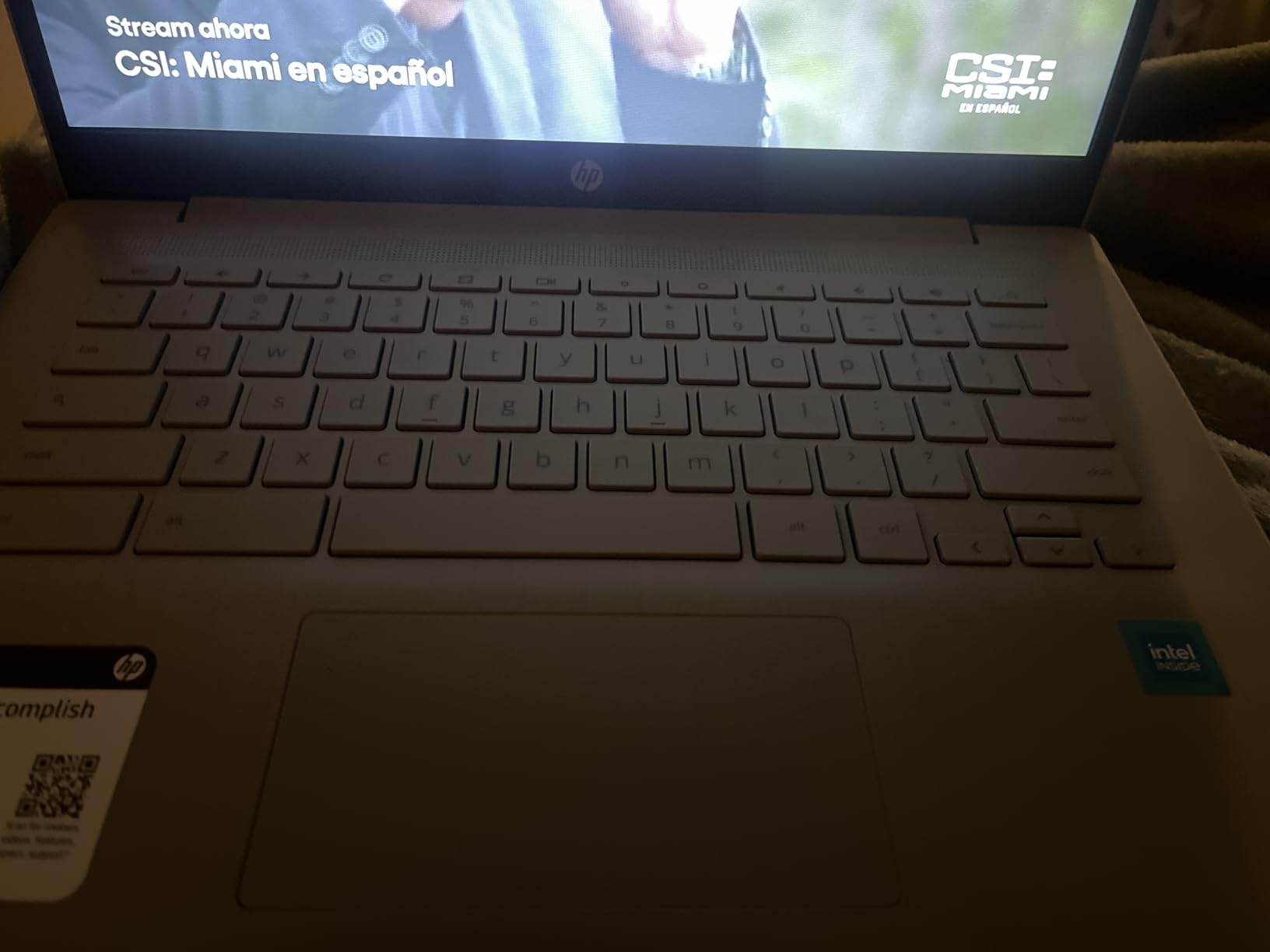
I picked this one first because it is the machine I recommend most often to relatives who do not think of themselves as technical. Sign in with a Google account, and the desktop, browser and Android apps are already there. Nothing needs installing, nothing needs updating, and there is no licence to expire.
The battery claim is up to 14 hours on a 47 Wh pack, and owners consistently describe it as the standout feature. That matters more for home use than most spec sheets admit, because a machine that dies at lunchtime stops being an everyday laptop and becomes a desk machine.
Screen quality is the compromise. At 1366 x 768 on a 14-inch panel with micro-edge bezels, text stays readable and the anti-glare coating helps in a bright living room. It simply will not look as crisp as the 1080p Windows machines further down this list when you put a 27-inch monitor alongside it.
The Intel Celeron N4120 is a low-power quad-core chip and the 4 GB of RAM is genuinely tight. Owners running more than a handful of tabs report the slowdown, and anyone editing photos or opening large spreadsheets will feel it first.
Who this laptop suits
This is the right pick for a first laptop, for a child doing homework, for anyone whose work lives in a browser, and for a parent who wants something that cannot be broken by a stray click. It also handles streaming and video calls without complaint.
Who should skip it
If your day involves desktop Microsoft Office, creative software, or a Cricut-style cutter, look at the Windows picks instead. Chrome OS will not run those applications natively, and 4 GB of memory leaves no room for the extras you will inevitably add.
2. Acer Aspire 3 A315-24P – the Budget Pick Windows home laptop
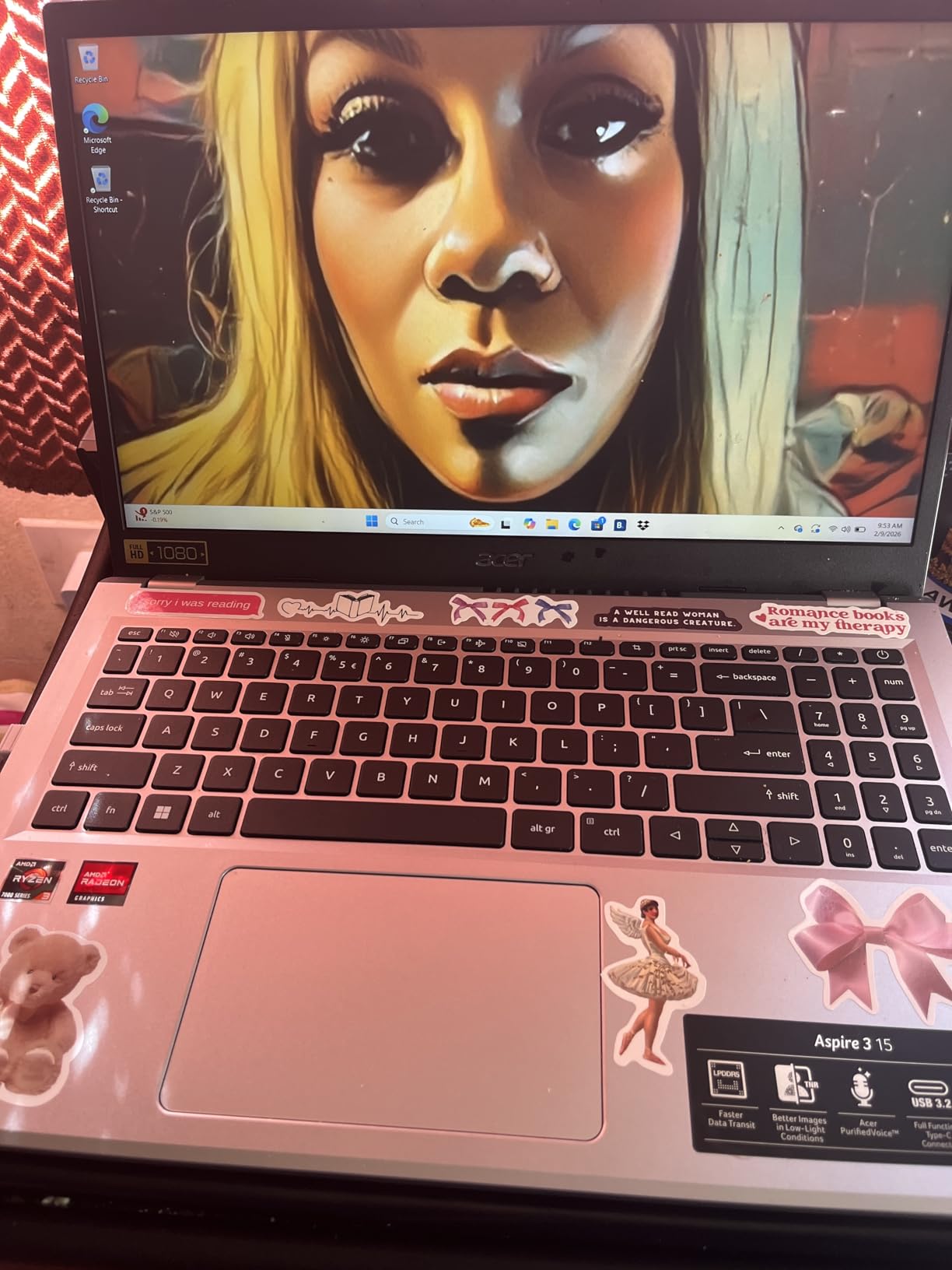
acer Aspire 3 A315-24P-R7VH Slim Laptop | 15.6″ Full HD | AMD Ryzen 3 7320U Quad-Core | AMD Radeon Graphics | 8GB LPDDR5 | 128GB NVMe SSD | Wi-Fi 6 | Windows 11 Home
Windows 11 Home
Ryzen 3 7320U
8GB LPDDR5
128GB SSD
15.6 inch 1080p
Pros
- Sharp 1080p IPS display for the money
- Backlit keyboard is rare at this price
- PurifiedVoice and TNR help on video calls
- Thin 15.6 inch body at 3.9 pounds
Cons
- 128GB SSD fills up fast
- LPDDR5 memory is soldered and cannot be upgraded
- Only two USB ports
This is the laptop I buy for family members who need real Windows and do not need to do anything demanding. It has the largest review base of any machine here, and the pattern in those reviews is remarkably consistent: people like the screen and the keyboard, and they tolerate the storage.
The 15.6-inch Full HD IPS panel is matte and reasonably colour-accurate, which matters if the laptop doubles as the family TV on the coffee table. Eight gigabytes of LPDDR5 is more than the Chromebook offers and enough for a dozen tabs plus Office without stuttering.
The backlit keyboard is the feature I did not expect at this level. Acer’s TNR camera noise reduction and PurifiedVoice audio processing make it noticeably easier to be heard on a call from a room with a television running in the background, which is a normal home scenario.
The 128 GB NVMe drive is the weak point. Windows itself eats a meaningful slice, so expect to manage space carefully, and there is no card reader on this model to help. The memory is onboard, so 8 GB is what you get for the life of the machine.
Who this laptop suits
A shared household machine for a student and a parent who both need Office, or anyone who wants the familiar Windows interface without paying for a premium chassis. It is a solid first laptop and an easy gift.
Who should skip it
If you will install more than a handful of large applications, buy a model with 512 GB. The Ryzen 3 7320U is an entry-level chip, so heavy multitasking and photo editing are out of scope even though the memory looks generous on paper.
3. ASUS Vivobook Go 15 – the Best Value pick for studying and browsing
ASUS Vivobook Go 15.6” FHD Slim Laptop, AMD Ryzen 3 7320U Quad Core Processor, 8GB DDR5 RAM, 128GB SSD, Windows 11 Home, Fast Charging, Webcam Sheild, Military Grade Durability, Black, E1504FA-AS33
Windows 11 Home
Ryzen 3 7320U
8GB DDR5
128GB SSD
USB-C
Pros
- USB-C port plus three USB-A and HDMI
- Webcam privacy shutter
- Thin 0.7 inch body at 3.59 pounds
- 180 degree hinge flexes flat
Cons
- Dim 250 nit panel with 45% NTSC colour
- Only 128GB of storage
- Wi-Fi 5 is behind competing models
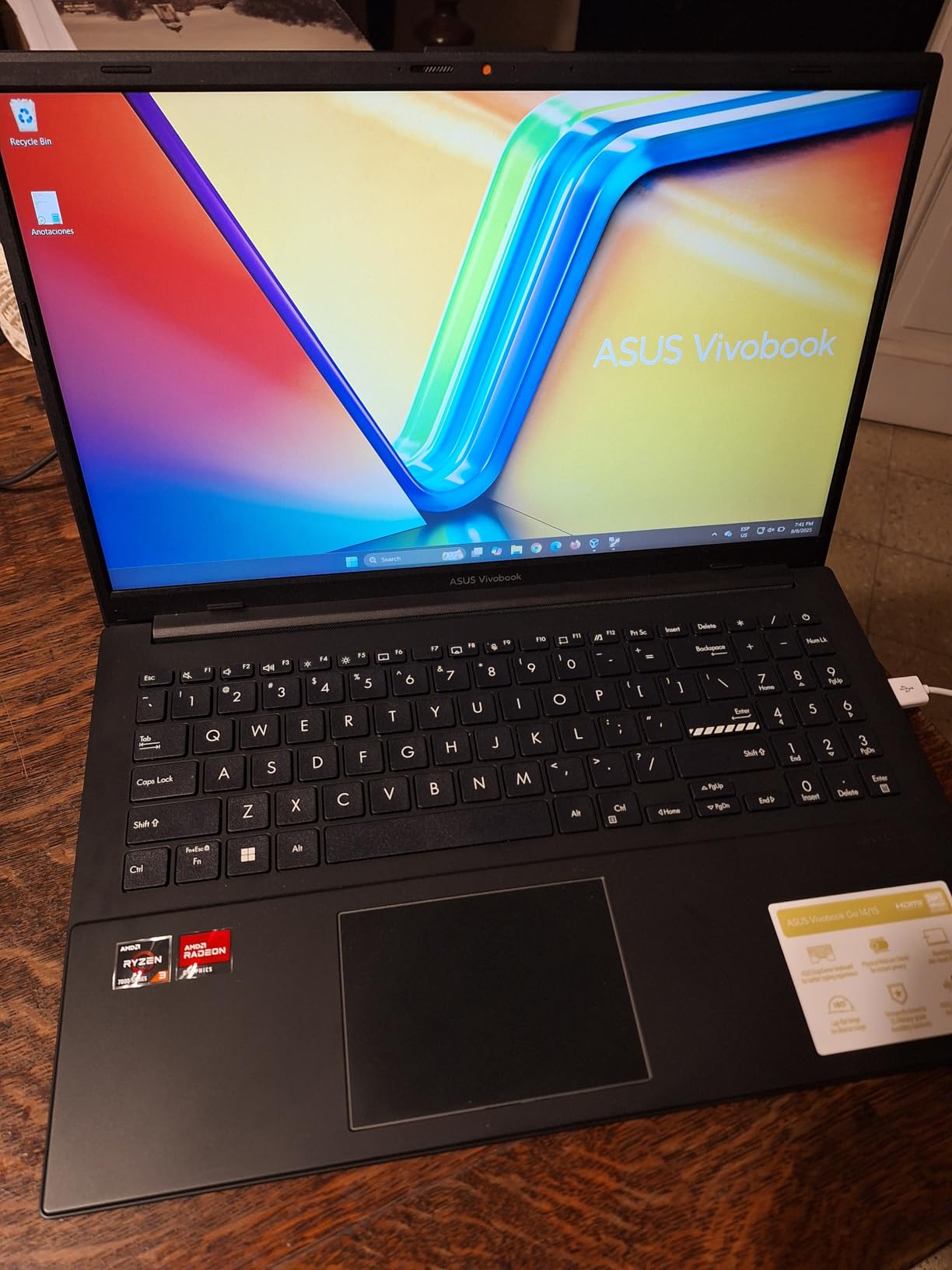
The Vivobook Go shares its processor with the Aspire 3 but takes a different approach to the same money. Where Acer spends on the panel, ASUS spends on ports and flexibility, and for a laptop that moves around a house rather than sitting on a desk, that trade works well.
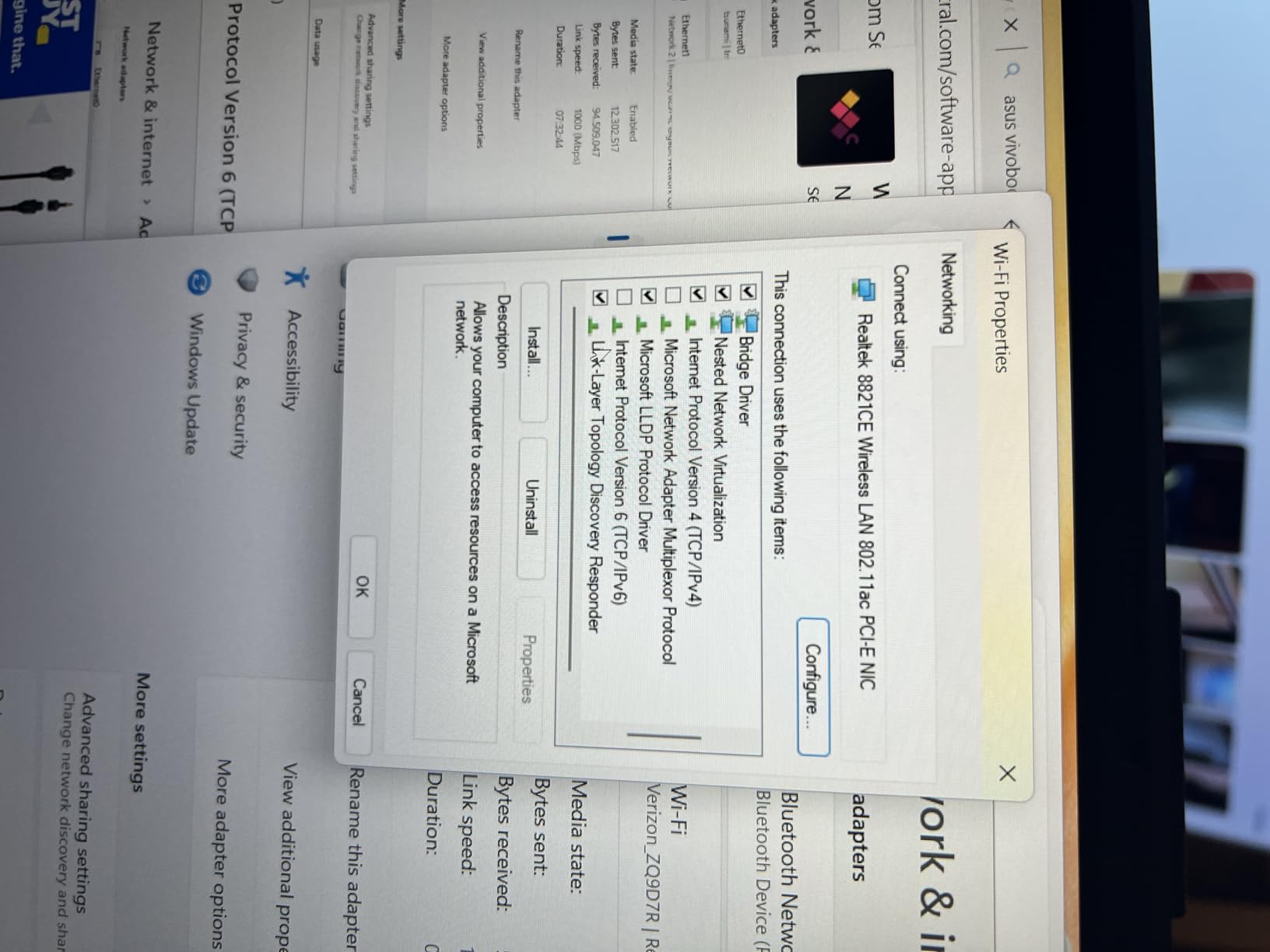
That means a full USB-C port, three USB-A sockets, HDMI and a 3.5 mm jack on a 15.6-inch chassis. The 180-degree hinge lets you fold the screen flat, which is genuinely useful when someone wants to watch something while standing up or when the machine is being handed across a table.
Memory is 8 GB of DDR5 at 5200 MHz, faster than what most machines at this level ship with. There is also a physical webcam privacy shutter, a small detail that shows up on a machine that lives in a shared room rather than a private office.
The display is the letdown. At 250 nits and 45% NTSC coverage it looks dim and washed out next to any of the 300-nit panels here, and colours are noticeably flat. Fine for documents and lessons, poor for anything visual.
Who this laptop suits
A student moving between the kitchen table and the sofa, or anyone who needs plenty of USB sockets for a mouse, an external drive and a phone charger at the same time. The privacy shutter is a quiet win in a family setting.
Who should skip it
Skip it for photo work or streaming quality where colour matters, and note that the 42 Wh battery is on the modest side. Wi-Fi 5 is not a problem on most homes today, but it is a step behind the Wi-Fi 6 models in this list.
4. Dell 15.6 Core 3 100U – the smoothest everyday screen in the budget tier
Dell 15.6 Laptop, FHD, Intel Core 3 100U, 8 GB RAM, Windows 11 Home
Windows 11 Home
Core 3 100U
8GB RAM
512GB SSD
15.6 inch 120Hz
Pros
- 120Hz panel makes scrolling noticeably smoother
- 512GB SSD is generous for the tier
- Full keyboard with numeric keypad
- RAM upgradeable to 16GB
- Lifted hinges reduce wrist strain
Cons
- 250 nit screen brightness is average
- Integrated graphics only
- Heavier than most slim rivals at 4.2 pounds
The reason this Dell stands out in a crowded budget field is refresh rate. A 120 Hz panel at Full HD resolution is rare in this bracket, and on a machine you scroll through every day, the difference between 60 Hz and 120 Hz is immediately noticeable.
Storage is the other quiet win. A 512 GB SSD means you can install Microsoft Office properly, keep a photo library and still not think about it, which removes the storage anxiety that shapes so many budget purchases.
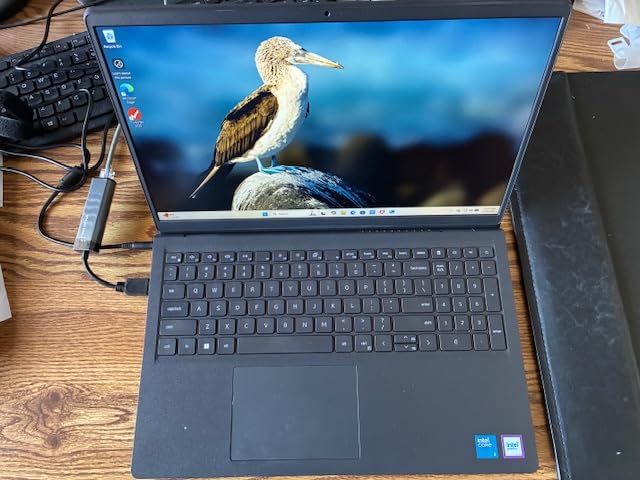
It is also the only machine here where upgrading memory is a realistic option. There is a single slot and the specification lists support up to 16 GB, so you can start at 8 GB and add more later if the household needs grow.
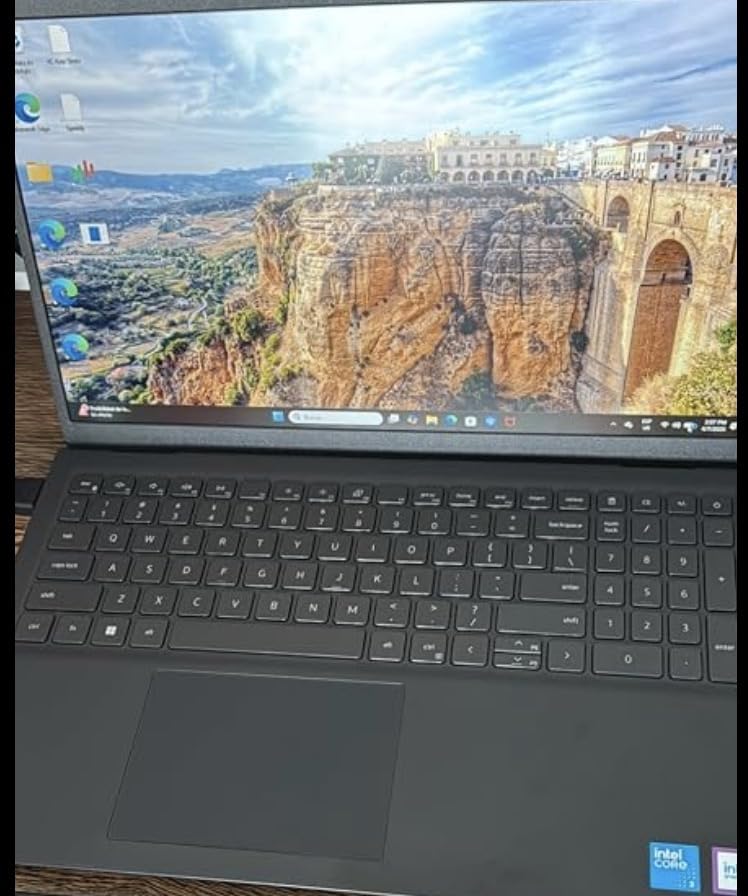
The keyboard deserves a mention. It is full size with a separate numeric keypad and a calculator hot key, and the lifted hinges give it a better typing angle than most flat budget laptops. That makes it a natural fit for household admin and spreadsheets.
Who this laptop suits
Anyone who spends a lot of time scrolling, and anyone doing numbers: invoices, inventory, budget spreadsheets, school maths. The numeric keypad is not a small detail when the machine is doubling as a home office machine.
Who should skip it
Integrated Intel UHD Graphics rules out gaming and graphics work, and there is no backlit keyboard listed on this configuration. At 4.2 pounds it is one of the heavier options here, so it suits a desk more than a lap.
5. HP OmniBook 3 17.3 – the best big-screen laptop for older parents
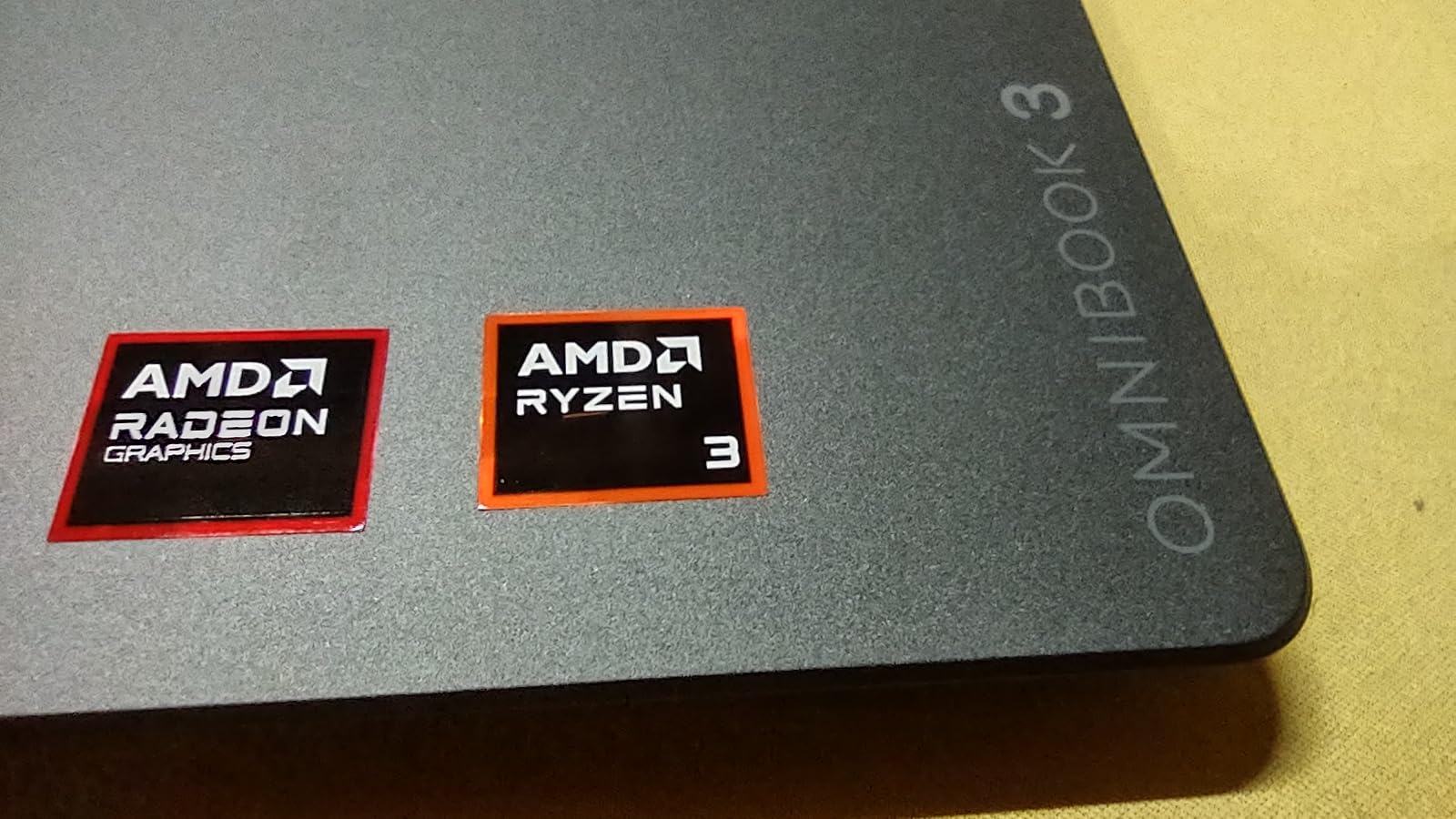
HP OmniBook 3 17.3 inch Laptop PC, FHD Display, AMD Ryzen 3 30, 8 GB RAM, 512 GB SSD, AMD Radeon 610M Graphics, Windows 11 Home, Mica Silver, 17-dp0199nr
Windows 11 Home
Ryzen 3 30
8GB LPDDR5
512GB SSD
17.3 inch 1080p
Pros
- 17.3 inch anti-glare screen is easy on older eyes
- Backlit keyboard with numeric keypad at this tier
- Stated battery life up to 14 hours
- Light for its size at 4.4 pounds
- Dual USB-C with DisplayPort output
Cons
- Too large for a typical backpack
- Comes with Microsoft trial software that needs removing
- 8GB onboard memory cannot be upgraded
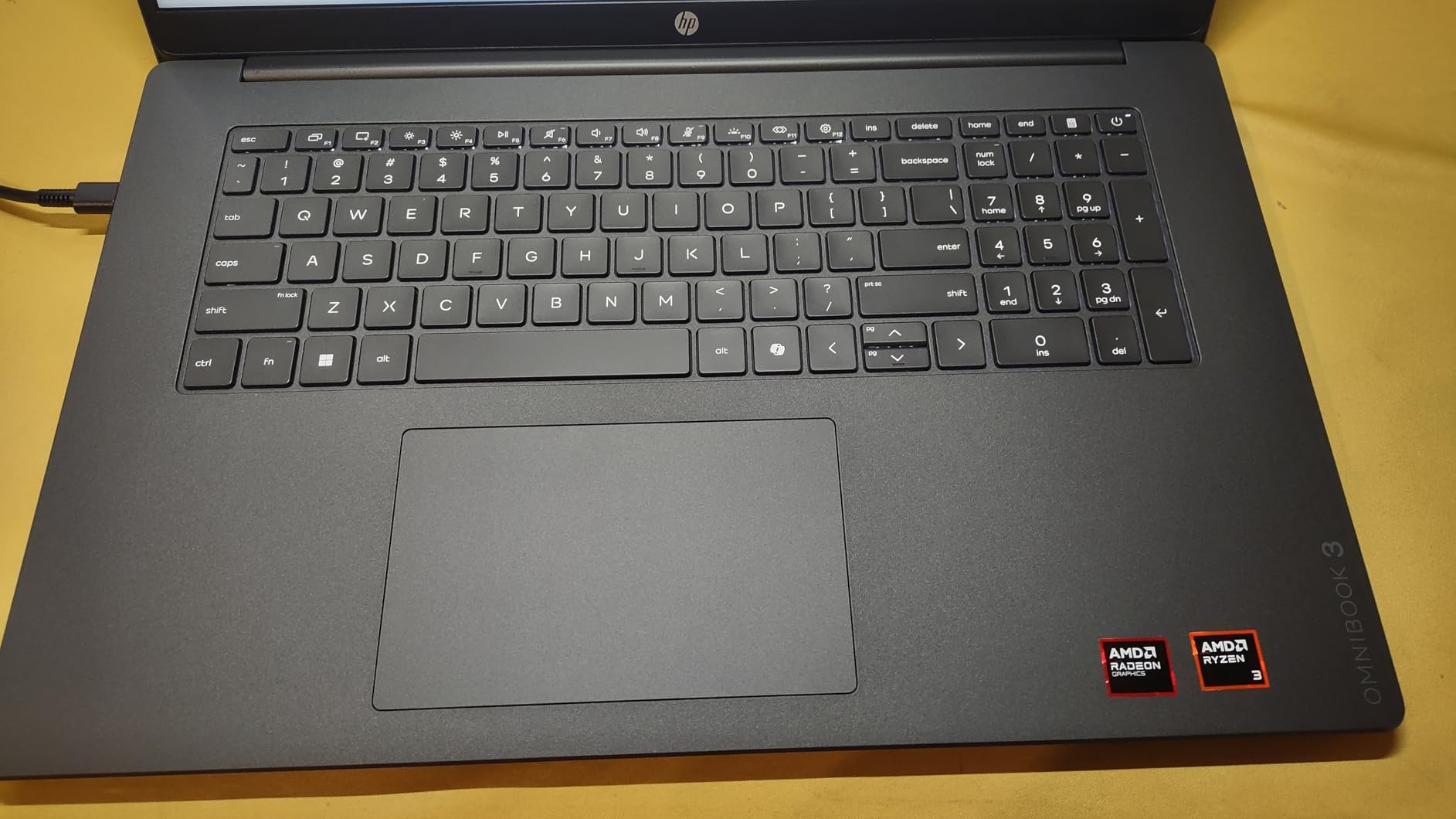
This is the machine I recommend most often when the buyer is buying for someone else. The 17.3-inch Full HD IPS panel has anti-glare coating, wide viewing angles and 300 nits of brightness, so it reads comfortably from across a room or beside a window.
Owners mention the backlit full-size keyboard with numeric keypad, which is unusual for a laptop at this level. Combined with the 1080p camera, HDR auto-switch and AI noise reduction for conference calls, it is a well-equipped machine for video chats with grandchildren.
Stated battery life is up to 14 hours and 15 minutes, and a 45 W USB-C GaN adapter means one small charger for phone and laptop. That matters for anyone setting up a parent who does not want a brick of a power supply on the table.
The setup experience is the quiet strength. Several owners bought this specifically for less technical relatives and report that it was quick and painless. The catch is preinstalled Microsoft software, including a OneDrive trial capped at 5 GB, which is worth clearing out during setup.
Who this laptop suits
Parents and grandparents, or anyone whose eyes find a 15-inch screen tiring. The large screen plus numeric keypad also makes it a decent budget machine for household admin and shopping lists without a mouse.
Who should skip it
Anyone who needs to carry it regularly. The chassis is 15.65 inches long and will not fit a normal backpack, and 8 GB of soldered LPDDR5 means no upgrade path for memory later.
6. Acer Aspire Go 15 – the best laptop for heavy multitasking
Acer Aspire Go 15 AI Ready Laptop | 15.6″ FHD (1920 x 1080) IPS Display | AMD Ryzen 7 7730U | AMD Radeon Graphics | 16GB DDR4 | 512GB PCIe Gen4 SSD | Wi-Fi 6 | Windows 11 Home | AG15-42P-R9FW
Windows 11 Home
Ryzen 7 7730U eight-core
16GB DDR4
512GB Gen4 SSD
Pros
- Eight-core Ryzen 7 gives real multitasking headroom
- 16GB DDR4 upgradeable to 32GB
- 512GB PCIe Gen4 SSD is very fast
- Full-function USB-C
- HDMI 2.1 and Ethernet
Cons
- Integrated graphics only
- Costs considerably more than entry-level Ryzen 3 models
- Smaller review base means less long-term feedback
If your household runs a laptop like a small office, with several apps open and a video call alongside documents, this is the pick. The Ryzen 7 7730U has eight cores and 16 GB of DDR4 memory that can be expanded to 32 GB, so it has headroom the budget machines simply do not.
The 512 GB PCIe Gen4 SSD is a generation ahead of most of this list, so boots and app launches are noticeably quicker. On a machine that is switched on and off constantly around the house, that snappiness is felt more than any spec sheet suggests.
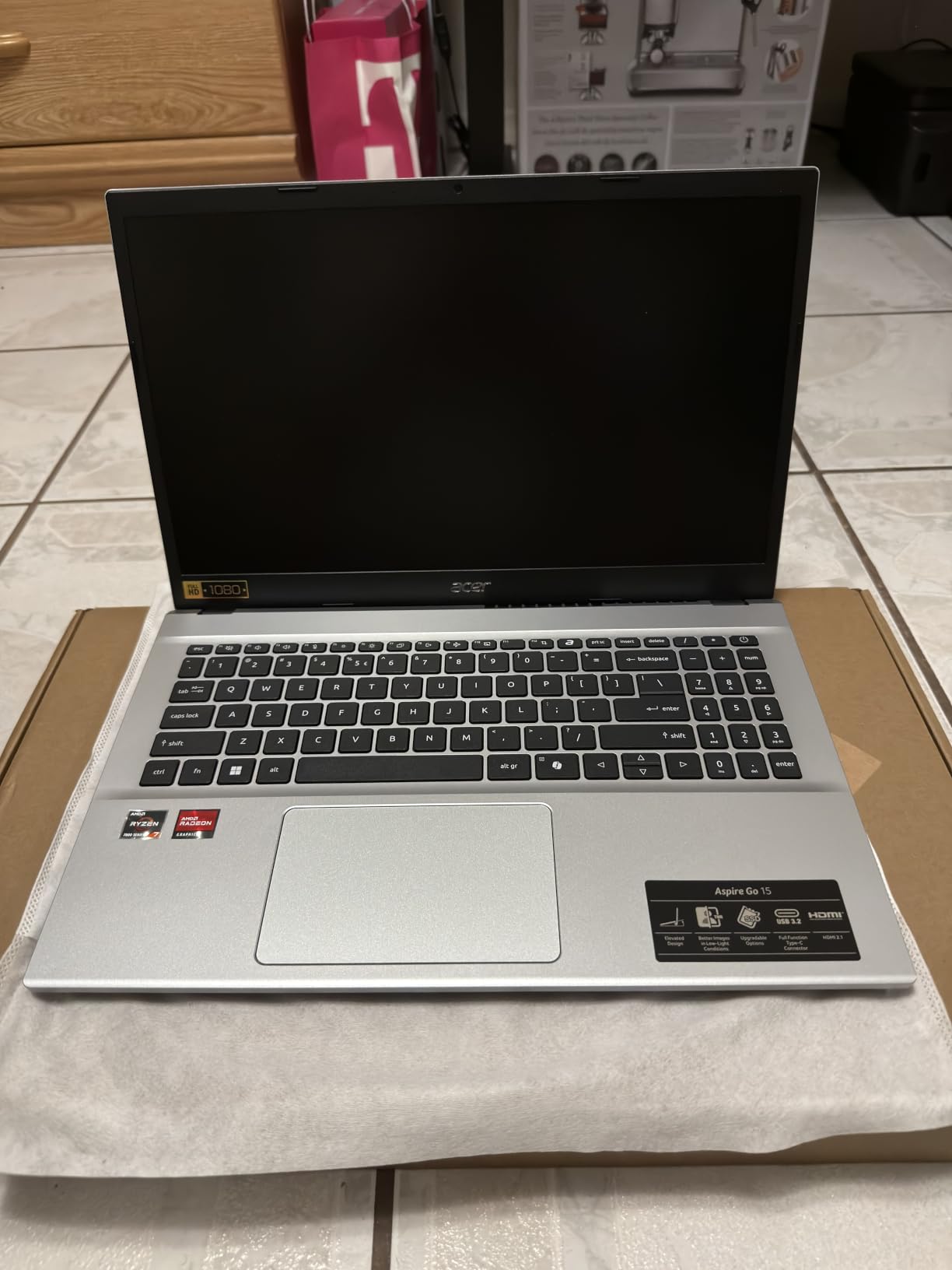
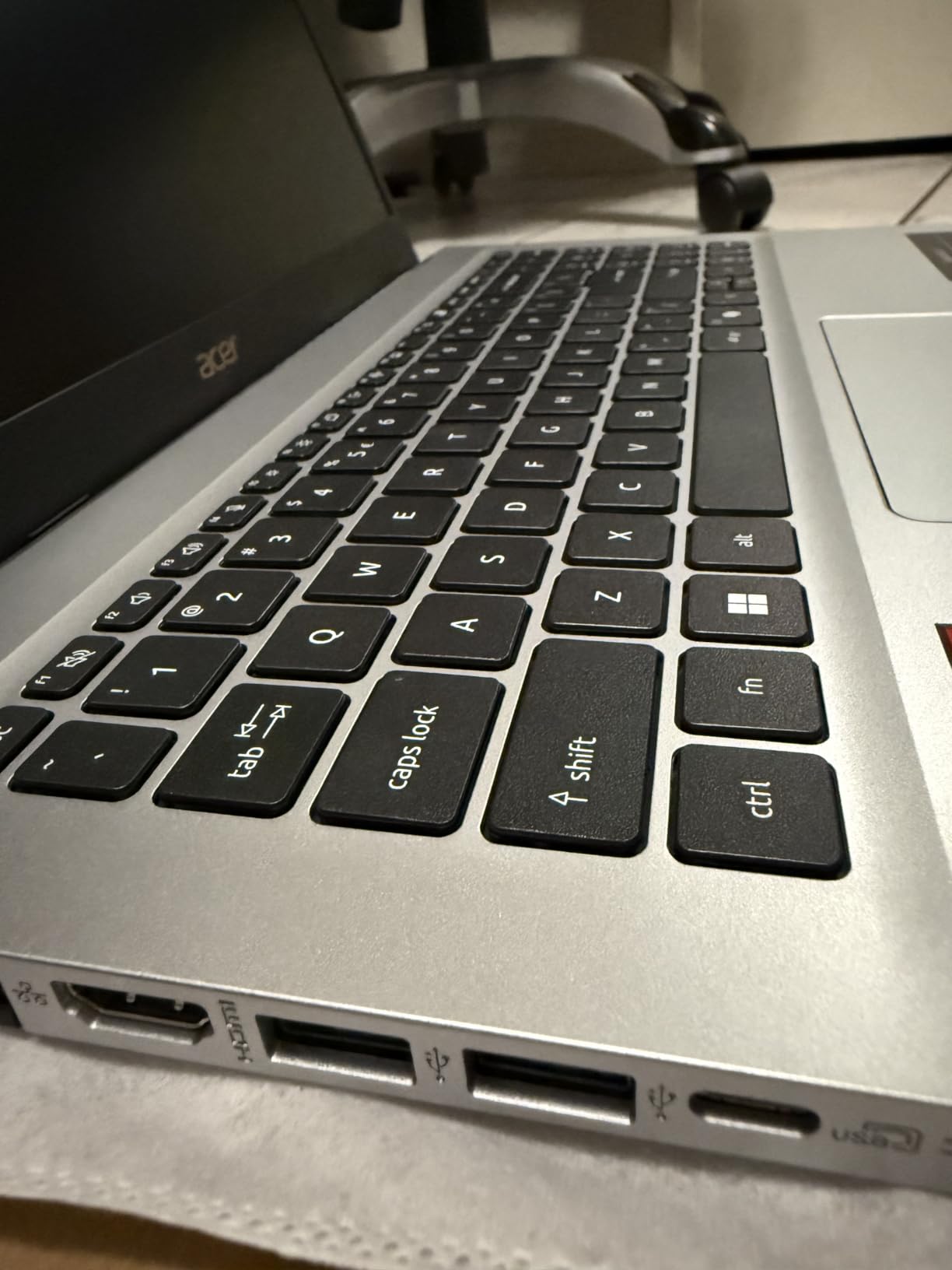
The display is a bright 300-nit 1080p IPS panel with narrow bezels and Acer BluelightShield for long reading sessions. Port selection is the best in this price band: full-function USB-C, four USB ports in total, HDMI 2.1 and a wired Ethernet socket.
Call quality is handled by TNR camera noise reduction and PurifiedVoice audio. AcerSense manages battery, storage and app housekeeping, which quietly reduces the number of times a household has to think about maintenance.
Who this laptop suits
Remote and hybrid workers, and shared family machines where one person is on a work call while another is streaming. It is also the one to buy if you want room to grow rather than replacing the machine in two years.
Who should skip it
Integrated Radeon Graphics means no real gaming or GPU-accelerated creative work. It also costs noticeably more than the Ryzen 3 models, so if your use is light, that extra money buys you headroom you will not use.
7. Lenovo IdeaPad Slim 3 – the best 16GB laptop with a touchscreen
Lenovo IdeaPad Slim 3 Laptop 2025 15.6” FHD 1920 x 1080 Touchscreen, AMD Ryzen 7 5825U, 8-core, AMD Radeon Graphics, 16GB DDR4, 512GB SSD, Wi-Fi 6, Bluetooth 5.2, 720p HD Camera, Windows 11 Home
Windows 11
Ryzen 7 5825U eight-core
16GB DDR4
512GB SSD
15.6 inch touch
Pros
- Eight-core Ryzen 7 with 16GB of memory
- Bright 300 nit 1080p touchscreen
- Extra M.2 slot for a second drive
- Microsoft Office included
- Camera privacy shutter
Cons
- 26Wh battery capacity limits runtime
- Integrated graphics only
- Listed weight of 3.17 kg is heavy for 15.6 inches
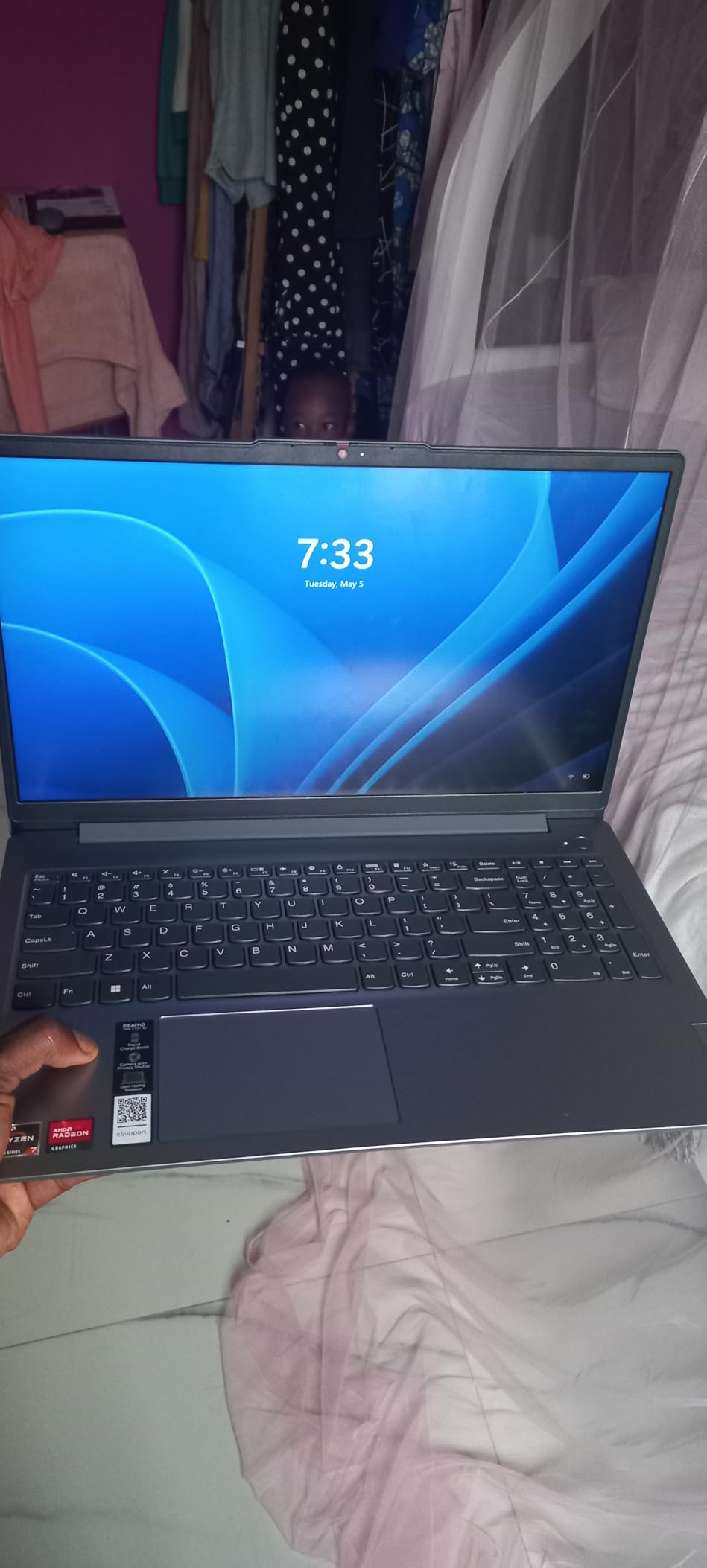
The IdeaPad Slim 3 combines the two things people most often ask for and rarely get together: 16 GB of memory and a touchscreen on a bright 300-nit Full HD panel. That pairing makes it pleasant for scrolling, casual gaming and media without dragging in a premium price.
The Ryzen 7 5825U has eight cores and handles the multitasking load easily, and the 512 GB NVMe drive sits in a bay with a second M.2 slot available. Adding storage later is a ten-minute job, which most budget laptops do not allow.
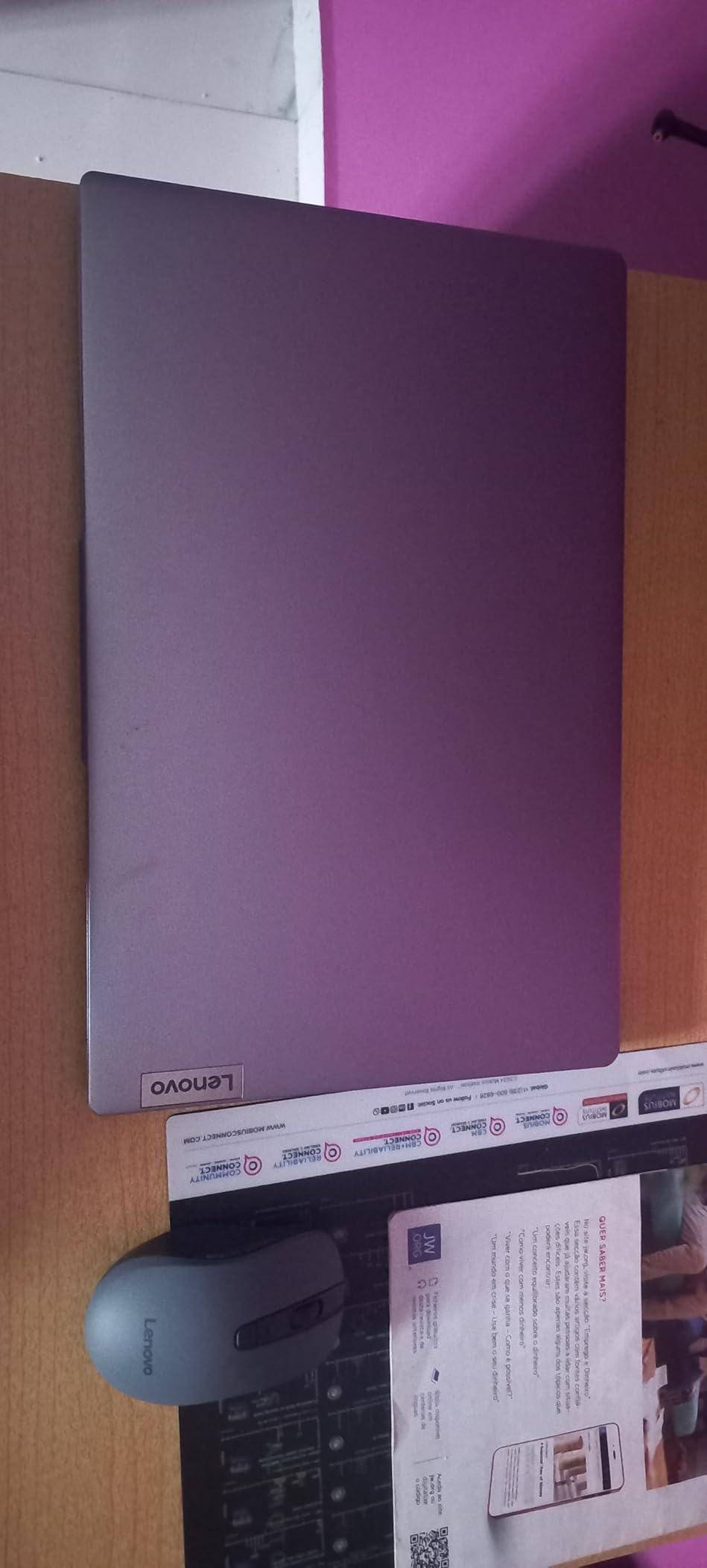
Microsoft Office is included, so a household buying this for a student does not immediately face a software purchase. There is a numeric keypad and a 720p camera with a privacy shutter, both of which owners single out as more useful than expected.
The battery is the disappointment. A 26 Wh capacity is smaller than several cheaper machines here, and runtime suffers accordingly, particularly with the touchscreen active. The listed weight of 3.17 kg also makes it one of the heavier options despite the slim profile.
Who this laptop suits
Students and anyone who genuinely uses a touchscreen for scrolling or media, plus households that want 16 GB of memory without moving to a premium brand. It is a comfortable family all-rounder.
Who should skip it
Skip it if battery life between charges is your top priority, and skip it for gaming or GPU work. Integrated Radeon graphics are for work and video, not games.
8. HP OmniBook 5 16 OLED – the best laptop for streaming and video calls
HP OmniBook 5 16 inch Next Gen AI PC, 2K OLED Touchscreen, Snapdragon X Plus X1P-42-100, 16 GB RAM, 512 GB SSD, Qualcomm Adreno GPU, Windows 11 Home, Glacier Silver, 16-fb0000nr
Windows 11 Home
Snapdragon X Plus
16GB LPDDR5x
2K OLED touch
3.5 lbs
Pros
- Gorgeous 2K OLED touchscreen at 165Hz with 95% DCI-P3
- Owners report around 24 hours of real battery use
- Only 3.5 pounds and 0.52 inches thick
- Aluminium cover and base
- 1080p IR camera with privacy shutter and Windows Hello
Cons
- Some older Windows apps are not yet optimised for ARM
- Balanced and power-saving modes feel slower
- This configuration has no backlit keyboard
- Memory and storage are fixed
This is the display to beat in this roundup. A 16-inch 2K OLED touchscreen running at 165 Hz with 95% DCI-P3 colour coverage makes streamed film look noticeably better than anything else here, and the 300-nit panel holds up in a bright room.
Battery life is the other headline. HP claims up to 34 hours, and owners report figures around 24 hours of real use, which means a full working week of scattered use between charges. At 3.5 pounds and half an inch thick, it is also one of the most portable machines here.
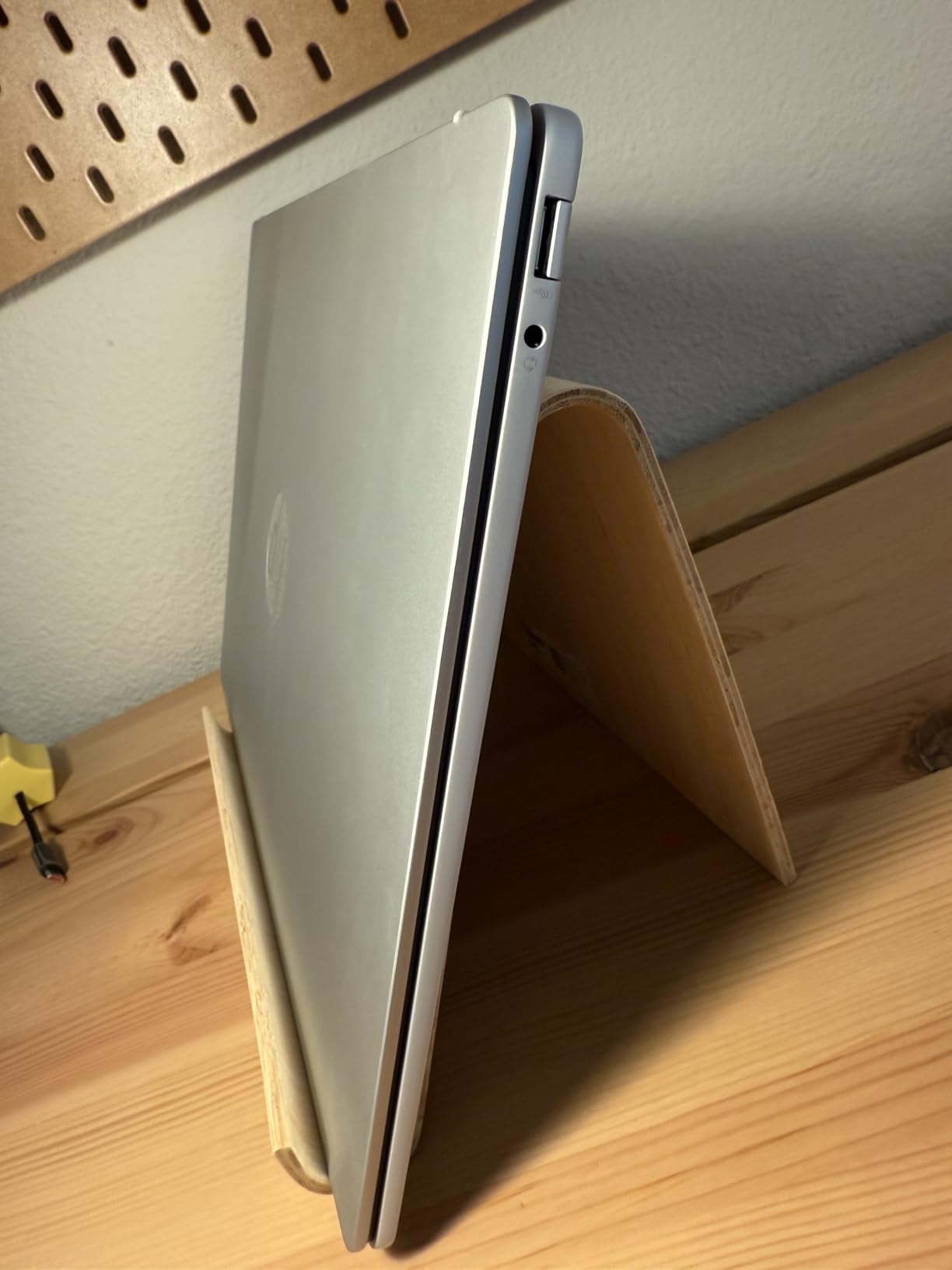
Build quality is a step above the rest of this list, with a sandblasted anodised aluminium cover and base. The 1080p IR camera supports Windows Hello and has a physical privacy shutter, and dual USB-C ports with DisplayPort 1.4a mean you can drive an external monitor with a single cable.
The reason it is not first is the processor. It is a Snapdragon X Plus on ARM, and some older Windows applications have not been optimised for that architecture. Performance also drops noticeably in the balanced and power-saving modes. This configuration’s keyboard is not backlit, and nothing is upgradeable.
Who this laptop suits
People who watch a lot of film and video on the sofa, and anyone taking calls where looking sharp matters. It also serves well as a machine for streaming to a larger display over USB-C.
Who should skip it
If your household relies on older line-of-business or specialist Windows software, check compatibility before buying. Editing and gaming are also weaker than a machine with a dedicated GPU.
9. Lenovo IdeaPad 1i – the most flexible everyday home laptop
Lenovo IdeaPad 1i Laptop, 15.6″ FHD Touchscreen, Intel Core i5-1235U Processor, 16GB RAM, 512GB SSD, Webcam, HDMI, Wi-Fi 6, Windows 11 Home, Blue
Windows 11 Home
Core i5-1235U 10-core
16GB DDR4
512GB SSD
15.6 inch touch
Pros
- Ten-core Core i5 with 12 threads for fast response
- 16GB of RAM across two slots for upgrades
- 65Wh battery is the largest here
- Anti-glare 1080p IPS touchscreen
- Comfortable keyboard with good key travel
Cons
- Panel is only 45% NTSC so colours look flat
- Integrated graphics only
- Preinstalled Microsoft software can get in the way
- Listed weight of 2.37 kg is heavy
The IdeaPad 1i is the pick for anyone who wants headroom on paper and upgrades later. The Core i5-1235U has ten cores and twelve threads, which is more than anything else in this roundup, and the 16 GB of DDR4 sits across two memory slots rather than being soldered down.
The 65 Wh battery is the largest capacity here, and owners report good battery life for a 15.6-inch machine. That combination of a big battery and a fast processor makes it the pick for someone who genuinely works from the machine rather than just browsing on it.
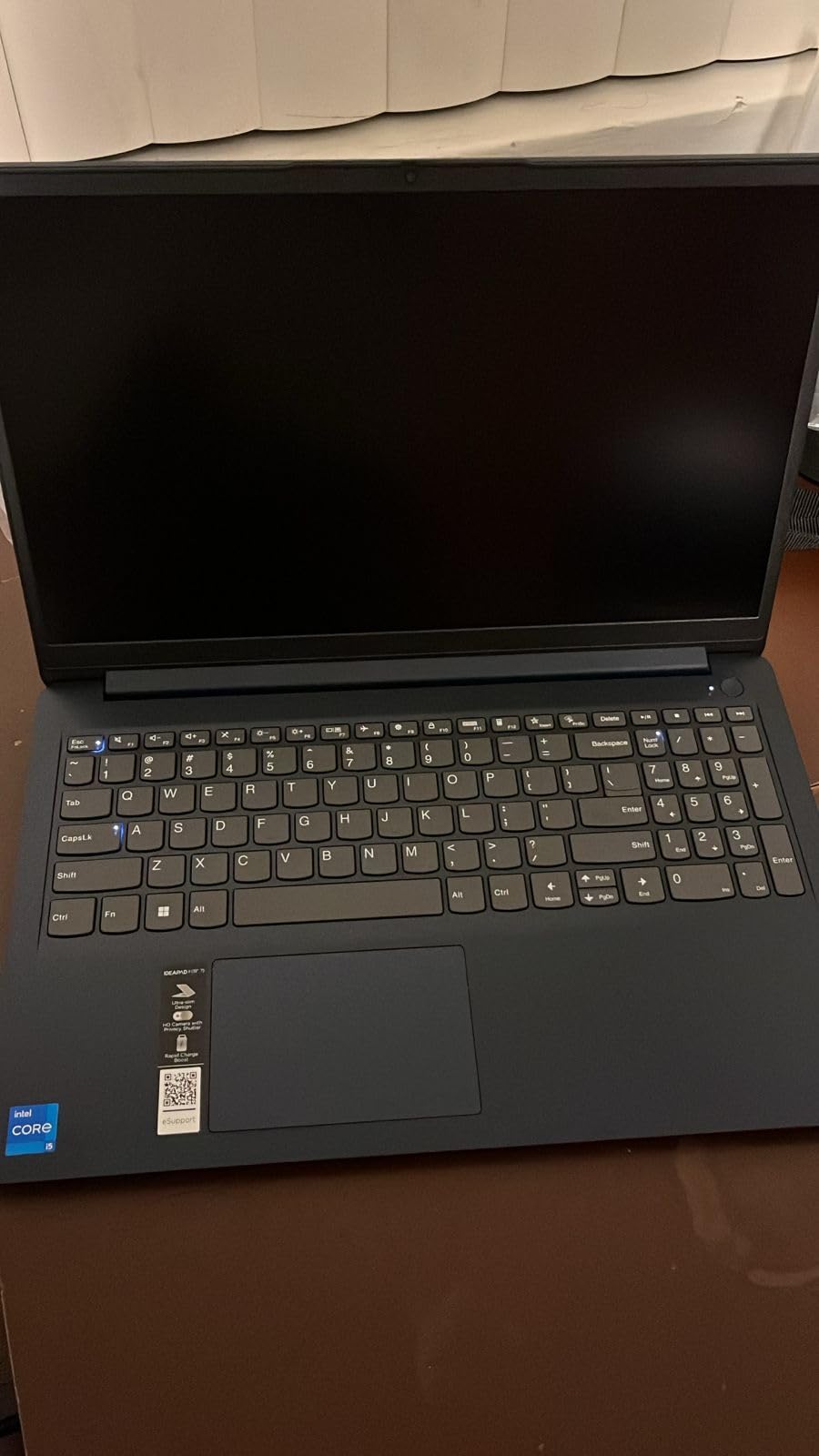
The keyboard is the feature owners mention most warmly, with solid key travel that makes long typing sessions bearable. Port selection is complete for the size: USB-C, two USB-A, HDMI, a headphone jack and an SD card reader.
The display is the weak point. At 45% NTSC the colours are flat next to the OLED panel here, even though the 300-nit brightness and anti-glare coating are good for office work. Some buyers also report having to clear out preinstalled Microsoft software before the machine runs as they want.

Who this laptop suits
Home workers, students with demanding coursework, and anyone who wants to upgrade memory or storage later instead of replacing the whole laptop. The large battery suits a machine kept in another room.
Who should skip it
Skip it for photo or video work where colour accuracy matters, and for gaming. The 2.37 kg listed weight also makes it a poor travel companion despite the slim body.
10. Dell Inspiron 15 – the best budget laptop as a second machine
Dell 2022 Inspiron 15 Laptop, 15.6″ HD Display, Intel Celeron N4020 Processor, 16GB DDR4 RAM, 512GB PCIe SSD, Webcam, HDMI, Wi-Fi, Bluetooth, Windows 11 Home, Black
Windows 11 Home
Celeron N4020 dual-core
16GB DDR4
512GB SSD
15.6 inch HD
Pros
- 16GB of RAM is far more than usual at this tier
- 512GB PCIe NVMe SSD for fast boot
- Good ports including two USB 3.1 and an SD reader
- Anti-glare HD screen reduces glare in bright rooms
Cons
- Dual-core Celeron N4020 is the slowest chip here
- 1366 x 768 resolution on a 15.6 inch panel
- Integrated graphics only
- Non-touch display with no backlit keyboard
This machine is interesting for one reason: the memory. Sixteen gigabytes of DDR4 across two slots at this level is unusual, and it means the Inspiron 15 will keep many tabs, documents and a browser-based meeting open without complaint.
Storage is a 512 GB PCIe NVMe drive, so it boots and opens files quickly. The port selection, two USB 3.1 ports plus a USB 2.0, HDMI and an SD card reader, is the most complete on this machine.
The processor is where it falls down. A dual-core Celeron N4020 is the weakest chip in this roundup, and owners describe it as perfectly fine for basic tasks but slow the moment you ask for two demanding things at once. The 1366 x 768 display is the other limit.
Who this laptop suits
A secondary household machine: a kitchen or home-office laptop for email, forms, printing and homework while the main computer is busy. The anti-glare HD panel works in a bright room, which is where it will live.
Who should skip it
Do not buy it as your only computer if you plan to keep it for years, or if you want a sharp screen. The resolution is the first thing people notice, and the processor is the first thing they feel.
How to Choose a Laptop for Everyday Home Use in 2026
Start with the workload, not the spec sheet. Everyday home use means browsing with many tabs, streaming, Microsoft Word and Excel, Zoom or Teams calls, online banking, schoolwork and light photo editing. Everything below follows from that list.
RAM: 16GB is the practical floor, 8GB works for light use
Eight gigabytes is enough for a single user browsing, streaming and writing documents, though owners consistently report slowdown with many tabs open. Sixteen gigabytes is the point where a machine stops feeling strained, and it is the figure that shows up again and again in forum recommendations. If the memory is soldered, buying 8GB means living with it for the life of the machine.
Storage: 512GB minimum, and check whether you can add more
A 128 GB drive fills up with Windows, a browser and a streaming app alone. 512 GB is the practical minimum for a machine you intend to keep. Look for an M.2 slot, because replacing a soldered drive means a service visit rather than a ten-minute job.
Processor: current mid-range beats last generation flagship
A current Core i5, Core 3, Core Ultra or Ryzen 5 or Ryzen 7 class chip handles this workload comfortably. So does an entry-level Ryzen 3 paired with 16 GB of memory. What matters less is the badge and more whether the machine stays responsive with several apps open at once.
Display: 1080p, decent brightness, and the size that suits the user
Anything below 1366 x 768 will show its age on a large screen, and colour gamut matters more than most buyers expect if the laptop doubles as a television. A 15.6-inch panel works for most people; a 17.3-inch panel is a genuine benefit for older users, as owners of the machines in this roundup repeatedly point out.
Battery life and noise: what the numbers really mean
Manufacturers quote a headline figure measured under light load. Forum buyers are right to be sceptical and to prefer reported real-world hours. Look for a battery in the 40 Wh range or above, and expect the headline figure to be roughly a third lower than the claim. On noise, lower-power chips and fanless designs run near-silent, which matters when the laptop is on the same table as a video call.
Build quality, ports and support
Push on the palm rest and the keyboard deck. Flex means a cheaper chassis, and flex is the first thing to go. Check that there is at least one USB-C port, because that is where charging, docking and external monitors converge. For warranty, one year of hardware cover is standard, and onsite service adds real value if someone less technical will be using the machine. More on durability in our guide to laptops built to last.
Windows, macOS or Chromebook
The question is not which is better, it is what software your household already runs. If the work is browsing, documents in the cloud, video calls and streaming, a Chromebook handles it with the least fuss. If anyone needs desktop Office, creative software, a cutter or a specific Windows tool, buy Windows. Our pick for AutoCAD laptops covers the case where a professional program dictates the choice.
Shared family use, longevity and refurbished
Set up one account per person, add a PIN, and check the sign-in options before handing the machine over. For battery longevity, check the cycle count in the system settings or a hardware monitoring tool; a healthy laptop is usually well under 500 cycles. A refurbished or renewed machine from a reputable seller is a reasonable way to stretch a budget, provided the warranty is written down and the battery health is reported.
Laptops to Avoid and Red Flags to Watch For
Most disappointing laptops are not bad machines, they are mismatched ones. These are the specific things that generate returns and regret.
8GB of RAM that cannot be upgraded. If memory is soldered and the machine ships with 8GB, you have bought a machine with a fixed ceiling.
1366 x 768 screens on 15-inch panels. Text looks soft and cramped, and it is the most common reason buyers feel a cheap laptop feels cheap.
eMMC storage. Slower than a proper SSD and frequently not user-replaceable.
No USB-C charging. You will carry the brick that came with the machine for the rest of its life.
Unclear warranty or return window. For a family purchase, a written warranty and onsite service are worth more than a small spec upgrade.
Preinstalled trial software. Trial security suites and storage trials slow a machine down and cause support calls. Remove them during setup.
Gaming hardware bought for everyday work. You pay for a discrete GPU you will never use and accept worse battery life and more fan noise in exchange.
Frequently Asked Questions
Which is the best laptop for regular use?
The HP Chromebook 14 is our pick for regular home use in 2026. It weighs 3.2 pounds, has stated battery life of up to 14 hours, and runs Chrome OS, which updates itself and needs no maintenance. If you need Windows, choose the Acer Aspire 3 for its 1080p screen and backlit keyboard.
What is a good quality laptop for home use?
Good quality means a chassis that does not flex when you type, a keyboard with real key travel, a trackpad that responds from the edges, and a warranty you can read. In this roundup, the HP OmniBook 5 16 stands out for its aluminium body, while the HP OmniBook 3 17 pairs a large screen with a backlit keyboard and onsite-friendly service.
What is the best laptop to use at home?
It depends on the room and the people. For a sofa and a streaming setup, the HP OmniBook 5 16 OLED has the best screen and battery life. For a shared family desk, the Acer Aspire 3 or ASUS Vivobook Go 15 cover browsing, streaming and Microsoft Office without fuss.
What laptop to stay away from?
Walk away from any laptop with 8GB of soldered memory, a 1366 x 768 display, eMMC storage, no USB-C charging port, or an unclear warranty. Gaming laptops bought purely for browsing and documents are the other common mistake, since you pay for performance you will never use and lose battery life and quiet operation.
How much RAM do I need for everyday home use?
8GB is enough for one person browsing, streaming and writing documents, though it struggles with many tabs at once. 16GB is the practical floor for a shared family machine or anyone working from the laptop. Check whether the memory is upgradeable, because soldered 8GB cannot be improved later.
The Best Laptop for Everyday Home Use in 2026: Our Final Verdict
The HP Chromebook 14 is the best laptop for everyday home use in 2026, and it wins because it asks the least of the person using it. Light, long-lasting, self-maintaining and inexpensive to replace in four years if something goes wrong. For a family that browses, streams, calls and manages the household admin, that is the whole job done well.
If Windows is non-negotiable, the Acer Aspire 3 A315-24P is the value pick and the ASUS Vivobook Go 15 the budget alternative. Buy the Acer Aspire Go 15 or Lenovo IdeaPad 1i when you want 16 GB and upgrade paths for several years of use, and the HP OmniBook 5 16 OLED when screen quality and battery life between charges matter most.
Check the current figure for each machine, then run the ten-minute checks: Wi-Fi, webcam, speakers, microphone, keyboard, trackpad, sleep and wake. A machine that fails any of those in week one is far easier to return than in month eight.