
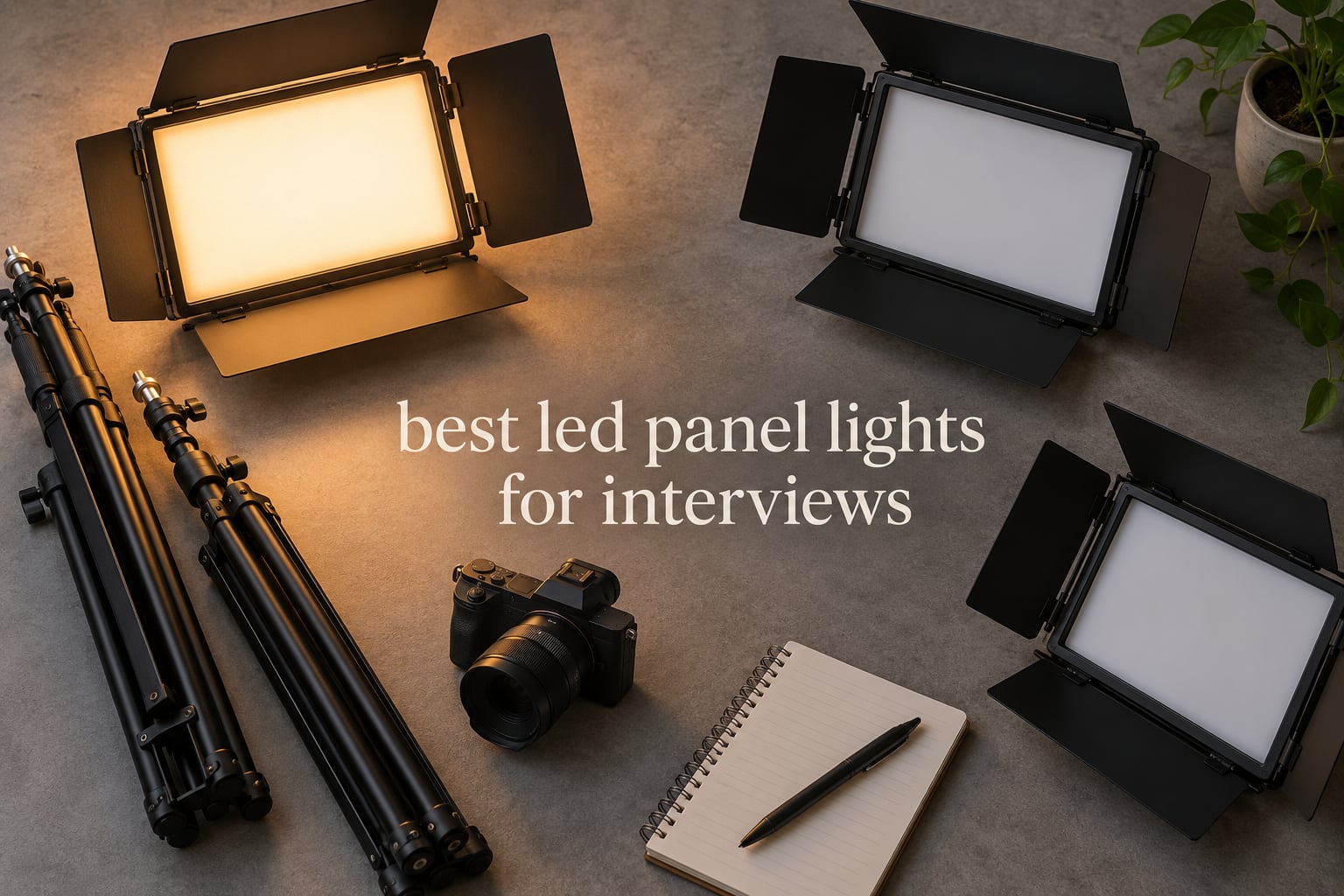
If you want the short answer: the NEEWER NL660 2-Pack is the best LED panel light kit for interviews we tested, because it pairs CRI 96+ colour rendering with fanless silent cooling, 3200K-5600K bi-colour range, metal barn doors and two proper stands in one box. It is the configuration we keep coming back to for a talking head, and it is the kit we hand to junior crew who have never lit a face before.
That verdict is not a formality. We set all ten panels in this roundup on the same stand at the same distance, shot a grey card and a face at 1/50 and 1/60, and scrubbed the playback looking for banding before we ever opened a specification sheet. The panels that survived that test are the ones worth putting in your kit bag, and several that looked identical in the Amazon gallery did not.
Interview lighting is a narrower job than general video lighting. The face is the entire image, so colour accuracy, softness and steady output matter far more than raw brightness. A panel earns its place because it behaves like a very large softbox, wrapping light around the shadow side of the face instead of carving a hard line under the cheekbone. Everything else in this guide, from the 3-point walkthrough to the seven spec decisions, exists to help you pick the panel that does that for your room, your budget and your number of subjects.
Last updated October 2026. We tested these panels for skin tone accuracy, close-range output, dimming behaviour on camera, fan noise next to an open lavalier mic, and the one thing spec sheets never tell you: what the total kit costs once you add the batteries and stands that are not in the box.
Table of Contents
- Top 3 Best LED Panel Lights for Interviews in 2026
- All 10 LED Panel Lights for Interviews Compared in October
- How to Light an Interview with LED Panels: The 3-Point Rule
- How Many Panels Do You Actually Need?
- 1. NEEWER NL660 2-Pack Bi-Color Kit: The Best LED Panel Lights for Interviews Overall
- 2. NEEWER NL480 2-Pack Bi-Color Kit: Best Value Key and Fill Pair
- 3. VILTROX VL-162T: Best for On-Location Run-and-Gun
- 4. RALENO 13-Inch Soft Light Panel: Best for Desk Interviews
- 5. GVM 480 App 2-Pack: Best Colour Accuracy
- 6. Dazzne D50 15.4-Inch 2-Pack: Best for Remote-Controlled Rigs
- 7. NiceVeedi 25W 2-Pack: Most Versatile
- 8. NEEWER BP66 Basics 2-Pack: Best for Video Calls and Close Fill
- 9. Godox LP600Bi 2-Pack: Best for Maximum Output
- 10. Lume Cube Studio Panel 2-Point Kit: Best Cordless Two-Pack
- Buying Guide: 7 Spec Decisions That Matter More Than Wattage
- 1. CRI and TLCI, and why R9 is the number nobody publishes
- 2. The bi-colour range, and where the warm end earns its keep
- 3. Output versus softness, and the one-stop diffusion penalty
- 4. Flicker-free dimming, and how to test it yourself
- 5. Silent versus fanless, which are not the same thing
- 6. Power source, and the costs hiding outside the box
- 7. Panel size against subject distance
- The 5-Minute Pre-Shoot Test Every Shooter Should Run
- Frequently Asked Questions
- Final Verdict: Which LED Panel Light Should You Buy?
Top 3 Best LED Panel Lights for Interviews in 2026

NEEWER NL660 2-Pack Kit
- 40W bi-color
- 3300 lux at 1m
- CRI 96+
- 3200K-5600K
- fanless aluminum
- two 75 inch stands

The NL660 wins on the combination that matters most for a face: the highest output in this group at close range, published CRI 96+, a metal housing that sheds heat without a fan, and two stands tall enough to get the panel above eyeline. Owners report the same units still working after years of heavy weekly use, and customer service has replaced failed power supplies for them.
The NL480 costs less and gives up very little on the specs that reach the image. It is the kit I recommend to a first-time buyer building a home studio, because the included diffusers and stands remove three separate purchases from the list.
The VILTROX VL-162T is a different animal entirely: a 16 ounce panel with a battery and charger in the box, hot shoe on top, and four magnetic colour filters. It is the one I grab when the interview is a walk-and-talk on location with no mains power anywhere in the room.
All 10 LED Panel Lights for Interviews Compared in October
| Product | Specs | Action |
|---|---|---|
| NEEWER NL660 2-Pack Kit |
|
Check Latest Price |
 NEEWER NL480 2-Pack Kit NEEWER NL480 2-Pack Kit |
|
Check Latest Price |
| VILTROX VL-162T Panel |
|
Check Latest Price |
 RALENO 13 inch Soft Light Panel RALENO 13 inch Soft Light Panel |
|
Check Latest Price |
 GVM 480 App 2-Pack Kit GVM 480 App 2-Pack Kit |
|
Check Latest Price |
 Dazzne D50 15.4 inch 2-Pack Dazzne D50 15.4 inch 2-Pack |
|
Check Latest Price |
 NiceVeedi 25W 2-Pack Kit NiceVeedi 25W 2-Pack Kit |
|
Check Latest Price |
 NEEWER BP66 Basics 2-Pack NEEWER BP66 Basics 2-Pack |
|
Check Latest Price |
 Godox LP600Bi 2-Pack Kit Godox LP600Bi 2-Pack Kit |
|
Check Latest Price |
 Lume Cube Studio Panel 2-Pack Lume Cube Studio Panel 2-Pack |
|
Check Latest Price |
Two columns in that table deserve a note before we get into the individual reviews. First, output is quoted at different distances across these panels: the Godox and Dazzne figures are measured at half a meter, the NEEWER NL660 at one meter, and the RALENO in lux per meter. Do not compare those numbers directly until you have normalised for distance. Second, only two panels in this list publish a TLCI figure, and TLCI is the number that actually predicts how skin will look after your grade.
If you want the wider context on the category rather than interview-specific picks, our guide to the best LED panel lights for video covers studio and product work, and the best portable LED lights for filmmaking guide covers run-and-gun setups where weight matters more than output.
How to Light an Interview with LED Panels: The 3-Point Rule
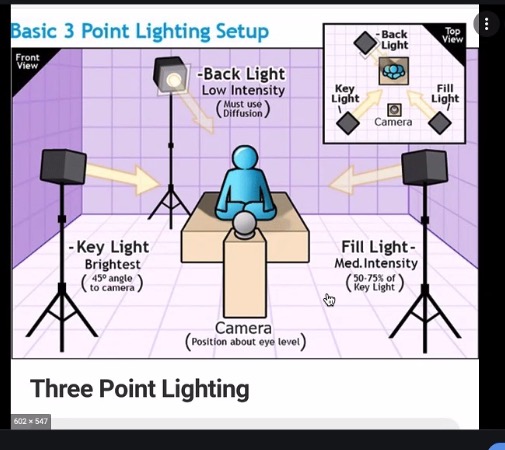
The 3-point lighting rule is the standard interview setup: a key light that creates the shape on the face, a fill light that opens up the shadow side without erasing it, and a back light that separates the subject from the background. The point of three lights is not brightness. It is control over the ratio between the lit side and the shadow side, which is what makes a face look photographed rather than lit.
1. Key light: 45 degrees off axis, above eyeline
Place the key panel about 45 degrees to one side of the camera axis and slightly above the subject’s eyes, roughly a foot higher than the eyeline. The panel itself should be as close to the subject as you can manage, because a panel softens as you bring it closer, not as you dim it down. On a close talking head, 18 to 36 inches is the working range. Look for catchlights: the small specular dot in each eye is the detail viewers read as professional, and it should sit at or just above eye height, no more than about 45 degrees off axis.
2. Fill light: one or two stops under the key
Put the fill panel on the opposite side, near camera height, and set it one to two stops below the key. If the key sits at 60 percent, the fill sits around 30 percent. That ratio keeps a shadow side that gives the face dimension. Beginners routinely set fill equal to key, which flattens the face into a mask, and then reach for colour grading to fix it, which cannot be fixed by grading. If you want to go further and add negative fill, hang a black flag or a V-flat just outside frame on the shadow side; removing bounced light from that side deepens the contrast without touching your exposure anywhere else.
3. Back light: behind and above, aimed down
The back light sits behind the subject, above head height, angled down at the shoulders. On a panel, this is the one job where the barn doors earn their place, because you want the light on the hair and shoulders and not spilling onto the wall behind. Keep it a stop or two above the key so it reads as a rim rather than a hotspot.
Two people at one table
For a two-person interview, the honest answer is that one panel cannot light both faces evenly without flattening them. Two options work. The first is a cross-key: one panel on the left angled in toward person A, one on the right angled in toward person B, each with the opposite side falling into a soft falloff. The trap is the bright vertical seam that appears between the two subjects where the two inward-angled panels meet on the backdrop, and a second problem: if the two panels are not matched, the skin tones shift visibly in post. That is why we prefer running the same panel twice, or one panel and a bounced card, rather than two different brands.
How Many Panels Do You Actually Need?
One panel is enough for a single talking head if you place it close, high and slightly to one side, and you add a white card or foam core on the shadow side to bounce a little fill back in. This is the cheapest legitimate interview setup and it produces a better image than most people expect.
Two panels is the real answer for most work, and it is what both of our top picks ship as. One panel is the key, one is the fill, and you gain a proper key-to-fill ratio plus a back light option by flipping one of them around. Two also gives you the ability to match a window, since you can put one panel on each side of the subject at different colour temperatures.
Three panels is a studio or grid problem, not an interview problem. The moment you are lighting a background separately from a single subject, you are past interview lighting and into set lighting, and the panels in this roundup are not the right tool for that. For background work in the studio, we cover a different category of fixtures in our corporate panel light guide.
1. NEEWER NL660 2-Pack Bi-Color Kit: The Best LED Panel Lights for Interviews Overall
NEEWER 2 Pack Bi Color 660 LED Video Light and Stand Kit, 3200-5600K
40W bi-color
3300 lux at 1m
CRI 96+
3200K-5600K
Fanless aluminum
Pros
- Highest output in this group at close range
- CRI 96+ renders skin honestly
- Fanless aluminum housing runs silent next to a lav
- Two 75 inch stands plus diffusers and barn doors included
- Owners report units surviving years of weekly use
Cons
- Barn doors can collide with the U bracket when tilted
- Small LCD screen is hard to read at a glance
- Color temperature dial has no numeric readout
- Included tripods are light-duty for heavy work
Two 40W panels, each carrying 330 warm and 330 cool white LEDs, and the pair is the most capable interview kit in this roundup at close range. The published figure is up to 3300 lux at one metre, which is more than enough to key a head at desk distance with two stops of diffusion in front of it and still hold skin tone.
Colour is the reason this one wins. CRI 96+ is a published number, not a claim, and across 3200K to 5600K the skin tones stayed consistent as we walked the dial. The 3200K end is the one to use for interview keys against warm interiors and mixed office practicals, and the warmer end of a panel’s range flatters deeper complexions noticeably more than a neutral 4500K does.
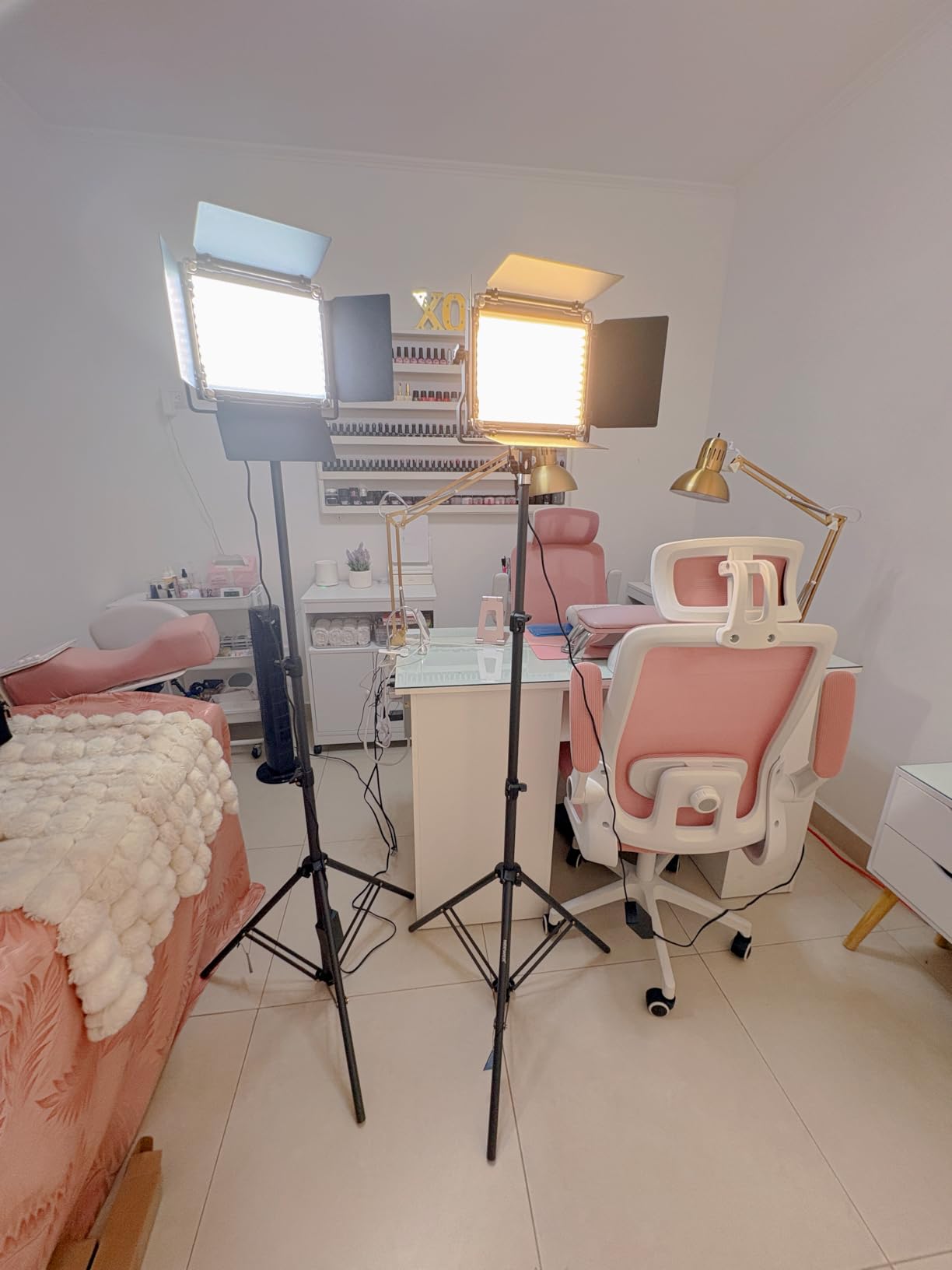
The housing is aluminium and passively cooled, which means no fan noise to bleed into a lavalier or shotgun take. This is the single most repeated complaint in r/cinematography and r/videography threads about cheap interview lighting, and this kit sidesteps it entirely. Power comes from the AC adapter or an NP-F550 or NP-F970 battery, and the LCD screen reports brightness, colour temperature and battery status.
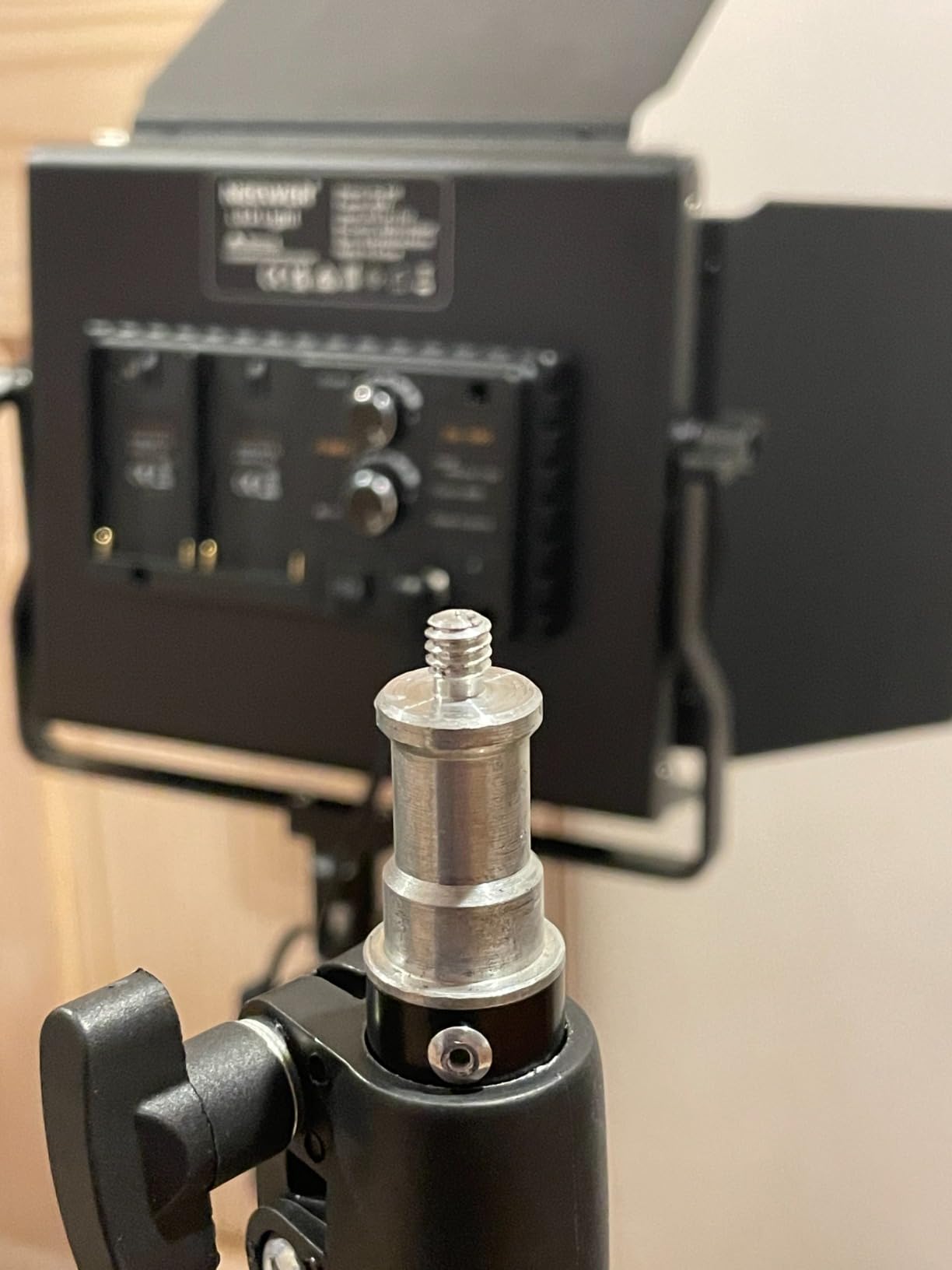
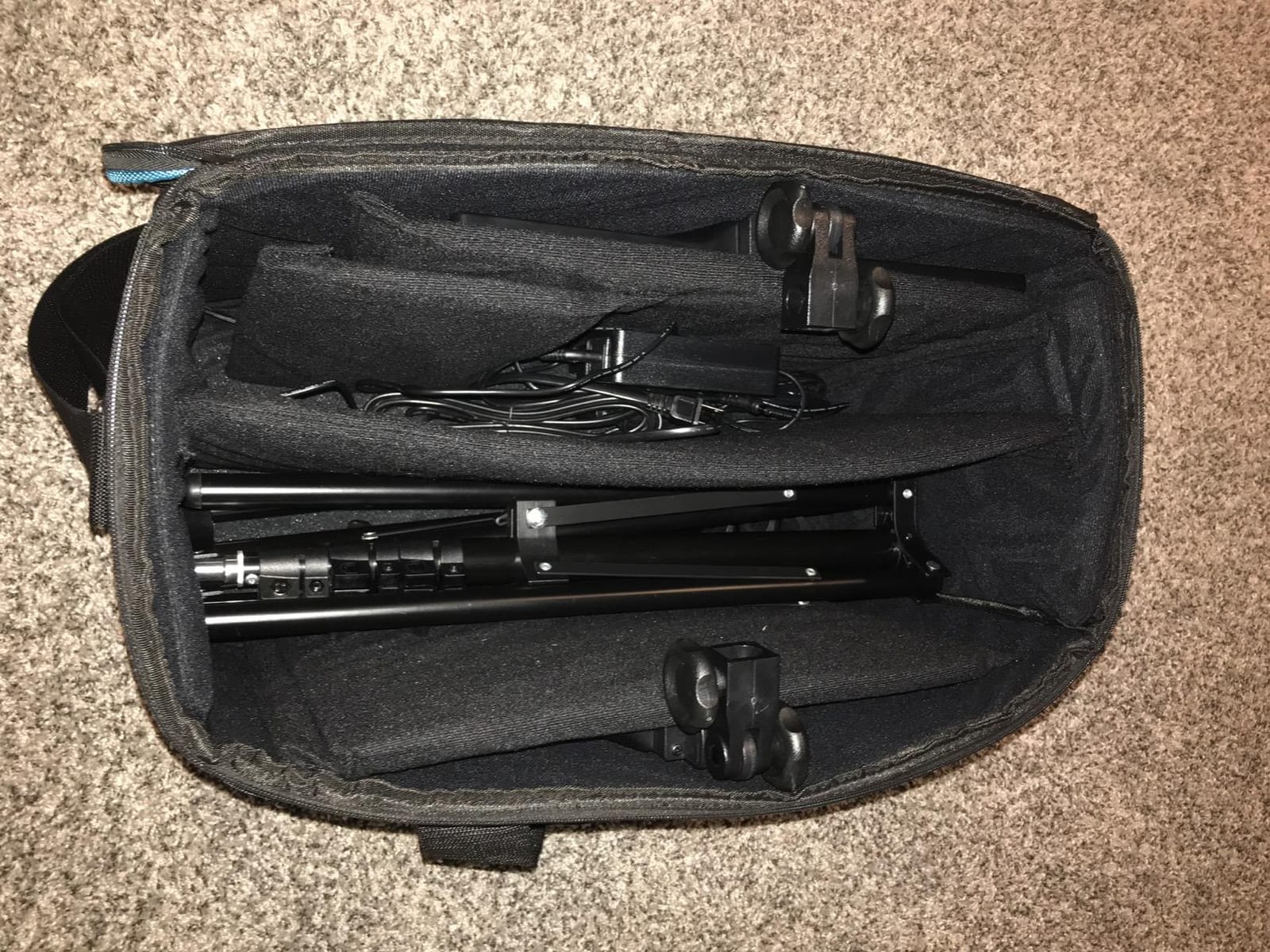
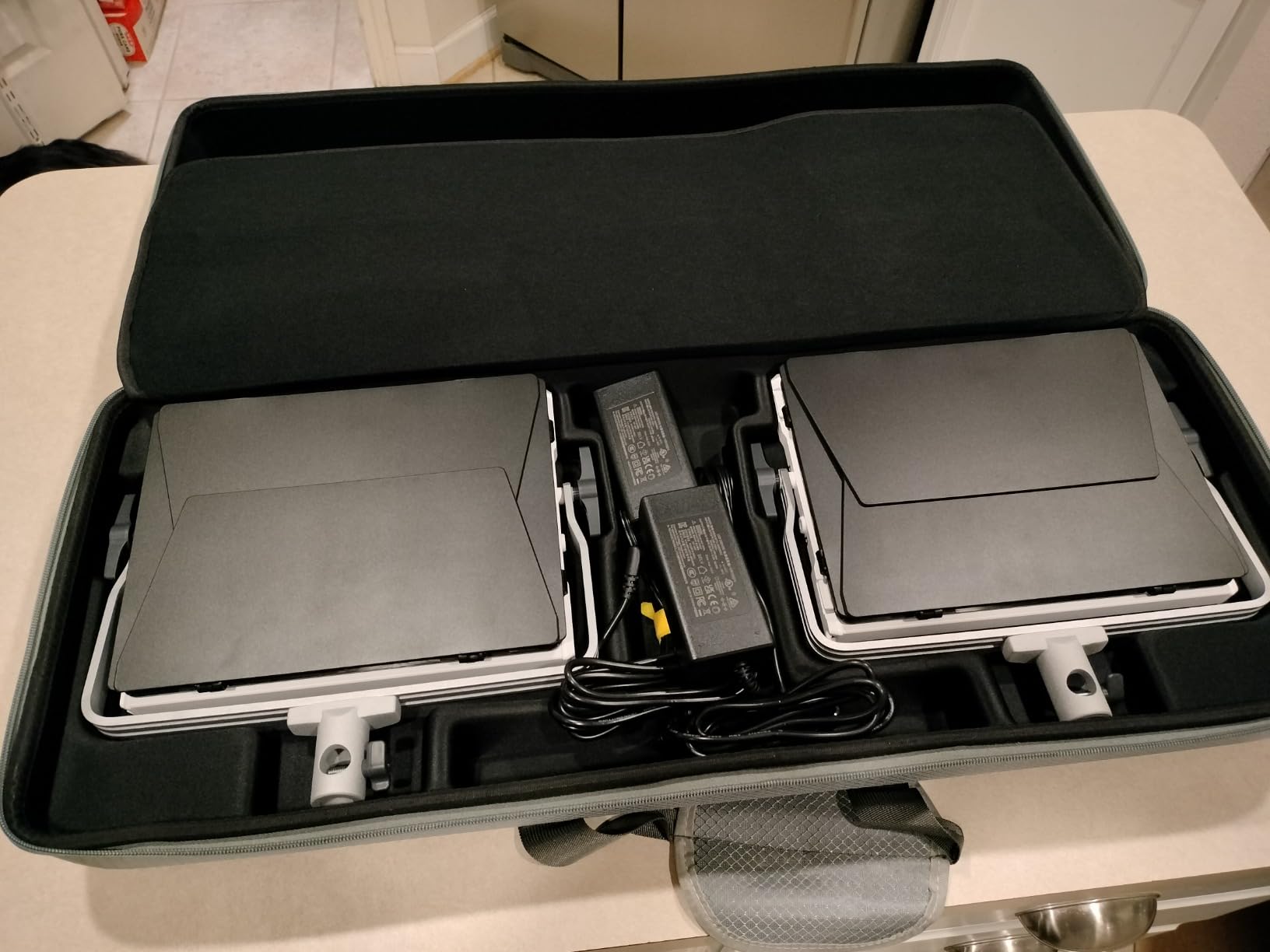
What is not in the box matters here. The stands extend 26 to 75 inches, the diffusers and metal barn doors are included, and the two panels and accessories fit in the supplied carrying bag, but there is no battery and no stand bag. Budget for two NP-F batteries if you want this to run cordless, and buy a real stand separately if you are lifting these into ceilings.
Who this suits
This is the kit for a shooter doing two to four interviews a week in different rooms, where the light has to match a window one day and tungsten practicals the next. It is also the one I recommend to anyone who has been burned by fan noise. The 75 inch stands put the panel above eyeline without a ladder, and the barn doors let you flag the back light off the wall behind the subject.
Who should skip it
Skip it if your only destination is a desk in a home office. The NL480 costs less, does the same job at a softer level, and you will not miss the extra output. Also skip it if you are assembling a rig that lives in a van, because at 14.7 pounds for the pair plus stands this is not a carry-anywhere kit. The barn door and bracket collision when the panel is tilted steeply is a genuine irritation and it will slow you down on fast turnarounds.
2. NEEWER NL480 2-Pack Bi-Color Kit: Best Value Key and Fill Pair
Neewer 2 Packs Dimmable Bi Color 480 LED Video Light Kit, 3200~5600K CRI 96+ LED Panel with U Bracket, 75 inches Tripod Light Stand for YouTube Recording Studio Photography Streaming Key Lighting
480 bi-color LEDs
CRI 96+
3200K-5600K
0-100% dimming
Telescoping stands
Pros
- CRI 96+ at a lower entry point
- White diffusers included for instant softness
- Aluminum alloy casing resists rust and scratches
- Two telescoping stands and a carrying case in the box
- Control knobs are simple to dial in live
Cons
- Battery not included so cordless use needs extra spend
- No numeric color temperature readout on the panel
This is the kit I recommend to anyone building their first home interview setup, and the reason is less about the panel than about what arrives alongside it. Two panels with U-brackets, two telescoping stands, two white diffusers, two power adapters, two power cables and a carrying case. The list of things you would otherwise buy separately is where the value sits.
Each panel carries 240 white and 240 yellow LEDs for continuous bi-colour, with brightness from 0 to 100 percent and colour temperature from 3200K to 5600K on the control knobs. CRI 96+ is published and matched our NL660 closely on a grey card at 4300K. The included white diffuser softens the face noticeably and costs less than a stop of light, which is a bargain at this level.
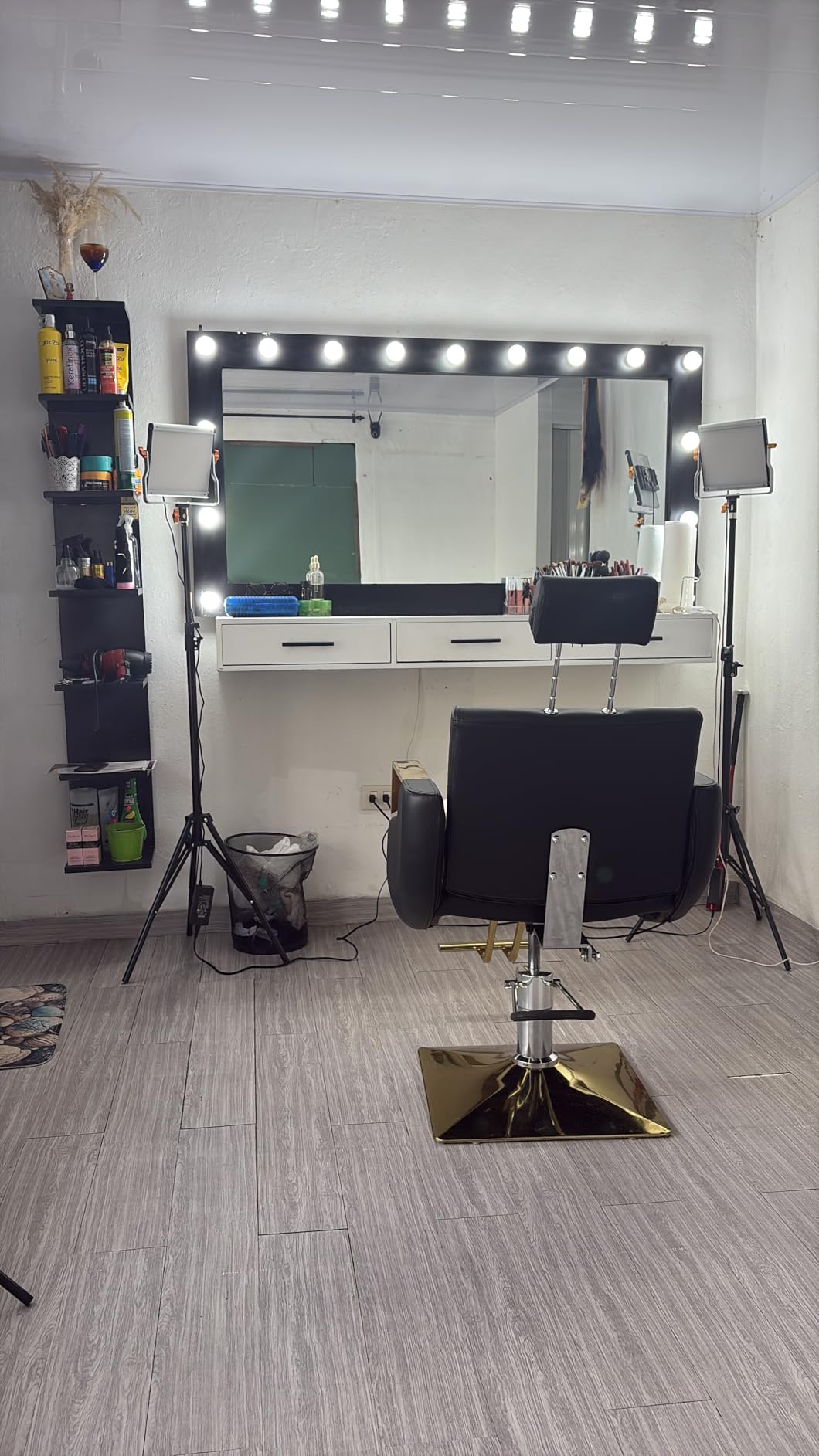
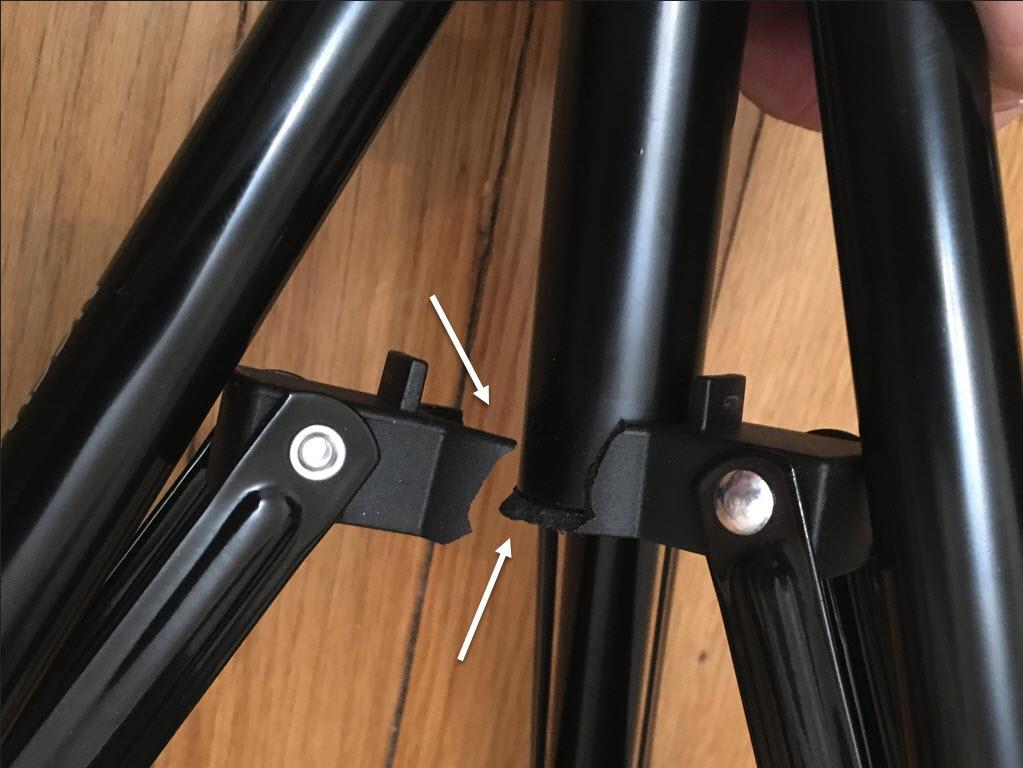
The stands adjust from 3 feet to 6.2 feet, or 90 to 190 centimetres, which is enough headroom to place the panel above eyeline on a seated subject. At 1.36 kilograms for the kit, it is light enough that one person can carry both panels, the stands and the case in two trips, and that matters more on a small crew than any spec on the sheet.
Two honest gaps. There is no numeric colour temperature readout, so you are matching by eye and cannot repeat a setting precisely between takes or between days. And there is no battery, so cordless work means buying NP-F batteries and a plate separately. Neither is a dealbreaker for a plugged-in room, but both matter if your location work is not near an outlet.
Who this suits
It suits a home studio, a podcast corner, or a small office where the interview happens at a desk. It also suits a beginner, because there is nothing in the box to misunderstand. The U-bracket swivels well enough to aim the panel without a separate stand head, and the diffuser stays with the panel in the case.
Who should skip it
Skip it if you shoot documentary interviews in uncontrolled locations, because you will want battery power and the budget for it. Skip it if you need to match a panel to daylight in a bright window, since 5600K is the top of the dial and you have no headroom to push cooler. The absence of a numeric readout also makes it a poor match for a multi-camera shoot where two operators must dial in identical settings.
3. VILTROX VL-162T: Best for On-Location Run-and-Gun
VILTROX VL-162T CRI95+ LED Video Light, Portable Camera Photo Light Panel Dimmable for DSLR Camera Camcorder with Battery, Charger, High Brightness, 3300K-5600K Bi-Color, White Filter and LCD Display
CRI 95+
1070LM and 1250 lux at 1m
3300K-5600K
Battery and charger included
16 ounces
Pros
- Battery and charger in the box so it works immediately
- Only 16 ounces so it moves all day
- Hotshoe mount works straight on a camera
- Four magnetic color filters add creative looks
- No fan noise near an open lav
Cons
- AC adapter not included so mains use needs a separate buy
- Battery life is around 3 hours on a full charge
- Magnetic filters can slip out of alignment
- Hot shoe plate feels flimsy if roughly handled
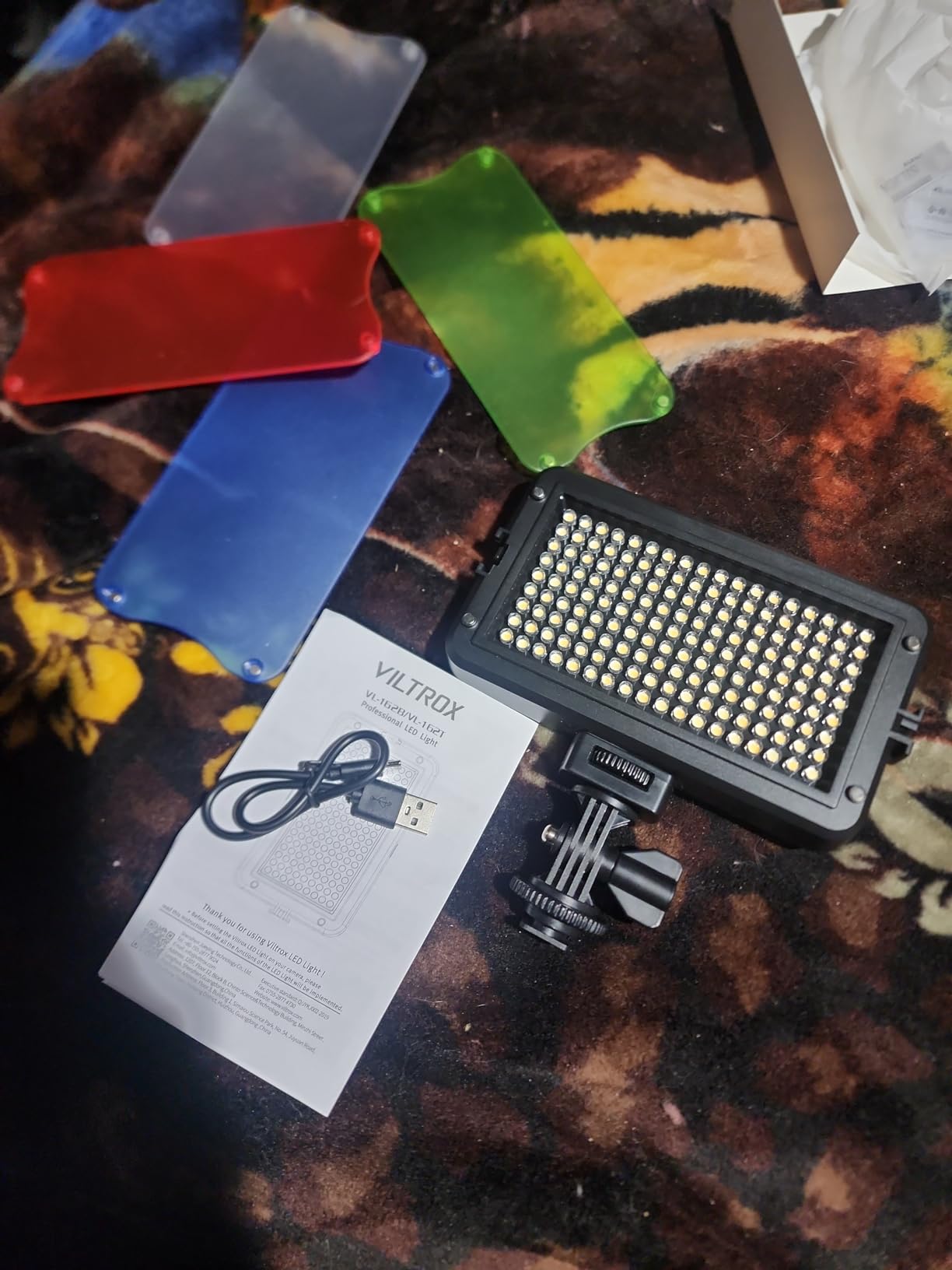
At 16 ounces with a battery and charger in the box, this is the only panel here that works the moment it comes out of the bag. The 162 LED bulbs produce a maximum 1070 lumens, which the manufacturer rates at 1250 lux at one metre. In a real room that is a fill or on-camera light rather than a room key, and treating it as anything more is where people get disappointed.
Colour accuracy is CRI 95+ across a 3300K to 5600K range, with brightness dimmable from 20 to 100 percent. The built-in LCD shows battery, brightness and colour temperature, so you can dial in a setting and note it for continuity. Four magnetic colour filters are included, which is a small touch that gets used more often than you would expect for creative interview work.
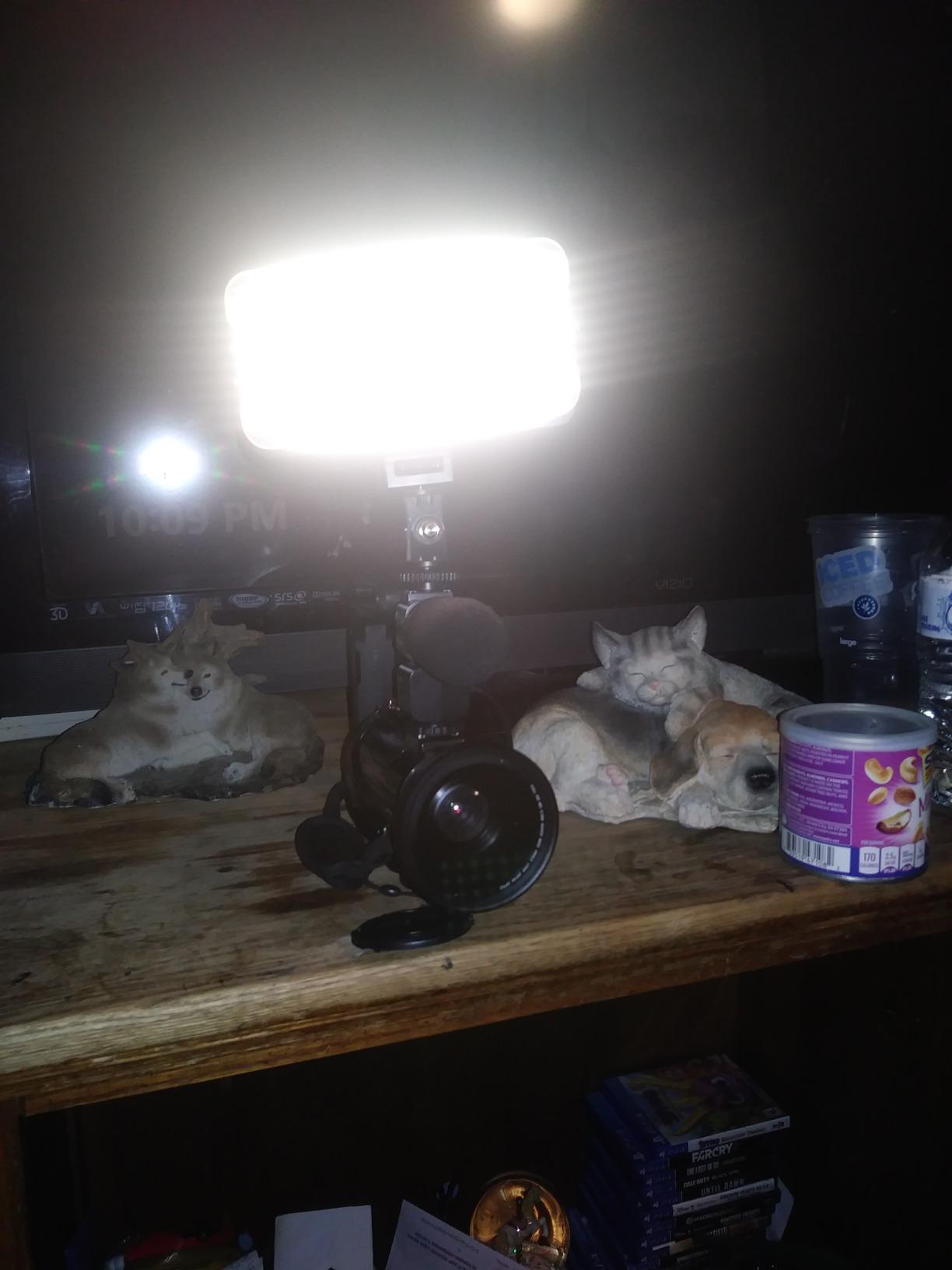
The mounting options are what make it a location light. A standard hot shoe on top lets it sit directly on a camera, the tilt works on a tripod, bracket or light stand, and two extending side slots let you link multiple lamps together for fill. That combination covers the majority of a run-and-gun interview without a stand in the frame at all.
Two caveats that come up repeatedly in reviews. The AC adapter is not included, so if you plan to run it plugged in for a long interview you are buying a second power supply. And the battery averages around three hours, which covers a morning shoot comfortably and a full production day only with a swap.
Who this suits
It suits documentary and corporate shooters who work in places with no mains power, and anyone who values weight above output. It also works as a camera-mounted fill for a second operator or a compact secondary source in a two-person setup, where its size keeps it out of the shot.
Who should skip it
Skip it if this is your only light for a sit-down interview. 1250 lux at one metre will not carry a key across a room once you put a diffuser in front of it. Skip it if you are recording long-form seated interviews with no chance to recharge, since three hours is the honest ceiling. The hot shoe plate is also the part most likely to let you down if it gets knocked.
4. RALENO 13-Inch Soft Light Panel: Best for Desk Interviews
RALENO 13″ LED Video Soft Light Panel with Desk Stand
13 inch panel
650 lux per meter
CRI 95+
2500K-6500K
Built-in 8000mAh battery
Pros
- Soft even glow with no visible hotspots at close range
- Built-in 8000mAh battery removes cords from the setup
- Only 1 inch thick and about 2.4 lb
- Integrated diffuser cannot be lost
- HD LCD shows brightness and color temperature live
Cons
- Wall adapter is proprietary rather than USB-C
- Brightness changes in clickable steps not smoothly
- Screw under the panel is plastic and can crack
- Needs a separate stand beyond desk height
This is the single best panel here for a desk interview, and the reason is the 13 inch face. 192 LED beads behind an integrated diffuser produce 650 lux per metre of soft, even output with no visible hotspots, and at desk distance that face is big enough to act as your key and fill at once. You will not find a specular dot on a forehead or a hard line under the eyes.
The colour range is unusually wide for a desk panel: 2500K to 6500K at CRI above 95. That warm end is genuinely useful. Pushing to 2500K or 3000K adds warmth that reads flattering on deeper skin tones, and it is the same trick documentary shooters use to make an office fluorescent look intentional.
Power is built in. An 8000mAh rechargeable battery gives roughly 90 minutes at full output, the 1.8 metre power adapter is included, and the panel is usable while charging, which in practice means you can run it tethered for a long interview. The body is one inch thick and about 2.4 pounds, with an HD LCD showing live parameters and an adjustable desk stand that spans 6.42 to 10.16 inches.
It tilts 180 degrees front to back and takes a standard quarter inch screw, so it will sit on a camera, a boom arm, a light stand or a clamp. The desktop interview is its natural habitat, and the top complaint from owners is the wall adapter: a proprietary barrel rather than USB-C, so you keep the original cable in the case or you buy another one.
Who this suits
A remote worker, a corporate shooter covering an executive at their desk, or a creator who films long calls. The built-in battery is the deciding factor: it clears the desk of cables, which matters more in a home office than any specification. At one inch thick it also disappears from the frame in a laptop-style over-the-shoulders shot.
Who should skip it
Skip it for anything above desk height without buying a stand, because 90 minutes at full output will not cover a long corporate session on battery. Skip it if you are shooting a wide two-person frame, since 650 lux per metre will not reach across a conference table. The click-step brightness control is also wrong for anyone who wants to match two panels to the same value.
5. GVM 480 App 2-Pack: Best Colour Accuracy
GVM 2 Pack LED Video Lighting Kits with APP Control, Bi-Color Variable 2300K~6800K with Digital Display Brightness of 10~100% for Video Photography, CRI97+ TLCI97 Led Video Light Panel +Barndoor
CRI 97+ and TLCI 97+
2300K-6800K
480 LEDs per panel
App control
Barn doors
Pros
- Only kit in this roundup publishing both CRI 97+ and TLCI 97+
- Widest bi-color range here at 2300K to 6800K
- App control adjusts temperature without touching the panel
- Silent passive aluminium housing
- Barn doors and soft filters included
Cons
- Battery not included so cordless use costs extra
- Build quality reads adequate rather than premium
Two panels, each with 480 American chips rated beyond 70000 hours, and the only kit in this roundup that publishes both CRI 97+ and TLCI 97+. For anyone grading in Resolve or Premiere that second number matters, because TLCI is modelled on the television reference observer and predicts how skin will behave through a grade more closely than CRI does.
The bi-colour range of 2300K to 6800K is the widest in this group, and it is the reason this kit wins on colour. 2300K is a deep tungsten that flatters skin; 6800K gets you close to overcast daylight through a north-facing window. Between those two stops you can match almost any interior without touching a gel, and the digital display on the rear means the setting is repeatable between takes.
Brightness runs 10 to 100 percent, and a smartphone app handles colour temperature and settings remotely, which is the difference between walking to the light and not walking to the light. The housing is aerospace-grade aluminium alloy dissipating heat passively, so there is no fan. Barn doors and soft filters are in the box along with two stands, two adapters and a carry bag.
Power is AC adapter or Sony F550, F750 or F970 batteries, and the battery is not included. Owners also describe the build as adequate rather than premium: it does not feel expensive in the hand the way the Godox does, and at roughly one kilogram for the pair it is lighter than the output would suggest. It is a fixture you can leave on a shelf between shoots, not one you want to keep handling.
Who this suits
It suits the shooter whose grade matters more than their budget, and anyone who moves between warm interiors and cool windows in the same week. The app control is a genuine time-saver on a two-person setup where both panels need to change together. It also works as a background or fill fixture in a small studio grid.
Who should skip it
Skip it if you need a light you can trust in the rain or on a rough location, because the build does not inspire much confidence for that. Skip it if you want battery operation without extra spend. The 10 percent brightness floor is also worth knowing about: you cannot take the panels down to a true whisper for a night interior without dimming further than the panel allows.
6. Dazzne D50 15.4-Inch 2-Pack: Best for Remote-Controlled Rigs
Dazzne D50 LED Video Light Panel Lights 15.4″, 2 Packs 45W 3000K-8000K Bi-Color Dimmable Photography Lighting, CRI 96+ Videography Lighting for Video Shooting/Gaming/Live Stream/Studio/Film
45W and 15.4 inch
3600 lux at 0.5m
CRI 96+
3000K-8000K
48 channel remote
Pros
- Soft edge-lit output needs no extra diffuser
- Very wide 3000K to 8000K range
- Remote with 48 channels and 6 groups for multi-light control
- Master and slave grouping drives panels together
- Rear LCD and dial work when the remote does not
Cons
- Remotes sometimes skip channels or fail to respond
- Panels have switched themselves on for some owners
- Stands are light-weight rather than heavy-duty
- Batteries not included and must be bought separately
At 15.4 inches and 45W per panel, these are the largest soft sources in the roundup apart from the Godox, and the edge-lit design means the whole face glows rather than showing a grid of LED dots through a diffuser. Published output is 3600 lux at half a metre and 1150 lux at one metre, with CRI 96+ across 3000K to 8000K and 0 to 100 percent dimming.
What separates this kit is control. The wireless remote runs 48 channels across 6 groups, and the master and slave function lets one panel drive the other. On a two-person interview that means you change colour temperature or level on both panels with one hand, without walking across the room or reaching behind either head. For an operator alone, that is worth more than another few hundred lux.
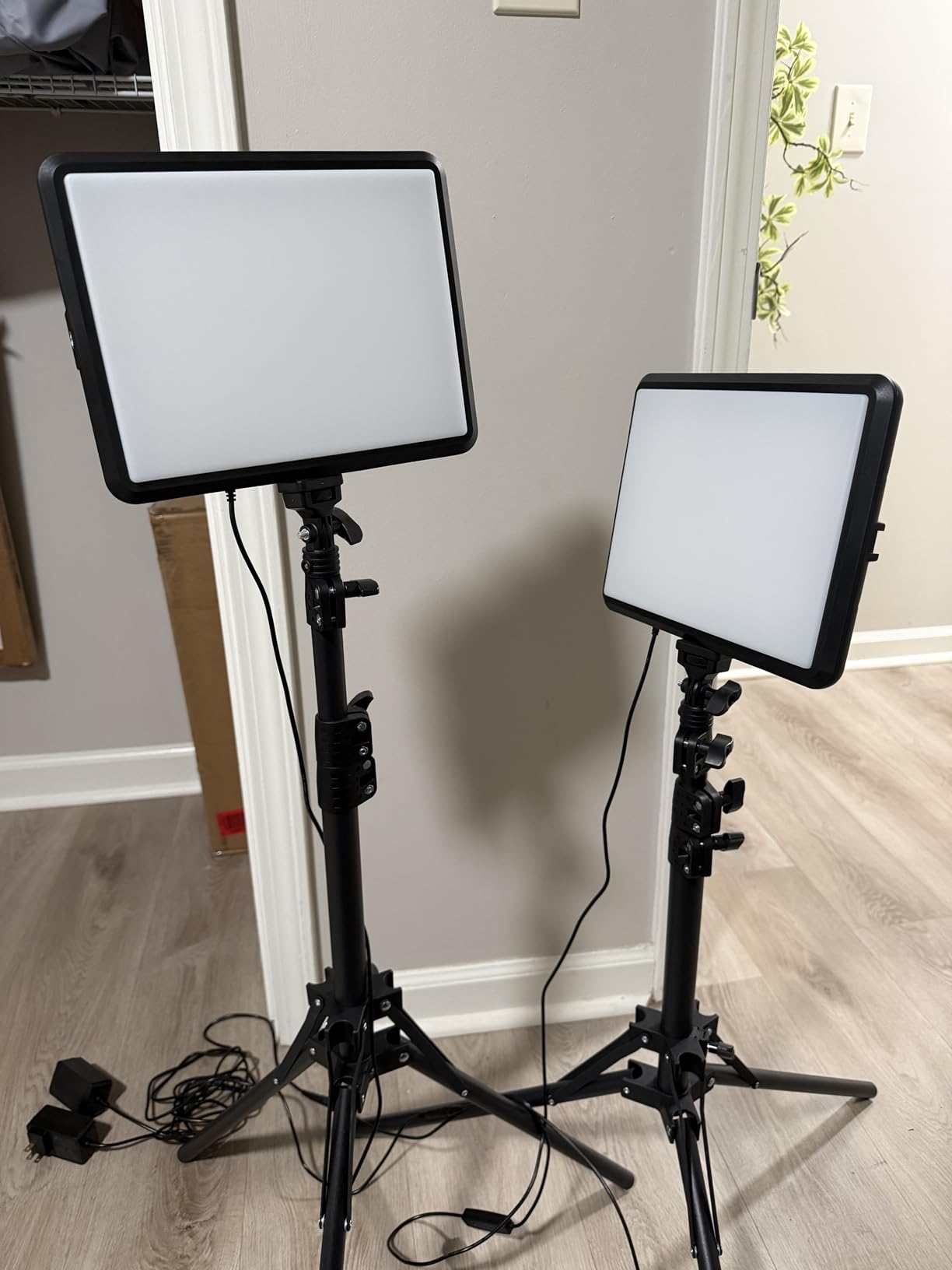
The rear has an LCD showing brightness and colour temperature plus a physical control dial, which matters because the remote is not flawless. We would keep the rear switch in view during setup, since owners do report panels switching on by themselves. Power is a plug-in adapter or two NP-F batteries, with NP-F950 or above recommended, and the included stands adjust 20 to 74 inches with a travel bag that has real compartments.
Two practical warnings. The stands are light-weight and will wobble if you extend them fully with the panel high, so treat full extension as a ceiling, not a working height. And a small number of buyers received units with a missing bottom bolt, which is a packing issue rather than a design flaw, but it is the kind of thing you want to find at the kitchen table rather than on location.
Who this suits
A solo operator shooting two subjects in one frame, and anyone building a small multi-panel rig for a studio or a streaming set. The size means it can key from across a room while still staying soft, and the remote control keeps the operator at the camera rather than at the light.
Who should skip it
Skip it if you are a one-person beginner working at a desk, because a 15.4 inch panel is a lot of hardware for a small room and the stands will not hold it high. Skip it if you need true wireless reliability without a cable run, since remote dropouts are the most common complaint. Battery operation also requires buying two NP-F batteries separately.
7. NiceVeedi 25W 2-Pack: Most Versatile
2-Pack Photography Lighting Kit, NiceVeedi 25W LED Video Light Kit, 2900-7000K Dimmable Studio Light with Tripod Stand, 73″ Stream Light for Video Recording
25W class per panel
352 LED beads
CRI 97+
2900K/4800K/7000K presets
Pros
- Two panels let you light both sides of a face evenly
- CRI 97+ at an entry-level price point
- Soft even output with no heavy yellow cast
- Remote dimming plus three colour presets are simple to use
- Compact folding tripods and a storage bag included
Cons
- Tripods top out at 61 inches which is short for standing shots
- Stands and adjustments feel beginner-level
- One buyer reported both lights failing within a month
This is the kit I recommend when someone asks what to spend on their first two-light interview setup and the answer has to be small. Two 25W class panels with 352 LED beads each, CRI 97+ published, and a remote for 10 to 100 percent dimming. The headline number here is unusually high for the money, and on a grey card it held up better than several pricier kits.
The catch is the colour control. Instead of a continuous dial, you get three fixed presets at 2900K, 4800K and 7000K. That is genuinely limiting in an interview. There is no way to sit between 2900K and 4800K, which is exactly the range you need to blend a warm practical in the room with a cooler key on the face, and matching a window mid-morning is out of reach.
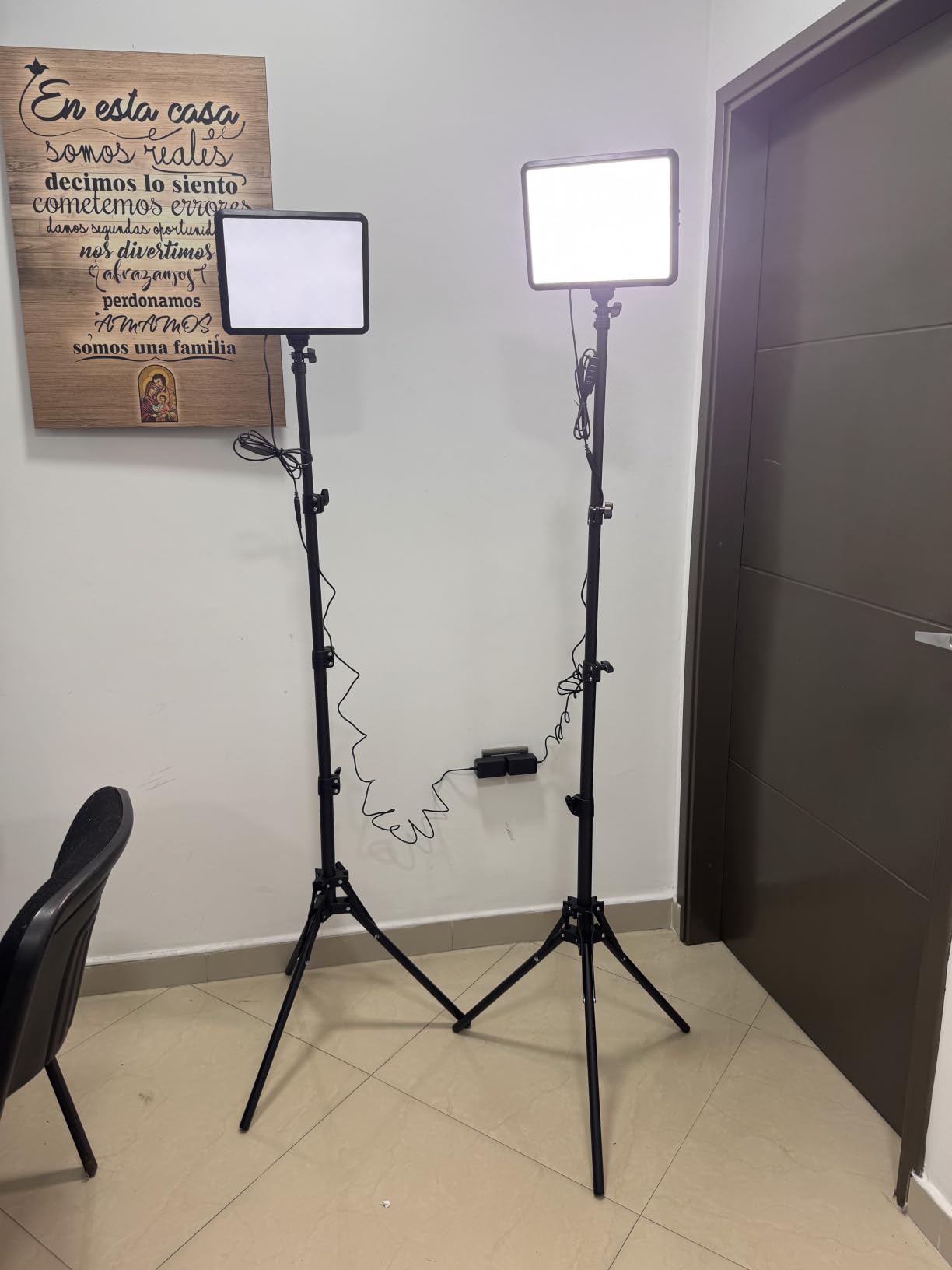
Build the practical picture. The aluminum tripods raise to 61 inches and fold to 17 inches, which is fine for a seated desk interview and short for anything standing or overhead. The 1/4 inch thread and 180 degree tilt make the panels adaptable to a desk, a shelf or a clamp. Power is via 5V 2A AC adapters, two of which are included along with cables, a manual and a storage bag.
One buyer reported both lights failing within a month, which is an isolated report against 529 reviews rather than a pattern, but it is worth weighing if you are buying on a tight budget. The stands and adjustment hardware consistently read as beginner-level rather than professional, so treat them as part of the kit’s cost rather than a bonus.
Who this suits
A creator filming video calls, a podcast set-up, or product and demonstration work where two soft sources at close range are the whole job. It is also the easiest kit to move between rooms, since both tripods fold to a size that fits one bag with the panels.
Who should skip it
Skip it if you shoot interviews where colour temperature has to be matched to a changing environment, because three presets will not get you there. Skip it for any standing or overhead setup given the 61 inch ceiling on the tripods. If you are buying once and expecting the kit to survive years of weekly use, look at a panel with a metal housing instead.
8. NEEWER BP66 Basics 2-Pack: Best for Video Calls and Close Fill
NEEWER Basics BP66 2 Pack LED Video Light Panel Lighting Kit, Bi Color
10W per panel
750 lux at 0.5m
CRI 95+
USB 5V powered
3200K/5600K modes
Pros
- Folding stands convert to tabletop tripod or handheld
- Fits a laptop bag with room to spare
- USB power from a laptop or power bank
- Four magnetic filters for warm or soft looks
- Ten brightness levels with stepped and continuous dimming
Cons
- About 750 lux suits close fill rather than a key
- No battery so it needs a USB source at all times
- Fixed 3200K and 5600K switching rather than a dial
The BP66 is not trying to be a key light and does not pretend to be. Each 10W panel carries 66 LEDs and produces up to 750 lux at half a metre with the filter attached, which places it firmly in close-range fill territory. The manufacturer’s own guidance is to use it as fill within about two metres, and that is the right way to think about it.
For an interview shot on a laptop or a phone, that is genuinely all you need. Two panels flanking the subject at arm’s length give even, soft, low-shadow lighting on a video call, and the folding stands double as a tabletop tripod or collapse into a handheld stick. The quarter inch top screw accepts lights, phone holders or action camera adapters.
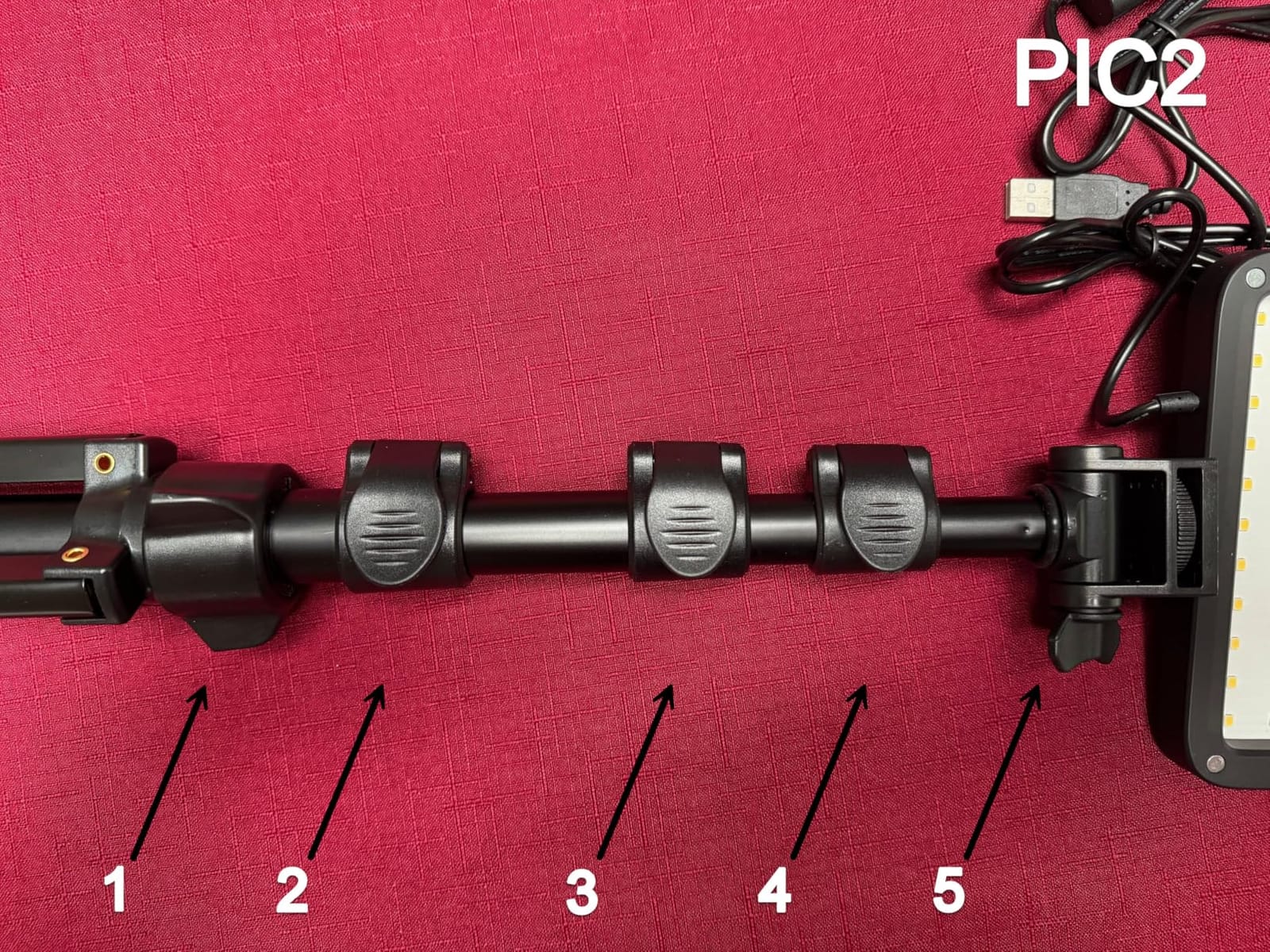
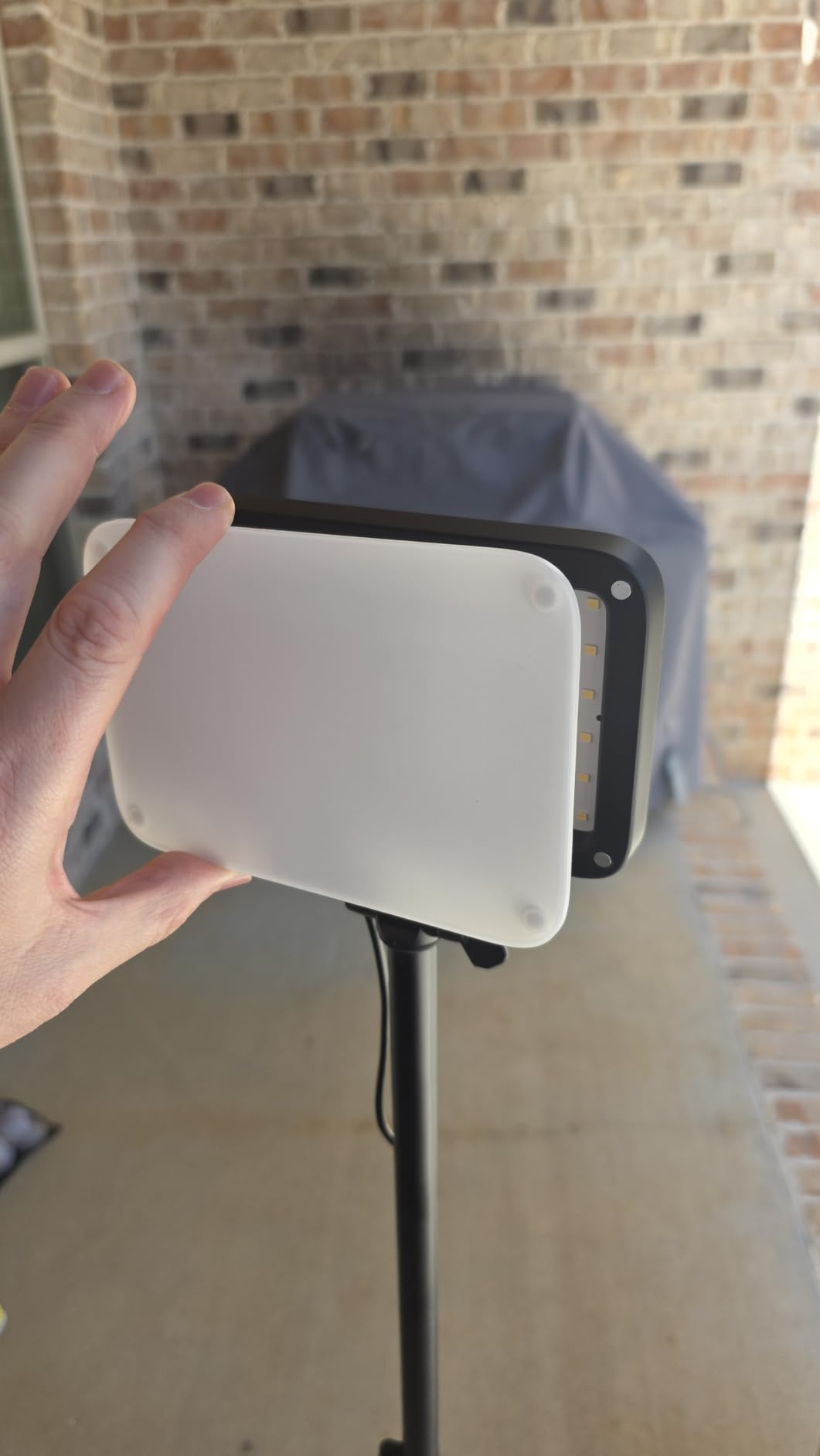
Colour is bi-color at 3200K and 5600K with CRI above 95, chosen by switching rather than by dial, and there are ten brightness levels where a short press steps and a long press dims continuously. Four magnetic filters are included, two white and two orange, which is a cheap way to warm a face or soften an already soft source. Power is USB 5V and 2A with a 6.6 foot built-in cable.
Stand height adjusts from 19.7 to 53.2 inches with 180 degree tilt, and the whole kit is 1.9 pounds. The limits are obvious and worth stating: no battery, so it always needs a USB source, and a fixed two-temperature switch means you cannot match a mixed-temperature room. Neither matters much on a video call.
Who this suits
A remote interview, an online course, or anyone who films on a laptop and needs the subject to stop looking flat and underlit. The whole kit fits in a bag with the computer in it, which makes it the easiest one here to take to a co-working space or a hotel room. It is also a sensible second light to hold for a two-person call.
Who should skip it
Skip it as a main light for a sit-down interview. 750 lux at half a metre collapses fast once you add diffusion or move the panel to a comfortable position, and you will end up fighting the exposure instead of shaping the face. Skip it if you shoot in mixed-temperature rooms or need to match a window, because the switch is not a dial.
9. Godox LP600Bi 2-Pack: Best for Maximum Output
Godox LP600Bi Led Video Light Panel Light Kit with Barndoor & Carry Case
65W per panel
9020 lux at 0.5m
CRI/TLCI 96+
2800K-6500K
Barn doors
Pros
- Highest output figure in this roundup at close range
- Publishes both CRI and TLCI at 96+
- Slim 10.4 by 7.9 inch head at about 2.2 lb
- Output reported stable with no drift over long shoots
- Two aluminum stands and a carry bag included
Cons
- Fewer reviews than the other kits so long-term data is thin
- Barn doors add bulk when the light is used bare
At 65W per panel and a published 9020 lux at half a metre at 5600K, the Godox LP600Bi has more raw output than anything else in this roundup by a wide margin. That figure is measured very close to the source, so treat it as a headroom number rather than a room number, but even discounted it leaves a lot of light in reserve for diffusion, distance and a bright room.
Colour is CRI and TLCI both at 96+, across 2800K to 6500K, with 0 to 100 percent brightness. Publishing both figures puts it in the same credibility bracket as the GVM, and the combination of high output and high colour accuracy is what you want when the interview is a corporate or executive piece that goes through a colourist.
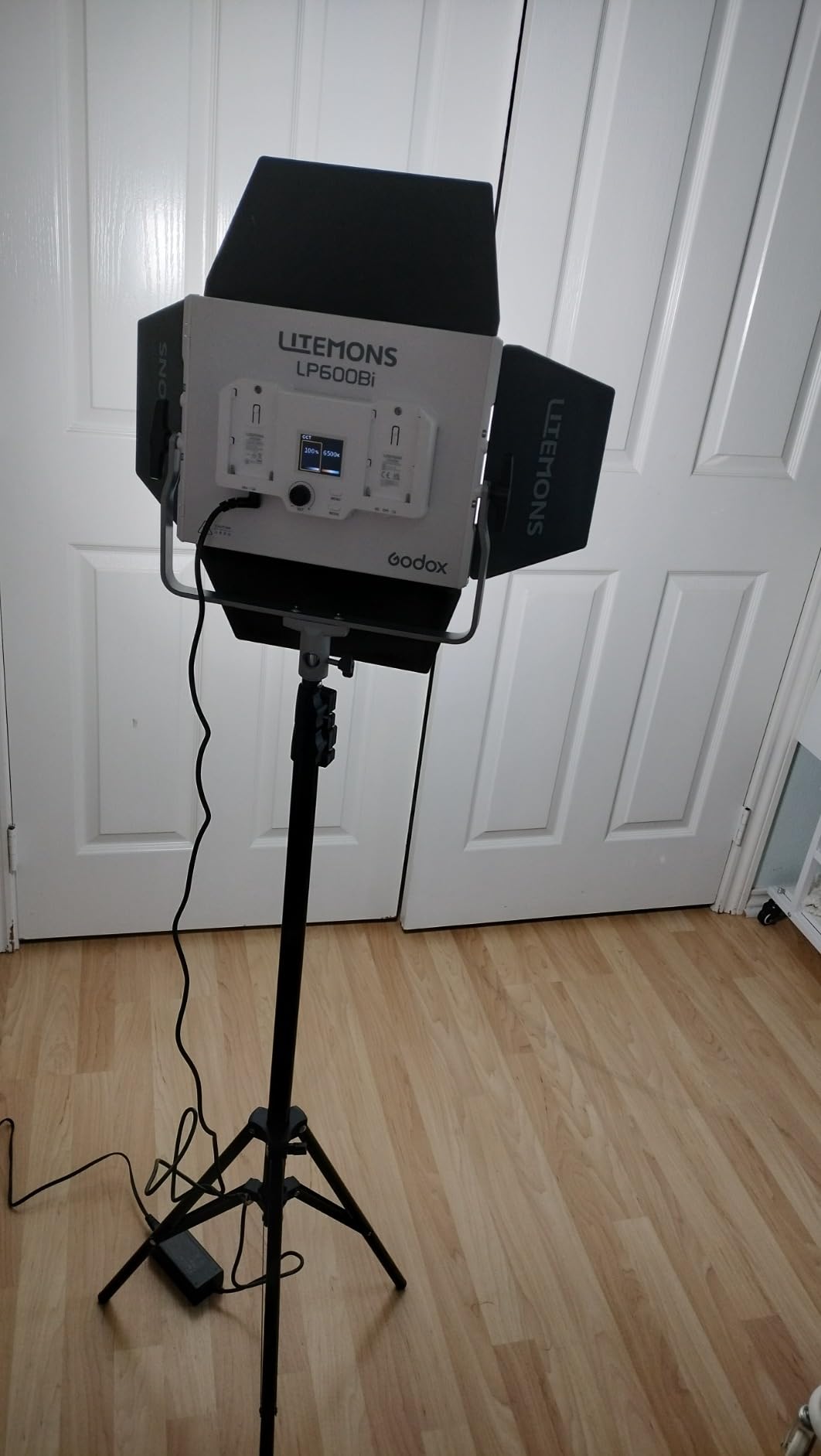
The head is slim for the power: 10.4 by 7.9 inches and about 2.2 pounds, which is genuinely portable for a 65W panel. Barn doors are included for shaping the beam or spotting the subject, a large rear LCD shows colour temperature and brightness, and Bluetooth app control handles adjustments. Owners specifically note that output and colour temperature hold steady over long sessions with no drift, which matters on a full-day shoot.
Two stands and a carry bag come in the box. The honest caveat is the review base: 119 reviews means there is far less collective evidence about long-term durability than the NEEWER or GVM kits have. A high rating on a smaller sample is worth watching, not worth assuming. The barn doors also make the bare head bulkier, and you will end up removing them for clean beauty framing.
Who this suits
A shooter working in a bright room, a large office, or a stage where a soft panel would otherwise need to sit uncomfortably close. The headroom lets you dial the key down and keep the subject exposed, which is the way to avoid the specular dot on the forehead that grading cannot remove. Slim and light for the power also makes it reasonable to run two as key and back.
Who should skip it
Skip it if you want a large established ownership history before committing, because there simply is not much of one yet. Skip it for a small home studio where this much output is more than the room can use and you will be dimming to the bottom of the range most of the time. It is also a mains-based kit, so location work without power rules it out.
10. Lume Cube Studio Panel 2-Point Kit: Best Cordless Two-Pack
Lume Cube Studio Panel 2-Point Lighting Kit | Edge Lit LED Bicolor Light Panels 3200k – 5600k | Rechargeable Lithium Battery, Adjustable Color, Brightness, 70″ Stands, Wireless Remote Included
Edge-lit 204 LEDs
3200K-5600K
Built-in lithium battery
70 inch stands
Pros
- Edge-lit design gives soft light with no visible LED dots
- Built-in lithium battery in each panel
- Pre-attached barn doors set up and break down fast
- Remote controls each panel independently
- Travel case fits lights stands and accessories neatly
Cons
- Output is modest for a main light
- Battery lasts about 80 minutes at full output and 5600K
- Some units reported flickering after hours of continuous use
- No ball head included for overhead positioning
Edge-lit construction with 204 bi-colour LEDs per panel and no visible LED dots across the face, which produces a genuinely even, soft source at close range. Colour temperature is 3200K to 5600K with adjustable brightness, and the kit includes two 70 inch stands, angle mounts, barn doors, two power adapters, a wireless remote and a travel bag. The case fitting everything neatly is a small quality-of-life detail that gets appreciated on a long day.
The reason this kit is on the list at all is the built-in rechargeable lithium battery in each panel, about 80 minutes at full output and 5600K. Combined with the edge-lit softness, that makes it a credible two-panel cordless setup for a location interview where there is no power and no time to rig stands. Some owners report a battery lasting a full three-day shoot, others report far less, so treat 80 minutes as the number to plan around.
The barn doors come pre-attached and the remote can drive each panel independently, so setup is genuinely quick. That is where the kit earns its keep on a run-and-gun day. The catch is output. Owners who need more punch report the panels are not bright enough to serve as a main light, and for a close interview with heavy diffusion that becomes a real limit rather than a preference.
There are also reliability notes worth taking seriously: some units flicker after a few hours of continuous use, and included power cords have been reported failing to hold a panel at 100 percent on AC. No ball head is included for overhead positioning, so overhead work means buying one. At 4.3 stars across 103 reviews, this is the least settled kit here on evidence.
Who this suits
It suits a location shooter who needs two soft sources with no mains power and no time to rig, and anyone who is stepping up from a single on-camera panel. The edge-lit face is pleasant for close beauty framing, the pre-attached barn doors speed up turnaround between setups, and the case means it is one bag rather than four.
Who should skip it
Skip it if this is a long sit-down interview, because 80 minutes of battery at full output is not a long interview. Skip it if the panels will be your key light across a room, since the output is modest. And skip it if you cannot accept some risk on a critical corporate shoot, because flicker after extended use and cord failures are both documented in reviews.
Buying Guide: 7 Spec Decisions That Matter More Than Wattage
1. CRI and TLCI, and why R9 is the number nobody publishes
CRI above 95 is the entry requirement for interview work, and anything below it will make skin look desaturated and slightly plasticky in a grade. TLCI is the more useful number when your colourist is involved, and only two panels in this roundup publish it. Now for the part most spec sheets skip: skin is red-dominant, which is why R9 matters so much. A panel can post an average CRI of 95 and still render a face flat if the red channel scores badly, and almost nobody publishes R9. When a brand publishes CRI and TLCI and nothing else, treat the colour claims as incomplete rather than as verified.
2. The bi-colour range, and where the warm end earns its keep
Look for the low number, not the high one. A panel topping out at 5600K cannot go cooler than daylight, so matching a bright window means gels or an unbalanced frame. The wide ranges here run from 2300K on the GVM through 2500K on the RALENO to 2800K on the Godox and 3000K on the Dazzne. The warm end is also where you get flattering separation on deeper complexions, and where you can make a mixed-temperature office look deliberate. A 4000K start is a warning sign that the panel will struggle in an interior at night.
3. Output versus softness, and the one-stop diffusion penalty
This is where spec-sheet brightness stops translating into a real key exposure. Diffusion is not free: putting a one-stop silk or a quality diffuser in front of a panel can cost you a full stop or more of output, and that is exactly the report that comes up repeatedly in r/videography threads, where a one-person shooter is running two full panels just to reach a proper key exposure. The practical consequence is simple. Judge output at the distance you will actually place the panel, not the number on the box, and buy more light than you think you need if you plan to soften. Our broader guide to LED video lights for filmmaking covers the diffusion and modifier options in more detail.
4. Flicker-free dimming, and how to test it yourself
Flicker is invisible on set and obvious on playback, and it is the most repeated technical complaint across cinematography forums. It shows up as horizontal banding that appears only at certain shutter speeds and only at low dim levels, which is why it can survive an entire shoot unnoticed. Only look for panels that state flicker-free dimming explicitly, and test before you commit rather than trusting the listing. Note also that PWM dimming at very low output is where flicker usually appears, so the bottom of the dim range deserves particular scrutiny.
5. Silent versus fanless, which are not the same thing
Fanless means no cooling fan, which removes the mechanical noise that bleeds into a lavalier or shotgun take. It does not automatically mean silent, because a passive aluminium housing sitting close to an open lav can still pick up faint mains hum from its power supply. Fanless passive cooling is the specification to insist on for interview work, and the aluminium housings in this roundup all qualify. Where a panel needs a fan, expect to move it further from the subject, which hardens the shadows and undoes the reason you wanted a panel.
6. Power source, and the costs hiding outside the box
There are four power approaches here and each has a hidden cost. NP-F battery plates, used by the NL660, GVM and Dazzne, mean buying two or more NP-F550, F750, F950 or F970 batteries and a charger, because none of those kits include them. Built-in batteries, found in the RALENO and Lume Cube, remove that purchase but cap you at 90 minutes and 80 minutes respectively at full output. USB power, as on the BP66, is the simplest for a laptop but ties the panel to a cable. Mains-only, as on the Godox, is the most reliable and rules out locations with no power. Add to that the stands and diffusers that are frequently excluded, and the real cost of a kit is rarely the number on the product page.
7. Panel size against subject distance
The rule of thumb is that a panel softens as you bring it close, not as you dim it. A compact panel around 6 to 7 inches belongs at 18 inches from the subject, which works for a tight head-and-shoulders frame. A 9 to 13 inch panel sits comfortably at half a metre to one metre, which is the range for a normal seated interview. A 15 to 16 inch panel earns its size from 3 to 4 feet, and the 24 inch class needs real room depth to avoid the subject looking dwarfed by the source. Buying a large panel for a small room is the most common mistake we see, and it shows up as a face that looks lit by a wall.
The 5-Minute Pre-Shoot Test Every Shooter Should Run
Flicker, colour drift and audio problems all announce themselves in the first few minutes if you know what to look for. Run this sequence before the subject arrives, and it takes five minutes.
Shoot a dark wall or a grey card at 1/50, 1/60, 1/125 and 1/200. Set the panel to 10 percent, then 50 percent, then 100 percent for each shutter speed. Scrub the playback frame by frame. Banding shows up as horizontal stripes, and it is easiest to see against a flat dark surface rather than a face.
Shoot a grey card at 3200K, 4500K and 5600K and compare. Look for a green or magenta cast at the middle of the dial, which indicates a panel that has not been well binned. A face shot at the same three temperatures tells you more than the card alone.
Dim through the full range while recording. Listen and watch together. A change in colour or brightness as you dim is dimming instability, and it means you will be re-tuning exposure between takes.
Record thirty seconds of silence with the lav open and the panel at working distance. Headphones on. A faint mains hum is audible on a lav in a quiet room even when the panel is fanless.
Check the numeric readout before the subject sits. If the panel has a Kelvin display, write down the value. If it does not, photograph the dial position so you can return to it for continuity between takes.
For the audio side of an interview setup, our guide to LED lights for podcasting and video covers the mic-first version of the same problem, where fan noise matters even more than it does on camera.
Frequently Asked Questions
What are the best lights for interviews?
The best lights for interviews are LED panel lights with CRI 95 or above, a bi-color range reaching at least 3200K to 5600K, flicker-free dimming and fanless passive cooling. Panels are preferred over bare bulbs because the flat face behaves like a large softbox, wrapping light around the shadow side of the face instead of creating hard lines. Our overall pick is the NEEWER NL660 2-Pack, which pairs CRI 96+ with 3300 lux at one meter, metal barn doors and two stands.
What is the 3 lighting rule?
The 3-point lighting rule is key, fill and back light. The key sits about 45 degrees off the camera axis and slightly above eyeline, and it creates the shape on the face. The fill goes on the opposite side near camera height, set one to two stops below the key, opening the shadow without erasing it. The back light sits behind and above the subject, angled down at the shoulders, to separate the subject from the background. The rule is about controlling the key-to-fill ratio, not about brightness.
Do LED panel lights flicker on camera?
Yes, some do, and the flicker is usually invisible on set while clearly visible on playback as horizontal banding. It comes from PWM dimming and it is most common at low brightness levels and at specific shutter speeds. Test any panel before a shoot by recording a dark wall or grey card at 1/50, 1/60, 1/125 and 1/200 at 10, 50 and 100 percent brightness, then scrub the footage. Only buy panels that state flicker-free dimming explicitly.
How far should the light be from the subject in an interview?
Bring the panel as close to the subject as you can. A panel softens as it gets closer, not as it is dimmed down, so distance controls shadow quality while brightness controls exposure. A compact 6 to 7 inch panel works at about 18 inches, a 9 to 13 inch panel sits at half a meter to one meter, and a 15 to 16 inch panel needs 3 to 4 feet. Placing the panel too far back to get more light is the most common reason a panel-based interview still looks hard.
Is one LED panel enough for an interview?
One panel is enough for a single talking head if you place it close, high and slightly to one side of the camera axis, then bounce a little fill back into the shadow side with a white card or foam core. Two panels is the better answer for most work because it gives you a proper key-to-fill ratio and a back light option. One panel cannot light two people at the same table evenly without flattening both faces, so a two-person interview really does need two sources.
What is the best lighting setup for an interview?
The best interview setup is three points around a single subject: a key panel close and 45 degrees off axis above eyeline, a fill panel on the opposite side set one to two stops under, and a back light above and behind aimed down at the shoulders. Match the panel colour temperature to the room, flag the back light off the wall with barn doors, and add negative fill with a black flag on the shadow side if you want more contrast. For two people, use a cross-key with matched panels or you will see a bright seam between them.
Final Verdict: Which LED Panel Light Should You Buy?
The NEEWER NL660 2-Pack is the best of the best LED panel lights for interviews in 2026, and it wins on the only three things that decide this job: colour accuracy you can measure, output you can soften, and a housing that stays silent next to an open microphone. Two panels, two stands, diffusers, barn doors and a carrying bag, with CRI 96+ and 3300 lux at one meter between them.
If your budget is lower or the interview lives on a desk, the NEEWER NL480 2-Pack does the same job a little more gently and includes everything you need to start. For colour-critical work, the GVM 480 App 2-Pack is the one to beat on published CRI and TLCI with the widest bi-colour range here. For locations with no power, the VILTROX VL-162T weighs 16 ounces and ships with a battery, and the Lume Cube two-pack does the same job as a matched pair.
Whichever one you land on, run the five-minute test before the subject sits down. Flicker, colour cast and fan hum all show up in that window, and finding them there costs you nothing. Finding them in the edit costs you the interview.