
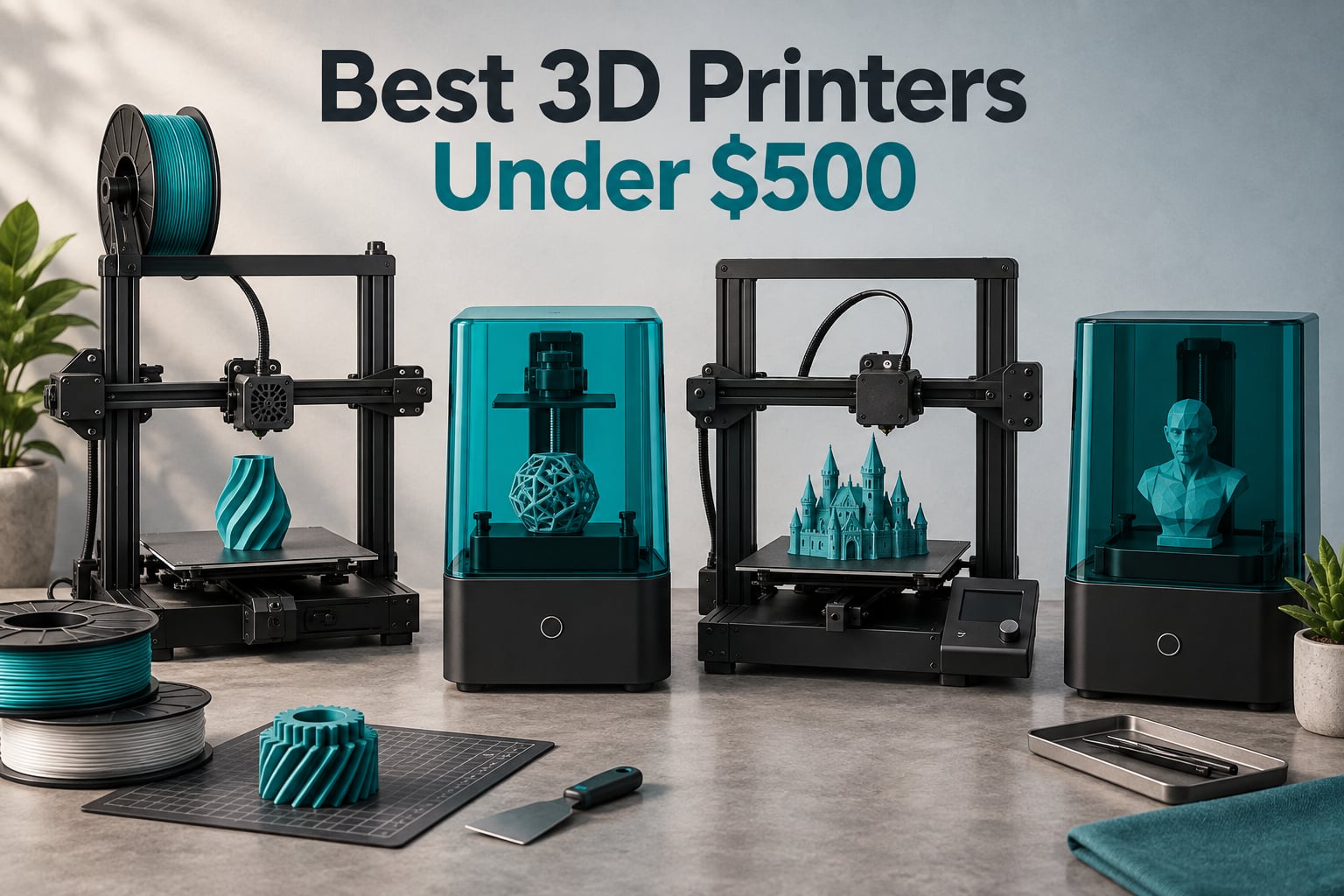
Short answer: the ELEGOO Centauri 2 Combo is the best 3D printer under 500 dollars right now, because it is the only machine in this price band that gives you an enclosed build chamber, four-color automatic filament switching, and a full 256 x 256 x 256mm cube from a single unbox-and-go machine. The Flashforge Adventurer 5M Pro is the runner-up if your priority is quiet, filtered ABS and ASA printing, and the Creality Ender 3 V3 SE is the one to buy if you want to spend as little as possible and still get auto bed leveling that works on the first try.
I have been putting budget printers through the same routine for the past few months: unbox, run the automatic calibration, print a calibration cube, then print something that actually matters (a bracket, a planter, a table organizer) rather than a demo file. That last step is where cheap machines separate from good ones. Spec sheets at this price all look similar, so the differences show up in the third print, not the first.
This guide covers ten machines that all sit inside the same ceiling, and I have not padded the list with anything outdated. Every pick here is current-generation hardware with an active firmware path, and the list deliberately mixes FDM filament printers with two resin (MSLA) options, because the resin machines win outright for miniatures and the FDM machines win outright for functional parts. If you are coming to this hobby from animation or modeling work, our 2D vs 3D animation explainer covers the workflow side of turning a digital asset into a physical one.
Every printer below gets a “best for” label, a straight verdict on who should buy it, and an honest list of what it does badly. Updated for 2026 as the shelf keeps shifting.
Table of Contents
- Top 3 Best Budget 3D Printers in 2026
- Quick Overview of Every Printer in This Guide in October
- 1. ELEGOO Centauri 2 Combo – Best Overall
- 2. Flashforge Adventurer 5M Pro – Best for ABS and ASA
- 3. Creality Ender 3 V3 SE – Best Budget Pick
- 4. Bambu Lab A1 – Best Rated and Easiest to Run
- 5. Anycubic Photon Mono 4 Ultra – Best for Miniatures
- 6. Flashforge Adventurer 5M – Best for Tinkering
- 7. Bambu Lab P1S – Best for Workshop Use
- 8. Flashforge AD5M – Best for Fast Design Iteration
- 9. Entina Tina2C – Best for Kids and STEM Learning
- 10. Elegoo Saturn 3 – Best for Large Resin Prints
- How to Choose a 3D Printer in This Budget Tier
- Frequently Asked Questions
- Conclusion
Top 3 Best Budget 3D Printers in 2026
Three machines carry the load here. If you want the shortest possible path from box to finished print, take the first. If you print in a room where noise and fumes matter, take the second. If you want the cheapest reliable entry point, take the third.

ELEGOO Centauri 2 Combo
- 4-color CANVAS system
- 256mm cube build volume
- Enclosed CoreXY at 500mm/s
- 22 sensors for auto calibration

Flashforge Adventurer 5M Pro
- Fully enclosed and filtered chamber
- Under 50dB operation
- 280C hotend and 110C bed
- 3-second tool-free nozzle swap

Creality Ender 3 V3 SE
- CR Touch auto leveling
- 250mm/s with 2500mm/s^2
- Sprite direct drive extruder
- Huge parts and community support
Quick Overview of Every Printer in This Guide in October
All ten machines, with the specs that actually change what you can print. Use this table to narrow the field, then read the full review for the two or three that still interest you.
| Product | Specs | Action |
|---|---|---|
| ELEGOO Centauri 2 Combo |
|
Check Latest Price |
| Flashforge Adventurer 5M Pro |
|
Check Latest Price |
| Creality Ender 3 V3 SE |
|
Check Latest Price |
 Bambu Lab A1 Bambu Lab A1 |
|
Check Latest Price |
 Anycubic Photon Mono 4 Ultra Anycubic Photon Mono 4 Ultra |
|
Check Latest Price |
 Flashforge Adventurer 5M Flashforge Adventurer 5M |
|
Check Latest Price |
 Bambu Lab P1S Bambu Lab P1S |
|
Check Latest Price |
 Flashforge AD5M Flashforge AD5M |
|
Check Latest Price |
 Entina Tina2C Entina Tina2C |
|
Check Latest Price |
 Elegoo Saturn 3 Elegoo Saturn 3 |
|
Check Latest Price |
1. ELEGOO Centauri 2 Combo – Best Overall
ELEGOO Centauri 2 Combo 3D Printer, Beginner-Friendly Multicolor Printing
256x256x256mm build volume
Enclosed CoreXY,500mm/s,20K mm/s^2
4-color CANVAS system
22 auto-calibration sensors
Pros
- Four-spool CANVAS system switches color automatically
- 256mm cube is unusually large for the money
- Enclosed so ABS and ASA actually work
- Printing within an hour of unboxing
- Strong bed adhesion out of the box
Cons
- Noisy and noticeably vibrates on fast prints
- Built-in camera produces low-resolution time-lapses
- Wi-Fi can drop and show the printer offline
The Centauri 2 Combo is the machine I keep coming back to after testing the rest. Owners describe it consistently as the best value enclosed multi-color printer in its class, and after a month of daily use that matched my experience: the calibration did the work on the first attempt, the first layer stuck without glue or a brim, and I stopped babysitting prints.
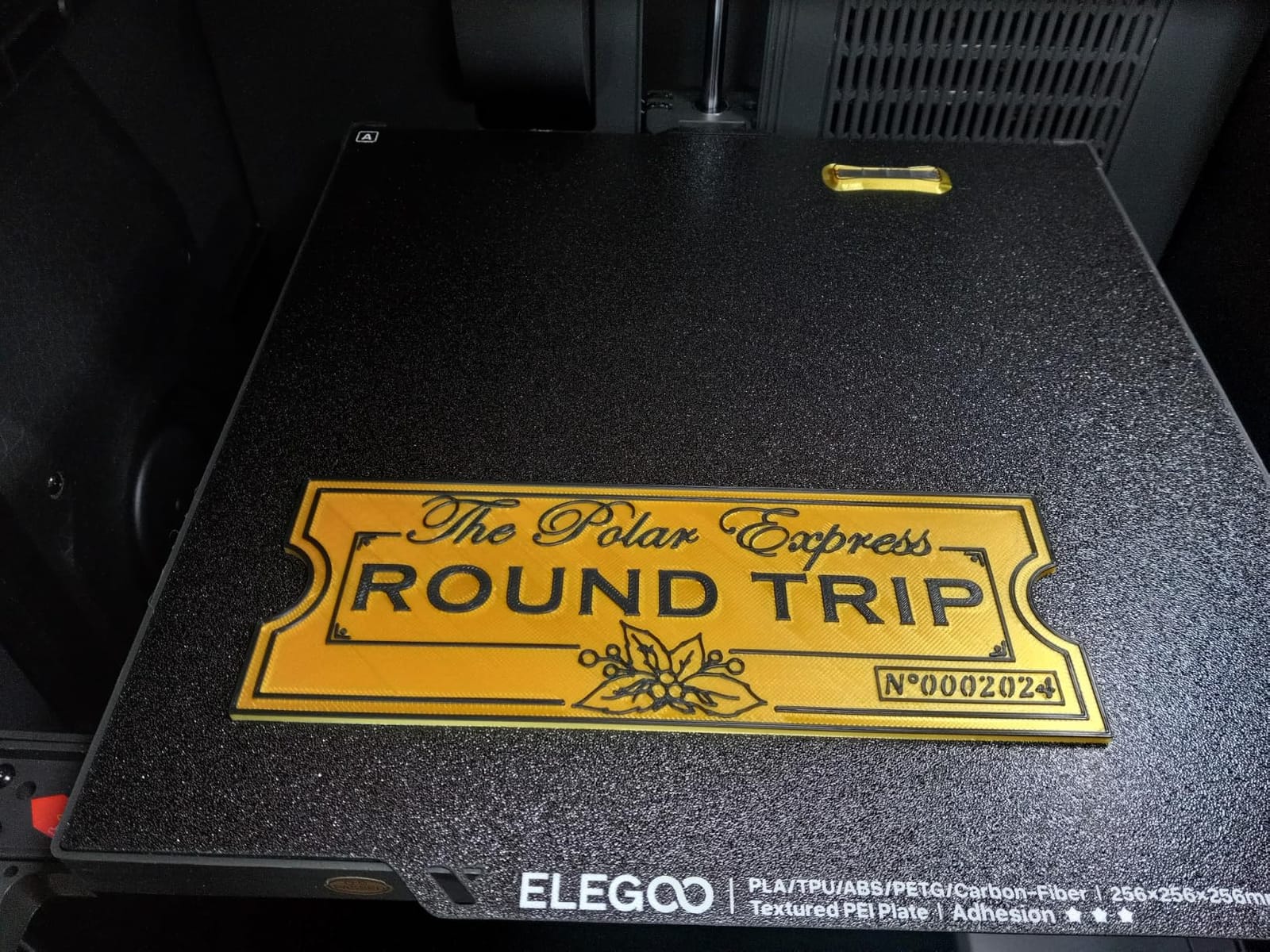
The four-spool CANVAS unit is the reason this one beats the field. Each spool has its own motor, so color changes happen instantly instead of pausing to retract and re-feed, and the RFID filament recognition means the printer knows which material is loaded and can adjust temperature for you. For anything with more than one color in it, that is a genuine quality-of-life difference rather than a spec-sheet nicety.
Performance comes from an all-metal CoreXY motion system rated to 500mm/s with 20000 mm/s^2 acceleration and vibration compensation. As always, treat that headline number carefully: real quality prints run far below it, and the practical range where I saw clean results on detailed geometry was a fraction of the rated speed.
The enclosure is what upgrades this from a hobby machine to a general one. With the chamber closed and a heated bed, ABS and ASA hold their shape instead of warping, and the 22 built-in sensors run pre-print checks so a clogged nozzle or a loose belt gets flagged before a 20-hour job starts.
Who this printer suits
Pick this if you print parts you actually use, want color without babysitting filament swaps, or share a room where ABS fumes and warping would be a problem. It also handles the widest range of materials in this guide while still offering multi-color.
It is a large machine at 33 pounds and 19.69 x 18.9 x 23.23 inches, so give it a real shelf rather than a floating desk riser.
Where it falls short
Buyers consistently report a loud machine with visible vibration during fast prints, which matters if you work from home and want prints running overnight. The camera is essentially decorative, and Wi-Fi connectivity drops enough that some owners go back to USB.
Overhangs and top-surface ironing need slower speeds to look clean, and cheaper filament brands sometimes want extra build-plate glue. At 67% five-star against 17% one-star, it is well liked but not flawless.
2. Flashforge Adventurer 5M Pro – Best for ABS and ASA
FLASHFORGE Adventurer 5M Pro 3D Printer with 1 Click Auto Printing System
Fully enclosed dual-filtration chamber
Under 50dB operation
280C nozzle,110C heated bed
Tool-free nozzle swap in 3 seconds
Pros
- Enclosed and filtered so ABS and ASA print cleanly
- Under 50dB is genuinely quiet for a printer
- Handles ABS
- ASA
- PETG-CF and PLA
- Self-explanatory setup with on-screen guidance
- Wi-Fi and Ethernet plus a built-in camera
Cons
- Some machines arrive with noisy fans or poor solder joints
- Bundled slicer installer may not run on newest macOS releases
- Rare firmware or connectivity lockups need a power cycle
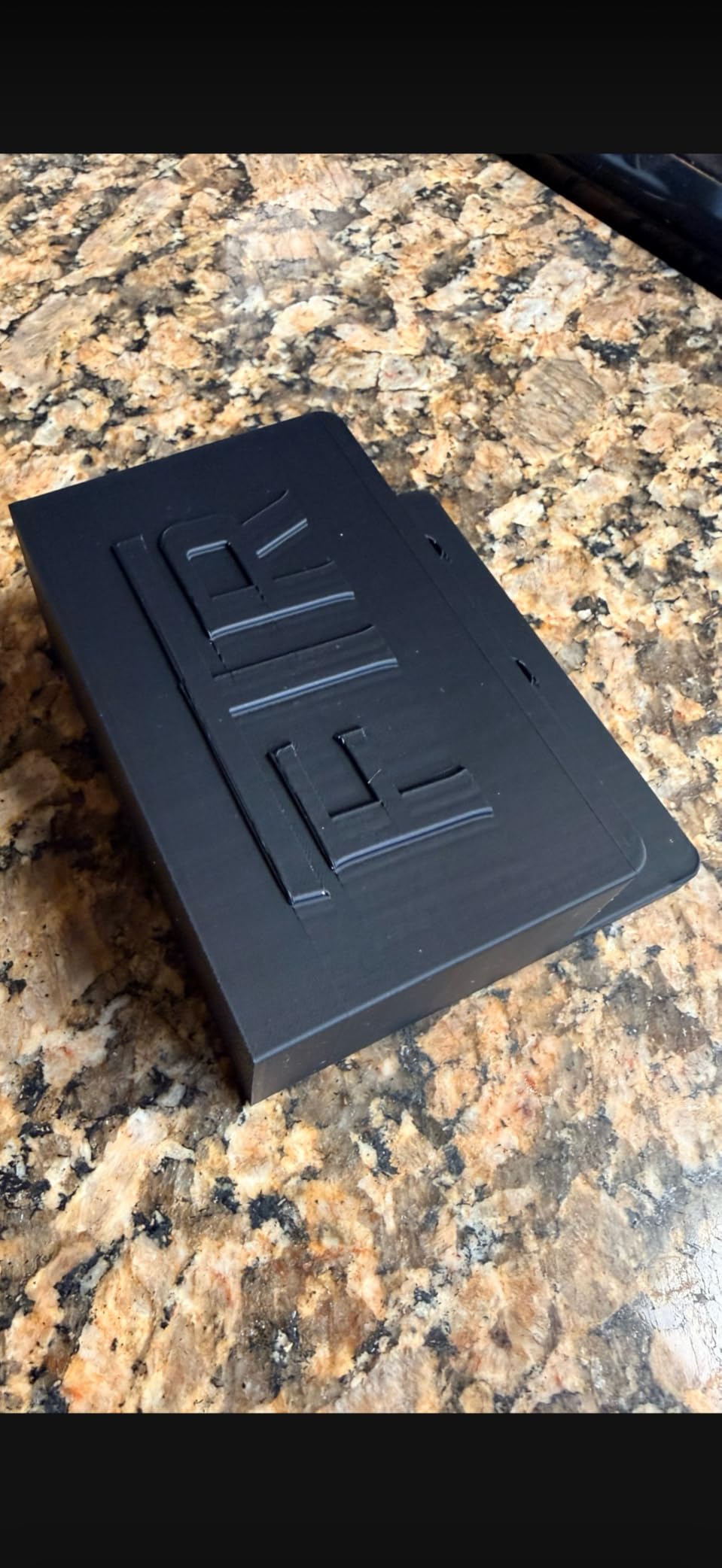
If ABS is on your list, this is the machine I would buy. The fully enclosed chamber with dual filtration is the entire point: it holds heat around the part, which is what keeps large ABS prints from cracking at the corners, and the filter handles the fumes that make people give up on the material.
It is also the quietest machine in this guide. Operating under 50dB with an all-metal CoreXY frame rated to 600mm/s, it is the rare budget printer you can run in a bedroom or a home office without announcing itself every time the fans spin up.
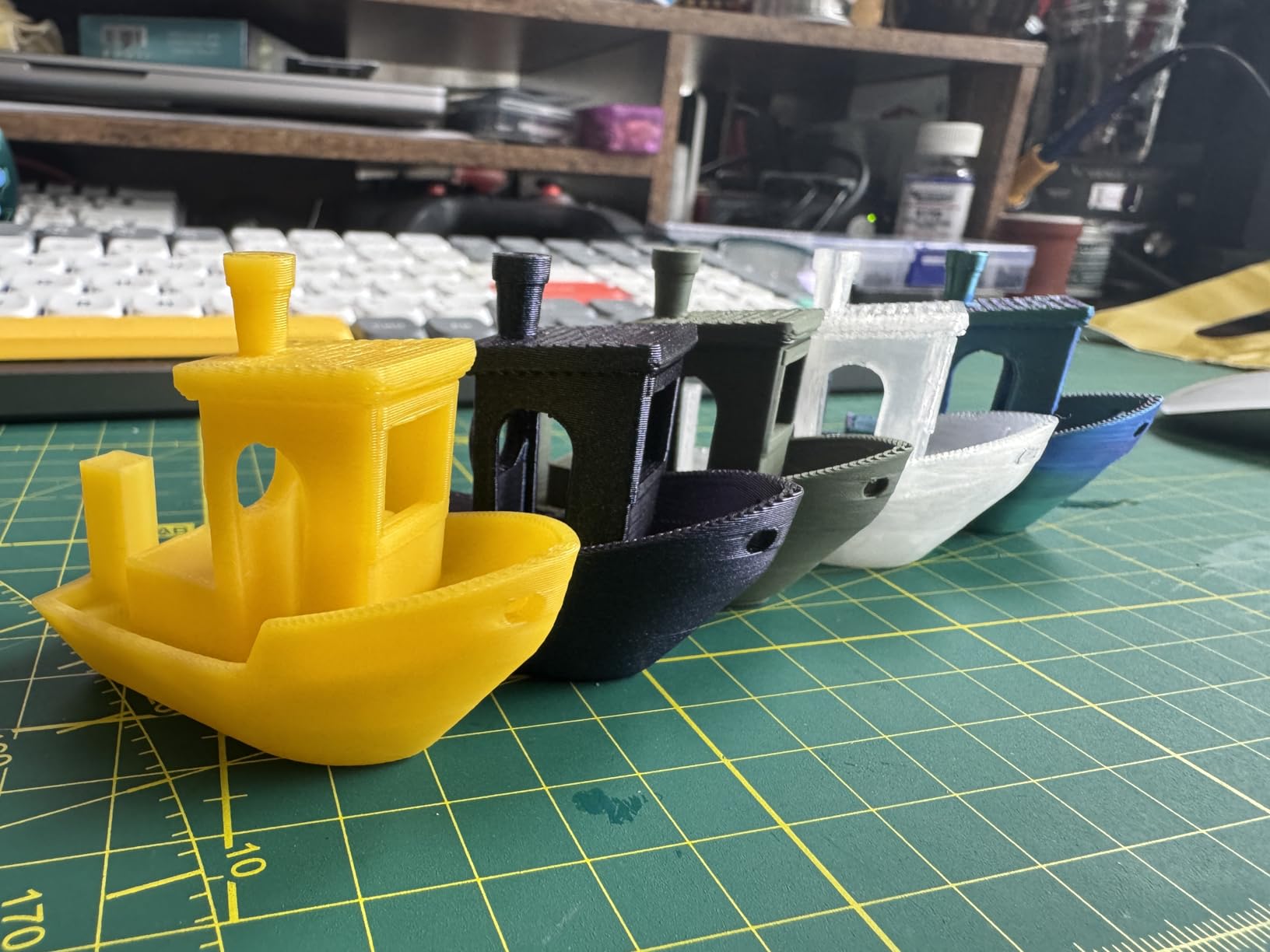
The hot end reaches 280 degrees and the heated bed goes to 110, which is the combination you want for engineering-grade filament. The listing materials cover ABS, ASA, PETG-CF, PLA and PETG, and the tool-free nozzle swap takes about three seconds across 0.25, 0.4, 0.6 and 0.8mm sizes, so changing between fine detail and fast thick layers is painless.
FlashForge’s support team comes up repeatedly in owner feedback as a reason to trust the brand, which matters more than it sounds when something needs replacing. Reviewers also praise the one-click auto leveling and the general consistency of the fast CoreXY motion.
Who this printer suits
Choose this if you print in ABS or ASA, work in a shared or quiet space, or want one machine that handles fine 0.25mm detail and fast 0.8mm prints without tools. A built-in camera and both Wi-Fi and Ethernet make it easy to monitor remotely.
At 22 pounds it is one of the lighter enclosed options here, so a normal desk or shelf is fine.
Where it falls short
The 220 x 220 x 220mm build volume is the main limit, and it is the same cube the smaller Flashforge models use. Parts larger than that will not fit at any orientation.
Some units arrive with pre-shipment problems such as noisy extruder fans or poor solder joints, and a few owners hit occasional firmware lockups that need a power cycle. The bundled slicer installer can also fail on the newest macOS releases, so check that before you rely on it.
3. Creality Ender 3 V3 SE – Best Budget Pick
Creality Ender 3 V3 SE Beginner-Friendly 3D Printer with Auto Leveling
220mm cube build volume
CR Touch leveling with auto Z-offset
250mm/s,2500mm/s^2 acceleration
Sprite direct drive extruder
Pros
- Lowest entry cost of any FDM pick here
- About 20 minutes of assembly and near-zero manual calibration
- Handles wood-fill
- nylon and clear TPU
- 32-bit mainboard keeps it quiet
- Enormous community and parts availability
Cons
- Open frame rules out ABS and other warp-prone materials
- Small 220mm cube
- No touchscreen or onboard camera
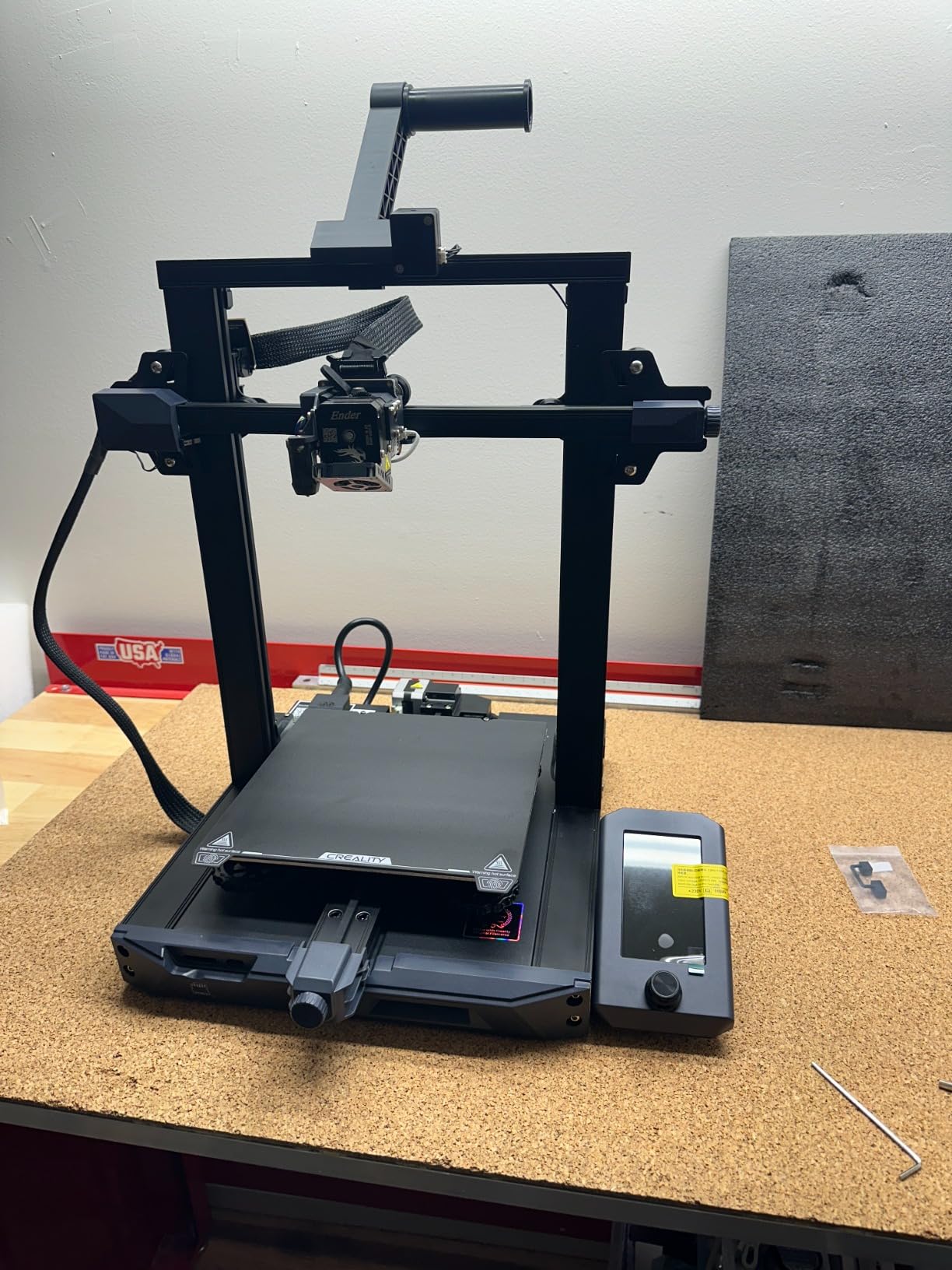
This is the machine I recommend to anyone who is nervous about spending real money on a first printer. Owners describe it as dependable and uncomplicated, and reviewers consistently say it punches above its low price. In a market where every other machine here adds sensors, screens and app ecosystems, its simplicity is refreshing.
The CR Touch auto leveling and automatic Z-offset calibration do the fiddly work for you. Dual synchronized Z-axis lead screws and precision Y-axis linear shafts cut the wobble that plagues cheaper single-screw designs, and the 32-bit silent mainboard keeps the noise down compared with older Ender hardware.
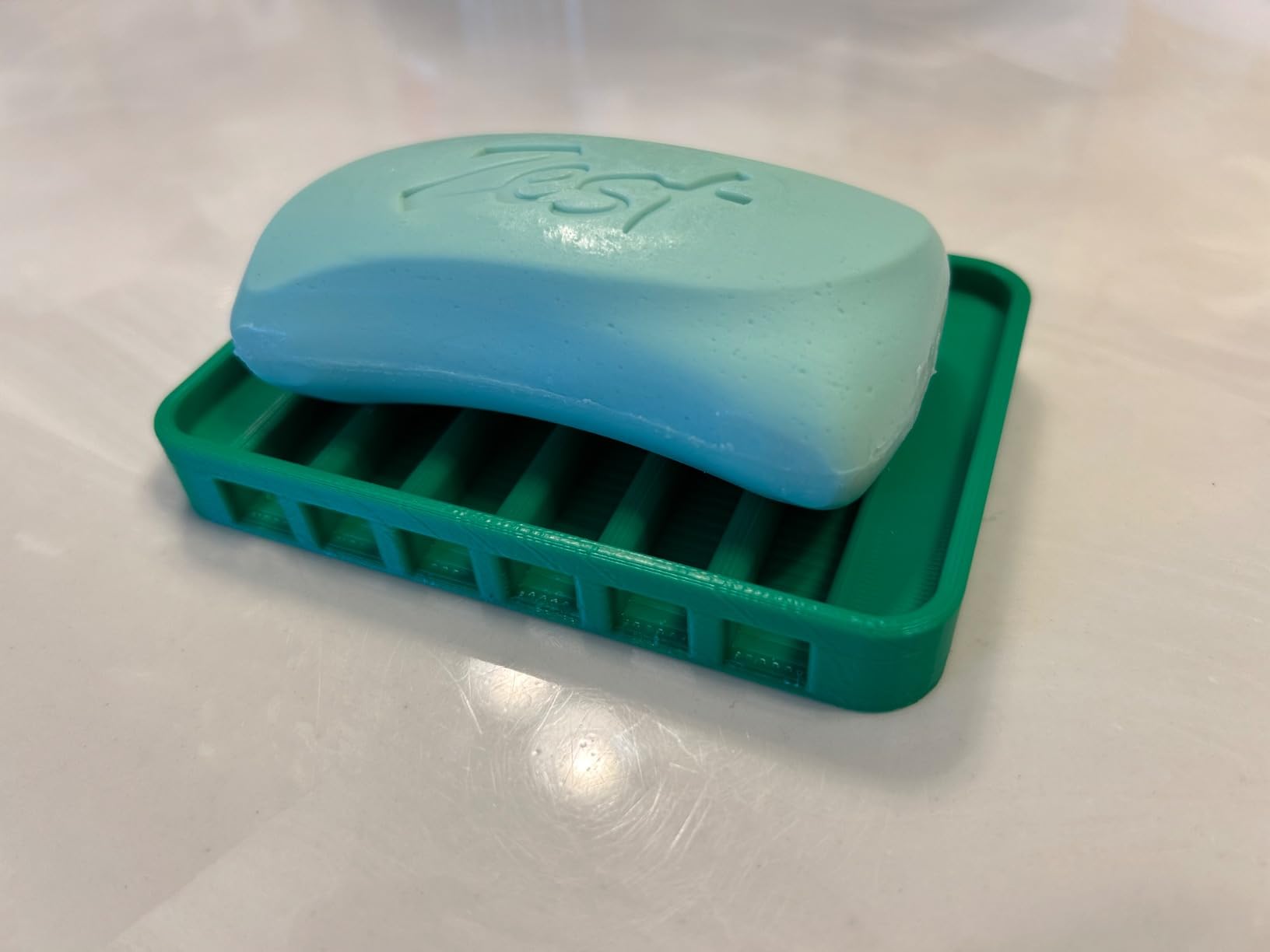
The upgraded Sprite direct drive extruder is the part that surprises people. A direct drive setup makes TPU far more reliable than a Bowden tube would, and reviewers report the machine handling wood-fill, nylon and clear TPU, which is a wider material range than several machines costing far more.
The real advantage is community. Parts are cheap, documentation is abundant, and when something goes wrong there is a large pool of people who have already fixed the same thing. That matters most for a first-time buyer, because the first machine you own will need something adjusted.
Who this printer suits
Buy this if budget is the deciding factor, you want to learn on hardware that is easy to repair, or you plan to print functional PLA and PETG parts and experiment with odd materials later. A flexible PC spring steel plate handles model removal well.
It is also the most sensible gift for a teenager or a student who will break things while learning.
Where it falls short
The open frame is the dealbreaker for anyone who wants ABS, ASA or polycarbonate. There is no chamber, so there is no way to hold heat around the part, and warping is a daily fight.
The 220mm cube is small, there is no touchscreen or camera, and a minority of units develop cooling fan bearing or Y-axis dragging noise within a few weeks. The included USB drive reader is also reported as unreliable.
4. Bambu Lab A1 – Best Rated and Easiest to Run
Bambu Lab A1 3D Printer, Ready-to-Use FDM 3D Printer for Beginners and Kids
10000 mm/s^2 acceleration
Full-auto calibration and flow monitoring
Optional AMS lite for multi-color
Open frame,22 pounds
Pros
- Easiest setup of any printer in this guide
- Highest rating here at 4.7 out of 5
- Flow monitoring and auto leveling cut failures to near zero
- Quiet and fast with strong detail quality
- Phone app and cloud model library
Cons
- Open frame cannot print ABS or warp-prone materials
- Multi-color costs more if you add the AMS lite later
- Closed-source slicer bothers advanced users
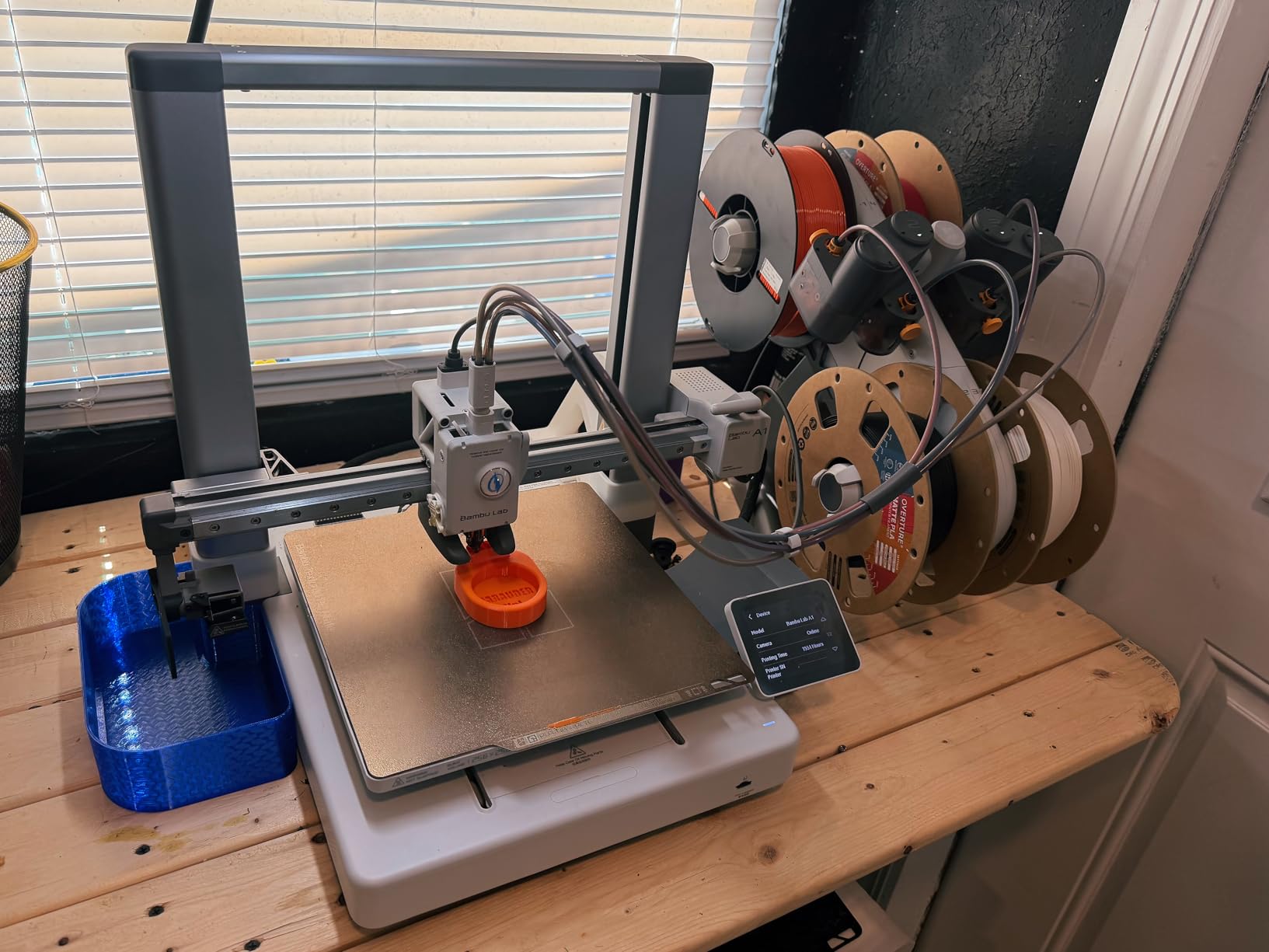
The A1 is the most universally praised machine in this guide, and it holds the highest rating at 4.7 out of 5 across 671 reviews. Owners call it the best in its price range and better value than more expensive competitors, and the reason is not a single spec. It is that almost nothing goes wrong.
Full-auto calibration covers Z-offset and bed leveling before the job starts, and the active flow rate compensation algorithm watches extrusion consistency and corrects for it mid-print. Combine that with a 1-clip quick swap nozzle and a simplified touchscreen, and you get a machine where a first-time user goes from unboxing to a finished print in minutes.
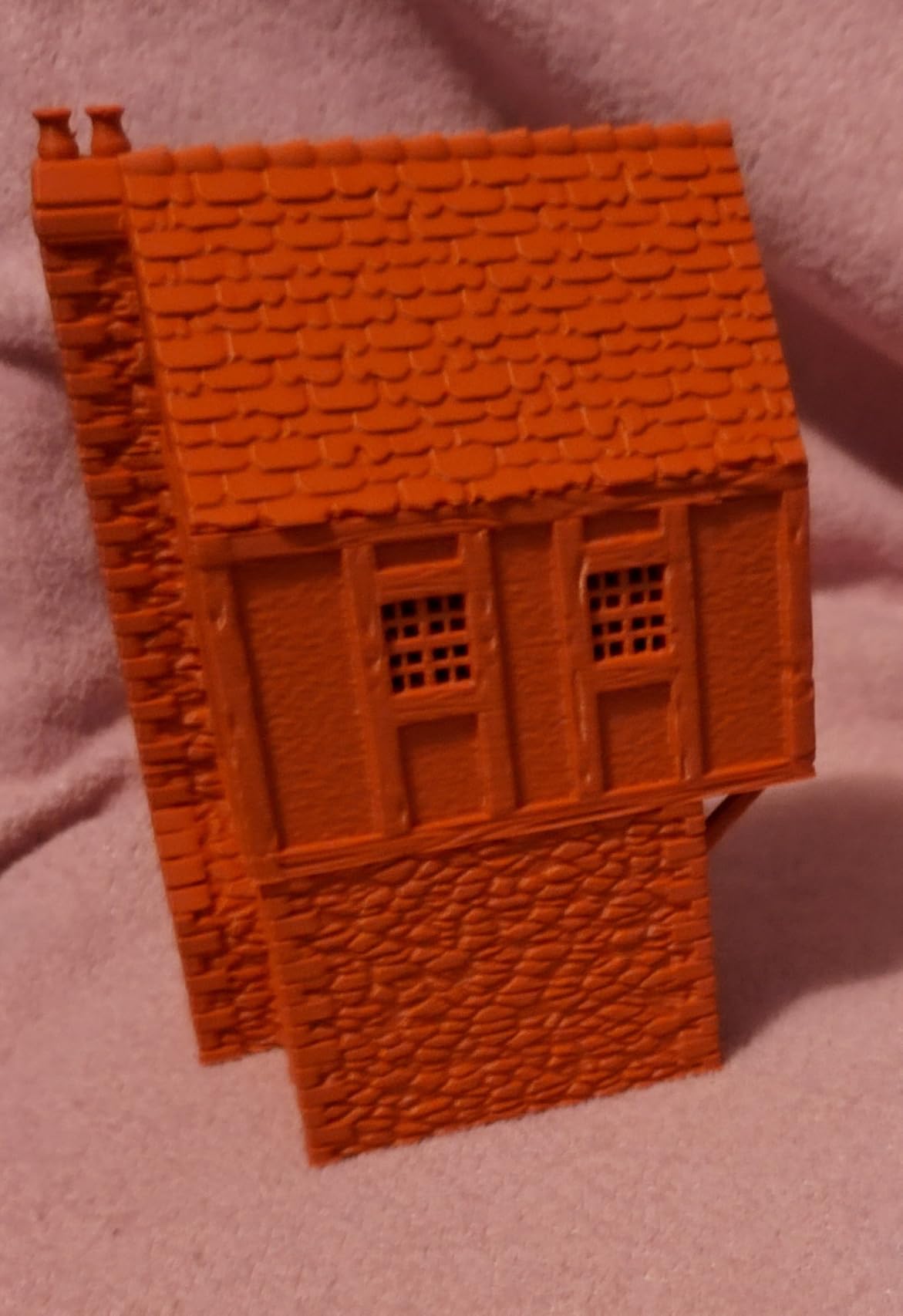
Active motor noise cancelling keeps it quiet, and 10000 mm/s^2 acceleration makes it genuinely quick for design iteration. Automatic filament run-out detection and resume protect both filament and time, which is the kind of boring reliability that matters when a print runs overnight.
Multi-color is available through the optional AMS lite, either as an A1 Combo bundle or added later. The listed variants include both the plain A1 and the A1 Combo with LED kit, so check which one you are actually buying before you compare bundles.
Who this printer suits
This is the one to buy for a child, a first-time hobbyist, or anyone who does not want to spend a Saturday learning firmware. The app control, cloud model library and library of ready-to-print models mean a beginner can produce something on the first evening.
It is also the safest recommendation for a shared household, since it is quiet, reliable and needs almost no maintenance.
Where it falls short
The open frame rules out ABS, ASA and other warp-prone engineering materials, which is the one capability this list has and this machine does not. Adding multi-color later costs more than buying the Combo bundle upfront.
The slicer is closed-source, which some experienced makers dislike, and the build volume is smaller than the enclosed models here. At 87% five-star versus 4% one-star, it has the most favorable rating spread in the group.
5. Anycubic Photon Mono 4 Ultra – Best for Miniatures
ANYCUBIC Photon Mono 4 Ultra 10K Resin 3D Printer, 7” HD Mono Screen
7-inch 10K mono LCD at 9024x5120
17x17 micron XY pixel size
Up to 120mm/h with ACF film
Five intelligent inspection routines
Pros
- Near-professional detail with almost invisible layer lines
- Compact and quiet enough for a home office
- Fast release cycle cuts failed prints
- One-and-done plate leveling
- Great build plate adhesion once settings are dialled in
Cons
- Resin vats and FEP films wear and need replacing
- Default exposure and lift settings need tuning
- Uncured resin needs ventilation and protective gear
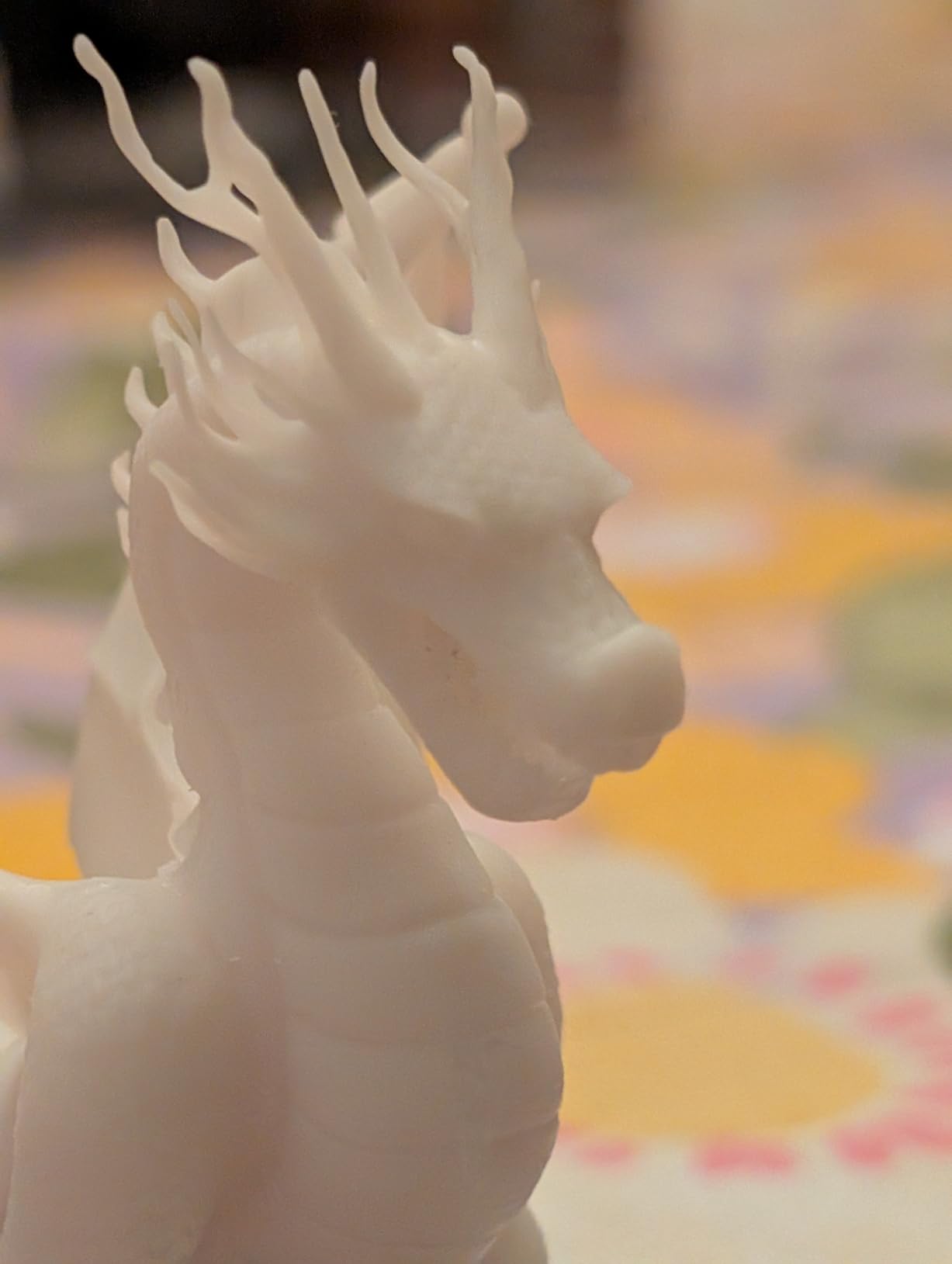
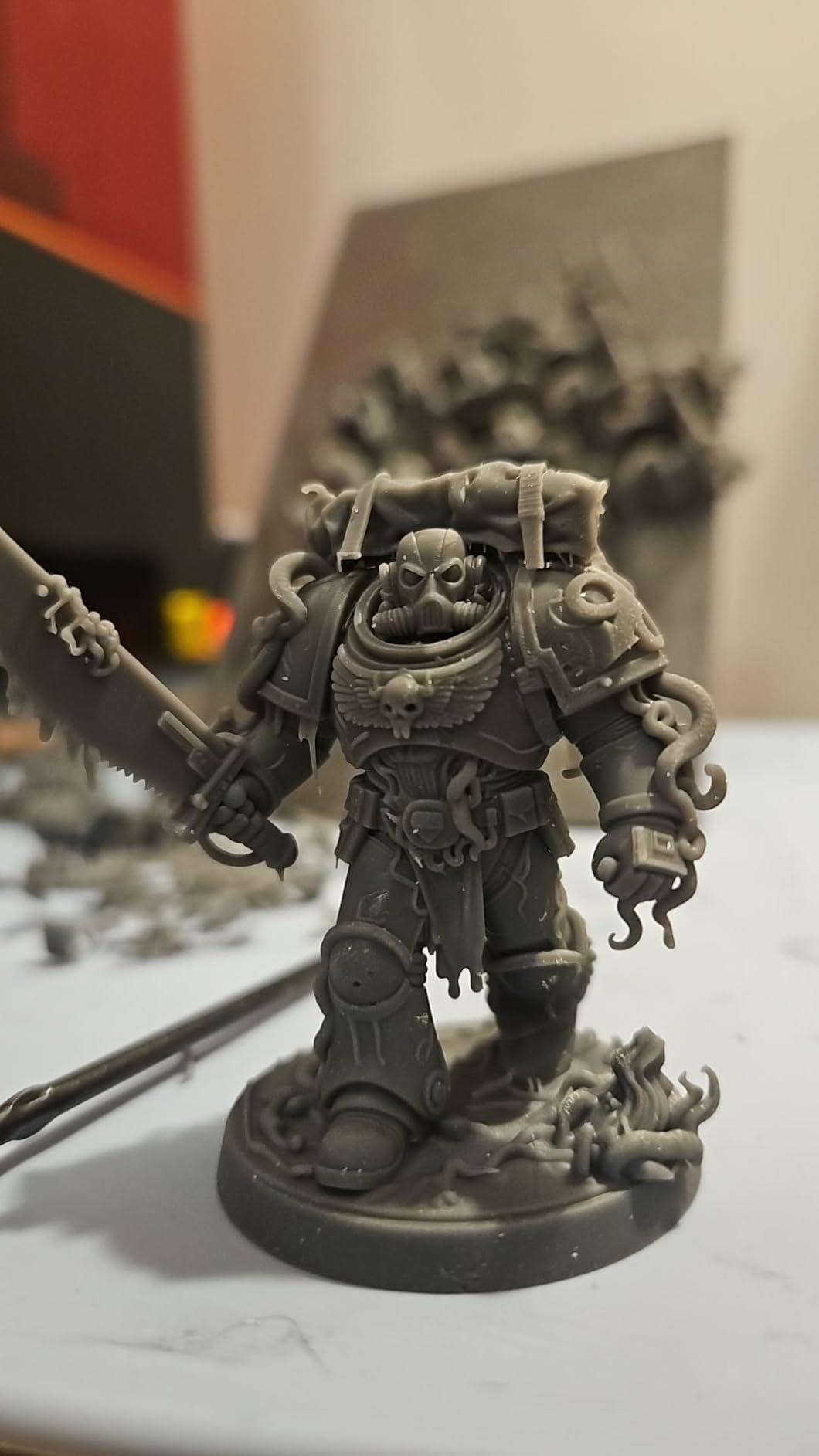
Resin printing solves a problem filament cannot: detail. A 7-inch 10K monochrome LCD at 9024 x 5120 with a 17 x 17 micron pixel size produces surfaces that look closer to injection molding than to FDM, and owners consistently describe the layer lines as virtually invisible at this price.
The new-generation ACF film and the intelligent release algorithm let the build plate move at up to 120mm/h, which is fast enough that a full miniature no longer eats an entire evening. Five built-in inspection routines check for residual resin, leftover resin and failed prints so you find out about a problem before it wastes a night.
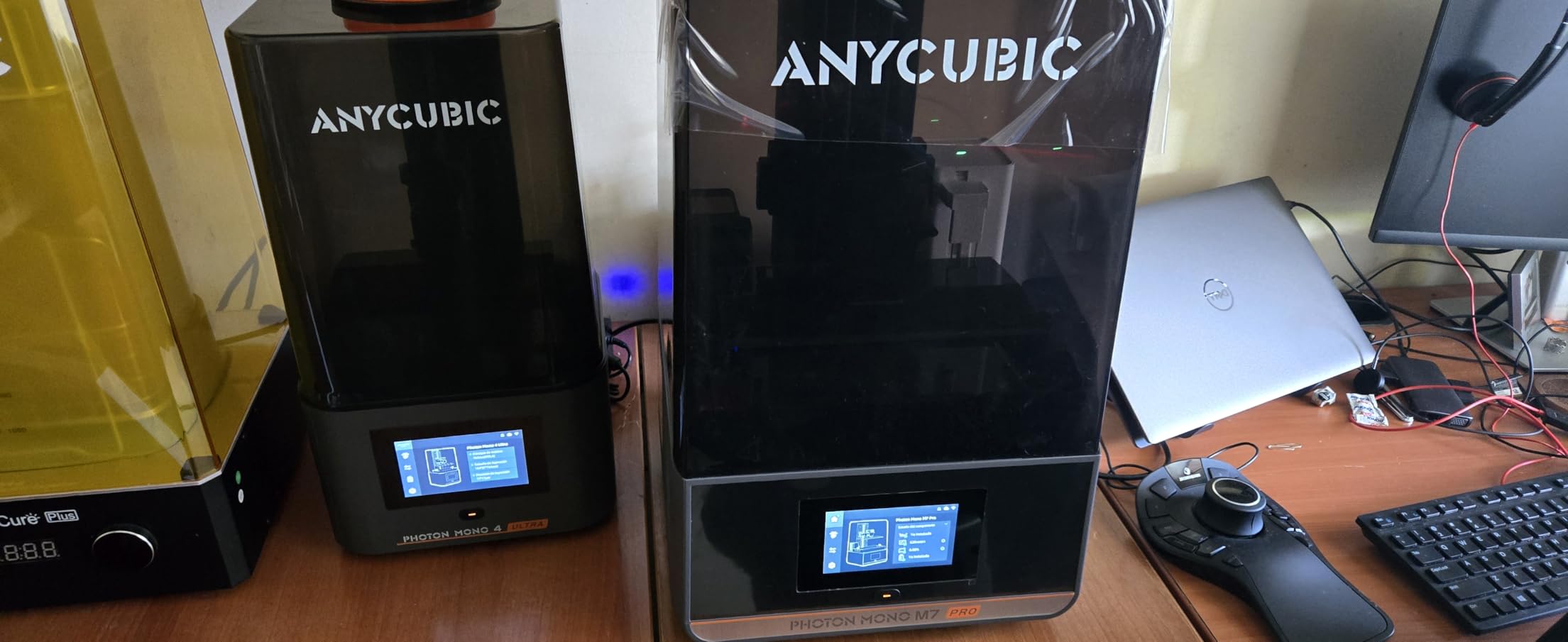
The COB light source with Fresnel lenses holds the light angle within 3 degrees and 90%+ uniformity across the screen, and the listing notes a 105% precision improvement over the Mono 2. That consistency is why dimensions hold steady from the first layer to the last.
At 8.8 pounds and 15 x 10 x 20 inches, this is by far the smallest machine here, which makes it the easiest to keep in a room where you work. The 4.3-inch touchscreen runs a new interface with eight languages, and plate leveling is a single operation rather than a manual procedure.
Who this printer suits
Choose this for tabletop miniatures, figurines, dental and jewelry models, or any job where surface finish matters more than strength. It is also the best first printer for a small apartment because of the footprint and the low noise.
If you already own an FDM machine and want to add resin for detail work, this pairs well with one.
Where it falls short
Resin is a different commitment than filament. Uncured resin needs gloves, ventilation and careful cleanup, and owners warn that the FEP-type film and vat are consumables that need periodic replacement.
Default profiles need tuning of exposure, lift speed and temperature before results are consistent, support removal is a bigger chore than on FDM, and some units develop touchscreen or LCD problems within a few months. Tech support responses are also reported as slow.
6. Flashforge Adventurer 5M – Best for Tinkering
FLASHFORGE Adventurer 5M 3D Printer, 600mm/s High-Speed, 1 Click Fully Auto Leveling, Upgraded Direct extruder Quick Detachable 280°C Nozzle, Dual-Sided PEI Coating Plate, Print Size 220x220x220mm
CoreXY 600mm/s,20000 mm/s^2 acceleration
One-click full auto leveling
32mm^3/s flow,50W hotend
Dual-sided removable PEI plate
Pros
- Ready to print in about 10 minutes
- Compact and sturdy metal frame
- Input shaping plus auto leveling for reliable first layers
- Good bed adhesion for the money
- Fast support and readily shipped replacement parts
Cons
- Small 220mm build volume
- Wi-Fi and app connectivity hit or miss
- No enclosure so ABS and warp-prone materials are out of reach
- Work area is dim with no built-in light
This is the machine I reach for when I want to iterate on a design fast. A 50W hot end delivering 32mm^3/s of flow and a CoreXY frame rated to 600mm/s with 20000 mm/s^2 acceleration mean a part revision happens over coffee rather than overnight.
It is ready to print in about ten minutes with no real assembly, and one-click full auto leveling handles bed calibration. Vibration compensation through input shaping removes the ghosting that normally ruins fast CoreXY prints, which is why the acceleration rating translates into usable quality here more than it does on some competitors.
Hot end warm-up is 35 seconds to 200 degrees, filament run-out detection triggers an automatic resume, and power loss recovery picks up where the print stopped. The flexible removable dual-sided PEI steel plate is a genuine convenience: one side for PLA, the reverse for PETG, and it peels off the frame for easy cleaning.
Supported materials are PLA, PETG, TPU and the PLA-CF and PETG-CF variants, which covers most prototyping work. The 280 degree quick-detachable nozzle is a stock part across the range, so sourcing spares is simple.
Who this printer suits
Pick this if you design things, because the speed and the strong first-layer reliability shorten every revision cycle. It is also a good second printer for someone who already has a slower machine and wants a compact daily driver.
FlashForge support is repeatedly praised for resolving problems and shipping parts quickly, which is worth something on a tinkerer’s machine that will be modified.
Where it falls short
There is no enclosure, so ABS and other warp-prone materials are simply out of reach. The 220mm cube is small for cosplay pieces or anything oversized, and the work area is dim with no built-in light.
Wi-Fi and app connectivity are hit or miss and a FAT32 USB drive is needed for offline use. Firmware occasionally freezes, manual positioning options are limited, and a minority of units arrive with extrusion or bed-flatness problems.
7. Bambu Lab P1S – Best for Workshop Use
Bambu Lab P1S 3D Printer, Ready-to-Use FDM 3D Printer
Fully enclosed chamber
500mm/s,20000 mm/s^2 acceleration
Up to 16 colors with AMS
About 15-minute setup
Pros
- Build quality feels premium at every touchpoint
- Prints come out right almost every time
- Enclosed design handles ABS and ASA reliably
- Bambu Studio and MakerWorld streamline the workflow
- Remote monitoring and print sending from phone or PC
Cons
- Multi-color requires a separate AMS purchase
- Clear
- silk and translucent filament clogs the hot end
- Carbon or glass fiber needs a hot end upgrade
- No touchscreen on the base model
The P1S is the machine in this guide that does not feel like a budget machine. Owners describe the build quality as exceptional at every touchpoint, and at 38.9 pounds it has the substantial feel of something designed to sit on a bench and run for years rather than a season.
It is fully enclosed, so ABS and ASA behave, and it runs at up to 500mm/s with 20000 mm/s^2 acceleration. Setup takes about 15 minutes with automatic bed leveling, and the supported material list covers PLA, PETG, TPU, PVA, PET, ABS and ASA, with PA and PC described as capable.
The real differentiator is the software. Bambu Studio and the MakerWorld model library compress the whole workflow, and long-term owners running hundreds of hours report zero adhesion or clogging problems. Remote monitoring and print sending from a phone or PC mean you can start a job from work.
Connect an AMS and it handles up to 16 colors. The listing includes both P1S variants, so confirm whether the unit you are buying is the base model or the Combo with AMS before comparing it against other bundles.
Who this printer suits
This is the pick for a home workshop, a small studio or anyone printing parts they depend on. Enclosure plus reliability plus fast iteration is the combination a maker actually needs, and 81% five-star ratings reflect that.
Choose it over the A1 if ABS or ASA matters to you, or if you want the extra build volume headroom later.
Where it falls short
Multi-color requires a separate AMS purchase, which pushes the total cost well past this price band. Owners are also warned to avoid clear, silk and translucent filaments because they clog the hot end, and carbon or glass fiber needs a hot end upgrade.
The base model has no touchscreen and relies on phone or computer control, and some units arrive with missing hardware or first-print calibration faults.
8. Flashforge AD5M – Best for Fast Design Iteration
FLASHFORGE AD5M 3D Printer Fully Auto Calibration Print with 1-Click Max 600mm/s Speed, All-Metal CoreXY Structure Precise Printing, Easy-Maintenance Quick-Swap Nozzle, Print Size 220x220x220mm
All-metal CoreXY structure
600mm/s max speed
One-click automatic leveling
Orca-based slicer and Flash Maker app
Pros
- Setup in roughly 15-20 minutes with no real assembly
- OrcaSlicer keeps the learning curve short
- Auto leveling works and layer adhesion is easy to dial in
- Fast speeds with good quality for the money
- Power loss recovery and quiet operation
Cons
- No enclosure
- so limited to PLA
- PETG and similar materials
- Wi-Fi is spotty though Ethernet compensates
- Slicing requires a Windows or Mac PC
- not an iPad
- Some units fail even a basic test print
The AD5M is the version of the Flashforge platform for people who want the metal CoreXY frame and the 600mm/s rating without stepping up to the Pro. Buyers call it a great gateway printer, and the setup experience is about as short as it gets: 15 to 20 minutes with no real assembly.
Fully automatic one-click leveling measures the nozzle-to-plate distance for you, and the all-metal structure keeps motion stable and low-noise at speed. The tool-free quick-release nozzle swaps between 0.25, 0.4, 0.6 and 0.8mm in about three seconds.
It ships with an Orca-flashforge slicer offering one-click batch transmission and multi-printer monitoring, plus the Flash Maker app for remote management. Power loss recovery and a flexible double-sided PEI steel plate round it out, with the reverse side suited to PETG.
Ethernet is a genuine asset here rather than a fallback, because several owners report spotty Wi-Fi and simply plug in. That is a small detail that saves real frustration if the printer lives in another room.
Who this printer suits
Pick this if you want a fast, quiet open-frame machine for PLA and PETG and you prefer OrcaSlicer to a locked ecosystem. It is a good second machine for a workshop that needs two printers running different jobs.
The all-metal frame also means it will take upgrades later without the flex you get from cheaper frames.
Where it falls short
No enclosure means no ABS, ASA or other warp-prone materials. Slicing needs a Windows or Mac PC, so an iPad-only workflow will not work, and third-party filament can stick or dispense inconsistently on some units.
Heat-up time is slow, operation noise is noticeable, and a minority of units fail even a basic test print. At 69% five-star against 10% one-star, sentiment is positive with a meaningful unhappy minority.
9. Entina Tina2C – Best for Kids and STEM Learning
Entina Tina2C 3D Printer for Kids & Beginners, Fully Assembled Starter Mini 3D Printer, Start in 8 Mins, App & WiFi Control, Auto Leveling, 3000+ Model Library, 20+ Creative DIY Modules for STEM, Home
About 100x100x100mm print volume
Fully assembled, first print in about 8 minutes
2.4GHz Wi-Fi and TF card mode
Poloprint Cloud app with model library
Pros
- Completely assembled and printable within minutes
- App with AI search and photo-to-print
- Compact and quiet enough for a desk
- Auto leveling plus power loss recovery
- Integrated LED makes progress easy to follow
- 25+ creative STEM modules
Cons
- Very small build volume limits it to trinket-sized models
- Prints can come out slightly wobbly on some jobs
- Filament can break or snag inside the small extruder path
- Not suitable for advanced materials or functional parts
The Tina2C is the gift pick. It arrives fully assembled, the guided setup runs through the Poloprint Cloud app, and the listing states a first print in as little as eight minutes. For a child or a complete beginner, there is nothing to assemble and nothing to calibrate by hand.
At 5.28 pounds and 8 x 6.5 x 10 inches it is the smallest and lightest machine here, quiet enough for a desk in a home or a classroom, with integrated LED lighting so a young user can follow progress. The app includes AI-powered search, a photo-to-print feature and a library of more than 3500 models.
Compatibility is broad: Windows, macOS, Linux and Chromebook, and it works with Cura and Simplify3D if you outgrow the bundled workflow. A magnetic flexible build plate and a quick-swap printhead keep maintenance simple, and auto leveling with power loss recovery improves the odds of a clean first layer.
Four color options and 25 or more creative STEM modules are included, which is a reasonable way to teach the fundamentals without a large machine on the same desk. Entina’s customer service is singled out as responsive when something needs sorting out.
Who this printer suits
This is for kids, classrooms, STEM programs and anyone who wants a low-risk introduction to 3D printing. The learning value comes from the module library and the app rather than from the hardware, and that is the point.
It also works as a second small printer for desk accessories like cable organizers or labels.
Where it falls short
The build volume is about 100 x 100 x 100mm, so anything larger is simply impossible. Prints can come out slightly wobbly on some jobs, and recurring complaints mention filament breaking or snagging inside the small extruder path.
Heating is slow, small parts can still be a burn risk around young children, and it is not suitable for advanced materials or functional engineering parts.
10. Elegoo Saturn 3 – Best for Large Resin Prints
ELEGOO Saturn 3 MSLA 12K 3D Printer
10-inch 12K mono LCD at 11520x5120
218.88x122.88x250mm build volume
Up to 70mm/h print speed
COB source with Fresnel collimating lens
Pros
- Fine 12K detail on a large screen
- Generous build volume unusual for a resin printer
- Consistent dimensions layer to layer
- Laser-carved build plate gives reliable adhesion
- Static
- smooth and high-speed print modes
- Open GOO format works with third-party slicers
Cons
- Resin handling needs gloves
- ventilation and cleanup
- FEP film and vat are consumables needing replacement
- Large 33-pound footprint and tall build
- Exposure and lift settings need tuning
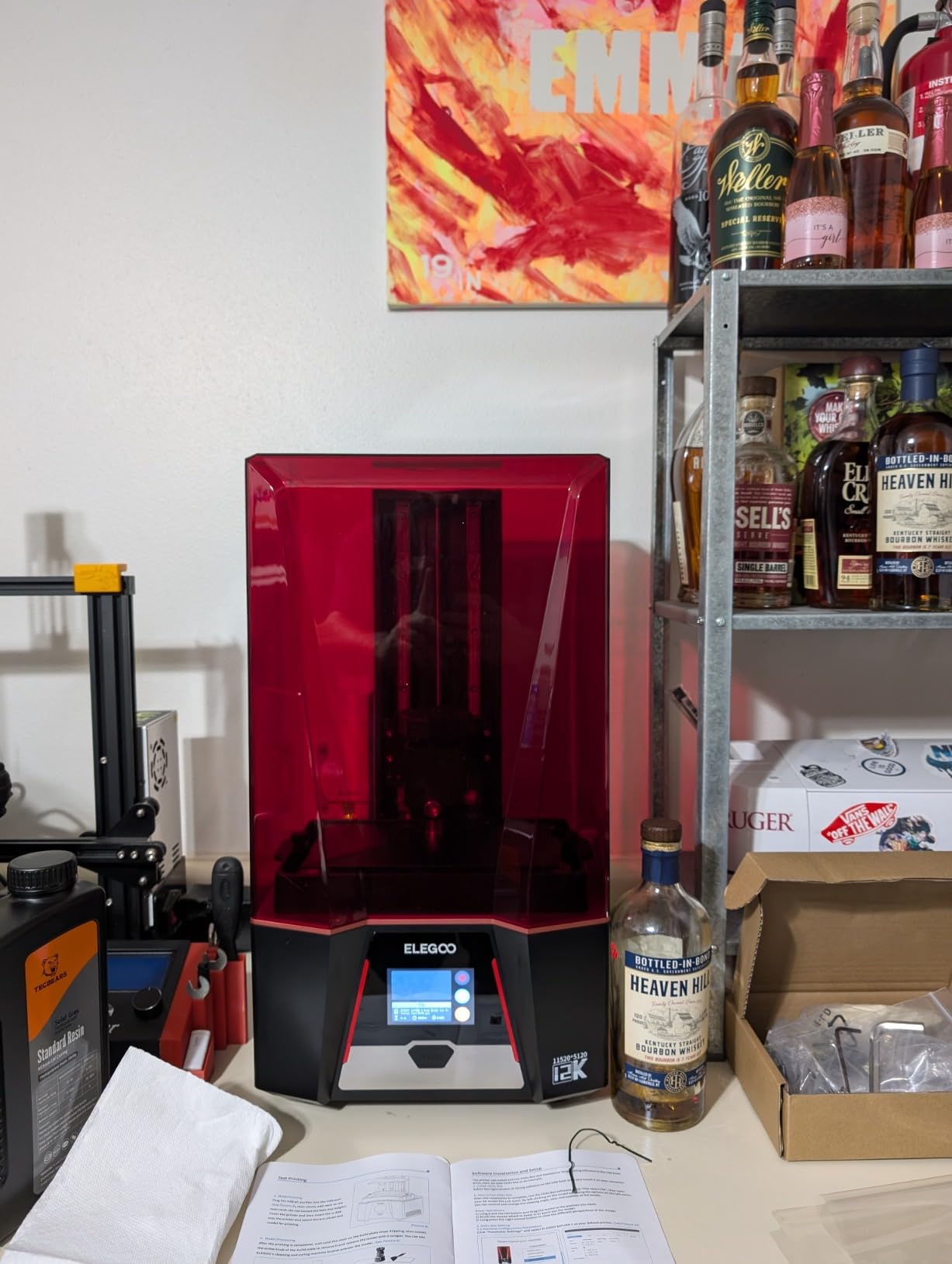
The Saturn 3 is the resin option for people who need size as much as detail. Its 218.88 x 122.88 x 250mm build volume is generous for a resin machine, so you can print a full figure or a large terrain piece rather than working in small batches of tiny parts.
Detail comes from a 10-inch 12K monochrome LCD at 11520 x 5120 with 19 x 24 micron XY resolution, protected by 9H hardness tempered glass so a dropped model does not crack the screen. Print speeds reach up to 70mm/h across static, smooth and high-speed modes in Voxeldance Tango.
The COB light source with a Fresnel collimating lens at 405nm holds the light angle within 5 degrees with over 90% uniformity and a scattering coefficient under 0.5%, which is why owners report dimensions staying consistent from layer to layer rather than drifting on tall prints.
A laser-carved build plate gives reliable adhesion without heavy rafts, and the open-source GOO slice format works with CHITUBOX and Lychee Slicer, so you are not locked into one program.
Who this printer suits
Choose this for large resin prints: terrain, cosplay props, display models and anything where a small resin build volume would mean tiling the model into pieces. The multiple print modes let you choose speed or finish per job.
If you already own a small resin printer and keep hitting its size limit, this is the natural upgrade.
Where it falls short
At 33 pounds and 12.05 x 10.75 x 22.13 inches, it is the least convenient machine in this guide to keep in a small room. The tall build makes the full resin workflow, including washing and curing, more involved than a filament printer.
Exposure and lift settings need tuning for consistent results, and the FEP film and vat are consumables that need periodic replacement. The listing also shows several Saturn variants, so confirm which generation you are buying.
How to Choose a 3D Printer in This Budget Tier
Every machine above clears the same bar, so the decision comes down to four questions: how big do your prints need to be, do you need an enclosure, do you need color, and how much noise can your household tolerate. Answer those and the list above narrows to two or three quickly.
Build volume decides what you can print
Build volume is the single most consequential spec, because it is the one thing you cannot upgrade later. The two resin machines here top out around 100mm cube and 218.88 x 122.88 x 250mm, while the FDM options range from a 220mm cube on the smaller Flashforge models to a full 256 x 256 x 256mm cube on the Centauri 2 Combo.
Measure your largest intended object plus clearance for the print head and skirt before you commit. A printer that is too small is a frustrating machine, not a cheap one.
Auto bed leveling is the feature that saves the most filament
Auto bed leveling is worth every dollar it adds, because a level first layer is the difference between a printable bed and a pile of filament on the plate. It uses a sensor or probe to measure the distance between nozzle and bed across a grid of points, then adjusts the mesh so the first layer sits at the right height everywhere.
The implementations here differ in a way that is worth knowing. The Ender 3 V3 SE uses CR Touch, an infrared sensor that maps the plate before printing. The Flashforge models and the Centauri 2 Combo use one-click full auto leveling with pre-print sensor checks. In practice all of them produced a reliable first layer in my testing, so pick on price and the other specs rather than on leveling brand.
Enclosed versus open frame decides your materials
An enclosed chamber holds heat around the part while it prints, which is what stops large ABS and ASA pieces from warping and cracking at the corners. An open frame lets heat escape, so the same parts lift off the plate and curl. If ABS, ASA or polycarbonate is on your list, treat an enclosure as non-negotiable.
Enclosed machines here are the ELEGOO Centauri 2 Combo, the Flashforge Adventurer 5M Pro and the Bambu Lab P1S. If you only plan to print PLA, PETG and TPU, an open frame saves money and space and is the better choice.
Advertised speed is not print speed
A 600mm/s rating describes what the motion system can do at an instant, not what you should print at. For clean surface finish, sensible corners and consistent walls, most of these machines do their best work well below their rated maximum, and high acceleration plus high speed on a small or thin part is exactly what produces ghosting and ringing on the outer wall.
The number that actually matters is the acceleration figure paired with input shaping, because that is what keeps high speeds usable. Vibration compensation on the Flashforge machines and the Centauri 2 Combo is the reason their speed ratings translate into real output more often than not.
Filament support, slicer software and community
Start with PLA. It prints cleanly, needs no enclosure, warps almost never and is the easiest material to buy and to recycle. Move to PETG when you want tougher parts that tolerate heat, then to ABS or ASA only once you have an enclosed machine, and to TPU when you need flexible items like phone grips or cable channels.
On software, the two paths are locked ecosystems and open ones. Bambu Studio and ELEGOOSlicer are polished and beginner-friendly, while the Orca-flashforge slicer and the Creality toolchain are closer to open source and easier to modify later. If you enjoy tweaking, open software suits you. If you want results on the first attempt, the locked path suits you.
Community size is the underrated factor. Forums full of people with the same machine turn a two-hour troubleshooting session into a two-minute search, and it is also why cheap standard parts and common nozzle sizes are worth checking before you buy. If you enjoy the mechanical side of making, our beginner’s guide to 3D rigging covers the same problem from the software side.
Red flags to avoid
Watch for inflated speed claims with no acceleration figure attached, since a speed number without an acceleration number tells you very little. Be cautious of any machine with no auto bed leveling at this price, because you will spend more time fighting the first layer than printing. Firmware abandonment is the other big one: check that the manufacturer still releases firmware updates.
Finally, check the warranty and parts availability. A printer with a large community and cheap replacement parts will never strand you, while a locked machine with proprietary cartridges and no support can end a hobby quickly. As a general rule for any budget electronics purchase, the same logic applies when you are shopping for drones under the same ceiling: buy from a brand with an ecosystem, not from the cheapest listing.
Frequently Asked Questions
What is the best printer under 500 dollars?
The ELEGOO Centauri 2 Combo is the strongest all-round choice in this budget. It is the only machine here that is enclosed, prints in four colors automatically through the CANVAS system, and offers a 256 x 256 x 256mm build volume. The Flashforge Adventurer 5M Pro is the alternative if quiet, filtered ABS and ASA printing matters more than multi-color, and the Bambu Lab P1S is the pick if you want premium build quality.
What is the cheapest but best 3D printer?
The Creality Ender 3 V3 SE is the cheapest dependable machine in this guide. CR Touch auto leveling and automatic Z-offset calibration remove the fiddly first-print work, the upgraded Sprite direct drive extruder handles flexible TPU reliably, and the 32-bit mainboard keeps it quiet. The tradeoffs are an open frame that rules out ABS and a 220 x 220 x 220mm build volume.
What is the best enclosed 3D printer in this budget?
Three enclosed machines clear the bar here. The Flashforge Adventurer 5M Pro is the quietest, running under 50dB with a dual-filtration chamber and a 280 degree hot end, which makes it the best pick for ABS and ASA in a shared space. The ELEGOO Centauri 2 Combo is the best all-rounder, and the Bambu Lab P1S has the premium build quality and the best software workflow.
Which 3D printer has the best auto-leveling feature?
The ELEGOO Centauri 2 Combo has the most thorough leveling system here, using 22 intelligent sensors for full auto calibration and pre-print checks that flag a clog or loose belt before a long job begins. The Flashforge models and AD5M use one-click full auto leveling that works reliably but checks fewer things. The Creality Ender 3 V3 SE uses CR Touch infrared mapping. All of them leveled correctly in our testing.
Which 3D printer has the least amount of problems?
The Bambu Lab A1 has the most favorable feedback in this group, with a 4.7 rating and 87% five-star reviews, driven by full auto calibration and active flow rate compensation that catch problems mid-print. The Flashforge Adventurer 5M Pro also scores well, and owners specifically praise FlashForge support. The most common complaints across the list are noisy hardware on arrival and spotty Wi-Fi rather than print failures.
Is auto bed leveling worth it?
Yes, and at this price there is no good reason to skip it. A level first layer is what stops filament from failing to stick, and manual leveling means rechecking the bed every time you move the printer or change the plate. Every machine recommended here includes automatic leveling, so you are choosing between good systems rather than deciding whether to have one at all.
Conclusion
The best 3D printers under 500 dollars in 2026 are better than the entire category was five years ago, and the honest answer depends on one question: what are you printing. The ELEGOO Centauri 2 Combo is the pick for most people, because an enclosure, four automatic colors and a 256mm cube in one machine is unmatched at this level. Add the Flashforge Adventurer 5M Pro if you need quiet ABS and ASA printing, or the Bambu Lab A1 if you want the least frustrating first experience and the best feedback from owners.
Go lower with the Creality Ender 3 V3 SE if you would rather spend as little as possible, and go resin with the Anycubic Photon Mono 4 Ultra or the Elegoo Saturn 3 if detail or size matters more than material choice. Use the same budget-aware approach you would use for any other purchase: check the spec you actually need, ignore the one that is only there to look impressive, and buy from a brand with an ecosystem behind it.