
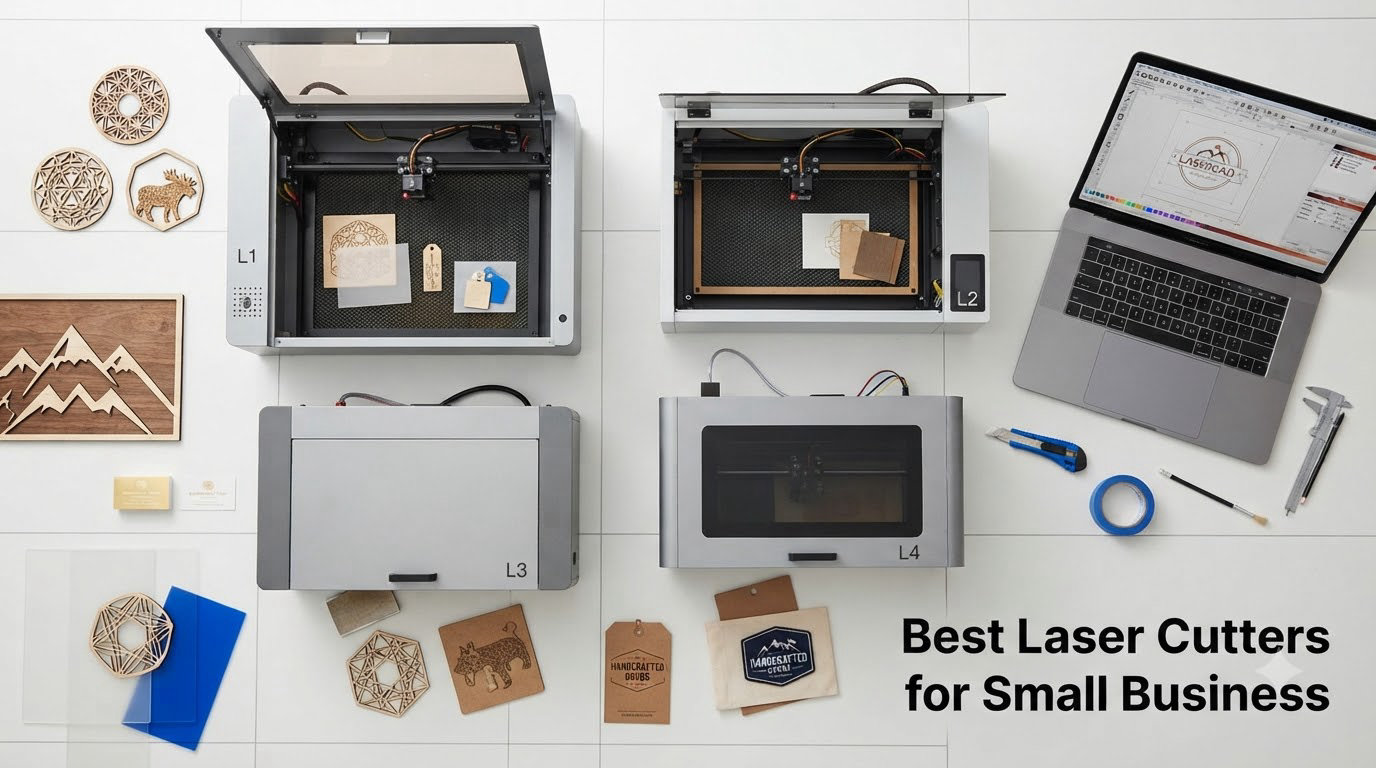
The xTool S1 40W is the best laser cutter for small business in 2026. It is the only machine in this group that pairs 40W cutting power with a fully enclosed Class 1 cabinet, and at 4.6 it carries the highest owner rating in the roundup across 233 reviews.
I built this roundup around a different question than most. Almost every ranking page asks which machine is the best laser cutter, which is a hobby question. A business owner needs to know which machine will hold a tolerance on a paid order, cut the same depth on the fiftieth unit as on the first, and still be under warranty when something fails eight months in. So each pick here is judged on cutting power, enclosure safety, software freedom, consumable cost, and whether the vendor answers the phone.
We compared all ten machines in this list against the same criteria and read the full owner feedback on each one. Ten picks, from a small enclosed engraver for a market stall to a dual-laser machine that marks bare stainless steel. If you also run a physical production space, our guide to gear for small production studios covers the shop-side tooling that works the same way.
Table of Contents
- Top 3 Best Laser Cutters for a Small Business in 2026
- All 10 Best Laser Cutters at a Glance in October
- 1. xTool S1 40W – Best Overall Laser Cutter for Small Business
- 2. xTool F1 Ultra – Best Laser Engraver for Small Business on Metal
- 3. xTool M1 10W – Best Desktop Laser Cutter for Craft Booths
- 4. LaserPecker LP2 – Best Laser Engraver for Mobile Sellers
- 5. Creality Falcon A1 Pro – Best Value Enclosed Laser Cutter for a Shop
- 6. LONGER RAY5 40W – Best Laser Cutter for Small Business on Cutting Power
- 7. ATOMSTACK A20 Pro V2 – Best Laser Engraver for Batch Product Lines
- 8. Twotrees TTS-55 Pro – Best Entry Laser Cutter for Product Trials
- 9. AlgoLaser Pixi 10W – Best Computer-Free Laser Engraver for Market Stalls
- 10. ACMER S1 – Best Budget Laser Cutter for Small Business
- Diode vs CO2 vs Fiber: Which Laser a Small Business Should Buy
- How to Choose a Laser Cutter for Small Business
- 1. Match the machine to your actual materials
- 2. Enclosure and Class 1 safety come first in a business
- 3. Air assist, an air pump, and fume extraction are three separate things
- 4. Software freedom and LightBurn compatibility
- 5. Bed size and passthrough for real order volume
- 6. Support, warranty, and spare parts are a buying criterion
- 7. Budget for consumables and total cost of ownership
- Frequently Asked Questions
- The Verdict on the Best Laser Cutter for a Small Business
Top 3 Best Laser Cutters for a Small Business in 2026

All 10 Best Laser Cutters at a Glance in October
| Product | Specs | Action |
|---|---|---|
 xTool S1 40W xTool S1 40W |
|
Check Latest Price |
 xTool F1 Ultra xTool F1 Ultra |
|
Check Latest Price |
| xTool M1 10W |
|
Check Latest Price |
 LaserPecker LP2 LaserPecker LP2 |
|
Check Latest Price |
 Creality Falcon A1 Pro Creality Falcon A1 Pro |
|
Check Latest Price |
 LONGER RAY5 40W LONGER RAY5 40W |
|
Check Latest Price |
 ATOMSTACK A20 Pro V2 ATOMSTACK A20 Pro V2 |
|
Check Latest Price |
 Twotrees TTS-55 Pro Twotrees TTS-55 Pro |
|
Check Latest Price |
 AlgoLaser Pixi 10W AlgoLaser Pixi 10W |
|
Check Latest Price |
 ACMER S1 ACMER S1 |
|
Check Latest Price |
1. xTool S1 40W – Best Overall Laser Cutter for Small Business
xTool S1 40W Laser Cutter and Laser Engraver for Tumblers, 23.93″ x 15.16″ Bed Size, 600mm/s Speed, Laser Engraving Machine, Laser Engraver for Wood and Metal, Acrylic, Big Project – Rotary Bundle
40W diode laser
23.93 x 15.16 inch bed
600mm/s
Class 1 enclosure
86.8 lb
Pros
- Cuts 18mm cherry wood in a single pass
- Patented pin-point positioning for 3D curved surfaces
- Enclosed Class 1 cabinet contains smoke and noise
- Auto-focus plus xTool Creative Space with 400+ material settings
- Support resolved an air-assist issue with a fast replacement
Cons
- No motor braking on the head so the gantry is easy to bump
- Ventilation hose connection required
- Creative Space can be clunky and lose material settings
- Large and heavy at 86.8 pounds
This is the machine I would put behind a counter in a shop that takes paid orders. The 40W diode cuts 18mm cherry wood in a single pass and runs the gantry at up to 600mm/s, which is the difference between a 12-piece order and a 40-piece order finishing inside a lunch break. At 233 reviews and a 4.6 rating, it also has enough owner history behind it that the failure modes are documented rather than speculative, and the same 4.6 is the highest average rating in this group.
The enclosure is the part that matters most for a business rather than a hobbyist. A Class 1 cabinet filters 99% of the laser light and gives you five flame sensors, an emergency stop, and a lid-open shutdown, which means you can run it in a retail space with employees nearby without a dedicated fenced-off area. You still need to vent it, but the machine is a contained tool rather than an open beam on a bench.
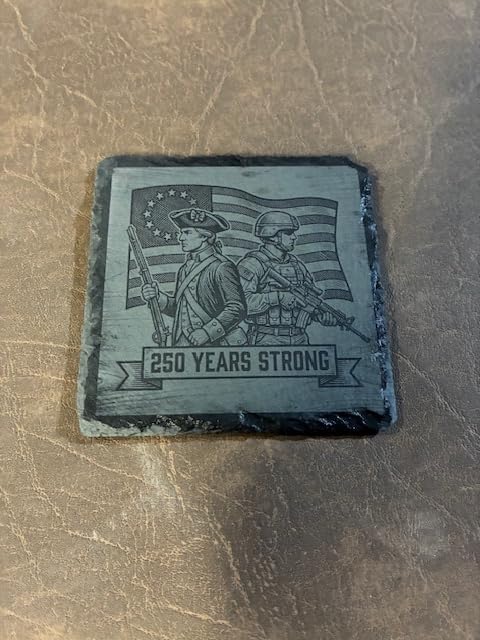
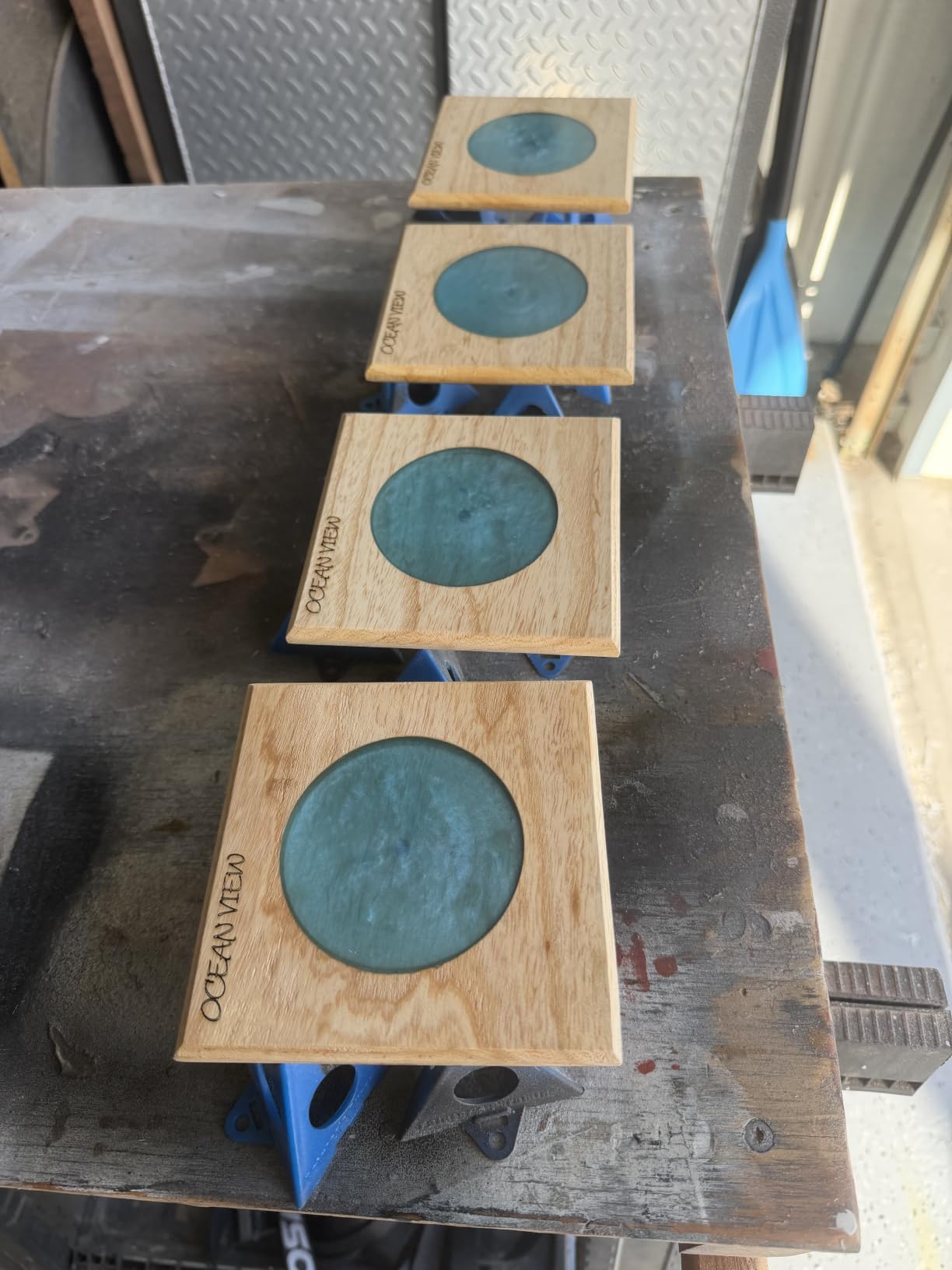
Software is where xTool earns its reputation with business users. Creative Space includes 400-plus pre-tested material settings, auto-focus on a spring-loaded Z probe, and pin-point positioning that engraves curved objects like spoons and wooden plates. AutoPassthrough also handles projects up to 118 inches when you add an external feeder, which is a genuine batch-production path rather than a marketing line.
What to check before you buy the S1
It weighs 86.8 pounds and the frame is 3mm aerospace-grade aluminum, so measure the bench and the route to it before it arrives. The ventilation hose connection is mandatory, not optional, and reviewers repeatedly note that the smoke smell lingers indoors if you skip it.
The head has no motor braking, so the gantry drifts when you bump the machine and needs re-aligning. Owners also report that the spring-loaded metal Z probe can dent and return false focus readings. Neither is a deal breaker, but both are small daily frictions that a hobby user would not notice and an eight-hour production day would.
Who the S1 40W suits
This fits a maker business that cuts wood and acrylic, engraves logos onto tumblers and boards, and needs repeatability more than it needs a huge bed. Between the 23.93 by 15.16 inch work area and 600mm/s, most sign, gift, and packaging orders fit in one pass. Our team rates xTool support as a real strength here, with a day-level response and fast replacement parts.
2. xTool F1 Ultra – Best Laser Engraver for Small Business on Metal
xTool F1 Ultra 20W Fiber & Diode Dual Laser Engraver
20W fiber plus 20W diode
10000mm/s
220 x 220mm
16MP camera
43.8 lb
Pros
- Only desktop dual-laser unit that marks metals and cuts wood and acrylic
- 10000mm/s supports fast batch work
- Rotary attachment handles curved surfaces cleanly
- Creative Space is easier to learn than LightBurn
- Service responds within a day and sends parts fast
Cons
- Work area is only 7.9 x 7.9 inch without the optional conveyor
- Reported laser module failures on earlier units
- Calibration control is awkwardly placed and can drift
- Desktop app paywalls AI features after purchase
- LightBurn compatibility issues reported by Mac users
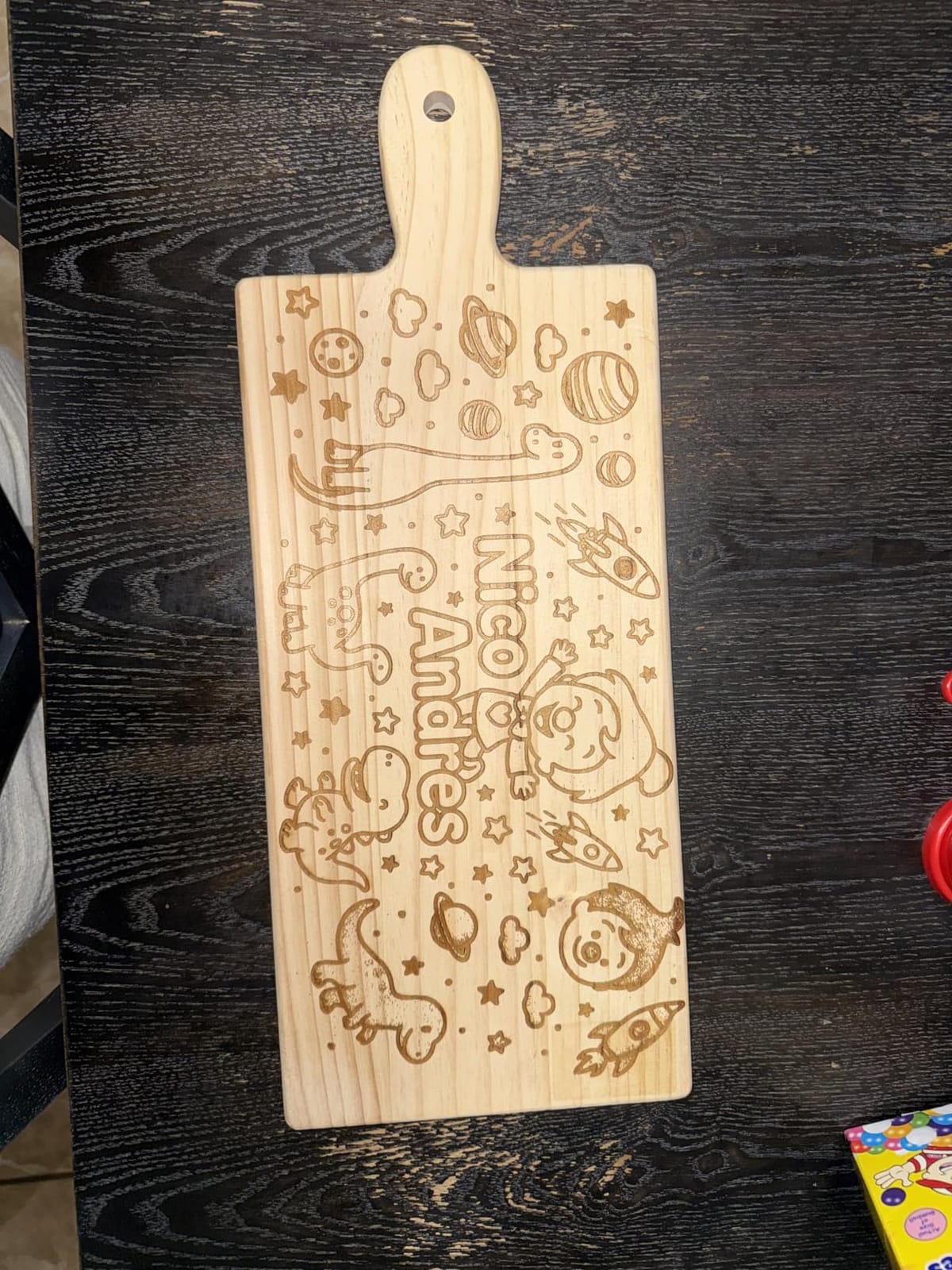
If your product line needs bare metal, this is the machine that opens the door. The dual system pairs a 20W 1064nm infrared fiber head with a 20W diode, and the fiber head cuts 0.3mm stainless steel, 0.4mm brass, and 0.2mm aluminum while the diode takes 15mm wood and 12mm black acrylic. Nobody else in this list does both jobs in one cabinet.
The 10,000mm/s engraving speed and the 16MP smart camera are the throughput story. The camera recognizes and positions batch items, so a jewelry or hardware-tag run does not need a person nudging each piece into place. At 43.8 pounds it is one of the lighter enclosed machines here, so it moves between a workshop and a market stall without a second person.
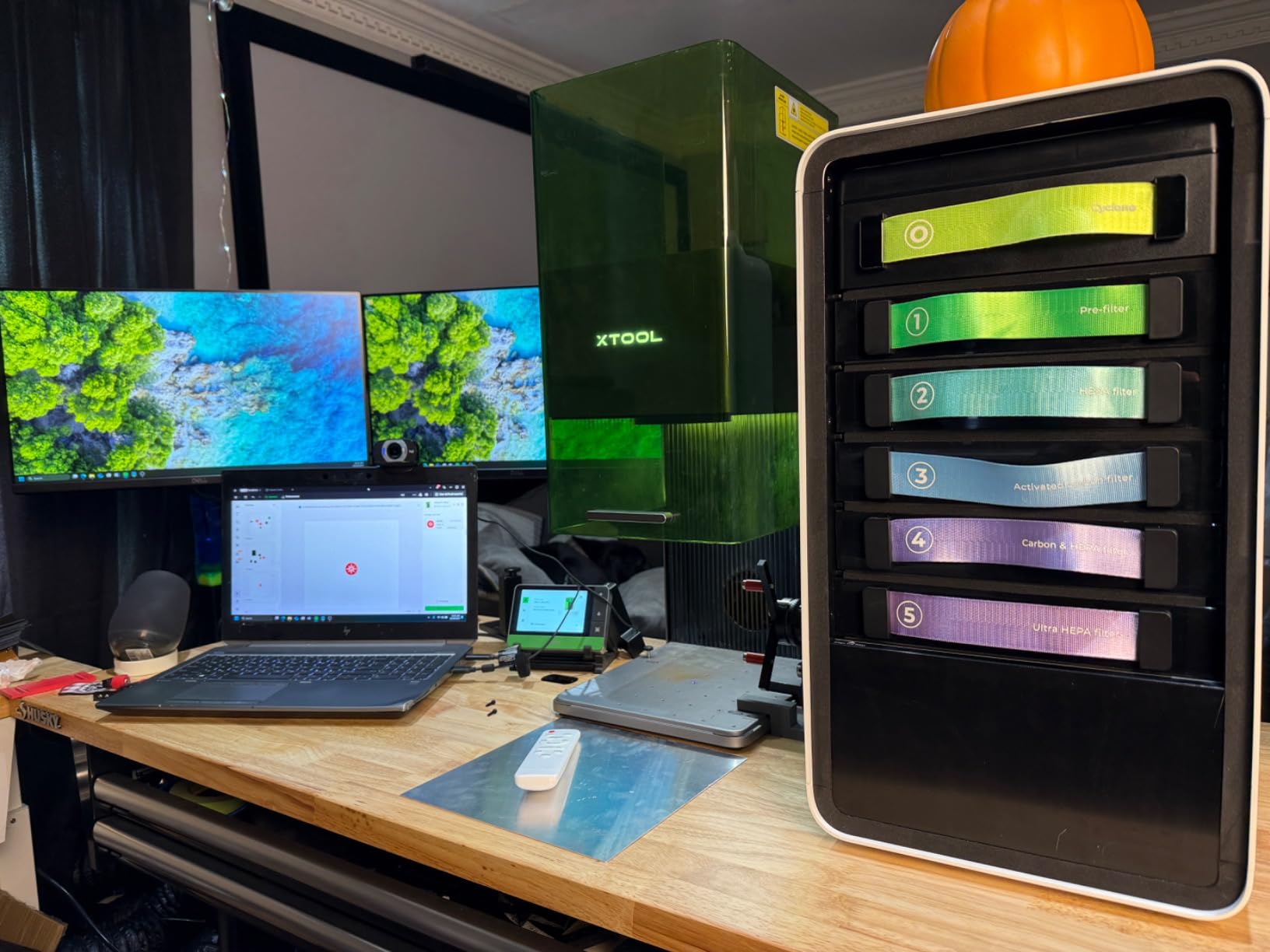
Enclosed Class 4 cover with smoke extraction, a fire alarm, and an emergency stop make it workable in a customer-facing space, which matters for same-day personalization orders. Support is genuinely responsive, and 3D embossing and deep engraving let you charge for layered work rather than flat marking.
Where the F1 Ultra will frustrate you
The fitted work area is 220 by 220mm, and extending it to 220 by 500mm needs the optional conveyor. That is small for signage or anything wider than a coaster, so plan on batch processing rather than oversized single pieces. Deep metal engraving also runs long, which works against scaling.
The 4.1 rating reflects real hardware complaints: owners report laser module failures on earlier units after a few weeks, and the calibration adjustment sits awkwardly behind the light shield and drifts. Mac users report LightBurn compatibility issues, and the desktop app paywalls its AI features after purchase. This is our pick for metal, but it is not the pick we would hand a beginner.
Who the F1 Ultra suits
Jewelry studios, hardware and tool branding, serial-number and part-marking shops, and anyone selling metal tags or pendants. The fiber head eats the metals a diode can only coat-mark, and the speed keeps small batch runs under an hour. Read the reviews on module failures before you commit, and keep a spare-parts budget in your first-year costs.
3. xTool M1 10W – Best Desktop Laser Cutter for Craft Booths
xTool M1 10W Laser Engraver with RA2, Class I Laser Engraver, 3-in-1 Laser Engraving Cutting, Blade Cutting, Supports Processing Glass, Cylindrical Objects
10W 3-in-1 laser
Laser plus blade cutting
0.01mm accuracy
Class 1 cover
Pros
- Only desktop machine that engraves and cuts with laser and blade
- Blade cutting gives clean vinyl edges with no burn or smoke
- Setup takes minutes and the camera focuses automatically
- Works well for tumblers and patches and small batches
- xTool support walks users through problems step by step
Cons
- 10W is underpowered for serious cutting
- Wi-Fi and mobile connectivity took troubleshooting for some buyers
- Exhaust fan stops when the job finishes and smoke lingers
- Does not run LightBurn
- Air assist is a separate purchase and some units shipped missing parts
The M1 is the one I recommend when the machine has to earn its space on a small counter in front of a customer. It is the only desktop unit in this roundup that engraves, laser-cuts, and blade-cuts in one device, and the blade head is the sleeper feature. Vinyl and heat-transfer film come out with no burn, no discoloration, and no smoke, which matters enormously when a customer is standing there.
At 10W it cuts 10mm wood in a single pass at 250mm/s, and the dual laser head with FAC lens compression holds 0.01mm engraving accuracy. The built-in camera handles auto-focus, material detection, and batch processing automatically, so a new employee can run a job without a training session. The removable bottom plate and included riser base handle material of unlimited height, and a rotary attachment engraves glasses and tumblers.
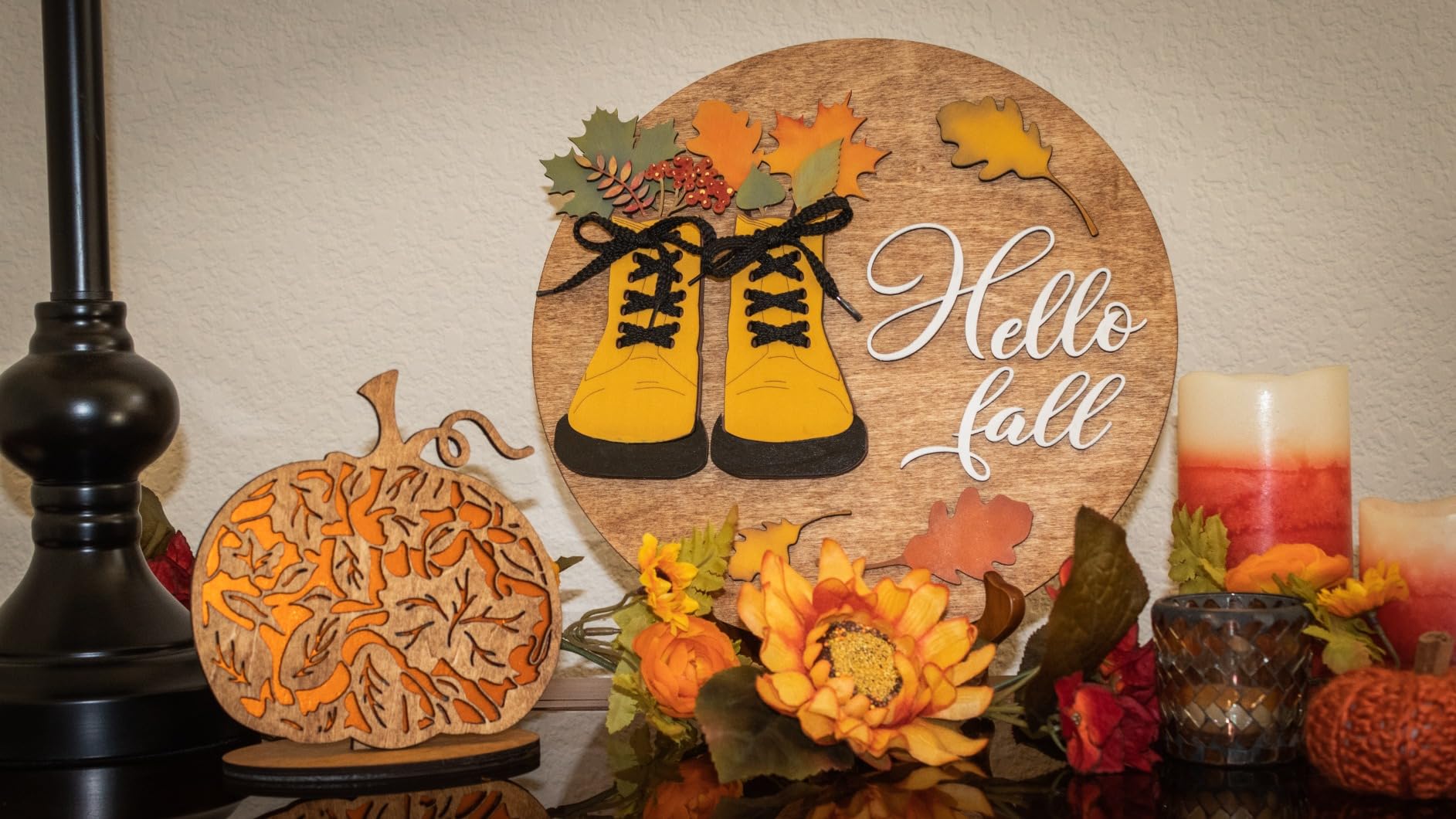
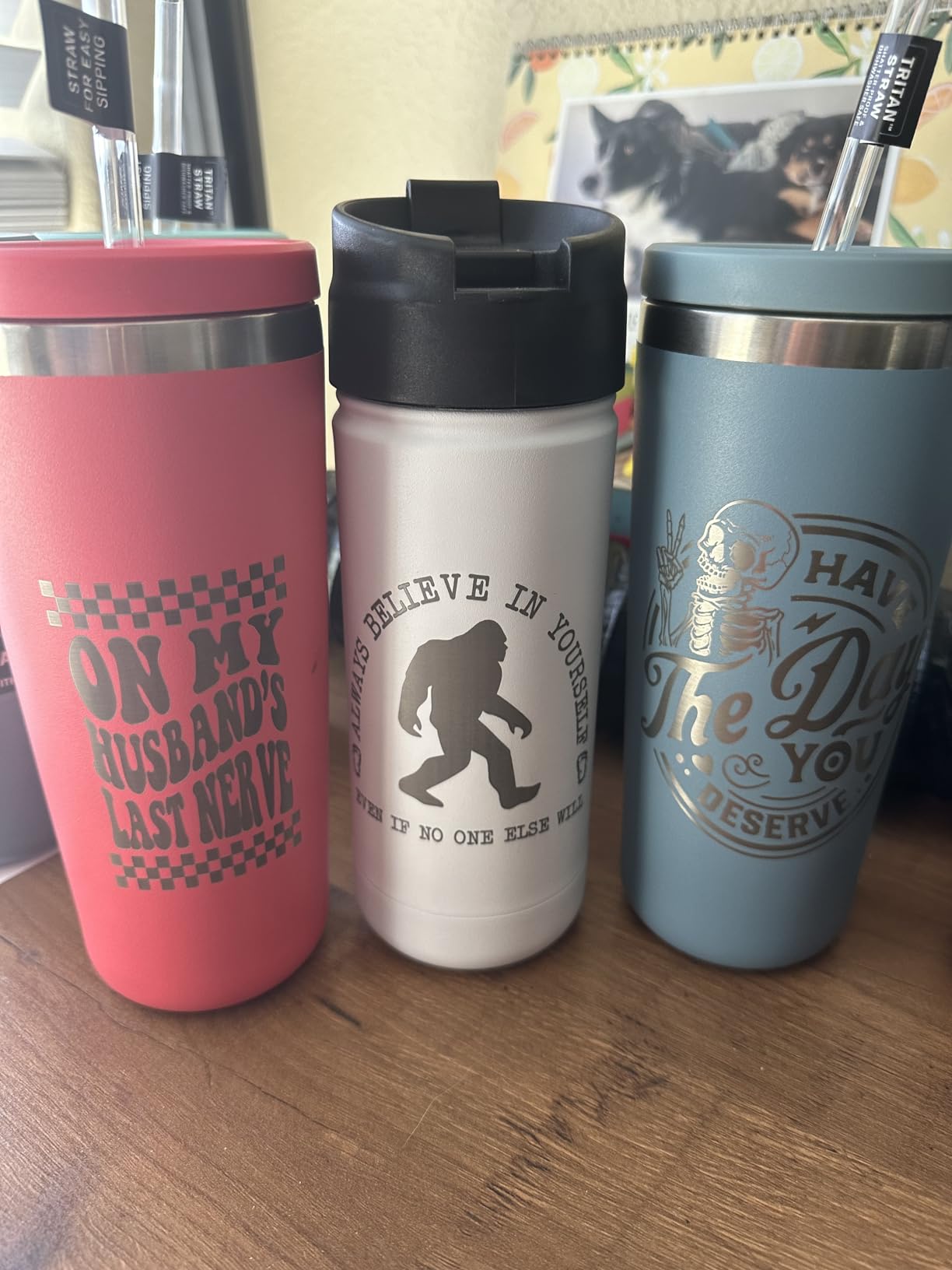
It works with 300-plus materials including vinyl, coated metal, leather, wood, paper, PVC, fabric, felt, ceramic, and plastic. The Class 1 protective cover powers off automatically when opened, and there is a built-in fan and exhaust pipe. For a pop-up stall or a market table, that self-contained design is worth more to a business than raw wattage.
Where the M1 falls short
Ten watts is an engraving machine, not a production cutter. Owners use it for vinyl, HTV, patches, and small personalized gifts rather than thick cutting runs, and any owner planning a wood product line will outgrow it quickly. That is a fair trade for a booth machine, but be honest about which one you are buying.
It does not run LightBurn, which experienced users often prefer for production work. Air assist is a separate purchase, some units arrived with missing parts, Wi-Fi setup needed troubleshooting for a few buyers, and the exhaust fan stops the moment a job ends, so residual smoke hangs in the air. Budget for the accessories on day one rather than after your first busy weekend.
Who the M1 suits
Craft-fair sellers, mobile customization carts, personalization booths at events, and side-hustle operators moving from prototypes to paid orders. The blade head alone justifies it if vinyl and HTV are a large share of what you sell. If your future product line is thick wood or layered acrylic, look at the 40W picks instead and keep this one as a second machine.
4. LaserPecker LP2 – Best Laser Engraver for Mobile Sellers
LaserPecker LP2 Laser Engraver with Roller, Portable and Handheld Laser Engraving Machine for Wood Metal Leather Acylic Engraving Laser Cutter, Suit Set with Versatile Rotary Roller
Galvo engraver
1417 in/min
0.05mm spot
Three-mode roller
10.21 lb
Pros
- Portable handheld form factor works at on-site and market jobs
- Electric roller has cylinder slab and trolley modes for tumblers and long strips
- Fast galvo speeds and a 0.05mm spot for detail
- Connects to a phone or PC with standard JPG and G-code files
- Bundle includes the roller stand cover adapter and safety glasses
Cons
- Cannot engrave pure or shiny metal
- Light-colored and transparent materials need black paint first
- Handheld design needs a steady 11cm working distance
- Cutting limited to wood and paper within 0.2 inch
The LP2 carries 317 owner ratings from people who bought it for mobile work, and that makes sense for what it is. It is a handheld galvo engraver that weighs 10.21 pounds, so you can carry it to a wedding fair, engrave a guest’s gift on the spot, and take payment before they leave. For a business selling experience rather than product, that changes the economics more than wattage does.
The three-mode electric roller is the reason buyers keep coming back. Cylinder mode handles tumblers and pencils, slab mode flattens work, and trolley mode extends the working length to 196 inches at 4 inches wide, so you can run a long engraved strip in one pass. The 0.05mm compressed spot at up to 1417 in/min holds detail on small text and serial numbers.
It takes JPG, PNG, and G-code files from a phone or a PC, so your existing design workflow carries over without a proprietary platform. It engraves paper, cardboard, wood, leather, coated metal, and brushed stainless steel, and cuts wood and paper up to 0.2 inch. A 12-month warranty comes with the suit set, which includes the unit, roller, electric stand, conical cover, adapter, safety glasses, and cables.
The materials boundary on the LP2
Bare or shiny metal does not engrave. LaserPecker itself steers metal-only buyers toward the LP3 or LP4, and that is the right call for anyone whose product line depends on stainless or aluminum. Light-colored and transparent materials must be painted black first, which adds a prep step to every unit and quietly raises your per-piece cost.
Because it is handheld, you must hold a steady 11cm laser distance, and that consistency is on the operator rather than the machine. Cutting depth is limited to wood and paper within 0.2 inch. Treat the LP2 as an engraving and personalisation engine, not a cutter, and it will not disappoint.
Who the LP2 suits
Mobile sellers, event and wedding favor businesses, on-site personalization services, and anyone who engraves at the customer rather than shipping to them. The long trolley mode also suits small production shops running engraved straps, stencils, and labels. If your product line is metal, pair it with a fiber machine rather than forcing the job.
5. Creality Falcon A1 Pro – Best Value Enclosed Laser Cutter for a Shop
Creality Falcon A1 Pro 20W Laser Engraver, Full Enclosed 180W Output Laser Engraver Machine, Touch Screen, Auto Focus, APP Control, Pre-Assembled, Ideal for Wood and Metal, Class 1 Safety
20W blue diode
Optional 2W IR module
600mm/s
Class 1 enclosure
Pros
- Enclosed Class 1 design blocks smoke and noise and removes the need for goggles
- Minimal assembly and quick setup
- Camera autofocus in about 3 seconds makes repeat jobs consistent
- Good first enclosed machine that fits a small shelf
- Works with both Creality Design Space and LightBurn
Cons
- Heavy steel frame makes the unit cumbersome to move
- Air assist feels weak and the exhaust fan is under-powered
- Honeycomb bed and air purifier are extra purchases
- 2W IR module is limited for fine metal and plastic detail
- Camera can bump the laser carriage
- No passthrough or conveyor for long signs
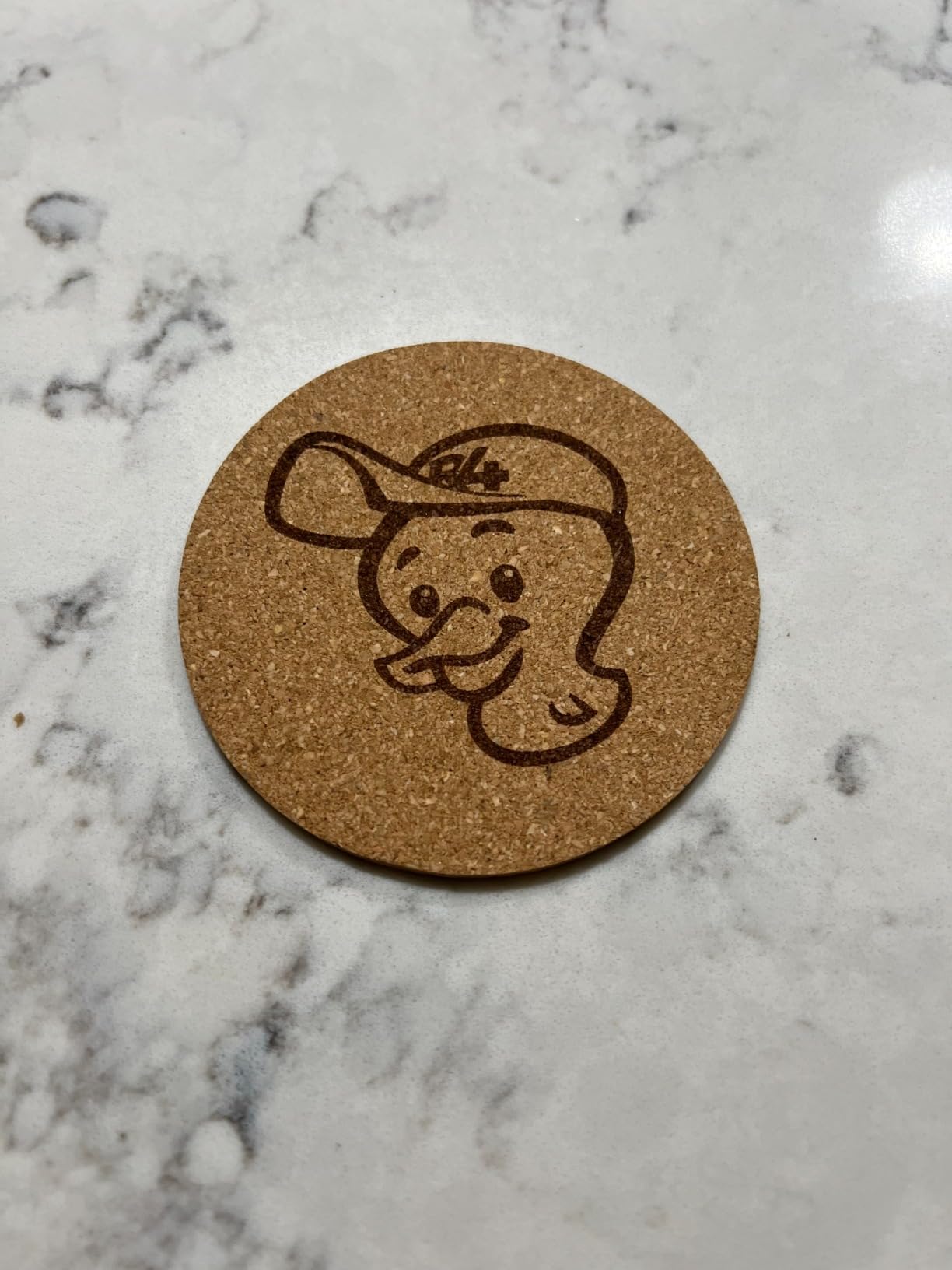
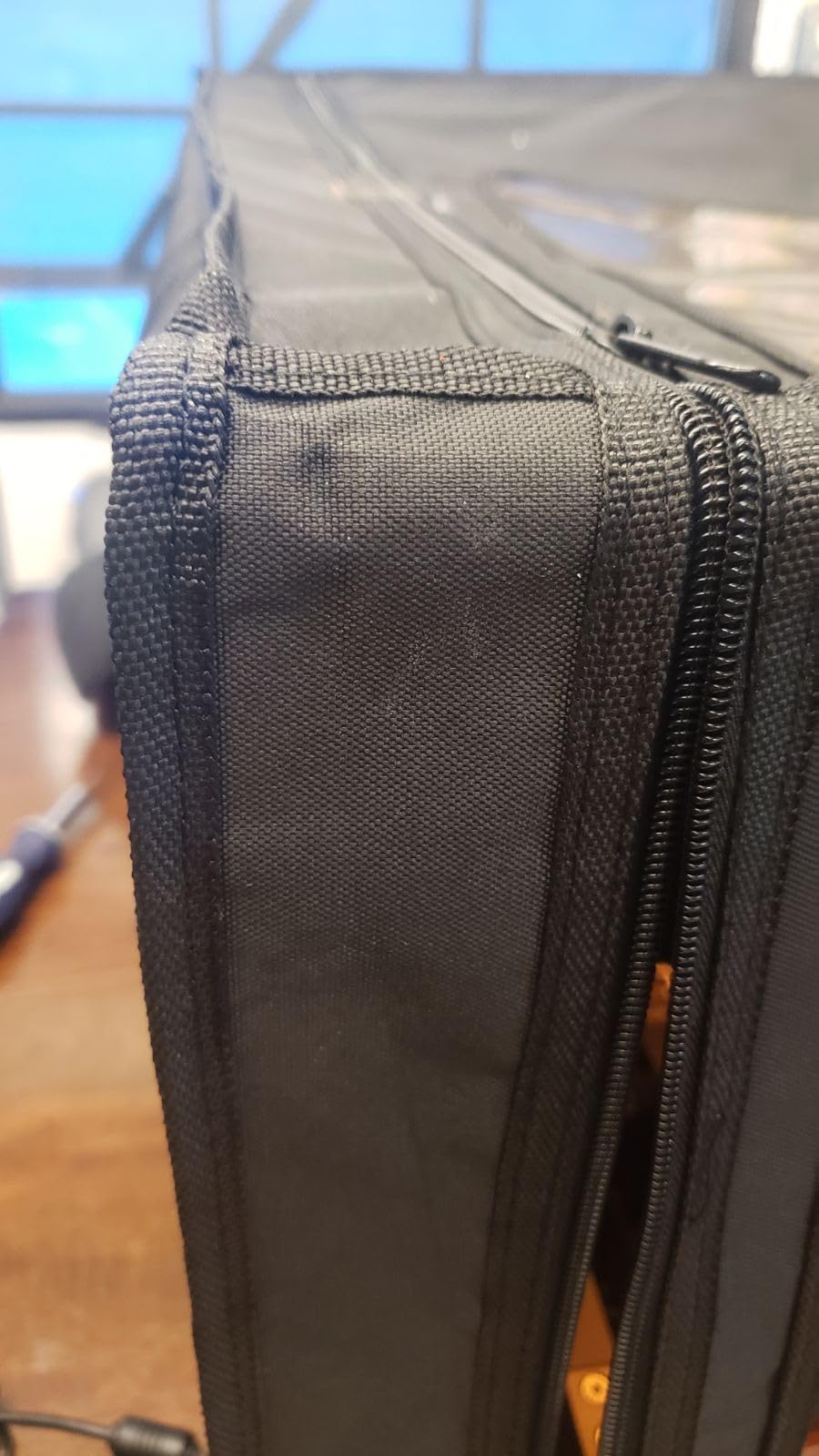
The Falcon A1 Pro is our pick when a shop wants an enclosed machine and enclosure safety without paying desktop premium pricing. It arrives 80% assembled, so setup is short, and the dual protective covers filter 99% of the light while an emergency stop, lid-open halt, internal smoke fan, and built-in lighting handle the shop environment. No goggles, no barrier, and far fewer safety rules to write into your staff training.
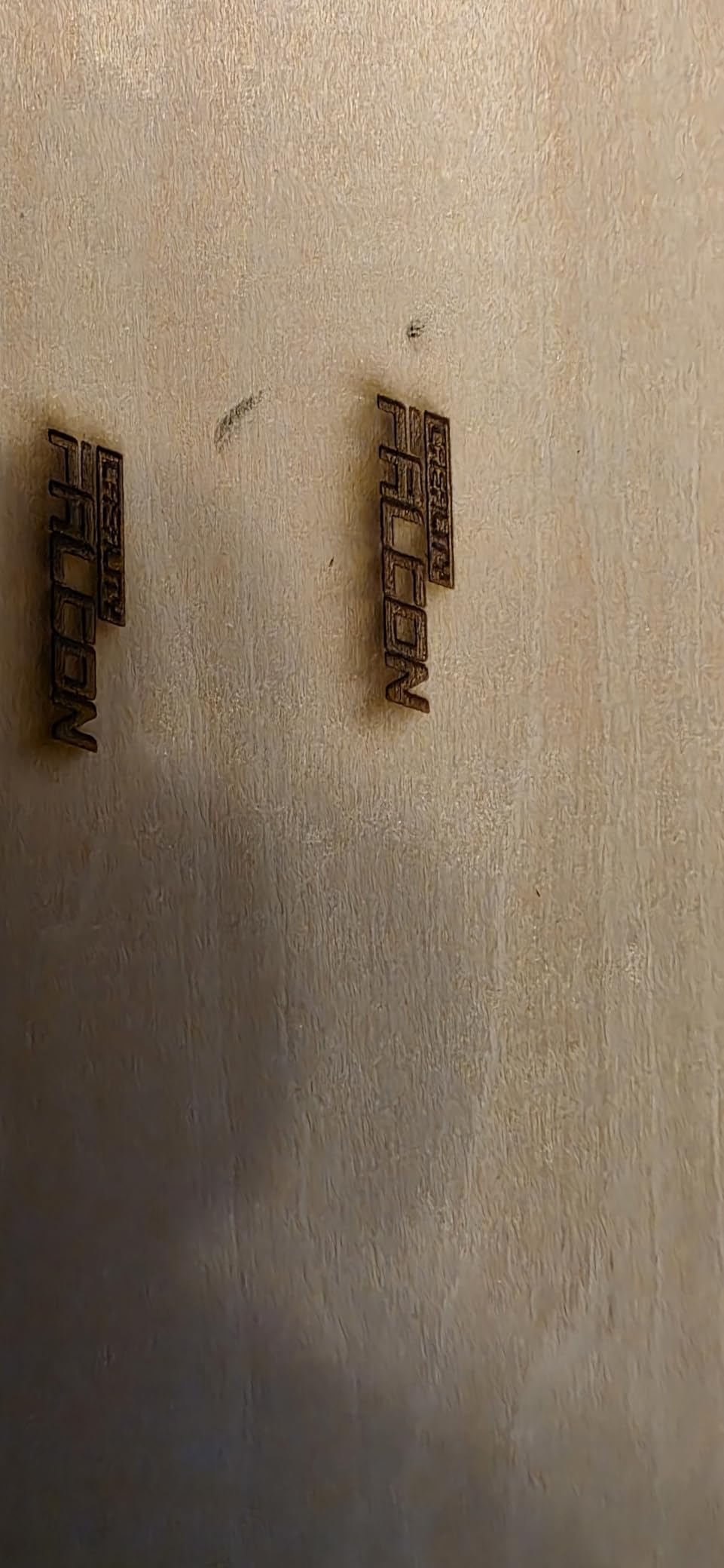
A 20W blue diode runs cutting and engraving at up to 600mm/s, cuts 10mm basswood and 8mm black acrylic, and the HD camera with AI vision plus red-dot ranging focuses in about 3 seconds at 0.012 inch accuracy. That focus speed matters more than it sounds: it is what makes a repeat order land on the same spot as the first one.
The smartphone-style touchscreen with app control and real-time job monitoring is genuinely useful when a second person needs to check on a long run. Creality Design Space is the default, and LightBurn is also supported, so you are not locked into a cloud-only workflow and you can keep local file control over your designs.
What the Falcon A1 Pro asks you to add
Owners consistently report that air assist feels weak and the exhaust fan is under-powered for sustained production. Plan on a dedicated extraction unit rather than trusting the internal fan alone, especially in a room with customers. The honeycomb bed, the IR module, and an air purifier are all separate purchases, so the real cost sits above the headline figure.
At 37.4 pounds the steel frame is heavy to move once you are used to a benchtop unit. The optional IR module is only 2W, which is fine for business cards, photos, and light marking but not jewelry-grade metal work, and the camera can bump the laser carriage. There is no passthrough or conveyor, so long wooden signs are out of reach.
Who the Falcon A1 Pro suits
Schools, maker spaces, small craft businesses, and any shop that needs a safe enclosed machine on a modest budget. Reviewers split on build details, with some owners reporting strong quality and steady results and others describing noisy operation and vent placement that differs from the photos. Inspect it on arrival, and keep the LightBurn path in your plan.
6. LONGER RAY5 40W – Best Laser Cutter for Small Business on Cutting Power
LONGER RAY5 40W Laser Engraver, High Power Laser Cutter Machine
40W dual-beam module
24000mm/min
30mm acrylic
16.61 lb body
Pros
- Strong value with 40W cutting power and dual-beam engraving speed
- Cuts black acrylic and thick wood smaller diodes cannot
- Well-made build with thoughtful production details
- Compatible with LightBurn and the bundled LaserGRBL
- LONGER support sends free replacement parts and answers quickly
Cons
- No enclosed housing so an enclosure and exhaust fan must be added
- Air assist is sold separately on some units and switched on manually
- Wi-Fi is unreliable and a wired PC connection is needed for large files
- Console cannot handle G-code over 1MB via micro SD
- Documentation after assembly is thin
- Hobby-grade safety means a honeycomb bed is needed
The RAY5 40W cuts deeper than anything else in this roundup, and at 4.5 across 109 reviews it holds the second-highest rating on the list. The dual-beam 40W module cuts 30mm black acrylic and 20mm wood in a single pass and engraves 0.15mm stainless steel, at up to 24,000mm/min. On thick-material jobs it simply does things the 10W and 20W machines cannot.
The 32-bit motherboard handles long production runs, the 0.08 by 0.1mm focus and built-in 256-color palette produce detailed full-color engraving, and LightBurn plus LaserGRBL compatibility means you can use the professional workflow. Support is a genuine strength here, with free replacement parts and quick answers. The board also supports continuous operation and controlling more than one machine from a single device, which matters if you add a second cutter.
For a small business that sells thick plywood organizers, layered acrylic, or inlay work, the economics of a single pass at 20mm are hard to argue with. Time is the real cost in production, and this machine removes an entire second pass from the schedule.
What you must add before running it in a shop
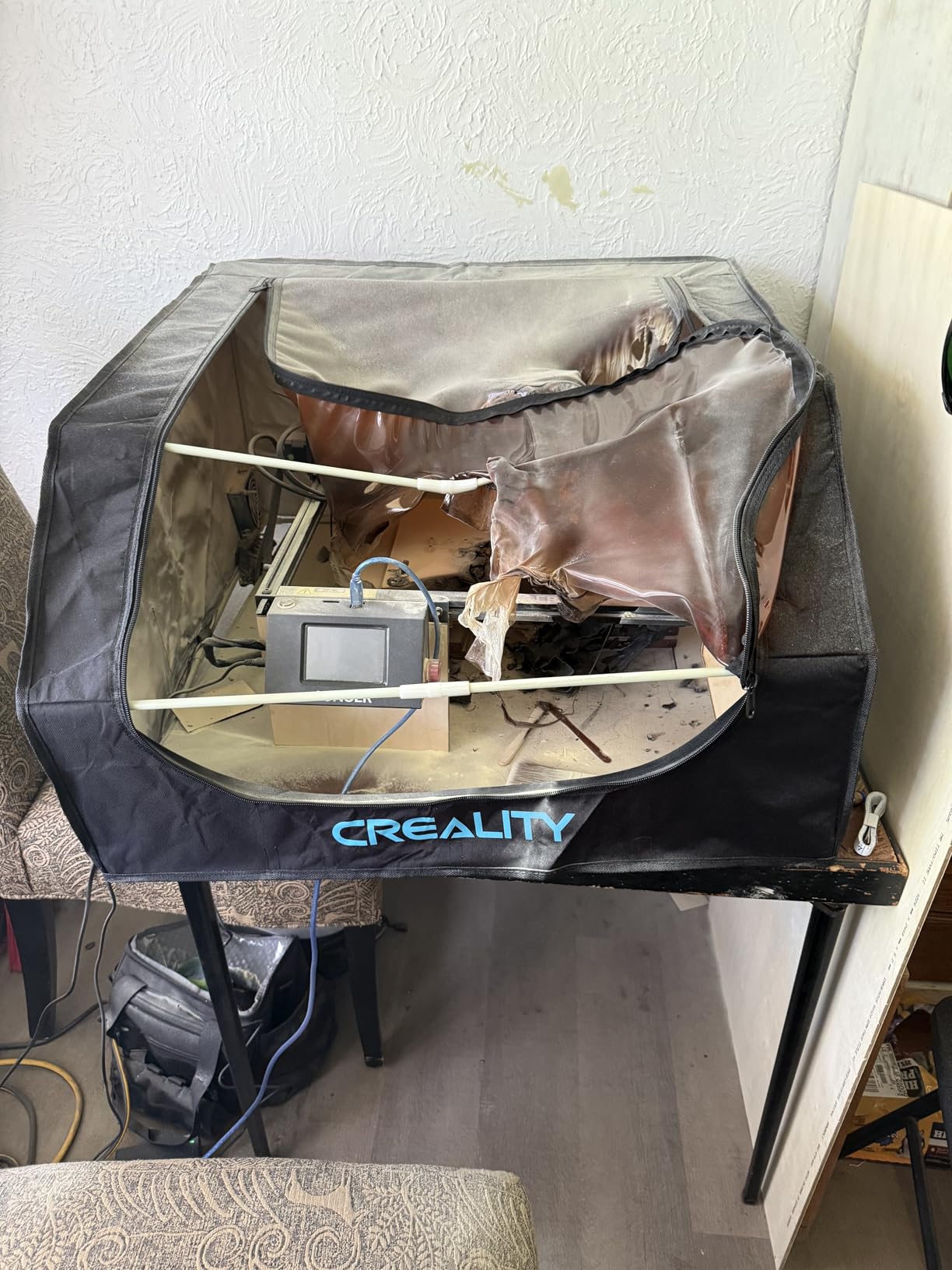
There is no enclosure. A honeycomb bed, enclosure, exhaust fan, and air assist are all extra, and owners echo roughly that budget across reviews. An open frame in a room with employees or customers is a real safety problem, so this machine is only a business purchase once it is boxed in and extracted properly.
Air assist is sold separately on some units and must be switched on manually, which is a fire risk if you forget. Wi-Fi is unreliable, so run it wired for anything beyond small files, and the console cannot handle G-code over 1MB via micro SD. Post-assembly documentation is thin, so budget time for setup and a honeycomb bed that does not slip.
Who the RAY5 40W suits
Shops that cut thick wood, black acrylic, or do inlay and 3D text, and operators comfortable building a safe enclosure around an open frame. It is the workhorse of the 40W class and the natural upgrade from a 10W starter. If you need it safe around customers out of the box, choose an enclosed machine instead.
7. ATOMSTACK A20 Pro V2 – Best Laser Engraver for Batch Product Lines
ATOMSTACK 20W Laser Engraver, A20 PRO V2 Laser Cutter, High Accuracy Laser Engraving Machine for Personalized Gifts, Business Cards, Wood, Metal, Acrylic, Leather
20W Class 4 output
400mm/s
0.01mm accuracy
13.42 lb
Pros
- Sharp detailed engraving once speed and power are dialled in
- Quick assembly with clearly numbered parts bags
- Large work area in a compact frame
- Works with LightBurn and LaserGRBL for a familiar workflow
- Strong price-to-performance and owners report it paid for itself
Cons
- Essentially no user documentation beyond the assembly guide
- Bundled app and PC program are basic
- LightBurn is the better control path
- Gantry cables lack a drag chain and can snag
- Belt-driven motion reduces accuracy on larger items
- Air assist and base plate may not be included
The A20 Pro V2 sits in the middle of this list and punches above its weight for engraving work. The 20W Class 4 output with 0.08 by 0.1mm dot compression focus runs to 400mm/s across wood, acrylic, and metal, and the in-house motherboard plus integrated linear guide motion keeps results steady on long jobs. Owners making coasters, signs, tags, and custom gifts report it paid for itself.
Assembly is quick, the parts bags are clearly numbered, and the work area feels large in a compact 13.42-pound frame. It works with the ATOMSTACK app, PC software, LightBurn, and LaserGRBL, and the module is rated for up to 10,000 hours. A one-year warranty comes with it, and that matters more than the spec sheet when you depend on one machine.
What makes it attractive for batch product lines is throughput at a modest outlay. A shop running hundreds of identical tags or coasters is chasing per-unit time, and 400mm/s with LightBurn job queuing is enough to hold a small production day without moving up in power.
The real weakness is documentation
Owners consistently complain that documentation is essentially absent beyond the assembly guide, and the bundled app and PC program are basic. LightBurn is the better control path, so budget for that as part of the machine, not an afterthought. Several owners retrofit drag-chain holders because the gantry cables are loose and can snag on the work.
Belt-driven motion reduces accuracy on larger items, and air assist and the base plate may not be in the box. A few isolated reports describe units arriving with a smoking electronics box, so inspect immediately on delivery. It is also an open-frame Class 4 design, which means the same enclosure and extraction requirements as the RAY5.
Who the A20 Pro V2 suits
Small businesses running high quantities of one or two engraved products, personalization shops, and makers upgrading from a 5W starter. Best used with LightBurn and a honeycomb bed, and ideally inside an enclosure. Buy it for engraving volume rather than cutting depth.
8. Twotrees TTS-55 Pro – Best Entry Laser Cutter for Product Trials
Twotrees TTS-55 Pro Laser Engraver 5500mW Laser Engraving Machine
5.5W Class II module
300 x 300mm bed
30000mm/min
8.23 lb
Pros
- Very low entry cost for a working engraver
- Compact build that is easy to carry and store
- Compatible with LaserGRBL and LightBurn for flexible control
- Built-in Wi-Fi allows app and browser control without a PC
- Fast 30000mm/min on a dual-core 32-bit controller
Cons
- Assembly is fiddly and several owners took the frame apart repeatedly
- Not a metal engraver despite some marketing
- 300 x 300mm work area limits production size
- 5.5W is slow for etching against higher-wattage machines
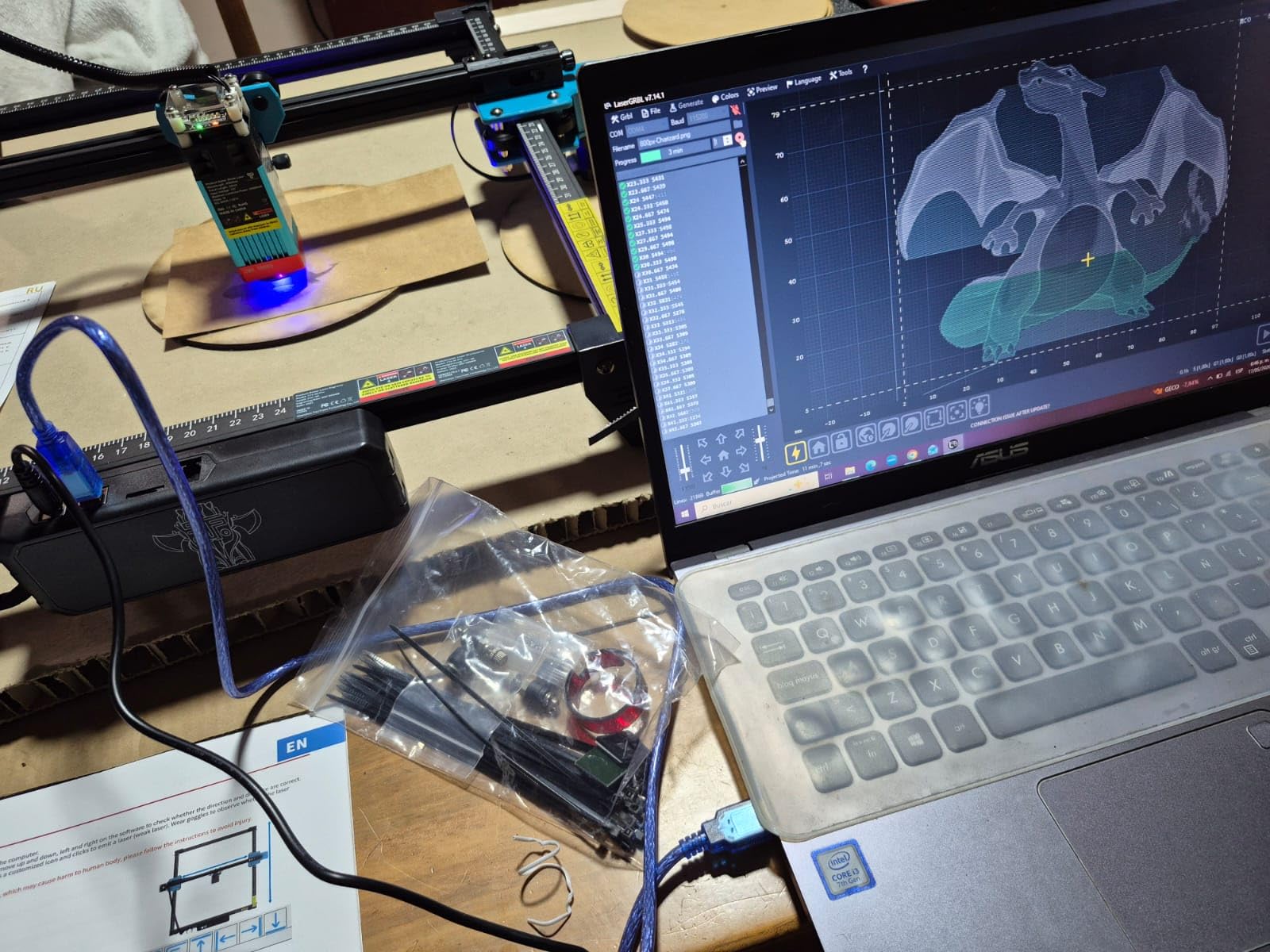
The TTS-55 Pro has 494 owner ratings, more review history than any other machine in this roundup, and the 4.4 score reflects a machine that simply works once you have it running. It cuts 5mm plywood, 3mm acrylic, and 0.7mm leather, engraves at 0.1mm accuracy, and runs to 30,000mm/min on a dual-core 32-bit controller. A metal air-assisted nozzle and red laser shield are included.
Control options are unusually flexible for the money: online, TF card offline, and built-in Wi-Fi for a mobile app or browser, plus LaserGRBL and LightBurn on Windows, macOS, and Linux. The offline modes matter for a business, because you can run a job in a garage or a booth without dragging a laptop and without filling the room with smoke.
Where it earns its place is product trials. If you are testing whether a laser product line has legs before committing real money, this machine answers the question at the lowest sensible outlay, and owners report steady results across wood, leather, acrylic, and paper.
What 5.5W means for a paid order
It is slow for etching work compared with any higher-wattage machine here, and the 300 by 300mm area limits production size quickly. Owner feedback is blunt about this class in general: it is fine for engraving but painful for cutting, and for a business, time is money. Treat it as a proof-of-concept machine, not a production unit.
Assembly is fiddly, and several owners had to take the frame apart more than once to get it right, so allow a setup weekend. It is also not a metal engraver despite what some marketing implies, which rules it out of jewelry and hardware tagging plans. Budget for patience and for a honeycomb bed before your first real cut.
Who the TTS-55 Pro suits
Anyone validating a product idea, a student or educator, and hobbyists who want a capable engraver without a large outlay. The Wi-Fi and offline control make it a good first machine to learn LightBurn on. When orders justify more, move up to a 20W or 40W enclosed machine and keep this one for samples.
9. AlgoLaser Pixi 10W – Best Computer-Free Laser Engraver for Market Stalls
AlgoLaser 10W Portable Laser Engraver Machine: Smart Laser Engraver/Cutter with 3.5″ Touchscreen & AlgoOS System – Hand Draw/Wireless Transmission/Offline – Laser Engraving for Wood,Metal,Glass
AlgoOS onboard system
3.5 inch touchscreen
0.08mm spot
8.53 lb
Pros
- Draws and types on the touchscreen with no computer needed
- Compact well-built enclosure that resists scratches and stains
- Plug-and-play with no assembly and LightBurn on some units
- Clean results on wood leather acrylic glass and coated metal
- Safety door and tilt detection in a Class 1 housing
Cons
- Safety door interlock sometimes fails to register as closed
- App support for the Pixi is not yet available and files move by USB stick
- Base markings do not align precisely with the true work area
- Swapping the engraving and cutting base sides takes 5 to 10 minutes
- Smoke and odor are noticeable despite the built-in fan
The Pixi is the most unusual machine in this roundup because it does not need a computer. AlgoOS runs on a 3.5-inch full-colour touchscreen, and AlgoSketch captures a hand drawing while AlgoType generates text, all in a three-step drag, place, engrave workflow. For a market stall, a classroom, or a retail counter, that removes the single biggest reliability risk in a laser setup.
It engraves at a 0.08mm spot at 317.5 lines per inch, with reverse engraving for high contrast on acrylic, glass, wood, and leather. The 10W module sits inside a Class 1 housing with an auto-pause safety door, a password-protected lock screen, and tilt and vibration detection, and it supports offline engraving plus preloaded templates. A one-year warranty and 24/7 support are included.
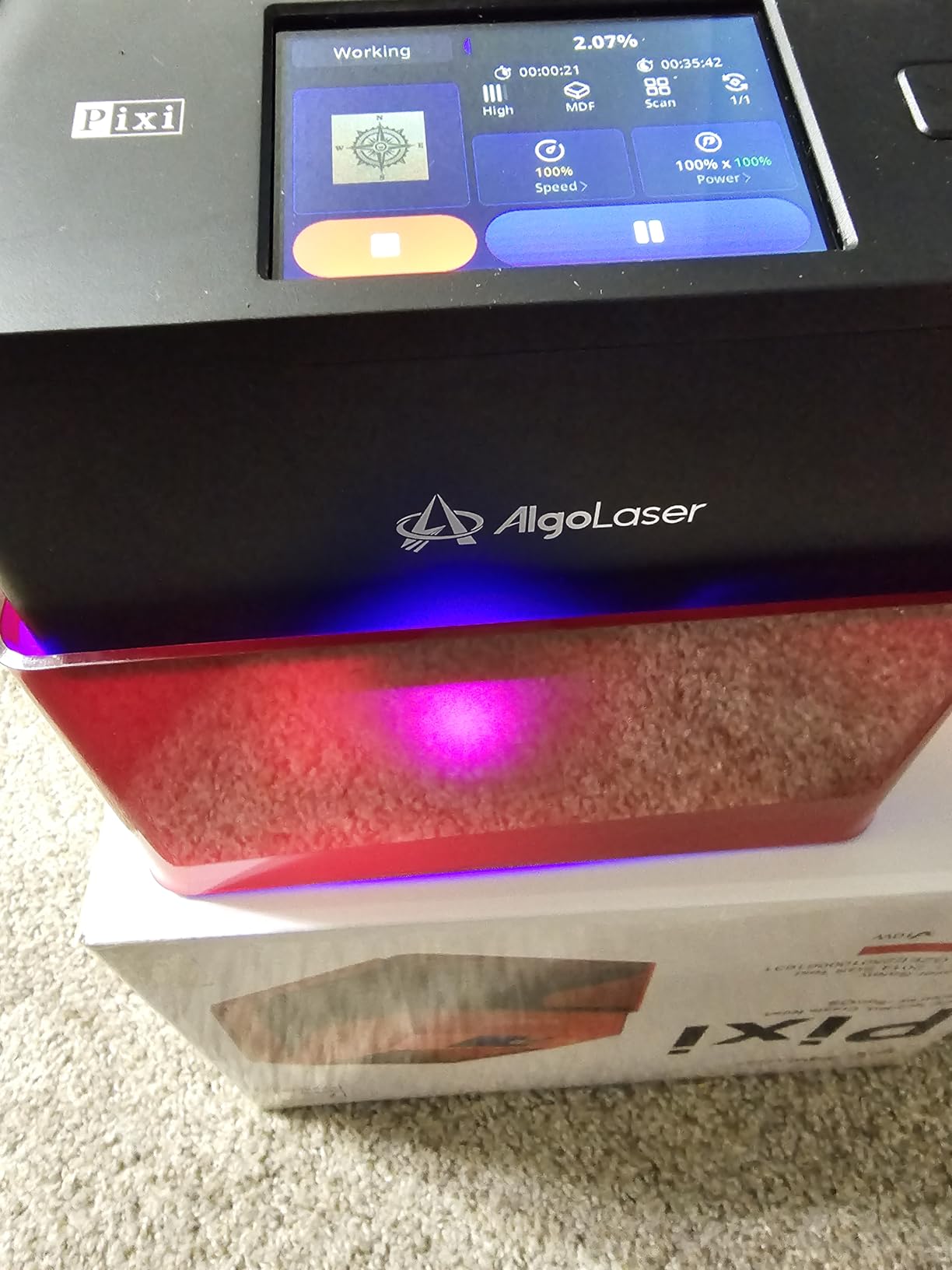
It weighs 8.53 pounds and measures 10.5 by 8.5 by 7.7 inches, so it packs into a vehicle and holds up on a market table. The two-sided base switches between engraving and cutting settings and lifts to accept larger objects, and preloaded sample projects with step-by-step tutorials make it usable by a temporary staff member.
Where the Pixi is still maturing
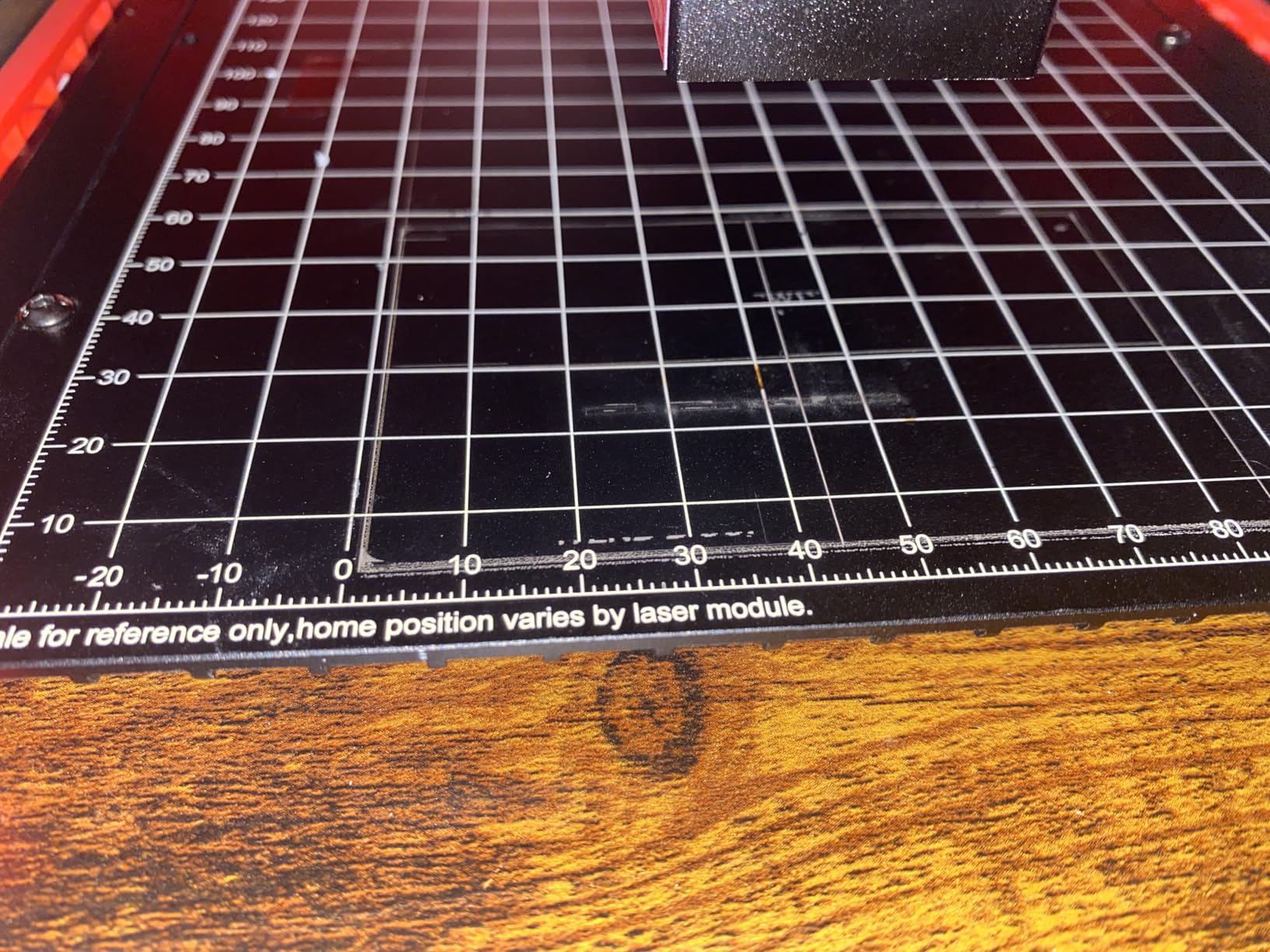
App support for the Pixi is not yet available, and files have to move by USB stick, which limits batch workflows until the software catches up. The base markings do not align precisely with the true work area, and swapping between the engraving and cutting sides takes 5 to 10 minutes of unscrewing, which is slow if you change tasks often.
Smoke and odor are noticeable, and the built-in fan and rear exhaust do not capture everything, so plan ventilation. Most seriously, at least one owner reported the safety door interlock failing to register as closed, which on a Class 1 machine is a defect you should return rather than work around. Test the interlock on day one.
Who the Pixi suits
Market sellers, event and school workshops, and small shops that engrave simple names, labels, and gifts in front of customers with no laptop in reach. It is a strong first machine for a teenager or a part-time staff member to operate. For repeated production cutting or thick material, choose a 20W or 40W machine and keep this as a portable companion.
10. ACMER S1 – Best Budget Laser Cutter for Small Business
ACMER S1 Laser Engraver Machine, 6000mW Lazer Cutter for Wood and Acrylic
6000mW diode laser
130 x 130mm work area
10000mm/min
4.2 lb
Pros
- Least expensive way to get a working engraver that cuts thin material
- Arrives 99% assembled so setup is about a minute
- Free ACMER Studio software means no paid program needed
- Compact 2kg aluminum frame that takes almost no bench space
- Consistent results on wood and leather once focus and power are set
Cons
- 130 x 130mm work area is small and porch signs outgrow it quickly
- 6000mW is slow on etching against higher-wattage machines
- Machine frequently loses its home position
- False out of work area alarms interrupt jobs
- No clear indicator of where the laser is engraving
The ACMER S1 is the lowest-cost way to put a working laser in a small business, and its 4.3 rating across 205 reviews makes it one of the better-established entry machines in this roundup. The 6000mW diode at 455nm delivers 0.01mm repeatable positioning accuracy, runs to 10,000mm/min, and cuts thin plywood, MDF, and acrylic cleanly once focus and power are dialled in.
It arrives 99% assembled, so setup is about a minute of work, and the 2kg industrial-grade aluminum frame measures 250 by 250 by 162mm and takes almost no bench space. ACMER Studio is free, with AI design tools, and it also supports LightBurn and LaserGRBL on macOS, Windows, and Linux, so you are not paying for software before your first sale.
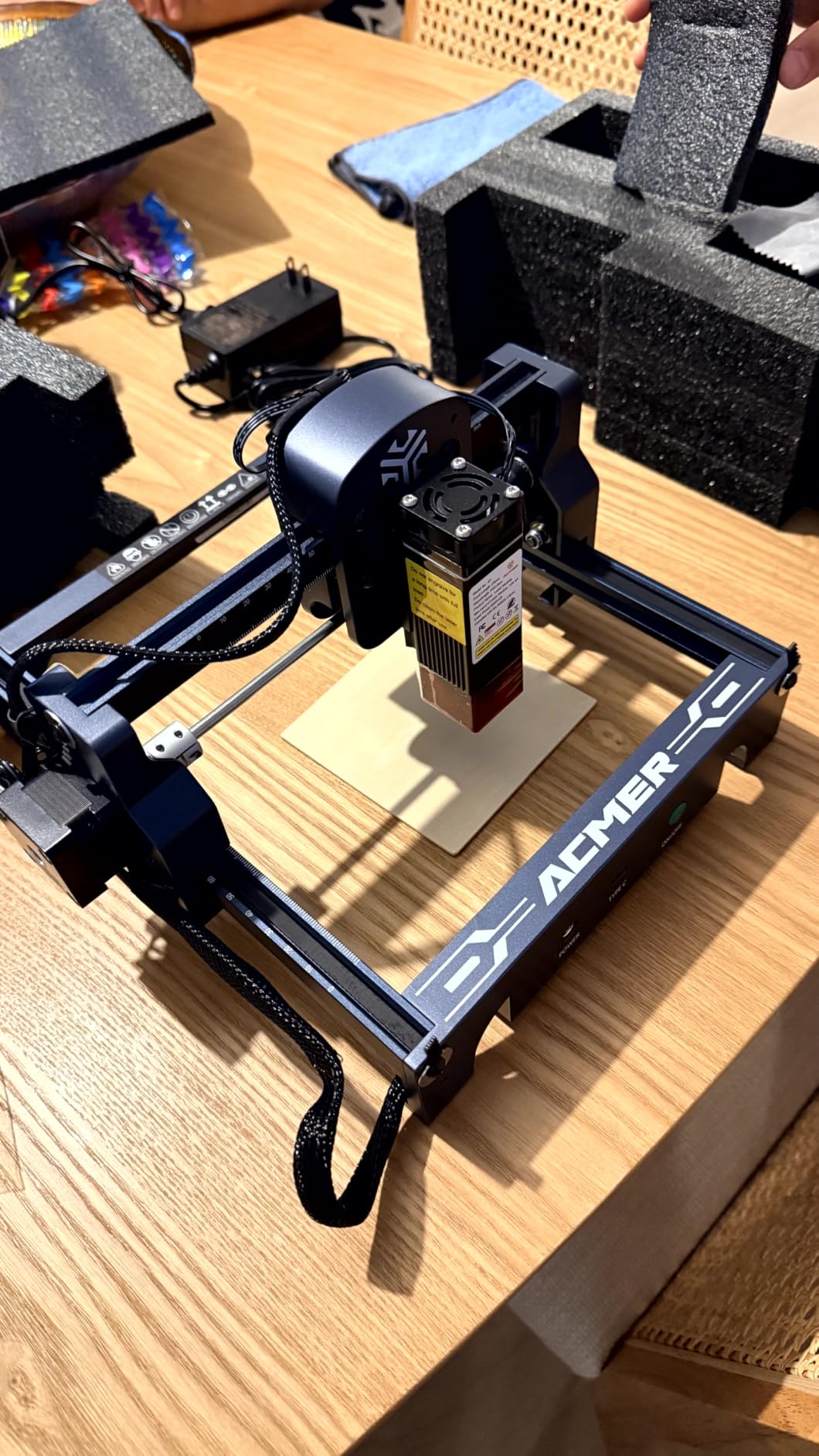
Class 4 certification, IEC 60825-1 compliance, a 12-month warranty, and 24/7 support make it a defensible starter purchase. It reads NC, DXF, BMP, JPG, and PNG files, and the multi-core processor can control several machines, which is useful if you standardise on one model across a workshop.
Where repeatability breaks down
The 130 by 130mm work area is the hard limit. Owners making porch signs, long boards, or anything oversized outgrow it in the first month, and the two-sided workaround people invent is not a business workflow. At 6000mW, etching is also slow against higher-wattage machines, which is exactly where a per-unit cost problem appears.
Reviewers report the machine frequently losing its home position, which hurts repeatability between orders, plus false out-of-work-area alarms that interrupt jobs mid-run. There is also no clear indicator of exactly where the laser is engraving. If your business depends on the same mark landing in the same place every time, that is a serious problem and you should choose a machine with limit switches and cross-line positioning instead.
Who the ACMER S1 suits
First-time buyers, gift shops and small craft businesses making tags, coasters, and small leather items, and anyone who needs a second or third machine for short runs. It is our budget pick because the free software and near-zero setup remove every hidden cost. Move up to a 20W or 40W machine once you are turning material faster than a 6W engraver can cut it.
Diode vs CO2 vs Fiber: Which Laser a Small Business Should Buy
Short answer: buy a diode for wood, acrylic, leather, vinyl, and coated metal; buy a fiber laser only when bare metal is central to your product line; and treat CO2 as the option to revisit only when you outgrow a desktop machine and need deeper cuts in thicker material at volume.
Almost every machine in this roundup is a diode, and that is a deliberate choice for small business. A 450nm blue diode costs little per watt, needs no chiller, and fits on a bench, which is why it dominates this list. Its well-known limitation is that it passes straight through clear and transparent material, so clear acrylic and glass need coating, paint, or an infrared module. That trips up first-time owners constantly, and it is the single most common complaint pattern in the reviews above.
A 1064nm infrared fiber laser is the professional metal-marking route. The F1 Ultra in this list cuts 0.3mm stainless steel, 0.4mm brass, and 0.2mm aluminum, which no diode here can do. Fiber is also faster, needs less maintenance, and commands higher prices on jewelry and hardware-tag work, so it pays back fastest if metal is your product and not an occasional request.
CO2 lasers still win on wide beds and thick, non-toxic materials like MDF, but the desktop CO2 class is a step up in price, cooling, and fume extraction. For most small businesses buying today, the practical order is a 20W to 40W enclosed diode first, then a fiber machine or a used CO2 tube setup once order volume proves the next step. Our guide to fitting equipment into small rooms covers the same space-and-noise thinking for the rest of your shop.
How to Choose a Laser Cutter for Small Business
Seven criteria decide this purchase, and only one of them is wattage. Here is the order we would work through them.
1. Match the machine to your actual materials
List what you sell before you compare machines. Wood and acrylic products point to a diode; jewelry, hardware, and serial tags point to fiber; thick MDF and wide sheet goods point toward CO2. Buying a 40W machine and then only engraving is paying for power you never use, while buying a 10W machine and mostly cutting is a bottleneck you will fight every week.
2. Enclosure and Class 1 safety come first in a business
If employees or customers are near the machine, an enclosed Class 1 cabinet is not a luxury. The community view is consistent on this: an enclosure is a must-have for any business setting. The S1 40W, the M1, the Falcon A1 Pro, and the Pixi all give you a contained beam; the open-frame RAY5 and A20 Pro V2 do not, and you will need to build a safe enclosure around them first.
3. Air assist, an air pump, and fume extraction are three separate things
Air assist blows debris and smoke away from the cut line and reduces char. A pump supplies it, and it is a separate purchase on several machines in this list. Fume extraction removes what is left from the room. A small business running a machine indoors needs all three, and owners repeatedly note that a required ventilation hose connection is the difference between a machine that can sit in a shop and one that cannot.
4. Software freedom and LightBurn compatibility
The bundled design software is widely regarded as weak, and LightBurn is treated as effectively mandatory for real production work. Check compatibility before you buy, not after: the M1 does not run LightBurn, the Falcon A1 Pro runs both Creality Design Space and LightBurn, and Mac users report some LightBurn friction on the F1 Ultra. Cloud-locked ecosystems are a recurring resentment, so prefer local file control unless you value the simplicity.
5. Bed size and passthrough for real order volume
Match the working area to your largest repeat product, not to your ambition. A 130 by 130mm area like the ACMER S1 will not scale past small goods, while the S1 40W at 23.93 by 15.16 inch handles sign and gift work. If you make long items, check passthrough or a conveyor feed; the S1 supports projects up to 118 inches with an external feeder, and the Falcon A1 Pro has neither.
6. Support, warranty, and spare parts are a buying criterion
Vendors like OMTech and Cloudray are repeatedly described in owner communities as having poor support, leaving buyers to source parts themselves, and xTool is praised for its software but criticised by some for US support responsiveness. On the current list, xTool and LONGER both draw reports of fast replacement parts, and every unit here carries a warranty of at least 12 months. Buy from a vendor you can actually reach.
7. Budget for consumables and total cost of ownership
The first surprise for a first-time business owner is that consumables are a real line item, and no ranking article lists them. Budget for replacement lenses and mirrors, a honeycomb bed, air assist pumps, filters, and for CO2 machines the laser tube itself over its working life. Run a simple cost-per-unit calculation: material cost plus machine time divided by your selling price, then compare that against the outsourcing cost you are replacing. That number, not the wattage, is your payback period. If you are also planning the room around the machine, the noise and shop-fit questions matter as much as the machine itself.
Frequently Asked Questions
What is the best laser cutting machine for a small business?
The xTool S1 40W is our top pick. It combines 40W diode cutting power, a 600mm/s work speed, a 23.93 by 15.16 inch bed, and a fully enclosed Class 1 cabinet, so it is safe to run in a retail space. It holds a 4.6 rating across 233 reviews, the highest owner rating in this roundup.
Do I need a CO2 or diode laser for my small business?
A diode is the right first machine for most small businesses. It cuts wood, acrylic, leather, and vinyl at low running cost and needs no chiller. A CO2 laser makes sense once you need deeper cuts in thicker material or wider sheet goods. Choose a fiber laser instead only when bare metal is central to your product line, since a diode cannot mark stainless steel, brass, or aluminum.
Is a laser cutter profitable for a small business?
It can be, and the deciding factor is cost per unit rather than the machine price. Work out material cost plus machine time per piece, compare that with your selling price, and compare the result with the outsourcing cost you would otherwise pay. Engraved tumblers, cutting boards, acrylic signs, leather patches, and metal tags carry the strongest margins. A machine that halves your per-piece time pays back far faster than a cheaper one that struggles.
How much does a laser cutter cost for a small business?
Entry engravers start in the low hundreds and are fine for engraving small items. Productive enclosed 20W to 40W machines for wood and acrylic sit in the middle of the range, and dual fiber and diode desktop units sit higher again. Budget beyond the machine for a honeycomb bed, air assist pump, filters, extraction, and replacement lenses or mirrors, since owners consistently report those as unbudgeted costs.
What can a laser cutter cut?
A 20W diode typically handles 10mm basswood and 8mm black acrylic, and 40W machines reach 18 to 20mm wood and 30mm black acrylic in one pass. Leather, paper, fabric, vinyl, and coated metals engrave across the lower wattages. Bare metal needs a 1064nm fiber laser, and clear acrylic or glass needs coating or paint because a blue diode passes through it.
The Verdict on the Best Laser Cutter for a Small Business
The xTool S1 40W is the best laser cutter for small business in 2026 because it is the only machine here that gives you genuine 40W cutting power inside a certified Class 1 enclosure, with 600mm/s throughput, auto-focus, pin-point positioning for curved surfaces, and a vendor whose support team actually answers. At 4.6 across 233 reviews, it holds the highest owner rating in this roundup.
Choose the F1 Ultra if bare metal is your product. Choose the Falcon A1 Pro if you want an enclosed machine at a moderate outlay. Choose the xTool M1 or AlgoLaser Pixi if you sell in person at markets and events, and the LaserPecker LP2 if you engrave on site. Choose the LONGER RAY5 40W if you cut thick wood and acrylic and are willing to build a safe enclosure around it.
Whatever you pick, buy it for cost per unit rather than for wattage, plan the ventilation on day one, and check that the software runs the workflow you already use. That is the version of this purchase that pays for itself.