
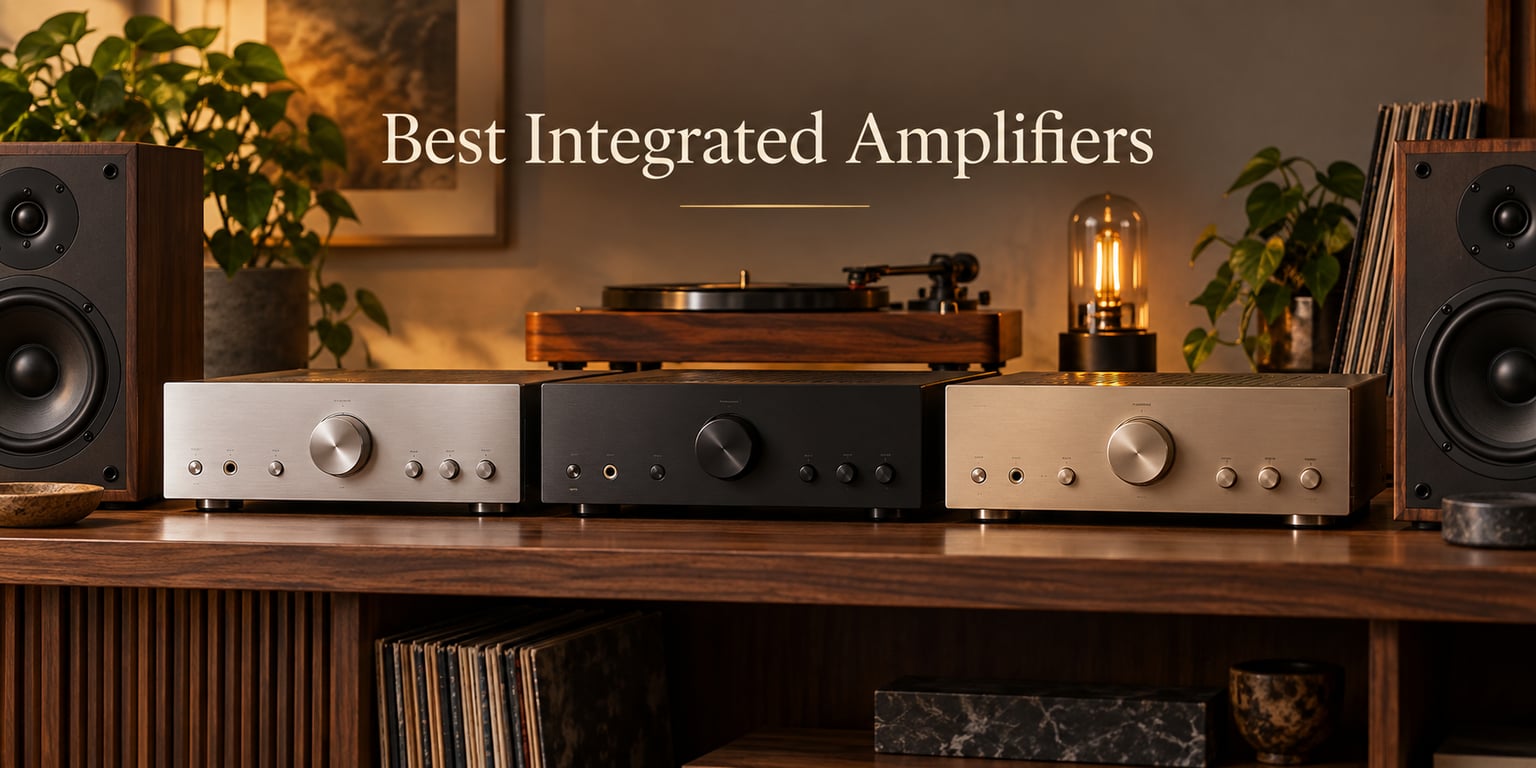
Two of the most repeated questions on hi-fi forums are the same two questions buyers ask in every country: which integrated amplifier should I buy, and how much power do I actually need? The answer changes completely depending on whether you play vinyl, stream from services, watch a lot of TV, or drive difficult floorstanding speakers. This guide covers twelve current integrated amplifiers across the full price ladder, and it is the guide I send people to when they ask me to narrow a shortlist down to one box.
An integrated amplifier puts a preamplifier and a power amplifier in a single chassis, usually with a DAC, a phono stage and network streaming as well. That combination is why the category has grown so much: one box replaces three or four components, it costs a fraction of buying them separately, and it takes up one shelf instead of a rack. We looked at sound quality first, then power delivery, then the digital and vinyl features that decide whether you will still be happy with the amp in five years.
Here is the short version. The Denon PMA-600NE is the best integrated amplifier overall, because it pairs a genuinely good phono stage and internal DAC with enough current to drive real speakers. The WiiM Amp is the best value if you stream and want the smallest possible footprint. The Yamaha A-S301 is the pick when your speakers are hungry for power and you want nothing but a clean analog path. Everything else in the list fills a specific gap, and I have said plainly which gap each one fills.
Table of Contents
- Top 3 Picks for the Best Integrated Amplifiers in 2026
- The Best Integrated Amplifiers at a Glance in October
- How We Picked the Best Integrated Amplifiers
- 1. Denon PMA-600NE – Best Overall Integrated Amplifier
- 2. Marantz PM6007 – Best for Vinyl on a Budget
- 3. Yamaha A-S301 – Best Amp for Speakers That Need Real Power
- 4. Cambridge Audio AXA35 – Best for Small Speakers and Compact Rooms
- 5. WiiM Amp – Best Value Streaming Integrated Amplifier
- 6. Dayton Audio HTA200 – Best Hybrid Tube Sound
- 7. Fosi Audio MC331 – Best Tube All-in-One
- 8. NAD C 328 – Best for Vinyl Playback First
- 9. Denon PMA-900HNE – Best for Multi-Room and HEOS Streaming
- 10. Marantz Model M1 – Best for TV and Streaming in Small Spaces
- 11. Yamaha A-S801 – Best Built-In DAC in a Conventional Amp
- 12. Yamaha A-S1200 – Best Flagship Phono Stage and Build
- How Much Amplifier Power Do You Actually Need?
- Integrated Amplifier or Stereo Receiver?
- Phono Stages, DACs and Streaming Platforms in Plain English
- What Amplifier Class Labels Actually Mean
- Frequently Asked Questions
- Which Integrated Amplifier Should You Buy?
Top 3 Picks for the Best Integrated Amplifiers in 2026

Denon PMA-600NE
- Phono stage plus Bluetooth DAC
- Analog Mode bypasses digital circuitry
- 70W into 4 ohms

WiiM Amp
- 60W into 8 ohms in a tiny case
- HDMI ARC and app room correction
- 24-bit/192 kHz streaming

Yamaha A-S301
- 85W per channel into 8 ohms
- Optical and coaxial digital inputs
- Speakers A and B with sub out
The Denon PMA-600NE takes the top slot on the combination of rating and owner volume. It carries the highest average rating in this roundup across hundreds of reviews, and it is the only budget-priced amp here that gives you a usable phono stage, a competent internal DAC, wireless playback and a subwoofer output in the same chassis.
The WiiM Amp wins on value because it delivers 60 watts per channel into 8 ohms from a box the size of a paperback book, with HDMI ARC and app-based room correction. The Yamaha A-S301 wins on power and simplicity: 85 watts per channel, a Pure Direct mode, and no network features to think about at all.
The Best Integrated Amplifiers at a Glance in October
| Product | Specs | Action |
|---|---|---|
| Denon PMA-600NE |
|
Check Latest Price |
 Marantz PM6007 Marantz PM6007 |
|
Check Latest Price |
| Yamaha A-S301 |
|
Check Latest Price |
 Cambridge Audio AXA35 Cambridge Audio AXA35 |
|
Check Latest Price |
| WiiM Amp |
|
Check Latest Price |
 Dayton Audio HTA200 Dayton Audio HTA200 |
|
Check Latest Price |
 Fosi Audio MC331 Fosi Audio MC331 |
|
Check Latest Price |
 NAD C 328 NAD C 328 |
|
Check Latest Price |
 Denon PMA-900HNE Denon PMA-900HNE |
|
Check Latest Price |
 Marantz Model M1 Marantz Model M1 |
|
Check Latest Price |
 Yamaha A-S801 Yamaha A-S801 |
|
Check Latest Price |
 Yamaha A-S1200 Yamaha A-S1200 |
|
Check Latest Price |
That table is the fastest way to scan the field. Notice how the power figures cluster: only two of these amps rate below 50 watts per channel into 8 ohms, while four reach 100 watts or more. That spread matters far less than most buyers assume, which is exactly what the power section further down explains.
How We Picked the Best Integrated Amplifiers
Five criteria decided every ranking here. First, sound quality at matched levels, since an amp that only sounds good at low volume is not much use. Second, power and speaker drive, measured against real speaker loads rather than a single 8-ohm figure. Third, the DAC and streaming platform, because a network module has to keep working for years to come. Fourth, connectivity and phono performance, including whether the phono stage handles moving coil cartridges. Fifth, build quality and value per pound on the shelf.
We also weighed what each amp cannot do. A reviewer who names the trade-off is more useful than one who lists only benefits, and the hi-fi community consistently rewards that honesty. For every pick below you will find a clear answer on who should buy it and who should step past it.
1. Denon PMA-600NE – Best Overall Integrated Amplifier
Denon PMA-600NE Bluetooth Stereo Amplifier, 2 Channel Amplifier Home Audio
70W into 4 ohms
Phono preamp
Bluetooth with internal DAC
3 year warranty
Pros
- Warm vintage-receiver character
- Strong phono stage for the money
- Internal DAC rivals many streaming boxes
- Analog Mode bypasses digital circuitry
- Heavy chassis runs cool
Cons
- Remote volume steps are laggy and coarse
- Plastic binding posts
- Weakest low-frequency extension without a subwoofer
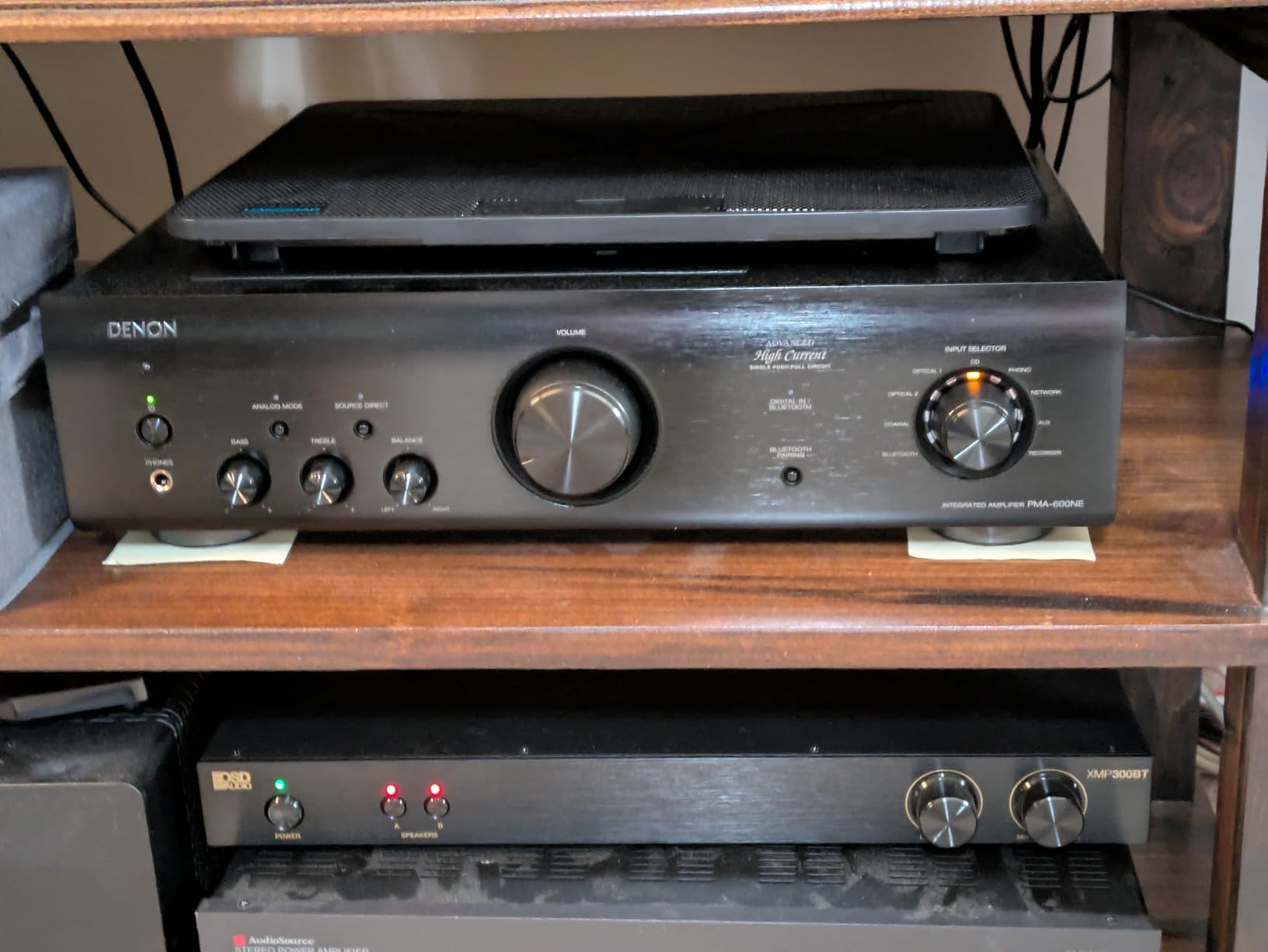
I keep coming back to the PMA-600NE because it is the rare cheap integrated amplifier that does not ask you to compromise on the one thing you cannot add later. It has a phono preamp, three digital inputs, Bluetooth with its own DAC, a subwoofer output and an Analog Mode that physically disengages the digital circuitry. That last feature is small in the manual and large in practice, because it removes a source of noise and switching distortion from the analog path.
The sound is warm and unapologetic in the way classic Denon and Marantz receivers were. Owners describe a 1970s-style presentation with strong current delivery, and the Advanced High Current push-pull circuit is the reason it stays composed on larger floorstanding speakers. At 70 watts into 4 ohms it is not a monster, but current capability is what makes an amp feel bigger than its wattage suggests.
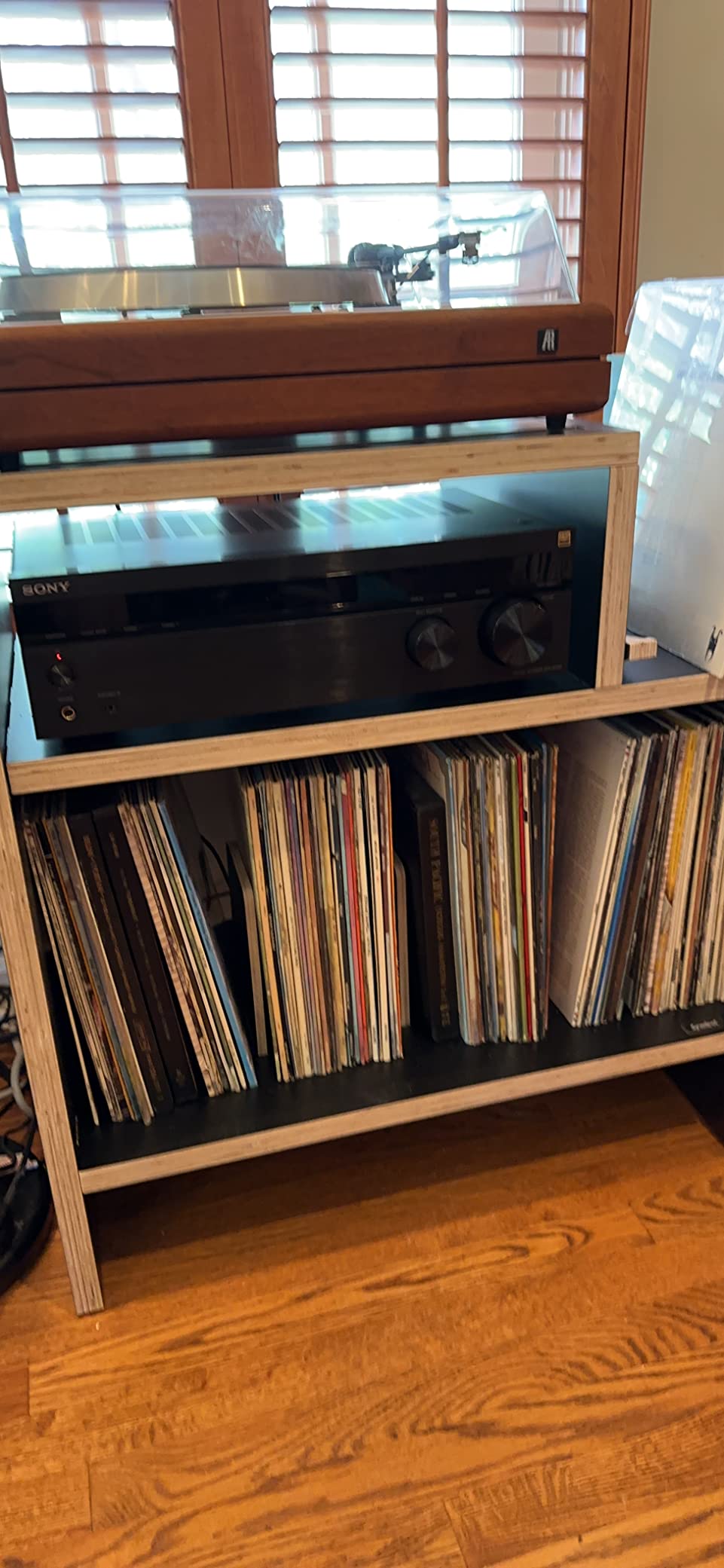
The specification that matters most here is the phono stage. Budget audiophiles on r/BudgetAudiophile repeatedly name the PMA-600NE alongside the Marantz PM6007 as a sensible first turntable amplifier, and that consensus holds up in practice. The internal DAC is also good enough that reviewers regularly report matching or beating dedicated streaming boxes at the entry level.
Bluetooth pairing is instant and reliable, which matters more than it sounds like it should when the alternative is dragging a phone to the sofa. I found the one weak spot is bass extension: without a subwoofer the low end is polite rather than deep, so pair it with a capable sub if you listen in a larger room.
Who should buy the Denon PMA-600NE
Buy it if you are starting a first serious system and you want a turntable now or later without budgeting for a separate phono preamp. It suits small and medium rooms, and it suits people who value a warm, relaxed sound over analytical neutrality.
The three-year manufacturer warranty and vibration-resistant chassis also make it a safe first purchase, since the build feels far more substantial than the class of amp it competes with.
Who should skip the Denon PMA-600NE
Skip it if your speakers are genuinely inefficient, because 70 watts into 4 ohms will not fill a large room with a demanding floorstander. Skip it if you are a streaming-first listener who wants Roon, Qobuz Connect or proper multi-room control.
Also look elsewhere if small details matter to you. The remote has coarse volume steps, the binding posts are plastic, and the printed input markings are small.
2. Marantz PM6007 – Best for Vinyl on a Budget
Marantz PM6007 Amplifier, Integrated Amplifier – Black
45W into 8 ohms RMS
MM phono with FET stage
Shielded DAC
5 analog inputs
Pros
- Signature warm and detailed Marantz sound
- HDAM SA3 current feedback modules
- Fully shielded DAC on digital inputs
- Gold-plated inputs throughout
Cons
- Deep chassis is larger than rivals
- Some versions include a European two-pin plug
- Phono section needs a long break-in
The PM6007 exists for one reason, and that reason is the Marantz sound. Reviewers habitually compare it to vintage Marantz receivers, and the warmth and crispness that get described are the result of HDAM SA3 current feedback modules in the output stage. Those modules are the reason the amplifier stays clean and detailed well past the level where cheaper designs start to compress.
For a first turntable setup, the FET-input MM phono preamp is the feature to buy it for. It handles moving magnet cartridges cleanly, which covers almost every first record player, and the shielded DAC means the digital inputs do not pollute the analog stages. A/B speaker switching lets you keep a pair of small desktop speakers in a second room.
Who should buy the Marantz PM6007
Buy it if your music library lives on vinyl and you like a warm, full-bodied presentation. It is the amp I recommend most often to someone pairing a Rega or Project turntable with a moving magnet cartridge on a modest budget.
Buyers on r/BudgetAudiophile name the PM6007 constantly for exactly this reason, and the volume of praise for sound quality per unit of spending is the strongest argument for it.
Who should skip the Marantz PM6007
Skip it if you want Bluetooth or Wi-Fi, because there is none. There is no streaming, no HDMI and no network control, so you will need a separate source component or a streamer with its own DAC.
Also check the plug before you order. Some versions include a European two-pin plug, which needs a step-up transformer in North America, and the phono section has a long break-in period before it settles.
3. Yamaha A-S301 – Best Amp for Speakers That Need Real Power
Yamaha Audio A-S301BL Natural Sound Integrated Stereo Amplifier (Black)
85W per channel into 8 ohms
Optical and coaxial DAC
Phono input
Subwoofer out
Pros
- Clean transparent sound with real power
- Handles both floorstanders and bookshelf speakers
- Good built-in DAC over optical and coax
- Runs cool with no fan needed
Cons
- No Bluetooth or Wi-Fi
- Dim front indicators
- Variable loudness control can be knocked off
The A-S301 is the amp I suggest when someone asks how much power they need and their speakers turn out to be the demanding kind. At 85 watts per channel into 8 ohms it is the most powerful amp in the entry tier here, and reviewers consistently report a real step up in detail and dynamic range compared with budget receivers.
It is also completely unconnected, in the best sense. There is no app, no network, no firmware and nothing to update. The digital inputs are optical and coaxial with a built-in DAC, which covers a CD player, a TV or a streamer with its own DAC, and Pure Direct gives you the shortest path from input to speakers.
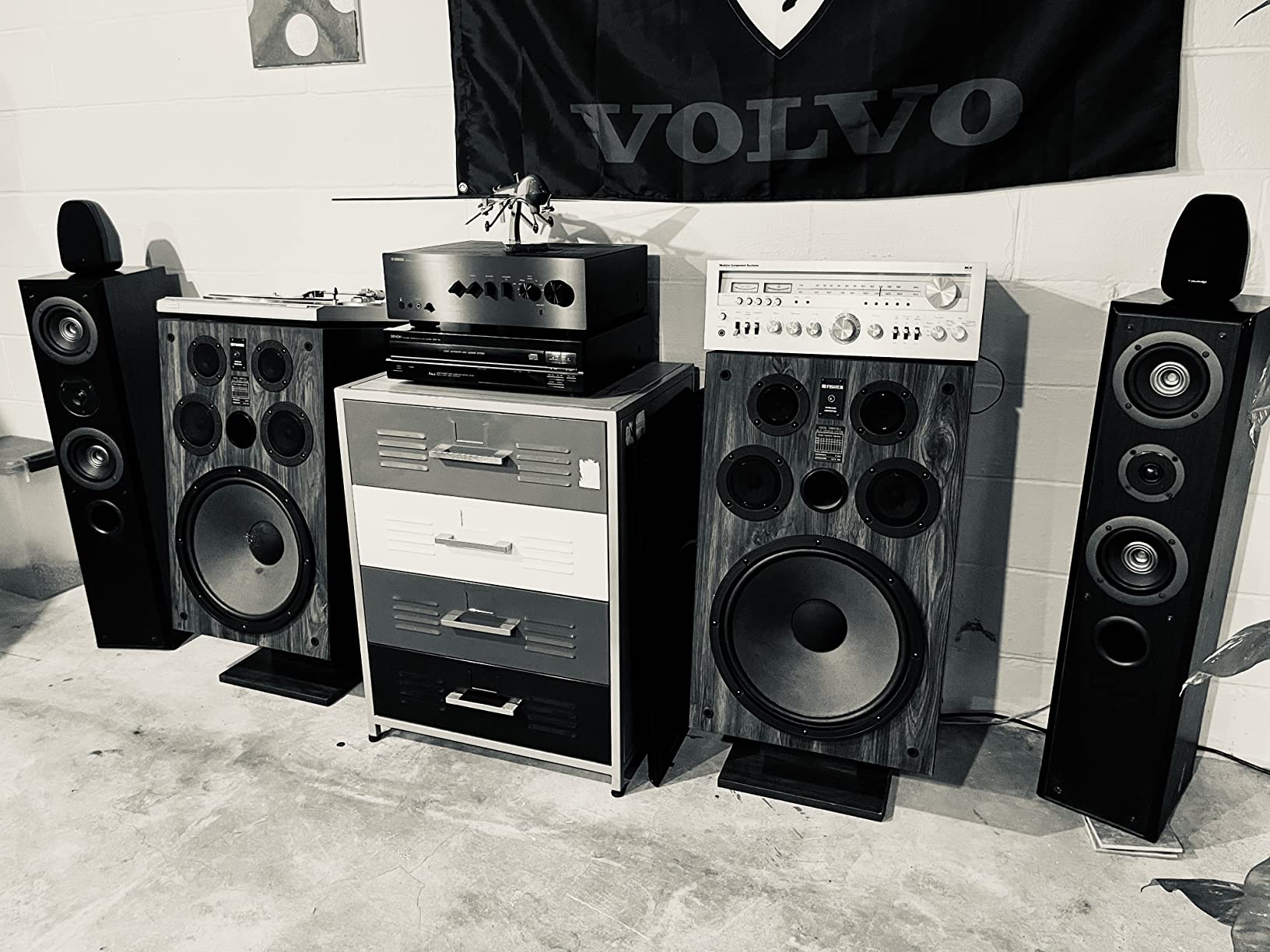
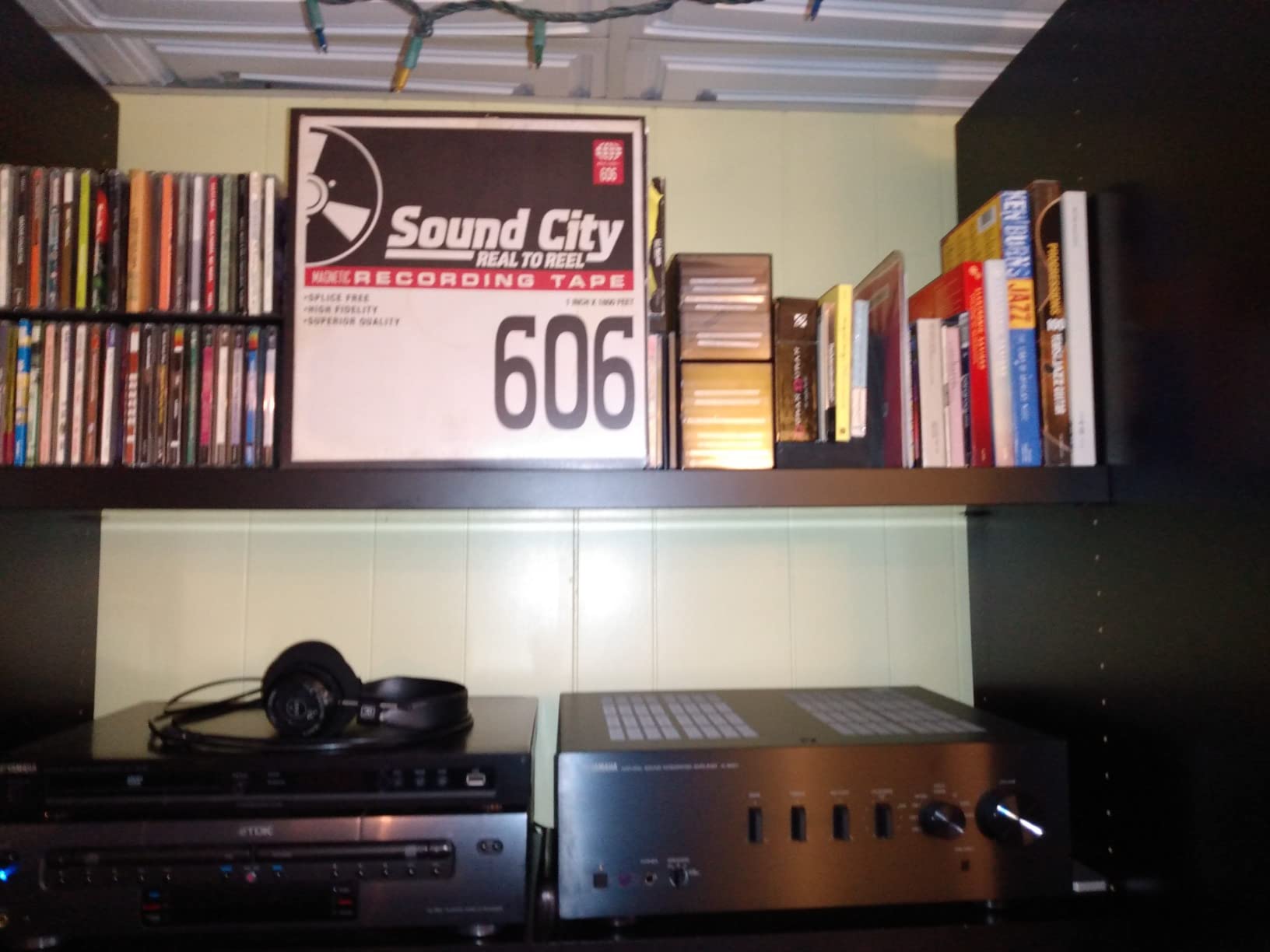
Speakers A and B switching plus a subwoofer output mean you can run a second pair in another room or add a sub without extra boxes. At 19.8 pounds, the chassis is heavy enough to stay planted, which matters with a transformer of this size.
Who should buy the Yamaha A-S301
Buy it if your speakers are large or inefficient and you listen at higher volumes in a bigger room. It is also the right choice for anyone who wants zero connectivity and a signal path they can trace in their head.
The tone controls are genuinely useful with bright cartridges or in an untreated room, and the phono stage is usable even though it is not the star of the show.
Who should skip the Yamaha A-S301
Skip it if you want to stream natively, because there is no Bluetooth or Wi-Fi at all. You will need a streamer or a DAC of some kind.
Two other warnings. The front indicators are dim and hard to read across a room, and the variable loudness control is easy to knock out of position, where it audibly degrades the sound.
4. Cambridge Audio AXA35 – Best for Small Speakers and Compact Rooms
Cambridge Audio AXA35 Integrated Amplifier with Built in Phono Stage (Silver)
35W into 8 ohms
Built-in MM phono
Frequency response 5Hz-50kHz
Compact metal chassis
Pros
- Clear and balanced sound for small and medium rooms
- Compact metal construction
- Front 3.5mm aux input is convenient
- Simple uncluttered front panel
Cons
- Only 35W per channel
- No digital inputs or DAC
- No Bluetooth HDMI or network streaming
- Entry-level phono stage
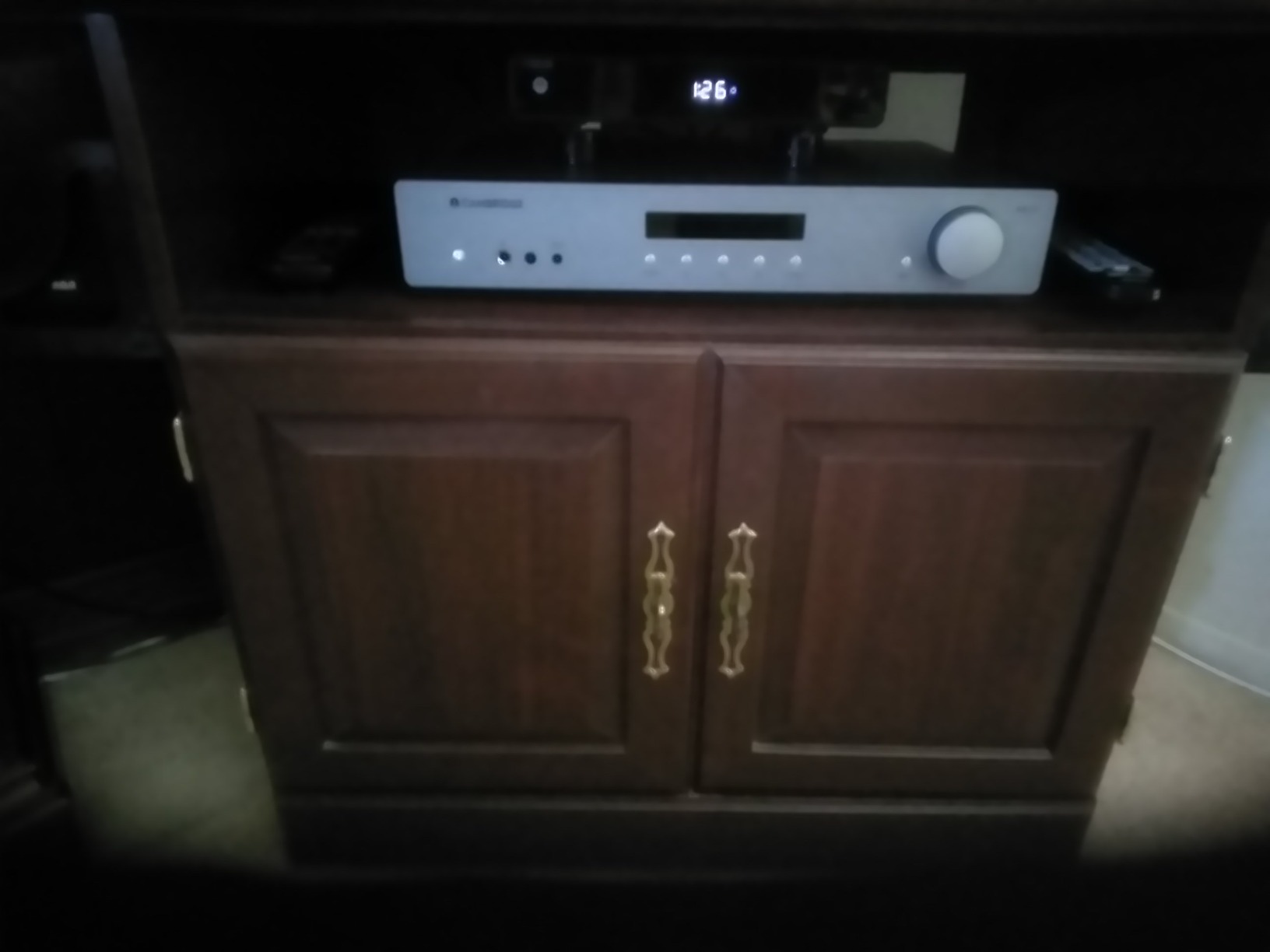
Thirty-five watts is a small number, and the AXA35 proves that small numbers can be correct. Owners treat it as a tidy step into hi-fi, and its clear, balanced sound is well suited to a bedroom, a study or a small apartment where the alternative would be an amp that is simply too large for the shelf.
It measures just 3.3 inches tall and a little under 17 inches wide, and the metal chassis gives it a solidity that plastic competitors cannot match. The front 3.5mm aux input is a small convenience that turns out to matter when you want to plug in a phone or a portable player without crawling behind the unit.
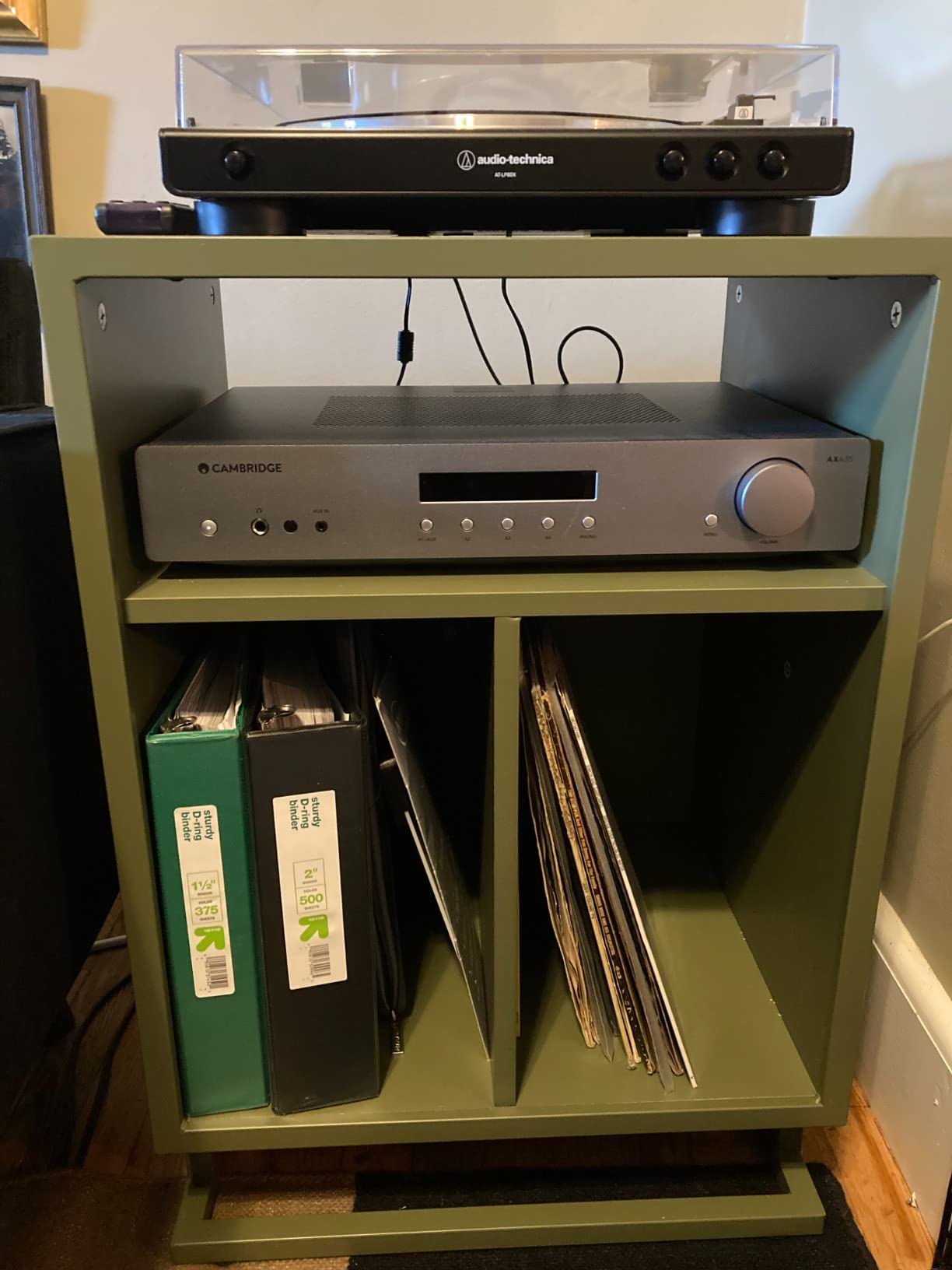
The built-in moving magnet phono stage is what keeps this amp relevant to new buyers, since a large share of first systems start with a turntable. Audiophiles on r/BudgetAudiophile list the AXA35 among the practical first turntable amplifiers, largely because the moving magnet stage means you do not need a separate box on day one.
Who should buy the Cambridge Audio AXA35
Buy it if you have efficient bookshelf or monitor speakers, a small room, and limited shelf space. It is also a good second system, and a sensible choice as the amp in a bedroom setup.
The 5Hz to 50kHz frequency response and clean signal path mean it will not be the limiting factor in a modest chain.
Who should skip the Cambridge Audio AXA35
Skip it if you own low-efficiency floorstanding speakers. This is the lowest power output in the roundup at 35 watts, and owners report that demanding or inefficient speakers end up underdriven.
Skip it if you want any digital connectivity. There are no digital inputs, no DAC, no Bluetooth and no HDMI, and the phono stage is entry-level next to a dedicated unit.
5. WiiM Amp – Best Value Streaming Integrated Amplifier
WiiM Amp Streaming Amplifier for Passive Speakers with HDMI ARC, Space Gray
60W into 8 ohms
HDMI ARC with auto wake
App room correction and EQ
24-bit/192 kHz streaming
Pros
- Enormous owner review volume for a streaming amp
- Compact case with real power output
- HDMI ARC handles TV audio automatically
- RoomFit correction and per-channel EQ
Cons
- No front-panel volume knob
- AirPlay is receive-only
- Needs a separate subwoofer for deep bass
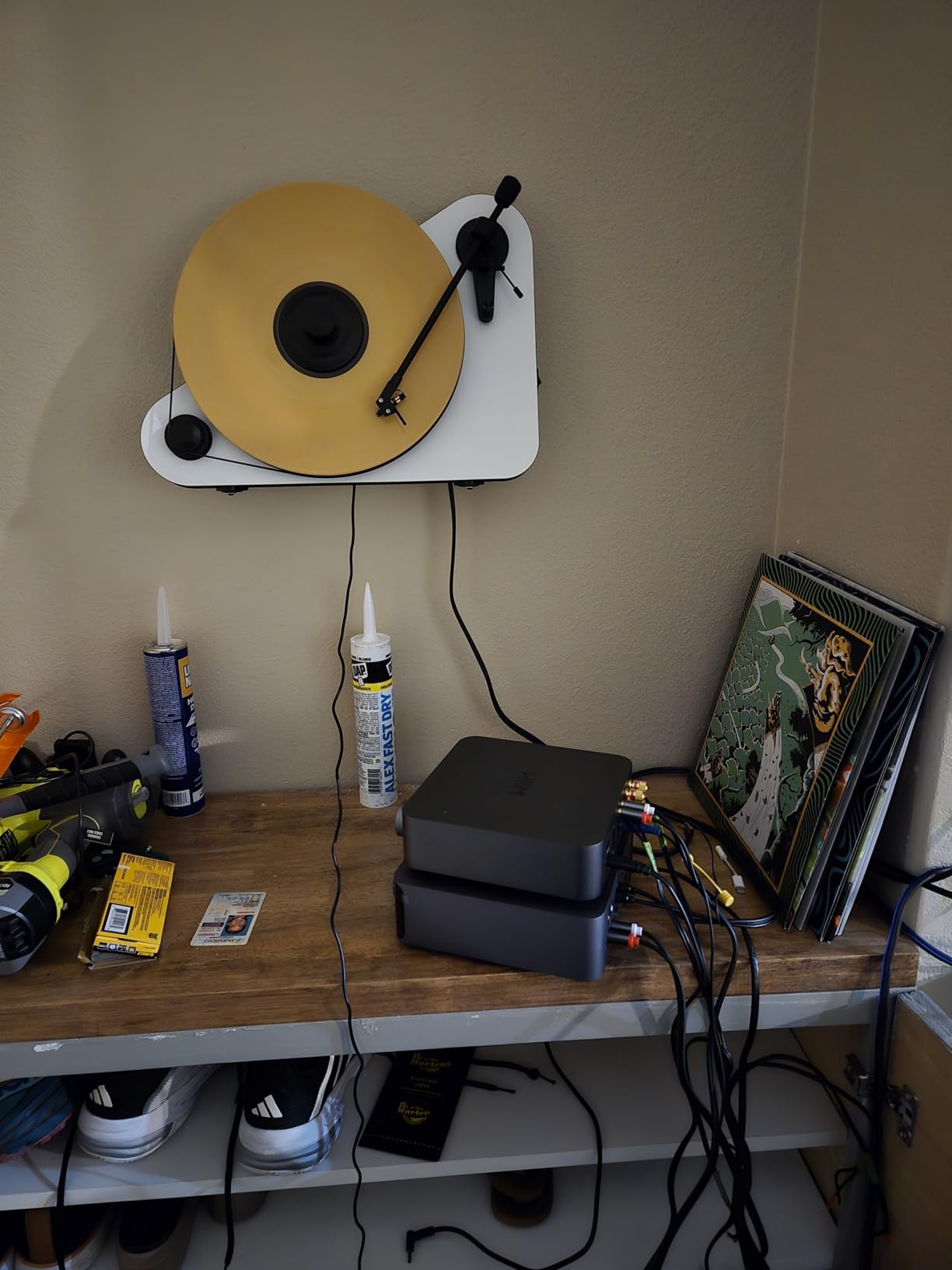
The WiiM Amp is the most reviewed product in this guide, and for good reason: it puts 60 watts per channel into 8 ohms and 120 watts into 4 ohms into a case small enough to sit behind a television. It streams at up to 24-bit/192 kHz with gapless playback, and it adds AirPlay 2, Chromecast Audio, Spotify Connect and TIDAL Connect through the app.
For most listeners the app is the entire user interface, and that is the trade. There is no volume knob on the front, so you either use the phone, the included voice remote, or a voice assistant. If you are the sort of person who reaches for a knob in the dark, that will bother you every day.
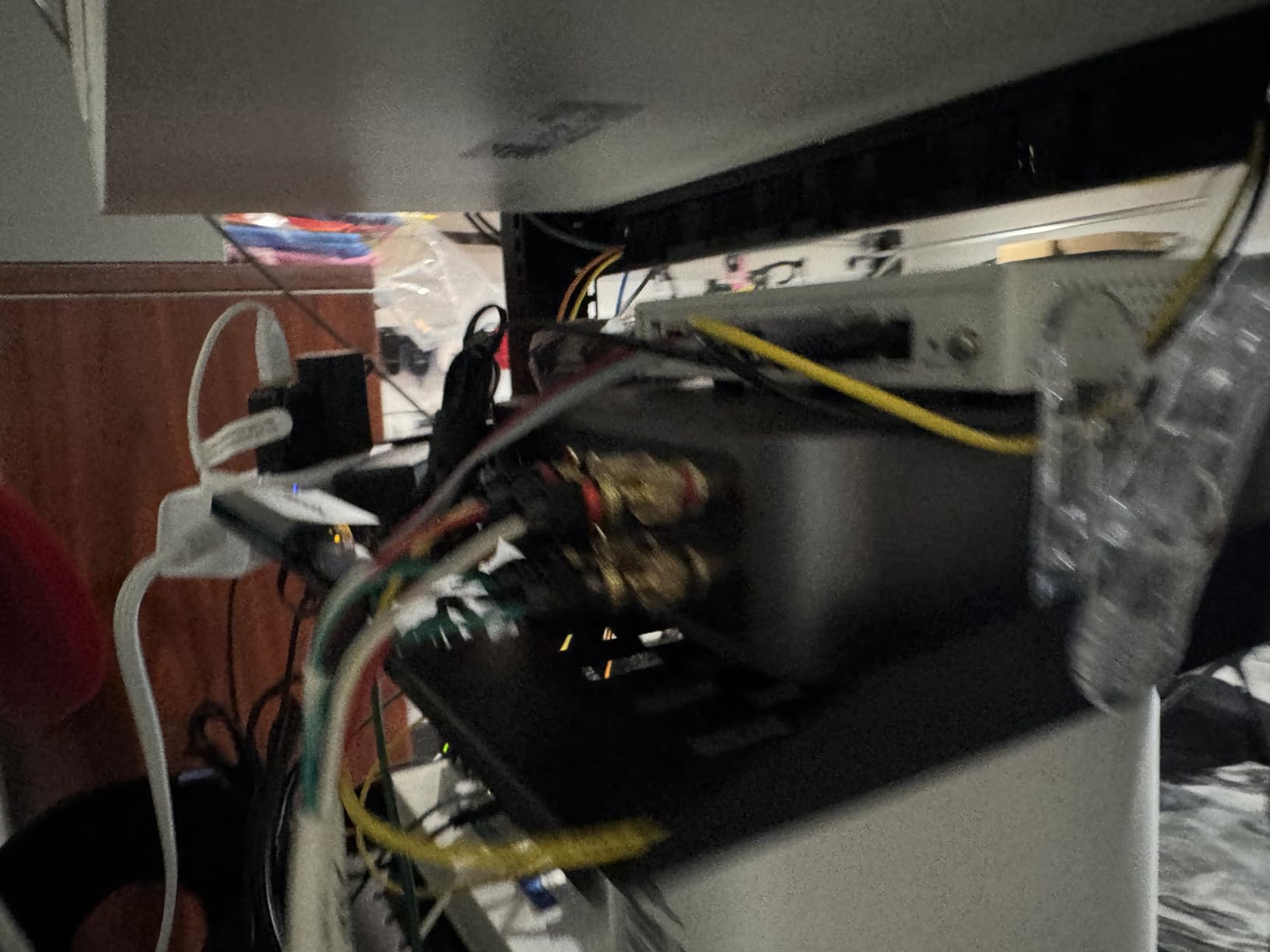
Where the app does earn its keep is in RoomFit room correction and independent EQ per channel, which corrects for your room’s bass problems before they reach your speakers. Some users find the correction less effective than dedicated hardware, but having it at all puts this amp ahead of an integrated amplifier with no EQ whatsoever.
HDMI ARC means the television handles power-on and volume, so a two-channel system and the TV become one unit without a receiver. That single feature has done more for adoption than any other on this page.
Who should buy the WiiM Amp
Buy it if you stream almost everything, live in a small or medium room, and want a one-box system that handles TV audio, music and multi-room without any separate streamer.
It is also a strong second or bedroom system, and the most heavily reviewed option here, which means the long-term support question is already answered by thousands of owners.
Who should skip the WiiM Amp
Skip it if you have a turntable. There is no phono stage, and adding one means another box, which defeats the point of an all-in-one.
Also weigh up the missing front-panel control, the receive-only AirPlay limitation that stops it sending audio to other AirPlay speakers, and the fact that real deep bass still needs a powered subwoofer.
6. Dayton Audio HTA200 – Best Hybrid Tube Sound
Dayton Audio HTA200 Integrated Stereo Hybrid Tube Amplifier 200 Watts
100W RMS per channel
Class AB with tube preamp
Phono plus USB DAC
6.5 x 11 x 8.5 inches
Pros
- Tube-warmed signature over a solid AB power stage
- 100W per channel for the money
- Very broad input selection
- Motorized volume knob with remote
Cons
- Phono section needs a long break-in
- Unit runs warm and is larger than expected
- No newest high-resolution streaming formats
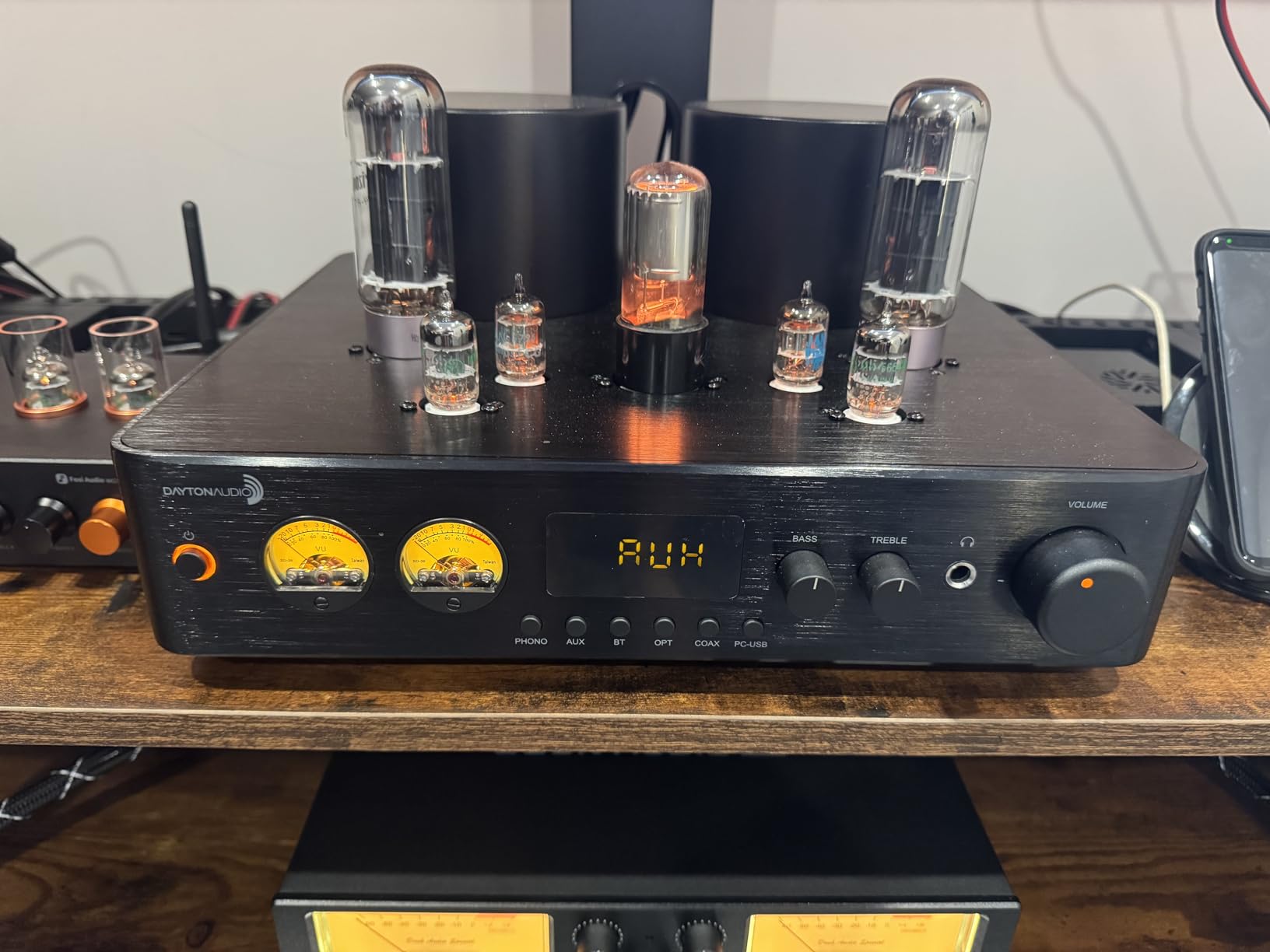
The HTA200 is the most interesting topology in this roundup. Vacuum tubes sit in the preamplifier stage, where they shape the character of everything downstream, while a class A/B solid-state power section delivers 100 watts RMS per channel. You get the harmonic character people associate with tube designs without giving up the control and headroom of solid state.
Connectivity is unusually broad for the money. There is a built-in phono preamp, a USB DAC, optical, Bluetooth and multiple RCA inputs, and the front panel carries working VU meters with the tubes visible behind them. The motorized volume knob is genuinely rare at this level and responds to the included remote.
The one thing that catches buyers out is break-in. Owners report that the phono section needs a long settling period before it sounds its best, which is a tube characteristic rather than a defect. Plan for it, and resist the urge to return it in week one.
Who should buy the Dayton Audio HTA200
Buy it if you love the look and sound of tubes but want an amplifier that still drives normal bookshelf or floorstanding speakers without straining. It is a strong fit for medium rooms and for anyone who wants a phono stage, a DAC and a preamp in one box.
It is also the most visually distinctive option here, and that counts for something in a system you look at every day.
Who should skip the Dayton Audio HTA200
Skip it if you stream in the latest formats, because there is no network streaming and no support for the newest high-resolution services. Bluetooth and USB are the ceiling.
Skip it if shelf space is tight. Owners report that it runs warm and is larger than expected once unpacked, and the break-in patience it demands is not for everyone.
7. Fosi Audio MC331 – Best Tube All-in-One
Fosi Audio MC331 Tube Integrated Amplifier with DAC, 2 Channel Home Audio Stereo Power Amp for HiFi Bookshelf Speakers/3.5mm Headphones, Vintage VU Meter Preamp with Bluetooth and USB/Opt/Coax/RCA
105W x 2 into 4 ohms
Replaceable tube preamp
VU meter and tube cover
Bluetooth USB coax optical
Pros
- All-metal construction with metal knobs
- Detailed tube character with ample power
- Five input types including USB and coax
- Working VU meter and replaceable tubes
Cons
- IR remote responds slowly
- Low-level noise at very quiet volumes
- No HDMI or ARC despite the DAC
The MC331 is the odd one out in this list and that is the point. It is a tube preamplifier with a class D power stage, rated at 105 watts per channel into 4 ohms, and it does the whole job: DAC, preamp, headphone output and power in one compact box with a working VU meter on the front.
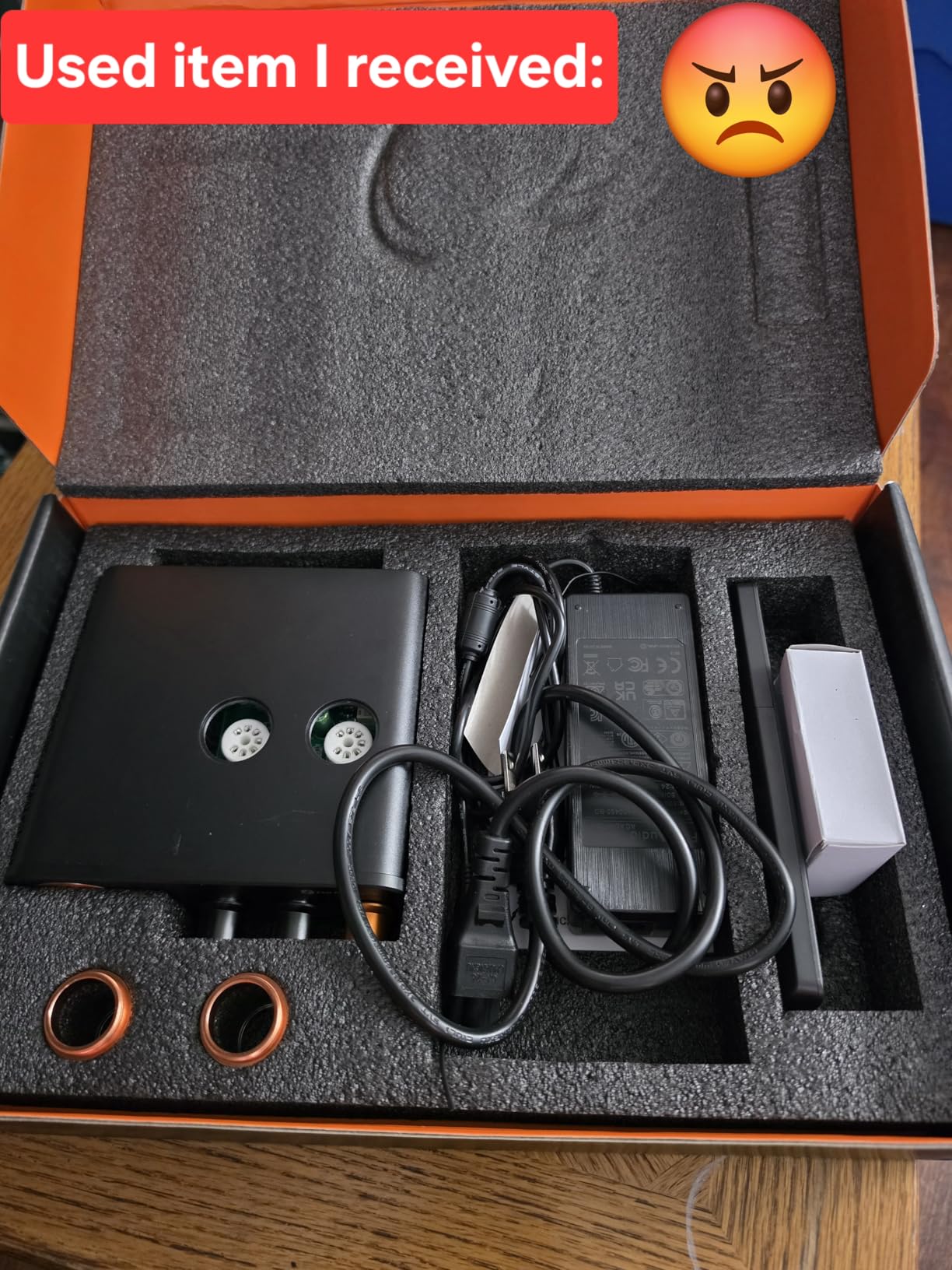
Build quality is the first thing owners mention. All-metal construction, metal knobs and solid rear connections feel more substantial than the weight suggests, and the tubes are user-replaceable, which means you can swap them rather than replace the amplifier. The pre-out can feed a powered subwoofer through a line input.
Two practical notes. The tubes arrive uninstalled and need a warm-up period before the sound improves, so treat the first few sessions as a settling period. And several owners report audible hiss or low-level noise at very quiet listening volumes, which matters if you listen late at night at low levels.
Who should buy the Fosi Audio MC331
Buy it if you want tube character, a headphone output and a full complement of inputs in a desktop-sized package. It suits efficient bookshelf speakers, and the pre-out makes adding a sub straightforward.
It is also a good first tube experience because the power stage is solid state, so you get the aesthetic and the harmonic styling without a purity test.
Who should skip the Fosi Audio MC331
Skip it if you need a TV connection. Despite the built-in DAC, there is no HDMI or ARC input, so the television cannot be part of the system.
Skip it if you listen at very low volume in a quiet room, because the low-level noise floor is the most repeated complaint in reviews, and the IR remote is slow and needs a clear line of sight.
8. NAD C 328 – Best for Vinyl Playback First
NAD C 328 Integrated Amplifier with Built-in DAC and Bluetooth
24-bit/192kHz DAC
Exact RIAA MM phono
Infrasonic noise suppression
Bluetooth
Pros
- Exact RIAA equalisation with high overload margin
- Infrasonic filter cleans up rumble
- 24-bit/192 kHz DAC with variable modulation
- Simple intuitive control layout
Cons
- Only 32 owner reviews so far
- Plastic chassis at this price point
- No Wi-Fi or HDMI
- No multi-room beyond Bluetooth
If vinyl is the priority, the C 328 is designed around the record. The MM phono stage claims exact RIAA equalisation with high overload margins and low noise, and the infrasonic noise suppression circuit targets the rumble that cheap turntables pass down the chain. For a system built around a turntable, those are the details that matter.
The DAC is a 24-bit/192 kHz design with variable modulation frequency, which NAD uses to push distortion down at low levels, and Bluetooth is included for casual listening. The front panel is deliberately simple, with controls that make sense to a new owner and to someone who has owned amplifiers for twenty years.
Who should buy the NAD C 328
Buy it if your listening will centre on records and you want the phono stage to be the best part of the amplifier rather than an afterthought. It suits small and medium rooms with efficient speakers.
The high overload margin means loud records will not distort easily, which is a real advantage with modern pressings that are cut hot.
Who should skip the NAD C 328
Skip it if you want modern connectivity. There is no Wi-Fi, no HDMI and no multi-room support beyond Bluetooth, so a streaming-first listener should look at a HEOS or WiiM-based model instead.
Be aware that the owner feedback here is thin, with a small review base, and the chassis is plastic. Check the speaker compatibility too: this is not the amp for low-efficiency floorstanders.
9. Denon PMA-900HNE – Best for Multi-Room and HEOS Streaming
Denon PMA-900HNE Integrated Stereo Amplifier (85W x 2), Hi-Res Certified
85W x 2 output
HEOS multi-room and AirPlay 2
MM/MC phono input
ESS 9018K2M 32-bit DAC
Pros
- Smooth warm sound with tight controlled bass
- HEOS adds Wi-Fi streaming and multi-room
- Good phono performance with MM and MC
- Supports FLAC HD and DSD
Cons
- HEOS app is slow and lacks parametric EQ
- Qobuz not supported natively
- Needs a separate power amp for big rooms
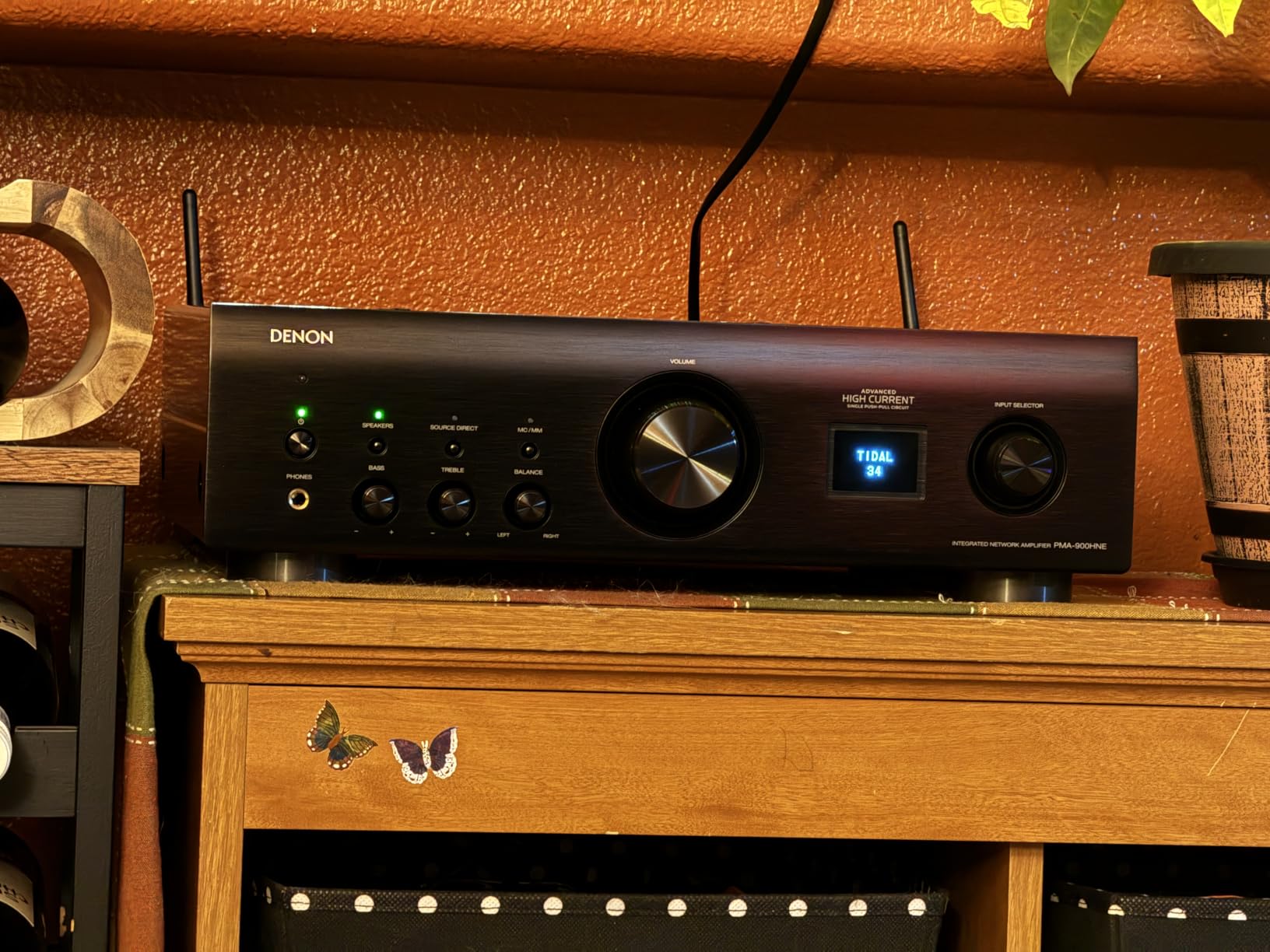
The PMA-900HNE is the only amp here that is genuinely a receiver without the surround channels. HEOS built-in gives you Spotify, Pandora, TIDAL, AirPlay 2 and Bluetooth over Wi-Fi, plus multi-room playback with Alexa, Siri and Google Assistant, and a subwoofer pre-out with a 100Hz low-pass filter so a bass module integrates properly.
Underneath, it is a serious analog amplifier. The Advanced High Current single push-pull circuit delivers 85 watts per channel, the phono input has an MM/MC equaliser, and the DAC is an ESS Sabre 9018K2M 32-bit part with three optical and one coaxial input plus FLAC HD, ALAC, WAV and DSD over USB and network. Owners describe the sound as smooth and warm with recessed highs and tight, controlled bass.
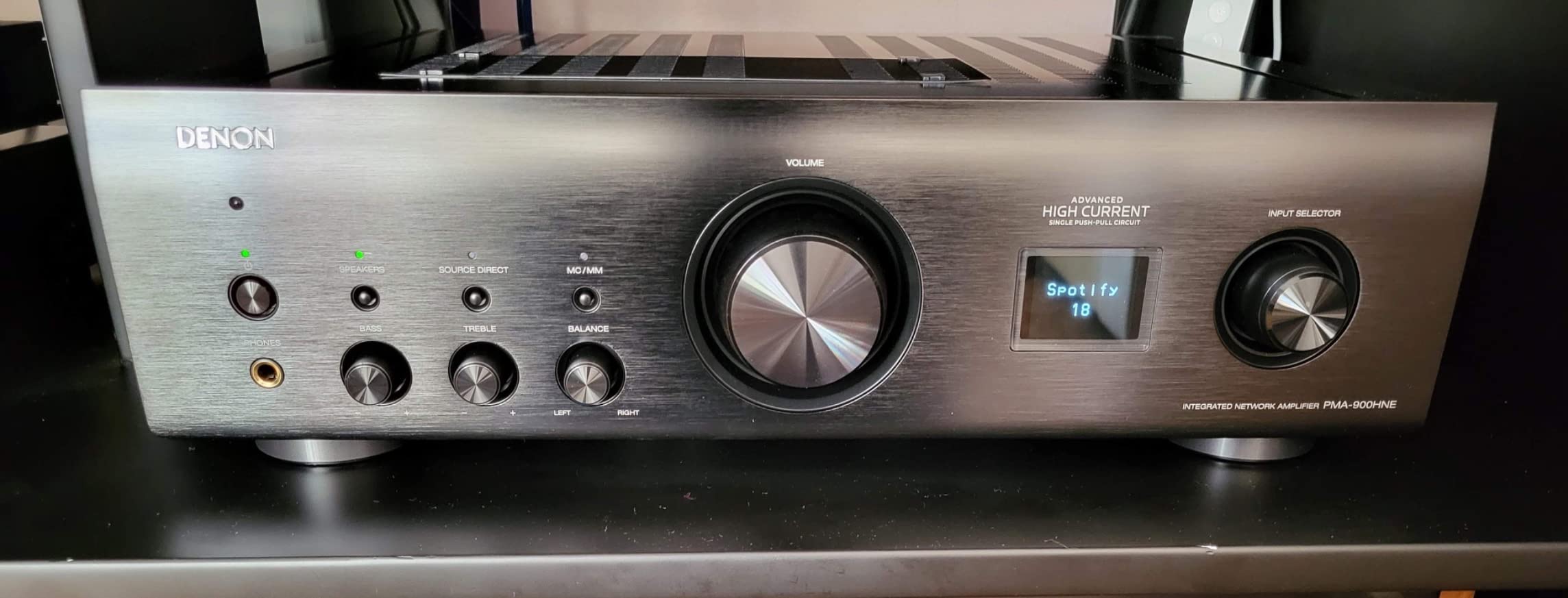
Setup is the part to budget time for. The HEOS account has to be created, the amplifier joins Wi-Fi, and the app then walks you through room naming and firmware. Owners who skip those steps often conclude the streaming side is worse than it is, because the amplifier defaults to a restrictive network profile until the update completes.
The physical controls are straightforward after that. The volume knob is a real, weighted rotary control rather than a rocker, the front OLED window is legible in a dim room, and the input selector is a proper stepped switch. That tactile consistency is the main reason this model feels a tier above the streaming dongles it competes with.
Who should buy the Denon PMA-900HNE
Buy it if you want a two-channel system that behaves like part of a whole-home setup, and you already use or are willing to use the HEOS ecosystem. It is a good match for a living room system that shares music with a kitchen or bedroom.
The MM/MC phono stage also means you can add a moving coil cartridge later without changing amplifier, and the aluminum front panel and OLED display give it a flagship feel.
Who should skip the Denon PMA-900HNE
Skip it if you care about the app. The most common criticism by a wide margin is the HEOS app, which is slow to update Wi-Fi settings, lacks parametric EQ, and does not support Qobuz natively.
Also note that a proportion of owners who push it hard in large rooms find they need a separate power amplifier, and the unit runs warm with knobs that feel inexpensive for the price.
10. Marantz Model M1 – Best for TV and Streaming in Small Spaces
Marantz Model M1 Wireless Streaming Amplifier
100W Class D per channel
HEOS hi-res PCM and DSD
HDMI eARC with Dolby Digital Plus
Dedicated sub out
Pros
- Lively crisp sound reviewers often prefer
- 100W per channel with real control and bass
- HDMI eARC improves TV audio and remote control
- Small footprint suits behind a television
Cons
- No front-panel volume knob or tactile controls
- HEOS app unpolished and lacks parametric EQ
- No phono stage for a turntable
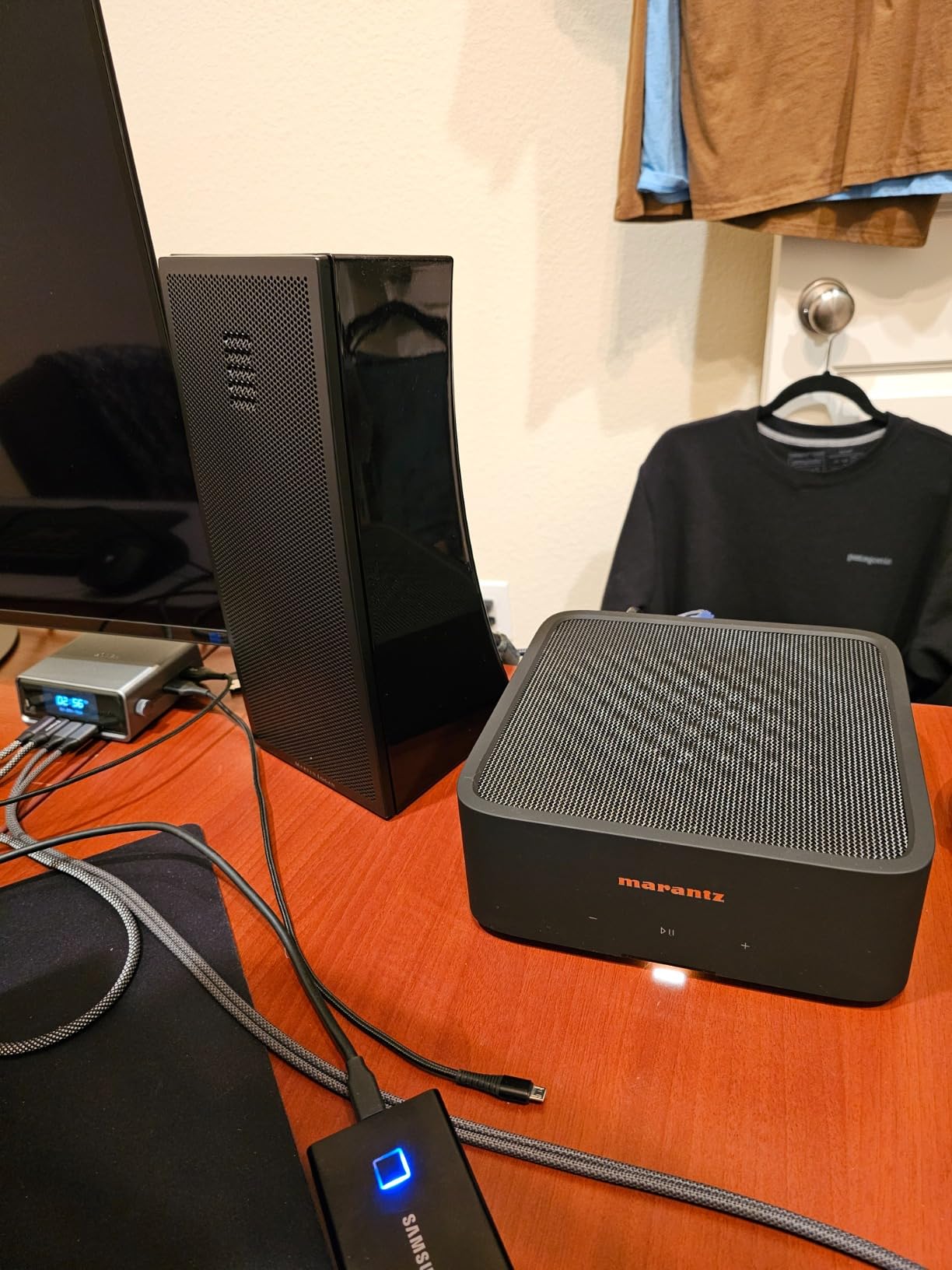
The Model M1 is a Marantz amplifier in a box you can hide, and it was tuned at Marantz Shirakawa Audio Works in Japan. One hundred watts per channel of class D amplification gives it more control and deeper bass than most streaming amps of its size, and reviewers regularly report preferring it to cheaper wireless alternatives in blind comparisons.
The HDMI eARC input with onboard Dolby Digital Plus decoding is the feature that changes daily life. The television can carry the audio, the TV remote controls the volume, and the amplifier wakes with the screen. For a small apartment or a media console setup, that removes the last reason to buy a receiver.
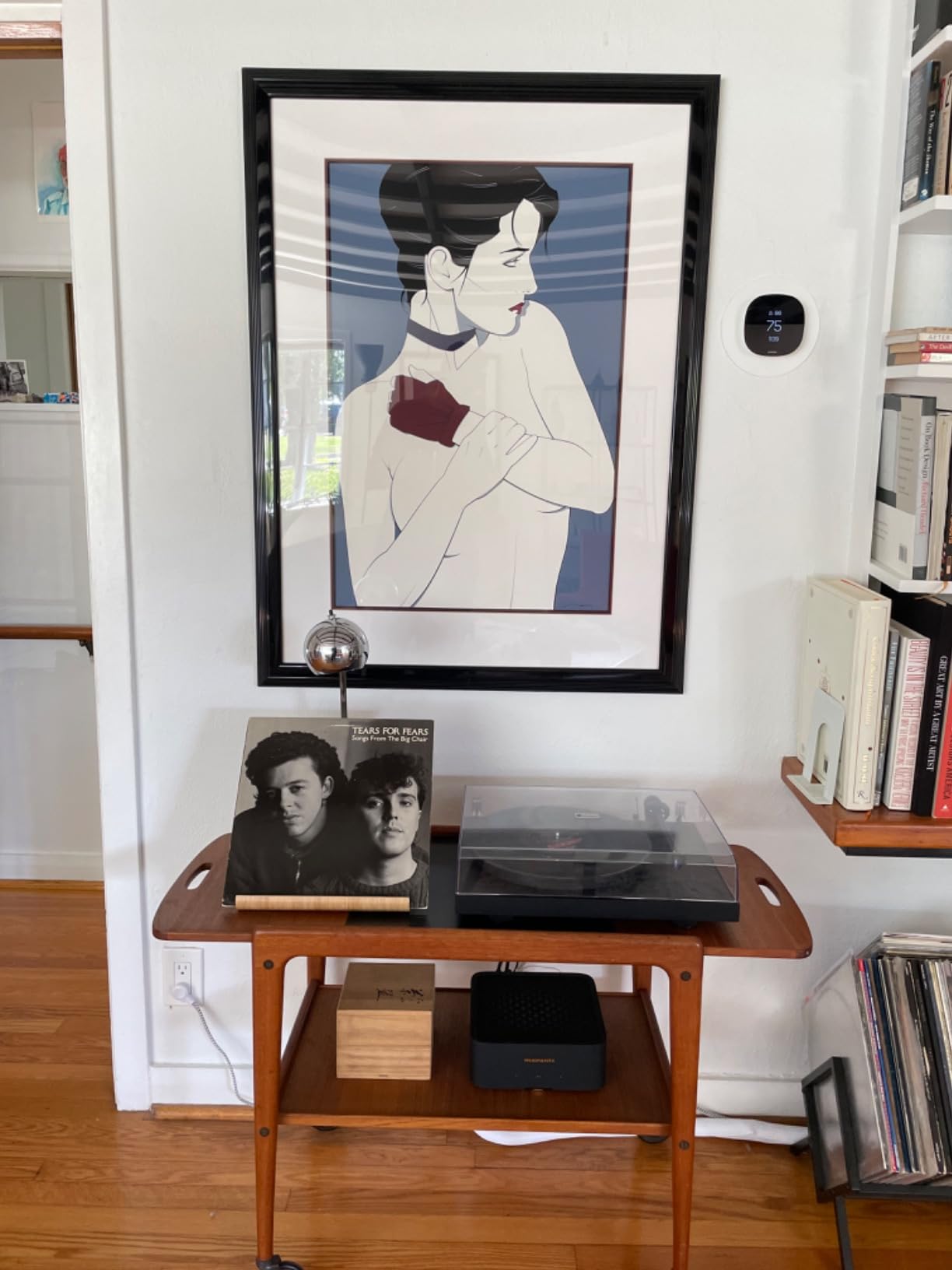
HEOS handles hi-res playback up to 24-bit/192 kHz PCM and DSD, with Marantz Musical Digital Filtering oversampling, plus AirPlay 2, Spotify Connect, Bluetooth and USB. A dedicated subwoofer output supports 2.1 systems, and the dimmable front panel with a soft-touch finish is designed to disappear into furniture.
Who should buy the Marantz Model M1
Buy it if the amplifier lives behind a television or in a cabinet, and you want good stereo sound for both films and music without a visible box. The Virtual Mode and optional Dirac Live room correction help with movie soundstage, and a sub output makes 2.1 easy.
It is also the right pick for a compact second system where power matters more than connectivity breadth.
Who should skip the Marantz Model M1
Skip it if you play vinyl. There is no analog phono stage, so a turntable means adding an external preamp and losing the one-box simplicity.
Skip it if you want tactile controls. There is no front-panel volume knob, the HEOS app is described as unpolished with no parametric EQ, and TIDAL Connect through HEOS is less smooth than rival platforms.
11. Yamaha A-S801 – Best Built-In DAC in a Conventional Amp
YAMAHA A-S801BL Natural Sound Integrated Stereo Amplifier (Black)
100W + 100W class AB
USB DAC 384kHz/32-bit and DSD
Pure Direct mode
Custom transformer
Pros
- Built-in USB DAC rivals costlier digital sources
- 100W per channel of smooth clean power
- Transparent neutral sound in Pure Direct
- Heavy well-built chassis
Cons
- Phono stage is entry-level
- No line-level subwoofer output
- Stepped rather than ramped volume at low levels
The A-S801 is the amplifier for someone who wants a serious conventional stereo component with a genuinely good digital section. The USB DAC supports DSD 2.8 and 5.6 MHz plus PCM up to 384 kHz/32-bit in WAV and FLAC, and owners report that it matches dedicated high-end digital sources on playback quality.
The analog side is equally considered. One hundred watts plus one hundred watts of class A/B power at 0.019 percent total harmonic distortion, a custom power transformer, 12,000 microfarad block capacitors and extruded aluminum heat sinks, and a frequency response running from 10Hz to 100kHz. At 26.7 pounds it stays planted, and the remote feels solid in the hand.
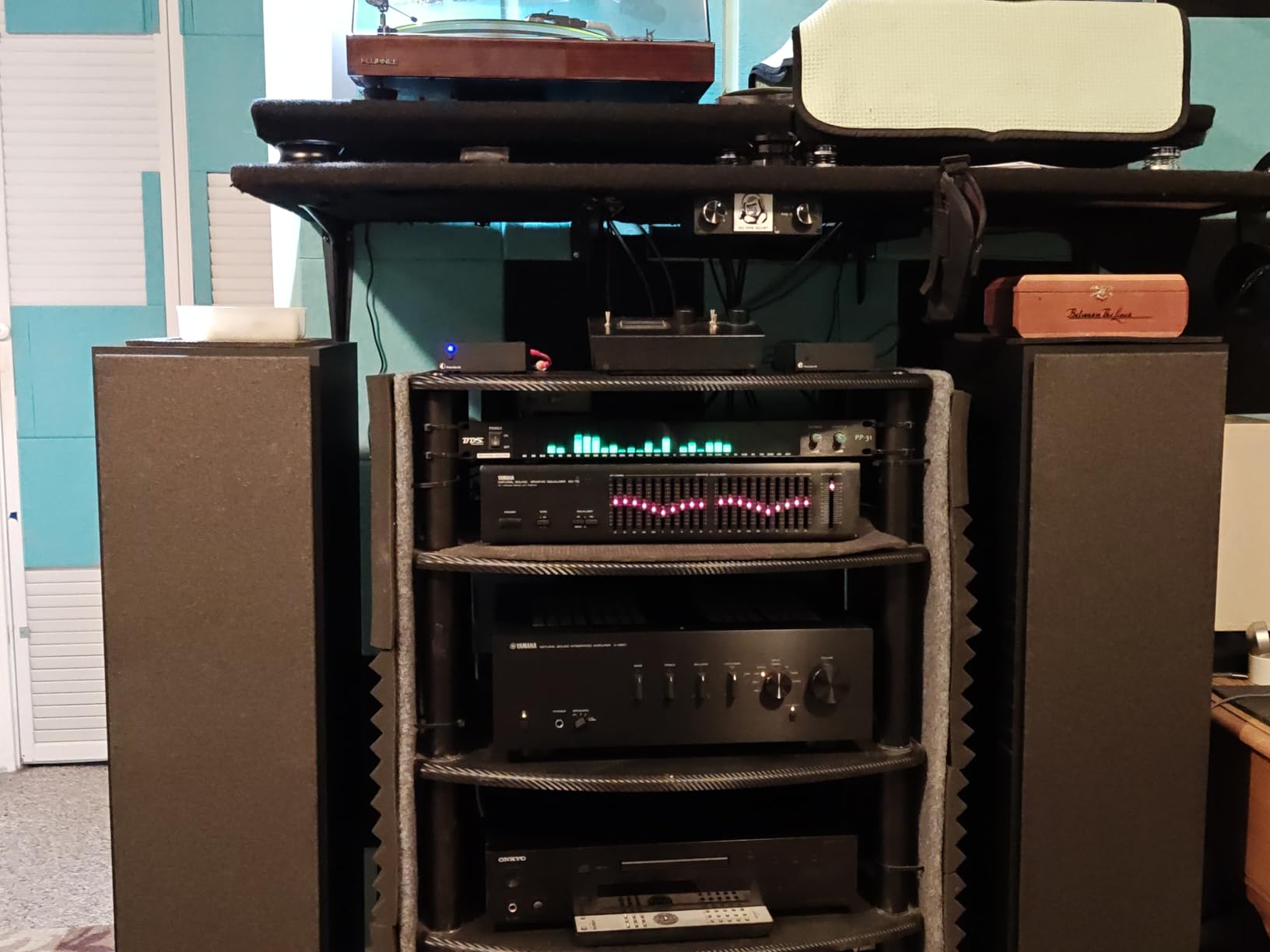
Pure Direct gives you the shortest signal path available, and the sound is transparent and neutral with no obvious coloration. Speakers A, B and A plus B switching make it a good two-room amp, and a subwoofer output is present for adding a bass module.
Who should buy the Yamaha A-S801
Buy it if you want a serious anchor component with a first-class USB DAC and enough power for demanding speakers in a medium-to-large room. It is also a natural fit for a computer or a streamer that wants to feed a better DAC than it has.
Owners who like transparency rather than warmth will find this the most neutral of the amps in the list.
Who should skip the Yamaha A-S801
Skip it if vinyl is central. The phono stage is entry-level and sounds thin next to a dedicated preamp, which is the one place this otherwise capable amplifier cuts a corner.
Also note the stepped volume control at low levels, the lack of line-level subwoofer output flexibility, and Yamaha’s slightly bass-forward house voicing, which owners either love or want tamed with the tone controls.
12. Yamaha A-S1200 – Best Flagship Phono Stage and Build
Yamaha A-S1200SL Integrated Amplifier (Silver)
Symmetrical single-point power circuit
Floating ACT transformer
Selectable MM/MC phono
Pure Direct and balance controls
Pros
- Massive rigid well-damped chassis at 48.5 pounds
- Symmetrical power circuit stays effortless at high volume
- Refined selectable MM/MC phono for serious vinyl
- Silver finish and dual-mono layout
Cons
- Very heavy and needs careful placement
- Large footprint for a small cabinet
- No Bluetooth or network streaming
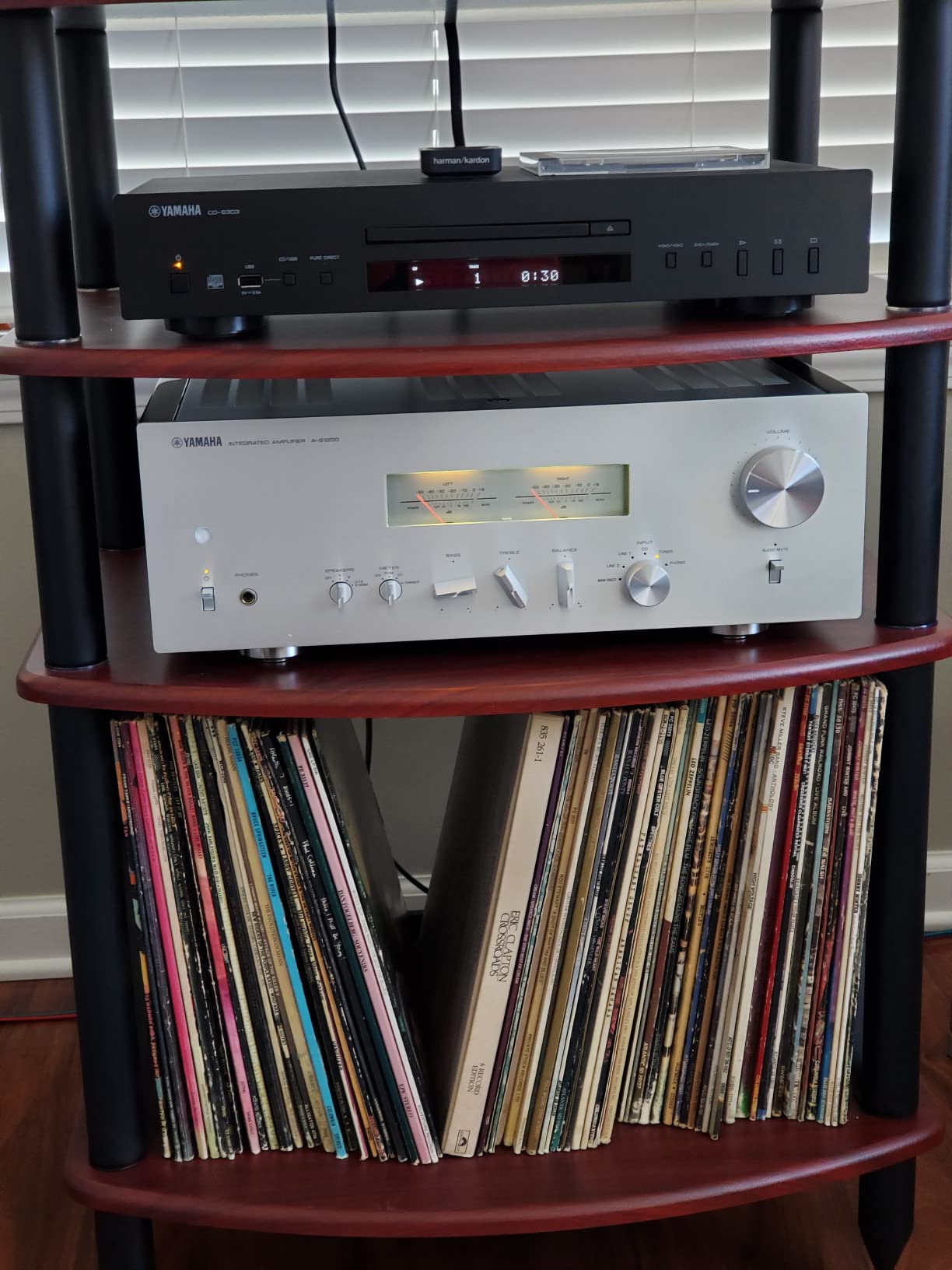
The A-S1200 is the only true flagship in this group, and it earns that description on build as much as on circuitry. At 48.5 pounds with a rigid, heavily damped metal chassis, it is an object that has to be placed by two people and deserves a shelf built to hold it. The symmetrical single-point power amplifier design treats both channels identically, which is why the sound stays composed at high volume.
The phono stage is the reason to look here if you play records seriously. It is full-floating with selectable MM and MC modes across multiple impedance settings, which is a level of adjustment that only appears at the top of a manufacturer’s range and matters a great deal when you change cartridges.
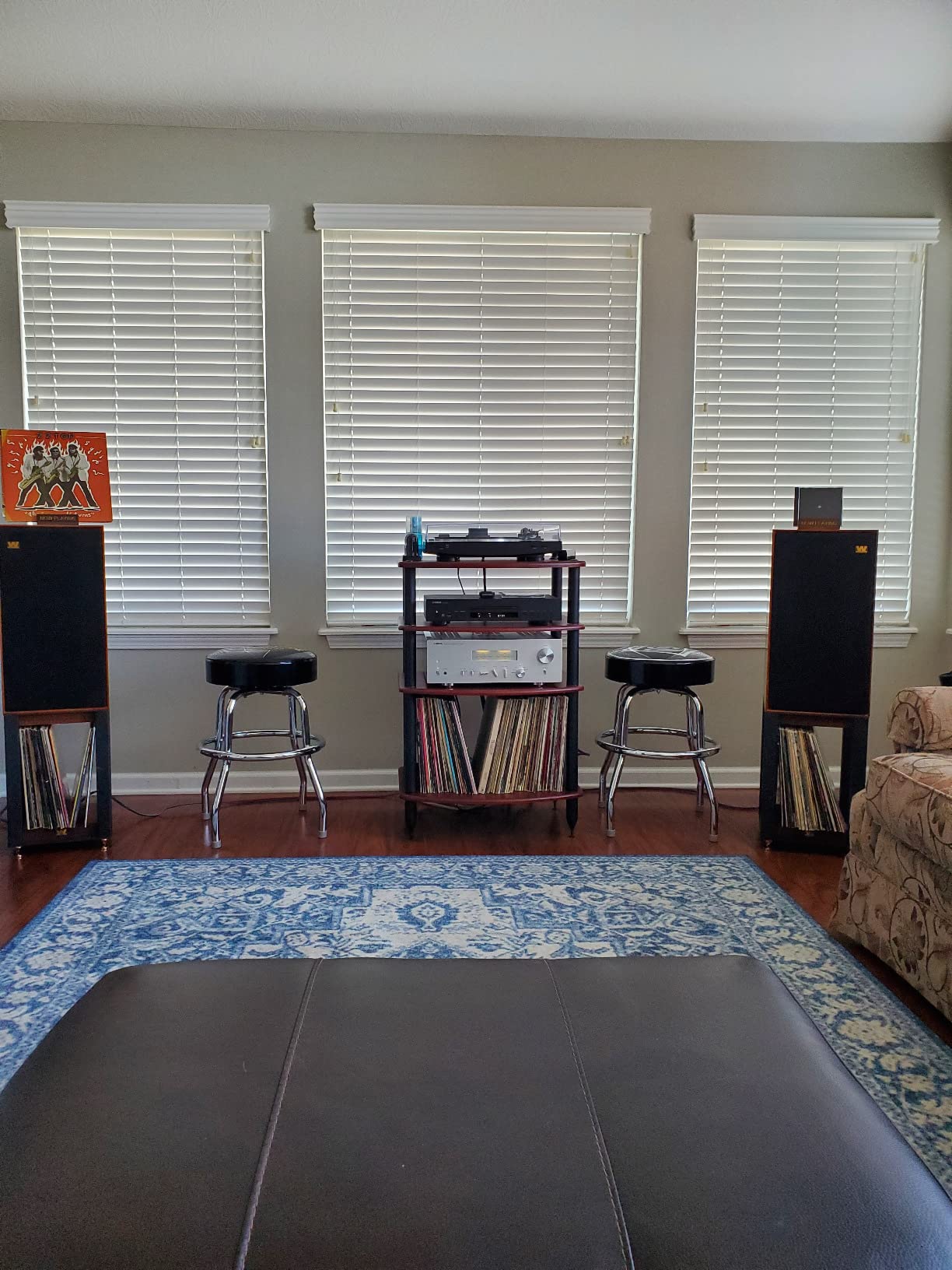
Pure Direct gives the cleanest path, and the balance and presence controls are extensive enough to compensate for a difficult room. Feedback centres on build, weight and analog refinement rather than features, because there are no network features to discuss at all.
Who should buy the Yamaha A-S1200
Buy it if you have the space, the shelf strength and the speakers to justify a flagship integrated amplifier, and if a serious moving coil phono stage is a requirement rather than a nice-to-have.
It also makes sense in a large dedicated listening room where you listen at high levels, since the symmetrical power circuit has the headroom for that.
Who should skip the Yamaha A-S1200
Skip it if you stream or watch TV. There is no Bluetooth, no network streaming and no HDMI, so any digital source needs an external DAC.
Skip it for a small cabinet or a shelf you cannot load. The footprint is 24 by 23 by 10 inches and the weight is not negotiable, and the owner feedback here is smaller than any other pick in the roundup.
How Much Amplifier Power Do You Actually Need?
Watts on a spec sheet mean almost nothing on their own, which is the most common source of confusion in this category. What matters is watts relative to speaker sensitivity, and the widely repeated rule from the listening community is that efficient 88 to 91dB speakers need roughly 60 watts per channel to sound their best, with real headroom arriving somewhere above that.
Use the sensitivity figure printed in your speaker manual and read the list below. The lower the number, the more power you need to hit concert levels in a normal room.
Speaker sensitivity of 82dB wants 100 watts per channel or more, and there is no substitute for current delivery. At 84dB, aim for 80 watts. At 86dB you can get away with 50 to 80 watts. At 88dB, 40 to 60 watts is comfortable. At 90dB or higher, even 30 to 50 watts will drive them properly, and the AXA35 belongs in that bracket.
Room volume pushes the numbers up. A small apartment needs less power than a large dedicated room for the same speakers, but the difference is far smaller than most buyers assume, because distance loss is gentle. Speaker placement and room treatment change the result more than doubling the amplifier power does.
The practical conclusion is this: the majority of amps in this roundup, including the 35-watt Cambridge, will play loudly and cleanly in a normal room with efficient speakers. The cases where you genuinely need more are inefficient floorstanding speakers, very large rooms, or listening well above normal levels. Buy power for the second reason only if your speakers demand it, because extra watts you never use cost money and add nothing.
Integrated Amplifier or Stereo Receiver?
Are integrated amplifiers better? Not universally, but they are better for music in stereo, and that is the honest answer. An integrated amplifier is a pure two-channel music component with a shorter signal path, better speaker drivers for two channels of power, and no video processing sitting between your source and your speakers. A stereo receiver adds HDMI switching, surround channels, decoding and calibration.
Choose a receiver if you have a television and want a five or seven channel home theatre system, or if you want to switch several HDMI sources without thinking about it. Choose an integrated amplifier if music is the priority, your speakers are good, and you want more detail and dynamic range than a receiver delivers in stereo.
The common upgrade path looks like this: start with a receiver, discover that the stereo performance is holding the system back, and move to an integrated amplifier like the Yamaha A-S301 or the Denon PMA-600NE. Very few people regret that direction, and very few regret the opposite when they only listen to music.
Phono Stages, DACs and Streaming Platforms in Plain English
Do you need an amplifier with a phono stage? Only if you own a turntable. A moving magnet stage covers almost every entry-level and mid-range cartridge and is the sensible default. A moving coil stage is what you want if you run a low-output cartridge and want the extra detail and lower noise, and it is why the Yamaha A-S1200 and the Denon PMA-900HNE are worth considering if you already know your cartridge will change.
Vinyl-first buyers often regret moving-magnet-only phono stages later, so if you think a cartridge upgrade is likely within a year, pay for MC capability now. Otherwise a good MM stage is all you need.
Do you need the built-in DAC? Usually yes at this level. The internal DACs here, from the Marantz shielded converter to the Yamaha USB DAC supporting 384 kHz/32-bit and DSD, are competitive with entry-level external units. The exception is a very cheap amp with a basic converter, where forum consensus is clear: buy an outboard DAC and run the amplifier as an analog-only unit. Nothing in this roundup is that cheap.
What does a streaming platform actually do? It decides which services and control methods the amp supports natively. HEOS covers Spotify, Pandora, TIDAL, AirPlay 2 and Bluetooth and powers multi-room, and the WiiM app adds Chromecast Audio, Spotify Connect and TIDAL Connect with room correction. App quality varies more than hardware quality, and a dated app is the single most common reason owners return streaming amplifiers.
Roon Ready is worth checking if you use Roon, since it gives bit-perfect control from one place. Just note that none of these amplifiers carry a native Roon label, so a Roon server is still required.
What Amplifier Class Labels Actually Mean
Class labels are marketing more than engineering, but a quick translation helps. Class A keeps the output transistors biased on constantly, which sounds warm and linear but wastes power and runs hot, so it appears in low-power designs and in preamp stages such as the tubes in the Dayton and Fosi units. Class A/B, the most common type, biases the transistors only on signals, giving better efficiency with a small crossover distortion many listeners cannot hear. The Yamaha A-S301 and A-S801 use this approach.
Class D switches the output stage at very high frequency, which makes it small, cool and efficient, and that is what the WiiM Amp and the Marantz Model M1 use to deliver 60 and 100 watts from small cases. Modern Class D is no longer a compromise. Class G, a variant of A/B, biases in stages as signal demand rises and is common in streaming amplifiers that want efficiency plus linearity. Class AD, found in some high-end designs, uses a Class A or tube input stage driving a Class D output stage, which is a close cousin of the hybrid topology in the Dayton HTA200.
Two more terms worth recognising. Impedance compatibility is whether the amplifier stays stable driving a speaker that dips below its nominal impedance, and damping factor describes how tightly the amplifier controls the speaker cone. Neither number on a spec sheet tells you as much as listening to the amp with your speakers, which is why the matching advice above matters more than any single figure.
Frequently Asked Questions
Are integrated amplifiers better?
An integrated amplifier is better if you listen to music in stereo, because it uses a shorter signal path and all of its power goes to two channels. A stereo receiver is better if you need surround sound, HDMI switching and video processing for a home theatre. The right choice depends on your speakers and your room, not on which box is newer.
What is the best integrated amplifier right now?
For most people the Denon PMA-600NE, because it combines a usable phono stage, a competent internal DAC, Bluetooth and enough current to drive real speakers. If you stream and want the smallest box, the WiiM Amp is the value pick. If your speakers need real power, the Yamaha A-S301 is the safest choice.
Which amplifier is best for sound quality?
Sound quality depends far more on speaker matching and room treatment than on price. Within this roundup, the Yamaha A-S1200 offers the most refined analog design and phono stage, the Yamaha A-S801 is the most transparent, and the Denon PMA-600NE and Marantz PM6007 deliver the warmest and most engaging character at budget levels.
How many watts per channel do I need for my speakers?
Match watts to speaker sensitivity. Speakers rated at 82dB need 100W per channel or more, 86dB needs 50 to 80W, 88dB needs 40 to 60W, and 90dB or higher needs only 30 to 50W. Speakers rated 88 to 91dB are comfortable with a 60W per channel amplifier in most rooms.
Do I need a separate DAC if the amplifier has one built in?
Usually not at these levels. The internal DACs in this roundup match or beat most entry-level external units, so the built-in converter is the sensible choice. An outboard DAC is worth adding only if your amplifier has a very basic converter, or if you want to compare sources and upgrade one step at a time.
Which Integrated Amplifier Should You Buy?
If you only buy one amplifier from this guide, buy the Denon PMA-600NE. It is the best integrated amplifier overall because it covers the widest range of real setups, from a first turntable to a streaming system with a television attached. If you have a turntable, the Denon PMA-600NE, the Marantz PM6007 or the NAD C 328 each give you a phono stage that works from day one. If you stream and want everything in one box, the WiiM Amp is the strongest case I have found for spending once, and the Marantz Model M1 is the pick when the television is part of the system.
If your speakers are large or inefficient, go up in power rather than up in features: the Yamaha A-S301 for entry level, the Yamaha A-S801 for serious output with a superb DAC, and the Yamaha A-S1200 if a flagship phono stage and chassis are worth the space. If you want tube character, the Dayton Audio HTA200 gives you a tube preamp over a 100-watt class A/B power section, and the Fosi Audio MC331 does the same trick in a much smaller case with a headphone output.
Whichever one you land on, buy the amplifier that matches your room and your speakers rather than the one with the longest feature list. The best integrated amplifiers in 2026 are the ones you stop thinking about after setup, and every pick in this guide is chosen to make that possible.