
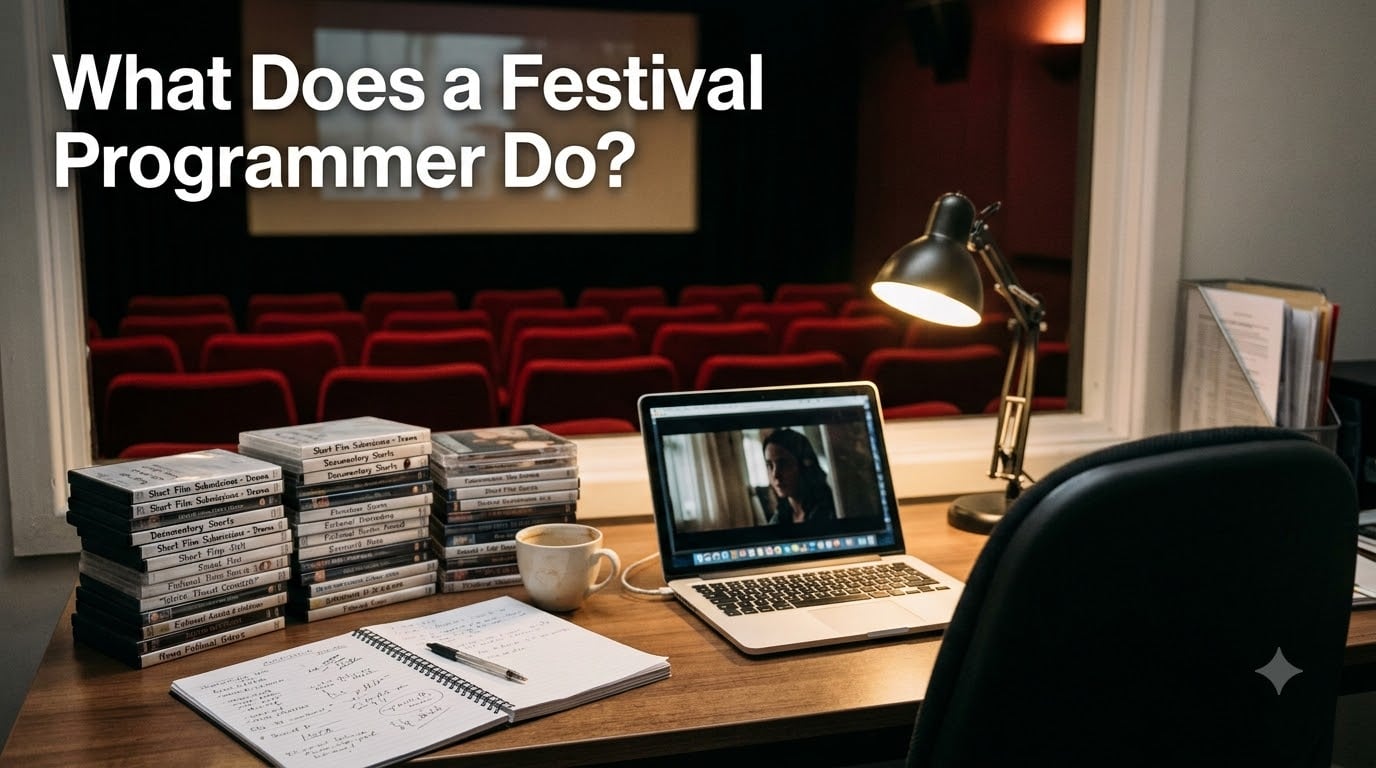
If you have ever wondered who decides which films make it into a festival lineup, that person is a festival programmer. Understanding what a festival programmer does opens a window into one of the most influential yet behind-the-scenes roles in the film industry. These are the people who watch hundreds or even thousands of submissions and shape them into the curated experience audiences see on screen.
For filmmakers, especially those working in short film, knowing how programmers think can mean the difference between an acceptance email and a silent rejection. I have spent years embedded in the festival circuit, talking with programmers at events from small local showcases to internationally recognized festivals. The role is far more complex and nuanced than most people realize.
In this guide, I will break down what a festival programmer actually does day to day, the skills the job requires, how the career path works, and what makes short film programming its own unique challenge. Whether you want to become a programmer yourself or you are a filmmaker trying to get your work noticed, this article covers the full picture.
Table of Contents
- What Does a Festival Programmer Do?
- Core Responsibilities of a Festival Programmer
- A Day in the Life of a Festival Programmer
- Short Film Festival Programming: What Makes It Different
- What Skills Does a Film Programmer Need?
- Who Does a Festival Programmer Work With?
- How to Become a Festival Programmer?
- Common Challenges Festival Programmers Face
- Festival Programmer vs Cinema Programmer vs TV Programmer
- FAQs
- Conclusion
What Does a Festival Programmer Do?
A festival programmer selects films to be shown at film festivals, creating a balanced programme that serves the festival’s audience and mission. They review submissions, attend industry markets, build relationships with filmmakers and distributors, and shape every screening block into a cohesive experience for attendees.
The role goes well beyond simply picking good films. A programmer must balance tone, length, genre, and theme across an entire festival schedule. They decide which films open and close the event, which ones compete for awards, and which get placed in sidebars or special programs. Every choice sends a message about what the festival values.
Programmers also act as the artistic voice of a festival. Their taste, industry knowledge, and relationships determine the identity of the event from year to year. A single programming decision can launch a filmmaker’s career, spark audience conversation, or define a festival’s reputation in the industry.
Core Responsibilities of a Festival Programmer
The day-to-day work of a festival programmer centers on a few key responsibilities that repeat throughout the year. Here is what the job actually involves.
Watching and Evaluating Submissions
The most time-consuming responsibility is screening submissions. Programmers sit through enormous volumes of films, often watching 20 or more short films in a single day during peak submission periods. Each film gets evaluated against the festival’s criteria, which might include artistic merit, thematic relevance, technical quality, and audience appeal.
This is not casual movie watching. A programmer evaluates pacing, structure, emotional impact, and how a film fits alongside other selections. They take notes, flag standouts, and often debate choices with co-programmers or selection committees before final decisions are made.
Building a Balanced Programme
Once individual films are selected, the programmer arranges them into screening blocks or schedule slots. Programme balance is one of the most important and least understood parts of the job. A strong festival programme needs variety in tone, style, origin, and subject matter.
Programmers think about how films talk to each other when placed back to back. Two heavy dramas in a row can exhaust an audience, while a well-placed comedy or experimental short can reset the room. The order of films within a block and across the festival schedule is a craft in itself.
Curating Beyond Submissions
Not every film in a festival comes through open submissions. Programmers actively seek out films by attending other festivals, watching industry screeners, and maintaining relationships with sales agents and distributors. They might pursue a specific film they saw at Cannes, Toronto, or Berlin and negotiate to bring it to their own event.
This proactive side of programming is especially important for festivals looking to premiere high-profile work. A programmer’s reputation and industry connections directly affect what films they can secure.
Shaping Festival Identity and Mission
Every festival has a mission, whether that is championing underrepresented voices, celebrating a specific genre, or showcasing regional filmmaking. The programmer translates that mission into concrete film choices. They decide what diversity looks like in practice, not just in marketing language.
This responsibility also means saying no to excellent films that simply do not fit. A programmer’s job is not to identify every good film but to identify the right films for their specific festival and audience.
A Day in the Life of a Festival Programmer
There is no typical day for a festival programmer, which is part of what makes the role both exciting and exhausting. During submission season, which often runs from late summer through winter, a programmer might spend six to eight hours watching films at a desk with a laptop and a notepad.
Real programmers have described the experience on forums like Reddit’s r/FilmFestivals with striking honesty. One common thread is the sheer volume. Watching 20 short films in a day is not unusual during peak periods, and that is on top of administrative work, email correspondence, and meetings.
During the festival itself, the pace shifts dramatically. A programmer might attend four or five screenings a day, introduce films, moderate Q&A sessions with filmmakers, network at industry events, and handle last-minute schedule changes. A film might drop out due to a technical issue, and the programmer needs a replacement ready within hours.
In the off-season, programmers attend other festivals as scouts, review feedback from audiences, plan the next year’s strategy, and build relationships with filmmakers whose work they want to support. The job is year-round even if the festival itself only lasts a week or two.
Short Film Festival Programming: What Makes It Different
Short film programming is a distinct discipline that none of the top-ranking competitor articles address. If you are reading this on Short Film Central, this section is written specifically for you. Programming shorts presents challenges and opportunities that feature film programmers never encounter.
The volume of submissions is dramatically higher. Short films are cheaper to produce and more accessible to make, which means a short film festival might receive thousands of entries compared to a few hundred for features. A programmer watching shorts deals with an overwhelming quantity of material, much of it from first-time or emerging filmmakers still finding their voice.
Short film programmers also think in blocks rather than individual slots. A typical short film program runs 75 to 90 minutes and includes four to seven films. The programmer must find films that complement each other in theme, tone, and pacing, creating a mini-narrative arc within each block. This is a curatorial skill unique to short form programming.
Another difference is the relationship between short film programmers and emerging talent. Shorts are often the first place a filmmaker’s work is seen publicly. A programmer’s decision to include a short film can validate a new voice and open doors to funding, representation, and future projects. That responsibility weighs heavily on programmers who take the role seriously.
Short film festivals also tend to be where genre experimentation happens. Programmers in this space often embrace bold, strange, or formally inventive work that might not fit a traditional feature festival. The short film format rewards risk-taking, and good programmers know how to identify a gem that breaks conventional rules.
What Skills Does a Film Programmer Need?
Festival programming requires a specific blend of analytical, creative, and interpersonal skills. Based on my conversations with working programmers and the patterns that emerge across industry profiles, here are the core capabilities the role demands.
Deep film knowledge: A programmer needs broad exposure to cinema across eras, genres, countries, and formats. This includes staying current with new releases and understanding historical context that informs why certain films matter.
Curatorial judgment: Beyond knowing film, a programmer must be able to articulate why a film belongs in a specific programme. Taste alone is not enough. The ability to defend selections to colleagues, funders, and audiences is essential.
Stamina and focus: Watching hundreds of submissions requires genuine endurance. A programmer must maintain critical attention even on film number 18 of the day, because the next submission could be the standout.
Industry relationships: Programmers build and maintain connections with filmmakers, distributors, sales agents, and other festival professionals. These relationships determine access to films, premiere status negotiations, and collaborative programming opportunities.
Audience understanding: A programmer must know their festival’s audience and program accordingly. This means understanding demographics, tracking attendance patterns, and balancing artistic ambition with what will actually fill seats.
Communication skills: Writing programme notes, introducing screenings, moderating discussions, and corresponding with filmmakers all require clear, engaging communication. A programmer is often the public face of the festival.
Organizational ability: Tracking submissions, managing screening schedules, coordinating with technical teams, and meeting deadlines all demand strong organizational habits. The behind-the-scenes logistics are as important as the creative work.
Who Does a Festival Programmer Work With?
A festival programmer operates at the center of a web of collaborators. Understanding these relationships helps clarify why the role is so connected and why networking matters so much in this career.
Programmers work closely with festival directors and artistic teams to align film selections with the overall vision and budget of the event. They coordinate with filmmakers and their representatives to secure screening rights, confirm attendance, and arrange travel for visiting talent.
On the industry side, programmers maintain relationships with distributors, sales agents, and other festival programmers. Films often travel from one festival to another, and programmers recommend titles to each other, share feedback, and sometimes co-program events. The film festival community is small, and reputation travels fast.
During the festival itself, programmers work with technical staff to ensure films screen correctly, with venue managers on scheduling, and with marketing teams on how to position films for audiences. They may also interact with sponsors, jurors, and press, all of whom shape the festival experience.
How to Become a Festival Programmer?
There is no single path into festival programming, which is both liberating and frustrating for aspiring programmers. Based on the career stories shared by working professionals and the advice that circulates in filmmaker communities, here is a realistic step-by-step approach.
Step 1: Volunteer at Local Festivals
The most common entry point is volunteering. Almost every programmer I have spoken with started by helping at a local or regional festival, often unpaid. Volunteering gets you inside the operation, introduces you to the programming team, and gives you hands-on experience with how a festival runs.
Look for opportunities at small festivals first. They are more likely to let volunteers sit in on programming discussions or help with submission sorting. The goal is to learn the process from the inside and build relationships with people already doing the job.
Step 2: Watch Films Relentlessly and Build Your Taste
Programming is fundamentally about taste, and taste is built through exposure. Watch widely across genres, countries, and eras. Go to festivals as an audience member and pay attention to how programmes are constructed. Ask yourself why certain films were placed together and what the programmer might have intended.
Start writing about films. Even informal reviews or notes help you develop the vocabulary to articulate why a film works or does not work. This skill directly translates to writing programme notes and defending selections.
Step 3: Network Within the Film Community
The film festival world is small and relationship-driven. Attend industry events, filmmaker mixers, and festival networking sessions. Introduce yourself to programmers and express genuine interest in their work. Most programmers are happy to talk about what they do with someone who is seriously curious.
Networking is not about asking for a job on first meeting. It is about becoming known in the community so that when an opportunity arises, you are already on someone’s radar. Many programming positions are filled through personal recommendations rather than open job postings.
Step 4: Seek Programming Internships or Assistant Roles
Some larger festivals offer internships or assistant programmer positions. These roles provide structured experience in the submission review process, programme planning, and festival operations. They are competitive but represent one of the clearest pathways into a paid programming career.
Film programming courses and workshops are also available through organizations like ScreenSkills and various film schools. These can supplement hands-on experience and help you build industry connections.
Step 5: Program Your Own Events
If you cannot find a formal position, create your own. Organize a short film screening night at a local venue, curate an online program, or partner with a community space to showcase independent work. Building a portfolio of programming experience, even at a small scale, demonstrates initiative and curatorial ability to future employers.
Many established programmers started by running small screening series or pop-up events before being hired by larger festivals. Real programming experience, no matter how modest the venue, carries significant weight.
Common Challenges Festival Programmers Face
The romantic image of a festival programmer sipping wine at Cannes obscures some real difficulties. Forum discussions on Reddit and filmmaker communities reveal honest perspectives on the challenges of this career.
The biggest challenge for newcomers is that most festival programming roles start unpaid. Volunteers and junior programmers often work long hours for free before any paid opportunity materializes. This creates a barrier to entry that limits who can afford to pursue the career.
The screening workload itself is physically and mentally demanding. Watching dozens of films a week, many of them not to your personal taste, can lead to fatigue and burnout. Programmers describe the need to stay sharp and fair even when the twentieth submission of the day is struggling to hold attention.
Career progression can also be uncertain. Unlike corporate roles with clear advancement tracks, festival programming often depends on the right festival growing, a senior programmer leaving, or a new event being launched. Job security is limited, and many programmers work freelance across multiple festivals rather than holding a single full-time position.
Festival Programmer vs Cinema Programmer vs TV Programmer
The term film programmer applies to three related but distinct roles. Understanding the differences helps clarify what makes festival programming unique.
A festival programmer selects films for a time-limited event, often with a focus on premieres, discovery, and thematic curation. Their audience attends specifically for the festival experience and is often willing to take risks on unknown films. Festival programmers work on tight timelines and deal with premiere competitions and industry politics.
A cinema programmer books films for an ongoing venue, balancing new releases with repertory screenings and special events. Their decisions are driven heavily by box office data, audience demographics, and what will fill seats week after week. The horizon is commercial sustainability rather than discovery.
A TV programmer acquires or commissions films for broadcast or streaming platforms. They work with acquisition budgets, scheduling slots, and audience metrics. The scale is larger, the budgets are bigger, and the decisions are more closely tied to advertising revenue and subscriber retention.
Each role requires film knowledge, but the priorities and pressures differ significantly. Festival programming is the most curatorial and discovery-focused of the three, which is what draws many passionate film lovers to the role despite its financial limitations.
FAQs
What are the typical job responsibilities of a programmer?
A festival programmer reviews film submissions, selects films for the festival programme, arranges screening blocks, scouts films at other festivals, negotiates with distributors and filmmakers, writes programme notes, and introduces screenings during the event. The core responsibility is curating a balanced lineup that serves the festival’s mission and audience.
How to get into film festival programming?
The most common path is volunteering at local festivals to gain inside experience and build relationships. From there, watch films widely to develop curatorial taste, network within the film community, seek internships or assistant programmer roles at larger festivals, and consider programming your own small events to build a portfolio. Most programmers start unpaid and work their way up through demonstrated taste and industry connections.
Can you make money at film festivals?
Yes, but it takes time. Entry-level programming roles are often unpaid or low-paid. Experienced programmers at major festivals can earn a living wage, and some work freelance across multiple festivals. Feature film screening fees can run around $500 per film in some markets. Financial stability usually comes after years of building reputation and relationships in the industry.
How much does a film festival director make?
Film festival director salaries vary widely based on festival size, location, and funding. Directors of major international festivals can earn competitive salaries, while smaller regional festival directors often earn modest wages or work on a part-time contract basis. The role combines artistic leadership with fundraising and operational management.
How do film festivals choose films?
Festivals choose films through a combination of open submissions and invited selections. Programmers screen submissions against criteria like artistic merit, thematic fit, technical quality, and audience appeal. They also scout films at other festivals and negotiate with distributors for high-profile titles. Final selections go through committee review and must balance the overall programme.
What do festival programmers look for in submissions?
Programmers look for originality, strong storytelling, emotional resonance, technical competence, and a clear artistic voice. For short films specifically, they value efficient storytelling that uses the format well. A film that fits the festival’s mission and programming themes has a better chance. A clean, professional submission with proper metadata and a compelling synopsis also helps a film stand out in a crowded inbox.
Conclusion
Understanding what a festival programmer do goes far beyond picking favorite films. The role demands a rare combination of deep cinema knowledge, curatorial instinct, relationship building, and sheer stamina. Programmers shape what audiences see, launch emerging careers, and define the identity of every festival they touch.
For anyone interested in this career path, the key takeaways are simple but not easy. Start by volunteering, watch films relentlessly, build genuine relationships in the film community, and be prepared for a journey that may begin unpaid. The rewards are artistic and cultural rather than financial, at least at first.
For filmmakers, especially short film makers, knowing how programmers think gives you a real advantage. Submit work that fits the festival’s mission, present it professionally, and understand that a programmer is building a programme, not just picking individual films. Your film has the best chance when you understand the larger curatorial puzzle it needs to fit into.
The festival programming world is small, passionate, and built on relationships. Whether you want to sit in the screening room or get your film into one, the programmers are the gatekeepers worth understanding. I hope this guide has given you a clear picture of what the role involves and how to engage with it as a programmer, a filmmaker, or an informed film lover.