
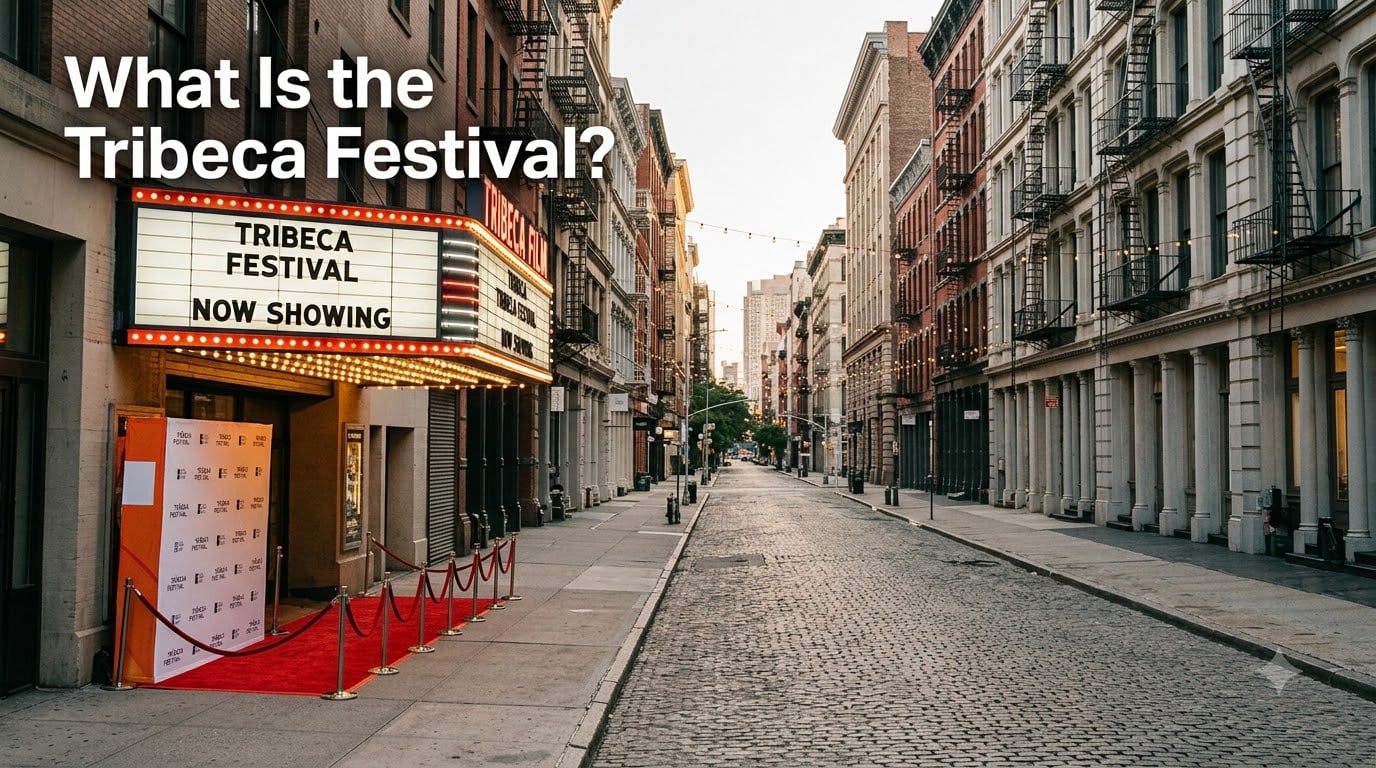
The Tribeca Festival is an annual cultural event held in New York City that celebrates storytelling in all its forms, including film, television, music, audio storytelling, games, and immersive experiences. Founded in 2002 by Robert De Niro, Jane Rosenthal, and Craig Hatkoff, it was created to revitalize Lower Manhattan after the September 11 attacks. Today it stands as one of the most recognized independent film festivals in North America.
Each spring, the festival brings artists and audiences together across multiple venues in Lower Manhattan for roughly two weeks of premieres, screenings, panels, and live performances. Whether you are a filmmaker, a film enthusiast, or a cultural tourist visiting NYC, the Tribeca Festival offers something worth experiencing.
In this guide, I will walk you through what the Tribeca Festival is, how it started, what it celebrates, how it compares to other major festivals, and how you can attend. Let me start with the founding story that gave this festival its purpose.
Table of Contents
- What Is the Tribeca Festival? A Clear Definition
- The Founding Story: Why the Tribeca Festival Exists
- What the Tribeca Festival Celebrates
- Tribeca Festival Programming and Competitions
- How Tribeca Compares to Other Major Film Festivals
- How to Attend the Tribeca Festival
- Tribeca Festival for Short Filmmakers
- FAQs
- Conclusion
What Is the Tribeca Festival? A Clear Definition
The Tribeca Festival is an annual storytelling festival organized by Tribeca Enterprises that takes place in New York City each spring. It began as a film festival focused on independent cinema and has since expanded to celebrate film, TV, music, audio storytelling, games, and immersive experiences. The festival is known for premiering acclaimed independent films, hosting filmmaker Q&A sessions, and showcasing work from emerging artists alongside established names.
What sets Tribeca apart from many other film festivals is its commitment to storytelling across mediums. You will find feature films and documentaries alongside original television content, music performances, video game showcases, and virtual reality installations. This breadth makes it one of the most accessible and varied cultural events in New York City.
For our audience at Short Film Central, the festival is particularly notable because of its strong short film programming. Tribeca runs competitive short film categories and regularly champions emerging filmmakers who work in that format.
The Founding Story: Why the Tribeca Festival Exists
The Tribeca Festival was born out of tragedy and resilience. After the September 11 attacks in 2001, Lower Manhattan suffered economically as businesses closed and foot traffic dwindled. The neighborhood of Tribeca, located just north of the World Trade Center site, was hit especially hard.
Actor Robert De Niro, producer Jane Rosenthal, and investor Craig Hatkoff saw an opportunity to help. They believed that a film festival could draw people back to Lower Manhattan, support local businesses, and give the community something to rally around. The first Tribeca Film Festival launched in 2002, just months after the attacks.
That inaugural festival was a success by any measure. It drew over 150,000 attendees and generated millions of dollars for the local economy. More importantly, it proved that storytelling could help a community heal.
Over the years, the festival grew in scope and ambition. It expanded from a purely film-focused event into a broader storytelling festival, adding music, television, gaming, and immersive content to its programming. The name officially changed from Tribeca Film Festival to Tribeca Festival to reflect this evolution.
What the Tribeca Festival Celebrates
The Tribeca Festival celebrates storytelling across multiple creative disciplines. Here is a breakdown of the content types you can expect:
Film: Narrative features, documentaries, and short films from independent and international filmmakers
Television: Episodic premieres, streaming content, and pilot screenings
Music: Live performances, music documentaries, and artist showcases
Audio storytelling: Podcasts and audio-first narrative content
Games: Independent video game showcases and interactive experiences
Immersive: Virtual reality, augmented reality, and interactive art installations
This multi-discipline approach is one of the reasons Tribeca stands apart from traditional film festivals. You might attend a documentary screening in the morning, a music performance in the afternoon, and a VR installation in the evening, all within a few blocks of each other in Lower Manhattan.
The festival also places a strong emphasis on diverse voices. Programming regularly spotlights work by women, filmmakers of color, LGBTQ+ creators, and international artists. This commitment to inclusion has helped Tribeca build a reputation as a festival that takes creative risks and champions underrepresented storytellers.
Tribeca Festival Programming and Competitions
The Tribeca Festival runs several competitive categories where films and creators compete for juried awards. These competitions are a major draw for both filmmakers and industry professionals who attend the festival.
The main competition categories typically include:
U.S. Narrative Competition
International Narrative Competition
Documentary Competition
Spotlight Documentary
Short Film Competition (narrative, documentary, and animated shorts)
Midnight (genre films)
The short film competition is particularly relevant for our community. Tribeca accepts short films across narrative, documentary, and animation categories, and the festival has helped launch the careers of many short-form filmmakers who went on to direct features and television.
Beyond competitions, the festival programs special sections such as retrospectives, family-friendly screenings, and Tribeca Talks, a series of panel discussions featuring filmmakers, actors, and industry leaders. These talks are often highlights for attendees who want insight into the creative process.
How Tribeca Compares to Other Major Film Festivals
People often ask how Tribeca stacks up against other major festivals like Sundance, SXSW, and Cannes. Each festival has its own identity, and understanding the differences can help you decide which one matters most for your goals.
Tribeca vs Sundance: Sundance, held each January in Park City, Utah, is widely considered the premier independent film festival in the United States. Tribeca runs later in the spring and has positioned itself as a more accessible, multi-discipline festival. While Sundance is heavily film-focused, Tribeca embraces music, games, and immersive content alongside cinema.
Tribeca vs SXSW: SXSW in Austin, Texas, shares Tribeca’s multi-discipline approach, combining film, music, and interactive technology. Both festivals appeal to audiences interested in the intersection of entertainment and innovation. Tribeca’s New York City location and post-9/11 founding story give it a distinct cultural identity.
Tribeca vs Cannes: Cannes, held in France each May, is one of the most prestigious film festivals in the world but is largely an industry-only event. Tribeca is far more accessible to general audiences, with tickets available to the public for most screenings.
For short filmmakers specifically, Tribeca offers strong programming and exposure in a major media market, making it one of the top destinations alongside Sundance for short-form work.
How to Attend the Tribeca Festival
One of the most common questions I see in film festival forums is whether the Tribeca Festival is open to the public. The short answer is yes, the festival is designed to be accessible to general audiences, not just industry professionals.
Here is what you need to know about attending:
When: The festival typically runs for about two weeks each spring, usually in June.
Where: Screenings and events take place across multiple venues in Lower Manhattan and other NYC locations.
Tickets: Individual tickets are available for purchase. The festival also offers passes and packages for attendees who want to see multiple films.
Rush tickets: For sold-out screenings, the festival often offers rush tickets, which are same-day tickets released before the screening starts. Arriving early improves your chances.
Online screenings: Some films are available through the festival’s online platform, allowing audiences outside New York to participate.
Forum discussions suggest that popular screenings sell out quickly, so it pays to plan ahead. Attendees also consistently highlight filmmaker Q&A sessions as a major draw, so prioritize those when building your schedule.
Ticket prices vary by event, and some attendees have noted that costs can add up if you attend multiple screenings. Day-of rush tickets and online options can help manage costs while still giving you access to the festival experience.
Tribeca Festival for Short Filmmakers
If you are a short filmmaker, the Tribeca Festival deserves your attention. It is one of the few major U.S. festivals that gives short films real prominence, with dedicated competition categories and meaningful industry exposure.
Here is what filmmakers should know:
The festival accepts short film submissions across narrative, documentary, and animation categories.
Submissions typically open in the fall, with deadlines in late winter. Check the official Tribeca Festival website for the most current dates.
Selected short films screen in curated programs during the festival, giving filmmakers audience and industry visibility.
Tribeca’s location in New York City means short filmmakers get exposure in one of the world’s largest media markets.
The festival has a track record of championing emerging talent. Many filmmakers who got their first major recognition through Tribeca’s short film program have gone on to direct features, television episodes, and streaming originals.
For practical submission guidance, review the festival’s official rules and categories on the Tribeca website before each cycle opens. Requirements can change year to year, so always verify directly with the source.
FAQs
Is Tribeca Film Festival a big deal?
Yes, the Tribeca Festival is a major event in the film world. It is one of the most recognized independent film festivals in North America, known for premiering acclaimed films and drawing significant industry attention. Its New York City location and multi-discipline programming make it culturally significant beyond just film.
Can anyone attend the Tribeca Film Festival?
Yes, the Tribeca Festival is open to the public. Individual tickets are available for purchase, and the festival offers passes, rush tickets for sold-out screenings, and online viewing options. You do not need industry credentials to attend most events.
What is the point of the Tribeca Festival?
The Tribeca Festival was created to revitalize Lower Manhattan after the September 11 attacks by bringing audiences and economic activity back to the neighborhood. Today its mission is to celebrate storytelling across film, TV, music, games, and immersive experiences while supporting diverse and emerging creators.
Does Robert De Niro own Tribeca Film Festival?
Robert De Niro co-founded the festival in 2002 with producer Jane Rosenthal and investor Craig Hatkoff. The festival is organized by Tribeca Enterprises, the company they established. De Niro remains closely associated with the festival as a co-founder and public advocate.
Conclusion
So, what is the Tribeca Festival? It is an annual storytelling celebration in New York City that began as a post-9/11 effort to heal Lower Manhattan and has grown into one of the most respected independent film festivals in the world. With its multi-discipline programming spanning film, TV, music, games, and immersive content, Tribeca offers something for nearly every kind of storyteller and story lover.
If you are a filmmaker, consider submitting your work or attending to connect with industry professionals. If you are a film fan, plan a trip to Lower Manhattan during the festival for a unique NYC cultural experience. Either way, the Tribeca Festival is worth knowing about and worth experiencing for yourself.