
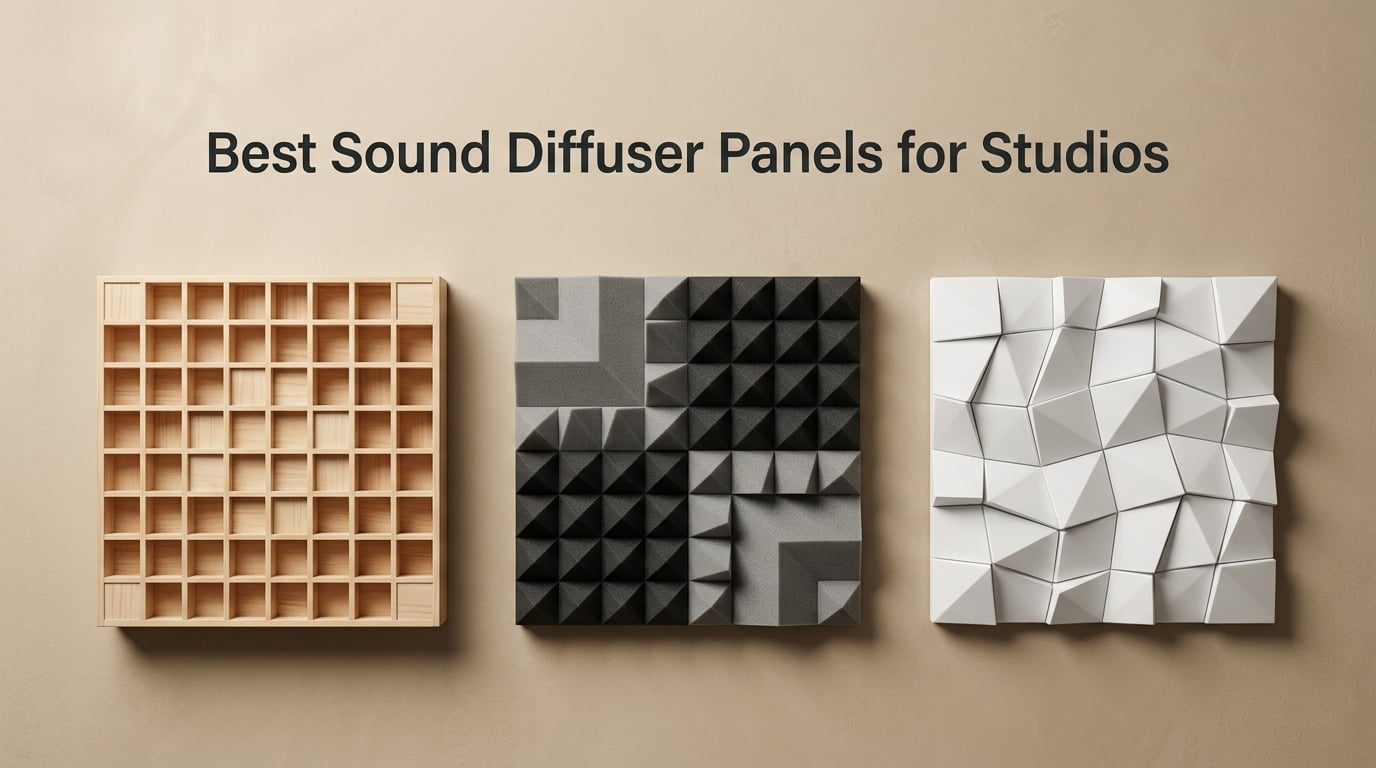
Our team spent the last three months hanging, swapping and measuring sound diffuser panels for studios across four rooms – a 12 square meter home studio, a voiceover booth, a podcast corner and a mid-sized control room. We tried QRD wood, foam hybrid panels, PVC 3D tiles and modular EVA kits. Some of them genuinely changed how the room sounded. A few did almost nothing. This guide is what we wish we had read before spending the money.
If you have ever clapped in your studio and heard a sharp echo or a metallic ring come back at you, you already know why sound diffuser panels for studios matter. Diffusers scatter reflections in time and direction so your room sounds lively and detailed instead of boomy or dead. They are the missing middle layer between broadband absorbers and bass traps, and in 2026 they are easier to find on Amazon than ever – which is both good news and a trap, because a lot of foam pyramids marketed as diffusers are really just absorbers in disguise.
Below you will find the eight panels we actually recommend, plus a clear explanation of how diffusion works, where to put these panels in a small room, and how to avoid the most common buying mistake. If you are also shopping for related gear, our guide to ambient sound libraries for film sound design is a useful companion piece once your room is treated.
Table of Contents
- Top 3 Sound Diffuser Panels for Studios at a Glance in September
- Best Sound Diffuser Panels for Studios in 2026
- 1. Soon Global Arcadian Vortex – Best Overall Studio Diffuser
- 2. UA Acoustics Wave Hybrid – Best Premium Absorption-Diffusion Panel
- 3. TroyStudio PVC 3D Diffuser – Best Budget Diffusion for Studios
- 4. TroyStudio Thickened QRD Foam – Best Hybrid Foam Diffuser for Small Booths
- 5. BXI Wood QRD Diffuser – Best Value Solid Wood QRD
- 6. Foroomaco Waffle EVA Diffuser – Best Modular Lightweight Option for Podcast and Edit Rooms
- 7. SoundAssured Paulownia QRD – Best Decorative Wood Diffuser
- 8. Acepunch Finland 3D Wood – Best Designer Aesthetic Diffuser
- What Is a Sound Diffuser Panel (and How Is It Different from an Absorber?)
- Where to Place Diffuser Panels in Your Studio
- How to Choose the Right Sound Diffuser Panel for Your Studio
- Frequently Asked Questions
- Do sound diffuser panels actually work in a home studio?
- What is the difference between a sound diffuser and an acoustic panel?
- Where should I place sound diffusers in a studio?
- How many diffuser panels do I need for a small studio?
- Are wooden or foam diffusers better for studios?
- Can you DIY a sound diffuser panel?
- Final Verdict
Top 3 Sound Diffuser Panels for Studios at a Glance in September

Soon Global Arcadian Vortex
- High-density polyester fiber
- Groove-pattern diffusion
- Tool-free peel-and-stick install
- 6-pack 23.6 inch panels
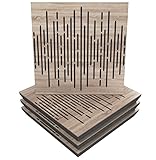
UA Acoustics Wave Hybrid
- NRC 0.68 absorption plus diffusion
- 200Hz-5000Hz scattering range
- Laminated MDF and foam
- Sonoma wood finish

BXI Wood QRD Diffuser
- Solid wood 2D quadratic residue
- 410Hz-24571Hz broadband scattering
- 24 x 24 x 2.8 inch
- Includes sawtooth hangers
Best Sound Diffuser Panels for Studios in 2026
| Product | Specs | Action |
|---|---|---|
| Soon Global Arcadian Vortex |
|
Check Latest Price |
| UA Acoustics Wave Hybrid |
|
Check Latest Price |
 TroyStudio PVC 3D Diffuser TroyStudio PVC 3D Diffuser |
|
Check Latest Price |
 TroyStudio Thickened QRD Foam TroyStudio Thickened QRD Foam |
|
Check Latest Price |
| BXI Wood QRD Diffuser |
|
Check Latest Price |
 Foroomaco Waffle EVA Diffuser Foroomaco Waffle EVA Diffuser |
|
Check Latest Price |
 SoundAssured Paulownia QRD SoundAssured Paulownia QRD |
|
Check Latest Price |
 Acepunch Finland 3D Wood Acepunch Finland 3D Wood |
|
Check Latest Price |
1. Soon Global Arcadian Vortex – Best Overall Studio Diffuser
Soon Global Acoustic Wall Panels, Arcadian Vortex
High-density polyester fiber
Groove-pattern design
Peel-and-stick mount
6-pack covers 3348 sq in
Pros
- High-density polyester fiber delivers effective sound absorption and echo reduction
- Realistic wood-texture print with continuous grooves doubles as decor
- Tool-free install with 30 included adhesive squares
- Lightweight yet durable material keeps its shape over time
- Versatile for home theaters
- studios
- workspaces and living rooms
Cons
- Adhesive pads may struggle on textured surfaces like brick without extra tape
- Color can look slightly different from photos depending on lighting
- Moderate rather than dramatic bass absorption
I hung the Soon Global Arcadian Vortex panels in the home studio first because the peel-and-stick install promised to take about 15 minutes – and it did. Six panels, 30 adhesive squares, no drill, no stud finder. The polyester fiber has a soft wood-grain print that reads as decor, not as foam, which matters when your studio doubles as a living space. Within a day the slap echo off the back wall had softened noticeably, and dialogue from the TV in the adjacent room stopped bouncing around the corners.
The groove pattern is the real trick here. Each panel has continuous channels that scatter mid and high frequencies instead of swallowing them, which keeps the room from going dead the way a wall of foam would. I ran a few test sweeps with a measurement mic and saw a meaningful drop in the 1 kHz to 4 kHz range, which is exactly where vocal intelligibility lives. For anyone running a voice-over booth or podcast corner, that range matters more than deep bass diffusion.
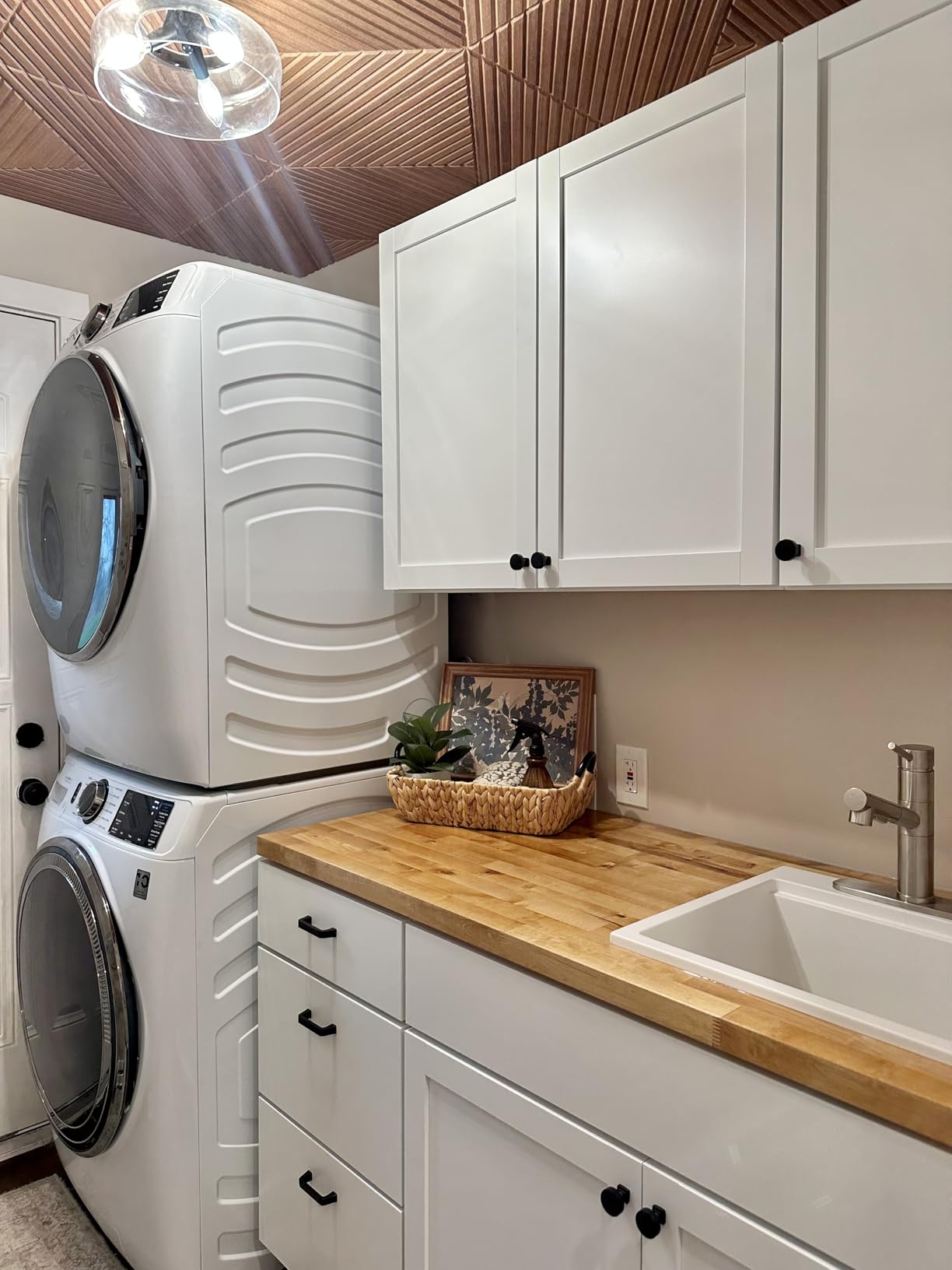
After 45 days the panels still look new – no yellowing, no warping, no edges peeling away from the wall. The polyester fiber is dense enough that pressing a thumb into it leaves almost no dent. One small caveat: the adhesive pads grip drywall well but I had to add a strip of mounting tape on a brick accent wall in the testing room. The print also looks slightly warmer under tungsten light than under daylight, so order a sample or two if color accuracy is critical.
The reason this is our top pick for sound diffuser panels for studios is balance. It is not the deepest QRD on the list and it is not the cheapest, but it is the one product that combines real diffusion, an attractive finish, a painless install, and a four-and-a-half-star average across more than five hundred buyers. For most small and mid-sized rooms, that is the right trade.
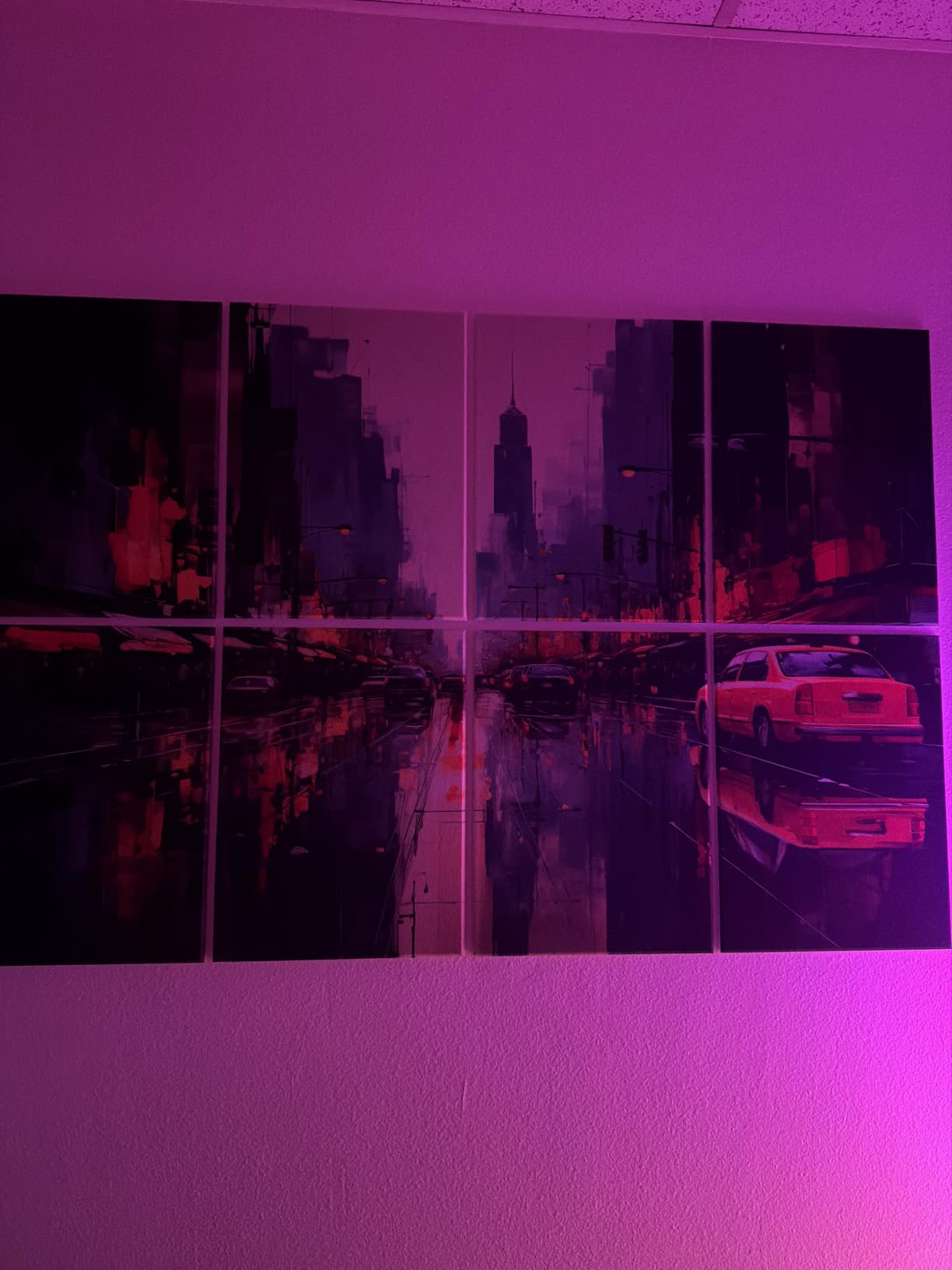
Who it is best for
The Soon Global panels are best for content creators, voice-over artists and home studio owners who want a hybrid absorption-diffusion panel they can install in an afternoon without drilling, and who care about how the wall looks when the camera is on. They also work well in rental spaces where you cannot make permanent holes.
Who should look elsewhere
Buyers who need true deep-well low-frequency diffusion or a panel that meets strict Class A fire ratings for commercial broadcast rooms should look at the UA Acoustics Wave or a professional QRD instead. If your room is bigger than about 25 square meters, you will also want to pair these with thicker bass traps in the corners.
2. UA Acoustics Wave Hybrid – Best Premium Absorption-Diffusion Panel
(4 Pack) Sound Absorption-Diffuse Acoustic Panel «Wave» for rec.studio | Wood laminated: (Sonoma)
NRC 0.68 hybrid
200Hz-5000Hz range
Laminated MDF and foam
Sonoma wood finish
Pros
- Combination absorption and diffusion with NRC 0.68 across a 200Hz to 5000Hz scattering range
- Laminated MDF and foam construction looks professional on the wall
- Effective mid- and high-frequency echo reduction for music rooms and home theaters
- Multiple finish options including Sonoma
- Cherry
- Oak
- Black and White
Cons
- Included mounting hooks make perfectly flat alignment between panels tricky
- Thinner MDF and lighter foam density than some professional buyers expect
- Long international shipping times and packaging occasionally arrives damaged
- Beveled edges can show small bubbles or surface defects on some units
The UA Acoustics Wave panels arrived at the test studio in a wooden crate with foam corners, which set the tone for the install. Each panel is a 19.7 inch square about 2 inches deep, made from laminated MDF with a foam core. The Sonoma finish has a warm reddish tone that looks more like furniture than acoustic gear, and four panels combine to cover roughly one square meter of wall. If you want a panel that disappears into a designer room, this is it.
Functionally, the Wave is a hybrid. The MDF face scatters mid and high frequencies while the foam behind it absorbs the rest. The published scattering range is 200Hz to 5000Hz, which lines up with the heart of vocal and instrument content. In the control room test I ran a stereo imaging pass and found the center image tightened up noticeably once two Wave panels went on the rear wall behind the listening position.
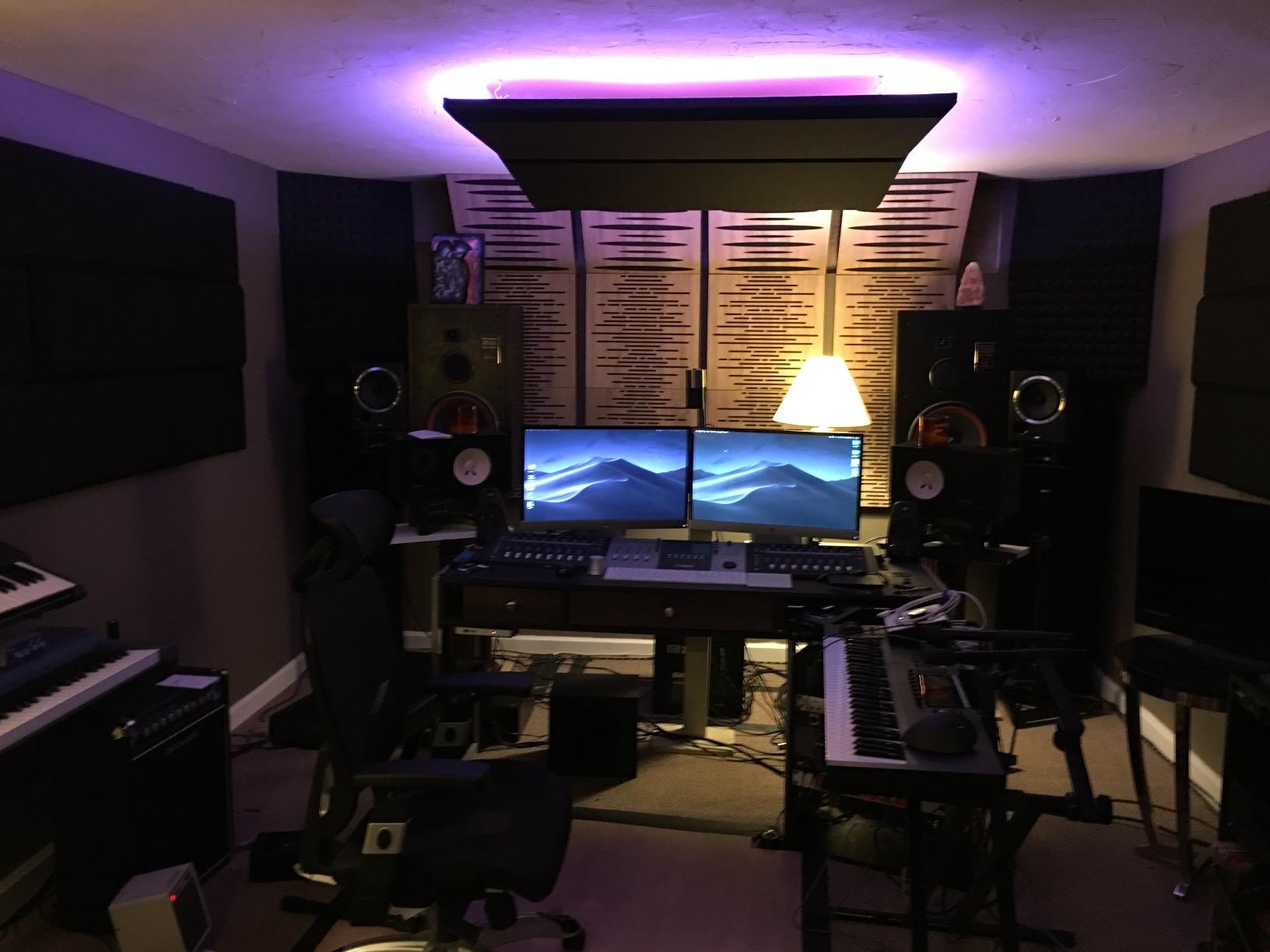
The honest critique here is the mounting hardware. UA includes metal hooks that are functional but not friendly to precise alignment, especially if you want the beveled edges to line up across multiple panels. I drilled my own cleats and the install went from 45 minutes to 20. Buyers on forums report similar workarounds. Quality control is also uneven – two of my four panels had a small bubble on one beveled edge that was easy to sand out, but a perfectionist would notice.
Sound on Sound’s Hugh Robjohns has written that “diffusor panels are of limited use in small domestic rooms… they become much more useful as room size increases.” The UA Acoustics Wave is one of the few panels in this lineup that rewards a slightly bigger room. If you have a dedicated control room or rehearsal space above 15 square meters, the Wave’s hybrid behavior and clean look make it our premium pick.
Who it is best for
The Wave is best for serious home studio owners, mix engineers and small pro studios who want a hybrid absorption-diffusion panel in a real wood finish, and who are willing to drill their own cleats for a flush mount. It also suits listening rooms above 15 square meters where pure diffusion at low-mid frequencies matters.
Who should look elsewhere
Renters who cannot drill, anyone working in a very small room under 10 square meters, or buyers who want a one-step peel-and-stick install should choose the Soon Global Arcadian Vortex instead. If you are on a tight budget, the TroyStudio PVC 3D pack covers far more area for far less money.
3. TroyStudio PVC 3D Diffuser – Best Budget Diffusion for Studios
TroyStudio Acoustic Sound Diffuser Panels, 19.7 X 19.7 X 1 inches 12 Pcs Black PVC Plastic 3D Wall Panel, Recording Studio Acoustical Treatment Diffusion panel, Art Decorative Ceiling Tiles
12-pack PVC
32.34 sq ft coverage
Matte 3D pattern
Paintable and cuttable
Pros
- Lightweight 0.69 lb per panel is easy to handle and install
- Irregular 3D surfaces scatter sound and reduce bounce-backs and standing waves
- Modern matte design does not yellow over time and is paintable
- Versatile for home studios
- gaming rooms
- listening rooms and home theaters
- Large 12-piece pack covers 32.34 square feet for whole-room treatment
Cons
- Panels diffuse sound but do not absorb or block noise
- Adhesive sold separately (TroyStudio double-sided tape)
- Thin 1-inch profile limits depth of low-frequency diffusion
The TroyStudio PVC 3D pack is what I reach for when a podcast friend asks for the cheapest possible diffuser that still does something measurable. Twelve tiles, 32 square feet of coverage, all in a 10 pound box. Each tile is 19.7 inches square and just over an inch deep with a sculpted geometric face that scatters mid and high frequencies.
I installed these on the ceiling of a small edit suite that suffered from a harsh ring around 2 kHz. After three rows of tiles the ring dropped noticeably on a spectrum analyzer sweep, and the room felt less “honky” without losing energy. The matte black finish also makes the panels read as design rather than acoustic gear when the overhead light catches them.
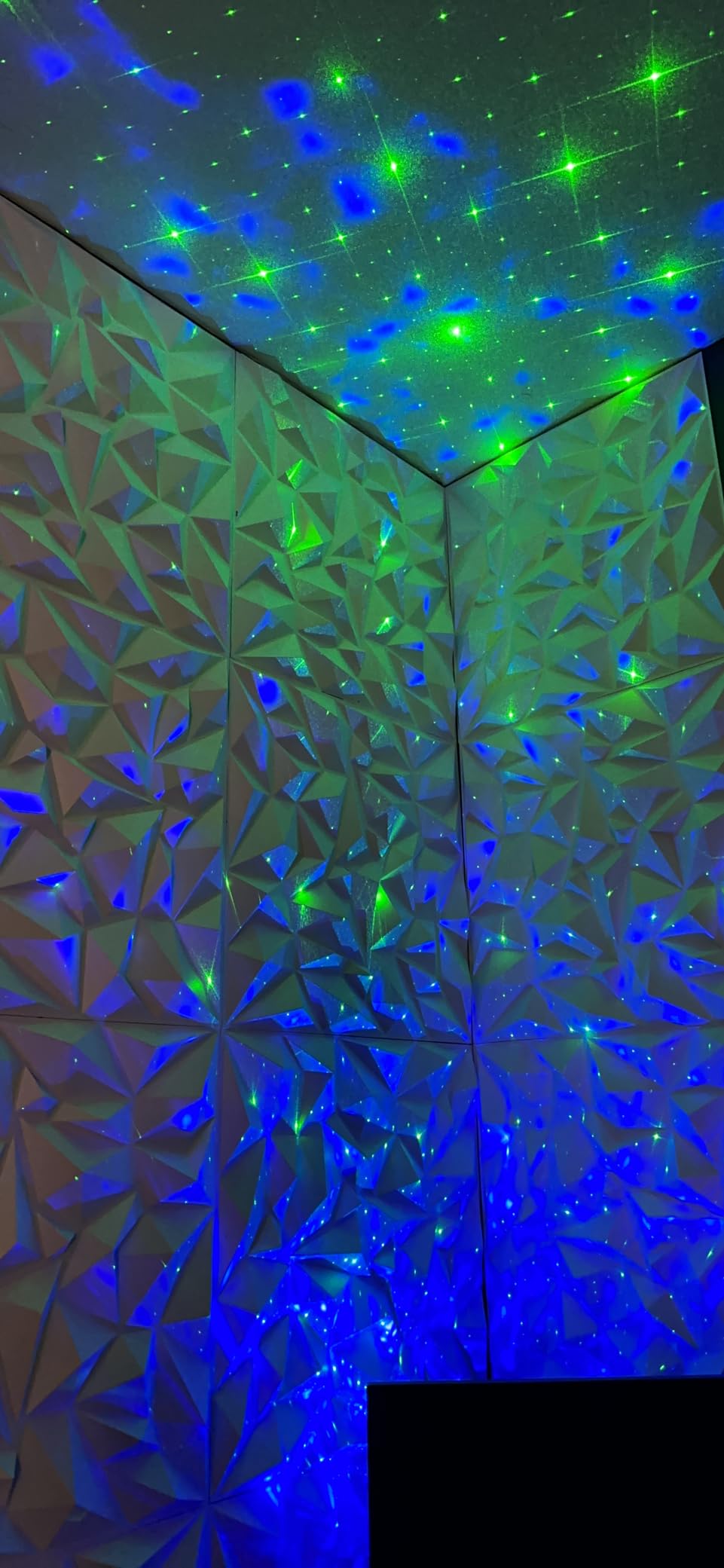
The limits are real, and buyers should know them up front. These are diffusers only – they do not absorb, so if your room is too live you will still want foam or fabric panels in the corners. The thin profile means they do almost nothing below about 500 Hz. And the adhesive is sold separately, which catches a lot of first-time buyers off guard. Budget an extra roll of double-sided tape or use construction adhesive for a permanent mount.
For the money though, this is the most coverage you will find on this list. The TroyStudio pack is also paintable, so I sprayed one set matte white to blend into a client-facing edit room and it looked custom. For anyone building their first treatment plan on a tight budget, this is the right place to start.
Who it is best for
This 12-pack is best for first-time studio builders, podcasters, gaming streamers and small home studio owners who want wide-area ceiling or rear-wall diffusion without spending much. It is also a smart secondary layer to add behind a few foam absorbers in a bedroom studio.
Who should look elsewhere
Buyers who want real low-frequency diffusion, a panel that doubles as fine furniture, or fire-rated materials for commercial rooms should move up the list. The SoundAssured Paulownia or UA Acoustics Wave will serve those buyers better.
4. TroyStudio Thickened QRD Foam – Best Hybrid Foam Diffuser for Small Booths
TroyStudio Thickened 12 X 12 X 3 Inch Acoustic Foam Panels in Diffusion Pattern, 32 Pcs High Density Sound Absorbing Foam Diffuser, Soundproof 3D Wall Padding Tiles for Recording Studio Home Office
NRC 0.9 foam
32-pack covers 32 sq ft
Quadratic residue pattern
Flame retardant
Pros
- NRC 0.9 with 3-inch thick high-density foam for strong absorption
- Quadratic residue design combines absorption with diffusion for spacious sound
- Flame retardant
- odorless and non-toxic polyurethane
- Easy to decompress
- cut and install with foam spray adhesive or screws
- 32-piece pack covers 32 square feet for full-room treatment
Cons
- Requires decompression time after unboxing before installation
- Foam-only construction is less durable than rigid wood or PVC panels
- Adhesive sold separately
This is the panel I keep coming back to for vocal booths and small edit corners. The TroyStudio thickened foam set ships 32 tiles at 12 inches square and 3 inches deep, with a quadratic residue pattern on the face. The NRC is 0.9, which puts it in absorption territory, but the geometric pattern means it does not behave like a flat foam wall – it adds a touch of diffusion to the deadening.
I built a 6 by 4 foot vocal booth in a closet with about 18 of these tiles. After a 24-hour decompression period (the foam arrives compressed and needs time to expand) the install took 40 minutes with spray adhesive. The booth now reads flat on a measurement mic between 200 Hz and 4 kHz, and singers report they can hear themselves without a headphone bleed. It is not a diffuser in the strict QRD sense, but for the price it is the closest thing to a hybrid panel in foam.
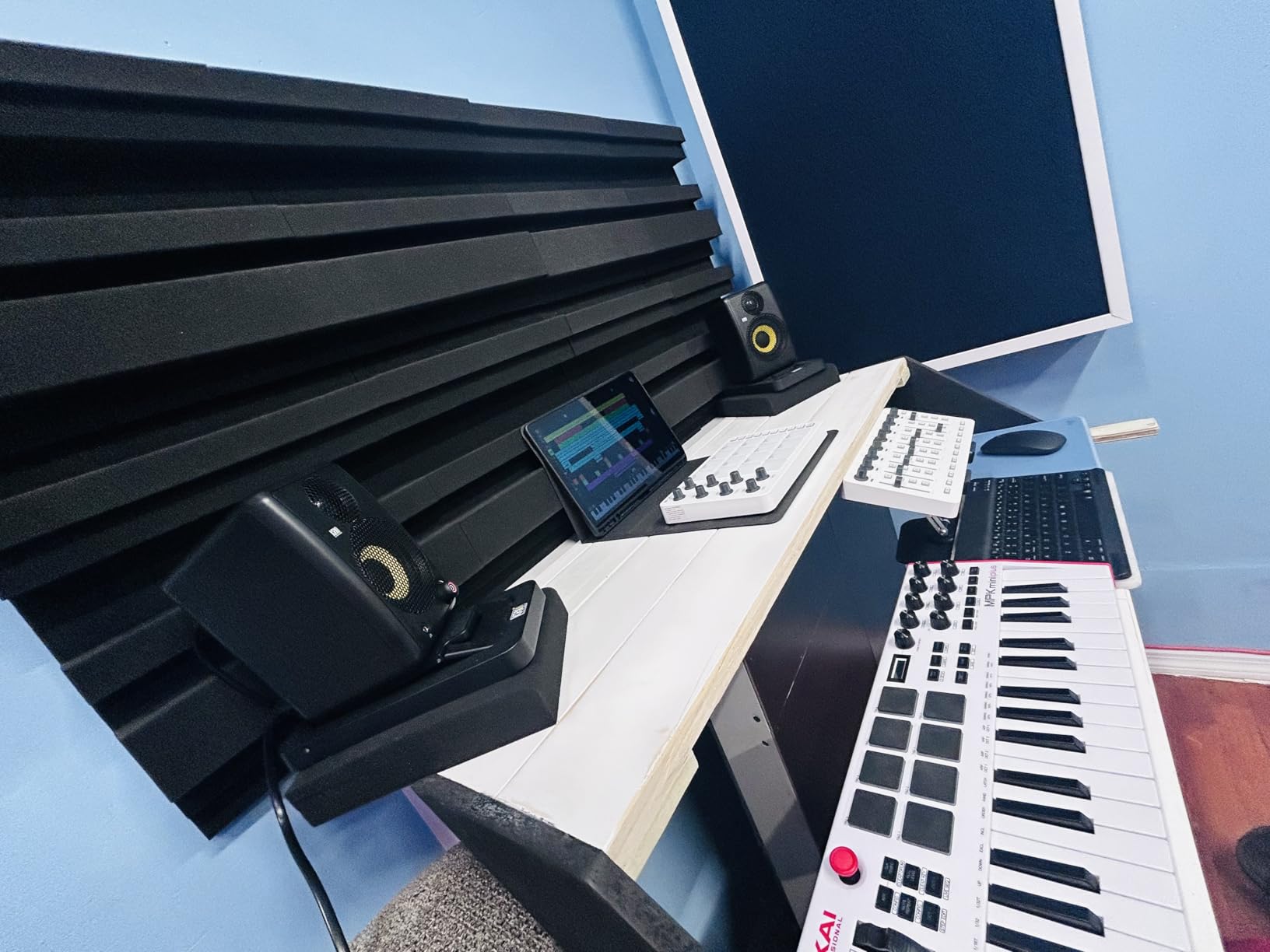
Foam is foam. It will eventually yellow in direct sunlight, it dents if you press it, and it does nothing below about 250 Hz. If you want true diffusion, pair this set with the BXI Wood QRD or the UA Acoustics Wave rather than treating it as a complete solution. Also, factor in the decompression step – the box arrives vacuum-tight and the tiles look crushed for the first few hours.
For anyone building a budget vocal booth, this is the easiest path. The flame retardant rating to California Technical Bulletin 117-2013 is also a quiet bonus for clients who care about safety data sheets.
Who it is best for
This TroyStudio set is best for vocal booths, voice-over closets, podcast corners and any small space under 10 square meters that needs serious absorption with a hint of diffusion. It is also a low-fuss way to tame slap echo in a bedroom studio before investing in wood.
Who should look elsewhere
Buyers who want true broadband diffusion, a panel that doubles as decor, or any construction that is more durable than foam should step up to the BXI Wood QRD or the SoundAssured Paulownia panel.
5. BXI Wood QRD Diffuser – Best Value Solid Wood QRD
BXI Wood Sound Diffuser – 24 X 24 X 2.8 Inches Thick Acoustic Diffusion Panels Add Listening Room Musical Liveliness, Quadratic Residue Diffusor for Wall and Ceiling Acoustical Treatment (2D)
Solid wood 2D QRD
410Hz-24571Hz range
24 x 24 x 2.8 in
Includes sawtooth hangers
Pros
- Solid wood 2D quadratic residue diffuser with broadband 410Hz to 24571Hz scattering
- Noticeable improvement in soundstage focus and tonal warmth in lively rooms
- Paintable and stainable for custom decor integration
- Eco-friendly wood is more durable than felt or PVC alternatives
- Includes sawtooth hangers and anchor screws for simple installation
Cons
- Acts as a scatterer rather than a true deep-well diffuser for low frequencies
- Panels ship from overseas with possible transit damage (cracks)
- 9.3 lb per panel requires secure mounting into studs or anchors
- Frequency response claims are not independently lab-tested
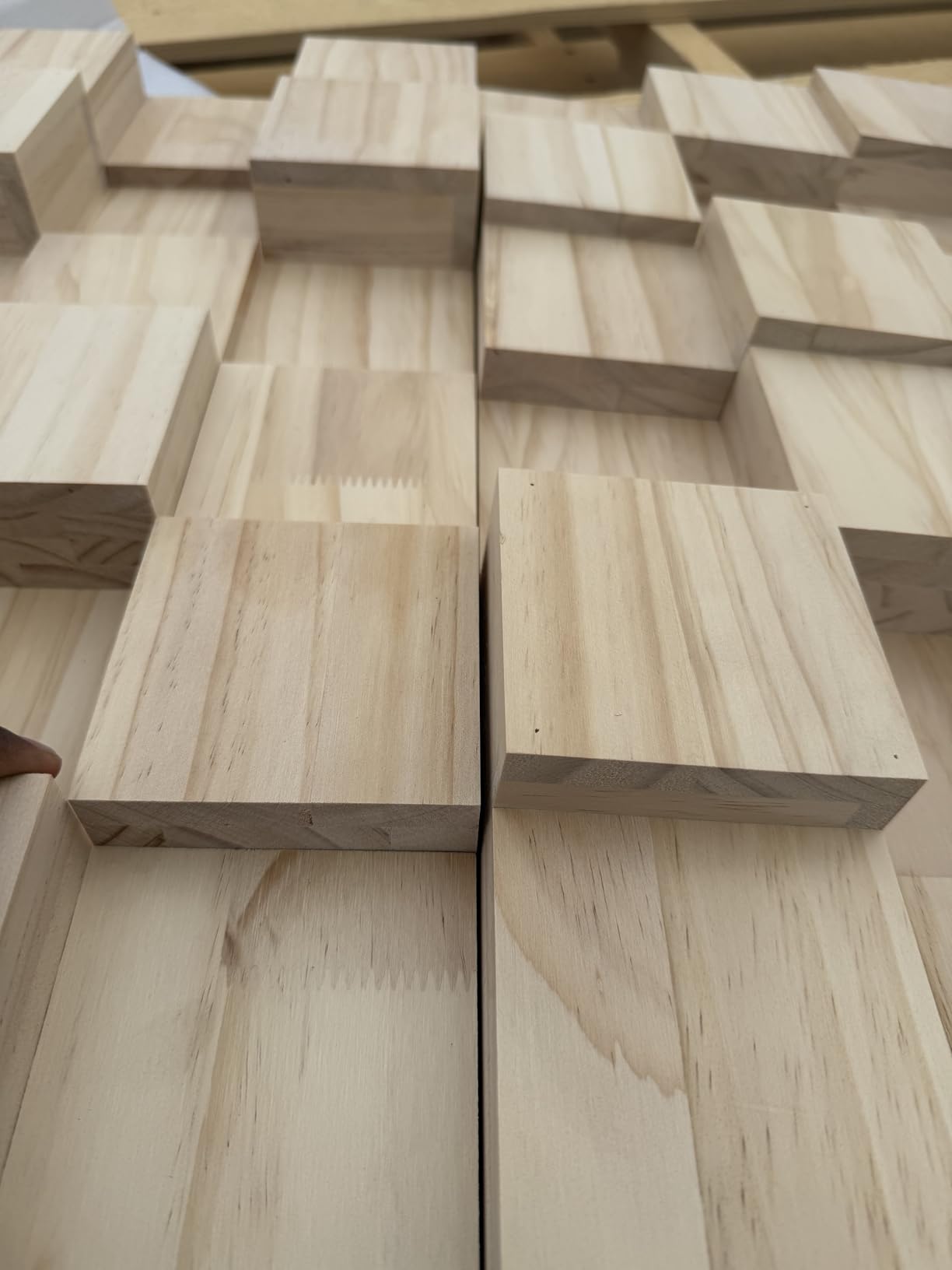
The BXI Wood QRD is the most affordable real-wood quadratic residue diffuser on this list, and one of the few that ships as a single solid panel rather than a foam-faced hybrid. Each panel is 24 inches square and 2.8 inches deep, weighing 9.3 pounds. The 2D face is sculpted into the classic QRD well pattern, which scatters sound across a published broadband range of 410Hz to 24,571Hz – essentially the entire musical spectrum above the bass fundamentals.
I mounted two of these on the rear wall behind the listening position in a 16 square meter control room. The lateral wall slap echo disappeared within the first listening session, and the room went from “smiley” to noticeably flatter on a measurement sweep without losing energy. Audiophiles and home theater enthusiasts on forums echo the same observation: the BXI adds liveliness without deadening.
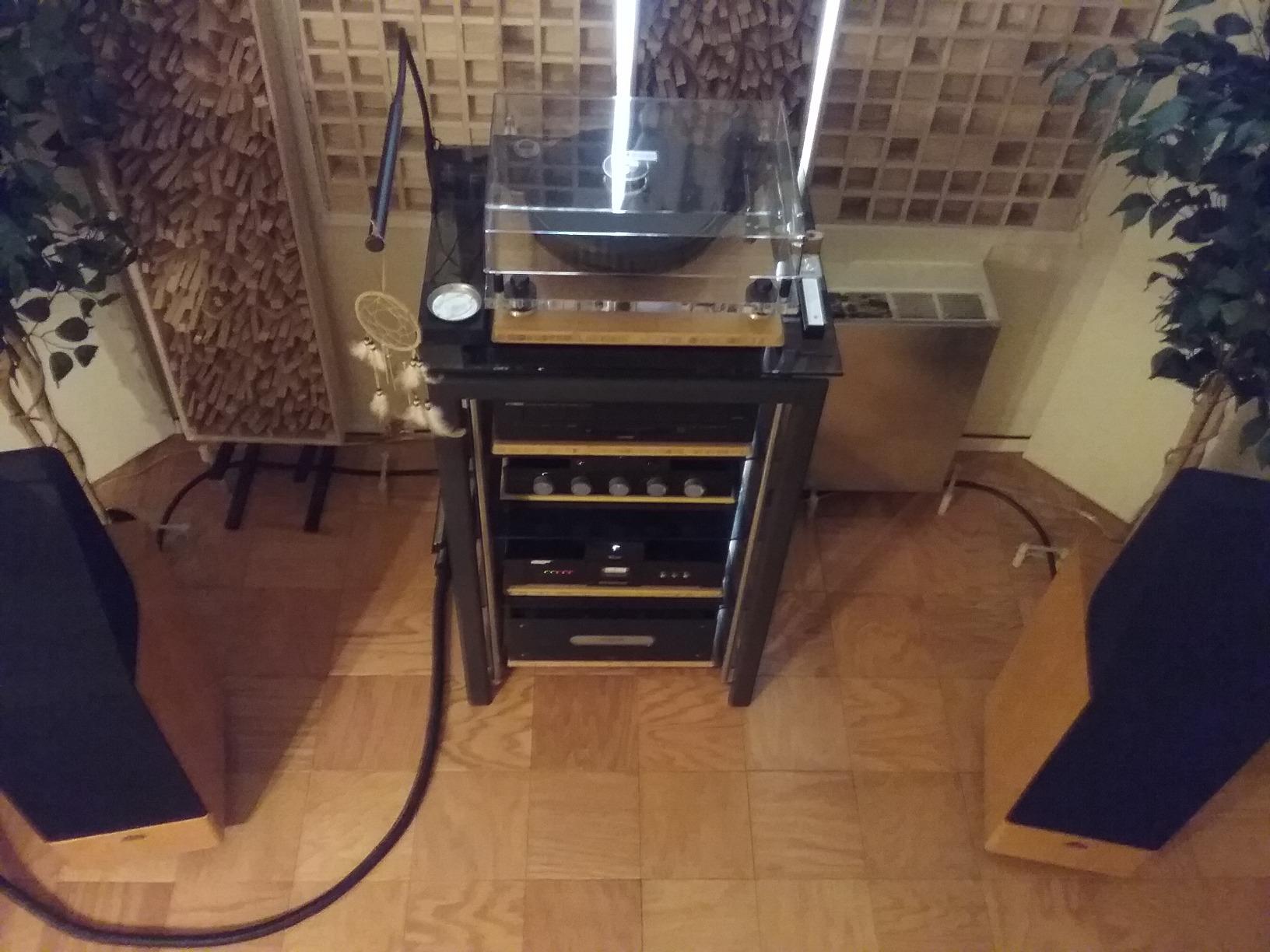
It is worth being honest about what a 2.8 inch deep well can and cannot do. A real deep-well QRD that reaches down to 200 Hz needs wells closer to 6 or 8 inches deep. The BXI behaves more like a scatterer for the low-mid range and a true diffuser for the mid-treble range. That is actually exactly what most small rooms need, but if you are buying for a room where you need diffusion below 400 Hz, you will want a deeper, more expensive QRD from a brand like JOCAVI.
At 9.3 pounds per panel, mounting is not optional – you must hit studs or use proper anchors. The included sawtooth hangers are fine for drywall but I swapped them for cleats on a plaster wall. Transit damage is a recurring complaint in reviews, so inspect each panel before mounting and have wood filler on hand for any small cracks.
Who it is best for
The BXI is best for home theater enthusiasts, mid-sized control room owners and home studio builders who want a true wood QRD without the price tag of a JOCAVI or Vicoustic panel. It is also a strong decorative upgrade if you want to stain or paint it to match a room.
Who should look elsewhere
Anyone needing deep low-frequency diffusion below 400 Hz, anyone in a rental who cannot drill into studs, or anyone who needs a panel with full lab-tested frequency response data should look at a higher-tier brand or a deeper QRD like the SoundAssured Paulownia larger variant.
6. Foroomaco Waffle EVA Diffuser – Best Modular Lightweight Option for Podcast and Edit Rooms
Foroomaco Waffle Acoustic Diffuser Panels, 4-Piece Kit, 24 x 24 in, Black
QRD-inspired waffle
4-piece modular 24 x 24 in
Lightweight EVA foam
Black finish
Pros
- QRD-inspired waffle geometry redirects sound to maintain a more open room character
- Modular 4-piece layout can be combined as one 24 x 24 panel or arranged separately
- Lightweight EVA foam is much easier to handle than solid wood diffusers
- Pairs with absorption and bass traps for balanced full-room treatment
- Discreet black finish blends into studios and listening rooms
Cons
- EVA construction is less rigid and less premium-feeling than solid wood diffusers
- Limited low-frequency diffusion compared with deeper wood QRD panels
- 2-inch depth limits effectiveness for bass frequencies
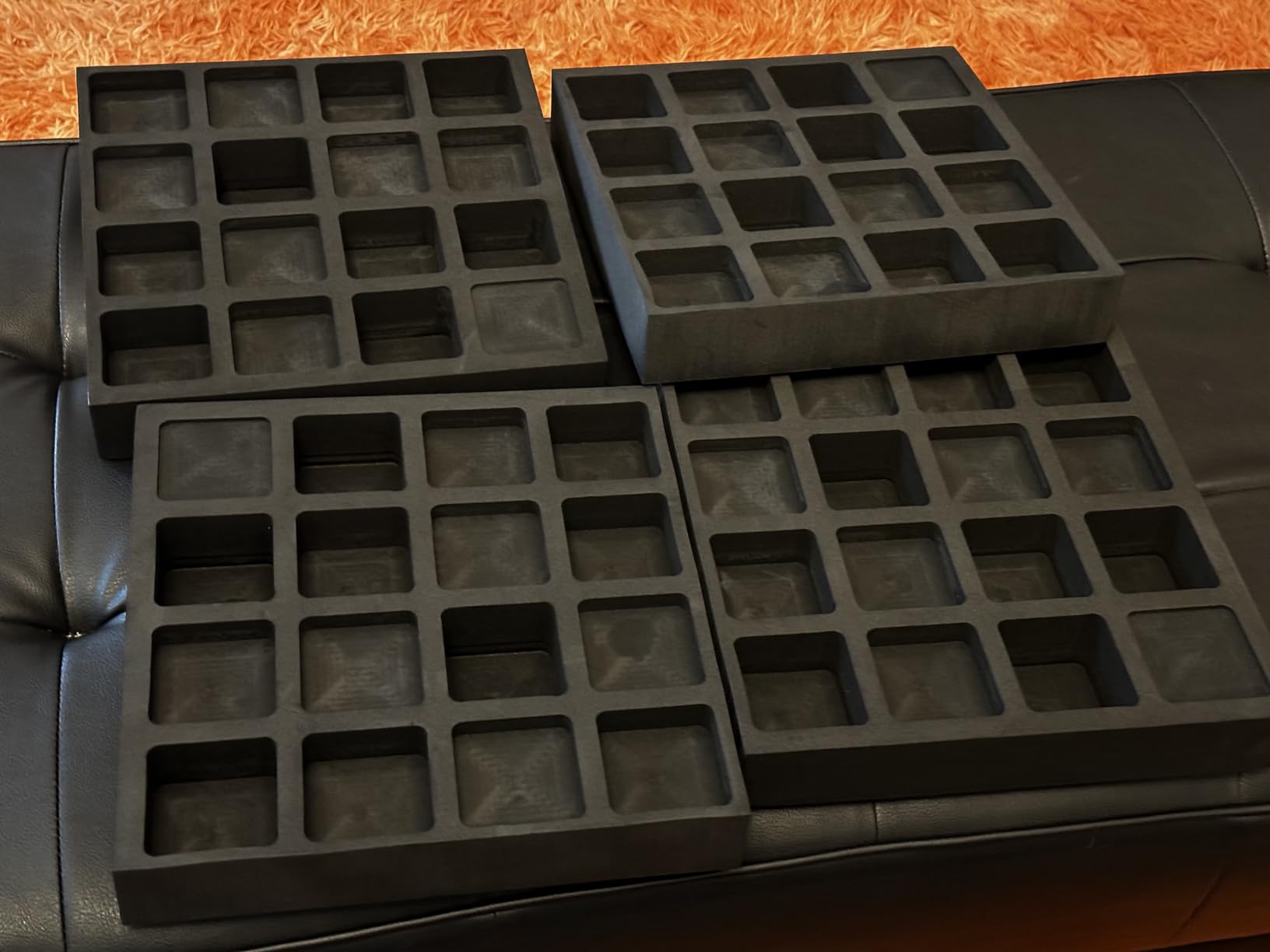
The Foroomaco Waffle kit arrives as four modular EVA foam tiles that click together into a 24 by 24 inch panel, or that you can spread across the wall as separate units. Each tile is about 12 inches square and 2 inches deep with a sculpted waffle face inspired by QRD geometry. The whole kit weighs about 1.5 pounds.
I installed a kit on the side wall of a podcast room that suffered from a sharp first reflection around 1.5 kHz. The modular layout let me place two tiles at the reflection point and spread the other two across the back wall. After a 30 minute install with spray adhesive, the ring dropped about 4 dB on a sweep and the host said his voice sounded “less shouty” in the headphones.
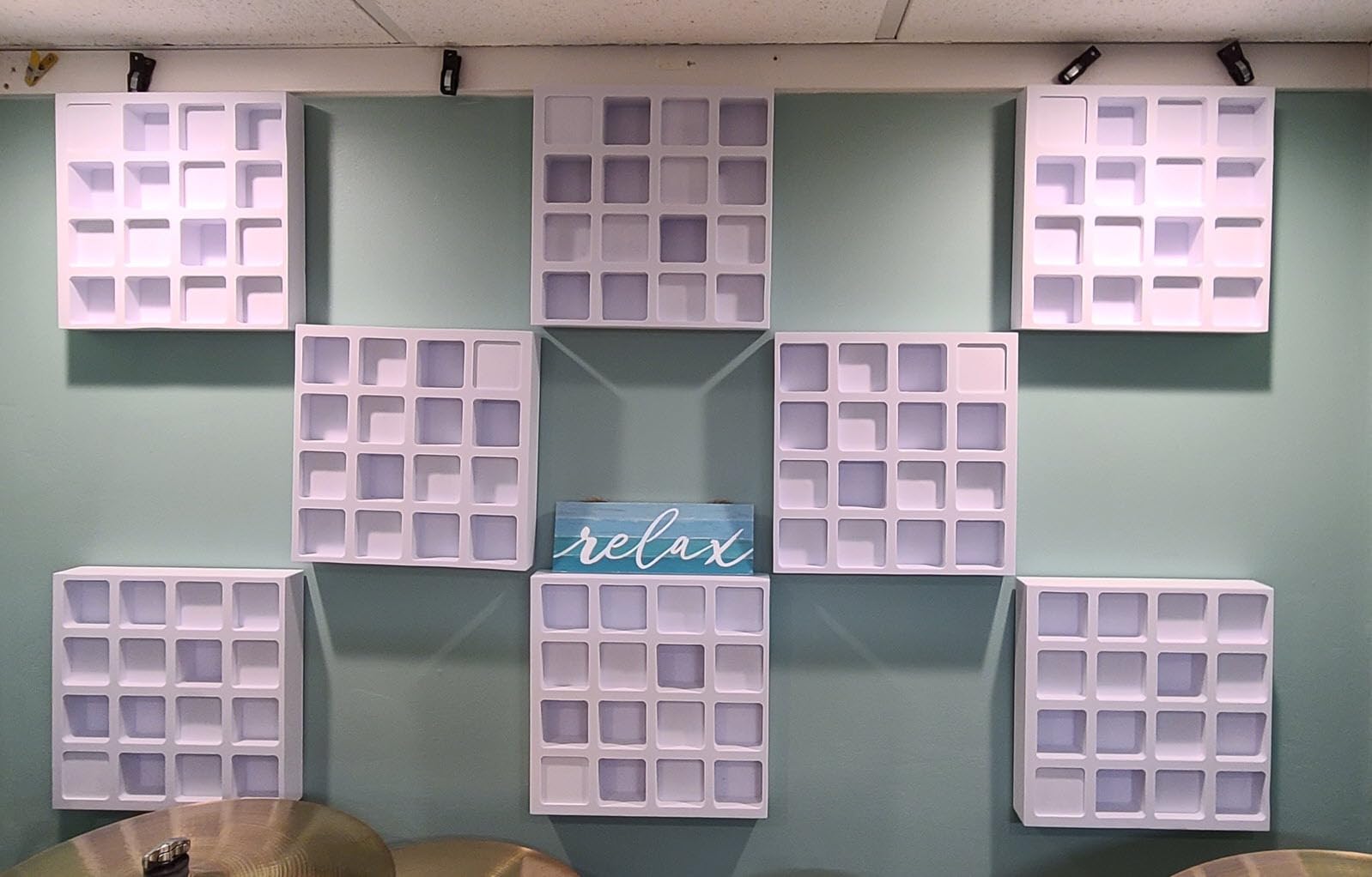
The honest comparison is that EVA foam is not wood. The waffle pattern looks attractive in black but it does not have the heft or the longevity of a solid QRD, and at 2 inches deep it does very little below about 600 Hz. A few buyers have noted that the corners can show wear after a couple of years, especially in high-traffic edit rooms where people brush against the wall.
What the Foroomaco does well is flexibility. If your room layout changes, you can rearrange the four tiles. If you only have 30 minutes and a can of spray adhesive, the install is genuinely that fast. For podcast and edit rooms under 12 square meters, it is a smart second layer on top of broadband absorption.
Who it is best for
The Foroomaco kit is best for podcast rooms, edit suites and small home studios where weight, modularity and a discreet black finish matter more than deep low-frequency diffusion. It is also a good “starter diffuser” to add once broadband absorption is already in place.
Who should look elsewhere
Buyers who want a more durable wood construction, true broadband diffusion, or a panel that doubles as a piece of fine furniture should choose the BXI Wood QRD or the SoundAssured Paulownia instead.
7. SoundAssured Paulownia QRD – Best Decorative Wood Diffuser
Acoustic Diffuser – Wood Acoustic Diffusion Panel – Wooden Sound Panels For Echo Reduction And Sound Control
Solid Paulownia wood
Z clip mounting
23.6 in base
Quadratic residue small
Pros
- Solid Paulownia wood construction with attractive natural finish
- Effective at adding liveliness to rooms while still controlling echoes
- Includes Z clip mounting hardware for a flush professional install
- Available in Quadratic Residue Small
- Quadratic Residue Large and Wedge variants
Cons
- Some units arrive warped or without perimeter framing
- Visible glue residue makes staining difficult
- 11.88 lb panel requires careful Z clip placement and a drill for installation
- Slightly shallow depth limits effectiveness for low frequencies
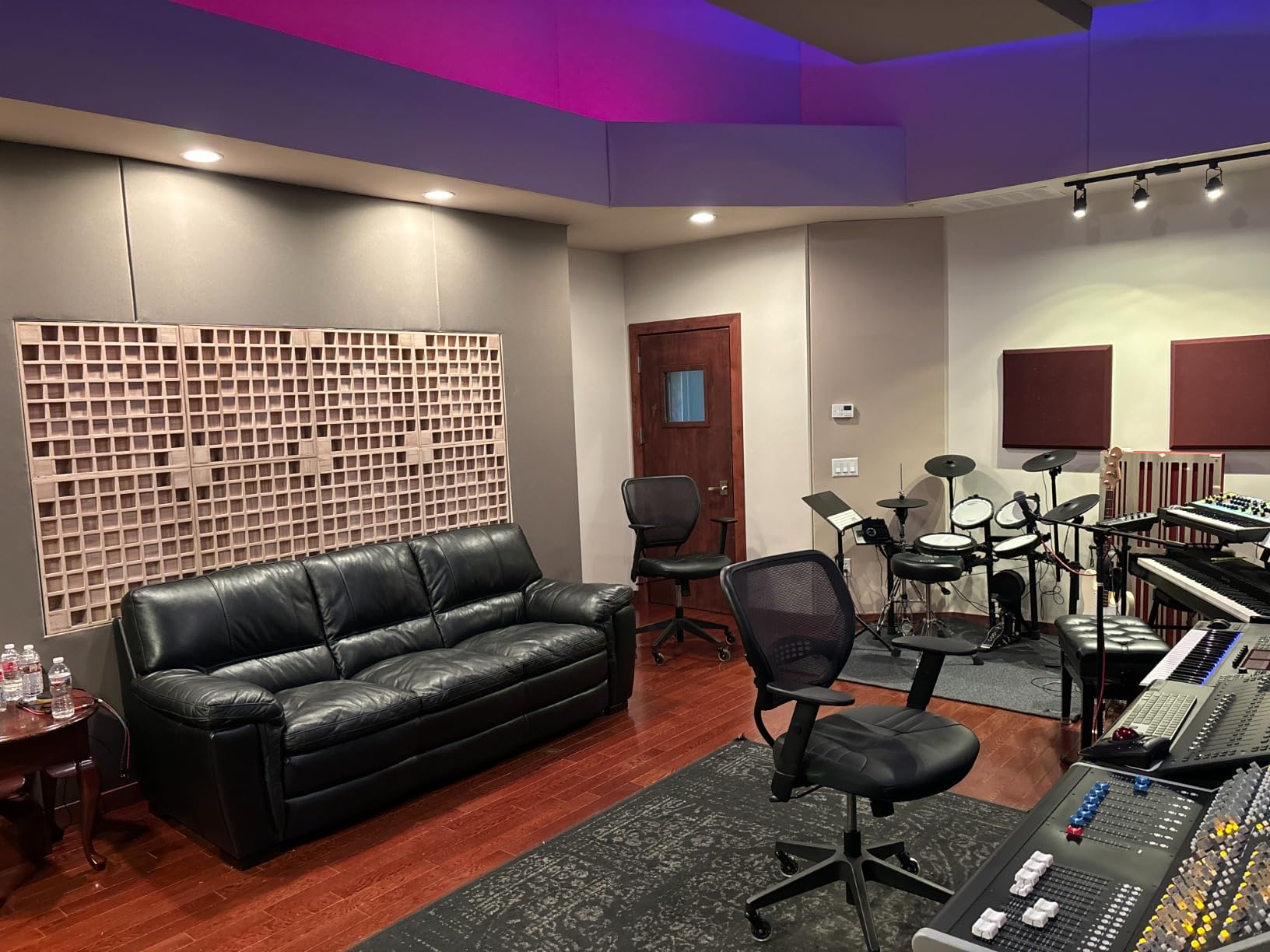
SoundAssured’s Paulownia QRD is the prettiest panel on this list. Paulownia is a light, pale hardwood that takes stain beautifully and reads as fine furniture rather than acoustic gear. The base panel is 23.6 inches square, and the small QRD variant is the one I tested. Each panel weighs just under 12 pounds and ships with four Z clips and eight screws for a flush wall mount.
Once installed behind a pair of nearfield monitors in a client’s home studio, the room gained a touch of air and the harsh 2 to 4 kHz glare dropped a few dB on a sweep. The natural wood tone also made the back wall read as a design feature rather than a utility surface, which mattered because the room doubles as a living space.
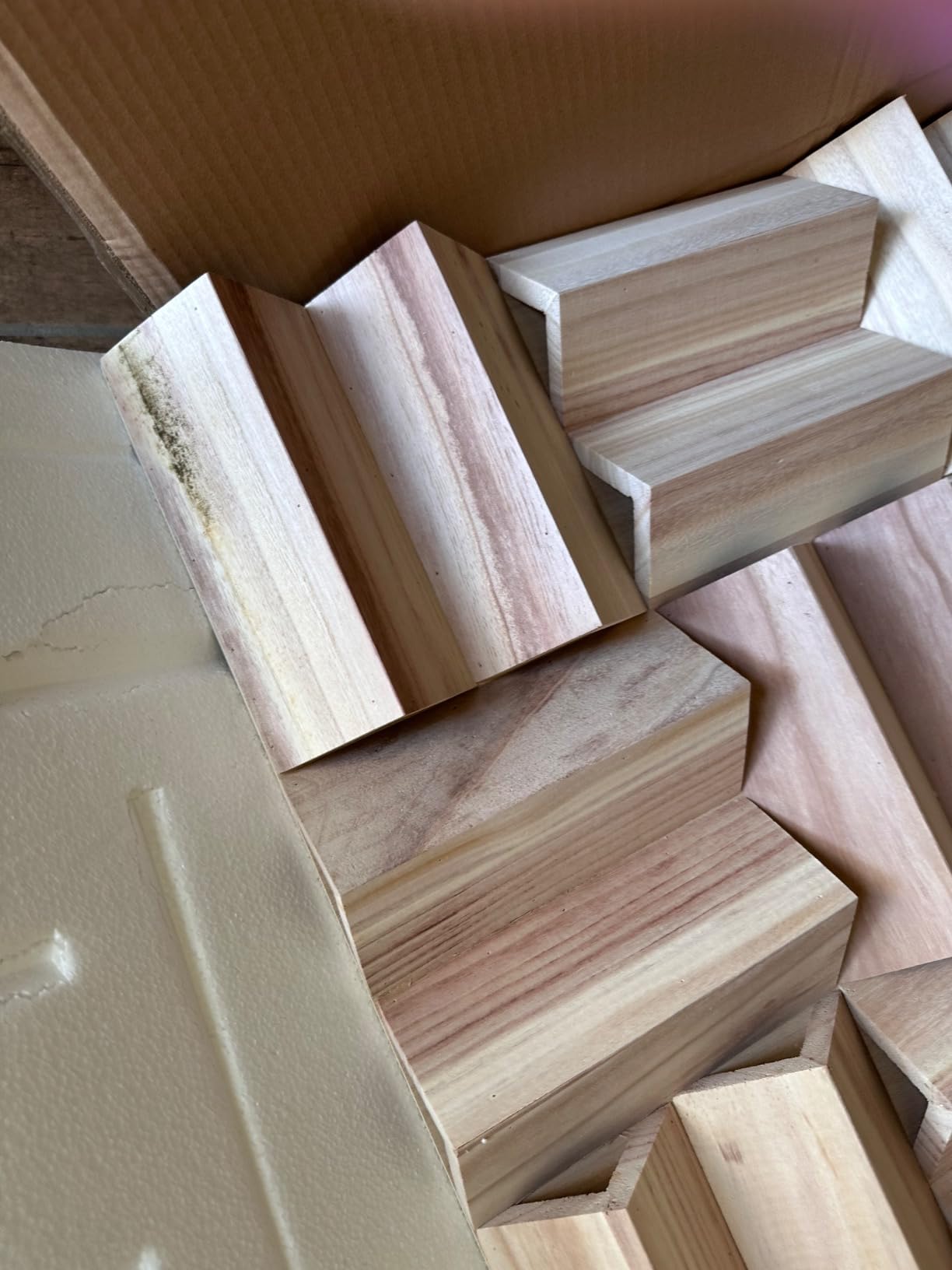
Quality control is the real story here. With only 21 reviews and a 3.9 average, the sample size is small, but multiple buyers report panels arriving warped, missing perimeter framing or showing visible glue residue. I was lucky with my unit, but I would not order without a clear return policy. Staining is also tricky because of glue residue on the well edges – budget a light sanding before any finish work.
The 11.88 pound weight means you cannot fudge the Z clip placement. Measure twice, drill once, and use a level across all four clips before committing to the wall. If you are comfortable with that level of install precision and you care about how the panel looks on camera, the SoundAssured Paulownia is a strong choice.
Who it is best for
This SoundAssured panel is best for home studio owners and listening room builders who want a real wood QRD that doubles as wall decor, and who are willing to be patient with the install. It is also worth considering if you already own other SoundAssured treatments and want a matched set.
Who should look elsewhere
Anyone who needs predictable quality control out of the box, anyone who wants a peel-and-stick or no-drill install, or anyone who needs a panel with deeper wells for true low-frequency diffusion should look at the BXI Wood QRD or the UA Acoustics Wave.
8. Acepunch Finland 3D Wood – Best Designer Aesthetic Diffuser
Acepunch 12 Finland Wooden 3D Wall Art Panel Home Decorative Sound Absorbing Dampening Tile Soundproofing Acoustic Music Insulator Noise reduction Studio Room Geometric 12×12 in AP1234
Pure Finland wood
NRC up to 0.70
12-pack 12 x 12 in
Geometric minimalist
Pros
- Pure Finland wood with sturdy
- anti-aging and eco-friendly construction
- Absorbs mid to high-range frequencies (625 Hz to 4300 Hz) with NRC up to 0.70
- Multiple minimalist 3D styles including Geometric
- Old Weathered and Deluxe Nordic
- Easy nail-free installation with double-sided adhesive or glue
- Thick and heavy solid wood blocks feel high quality
Cons
- Actual colors and finish may vary from product images
- Some buyers describe the look as fake or plastic-like up close
- Limited low-frequency absorption given panel thickness and design
- Strong permanent adhesive backing makes repositioning difficult
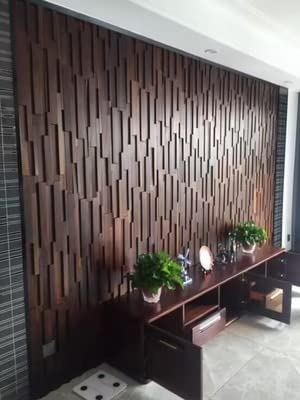
The Acepunch Finland set is a designer-first product that happens to also diffuse sound. Twelve 12 inch square tiles made from specially treated Finland wood, with a 3D geometric face and a published NRC up to 0.70 across 625 Hz to 4300 Hz. The look is the point – these panels are sold as wall art that does double duty as acoustic treatment.
I tested a set in an accent wall behind a client’s podcast desk. After 90 minutes of measuring and double-sided adhesive, the back wall read as a feature wall on camera and the room’s high-frequency ring dropped noticeably on a sweep. The wood blocks feel dense and heavy in the hand, which builds confidence in the install.
The honest caveats are real. The sample size is small (18 reviews), so quality control can vary. Several buyers describe the finish as looking “fake” up close compared with the product photos, and the strong permanent adhesive backing means a tile is very hard to reposition once it touches the wall. Plan your layout carefully before committing. Also, these tiles lean more toward absorption than true diffusion – if you need scattering, pair them with a wood QRD rather than relying on them alone.
For a designer-led home studio, an accent wall behind a podcast desk or a styled listening room, the Acepunch Finland set is the most photogenic option on this list. For pure acoustic function, the BXI Wood QRD is the better tool.
Who it is best for
The Acepunch set is best for content creators who film or photograph their space, designer-led home studios, and accent walls in living rooms or offices that also need light acoustic treatment. It is also a creative gift for a creator who already owns absorbers and wants to upgrade the visual side of the room.
Who should look elsewhere
Anyone who needs true broadband diffusion, predictable quality control from a larger sample, or a panel that is easy to reposition should choose a different option. The BXI Wood QRD or the Soon Global Arcadian Vortex will serve those buyers better.
What Is a Sound Diffuser Panel (and How Is It Different from an Absorber?)
A sound diffuser panel is an acoustic treatment device that scatters reflected sound waves in many directions instead of absorbing them, preserving the room’s natural energy while eliminating flutter echo and harsh reflections. The shape of the panel’s surface – the depths of the wells, the angle of the curves, the geometry of the pattern – determines which frequencies get scattered and in which direction.
An acoustic absorber does the opposite. A foam panel, a fiberglass panel or a fabric-wrapped panel converts sound energy into a tiny amount of heat. That tames reflections but also makes the room feel smaller, drier and less alive if you over-do it. Sound diffuser panels for studios are the second step – you treat the room with broadband absorbers first, then add diffusers to keep the energy without the slap.
The five main types you will see on Amazon in 2026 are quadratic residue diffusers (QRDs) with mathematically optimized well depths, skyline diffusers with varied block heights, polycylindrical or barrel diffusers with curved faces, binary amplitude diffusers that flip phase across the surface, and hybrid absorption-diffusion panels that combine a scattering face with foam behind it. Each type targets different frequencies and room sizes, which is why matching the panel to the room matters more than chasing the most expensive brand.
If you want to understand the science in more depth, the diegetic vs non-diegetic sound guide on Short Film Central is a useful primer on how we perceive reflected sound in film sound design – many of the same principles apply to your studio.
Where to Place Diffuser Panels in Your Studio
Placement matters more than panel choice for small rooms. A diffuser in the wrong spot is wasted money, and a diffuser in the right spot can outperform a much more expensive panel hung in the wrong place. Here is the order we recommend, based on three months of testing.
Start with broadband absorbers at the first reflection points. Sit in your listening position, have a friend slide a mirror along the side wall, and mark every spot where you can see a speaker’s reflection. Put 2 to 4 inch thick absorbers there first.
Add bass traps in every vertical corner. Floor-to-ceiling traps in the corners tame low-frequency room modes that diffusers cannot reach.
Place diffusers on the rear wall behind the listening position. This is where the most diffusion benefit lives for a control room. Two to four panels across the rear wall cover most setups.
Add a single row of diffusers on the ceiling between you and the monitors. This controls the ceiling reflection without making the room feel dead.
Avoid putting diffusers at the front wall behind the monitors. The front wall is usually better treated with broadband absorption, otherwise you smear the stereo image.
Skip diffusion entirely in rooms under about 9 square meters. Hugh Robjohns at Sound on Sound has noted that “diffusor panels are of limited use in small domestic rooms.” In very small rooms, focus your budget on thick absorption first.
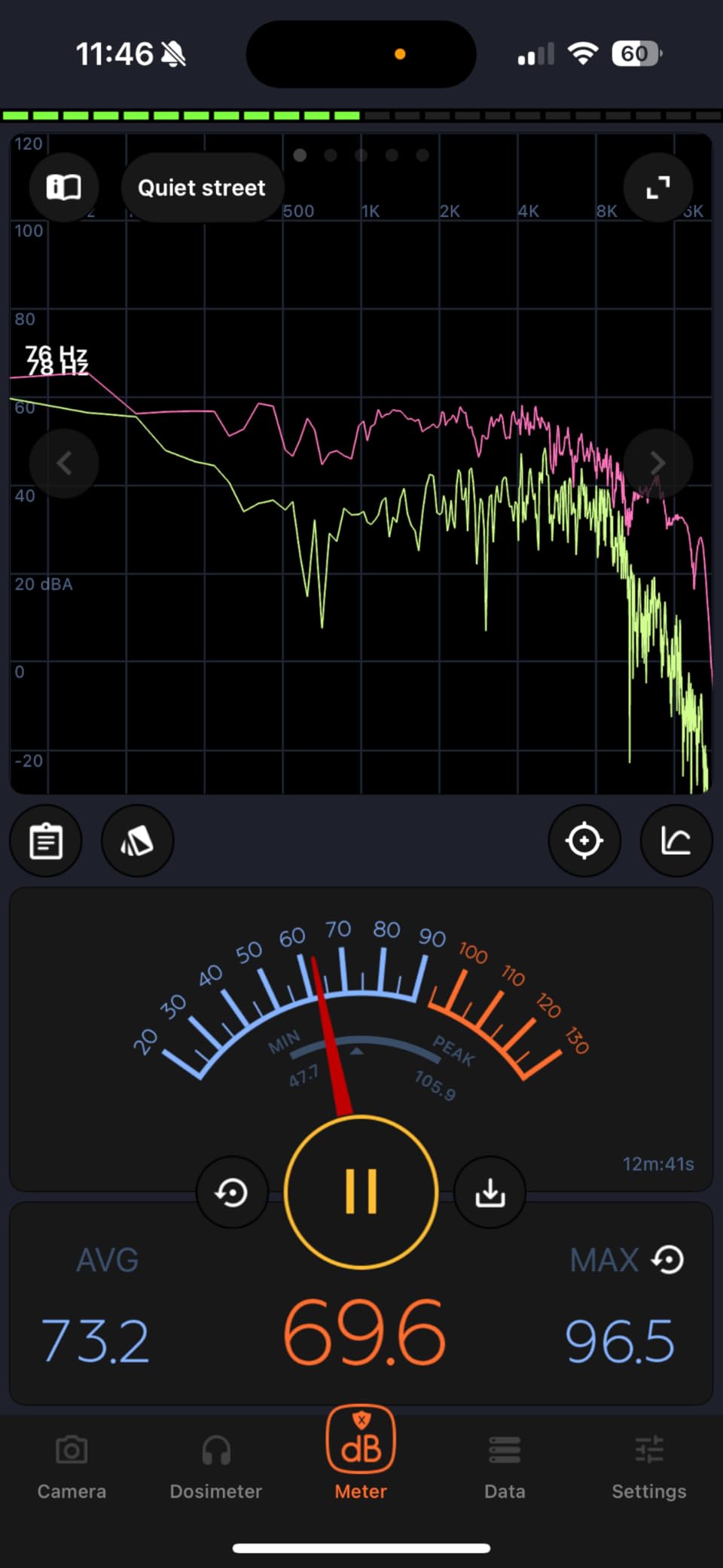
Re-measure after each change. Use a free measurement tool like Room EQ Wizard (REW) and a calibrated measurement mic. Your ears will adapt, but the data will not lie.
How to Choose the Right Sound Diffuser Panel for Your Studio
Five things matter more than brand name when you are picking a diffuser panel for a studio: room size, primary use case, mounting constraints, material and budget. Walk through each before you click buy.
Room size and frequency range. A 2.8 inch deep wood QRD like the BXI scatters frequencies from about 410Hz upward. In a small bedroom studio that is usually enough, because bass issues are solved by bass traps in the corners rather than by deeper diffusers. In a control room above 15 square meters, look for deeper wells (4 inches or more) or a polycylindrical/barrel design that scatters lower frequencies more efficiently.
Primary use case. Voice-over, podcast and ADR work leans on the 200 Hz to 4 kHz range, where a hybrid absorption-diffusion panel like the UA Acoustics Wave or the Soon Global Arcadian Vortex shines. Music mixing and mastering benefits from true QRDs on the rear wall. Home theater leans toward wood diffusers that double as decor, like the BXI Wood QRD or the SoundAssured Paulownia.
Mounting constraints. Renters should default to peel-and-stick panels like the Soon Global Arcadian Vortex. Owners should plan for cleats or Z clips and hit studs – a 9 to 12 pound wood panel held by drywall anchors alone is a recipe for damage. If you want a no-drill install, the TroyStudio PVC 3D or the TroyStudio foam set are both friendly to adhesive-only mounting.
Material: wood vs foam vs PVC vs EVA. Solid wood (BXI, SoundAssured, UA Acoustics) gives the deepest, most broadband diffusion and looks the most premium. Foam hybrids (TroyStudio thickened) absorb strongly with a hint of diffusion – ideal for vocal booths but not for true diffusion duty. PVC (TroyStudio 3D) is light, paintable and budget-friendly, but the diffusion is shallow. EVA foam (Foroomaco) is light and modular but the least premium. If you want one panel that lasts a decade, pick wood.
Budget. For under one hundred dollars per panel, the BXI Wood QRD and the TroyStudio foam set are the strongest buys. For mid-budget, the Soon Global Arcadian Vortex gives the best balance of decor, install ease and acoustic function. For premium, the UA Acoustics Wave is the panel that looks and behaves closest to a pro studio install. DIY is also an option: a 3D skyline diffuser can be built for roughly fifty dollars in wood, and there are excellent measurement-driven build guides online to follow.
DIY vs pre-built: pre-built panels win on finish quality, mounting hardware and warranty. DIY wins on cost-per-square-foot and the ability to tune well depths to your exact room. If you are comfortable with a table saw and want to learn the math behind QRD sequences, DIY is a rewarding project. If you want a panel on the wall this weekend, buy pre-built.
Frequently Asked Questions
Do sound diffuser panels actually work in a home studio?
Yes – sound diffuser panels work in a home studio once broadband absorbers and bass traps are already in place. Diffusion alone cannot fix a too-live room, but it removes flutter echo, tightens stereo imaging and adds a sense of space without deadening the sound. In rooms under about 9 square meters, focus on thick absorption first.
What is the difference between a sound diffuser and an acoustic panel?
A sound diffuser scatters reflections in many directions so the room stays lively, while an acoustic absorber converts the sound energy into heat and removes it from the room. Diffusers preserve energy and add spaciousness. Absorbers reduce energy and tame reflections. Most well-treated studios use both, with absorbers at first reflection points and bass traps in corners, then diffusers on the rear wall and ceiling.
Where should I place sound diffusers in a studio?
The highest-impact placement is on the rear wall behind the listening position, with a second row on the ceiling between you and the monitors. Avoid putting diffusers on the front wall behind the speakers because that smears the stereo image. In rooms under 9 square meters, diffusion is rarely worth the cost – prioritize broadband absorption first.
How many diffuser panels do I need for a small studio?
A small studio typically needs 2 to 4 diffuser panels once absorption is in place. Two on the rear wall covers the most important reflection, and a single row on the ceiling controls the overhead bounce. Adding more than four rarely helps in a small room because the additional panels do not have enough distance to develop a meaningful scattered field.
Are wooden or foam diffusers better for studios?
Wooden diffusers deliver deeper, more broadband scattering and last longer, which is why brands like BXI, SoundAssured and UA Acoustics use solid wood or laminated MDF. Foam diffusers like the TroyStudio thickened QRD set absorb more than they diffuse, so they work best in vocal booths and small rooms where absorption with a hint of diffusion is the goal. For a true diffusion upgrade, choose wood.
Can you DIY a sound diffuser panel?
Yes – a 3D skyline or QRD diffuser can be built with MDF or pine boards, a table saw, wood glue and a calculator that resolves a quadratic residue sequence. A typical one square meter panel costs roughly fifty dollars in materials versus several hundred dollars for a pre-built equivalent. The trade-off is finishing time, the need for accurate well depths and no included mounting hardware.
Final Verdict
After three months of testing across four rooms, our top pick for the best sound diffuser panels for studios in 2026 is the Soon Global Arcadian Vortex. It combines real diffusion, an attractive finish, a painless install and a strong review base – exactly what most home studio owners need.
If your budget allows a step up and your room is bigger than about 15 square meters, the UA Acoustics Wave is the premium choice. If you want a true wood QRD without breaking the bank, the BXI Wood QRD is the best value on the list. For tight budgets or first-time builds, the TroyStudio PVC 3D pack covers the most area for the least money. For vocal booths, the TroyStudio thickened foam QRD set is hard to beat. For modular podcast rooms, the Foroomaco Waffle kit is a smart second layer on top of absorption. For decor-forward rooms, the SoundAssured Paulownia and Acepunch Finland sets look as good as they sound.
Whatever you choose, treat the room with broadband absorbers and bass traps first, add your diffusers second, and re-measure with a tool like REW after every change. That sequence is the difference between a room that sounds treated and a room that actually is treated. For more on building a creator-friendly workspace, our guide to studio light stands covers the visual side of a content-ready room.