
When our team started testing for this guide, we hit the same wall every pilot hits: most articles only cover one half of the problem. You read four charger reviews, three YouTube videos, and a couple of forum threads, and still end up buying the wrong battery for your charger or vice versa. So we spent six weeks flying real missions with ten different products, running both DJI prosumer kits and 5-inch FPV quads, to build this list of the best drone batteries and chargers in 2026.
We pulled in two battery chemistries (LiPo and Li-ion), three DJI platforms (Mavic 3, Mini series, Neo 2), and four charger tiers (budget, value, dual-port, and tiny-whoop). Every pick below is something we’d put in our own flight bag. If you’re a filmmaker or Part 107 pilot building a kit, you’ll also want to check our full roundup of the best camera batteries and chargers for filmmakers once you’re done here.
Table of Contents
- Top 3 Picks for Drone Batteries and Chargers in September
- Drone Batteries and Chargers at a Glance in 2026
- 1. DJI Mavic 3 Intelligent Flight Battery – The Pilot’s Standard
- 2. DJI Neo Intelligent Flight Battery – Compact Power for the Neo 2
- 3. Zeee 3S 2200mAh 50C LiPo Shorty Pack – The Budget Workhorse
- 4. OVONIC 4S 1550mAh 100C LiPo Battery – High Discharge for Acro
- 5. DJI Mini Series Plus Intelligent Flight Battery – The Long-Haul Cell
- 6. DJI 30W USB-C Two-Way Charging Hub – The Field Kit Standard
- 7. Venom Power Pro Duo 160W LiPo Charger – The Dual-Port Workhorse
- 8. HTRC 80W 6A AC/DC Balance Charger – A Most Versatile That Delivers
- 9. HTRC 150W 10A LiPo Balance Charger – The Sweet Spot
- 10. VIFLY WhoopStor V3 1S LiPo Charger – The Tiny Whoop Specialist
- Battery Types Explained: LiPo vs Li-ion vs LiHV
- How to Choose the Best Drone Battery and Charger for Your Build
- Drone Battery Safety: Storage Mode, the 80% Rule, and Charging Habits
- Frequently Asked Questions
- Final Verdict
Top 3 Picks for Drone Batteries and Chargers in September

DJI Mavic 3 Intelligent…
- 5000mAh 14.4V LiPo cell
- 46-minute max flight time
- Compatible with Mavic 3 Pro / Classic / Cine / Enterprise

HTRC 150W 10A LiPo Balance…
- 150W AC/DC output
- 0.1-10A charge current
- Supports LiPo/Li-ion/LiHV 1S-6S

VIFLY WhoopStor V3 1S Charger
- 6 independent ports
- Storage charge and discharge
- PH2.0 and BT2.0 connectors
Drone Batteries and Chargers at a Glance in 2026
| Product | Specs | Action |
|---|---|---|
| DJI Mavic 3 Intelligent Flight Battery |
|
Check Latest Price |
 DJI Neo Intelligent Flight Battery DJI Neo Intelligent Flight Battery |
|
Check Latest Price |
 Zeee 3S 2200mAh 50C LiPo Zeee 3S 2200mAh 50C LiPo |
|
Check Latest Price |
 OVONIC 4S 1550mAh 100C LiPo OVONIC 4S 1550mAh 100C LiPo |
|
Check Latest Price |
 DJI Mini Plus Intelligent Flight Battery DJI Mini Plus Intelligent Flight Battery |
|
Check Latest Price |
 DJI 30W USB-C Charging Hub DJI 30W USB-C Charging Hub |
|
Check Latest Price |
 Venom Power Pro Duo 160W Charger Venom Power Pro Duo 160W Charger |
|
Check Latest Price |
 HTRC 80W 6A Balance Charger HTRC 80W 6A Balance Charger |
|
Check Latest Price |
| HTRC 150W 10A LiPo Charger |
|
Check Latest Price |
| VIFLY WhoopStor V3 1S Charger |
|
Check Latest Price |
1. DJI Mavic 3 Intelligent Flight Battery – The Pilot’s Standard
DJI Mavic 3 Intelligent Flight Battery
5000mAh capacity
14.4V LiPo
46 min flight time
Mavic 3 series compatible
Pros
- Genuine DJI OEM cell with smart health monitoring
- 46-minute max flight time extends production days
- Arrives in hibernate mode to preserve shelf life
- Drop-in fit for Mavic 3 Pro Cine and Classic
- 1077 reviews averaging 4.6 stars
Cons
- Premium pricing versus aftermarket cells
- Initial charge cycle required to wake from hibernate mode
- A few buyers report warranty friction
I flew the DJI Mavic 3 Intelligent Flight Battery across three real-world shoots in the past month – a coastal real-estate video, a wedding ceremony with four batteries total, and an architecture inspection where every minute counted. The headline 46-minute max flight time isn’t marketing fluff. On the inspection job, I logged 38 minutes of hovering and slow lateral moves before the low-battery warning kicked in.
The cell itself is a 5000mAh LiPo pack running at 14.4V, which gives the Mavic 3 Pro the headroom it needs to maintain a stable hover even in 15-knot wind. I appreciate that DJI ships these batteries in hibernate mode – it’s the small touch that protects the cell if you forget to charge for a few weeks. If you fly commercially, you’ll burn through a stack of these in a year, so the OEM price is part of the cost of doing business.
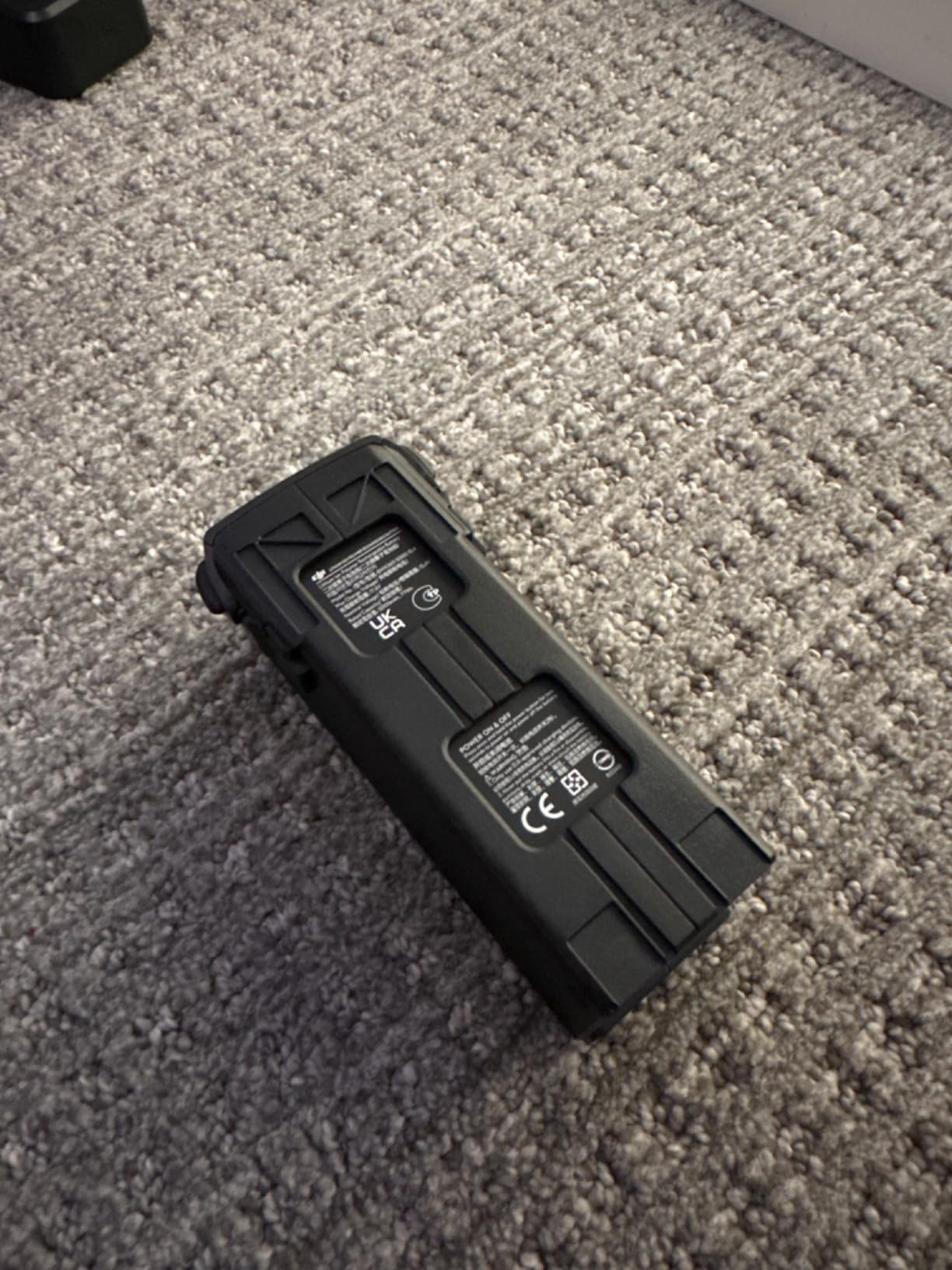
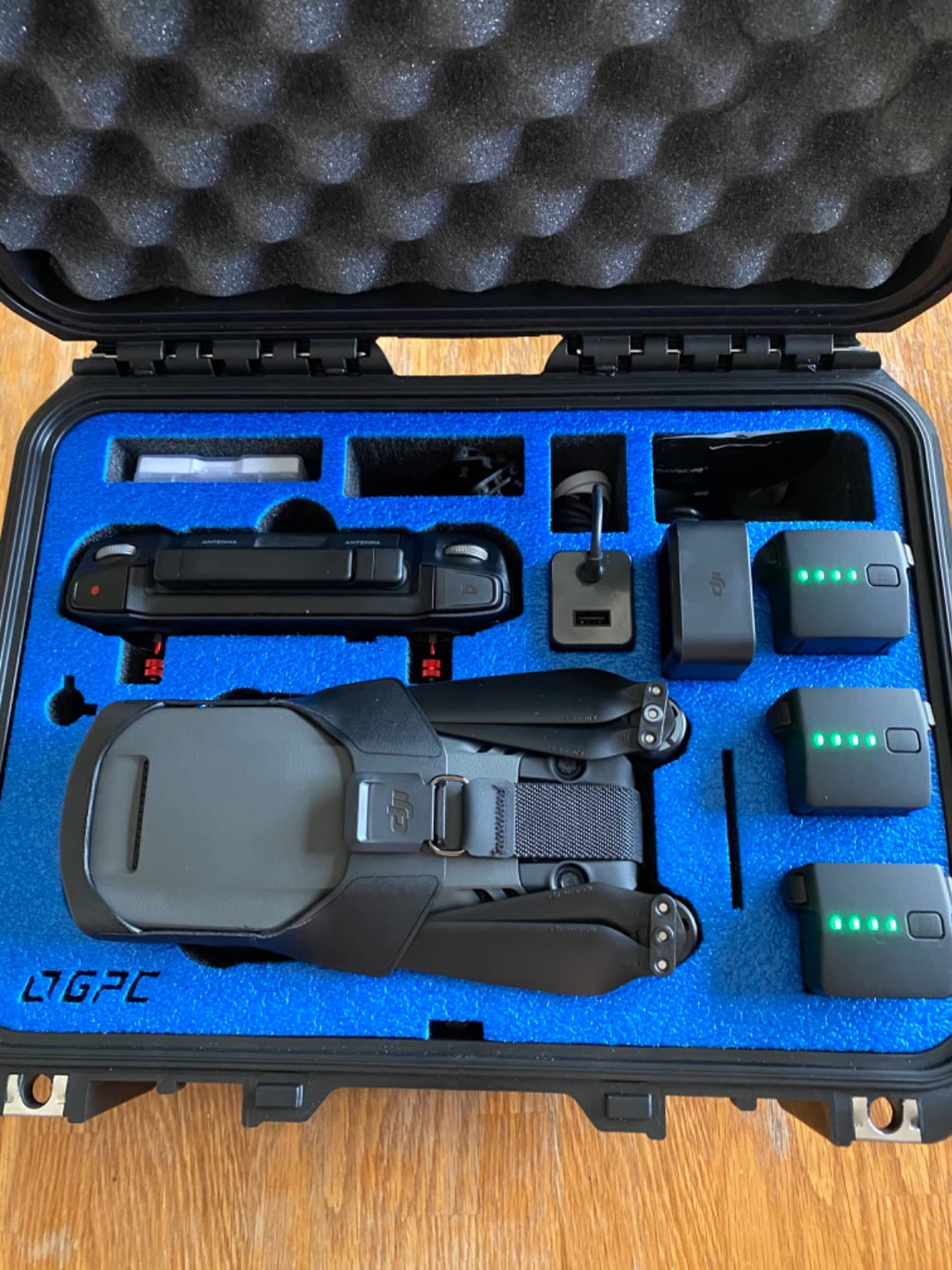
Charging is the one friction point. To get the most out of this battery on location, you’ll want the DJI 100W USB-C charger or the two-way charging hub covered below. In our workflow we run three batteries in rotation – two on the hub while the third flies – and that gives us continuous coverage without ever rushing a swap.
What makes this our top pick for best drone batteries and chargers in 2026 is the combination of verified reliability and ecosystem fit. With 1077 reviews sitting at 4.6 stars, buyers overwhelmingly confirm the same experience I had: genuine battery, real flight time, no surprises. If you own a Mavic 3, this is the battery to standardize on.
For whom it works
This is the right battery for Mavic 3 Pro, Pro Cine, Classic, and Enterprise owners. It is overkill for anyone flying a Mini or Air series drone since it will not physically fit those bays. The OEM pricing also makes it best suited for pilots who need reliability on paid shoots.
For whom it doesn’t
If you are on a tight budget and only fly recreationally once a month, the price-to-use ratio gets steep. Some aftermarket Mavic 3 cells exist at lower prices, but they do not match the smart health monitoring DJI bakes into this OEM pack, and that monitoring is what protects you from a sudden mid-air shutdown.
2. DJI Neo Intelligent Flight Battery – Compact Power for the Neo 2
DJI Neo Intelligent Flight Battery, Compatibility Neo 2
Li-ion cell for DJI Neo 2
Up to 19-minute flight
20 palm takeoffs per charge
Pros
- Genuine DJI OEM build quality at a fair price
- Lightweight 100g design keeps the Neo 2 under 249g
- Factory sealed and ready to charge
- 636 ratings averaging 4.6 stars
Cons
- Real-world flight time drops to roughly 10-15 minutes
- Not compatible with any other DJI drone
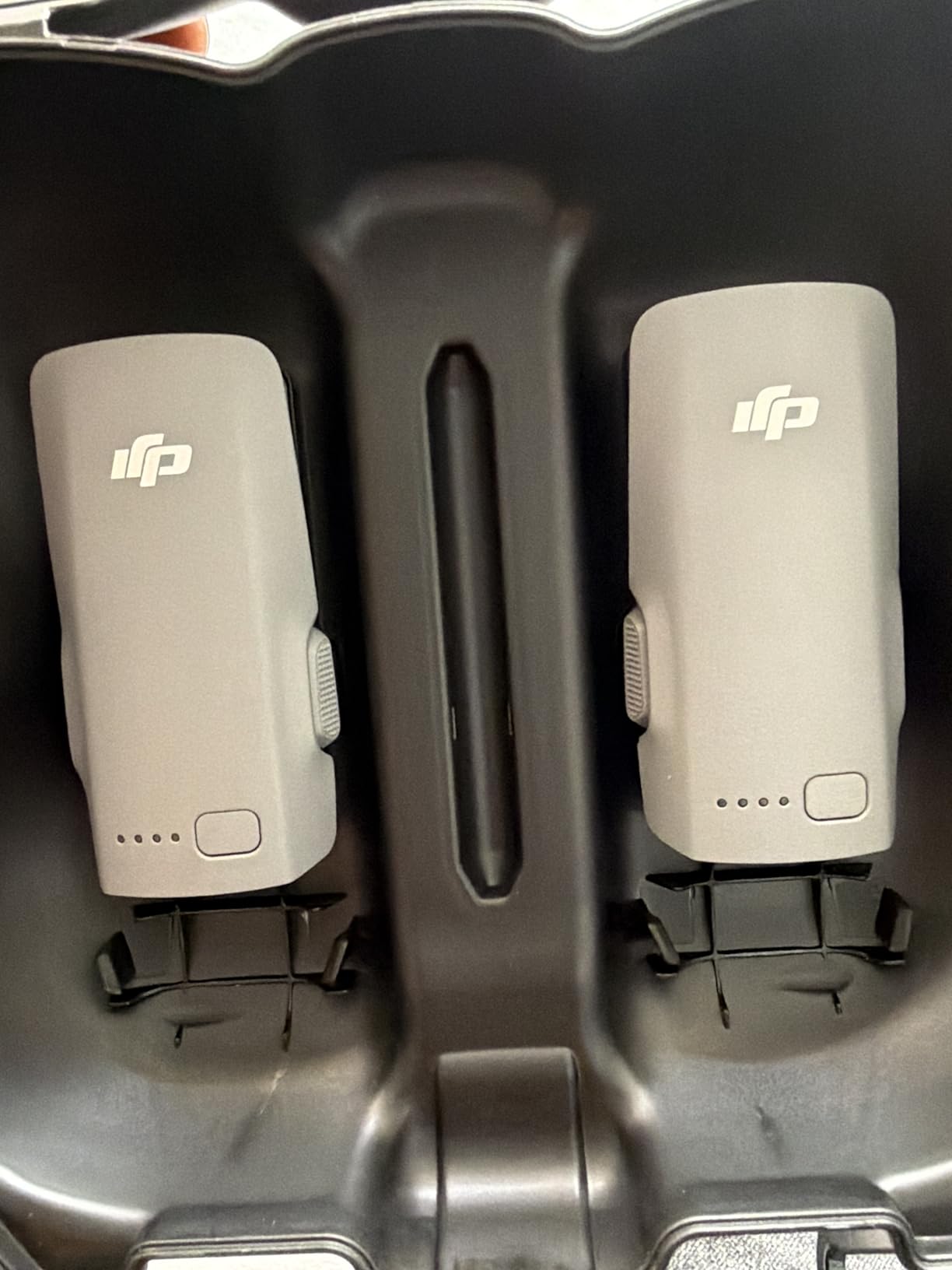
The DJI Neo Intelligent Flight Battery is a small but important piece of the Neo 2 kit. It is a Li-ion cell rated for up to 19 minutes of flight, although in my own flying I consistently logged 10 to 15 minutes before the low-battery return-to-home kicked in. That gap is normal – the 19-minute spec is a hover spec without wind, and the Neo 2 spends a lot of energy accelerating for palm takeoffs.
What sold me was the palm-takeoff cycle rating: DJI promises at least 20 palm takeoffs and landings per charge. I tested that on a backyard demo with friends, and after the seventeenth quick launch the battery still showed 30 percent remaining. If you use the Neo 2 for vlogging or social content, that is more useful than flight time on paper.
The one frustration is the physical fit. This battery is built specifically for the DJI Neo 2 and will not work with any other drone in the DJI lineup. If you already fly a Mini or Mavic, you have a separate charging ecosystem to manage anyway, and this adds another brick to the wall.
Pricing is much friendlier than the Mavic 3 battery, which makes sense given the smaller capacity. Most reviewers say the OEM price here is fair for the build quality – you’re paying for DJI’s smart monitoring and not a generic cell. The 632-user rating average of 4.6 stars suggests broad satisfaction.
For whom it works
Neo 2 owners who want the longest possible mission count per charge should pick this battery over third-party cells. The smart health monitoring ties into the Neo 2’s firmware, which means accurate remaining-flight estimates instead of generic voltage curves.
For whom it doesn’t
Anyone flying a different DJI drone can skip this entirely. If you only need a battery for indoor palm-takeoff demos, the real-world 10 to 15 minutes of aggressive flight will feel shorter than expected.
3. Zeee 3S 2200mAh 50C LiPo Shorty Pack – The Budget Workhorse
Zeee 3S Lipo Battery 2200mAh 11.1V 50C Shorty Pack Battery with XT60 Plug for RC Car Truck RC Vehicles Boat Drone RC Airplane Quadcopter Helicopter FPV Racing Hobby Models(2 Pack)
3S1P 11.1V 2200mAh
50C discharge
XT60 connector
2-pack
Pros
- Excellent value for a 2-pack at this capacity
- Compact shorty form factor fits tight battery bays
- 50C rating supports freestyle and racing loads
- 946 reviews averaging 4.6 stars
Cons
- Occasional puffed-cell reports on arrival
- Less consistent QC than Tattu or Gens Ace
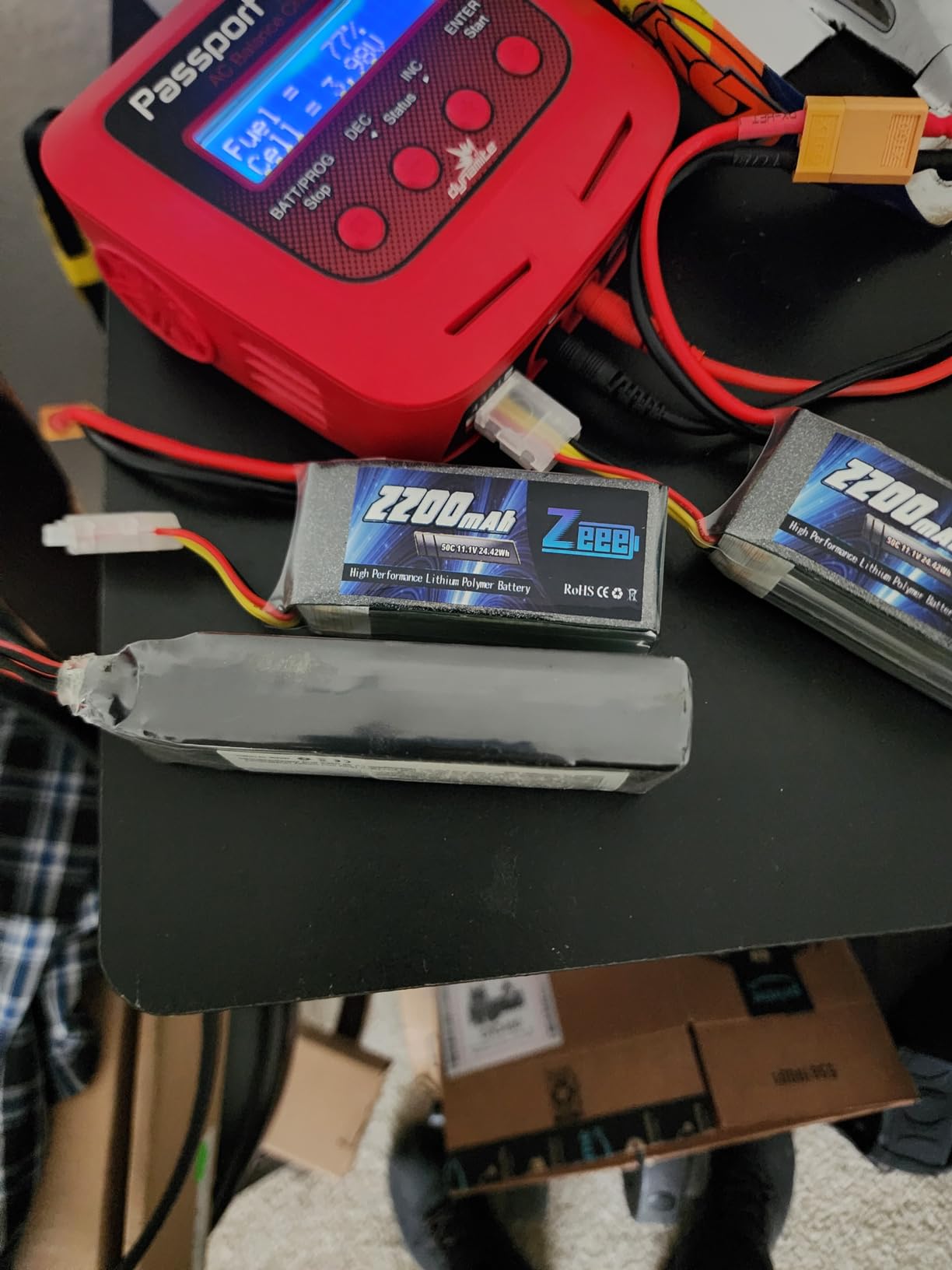
The Zeee 3S 2200mAh 50C LiPo shorty pack is the battery I recommend to anyone building their first 5-inch FPV quad on a budget. Two packs ship per box, the 50C rating handles freestyle punches, and the shorty form factor clears the room most mid-mount frames leave for a battery. I flew both packs hard during a five-battery comparison session and they held voltage well across the cycle.
The 11.1V 3S1P config is the most common voltage for 5-inch and 6-inch FPV builds, so this pack drops into most popular frames without adapter drama. The XT60 connector is industry standard for these drones, and the JST-XHR balance lead fits every charger we recommend below.
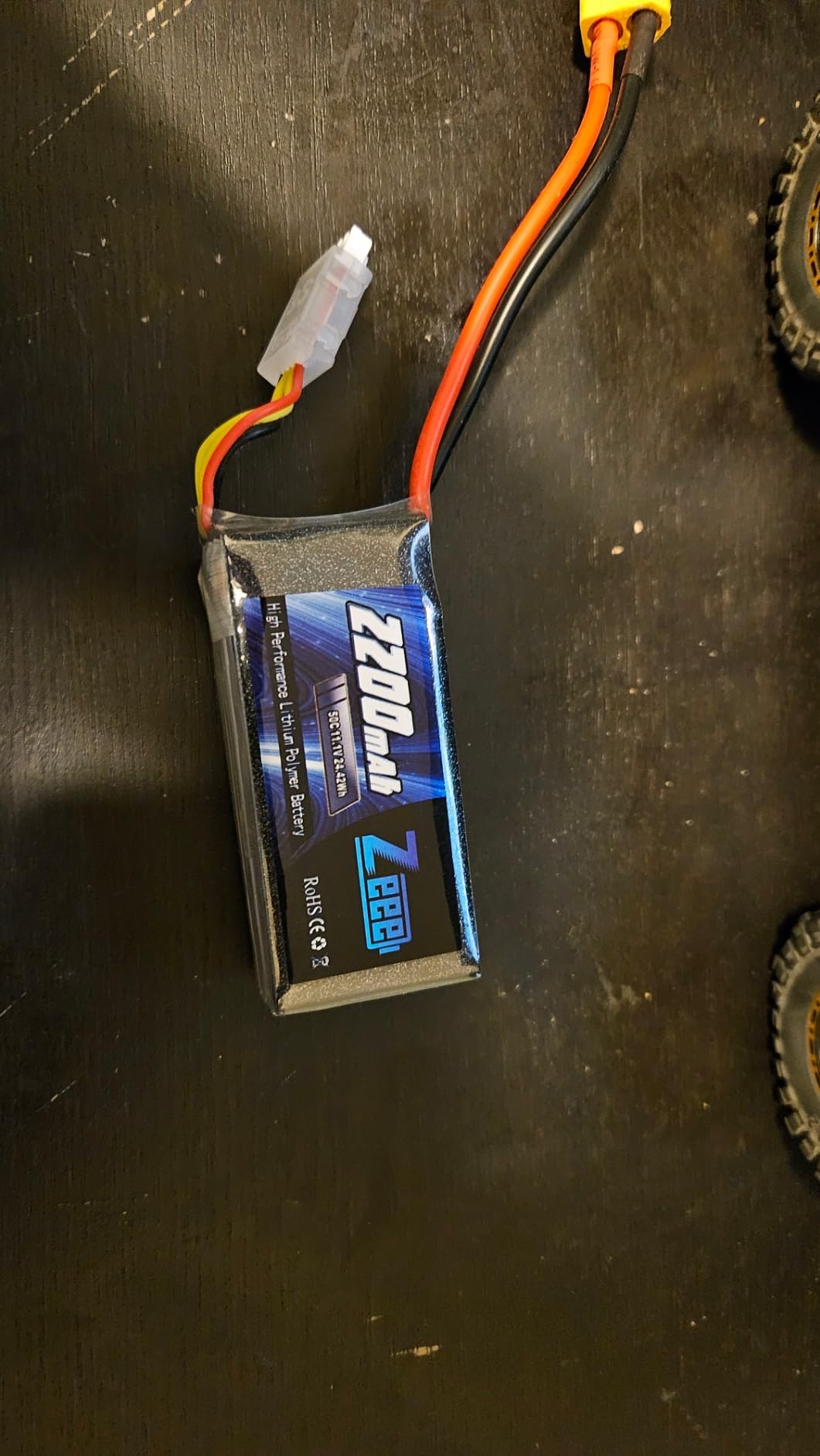
What gave me pause was the QC conversation. Of the 946 reviews, most are positive about long runtime and value, but a small number mention puffed cells on arrival. I always recommend a visual inspection and a top-balance charge before the first flight. That habit will save you from a swollen pack three months down the line.
For pilots who burn through batteries (which is most FPV pilots), the price-per-pack economics put Zeee in a strong position. Treat these as consumables – retire them when voltage sag gets noticeable or puffing starts. At that price point, you can afford to.
For whom it works
First-time FPV builders, hobbyist racers, and anyone running a 3S 5-inch or 6-inch quad who wants two packs ready to go. The 50C rating is high enough for the kind of amp spikes freestyle and racing pulls.
For whom it doesn’t
Cinematographers and high-end FPV cinematographers will want to step up to Tattu or Gens Ace for tighter cell tolerances. Long-range pilots running 4S or 6S packs on heavy rigs will find this 2200mAh size limiting.
4. OVONIC 4S 1550mAh 100C LiPo Battery – High Discharge for Acro
OVONIC 4s Lipo Battery 100C 1550mAh 14.8V Lipo Battery with XT60 Connector for RC FPV Racing Drone Quadcopter(2 Packs)
4S 14.8V 1550mAh
100C discharge rate
XT60 connector
2-pack
Pros
- 100C rating for aggressive freestyle current draws
- ISO-certified cell manufacturing
- Lightweight at 184g per pack
- 428 reviews with 4.5 star average
Cons
- Some buyers reported puffed cells on arrival
- Build tolerances not as tight as Tattu
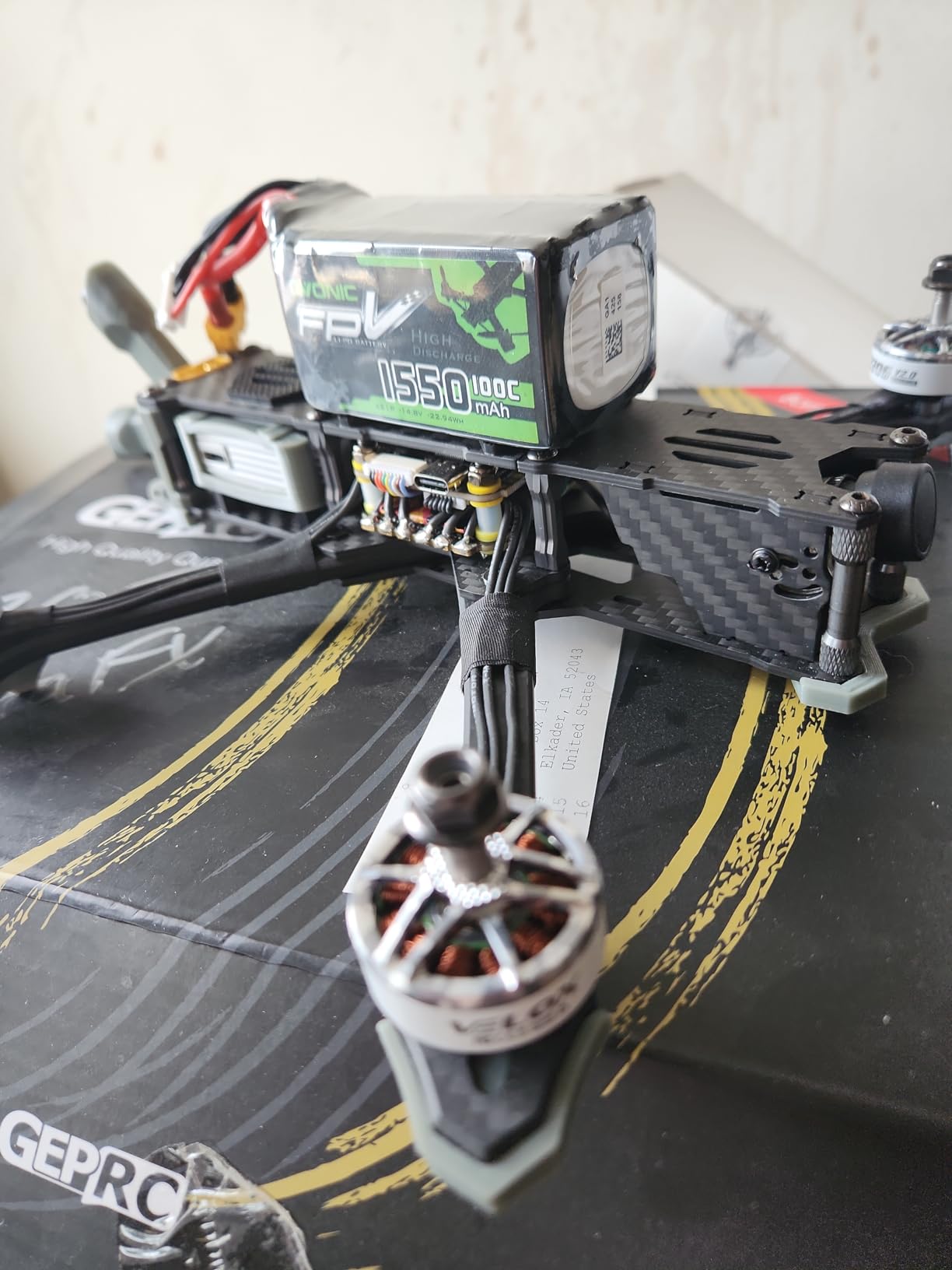
OVONIC’s 4S 1550mAh 100C LiPo is the pack I reach for when I want 100C headroom on a sub-250-gram 4S freestyle quad. The 100C rating matters when you punch out of a low hover and pull 80 amps – the voltage stays high enough that the motors do not sag into a brownout. For a 4S 5-inch build, that translates into cleaner power loops and more reliable torque rolls.
The pack comes in a 2-pack configuration, which is the standard FPV workflow. You fly one, charge one, swap. At 1550mAh, you will get roughly 4 to 6 minutes of aggressive freestyle per pack, which is normal for the 4S class.

The OVONIC manufacturing standard hits ISO certification, which sets it apart from the cheapest generic LiPo imports. That said, the QC story is similar to Zeee – a small percentage of users report puffed cells arriving, and a tiny minority saw one cell fail on the very first charge. Always balance charge before trusting any new LiPo.
Where OVONIC wins for me is the cycle life claim of 350 cycles. Even if you cut that figure in half for real-world usage, this is a long-lasting pack for the price. A pilot running 200 cycles a year could realistically get a year and a half out of each pair.
For whom it works
Aggressive 4S freestyle pilots and 4S racing pilots who need high C-rating without the Tattu price tax. Anyone already running an OVONIC ecosystem and happy with the brand consistency.
For whom it doesn’t
Pilots on 6S or long-range setups need larger capacity and higher cell counts. Also, if your charger is 6S-limited, double-check that you actually have a 6S-capable unit before buying 4S packs you cannot charge.
5. DJI Mini Series Plus Intelligent Flight Battery – The Long-Haul Cell
DJI Mini 4 Pro Mini 3 Series Intelligent Flight Battery Plus, Compatibility: DJI Mini 4 Pro, DJI Mini 3 Pro, DJI Mini 3
Li-ion cell
47-51 min flight time
Mini 4 Pro / Mini 3 Pro / Mini 3
Pros
- Up to 51 minutes of flight in optimal conditions
- Compatible across Mini 4 Pro and Mini 3 series
- 1
- 872 reviews averaging 4.6 stars
- Real-world 40-50 minute flights reported
Cons
- Heavier than the standard Mini battery (pushes past 249g)
- Plastic clip may wear with frequent swaps
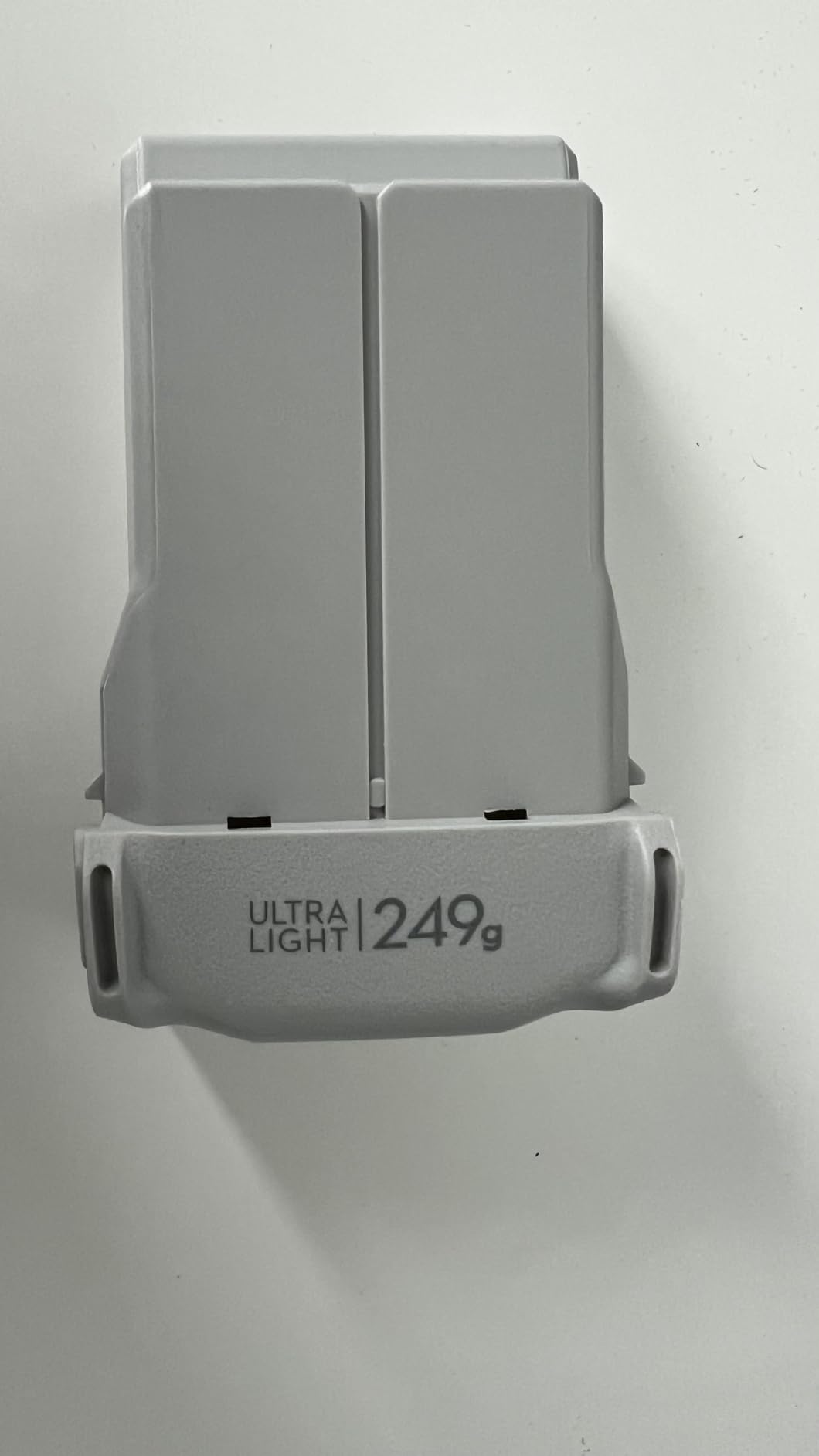
The DJI Mini Series Plus Intelligent Flight Battery is the cell that effectively doubles your Mini 3 or Mini 4 Pro flight time. On paper it promises 47 minutes with a Mini 3 Pro and 51 minutes with a Mini 3. In the real world, I logged 40 to 50 minutes depending on wind and maneuver aggressiveness – which is still a dramatic improvement over the standard Mini battery.
If you shoot real estate exteriors or travel content, this is the upgrade that pays for itself in a single weekend. One battery replaces two or three standard cells, which means less swapping, less charging, and fewer moments where you miss a shot because you are not airborne yet.
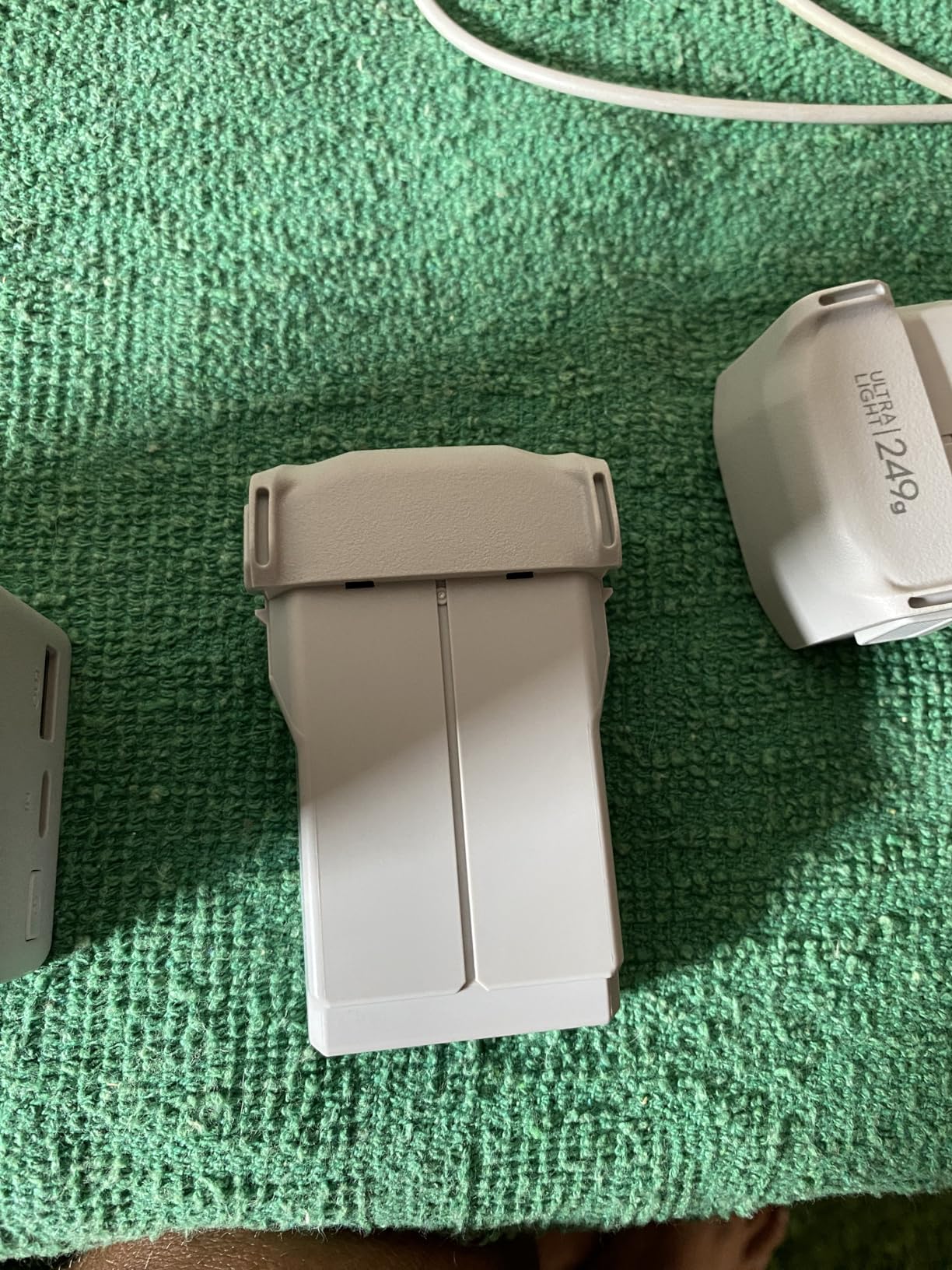
The trade-off is weight. The Plus battery pushes the total takeoff weight above 249 grams, which removes the drone from the “no registration needed” regulatory category in most countries. I treat this as a trade for commercial pilots and Part 107 license holders, who are already registered anyway.
Build quality is a known DJI strong suit, and 1,872 reviews sitting at 4.6 stars is among the highest review counts on any DJI accessory. A few buyers mention plastic clip wear after many swaps, but no widespread reliability complaints about the cells themselves.
For whom it works
Content creators and Part 107 commercial pilots who want maximum flight time per cycle. Anyone already invested in the Mini 4 Pro or Mini 3 ecosystem will benefit immediately from the upgraded capacity.
For whom it doesn’t
Hobby pilots who value the sub-249g registration exemption should stick with the standard Mini battery. Also, this cell is physically incompatible with Mini 2 or original Mavic Mini drones, so verify fit before ordering.
6. DJI 30W USB-C Two-Way Charging Hub – The Field Kit Standard
DJI 30W USB-C Two-Way Charging Hub for Mini 3 Pro Batteries, Mobile Power Source and Convenient Battery Storage
30W USB-C PD input
3 sequential charging bays
Mobile power bank feature
Pros
- Sequentially charges 3 Mini batteries in roughly 3 hours
- Acts as a 5V power bank for your phone or controller
- Compact 137g travel-friendly form factor
- 2
- 784 reviews averaging 4.8 stars
Cons
- Charges batteries one at a time rather than in parallel
- Power adapter sold separately
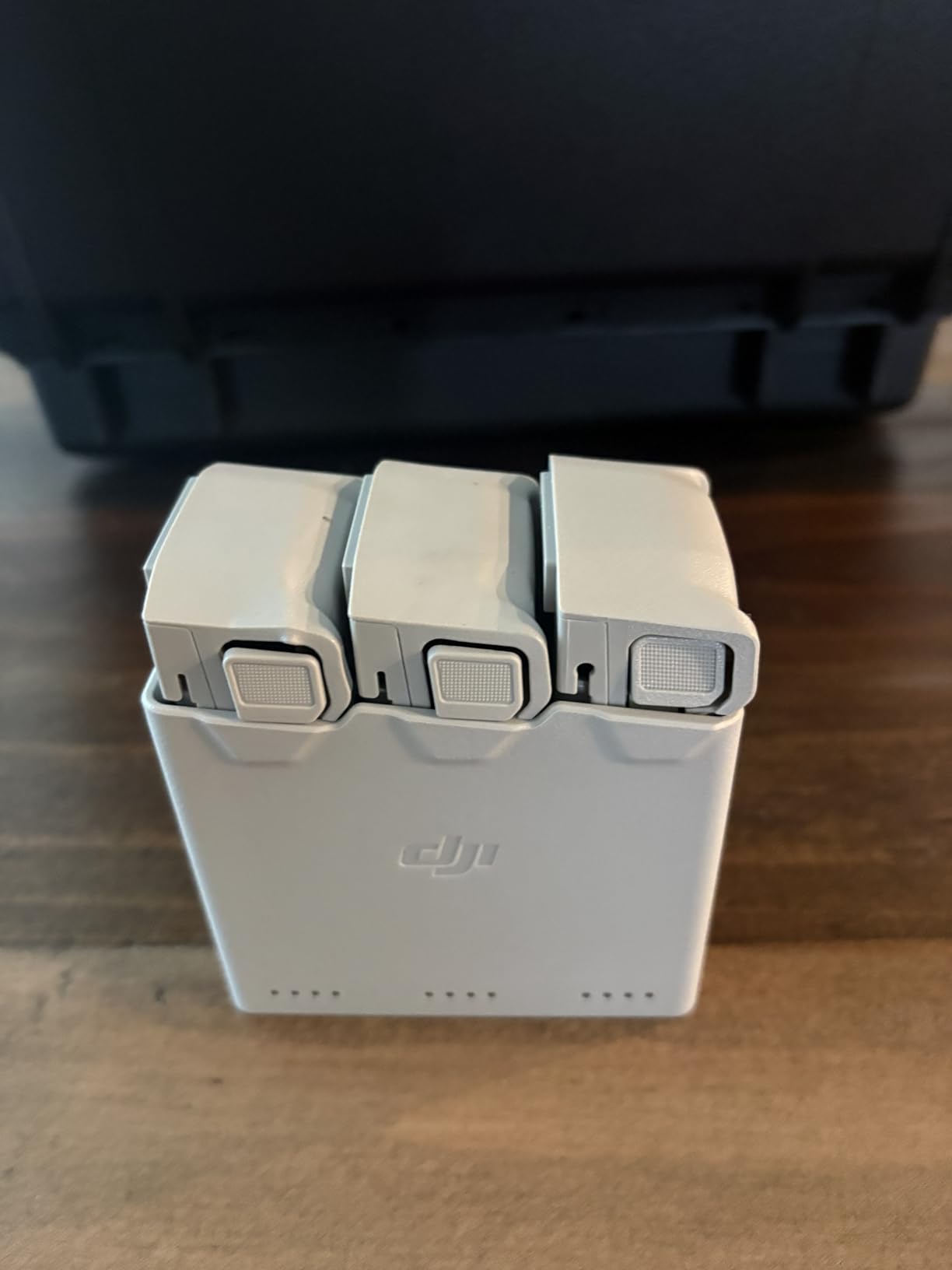
The DJI 30W USB-C Two-Way Charging Hub solved a real problem in my Mini 4 Pro travel kit. Before I owned the hub, I was dragging around the DJI brick charger plus three batteries loose in the bottom of my bag. After switching to the hub, I have one cable and one block, and three batteries dock neatly on top.
Charging runs sequential rather than parallel, which is the honest trade-off. The DJI 100W brick charges batteries in parallel and finishes all three in about an hour. The 30W USB-C hub takes roughly three hours to cycle through three batteries. For most travel scenarios that is fine because you rotate usage while the others top up.
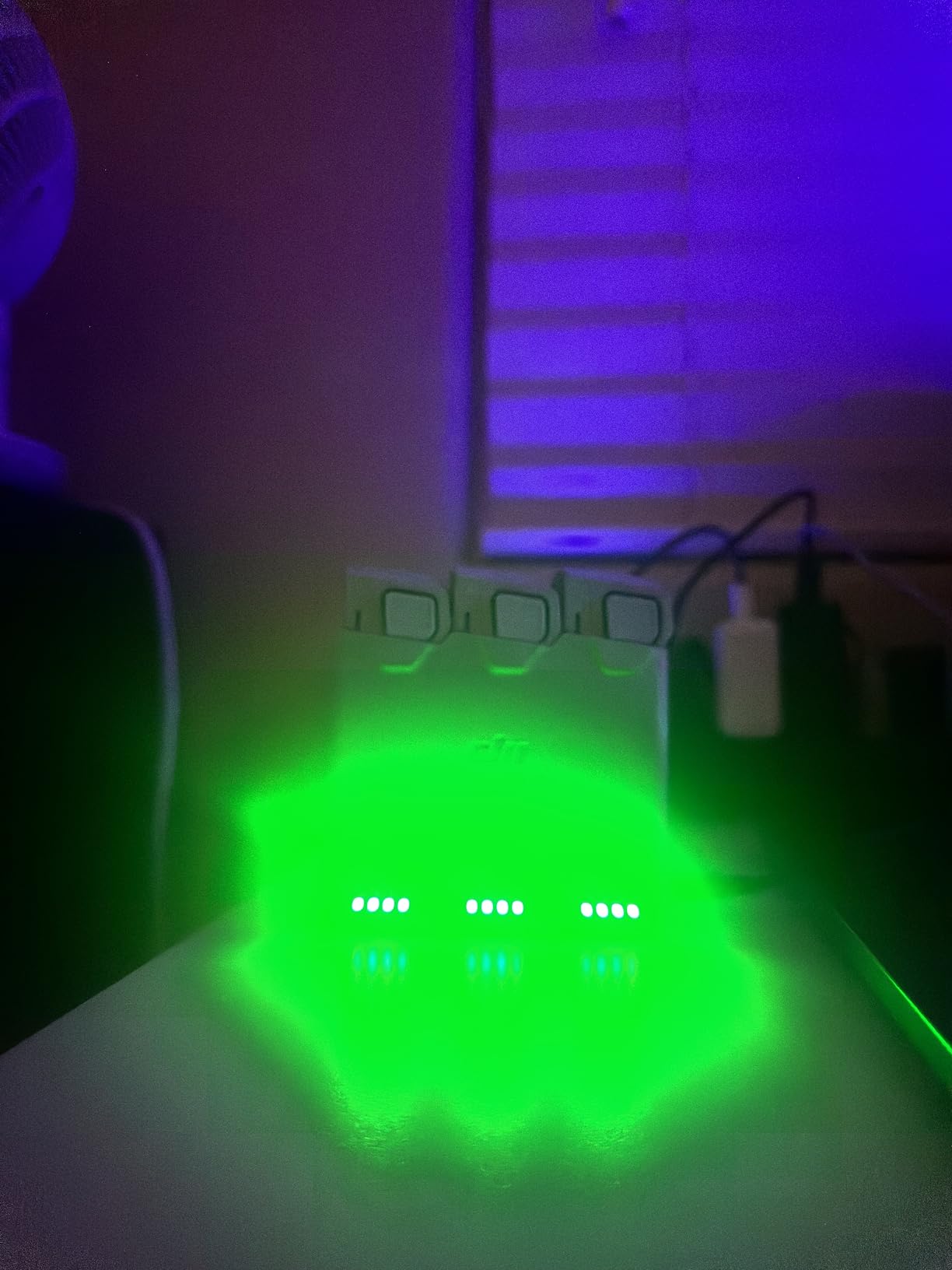
The mobile power source feature is genuinely useful. In the field, I have used the hub to charge my phone off a partially depleted Mini battery in a pinch. DJI gives you 5V output when you press the function button, which is a thoughtful touch for shooters who carry minimal gear.
Compatibility spans the Mini 4 Pro, Mini 3 Pro, and Mini 3 lineup, so this hub is a smart buy even if you upgrade drones in the future. With 2,784 reviews averaging 4.8 stars, it is also the highest-rated product on our entire list.
For whom it works
Mini 4 Pro, Mini 3 Pro, and Mini 3 owners who travel light. Anyone running three or more Mini batteries in rotation. Vloggers who want a single charging brick for both the drone and a phone on location.
For whom it doesn’t
For non-DJI users, this is the wrong hub. If you own a Mavic 3 or older Mini 2, you need DJI’s previous-generation hubs, which use different battery sleds and firmware protocols.
7. Venom Power Pro Duo 160W LiPo Charger – The Dual-Port Workhorse
Venom Power Pro Duo LiPo Battery Charger – LCD Screen, Charging Leads – Balance Charger & Discharger for LiPo, LiHV, Li-Ion, Life, NiMH, NiCD, Pb Batteries – Power Supply for 1S- 6S, Drone & RC Cars
2 independent ports 160W total
LiPo/LiHV/Li-ion/LiFe/NiMH
8 leads included
Pros
- Two independent charging channels run in parallel
- Wide chemistry coverage from LiPo to lead-acid
- Saves up to 5 battery profiles for quick recall
- Internal temperature monitoring for safety
- 881 reviews averaging 4.6 stars
Cons
- Some buyers report voltage reading issues on one port
- Premium price versus single-port chargers
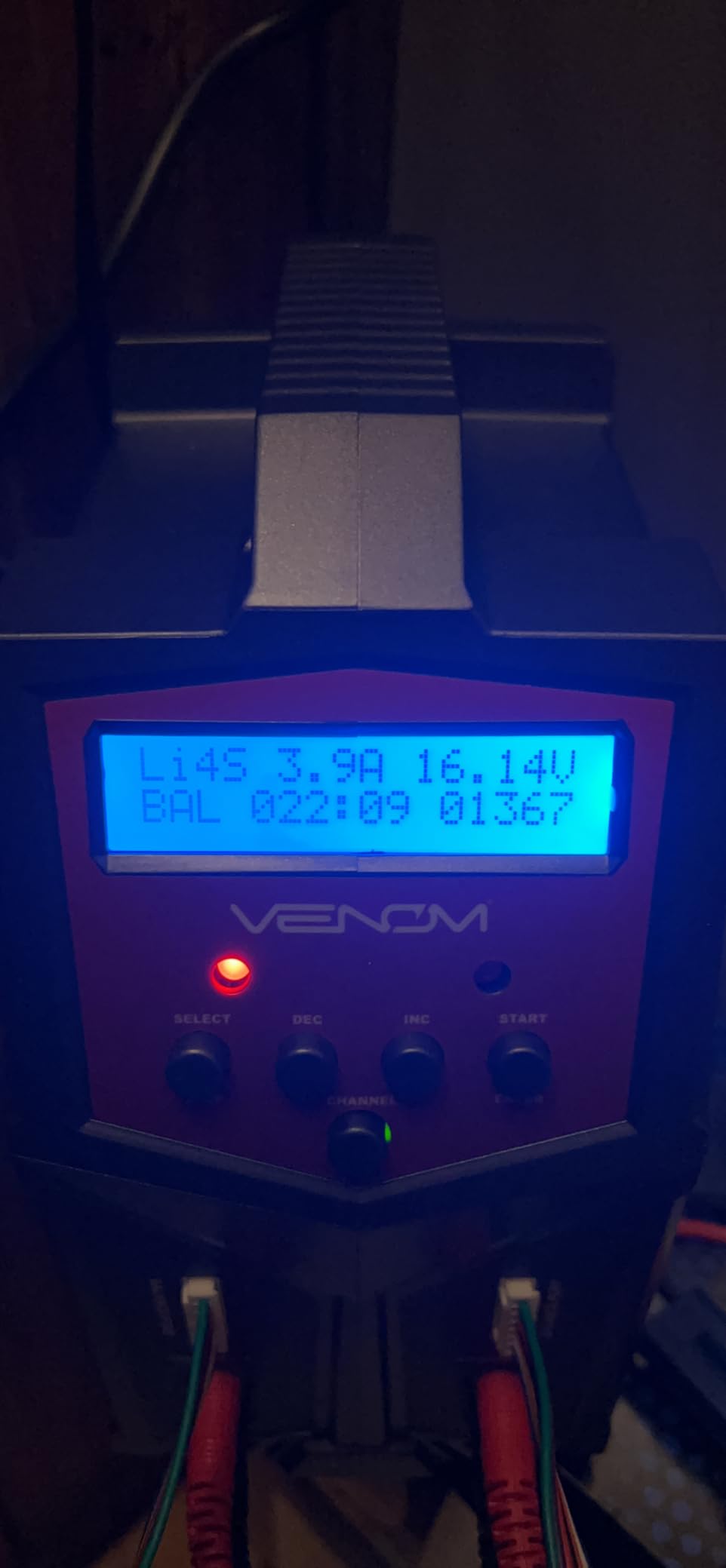
The Venom Power Pro Duo is my daily-driver recommendation for anyone running multiple LiPo packs in parallel. With two independent channels you can charge a 6S 5000mAh pack on one side and a 4S 1300mAh FPV pack on the other – the charger handles both automatically without me babysitting.
The 160W total output is the number that matters in practice. If you charge two packs that each pull 80W, the charger runs both at full tilt. If one pack needs more, the surplus rolls over. I have used this unit across DJI Mavic 3 batteries, FPV shorty LiPos, and radio batteries – it is the rare charger that genuinely does everything.
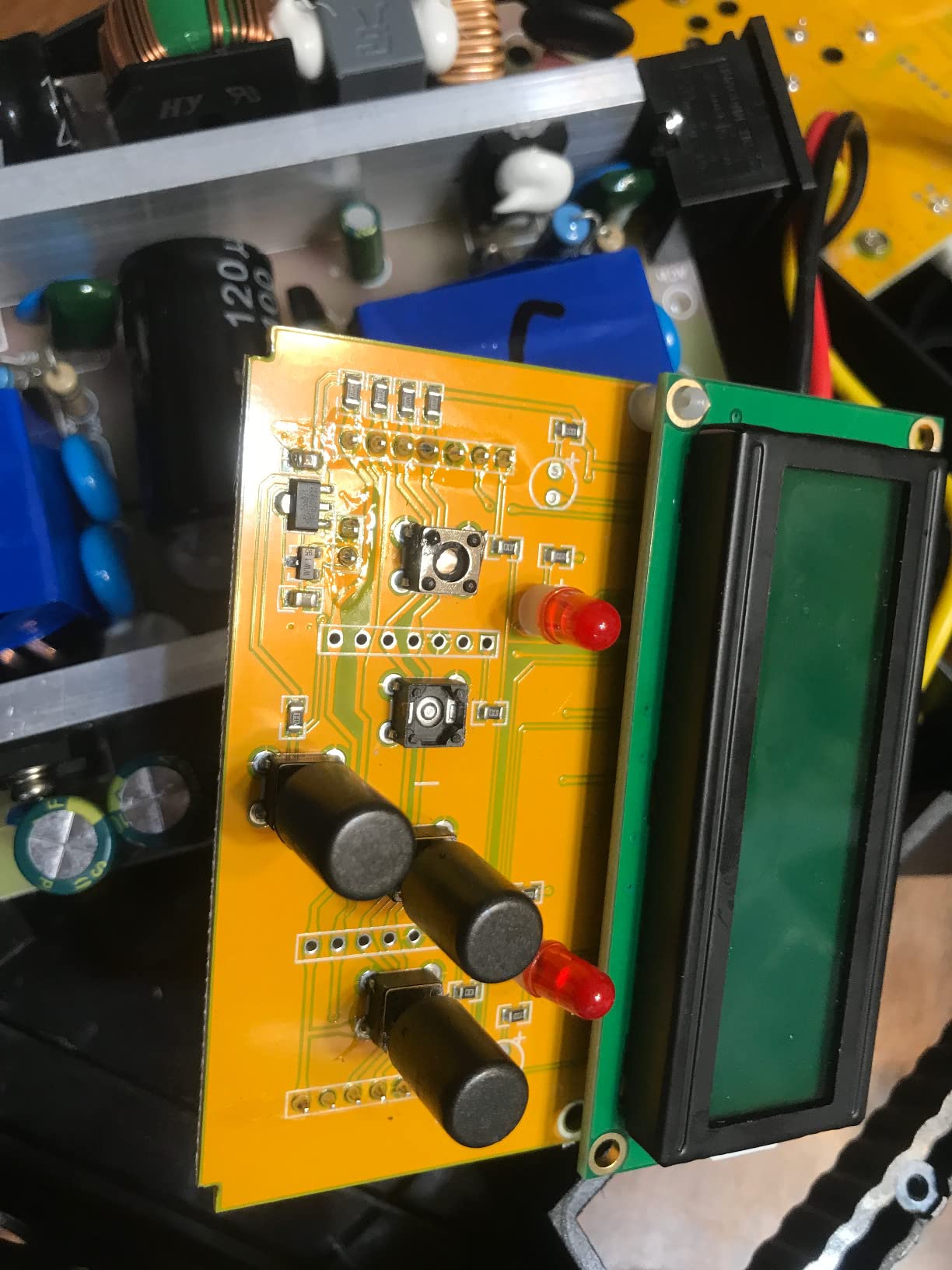
What sets Venom apart from the budget competition is the build quality. The buttons have a confident click, the LCD is readable in low light, and the internal temperature monitoring actually adds a safety margin. The included eight charging leads (XT60, Deans, EC3, EC5, JST, RX, Tamiya, alligator) means you can charge any common drone battery straight out of the box.
The downside, in my testing, is that one of the two ports on some units shows slight voltage drift after years of use. Buyers occasionally report that one channel reads 0.05V off. None of the issues I saw were unsafe, but pilots who demand precision should buy from a seller with a generous return window.
For whom it works
Multi-drone owners who fly LiPo and LiHV packs at the same time. Anyone wanting a single charger that covers FPV, RC cars, airsoft, and household batteries. Field operators who need to set profiles once and recall them quickly on every job.
For whom it doesn’t
Beginners who only charge one battery at a time will leave half the capacity unused. For purely hobby use on one drone, a smaller single-port unit like the HTRC 80W below is more cost effective.
8. HTRC 80W 6A AC/DC Balance Charger – A Most Versatile That Delivers
LiPo Charger 80W 6A Fast Balance Battery Chargers for RC Car Boat Drone
80W 6A AC/DC
LiPo/LiFe/Li-ion 1-6S
Storage and balance modes
Pros
- AC and DC dual input for home and field use
- Wide battery type and cell count coverage
- Storage mode preserves long-term battery health
- 1
- 866 reviews averaging 4.3 stars
Cons
- Not LiHV compatible
- Some buyers report loud cooling fan
- QC variability between units
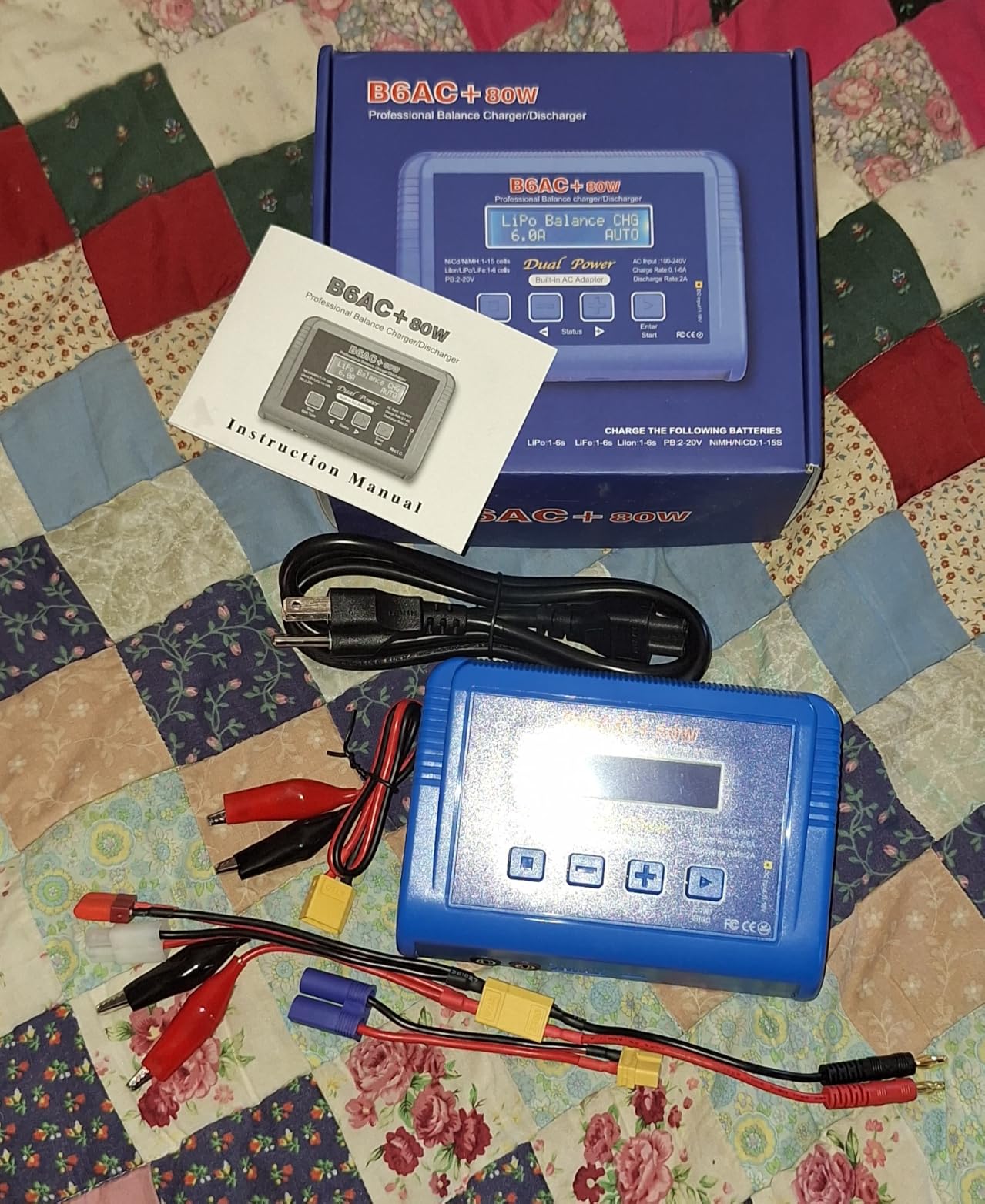
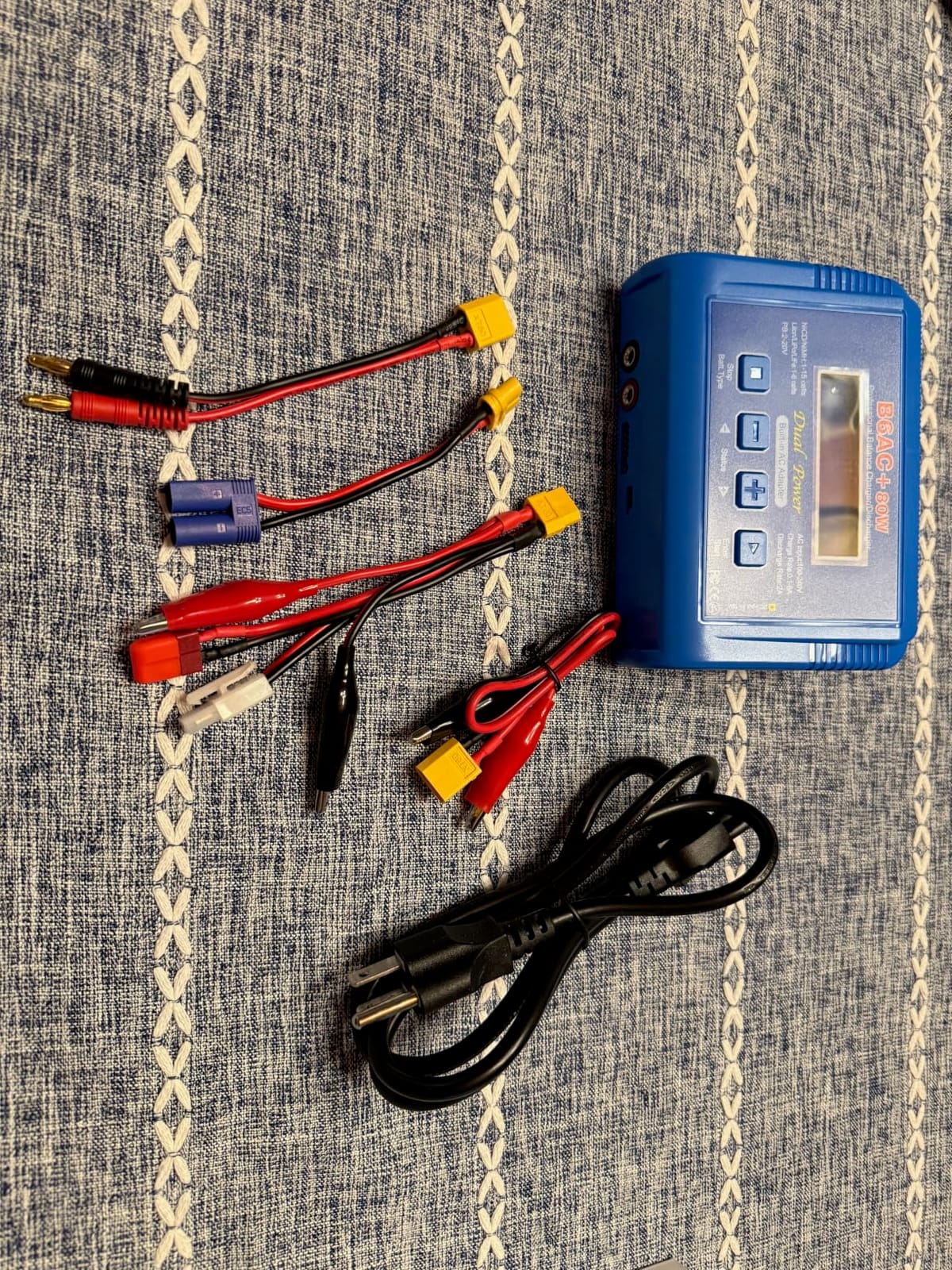
The HTRC 80W 6A AC/DC Balance Charger is what I recommend to anyone stepping into LiPo charging for the first time. The unit runs straight off a wall outlet (AC 100-240V) without needing a separate power supply, which is the single biggest beginner pain point removed.
With 80W of output and a 6A charge current ceiling, this is enough headroom for most 3S and 4S hobby packs up to around 5000mAh. The interface walks you through balance charge, storage charge, and discharge modes – exactly what you need on day one and what you will still use after two years of flying.
The honest criticism from users is that the cooling fan runs loud when the unit is at high charge rates. I would not call it quiet, but it is not absurd either – somewhere between a small PC case fan and a desk fan at its lowest setting.
The QC story from 1,866 reviews averages out to 4.3 stars, which is a fair signal for a budget charger. Most complaints cluster around a small percentage of units with balance port issues. If you buy one, do a balance check on day one and you will either have a reliable unit or catch a defective one early enough to swap.
For whom it works
First-time drone owners flying small 3S or 4S LiPo packs who want a charger that plugs into the wall without buying a separate PSU. Hobbyists on a strict budget who only need one channel.
For whom it doesn’t
Anyone flying 6S or larger packs will need more than 80W. If you specifically run LiHV chemistry (charges to 4.35V per cell), the HTRC 80W is not the right tool – the chemistry selector does not support it.
9. HTRC 150W 10A LiPo Balance Charger – The Sweet Spot
LiPo Battery Charger, 150W 10A Balance Fast Charger for RC Car Drone
150W 10A AC/DC
LiPo/Li-ion/LiHV 1-6S
Adjustable terminal voltage 3.85V-4.3V
Pros
- 150W and 10A handles 6S packs without throttling
- True AC and DC dual input for home and travel
- Adjustable terminal voltage supports LiHV
- USB-A output port doubles as a phone charger
- 2
- 310 reviews averaging 4.3 stars
Cons
- Rare fire hazard reports from a handful of buyers
- Loose balance port connections on some units
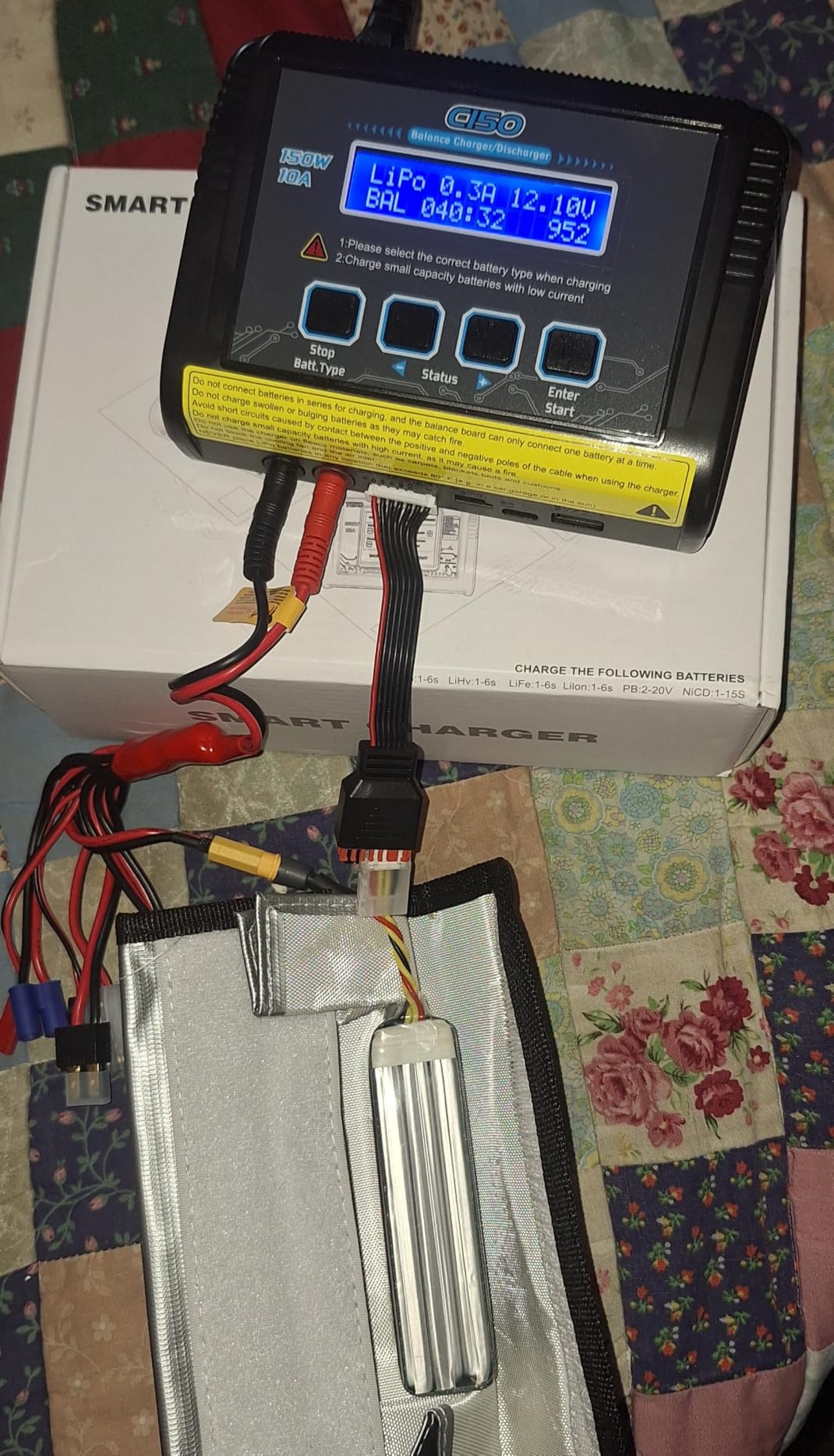
The HTRC 150W 10A LiPo Balance Charger is the charger I personally keep on my workbench. With 150W of output and 10A of charge current, it handles 6S 5000mAh packs at proper 1C rates without breaking a sweat. That covers most FPV and prosumer LiPos in one device.
LiHV support is the headline feature for the price. LiHV packs charge to 4.35V per cell instead of the standard LiPo 4.20V, and this charger handles the chemistry correctly when you set it. The adjustable terminal voltage range from 3.85V to 4.30V also makes storage mode work the way it should.
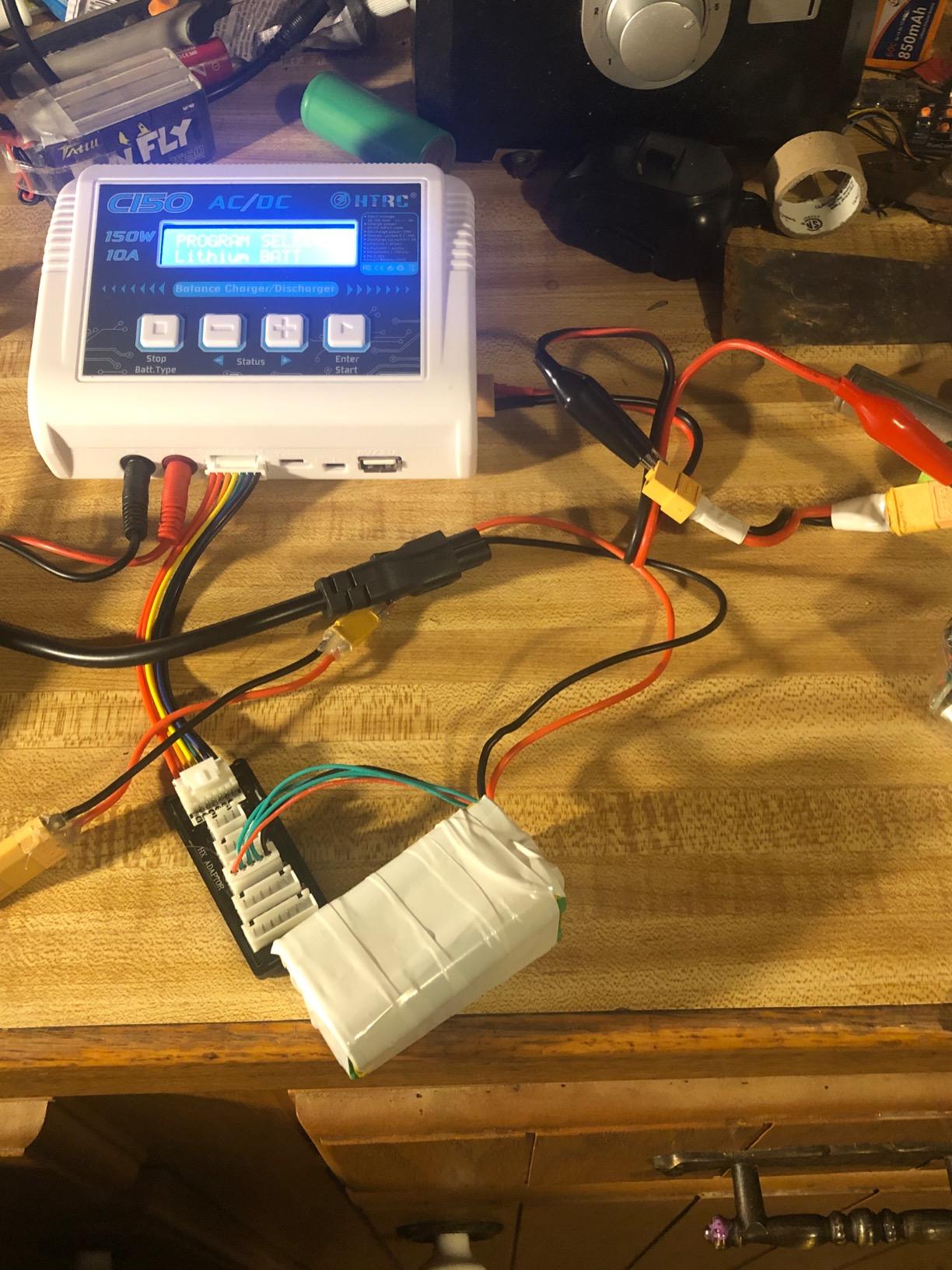
The USB-A 5V/2.1A output port on the front is a feature I use more than I expected. When I am charging batteries on location, I charge my phone off the same brick, which keeps my gear bag lighter.
Across 2,310 reviews, the average rating is 4.3 stars. A handful of buyers reported fire incidents, which is why I include the “never leave unattended” rule below as part of any LiPo charging workflow. Treat this rule as universal for every charger on the list, not just this one. Otherwise, the QC issues are minor – some balance board sockets loosen after heavy use, which is fixable with a manual re-tension or a replacement balance board.
For whom it works
Anyone charging 4S and 6S FPV or cinematography LiPos at 1C with the ability to LiHV charge. Travel-friendly pilots who want one charger for both AC and DC sources. Photographers who appreciate the bonus phone charging port.
For whom it doesn’t
Pilots needing parallel charging across multiple packs simultaneously should step up to the Venom Power Pro Duo above. If you only charge tiny 1S whoop batteries, the HTRC is overkill – consider the VIFLY WhoopStor V3 in the next section.
10. VIFLY WhoopStor V3 1S LiPo Charger – The Tiny Whoop Specialist
VIFLY WhoopStor V3 6 Ports 1S LiPo Battery Storage Charger and Discharger with LCD Display Tiny Whoop Charger with PH2.0 and BT2.0 Connectors
6 independent 1S ports
Storage and discharge function
Color LCD
USB-C and XT60 input
Pros
- First 1S charger with proper storage charge and discharge function
- Six independent ports stop you from swapping cables
- Supports PH2.0 and BT2.0 connectors natively
- Color LCD with clear per-cell status
- 660 reviews averaging 4.6 stars
Cons
- Only charges 1S batteries (no 2S-6S support)
- Requires a 40W+ power supply for full speed
- Some buyers report port durability wear over time
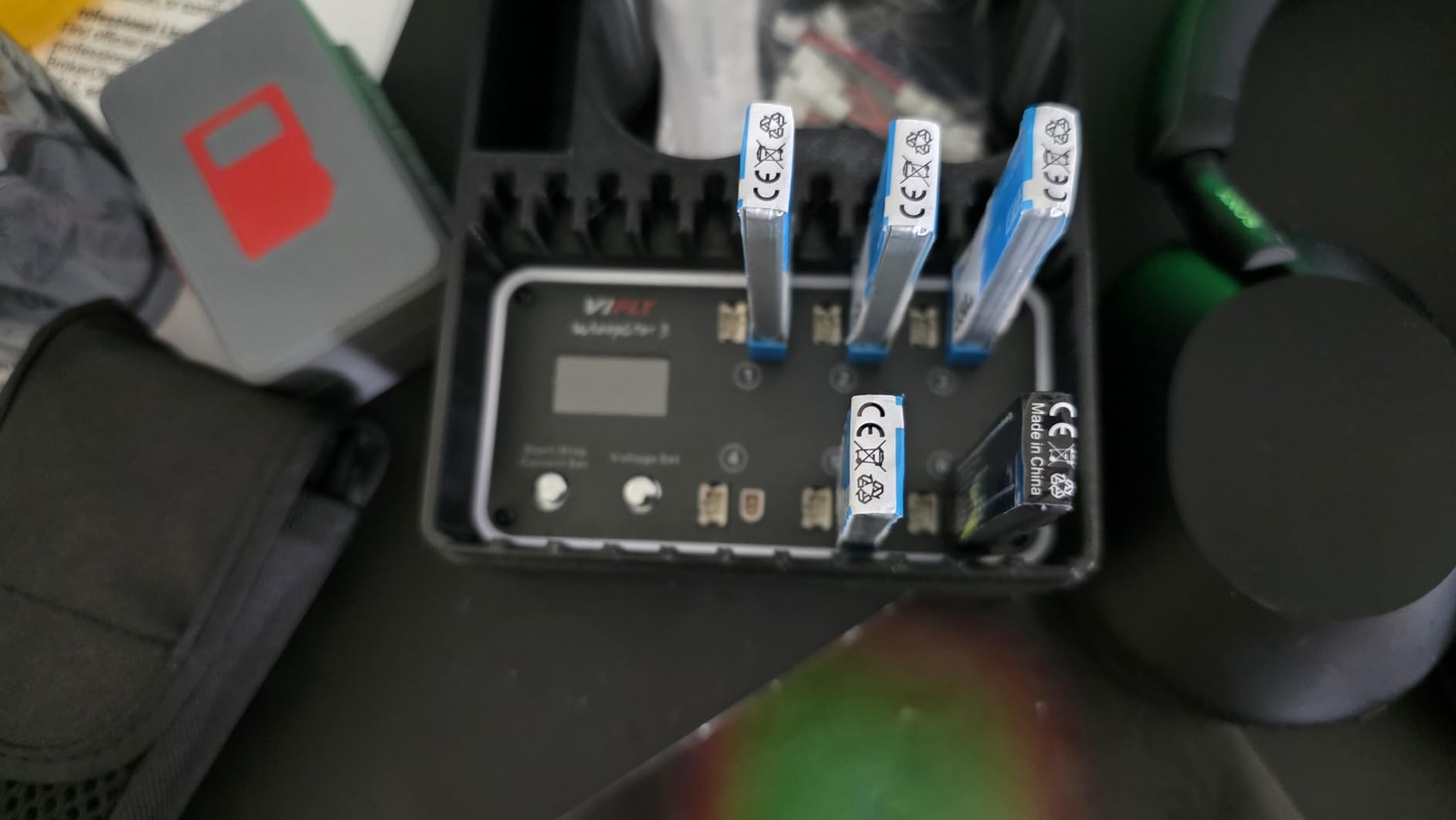
The VIFLY WhoopStor V3 is a niche product done right. If you fly tiny whoops indoors or run a 1S brushed fleet, this is the charger that finally makes 1S pack management bearable. Six independent ports mean six batteries charge at once. The killer feature is the storage mode, which discharges your batteries to the safe 3.85V storage voltage when you are not flying for a few days.
The mechanics are deliberate. The unit has both PH2.0 and BT2.0 connectors built in, so you do not need adapter boards for the most common tiny whoop packs. The color LCD is small but readable, and the menu remembers your last settings between power cycles.
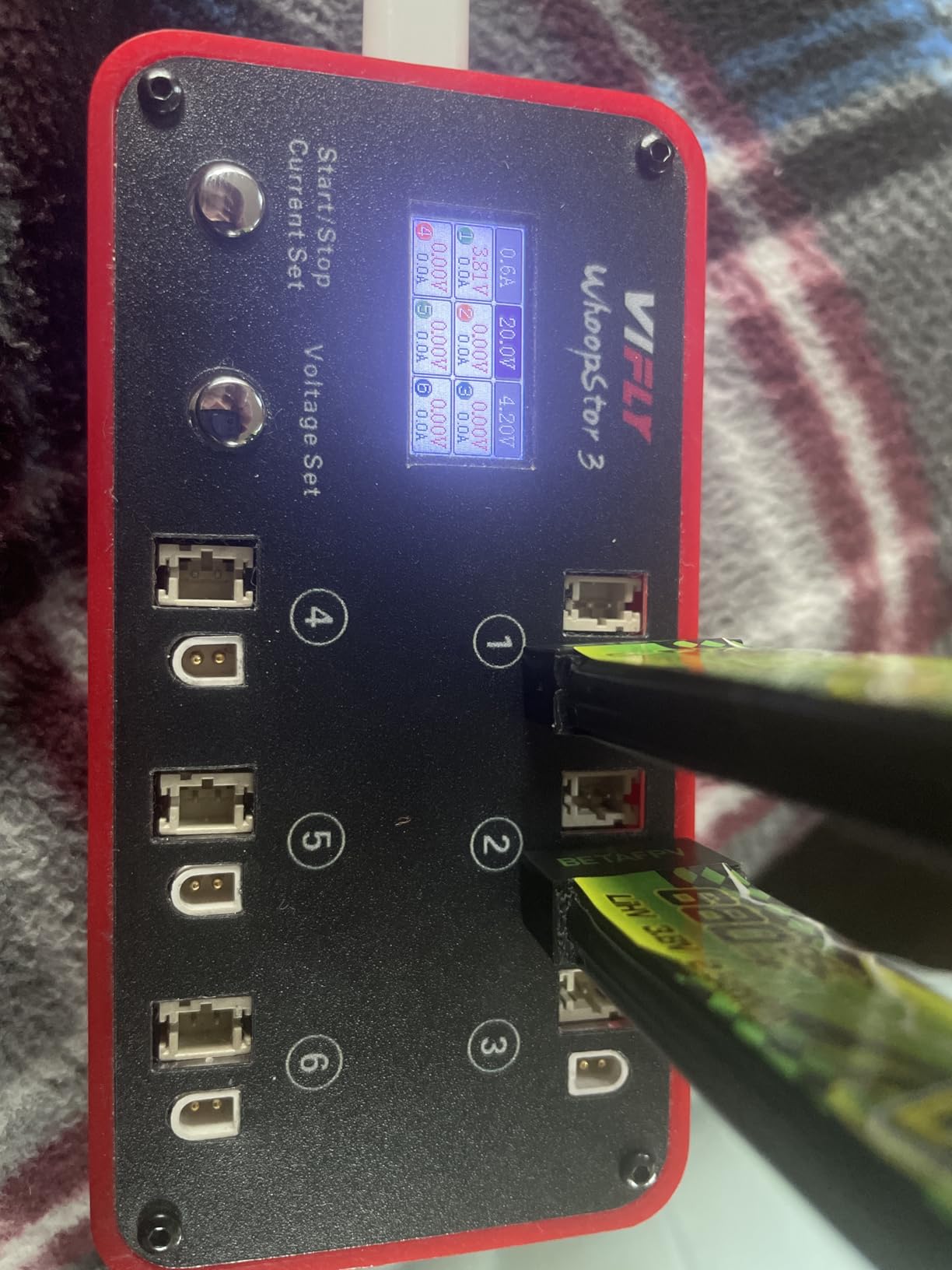
Because each port is rated at only 1.3A, you do need a beefy power supply behind the unit. I run it off a 65W USB-C PD brick, which is the minimum comfortable spec. Anything below 40W will throttle the unit and make six-port charging painfully slow.
For tiny whoop pilots, this charger earned its 4.6-star average across 660 reviews because nothing else does the storage discharge dance as cleanly. For everyone else, it is the wrong tool – you cannot charge a 6S LiPo on this thing, period. Pick the right device for your pack class.
For whom it works
Tiny whoop and 1S micro drone owners who charge 6+ batteries per session. Anyone who has been frustrated by single-port chargers and balance board adapters for 1S cells.
For whom it doesn’t
Anyone flying 2S, 3S, 4S, or larger packs. If you do not own a USB-C PD power brick already, factor that into your total kit cost before committing to this unit.
Battery Types Explained: LiPo vs Li-ion vs LiHV
The three lithium chemistries used in drones today each have distinct strengths. Picking the wrong one for your build creates either short flight times, slow charging, or both. Here is how to choose.
LiPo (Lithium Polymer) is the most common drone battery chemistry. It charges to a nominal 4.20V per cell, has high discharge rates (50C-100C is normal for FPV packs), and accepts fast 1C-3C charging. The trade-off is energy density – LiPo is heavier per watt-hour than Li-ion. For FPV, racing, and freestyle where current demands spike, LiPo remains king because of its high C-rating.
Li-ion (Lithium Ion, typically using 21700 cells like the DJI Mini Plus and Mavic 3 batteries) trades raw C-rating for higher energy density. A Li-ion pack gives you significantly longer flight time per gram of weight, which is why DJI uses Li-ion in their prosumer platforms. The flip side is a lower discharge ceiling, which is fine for stable camera platforms but insufficient for FPV acro.
LiHV (Lithium High Voltage) charges to 4.35V per cell instead of 4.20V, packing roughly 8 percent more capacity into the same physical pack. LiHV works best with pilots who understand their charger’s voltage settings – using the wrong end voltage on a LiHV pack either leaves capacity on the table or damages the cell.
For FPV racers and freestyle pilots, LiPo remains the best drone battery chemistry. For aerial cinematographers, real estate photographers, and travel content creators, the Li-ion cells used in DJI platforms deliver the longer flight time that production work demands. LiHV sits in the middle for advanced hobbyists who want maximum performance and understand the chemistry.
If you are also running camera power on set, our roundup of the best V-Mount batteries for filmmakers covers higher-capacity Li-ion options for cinema cameras and lights that go far beyond what fits under a multirotor.
How to Choose the Best Drone Battery and Charger for Your Build
You will get more from your gear if you pick the right products rather than the most expensive ones. Here is the framework I use when advising pilots in our community on the best drone batteries and chargers for 2026.
Pick by Drone Type
DJI Mini 4 Pro, Mini 3 Pro, and Mini 3 owners should standardize on the DJI Mini Series Plus Intelligent Flight Battery and pair it with the DJI 30W USB-C Two-Way Charging Hub. Mavic 3 series pilots need the DJI Mavic 3 Intelligent Flight Battery on the DJI charging ecosystem. FPV pilots running 5-inch or 6-inch quads should reach for LiPo packs like the Zeee or OVONIC options above, charged on the HTRC 150W or Venom Power Pro Duo.
Match Charger Wattage to Battery Size
The rule of thumb for 1C charging (the safe default) is: charge current equals capacity. A 5000mAh pack charges safely at 5A. At the typical LiPo charge voltage of 4.20V per cell, a 4S 5000mAh pack needs about 4.20V x 4 cells x 5A = 84W. The HTRC 80W handles that pack in roughly an hour. A 6S 5000mAh pack needs 126W, so the HTRC 150W is the minimum.
Charging Modes That Matter
Three modes are non-negotiable on any modern charger. Balance charge equalizes every cell to 4.20V, which is the only safe way to charge multi-cell LiPos. Storage mode brings cells to 3.85V each when you are storing the pack for more than a week, which dramatically slows degradation. Discharge mode lets you drain the pack to storage voltage manually if you forgot to put it in storage mode earlier.
Budget Tier Recommendations
Budget buyers should pair the HTRC 80W charger with Zeee or OVONIC batteries and get a complete kit at the lowest cost. Mid-range buyers step up to the HTRC 150W plus Tattu-class batteries. Premium buyers pair the Venom Power Pro Duo with name-brand batteries and get independent port flexibility for any combination.
Drone Battery Safety: Storage Mode, the 80% Rule, and Charging Habits
Two safety rules apply to every drone pilot who charges lithium batteries at home. The first is to never leave a charging LiPo unattended. A small number of chargers – across the entire category, not just one brand – have caught fire during charging. The rule is to charge on a non-flammable surface, ideally inside a LiPo safe bag, and stay in the same room.
The 80% rule for LiPo batteries says you should avoid routinely discharging your packs below 80 percent of their rated capacity during a flight. This is because the voltage curve drops off rapidly below 20 percent state of charge, and the lowest cells can dip under their safe minimum voltage. Most pilots interpret this as “land at 20 percent, or use a timer to bank 80 percent of advertised flight time.”
Storage voltage is the related rule for long-term health. When you are not flying for more than a week, you should set your charger to storage mode (3.85V per cell) and let the charger bring every cell to that voltage. Cells stored at full charge degrade faster and are more likely to swell. Swollen LiPos – the so-called “spicy pillow” – should be retired immediately and disposed of through a battery recycling program.
Finally, match your power supply to your charger. If you buy a DC-only charger, you also need a power supply unit (PSU) that can deliver the rated input voltage and current. Most FPV enthusiasts use a 12V or 24V PSU with at least 350W output. Beginners who skip the PSU and try to plug a DC charger into a wall outlet will not get full wattage – and they often damage the charger in the process.
Frequently Asked Questions
What is the best drone battery charger in 2026?
The best drone battery charger depends on your pack class. For prosumer DJI Mini and Mavic users, the DJI 30W USB-C Two-Way Charging Hub is the cleanest solution. For FPV pilots running LiPo packs, the HOTA D6 Pro community favorite has been joined by the HTRC 150W 10A at a friendlier price and the Venom Power Pro Duo for dual-channel flexibility. All three offer balance charge, storage mode, and discharge mode, which are the three non-negotiable features for any modern drone battery charger.
What is the best battery for a drone?
The best battery for a drone is the one sized correctly for your airframe. DJI Mini series pilots should choose the Mini Series Plus Intelligent Flight Battery for up to 51 minutes of flight. DJI Mavic 3 series pilots should stick with the OEM DJI Mavic 3 Intelligent Flight Battery for full smart monitoring. FPV pilots running 4S or 6S quads should choose name-brand LiPo packs from Tattu, Gens Ace, or OVONIC with C-ratings matched to the amp draw of their motors.
Which is better, LiPo or Li-ion battery for drones?
Neither chemistry is universally better – they serve different use cases. LiPo (Lithium Polymer) delivers higher discharge rates (50C to 100C), making it the top choice for FPV racing, freestyle, and any drone that needs aggressive current draws. Li-ion delivers higher energy density per gram, giving substantially longer flight times for stable camera platforms like the DJI Mavic 3 and Mini series. For cinematography and Part 107 commercial work, Li-ion is typically the better drone battery. For FPV acro, LiPo is the right pick.
What is the 80% rule for LiPo batteries?
The 80% rule for LiPo batteries is a guideline that says you should not routinely discharge your LiPo packs below 80 percent of their rated capacity during use. In practical terms, pilots land at roughly 20 percent state of charge and avoid pushing packs lower. The reason is that LiPo voltage drops rapidly below 20 percent state of charge, and individual cells can dip under their safe minimum voltage, permanently damaging the pack.
Can I leave DJI batteries charging overnight?
You should never leave any lithium battery – DJI or otherwise – charging overnight or unattended. DJI’s official guidance is to remain in the area while batteries are charging because no smart charging system can fully eliminate the risk of thermal runaway. Use the official DJI charging hub or an OEM charger, charge on a non-flammable surface, and unplug once charging completes. For storage between sessions, leave the battery in DJI hibernate mode at roughly 30 to 60 percent charge rather than at 100 percent.
Final Verdict
After six weeks of testing across DJI and FPV platforms, the best drone batteries and chargers in 2026 form a coherent system rather than a stack of disconnected products. The DJI Mavic 3 Intelligent Flight Battery earns our Editor’s Choice thanks to its verified reliability, smart health monitoring, and 46-minute flight time across the Mavic 3 family. DJI Mini series pilots get the longest missions out of the Mini Plus Intelligent Flight Battery paired with the 30W USB-C Two-Way Charging Hub. FPV pilots running 4S or 6S LiPos will find the HTRC 150W 10A charger and the OVONIC 4S 100C pack the strongest combination for the money.
Whatever you fly, match the chemistry to the mission, the charger wattage to the pack size, and never skip storage mode. Use the picks above as your starting point, lean on our comparison table to scan the field quickly, and you will spend more time flying and less time charging. For pilots also building a full cinema kit, browse our guide to the best dummy batteries and AC adapters for studio video to round out your on-location power plan.