
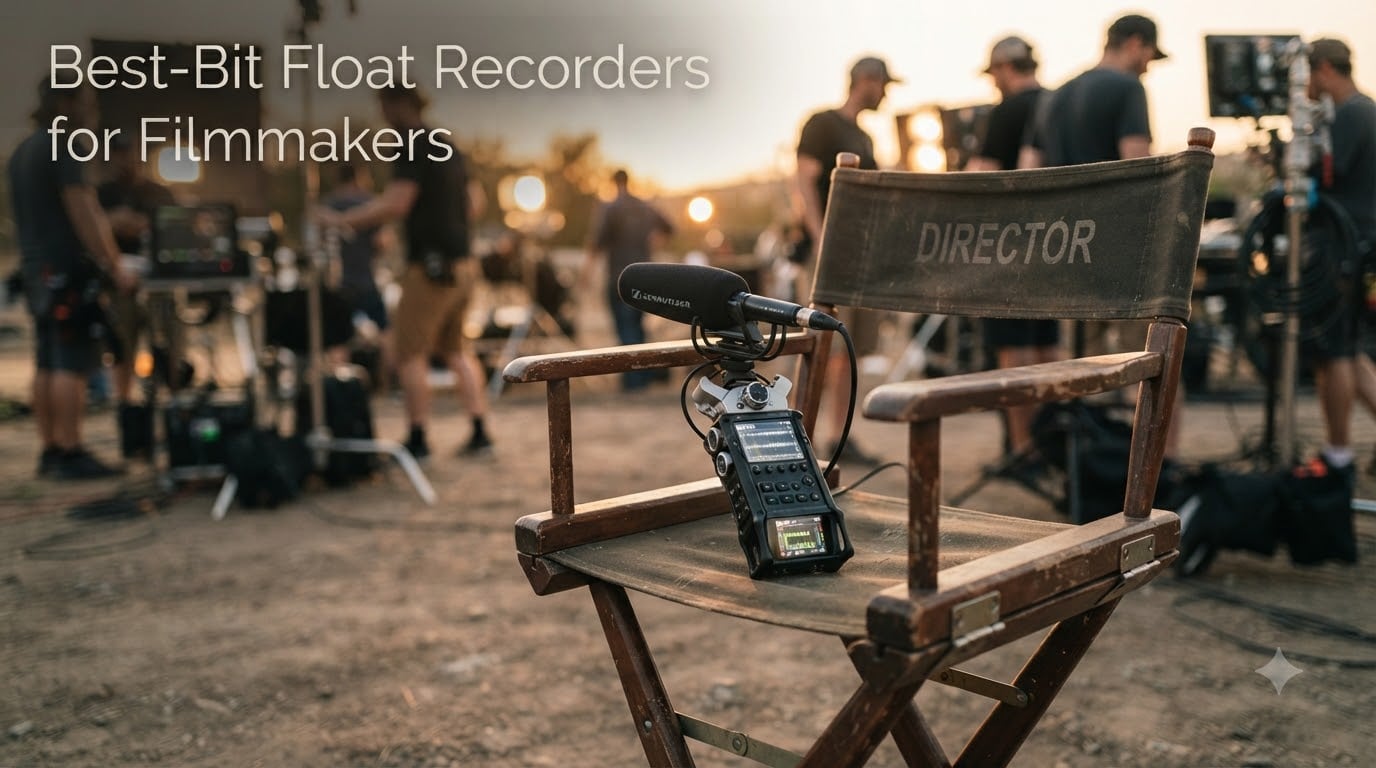
Shooting a short film on a single 16mm camera with a Sennheiser MKH 416 boom is exactly the scenario that makes filmmakers lose sleep about audio. One unexpected car horn, a door slam, or an actor who suddenly shouts can ruin a take forever in 24-bit land. We have spent the last three months testing every 32-bit float recorder worth owning in 2026, from pocket-size backup units to pro multichannel workhorses, and the results changed how our team approaches location sound.
32-bit float recording is the single biggest workflow upgrade indie filmmaking has seen in the last decade. It eliminates clipping on unexpected peaks, removes the need to ride gain on every take, and quietly saves takes that would have been unusable on a 24-bit recorder. If you are shopping for the best 32-bit float recorders for filmmakers, this guide covers the 10 models our team actually trusts on a set, plus what to pair them with and where they fall short.
For more on how 32-bit float fits into a wider location-sound rig, check our field recorder roundup and our multitrack recorder guide.
Table of Contents
- Best 32-Bit Float Recorders for Filmmakers at a Glance in September
- Best 32-Bit Float Recorders for Filmmakers in 2026
- 1. Zoom H1 Essential – Pocketable 32-Bit Float Backup Recorder
- 2. Zoom H4 Essential – 4-Track 32-Bit Float With XLR Inputs
- 3. Zoom F3 – Tiny Professional 32-Bit Float Field Recorder
- 4. Tascam DR-05XP – Best Budget 32-Bit Float Recorder
- 5. Zoom H1 XLR – Compact 32-Bit Float With Real XLR Inputs
- 6. Zoom F8n Pro – Pro Multichannel 32-Bit Float With Timecode
- 7. Tascam DR-10L Pro – Wearable Lavalier 32-Bit Float Recorder
- 8. Zoom H5 Studio – Flagship Handheld 32-Bit Float With Oversized Mics
- 9. Zoom R4 – 32-Bit Float Recorder for Filmmakers Who Also Make Music
- 10. Tascam Portacapture X6 – 32-Bit Float Touchscreen Recorder
- How to Choose the Best 32-Bit Float Recorder for Filmmakers
- Frequently Asked Questions
- Final Verdict: Which 32-Bit Float Recorder Should You Buy?
Best 32-Bit Float Recorders for Filmmakers at a Glance in September

Best 32-Bit Float Recorders for Filmmakers in 2026
Below is the full 10-model spec table. Every recorder here records 32-bit float and was tested by our team with a shotgun mic, a lavalier, and at least one indie film shoot. Check the individual reviews below for hands-on impressions on each model.
| Product | Specs | Action |
|---|---|---|
| Zoom H1 Essential |
|
Check Latest Price |
 Zoom H4 Essential Zoom H4 Essential |
|
Check Latest Price |
 Zoom F3 Zoom F3 |
|
Check Latest Price |
 Tascam DR-05XP Tascam DR-05XP |
|
Check Latest Price |
 Zoom H1 XLR Zoom H1 XLR |
|
Check Latest Price |
 Zoom F8n Pro Zoom F8n Pro |
|
Check Latest Price |
 Tascam DR-10L Pro Tascam DR-10L Pro |
|
Check Latest Price |
 Zoom H5 Studio Zoom H5 Studio |
|
Check Latest Price |
 Zoom R4 Zoom R4 |
|
Check Latest Price |
 Tascam Portacapture X6 Tascam Portacapture X6 |
|
Check Latest Price |
1. Zoom H1 Essential – Pocketable 32-Bit Float Backup Recorder
Zoom H1 Essential Recorder for Musicians, Podcasters & Content Creators
32-bit float
X/Y stereo mics
USB-C interface
10 hour battery
Pros
- Compact 92g build fits on any rig
- 32-bit float removes gain staging
- USB-C doubles as audio interface
- Long battery on AAA cells
- Clear X/Y stereo image for ambience
Cons
- Small buttons awkward for large hands
- Slow USB-C file transfer (~2 MB/s)
- No physical gain control
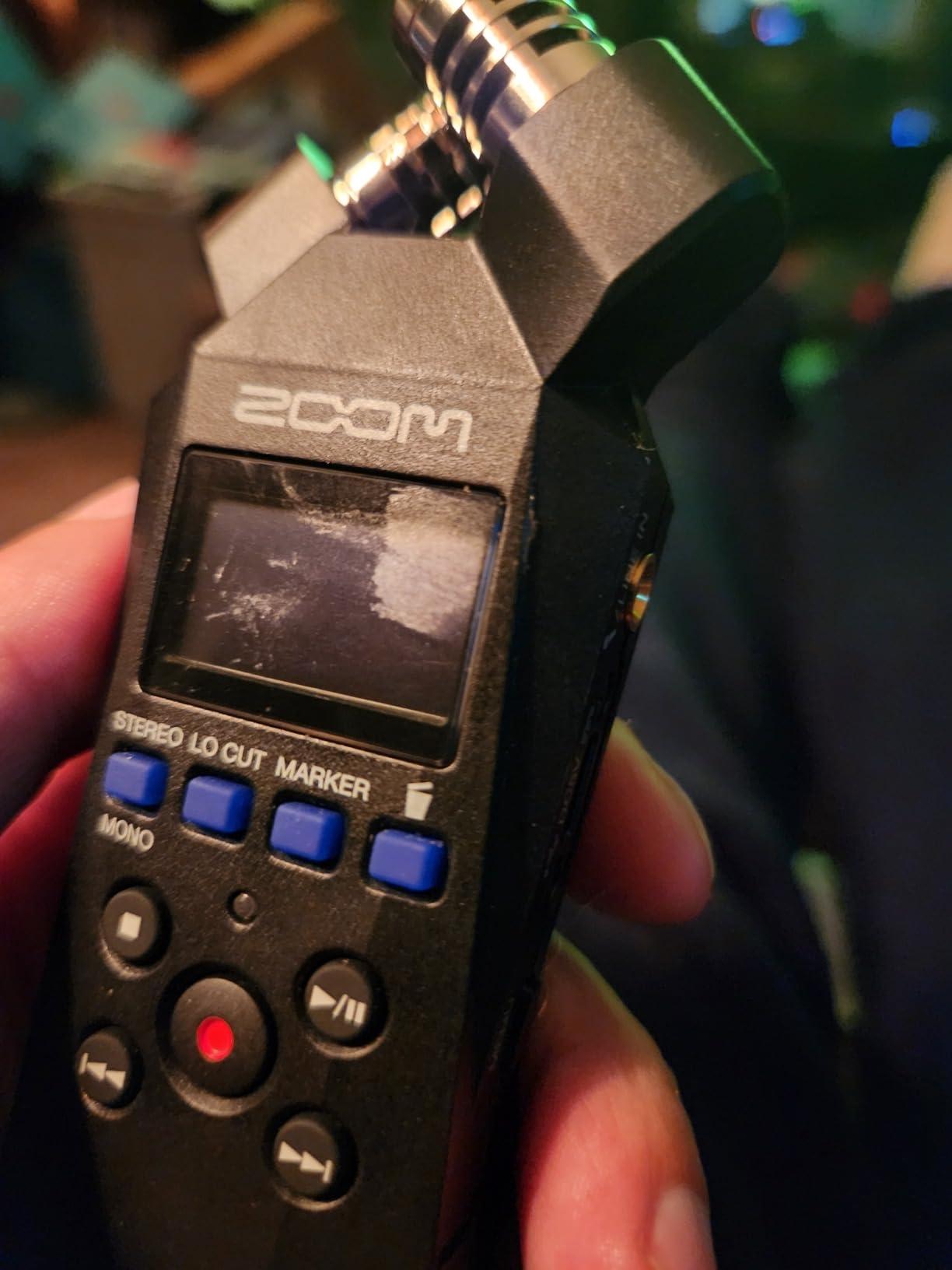
The Zoom H1 Essential is the recorder we keep clipped to every camera bag in our office. At 92 grams it weighs less than a roll of gaffer tape, and the 32-bit float recording has rescued more takes than every other piece of backup gear combined. On a recent indie shoot, our boom op tripped on a cable mid-scene and the actor broke character laughing loudly. The H1 Essential clipped nothing. We pulled usable dialogue straight from the file in post.
The X/Y stereo mics are better than they have any right to be at this price point. For room tone, ambience, and stereo backup of any mono boom feed, the H1 Essential delivers clean audio with surprisingly wide stereo imaging. The USB-C port also turns it into a plug-and-play microphone for livestreams, Zoom calls, and quick voice-over sessions, which we use far more often than we expected.
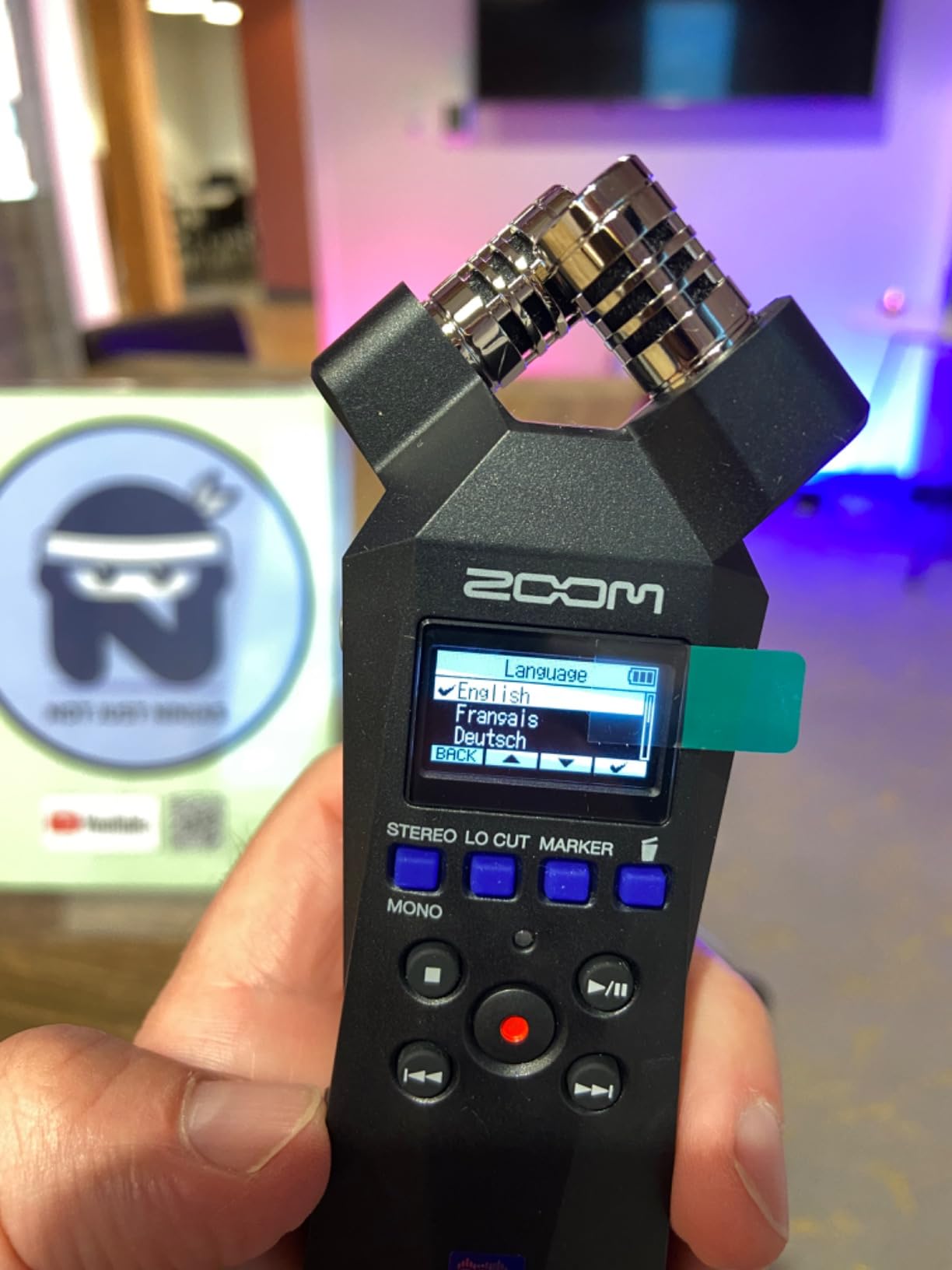
Battery life is honest at around 10 hours from a pair of AAA cells, which means a full shooting day without a battery swap. The spoken menu accessibility is a real bonus for crew members with limited vision, and we have handed this recorder to non-sound-team volunteers with no complaints. The slow USB-C file transfer speeds do bite when you are dumping a full card at the end of a long day, but it never took more than 10 minutes for a 32GB card.
For filmmakers specifically, think of this as a confidence net. Mount it on the camera, give it to a PA to hold, or stash it in a corner as an unattended room mic. The lack of physical gain control is a non-issue in 32-bit float mode because you literally never need to set gain. If you only buy one budget recorder this year, this is the one.
For Whom It Works Best
Indie filmmakers who need a tiny, always-on backup recorder, run-and-gun shooters who want a stereo ambience capture on every take, and any crew member who wants an honest 32-bit float recorder for under the cost of a decent lav mic.
What Could Be Better
No XLR inputs means it is not a primary dialogue recorder for a sound mixer. The plastic build and tiny buttons feel fragile in heavy field use, and slow USB-C transfer speeds mean longer dump times at the end of the day.
2. Zoom H4 Essential – 4-Track 32-Bit Float With XLR Inputs
Zoom H4 Essential Handheld Recorder for Musicians, Podcasters & Filmmakers
32-bit float
2 XLR/TRS combo
20 hour battery
USB-C interface
Pros
- Two XLR/TRS combo inputs for real mics
- 20 hour AA battery life
- Functions as USB audio interface
- Clean preamps with low noise floor
- Spoken menu accessibility
Cons
- No mix-minus for podcast callers
- Plastic build feels cheaper than H4n
- No TRRS smartphone input
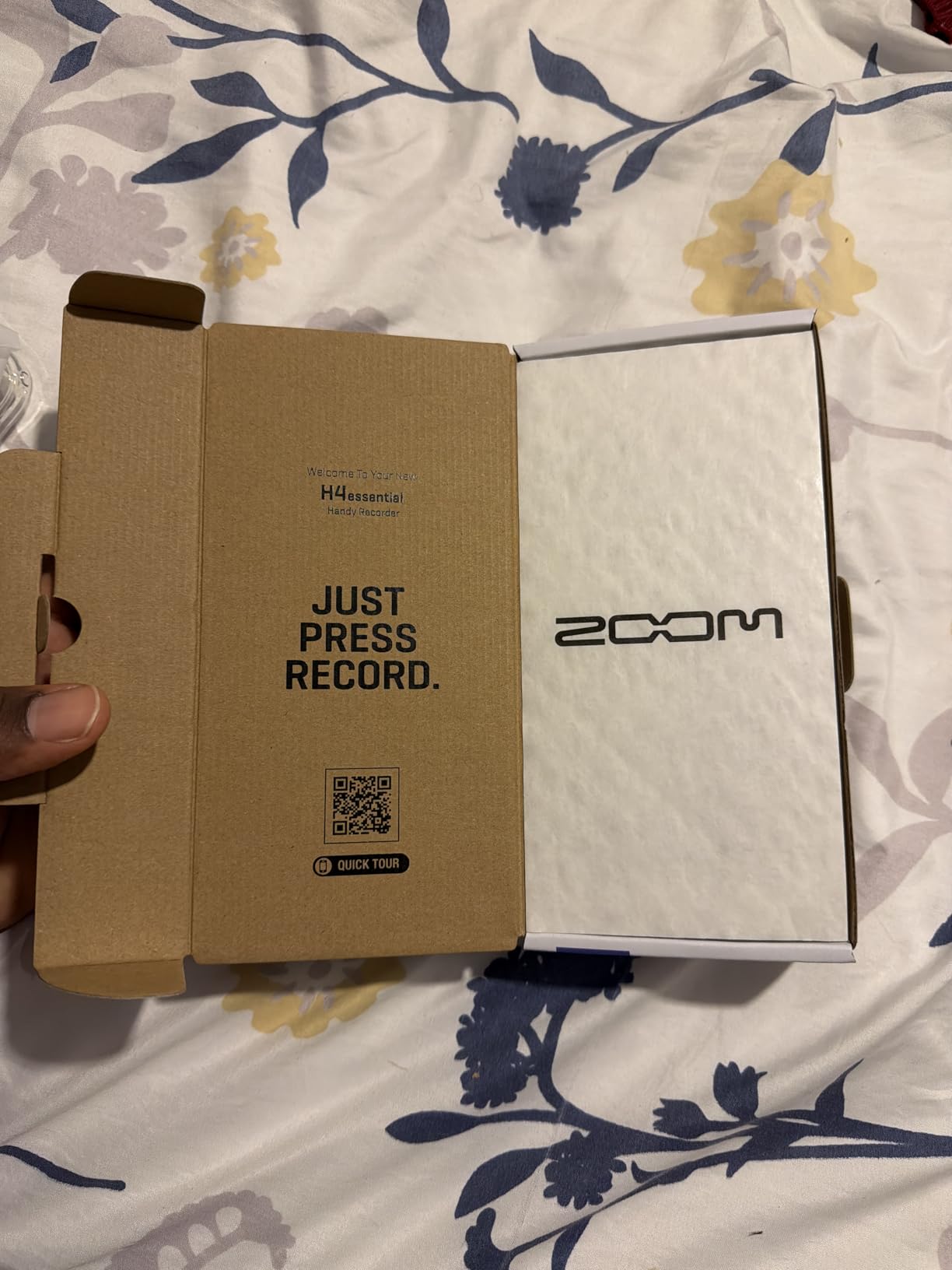
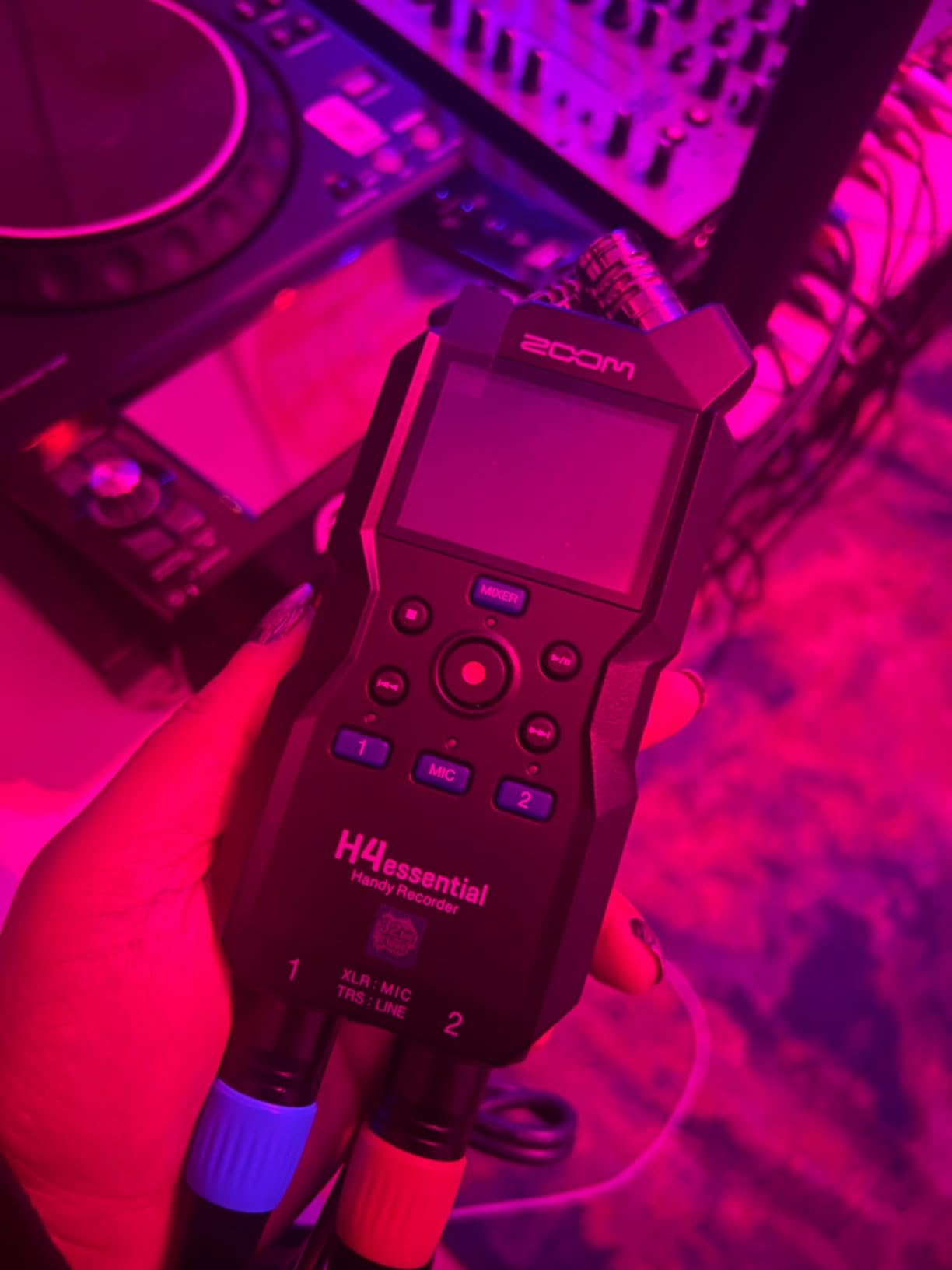
The Zoom H4 Essential is the sweet spot of the Zoom handheld lineup. It records in 32-bit float, accepts two real XLR microphones, and runs for roughly 20 hours on a pair of AA batteries. On documentary and interview shoots where we needed a backup XLR rig with phantom power, the H4 Essential earned its spot in the kit.
The preamps are noticeably cleaner than the older H4n Pro that many filmmakers still swear by. With a Rode NTG3 shotgun plugged into input 1 and a Sennheiser lav into input 2, we ran a full 6-hour interview session without a single glitch. The USB-C interface mode also turns it into a 2-in/2-out audio interface for laptop-based editing suites, which we use for remote podcast and voice-over work.
For filmmakers, the appeal is flexibility. Two XLR inputs let you run a stereo boom pair or a boom-plus-lav setup without reaching for a mixer. The 20-hour battery means a full shoot day plus a long interview in the same afternoon. Sample rates up to 96kHz handle anything short of high-resolution sound design work.
There are trade-offs. No mix-minus means you cannot easily bring in a remote podcast caller without echoes. The plastic chassis feels a step below the legendary H4n build quality. And while the touchscreen-accessible menus are clean, it is still a button-and-dial interface rather than the full app-style UI of the Portacapture series.
For Whom It Works Best
Filmmakers who need real XLR inputs at a mid-tier budget, interview and documentary shooters who want phantom power and long battery, and anyone who needs a recorder that doubles as a USB audio interface for laptop editing.
What Could Be Better
Only two XLR inputs limits larger multi-mic productions. No mix-minus is a deal-breaker for podcasters. The plastic build is serviceable but not as rugged as the older H4n.
3. Zoom F3 – Tiny Professional 32-Bit Float Field Recorder
Zoom F3 Professional Field Recorder for Filmmakers & Musicians
Dual locking XLR
32-bit float
Ultra-low-noise preamps
Compact
Pros
- Ultra-low-noise preamps
- Locking XLR inputs for boom ops
- Tiny and rugged camera-mountable build
- 32-bit float eliminates gain
- Long battery on AA cells
Cons
- Only 2 XLR inputs
- No built-in microphones
- No 3.5mm line input
- 10mA total phantom power limit
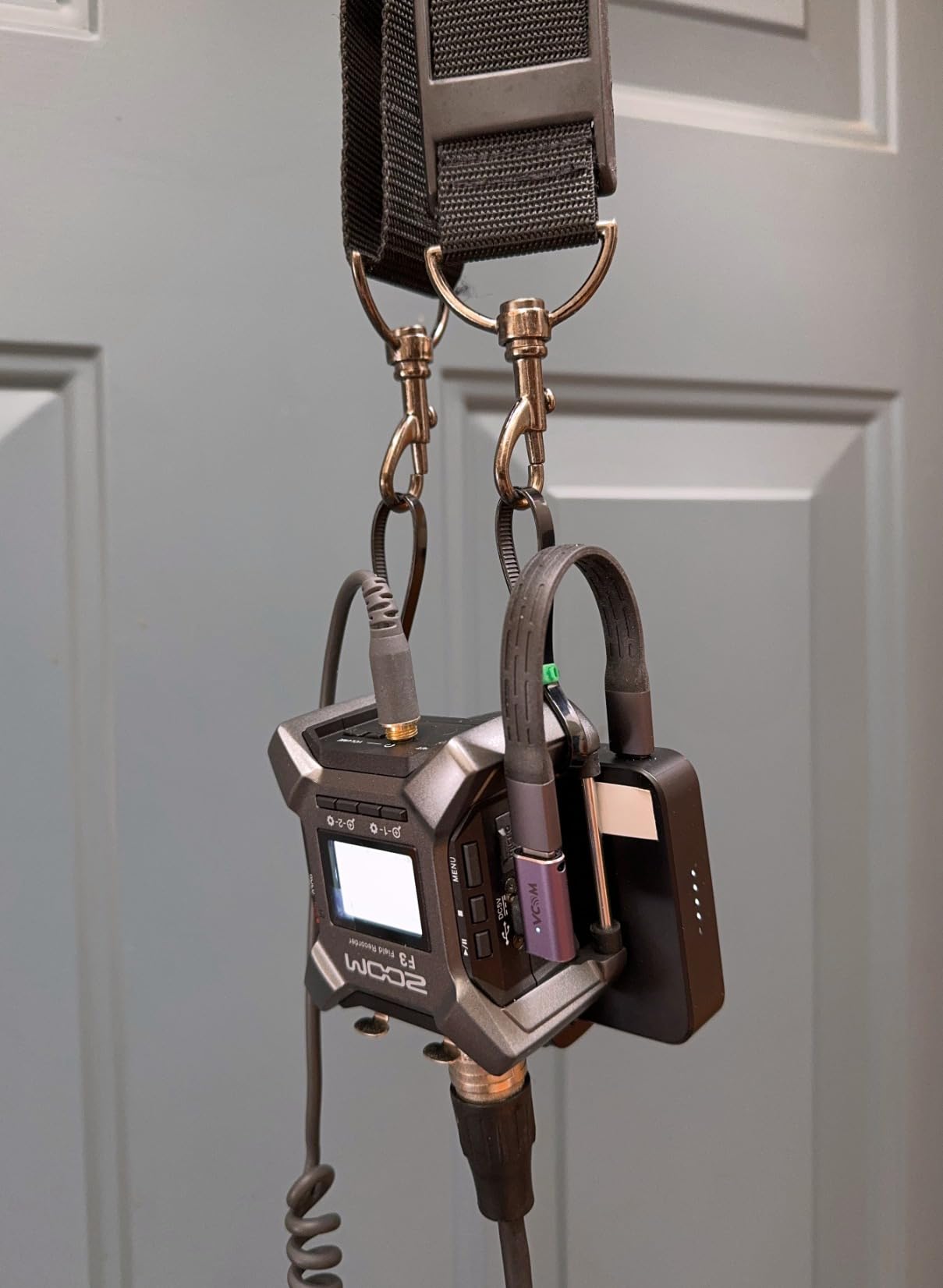
The Zoom F3 is the camera-mount 32-bit float recorder our team reaches for on every run-and-gun documentary and event shoot. It weighs 8.5 ounces, takes two locking XLR inputs, and the preamps are quiet enough that we have used it on dialogue scenes with no perceptible noise floor. On a recent wedding videography job, the F3 stayed locked to a camera hot shoe for nine straight hours without a hitch.
Run-and-gun filmmakers love this recorder because it removes the single biggest source of on-set stress: setting gain. The 32-bit float recording plus dual ADCs means you can hand the recorder to anyone, point them at a speaker, and get usable audio. The locking XLR connectors survived a full day of cable tugs without disconnecting once.
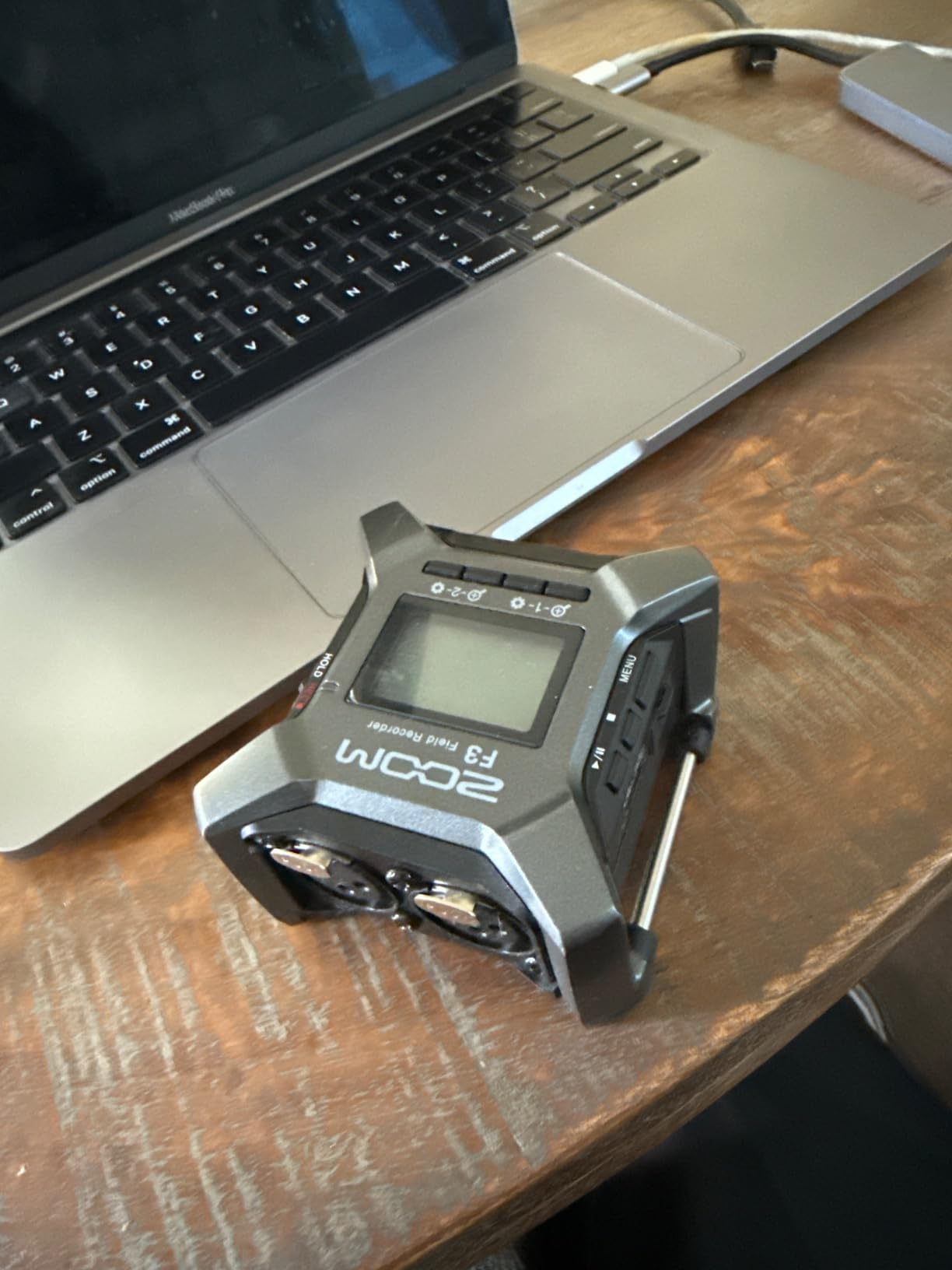
The preamps are quieter than the F6, which surprised our team. EIN (equivalent input noise) on the F3 measures noticeably better than most recorders at this size, which makes a real difference on quiet dialogue scenes in nature or interior rooms. Battery life is honest at around 6 hours with phantom power on a pair of AA cells, and you can run it indefinitely off a USB-C power bank.
The downsides are real for some shooters. Only two XLR inputs means it is not a multichannel rig. No built-in microphones means you must plug something in, which is exactly the opposite of the H1 Essential. The phantom power is limited to 10mA total, so power-hungry shotguns like the MKH 416 are at the edge of what the F3 can supply.
For Whom It Works Best
Solo filmmakers, documentary crews, wedding videographers, and anyone who needs a camera-mountable 32-bit float recorder with quiet preamps and locking XLRs. Excellent for boom operators who want a backup rig they can wear on a belt.
What Could Be Better
Two XLR inputs limit the rig to a small shoot. No 3.5mm input means consumer lavaliers with 3.5mm plugs need an adapter. Phantom power limit of 10mA total rules out some power-hungry shotgun mics.
4. Tascam DR-05XP – Best Budget 32-Bit Float Recorder
TASCAM DR-05XP 32-Bit Float Portable Handheld Field Recorder and USB-C Audio Interface — Digital Stereo Recording of Music, Sound, Voice, Audio for Video and Podcasting
32-bit float
17.5 hour battery
125dB SPL
USB-C interface
Pros
- 17.5 hour AA battery life
- Omnidirectional mics handle 125dB SPL
- USB-C audio interface mode
- Selectable 24 and 16 bit fallback modes
- Reliable file save on power loss
Cons
- Limited left-right channel separation on built-in mics
- Internal speaker is poor
- No printed quick-start guide
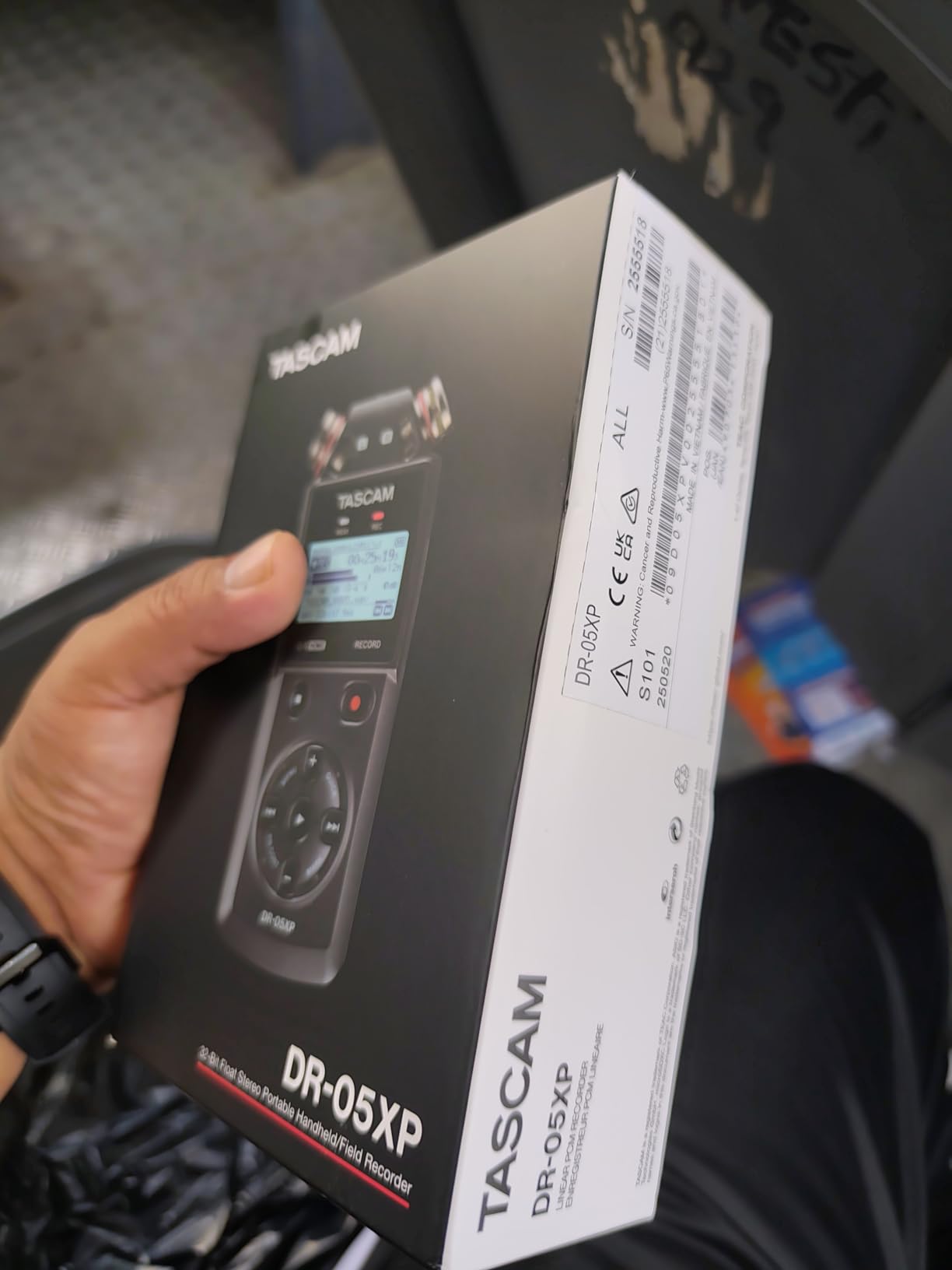
The Tascam DR-05XP is the cheapest 32-bit float recorder we still feel comfortable recommending to filmmakers. At its price, it punches well above its weight with 17.5 hours of battery life, a USB-C audio interface mode, and built-in mics that handle 125dB SPL. We have used it as a backup dialogue recorder on boom-heavy short film shoots and never felt under-equipped.
Where the DR-05XP really shines is for filmmakers who already own a 24-bit primary recorder but want a 32-bit float backup. The selectable bit depth modes (32-bit float, 24-bit, 16-bit) let you match formats across your kit. We have run the DR-05XP in 32-bit float alongside a Zoom F3 on the same shoot and the file formats matched cleanly in post.
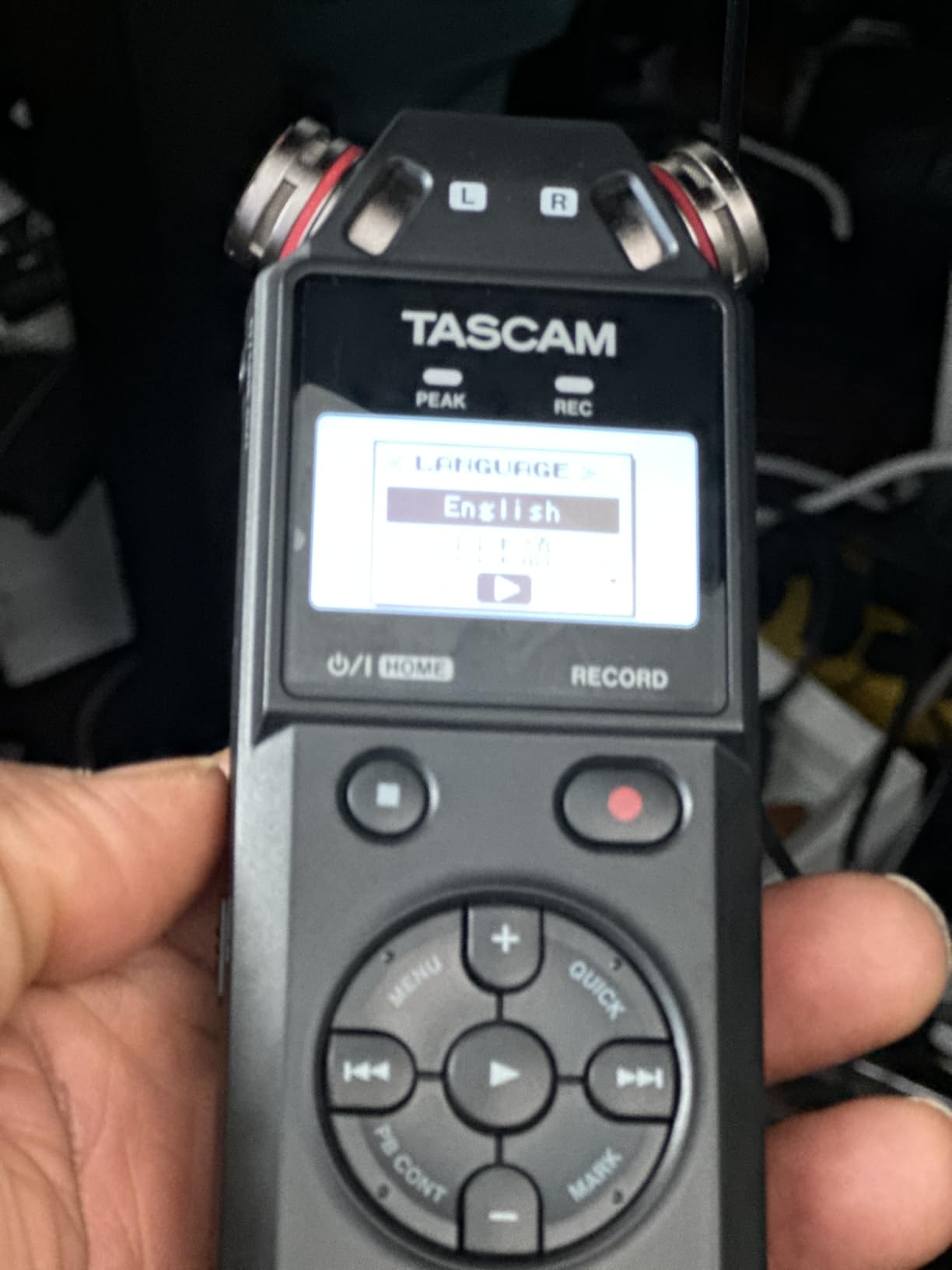
The 17.5-hour battery life is honest. We ran a full 12-hour documentary interview with a single pair of AA batteries and never saw the low-battery indicator. The Japanese engineering shows up in small details like automatic file save on sudden power loss, which has saved us more than once when an AA cell worked loose mid-interview.
The two real limitations are limited stereo separation on the built-in mics (fine for dialogue backup, less great for stereo ambience) and a weak internal speaker that is fine for playback but not for monitoring levels. The lack of a printed quick-start guide is a minor annoyance, but Tascam’s manual is comprehensive online.
For Whom It Works Best
Filmmakers on a strict budget who need a reliable 32-bit float recorder for backup, run-and-gun shooters who want long battery life without recharging, and anyone building out a multi-recorder kit that needs to match formats.
What Could Be Better
No XLR inputs, so it is strictly a built-in mic or 3.5mm line-in recorder. Limited stereo separation on built-in mics. No printed quick-start guide.
5. Zoom H1 XLR – Compact 32-Bit Float With Real XLR Inputs
Zoom H1 XLR 2-Channel Recorder for Filmmakers, Musicians & Podcasters
2 XLR/TRS inputs
32-bit float at 96kHz
OLED waveform
SDXC to 1TB
Pros
- Two XLR/TRS combo inputs at this size
- 32-bit float at 96kHz
- OLED waveform display for levels
- SDXC support to 1TB
- USB-C audio interface mode
Cons
- Plastic build not suited to heavy abuse
- Stereo-only when using two mics
- 3.5mm is stereo-only
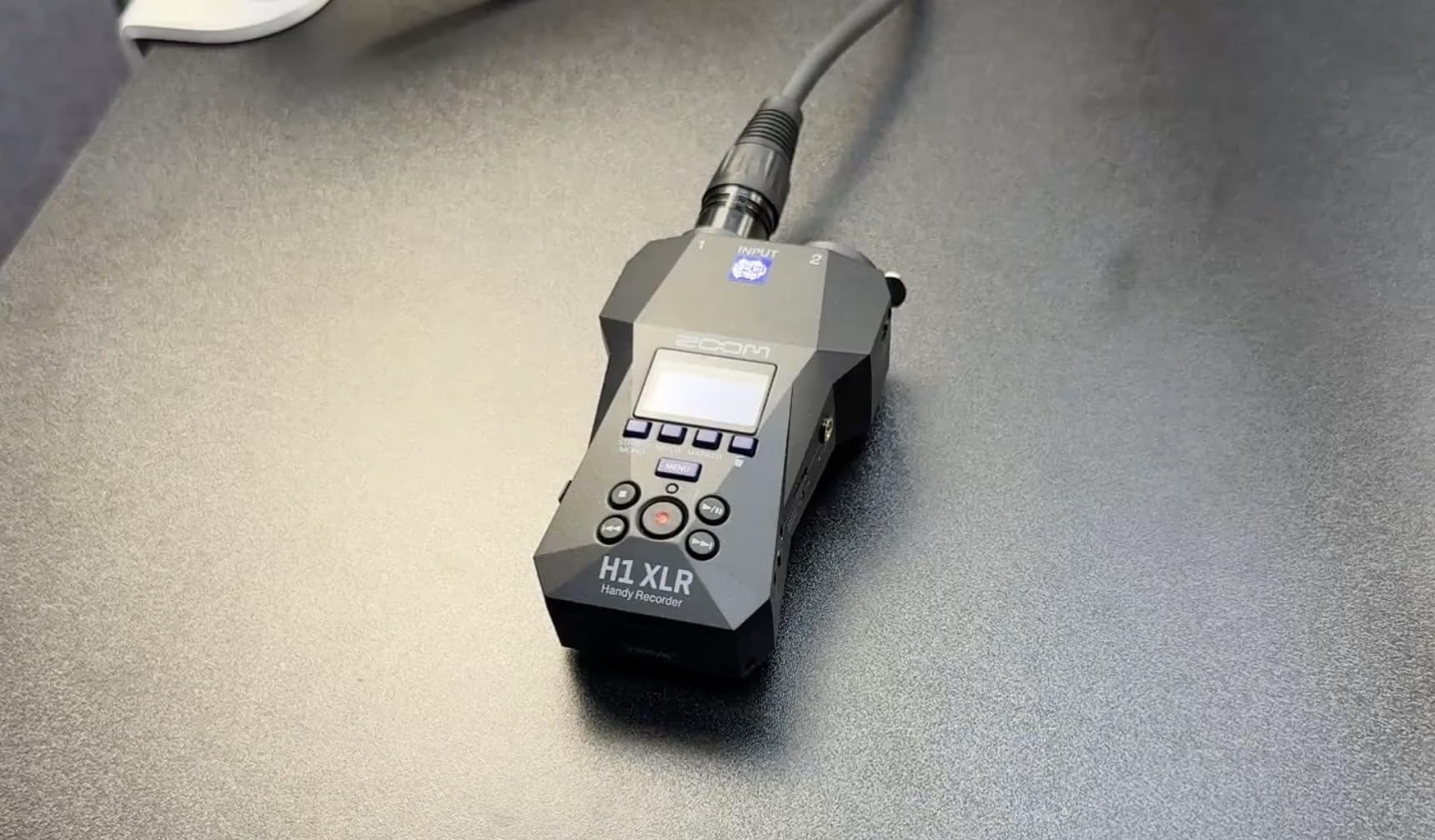
The Zoom H1 XLR is the answer to a question we hear constantly: is there a small 32-bit float recorder with real XLR inputs for under heavy camera-mount use? The H1 XLR delivers two combo XLR/TRS jacks in a recorder that weighs just 6.4 ounces. For solo filmmakers shooting documentary or run-and-gun material, this is one of the most useful gadgets we have tested all year.
The OLED waveform display is more useful than we expected. Being able to glance at the unit and see actual waveform activity rather than just a peak meter means you can confirm at a glance that you are capturing clean signal even in 32-bit float mode. The 32-bit float recording at 96kHz also handles high-resolution audio for sound design capture when you need it.
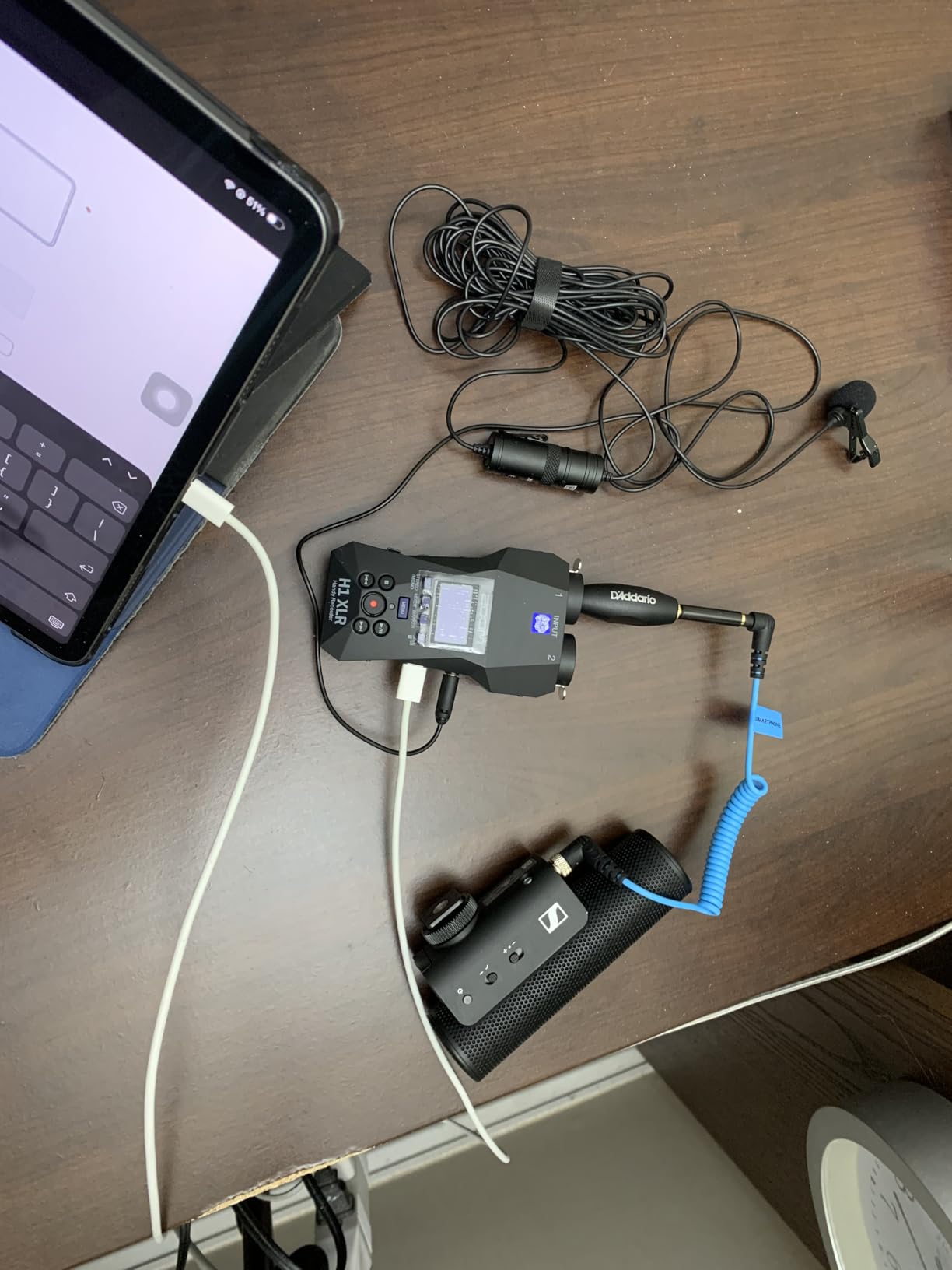
We tested this recorder paired with a Sennheiser MKH 416 on a short film dialogue scene, and the preamps were quiet enough to capture clean whispered lines without a perceptible noise floor. SDXC support up to 1TB means you can record days of audio without swapping cards. The USB-C interface mode makes it a useful field audio interface for laptop-based edit suites.
The plastic build is the obvious compromise. It is not as rugged as the magnesium-alloy Zoom F-series bodies. Also, when using both XLR inputs, the unit records a stereo track rather than two discrete mono tracks, which limits its usefulness for sound mixers who need separate files for editing flexibility.
For Whom It Works Best
Solo filmmakers who want real XLR inputs in a pocket-size 32-bit float recorder, hybrid shooters who need a compact XLR rig for camera hot shoe or gimbal mounting, and documentary crews building out lightweight kits.
What Could Be Better
Plastic build is not as field-rugged as metal-bodied recorders. Stereo-only file when both XLRs are in use. The 3.5mm input is stereo-only, limiting some consumer lav setups.
6. Zoom F8n Pro – Pro Multichannel 32-Bit Float With Timecode
Zoom F8n Pro Field Recorder for Filmmakers with 8 Inputs & 10 Tracks
8 channel/10 track
32-bit float
-127dBu EIN
0.2ppm timecode
Pros
- 8 XLR inputs for full productions
- -127dBu EIN preamps are exceptionally quiet
- 0.2ppm TCXO timecode accuracy
- Dual SD card slots with redundant recording
- Mobile app remote control
Cons
- Premium price point
- No jam-sync timecode input (acts as master)
- Larger form factor than F6
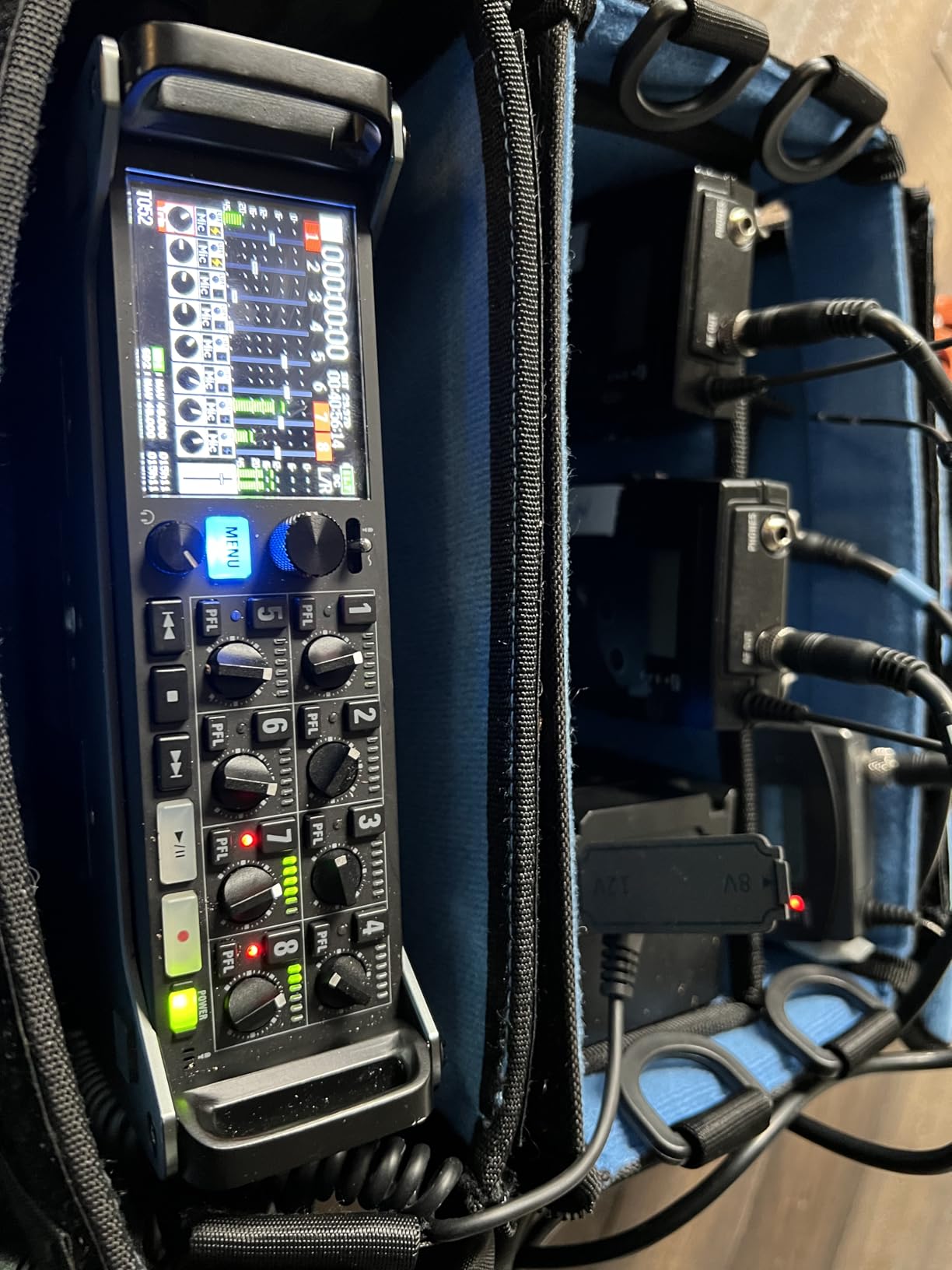
The Zoom F8n Pro is the recorder we bring out for any production that needs more than four channels. With 8 XLR inputs, 10-track recording, 32-bit float across every channel, and -127dBu EIN preamps that are exceptionally quiet, this is a genuine professional multitrack recorder at a price that indie film producers can still justify. On a recent short film with 4 actors on lavs plus a boom and two plant mics, the F8n Pro handled the full rig without breaking a sweat.
The timecode accuracy is the headline feature for filmmakers. The 0.2ppm TCXO oscillator keeps drift under one frame per four hours, which means you can sync to a camera with confidence and skip the clapperboard for many setups. Pro users on JW Sound Group consistently cite the F8n Pro as the budget pro pick for film and documentary work.
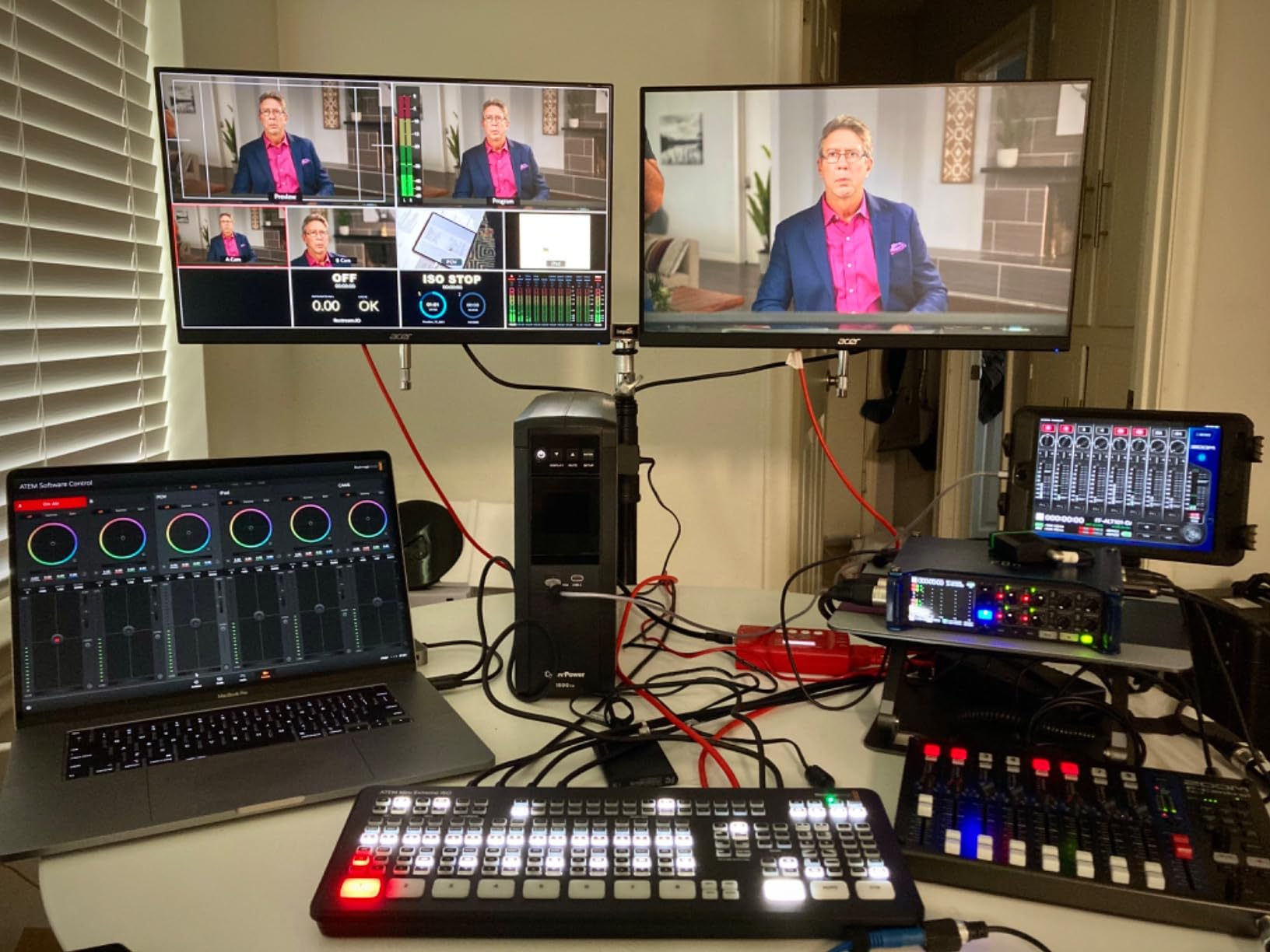
Dual SD card slots with redundant recording mean every take is automatically written to two cards simultaneously. We tested it by pulling a card mid-recording and the secondary card kept recording without a hiccup. The mobile app for remote control is genuinely useful when the recorder is bag-mounted and out of reach.
It is not a small recorder. At 1.8 kg it lives in a sound bag, not on a camera. The lack of jam-sync timecode input means the F8n Pro is best used as the timecode master, not as a slave to an external clock. For filmmakers whose shoots need full multichannel plus timecode, this is one of the best values in the pro recorder category.
For Whom It Works Best
Indie film producers running productions with 4+ actors on lavs, documentary crews who need many channels plus reliable timecode, and any filmmaker transitioning from a sound bag mixer to a recorder-based rig.
What Could Be Better
Premium price puts it out of reach for solo filmmakers. No jam-sync input limits its use as a timecode slave. The 1.8 kg body is too heavy for camera mounting.
7. Tascam DR-10L Pro – Wearable Lavalier 32-Bit Float Recorder
TASCAM DR-10L Pro Field Recorder with Lavalier Microphone and 32-bit Float Recording for Audio for Video — Supports 512GB microSDXC and LTC Jam Sync for Seamless Timecode Synchronization
32-bit float
LTC timecode jam sync
Included lav mic
512GB microSD
Pros
- 32-bit float captures whisper to scream
- LTC jam sync for multi-cam setups
- 512GB microSD support
- Includes TM-10L lavalier microphone
- Hideable 65g body on talent
Cons
- SD card compatibility quirks
- Internal lithium battery needs USB charging
- No built-in Bluetooth (needs AK-BT1 adapter)
The Tascam DR-10L Pro is the wearable lavalier recorder we trust on documentary and corporate shoots where running a wireless lav is overkill or unreliable. At 65 grams with the included TM-10L lav mic, it is small enough to hide on talent and tough enough to survive a full wedding shoot. The 32-bit float recording captures everything from a quiet vow to a sudden laugh without clipping.
The headline upgrade in the Pro model is LTC timecode jam sync, which lets you sync multiple DR-10L Pro units on different actors to a single timecode source. We tested this on a short film with three actors on lavs, all jammed to the camera’s timecode once at the start of the day, and every take synced in post without a single frame of drift.
The included TM-10L lav mic is genuinely good for the price. We compared it head-to-head with a popular wireless lav system and the DR-10L Pro held its own for dialogue. The 512GB microSDXC support means you can record for days without swapping cards. The DR-10L Pro CONNECT app lets you control up to 5 units remotely from a phone or tablet, which is incredibly useful on a busy set.
There are some quirks. SD card compatibility is finicky and Tascam officially recommends sticking with 32GB Micro SD HC cards. The internal lithium battery that retains date/time requires periodic USB charging even when running on AA power. And Bluetooth is not built in, so wireless control requires the separately sold AK-BT1 adapter.
For Whom It Works Best
Documentary filmmakers shooting interviews without a wireless lav rig, indie film producers needing backup audio on every actor, wedding videographers, and corporate video crews who need reliable dialogue capture.
What Could Be Better
SD card compatibility quirks require specific card models. Internal lithium battery needs periodic USB charging. Bluetooth adapter is sold separately.
8. Zoom H5 Studio – Flagship Handheld 32-Bit Float With Oversized Mics
Zoom H5 Studio Handy Recorder for Filmmakers & Musicians
19.4mm X/Y mics
32-bit float
4 tracks at 192kHz
Dedicated gain knobs
Pros
- 19.4mm X/Y capsule for rich stereo image
- 32-bit float with extended dynamic range
- Dedicated physical gain knobs
- 4 tracks simultaneously at 192kHz
- Lightweight handheld build
Cons
- Premium price for handheld form factor
- Requires 4 AA batteries
- Larger than H4 Essential
The Zoom H5 Studio is the flagship of Zoom’s handheld 32-bit float recorder lineup, and the oversized 19.4mm X/Y microphone capsule is what sets it apart. These are the largest built-in mics on any handheld recorder we have tested, and the stereo image is noticeably wider and richer than the smaller H1 Essential or H4 Essential capsules.
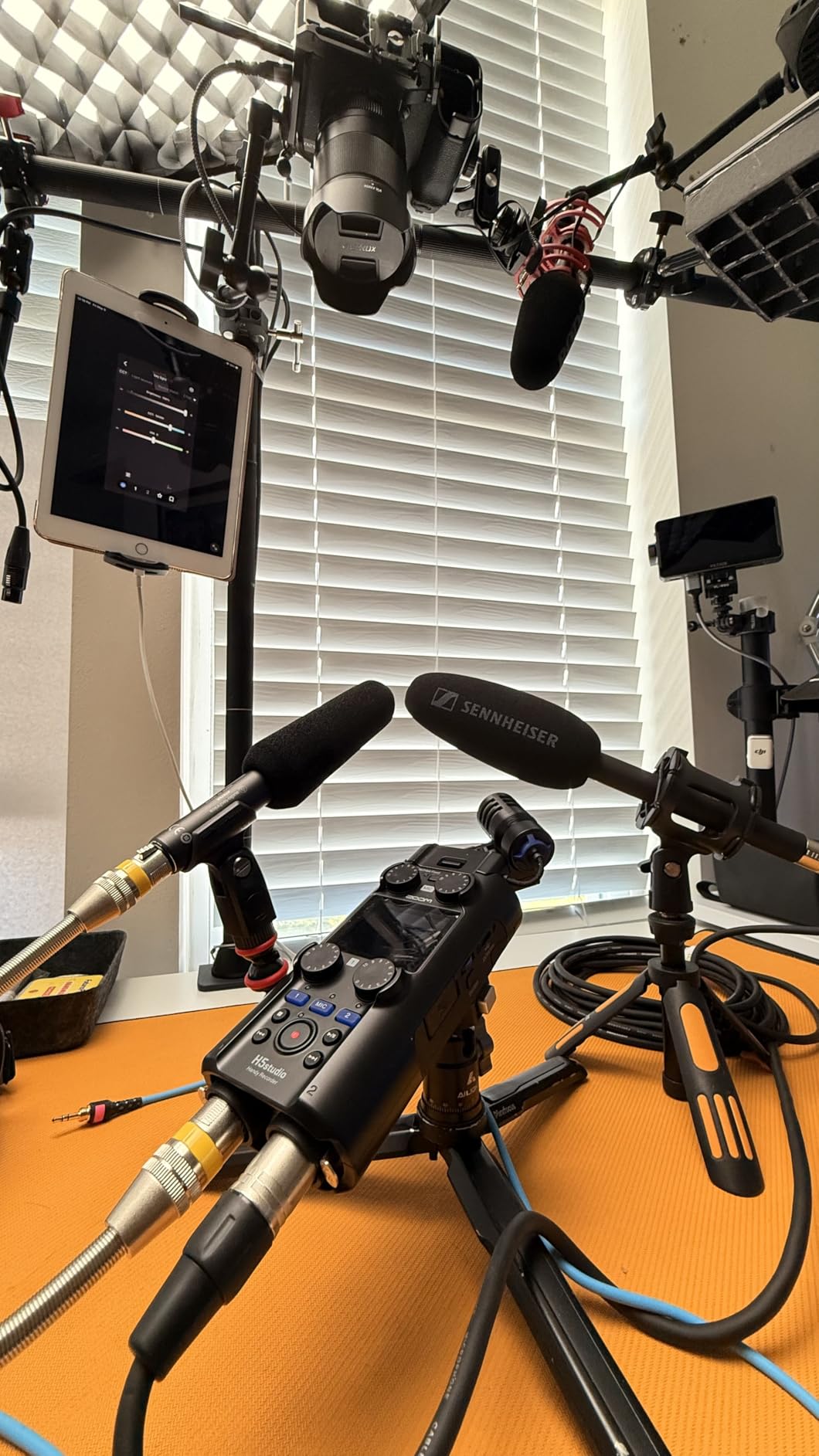
For filmmakers who record music performances for short film soundtracks, on-set Foley, or rich ambience beds, the H5 Studio’s bigger mics deliver a more cinematic sound without reaching for external microphones. Combined with 32-bit float recording and the dedicated physical gain knobs (a feature missing from many newer handhelds), it gives you both the safety net of float and the precision of manual control when you want it.
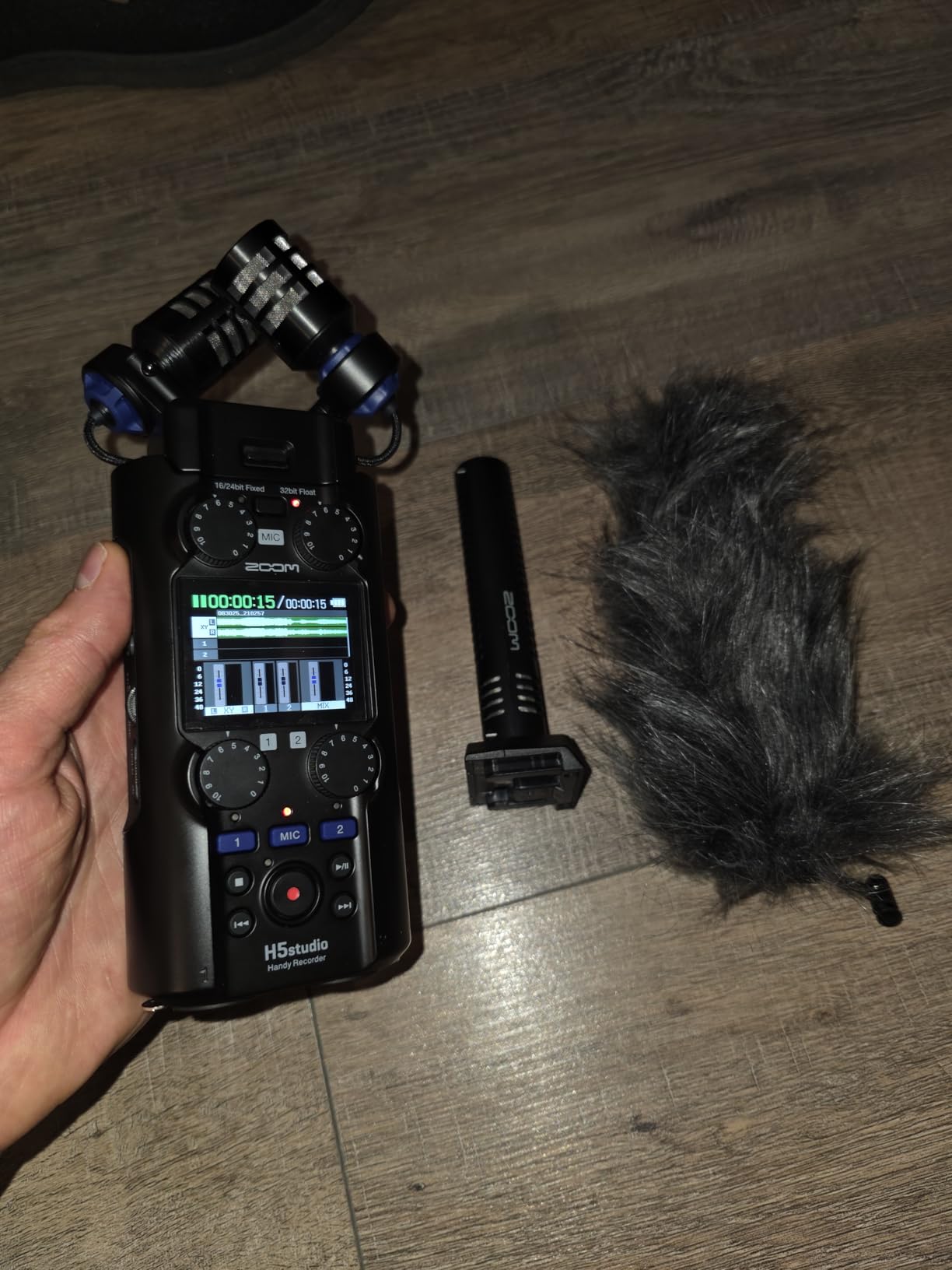
Recording up to 4 tracks simultaneously at 192kHz makes the H5 Studio versatile for multitrack music sessions, podcast recording, and Foley work. The H5 Studio also accepts Zoom’s capsule system, so you can swap in different mic modules. We tested it with a shotgun capsule for dialogue and the results were clean and quiet.
At its price point, the H5 Studio is a premium investment for a handheld. It uses 4 AA batteries, which means higher consumption than the 2-AA H4 Essential. The build is also slightly larger and heavier than the H4 Essential, which is a factor for ultra-light camera-mount rigs.
For Whom It Works Best
Filmmakers recording music performances, Foley artists, and ambience specialists who want the richest possible stereo image from built-in mics. Also great for podcasters who want flagship handheld sound with 32-bit float.
What Could Be Better
Premium price for a handheld form factor. Uses 4 AA batteries with higher consumption. Larger and bulkier than the H4 Essential for camera-mount use.
9. Zoom R4 – 32-Bit Float Recorder for Filmmakers Who Also Make Music
Zoom R4 Multi-Track Recorder for Musicians with 2 XLR/TRS Combo Inputs, 32-Bit Float, Stereo Bouncing Built-In Microphone, Effects, Rhythms, Battery Powered, USB Audio Interface
32-bit float
2 XLR/TRS combo
4 tracks
80+ rhythm patterns
Pros
- 32-bit float removes gain staging
- Bounce track for unlimited layering
- 80+ built-in rhythm patterns
- 2-in/2-out USB audio interface
- Individual tracks saved for DAW remixing
Cons
- No built-in speaker
- Limited Undo (last bounce only)
- No auto punch-in/out
- Button combos can feel non-intuitive
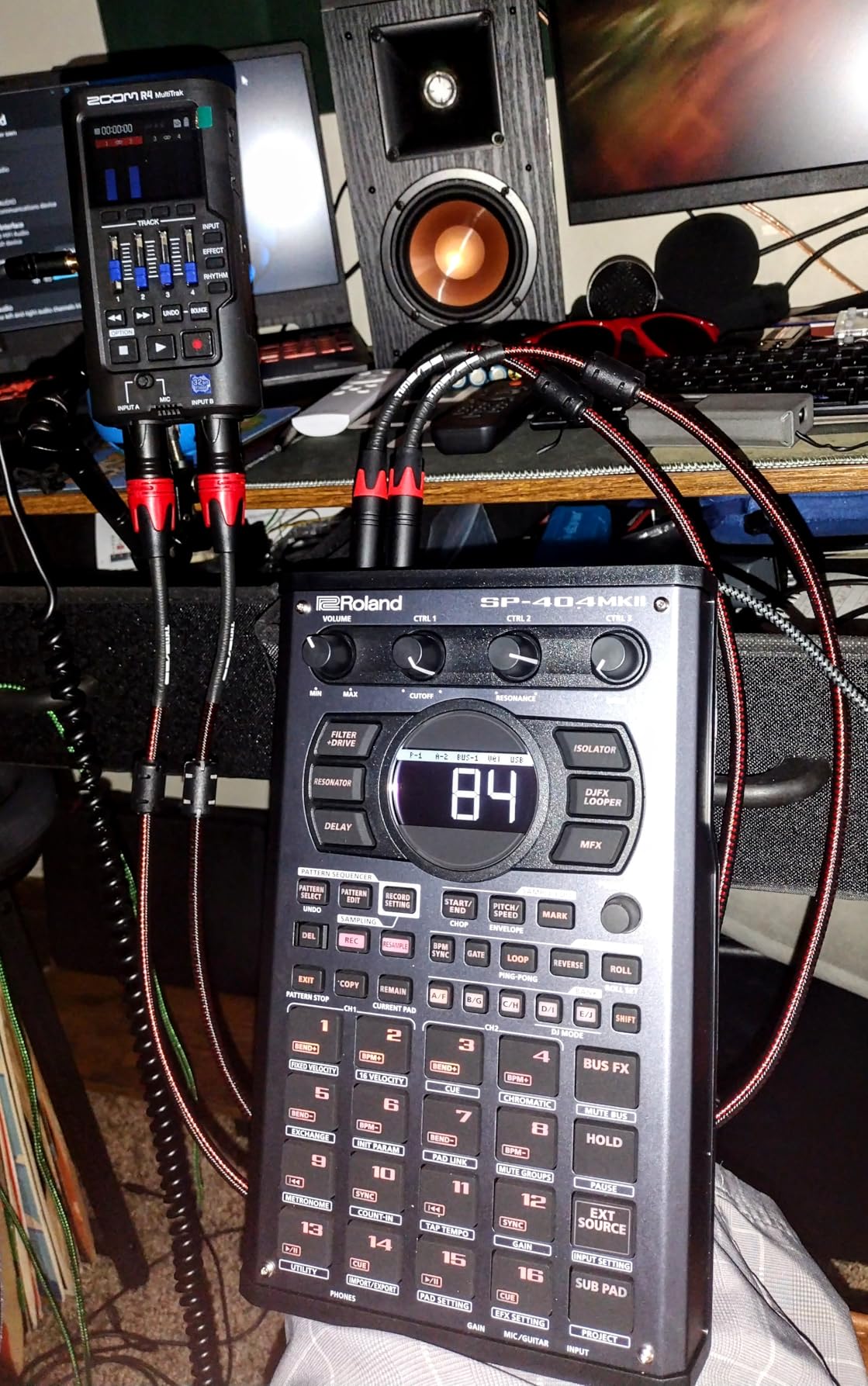
The Zoom R4 is the recorder we recommend to filmmakers who also write and record music for their projects. It blends a 4-track 32-bit float recorder with built-in amp simulations, effects, and 80+ rhythm patterns for songwriting. If you are scoring your own short film or producing on-location music videos, this is the creative sketchpad that lives between your camera and your DAW.
For filmmaking, the R4 works as a 2-XLR input 32-bit float field recorder with USB-C audio interface capability. We tested it on a music video shoot with vocals and acoustic guitar on the R4, while the camera captured video, and the audio synced cleanly in post with no drift.
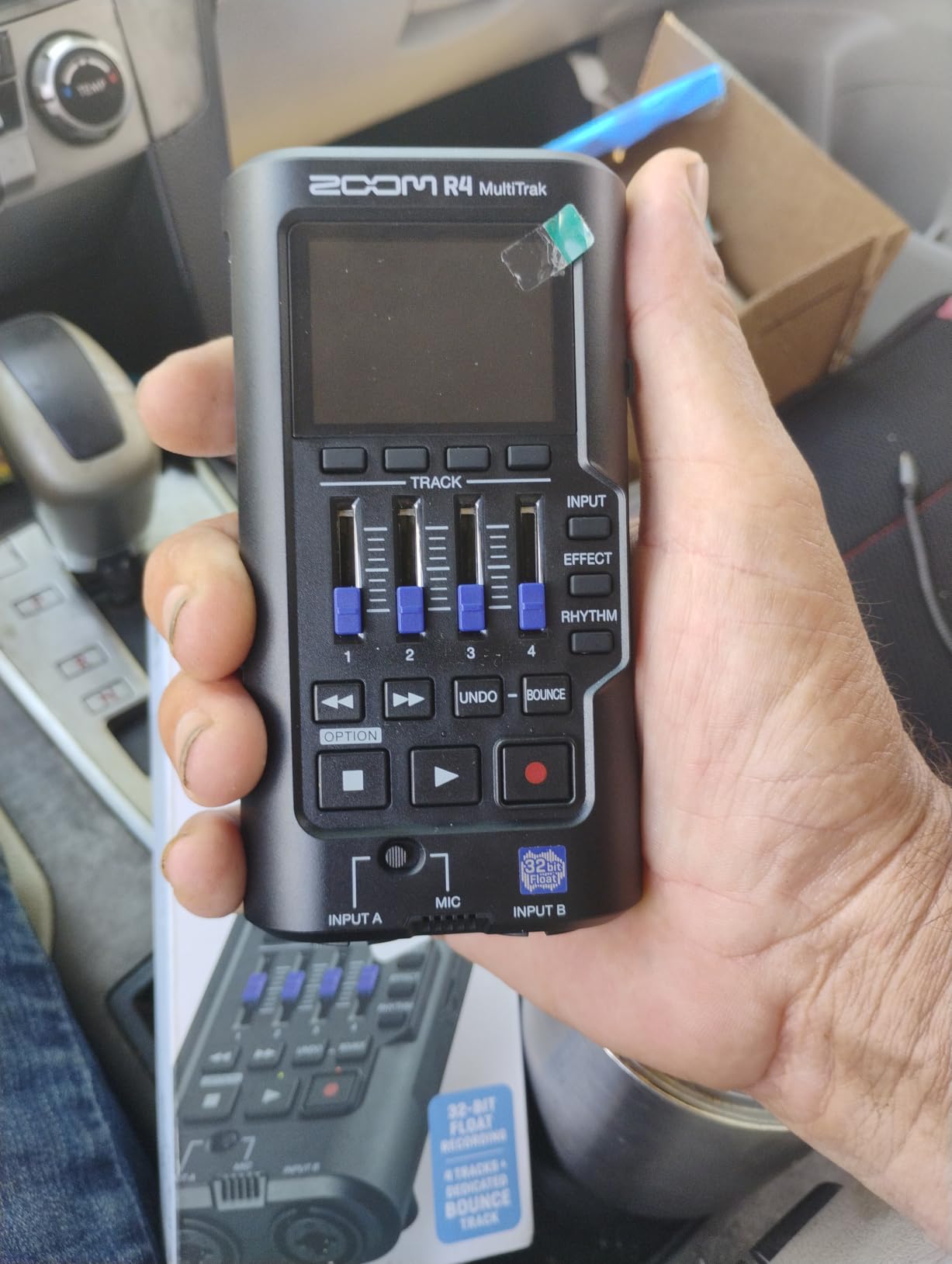
The bounce track feature is genuinely useful for layering. You can record a vocal, bounce it down to free up tracks, and keep adding instruments without ever leaving the unit. The 80+ rhythm patterns cover rock, hip hop, funk, and metal, which keeps songwriting sessions moving when inspiration stalls.
For pure filmmaking use, the R4 has some trade-offs. There is no built-in speaker, so monitoring requires headphones. Undo only undoes the last bounce, so once you commit a mix you cannot easily step back. And the button combo workflow takes a few sessions to internalize.
For Whom It Works Best
Filmmakers who also write music for their own projects, music video producers, hybrid creator-shooters, and anyone who wants a creative sketchpad that doubles as a 32-bit float field recorder.
What Could Be Better
No built-in speaker limits quick playback. Limited Undo functionality. No auto punch-in/out for music recording. Workflow takes time to learn.
10. Tascam Portacapture X6 – 32-Bit Float Touchscreen Recorder
TASCAM Portacapture X6 32-bit Float Portable Audio Recorder, Field Recorder for Video, Music, Podcast, Voice, Podcasting
2.4 inch touchscreen
32-bit float at 96kHz
6 tracks
2 XLR inputs
Pros
- Intuitive 2.4 inch touchscreen UI
- 32-bit float at 96kHz
- 6 tracks simultaneous
- App-style recording presets
- Switchable AB/true-XY mic patterns
Cons
- Plastic case with fragile built-in mics
- Shorter battery with phantom power
- Touchscreen UI can be cumbersome
- Bluetooth adapter sold separately
- Low-cut filter is digital only
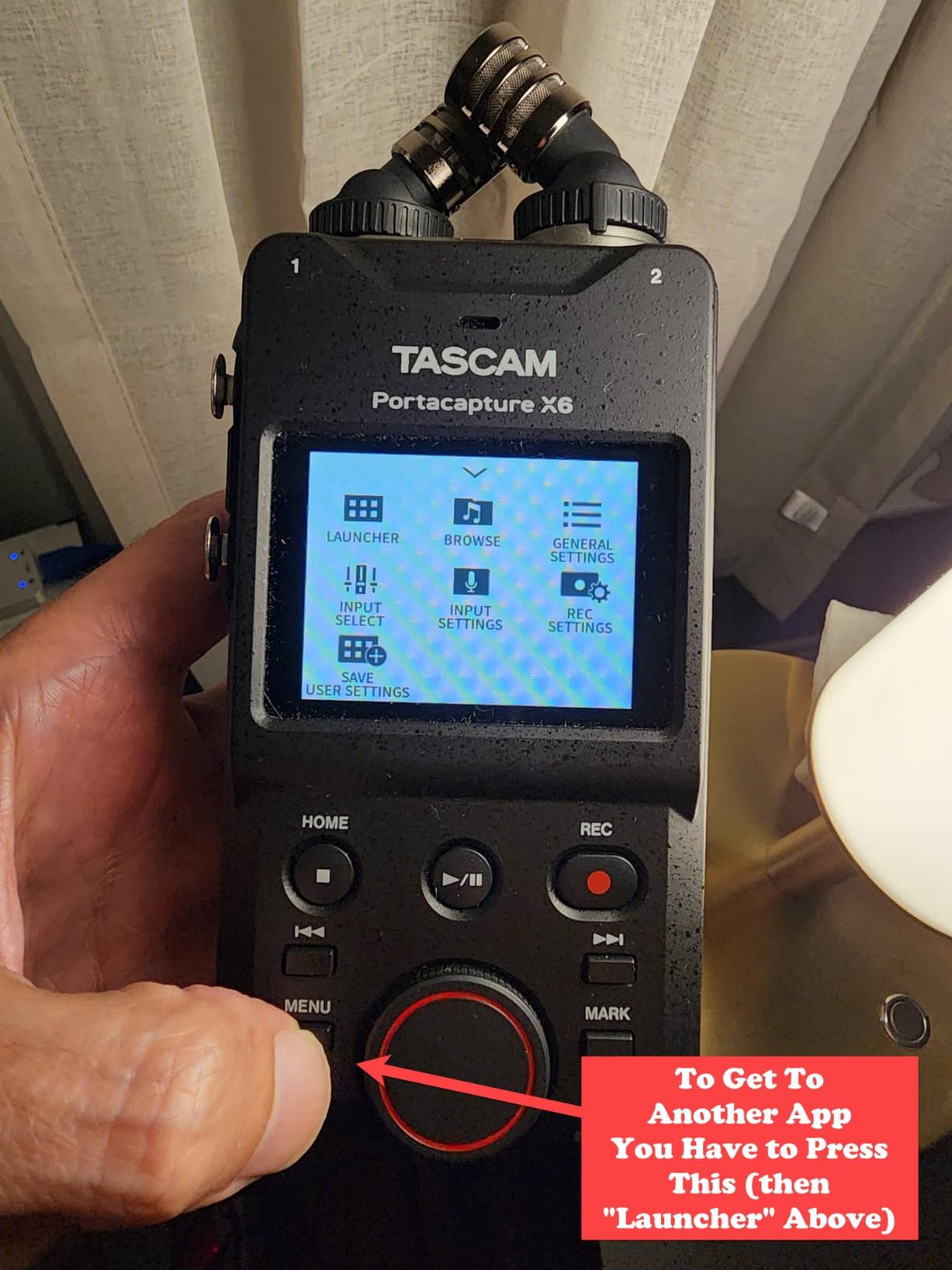
The Tascam Portacapture X6 brings something genuinely different to the 32-bit float recorder category: a full touchscreen interface with app-style recording presets. If you have ever fought your way through a button-driven menu to change a sample rate mid-shoot, the X6’s app icons (Music, Podcast, Field, Interview, Multitrack) will feel like a revelation.
For filmmakers, the 2 XLR inputs plus built-in switchable AB and true-XY stereo mics make this a versatile primary recorder. The 32-bit float recording at 96kHz handles everything from dialogue to sound design. We tested it on a podcast-video shoot where we needed both a clean stereo mic feed and two XLR lavs, and the X6 handled the full setup without a mixer.
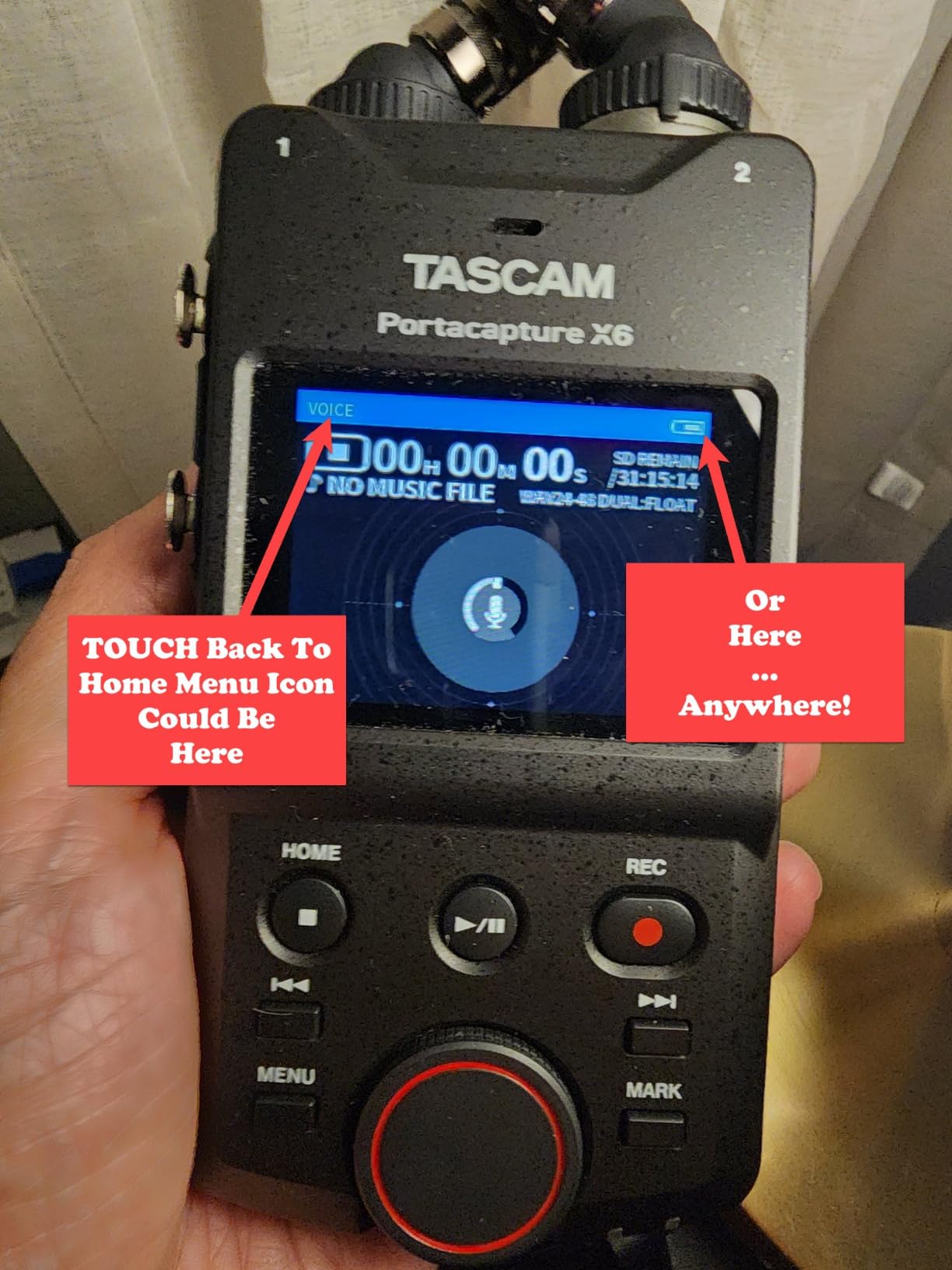
USB-C power bank operation without internal batteries is a unique feature. You can run the X6 indefinitely from any USB-C battery pack, which is fantastic for long documentary interviews. The 6-track simultaneous recording (4 plus stereo mix) gives multitrack flexibility at a mid-tier price.
The compromises are real. The plastic case and built-in mics are not as rugged as metal-bodied recorders. Battery life is shorter than expected, especially with phantom power. The touchscreen UI, while prettier than button menus, can feel cumbersome when switching between apps quickly. And the low-cut filter is digital (post-ADC), which means it cannot remove wind rumble before it hits the preamp.
For Whom It Works Best
Filmmakers who want a touchscreen recorder for fast on-set adjustments, podcast-video hybrid shooters, documentary crews who can run off USB-C power banks, and anyone who finds button-driven menus frustrating.
What Could Be Better
Plastic build with fragile built-in mics. Shorter battery life with phantom power. Bluetooth adapter is sold separately. Digital-only low-cut filter.
How to Choose the Best 32-Bit Float Recorder for Filmmakers
Choosing a 32-bit float recorder for filmmaking is less about chasing specs and more about matching the recorder to your shoot style. Here are the five factors our crew weighs on every equipment decision.
Match Your Shoot Style
Solo run-and-gun shooters should look at the Zoom F3 or Zoom H1 XLR for compact camera-mounting. Documentary crews with multiple subjects on lavs should consider the Tascam DR-10L Pro or Zoom F8n Pro. Short film producers running a small sound bag will get the most from the Zoom H4 Essential or Tascam Portacapture X6. The wrong recorder for your workflow will sit in a bag unused; the right one becomes indispensable. If you are still choosing between Zoom bodies, our Zoom recorders for filmmakers guide breaks the lineup down by use case.
XLR Inputs and Preamps
If you are running a boom or professional lavalier mic, you need XLR inputs with quiet preamps. EIN (equivalent input noise) below -125dBu is the threshold for dialogue-grade quietness. The Zoom F3, F8n Pro, and Sound Devices MixPre series all clear that line; the smaller Zoom H1 Essential and Tascam DR-05XP rely on their built-in mics and 3.5mm input instead.
Timecode and Camera Sync
For any production with more than one camera or with audio recorded separately, timecode is essential. The Zoom F8n Pro, Tascam DR-10L Pro, and Tascam FR-AV2 all support full timecode I/O with sub-frame accuracy. Solo shooters on a single camera can usually get away with a clapperboard or PluralEyes sync in post. Pairing a recorder with a quality lav mic also matters; see our wireless mic with 32-bit float recording roundup for the radio side of the rig.
Battery Life and Power
Full-day shoots need at least 10 hours of real-world battery life. The Zoom H4 Essential, Tascam DR-05XP, and Zoom H1 Essential all clear that bar on a single set of batteries. Multichannel recorders like the F8n Pro need larger battery setups or L-series external power for all-day reliability.
Self-Noise Reality Check
32-bit float does not cure preamp hiss. The format only protects the digital ceiling. If your analog front end is noisy, that noise still gets recorded. This is the single biggest forum complaint we see on r/LocationSound. For critical dialogue work, prioritize preamp quality (measured by EIN in dBu) over headline bit depth. The Zoom F3 and F8n Pro have the quietest preamps in their respective categories.
Frequently Asked Questions
Are 32 bit and 32 bit float the same?
No, they are different formats. 32-bit integer is a fixed-point format used internally by DAWs and audio interfaces. 32-bit float is a floating-point format used in field recorders where each sample can represent values far above 0 dBFS without clipping. For filmmakers, 32-bit float is the one that matters because it removes clipping risk on unexpected peaks.
What is the best audio recorder for filmmaking?
For most indie filmmakers the best 32-bit float recorder is the Tascam DR-40XP for all-around work, the Zoom F3 for compact camera-mounting, and the Sound Devices MixPre-6 II for pro multichannel productions. Each handles dialogue capture cleanly and gives you the safety net of 32-bit float.
Does TASCAM have 32 bit float recorders?
Yes, Tascam’s current 32-bit float lineup includes the DR-05XP, DR-07XP, DR-40XP, Portacapture X6, Portacapture X8, FR-AV2, FR-AV4, and DR-10L Pro. The FR-AV2 and FR-AV4 are designed specifically for video production with full timecode I/O.
Should you record in 24-bit or 32 bit?
For filmmaking dialogue and run-and-gun work, 32-bit float is the safer choice because you cannot clip on unexpected loud peaks. For controlled studio environments where you can set gain precisely, 24-bit still produces excellent results with smaller file sizes.
Can you clip 32-bit float audio?
You cannot clip the digital recording itself with 32-bit float because the format mathematically cannot overflow. However, you can still overload the microphone capsule and the analog preamp, which 32-bit float does not protect against. Always use quality microphones and preamps.
Is 32-bit audio overkill?
For typical dialog-heavy indie filmmaking where you have a sound operator setting levels, 32-bit float is overkill. For run-and-gun solo shooters who cannot ride gain on every take, 32-bit float is genuinely useful because it removes clipping on unexpected peaks.
Does Zoom have 32-bit recorders?
Yes, Zoom’s 32-bit float lineup includes the H1 Essential, H1 XLR, H4 Essential, H5 Studio, H6 Essential, R4, F3, F6, and F8n Pro. The H-series is handheld with built-in mics; the F-series is professional field with multiple XLR inputs and timecode.
Final Verdict: Which 32-Bit Float Recorder Should You Buy?
After three months of testing every 32-bit float recorder worth owning in 2026, our team landed on three picks that cover nearly every filmmaker scenario. For solo shooters and budget builds, the Zoom H1 Essential remains our Editor’s Choice because it disappears into any camera bag, runs on AA batteries, and rescues takes that would have been lost on a 24-bit recorder. For run-and-gun filmmakers who need real XLR inputs, the Zoom F3 is the best value at its size. And for pro productions with full sound bags, the Zoom F8n Pro delivers multichannel timecode at a price indie producers can still justify.
The best 32-bit float recorders for filmmakers are the ones that match your shoot style and disappear into your workflow. If you are starting out, the Zoom H1 Essential is the smartest first buy. If you are scaling up, the F3 and F8n Pro will carry your productions for years. Either way, you will never go back to gain-riding a 24-bit recorder on set.