
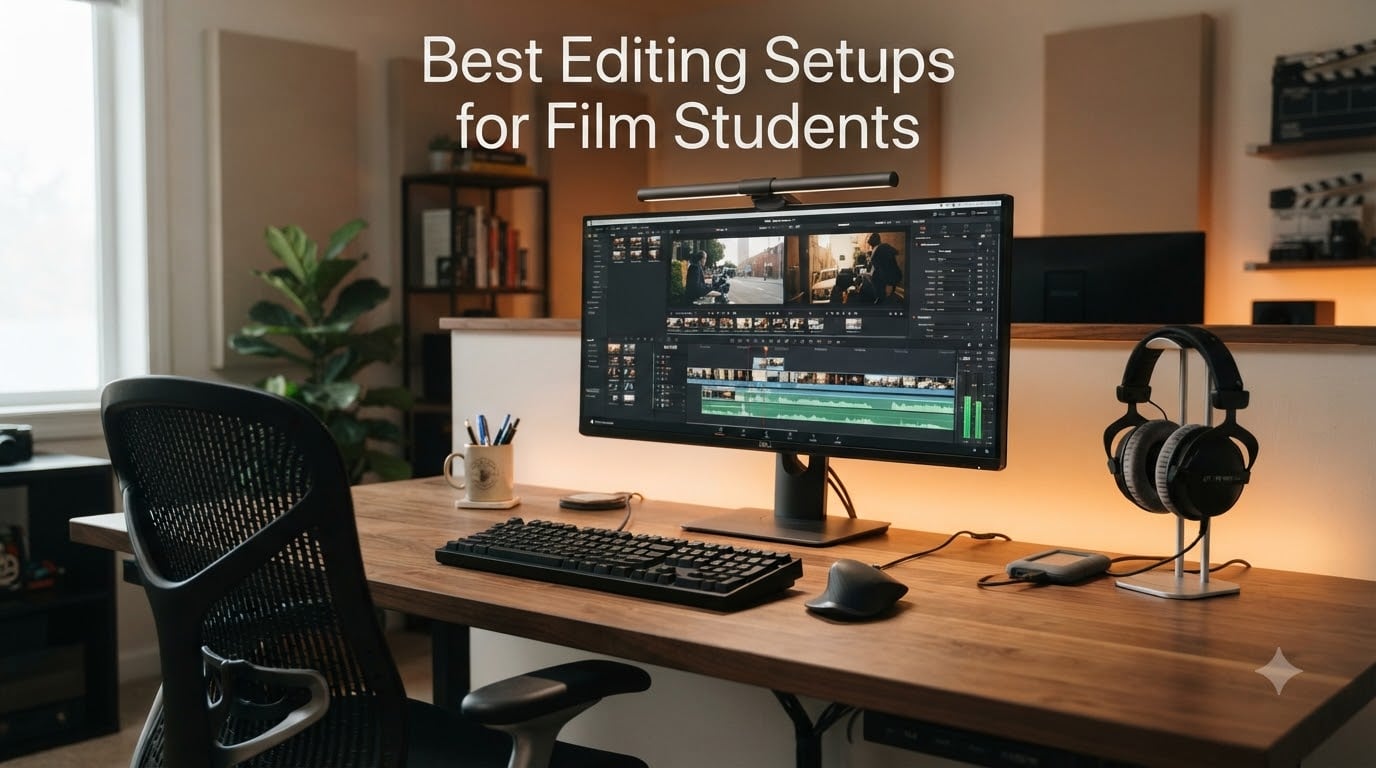
Building the best editing setup for film students is one of the smartest investments you can make before your first semester starts. I’ve spent years testing gear in cramped dorm rooms and shared editing suites, and I know exactly which components matter most when you’re cutting short films, dailies, and thesis projects on a student budget. This guide covers eight essential pieces of gear — from headphones to desks — that form a complete, reliable editing workstation without draining your savings.
Every product here has been evaluated for real-world editing performance: color accuracy, long-session comfort, storage speed, and build quality. Whether you’re assembling your first film student laptop setup or upgrading an existing workstation, these picks cover the components that matter most for post-production work.
Table of Contents
- Top 3 Picks for Best Editing Setups for Film Students in September
- Best Editing Setups for Film Students in 2026
- 1. Audio-Technica ATH-M50X — Best Studio Headphones for Editing
- 2. Sony MDR7506 — Best Value Headphones for Film Students
- 3. Samsung T7 Portable SSD — Fastest External Storage for Editing
- 4. ASUS ProArt PA278QV — Best Monitor for Color-Accurate Editing
- 5. SIHOO M18 Ergonomic Chair — Best Budget Editing Chair
- 6. FEZIBO Standing Desk — Best Desk for Multi-Monitor Editing
- 7. Pzloz LED Desk Lamp — Best Lighting for Editing Workspaces
- 8. Logitech G413 SE — Best Keyboard for Editing Shortcuts
- Buying Guide: How to Build Your Film Student Editing Setup?
- Frequently Asked Questions
- Final Thoughts
Top 3 Picks for Best Editing Setups for Film Students in September

Audio-Technica ATH-M50X
- 45mm drivers with rare earth magnets
- Detachable cable with 3 options
- 90 degree swiveling earcups

Sony MDR7506
- 40mm neodymium drivers
- Foldable design with carrying case
- 10Hz-20kHz frequency response

Samsung T7 1TB SSD
- Read speeds up to 1050 MB/s
- Shock resistant aluminum body
- 256-bit AES encryption
Best Editing Setups for Film Students in 2026
| Product | Specs | Action |
|---|---|---|
| Audio-Technica ATH-M50X |
|
Check Latest Price |
| Sony MDR7506 |
|
Check Latest Price |
| Samsung T7 1TB SSD |
|
Check Latest Price |
 ASUS ProArt PA278QV Monitor ASUS ProArt PA278QV Monitor |
|
Check Latest Price |
 SIHOO M18 Ergonomic Chair SIHOO M18 Ergonomic Chair |
|
Check Latest Price |
 FEZIBO Standing Desk FEZIBO Standing Desk |
|
Check Latest Price |
 Pzloz LED Desk Lamp Pzloz LED Desk Lamp |
|
Check Latest Price |
 Logitech G413 SE Keyboard Logitech G413 SE Keyboard |
|
Check Latest Price |
1. Audio-Technica ATH-M50X — Best Studio Headphones for Editing
Audio-Technica ATH-M50X Professional Studio Monitor Headphones, Black, Professional Grade, Critically Acclaimed, with Detachable Cable
45mm large aperture drivers
Detachable cable with 3 options
90 degree swiveling earcups
Frequency range: 20Hz-28kHz
Pros
- Exceptional sound quality with balanced frequency response
- Detachable cable system with 3 cable options included
- Comfortable circumaural design with 90 degree swiveling earcups
- Excellent sound isolation for studio monitoring
- Durable construction with metal components
Cons
- Ear pads may degrade over time and need replacement
- Slightly tight clamp for some head sizes
- No active noise cancellation
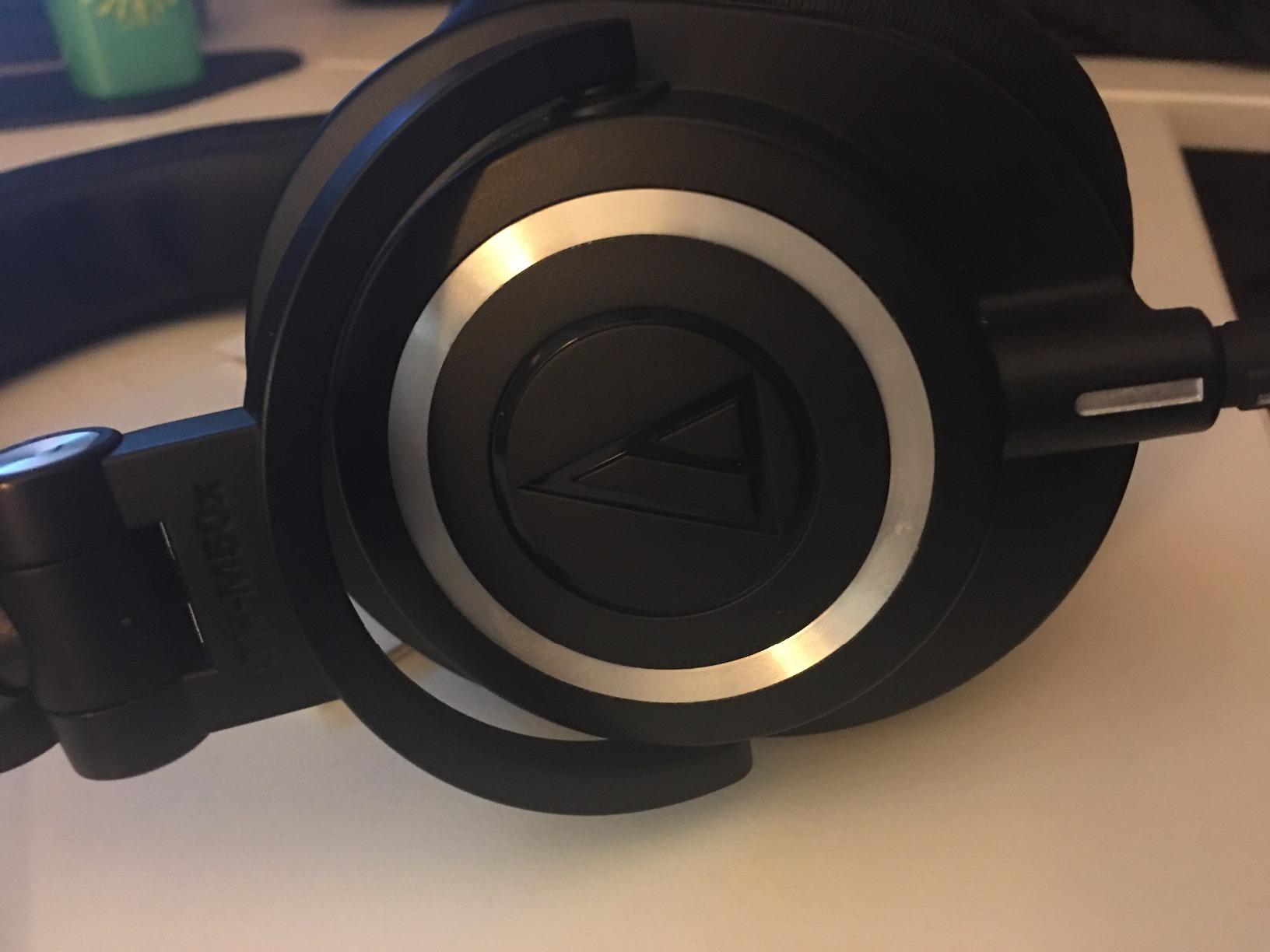
The Audio-Technica ATH-M50X is the headphone I recommend to every film student starting their editing setup. After using these for three consecutive years of film school — cutting short films, mixing dailies, and grading thesis projects — they’ve proven themselves as the most reliable audio monitoring tool at this price point.
The 45mm large aperture drivers deliver flat, honest sound that lets you hear exactly what’s in your mix. That’s critical when you’re balancing dialogue, ambient sound, and music in a short film timeline. The detachable cable system means you can swap between a short straight cable for desktop work and a coiled cable when you need extra reach to an audio interface.
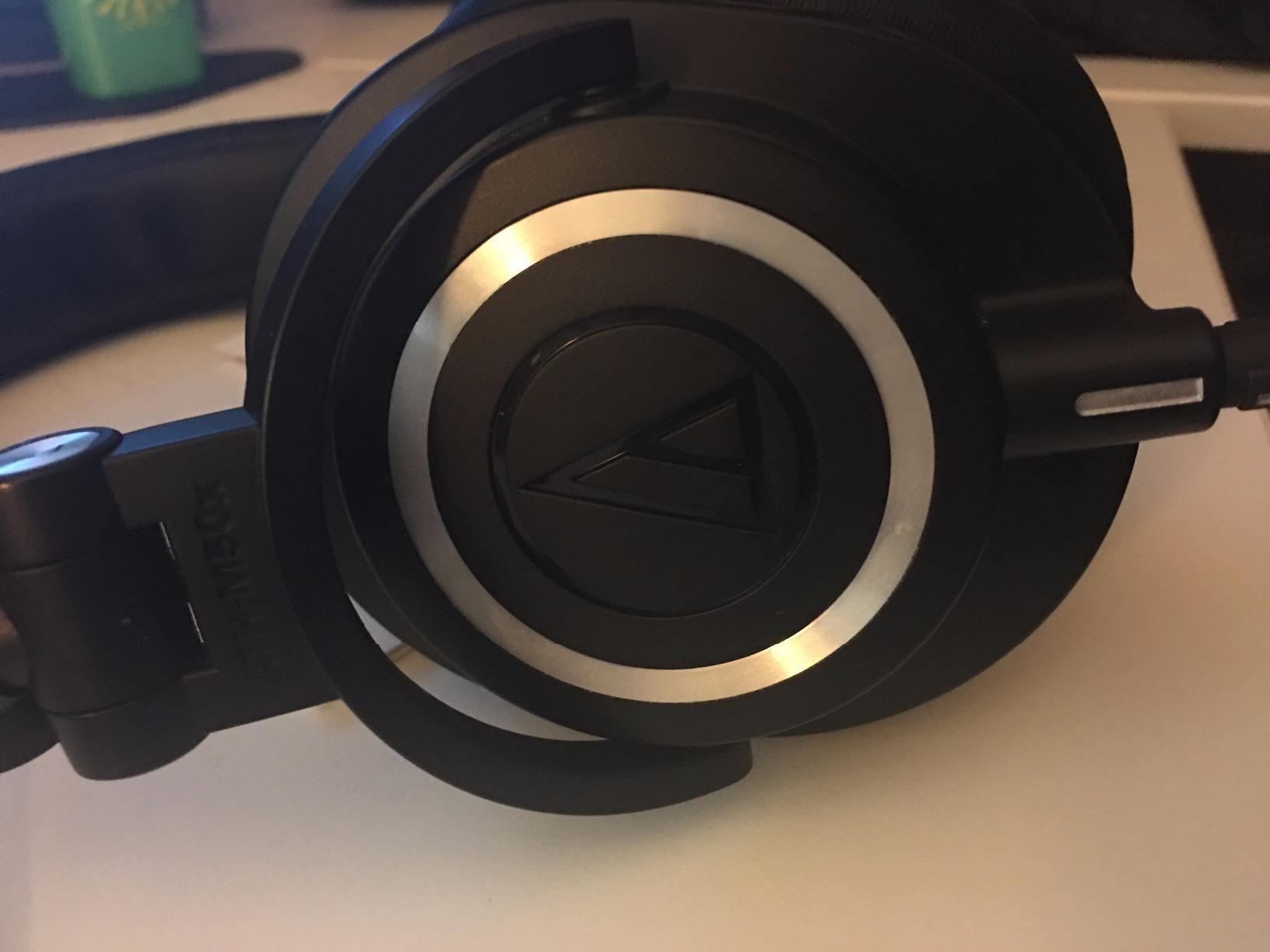
I’ve worn these for 8-hour editing sessions without the fatigue that cheaper headphones cause. The circumaural design sits around your ears rather than on them, and the passive sound isolation blocks out dorm noise well enough for focused work. The 90-degree swiveling earcups let you flip one ear back to hear a professor or collaborator without removing the whole headset.
One thing to know: the ear pads will eventually flake after 18-24 months of heavy use. Replacement pads are inexpensive and easy to swap. The clamp force also runs tight out of the box but loosens naturally over the first few weeks of use.
Who Should Choose This Headphone
Film students who need accurate audio monitoring for mixing, dialogue editing, and sound design. If you’re working in Premiere Pro, DaVinci Resolve, or any NLE where hearing the true mix matters, these deliver professional-grade clarity without the professional-grade cost.
Who Should Look Elsewhere
If you need wireless connectivity for editing on the go, or if you prefer a warmer, bass-heavy sound profile for casual listening, look at the Sony MDR7506 or a Bluetooth alternative. These are monitoring tools first, lifestyle headphones second.
2. Sony MDR7506 — Best Value Headphones for Film Students
Sony MDR7506 Professional Large Diaphragm Headphone
40mm neodymium drivers
Foldable design with soft case
Frequency response: 10Hz-20kHz
9.8 foot cord
Pros
- Excellent sound quality with detailed balanced audio
- Comfortable for extended wear with lightweight design
- Durable construction lasting 10-20 years for many users
- Folds compactly with included carrying case
- Industry standard professional studio headphones
Cons
- Ear pads wear out over time and need replacement
- Bass less pronounced than some consumer headphones
- Headband adjustment can slip with handling
The Sony MDR7506 has been an industry standard since 1991, and there’s a reason it’s still in nearly every professional edit suite and recording studio. I’ve seen these headphones on sound stages, in broadcast trucks, and in dorm rooms across three different film programs — they’re built to last and tuned for accuracy.
The 40mm neodymium drivers produce a balanced frequency response from 10Hz to 20kHz that’s ideal for dialogue editing and mix review. The closed-ear design provides passive noise isolation that works well in shared dorm spaces where you can’t control ambient noise levels.
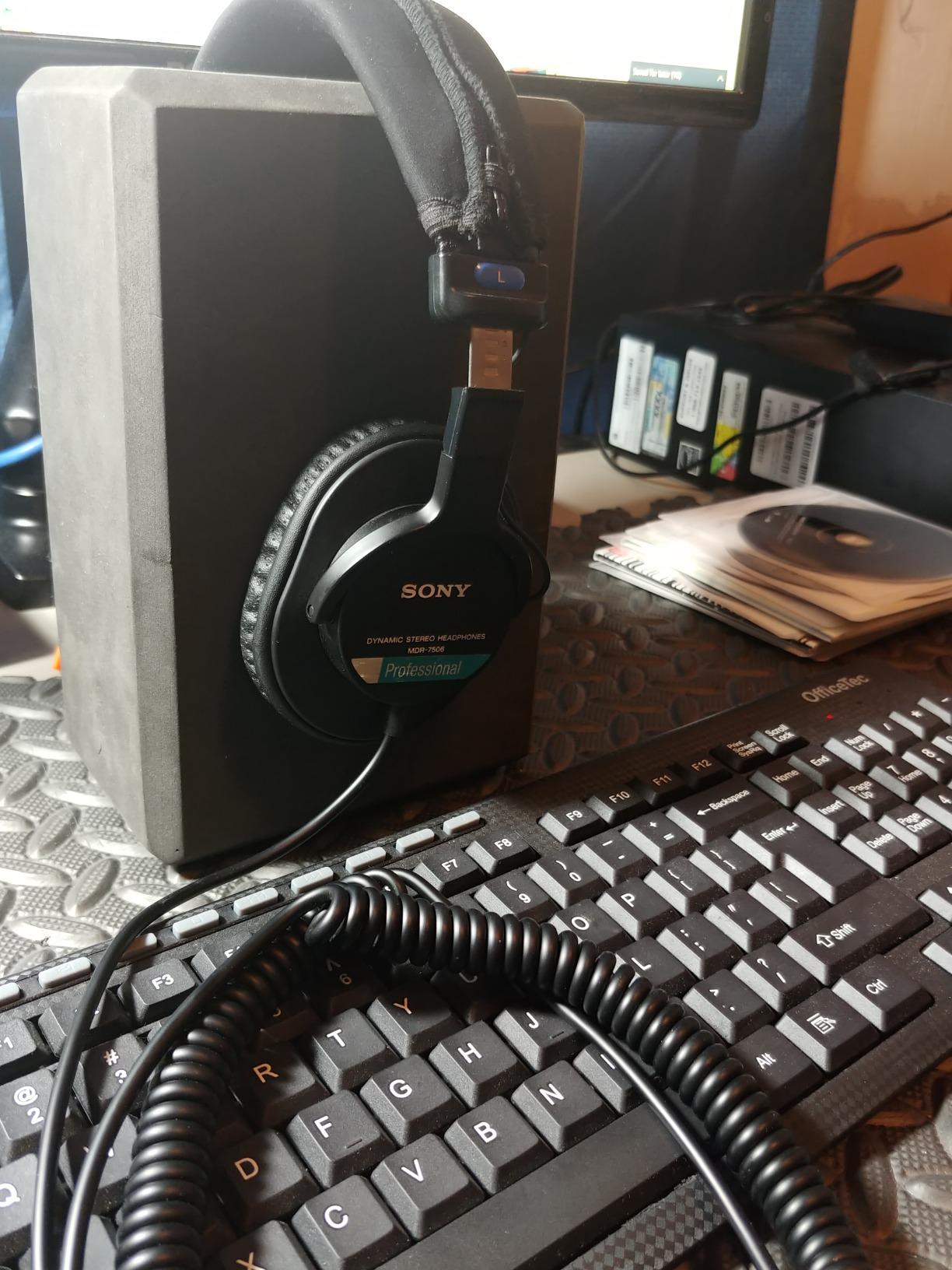
The foldable design is a genuine advantage for film students. You can collapse these into the included soft case and toss them in a backpack when you’re moving between the dorm, the editing suite, and the library. The 9.8-foot coiled cord gives you enough reach to sit back from a desk-mounted monitor without feeling tethered.
These headphones have one quirk worth noting: the headband adjustment slides can shift if you handle them roughly. For most users this is a non-issue, but if you’re frequently throwing them in a bag, check the fit each time you put them on.
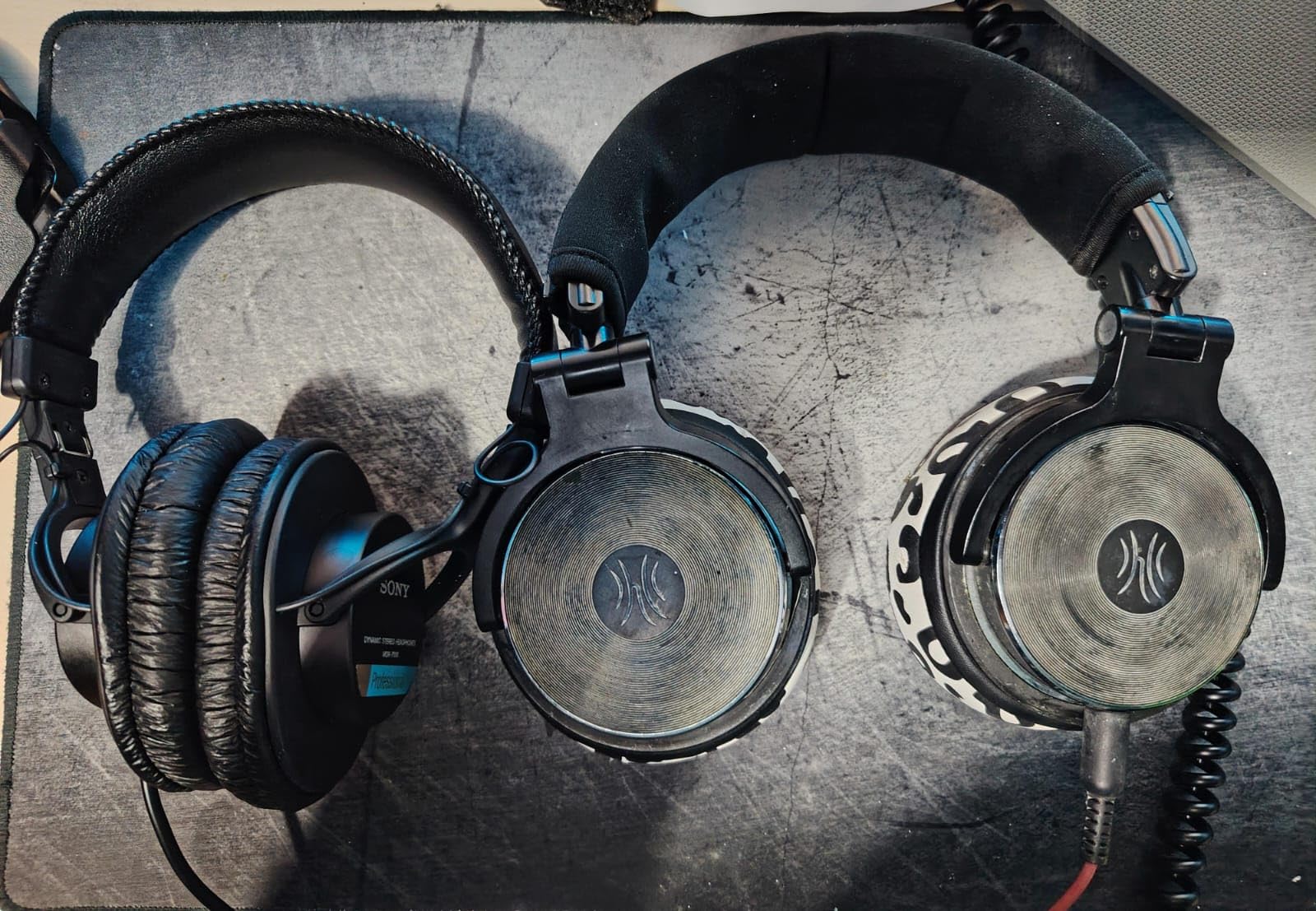
Why Film Students Choose the MDR7506
The combination of flat frequency response, durable build, and foldable design makes these a natural fit for student workflows. At under $100, they’re also the most affordable professional-grade monitoring headphones you can buy — important when your budget has to stretch across an entire editing setup.
When to Consider an Upgrade
If you’re doing detailed sound design or mixing for festival submissions, the ATH-M50X offers slightly more detail in the high-mids. But for 90% of film school work — cutting dailies, rough cuts, and picture lock — the MDR7506 is all you need.
3. Samsung T7 Portable SSD — Fastest External Storage for Editing
Samsung T7 Portable SSD 1TB Titan Gray, USB 3.2 Gen 2, Up to 1,050MB/s
Read speeds up to 1050 MB/s
USB 3.2 Gen 2 interface
256-bit AES encryption
Shock resistant aluminum
Pros
- Blazing-fast read and write speeds up to 1000 MB/s
- Compact lightweight durable aluminum design
- Plug-and-play across Windows and macOS
- Comes with both USB-C and USB-A cables
- Optional password protection with AES encryption
Cons
- Maximum speeds require USB 3.2 Gen 2 port
- Gets warm during extended heavy use sessions
- Costs more per TB than standard hard drives
Every film student needs fast external storage, and the Samsung T7 is the drive I’ve trusted for three years of editing projects. It reads and writes at up to 1,050 MB/s over USB 3.2 Gen 2, which means you can scrub through 4K timelines in DaVinci Resolve or Premiere Pro without the stuttering that plagues traditional hard drives.
The aluminum unibody construction is shock-resistant and rated to survive 6-foot drops. I’ve accidentally knocked mine off a desk twice with no data loss. At 2.08 ounces and roughly the size of a credit card, it disappears into a pocket or camera bag — perfect for students who move between shooting locations and edit stations.
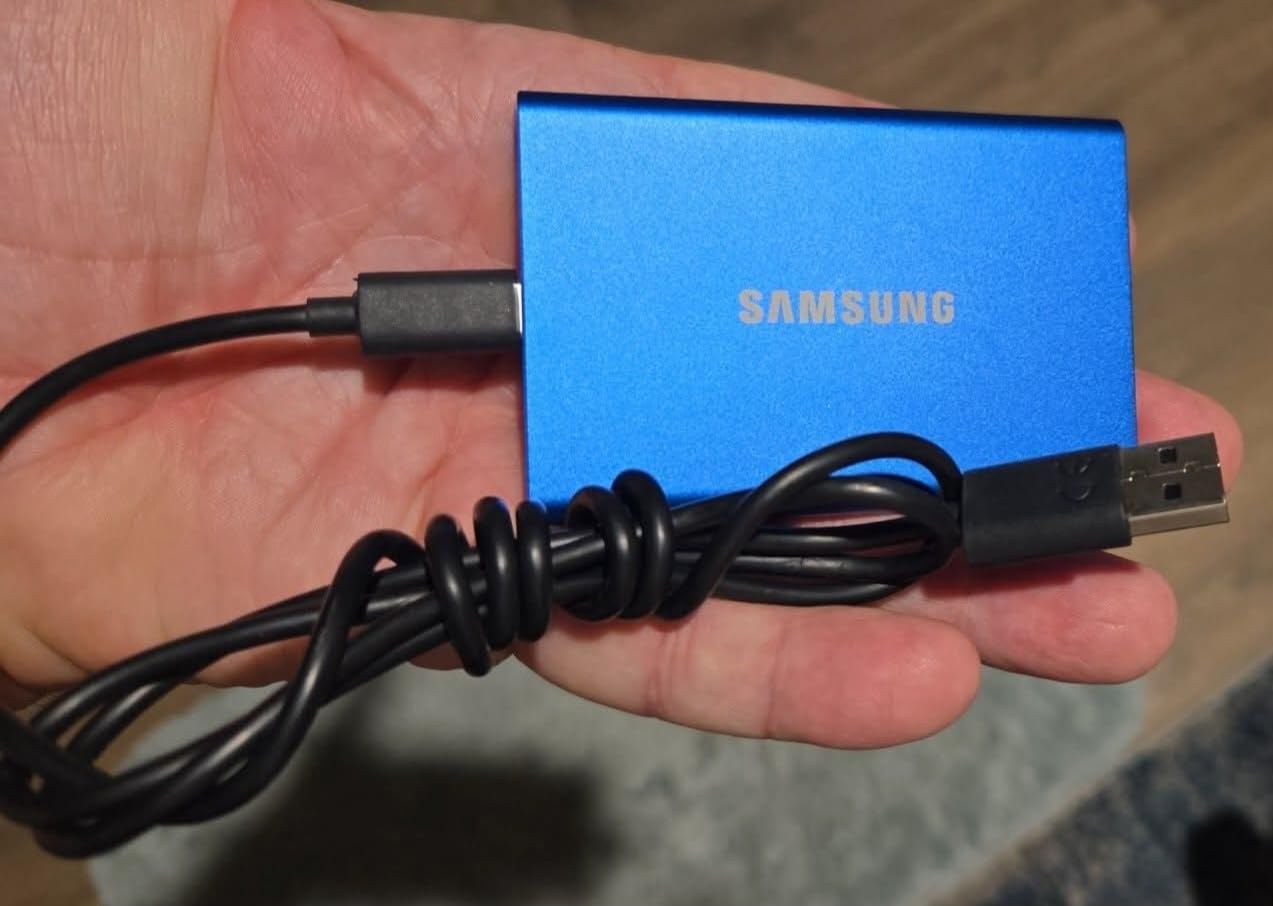
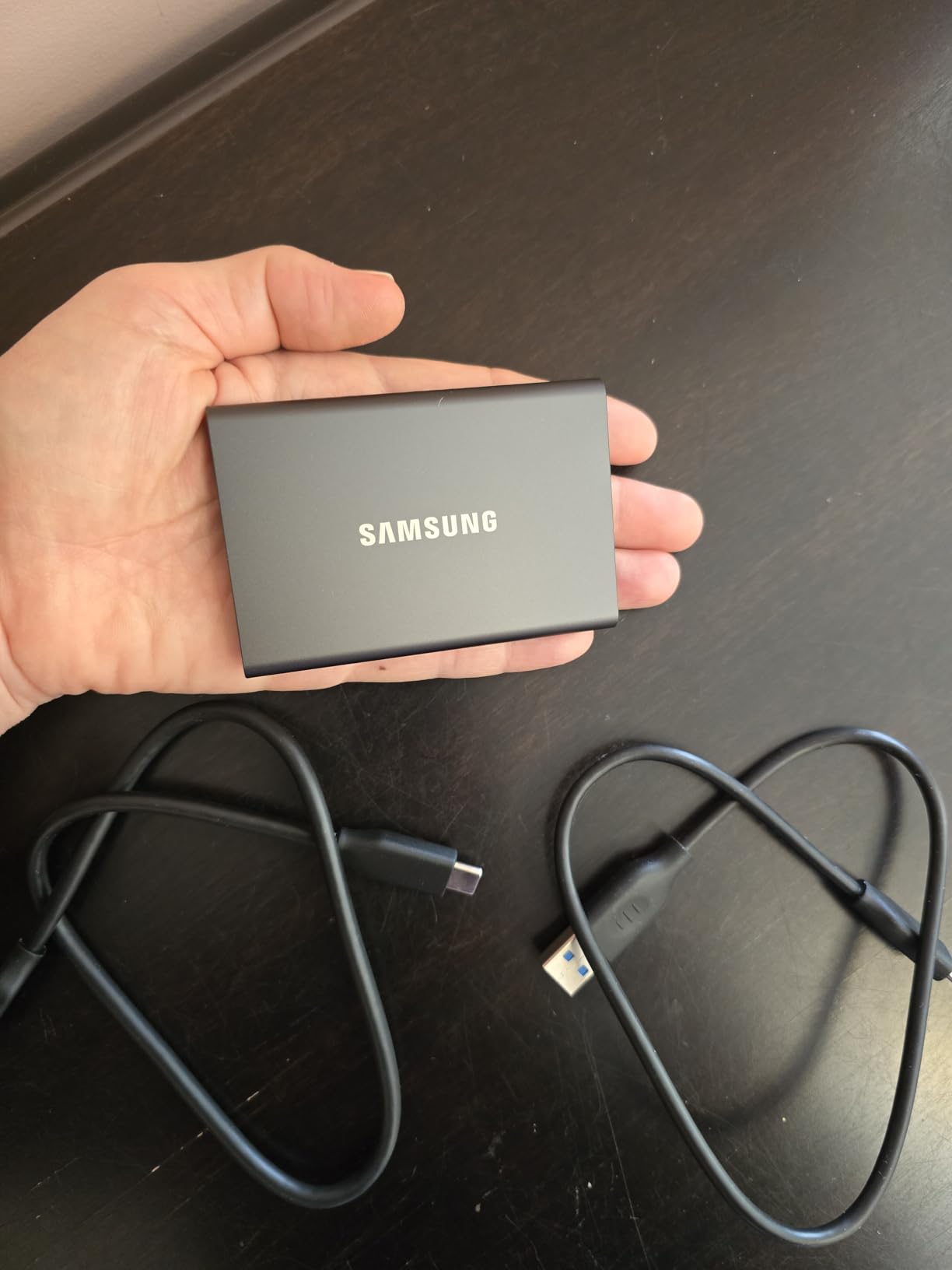
The included USB-C and USB-A cables cover virtually every laptop and desktop you’ll encounter in a film program. The 256-bit AES hardware encryption is a bonus if you’re storing client footage or thesis projects that need protection. I use one T7 as my active project drive and keep a second for daily backups — the 3-2-1 backup rule demands at least two copies on separate media.
A few things to keep in mind: the T7 reaches its top speeds only on USB 3.2 Gen 2 ports. Older USB 3.0 ports will still work, but transfer rates drop significantly. The drive also runs warm during sustained writes, which is normal for NVMe-based portable SSDs but worth knowing if you’re editing in a hot dorm room without ventilation.
Best Use Case for Film Students
Active project storage for 4K editing, proxy media, and daily footage offloads. The speed means you can edit directly from the drive without copying footage to your internal SSD first — a huge time saver when you’re juggling multiple projects across classes.
When You Need More Capacity
The 1TB model handles most student projects, but if you’re shooting 4K 10-bit or 6K RAW, consider the 2TB or 4TB versions. For archiving finished projects, pair the T7 with a larger HDD or NAS for long-term storage at a lower cost per gigabyte.
4. ASUS ProArt PA278QV — Best Monitor for Color-Accurate Editing
ASUS ProArt PA278QV 27 Inch 1440p QHD Professional Monitor
Calman Verified Delta E under 2
100 percent sRGB and Rec. 709
27 inch QHD IPS display
5-year warranty
Pros
- Color accurate with Calman Verified Delta E under 2 accuracy
- 100 percent sRGB and 100 percent Rec. 709 color gamut
- Ergonomic stand with tilt pivot swivel and height adjustment
- Extensive connectivity including DisplayPort HDMI and USB hub
- Flicker-free and blue light filter for eye comfort
Cons
- 75Hz refresh rate limiting for gaming
- 5ms response time adequate but not fastest
- 17 pounds weight makes it relatively heavy
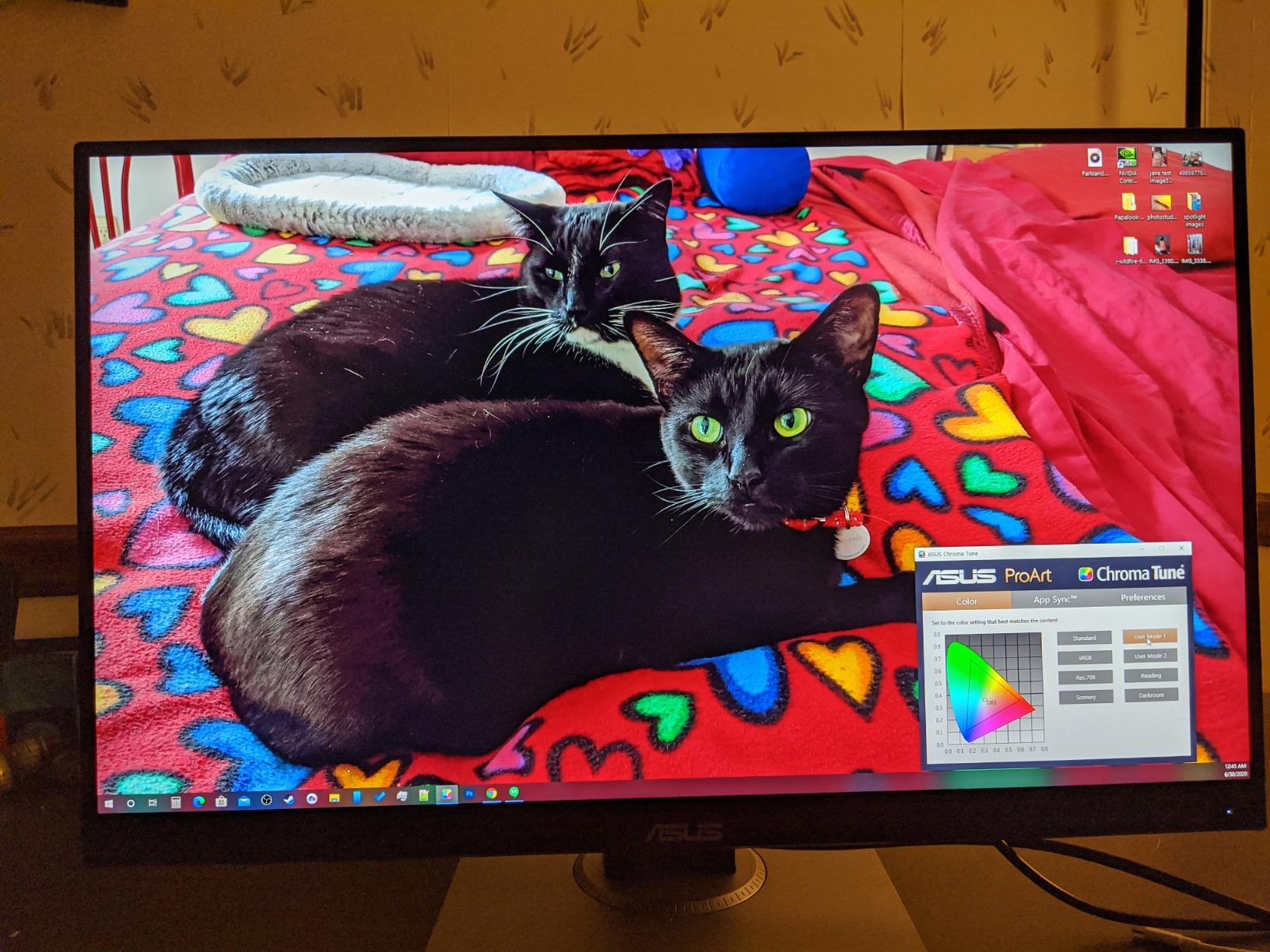
Color accuracy is the single most underrated requirement in a film student editing setup. The ASUS ProArt PA278QV solves this problem out of the box with Calman Verified factory calibration achieving Delta E under 2 — meaning the colors you see on screen are accurate enough for professional color grading work.
The 27-inch QHD IPS panel at 2560×1440 resolution gives you enough screen real estate to comfortably work with a full NLE timeline, scopes panel, and preview window simultaneously. The 100% sRGB and 100% Rec. 709 coverage means your color grades will look consistent across monitors, projectors, and broadcast displays.
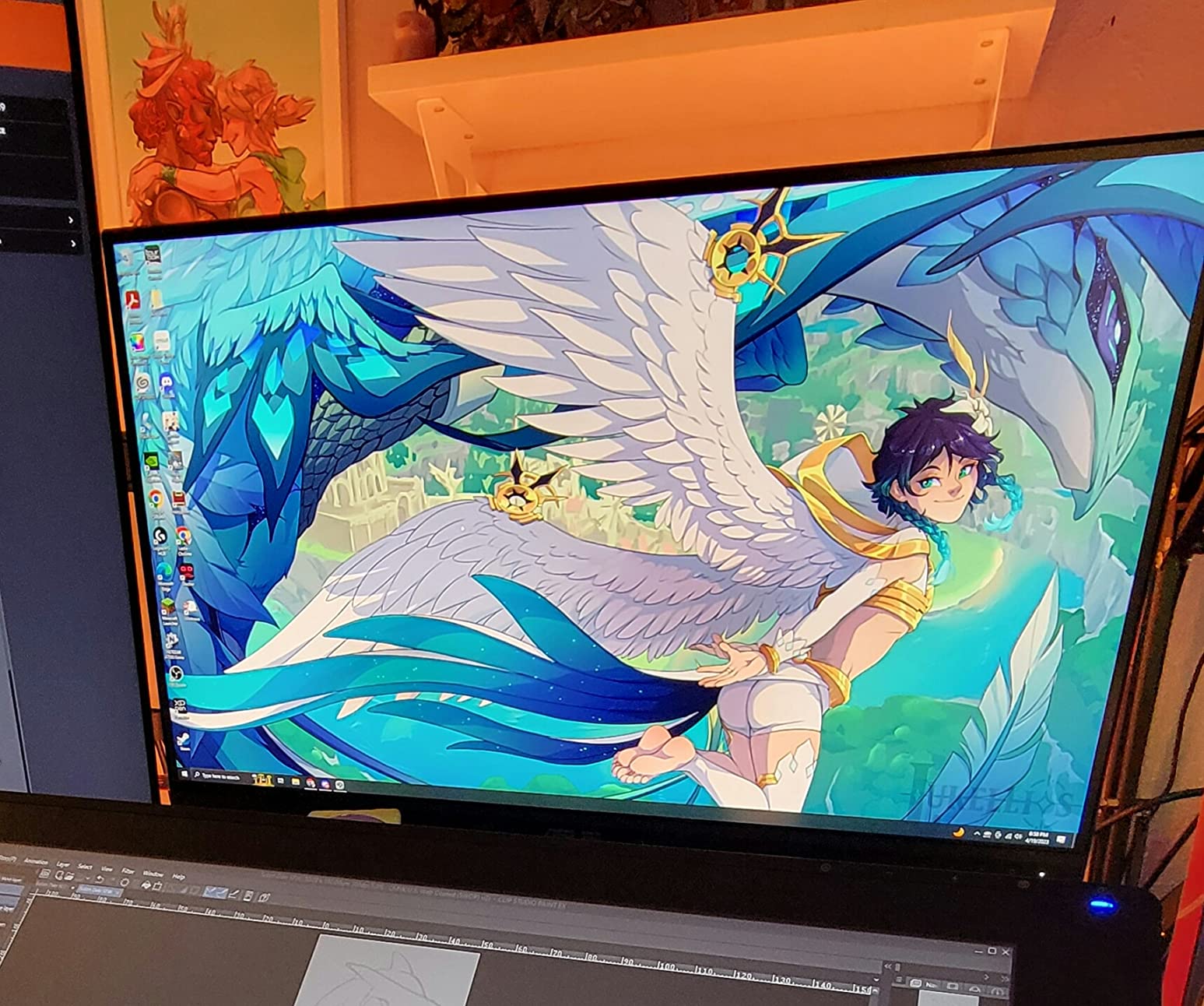
I appreciate the ergonomic stand — you can tilt, pivot, swivel, and adjust the height to match your desk setup. For film students working long hours on thesis films, proper monitor positioning reduces neck and eye strain significantly. The built-in flicker-free backlighting and blue light filter add another layer of eye comfort during marathon editing sessions.
The connectivity suite covers DisplayPort, HDMI, DVI-D, Mini DisplayPort, and an integrated USB hub. That USB hub is handy for connecting peripherals without reaching behind your computer. ASUS also backs this monitor with a 5-year warranty when you register online — meaningful protection for a student investment.
Why Color Accuracy Matters for Film Students
When you present a short film in class or submit to a festival, the color grade is part of your creative voice. An uncalibrated monitor can trick you into over-saturating skin tones or crushing shadow detail that looks fine on your screen but falls apart on a projector. This monitor prevents that problem.
Limitations to Know About
The 75Hz refresh rate and 5ms response time are perfectly adequate for editing but won’t serve you well if you also game competitively. At 17 pounds, it’s heavier than ultrathin panels — plan your desk setup accordingly.
5. SIHOO M18 Ergonomic Chair — Best Budget Editing Chair
SIHOO M18 Ergonomic Office Chair, Mesh Back Desk Chair with Headrest
4-point ergonomic support
Breathable mesh backrest
330 lb weight capacity
Adjustable headrest and lumbar
Pros
- Excellent ergonomic support with 4-point design
- Breathable mesh back keeps cool during long sessions
- Adjustable headrest lumbar support and armrests
- Sturdy construction with metal base
- Good value for the price point
Cons
- Armrests could be more comfortable with sharp edges
- Lumbar support feels too firm for some users
- Cloth seat absorbs spills readily
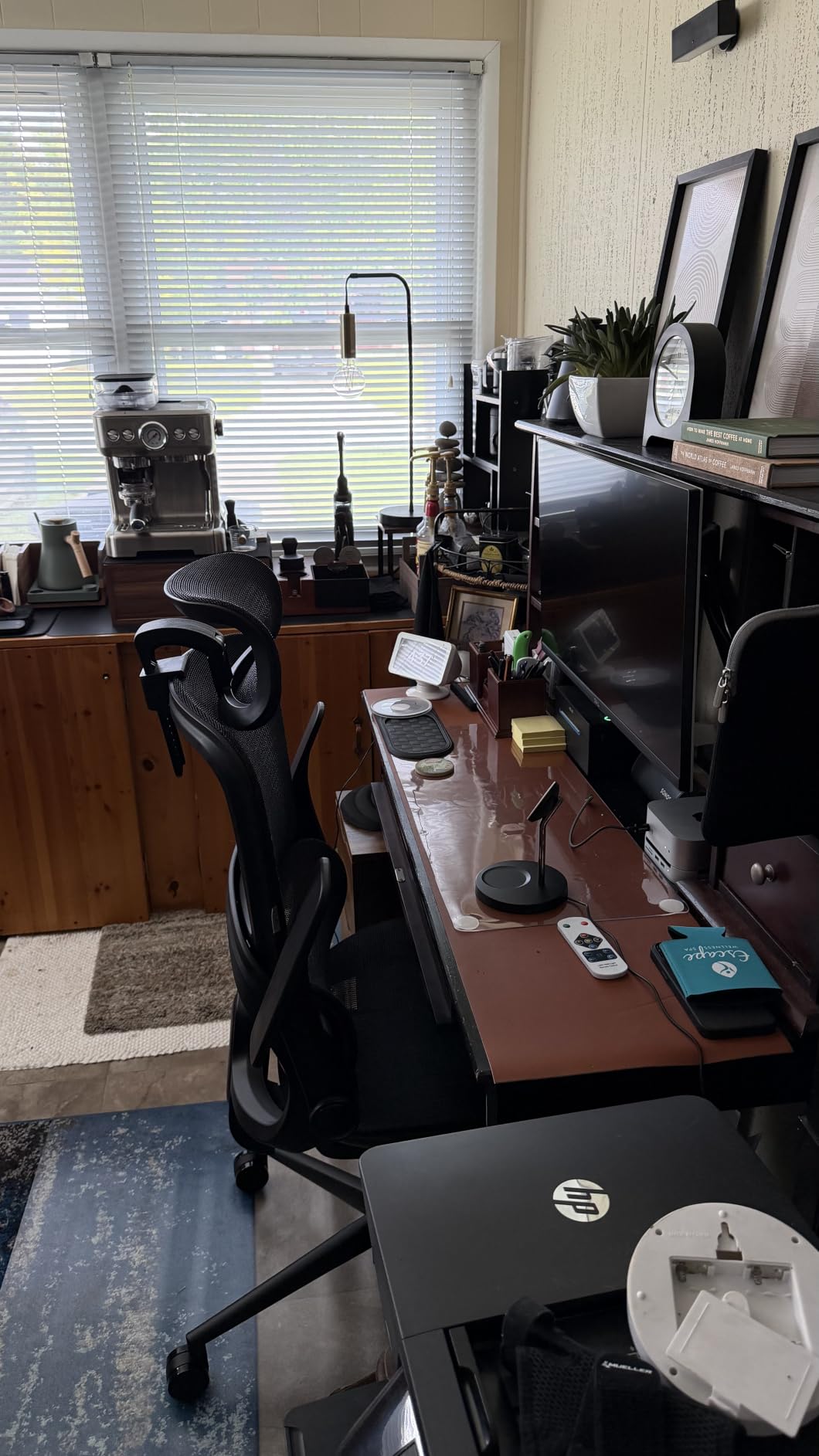
An ergonomic chair is one of the most important and most overlooked components in a film student editing setup. You’ll spend 4-8 hours at a stretch cutting timelines, and the SIHOO M18 provides four-point support — head, back, hips, and hands — that prevents the back pain cheap chairs cause.
The breathable mesh backrest is a genuine advantage in dorm rooms and shared editing suites where climate control is unreliable. Unlike leather or fabric chairs that trap heat, this mesh keeps air circulating across your back during long color grading or sound mixing sessions.
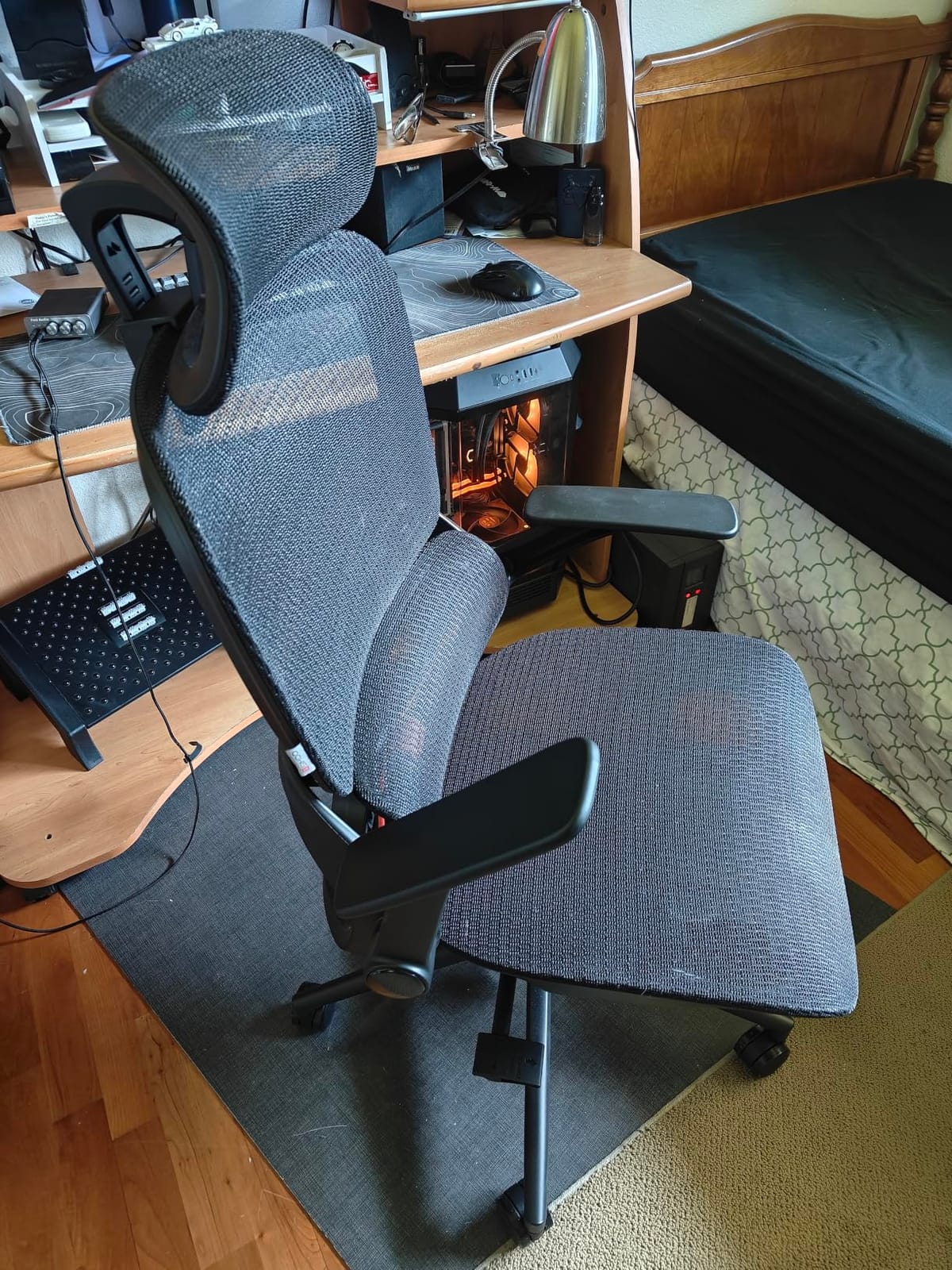
The adjustable headrest, lumbar support, and armrests let you dial in a custom fit. The chair accommodates users from 5’6″ to 6’2″ tall and supports up to 330 pounds. The BIFMA certification and 1,136kg static pressure test confirm this chair can handle daily use without the wobble and creak that plague cheaper alternatives.
Assembly takes about 30 minutes with the included instructions. Two things to note: the armrest edges can feel sharp to some users, and the cloth seat absorbs spills quickly. I’d recommend applying a fabric protector if you tend to keep drinks at your desk.
Best for Long Editing Sessions
If you’re cutting a thesis film or working through festival submission deadlines, you need a chair that supports you for 8+ hours. The SIHOO M18’s four-point ergonomic design distributes your weight evenly and prevents the lower back fatigue that builds over weeks of intensive editing work.
When to Invest More
If you’re over 6’2″ or prefer a softer seat cushion, consider stepping up to a mid-range ergonomic chair. But for most film students, the SIHOO M18 offers 80% of the comfort of premium chairs at a fraction of the cost — the kind of smart budget allocation that matters when you’re buying an entire editing setup.
6. FEZIBO Standing Desk — Best Desk for Multi-Monitor Editing
FEZIBO Standing Desk 63 × 37 Inch Electric Height Adjustable, Black
63 inch by 37 inch desktop
Electric height adjustment 28.3-46.5 inch
3 programmable height presets
Built-in USB-C port
Pros
- Spacious desktop accommodates multiple monitors
- Smooth quiet electric height adjustment
- Programmable height presets for quick transitions
- Sturdy construction with minimal wobble at standing height
- Built-in USB-C port for convenient charging
Cons
- Desktop is in 2 pieces rather than one solid surface
- Some reports of shipping damage upon arrival
- Assembly instructions could be more detailed
A proper editing desk needs space for a monitor, keyboard, external drives, and reference materials — and the FEZIBO Standing Desk delivers with a 63-inch by 37-inch desktop that handles dual-monitor editing setups without feeling cramped. The extra-deep 37-inch tabletop is particularly valuable for film students who need room for scopes, audio interfaces, or reference monitors alongside their main display.
The electric height adjustment ranges from 28.3 inches to 46.5 inches with three programmable presets. Switching between sitting and standing positions takes seconds with a quiet motor that stays under 50dB — important in shared spaces where you don’t want to disturb others during late-night editing sessions.
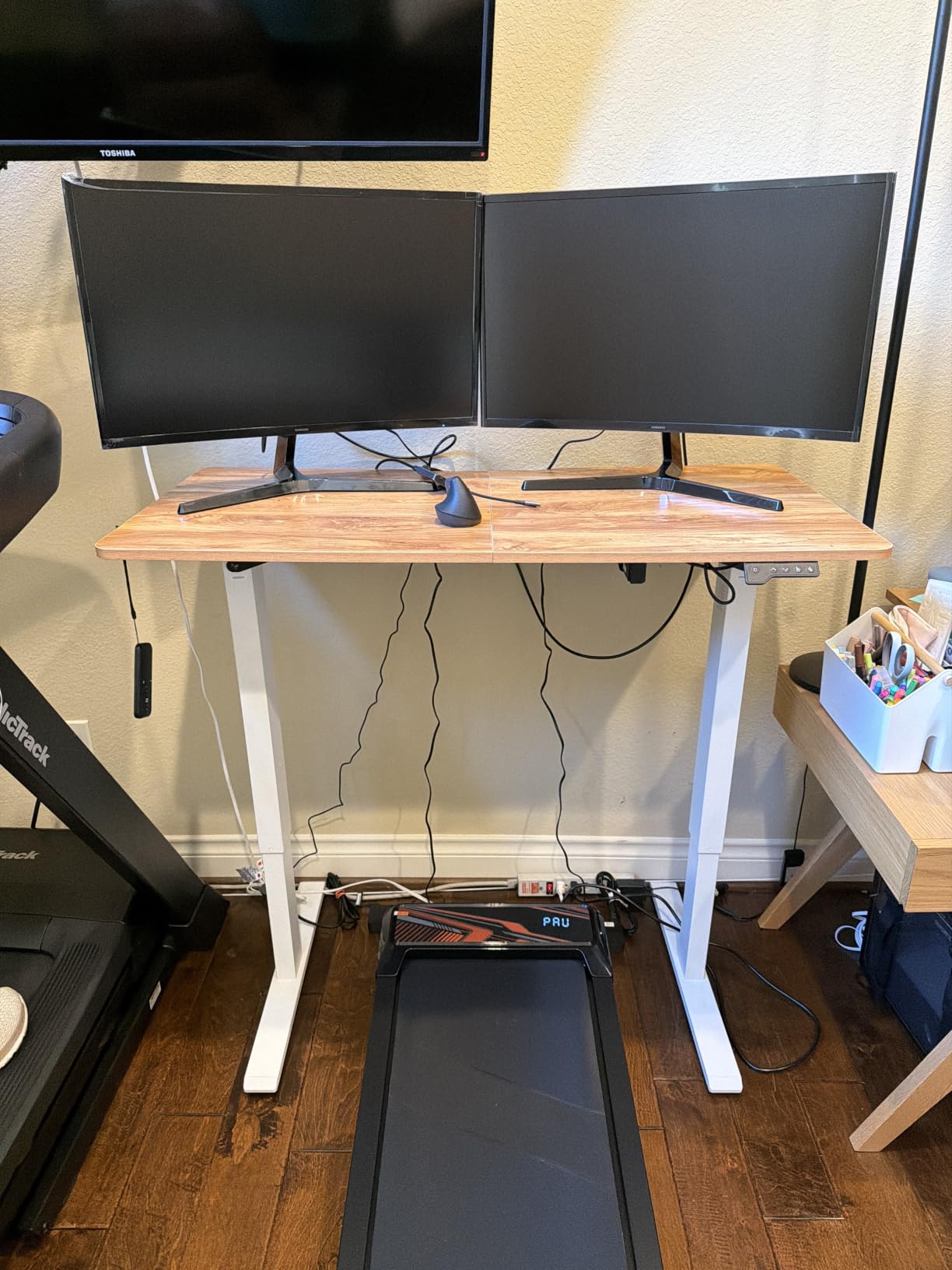
The integrated dual crossbeam construction keeps the desk stable at standing height with minimal wobble. I’ve used standing desks that shake when you type aggressively — this one holds firm even during intense timeline scrubbing. The built-in USB-C port with PD 3.0 fast charging means you can keep your phone or tablet topped off without running extra cables to your computer.
One heads-up: the desktop comes in two pieces rather than a single solid surface. The seam is subtle but noticeable if you run your hand across it. For most editing setups this is cosmetic only — your monitors and keyboard sit on flat surfaces regardless.
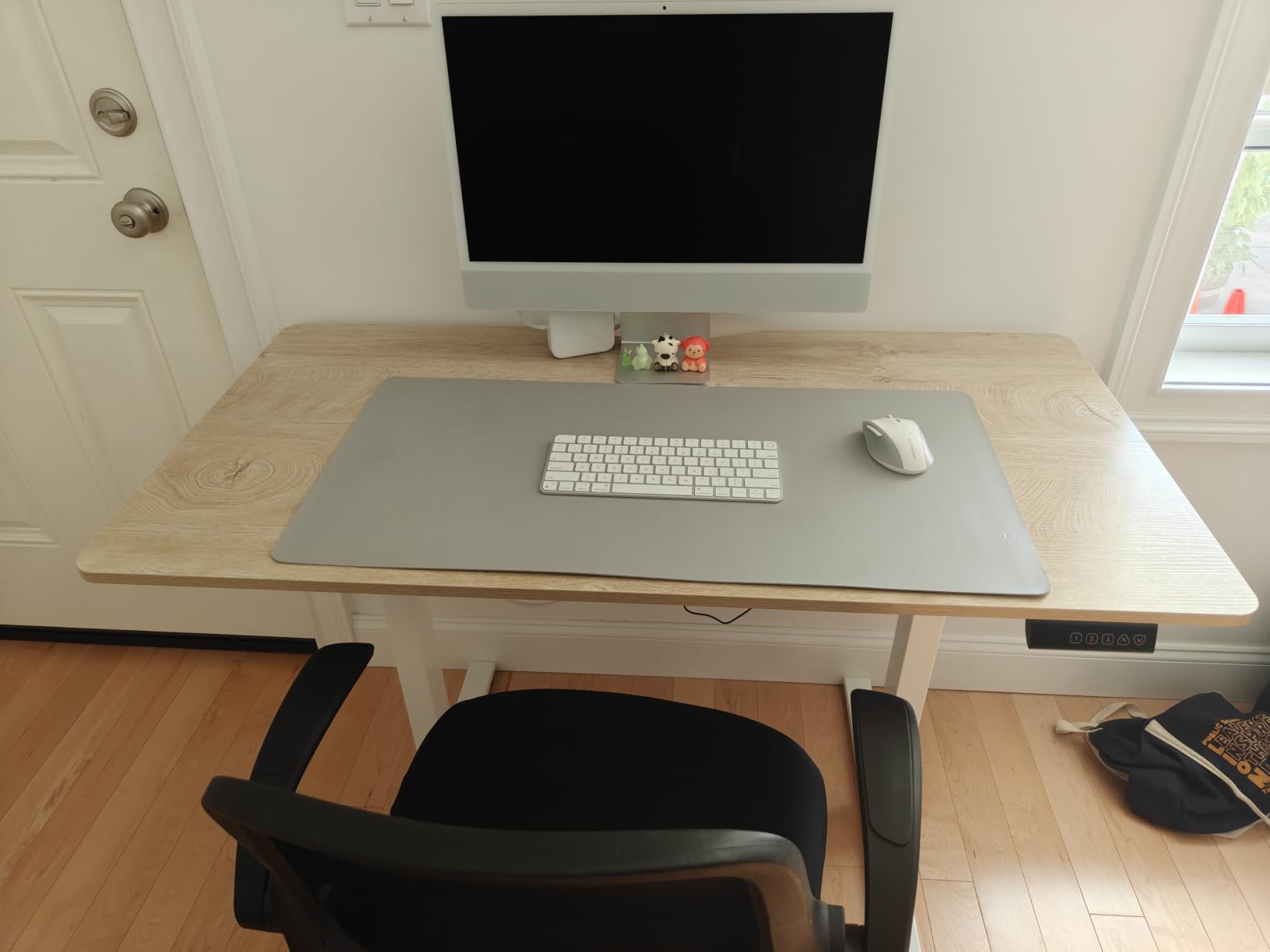
Why a Standing Desk Helps Film Editors
Alternating between sitting and standing during long editing sessions reduces fatigue and keeps you more alert during color-critical work. The three presets mean you can find your ideal heights once and switch instantly — no fumbling with manual adjustments in the middle of a creative flow.
Space Considerations for Dorm Rooms
At 63 inches wide, this desk needs a dedicated wall space. If your dorm room is tight on floor area, measure carefully before ordering. For smaller spaces, a 48-inch version of the same desk may be a better fit while still supporting a single monitor plus peripherals.
7. Pzloz LED Desk Lamp — Best Lighting for Editing Workspaces
Pzloz Led Desk Lamp for Office Home – Eye Caring Architect lamp with Clamp,Dual Screen Computer Monitor Work Smart Light: 24W 5 Color Flexible Adjustable Lighting Table Lamp for Study Drafting
25 lighting combinations
5 color temperatures 3000K-5500K
360 degree rotation
Wireless remote control
Pros
- Excellent brightness with 25 lighting combinations
- Highly adjustable with 360 degree rotation and 180 degree swing arms
- Wireless remote control for convenient operation
- Eye-friendly LED with no glare flicker or blue light hazard
- Sturdy clamp mount saves desk space
Cons
- Remote control requires 2 AAA batteries not included
- Occasional remote glitches reported
- Clamp base may be slightly off-center
Proper lighting in an editing workspace does more than help you see your keyboard — it reduces eye strain during marathon sessions and supports accurate color perception on your monitor. The Pzloz LED Desk Lamp offers 25 lighting combinations across five color temperatures (3000K to 5500K) and five brightness levels, so you can match your room lighting to the color temperature your monitor is calibrated to.
The clamp mount design attaches to the edge of your desk and frees up surface area for drives, controllers, and reference materials. The 360-degree standing rotation and 270-degree rotatable lamp head let you position light exactly where you need it without casting reflections on your monitor screen.
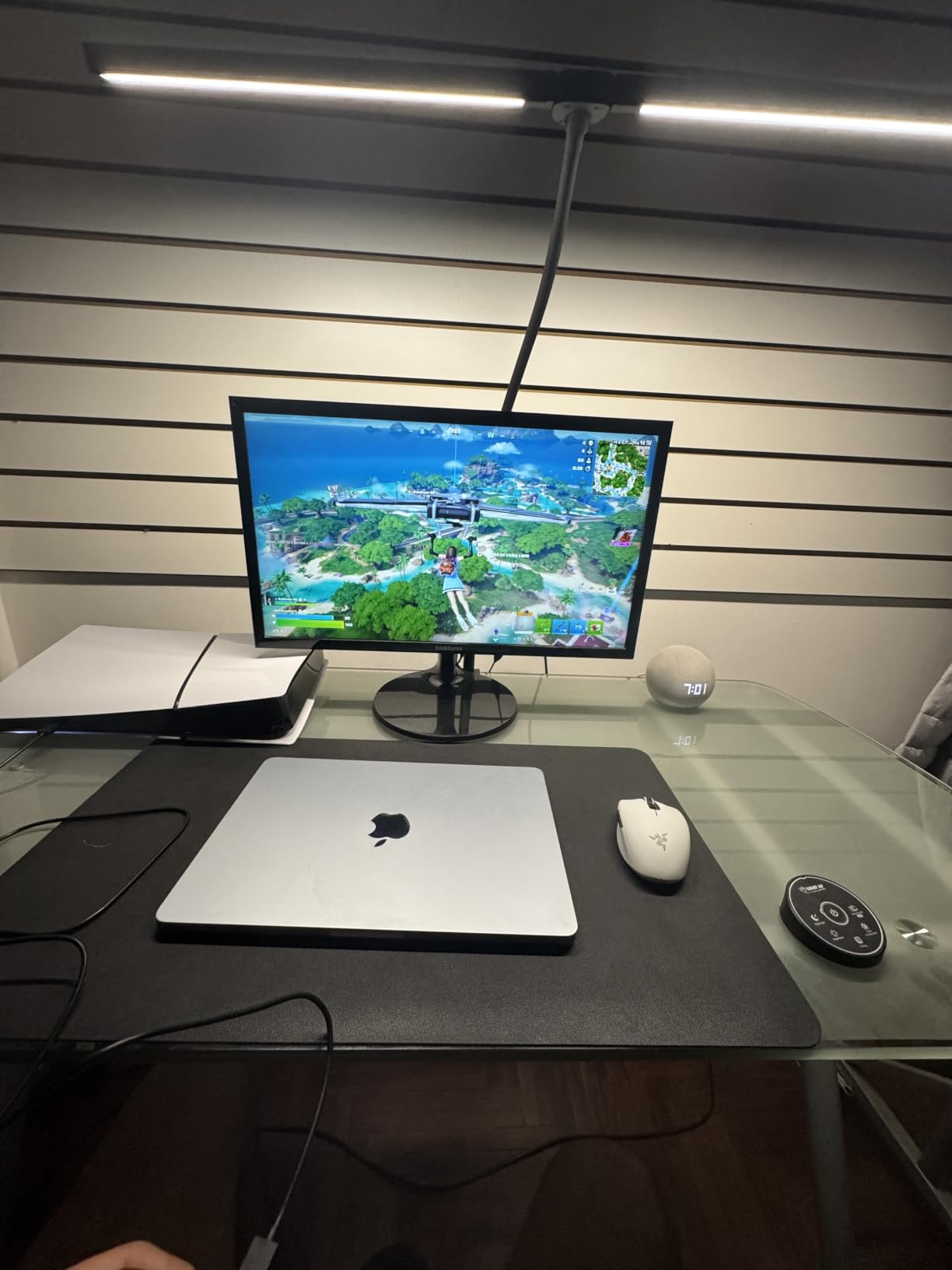
I use the wireless remote to adjust brightness and color temperature without leaving my editing chair — it’s a small convenience that makes a real difference during long sessions. The 24W LED output provides enough light to illuminate a full desk surface without the harsh shadows that single-point desk lamps create.
The eye-friendly design eliminates flicker and blue light hazard, which matters when you’re staring at a screen for 6-8 hours straight. Two minor notes: the remote needs AAA batteries that aren’t included, and some users report occasional pairing issues that resolve with a battery replacement.
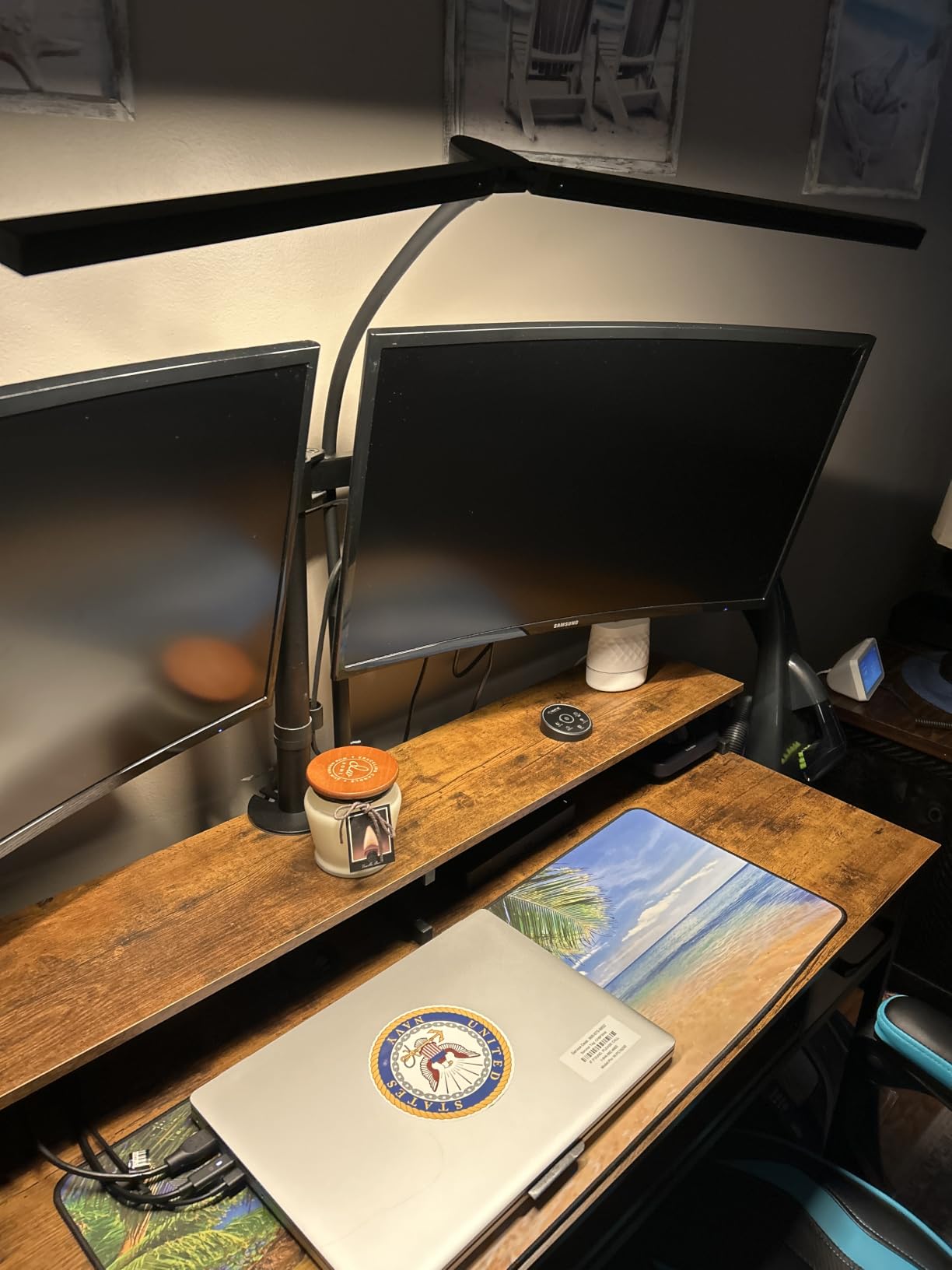
How Lighting Affects Color Accuracy
Ambient light in your editing room directly affects how you perceive color on your monitor. Matching your desk lamp’s color temperature to your monitor’s calibration (typically D65/6500K) creates a neutral viewing environment where skin tones and color grades read accurately.
Placement Tips for Editing Desks
Position the lamp behind or to the side of your monitor, never directly behind the screen where it creates glare. Bias lighting behind the monitor and a desk lamp for keyboard visibility is the professional standard — this lamp handles the second role well.
8. Logitech G413 SE — Best Keyboard for Editing Shortcuts
Logitech G413 SE Full-Size Mechanical Gaming Keyboard – Black
Tactile mechanical switches
PBT keycaps
Aluminum alloy construction
White LED backlighting
Pros
- Excellent tactile feedback with mechanical switches
- Durable PBT keycaps resist wear and heat
- Sturdy aluminum-magnesium alloy construction with minimal flex
- White LED backlighting for visibility in dark environments
- 6-key rollover anti-ghosting for reliable input
Cons
- Backlight brightness is not adjustable
- Audible typing noise from mechanical switches
- Not hot-swappable for switch changes
A mechanical keyboard might seem like a luxury, but for film students who rely on keyboard shortcuts to edit efficiently, the tactile feedback and precision of the Logitech G413 SE make a measurable difference in editing speed. Every NLE — Premiere Pro, DaVinci Resolve, Final Cut Pro — lives and dies by keyboard shortcuts, and mechanical switches give you confident, consistent actuation that membrane keyboards can’t match.
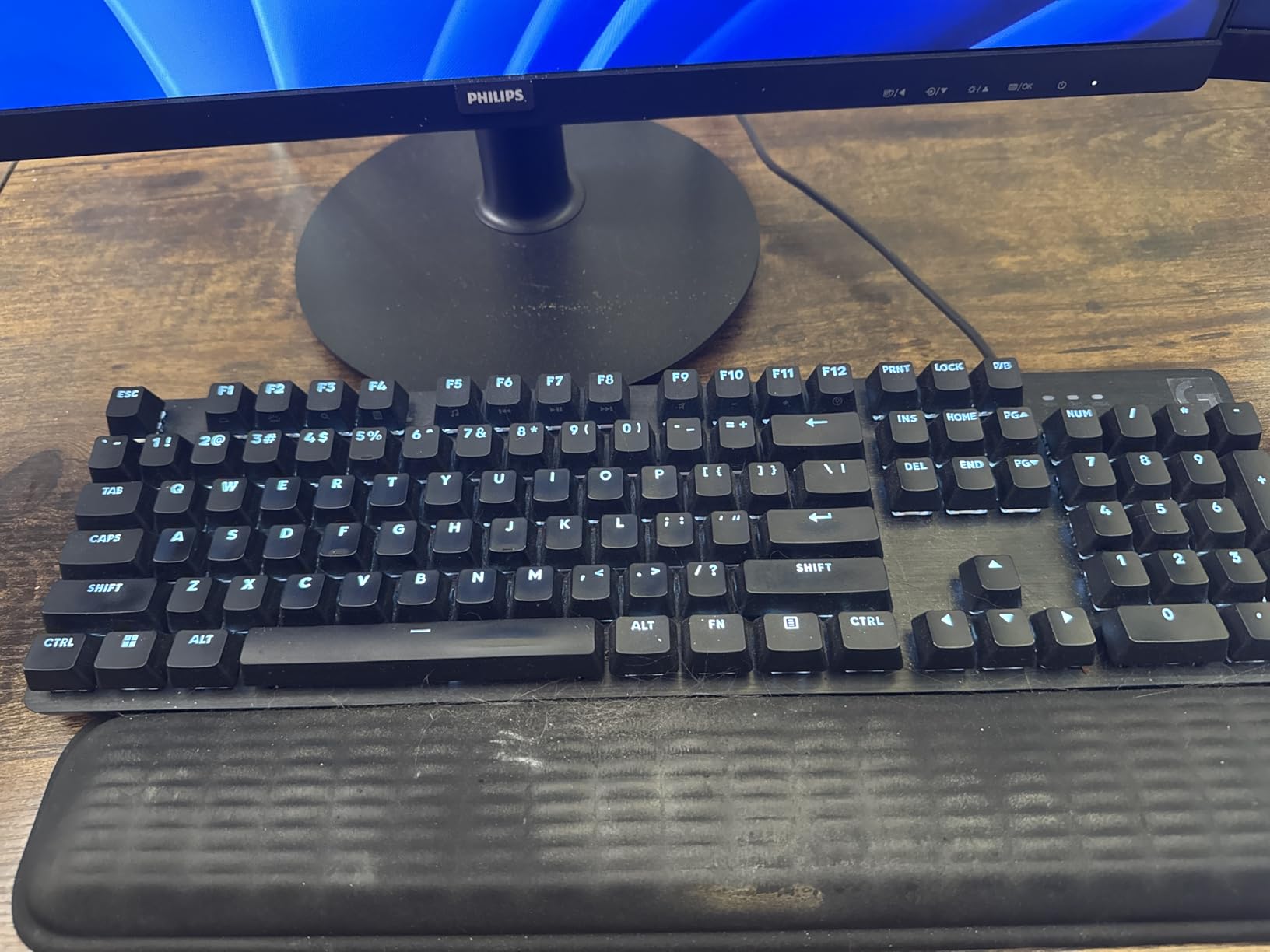
The PBT keycaps are the real standout feature here. Unlike cheaper ABS keycaps that develop a greasy shine after months of use, PBT keycaps resist wear, heat, and oil. The key legends won’t fade even after years of heavy editing — important when you’re still learning shortcuts and relying on printed labels.
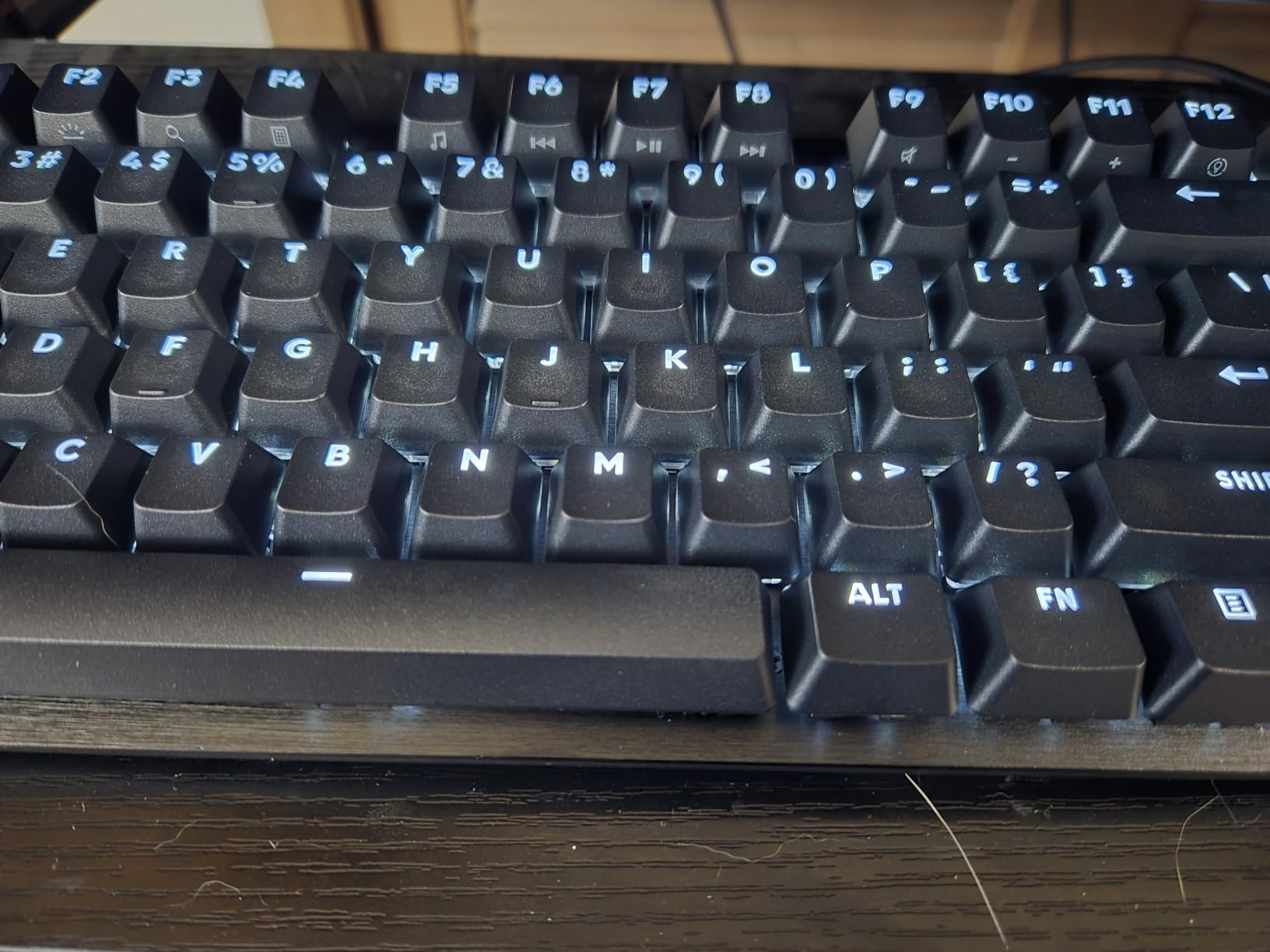
The aluminum-magnesium alloy top case gives the keyboard a solid, premium feel with minimal flex. During intense editing sessions where you’re scrubbing through timelines and triggering shortcuts rapidly, the chassis stays planted on your desk. The white LED backlighting lets you work in dim rooms — common during color grading sessions where you want to minimize ambient light interference.
The tactile switches produce audible click sounds, which is worth considering if you share your editing space. The backlight brightness isn’t adjustable — it’s either on or off — and the switches aren’t hot-swappable, so you can’t customize the feel without soldering.
Why Mechanical Keys Matter for Editing
When you’re triggering J-K-L playback controls, razor-blade cuts, and trim commands hundreds of times per session, tactile feedback prevents mistyped shortcuts. The G413 SE’s switches actuate with a satisfying bump that confirms each keystroke — reducing errors and increasing editing speed over time.
Mac vs PC Compatibility
This keyboard works with both Windows and macOS. If you’re editing on a MacBook Pro or Mac Mini with an external monitor, the G413 SE connects via USB and handles macOS modifier keys without issues. For students using DaVinci Resolve or Premiere Pro on either platform, it’s a seamless fit.
Buying Guide: How to Build Your Film Student Editing Setup?
A complete editing setup for film students needs seven core components: a color-accurate monitor, fast external storage, studio headphones, an ergonomic chair, a proper desk, quality lighting, and a responsive keyboard. Each component serves a specific role in the post-production workflow, and cutting corners on any one of them creates bottlenecks that slow you down or compromise your output quality.
Storage Strategy: The 3-2-1 Backup Rule
Follow the 3-2-1 backup rule: keep three copies of your project files, on two different types of media, with one copy stored offsite. For film students, this means your active project on a fast SSD (like the Samsung T7), a backup on a larger HDD or NAS, and a cloud or offsite copy for disaster recovery. Dedicated drives for media separate from your system drive prevent performance bottlenecks during editing.
Color Accuracy and Monitor Calibration
A monitor with factory-calibrated color accuracy — like the ASUS ProArt PA278QV with its Delta E under 2 — ensures the colors you see during editing match what audiences will see on other displays. For film students, accurate color representation is essential for class critiques, festival submissions, and professional reel content. Look for monitors that cover at least 100% sRGB and Rec. 709 color spaces.
Ergonomics for Long Sessions
Film editing sessions regularly extend past 4-6 hours. An ergonomic chair with lumbar support and a standing desk for position changes prevent the repetitive strain injuries that sideline student editors. Investing in proper ergonomics early pays dividends throughout your career — your body is the most important piece of equipment you own.
Audio Monitoring: Flat Response Matters
Studio headphones with a flat frequency response — like the Audio-Technica ATH-M50X or Sony MDR7506 — let you hear your audio mix accurately. Consumer headphones with boosted bass make your mixes sound better than they actually are, leading to muddy audio on other playback systems. For film students submitting work for grades or festivals, accurate audio monitoring prevents embarrassing mix problems.
Student Discounts and Free Software
Take advantage of education pricing wherever possible. The Apple Education Store, Adobe Student discount, B&H EDU program, and Avid Media Composer education licenses all offer significant savings. DaVinci Resolve’s free version provides professional-grade editing, color grading, and audio mixing tools that cover the needs of most film school assignments — and it runs on both Mac and PC. Our laptops for film students guide covers education pricing in detail, and our monitors for film students roundup explores color-accurate options across every budget.
For more on how editing choices affect storytelling, see our guide on pacing in film editing — it explains how your setup and tools directly influence the rhythm of your cuts.
Frequently Asked Questions
What is the best setup for video editing?
A complete video editing setup needs a color-accurate monitor, a computer with at least 32GB RAM and a dedicated GPU, fast SSD storage for active projects, studio headphones with flat frequency response, an ergonomic chair, a spacious desk, and professional editing software like DaVinci Resolve or Premiere Pro. For film students, the Audio-Technica ATH-M50X headphones and Samsung T7 SSD are excellent starting points.
Is 32 GB RAM enough for 4K video editing?
Yes, 32GB of RAM is sufficient for most 4K video editing workflows in Premiere Pro, DaVinci Resolve, and Final Cut Pro. It handles 4K timelines, basic color grading, and multi-track audio editing without issues. However, if you work with 6K or 8K footage, heavy Fusion compositions, or complex After Effects projects, 64GB provides more headroom. For typical film school assignments, 32GB is the sweet spot.
What is the 3:2:1 rule in video editing?
The 3:2:1 backup rule means keeping three copies of your project files, stored on two different types of media, with one copy kept offsite or in the cloud. For film students, this means: (1) your active project on a fast SSD like the Samsung T7, (2) a backup on a larger external HDD or NAS, and (3) a cloud backup or physical copy stored at a different location. This protects against drive failure, theft, and accidental deletion.
What editing software should film students learn first?
DaVinci Resolve is the best starting point for film students because its free version includes professional-grade editing, color grading, visual effects, and audio mixing tools. It runs on both Mac and PC and handles everything from short films to thesis projects. Premiere Pro is the industry standard in many studios and offers a student discount. Final Cut Pro is ideal if you work exclusively on Mac. Learning DaVinci Resolve first gives you transferable skills for any NLE.
What does the 80/20 rule mean in video editing?
The 80/20 rule in video editing means that 80% of your timeline work comes from 20% of your footage. Film students should spend the bulk of their editing time on the key scenes that drive the story — the inciting incident, climax, and resolution — rather than trying to polish every cut equally. This principle applies to gear too: 80% of your editing quality comes from 20% of your setup, which is why investing in accurate headphones, a color-accurate monitor, and fast storage matters more than expensive peripherals.
Final Thoughts
Building the best editing setup for film students is about smart prioritization, not spending the most money. The Audio-Technica ATH-M50X earns our Editor’s Choice recommendation because it delivers professional-grade audio monitoring at a student-friendly price — and accurate audio is the foundation every editing setup needs. Pair it with the Samsung T7 SSD for fast storage and the ASUS ProArt PA278QV for color-accurate monitoring, and you have the core of a workstation that will carry you from freshman year through your thesis film.
Start with the essentials, take advantage of every student discount you can find, and upgrade components as your skills and budget grow. Your editing setup is a long-term investment in your filmmaking career — and every piece of gear on this list has been chosen to support that goal. For more student gear recommendations, explore our guides on cameras for film students and budget camera options for film school.