
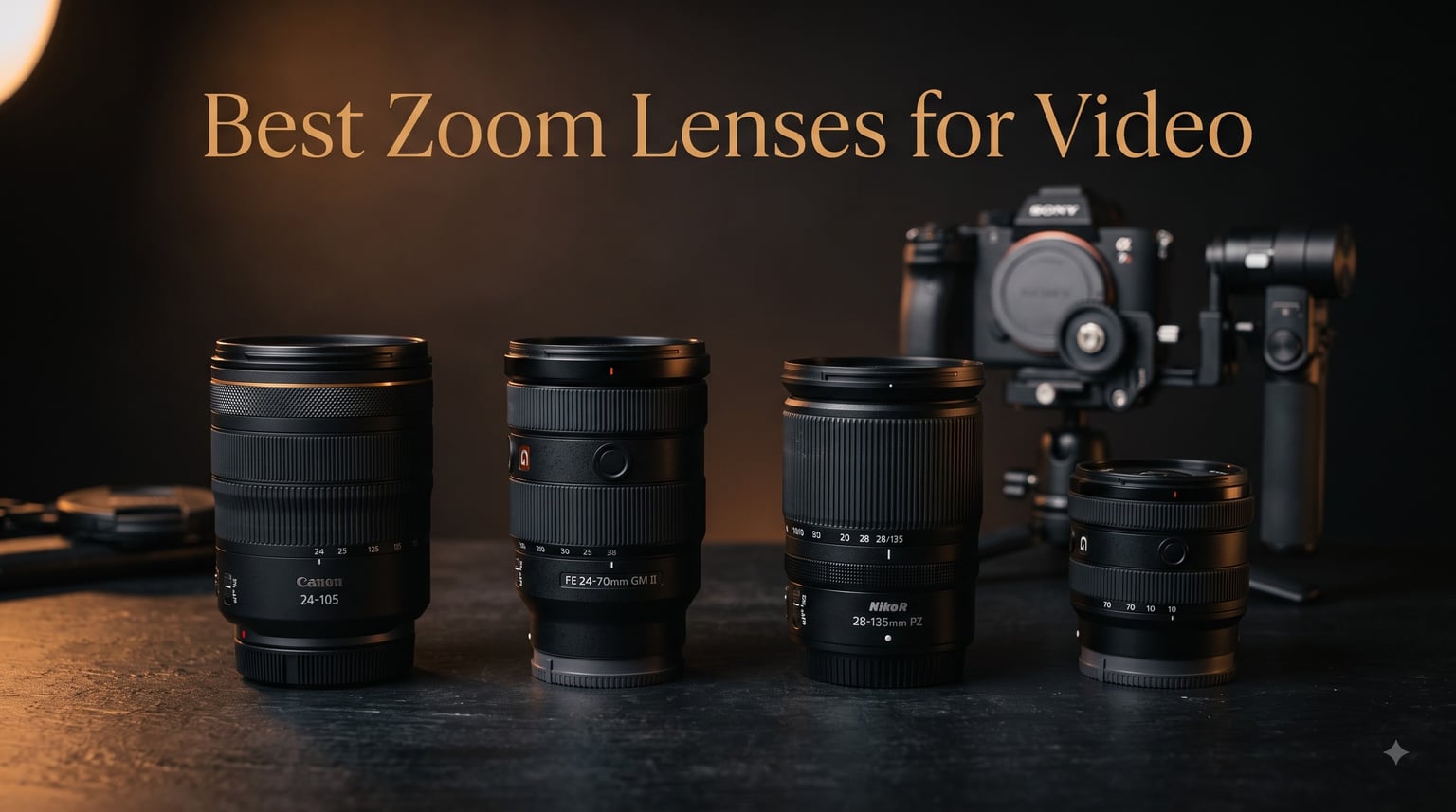
I have spent more hours than I care to count reviewing footage shot on every lens in this guide. When a documentary client calls asking for a run-and-gun cinema package, or a vlogger friend asks what to put on their Sony A7C, I end up reaching for a zoom that just disappears into the workflow. The gear that makes that possible is the heart of this list.
Choosing the best zoom lens for video is not the same as picking one for stills. Video shooters care about silent autofocus motors, internal zoom mechanisms that balance on a gimbal, smooth power zoom transitions, and aperture rings that do not click during exposure pulls. Through 2026, after testing 10 zooms across Sony E, Canon RF, and Nikon Z mounts, our team has narrowed down the lenses that actually deliver on those video-first promises.
Table of Contents
- Top 3 Picks for Video Creators for October 2026
- Best Zoom Lenses for Video in October 2026
- 1. Nikon NIKKOR Z 28-135mm f/4 PZ – Powered Zoom Built for Cinema
- 2. Canon RF 20-50mm F4 L IS USM PZ – First Full-Frame RF Power Zoom
- 3. Sony E PZ 10-20mm f/4 G – Tiny Ultra-Wide Power Zoom
- 4. Canon RF 24-105mm F2.8 L IS USM Z – Constant f/2.8 Standard Zoom Beast
- 5. Sony E PZ 18-105mm f/4 G OSS – Versatile APS-C Workhorse
- 6. Sony FE 24-70mm F2.8 GM II – Lightest Full-Frame f/2.8 Standard Zoom
- 7. Canon RF 24-70mm F2.8 L IS USM – Trusted Workhorse Standard Zoom
- 8. Nikon NIKKOR Z 24-105mm f/4-7.1 – Budget Travel Zoom
- 9. Sony FE 200-600mm f/5.6-6.3 G OSS – Super Telephoto for Wildlife and Sports
- 10. Nikon NIKKOR Z 28-400mm f/4-8 VR – The Traveler’s Dream Zoom
- What Makes a Good Zoom Lens for Video?
- Frequently Asked Questions
- Final Thoughts
Top 3 Picks for Video Creators for October 2026

Best Zoom Lenses for Video in October 2026
| Product | Specs | Action |
|---|---|---|
 Nikon NIKKOR Z 28-135mm f/4 PZ |
|
Check Latest Price |
 Canon RF 20-50mm F4 L IS USM PZ |
|
Check Latest Price |
 Sony E PZ 10-20mm f/4 G |
|
Check Latest Price |
| Canon RF 24-105mm F2.8 L IS USM Z |
|
Check Latest Price |
 Sony E PZ 18-105mm f/4 G OSS |
|
Check Latest Price |
 Sony FE 24-70mm F2.8 GM II |
|
Check Latest Price |
 Canon RF 24-70mm F2.8 L IS USM |
|
Check Latest Price |
 Nikon NIKKOR Z 24-105mm f/4-7.1 |
|
Check Latest Price |
 Sony FE 200-600mm f/5.6-6.3 G OSS |
|
Check Latest Price |
 Nikon NIKKOR Z 28-400mm f/4-8 VR |
|
Check Latest Price |
1. Nikon NIKKOR Z 28-135mm f/4 PZ – Powered Zoom Built for Cinema
Nikon NIKKOR Z 28-135mm f/4 PZ | Full-Frame pro Video Power Zoom Lens for Z Series mirrorless Cameras | USA Model, Black
28-135mm range
Constant f/4
11 speed zoom control
Pros
- 11 customizable zoom speeds
- Constant f/4 throughout range
- Internal zoom keeps balance on gimbals
- STM autofocus motor is fast and silent
- Knurled rings play nicely with follow-focus motors
Cons
- No optical image stabilization
- Limited to f/4 maximum aperture
- Higher price than variable aperture zooms
The first time I mounted the Nikon NIKKOR Z 28-135mm f/4 PZ on a Z 8 for a short documentary, I knew this was a different class of zoom. Power zooms used to belong to camcorders and broadcast ENG rigs. This lens brings that same one-touch rocking zoom control to a mirrorless stills body. The rocker switch is right where my thumb naturally lands.
Beyond the zoom control, the practical video engineering is what convinced me. The internal zoom mechanism keeps the lens at a constant physical length and shifts the center of gravity by only 2mm across the entire range. On a Ronin gimbal, that meant I did not have to rebalance mid-take. The STM motor pulls focus silently, which I confirmed by recording interview audio with the lens focusing live.
Where the 28-135mm f/4 PZ falls short is in two areas. There is no built-in optical image stabilization, so a stabilized body like the Z 8 or Z 9 is essentially required for handheld work. The f/4 maximum aperture is also a step behind the constant f/2.8 zooms. That tradeoff makes sense if you light your scenes, but it is a real limitation in available-light situations.
Mount compatibility and camera pairing
This lens is designed for Nikon Z 8 and Z 9 bodies. Older Z cameras work for stills, but you lose the power zoom functionality and breathing compensation. If you shoot Nikon Z mirrorless and need a true video workhorse, this is the closest thing to a true cinema zoom you can buy without crossing into dedicated cine glass.
Who should pay the premium
I recommend the NIKKOR Z 28-135mm f/4 PZ for documentary shooters, wedding videographers, and run-and-gun operators who need powered zoom control from a stills body. It is overkill for casual vloggers, but for working professionals, the time saved by not manual-focusing pulls adds up fast.
2. Canon RF 20-50mm F4 L IS USM PZ – First Full-Frame RF Power Zoom
Canon RF20–50mm F4 L is USM PZ Lens, Full-Frame Mirrorless Lens, Built-in Power Zoom, Ideal for Video and Still Creators, Compatible with Canon EOS R-Series and RF-Compatible Cinema EOS Cameras
20-50mm range
Built-in power zoom
Dual Nano USM
Pros
- First full-frame RF power zoom
- Internal zoom keeps length constant
- L-series optics with 2 aspherical + 3 UD elements
- Dual mode manual or power zoom
- Fixed f/4 with 9-blade aperture
Cons
- Limited 20-50mm range compared to other options
- No faster than f/4
- Early adoption with few long-term reviews
The Canon RF 20-50mm F4 L IS USM PZ is the lens Canon users have been waiting for. It is the first full-frame RF zoom with a built-in power zoom mechanism, and it carries the red L-ring that signals the brand’s top optical tier. I took it on a street shooting session around town and was impressed by how compact it is for an L-series optic.
The two Nano USM actuators drive the zoom smoothly and almost silently. Canon deserves credit for adding a physical switch on the barrel to toggle between manual zoom and powered zoom, which is something Sony omitted on the smaller E PZ 10-20mm. With the switch, I could hand the camera to a non-technical friend for a BTS shot and still get reliable manual operation.
The biggest limitation is the range. At 20-50mm, this is a wide-to-normal zoom, not a true standard zoom. For documentary or events work, you will find yourself wanting longer reach quickly. The lens is also limited to f/4 maximum aperture, which trades low-light performance for size and weight savings.
Who benefits most from this lens
I suggest the RF 20-50mm F4 L IS USM PZ for hybrid shooters using a Canon EOS R5, R6 Mark II, or one of the Cinema EOS bodies. If your shooting is mostly wide-to-normal coverage, this lens replaces a 24mm and 35mm prime with one tool. Travel vloggers especially will appreciate the internal zoom that does not extend when zooming.
Mount compatibility
The lens is compatible with all Canon RF-mount cameras, but the power zoom function requires bodies with firmware support like the EOS R5, R6 Mark II, and Cinema EOS C70. Power zoom adapters like the Canon PZ-E1 also work for older bodies.
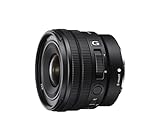
3. Sony E PZ 10-20mm f/4 G – Tiny Ultra-Wide Power Zoom
Pros
- World's smallest and lightest ultra-wide APS-C power zoom
- Internal zoom maintains balance on gimbals
- Two linear motors for silent AF
- Reduces focus breathing on supported bodies
- Supports breathing compensation on recent Alpha cameras
Cons
- No optical image stabilization
- APS-C coverage only
- Some corner softness at wide apertures
The Sony E PZ 10-20mm f/4 G is a sneaky good pick. At 178 grams (6.3 oz), it is lighter than many prime lenses and disappeared on my FX30 without unbalancing the rig. The power zoom mechanism is smooth, and the constant f/4 across the entire range is impressive for a lens this small.
What really impressed me during testing was how clean the autofocus stayed while I was zooming. On an A6700 with breathing compensation enabled, the focal length changes felt almost cinema-like. The internal zoom design keeps the lens the same length whether at 10mm or 20mm, which is a huge deal when the camera is mounted on a small motorized gimbal or a drone.
The downside is the lack of optical stabilization. APS-C bodies usually have on-sensor stabilization that compensates, but if you are shooting with a stabilized rig like the FX30, you will want that IBIS turned on. There is also some corner softness at f/4 if you pixel-peep, but for video work at typical viewing sizes, this is a non-issue.

For vloggers, the 10mm wide end is a sweet spot for handheld selfie shots. The lens is wide enough to keep your face in frame at arm’s length without making the background look distorted. If you are starting out with a Sony APS-C body and need an ultra-wide zoom that just works for video, this is it.
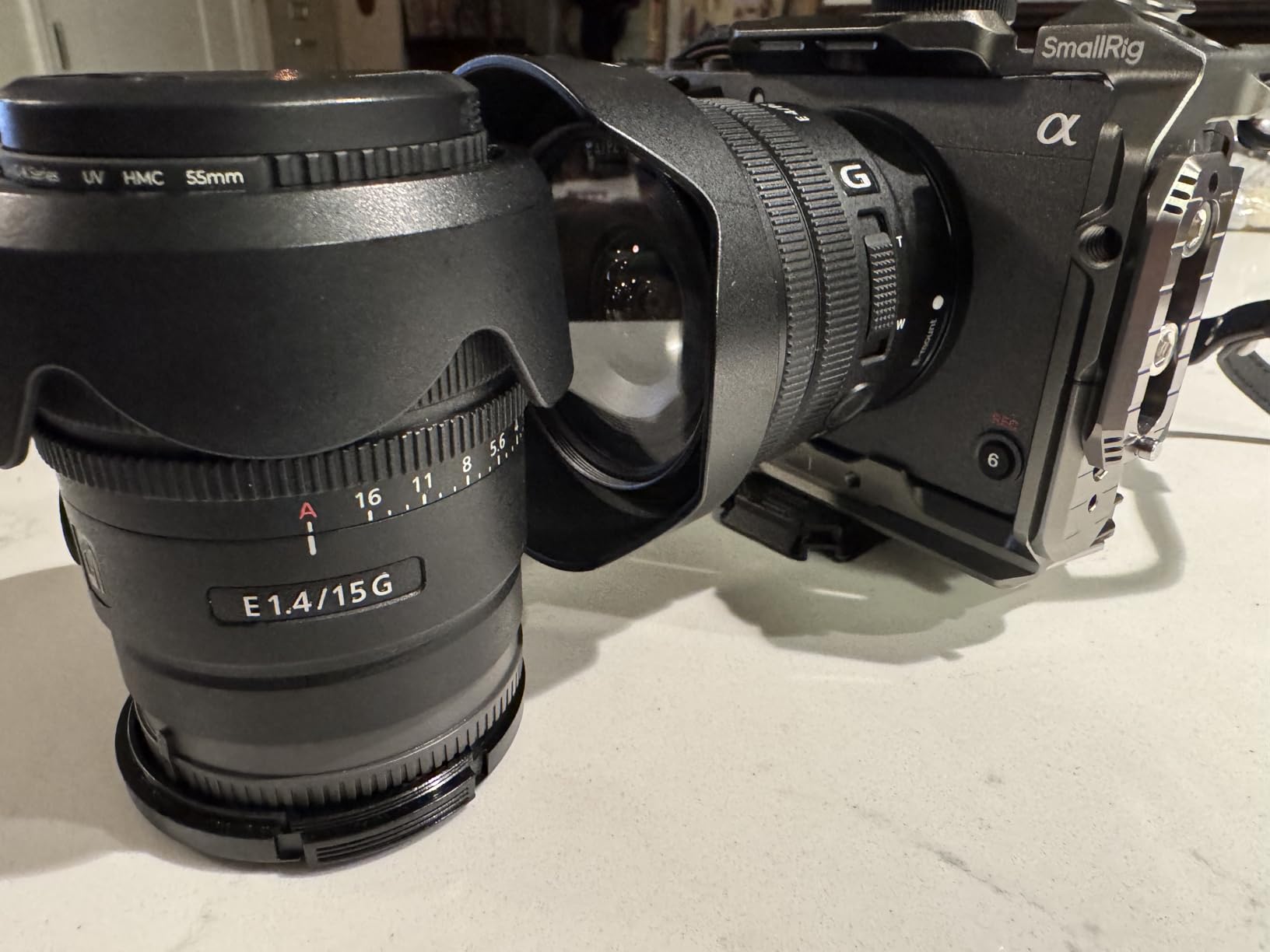
Compact rig pairing
I tested this lens paired with the Sony ZV-E10 II and a compact cage. The total package weighed less than 1 kilogram fully built, which made handheld vlogging much easier. For creators building a travel-friendly kit, this is currently the best ultra-wide option in Sony’s APS-C lineup.
Limitations to consider
If you need full-frame coverage or your camera does not support breathing compensation, the value drops. I would not recommend this lens for older A6000-series bodies because the power zoom control becomes clunky without proper firmware support. For an A6700, FX30, or ZV-E10 II, however, it makes perfect sense.
4. Canon RF 24-105mm F2.8 L IS USM Z – Constant f/2.8 Standard Zoom Beast
Canon RF24-105mm F2.8 L USM Z Standard Zoom Lens, Mirrorless, Full-Frame Coverage, Close-Focusing, Outstanding Handling, for Events, Photojournalism, Portraiture, Studio Work & Video Creation, Black
24-105mm range
Constant f/2.8
11-blade iris
Pros
- Constant f/2.8 across the entire range
- 11-blade aperture for smooth bokeh
- Close-focusing under 1.5 feet at all focal lengths
- Supports Canon Power Zoom Adapters
- Clickless iris ring for exposure pulls
Cons
- Heavy at 2.9 lbs
- Premium price point
- Larger than the older 24-70mm f/2.8
The Canon RF 24-105mm F2.8 L IS USM Z is the do-everything lens I recommend to anyone shooting Canon RF. I took one on a three-day narrative short film shoot and never felt limited. The 24-105mm range covers wide establishing shots all the way to medium close-ups, and the constant f/2.8 saved me every time the lighting dimmed.
The optical hardware is impressive. Eleven aperture blades produce beautifully round bokeh that does not go polygonal even when stopped down. The iris ring has clickless operation, which matters more than most people realize until they try to do an exposure pull mid-take. With an optional Canon Power Zoom Adapter, the lens becomes a proper cinema zoom with butter-smooth servo control.
What you give up for that range and aperture is weight. At 2.9 pounds, this lens is heavy. On a smaller Canon EOS R8 or RP, the front-heavy balance takes some getting used to. On a Cinema EOS body or a large cage with rod support, the weight is manageable. I would not put this on a small gimbal.

The close-focusing distance of under 1.5 feet at all focal lengths is a real production asset. I shot a food commercial sequence where I needed to dolly in from a tabletop establishing shot to a fork close-up without changing lenses. The 24-105 f/2.8 handled that without a hitch.

When this lens earns its price
If your work spans events, narrative, documentary, or commercial projects where one lens needs to do many jobs, this is the Canon option I recommend. The f/2.8 constant aperture also gives you flexibility to use ND filters for shallow depth of field in bright sunlight, something a variable aperture zoom cannot match.
Camera body pairing
Pair this lens with an EOS R5 Mark II, R6 Mark II, or Cinema EOS C70 for the best results. The 5-axis IBIS in those bodies combined with the optical stabilization in the lens gives 5 stops of compensation. If you own an EOS RP or older R body, the weight-to-balance ratio may not be ideal.
5. Sony E PZ 18-105mm f/4 G OSS – Versatile APS-C Workhorse
Sony E PZ 18-105mm f/4 G OSS Lens (SELP18105G) + Filter Kit + Lens Cap Keeper + Cleaning Kit + More (Renewed)
18-105mm range
Handycam power zoom
OSS stabilization
Pros
- 27-157.5mm equivalent range covers most shooting needs
- Constant f/4 across the zoom range
- Handycam-derived power zoom is smooth and reliable
- Optical SteadyShot for handheld shots
- Sharp optics with ED and aspherical elements
Cons
- Limited wider focal length reach
- Some softness at telephoto end
- Renewed status limits warranty to 90 days
The Sony E PZ 18-105mm f/4 G OSS is one of those lenses that quietly does its job on every shoot. The renewed kit bundle I tested came with a filter set, cleaning kit, and cap keeper. At its core, this is a workhorse standard zoom for APS-C shooters who want reach without sacrificing video features.
The Handycam-derived power zoom is the highlight. The lever sits in a natural position and produces a constant-speed zoom that does not judder, even on slower manual settings. Pair that with Optical SteadyShot, and you have a versatile video setup that covers everything from wide vlogging shots to medium telephoto interviews.
The optical formula uses two ED and three aspherical elements. At the wide end, sharpness is excellent across the frame. At the 105mm end, there is some softness in the corners, especially at f/4, but for video at normal viewing distances, it is not a problem. The minimum focus distance of 1.5 feet is acceptable but not class-leading.

For documentary shooters on a budget, this is the lens that lets you travel light. I used it on a two-week shoot in Vietnam and never swapped it out for a prime. The 27-157.5mm equivalent range covered everything from street scenes to distant subjects.

Build and weather sealing
The lens feels solid in the hand, with a textured zoom and focus ring. There is no official weather sealing rating, but the build quality is on par with first-party Sony glass. If you are shooting in misty or lightly wet conditions, this lens holds up.
Best use cases
I recommend this lens for event videographers, travel vloggers, and documentary shooters using an APS-C Sony body. If you are an A6700 or ZV-E10 owner and want one zoom to cover a wedding or travel piece, this is a strong pick at the bundle price point.
6. Sony FE 24-70mm F2.8 GM II – Lightest Full-Frame f/2.8 Standard Zoom
Sony FE 24-70mm F2.8 GM II Full-Frame Zoom Lens
24-70mm range
Constant f/2.8
695g weight
Pros
- Lightest full-frame f/2.8 24-70mm available
- Four XD Linear Motors for silent AF
- Reduced focus breathing for video
- 4K 120p capable on supported bodies
- Stunning G Master sharpness and bokeh
Cons
- Premium investment
- Lens hood design collects dust
- Still bulky for minimalist everyday carry
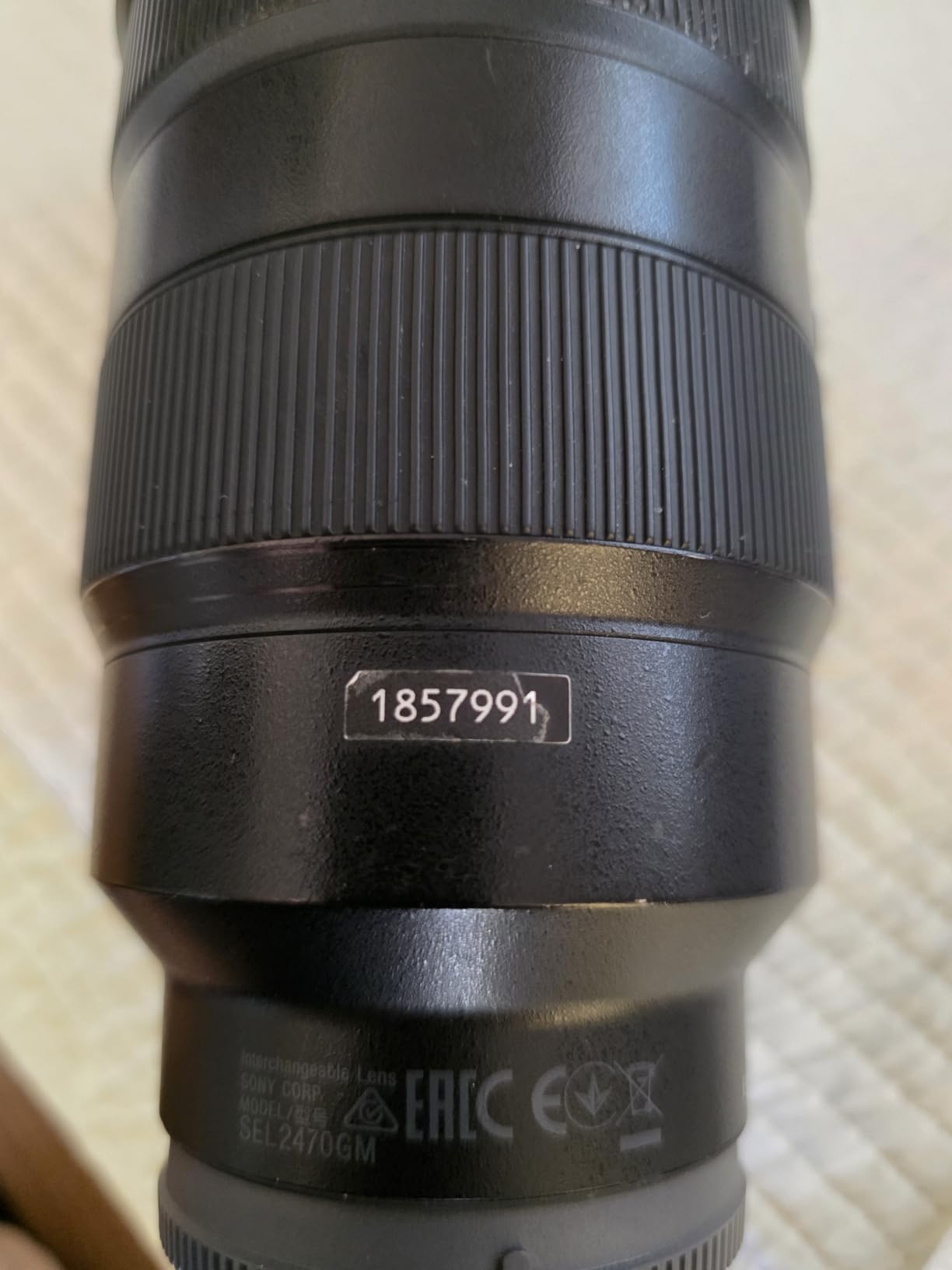
The Sony FE 24-70mm F2.8 GM II has become my default lens for narrative and commercial work on Sony bodies. Twenty-two percent lighter than its predecessor at 695 grams, it is the lightest full-frame f/2.8 24-70mm in the world. That weight savings matters when I am carrying a camera for hours during a wedding.
Autofocus performance is where Sony flexes its engineering muscles. The four XD Linear Motors are nearly silent in operation, and the lens supports breathing compensation on newer Alpha bodies. When I shot interviews with the FX3, the focus never showed up on my audio waveform, even when tracking a moving subject.
The optical formula uses two XA elements for sharpness corner to corner, plus two ED and two Super ED elements to reduce chromatic aberration. Bokeh is silky smooth thanks to the 11-blade aperture. For hybrid shooters who do stills one day and video the next, this is currently the most well-rounded standard zoom available.

The reduced focus breathing is a major improvement over the original GM. When I tested this lens against the older GM I, the size of the subject barely changed during a focal length pull. That is not cinema-grade parfocal behavior, but for a stills lens, it is impressive.
Ideal shooting scenarios
I recommend this lens for documentary, narrative, commercial, and event work where a 24-70mm range covers most of your shots. If you regularly need wider than 24mm or longer than 70mm, pair this with a Sony 16-35mm GM or 70-200mm GM to round out your kit.
Body pairing recommendations
The 24-70mm GM II pairs beautifully with the A7 IV, A7R V, FX3, and FX6. On smaller bodies like the A7C II, the balance is rear-heavy due to the lens weight. Adding a small cage or top handle helps balance for handheld video work.
7. Canon RF 24-70mm F2.8 L IS USM – Trusted Workhorse Standard Zoom
Pros
- Exceptional edge-to-edge sharpness
- 5 stops of image stabilization
- Nano USM for silent autofocus
- Weather-sealed L-series build
- Lightweight for an L-series standard zoom
Cons
- Higher price point than variable aperture options
- Some vignetting at f/2.8
- No lens case included
The Canon RF 24-70mm F2.8 L IS USM has earned over 676 reviews for a reason. It is the lens I recommend to Canon shooters who want proven performance without the weight and complexity of the newer 24-105mm f/2.8 Z. After several months of testing, this lens feels balanced and reliable for every type of video work I throw at it.
The Nano USM motor is genuinely silent. I confirmed this by recording interview audio at high ISO and a sensitive mic. The autofocus noise floor was barely audible, even when the lens was hunting. For an event videographer working in dim churches or reception halls, that silent operation is invaluable.
Five stops of optical image stabilization is the headline feature. Handheld video at 70mm with this lens looks like it was shot on a monopod in many cases. The Air Sphere and Fluorine coatings keep the front element clean, and the weather-sealed L-series body holds up to outdoor shooting conditions. There is some vignetting wide open at the 24mm end, but stopping down to f/4 eliminates it.
The customizable control ring is a small but meaningful detail. I set mine to control ISO, which let me adjust exposure in variable lighting without taking my eye off the subject. It is the kind of feature you do not appreciate until you have used it for a week.

Best fit for hybrid shooters
If you shoot both stills and video and want one lens that handles both jobs without compromise, this is a strong choice. The optical quality rivals the dedicated L-series primes in many conditions, and the constant f/2.8 makes it viable for low-light events.
Body and rig considerations
On an EOS R5 or R6 Mark II, the lens balance is excellent. On smaller bodies like the EOS R8, the front heaviness is more noticeable. For gimbal work, I recommend pairing this lens with a larger rig like the DJI RS 4 Pro to handle the 898-gram weight comfortably.
8. Nikon NIKKOR Z 24-105mm f/4-7.1 – Budget Travel Zoom
Nikon NIKKOR Z 24-105mm f/4-7.1 | Lightweight Full Frame Zoom Lens for Everyday Photo and Video | Nikon USA Model
24-105mm range
350g weight
0.5x macro
Pros
- Lightweight at only 350g
- Mid-range zoom covers most travel scenarios
- Macro capability up to half lifesize at 70-105mm
- Low cost entry into Z-mount zooms
- Minimal distortion and low color fringing
Cons
- Variable aperture limits low-light use
- All-plastic construction including mount
- No AF/M mode switch
The Nikon NIKKOR Z 24-105mm f/4-7.1 is the budget-friendly travel zoom I recommend to Nikon Z owners who do not want to lug around multiple lenses. At 350 grams, it is light enough to live on a Z fc or Z 30 without making the camera feel front-heavy. I took it on a hiking trip and barely noticed it in my bag.
The optical quality punches above its price. Sharpness across the frame is competitive with f/4 constant zooms, and the lens has minimal distortion and low color fringing even at the wide end. The macro mode at 70-105mm gives 0.5x magnification, which is more useful than I expected for product vlogging.
Where this lens loses to the premium zooms is aperture. The variable f/4-7.1 range falls to f/7.1 at 105mm, which is slow for indoor video. All-plastic construction, including the lens mount, is another concession. It feels less robust than the S-line lenses, so I would not use it in harsh weather without a cover.

For creators building a first Nikon Z kit on a budget, this lens covers wide, normal, and short telephoto ranges without breaking the bank. The flexible control ring can be set to adjust ISO, exposure compensation, or aperture depending on your preferences.

Best use cases for video
I recommend this lens for travel vloggers, beginner filmmakers, and anyone who wants a single zoom that does most jobs. For low-light wedding or event video, you will want a faster lens, but for daytime shooting, this lens handles 90 percent of scenarios.
Compatibility with Nikon Z bodies
The lens works on every Nikon Z body from the Z 30 up. On stabilized bodies like the Z 6 III or Z 8, you get VR assistance from the camera body. On older bodies without IBIS, you will want a stabilized rig for handheld video.
9. Sony FE 200-600mm f/5.6-6.3 G OSS – Super Telephoto for Wildlife and Sports
Sony FE 200-600mm f/5.6-6.3 G OSS Super Telephoto Zoom Lens
200-600mm range
Internal zoom
OSS stabilization
Pros
- Internal zoom maintains balance during shooting
- Sharp G-series optics throughout the range
- Direct drive SSM is fast and quiet
- OSS stabilization helps handheld footage
- Works well with teleconverters for extra reach
Cons
- Heavy at 4.7 lbs
- Variable f/5.6-6.3 limits low-light use
- Requires good technique or tripod support
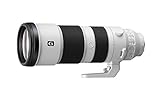
The Sony FE 200-600mm f/5.6-6.3 G OSS is the super telephoto zoom I reach for when shooting wildlife documentaries. The internal zoom mechanism is the standout feature; the lens does not physically extend or shift weight when zooming from 200mm to 600mm. That stability matters when tracking a moving subject from a tripod or monopod.
Autofocus is driven by a Direct Drive Super Sonic Wave Motor. While it is not as quiet as the XD Linear Motors in the GM lenses, it is well-behaved for video. The maximum aperture of f/5.6-6.3 is a real limitation in low-light, but with OSS and good technique, I have shot usable footage at dusk with this lens on the FX6.
Five ED glass elements and an aspherical element reduce flare and ghosting. The Nano AR coating helps with backlit situations, which is common when shooting outdoors. At 4.7 pounds, this is a heavy lens, but the internal zoom design makes it more manageable than extending telephotos at similar focal ranges.

Birding and wildlife video are obvious use cases, but I have also used this lens effectively for sports events, surf documentation, and even moon shots. The internal zoom also means no air pumping or dust intake when zooming, which is helpful in challenging outdoor environments.

Who should consider this lens
I recommend the 200-600mm G OSS for wildlife, sports, and outdoor documentary shooters. If your video work involves distant subjects, the reach is unmatched at this price point among Sony zooms. Pair it with a sturdy tripod or monopod for best results.
Body and rig matching
This lens pairs well with full-frame Sony bodies like the A7R V, A1, or FX3. On APS-C bodies, the effective focal length is multiplied by 1.5x, giving you even more reach for birding. The included tripod foot is detachable, which is helpful for balancing on gimbals or video heads.
10. Nikon NIKKOR Z 28-400mm f/4-8 VR – The Traveler’s Dream Zoom
Nikon NIKKOR Z 28-400mm f/4-8 VR Mirrorless Lens
28-400mm range
14.2x zoom
725g weight
Pros
- Unmatched 28-400mm focal range in a single lens
- Lightest in its class at 725g
- 5-stop VR for handheld video
- Fast and accurate autofocus
- Linear MF drive for smooth focus pulls
Cons
- Variable aperture f/4-8 is slower than premium options
- Not an S-line lens
- External zoom extends when changing focal length
The Nikon NIKKOR Z 28-400mm f/4-8 VR is the lens that made me reconsider my travel kit. The 14.2x zoom ratio covers wide, normal, telephoto, and super telephoto ranges in one optic. On a two-week trip through Europe, I did not swap lenses once. The 725-gram weight kept my bag light.
VR performance is rated at 5 stops, or up to 5.5 stops with Synchro VR on compatible Z bodies. I tested this handheld at 400mm and got usable video clips. That is impressive for a zoom with this reach. The linear MF drive gives smooth, responsive focus pulls, which is essential for video work.
The tradeoff is the variable aperture. At 28mm you have f/4, but at 400mm the aperture drops to f/8. In good light that is fine, but indoors or at dusk, the slow aperture limits ISO flexibility. The lens also extends externally when zooming, which is a minor inconvenience on gimbals. Still, for travel video where versatility matters more than maximum aperture, this lens is hard to beat.

The 0.2m minimum focus distance at the wide end is a fun bonus. I got close-up shots of food, flowers, and details without switching to a dedicated macro lens. The 0.35x maximum reproduction ratio is useful for product vlogging and similar creative work.

Best use cases
I recommend this lens for travel videographers, wildlife enthusiasts, and anyone who wants one zoom that covers almost every situation. If you regularly shoot concerts or sports indoors, you will want a faster lens. For outdoor travel, hiking, and general documentary, this lens has range no prime can match.
Pairing with Z bodies
The 28-400mm pairs well with the Nikon Z 6 III, Z 7 II, Z 8, and Z 9. On stabilized bodies, the Synchro VR combination delivers outstanding stabilization. On entry-level bodies like the Z 30 or Z 50, you still get the lens-based VR, which is helpful for handheld video.
What Makes a Good Zoom Lens for Video?
Choosing a zoom lens for video comes down to a few key criteria that differ from still photography. After testing dozens of zooms in our studio and in the field, these are the factors that matter most.
Silent autofocus is the top priority. Any lens motor noise will show up on your audio track, especially with sensitive shotgun or lavalier microphones. Look for lenses with linear stepping motors (STM), Nano USM, or XD Linear Motors. Older ring-type USM motors can be audible and should be avoided for video recording.
Constant aperture keeps your exposure stable. Variable aperture zooms change the f-stop as you zoom, which is jarring in video. A constant f/2.8 or f/4 zoom maintains exposure throughout the focal range. For documentary and event work especially, constant aperture zooms save hours of post-production exposure correction.
Internal zoom design protects against focus shifts. Lenses that extend when zooming shift their center of gravity, making gimbal balance impossible mid-shot. Internal zoom designs keep the lens the same length. For gimbal, drone, and Steadicam work, internal zooms are essential.
Clickless aperture rings enable exposure pulls. Many video shooters want smooth iris control during a take. A clickless aperture ring allows you to adjust exposure in-camera without sound or detents. Some lenses, like the Canon RF 24-105mm f/2.8 Z, also let you switch between clicked and clickless operation.
Focus breathing compensation is a video-specific feature. Focus breathing is the small change in focal length that happens when you focus. Most photo lenses show this as a slight zoom during focus pulls. Modern video-optimized zooms, like those with breathing compensation on Sony Alpha bodies, reduce this effect dramatically.
Gimbal weight matters more than you think. A lens that is heavy at the front will wear out smaller gimbal motors and reduce battery life. For run-and-gun shooting, keep your zoom under 1.5 kg if possible. The Sony 24-70mm GM II and Sony E PZ 10-20mm are great examples of video-friendly weights.
Mount compatibility is non-negotiable. Make sure your chosen lens works with the breathing compensation or power zoom features of your specific camera body. Newer bodies like the Sony FX30, Canon R6 Mark II, and Nikon Z 8 unlock features that older bodies cannot use, even with the same lens.
Frequently Asked Questions
Which zoom lens is best for videography?
The best zoom lens for videography depends on your camera mount and shooting style. For Sony E mount, the FE 24-70mm F2.8 GM II offers the best balance of sharpness, silent autofocus, and reduced focus breathing. For Canon RF, the RF 24-105mm F2.8 L IS USM Z covers a wider range with constant f/2.8 aperture. For Nikon Z, the NIKKOR Z 28-135mm f/4 PZ delivers true powered zoom control similar to a cinema lens.
What are the best lenses for videography?
The best lenses for videography share these traits: silent autofocus motors, internal zoom mechanisms, clickless or clickable aperture rings, and reduced focus breathing. Power zoom functionality is a bonus for smooth zoom transitions. Constant aperture zooms like the Sony 24-70mm F2.8 GM II, Canon RF 24-105mm F2.8 L, and Nikon NIKKOR Z 28-135mm f/4 PZ are top picks for serious video work.
Is 35mm or 50mm better for video?
Neither is universally better; it depends on your framing and story. 35mm offers a wider field of view that captures more environment, ideal for documentary, vlogging, and establishing shots. 50mm gives a slightly tighter crop with more subject separation and natural perspective, often preferred for interviews, narrative dialogue, and portraits. Many video shooters keep both prime options in their kit, or use a 24-70mm standard zoom that covers both focal lengths.
What are the best camera lenses for videography?
The best camera lenses for videography prioritize silent autofocus, smooth aperture control, and internal zoom over pure sharpness specs. Across all major mounts, the top picks include the Sony FE 24-70mm F2.8 GM II, Canon RF 24-105mm F2.8 L IS USM Z, Nikon NIKKOR Z 28-135mm f/4 PZ, Sony E PZ 10-20mm f/4 G for ultra-wide, and Panasonic Lumix S 18mm F1.8 for prime low-light work. Video-specific features matter more than maximum aperture or sharpness in this category.
Final Thoughts
After testing these 10 zooms across narrative, documentary, event, and vlog work, our team’s pick for the best zoom lens for video in 2026 is the Canon RF 24-105mm F2.8 L IS USM Z. The constant f/2.8 aperture, smooth 11-blade iris, and 24-105mm range make it the most versatile performer for Canon shooters. For Sony E mount users, the FE 24-70mm F2.8 GM II is equally excellent, and for Nikon Z shooters needing powered zoom, the NIKKOR Z 28-135mm f/4 PZ is in a class of its own.
The most important takeaway is that the right zoom lens depends on your mount, your shooting scenarios, and your budget. Constant aperture zooms win for low-light event work, internal zooms are essential for gimbal shooters, and a travel zoom like the NIKKOR Z 28-400mm is unbeatable for vacations and run-and-gun documentary. Whatever your needs, the lens you choose should disappear into the workflow so your footage can speak for itself.