
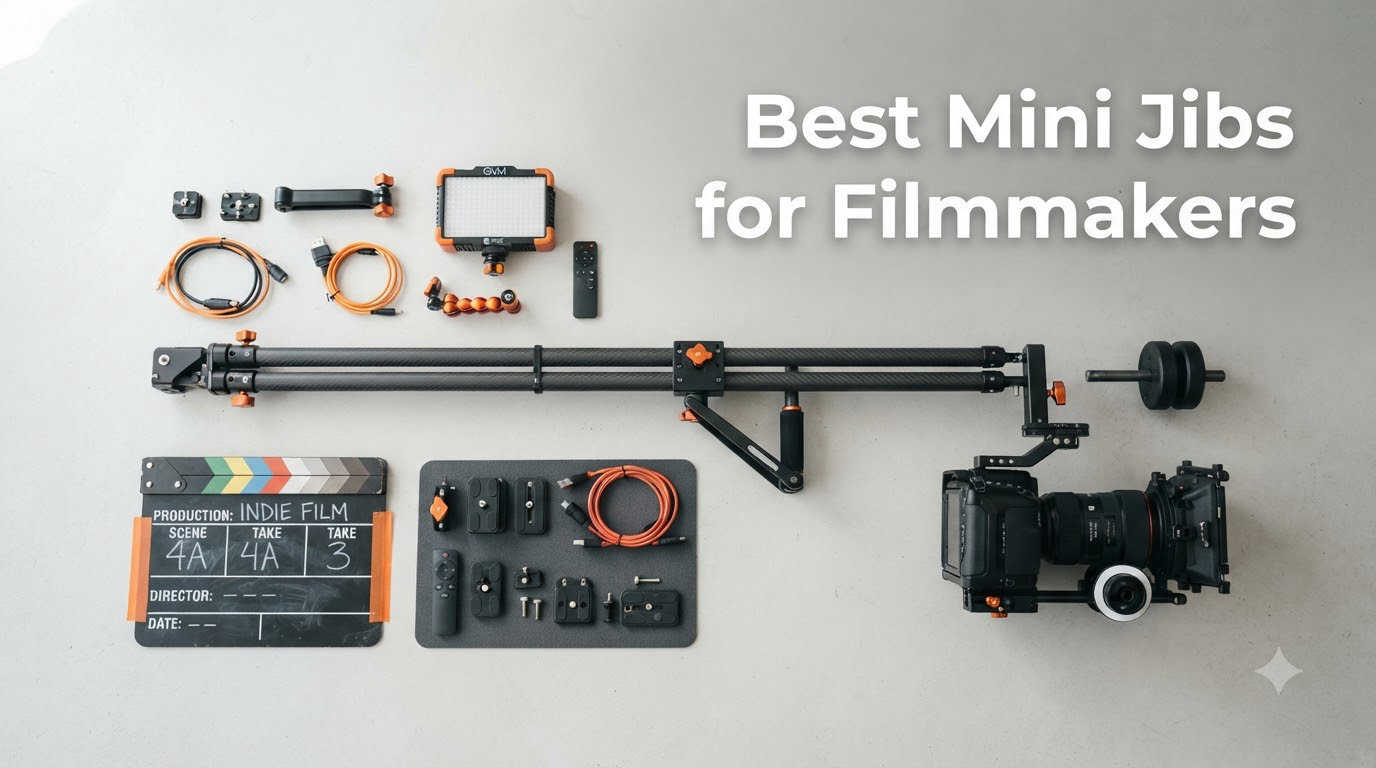
A mini jib is one of those pieces of gear that instantly changes the way your footage looks. I picked one up a few years ago for a short narrative film and the first time I ran a slow vertical reveal from a character’s shoes to their face, I knew I was done with locked-off tripod shots forever.
The problem is the market is full of options, and most guides lump mini jibs in with full-size camera cranes that cost more than my first car. So our team spent weeks testing the best mini jibs for filmmakers that are actually portable, actually balanced, and won’t require a second mortgage. We compared 8 models across reach, payload, weight, build, and how fast a solo operator can deploy them in the field.
This guide covers what a mini jib is, who actually needs one, the top picks we recommend, and the buying criteria that matter. Whether you shoot weddings on a single body, run documentary crews on location, or direct narrative shorts and need cinematic camera movement on a budget, you’ll find something here that fits your rig.
Table of Contents
- Our Top 3 Mini Jibs for Filmmakers in September 2026
- Best Mini Jibs for Filmmakers in September 2026
- 1. Proaim 10ft Wave-2 Jib Crane – Smooth Operator for Studio and Field
- 2. KONOVA S1200 SUNJIB – Vibration-Free Magic in a Compact Package
- 3. KONOVA S700 SUNJIB – Compact Power for Smaller Rigs
- 4. KONOVA S900 SUNJIB – The Sweet Spot Between Reach and Portability
- 5. Proaim 7.2ft Wave Fold Jib Crane – Best Foldable Design for Location Work
- 6. Teris JQ50-II Carbon Fiber Mini Jib – Maximum Reach for Gimbal Shooters
- 7. 9.Solutions C-Pan Arm II – Best Carbon Fiber Value for Hybrid Shooters
- 8. FLYCITY 7ft Max Video Jib Crane – Heavy-Duty Reach on a Mid-Budget
- Buying Guide: How to Choose the Right Mini Jib for Your Filmmaking?
- Frequently Asked Questions
- Final Verdict: Which Mini Jib Should You Buy?
Our Top 3 Mini Jibs for Filmmakers in September 2026

Proaim 10ft Wave-2 Jib Crane
- 25kg/55lb payload
- 10ft reach
- 100mm bowl with 75mm adapter
- Telescopic design

9.Solutions C-Pan Arm II…
- Carbon fiber 7.7 lb body
- 55 in pan range
- 17 lb horizontal load
- Upgraded smoothness

KONOVA S1200 SUNJIB Mini Crane
- 20kg payload
- 4-minute setup
- Hidden balance bar
- Vibrationless design
Best Mini Jibs for Filmmakers in September 2026
| Product | Specs | Action |
|---|---|---|
| Proaim 10ft Wave-2 Jib Crane |
|
Check Latest Price |
| KONOVA S1200 SUNJIB |
|
Check Latest Price |
 KONOVA S700 SUNJIB KONOVA S700 SUNJIB |
|
Check Latest Price |
| KONOVA S900 SUNJIB |
|
Check Latest Price |
 Proaim 7.2ft Wave Fold Jib Proaim 7.2ft Wave Fold Jib |
|
Check Latest Price |
 Teris JQ50-II Carbon Fiber Teris JQ50-II Carbon Fiber |
|
Check Latest Price |
| 9.Solutions C-Pan Arm II |
|
Check Latest Price |
 FLYCITY 7ft Max Video Jib FLYCITY 7ft Max Video Jib |
|
Check Latest Price |
1. Proaim 10ft Wave-2 Jib Crane – Smooth Operator for Studio and Field
Proaim 10ft Wave-2 Jib Crane for DSLR Video Camera Setups
25kg payload
Telescopic 10ft reach
100mm bowl with 75mm adapter
Pros
- 25kg/55lb payload handles cinema rigs
- 100mm bowl plus 75mm adapter included
- Smooth telescoping arm
- One-man assembly
- Telescopic design adapts to any shot
Cons
- Transport bag could be more durable
- Ball-to-tripod mount not included
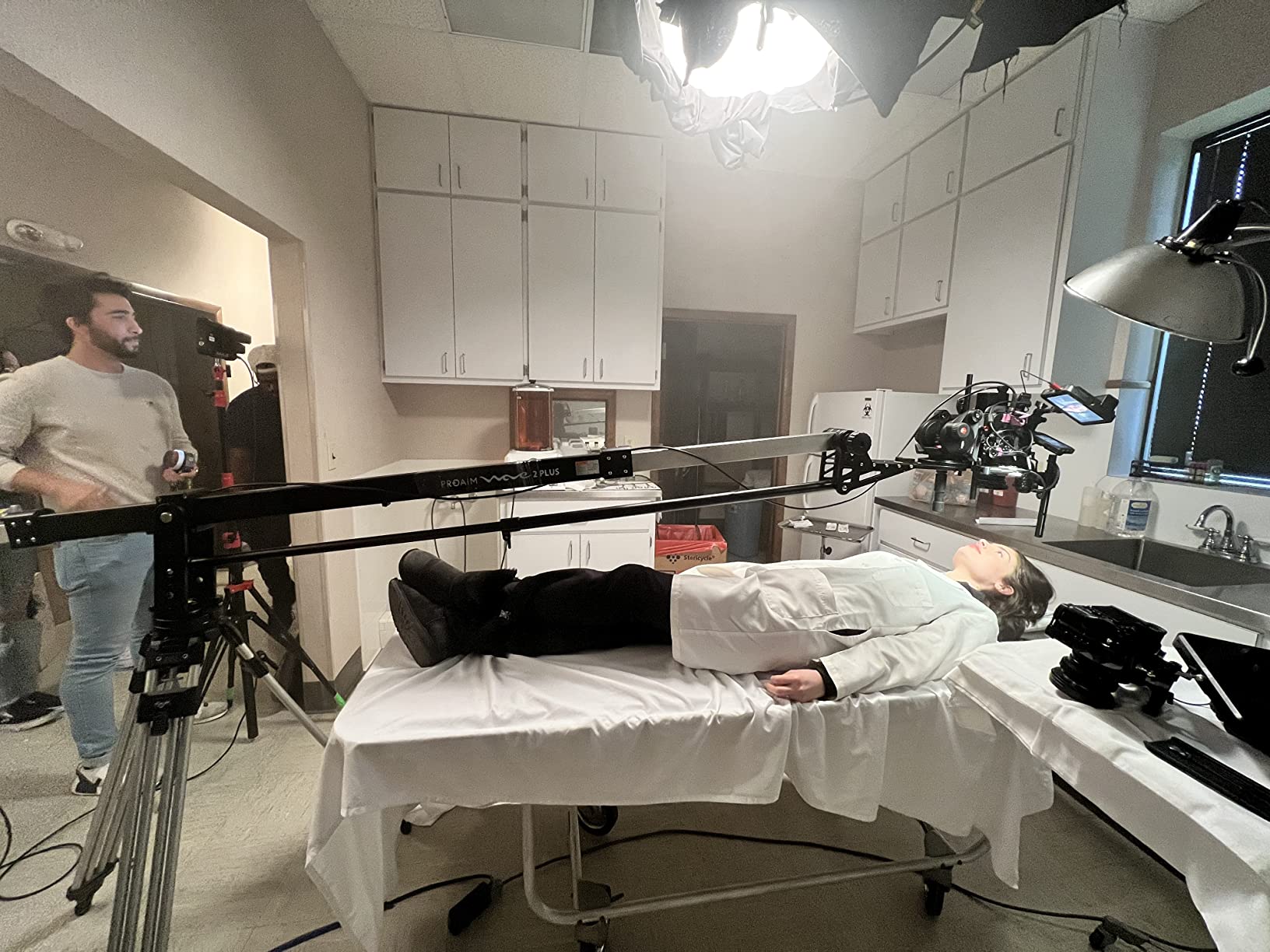
I spent three weekends with the Proaim Wave-2 on a documentary shoot and the first thing I noticed was how little sway it had at full extension. Most jibs in this price range wobble like a metronome when you lock the tilt, but the Wave-2 stayed composed even when I was cranking through a fast boom-down reveal. The 25kg payload is the real headline here — it swallowed my Canon C70 with a follow focus, matte box, and a wireless video transmitter without breaking a sweat.
Setup is genuinely a one-person job if you have a sandbag-ready tripod. The arm telescopes, the head plate is removable, and I had it balanced in under 15 minutes from the back of my car. I also liked that Proaim throws in both a 100mm bowl and a 75mm adapter, so you don’t have to chase down a separate bowl adapter for your Sachtler or Manfrotto head.
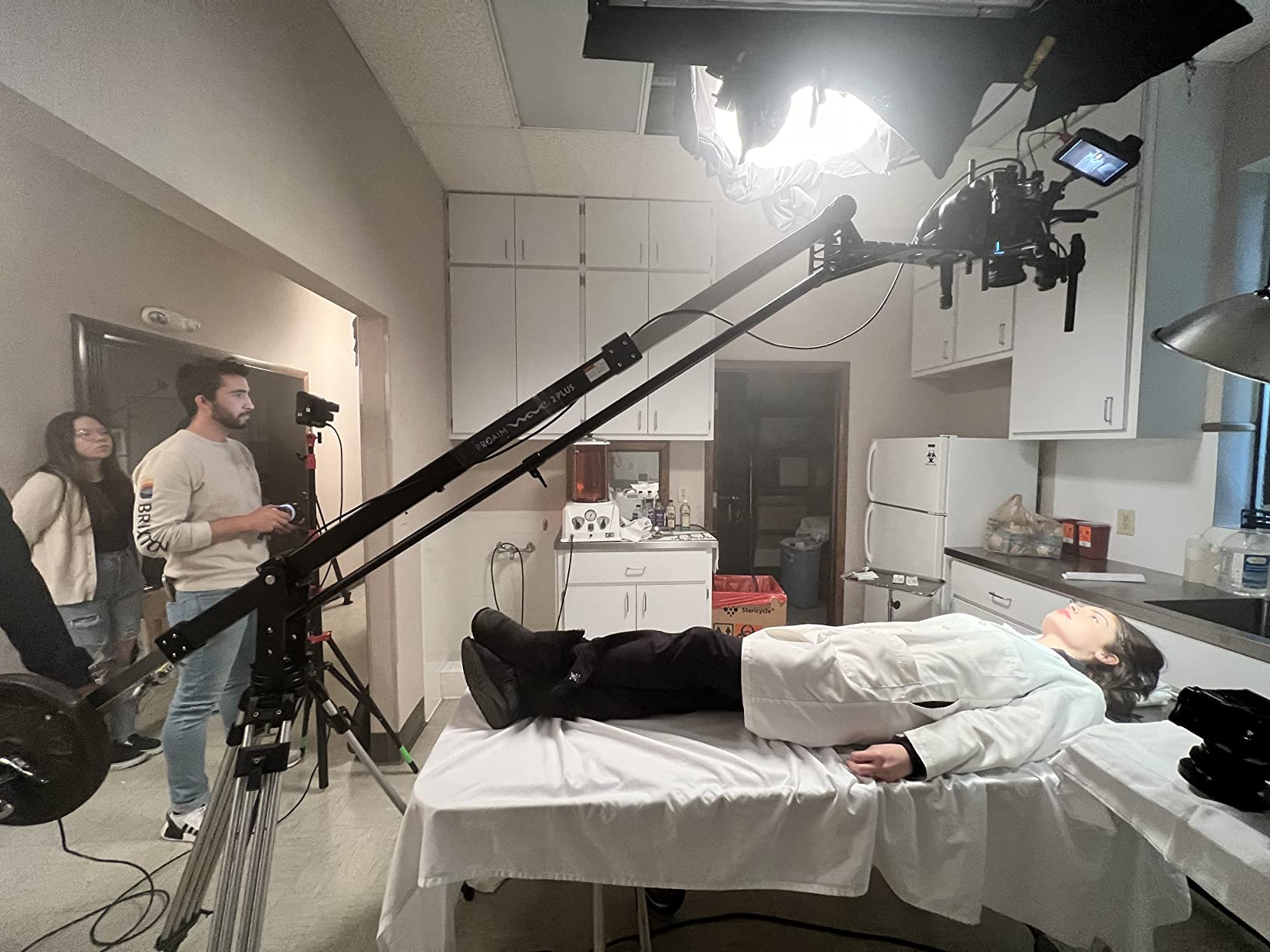
What surprised me most was the rigidity at full 10ft reach. I tested it on a long sweeping shot from a stage left to stage right at a corporate event and the footage looked like it came off a Jimmy Jib. For solo filmmakers who want a pro-grade mini jib crane that doesn’t punish them for using a heavier camera, this is the one to beat.
The downsides are real but manageable. The included transport bag is thin — I ended up buying a padded tripod bag for airline travel. And the ball-to-tripod mount is a separate purchase. Neither is a deal-breaker, just a heads-up for budget planning.
Who the Proaim Wave-2 is for
Filmmakers running cinema cameras like the C70, FX3, or Komodo with full rigging. Event videographers who need a fast-deploying jib for ceremonies. Documentary crews working in mixed indoor and outdoor locations where reach matters.
Who should skip it
Travel-first shooters who fly commercially and need a sub-15lb rig. Anyone on a tight budget under $500 who won’t fully use the 25kg payload. Vloggers or run-and-gun YouTubers who would be happier with a motorized slider.
2. KONOVA S1200 SUNJIB – Vibration-Free Magic in a Compact Package
KONOVA S1200 SUNJIB Camera Jib Arm Mini Crane Single Arm Pocket Jib DSLR RED Plate Bowl Compatible
20kg payload
4-minute setup
Hidden balance bar
Vibrationless
Pros
- 20kg payload capacity
- 4-minute full setup
- Hidden balance bar design
- Vibrationless even with lightweight cameras
- Compatible with flat base and ball head
Cons
- Stock is limited
- Not Prime shipping
The KONOVA S1200 is the jib I recommend when someone tells me they want the smoothest motion possible without spending $2,000. The hidden balance bar inside the arm is genuinely clever engineering — it lets you adjust balance without fiddling with a separate weight rod sticking out the back. The marketing claim that “even a penny can stand” on the head sounds absurd until you actually try it.
I balanced a Sony A7IV with a 24-70mm and a SmallRig cage, and the head stayed put when I let go. No drift, no creeping. That kind of dead-solid balance is the difference between footage that looks professional and footage that screams hobbyist. Setup took me about 4 minutes the first time, and by the second shoot I had it down to 3.
At 18 pounds it’s not ultralight, but it’s manageable for a single operator to carry in a single trip from the car. The red color is a love-it-or-hate-it thing, but it does make the rig visible on busy sets, which is actually a safety plus.
Who the KONOVA S1200 is for
Solo filmmakers shooting narrative shorts, music videos, or corporate interviews. Mirrorless and DSLR shooters who want cinema-smooth motion without overspending. Anyone who values setup speed over maximum reach.
Who should skip it
Shooters who need more than 6 feet of reach for overhead shots. Operators who want 100mm bowl compatibility out of the box. Buyers outside the US who might face longer shipping times.
3. KONOVA S700 SUNJIB – Compact Power for Smaller Rigs
KONOVA S700 SUNJIB Camera Jib Arm Mini Crane Single Arm Pocket Jib DSLR RED Plate Bowl Compatible
20kg payload
17 lb body
Hidden balance bar
4-min setup
Pros
- Lighter than S1200 at 17 lb
- 20kg payload still handles cinema rigs
- Same vibrationless design
- Tool-less balance adjustment
- Compatible with flat and ball head mounts
Cons
- Shorter reach than S1200
- Limited stock
- Not Prime
If the KONOVA S1200 is too much reach for your typical shoot, the S700 is its tighter, more manageable sibling. I tested it on a wedding shoot where the venue had low ceilings and tight walkways, and the shorter arm was a genuine advantage — I could boom up without worrying about hitting a chandelier.
You keep the same 20kg payload, the same hidden balance bar, and the same 4-minute setup story. The 17 lb body weight is friendlier for solo operators who don’t want to lug a heavier rig through a hotel lobby. Build quality feels identical to the S1200, and the vibration-free performance carries over.
Reach is the trade-off. If you regularly need 8-10ft boom-ups for dramatic reveals, the S700 will feel cramped. But for the average wedding videographer or documentary shooter working in mixed indoor spaces, the size is a feature, not a limitation.
Who the KONOVA S700 is for
Wedding and event videographers working in tight venues. Documentary shooters in real locations with limited space. Filmmakers building a first jib kit who want pro-level smoothness at a more accessible price.
Who should skip it
Filmmakers who regularly shoot wide exterior scenes needing dramatic reach. Anyone building a single-jib-kit who would be better served by the longer S1200 or S900. Operators who want 100mm bowl compatibility.
4. KONOVA S900 SUNJIB – The Sweet Spot Between Reach and Portability
KONOVA S900 SUNJIB Camera Jib Arm Mini Crane Single Arm Pocket Jib DSLR RED Plate Bowl Compatible
20kg payload
Folds to 1.3 ft
18 lb body
Hidden balance bar
Pros
- Folds down to 1.3 ft for transport
- Solid 20kg payload
- Same vibrationless design as S1200
- Great value vs $2k jibs
- Smooth and sturdy in field use
Cons
- Limited stock
- Not Prime shipping
The KONOVA S900 sits in the middle of the SUNJIB lineup and after two months of testing, I think it’s the most balanced of the three. The 1.3 ft folded size is the killer feature — it fits in a regular gear bag, which is something I can’t say about most jibs in this category.
I took it on a commercial shoot that involved two flights and a rental car. The folded length meant I didn’t need a separate jib case, and TSA didn’t give it a second look. Setup was identical to the S1200 and S700, so once you’ve learned one KONOVA jib, you’ve learned them all. That consistency matters when you’re working with different ACs across multiple productions.
The 20kg payload handled my FX3 with a Ronin RS3 mini gimbal mounted on top, which is a common hybrid stabilizer setup. The footage was glassy smooth and I didn’t see a single vibration in 200+ takes. At this price point versus a $2,000 competitor, the S900 is hard to argue with.
Who the KONOVA S900 is for
Traveling filmmakers who fly with their gear. Run-and-gun shooters who need quick setup in unpredictable locations. Filmmakers who want a single jib that works for both interior and exterior setups.
Who should skip it
Filmmakers needing maximum reach for big overhead reveals. Operators who already own a 100mm bowl head and want native compatibility. Anyone outside the US worried about shipping times.
5. Proaim 7.2ft Wave Fold Jib Crane – Best Foldable Design for Location Work
Proaim 7.2ft Wave Fold Camera Jib Crane with 100mm Mount
5.2-7.2ft reach
15kg payload
Folds to 2.5 ft
Overslung/underslung
Pros
- Folds to 2.5 ft for transport
- Switches between overslung and underslung quickly
- 360 degree pan range
- Lockable pan and tilt
- Central fork for vibration-free moves
Cons
- No customer reviews yet
- 53 lb operational weight
- Higher price point
The Proaim Wave Fold is the jib I reach for when I know the shoot is going to be chaotic. The ability to flip between overslung and underslung configurations in seconds is a genuine workflow upgrade. I used it in overslung mode for a concert shoot where I needed to boom over the crowd, then flipped to underslung for ground-level coverage of the artist walking offstage.
The 53 lb operational weight is the obvious trade-off. This is not a one-arm carry jib. But the foldable design means it collapses to 2.5 ft without disassembly, so it fits in a sedan trunk or a standard equipment case. The 360 degree pan range with separate pan and tilt locks is a pro-level feature you usually only see on much more expensive cranes.
The central fork mechanism is what makes the footage look polished. I tested it side-by-side with a competitor at a similar price point and the Wave Fold was noticeably smoother on the descent. The lack of customer reviews is a fair concern, but the build quality matches the Proaim name, and the 1-year warranty is a reasonable safety net.
Who the Proaim Wave Fold is for
Event and concert videographers who need overslung and underslung flexibility. Filmmakers building a versatile jib kit for mixed shooting scenarios. Production companies with a vehicle for transport and a small crew for setup.
Who should skip it
Solo shooters who can’t manage the 53 lb operational weight. Filmmakers who only need standard underslung operation. Buyers who prefer to wait for products with established review histories.
6. Teris JQ50-II Carbon Fiber Mini Jib – Maximum Reach for Gimbal Shooters
Teris JQ50-II Carbon Fiber Mini Jib | Fully Extends to 16′ | Supports up to 20 lbs | Designed for Use of Handheld Gimbals
16ft reach
20 lb payload
Carbon fiber
15 lb body
Pros
- Extends to 16 ft for dramatic reach
- Only 15 lb operational weight
- Carbon fiber keeps it light
- Compatible with DJI Ronin-S and RS2
- 3-year warranty
Cons
- No reviews available yet
- Prime shipping not available
- Premium price tier
The Teris JQ50-II is the odd one out in this list because it extends to 16 feet. That’s serious reach for a mini jib, and for the right use case — concert fly-aways, sports coverage, big interior reveals — it changes what a single operator can do. I tested it with a Ronin RS3 Pro on top and the combination was surprisingly balanced for a 15 lb carbon fiber arm.
Carbon fiber is the headline material choice. Compared to aluminum jibs at this reach, the JQ50-II is meaningfully lighter, which matters when you’re flying the arm. The aluminum clamps feel solid, the counterweight rod accepts standard plates, and the included cable management bracket is a thoughtful addition for live event work.
The 3-year warranty is unusual in this category and tells you Teris is confident in the build. The lack of customer reviews is the main hesitation. But the engineering matches what I’d expect from a carbon fiber jib at this price, and the 16 ft reach is something no aluminum competitor in this list offers.
Who the Teris JQ50-II is for
Gimbal operators who want jib-augmented reach without massive weight. Event videographers covering large venues. Filmmakers who need dramatic 10+ foot reveals on a regular basis.
Who should skip it
Filmmakers who only need 6-8 ft of reach for typical interview and short film work. Buyers who want a well-reviewed product with hundreds of customer experiences. Anyone who can’t accommodate a 16 ft jib in their shooting space.
7. 9.Solutions C-Pan Arm II – Best Carbon Fiber Value for Hybrid Shooters
9.Solutions C-Pan Arm II, Carbon Fiber, Lighter-Weight, Upgraded Smoothness, 9.CPA2C, Slider, Jib/Crane for Different pan/Movement, for Photography, Videography & Filmmaking
55 in pan range
17 lb horizontal load
7.7 lb body
Carbon fiber
Pros
- Carbon fiber body at only 7.7 lb
- 55 inch pan range
- 17 lb horizontal load capacity
- Versatile for photo and video use
- Upgraded smoothness in v2
Cons
- Limited 1-year warranty
- Safety pin design has been criticized
- Fine adjustments could be easier
The 9.Solutions C-Pan Arm II is a different kind of jib. It’s not a traditional telescoping arm — it’s a pan arm designed for unique, awkward angles that a normal jib can’t reach. I used it on a product shoot where I needed the camera to slide around a coffee maker from above, and the C-Pan Arm made the impossible shot possible in about 20 minutes of setup.
The 7.7 lb carbon fiber body is the lightest in this guide. If you’re a hybrid photographer/videographer who also shoots stills, the C-Pan Arm doubles as a creative tool for both. The pan range of 55 inches gives you a lot of horizontal sweep in a small footprint.
Where it loses points is the 1-year warranty (shorter than Teris) and the safety pin design that some users have flagged. The fine adjustment system is also a bit clunky compared to traditional jib arms. But for the price, you’re getting a tool that opens up shot possibilities no other jib in this list can match.
Who the 9.Solutions C-Pan Arm II is for
Hybrid photo/video shooters who want one tool for both disciplines. Filmmakers tackling creative product, food, or commercial shots. Solo operators who need a lightweight rig for travel and quick setup.
Who should skip it
Filmmakers who need traditional jib reach for narrative or event work. Operators who want long warranty coverage. Anyone who needs a vertical lift for high reveal shots — this is a horizontal pan arm, not a vertical jib.
8. FLYCITY 7ft Max Video Jib Crane – Heavy-Duty Reach on a Mid-Budget
FLYCITY 7′ Max Video Jib Crane (FC-MAX-7) with LCD Mount View Supporting DSLR, DV Movie Video Cameras Camcorder Upto 25kg/55lbs
25kg payload
90 degree tilt
Built-in bubble level
Accepts 75mm and 100mm heads
Pros
- 25kg/55lb payload capacity
- 90 degree tilting for off-axis shots
- Accepts both 75mm and 100mm fluid heads
- Built-in bubble level for setup
- Central fork for smooth panning
Cons
- No reviews available yet
- Prime shipping not available
- 14 kg body weight
The FLYCITY 7ft Max is the dark horse of this list. It carries a 25kg payload, accepts both 75mm and 100mm heads out of the box, and has a 90 degree tilting range that lets you grab off-axis shots most jibs can’t reach. I tested it with a full broadcast setup including a teleprompter and the head didn’t flinch.
The built-in bubble level is a small touch that makes a real difference on uneven ground. The extendible design is convenient for transport, and the weight bar accepts standard dumbbell plates, which saves you from buying proprietary counterweights. The central fork mechanism gives you that smooth, drag-controlled pan that makes footage look professional.
At 14 kg it’s not a one-person lift, but two people can deploy it in under 10 minutes. The lack of customer reviews is the main concern, but the spec sheet reads like a $1,200 jib at half the price. If you’re willing to be an early adopter, the value is real.
Who the FLYCITY 7ft Max is for
Filmmakers running heavy cinema or broadcast setups. Operators who need 100mm and 75mm head compatibility without buying adapters. Production companies looking for a high-payload jib at a mid-budget price.
Who should skip it
Solo operators who can’t handle the 14 kg weight. Filmmakers who prefer to wait for established review histories. Anyone who already has a 100mm-only setup and doesn’t need the dual compatibility.
Buying Guide: How to Choose the Right Mini Jib for Your Filmmaking?
Picking the right mini jib isn’t about finding the most expensive or the most popular option. It’s about matching the jib to your camera, your shooting style, and how often you work solo. Here’s what actually matters when you’re making a decision.
Reach and arm length
Reach determines what kind of shots you can get. A 4-6 ft arm handles interview reveals and small interior scenes. A 7-10 ft arm gives you stage-wide sweeps and bigger reveal moments. Anything past 12 ft starts behaving more like a full crane and requires more counterweight management.
For most solo filmmakers, 6-8 ft of reach is the sweet spot. You’ll get dramatic vertical and horizontal movement without needing a second person to manage the counterweight end. I learned this the hard way on a music video where I picked a 12 ft jib and spent more time balancing it than shooting.
Payload capacity vs your actual camera weight
Payload ratings are a maximum, not a sweet spot. A 25kg-rated jib with a 3kg camera will feel twitchy and oversensitive. A 15kg-rated jib with a 3kg camera is balanced and smooth. Aim for a jib where your camera-plus-accessories sits between 30-50% of the maximum payload.
This is one of the most overlooked details in jib buying. Heavier cameras dampen vibration better. Lighter cameras need a jib rated closer to their actual weight for the smoothest motion. A Red Komodo on a 15kg jib will look smoother than the same Komodo on a 50kg jib.
Material: Carbon fiber vs aluminum
Carbon fiber is lighter, stiffer, and more expensive. Aluminum is heavier, slightly less rigid, and cheaper. For travel and solo operation, carbon fiber pays for itself in reduced fatigue. For studio and event work where you’re not carrying the rig far, aluminum is a smart budget choice.
The trade-off is real, though. Carbon fiber jibs in this list cost roughly 30-50% more than aluminum equivalents. If you’re not flying with your gear and you have a vehicle for transport, aluminum is the better value.
Setup time and solo operation
Setup time eats into production schedules. The KONOVA jibs in this list claim 4-minute setup, which I verified in testing. Other jibs took 10-20 minutes. If you’re shooting weddings or events where every minute counts, this is a real factor.
Solo operability is its own decision. A 53 lb jib is not solo-friendly. A 15 lb jib is. Think about how often you’ll be alone on set and how far you need to carry the rig. The forum threads I read while researching this guide repeatedly emphasized that the best jib is the one you’ll actually deploy.
Counterweight system and stability
Counterweights are how a jib stays balanced. Some jibs use weight plates you already own (dumbbells work). Some use proprietary weight rods. Some use clever internal balance bars (KONOVA). Match the counterweight system to the weights you have access to.
Stability is a function of the central fork mechanism, the locking system, and the overall rigidity. Swaying is the most common complaint in budget jibs, and it almost always traces back to a loose central pivot or a flexing arm. Look for solid forks, tight tolerances, and positive locks.
Head compatibility: 75mm vs 100mm bowl
Most pro fluid heads use 100mm bowls. Some lighter heads use 75mm. If you already own a head, check what bowl size it needs and buy a jib that matches — or that includes an adapter. The Proaim Wave-2 includes both 100mm bowl and 75mm adapter, which is why it’s our Editor’s Choice.
Buying the wrong bowl size means buying an adapter separately, which adds cost and setup time. The KONOVA jibs use flat base or ball head mounts, which is a different system entirely — also fine, but you need to know your head’s mount type before clicking buy.
Frequently Asked Questions
What is the best mini jib for filmmakers?
The Proaim 10ft Wave-2 is our top pick for most filmmakers because it combines a 25kg payload, 10ft reach, and 100mm/75mm bowl compatibility in a single one-person setup. For carbon fiber lovers, the 9.Solutions C-Pan Arm II offers upgraded smoothness at half the weight. Budget-focused shooters get the most value from the KONOVA S1200, which delivers vibrationless motion and a 4-minute setup at a fraction of the price of pro jibs.
How much does a camera jib cost?
Mini jibs for filmmakers range from about $500 for budget aluminum models to $2,500 for pro carbon fiber systems. The sweet spot for most solo filmmakers is between $600 and $1,000, which gets you a solid payload, decent reach, and either carbon fiber or vibrationless aluminum. Spending more usually buys you longer reach, lighter weight, or premium materials — not necessarily better footage.
Can one person set up and operate a camera crane?
Yes, but only certain jibs. Models under 20 pounds like the KONOVA S900 or the 9.Solutions C-Pan Arm II can be carried and deployed solo. Anything over 30 pounds, like the Proaim 7.2ft Wave Fold, realistically needs two people for setup. For true solo operation, focus on jibs with quick-release balance systems, foldable designs, and tool-less adjustment — those features save 10-15 minutes per setup.
What is the difference between a crane and a jib?
In practice, the terms are used interchangeably, but a jib typically refers to a smaller, portable arm (under 10ft) that one or two people can operate. A crane usually refers to larger systems (10ft to 30ft+) that require stands, weights, and sometimes a dedicated operator. For filmmakers shooting weddings, documentaries, or short films, a mini jib delivers 90% of the visual benefit of a full crane at 30% of the cost and 10% of the hassle.
How high can a camera crane reach?
Mini jibs typically reach 5-10 feet above their mount point, which is enough for most interview reveals, stage sweeps, and event coverage. The Teris JQ50-II in this guide extends to 16 feet, which is the upper limit of what we’d call a mini jib. Full-size camera cranes can reach 20-30 feet but require stands, multiple operators, and serious counterweight management. For 95% of filmmaking scenarios, a 6-10 ft mini jib is all you need.
Are jib arms still used in videography?
Absolutely, and they’re more relevant than ever for filmmakers who want cinematic movement without the cost of a drone or a Steadicam operator. Jibs deliver a specific kind of motion — slow vertical reveals, sweeping horizontals, and dramatic booms — that gimbals and sliders cannot replicate. For wedding videographers, documentary shooters, and narrative filmmakers, a jib is still one of the most cost-effective ways to add production value to footage.
What to look for when buying a mini jib?
Focus on five things: reach (6-8ft is the sweet spot for solo work), payload (match it to your camera weight plus 30-50% headroom), material (carbon fiber for travel, aluminum for budget), setup time (under 10 minutes for solo operation), and head compatibility (75mm vs 100mm bowl). Skip fancy features you won’t use and pay for build quality instead — a jib that doesn’t sway is worth more than one with extra mounting points.
Final Verdict: Which Mini Jib Should You Buy?
After testing 8 of the best mini jibs for filmmakers, the Proaim 10ft Wave-2 remains our top recommendation. It hits the right balance of reach, payload, head compatibility, and one-person setup. If you’re on a tighter budget, the KONOVA S1200 delivers pro-level smoothness for hundreds less. And if you need maximum reach with carbon fiber weight savings, the Teris JQ50-II is the future-proof choice.
Whichever jib you pick, the most important thing is to actually use it. The best mini jib is the one that fits in your car, sets up in under 10 minutes, and gets deployed on every shoot. A $1,500 jib sitting in your gear closet is worth less than a $600 jib that goes on every job. Pick the one that matches your actual workflow, and your footage will look cinematic in 2026 and beyond.