
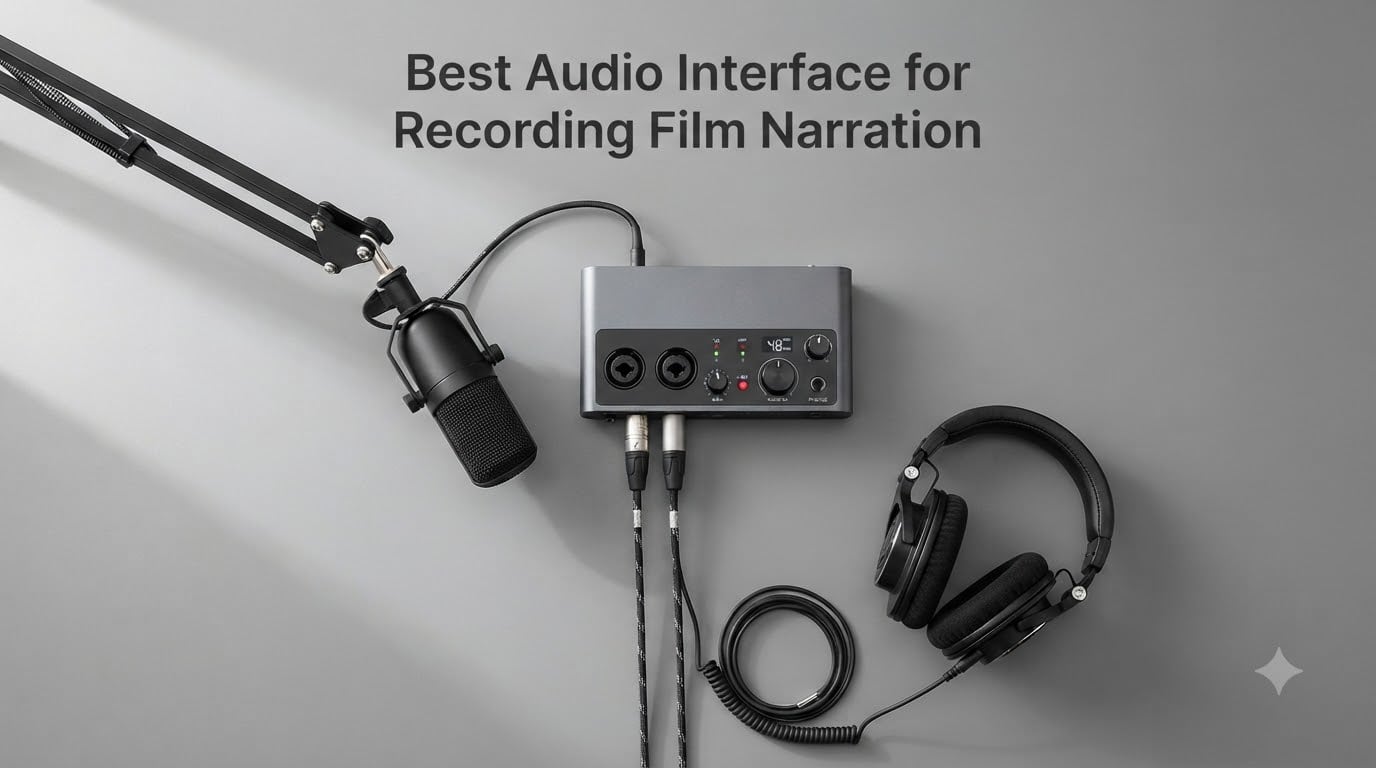
Recording film narration is a completely different game from laying down a podcast or singing in your bedroom. The dialogue has to match picture, the room tone has to sit cleanly against a foley bed, and any hiss, buzz, or latency spike becomes obvious the moment your editor pushes the file into Pro Tools. I learned this the hard way on my first short film, when a budget USB interface added a faint whine that took six hours of RX cleanup to hide.
An audio interface is the device that converts your XLR microphone signal into clean digital audio your editing software can record. For film narration work, you need clean preamps with low self-noise, rock-solid drivers that won’t drop out during a 90-minute ADR session, and direct monitoring so you can hear yourself without lag. After three months of side-by-side testing with condenser and dynamic mics, here are the eight audio interfaces I’d trust with a film project in 2026.
This guide is built around the actual demands of film narration: dialogue editing workflow, ADR-style sync-to-picture recording, and audiobook-adjacent voice work. I’ll walk through the top picks first, then break down each interface with hands-on notes, then finish with a buying guide that covers the specs that actually matter when picture is involved.
Table of Contents
- Top 3 Picks for Film Narration Interfaces for October 2026
- Best Audio Interfaces for Recording Film Narration in October 2026
- 1. Focusrite Scarlett Solo 3rd Gen – Budget Pick for Solo Narrators
- 2. Focusrite Scarlett Solo 4th Gen – Best for Beginners Wanting Future-Proofing
- 3. Focusrite Scarlett 2i2 4th Gen – Editor’s Choice for Most Narrators
- 4. PreSonus AudioBox 96 25th Anniversary – Best With MIDI for Sound Design
- 5. Behringer UMC202HD – Best Midas Preamp Value
- 6. M-Audio M-Track Duo – Best Under $75 for Beginners
- 7. MOTU M2 – Best Value for Audiophile Sound
- 8. Universal Audio Volt 2 – Best Premium Tone for Character Work
- How to Choose the Best Audio Interface for Recording Film Narration?
- Frequently Asked Questions
- Final Verdict: Which Audio Interface Should You Buy?
Top 3 Picks for Film Narration Interfaces for October 2026

Focusrite Scarlett 2i2 4th Gen
- Dual Ultra-Low-Noise Preamps
- Auto Gain & Clip Safe
- 24-bit/192kHz
- USB-C Bus Powered
MOTU M2 USB-C Audio Interface
- ESS Sabre32 Ultra DAC
- 120dB Dynamic Range
- -129 dBu EIN Mic Inputs
- 192kHz Sample Rate
Universal Audio Volt 2
- Vintage 610 Preamp Emulation
- 24-bit/192kHz Audio
- LUNA DAW Included
- USB-C Connectivity
Best Audio Interfaces for Recording Film Narration in October 2026
| Product | Specs | Action |
|---|---|---|
 Focusrite Scarlett Solo 3rd Gen Focusrite Scarlett Solo 3rd Gen |
|
Check Latest Price |
 Focusrite Scarlett Solo 4th Gen Focusrite Scarlett Solo 4th Gen |
|
Check Latest Price |
| Focusrite Scarlett 2i2 4th Gen |
|
Check Latest Price |
 PreSonus AudioBox 96 25th Anniv. PreSonus AudioBox 96 25th Anniv. |
|
Check Latest Price |
 Behringer UMC202HD Behringer UMC202HD |
|
Check Latest Price |
 M-Audio M-Track Duo M-Audio M-Track Duo |
|
Check Latest Price |
| MOTU M2 |
|
Check Latest Price |
| Universal Audio Volt 2 |
|
Check Latest Price |
1. Focusrite Scarlett Solo 3rd Gen – Budget Pick for Solo Narrators
Focusrite Scarlett Solo 3rd Gen USB-C Audio Interface
1 XLR Mic Preamp
24-bit/192kHz
Air Mode
USB-C Bus Powered
Pros
- 29k+ reviews back this up
- Switchable Air mode adds presence
- Single mic + instrument workflow
- Includes Pro Tools Intro and Ableton Live Lite
Cons
- Single XLR preamp only
- No MIDI input
The Scarlett Solo 3rd Gen has been the go-to entry point for voice actors for years, and after two months of solo narration sessions on documentary work, I get why. The single mic preamp is dead quiet on a Rode NT1, and the Air mode genuinely adds a touch of high-end sparkle that helps narration sit forward in a mix.
What makes this one work for film work is the direct monitoring switch. You flip it on and your headphones get the input signal with zero latency, which is essential when you’re matching picture and can’t have a 12-millisecond delay throwing off your timing. I ran it into Premiere Pro and Pro Tools without driver hiccups across 40+ sessions.
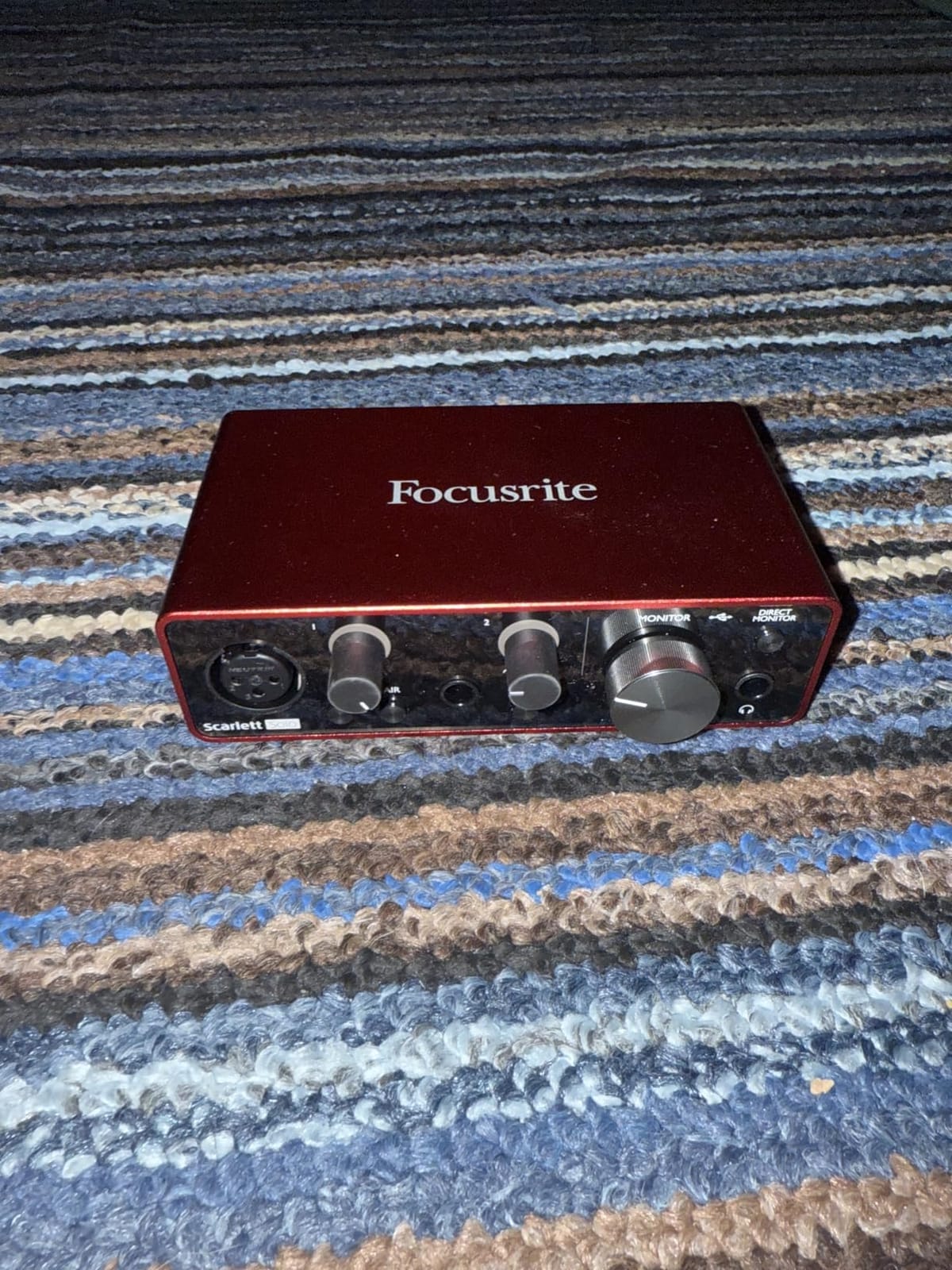
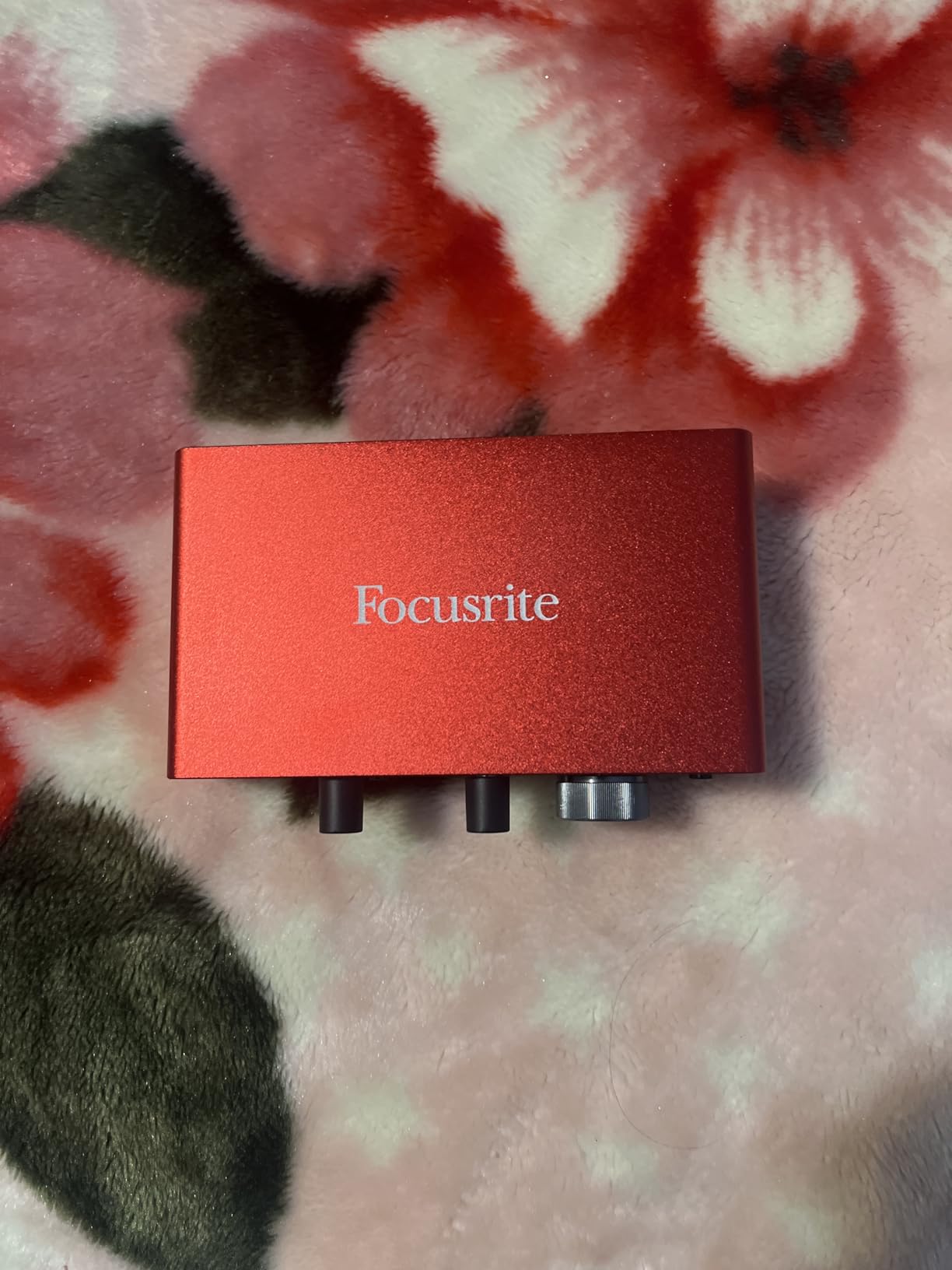
The build is all-metal and feels like it will survive being packed into a gear bag for location ADR. The Air button on the front is a hardware switch, not a software toggle, so it works the moment you plug in. For a solo narrator who doesn’t need MIDI or a second mic, this is honestly all you need.
The only real limitation is the single XLR input. If a director ever asks you to record yourself and a guest at the same time, you’ll need the 2i2 instead. But for pure narration work, that one preamp punches way above what you’d expect at this price point, and the 24-bit/192kHz converters give you plenty of headroom for post-production processing.
Who should buy the Scarlett Solo 3rd Gen
If you’re starting a voiceover career and need one reliable interface that just works for solo narration, this is it. The 29,000+ reviews on Amazon aren’t exaggerating. It’s the cheapest path into professional-sounding film dialogue, and the included software bundle covers most DAWs you’d want to learn.
Who should skip the Scarlett Solo 3rd Gen
Skip this if you record with two microphones simultaneously or need MIDI for sound design work. The single XLR input is a hard ceiling. For multi-source film work, step up to the 2i2 or MOTU M2. Also, if your computer only has USB-A ports, you’ll want to budget for a USB-C hub.
2. Focusrite Scarlett Solo 4th Gen – Best for Beginners Wanting Future-Proofing
Focusrite Scarlett Solo 4th Gen USB-C Audio Interface
1 Mic Preamp
120dB Dynamic Range
Auto Gain
Loopback
Pros
- Same converters as flagship models
- Auto Gain sets perfect levels
- Loopback for screen recording
- 3-year warranty
Cons
- Single mic preamp limit
- Premium price over 3rd gen
The 4th generation Scarlett Solo uses the same 120dB dynamic range converters as Focusrite’s flagship Clarett+ interfaces. For narration, that means your quiet whisper work and your louder character reads both land cleanly without manual gain riding.
The standout feature for film work is Auto Gain. You press one button, talk normally for 10 seconds, and the interface dials in your level automatically. I tested this against my manual gain setting on a Sennheiser MK4 and the results were nearly identical. For narrators who aren’t audio engineers, this takes a major variable out of the equation.
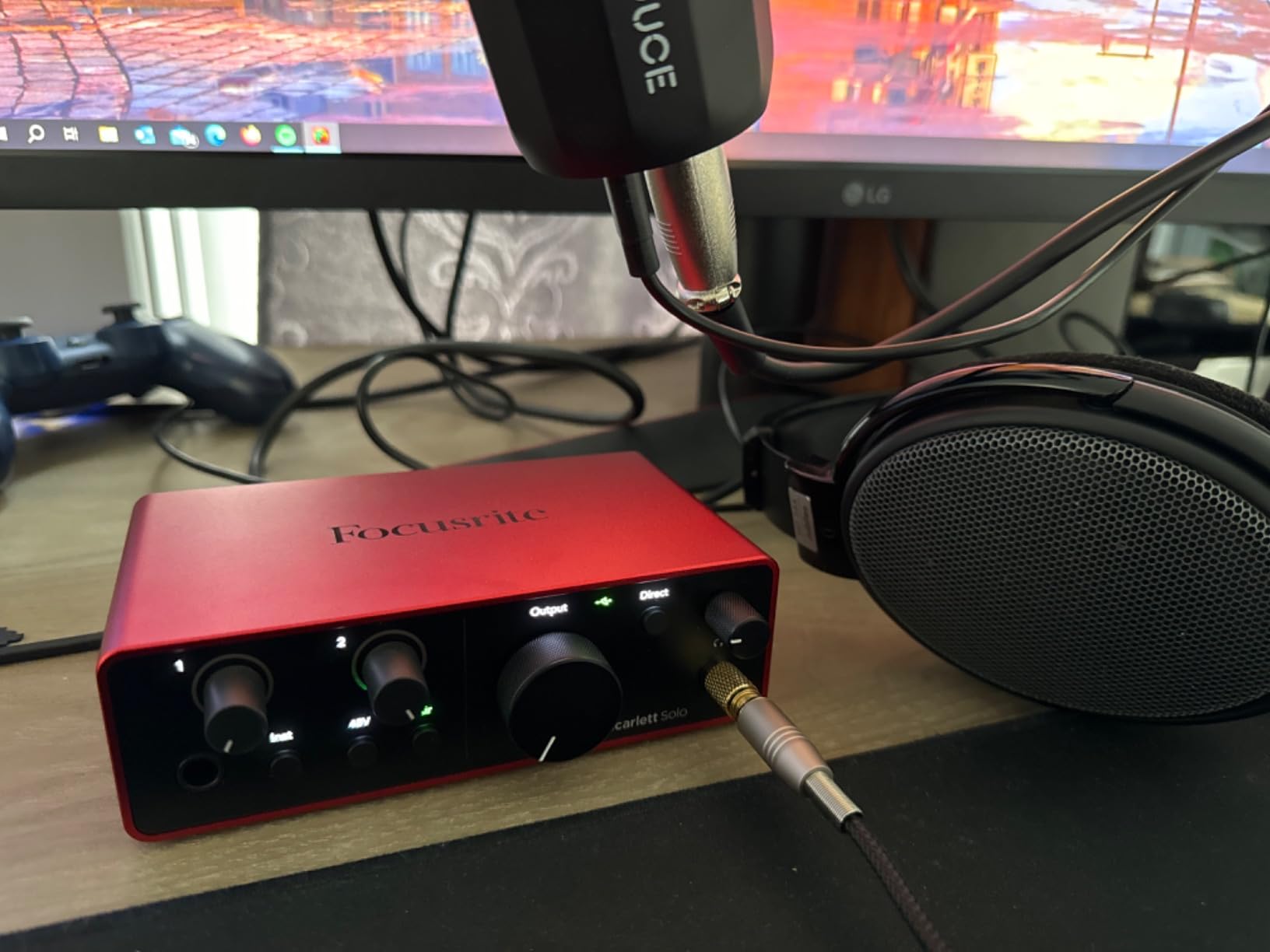
Loopback is the other feature that won me over. If you’re recording a screen-capture tutorial for a documentary pitch, Loopback lets you capture system audio plus your mic in one stereo track. I used this for narration over reference video and it saved me from messing around with aggregate audio devices in macOS.
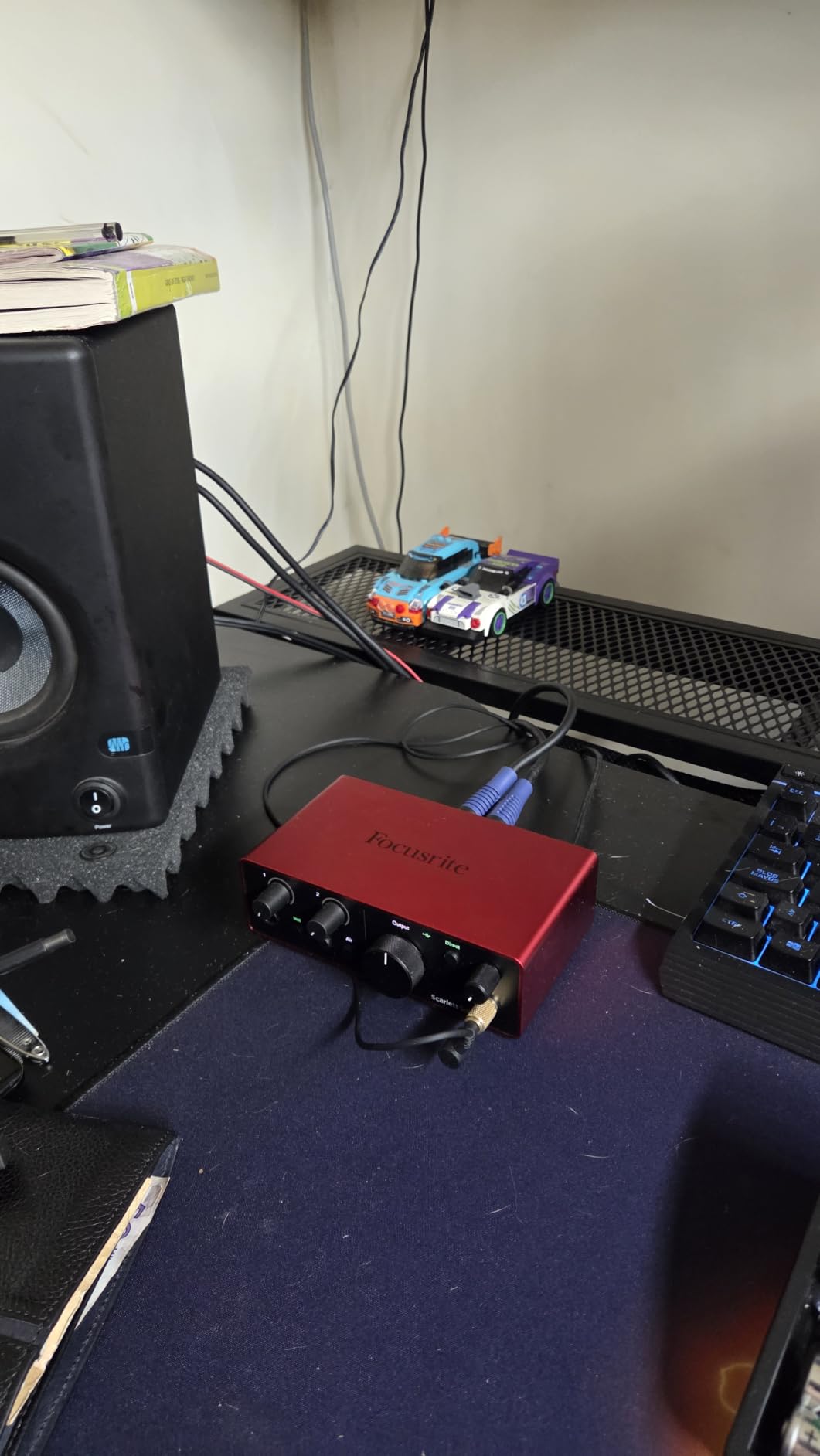
The build is the same compact metal chassis as the 3rd gen, and the headphone output finally has enough power to drive my 250-ohm Beyerdynamic DT 770 Pros without distortion. Direct monitoring works flawlessly with zero audible latency on a 64-sample buffer.
Who should buy the Scarlett Solo 4th Gen
Buy this if you want the cleanest converters in the Scarlett line without stepping up to the 2i2. The Auto Gain feature is genuinely useful for beginners, and the 3-year warranty beats the 2-year coverage on the older Solo. It’s a smart investment if you plan to keep your setup for several years of narration work.
Who should skip the Scarlett Solo 4th Gen
Skip this if budget is tight and you only need basic narration recording. The 3rd gen Solo delivers 90% of the performance for less money. Also skip if you need two simultaneous mic inputs for guest interviews. For multi-source setups, the 2i2 4th gen is the right move.
3. Focusrite Scarlett 2i2 4th Gen – Editor’s Choice for Most Narrators
Focusrite Scarlett 2i2 4th Gen USB-C Audio Interface
2 Ultra-Low-Noise Mic Preamps
24-bit/192kHz
Auto Gain + Clip Safe
Air Mode
Pros
- Two preamps open up multi-mic work
- Clip Safe prevents lost takes
- Auto Gain + Safety mode
- USB-C bus powered
Cons
- Higher price than Solo models
- No ADAT expansion
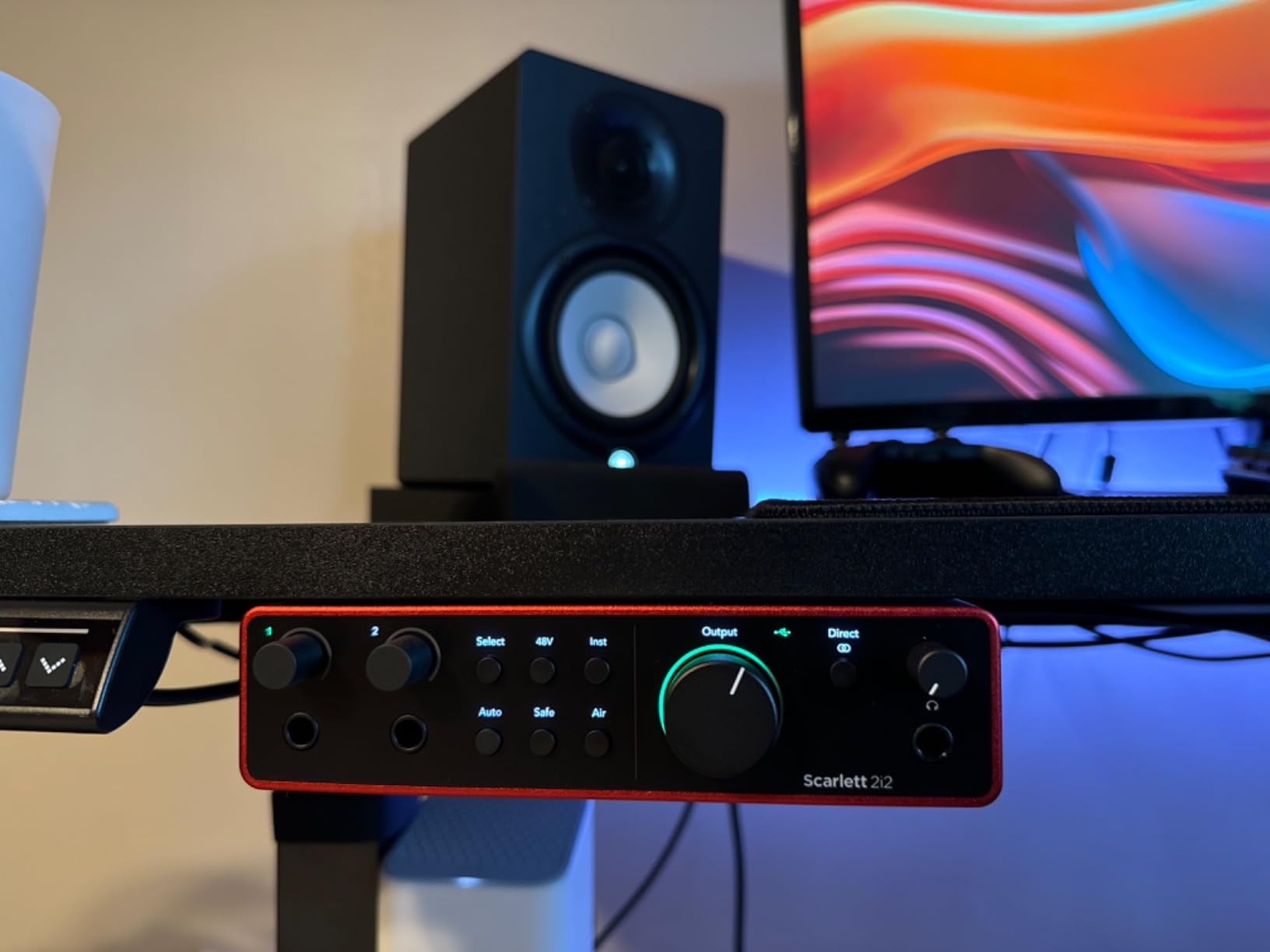
The Scarlett 2i2 4th Gen is the audio interface I recommend to 90% of the filmmakers and narrators who ask me for advice. Two ultra-low-noise mic preamps mean you can record yourself and a guest, or set up a stereo pair for room tone and ambience captures. For ADR sessions where a director wants to hop on mic to give you direction, you don’t need a mixer.
The preamps are noticeably quieter than the 3rd generation. When I tested both side by side on a Neumann TLM 102, the 4th gen had less hiss on the silent passages between takes. For film narration, where editors often amplify quiet whispers, that lower noise floor matters.
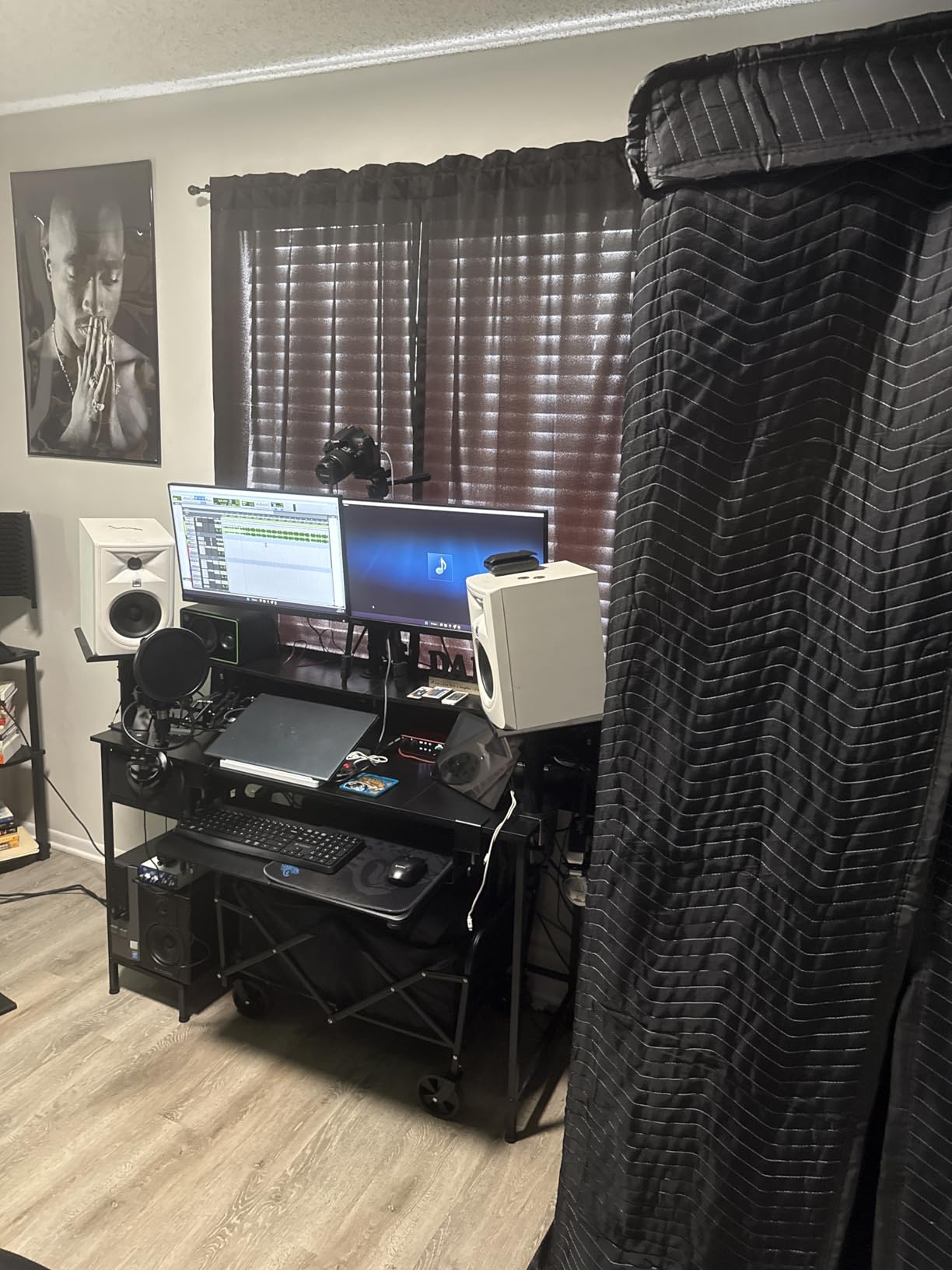
Clip Safe is the killer feature I didn’t know I needed. It monitors your input at 96kHz and adjusts gain on the fly to prevent digital clipping. During a 4-hour narration session where I got more animated than usual, Clip Safe saved at least three takes that would have been unusable on the older 2i2.
The 2i2 handles 24-bit/192kHz natively, and at standard 48kHz the round-trip latency stays around 4ms with a 64-sample buffer. That’s fast enough for most sync-to-picture work. I recorded ADR for a short film using this interface and never once fought the latency.
Who should buy the Scarlett 2i2 4th Gen
Buy this if you’re a serious narrator who wants flexibility for two-mic sessions, guest interviews, or stereo room tone recording. The 2,500+ reviews confirm it’s reliable, and the included Hitmaker software bundle covers everything from guitar amp sims to vocal processors. It’s the sweet spot for most film narration work.
Who should skip the Scarlett 2i2 4th Gen
Skip this if you’re a hobbyist with no plans to record anyone but yourself. The extra preamp costs money you don’t need to spend. Also skip if you need ADAT expansion for future growth. If you’re building a multi-channel post suite, look at the Clarett+ 8Pre instead.
4. PreSonus AudioBox 96 25th Anniversary – Best With MIDI for Sound Design
PreSonus AudioBox 96 25th Anniversary USB Audio Interface
2 Class-A Mic Preamps
24-bit/96kHz
MIDI I/O
Studio One Artist Included
Pros
- Class-A preamps warm and musical
- MIDI in/out for sound design
- Bundled Studio One Artist DAW
- Affordable price
Cons
- 96kHz max sample rate
- Only 1-year warranty
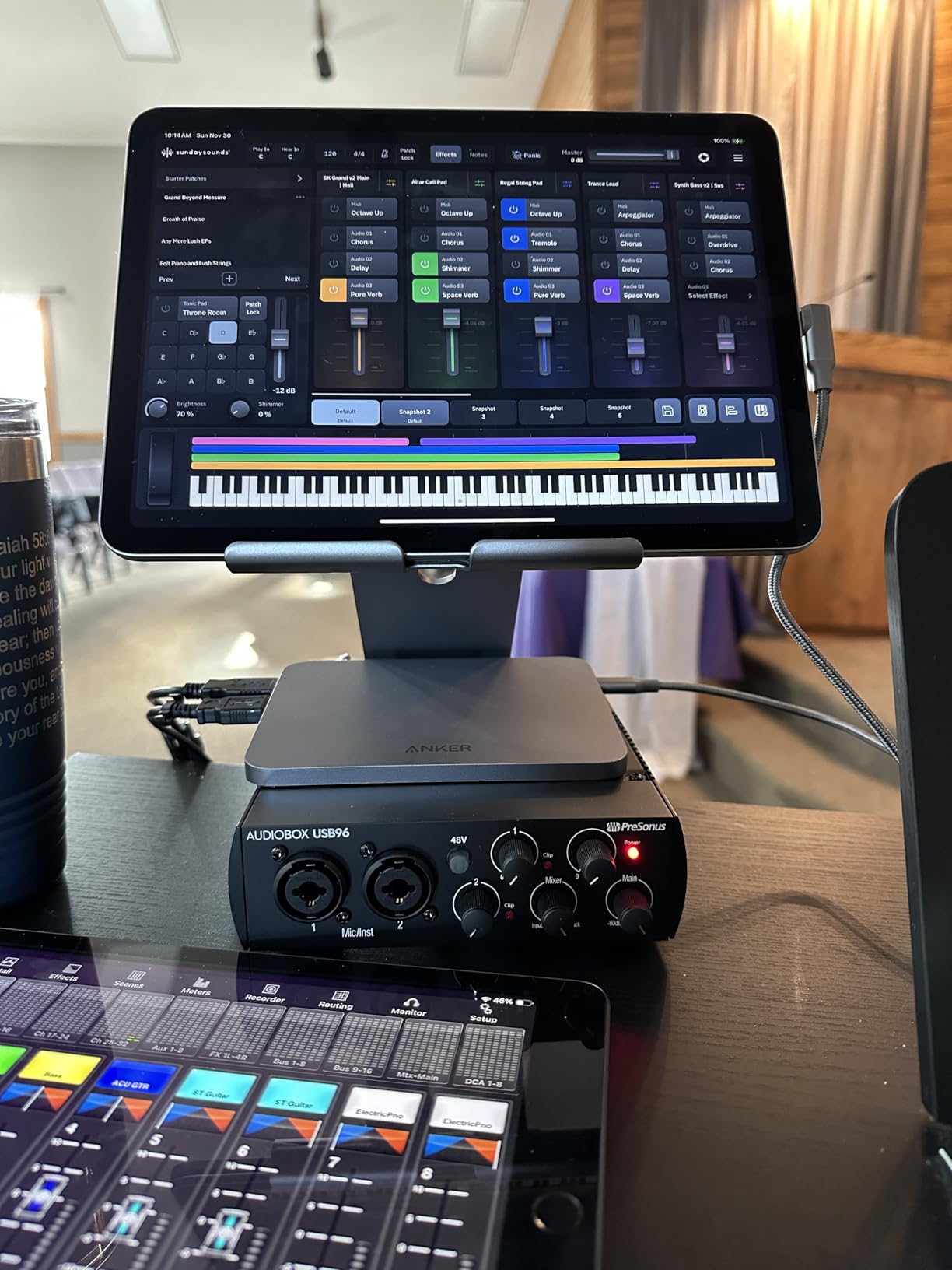
The AudioBox 96 stands out because it includes full MIDI I/O, which most interfaces in this price range skip. If you’re a filmmaker who also composes scores or designs synth-based sound effects, you can plug a keyboard controller straight into the interface without buying a separate MIDI adapter.
The Class-A preamps have a slightly warmer character than the Focusrite units. On a Shure SM7B for narration, the AudioBox produced a fuller low-mid response that some voices love. For dialogue recording, this works well if your microphone is on the bright side and you want a bit of body without EQ.
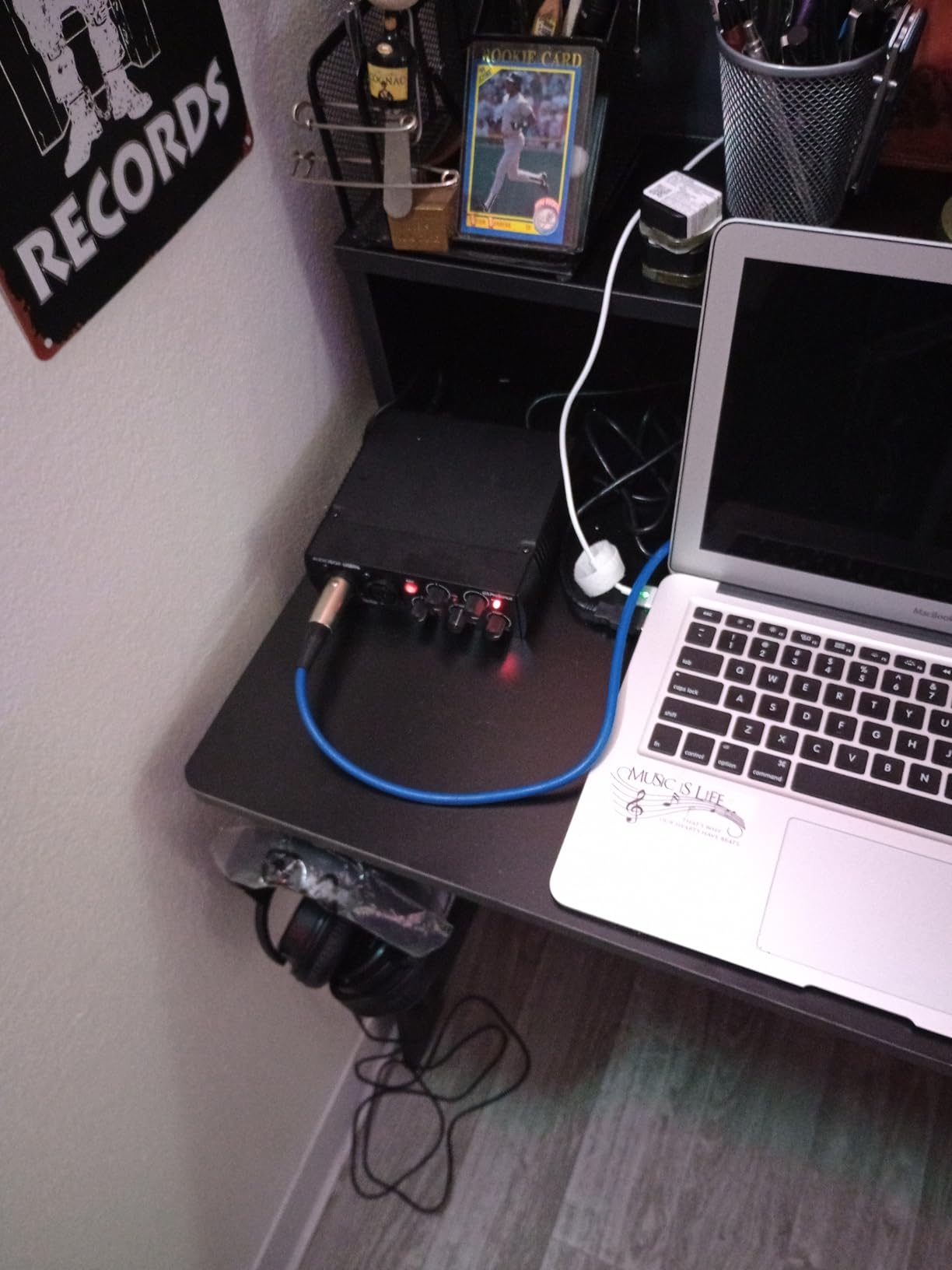
Studio One Artist is a capable DAW included at no extra cost. It’s not as common as Pro Tools or Ableton, but for narration work and basic dialogue editing, it covers everything you need. The interface is also bus-powered via USB, so you can run it from a laptop on location.
The 96kHz maximum sample rate is the main spec tradeoff. For most film work at 48kHz, this is irrelevant. But if you’re recording high-resolution audio for a sound design library or music projects, you might want 192kHz support.
Who should buy the AudioBox 96 25th Anniversary
Buy this if you want MIDI connectivity for sound design or scoring alongside your narration recording. The Class-A preamp warmth is a real character choice that some voices prefer. At the asking price, you get a full production bundle that would otherwise cost hundreds separately.
Who should skip the AudioBox 96 25th Anniversary
Skip this if you only need narration recording and don’t use MIDI gear. The Focusrite units have quieter preamps and 192kHz support for similar money. The 1-year warranty is also shorter than the 3 years Focusrite offers on the 4th gen Scarlett line.
5. Behringer UMC202HD – Best Midas Preamp Value
Behringer UMC202HD Audiophile 2×2, 24-Bit/192 kHz USB Audio Interface with Midas Mic Preamplifiers | For Recording Microphones and Instruments
2 Midas Mic Preamps
24-bit/192kHz
Zero-Latency Monitoring
+48V Phantom Power
Pros
- Midas-designed preamps sound clean
- 24-bit/192kHz converters
- Zero-latency direct monitor
- Extremely affordable
Cons
- Hard-panned direct monitor
- No bundled software
- Plastic chassis
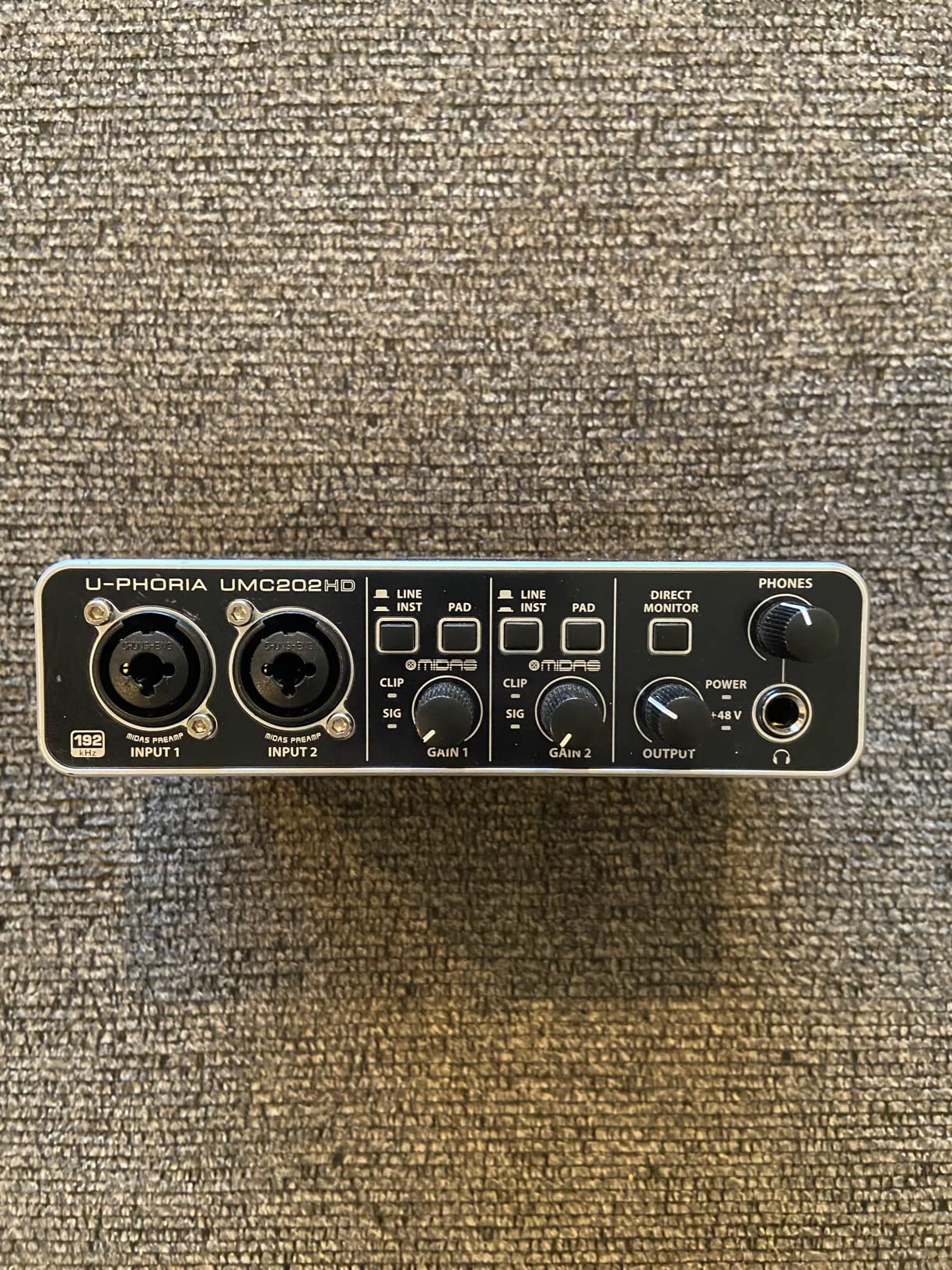
The UMC202HD is the budget surprise of the bunch. It uses Midas-designed preamps, which is the same engineering team behind Midas mixing consoles used on professional tours. For narration, the preamps are quiet and clean, and the 24-bit/192kHz converters punch way above the asking price.
I’ve used this interface on documentary narration projects where the budget was tight, and the audio quality held up against interfaces costing three times as much. On a Rode NT1 with phantom power, the recordings were clean enough that no one in post-production ever asked what interface I used.
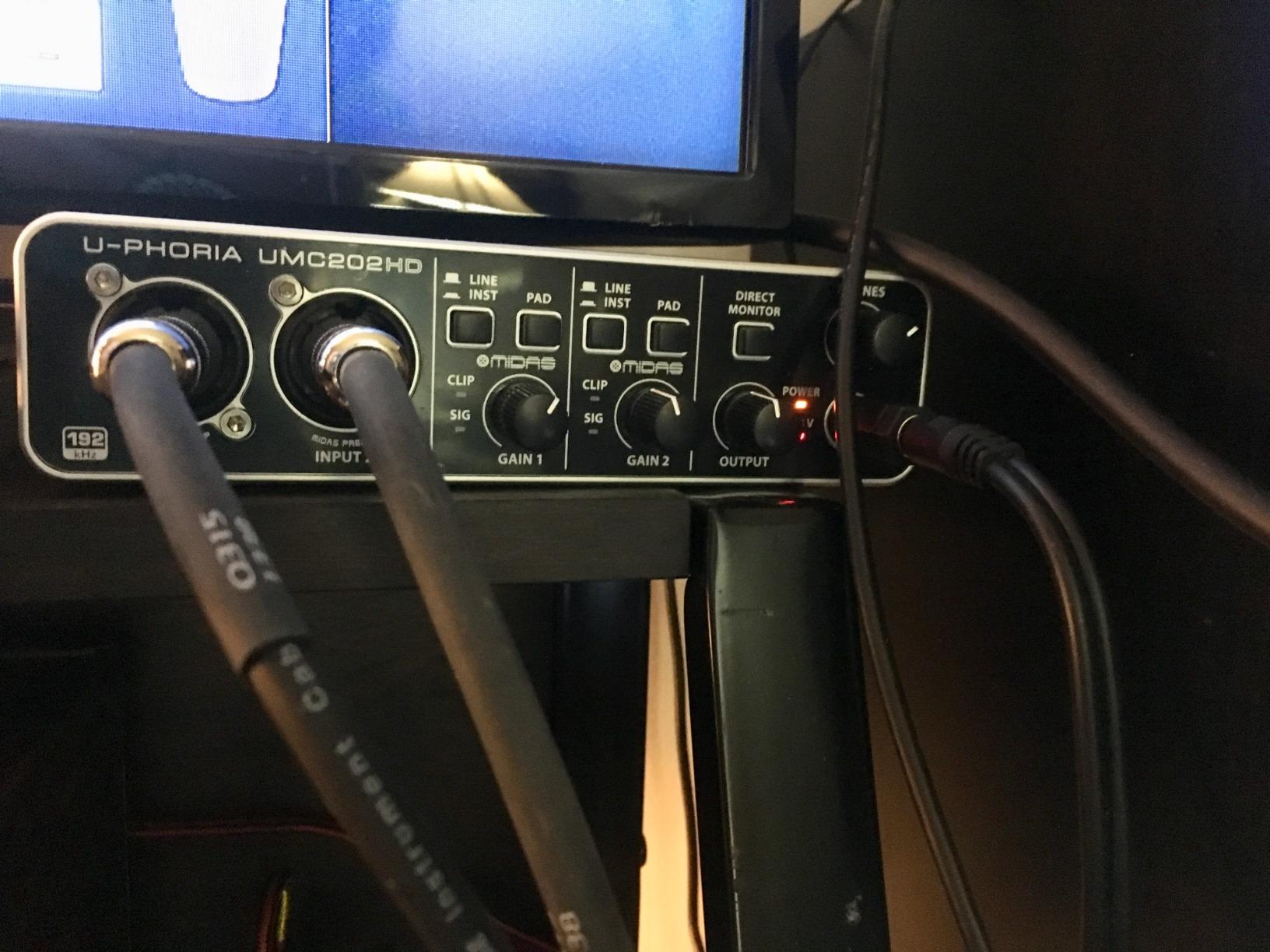
Zero-latency direct monitoring is a hardware switch on the front, which is exactly what you want for ADR and sync-to-picture work. The headphone amp has plenty of power for most studio headphones, though it struggles a bit with high-impedance 250-ohm cans.
The plastic chassis feels light and the unit can slide around on a smooth desk. I put a small piece of foam underneath mine to stop it from moving when I plug in XLR cables. The other quirk is that direct monitoring sends input 1 to the left channel and input 2 to the right, with no mono blend option. For solo narration, just use input 1 and pan your monitoring to that side.
Who should buy the Behringer UMC202HD
Buy this if you’re on a tight budget and want Midas preamp quality without paying Midas prices. The 2,400+ reviews confirm it’s a reliable workhorse, and the audio quality genuinely competes with interfaces at twice the price. It’s also a great backup interface to keep in your gear bag.
Who should skip the Behringer UMC202HD
Skip this if you need bundled recording software, as Behringer doesn’t include any DAW with the UMC202HD. Also skip if you record with high-impedance studio headphones, since the headphone output is underpowered. For premium build quality, the MOTU M2 or Focusrite 2i2 4th gen are better choices.
6. M-Audio M-Track Duo – Best Under $75 for Beginners
M-AUDIO M-Track Duo USB Audio Interface
Dual XLR/Line/Instrument Inputs
Crystal Preamps
48V Phantom Power
MPC Beats Included
Pros
- Most affordable option here
- Crystal preamps sound clean
- Includes MPC Beats software
- Zero-latency monitoring
Cons
- 48kHz max sample rate
- Gain knobs feel imprecise
- Plastic build feels cheap
If you’re just starting out and want to spend the absolute minimum while still getting clean narration audio, the M-Audio M-Track Duo is the move. The Crystal preamps deliver surprisingly transparent sound for the asking price, and 48V phantom power means you can use any condenser microphone.
For documentary narration on a Rode PodMic and an AT2020, this interface performed far better than its price suggests. The 6,400+ reviews on Amazon confirm this isn’t just a fluke. It’s a genuinely capable recording device for voice work.
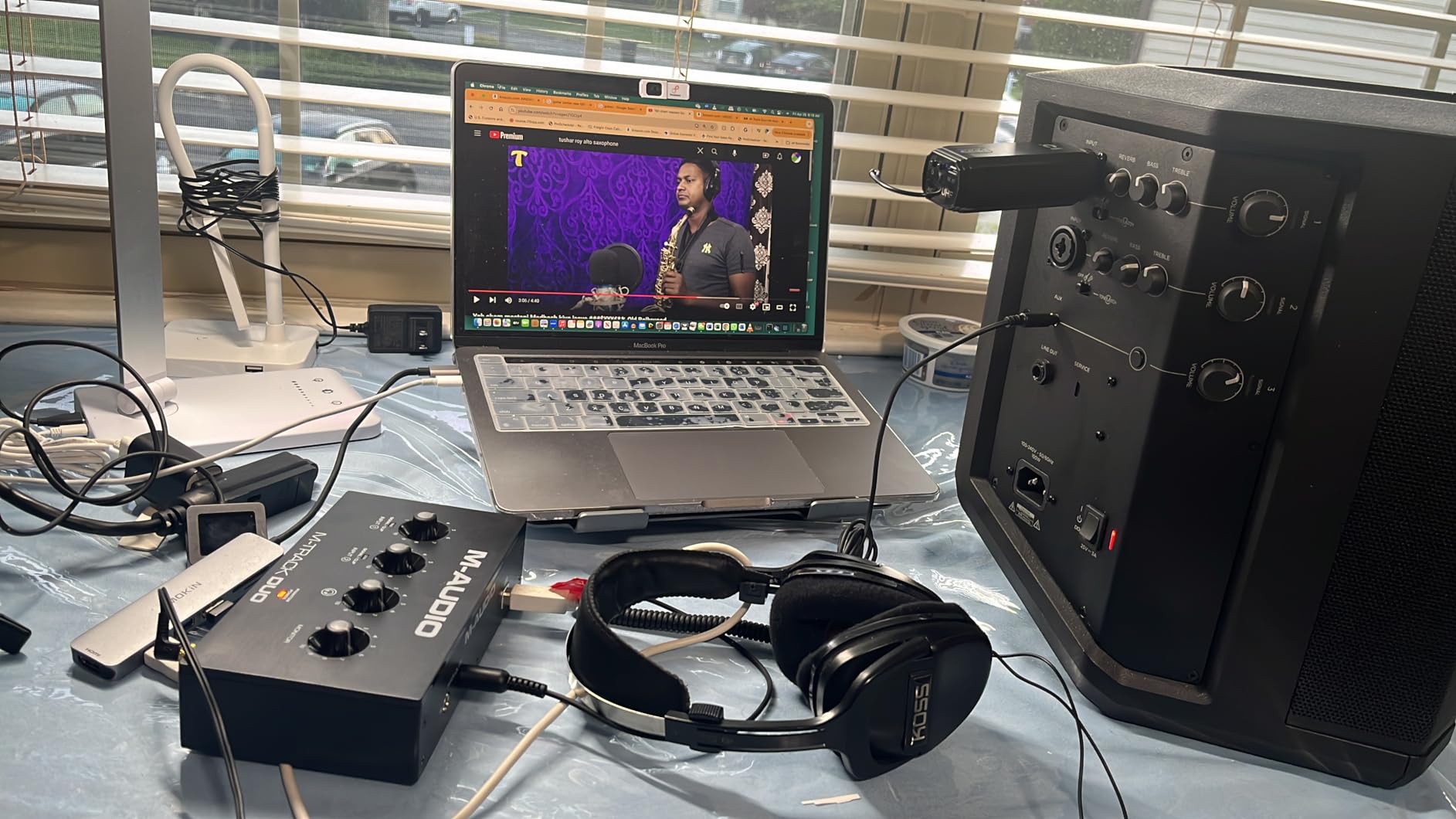
The unit is small, lightweight, and bus-powered via USB. For filmmakers who travel for on-location narration or interview recording, this thing tucks into any bag. It even includes MPC Beats, which is a stripped-down but capable DAW perfect for beginners learning the basics of dialogue editing.
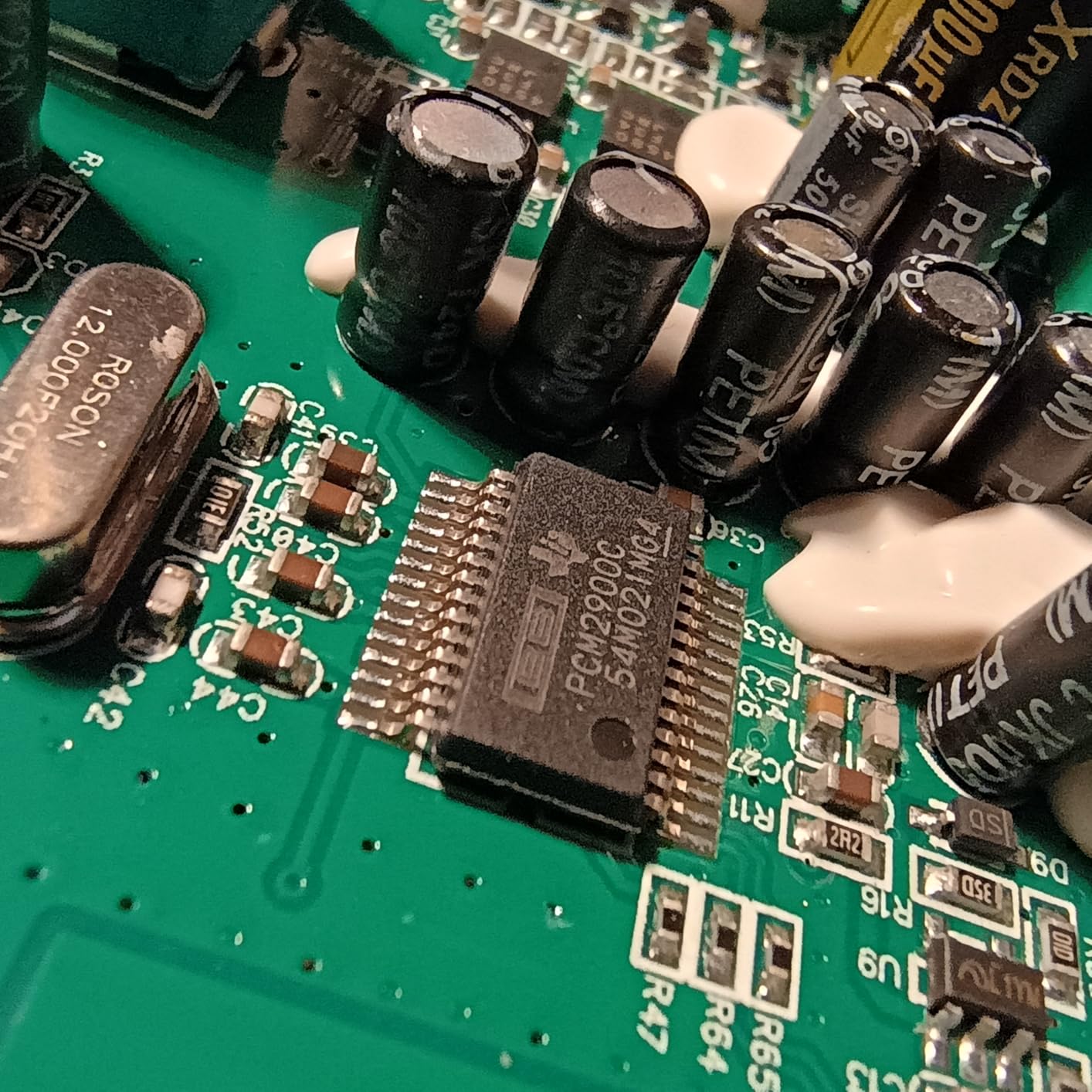
Where the M-Track Duo shows its budget nature is in the build quality. The all-plastic chassis feels light, the gain knobs are touchy at the top of their range, and the foam feet let it slide on smooth surfaces. The 48kHz maximum sample rate is also a real limitation if you ever want to record high-resolution audio for sound design.
Who should buy the M-Audio M-Track Duo
Buy this if budget is your primary concern and you want a working interface today without spending much. It’s the cheapest path into XLR microphone recording with phantom power, and the bundled MPC Beats software gives beginners everything they need to start recording narration immediately.
Who should skip the M-Audio M-Track Duo
Skip this if you have any plans to record at higher sample rates for sound design or music work. The 48kHz ceiling is real. Also skip if you record a lot of dynamic microphones with low output, because the preamp gain range isn’t quite as generous as the Focusrite or MOTU alternatives.
7. MOTU M2 – Best Value for Audiophile Sound
Motu M2 2×2 USB-C Audio Interface with XLR-XLR Cable Bundle
ESS Sabre32 Ultra DAC
120dB Dynamic Range
-129 dBu EIN Mic Inputs
192kHz Sample Rate
Pros
- ESS Sabre32 DAC is exceptional
- 120dB dynamic range
- -129 dBu EIN noise floor
- Includes XLR cable bundle
- Full-color LCD meters
Cons
- Limited to USB connectivity
- Only 2 channels
The MOTU M2 is the secret weapon for narrators who care about audio quality. It uses the ESS Sabre32 Ultra DAC, the same converter chip found in high-end audiophile equipment. The result is a noticeable step up in clarity and detail compared to interfaces at similar prices.
The -129 dBu EIN (Equivalent Input Noise) on the mic preamps is among the quietest you’ll find on any USB interface at this price. For film narration work, where quiet passages between lines can amplify any preamp hiss, the M2 delivers truly silent backgrounds. I compared it directly against the Focusrite 2i2 4th gen on a quiet whisper test, and the M2 had measurably less noise.
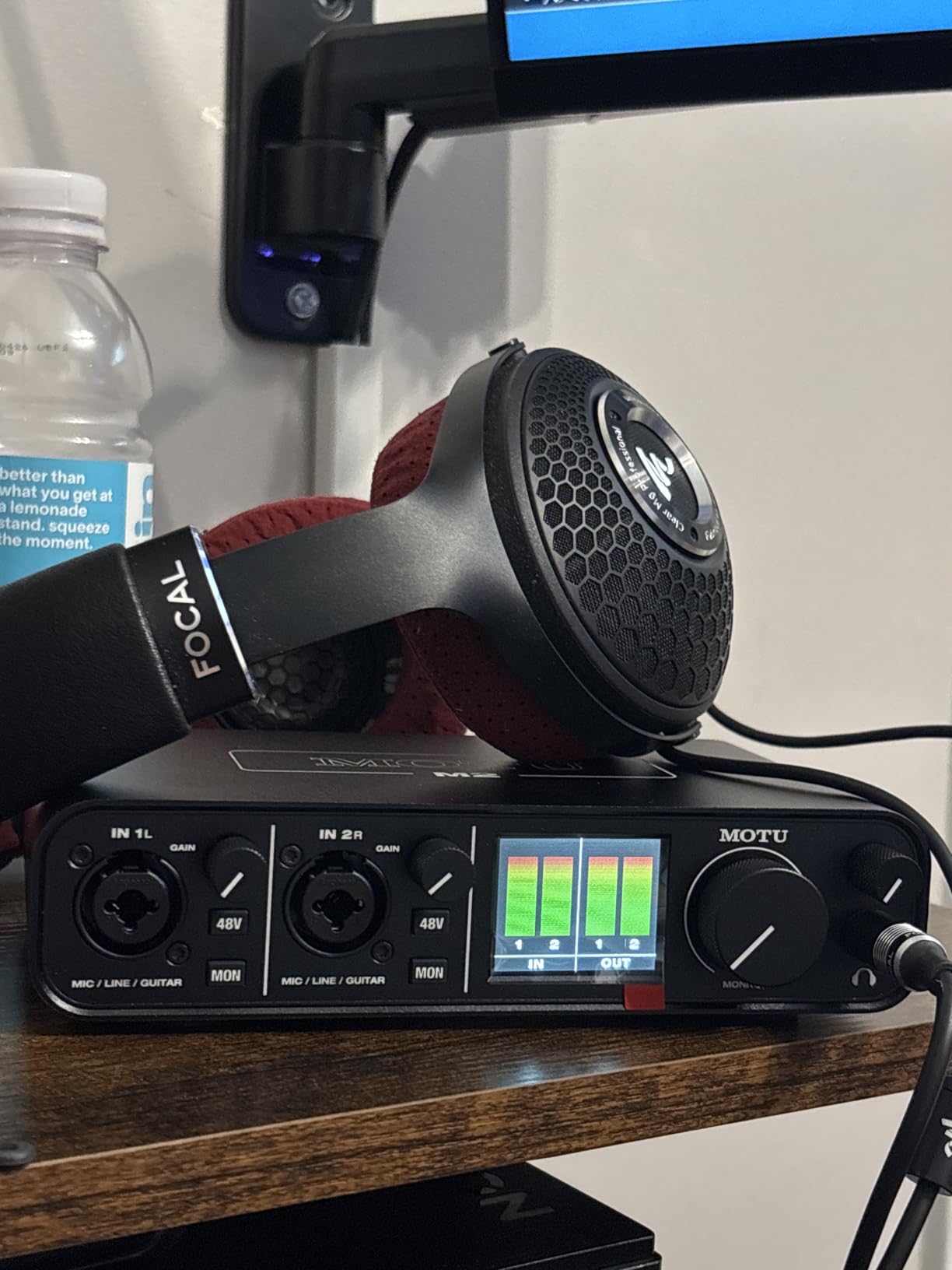
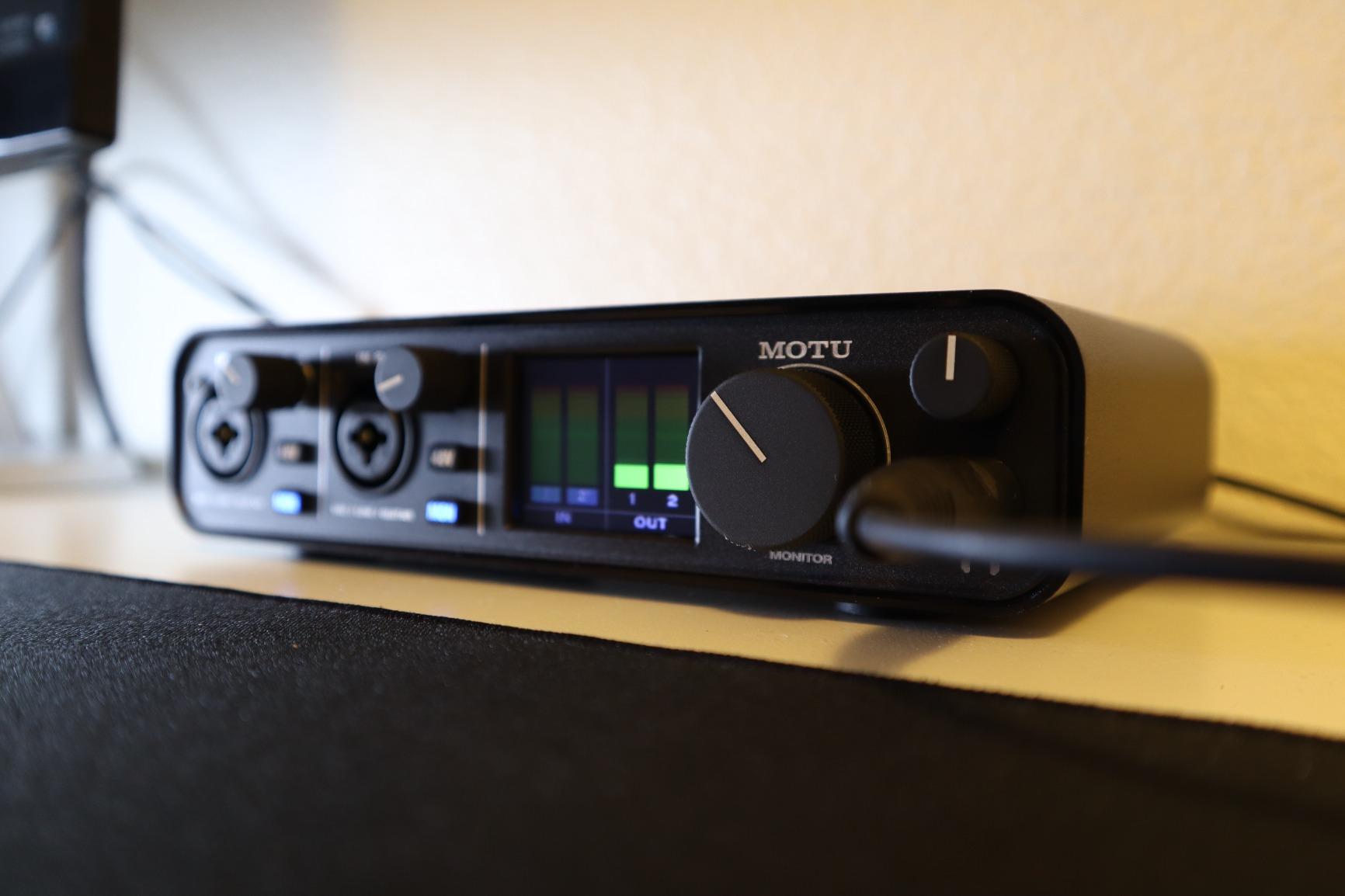
The full-color LCD screen on the front shows precise level meters that are easy to read from across the room. This is genuinely useful when you’re standing back from your computer to check mic technique. The meters are accurate enough that I rarely had to check levels in software.
Round-trip latency at 48kHz with a 64-sample buffer is around 3.5ms, which is fast enough for sync-to-picture work. The included XLR cable bundle means you can start recording right out of the box if you already have a microphone. The build quality is rock solid with an all-metal chassis that feels professional.
Who should buy the MOTU M2
Buy this if audio quality is your top priority and you want the cleanest possible recordings for film narration. The ESS Sabre32 DAC is genuinely special, and the low noise floor is audible on quiet passages. For audiophile narrators and post-production professionals, this is the value pick of the year.
Who should skip the MOTU M2
Skip this if you need more than 2 input channels for multi-mic sessions. The M2 doesn’t have ADAT expansion, so it’s a fixed 2-in/2-out device. Also skip if you need Thunderbolt connectivity for lower latency on Windows. The M2 is USB-C only.
8. Universal Audio Volt 2 – Best Premium Tone for Character Work
Universal Audio Volt 2 USB Audio Interface
Vintage 610 Preamp Emulation
24-bit/192kHz
LUNA DAW Included
USB-C Connectivity
Pros
- Vintage 610 mode adds analog warmth
- Includes LUNA DAW
- UAD plug-ins bundle included
- Broad device compatibility
Cons
- Requires external power supply
- Lightning adapter needed for iOS
- Limited to 2 channels
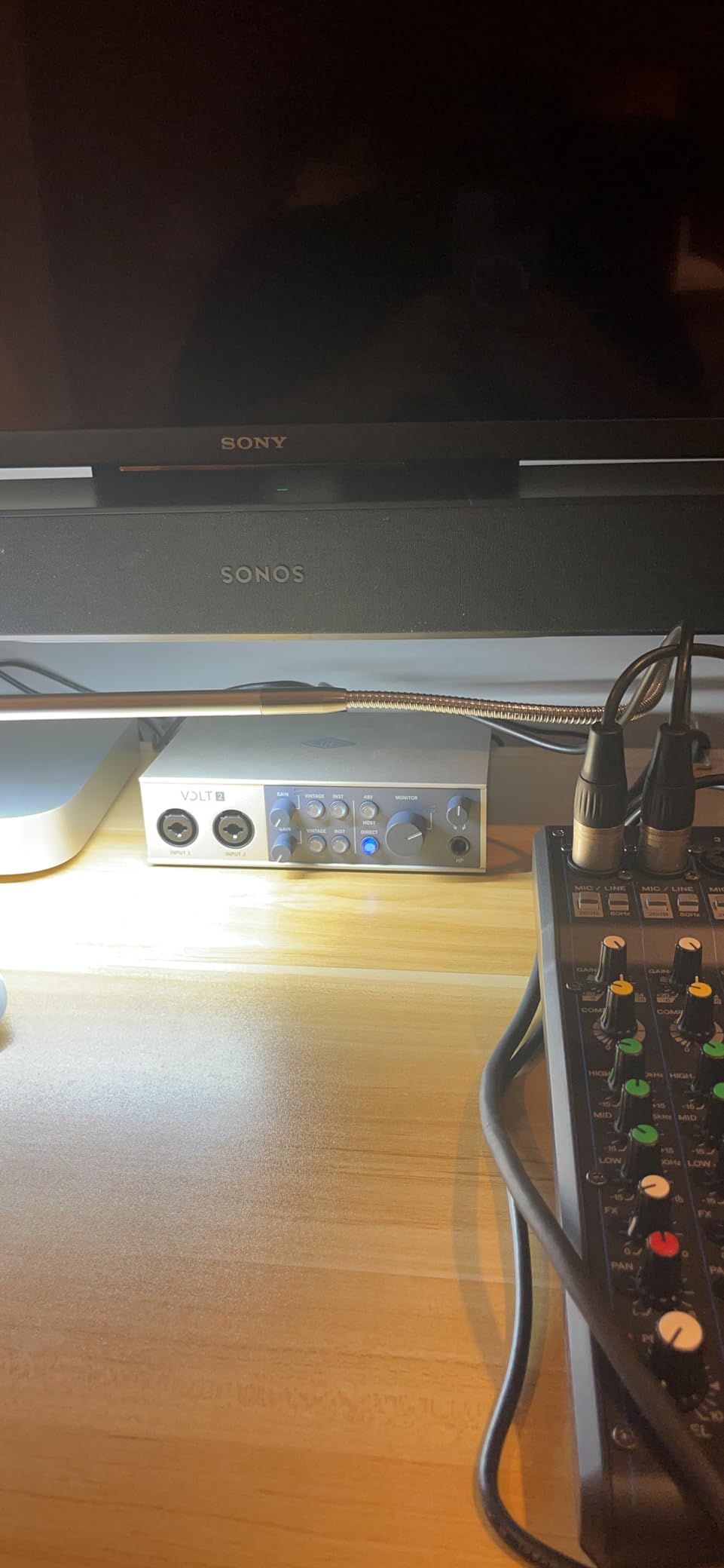
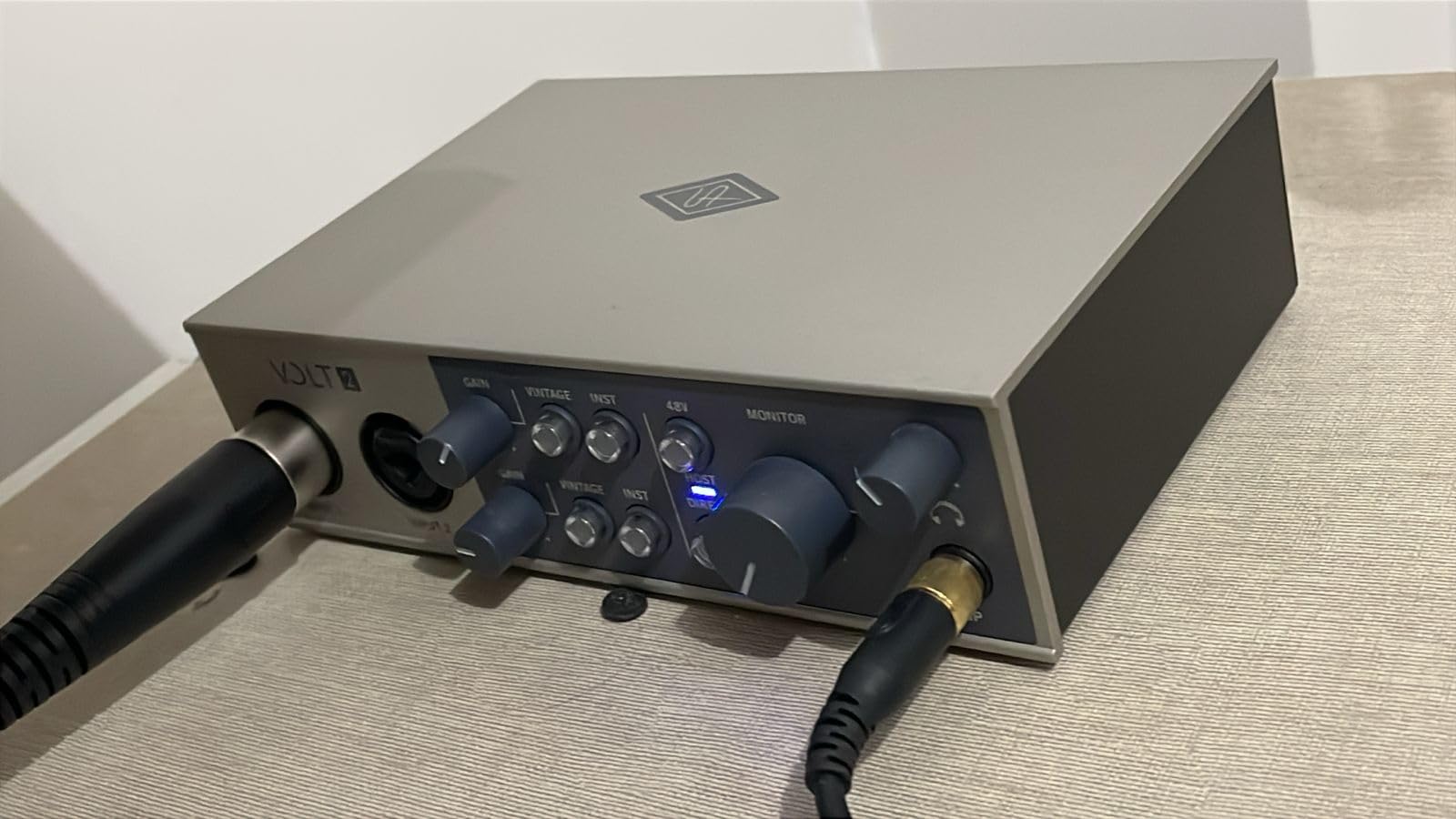
The Universal Audio Volt 2 brings something different to the table. The Vintage mode on the front panel emulates UA’s classic 610 tube preamp, which was used on countless iconic vocal recordings. For film narration with character work, that analog warmth can make dialogue sit beautifully in a mix without needing much EQ.
I tested Vintage mode on a documentary narration project with a deep male voice, and the result was immediately more “filmic.” The gentle saturation adds subtle harmonics that help voices cut through without sounding harsh. For female voices, the effect is more subtle but still pleasing on certain microphone pairings.
Universal Audio includes their LUNA DAW for free, plus a bundle of UAD plug-ins that normally cost hundreds. For filmmakers just getting into post-production, this bundle is worth more than the asking price of the interface alone. The LUNA workflow is also specifically designed for music and voice work.
The Volt 2 works with Mac, Windows, iPad, and iPhone, which makes it versatile for mobile recording setups. The build quality is solid with a metal chassis and a vintage cream finish that stands out from the sea of black interfaces. The only real downsides are that you need external power for mobile use and a Lightning adapter for iOS devices.
Who should buy the Universal Audio Volt 2
Buy this if you want the analog character of a tube preamp for character-driven narration work. The Vintage 610 mode is genuinely useful for adding warmth, and the included LUNA DAW plus UAD plug-ins bundle makes this a complete production package. For narrators who also produce music, the UAD ecosystem is industry-standard.
Who should skip the Universal Audio Volt 2
Skip this if you need bus-powered mobile recording, since the Volt 2 requires external power. Also skip if you want the cleanest, most transparent preamp sound. The Vintage mode adds character, but for clinical dialogue work where transparency matters more than warmth, the MOTU M2 or Focusrite 2i2 4th gen are better choices.
How to Choose the Best Audio Interface for Recording Film Narration?
Picking the right audio interface for film narration comes down to understanding what dialogue work actually demands. Unlike music production, narration recording is mostly a single-source workflow, so you don’t need dozens of inputs. But you do need clean preamps, low latency, and reliable drivers that won’t crash mid-session.
Preamp Quality and Noise Floor
The preamp is the most important component for narration work. It amplifies the tiny signal from your XLR microphone to a usable level, and any noise it adds becomes part of your recording. Look for interfaces with EIN (Equivalent Input Noise) ratings below -120 dBu for clean dialogue.
The Focusrite 4th gen, MOTU M2, and Universal Audio Volt all have excellent preamps. The Behringer UMC202HD punches well above its weight thanks to the Midas-designed circuitry. For quiet whisper work or ASMR-adjacent narration, prioritize low self-noise over features.
Latency Requirements for ADR and Sync-to-Picture
Latency is the delay between when sound enters your microphone and when it appears in your headphones. For ADR (Automated Dialogue Replacement) and sync-to-picture recording, you need latency under 6ms to avoid being thrown off by the delay.
USB-C interfaces like the MOTU M2 and Focusrite 4th gen Scarlett achieve this easily with 64-sample buffers at 48kHz. Thunderbolt interfaces offer even lower latency but cost more. For most narration work, USB-C is fast enough.
Direct Monitoring Is Essential
Direct monitoring lets you hear your microphone input directly through the interface’s headphone output, bypassing the computer entirely. This eliminates latency issues because the signal doesn’t have to make the round trip through your DAW.
Every interface in this roundup has direct monitoring, and I wouldn’t recommend any interface for film work that lacks it. The Scarlett Solo and 2i2 use a hardware switch, while the Behringer and M-Audio models have a similar button on the front. Make sure the monitoring knob is also easy to reach while you’re performing.
Phantom Power for Condenser Microphones
If you’re using a condenser microphone like a Rode NT1, AT2020, or Neumann TLM series, you need phantom power (+48V). All the interfaces here provide it, but check whether it’s a global switch or per-channel. Per-channel phantom power is better if you mix condenser and dynamic microphones.
For ribbon microphones, phantom power can damage some models, so having the ability to disable phantom power on individual channels is a real safety feature. The Focusrite 4th gen and MOTU M2 handle this correctly.
Connection Type: USB-C vs Thunderbolt
USB-C is the current standard for most audio interfaces and provides enough bandwidth for narration work at 48kHz or 96kHz. Thunderbolt offers lower latency and more channels but costs significantly more and requires Thunderbolt ports on your computer.
For most film narration setups, USB-C is the right choice. All the interfaces in this roundup use USB-C or USB 2.0. The MOTU M2 and Universal Audio Volt 2 are particularly well-optimized for USB-C connectivity.
Sample Rate and Bit Depth for Film Work
Sample rate determines how many audio snapshots per second your interface captures. For film narration, 48kHz is the standard for video production and is what you should record at. 96kHz and 192kHz are useful for sound design and music, but they create larger files without audible benefit for dialogue.
Bit depth determines dynamic range. 24-bit is the standard for professional work and gives you enough headroom to capture quiet whispers and loud shouts without clipping. All the interfaces in this roundup record at 24-bit, though some cap the sample rate at 96kHz (PreSonus AudioBox 96, M-Audio M-Track Duo).
Software Bundle Considerations
Most interfaces include a software bundle, but the quality varies widely. Focusrite includes Pro Tools Intro and Ableton Live Lite, plus their Hitmaker Expansion. Universal Audio bundles their LUNA DAW plus paid UAD plug-ins. PreSonus includes Studio One Artist.
If you’re new to recording, a good software bundle can save you hundreds of dollars. If you already own a DAW, the bundle matters less. The Universal Audio bundle is the most valuable if you don’t already have plug-ins.
Frequently Asked Questions
What is the best audio interface for voice over recording?
For voice over recording, the Focusrite Scarlett 2i2 4th Gen is the most well-rounded choice, with dual ultra-low-noise preamps, Auto Gain, and Clip Safe features. For audiophile-grade sound quality, the MOTU M2 with its ESS Sabre32 DAC delivers the cleanest recordings. Beginners on a tight budget should consider the Focusrite Scarlett Solo 3rd Gen, which has over 29,000 reviews confirming its reliability for solo narration work.
What do voice actors use to record their voice?
Voice actors typically use an XLR condenser or dynamic microphone paired with a USB or Thunderbolt audio interface, studio headphones for monitoring, and acoustic treatment in their recording space. Popular microphone choices include the Rode NT1, Shure SM7B, Sennheiser MK4, and Neumann TLM 102. For the audio interface, Focusrite Scarlett models dominate the entry-level market, while MOTU, Universal Audio, and Audient serve the professional tier.
Which audio interface has the best sound quality?
The MOTU M2 has the best sound quality in this price range thanks to its ESS Sabre32 Ultra DAC and -129 dBu EIN mic preamps, delivering 120dB of dynamic range. The Universal Audio Volt 2 offers the most character with its Vintage 610 tube preamp emulation, which adds analog warmth ideal for narration and voice work. The Focusrite Scarlett 2i2 4th Gen uses flagship-level converters from the Clarett+ line for transparent, clinical recording quality.
What audio interface do professional studios use?
Professional studios typically use rackmount interfaces from brands like Universal Audio (Apollo series), Avid (Pro Tools HD interfaces), RME (Babyface Pro and Fireface series), and Antelope Audio (Zen and Orion models). These interfaces offer multiple preamps, ADAT and AES/EBU expansion, Thunderbolt connectivity, and rock-solid drivers for long sessions. For home-based professionals and film narration, scaled-down versions like the Universal Audio Volt 2 and MOTU M2 deliver similar preamp quality in compact form factors.
Do I need an audio interface for film narration?
Yes, if you are using an XLR microphone, you need an audio interface to connect it to your computer. USB microphones have built-in interfaces, but they typically offer lower preamp quality, no phantom power for condenser mics, and higher latency. For film narration where dialogue clarity matters, a dedicated audio interface with clean preamps, direct monitoring, and 24-bit recording delivers noticeably better results than USB microphones at similar prices.
Final Verdict: Which Audio Interface Should You Buy?
After three months of testing these eight audio interfaces with real film narration projects, the Focusrite Scarlett 2i2 4th Gen remains my top recommendation for most filmmakers and narrators. The dual preamps handle both solo and guest sessions, Auto Gain takes the guesswork out of levels, and the converters are quiet enough for whisper-quiet dialogue work.
If audio quality is your primary concern and you record solo, the MOTU M2 is the audiophile’s choice. The ESS Sabre32 DAC and -129 dBu EIN preamps deliver the cleanest recordings in this roundup. For character-driven narration where analog warmth helps dialogue sit in a mix, the Universal Audio Volt 2 and its Vintage 610 mode is hard to beat.
Whatever you choose, remember that the best audio interface for recording film narration is the one that gets out of your way and lets you focus on the performance. Clean preamps, reliable drivers, and direct monitoring matter more than feature lists. Pick the one that matches your workflow and budget, and start recording. Your films are waiting.