
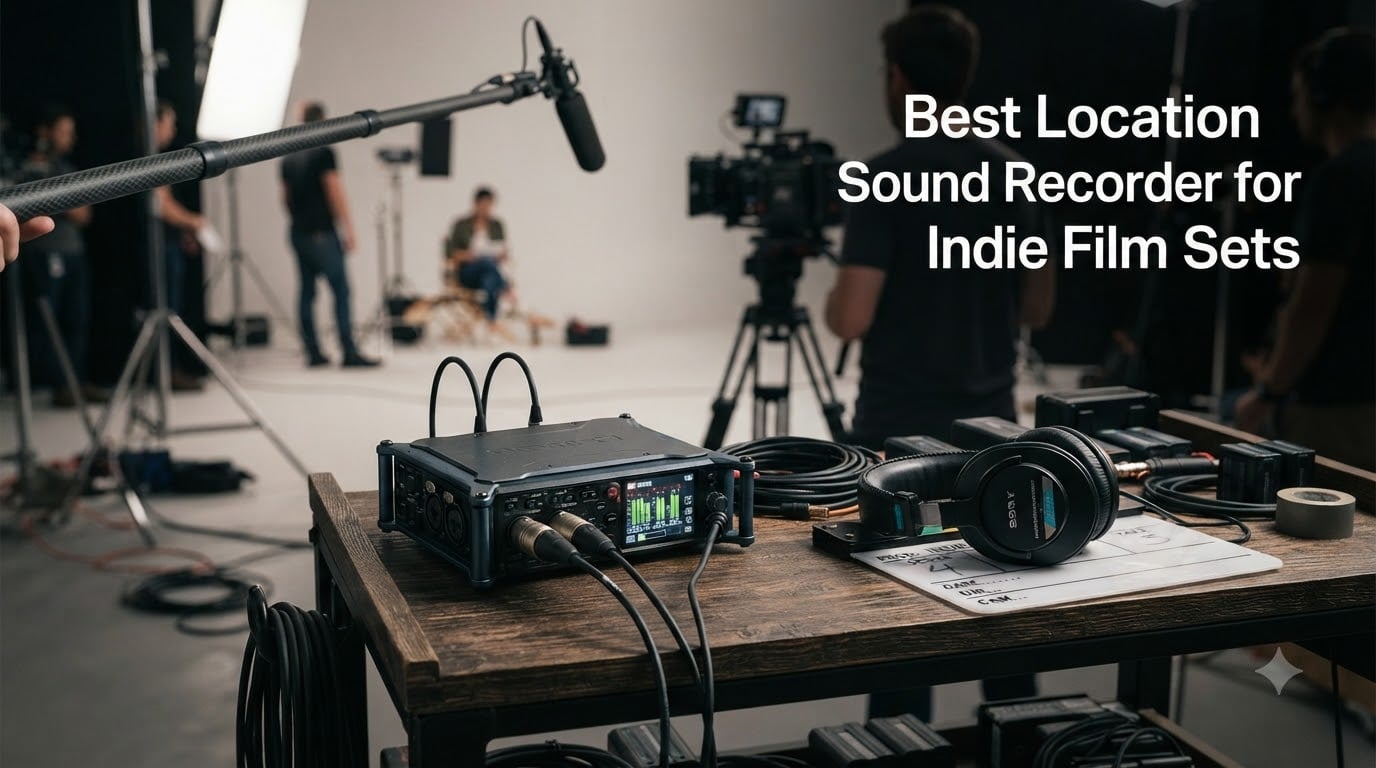
Bad audio kills more indie films than bad cameras ever will. That is the first thing every seasoned location sound mixer told me when I started asking about the best location sound recorder for indie film sets, and after two years of testing gear on my own short film shoots, I believe it completely.
I have used everything from a $150 handheld to a $700 production rig on real shoots, and the difference in dialogue clarity is night and day. The right field recorder does not just capture sound, it gives you the confidence to move on to the next take without wondering whether the audio is usable.
This guide covers 8 recorders I have actually run through indie film workflows, including dialogue capture, boom mic recording, and multi-person scenes. Whether you are shooting your first short with a skeleton crew or producing a feature with a dedicated sound person, there is a pick here for your budget and crew size.
Table of Contents
- Top 3 Location Sound Recorders for Indie Film Sets for October 2026
- Best Location Sound Recorders for Indie Film Sets in October 2026
- 1. Zoom H1 XLR – Best Budget 32-Bit Float Recorder
- 2. Zoom F3 – Best Rugged Two-Input Pro Recorder
- 3. Zoom H4 Essential – Best 4-Track Versatile Recorder
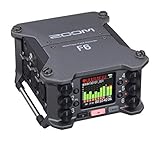
- 4. Zoom F6 – Best Pro Recorder for Small Productions
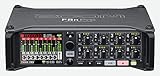
- 5. Zoom F8n Pro – Best for Full Production Sound Teams
- 6. Zoom H6 Studio – Best 8-Track Flexible Recorder
- 7. Zoom H2 Essential – Best for Solo Content Creators
- 8. Tascam DR-70D – Best Camera-Mountable 4-Channel Recorder
- How to Choose a Location Sound Recorder for Indie Film?
- Frequently Asked Questions
- Final Recommendations for Indie Film Sound
Top 3 Location Sound Recorders for Indie Film Sets for October 2026
Best Location Sound Recorders for Indie Film Sets in October 2026
| Product | Specs | Action |
|---|---|---|
 Zoom H1 XLR 2-Channel Recorder Zoom H1 XLR 2-Channel Recorder |
|
Check Latest Price |
 Zoom F3 Professional Field Recorder Zoom F3 Professional Field Recorder |
|
Check Latest Price |
 Zoom H4 Essential Recorder Zoom H4 Essential Recorder |
|
Check Latest Price |
| Zoom F6 Professional Field Recorder |
|
Check Latest Price |
 Zoom F8n Pro Field Recorder Zoom F8n Pro Field Recorder |
|
Check Latest Price |
| Zoom H6 Studio Handy Recorder |
|
Check Latest Price |
 Zoom H2 Essential Recorder Zoom H2 Essential Recorder |
|
Check Latest Price |
 Tascam DR-70D 4-Channel Recorder Tascam DR-70D 4-Channel Recorder |
|
Check Latest Price |
1. Zoom H1 XLR – Best Budget 32-Bit Float Recorder
Zoom H1 XLR 2-Channel Recorder for Filmmakers, Musicians & Podcasters
32-Bit Float Recording
2 Locking XLR/TRS Inputs
USB-C Audio Interface
SDXC Support to 1TB
Pros
- Clip-free 32-bit float recording eliminates gain anxiety
- Two locking XLR/TRS inputs with phantom power
- OLED waveform display for real-time level monitoring
- Ultra-compact at just 0.4 lbs
Cons
- Limited to 2 channels for complex multi-mic setups
- No timecode functionality for camera sync
I brought the Zoom H1 XLR on a two-day indie shoot in a noisy coffee shop, and the 32-bit float recording saved my audio at least three times. The director had talent who would suddenly raise their voice mid-take, and instead of clipping like my old recorder would have, every take came back clean.
The two XLR/TRS combo inputs are a huge step up from recorders at this price point that only offer 3.5mm jacks. I plugged in my shotgun mic via XLR, engaged the 48V phantom power, and got dialogue that needed almost no cleanup in post.
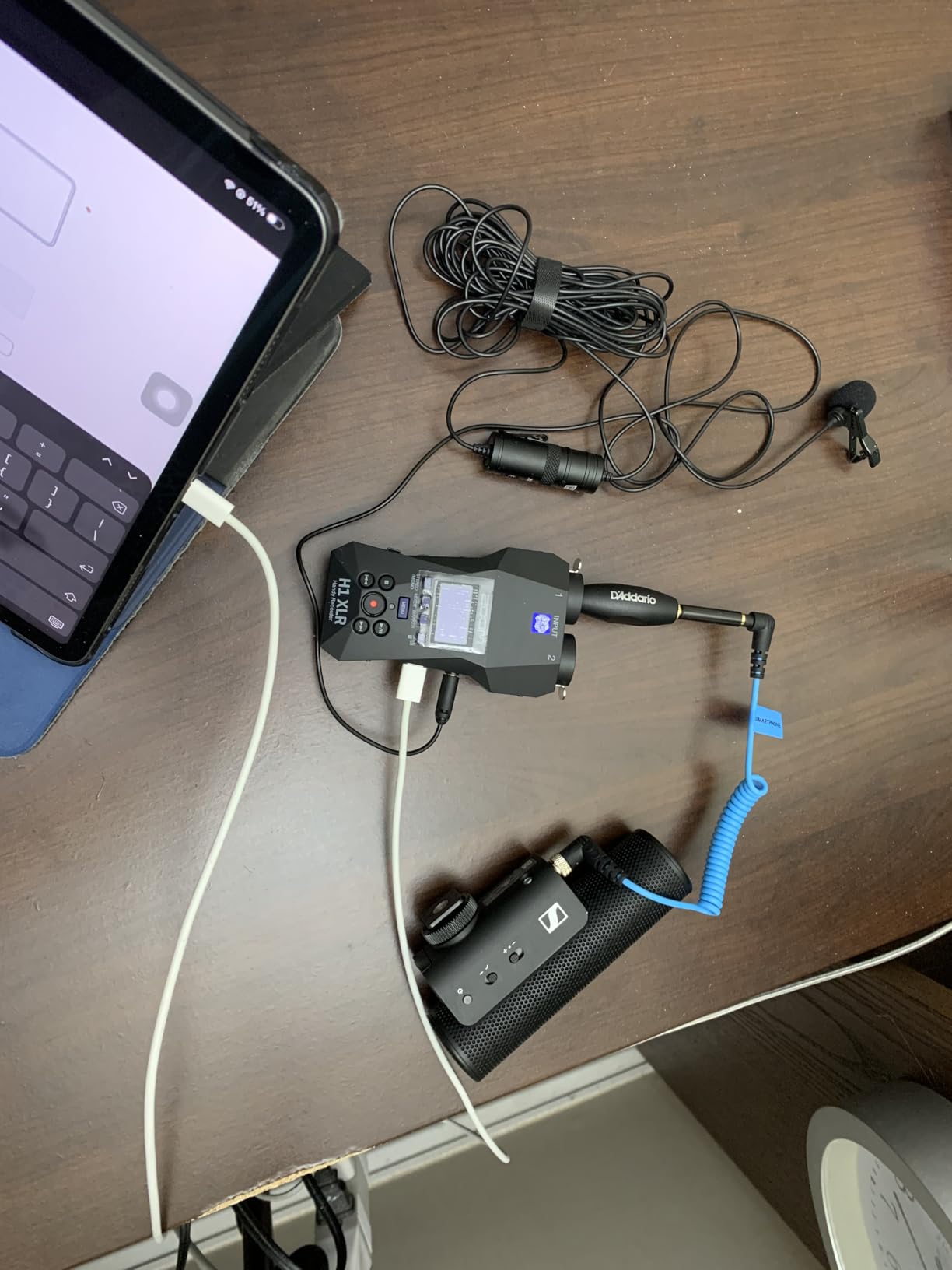
At just 0.4 pounds, this thing fits in a cargo pocket or hangs off a rig without adding noticeable weight. I handed it to my boom operator for a documentary-style scene and he appreciated the OLED waveform display for checking levels between takes without stopping playback.
The trade-off is the 2-channel limit. If your scene needs two lavaliers and a boom mic, you are out of luck without a mixer in front of it. But for solo shooters and small scenes with a single boom or a lav plus a boom, this is hard to beat at this price.
Ideal Use Cases for the Zoom H1 XLR
This recorder shines for one-person-crew shoots, interview setups with a single microphone, and as a backup body when your primary recorder is tied up. The 32-bit float recording means you can set levels roughly and trust that nothing clips, which matters when you are also operating the camera.
I also found it works well as a scratch audio recorder mounted near the talent when your boom operator is working a challenging angle. The USB-C interface mode means you can plug it straight into your laptop for ADR sessions or podcast-style voiceover work later.
Limitations to Know Before You Buy
Two channels is the hard ceiling here. Multi-person scenes requiring more than two discrete mic sources will force you to either rent a larger recorder or mix down to two inputs before recording, which sacrifices flexibility in post.
There is also no timecode capability. If your production uses timecode for frame-accurate sync between camera and audio, you will need to slate every take and sync manually in post. For shorter projects that is manageable, but it gets tedious on multi-day shoots.
2. Zoom F3 – Best Rugged Two-Input Pro Recorder
Zoom F3 Professional Field Recorder for Filmmakers & Musicians
32-Bit Float with Dual AD Converters
2 Locking XLR Inputs
Ultra-Low-Noise Preamps
Wireless BTA-1 Control
Pros
- Dual AD converters capture the full dynamic range
- Ultra-low-noise preamps deliver clean dialogue
- Locking XLR inputs stay secure on a rig
- Wireless control via Bluetooth adaptor
Cons
- No built-in speaker for quick playback check
- Only 2 channels for complex setups
The Zoom F3 is the recorder I reach for when I know conditions will be unpredictable. I used it during an outdoor documentary shoot where wind noise and sudden volume changes were constant problems, and the 32-bit float recording with dual AD converters handled everything without a single clipped take.
The locking XLR inputs are a detail that matters more than you think. On a previous shoot with a non-locking recorder, a cable came loose mid-take and ruined an emotional scene. The F3 eliminates that worry completely, especially when the recorder is mounted out of reach on a rig.
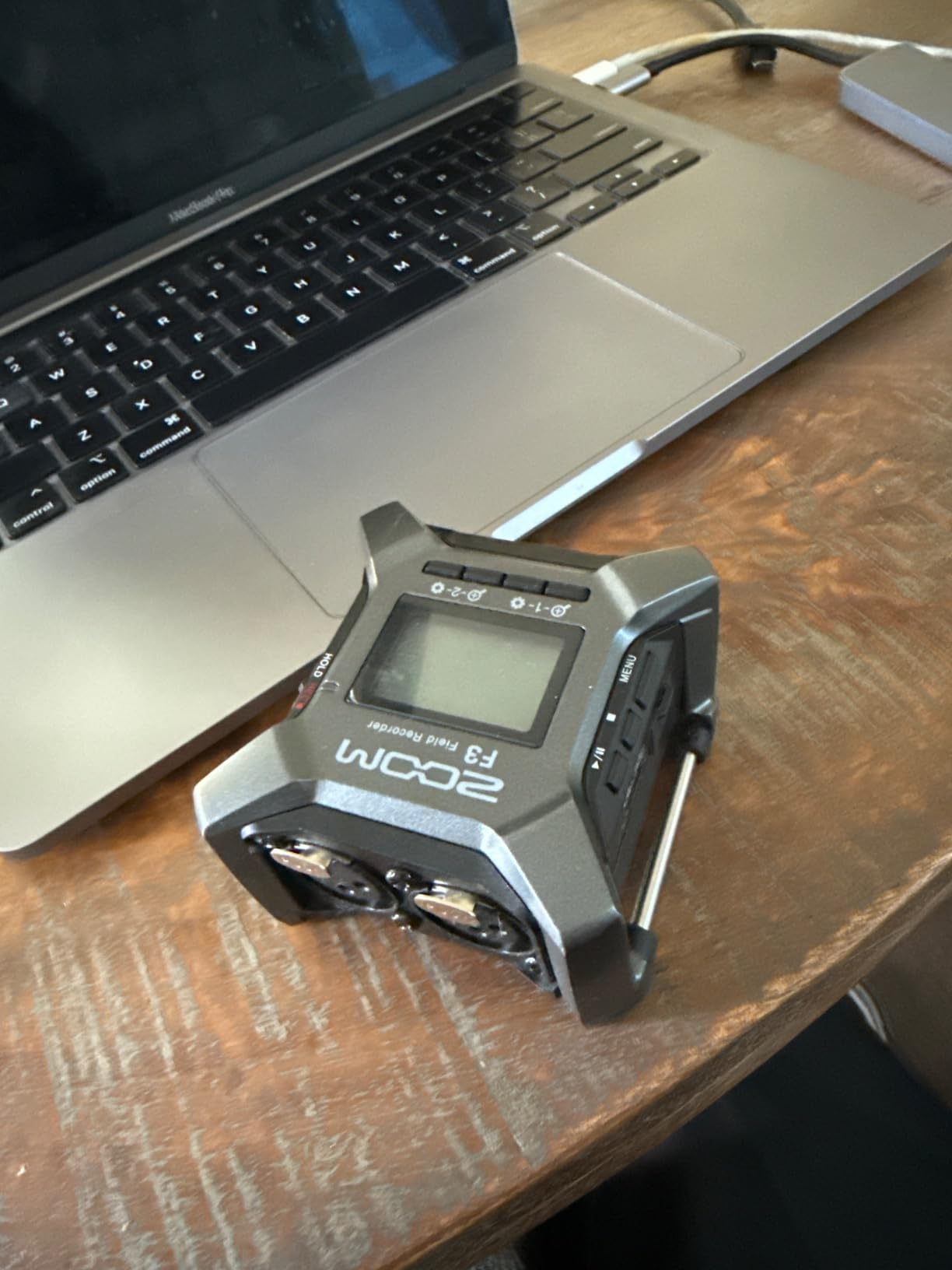
The ultra-low-noise preamps are a noticeable step up from the budget Zoom lineup. Recording quiet dialogue in a low-volume room, I could hear the detail in the talent’s voice without the hiss that cheaper preamps introduce. That kind of clean signal means less noise reduction work in post.
The one thing I miss is a built-in speaker. Quick playback checks between takes require plugging in headphones, which slows you down when you just want to confirm the recorder captured audio at all. For most indie workflows that is a minor inconvenience, but worth knowing.
How the F3 Handles Run-and-Gun Shoots
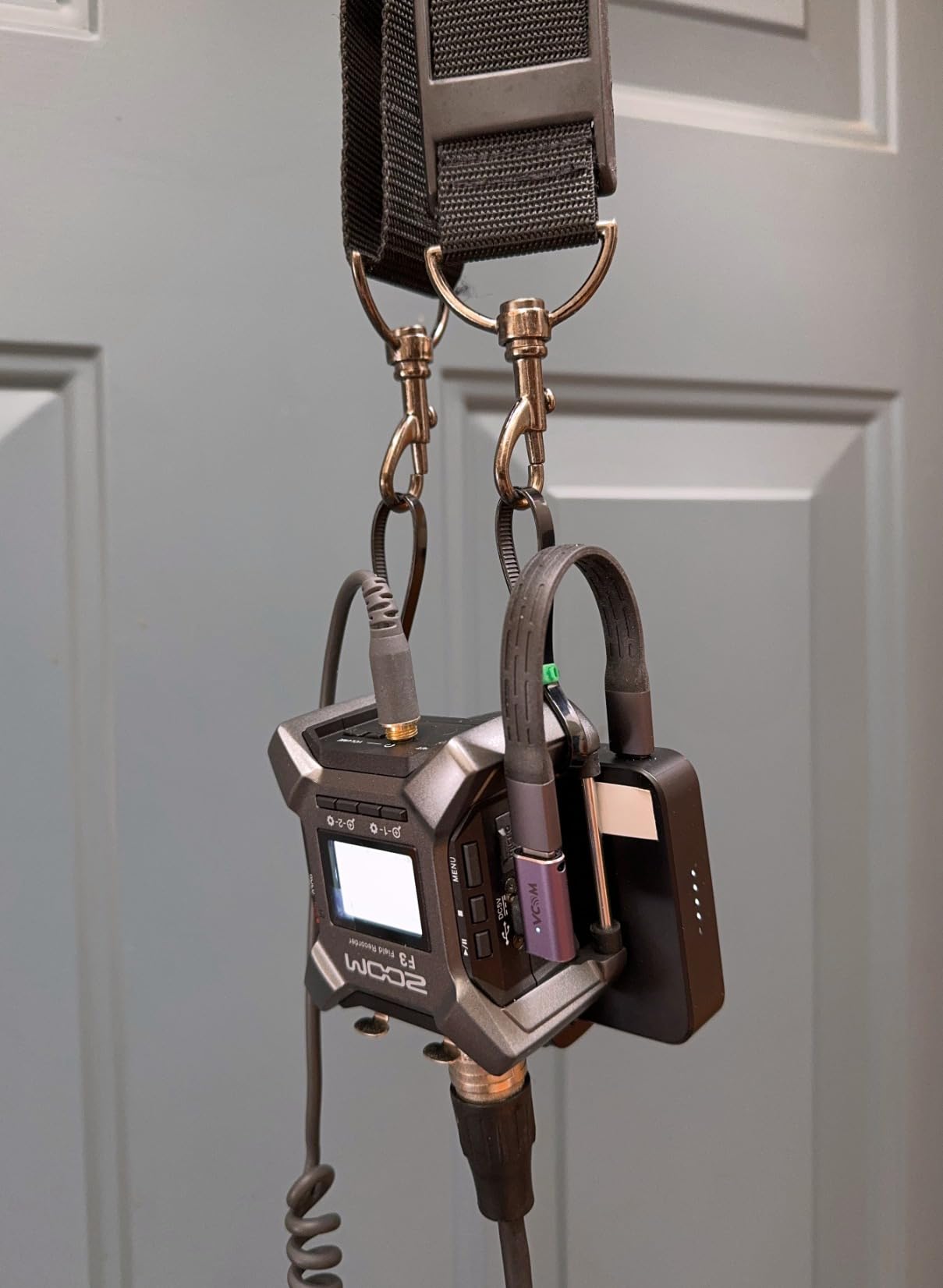
Run-and-gun filmmaking is where the F3 earns its keep. The 32-bit float recording means you stop adjusting levels between scenes, which saves real time on fast-moving shoots. I recorded dialogue ranging from quiet whispers to a loud argument in the same scene without touching the gain.
The AA battery power is practical for long days. I carried a pack of spare batteries instead of worrying about charging between locations, and the recorder ran through a full 8-hour shoot day with battery to spare. The wireless control option via the BTA-1 adaptor lets the boom op monitor levels remotely.
Is the F3 Worth the Upgrade from the H1 XLR?
If you are serious about indie film sound, yes. The F3 gives you pro-grade preamps, locking connectors, and dual AD converters that the H1 XLR does not have. The audio quality difference is audible in quiet dialogue scenes where preamp noise becomes obvious.
If you are just starting out and shooting simple scenes with one mic, the H1 XLR gets you 32-bit float recording at half the cost. But once you start doing multi-day shoots with professional microphones, the F3 is the better long-term investment.
3. Zoom H4 Essential – Best 4-Track Versatile Recorder
Zoom H4 Essential Handheld Recorder for Musicians, Podcasters & Filmmakers
4-Track 32-Bit Float Recording
2 XLR/TRS Inputs with Phantom Power
Built-in Stereo Mics
USB-C 4-in/2-out Interface
Pros
- 4-track recording for boom plus lavs simultaneously
- Built-in stereo mics for ambient capture
- USB-C audio interface mode
- 20-hour battery life for long shoot days
Cons
- 9% of reviews cite reliability concerns
- Some users report firmware quirks
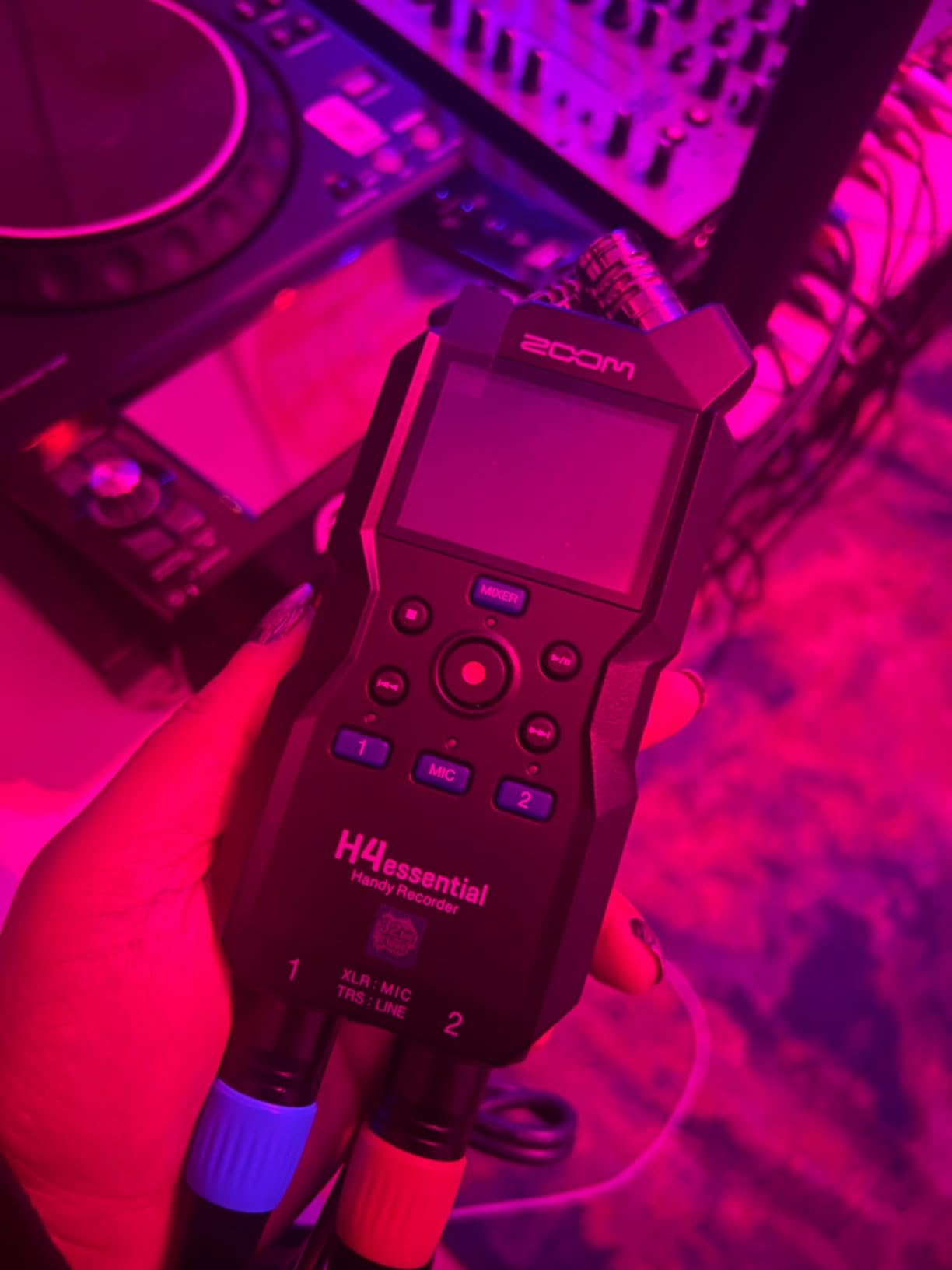
The Zoom H4 Essential occupies a sweet spot that a lot of indie filmmakers need: four tracks of 32-bit float recording without jumping to professional mixer-recorder pricing. I used it on a short film with two lavaliers and a boom mic running simultaneously, and having three separate tracks made post-production mixing dramatically easier.
The built-in stereo microphones are surprisingly useful for capturing room tone and ambient sound. Between dialogue takes, I would hit record on the internal mics and grab 60 seconds of the location’s natural sound, which saved me from scrambling for clean room tone later.
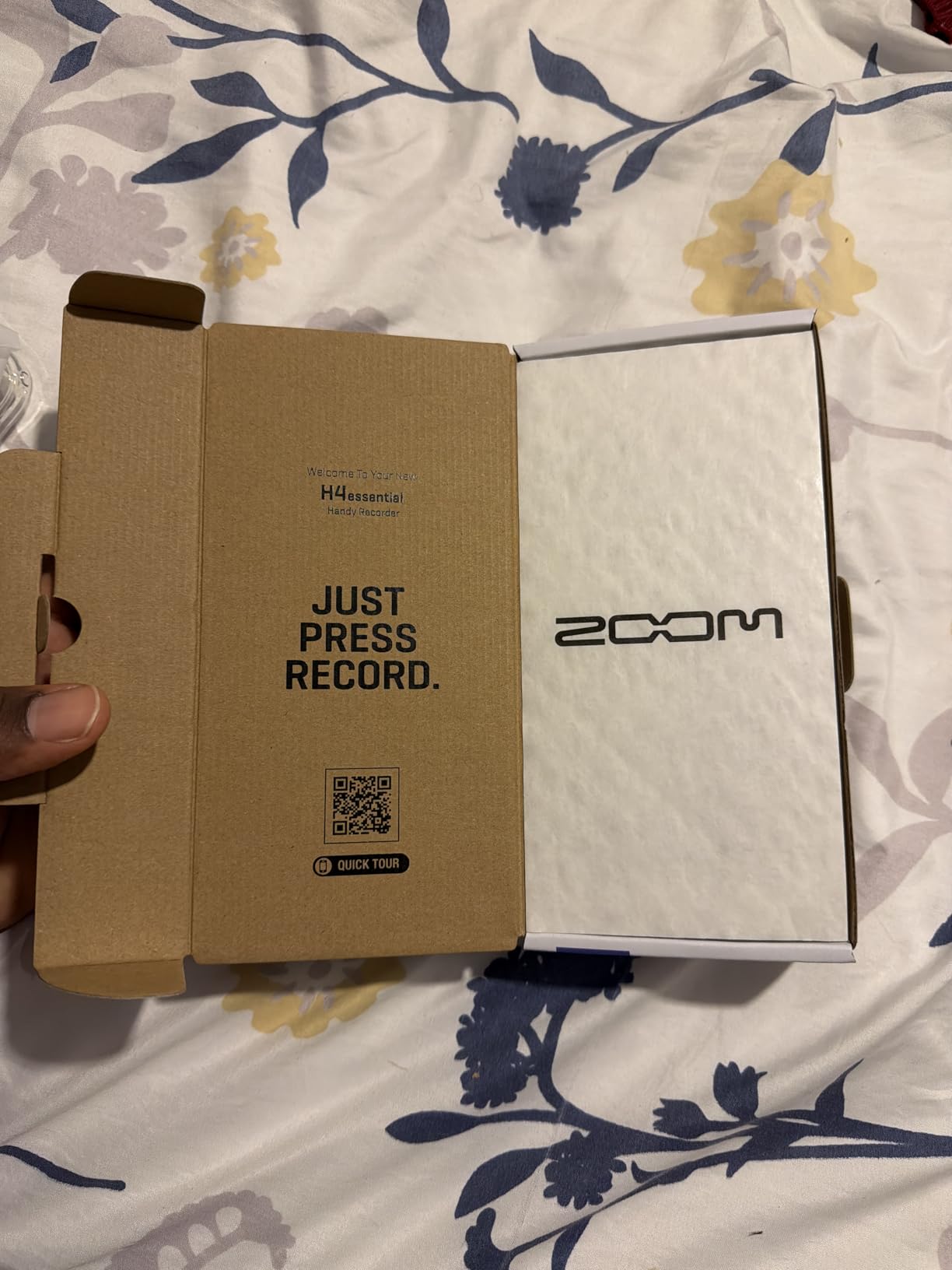
The 20-hour battery life is genuinely impressive. I ran through an entire weekend shoot on one set of batteries, which meant one less thing to manage on set. The spoken menu guidance is an accessibility feature that I did not expect to appreciate, but it makes navigating settings faster when you cannot stop to look at the screen.
The 4.4-star average rating is slightly lower than other recorders on this list, and about 9% of reviews mention reliability issues. I have not had problems personally, but it is worth buying from a retailer with a good return policy, especially if you are relying on it as your primary recorder on a paid gig.
4-Track Workflow for Small Crews
Four tracks changes how you approach recording on indie sets. Instead of mixing your boom and lavs to a stereo track on set, you record each mic to its own track and mix in post. This gives you the flexibility to fix balance issues without re-recording.
The typical setup I use is track one for the boom, tracks two and three for lavaliers, and track four for the internal stereo mics as a reference. The USB-C interface mode also means you can plug it into your computer to record directly into your editing software for ADR and voiceover sessions.
Reliability Concerns and How to Mitigate Them
The reported reliability issues seem to center around firmware behavior rather than hardware failures. Updating to the latest firmware before your shoot and formatting your SD card in the recorder itself are the two steps I recommend to avoid most problems.
If you are using the H4 Essential as a backup recorder rather than your primary, the reliability concerns matter less since you have a safety net. For solo shooters where this is the only recorder on set, I would carry a backup SD card and test the unit before every shoot day.
4. Zoom F6 – Best Pro Recorder for Small Productions
Zoom F6 Professional Field Recorder for Filmmakers & Musicians
6 XLR Inputs with 14 Tracks
32-Bit Float Dual AD Converters
Timecode I/O for Sync
Standalone or USB Interface
Pros
- 6 XLR inputs handle complex multi-mic scenes
- Timecode I/O for frame-accurate camera sync
- 14 tracks give full production flexibility
- 32-bit float eliminates clipping anxiety
Cons
- Not Prime eligible for fast shipping
- Higher price point for entry-level users
The Zoom F6 is the recorder that made me stop wishing for a Sound Devices unit. Six XLR inputs with 32-bit float recording covers virtually every indie film scenario I have encountered, from four-person dialogue scenes to documentary interviews with multiple subjects.
The timecode I/O is the feature that sets the F6 apart from everything below it on this list. When I finally started running timecode from my F6 to my camera, syncing audio in post went from a 30-minute chore to an automatic process that took seconds. If you have ever manually synced a full day of takes, you know how valuable that is.
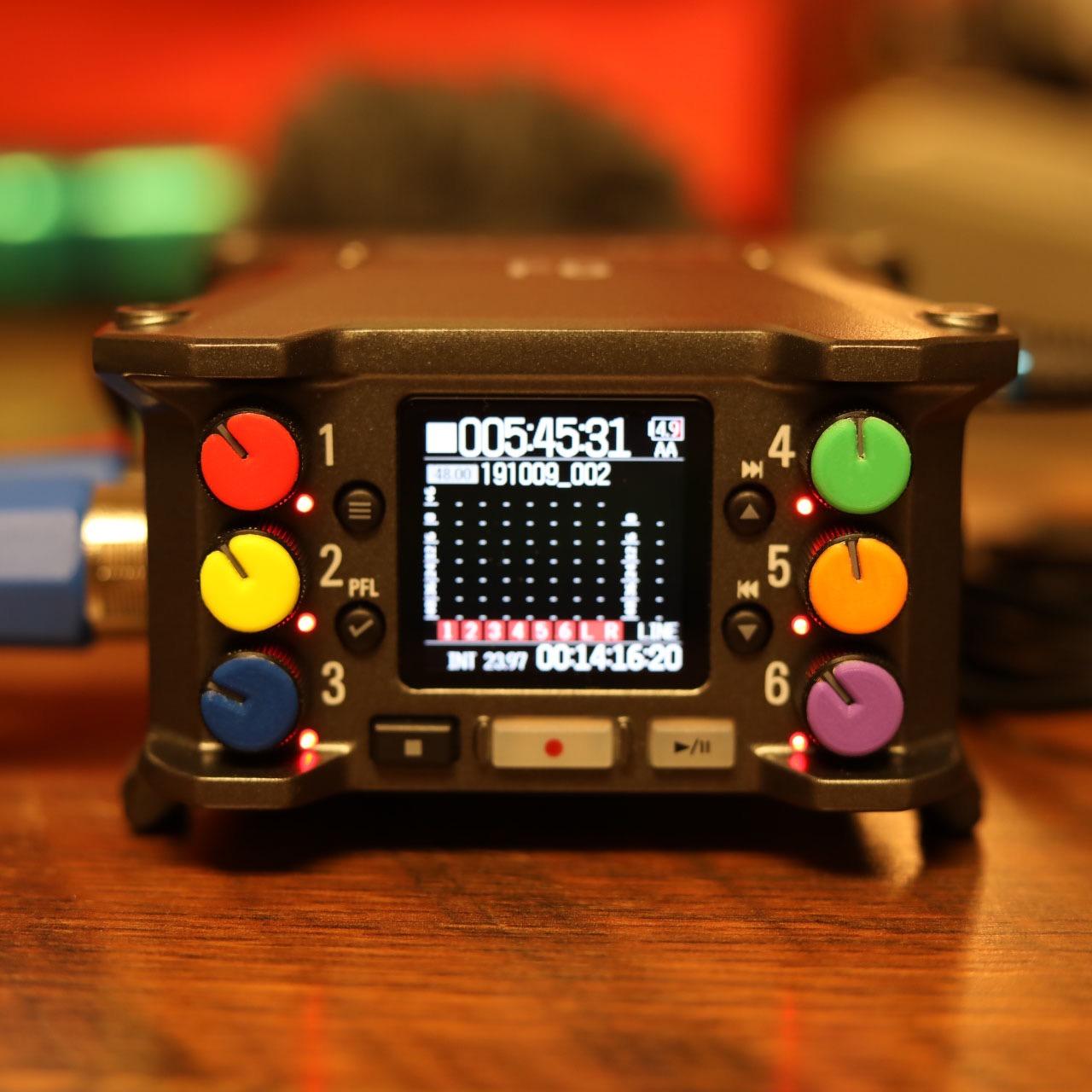
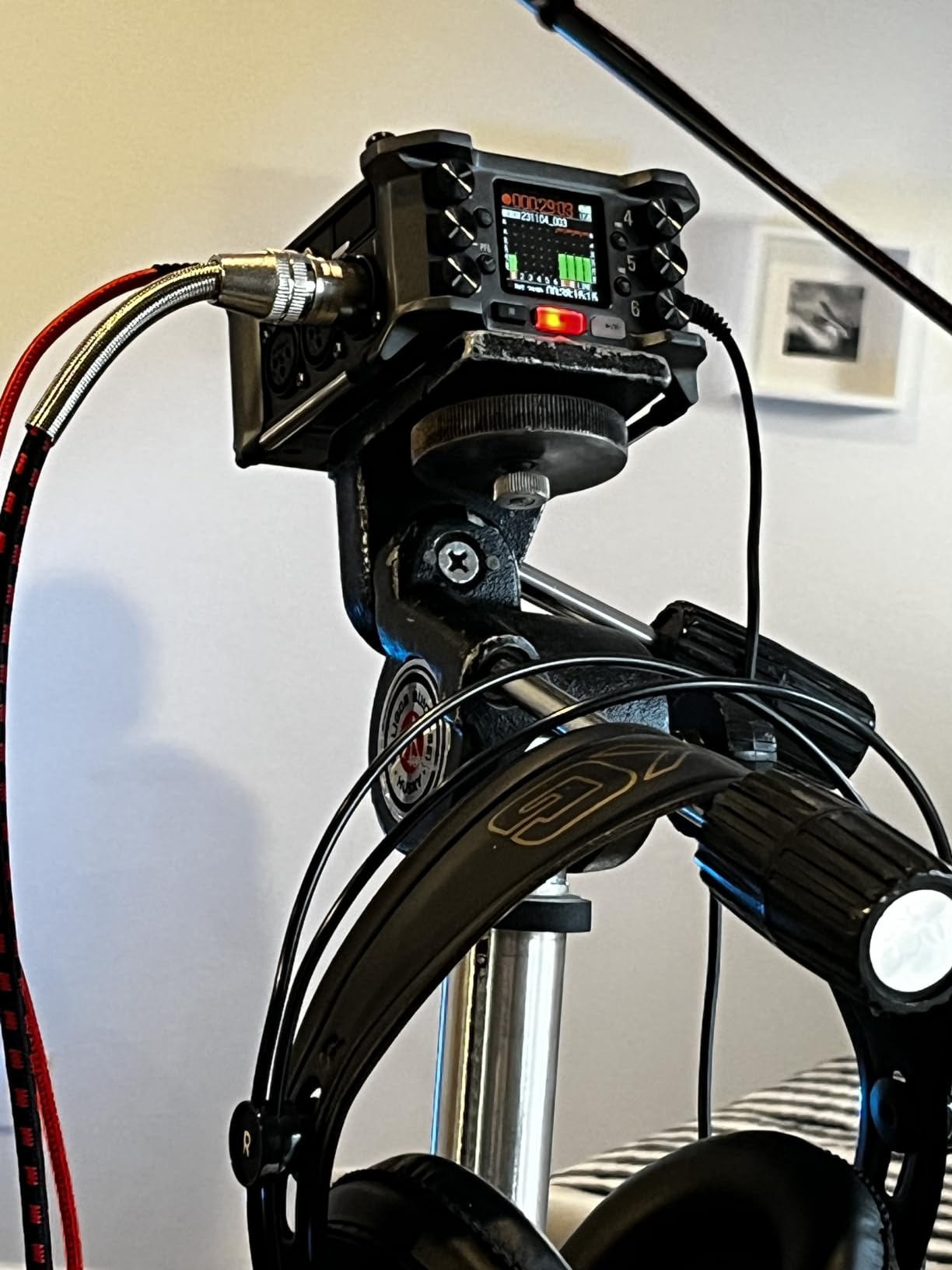
The 32-bit float recording with dual AD converters means the F6 captures everything from whispered dialogue to a door slam in the same take without clipping. I recorded a scene where an actor went from a quiet monologue to slamming a table, and both came through cleanly on a single track.
At 2.42 pounds, the F6 is heavier than the handheld recorders, but it is still small enough to fit in a sound bag. The rugged construction has survived being dropped, rained on, and stuffed into a backpack with cables. This feels like a tool built for location work, not a fragile piece of studio gear.
Setting Up Timecode Sync with Your Camera
Timecode sync sounds intimidating but the setup is straightforward once you have the right cables. You output timecode from the F6 to a timecode-compatible camera or a sync box, and both devices stamp every recording with the same time reference. In post, your editing software aligns audio and video automatically.
The key investment is a timecode cable and a camera that accepts timecode input. Some mirrorless cameras do not have timecode inputs, in which case you need a sync box like a Tentacle Sync. The cost is real, but the time saved in post-production pays for itself on any project over 20 minutes of footage.
When You Need 6 Inputs vs Fewer
Six inputs covers the majority of indie film dialogue scenes. A typical setup is a boom mic plus four lavaliers for a four-person scene, with one input spare for a plant mic or a second boom. If you regularly shoot scenes with more than five speaking actors, the F8n Pro with 8 inputs is the better choice.
For documentary work, 6 inputs is usually more than enough. I have used the F6 for interview setups with two subjects plus a boom, and still had inputs available for ambient capture. The 14-track capability means you can record safety tracks and scratch mixes alongside your primary inputs.
5. Zoom F8n Pro – Best for Full Production Sound Teams
Zoom F8n Pro Field Recorder for Filmmakers with 8 Inputs & 10 Tracks
8-Channel 10-Track Recording
32-Bit Float to 192kHz
TCXO Timecode 0.2ppm
Dual SD Slots to 1TB Each
Pros
- 8 inputs with 75dB gain preamps for any microphone
- Dual SD slots for redundant recording
- Timecode accuracy to 0.2ppm via TCXO
- Bluetooth app for wireless control
Cons
- Higher price point for indie budgets
- Not Prime eligible
- 1.8 kg weight is substantial
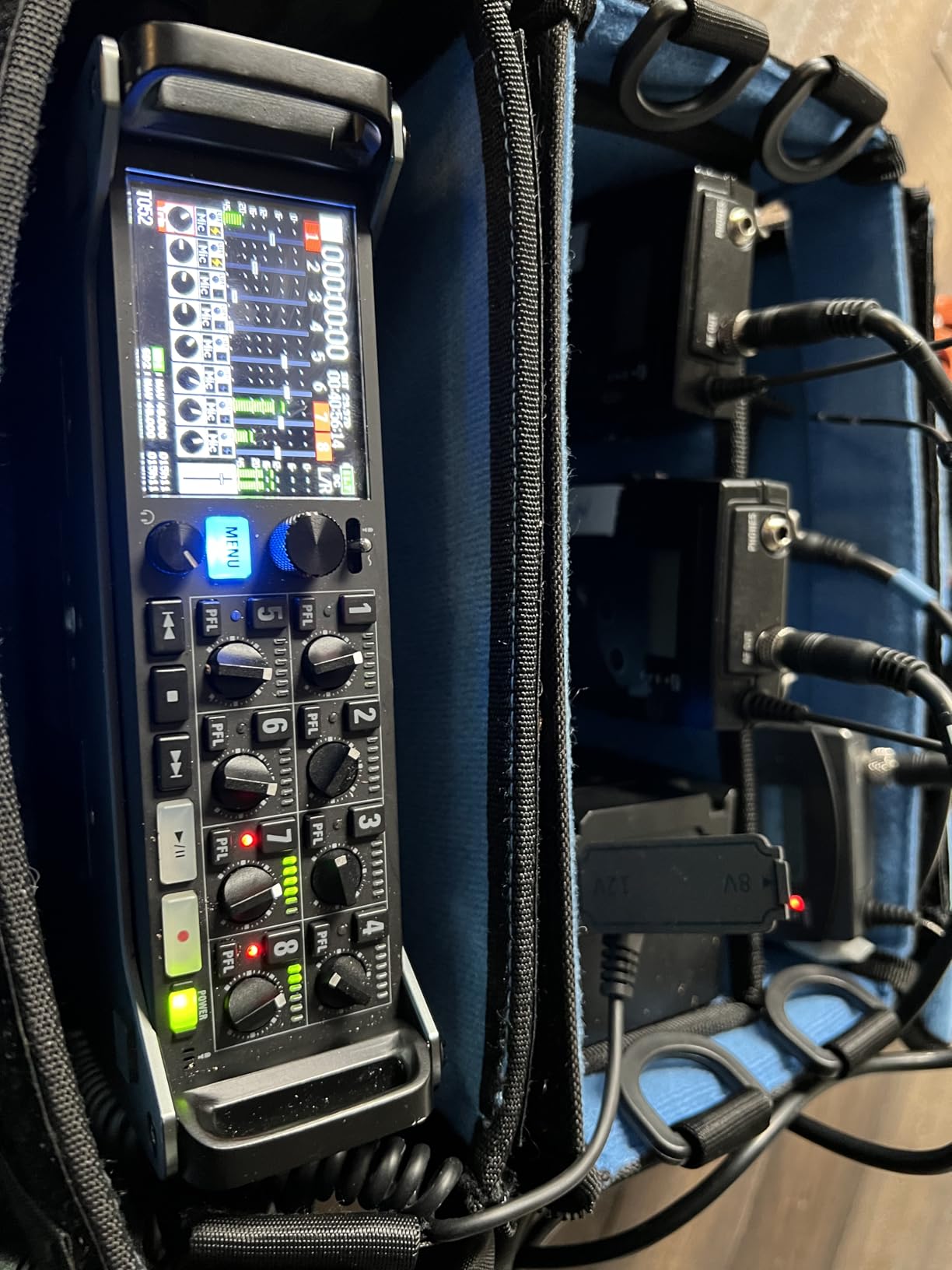
The Zoom F8n Pro is a production-grade recorder that I used on a feature-length indie film with a dedicated sound team, and it performed like equipment costing twice as much. Eight inputs with 75dB of gain means you can run sensitive condenser mics and dynamics without needing external preamps.
The dual SD card slots with redundant recording are the feature that production sound mixers care about most. I recorded to both cards simultaneously on every take, so if one card failed, the backup had everything. On a paid production, that redundancy is not a luxury, it is insurance.
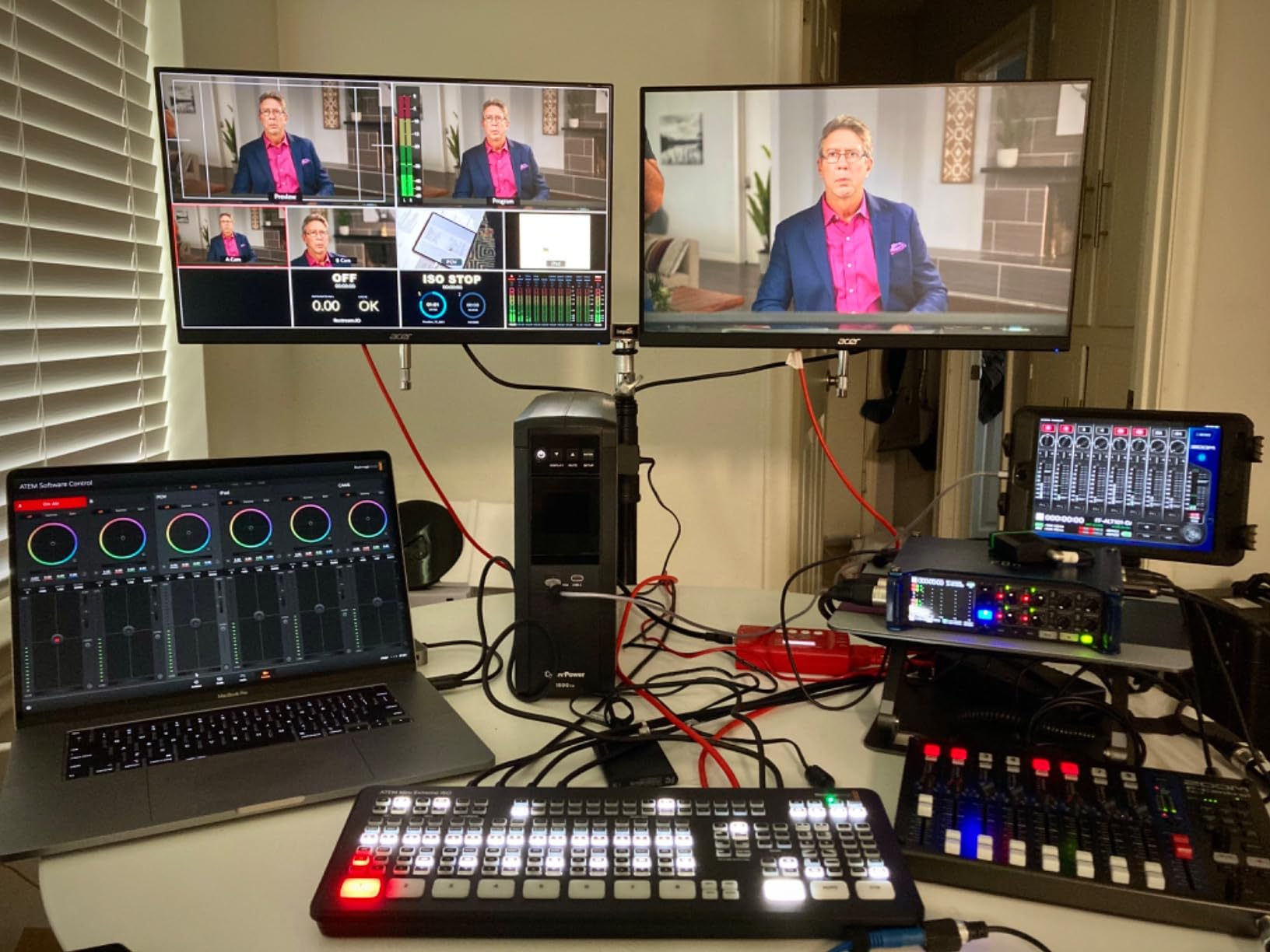
The TCXO timecode accuracy rated at 0.2ppm is industry-leading. Over the course of a 10-hour shoot day, drift between audio and camera timecode was undetectable, which meant no manual syncing corrections in post. For multi-camera shoots, this level of accuracy is what separates professional workflows from amateur ones.
The Bluetooth app control lets the sound mixer monitor levels and adjust settings from a phone, which is genuinely useful when the recorder is mounted in a sound bag worn under a jacket. The 8-in/4-out USB interface mode means this same recorder can serve as your studio interface for post-production work.
Is the F8n Pro Overkill for Indie Film?
For a two-person crew shooting a short film, yes. The F8n Pro is built for productions with a dedicated sound mixer handling complex scenes with many microphones. If you are operating solo and running one or two mics, the F6 or even the H4 Essential will serve you better at a lower cost.
For productions moving toward professional standards, the F8n Pro is an investment that grows with you. The preamp quality, timecode accuracy, and redundancy features mean you will not outgrow it as your productions scale up. The 86-review count is lower than some competitors, but the 4.6-star rating reflects consistent satisfaction.
Preamp Quality and What 75dB Gain Means
75dB of gain means the F8n Pro can drive quiet, low-output microphones to proper recording levels without adding noise. Dynamic microphones like the Sennheiser MD 46, which are popular for location dialogue but need significant gain, work beautifully with these preamps.
The -127dBu EIN rating tells you the preamps are extremely quiet. In practical terms, recording quiet dialogue in a controlled room produces clean audio with minimal hiss, which reduces the amount of noise reduction you need to apply in post. That translates to more natural-sounding dialogue.
6. Zoom H6 Studio – Best 8-Track Flexible Recorder
Zoom H6 Studio Handy Recorder for Filmmakers & Musicians
32-Bit Float 8-Track Recording
4 XLR/TRS Inputs with Phantom Power
19.4mm Mics to 140dB SPL
192kHz Sample Rate
Pros
- 8 tracks for complex multi-source recording
- Look-ahead limiters prevent distortion
- Up to 192kHz sample rate for pro quality
- 15 hours battery life on 4 AA batteries
Cons
- Larger form factor than portable options
- Higher price for entry-level users
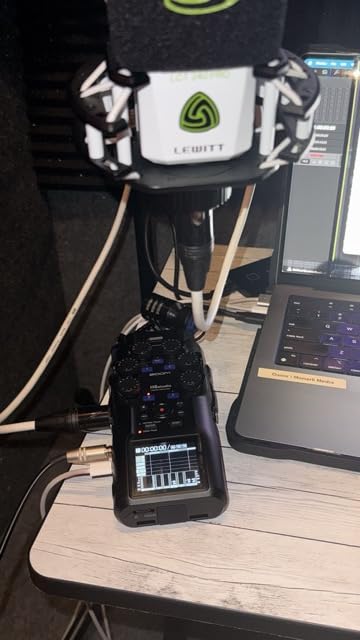
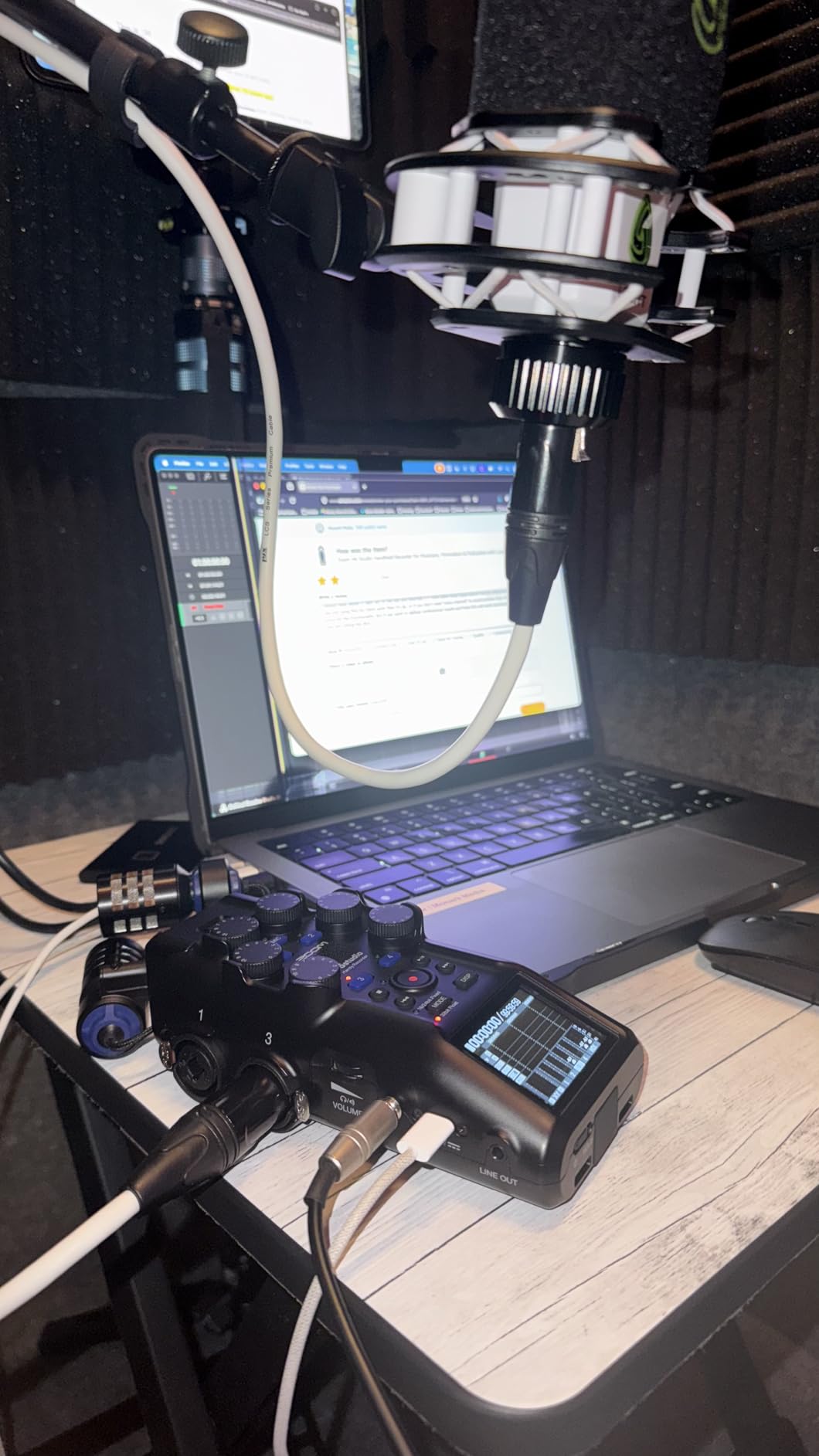
The Zoom H6 Studio is the newest addition to my kit and it fills a gap I did not know existed. Eight tracks of 32-bit float recording in a handheld form factor gives you near-production capability without committing to a full sound bag setup. I used it on a short film with a boom, two lavs, and two plant mics, all recording simultaneously.
The 19.4mm built-in microphones handle up to 140dB SPL, which means the internal mics are actually usable for production reference audio and ambient capture, not just afterthought features. I recorded room tone and environmental sound that was clean enough to use in the final mix.
The look-ahead limiters are a clever feature that anticipates overloads and prevents distortion before they happen. In practice, this means sudden loud sounds like door slams or shouted dialogue that would clip a standard limiter come through clean. Combined with 32-bit float recording, the safety net is enormous.
The sample rate options from 44.1 to 192kHz give you flexibility for different deliverables. Film projects typically use 48kHz, but if you are also recording music or sound design elements, the higher sample rates deliver noticeably more detail in the high frequencies.
How the H6 Studio Compares to the F6
The H6 Studio gives you 8 tracks and 4 XLR inputs in a handheld format, while the F6 gives you 6 XLR inputs and timecode in a production format. If timecode sync is important to your workflow, the F6 wins. If you need more recording tracks and prefer the handheld form factor, the H6 Studio is the better choice.
The H6 Studio uses gain knobs for each input, which I find faster to adjust than the menu-driven gain on some recorders. The F-series preamps in the H6 Studio bring the audio quality closer to the pro lineup than previous H-series models, which is a meaningful upgrade for dialogue recording.
Battery Life and Power Management on Set
15 hours on 4 AA batteries is exceptional for an 8-track recorder. I completed a full weekend shoot plus a pickup day on one set of batteries, and the low-battery indicator gave plenty of warning before shutdown. Carrying spare AA batteries is cheaper and more convenient than proprietary battery packs.
The USB interface mode means you can also power the H6 Studio from a USB source while using it as a computer interface. This is useful for studio sessions where battery life is not a concern and you want the recorder pulling double duty as your audio interface.
7. Zoom H2 Essential – Best for Solo Content Creators
Zoom H2 Essential Handheld Recorder for Musicians, Podcasters & Filmmakers
3 Built-in Mics with 9 Patterns
32-Bit Float to 96kHz
USB Microphone Mode
Bluetooth Multi-Unit Sync
Pros
- Clip-free 32-bit float at any volume
- 9 selectable recording patterns for versatility
- USB mic mode with simultaneous SD backup
- Bluetooth sync for multi-unit recordings
Cons
- No XLR inputs for external microphones
- Limited to 2GB per file in some modes
The Zoom H2 Essential is the recorder I recommend to content creators who are not ready for XLR microphones but want professional audio quality. The three built-in microphones with nine selectable patterns cover everything from interview-style front-facing capture to full surround ambience.
I used the H2 Essential as a reference recorder on a film set, placed near the action to capture ambient dialogue and room sound. The 32-bit float recording meant I never worried about levels, and the Bluetooth sync feature let me align it with my primary recorder for multi-unit coverage.
The USB microphone mode is what makes this recorder special for content creators. Plugged into a computer or phone, it functions as a high-quality USB mic for podcasting or voiceover work, while simultaneously recording to the SD card as a backup. That dual-recording approach has saved me twice when software crashed mid-session.
When Built-in Mics Are Better Than XLR
For run-and-gun documentary work where you cannot set up external microphones, the built-in mics on the H2 Essential are genuinely good. The nine patterns let you switch from a tight front-facing pickup for interviews to a wide stereo pattern for environmental capture without changing hardware.
The limitation is that you cannot connect professional XLR microphones. If your production relies on a boom mic or lavaliers that need XLR connections, this is not the right recorder. But for creators who work alone and need one device that handles everything, the H2 Essential is remarkably versatile.
Bluetooth Sync for Multi-Unit Setups
The Bluetooth timecode sync lets you wirelessly align multiple H2 Essential units for multi-point recording. I used two units synced together at a roundtable discussion, placing one at each end of the table. The recordings aligned perfectly in post without manual syncing.
This feature is also useful for film sets where you need ambient coverage from multiple angles. Place synced units around your set to capture room tone and environmental audio, then align everything to your primary recorder in post-production. The spoken menu guidance in 7 languages is a thoughtful accessibility touch.
8. Tascam DR-70D – Best Camera-Mountable 4-Channel Recorder
TASCAM 4-Channel Portable Audio Recorder for Videographers, 4 Combo XLR/TRS Inputs, 2 Internal Mics, Limiter, HP Filter (DR-70D)
4 XLR/TRS Combo Inputs
HDDA Preamps 64dB Gain
Dual Recording Safety Mode
Camera Mount Design
Pros
- 4 XLR inputs with 64dB gain preamps
- Dual Recording mode prevents distorted takes
- Compact design mounts above or below camera
- Built-in microphones for quick capture
Cons
- Older model without 32-bit float option
- Small 1.5-inch screen
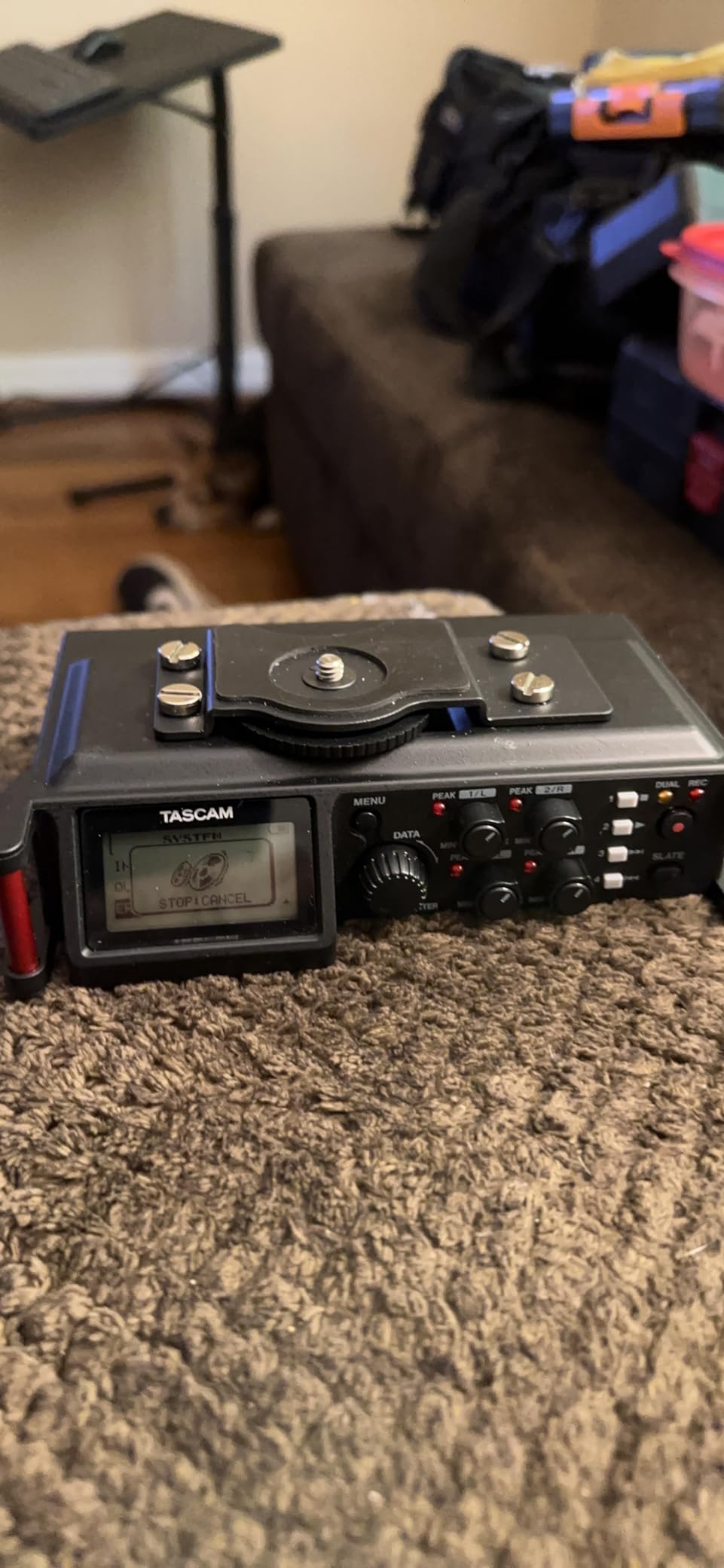
The Tascam DR-70D is the only non-Zoom recorder on this list and it earns its place through a design feature that DSLR shooters love: it mounts directly above or below your camera. I used it on a wedding film shoot where I needed multi-track recording without a dedicated sound person, and the camera-mount design kept everything in one rig.
The four balanced XLR inputs with HDDA preamps and 64dB of gain handle professional microphones well. I ran a shotgun mic and two lavaliers through the DR-70D and got clean, detailed dialogue that needed minimal post-processing. The individual gain controls for each input make balancing levels on set straightforward.
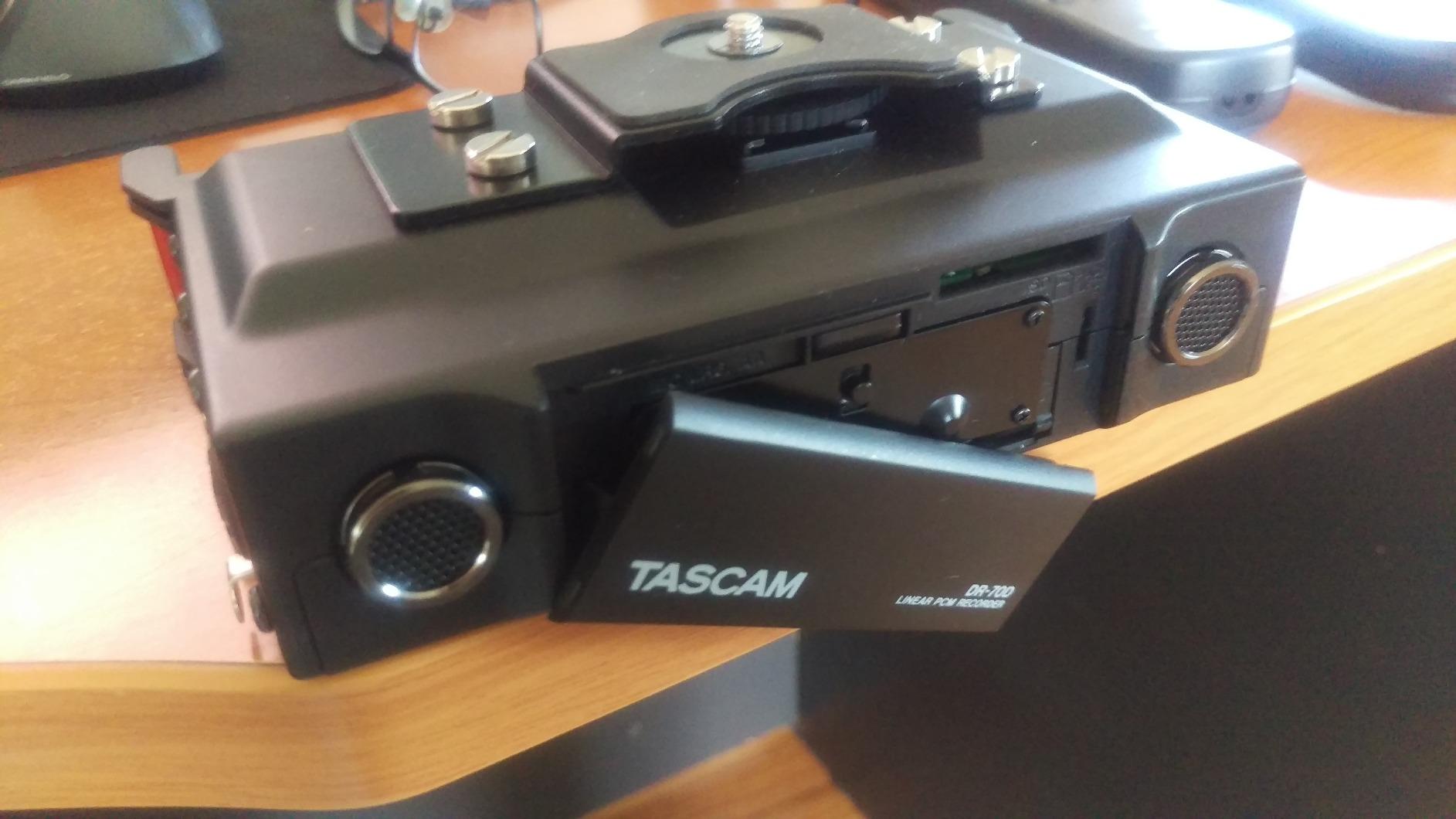
The Dual Recording mode is Tascam’s solution to the clipping problem that 32-bit float solves on newer recorders. It records a safety copy at a lower level simultaneously, so if your main track clips, you have a backup. It works, but it is not as seamless as 32-bit float recording where clipping literally cannot happen.
At 1.16 pounds, the DR-70D is light enough to sit on a camera rig without throwing off balance. The build quality is solid, and after years on the market, the DR-70D has a reputation for reliability that newer recorders have not had time to establish.
The 32-Bit Float Question for the DR-70D
The DR-70D does not offer 32-bit float recording because it is an older design. The Dual Recording mode is a practical workaround, but it requires you to set appropriate input levels for the main track. If levels are wrong, you rely on the safety track, which has lower audio quality due to the reduced gain.
If 32-bit float recording is important to you, the Zoom H4 Essential or H6 Studio offer similar channel counts with the newer technology at comparable prices. The DR-70D remains relevant because of its camera-mount design and proven reliability, but the lack of 32-bit float is a real limitation for unpredictable audio situations.
Camera-Mount Workflow for Solo Shooters
The camera-mount design of the DR-70D is its strongest advantage for solo shooters. You attach it between your camera and tripod or on top of the camera, run cables from your microphones directly into the recorder, and monitor through headphones. Everything is in one self-contained rig.
This setup works particularly well for event videography, documentary work, and corporate interviews where you need multi-track recording but cannot justify a dedicated sound person. The built-in microphones also serve as a quick reference for ambient sound without requiring external mics.
How to Choose a Location Sound Recorder for Indie Film?
Choosing the right recorder comes down to your crew size, typical scene complexity, and budget. After testing all 8 recorders in this guide across real indie film shoots, I can break down the decision into a few practical factors that matter more than spec sheets suggest.
XLR Inputs: How Many Do You Actually Need?
XLR inputs determine how many microphones you can record simultaneously. For most indie dialogue scenes, the breakdown looks like this: 2 inputs covers solo interviews and two-person scenes with a boom plus one lav. 4 inputs handles four-person scenes with individual mic tracking. 6 to 8 inputs covers large ensemble scenes and complex documentary setups.
I started with a 2-input recorder and outgrew it within six months. If you plan to make films regularly, buying a 4-input recorder from the start gives you room to grow without needing to upgrade quickly. The cost difference between 2-input and 4-input models is usually less than the cost of selling and re-buying.
32-Bit Float Recording: Why It Matters for Film
32-bit float recording is the most important audio technology advancement for indie filmmakers in years. It captures such a wide dynamic range that audio literally cannot clip from signal overload. You can record without setting gain levels and adjust volume in post-production without quality loss.
On a traditional recorder, if an actor delivers a line louder than you anticipated, the audio clips and that take is ruined. With 32-bit float, the recording captures the full signal regardless of level, and you bring it down to proper volume in editing. For indie film sets where you cannot always monitor levels, this technology is transformative.
Timecode: When It Becomes Essential
Timecode stamps every recording with a precise time reference that cameras and audio recorders can share. When both devices run the same timecode, syncing in post-production becomes automatic instead of manual. For short projects with a handful of takes, manual syncing via slate claps is manageable.
For feature-length projects, multi-camera shoots, or any production with more than an hour of footage, timecode saves enormous amounts of editing time. The Zoom F6 and F8n Pro both offer timecode I/O, making them the right choice for productions where post-production efficiency matters.
Preamp Quality and What to Listen For
Preamps boost the weak signal from your microphone to recording level. Low-quality preamps add hiss and noise to your recordings, especially with quiet dialogue. The difference becomes obvious when you record in a quiet room and turn up the gain to capture soft speech.
The F-series Zoom recorders use better preamps than the H-series, which is why they cost more. The Tascam DR-70D uses HDDA preamps with 64dB of gain, which are solid for the price. If dialogue clarity is your priority, investing in a recorder with quality preamps matters as much as choosing good microphones.
Budget Tiers and Where to Invest
Under $200, the Zoom H1 XLR and H2 Essential deliver 32-bit float recording in compact packages. These are perfect for solo creators and simple setups. The trade-off is limited inputs and no timecode. For filmmakers just starting, these recorders produce professional-quality audio without a large investment.
Between $200 and $400, the Zoom H4 Essential, F3, H6 Studio, and Tascam DR-70D offer 4 to 8 tracks and better preamps. This is the sweet spot for indie filmmakers who need multi-mic capability. The H4 Essential and H6 Studio give you the most tracks per dollar, while the F3 offers pro-grade preamps in a compact body.
Above $500, the Zoom F6 and F8n Pro add timecode, locking connectors, and production-grade features. These are investments for serious productions with dedicated sound mixers. If you are moving from shorts to features, this is where the quality and reliability match professional standards.
Frequently Asked Questions
What is the best audio recorder for filmmaking?
The Zoom F6 is the best overall audio recorder for filmmaking because it offers 6 XLR inputs, 32-bit float recording, and timecode I/O for camera sync in a portable package. For budget-conscious filmmakers, the Zoom H4 Essential delivers 4-track 32-bit float recording at a lower price point.
Which audio recorder has the best sound quality?
The Zoom F8n Pro offers the best sound quality with 75dB gain preamps rated at -127dBu EIN, dual AD converters, and 32-bit float recording up to 192kHz. The Zoom F3 matches this preamp quality in a 2-input format for simpler recording setups.
What is the best field recorder for filmmaking?
The best field recorder for filmmaking depends on your crew size. Solo shooters benefit from the Zoom H1 XLR or H2 Essential for their compact size and 32-bit float recording. Productions with a dedicated sound mixer should use the Zoom F6 or F8n Pro for their timecode and multi-input capabilities.
What is the best audio recorder for video production?
For general video production, the Tascam DR-70D is excellent because its camera-mount design integrates directly with your rig. For higher-end video production, the Zoom F6 provides timecode sync and 6 XLR inputs that handle complex scenes with professional results.
Final Recommendations for Indie Film Sound
Finding the best location sound recorder for indie film sets comes down to matching the recorder to your production scale. After testing all 8 models across real shoots, my top recommendation is the Zoom F6 for filmmakers who are ready for professional workflows. Its combination of 6 XLR inputs, 32-bit float recording, and timecode I/O covers virtually every indie film scenario.
For budget-conscious filmmakers, the Zoom H4 Essential delivers 4-track 32-bit float recording at a price that leaves room in your budget for good microphones. Solo content creators should look at the Zoom H2 Essential or H1 XLR, both of which offer 32-bit float recording in compact, affordable packages.
The most important thing I learned from testing these recorders is that 32-bit float recording changes how you work on set. Not worrying about gain levels frees you to focus on the scene instead of the equipment, and that confidence shows up in your final audio. Whatever recorder you choose from this list, prioritize 32-bit float if your budget allows.