
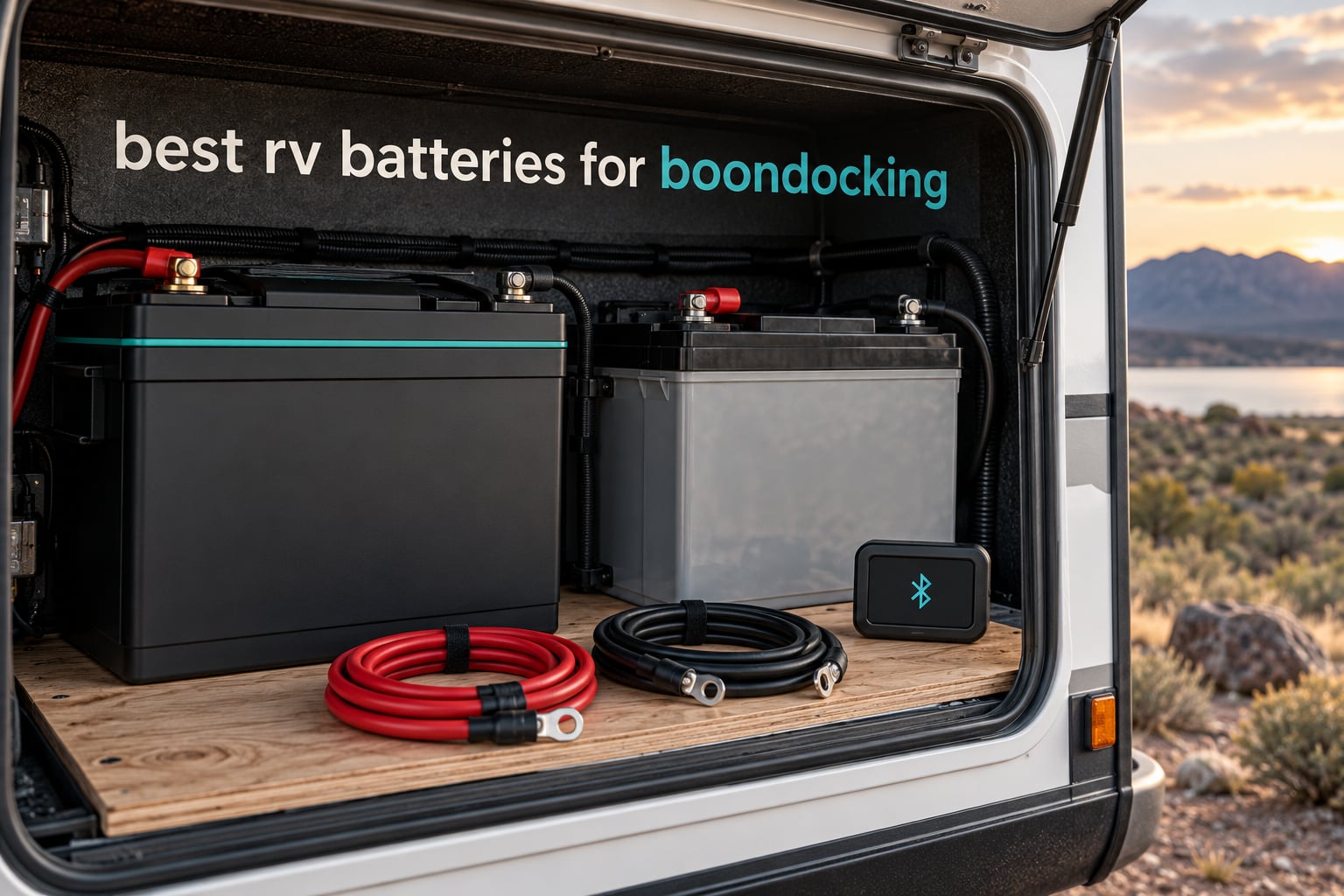
LiFePO4 is the best battery chemistry for RV boondocking, because it gives you roughly 80 to 90 percent of its rated capacity as usable power, accepts charge faster, and weighs about half as much as the lead-acid bank it replaces. That single change is why most owners who convert never go back. After reading through the owner reports on iRV2, the Thor Forums house battery thread, and r/RVLiving, and sorting twelve current RV house batteries by capacity, weight, cycle life, cold-weather charging, and warranty, these are the best RV batteries for boondocking in 2026.
Boondocking means running your RV entirely on stored battery power, so usable capacity and recharge rate decide how long you stay out. A bank that is big on paper but shallow in real use leaves you running the generator every second afternoon. The right bank lets you camp three nights or three weeks, and it changes how much solar you need on the roof and how much weight sits behind your hitch ball.
A note before we get into the picks. The same owner communities that recommend lithium keep circling back to two questions that ranking pages usually skip: will my converter charger cook the battery, and will the new battery physically fit where the old ones sat. We answer both in the buying guide, along with the bank sizing math and the alternator question. If you are coming from a film or photo background and just need portable power for gear rather than for the RV, our guides to V-Mount batteries for filmmakers and camera batteries for Canon bodies cover that side. For house power on wheels, keep reading.
Table of Contents
- Top 3 Best RV Battery Picks for Boondocking in 2026
- Best RV Batteries for Boondocking at a Glance in October
- 1. Renogy 12V 100Ah Deep Cycle AGM – the most proven pick in the group
- 2. LiTime 12V 100Ah Group 27 LiFePO4 – built for RV compartments specifically
- 3. ECO-WORTHY EnergyRock 12V 280Ah Metal Case – the most capacity per bay
- 4. HumsiENK 12V 300Ah Mini LiFePO4 – the best value in the large-format tier
- 5. Rvpozwer 12V 300Ah LiFePO4 – the widest temperature window
- 6. SUPER EMPOWER 12V 100Ah Group 24 LiFePO4 – the cheapest route to a true Group 24 drop-in
- 7. power queen 12V 100Ah Group 24 LiFePO4 – the lightest drop-in with a long track record
- 8. ECO-WORTHY 12V 314Ah LiFePO4 – the best on-battery SOC display
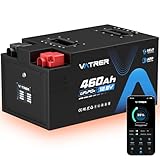
- 9. VATRER POWER 12.8V 460Ah Self-Heating LiFePO4 – the winter boondocking answer
- 10. LiTime 12V 200Ah Mini LiFePO4 – the strongest compact option
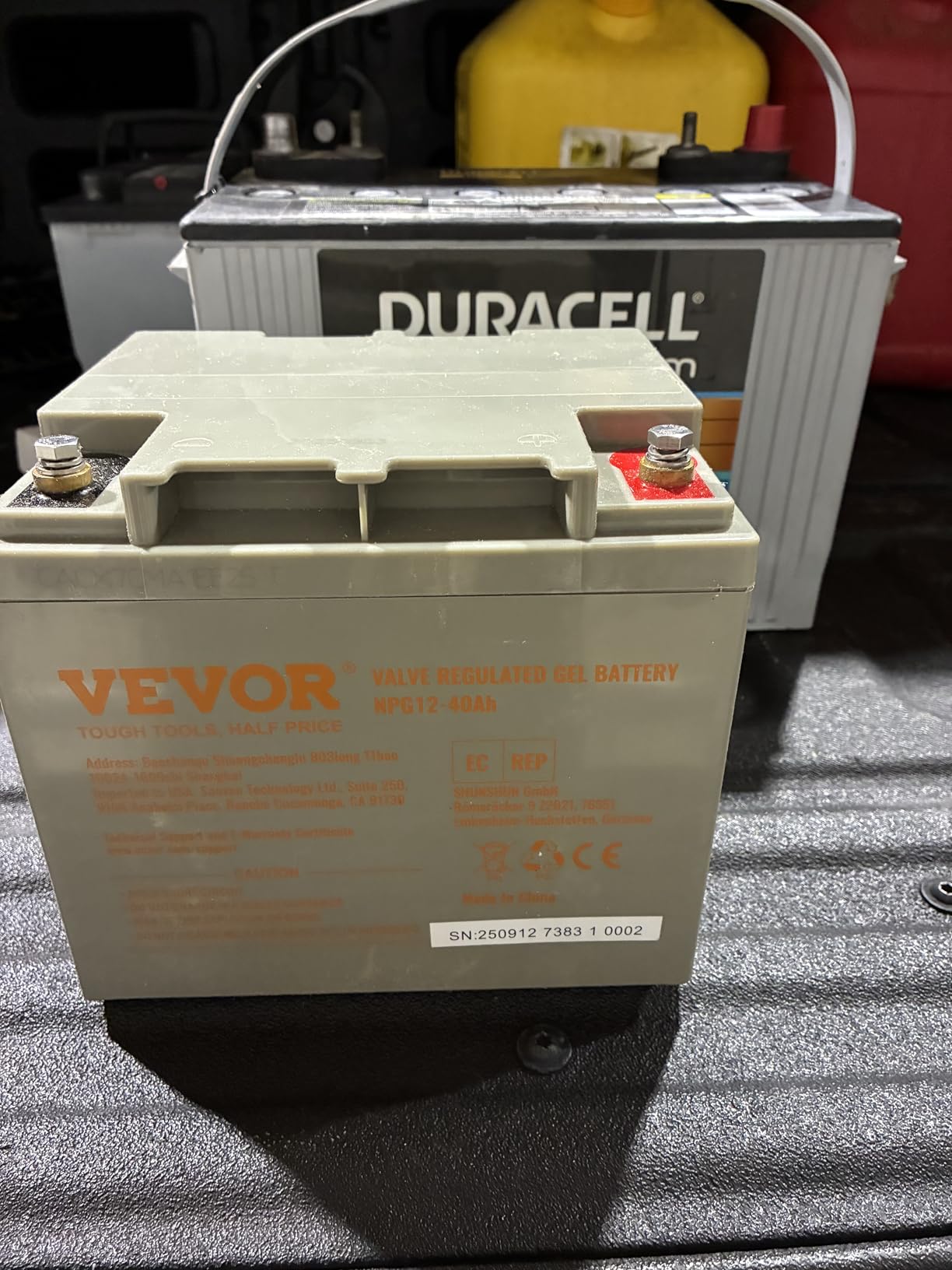
- 11. VEVOR 12V 100Ah AGM Deep Cycle – the budget AGM fallback
- 12. VEMDIA 12V 100Ah Group 31 LiFePO4 – the lightest price-first lithium build
- How to Size Your Boondocking Battery Bank
- Converter and Charger Compatibility Checklist for Lithium
- Lithium vs AGM vs Flooded: What the Numbers Say
- Solar and Alternator Charging for Your Boondocking Bank
- Frequently Asked Questions
- Our Final Pick for Boondocking in 2026
Top 3 Best RV Battery Picks for Boondocking in 2026

Renogy 12V 100Ah Deep Cycle…
- 100Ah AGM
- 63.9 lb
- 1100A max discharge
- 2-year prorated warranty
Best RV Batteries for Boondocking at a Glance in October
| Product | Specs | Action |
|---|---|---|
| Renogy 12V 100Ah Deep Cycle AGM |
|
Check Latest Price |
 Litime 12V 100Ah Group 27 LiFePO4 Litime 12V 100Ah Group 27 LiFePO4 |
|
Check Latest Price |
 ECO-WORTHY EnergyRock 12V 280Ah Metal Case ECO-WORTHY EnergyRock 12V 280Ah Metal Case |
|
Check Latest Price |
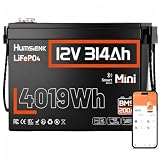 HumsiENK 12V 300Ah (314Ah) Mini LiFePO4 HumsiENK 12V 300Ah (314Ah) Mini LiFePO4 |
|
Check Latest Price |
 Rvpozwer 12V 300Ah LiFePO4 3840Wh Rvpozwer 12V 300Ah LiFePO4 3840Wh |
|
Check Latest Price |
 SUPER EMPOWER 12V 100Ah Group 24 LiFePO4 SUPER EMPOWER 12V 100Ah Group 24 LiFePO4 |
|
Check Latest Price |
 power queen 12V 100Ah Group 24 LiFePO4 power queen 12V 100Ah Group 24 LiFePO4 |
|
Check Latest Price |
 ECO-WORTHY 12V 314Ah LiFePO4 with SOC LEDs ECO-WORTHY 12V 314Ah LiFePO4 with SOC LEDs |
|
Check Latest Price |
| VATRER POWER 12.8V 460Ah Self-Heating LiFePO4 |
|
Check Latest Price |
 Litime 12V 200Ah Mini LiFePO4 Litime 12V 200Ah Mini LiFePO4 |
|
Check Latest Price |
 VEVOR 12V 100Ah AGM Deep Cycle VEVOR 12V 100Ah AGM Deep Cycle |
|
Check Latest Price |
 VEMDIA 12V 100Ah Group 31 LiFePO4 VEMDIA 12V 100Ah Group 31 LiFePO4 |
|
Check Latest Price |
1. Renogy 12V 100Ah Deep Cycle AGM – the most proven pick in the group
Renogy 12 Volt 100Ah Deep Cycle AGM Battery, Lead Acid Solar Battery
100Ah sealed AGM
63.9 lb
1100A max discharge
-4 to 140F range
2-year warranty
Pros
- Over 230000 sold in six years with a large review base
- Rated from -4 to 140F for real four-season use
- 1100A max discharge covers inverter loads
- Low self-discharge below 3 percent monthly at 77F
- Series unlimited and parallel up to 4P
Cons
- 63.9 lb needs a two-person lift
- 2-year prorated warranty is the shortest here
- Some reports of units not holding charge after storage
If you want one battery that does not need a lecture before you install it, this is the one. The Renogy 12V 100Ah AGM has been on shelves long enough that there is a deep body of owner data behind it, and its technical support is repeatedly singled out as responsive on the iRV2 lithium thread. For an RV that spends most nights plugged in and boondocks on weekends, it simply works.
I keep coming back to the 1100A maximum discharge figure. That number matters if you plan to run an inverter for a coffee maker or a CPAP machine with a humidifier, because starter-class lead-acid banks bog down under inverter surge. Renogy states the same battery supports unlimited series and up to four in parallel, so building a larger bank later is straightforward.
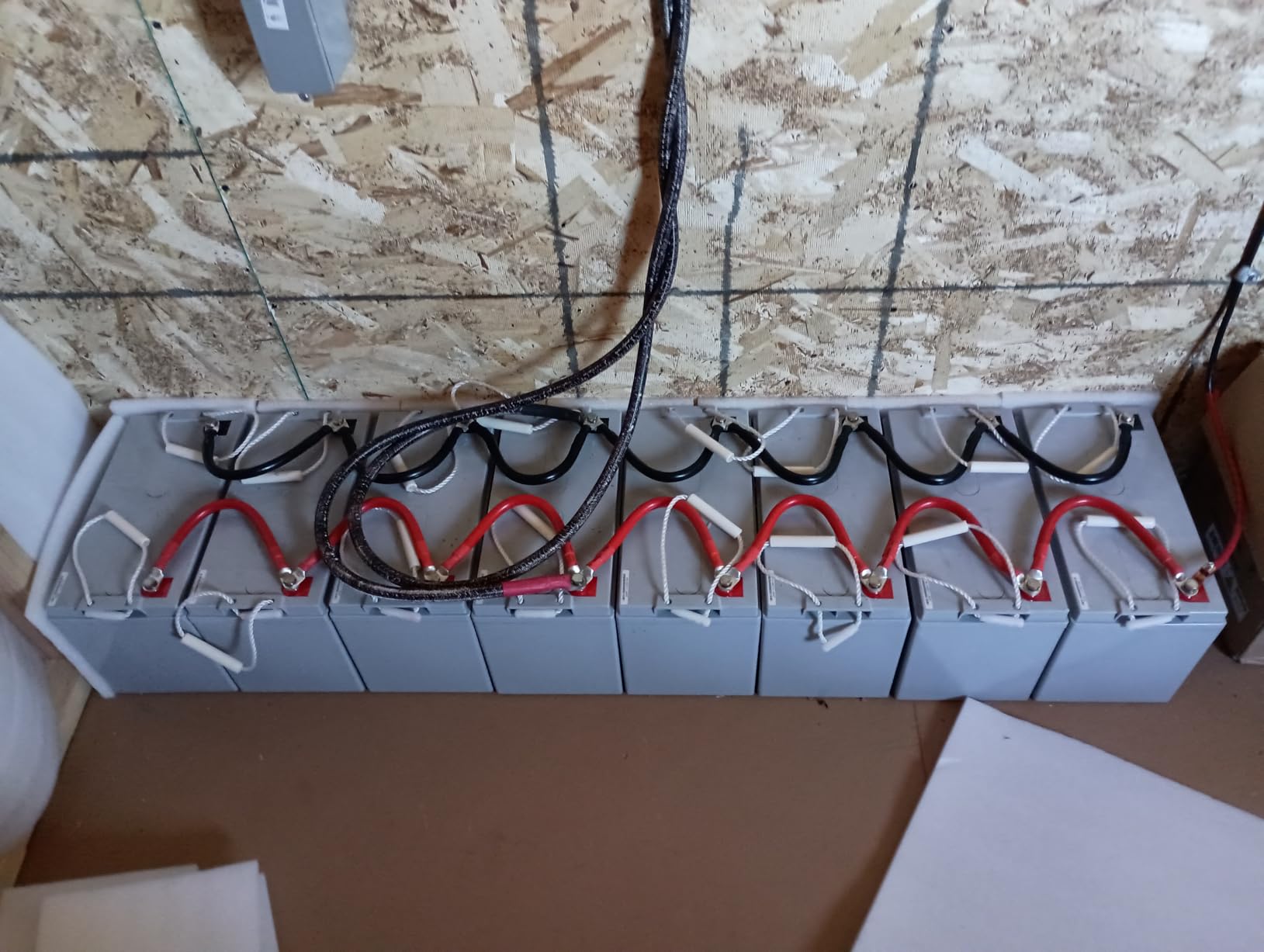
On the technical side, the sealed AGM design needs no water, no venting, and no maintenance schedule, and the self-discharge rate stays below 3 percent a month at 77F, which matters for storage between trips. The listed operating range of -4F to 140F is genuinely useful in the Rockies and the high desert. Dimensions are 13.1 by 6.9 by 8.6 inches, and the model number is RNG-BATT-AGM12-100-US.
The honest limitation is depth of discharge. A 100Ah AGM is really a 50Ah battery in practice, and that is the number to design around. Weight is the other one at 63.9 lb, which is nearly three lithium batteries on the list, so tongue weight and lifting come into the decision.
Who this battery suits
This suits owners who want a known quantity, who are not ready to chase converter compatibility, and who run a modest load. A 12V compressor fridge, LED lighting, a water pump, and phone charging are all comfortably within its envelope for a weekend or two. It also suits anyone replacing a failed flooded or AGM bank in a Group 27 style tray who wants the same footprint back.
It is also the sensible choice for cold storage use. The wide temperature rating and low self-discharge make it a fine maintainer battery for an RV that sits between trips, and Renogy is one of the brands owners repeatedly praise for technical support answers rather than canned replies.
Where it falls short
It loses on long boondocking stretches. Deep cycling to 50 percent repeatedly is where AGM chemistry runs out of life, and the 2-year prorated warranty is the shortest in this group. The three lithium batteries at 100Ah that follow it deliver more usable amp hours in a quarter of the weight.
It also loses if you plan to run heavy 120V loads through an inverter for hours at a time, or if you want to add batteries later without worrying about charge acceptance. Charging an AGM bank back up from deep is slow, and that is time your solar or your alternator could have spent elsewhere.
2. LiTime 12V 100Ah Group 27 LiFePO4 – built for RV compartments specifically
Litime 12V 100Ah LiFePO4 Battery, Group 27 Lithium Battery for RV, Marine
100Ah LiFePO4
22.9 lb
Bluetooth 5.0 app
4000+ cycles
5-year warranty
Pros
- Group 27 form factor aimed at specific RV models
- Bluetooth 5.0 shows state of charge in the LiTime app
- 22.9 lb is 41 lb lighter than an AGM of the same rating
- 4000+ cycles at full depth of discharge
- Expandable to 16 batteries for very large systems
Cons
- Not suitable for starting batteries
- golf carts
- or jacks
- Bluetooth needs a lithium-activation or MPPT charger on first setup
- Higher upfront cost than AGM alternatives
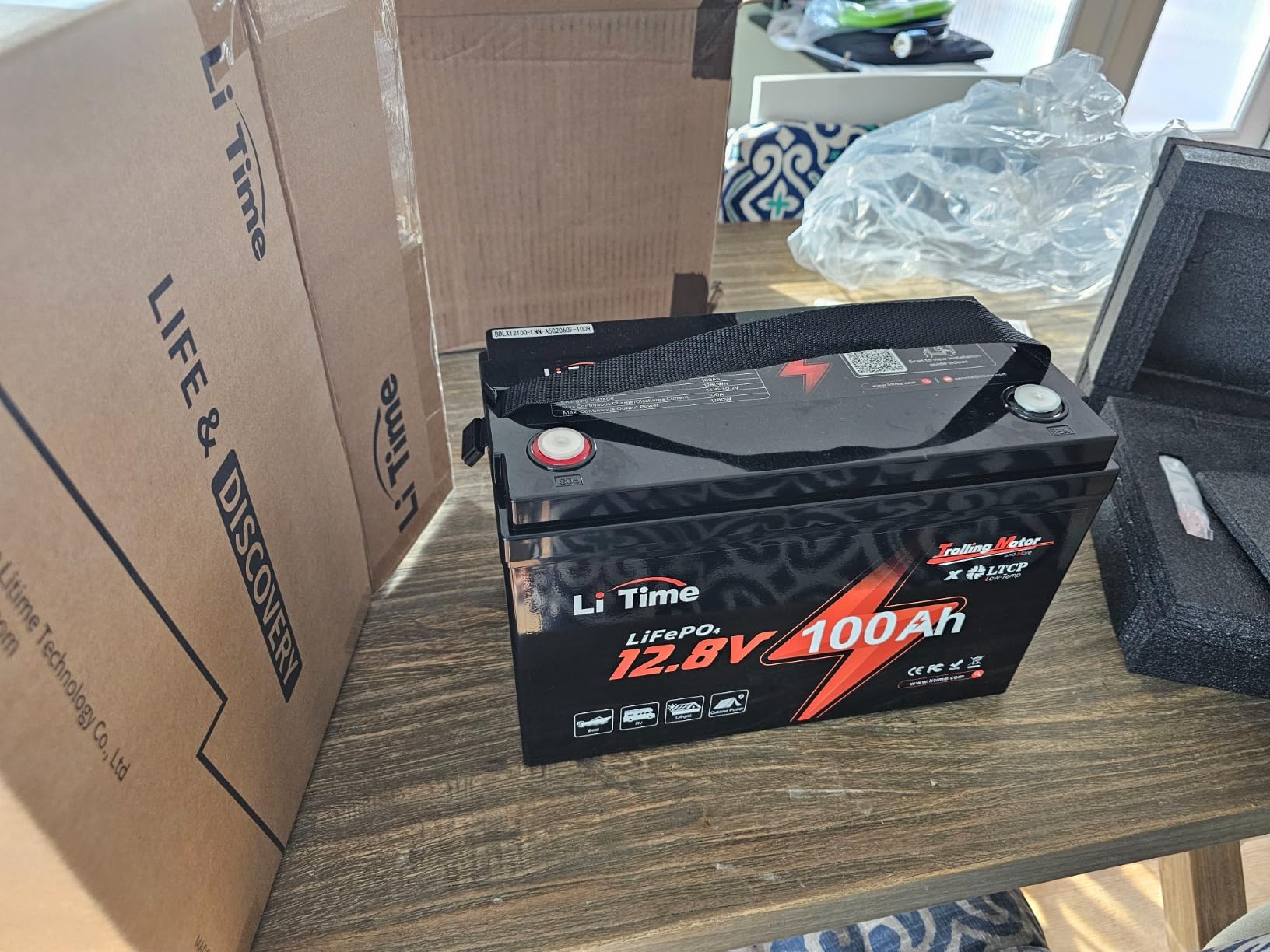
This is the battery owners recommend when the question is whether lithium will physically fit. The listing calls out Group 27 compatibility for specific RV models including the Brinkley Z 2900, Four Winds 22E, and Forest River Forester, and the dimensions at 13.11 by 6.97 by 8.5 inches match a standard Group 27 tray. Owners on iRV2 mention LiTime among the names that come up repeatedly when people ask for reliable lithium.
The Bluetooth 5.0 module through the LiTime app is the part I like most, and it lines up with a broader pattern in the owner reports. Multiple owners on the iRV2 thread say the app plus an on-battery display makes a separate shunt redundant, and that is the same argument here. You get state of charge, current, and voltage without buying a second gauge.
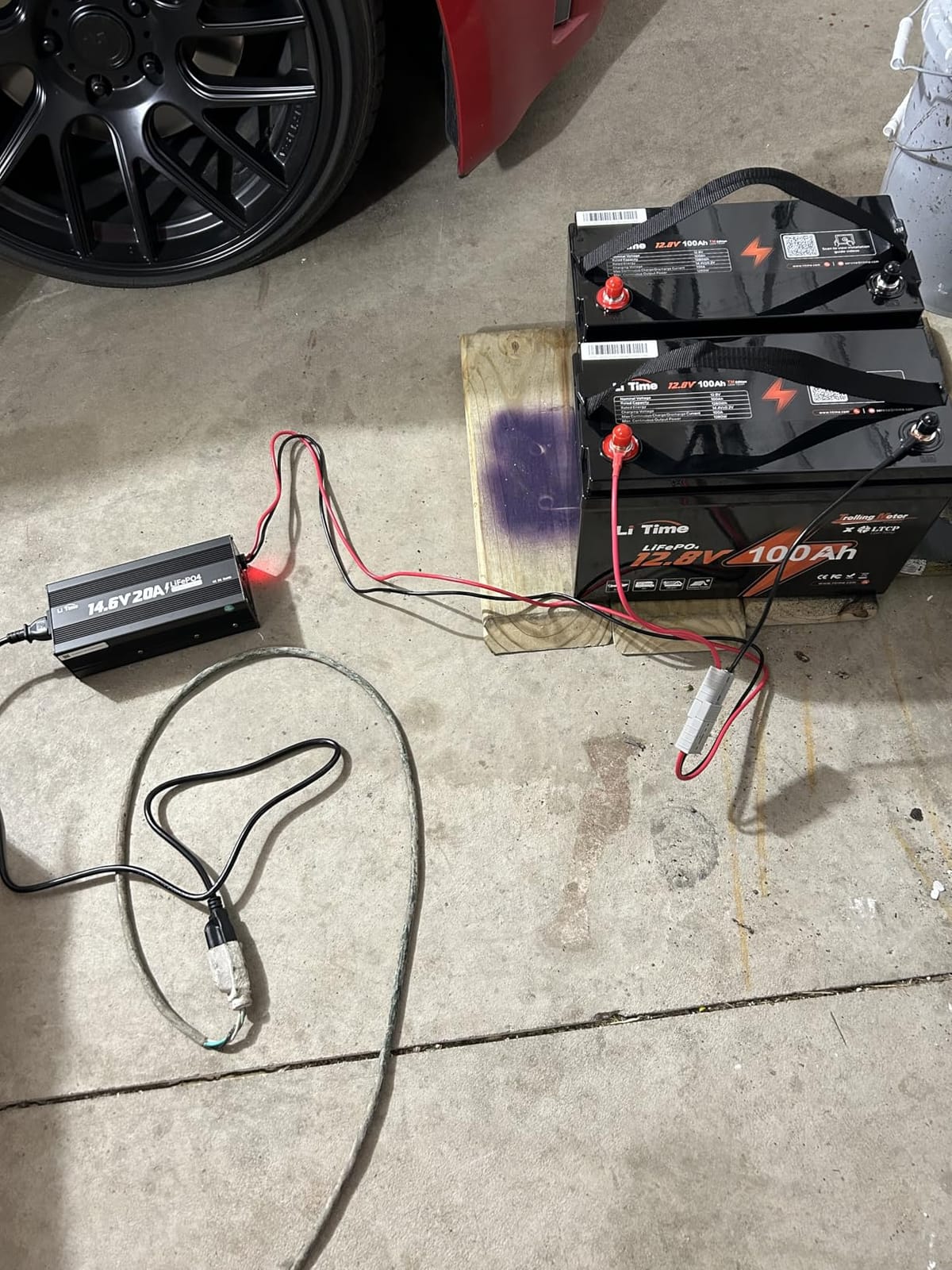
Technically it is a 12.8V pack with 20 or more BMS protections including a low-temperature cut-off, rated 4000+ cycles at 100% depth of discharge, and expandable to 16 batteries, which the manufacturer puts at 20.48kWh. The cell chemistry is lithium ion and the warranty is 5 years, with AIG product liability coverage attached.
Watch one setup detail. The battery needs a lithium-activation or MPPT charger to bring the Bluetooth online on first use, and standard lead-acid chargers will not do it. Plan that into the install rather than treating it as a surprise. It is also energy storage only, never a starting battery.
Who this battery suits
It suits owners of the specific RV models named in the listing who want a drop-in lithium swap with no cutting, no tray fabrication, and no adapter. At 22.9 lb a single person can install it, which is a real advantage over a 60-plus pound unit in a tight compartment under a slide.
It also suits anyone who likes data. Real-time Bluetooth monitoring removes the guesswork that leads to the most common battery complaints on forums, where people worry about parasitic draw because nothing tells them what the current actually is overnight.
Where it falls short
A single 100Ah unit gives roughly 80 to 90Ah of usable power, which is a weekend of moderate use rather than a week of full-time boondocking. If you want multi-day autonomy you will be adding a second identical battery, and the case for that is stronger when you start with a larger unit.
The dependency on a lithium-profile charger is also worth flagging for older RVs. If your converter charger is a fixed-output lead-acid type, this battery will charge slowly or not at all until you address that, which is covered in the checklist below.
3. ECO-WORTHY EnergyRock 12V 280Ah Metal Case – the most capacity per bay
ECO-WORTHY EnergyRock 12V 280Ah Metal Case LiFePO4 Lithium Battery
280Ah LiFePO4
3584Wh max
68.5 lb
200A BMS
Front terminals
Pros
- Metal case resists heat and fire better than plastic cases
- Built-in on/off safety switch makes install and service safer
- Front terminals keep the battery bay layout tidy
- Bluetooth monitoring with low-temp cut-off at 20F
- 200A BMS with multiple protections and Grade A cells
Cons
- 68.5 lb requires careful handling and two people
- ABS and metal case versions exist and can be confused at order time
- Often arrives across multiple packages
This is the unit that replaces four Group 31s. At 280Ah and 3584Wh in a single case, it is the cleanest way to take a Class A or a heavy fifth wheel from weekend autonomy to several nights of comfort without stacking four batteries in a compartment that was never sized for them.
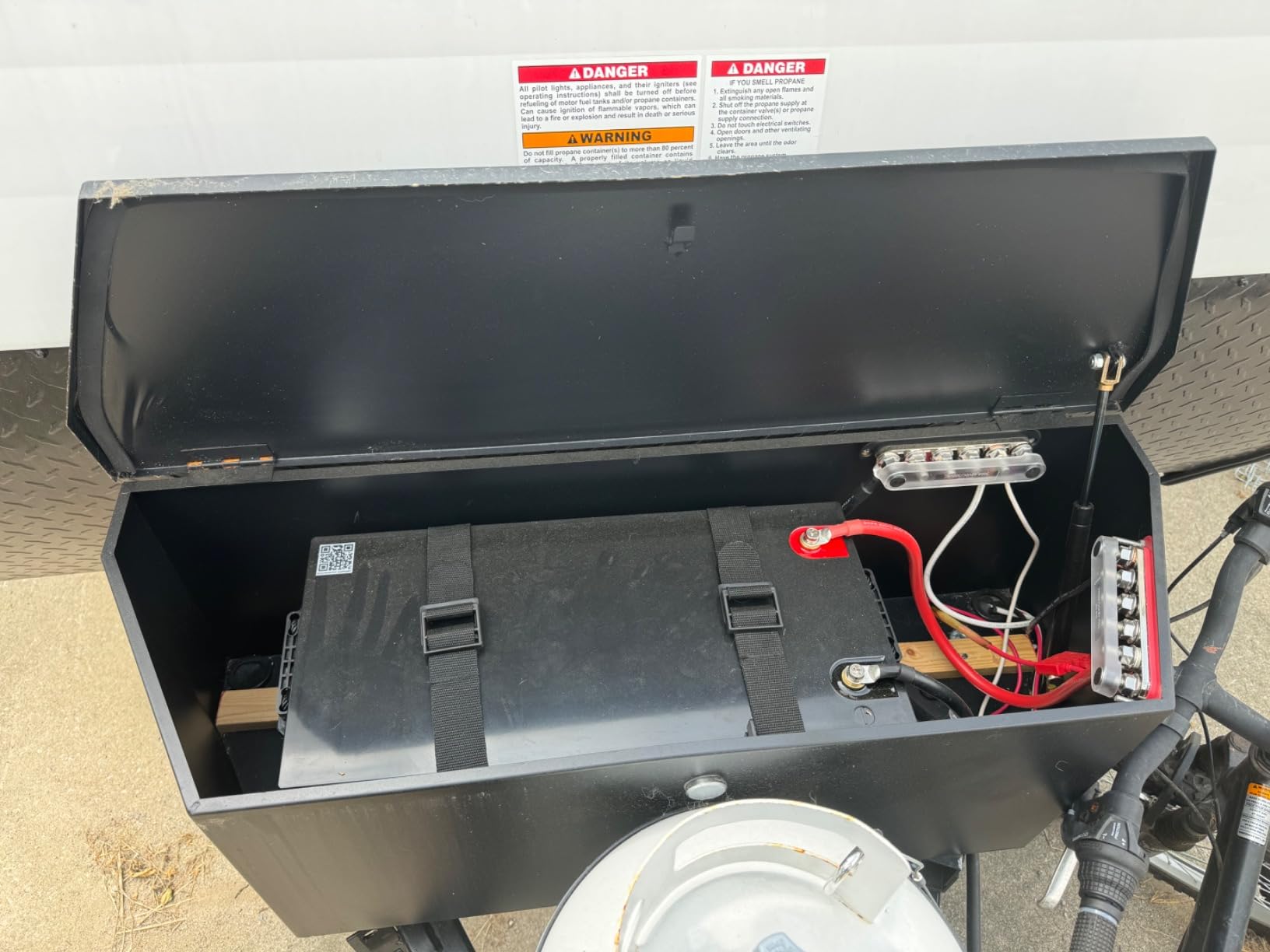
The metal case is the differentiator worth paying attention to. It resists heat and shock better than an ABS shell, and the built-in safety switch lets you disconnect the discharge circuit before you ever put a wrench on a terminal. Owners mention the safety switch and the front terminal layout as the two features that made installation painless.
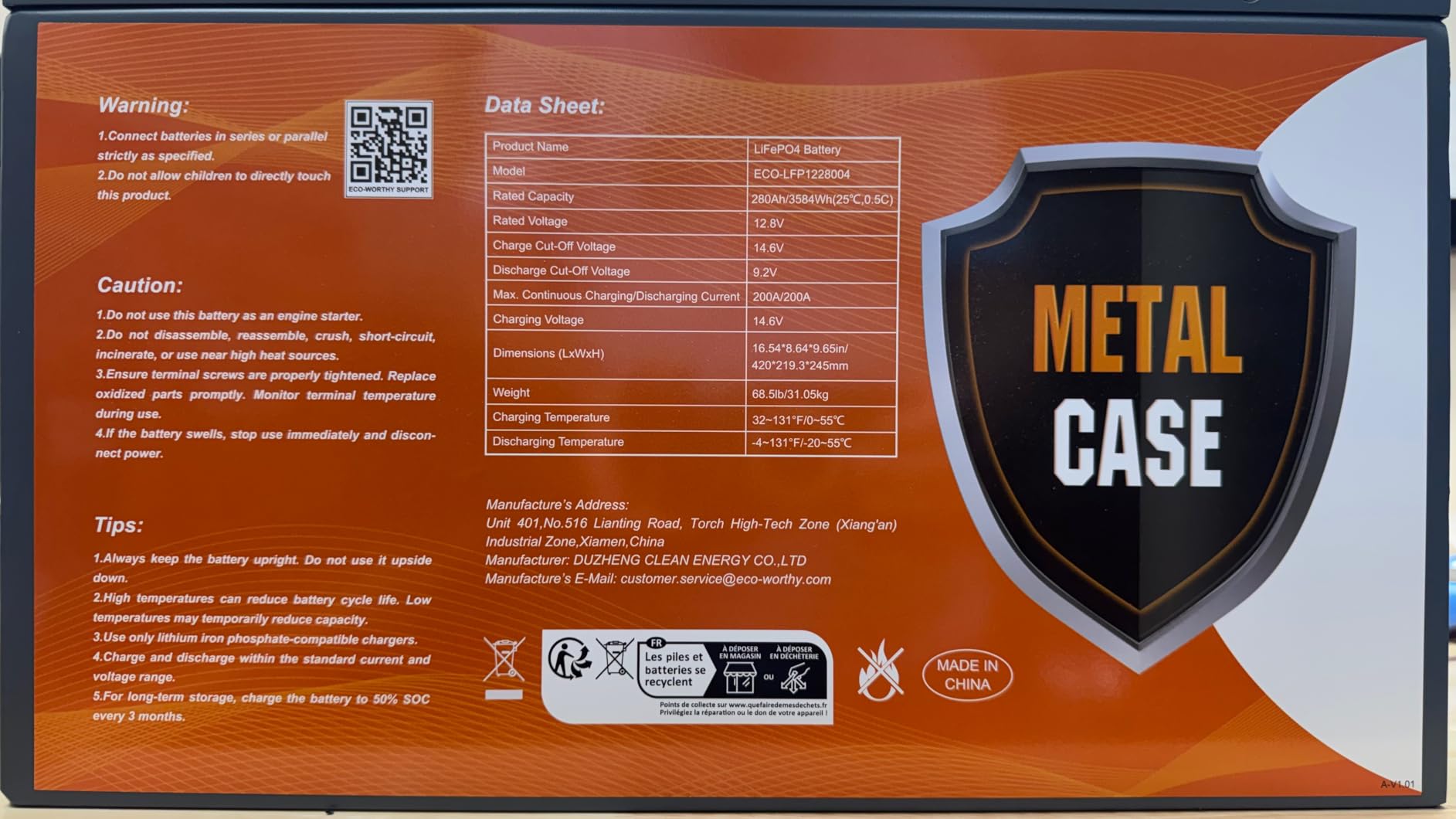
It carries a 200A BMS with multiple protections, Grade A LiFePO4 cells, Bluetooth monitoring, and low-temperature protection that cuts charging at 20F. No battery box is required, which saves a surprising amount of space in a tight bay, and the manufacturer part number is L13080202162-1.
One ordering warning from the owner reports. There are ABS case and metal case versions of this battery, and mixing them up is the most common source of confusion in reviews. Confirm the listing is the metal case before you commit, and be ready for the battery to arrive across more than one package, which is normal for a unit this size.
Who this battery suits
It suits Class A and Class C owners and anyone whose old bank was a stack of four Group 31s. The comparison that comes up repeatedly on the Thor Forums house battery thread is instructive: moving from 650Ah of lead-acid, which is only about 325Ah usable, to a pair of 280Ah ECO-WORTHY units roughly doubled usable power in the same bay.
It also suits owners who run a residential fridge or a 120V coffee maker through an inverter, because 3584Wh of stored energy covers what a weekend of furnace fan and lighting draw would take. The 200A BMS also means the bank can absorb meaningful solar current without being the limiting factor.
Where it falls short
At 68.5 lb this is not a one-person lift, and at 16.54 by 8.64 by 9.65 inches it is a different shape than the batteries it replaces. Measure the compartment before ordering, because a bay that held two Group 31s will not necessarily take a 280Ah case with the clearance a strap and lid need.
The low-temperature cut-off at 20F also means winter charging needs attention. Without a heated battery or a battery that will warm itself, cold morning charging simply pauses until the pack is above that threshold.
4. HumsiENK 12V 300Ah Mini LiFePO4 – the best value in the large-format tier
HumsiENK 12V 300Ah (314Ah) LiFePO4 Lithium Battery 4019Wh, APP Monitoring
314Ah actual, 4.19kWh
59.5 lb
200A BMS
Bluetooth 5.0
5-year warranty
Pros
- 314Ah of measured capacity in a compact case
- Full-aluminum internal frame removes swelling concerns
- Bluetooth app reports real-time cell data
- 200A BMS with low-temp and high-temp cut-offs
- UL62133 safety tested
Cons
- Some reports of units not holding charge after a few months
- App connectivity issues reported by part of the user base
- 59.5 lb still needs proper lifting technique
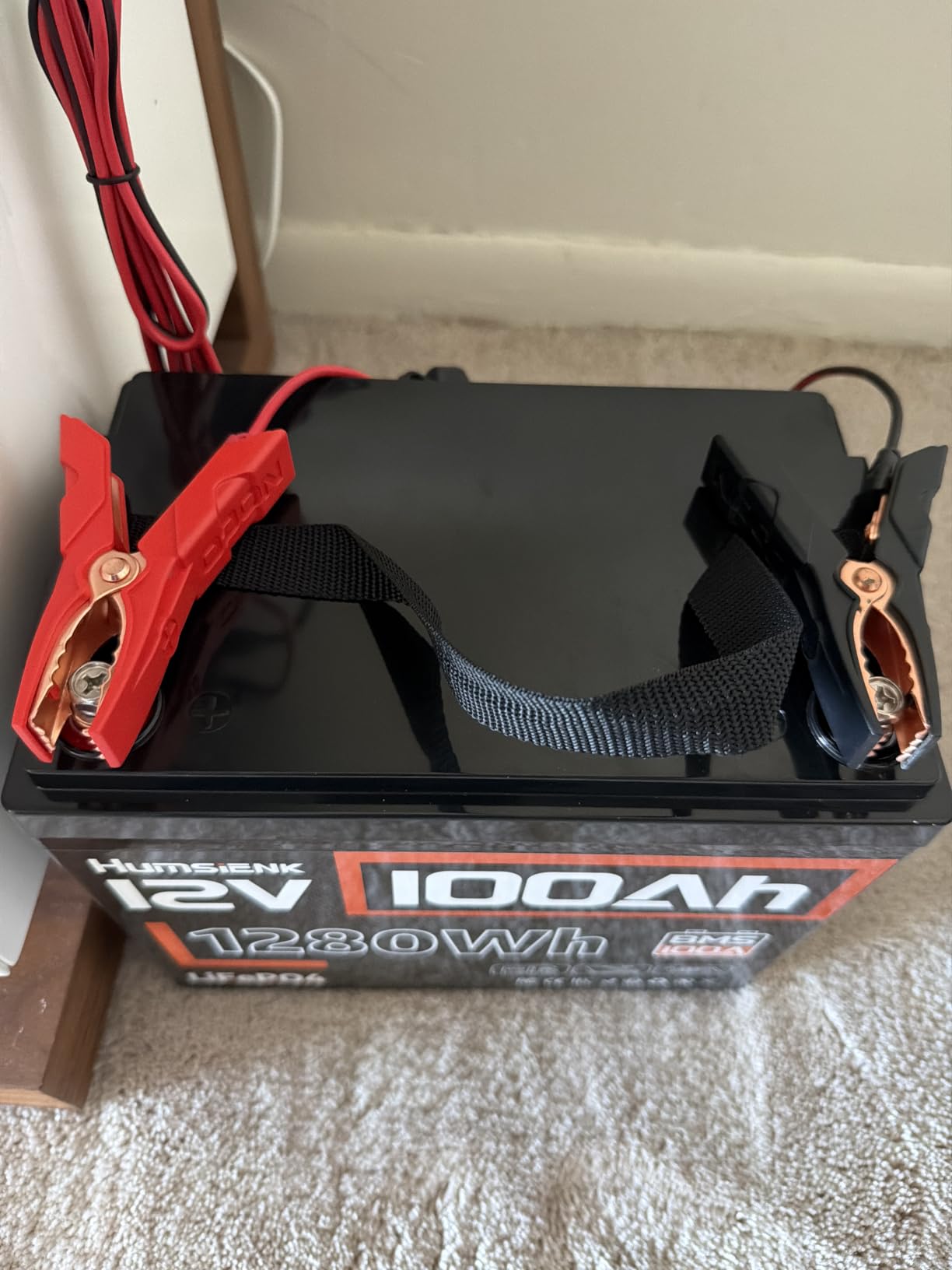
Where the ECO-WORTHY 280Ah is the safe pick, this is the pick for owners who want maximum capacity in minimum space. The measured capacity is 314Ah at 4.19kWh, which the manufacturer notes exceeds three 100Ah batteries in parallel, and it does that in a 15.1 by 7.6 by 9.7 inch footprint at 59.5 lb.
The full-aluminum internal frame is the feature I would point a cautious buyer at. Lithium swelling is the most common long-horizon complaint people raise on the lithium threads, and a rigid internal frame is the structural answer to it. Buyers looking for outside testing coverage also get UL62133 certification on the case.
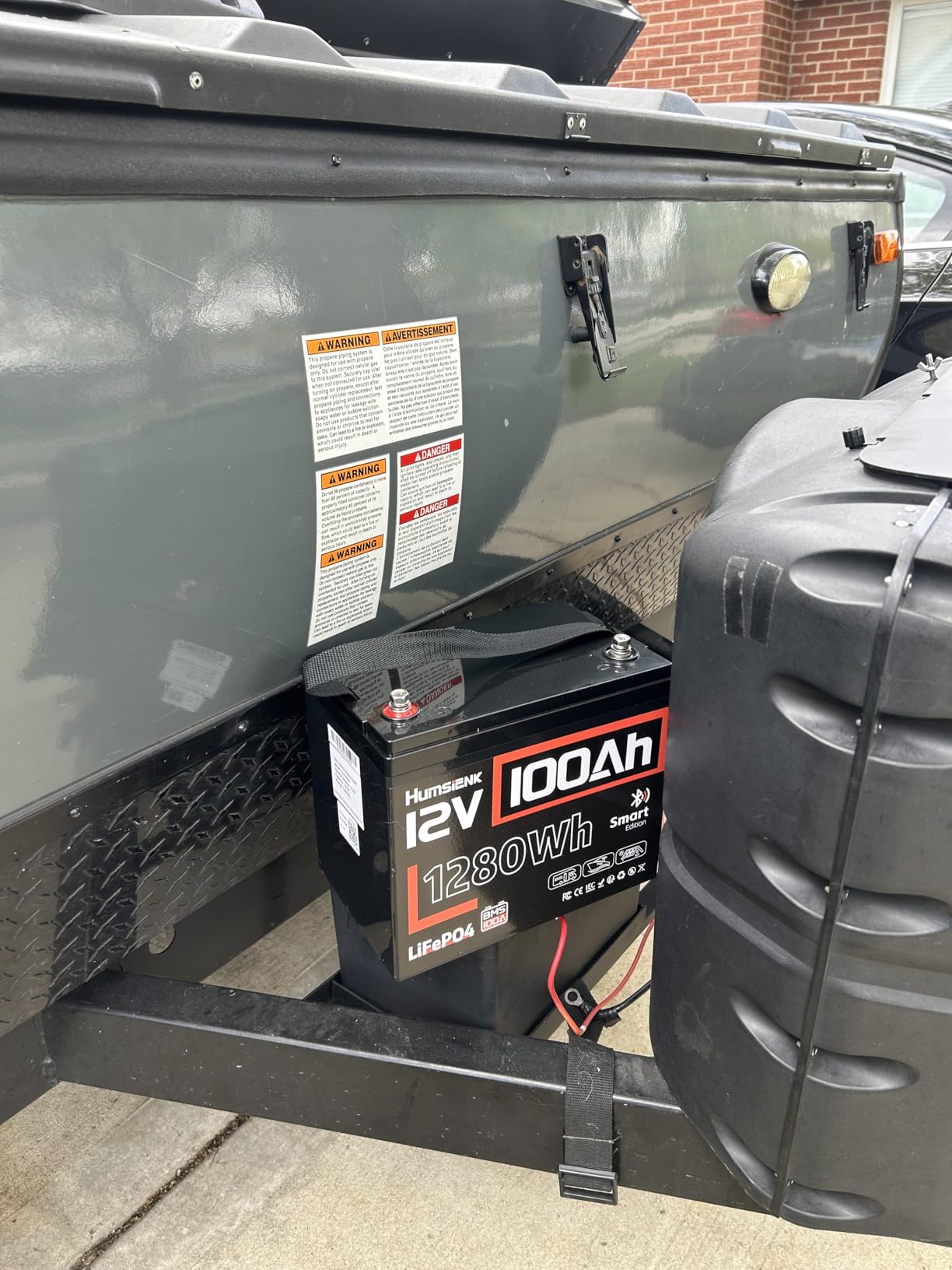
The 200A BMS carries both a low-temperature and a high-temperature cut-off, and Bluetooth 5.0 runs to about 15 meters through the HumsiENK app on iOS and Android. It expands to 4S4P for 51.2V and 1256Ah, and the listing states it is 40 percent lighter than lead-acid with a 50 percent space reduction.
What I would not gloss over is the split in the review history. The clear majority of owners report excellent performance for RV, solar, and DIY power station builds, and one measured real-world capacity at about 4150Wh. A smaller group reports units that stopped holding charge after a few months, plus intermittent app connectivity problems, so budget for the possibility of an early replacement.
Who this battery suits
It suits full-time boondockers and anyone planning to add solar later. At 4.19kWh per battery, a pair gives roughly 6.6kWh of usable energy, which is enough to run a compressor fridge, lighting, water pump, and vent fans for several days without a generator, and enough headroom to add an inverter for occasional 120V use.
It also suits owners with a tight bay who need capacity that a Group 24 footprint cannot deliver. The mini dimensions are the reason this unit exists, and they matter in the under-bed or mid-ship compartments found on Class B vans and small fifth wheels.
Where it falls short
The warranty is 5 years, which is good, but it is not the 10-year coverage on the flagship large-format lithium, and that is worth weighing if you keep an RV for a decade. Check the seller’s response time as well, since some buyers mention slower replies during holiday periods.
The high-temperature cut-off at 158F is another thing to respect. A battery bay in direct desert sun can climb well past the point where charging should pause, so ventilation around the case is worth planning during the install.
5. Rvpozwer 12V 300Ah LiFePO4 – the widest temperature window
Rvpozwer 12V 300Ah LiFePO4 Battery, 3840Wh Lithium Battery with 200A BMS
300Ah LiFePO4, 3840Wh
56.3 lb
200A Smart BMS
-20C to 65C
5-year warranty
Pros
- Operates from -20C to 65C
- the widest range in this group
- Grade A LiFePO4 cells with a 200A Smart BMS
- Connect four in series to 51.2V or parallel to 1200Ah
- Group 31 sizing suits many RV bays
- 5-year warranty with lifetime technical support
Cons
- 4.1 rating is the lowest here
- About 18 percent of reviews are 1 star
- Heavier than some compact 300Ah alternatives
- Long-term performance data is thinner than established brands
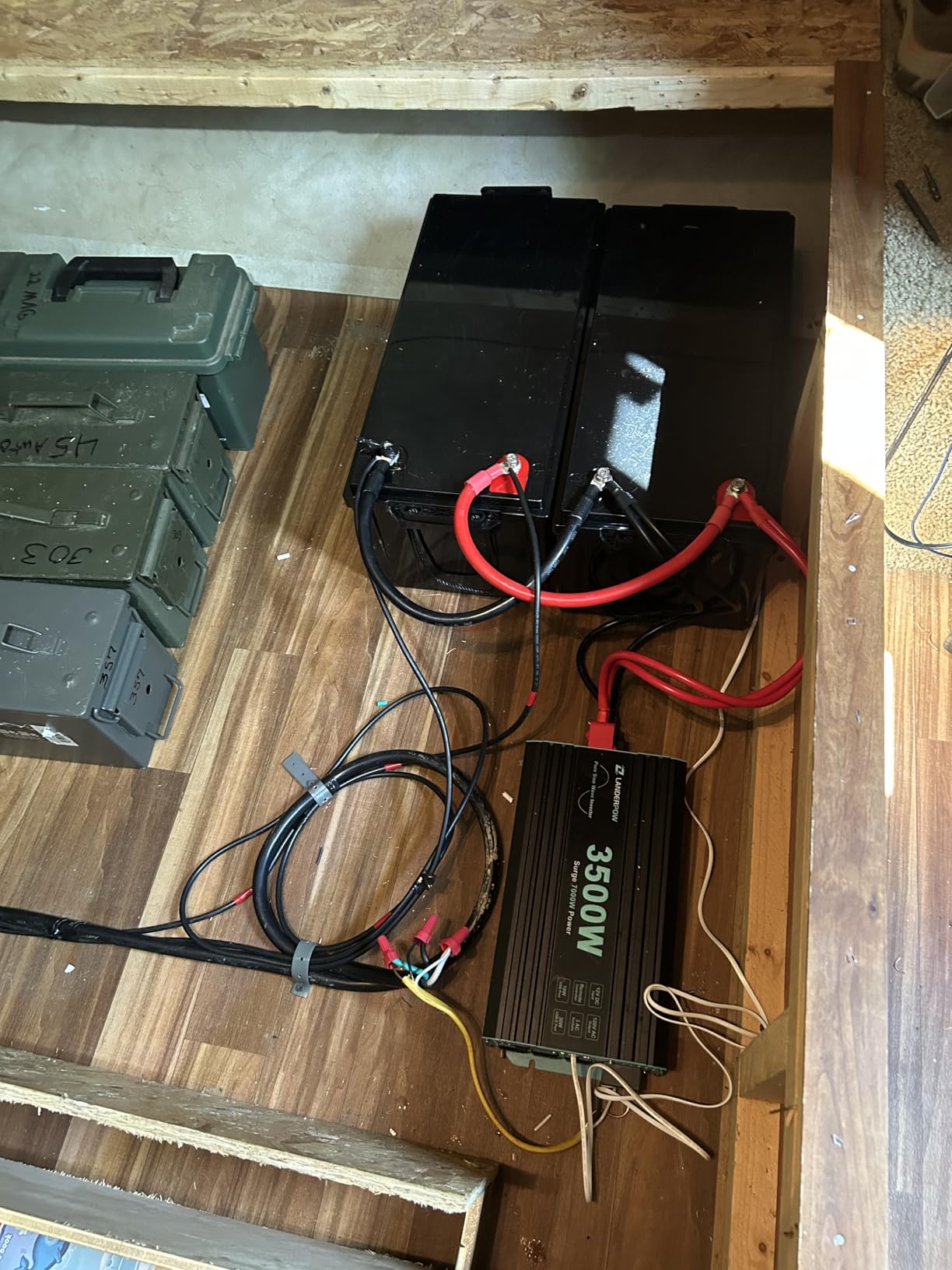
This one is interesting for cold and hot country. The listed operating range of -20C to 65C is the widest span in the group, which is -4F to 149F, and that is the number to look at if you camp in northern winters or desert summers where other packs simply stop accepting charge.
The cycle claims are the strongest on paper in this roundup. The listing states 4000 cycles at 100% depth of discharge, 6000 at 80%, and 15000 at 60%, over a stated 15-year lifespan, backed by a 5-year warranty and lifetime technical support. It also offers the longest spare-parts commitment in the group, with 15 years of European spare part availability listed.
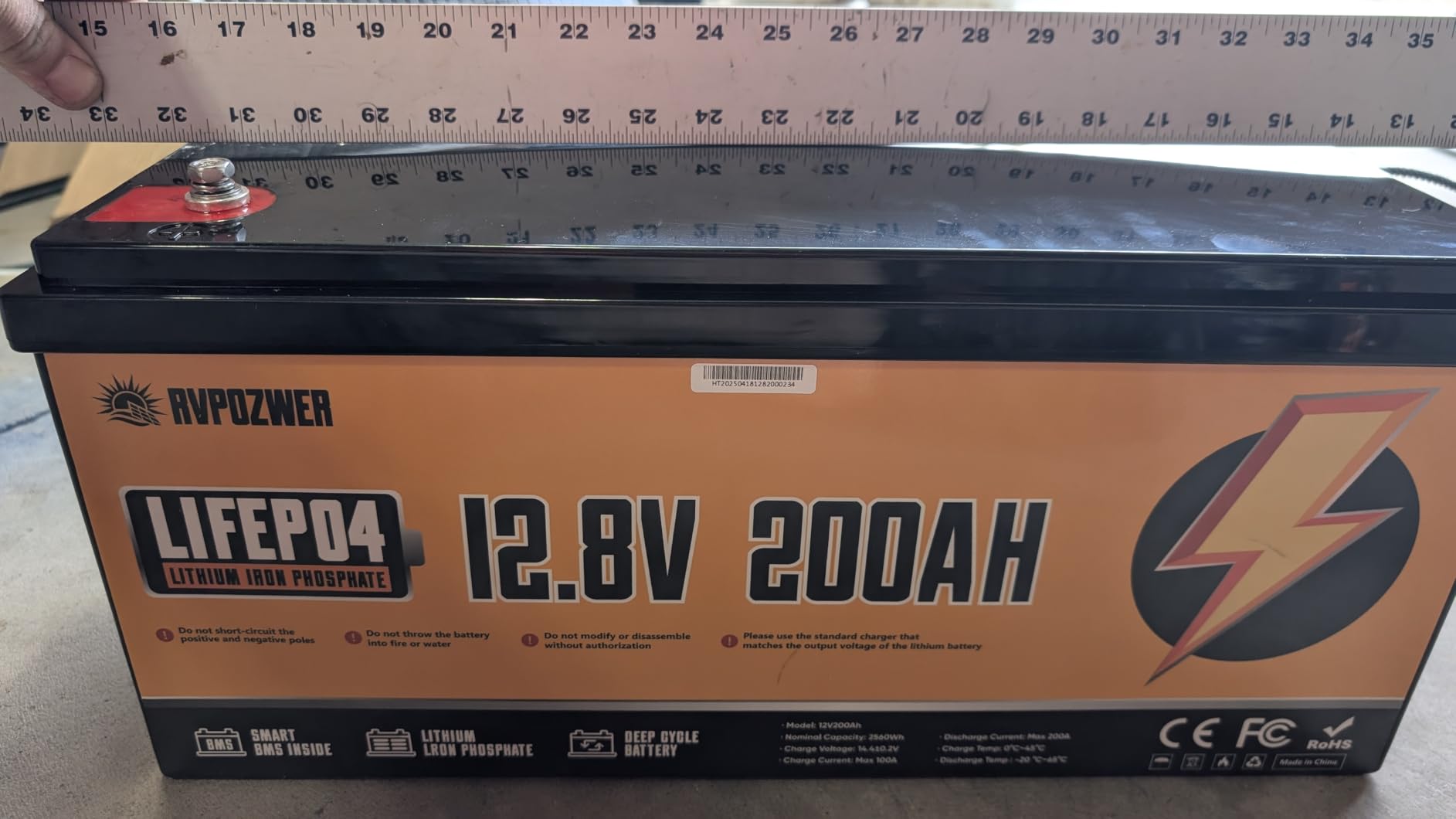
Physically it is a Group 31 footprint at 20.47 by 8.7 by 9.32 inches, weighing 25.54 kg, or 56.3 lb, and it includes an ergonomic nylon handle for transport. A 200A Smart BMS protects Grade A cells, and you can run four in series to 51.2V or parallel to 1200Ah for a whole-house build.
Here is the caution. This is the lowest-rated battery in the roundup at 4.1, and about 18 percent of its reviews are 1 star, which in practice means quality consistency varies more than most brands on this list. Owners with a longer track record tend to favor the brands with a decade of field history, and this is a newer name in the space.
Who this battery suits
It suits owners who genuinely face extreme temperature swings and who want the option of maximum usable capacity without paying for a heated flagship battery. A 3840Wh pack with 200A BMS headroom also suits a large solar array, because the controller is rarely what limits you at this capacity.
It also suits builders planning a bigger system later. Four in series to 51.2V or parallel to 1200Ah means the same unit scales from a weekend trailer to a full-time Class A, and the 15-year spare part availability listing is genuinely useful for someone who plans to keep the RV long.
Where it falls short
The 4.1 rating with an 18 percent 1-star share is the deciding factor for most people. A battery that fails at 18 months costs far more than the difference between this and a better-reviewed unit, especially once you count the shipping and the downtime.
At 56.3 lb it is also heavier than the compact 300Ah alternatives despite a similar capacity, and at 20.47 inches deep it is the longest unit here. Check that depth against your tray before committing, since a long case on top posts in a shallow bay is a common retrofit headache.
6. SUPER EMPOWER 12V 100Ah Group 24 LiFePO4 – the cheapest route to a true Group 24 drop-in
12V 100Ah LiFePO4 Battery, Group 24 Deep Cycle for RVs & Trolling Motors
100Ah LiFePO4, 1280Wh
21.6 lb
100A BMS
Low-temp cut-off
5-year warranty
Pros
- True Group 24 drop-in at 6.49 by 10.24 by 8.98 inches
- Lightest usable-capacity option at 21.6 lb
- Low-temp charging cut-off at 32F protects the cells
- 4S4P expandable to 20.48kWh
- 5-year warranty with round-the-clock technical support
Cons
- Not for engine starting or cranking
- Charging disabled below 32F
- Relatively new brand with limited long-term data
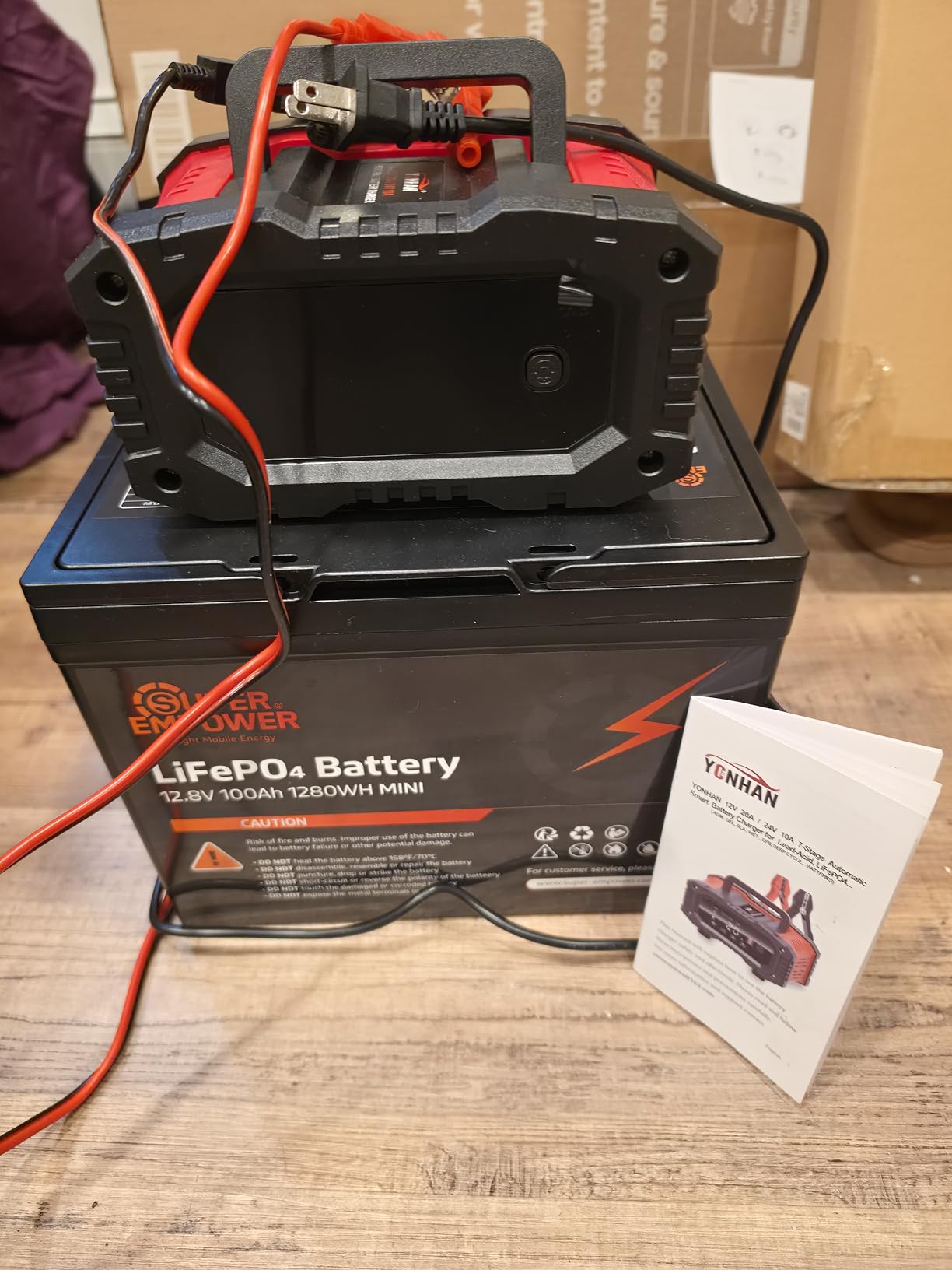
This is the practical entry point. It is a genuine Group 24 drop-in at 6.49 by 10.24 by 8.98 inches and 21.6 lb, so it fits the boxes that came with smaller RVs without adapters, and it stores 1280Wh of energy where a Group 24 AGM of the same size would hold roughly half that in usable terms.
For owners who want to test lithium on a small trailer or upgrade a single Group 24 without touching the tray, the fit story is the whole product. 21.6 lb means one person can lift it in, and the 100A BMS handles the loads a weekend of fridge, lighting, and pump use produces without drama.
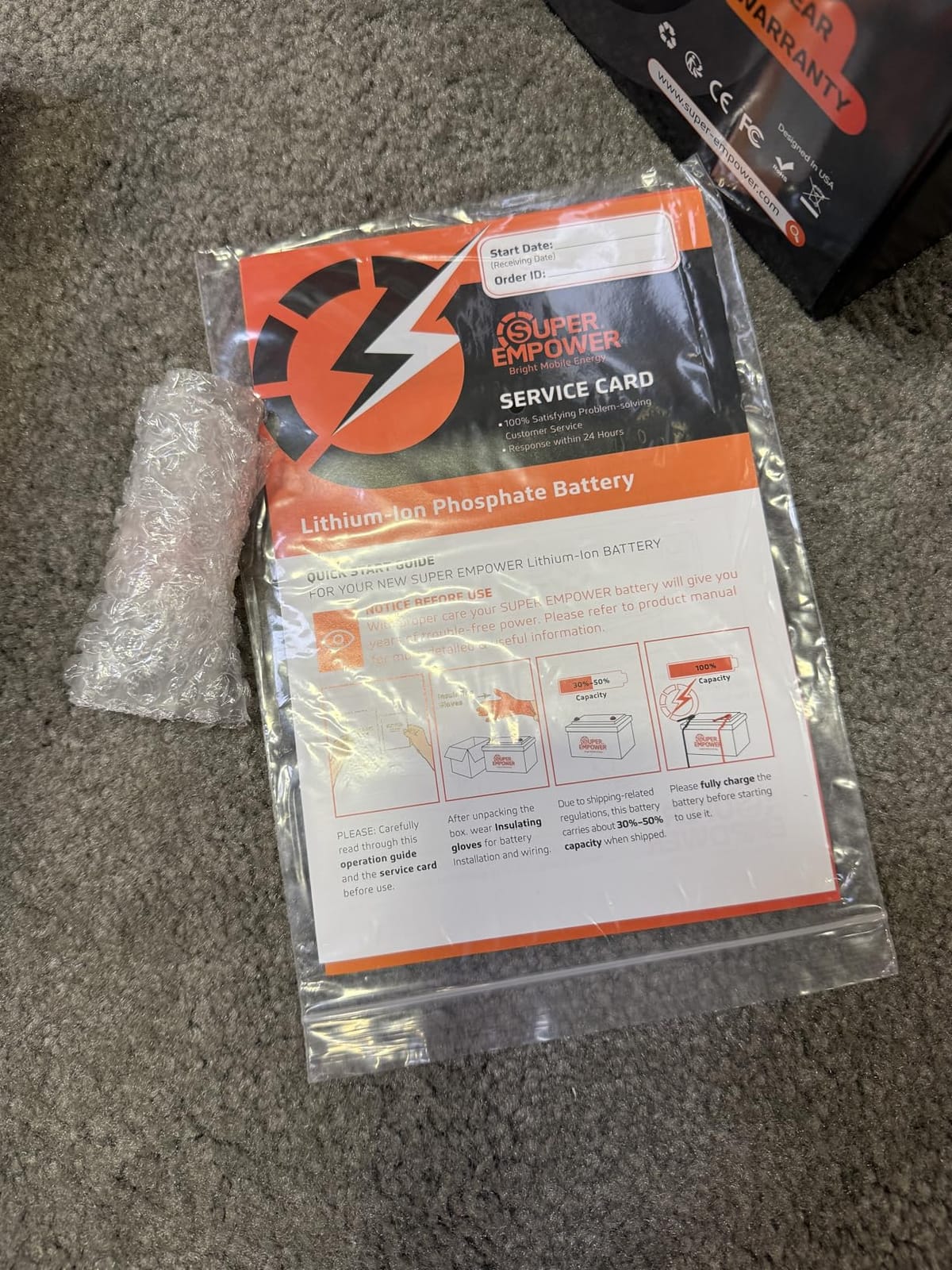
It supports three charging routes: a dedicated LiFePO4 charger, solar through an MPPT or PWM controller, or a generator through a DC-DC charger. It expands to 4S4P for 51.2V and 400Ah, which is 20.48kWh, so the single unit is a starting point rather than a ceiling.
The low-temperature behavior is the part to plan around. Charging pauses below 32F and discharge stops at -4F, which protects the cells but means a winter trip needs a charger that will wait for the pack to warm up, or a heated battery. Also note the charge voltage requirement of 14.4 to 14.6V; an older lead-acid profile will leave it chronically undercharged.
Who this battery suits
It suits first-time lithium buyers and owners of small RVs with a single Group 24 bay. A pair of these gives 200Ah of rated capacity in a space that would otherwise hold one 100Ah AGM, and the 4S4P expansion path means the trailer can grow into an off-grid setup over a few seasons.
It also suits anyone who wants a small bank for a 12V compressor fridge and phone charging without committing to a large format case. The 100A BMS and the low-temp protections cover the realistic weekend load without oversizing the install.
Where it falls short
Long-term data is thin because the brand is newer, and that is a real risk in a component you are burying under a floor for five years. A 5-year warranty helps, but the review base of 220 ratings is smaller than the established names in this roundup.
It is energy storage only, so it cannot serve as a starting battery, and the 32F charging cut-off means cold-climate owners should look at the self-heating option further down. Golf carts and leveling jacks are also outside its stated use.
7. power queen 12V 100Ah Group 24 LiFePO4 – the lightest drop-in with a long track record
power queen 12V 100Ah LiFePO4 Battery, Group 24 RV Lithium Battery
100Ah LiFePO4, 1280Wh
20 lb
True Group 24 fit
4000 cycles
5-year warranty
Pros
- Lightest in the roundup at 20 lb with carry handles
- True Group 24 fit needing no modifications
- 4000 cycles at 100% depth of discharge
- Users report multi-year flawless operation and fast warranty replacements
- Expandable to 16 units at 51.2V and 400Ah
Cons
- Not for engine starting
- Requires gaskets on bolts under 2mm to prevent loosening
- Higher cost than some budget 100Ah alternatives
The power queen is the one buyers on the owner boards talk about in terms of time rather than specs. Multiple owners report three-plus years of flawless operation, and several describe warranty replacements arriving quickly when something did go wrong. At 20 lb it is the lightest usable bank in this group, and the 10 by 6.6 by 8.3 inch footprint is a clean Group 24 fit.
For context on the capacity claim, one 100Ah Group 24 AGM holds roughly 500Wh of usable energy at 50 percent depth of discharge, while this pack holds 1280Wh. That is the comparison that decides the argument for most people converting a small bank.
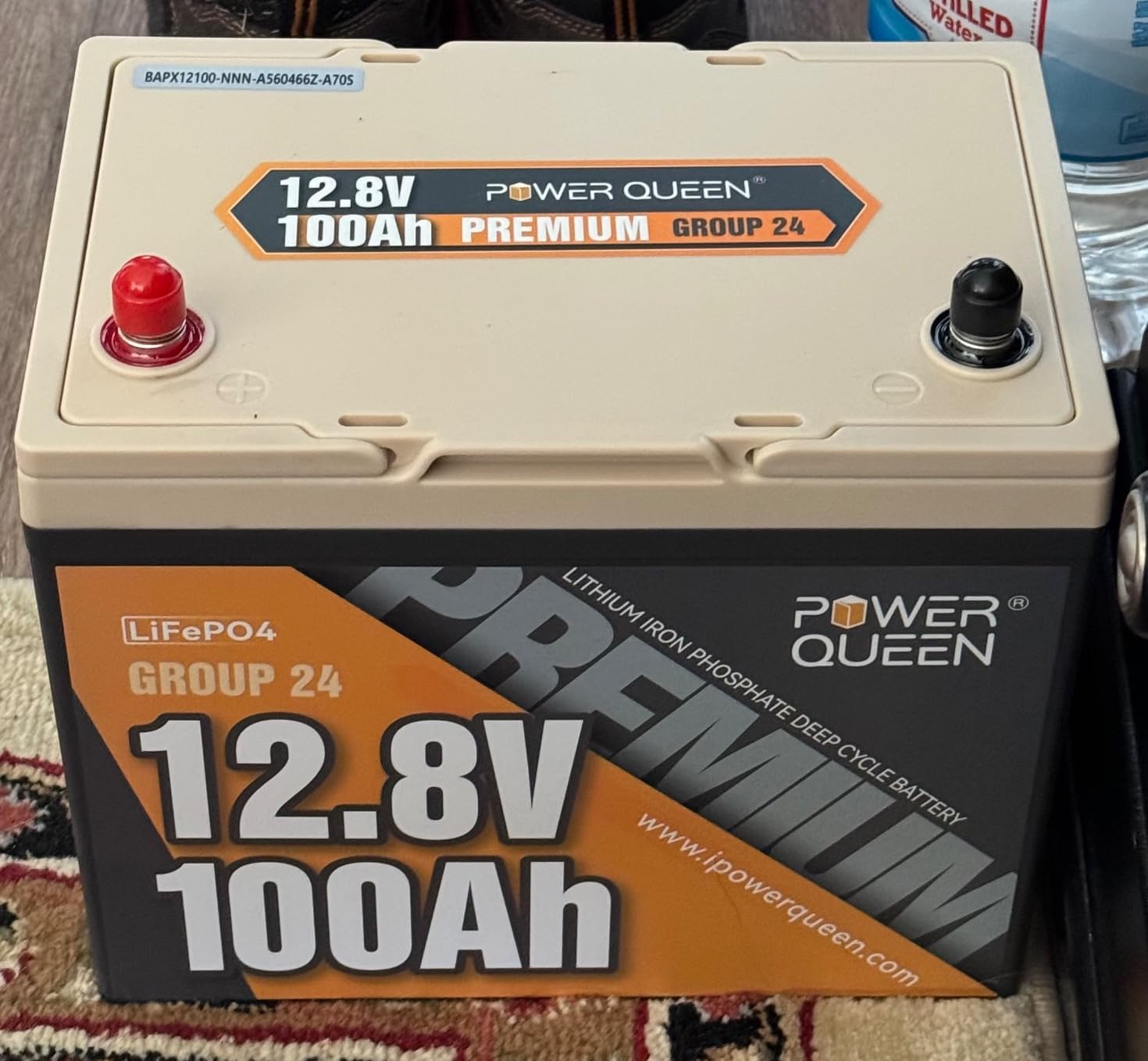
It uses Grade-A EV-grade LiFePO4 cells with 20 or more BMS protections, expands to 16 units in a 4P4S arrangement for 51.2V and 400Ah, and carries a stated 10-year design life alongside 4000 cycles at full depth of discharge. The warranty is 5 years, and the model number is EF-114A14N-0A.
One installation tip comes straight from the owner reports. Use gaskets on any bolt under 2mm so the connection does not loosen with vibration, which matters in a travel trailer that sees a lot of road. Buyers have also run CPAP machines with humidifiers and Starlink Mini off this battery through outages, which is a fair proxy for a heavier 12V load than most people expect.
Who this battery suits
It suits owners who want the lightest possible install and who value a brand with visible multi-year field reports. The 20 lb weight matters on small trailers where you are already near a weight limit, and the carry handles make a solo install realistic.
It also suits anyone running continuous electronics. CPAP with a humidifier, a router, and a Starlink terminal are exactly the kind of always-on loads that flatten a 50Ah-usable AGM bank, and 1280Wh of stored energy absorbs them without a generator.
Where it falls short
It is priced above some budget 100Ah lithium options, and that gap is real money on a small bank. If you are building a large system where capacity dominates cost, the bigger format units deliver more amp hours per dollar.
It is energy storage only, so it cannot start an engine, and it needs a lithium charge profile. Owners also occasionally report damaged shipping boxes, though the batteries themselves have typically arrived protected.
8. ECO-WORTHY 12V 314Ah LiFePO4 – the best on-battery SOC display
ECO-WORTHY 12V 314AH LiFePO4 Lithium Battery Bluetooth with SOC LEDs, Low Temp Protection, 4019WH, 200A BMS Up to 15000 Deep Cycle for Off-Grid, RV, Solar Power System, HomeBackup
314Ah, 4019.2Wh
60.4 lb
SOC LED display
200A BMS
Low-temp cut-off
Pros
- SOC and status LED indicators on the battery itself
- Built-in buzzer gives audible fault alerts
- 4019.2Wh from an upgraded 314Ah capacity
- Bluetooth app monitoring plus on-battery indication
- 200A BMS with comprehensive protections
Cons
- Bluetooth voltage readings reported as several times actual
- Only a 3-year warranty
- Some reports of cell balancing issues
- Customer service response time can be slow
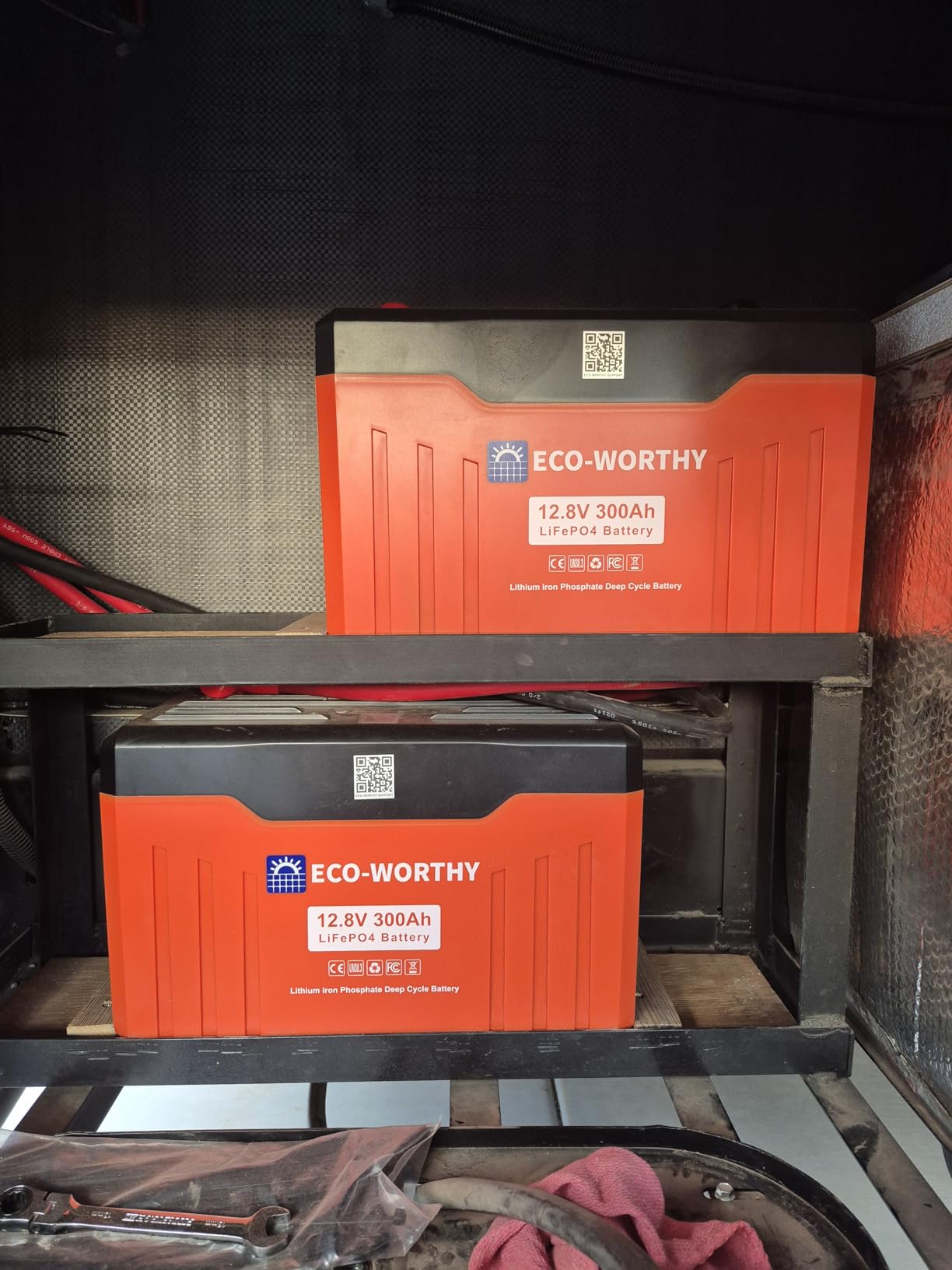
This is the ECO-WORTHY 314Ah, upgraded from 300Ah on April 16, 2026, and it keeps the useful trick from the metal case model while adding something the others lack: a state-of-charge LED display built into the case itself. When you walk past the battery bay in a campground at dusk, you can read your remaining charge without opening an app.
The built-in buzzer for fault alerts is a small touch that earns its place. On a bank this size, a BMS fault that nobody notices is the difference between a warning and a dead pack two hundred miles from the nearest service road.
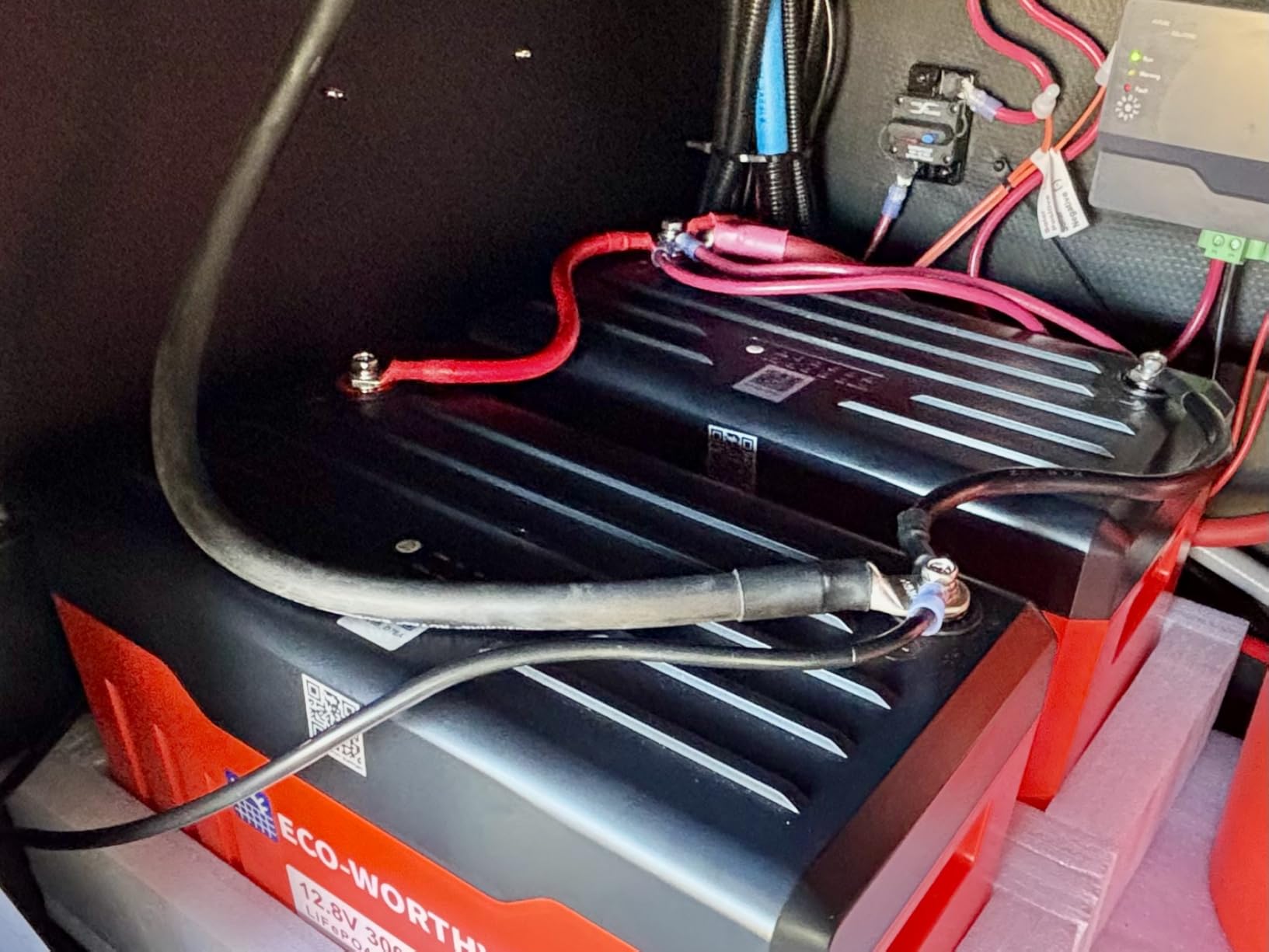
It stores 4019.2Wh at 12.8V, carries a 200A BMS, and cuts charging below -7C, which is 19.4F. It expands in 4P2S or 2P4S configurations to 32.15kWh total, and the listing states Grade A cells with 15000 or more deep cycles and roughly three times lead-acid lifespan.
The honest weakness is measurement accuracy. Owners report Bluetooth voltage readings coming in as much as six to seven times actual, which means you should treat the app as a trend indicator rather than a voltmeter. The warranty here is 3 years, shorter than the 5 years typical of the lithium options in this roundup, and there are some reports of cell balancing issues on individual units.
Who this battery suits
It suits owners who want at-a-glance battery status without pulling out a phone, which is especially handy for families with different people driving different days. It also suits larger installs where 4019.2Wh per battery means a two-battery bank covers a residential fridge plus lighting for several days, which is the configuration owners on the forums report running without a generator.
It also suits owners with moderate space, since 4019.2Wh in one case leaves room for a second unit alongside a charge controller. The 200A BMS gives you plenty of headroom for solar input, and 16.3 by 8.5 by 10.2 inches is manageable in a standard RV bay.
Where it falls short
Three years of warranty is the shortest coverage among the large lithium options here, and that matters for a component expected to last a decade. If you keep the RV long, the 5-year and 10-year options are better protected even at similar capacity.
The app voltage quirk and reported cell balancing issues are the two items to watch. If you rely on accurate monitoring for solar decisions, a battery with a shunt is a better fit, or verify the readings against a known-good meter during the first month.
9. VATRER POWER 12.8V 460Ah Self-Heating LiFePO4 – the winter boondocking answer
VATRER POWER 12.8V 460Ah Self-Heating LiFePO4 RV Battery, APP Monitoring
460Ah, 5888Wh
104.7 lb
Self-heating -4F to 41F
300A discharge
10-year warranty
Pros
- Automatic self-heating lets the battery charge down to -4F
- Highest rating in this comparison at 4.8
- 300A continuous discharge runs high-draw RV loads
- 460Ah replaces five 100Ah batteries in 1.1 cubic feet
- 10-year warranty with prepaid returns and phone support
Cons
- 104.7 lb needs equipment or multiple people
- Large physical case may not fit every compartment
- Only 110 ratings so far for long-term validation
- Self-heating draws some energy during cold charging
This is the one to buy if you camp in cold country. The automatic self-heating system activates between -4F and 41F when the battery is connected to a charger, which is exactly the failure mode that strands winter boondockers: a lithium pack sitting at 20 percent charge that refuses to accept solar because the cells are below freezing.
The 300A continuous discharge rating is the other headline. Most lithium in this roundup runs a 100A or 200A BMS, so 300A means you can run RV air conditioning, a television, and an oven through an inverter without the bank being the bottleneck. An AI Overview on this topic cites internal heating and a 150A continuous discharge as the deciding features for winter setups, and this unit exceeds that on both counts.
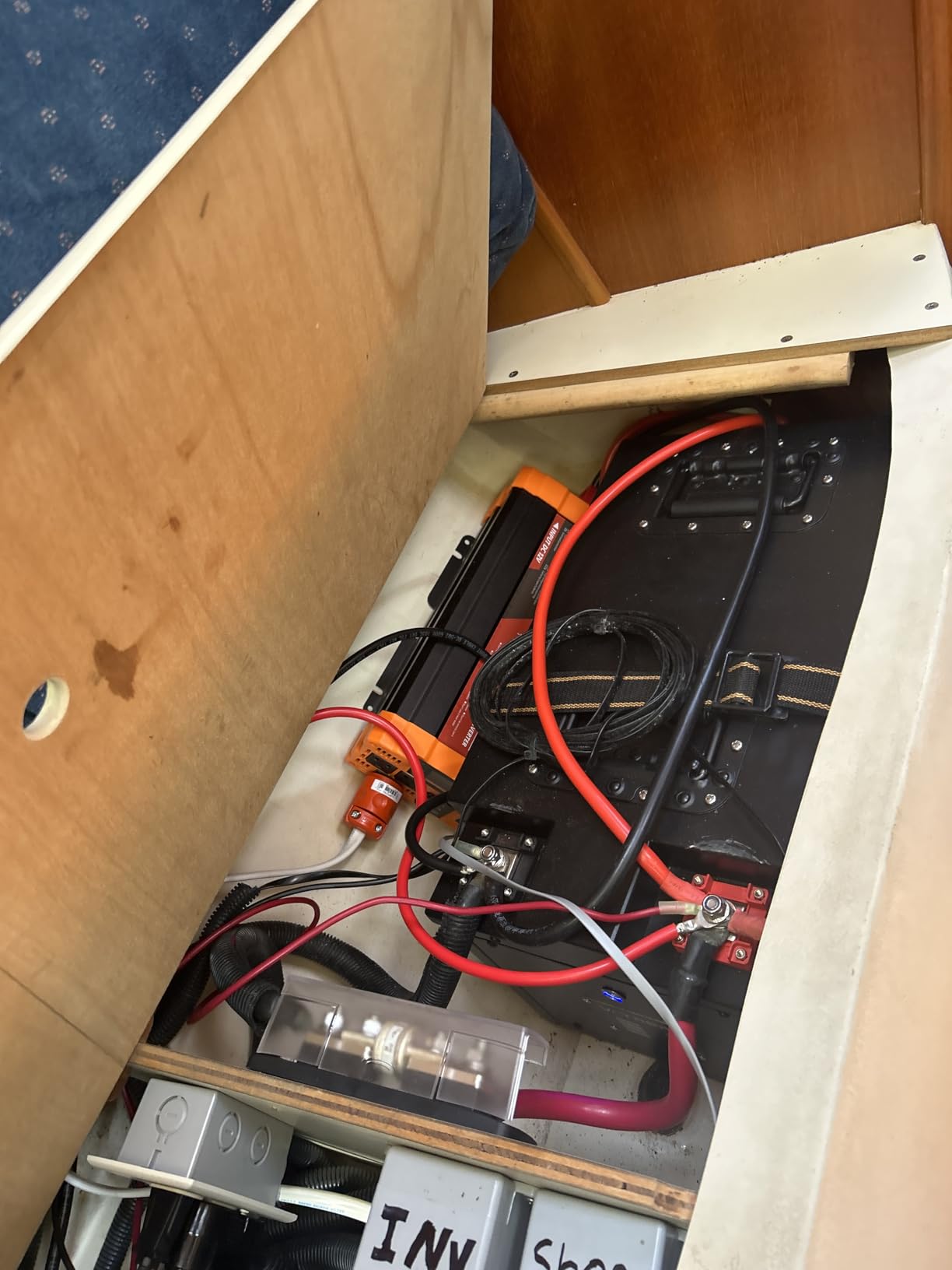
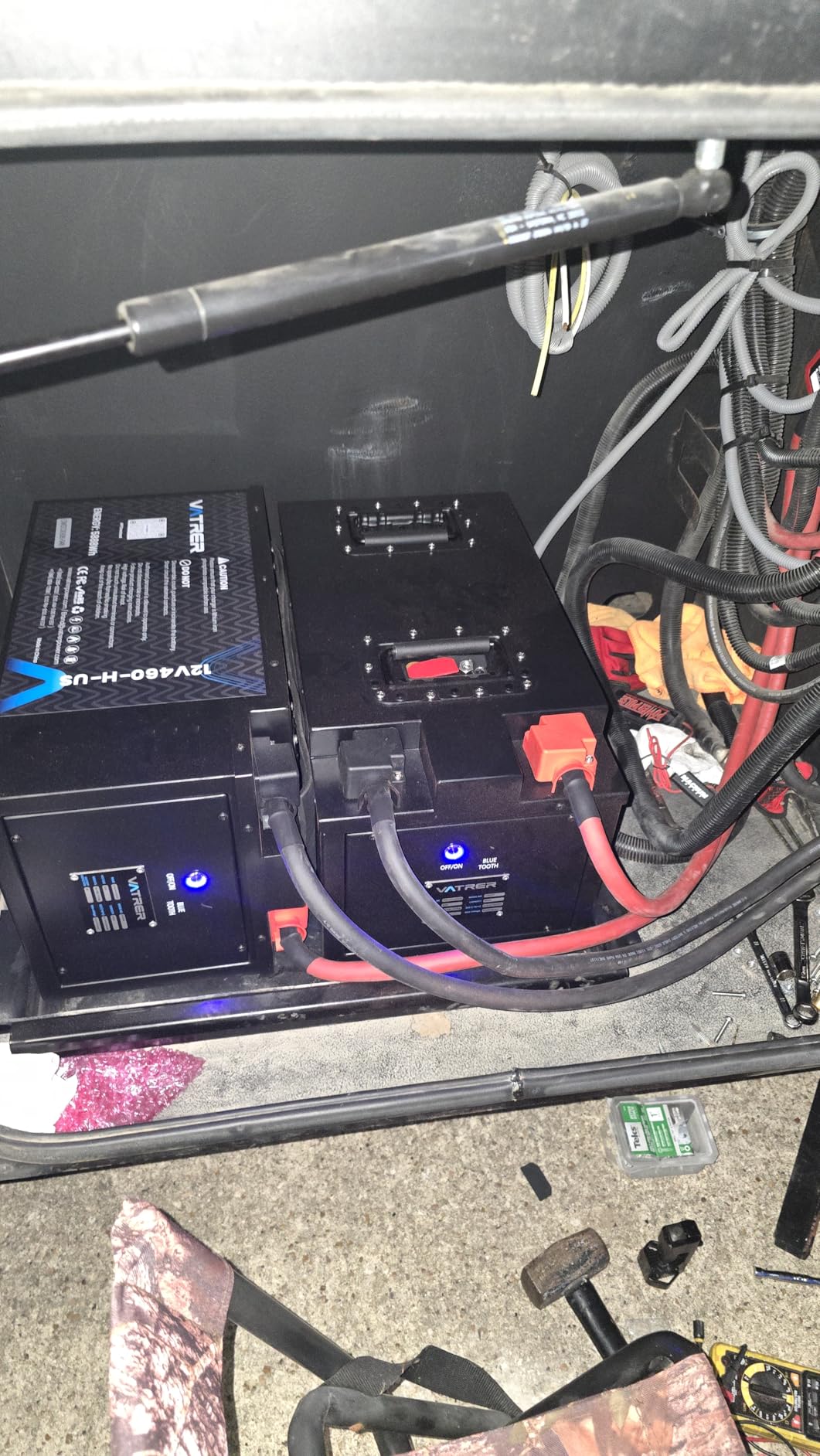
At 460Ah and 5888Wh, the manufacturer states it replaces five 100Ah batteries in 1.1 cubic feet, and it expands in 4P4S to 51.2V and 1840Ah, or 94.2kWh with 61.44kW output. The app reports current, voltage, temperature, and cycle life, and the SPCC case has a main power switch for clean isolation.
The warranty is the strongest in the roundup at 10 years, with prepaid return shipping for defects and 24-hour support from US and China teams including phone support. A Class A owner on the owner boards reported replacing eight GC2 6V AGM batteries with a pair of these and saving 200 to 300 lb including a pull-out tray, while running a residential fridge and lights for four to five days on 1200W of solar.
Who this battery suits
It suits full-time boondockers in northern climates and anyone who wants a generator-free winter setup. The self-heating removes the single biggest practical objection to lithium in cold weather, and 5888Wh per battery means one unit can carry a heavy load profile without a second bank.
It also suits owners running high-draw 120V appliances. A 300A continuous rating leaves headroom for air conditioning or an induction cooking scenario through an inverter, and the 10-year warranty is the natural counterweight to the higher outlay when you plan to own the RV for a decade.
Where it falls short
At 104.7 lb and 18.78 by 10.75 by 9.92 inches, this is the largest and heaviest unit here. It needs a plan, not just a purchase, and the physical fitment question deserves real attention before ordering. A bay that held two Group 31s will not take this case.
Only 110 ratings exist so far, so the long-term record is shorter than brands with a decade of field reports. The self-heating function also draws energy while it works, which is a small but real cost on a cold morning when you need every watt going into the pack.
10. LiTime 12V 200Ah Mini LiFePO4 – the strongest compact option
Litime 12V 200Ah Mini LiFePO4 Battery with Bluetooth for RV, Camper, Marine
200Ah LiFePO4
44.5 lb
40.8% smaller
6000+ cycles
200A continuous
Pros
- 40.8% smaller than a standard 200Ah and fits Group 31 trays
- 6000+ deep cycles at full depth of discharge
- 200A continuous with 1000A surge for inverter loads
- 44.5 lb for 3200Wh of storage
- Bluetooth 5.0 app with QR code pairing
Cons
- Needs a LiFePO4-specific charger to activate on first use
- Some chargers including a common smart maintainer may not wake it
- App detail level could be deeper
- Higher cost than some 200Ah alternatives
This is the sweet spot in the entire roundup for most boondockers. At 200Ah rated, 44.5 lb, and 40.8 percent smaller than a standard 200Ah case, it fits Group 31 trays in RVs where a full-size unit simply will not go, and it still stores enough to run a fridge, lighting, and a water pump for a couple of days.
The 6000+ deep cycle rating at 100 percent depth of discharge is the number that separates it from typical lithium. That is 2000 cycles beyond the common LiFePO4 baseline, and at full depth of discharge rather than the 80 percent figure most manufacturers quote for a flattering cycle count.
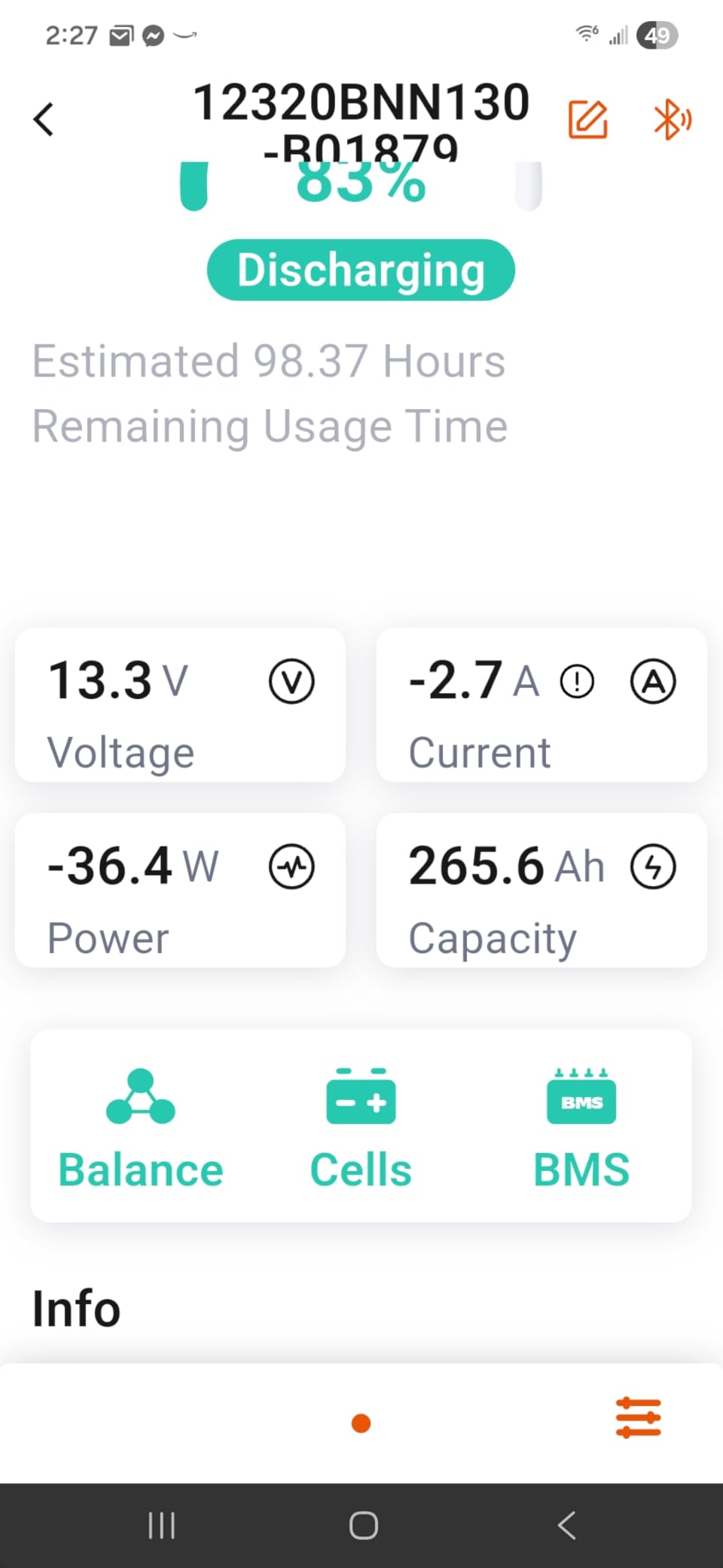
Discharge is rated 200A continuous with 1000A surge, which covers inverter startup and high-draw appliances. It expands in 4P4S to 51.2V and 800Ah, or 40.96kWh, and the dimensions of 13.11 by 6.93 by 9.45 inches are the reason it clears tight trays. A self-heating 320Ah variant also exists for cold climates.
Bring the right charger on day one. The battery needs a LiFePO4-specific charger to wake up, and owners report that a common smart maintainer set to its lithium setting may still not activate it. That is a five-minute fix if you know it in advance and a confusing afternoon if you do not.
Who this battery suits
It suits the widest group of real buyers. A single unit handles a weekend trip for a family, two in parallel cover several nights, and 44.5 lb means you can still install one yourself. The 200A continuous and 1000A surge ratings also mean it is the pick if you plan to add an inverter later.
It also suits owners replacing two Group 31s in a shallow tray. The 40.8 percent size reduction is the feature that makes the conversion possible in a Class B van or a small fifth wheel where a full-size 200Ah case does not fit, and 6000+ cycles means a decade of camping without replacement.
Where it falls short
It costs more per amp hour than the compact 100Ah options, so a large build gets expensive fast. Owners chasing the cheapest usable watt hours will do better with smaller Group 24 units in parallel.
It is energy storage only, never a starting battery, and it is not intended for golf carts or leveling jacks. The activation charger requirement is also a genuine friction point for anyone whose RV converter charger is a fixed lead-acid profile, which brings us to the checklist below.
11. VEVOR 12V 100Ah AGM Deep Cycle – the budget AGM fallback
VEVOR Deep Cycle Battery, 12V 100 AH, AGM Marine Rechargeable Battery, High Self-Discharge Rate 800A Current, for RV Solar Marine Off-Grid Applications UPS Backup Power System
100Ah AGM
61.1 lb
800A max discharge
UL certified
Maintenance-free
Pros
- Lowest cost entry among the sealed options
- 800A max discharge handles high startup loads
- AGM design needs no water and no venting
- UL certified for safety
- Available in 40Ah
- 100Ah
- and 200Ah variants
Cons
- 61.1 lb is heavy for 100Ah
- Some reports of early failure around two months in marine use
- Shipping damage and missing terminal bolts reported
- Not for engine starting
This is the option for someone who wants sealed AGM without the Renogy price tag, and it does some things well. The 800A maximum discharge within five seconds is more than enough for winches, sump pumps, and inverter startup, and the AGM format means no water, no venting, and no maintenance schedule on a battery that sits in an enclosed bay.
It also fits a standard DC29 tray at 13.0 by 6.7 by 8.4 inches, and it is UL certified. If you are outfitting an emergency or backup role where a maintainer keeps the battery topped up between uses, that is a reasonable, low-effort use of this battery.
Self-discharge is described as minimal, and the sealed AGM construction is rated for high-temperature resistance, which is useful in a bay that heats up in summer. The listing covers RV, solar, marine, UPS, and communications applications, and 40Ah and 200Ah variants exist in the same line if you want to match a different bay.
The reviews are genuinely mixed, and that is the deciding information. Alongside the winch and sump pump use cases there are reports of early failure around two months in marine service, and separate reports of shipping damage with missing terminal bolts. It is best read as a backup battery on a maintainer rather than as a primary bank you cycle daily.
Who this battery suits
It suits owners who want a sealed AGM as a secondary or emergency bank, or who are replacing a single battery in a mixed setup where a full lithium conversion is not on the table. The 800A discharge figure also makes it a fair choice for a winch or a high-surge accessory on a tow vehicle.
It also suits anyone who wants a sealed battery with no water to top up but who is not ready to deal with charger compatibility. A standard lead-acid converter will charge it, which removes the single biggest hurdle to a lithium swap for many RVs.
Where it falls short
It is not built for daily deep cycling, and the early-failure reports in marine use are the reason. A 100Ah AGM cycling hard for boondocking is being asked to do the one thing it is least good at, and the reviews reflect that.
At 61.1 lb it is heavy for the capacity, warranty terms vary by manufacturer here, and the high self-discharge rate noted in the listing means it will need a maintainer when it sits. For a primary house bank, any of the lithium options in this roundup delivers far more usable energy for less weight.
12. VEMDIA 12V 100Ah Group 31 LiFePO4 – the lightest price-first lithium build
12V 100Ah LiFePO4 Lithium Battery Group 31 Deep Cycle for RV Trolling Motor
100Ah LiFePO4, 1280Wh
24 lb
Group 31 drop-in
100A BMS
5-year warranty
Pros
- Lowest cost 100Ah LiFePO4 option in the group
- 24 lb
- about 70 percent lighter than lead-acid
- Group 31 drop-in at 12.9 by 6.6 by 8.5 inches
- Fast charge to full in 5 hours with a 14.6V 20A charger
- US-based support with a 24-hour response guarantee
Cons
- Only a 2-year warranty against 5 years elsewhere
- About 12 percent of reviews are 1 star
- 120 milliohm internal resistance is high
- Requires a LiFePO4-specific charger
This is the cost-first lithium entry, and for a lot of builds it is the right call. It is a 100Ah LiFePO4 pack with 1280Wh of storage at 24 lb, in a Group 31 drop-in footprint of 12.9 by 6.6 by 8.5 inches, which means it drops into a standard Group 31 tray with no modifications.
The 24 lb weight is the practical headline. It is roughly 70 percent lighter than a comparable lead-acid battery, and for anyone replacing a 60-plus pound AGM in a tight bay that difference is the whole installation experience. Two of these give 200Ah rated, about 180Ah usable, in a weight a single AGM would have exceeded.
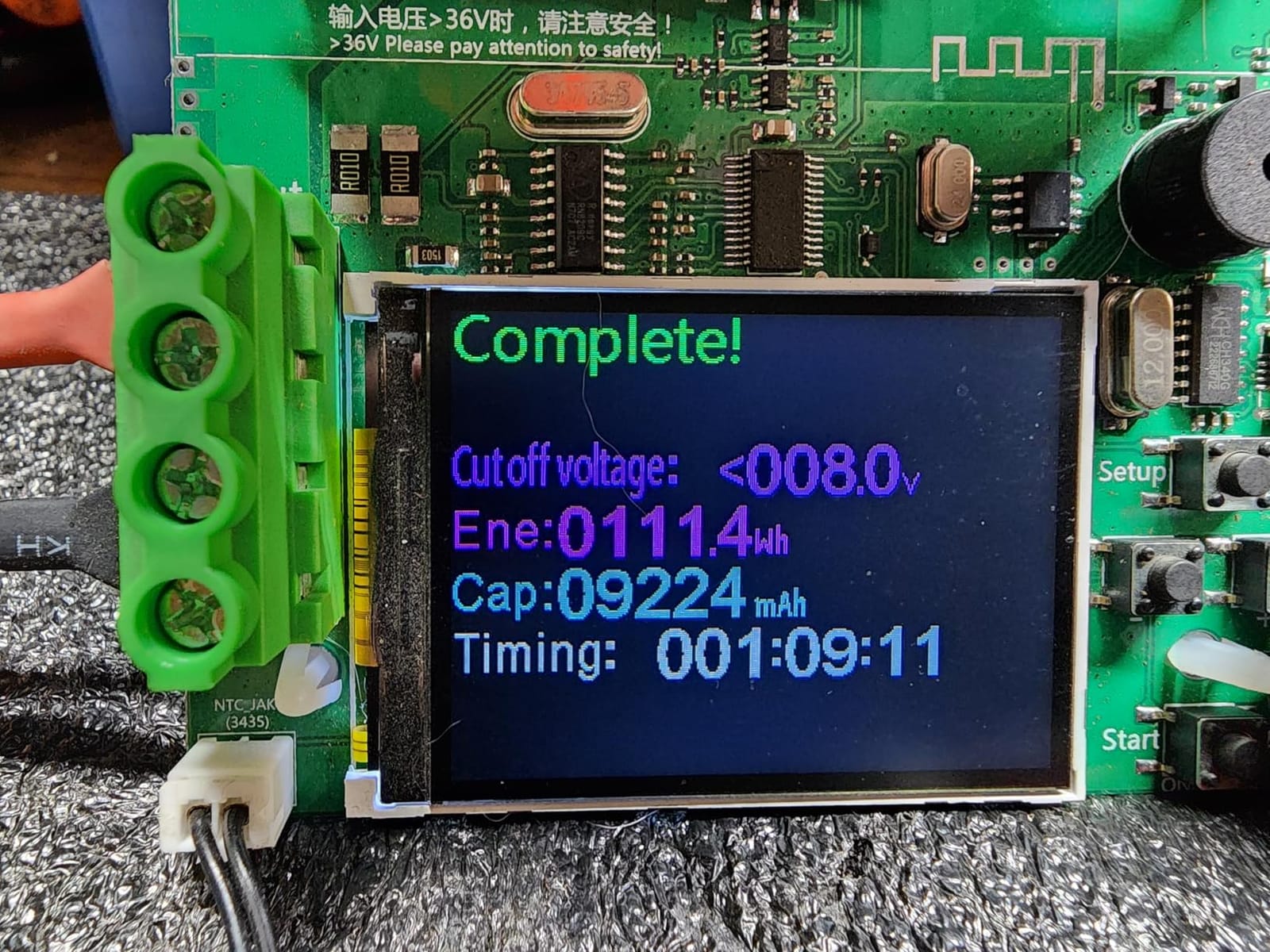
Cycle claims are aggressive on paper: 15000+ cycles at 60 percent depth of discharge, 8000 at 80 percent, and 6000 at 100 percent, over a stated 10-year service life. It charges to full in about 5 hours with a 14.6V 20A charger, expands to 4S4P for 51.2V and 400Ah, and has a low-temp charging cut-off below 32F with discharge rated from -4F to 140F.
Two data points deserve attention. Internal resistance is listed at 120 milliohms, which is higher than premium cells and can mean a little more voltage drop under heavy continuous load. And the warranty is 2 years, the shortest here, with about 12 percent of reviews at 1 star, so quality consistency is less settled than the better-reviewed options.
Who this battery suits
It suits accessory and trolling motor banks, where weight matters more than absolute capacity and a 100A BMS is more than enough. It also suits cost-sensitive builds of several batteries, where the per-unit difference between brands adds up quickly across a four-battery installation.
It suits owners replacing a Group 31 in a bay they do not want to modify, and owners who want a lithium pack that a single person can install. The US-based support with a 24-hour response guarantee is a real differentiator against budget imports for anyone who values warranty help.
Where it falls short
Two years of warranty against 5 years from most competitors is the biggest gap, and it is hard to argue around on a component you will not see for a decade. The 12 percent 1-star share also points to more variability in quality control than the higher-rated options.
The 120 milliohm resistance shows up when you ask a lot of current for a long time, and the low-temp charging cut-off below 32F means cold-weather owners need a warming plan. For deep multi-day boondocking, one of the 280Ah to 460Ah units gives you far more headroom per battery.
How to Size Your Boondocking Battery Bank
Start with watt hours per day, not amp hours. Every significant 12V load in an RV runs intermittently, and the sum of those run times is the number that actually decides how long you can stay out. For a couple in moderate weather, most owners land between 700 and 1200Wh per day. Push a lot of furnace heat, a heavy 12V fridge duty cycle, and device charging and you are in the 1500 to 2000Wh range.
The typical load stack looks like this. A 12V compressor fridge cycling on a thermostat runs roughly 40 to 60Ah per day, a furnace fan and blower another 20 to 30Ah, vent fans about 10Ah, LED lighting and device charging around 15 to 25Ah, and a water pump a few Ah per use. Multiply by 12V to get watt hours, then add a 20 to 30 percent reserve for unexpected draws.
Then convert to amp hours by chemistry, and this is where most sizing errors happen. A 100Ah LiFePO4 battery gives you about 80 to 90Ah usable, roughly 1024 to 1152Wh. A 100Ah AGM gives about 50Ah usable, roughly 600Wh. The forum consensus for one or two nights off-grid with a 12V fridge and a television lands at 300 to 400Ah of rated capacity, with some owners recommending 500Ah for margin and future expansion.
As a rule of thumb for solar: about 1W of panel per amp hour of lead-acid capacity, and about 1W per 2Ah for lithium, because the lithium bank is not the constraint once it is the right size. Use an MPPT controller rather than a PWM unit, since the lithium charge profile at 14.4 to 14.6V needs the headroom an MPPT controller provides.
Adding capacity rather than panel wattage is the cheapest upgrade most owners skip. If your bank is 200Ah rated, panel equal to 200W or 400W depending on chemistry is where daily replenishment actually happens, and a small array with an MPPT controller outperforms a larger array on a PWM unit.
Converter and Charger Compatibility Checklist for Lithium
This is the number one blocker to a lithium conversion, and it appears in the Thor Forums house battery thread more than any other topic. The good news is that the check takes about ten minutes. Find the model number on the converter charger itself, usually on a label inside the battery bay or behind a panel near the breaker, and confirm it has a lithium or Li profile.
Common RV converter models in the discussion include the WF-8900, WF-8945, and WF-8955 families, along with Progressive Dynamics units. If the label lists a Li or lithium profile or dip switch, you can proceed. If it is a fixed-output lead-acid profile, the battery will be chronically undercharged, which on lithium means slow, incomplete charging and shortened cell life even though the pack never trips anything.
Watch the second cost. If you upgrade the converter to a higher-output unit, the existing 30A breaker and the existing cable gauge are usually undersized for the new output, and the breaker will trip before the battery notices. The Thor thread makes this point clearly: the breaker and cable are part of the conversion budget, not an afterthought.
On the alternator question, the honest answer is that both sides of the forum debate have a point, and the wire gauge is often the real limiter. A member running around 900Ah of lithium with a diode isolator reports peaks near 180 amps on a 270A alternator without damage, while others argue that a factory 6 or 8 gauge alternator wire limits current below what a DC-to-DC charger could deliver. The practical recommendation is to size the DC-to-DC charger to what your wiring can safely carry, and not to assume more is better.
On cell balancing, owners across the iRV2 lithium thread are consistent: charging to 100 percent the day before a trip and storing between 50 and 70 percent keeps cells balanced, and you do not need to do it after every outing. On monitoring, the same group reports that a Bluetooth app plus an on-battery display makes a separate smart shunt redundant, though plenty of people keep an installed shunt simply because it is already there.
Lithium vs AGM vs Flooded: What the Numbers Say
Usable capacity is the single biggest difference. LiFePO4 at 80 to 90 percent depth of discharge delivers roughly 2.5 to 2.8 times the usable amp hours of the same rating in AGM, which is why the largest lithium units in this roundup replace four or five lead-acid batteries. Flooded lead-acid sits at about 50 percent usable as well, and adds water, venting, and a maintenance schedule on top of that.
Weight follows capacity. A 100Ah AGM here weighs 63.9 lb and a 100Ah LiFePO4 weighs between 20 and 24 lb, and the 460Ah lithium unit at 104.7 lb replaces five 100Ah lead-acid batteries. One Class A owner on the owner boards swapped eight GC2 6V AGM batteries for two large lithium units and saved 200 to 300 lb, including a pull-out tray, and ran a residential fridge plus lights for four to five days on 1200W of solar without a generator.
Cycle life and cost per cycle follow from that. The lithium options here are rated from 4000 to 15000 cycles depending on depth of discharge, while AGM and flooded lead-acid are typically budgeted in the low hundreds for deep cycling. Even at a higher upfront cost, the cost per cycle favors lithium for anyone who cycles more than a few times a year.
Cold weather is where the comparison gets more honest. AGM rated from -4 to 140F is the most forgiving in the roundup, and lithium generally pauses charging below 32F unless the pack has a low-temperature cut-off with a lower threshold or an internal heater. The 314Ah ECO-WORTHY cuts charging below 19.4F, the metal case 280Ah model cuts at 20F, and the VATRER unit self-heats from -4F to 41F, which is why it wins the winter category.
What shortens RV house battery life is worth stating plainly, because no ranking page covers it. Deep discharge below 50 percent on lead-acid, parasitic draws left on over months, and storing a bank at low state of charge all do more damage than daily cycling does. A maintainer on a lead-acid bank and a periodic full charge on a lithium bank solve both problems for a few dollars a year.
Solar and Alternator Charging for Your Boondocking Bank
Solar is the cleanest way to keep a boondocking bank full, and the controller choice matters more than most buyers expect. MPPT controllers track the panel’s maximum power point and deliver the higher charge voltage that lithium needs, while PWM units simply chop the panel output to the battery voltage and throw away energy doing it. On a small array the difference is significant.
Sizing follows the ratio of roughly 1W of panel per amp hour of lead-acid capacity and 1W per 2Ah for lithium. A 200Ah lithium bank is comfortably replenished by a 400W array in good sun, and larger banks scale from there. The BMS rating is rarely the limiting factor at these capacities, since 100A and 200A BMS units both accept more than a residential array delivers.
On the alternator side, the choice is between relying on the factory converter charger and adding a dedicated DC-to-DC charger. A dedicated DC-to-DC charger is the better answer on a motorhome or a Class B with a small factory alternator, because it charges to the lithium profile regardless of what the OEM converter does. On a tow vehicle, the alternator output available during driving depends heavily on the wire gauge, which is the point the alternator debate on the lithium threads keeps circling.
Finally, monitoring. Several of the picks here report state of charge, current, voltage, and cell data through a Bluetooth app, and owners repeatedly note that this makes a separate smart shunt unnecessary for most installations. If your plan depends on precise remaining capacity for solar decisions, or you want readings that survive a dead phone, a shunt still earns a place. If you only want to know roughly where you stand, the app is enough.
Frequently Asked Questions
How many 100Ah lithium batteries do I need to boondock an RV?
One 100Ah LiFePO4 battery covers a weekend trip with a 12V fridge, lighting, and device charging, giving about 80 to 90Ah usable. Two units give 200Ah rated and handle two to three nights comfortably. For several nights of comfort or future expansion, most owners land on 300 to 400Ah rated, and full-time boondocking pushes toward 500Ah or more. Adding solar means you can size smaller and refill daily.
How long will an RV battery last while boondocking?
A couple in moderate weather typically uses 700 to 1200Wh per day, and heavy furnace use plus a 12V compressor fridge and charging pushes that to 1500 to 2000Wh. Divide that by your usable capacity to get days. A 200Ah lithium bank at roughly 80 percent usable covers about 1.6kWh, so two days without a recharge, or any number of days with 400W of solar. A 100Ah AGM covers about half that.
What type of battery is best for an RV that is off-grid?
LiFePO4 is the best choice for most off-grid RVers. It delivers 80 to 90 percent of rated capacity as usable power against roughly 50 percent for AGM, is rated for 4000 to 15000 cycles depending on the model, and weighs about a third of an equivalent AGM group. AGM remains the sensible budget fallback when you want a drop-in with no charger changes.
What is the best 6-volt RV battery for boondocking?
Most modern conversions no longer use 6V at all. Four GC2 6V batteries in series give 400 to 600Ah at 12V, but only about half of that is usable and the set weighs several hundred pounds. The common replacement is a single 280 to 315Ah LiFePO4 unit, which stores more usable energy in one case. If you keep 6V, match all four batteries to the same age and capacity, and never mix old and new cells in series.
Do I need a special converter charger for lithium RV batteries?
Usually yes, or at least a lithium charge profile. Find the model number on your converter charger label, then confirm it lists a Li or lithium profile or dip switch. Common RV models include the WF-8900, WF-8945, and WF-8955 families plus Progressive Dynamics units. If you move to a higher-output converter, the existing 30A breaker and cable gauge are often undersized and need upsizing at the same time.
Our Final Pick for Boondocking in 2026
After sorting all twelve options by usable capacity, weight, cycle life, warranty, and cold-weather behavior, the Renogy 12V 100Ah Deep Cycle AGM is our pick for most people reading this page. It has the deepest owner record in the group, a 1100A maximum discharge rating that covers inverter loads, an operating range of -4F to 140F, and it drops into an existing bay without a charger conversion. For an RV that boondocks on weekends and lives on shore power otherwise, it is the most reliable decision you can make.
Where it is not the right answer, the specific alternatives are clear. Choose the ECO-WORTHY EnergyRock 280Ah metal case if you want four Group 31s replaced by one battery in the same bay. Choose the VATRER POWER 460Ah if you camp in cold country and want self-heating plus a 10-year warranty. Choose the LiTime 200Ah Mini if your compartment is too shallow for a full-size case and you still want 6000-plus cycles. Choose a pair of 100Ah Group 24 lithium units, from power queen or SUPER EMPOWER, if you are starting small and building out over a few seasons.
Whichever you pick, do the two unglamorous things first. Measure your compartment and confirm the battery fits with clearance for terminals and restraint, and check your converter charger model number for a lithium profile. Those two checks prevent the two problems that ruin otherwise good conversions. Our drone battery and charger guide covers the portable power side if you would rather carry a separate pack than rewire the RV.