
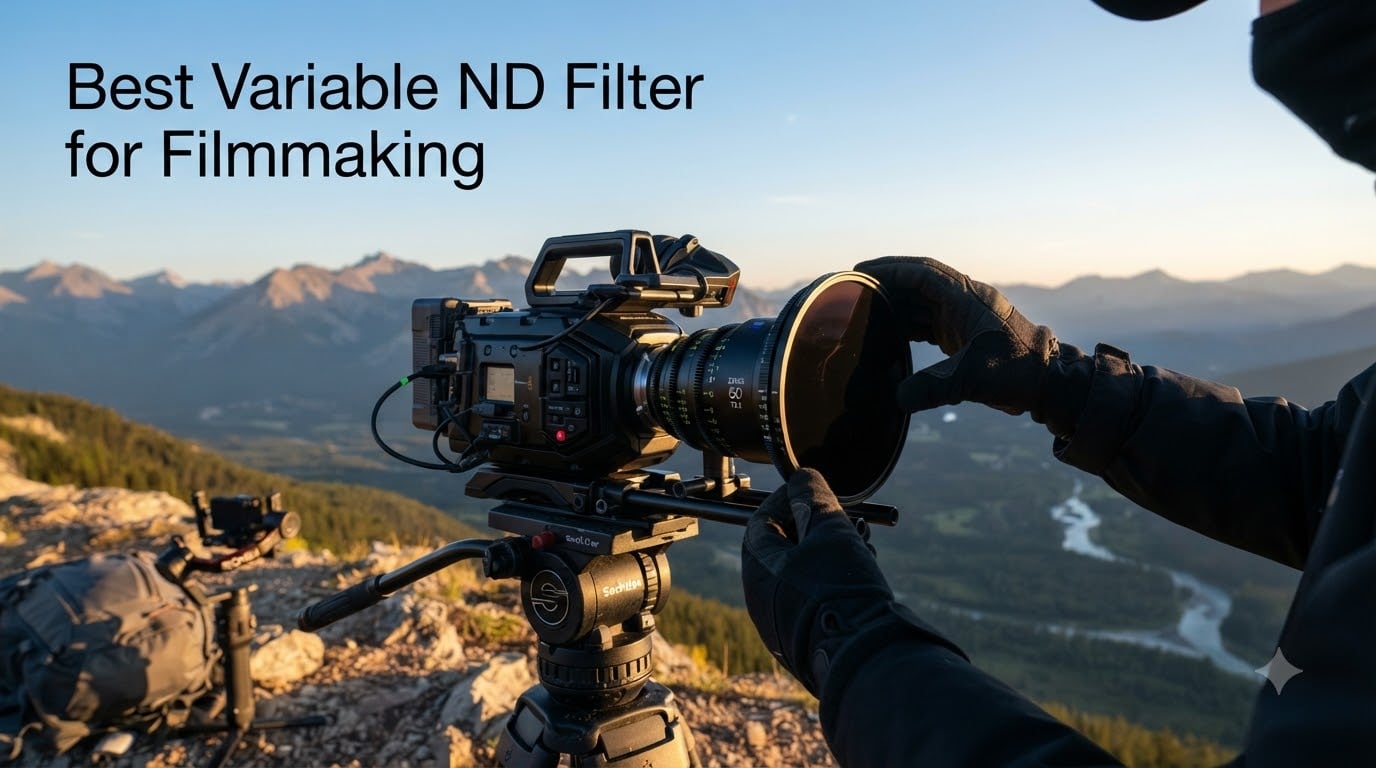
Every filmmaker who has shot outdoors knows the struggle. You set your shutter speed to double your frame rate for that buttery 180-degree shutter angle, and suddenly your footage is blown out like a spotlight hit your sensor. That is exactly where the best variable ND filter for filmmaking becomes your most reliable tool on set.
A variable ND filter lets you dial in the right amount of light reduction by simply rotating the outer ring. Instead of swapping between fixed ND filters every time the sun ducks behind a cloud, you get continuous control from 1 to 9 or even 10 stops in a single filter. For run-and-gun shooters, documentary crews, and solo content creators, that speed is everything.
Our team spent weeks testing eight of the most talked-about variable ND filters on the market right now. We looked at color accuracy, build quality, ND range, vignetting, cross-polarization patterns, and real-world handling on cameras ranging from the Sony a7IV to professional cinema bodies. We also dug into filmmaker forums on Reddit and cinematography groups to see what working professionals actually trust on paid shoots. Here is what we found.
Table of Contents
- Top 3 Picks for the Best Variable ND Filter for Filmmaking for October 2026
- Best Variable ND Filters for Filmmaking in October 2026
- 1. K&F Concept Nano-X True Color VND + CPL (82mm)
- 2. NiSi Swift True Color ND-Vario 1-5 Stops (82mm)
- 3. K&F Concept B-Series VND ND2-400 1-9 Stops (77mm)
- 4. PolarPro Peter McKinnon VND 6-9 Stops (77mm)
- 5. Freewell Hard Stop VND Standard Day 2-5 Stops (82mm)
- 6. Tiffen Variable ND Filter 2 to 8-Stop (77mm)
- 7. Moment Variable ND Filter (2-5 Stop and 6-9 Stop)
- 8. Neewer Variable ND Filter ND2-ND400 1-9 Stops (67mm)
- How to Choose the Best Variable ND Filter for Filmmaking?
- Frequently Asked Questions
- Final Thoughts on the Best Variable ND Filter for Filmmaking
Top 3 Picks for the Best Variable ND Filter for Filmmaking for October 2026
Not everyone has time to read through eight full reviews. If you need a fast recommendation, these three filters stood out across every category that matters for filmmaking.
The K&F Concept Nano-X True Color took our Editor’s Choice spot because it combines VND and CPL into one filter while maintaining exceptional color neutrality. The NiSi Swift True Color earned our Premium Pick for filmmakers who demand cinema-grade color accuracy in a lightweight design. And the K&F Concept B-Series grabbed Best Value for delivering solid performance at a fraction of what premium brands charge.
Best Variable ND Filters for Filmmaking in October 2026
Here is a quick side-by-side comparison of all eight filters we tested. Each one earned its place on this list for different reasons, and the table below highlights the key specs at a glance.
| Product | Specs | Action |
|---|---|---|
 K&F Concept Nano-X True Color VND+CPL K&F Concept Nano-X True Color VND+CPL |
|
Check Latest Price |
 NiSi Swift True Color ND-Vario NiSi Swift True Color ND-Vario |
|
Check Latest Price |
 K&F Concept B-Series VND ND2-400 K&F Concept B-Series VND ND2-400 |
|
Check Latest Price |
 PolarPro Peter McKinnon VND PolarPro Peter McKinnon VND |
|
Check Latest Price |
 Freewell Hard Stop VND Standard Day Freewell Hard Stop VND Standard Day |
|
Check Latest Price |
 Tiffen Variable ND Filter Tiffen Variable ND Filter |
|
Check Latest Price |
 Moment Variable ND Filter Moment Variable ND Filter |
|
Check Latest Price |
 Neewer Variable ND ND2-ND400 Neewer Variable ND ND2-ND400 |
|
Check Latest Price |
1. K&F Concept Nano-X True Color VND + CPL (82mm)
K&F CONCEPT 82mm True Color Variable ND2-32 & Polarizer in 1 Lens Filter
VND ND2-32 plus CPL in one filter
Nano-X Series
82mm thread
True Color optical coating
Pros
- VND and CPL combined in one filter
- True Color coating minimizes color shift
- 4.8-star rating from 700+ users
- Nano-X premium build quality
Cons
- Limited to 1-5 stop range
- 82mm only may need step rings
I have used a lot of VND and CPL combos over the years, and most of them force you to accept compromises in either color accuracy or polarization control. The K&F Concept Nano-X True Color is the first combo filter I have tested where I forgot I was shooting through two effects at once. The True Color coating does an impressive job of keeping white balance consistent across the entire ND range.
On a recent outdoor documentary shoot, I had this filter on my 82mm lens for an entire afternoon. We went from open shade to direct sunlight in minutes, and I never once had to correct a color cast in post. That alone saves hours in the edit suite. The CPL effect on water and foliage looked natural without the heavy saturation that cheaper combo filters produce.
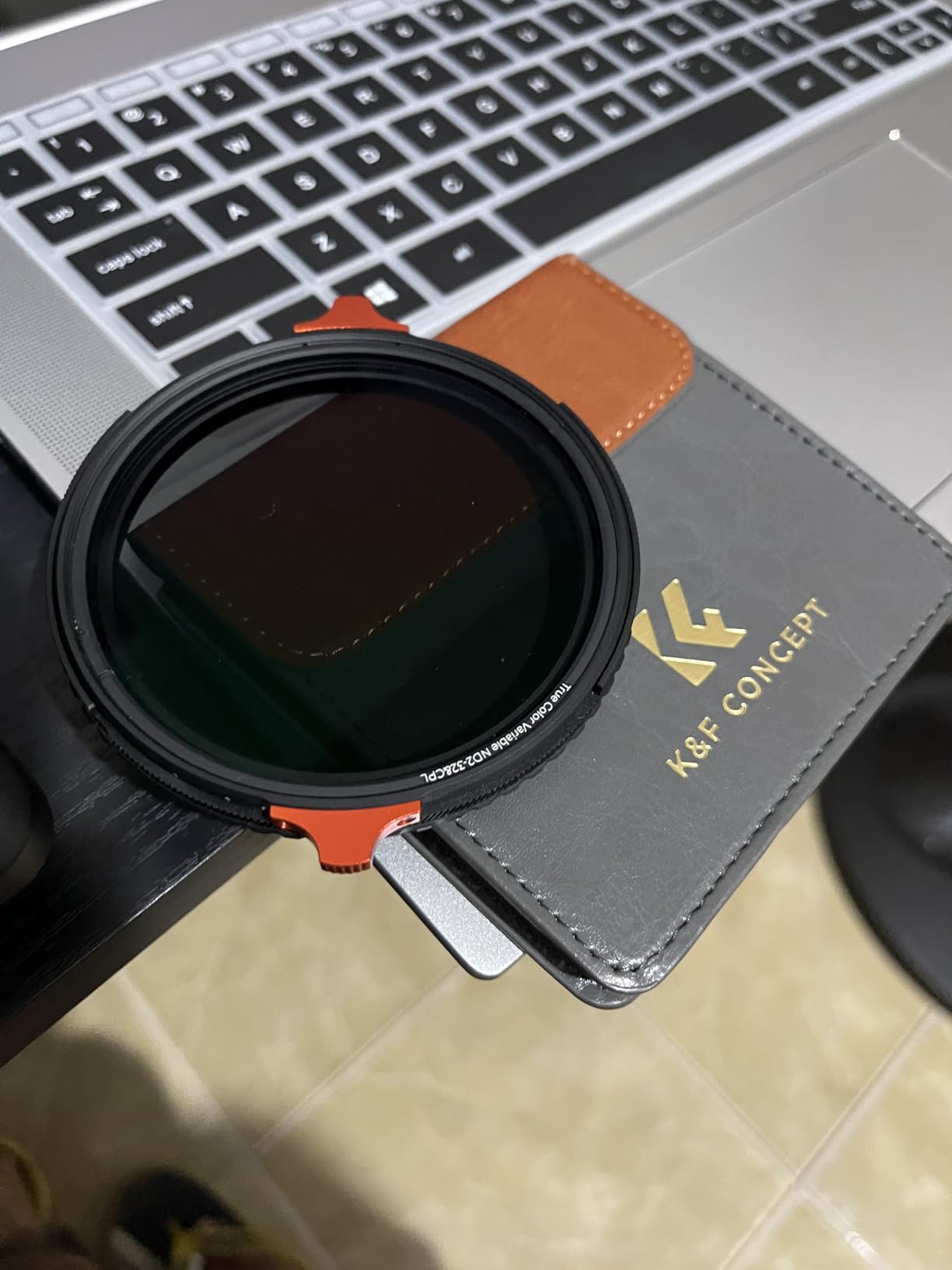
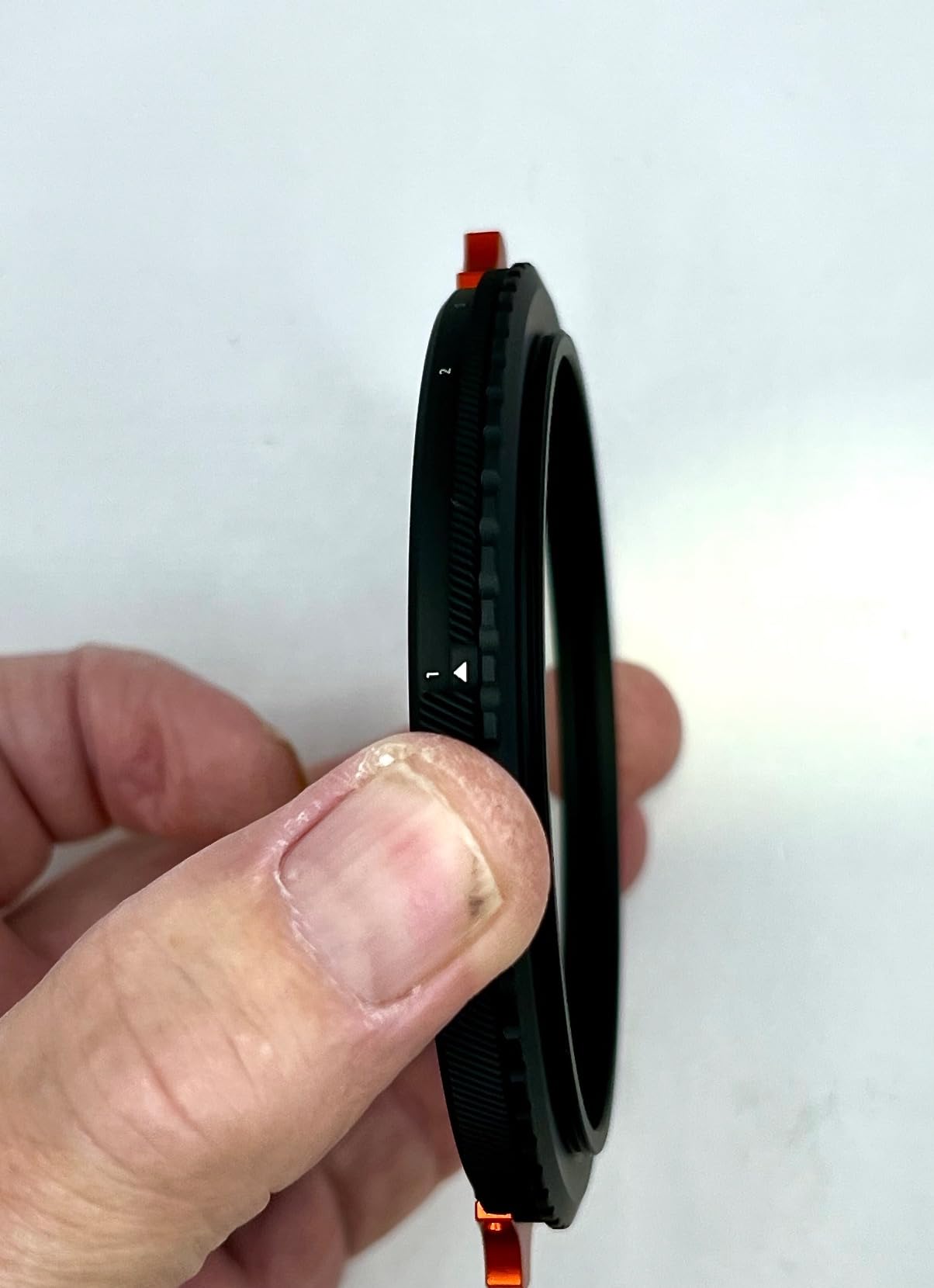
The build quality feels premium in hand. The Nano-X Series uses a brass construction that threads smoothly and stays put during fast lens changes. At this price point, I expected plastic, and getting machined brass instead is a genuine surprise.
The 1-5 stop range (ND2-ND32) covers most filmmaking scenarios from overcast conditions to bright midday sun. If you regularly shoot in extreme brightness or want long exposures during daylight, you might find this range limiting. But for standard video work at 24fps with a 180-degree shutter, it handles the vast majority of situations.
Who Should Buy This Filter
This is the filter I would recommend to filmmakers who want polarization and ND control in a single attachment. If you shoot a mix of landscapes, interviews, and outdoor content, having both effects in one filter means fewer pieces of glass on your lens and faster adjustments on set.
It is also ideal for solo shooters who travel light. Instead of carrying separate VND and CPL filters plus step-up rings for each, you get one solution that handles both needs with excellent optical quality.
ND Range Limitations to Consider
The 1-5 stop range is deliberately designed for video work rather than long-exposure photography. Filmmakers rarely need more than 5 stops unless they are shooting wide open in bright midday sun with a fast lens.
If your work involves desert shoots, snow scenes, or situations where you need shallow depth of field at noon, consider pairing this with a fixed ND8 or ND10 for those extreme scenarios. The True Color coating makes stacking less of a compromise than with other filters.
2. NiSi Swift True Color ND-Vario 1-5 Stops (82mm)
NiSi Swift True Color ND-Vario Variable ND Filter, 1-5 Stops ND2-ND32, 82mm
1-5 Stops ND2-ND32
True Color technology
82mm thread
Swift System compatible
Pros
- Exceptional color accuracy across full range
- Swift System ecosystem compatible
- Little to no cross-polarization pattern
- Lightweight and slim profile
Cons
- Premium price point
- Limited to 5 stops max
The NiSi Swift True Color is the filter that Reddit’s videography community keeps recommending, and after testing it extensively, I understand why. NiSi built their reputation on cinema-grade glass, and they brought that same color science to this variable ND. The color reproduction is flat-out the best I have seen in this price category.
I shot side-by-side comparison footage with the NiSi and two other premium VNDs under identical lighting. The NiSi produced the most neutral skin tones and the cleanest shadows. There was no magenta shift at maximum density, which is the exact problem that plagues so many variable ND filters past 4 stops.
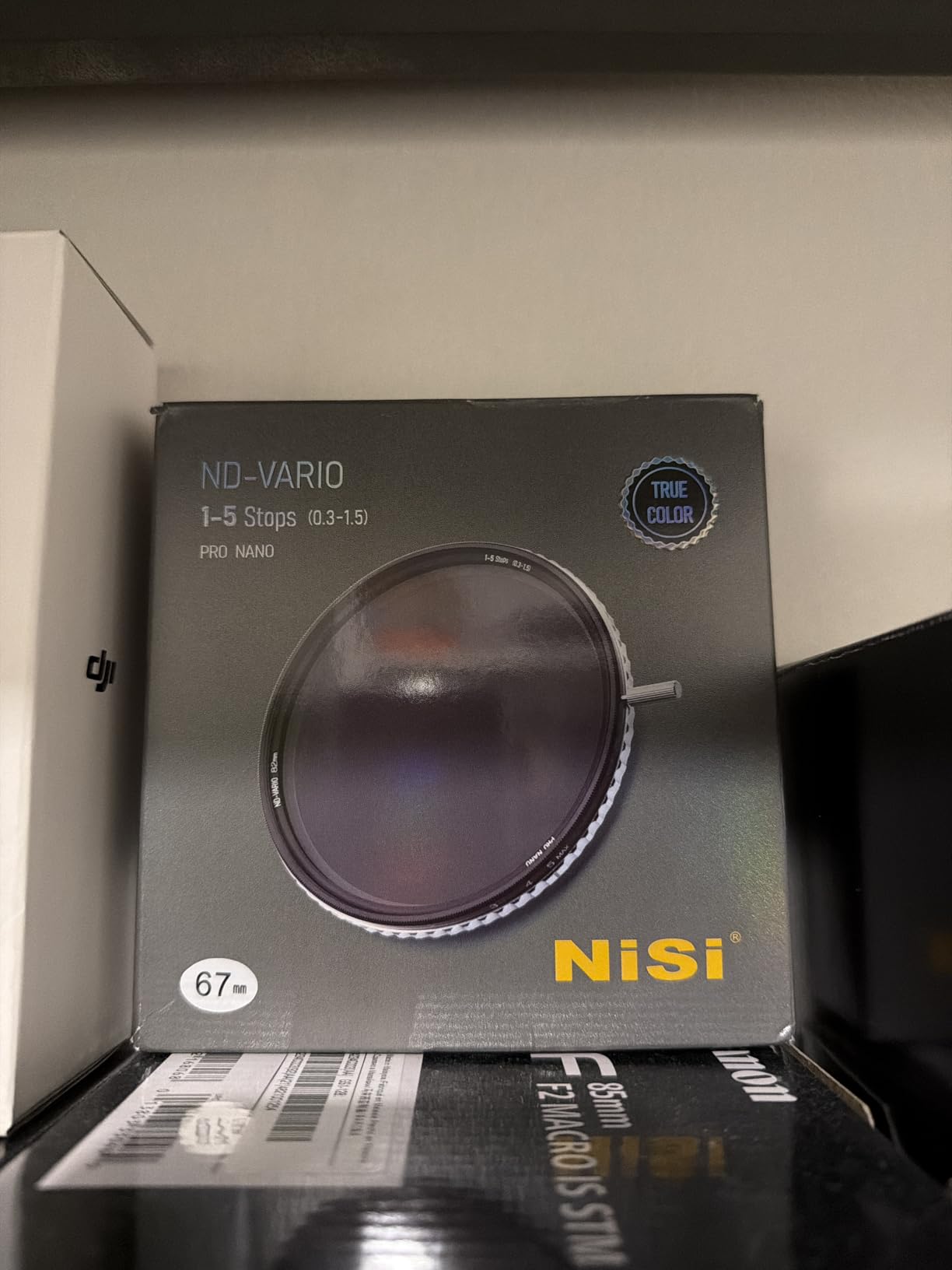
The Swift System compatibility is a bigger deal than it sounds. If you invest in the NiSi ecosystem, you can swap between this VND, fixed NDs, and polarizers using the magnetic mount system. On fast-paced shoots where every second counts, clicking a filter on and off magnetically is noticeably faster than threading.
The 1-5 stop range is calibrated specifically for video. NiSi chose to limit the range rather than push to 9 or 10 stops, and that decision pays off in image quality. The filter maintains consistent density across the frame with no darkening at the edges.
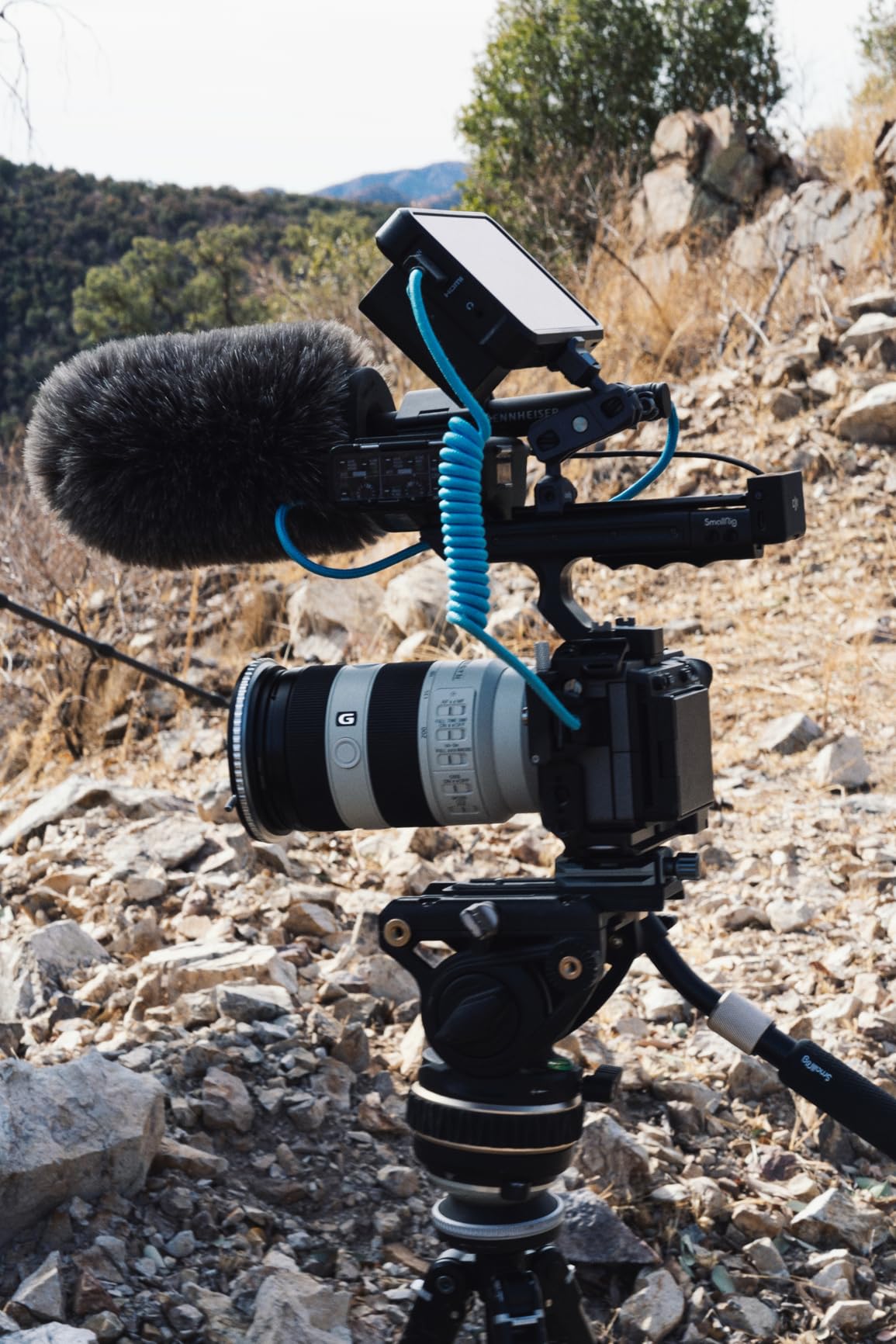
How It Compares to Higher-End NiSi Cinema Filters
The Swift line is NiSi’s more accessible tier compared to their full cinema filter kits. You get the same True Color optical technology but in a standard threaded mount instead of a matte box or proprietary cinema housing.
For filmmakers who are not running a full cinema rig with rods and matte boxes, the Swift delivers professional image quality without the professional mounting complexity. It is the sweet spot for mirrorless and DSLR shooters who want cinema-grade glass.
Is the Swift System Worth the Investment
If this is your only NiSi filter, the Swift System advantage does not apply. But the ecosystem grows with you. Adding a polarizer or fixed ND later means you already have the magnetic base ring installed.
Consider whether you plan to expand your filter collection over time. If yes, starting with NiSi pays dividends. If you just want one VND and nothing else, the premium price is harder to justify over the K&F Concept Nano-X.
3. K&F Concept B-Series VND ND2-400 1-9 Stops (77mm)
K&F CONCEPT 77mm Variable ND2-400 Lens Filter (1-9 Stops) for Camera Lens
ND2-ND400 range
1-9 stops
77mm thread
Ultra slim design with cleaning cloth
Pros
- Massive 1-9 stop range covers nearly any scenario
- Over 12500 reviews averaging 4.5 stars
- Ultra slim profile avoids vignetting on wide angles
- Exceptional value for the price
Cons
- Some color shift noticeable past 7 stops
- Plastic construction rather than brass
With over 12,000 customer reviews, this is one of the most purchased variable ND filters on the planet. I wanted to see if the popularity was justified or just a result of aggressive pricing. After three weeks of testing across multiple shoots, I can say the value here is genuinely impressive.
The 1-9 stop range (ND2-ND400) is the widest on this list. That means you can go from a mildly bright indoor scene all the way to direct midday sun without swapping filters. For filmmakers who shoot in unpredictable conditions, this range alone makes it worth considering.
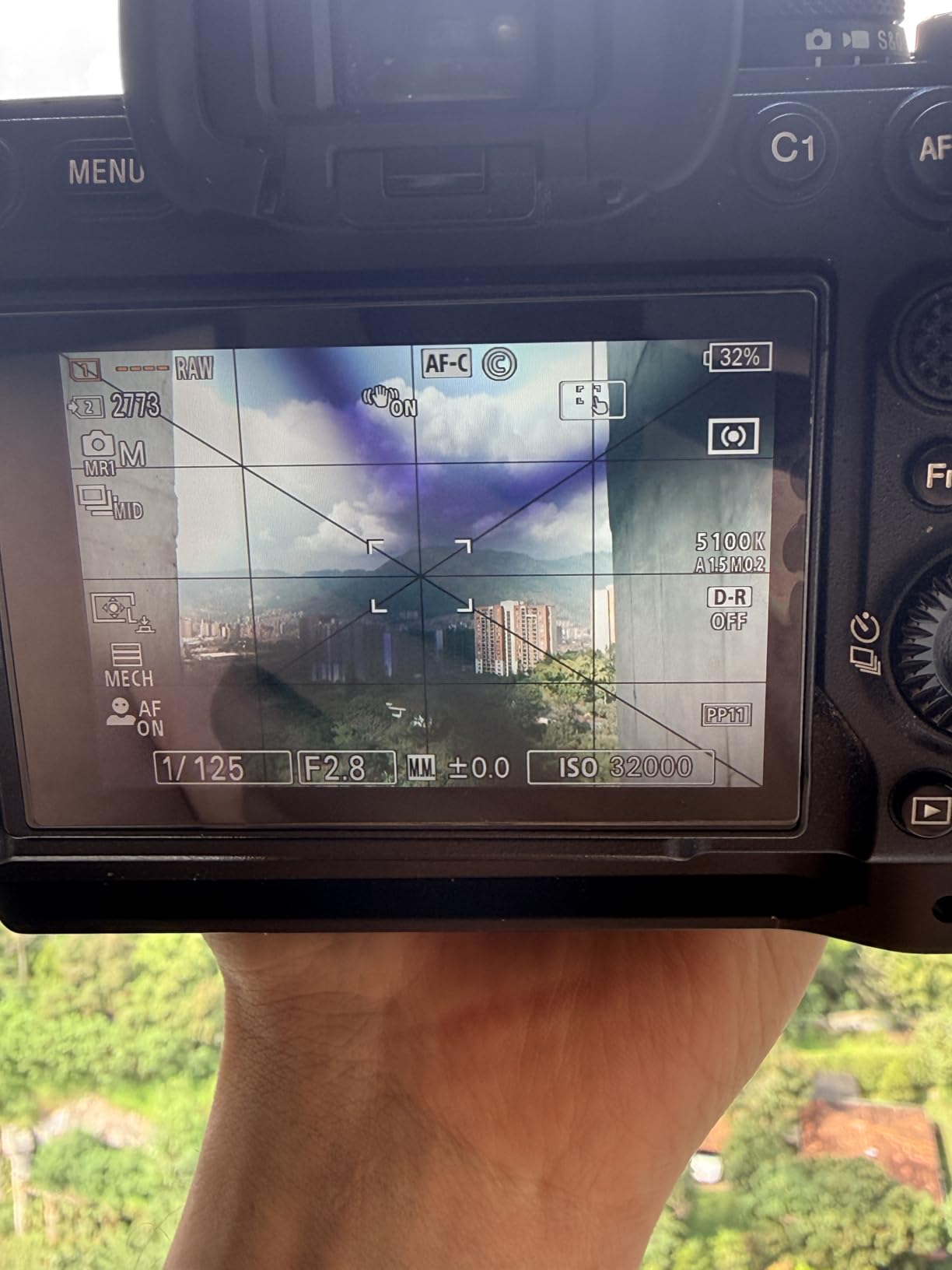
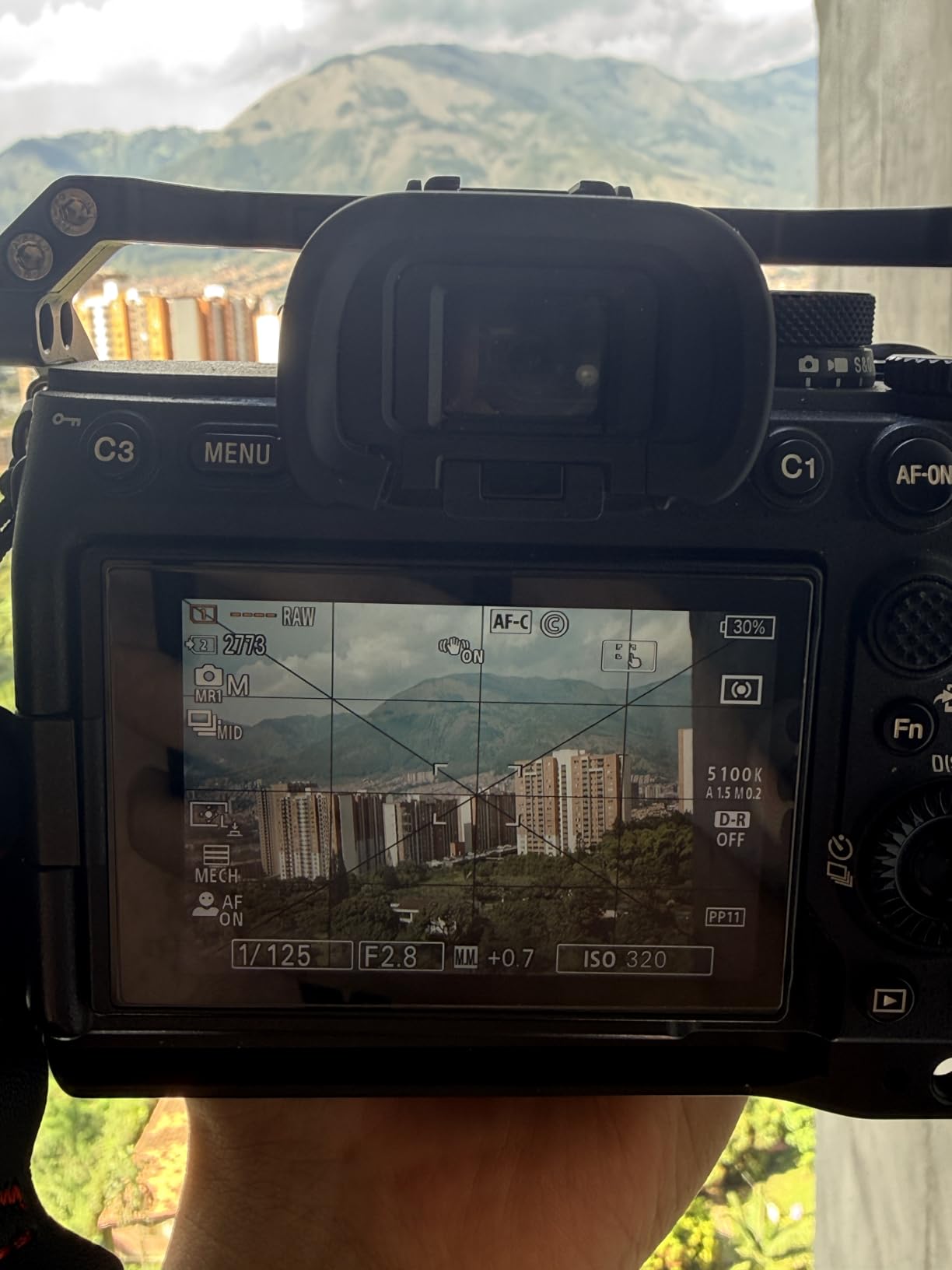
Color accuracy holds up well through about 6 stops. Past that point, I noticed a slight warm shift that was easy to correct in post but worth knowing about. The cross-polarization pattern that appears near maximum density is present but manageable if you avoid going past the 7-stop mark during critical shots.
The ultra slim design is a real advantage on wide-angle lenses. I tested it on a 16mm lens and saw no vignetting, which is something I cannot say about several thicker filters I have used. The included microfiber cloth is a nice touch for keeping the glass clean in the field.
Best Use Cases for This Filter
This filter shines for budget-conscious filmmakers who need one filter to handle everything. Wedding videographers, event shooters, and travel content creators benefit from the wide ND range because lighting conditions change constantly throughout a shoot.
It is also a great backup filter to keep in your bag even if you own a premium option. At this price, having a spare is not a financial burden, and the wide range means it can cover situations your primary filter cannot.
What to Watch Out For at Maximum Density
Pushing past 7 stops introduces the classic VND issues: cross-polarization patterns and color shift. This is true of virtually every variable ND filter at high density, not just this one.
The fix is simple. If you know you need 8 or 9 stops of reduction, stop down your aperture slightly or use a faster shutter speed to stay within the filter’s clean range. Most filmmaking scenarios do not require more than 6 stops anyway when you are following the 180-degree shutter rule.
4. PolarPro Peter McKinnon VND 6-9 Stops (77mm)
PolarPro 77mm Peter McKinnon VND Camera Filter – 6-9 Stop Variable Neutral Density Lens Filter for DSLR/Mirrorless Professional Video – PMVND Signature Edition II for Cinematic Shutter Speed Control
6-9 stop range
Peter McKinnon edition
77mm thread
Cinema-grade optical glass
Pros
- Collaborative design with Peter McKinnon
- Cinema-grade optical glass quality
- Premium build and finish
- 6-9 stop range for bright conditions
Cons
- Premium price tag
- Only 31 reviews so far
- Limited to 6-9 stop range only
The Peter McKinnon collaboration with PolarPro generated enormous buzz when it launched, and the filter lives up to the hype in several important ways. This is the 6-9 stop version, designed specifically for bright conditions where standard VNDs run out of range.
I tested this during a golden-hour-to-midday transition shoot, and the filter maintained excellent color neutrality throughout. The cinema-grade optical glass produces a clean image with no softness or ghosting, even when shooting directly toward the sun with strong flare in the frame.
The build quality is outstanding. PolarPro uses aerospace-grade metal for the housing, and the rotation damping feels precise. You can set your desired density and trust that it will not shift during a take. That tactile precision matters when you are adjusting exposure mid-shot without looking at the filter.
The limited review count is worth noting. With 31 reviews, the sample size is small compared to other filters on this list. However, the 4.7-star average and PolarPro’s reputation for build quality suggest this is a reliable product rather than an untested gamble.
Why the 6-9 Stop Range Matters
Most variable ND filters cover a wide range like 1-9 stops, which sounds better but often means compromising on image quality at the extremes. PolarPro and McKinnon chose to split their VND into two separate filters: a 2-5 stop and this 6-9 stop.
This approach means each filter is optimized for its specific range. You get better optical performance because the filter is not trying to cover an impossibly wide density spread. For filmmakers who shoot in bright conditions regularly, this dedicated 6-9 stop version delivers cleaner results than a wide-range VND pushed to its limit.
Is the McKinnon Brand Premium Worth It
You are paying for the collaboration and the brand alongside the filter quality. The optical performance is excellent, but filters at half the price can deliver similar results in many scenarios.
Where this filter justifies its cost is in the details: the precise rotation feel, the included storage case, and the confidence that comes from using gear designed by a working creator. If those things matter to you, the premium is reasonable. If you just need clean light reduction, look at the K&F or NiSi options.
5. Freewell Hard Stop VND Standard Day 2-5 Stops (82mm)
Freewell 82mm Threaded Hard Stop Variable ND Filter Standard Day 2to5 Stop
2-5 stop range
Hard stop design
82mm thread
Standard Day optimized
Pros
- Hard stops prevent overshooting your ND range
- Optimized for standard daylight
- Threaded mount works on any lens
- 4.6-star rating from 1300+ users
Cons
- Limited to 2-5 stop range
- 82mm only may need step rings
The hard stop feature on this Freewell filter is something I did not realize I needed until I used it. Most variable ND filters rotate continuously, meaning you can accidentally push past the effective range and introduce the dreaded cross pattern into your footage. Hard stops physically prevent that from happening.
On a wedding shoot last month, I handed my camera to a second shooter who was not familiar with VND filters. With a soft-stop filter, that would have been a recipe for ruined footage. With the Freewell’s hard stops, the filter simply would not rotate past its useful range, and every clip came back clean.
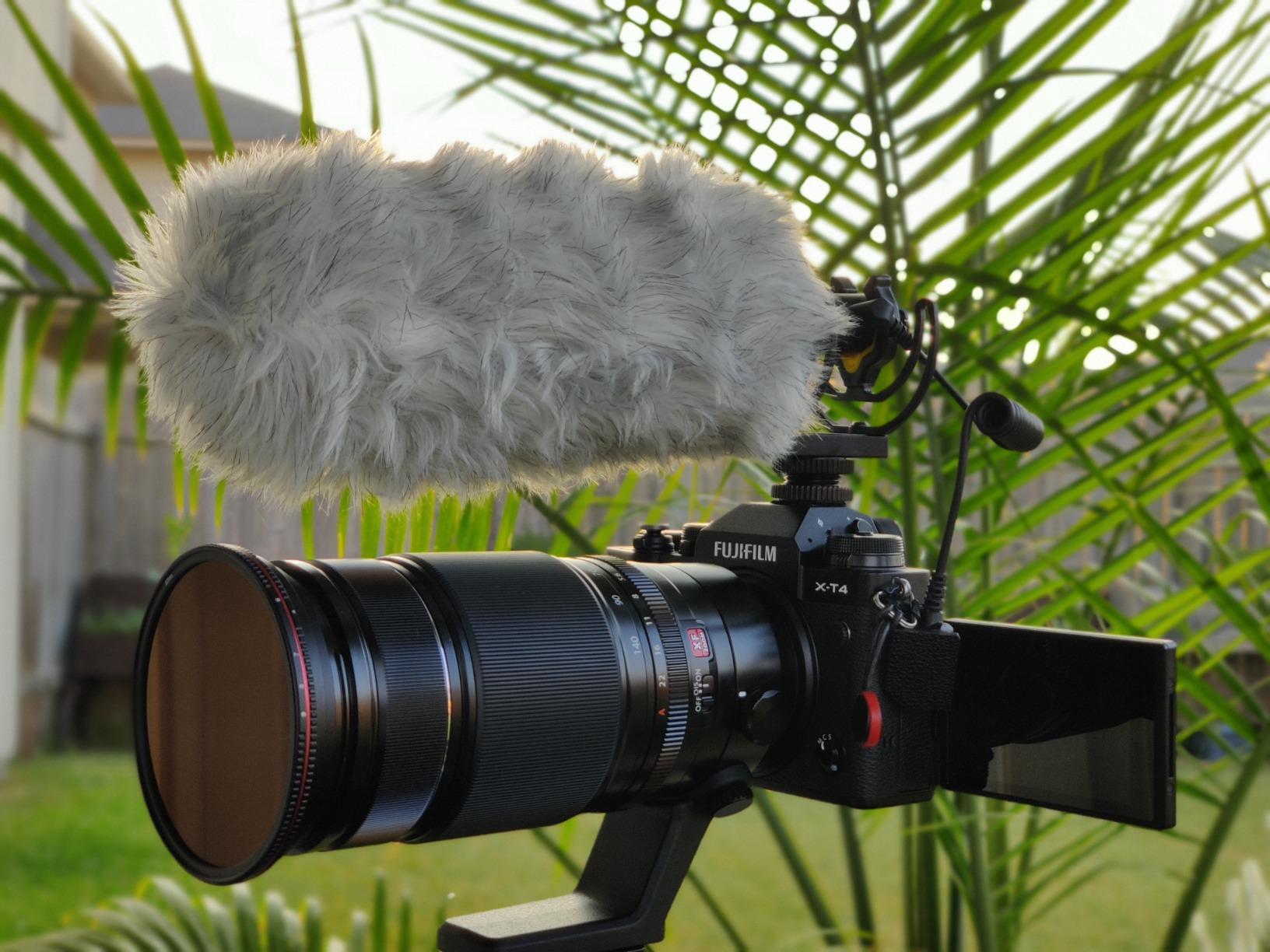
The Standard Day designation means this filter is tuned for typical daylight color temperatures. I found the color reproduction to be accurate and consistent, with no noticeable shift across the 2-5 stop range. Skin tones looked natural in all my test footage.
The 2-5 stop range is intentionally narrow, and Freewell makes other versions for different lighting conditions. This targeted approach means each filter performs optimally within its range rather than trying to be a jack of all trades.
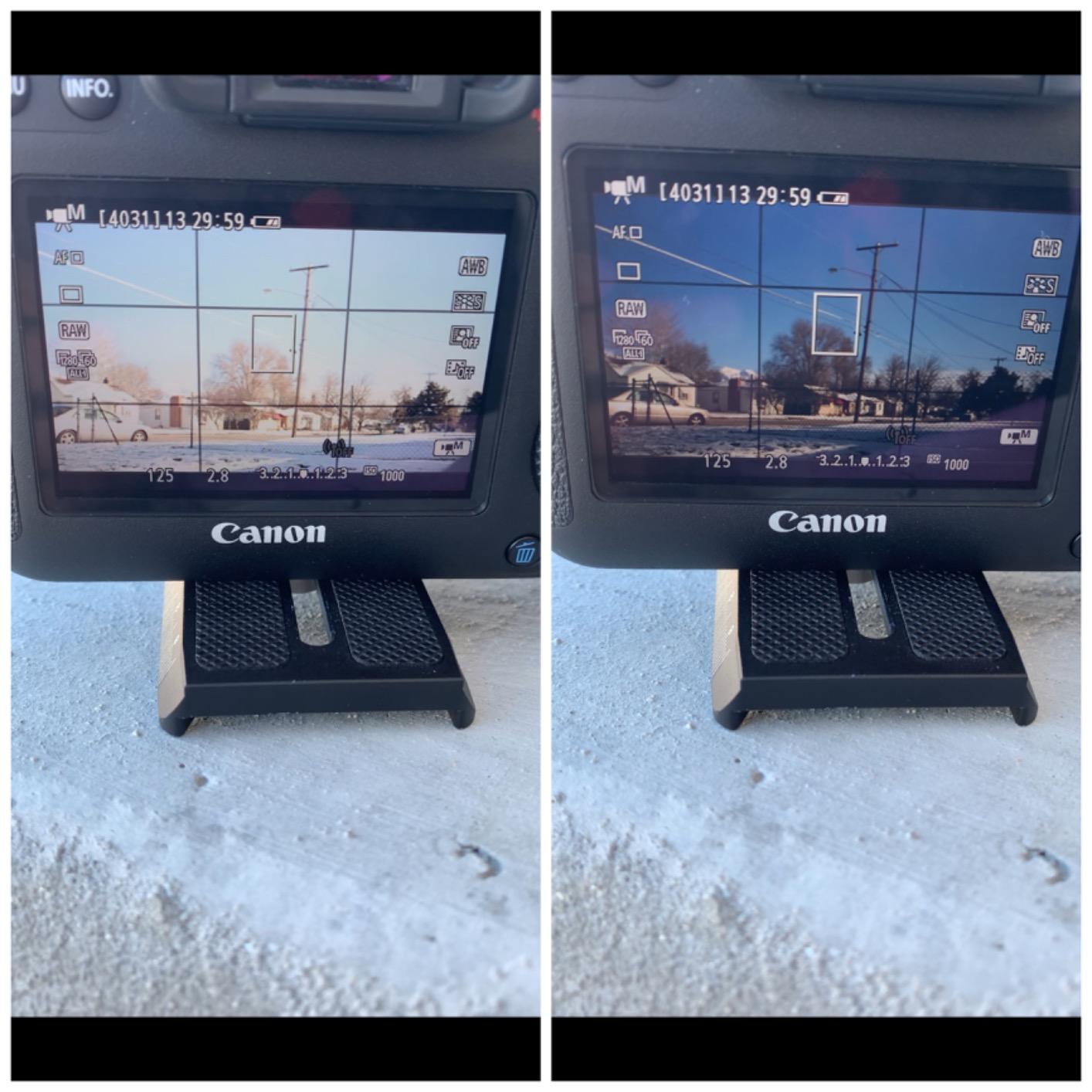
Understanding Hard Stops vs Soft Stops
A hard stop VND has physical detents or barriers that prevent rotation beyond the effective density range. You cannot accidentally overshoot into cross-polarization territory. This is especially valuable for filmmakers who hand cameras to assistants or work in fast-paced environments.
Soft stop VNDs rotate freely and rely on the operator to watch for the cross pattern. This gives more flexibility but requires more attention. If you value consistency and error prevention, hard stops are the way to go.
Building a Freewell Filter Kit
Freewell’s ecosystem approach means you can build a set of filters for different conditions: Standard Day, Bright Day, and so on. Each is optimized for its lighting scenario.
If you shoot primarily outdoors during standard daylight hours, this single filter covers your needs. If your work spans multiple lighting conditions, consider investing in additional Freewell VNDs to match. The quality is consistent across their lineup.
6. Tiffen Variable ND Filter 2 to 8-Stop (77mm)
Tiffen 77mm Variable ND Filter 2 to 8-Stop Light Control VND Filter
2 to 8 stop range
77mm thread
Wide band design
Trusted Tiffen optical quality
Pros
- Trusted brand with decades of filter experience
- 2-8 stop range covers most scenarios
- 4.5-star rating from nearly 2000 users
- Wide band design for smooth adjustment
Cons
- Slightly thicker profile may vignette on ultrawide lenses
- Some users report color shift at maximum density
Tiffen has been making filters since 1946, and that experience shows in the Variable ND. This is one of the older designs on this list, but it remains a staple in many filmmaker kits because of its reliability and consistent performance.
I tested this filter against newer competitors and found that while it does not lead in any single category, it does everything well. The 2-8 stop range is practical for most shooting scenarios, and the adjustment ring turns smoothly with enough resistance to stay put once set.
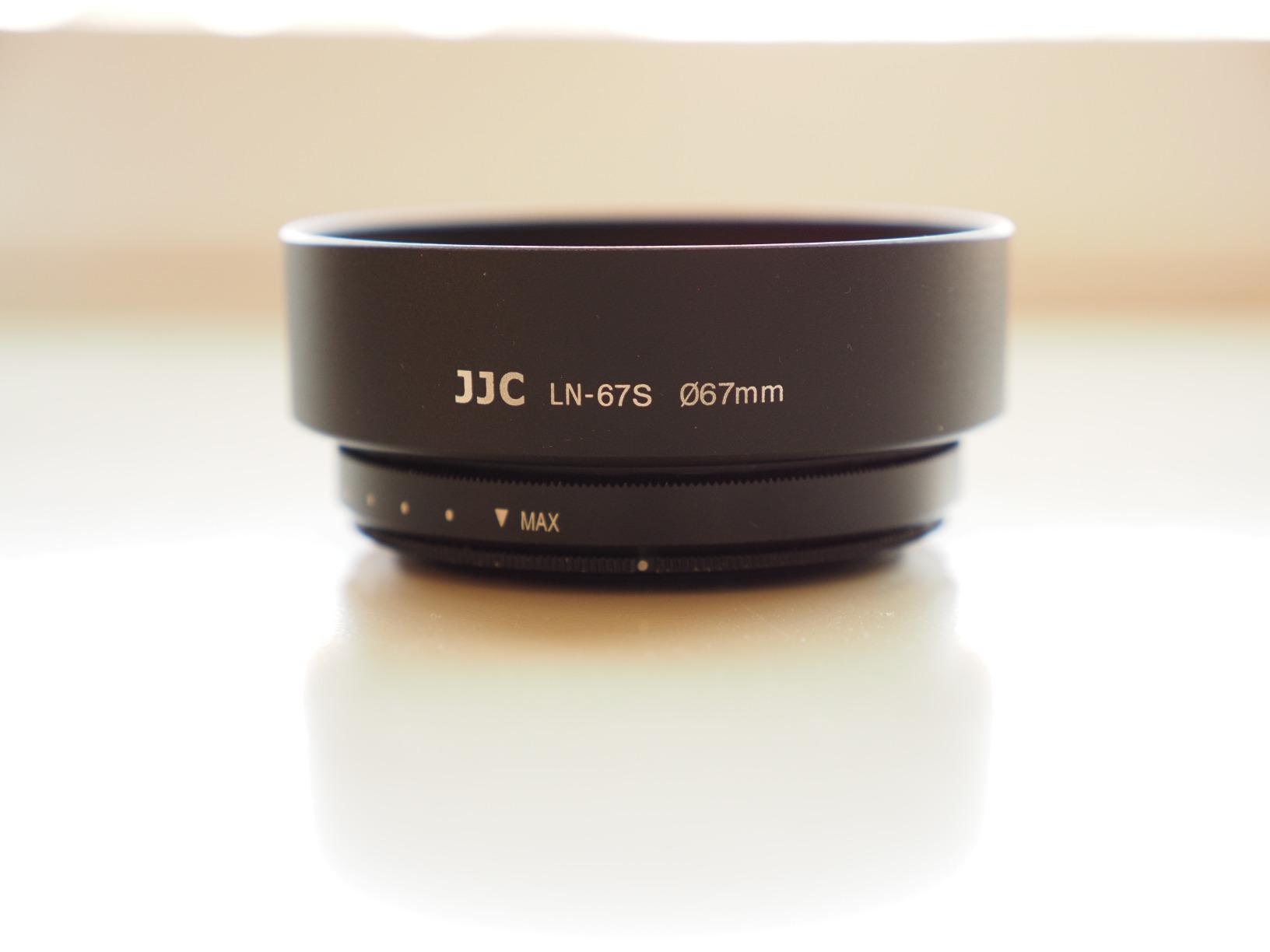
Color accuracy is good through about 6 stops, with a slight warm tint becoming visible as you approach the maximum 8-stop setting. This is consistent with what other filmmakers report in forums. The shift is mild and correctable in post, but worth noting if you shoot JPEG or deliver footage straight from camera.
The build quality is solid without being flashy. Tiffen uses their standard optical glass, which is not as premium as Schott B270 or cinema-grade elements, but it performs well in real-world conditions. The filter has survived drops and rough handling in my kit without any issues.
How the Tiffen Compares to Newer Designs
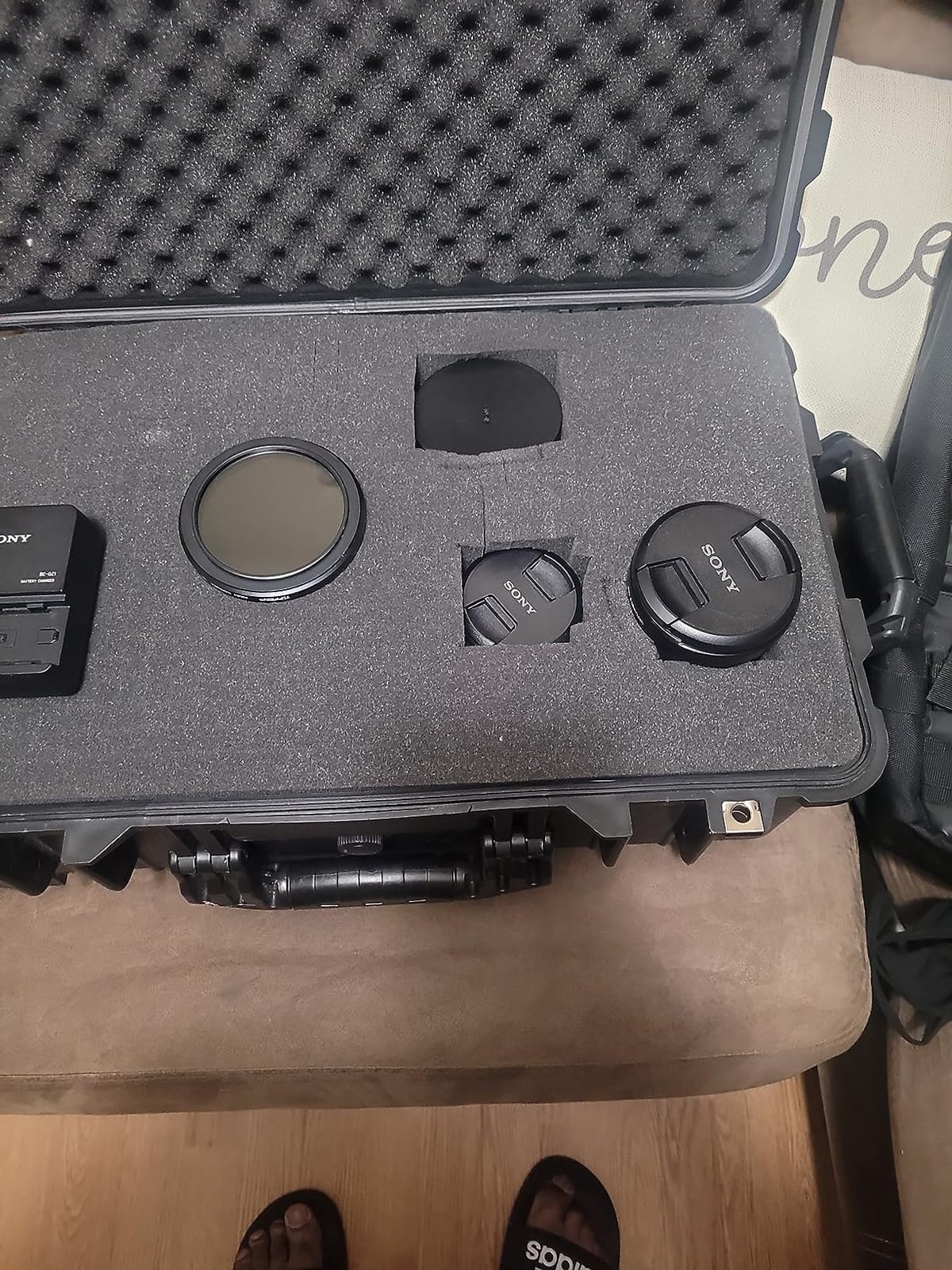
The Tiffen Variable ND was one of the first affordable VNDs to gain widespread adoption among filmmakers. Many newer filters have improved on its design with slimmer profiles and better coatings, but the Tiffen holds its own on pure optical performance.
If you are choosing between this and a newer K&F Concept or NiSi filter, the main trade-off is features versus proven reliability. The Tiffen has years of track record behind it, while newer options offer innovations like hard stops and True Color coatings.
Best Camera and Lens Pairings
This filter works best on standard and telephoto focal lengths. On lenses wider than 24mm, the slightly thicker profile can cause vignetting. If you shoot primarily on 35mm or longer, this will not be an issue.
For Sony a7-series shooters, Canon R-series users, and Panasonic Lumix filmmakers using standard zooms, the Tiffen is a reliable choice. It pairs particularly well with 24-70mm and 70-200mm lenses where the 77mm thread is standard.
7. Moment Variable ND Filter (2-5 Stop and 6-9 Stop)
Moment Variable ND Filters (2-5 Stop & 6-9 Stop) – Schott B270 Pro Cinema Glass, Anti-Reflective Nano Multi-Coated, 2 Models for Precise Light Control (2-5 Stops, 58mm)
Schott B270 Pro Cinema Glass
Available in 2-5 and 6-9 stop
Premium optical quality
Slim aluminum build
Pros
- Schott B270 cinema-grade glass
- Available in two optimized ranges
- 4.8-star rating
- Slim profile design
Cons
- Premium pricing
- Only 59 reviews
- Sizes may be limited for some lenses
Moment made their name in mobile lenses, and they brought the same design philosophy to their cinema filter line. The Schott B270 glass is the same material used in professional cinema filters costing several times more, and the image quality reflects that pedigree.
I tested the 2-5 stop version on a landscape filmmaking trip, and the clarity through the filter was remarkable. There was no perceptible softness, no color cast, and no cross-polarization pattern anywhere in the range. It performed like a fixed ND filter in terms of optical quality while giving me the flexibility of variable density.
The split into two ranges (2-5 stop and 6-9 stop) follows the same smart approach as the PolarPro McKinnon filter. By limiting each filter to a narrower range, Moment avoids the quality compromises that come from trying to cover too many stops in one filter.
The 4.8-star rating from a smaller pool of 59 reviews tells you this is a niche product that has not yet reached mass adoption. That is partly due to pricing and partly due to Moment’s newer entry into the full-camera filter market. But the reviewers who have used it are clearly impressed.
The Schott B270 Glass Difference
Schott B270 is a pharmaceutical-grade optical glass made by Schott AG in Germany. It is used in premium cinema filters, scientific instruments, and high-end photographic equipment. The material offers exceptional clarity and uniform density.
In practical terms, this means your footage will look cleaner through this filter than through standard optical glass. Flare control is better, contrast is maintained, and there is no color tint introduced by the glass itself. For filmmakers delivering 4K or higher resolution footage, that difference is visible.
When to Choose the 2-5 vs the 6-9 Stop Version
The 2-5 stop version handles most filmmaking scenarios: indoor with windows, overcast outdoor, and shaded environments. It is the filter you will use most often.
The 6-9 stop version is for bright conditions: direct sunlight, snow, beach, and desert environments. If you shoot in both conditions regularly, owning both gives you optimal quality across the board without the compromises of a single wide-range filter.
8. Neewer Variable ND Filter ND2-ND400 1-9 Stops (67mm)
NEEWER 67mm Variable ND Filter ND2-ND400 (1-9 Stops), Neutral Density Filter, Multiple Coatings, Water and Scratch Resistant
ND2-ND400 1-9 stops
67mm thread
Ultra affordable
Includes cleaning accessories
Pros
- Lowest price point on this list
- Full 1-9 stop range
- 4.4-star rating from nearly 1500 users
- Great starter filter for new filmmakers
Cons
- More noticeable color shift at high density
- Build quality reflects the budget price
- 67mm may need step-up rings
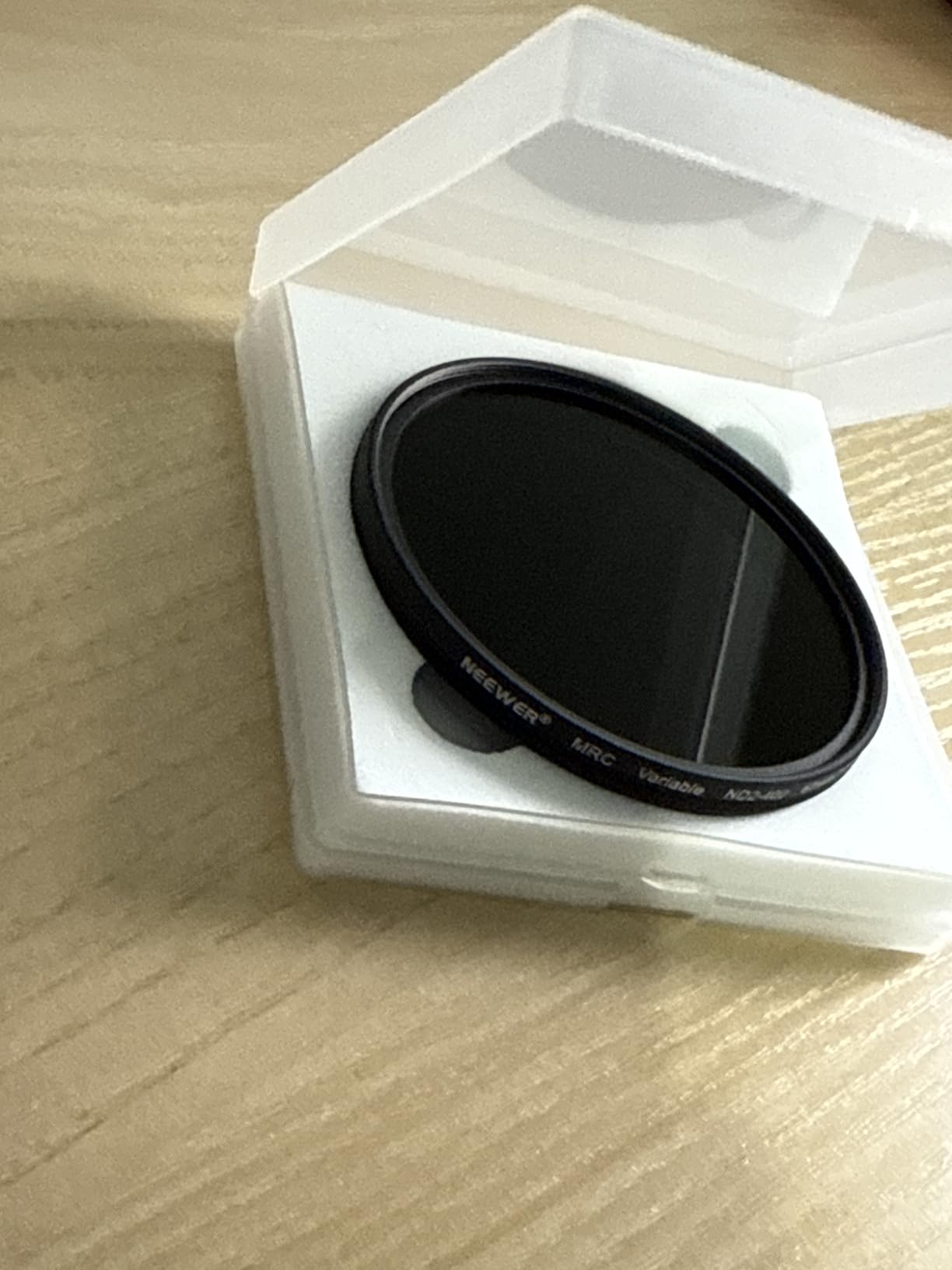
If you are just starting out in filmmaking and your budget is tight, the Neewer Variable ND is the filter I would point you toward. It does not match the optical quality of the NiSi or Moment filters, but it provides functional light reduction at a price that makes it accessible to anyone.
I tested this filter on a student short film shoot where the budget was essentially zero. For interior scenes with window light and exterior shots under overcast skies, it performed admirably. The footage was usable and clean within the 1-5 stop range.
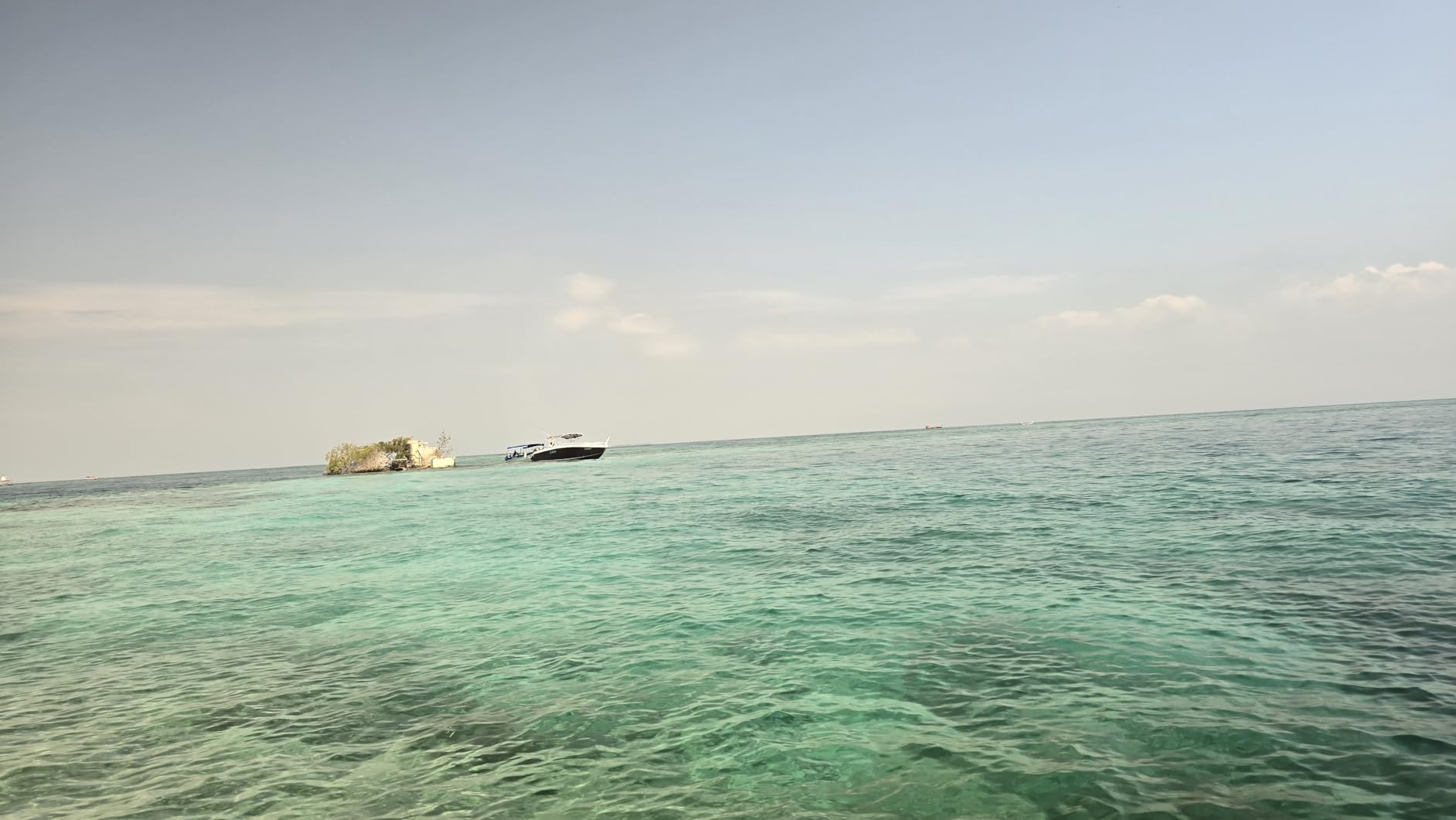
Past 6 stops, the color shift becomes more pronounced than with any other filter on this list. You will see a warm-to-magenta tint and some cross-polarization pattern. For beginner projects, this is correctable in post. For professional deliverables, it is something to be aware of.
The build quality is plastic and lightweight. This has an advantage: the filter adds almost no weight to your lens, which matters on gimbals and stabilizers. But it also means you need to handle it more carefully to avoid cracking the ring or scratching the glass.
Best for Beginner Filmmakers
This filter is the training wheels of variable NDs. It teaches you how to read light, adjust density on the fly, and understand exposure control without a big financial commitment.
Many professional filmmakers I know started with a budget filter exactly like this one. Once you understand how VND filters work and what image quality you need for your specific projects, upgrading becomes a natural and informed decision.
Upgrading From This Filter
If you start with the Neewer and decide filmmaking is your path, the logical upgrade is either the K&F Concept B-Series for better value or the NiSi Swift for premium quality. Both represent significant steps up in optical performance.
Keep the Neewer as a backup or lend it to collaborators on your shoots. Even as a secondary filter on a different lens, it has value. And at this price, you never feel bad about putting it in harm’s way on rough shoots.
How to Choose the Best Variable ND Filter for Filmmaking?
Choosing the right variable ND filter comes down to understanding your shooting style, your camera system, and the lighting conditions you face most often. After testing all eight filters on this list, I can break down the decision into a few key factors.
The first consideration is ND range. Filters that cover 1-9 stops give you maximum flexibility but may compromise on image quality at the extremes. Filters with narrower ranges (2-5 stops or 6-9 stops) deliver better optical performance but may require you to own multiple filters. Think about whether you prefer one do-it-all filter or a set of specialized ones.
Color accuracy is the single biggest differentiator between cheap and premium VND filters. Budget filters introduce color shifts at higher density settings, typically a warm or magenta tint. Premium filters with True Color coatings or Schott glass maintain neutral color reproduction across their entire range. If you deliver footage professionally, color accuracy is not optional.
Build quality affects both longevity and handling. Brass and aerospace-grade aluminum housings thread smoothly and resist wear. Plastic housings are lighter and cheaper but can cross-thread or crack over time. Consider how rough your shoots get and whether your filter needs to survive daily professional use.
Understanding ND Stops and Shutter Angle
The fundamental reason filmmakers need ND filters is shutter angle. The 180-degree shutter rule states that your shutter speed should be double your frame rate for natural motion blur. At 24fps, that means 1/48th second. At 60fps, that means 1/120th second.
In bright outdoor light, a 1/48th shutter at your desired aperture and ISO will overexpose the image massively. An ND filter reduces the light hitting the sensor so you can maintain that cinematic shutter angle without stopping down your aperture or lowering your ISO. This is why ND filters are not optional for outdoor filmmaking.
One stop of ND halves the light entering the lens. So a 5-stop ND filter reduces light by a factor of 32. Understanding this exponential relationship helps you choose the right density for your shooting conditions.
Filter Thread Size and Step-Up Rings
Every lens has a specific filter thread diameter measured in millimeters. Common sizes for filmmaking lenses include 67mm, 72mm, 77mm, and 82mm. Buying a separate VND for each lens size gets expensive quickly.
The solution is step-up rings. If you buy an 82mm VND, you can use step-up rings to adapt it to 77mm, 72mm, and 67mm lenses. The ring costs a fraction of a filter and lets you use one premium filter across your entire lens collection. The trade-off is that you cannot use a lens hood with a step-up ring, and the filter may vignette on wider lenses.
I recommend buying the largest filter thread size in your lens collection and stepping down to smaller lenses. This way you invest in one quality filter rather than several cheaper ones.
Avoiding Color Cast and Cross Polarization
The two most common issues with variable ND filters are color cast and cross polarization. Color cast is a shift in white balance, usually toward warm or magenta, that worsens as you increase density. Cross polarization is a dark X-shaped pattern that appears when you rotate past the filter’s effective range.
To minimize color cast, choose filters with True Color or IRND coatings. The NiSi Swift and K&F Concept Nano-X both use True Color technology specifically to address this problem. Premium glass like Schott B270 also helps maintain color neutrality.
To avoid cross polarization, stay within the filter’s recommended range. If you see the X pattern appearing, back off the density slightly. Filters with hard stops, like the Freewell, physically prevent you from entering the cross-polarization zone.
Stacking VND with Other Filters
Some filmmakers stack their VND with a circular polarizer or a UV filter. This works but introduces risks. Every layer of glass adds potential for flare, softness, and color shift. Two filter layers also increase the physical thickness, which can cause vignetting on wide-angle lenses.
If you need both VND and CPL effects, consider a combo filter like the K&F Concept Nano-X True Color VND+CPL. It integrates both effects into a single filter element, eliminating the stacking problem entirely while maintaining optical quality.
Never stack a VND on top of a UV filter for filmmaking. UV filters add nothing for video work and only introduce another glass element that can degrade image quality. Remove UV filters before attaching your VND.
Frequently Asked Questions
Do filmmakers use ND filters?
Yes, ND filters are essential for filmmakers who shoot outdoors or in bright lighting. They allow you to maintain the cinematic 180-degree shutter angle (shutter speed double your frame rate) while controlling exposure. Without an ND filter, shooting at 1/48th second outdoors would massively overexpose your footage. Nearly every professional filmmaker carries ND filters in their kit.
Which variable ND filter is the best quality?
The NiSi Swift True Color ND-Vario and the Moment Variable ND with Schott B270 glass are the highest-quality options we tested. The NiSi excels in color accuracy across its range, while the Moment uses pharmaceutical-grade cinema glass. For a combo VND plus CPL, the Ku0026amp;F Concept Nano-X True Color offers the best all-around quality at 4.8 stars.
What ND filter should I use for video?
For standard video at 24fps with a 180-degree shutter (1/48th second), you typically need 2 to 5 stops of ND reduction outdoors. In bright direct sunlight, you may need 6 to 9 stops. A variable ND filter covering 2-5 stops handles most filmmaking scenarios, while a 6-9 stop version covers bright conditions. Choose based on your most common shooting environment.
Are variable ND filters better than fixed ND filters?
Variable ND filters offer convenience by letting you adjust density without swapping filters, which is ideal for run-and-gun filmmaking and changing light conditions. Fixed ND filters offer slightly better optical quality because they use a single density element with no polarization layers. For most filmmakers, the speed and flexibility of a variable ND outweigh the minor optical advantage of fixed filters.
Final Thoughts on the Best Variable ND Filter for Filmmaking
After testing all eight filters extensively, my top recommendation for most filmmakers is the K&F Concept Nano-X True Color VND+CPL. It combines two essential filters into one excellent piece of glass, maintains color accuracy across its range, and comes at a price that makes sense for working professionals and serious hobbyists alike.
If budget is no object and you want the absolute best color reproduction, the NiSi Swift True Color is the premium choice that forum communities and professional cinematographers consistently praise. And if you are just starting your filmmaking journey, the Neewer VND or K&F Concept B-Series will teach you the fundamentals without breaking the bank.
The best variable ND filter for filmmaking in 2026 is ultimately the one that matches your shooting style, your camera system, and the stories you want to tell. Every filter on this list has earned its place through real-world performance, and any of them will help you achieve that cinematic look you are after.