
A documentary short film is a non-fiction motion picture that presents real-life people, events, or issues in a condensed format, typically lasting between 2 and 40 minutes. Unlike feature documentaries that can run for two hours or more, documentary shorts distill true stories into focused, punchy narratives that fit within a single sitting.
If you have ever watched a brief video about a fascinating person, a social cause, or a historical event and walked away having learned something new, you have already experienced the power of this format. Documentary short films sit at the intersection of journalism, storytelling, and visual art, giving filmmakers a way to explore real subjects without the massive budgets and years-long commitments that feature documentaries demand.
Our team has spent months researching the documentary short landscape, studying Academy Award rules, analyzing festival lineups, and digging through filmmaker forums to put together this guide. Whether you are a student assigned your first short documentary, a non-profit looking to tell your story, or simply curious about what qualifies as a documentary short film, you will find clear, specific answers here.
Table of Contents
- What Is a Documentary Short Film?
- How Long Is a Documentary Short Film?
- Key Characteristics of a Documentary Short Film
- Documentary Short Film vs. Feature Documentary
- Documentary Short vs. Other Short Film Types
- Where Documentary Short Films Are Shown?
- Notable Documentary Short Film Examples
- How to Make a Documentary Short Film?
- Common Mistakes to Avoid
- Why Documentary Short Films Matter?
- FAQs
- Conclusion
What Is a Documentary Short Film?
A documentary short film is exactly what the name suggests: a documentary film, but short. It uses the same non-fiction storytelling tools as a full-length documentary, including interviews, archival footage, voiceover narration, and observational B-roll, but packages everything into a compact runtime.
What sets a documentary short apart from other short films is its commitment to factual storytelling. There are no scripted actors, no fictional scenarios, and no invented dialogue. The subjects are real people, the events actually happened, and the filmmaker’s job is to present the truth in a way that engages the audience.
Here are the key characteristics that define a documentary short film:
Non-fiction subject matter based on real people, events, or issues
Runtime between 2 and 40 minutes (with the Academy setting the cutoff at 40 minutes including credits)
Single-subject focus that explores one story, person, or topic in depth
Use of documentary techniques like interviews, archival footage, B-roll, and voiceover
Typically screened at film festivals, online platforms, or educational venues
One thing our research made clear is that documentary shorts are not just shorter versions of feature documentaries. They are a distinct art form with their own pacing, structure, and creative challenges. A filmmaker working with 15 minutes has to make every second count, which often leads to tighter storytelling and more emotionally focused narratives.
How Long Is a Documentary Short Film?
A documentary short film typically runs between 2 and 40 minutes. The Academy of Motion Picture Arts and Sciences, which awards the Oscar for Best Documentary Short Film, sets the official cutoff at 40 minutes including all credits. Any non-fiction film that runs longer than 40 minutes is classified as a feature documentary for award purposes.
Within that broad range, filmmakers and festivals often use informal subcategories to describe different lengths:
Micro documentary: 1 to 5 minutes. These ultra-short pieces often focus on a single moment, person, or idea. They are popular for social media, branded content, and awareness campaigns.
Mini documentary: 5 to 15 minutes. This length allows for a more developed narrative while staying concise. Non-profits, businesses, and independent filmmakers frequently use mini-docs to tell complete stories.
Short documentary: 15 to 40 minutes. This is the traditional festival and Oscar-eligible range. Filmmakers have enough time to explore complex subjects with depth and nuance.
I want to flag something important here. There is no universal agreement on these subcategories. Some filmmakers call anything under 10 minutes a mini-doc, while others reserve that term for pieces under 5 minutes. The 40-minute Academy cutoff is the only universally recognized runtime boundary in the documentary short world.
For beginners, the question of length often comes down to story and resources. Forum discussions on r/documentaryfilmmaking consistently show that first-time documentary makers tend to overestimate how much they can cover in a short runtime. A 10-minute documentary can realistically explore one person’s story or one focused topic. Trying to cram a complex, multi-angle investigation into 10 minutes almost always leads to a rushed, superficial result.
Key Characteristics of a Documentary Short Film
Documentary short films share several defining characteristics that separate them from other film formats. Understanding these elements helps you identify a documentary short when you see one and gives aspiring filmmakers a checklist of what to include in their own work.
Factual foundation: Every documentary short is built on real-world facts. The filmmaker researches the subject, conducts interviews with real people, and presents information that can be verified. This is what separates a documentary from a fictional short film, no matter how realistic the fiction might seem.
Subject-driven storytelling: Rather than following a traditional three-act script with invented characters, documentary shorts follow real subjects. This might be a person with an unusual job, a community facing a challenge, a historical event revisited, or a social issue examined through personal stories.
Documentary techniques: Documentary shorts rely on specific production techniques that differ from scripted filmmaking:
Interviews with subjects, experts, or witnesses
Archival footage, photographs, and historical material
Observational B-roll capturing real-life moments as they happen
Voiceover narration to guide the viewer through the story
On-screen text and graphics to present data or context
Condensed narrative: The limited runtime forces a focused approach. Most successful documentary shorts zero in on a single story thread, one main character, or one specific angle of a larger topic. This concentrated focus is actually one of the format’s greatest strengths, allowing for deep emotional impact in a short viewing time.
Perspective and voice: Documentaries are not purely objective recordings. Every documentary short reflects the filmmaker’s choices about what to film, what to include, and how to present it. Some shorts aim for balanced, journalistic reporting. Others take a clearly subjective stance, using the filmmaker’s personal perspective as part of the story.
Documentary Short Film vs. Feature Documentary
The difference between a documentary short film and a feature documentary comes down to runtime, scope, and storytelling approach. While both formats share the same non-fiction DNA, they serve different purposes and require different filmmaking strategies.
Here is a breakdown of the key differences:
Runtime: Documentary shorts run 2 to 40 minutes. Feature documentaries typically run 70 to 180 minutes or more.
Scope: Shorts focus on one subject, person, or angle. Features can explore multiple storylines, historical periods, and perspectives.
Production timeline: A short might take weeks or a few months to produce. Features often require years of filming, research, and editing.
Budget: Documentary shorts can be made for a few hundred dollars or even on a smartphone. Features frequently require budgets in the tens or hundreds of thousands of dollars.
Distribution: Shorts are commonly shown at film festivals, online platforms, and in educational settings. Features are more likely to appear in theaters, on streaming services, and in broadcast slots.
Storytelling approach: Shorts demand tight, focused narratives. Features have room for slower pacing, multiple character arcs, and deeper context.
Neither format is inherently better than the other. Some stories simply need more time to tell properly, while others are most powerful when distilled to their essence. Many acclaimed documentary filmmakers work in both formats throughout their careers, using shorts to explore ideas and build portfolios before taking on feature-length projects.
Documentary Short vs. Other Short Film Types
Documentary shorts are one of three main short film categories recognized by major festivals and the Academy Awards. The other two are live-action shorts and animated shorts. Understanding the differences helps clarify what makes documentary shorts unique.
Documentary short vs. live-action short: Live-action short films are scripted, fictional narratives performed by actors. They follow a written screenplay with invented characters and dialogue. Documentary shorts, by contrast, film real people in real situations. A live-action short might tell a fictional story about a firefighter. A documentary short would follow an actual firefighter and document their real experiences.
Documentary short vs. animated short: Animated shorts use hand-drawn, computer-generated, or stop-motion animation to tell their stories. While some animated shorts cover real events or issues, the medium itself involves artistic interpretation and creation rather than direct recording of reality. Documentary shorts capture the actual world through cameras, presenting footage of real subjects and events.
Mini documentary vs. documentary short: This is a distinction that trips up many beginners. A mini documentary is essentially a shorter version of a documentary short. Mini-docs typically run 2 to 10 minutes and are often produced for businesses, non-profits, or online audiences. They tend to be more promotional or informational in tone. A documentary short film, while not strictly defined, usually refers to a more artistic, narrative-driven piece in the 10 to 40-minute range that is designed for festival screenings and award consideration.
The confusion arises because there is no official boundary between these terms. A 7-minute piece about a non-profit could be called a mini documentary, a short documentary, or a documentary short film depending on who is describing it. For practical purposes, if the piece is under 10 minutes and primarily informational, most people call it a mini-doc. If it is over 10 minutes and tells a cinematic story, it is usually called a documentary short.
Where Documentary Short Films Are Shown?
Documentary short films reach audiences through several key channels. Understanding where shorts are exhibited helps filmmakers plan their distribution strategy and helps viewers find great content to watch.
Film festivals remain the primary showcase for documentary shorts. Major festivals like Sundance, South by Southwest (SXSW), Tribeca, Toronto International Film Festival, and IDFA (International Documentary Film Festival Amsterdam) all program documentary shorts alongside features. Festival screenings are where many shorts get discovered by distributors, critics, and audiences.
Online platforms have become increasingly important for documentary shorts. YouTube and Vimeo host thousands of short documentaries, both from professional filmmakers and independent creators. Platforms like Shortverse and The New Yorker’s online channel curate high-quality documentary shorts for engaged audiences. Online distribution allows filmmakers to reach global viewers without relying on festival selection.
Streaming services like Netflix, Amazon Prime, and Disney+ increasingly feature documentary shorts, especially those nominated for or winning major awards. The Oscar-nominated documentary shorts, for example, get theatrical releases and streaming deals that bring them to wide audiences.
Educational and institutional settings represent another important exhibition channel. Schools, universities, museums, and non-profit organizations regularly screen documentary shorts as part of educational programs, workshops, and fundraising events.
Notable Documentary Short Film Examples
One gap our team noticed in existing coverage of this topic is the lack of a clear, organized list of documentary short examples. Here are some acclaimed documentary shorts that illustrate the range and power of the format:
“The Elephant Whisperers” (2022) won the Academy Award for Best Documentary Short Film. Directed by Kartiki Gonsalves, it tells the story of an indigenous couple in South India who care for an orphaned baby elephant. Running about 41 minutes, it demonstrates how a short runtime can deliver deep emotional impact.
“The Queen of Basketball” (2021) won the Oscar for Best Documentary Short. It profiles Lusia Harris, a pioneering women’s basketball star. At roughly 22 minutes, it shows how a documentary short can capture a complete, compelling life story.
“Learning to Skateboard in a Warzone (If You’re a Girl)” (2019) won the Academy Award and follows girls in Afghanistan learning to skateboard. It runs about 40 minutes and demonstrates how documentary shorts can bring attention to underreported stories from around the world.
“Period. End of Sentence.” (2018) won the Oscar and examines the stigma around menstruation in rural India. At 26 minutes, it tackles a serious social issue with warmth and accessibility.
“Colette” (2020), nominated for an Academy Award, follows a 90-year-old French resistance fighter confronting her wartime trauma. It shows how documentary shorts can explore heavy historical subjects within a compact runtime.
These examples span different subjects, styles, and runtimes, but they all share the core DNA of documentary short filmmaking: real people, real stories, and focused storytelling that leaves a lasting impression.
How to Make a Documentary Short Film?
Making a documentary short film involves a structured process that moves from idea to finished product. Based on our research into filmmaker forums, production guides, and expert advice, here is a practical step-by-step approach.
Step 1: Choose your subject. The best documentary shorts focus on a single, specific subject. This could be a person with a compelling story, a community dealing with a particular issue, or an event worth examining. Avoid trying to cover broad topics in a short runtime. A 15-minute documentary about one refugee family will always be stronger than a 15-minute documentary about the global refugee crisis.
Step 2: Research thoroughly. Before filming, dig deep into your subject. Read existing coverage, gather historical context, and identify the key people you want to interview. Solid research helps you ask better questions during interviews and identify the most compelling angles for your story.
Step 3: Plan your approach. Create a treatment or outline that describes the story you intend to tell. This is not a script because you cannot script real life but it serves as a roadmap. Identify the interviews you need, the locations you want to film, and the B-roll that will support your narrative. Having a plan keeps you focused during production while leaving room for the unexpected moments that make documentaries special.
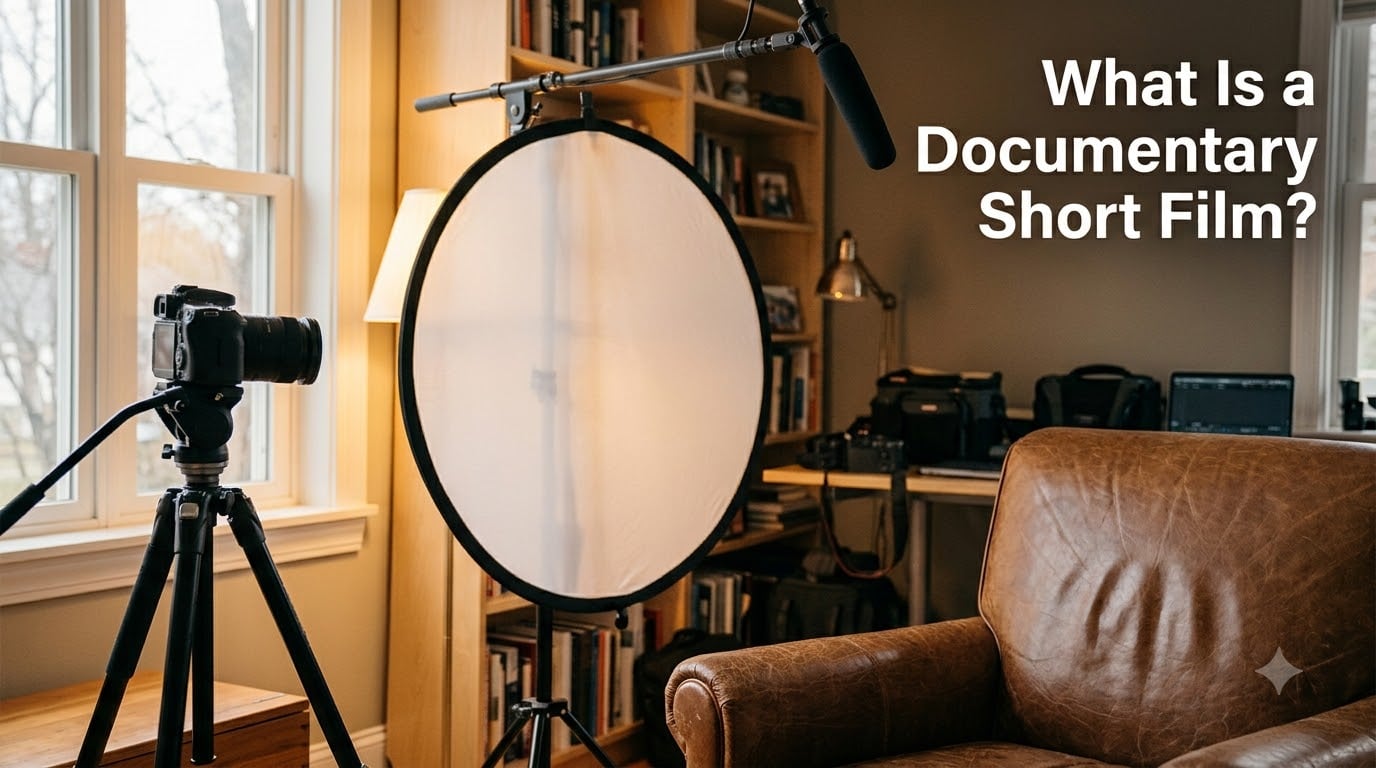
Step 4: Gather your equipment. One encouraging insight from filmmaker forums is that documentary shorts do not require expensive gear. Many award-winning shorts have been shot on smartphones. At minimum, you need a camera (even a phone camera works), a microphone for clear interview audio, basic lighting, and editing software. Good audio quality matters more than fancy visuals for interview-based documentaries.
Step 5: Conduct interviews and capture footage. During production, focus on getting your subjects to open up naturally. Forum discussions on r/documentaryfilmmaking reveal that the best interviews feel like conversations, not interrogations. Let people tell their stories in their own words. Capture plenty of B-roll of your subjects in their environment to cut away from static talking-head shots.
Step 6: Edit your story. Post-production is where your documentary short takes shape. Review all your footage, select the strongest moments, and assemble them into a narrative. Pacing is critical in short documentaries. A common beginner mistake, flagged repeatedly in forum discussions, is trying to include too much material. Be ruthless about cutting anything that does not serve the core story.
Step 7: Polish and distribute. Add music, color correction, titles, and any graphics or text overlays. Once your documentary short is finished, submit it to film festivals, upload it to online platforms, or share it with the communities and organizations connected to your subject.
Common Mistakes to Avoid
Our research uncovered a significant content gap: none of the top-ranking competitors cover common mistakes in documentary short filmmaking. Based on forum discussions, filmmaker experiences, and industry advice, here are the pitfalls that trip up beginners most often.
Trying to cover too much ground. The single most common mistake is attempting to tackle a massive topic in a short runtime. A 12-minute documentary cannot explore the history of climate change. It can, however, tell the story of one farmer dealing with drought. Narrow your focus to something achievable within your time limit.
Relying entirely on talking-head interviews. Forum users on r/Filmmakers frequently complain about documentaries that consist entirely of people sitting and talking to camera. This style gets monotonous quickly. Break up interviews with B-roll footage, archival material, observational scenes, and visual storytelling. One creative tip from forum members: film subjects doing activities related to their story rather than just sitting in a chair.
Neglecting audio quality. Viewers will forgive imperfect video. They will not forgive bad audio. Invest in a decent microphone and monitor your audio levels during filming. Muffled, echoey, or noisy interview audio is the fastest way to make a documentary short feel amateur.
Skipping the research phase. Jumping straight into filming without adequate research leads to unfocused documentaries with shallow insights. Take time to understand your subject deeply before you start recording. Your interviews will be sharper, your footage will be more purposeful, and your final edit will tell a more compelling story.
Forgetting about pacing. Documentary shorts need to move. A common pain point raised in forum discussions is struggling with pacing in short-form documentaries. If your 15-minute short feels like it drags, you probably have scenes that can be trimmed. Watch your edit with someone who has no connection to the project and pay attention to when their attention drifts.
Having no clear story arc. Even though documentaries deal with real life, they still need narrative structure. Your documentary short should have a beginning that hooks the viewer, a middle that develops the story, and an ending that provides resolution or reflection. Without this structure, even fascinating subject matter can feel flat.
Why Documentary Short Films Matter?
Documentary short films serve purposes that go well beyond entertainment. They are tools for education, advocacy, and cultural preservation, and they provide accessible entry points for both filmmakers and audiences.
For non-profits and advocacy groups, documentary shorts are a powerful way to communicate their mission and impact. A well-made 10-minute documentary about the people an organization serves can be more persuasive than any brochure or annual report. These organizations regularly commission mini-docs and short documentaries for fundraising campaigns, awareness drives, and stakeholder presentations.
For journalists and news organizations, documentary shorts offer a format for in-depth reporting that goes beyond the daily news cycle. Short documentaries can spend 20 minutes with a subject that a TV news segment covers in two minutes, providing context and human depth that headline-driven reporting cannot achieve.
For emerging filmmakers, documentary shorts are the most accessible path into non-fiction filmmaking. They require less money, less time, and fewer resources than feature documentaries. Many of today’s most respected documentary directors started with shorts, using them to develop their craft, build their portfolios, and attract funding for larger projects.
For audiences, documentary shorts offer bite-sized opportunities to learn about the world. In an era of shrinking attention spans and information overload, a 15-minute documentary about a topic you know nothing about feels like a manageable, rewarding investment of time.
The format also democratizes whose stories get told. Not every important story warrants a 90-minute feature. Some of the most powerful documentaries ever made are under 20 minutes, proving that length and impact are not the same thing.
FAQs
What is an example of a documentary short film?
A well-known example of a documentary short film is u0022The Elephant Whisperersu0022 (2022), which won the Academy Award for Best Documentary Short Film. It tells the story of an indigenous couple in South India caring for an orphaned baby elephant. Other notable examples include u0022The Queen of Basketballu0022 (2021), u0022Period. End of Sentence.u0022 (2018), and u0022Learning to Skateboard in a Warzone (If You’re a Girl)u0022 (2019), all of which won Oscars in the documentary short category.
How long is a short film documentary?
A documentary short film typically runs between 2 and 40 minutes. The Academy of Motion Picture Arts and Sciences sets the official cutoff for Oscar eligibility at 40 minutes including all credits. Within this range, micro documentaries usually run 1 to 5 minutes, mini documentaries run 5 to 15 minutes, and traditional short documentaries run 15 to 40 minutes. Any non-fiction film longer than 40 minutes is classified as a feature documentary for award purposes.
How do you write a short film documentary?
Writing a documentary short film involves creating a treatment or outline rather than a traditional screenplay. The process includes: choosing a specific, focused subject, researching the topic thoroughly, identifying key interview subjects, outlining the story arc you want to follow, planning the footage and B-roll you need, and remaining flexible for unexpected developments during filming. Documentaries capture real life, so you cannot script dialogue, but a strong treatment gives you a roadmap for the story you want to tell.
What qualifies a film as a documentary?
A film qualifies as a documentary if it presents factual, non-fiction content about real people, events, or issues. Documentaries use real footage of real subjects rather than scripted actors performing invented scenes. They rely on documentary techniques such as interviews, archival footage, observational filming, and voiceover narration. While every documentary reflects the filmmaker’s perspective and editorial choices, the core requirement is that the subject matter is grounded in reality rather than fiction.
What is the difference between a mini documentary and a documentary short?
A mini documentary is a shorter, more informal subcategory of documentary short film. Mini-docs typically run 2 to 10 minutes and are often produced for businesses, non-profits, or online audiences with a promotional or informational tone. A documentary short film usually refers to a more cinematic, narrative-driven piece in the 10 to 40-minute range designed for festival screenings and award consideration. There is no official boundary between the two terms, but mini-docs tend to be shorter and more utilitarian while documentary shorts aim for artistic storytelling.
Conclusion
A documentary short film is a non-fiction motion picture that tells real stories in a condensed format, typically running between 2 and 40 minutes. It uses interviews, archival footage, B-roll, and voiceover to explore real people, events, and issues with a focused, single-subject approach that delivers emotional impact without the time commitment of a feature-length documentary.
What makes this format special is its accessibility. For viewers, documentary shorts offer a manageable way to learn about the world in one sitting. For filmmakers, they provide a realistic entry point into non-fiction storytelling without the massive budgets and years-long timelines that features demand. For organizations and causes, they are a persuasive tool for raising awareness and driving action.
If you are interested in watching documentary short films, start with the Oscar-winning examples mentioned in this guide or browse curated platforms like Shortverse and The New Yorker’s online channel. If you are thinking about making your own, remember the advice that echoed across every filmmaker forum we studied: pick one specific subject, research it deeply, invest in good audio, and be ruthless about cutting anything that does not serve your core story.
The documentary short film format proves that powerful storytelling does not require a two-hour runtime. Some of the most unforgettable films ever made fit within 40 minutes, and the barrier to creating your own has never been lower. Whether you are watching, studying, or picking up a camera yourself, understanding what makes a documentary short film work is the first step toward appreciating everything this format can do.