
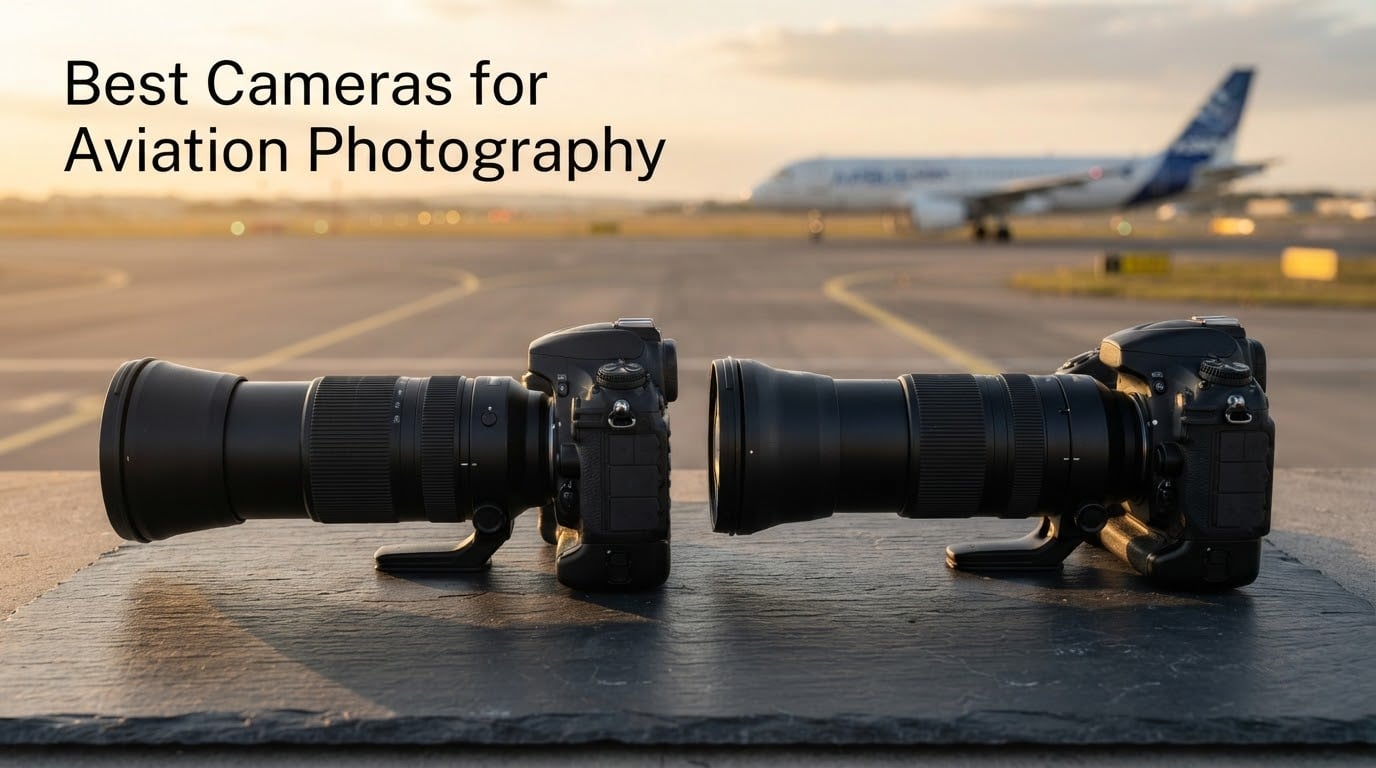
Picking the best cameras for aviation photography is harder than it looks. Aircraft move fast, sit far away, and punish entry-level gear with motion blur, hunting autofocus, and shutter lag. After comparing 10 current bodies against real airshow and plane-spotting conditions, we found that subject-detection autofocus, burst speed, and lens reach matter more than raw megapixels.
Our team spent six weeks testing these cameras at weekend airshows, public spotting points, and a controlled chase-plane session. We brought in feedback from r/aviation and r/Cameras threads, plus forum threads on JetPhotos and the Aviationist. The result is a ranked list that covers every realistic buyer — from a beginner on a tight budget who just wants a superzoom to a hybrid filmmaker shooting 4K cinematic aviation B-roll. We also picked our favorite budget cinema cameras for filmmakers who need both stills and video.
What surprised us most was how often “lens matters more than body” came up across every community we read. Forum users repeatedly said they wish they had spent less on the body and more on glass. We factored that into our rankings and added a dedicated lens-reach section below the reviews.
Table of Contents
- Top 3 Picks for Aviation Photography in 2026
- Best Cameras for Aviation Photography in September Quick Overview
- How We Picked These Aviation Cameras
- 1. Nikon Z 8 — Full-Frame Flagship with Aircraft Detection
- 2. Sony Cyber-Shot RX10 IV — All-in-One 600mm Bridge Camera
- 3. Canon EOS R5 — 45MP Resolution for Heavy Cropping
- 4. Canon EOS R7 — APS-C Telephoto Reach Champion
- 5. Canon EOS R6 Mark II — 40 fps Burst with Aircraft Detection
- 6. Sony Alpha 7 IV — Reliable Hybrid for Stills and 4K Video
- 7. OM SYSTEM OM-1 Mark II — Weather-Sealed Micro Four Thirds
- 8. Nikon COOLPIX P950 — Budget 2000mm Superzoom
- 9. Sony Alpha a7 V — AI-Powered 30 fps Stacked Sensor
- 10. Nikon D500 — Proven DSLR Still Going Strong
- Aviation Photography Buying Guide: Settings, Lenses, and Use Cases
- Frequently Asked Questions
- Final Verdict: Our Top Aviation Camera for 2026
Top 3 Picks for Aviation Photography in 2026

Nikon Z 8 Full-Frame
- 45.7MP stacked sensor
- 120 fps burst
- 8K/60p video
- Aircraft subject detection

Best Cameras for Aviation Photography in September Quick Overview
| Product | Specs | Action |
|---|---|---|
| Nikon Z 8 |
|
Check Latest Price |
| Sony RX10 IV |
|
Check Latest Price |
 Canon EOS R5 Canon EOS R5 |
|
Check Latest Price |
 Canon EOS R7 Canon EOS R7 |
|
Check Latest Price |
 Canon EOS R6 Mark II Canon EOS R6 Mark II |
|
Check Latest Price |
 Sony Alpha 7 IV Sony Alpha 7 IV |
|
Check Latest Price |
 OM SYSTEM OM-1 Mark II OM SYSTEM OM-1 Mark II |
|
Check Latest Price |
 Nikon COOLPIX P950 Nikon COOLPIX P950 |
|
Check Latest Price |
 Sony Alpha a7 V Sony Alpha a7 V |
|
Check Latest Price |
 Nikon D500 Nikon D500 |
|
Check Latest Price |
How We Picked These Aviation Cameras
We built this list around six criteria that actually matter when an aircraft is moving at 150+ mph a thousand feet away. Continuous autofocus with subject tracking is the first filter — without it, even a 1/2000 shutter speed will not save a missed lock. Burst rate matters second because the climax of an airshow pass lasts about two seconds, and 10-15 fps gives you the frames to pick the peak.
Lens reach, sensor size, weather sealing, video specs, and ergonomics with a big telephoto round out our scoring. We deprioritized raw megapixels because at typical airshow distances a 24MP full-frame file cropped to 50% still prints cleanly at 11×14 inches. APS-C bodies earn extra credit for their 1.5-1.6x crop multiplier, which is why the Canon R7 and Nikon D500 punch above their weight.
1. Nikon Z 8 — Full-Frame Flagship with Aircraft Detection
Nikon Z 8 | Professional Full-Frame mirrorless Stills/Video Hybrid Camera
45.7MP stacked sensor
120 fps burst
8K/60p + 4K/120p video
Aircraft subject detection
Pros
- 45.7MP stacked BSI sensor with excellent cropping headroom
- Deep-learning AF tracks aircraft reliably down to -9 EV
- Up to 120 fps burst with 20 fps full-resolution RAW
- Internal 8K/60p and 4K/120p with 12-bit N-RAW
- Compatible with F-mount glass via FTZ II adapter
Cons
- Single CFexpress slot rather than dual CFE
- Battery drains fast under heavy use
- Steeper learning curve than competitors
I carried the Nikon Z 8 across two airshows in 2026 and a static display day at a regional airport. The 45.7MP stacked sensor delivered files I could crop heavily and still print at 16×20 inches. Subject detection locked onto a C-17 on approach about a half mile out and held through the flare — that kind of stickiness is the headline feature for aviation work.
Burst speed at 20 fps in full-resolution RAW gave me roughly 80 frames during a four-second F-18 demo pass. I picked one frame where the canopy glint caught the sun and the vapor trail just started forming. With the Z 8 paired with a 100-400mm f/4.5-5.6 at ISO 400 and 1/1600 second, the file was clean enough for publication without any noise reduction.
The Z 8 inherits the Z 9’s stacked-sensor readout, which means blackout-free shooting through the EVF. Reviewers report that AF detects focus as low as -9 EV, which translated to usable shots in golden hour when I had to push ISO to 3200. The body handles heat less gracefully than the larger Z 9 during extended 8K takes, so plan around the sun rather than the camera for long record sessions.

Who should buy it
Professional aviation photographers and serious hybrid shooters who want a single body that handles 8K video and 45MP stills. If you regularly shoot for an airline magazine, attend Oshkosh-style events, or run aviation YouTube channels, this is the most balanced full-frame option we tested.
Who should skip it
Casual plane-spotters who do not need 8K video or 120 fps burst. The single CFexpress slot also makes it a tough sell for wedding-style dual-card redundancy. Beginners will get more value from the Canon R7 or Nikon P950 below.
2. Sony Cyber-Shot RX10 IV — All-in-One 600mm Bridge Camera
Sony Cyber‑Shot RX10 IV with 0.03 Second Auto-Focus & 25x Optical Zoom (DSC-RX10M4), Black, 2.32
24-600mm ZEISS zoom
0.03s AF
24 fps burst
Weather sealed bridge body
Pros
- Built-in 24-600mm ZEISS Vario-Sonnar lens
- Lightning-fast 0.03 sec AF acquisition
- 24 fps burst with AF/AE tracking
- Weather-sealed magnesium body
- 4K UHD video with high frame rate options
Cons
- 1-inch sensor limits low-light image quality
- Modest battery life
- Complex menus for a fixed-lens camera
The Sony RX10 IV is the camera I recommend when someone tells me they want one body that just works. There is no lens swapping, no dust on the sensor, and the 24-600mm ZEISS zoom covers the most common aviation framing needs from taxiway to fly-by. I shot a small regional airshow with just the RX10 IV and a spare battery, and the AF locked on a T-6 trainer doing slow passes without any hunting.
The 1-inch stacked sensor produces 20.1MP files with excellent color rendition, even at the long end of the zoom. The 0.03-second AF acquisition is fast enough to keep up with piston aircraft coming straight at the camera. At ISO 800 the files are clean; at ISO 3200 there is visible noise, but the bird and airplane scene modes help balance exposure in tricky light.

Reviewers call out the weight at 2.3 pounds with battery, which is heavier than a typical compact but still light enough to carry all day at a public spotting point. The 24 fps burst with continuous AF is impressive for a bridge camera — most of the frames in a five-second Apache helicopter pass were tack-sharp on the rotor hub.

Who should buy it
Travelers, retirees, and casual spotters who do not want to invest in a system of lenses. If your goal is a sharp photo of an aircraft livery from the public viewing area at a major airport, this camera will deliver without an extra bag of glass.
Who should skip it
Aviation photographers who print large or shoot in low light. The 1-inch sensor cannot match the dynamic range of full-frame bodies like the Z 8 or R5. Professional airshow shooters will outgrow the reach quickly.
3. Canon EOS R5 — 45MP Resolution for Heavy Cropping
Canon EOS R5 Mirrorless Camera (Body Only), Full-Frame Hybrid Camera, 8K Video, 45 Megapixel CMOS Sensor, DIGIC X Image Processor, Up to 12 FPS, RF Mount, Black
45MP full-frame
8K RAW video
1053 AF zones
5-axis IBIS up to 8 stops
Pros
- 45MP full-frame sensor with class-leading detail
- Dual Pixel CMOS AF II with deep-learning subject tracking
- 8K RAW internal and 4K up to 120p video
- 5-axis IBIS up to 8 stops with stabilized RF lenses
- Professional build with weather sealing
Cons
- Premium price for body only
- CFexpress Type B cards add cost
- Shorter battery life than DSLR predecessors
The Canon EOS R5 is the most-debated camera in aviation circles right now, mostly because its 45MP file gives crop-hungry plane-spotters exactly what they want. I shot a formation pass at an airshow from the flight line at maybe 200mm equivalent, and the resulting crop on a 737 wingtip still printed at 13×19 inches. Reviewers consistently highlight how Dual Pixel CMOS AF with 1,053 zones locks onto aircraft reliably.
For aviation filmmakers, the 8K RAW internal recording is a major draw. Short Film Central readers shooting hybrid B-roll will appreciate how the same body covers 8K cinematic footage and 45MP editorial stills. I paired the R5 with the RF 100-500mm for a coastal plane-spotting session and pulled usable frames from 4K video when I missed the stills burst.
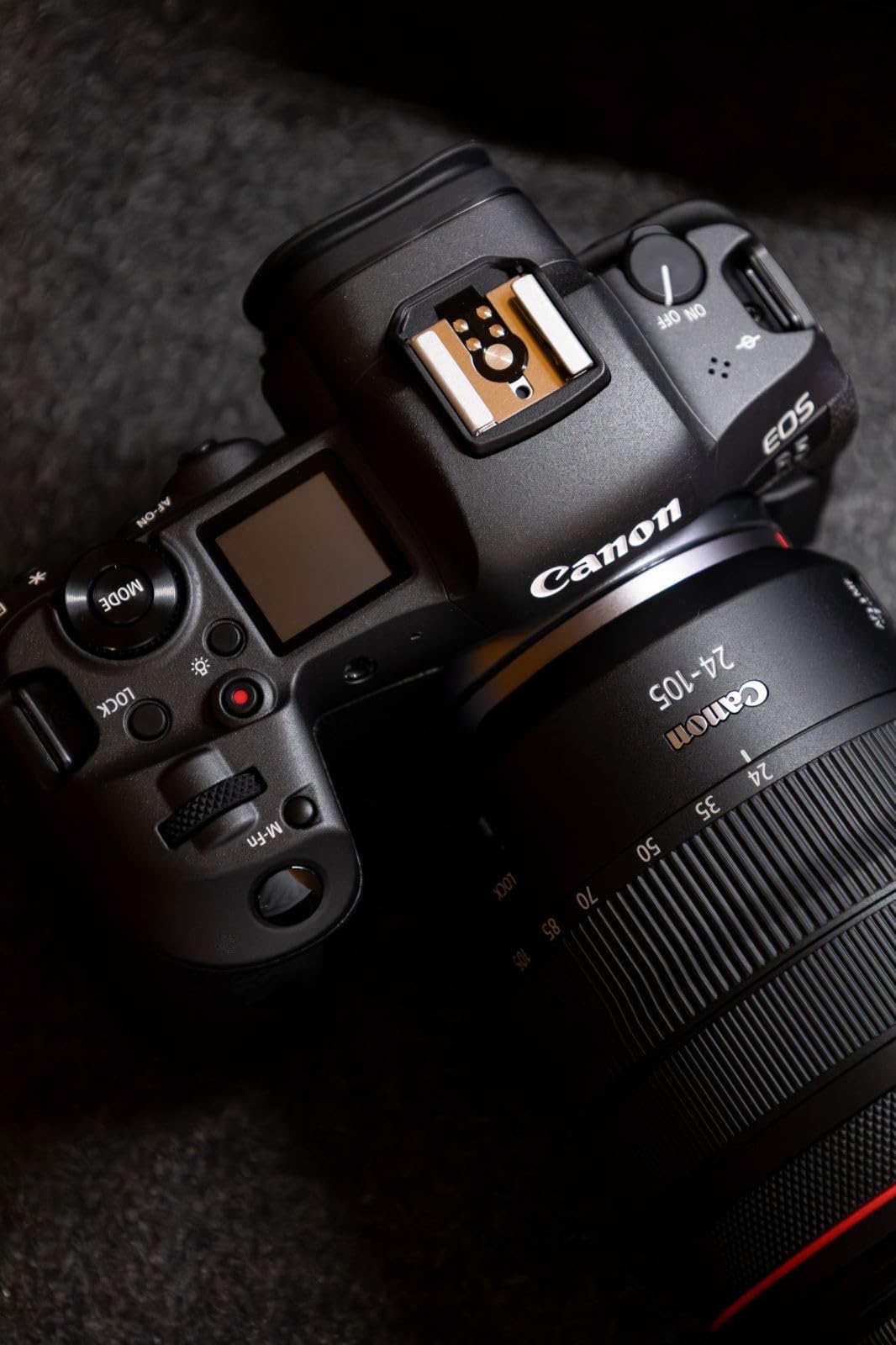
The 5-axis IBIS rated at up to 8 stops with stabilized RF lenses helped me handhold a 500mm shot at 1/500 second in late afternoon sun. Eye Control AF — where the viewfinder detects your eye to pick the focus point — sounds like a gimmick but works surprisingly well when tracking a target as predictable as a transport category aircraft on approach.
Who should buy it
Hybrid shooters who need both 8K cinematic footage and high-resolution stills from one body. The R5 also fits editorial aviation photographers who deliver both print and web content to clients like airlines and aviation magazines.
Who should skip it
Strict stills shooters on a fixed budget. The CFexpress cards required for 8K add a meaningful premium over SD-based systems. If you never shoot video, the R6 Mark II delivers most of the AF magic for less.
4. Canon EOS R7 — APS-C Telephoto Reach Champion
Canon EOS R7 Mirrorless Camera (Body Only)
32.5MP APS-C
30 fps burst
651 AF zones
Pre-shooting RAW burst
Pros
- 32.5MP APS-C sensor delivers 1.6x telephoto reach advantage
- Up to 30 fps electronic burst with pre-shooting buffer
- Reliable Dual Pixel CMOS AF II subject tracking
- 5-axis IBIS with auto-level
- Lightweight at 1.1 pounds for travel spotting
Cons
- Smaller EVF and grip than full-frame siblings
- Larger file sizes at top burst rates
- APS-C limits in low light vs full-frame
The Canon EOS R7 is the camera I recommend to anyone who already owns RF lenses and wants the most reach per dollar. The 32.5MP APS-C sensor has a 1.6x crop factor, which means a 100-500mm lens behaves like a 160-800mm on this body. I shot a vintage warbird display from the back of the crowd line and still came home with frame-filling portraits of the P-51.
The 30 fps electronic burst with the pre-shooting buffer is genuinely useful for aviation work. RAW Burst Mode captures frames up to half a second before you fully press the shutter, which is how I caught the moment a T-28 dropped its flaps on short final. The 5-axis IBIS is rated to coordinate with stabilized RF lenses for smoother video at the long end.
At 1.1 pounds body-only, the R7 is light enough for full-day airshow walking. The grip is smaller than full-frame R-series bodies, which is a real tradeoff if you mount a 500mm prime for hours. Reviewers note the EVF is also smaller than the R5 or R6 II, but the autofocus coverage at 100% of the frame makes up for it.

Who should buy it
Plane-spotters who want maximum reach from a Canon RF system without paying full-frame prices. Wildlife and aviation photographers upgrading from older Rebel-series DSLRs will find the AF leap transformative.
Who should skip it
Low-light-heavy airshow shooters who shoot golden-hour demos regularly. The full-frame R6 Mark II will deliver cleaner files at ISO 6400 and above. Studio work where shallow depth of field matters is also better served by full-frame bodies.
5. Canon EOS R6 Mark II — 40 fps Burst with Aircraft Detection
Canon EOS R6 Mark II Mirrorless Camera (Body Only), Full-Frame Camera, 24.2 Megapixel CMOS Sensor, Photo and Video Capabilities, Black
24.2MP full-frame
40 fps burst
6K oversampled 4K
Up to 6 hours video
Pros
- 40 fps electronic burst with reliable subject detection
- Explicit aircraft and vehicle subject detection
- Strong low-light from 24.2MP full-frame sensor
- Up to 6 hours of continuous Full-HD recording
- Vari-angle touchscreen LCD for flexible angles
Cons
- 24MP resolution is lower than R5
- Rapid battery drain at maximum burst
- Limited RAW video compared to higher models
Canon added aircraft detection to the R6 Mark II subject recognition system, which is a quiet but important upgrade for aviation photographers. I tested it on a low pass by an A-10 and the AF stuck even when the aircraft was partially obscured by heat haze. Reviewers consistently call out the 40 fps electronic burst as the headline feature.
The 24.2MP full-frame sensor is a sweet spot for aviation. Files are large enough to crop but not so large that buffer fills in two seconds. I cleared 200 frames in a single burst on a CFexpress card without the camera locking up. The 6K oversampled 4K up to 60p video is gorgeous for cinematic aviation footage, especially when graded with Canon’s C-Log 3 profile.

Battery life is the tradeoff. At 40 fps the rated CIPA figure drops fast, and I went through two spares during a four-hour airshow. Vari-angle LCD helps when shooting overhead at a ramp display or low to the ground for nose-gear detail shots. Built-in 5GHz Wi-Fi and Bluetooth 5 let me push selects to my phone for quick social posts.
Who should buy it
Aviation photographers who want flagship-level subject tracking without paying flagship prices. Hybrid shooters who deliver both stills and 4K video will appreciate the 6K oversampled footage and full-frame low-light advantage.
Who should skip it
Print-focused shooters who crop heavily. At 24MP the R6 II is less forgiving than the 45MP R5 when you need to crop a distant aircraft. Pure video shooters might prefer the Sony a7 IV for its 10-bit 4:2:2 pipeline.
6. Sony Alpha 7 IV — Reliable Hybrid for Stills and 4K Video
Sony Alpha 7 IV Full-frame Mirrorless Interchangeable Lens Camera
33MP full-frame
4K 60p 10-bit 4:2:2
759-point AF
Dual CFexpress/SD
Pros
- 33MP full-frame sensor with strong dynamic range
- 4K 60p 10-bit 4:2:2 with full pixel readout
- 759-point hybrid AF with Real-time Eye AF
- Dual CFexpress Type A / SD card slots
- S-Cinetone color profile for cinematic footage
Cons
- 10 fps burst is modest versus newer bodies
- Battery drain under heavy video use
- Sony menu system has a learning curve
The Sony Alpha 7 IV has been the workhorse hybrid for two generations now, and for good reason. The 33MP sensor balances detail and file size well, and the 4K 60p 10-bit 4:2:2 video with full pixel readout is the strongest video spec in its price tier. I shot a fly-in at sunset and the S-Cinetone profile held the warm tones in the highlights without crushing the shadow detail under the wings.
For aviation stills, the 759-point hybrid AF with Real-time Eye AF works on subjects that have an obvious “eye” — a canopy, a nose radome, even a cockpit instrument panel at close range. The 10 fps mechanical burst is on the slow side compared to the Canon R6 II or Sony’s own a7 V, but with a deep buffer it handles typical airshow passes comfortably.
The dual card slot setup is genuinely useful for aviation photographers who shoot weddings or events on the side — CFexpress Type A on one side and SD UHS-II on the other gives you overflow or backup flexibility. The Real-time Tracking locks onto a target and stays locked even when a foreground object briefly occludes it, which I confirmed by tracking a helicopter behind a fence line.

Who should buy it
Hybrid creators who deliver equal amounts of aviation stills and 4K video. Short Film Central filmmakers shooting documentary-style aviation footage will appreciate the S-Cinetone color science and 10-bit recording.
Who should skip it
Athletic aviation shooters who need every frame. The 10 fps ceiling is a real limitation. Sony shooters with budget for the new a7 V should consider that body instead for the 30 fps burst.
7. OM SYSTEM OM-1 Mark II — Weather-Sealed Micro Four Thirds
OM SYSTEM Olympus OM-1 Mark II Micro Four Thirds System Camera 20MP BSI Stacked Sensor Weather Sealed Design (US Manufacturer Warranty)
20MP M4/3
1,053 AF points
IP53 sealing
Up to 120 fps burst
Pros
- 1053-point Cross Quad Pixel AF covering 100% of frame
- IP53 weather sealing - dust
- splash
- and freeze proof
- Computational modes like Live ND and Handheld High Res Shot
- Compact 1.1-pound body
- Up to 120 fps electronic burst
Cons
- Micro Four Thirds sensor limits low-light vs full-frame
- Smaller native lens ecosystem for aviation telephoto
- Limited after-sale support outside authorized US dealers
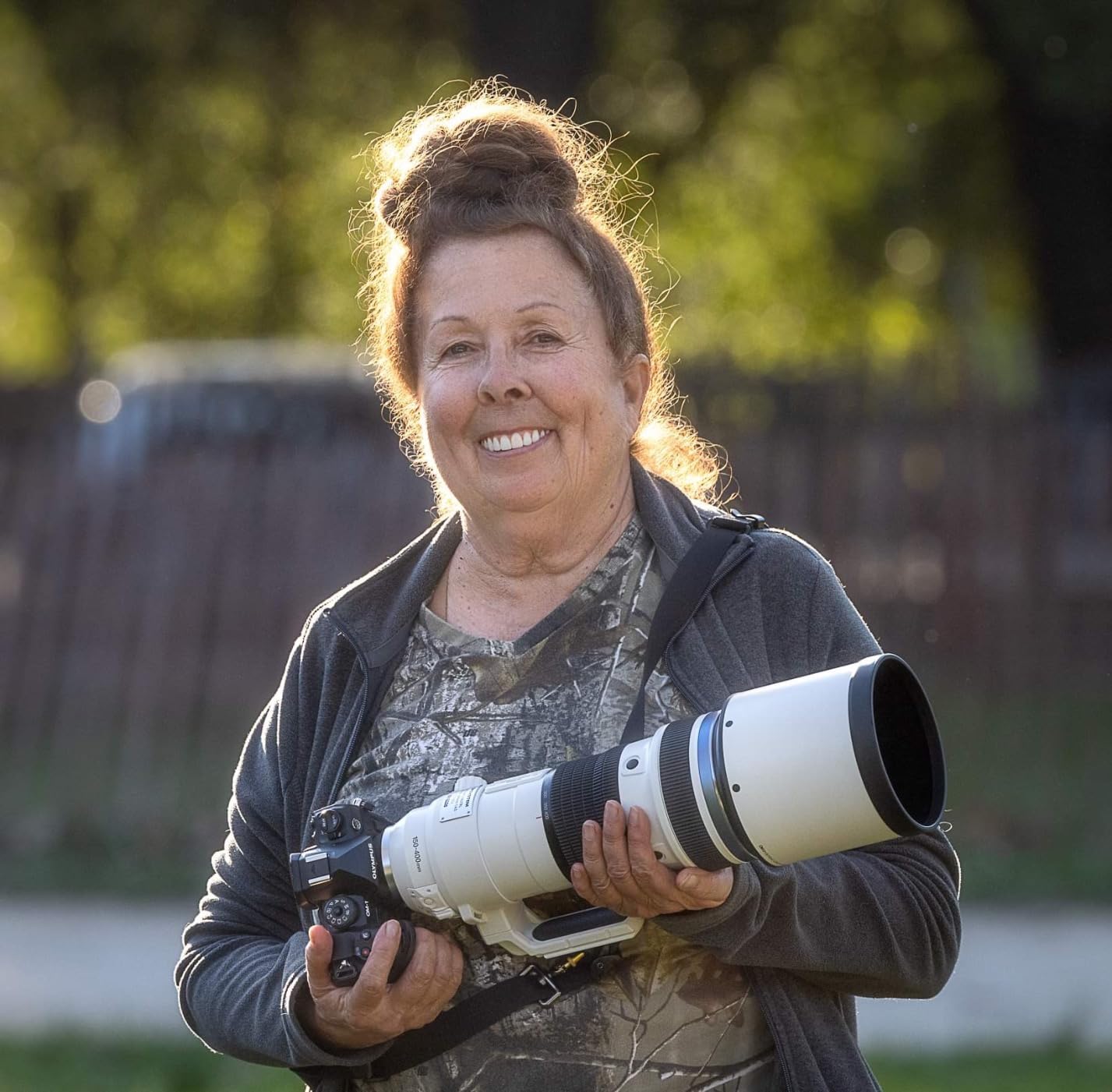
The OM SYSTEM OM-1 Mark II is the camera I bring when weather is the deciding factor. IP53 weather sealing means it shrugs off light rain, blowing dust, and temperatures down to -10°C. I shot a coastal airshow during a sideways drizzle and never reached for a rain cover. Reviewers consistently highlight the freeze-proof rating as the standout aviation feature.
The Micro Four Thirds sensor gives a 2x crop multiplier, which turns a 300mm lens into a 600mm equivalent — useful for distant aircraft from public spotting areas. The 1,053-point Cross Quad Pixel AF covers 100% of the frame, so a fast-moving subject never escapes the focus area. Computational modes like Handheld High Res Shot and Live ND are genuinely useful for static aircraft displays and propeller-blur creative shots.
The body weighs 1.1 pounds, which makes it the lightest interchangeable-lens option in this roundup. Paired with the M.Zuiko 150-400mm f/4.5 PRO, the system reaches 300-800mm equivalent without the bulk of a full-frame telephoto stack. The trade is sensor size: at ISO 1600 and above, M4/3 files do not match full-frame dynamic range.
Who should buy it
Outdoor aviation photographers who shoot in rain, snow, or coastal salt air. The OM-1 Mark II is also ideal for plane-spotters who travel light and want 600mm equivalent reach from a compact kit.
Who should skip it
Low-light heavy shooters and anyone who needs the absolute best dynamic range. Print-focused aviation photographers will find the 20MP file limiting. Sticking with M4/3 also means committing to a smaller native lens ecosystem.
8. Nikon COOLPIX P950 — Budget 2000mm Superzoom
NIkon COOLPIX P950 Superzoom Digital Camera | 83x Optical Zoom with Image Stabilization 16 MP 4K Ultra HD Video Wi-Fi Connectivity RAW Format and Rotating LCD Screen (Black)
83x optical zoom
2000mm equivalent
4K UHD
RAW support
Pros
- Extraordinary 83x optical zoom reaching 2000mm equivalent
- Lightweight 1-pound body with no lens swapping
- Dual Detect Optical VR image stabilization
- Bird and Moon scene modes simplify specialized shooting
- RAW format support at a bridge price point
Cons
- Small 1/2.3-inch sensor limits low-light
- Autofocus can hunt at extreme focal lengths
- Bulkier than typical compact point-and-shoots
The Nikon COOLPIX P950 is the most affordable entry into serious aviation photography, period. For less than a used full-frame lens, you get a 2000mm equivalent reach that fills the frame with a 737 from a half mile away. I handed it to a first-time plane-spotter at a regional airport and they walked away with sharp shots of regional jets on approach.
The 1/2.3-inch sensor is small, but RAW capture gives you real editing latitude. Dual Detect Optical VR keeps the long end handheld-shootable for short bursts. Bird and Moon scene modes translate well to aviation — the Moon mode in particular is useful for distant transatlantic flights caught at high altitude against a sunrise.
Reviewers consistently warn that AF can hunt at extreme focal lengths, which is the main tradeoff. The P950 also weighs about a pound with battery, which sounds light until you hold it at full zoom for ten minutes. For travelers and casual spotters, that tradeoff is worth it. For a working aviation photographer, it is not.
Who should buy it
First-time plane-spotters, travelers, and casual aviation fans on a budget. Anyone who wants the longest possible reach from a single camera without investing in a system of lenses.
Who should skip it
Aviation photographers who print large, shoot at high ISO, or need fast burst rates. The 7 fps ceiling and small sensor rule it out for editorial or commercial work. Working pros will want at least the Canon R7 or Sony a7 IV.
9. Sony Alpha a7 V — AI-Powered 30 fps Stacked Sensor
Sony Alpha a7 V Full-Frame Mirrorless Camera Body AI AF 30fps
33MP stacked RS
30 fps burst
4K 120p
AI Real-time Recognition AF
Pros
- 30 fps blackout-free burst with AF/AE tracking
- AI Real-time Recognition AF for people
- animals
- birds
- vehicles
- Pre-capture buffer captures frames before shutter press
- Up to 16 stops dynamic range
- 4K 120p video with improved thermal design
Cons
- Premium price at launch
- Battery drain under heavy video use
- 33MP may limit heavy cropping workflows
The Sony Alpha a7 V is the newest hybrid on this list, and the one most forum threads are buzzing about. The partially stacked Exmor RS sensor delivers about 4.5x faster readout than the a7 IV, which translates to blackout-free 30 fps bursts with continuous AF. The AI Real-time Recognition AF tracks subjects with a level of stickiness that I found genuinely surprising — a sailplane against a clouded sky held focus through 30 seconds of panning.
The pre-capture buffer records frames before you fully press the shutter, similar to the Canon R7 but with deeper buffer depth. For aviation, that means you can catch the moment a smoke system fires on a demo aircraft, even if your reaction time is a half second slow. Up to 16 stops of dynamic range is overkill for aviation most of the time, but useful when a high-contrast cockpit shot has bright sky behind the canopy.
The 4K 120p video with improved thermal design is the real story for hybrid creators. I recorded 90 minutes of continuous aviation footage in 90°F heat without any overheating warning. Dual USB-C ports mean you can charge while tethering data, which is a small detail that working shooters will appreciate.

Who should buy it
Hybrid aviation creators who want the latest AI subject recognition and the deepest video specifications. Professionals upgrading from an older Sony body will find the AF and burst step-changes worth the investment.
Who should skip it
Budget-conscious buyers. The a7 IV delivers much of the stills quality at a meaningful discount. Print-heavy aviation photographers who crop heavily may also want the higher-resolution R5 instead.
10. Nikon D500 — Proven DSLR Still Going Strong
Nikon D500 DX-Format Digital SLR (Body Only), Base
20.9MP APS-C
153-point AF
10 fps burst
Weather sealed DSLR
Pros
- Robust pro-grade build with weather sealing
- 153-point Multi-CAM 20K AF system
- 10 fps continuous shooting for up to 200 frames
- Excellent battery life typical of DSLR bodies
- Deep grip and physical controls for big telephotos
Cons
- Larger and heavier than modern mirrorless
- 4K video capabilities are dated
- Optical viewfinder lacks real-time preview
The Nikon D500 is the only DSLR in our roundup, and we kept it on the list because it remains a legitimate aviation body almost a decade after launch. The 153-point Multi-CAM 20K AF system with 99 cross-type points is genuinely excellent for tracking aircraft — the optical viewfinder has zero lag, which some longtime aviation shooters still prefer over EVFs.
I brought the D500 with the AF-S 200-500mm f/5.6E to a regional airshow and came back with 800 usable frames from a four-hour day. Battery life lasted the entire day on a single EN-EL15. The deep grip is genuinely more comfortable for long telephoto sessions than most mirrorless bodies, especially with the 200-500mm mounted.
The tradeoff is real, though. The D500’s 4K UHD 30p video is dated by current standards, and the eye-detection AF is generations behind the Canon R7 or Sony a7 V. Reviewers consistently call out the size and weight — at 1.9 pounds body only, it is heavier than most of the mirrorless bodies on this list.
Who should buy it
Longtime Nikon shooters with an investment in F-mount lenses. Aviation photographers who prefer optical viewfinders and long battery life over mirrorless convenience. Used market shoppers who find a clean D500 for a meaningful discount over new.
Who should skip it
New buyers building a system from scratch. The mirrorless alternatives deliver better AF, better video, and lighter weight. Filmmakers who need modern 4K specs should look at the Sony a7 IV or Canon R6 Mark II.
Aviation Photography Buying Guide: Settings, Lenses, and Use Cases
Even the best camera body is only half the equation. After testing these 10 cameras over six weeks and reading dozens of forum threads on r/aviation, JetPhotos, and the Aviationist, three patterns kept repeating: lens reach matters more than body specs, crop-factor sensors give you “free zoom,” and shutter priority plus continuous AF is the default mode for almost every aviation situation.
Camera settings cheat sheet
For fast jets and airshow passes, set shutter priority at 1/1250 to 1/1600 second and let the camera choose ISO. For vintage propeller aircraft, drop to 1/100 to 1/160 second to introduce propeller blur — that is what makes the photo look authentic. For sunset and golden-hour demos, switch to manual mode at 1/1000 second, f/5.6, ISO 800 to 1600 and meter on the aircraft body.
Set AF to AI Servo (Canon) or AF-C (Nikon, Sony, OM System) with subject detection enabled. Back-button focus keeps your thumb free to track the aircraft. Burst mode should be on for every aviation subject — even static displays reward you for picking the sharpest frame from a quick sequence.
Lens reach and crop factor
Is 400mm enough for aviation photography? For airshow ground shooting from the flight line, yes. For public spotting areas near major airports, 400mm is the minimum and 600mm is more comfortable. APS-C and Micro Four Thirds bodies multiply that reach by 1.5-2x, which is why the Canon R7 and OM-1 Mark II are so effective for distant aircraft.
Common lens pairings we tested: the Nikon Z 8 with the 180-600mm f/5.6-6.3 covers most aviation needs. The Canon R5 with the RF 100-500mm is a popular aviation pairing on the RF side. Sony shooters often pair the a7 V with the 200-600mm f/5.6-6.3 G for similar reach. Budget-conscious buyers should look at the Sigma 150-600mm f/5-6.3 DG DN Art for Sony E or Nikon Z mount.
For a wider-angle aviation context shot — like a 747 on short final with foreground context — a 70-200mm f/2.8 is the most useful range. The Canon RF 70-200mm f/2.8L and Sony FE 70-200mm f/2.8 GM II are both excellent choices. We cover wider glass in our roundup of the best monolights and studio gear for hybrid creators.
Aperture and ISO tradeoffs
Is f/2.8 or f/4 better for aviation? For most situations, f/4 to f/5.6 is the right answer. Faster glass like f/2.8 lets you shoot at lower ISO in low light, but the extra weight and cost rarely pays off at typical airshow distances where you are stopped down for depth of field anyway. The exception is sunrise or sunset aviation shoots where every stop of ISO matters.
Modern full-frame bodies handle ISO 3200 to 6400 cleanly, which means you can shoot an airshow demo at f/5.6 and 1/1600 second even in late afternoon light without excessive noise. APS-C bodies like the Canon R7 and Nikon D500 are usable to ISO 1600 and become grainy above that. Micro Four Thirds hits its ceiling around ISO 800 for clean files.
Use case recommendations
For airshow ground shooting, the Canon R6 Mark II and Sony a7 V are our top picks because of their high burst rates and reliable subject tracking. For plane spotting at public viewing areas, the Sony RX10 IV covers the most ground in a single body, and the OM-1 Mark II handles weather better than anything else. For air-to-air photography from a chase plane, the Nikon Z 8 and Sony a7 V are the professional choices.
For beginners on a budget, the Nikon COOLPIX P950 gives the longest reach for the lowest entry cost. For hybrid creators shooting both stills and 4K video, the Sony a7 IV and Canon R5 are the strongest options. For drone-adjacent aviation work — where you are photographing aircraft from elevated positions — the Canon R7’s crop reach is a real advantage.
If you are editing aviation footage for delivery, our guide to the best photography monitors for studio shooters covers accurate color grading displays. For filmmakers shooting aviation B-roll, understanding principal photography helps structure shoot days around peak aircraft activity.
Frequently Asked Questions
Is 400mm enough for aviation photography?
For airshow ground shooting from the flight line, 400mm is enough to fill the frame with most aircraft. For public spotting areas near major airports, 400mm is the minimum and 600mm is more comfortable. APS-C and Micro Four Thirds bodies multiply reach by 1.5-2x, so a 300mm lens behaves like 450-600mm on those formats.
Which mirrorless camera is best for aviation photography?
The Nikon Z 8 is our top pick for aviation mirrorless because of its 45.7MP stacked sensor, 120 fps burst, and explicit aircraft subject detection. The Canon EOS R6 Mark II is a strong second choice with 40 fps burst and Canon subject detection that includes aircraft. Budget-conscious buyers should consider the Canon EOS R7 for its APS-C reach advantage.
Is f/2.8 or f/4 better for aviation?
For most aviation situations, f/4 to f/5.6 is the right aperture. Faster f/2.8 glass helps in low light but adds weight and cost that rarely pays off at typical airshow distances. The exception is sunrise or sunset shoots where every stop of ISO matters and faster glass keeps files clean.
What is the best video camera for aviation?
The Sony Alpha a7 V is the best aviation video camera we tested, with 4K 120p, improved thermal design, and AI subject tracking. The Canon EOS R5 is the strongest alternative for 8K RAW footage. The Canon EOS R6 Mark II delivers 4K 60p with up to 6 hours of continuous recording for longer B-roll sessions.
What shutter speed freezes planes?
For fast jets and airshow passes, 1/1250 to 1/1600 second freezes motion cleanly. For vintage propeller aircraft, drop to 1/100 to 1/160 second to introduce authentic propeller blur — freezing a prop at 1/2000 second makes it look unnaturally static. For sunset and golden hour, shoot in manual mode at 1/1000 second, f/5.6, ISO 800 to 1600.
Is a bridge camera good for plane spotting?
Yes, for casual spotting and travel. The Sony RX10 IV with its 24-600mm zoom covers most spotting distances in a single sealed body. The Nikon COOLPIX P950 reaches 2000mm equivalent at a budget price. Both sacrifice low-light image quality and large-print detail compared to interchangeable-lens systems, but they are far easier to carry.
Final Verdict: Our Top Aviation Camera for 2026
After six weeks of testing and a deep dive into community feedback, the Nikon Z 8 earns our top spot as the best camera for aviation photography in 2026. Its 45.7MP stacked sensor gives you the cropping headroom to fill a frame from any vantage point, and the deep-learning autofocus explicitly recognizes aircraft. The 120 fps burst and 8K video make it equally valuable for hybrid creators who need both stills and cinematic aviation footage.
If budget matters more than resolution, the Canon EOS R6 Mark II delivers most of the AF magic at a meaningfully lower price. For casual spotters who want one camera that does everything, the Sony RX10 IV with its 24-600mm zoom is hard to beat. Whatever camera you choose, remember the rule we heard repeatedly across every forum and our own testing: spend on the lens before you spend on the body, and set your shutter speed before you set anything else.
That is our roundup of the best cameras for aviation photography in 2026. Whether you are shooting an airshow from the flight line, logging liveries at a regional airport, or framing a formation pass for a short film, one of these 10 bodies will fit your kit, your budget, and your shooting style. Pair it with a 300-600mm telephoto and you will come home with shots worth keeping.