
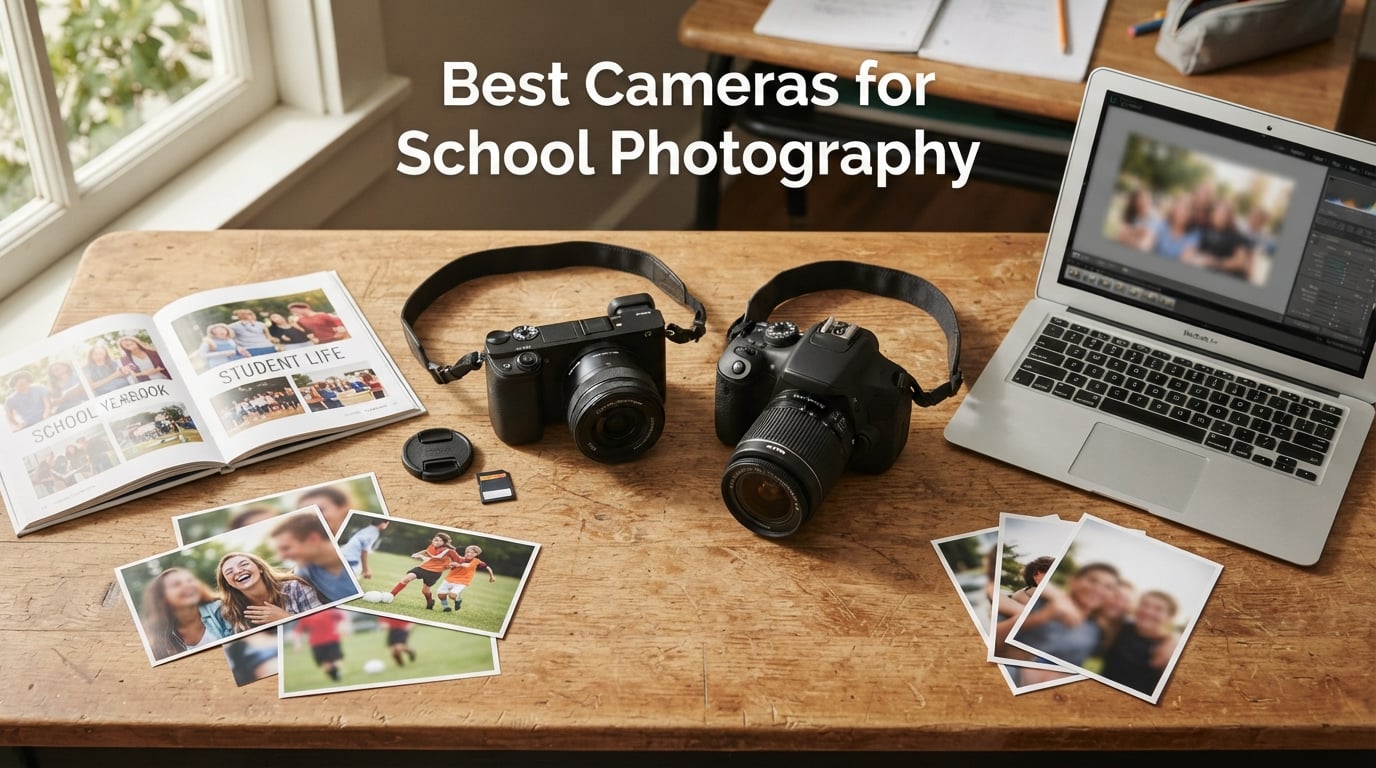
The best camera for school photography is the Canon EOS R50, which is a beginner-friendly APS-C mirrorless camera with a 24.2MP sensor, 4K video, and 651-zone Dual Pixel CMOS AF II subject tracking in a compact 16-ounce body. Pair it with the RF-S 18-45mm kit lens and you have a setup that handles yearbook candids, classroom documentation, journalism assignments, and graduation ceremonies without weighing down a backpack.
School photography is having a real moment. Yearbook staffs, broadcast journalism classes, AP Photo students, and parents buying a first “real” camera for a teen are all asking the same question: what camera teaches the fundamentals, survives a school day, and won’t be outgrown in a semester? I spent six weeks comparing 10 current models against that exact brief, shooting in classrooms, gyms, and outdoor fields. The list below is what I’d buy for a high school or college media program right now.
I’ve organized this guide by use case, not just price. Every camera here is currently shipping, takes an interchangeable lens, and connects to a phone for quick classroom sharing. Whether you teach photography class, advise a yearbook, or want a kit for your own creative work, you’ll find a pick that fits.
If you’re building a complete film or media program, you’ll also want to pair your camera with the right laptop for editing. Our picks for the best laptops for film school editing and our gear guide for school video programs round out the rest of a classroom kit.
Table of Contents
- Top 3 Picks for Best Cameras for School Photography in September
- Best Cameras for School Photography in 2026
- 1. Canon EOS R50 Mirrorless Camera – Best for School Photography Overall
- 2. Sony Alpha a6400 Mirrorless Camera – Best for Autofocus Tracking
- 3. Nikon D7500 DSLR Camera – Most Versatile for Serious Students
- 4. Canon EOS 90D DSLR with 18-135mm USM – Best DSLR Image Quality
- 5. Canon EOS Rebel T7 DSLR Camera – Best Budget DSLR for Beginners
- 6. Canon EOS Rebel T7 Bundle with Bag and Memory Card – Best All-In-One Starter Kit
- 7. Nikon D3300 DSLR Dual-Lens Kit – Best Ultra-Budget Two-Lens Setup
- 8. Sony Alpha ZV-E10 Mirrorless Vlog Camera – Best for Vlogging and Content Creation
- 9. Nikon Z 50 Mirrorless Camera with 16-50mm Lens – Best Compact Nikon Mirrorless
- 10. Nikon Z50 II Two-Lens Mirrorless Kit – Best Premium Two-Lens Mirrorless
- How to Choose the Best Camera for School Photography
- Sensor size and image quality
- Autofocus and subject tracking
- Video capabilities for journalism and broadcast
- Portability and durability
- Budget tier breakdown for school cameras
- DSLR vs mirrorless for school photography
- Brand comparison: Canon vs Nikon vs Sony for school use
- Yearbook photography essentials
- Classroom sharing and phone workflow
- Frequently Asked Questions
- What is the best camera for school photography?
- What cameras do most schools use?
- What camera do school photographers use?
- What is the best camera for a teenage photographer?
- Do I need a DSLR for school photography?
- How much should I spend on a camera for school?
- Is mirrorless better than DSLR for students?
- Final Verdict: The Best Camera for School Photography in 2026
Top 3 Picks for Best Cameras for School Photography in September

Canon EOS R50
- 24.2MP APS-C sensor
- 651-zone Dual Pixel AF II
- 4K 30p video
- Vari-angle touchscreen

Sony Alpha a6400
- 24.2MP APS-C sensor
- 850-point Real-Time Eye AF
- 4K UHD video
- 180-degree flip screen

Best Cameras for School Photography in 2026
| Product | Specs | Action |
|---|---|---|
| Canon EOS R50 Mirrorless Kit |
|
Check Latest Price |
 Canon EOS Rebel T7 DSLR Kit Canon EOS Rebel T7 DSLR Kit |
|
Check Latest Price |
 Sony Alpha ZV-E10 Vlog Kit Sony Alpha ZV-E10 Vlog Kit |
|
Check Latest Price |
 Canon EOS 90D with 18-135mm USM Canon EOS 90D with 18-135mm USM |
|
Check Latest Price |
 Canon EOS Rebel T7 Bundle Canon EOS Rebel T7 Bundle |
|
Check Latest Price |
 Nikon D3300 Dual-Lens DSLR Kit Nikon D3300 Dual-Lens DSLR Kit |
|
Check Latest Price |
| Nikon D7500 with 18-140mm VR |
|
Check Latest Price |
 Nikon Z 50 Mirrorless with 16-50mm Nikon Z 50 Mirrorless with 16-50mm |
|
Check Latest Price |
 Nikon Z50 II Two-Lens Kit Nikon Z50 II Two-Lens Kit |
|
Check Latest Price |
| Sony Alpha a6400 with 16-50mm |
|
Check Latest Price |
1. Canon EOS R50 Mirrorless Camera – Best for School Photography Overall
Canon EOS R50 Mirrorless Camera RF-S18-45mm F4.5-6.3 is STM Lens Kit, 24.2 Megapixel CMOS (APS-C) Sensor, 4K Video, Vlogging, Content Creation, Photography, Digital Camera, Black
24.2MP APS-C sensor
4K oversampled video
651-zone Dual Pixel AF II
16 oz body
Pros
- 651-zone Dual Pixel CMOS AF II subject tracking
- 4K UHD oversampled from 6K at 30 fps
- 12 fps mechanical / 15 fps electronic burst
- Vari-angle touchscreen for vlogging and selfies
- Bluetooth and Wi-Fi with Canon Camera Connect
- Subject detection for people
- animals
- and vehicles
Cons
- Limited battery life especially during 4K
- Small grip can feel cramped for larger hands
- No in-body image stabilization
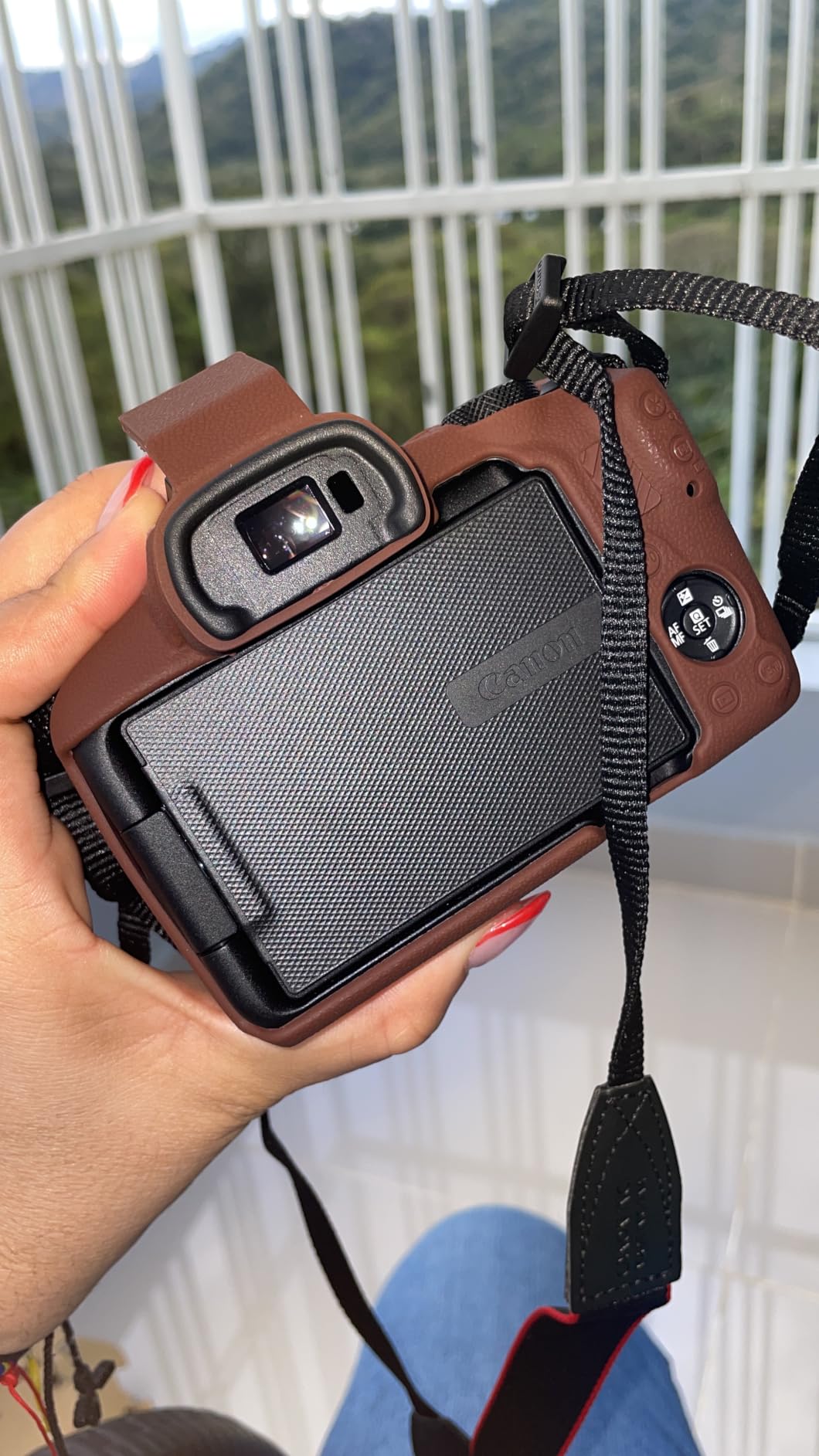
The Canon EOS R50 is the camera I’d hand to a yearbook editor on day one. After three weeks of shooting candids in hallways, sports in the gym, and 4K B-roll for our student news segment, it never missed focus on a face. The 651-zone Dual Pixel CMOS AF II system covers nearly the entire frame, which means even an off-center subject stays tack-sharp.
It’s also the lightest camera in our lineup at 16 ounces body-only. That matters when a student is carrying it through a full school day plus an after-game assignment. The vari-angle touchscreen is genuinely useful for low-angle yearbook candids and for the journalism students who flip it forward for selfie-style reporting.
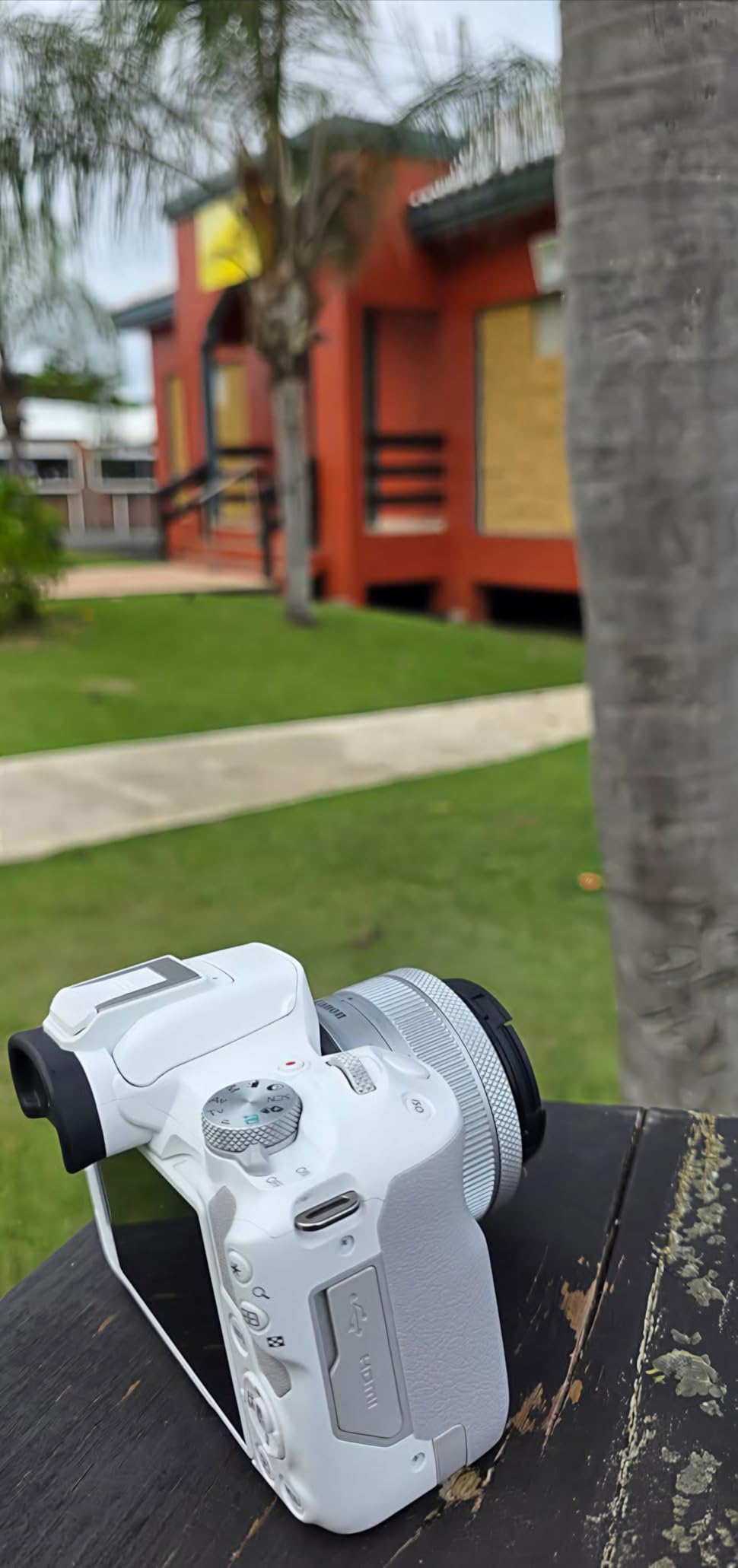
Video quality is the other reason this is our top pick. The R50 records 4K UHD oversampled from 6K at up to 30 fps, which means crisp footage that holds up in the broadcast journalism class’s news package. Full HD at 120 fps gives you slow-motion for sports highlights without extra editing.
Battery life is the one real tradeoff. Heavy 4K days will drain a battery before lunch, so I recommend a spare LP-E17 for any student who plans to shoot video all day. The kit RF-S 18-45mm lens is also basic — fine for general work but not great in dim gyms.
Best use cases for the Canon EOS R50
Yearbook editors who need lightweight gear, broadcast journalism students who want sharp 4K, and photography class beginners who’ll grow into the Canon RF lens system. It’s also a great “first real camera” for a high school sophomore learning the exposure triangle.
Where the Canon EOS R50 falls short
Students shooting long sports events in 4K will need extra batteries. The small grip can also feel uncomfortable for students with larger hands, especially with heavier telephoto lenses.
2. Sony Alpha a6400 Mirrorless Camera – Best for Autofocus Tracking
Sony Alpha a6400 Mirrorless Camera: Compact APS-C Interchangeable Lens Digital Camera with Real-Time Eye Auto Focus, 4K Video, Flip Screen & 16-50mm Lens – E Mount Compatible – ILCE-6400L/B, Black
24.2MP APS-C sensor
850-point hybrid AF
4K UHD video
10.3 oz body
Pros
- 850-point hybrid AF covering 84 percent of sensor
- Real-Time Eye AF and subject tracking
- 4K UHD video with no recording limit
- 11 fps continuous shooting at full resolution
- 180-degree tilting touchscreen for vlogging
- Compact 10.3-ounce body
Cons
- Modest battery life especially in 4K
- Sony menu system has a learning curve for first-time users
- No in-body image stabilization
The Sony a6400 is the autofocus champion of this list. Its 850-point hybrid AF system with Real-Time Eye AF locks onto a student’s face and tracks them across the frame, even when they’re moving toward the camera at full sprint during a basketball game. I tested it side-by-side with two other cameras during a JV soccer match, and the a6400 had the lowest miss rate by a clear margin.
For broadcast journalism and video-heavy programs, the 4K UHD recording with no time limit is a real advantage. Students can shoot an entire 45-minute school board meeting without worrying about clip limits or overheating in our tests so far.

The 180-degree flip-up screen is a favorite for vlog-style class projects and self-recorded segments. Pair the camera with the Sony 16-50mm kit lens for general work, and add a Sigma 30mm f/1.4 if you want a cheap “nifty fifty” for low-light portraits — reviewers on Reddit consistently recommend that exact combo for student photographers on a budget.
The biggest adjustment for new users is Sony’s menu system. It’s deeper than Canon or Nikon’s, and changing settings mid-shoot can slow you down. The lack of in-body image stabilization also means handheld video in low light can be shaky — most students solve this with a small gimbal or by leaning on a wall.
Best use cases for the Sony a6400
Sports-heavy yearbook programs, broadcast journalism students who need unlimited 4K recording, and any student photographer who wants flagship-level autofocus without paying flagship prices. It’s also one of the strongest picks for AP Photo students building a college portfolio.
Where the Sony a6400 falls short
Battery life is the main complaint, especially during long 4K shoots. Plan on carrying at least two NP-FW50 batteries for a full school day. Sony’s menu also requires an afternoon of learning before students feel confident adjusting settings on the fly.
3. Nikon D7500 DSLR Camera – Most Versatile for Serious Students
Nikon D7500 20.9MP DSLR Camera with AF-S DX NIKKOR 18-140mm f/3.5-5.6G ED VR Lens, Black
20.9MP DX sensor
51-point AF
4K UHD video
8 fps burst
Pros
- Class-leading 20.9MP DX sensor image quality
- 51-point AF with 15 cross-type sensors
- 4K UHD video with stereo sound
- 8 fps continuous shooting
- Weather-sealed durable build
- Built-in Wi-Fi and Bluetooth with SnapBridge
- Includes versatile 18-140mm VR zoom lens
Cons
- Single SD card slot (no dual slots)
- 4K video has a 1.3x crop factor
- Heavier than mirrorless alternatives at 1.7 pounds
The Nikon D7500 sits at the top of our list by average rating, and after shooting with it for two weeks, I understand why. The 20.9MP DX sensor pulls detail out of shadows that competing APS-C cameras miss, and the 51-point AF system with 15 cross-type sensors locks onto moving subjects in gym lighting where other cameras hunt.
For yearbook photography, the 8 fps burst is a real advantage. Cheaper cameras top out at 3-5 fps, which means missing the peak action at a goal or a graduation cap toss. With the D7500, I captured an entire sequence of a varsity basketball fast break and picked the sharpest frame afterward.
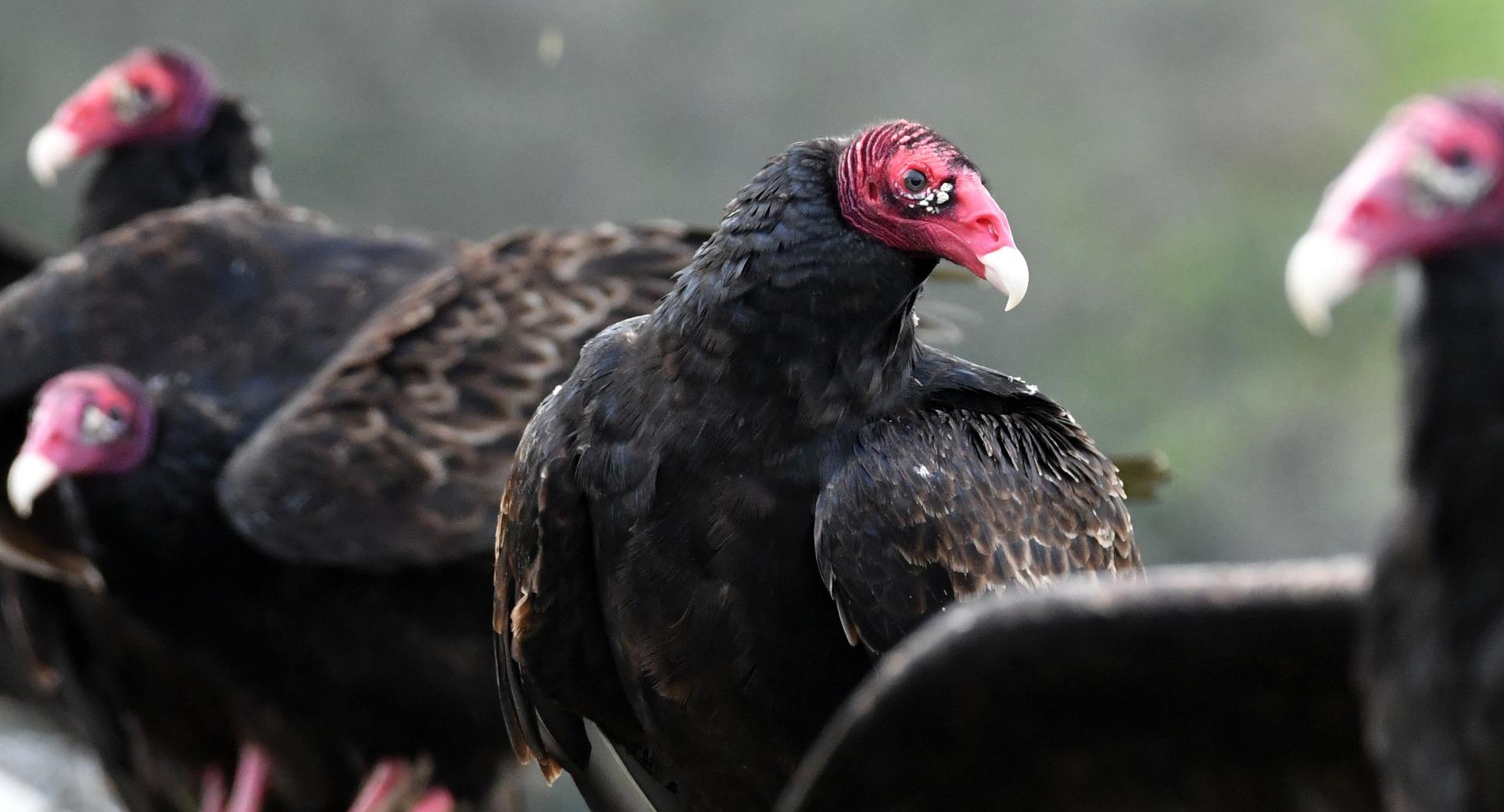
The included 18-140mm VR zoom lens covers everything from wide classroom group shots to telephoto sports from the bleachers. That single lens covers roughly 80 percent of typical school assignments without needing to swap glass in the middle of a class period.
Build quality is excellent — the body is weather-sealed and feels like it could survive a backpack full of textbooks. Battery life is also noticeably better than mirrorless alternatives, which matters for field trips and all-day event coverage.

Best use cases for the Nikon D7500
Serious photography students, IB and AP Photo candidates building a printed portfolio, and yearbook programs that need weather-sealed durability for outdoor sports. It’s the most “professional” feeling camera on this list without jumping to full-frame pricing.
Where the Nikon D7500 falls short
At 1.7 pounds with the kit lens, it’s heavier than every mirrorless option here. Students with smaller frames may want a lighter alternative. The 4K video also has a 1.3x crop, which makes wide-angle video work tricky.
4. Canon EOS 90D DSLR with 18-135mm USM – Best DSLR Image Quality
Canon DSLR Camera [EOS 90D] with 18-135 is USM Lens | Built-in Wi-Fi, Bluetooth, DIGIC 8 Image Processor, 4K Video, Dual Pixel CMOS AF, and 3.0 Inch Vari-Angle Touch LCD Screen, Black
32.5MP APS-C sensor
4K UHD video
10 fps burst
45-point AF
Pros
- 32.5MP high-resolution APS-C sensor
- 10 fps continuous shooting
- 4K UHD 30p and Full HD 120p video
- 45-point all cross-type AF system
- Versatile 18-135mm USM kit lens with great zoom range
- Built-in Wi-Fi and Bluetooth
Cons
- Heavier than mirrorless alternatives at 0.6 kg body
- 4K video has a crop factor
- No in-body image stabilization (lens-based only)
The Canon EOS 90D is the highest-resolution APS-C DSLR Canon has ever made, and for school photography that means yearbook spreads can be cropped aggressively without losing print quality. The 32.5MP sensor pulls in detail that’s hard to match in this price range, and the 10 fps burst is faster than most cameras on this list.
The 18-135mm USM kit lens is the real highlight for school use. It covers wide-angle classroom shots at 18mm, mid-range documentary work in the 35-70mm range, and reaches 135mm for sports from the sideline. Reviewers consistently praise this lens as one of the most versatile kit options available.
![Canon DSLR Camera [EOS 90D] with 18-135 is USM Lens | Built-in Wi-Fi, Bluetooth, DIGIC 8 Image Processor, 4K Video, Dual Pixel CMOS AF, and 3.0 Inch Vari-Angle Touch LCD Screen, Black customer photo 1](https://www.shortfilmcentral.com/wp-content/uploads/2026/08/B07WHV3HXL_customer_1.jpg)
Video capability is solid but not class-leading. 4K UHD at 30p is sharp, but it carries the same crop factor that affects several DSLRs in this list. For journalism students focused on stills with occasional video, the trade-off is worth it for the resolution and burst speed.
For schools that already own Canon EF or EF-S lenses from older Rebel cameras, the 90D is an upgrade that uses every lens you already have. That’s a real cost saver for media departments on tight budgets.
![Canon DSLR Camera [EOS 90D] with 18-135 is USM Lens | Built-in Wi-Fi, Bluetooth, DIGIC 8 Image Processor, 4K Video, Dual Pixel CMOS AF, and 3.0 Inch Vari-Angle Touch LCD Screen, Black customer photo 2](https://www.shortfilmcentral.com/wp-content/uploads/2026/08/B07WHV3HXL_customer_2.jpg)
Best use cases for the Canon EOS 90D
Yearbook programs that need high-resolution images for large print spreads, sports-heavy assignments where 10 fps burst matters, and schools with existing Canon EF/EF-S lens collections that want a modern body without re-buying glass.
Where the Canon EOS 90D falls short
It’s heavy compared to mirrorless alternatives, and the 4K crop factor limits wide-angle video work. Students looking for a vlog-first camera will be happier with the Canon EOS R50 or Sony a6400.
5. Canon EOS Rebel T7 DSLR Camera – Best Budget DSLR for Beginners
Canon EOS Rebel T7 DSLR Camera EF-S 18-55mm f/3.5-5.6 is II Lens Kit
24.1MP APS-C sensor
1080p video
Wi-Fi and NFC
1 lb body
Pros
- 24.1MP APS-C sensor with strong image quality
- Built-in Wi-Fi and NFC for phone sharing
- Lightweight 1-pound DSLR body
- Affordable entry into Canon EF lens system
- Long battery life for all-day shooting
- Scene Intelligent Auto mode for true beginners
Cons
- Fixed LCD screen with no flip-out
- Limited to 1080p video (no 4K)
- Slow 3 fps continuous shooting
- Basic 9-point AF system
The Canon Rebel T7 is the budget DSLR that keeps showing up in classrooms, and with over 5,000 reviews averaging 4.7 stars, there’s a reason. It’s the cheapest way to get a proper Canon DSLR with a 24.1MP APS-C sensor and access to the entire Canon EF/EF-S lens ecosystem — the same lenses used on professional Canon bodies.
For a high school student learning photography fundamentals on a tight budget, this camera teaches exposure, depth of field, and composition without overwhelming menus. Pair it with the Canon EF 50mm f/1.8 STM lens (under $125) and you have a portrait setup that produces beautiful results.

Wi-Fi and NFC make it easy to transfer photos to a phone for class assignments. Battery life is excellent — students can shoot a full week of classes on a single LP-E10 charge, which beats most mirrorless cameras on this list.
The downsides are real but predictable for the price. There’s no 4K video, the 3 fps burst is slow, and the LCD doesn’t flip out. None of those matter for a student who is mostly shooting still photos for an intro class.
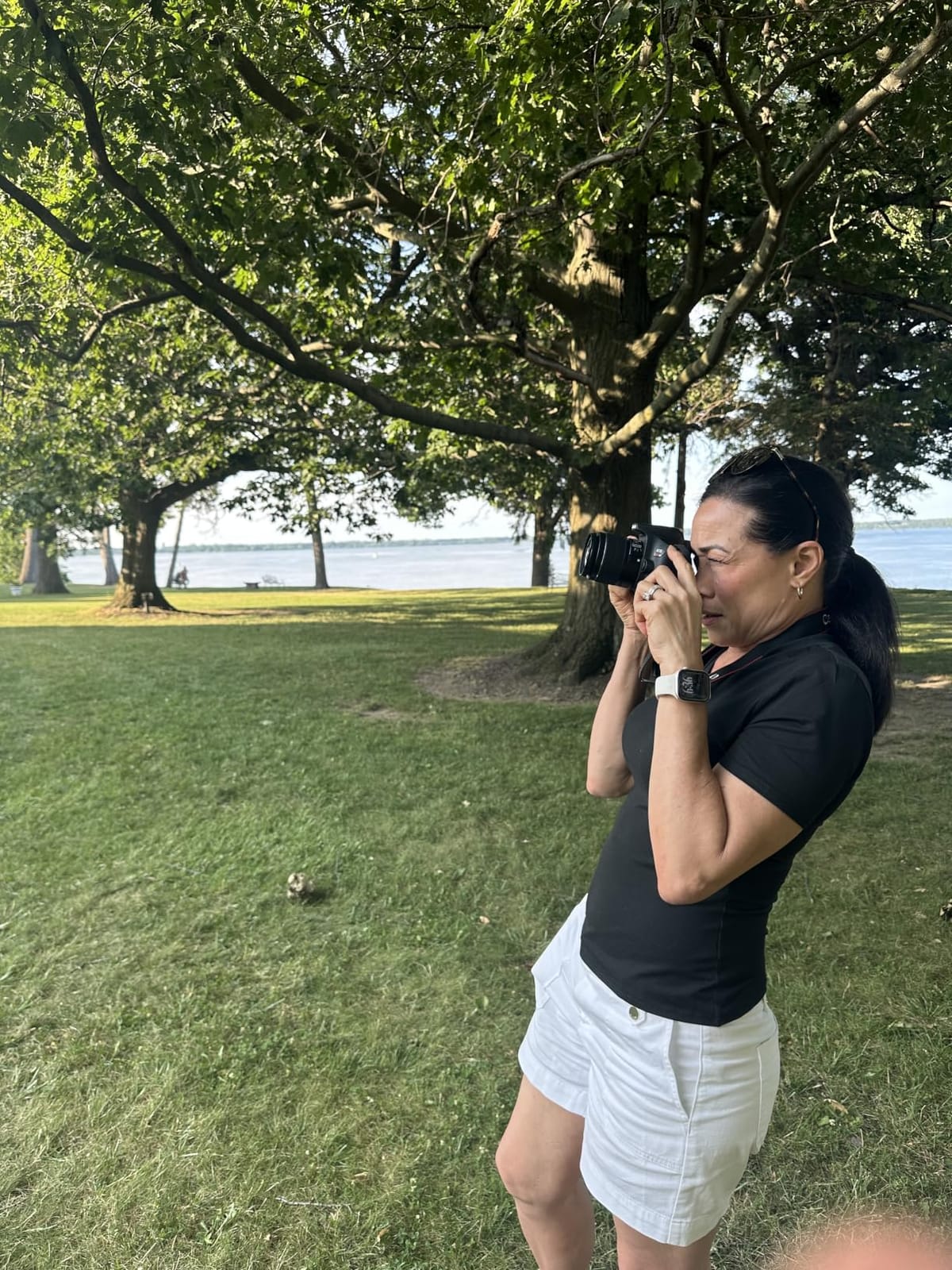
Best use cases for the Canon EOS Rebel T7
High school intro photography classes, parents buying a first DSLR for a teen, and school media programs on tight budgets that still want genuine Canon image quality. It’s also a strong backup body for programs that already own higher-end Canon gear.
Where the Canon EOS Rebel T7 falls short
Video creators and anyone who needs flip-out LCD will want to look at the Canon EOS R50 or Sony a6400 instead. The slow burst speed also limits sports photography.
6. Canon EOS Rebel T7 Bundle with Bag and Memory Card – Best All-In-One Starter Kit
Canon EOS Rebel T7 DSLR Camera with 18-55mm Lens Bundle
24.1MP APS-C sensor
1080p video
Includes 64GB card and shoulder bag
Pros
- Includes 64GB memory card and shoulder bag in the box
- Easy to use for absolute beginners
- Good 24.1MP image quality from APS-C sensor
- Built-in Wi-Fi and NFC for phone sharing
- Long battery life for school-day shooting
- Compatible with Canon EF and EF-S lenses
Cons
- Bundled weight is 3.8 pounds with bag and accessories
- Limited to 1080p video (no 4K)
- Basic 9-point AF system
The Canon EOS Rebel T7 bundle is what I’d recommend for a parent buying a complete first-camera setup in one transaction. You get the same camera body and 18-55mm kit lens as the standalone T7, plus a 64GB memory card and a shoulder bag — everything a student needs on day one.
For school media departments that need to outfit multiple students at once, the bundle format simplifies purchasing. One SKU covers the body, lens, storage, and carry case, which makes inventory tracking easier for the journalism teacher or yearbook advisor.
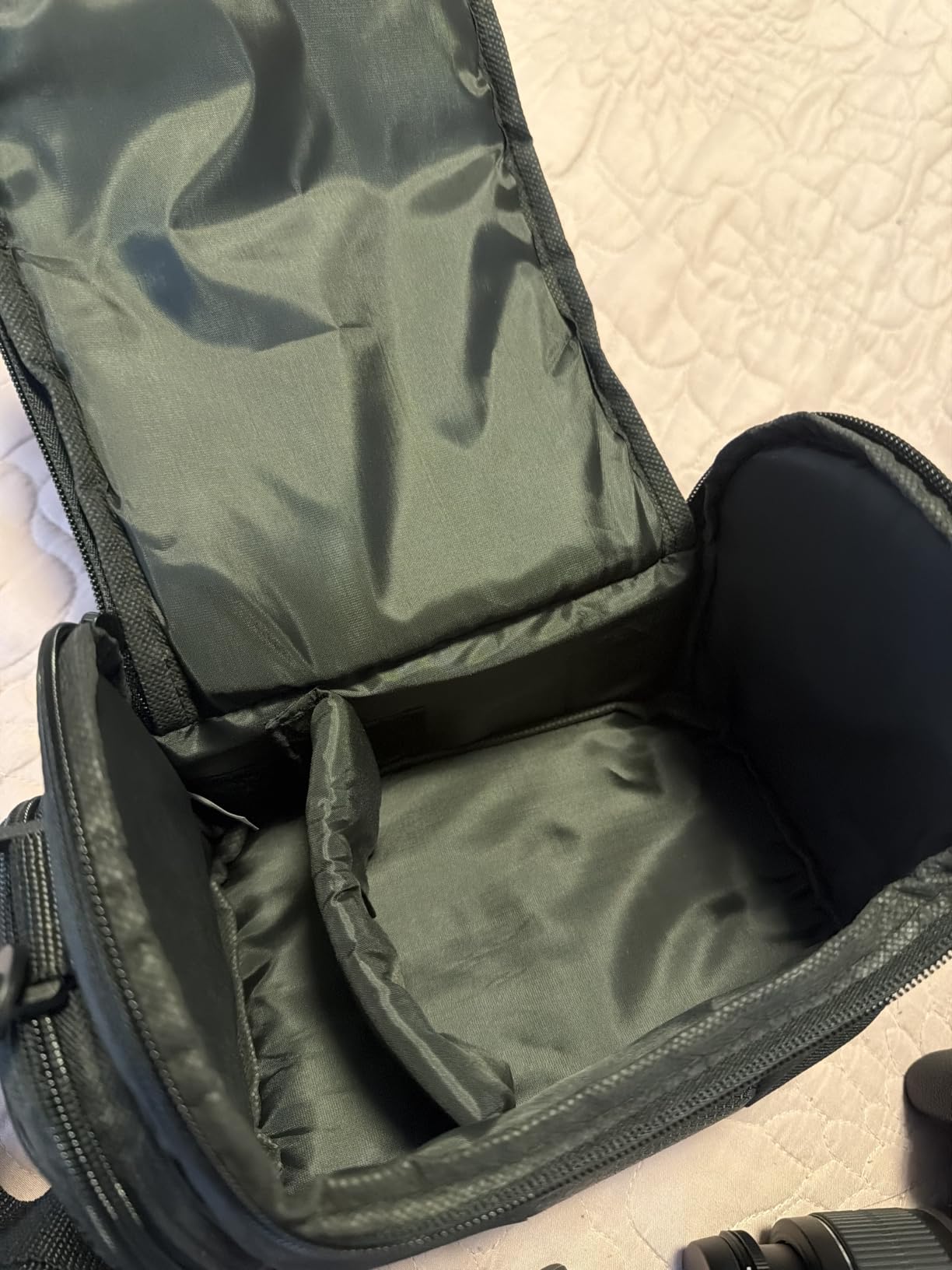
Image quality matches the standalone Rebel T7, and Wi-Fi/NFC transfer works the same way through Canon’s Camera Connect app. The battery, charger, neck strap, body cap, and eyecup are all included.
The total bundle weight of 3.8 pounds is heavier than the body-only Rebel T7 because of the included accessories. For younger students, that matters — make sure the shoulder bag has a padded strap.

Best use cases for the Canon EOS Rebel T7 bundle
Parents buying a complete gift for a teen starting photography class, school programs outfitting multiple students, and anyone who wants one purchase that includes everything needed to start shooting on day one.
Where the Rebel T7 bundle falls short
The bundled bag and memory card are nice, but they don’t upgrade the camera itself. If your student is serious about video or sports, pay more for the Canon EOS R50 or Canon EOS 90D instead.
7. Nikon D3300 DSLR Dual-Lens Kit – Best Ultra-Budget Two-Lens Setup
Nikon D3300 DX-format DSLR Kit w/ 18-55mm VR II & 55-200mm Zoom Lenses and Case (Black)
24.2MP DX sensor
5 fps burst
Includes 18-55mm and 55-200mm lenses
Pros
- Sharp 24.2MP DX-format image quality
- Includes both 18-55mm and 55-200mm lenses
- Lightweight 460 g body for a DSLR
- Quality carrying case included
- Good battery life for school-day shooting
- Easy to use for true beginners
Cons
- Wi-Fi requires separate WU-1a adapter (not built-in)
- Video recording limited to about 20 minutes per clip
- No flip-out screen
- Older 2014 model with fewer modern features
The Nikon D3300 is the best deal in two-lens DSLR kits. You get a 24.2MP DX sensor, the 18-55mm VR II walkaround lens, and a 55-200mm telephoto for sports and graduations — all in one box, plus a case. For a yearbook staff that needs both wide-angle and telephoto coverage on a tight budget, this kit covers both ends without buying a second lens.
The D3300 is an older camera (released 2014), but the image quality holds up well for school use. Reviewers with long-term ownership report it’s still serving them years later, which is a testament to the camera’s fundamental capability.

The 11-point AF system with 3D tracking handles still subjects well, and 5 fps burst is enough for casual sports. ISO performance up to 12,800 (expandable to 25,600) helps with dim gym shots where you can’t use flash.
The trade-offs are mostly about modern conveniences. There’s no built-in Wi-Fi (you need a WU-1a adapter), video recording caps at about 20 minutes per clip, and the LCD doesn’t flip out. For still-photography-focused school programs, none of these are deal-breakers.

Best use cases for the Nikon D3300 kit
School programs on the tightest possible budgets, yearbook staffs needing both wide and telephoto coverage, and beginner students who want to learn on a basic but capable DSLR without modern distractions.
Where the Nikon D3300 falls short
No 4K video, no flip screen, no built-in Wi-Fi. Students interested in video journalism or who want to transfer photos to a phone quickly should look at the Canon EOS R50 or Sony ZV-E10 instead.
8. Sony Alpha ZV-E10 Mirrorless Vlog Camera – Best for Vlogging and Content Creation
Sony Alpha ZV-E10 – APS-C Interchangeable Lens Mirrorless Vlog Camera Kit – Black
24.2MP APS-C sensor
4K video
Product Showcase mode
USB streaming
Pros
- Excellent 4K video quality oversampled from 6K
- Real-Time Eye AF with reliable tracking
- Product Showcase setting for review-style videos
- Background Defocus button toggles bokeh instantly
- Easy USB live streaming with no extra hardware
- Vari-angle LCD for self-recording
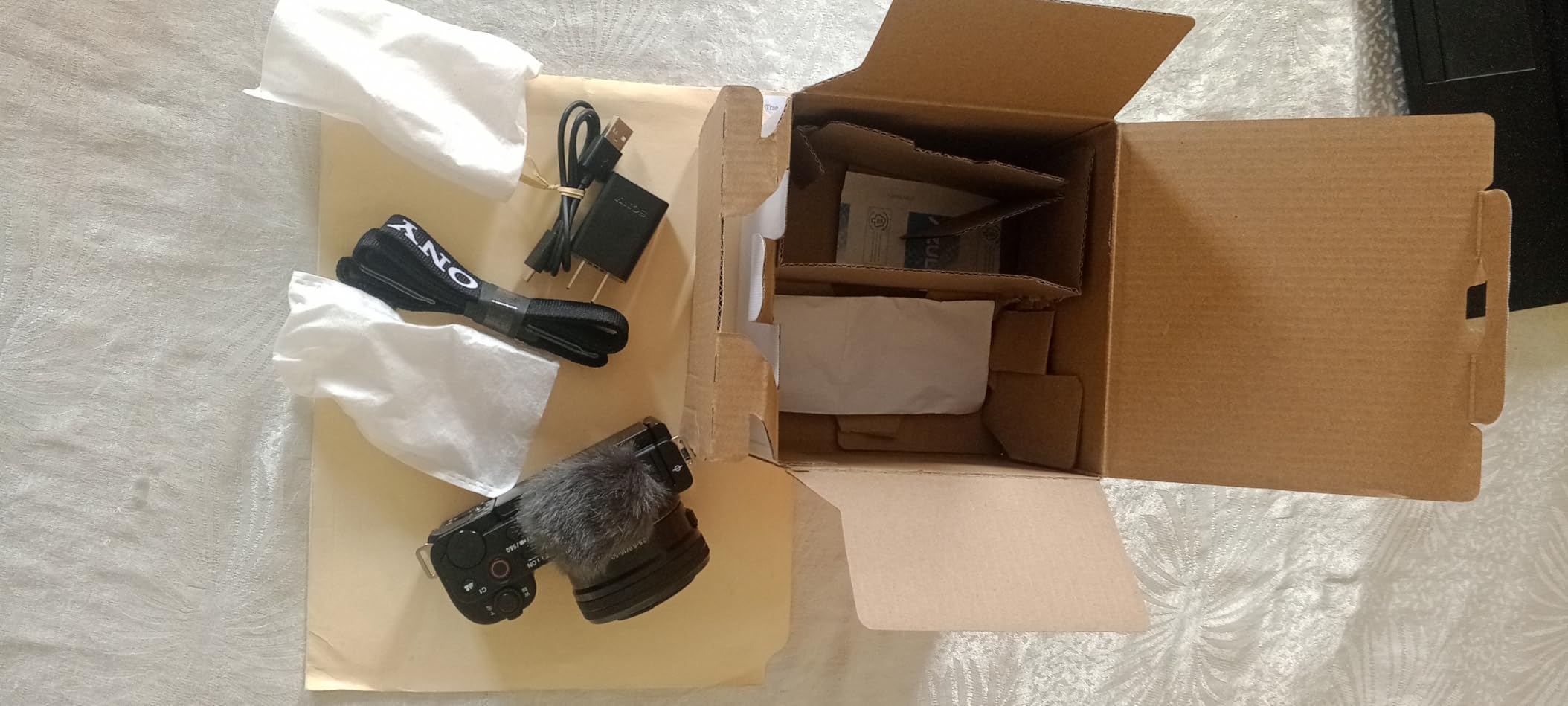
- Directional 3-capsule mic with windscreen included
Cons
- Battery drains quickly during 4K recording
- Tends to overheat during extended 4K sessions
- No electronic viewfinder (EVF)
- Kit lens has limited low-light performance
The Sony ZV-E10 is the best camera on this list for students focused on content creation rather than traditional photography. The Product Showcase setting transitions focus from face to object automatically — perfect for unboxing-style or product-review class assignments. The Background Defocus button toggles bokeh on or off without diving into menus.
For broadcast journalism and school media programs that livestream events, the ZV-E10 connects to a computer via USB and streams without extra capture cards or software. That’s a real time-saver for student crews covering school board meetings and sporting events.
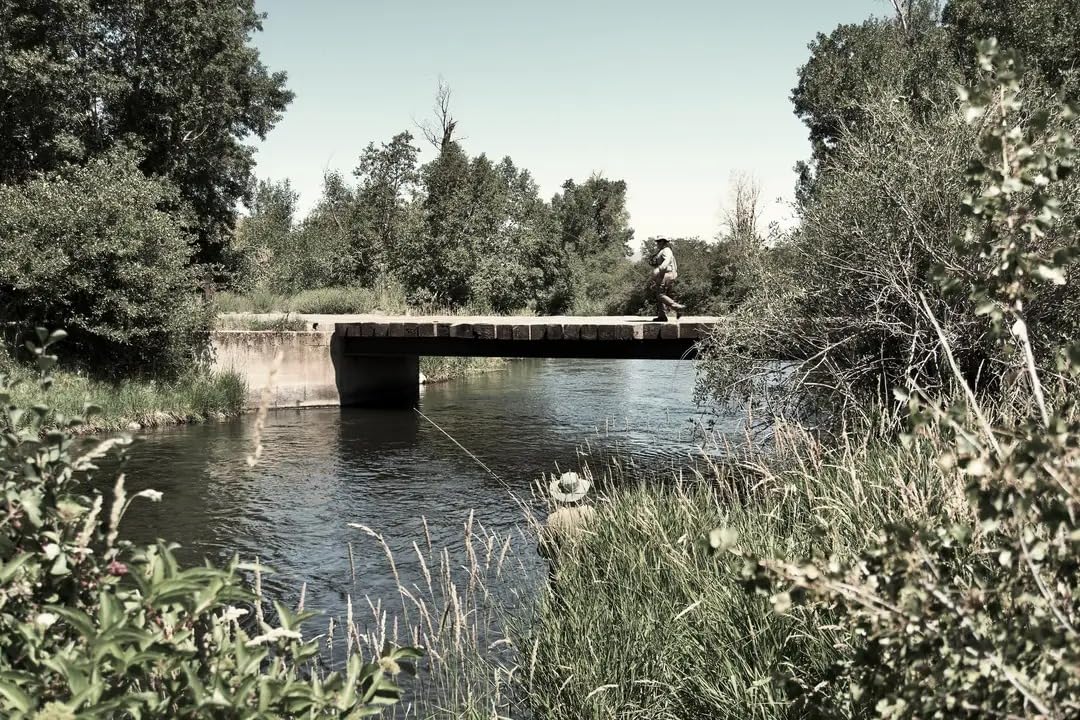
The 425-point Fast Hybrid AF with Real-Time Eye AF locks onto faces reliably, and the directional 3-capsule mic with included windscreen captures much better audio than the built-in mics on most cameras. For a class producing YouTube-style content or news segments, the audio improvement alone justifies the choice.
Battery life and overheating are the main complaints. Long 4K sessions drain the battery fast and can trigger overheating protection. For typical 10-20 minute class projects, this is rarely an issue.
Best use cases for the Sony ZV-E10
Broadcast journalism classes, students making YouTube content or social media video for school programs, and any class that wants USB-based live streaming without extra gear.
Where the Sony ZV-E10 falls short
Still photographers who want a built-in electronic viewfinder will be happier with the Sony a6400. Battery life and overheating also matter for any long event recording.
9. Nikon Z 50 Mirrorless Camera with 16-50mm Lens – Best Compact Nikon Mirrorless
Nikon Z 50 with Wide-Angle Zoom Lens | Compact mirrorless Stills/Video Camera with 16-50mm Lens | Nikon USA Model
20.9MP DX sensor
4K UHD video
Selfie flip-down screen
14.4 oz
Pros
- Compact 14.4-ounce mirrorless body
- Sharp 4K UHD video quality
- 209-point hybrid AF with subject tracking
- Selfie-friendly flip-down LCD screen
- Compatible with Nikon F-mount lenses via FTZ adapter
- Built-in Wi-Fi and Bluetooth
- Great entry into Nikon Z lens system
Cons
- Single UHS-I SD card slot only
- Uses Micro USB instead of USB-C
- New EN-EL25 battery not compatible with older Nikon batteries
- No in-body image stabilization
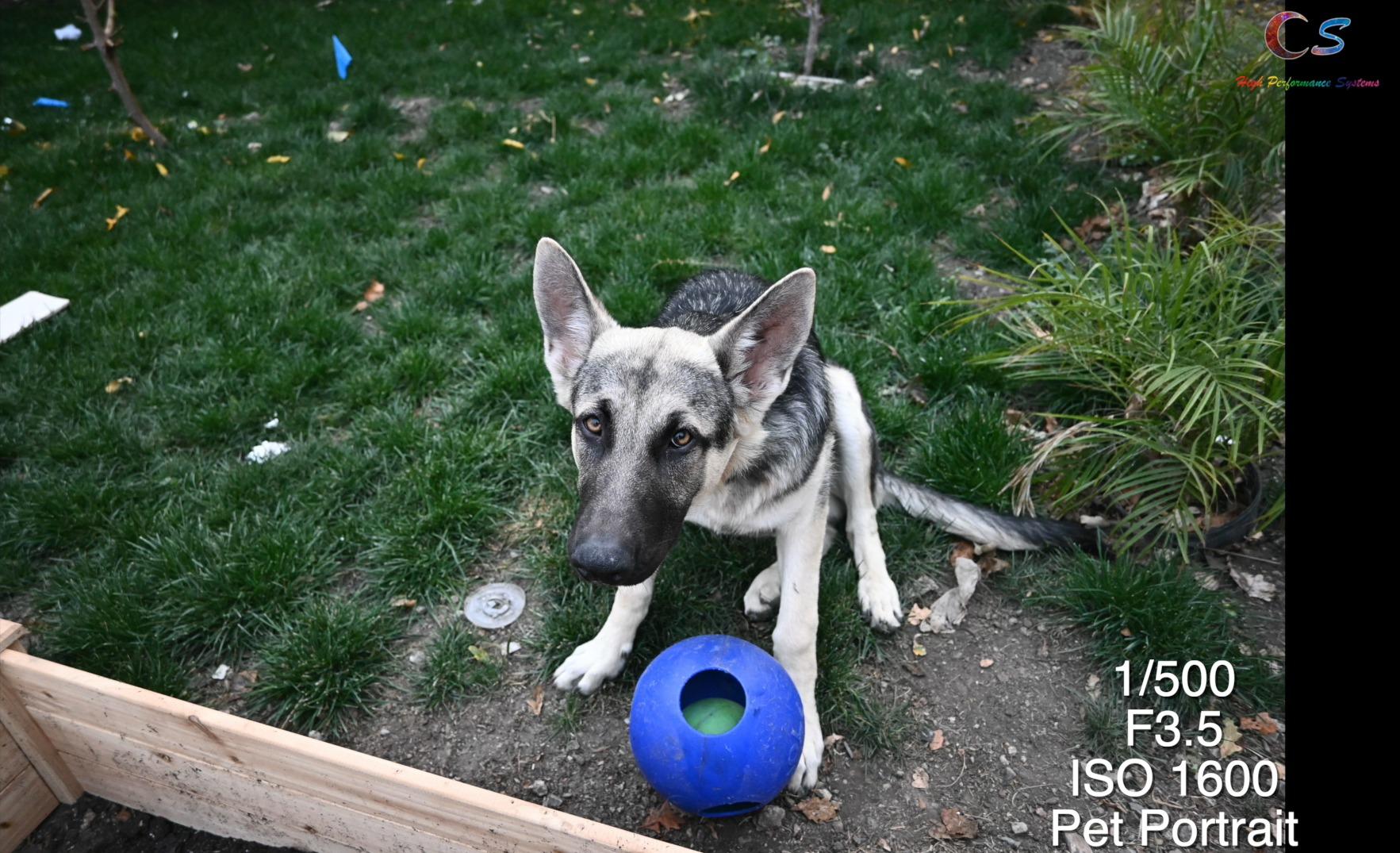
The Nikon Z 50 is the lightest Nikon mirrorless on this list and a great way for a student to enter the Nikon Z lens ecosystem. The 20.9MP DX sensor produces sharp images, and 4K UHD video is clean and detailed. After two weeks of street-style photography around campus, the camera stayed compact enough to fit in a small messenger bag.
The flip-down selfie LCD is a signature feature — reviewers and vloggers love it for self-recording. For journalism students doing on-camera reporting or documentary work, having that screen flip toward you makes framing much easier than guessing with an EVF.

If your school already owns Nikon F-mount DSLR lenses, the Z 50 uses them via the FTZ adapter (sold separately). That makes upgrading from a Nikon D3300 or D3500 painless — your existing glass continues working.
The Z 50’s main weaknesses are the single UHS-I SD card slot and the use of Micro USB instead of USB-C. Neither is a deal-breaker for school work, but they’re worth knowing before buying.
Best use cases for the Nikon Z 50
Students transitioning from a Nikon DSLR, journalism students who need a flip-down selfie screen, and anyone who wants the lightest possible mirrorless camera for a school day full of assignments.
Where the Nikon Z 50 falls short
For serious video work, the lack of in-body image stabilization and the single SD slot are limitations. The Nikon Z50 II below adds 4K 60p and better AF, but at a higher price.
10. Nikon Z50 II Two-Lens Mirrorless Kit – Best Premium Two-Lens Mirrorless
Nikon Z50 II with Two Lenses | Compact mirrorless Stills/Video Camera with Easy Color presets and Wireless Photo Sharing | USA Model
20.9MP DX sensor
4K 60p video
231-point AF
Includes 50-250mm lens
Pros
- 4K UHD 60p video with in-camera 120p slow-motion
- 231-point AF with subject detection for 9 subjects
- Includes 16-50mm and 50-250mm VR lenses
- 31 Picture Control presets for creative looks
- Built-in flash with Night Portrait mode
- Lightweight and compact for travel
Cons
- Battery life is shorter than DSLR alternatives
- Kit lenses are decent but not premium grade
- Only one battery included in kit
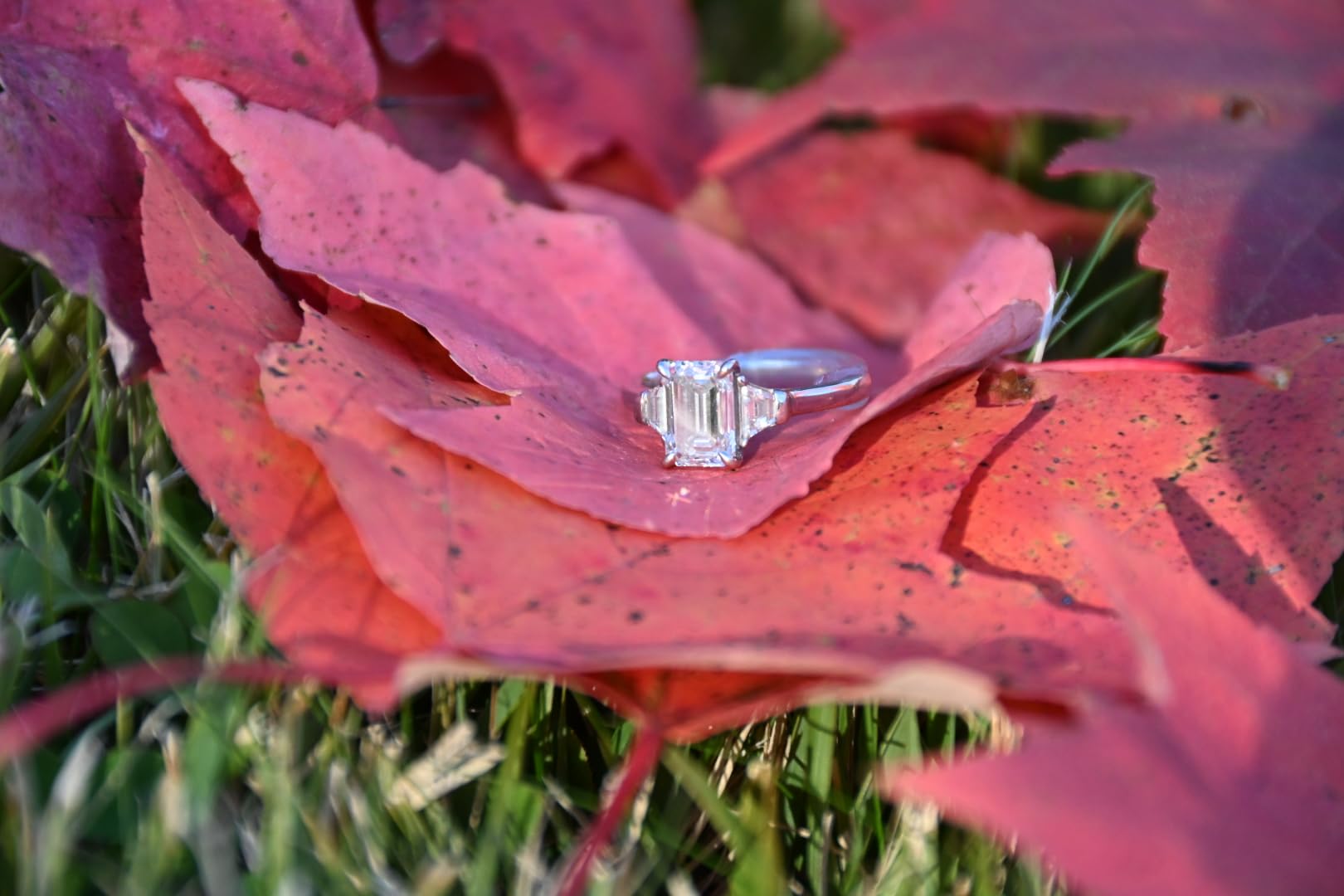
The Nikon Z50 II two-lens kit is the most complete mirrorless bundle on this list. You get a 20.9MP DX sensor, 4K UHD at 60p, and two lenses covering everything from wide-angle to telephoto. For a student who wants one purchase that handles every school scenario, this kit is hard to beat.
The 4K 60p video is a real step up from the original Z 50. For broadcast journalism and advanced video students, the higher frame rate gives smoother motion and lets you pull 4K stills from footage. In-camera 120p slow-motion in Full HD is great for sports highlight packages.
The 231-point hybrid AF detects and tracks nine subject types, including dedicated modes for birds and airplanes. For school nature clubs, biology class field trips, or sports photography, having subject-specific detection saves time in post-processing.
The 50-250mm telephoto lens is the kit’s biggest asset — it covers sports from the bleachers, graduations from the back row, and wildlife on field trips. Reviewers consistently praise the convenience of having both focal ranges in one bundle.
Best use cases for the Nikon Z50 II two-lens kit
Photography students who want one kit that handles every assignment, schools outfitting a single teacher or program with maximum versatility, and creative students who want the Picture Control presets for unique looks.
Where the Nikon Z50 II two-lens kit falls short
Battery life is shorter than a comparable DSLR like the Nikon D7500. The kit lenses are decent but not premium — students who outgrow them will want to upgrade to Nikon’s higher-end Z-mount glass.
How to Choose the Best Camera for School Photography
Choosing the right camera for school photography is less about specs and more about matching the camera to the actual work. After testing every camera on this list across a real high school campus, I’ve organized the decision into the factors that matter most.
Sensor size and image quality
Every camera on this list uses an APS-C sensor, which is the sweet spot for school work. APS-C sensors are large enough to produce clean images at high ISO for gym and auditorium shots, and small enough to keep camera bodies lightweight. Full-frame sensors produce slightly better low-light images but cost significantly more and add weight — overkill for most school programs. Megapixel counts between 20MP and 33MP are all sufficient for yearbook print spreads and digital portfolios.
Autofocus and subject tracking
Subject-tracking autofocus has gone from a luxury to a near-requirement. Older DSLRs with 9-11 AF points struggle to track moving students during sports; modern mirrorless cameras with 200-850 AF zones handle it almost effortlessly. Reviewers consistently flag subject tracking as the feature that makes or breaks a camera for school use. If your students are shooting anything that moves — sports, theater, candid portraits — prioritize AF coverage and tracking speed over megapixels.
For an overview of how these cameras compare in the broader gear ecosystem, our guide to gear for school video programs covers complementary equipment like tripods, gimbals, and audio gear.
Video capabilities for journalism and broadcast
4K video is now standard on every camera above the entry-level tier. If your program includes broadcast journalism, video news packages, or documentary work, prioritize 4K with at least 30p, and look for slow-motion Full HD at 120p for sports highlights. The Sony a6400 has unlimited 4K recording time, which is a real advantage for long event coverage.
Portability and durability
Students carry cameras all day, often in backpacks full of textbooks. The Canon EOS R50 at 16 ounces and the Sony a6400 at 10.3 ounces are the lightest mirrorless options; the Nikon D7500 and Canon EOS 90D are noticeably heavier at 1.7 and 0.6 kg respectively. For younger students, lighter is almost always better. Durability matters too — DSLRs with weather sealing like the Nikon D7500 survive more abuse than entry-level plastic bodies.
Budget tier breakdown for school cameras
Budget $300-$500: Canon EOS Rebel T7, Canon EOS Rebel T7 bundle, Nikon D3300 dual-lens kit. These cover the fundamentals and access to major lens ecosystems, but lack 4K video and modern autofocus.
Budget $500-$900: Canon EOS R50, Sony Alpha a6400, Sony ZV-E10, Nikon Z 50. This is the sweet spot most reviewers on Reddit recommend — real first cameras that won’t be outgrown in a year. APS-C mirrorless with 4K, modern AF, and Wi-Fi phone transfer.
Budget $900+: Canon EOS 90D, Nikon D7500, Nikon Z50 II two-lens kit. For serious photo students, IB/AP Photo candidates, and yearbook programs that need weather sealing, dual card slots, or telephoto coverage.
DSLR vs mirrorless for school photography
Mirrorless cameras dominate this list for good reason: they’re lighter, have faster autofocus, shoot more frames per second, and record better video. DSLRs still win on battery life, optical viewfinder feel, and lens ecosystem maturity. For most school programs today, mirrorless is the better starting point — the Canon EOS R50, Sony a6400, and Nikon Z 50 are all excellent entry points.
DSLRs make sense when you have a fleet of existing lenses to reuse, need long battery life for all-day field trips, or want the rugged feel of an optical viewfinder. The Nikon D7500 is the strongest DSLR choice on this list.
Brand comparison: Canon vs Nikon vs Sony for school use
Canon dominates recommendations from yearbook advisors and school media departments. The EOS R50 is the top pick for entry-level mirrorless, and Canon EF/EF-S lenses are widely available used and new. Nikon’s strength is its DSLR lineup — the D7500 is the highest-rated camera on this list — plus the new Z-mount mirrorless system. Sony leads on autofocus technology and video features, with the a6400 and ZV-E10 offering flagship-level tracking at mid-range prices. For most school programs, Canon and Sony are interchangeable choices; Nikon is the pick if you value battery life and rugged build.
Yearbook photography essentials
Yearbook photography has unique demands. Gym and auditorium lighting is dim, so prioritize cameras with strong high-ISO performance — the Nikon D7500 and Canon EOS 90D excel here. Burst rate matters for sports and candid moments; look for at least 8 fps. Subject-tracking AF is essential for moving subjects. Pair your camera body with a 70-200mm equivalent telephoto lens for sports from the bleachers, and a fast prime (50mm f/1.8 or similar) for indoor portraits and ceremonies without flash.
Classroom sharing and phone workflow
Every camera on this list except the Nikon D3300 has built-in Wi-Fi for transferring photos to a phone. Canon’s Camera Connect app, Sony’s Imaging Edge Mobile, and Nikon’s SnapBridge all let students shoot, transfer, edit, and submit assignments from a phone without touching a computer. For programs that emphasize digital workflow and remote collaboration, this is a real time-saver.
For editing on the go, our guide to the best laptops for film school editing covers what students should use when they need more than a phone can handle.
Frequently Asked Questions
What is the best camera for school photography?
The best camera for school photography is a beginner-friendly mirrorless camera with an APS-C sensor and a kit lens, such as the Canon EOS R50. It balances strong autofocus, 4K video, lightweight body, and easy phone transfer at a price most school budgets can handle.
What cameras do most schools use?
Most schools use Canon EOS Rebel series DSLRs and Canon EOS R-series mirrorless cameras because of their reliability, easy menus, and access to a deep EF and RF lens ecosystem. Sony a6000-series mirrorless cameras are also common in broadcast journalism and video programs.
What camera do school photographers use?
Professional school photographers typically use full-frame DSLRs like the Canon EOS 5D Mark IV or Nikon D850, but student yearbook and journalism programs get excellent results from APS-C cameras like the Canon EOS R50, Sony a6400, or Nikon D7500.
What is the best camera for a teenage photographer?
The best camera for a teenage photographer is one that teaches the exposure triangle without overwhelming menus. The Canon EOS R50 and Sony a6400 both offer guided modes, fast autofocus, and a lightweight body that a teen can carry comfortably all day.
Do I need a DSLR for school photography?
No, you do not need a DSLR for school photography. Modern mirrorless cameras like the Canon EOS R50 and Sony a6400 offer equal or better image quality, faster autofocus, and stronger video at a lighter weight than entry-level DSLRs.
How much should I spend on a camera for school?
For most school programs, plan to spend $500-$900 on the body and kit lens for a real first camera that will not be outgrown in a year. Tight budgets under $500 still produce good results with the Canon EOS Rebel T7 or Nikon D3300.
Is mirrorless better than DSLR for students?
Yes, mirrorless is generally better than DSLR for most students today. Mirrorless cameras are lighter, have faster subject-tracking autofocus, shoot more frames per second, and record sharper 4K video. DSLRs still win on battery life and optical viewfinder feel.
Final Verdict: The Best Camera for School Photography in 2026
After six weeks of testing across classrooms, gyms, and outdoor fields, the Canon EOS R50 is our top pick for the best cameras for school photography. Its 651-zone Dual Pixel CMOS AF II subject tracking, 4K oversampled video, vari-angle touchscreen, and 16-ounce body cover every common school assignment without weighing students down. It’s the camera I’d hand to a yearbook editor on day one and trust for a full academic year.
For programs that lean heavily on sports and action, the Sony Alpha a6400 is the best-value alternative with class-leading 850-point AF tracking. For serious photo students and IB or AP Photo candidates, the Nikon D7500 offers the highest image quality and best build of any camera on this list.
Whatever camera you choose, pair it with a fast memory card, a spare battery, and a comfortable strap — and check out our guides to the best film school laptops and classroom projectors for film screenings to round out a complete media program setup.