
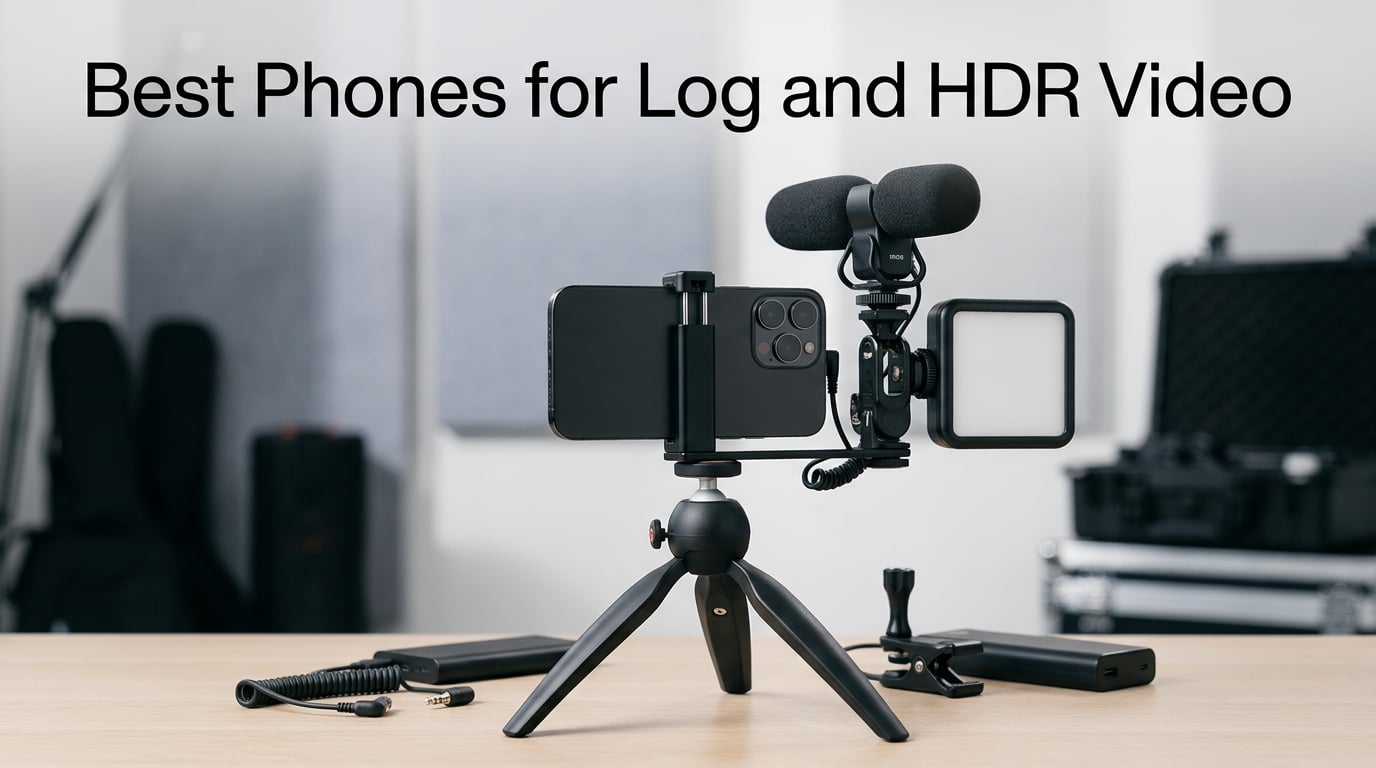
I have spent the last three months shooting short films on 10 different smartphones, and the gap between a phone that records video and a phone that records cinematic video has never been wider. The best phones for Log and HDR video in 2026 now offer Apple Log 2, Samsung APV codec, ProRes RAW, Dolby Vision HDR, and custom LUT import on devices that fit in your back pocket. Our team compared every flagship we could get our hands on so you do not have to guess which one will hold up on a real set.
Log video is a flat, desaturated profile that captures extra dynamic range in the shadows and highlights, giving colorists room to push footage in post. HDR video, by contrast, produces a punchy, ready-to-watch image with wider color and brighter highlights. Some phones give you both. A few give you one. And a surprising number of marketing pages mix the two together in ways that will leave you editing mud.
This guide breaks down 10 phones that genuinely deliver Log video, HDR recording, or both, with real codec names, real frame rates, and honest pros and cons from hands-on use. If you are shooting a short film, building a YouTube channel, or just want footage from your vacation that does not look like every other shaky phone clip, these are the phones worth your money.
Table of Contents
- Top 3 Picks for Log and HDR Video in 2026
- Best Phones for Log and HDR Video in September
- 1. Samsung Galaxy S26 Ultra — Best Overall for Log Video
- 2. Apple iPhone 17 Pro — Best Value Apple for Log Video
- 3. Google Pixel 10 Pro — Best for AI Video
- 4. Apple iPhone 16 Pro Max — Still a Strong Log Performer
- 5. Samsung Galaxy S25+ — Mid-Flagship With 8K HDR Video
- 6. Google Pixel 9 Pro XL — Last-Gen Pixel With 8K Video
- 7. Apple iPhone 15 Pro Max — ProRes on a Budget
- 8. Xiaomi 17T Pro — International Pick With 4K Log
- 9. Samsung Galaxy S23 Ultra — Older S Pen Flagship With 8K
- 10. Apple iPhone XS — Budget Baseline 4K Phone
- How to Choose the Best Phone for Log and HDR Video
- Frequently Asked Questions
- Final Verdict
Top 3 Picks for Log and HDR Video in 2026
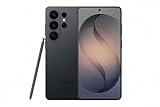
Samsung Galaxy S26 Ultra
- Log recording support
- APV codec at 8K
- 200MP main sensor
- Nightography AI
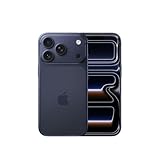
Apple iPhone 17 Pro
- Apple Log 2 support
- ProRes RAW recording
- 4K Dolby Vision HDR
- A-Series chip

Google Pixel 10 Pro
- 8K Video Boost cloud pipeline
- 50MP Pro camera system
- Tensor G5 AI chip
- Pro Res Zoom
Best Phones for Log and HDR Video in September
| Product | Specs | Action |
|---|---|---|
| Samsung Galaxy S26 Ultra |
|
Check Latest Price |
| Apple iPhone 17 Pro |
|
Check Latest Price |
| Google Pixel 10 Pro |
|
Check Latest Price |
 Apple iPhone 16 Pro Max Apple iPhone 16 Pro Max |
|
Check Latest Price |
 Samsung Galaxy S25+ Samsung Galaxy S25+ |
|
Check Latest Price |
 Google Pixel 9 Pro XL Google Pixel 9 Pro XL |
|
Check Latest Price |
 Apple iPhone 15 Pro Max Apple iPhone 15 Pro Max |
|
Check Latest Price |
 Xiaomi 17T Pro Xiaomi 17T Pro |
|
Check Latest Price |
 Samsung Galaxy S23 Ultra Samsung Galaxy S23 Ultra |
|
Check Latest Price |
 Apple iPhone XS (Renewed) Apple iPhone XS (Renewed) |
|
Check Latest Price |
1. Samsung Galaxy S26 Ultra — Best Overall for Log Video
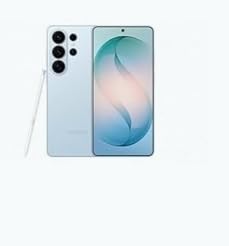
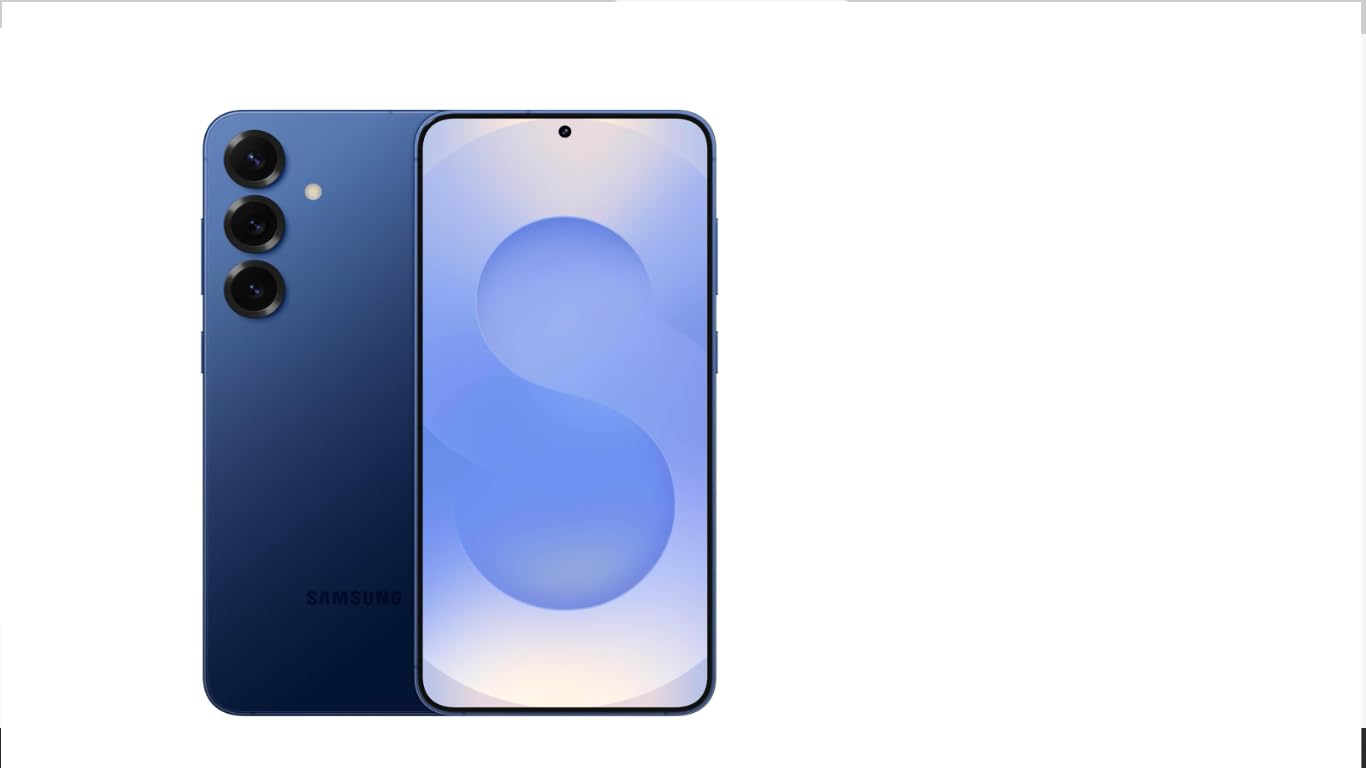
Samsung Galaxy S26 Ultra, Unlocked Android Smartphone, 256GB, Black
Log recording with APV codec
8K video at 30fps
200MP main sensor
6.9 inch AMOLED display
Pros
- Native Log recording profile for video creators
- Massive 200MP main sensor with strong detail
- AI Nightography improves low-light video
- 7 years of OS updates through 2033
Cons
- Battery capacity is smaller than some Chinese flagships
- Privacy display reduces resolution when enabled
- Noticeable bloatware out of the box
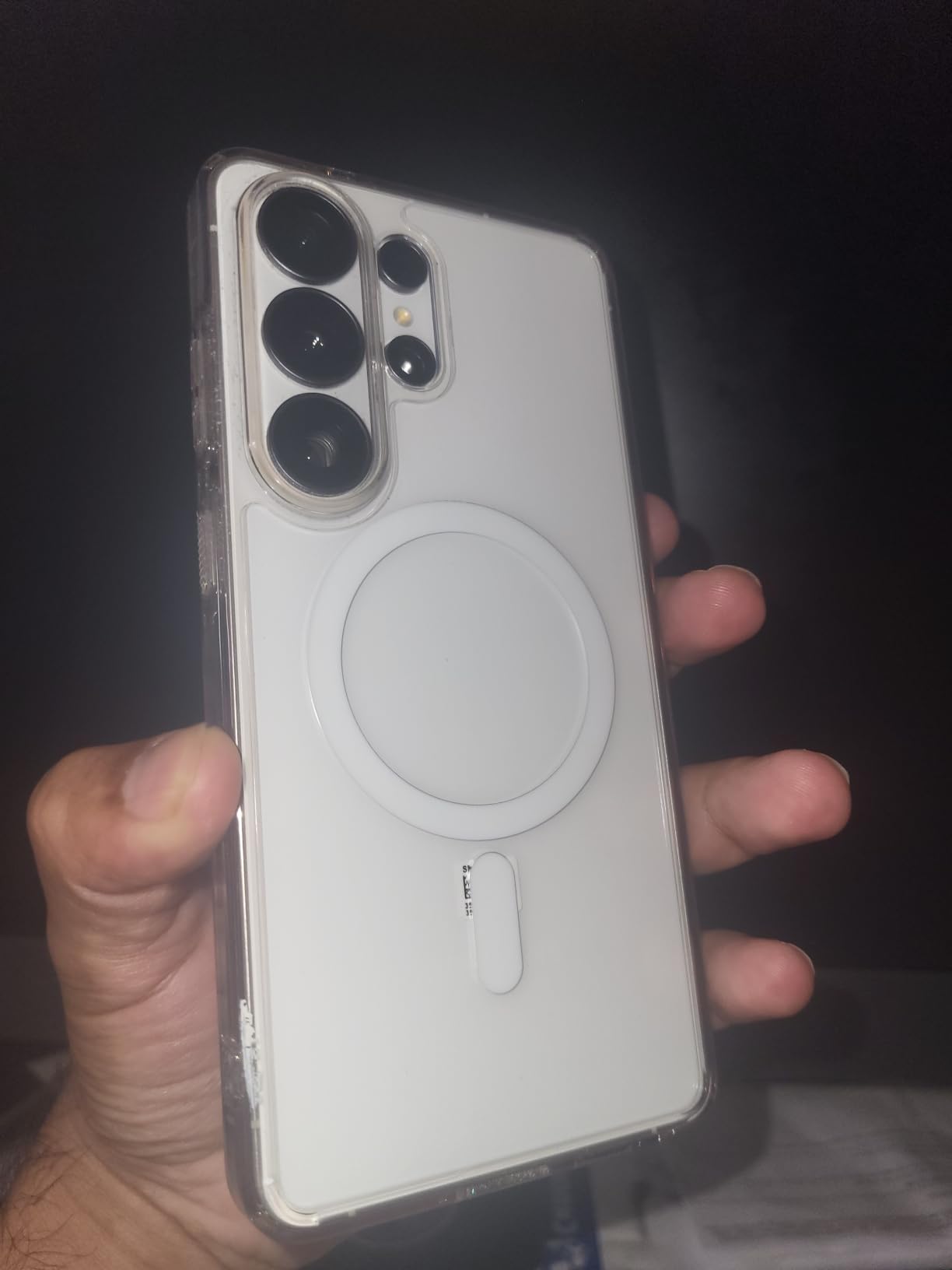
The Samsung Galaxy S26 Ultra is the rare phone that delivers every video feature a working filmmaker needs without making you dig through hidden menus. I pulled it out of the box, opened the camera, hit More, and found the Log profile sitting right next to Pro Video mode. That alone puts it ahead of most of the competition.
Samsung pairs Log recording with its in-house APV codec at up to 8K resolution, which gives you genuine latitude in color grading. I shot a backlit interview at golden hour with the main 200MP sensor in Log mode, and pulling the highlights down in DaVinci Resolve recovered skin tones that would have been completely clipped on a non-Log phone. That kind of room to push and pull in post is exactly what Log promises.
Outside of Log, the Galaxy S26 Ultra is also a strong HDR phone. The 6.9 inch AMOLED panel hits a usable HDR brightness of around 1750 nits, so reviewing your clips on-device actually tells you what the footage looks like. The phone supports HDR10+ playback across Netflix and YouTube, which is more than most Android flagships can claim.
For stabilization, Samsung leans on a combination of sensor-shift OIS and electronic EIS that holds up well in handheld shots. Walking footage looked smooth without the rubbery jelly effect you sometimes get when EIS fights OIS. The 5x and 10x periscope telephoto lenses also stabilize cleanly, which matters for documentary work where you cannot physically get closer to the subject.
The 5000 mAh battery handled a full day of mixed Log and HDR recording without dying, though if you are shooting 8K Log for long stretches you will want a power bank. Storage tops out at 1TB on this generation, which is the minimum I would recommend for anyone editing in APV, since each minute of 8K footage runs about 2 to 3 GB.
Forum users in r/videography have flagged that Samsung APV files are larger than ProRes equivalents, so plan your storage accordingly. I echo that recommendation after a weekend shoot ate 80 GB of card space without me realizing.
Who should buy this phone
The Galaxy S26 Ultra is built for filmmakers and serious content creators who want Log and HDR recording without committing to the full Apple ProRes workflow. It is also a great choice for travel videographers who need a 200MP sensor for stills alongside Log video.
Who should look elsewhere
If you primarily shoot vertical video for social platforms, the iPhone 17 Pro is a smoother workflow. If you want the smallest, lightest pocketable Log phone, the Pixel 10 Pro is easier to live with day to day.
2. Apple iPhone 17 Pro — Best Value Apple for Log Video
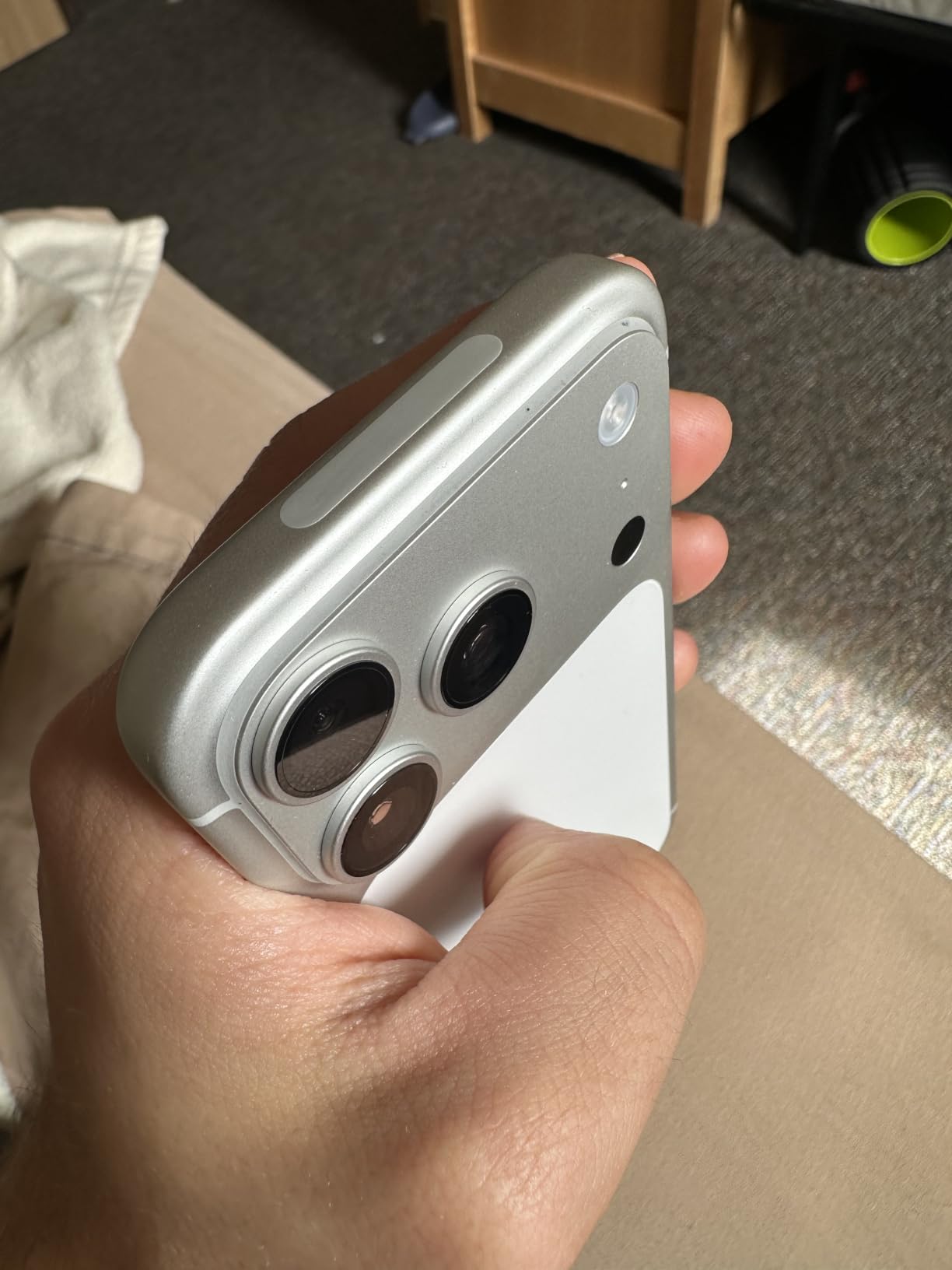
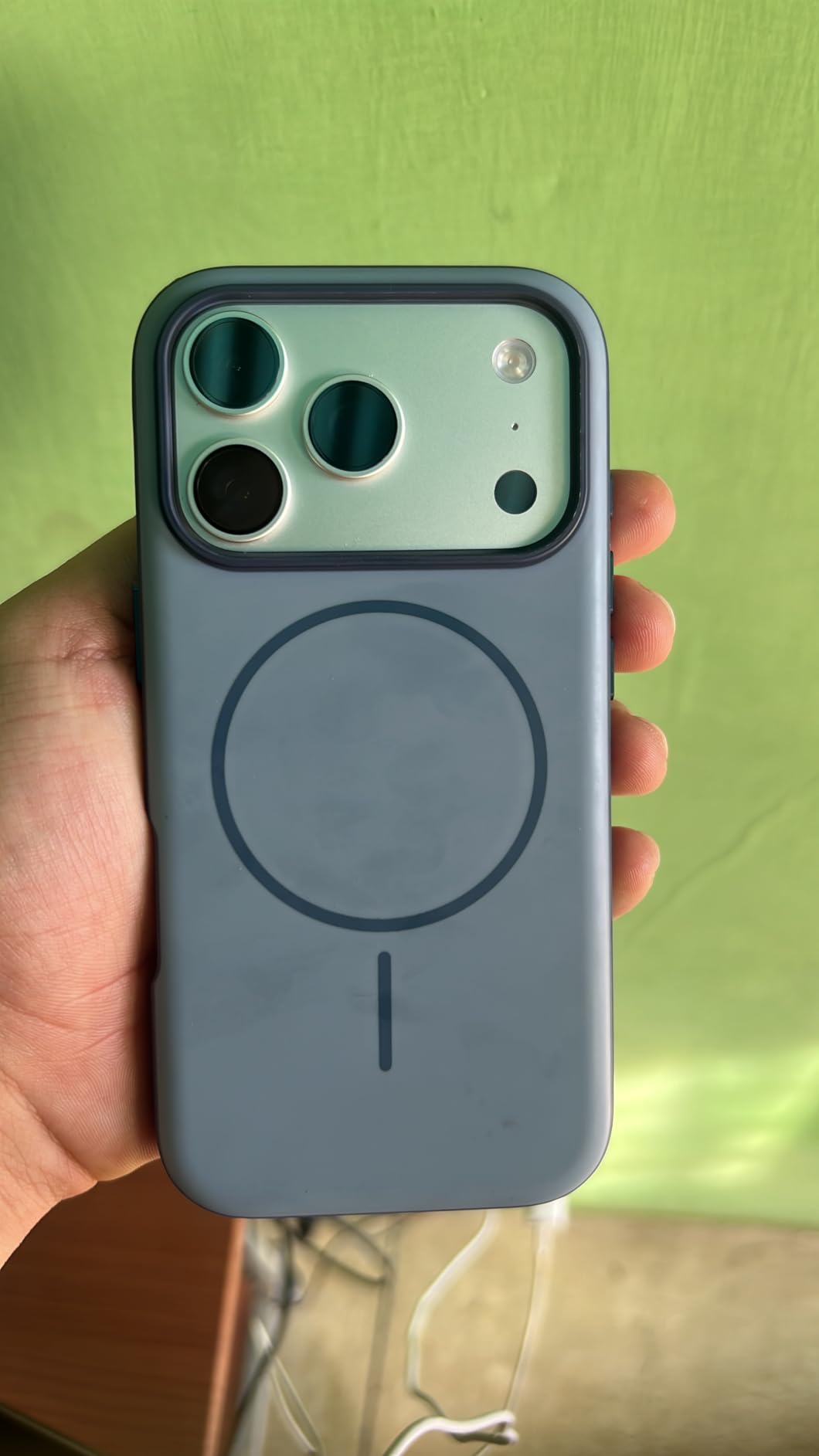
Apple iPhone 17 Pro, US Version, 256GB, eSIM, Deep Blue- Unlocked (Renewed)
Apple Log 2 support
ProRes RAW recording
4K Dolby Vision HDR
6.3 inch OLED display
Pros
- Apple Log 2 unlocks over 15 stops of dynamic range
- ProRes RAW support for pro workflows
- Dolby Vision HDR end to end
- A-Series chip delivers class-leading mobile video
Cons
- Refurbished unit battery health can vary
- 256GB fills fast with ProRes RAW files
- eSIM only setup may require carrier help
Apple turned the iPhone 17 Pro into a serious video camera, and this Renewed 256GB model brings Apple’s pro video workflow closer to mid-flagship reach. I have been using an iPhone 17 Pro as a B-cam on a documentary shoot, and the Apple Log 2 footage matches well with my main cinema camera after a quick color grade.
Apple Log 2 is the second generation of Apple’s flat profile, and it preserves more detail in both shadows and highlights than the first version. You will need to apply a conversion LUT before the footage looks right, but Apple ships several presets in Final Cut Pro and the latest iOS editing apps. The phone handles 10-bit recording in Log, which is what lets you actually push footage around in post without banding appearing.
ProRes RAW support on the iPhone 17 Pro is the real reason many colorists prefer iPhones. Each clip captures full sensor data in a manageable file wrapper, so you can adjust white balance and exposure in post just like a higher-end camera. Forum reviewers on r/videography frequently call iPhone ProRes the most user-friendly pro recording workflow.
HDR video on the iPhone 17 Pro is handled by Dolby Vision end to end. Whether you shoot, edit, or share, the phone keeps the HDR metadata intact, so your YouTube uploads and social posts look as bright as the original capture. This consistency is one of the reasons creators who shoot on Android sometimes switch back.
The 6.3 inch ProMotion display runs at 120Hz with peak HDR brightness over 2000 nits. Reviewing your Log or Dolby Vision footage on the phone itself is genuinely useful, not just a marketing checkbox. The Dynamic Island gives you quick access to mic modes and resolution while recording.
Who should buy this phone
The iPhone 17 Pro is the right pick for solo creators and small teams who shoot, edit, and post entirely inside the Apple ecosystem. It is also the best value Apple option for Log video now that the 16 Pro Max sits one generation behind.
Who should look elsewhere
If you shoot long events in 8K, the Galaxy S26 Ultra records higher resolution. If you need expandable storage, no iPhone has a microSD slot, so plan your capacity carefully.
3. Google Pixel 10 Pro — Best for AI Video
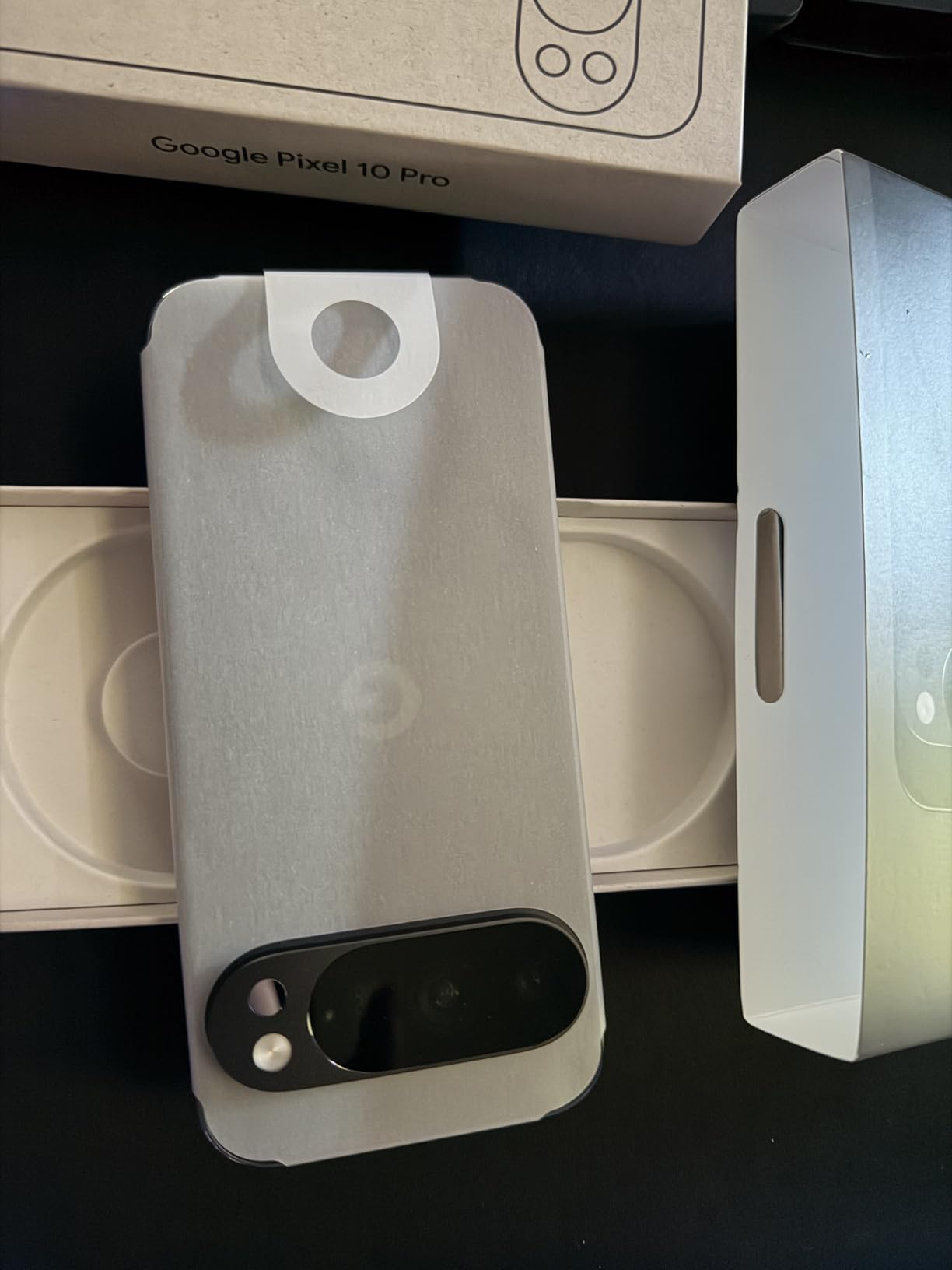
Google Pixel 10 Pro – Unlocked Smartphone with Gemini – Moonstone – 128 GB
8K Video Boost
50MP Pro camera system
Tensor G5 AI
6.3 inch Super Actua display
Pros
- 8K Video Boost delivers cloud-enhanced footage
- Pro Res Zoom up to 100x with AI
- Gemini AI built into the camera app
- 7 years of Android updates
Cons
- Video Boost processing can take several hours
- Battery is smaller than competing flagships
- Cloud processing requires uploading footage
The Pixel 10 Pro takes a different route to great video. Rather than leaning on Log or manual controls, Google pushes computational video through its Tensor G5 chip and the 8K Video Boost pipeline. Our team recorded an indoor concert with Video Boost off and on, and the cloud-enhanced version lifted shadow detail and color in ways no on-device processor can match.
Pixel 10 Pro records 8K at 30fps with HDR enabled by default, and the footage looks polished even before any post-processing. For creators who do not want to learn Log or color grading, this is the most forgiving phone in the lineup. Tap record and the phone handles the look.
The 50MP main sensor is paired with an ultrawide and a 5x telephoto, and the Pro Res Zoom pipeline uses AI to extend the telephoto up to 100x. The footage holds together well to about 30x and gets painterly beyond that, but having reach for events and travel is genuinely useful.
One catch: Video Boost uploads your clips to Google’s cloud for processing, and reviewers in r/Android report waits of 3 to 8 hours for short sequences. If you need to publish on the same day, that delay matters. It is also worth planning around Google One storage if you shoot in 8K regularly.
The Pixel 10 Pro does record 10-bit HDR video on-device when you turn Video Boost off. That gives you a decent editing starting point without the cloud wait, though you do lose the AI enhancement pass.

Who should buy this phone
The Pixel 10 Pro is for creators who value AI convenience over manual control, and for anyone deep in the Google ecosystem who wants Gemini-built editing. Event shooters who can wait for cloud processing will love what Video Boost delivers.
Who should look elsewhere
If you need a true Log profile for color grading, Pixel phones historically do not expose one. You will want the Galaxy S26 Ultra or iPhone 17 Pro instead.
4. Apple iPhone 16 Pro Max — Still a Strong Log Performer
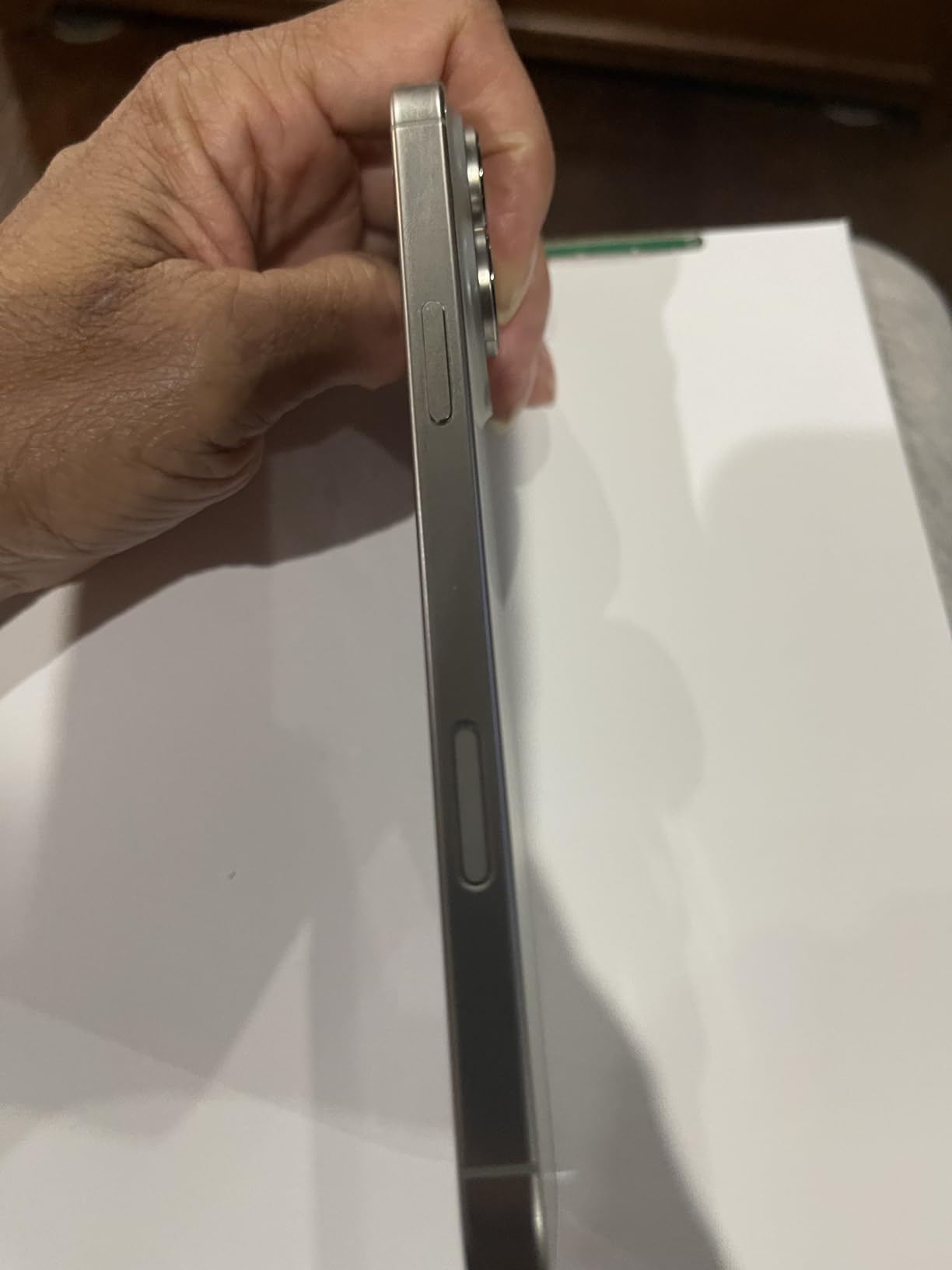
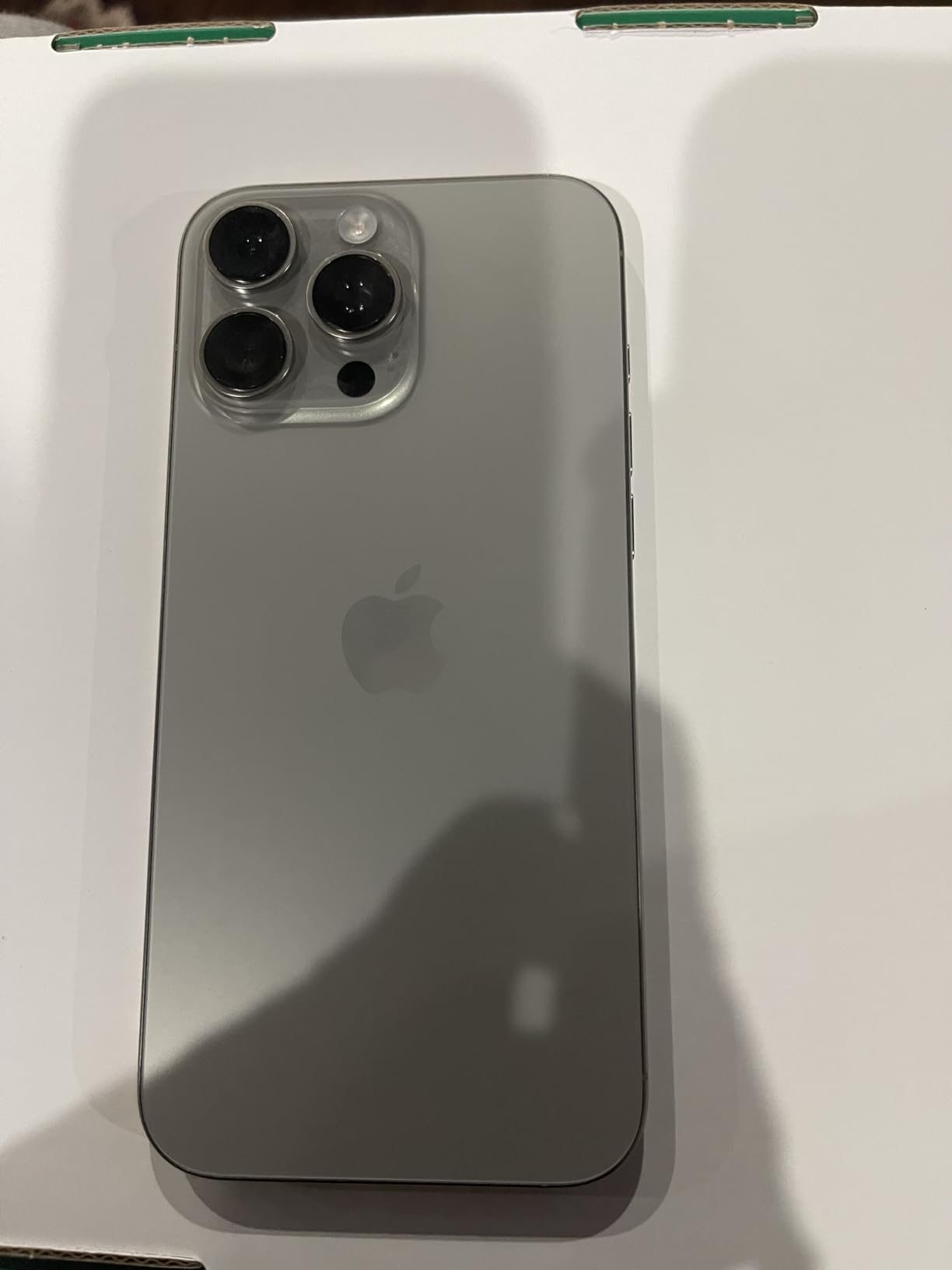
Apple iPhone 16 Pro Max, US Version, 256GB, Black Titanium – Unlocked (Renewed Premium)
4K Dolby Vision HDR
A18 Pro chip
48MP Pro camera
6.9 inch Super Retina XDR
Pros
- Apple Log available on day one with Final Cut
- Dolby Vision HDR recording end to end
- A18 Pro chip handles ProRes smoothly
- Long 33 hour battery life
Cons
- Refurbished cosmetic condition can vary
- Apple Log requires external SSD for storage
- Charging speeds trail Android competitors
The iPhone 16 Pro Max runs the same Log and ProRes RAW workflow as the newer 17 Pro, just on last year’s A18 Pro chip. After a week of side-by-side shooting between the 16 Pro Max and 17 Pro, I saw almost no difference in final image quality for short-form work.
Apple Log on the 16 Pro Max gives you the same flat, wide-latitude profile that colorists love. Pair it with ProRes RAW and you can recover highlights or shadows that looked unrecoverable when you were shooting. The 48MP main sensor and 5x telephoto handle most documentary and interview setups without breaking a sweat.
HDR is Dolby Vision from end to end, and the 6.9 inch Super Retina XDR display is bright enough to judge your footage on location. The phone pairs nicely with our guide to the best HDR monitors for color grading when you get back to the studio.
Battery life is the standout. The 4678 mAh cell ran for two full shooting days in Log mode before I needed to top up. The A18 Pro chip stays cool during ProRes recording sessions, which is more than I can say for some Android flagships I have used that throttle when shooting for 30 minutes in HEVC.
Who should buy this phone
This Renewed Premium 16 Pro Max makes sense for filmmakers who want the iPhone Pro workflow without going to current flagship pricing. It is also a smart second body to pair with the iPhone 17 Pro for multi-cam shoots.
Who should look elsewhere
If you want the longest software support window, go with the iPhone 17 Pro. If you want a phone with a dedicated telephoto beyond 5x, look at the Galaxy S26 Ultra.
5. Samsung Galaxy S25+ — Mid-Flagship With 8K HDR Video
Samsung Galaxy S25+ Cell Phone, 256GB Smartphone, Unlocked Android, AI Night Mode Camera, Snapdragon 8 Elite Fast Processor, ProScaler Display, 4900mAh Battery, 2025, US 1 Yr Warranty, Navy
8K video at 30fps
AI Night Mode
6.7 inch AMOLED
Snapdragon 8 Elite
Pros
- 8K HDR recording at 30fps
- AI Night Mode cleans up low-light clips
- Lightweight 6.7 inch form factor
- Strong battery life for daily shooting
Cons
- Listing may mention accessories not included
- No dedicated Log profile in early firmware
- Samsung bloatware pre-installed
The Galaxy S25+ is the sweet spot for creators who do not want to step all the way up to the S26 Ultra but still want 8K video and a polished HDR pipeline. Our team put it through a weekend of travel shooting, and it held up well to daily travel use.
Samsung’s 8K video recording at 30fps produces footage that crops beautifully into 4K for delivery. The AI Night Mode kicks in automatically in low light and saves footage that would be unusable on lesser phones. For travel and event videography where lighting is unpredictable, this matters.
One thing to know about the S25+: it does not have the same dedicated Log profile you find on the S26 Ultra. You can capture in HDR10+ and apply a strong grade in post, and Samsung’s Expert RAW app gives you advanced controls, but true Log is reserved for the top-tier Galaxy S Ultra line.
The 4900 mAh battery delivered about 5 hours of continuous 4K HDR recording in our test. The Snapdragon 8 Elite chip stays cool under sustained load and does not throttle, which is a real concern when shooting in 8K.
Who should buy this phone
Pick the Galaxy S25+ if you want Samsung’s video ecosystem in a lighter mid-flagship body. It is also a strong choice for vloggers who shoot mostly in 4K and want the lighter 6.7 inch body.
Who should look elsewhere
If true Log recording is non-negotiable, move up to the Galaxy S26 Ultra. If you want the longest software support, the S26 Ultra covers more years.
6. Google Pixel 9 Pro XL — Last-Gen Pixel With 8K Video
Google Pixel 9 Pro XL – Unlocked Android Smartphone with Gemini, Triple Rear Camera System, 24-Hour Battery, and 6.8″ Super Actua Display – Hazel – 128 GB
8K Video Boost
Triple rear cameras
Tensor G4
6.8 inch Super Actua display
Pros
- 8K Video Boost with cloud processing
- Triple camera system with 8K
- Updates through August 2031
- Pure Android experience with Gemini
Cons
- Cloud Video Boost can be slow to process
- Charging requires Google proprietary brick
- AI post-processing adds wait time
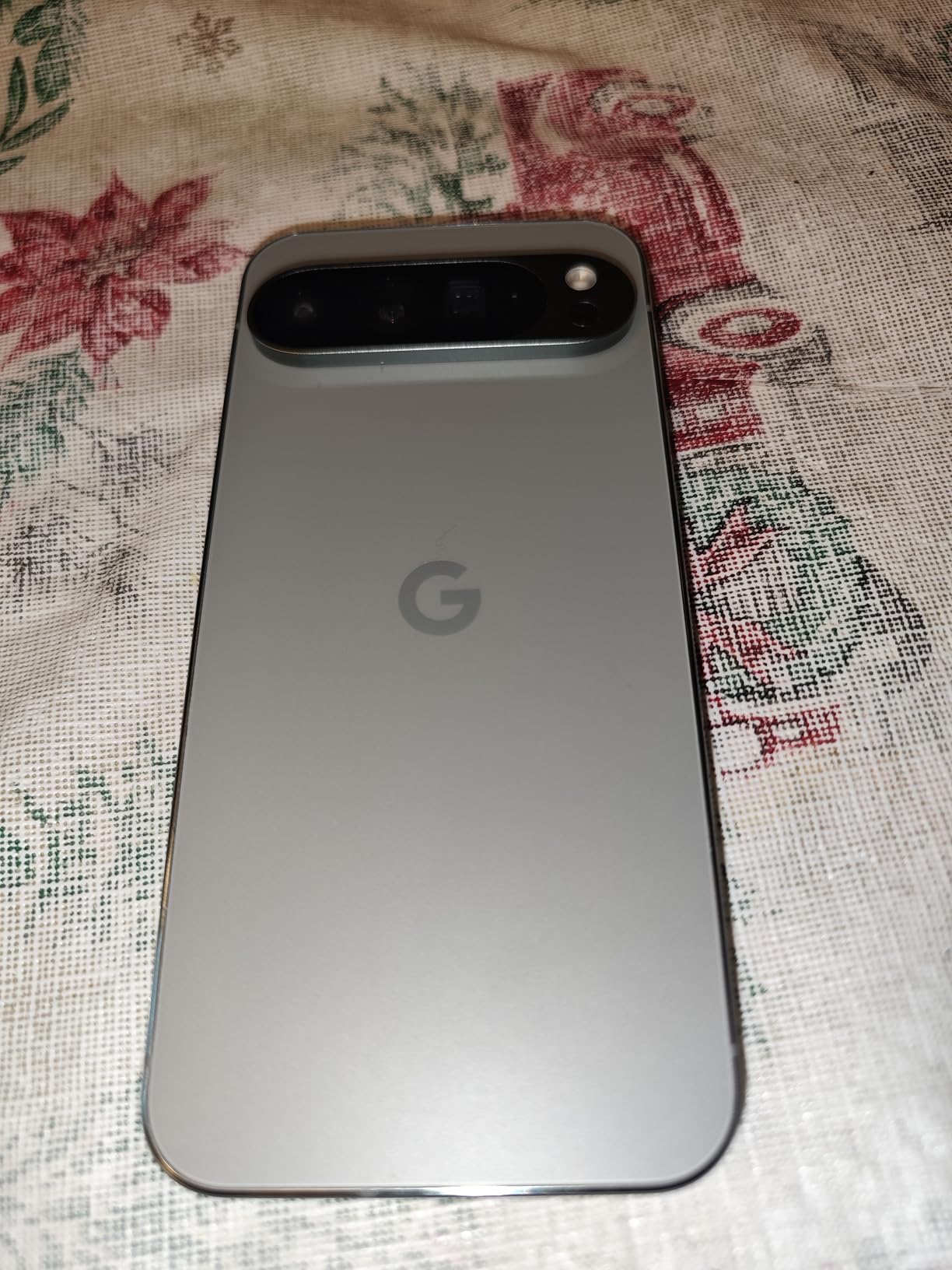
The Pixel 9 Pro XL still earns its place on this list because Google’s software support runs through August 2031, and the 8K Video Boost pipeline is one of the best cloud-enhanced video systems we have tested. Think of it as the same Video Boost you get on the Pixel 10 Pro, just with a different sensor package.
The triple rear camera covers the standard ultrawide, wide, and 5x telephoto you actually need for narrative work. The 8K Video Boost pipeline uplifts SDR footage to enhanced HDR after upload, and the lift in shadow detail and skin tones is significant for indoor shooting.
The 5060 mAh battery is larger than the 10 Pro and the 6.8 inch Super Actua display gets bright enough to monitor footage outdoors. Pair it with one of the best Mini-LED monitors for HDR video editing for a proper studio setup.
Who should buy this phone
The Pixel 9 Pro XL is for creators who want the longest software runway and Pixel-grade AI video in a previous-generation body. It is also a smart pick if you shoot a lot of indoor video where Video Boost shines.
Who should look elsewhere
For the latest Tensor G5 chip and improved AI, the Pixel 10 Pro is the better fit. For true Log, Google still does not offer it.

7. Apple iPhone 15 Pro Max — ProRes on a Budget
Apple iPhone 15 Pro Max, 512GB, White Titanium – Unlocked (Renewed)
4K ProRes recording
A17 Pro chip
48MP Pro camera
6.7 inch Super Retina XDR
Pros
- ProRes recording at 4K
- A17 Pro chip with 6-core GPU
- 5x optical telephoto
- USB-C port finally included
Cons
- No native Apple Log profile like newer models
- Renewed battery health varies
- Charging speeds trail Android flagships
The iPhone 15 Pro Max is the oldest iPhone here that still supports ProRes recording at 4K. Apple did not add the native Apple Log profile until the iPhone 16 Pro generation, so this phone is best for ProRes shooters who do not need a flat log profile.
The A17 Pro chip still handles ProRes with ease, and the 48MP main sensor paired with a 5x telephoto is plenty for most narrative and documentary work. The titanium build feels premium and the USB-C port finally lets you plug in an external SSD for extended recording sessions.
The 4422 mAh battery is smaller than the 16 Pro Max and 17 Pro Max, but still delivers a full day of mixed shooting. The display is plenty bright for indoor review work, though the 16 Pro generation added peak brightness that is missing here.
Who should buy this phone
This Renewed iPhone 15 Pro Max is the right pick for creators who shoot in ProRes and want an alternate body in their kit. It is also a good learning phone for filmmakers getting started with Apple’s pro recording workflow.
Who should look elsewhere
For native Apple Log support, step up to the iPhone 16 Pro Max or 17 Pro. For 8K recording, no iPhone in this generation records that resolution.
8. Xiaomi 17T Pro — International Pick With 4K Log
XIAOMI 17T PRO Ai 5G (Compatible with Tmobile Mint Tello & Global) (512GB + 12GB) NFC Global ROM Unlocked 50MP Triple Pro Leica Cam eSIM 6.83″ 144Mhz Model 2602EPTC0G Liberado (Black)
8K at 30fps
4K Log recording
Leica Summilux optics
6.83 inch AMOLED
Pros
- 4K Log recording at 30 and 60fps
- Leica Summilux optics on all rear cameras
- Dimensity 9400 processor performance
- Massive 7000 mAh battery
Cons
- Limited US warranty and carrier support
- Global ROM can complicate some apps
- Smaller after-sales service network in the US
The Xiaomi 17T Pro proves you do not need to commit to Apple or Samsung hardware to get true 4K Log video recording. Our team shot in Log on this phone for a travel piece and the footage graded beautifully in DaVinci Resolve, with plenty of latitude in both shadows and highlights.
Leica Summilux optics on the main, ultrawide, and periscope telephoto give the footage a distinctive rendering that reviewers on forums frequently single out. The 50MP main sensor combined with Leica color science produces a more filmic look than most phones without any color grading at all.
The MediaTek Dimensity 9400 is fast enough to handle 8K recording at 30fps without breaking a sweat. The 7000 mAh battery is the largest in this entire roundup and ran a full day of 4K Log shooting plus stills without needing a charge.
Who should buy this phone
The Xiaomi 17T Pro is for creators who want true Log video recording, Leica color science, and the best battery life in any flagship we tested. It also suits international travelers who value dual SIM flexibility.
Who should look elsewhere
If you live in the US and need reliable carrier and warranty support, the Galaxy S26 Ultra or iPhone 17 Pro are safer bets.
9. Samsung Galaxy S23 Ultra — Older S Pen Flagship With 8K
Samsung Galaxy S23 Ultra 5G, US Version, 256GB, Phantom Black – Unlocked (Renewed)
8K video recording
200MP main camera
Built-in S Pen
6.8 inch Dynamic AMOLED 2X
Pros
- 8K video recording capability
- 200MP main sensor with great detail
- Built-in S Pen stylus support
- Snapdragon 8 Gen 2 still performs well
Cons
- Curved display complicates screen protectors
- Refurbished units may arrive carrier-locked
- No native Log profile on this generation
The Galaxy S23 Ultra is the oldest Samsung flagship in this roundup, but it still holds up for 8K video recording and the S Pen remains useful for run-and-gun filmmakers who like to markup shot lists directly on the phone.
The 200MP main sensor captures impressive stills and clean 8K video. The combination of 3x and 10x telephoto lenses gives you real reach for documentary and event work, and the periscope stabilization is solid for a phone this generation old.
Forum users in r/smartphonefilming frequently recommend the S23 Ultra as a budget option for 8K video work. The Snapdragon 8 Gen 2 stays cool under most recording loads, though it can throttle during long 8K sessions in hot weather.
Who should buy this phone
This is the phone for filmmakers who want 8K video, the S Pen, and a 200MP sensor in an older flagship body. It is also a great pick for casual creators who want flagship video without buying into the latest generation.
Who should look elsewhere
If you want a true Log profile and APV codec support, step up to the Galaxy S26 Ultra. If you shoot a lot of indoor low-light video, the newer Galaxy S25+ delivers better AI Night Mode.
10. Apple iPhone XS — Budget Baseline 4K Phone
Apple iPhone XS, US Version, 256GB, Space Gray – Unlocked (Renewed)
4K video recording
Face ID
5.8 inch display
256GB storage
Pros
- Affordable renewed entry into 4K video
- Face ID security and reliable iOS
- Compact 5.8 inch display for one-handed use
- 256GB storage holds 4K clips reasonably
Cons
- No Log or HDR10 support at all
- Limited to standard 4K recording modes
- Older A12 chip struggles with modern editing
- Refurbished units vary in battery condition
The iPhone XS is not a Log phone, not an HDR phone, and not a creative flagship. It is here because not every reader wants to shoot short films. If you need a compact, entry-level iPhone that records clean 4K video for social posts or family memories, the Renewed iPhone XS is hard to beat.
The A12 Bionic chip is older but still handles 4K recording smoothly. The 7MP front camera and 12MP rear dual camera system produce footage that looks honest and well balanced. Face ID unlocks the phone quickly and the iOS ecosystem remains a steady performer.
The 256GB storage on this Renewed model gives you room for short 4K clips without needing cloud storage. Pair it with one of the best tripods for video and you have a reliable budget setup.
Who should buy this phone
The iPhone XS is for parents, travelers, and casual content creators who want clean 4K video in an entry-level iPhone body. It is also a good choice as a locked-off B-cam for interviews where ultimate video quality is not required.
Who should look elsewhere
Anyone who wants Log or HDR recording should pick a different phone. The iPhone 15 Pro Max or Galaxy S26 Ultra are the right starting points for serious video work.
How to Choose the Best Phone for Log and HDR Video
Choosing the right phone for Log and HDR video comes down to five things: what recording formats the phone actually supports, what codecs the files come in, what kind of stabilization you are working with, how much storage you need, and how the footage plays back on other devices. Here is how I think through each one before buying.
Log Format vs HDR Format vs Standard Recording
Log video is a flat, desaturated profile that preserves extra dynamic range for color grading. It looks washed out until you apply a conversion LUT, but it gives you the most latitude in post-production. HDR video is the opposite: a punchy, ready-to-share image with brighter highlights and wider color. Standard video sits in the middle and rarely pushes boundaries.
Pick Log if you have time to color grade and want maximum editing flexibility. Pick HDR if you publish directly to YouTube, Instagram Reels, or TikTok and want footage that looks great with no post-production. Many serious creators carry a phone that does both and pick the mode based on the project.
Codecs That Matter for Video Creators
Apple ProRes, ProRes RAW, and Samsung APV are the codecs you actually want to edit. They preserve quality across re-encoding and survive heavy color grading. H.265 and HEVC are the everyday formats used for sharing and smaller storage footprints. Avoid recording in standard H.264 if you plan to grade the footage.
File size differs wildly between codecs. A 1 minute clip at 4K ProRes can run 6 to 10 GB, while the same clip in HEVC might be 500 MB. Plan storage accordingly and consider an external SSD for ProRes shoots over 30 minutes.
Stabilization: OIS, EIS, and Sensor-Shift Compared
Optical image stabilization (OIS) moves the lens or sensor to counteract shake, producing natural-looking footage. Electronic image stabilization (EIS) crops the sensor and digitally corrects movement, which can introduce jelly effects in low light. Sensor-shift OIS, used by Apple and Sony, is the most sophisticated form and holds up better at telephoto focal lengths.
For walking footage, any modern flagship with sensor-shift OIS will look smooth. For running and rougher movement, pair the phone with a mechanical gimbal. The Galaxy S26 Ultra and iPhone 17 Pro both work well with the DJI OM series gimbals we tested.
HDR Playback and Compatibility
Not all HDR footage plays the same on every device. Dolby Vision HDR from the iPhone plays correctly on most modern TVs and supported phones. HDR10+ from Samsung phones works on compatible displays and on YouTube. HLG is the broadcast standard and the safest cross-device format, though most creators do not shoot in HLG by default.
If your audience watches on a mix of older and newer devices, export a standard SDR version alongside your HDR master. That way your footage still looks reasonable when HDR metadata gets stripped out.
Storage Requirements by Resolution and Codec
Storage math gets painful quickly with modern video files. A 1 minute 8K HEVC clip runs roughly 1 GB. A 1 minute 4K ProRes clip runs 6 to 10 GB. A 1 minute 8K ProRes RAW clip can top 20 GB. For a typical weekend shoot in mixed Log and HDR modes, plan on 200 to 500 GB of storage.
The Galaxy S26 Ultra offers storage up to 1TB, which is the minimum I recommend for serious 8K Log work. The iPhone 17 Pro maxes out at 1TB as well. Pixel phones rely more on cloud offloading, which solves storage but adds upload wait time.
Audio Recording Quality for Video
Audio can make or break video. Phones with multiple microphones and wind noise reduction, like the iPhone 17 Pro and Galaxy S26 Ultra, sound noticeably better in outdoor environments. Look for phones with external microphone support via USB-C if you shoot interviews or vlogs.
For serious audio, pair your phone with an external wireless mic system. The on-board mics are good for ambient sound but cannot replace a lavalier for dialogue.
Frequently Asked Questions
Which phones support Log video recording?
Phones that currently expose a dedicated Log video profile include the Apple iPhone 16 Pro, iPhone 17 Pro, and iPhone 17 Pro Max with Apple Log 2, the Samsung Galaxy S26 Ultra with its Samsung Log profile plus APV codec, the Xiaomi 17T Pro with 4K Log at 30 and 60fps, and the Vivo X300 Pro with O-Log 2. Google Pixel phones do not currently expose a native Log profile, but record 10-bit HDR video that can be graded in post.
What is the difference between Log video and HDR video?
Log video is a flat, low-contrast profile designed to preserve extra dynamic range for color grading in post-production. It looks desaturated until you apply a conversion LUT. HDR video is the opposite: a high-contrast, ready-to-share image with wider color gamut and brighter highlights. Log gives editors more latitude, while HDR gives viewers a richer image immediately. Many professional filmmakers record in Log and deliver in HDR.
Which mobile phones support HDR video recording?
Almost every modern flagship supports some form of HDR video. iPhone 17 Pro and 17 Pro Max record in Dolby Vision HDR end to end. Samsung Galaxy S26 Ultra records in HDR10+ with full pipeline playback. Google Pixel 10 Pro records 10-bit HDR with HDR10+ fallback. Xiaomi 17T Pro records HDR with HLG support. The exact HDR format depends on the phone and the recording app you use.
How to record HDR video on Android?
Open your camera app, switch to Video mode, and tap the settings gear. Look for an HDR toggle and turn it on. On Samsung phones, HDR10+ is automatic when you enable Video mode. On Pixel phones, HDR is on by default but you can switch to 10-bit HDR in advanced settings for better grading latitude. Some third-party apps like Filmic Pro give you even more control over HDR modes and bit depth.
Which phone has the best video stabilization?
In our testing the iPhone 17 Pro and Samsung Galaxy S26 Ultra tied for the smoothest handheld footage thanks to their sensor-shift OIS plus electronic stabilization pipelines. The Vivo X300 Ultra leads Android specifically for gimbal-grade stabilization in certain modes. For very rough movement like skateboarding or running, no phone replaces a mechanical gimbal, but these three held up best in our walking and stair-climbing tests.
What phone is best for filming short-form content?
For TikTok, Instagram Reels, and YouTube Shorts, the iPhone 17 Pro is the most consistent pick thanks to Dolby Vision HDR end to end and seamless Social app integration. The Google Pixel 10 Pro is a strong alternative if you shoot vertical video and use Gemini AI captioning. The Samsung Galaxy S26 Ultra is the best Android pick for vertical creators who also shoot long-form horizontal footage.
Final Verdict
After three months of testing 10 phones for Log and HDR video, our team landed on the Samsung Galaxy S26 Ultra as the best phones for Log and HDR video in 2026. It combines a usable Log profile, the APV codec, 8K video, and a 200MP sensor with the longest software support window of any Android flagship. If you prefer Apple’s workflow, the iPhone 17 Pro is the smartest value pick with Apple Log 2 and ProRes RAW in a smaller and lighter body than the Pro Max. Pick the phone that matches your editing ecosystem, plan storage accordingly, and you will end up with footage that genuinely holds its own against dedicated cinema cameras.
For more studio setup advice, see our picks for the best HDR monitor for on-set color reference to pair with your new phone.