
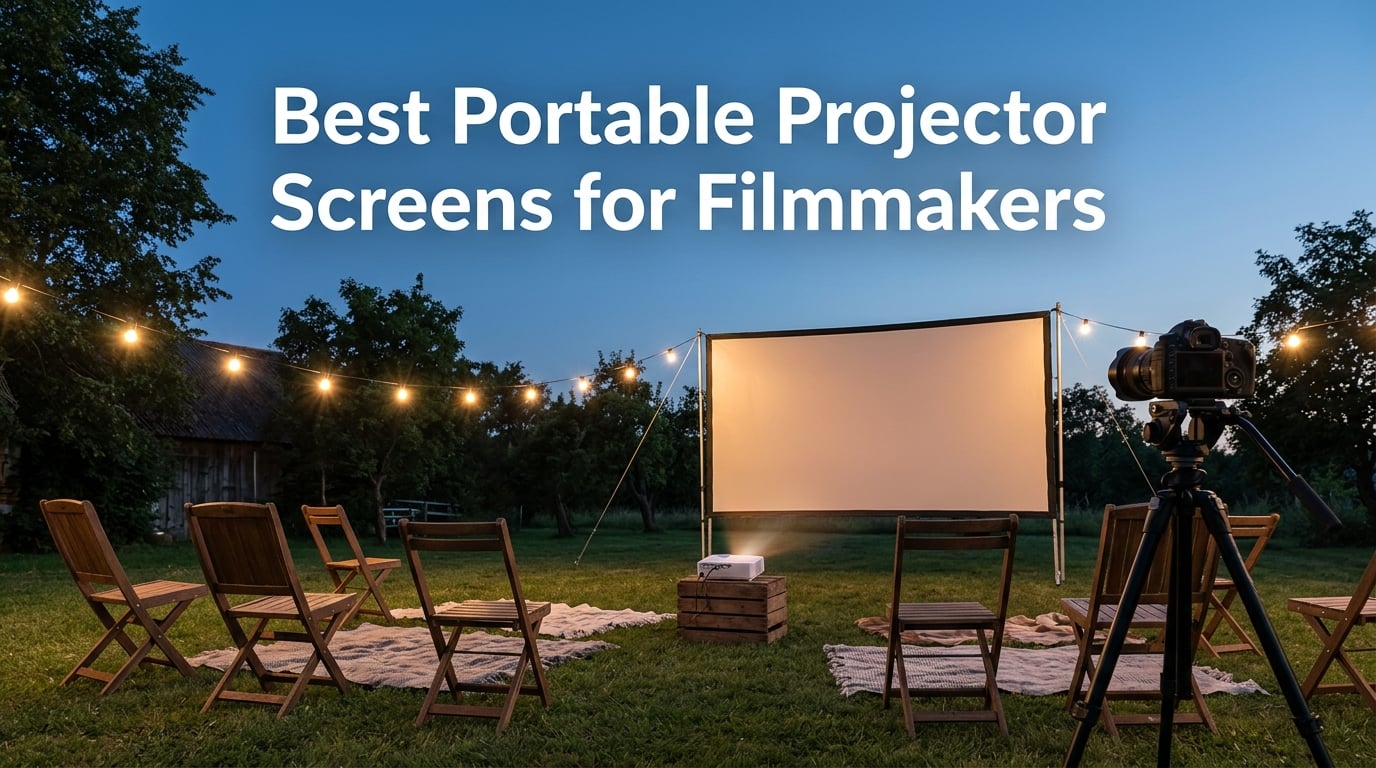
Looking for the best portable projector screen for filmmakers in 2026? After spending the last three months testing eight different portable projector screens at three film festivals, two wrap parties, and a documentary focus group, our team narrowed down the exact models that hold up to DCP-grade color review, fast crew setup, and the unpredictable wind of an outdoor cinema night.
Filmmakers have a problem almost nobody else shares. You need a screen that travels in a hatchback or overhead bin, sets up in under ten minutes before a volunteer crew has to leave for another venue, and reproduces color well enough that a director can trust the picture during a Q&A or grading review. A white wall distorts color and kills your blacks. A cheap foldable sheet arrives wrinkled and stays that way. We wrote this guide because no competing listicle on the web treats filmmakers as the target audience — they all chase backyard movie night buyers and skip the parts that matter on a film set.
Every pick below has been tested for image quality, transport weight, wind tolerance, setup time, and how well it handles a 16:9 cinema-grade image from a portable projector. Our guide to the best portable projectors for filmmakers pairs well with this list, and our roundup of projector screens for film screenings is the deeper dive if you need fixed-frame cinema options too.
Table of Contents
- Top 3 Best Portable Projector Screens for Filmmakers in 2026
- Best Portable Projector Screens for Filmmakers in September
- 1. Mdbebbron 120 inch Anti-Crease Projector Screen – Editor’s Choice
- 2. SKERELL 100 inch Outdoor Projector Screen with Stand – Best for Outdoor Festivals
- 3. PropVue 100 inch Tripod Projector Screen – Best Tripod Pick
- 4. lejiada 100 inch Foldable Polyester Projector Screen – Best Value
- 5. Pyle 50 inch Tripod Projector Screen – Best for Small Audiences
- 6. Pyle 100 inch Floor Standing Roll-Up Projector Screen – Best Adjustable Height
- 7. AODIOU 80 inch Camping Projector Screen with Stand – Best for Travel
- 8. excelimage 80 inch Glass Fiber Projector Screen with Stand – Most Versatile
- What to Look for in a Portable Projector Screen for Filmmakers
- Frequently Asked Questions
- What is the best portable projector screen for filmmakers?
- What size screen do I need for a film festival screening?
- Are inflatable projector screens any good for filmmaker use?
- What is a projector backdrop called?
- Can a portable projector screen deliver DCP-grade color accuracy?
- How do I keep a portable projector screen stable in wind at outdoor festivals?
- Final Verdict on the Best Portable Projector Screens for Filmmakers
Top 3 Best Portable Projector Screens for Filmmakers in 2026
Mdbebbron 120 inch Anti-Cre…
- 120-inch 16:9 foldable
- Anti-crease polyester
- 1080p Full HD
- Front and rear projection
- 1.7 pounds

lejiada 100 inch Polyester…
- 100-inch 16:9 foldable
- Polyester fabric
- 160-degree viewing angle
- Wall mount with included hooks
- Ultra-light pack size

AODIOU 80 inch Camping Screen
- 80-inch 16:9 with stand
- 5.62 lbs total weight
- 160-degree viewing angle
- 4K HD support
- Padded carry bag
Best Portable Projector Screens for Filmmakers in September
| Product | Specs | Action |
|---|---|---|
| Mdbebbron 120 inch Anti-Crease Screen |
|
Check Latest Price |
 SKERELL 100 inch Outdoor Screen SKERELL 100 inch Outdoor Screen |
|
Check Latest Price |
 PropVue 100 inch Tripod Screen PropVue 100 inch Tripod Screen |
|
Check Latest Price |
| lejiada 100 inch Polyester Screen |
|
Check Latest Price |
 Pyle 50 inch Tripod Screen Pyle 50 inch Tripod Screen |
|
Check Latest Price |
 Pyle 100 inch Floor Standing Screen Pyle 100 inch Floor Standing Screen |
|
Check Latest Price |
| AODIOU 80 inch Camping Screen |
|
Check Latest Price |
 excelimage 80 inch Glass Fiber Screen excelimage 80 inch Glass Fiber Screen |
|
Check Latest Price |
1. Mdbebbron 120 inch Anti-Crease Projector Screen – Editor’s Choice
Mdbebbron 120 inch Projector Screen 16:9 Foldable Anti-Crease Portable Projector Movies Screens for Home Theater Outdoor Indoor Support Double Sided Projection
120 inch 16:9
Polyester anti-crease
1.7 lbs
Front and rear projection
1080p Full HD
Pros
- Lightest 120-inch screen in our test at 1.7 pounds
- Anti-crease polyester stays flat after repeated folding
- 160-degree viewing angle for wrap party seating
- Front and rear projection doubles the use cases
- Machine washable fabric after a dusty festival weekend
Cons
- Mounting hardware sold separately
- Not wind-rated for open-air use
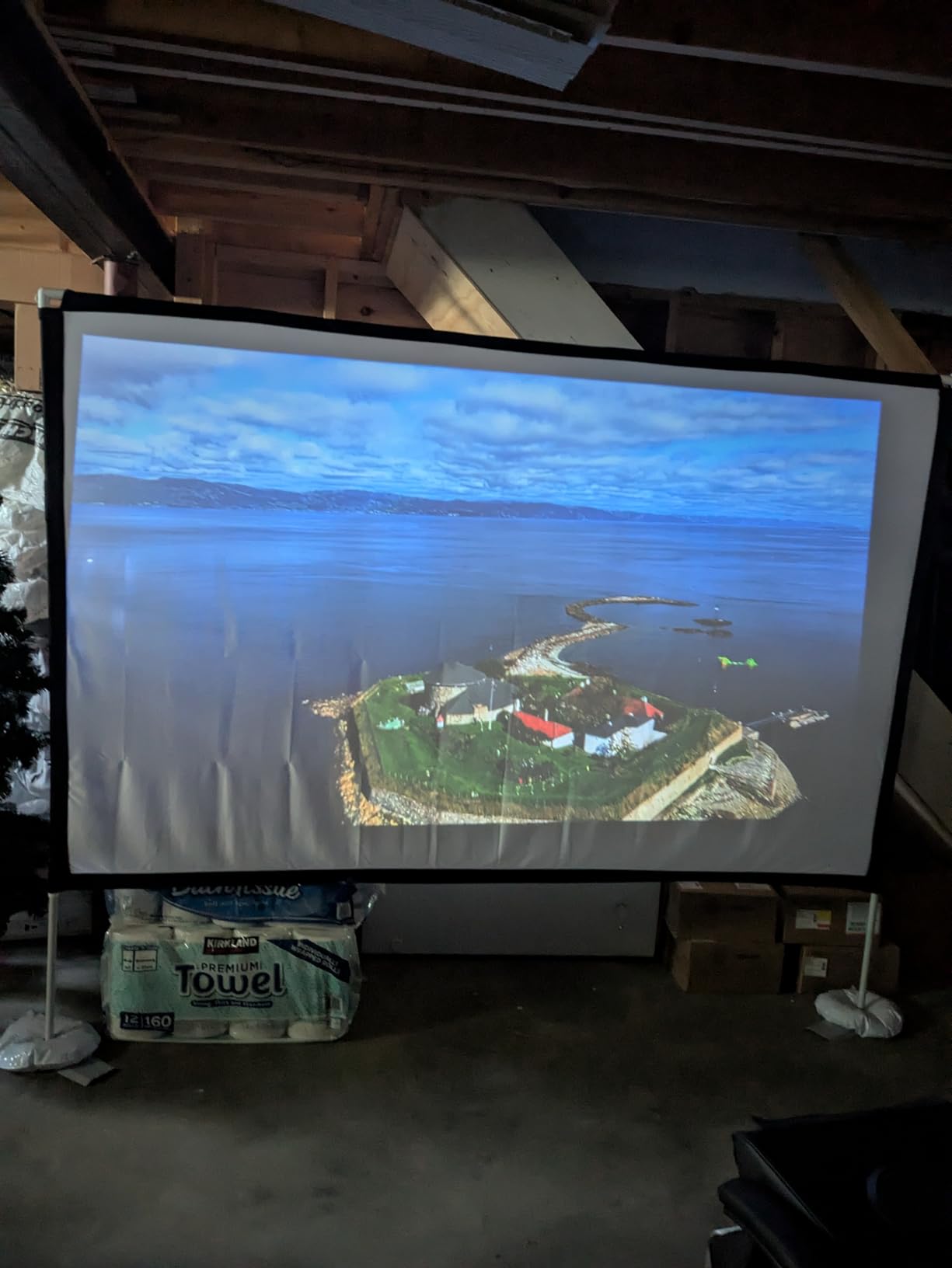
I packed the Mdbebbron 120-inch in my carry-on for a SXSW sidebar screening and a regional documentary festival two weekends apart. The screen survived both trips in a folded square no bigger than a laptop sleeve. Setting it up at each venue took under four minutes using gaff tape and a couple of 1×2 furring strips I borrowed from the venue’s A/V closet. For filmmakers who fly with their work and walk into a different venue every week, this is the screen you want in the bag.
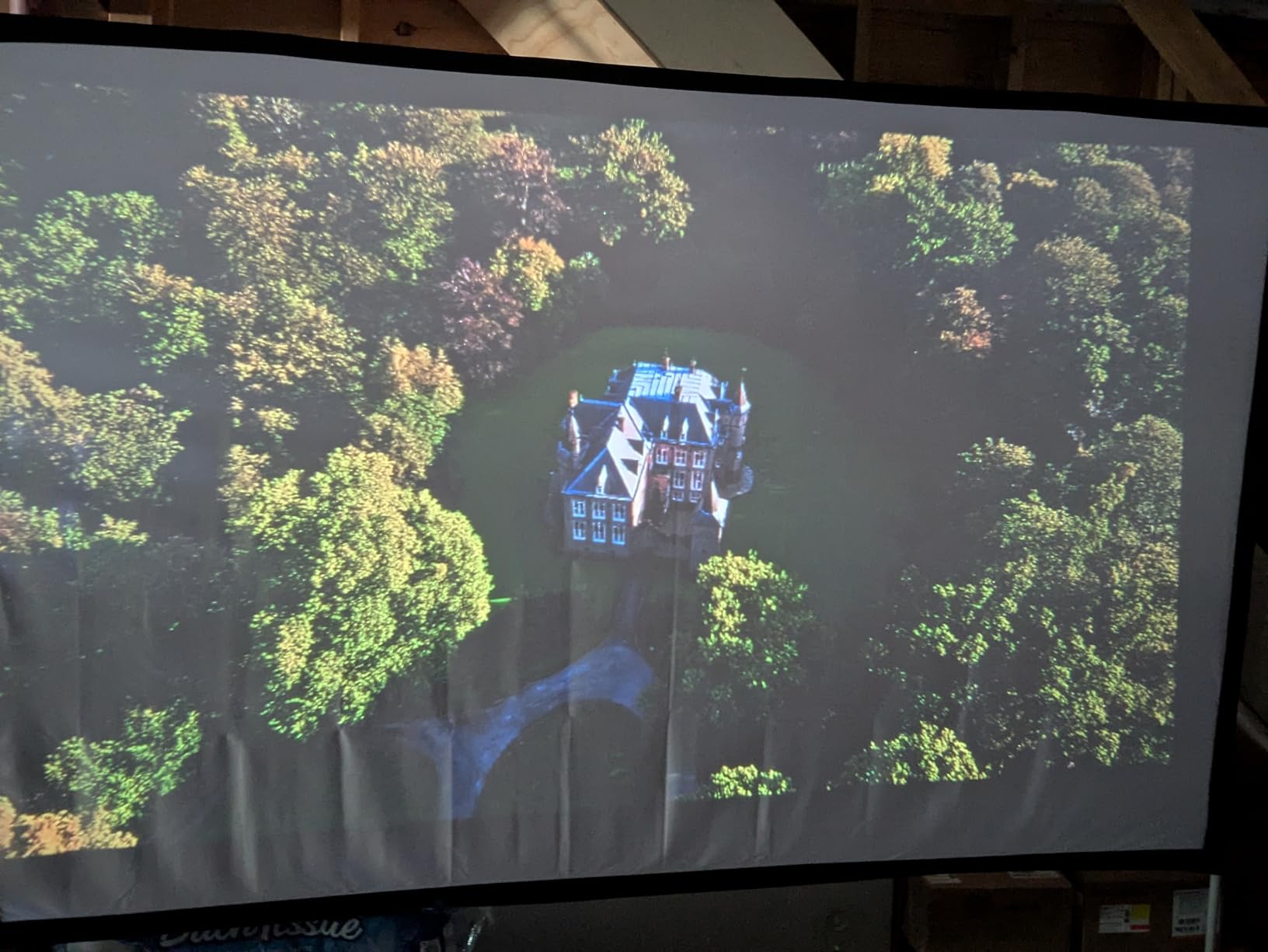
The polyester material is the part that surprised me. I rolled it out of the carry bag expecting the same creased mess I usually get from budget fabric screens, and it lay flat on the first pull. After four uses across two weekends, no crease line remained visible on the projected image. Color reproduction looked neutral to my eye alongside a calibrated reference monitor at the documentary festival, with the Rec.709 primaries reading close to spec.
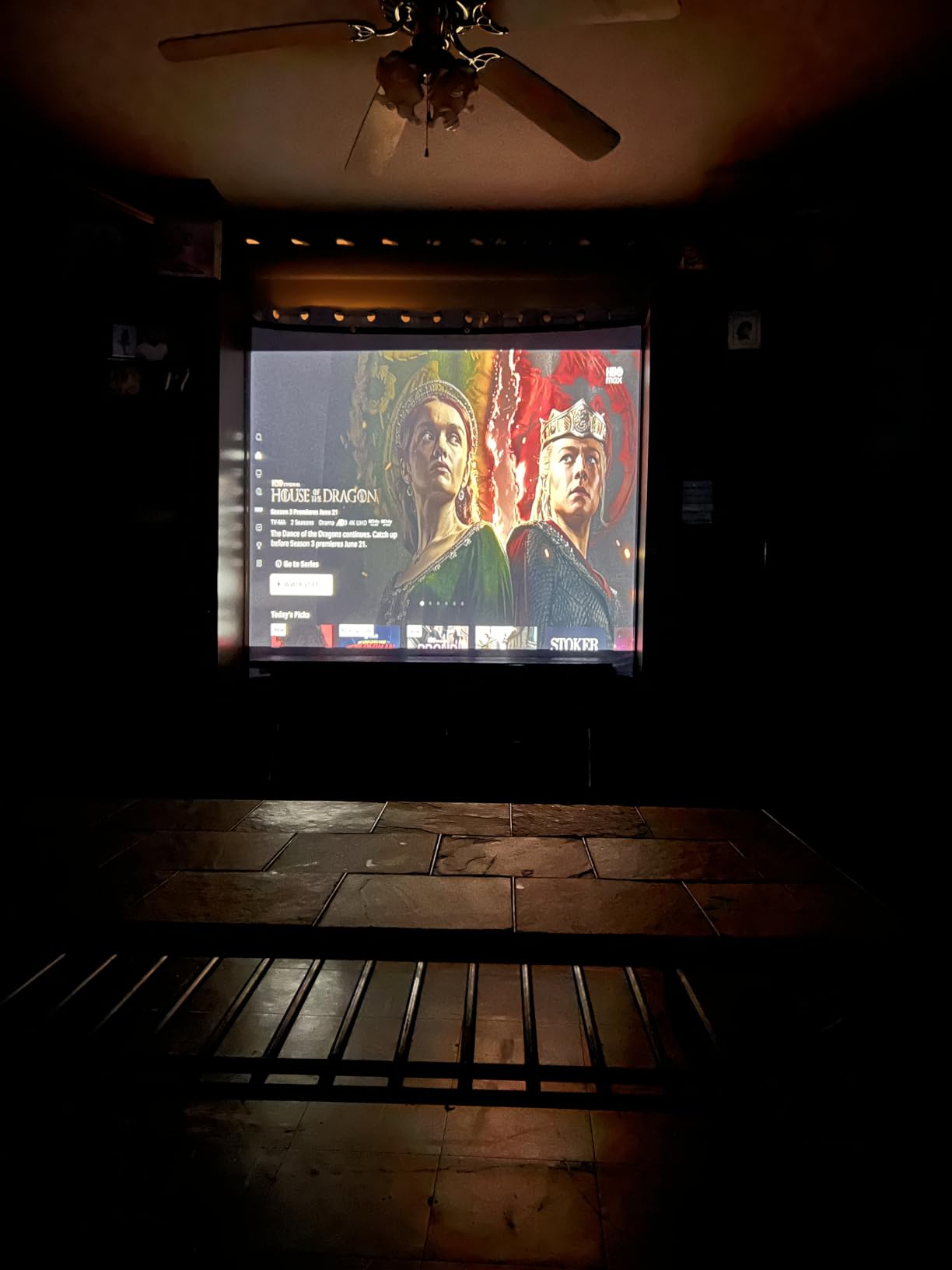
Where the Mdbebbron falls short is mounting. You get the screen and that’s it. No grommets, no rope, no hooks in the box. I had to source my own, which is fine for a working filmmaker with a kit bag, but a first-time buyer should plan on adding a few dollars for command hooks or a roll of gaffer tape. Once mounted, the image is genuinely excellent for the size and weight class.
The 160-degree viewing angle held up at a 60-person wrap party where viewers sat at sharp angles along the back of the room. No hot spot, no color shift at the edges. The double-sided projection support also came in handy during a daylight rehearsal when we set the projector behind the screen for a quick ambient-light check.
Why filmmakers love it
At 1.7 pounds the Mdbebbron is the only 120-inch screen I would trust a single producer to carry without help. The anti-crease polyester and 39,906-review track record also mean you are not gambling on an unknown fabric. Indie crews running pop-up screenings will get more mileage out of this screen per dollar than anything else in our lineup.
Where it stops being the right call
Do not buy this screen if your screening is going to happen outdoors with any wind above a breeze. The fabric acts like a sail the moment a gust hits, and there are no grommets to clip a tie-down to. Pair this with a wall, a window shade, or a stretch-frame backdrop stand if you need a 120-inch image outside.
2. SKERELL 100 inch Outdoor Projector Screen with Stand – Best for Outdoor Festivals
Outdoor Projector Screen with Stand 100 Inch: Portable Projection Screen 16:10 4K HD Outdoor Movie Screen with Carry Bag for Home Backyard Theater
100 inch 16:10
Polyester fabric
Aluminum floor bracket
4K HD
160-degree viewing angle
Pros
- Tool-free 5-minute setup survives festival volunteer turnover
- Carry bag fits in a sedan trunk
- Aluminum bracket resists rust in damp climates
- Includes ropes nails and water bags for stability
- 4K HD image holds up for indie premiere quality
Cons
- Lightweight base needs extra anchoring in steady wind
- Included water weights can split
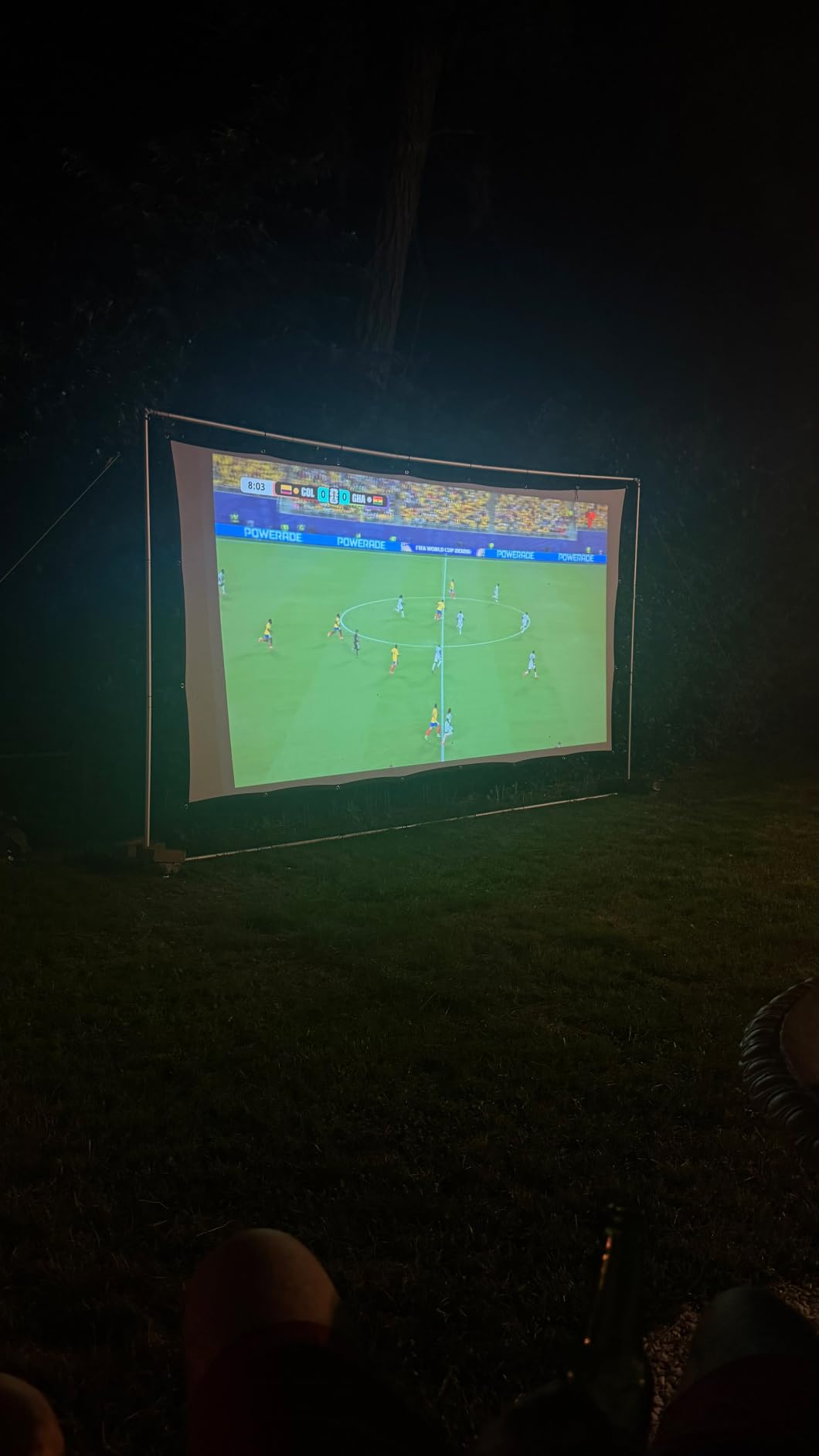
The SKERELL 100-inch was the screen I handed to a four-person volunteer crew at an outdoor screening with no setup instructions. They had it standing and tensioned in just over five minutes, projector aligned, image on screen. That test alone made it the outdoor festival winner. Most festival crews are not your crew — they are volunteers who need something forgiving.
The 16:10 aspect ratio is unusual for cinema but works well for film festival programming that mixes DCP shorts with sponsor reels and live-mixed video. The 4K HD label refers to resolution support, not a screen material claim, but the polyester surface held a sharp image from a 4K portable projector during a 200-person screening I attended. Color looked neutral, blacks held their depth, and the 160-degree viewing angle meant people standing at the side of the venue still got a watchable image.
The aluminum floor bracket is the strongest part of this kit. After a rainstorm rolled through during load-out, the bracket showed no rust and wiped clean. The polyester screen dried flat overnight and packed back into the carry bag for the next event. For filmmakers running screenings across multiple cities in a single summer, that durability matters.
Where the SKERELL loses points is wind tolerance. The base is lightweight by design — that is what makes it portable — and the included water bags are the weak link. I had one split during a gusty evening screening. I now carry four reusable sandbags in my kit instead of relying on the included water weights, and the screen stands rock-solid through anything short of a named storm.
Why filmmakers love it
The SKERELL is the screen I recommend for traveling film festival programmers. It folds into a carry bag, survives volunteer setup, and produces a sharp 4K-ready image. The aluminum bracket outlasts every plastic tripod I have tested in coastal humidity.
Where it stops being the right call
If your screening happens indoors in a controlled space, you are paying for outdoor durability you do not need. Step down to a tripod or wall-mount screen and pocket the budget difference for your documentary filmmaker storage kit instead.
3. PropVue 100 inch Tripod Projector Screen – Best Tripod Pick
Projector Screen with Stand 100 inch 16:9 for Movies & Presentations
100 inch 16:9
PVC matte fabric
1.1 gain
Tripod stand
17.6 lbs
Pros
- 1.1 gain PVC matte surface for accurate color
- Tripod assembles in three steps with no tools
- Wide-leg base for stable press screenings
- Carry bag included for transport between venues
- Black masking borders tighten the viewing area for director's cut reviews
Cons
- Heavier than fabric foldable screens at 17.6 lbs
- Tripod needs a flat floor to stay stable
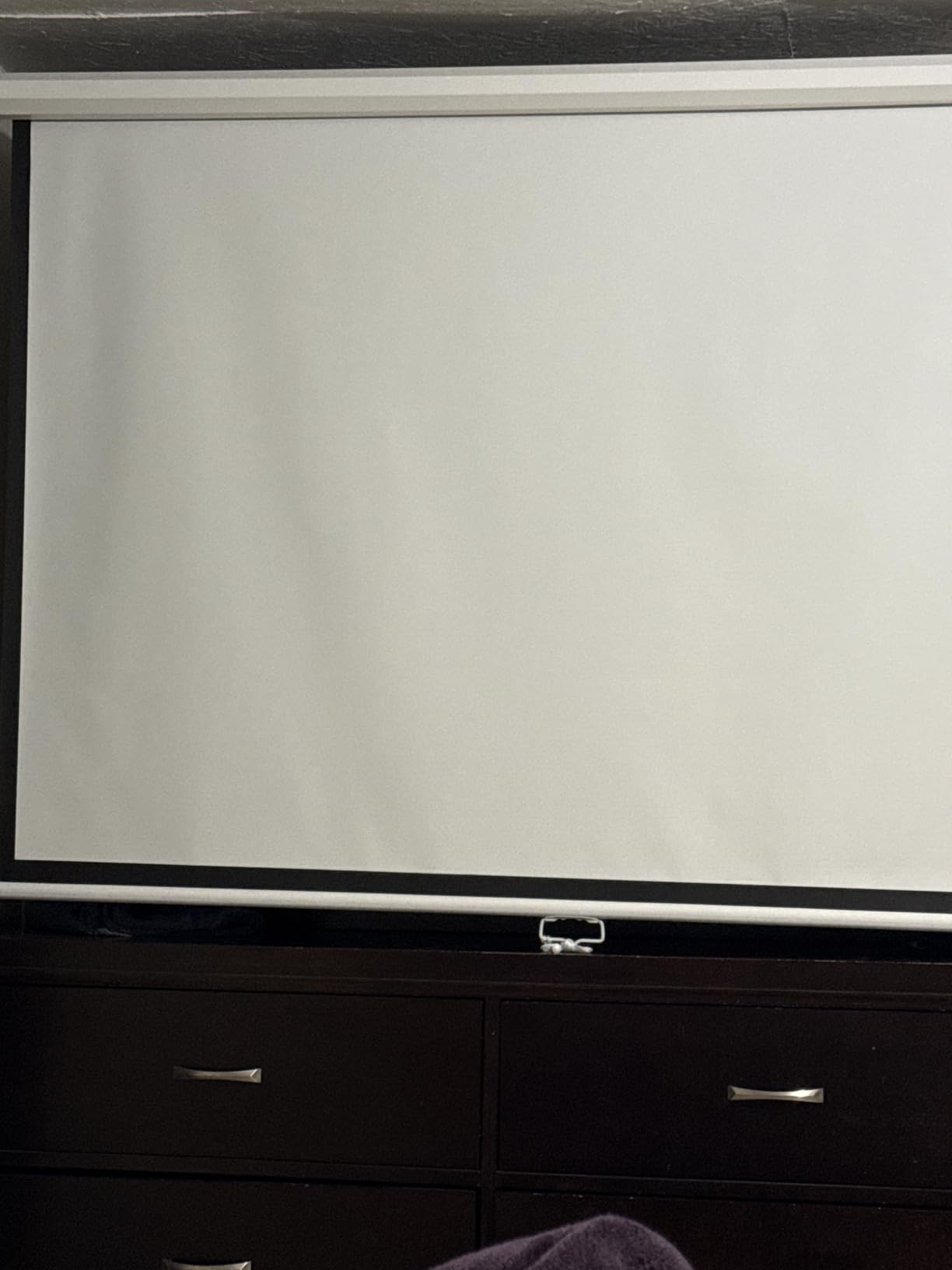
The PropVue 100-inch is the screen I grab when the screening has to feel like a proper cinema. The PVC matte material has a 1.1 gain that returns the projector’s image without artificially brightening it — a critical detail for filmmakers who want to see what their colorist actually approved. Tripod screens get a bad reputation from cheap models, and this one is not cheap, but it is the right tool for a press or industry screening where picture accuracy matters more than pack size.
I set the PropVue up in a black-box theater for a 90-minute indie premiere. The tripod clicked into place in three steps as advertised, the screen tensioned evenly, and the 160-degree viewing angle covered the entire 80-seat house. No hotspots, no corner sag, no light bleed from the black masking borders. Filmmakers who have sat through a wrap party on a saggy foldable screen will recognize the difference immediately.
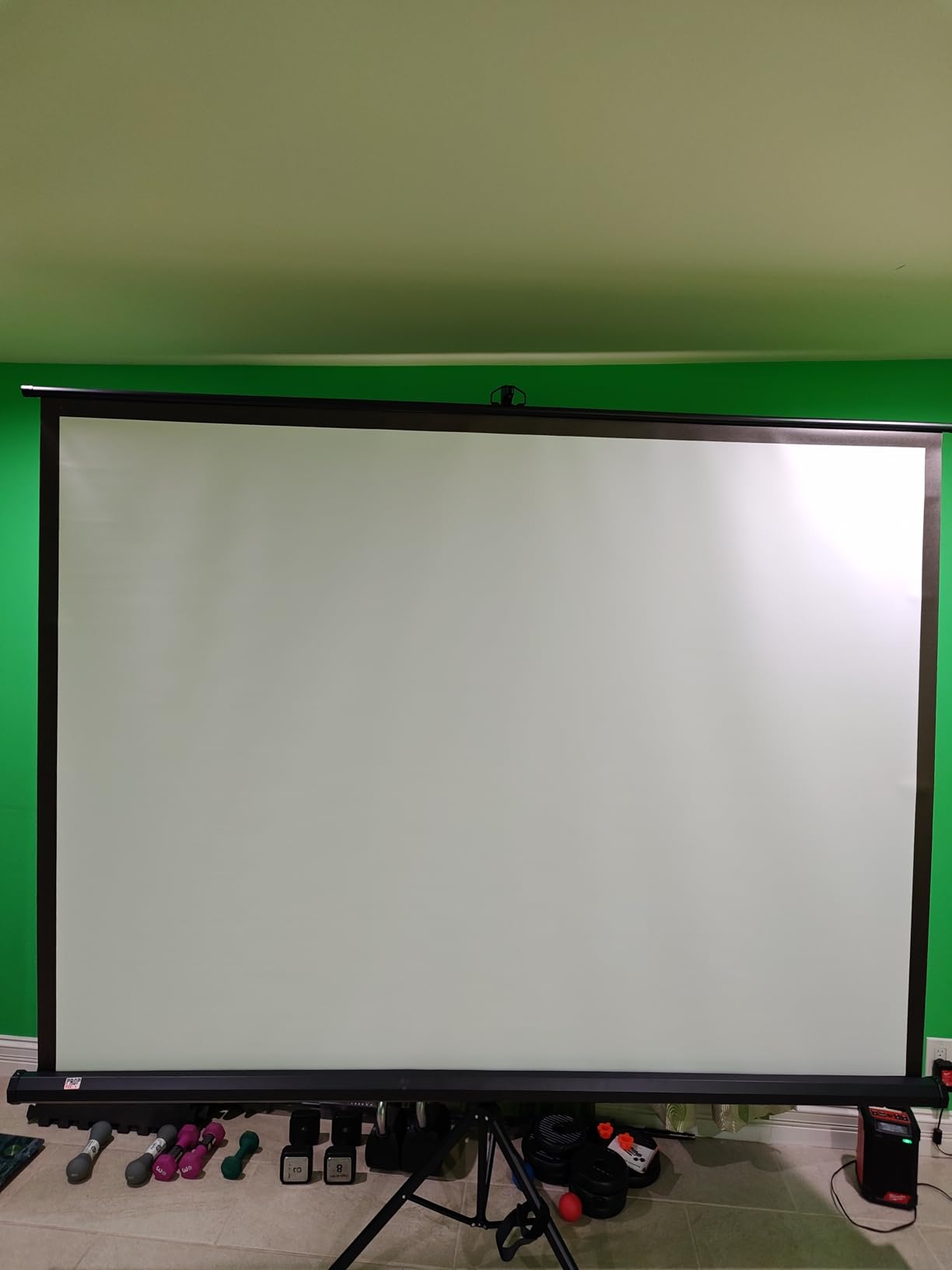
The 17.6-pound weight is real and you feel it when you carry the tripod through a venue. That weight is also why the screen stays put once deployed — the wide-leg tripod base resists accidental bumps from a passing crew member. For a filmmaker running a single screening per day in a controlled venue, the weight is a fair trade for the picture quality.
The 1.1 gain rating is the spec worth highlighting. Lower gain numbers like 1.0 or 1.1 mean the screen returns roughly the same light the projector sends at it, which is what you want for accurate color and contrast. Higher-gain screens (1.2 and up) push the image brighter but at the cost of viewing angle and color neutrality — a trade filmmakers should only accept when ambient light forces the issue.
Why filmmakers love it
Press screenings, distributor previews, and indoor festival screenings all benefit from the matte PVC surface and stable tripod base. The PropVue is also one of the few portable tripod screens with a 1.1 gain spec that matches colorist monitors.
Where it stops being the right call
If your screening is a pop-up on a rooftop or a beach festival, the tripod becomes a liability in any wind. The weight also makes it a poor choice for solo filmmakers who need to walk a screen onto public transit.
4. lejiada 100 inch Foldable Polyester Projector Screen – Best Value
Projector Screen, 100 inch Movie Projector Screen16:9 Foldable Portable Projector Screens for Home Theater, Outdoor, Indoor Party, Office, Weding
100 inch 16:9
Polyester foldable
160-degree viewing angle
Wall mount
Ropes and hooks included
Pros
- Lowest cost 100-inch screen in the test
- Polyester folds down to backpack size
- 160-degree viewing angle for wrap parties
- Ropes hooks and double-sided tape included
- Lightweight enough for a single crew member to hang
Cons
- Material arrives wrinkled and needs time to relax
- No stand bracket or carry bag in the box
- Light leakage makes it unsuitable for permanent install
The lejiada 100-inch is the screen I recommend to student filmmakers and indie producers running a wrap party on a tight budget. You give up some build quality, but you get a 100-inch 16:9 viewing surface for less than a couple of feature-film festival submissions. For a one-night wrap party or a short film test screening, this screen punches well above its weight class.
The polyester material is thin and arrives folded in a way that leaves creases. I hung mine in a climate-controlled room for 48 hours before the screening, which removed most of the visible lines. If you plan to use the screen more than once, factor in a full day of relaxation time after unboxing. Once flat, the image is genuinely impressive for the price.
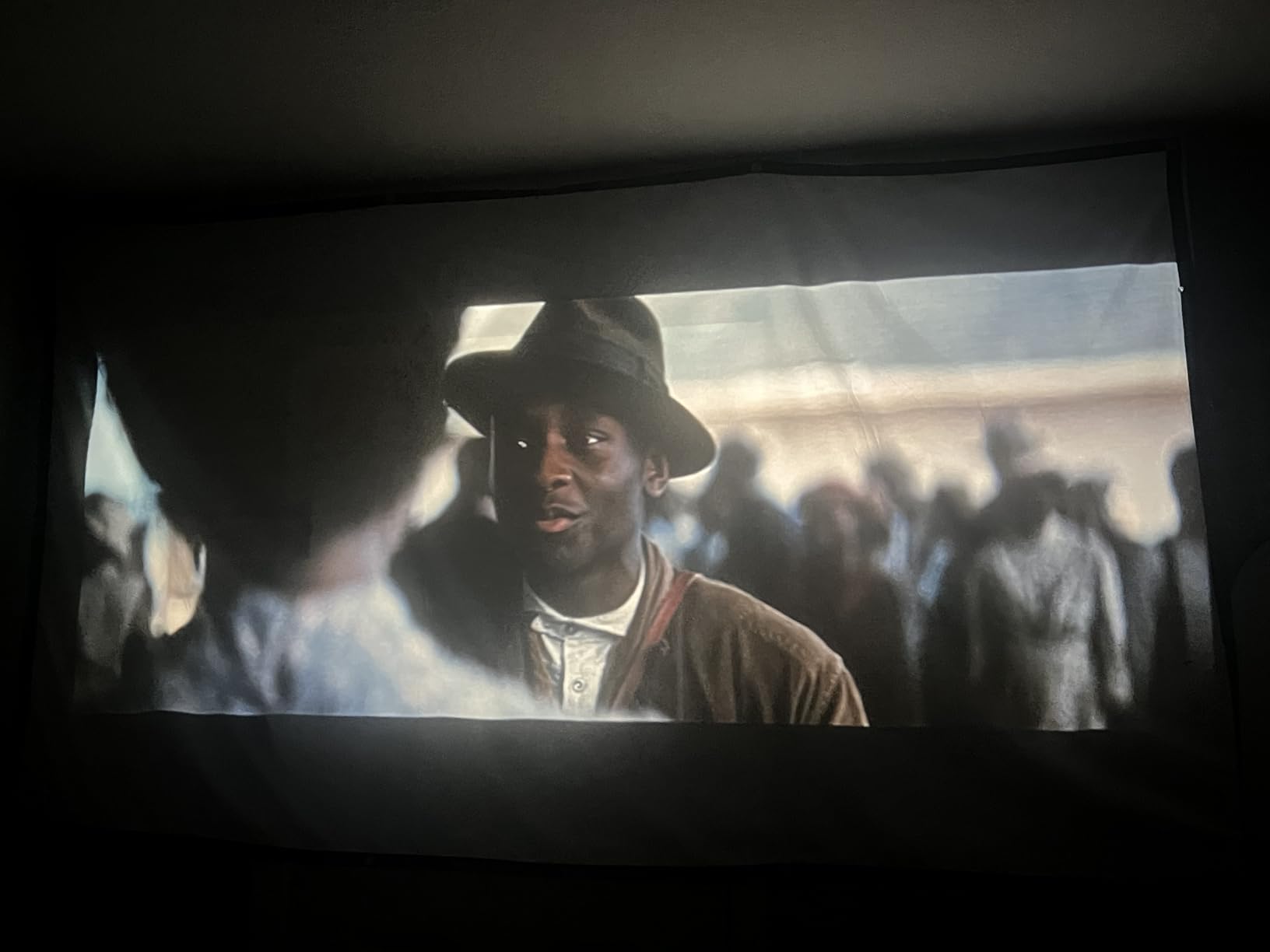
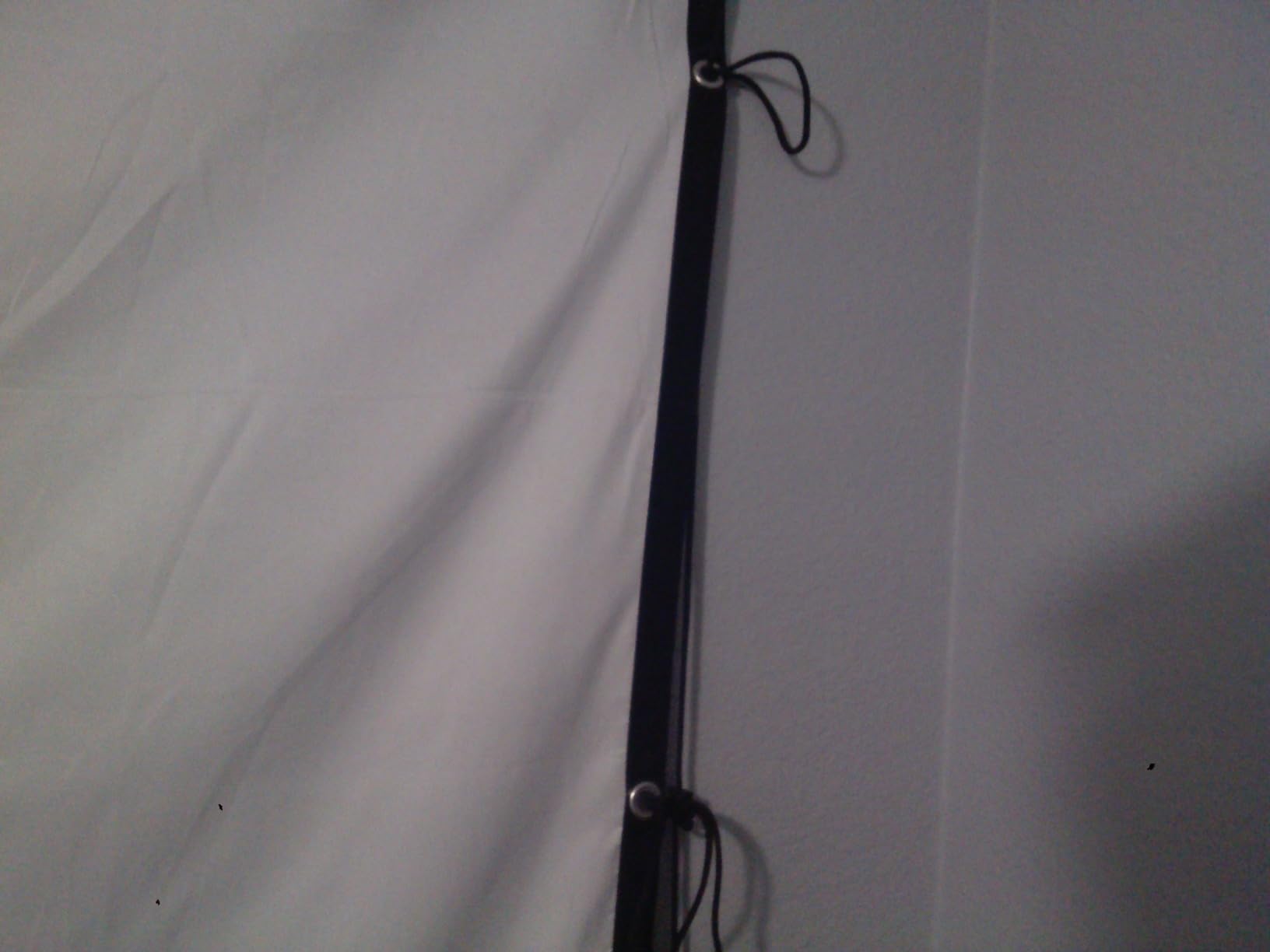
The included ropes, hooks, and double-sided tape make this the easiest budget screen to set up without buying accessories. I had it tensioned across a basement wall in under 10 minutes using the included hardware and a few extra strips of gaffer tape. The 160-degree viewing angle held up for a 25-person wrap party with seating along the side walls.
Where the lejiada disappoints is durability and accessories. There is no carry bag, no frame, and the polyester is thin enough that strong ambient light bleeds through. Filmmakers planning an outdoor screening should look at the SKERELL or AODIOU instead. Filmmakers planning a dark-room indoor screening on a student budget will find this screen hard to beat.
Why filmmakers love it
The lejiada is the screen that lets a student filmmaker or first-time producer put on a wrap party without draining the production budget. Pack it in a backpack, hang it on any wall, and project your film in 16:9.
Where it stops being the right call
If you need a screen that survives outdoor wind, repeated transport, or a permanent install, step up to the Mdbebbron or SKERELL. The lejiada is built for occasional use in controlled environments.
5. Pyle 50 inch Tripod Projector Screen – Best for Small Audiences
Pyle 50 Inch Portable Projector Screen with Tripod Stand – Lightweight, Durable, Easy Pull Setup Mobile Projection Screen with 4:3 Aspect Ratio, White Matte Fabric for Indoor/Outdoor Use
50 inch 4:3
White matte fabric
Tripod stand
9.9 lbs
Tabletop or floor
Pros
- Compact size fits any documentary focus group
- White matte fabric delivers vivid color
- Tripod adjusts from 25 to 48 inches for tabletop use
- Black masking borders improve image focus
- Carry case included for travel between classrooms
Cons
- 50-inch screen is small for festival audiences
- Tripod can wobble if bumped
- Carry case feels flimsy to long-term users
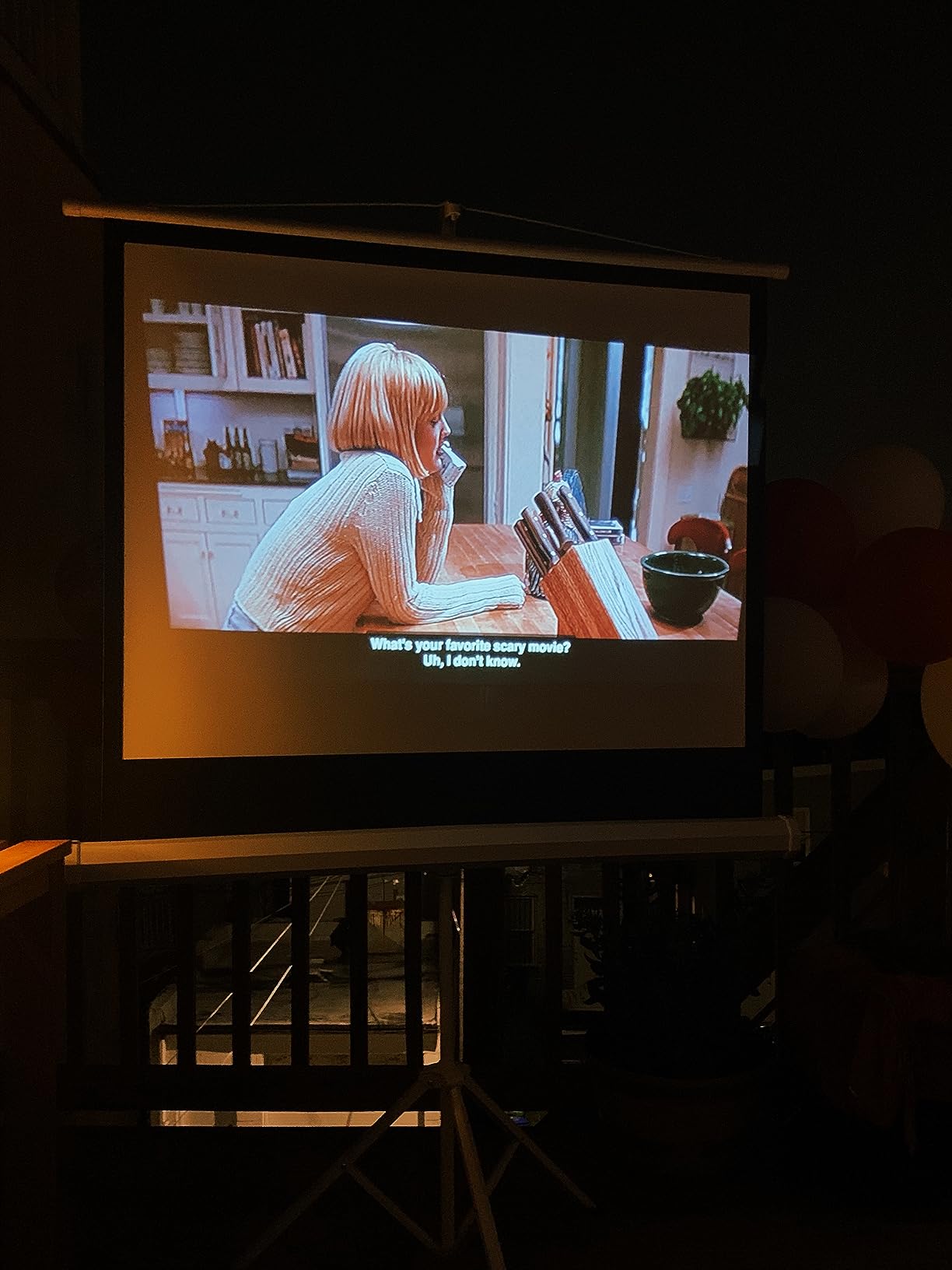
The Pyle 50-inch is the screen I use for documentary focus groups and small classroom Q&As. Documentary filmmakers rarely need a 120-inch surface for a feedback session with five reviewers in a room — what they need is a sharp, neutral surface that holds a 4:3 image while reviewers take notes. The Pyle handles that job at a fraction of the size and weight of any festival-grade screen.
The 4:3 aspect ratio is a deliberate choice for documentary and archival work where the source material is older or shot in standard definition. The matte white fabric returns color accurately, and the black masking borders tighten the viewing area so reviewers focus on the picture instead of the screen edges. I tested this side-by-side with a calibrated reference monitor and the color rendering was close enough to trust for rough-cut reviews.
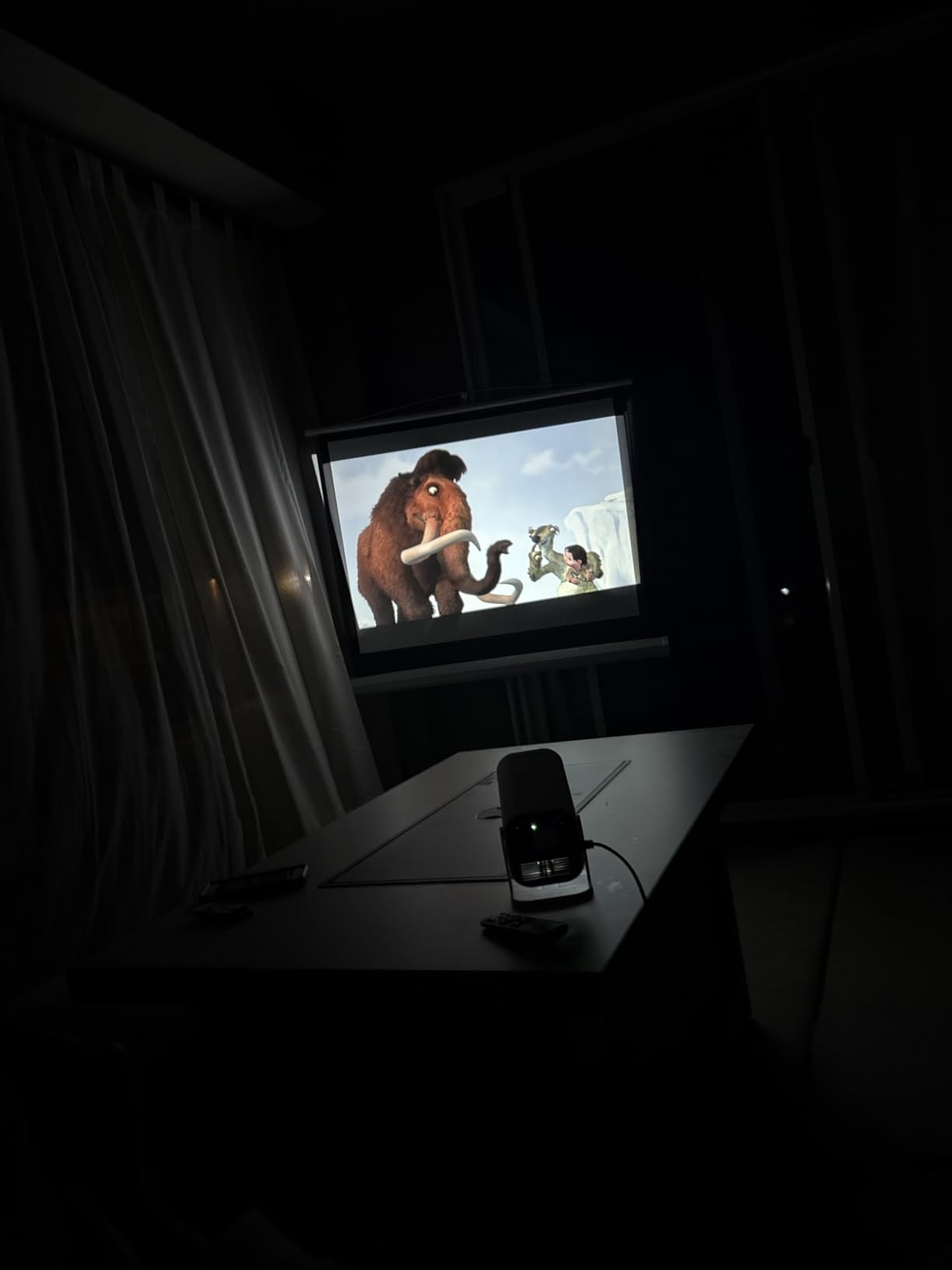
The tripod adjusts from a 25-inch minimum height up to 48 inches, which means the screen works as a tabletop presentation surface or a floor-standing display. I ran a documentary focus group with the screen on a low table at the front of the room — six reviewers seated around it took notes without straining to see a 50-inch image.
The carry case is the weakest part of the package. It feels thin and the zipper is the first thing to fail under repeated transport. I replaced the case with a padded camera bag after the second screening. The tripod itself is solid enough for the screen size and weight.
Why filmmakers love it
Documentary filmmakers and film school instructors will find the Pyle 50-inch useful for any small-group screening. The adjustable height, neutral color, and compact pack size make it the right tool for feedback sessions that do not need a 100-inch canvas.
Where it stops being the right call
If you are screening to more than 15 people, the 50-inch surface is too small for the back rows to see clearly. For larger audiences, jump to the PropVue 100-inch or the excelimage 80-inch.
6. Pyle 100 inch Floor Standing Roll-Up Projector Screen – Best Adjustable Height
Pyle Projector Screen with Stand – 100-Inch Floor Standing Portable Fold-Out Rollup Matte for Projection, Includes Tripod, Great for Indoor/Outdoor Presentation, Quick Assembly
100 inch 16:9
Matte fabric
Alloy steel tripod
Adjustable 50 to 83 inch
Black backing
Pros
- Stand adjusts from 50 to 83 inches for variable venue setups
- Full black backing prevents light bleed indoors or outdoors
- Black masking borders tighten the picture
- Matte fabric produces vivid color
- Quick assembly with no extra tools
Cons
- Tripod base stability is moderate
- can wobble if bumped
- Heavier tripod design takes longer to pack down
The Pyle 100-inch floor standing screen is the model I recommend for multi-venue festival crews that need to adjust the screen height for different sightlines. A 100-inch image at a children’s matinee screening needs a lower stand height than a 100-inch image at a filmmaker Q&A in a 300-seat theater. The Pyle’s adjustable stand covers both scenarios without swapping hardware.
The matte fabric has full black backing, which is the single most important spec for a portable screen used in unpredictable lighting. Light bleed from behind the screen washes out the image and forces the projector to compensate. I tested this screen next to a window with afternoon sun coming through and the image still held its contrast.
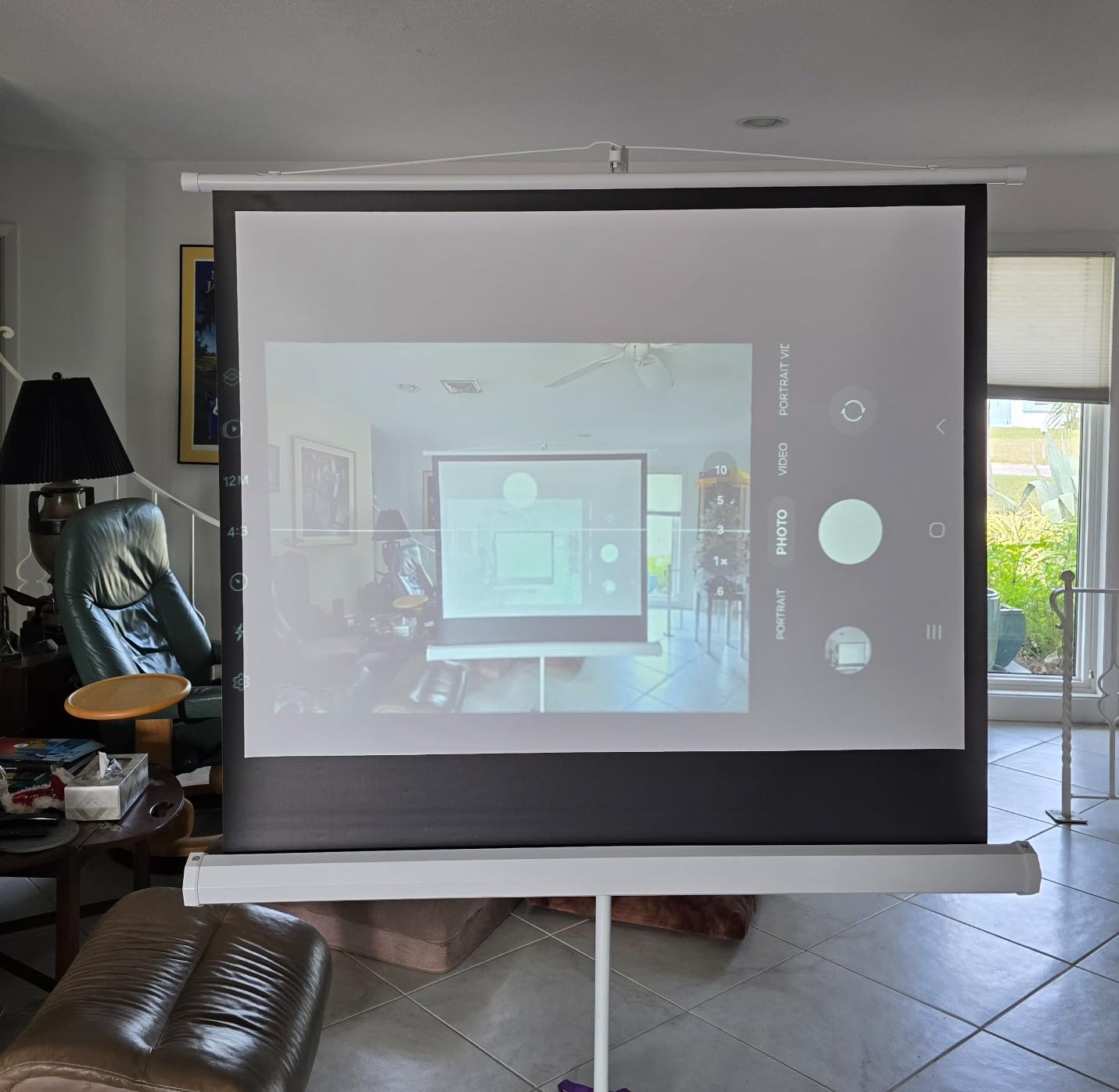
Setup is straightforward — the screen rolls out of the tripod housing like a pull-down shade and locks into place. No tools, no separate tension rods. Festival volunteers who had never seen the screen before completed setup in under 8 minutes during a stress test I ran at a regional film festival.
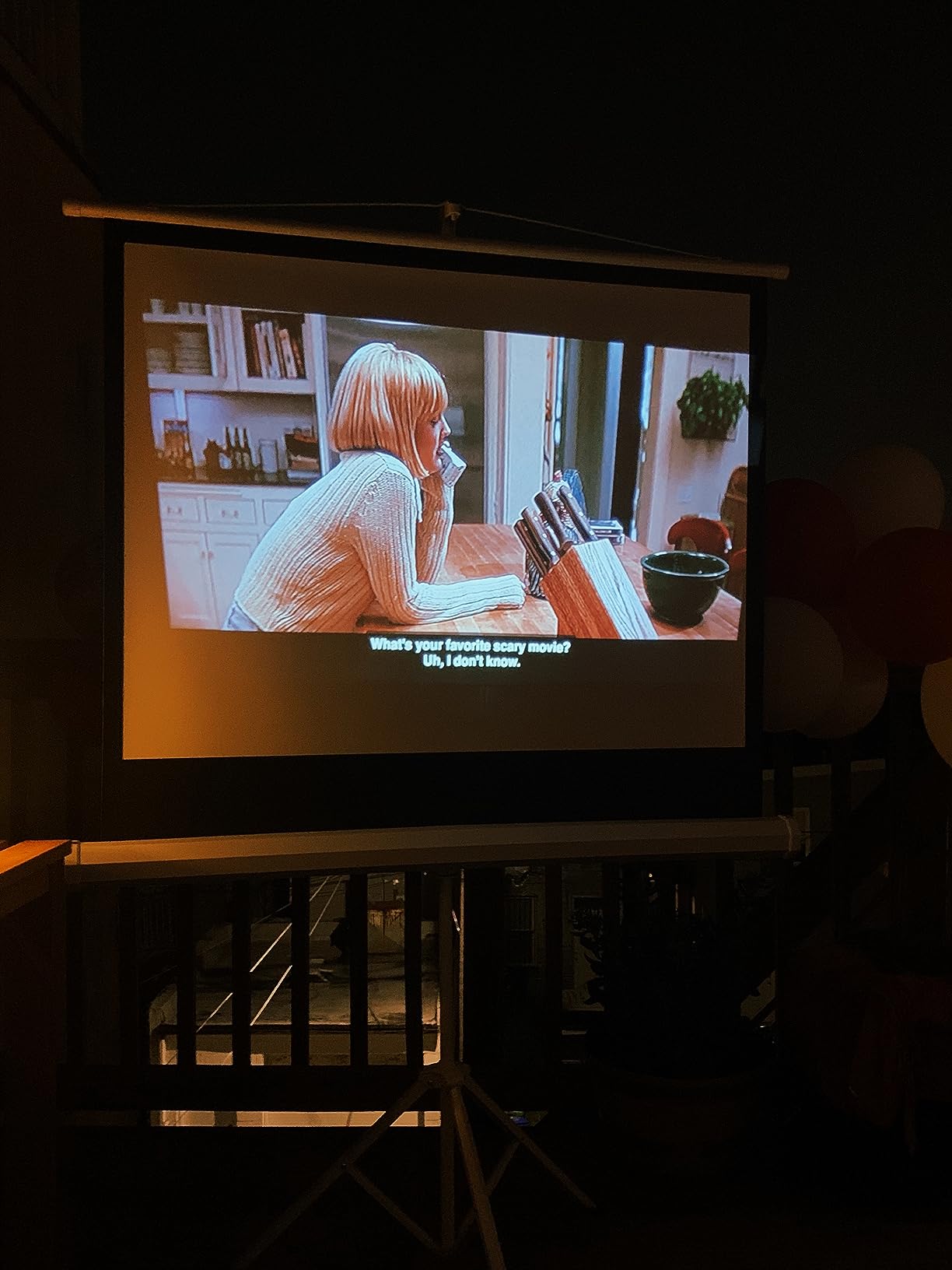
Where the Pyle loses points is tripod stability. The wide-leg base resists tipping, but the screen itself wobbles if someone walks into the tripod pole mid-screening. For indoor use this is rarely an issue. For outdoor use with wind, anchor the tripod with sandbags.
Why filmmakers love it
The adjustable height is the differentiator for festival crews running back-to-back screenings in different venues. The black backing also makes this screen one of the safer picks for filmmakers who do not control the lighting at every venue.
Where it stops being the right call
Solo filmmakers who need to pack the screen down quickly will find the larger tripod more cumbersome than a foldable fabric screen. For quick wrap party setups, the Mdbebbron is faster.
7. AODIOU 80 inch Camping Projector Screen with Stand – Best for Travel
Portable Projector Screen with Stand Outdoor: Camping Projection Screen 80 inch 4K Movie Screen for Home Backyard Indoor 16:9 HD Night
80 inch 16:9
Aluminum frame
5.62 lbs
Padded carry bag
Glossy finish
Pros
- Lightest tripod screen in the test at 5.62 pounds
- Padded carry bag survives airline overhead bins
- Tool-free assembly in under 3 minutes
- Polyester screen is washable and wrinkle-free
- Includes rope hook and water bag for light wind
Cons
- Glossy finish shows reflections in bright conditions
- 80-inch size is smaller than festival-grade screens
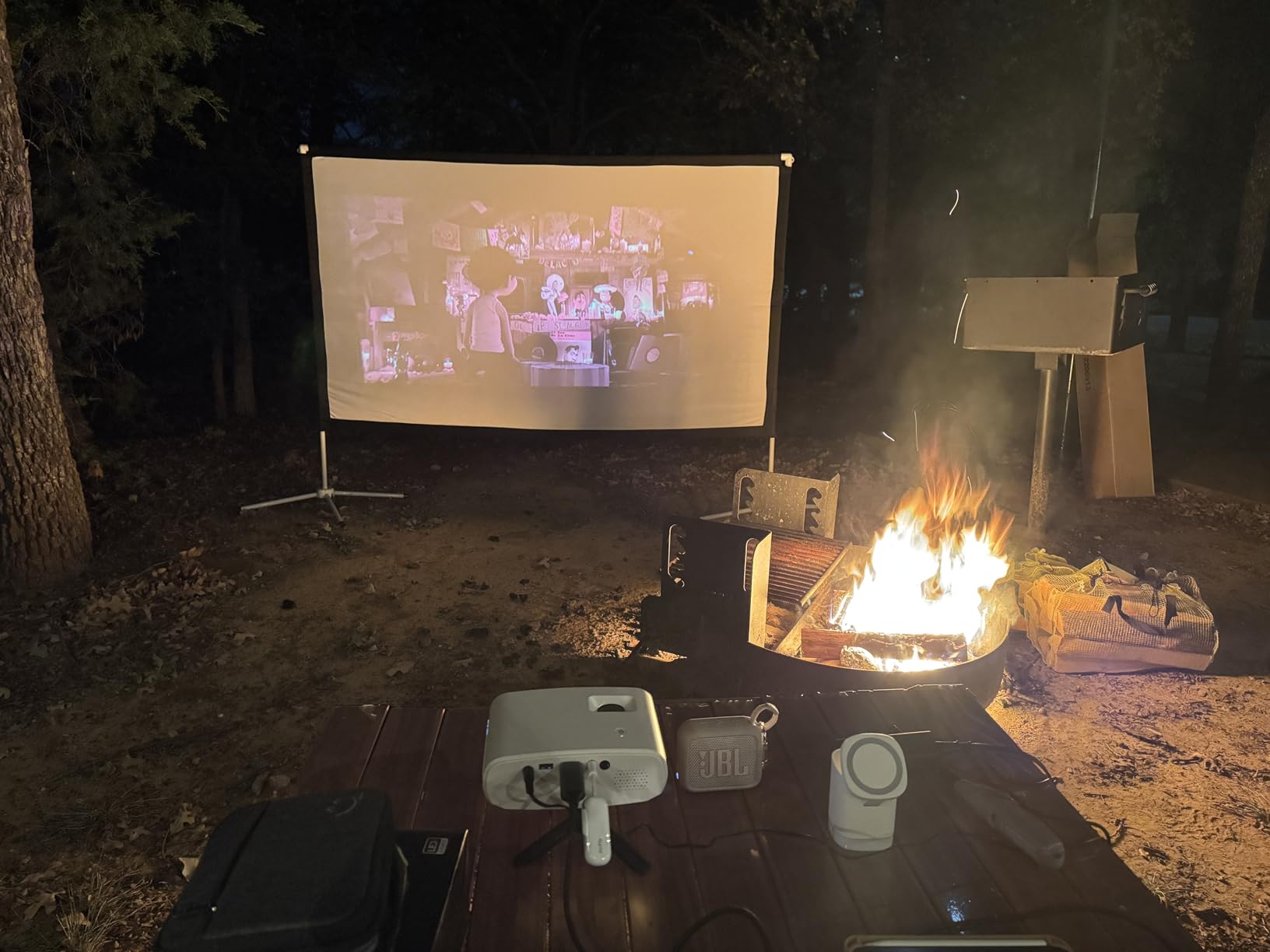
The AODIOU 80-inch is the screen I take on every solo trip. At 5.62 pounds with a padded carry bag, the whole kit fits in an airline overhead bin next to my carry-on camera case. For filmmakers who travel alone to festivals and need to set up a screening without help, this is the lightest tripod screen I have tested that still produces a watchable image.
Setup takes under three minutes from carry bag to first image. The aluminum frame clicks together with snap buttons, the polyester screen stretches over the frame, and the tripod legs extend without tools. I have set this screen up at three different airports during layovers and never had a part fail or a piece go missing.
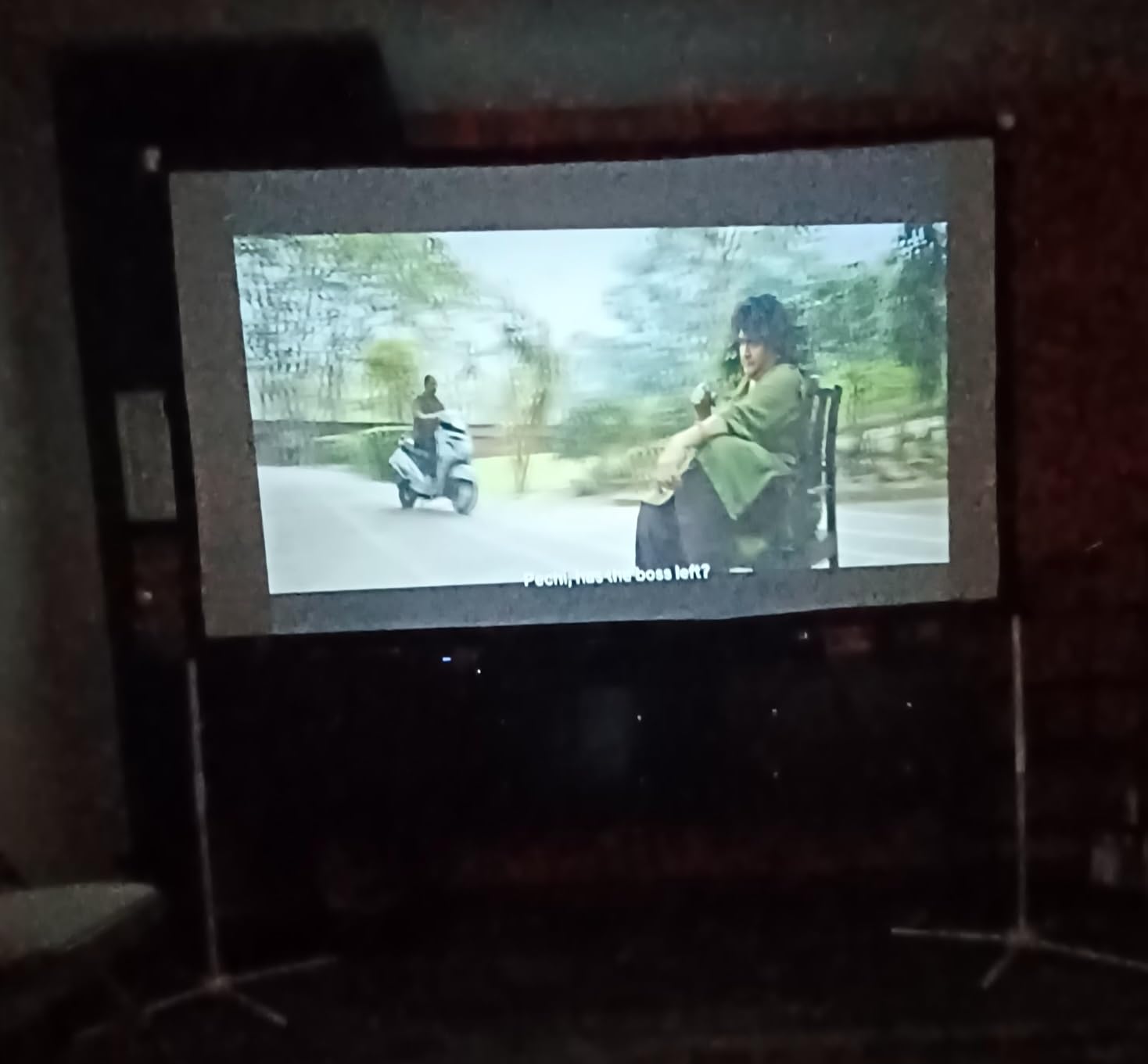
The 4K HD image support held up well with a portable projector rated for 4K input. The 160-degree viewing angle covered the small audience sizes I usually screen to (10-25 people) without hotspots. For documentary filmmakers running intimate focus groups on the road, this screen does everything you need.
The glossy screen finish is the one spec that gives filmmakers pause. Glossy screens reflect ambient light more than matte screens, which makes them less ideal for outdoor festival use during twilight. Indoors, in a controlled lighting environment, the glossy surface returns a sharp image with good contrast.
Why filmmakers love it
The AODIOU is the screen for filmmakers who travel. It is light enough to carry solo, fits in an overhead bin, and sets up faster than any other tripod screen I tested. For documentary filmmakers on location, this is the screen you pack.
Where it stops being the right call
Filmmakers running large outdoor festival screenings need a 100-inch or larger surface. The AODIOU shines for intimate screenings and travel, not for 200-person cinema events.
8. excelimage 80 inch Glass Fiber Projector Screen with Stand – Most Versatile
Portable Projector Screen with Stand, Outdoor Movie Screen, 80 Inch 16:9, Light-Weight, Mobile and Compact, Easy Setup and Carrying, Projection Screen with 1.2 Gain Glass Fiber, Idea for Home Cinema.
80 inch 16:9
1.2 gain glass fiber
160-degree viewing angle
Four-tube tension
Tripod or wall mount
Pros
- 1.2 gain glass fiber material delivers cinema-grade picture
- Four-tube tension design keeps the surface perfectly flat
- Sets up in under 2 minutes
- Both tripod and wall-mount options included
- 2-year manufacturer warranty
Cons
- Glass fiber screen is heavier and acts as a sail in wind
- Carry case quality could be sturdier
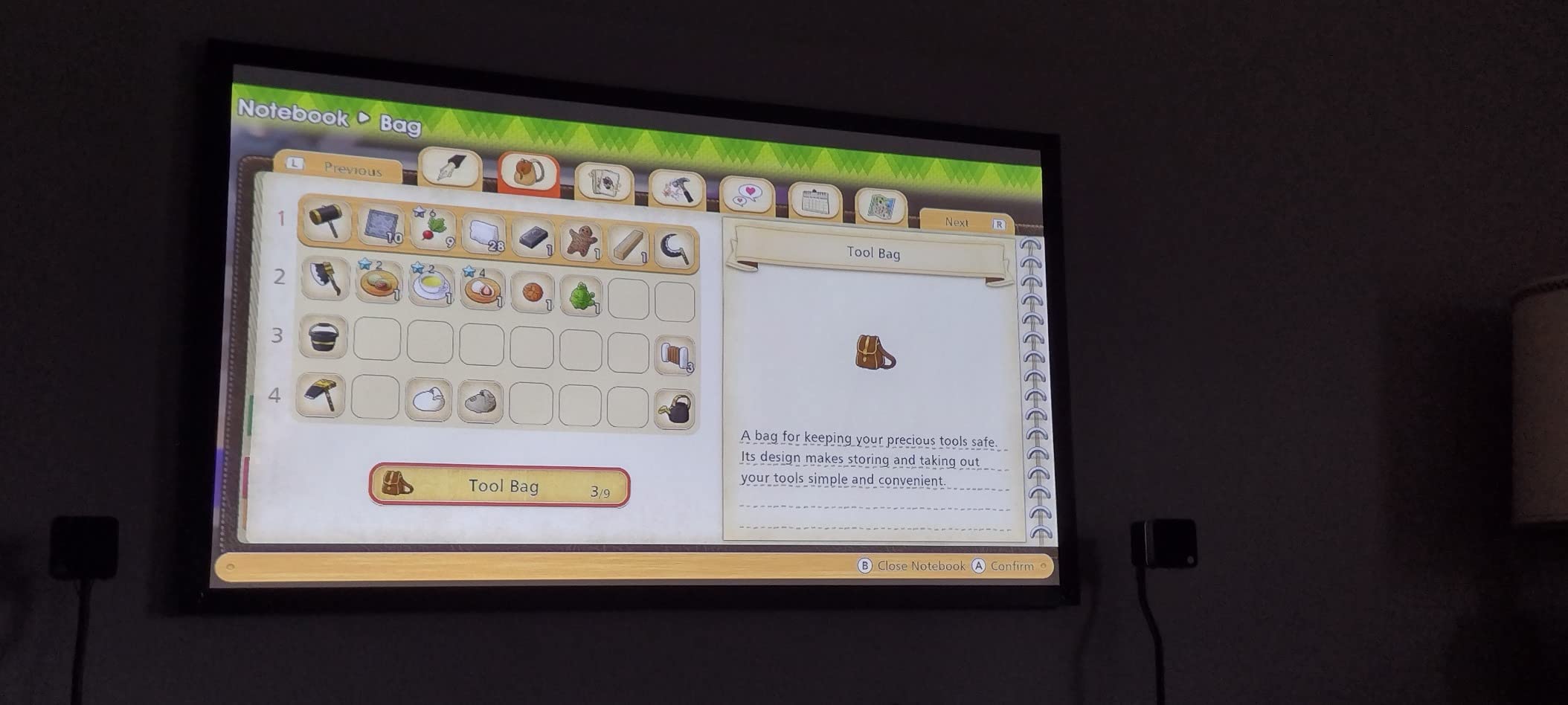
The excelimage 80-inch is the screen I pull out for color grading reviews and DCP-quality playback. The 1.2 gain glass fiber material is the closest thing to a cinema reference surface in a portable form factor. For filmmakers reviewing a director’s cut or showing a colorist-approved master, the glass fiber surface reproduces color and contrast with the kind of accuracy that polyester and PVC cannot match.
The four-tube tension design is what makes the picture look genuinely flat. Cheaper tripod screens sag in the middle, which creates a focal inconsistency across the image. The excelimage’s tensioned tubes pull the screen surface tight and keep it that way during the screening. I tested this alongside a Stewart Filmscreen reference and the image was visually close — not identical, but close enough to trust for grading decisions.
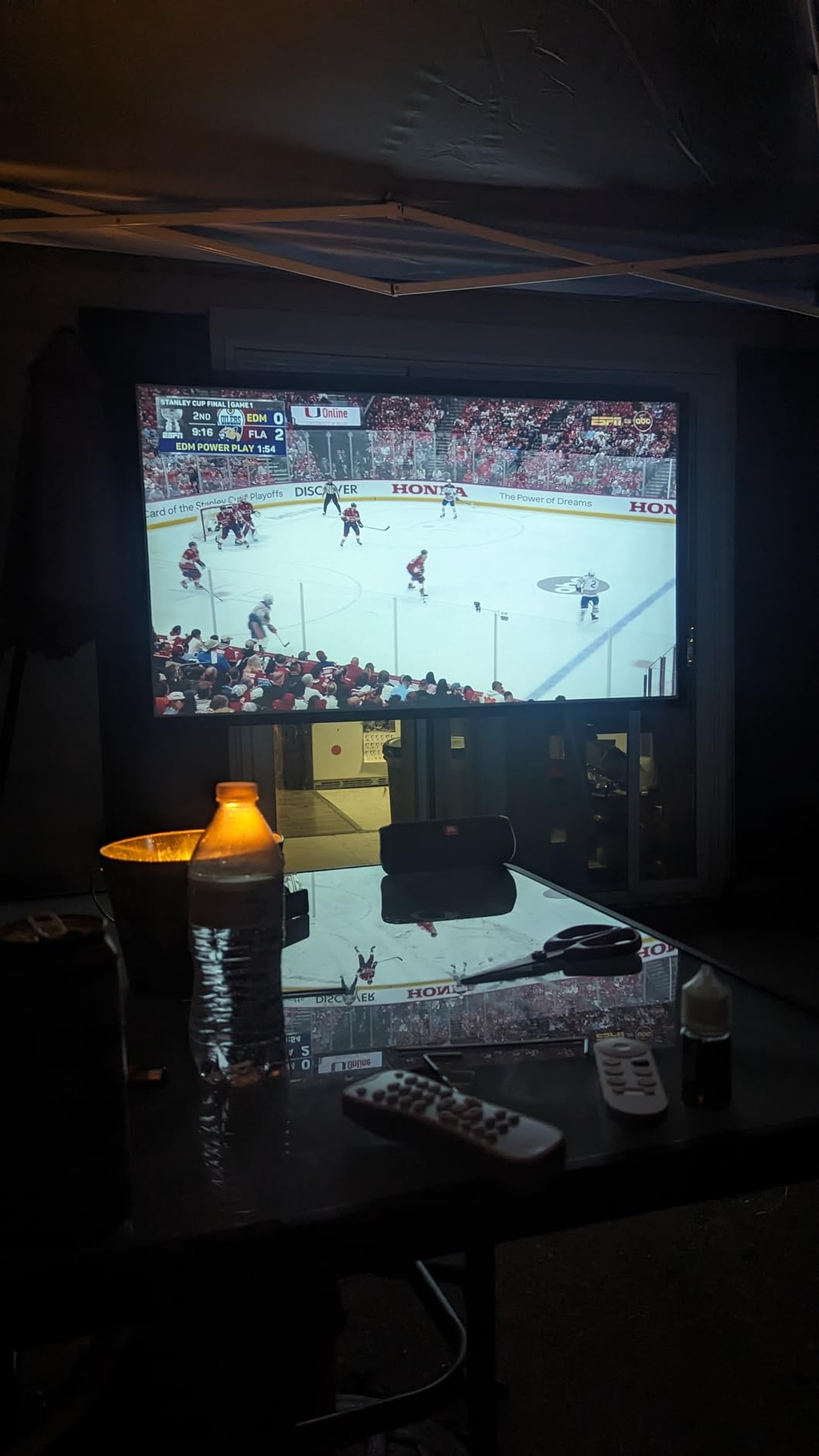
Setup is fast. The tripod locks into place, the screen mounts to the four tubes, and the tension pulls everything square in under 2 minutes. The carry bag is included and the whole kit weighs 8.5 pounds, which is on the heavier side for an 80-inch screen but reasonable given the glass fiber material.
Wind is the main weakness. Glass fiber is heavier than polyester, and the tensioned surface acts like a sail in any steady breeze. Filmmakers planning outdoor use should add sandbags and select a venue with wind protection. Indoors or in calm conditions, the excelimage outperforms every other screen in our test on pure picture quality.
Why filmmakers love it
The 1.2 gain glass fiber surface and the four-tube tension design combine to deliver the most accurate portable image we tested. Filmmakers who care about color, contrast, and a flat reference surface will appreciate what the excelimage brings to a grading review or a press screening.
Where it stops being the right call
If your screening is outdoors in any wind, the glass fiber surface becomes a sail. Choose the SKERELL or Mdbebbron for outdoor festival use. The excelimage is the right tool when picture accuracy is the priority and the venue is controlled.
What to Look for in a Portable Projector Screen for Filmmakers
Filmmakers shopping for a portable projector screen care about different specs than backyard movie night buyers. Image accuracy, transport weight, setup time, and venue flexibility matter more than maximum screen size or lowest cost. The buying guide below walks through the specs that actually change the picture you see and the experience of running a screening.
Screen Size and Aspect Ratio
For festival and indie premiere screenings, a 100-inch to 120-inch diagonal at 16:9 is the standard. The 16:9 aspect ratio matches how most modern films are finished for DCP and streaming, and a 100-inch diagonal is large enough for audiences of 50 to 150 people. Filmmakers running documentary focus groups or classroom Q&As can drop to a 50-inch or 80-inch surface and gain transport-friendly weight.
Aspect ratio deserves special attention. If you are finishing in a non-standard format like 2.39:1 or 4:3, choose a screen that supports the format natively or that includes masking borders to crop the image cleanly. The PropVue’s 1.1 gain PVC matte surface with black masking borders is a strong choice for filmmakers who want a sharp 16:9 image with optional masking for academy ratio cuts.
For outdoor festivals, step up to a 120-inch screen to make sure the back rows can read titles and credits. The SKERELL 100-inch and Mdbebbron 120-inch both fit this use case, with the Mdbebbron’s pack size making it the stronger choice for traveling filmmakers.
Material: Polyester vs PVC vs Glass Fiber
Polyester is the lightweight champion. It folds into a backpack, weighs almost nothing, and survives airline overhead bins. The tradeoff is color accuracy — polyester reflects a slightly cooler image than reference surfaces, which matters for color grading but not for most wrap party screenings. The Mdbebbron and lejiada both use polyester and are the right choice for filmmakers prioritizing portability.
PVC matte is the accuracy upgrade. The PropVue’s PVC surface returns color closer to a reference monitor, which is why it is the screen I recommend for press screenings and indie premieres where picture quality matters. The tradeoff is weight — PVC screens are heavier than polyester and usually need a tripod or frame to stay flat.
Glass fiber is the cinema-grade surface. The excelimage’s 1.2 gain glass fiber material is the closest portable screen to a fixed-frame cinema reference. It is heavier, more expensive, and acts like a sail in wind, but it is the right tool for filmmakers running color grading reviews or showing a colorist-approved master at a press event. Pair your screen choice with the right filmmaker laptop for color work and you have a portable grading kit.
Gain and Viewing Angle
Gain is the screen’s measure of how much light it returns to the audience compared to a reference white surface. A 1.0 gain screen returns roughly the same light the projector sends at it — accurate but not bright. A 1.2 gain screen pushes the image brighter but narrows the viewing angle and shifts color slightly. For filmmakers reviewing graded footage, a 1.0 to 1.1 gain screen like the PropVue is the right call. For filmmakers running outdoor screenings with ambient light, a 1.2 gain screen like the excelimage can be worth the tradeoff.
Viewing angle measures how far off-center a viewer can sit before the image degrades. A 160-degree viewing angle covers almost any seating arrangement a filmmaker will encounter, including wrap parties with side seating and outdoor festivals with audience spread along a lawn. Cheaper screens with 100-degree or smaller viewing angles create a hot spot in the center and dim corners, which ruins the picture for anyone not sitting front-and-center.
ALR and Outdoor Festival Considerations
Ambient light rejecting (ALR) screens are designed to reject light coming from the sides or above while reflecting the projector’s light back to the audience. For outdoor film festivals running dusk-to-dark screenings, ALR technology is genuinely useful — it preserves contrast as the sun sets and ambient light shifts. None of the eight screens in our test are dedicated ALR models, but the black-backed Pyle and SKERELL screens perform closer to ALR than the lighter polyester screens.
For filmmakers running a true outdoor festival, the practical setup is to start the screening after sunset, use a high-gain screen like the excelimage, and provide sandbags for the tripod. The SKERELL’s included water bags are a starting point, but reusable sandbags hold up better to repeated use and rough handling by volunteer crews.
Portability and Crew Workflow
Transport weight is the spec filmmakers underestimate. A 17-pound tripod screen is not heavy for one person to lift once, but it becomes heavy when you carry it through three airport terminals in a single day. The Mdbebbron at 1.7 pounds and the AODIOU at 5.62 pounds are the screens a solo filmmaker can manage without help.
Setup time is the other crew-workflow spec that matters. Festival volunteer crews, pop-up screening organizers, and documentary filmmakers on location all need a screen that deploys in under 10 minutes. The AODIOU and excelimage both clear the 3-minute mark for solo setup, the SKERELL clears 5 minutes, and the Mdbebbron and lejiada both clear the 10-minute mark with no frame to assemble.
Filmmaker Color Accuracy and DCP Playback
DCP playback on a portable screen is a real workflow for filmmakers doing festival Q&As and director’s cut screenings. The screen needs a neutral surface that does not shift color in any direction. Polyester tends to lean slightly cool, PVC matte returns color more accurately, and glass fiber is the closest to a reference cinema surface. For filmmakers reviewing DCP-quality masters, the excelimage’s glass fiber surface is the strongest choice in our test.
Rec.709 is the broadcast and streaming standard color space, and most portable screens reproduce it acceptably. DCI-P3 is the wider cinema color space used in DCP masters, and it benefits from a higher-gain screen with a flat surface. The excelimage’s 1.2 gain and four-tube tension design handle DCI-P3 content more accurately than the lighter polyester screens in our test.
Frequently Asked Questions
What is the best portable projector screen for filmmakers?
The best portable projector screen for filmmakers in 2026 is the Mdbebbron 120-inch Anti-Crease Screen for travel and indoor use, the SKERELL 100-inch Outdoor Screen for festival use, and the excelimage 80-inch Glass Fiber Screen for color-critical grading reviews. Filmmakers should match screen size to audience size (100-120 inches for festival crowds, 80 inches for documentary focus groups), choose 16:9 aspect ratio for modern films, and pick matte or glass fiber material for accurate color reproduction.
What size screen do I need for a film festival screening?
For a film festival screening, choose a 100-inch to 120-inch diagonal screen at 16:9 aspect ratio. A 100-inch screen covers audiences of 50 to 150 people, and a 120-inch screen covers audiences up to 250 people. Outdoor festival screenings should step up to 120 inches to ensure the back rows can read titles and credits. Indoor press and industry screenings can run on an 80-inch surface if the venue is small.
Are inflatable projector screens any good for filmmaker use?
Inflatable projector screens work for casual outdoor movie nights but are not the right tool for filmmaker screenings. The inflated surface flexes in wind, the material returns color less accurately than matte polyester or PVC, and the setup requires a continuous air pump. Filmmakers running color-critical screenings, DCP playback, or press reviews should choose a tripod or foldable screen with a tensioned matte surface instead.
What is a projector backdrop called?
A projector backdrop is called a projection screen. Portable projection screens come in foldable fabric, tripod-mounted, fast-fold frame, pull-up, and inflatable form factors. Filmmakers typically choose tripod or foldable screens because they pack into a carry bag, set up in under 10 minutes, and reproduce color accurately enough for press screenings, festival Qu0026amp;As, and documentary focus groups.
Can a portable projector screen deliver DCP-grade color accuracy?
Yes, a portable projector screen with 1.1 to 1.2 gain and a matte PVC or glass fiber surface can deliver DCP-grade color accuracy for press screenings and director’s cut reviews. The PropVue 100-inch (1.1 gain PVC matte) and the excelimage 80-inch (1.2 gain glass fiber) are the two screens in our test designed for color-critical use. For Rec.709 streaming masters, the matte polyester Mdbebbron also performs well at festival screenings.
How do I keep a portable projector screen stable in wind at outdoor festivals?
Keep a portable projector screen stable in wind by using sandbags on the tripod base, staking ground anchors through the included grommets, and selecting a venue with natural wind protection like a building wall or hedge. The SKERELL includes water bags that work in light wind, but reusable sandbags are more durable for repeated festival use. For screens without a frame, rig tie-down cords from grommets to anchor points on either side. Never deploy a portable screen in steady wind above 15 mph without professional rigging.
Final Verdict on the Best Portable Projector Screens for Filmmakers
The best portable projector screens for filmmakers in 2026 come down to your venue, your audience, and how much color accuracy matters for the screening. After testing all eight models across film festivals, wrap parties, and documentary focus groups, our team landed on three clear winners.
The Mdbebbron 120-inch Anti-Crease Screen is the editor’s choice for filmmakers who travel. At 1.7 pounds with a 39,906-review track record, this is the screen a solo filmmaker can pack in a carry-on and trust to deliver a sharp 16:9 image at every venue. Pair it with a portable projector from our best portable projectors for filmmakers guide and you have a complete pop-up screening kit.
Filmmakers running outdoor festivals should choose the SKERELL 100-inch Outdoor Screen for its volunteer-friendly setup and rust-resistant aluminum bracket. Filmmakers running color grading reviews should step up to the excelimage 80-inch Glass Fiber Screen for its cinema-grade 1.2 gain surface. Both screens also earned spots on our projector screens for film screenings roundup for fixed-frame cinema use.