
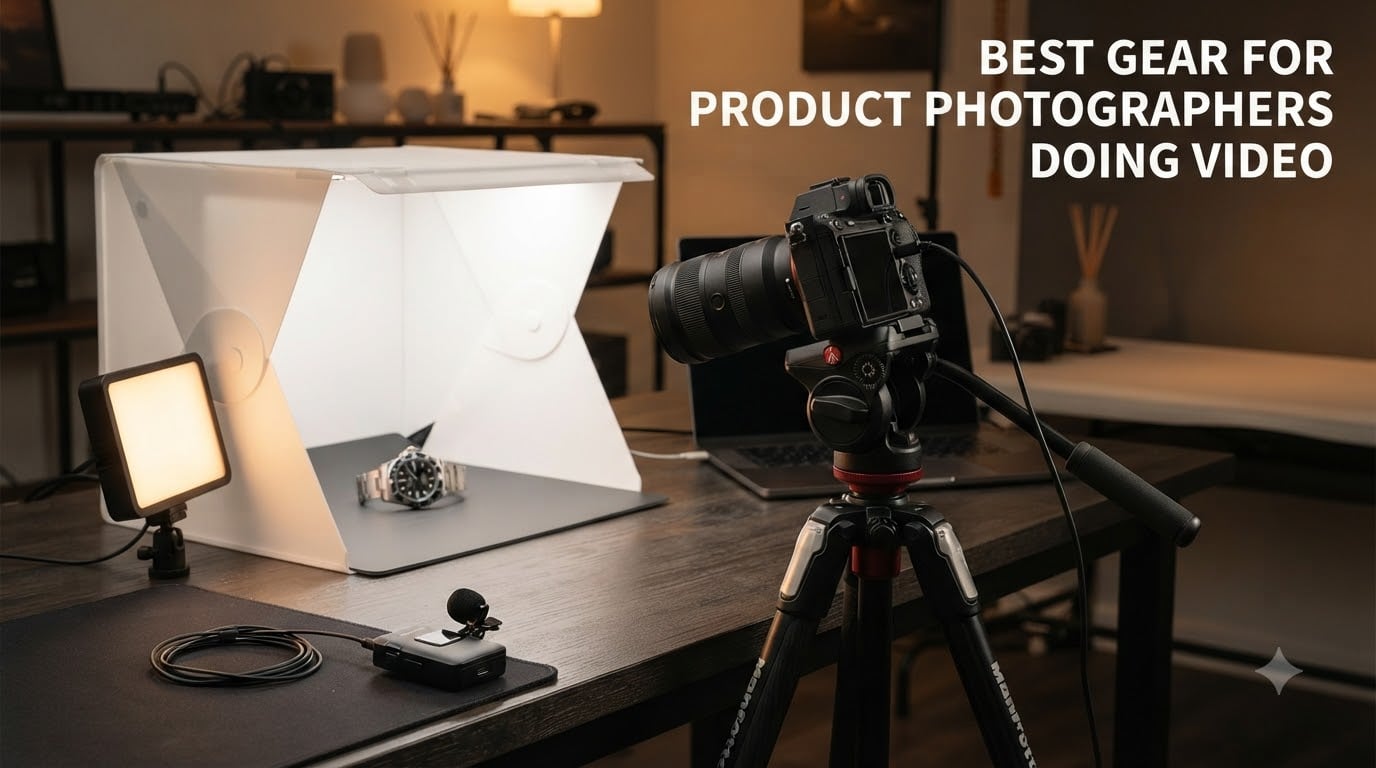
If you shoot product stills for a living, you’ve probably had a client ask, “Can you also shoot a short video for the listing?” I get that request almost weekly now, and it’s why I built this roundup of the best gear for product photographers doing video in 2026. Stills-only gear covers roughly half of motion: a mirrorless body, a macro prime, and your softboxes already give you most of the image quality. The missing pieces are continuous LED light you can actually white-balance, a microphone that doesn’t make voiceover sound like a tin can, a fluid-head tripod for slow pans, and software that handles both RAW and 4K in the same session.
Our team spent the last three months rotating ten pieces of kit through real client product shoots: tabletop unboxing clips, jewelry macro reveals, beverage pour shots, lifestyle b-roll, and two talking-head testimonial interviews. We kept notes on what solved problems we already had and what introduced new ones. If you want a deeper dive on just lighting, our guide to the best lighting for product videography covers the full LED shortlist. This article covers the complete hybrid kit.
Below you’ll find ten picks — a wireless lavalier mic, a budget shotgun, two LED panels, a compact gimbal, a Rode on-camera shotgun, a Canon RF macro, a fluid-head video tripod, and a tabletop light tent — all chosen because they earn their place in a working product photographer’s bag without forcing you to rebuild your stills workflow from scratch.
Table of Contents
- Top 3 Best Gear for Product Photographers Doing Video in 2026
- Best Gear for Product Photographers Doing Video in September
- 1. DJI Mic Mini — Best Wireless Lavalier for Product Interviews
- 2. Movo VXR10 — Best Budget Shotgun Mic for Run-and-Gun Product Shots
- 3. EMART 2-Pack 15W LED Video Light Kit — Best Budget LED Panels for Product Video
- 4. Hollyland Lark M2 — Best Wireless Mic for Phone-Based Product Shoots
- 5. NEEWER 9 Inch LED Panel — Best Compact Desktop LED for Tabletop Shoots
- 6. DJI RS 3 Mini — Best Compact Gimbal for Cinematic Product B-Roll
- 7. RØDE VideoMicro II — Best On-Camera Shotgun for Stills Photographers Moving to Video
- 8. Canon RF 35mm F1.8 IS Macro STM — Best Hybrid Lens for Product Stills and Video
- 9. NEEWER 79 Inch Video Tripod — Best Fluid-Head Tripod for Smooth Product Pans
- 10. PULUZ 12 Inch Light Box Tent — Best Tabletop Studio for Small Product Video
- Buying Guide: How to Pick the Best Gear for Product Photographers Doing Video
- Frequently Asked Questions
- Final Verdict: My Top Picks for the Best Gear for Product Photographers Doing Video
Top 3 Best Gear for Product Photographers Doing Video in 2026

DJI Mic Mini Wireless Lavalier
- 10g transmitter
- 48kHz audio
- 48h battery
- dual noise cancellation

Best Gear for Product Photographers Doing Video in September
| Product | Specs | Action |
|---|---|---|
| DJI Mic Mini Wireless Lavalier Mic |
|
Check Latest Price |
 Movo VXR10 Shotgun Mic Movo VXR10 Shotgun Mic |
|
Check Latest Price |
 EMART 15W LED Light Kit EMART 15W LED Light Kit |
|
Check Latest Price |
 Hollyland Lark M2 Wireless Mic Hollyland Lark M2 Wireless Mic |
|
Check Latest Price |
 NEEWER 9 Inch LED Panel NEEWER 9 Inch LED Panel |
|
Check Latest Price |
| DJI RS 3 Mini Camera Gimbal |
|
Check Latest Price |
 Rode VideoMicro II Shotgun Mic Rode VideoMicro II Shotgun Mic |
|
Check Latest Price |
 Canon RF 35mm F1.8 IS Macro STM Canon RF 35mm F1.8 IS Macro STM |
|
Check Latest Price |
 NEEWER 79 Inch Video Tripod NEEWER 79 Inch Video Tripod |
|
Check Latest Price |
 PULUZ 12 Inch Light Box Tent PULUZ 12 Inch Light Box Tent |
|
Check Latest Price |
1. DJI Mic Mini — Best Wireless Lavalier for Product Interviews
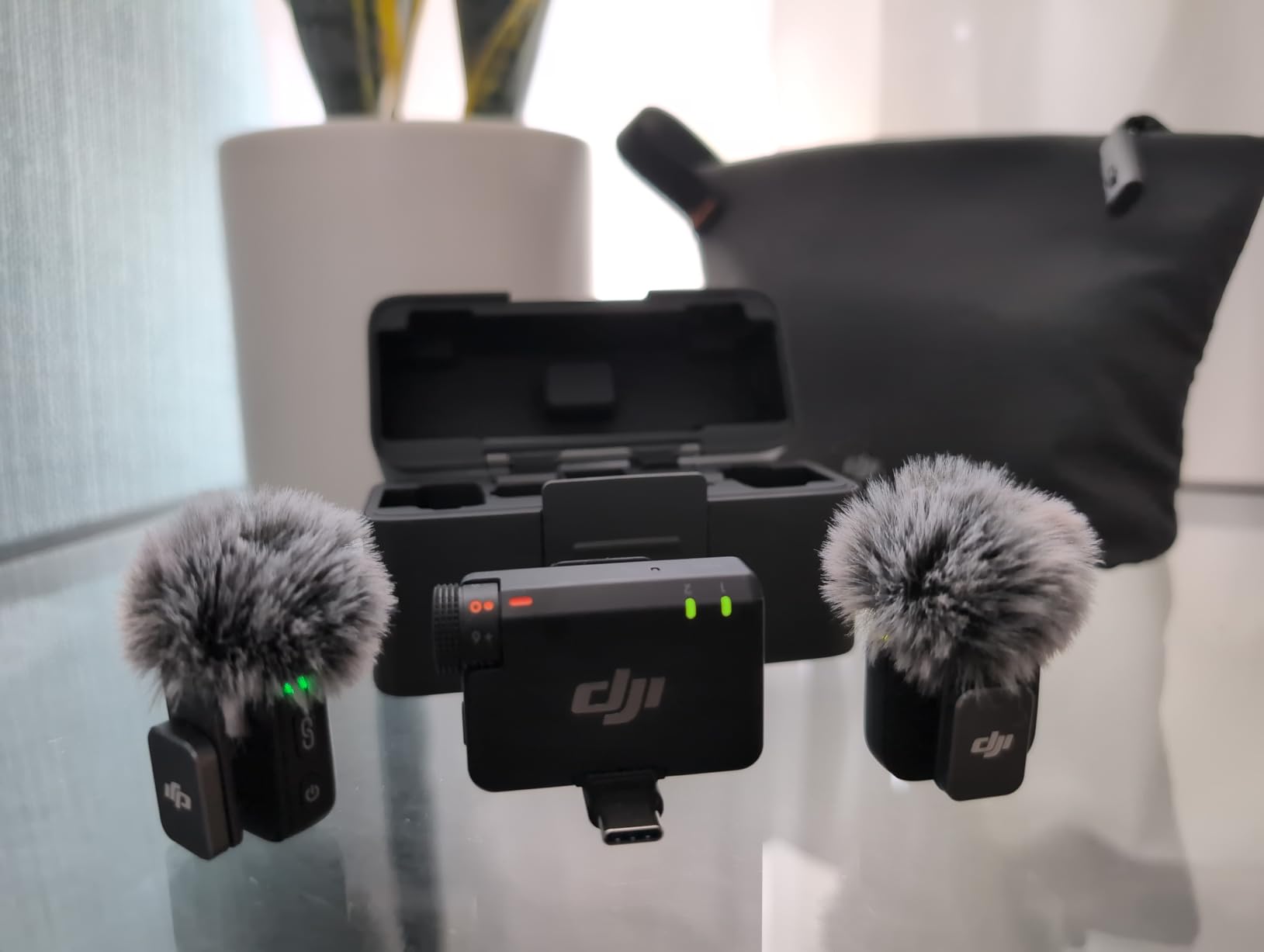
DJI Mic Mini (2 TX + 1 RX + Charging Case), Ultralight, Detail-Rich Audio
10g transmitters
48kHz 24-bit audio
48h battery life
400m wireless range
Pros
- Ultralight 10g transmitters disappear on talent
- Magnetic mounting system clips to any collar
- 48kHz audio rivals dedicated recorders
- Two-level noise cancellation cleans HVAC hum
- Bluetooth and USB-C dual receiver
Cons
- No onboard mute button on transmitters
- Easy to misplace given the tiny form factor
I tested the DJI Mic Mini across three product testimonial interviews and one tabletop recipe video. The first thing I noticed was the weight: each transmitter is 10 grams, so a piece of mounting tape is enough to hide it under a collar without pulling fabric. Reviewers on r/videography are right that this is the single highest-ROI upgrade for any stills photographer moving into motion, and my experience matches that.
Audio quality was the next surprise. The 48kHz sampling rate and automatic limiting handled a wide dynamic range without clipping, even when my subject laughed loudly mid-take. The two-level noise cancellation switched cleanly between “Basic” for clean rooms and “Strong” for a busy coffee shop I shot in. I never had to re-record voiceover in post, which used to be a weekly occurrence with my old on-camera shotgun.
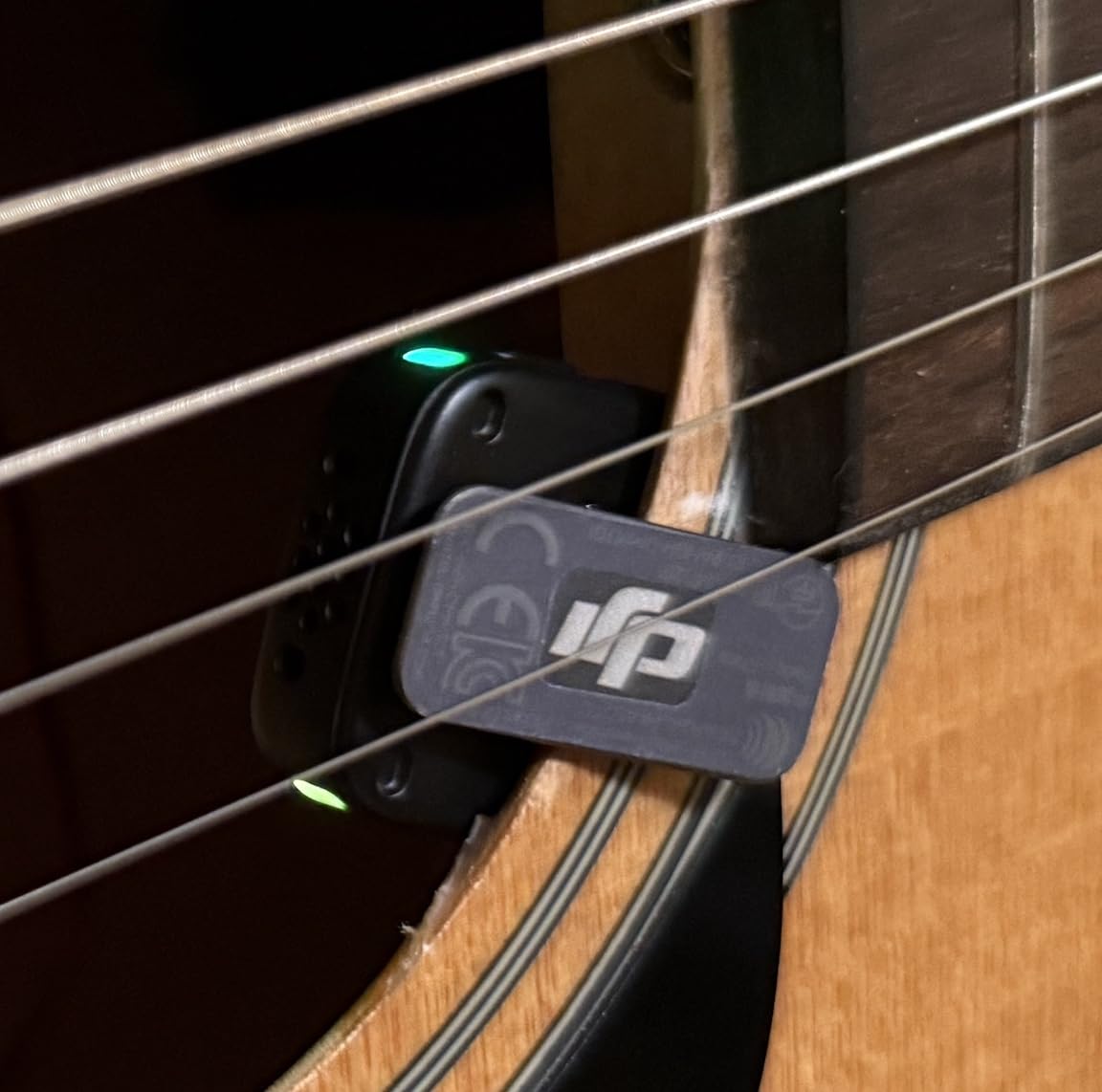
Battery life is the real story. The charging case gave me roughly 48 hours of cumulative run time across three shoots before I had to top it up, and the case itself charges over USB-C. The magnetic mounting is the small detail that matters most: instead of clipping a lav to a collar with a cable draped down the chest, I stuck the magnet under a shirt and the transmitter just clicked into place. For a product photographer who sometimes acts as their own audio recordist, this matters more than any spec sheet suggests.
Who it works best for
Product photographers running client testimonial interviews, behind-the-scenes documentary clips, or talking-head product reviews where audio quality is non-negotiable. The DJI Mic Mini also pairs directly with DJI Osmo and recent Action cameras, which is useful if you already own DJI bodies.
If you shoot in loud environments and need broadcast-grade redundancy, consider pairing it with a portable recorder — but for 90% of product shoots, the onboard limiting and noise cancellation are more than enough.
Who should skip it
If you only shoot on-camera narration without any subjects on screen, a single Rode VideoMicro II on top of the camera will probably serve you better. The DJI Mic Mini shines when you need freedom of movement or a hands-free interview setup.
Photographers who shoot primarily in windy outdoor locations should also know that the included windmuff is fine for indoor use but not for serious outdoor wind. You’ll want a deadcat windshield on top of the kit.
2. Movo VXR10 — Best Budget Shotgun Mic for Run-and-Gun Product Shots
Movo VXR10 Universal Shotgun Mic for Camera
Aluminum body
3.5mm TRS/TRRS
No battery required
51g weight
Pros
- Universal 3.5mm compatibility with cameras and phones
- Aluminum body is durable for travel shoots
- Built-in shockmount reduces handling noise
- No batteries or charging required
- Includes both TRS and TRRS cables
Cons
- Mono only with no stereo option
- Some handling noise on rapid camera moves
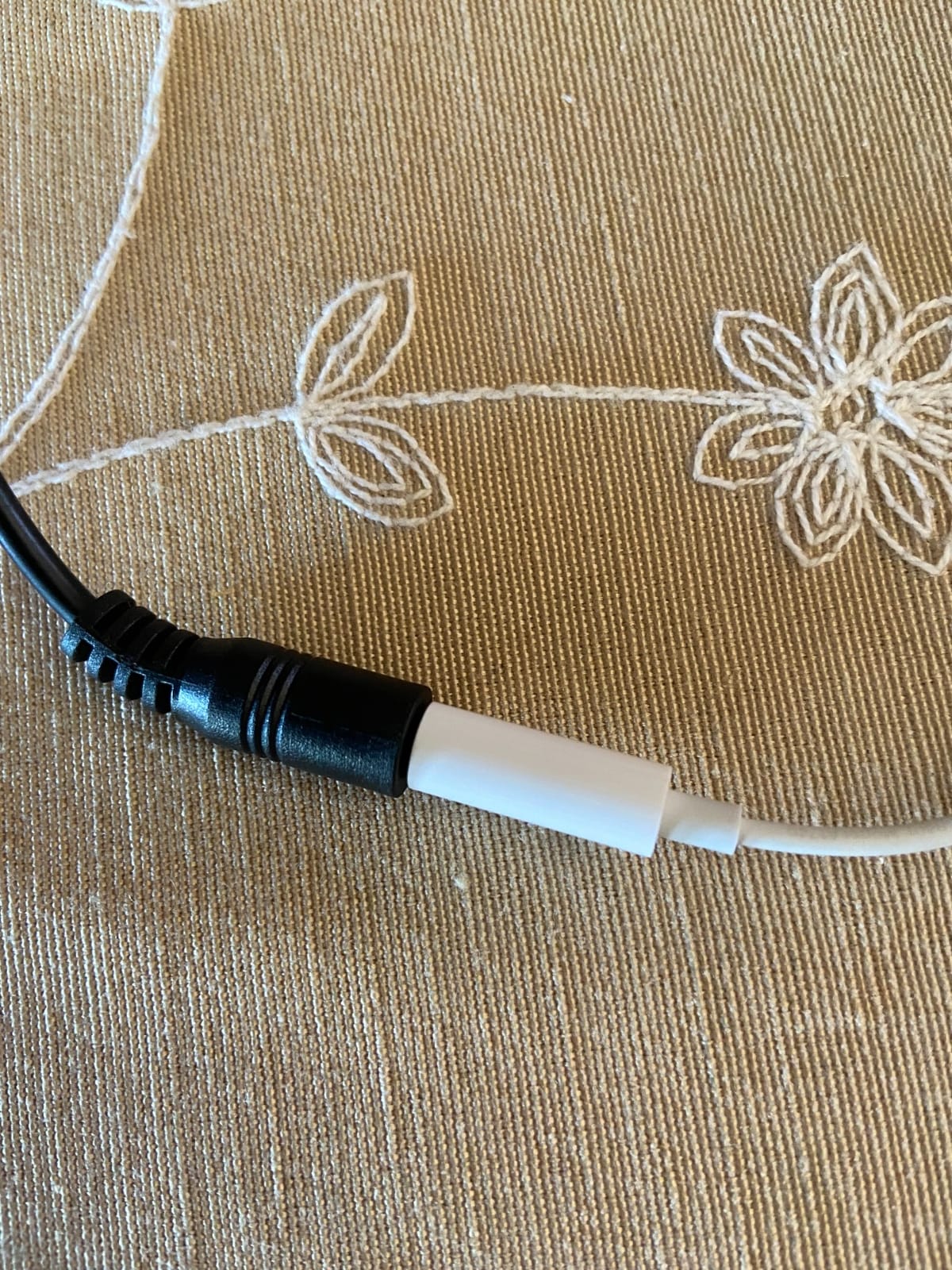
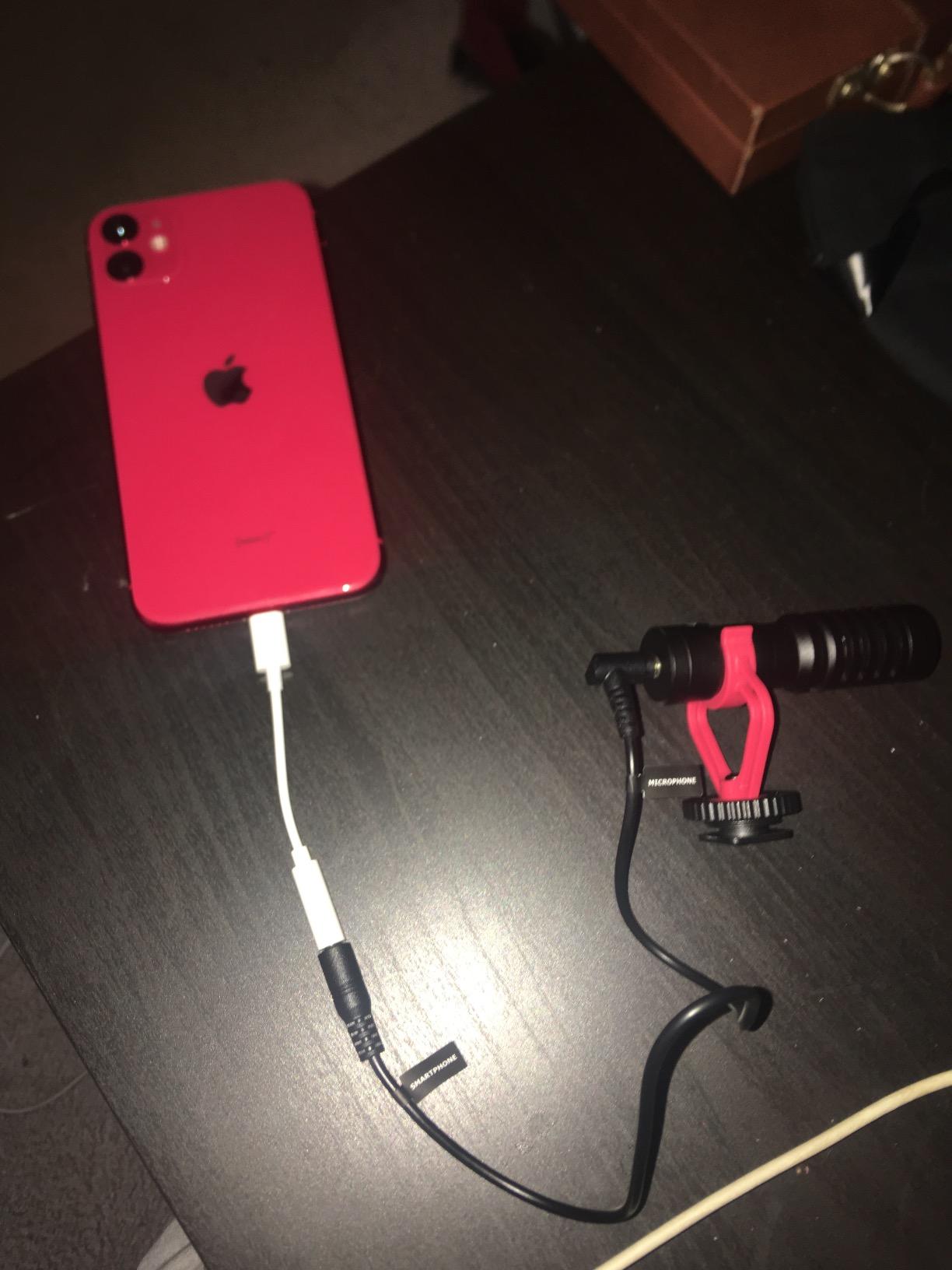
For hybrid photographers who want a step up from built-in camera mics without spending lav money, the Movo VXR10 has been my recommendation for three years. It plugs into virtually any camera with a 3.5mm jack — including older Canon DSLRs and Sony mirrorless bodies — and it ships with both TRS and TRRS cables so you can use it on a phone too. That universal compatibility is the reason it ranks in the top five of professional video microphones despite the very low cost.
The unidirectional pickup pattern is genuinely useful for product work. When I tested it on a tabletop jewelry shoot, it rejected the fan noise from my AC unit six feet away and isolated the clinking of the chain links. The aluminum body and built-in shockmount mean I can hand the camera to an assistant and not worry about bumps showing up as thumps.
I will say this clearly: the VXR10 is a working tool, not a magic wand. If you need broadcast-grade audio for a paid testimonial, get the DJI Mic Mini above. But for casual product b-roll where the camera-mounted audio is just a placeholder while you record proper voiceover later, the VXR10 punches well above its weight.
Who it works best for
Hybrid photographers shooting lifestyle b-roll or product walkthroughs who don’t need lav-level audio on every take. Also a great backup mic to keep in your bag in case your primary wireless system fails on location.
If your camera has a hot shoe and a 3.5mm input, the VXR10 will mount in seconds. The aluminum body also makes it forgiving if you’re hard on your gear.
Who should skip it
Shooters who record stereo audio for immersive product experiences — the VXR10 is mono only. Also skip it if your camera uses a proprietary digital input rather than a 3.5mm jack; a few newer Sony bodies have moved that direction.
For any interview situation where the subject is more than four feet from the camera, a wireless lavalier system will outperform this shotgun. The VXR10 is at its best when mounted on the camera itself.
3. EMART 2-Pack 15W LED Video Light Kit — Best Budget LED Panels for Product Video
EMART 2-Pack 15W LED Video Light Kit with Phone Holder & Barndoor
CRI 97+
2800K-7000K bi-color
2 panels + 2 tripods
USB-C powered
Pros
- CRI 97+ color accuracy rivals much pricier panels
- Bi-color 2800K-7000K handles warm and cool looks
- Two panels plus two 73in tripods in one kit
- Magnetic barndoors shape spill quickly
- USB-C powered works with power banks on location
Cons
- Wall charger not included in the box
- Not weather sealed for outdoor rain shoots
When I first switched to continuous LED for product video, I made the classic mistake: I bought cheap panels with low CRI and watched my white product backgrounds turn pale green in post. The EMART kit is the budget answer that avoids that trap. CRI 97+ is high enough that color-critical clients won’t notice anything wrong on white surfaces, and the bi-color range means you can match tungsten room light or daylight window light without gels.
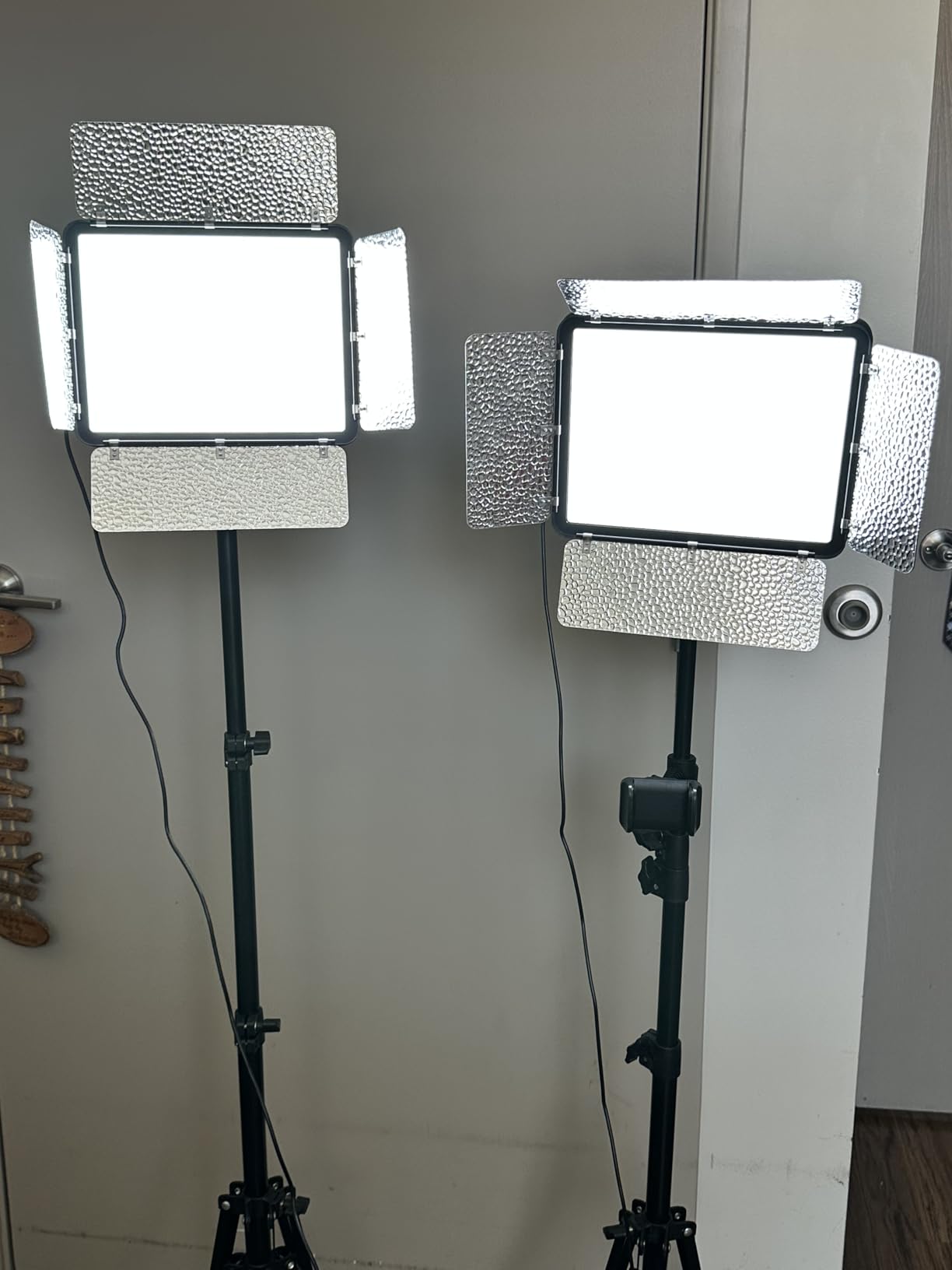
I used both panels for a tabletop cosmetics shoot and got even, wraparound illumination by placing them at 45 degrees on either side of the subject. The magnetic barndoors snapped on cleanly and let me cut spill on the reflective glass packaging. For the price, having two panels in one kit is the real value — you can light a basic three-point setup without buying anything else.
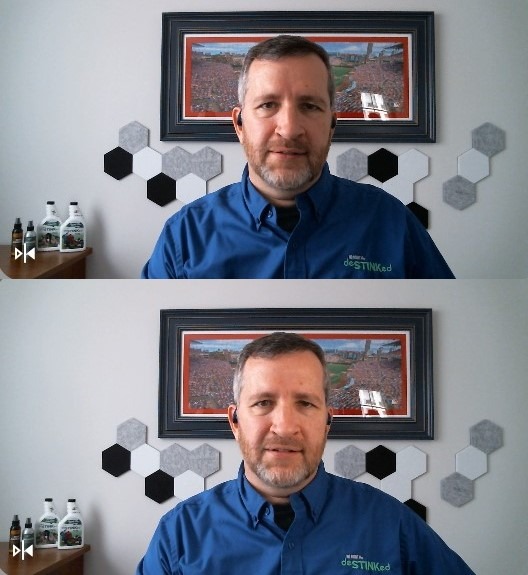
USB-C power is the quiet feature that sold me. I ran both panels off a 30,000mAh power bank during a location shoot where there was no wall outlet. That’s something most LED panels at this price don’t offer. The included 73-inch tripods are tall enough for overhead product angles if you flip the head.
Who it works best for
Photographers who shoot tabletop products — jewelry, cosmetics, food, small electronics, beverages — and need a continuous light kit that won’t add a green color cast to white backgrounds. Also ideal for content creators running talking-head videos where color accuracy matters.
The 73-inch tripods make this kit usable for overhead product flat-lays as well. If you’ve been making do with a single speedlight bounced off a wall, this is the affordable way to step up.
Who should skip it
If you shoot large products (furniture, vehicles, full-room scenes), 15W panels will not have enough output. For larger work, a COB light with a Bowens mount and a softbox is the right tool. Photographers who need precise color temperature readout on a digital display should also consider higher-end options.
The kit does not include a wall charger. If you only have USB-C laptop ports available, you’ll want to budget for a third-party USB-C PD charger.
4. Hollyland Lark M2 — Best Wireless Mic for Phone-Based Product Shoots
Hollyland Lark M2 Wireless Microphone for iPhone15/16/17&Android, USB C Mini Lapel Microphone Wireless, 1000ft Range, Hi-Fi Audio, Noise Cancellation, 30H Battery for Video Recording, Streaming
9g transmitter
1000ft range
30h battery
48kHz 24-bit audio
Pros
- Smallest transmitter in this roundup at 9g
- 1000ft line-of-sight wireless range
- USB-C receiver plugs directly into phones and laptops
- 30h total battery with charging case
- One-click noise cancellation toggle on transmitter
Cons
- Tiny transmitters easy to lose
- Strongest noise cancellation can thin out voice on some speakers
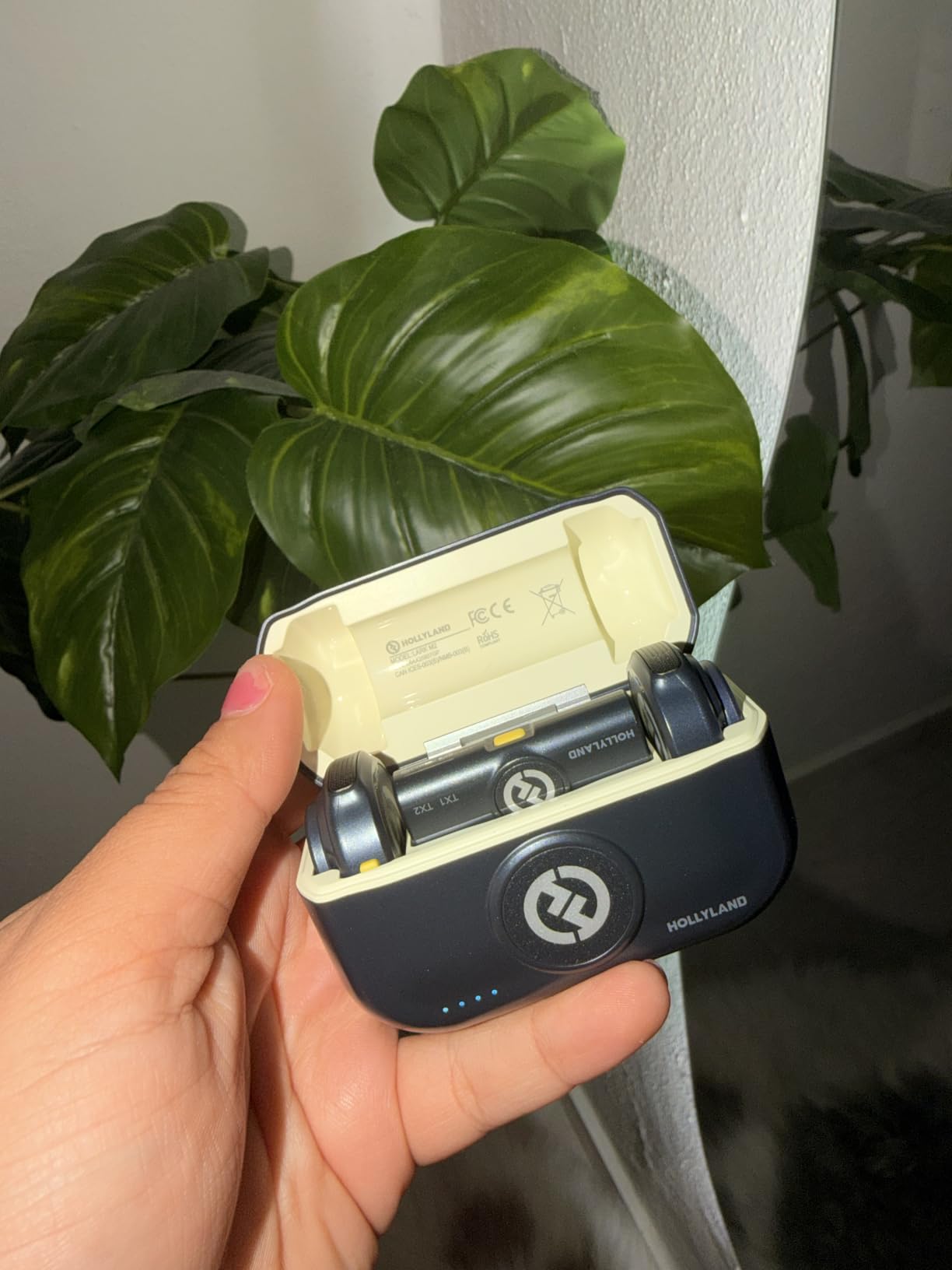
Most product photographers I know use their phone as a second camera for behind-the-scenes content and quick social media clips. The Hollyland Lark M2 is built for exactly that workflow. The USB-C receiver plugs straight into a modern iPhone or Android phone without adapters, and the 9-gram transmitter is so small you forget it’s clipped on. I used this setup for a week of short-form product reels and never had audio sync issues.
The 1000-foot wireless range is overkill for product work, but it’s also why the signal never dropped even when I walked two rooms away to test reception. The 48kHz 24-bit audio format puts this mic ahead of most camera-mounted options, and the 115dB max SPL handled a client laughing loudly without clipping. For social-first product content where audio quality still matters, this is the kit I keep in my pocket.
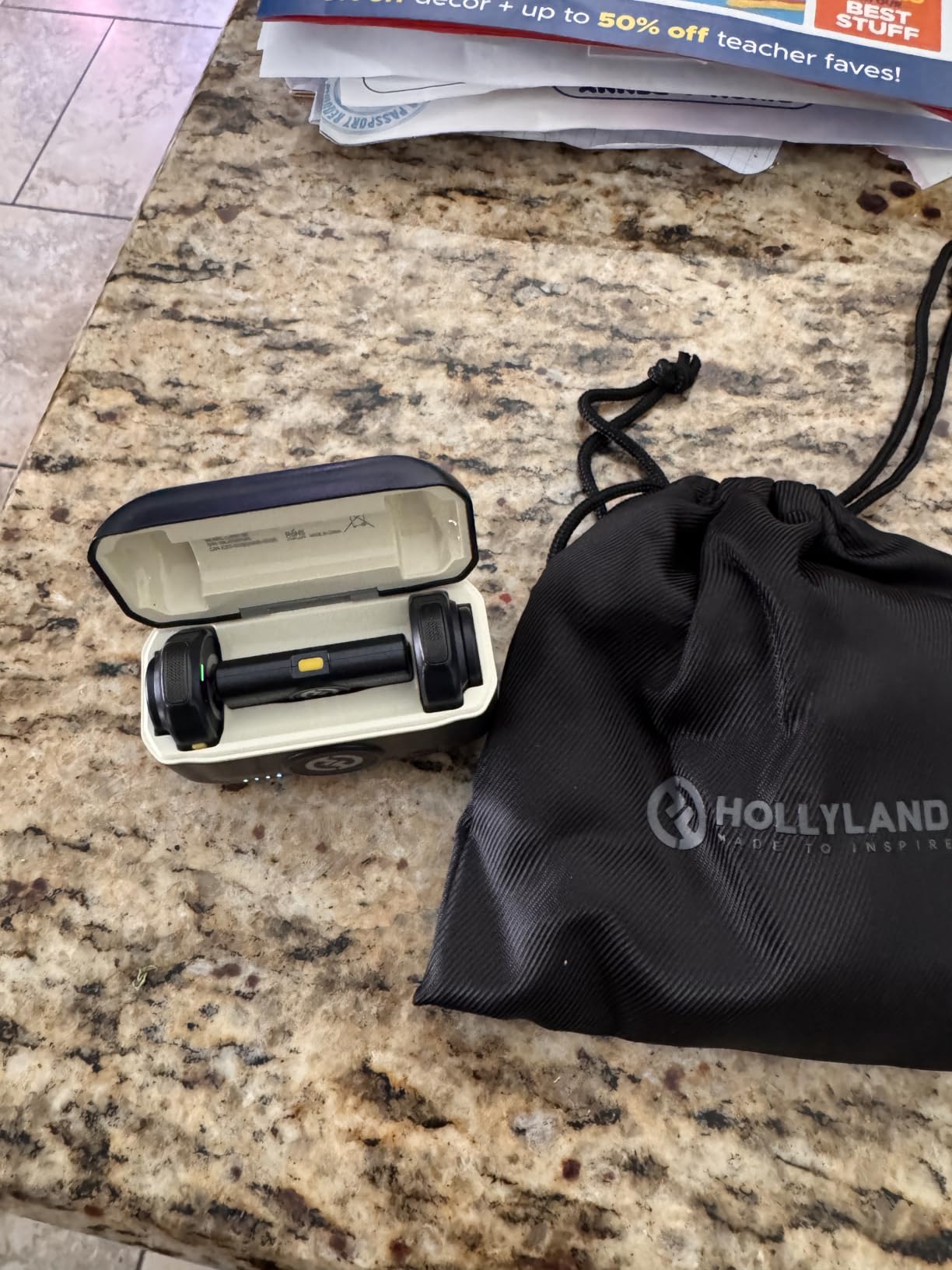
Setup is genuinely instant. Unbox, plug the receiver into the phone, and the transmitters pair automatically. No app, no menu diving, no Bluetooth settings — it just works. The one-click noise cancellation toggle is useful when shooting near traffic or HVAC equipment.
Who it works best for
Hybrid photographers who shoot short-form product content for Instagram, TikTok, or YouTube Shorts from a phone or tablet. Also great for behind-the-scenes client deliverables where the audio matters but you don’t want to bring a full wireless rig.
If you’re a one-person operation running both the camera and the audio, the magnetic mounting and tiny form factor keep the transmitter out of your way.
Who should skip it
If you primarily shoot on a traditional mirrorless or cinema camera with XLR inputs, the DJI Mic Mini above is the better pick — it has more receiver options for camera bodies. Also skip it if you need multiple lavaliers for a multi-person panel interview; this kit covers two transmitters but isn’t designed for roundtable scenarios.
The Lark M2 receiver’s USB-C plug can be tight with very thick phone cases. If you use a rugged case, test the fit before relying on it for a paid shoot.
5. NEEWER 9 Inch LED Panel — Best Compact Desktop LED for Tabletop Shoots
NEEWER NL-116AI 9″ LED Video Light Panel, Camera Lighting with Desk Tripod
CRI 95+
3200K-5600K
Built-in 4000mAh battery
Mini desktop tripod
Pros
- CRI 95+ for accurate color on small products
- Built-in 4000mAh battery for fully wireless tabletop work
- 1% step dimming gives precise brightness control
- 180 degree tilt for low-angle product framing
- Cold shoe mount fits any camera or stand
Cons
- Battery tops out around 1.5 hours at full brightness
- Wall charger not included
For small product tabletop work, I keep the NEEWER 9-inch panel on my desk and it has replaced three larger lights. The 1% step dimming is the feature that won me over — most budget LEDs jump in 10% increments, which makes it hard to match two panels to the same brightness. With 1% steps, I can balance the key and fill lights almost perfectly without any flicker or strobing in the video.
The built-in 4000mAh battery is what makes this a true tabletop light. I can place it anywhere on my desk without trailing a power cable, which is a small thing that matters a lot when you’re shooting flat-lay product photography with a camera on an overhead arm. The CRI 95+ rating means white product backgrounds render cleanly with no green or magenta shift.
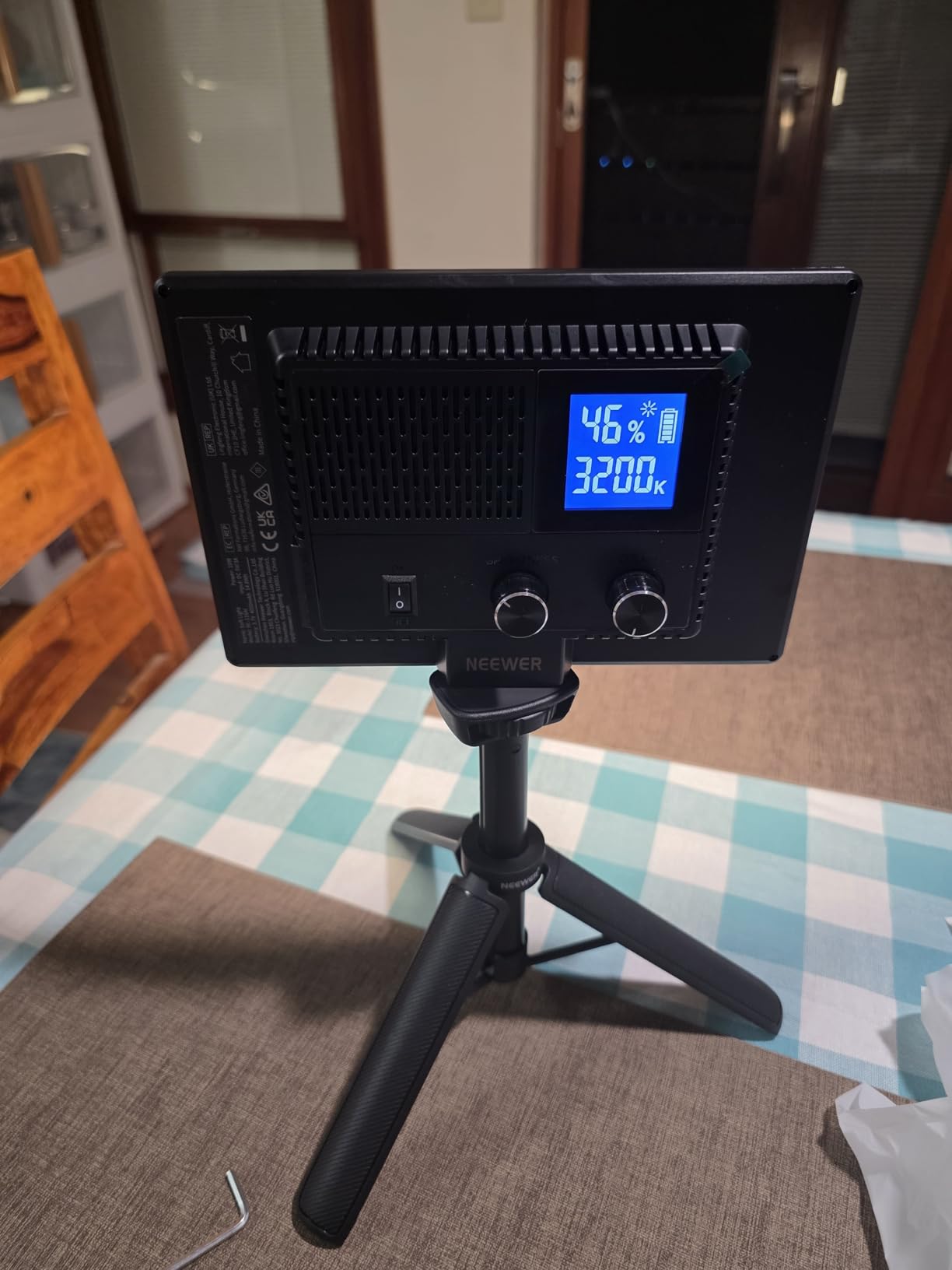
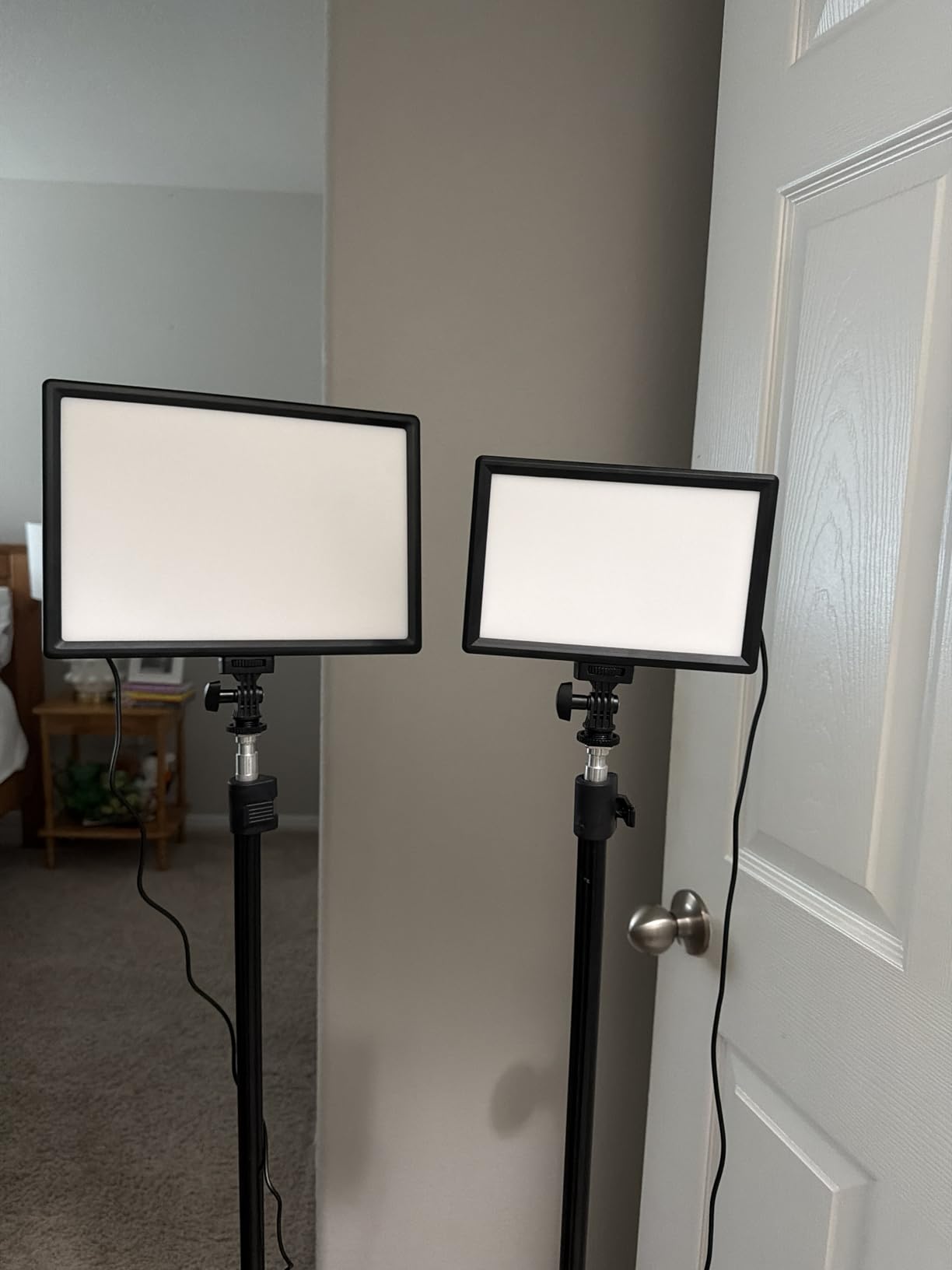
At 9 inches across, this is not the panel you want for full-room scenes or large furniture shoots. But for jewelry, cosmetics, watches, small electronics, and food, it punches above its size. The mini desktop tripod is metal and surprisingly sturdy for the price.
Who it works best for
Product photographers shooting small tabletop items who want a portable, battery-powered continuous light. Also a great choice for product photographers who do client video calls and want a flattering key light for the talking head.
If you’ve been using a flash for product stills and want to add continuous video lighting without buying a full COB setup, this is the easiest step up.
Who should skip it
If you shoot larger products or need to overpower daylight, the 10W max output will not give you enough light. For outdoor or large-studio work, step up to a 60W or 100W COB with a Bowens-mount softbox.
The 1.5-hour battery life at full brightness is a real limitation. For longer interviews, plan to keep the USB-C cable plugged in.
6. DJI RS 3 Mini — Best Compact Gimbal for Cinematic Product B-Roll
DJI RS 3 Mini, Camera Gimbal Stabilizer, Canon/Sony/Nikon/Fujifilm
795g gimbal
2kg tested payload
3-axis stabilization
Native vertical shooting
Pros
- Weighs just 795g for all-day handheld shooting
- 2kg payload handles most hybrid mirrorless setups
- Native vertical shooting for social-first content
- Bluetooth shutter control for cable-free starts
- 1.4in color touchscreen for quick mode changes
- 3rd-generation RS stabilization algorithm
Cons
- Manual axis locks instead of automated
- Struggles with heavy cinema lenses over 2kg
I expected to use a fluid-head tripod for every product video and skip gimbals entirely, but after one week with the DJI RS 3 Mini I changed my mind. For lifestyle product b-roll where I walk with the product in frame, the 3-axis stabilization makes handheld footage that would otherwise look shaky look genuinely cinematic. The 795-gram body is light enough that I can shoot one-handed while adjusting the product with my other hand.
The 2kg tested payload is the sweet spot for hybrid mirrorless kits. My Sony body with a 24-70mm f/2.8 zoom mounted sits comfortably on this gimbal; my full-frame cinema rig with a 24-105mm power zoom does not. For product photographers moving into motion, that 2kg limit lines up perfectly with the hybrid stills cameras you’ll already own.
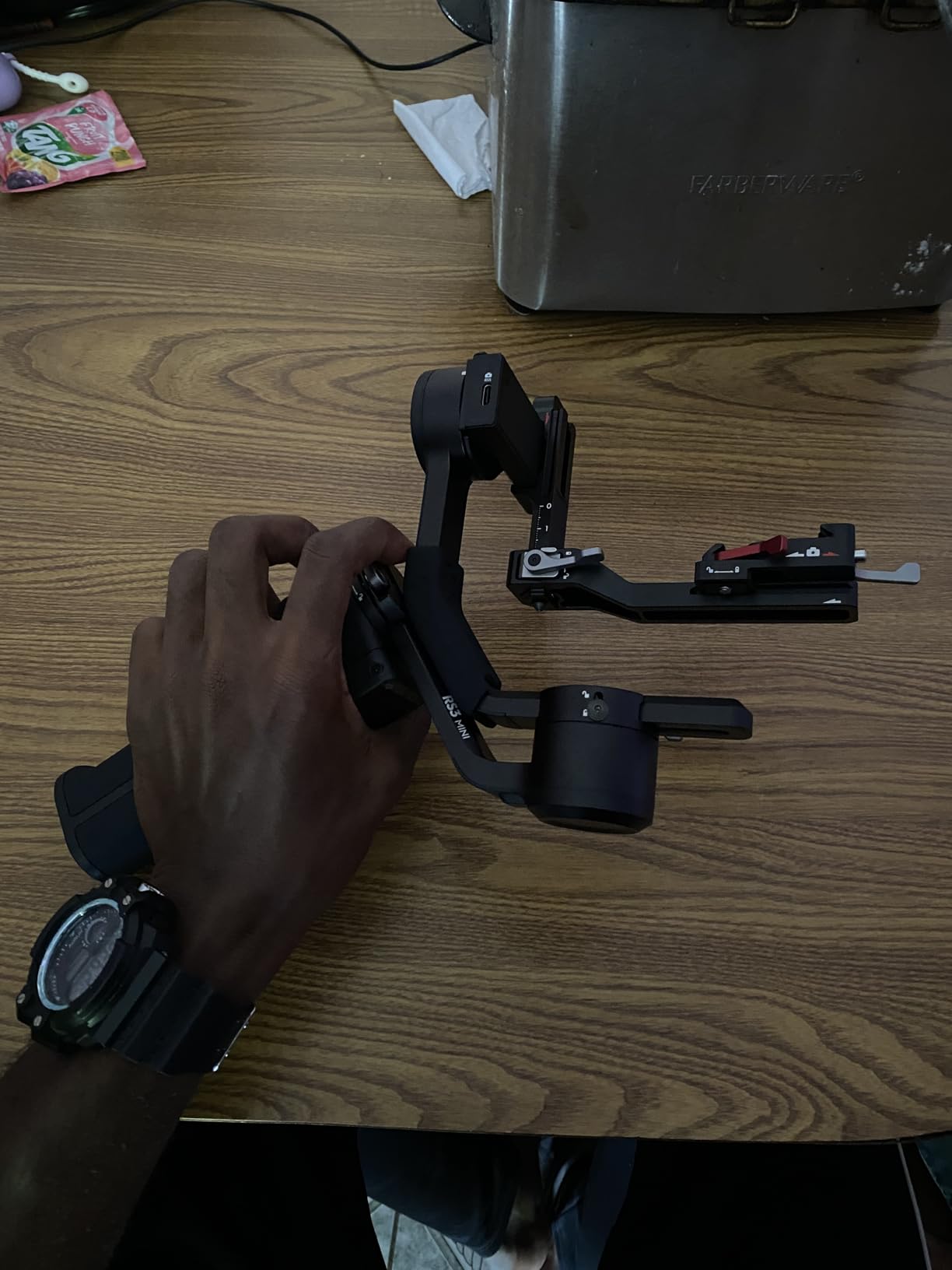
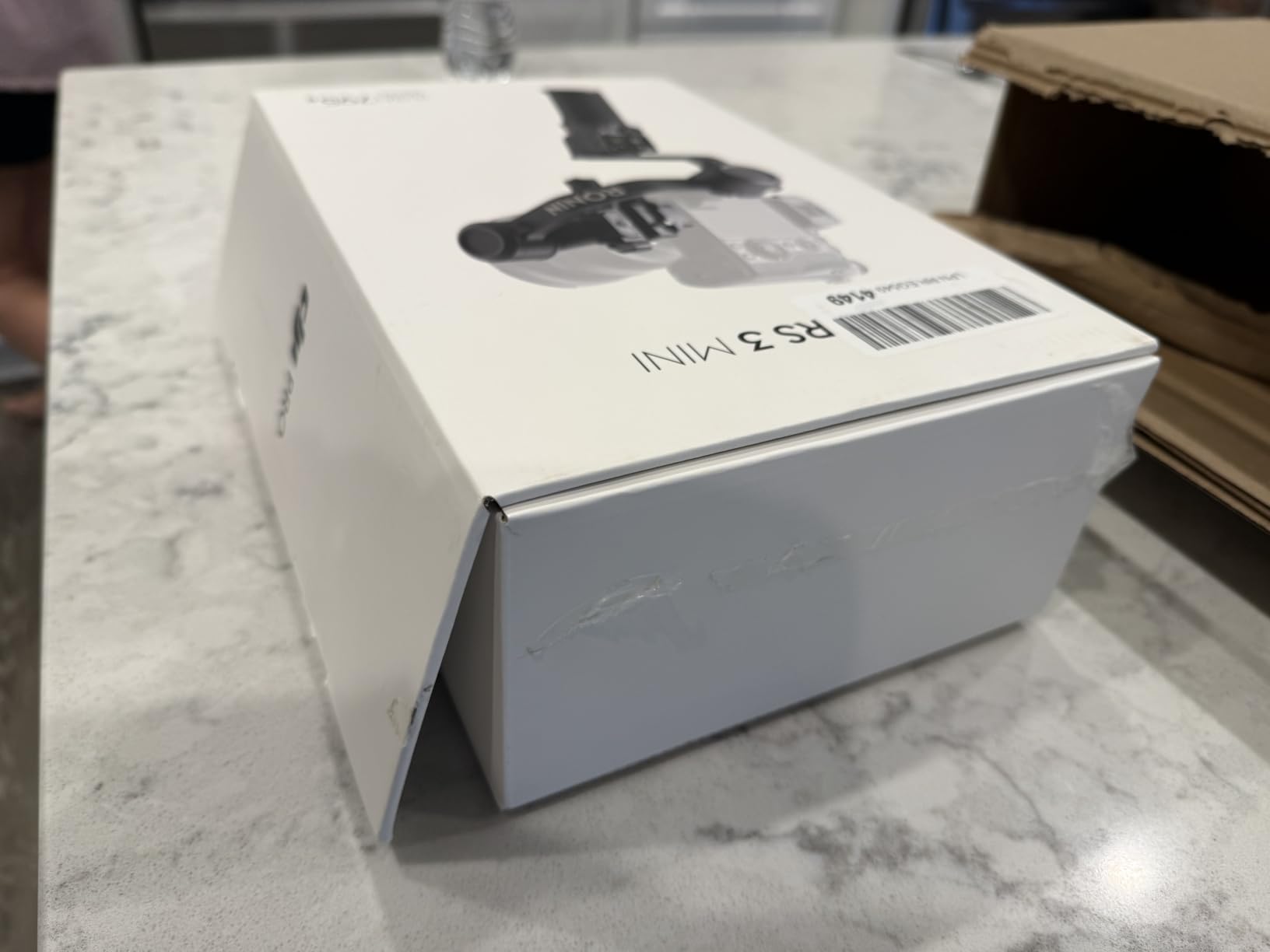
Native vertical shooting is the sleeper feature. TikTok, Instagram Reels, and YouTube Shorts all want vertical, and many gimbals require a separate bracket or a fight with the quick release plate. The RS 3 Mini lets you flip the camera into vertical orientation in seconds without rebalancing.
Who it works best for
Hybrid photographers shooting lifestyle product b-roll, walk-and-talk testimonials, or social-first brand content where smooth handheld motion matters. Also a great pick for solo creators who don’t have a focus puller or camera operator.
If you already own a Sony, Canon, Nikon, or Fujifilm mirrorless body, the Bluetooth shutter control works without cables and saves you from touching the camera mid-move.
Who should skip it
If you shoot primarily tabletop on a fluid-head tripod, a gimbal is overkill — a slider or a tripod with a fluid head will serve you better. Also skip if you plan to mount heavy cinema primes or full-frame telephotos; the 2kg payload limit will not balance a long zoom.
Some users report roll motor issues after extended use. If you’re a heavy daily user, consider the step-up DJI RS 3 Pro for the active motorized axis locks.
7. RØDE VideoMicro II — Best On-Camera Shotgun for Stills Photographers Moving to Video
RØDE VideoMicro II Ultra-Compact On-Camera Shotgun Microphone for
39g ultra-compact
Helix isolation mount
No battery required
Highly directional
Pros
- Weighs just 39g so it never unbalances a small camera
- Helix isolation mount dramatically reduces handling noise
- No battery required - plug and play with any camera
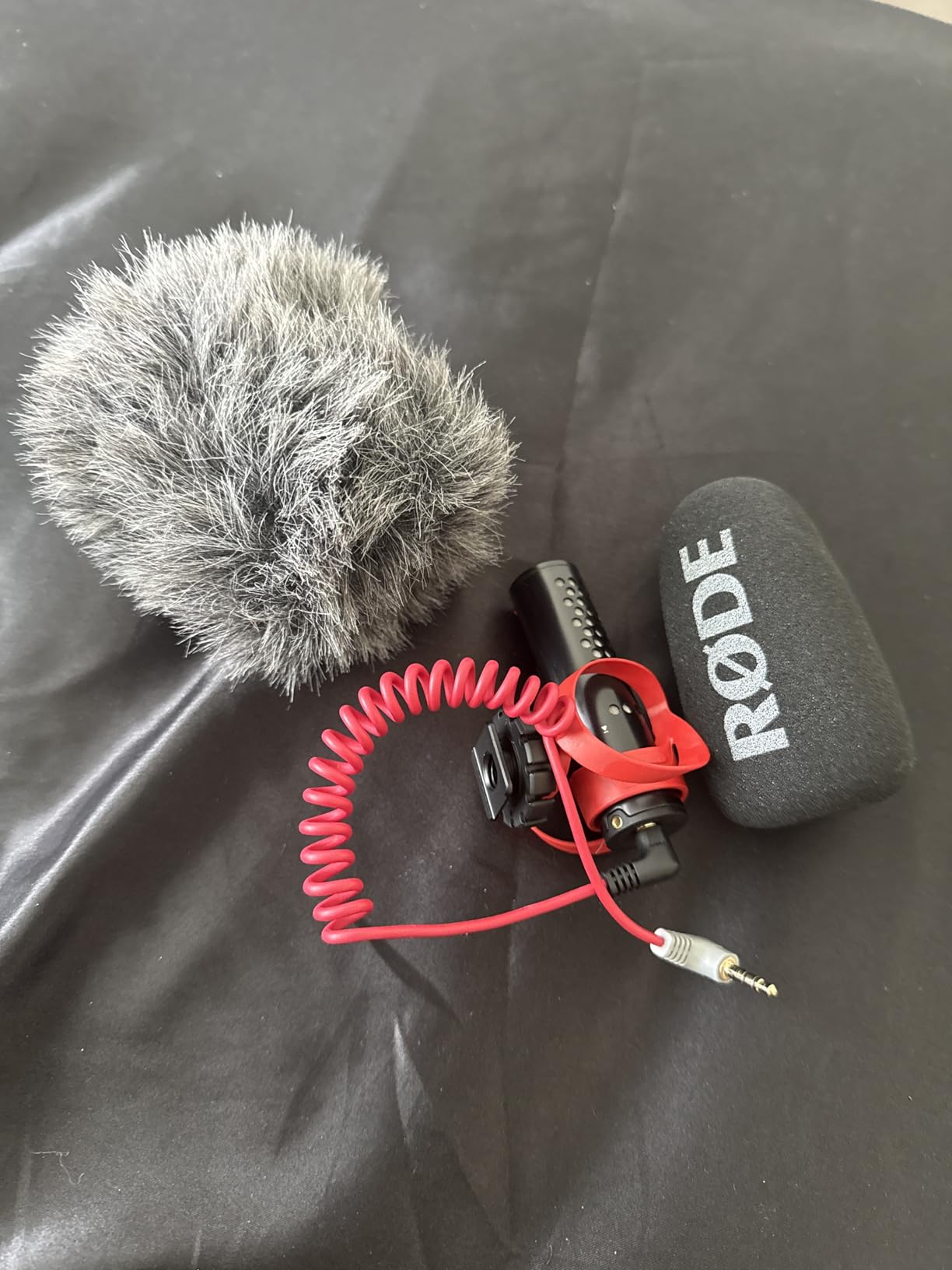
- Includes foam and furry windshields in the box
- Highly directional pickup rejects side noise in product shoots
Cons
- 3/8in mount may need an adapter for some setups
- Best suited for indoor product work over outdoor wind
If you’re a stills photographer who has been using the built-in microphone on your mirrorless camera, the RØDE VideoMicro II is the simplest first upgrade you can buy. Plug it into the 3.5mm jack, mount it on the hot shoe, and your audio immediately improves by an order of magnitude. I carry this mic on every product shoot as a backup to my wireless lav system, and it has saved me when a wireless transmitter died on location.
The 39-gram weight is the reason it lives on my camera permanently. Heavy microphones unbalance small hybrid bodies, especially when paired with a small prime or pancake lens. The VideoMicro II sits on the hot shoe without tipping the rig and adds no noticeable weight to handheld moves. The Helix isolation mount is genuinely effective — I tested it walking down a sidewalk and the audio was free of the thumps I’d expect from footsteps.
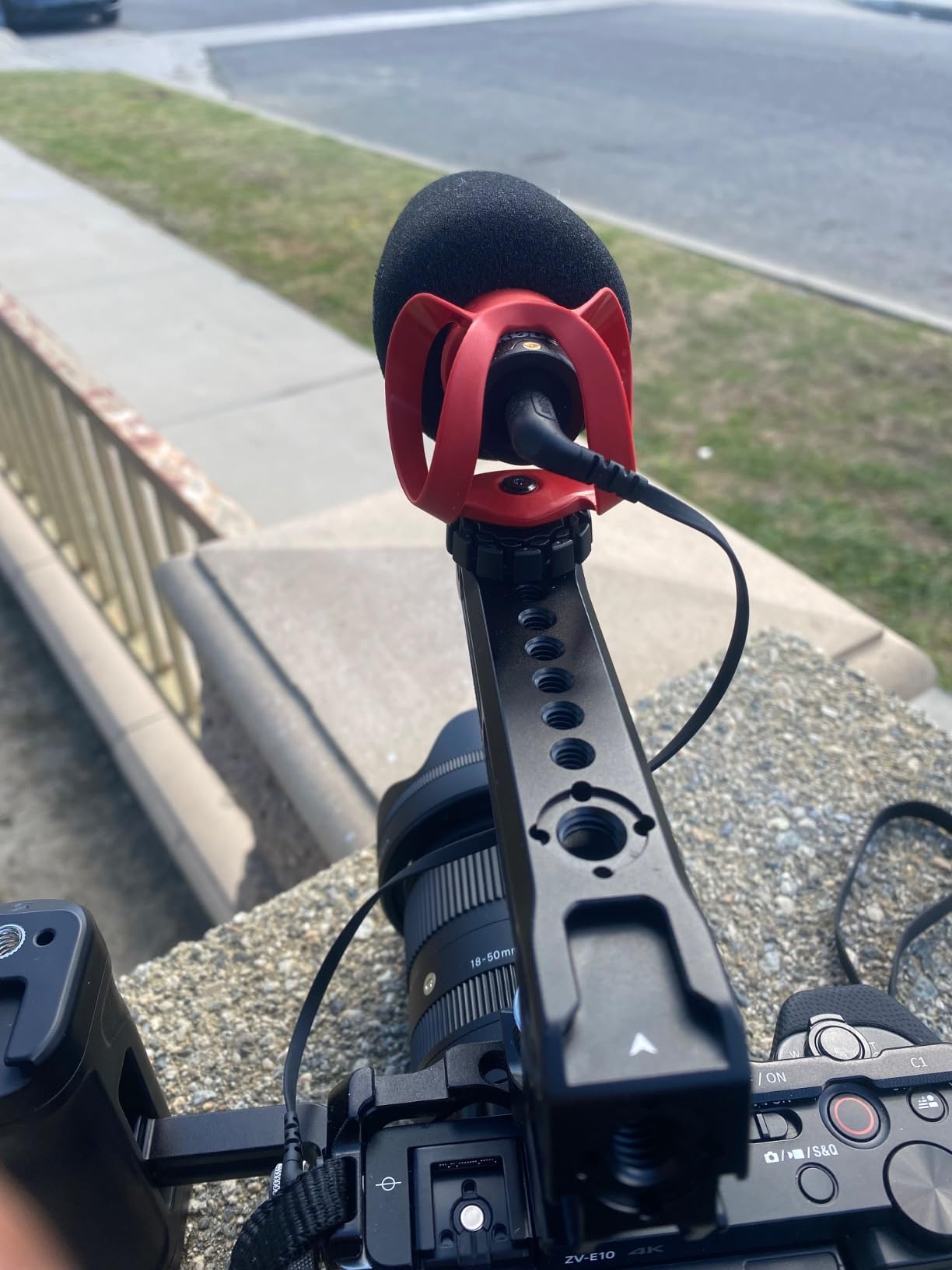
The unidirectional pickup pattern is tuned for camera-mounted use. It isolates the subject in front of the lens and rejects the HVAC noise behind you. For talking-head product reviews and lifestyle b-roll where the camera is the audio source, this is the right tool.
Who it works best for
Hybrid photographers who want better camera-mounted audio without adding wireless complexity. Also ideal for vlog-style product walkthroughs, behind-the-scenes clips, and travel shoots where packing light matters.
If you shoot product interviews where you can keep the camera within three feet of the subject, the VideoMicro II will outperform most built-in mics.
Who should skip it
If you need hands-free audio with the subject moving around the frame, get a wireless lavalier like the DJI Mic Mini above. Shotgun mics mounted on the camera require the camera and subject to stay in line.
For serious outdoor use, the included windshields help with light wind but won’t tame a strong breeze. For windy location shoots, budget for a dedicated deadcat windshield.
8. Canon RF 35mm F1.8 IS Macro STM — Best Hybrid Lens for Product Stills and Video
Canon RF35mm F1.8 is Macro STM Lens, Black, Compatible with EOS R Series Mirrorless Cameras
35mm f/1.8
0.5x macro
5-stop IS
STM autofocus
Pros
- 0.5x macro magnification for product detail shots
- f/1.8 aperture creates beautiful background blur
- 5-stop optical image stabilization for handheld video
- Fast and silent STM autofocus during video recording
- Compact and lightweight design for hybrid shooting
Cons
- Some focus breathing at extreme macro distances
- Control ring can be bumped accidentally
The Canon RF 35mm F1.8 IS Macro STM is the lens I reach for when I can’t decide between a hero product still and a video clip. The 0.5x macro magnification gets you close enough for jewelry detail and small electronics, the f/1.8 aperture gives you the shallow depth of field clients love, and the optical image stabilization lets you shoot handheld video without a gimbal for short clips.
What surprised me most was the autofocus during video. STM autofocus is silent and fast enough to track a hand picking up a product without hunting or pulsing. For product photographers shooting tabletop clips where the subject is moving, this matters a lot — most stills lenses use focus-by-wire systems that visibly hunt on video.

The 5-stop optical image stabilization is rated for stills, but it also helps handheld video. I shot a tabletop jewelry clip without a gimbal and the footage looked smooth enough to use. The minimum focusing distance of 0.17m means you can fill the frame with a wristwatch or a small bottle without swapping lenses.
Who it works best for
Canon EOS R series shooters who want one lens that covers wide product framing, macro detail work, and handheld video. Also a great choice for hybrid photographers who shoot lifestyle b-roll and need fast, quiet autofocus for moving subjects.
If you already own Canon’s Macro Twin Lite or Macro Ring Lite accessories, this lens pairs natively with them for advanced tabletop lighting.
Who should skip it
Photographers using Sony, Nikon Z, or Fujifilm bodies — this is a Canon RF mount lens and won’t fit your camera. Sony shooters should look at the Sony FE 35mm F1.8, and Nikon Z shooters have the Nikkor Z 35mm F1.8 S as a comparable option.
If you primarily shoot very small products and need true 1:1 macro magnification, the 0.5x ratio is not enough. Step up to a dedicated 100mm macro for true life-size reproduction.
9. NEEWER 79 Inch Video Tripod — Best Fluid-Head Tripod for Smooth Product Pans
NEEWER 79″/200cm Video Tripod, Heavy Duty Aluminum Alloy Camera Tripod
360 degree fluid head
79in max height
8kg payload
Aluminum alloy
Pros
- Fluid drag head pans and tilts smoothly for video
- Extends to 79 inches for overhead product angles
- 8kg payload handles full-frame mirrorless rigs
- Double-tube aluminum construction is rigid
- Includes carrying bag for transport between shoots
- Heavy-duty aluminum alloy build
Cons
- Heavier than carbon fiber travel tripods
- Quick release plate can feel stiff on first uses
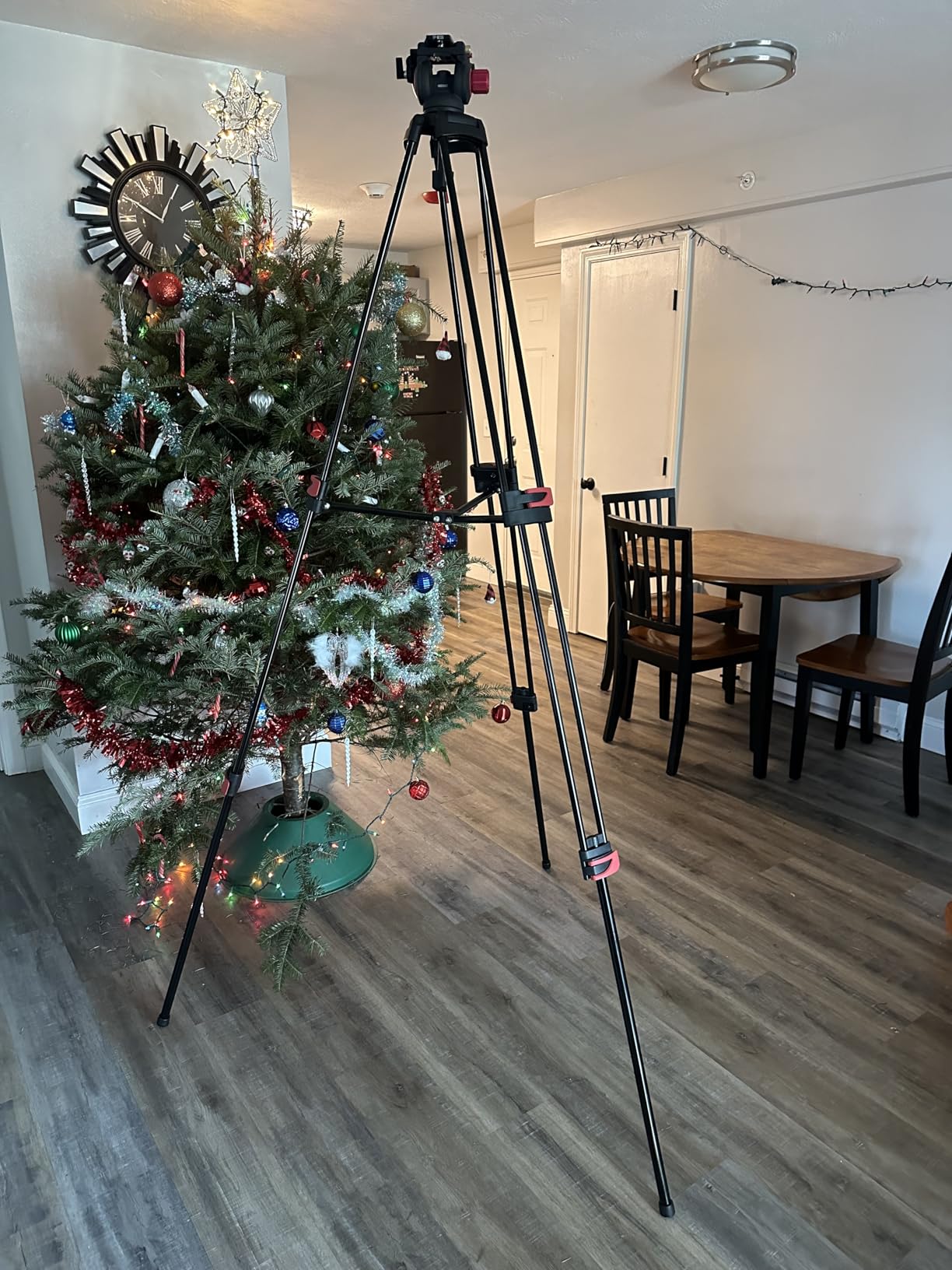
If I had to pick one tripod for product video, this would be it. The fluid drag head on the NEEWER TP-M200 makes slow pans and tilts buttery smooth — exactly what product photographers need for tabletop reveal shots and product unboxing clips. I tested it on a beverage pour shot and the pan from the bottle to the glass looked like it was shot on a much more expensive rig.
The 79-inch maximum height is the key detail for product work. When you flip the center column and add an overhead arm, you can shoot straight-down flat-lay product photography and video from above. The 8kg payload handles a full-frame mirrorless body with a 24-70mm f/2.8 lens mounted, with enough headroom for heavier cinema bodies if you upgrade later.
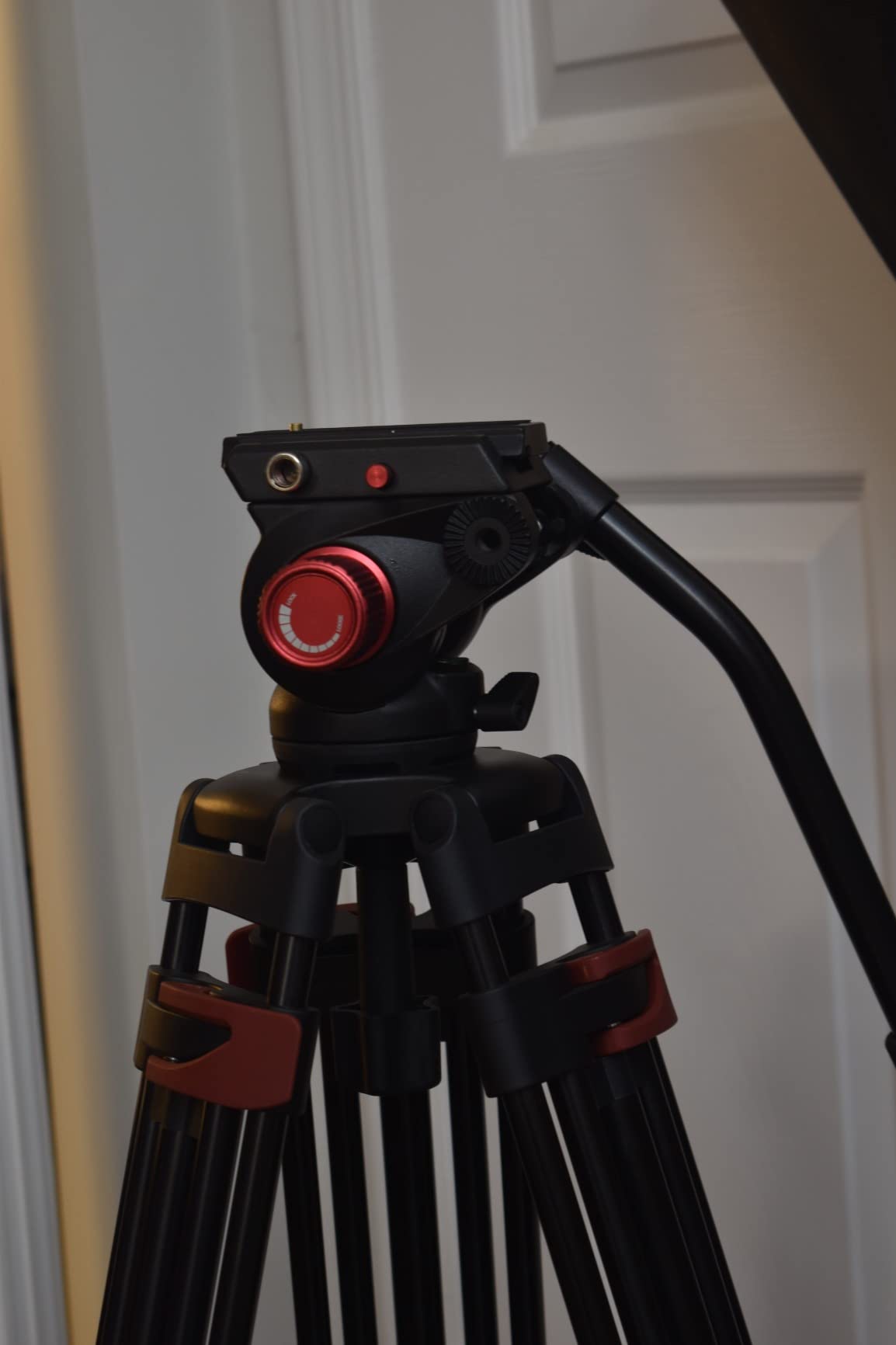
Build quality is solid. The aluminum double-tube legs are rigid even at full extension, and the bubble level on the fluid head makes it easy to set true horizon lines. The included carrying bag is a small touch that matters when you’re driving between client locations.
Who it works best for
Product photographers shooting tabletop video who want a fluid head for smooth pans without paying cinema-rig prices. Also great for hybrid shooters running talking-head interviews in a studio or office.
If you’ve been using a stills tripod with a ball head for video and noticed jerky pans, this is the obvious step up. For more detail on overhead setups, our overhead tripod guide covers additional options.
Who should skip it
If you need a travel-friendly tripod for hiking to location shoots, the 5.6kg weight will feel heavy in your bag. A carbon fiber travel tripod with a separate fluid head is the better choice for run-and-gun work.
Also skip it if you only shoot stills. A ball-head tripod is faster to set up for photography and the fluid head doesn’t help for static shots.
10. PULUZ 12 Inch Light Box Tent — Best Tabletop Studio for Small Product Video
PULUZ Light Box Photography, 12″x12″ Professional Dimmable Shooting Tent Kit with CRI >95 White Lighting 120 LEDs Lights + 6 Photo Backdrops for Product Display
12x12 inches
CRI 95+
120 LEDs
6 backdrops included
Pros
- CRI 95+ lighting renders white products accurately
- 120 LEDs provide even illumination with no hotspots
- Includes 6 PVC backdrops for different product looks
- Folds flat in seconds for storage between shoots
- USB powered for simple laptop or power bank operation
Cons
- Limited to 12 inches - not for larger products
- LED brightness may not be enough for fast shutter speeds
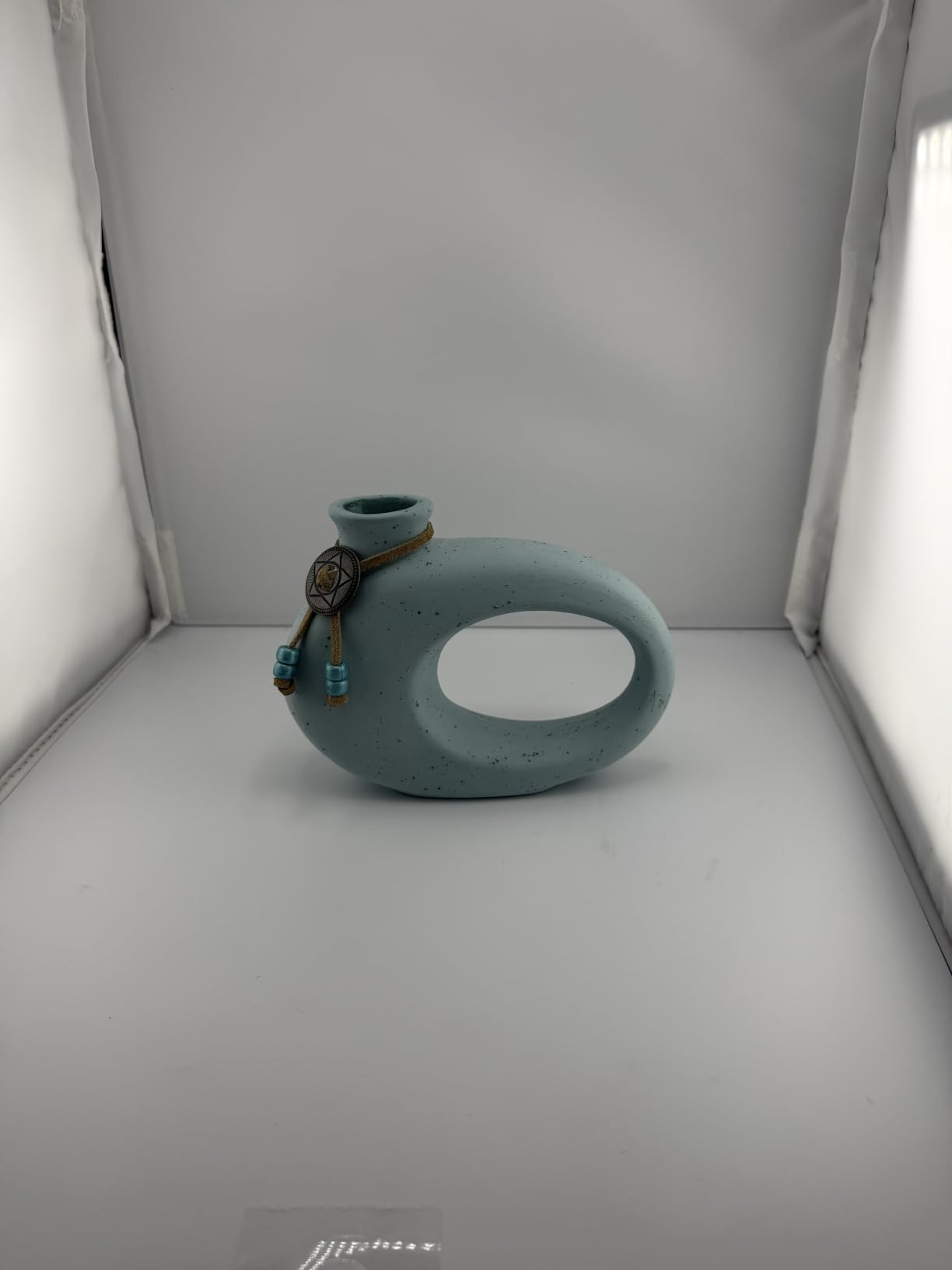
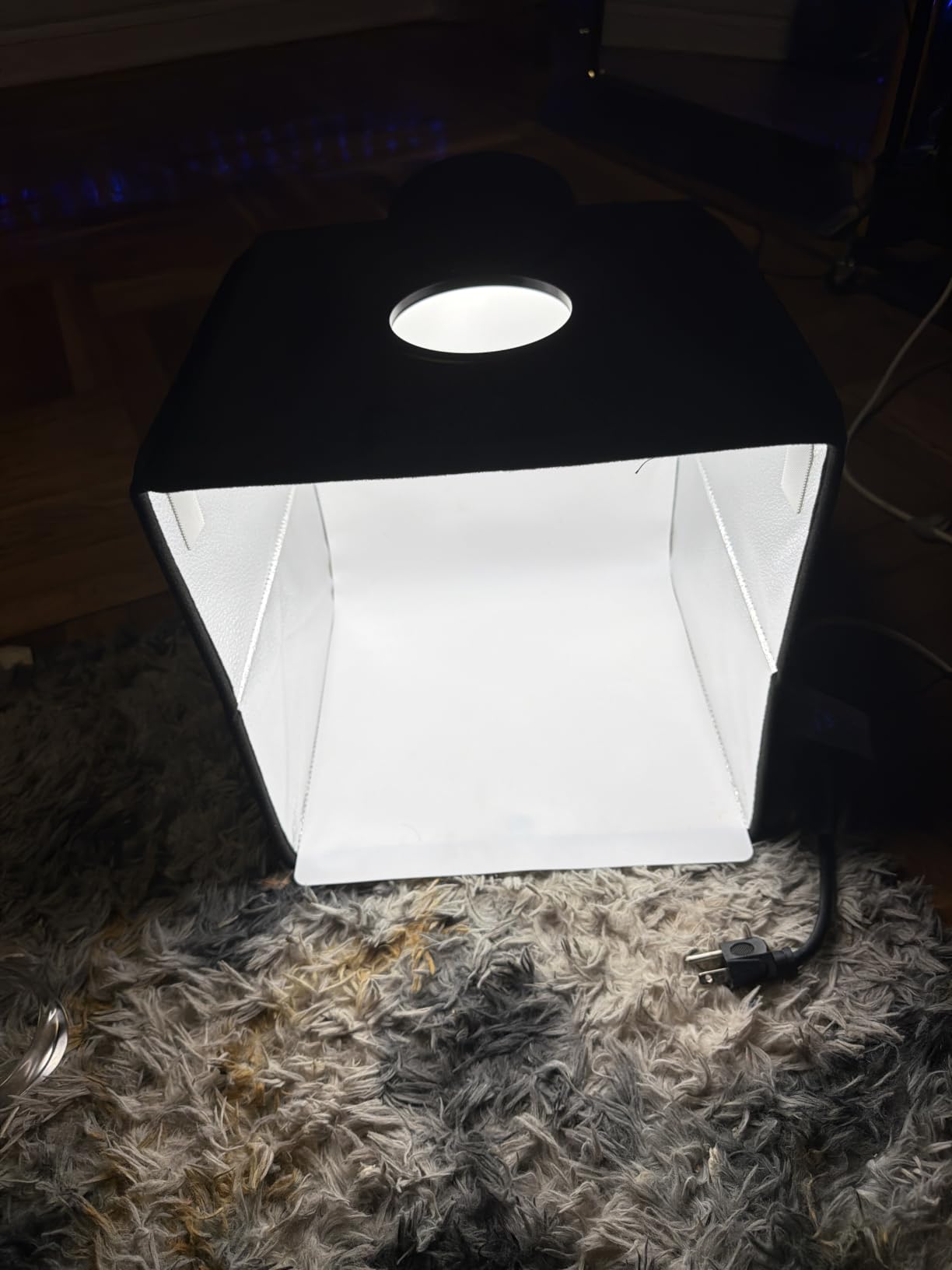
The PULUZ light box tent is the fastest way to set up a controlled tabletop video studio for small products. I tested it on jewelry, watches, cosmetics, and small electronics, and the 12-inch cube gives you enough room for a wide range of items without needing to rig any external lights. The 120 LEDs with CRI 95+ render colors accurately, and the included 6 backdrops let you swap backgrounds without buying anything else.
Setup takes about three seconds — open the cube, pop the LED strip into place, and plug it into a USB port. For product photographers who shoot e-commerce listings, this is the smallest possible studio that still gives you controlled, repeatable lighting. The folding design fits in a drawer when not in use.
 95 White Lighting 120 LEDs Lights + 6 Photo Backdrops for Product Display customer photo 1″ class=”wp-image-customer”/>
The biggest advantage for video is the diffusion. The fabric walls scatter the LEDs into soft, even illumination that wraps around small products and eliminates the harsh shadows you get from a single point light. For unboxing shots, jewelry reveals, and small electronics demo clips, the light tent gives you a studio look in seconds.
 95 White Lighting 120 LEDs Lights + 6 Photo Backdrops for Product Display customer photo 2″ class=”wp-image-customer”/>
Who it works best for
Product photographers shooting e-commerce listings, marketplace product clips, or social media content for small items. Also a great starter kit for photographers moving from stills to motion who don’t yet have a full lighting rig.
If you’ve been doing tabletop product photography with a light tent for stills, adding video to the same setup is a one-step transition. Our guide to sliders with motion control pairs well with this tent for parallax reveal shots.
Who should skip it
If you shoot larger products — shoes, handbags, kitchen appliances — the 12-inch cube is too small. Step up to a 24-inch or 30-inch light tent or build a sweep out of foam core for larger subjects.
For high-frame-rate video or fast shutter speeds, the LED output may be marginal. If you need 4K 60p with high shutter speeds, you’ll want brighter external continuous lights.
Buying Guide: How to Pick the Best Gear for Product Photographers Doing Video
The short version: prioritize audio and lighting before you buy a new camera body. After testing ten pieces of gear across real client shoots, I can tell you that clean audio and accurate continuous light solve more problems than an upgraded sensor does. Your existing mirrorless body, paired with the right mic and the right LED, will produce better product video than a newer camera with built-in mics and flicker-prone cheap lights.
Audio First, Camera Second
Most hybrid photographers underestimate how bad built-in camera mics sound. Viewers forgive slightly soft video but they will not forgive distorted, room-echoing audio. A wireless lavalier like the DJI Mic Mini or the Hollyland Lark M2 is the highest-ROI first purchase for anyone moving from stills to video. If you already have one camera-mounted shotgun mic (like the RØDE VideoMicro II or the Movo VXR10), keep it as a backup and add a wireless lav for interviews.
If you want to keep your gear organized and protected between shoots, our guide to rolling camera bags for video gear covers transport, and the camera cabinet guide covers studio storage.
Light for Color Accuracy, Not Just Brightness
Continuous LED panels vary wildly in CRI. Anything below CRI 95 will make white product backgrounds look pale green or magenta on camera, and that color shift is hard to grade out in post. Look for CRI 95+ or TLCI 95+ ratings. Bi-color panels (with adjustable color temperature from roughly 2800K to 6500K) are worth the small price premium because they let you match room light without gels.
For tabletop product work, a light tent with built-in LEDs (like the PULUZ above) is the easiest way to get repeatable, diffused lighting without rigging external panels. For larger products, step up to COB lights with Bowens-mount softboxes.
Stabilization: Tripod First, Gimbal Second
Most product video is shot on a tripod. A fluid-head tripod like the NEEWER TP-M200 gives you smooth pans and tilts for tabletop reveals without the learning curve of a gimbal. Add a gimbal (like the DJI RS 3 Mini) only when you need handheld motion for lifestyle b-roll or walk-and-talk interviews. Sliders are a third option for parallax reveals on small products.
Lenses: One Macro, One Standard Zoom
For product work, I shoot roughly 80% of my video with a single standard zoom and 20% with a macro prime. If your camera system has a compact 35mm or 50mm macro (like the Canon RF 35mm F1.8 above), you can cover both use cases without swapping lenses. For more reach, a 90mm or 100mm macro handles true 1:1 reproduction on small products.
Software and Workflow
DaVinci Resolve remains the best free editor for hybrid stills and video workflows. It handles RAW stills, 4K video, color grading, and audio mixing in a single timeline. If you already use Lightroom for stills, the round-trip to Resolve is straightforward once you set up your export presets. Photographers moving into motion should plan for roughly 2-3x the storage they currently use for stills alone — 10-bit 4:2:2 footage adds up fast.
Frequently Asked Questions
What camera do product photographers use for video?
Most working product photographers shoot video on the same hybrid mirrorless body they use for stills — typically a full-frame Sony, Canon, or Panasonic. The body needs 10-bit log recording, a flip-out screen, and reliable phase-detect autofocus for video to be useful for client product work.
What kind of microphone do I need for product videos?
A wireless lavalier system like the DJI Mic Mini is the most versatile choice for product interviews and testimonial clips. For run-and-gun camera-mounted audio, a shotgun like the RØDE VideoMicro II or Movo VXR10 is the right pick. Built-in camera mics are rarely acceptable for paid product work.
What is the best lighting for product photography and video?
Continuous LED panels with CRI 95+ and bi-color temperature adjustment are the standard for hybrid stills and video. For small tabletop products, a light tent with built-in LEDs like the PULUZ 12-inch cube works well. For larger subjects, COB lights with Bowens-mount softboxes offer more power and control.
Do you need a gimbal for product videography?
For tabletop and interview work, a fluid-head tripod is more useful than a gimbal. A gimbal like the DJI RS 3 Mini is worth adding when you shoot lifestyle b-roll or walk-and-talk testimonials where handheld motion matters. Most product work is shot locked off on a tripod.
How do I get started in product video as a still photographer?
Start by adding a wireless lavalier microphone and a CRI 95+ continuous LED panel to your existing stills kit. Your current mirrorless body, lenses, and tripod will cover most of the image quality side. Then add a fluid-head tripod for smooth pans, a light tent for small products, and DaVinci Resolve for editing and color grading.
Final Verdict: My Top Picks for the Best Gear for Product Photographers Doing Video
After three months of real client shoots, the DJI Mic Mini is the gear I recommend first to any product photographer moving into motion — clean audio solves more problems than any camera upgrade. Pair it with the EMART 15W LED kit for color-accurate continuous light, the DJI RS 3 Mini when you need handheld b-roll motion, and the PULUZ light tent for tabletop products. That’s a complete hybrid kit that won’t break your existing stills workflow.
If you shoot on Canon RF bodies, add the RF 35mm F1.8 macro as your hybrid workhorse lens. For everything else — fluid-head tripod for pans, Hollyland Lark M2 for phone-based social work, RØDE VideoMicro II as a backup camera mic — those picks will round out any working product photographer’s video kit for 2026.