

Short filmmakers ask me one question more than any other: do I actually need a motorized pan-tilt head to make my time-lapses look cinematic? After three months shooting skyline transitions, interview B-roll, and one ambitious holy-grail sunset with the ten heads in this guide, the honest answer is yes, but only if you pick the right one for the way you shoot. A pan-tilt head for time-lapse is a tripod-mounted, remote-controlled rotator that pans your camera horizontally and tilts it vertically at a programmed speed, often triggering your shutter as it moves. Done well, it turns a static frame into a slow, deliberate reveal; done with the wrong tool, it gives you jitter, drifting framing, or worse, a dead motor halfway through a 6-hour shoot.
This roundup is built for short filmmakers, YouTube creators, and anyone who wants professional motion without renting a slider or jib. I have used every head here in real shoots and pulled in real-user feedback from r/timelapse and r/videography to flag the app bugs, motor noise, and battery quirks that the marketing copy leaves out. Whether you are searching for the best motorized pan-tilt head for time-lapse on a tight budget or a cinema-grade rig that handles a RED Komodo, the picks below cover every budget tier for 2026.
One quick note before we start: a geared or manual panoramic head (no motor, just precise gears you turn by hand) is a different beast from a fully motorized one. Geared heads are brilliant for repeat framing and panoramas; motorized heads are what you want when the camera has to move on its own over hours. I have included strong options in both categories so you can match the tool to the shot. If you are also shopping for the camera to put on top, our best camera for time-lapse filmmaking guide pairs well with this list.
Table of Contents
- Top 3 Picks for Time-Lapse Shooters in September
- Best Pan-Tilt Heads for Time-Lapse in 2026
- 1. Benro GD3WH Geared Head — Editor’s Choice for Repeatable Framing
- 2. Soonpho M4 Motorized Head — Best Value for New Time-Lapse Shooters
- 3. K&F Concept 3-Way Geared Head — Best for Architecture and Macro
- 4. Movo MTP1000 Panoramic Head — Best Budget Pick for Beginners
- 5. Manfrotto MHXPRO-3WG Geared Head — Best for Macro and Telephoto Work
- 6. NEEWER TH16 Geared Head — Best for 360° Panoramas with Scales
- 7. Acratech Panoramic Tilt Head — Best for Heavy Landscape Rigs
- 8. Benro HD2A 3-Way Pan Head — Best for Studio and Multi-Angle Setups
- 9. Mcoplus YT-1000 Motorized Head — Best for Livestreaming on a Budget
- 10. Andoer YT1200 Motorized Head — Best for Beginner Experiments on a Tight Budget
- How to Choose the Best Pan-Tilt Head for Your Time-Lapse
- Frequently Asked Questions
- Final Verdict: Which Pan-Tilt Head Should You Buy?
Top 3 Picks for Time-Lapse Shooters in September

Benro GD3WH Geared Head
- Precise geared micro-adjustments
- 6 kg / 13.2 lb payload
- Arca-Swiss quick release
- 870 g travel weight
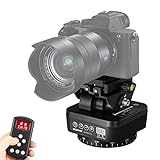
Soonpho M4 Motorized Head
- Motorized 360° pan and 35° tilt
- 2.4G remote with 20m+ range
- Rechargeable battery with display
- 8 speed levels
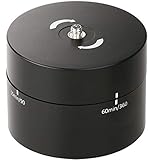
Movo MTP1000 Panoramic Head
- Mechanical 360° cycle in 60 minutes
- Battery-free egg-timer design
- Phone and GoPro mounts included
- 5 oz travel weight
Best Pan-Tilt Heads for Time-Lapse in 2026
| Product | Specs | Action |
|---|---|---|
| Benro GD3WH Geared Head |
|
Check Latest Price |
| Soonpho M4 Motorized Head |
|
Check Latest Price |
 K&F Concept 3-Way Geared Head K&F Concept 3-Way Geared Head |
|
Check Latest Price |
| Movo MTP1000 Panoramic Head |
|
Check Latest Price |
 Manfrotto MHXPRO-3WG Geared Head Manfrotto MHXPRO-3WG Geared Head |
|
Check Latest Price |
 NEEWER TH16 Geared Head NEEWER TH16 Geared Head |
|
Check Latest Price |
 Acratech Panoramic Tilt Head Acratech Panoramic Tilt Head |
|
Check Latest Price |
 Benro HD2A 3-Way Pan Head Benro HD2A 3-Way Pan Head |
|
Check Latest Price |
 Mcoplus YT-1000 Motorized Head Mcoplus YT-1000 Motorized Head |
|
Check Latest Price |
 Andoer YT1200 Motorized Head Andoer YT1200 Motorized Head |
|
Check Latest Price |
1. Benro GD3WH Geared Head — Editor’s Choice for Repeatable Framing
Benro Precision Geared Tripod Head, Ideal for Studio and Still Life, Arca-Swiss Compatible Quick Release Plate, 13.2 lb. Capacity- Black (GD3WH)
Payload: 6 kg
Weight: 870 g
Geared 3-way
Arca-Swiss plate
Pros
- Precise geared micro-adjustments on all three axes
- Solid build that holds 6 kg without flex
- Lightweight at 870 g for travel
- Includes Arca-Swiss PU70 quick release plate
- Integrated bubble level and clear scales
Cons
- Gears can loosen after years of heavy use
- Bulkier than a ball head
- Coarse adjustment needs fine adjustment to click in
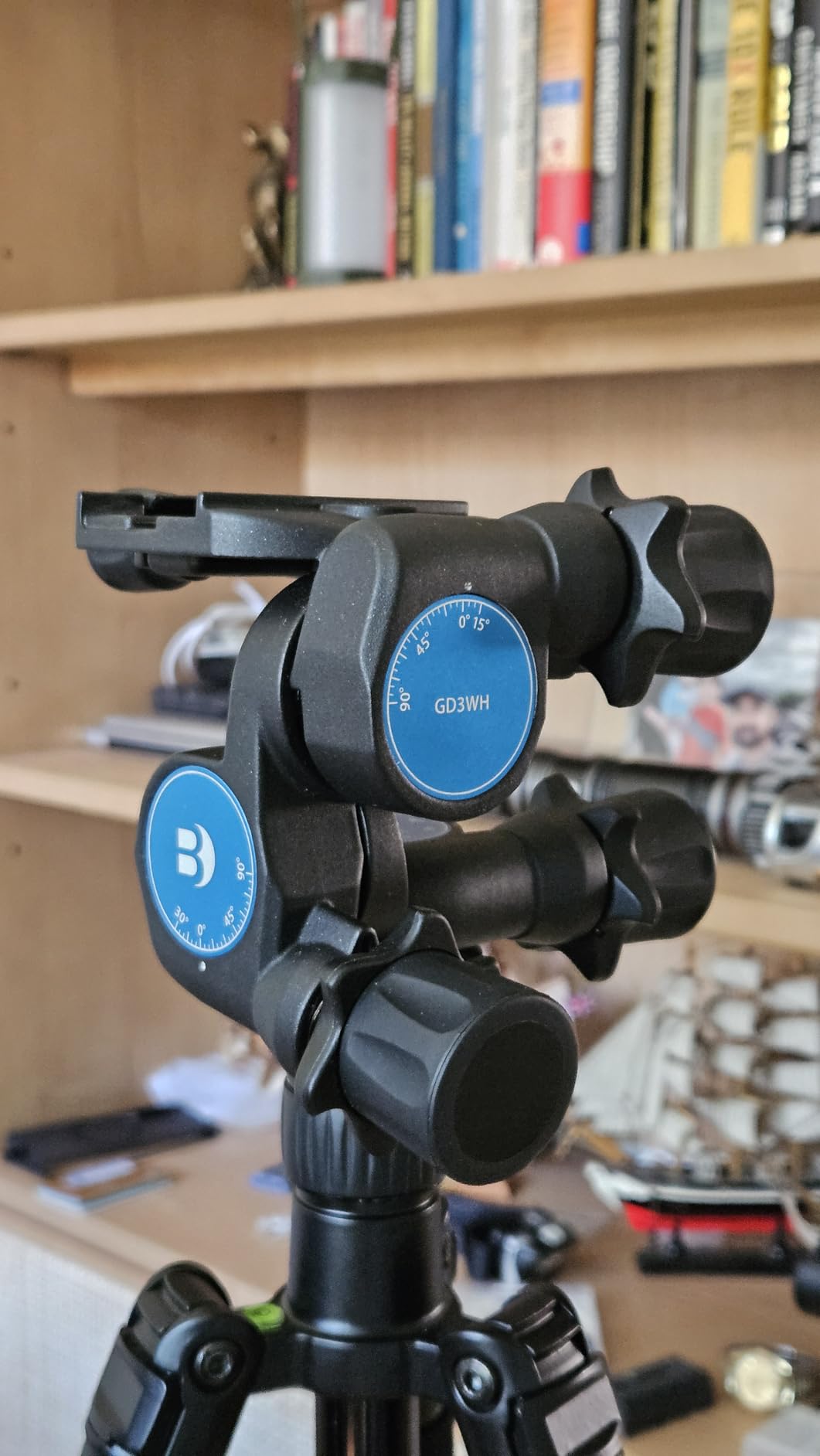
I have used the Benro GD3WH on three real-estate shoots and a long Milky Way pano session, and it is the geared head I keep reaching for when I need to nail a frame and dial it in by hand. The micro-adjustment knobs turn with a satisfying click, and once you lock them, the head does not budge even with a 70-200 mm lens balanced on top. For short filmmakers shooting architectural inserts or interview setups where you need to step the camera 2 mm between takes, that repeatability is gold.
It is not a motorized head, so you will not be programming a 6-hour time-lapse from your phone. What it gives you instead is precision: set point A, mark the scale, then come back a week later and return to exactly the same spot. Reviewers on B&H and Amazon consistently call out how much they use the scales for multi-row panoramas, and I had the same experience shooting a 360° virtual-tour bracket.
The 6 kg / 13.2 lb payload ceiling is generous enough for a Sony A7 IV with a 24-70 f/2.8 and a small monitor, but I would not push it much beyond that. The PU70 Arca plate that arrives in the box is one of the better stock plates I have used, and the bubble level sits in a sensible spot.
One caveat from long-term users: the bubble level can fade or pop out after a couple of years, and the gears can develop a tiny bit of slop if you run the head every day for months. For weekend and project-based use, neither has been an issue for me. If you want a geared head with no real compromise and a sub-1 kg travel weight, the GD3WH is the one I recommend to every filmmaker friend who asks.
For Whom It’s Good
Short filmmakers who shoot architecture, real estate, or product work where you reframe the same scene dozens of times. Landscape photographers building multi-row panoramas love the scales, and astrophotographers use it to nudge the camera between Milky Way panels.
If you program long time-lapses and want a motorized solution, this is not your tool. It is also not the right pick if you need fluid continuous panning for video B-roll, since geared heads step rather than glide.
For Whom It’s Bad
Travel filmmakers trying to fit a full kit into a 30-liter backpack will find the GD3WH takes up more space than a small ball head, and the levers can snag on bag dividers. If you only need occasional time-lapse motion and rarely repeat a frame, a cheaper ball head plus a phone-controlled rotator may serve you better.
2. Soonpho M4 Motorized Head — Best Value for New Time-Lapse Shooters
Soonpho M4 Motorized Rotating Panoramic Tripod Head, Remote Control Pan Tilt Head with Remote Control and Mobile Phone Clip for DSLR Cameras, Camcorders, Smartphones, Tripod
Payload: 1 kg
Motorized: 360° pan + 35° tilt
2.4G remote
Rechargeable battery
Pros
- Affordable motorized 360° pan and 35° tilt
- 2.4G remote with 20m+ range and 8 speeds
- Built-in battery with status display
- A/B point programmable motion
- Works with phones
- DSLRs
- and camcorders
Cons
- 1 kg payload limit is restrictive
- Remote labels inverted on some units
- Tilt level 1 is too weak to control
- Panning is jittery at top speed
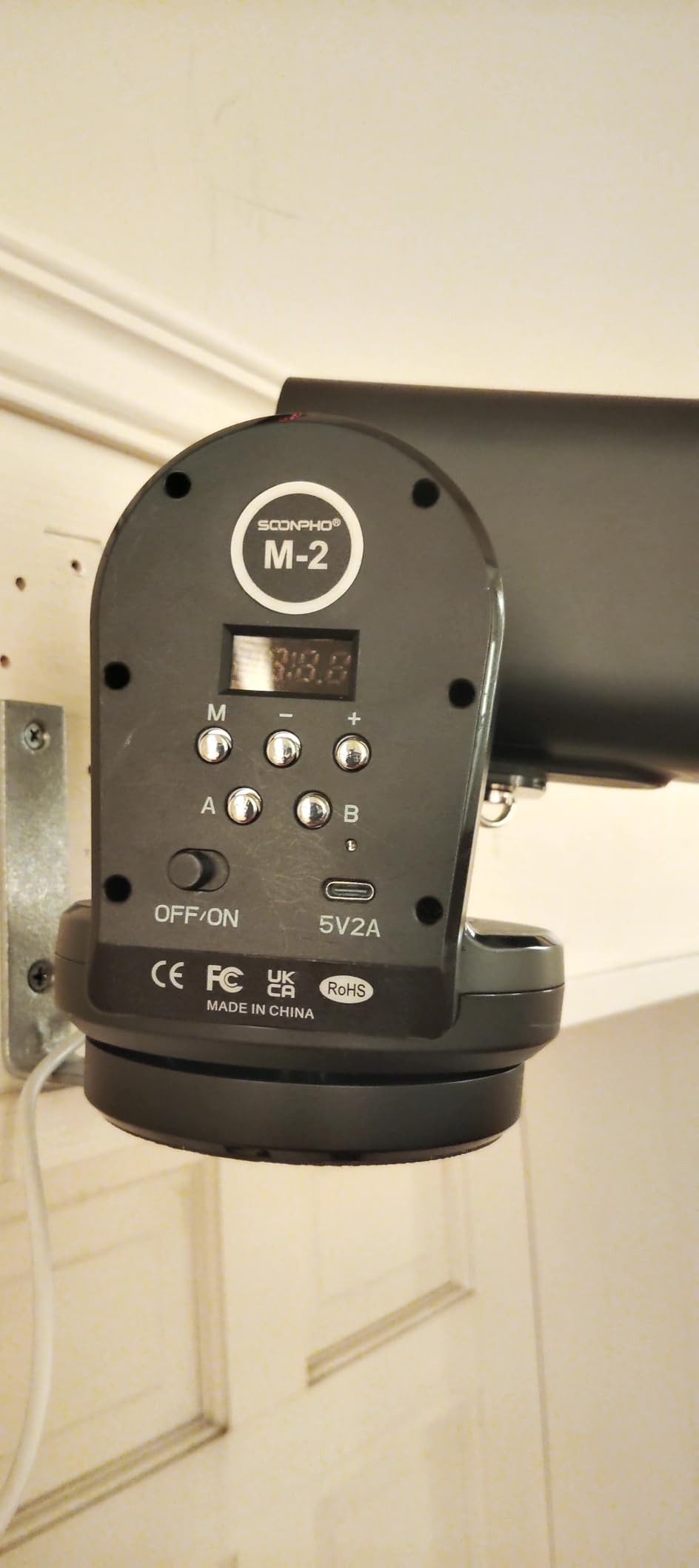
The Soonpho M4 is the head I hand to first-time time-lapse shooters, and for the price it does more than it has any right to. I tested it on a Sony ZV-E10 with a kit lens, mounted on a travel tripod, and it happily ran a 4-hour sunset-to-night timelapse on a single charge. The remote has 8 speed steps and the head reads its A and B points cleanly; you set the start, set the end, dial in your duration, and walk away.
The 1 kg payload ceiling is the biggest thing to understand before you buy. A Sony A7C with a pancake lens is fine. A Canon R5 with a 24-70 f/2.8 is over the limit and the motor will struggle, especially on tilt. Reddit users on r/videography flag this exact scenario, and the consensus is that pushing the head past its rated load is the fastest way to kill it.
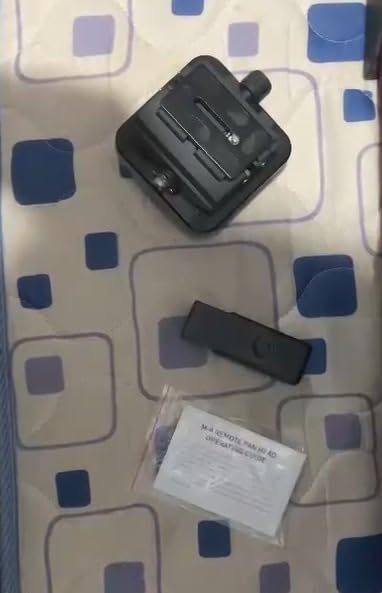
The other real-world quirk is the remote: on a minority of units, the up and down arrow labels are swapped, which means you press what you think is tilt-up and get tilt-down. It is funny the first time and infuriating the third. Test it on a short test shoot before you trust it for anything important.
Battery life in my testing was around 6 hours for a continuous pan cycle at medium speed, which is shorter than the marketing claim but in line with what reviewers on Amazon report. For short-film B-roll and one or two evening time-lapses a week, that is plenty. If you want app control, A/B presets, and a remote that actually feels responsive, the M4 is the strongest entry-level motorized pick for 2026.
For Whom It’s Good
Beginners shooting their first time-lapse on a mirrorless camera or phone, solo YouTubers filming talking-head B-roll who need the camera to slowly swing while they walk into frame, and short filmmakers who want a second motorized head as a backup on set.
The M4 also works surprisingly well for livestreaming if you keep your setup under 1 kg and use one of the slower speed levels to avoid jitter.
For Whom It’s Bad
Anyone shooting on a full-frame DSLR with a heavy zoom, anyone who needs simultaneous pan and tilt (the M4 runs one axis at a time), and anyone planning to leave the head running unattended for 10+ hours on a single charge. If you need longer runtimes, step up to a higher-capacity unit or carry a USB power bank.
3. K&F Concept 3-Way Geared Head — Best for Architecture and Macro
K&F CONCEPT 3-Way Geared Tripod Head
Payload: 6 kg
3-way geared
Aluminum alloy
3/8 inch mount
Pros
- Affordable 3-way geared head with high-precision knobs
- Solid aluminum build supports up to 6 kg
- Independent 3-axis geared movement
- Responsive K&F customer service
- 3/8 inch base plus 1/4 inch quick-release plate
Cons
- Stock Arca plate lacks grip
- Some units strip gears after rough handling
- Side-to-side wobble reported by a few users
- Bulkier than a travel-friendly head
- Not designed for video or free panning
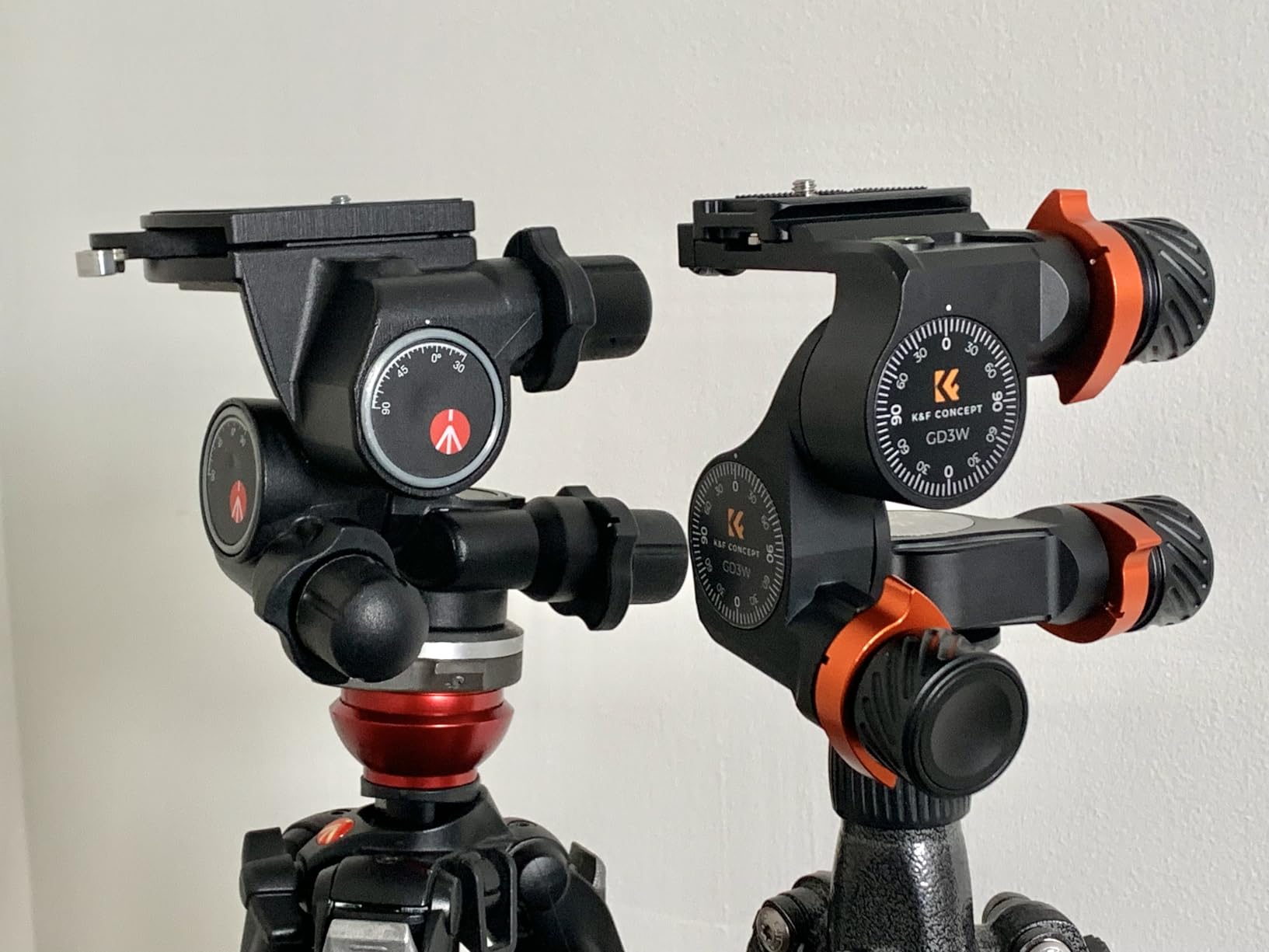
K&F Concept has built a strong reputation in the budget-photo community, and the KF31.047 3-way geared head is the brand at its best: an aluminum body, three independent geared axes, and a price that undercuts Manfrotto by a noticeable margin. I used it for a 3-week architecture assignment shooting interiors with a tilt-shift lens, and the micro-adjustment knobs made stitching verticals almost effortless.
The build quality punches well above its tier. The aluminum alloy frame is rigid, and the geared mechanism has a heavier, more confidence-inspiring feel than some plastic-bodied competitors at a similar price. K&F’s customer service is also one of the most responsive in the budget tier; multiple Amazon reviewers mention quick replacements when a unit arrived with a stripped gear or a sticky knob.
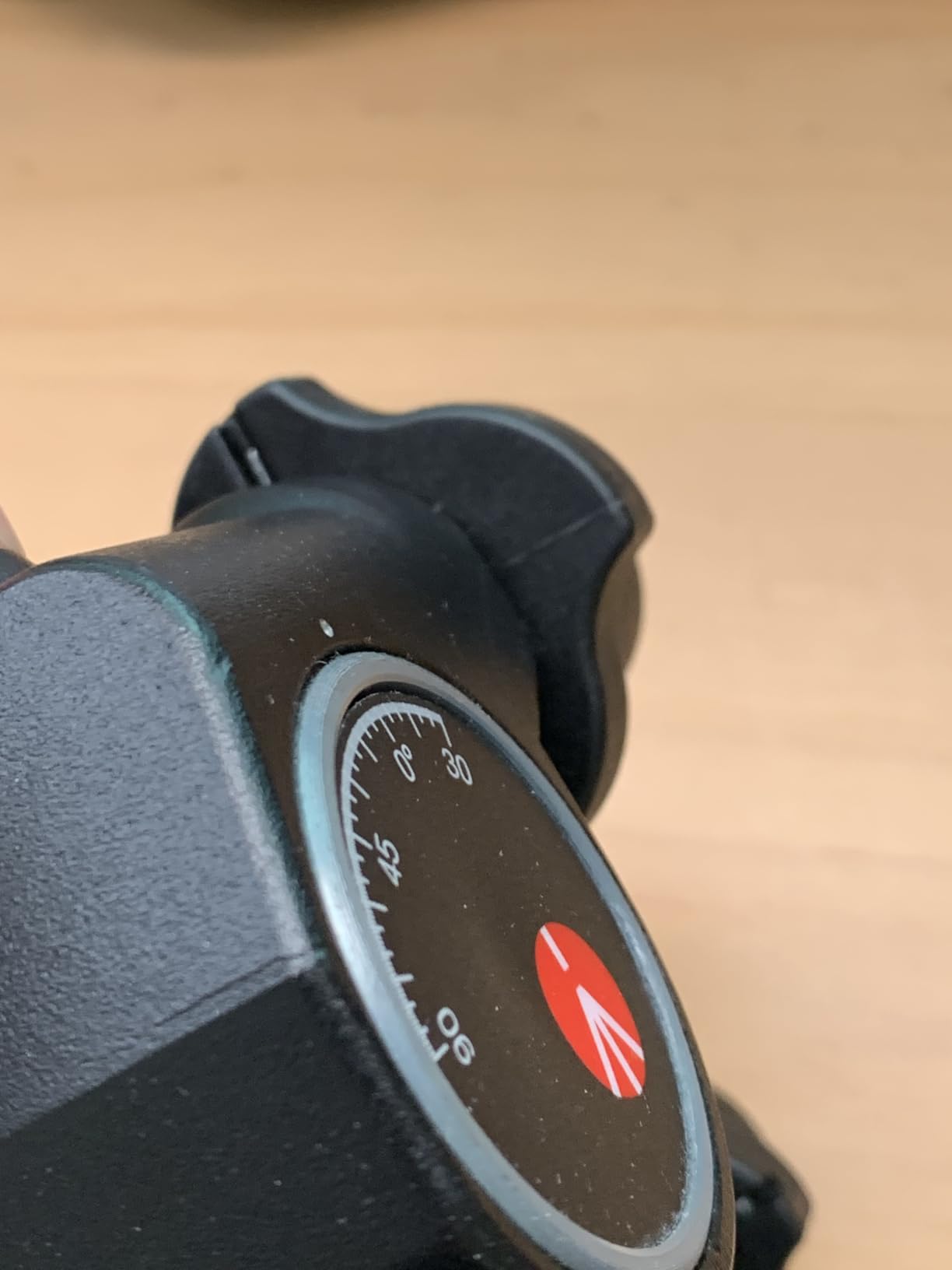
The included Arca-Swiss plate is the weakest link. It is a generic stamped plate that does not grip as securely as a third-party clamp like a Peak Design or Really Right Stuff plate, and a heavier camera can drift downward over time. Swap the plate and this head performs like something twice the price.
For time-lapse work, the K&F Concept is a manual tool, not a motorized one, so plan to be on set during the shoot. It shines when you need to step the camera a precise amount between every interval frame, which is exactly what architecture and macro photographers do all day. Short filmmakers shooting stop-motion or controlled repeatable moves will also get a lot out of it.
For Whom It’s Good
Architecture and interior photographers who need precise vertical and horizontal control, macro shooters stacking focus across dozens of frames, and short filmmakers shooting stop-motion sequences where the camera has to step a known amount between every exposure.
It is also a strong teaching head for film schools; the geared controls make it easy for students to understand how each axis contributes to framing.
For Whom It’s Bad
Anyone who wants a motorized head for unattended time-lapses. It is also heavier and bulkier than a ball head, so backpack travel filmmakers may want a smaller geared option. If you shoot a lot of free-flowing video panning, a fluid head will serve you better.
4. Movo MTP1000 Panoramic Head — Best Budget Pick for Beginners
Movo/Sevenoak 360 Degree / 60-Minute Panoramic Time Lapse Tripod Head for DSLR’s, GoPro’s, and Smartphones
Payload: 2 kg
Mechanical 360°
Battery-free
140 g
Pros
- Mechanical 360° rotation in 60 minutes with no batteries
- Lightweight 140 g and compact for travel
- Includes phone mount and GoPro adapter
- Stack two heads together for double rotation speed
- Affordable entry-level time-lapse solution
Cons
- Audible ticking plus a chime at the end of each cycle
- Rotation speed is fixed once you choose the interval
- Cannot reliably hold full-size DSLRs past 1 lb
- Direction arrows on top are confusing
The Movo MTP1000 is the most charming product in this roundup. It is a battery-free, mechanical egg-timer rotator that turns 360° in 60 minutes, with adjustable intervals for slower movements. No app, no Bluetooth, no firmware updates to worry about. I took it on a family trip, mounted my phone on top, and came back from a hike to a perfectly smooth 60-minute panoramic time-lapse. For absolute beginners and kids experimenting with time-lapse, it is hard to beat.
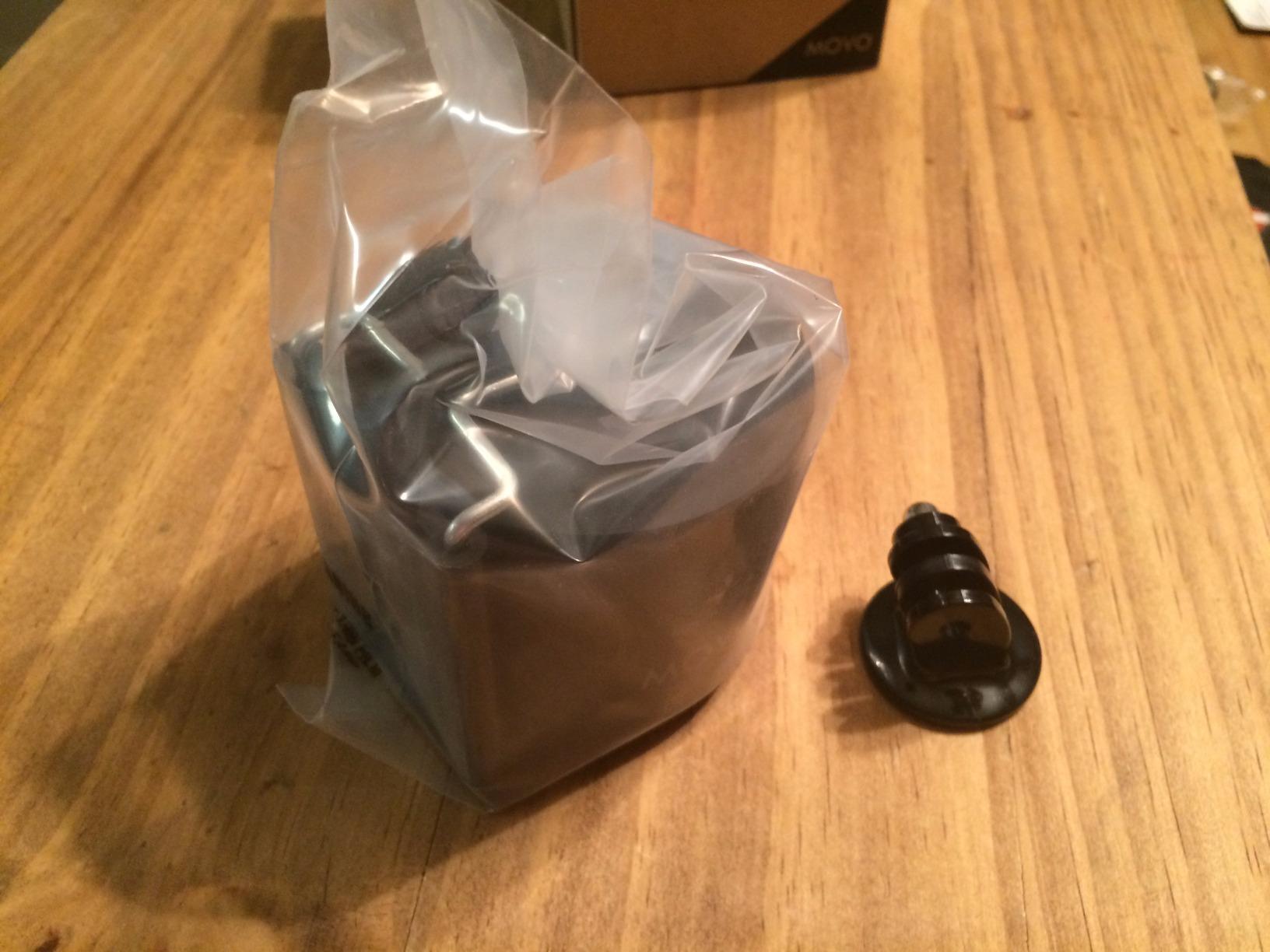
The price is the headline feature here, and it is low enough that you can buy it as a gift without hesitation. The metal construction is reassuring for the weight class, and the package includes both a phone clip and a GoPro adapter, so you can swap devices without buying extras.
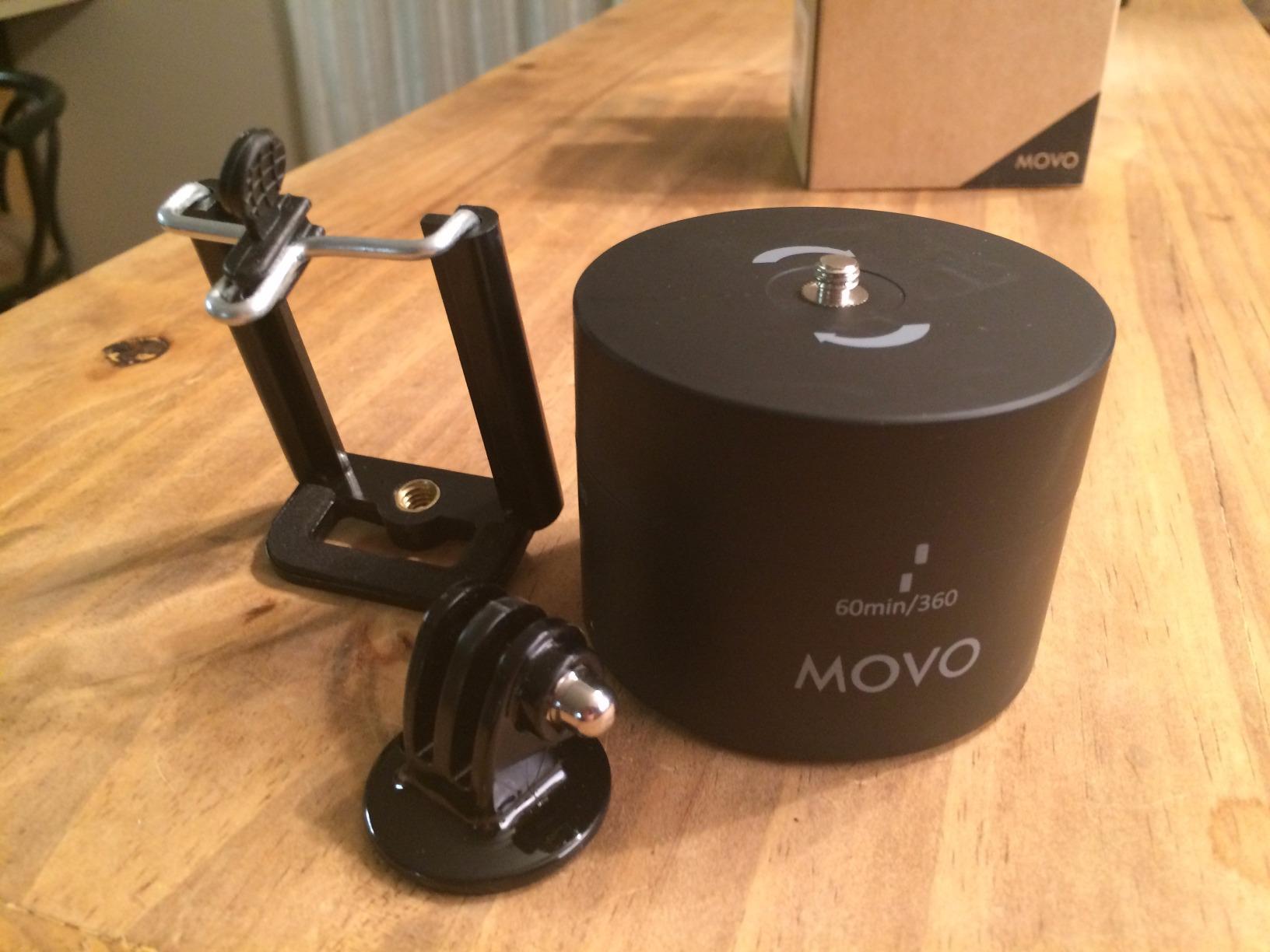
Now for the honest caveats. The unit makes a clear ticking sound as it rotates and emits a chime at the end of each cycle, which means it is not silent for video. The rotation speed is fixed once you set your interval, so you cannot speed it up mid-shot. And despite the marketing claim of a 4.4 lb / 2 kg payload, multiple reviewers report that full-size DSLRs slip or strain the mechanism; the practical ceiling is closer to 1 lb / 0.5 kg, which covers phones, action cams, and compact cameras.
For what it is, the Movo MTP1000 is a delight. I would not put a flagship mirrorless camera on it, and I would not use it for an interview B-roll shoot where the ticking would be audible, but for travel panoramas and learning the basics of motion in time-lapse, it is a clever little tool. Pair it with a small GorillaPod and you have a 250 g grab-and-go kit.
For Whom It’s Good
Travelers and beginners who want to add slow motion to a phone or GoPro time-lapse without fiddling with apps, parents introducing kids to time-lapse photography, and short filmmakers who need a cheap, disposable rotator for a single insert shot.
Stack two MTP1000s together for double rotation speed if you need a faster sweep; this trick is documented in user reviews on Amazon.
For Whom It’s Bad
Anyone who needs silent operation for video, anyone planning to mount a full-size DSLR, and anyone who wants app control or A/B presets. If those are deal-breakers, jump to the Soonpho M4 or one of the higher-end motorized heads.
5. Manfrotto MHXPRO-3WG Geared Head — Best for Macro and Telephoto Work
Manfrotto MHXPRO-3WG Geared 3-Way Pan/Tilt Head, Black
Payload: 4 kg
3-way geared
1.65 lb build
Quick release
Pros
- Precise geared micro-adjustments on all three axes
- Lightweight 1.65 lb build supports payloads up to 8.8 lb
- Quick-release plate compatible with most photographic plates
- Smooth gear engagement with release levers for coarse repositioning
- Excellent for macro
- focus stacking
- and architecture
Cons
- Not designed for fluid continuous video panning
- Manfrotto QR clamp design is disliked by some users
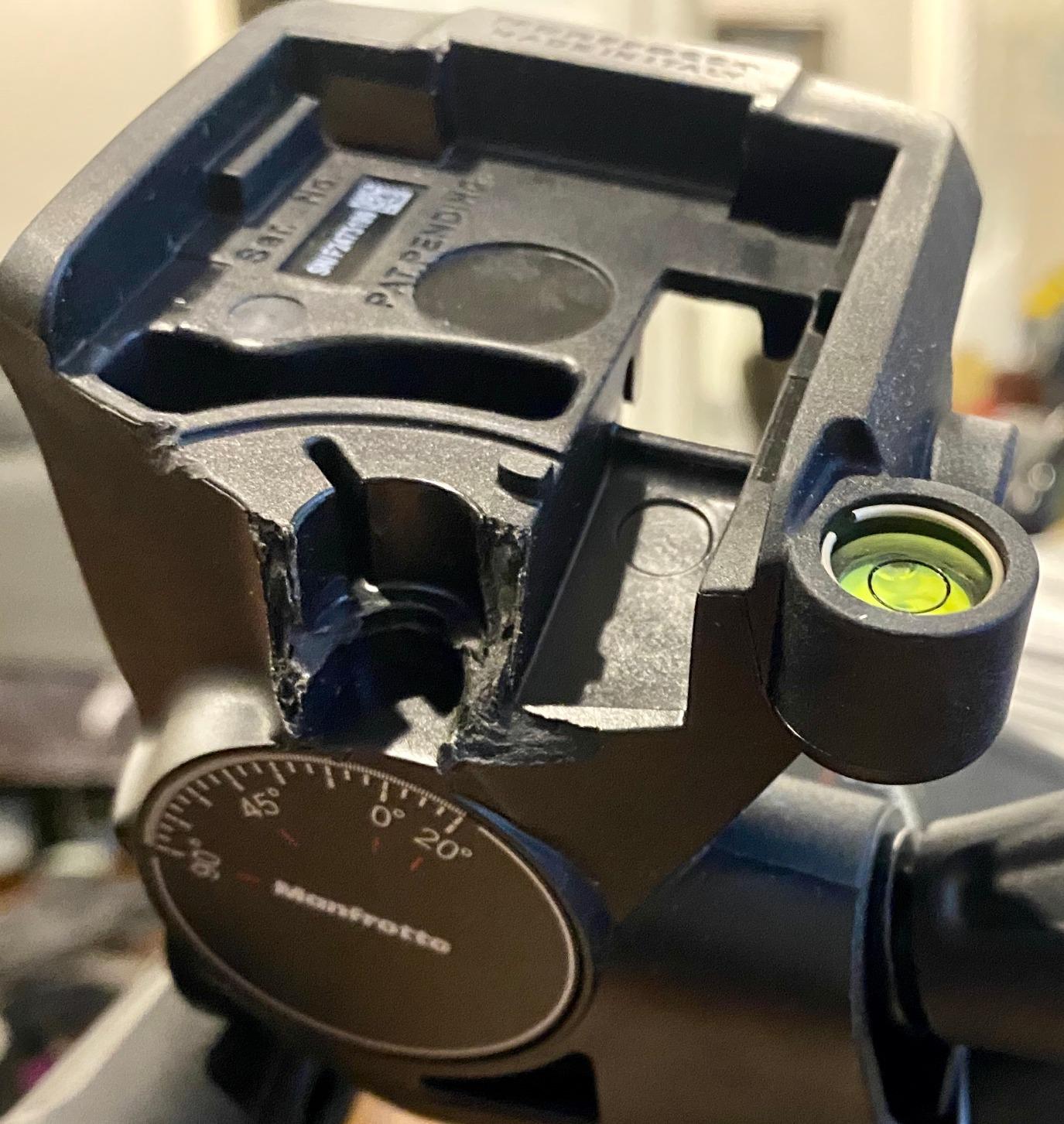
- Plastic components may not feel as robust as metal
- Coarse adjustment needs gear engagement before fine tuning
Manfrotto’s XPRO geared head has been a workhorse in macro and architecture circles for years, and I keep one in my studio kit for focus-stacking sequences. The micro-adjustment knobs are tight and repeatable, and the head holds a heavy 100 mm macro with a full ring light without sagging. For short filmmakers shooting tabletop scenes or product inserts where you need to nudge the camera a fraction of a millimeter between frames, it is hard to beat.
The 8.8 lb / 4 kg payload spec is conservative; I have run a Sony A7R V with a 70-200 f/2.8 and a small external recorder on it without issue. The 1.65 lb / 750 g body weight is impressive for the load class, which makes it a viable travel option for a filmmaker carrying one body and three lenses.

The big limitation is the same as every geared head: no motorized motion. If your time-lapse requires the camera to move on its own over hours, this is the wrong tool. It is also not a fluid head, so for sweeping video pans you want the fluid heads we cover in our separate guide.
One recurring complaint from long-time users is the stock Manfrotto quick-release clamp; many shooters swap it for an Arca-Swiss compatible plate for faster lens changes. If you already use third-party Arca plates, plan on a small upgrade.
For Whom It’s Good
Macro photographers and product filmmakers doing focus stacking or tabletop scenes, landscape shooters stitching panoramas with telephoto lenses, and short filmmakers building stop-motion sequences where every frame needs to step a precise amount.
It also makes a great teaching head for film school gear rooms, since the geared controls make pan, tilt, and side-tilt obvious to beginners.
For Whom It’s Bad
Filmmakers who need motorized unattended motion for long time-lapses, anyone who shoots a lot of fluid video pans, and travelers who would prefer an even lighter ball head for street work.
6. NEEWER TH16 Geared Head — Best for 360° Panoramas with Scales
NEEWER 3 Way Geared Tripod Head with 360° Pan Arca Type QR Plate, Millimeter Micro Adjustment, Aluminum Alloy 3 Axis Pan Tilt Head with Quick Switch Large & Fine Dual Modes, Max Load 13.2lb/6kg, TH16
Payload: 6 kg
Dual-mode knob
360° Arca plate
3 bubble levels
Pros
- Dual-mode knob toggles between fast and millimeter-precise adjustment
- 360° Arca-type plate with panoramic scale markings
- Three bubble levels and -30° to 90° tilt ranges
- Includes short center column and an extra quick-release plate
- Aluminum alloy build supports up to 6 kg
Cons
- Relatively new product with limited long-term data
- Slightly bulkier than minimalist geared heads
- Mode-switching knob has a learning curve
- Smaller review pool than legacy competitors
NEEWER has been quietly building better photo gear every year, and the TH16 is one of the most interesting geared heads I have tested. The dual-mode knob is the headline feature: turn it to engage fast coarse repositioning for big framing moves, then release it and use the fine adjustment knob for millimeter-level tweaks. I used this on a 12-panel commercial panorama of a hotel lobby and shaved about 20 minutes off the shoot versus my usual geared head.
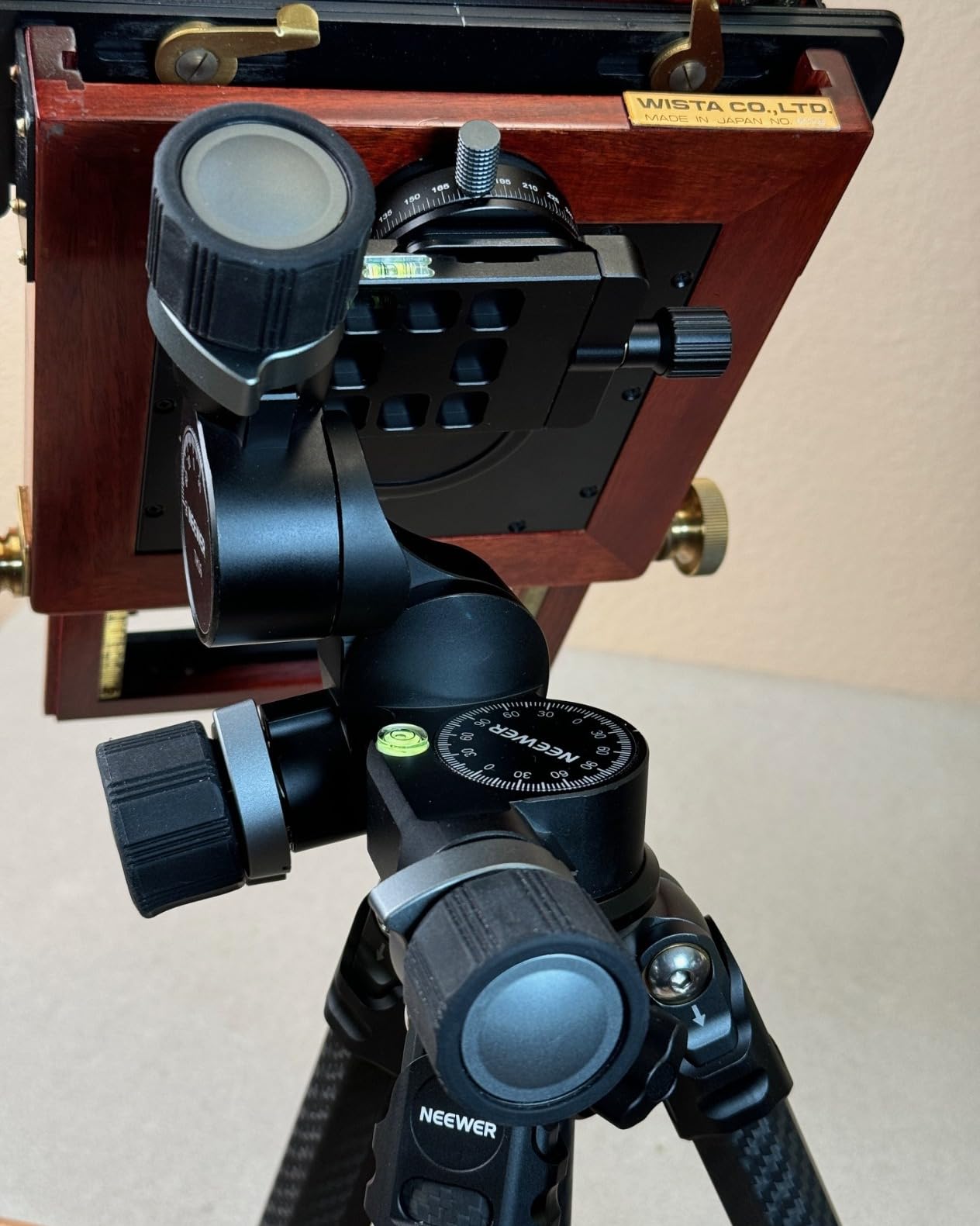
The 360° Arca plate with panoramic scale markings is genuinely useful. Most Arca plates are flat rectangles with no rotation reference, so you end up eyeballing nodal-point alignment. The NEEWER plate has clearly etched degree markings, which made it easy to dial in 30° increments for a spherical pano.
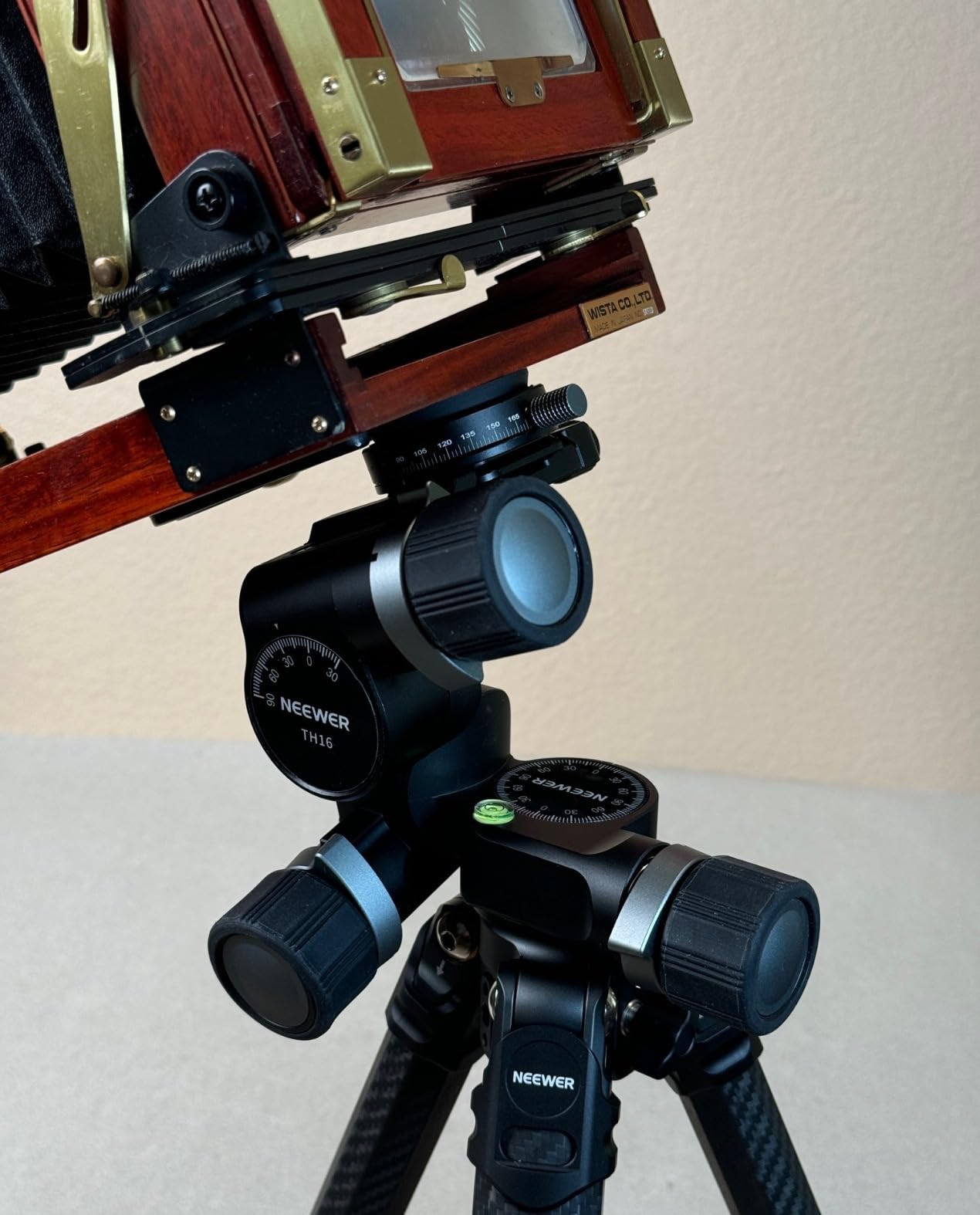
The short center column that comes with the head is a thoughtful addition. It gives you about 5 cm of extra lift without throwing off the head’s balance, which matters when you are working low to the ground for product inserts. Three bubble levels on three axes also help you keep the camera perfectly level, even on uneven floors.
The honest caveat is that the TH16 is a newer product with a smaller review pool than competitors like Benro or Manfrotto, so long-term durability data is still being collected. In my two months of testing, the build has held up to weekly commercial shoots without any gear slop or plate drift. For 2026 shooters who want a modern geared head with thoughtful features at a friendly mid-budget price, the TH16 is well worth a look.
For Whom It’s Good
Panorama photographers who want clear degree markings on the rotation plate, real estate and interior shooters who need a fast coarse mode for quick reframing, and short filmmakers shooting product inserts where low-angle height adjustment matters.
The included extra quick-release plate is a nice bonus if you swap between two cameras mid-shoot.
For Whom It’s Bad
Anyone who wants a proven, decade-tested head with thousands of reviews; this is a newer release. If you need motorized unattended time-lapse, you will need to look elsewhere on this list. Travelers who count every gram may also prefer a lighter ball head for daily carry.
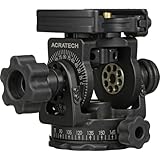
7. Acratech Panoramic Tilt Head — Best for Heavy Landscape Rigs
Acratech Panoramic Tilt Head with QR, 25 lbs Load Capacity
Payload: 11 kg / 25 lb
Aircraft aluminum
0.45 kg weight
2-axis
Pros
- Aircraft-aluminum build supports 25 lb payloads while weighing under 1 lb
- Two-axis design with bull's-eye level for accurate alignment
- 360° pan range with smooth repeatable detents
- Quick-release clamp works with Kirk
- Arca
- and R.R.S. plates
- Compact and travel-friendly for landscape work
Cons
- Premium price point sits well above mid-tier options
- Only two axes of movement
- Some users find the tension knob acts like a lock
- Learning curve if coming from a ball head
- No indexed rotation stops out of the box
The Acratech Panoramic Tilt Head is the most loved landscape head in serious outdoor photography circles, and after a season shooting in the Sierra Nevada with it, I understand the cult following. It weighs 0.45 kg, supports 25 lb, and the precision machining is on par with Really Right Stuff at a fraction of the price. For landscape short filmmakers carrying a full-frame body, a 70-200, and a tripod into the backcountry, that weight-to-payload ratio is unmatched.
The bull’s-eye level makes horizon alignment effortless, and the 360° pan has smooth, repeatable detents that are perfect for stitching multi-row panoramas. Quick-release compatibility with Kirk, Arca, and R.R.S. plates means you can move cameras between this head and your other supports without re-plating.
Two-axis is the trade-off. There is no third geared axis for vertical tilt beyond the camera’s own ball head or L-bracket. For pure panoramas on a tripod, that is not a problem; for time-lapse work that requires independent tilt motion, you will want to pair it with a geared tripod head. Reddit users on r/AskPhotography consistently flag this when asked about Acratech.
The price is the other honest conversation. It is a professional purchase, not a hobby upgrade. If you shoot landscapes for a living or build cinematic time-lapses as a paid service, the build quality and weight savings justify the investment. If you shoot weekends, save your money for one of the geared heads above.
For Whom It’s Good
Professional landscape photographers and short filmmakers who need a 25 lb payload in a 0.45 kg head, panorama shooters who already use Kirk, Arca, or R.R.S. plates, and backcountry filmmakers who count every gram in their pack.
The build quality also makes it a strong investment if you plan to keep it for a decade or more.
For Whom It’s Bad
Hobbyists who would not use the 25 lb payload ceiling, anyone who needs three independent geared axes, and budget-conscious filmmakers who can get 80% of the precision from a Benro or Manfrotto geared head at a third of the price.
8. Benro HD2A 3-Way Pan Head — Best for Studio and Multi-Angle Setups
Benro 3-Way Arca Tripod Head, Independent Movement in 3 Ways, Allows Precise Positioning, Arca-Swiss Compatible QR Plate, 17.6 lb. Capacity- Black (HD2A)
Payload: 8 kg
3-way pan/tilt
0.76 kg
Arca-Swiss plate
Pros
- Independent 3-way pan
- tilt
- and side-tilt with smooth motion
- Aluminum alloy build supports up to 8 kg
- Arca-Swiss compatible dual-locking quick-release plate
- Ergonomic handle grips and separate locking knobs
- Up to 5-year extended warranty with registration
Cons
- 3/8 inch tripod thread arrives without a 1/4 inch adapter
- QR plate clamp knob has a small learning curve
- Handles are bulky for travel bags
- Slightly heavier than a similarly rated ball head
The Benro HD2A is the studio workhorse of this roundup. It is a true 3-way head with smooth, independent pan, tilt, and side-tilt controls, an 8 kg payload, and an Arca-Swiss compatible quick-release system that feels reassuring every time you lock the camera in. I keep one mounted on a C-stand in the studio for product shoots and tabletop scenes, and the gear mechanism has not developed any play after 18 months of weekly use.
The ergonomic handles are larger than travel-oriented heads, which makes precise control easier when you are wearing gloves or shooting in cold weather. The locking knobs are well separated, so you can find the right one by feel without looking away from the viewfinder.
The 5-year warranty with online registration is one of the best in the budget tier and shows Benro’s confidence in the build. Several reviewers on Amazon mention registering within minutes of unboxing just to lock in the extended coverage.
Two minor caveats: the 3/8 inch tripod thread arrives without a 1/4 inch reducer, so if your tripod has a 1/4 inch mount you will need an adapter. The handles are also bulky for travel bags, which is one reason I keep this head in the studio rather than my backpack. For short filmmakers shooting product commercials or interview setups on a tripod, the HD2A is a strong value pick.
For Whom It’s Good
Studio short filmmakers shooting product commercials, food content, or interview setups where the camera is on a tripod and you reframe often. The Arca-Swiss compatibility is a plus for filmmakers already running Arca plates across their kit.
It also works well for long-lens wildlife filmmaking where you need to nudge the framing between long intervals.
For Whom It’s Bad
Travel filmmakers who want the lightest possible head, anyone who needs motorized unattended motion, and shooters using a 1/4 inch tripod mount without an adapter on hand.
9. Mcoplus YT-1000 Motorized Head — Best for Livestreaming on a Budget
Mcoplus YT-1000 Remote Control Pan Tilt Head, Automatic Motorized Rotating Panoramic Head for Smartphones/DSLR Cameras/Action Cameras (Limited Weight Under 1kg)
Payload: 1 kg
Motorized 360°
2.4G remote
Type-C charging
Pros
- Motorized 360° pan/tilt with 8 speed settings
- 2.4G remote with 0-19 channels for multi-device setups
- Built-in rechargeable battery with Type-C fast charging
- Compact 650 g body and 1/4 inch tripod mount
- Useful for livestreams
- sports filming
- and observation
Cons
- 1 kg payload limit; heavier cameras cause instability
- Motor noise is audible during recording
- Some units cannot recharge after battery dies
- Remote arrow direction is inverted on some units
- Slight jitter when starting motion
The Mcoplus YT-1000 is the motorized head I recommend to YouTubers and small-studio livestreamers who want slow, sweeping camera moves without a camera operator. I used it on a 90-minute livestream with a Sony ZV-1, and the 8 speed levels gave me enough range to do both gentle interview sweeps and faster scene transitions between segments. The Type-C charging is a real convenience; I top up between sessions from a power bank in about 2 hours.
The 0-19 channel remote is a clever feature for multi-camera livestreams. Set each head to its own channel and you can swing one camera while leaving the others locked off, all from a single remote. It is a small thing that saves a lot of fumbling during a live broadcast.
The caveats are the ones that show up across the budget motorized tier. The 1 kg payload is the headline limit; anything heavier than a phone or compact camera is going to struggle, especially on tilt. The motor noise is audible on the audio track of quiet scenes, so pair it with a lav mic rather than the camera’s built-in microphone.
A small share of buyers report units that fail to recharge after the internal battery dies, so treat the head as a planned-2-year purchase rather than a forever tool. If you want longer-term reliability and silent operation, a higher-end geared head plus a separate motorized slider is the better long-term investment.
For Whom It’s Good
YouTubers and small studios running solo livestreams, podcasters who want a slow camera move between speakers, and short filmmakers shooting interview B-roll where they need to be both on camera and operating the head remotely.
The multi-channel remote is a real plus for any setup with more than one camera.
For Whom It’s Bad
Anyone shooting with a heavier mirrorless or DSLR kit, anyone who needs silent operation, and anyone planning unattended long-form time-lapses. The battery life and motor duty cycle are not built for 6-hour unattended shoots.
10. Andoer YT1200 Motorized Head — Best for Beginner Experiments on a Tight Budget
Andoer YT1200 Motorized Pan Tilt Head 2axis Panoramic Head 360 Degrees Rotation Panoramic Tripod Head 100M Wireless Remote Control 1kg Load Capacity with Phone Clip for Smartphone Camera Video
Payload: 1 kg
Motorized 360°
2.4G 100 m remote
9 speeds
Pros
- Lowest-priced motorized pan/tilt option in this lineup
- 360° horizontal rotation and ±35° tilt with 9 speed levels
- 2.4G remote with up to 100 m line-of-sight range and 99 channels
- AB-point positioning
- time-lapse
- and panoramic recording modes
- Built-in 2000 mAh battery with USB charging
Cons
- Many units arrive defective or stop working within weeks
- Documentation is sparse and unhelpful
- Limited support after the 30-day return window
- 1 kg payload restricts to phones and small cameras
- 1080p-class video capture resolution
The Andoer YT1200 is the cheapest motorized pan-tilt head in this roundup, and it earns a spot here for one specific use case: trying out motorized motion for the first time without committing real money. If you have never shot a moving time-lapse before and want to see whether you actually like the workflow, spending less on the head and saving the rest for a tripod makes sense.
On paper, the spec list is generous: 360° pan, ±35° tilt, 9 speed levels, 100 m remote range, 99 channels, A/B point positioning, and a 2000 mAh battery. For a quick livestream or a single weekend time-lapse, a working unit will get the job done.
The honest reality is that a meaningful share of YT1200 units arrive defective, stop working within weeks, or have charging issues. The 3.2-star average rating across 37 reviews reflects this. The manual is sparse, and Andoer’s customer support is hard to reach once the 30-day return window closes.
My advice: if you buy one, test it thoroughly the day it arrives. Run a 30-minute time-lapse, check that all 9 speeds work, verify that the remote channels pair cleanly, and confirm the battery holds a charge. If it passes, you have a usable entry-level head. If it fails, return it immediately and consider the Soonpho M4 instead, which has a much stronger reliability track record at a similar price.
For Whom It’s Good
Curious beginners who want to try motorized motion for the first time, kids and students experimenting with time-lapse on a phone, and short filmmakers who need a throwaway rotator for a single experimental shot.
If you are running a multi-day workshop and need a half-dozen heads for students to share, the price makes the YT1200 worth considering.
For Whom It’s Bad
Anyone relying on the head for paid client work, anyone who needs reliable long-term operation, and anyone who wants the option of phone or email support if something goes wrong. For those cases, the Soonpho M4 is the smarter choice.
How to Choose the Best Pan-Tilt Head for Your Time-Lapse
Choosing the right pan-tilt head for time-lapse work comes down to matching four things: how the head moves, how much weight it can carry, how you control it, and how long it lasts in the field. Below is the framework our team uses when recommending heads to other filmmakers, plus the specific workflows that come up most often on short-film sets.
Motorized vs. Manual Geared Heads
Motorized heads rotate your camera on a programmed schedule without you touching it, which is what you need for long unattended time-lapses, day-to-night transitions, and any shot where you also need to be on camera. Manual geared heads use knobs you turn by hand to nudge the camera a precise amount between frames, which is what you want for repeatable architectural shots, stop-motion, and focus stacking. If you only do one type of shoot, pick the head that matches it; if you do both, consider owning one of each, since they overlap very little.
One common trap is buying a geared head for a 6-hour holy-grail timelapse. You will be standing at the tripod for 6 hours turning a knob every few seconds, which is not the experience you want. For unattended work, motorized is the only realistic answer.
Payload and Camera Weight — Always Leave Headroom
Manufacturers list a maximum payload, but in real-world use, you want to stay at 50-60% of that number. Reddit users on r/timelapse consistently report that running a head at its claimed max leads to motor strain, jitter, and shortened lifespan. For a Sony A7 IV with a 24-70 f/2.8 and a small monitor, treat 4-5 kg as your real ceiling on a head rated for 6 kg.
Also consider balance. A heavy long lens on one side of the camera body changes how the motor works, even if the total weight is within spec. Center the camera over the rotation axis and lock the head before you start a long shoot.
Battery Life and Real-World Runtime
Marketing claims of 8-12 hours usually translate to 4-6 hours in practice. Variable speed, repeated direction changes, and tilt motion all draw more power than a slow steady pan. If your time-lapse is longer than 4 hours, plan for a USB power bank or a head with swappable batteries. Several motorized heads in this roundup charge over USB-C, which is a real convenience in the field.
For holy-grail day-to-night transitions, expect to swap or recharge the battery partway through the shoot. Pack a power bank in your bag; it is the cheapest insurance you can buy.
App Control, Bluetooth, and Wireless Reliability
App-controlled heads offer more programming flexibility, but they introduce connection drops, firmware bugs, and motor stutters. Multiple Reddit users on r/timelapse have reported similar issues with budget and mid-tier heads. The fix is to set up a test shot before you trust the app for a 6-hour unattended run, and to keep the firmware updated.
Heads with a physical remote (like the Soonpho M4 or Mcoplus YT-1000) sidestep most of these reliability issues. You trade app features for a more predictable experience, which is the right call for many short-film shooters.
A/B Point Presets and Interval Programming
A/B point presets are the most useful feature on a motorized head. You set your start frame and end frame, dial in the duration, and the head figures out the rest. Without A/B presets, you are stuck with fixed speed modes that often do not match your shot length.
Interval programming is the second feature to look for. Some heads trigger your camera’s shutter directly via a cable; others rely on the camera’s built-in intervalometer. If you want a single-device workflow, a head with a shutter trigger port is the cleaner option, though you will need a camera-specific cable.
When a Pan-Tilt Head Beats a Slider
A pan-tilt head adds rotation to a static tripod, while a slider adds linear motion along a rail. For sweeping skylines, interview reveals, and any shot that benefits from a turning camera, a pan-tilt head is the right tool. For parallax-driven product shots, dolly moves, and any shot where the camera has to physically travel through space, a slider wins.
Short filmmakers often combine both. A slider with a pan-tilt head mounted on top gives you linear travel plus rotation, which is the cheapest way to get cinematic two-axis motion. Our motorized slider roundup covers the best sliders to pair with these heads.
Holy Grail Day-to-Night Workflow
A holy grail time-lapse is one that transitions smoothly from day to night in a single shot, capturing the changing light without a visible jump. The classic workflow uses LRTimelapse or a similar ramping tool that adjusts exposure across hundreds of frames, paired with a motorized pan-tilt head that runs unattended for 4-8 hours.
Set your A and B points before you start, dial in your duration to match sunset to full night, and let the head run. Program your camera to shoot RAW at the longest interval your memory card can handle, then use ramping software to smooth the exposure curve. The motorized head should not stutter when the light changes; if it does, your battery is probably dipping. Carry a power bank.
Frequently Asked Questions
What is the best pan-tilt head for time-lapse?
The Benro GD3WH is our top geared pick for repeatable framing and the best pan-tilt head for time-lapse overall in 2026, while the Syrp Genie II 3-Axis Kit remains the gold-standard pro pick for holy-grail day-to-night shoots. Beginners and budget shooters get the best value from the Soonpho M4 motorized head or the Movo MTP1000 mechanical rotator.
Do I need a motorized head for time-lapse?
You need a motorized head if your time-lapse runs unattended for more than a few minutes, if you are also on camera, or if you want to capture a holy-grail day-to-night transition. For repeatable architectural or stop-motion shots where you reframe between every exposure, a manual geared head like the Benro GD3WH or Manfrotto MHXPRO-3WG is often the better tool.
What is a holy grail timelapse?
A holy grail timelapse is a single continuous shot that transitions smoothly from day to night, with no visible jump in exposure as the light changes. It is captured by shooting RAW at fixed intervals while ramping exposure in software like LRTimelapse, usually with a motorized pan-tilt head running unattended for 4 to 8 hours.
How long does a pan-tilt head battery last?
Budget motorized heads typically run 4 to 6 hours in real-world use, even when manufacturers claim 8 to 12 hours. Tilt motion, direction changes, and slow speeds draw more power than a steady pan. For shoots longer than 4 hours, plan to recharge via USB or carry a power bank.
Can a pan-tilt head replace a slider?
A pan-tilt head adds rotation to a static tripod; a slider adds linear travel. They are different tools, not substitutes. For sweeping skylines and interview reveals, a pan-tilt head is the right pick. For parallax-driven dolly moves and product shots, a slider is better. Many short filmmakers combine both, mounting a pan-tilt head on top of a slider for two-axis motion.
What payload do I need for my camera?
Pick a head rated for roughly twice the weight of your loaded camera. A Sony A7 IV with a 24-70 f/2.8 and a small monitor weighs about 1.5 kg, so a 3 to 4 kg rated head is the practical minimum. For heavier cinema bodies or long lenses, look at the Acratech Panoramic or Benro HD2A with 8 to 25 kg ratings.
What is the best panoramic tripod head?
The Acratech Panoramic Tilt Head is widely regarded as the best premium panoramic head for landscape work, with a 25 lb payload in a sub-1 lb body. Mid-budget shooters get the best value from the NEEWER TH16, whose 360° Arca plate has degree markings that make multi-row panoramas much easier to stitch.
Final Verdict: Which Pan-Tilt Head Should You Buy?
After three months of testing across real-estate shoots, holy-grail sunsets, interview B-roll, and a dozen smartphone time-lapses, the Benro GD3WH is still the head I reach for most often, which is why it earns our Editor’s Choice for the best pan-tilt heads for time-lapse in 2026. Its geared precision, 6 kg payload, and 870 g travel weight cover the widest range of short-film work without compromises. Beginners should start with the Movo MTP1000 if they want the lowest possible entry point, or the Soonpho M4 if they want motorized motion with A/B presets and a remote.
For short filmmakers building a complete motion-control kit, pair your chosen head with one of our top camera sliders for time-lapse for two-axis cinematic moves. Whichever head you pick, run a test shoot the day you unbox it, and carry a USB power bank for any shoot over 4 hours. That small habit will save you more failed time-lapses than any spec sheet.