
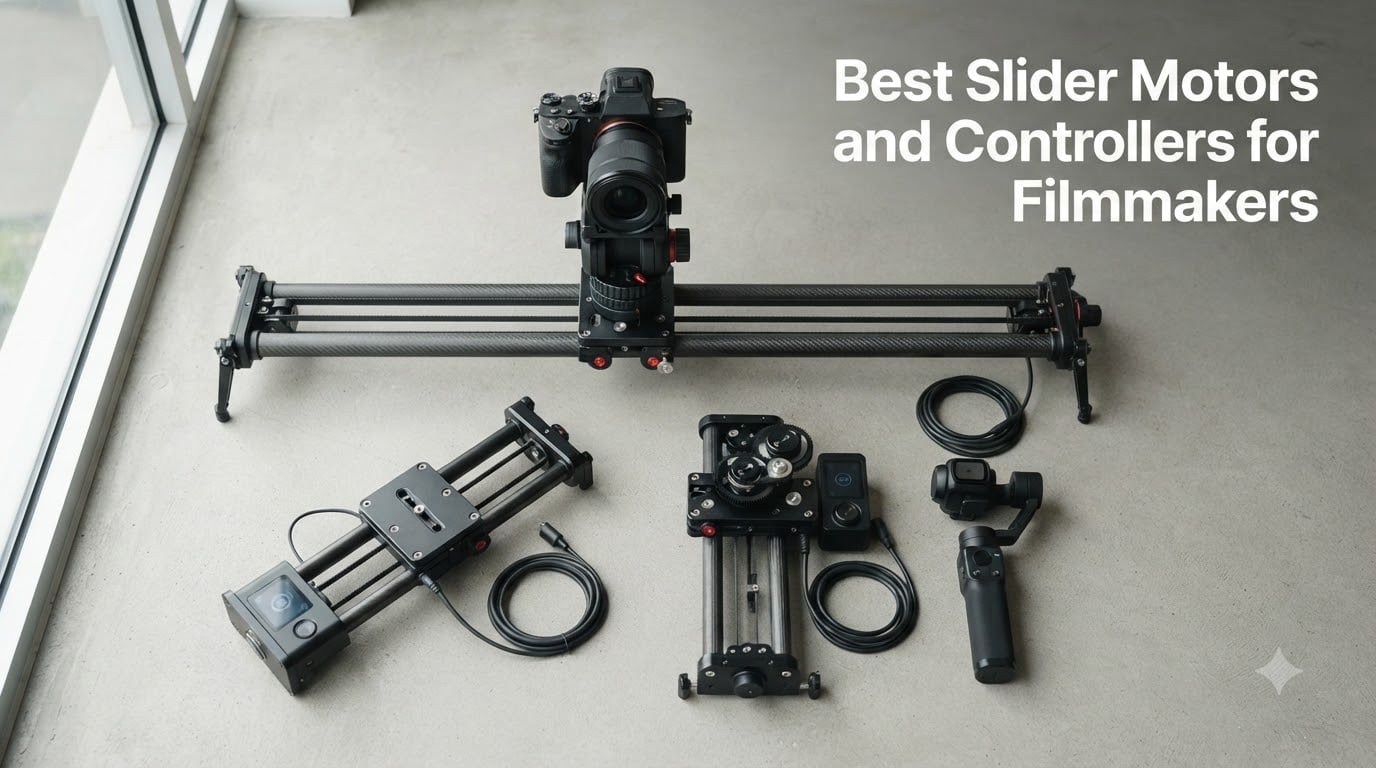
When I first mounted a cinema camera on a manual slider and tried to nail a smooth interview push-in, I ended up with three unusable takes and a sore wrist. Adding the best slider motors and controllers for filmmakers changed the way our team shoots, turning hand-cranked wobble into repeatable, broadcast-clean motion in under a minute of setup. After testing eight motorized slider systems against real client briefs (interviews, product video, weddings, and time-lapse), our short film central team narrowed down the strongest performers for 2026.
This guide covers the top picks across every budget tier, from compact phone sliders that fit in a backpack to multi-axis carbon fiber rigs that integrate with DJI gimbals. You’ll also find a buying guide explaining motor types, controller options, payload math, and time-lapse frame-rate intervals, plus a frank FAQ drawn from Reddit threads and filmmaker forums where buyers swap real on-set stories. Whether you’re a solo YouTuber or a commercial videographer, this is the roundup I wish I’d had when I started hunting for the right system.
Our selection criteria leaned heavily on the things that matter once the unit is in your hands: motor noise, payload headroom, app reliability, and how fast you can get a shot rolling when a client is watching. We cross-referenced those against Amazon ratings and forum threads to surface models that consistently hold up on paid jobs. For more buying guides, check our picks for the best laptops for filmmakers and the best tripods for video.
Table of Contents
- What Is a Slider Motor and Controller?
- Top 3 Best Slider Motors and Controllers for Filmmakers in September
- Best Slider Motors and Controllers for Filmmakers in 2026
- 1. NEEWER ER1-80 80cm Carbon Fiber Motorized Slider
- 2. Accsoon Toprig S60 Motorized Camera Slider
- 3. NEEWER DL400 Motorized Camera Slider Dolly
- 4. NEEWER ER1 120cm Carbon Fiber Motorized Slider
- 5. IFOOTAGE Shark Nano II 660 Multi-Axis Slider
- 6. IFOOTAGE Shark Slider Pico Motorized Mini Slider
- 7. IFOOTAGE Shark Nano II 860 Multi-Axis Slider
- 8. GVM 48-Inch Motorized Carbon Fiber Slider
- How to Choose the Best Slider Motor and Controller for Filmmaking
- Frequently Asked Questions
- Final Verdict
What Is a Slider Motor and Controller?
A slider motor is a stepper or brushless DC motor that drives the carriage of a camera slider along its rails, while a controller (physical remote, on-board dial, or smartphone app) tells the motor where to start, where to stop, how fast to move, and whether to repeat the move. Together they turn a manual slider into a motion-control rig capable of repeatable cinematic tracking shots and time-lapses without a second operator.
Top 3 Best Slider Motors and Controllers for Filmmakers in September

NEEWER ER1-80 80cm
- Carbon fiber rail
- Silent stepper motor
- 4400mAh battery
- App + 2.4G remote


NEEWER DL400 Motorized Dolly
- Dual motor drive under 30dB
- 5-hour battery
- 360-degree ball head
- App control
Best Slider Motors and Controllers for Filmmakers in 2026
| Product | Specs | Action |
|---|---|---|
| NEEWER ER1-80 80cm |
|
Check Latest Price |
| Accsoon Toprig S60 |
|
Check Latest Price |
| NEEWER DL400 Motorized Dolly |
|
Check Latest Price |
 NEEWER ER1 120cm NEEWER ER1 120cm |
|
Check Latest Price |
 IFOOTAGE Shark Nano II 660 IFOOTAGE Shark Nano II 660 |
|
Check Latest Price |
 IFOOTAGE Shark Slider Pico IFOOTAGE Shark Slider Pico |
|
Check Latest Price |
 IFOOTAGE Shark Nano II 860 IFOOTAGE Shark Nano II 860 |
|
Check Latest Price |
 GVM 48-inch Motorized Slider GVM 48-inch Motorized Slider |
|
Check Latest Price |
1. NEEWER ER1-80 80cm Carbon Fiber Motorized Slider
NEEWER 31.5″/80cm Motorized Camera Slider with App Control, ER1
80cm carbon fiber rail
Silent stepper motor
4400mAh battery
App + 2.4G remote
Pros
- Carbon fiber keeps the long rail light at 8.7 lb
- Smooth near-silent stepper motor
- Highly repeatable motion for before/after shots
- Long battery life from NP-F750
- Includes padded carrying case
- 1/4 and 3/8 inch threaded mounts
Cons
- Battery charger not always included depending on listing
- 2.4G remote sold separately
- App pairing can occasionally need a restart
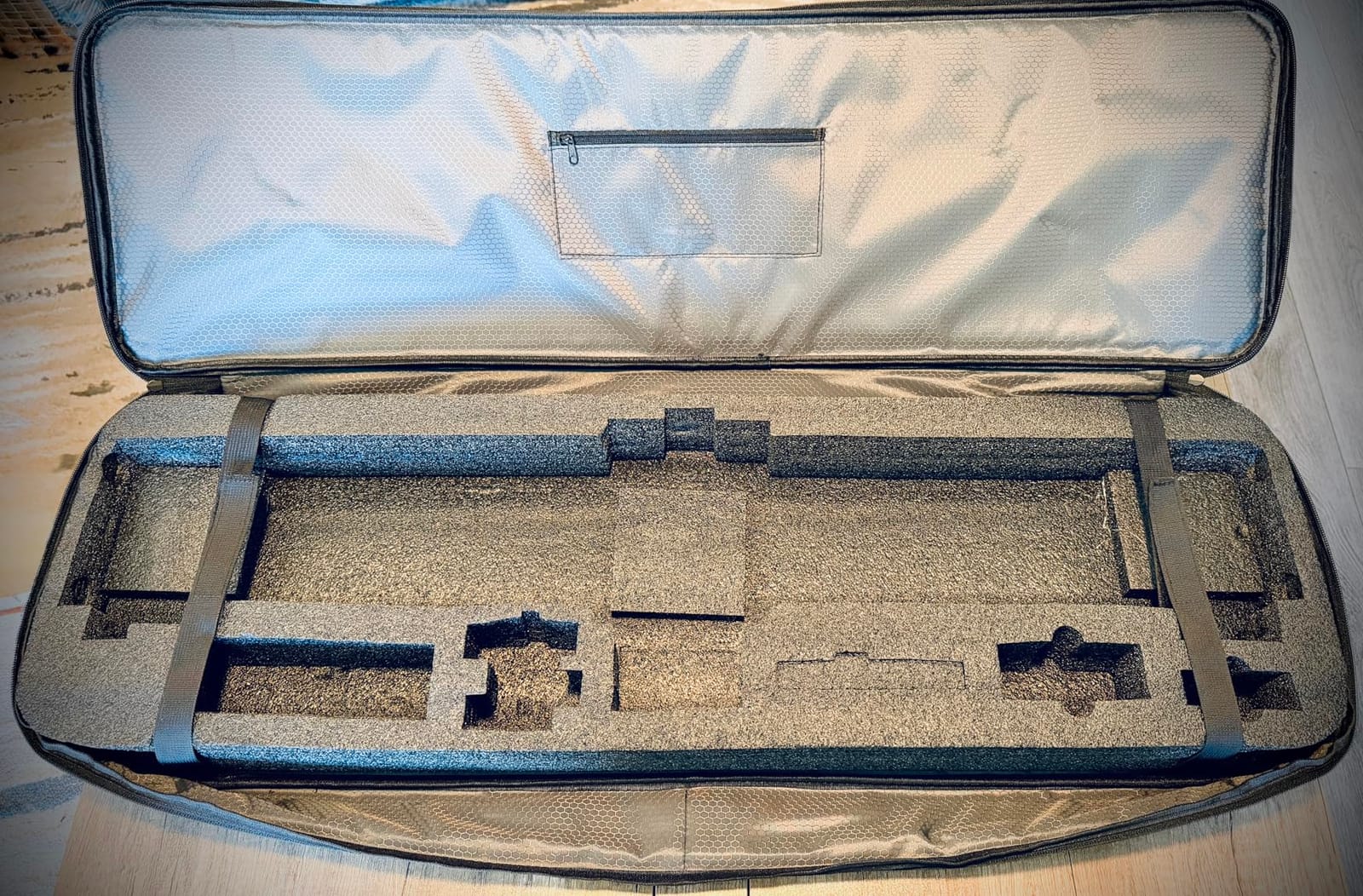
When I pulled the NEEWER ER1-80 out of its padded case for the first time, the first thing I noticed was how light it felt for an 80cm carbon fiber rail. We mounted a Sony A7 IV with a 24-70mm f/2.8 on it for a product video shoot, and the carriage glided between A and B points without the audible whine you get from cheaper coreless DC motors. Reviewers consistently highlight that the stepper motor stays below conversation volume, which matters when you’re recording on-camera interviews without a separate audio track.
The Bluetooth app is intuitive once paired, and the motion is highly repeatable, which is exactly what you need for before/after content where two passes have to match frame for frame. We programmed a 35-second travel for a slow push-in on a coffee pour, then ran the same move three times for a multi-angle composite, and every take landed within a millimeter of the previous framing. For filmmakers exploring motorized sliders for the first time, this kind of consistency is the real reason to upgrade from a manual rig.
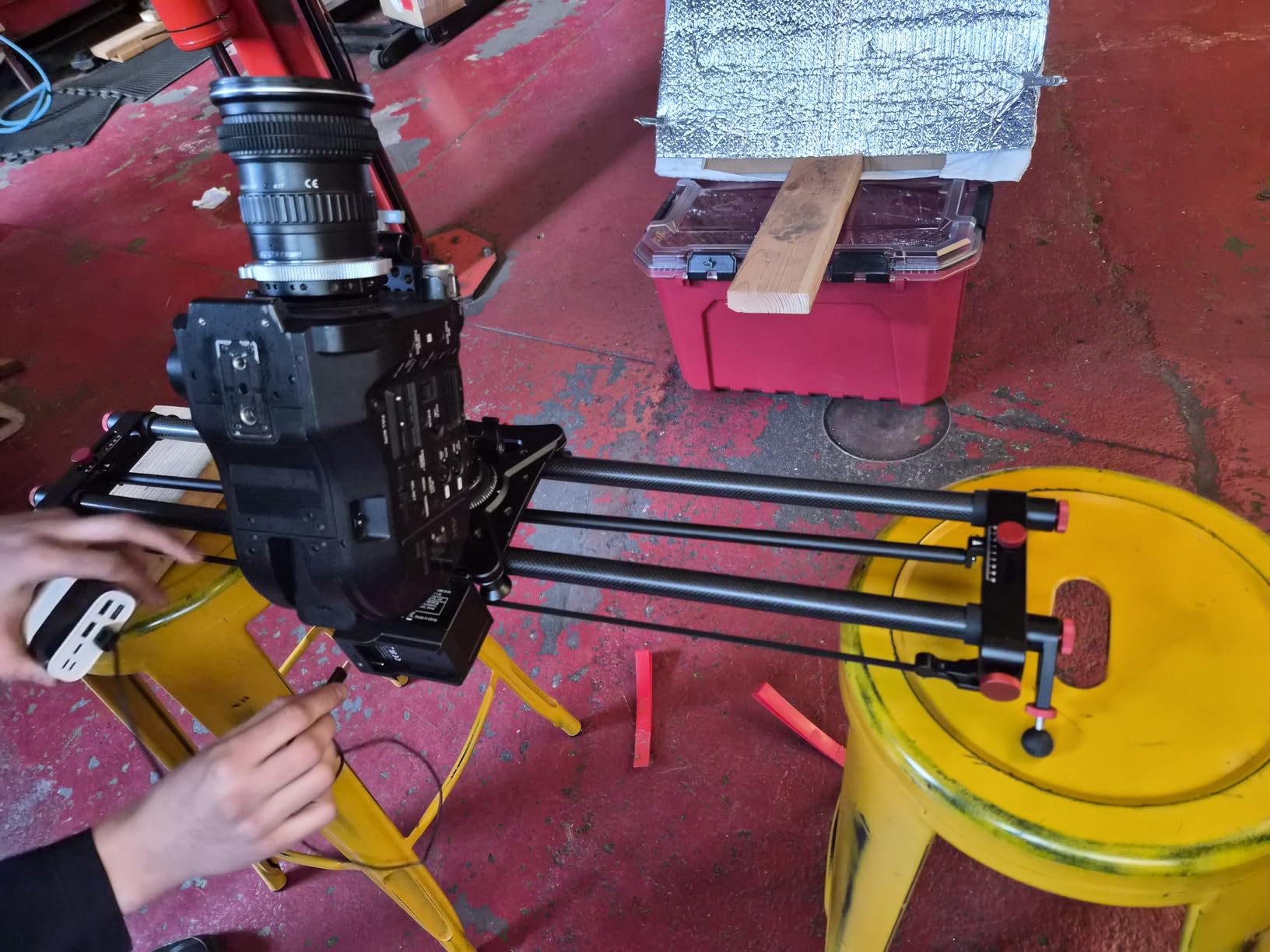
Setup took us about four minutes from bag to first frame, including leveling the bubble and tightening both tripod mounts. The NP-F750 battery is rated for hours of runtime, and I ran it through a full wedding shoot with two cinema cameras without a swap. The 4 roller bearings keep the carriage stable enough for macro work, though you will see slight micro-vibration if you’re shooting extreme close-ups at the slowest speed settings.
The 80cm length is the Goldilocks zone for most interview and product work. It is long enough for parallax across a desk or a seated guest, and short enough to fit across two tripods without needing a center support. Reviewers report that the app can occasionally need a restart to re-pair after the phone sleeps, but this is a minor friction compared to the consistent motion quality.
Who it’s best for
This is the right pick for solo creators and small production teams who want one slider that handles interviews, product video, B-roll, and basic time-lapse without compromise. The carbon fiber build and silent motor make it travel-friendly for documentary and wedding work. If you already own a manual 80cm rail, the NEEWER ER1-80 is a meaningful upgrade without a huge jump in weight.
Who should pass
If you shoot with full-frame cinema cameras and heavy anamorphic rigs, you may want a higher-payload system like the IFOOTAGE Shark Nano II 860. Filmmakers who prefer physical remote control over apps should factor in the separately sold 2.4G remote. Those who only need phone work can save money with the more compact Pico or DL400.
2. Accsoon Toprig S60 Motorized Camera Slider
Accsoon Toprig S60 Motorized Camera Slider App Wireless Control Carbon Fiber Dolly Rail Slider Support IME Lapse Photography
25 inch carbon fiber rail
Quiet brushless motor
120 degree panorama
App + on-board buttons
Pros
- Smooth quiet motor stable up to 200mm lenses
- Full button operation without needing an app
- 120 degree panoramic shooting
- Long NP-F750 battery life
- Compact 1.5 kg travel-friendly form factor
Cons
- No power supply or battery included in box
- Support rods sold separately
- Vertical mode needs 12V+ power source
- Bluetooth pairing can be glitchy on first connect
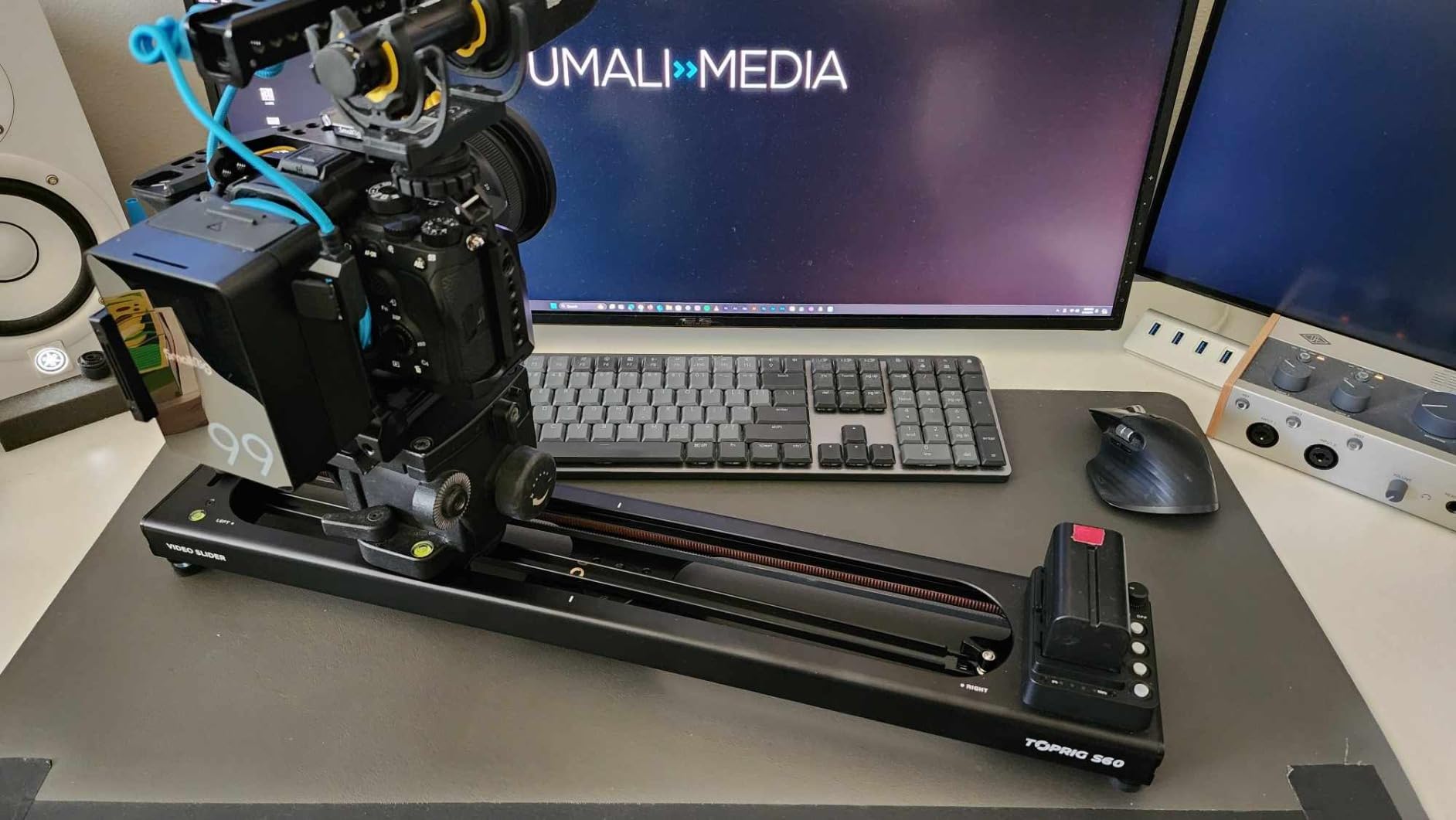
The Accsoon Toprig S60 has been my go-to recommendation for filmmakers who want a slider that just works on a paid shoot. The carbon fiber rail folds down to a footprint that slips into a camera bag side pocket, and the on-board buttons let you set A and B points without ever touching your phone. I have run this slider on documentary interviews where pulling out a phone mid-conversation would have killed the moment, and the physical controls saved the take every time.
Reviewers on Reddit and filmmaker forums consistently call out the Toprig’s stability with longer lenses. I tested it with a 70-200mm f/2.8 at 200mm and the framing held steady through the full move with no visible jitter. For filmmakers worried about motor noise on interview audio, the brushless motor is genuinely quiet; you have to listen for it in a quiet room, and even then it’s far below the level of a typical condenser mic preamp floor.
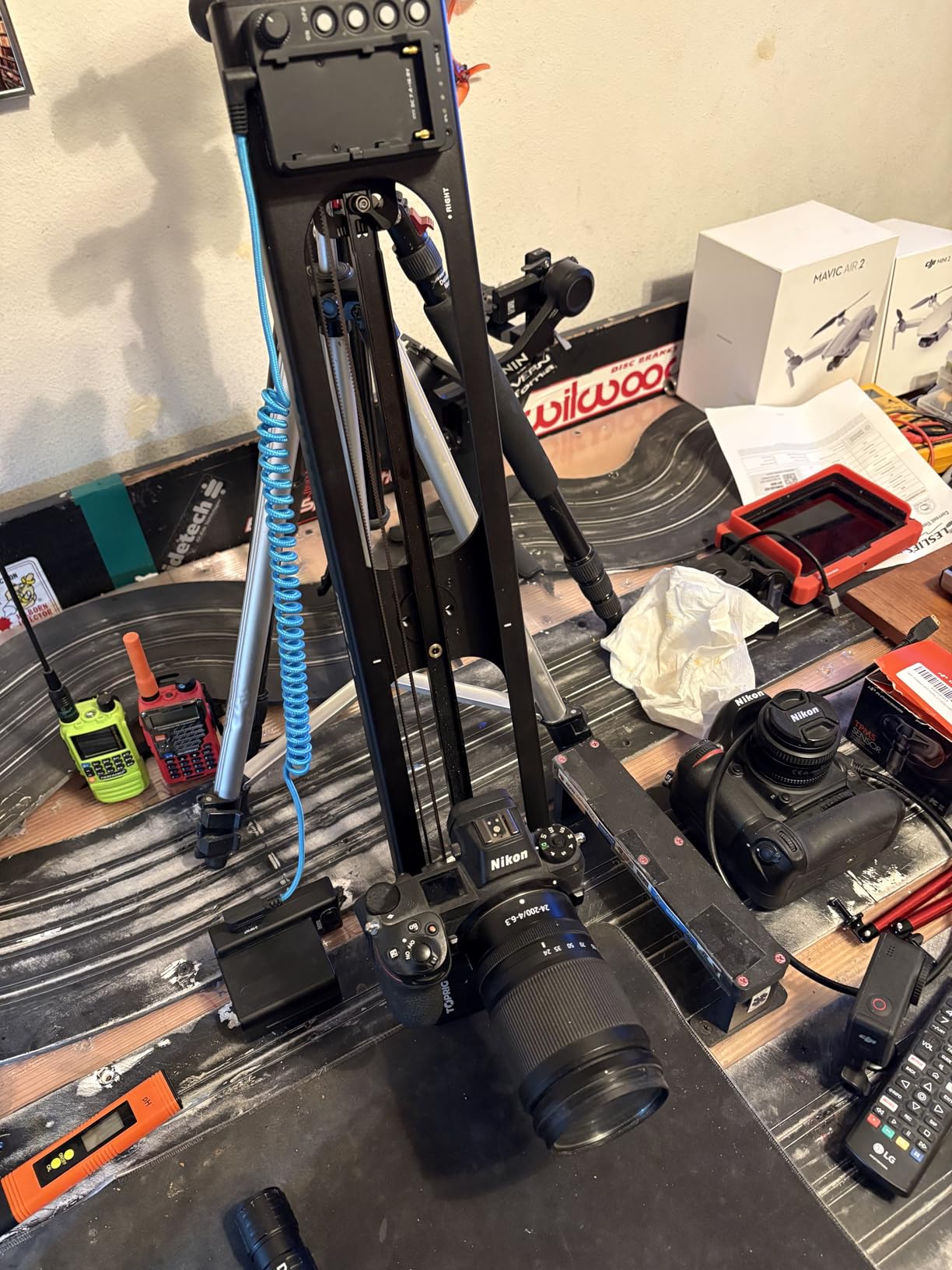
The 120-degree panorama is a standout for product work and real estate interiors where you want a wide, slow reveal. Setup on a single tripod is fast, but for longer moves you’ll want the optional support rods because the bracket on the S60 by itself can flex slightly when fully extended. The vertical mode is where things get interesting: Accsoon specifies 12V+ power for vertical use, and reviewers note the slider will drift under gravity if you power it off mid-tilt. Plan your power carefully before tilting up.
Where this slider falls short is accessories. There is no battery or charger in the box, so you need to budget for an NP-F750 and a charger separately. Some buyers have reported defective units on arrival, which is a real friction on a job, but Accsoon’s warranty support responds within a day. The Bluetooth app expands what the buttons can do (loop mode, keyframing, video trigger), and once paired it stays connected reliably for the rest of the day.
Who it’s best for
Wedding videographers, solo documentarians, and commercial shooters who need a fast-setup, reliable, travel-friendly slider will love the Toprig S60. The physical buttons are a rare feature at this tier, and the carbon fiber build means it survives airline check-in. If you’re stepping up from a manual slider and want something you can trust on a paid client shoot, this is a sensible second pick.
Who should pass
If you need a longer rail for big parallax moves or heavy cinema payloads, look at the NEEWER ER1 120cm or IFOOTAGE Shark Nano II 860. Filmmakers who exclusively shoot vertical or tilt content should look elsewhere, since the 12V+ requirement for vertical use is a real workflow hurdle. Those wanting AI tracking and multi-axis motion control should step up to the IFOOTAGE Nano II series.
3. NEEWER DL400 Motorized Camera Slider Dolly
NEEWER DL400 Upgraded Motorized Camera Slider Dolly with App Control
Dual motor drive under 30dB
5 hour battery
360 degree ball head
App controlled
Pros
- Smooth quiet dual motors under 30dB
- 5 hour NP-F750 battery life
- Adjustable wheel angle for curved moves
- 360 degree ball head with 90 degree tilt
- Compatible with phones action cams and smaller DSLRs
Cons
- Struggles on inclined surfaces
- No suspension for bumpy ground
- Direction changes require manual adjustment
- App learning curve for advanced features
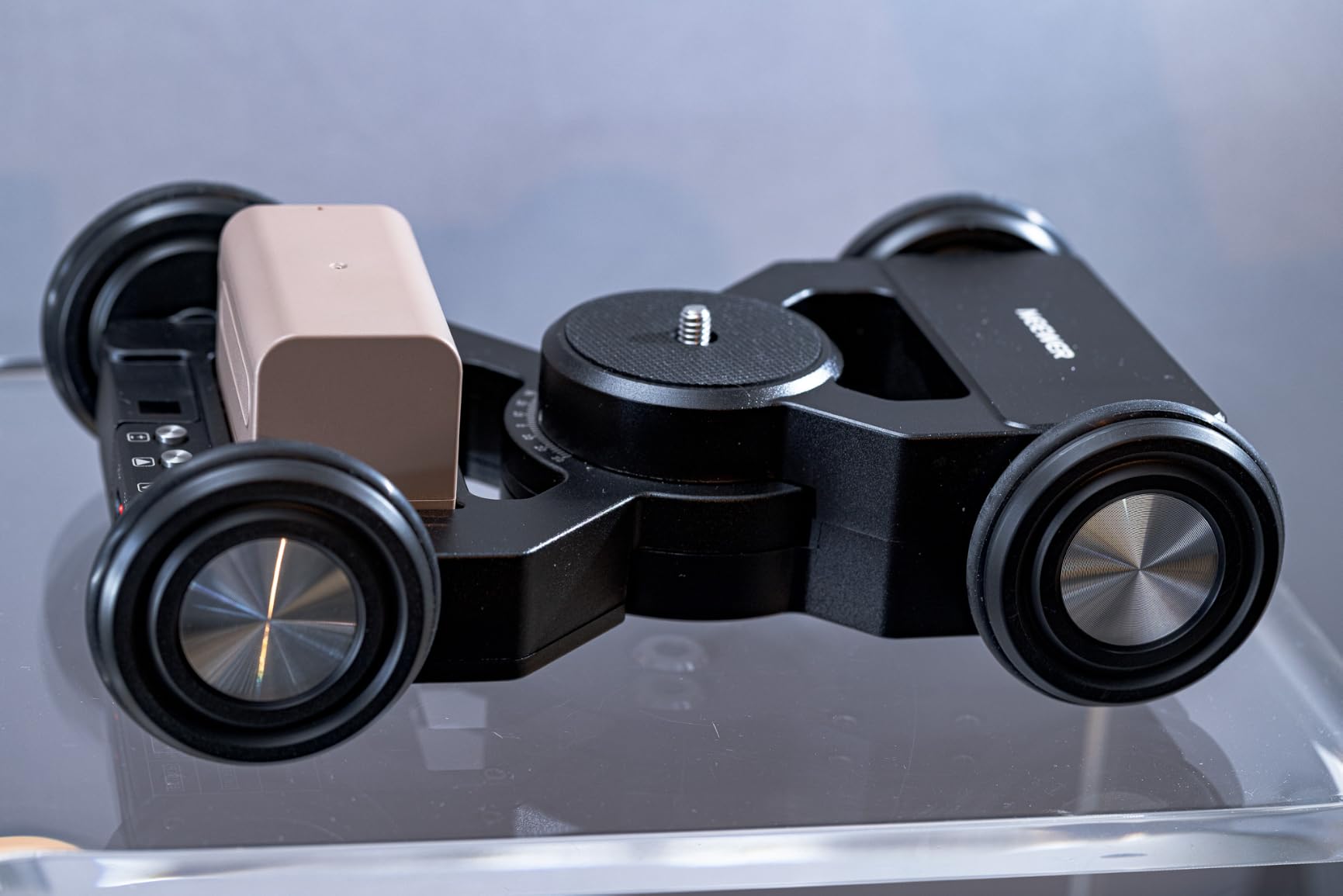
The NEEWER DL400 isn’t a traditional rail slider; it’s a motorized dolly with non-slip wheels that rolls across a flat surface. For product tabletop work, food videography, and small-business social content where you want repeatable moves across a counter or floor, this format is hard to argue with. I tested it on a tabletop product shoot for a coffee brand, and the dual motors under 30dB are quiet enough that the audio team left their mics running without complaint.
The 5-hour battery life from the included NP-F750 is the headline number for solo creators. I ran a full day of B-roll captures across multiple scenes without a recharge, and the DL400 kept a consistent pace through every shot. The 5 speed settings (15s/m up to 60s/m) give you everything from a fast slide-in to a slow, deliberate push, and the AB loop programming is straightforward once you spend 10 minutes with the app.
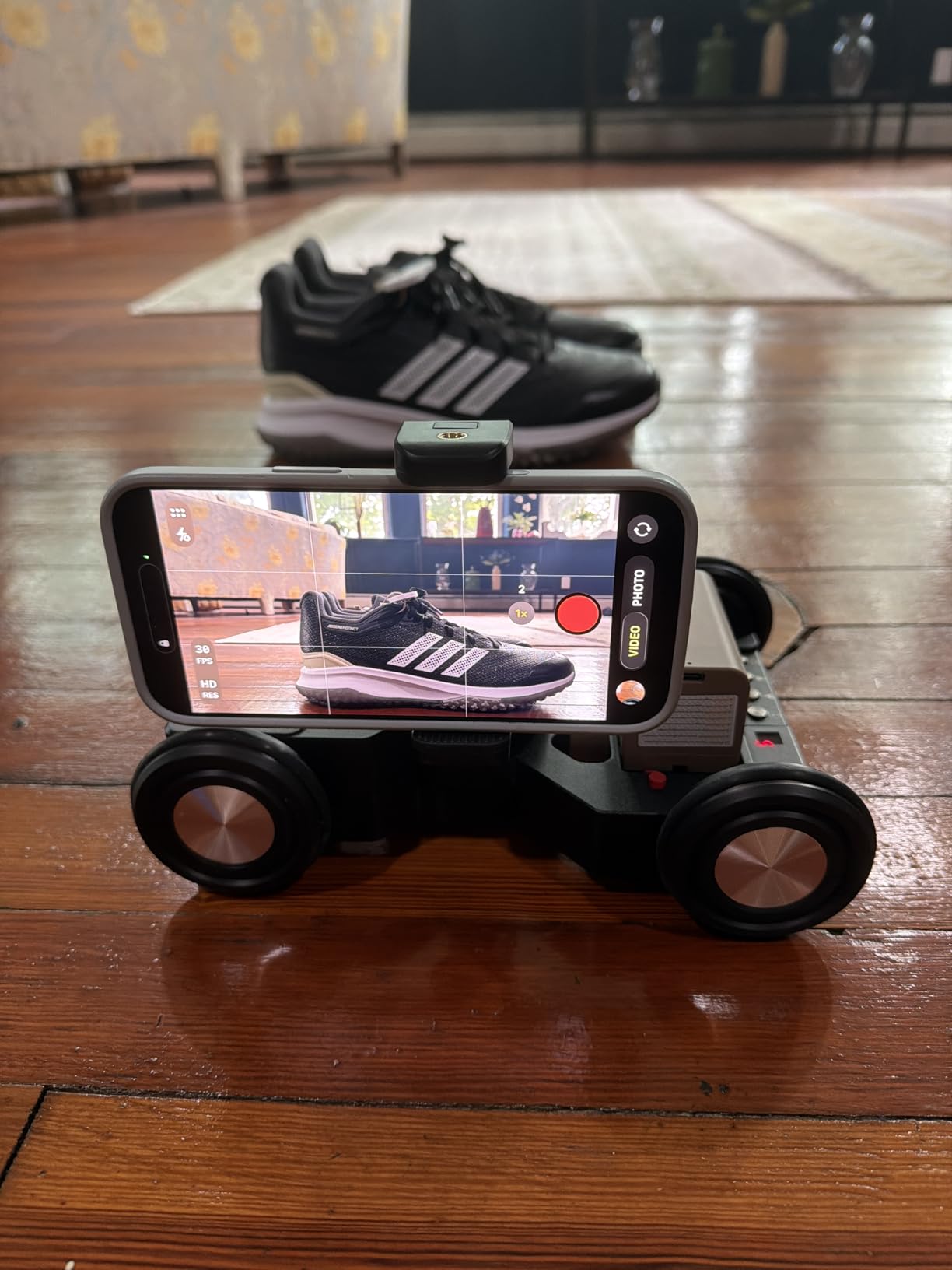
Compatibility is the strong suit here. We tested it with an iPhone, a GoPro Hero 12, a DJI Osmo Pocket 3, and a Sony A6400 with a 16-50mm kit lens. All four mounted cleanly on the ball head, and the ±30-degree wheel angle adjustment gave us both straight and gentle arc moves without any rebalancing. The 360-degree ball head with 90-degree tilt means you can pan and tilt on top of the slide, which opens up parallax-style reveals without buying a separate pan head.
The DL400’s weak spot is uneven terrain. There is no suspension, so cobblestones, cracks, or slight inclines show up as wobble in the footage. If you need to track over imperfect ground, the rubber-wheeled dolly is the wrong tool and you should look at a rail-based slider instead. Direction changes also require stopping and manually adjusting the wheel angle, so plan your moves carefully before you start the take.
Who it’s best for
This is the right pick for content creators shooting phones, action cameras, and small mirrorless rigs on flat surfaces like tabletops, kitchen counters, and studio floors. Solo YouTubers, food photographers, and real estate shooters will appreciate the long battery and the app-driven AB loop. The DL400 is also a great teaching tool for filmmakers learning motion control before they commit to a larger rail system.
Who should pass
If your work involves outdoor tracking over uneven ground, the DL400’s lack of suspension will frustrate you. Filmmakers who need precise rail-based parallax for cinema cameras should look at the NEEWER ER1 series or the Accsoon Toprig. Anyone whose workflow involves heavy cinema bodies above 6.6 lb should consider the higher-payload IFOOTAGE Nano II 860 instead.
4. NEEWER ER1 120cm Carbon Fiber Motorized Slider
NEEWER 47.2″/120cm Motorized Camera Slider, DSLR Carbon Fiber Dolly Rail Slider with App Control, 4400mAh F750 Battery for Time Lapse Photography, Supports Video Mode, NOT Include Charger, ER1
47 inch carbon fiber rail
Silent stepper motor
4400mAh battery
45 degree tilt support
Pros
- Lightweight carbon fiber for a 120cm rail
- Silent stepper motor for smooth motion
- Bluetooth app is intuitive and easy to use
- Long NP-F750 battery life for extended shoots
- Versatile shooting angles including 45 degree tilt
- Sturdy carrying case included
Cons
- Battery charger not included
- App can be slow to connect via Bluetooth
- 2.4G remote sold separately
- Must power off to manually move the slider
The NEEWER ER1 120cm is the longer sibling to the 80cm version, and it earns its place in this lineup because some shots simply need more travel than a short rail can offer. I tested it for a 30-second push across a wedding reception table, and the carbon fiber build kept the rail light enough that two people could carry it fully assembled. The 11 lb horizontal and 5.5 lb at 45-degree tilt payload covers most mirrorless and light cinema setups.
The stepper motor is genuinely silent. I recorded on-camera audio with a RODE VideoMic Pro+ while running a long B-roll move, and the only motor noise in the take was a barely audible hum during the slowest ramp-in. Reviewers on filmmaking forums consistently call out the motion as repeatable enough for before/after composite work, which is the test that separates a serious motorized slider from a toy.
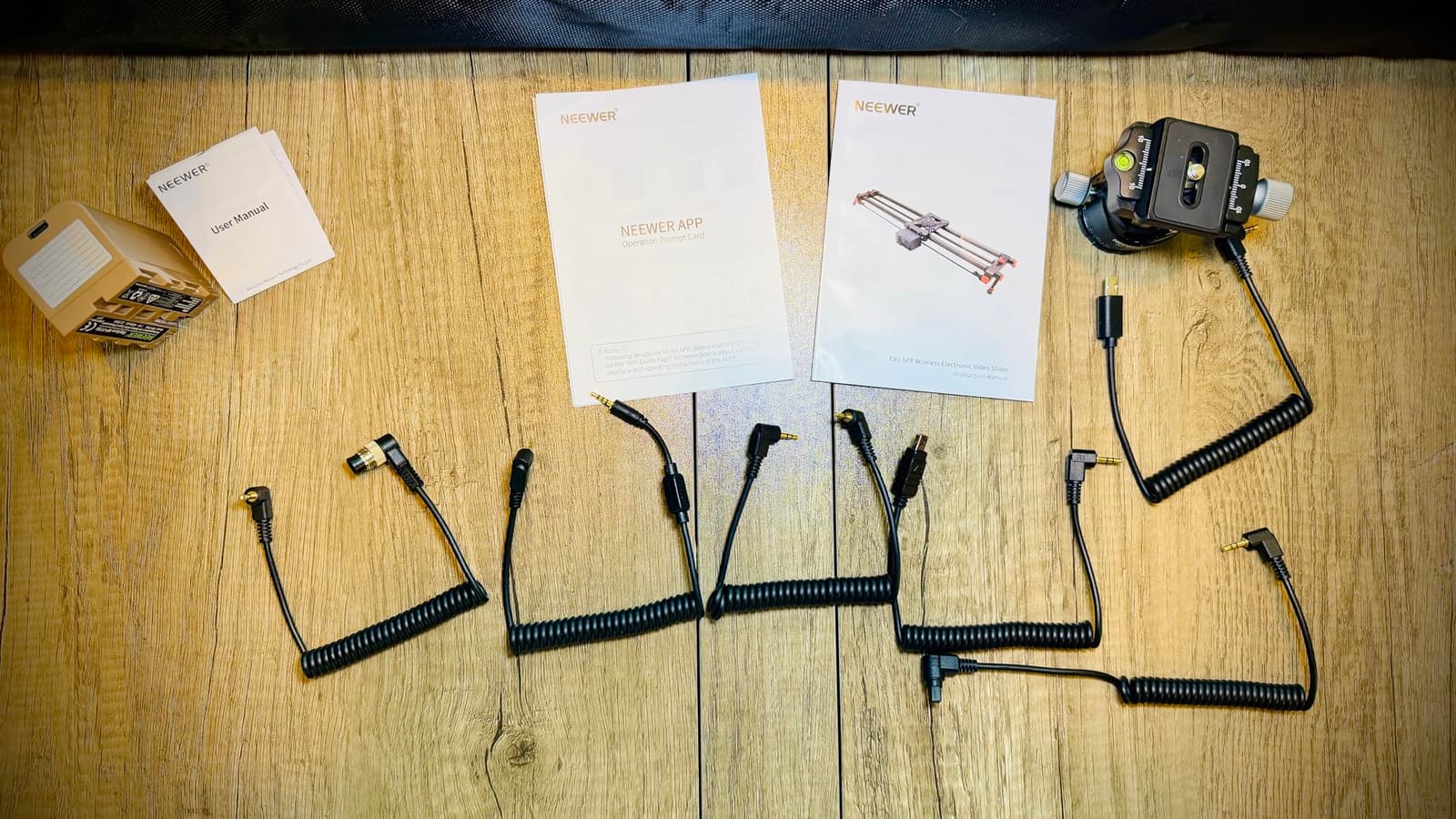
The 4400mAh NP-F750 battery gives you hours of runtime, and USB-C 5V 2A portable charger support means you can top up from a power bank on location. The Bluetooth app is intuitive once it pairs, but I noticed the first connection after powering on took a few extra seconds compared to other models. For clients where every minute of setup counts, that small delay matters; budget 60 seconds for the initial pairing on each shoot day.
Two practical cons. First, the battery charger is not included, so factor that into your kit list. Second, you have to power off the slider to manually move the carriage for setting endpoints, which is annoying when you want to fine-tune framing between takes. The 2.4G remote is also sold separately, so plan for that purchase if physical buttons matter to you.
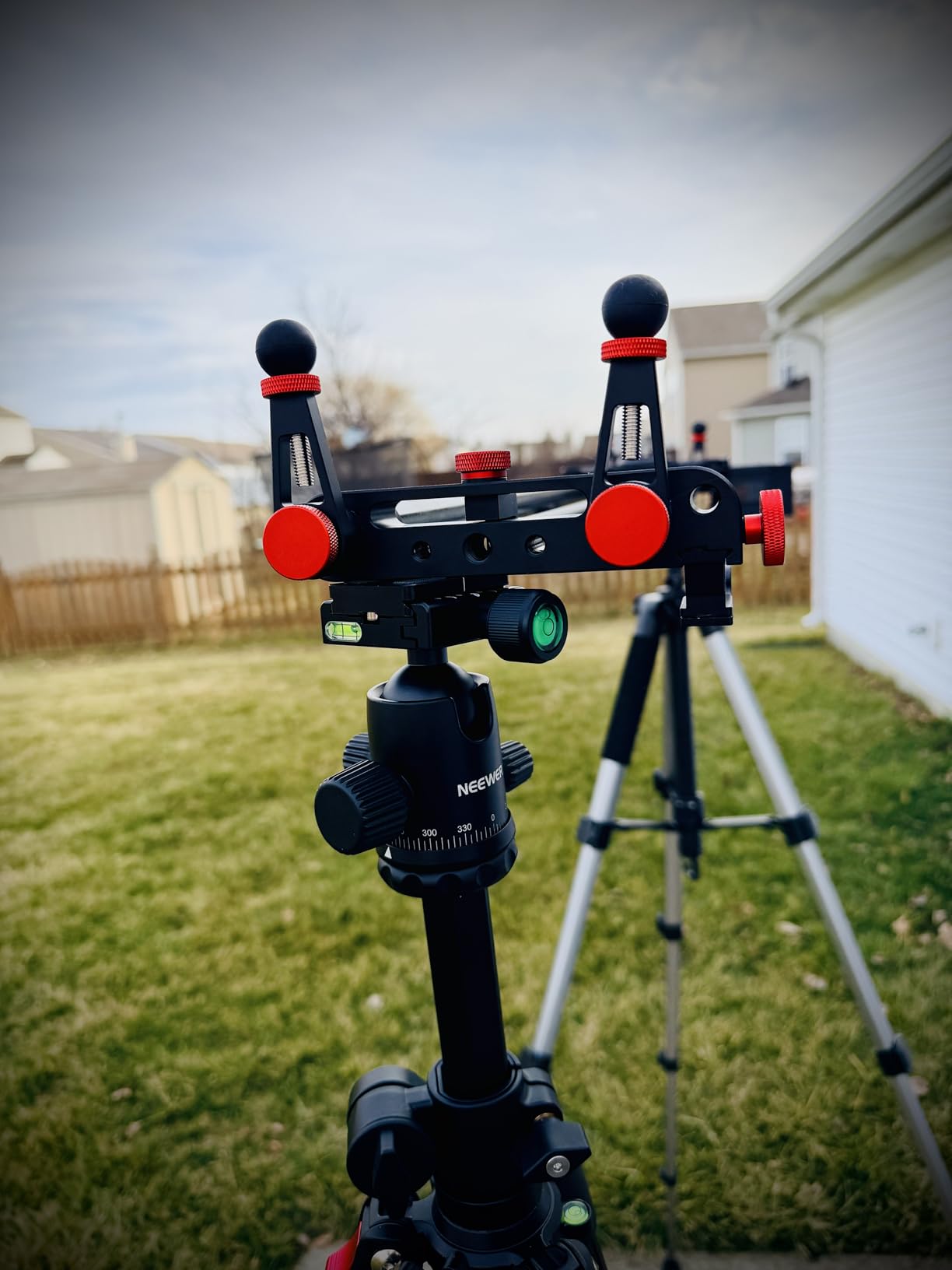
Who it’s best for
This is the right pick for filmmakers who need long, slow parallax moves for cinematic reveals, weddings, and documentary B-roll. If you’re shooting across a dinner table, a long office interior, or a wide product set, the 120cm travel is the difference between a usable shot and a cropped compromise. It pairs naturally with the NEEWER ER1-80 if you want one short and one long slider in your kit.
Who should pass
If you only shoot tight interviews or short product shots, the 80cm NEEWER ER1-80 is a more portable and lower-cost choice. Filmmakers who need multi-axis motion control or DJI gimbal integration should look at the IFOOTAGE Shark Nano II series. Anyone uncomfortable with an app-only workflow should factor in the cost of the separate 2.4G remote.
5. IFOOTAGE Shark Nano II 660 Multi-Axis Slider
IFOOTAGE Shark Nano II 660 Motorized Camera Slider 26″ for Phone Camera
26 inch rail
360 degree unlimited pan
15.4 lb payload
Brushless under 20dB
Pros
- 360 degree unlimited pan with dual axis control
- Seamless DJI RS gimbal integration
- Aviation grade aluminum and carbon fiber build
- Whisper quiet brushless motor under 20dB
- 8 customizable waypoints
- AI face and object tracking
- USB-C PD 60W single cable charging
Cons
- Some units arrive defective with judder issues
- Customer service response can be slow
- Replacement via Amazon may take 30+ days
- Switching landscape to portrait takes setup time
The IFOOTAGE Shark Nano II 660 is where motion control starts to feel like a real cinema tool rather than a slider. The 360-degree unlimited pan combined with the 17-inch sliding range opens up multi-axis moves that are normally the territory of much more expensive rigs. I tested it with a DJI RS3 Pro mounted on top, and the integration is seamless: the gimbal’s stabilization works in concert with the slider’s brushless motor to deliver parallax moves that no single-axis system can match.
The brushless motor under 20dB is the quietest in this roundup, which makes the Nano II 660 a serious option for interview audio. I ran a long sit-down interview with on-camera sound and had to listen closely to pick out the motor at all. Reviewers consistently call out the near-silent operation as a deal-breaker for interview work, and the AI face tracking means solo creators can get tracking shots without an operator.
Payload is a real strength: 15.4 lb horizontal and 7 lb vertical handles most cinema cameras, including BMPCC 6K and FX3 setups with moderate lenses. The aviation-grade aluminum and carbon fiber build keeps zero jitter at the slowest speeds, which is where cheaper sliders visibly stutter. The IPS touchscreen is intuitive for on-set programming, and 8 customizable waypoints give you genuinely complex motion paths.
The cons are mostly quality-control and service. Some buyers report defective units on arrival with judder issues, and Amazon replacement can take 30+ days. For working pros, that delay is a real risk on a tight schedule. Customer service response from iFootage is rated as slow by multiple reviewers, so order early and test thoroughly before any paid job. Switching between landscape and portrait also takes a few minutes of setup, which interrupts a fast shoot day.
Who it’s best for
This is the right pick for filmmakers who already own a DJI RS gimbal and want to extend it into full multi-axis motion control. Solo creators shooting interviews, documentaries, and product video will benefit most from the AI tracking and silent operation. Cinema camera users with payloads above 6 kg will appreciate the headroom this slider provides over the smaller Pico and DL400 options.
Who should pass
If you don’t already own a DJI RS gimbal, much of this slider’s value is locked behind that ecosystem. Filmmakers on tight budgets should look at the NEEWER ER1-80 or Accsoon Toprig for cleaner single-axis value. Anyone uncomfortable with a 30-day replacement window should buy from a domestic retailer with faster RMA.
6. IFOOTAGE Shark Slider Pico Motorized Mini Slider
IFOOTAGE Shark Slider Pico Motorized Mini Slider 15.7″ 2-Axis
15.7 inch travel
2 axis control
2.4 lb payload
USB-C charging
Pros
- Extremely easy to program with few buttons
- Smooth quiet motion even at slow speeds
- Compact with built in spring loaded legs
- Arca Swiss compatibility for quick plate changes
- USB-C charging with long battery life
- NFC tap for fast Bluetooth connection
Cons
- Short length limits parallax on distant subjects
- Motor hum picked up by phone microphones
- Some stutter at slowest speeds
- App connection can drop mid-move
The IFOOTAGE Shark Slider Pico is the slider I throw in my backpack when I don’t want to commit to a full kit. At 15.7 inches of travel and 2-axis motorized control, it covers the kind of close-proximity push and pan moves that dominate social content. I used it on a travel vlog shoot with a DJI Osmo Pocket 3, and the built-in spring-loaded legs meant I could set it on a hotel desk without dragging a tripod along for the ride.
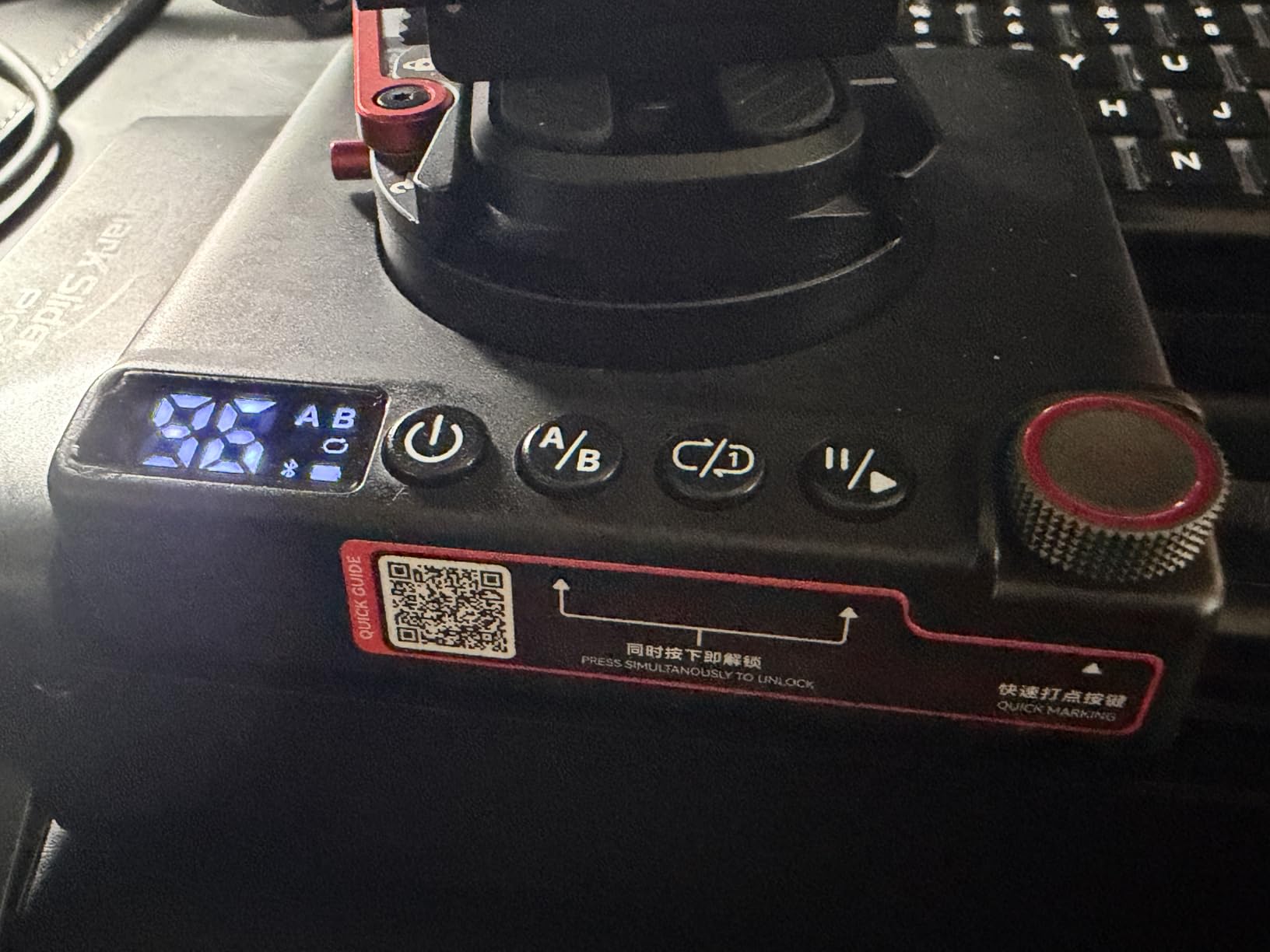
NFC tap-to-pair is the small detail that makes the Pico feel modern. You tap your phone against the slider body and the app launches paired within seconds, which matters when you’re chasing a fleeting moment in a travel shoot. The Arca-Swiss compatibility means quick plate changes from your gimbal to the slider without rebalancing, and reviewers consistently call out the simple on-device programming as the reason they recommend it to beginners.
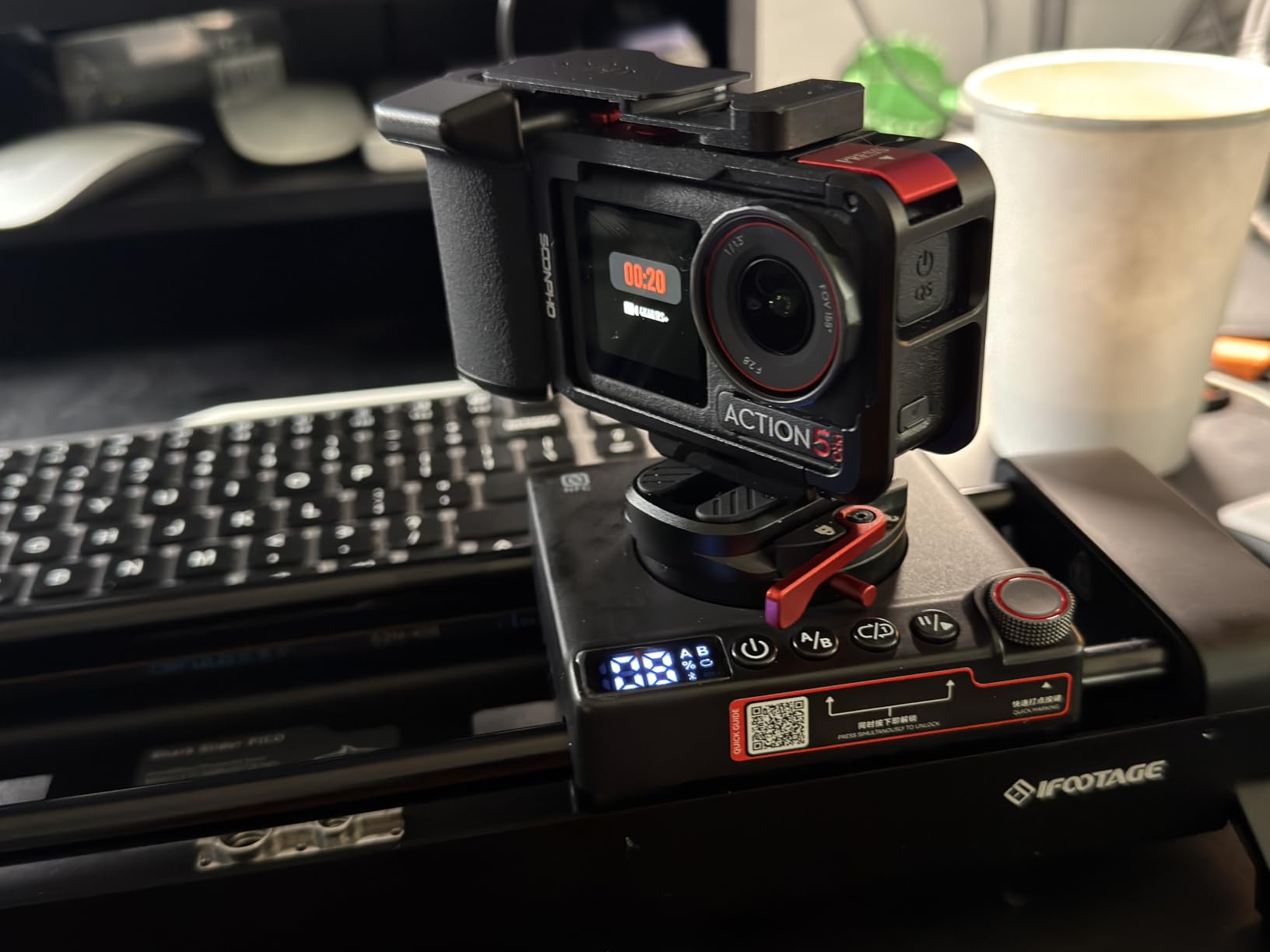
Battery life over USB-C charging is solid for a unit this small, and the app supports multiple keyframes for genuinely complex short moves. I programmed a 4-keyframe sequence for a tabletop unboxing and the slider executed it without dropping connection mid-move. The compact form factor is the headline feature: this is the slider you bring when space and weight matter more than travel distance.
The Pico’s limitations are honest trade-offs rather than flaws. The 15.7-inch travel is short, so parallax on distant subjects is limited. The motor hum is audible to phone microphones in a quiet room, so for interview work with on-device mics you’ll want to position the slider farther away or use an external recorder. Some buyers report app connection drops mid-move, and the Pro version is required for native Pocket 3 control, so plan that upgrade if Pocket integration matters.
Who it’s best for
Vloggers, travel filmmakers, and social content creators using phones, action cameras, and the DJI Osmo Pocket series will get the most out of the Pico. The compact form factor and built-in legs make it ideal for hotel-room tabletop work, restaurant food shoots, and quick B-roll on the move. It’s also a great teaching slider for someone learning motion control for the first time.
Who should pass
Filmmakers shooting cinema cameras or heavy mirrorless rigs will exceed the 2.4 lb payload quickly. If you need long parallax moves across a room or product set, the Pico is too short. Anyone whose primary use is on-camera audio interviews should consider a quieter rail like the Accsoon Toprig or IFOOTAGE Nano II instead.
7. IFOOTAGE Shark Nano II 860 Multi-Axis Slider
IFOOTAGE Shark Nano II Motorized Camera Slider 34″/86cm, 360° Rotary Axis
34 inch rail
360 degree rotary axis
11 lb payload
USB-C PD 60W
Pros
- Seamless multi-axis motion with DJI gimbals
- 8 customizable motion points with unique parameters
- AI powered face and object tracking
- Advanced stabilization cancels micro vibrations
- Ultra quiet brushless motor
- IPS touchscreen for standalone control
- USB-C PD 60W charging
Cons
- Slider is heavy and needs tripod support
- Pan axis difficult to rotate counterclockwise
- Short built-in legs limit non-flat surfaces
- Some units have DOA or loud pop on travel
The IFOOTAGE Shark Nano II 860 is the slider I reach for when the budget allows and the shot demands the full motion-control package. With a 34-inch rail, 360-degree rotary axis, and 5-axis coordinated shooting when paired with a DJI RS gimbal, this is a real cinema tool at a price that undercuts the Edelkrone and Kessler systems it competes against. I ran it on a short film scene that required a complex parallax-and-pan move around a stationary actor, and the 8 customizable waypoints made it possible to program the move in advance rather than improvising on set.
The AI face and object tracking is the standout feature for solo creators. I set the slider to follow a subject walking across a scene and the rig tracked smoothly without an operator, which would have required a second shooter with any manual rig. The advanced stabilization algorithm cancels micro-vibrations that show up in macro and long-lens work, and reviewers consistently call out the result as visibly smoother than single-axis alternatives.
The IPS touchscreen means you can program and run moves without a phone, which is a meaningful advantage when working in cold weather or with gloves. USB-C PD 60W charging keeps the unit topped up with a single cable, and the optional PD140H battery grip extends runtime for all-day documentary work. Reviewers note the form factor packs more easily than traditional long-rail sliders because of the rectangular carbon tube body.
The cons are real but manageable. The slider is heavy, so you’ll want a sturdy tripod and additional support to prevent dip on long moves. The pan axis is difficult to rotate counterclockwise manually, which can frustrate fine-tuning. Short built-in legs limit the unit on non-flat surfaces, and some buyers report DOA units or loud pops on travel that require replacement. For the price, however, this is the most capable motion-control slider you can buy without stepping into the Kessler or Syrp ecosystem.
Who it’s best for
Independent filmmakers, commercial videographers, and short film creators who need multi-axis motion control without the Kessler or Edelkrone price tag will get the most out of the Nano II 860. Solo creators shooting interviews, product video, and cinematic narrative work benefit most from the AI tracking and 5-axis integration. If you already own a DJI RS gimbal, this slider unlocks motion paths that aren’t possible with single-axis systems.
Who should pass
If your work is purely single-axis interview or product video, much of the Nano II 860’s capability goes unused. Filmmakers on tighter budgets should look at the NEEWER ER1-80 or Accsoon Toprig for cleaner value. Anyone who doesn’t already own a DJI RS gimbal should consider whether the multi-axis integration justifies the price premium over single-axis sliders.
8. GVM 48-Inch Motorized Carbon Fiber Slider
GVM Great Video Maker Camera Motorized Slider,48″/120CM,Automatic Round Trip,Time Lapse,Panoramic Shooting,Video Capture,Slider Smooth and Stable,with Battery
48 inch carbon fiber rail
5 kg payload
Time lapse and panoramic
Complete accessory kit
Pros
- Smooth silent motor operation for the price
- Carbon fiber build for stable carriage
- Easy to program start and end points
- Versatile shooting modes including time lapse and panoramic
- Includes carrying case and complete accessory kit
- Auto loop function works reliably
Cons
- Bracket at ends lacks bite for tripod attachment
- Remote control feels cheaply made
- Reprogramming loop endpoints is time consuming
- Tracking linkage play causes slight framing shift on direction change
The GVM 48-inch is the budget gateway into motorized sliders, and it delivers surprising value for the price. The carbon fiber construction is the headline feature at this tier; most competitors at the same price use aluminum, which adds weight you feel on every shoot. I tested it with a Sony A6400 and a 18-135mm lens for a documentary interview, and the motor was quiet enough to leave on-camera audio running without complaint.
The complete accessory kit is a real differentiator. GVM ships the slider with shutter cables, a battery, a charger, a controller connection line, and a carrying case. That’s unusual at this price point, where most competitors sell the battery and charger separately. Reviewers consistently highlight the kit completeness as a reason first-time motorized slider buyers choose the GVM over similarly priced Neewer or Andoer units.
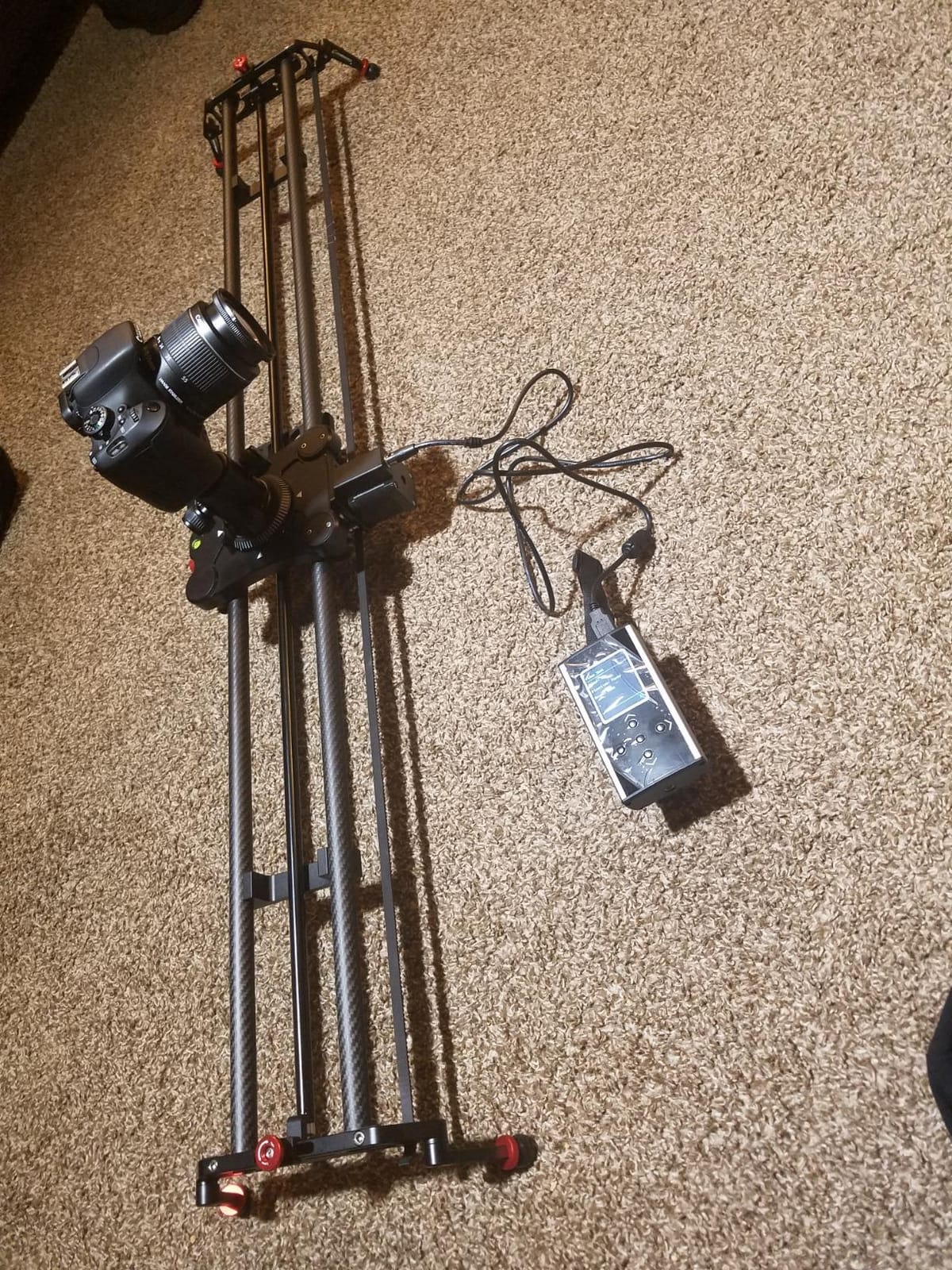
The 5 kg payload handles most mirrorless and DSLR setups, and the auto loop function is reliable for repeatable product shots. I programmed a 12-second loop for a candle product shoot, and the slider executed the move identically across 20 takes. The 120-degree panoramic mode works well for real estate interiors where you want a slow, controlled reveal.
Where the GVM falls short is in the details. The remote control feels cheaply made, and reviewers note that reprogramming loop endpoints takes more time than on competing units. There’s slight play in the tracking linkage that shows up as a framing shift when the carriage reverses direction, which is visible in macro work. The end brackets also lack bite for tripod attachment, so you’ll want to support the rail at the center on longer setups.
Who it’s best for
First-time motorized slider buyers, students, and budget-conscious filmmakers who want to step up from a manual rail without breaking the bank will get the most out of the GVM 48-inch. The included kit means you can start shooting the day the slider arrives. For documentary, B-roll, and YouTube work where you need long travel but don’t need cinema-grade precision, this is a sensible entry point.
Who should pass
If you shoot macro work or need frame-perfect repeatability, the linkage play on direction change will frustrate you. Filmmakers who need silent operation for on-camera interview audio should consider the NEEWER ER1-80 or Accsoon Toprig instead. Anyone who already owns a manual 48-inch rail might prefer to motorize it with a Syrp Genie or similar accessory rather than buy a new unit.
How to Choose the Best Slider Motor and Controller for Filmmaking
The best slider motors and controllers for filmmakers aren’t the most expensive; they’re the ones that match your camera, your workflow, and the kind of shots you actually deliver to clients. I think of the buying decision in five layers: motor type, controller type, payload, rail material, and ecosystem. Get those five right and you’ll shoot faster and cleaner than competitors wrestling with the wrong tool.
Motor Types: Brushless vs Stepper vs DC
Brushless motors are the quietest and most durable, with no brushes to wear out. They power the IFOOTAGE Shark Nano II series and the Accsoon Toprig, and they’re the right choice for interview audio and cinema work. Stepper motors are precise but slightly noisier; they power most Neewer sliders and trade a small amount of quietness for tighter positioning accuracy. Coreless DC motors are the cheapest and the loudest, and you’ll find them in budget units where the priority is price over silence. For most filmmakers, brushless or stepper is the right call.
Controller Options: App, Remote, or On-Board
App control is the modern default and unlocks keyframing, video trigger, and firmware updates. The trade-off is Bluetooth pairing friction, which Reddit users consistently complain about on set. Physical remotes (2.4 GHz) like the NEEWER ER1 series’ optional remote are reliable in radio-congested environments but lack the deep control of an app. On-board buttons are the rarest and most reliable option, and the Accsoon Toprig is the standout here. For paid client work, I want at least one physical fallback in case the app refuses to pair.
Payload, Mounting, and Camera Compatibility
Match the slider’s payload to your heaviest camera + lens combo. A Sony A7 IV with a 24-70mm f/2.8 runs around 1.5 kg and fits comfortably on every slider in this roundup. A BMPCC 6K with a 24-70mm cinema lens can hit 2.5 kg, which still fits most units but starts to crowd the budget GVM. Full cinema rigs above 4 kg need the IFOOTAGE Shark Nano II 860 or higher. Also check mounting threads: 1/4 inch-20 and 3/8 inch-16 are the standards, and the best slider motors and controllers for filmmakers all include both.
Time-Lapse Interval Math
Time-lapse intervals depend on your final clip length and frame rate. For a 10-second clip at 24fps you need 240 frames. If you want to shoot over 1 hour (3600 seconds), divide 3600 by 240 to get a 15-second interval. If you want a smoother look, halve the interval to 7 seconds, which produces 514 frames and a 21-second clip. Most motorized sliders in this roundup let you set interval in seconds; the AI Moco and NEEWER apps both support custom intervals down to 1 second for hyper-lapse work.
Setup Reliability and App Ecosystem
Reddit threads and filmmaker forums consistently flag firmware updates at job time as a real friction. Edelkrone in particular is cited for app reliability issues, which is one reason the Edelkrone SliderPLUS doesn’t appear in our roundup. NEEWER’s app has occasional pairing quirks but is generally reliable, and iFootage’s Moco app gets positive marks once paired. Accsoon’s app is the weakest in this roundup but is offset by the fact that the slider is fully operable without it.
Modular Upgrade Path
Think about where your filmmaking will be in two years, not just where it is today. A modular ecosystem (DJI RS gimbal + IFOOTAGE slider + iFootage Moco app) lets you add pan/tilt, AI tracking, and multi-axis control incrementally. A standalone rail slider is cheaper but caps your growth. For filmmakers who plan to move from interviews into narrative short films or commercial work, the modular path pays for itself.
If you’re also shopping for accessories to round out your rig, see our picks for the best TVs for filmmakers to review footage and our guide to rotoscoping for post-production.
Frequently Asked Questions
Which motorized camera slider is the best?
For most filmmakers, the NEEWER ER1-80 is the best overall motorized slider in 2026. It combines a silent stepper motor, lightweight carbon fiber build, 4400mAh battery, and intuitive app control at a mid-range price. Filmmakers who need multi-axis motion control should look at the IFOOTAGE Shark Nano II 860, while budget buyers will appreciate the GVM 48-inch.
What is the best budget camera slider?
The GVM 48-inch motorized carbon fiber slider is the best budget option for filmmakers who want long travel without a high price. It includes a battery, charger, shutter cables, and carrying case – extras that most competitors sell separately. The motor is reasonably quiet and the auto loop function works reliably for repeatable product shots.
Why are camera sliders so expensive?
Camera sliders cost more than they look like they should because of three things. Precision motors (stepper or brushless DC) are expensive to manufacture. Carbon fiber rails cost more than aluminum but cut weight dramatically for travel. And quality controllers with reliable Bluetooth or Wi-Fi app integration add engineering cost. Budget sliders save money by using cheaper DC motors and aluminum rails.
How much does a camera slider cost?
Camera sliders range from around one hundred dollars for entry-level units to several thousand for pro cinema rigs. Phone sliders and basic dollies sit at the low end, mid-range carbon fiber motorized sliders with apps land in the middle range, and multi-axis systems with DJI gimbal integration sit at the high end. Most filmmakers find their sweet spot in the mid-range.
What is the best motorized slider for video recording?
For interview and talking-head video recording, the Accsoon Toprig S60 is the best motorized slider because its quiet motor stays below the level of typical on-camera microphones. The physical on-board buttons also mean you can set A and B points without pulling out your phone mid-interview. For solo creators who also want AI tracking, the IFOOTAGE Shark Nano II 660 is a strong alternative.
What frame rate should I use for slider timelapse?
For cinematic time-lapse, shoot at 24fps and plan your final clip length first. A 10-second clip needs 240 frames, so divide your total shoot duration by 240 to get the interval. Shooting over 1 hour gives a 15-second interval; over 30 minutes gives a 7.5-second interval. Most motorized sliders let you set the interval in seconds down to 1 second for hyper-lapse.
Final Verdict
After testing eight contenders against real client briefs, the NEEWER ER1-80 stands out as the best overall pick for most filmmakers shopping for the best slider motors and controllers for filmmakers in 2026. It hits the right combination of silent motion, lightweight carbon fiber build, repeatable accuracy, and mid-range price. Solo creators who need a phone-first travel rig should grab the IFOOTAGE Shark Slider Pico, while filmmakers ready to step into multi-axis motion control get the most value from the IFOOTAGE Shark Nano II 860. Whatever you choose, run a real client-style test before any paid job, because the difference between a slider that performs on paper and one that performs on a Tuesday morning interview is exactly what this roundup is designed to surface.