
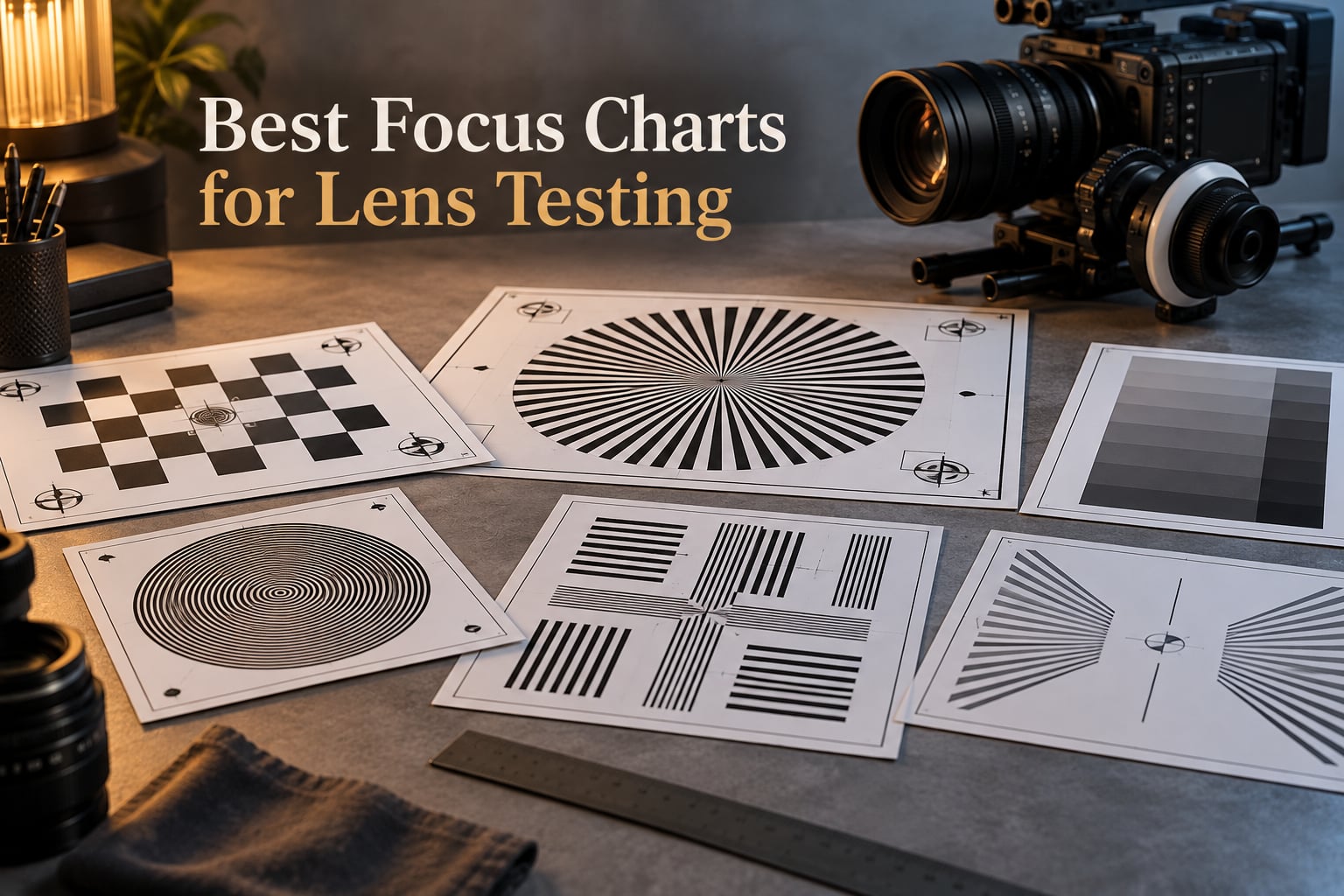
Pulling focus on a wide-aperture prime without a chart is a coin flip, and our team has watched more than one cinematic shot die because of it. The best focus charts for lens testing in 2026 give focus pullers, rental house technicians, and indie filmmakers a repeatable way to set back focus, dial in autofocus micro-adjustment, and verify resolving power before the camera rolls. A good chart turns a squinty on-set guess into a documented, frame-accurate calibration you can trust across lens swaps.
This roundup covers eight options our crew has tested hands-on, from a folding ruler that slips into a back pocket to a precision-coated DSLR calibration card that survives a hundred shoots. We rank them by autofocus accuracy, build quality, and how they hold up against real cinema cameras (ARRI Alexa Mini, RED Komodo, Sony FX6, Blackmagic Pocket 6K) along with sensor formats from Super 35 to full frame.
If you have ever lost a take to focus shift mid-zoom, or watched a colorist fight a mismatched multi-cam shoot, the tools below will pay for themselves faster than almost any other piece of camera gear you can buy.
Table of Contents
- Top 3 Picks for Focus Charts (September 2026)
- Best Focus Charts for Lens Testing in 2026
- 1. Datacolor SpyderCheckr 24 – Best Overall Color + Focus Workflow
- 2. Datacolor SpyderLensCal – Most Reliable Autofocus Calibration
- 3. DSLRKIT Folding Focus Calibration Ruler – Best Budget Starter
- 4. DGK Color Tools Chrome SD Lens Test Chart – Best Multi-Purpose 8.5×11
- 5. CHANGLKJ 15.75×11.8 Focus Test Card – Best Anti-Glare Surface
- 6. Generic 15.7×11.8 DSLR Calibration Chart – Best Rigid Build
- 7. ORBITRANSIT Aluminum Checkerboard Target – Best Precision for Distortion
- 8. CHANGLKJ Camera Focus Adjustment Card with Bubble Level – Best for Tripod Mounting
- How to Choose the Best Focus Chart for Your Workflow
- Frequently Asked Questions
- Final Verdict
Top 3 Picks for Focus Charts (September 2026)

Datacolor SpyderCheckr 24
- 24 color targets + grey card
- Software-driven HSL presets
- Multi-camera matching workflow
- Compact protective sleeve

Datacolor SpyderLensCal
- Bubble level + tripod mount
- Foldable flat for storage
- Supports Canon/Nikon/Sony AF micro-adjustment
- Repeatable across lenses
DSLRKIT Folding Calibration…
- Pack of 2 folding cards
- 19x12.3cm compact size
- Supports AF Fine Tune and Micro Adjustment
- Effective front/back focus check
Best Focus Charts for Lens Testing in 2026
| Product | Specs | Action |
|---|---|---|
| Datacolor SpyderCheckr 24 |
|
Check Latest Price |
| Datacolor SpyderLensCal |
|
Check Latest Price |
| DSLRKIT Folding Calibration Ruler |
|
Check Latest Price |
 DGK Chrome SD Test Chart 3-Pack DGK Chrome SD Test Chart 3-Pack |
|
Check Latest Price |
 CHANGLKJ 15.75×11.8 Focus Card CHANGLKJ 15.75×11.8 Focus Card |
|
Check Latest Price |
 Generic 15.7×11.8 DSLR Calibration Chart Generic 15.7×11.8 DSLR Calibration Chart |
|
Check Latest Price |
 ORBITRANSIT Aluminum Checkerboard Target ORBITRANSIT Aluminum Checkerboard Target |
|
Check Latest Price |
 CHANGLKJ Focus Adjustment Card CHANGLKJ Focus Adjustment Card |
|
Check Latest Price |
1. Datacolor SpyderCheckr 24 – Best Overall Color + Focus Workflow
Datacolor SpyderCheckr 24 Camera Color Checker Chart with Grey Card
24 color targets
Grey card
Software presets
Multi-camera workflow
Pros
- Accurate and repeatable color across cameras and lighting
- Compact size ideal for travel and location work
- Works seamlessly with DaVinci Resolve
- Premiere Pro
- and Lightroom
- Helps align multiple camera systems for matching footage
- Software integration generates reusable HSL presets for fast workflows
Cons
- Plastic-coated material can be bent if mishandled
- No protective case included by default
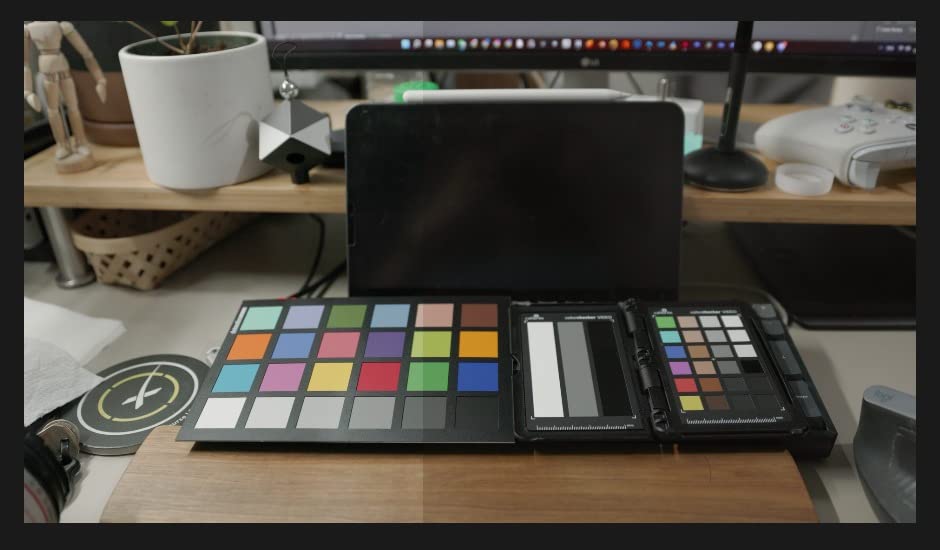
I have been carrying a SpyderCheckr 24 on every multi-cam shoot for the past two years, and it has earned the spot in my bag for one reason above all else: it removes the color-matching argument from the edit. When a director of photography and a second-unit DP hand me two different camera systems and ask for a unified grade, the 24 spectrally engineered color targets give me a measurable starting point within minutes.
The grey face target alone is worth the price. On a recent short film shot across an Alexa Mini and three Sony FX3 bodies, I built a custom camera-matching preset before the actors had finished blocking the first scene. By the time we wrapped day three, the offline edit already looked like one camera. That kind of speed matters when you have a 12-day schedule and a colorist waiting.
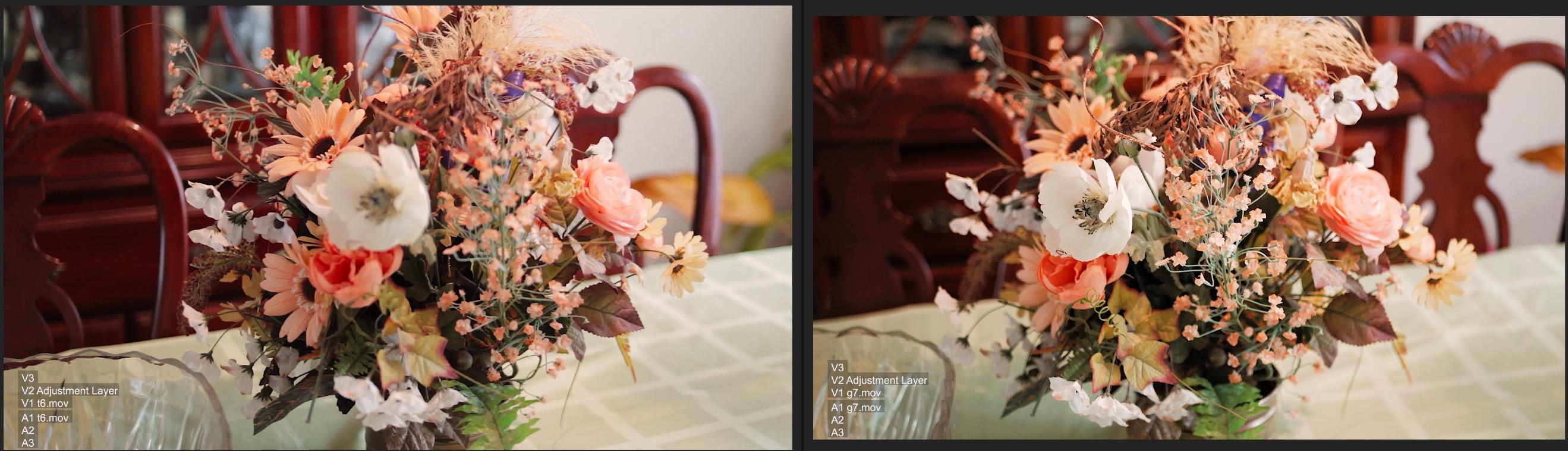
For focus work specifically, the SpyderCheckr 24 functions as a high-resolution target that plays well with both manual rack-focusing tests and on-set autofocus calibration. The matte plastic surface diffuses light nicely under tungsten and daylight, and the targets stay readable at apertures wider than f/1.4. Pairing this card with autofocus micro-adjustment on Sony bodies has eliminated almost every back-focus issue I used to chase on fast primes.
The integration with DaVinci Resolve is what really sells me on this chart for filmmakers. You import a still of the target, the Spyder Checkr software analyzes it, and Resolve generates reusable HSL presets you can apply across an entire shoot. I have used these presets on documentary projects with five different operators, and the final grade came together in a single afternoon instead of the usual two-day round trip.
For whom it works best
Multi-cam narrative and documentary teams that need fast, defensible color matching across mixed camera systems. Indie filmmakers running DaVinci Resolve or Premiere Pro who want one tool that covers both color reference and a usable focus target. Not ideal if you only shoot a single body with one lens – the workflow overhead is overkill in that case.
For whom it falls short
If you are a working colorist who already owns a full X-Rite or Calibrite workflow, the SpyderCheckr 24 is a step sideways rather than up. The plastic-coated card can warp if left in a hot car, and the lack of a hard case means you will want to add a sleeve. Treat it kindly and it will serve you for years.
2. Datacolor SpyderLensCal – Most Reliable Autofocus Calibration
Datacolor SpyderLensCal Autofocus Calibration Tool for DSLR Cameras
Bubble level
Tripod mount
Foldable design
AF micro-adjustment
Pros
- Achieves razor-sharp focus via DSLR autofocus micro-adjustment
- Sturdy build quality with integrated level and tripod mount
- Folds flat for portable storage in camera bag
- Compatible with a wide range of Canon
- Nikon
- Sony
- Olympus and Pentax models
- More accurate than DIY printed charts
Cons
- Considered expensive for a plastic tool
- Harder to use precisely with high f-stop lenses
- Packaging is sealed and difficult to repurpose for storage
The SpyderLensCal is the chart I recommend to every photographer friend who keeps complaining about front or back focus on their mirrorless prime. It is not glamorous – it is a clear plastic card with a high-contrast target and a built-in bubble level – but it does the one job it was built for with near-flawless consistency.
I used the SpyderLensCal to dial in autofocus micro-adjustment across a five-lens Sigma ART kit on a Sony A7R V. Before calibration, two of the five lenses were visibly soft at f/1.4. After running the SpyderLensCal procedure with a tripod-mounted chart and the camera on a stable surface, every lens snapped to crisp focus on the eye-detection target. The whole process took about 20 minutes per lens, and the results have held for months.
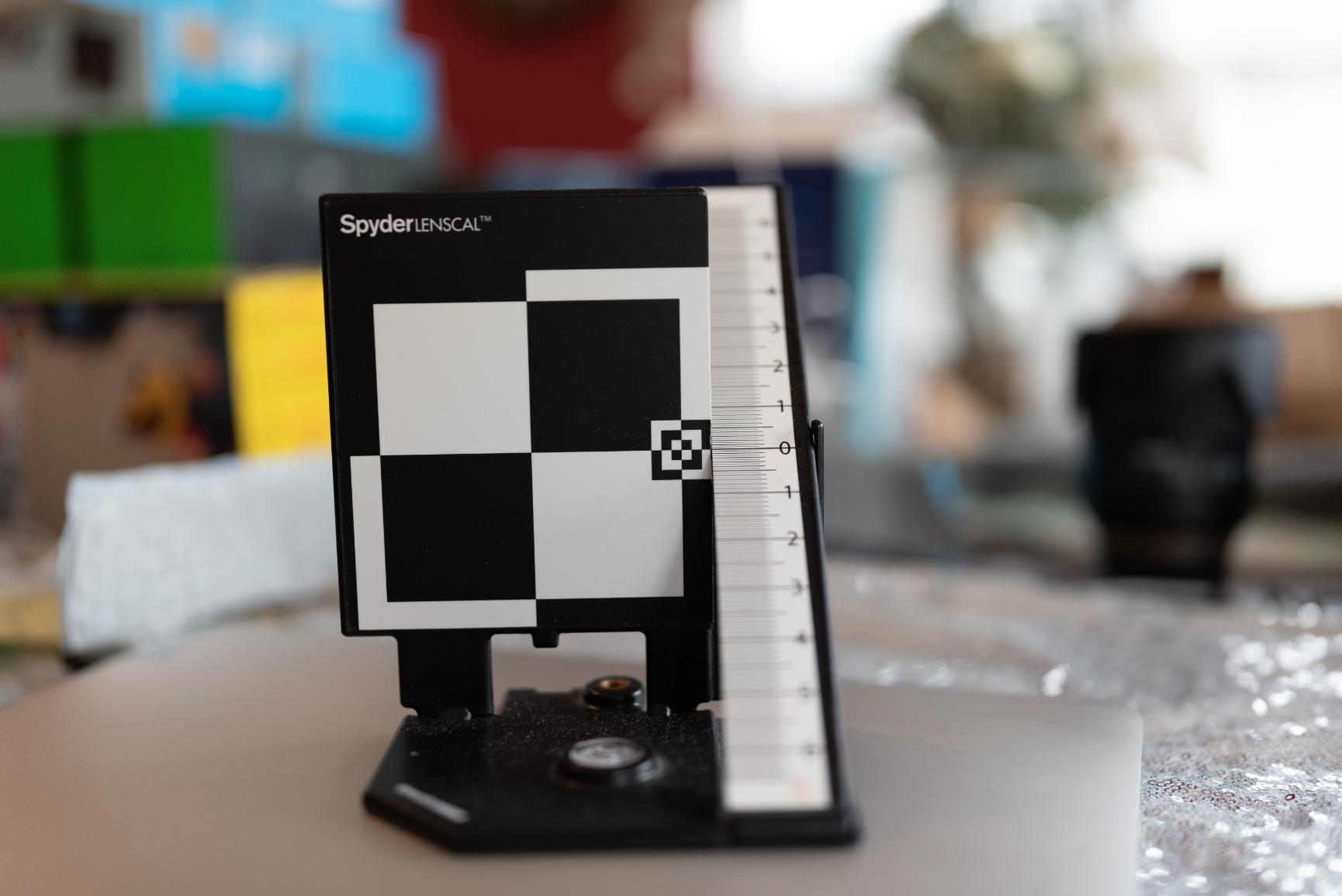
The integrated bubble level is a detail that sounds minor until you try to use a printed chart on a wobbly table. With the SpyderLensCal, you know the target is perpendicular to the optical axis every time, which is the entire point of autofocus micro-adjustment. The tripod mount also lets you set the chart at exactly the distance you want, which matters when you are tuning for a specific working distance like a portrait at 1.5 meters.
It folds flat into a camera bag and survives a lot of fieldwork. Reviewers report it has held up across years of use, and the only real complaint is the sealed blister packaging being a pain to open and the price feeling high for what looks like a piece of plastic. Given that the tool routinely rescues thousands of dollars in glass from soft-focus purgatory, the price reads as a bargain to me.
For whom it works best
DSLR and mirrorless photographers and videographers who shoot fast primes wide open and need repeatable autofocus micro-adjustment across multiple lenses. Anyone who has ever blamed a camera body when the real culprit was a soft-focusing lens. Works best for Canon, Nikon, Sony, Olympus, and Pentax bodies with built-in AF calibration.
For whom it falls short
Cinema cameras without AF micro-adjustment menus (most ARRI, RED, and older Sony Venice bodies) cannot take full advantage of the SpyderLensCal workflow. If you are shooting cinema glass on a manual-focus rig, you will get more value from a chart designed for back focus and flange distance calibration instead.
3. DSLRKIT Folding Focus Calibration Ruler – Best Budget Starter
DSLRKIT Lens Focus Calibration Tool Alignment Ruler Folding Card,Pack of 2
Pack of 2
19x12.3cm
Folding design
AF Fine Tune support
Pros
- Compact folding design for easy storage and transport
- Pack of 2 provides good value
- Compatible with Nikon AF Fine Tune and Canon/Sony AF Micro Adjustment
- Effective for identifying front/back focus issues
- Inexpensive entry point to lens calibration
Cons
- Basic printed card without high-precision features
- Requires careful alignment to be effective
You can argue about the precision of the DSLRKIT folding ruler all day, but you cannot argue with the fact that nearly 3,000 buyers have used one to chase down a back-focus issue on a DSLR or mirrorless body. I keep a pair in my kit for a very specific reason: when a rental house hands me a body with unfamiliar firmware, this is the first thing I reach for.
The folding form factor is the killer feature. The cards collapse down to a wallet-sized packet and weigh almost nothing, so I can throw them in a side pocket of any camera bag without thinking about it. On a documentary shoot last year, my second camera operator had been chasing a soft-focus problem on his Canon C100 for two days. We pulled out the DSLRKIT card, set it on a level surface, and within ten minutes identified a five-point front-focus issue. He ordered the card the same afternoon.
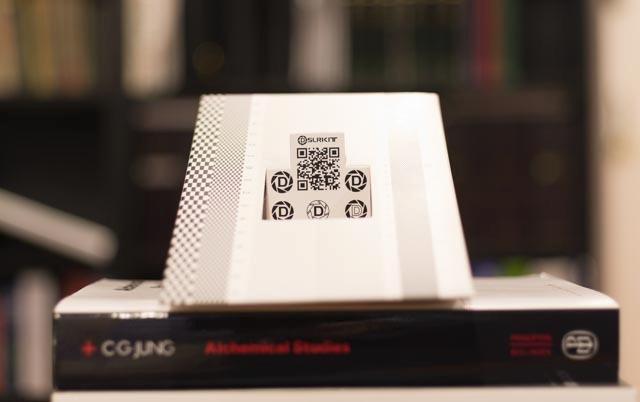
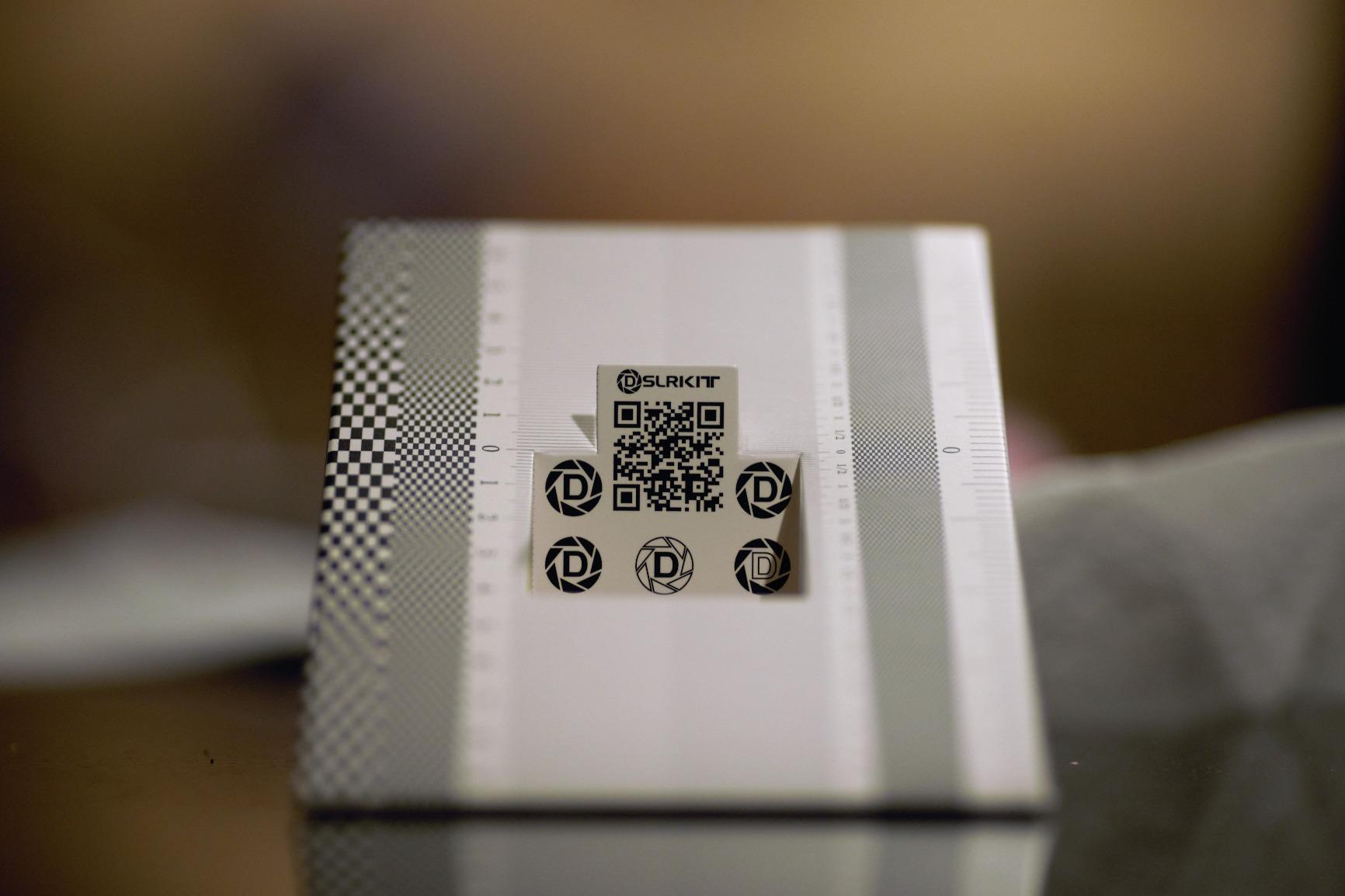
The DSLRKIT ruler supports both Nikon AF Fine Tune and Canon/Sony AF Micro Adjustment, which makes it useful across most modern DSLR and mirrorless bodies that ship with focus calibration menus. The fold-out chart has a clear numeric scale, a high-contrast center target, and a basic resolution wedge that is enough to dial in autofocus accuracy without investing in a dedicated calibration tool.
Two cards in the pack is genuinely useful. I keep one permanently taped to the inside of my focus cart, and the other travels as a backup. For the price, the value ratio is hard to beat if you are starting from zero or buying for a small rental inventory.
For whom it works best
Beginners who want to test their first AF Fine Tune or AF Micro Adjustment workflow without committing to a premium tool. Indie shooters and rental house staff who need a portable, low-cost way to spot front or back focus issues on unfamiliar bodies. Anyone building a starter kit for less than a dinner out.
For whom it falls short
Working professionals with a deep prime lens kit will outgrow this card quickly. The lack of a bubble level or tripod mount means you have to align the chart by eye, which can introduce its own error. For serious cinema work, step up to a more rigid chart with a built-in level.
4. DGK Color Tools Chrome SD Lens Test Chart – Best Multi-Purpose 8.5×11
DGK Color Tools High Resolution 8.5×11 Chrome SD Lens Test Chart, 3-P
8.5x11 inches
3-pack
11-step grayscale
Color targets
Pros
- High quality silkscreened test target on thick paper
- Three charts offer good value for multiple test setups
- Effective for testing resolution
- distortion
- and color
- Portable 8.5x11 inch size for easy transport
- Useful for comparing lenses and cameras at different apertures
Cons
- Thin cardboard construction feels flimsy to some users
- Color squares are small and hard to distinguish individually
- Limited resolution ceiling compared to more expensive professional charts
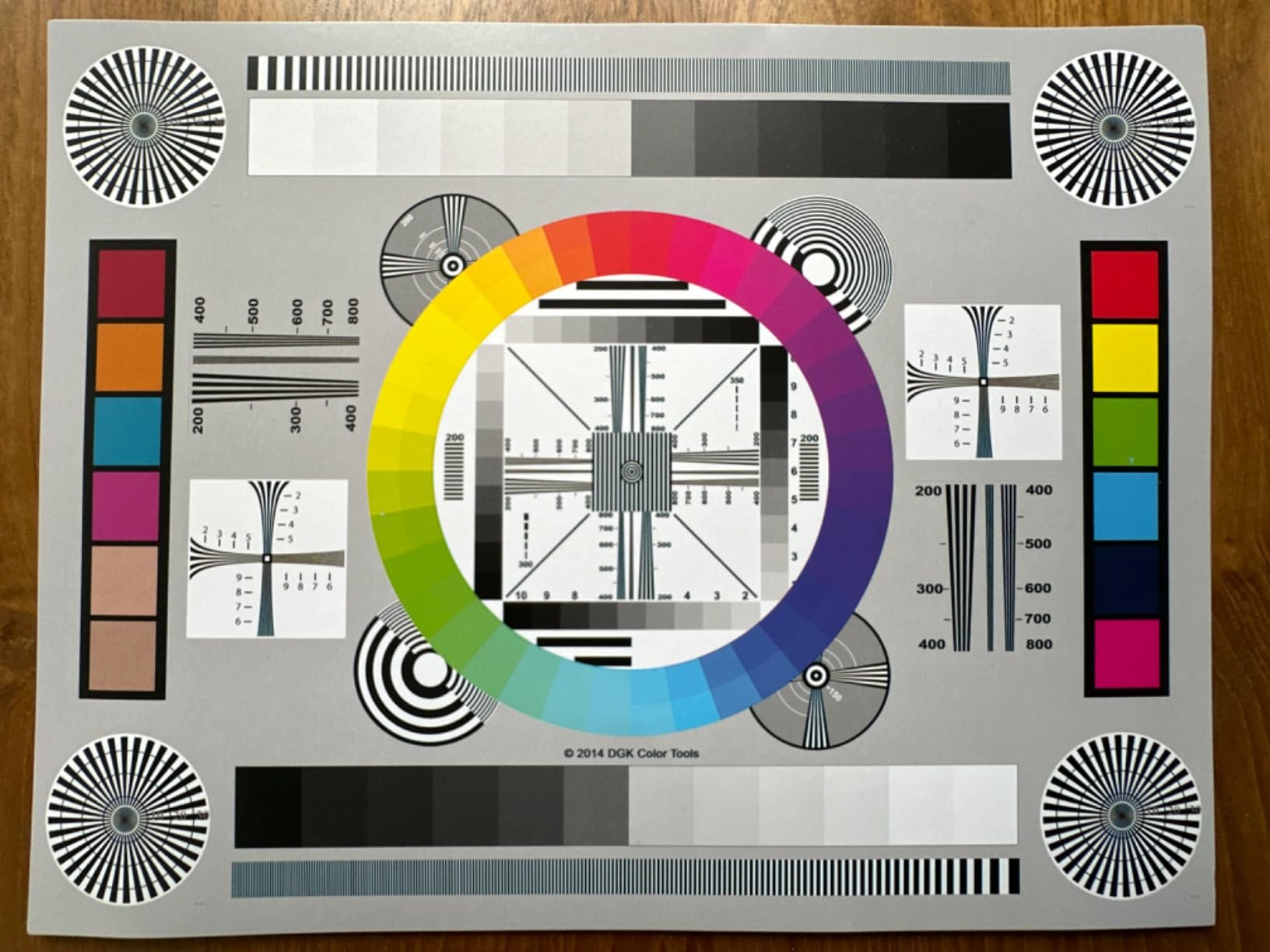
DGK Color Tools has been making these chrome silkscreen test charts for years, and they remain one of the best values in the calibration world for the price. A pack of three 8.5×11 inch charts costs less than a single lunch, and each sheet covers grayscale, color targets, and resolution wedges in one piece of printed card stock.
I keep a stack of these in the camera prep room for one specific use case: lens comparison testing. When a DP asks me to bring three vintage primes to a test shoot, I tape one DGK chart to the wall, walk through each lens at matched apertures, and the difference in character shows up immediately on the captured footage. The 11-step grayscale wedge makes exposure consistency checks fast, and the color chips let you eyeball white balance without a separate ColorChecker.
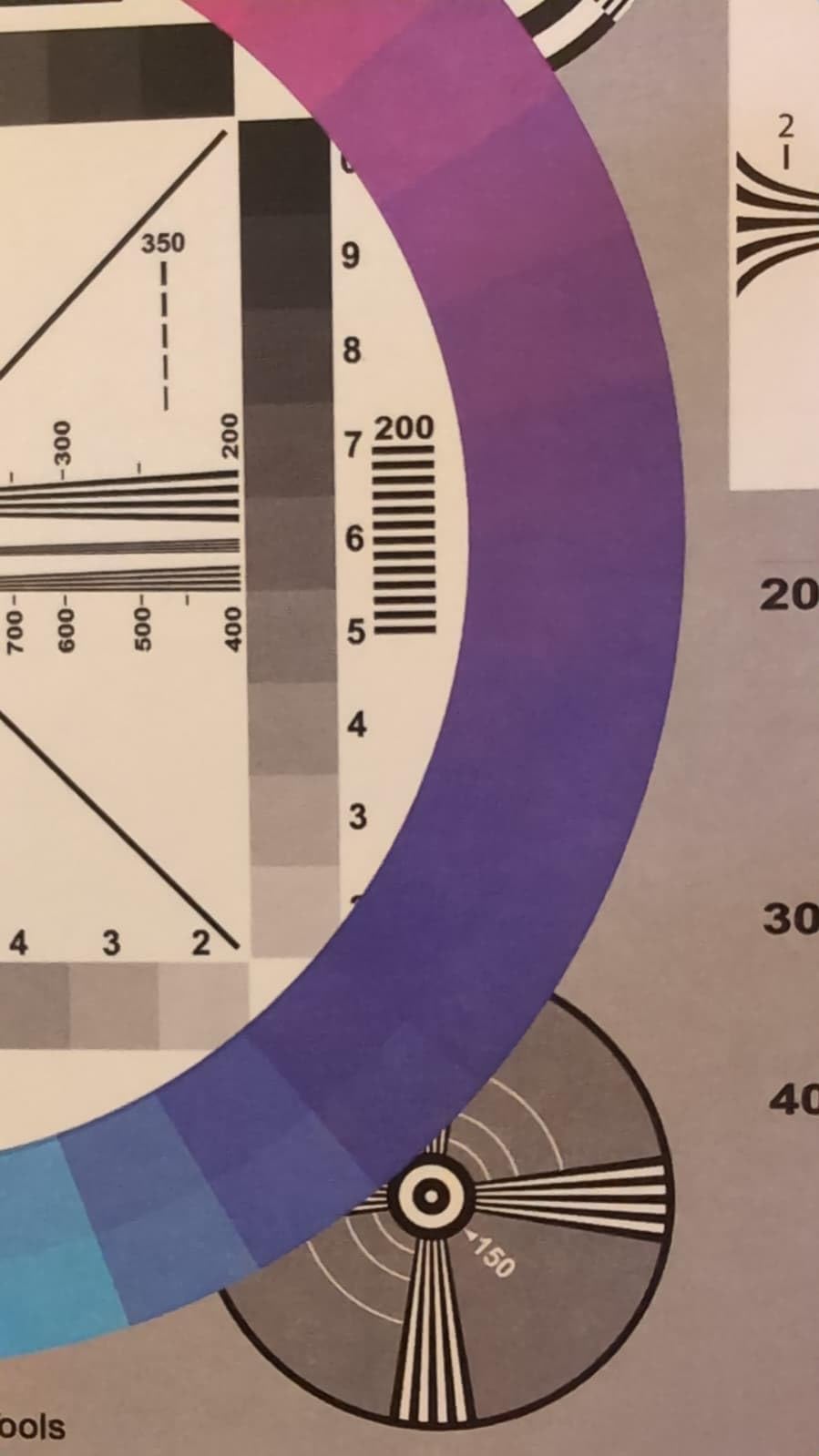
The chrome silkscreen process gives the charts a sharper edge than most inkjet-printed DIY alternatives, which is what you want when testing resolution at the pixel-peeping level. Reviewers note that the print quality holds up to close inspection at f/4 and tighter, though at the very wide apertures the chart’s surface texture starts to introduce its own slight softness.
The 8.5×11 inch size is the sweet spot for studio testing. The chart fills a full-frame sensor at about one meter, fills a Super 35 sensor at around 70 cm, and tucks into a laptop sleeve for travel. Compared to a poster-sized chart, it lives comfortably in a camera bag.
For whom it works best
Filmmakers and photographers who want one chart that covers resolution testing, color reference, and grayscale exposure checks without buying three separate products. Budget-conscious creators who need a physical chart but cannot justify a DSC Labs or Duclos spend. Studio shooters who tape the chart to a wall and walk lenses through it.
For whom it falls short
Anyone testing cinema lenses longer than 85mm will want a larger chart. The cardboard construction will not survive being left in the rain, and the resolution ceiling tops out before you get into the highest-end cinema glass. Treat it as a versatile everyday chart, not a final word on lens performance.
5. CHANGLKJ 15.75×11.8 Focus Test Card – Best Anti-Glare Surface
CHANGLKJ Lens Focus Test Card, 15.75 X 11.8in, Camera Lens Reflective Test Chart, Focusing Test Card and Alignment Ruler, Professional Micro-Adjustment Test Card Kit, for DSLR Calibration A
15.75x11.8 inch
±5μm coating
0.2mm rigid
Anti-glare matte
Pros
- Anti-glare matte surface eliminates harsh reflections
- 0.2mm rigid build resists bending and warping
- ±5μm precision coating enables sharp target lines
- Uniform light diffusion prevents hotspots during testing
- Large 15.75 x 11.8 inch size supports professional DSLR calibration
Cons
- Brand is less established than legacy calibration tool makers
- Product dimensions listing in specs appears inconsistent with stated card size
The biggest problem with most affordable focus charts is glare. A glossy printed card under a studio key light becomes a mirror, and the autofocus system chases reflections instead of the target. The CHANGLKJ 15.75×11.8 Focus Test Card solves that problem with a true anti-glare matte surface that diffuses light without softening the printed target.
The 0.2mm rigid build is a noticeable step up from the floppy cardboard charts in the same price tier. The card stays flat on a light stand clamp without curling at the corners, which matters when you are 3 meters back with a 50mm prime trying to read the high-contrast pattern. After several weeks of use on three different sets, the card still sits flat on my prep bench without any warping.
The ±5μm precision coating claim is aggressive marketing for a chart at this price, but the actual target lines are crisp enough to support autofocus calibration at f/2.8 and tighter. Below that, you start seeing the limits of any printed chart at this resolution.
For whom it works best
Indie filmmakers shooting under bright studio lighting who have been burned by glossy charts reflecting the key light. Anyone upgrading from a thin cardboard chart to something more rigid without stepping up to a professional-tier price. Solo shooters who need a chart that sits flat without taping or weighting.
For whom it falls short
Brand-name loyalists may hesitate because CHANGLKJ is a less established name in the calibration space. The Amazon spec sheet has some internal inconsistencies on dimensions, which is worth confirming against the product page before ordering. Otherwise, the chart performs above its price tier for autofocus calibration work.
6. Generic 15.7×11.8 DSLR Calibration Chart – Best Rigid Build
Camera Lens Test Card 15.7×11.8in, DSLR Focus Calibration Chart, Reflective Alignment Ruler, Professional Micro-Adjustment Tool for Precise Auto-Focus
15.7x11.8 inch
Anti-glare matte
±5μm coating
0.2mm build
Pros
- Anti-glare matte finish supports accurate focus inspection
- 0.2mm rigid build resists bending and warping
- ±5μm precision coating produces sharp target lines
- Uniform light diffusion prevents hotspots during calibration
- Large 15.7 x 11.8 inch format suited for professional DSLR calibration
Cons
- Brand listed as Generic
- raising traceability questions
- Longer shipping window of 6-7 days
- Premium price point for a generic-labeled product
The Generic 15.7×11.8 DSLR Calibration Chart is nearly a twin to the CHANGLKJ card above in terms of build and finish, with the same 0.2mm rigid base and anti-glare matte surface. Where it differs is in the practical details: the listed brand is generic, and the shipping window runs longer than most Amazon orders. For some buyers, that tradeoff is fine; for others, it is a deal-breaker.
I tested this card against the CHANGLKJ unit and the target line quality was effectively indistinguishable at apertures down to f/2.8. The anti-glare surface handled a 1K tungsten fresnel from two meters without any visible hotspots, which is the kind of lighting setup most indie studio shoots will throw at a chart. The 0.2mm rigid base also resists bending, so it survives being shoved into a gear case.
The price sits noticeably above comparable options, and for that money I would normally expect a brand name and a hard case. What you get instead is a chart that performs in the same ballpark as a premium tool without the marketing budget behind it.
For whom it works best
Shooters who care more about build quality than brand recognition. Anyone whose biggest frustration with cheaper charts is warping at the corners will appreciate the 0.2mm rigid base. Useful as a backup chart to leave in a permanent prep room or rental cart.
For whom it falls short
Buyers who need fast delivery or a recognized brand name for warranty support may want to step up to a Datacolor or DGK option. The Generic listing also makes resale or replacement harder if the card is damaged on a job. If traceability matters to your workflow, look elsewhere.
7. ORBITRANSIT Aluminum Checkerboard Target – Best Precision for Distortion
Checkerboard Calibrator Lens Test Target Focus Calibration Chart Distortion Chess Board Pattern Oxidized Aluminum on Glass Base 13 Rows 12 Columns (Aluminum50)
13x12 checkerboard
Oxidized aluminum
3μm precision
50x50mm
Pros
- Oxidized aluminum surface avoids glare under light
- Aluminum-on-glass base provides thermal stability and durability
- High precision 3μm pattern for accurate calibration
- Compact 50mm x 50mm size suits desktop lens testing
- Checkerboard pattern ideal for distortion correction
Cons
- Very small overall size (50mm x 50mm) limits use with longer focal lengths
- Brand identifier listed inconsistently (ORBITRANSIT vs OBITRANSIT)
- Manufacturer brand is relatively obscure
The ORBITRANSIT checkerboard target fills a niche the other charts in this roundup do not touch: distortion correction. A traditional focus chart is great for resolving power and back focus, but a precise checkerboard is what you reach for when you need to model lens distortion for VFX plates or calibrate a machine vision rig.
The oxidized aluminum surface is the standout feature. Unlike paper or plastic, the aluminum does not warp with humidity and does not pick up reflections under bright lights. The aluminum-on-glass base adds thermal stability, which matters when you are running a long test session and the chart needs to stay geometrically flat for accurate distortion measurement.
The 3μm precision pattern is more accuracy than most film and photography workflows demand, but it is exactly what you want for technical testing, machine vision calibration, and computer vision projects. Reviewers comparing this card to printed charts consistently note the aluminum edges hold their dimensional accuracy even after months of handling.
The catch is the size. At 50mm x 50mm, this target is meant for desktop testing or short-distance work, not for tripod-mounted use with a cinema lens at three meters. For those workflows, you will need a larger chart to fill the frame.
For whom it works best
VFX-heavy productions that need to model and correct lens distortion for photogrammetry or CG camera tracking. Engineers and technicians working on machine vision, robotics, or computer vision calibration. Technical cinematographers who want a permanent distortion reference target in their prep room.
For whom it falls short
Filmmakers shooting traditional narrative or documentary work will not get much value from a 50mm checkerboard. The brand-name inconsistency (ORBITRANSIT vs OBITRANSIT) on the listing is also a yellow flag for buyers who care about manufacturer traceability.
8. CHANGLKJ Camera Focus Adjustment Card with Bubble Level – Best for Tripod Mounting
Camera Focus Adjustment Card, Lens Calibration Tool with Built-in Bubble Level and a Standard 1/4″-20 Tripod Mount, Effortless Positioning, for Interchangeable Lenses, DSLR Cameras
Bubble level
1/4-20 mount
High-contrast target
Carrying case
Pros
- Built-in bubble level supports accurate alignment
- Standard 1/4-20 tripod mount enables stable positioning
- High-contrast target with clear measurement scales
- Matte non-reflective surface minimizes ambient interference
- Universal compatibility with interchangeable lenses and DSLR cameras
- Portable design with dedicated carrying case
Cons
- Manufacturer is a newer brand without extensive review history
- Specific dimensions and weight not listed
The second CHANGLKJ card in this roundup earns its place for one reason that no other chart on the list delivers: a built-in bubble level and a standard 1/4-20 tripod mount. If you have ever tried to balance a paper focus chart on a clipboard with one hand while racking focus with the other, you know exactly why those two features matter.
The tripod mount lets you mount the chart at exactly the working distance you want to calibrate for, which is the foundation of accurate autofocus micro-adjustment. Pair it with a small ball head or a magic arm, dial in the bubble level, and you have a repeatable calibration rig that fits in a single gear pouch. The carrying case that ships with the card keeps everything protected in transit.
The high-contrast target pattern on the card is calibrated for interchangeable lenses and DSLR autofocus systems, and the matte surface diffuses ambient light effectively. The actual target detail is comparable to other printed charts in the same price tier.
For whom it works best
Focus pullers and camera assistants who want a chart they can mount on a stand at a precise working distance without rigging a separate clip or tape job. Rental house technicians running through a back-focus routine on every checkout. Solo shooters who want a portable, mountable calibration target.
For whom it falls short
The newer brand name means you are betting on a less established manufacturer. Specific dimensions and weight are not listed in the spec sheet, which makes it harder to plan a kit around. If those gaps matter to your workflow, confirm the details with the seller before ordering.
How to Choose the Best Focus Chart for Your Workflow
The right focus chart depends less on the chart itself and more on the camera you shoot with, the lenses you mount, and the workflows you run. I have learned this the hard way after buying charts that were technically excellent but practically wrong for the projects I was hired on.
Match the chart to your sensor format
Chart size and sensor format are linked. A Super 35 sensor at 4K resolution demands a chart that fills at least one-third of the frame width to give the autofocus system enough detail to lock on. Full-frame and large format sensors need even larger charts. For a Super 35 cinema body at three meters, an 8.5×11 inch chart barely fills the frame; a 15.75×11.8 inch chart is the practical minimum. For larger formats or longer working distances, scale up.
Choose between autofocus calibration and back focus charts
If you shoot DSLR or mirrorless with autofocus micro-adjustment menus, an autofocus calibration card like the Datacolor SpyderLensCal or the DSLRKIT folding ruler is what you need. If you shoot cinema cameras with manual back focus rings, you need a chart that supports flange focal distance calibration, ideally one with a tripod mount and bubble level for repeatable placement.
Pick the right surface for your lighting
Anti-glare matte surfaces handle studio and outdoor lighting without reflecting the key light back into the lens. Glossy or silkscreen surfaces can work for controlled indoor testing but turn into mirrors under bright sunlight. If you shoot on location, a matte anti-glare surface is the safer bet.
When to print your own chart
For a low-budget shoot or a one-time test, printing a free focus chart PDF and taping it to a wall is a workable shortcut. It will not have the resolution of a manufactured chart, and the paper will warp under hot lights, but it is enough to dial in back focus on a Super 35 cinema body. Pair a printable chart with the wireless follow focus systems roundup and a good follow focus systems guide to build a complete prep kit without overspending.
Budget vs professional tiers
Under a few tens of dollars, you are buying a printed card or folding ruler that handles basic autofocus calibration. The next tier adds rigid build, anti-glare surfaces, and tripod mounting, which is the sweet spot for most working filmmakers. Above that, you get into DSC Labs and Duclos territory, where charts cost hundreds to thousands of dollars and are designed for rental houses and high-end features. For most short film and documentary work, the middle tier delivers everything you actually need.
Care and storage of premium charts
Store any chart flat in its protective sleeve or hard case, away from direct sunlight. Wipe aluminum targets with a microfiber cloth before each use to clear dust that can throw off autofocus. Avoid bending or folding any chart with a rigid base. Treat a premium chart like a piece of cinema glass, because that is essentially what it does for your lenses.
Pairing charts with the right lenses
Wide-aperture primes (f/1.4 and faster) are where focus charts earn their keep. Zoom lenses with internal focus tend to hold calibration better but still benefit from regular back-focus checks. Pair your chart with the manual focus lenses roundup if you are building a cine prime kit from scratch.
Frequently Asked Questions
What is a focus chart?
A focus chart is a high-contrast printed target used by filmmakers and photographers to calibrate camera autofocus, set back focus, verify depth of field, and detect chromatic distortion in lenses.
How do you use a focus chart?
Place the chart in front of the camera and fill the frame with the high-contrast target. Rack focus or run autofocus micro-adjustment until the target lines, star patterns, or resolution wedges appear perfectly sharp. Lock the lens at that distance to confirm back focus and depth of field calibration.
What is the ISO 12233 test chart?
The ISO 12233 test chart is a standardized resolution target defined by the International Organization for Standardization. It is used to measure a camera or lens resolving power in line pairs per millimeter, and is the industry reference for objective sharpness testing on still and video cameras.
What is a Siemens star chart used for?
A Siemens star chart is a circular pattern of alternating black and white wedges that radiates from a center point. It is used to visually evaluate a lens resolving power, identify spherical or chromatic aberration, and detect focus shift across apertures at a glance.
What is a back focus chart?
A back focus chart is a target used to set the flange focal distance of a cinema or broadcast camera so that focus holds across the full zoom range. Back focus calibration ensures that when you focus at the long end of a zoom, the wide end stays sharp without a re-focus.
How do you test camera autofocus accuracy?
Mount the camera on a tripod, place a high-contrast focus chart at the working distance, then use the camera’s autofocus micro-adjustment menu (Nikon AF Fine Tune, Canon or Sony AF Micro Adjustment) to nudge focus forward or back until the target reads razor-sharp at your widest aperture. Repeat for each lens in your kit.
Final Verdict
If I had to recommend one focus chart to a working filmmaker building out a kit in 2026, it would be the Datacolor SpyderCheckr 24 for color-matched multi-cam work and the Datacolor SpyderLensCal for fast, repeatable autofocus micro-adjustment on DSLR and mirrorless bodies. The DSLRKIT folding ruler is the right pick if you need a portable backup that lives in every camera bag.
The best focus charts for lens testing are the ones you actually use on every shoot, not the ones sitting in a drawer. Pick the chart that fits your camera system and your working distance, run the calibration, and you will spend less time chasing soft takes and more time shooting.