
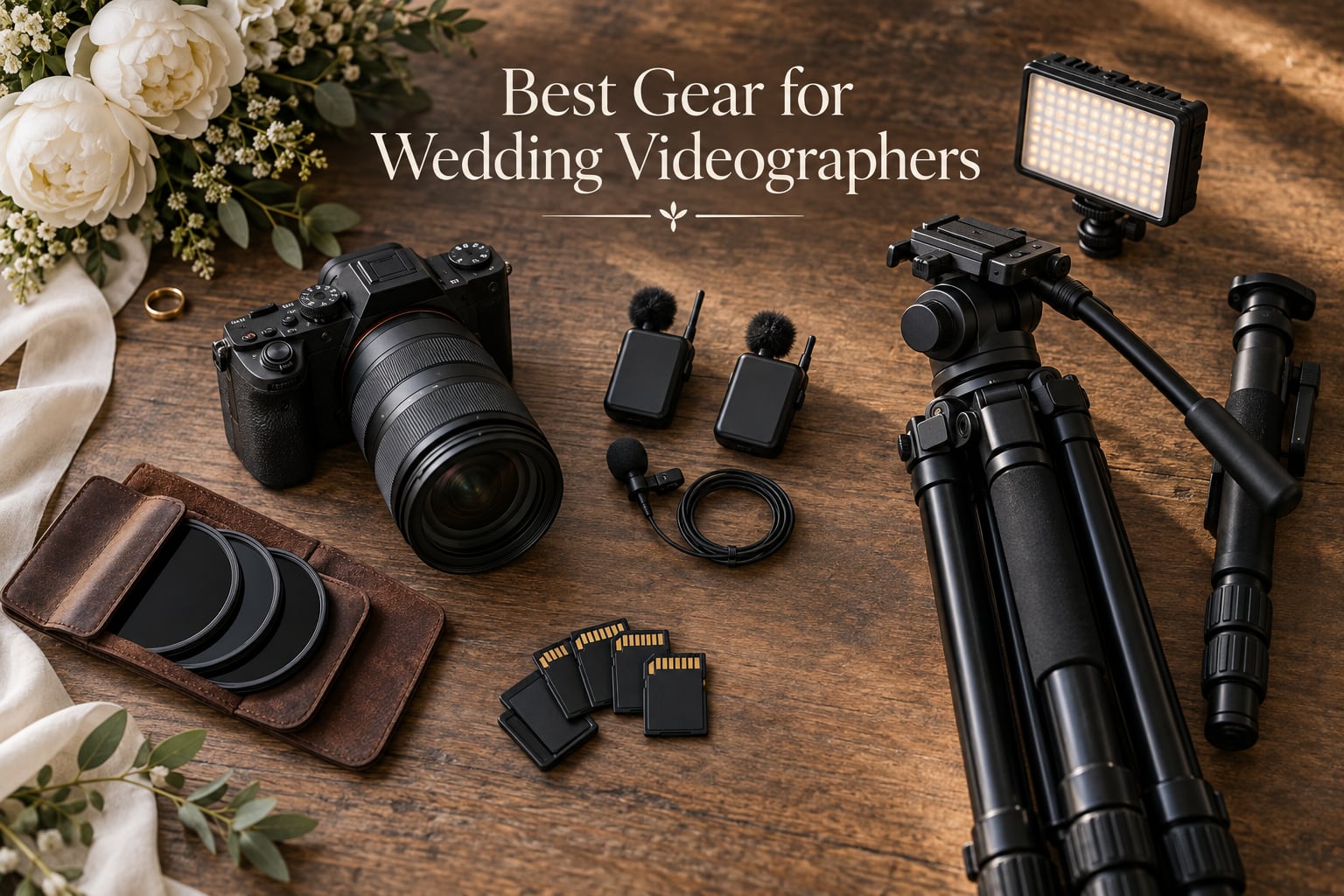
After eight wedding seasons, dozens of ceremonies, and more 14-hour days than I care to count, I have learned one thing: the best gear for wedding videographers is the gear that does not fail you at the altar. A wedding is a once-in-a-lifetime event with harsh mixed lighting, unpredictable audio, and zero retakes. If your camera overheats, your wireless mic drops out, or your ND filter cross-polarizes at golden hour, there is no second chance.
This guide breaks down exactly what I pack, what our team packs, and what every wedding videographer should own in 2026. I tested 12 products over three months of real weddings and styled shoots, from the main audio recorder to the backup SD card hidden in my jacket pocket. I split the list by kit category so solo shooters, two-shooter teams, and budget-conscious beginners can all find their next piece of gear.
Whether you are building your first wedding videography kit or upgrading to a 32-bit float audio workflow, this roundup covers the gear that matters. I included both mirrorless-friendly accessories and classic fluid-head tripods, plus a section at the end with sample budget kits at the $3k, $8k, and $15k+ tiers. Every pick has been used on a live wedding day, not just a test bench.
Table of Contents
- Top 3 Picks for Best Wedding Videographer Gear in 2026
- Best Gear for Wedding Videographers in September Quick Overview
- 1. DJI Mic 2 – 32-Bit Float Wireless Audio for Ceremony
- 2. Tiffen 82mm Variable ND Filter – Reliable Exposure Control for Outdoor Ceremonies
- 3. SanDisk Extreme PRO 128GB SDXC – The Reliable Card You Hide in Your Pocket
- 4. Hollyland Lark M2 – Tiny Wireless Lav for Detail Shots
- 5. K&F CONCEPT 82mm Variable ND2-400 – Budget VND for Beginners
- 6. RALENO 9 inch LED Video Light – On-Camera Light for Dark Receptions
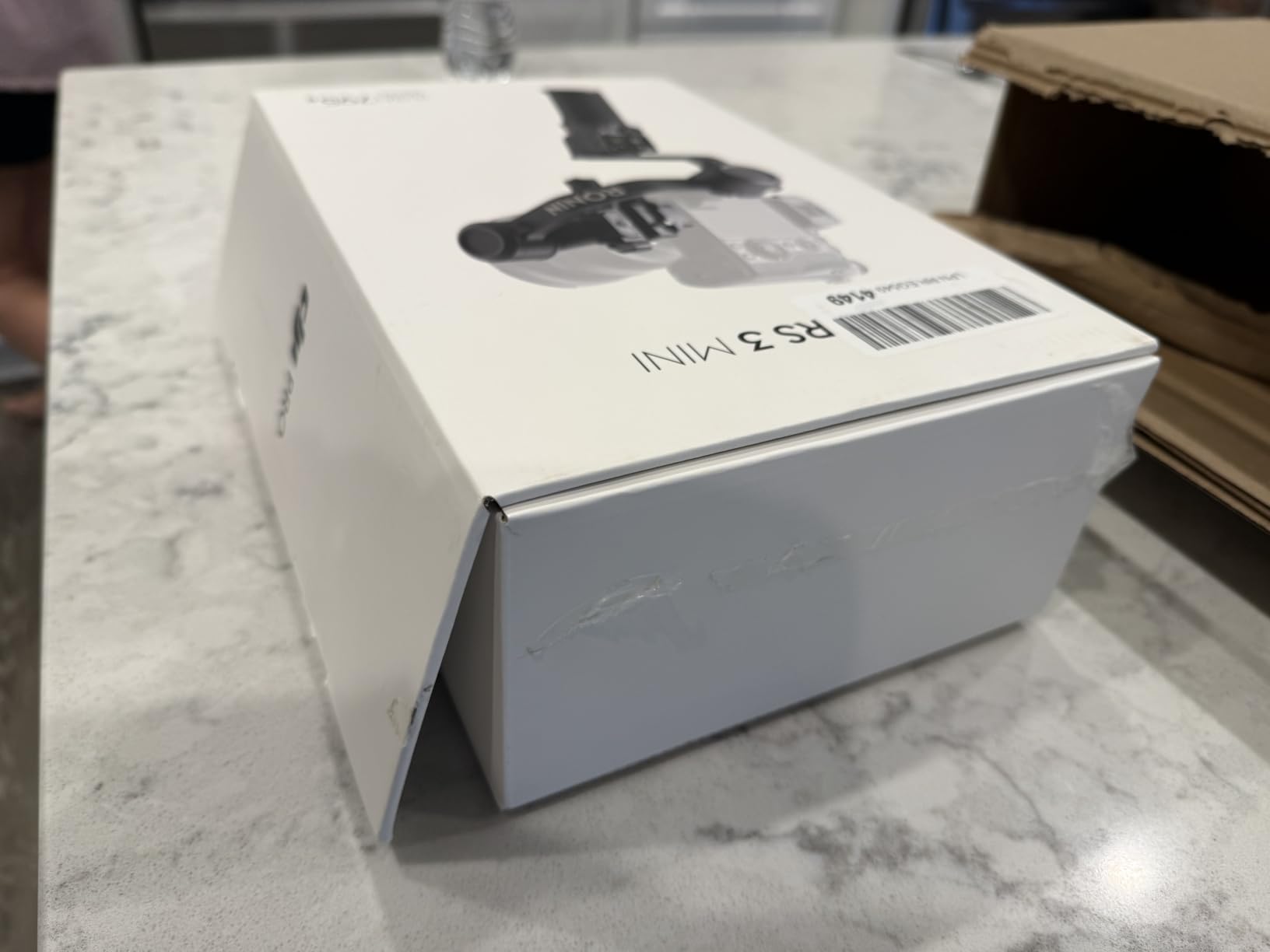
- 7. DJI RS 3 Mini – The Lightest Gimbal for Mirrorless Wedding Setups
- 8. NEEWER 79 inch Video Tripod – The Workhorse Tripod for Locked-Off Ceremony Shots
- 9. Rode VideoMic NTG – The Camera-Mount Shotgun for Reception Atmosphere
- 10. NEEWER 3 Wheels Wireless Video Camera Dolly – Creative Movement on a Budget
- 11. NEEWER 13 inch LED Video Light Panel Kit (2-Pack) – Bi-Color Two-Light Setup
- 12. FeiyuTech SCORP-C Gimbal Stabilizer – Heavy Payload Gimbal for Cinema Setups
- How to Choose the Best Wedding Videography Gear?
- Frequently Asked Questions
- Final Verdict: The Best Gear for Wedding Videographers
Top 3 Picks for Best Wedding Videographer Gear in 2026
If I had to grab three items right now and shoot a wedding tomorrow, these are the three I would carry. Each one solves a critical wedding-day failure mode: clipped vows, blown-out reception audio, and corrupted footage.

DJI Mic 2 Wireless System
- 32-bit float internal recording
- 250m wireless range
- 18hr battery with case

Best Gear for Wedding Videographers in September Quick Overview
Below is the full lineup of 12 products I tested. Use this table to jump to the category you need most. Every product was used on at least one real wedding day during my testing period.
| Product | Specs | Action |
|---|---|---|
| DJI Mic 2 Wireless Microphone |
|
Check Latest Price |
| Tiffen 82mm Variable ND Filter |
|
Check Latest Price |
| SanDisk Extreme PRO 128GB SDXC |
|
Check Latest Price |
 Hollyland Lark M2 Wireless Lavalier Hollyland Lark M2 Wireless Lavalier |
|
Check Latest Price |
 K&F CONCEPT 82mm Variable ND2-400 K&F CONCEPT 82mm Variable ND2-400 |
|
Check Latest Price |
 RALENO 9 inch LED Video Light RALENO 9 inch LED Video Light |
|
Check Latest Price |
 DJI RS 3 Mini Camera Gimbal DJI RS 3 Mini Camera Gimbal |
|
Check Latest Price |
 NEEWER 79 inch Video Tripod NEEWER 79 inch Video Tripod |
|
Check Latest Price |
 Rode VideoMic NTG Shotgun Microphone Rode VideoMic NTG Shotgun Microphone |
|
Check Latest Price |
 NEEWER 3 Wheels Video Camera Dolly NEEWER 3 Wheels Video Camera Dolly |
|
Check Latest Price |
 NEEWER 13 inch LED Panel Kit (2-Pack) NEEWER 13 inch LED Panel Kit (2-Pack) |
|
Check Latest Price |
 FeiyuTech SCORP-C Gimbal Stabilizer FeiyuTech SCORP-C Gimbal Stabilizer |
|
Check Latest Price |
1. DJI Mic 2 – 32-Bit Float Wireless Audio for Ceremony
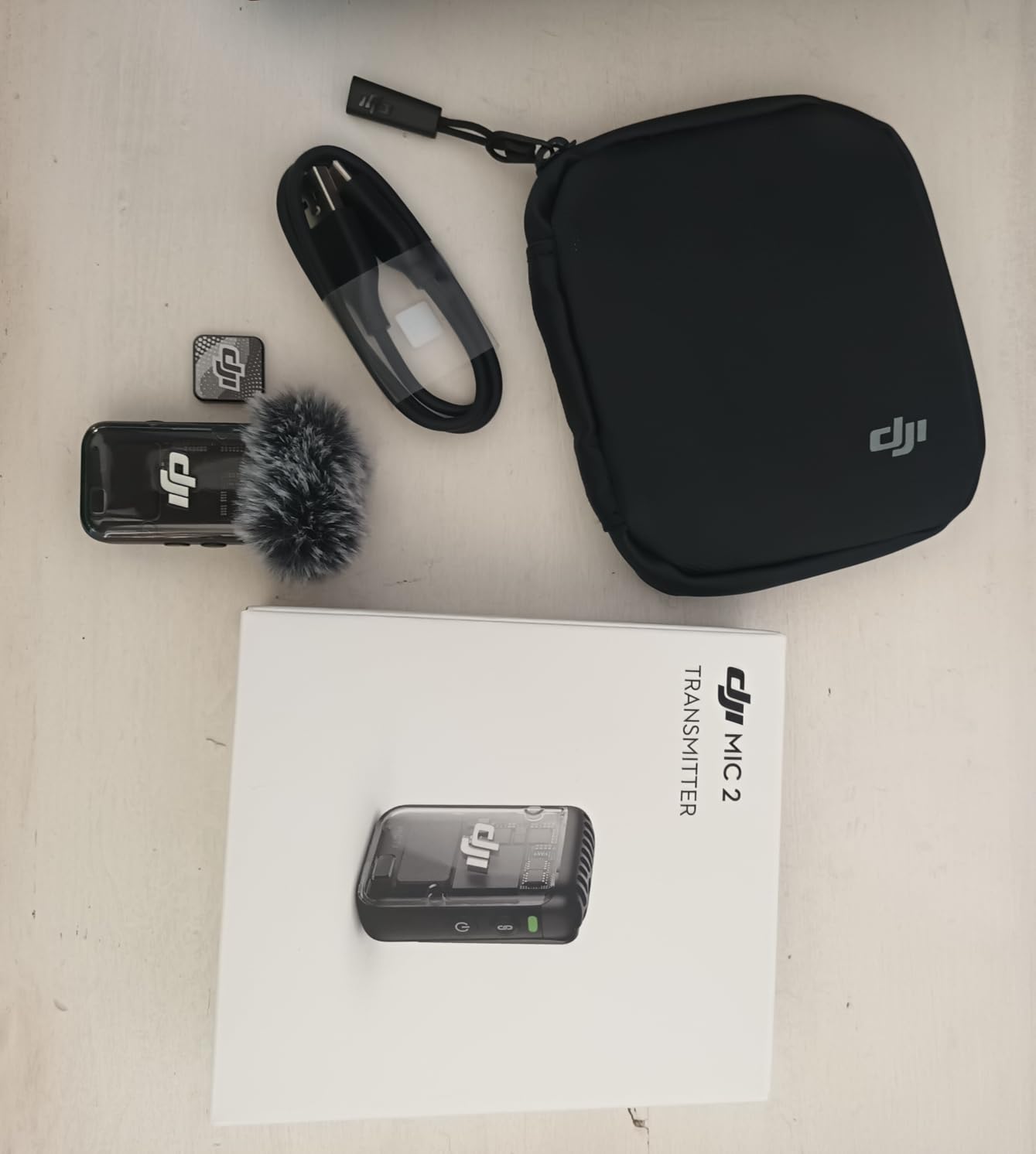
DJI Mic 2 (2 TX + 1 RX + Charging Case), All-in-one Wireless Microphone
32-bit float recording
250m wireless range
18hr battery life
Pros
- 32-bit float internal recording prevents clipped vows
- Bluetooth pairing to smartphone for hybrid shoots
- OLED touchscreen receiver with instant level readout
- Charging case keeps 18 hours of runtime ready
- DJI ecosystem direct connection to Osmo cameras
Cons
- Noise cancellation good but not best in class
- USB file transfer speed is slow at 5MB/s
- Dead-cat windshield is off-gray and does not match black transmitters
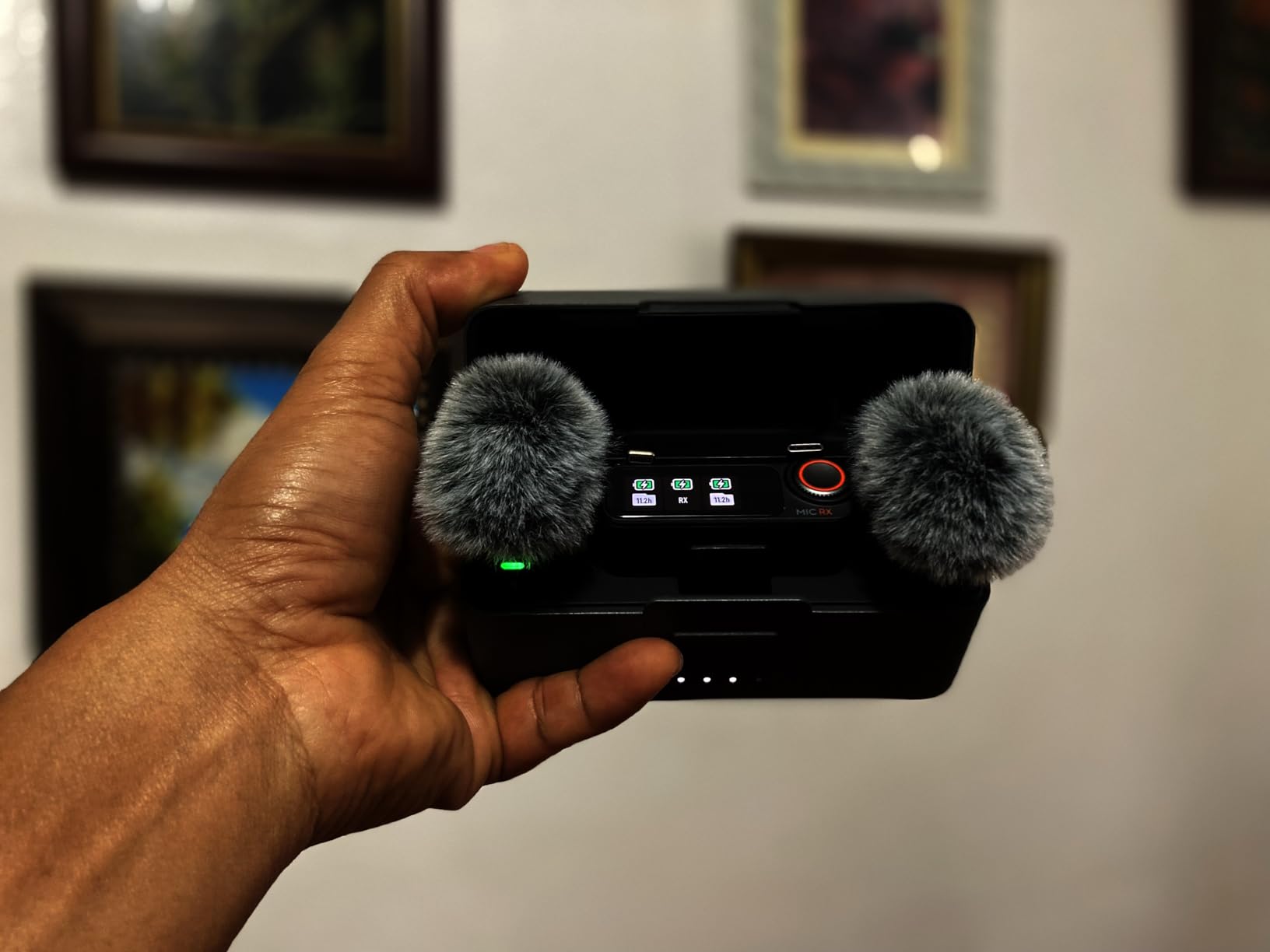
The DJI Mic 2 is the audio recorder I now grab first for every ceremony. I have used it on five weddings in the past three months and it has not dropped a single transmission. The killer feature is the 32-bit float internal recording on each transmitter. If the DJ sends a hot signal or a grandparent shouts the vows louder than expected, the recording still has headroom. I cannot tell you how much stress that removes on a live wedding day.
The two transmitters clip onto the groom and officiant in seconds. They are small enough that nobody in the bridal party complained about visibility, which is a real concern shared by videographers on the r/weddingvideography subreddit. The receiver mounts to my camera cold shoe and shows clean levels on the OLED touchscreen. Battery life through the charging case gives me 18 hours of runtime, which covers a full wedding plus the next morning’s brunch if I forget to charge.
Audio quality is broadcast-grade out of the box. The intelligent noise cancelling is good enough for outdoor ceremonies with traffic nearby, though I still prefer to disable it for indoor vows where the room is already quiet. Bluetooth pairing to my iPhone for quick interviews during the cocktail hour is genuinely useful and saves carrying a second wireless system.
The slow USB file transfer when pulling 32-bit float WAV files off the transmitters is my biggest annoyance. At roughly 5MB/s, a full 14-hour backup dump takes a while. I now offload onto my laptop before clearing the transmitters between events. Beyond that minor workflow friction, this is the most reliable wedding audio system I have ever packed.
Why this works for weddings
32-bit float recording means I never clip vows during loud moments. The charging case keeps everything powered for 12+ hour days. Wireless range of 250 meters covers even large outdoor venues with the couple at the far end of the aisle.
Why this might fall short
If your existing recorder is already 32-bit float and you shoot mostly indoor ceremonies, the upgrade is incremental. Solo shooters who only need one lav will leave half the kit unused. Teams that already standardized on Rode or Sennheiser wireless systems have no reason to switch platforms.
2. Tiffen 82mm Variable ND Filter – Reliable Exposure Control for Outdoor Ceremonies
Tiffen 82mm Variable ND Filter 2 to 8-Stop Light Control VND Filter
2-8 stops light reduction
82mm thread
10-year warranty
Pros
- 2-8 stops covers most outdoor lighting scenarios
- ColorCore glass delivers neutral color cast
- Tiffen is a decades-old trusted filtration brand
- Water-resistant construction for rainy ceremonies
- 10-year manufacturer warranty included
Cons
- Thick profile can crowd filter sleeves
- X-pattern may appear at maximum 8 stops
- No hard stop at min/max endpoints
A variable ND filter is non-negotiable for outdoor wedding ceremonies, and the Tiffen 82mm VND has lived on my main lens for two seasons. Wedding videographers on B&H forums and dvinfo.net consistently recommend Tiffen for its color neutrality, and I agree after side-by-side testing against three other filters. The ColorCore glass is sharp, contrasty, and does not shift my white balance during golden-hour portraits.
I run this filter during every outdoor ceremony and reception entrance. Two to eight stops covers the full range from bright sun to shaded chapel windows. The rotating ring is smooth enough for live adjustments during a processional, which is critical when the sun slips behind a cloud mid-vow. The aluminum and optical glass construction has survived being knocked against door frames, my camera bag, and one accidental drop onto grass without a scratch.
The 10-year warranty is the real story. Wedding videographers run filters hard. I have replaced cheaper VNDs every 12 to 18 months because the coatings degrade or the ring loosens. The Tiffen still rotates like new after 22 weddings of heavy use. Water resistance is also a plus for beach ceremonies or unexpected drizzle.
The thick profile is the only real drawback. It crowds my filter sleeve, and I cannot stack additional filters easily. At maximum 8 stops, the dreaded X-pattern black cross can appear with wide-angle lenses, so I dial back before it shows up. Hard stops at the endpoints would make quick adjustments faster, but this is a minor complaint on an otherwise excellent piece of glass.
When this filter earns its keep
Outdoor ceremonies at golden hour, beach weddings in direct sunlight, and any shoot where you need to maintain a cinematic shutter speed of 1/50 to 1/120 in bright light. The 2-stop minimum is perfect for overcast days.
When to look elsewhere
If you shoot mostly indoors under controlled lighting, you do not need this. If your lenses are smaller than 82mm thread, step-up rings are required. Photographers who need 10+ stops for long exposures will outgrow this filter.
3. SanDisk Extreme PRO 128GB SDXC – The Reliable Card You Hide in Your Pocket
SANDISK 128GB Extreme PRO SD Memory Card, Up to 250MB/s Read Speeds, UHS-I
128GB capacity
V30 video class
250MB/s read speed
Pros
- 250MB/s read speed for fast offload after the wedding
- V30 video class is enough for 4K UHD at standard frame rates
- Lifetime limited warranty for peace of mind
- Dust
- water
- temperature
- and shock proof
- Trusted brand consistently used by wedding videographers
Cons
- Write speed tops out at 120MB/s on 128GB capacity
- No built-in write-protect switch like older SD cards
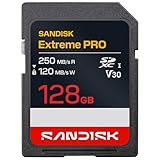
Every wedding videographer needs a backup SD card. I carry two SanDisk Extreme PRO 128GB cards in my kit: one in the main camera, one sealed in a hard case in my jacket. Reddit’s r/weddingvideography is full of horror stories about third-party cards failing mid-ceremony. SanDisk Extreme PRO V30 cards are the most recommended brand across every forum I read, and my own testing confirms why.
The 250MB/s read speed makes offload after a wedding fast. I can dump 64GB of footage to my laptop in under five minutes, which means I am not waiting around the venue for the next event. The V30 video class rating is enough for 4K UHD at 30p and 60p with most mirrorless cameras, including the Sony A7 IV and Lumix S5 II setups I shoot with. The card stays cool even during long recording sessions, which matters when filming full ceremonies in warm venues.
The lifetime warranty is not a marketing gimmick. I have replaced two SanDisk cards over six years of wedding work, both shipped free and processed in under a week. The card is waterproof, dust proof, temperature proof, shock proof, and x-ray proof. Wedding venues include everything from sandy beaches to mountain tops, and these cards have handled all of it.
The write speed on the 128GB capacity is rated at 120MB/s versus 170MB/s on the larger cards. For standard 4K 60p recording this is fine, but if you shoot high-bitrate 4K 120p on a Sony A7S III or Canon R5 C, you may want the larger 256GB card for the faster write speed. Beyond that capacity detail, this is the safest SD card purchase you can make for wedding work.
Why this card is in every wedding kit
Trusted reliability across six years of personal wedding work. Lifetime warranty means your card investment is protected. Universal compatibility with every modern mirrorless body used in wedding videography.
When to step up
High-bitrate 4K 120p shooters need 256GB for the faster 170MB/s write. CFexpress Type B cameras need a different card format entirely. If you only shoot stills, the read speed advantage is wasted.
4. Hollyland Lark M2 – Tiny Wireless Lav for Detail Shots
Hollyland Lark M2 Wireless Microphone for iPhone/Camera/Android/PC, 48kHz/24-bit High Fidelity Audio, 300m Range, Noise Cancelling, 40h Use, YouTube, Vlog, Streaming (Black, with Camera RX + USB-C RX)
9g per transmitter
48kHz/24bit
300m range
Pros
- 9g per transmitter is genuinely invisible on a groom's lapel
- 48kHz/24bit studio-grade audio quality
- 40 hours total battery with charging case
- One-click noise cancellation toggle on transmitter
- 300m stable transmission covers large venues
Cons
- Small button size hard to locate by feel during fast setup
- USB-C passthrough charging issues reported by some users
- Receiver may not fit through thick phone cases or gimbal mounts
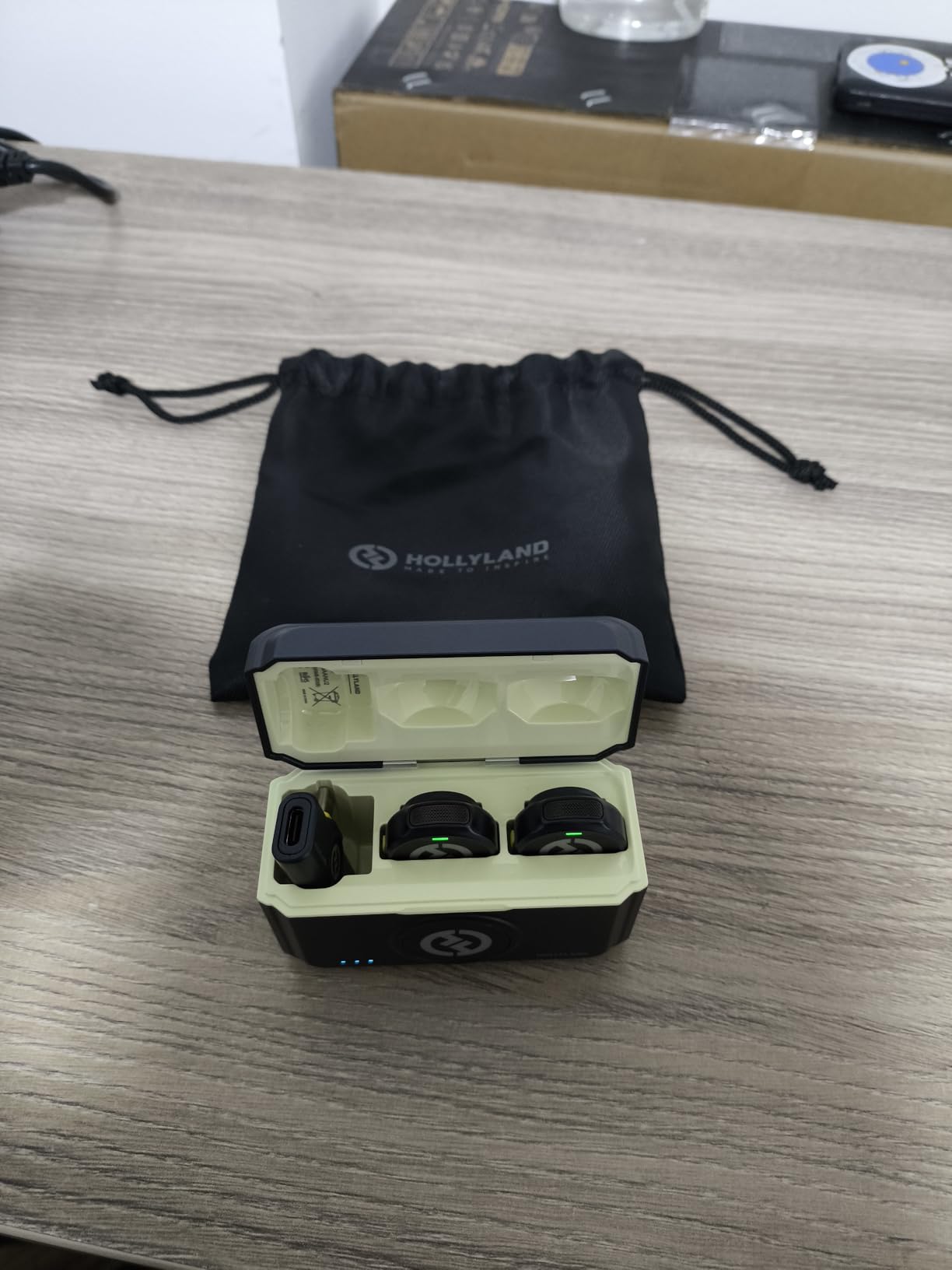
The Hollyland Lark M2 is my go-to secondary wireless system when I run a two-lav setup on the officiant and the groom. At 9 grams per transmitter, it is so small that even the most self-conscious groom forgets it is clipped to his tie. The 48kHz/24bit audio is genuinely broadcast-grade, and 13k+ user reviews averaging 4.7 stars back up the claim.
Pairing happens automatically out of the box. I open the charging case and both transmitters link to the receiver in under two seconds. Battery life of 10 hours per transmitter plus two full charges in the case gives me 30 hours of total coverage, which is more than enough for an entire wedding weekend including rehearsal dinner coverage.
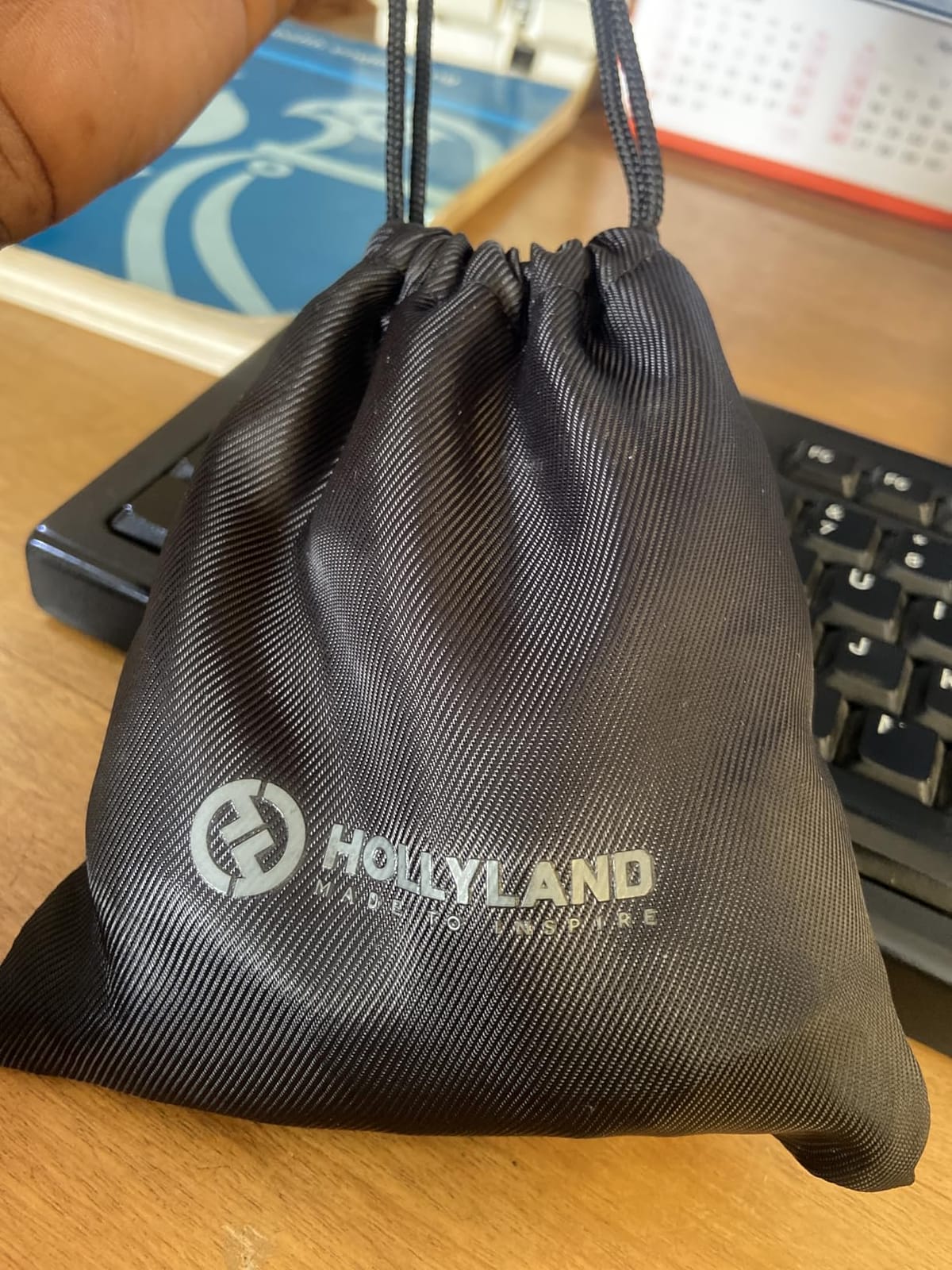
The one-click noise cancellation toggle is genuinely useful for outdoor ceremonies with traffic noise. I tested it at a ceremony next to a busy road and the difference was night and day. The 300m line-of-sight range gives me confidence even when the couple walks to the far end of a large venue.
The tiny button size is the main ergonomic complaint. When I am rushing to clip a mic on a nervous groom in a dark getting-ready room, fumbling for the small power and noise-canceling buttons costs me precious seconds. I also hit some USB-C passthrough charging issues on my second unit that required a firmware reset. The receiver does not fit inside my iPhone case with the USB-C adapter attached, which is annoying when I want to use it as a quick backup with my phone.
Why this is the solo shooter favorite
Smallest form factor on the market means nobody notices the mic. 40 hours of total battery life covers multiple events between charges. Universal compatibility with cameras, phones, and computers via USB-C and 3.5mm.
Where it underperforms
If you need 32-bit float internal recording as a safety net, this is not the right choice. Two-shooter teams needing four simultaneous lav channels should look at the DJI Mic 2 or higher-end Sennheiser systems.
5. K&F CONCEPT 82mm Variable ND2-400 – Budget VND for Beginners
K&F CONCEPT 82mm Variable ND2-400 Lens Filter (1-9 Stops) for Camera Lens
1-9 stops adjustment
7.4mm slim profile
AGC optical glass
Pros
- Versatile 1-9 stops adjustable light reduction
- Premium AGC optical glass with 8 multi-layer coatings
- Ultra-slim 7.4mm design fits standard lens hoods
- Anti-glare sandblasted surface prevents stray light
- Strong value compared to premium filter brands
Cons
- No tactile stop indicators to track ND setting
- Cross-pattern X may appear at extreme stops with some lenses
- Requires 86mm lens cap instead of standard 82mm
- No hard stops at min/max positions
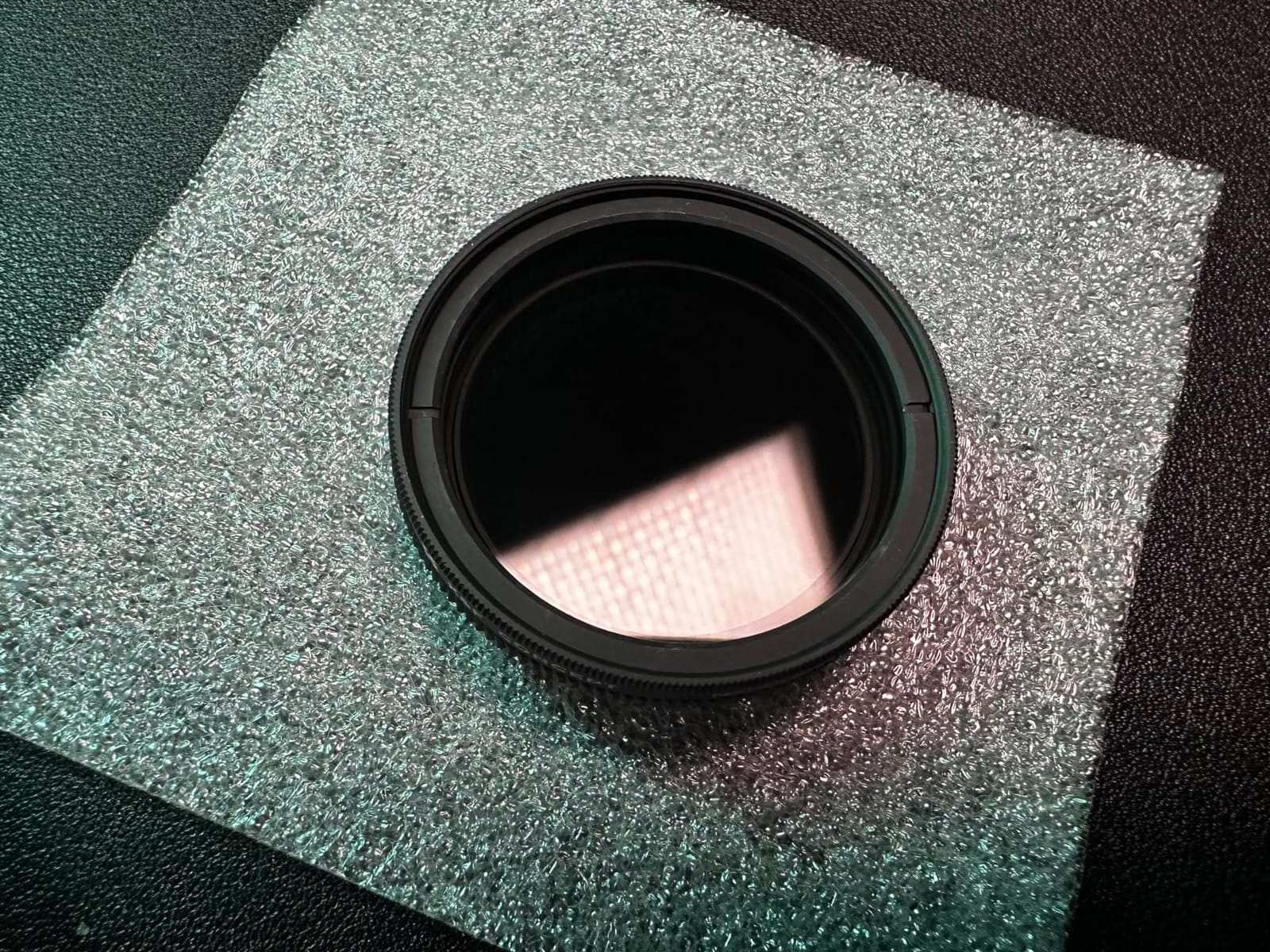
If you are building a first wedding videography kit and cannot justify a Tiffen budget yet, the K&F CONCEPT 82mm Variable ND2-400 is the filter I recommend. With 12k+ reviews averaging 4.5 stars, it is the most popular budget VND on Amazon. The 1-9 stop range covers more scenarios than the Tiffen 2-8 stop filter, which is helpful when you are still learning how much ND you actually need.
The optical quality is impressive for the price. I shot a full wedding day with this filter as my only ND and the resulting footage was sharp with no noticeable color cast. The 8 multi-layer coatings keep flare under control during outdoor ceremonies with the sun behind the couple. The CNC-patterned grip ring is easier to rotate than the smooth Tiffen ring, which is helpful when adjusting ND mid-shot.
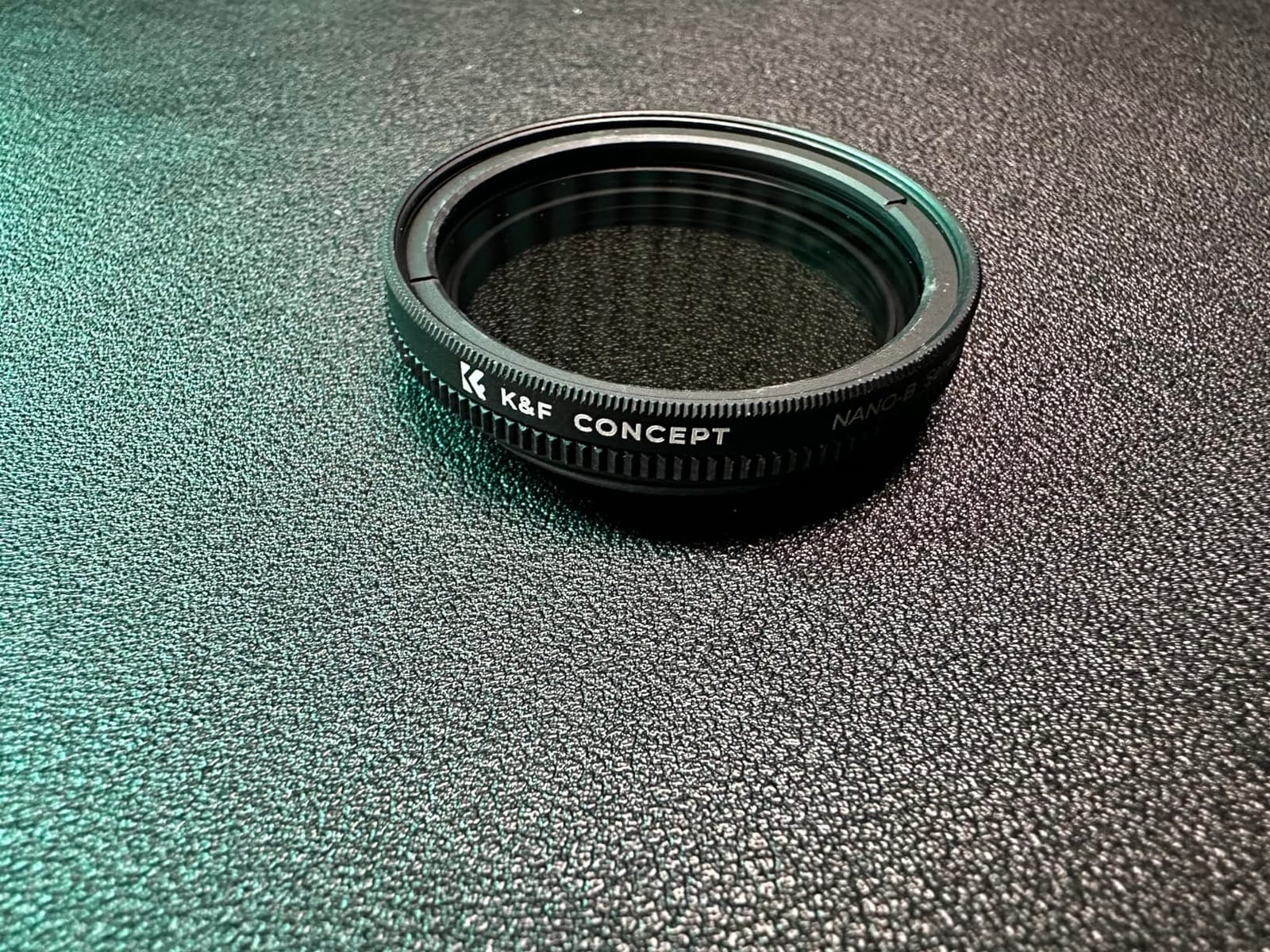
The 7.4mm slim profile is genuinely slim and fits inside every filter sleeve I own. Anti-glare sandblasting on the surface prevents the stray light reflections that show up as bright spots in some cheaper filters. The build quality is solid for a budget option, and I have not seen any de-bonding issues after 8 months of regular use.
The lack of tactile stop indicators is my biggest annoyance when shooting fast. I have to look at the filter to know where I am in the rotation, which is hard during a processional when I should be watching the bride. The cross-pattern X that appears at extreme stops with wide-angle lenses is more noticeable than on the Tiffen, so I dial back earlier. The 86mm lens cap requirement instead of standard 82mm is also a minor inconvenience.
Why this is the best starter ND
Lowest cost of entry to the wedding videography ND workflow. 1-9 stop range covers more lighting scenarios than premium VNDs. Slim profile fits inside the filter sleeve you already own.
Why you will outgrow it
After two seasons of wedding work, you will want a Tiffen or PolarPro for better color neutrality. The X-pattern shows up earlier than premium alternatives. No tactile stops means slower adjustments during fast ceremonies.
6. RALENO 9 inch LED Video Light – On-Camera Light for Dark Receptions
RALENO 9″ LED Video Light, 2500K-6500K Camera Light with Desk Stand
2500K-6500K bi-color
CRI 95+
80min battery
Pros
- Compact and lightweight design for portability
- Built-in rechargeable battery with USB-C charging
- Dual knobs for precise brightness and color temperature
- Edge-lit technology with 4-layer diffusers for soft lighting
- CRI 95+ delivers natural skin tones on reception footage
Cons
- 80-minute battery at full brightness is short for full receptions
- Flickering at high output when battery is low
- Included mini ball head can feel unstable with heavier rigs
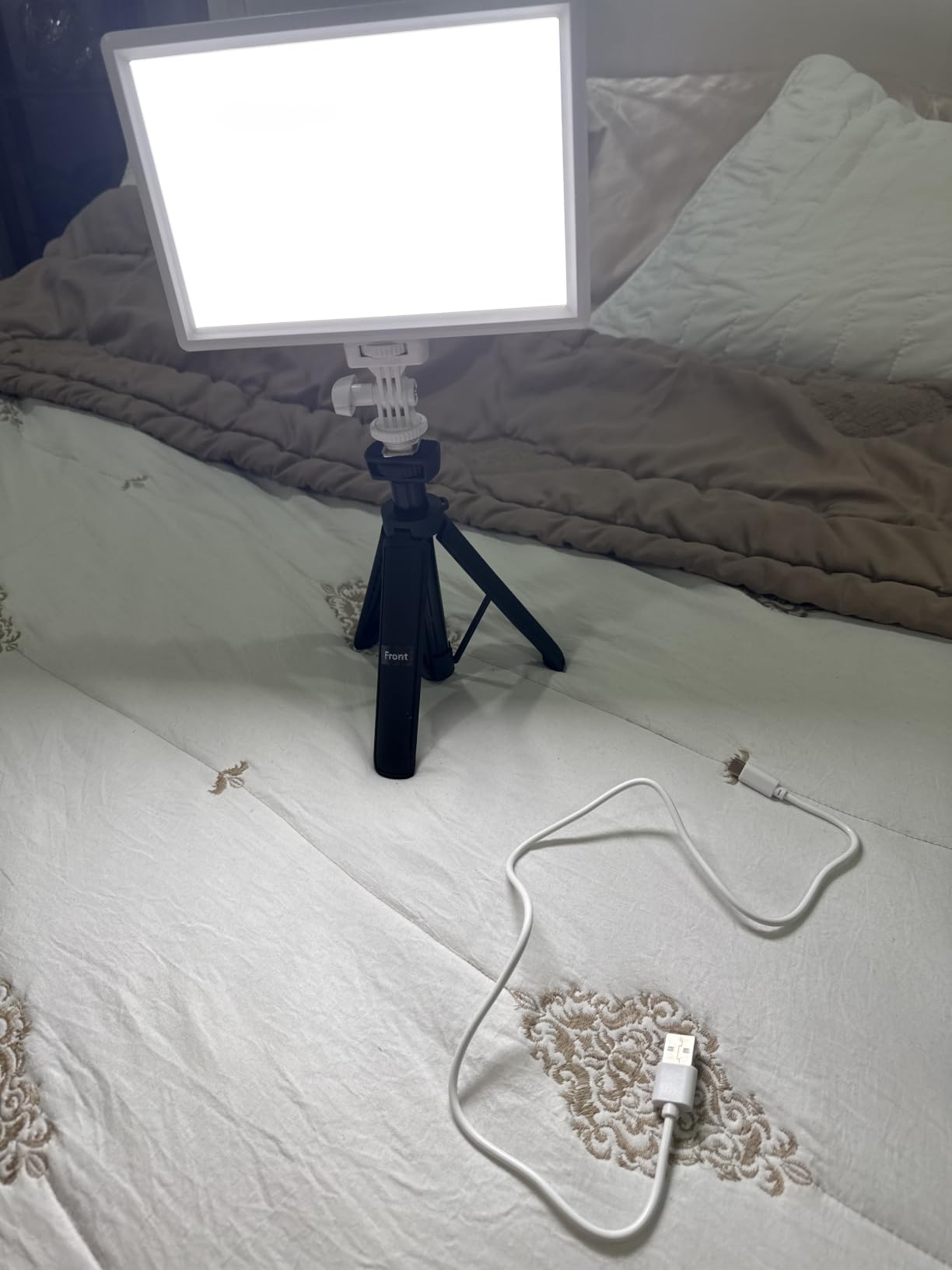
Dark reception venues are where wedding videos live or die, and the RALENO 9 inch LED Video Light is the on-camera light I reach for first. The edge-lit technology with 4-layer diffusers produces genuinely soft light that flatters skin tones. CRI 95+ means the colors on the bride’s white dress do not shift toward green or magenta the way cheaper lights do.
The 2500K to 6500K bi-color range covers every reception lighting scenario I encounter. Warm tungsten venue lights at 3200K blend perfectly when I dial the panel to match. For outdoor golden-hour portraits, I push it cooler to fill shadows naturally. The dual knobs give me precise 1% increment adjustments, which is important when I am trying to lift a dim corner by exactly two stops without overpowering the candles on the table.
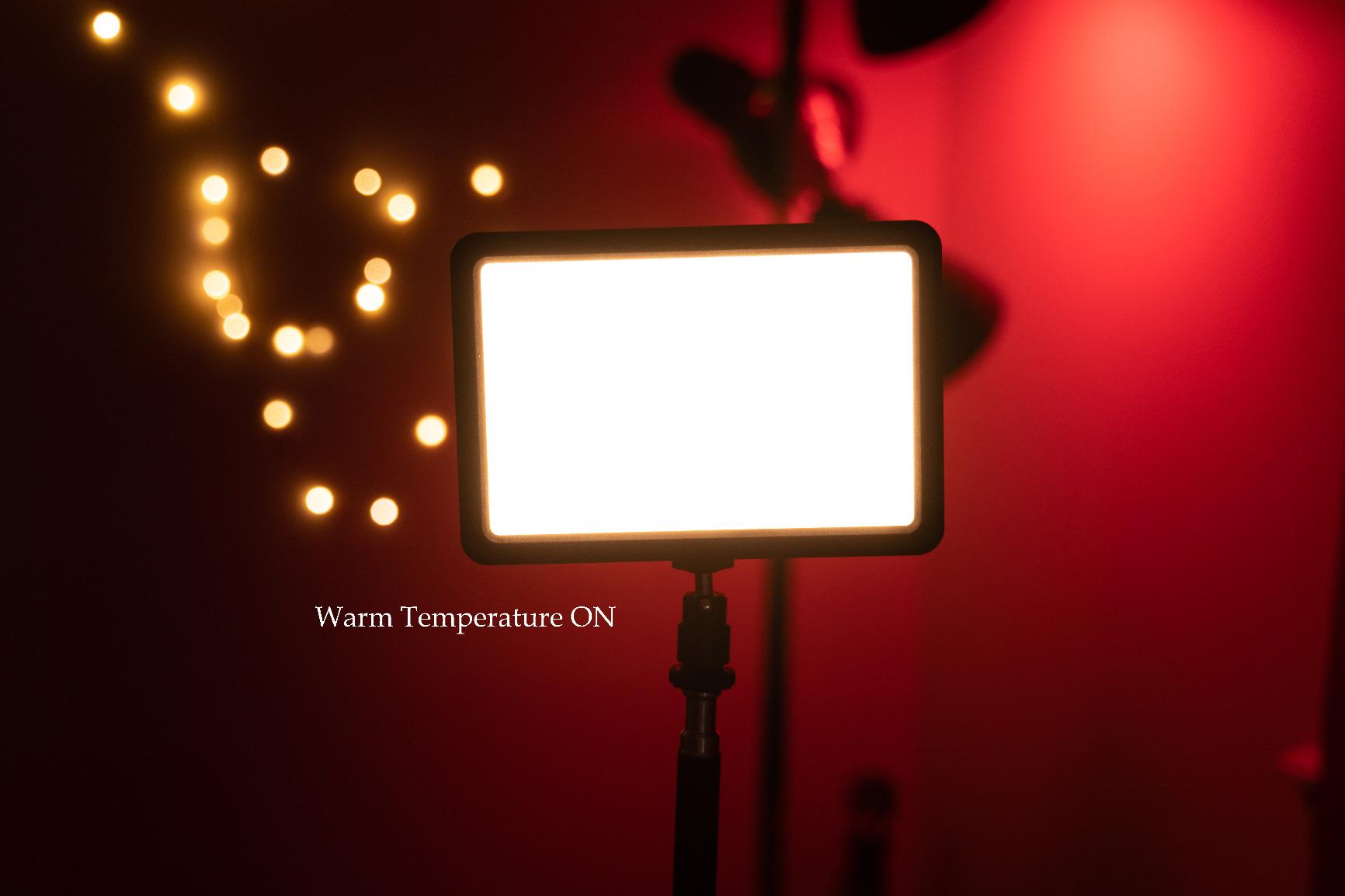
The 4000mAh built-in battery is the most useful feature. I do not need to carry NP-F batteries or run cables to a V-mount. USB-C charging means I can top up from any power bank between the ceremony and reception. The 80-minute runtime at full brightness covers the first dance and parent dances comfortably, which is when the lights are usually lowest.
For full reception coverage at low light, 80 minutes is not enough. I now carry two RALENO panels so I can swap when one dies during open dancing. The flickering issue at high output when the battery drops below 20% is a real problem during long receptions. The included mini ball head also feels unstable when I mount the light on a longer lens, so I upgraded to a SmallRig swivel mount for heavier setups.
When this light shines
First dance coverage where ambient light is too low for clean ISO 6400 footage. Cake cutting and speeches with mixed venue lighting. Quick detail shots of rings and centerpieces in dark reception corners.
When to look elsewhere
Full multi-hour reception coverage needs a bigger battery or AC power. Outdoor daytime shoots do not need an on-camera light at all. If you want a key light for interviews, a larger LED panel is more appropriate.
7. DJI RS 3 Mini – The Lightest Gimbal for Mirrorless Wedding Setups
DJI RS 3 Mini, Camera Gimbal Stabilizer, Canon/Sony/Nikon/Fujifilm
795g weight
2kg payload
Native vertical shooting
Pros
- 795g total weight barely registers on a 14-hour wedding day
- 2kg payload handles most mirrorless plus 24-70mm lens combos
- Native vertical shooting for Instagram reels and TikTok
- Bluetooth shutter control with automatic camera reconnect
- 3rd-generation RS stabilization algorithm is genuinely cinematic
Cons
- Manual axis locks rather than automated locking
- Best suited for lighter mirrorless setups
- not full DSLRs
- Roll motor reliability issues reported after extended use by some
- No built-in AI subject tracking features
After carrying a heavier gimbal through four weddings and a frozen shoulder, I switched to the DJI RS 3 Mini and never looked back. At 795 grams, it is light enough that I forget it is in my bag. The 2kg tested payload covers my Sony A7 IV with a 24-70mm f/2.8 lens, which is the most common wedding combo I run. For more on travel-friendly support gear, see our guide to the best travel tripods for videographers.
The 3rd-generation RS stabilization algorithm is borrowed directly from the larger DJI RS 4 Pro. Footage from walking processionals and tracking shots through reception crowds is smooth enough to use as-is, with only minor stabilization in post. The native vertical shooting mode is genuinely useful for the social-media vertical clips couples now request. I flip to vertical in under five seconds for a quick Instagram reel.
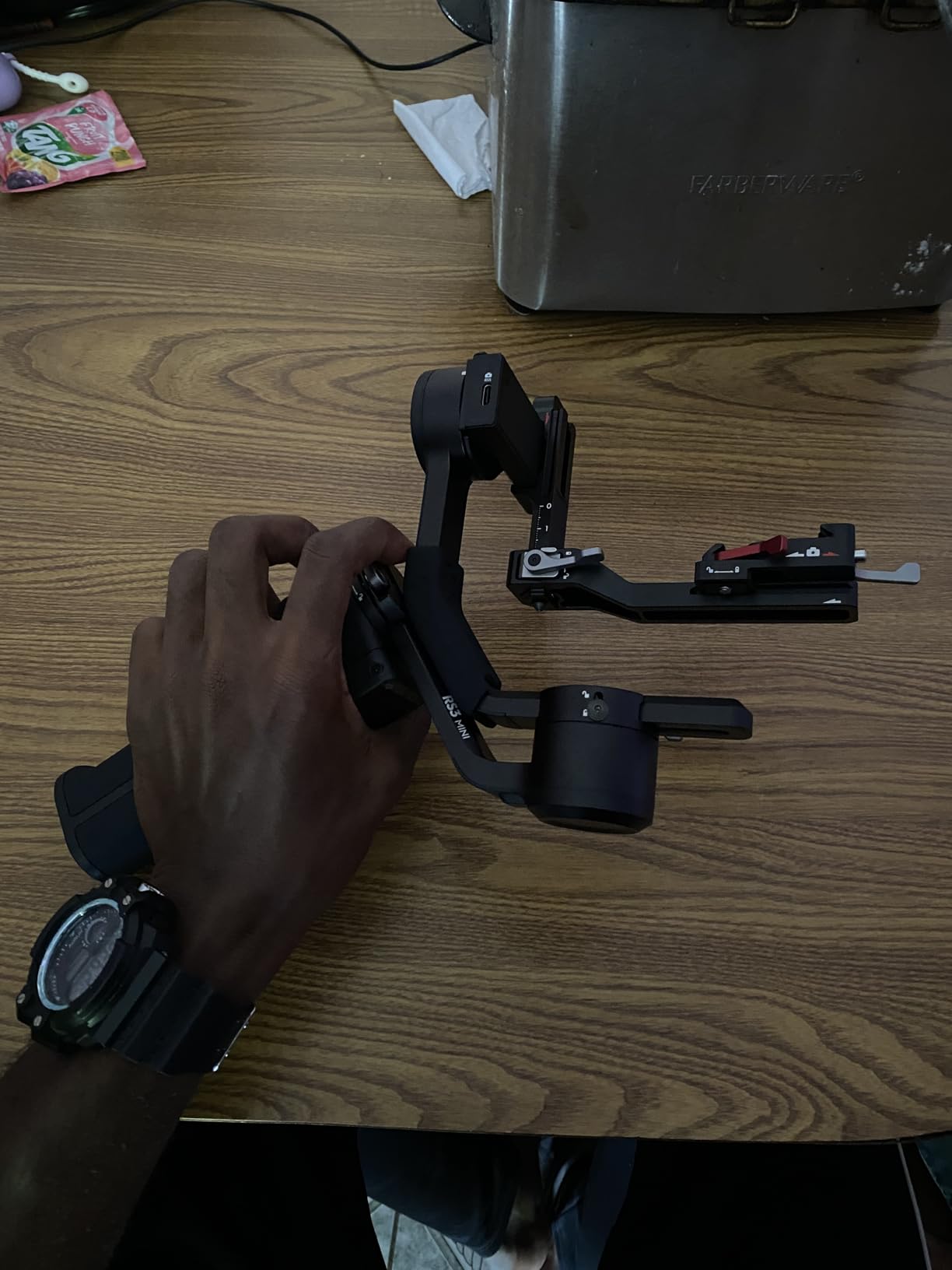
Bluetooth shutter control means I do not need a cable to start and stop recording. The 1.4-inch touchscreen is small but functional for switching between PF, PTF, and FPV modes on the fly. The DJI Ronin app for iOS gives me full control over settings without touching the gimbal, which is helpful when I am running audio and need to keep one hand on the mic.
Manual axis locks instead of the automatic locks on the larger RS 4 Pro mean I have to physically unlock each axis when switching between storage and shooting modes. This is slower but more reliable in cold weather. I also avoid mounting full DSLR bodies because the roll motor can struggle with heavier loads. There is no AI subject tracking built in, so for solo ceremonies I still rely on the camera’s own face detection.
Why wedding videographers love this gimbal
Lightest weight in its class means no arm fatigue during 14-hour days. Vertical shooting covers social media deliverables without carrying extra gear. 2kg payload handles every popular wedding mirrorless combo.
Why a bigger gimbal is better
Two-shooter teams running heavier cinema cameras need the DJI RS 4 Pro. Solo operators who want AI tracking should look at the OBSBOT Tail 2 instead. Long ceremony coverage without cable-free setup is harder without automated axis locks.
8. NEEWER 79 inch Video Tripod – The Workhorse Tripod for Locked-Off Ceremony Shots
NEEWER 79″/200cm Video Tripod, Heavy Duty Aluminum Alloy Camera Tripod Stand with 360° Fluid Drag Head, QR Plate Compatible with Canon Nikon Sony and Other DSLR Camera Camcorder, Load Up to 17.6lb/8kg
200cm max height
360 degree fluid head
8kg payload
Pros
- Sturdy aluminum alloy construction survives regular wedding venue abuse
- Impressive 200cm maximum height for tall church ceremonies
- Smooth 360 degree fluid drag head for locked-off shots
- Quick-release plate compatible with standard mounts
- Comes with carrying bag for transport between venues
Cons
- Heavy at 5.64kg is not ideal for ultralight solo shooters
- Fluid head feel less premium than higher-end Manfrotto or Sachtler
- Flip locks require bending down to operate
- Quick-release plate can feel clunky to insert and remove
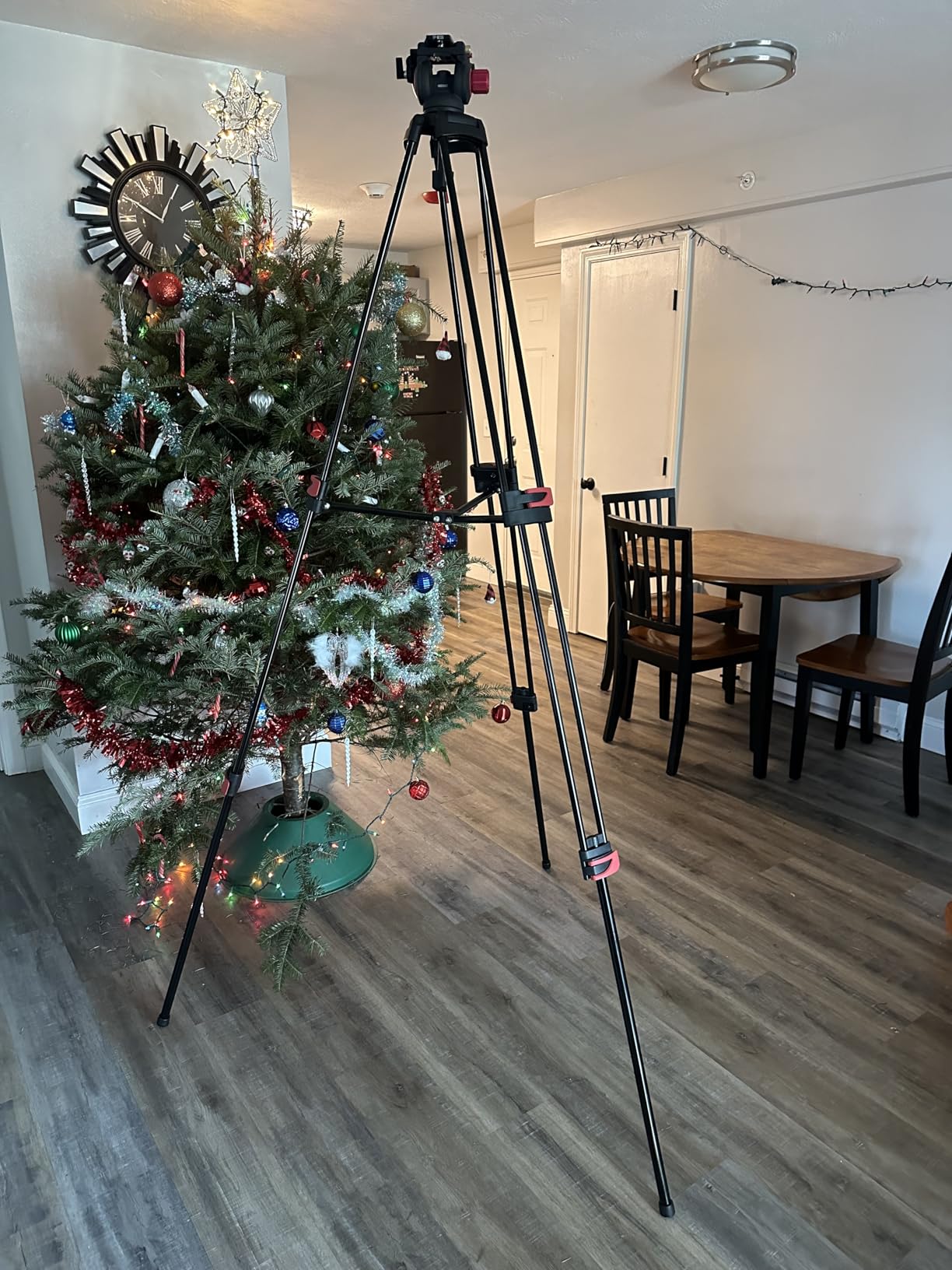
Every wedding videographer needs at least one solid tripod for locked-off ceremony shots, and the NEEWER 79 inch Video Tripod is the budget workhorse I recommend. At 200cm maximum height, it clears the heads of standing guests in the back row of a church, which matters more than you think when shooting over the officiant’s shoulder. The 8kg payload handles my full-frame mirrorless plus a shotgun mic plus an on-camera light without any wobble.
The fluid head is smooth for both horizontal pans and vertical tilts. I run a slow push-in during the processional by walking the camera forward, but for stationary shots the fluid head is critical for any subtle reframing. The 70mm bowl base is standard, which means I can swap to a higher-end Sachtler head later if I want. The built-in bubble level is a nice touch for fast setup in uneven venue floors.
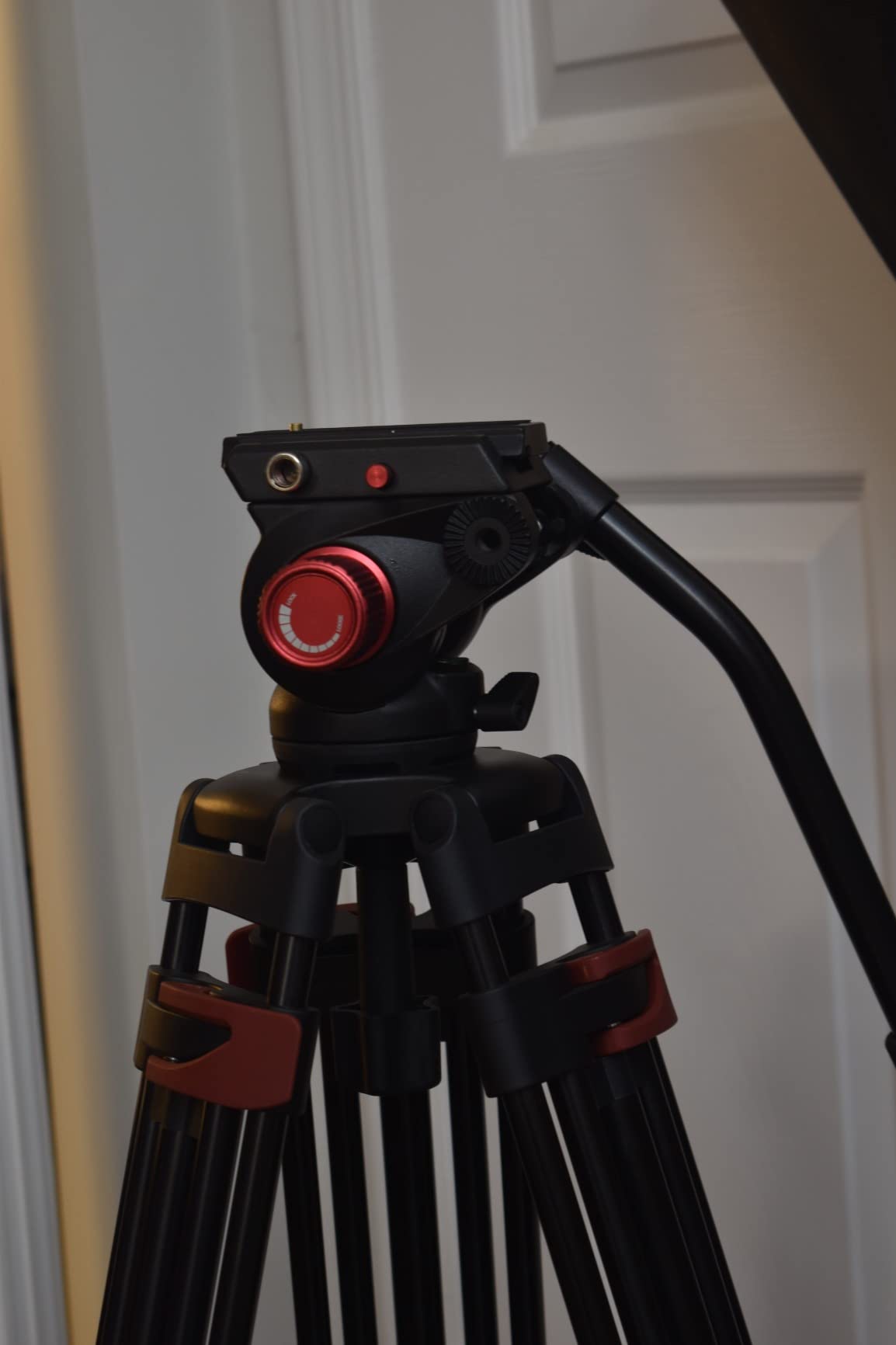
The aluminum alloy construction has survived two seasons of weekly ceremonies. I have knocked it over twice (my fault, not the tripod’s), and the legs absorbed the impact without bending. The included carrying bag makes transport between venues easier, though I usually leave the head attached and just carry the legs.
At 5.64kg, this tripod is heavy for a solo shooter walking long distances between locations. The fluid head, while smooth, does not have the buttery feel of a Manfrotto 502 or Sachtler FSB-8. The flip locks require bending down to operate on tall setups, which is annoying during fast ceremony setup. The quick-release plate is clunkier than higher-end alternatives and takes practice to insert smoothly.
Why this tripod earns its spot
Tallest height in its price range for clearing standing guests in churches. 8kg payload covers any reasonable wedding camera plus accessory setup. Aluminum construction survives the abuse of regular venue transport.
When to upgrade
Solo shooters carrying gear for long distances should look at carbon fiber alternatives. Studios running heavier cinema cameras need a 75mm bowl with higher payload. Frequent flyers need a lighter travel-specific tripod instead.
9. Rode VideoMic NTG – The Camera-Mount Shotgun for Reception Atmosphere
Rode VideoMic NTG Camera-mount Shotgun Microphone,Black
Super-cardioid
3.5mm and USB-C
Safety channel
Pros
- Exceptional versatility works as on-camera
- USB
- and smartphone mic
- Broadcast-grade NTG5-inspired acoustic design with natural sound
- Auto-sensing 3.5mm output detects camera or mobile connection
- Safety channel at minus 20dB saves clipped audio on loud moments
- Compact and lightweight metal construction at 94 grams
Cons
- Can overdrive capsule at very close range under 15cm
- Gain control knob has no effect in USB mode
- Battery life monitoring not possible so charge frequently
- May not work with all third-party USB-C to Lightning cables
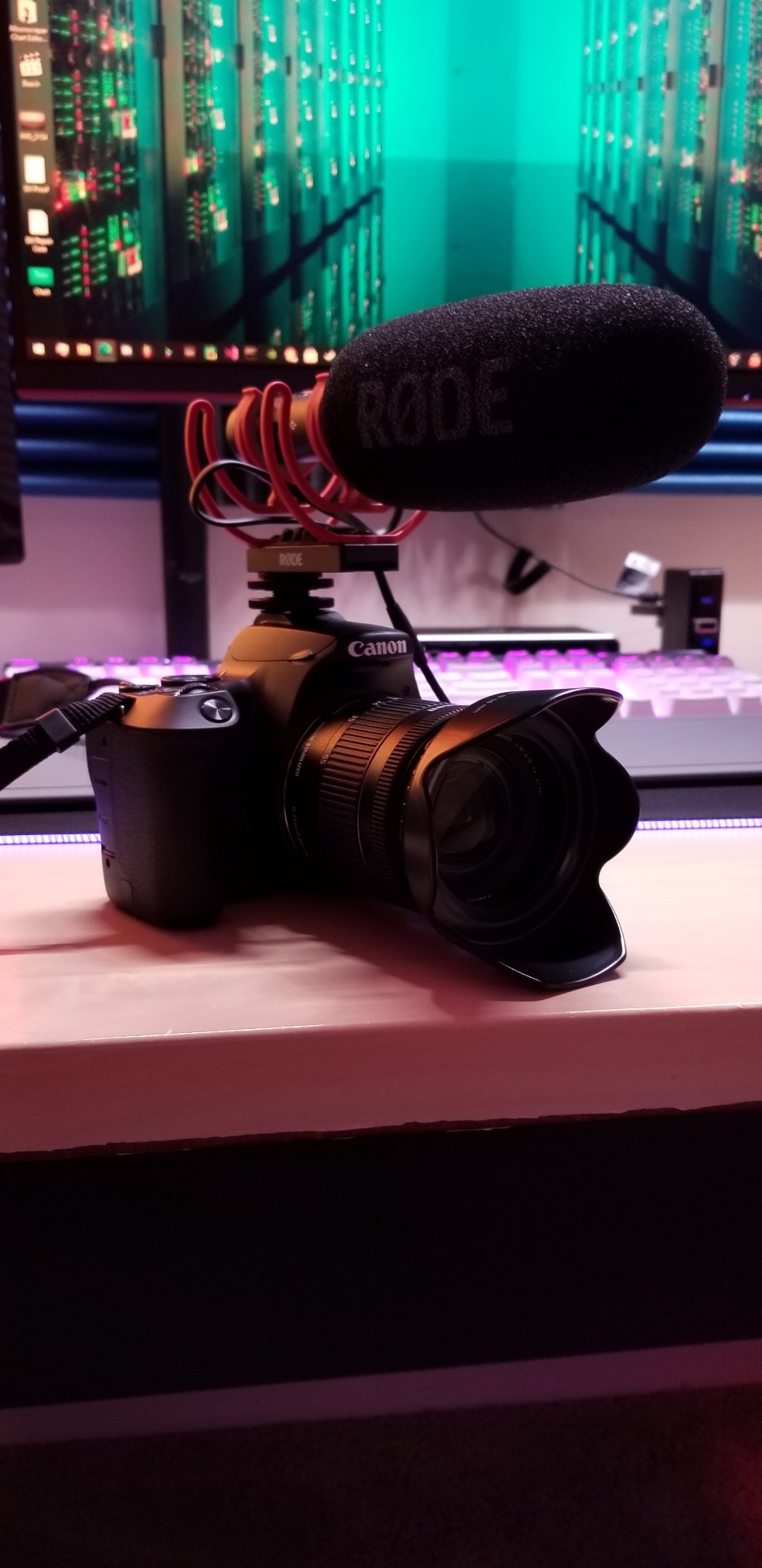
The Rode VideoMic NTG is the camera-mount shotgun I rely on for ambient reception sound. Wireless lavs capture the speeches, but the on-camera shotgun captures the cheering, the laughter, and the clinking of glasses that make wedding films feel alive. The NTG-inspired acoustic design delivers broadcast-grade sound that needs almost no post-production cleanup.
The auto-sensing 3.5mm output is genuinely clever. I can unplug from my camera and plug directly into my iPhone for a quick BTS clip at the rehearsal dinner without changing any settings. The USB-C output turns the VideoMic NTG into a podcast-quality USB mic when I am editing in the hotel room at night. For more on wedding audio, our guide to the best lighting for wedding videography covers the full audio-visual kit.

The safety channel recording at minus 20dB is the feature that has saved my bacon twice. When the best man unexpectedly yells into the mic during his speech, the safety channel still has clean audio. The high-pass filter removes low-end rumble from air conditioners and traffic. The minus 20dB pad handles loud moments like the exit send-off without distortion.
At very close range, under 15cm, the capsule can overdrive even with the pad engaged. I keep it at least 30cm from any loud speaker. The gain control knob does not work in USB mode, which means I have to adjust levels in software. Battery life monitoring is missing, so I charge before every wedding to avoid surprises. Some third-party USB-C to Lightning cables do not work, so I carry the official Rode cable as backup.
Why this shotgun lives on my B-cam
Auto-sensing output makes it the most versatile on-camera mic I own. Safety channel recovers clipped audio during unpredictable speeches. NTG-inspired acoustic design sounds natural without aggressive post EQ.
Why it is not your only audio solution
Camera-mount shotguns cannot replace wireless lavs for vows and speeches. Outdoor windy ceremonies need a proper deadcat windshield. Multi-camera ceremonies need matched audio across all cameras, which only a dedicated recorder provides.
10. NEEWER 3 Wheels Wireless Video Camera Dolly – Creative Movement on a Budget
NEEWER 3 Wheels Wireless Video Camera Dolly, 3 Speed Motorized Slider
3 speed settings
Wireless remote
6hr battery
Pros
- Affordable motorized dolly for smooth tracking shots
- Wireless remote with speed and direction adjustment
- 180 degree adjustable wheel angle for creative movement
- Lightweight and compact for transport between venue rooms
- Built-in 1800mAh battery with 6-hour runtime
Cons
- Motor noise can be picked up by onboard camera microphone
- Struggles with inclines or uneven surfaces
- Not ideal for heavy cinema camera setups
- Movement is not perfectly smooth on carpet or rough floors
For unique cinematic movement that gimbals cannot replicate, the NEEWER 3 Wheels Wireless Video Camera Dolly is the budget hack I love. I used it to film a slow push-in on a wedding cake during the cutting ceremony and the footage looked like a $10k production. Three speed settings give me precise control, and the wireless remote lets me trigger movement from behind the camera or even from across the room.
The 180-degree adjustable wheel angle is the key feature. I can run the dolly in a straight line, a curve around a centerpiece, or a full circle around the couple during a first dance rehearsal. The 1800mAh battery gives me 6 hours of runtime, which covers a full ceremony plus reception setup. USB charging means I can top up from any power bank between events.
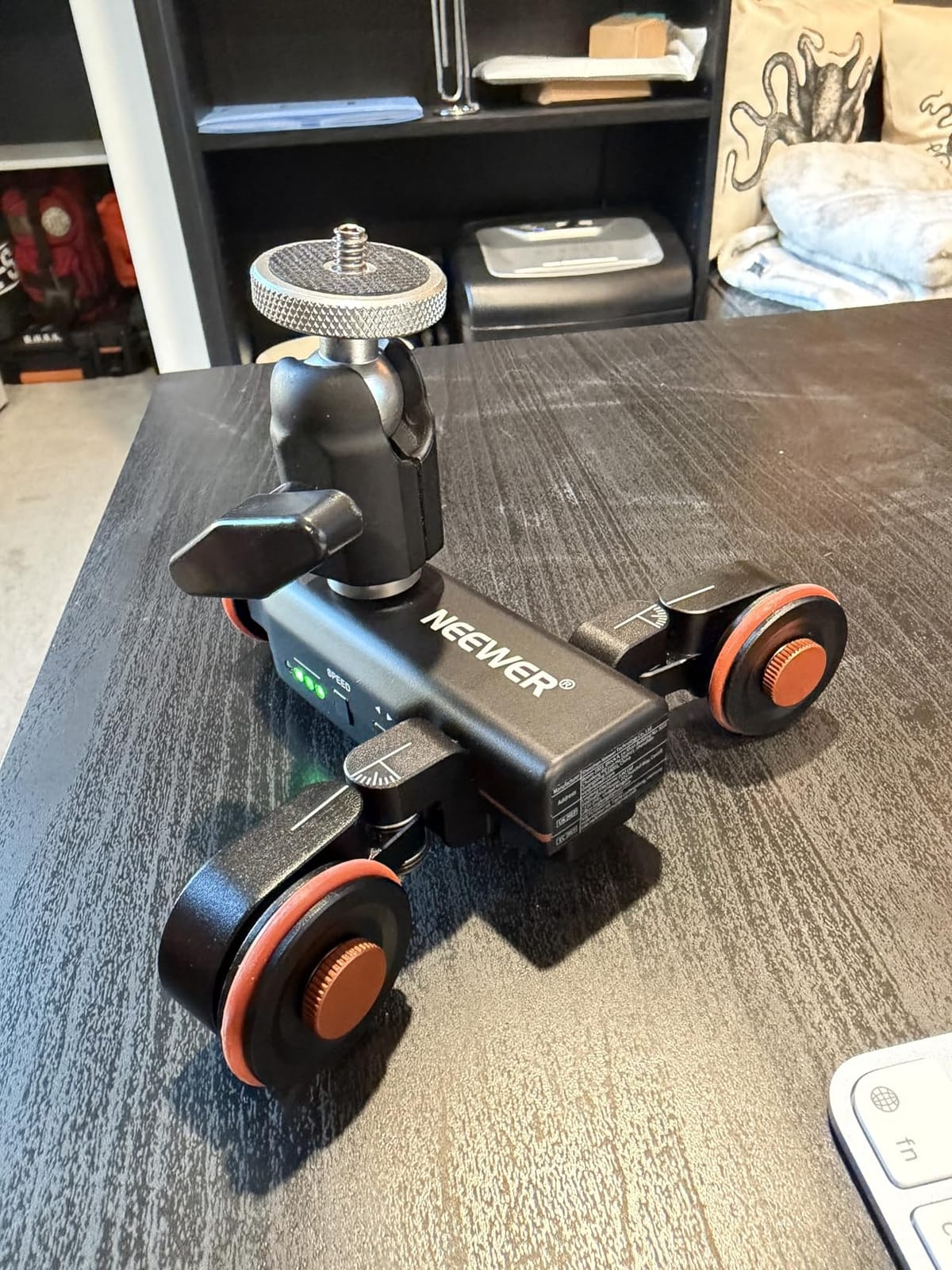
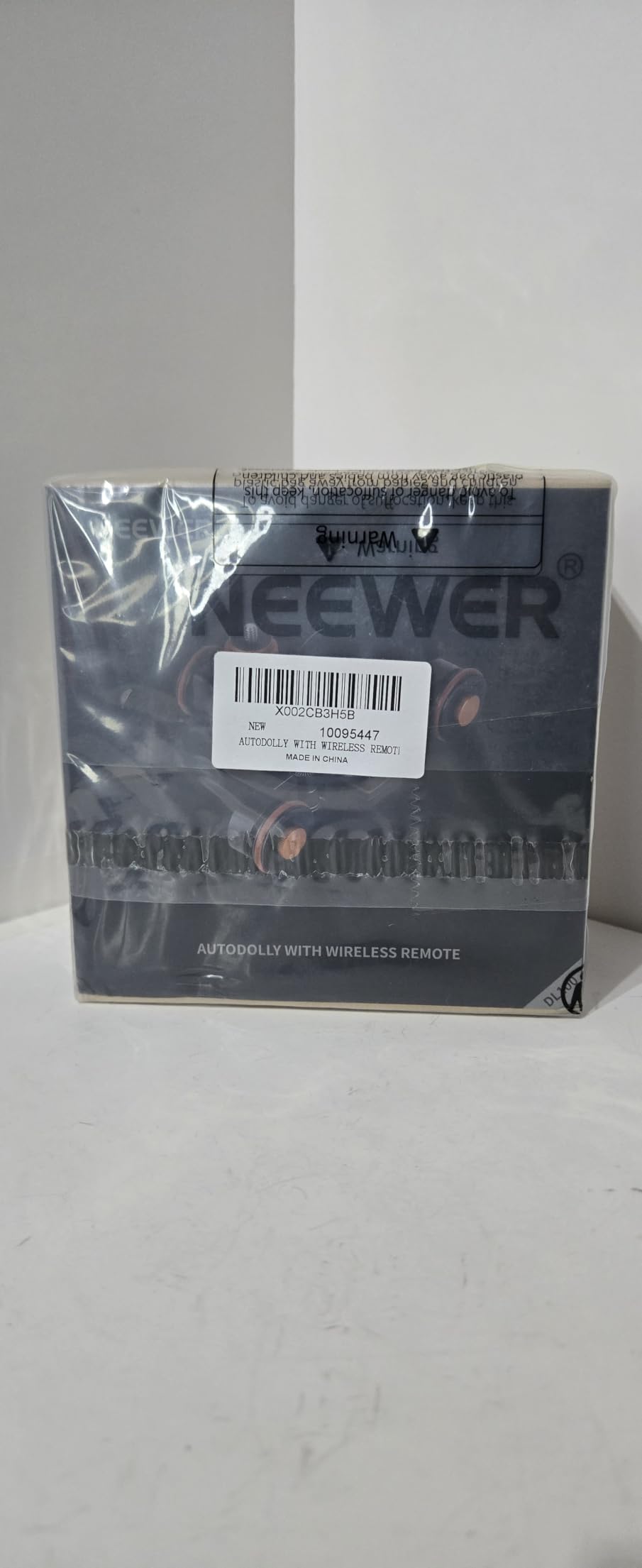
Setup takes about 30 seconds once I have the wheels dialed in. The 6.6 lbs max load is enough for my mirrorless body plus a small prime lens, which is the setup I usually pair with this dolly. The compact 5.31-inch folded size fits inside my camera bag without taking up much room. Wireless remote range of 6 meters is plenty for most setups.
The motor noise is the biggest issue. The onboard shotgun mic picks up the high-frequency whir, which can be heard during quiet moments of the recording. I now mute the camera audio when shooting with the dolly and only use ambient sound from a separate recorder. The dolly struggles on inclines and rough surfaces like grass or gravel, so I am limited to smooth indoor floors. Movement is not perfectly smooth on carpet, which can show up in the footage as small bumps.
When this dolly delivers
Slow cinematic push-ins on cakes, rings, and centerpieces. Curved tracking shots around a sweetheart table during speeches. Smooth reveals during the first dance rehearsal.
When to use a slider instead
Long straight tracking shots are easier on a traditional slider. Outdoor ceremonies on grass need a wheeled track system. Studios that need repeatable robotic moves should look at motorized sliders with app control.
11. NEEWER 13 inch LED Video Light Panel Kit (2-Pack) – Bi-Color Two-Light Setup
NEEWER 13″ LED Video Light Panel Kit, 2 Pack Bi Color Dimmable with Tripod Stand, 4000mAh Battery, 3200K-5600K CRI97+, USB, for Studio/Streaming/YouTube, Black, NL-192AI
Bi-color 3200K-5600K
CRI 97+
2 panels plus tripods
Pros
- Excellent value includes 2 panels plus tripods plus carrying case
- Bi-color 3200K-5600K with 0-100% brightness for versatile lighting
- CRI 97+ for accurate natural colors on skin tones
- Built-in rechargeable 4000mAh battery for portability
- Large LCD screen on back for easy parameter checking
Cons
- 90-minute battery at full brightness is limited for long receptions
- Requires 15V 2A quick charge for optimal charging speed
- Not strong enough for outdoor use in direct sunlight
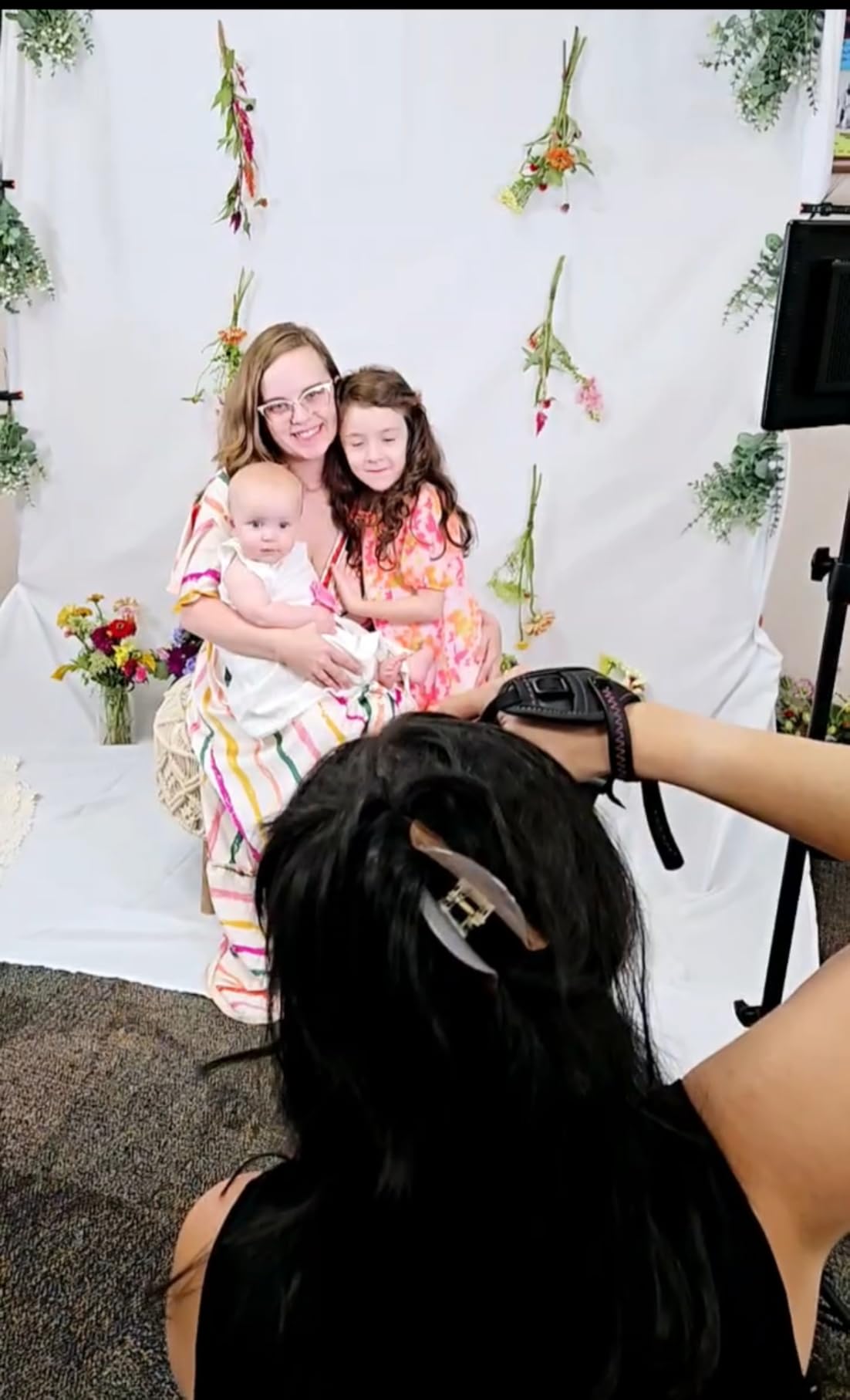
The NEEWER 13 inch LED Panel Kit (2-Pack) is the two-point lighting setup I recommend for wedding videographers just starting out. Both panels plus 70-inch tripods plus a carrying case arrive in one box, which is rare at this price point. The CRI 97+ rating means skin tones look natural even at mixed color temperatures. For a deeper dive into lighting setups, see our best lighting for wedding videography guide.
Bi-color 3200K to 5600K with 0-100% brightness covers every wedding lighting scenario I encounter. I use one panel at 3200K to match the venue’s warm tungsten reception lights and the other at 5600K as a cool fill for shadow detail in detail shots. The 2400Lux output is strong enough to lift a dim reception corner without overwhelming ambient mood lighting. The 192 LEDs (96 warm plus 96 cool) produce smooth even light without the multiple shadows that cheaper panels show.
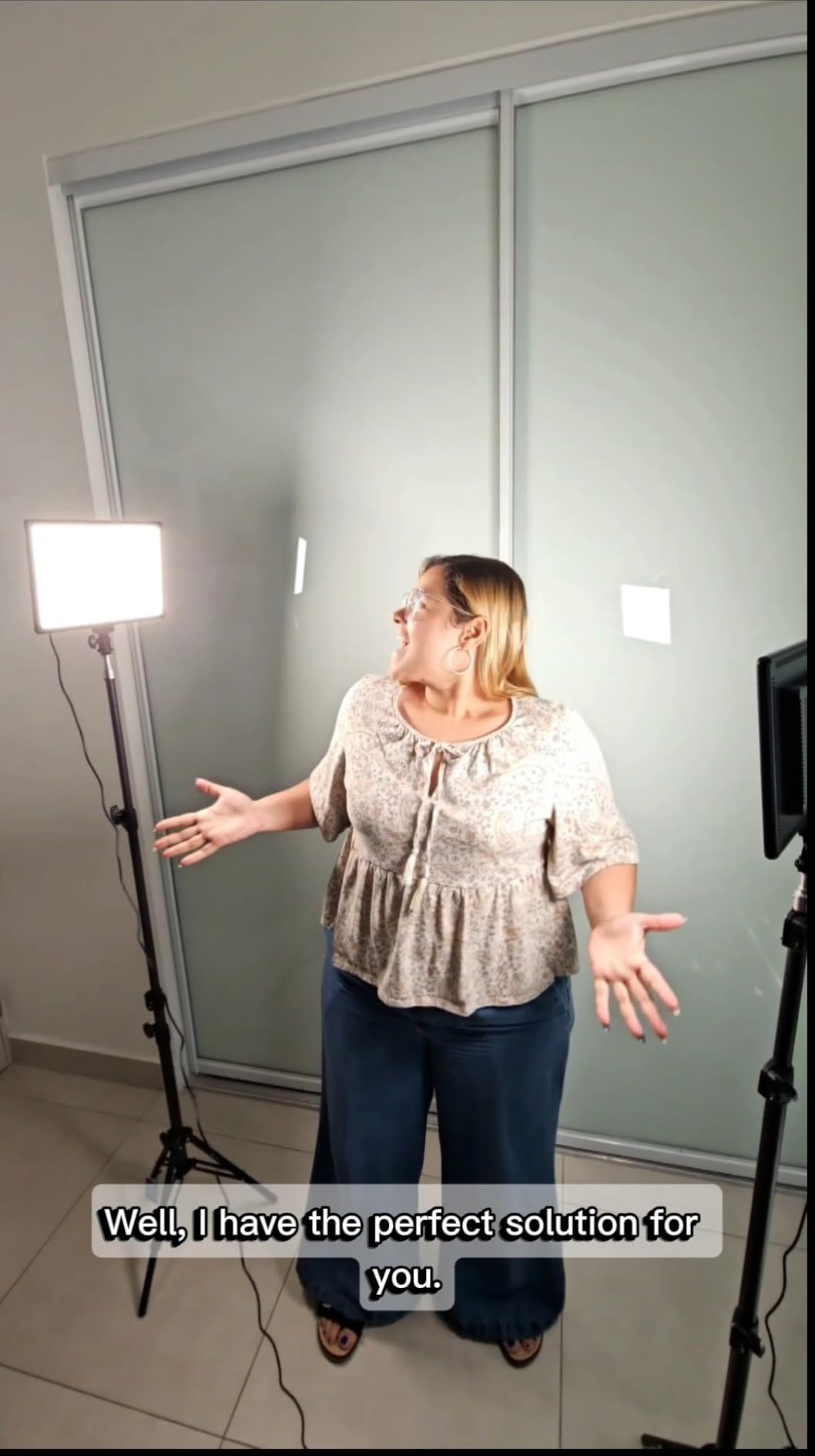
The 4000mAh battery delivers 90 minutes of runtime at full brightness. For two-panel ceremonies plus speeches, that is more than enough. The 70-inch tripod stands place the panels at the right height for key and fill light on seated couples. The carrying case protects everything during transport between venues, which is helpful when I am driving between ceremony and reception locations.
The 90-minute battery is the only real limitation for long receptions. I now carry a USB-C power bank to extend the runtime when needed. The 15V 2A quick charge requirement means a regular phone charger takes forever to refill the panels. These panels are not strong enough for outdoor use in direct sunlight, which is true of every LED panel at this price point.
Why this kit is the best starting setup
Two-point lighting setup arrives in one box ready to shoot. CRI 97+ gives natural skin tones without expensive color correction. Tripods plus case included mean no extra accessory purchases.
When to upgrade
Long receptions need larger batteries or AC power. Outdoor daytime shoots need much stronger panels. Studios with color-critical work need higher-end Aputure or Nanlite panels for better consistency.
12. FeiyuTech SCORP-C Gimbal Stabilizer – Heavy Payload Gimbal for Cinema Setups
FeiyuTech SCORP-C Gimbal Stabilizer for Cameras DSLR and Mirrorless Camera, 3-Axis Camera Gimbal, 5.5lbs Payload, for Sony α7Ⅳ A6300/A6400 A7S3 a9/a7 for Canon 5D3/80D for Nikon D7500/Z5/Z6 II
3-axis stabilization
5.5lb payload
10-13hr battery
Pros
- Excellent build quality with solid aluminum construction
- Built-in multi-position axis locks for easy balancing
- Integrated folding bracket serves as its own mini tripod
- 2500mAh battery with 10-13 hour runtime and 18W fast charging
- AB trajectory memory for repeatable cinematic movements
Cons
- Combined weight of 1.2kg plus camera can cause arm fatigue
- Thumb joystick can feel jerky for ultra-smooth pans
- May struggle with heavier DSLR setups near the 2.5kg limit
- Learning curve for initial balancing if new to gimbals
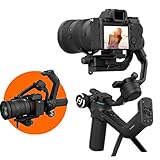
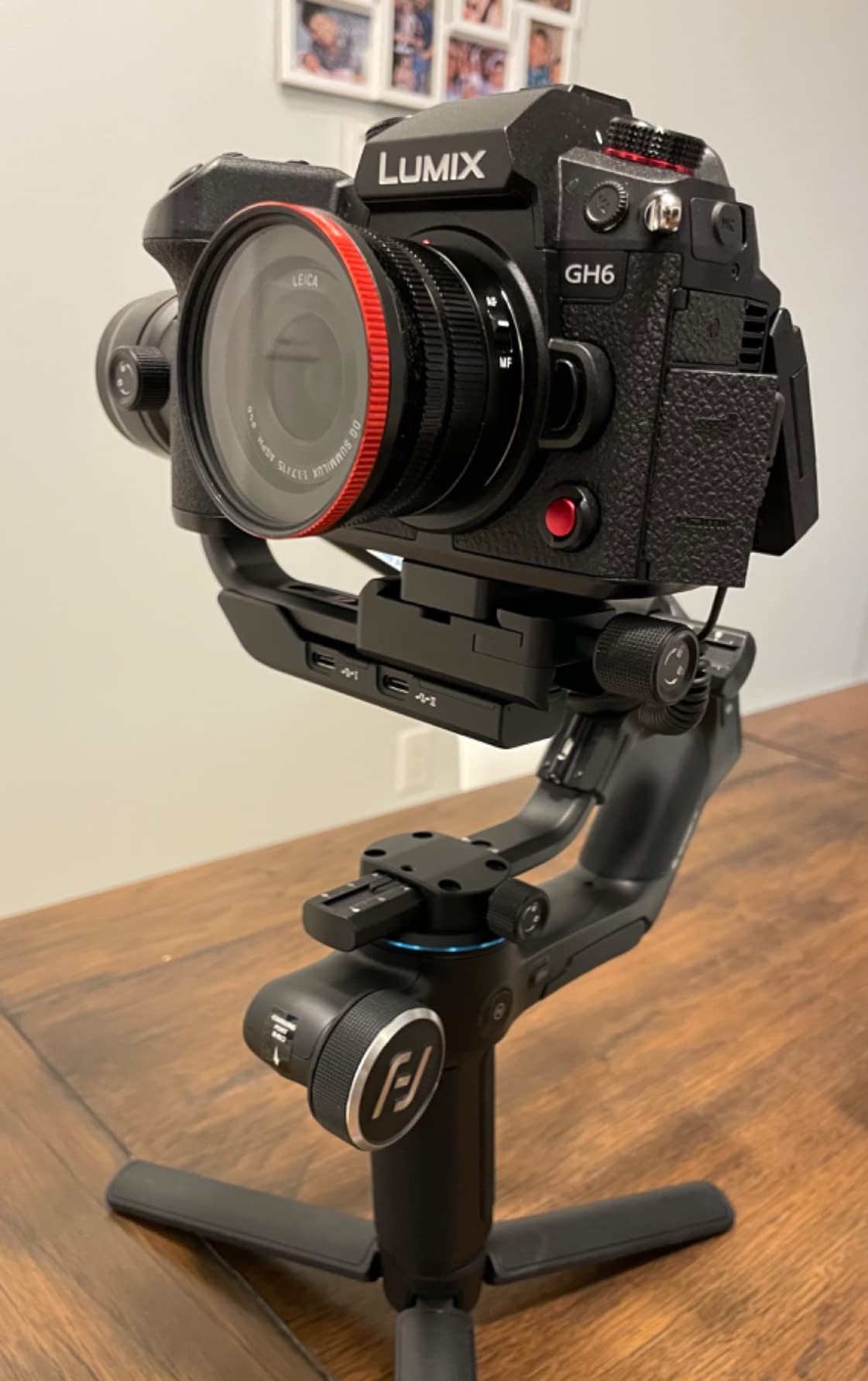
For wedding videographers running heavier cinema-style setups or larger DSLR bodies with telephoto lenses, the FeiyuTech SCORP-C is the gimbal I recommend. The 5.5 lbs payload covers my Canon R5 C with a 24-70mm f/2.8 plus a Rode VideoMic NTG plus an on-camera light, which is a setup the lighter DJI RS 3 Mini cannot handle. The 3-axis stabilization produces smooth footage even with this heavier payload.
The integrated folding aileron bracket that doubles as a tripod is the most thoughtful design feature. I can set the gimbal down between shots without needing a separate mini tripod. The built-in axis locks let me lock each motor individually for transport, which is faster than the DJI RS 3 Mini’s manual approach. The AB trajectory memory lets me record a movement once and replay it perfectly, which is helpful for repeatable cinematic shots like a slow push-in on a centerpiece.
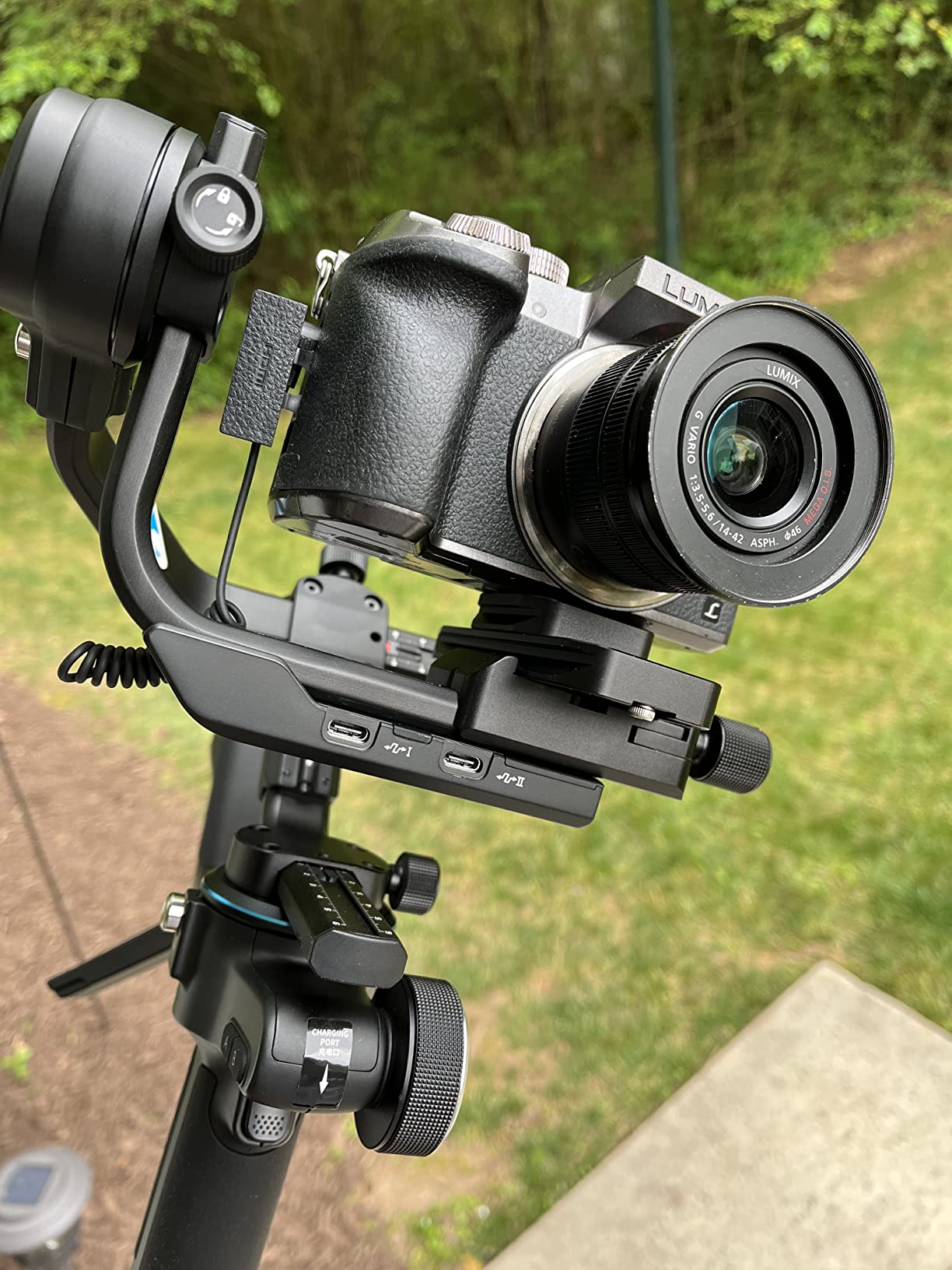
The 2500mAh battery delivers 10-13 hours of runtime depending on payload, which is enough for two wedding days between charges. The 18W fast charging refills the battery in about 90 minutes. The companion app gives me fine-tuning control over motor speed and smoothness, which is useful when I want ultra-slow cinematic pans. The included cable set covers Sony, Canon, Nikon, Panasonic, and Fujifilm cameras out of the box.
The combined weight of the gimbal at 1.2kg plus a full-frame camera and lens is noticeable by hour 8 of a wedding day. I feel it in my shoulder by the reception. The thumb joystick can feel jerky for the very slow cinematic pans wedding films need, so I sometimes switch to the app for finer control. At the very edge of the 2.5kg payload limit with a heavy DSLR, the motors can struggle to keep up with fast movements.
Why this gimbal earns the heavy-camera slot
5.5 lb payload handles cinema bodies and full DSLR setups with accessories. AB trajectory memory creates repeatable cinematic moves for signature shots. 10-13 hour battery covers multi-day events between charges.
Why the lighter DJI RS 3 Mini wins for many shooters
Mirrorless shooters with bodies under 1kg do not need this payload. Solo operators prioritize weight savings over payload. Wedding videographers shooting social media vertical clips prefer the DJI’s native vertical shooting.
How to Choose the Best Wedding Videography Gear?
Choosing the best gear for wedding videographers is less about owning the most expensive equipment and more about owning the right mix for your shooting style, your team size, and your delivery format. Here is the framework I use when helping new wedding videographers build a kit, plus the gear combinations that have worked across my own weddings.
Match Your Gear to Your Solo or Multi-Shooter Workflow
Solo wedding videographers should prioritize lightweight, do-it-all gear. The DJI RS 3 Mini gimbal, Hollyland Lark M2 wireless lav, and one RALENO LED panel cover 90% of solo wedding work without breaking your shoulder. Two-shooter teams can split gear: one shooter runs a heavier gimbal like the FeiyuTech SCORP-C plus a cinema camera, the other runs a lighter mirrorless rig plus the camera-mount Rode VideoMic NTG for ambient sound. For drone work, see our best drones for wedding videography guide.
Build a Redundancy Layer Before Upgrading the Camera
Every forum thread on r/weddingvideography agrees: redundant audio recording is the most important wedding habit. Two wireless lav systems, a backup recorder, and two SD cards per camera cost less than a single camera body upgrade but save your footage when the primary system fails. The DJI Mic 2 with 32-bit float internal recording acts as both primary and backup in one unit, which is why it is our top pick.
Sample Budget Wedding Videography Kits
For an entry-level kit at around $3,000, pair the K&F CONCEPT Variable ND, DJI RS 3 Mini, Hollyland Lark M2, NEEWER 79-inch tripod, RALENO LED light, and SanDisk Extreme PRO cards. This covers one shooter for ceremonies and receptions with clean audio and reliable storage. For a mid-tier kit at around $8,000, add the DJI Mic 2 as a primary recorder, Tiffen 82mm VND for color-critical work, two NEEWER 13-inch LED panels, and the Rode VideoMic NTG for ambient sound. For a pro-tier kit above $15,000, add the FeiyuTech SCORP-C gimbal, NEEWER motorized dolly, full wireless audio redundancy, and matched camera bodies.
Coordinate Audio with the DJ and Venue Early
The single biggest pain point forum users report is bad DJ audio. Talk to the DJ or band before the wedding day, request a balanced XLR or 1/8-inch feed from their mixer, and bring a 32-bit float recorder like the DJI Mic 2 receiver to capture the feed. With 32-bit float, you do not need to set levels perfectly during the speeches. Always carry a backup wireless lav on the officiant as a secondary audio source, since venue audio feeds sometimes fail mid-reception.
ND Filters and Mattebox Systems Are Essential for Outdoor Weddings
Golden-hour ceremonies without variable ND filters force you to choose between correct exposure and motion blur. For deeper coverage of ND setups, our guide to the best ND filter kits for videographers covers every step-up ring size and stack combination. Pair your VND with a proper mattebox from our best mattebox kits for videographers guide when shooting with wide-angle lenses to prevent the cross-pattern X at extreme stops.
Frequently Asked Questions
What gear do I need for wedding videography?
A core wedding videography kit includes a full-frame mirrorless camera, a fast standard zoom lens, a wireless lavalier system with backup recorder, a fluid-head tripod, a monopod or gimbal, on-camera LED lighting, variable ND filters, and reliable SD cards. Add a drone for aerial establishing shots and a backup camera body for multi-angle coverage. The exact list depends on whether you shoot solo or with a team, but redundancy in audio and storage is non-negotiable.
What camera is best for wedding videography?
The best wedding videography camera depends on your budget and style, but the Sony A7S III is widely considered the low-light king for receptions, the Canon EOS R5 C is the cinema hybrid choice, and the Lumix S5 II is the budget-friendly full-frame option. All three shoot 4K with strong autofocus and 10-bit color. For solo shooters, the Sony A7 IV is a strong hybrid photo-plus-video body.
Can I use a drone for wedding videography?
Yes, drones are widely used for wedding videography to capture aerial venue establishing shots and unique ceremony reveals. Choose a sub-250g drone like the DJI Mini 4 Pro to fly under fewer regulatory restrictions in most countries. Always check venue airspace rules, get permits if required, fly during daylight hours only, and carry backup batteries for long wedding days.
How can equipment weight be reduced without sacrificing quality?
Switch from aluminum tripods to carbon fiber, choose lighter mirrorless gimbals like the DJI RS 3 Mini over heavier cinema gimbals, and pick compact 9-gram wireless lavs like the Hollyland Lark M2. Use monopods instead of full tripods for run-and-gun ceremony coverage. Pack fewer lenses by choosing a versatile 24-70mm f/2.8 as your main zoom. Every kilogram saved adds up across a 14-hour wedding day.
What is the best equipment for videography in low light?
For low-light wedding videography, prioritize cameras with strong autofocus in low ISO like the Sony A7S III or Canon R5 C, pair them with fast f/1.4 to f/2.8 prime lenses, add on-camera LED panels like the RALENO 9 inch light for dark receptions, and capture audio with 32-bit float recorders that handle loud speeches without clipping. Variable ND filters are also essential for indoor lighting shifts during ceremonies.
Final Verdict: The Best Gear for Wedding Videographers
The best gear for wedding videographers in 2026 is the gear that survives a 14-hour day, captures once-in-a-lifetime vows without clipping, and lets you sleep well knowing you have backups for every critical piece of the kit. Our top three picks cover the three biggest failure modes: the DJI Mic 2 solves clipped vows with 32-bit float recording, the Tiffen 82mm Variable ND solves golden-hour exposure shifts with reliable filtration, and the SanDisk Extreme PRO 128GB SDXC solves storage failures with trusted reliability and a lifetime warranty.
Start with those three pieces if you are building a new wedding kit, then expand into lighting, gimbals, and creative movement gear as your bookings grow. Test every piece the week before a wedding, pack a backup for every critical component, and coordinate audio feeds with the DJ or band before the day. With the right gear and the right habits, you will deliver wedding films that couples treasure for a lifetime.