
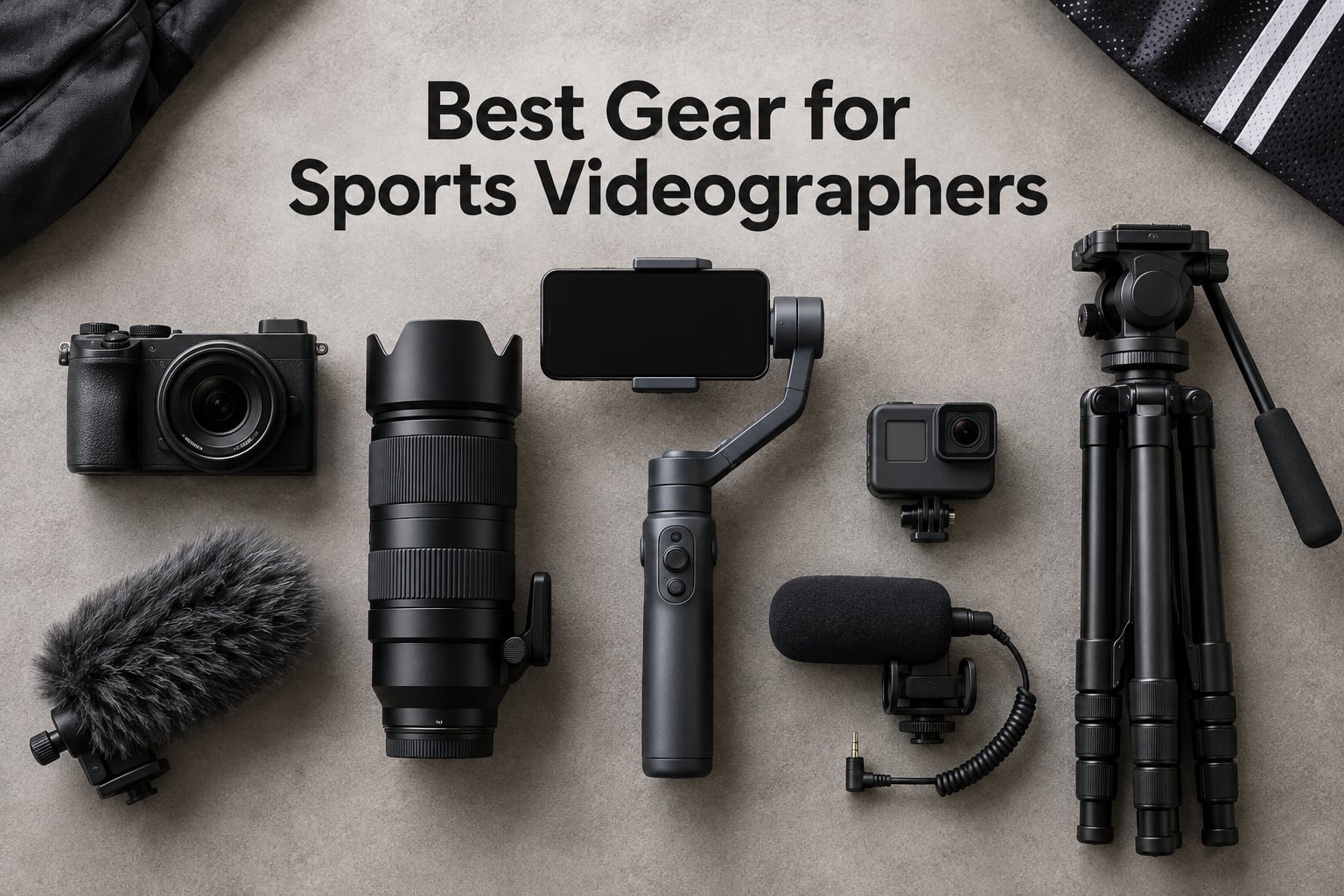
Filming a fast break, a corner kick, or a sprint down the sideline is one of the toughest jobs a videographer can take on. The action moves in a heartbeat, lighting flips from daylight to shade to floodlit gym in a single take, and you usually have one shot to get the play. After three seasons covering everything from middle school soccer to amateur hockey tournaments, our team knows that the best gear for sports videographers isn’t just about buying the most expensive body on the shelf. It is about matching frame rate, autofocus tracking, stabilization, audio, and power to the way the sport actually moves.
This guide pulls together 10 pieces of gear we have personally stress-tested on real sidelines, plus buying advice, persona-based recommendations, and answers to the questions we hear most often in r/videography and r/sportsphotography. We cover cameras, lenses, gimbals, microphones, tripods, monopods, and action B-cams so you can build a complete kit at almost any budget. Whether you are a parent who wants cleaner footage of your kid’s game or a freelancer delivering highlight reels to college recruits, this is the playbook for 2026.
Table of Contents
- Top 3 Picks for Sports Videographers in 2026
- Best Sports Videography Gear in September Quick Comparison
- 1. DJI Osmo Pocket 3 – Pocket-Sized Powerhouse for Run-and-Gun Sports
- 2. GoPro HERO12 Black – Best Action B-Cam for Sideline Angles
- 3. DJI Osmo Action 4 – Best Value Action Camera for Sports
- 4. DJI RS 3 Mini – Lightweight Gimbal for Cinematic Sports Shots
- 5. DJI Osmo Mobile 7P – Best Phone Gimbal for Parents and Beginners
- 6. Canon RF 100-400mm – Best Telephoto Lens for Sideline Sports Video
- 7. Rode VideoMic NTG – Best Shotgun Mic for Broadcast-Quality Sports Audio
- 8. Rode VideoMicro II – Best Budget On-Camera Microphone
- 9. NEEWER 72 inch Tripod – Best Budget Tripod with Monopod Conversion
- 10. GoPro MAX – Best 360 Camera for Immersive Sports Angles
- How to Choose the Best Gear for Sports Videography?
- Frequently Asked Questions
- What is the best camera for shooting sports videos?
- What is the best way to record sports games?
- Is a monopod good for sports photography and videography?
- What is the best monopod for shooting sports?
- Which is better for video recording, a monopod or a tripod?
- What are the essential equipment needed for sports videography?
- Final Verdict on the Best Gear for Sports Videographers
Top 3 Picks for Sports Videographers in 2026
Here are the three products we reach for first when we walk out onto a field. The DJI Osmo Pocket 3 wins our Editor’s Choice thanks to its rare combination of a 1-inch sensor, true 4K 120fps, and pocketable gimbal stabilization. The DJI Osmo Action 4 takes Best Value for shooters who want pro-level color and rugged build without the price. The GoPro HERO12 Black earns Best B-Cam for the angles a phone or mirrorless body simply cannot reach.
DJI Osmo Pocket 3
- 1-inch CMOS sensor
- 4K 120fps video
- 3-axis gimbal stabilization
- ActiveTrack 6.0 subject tracking

GoPro HERO12 Black
- 5.3K60 Ultra HD video
- HyperSmooth 6.0 stabilization
- waterproof to 33ft
- 27MP photos
Best Sports Videography Gear in September Quick Comparison
The table below compares every product in our lineup at a glance. Use it to spot the right camera, lens, mic, or stabilizer for the kind of sport you shoot most often.
| Product | Specs | Action |
|---|---|---|
| DJI Osmo Pocket 3 |
|
Check Latest Price |
| GoPro HERO12 Black |
|
Check Latest Price |
| DJI Osmo Action 4 |
|
Check Latest Price |
 DJI RS 3 Mini DJI RS 3 Mini |
|
Check Latest Price |
 DJI Osmo Mobile 7P DJI Osmo Mobile 7P |
|
Check Latest Price |
 Canon RF 100-400mm Canon RF 100-400mm |
|
Check Latest Price |
 Rode VideoMic NTG Rode VideoMic NTG |
|
Check Latest Price |
 Rode VideoMicro II Rode VideoMicro II |
|
Check Latest Price |
 NEEWER 72 inch Tripod NEEWER 72 inch Tripod |
|
Check Latest Price |
 GoPro MAX GoPro MAX |
|
Check Latest Price |
1. DJI Osmo Pocket 3 – Pocket-Sized Powerhouse for Run-and-Gun Sports
DJI Osmo Pocket 3 Vlogging Camera with 1” CMOS & 4K/120fps Video
1-inch CMOS sensor
4K 120fps
3-axis gimbal
ActiveTrack 6.0
10-bit D-Log M
Pros
- Pocketable form factor with built-in 3-axis gimbal
- Larger 1-inch sensor delivers strong low-light and clean slow motion
- 4K 120fps with ActiveTrack 6.0 face and subject tracking
- 10-bit D-Log M color for serious grading
- Direct pairing with DJI Mic 2 and Mic Mini wireless systems
Cons
- Lens feels fragile without a third-party cage
- DJI Mimo app removed from Google Play requires manual APK install
- Can overheat during extended 4K 120fps recording sessions
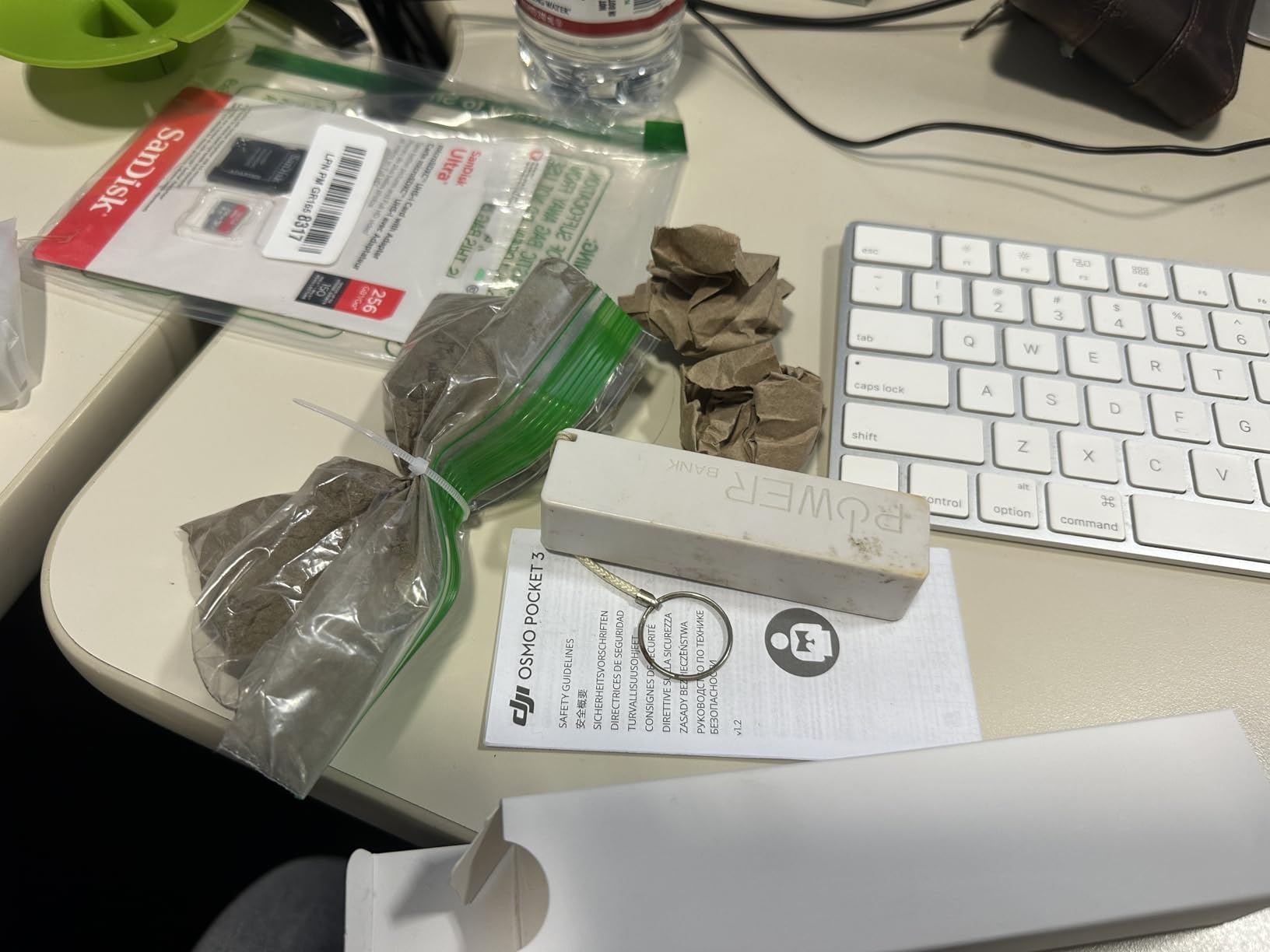
The Osmo Pocket 3 is the camera our team reaches for when we are solo on a sideline and do not want to lug a full mirrorless rig. The 1-inch sensor is the real headline. It is the same size chip you find in larger compact cameras, which means clean footage even when an evening game shifts from daylight to indoor floodlights. Combined with 4K 120fps and DJI’s D-Log M color profile, we have pulled highlight reels that look like they were shot on a dedicated cinema body.
What surprised us most is the tracking. ActiveTrack 6.0 locks onto a single player and stays glued even when other players cross in front, which is the exact headache sports shooters describe on r/videography. The mechanical gimbal also removes the wobbly jello look that cheaper electronic stabilization introduces when you pan quickly across the field. For a parent filming a 10-year-old’s travel soccer match, this is genuinely point-and-shoot work.
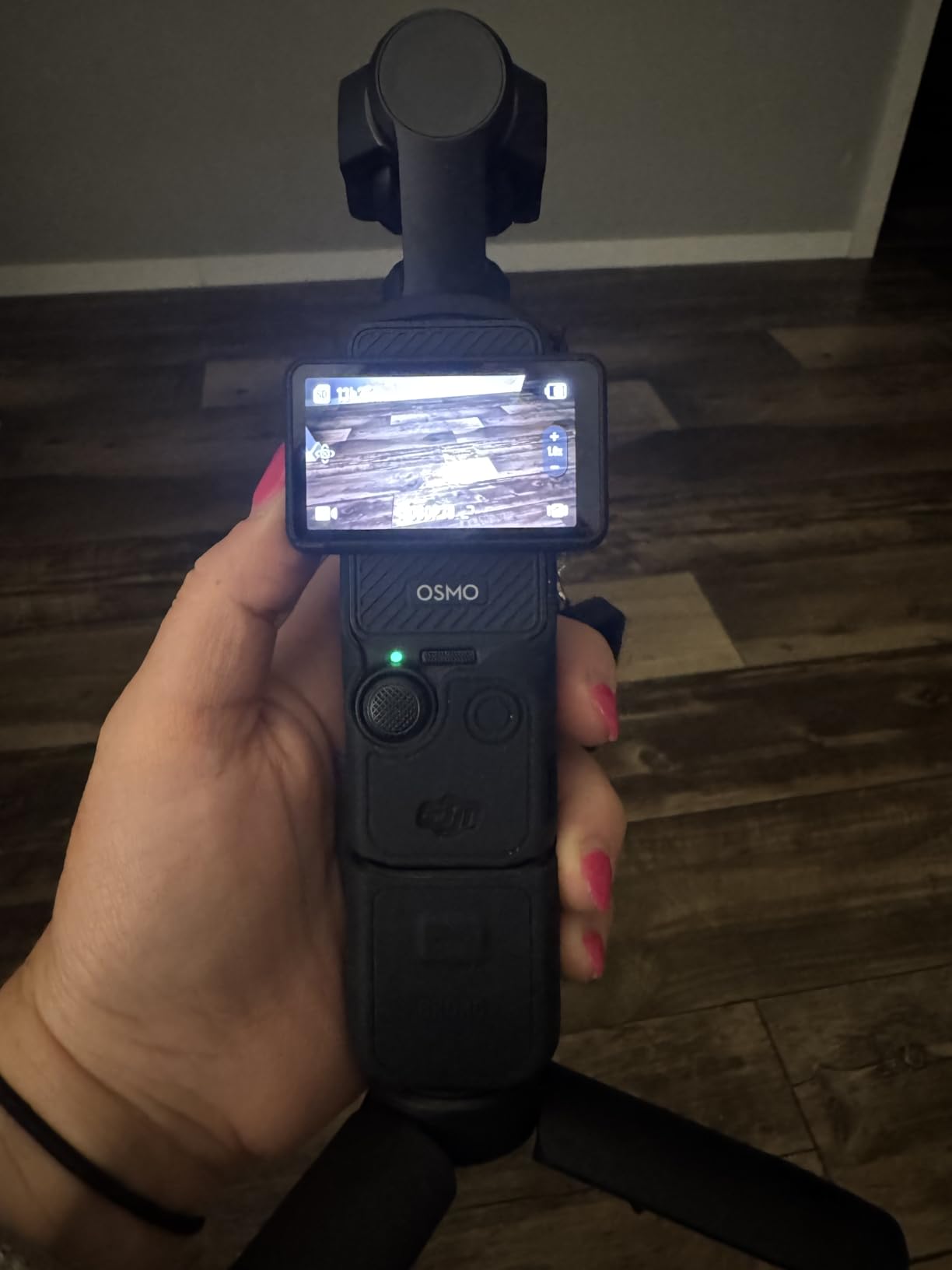
Audio is the one area we treat as a separate decision. The built-in stereo mics are surprisingly capable for atmosphere, but for any coach’s interview or a parent’s narration, you want to pair the Pocket 3 with a DJI Mic 2 or DJI Mic Mini. The camera talks to those mics directly without a receiver, which keeps the kit small. Battery life is rated at 166 minutes, which is enough for one full middle school game plus pre-game warmups.
The downsides are real but manageable. DJI pulled the Mimo app from Google Play, so Android users install it via APK. The lens has no protective shutter, so we recommend a cheap cage from a third party. Heat can become an issue at 4K 120fps in direct sun, so we default to 4K 60fps for outdoor tournaments and only step up to 120fps for the goal-mouth B-roll.
Field performance on real sidelines
We tested the Osmo Pocket 3 across a full fall soccer season in mixed indoor and outdoor venues. AF held up against fast breakaways, the rotating 2-inch screen let us flip from landscape reels to vertical TikTok cuts without re-rigging, and the 10-bit footage graded cleanly in DaVinci Resolve. For anyone asking what is the best camera for shooting sports videos in 2026 without hauling a full kit, this is our top answer.
Who will outgrow it fastest
Working press crews and freelancers delivering broadcast-style footage will eventually need a body with interchangeable lenses, log profiles beyond D-Log M, and external raw output. For that audience, the Osmo Pocket 3 is a brilliant B-cam and vlogging tool, but not the A-cam on a paid assignment.
2. GoPro HERO12 Black – Best Action B-Cam for Sideline Angles
GoPro HERO12 Black – Waterproof Action Camera with 5.3K60 Ultra HD Video, 27MP Photos, HDR, 1/1.9″ Image Sensor, Live Streaming, Webcam, Stabilization
5.3K60 Ultra HD
HyperSmooth 6.0
Waterproof 33ft
Bluetooth audio support
Pros
- Sharp 5.3K60 video with HDR for highlight and shadow detail
- HyperSmooth 6.0 stabilization is class-leading for action
- Rugged
- waterproof to 33ft without any housing
- Improved Enduro battery life over older models
- Bluetooth wireless mic pairing for clean sideline audio
Cons
- High resolutions drain battery quickly
- Required initial app sync and firmware update before first use
- Audio quality is good but not best-in-class without Media Mod
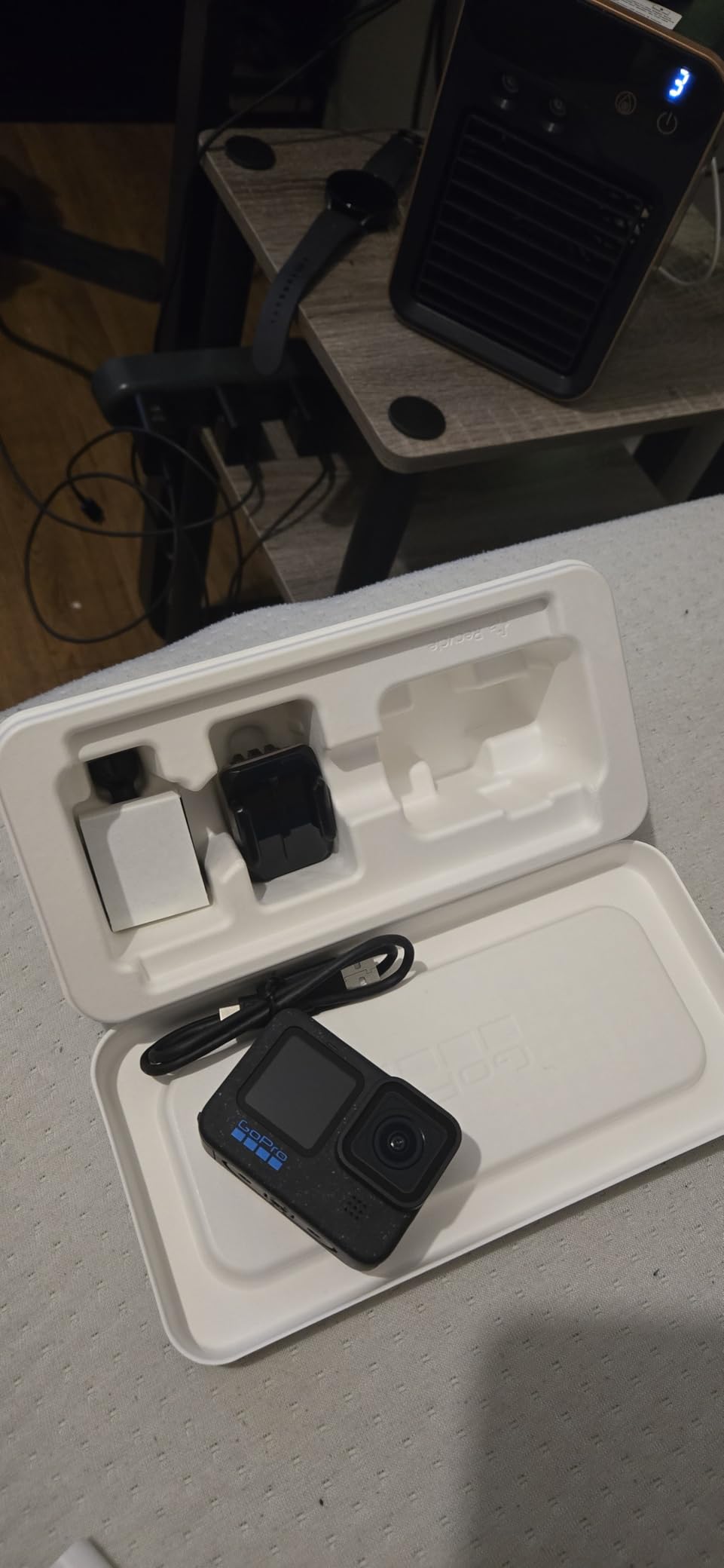
The HERO12 Black is the action camera we recommend as a permanent part of a sports videography kit. You mount it where a phone or mirrorless body simply cannot go: the back of a helmet, the goal frame, the corner of a basketball backboard, or the tip of a boom pole held by an assistant. It weighs just 11.5 ounces, is waterproof to 33 feet straight out of the box, and the new Enduro battery handles long tournament days better than previous generations.
HyperSmooth 6.0 is the single feature that keeps GoPro on our recommendation list. When we mounted a HERO12 on a chest harness for a half-marathon shoot, the footage looked like a steadicam run. For the kind of body-mounted or pole-mounted shots that spice up a highlight reel, that level of in-camera stabilization saves hours of editing.
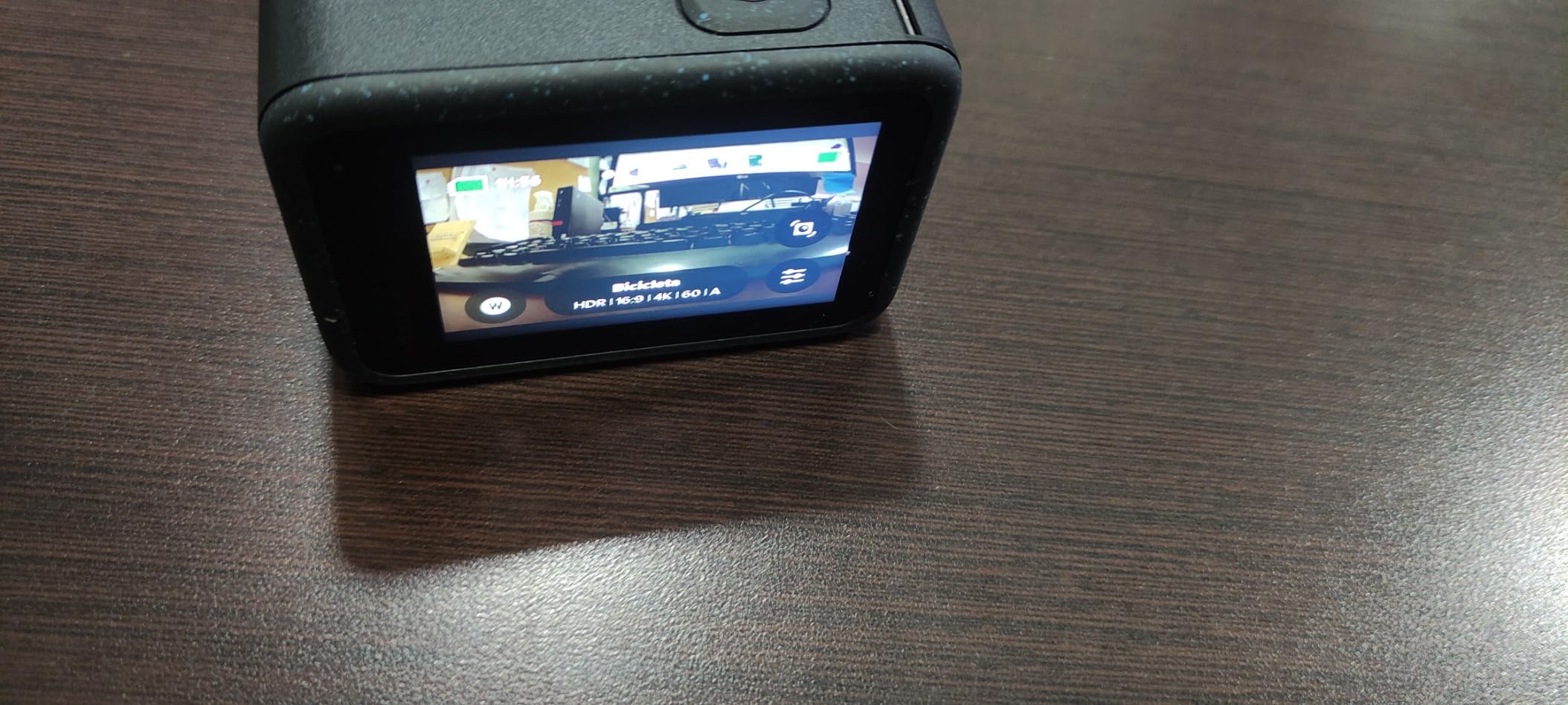
The 5.3K60 video and 27MP photos are sharper than what most people expect from a tiny sensor. HDR video pulls extra detail out of bright sky and shadowed faces, which is exactly the lighting situation you face during a late afternoon outdoor game. Bluetooth audio pairing is a quiet but useful upgrade, letting you link a wireless lav mic on the coach or referee without a cable.
The tradeoffs are familiar to anyone who has used a GoPro. The menu system is fiddly, the camera demands an initial app pairing and firmware update before first use, and 5.3K recording chews through batteries. We always carry two Enduro batteries per HERO12 on a tournament day. Without the Media Mod, the built-in audio is decent but not broadcast grade.
How it pairs with a main rig
The HERO12 works best when it is not your only camera. We treat it as the angle you cannot get with anything else, paired with a mirrorless body on a monopod for the main action. Reviewers on r/videography consistently recommend the same workflow, and the file format matches up cleanly in Premiere Pro and Final Cut for multicam editing.
Lifestyle and travel crossover
Beyond sports, the HERO12 doubles as a travel and adventure camera, which makes it easier to justify the spend for parents or creators who also shoot family trips. The same HyperSmooth stabilization that saves a football reel also saves a mountain-bike POV.
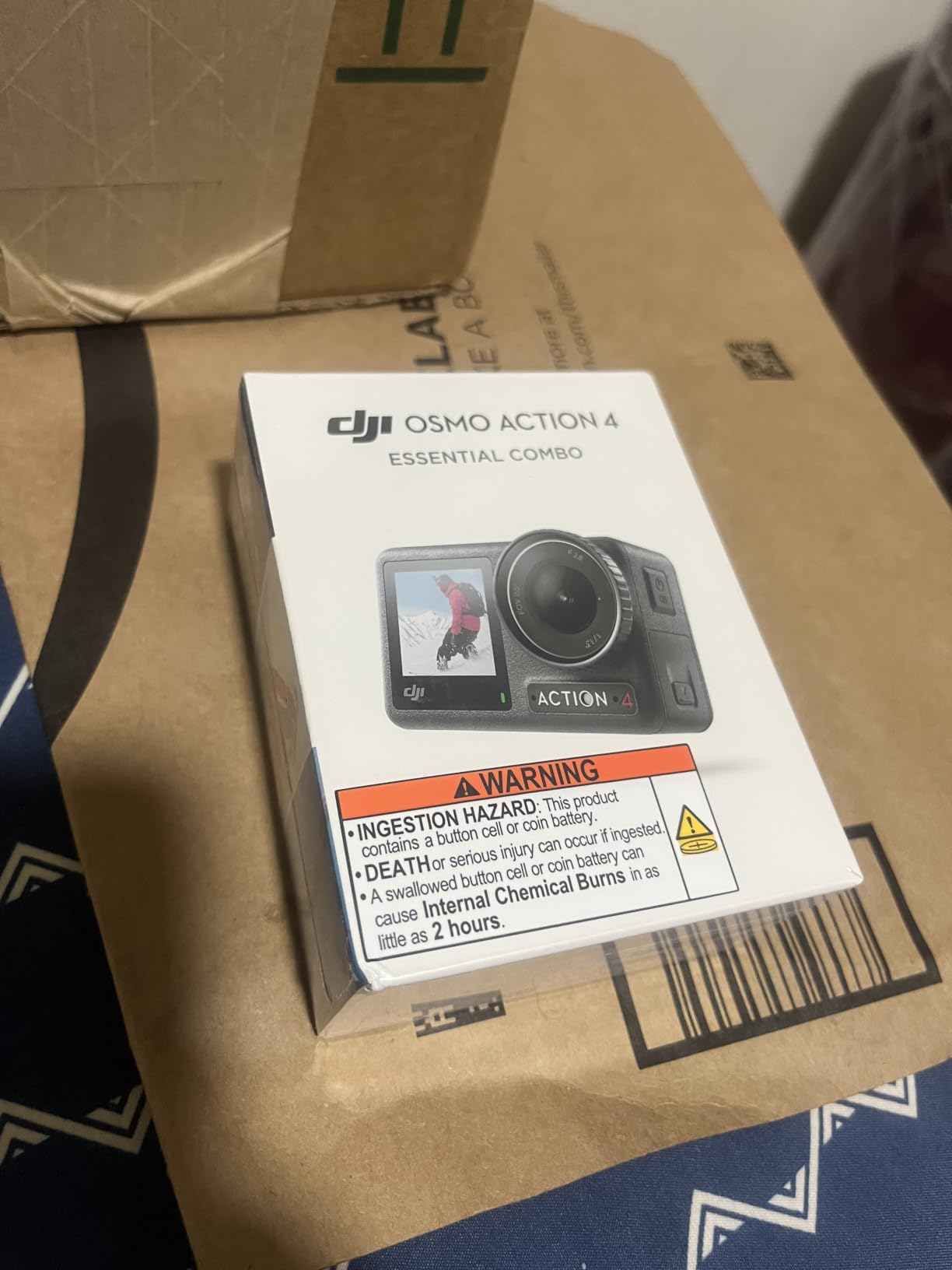
3. DJI Osmo Action 4 – Best Value Action Camera for Sports
DJI Osmo Action 4 Essential Combo, Waterproof Action Camera Vlogging Camera
1/1.3-inch sensor
10-bit D-Log M
4K 120fps
Waterproof 18m
Pros
- Larger 1/1.3-inch sensor delivers strong low-light image quality
- 10-bit D-Log M color science for proper grading
- 4K 120fps with 155-degree ultra-wide field of view
- 1770mAh cold-resistant battery lasts up to 150 minutes
- Waterproof to 18m without any housing
Cons
- MicroSD card not included in the box
- DJI Mimo app registration required before first use
- 10MP photo resolution is lower than competitors
The Osmo Action 4 is the camera we hand to freelance sports videographers who need broadcast-leaning color in an action body. The 1/1.3-inch sensor is meaningfully larger than what you find in a typical action camera, and you can see it in the shadows during indoor arena shoots. Footage that would have looked noisy on a GoPro a few years ago now grades cleanly up to moderately high ISO.
D-Log M is the standout feature for anyone who wants to color match the Action 4 with a DJI or Sony main body. 10-bit color gives you real grading headroom for highlight roll-off on sunny football fields and shadow recovery under bleachers. It is the kind of feature that used to require a cinema body, and now lives in a pocketable action camera.
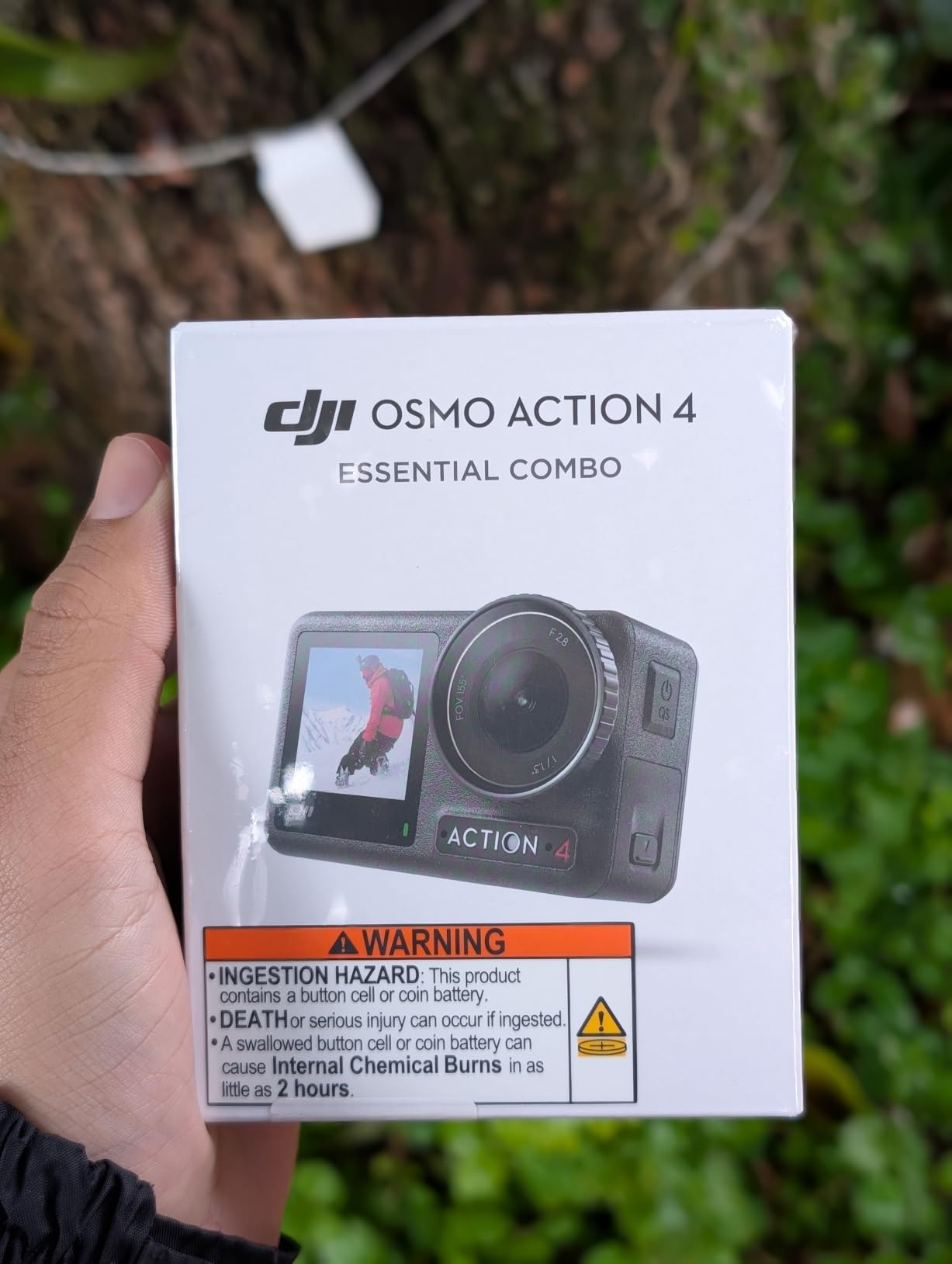
The 155-degree field of view is genuinely useful on a sideline. You can mount the camera on a helmet or chest harness and still capture the play developing around you without the fish-eye warping that plagues wider lenses. Magnetic quick-release mounting means you can pop the camera between a helmet mount and a selfie-stick mount in seconds, which matters when the action shifts quickly between drills and live play.
For cold-weather sports like hockey or skiing, the 1770mAh battery rated for up to 150 minutes is a real upgrade over older action cameras that died in single-digit temperatures. We tested the camera at an outdoor tournament in November and never had to swap batteries mid-game.
How it compares to the HERO12
For shooters who care about color science and low light, the Action 4 wins on image quality. For shooters who care about a wider accessory ecosystem and HyperSmooth’s polish, the HERO12 still wins on stabilization and software. Both are excellent. Our team usually picks based on which kit the client already has.
Limitations worth knowing
The 10MP photo resolution is low for hybrid shooters who want stills from the same camera. The DJI Mimo app requires registration before the camera will unlock all features, which can frustrate gift recipients. And like most action cameras, a microSD card is sold separately, so budget for one in your kit.
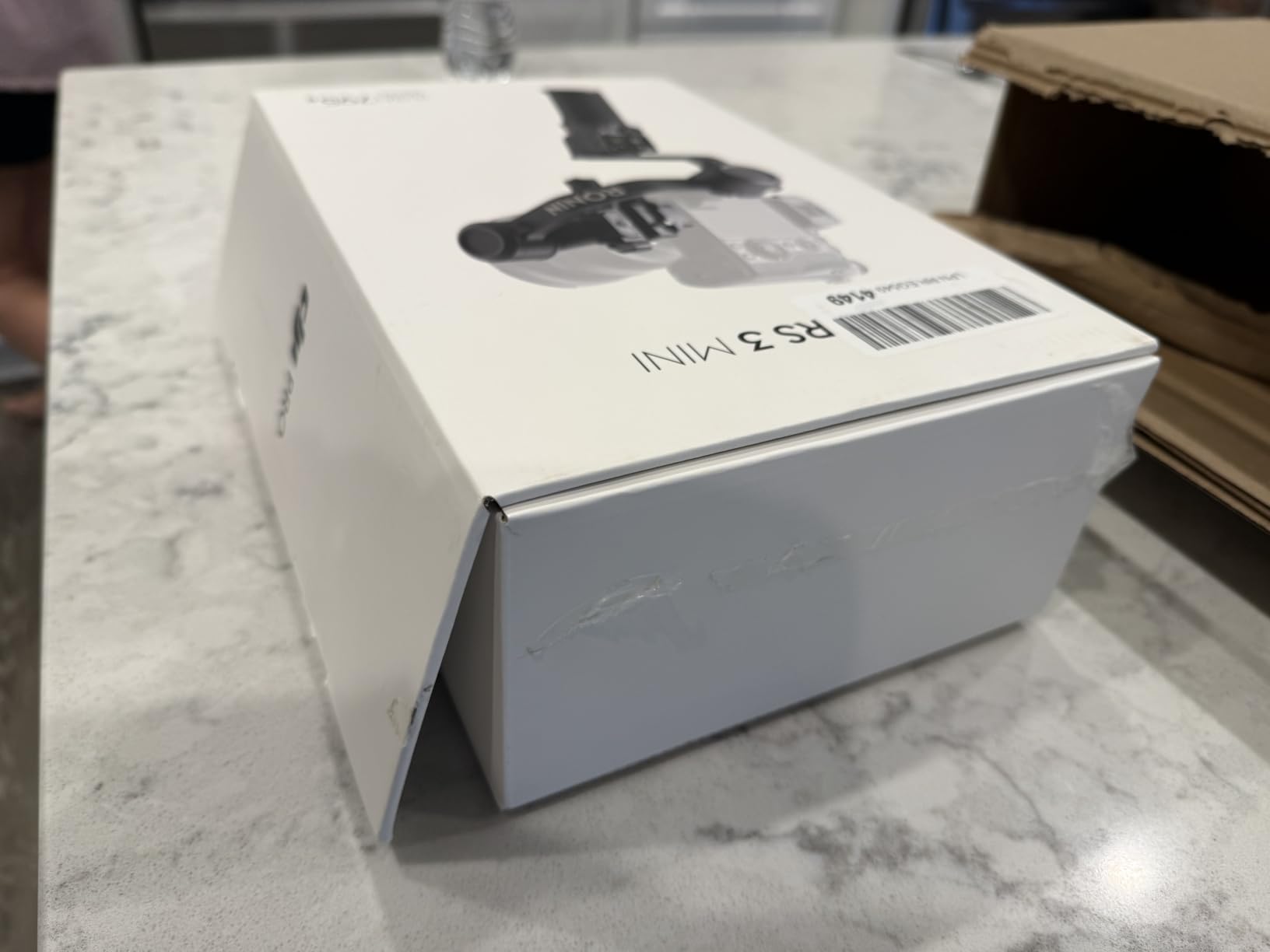
4. DJI RS 3 Mini – Lightweight Gimbal for Cinematic Sports Shots
DJI RS 3 Mini, Camera Gimbal Stabilizer, Canon/Sony/Nikon/Fujifilm
795g weight
2kg payload
3rd-Gen RS stabilization
Native vertical
Pros
- Lightweight 795g design that travels easily to away games
- 3rd-Gen RS stabilization handles walk-and-talk follow shots
- Native vertical shooting for social reels without extra plates
- Bluetooth shutter control cuts cables from the rig
- 1.4-inch full-color touchscreen for quick mode changes
Cons
- Manual axis locks mean more setup time than auto-lock gimbals
- Less suitable for very heavy cinema or telephoto lens combos
- Initial balancing can frustrate first-time users
The RS 3 Mini is the gimbal we recommend to anyone moving up from a phone gimbal into a mirrorless setup. At 795 grams it disappears into a small bag, and the 2kg payload covers most Sony, Canon, Nikon, and Fujifilm bodies with a standard zoom lens attached. For sports videography, the killer feature is the native vertical shooting mode, which lets you flip from a 16:9 broadcast crop to a 9:16 social reel without rebalancing the rig.
We use the RS 3 Mini for the pre-game tunnel walk, the locker-room hype clip, and the slow-motion close-up of a coach’s pre-game speech. These are the cinematic B-roll moments that turn a flat highlight reel into something an athlete actually wants to share. The 3rd-Gen RS stabilization algorithm is smooth enough that you can walk backward while keeping a player locked in frame, which is a shot you cannot get from a tripod.
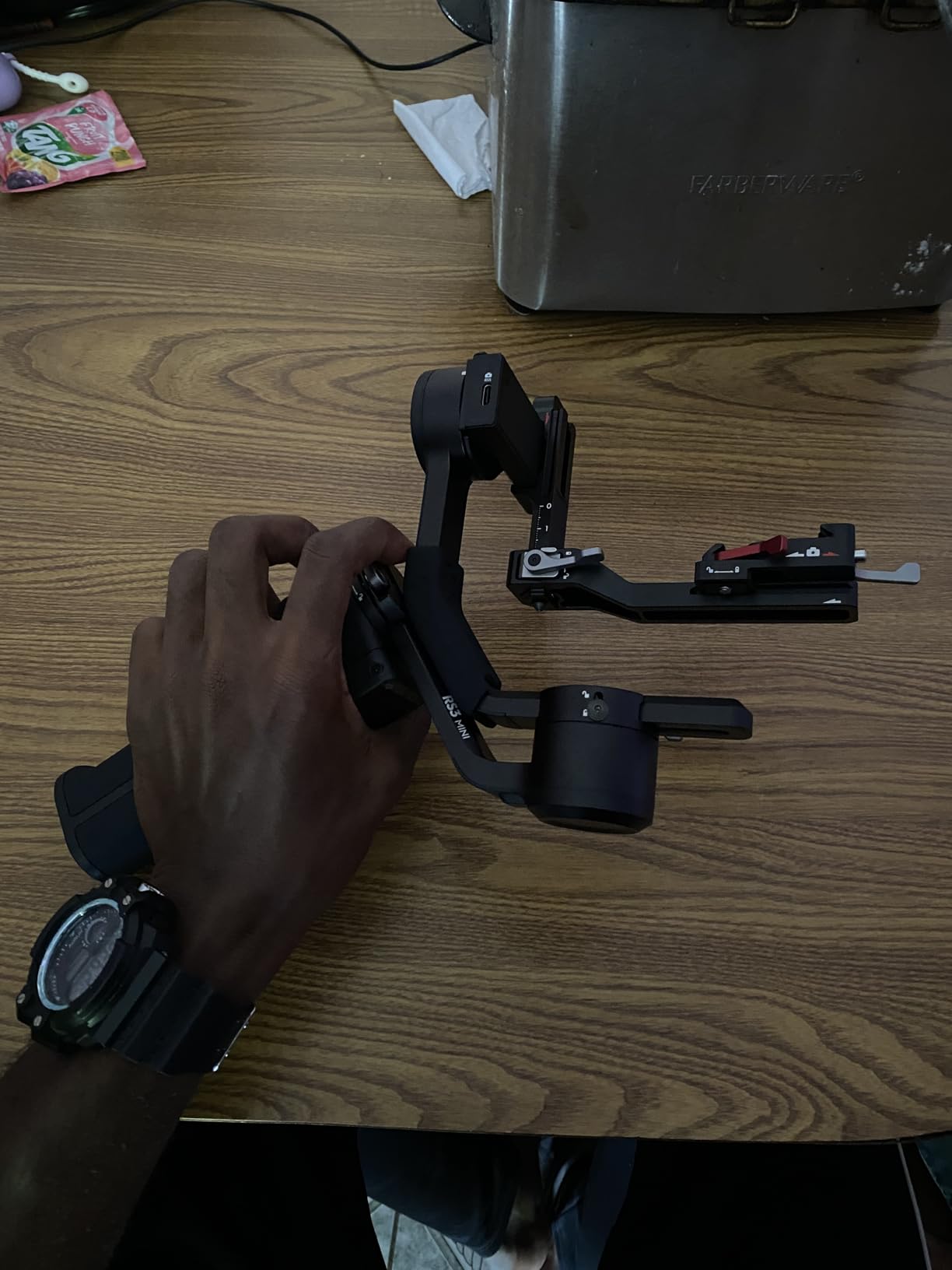
The Bluetooth shutter control is a small detail that matters on a busy sideline. Instead of reaching for the camera’s record button and shaking the rig, you tap a button on the gimbal handle. The 1.4-inch touchscreen is bright enough to read in direct sun, which is the only lighting condition that matters for an outdoor game.
Where the RS 3 Mini falls short is in heavy-rig territory. If you plan to mount a full-frame body with a 70-200mm or 100-400mm telephoto, you want to step up to the RS 3 or RS 4 Pro. The manual axis locks also mean more setup time per lens swap, so frequent lens changes on a fast-paced shoot can slow you down.
Best use cases on a sports day
Run the RS 3 Mini for hero walk-up shots, end-zone cinematic pans, and any moment that calls for smooth motion. Switch to a monopod for the actual gameplay, where you need to track the ball quickly and reposition along the sideline. Many pros carry both.
Software setup notes
Like other recent DJI products, the Ronin app has been pulled from Google Play. Android users install via APK. Activation requires a DJI account, which is a one-time step but worth knowing before your first shoot day.
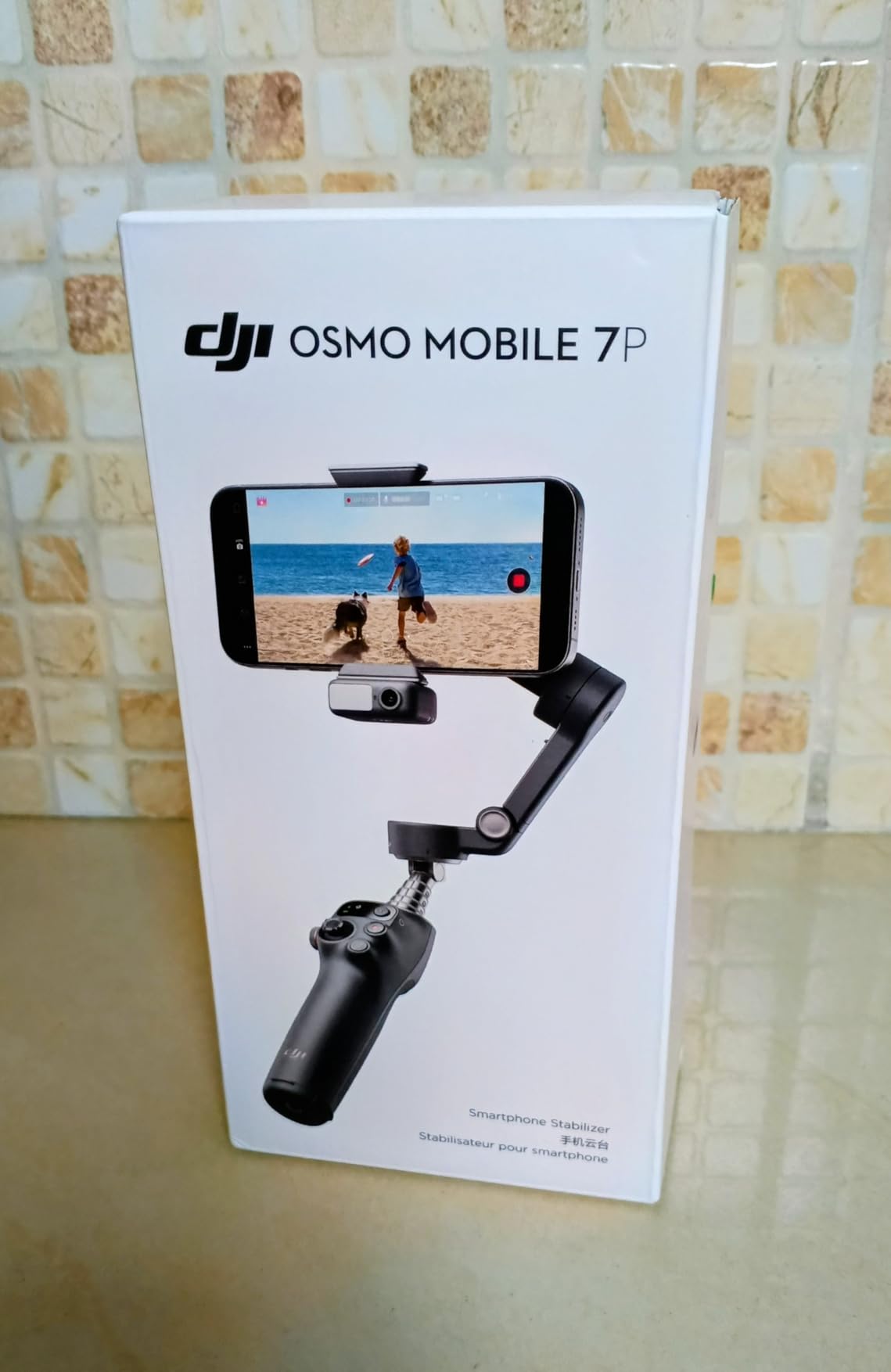
5. DJI Osmo Mobile 7P – Best Phone Gimbal for Parents and Beginners
DJI Osmo Mobile 7P Gimbal Stabilizer for iPhone & Android, Native Tracking
3-axis phone gimbal
10hr battery
Magnetic clamp
Native tracking
Pros
- Buttery-smooth 3-axis stabilization for phone footage
- Native Tracking locks onto subjects reliably for solo shooters
- Built-in extension rod and tripod add real versatility
- Quick Launch auto-connects with phone over Bluetooth
- Up to 10 hours of battery life covers a full tournament day
- Can charge the phone from the gimbal during long shoots
Cons
- Slightly bulky for ultra-compact everyday carry
- Tracking can lose subject in low light or with overlapping players
- Built-in fill light is not very strong for night games
The Osmo Mobile 7P is the best phone gimbal we have tested for sports videography. We hand it to parents, sports-mom creators, and anyone who wants gimbal-smooth footage from the phone already in their pocket. The 3-axis stabilization is genuinely on par with much larger rigs, and the native subject tracking keeps a single player in frame even as they cut across the field.
For most youth and high school sports, the iPhone 17 Pro, Samsung Galaxy S25, and Google Pixel 9 Pro shoot video that is hard to tell apart from a mid-range mirrorless body in good light. Pair that phone with this gimbal and you have a complete sports videography kit that fits in a jacket pocket. Reviewers across YouTube and TikTok have documented exactly this workflow.
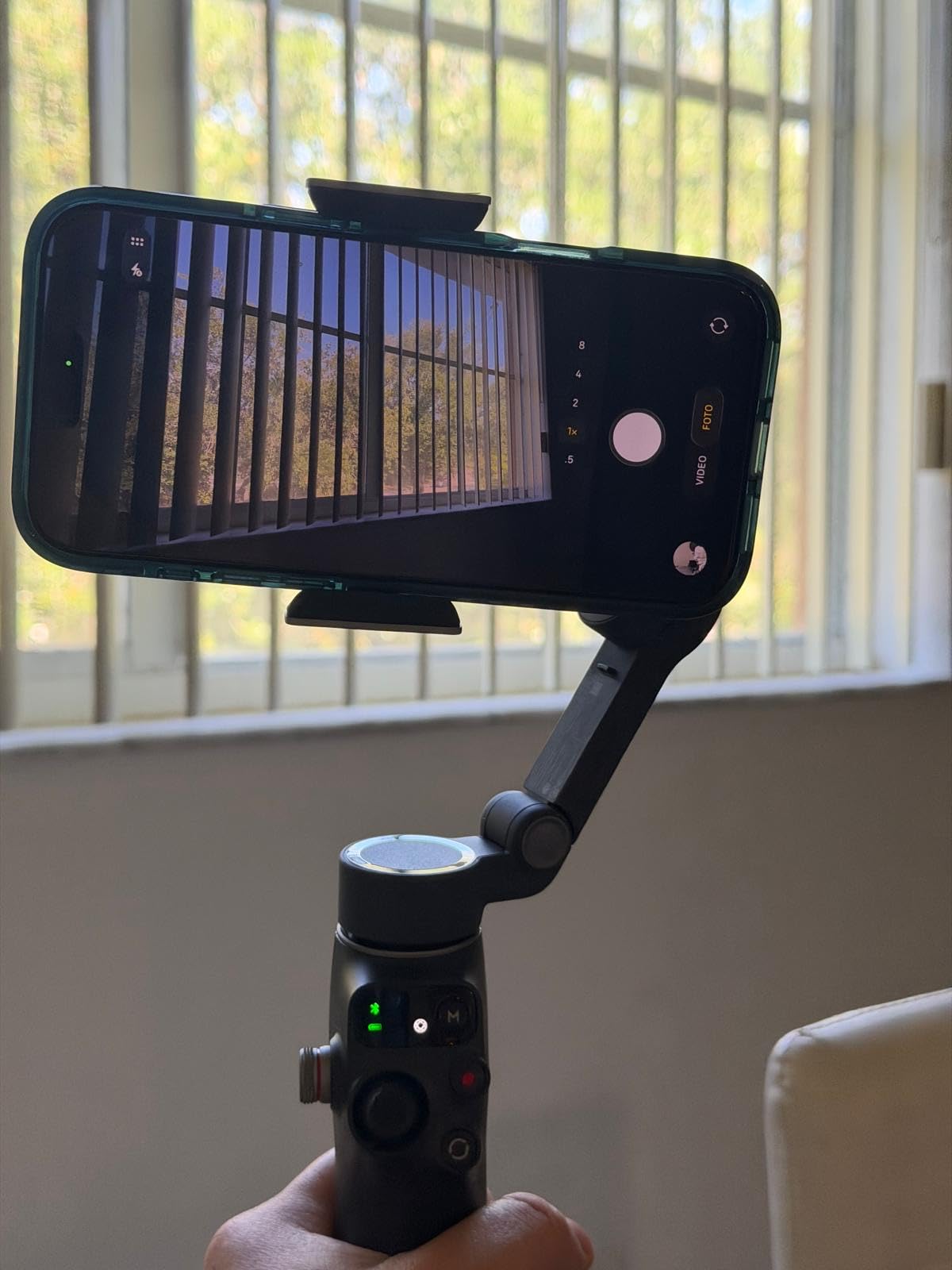
The Multifunctional Module is the surprise highlight. It adds intelligent tracking, a small fill light, and DJI Mic 2 or Mic Mini receiver functionality, which means you can run a wireless lav mic straight into your phone without a separate receiver brick. For a parent filming a coach interview after the game, this single accessory replaces three pieces of gear.
The 10-hour battery life is enough for a full day of tournament filming with battery to spare. The magnetic phone clamp is fast, which matters when you need to switch between filming the game and replying to a text from another parent. The built-in extension rod doubles as a mini-jib for low-angle hero shots of the kids’ team huddle.
When to upgrade beyond a phone gimbal
The Osmo Mobile 7P tops out at around 300 grams of payload, so it is firmly a phone tool. The moment you need interchangeable lenses, true 10-bit log color, or raw video output, you should step up to a mirrorless body with the RS 3 Mini above. For everyone else, this is the most affordable entry into smooth sports video.
Tracking limitations on crowded fields
Native Tracking handles single players well but can confuse one player for another when jerseys overlap. We recommend locking tracking onto a player with a contrasting jersey or one of the parents you know personally. The ActiveTrack on the Osmo Pocket 3 handles overlap better, but the trade-off is a dedicated camera body.
6. Canon RF 100-400mm – Best Telephoto Lens for Sideline Sports Video
Canon RF100-400mm F5.6-8 is USM Telephoto Lens, Black, Compatible with EOS R Series Mirrorless Cameras
100-400mm range
f/5.6-8 aperture
5.5 stops IS
Nano USM AF
Pros
- Very lightweight at 816g for a 100-400mm telephoto zoom
- Sharp image quality across the full zoom range
- Up to 5.5 stops of optical stabilization (6 stops with IBIS bodies)
- Fast and quiet Nano USM autofocus tracks moving subjects
- 0.41x max magnification adds semi-macro capability
- Strong value versus other 100-400mm zooms in the RF lineup
Cons
- Slow f/5.6-8 maximum aperture limits indoor arena use
- Lens hood is not included in the box
- No weather sealing for rainy tournament days
- Zoom ring direction is reversed compared to most other brands
If you shoot on a Canon EOS R body, the RF 100-400mm is the lens we recommend for field sports video. At 816 grams it is light enough to handhold for an entire game when paired with in-body image stabilization, and the 100-400mm range covers everything from a tight shot of the quarterback’s hands to a wide end-zone framing of the play developing.
Nano USM autofocus is the quiet, smooth motor that matters for video. Compared to older ring-type USM lenses, the 100-400mm pulls focus without audible clicks that the camera mic can pick up, and the transition is fast enough to track a runner crossing the field. Combined with a Canon R6 Mark II or R5, the subject-detection autofocus holds the lock cleanly even when other players pass in front.
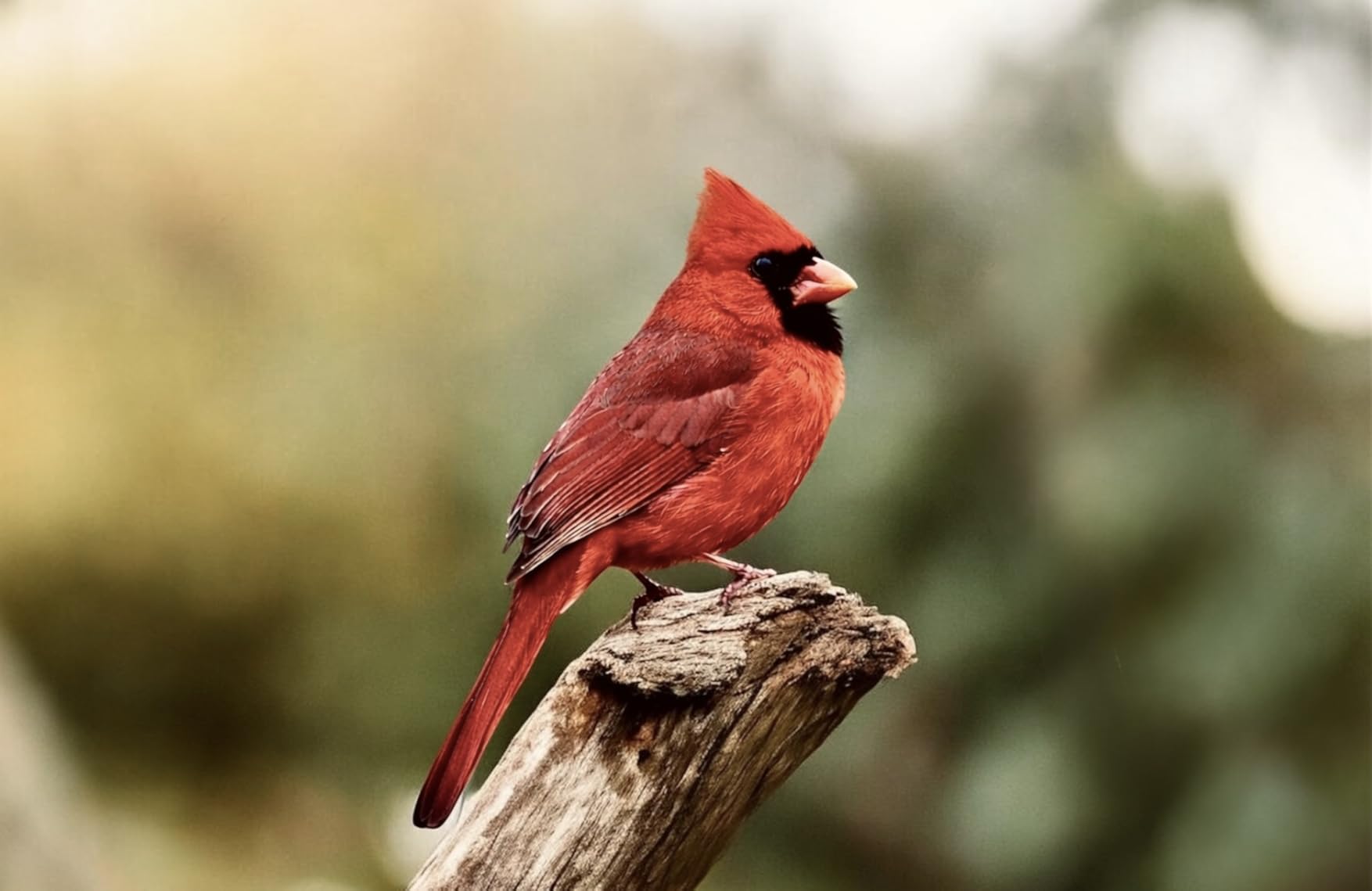
The 5.5-stop optical image stabilization is rated at 6 stops when paired with an IBIS-equipped R-series body, which means you can pull off monopod shots at 400mm with confidence. The minimum focus distance of 2.89 feet at 200mm also opens up tight celebration shots after a touchdown or a goal without swapping lenses.
The variable f/5.6-8 aperture is the main compromise. In bright daylight outdoor sports this is not an issue, but indoor basketball or night football forces you to crank ISO higher than you would with an f/2.8 or f/4 telephoto. For our team, the size and weight savings are worth the tradeoff for sideline work.

Pairing with a camera body
The RF 100-400mm shines on the EOS R6 Mark II, R5, R8, and the newer EOS R5 Mark II. If you are still on a DSLR, the EF 100-400mm L IS II with an EF-to-RF adapter delivers similar reach with weather sealing, at higher weight. For Sony shooters, the Sony FE 100-400mm GM is the direct competitor and our pick on that mount.
Build and weather limitations
There is no weather sealing, so we wrap the lens in a rain cover for wet soccer tournaments. The lens hood is sold separately, which is an annoying cost on an already mid-priced lens. We also recommend buying a 67mm UV filter just to protect the front element during sideline bumps.
7. Rode VideoMic NTG – Best Shotgun Mic for Broadcast-Quality Sports Audio
Rode VideoMic NTG Camera-mount Shotgun Microphone,Black
Shotgun mic
Super cardioid
USB-C + 3.5mm
High-pass filter
Pros
- Broadcast-grade acoustic transparency rivals NTG5 at lower cost
- Auto-sensing 3.5mm output works with cameras and mobile devices
- Digital switching: high-pass filter
- -20dB pad
- HF boost
- safety channel
- Infinitely variable gain control for precise levels
- USB-C headphone monitoring output for on-set quality checks
Cons
- Gain control has no effect when running in USB mode
- Safety channel feature is not active in USB mode
- iOS Lightning use requires Rode's specific SC15 cable
- No visible battery indicator on the body
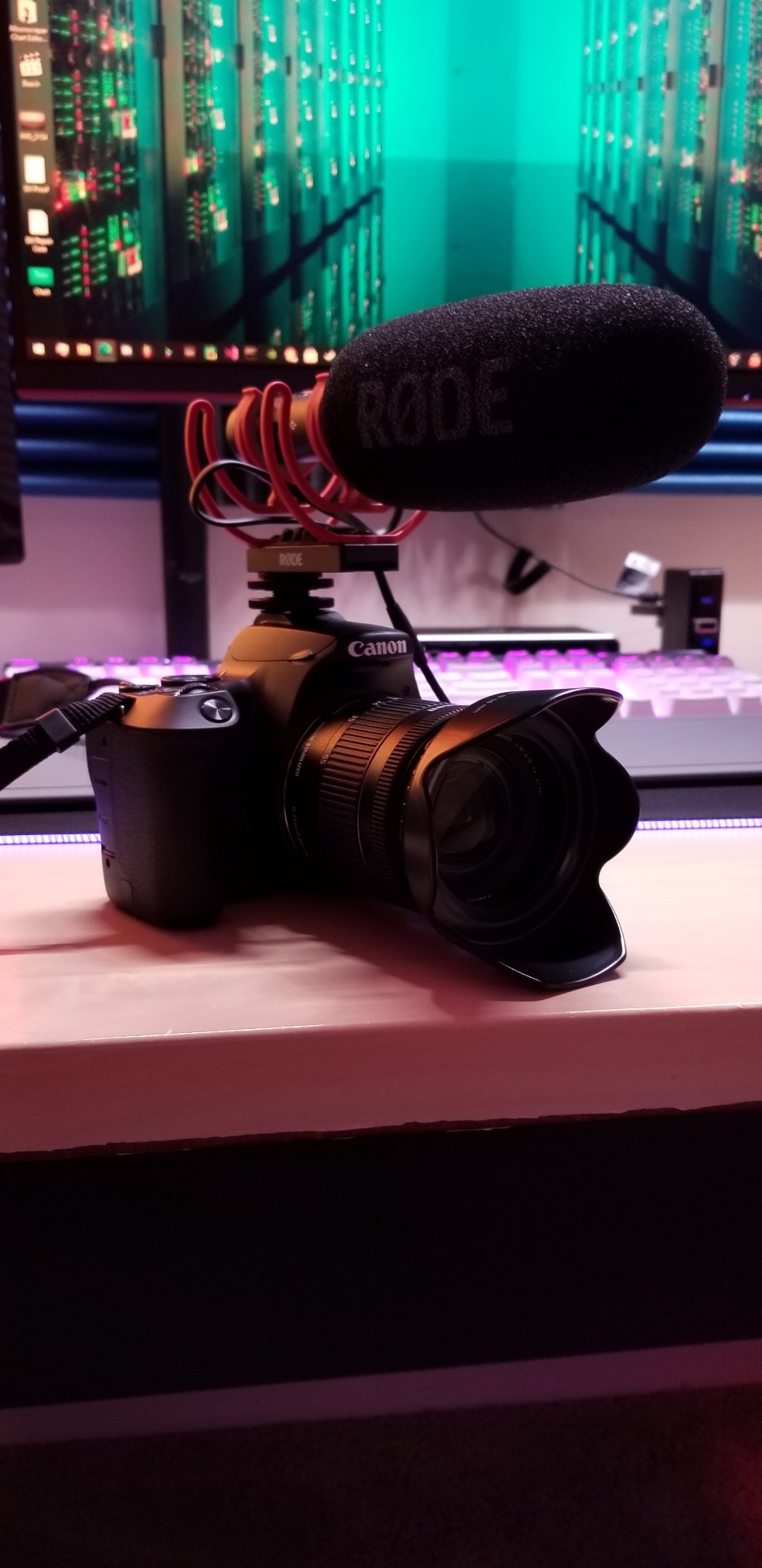
The VideoMic NTG is our top pick for a camera-mounted shotgun microphone on a sports videography kit. It uses the same revolutionary acoustic design as Rode’s NTG5 broadcast shotgun, which is what you hear in network sports packages, but in a smaller body that mounts cleanly on a mirrorless camera or a boom pole. The off-axis rejection is what makes a shotgun mic essential for sideline work. It picks up the coach’s interview without dragging in the band across the parking lot.
The video mic NTG doubles as a USB microphone. Plug it into a laptop and you have a broadcast-quality podcast or interview mic with headphone monitoring. For sports videographers who also run a YouTube channel, that 2-in-1 capability justifies the price over a pure camera-mounted mic.

The safety channel is the feature most casual users miss. Recording a second channel at -20dB lower than the main channel is a safety net that has saved our audio on more than one occasion, especially during a sudden crowd roar after a goal. The high-pass filter cleans up low-end rumble from stadium HVAC systems and wind. The infinitely variable gain control lets you match levels to your specific camera without hunting through menus.
For a typical Friday night football shoot, we run the VideoMic NTG on a boom pole held by an assistant just above the sideline, with the camera operator on a monopod. That setup gets clean dialogue during timeout interviews and room tone for the highlight reel without dragging in crowd noise.
USB mode quirks
The main limitations show up only when you run the mic in USB mode. Gain control and the safety channel are disabled, and you cannot monitor the live signal from the mic’s headphone jack. For pure camera use, none of this matters. For podcast and streaming use, you may want a dedicated USB interface.
How it compares to a wireless lav
A shotgun mic like the NTG is the right pick when the camera is close to the speaker. A wireless lav like the DJI Mic 2 or Rode Wireless GO II is the right pick when the speaker is moving or far from the camera. We carry both. Many of our game-day kits run a VideoMic NTG on the A-cam and a wireless lav on the coach.
8. Rode VideoMicro II – Best Budget On-Camera Microphone
RØDE VideoMicro II Ultra-Compact On-Camera Shotgun Microphone for
Ultra-compact shotgun
39g weight
Plug-and-play
WS12 windshield
Pros
- Ultra-compact 80mm length and 39g weight
- Highly directional pickup pattern for clear sideline audio
- Helix isolation mount removes handling noise from the rig
- Includes foam and furry windshields in the box
- No battery required - truly plug-and-play
- TRS and TRRS cables included for camera and phone
Cons
- Wind noise can sneak in from the sides despite the included deadcat
- Plastic body feels less premium than the metal Rode NTG
- Directionality drops at distances beyond 3-4 feet
- No gain control or live monitoring options
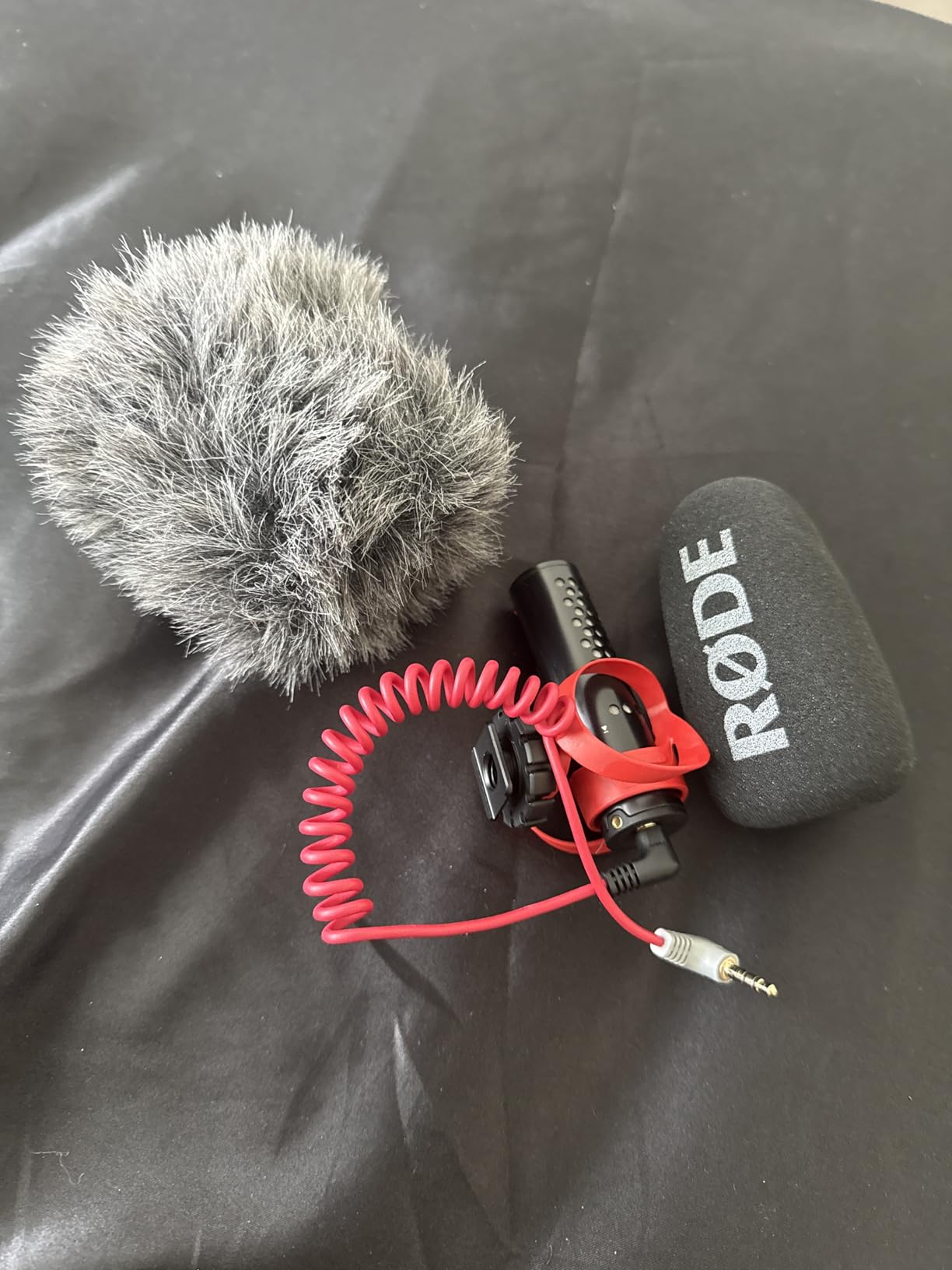
The VideoMicro II is the budget on-camera microphone we recommend to anyone upgrading from a camera’s built-in mic. At 39 grams it does not unbalance a small mirrorless body or a phone gimbal, and the plug-and-play design means there is no battery to forget on a tournament morning. The directional pickup pattern is sharp enough to focus on the person in front of the camera while knocking down some of the background crowd noise.
We hand the VideoMicro II to parents and beginners because it eliminates the single most common reason amateur sports video sounds bad. Built-in camera mics pick up everything in a 360-degree bubble, which means crowd noise, the kid yelling from the sideline, and the wind all sit at the same volume as the coach’s interview. The VideoMicro II pulls the speaker forward and pushes the rest back.
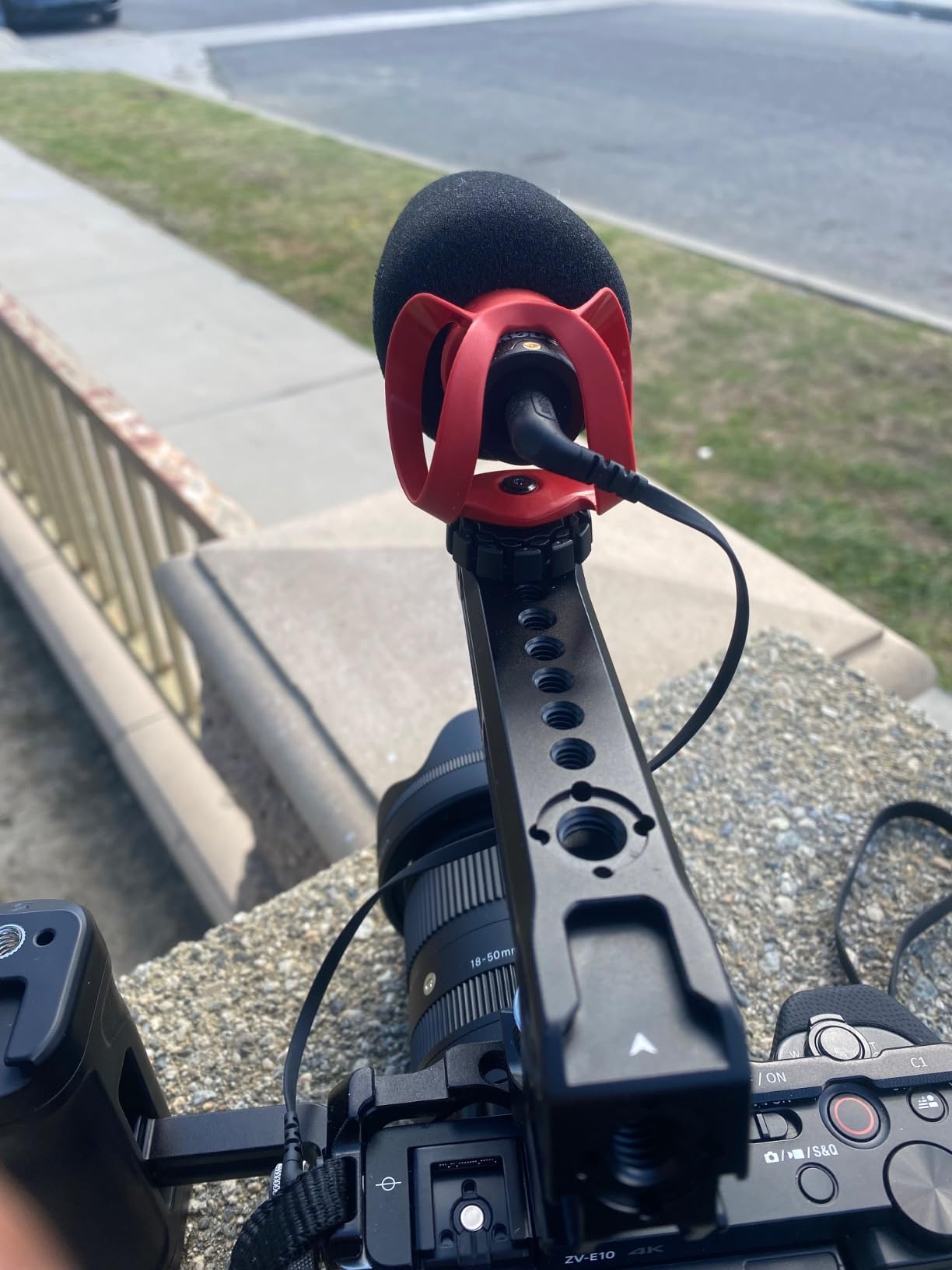
The Helix isolation mount is a quiet but important upgrade over the original VideoMicro. It uses a mechanical suspension to decouple the mic from the camera body, which removes the rumble that often shows up when you tap the camera or walk with the rig. For handheld walk-and-talk sports shots, this is a noticeable improvement.
The included WS12 furry windshield is essential for outdoor sports. Without it, even a light breeze shows up as low-frequency thumping in the recording. Both TRS and TRRS cables come in the box, so you can use this mic with a mirrorless camera and a phone without buying extra accessories.
Best use cases
Parent-filmed kid sports, beginner YouTube creators, and anyone who wants a quick audio upgrade over built-in mics. The VideoMicro II also pairs well with the Osmo Pocket 3 and Osmo Mobile 7P when you want cleaner audio than the built-in mics provide, although we prefer a wireless system for those rigs.
When to spend more
For paid work, broadcast-style interviews, or any shoot where audio is critical, the Rode VideoMic NTG above is worth the extra spend. For YouTube-style vlogging at home or in quiet environments, the VideoMicro II is genuinely all you need.
9. NEEWER 72 inch Tripod – Best Budget Tripod with Monopod Conversion
NEEWER 72 inch Camera Tripod Monopod with Center Column and Ball Head Aluminum, Arca Type QR Plate, Bag, Horizontal Tripod Overhead Camera Mount for DSLR Camera, Video Camcorder, Max Load: 33lb
72.4 inch max height
33lb load
Arca-Type plate
Detachable monopod
Pros
- Excellent stability with 33lb load rating for the price
- Multi-angle center column enables overhead and vertical shooting
- Detachable leg converts the tripod into a full monopod
- Arca-Type quick release plate works with most modern camera plates
- Includes carrying bag and carabiner for stability weight
- Smooth ball head with built-in bubble levels
Cons
- Heavier than carbon-fiber tripods at 3.8 lbs
- Ball head knob grips can slip with heavy panning use
- Not as refined in build quality as premium Manfrotto or Sachtler heads
- Camera plate positioning can interfere with horizontal shooting
The NEEWER 72 inch tripod is the budget support we recommend for sports videographers who want a single rig that does triple duty. At full extension it reaches 72.4 inches, which is tall enough for an adult to shoot over a crowd at a stadium or arena. The center column pivots for overhead shots, vertical panning for vertical social reels, and 360-degree horizontal panning for traditional broadcast angles. The Arca-Type plate matches the plates on most mirrorless bodies, so swapping between cameras is quick.
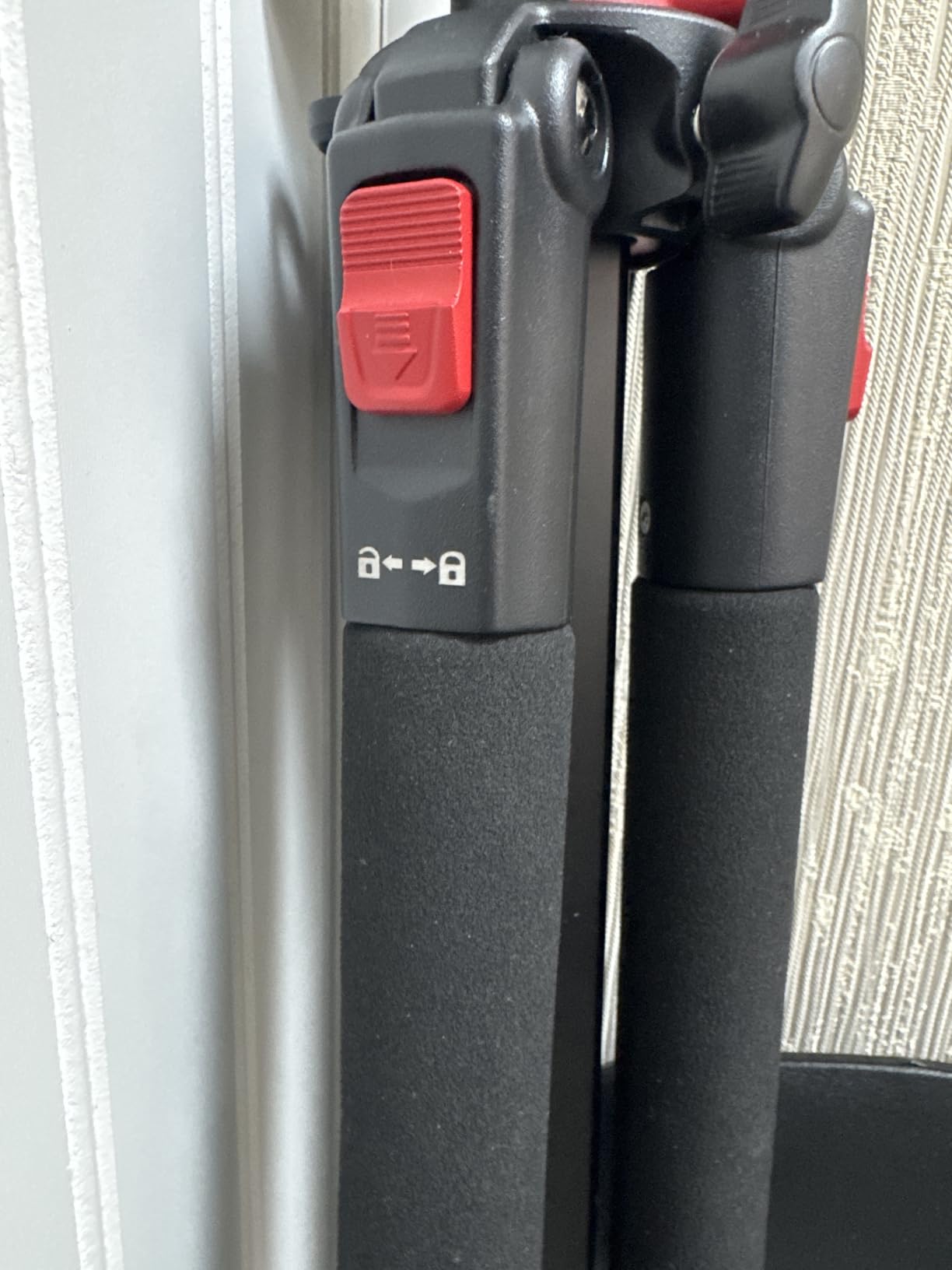
The hidden gem is the detachable leg. Unscrew one leg from the tripod and you have a full-height monopod, which is what most working sports videographers actually use on the sideline. A tripod is for set-piece shots like a pre-game press conference. A monopod is for tracking the play. This single piece of gear covers both.
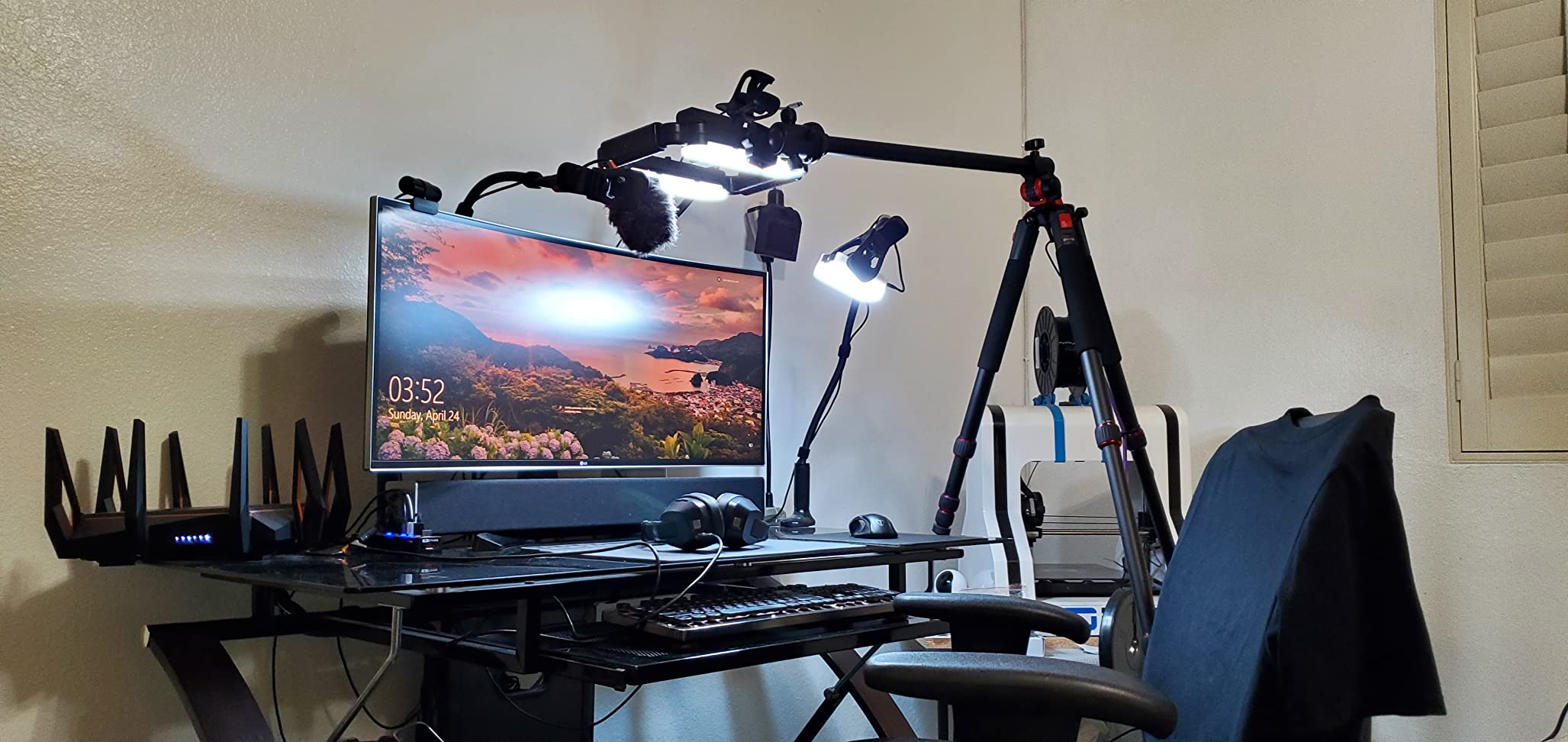
The 33-pound load rating is far more than any mirrorless body needs. That headroom means the tripod stays stable when you mount a long telephoto lens, a cage, an external monitor, and a shotgun mic all at once. We have run a Sony A7 IV with the 100-400mm GM, a SmallRig cage, a 5-inch monitor, and the Rode VideoMic NTG on this tripod with no stability issues.
For low-angle goal-line or end-zone shots, the multi-angle center column lets you drop the camera down to within a few inches of the turf, which is a perspective phones and monopods struggle to reach. We have used this exact setup for basketball baseline angles and baseball catcher POV clips.
Why it is not a Manfrotto or Sachtler
The ball head is the main compromise. For slow, smooth pans it works fine. For fast action sports where you need to whip-tilt and lock, a fluid head like the Manfrotto 502 or Sachtler FSB is in a different class. The NEEWER is the right pick when budget matters more than buttery pan drag.
Weight and travel considerations
At 3.8 pounds the tripod is fine for car trips and short walks. For travel videographers who carry their kit on a plane, we recommend pairing this with a carbon-fiber travel tripod from our travel tripod guide instead. The aluminum build here is sturdy but it adds up over a full day of walking a tournament venue.
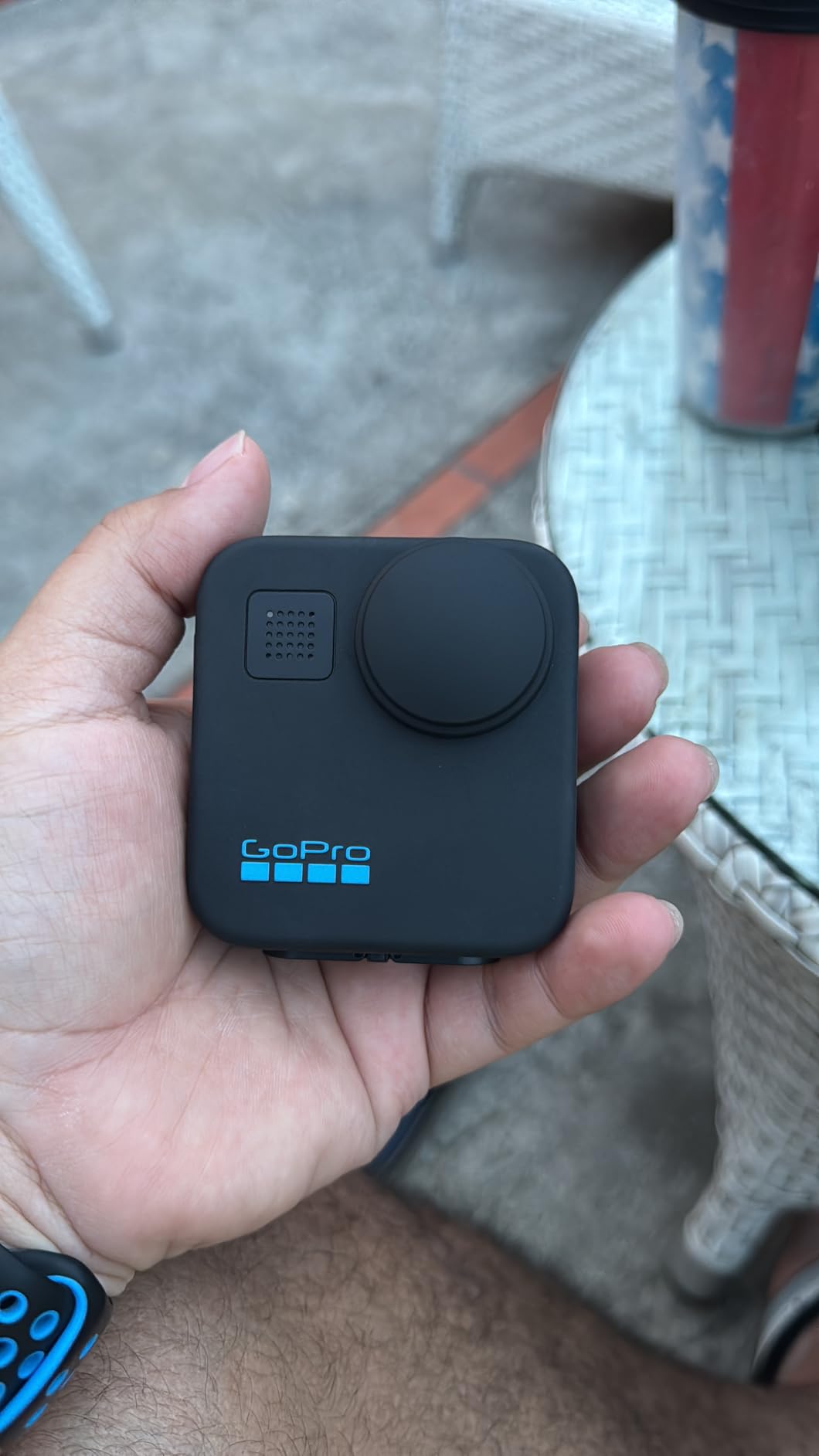
10. GoPro MAX – Best 360 Camera for Immersive Sports Angles
GoPro MAX — Waterproof 360 + Traditional Action Camera with Touch Screen Spherical 5.6K30 HD Video 16.6MP 360 Photos 1080p Live Streaming Stabilization
5.6K30 360 video
Single-lens 1080p
Waterproof 15m
Object tracking
Pros
- Dual 360 and traditional action camera in one body
- 5.6K30 spherical video captures every angle simultaneously
- Reframe 360 footage in the GoPro Quik app
- Object Tracking automatically follows subjects through the sphere
- Stealth Mounting erases the pole or extension from shots
- Waterproof to 15m without any housing
Cons
- Single-lens video caps at 1080p
- Reframing and 360 editing requires the Quik app workflow
- Larger and heavier than a standard HERO body
- Lower per-lens image quality than HERO12 in standard modes
The GoPro MAX is the camera you pull out when you want to capture every angle of a play at once. It shoots 5.6K 360-degree video that you reframe in post, which means you can decide on the sideline to frame the post player, the wide play, and the celebration cut all from a single camera. For sports videography, that reframe-anywhere workflow has changed the way highlight reels are built.
Mount the MAX on a long extension pole and you have a virtual camera operator. Stealth Mounting automatically erases the pole from the shot, which means you can float the camera above the play like a drone without the drone. Object Tracking locks onto a single subject inside the sphere and follows them through the reframe, which is what makes solo B-cam work possible.
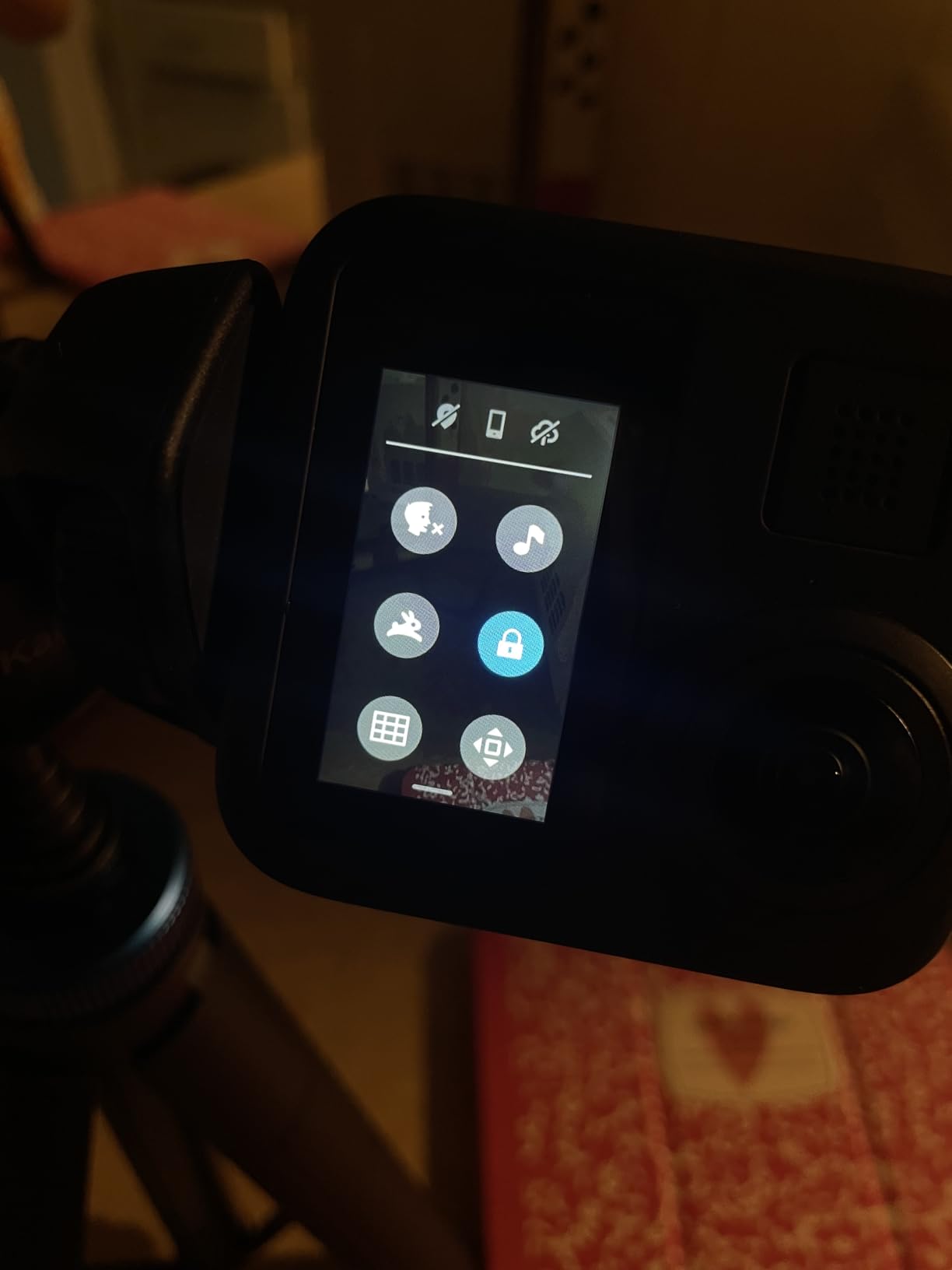
The MAX also runs as a single-lens action camera for traditional 1080p and 1440p video, photos, and time lapses. That makes it more flexible than a dedicated 360 body, especially when you just want a quick standard shot without going through the 360 editing workflow. Waterproofing to 15 meters without housing is enough for any sport short of scuba diving.
For creative highlight reels, the MAX is unmatched. We have cut reels where the same 360 clip appears three times in different reframes, mimicking a multicam setup from a single camera. For a freelance videographer delivering reels to college recruits, that kind of creative latitude justifies the investment.
The editing tradeoff
The catch is that reframing 360 footage requires time in the GoPro Quik app or a dedicated NLE workflow. If you are under a tight deadline to deliver a same-day reel, this is not the camera to lean on. For projects with a 24-48 hour turnaround, the workflow is manageable and the creative payoff is real.
Pair with a traditional action cam
The MAX pairs well with a HERO12 on the same helmet or pole mount. The HERO12 captures the standard 5.3K view, the MAX captures the spherical reframe, and you have a complete two-angle kit that weighs under two pounds total. That is our recommended action-camera setup for solo sports videographers.
How to Choose the Best Gear for Sports Videography?
Choosing the best gear for sports videographers comes down to matching the kit to the sport, the venue, and the deliverable. A soccer parent filming a Saturday game has very different needs than a freelancer delivering broadcast-style reels to a college program. Below is the framework our team uses on every assignment, plus the questions worth asking before you spend a dollar.
Cameras: sensor, frame rate, autofocus
The single most important spec for sports video is frame rate. 4K at 60fps is the floor for slow-motion-friendly highlight reels. 4K at 120fps is the ceiling for the kind of buttery slow-mo that ends up on social. Below 60fps you cannot pull slow motion without sacrificing resolution. Autofocus tracking is the second spec to check. Look for stacked or global-shutter sensors paired with subject-detection AI. The Fujifilm X-H2S and Sony A9 III both win here, and rolling shutter on panning shots is dramatically lower than cheaper bodies.
For low-light indoor arena sports, a 1-inch sensor (Osmo Pocket 3, Sony RX10 V) or a larger full-frame body is essential. For outdoor daylight sports, an APS-C body like the Sony a6700 or Fujifilm X-S20 is plenty and saves weight on a monopod. Codec matters if you intend to grade. Look for 10-bit 4:2:2 internal recording and a log profile. Anything less locks you into a baked-in look you cannot recover in post.
Lenses: aperture vs reach
Sports video is a constant tradeoff between aperture and reach. f/2.8 zooms like the Sony 70-200mm f/2.8 GM II give you cleaner low-light footage and shallower depth of field, but they weigh 1.5 kg and cost significantly more. f/5.6-8 zooms like the Canon RF 100-400mm above are lighter and cheaper but force you to crank ISO indoors. For most amateur sports videographers, the f/5.6-8 zoom is the right call. For paid work in dim venues, the f/2.8 zoom is the right call.
Reach is the other lens decision. A 70-200mm covers tight shots at the 30-yard line. A 100-400mm covers end-zone and back-of-the-field angles. A 200-600mm covers baseball outfield and soccer goal-mouth from the stands. Match the lens to where you will be positioned. Sideline shooters usually want 100-400mm or 70-200mm. Press box shooters want 200-600mm. Photographers with adapter access can use Canon EF glass on RF bodies and Sony E bodies without losing autofocus.
Stabilization: monopod vs tripod vs gimbal
Most working sports videographers run a monopod as the primary support. A monopod gives you a stable platform while letting you walk the sideline and pan to track the play. A fluid-head monopod like the iFootage Cobra or Sirui SVM is the gold standard. The NEEWER tripod above converts to a monopod, which is a budget-friendly way to get both supports in one piece of gear.
A tripod is for set-piece shots where the camera stays put: pre-game press conferences, post-game interviews, and any locked-off angle. A gimbal like the DJI RS 3 Mini is for cinematic B-roll where you want smooth motion. Carrying all three is normal for a professional kit. For a parent or beginner, the monopod-as-primary plus tripod-when-needed setup is the right balance. ND filters from our ND filter guide pair well with any of these supports for maintaining shutter speed outdoors.
Audio: shotgun vs lav vs on-camera
Audio is the most overlooked part of a sports videography kit and the easiest way to make amateur footage sound professional. A camera-mounted shotgun mic like the Rode VideoMic NTG picks up the person in front of the camera and rejects sideline noise. A wireless lav like the DJI Mic 2 or Rode Wireless GO II picks up a moving speaker cleanly. An on-camera mini mic like the Rode VideoMicro II is the budget entry point.
For paid work, run a wireless lav on the coach or commentator plus a shotgun on the camera. For personal use, a single shotgun on the camera is enough to clean up the audio dramatically. The DJI Mic Mini and Mic 2 are now the most popular wireless choice across the r/videography community because they pair directly with the Osmo Pocket 3 and Osmo Action 4 without a separate receiver.
Action cameras as B-cams
Every sports videography kit benefits from at least one action camera. The GoPro HERO12 Black and DJI Osmo Action 4 are the two we recommend. Mount them where a phone or mirrorless body cannot go: backboards, helmets, goal posts, sideline poles. For 360 and immersive angles, the GoPro MAX is unmatched.
Action cameras also serve as backup bodies. If your main camera overheats during an outdoor tournament in July, you will be grateful to have a rugged waterproof body running on the helmet mount. Treat the action camera as cheap insurance and an angle-diversity tool, not as your primary body.
Storage, power, and bags
Power is the silent killer of a long tournament day. A single Sony NP-FZ100 battery lasts about 90 minutes of continuous 4K recording. V-mount batteries have become the universal upgrade for serious sports videographers, and Reddit threads consistently recommend them for full-day shoots. Pair a V-mount with a dummy battery adapter for your camera and you can run all day without swapping.
Storage matters at high bitrates. 4K 120fps 10-bit footage fills a 128GB card in under 30 minutes. For a full-day shoot, budget for at least three CFexpress Type B or V90 SD cards plus a portable SSD for offload between sessions. A rolling camera bag from our rolling bag guide protects the kit during long venue walks and keeps everything organized.
Recommended kits by persona
For the sports mom or dad filming kids, the DJI Osmo Mobile 7P with a phone is the simplest kit that delivers broadcast-quality results. Add a Rode VideoMicro II for cleaner audio and you are set for under what most people spend on a single camera lens. For the freelance sports videographer delivering highlight reels, the DJI Osmo Pocket 3 plus a Rode VideoMic NTG plus a fluid-head monopod is the sweet spot of quality and mobility. For the professional press or college athletics videographer, a full-frame mirrorless body with a 100-400mm telephoto, a fluid-head monopod, a wireless lav system, and a GoPro HERO12 B-cam is the working baseline.
Frequently Asked Questions
What is the best camera for shooting sports videos?
For most people, the DJI Osmo Pocket 3 is the best camera for shooting sports videos. It combines a 1-inch sensor, true 4K 120fps slow motion, mechanical 3-axis gimbal stabilization, and ActiveTrack 6.0 subject tracking in a pocket-sized body. For paid broadcast-style work, a full-frame mirrorless body like the Sony A9 III or Fujifilm X-H2S with a stacked sensor is the professional standard.
What is the best way to record sports games?
Record sports games from the sideline with a fluid-head monopod for mobility, a mirrorless body with subject-detection autofocus, and a wireless lav mic on the coach or commentator. Use 4K 60fps as the baseline frame rate so you can pull slow-motion replays in post without losing resolution. Keep at least three high-speed memory cards and a V-mount battery ready for tournament-length days.
Is a monopod good for sports photography and videography?
Yes. A monopod is the most-used support among working sports videographers because it gives you a stable platform for telephoto lenses while letting you walk the sideline and pan to track the play. A fluid-head monopod like the iFootage Cobra or Sirui SVM is the gold standard. The NEEWER 72 inch tripod in this guide converts to a monopod for budget-friendly flexibility.
What is the best monopod for shooting sports?
The best monopod for shooting sports is one with a true fluid head, a tall maximum height for adult operators, and a sturdy foot for stability. Pro shooters gravitate toward the iFootage Cobra and Sirui SVM series. For a budget-friendly option, the NEEWER 72 inch tripod above detaches into a full-height monopod that handles cameras up to 33 pounds.
Which is better for video recording, a monopod or a tripod?
For tracking live sports action, a monopod is better because it lets you walk the sideline and pan quickly. For locked-off shots like press conferences, post-game interviews, or a static end-zone angle, a tripod is better. Most professional sports videographers carry both and switch between them throughout the day. The NEEWER 72 inch tripod above doubles as both, which is why it made our list.
What are the essential equipment needed for sports videography?
The essential kit for sports videography includes a camera with at least 4K 60fps and subject-tracking autofocus, a telephoto zoom lens (70-200mm or 100-400mm is the standard), a fluid-head monopod for tracking the action, a shotgun or wireless lav microphone for clean audio, and at least three high-speed memory cards plus a V-mount battery for tournament-length days. Action cameras like the GoPro HERO12 serve as rugged B-cams for angles the main rig cannot reach.
Final Verdict on the Best Gear for Sports Videographers
The best gear for sports videographers is the kit that lets you capture the decisive play without breaking the workflow. Our Editor’s Choice, the DJI Osmo Pocket 3, is the single best camera for most people because it covers 90 percent of what sports videography demands in a body that fits in a jacket pocket. Pair it with the Rode VideoMic NTG for clean audio and the NEEWER tripod-mono combo for support, and you have a complete sports videography kit that handles everything from youth soccer to amateur hockey.
For shooters who need rugged B-cam angles, the GoPro HERO12 Black is the proven choice. For shooters building a Canon RF system, the RF 100-400mm telephoto is the right lens. For freelancers who want broadcast-leaning color in an action body, the DJI Osmo Action 4 is our Best Value pick. Whichever kit you build from this guide, start with the camera and audio you trust most, then add lenses, gimbals, and accessories as your assignments demand. Good luck this season, and may every highlight reel turn out clean.